See thirteen of the world’s most promising young artists compete in solo recitals, chamber rounds, a masterclass with piano luminary Jean-Yves Thibaudet, as well as a Final Concerto Round with the Canton Symphony Orchestra.
See thirteen of the world’s most promising young artists compete in solo recitals, chamber rounds, a masterclass with piano luminary Jean-Yves Thibaudet, as well as a Final Concerto Round with the Canton Symphony Orchestra.
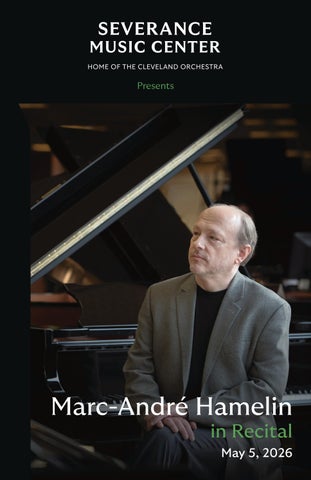
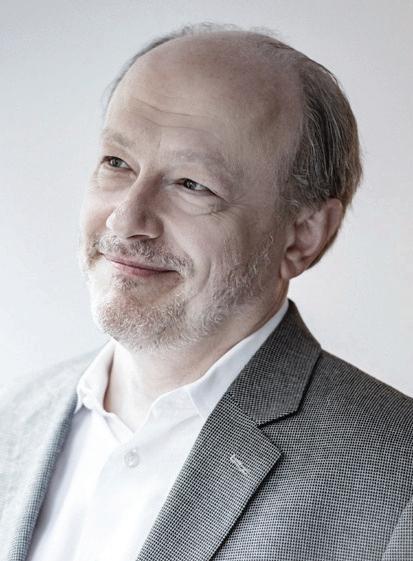
Marc-André Hamelin, piano
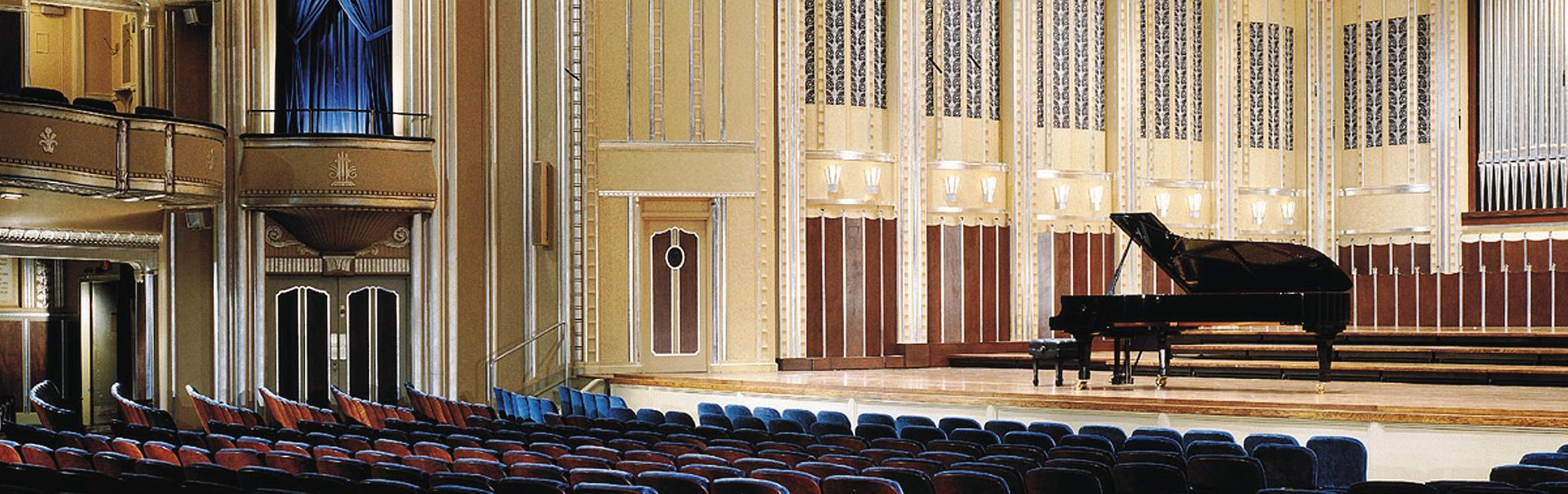
Jack, Joseph and Morton Mandel Concert Hall at Severance Music Center Tuesday, May 5, 2026, at 7:30 PM
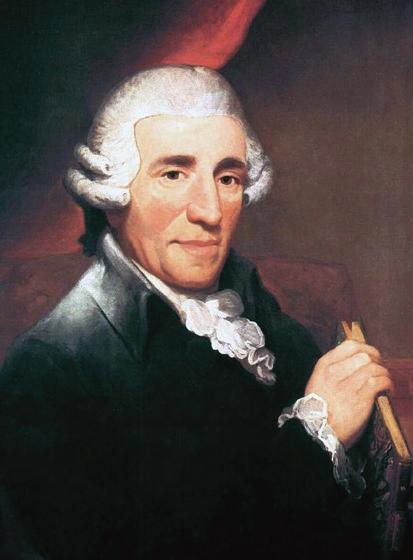
FRANZ JOSEPH HAYDN (1732–1809)
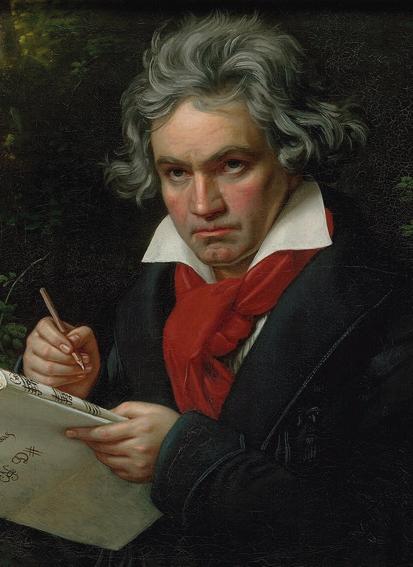
LUDWIG VAN BEETHOVEN (1770–1827)
MIECZYSŁAW WEINBERG (1919–1996)
SERGEI RACHMANINOFF (1873–1943)
SERGEI RACHMANINOFF
Piano Sonata in D major, Hob. XVI: 37
I. Allegro con brio
II. Largo e sostenuto
III. Finale: Presto ma non troppo
Piano Sonata No. 3 in C major, Op. 2, No. 3
I. Allegro con brio
II. Adagio
III. Scherzo: Allegro — Trio
IV. Allegro assai
INTERMISSION
Piano Sonata No. 6, Op. 73
I. Adagio —
II. Allegro molto
Étude-tableau No. 5 in E-flat minor, Op. 39
Piano Sonata No. 2 in B-flat minor, Op. 36 (1931 version)
I. Allegro agitato
II. Non allegro — Lento —
III. L’istesso tempo — Allegro molto
The performance lasts about 1 hour 30 minutes
Marc-André Hamelin’s performance is generously sponsored by Dr. Michael Frank and Patricia A.* Snyder. Generous support for the 2025–26 Recital Series provided by the Art of Beauty Company, Inc.
PIANO SONATA IN D MAJOR, HOB. XVI: 37
By Franz Joseph Haydn (1732–1809)
Composed: 1780
Duration: about 10 minutes
Franz Joseph Haydn was a marvelously prolific composer whose long career spanned significant changes in musical tastes and instrument building. His early keyboard sonatas were written with the harpsichord in mind, but by the 1780s he was writing for the more versatile fortepiano. While men were the professional performers of the day, most keyboard students in the 18th century were upperclass women. Haydn dedicated many of his keyboard works to just such ladies, including his third publication, comprising sonatas numbers 20 and 29–35.
Haydn is most known for his tenure working for the prominent Austro-Hungarian Esterházy family from 1761–90. The terms of his first contract were highly restrictive in terms of public engagements and publications. His first authorized publication appeared in Vienna in 1774, and many more followed the signing of a new contract in 1779.
Piano Sonata No. 37 was part of a collection of sonatas published in April 1780, and was his first of many collaborations with the Artaria publishing house. He dedicated the six sonatas to the sisters Katharina and Marianna von Auenbrugger — both virtuoso pianists. In a letter from February 25, Haydn told his publisher that “the approval of the Demoiselles von Auenbrugger … is most important to me, for their way of playing and genuine insight into music equal those of the greatest masters. Both deserve to be known throughout Europe through the public newspapers.”
The sonatas in this early publication vary in style, difficulty, and key. Sonata No. 37 in D major is the most virtuosic of the set. The opening movement, Allegro con brio, begins with a blustery fanfare replete with grace notes and trills. The second theme is coquettish by comparison, but the energy of the movement remains elevevated throughout. Haydn turns to the relative minor for the contemplative middle movement, full of poised dotted rhythms and aching dissonances. The third movement is exuberant with an opening theme that cheerfully bounces up the keyboard before being interrupted by a more decisive secondary theme. Haydn makes both themes even more playful with a variation full of cheeky offbeats, before a triumphant final statement.
— Ellen Sauer Tanyeri
Ellen Sauer Tanyeri is The Cleveland Orchestra’s Archives & Editorial Assistant and is a PhD candidate in musicology at Case Western Reserve University.
PIANO SONATA NO. 3 IN C MAJOR, OP. 2, NO. 3
By Ludwig van Beethoven (1770–1827)
Composed: 1794–95
Duration: about 25 minutes
Ludwig van Beethoven’s works have traditionally been divided into three stylistic periods. Many modern scholars reject the simplicity of this model, but they are still left with the task of accounting for the dramatic changes in his composition style over the course of his life.
The Piano Sonata No. 3 is an early work, no matter how you slice it. It is certainly more advanced than the composer’s compositions from his hometown of Bonn, but it is still the work of an ambitious student finding his footing in Europe’s musical capital.
Beethoven dedicated the three piano sonatas of his Op. 2 (published in Vienna in 1796) to Haydn , with whom he studied from 1792 to 1794. All three sonatas are ambitious in their four-movement structure — perhaps pointing towards the composer’s symphonic ambitions — and yet the C-major sonata stands out as the longest and most demanding even of this imposing set.
The first movement opens with a distinctive two-measure melodic cell. This is followed by a swirl of arpeggiated sixteenth notes — a texture that returns throughout the movement, providing sonic glue between sections — before giving way to a sweet, smooth second theme. The movement proceeds in a typical sonata form, interrupted by an extensive concerto-like cadenza before the movement rushes to a decisive close.
The middle movements are fit for a string quartet or symphony. The second opens in the mediant key of E major. The musical texture is sparse and halting, not making it more than two beats without resting. Beethoven contrasts this with a placid, legato section, answering hesitation with fluidity. The third movement is a typical minuet and trio with an imitative theme that sounds both old fashioned and humorous — a clear homage to Haydn.
The final movement rockets into action with a sprightly scale of first inversion chords. The left and right hands chase each other across the keyboard — first in parallel motion, then in contrary motion. Beethoven’s own virtuosity as a keyboard player is on full display in this dazzling finale.
— Ellen Sauer Tanyeri
PIANO SONATA NO. 6, OP. 73
By Mieczysław Weinberg (1919–1996)
Composed: 1960
Duration: about 10 minutes
Mieczysław Weinberg was born in Poland and began his musical career playing piano at the theater where his father worked. At age 12, he began his formalized training at the Warsaw Conservatory. The pianist Josef Hoffman organized for Weinberg to continue his studies in America, but he instead emigrated to the Soviet Union following the outbreak of World War II. Following his move, unbeknownst to him, Weinberg’s parents and sister perished in the Trawniki concentration camp back in Poland.
The USSR offered Weinberg welcome refuge and it was there, as a student of Vladislav Zolotaryov ’s at the Minsk Conservatory, that he began a serious pursuit of composition. After his schooling, he moved first to Moscow and then to Tashkent, where he married into a theater family.
In 1948, Weinberg was shunned by the Soviet musical establishment for refusing to denounce Modernism, turning instead to theater and circus commissions to sustain himself. One of Weinberg’s closest friends, and his greatest source of inspiration, was Dmitri Shostakovich , who was more adept at currying public favor. When Weinberg was jailed in connection with a disgraced relative, it was a letter from Shostakovich that purportedly saved his life.
Like Prokofiev, Weinberg’s modernist works are often tinged with Neoclassicism, and he often incorporates folk melodies like Bartók . His Sixth Piano Sonata opens with dissonant clusters that conjure ringing church bells. Following this forceful opening, the rest of the movement feels sparse and contemplative. The second movement is frenetic by contrast, with driving rhythms and energetic outbursts.
— Ellen Sauer Tanyeri
NO. 5 IN
E-FLAT MINOR, OP. 39
By Sergei Rachmaninoff (1873–1943)
Composed: 1916–17
Duration: about 5 minutes
Composers of all backgrounds try their hands at largescale genres like concertos, symphonies, and sonatas, often without ever having touched the majority of instruments for which they are writing. But it usually takes someone intimately familiar with their instrument to write in more intimate, solo genres, like the étude.
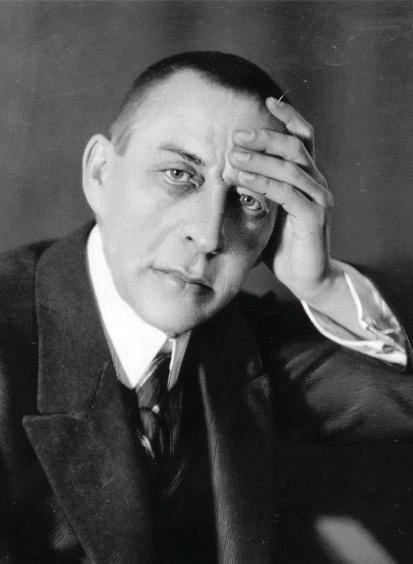
Sergei Rachmaninoff is remembered mostly as a composer, but during his lifetime he was also an internationally celebrated pianist. His highly demanding piano concertos and solo works speak to his tremendous talent as a performer, while his vocal, chamber, and orchestral works point to his versatility as a composer.
Born and trained in Russia, Rachmaninoff gained international recognition following his 1899 London debut. Russia remained his home base following his marriage in 1902 and the birth of daughters in 1903 and 1907. As his success as a composer grew, Rachmaninoff spent more and more time in Europe until, seeing the revolutionary writing on the wall, the family left Russia in 1918, never to return.
The Op. 39 Études-tableaux were among Rachmaninoff’s final significant compositions before leaving Russia. This was his second set of short pieces in this expressive genre, following the Op. 33 Études-tableaux in 1911. Each study expands small melodic cells in different creative forms. His writing is almost impressionistic, traversing flexible rhythms and harmonies to paint brief sonic pictures. But Rachmaninoff did nothing to clarify the nature of these impressions: “I do not believe in the artist disclosing too much of his images. Let them paint for themselves what it most suggests.”
Étude-tableau No. 5 in E-flat minor opens with an impassioned theme driven by pulsating triplet chords. The piece builds in intensity before giving way to a murkier section in which the triplet chords are unseated by rolling arpeggios. The powerful triplets force themselves back, eventually dominating the texture in both hands. But after all this passion, the music seems to tire itself out, coming to rest in a smoother, more soothing musical place.
— Ellen Sauer Tanyeri
PIANO SONATA NO. 2 IN B-FLAT MINOR, OP. 36 (1931 VERSION)
By Sergei Rachmaninoff
Composed: 1913
Duration: about 20 minutes
It took Sergei Rachmaninoff several years to complete his Second Piano Sonata, but it would be decades before it reached its fi nal form. He began work on the sonata while living in Rome, but set it aside when his daughters contracted typhoid fever and the family moved to Berlin to be closer to doctors. When the girls recovered, the family returned to their Ivanovka homestead in Russia, where Rachmaninoff completed the sonata.
On October 18, 1913, the composer premiered the sonata in Kursk. While it was well received, Rachmaninoff was not yet pleased. He revisited the piece in 1931, cutting sections from all three movements and simplifying passages. In 1940, Vladimir Horowitz got Rachmaninoff ’s blessing to edit the sonata yet again, combining elements from both earlier versions.
While the sonata is organized in three movements, Rachmaninoff connects them with motivic bridges to create a thematically unified whole. The fi rst movement opens with a dramatic, dense texture that becomes even stormier in the fiendish development section. This bravado is balanced by the lullaby-like repose of the second movement. Rachmaninoff ends the second movement with a brief interlude which is then reinterpreted in triple meter to open the raucous third movement.
— Ellen Sauer Tanyeri
MARC-ANDRÉ HAMELIN
Piano
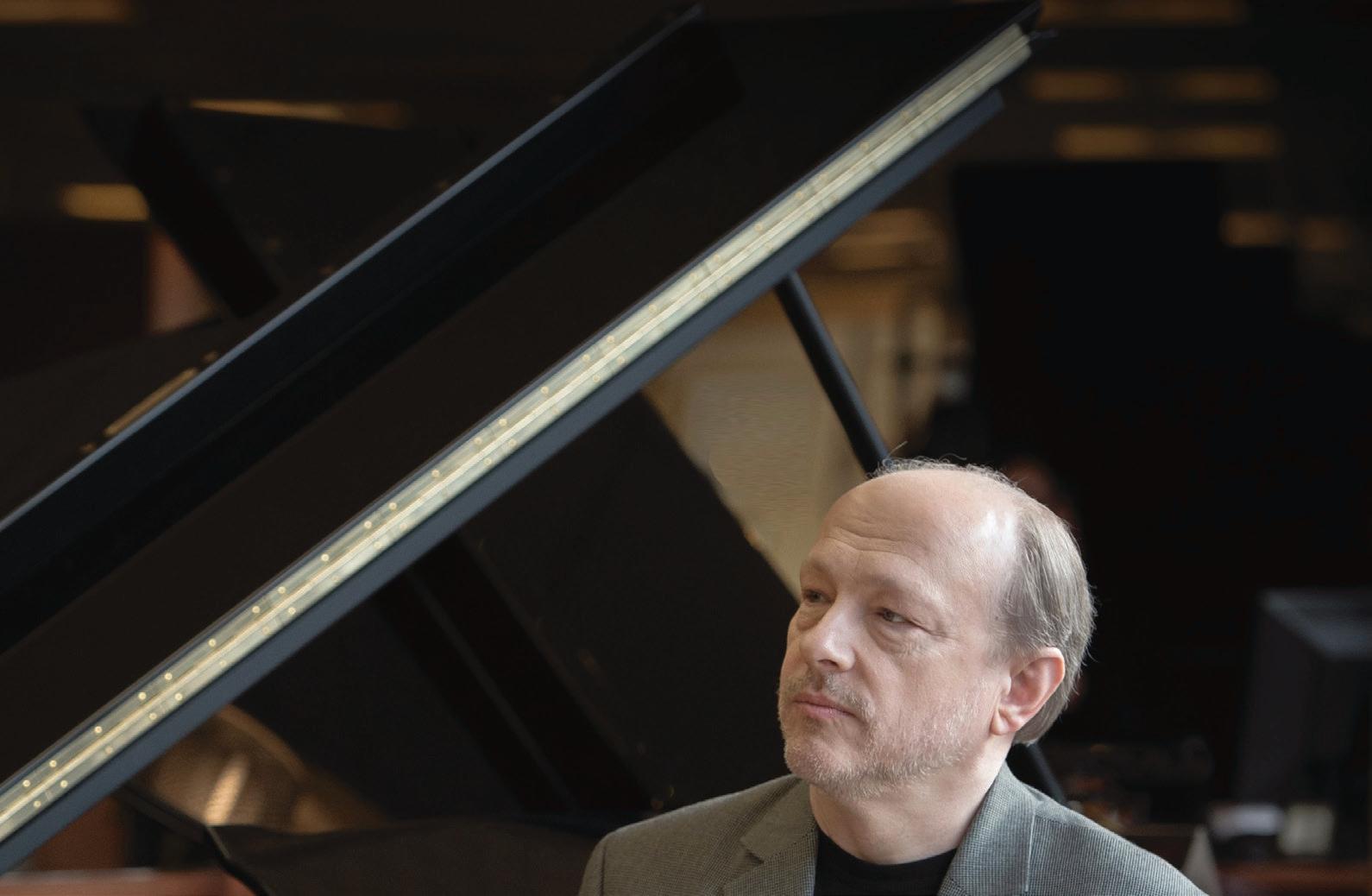
Pianist Marc-André Hamelin is acclaimed worldwide for his unrivaled consummate musicianship and brilliant pianism. He is celebrated both for his interpretations of the core repertoire and for his fearless exploration of lesser-known works from the 19th, 20th, and 21st centuries.
Hamelin’s 2025–26 season spans North America, Europe, Asia, and Australia, with a dynamic mix of orchestral, recital, and chamber music engagements. He opens the season with a tour of Australia and Asia, featuring appearances with the Sydney, Wuxi, Ningbo, and Shenzhen symphonies. In North America, Hamelin appears with The Philadelphia Orchestra, San Diego Symphony, Los Angeles Chamber Orchestra, and Orpheus Chamber Orchestra. Recital highlights include Chicago Symphony Presents, Chamber Music Pittsburgh, the Philharmonie de Paris, and Wigmore Hall.
BY SIM
An exclusive recording artist for Hyperion Records, Hamelin has released 92 albums to date, with notable recordings of solo, orchestral, and chamber repertoire. In October 2025, Hyperion released Found Objects / Sound Objects, a recording of contemporary works. Recent acclaimed recordings include Beethoven’s “Hammerklavier” Sonata as well as the Dvořák and Price quintets with the Takács Quartet.
Also a noted composer, Hamelin has written more than 30 works, many of them published by Edition Peters. He performed his Toccata on “L’homme armé” in 2023 on NPR’s Tiny Desk Concerts alongside works by C.P.E. Bach and William Bolcom . His most recent composition, Mazurka , was commissioned by the Library of Congress to celebrate 100 years of concerts and premiered in April 2024.
Hamelin is the recipient of a Lifetime Achievement Award from the German Record Critics’ Association and over 20 of its quarterly awards. Other honors include eight Juno Awards, 11 Grammy nominations, the 2018 Jean Gimbel Lane Prize from Northwestern University, and the Paul de Hueck and Norman Walford Career Achievement Award from the Ontario Arts Foundation. Hamelin is an Officer of the Order of Canada, a Chevalier de l’Ordre national du Québec, and a member of the Royal Society of Canada.
Born in Montreal, Hamelin lives in the Boston area with his wife, Cathy Fuller, a producer and host at Classical WCRB.
PHOTO
CANETTY-CLARKE
LATE SEATING
As a courtesy to audience members and musicians, late-arriving patrons are asked to wait quietly until the fi rst convenient break in the program. These seating breaks are at the discretion of the House Manager in consultation with the performing artists.
CELL PHONES, WATCHES & OTHER DEVICES
To ensure a quiet and respectful listening environment, please silence all electronic devices.
PHOTOGRAPHY, VIDEOGRAPHY & RECORDING
Audio recording, photography, and videography are not allowed during performances at Severance. Photographs can only be taken when the performance is not in progress.
THE CLEVELAND ORCHESTRA APP
Explore upcoming concerts, purchase and access your tickets, receive performance updates, and more. Available for iOS and Android on Google Play and at the Apple App Store. More information is at clevelandorchestra.com/tcoapp
IN THE EVENT OF AN EMERGENCY
Contact an usher or a member of house staff if you require medical assistance. Emergency exits are clearly marked throughout the building. Ushers and house staff will provide instructions in the event of an emergency.
HEARING AIDS & OTHER HEALTH-ASSISTIVE DEVICES
In consideration of others, please reduce the volume on hearing aids and other healthassistive devices that may produce noise. For Infrared Assistive-Listening Devices, please see an usher. To request one in advance, email info@clevelandorchestra.com.
AGE GUIDELINES
Regardless of age, each person must have a ticket and be able to sit quietly in a seat throughout the performance. Classical Season subscription concerts are not recommended for children under 8. However, there are several age-appropriate series designed specifically for children and youth, including Music Explorers (for 3 to 6 years old) and Family Concerts (for ages 7 and older).
Editorial: Kevin McBrien, Editorial & Publications Manager (kmcbrien@clevelandorchestra.com)
Ellen Sauer Tanyeri, Archives & Editorial Assistant
Design: Melissa Leone (melissa@melissaleone.com)
Program books for Cleveland Orchestra concerts are produced by The Cleveland Orchestra and are distributed free to attending audience members.
The Cleveland Orchestra is proud to have its home, Severance Music Center, located on the campus of Case Western Reserve University, with whom it has a long history of collaboration and partnership.