This magazine is printed on 100% recycled paper. Continue the green process by recycling this copy.
Lowcountry Dog’s mission is to be the leading local resource for dog owners regarding regional events, health and wellness information, trends, style and lifestyle choices. We also strive to be a mouthpiece to the public for various dog related non-profits and promote pet adoption and other responsible pet care practices.
Dog lovers can pick up the bi-monthly magazine for free at most area veterinarians and pet stores throughout the lowcountry, as well as numerous restaurants, coffee bars and retailers. A full distribution list is posted to the magazine’s web site, lowcountrydog.com. Subscriptions are also available. Please call 843-478-0266 for more information.
The entire contents of this magazine are copyrighted by Lowcountry Dog Magazine with all rights reserved. Reproduction of any material from this issue is expressly forbidden without permission of the publisher.
Lowcountry Dog Magazine does not endorse or guarantee any product, service, or vendor mentioned or pictured in this magazine in editorial or advertising space. Views expressed by authors or advertisers are not necessarily those of the publisher.
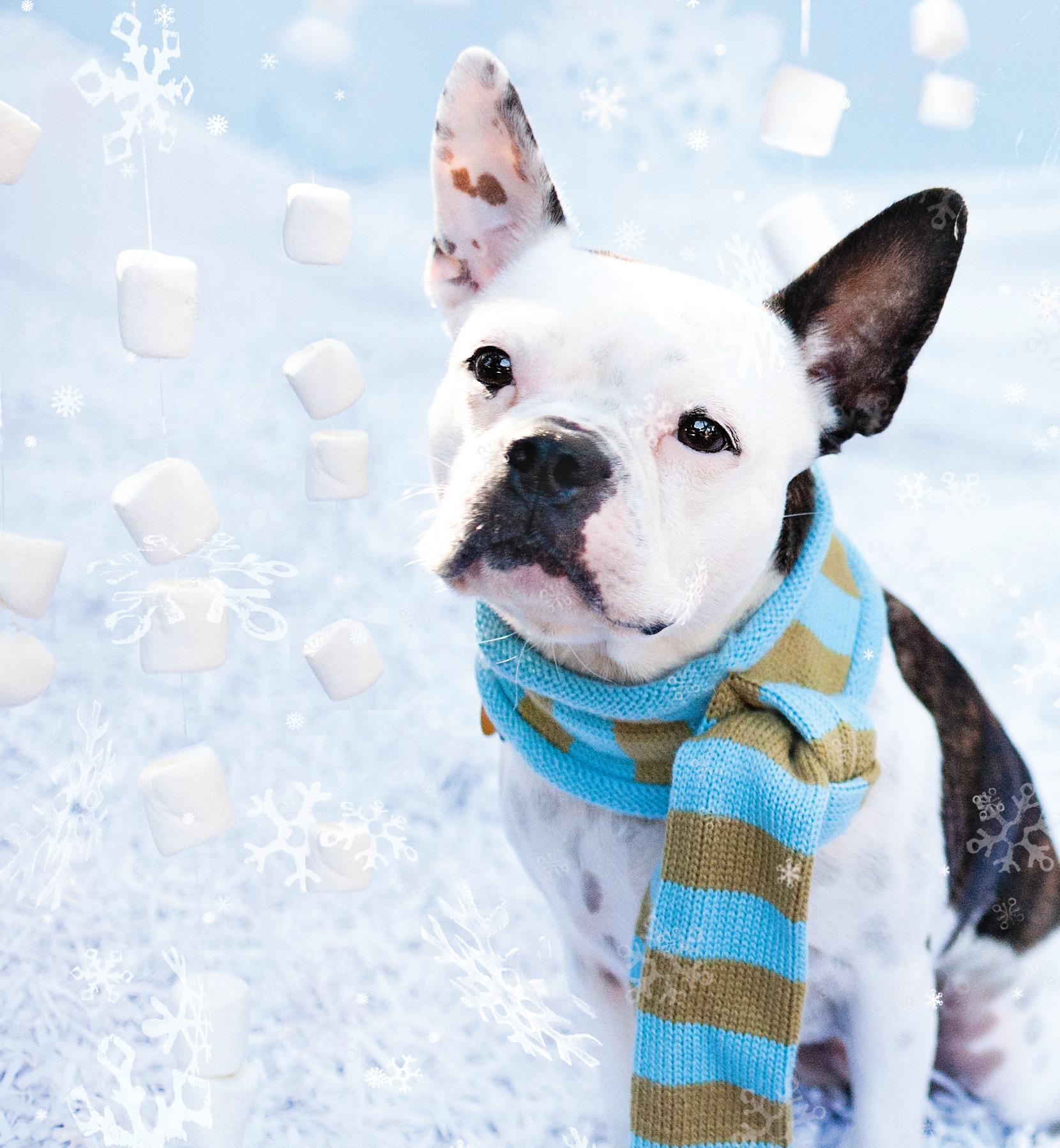
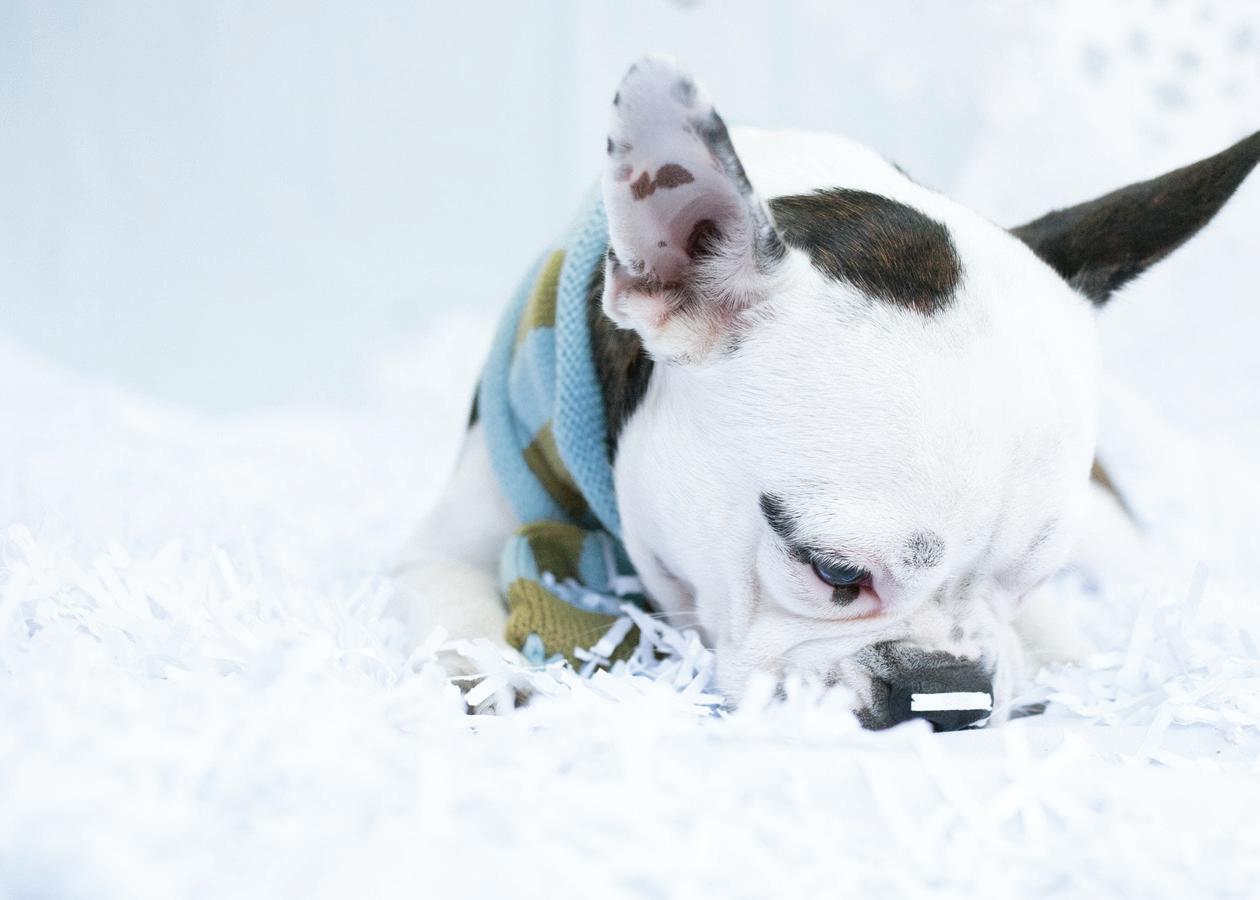
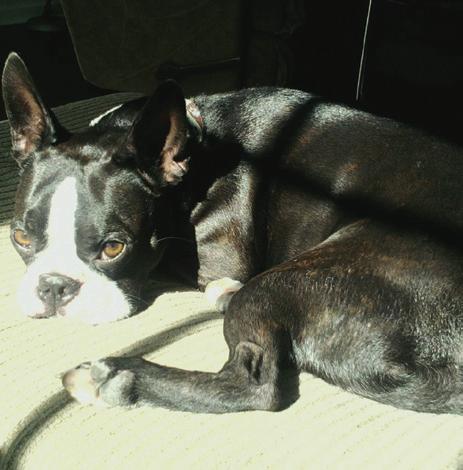
Meet our cover model Dexter. He’s a Boston Terrier/French Bulldog mix and a Pet Helpers alumni. Scarf compliments of Hairy Winston. Cover photo and middle table of contents photo by Laura Olsen.
Stopping Puppy Mills
by Leah England
I find it shocking there are still hundreds of thousands of puppies born into commercial puppy mills where profit is given priority over the well-being of the dogs. If South Carolina has a law on the books holding railroad companies liable for scaring horses, (yes, that is a real law) then why does SC have a total absence of laws concerning breeders, kennels and puppy mills? You read that right. There is not a single law in this state regarding the welfare of dogs being commercially bred in any sort of breeding facility.
While the Federal Animal Welfare Act defines the minimum standards of care for dogs bred commercially and requires that certain commercial breeders be licensed and routinely inspected by the United States Department of Agriculture, only animal-breeding businesses considered “wholesale” operations (those that sell animals to stores for resale) are overseen by the USDA. The AWA does not apply to facilities that sell directly to the public, including the thousands that do so via the Internet.
It’s my opinion that the States have the power to legislate higher standards of humane care for animals commercially bred within each state’s borders. Which means it’s up to us to let our legislators know that this is an important concern for South Carolinians. In 2008 Virginia became the first state to pass a law regulating the number of adult dogs a commercial breeder could possess, and 20 other states have followed suit, with Missouri’s Prop B being the latest legislation passed. Some states also regulate the age in which puppies can be sold as well as basic requirements for facility cleanliness.
I strongly feel South Carolina needs such a law. In the deep South, we are still plagued with dog fighting, puppy mills, backyard breeders, and tethering of dogs. For the sake of our dogs, we need to do better. We need to help shape SC into a leader in animal welfare.
Here’s a few things we can each do to raise awareness of puppy mills in our state, and to encourage our legislators to consider laws regulating the commercial breeding and selling of puppies.
ONE Don’t buy from a puppy mill! Not even if you feel like you are “saving” that animal. You aren’t. You are funding the operation. Don’t buy from pet stores, who ALWAYS get their puppies from large scale, wholesale breeders and don’t shop for pet related goods from stores who sell dogs and cats. Even if there are health certificates, AKC papers, USDA approved documents, don’t buy from them! Don’t buy from a parking lot or flea market, where commercial breeders will often set up to appear as if they are small Mom and Pop operations. Likewise, don’t be tempted to buy a dog off the internet! Learn how to recognize the signs of a bad breeder, (see our article on the subject at http://bit.ly/bJsZus) and always visit the breeding facility yourself to inspect how the dogs are cared for. And of course, consider adoption and rescue first!
TWO Write your representative and senator. A sample letter can be found here: http://bit.ly/9hT1gC Click on the thumbnail of the Word document at the bottom of the post, sign your name and mail it in. Do this on a monthly basis and follow-up.
THREE Use social media to maximize your immediate sphere of influence. Facebook, Twitter, Digg, etc are fantastic ways to easily and quickly educate your friends and turn them on to the cause. They will in turn educate those within their sphere of influence. This is how movements are made. So LIKE LCD’s posts on puppy mills, post it to your Facebook profile, Tweet out a message, link to a You Tube Video on puppy mills, etc.
FOUR Keep up to date on local legislation by joining the ASPCA Advocacy Brigade and watching for action alerts in SC.
FIVE If you suspect a puppy mill in your area, don’t investigate on your own. Notify the authorities, and carefully detail why you suspect there is inhumane treatment of animals going on. You can also contact the USDA to see if the facility has a federal license. And check with the AKC to see if the breeder is in good standing. The AKC has been known to revoke registration privileges from breeders who violate care and conditions standards along with those who violate record-keeping regulations. An AKC inspector will also report a substandard kennel to USDA or to local authorities, whichever is appropriate.
SIX Donate to local pet shelters and rescues. These groups get puppy mill rejects, dogs from busts and raids, and owner surrenders when the puppy mill dog is plagued with bad genetic issues. And these groups also have wonderful educational programs to raise public awareness of puppy mills, and to encourage regulatory legislation.
SEVEN Buy anti-puppy mill gear. Bumper stickers, window decals, website badges and the like help to spread the word and provide funds to organizations dedicated to stopping puppy mills. Designs by Lowcountry Dog coming soon!
As always, I welcome your feedback and comments. Do you have more ideas for stopping SC puppy mills you’d like to share? Join the conversation with us on our website at www.lowcountrydog.com and on Facebook at www.facebook.com/lowcountrydog
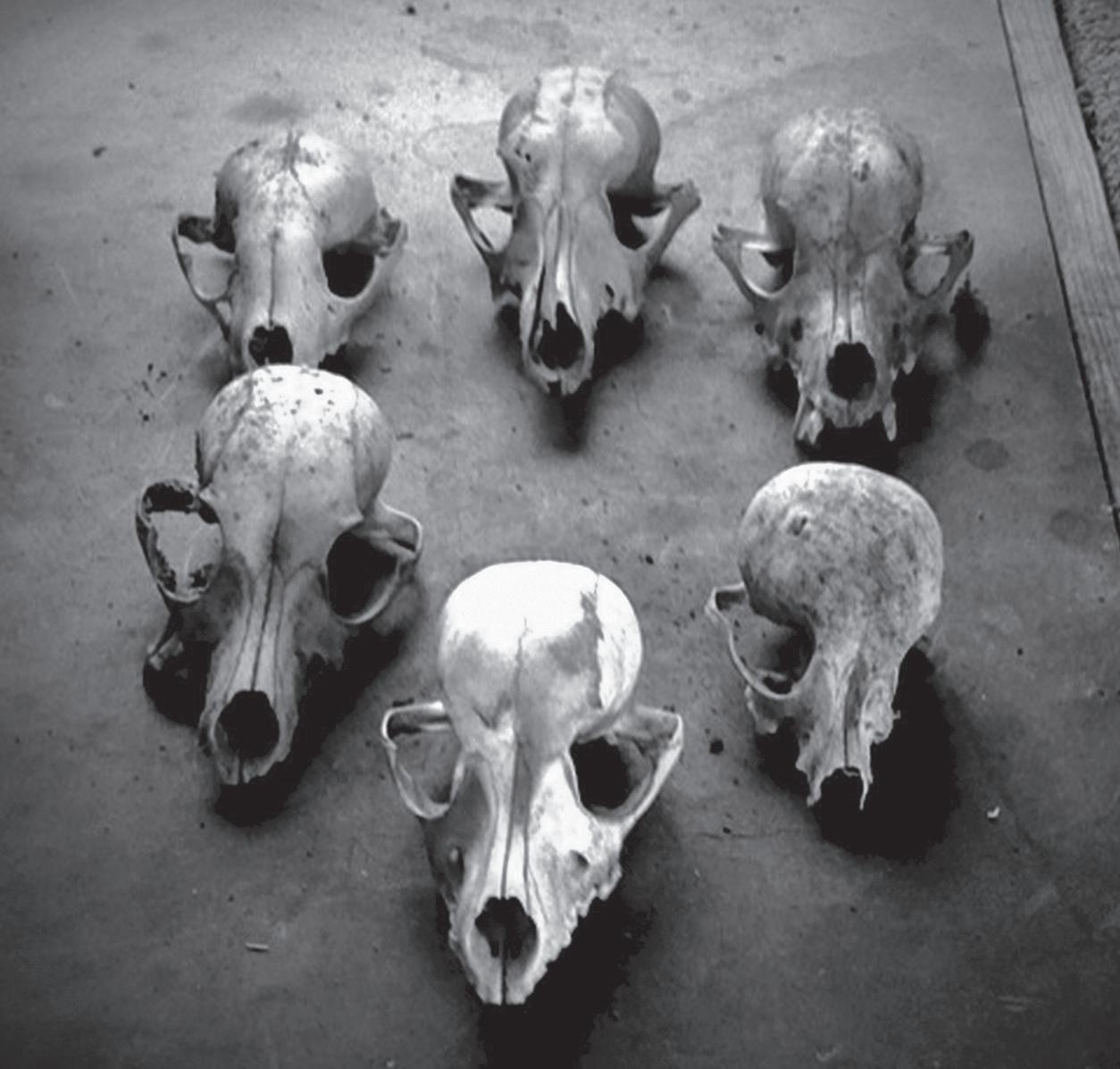
Tiny skulls found at a puppy mill. Photo by Faster Panda, Flickr
@
lowcountrydog.com
Loose Leash Walking
Learn the basics of loose leash walking. Less formal than a “heel” but a great skill that makes the daily walk more enjoyable for everyone involved. Click to http://bit.ly/cOWIpC
Filed under: Training
Low-Cal Foods for Sensitive Stomachs
In our new “Ask the Vet” series, Danielle Cain, DVM from North Charleston Animal Hospital answers a reader’s question about low cal foods for tender tummies. Click to http://bit.ly/cpuAuF
Filed Under: Health & Wellness
A Favorite Reader Comment
Follow 3 NeoNatal Puppies from Foster to Adoption
Check out all the super adoreableness as photog Laura Olsen documents the puppies’ growth and adoption. Click to http://bit.ly/a5dbxm Filed under: Foster Pets
New Feature: Reviews
We have 6 new taste testers and product reviewers letting you know if the latest thing is worth woofing about. Most reviews have a giveaway too! Click to http://bit.ly/cwR7iR Filed Under: Reviews
The best thing about LCD is sharing our stories of the wonderful dogs we have adopted or rescued, and making people aware that these are fantastic pets that could otherwise be put down in shelters. ~ FemmeMinister, on the Rescue and Adoption Forum
A Stolen Heart
Local news anchor Tara Lynn writes about the dog who captured her heart, caused her to become a fullfledged dog fanatic, and prompted her Pet Helpers volunteerism. Click to http://bit.ly/c3ywKp
Filed under: Local News
Don’t Shop! Adopt
Erin Thomas of Lowcountry Pet Sitters writes about the benefits of adopting a dog from a shelter or rescue vs. buying from a breeder.
Click to http://bit.ly/drPgsv Filed under: Adoptable Dogs
Nifty Thrifty: Animal Helpers ReTail
LCD publisher and certifiable thrift store junkie Leah England writes about the December opening of the Pet Helpers/Charleston Animal Society Thrift Store. Click to http://bit.ly/at73ow
Filed under: Local News
g TCCHRISTMAS TREE GUARD
photos by: (clockwise) Raging Tornado, Nils Geylen, The Snow Pea. All Flickr Creative Commons.
text by Gillian Nicol, photos by Ashley Smith
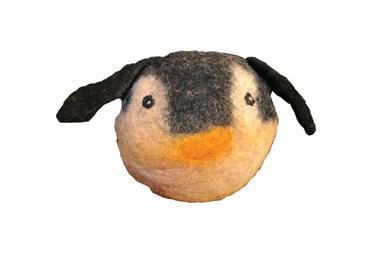
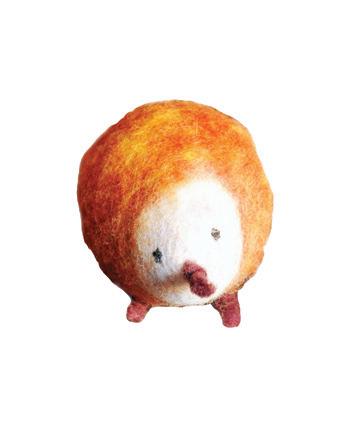
1. This collection of Felt Toys will bring an ear-to-ear grin to your dog’s face. Prices range from $9.99-$14.99 from Lucia’s Premium Pet.
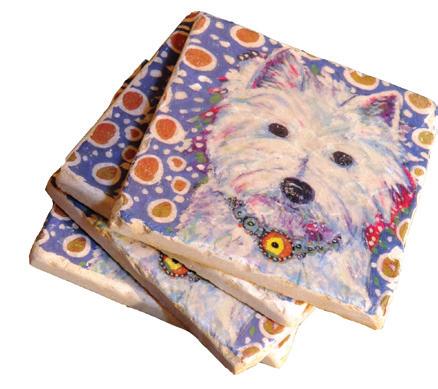
2. Say “goodbye” to water stains on the coffee table with these Marble Coasters. Available in a variety of breeds. $49.00 from Alpha Dog Omega Cat.
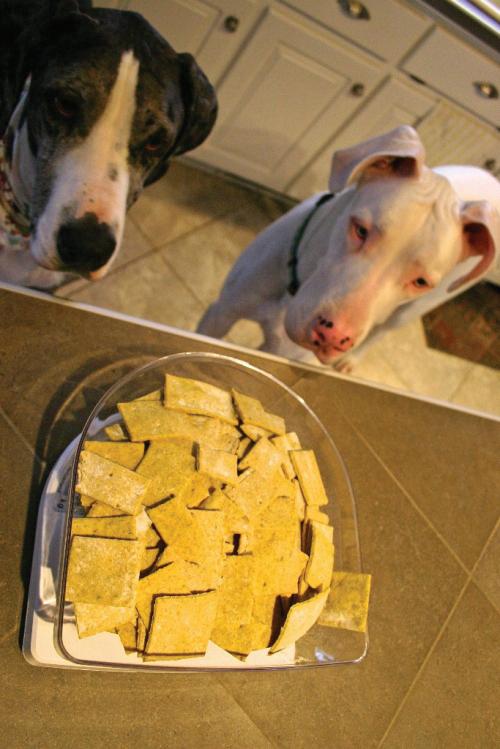
3. Puppy Crack, the wholesome treat dogs can’t say no to is made right here in Charleston and helps local rescue and shelter dogs. www.puppycrack.com
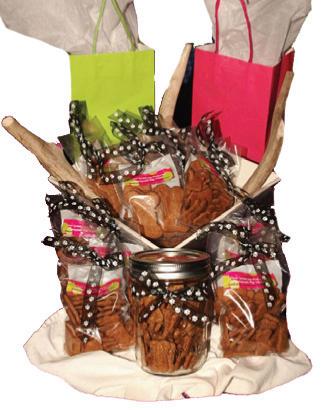
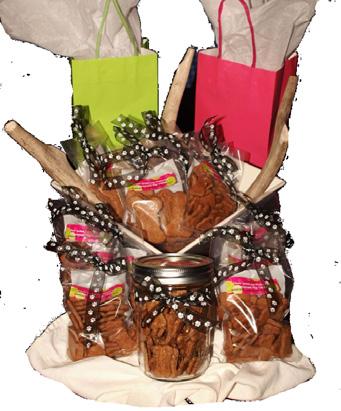
4. Chef Sarah makes the most delectable dog treats. Order up a basket for your special pooch; they’re sure to thank you! www.neverspoiledjustwellloved.com
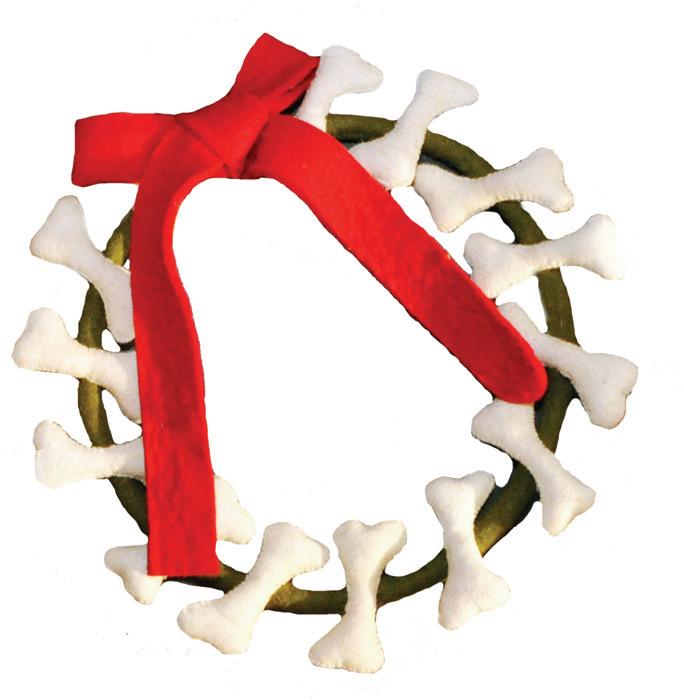
5. Deck the halls with…bones?! You and your dog will be in the holiday spirit when you come home to this fantastic Dog Bone Wreath $119.00 from Alpha Dog Omega Cat.
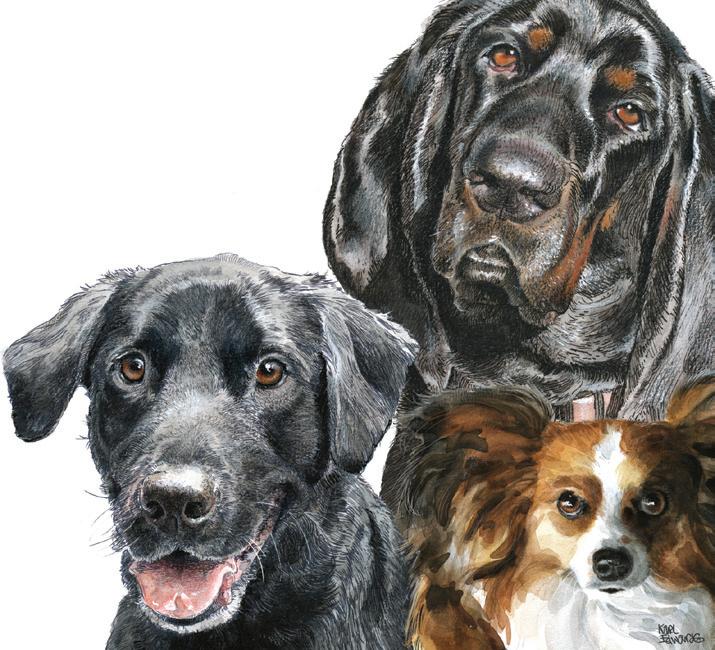
6. Commission Pen & Watercolor Portraits of your dogs or order a Poster of your favorite breed from artist Karl Edwards. He’s a nationally recognized illustrator who’s work has been in The Bark magazine. www.karledwards.com
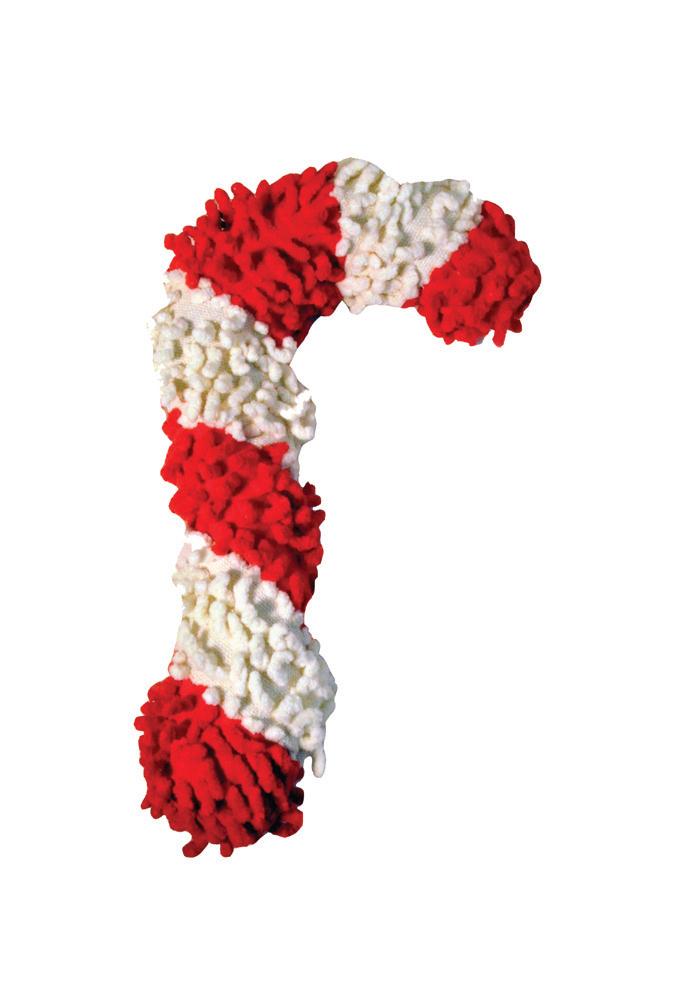
7. The Petlou Candycane & Giant Bone will be an extra special surprise under your Christmas tree for your Lowcountry Dog. $9.99-$21.99 from Hairy Winston.
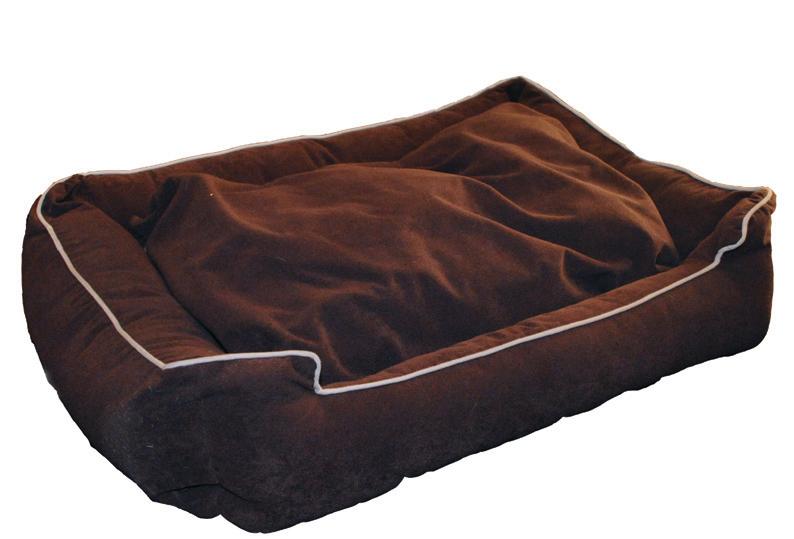
8. Curl up by the fire on your new Jax & Bones Lounge Bed This highly customizable bed is machine washable and made of Crypton fabric. Starting at $210 at Palmetto Paws.
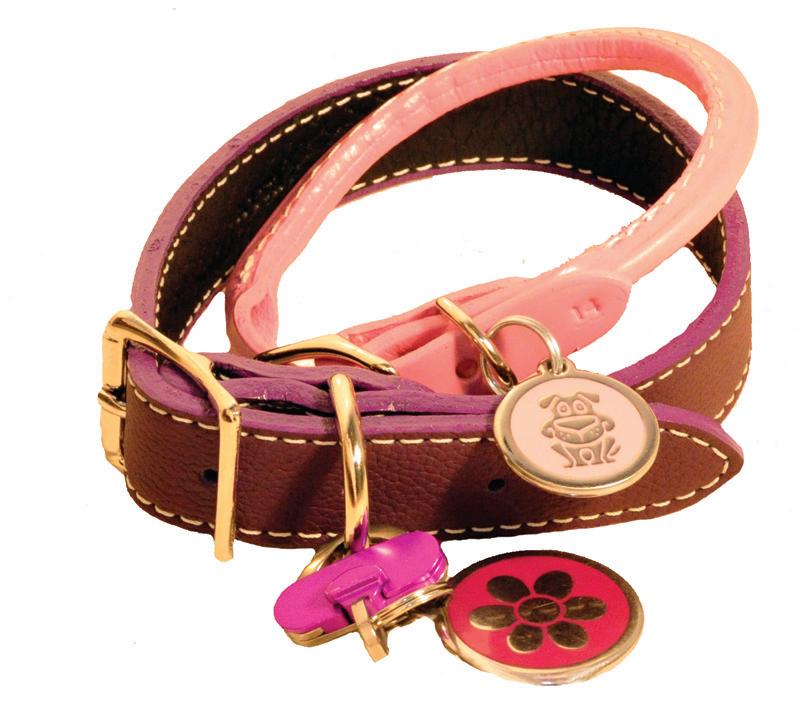
9. ‘Tis the season for a New Collar from Auburn Leathercrafters! Pink $27.00 & Purple $28.95 from Palmetto Paws. And your canine companion will never be too far from home with the Red Dingo Pet ID Tags. Available in a variety of sizes, colors and designs. $13.00-$15.00 from Palmetto Paws. No more hassle of dealing with transferring over old tags. Easily change up your dog’s collar with the Up Country Tag Holders in one easy step. Available in a variety of colors. $9.95 from Palmetto Paws.
the dog
Christmas gift
10. Barbara Welles creates truly memorable Fine Art. She has lovely, affordable custom head studies that would be beautiful in your bookcase or on your desk. www.barbarawellesportraits.com
11. Let’s Be a Dog. The Chuckoo squeaks, a plus. It rolls, another plus. I can grip it easily, plus. My guardian and I can play tug of war with it. Great news too. When I chew a hole in it, it still squeaks! I love it! Available in two sizes. $12.95$17.95 from Dolittle’s.
12. Photographer Roberta Braun will capture the special side of your pet in Photography. www.bertao.photoreflect.com
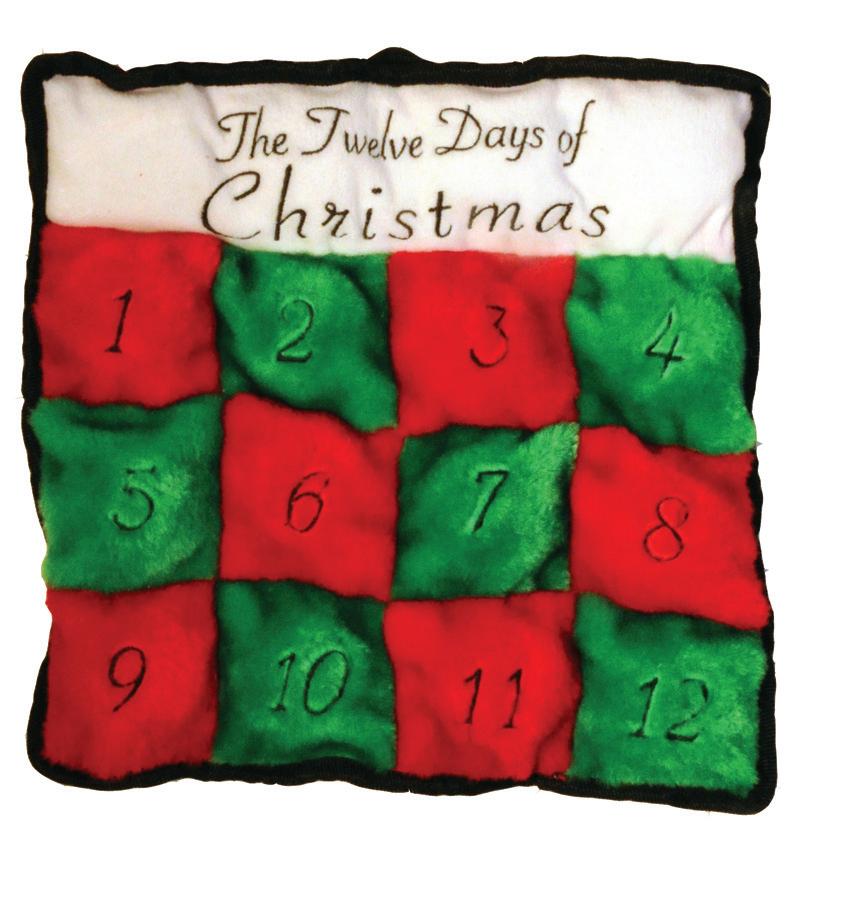
13. With SIXTEEN squeakers, your dog will never get tired of the Twelve Days of Christmas Mat Dog Toy. $19.99 at Lucia’s Premium Pet.
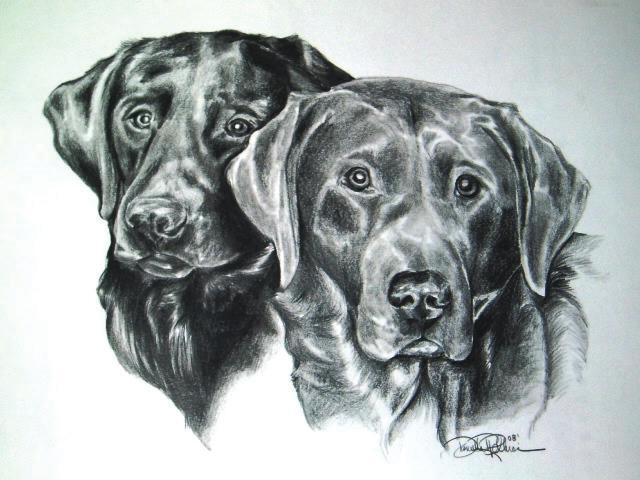
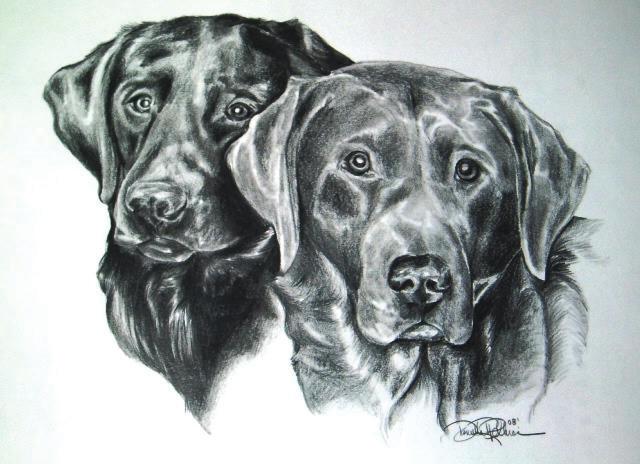
14. Graphite Portraits by Danielle Pellicci, starting at $150 would make a priceless gift for your family this holiday season. www.blackfootkennels.com
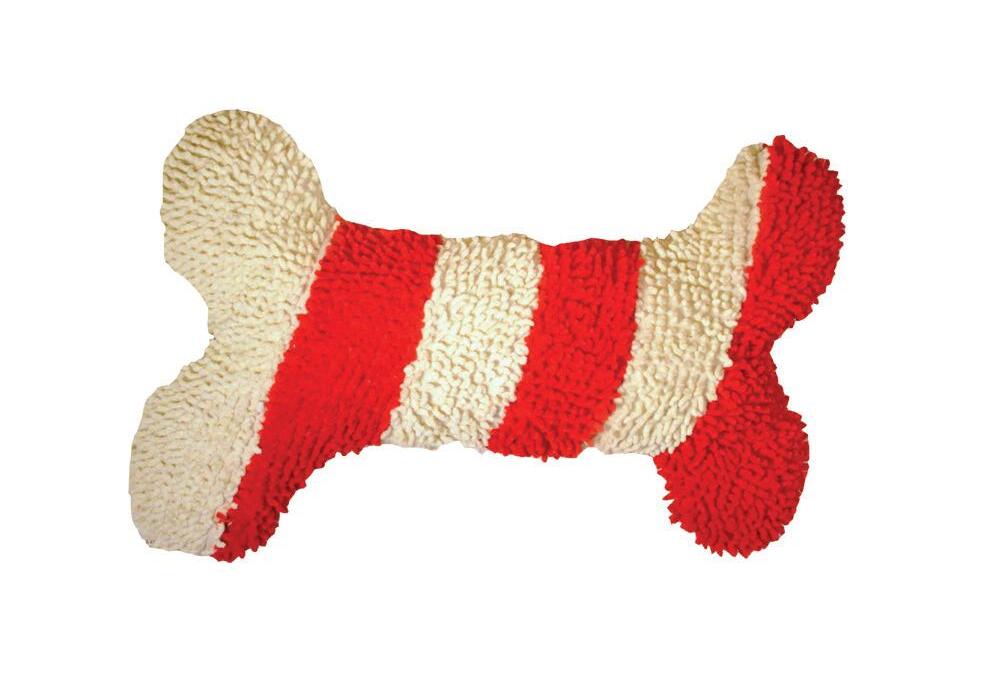
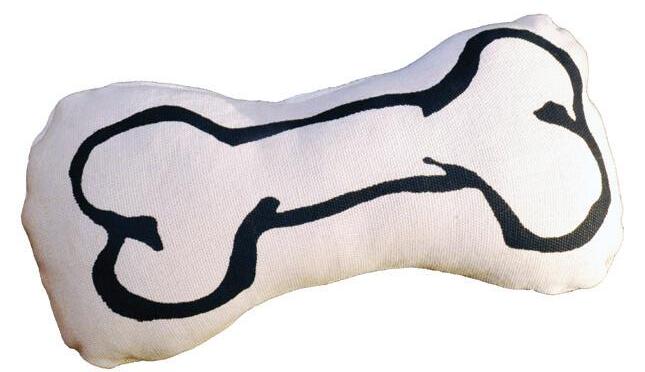
15. Top to bottom this Canvas Bone Toy is handcrafted: original drawings, screen printed and stitched at home. Something for the dog who has everything. $13.95 from Dolittle’s.
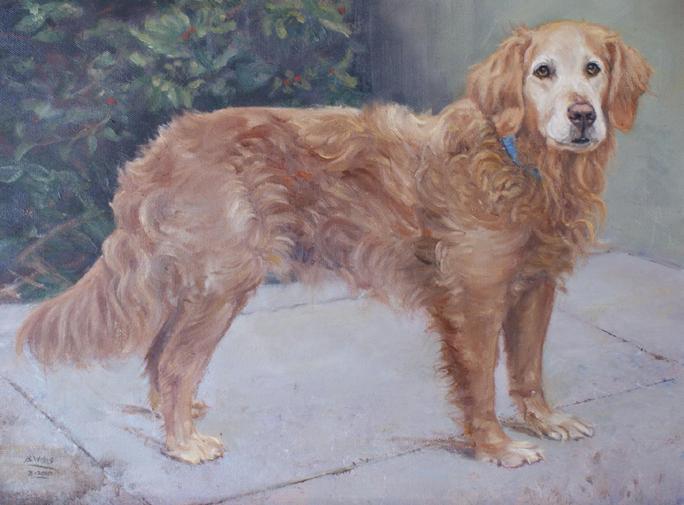
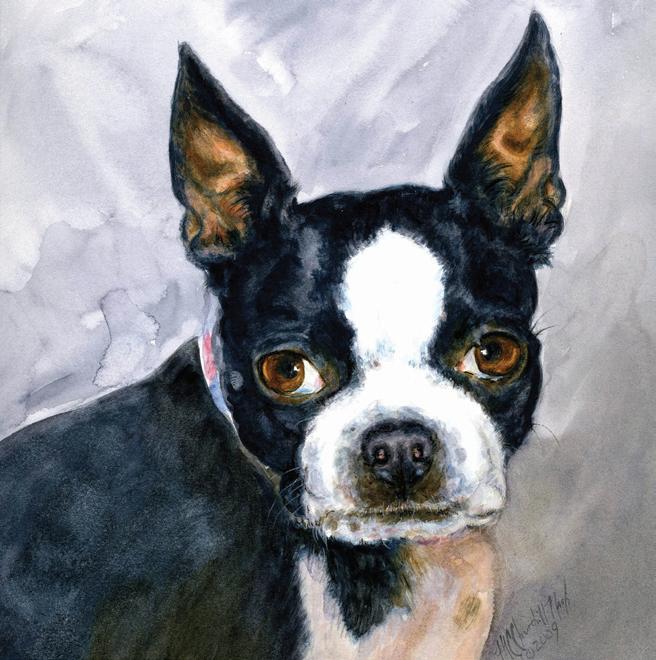
16. A professional artist for 30 years, Churchill-Nash began emphasizing domestic animals when friends began to request portraits of their pets. Commission a special Art Piece honoring Fido for your home. www. mccn-fineart.com
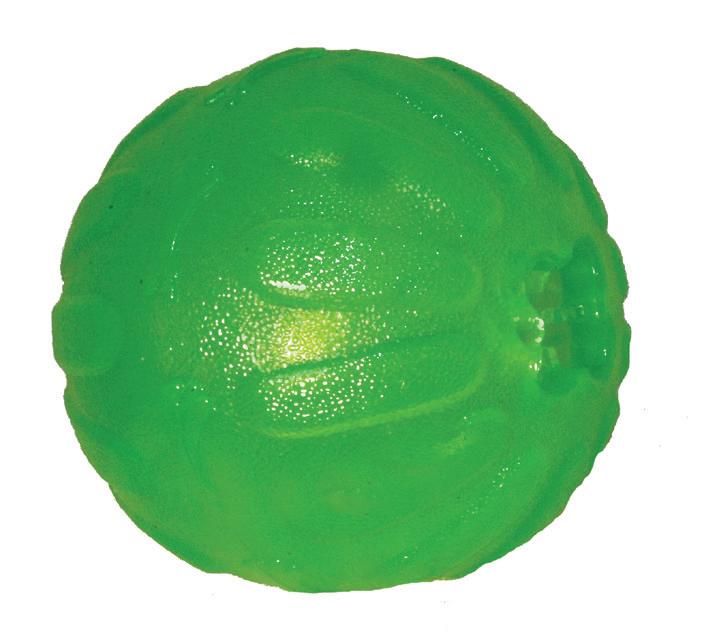
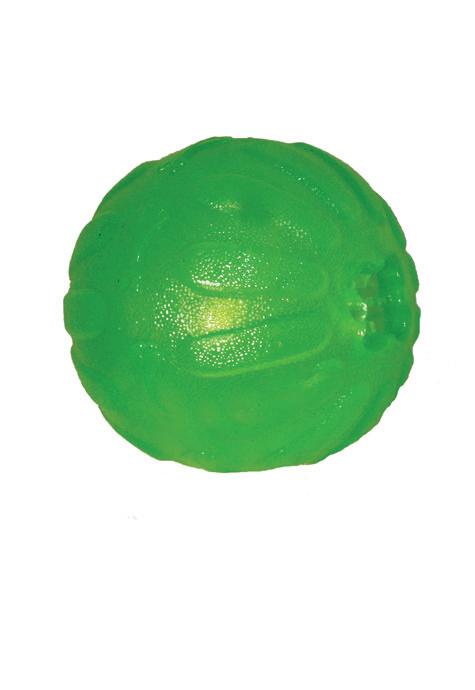
17. The Everlasting Fun Ball comes in a variety of sizes and is extremely durable. The perfect toy to keep your pooch occupied all through the holiday season. It can be filled with treats or dog food and bounces and floats on water. $18.00 from Hairy Winston.
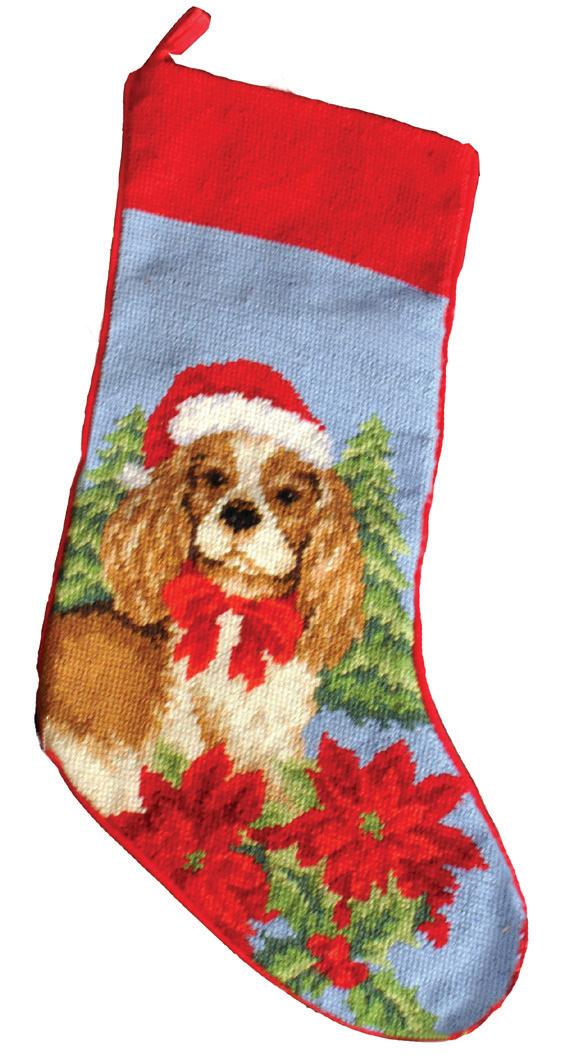
18. Treat your canine to a special Stocking this holiday season. The perfect addition to any fireplace mantle. $44.00 from Alpha Dog Omega Cat.
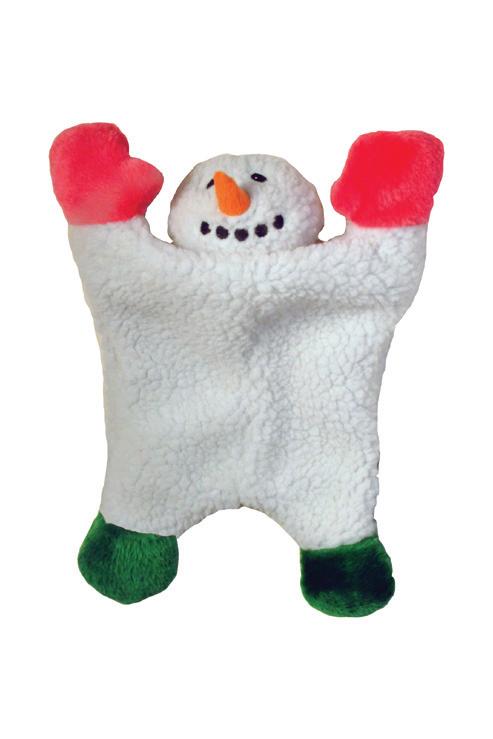
19. Frosty the Snowman has melted into the Godog Snowman Flatty Dog Toy. But never fear he is equipped with FIVE squeakers! Tons of fun to be had. $20.99 from Hairy Winston.
20.Wonder what things looked like from your pet’s perspective? Just clip this Digital Camera to your pet’s collar and explore your pet’s secret life. www.amazon.com
Left page, photo by VikkiTH. This page, photos by Natashalcd, HYG_A2c. All Flickr Creative Commons.
20.
Inspired by the rare snowfall lowcountry dogs were lucky to experience last winter, we’ve created a frosty frolic for fido~ complete with snuggly scarves and silver bells.
�woofin’ In A�
WINTEr WONDERLAND
photography by Laura Olsen Imagery
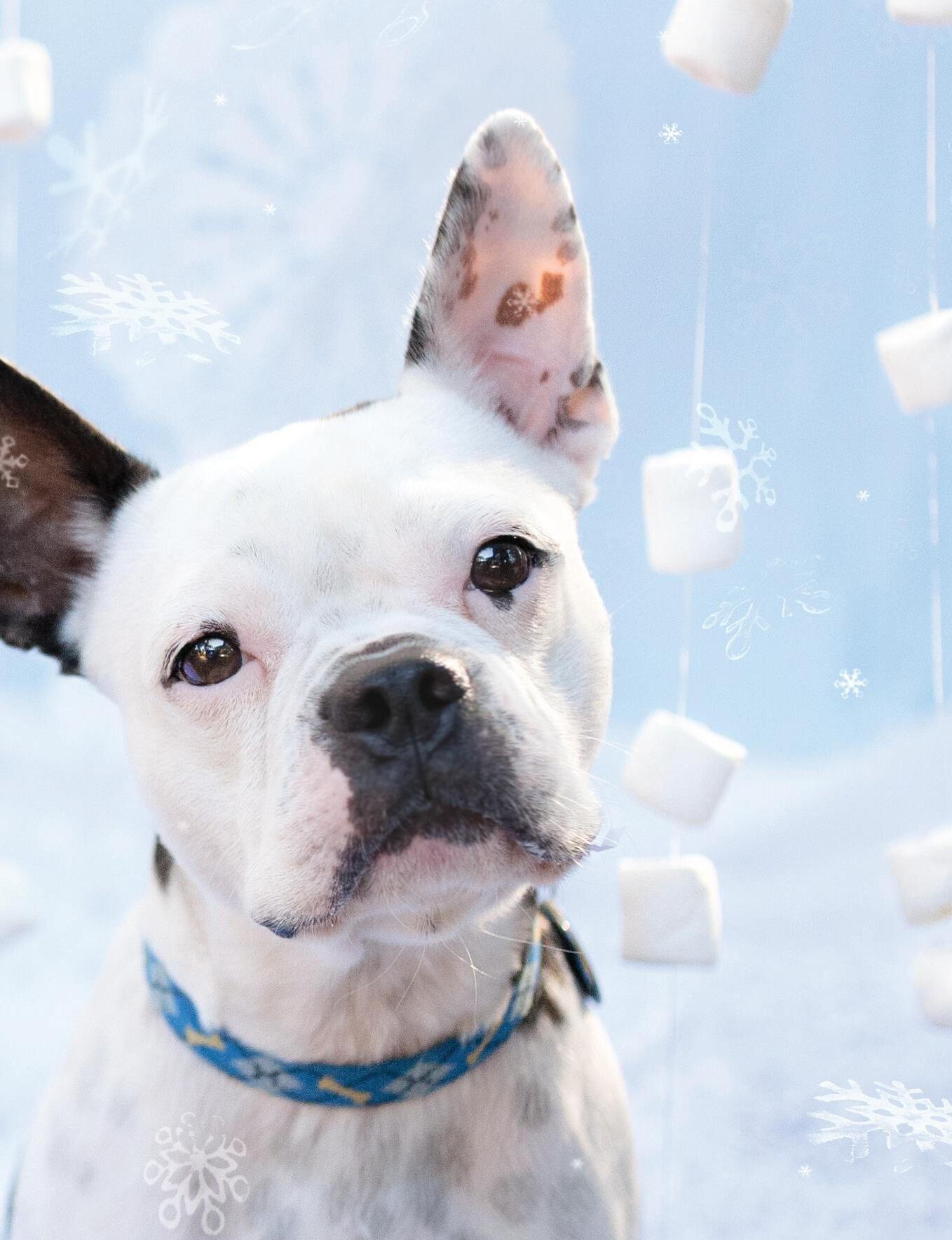
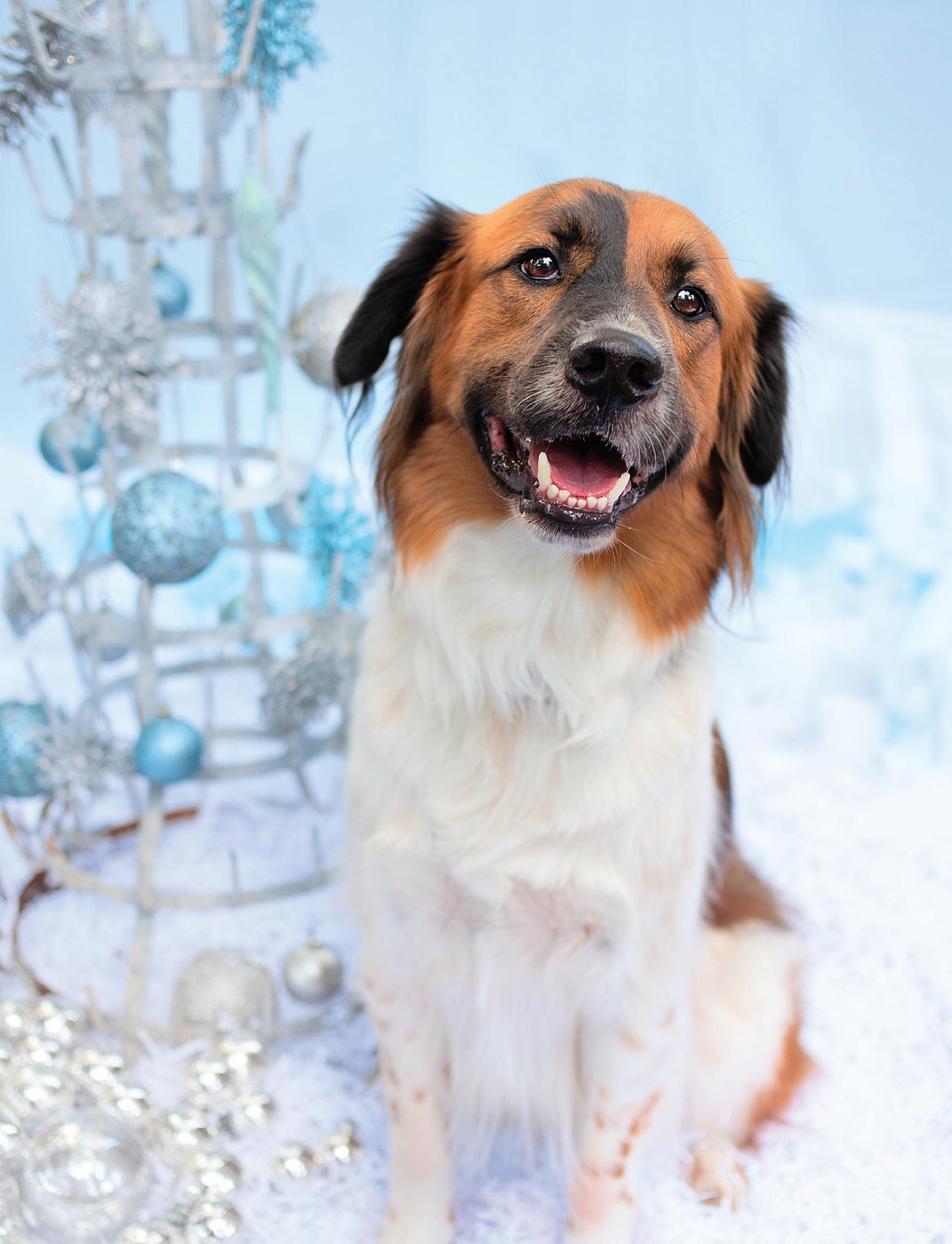
Dexter, a Boston Terrier/French Bulldog mix, poses amidst a marshmallow snowstorm.
� ��
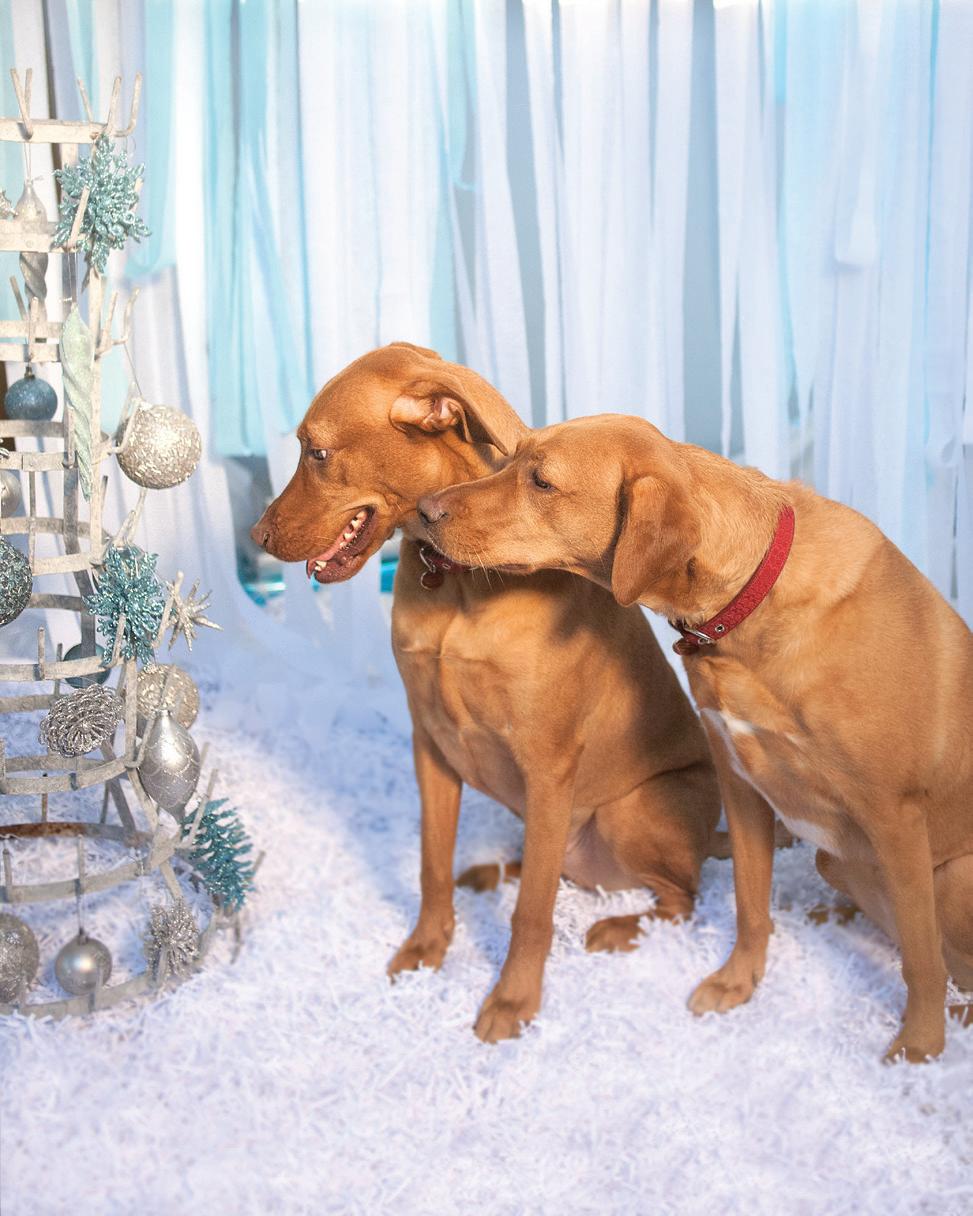
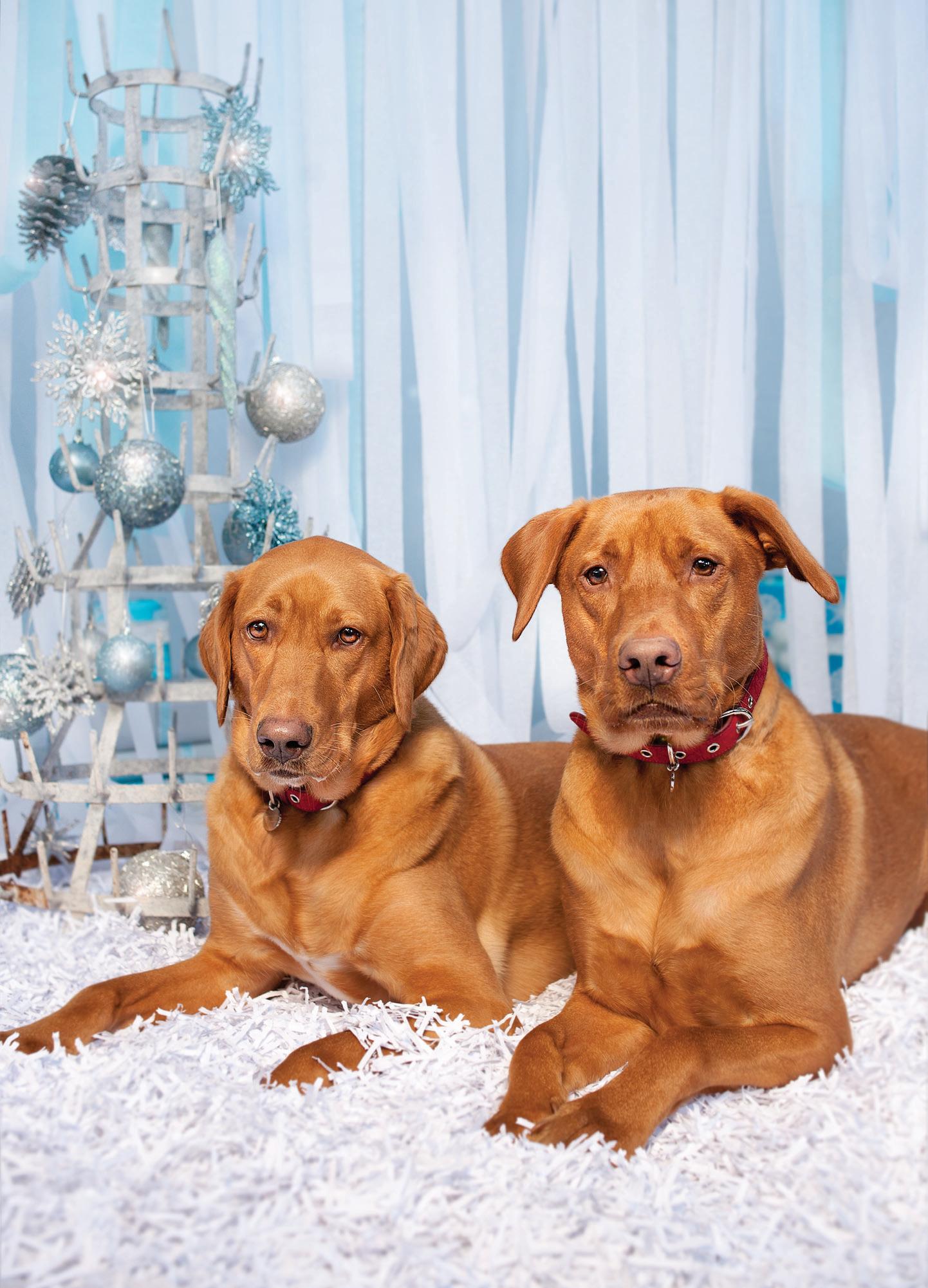
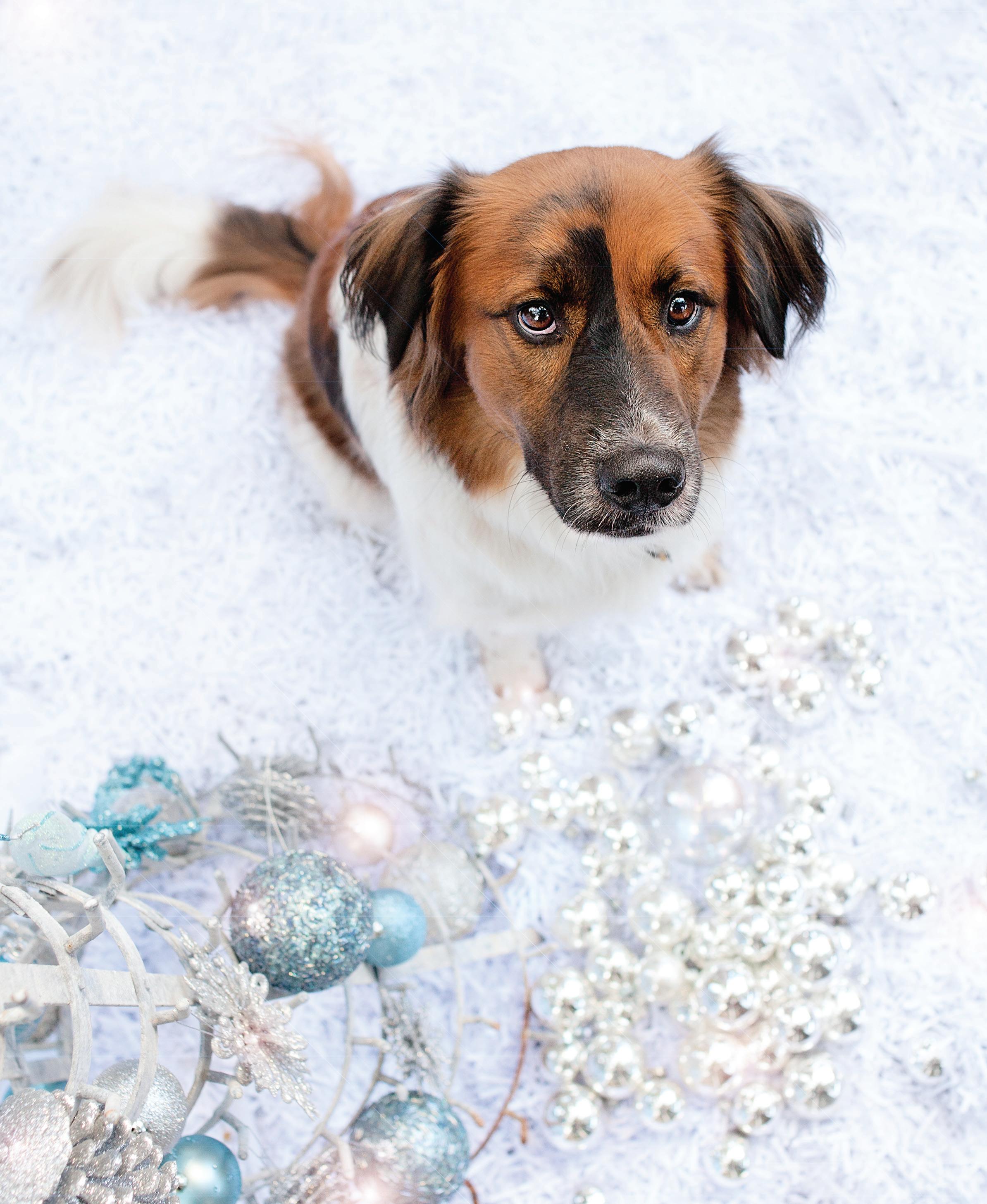
Top: Oscar and Emmy the CAS rescues give their bark of approval to a wintry tree of glistening ornaments.
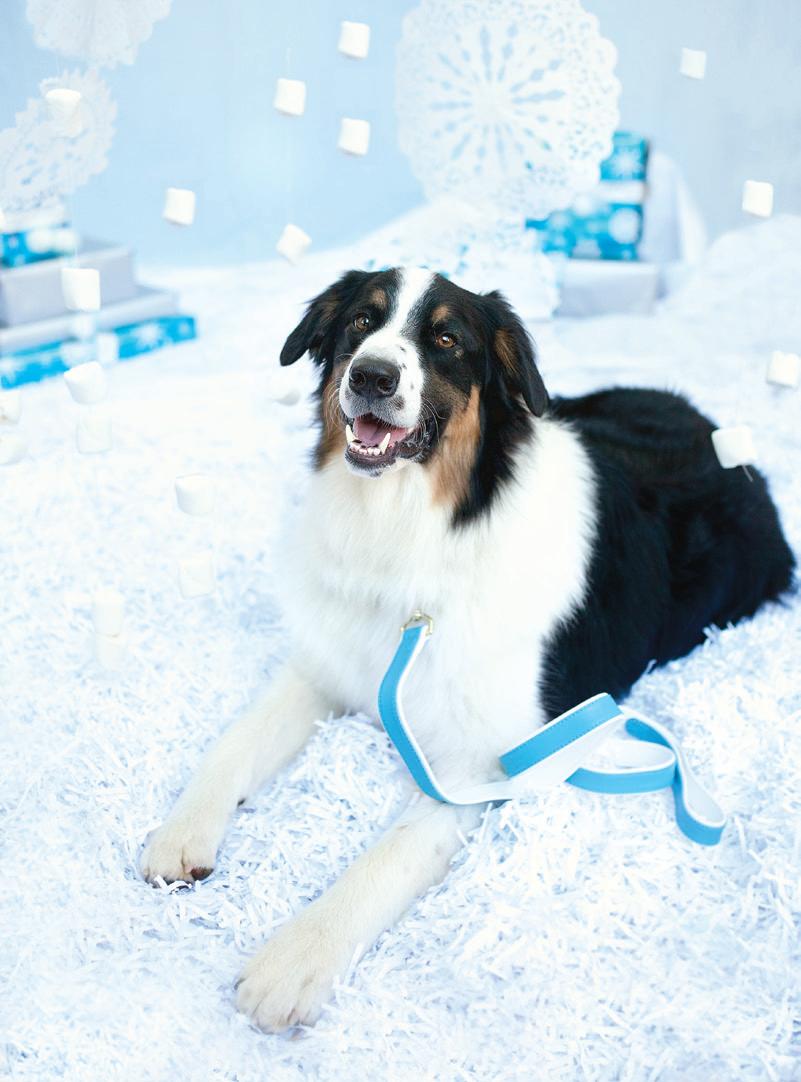
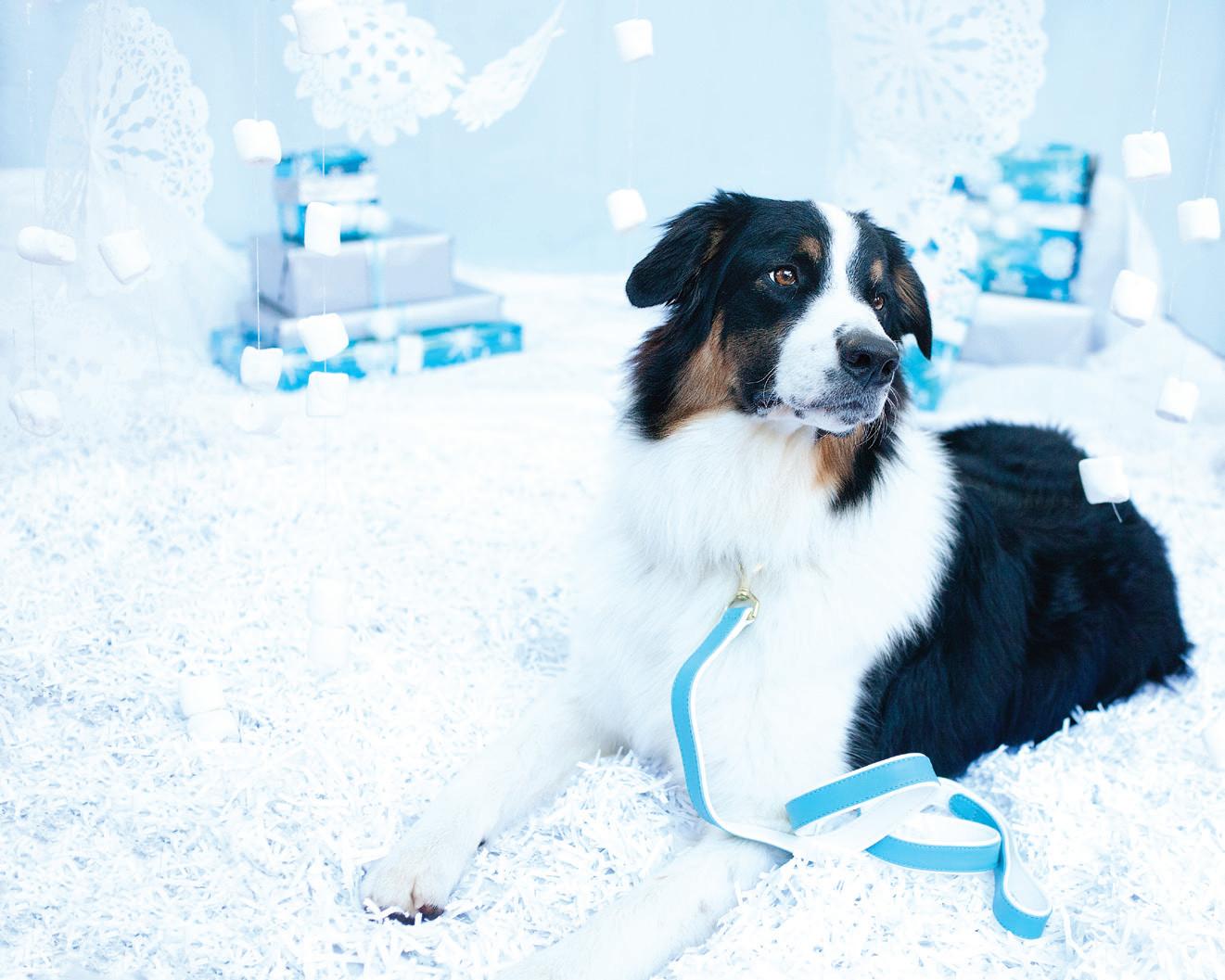
Middle: Orso, an Australian Shepherd, has a few presents for you.
Bottom: This is Cowboy the mixed breed, and he’s wrangling up some holiday cheer.
Sully the Yorkie is tangled in tinsel and paper chains.
�
Top: Orso dashes through the snow in his icy blue leash and collar from Hairy Winston.
Middle: Sully peeks over the paper chains
Bottom: Oscar and Emmy, appropriately named for their shining, golden coats, look regal in a frozen downpour of crepe paper streamers.
Cowboy wonders if you’ll help him decorate the tree.
�Special thanks to Hairy Winston for Dexter’s scarf, Orso’s collar and leash, and Sully’s blue sweater (seen in the table of contents). Appreciation is also extended to Windwood Antiques in Blowing Rock, NC for loaning us the antique French bottle dryer which we used as our holiday tree. And thanks to all our models, though all of them are Facebook fans, they are each as unique as a snowflake. Become a fan today for your dog’s chance at stardom!
Top:
Bottom: Dexter inspects our version of snow ~ shredded paper!
december 3rd-5th 4:00pm, 8:00am 10:00am carolina basset waddle. Basset hound lovers from across the Carolinas and beyond will converge on Charleston to celebrate their love of basset hounds and their support for Carolina Basset Hound Rescue. The grand finale of this action packed weekend of yappy hours, meet and greets, auctions, dinners, and pageants, is our presence in the famed, Charleston Christmas parade. Basset hounds as far as the eye can see, followed by “pooped pup” trucks, continue to fascinate the crowd and has become a favorite of parade attendees of all ages! Check out the full details of the threeday event or to register click to http:// bit.ly/bqqtQp Learn more about Carolina Basset Hound Rescue at www.CBHR.com
december 4th 9:00am reindeer run. A jolly jog or jaunt (5K - 3.1 miles) through the streets of downtown Charleston during the holiday season. This event is for reindeer of all fitness levels and all ages and benefits MUSC Children’s Hospital. Whether it’s running or walking the course, be sure to dress in your best holiday costume to win fabulous prizes. The run is for everyone including runners, walkers, dogs, strollers, & scooters. Register your dog for $10 and get a goodie bag, adult registration starts at $23. For more info and to register: http://www.reindeerrun.org/
december 4th 12:00pm pet helpers
holiday open house with santa paws. Come and explore the Pet Helpers’ adoption center and have your photo taken with Santa! www.pethelpers.org
december 4th 1:00pm cas
celebrity chili cook-off and oyster roast. The perfect outdoor celebration to kickoff the holiday season. Over 500 animal supporters from all over the Lowcountry will fill the grounds of the Maritime Center to witness the spirited rivalry between local celebrities and other notables for the coveted champion robe. All while tasting the award winning chili, shucking endless oysters, enjoying local
beers from Palmetto Brewery, listening to music from amazing local musicians, and supporting a great cause. What more could you ask for? Tickets are just $25 in advance for adults and $10 for kids. The event includes all you care to enjoy chili, oysters, beer, and fun! This is a family friendly event that includes a kids fun zone and there will be adoptable animals Visit www.charlestonanimalsociety. org for additional details on this event.
december 4th 2:00pm retriever meet and greet and holiday open house. Join Low Country Golden Retriever Rescue and Daisy’s Place for a Holiday Open House Meet & Greet at Sweet Olive, I’On Village - Mt. Pleasant, We’ll have lovable dogs to meet, volunteers to greet and even treats to eat...compliments of Square Onion.
december 4th 11:00am santa paws at petsmart mt. pleasant. Grab your fur friend and come get their photo taken with Santa Paws, all in time to make the best Christmas cards.
december 11th 12:00 pet photos with santa at fetch doggy daycare. Come to Fetch for some holiday cheer! Proceeds from photos with Santa benefits Daisy’s Place Retriever Rescue. Call for more info: 843-225-3647.
december 11th 12:00pm karen’s k9s rescue meet & greet athairy winston. Come to the Towne Centre to meet these adorable adoptable dogs and get all the items on your pet’s Letter to Santa.
december 14th 6:00pm carolina coonhound meet and greet. Come out and support Carolina Coonhound Rescue at On The Border. We have LOTS of vet bills to pay and now a heartworm treatment! On The Border in Mt.P will donate 10% of your tab to our rescue!
january new training classes at fetch doggy daycare. Growl class for reactive dogs, supervised puppy play groups, basic obedience for fosters. Call
events
for more info and schedule: 843-225-3647.
january 9th 11:00am rafter’s trot for canine research. Unlike people, animals have no fund-raising drives, no cancer survivor spokespersons, and no special events to bring their plight to the spotlight. Until now! The first six Rafter’s Trots, formerly the Trot for the Cure, have raised over $80,000.00 for canine cancer research. Scientists need continual funding for their valuable work in finding better treatments and cures for cancers in dogs. Enjoying an afternoon at Rafter’s Trot with your dog and dog friends is a fun way to help them further this important work. All proceeds from Rafter’s Trot go to the University of Georgia’s Arch Foundation for GA CaRES Fund. By participating in Rafter’s Trot today, you could be saving a life tomorrow! $25 pre-registration till Dec. 22nd, $30 after. For registration form click to: http://k9careunit. org/trotforthecure/?page_id=35
february 5th 6:00pm the downs byrd memorial oyster roast and silent auction. Benefits the Frances R. Willis SPCA. Will be held at the Miler Country Club in Summerville. Tickets are $25 in advance and $30 at the door. Delicious Oyster clusters, pizza and desserts baked by the Junior Service League of Summerville are on the menu. “Show Some Love” for the animals at the Frances R. Willis SPCA. www.summervillespca. com or frwspcagrants@hotmail.com
Questions? Comments? Call 843-478-0266. Want to submit event information? Visit www.lowcountrydog.com and click on Add an Event. We will do our best to include your event as space allows. Our online calendar lists all events in full.
Pet Obesity
by
Childhood obesity is an epidemic in this country and our pets aren’t far behind. In fact, a 2005 study from Purina found that over half the nation’s dogs and cats are now overweight, making obesity the leading health threat for our pets.
Obesity in pets causes a lot of the same problems it does in people. An overweight pet is prone to a host of related problems, including diabetes, joint, ligament and tendon problems, breathing and heart problems. Overweight cats can even develop skin problems from not being able to groom themselves properly. According to VPI Pet Insurance, in 2009, policyholders filed more than $17 million in claims for conditions and diseases that can be caused by excess weight. Most of these cases could be avoided simply by preventing weight gain and shedding excess pounds.
Though a few extra pounds might not seem like much to you, they’re a lot to
your pet. Did you realize a 12-pound Yorkshire terrier is the same as an average female weighing 218 pounds and a 14-pound cat is equivalent to a 237 pound man?
Pet obesity is among the most sensitive topics veterinarians encounter. For clients, hearing that pets are overweight can evoke many emotions, including guilt and denial. Some owners take it personally if their pet is deemed overweight or obese. Is your pet overweight?
Healthy pets have some padding over them, but a little is plenty. Rub your hands over your pet’s ribs. The skin should move easily back and forth, and you should be able to feel the ribs. Your pet should have a definable “waist” at the bottom of the rib cage, a small tuck-in at the stomach. Your pet is overweight if it is difficult to feel ribs under fat, if you don’t visualize a waist line and they have a broad, flat back. If your pet is overweight, the first thing you need to do is consult with your veterinarian. Though overeating is the number one cause of obesity, there are medical problems which can contribute as well, such as hypothyroidism and Cushing’s disease. Once your veterinarian has examined your pet and determined that he/she is healthy, a balanced weight loss program can be started. Your veterinarian will also be able to help you determine your pet’s target body weight and help you plan an effective weight loss program. Getting your pet to lose weight can
be difficult, but it is not impossible. Weight loss will rely on two principles: decreasing the number of calories which one eats and increasing the amount of exercise one receives. A wealth of information is available on the pet food label. All marketed foods must have a guaranteed analysis. The guaranteed analysis has a tremendous amount of information but it is important to know what the analysis is telling you. Foods cannot truly be compared based on the “as fed” numbers on the label. To compare foods, one has to remember that food consists of water plus the actual nutrients. To compare the content of two different foods, then, the water factor must be removed before you can accurately compare; that is, the foods must be compared on a dry matter basis only.
How do you know if the food you are buying is really any good? To address these issues, the Association of American Feed Control Officials (AAFCO) was founded. This is the group that defines ingredients and official nutritional terms and determines the protocols by which pet foods are tested.
AAFCO is very strict about every term that can be used on a pet label. Is there a technical difference between a dog or cat food labeled with “chicken flavor” and one labeled as “chicken dinner?” Yes! The wording of the label the manufacturer is allowed to use on the food depends on how much chicken (or other ingredient) is actually inside the can or bag of food. Knowing what the wording of the labels mean can help you make sure you are feeding your pet what you think you are feeding them.
When reading the label on your pet’s food, follow the recommendation for your pet’s ideal weight, not his current weight. The caloric needs of a particular pet may differ depending on such factors as lifestyle, genetics, activity level and medical conditions. Your pet will likely be fed fewer calories if you are attempting to reduce weight and improve fitness.
Suggested Daily Caloric Intake:
Dog: 10 lbs. 200 to 275 calories per
20 lbs. 325 to 400 calories per day
50 lbs. 700 to 900 calories per day
Cat: 10 lbs. 180 to 220 calories per day
Michelle Mayers, DVM
photo by Vandelizer, Flickr Creative Commons
Please note that the calorie counts provided are guidelines for average lightly active adult spayed or neutered dogs or cats (1 to 7 years old receiving less than 30 minutes aerobic activity per day).
Because pet treats aren’t required to list calories on their labels, most pet owners aren’t aware of the dangers many treats pose. Many of today’s treats are full of sugar and fat and pets are often fed several treats per day. I’m not against treats, just too many treats. It’s no different than eating dessert at breakfast, lunch and supper and then enjoying a few in-between meal snacks. The impact even small treats have on a pet’s weight can be significant. For example, if a 60-pound dog eats one large Milk-Bones Dog Biscuit it’s the equivalent calories of a Snickers Bar! Whatever food regimen you and your veterinarian decide on, be determined to stick to it. Get out of the habit of expressing your love for your pets by handing them pet treats. Keep the treat volume to a minimum, and switch to a reduced-calorie treat. Even better, substitute mini rice cakes and carrot sticks for the occasional dog treat. Dogs like them just fine, and they’re not going to sabotage any weight-loss efforts. Yes, it’ll be hard in the beginning, what with those begging eyes and all. But don’t give in. Your pet’s life will be happier and longer if they’re in the best of health.
Dr Michelle Mayers is a lead veterinarian at Bees Ferry Veterinarian Hospital. Dr. Mayers is also an associate professor of veterinary technology at Trident Technical College and she is a columnist for Veterinary Technician Magazine. Her hobbies include camping, hiking and music. She and her husband, Corey and their daughter, Ceily live in Charleston with Elliot, a Bernese Mountain Dog, Wilson a Lab/Border Collie Blend, and an orange tiger kitty named Jerry.
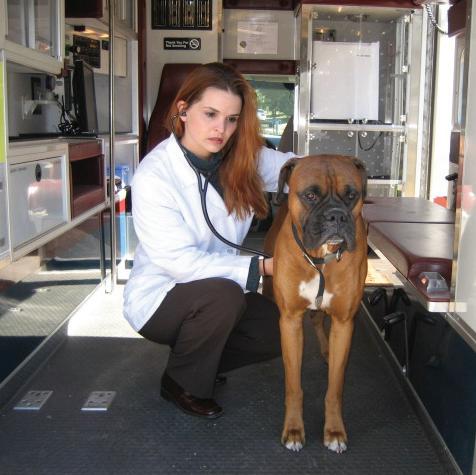
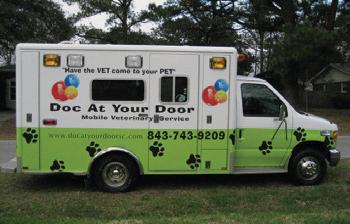
Dr. Kendra Findley diagnoses a patient in her clinic on wheels.
Chasing and predatory behaviors are hard wired into dogs.
Prey Drive
by Susan Marett
After thousands of years of natural selection and breeding practices, the modern dog continues to display all the behaviors needed to locate, hunt, and kill prey. These behaviors can often be observed as early as six weeks of age. Some of them include stalking, intense staring, the attack, the grab/bite, carrying away and eating the animal.
Dogs who have a strong drive to chase small animals can be a big problem to their owners. They can be injured or killed as they cross the path of a vehicle, become lost, or badly hurt or kill someone else’s pet. While most of us would like our dogs to display only enough predatory skills to fetch a tennis ball, many of our dogs have what it takes to hunt down a prey animal and finish it off.
How can we prevent our dogs from endangering themselves or other animals? The answer is that we can train them with the understanding that dogs are often compulsive about chasing other animals, and need time and patience to learn self-control. Training specific skills can help us to better control our dogs when they’re faced with a challenging distraction. Training also develops good communication and respect between person and dog. According to Suzanne Clothier, “Leadership is when a dog will do what you want him to do, even when something else is more important.”
Let’s talk first about training for a dog who has already practiced chasing small animals for months or even years: Foundation Training
Name Game: In an environment free from distractions, play the “name game” with your dog. Say your dog’s name in an upbeat tone of voice. As soon as he turns towards you, praise and reward. Practice in various parts of the house and then in the yard or area just outside your home. Your dog does not need to come to you, just to look or orient towards you.
Come When Called: In a quiet, indoor area, begin working on the recall. If you are practicing alone, play with your dog and then suddenly run away, calling your dog as you go. Praise, reward, and play with your dog when he reaches you. You can also play hide and seek. When your dog has become distracted, leave the area and hide. Call your dog and celebrate when he finds you. If you have a helper, you can practice calling your dog back and forth between the two of you.
Leave It: Practice leave it -- starting with treats but progressing to other objects. Eventually you’ll use this command for prey animals. Family Friendly Dog Training by Patricia McConnell and Aimee Moore is a good source for information on training leave it.
Sit Stay: Practice sit and stay inside your home and in your yard. Make sure that your dog can sit stay almost every time
without mistake, before you ask for sit stay in new places.
Take Your Training on the Road
Working in an unfamiliar place may help your dog to pay better attention to you. Early morning and dusk are the toughest times for training. These are the times of day when smaller animals are more active. You can use a regular leash, or a tracking line of 20 to 40 feet. Make sure that you have treats that will really “wow” your dog. Use treats that are extra special such as cheese, hotdogs, meat, or freezedried liver and remember to frequently change what you’re using from session to session. Your dog will notice and will work harder and with more enthusiasm.
Next, practice the same commands you’ve used in the house on a walk or during a stroll through a park. Reinforce (with praise and rewards) all attention that your dog pays to you. Remember to stay connected mentally and emotionally to your dog – no ipods and no cell phone calls. Remain vigilant so that you can redirect your dog’s focus to you when a small animal appears. Remember that your commands will be most easily followed if you catch your dog early, well before he is running at top speed towards an animal.
• Easiest: Dog sees and begins to fixate on squirrel.
• Easier: Dog takes the first step towards the squirrel.
• Harder: Commits to going after the squirrel.
• Hardest: Bolts after squirrel.
If you can get your dog’s attention, and if he is responsive to commands most of the time, terrific! If you’re experiencing problems, consider the following:
• Your dog needs more foundation training in environments with fewer distractions.
• Your dog needs more incentive to respond to cues, i.e. use better food rewards or find a really exciting toy.
• Your dog is only called when a prey animal is very close. At this stage in his training, it is too difficult for him to come unless the animal is farther away.
• Your dog is always put on a leash after he is called, therefore he is punished for coming.
Prevention
When adopting a puppy, socialize your puppy well. Expose your puppy to as many small companion animals as possible. Remember that the critical socialization period is 3 to 12 weeks of age. Take care that your puppy does not learn undesirable predatory behaviors from another dog. His biggest source of fun and play should be you! Teach your puppy or adult dog basic commands and thoroughly proof them in real life situations. Do NOT leave your dog alone in the yard without anything else to do but track the movements of small animals all day along. Cats can assess exactly where invisible fence lines fall, and can spend hours passing dirty looks back and forth with dogs. This sets up a scenario in which the dog spends almost all of his time obsessing about the cat or the squirrel. And when opportunity knocks, he’ll take it. Finally, remember that there’s no quick fix to stopping predatory behavior. Quick and easy fixes are often inhumane and cruel. Patience and persistence are necessary during training, as well as management. Developing good observational skills, while learning about our dogs’ breed specific traits, can also be invaluable for reaching our training goals. The reward for this effort is better communication with our dogs, and an increased willingness on our dogs’ part to follow our lead. Learn more about Susan Marett at www.purelypositive.com.
adoption
Pet Helpers
Pet Helpers is a private, non-profit 501c 3 Adoption Center and Low Cost Spay/Neuter Clinic that serves communities across the Lowcountry.
Our mission is to end the euthanasia of all adoptable cats and dogs by keeping all animals until adopted; providing low cost spay/neuter surgeries; offering humane education programs; pursuing animal cruelty prosecution; and initiating animal welfare legislation.
23,000 animals are euthanized in Tri-County shelters every year. That number is twice the national average. The source of the problem? Reproduction. The key to the solution is spay and neuter, and the education necessary to encourage the public to utilize and support our programs.
Please visit our website at www.pethelpers.org and look at all our adoptable animals as well as volunteer opportunities and event information.
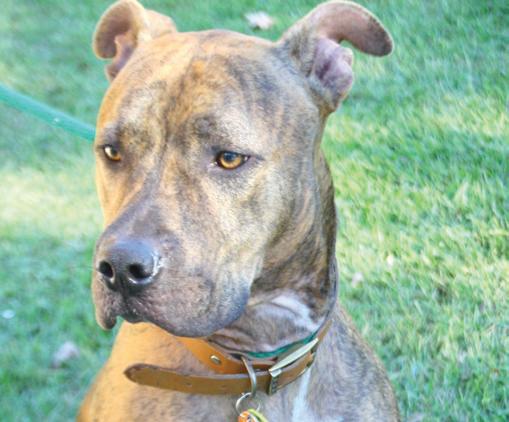
is a 2 year old male dog. His coat is a beautiful black and brown brindle. While he does have physical characteristics of a pit bull terrier, his body resembles more of a lean and athletic breed. He is kind, but strong. He is agile and aims to please. Currently, he shares a kennel with another dog and he plays very well. He is definitely a lover. He does well with children, and is extremely loyal.
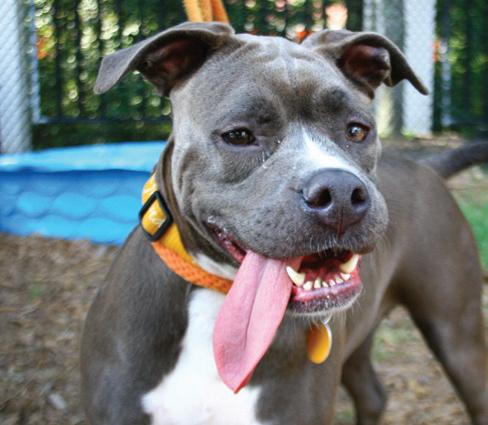
BB is a 2 year old silver Pit Bull mix. Promise she is not sticking out her tongue at you! She was sick when she was little and now has trouble keeping her tongue in her mouth. She may be a little slobbery, but she’s super sweet! She can be very quiet and hang out, but also loves to run and play. She is not very good with other dogs, so you will have to be her best friend.
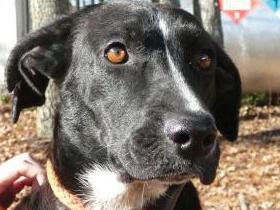
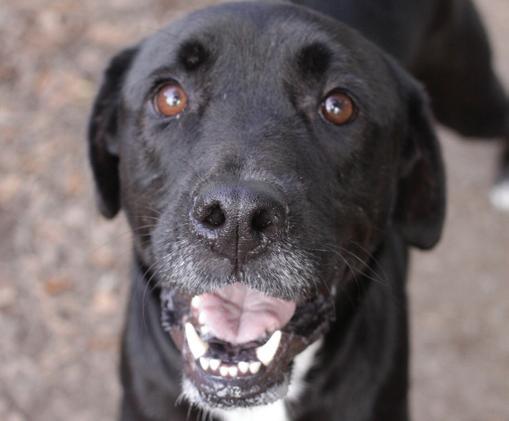
Australia is a three year old lab mix. She is all black, except for her white socks, a white tip on her tail, and a white stripe on her head that makes her look like a skunk! She first came to Pet Helpers as a mama dog with seven puppies! She was malnourished, but quickly bounced back to health. She loves car rides and playing with other dogs. She is a true companion, and wags her tail when she sees her human friends.
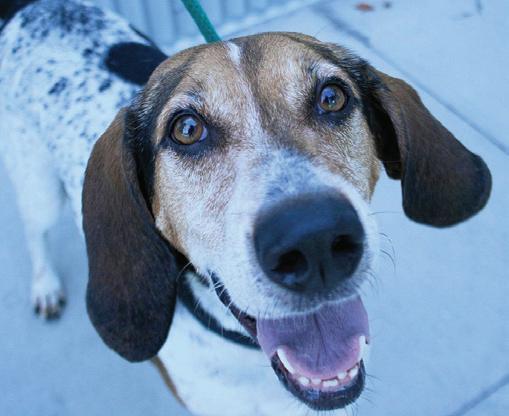
Ned will be your best friend right from the get-go! He is a 5 year old, extremely friendly, hound mix. Although he was found roaming in Francis Marion National Forest, he is in excellent health. Ned plays well with other dogs. He has long, soft ears, and will stay by your side and let you play with them. He is accustomed to spending time outdoors, but obviously prefers the company of humans inside.
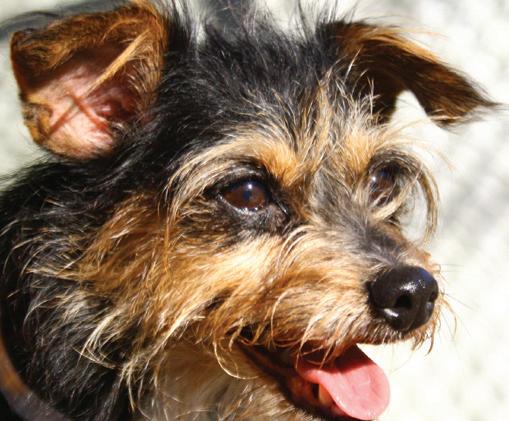
She is black and tan, with cute, scruffy little whiskers. She has the energy of a dog ten times her size, and is extremely cuddly! She can jump three times her height, and loves car rides. She gets along well with other dogs, and can certainly hold her own. She deserves a family, with or without another dog, that will play and play with her!
Butch Cassidy is a 4 year old black lab mix. He was with Pet Helpers as a puppy, and was recently returned because of financial reasons. While he left Pet Helpers as a healthy pup, he returned heartworm positive and will require treatment upon adoption. But don’t worry Pet Helpers covers the cost of treatment. He’s just looking for a home that will give him the care that he so deserves.
Cordelia is a spunky little 6 year old wire haired terrier mix.