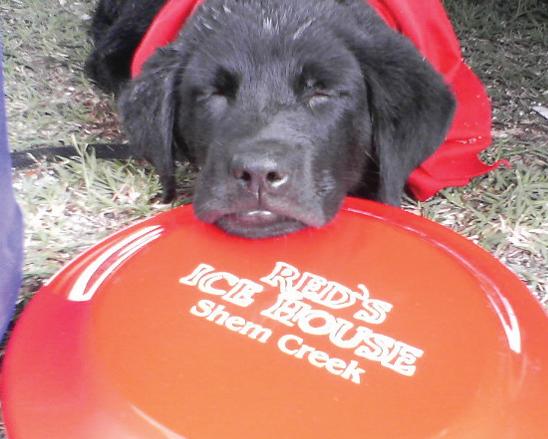
canine stem cell therapy
animal blood bank to open control unleashed training

canine stem cell therapy
animal blood bank to open control unleashed training
local dogs who serve & protect at home and on the battlefield
Publisher
Leah England (843) 478-0266
leah@lowcountrydog.com
Advertising
Brian Foster
843-732-0412 brian@lowcountrydog.com
Communications Intern
Gillian Nicol
Online Contributor
Leah Nicole Hawkins
Guest Journalist
Stratton Lawrence
Staff Photographer
Laura Olsen www.lauraolsenimagery.com
Guest Photographer
Stacy Pearsall www.f8pj.com
Accounting
Carrie Clark Financial Services (843) 367-9969
carriecl@comcast.net
Lowcountry Dog Magazine PO Box 22 Mt. Pleasant, SC 29465 www.lowcountrydog.com
Web: lowcountrydog.com
Twitter: www.twitter.com/leahengland Facebook: facebook.com/lowcountrydog

Lowcountry Dog’s mission is to be the leading local resource for dog owners regarding regional events, health and wellness information, trends, style and lifestyle choices. We also strive to be a mouthpiece to the public for various dog related non-profits and promote pet adoption and other responsible pet care practices.
Dog lovers can pick up the bimonthly magazine for free at most area veterinarians and pet stores throughout the lowcountry, as well as numerous restaurants, coffee bars and retailers. A full distribution list is posted to the magazine’s web site, lowcountrydog.com. Subscriptions are also available. Please call 843-478-0266 for more information.
The entire contents of this magazine are copyrighted by Lowcountry Dog Magazine with all rights reserved. Reproduction of any material from this issue is expressly forbidden without permission of the publisher.
Lowcountry Dog Magazine does not endorse or guarantee any product, service, or vendor mentioned or pictured in this magazine in editorial or advertising space. Views expressed by authors or advertisers are not necessarily those of the publisher.
friends 4 Ayoka Lucas
14
of events 21
and wellness 22
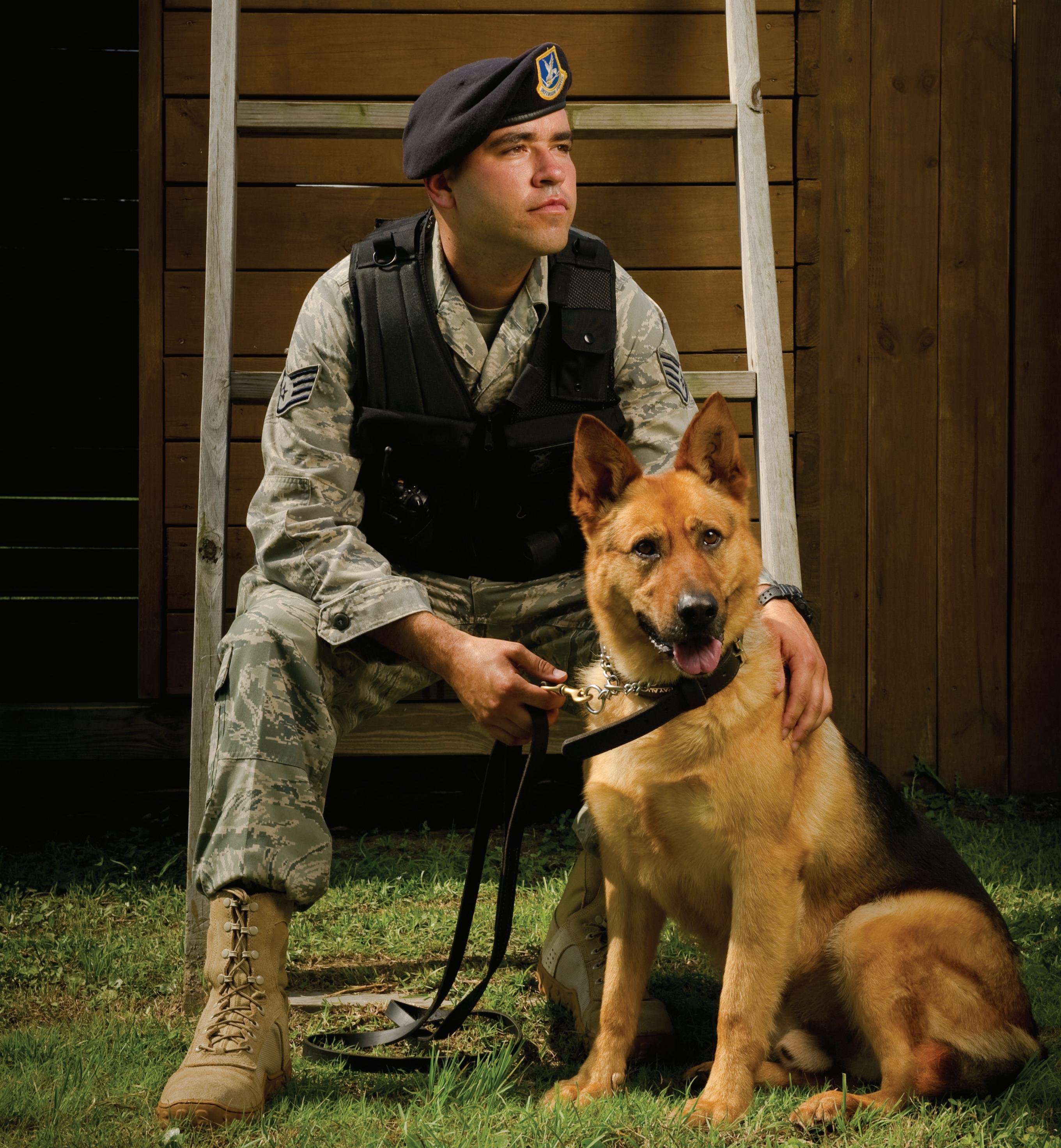
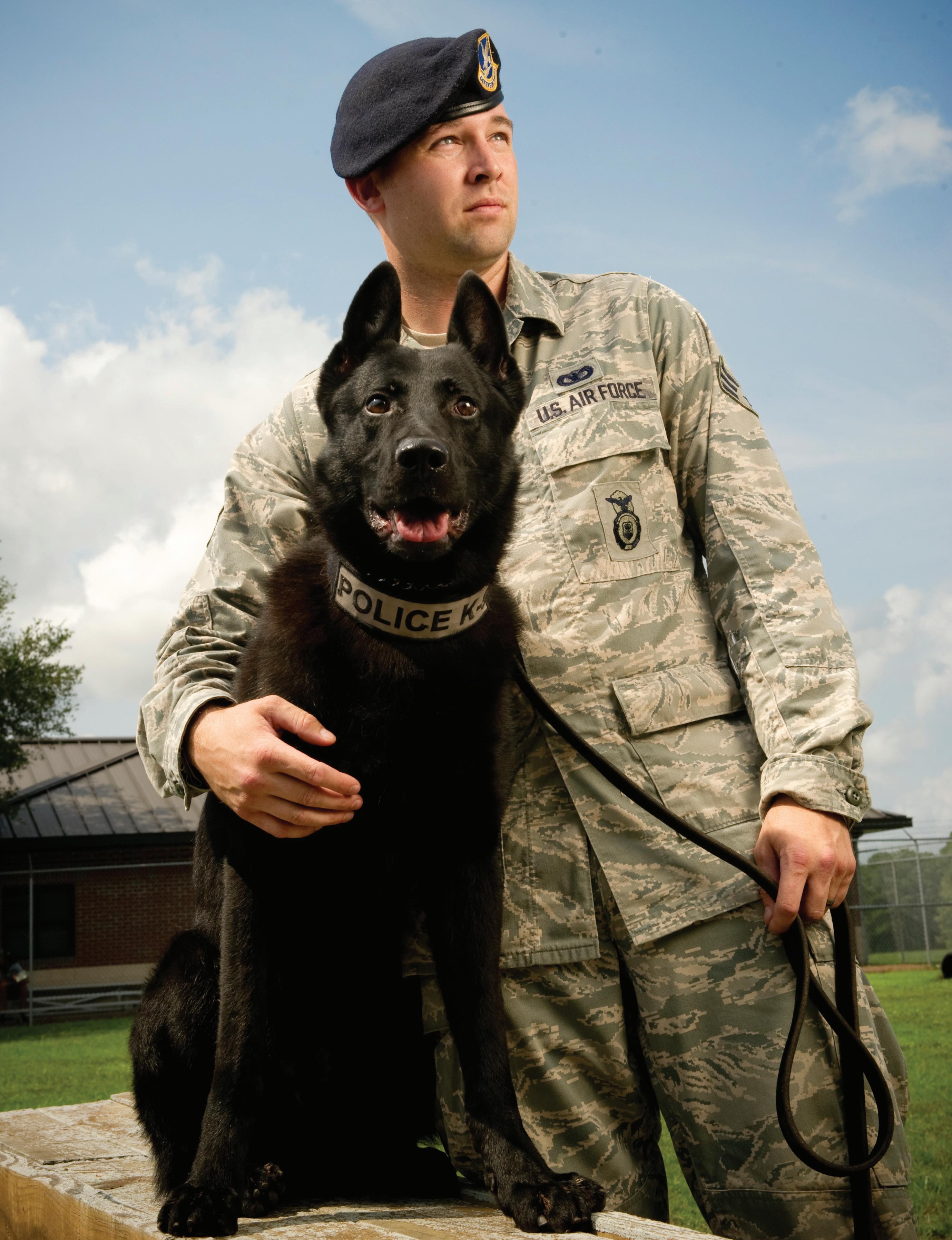
Cover photo by Stacy Pearsall, F8pj photography, featuring Staff Sgt. Jonathan Campbell and his working dog Rony, an eight-year-old German Shepherd. The pair sit on an obstacle at the agility course at the 628th Security Forces Squadron working dog kennel at Joint Base Charleston.. 1st Table of Contents photo above by Olsen Imagery. 3rd Table of Contents photo by Stacy Pearsall. This magazine is printed on 100% recycled paper. Continue the green process by recycling this copy.


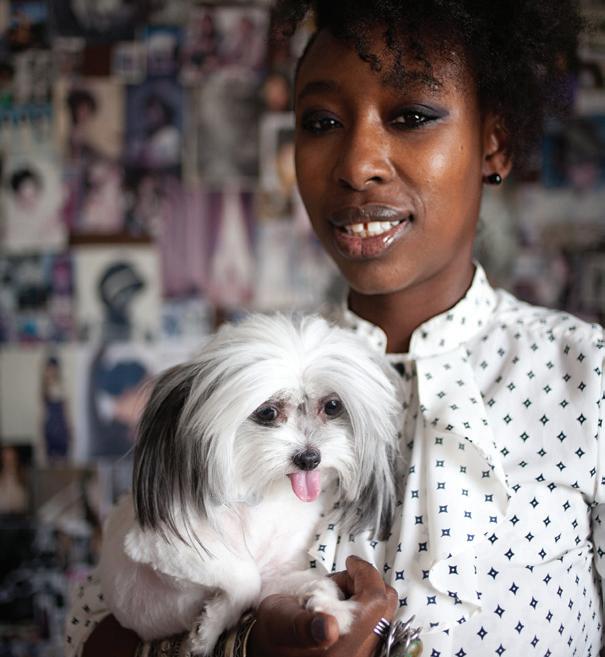
Occupation: STYLE DIRECTOR, Charleston Magazine and Charleston Fashion Week
Dogs in Household: ONE Named: Jett aka “Jetty” Lives: WEST ASHLEY
1. What’s the best thing about owning a dog?
Watching their personality and expressions.
2. What do you find the most frustrating about your dog, or struggle with as a dog owner ?
She has thunderstorm anxiety and the sound of thunder startles her so much that, well... to say it politely, she gets into her potty position and you can guess the rest. Sigh!
3. All time favorite memory of your dog?
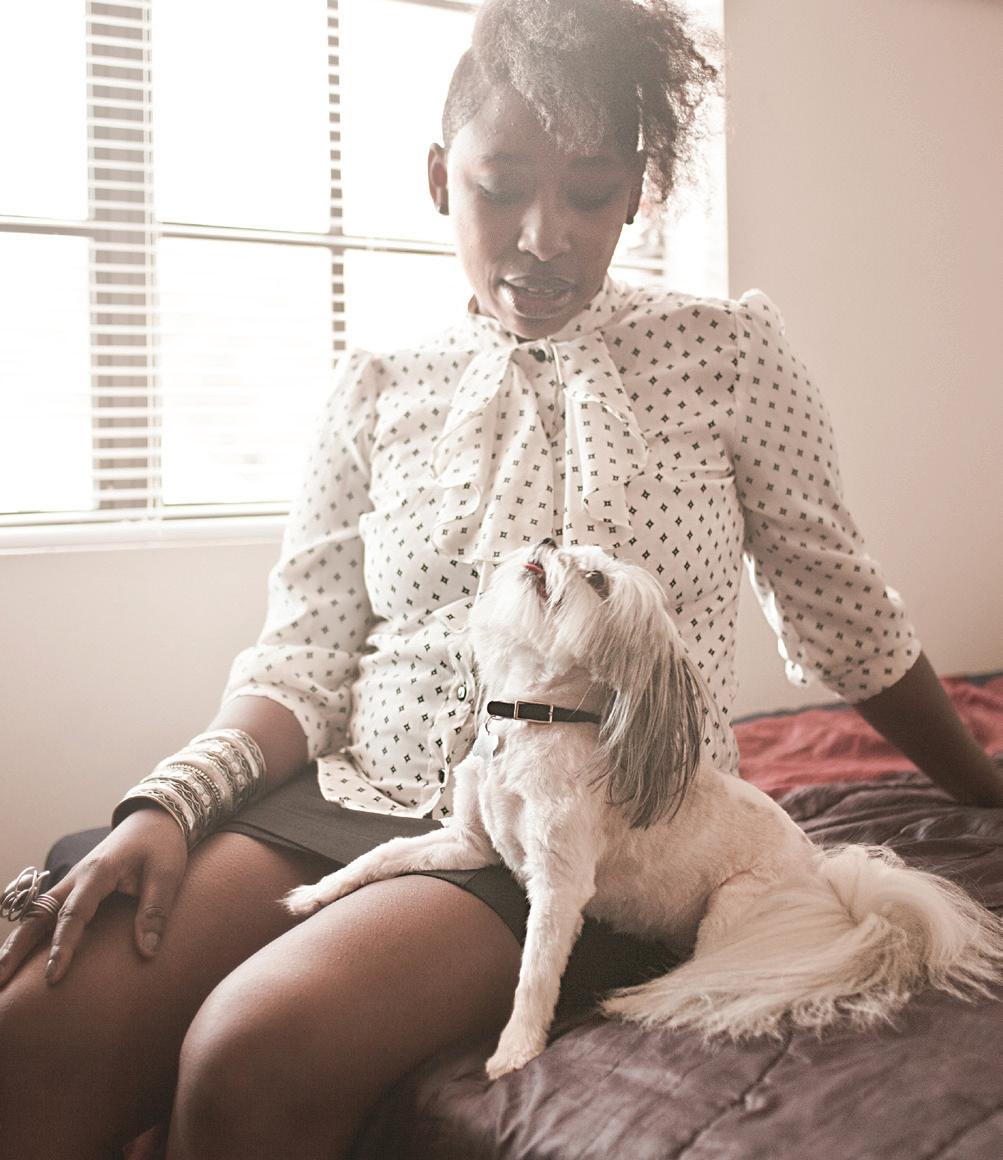
Jett greets me with a little dance involving spinning, rolling on the ground and lots of tail wagging. Her tail is bigger than her whole body, so when she wags it her entire butt shakes. It’s hilarious and always makes me smile.
4. Favorite place to hang out with your dog in Charleston? I work a lot so I would say my bedroom, curled up with Jett watching a good movie!
5. With what aspect of your dog’s personality do you most identify?
She loves cuddling with clothes and shoes! We LOVE fashion. And we’re both always touching our hair. If you ruffle Jett’s bangs she’ll take her paws and fix them back.
6. In your opinion, what’s the one item all dog owners must have?
Jett could care less about a ball or a bone really, but she loves her “Babies,” what we call her stuffed animals. Also any stylish dog accessories!
7. If your dog were some other sort of animal, what would he/she be?
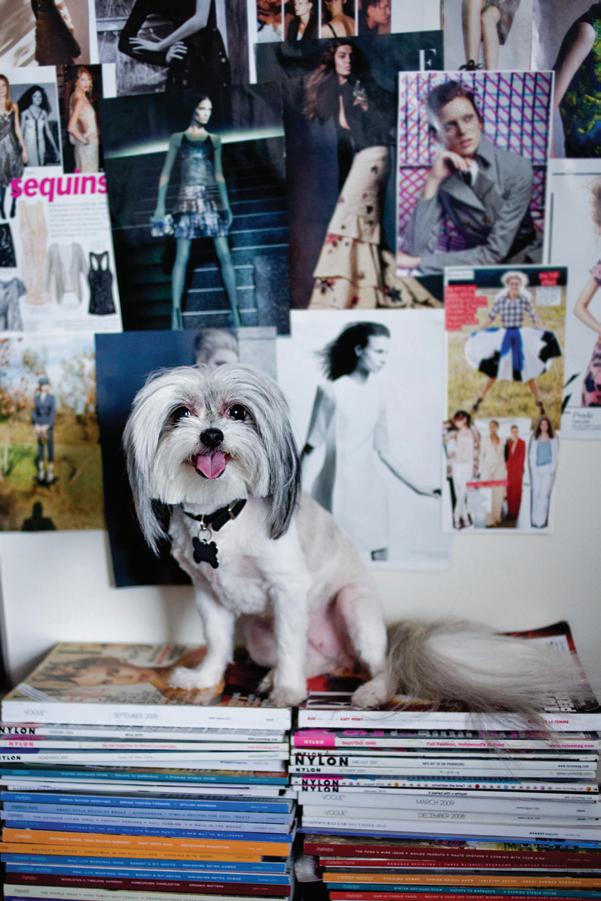
She doesn’t think she is an animal as it is! In fact, when she’s around other dogs she is not interested in them at all. She’d rather interact with their people. She thinks she’s human.
8. How does your dog inspire you? Or what has your dog taught you about life and work?
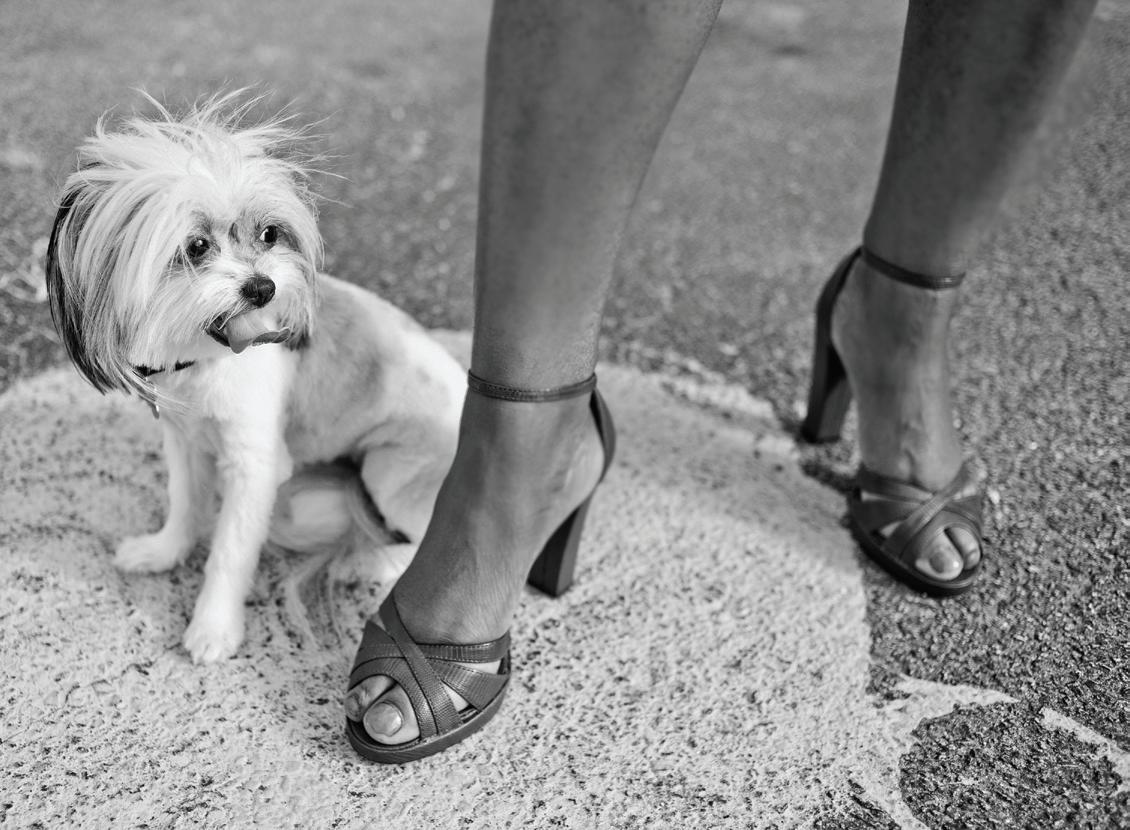
The crazy amount of love my dog has is super inspiring. No matter what she just wants to cuddle and be close.
9. How do you KNOW you and your dog are best friends?
We have our own way of communicating strangely enough. When I’m in a bad mood and not to be bothered, she only needs to see the expression on my face and she’ll leave me alone. After a while she will peek her head around the door to see if I am ready to snuggle.
10. What’s your favorite thing about Lowcountry Dog Magazine?
How cool you make it look to own and love dogs!

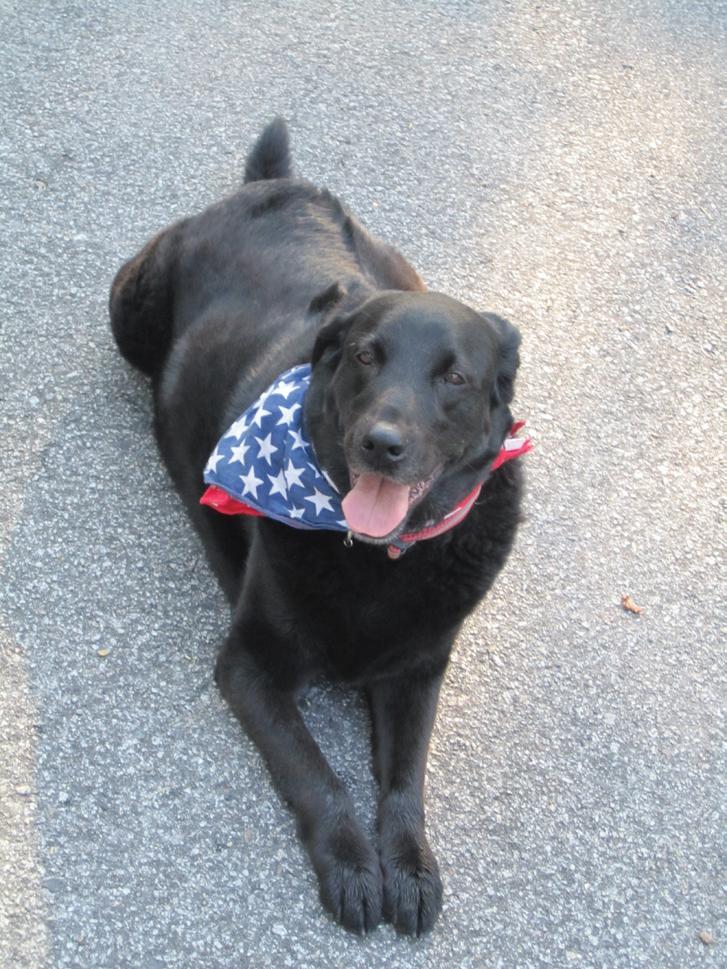
For the last 3 years Gator, a five-year-old Labrador, has taken pain medication every day for the pain associated with arthritis. His case is so severe that his ankles were constantly swollen and painful. He also has arthritis in his hips, elbows, shoulders and wrists. The Labrador breed is predisposed to joint issues, but Gator really hit the jackpot. Nearly all his joints are affected. Gator has responded well to acupuncture and laser therapy in the past, but he never really lived a day without pain since he was a puppy. Gator’s owner, Melody Bailey was worried that the medicines would stop working, or taking them long term would damage his internal organs. She was excited when the option of Stem Cell Therapy became available.
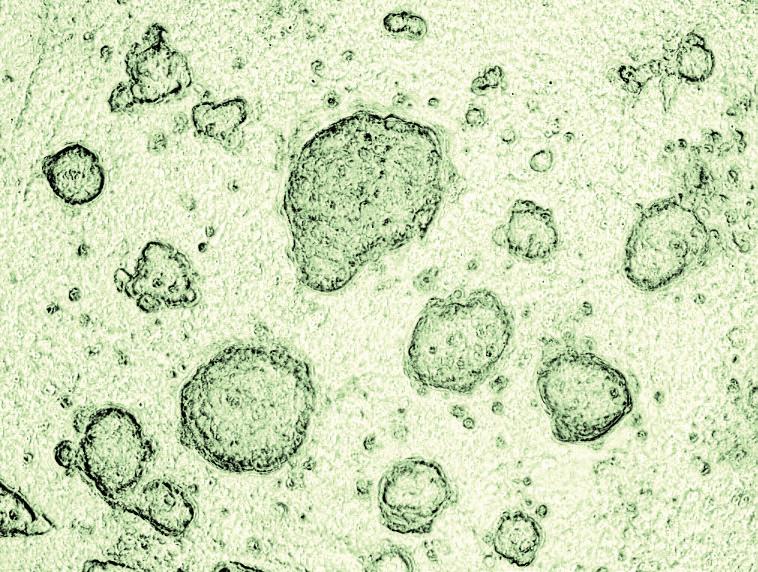
Stem cells have been a point of controversy in human medicine largely because the cells were often derived from fetal tissue, and the moral implications stopped research of this type of therapy in the United States. Fortunately, researchers developed a way to harvest stem cells from a patient’s own tissue - and fat in specific. The Medi-Vet Stem Cell procedure involves general anesthesia to harvest about 20 to 40 grams of fat, collected after an incision is
by Dr. Ruth Roberts
made behind the shoulder. The wound is closed, and the patient is awakened from anesthesia. A blood sample is collected to obtain Platelet Rich Plasma, or PRP. PRP is full of growth factors that will help the stem cells develop and grow where they are placed.
Once the fat has been harvested, it is processed and purified until only the stem cells remain. Medi-Vet’s system allows us to perform this procedure in our office, so that we inject the stem cells back into the patient that same day. Because the fat does not have to be transported to be processed, the yield of cells is higher, and they are more viable, as they have been kept at body temperature during processing. Once the cells are processed, they are combined with the PRP, and exposed to a special light that helps turn the cells on and get them ready to become new cartilage, tendons, or whatever tissue they are being directed towards.
When the cells are ready, the patient is sedated with a light anesthetic, and the joints that are to be injected are prepared for sterile surgical injection directly into the joint. The cells are often given intravenously to kick start the immune system. Fat derived stem cells cannot turn into any cell of the body, but they can turn into most of the tissues associated with the skeletal muscle system.
In Gator’s case we harvested a large
sample of fat so we could cryo bank some stem cells in case other joints flared up. That way he would not need a second surgery. We injected his ankles (hocks), wrists (carpii), hips, and shoulders. He also had a small dose given intravenously. He took one more pain pill the day after the procedure and never needed any more pain medicine. In a week he began trying to scratch his head with his rear foot while standing. In one month he stood up on the counter at Gentle Grooming to steal snacks off the counter top. In five weeks he has started playing with his buddies at home, counter surfing, jumping onto the sofa by himself, and generally trying to act like a Labrador. These are all things he could never do before, even as a puppy. He continues to improve in his abilities as time goes on. Gator had a phenomenal response, but not every one has such improvement. Approximately 10% of dogs get no improvement whatsoever. The remainder get benefits ranging from moderate to excellent improvement in their daily ability to be a dog, as well as tremendous pain relief.
Is it worth it? This is the big question, as the entire procedure including any medications needed to go home is about $2000.00. If you ask Melody, she saw it as an opportunity to get Gator off of pain medications, decrease the need for visits for laser or acupuncture therapy, and improve his quality of life. Another client told me that her big chocolate boy is running on the beach for the first time in three years, and he can swim for hours instead of minutes now.
As we learn more about stem cell therapy we will begin to see the therapy used to treat other parts of the body that are in trouble. Stem cells have been used to treat kidney disease, and the University of Florida Veterinary School is conducting a study on this type of therapy in Dobermans with Dilative Cardiomyopathy, a deadly form of heart disease. There is much to be discovered about the benefit of Stem Cell Therapy; and I look forward to healing more animals using this method. For more information or a complimentary consultation to see if Stem cell therapy may be right for your pet, please call use at 843-437-0063, or email me at drruth@sundogcatmoon.com
A round-up of products that help you go on a bike ride with your dog safely jogging along side. Click to http://bit.ly/qV3xoW
Filed under: Training
Trainer Susan Marett gives advice to a reader about how to stop her dogs from chewing on her rugs. Click to http://bit.ly/r5WxcB
Filed Under: Training
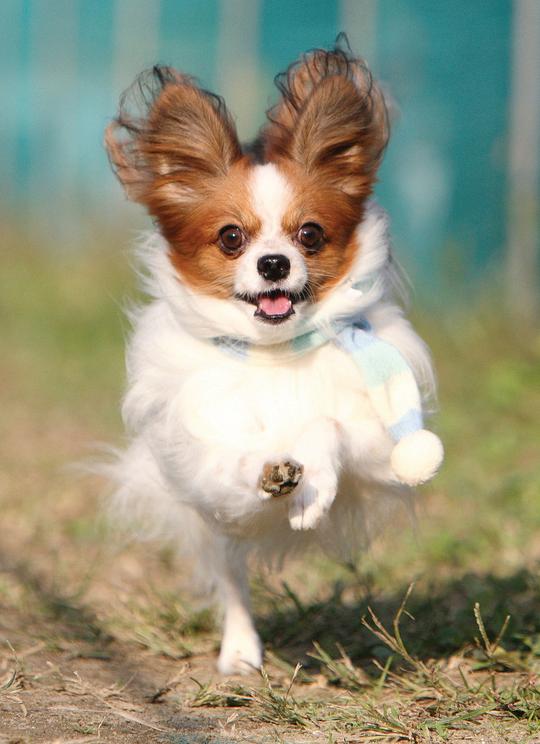
Reining In Your Dog’s Chase Drive
Does your dog chase cars, bikes or anything else that moves? Try trainer Cindy Carter’s tips for reining in that chase drive.
http://bit.ly/nm8vcQ
Filed under: Training
We have 6 new taste testers and product reviewers letting you know if the latest thing is worth woofing about. Most reviews have a giveaway too! Click to http://bit.ly/cwR7iR Filed Under: Reviews
Wow! What an amazing, heart warming story! I am absolutely sobbing at the office now! So happy to know that this family got their sweet Toodles back! Parker, in response to The Miracle of Toodles.
You don’t want to miss this amazing story of a family who never gave up hope finding their lost dog. Always nice to hear of a happy reunion. Click to http://bit.ly/pNNFUB
Filed under: Local News
Two times a month the green gurus at Charleston Naturally provide us with advice on living sustainable with our dogs. Click to http://bit.ly/o1rgSx
Filed under: The Sustainable Dog
How to decipher the signs of heatstroke and guard against this life threatening condition. Click to http://bit.ly/pA9dye
Filed Under: Health & Wellness

By Kristin Welch, DVM
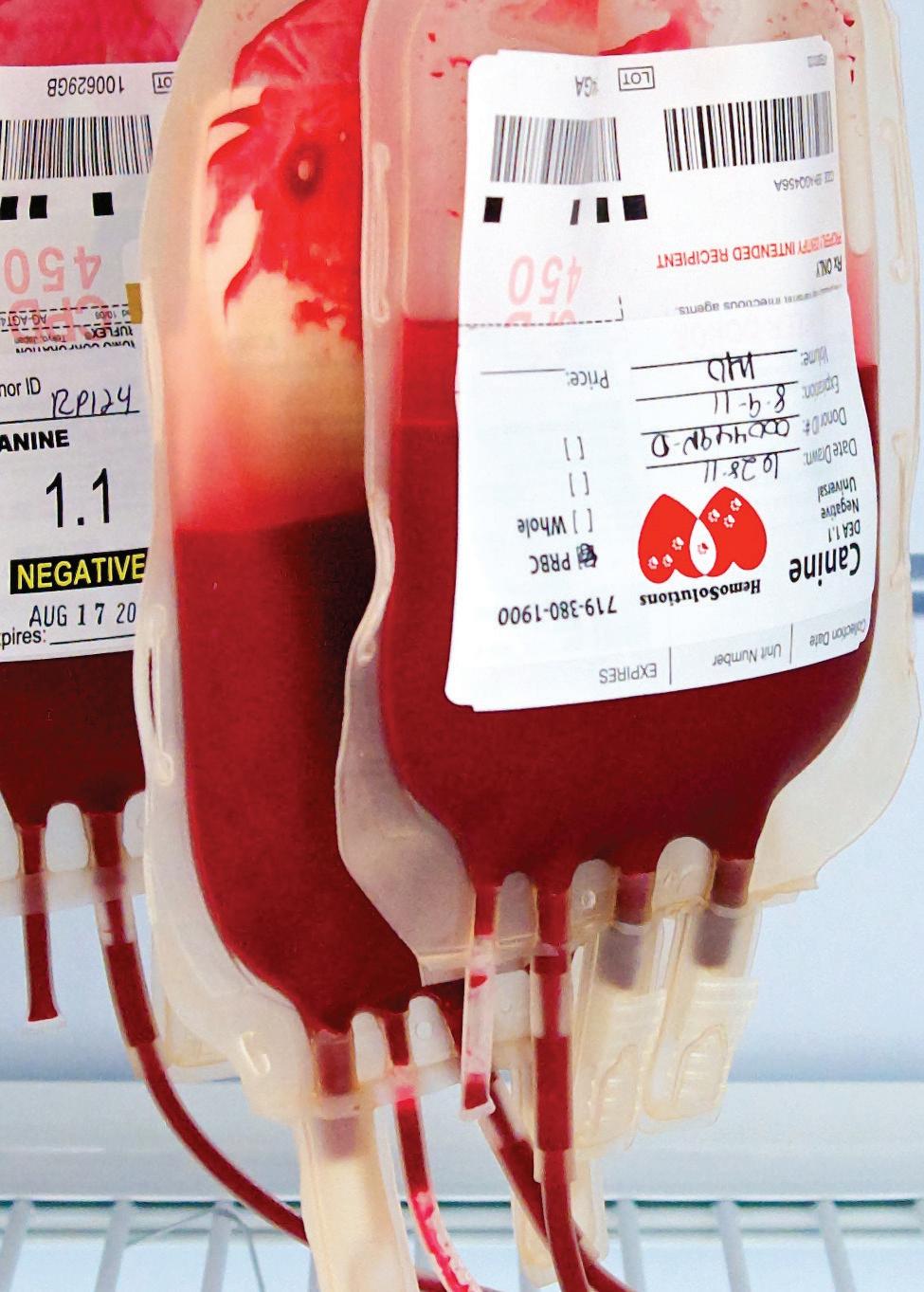
Blood transfusion is a common practice in veterinary medicine to treat a variety of diseases and conditions. The most common transfusion indication in dogs and cats is anemia, a low red blood cell concentration. Anemia can be caused by loss of blood, destruction of red blood cells by the immune system, or decreased red blood cell production by the bone marrow. External blood loss is commonly seen in cases of vehicular or other trauma. Internal blood loss commonly occurs in the GI tract as in cases of stomach ulceration due to NSAID pain relievers, or can occur into the abdomen as a result of a cancerous tumor commonly involving the spleen or liver. Red blood cell destruction, or hemolytic anemia, occurs as a result of the immune system attacking and breaking the cells (immune mediated hemolytic anemia) or as a result of ingestion of a red blood cell toxin such as onion, garlic or zinc. Decreased red blood cell production is an uncommon indication for transfusion as these animals have “adjusted” or compensated for their anemia over months or years. A common cause of decreased red blood cell production in cats is chronic kidney failure.
The second most common transfusion indication in pets is coagulopathy, an inability to form blood clots to stop hemorrhage. The
most common cause of coagulopathy is ingestion of toxic doses of anticoagulant rodenticide, a rodent poison that inactivates normal blood clotting factors. In cases of severe rodenticide intoxication, pets have large volume blood loss and require replacement of both red blood cells and blood clotting factors.
Certain breeds of dogs have an inherited platelet defect resulting in Von Willebrand’s disease. Breeds commonly affected include the Doberman Pinscher, German Shepherd, Corgi, German Shorthair and Wirehair Pointer, Standard Poodle, Golden Retriever, and Shetland Sheepdog. There are over 50 reported breeds that have been affected by Von Willebrand’s disease. Dogs with this disease are susceptible to bleeding from minor trauma and abrasions as well as severe surgical hemorrhage. A specific treatment which provides the missing clotting factor is provided in the blood product known as cryoprecipitate.
At Charleston Veterinary Referral Center we provide care to dogs and cats with severe, sometimes life threatening diseases. In many of these cases, the provision of blood products is a critical part of the lifesaving care that we provide. CVRC’s ability to maintain a ready stock of blood components required by our critically ill patients allows us to be prepared for any emergency situation. Additionally, our Blood Bank can provide specialized products that are not readily available elsewhere on an emergency basis, such as platelet rich plasma.
CVRC’s Blood Bank relies on a group of dedicated employee owned dogs and cats. All potential donors undergo a rigorous screening process to ensure the safety of both the recipient as well as the blood donor. Canine donors are less than 8 years of age and greater than 55 pounds. All dogs must be healthy on physical examination as well as comprehensive bloodwork and urinalysis evaluating liver and kidney function, blood cells and blood clotting factors. Extensive infectious disease testing is performed to ensure that the donor does not harbor any transmissible diseases. Cats have similar stringent requirements for entry into the donation program. Cats also must be younger than 8 years of age and must weigh more than 8 ½ pounds. Cats undergo similar
strict health and infectious disease testing and additionally an echocardiogram is performed to screen for hypertrophic cardiomyopathy. As many as 30% of cats have occult hypertrophic cardiomyopathy; blood donation could be dangerous for a cat with this condition. Cats with hypertrophic cardiomyopathy are excluded from the program.
Blood donors can donate as frequently as every 4-6 weeks. Since donors are required to meet such a strict set of health requirements prior to being accepted into the program, many dog and cat donors remain active in a donation program for years. My own Labrador, Boston, donated blood at two Veterinary Teaching Hospitals for a total of 5 years, and his donations saved the lives of many dogs. CVRC’s Blood Bank utilizes blood collected from our extensive screened employee blood donor pool to ensure the safety of the blood products.
CVRC’s Blood Bank is equipped to provide both whole blood and component therapy. Fresh whole blood is ideal for transfusion of a patient with a large volume of hemorrhage as fresh whole blood replaces red blood cells and blood clotting factors, both of which are lost in hemorrhage. Blood obtained from a donor can be separated through a specialized process into red blood cells and plasma. Packed red blood cells are ideal in cases where the body has destroyed the red blood cells without blood loss. In this case, the body only needs red blood cells which can be provided by a packed red blood cell transfusion. Plasma is the liquid portion of blood which contains proteins and blood clotting factors. Plasma is the specific therapy needed to treat dogs and cats with anticoagulant rodenticide toxicity. Plasma is also commonly administered to dogs and cats with blood clotting disorders resulting from trauma, inherited clotting deficiencies, or other large volume hemorrhage. Cryoprecipitate is a specialized product produced from plasma which contains specific clotting factor missing from dogs with Von Willebrand’s disease. Many dogs and cats that require blood or blood products are critically ill. Delays in treatment can be the difference between life and death. We are grateful to our dedicated pool of canine and feline donors for providing a necessary resource for our patients. Charleston Veterinary Referral Center Blood Bank is ready 24-hours a day, 365-days-a-year to provide blood products to our sickest patients.


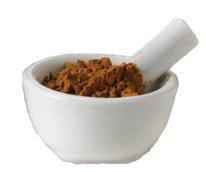
Herbsmith Clear AllerQi ® is a formula that contains cooling herbs to harmonize the body’s defenses and help manage seasonal allergies. Organic, freshly ground Herbsmith Milk Thistle supports liver health which is often challenged during allergy season. Together, these two herbal blends are the perfect way to address pets’ allergies!


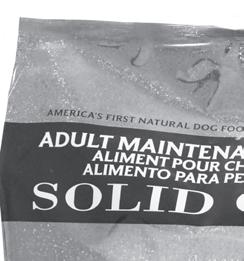
Several years ago, Solid Gold decided to develop a chicken-based dog food. Then, came the bird/avian flu and chickens were contaminated and chicken-based dog foods were pulled off the market. Solid Gold waited. Then, in 2009-2010 the chicken/egg salmonella poisoning caused many chicken-based dog foods to be recalled.
Now, chickens have been given a clean bill of health, so Solid Gold introduced SUNDANCER. This unique dog food is an advance of all other chicken-based dog foods on the market. Peas are a good source of protein, but caused gas in many dogs. However, we researched and found that if tapioca and the grain quinoa were mixed with peas, gas doesn’t form. So we used these unique ingredients.






Tear stains in some dogs are problems. It is usually an allergy to some ingredients in the dog’s food. However, we found Chia seed/ AKA Salba, neutralizes this problem. People may know Chia seed as Chia Pets, that clay head that sprouts “hair” when water is added. But Chia is much more than a novelty Chia has been called the Ancient Grain of the Future. Aztecs and Mayans mixed the seeds with water to form a gel. It was taken internally not only as a cleanser to remove irritants in the intestinal tract, but was used for endurance. It was the only food used by ancient warriors and athletes during an activity. When the gel was applied topically to wounds or skin irritations, the skin healed rapidly. We also put Chia for internal healing in our Sundancer dog food.
The most fascinating ingredient in our SunDancer is curcumin, the root from the turmeric plant. It has a 4,000 year old history for curing a variety of health problems in India. Curcumin is known worldwide as the “Indian Solid Gold”. That’s a nice déjà vu expression. Perhaps, curcumin is most well-known for its use in cancer. The Indians say that there are 33 channels of cancer, and curcumin address all of them. The University of Maryland Medical Center found that curcumin lowered bad cholesterol to reduce the cause of stroke. It also reduced pressure on the eye. Curcumin gives mustard the yellow color and the spice flavor. See http://www.umm.edu/altmed/articles/tumeric-000277.html. Dr. David H Frig, MBA found turmeric/curcumin inhibited amyloid plaque from forming in the brain which contributed to Alzheimer’s disease.
In 1958, the U.S. Congress wanted to fund a study for the elimination of cancer using turmeric/curcumin. But the big pharmaceutical companies put forth such a large lobby, that it was stopped. They said such a study would interfere with the revenue from their cancer drugs. One pharmaceutical person said that if this curcumin were so effective, they would synthesize it and make it into a prescription drug.
In 1971, President Nixon agreed to begin a new curcumin/cancer study. But the Watergate problem stopped that.
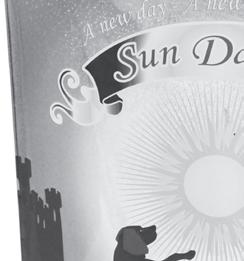
Look for our shiny purple bags of Solid Gold SunDancer dog food. We also use fish to support the DNA of Oriental dogs, Arctic dogs and dogs originally from England, Scotland, Ireland, and all water dogs (such as labs, poodles, terriers, retrievers, and sporting dogs). If you don’t add fish to these dog’s diet, they may develop allergies in the lower legs and chew or lick their feet.
Look for the two dancing dogs on the bag of our hermetically, vacuum sealed bags for freshness. Do not pour the food out into another container. Open the bag, scoop out what you need and close with bag clips or clothes pins. The act of pouring exposes the food to air. We use no chemical preservatives in our fresh Solid Gold dog foods.
Sissy, the owner of Solid Gold, was recently at a dog show and it was quite warm. Someone commented that the news said that the planet, Saturn, with its rings, was heating up the galaxy. A near-by 10 year old girl standing close by said she knew what Saturn looked like. She said “that’s the planet with the hula hoops”. Now, don’t you feel old!
For a catalog or store near you, call or email us at: (619) 258-7356 (M,W,F 10-5 PST) or E-mail us at sarah@solidgoldholistic.com or www.solidgoldhealth.com
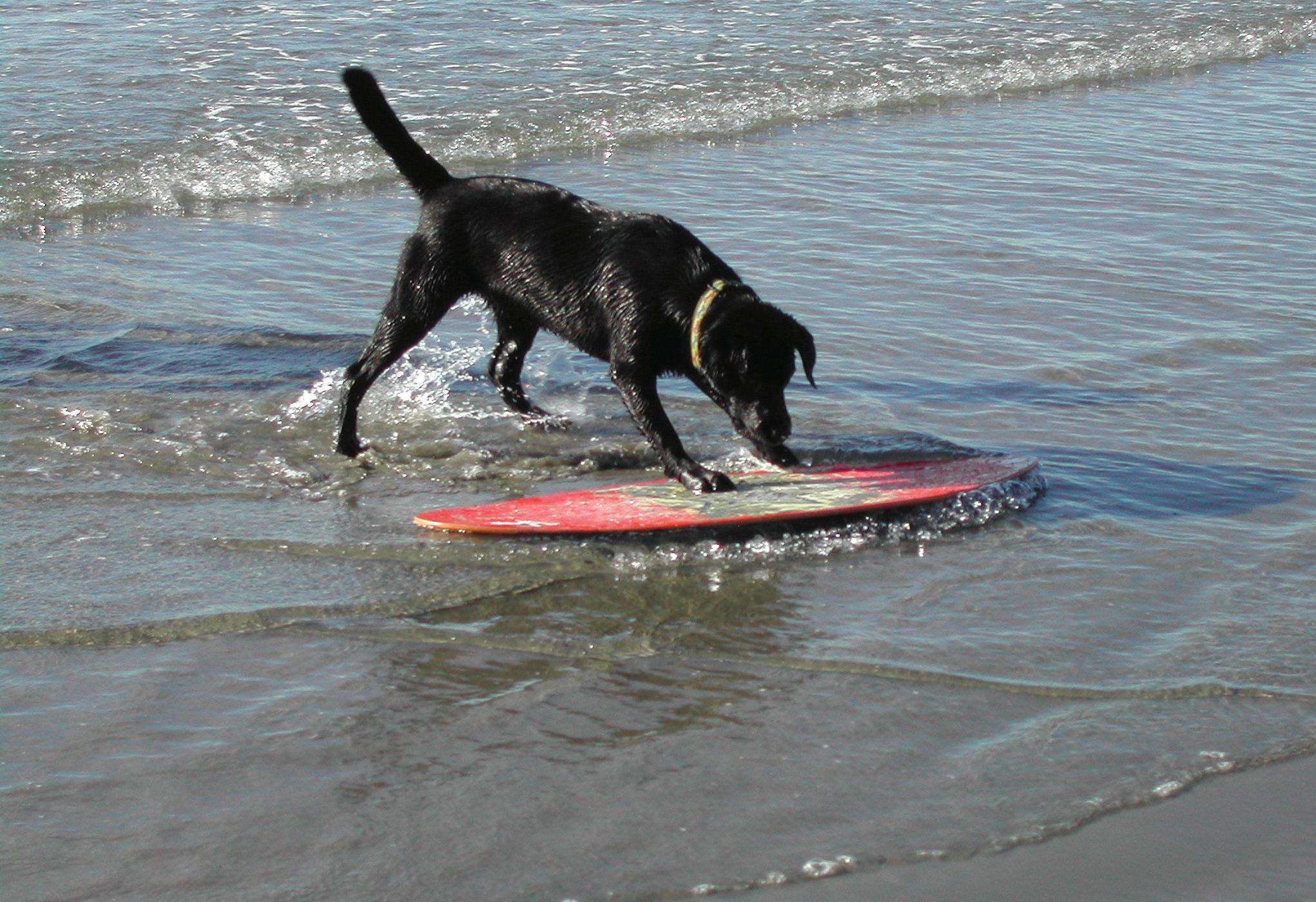
Skimboarding or Skimming is a sport in which a rider jumps on a skimboard (a smaller, flatter version of a surfboard) as the board glides across the surface of shallow water. It’s quite a popular sport with adults and children alike since it’s a perfect way to enjoy gentle waves just as they hit our beautiful lowcountry shorelines. And it’s not surprising that water-loving, beach-going dogs are joining in on the fun, chasing and then jumping on the boards for a ride.
Dogs that love water and who have perfected the art of the chase might instinctively know what to do when a skimboard glides past them on the beach. And if you’ve taught your dog other motion related skills, like riding on a skateboard or running along side your bike during a ride, your pooch could pick up this new trick rather quickly. Other dogs might need a bit of coaching. If you’d like to teach your dog to skim during these last dog days of summer, here’s some training tips:
Step 1
Let your dog investigate the board. Reward him with treats or praise when he is near the board to give him confidence that the board is a good thing! You can also do some initial training where you encourage your dog to run along side while YOU skimboard. This is great mental and emotional preparation as you encourage your dog to see the fun that’s associated with the board.
Step 2
Encourage your dog to step on the deck, first with one paw and then gradually moving up to standing on the board with all four paws. Reward with treats and/or praise each time your dog stands on the board! A good idea during this step is to train your dog to jump on the board on command. A phrase like “On Board!” is a good signal for your dog to hop on.
Step 3
Once your dog is feeling comfortable standing on the board, give him a command to stay, then give the board a gentle push along the waves. It might take awhile before Fido is feeling comfortable during this step. He’ll need lots of practice getting his balance on the board and you’ll need to reward him quickly for staying on the board. Like Step 2, you should give your dog a command during this step so he’ll understand he is to stay on the board until the board comes to a rest. We like the phrase “Ride It!” If your dog ever looks uncomfortable or responds negatively during the training session, stop the session immediately. There’s no reason to force this activity if your dog is not enjoying it.
The next step is to encourage your dog to chase the board when you throw it, jump on it, and ride the wave using the commands you established in Step 2 and 3. This may take some time, several misses and bail-outs, but with patience and reinforcement of the previous steps, your dog will soon be having a blast in the sand and surf – and will be dog tired by the end of the day!
If you’d like to learn more about skimboarding you can find a vast amount of photos and videos on the internet of dogs enjoying the sport. One of our favorites videos is from Natural Balance pet foods, whose 2011 Rose Bowl Parade float boasted both dock diving and skimboarding dogs, and won the new record for world’s heaviest float. Check out the video at www.vimeo.com/18270215 which documents the making of the float, the audition process for 160 dogs, and the training sessions for the dogs who made the cut.
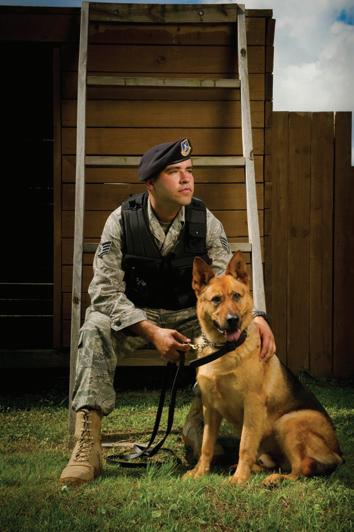
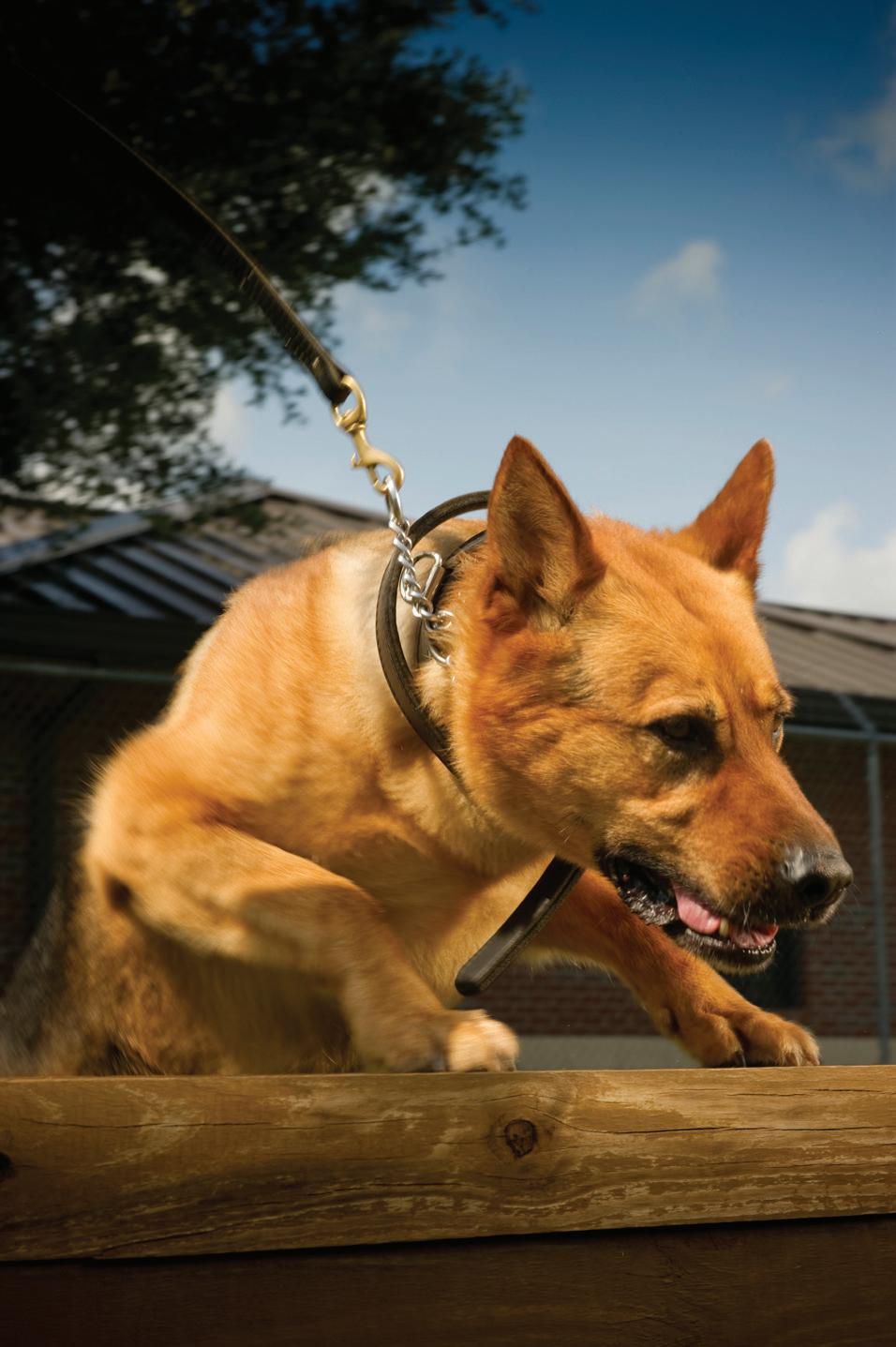
Senior Airman Brett Myers and his working dog Shark, a three-year-old German Shepherd stand on an obstacle course at the agility course at the 628th Security Forces Squadron working dog kennel at Joint Base Charleston.
local dogs who serve & protect at home and on the battlefield
text by Stratton Lawrence photography by Stacy Pearsall
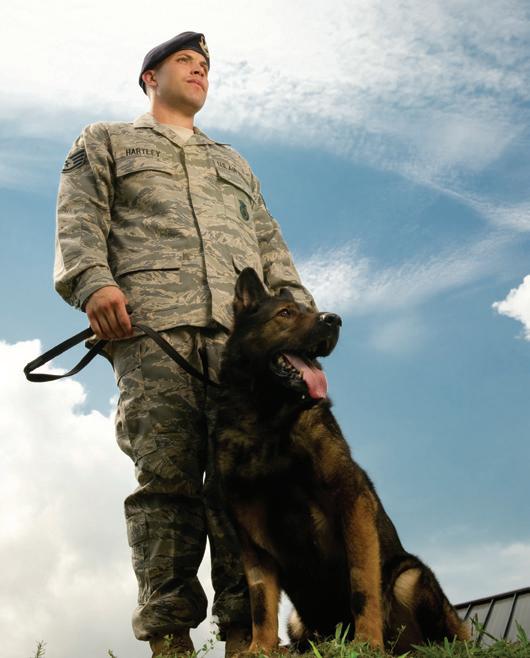
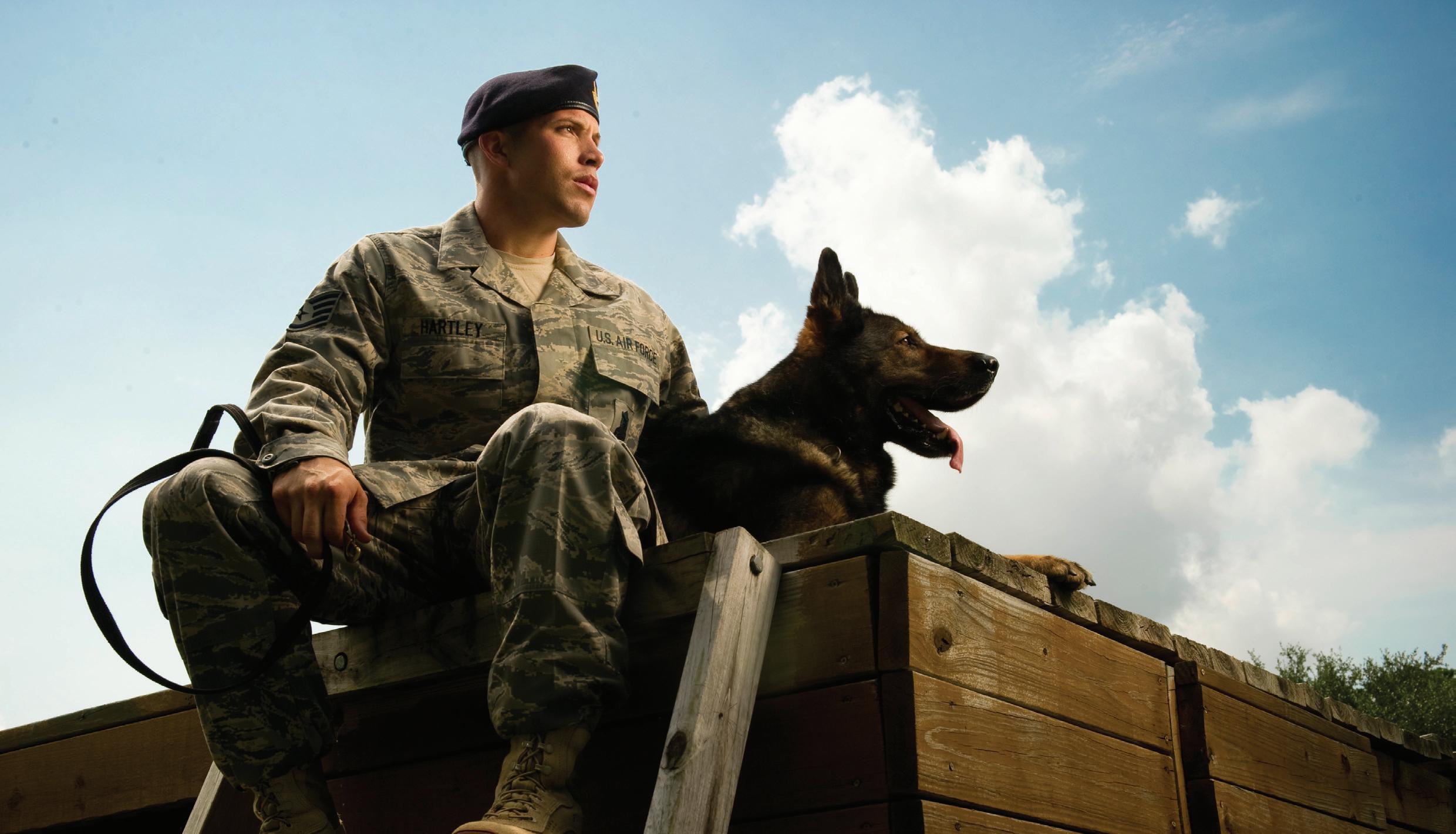
Our dogs do a lot for us, but it’s not every day that they save our lives. Cir, a 10-year-old Sable German Shepherd, has saved his owner’s life on multiple occasions.
Granted, Air Force Sergeant Cliff Hartley doesn’t have the most typical job. Together, he and Cir find IEDs (improvised explosive devices) in Afghanistan. Walking ahead of their unit on a patrol, Cir’s highly trained nose scans the ground for buried bombs. Ideally, he finds them without either of the pair triggering the buried booby-traps.
Cir and Hartley have worked two tours together in Afghanistan, and it’s now time for the dog to retire. On their last mission, Cir caught a disease that ate at the retina in his eyes, leaving him with pinpoint sight for the rest of his life. He’ll soon join Hartley at his home in Charleston, integrating into residential and family life after nearly a decade of work with the Air Force.
Today, Cir is still showing off his skills at the Charleston Air Force Base’s K-9 kennel. While newer dogs struggle or are reluctant to walk the see-saw, leap over hurdles, or scoot through the underground maze of tunnels built at their dog training complex off of Dorchester Road, Cir, with no leash and just the guiding voice of Hartley, runs through the entire sequence of challenges. Despite his eyesight loss and the hip problems that plague Cir, like many older Shepherds, he’s as willing as ever to go to work.
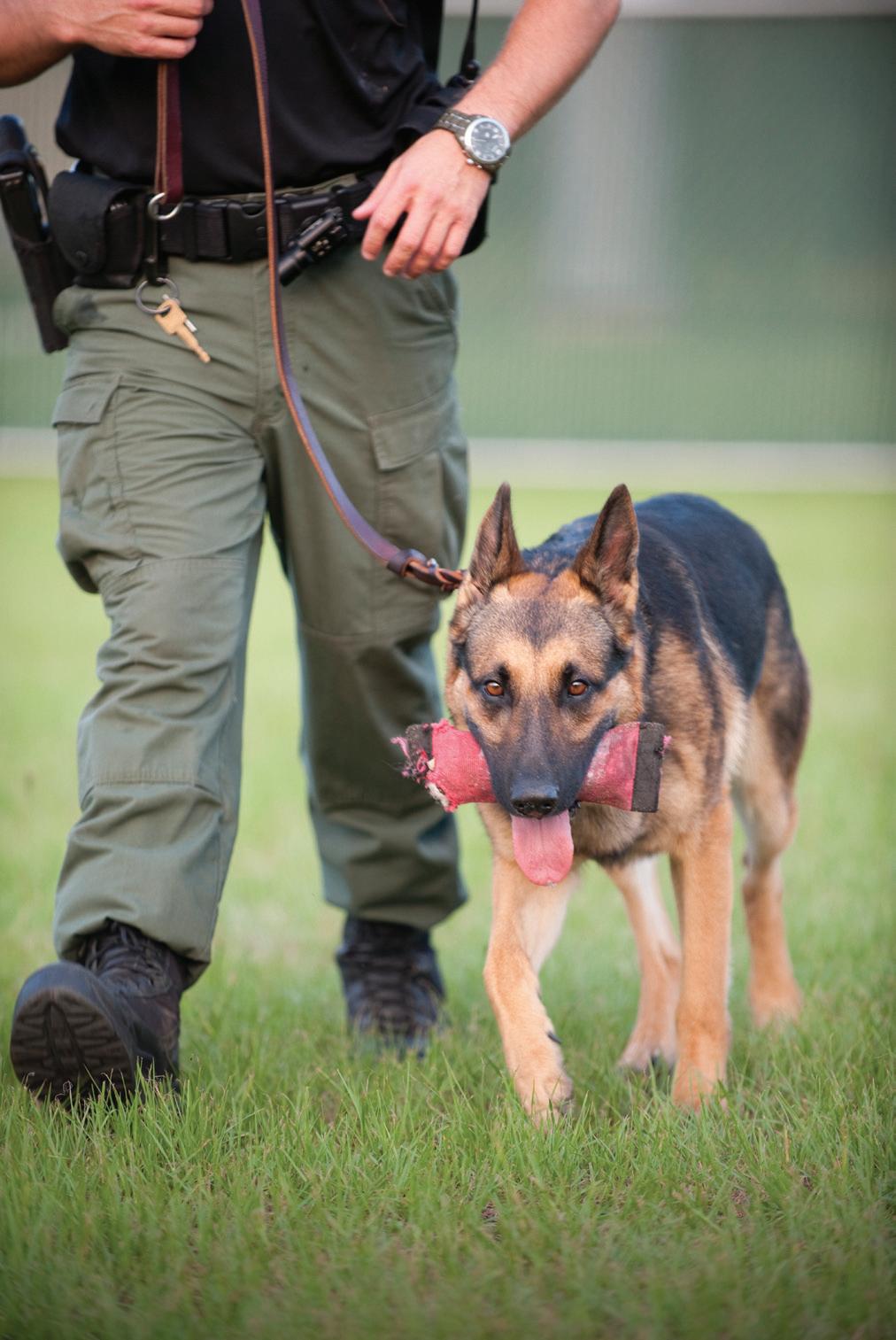
The German Shepherds and Belgian Malinois used by military and law enforcement departments are bred from the cream-of-the-crop. They’re hand-picked as puppies from top breeders in Europe and then shipped to the U.S., where they’re sold (for tens of thousands of dollars) and trained for bomb, cash, and drug detection, as well as criminal apprehension.
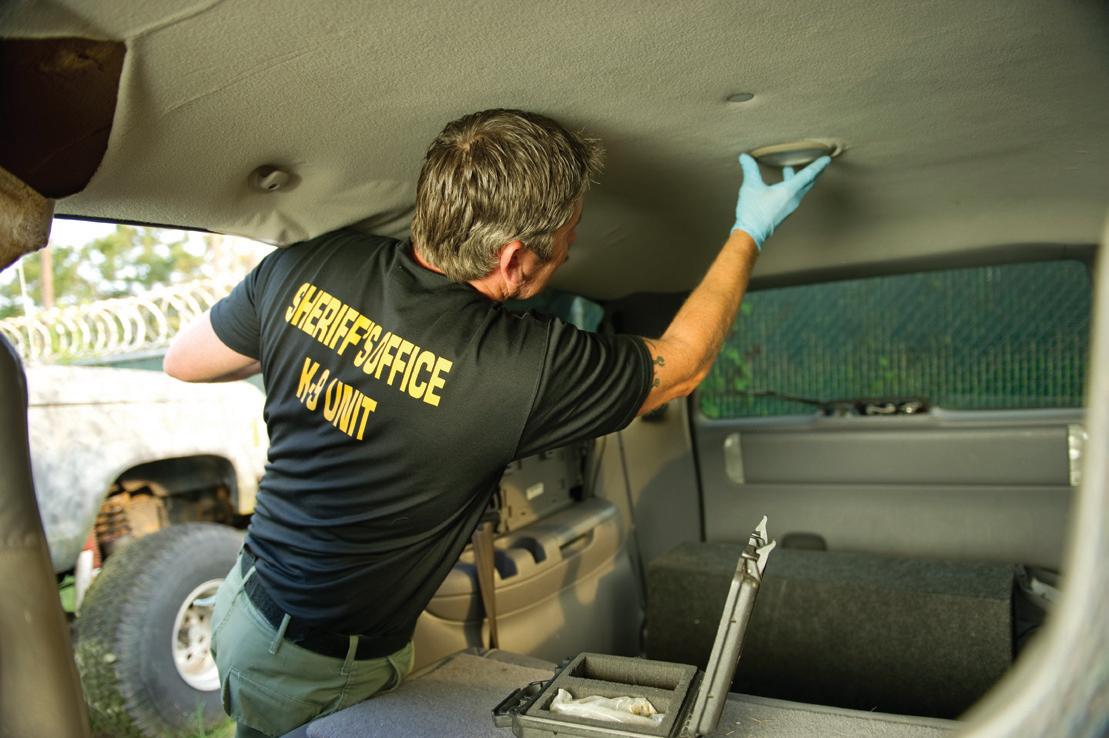
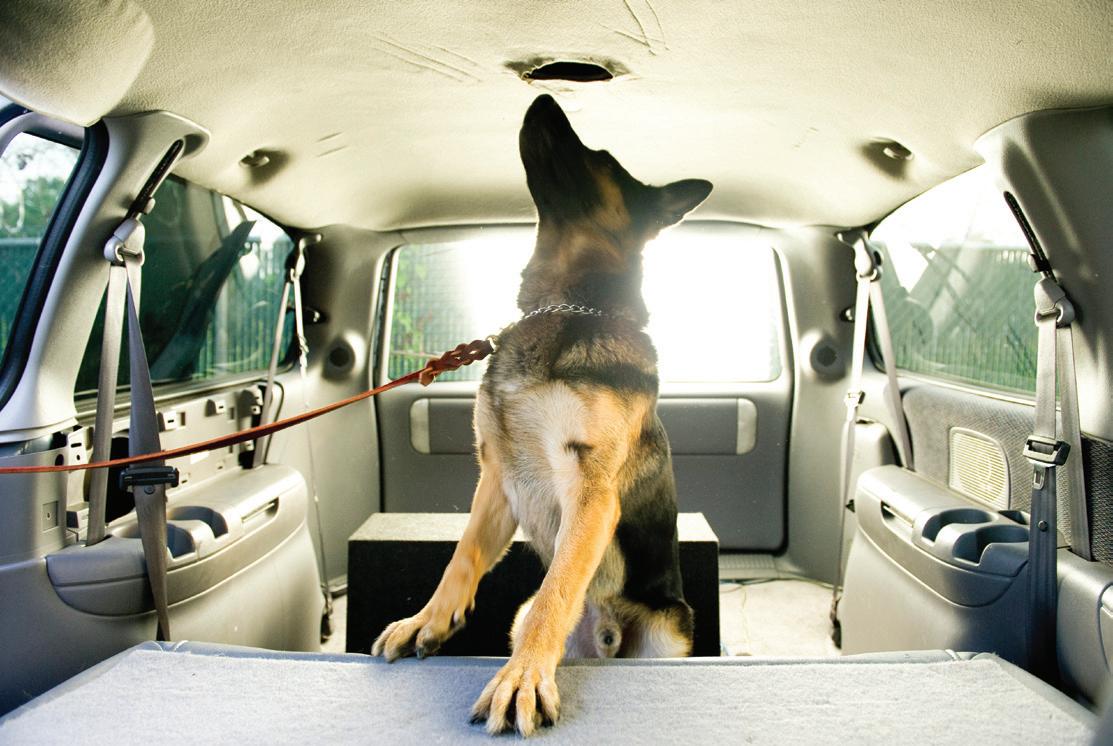
Every Tuesday night, the Charleston County Sheriff’s Department’s K-9 unit gathers to train. For eight hours, dogs take turns searching for marijuana, heroine, methamphetamines, and cocaine that their handlers have strategically hidden amidst a field of cars. The dogs ‘alert’ by aggressively scratching and pawing at the area where the drugs are hidden, before being rewarded with a squishy toy.
These dogs aren’t mean, but they’re trained to be highly sensitive to their handler, and their handler only. You won’t see another officer petting his coworker’s dog, and there’s no play time between the dogs themselves, either.
“When you train, they become the alpha male,” explains Deputy Jay Christmas, a veteran handler for the County, explaining that the dogs are trained even to ‘break’ (urinate) on command, and that the dogs are conditioned not to ‘mark their territory.’
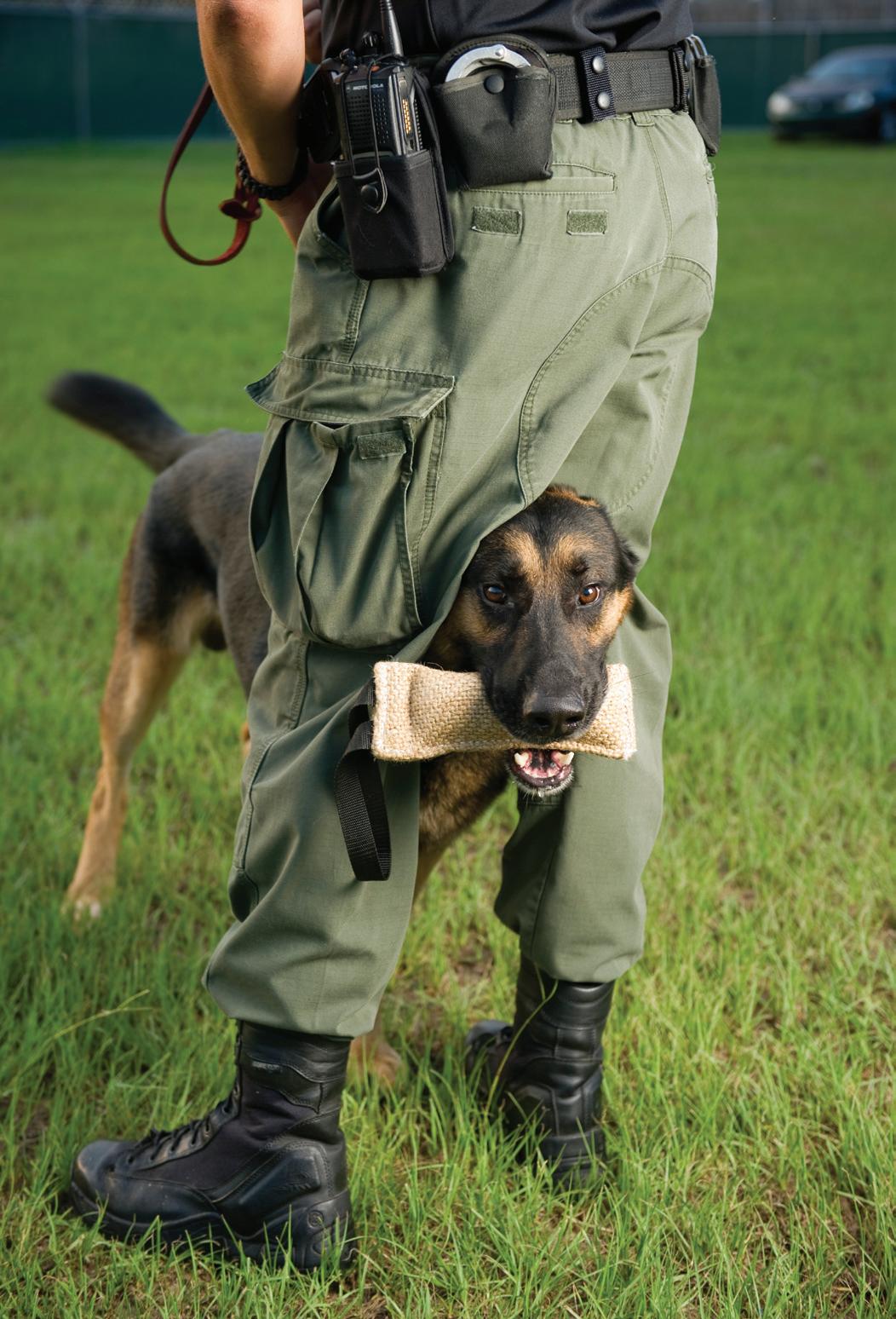
For the dogs, even violent work like apprehending a fleeing suspect is simply a game. They’re trained to viciously bite, but also to release on split second command.
For Deputy Christmas, the best aspect of the job is when a dog makes something possible that an officer couldn’t have accomplished on their own.
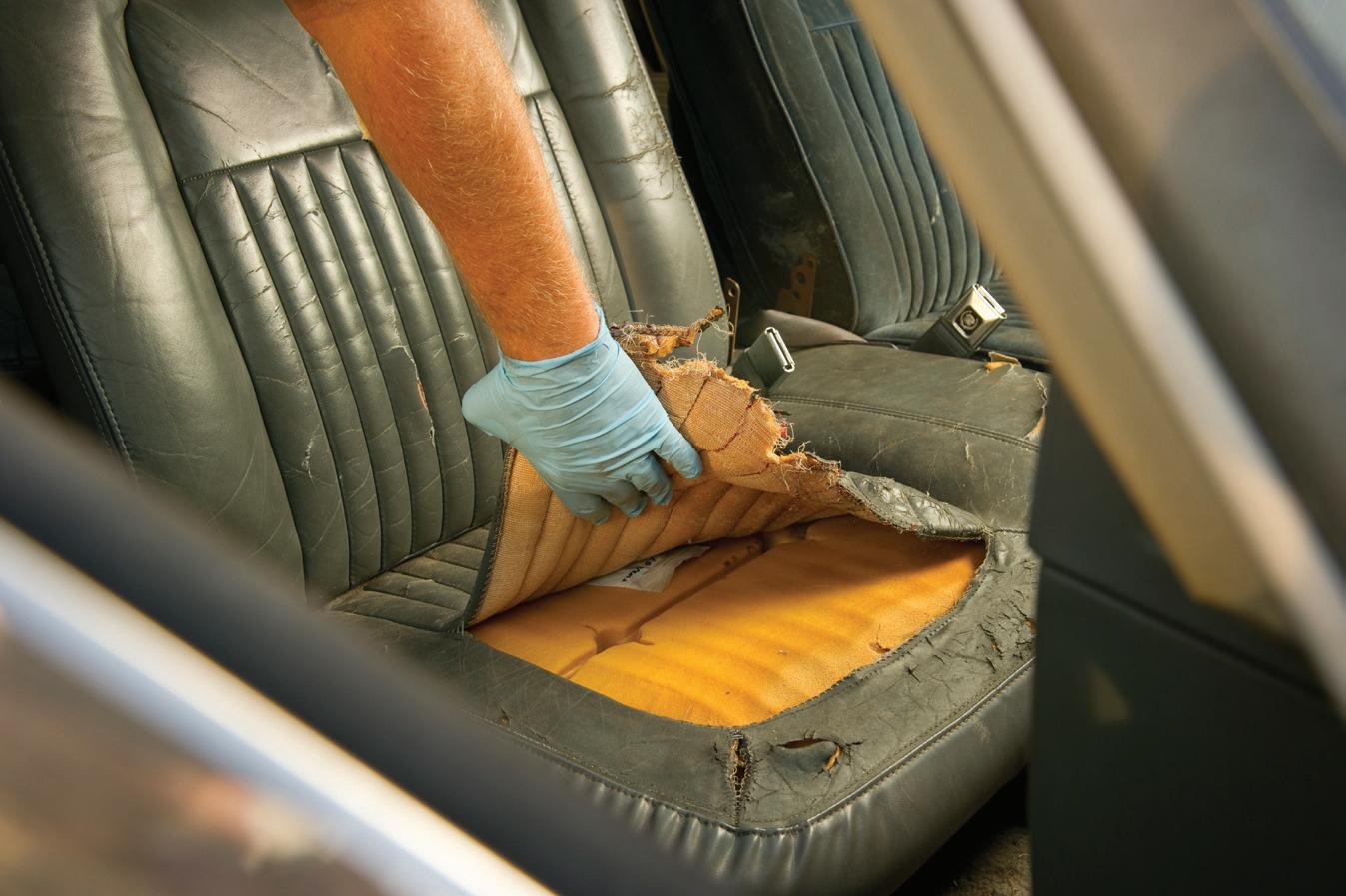
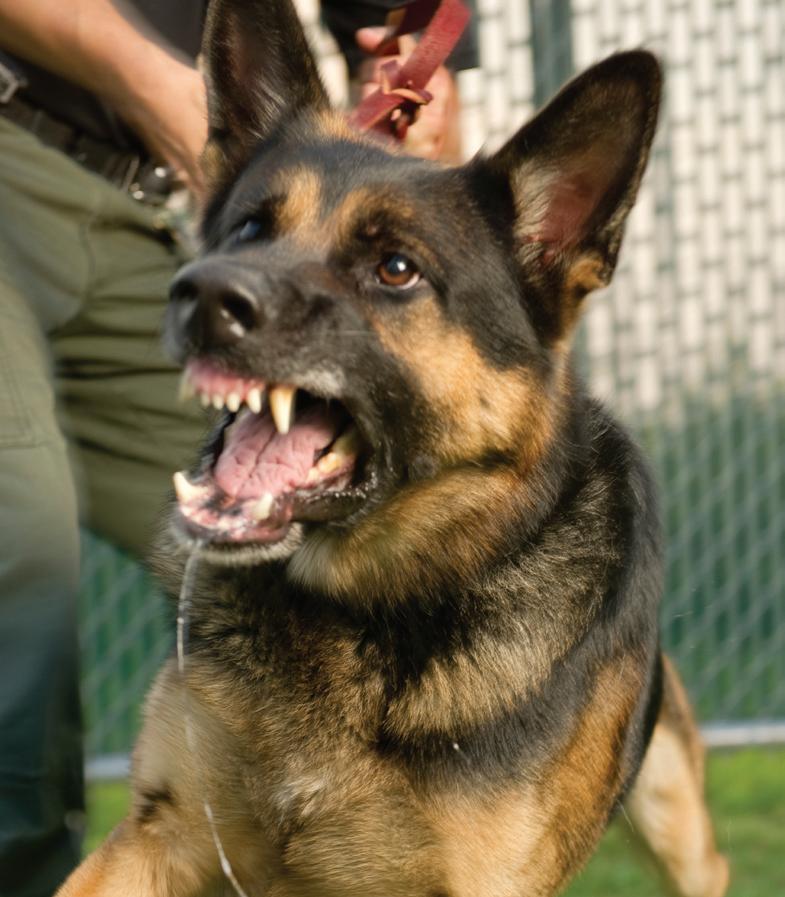
Would
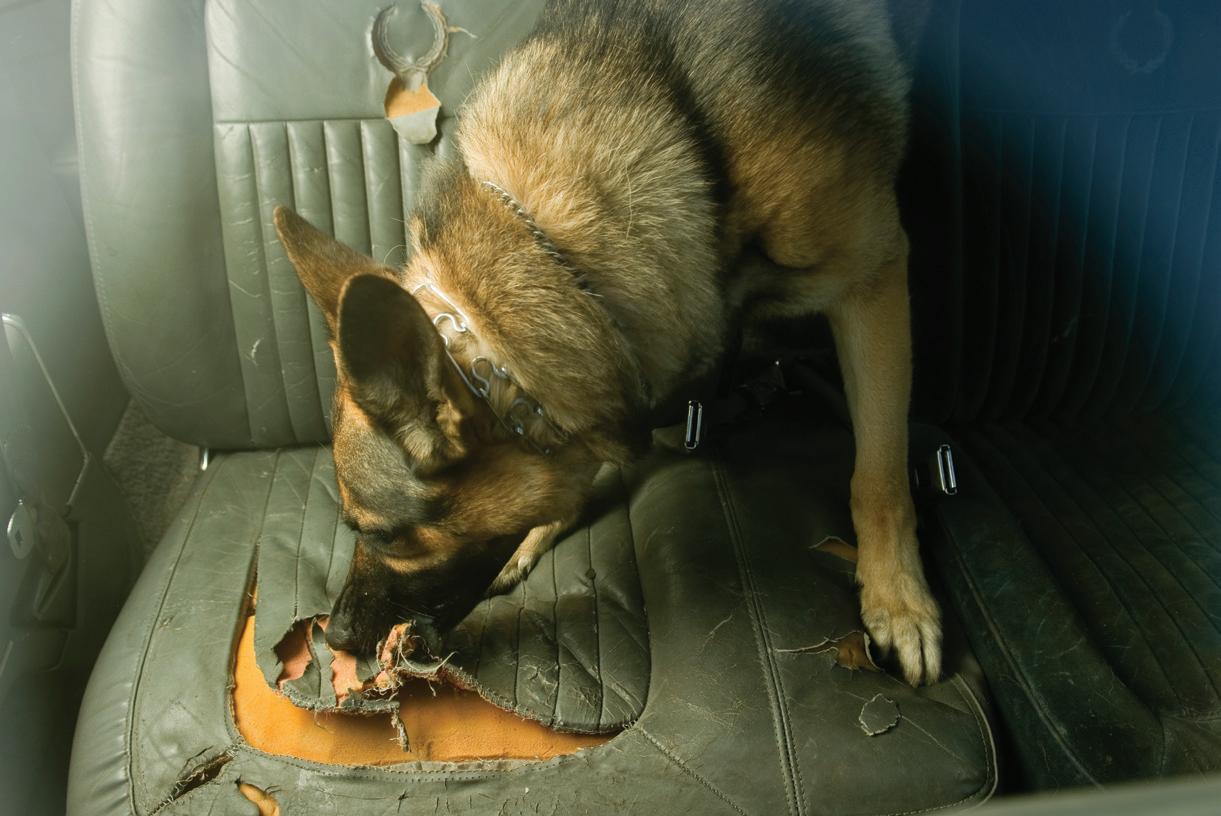
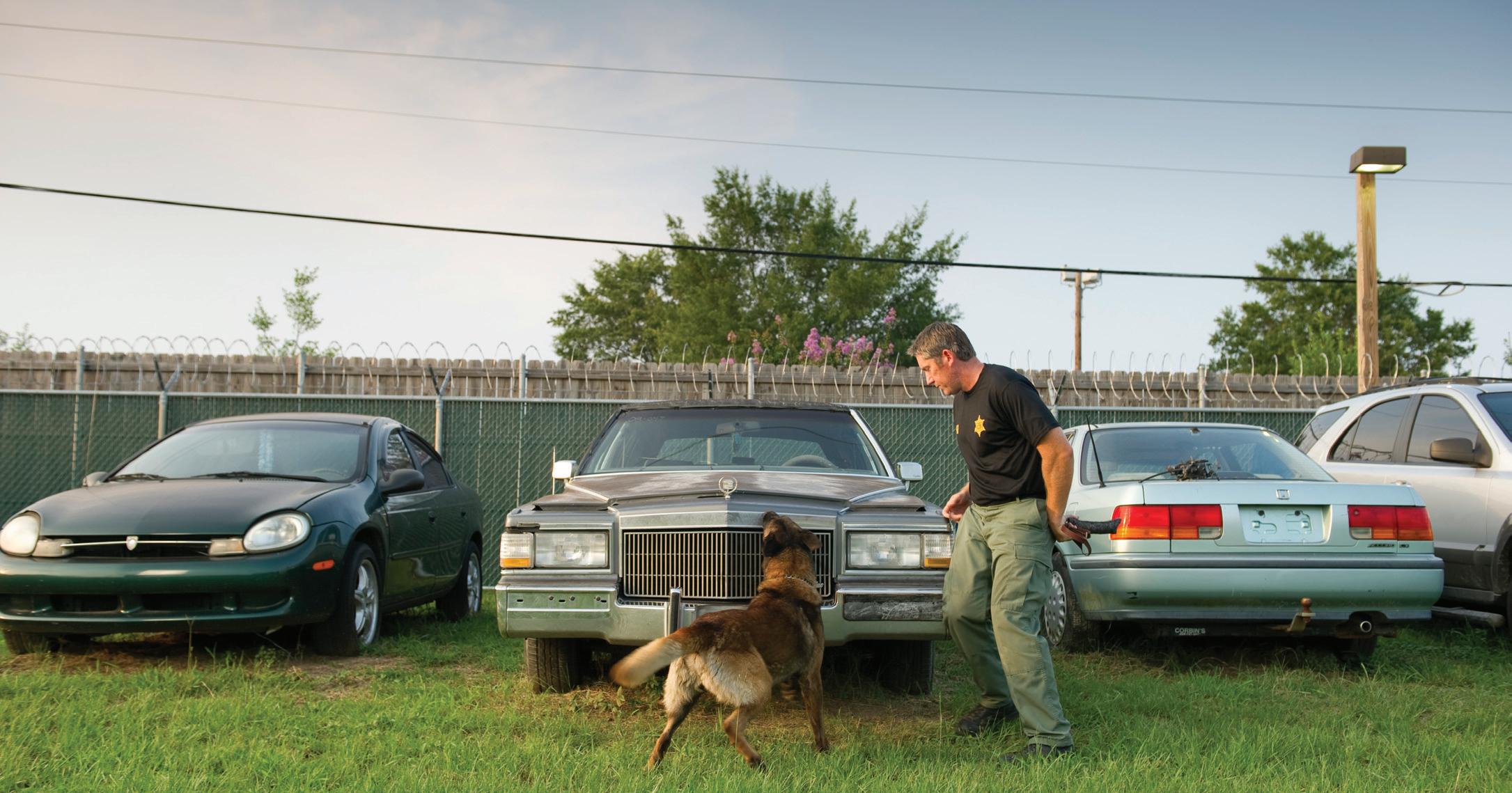
Igor has some fun.
a
“The most rewarding thing is to find somebody on a track — maybe an armed robbery or rape suspect — and we have no idea where they are, but we send our dog out looking for them and find them hiding under a car or in a backseat,” says Christmas. “The dog is a tool. You still have to do your police job, and you use your dog when you need him.”
Some may envision the classic jailbreak movie scene, with a bloodhound sniffing the way toward a fugitive hiding out in the swamps. Although Charleston County still keeps a trained bloodhound for tracking elderly or juvenile suspects, the dog is likely to lick them in the face upon finding them. Shepherds and Malinois offer a strong nose, intelligence, and an intimidating fierceness.
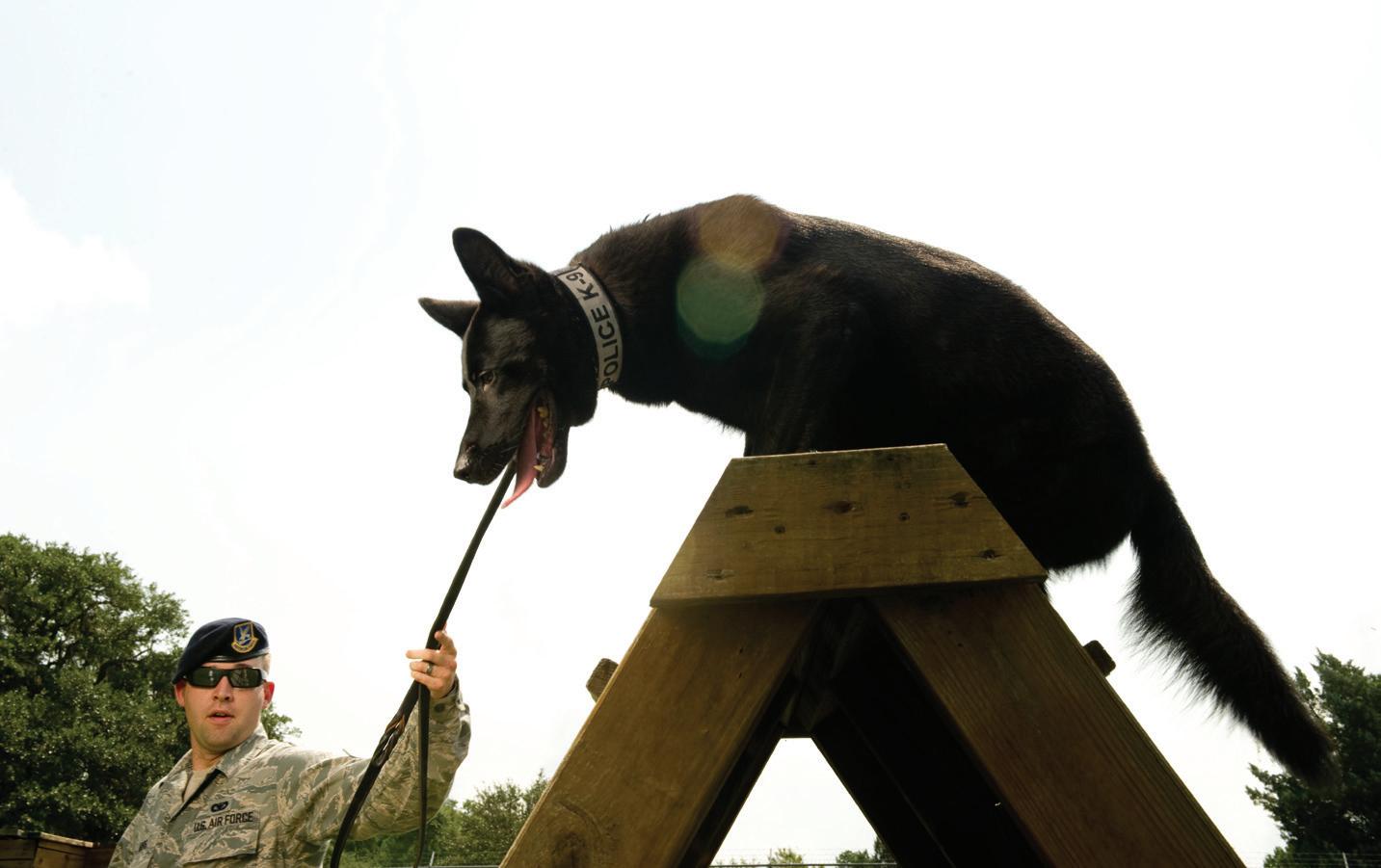
Senior Airman Brett Myers and his working dog Shark, a three-year-old German Shepherd, runs over an A-frame obstacle.
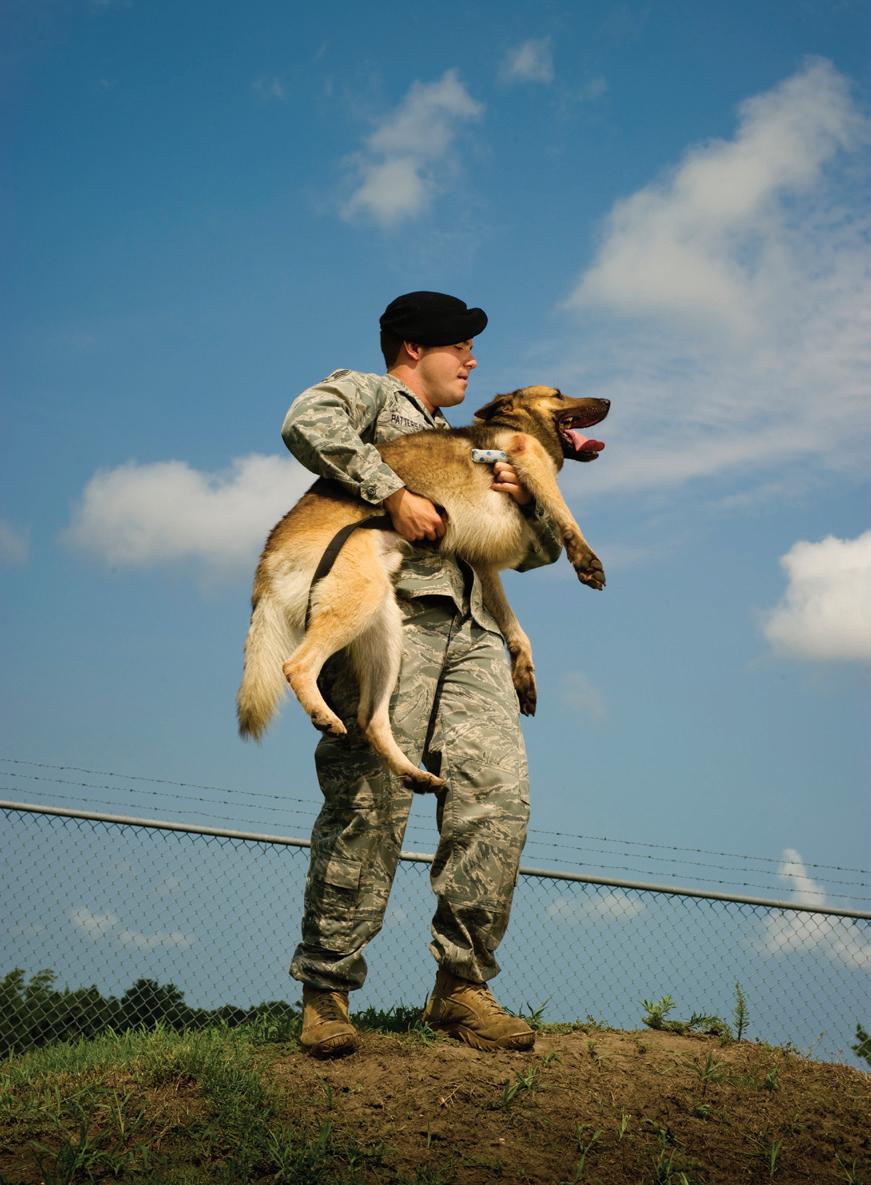
Senior Airman Joel Patterson and his working dog Elmo, a three-year-old Belgian Malinois, stand on top of an obstacle.
During training, officers take turns donning full body ‘bite suits’ and sending a dog to attack. Even with the thick padding, the ‘lucky’ suitwearer can still come out with black and blue arms from the intense pressure of the dog’s bite. Not all police dogs are trained to be vicious, however. The Sheriff’s Department has dogs trained specifically to smell money, and others that work at U.S. Customs or visit UPS and FedEx centers to sniff for drugs in the mail.
When dogs first arrive, they’re given a series of tests to determine their usefulness as workers. Canine recruits must be willing to work on slick floors and persist without giving up in a difficult search for a ball thrown into high grass. Those with a methodical, calm work ethic make the cut. Still, every dog is different. Most live with their designated handler at home, and its up to the officers to decide the dog’s level of interaction with family and friends.
An aggressive dog, however calm when at home, can be like keeping a loaded gun in the living room. But depending on the individual, some dogs integrate seamlessly into family life, especially in retirement.
Sergeant James Brennan adopted his retired Shepherd, Nitro, recalling the dog’s turn-around from ‘unmanageable’ to one of the most reliable in the unit, even able to open house and car doors. At work, Nitro was intimidating, always ready to work. But at home, he’d shut off the ‘alpha’ completely.
“It’s cool to watch the transformation from the car to the house,” says Brennan, explaining that the key to good behavior, at home and at work, is in the training. “It takes a special person to work a dog. If you show fear, they will take advantage.”
He recalls Nitro mistakenly going for a bite on one fellow officer who ran by during a potential chase. Brennan called his dog off the bite in midair. The officer was left unscathed, a ribbon of slobber strewn across his stomach.
“There’s no room for any kind of argument; no room for error,” says Brennan, who shares a surprising secret to training a dog. “You can’t be afraid to sound like a little girl (when you’re rewarding them), if it makes the dog happy, tail up, wagging 100 miles per hour. The dog has got to have fun. It’s all a game.”
What tips can the average dog owner pick up from the K-9 handler pros?
“Always have your dog under control,” says Brennan. “If have your dog running wild, that’s no fun for anybody. Love your dog, but you need to be able to tell them ‘No.’”
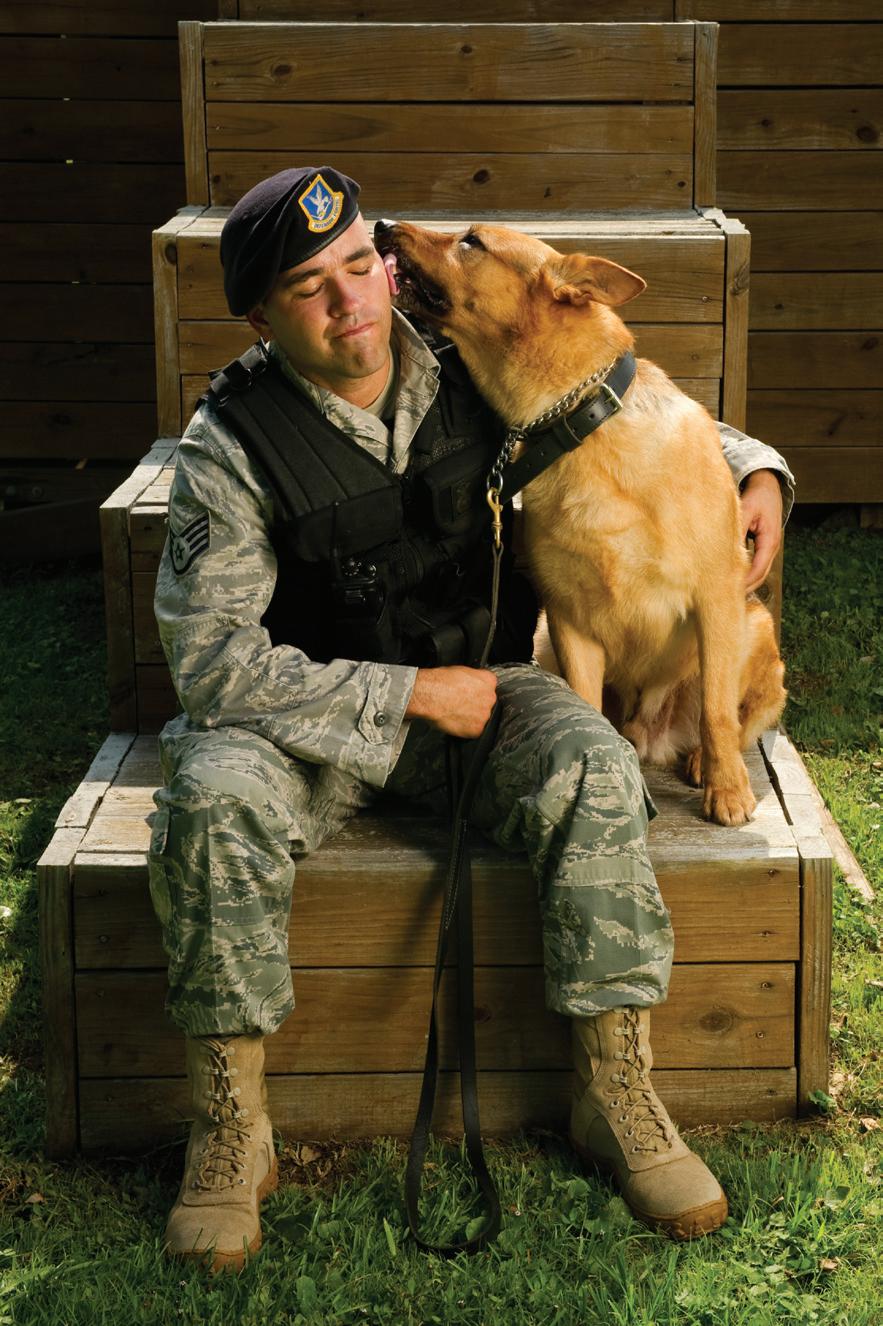
When Lowcountry Dog paid a visit to the Air Force Base K-9 unit in July, Staff Sergeant Ramone Alexander was happily joking with his handlers and their dogs, showing off their skills in the summer sun. By August, he planned to be stationed back in Afghanistan, serving as kennel master at Bagram Airfield. Even though it’s all fun and games for the dogs, rewarded with Kong treats for sniffing out an explosive, their handlers remain constantly focused and vigilant on the life-or-death situations at hand.
On a previous deployment, Alexander was sent with a narcotic sniffing dog to clear a village of drugs and paraphernalia. They ended up finding one of the top-10 most wanted Taliban leaders, and both the Sergeant and his dog were rewarded the Army Commendation Medal (Air Force dogs and handlers are often assigned to Marine and Army units). This year, the Navy SEALs utilized a dog in their raid and killing of terrorist leader Osama bin Laden.
Those are the good stories. Most handlers also know of someone who has lost their life due to an explosive their dog missed or inadvertently activated. In the Middle East heat, dog handlers often lug over 50 pounds in their pack, despite sacrificing some ammunition for extra food and water for their dogs. In addition to their flak vest and helmet, the eight-plus mile patrols take a toll on dogs and their handlers. The enemy often plants bombs after a patrol passes, hoping to surprise them on the return, requiring extra vigilance at all times. It’s a challenging environment, to say the least.
Add to that the presence of the local dogs in Afghanistan, which Sergeant Cliff Hartley calls “Wati Bears,” comparing them to the giant
beast behind the outfield fence in the classic kid’s film, The Sandlot. When they come running at a patrol, the Air Force dogs must remain calm and poised, and the soldiers have to decide between keeping them at bay with rocks or with their guns.
Sitting beside the training grounds in North Charleston, watching long-haired Malinois, ‘Elmo,’ learning the ropes, the dangers of Afghanistan feel a mile away. The dogs get some real-life practice here in the Lowcountry, responding to bomb threats at government buildings and supplementing the Secret Service when dignitaries come to town, but the dangers are rarely comparable to what they’ll face in a war zone.
Of course, for Elmo, Cir, and the rest of their crew, even in Afghanistan, it’s all just a fun game — a game that’s saving lives every day.

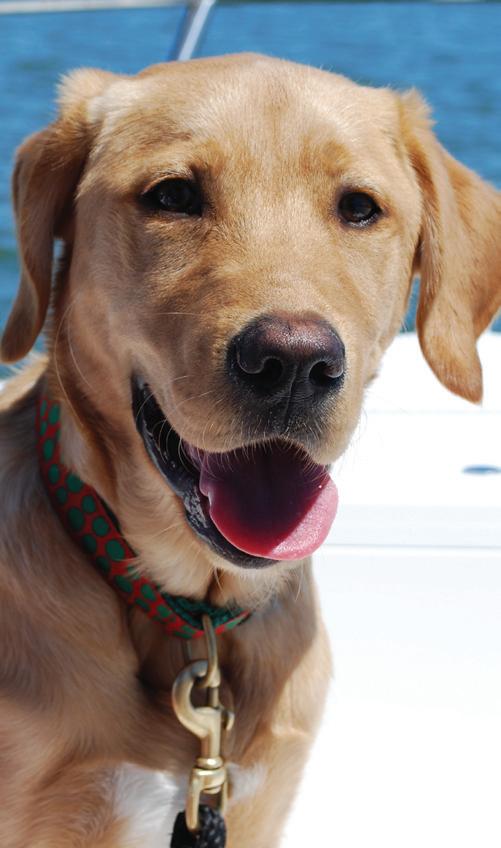
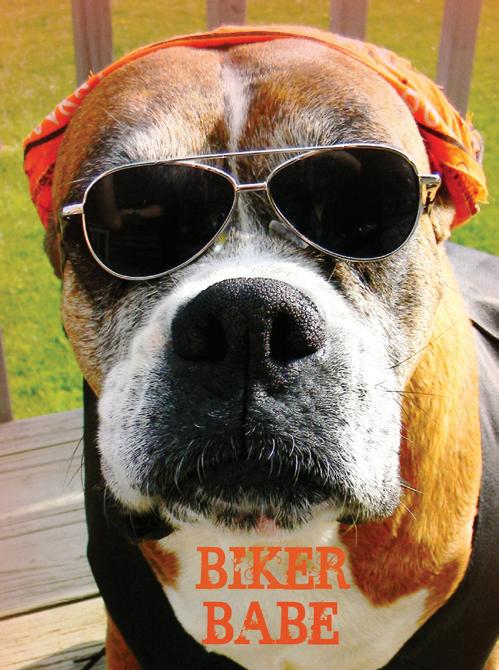
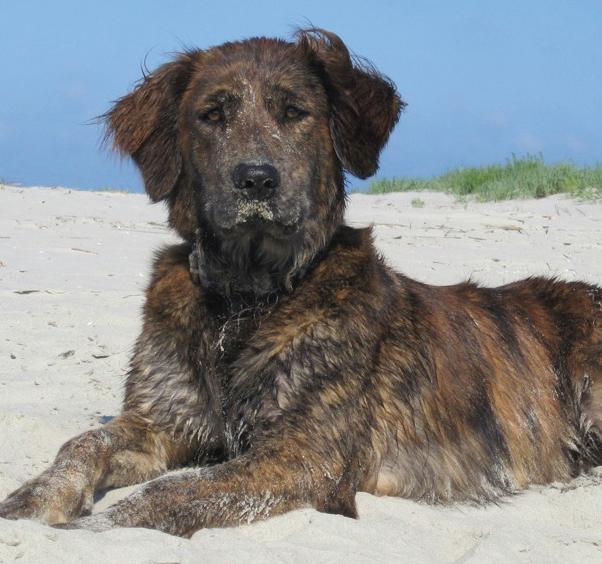
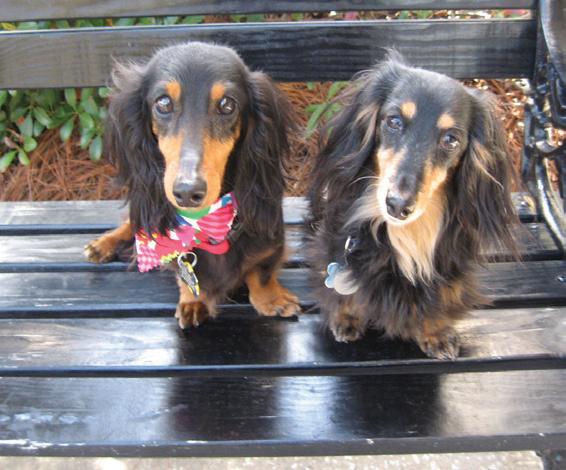
11 am adoptathons at all is well. Want to adopt a shelter dog but you don’t like coming to the shelter because its too noisy, too sad, too overwhelming? We have the solution. Come and see the animals of Francis R. Willis SPCA at All is Well, 440A Old Trolley Rd. in Summerville on the second Saturday of every month.
every saturday in august and september charleston animal society at the marion square farmers market.
august 13th and 20th and september 24th 3:00-6:00pm carolina coonhound rescue meet and greet at hairy winston. towne centre mt. pleasant.
august 11th and 25th and september 8th and 22nd 5:008:00pm gas light art and wine gallery yappy hour. Benefits Carolina Coonhound Rescue. $5 raffle for a half a case of Lost Dog Wine and each ticket gets a free glass of wine.
august 25th, september 22nd, and october 13th 4:00-7:00pm charleston county parks yappy hours. Bring your favorite furry friend to enjoy live music and beverages at Yappy Hour at the James Island County Park Dog Park. Call (843) 795-4386 or email customerservice@ccprc.com
special events
august 6th 9:00am-1:00pm vaccine clinic tractor supply ravenel Benefits Carolina Coonhound Rescue.
august 13-14th 12:00pm-4:00pm pet helpers adoptathon at west ashley petsmart. Head on out to this event and bring home a forever furry friend! Make room for just one more and rescue an animal in need.
august 17th 11:00am family film series at terrace theater. National Velvet will be playing. Pet Helpers will be there with adoptable animals. Kids under 10: FREE, otherwise $4. 1956D Maybank Hwy.
august 18th 5:00pm marion county animal shelter fundraiser at gaslight art and wine gallery. Please stop by this fund-raiser and help Marion County Animal Shelter as they launch their spay/ neuter program. This is going to be an integral part of transforming the shelter into a no-kill facility. 211 Meeting St.
august 19th 5:00-8:00pm “tips for tails” fund-raiser at buffalo wild wings. Tip your celebrity waiters and support the Francis R Willis animals.
august 27th 5:00-7:00pm freefurr-all toy breed play group. Join us for socializing, food, drinks & fun at Pet Emporium. 1000 Johnnie Dodds Blvd, Mount Pleasant.
august 27th irvin house vineyards Grape Stomp Festival. Benefits Charleston Animal Society. Visit www. charlestonanimalsociety.org for more info.
August 27th hair of the dog pub crawl. Benefits Carolina Coonhound Rescue Downtown. $15/ticket contact kelly@carolinacoonhoundrescue. com for more details.
september 8th, rent a rugger bachelor charity auction. Benefits Pet Helpers, Carolina Youth Development Center, and the Charleston Men’s Rugby Team, Charleston Outlaws. Bachelorettes included. Save a Puppy, Rent a Rugger! For more info click here: www. pethelpers.org/upcoming-events.php
september 10th 10:00am harleyville see saw daze. 10 a.m. Parade. 1 p.m. Pet Show and Meet & Greet of the Francis R Willis shelter animals.
september 10th raising cane’s canine crawl. Benefits Charleston Animal Society. Visit www charlestonanimalsociety.org for more info
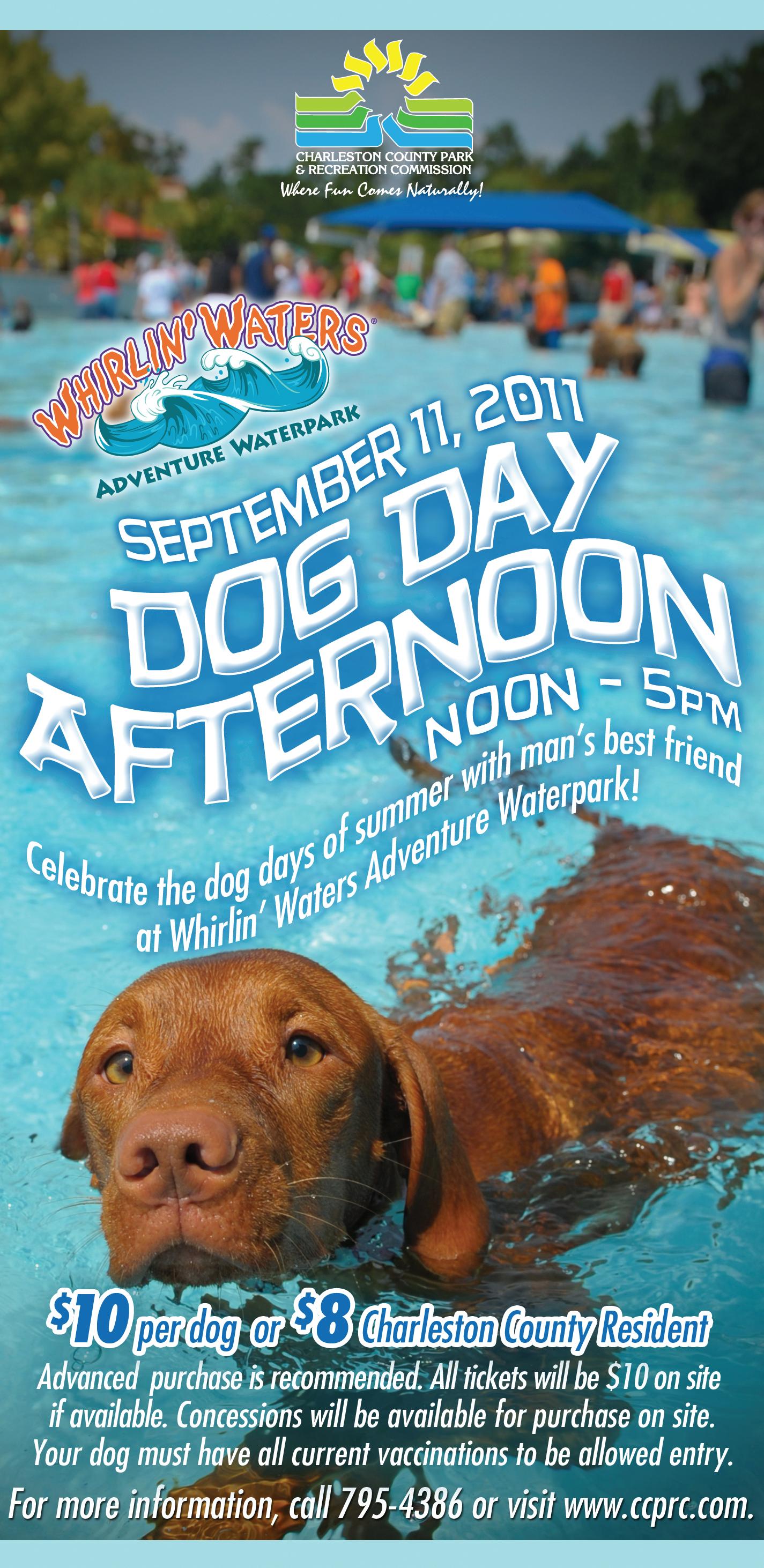
september 11th dog day afternoon at whirlin’ waters. Celebrate the dog days of summer with man’s best friend on September 11, 2011 at Whirlin’ Waters Adventure Waterpark. Large dogs will have a blast in the wave pool, while smaller dogs can take a dip in Otter Bay to cool off from the summer heat.
september 17th 11:00am-4:00pm the 3rd annual lowcountry paws and claws pet expo. Exchange Park in Ladson, inside and outside the Exhibit Hall building, from 11am until 4pm. With over 4,200 pet lovers and their furry sidekicks in attendance last year, this event is not one to be missed. There will be fun and educational demonstrations and presentations, adorable adoptable pets from local rescues, and numerous local businesses looking to cater to you and your pet’s needs. Make sure to stop by the Lowcountry Dog booth!
september 17th 10:00am the pawker run. Benefits the Frances R. Willis SPCA. Ride for the Paws and help the animals. First bike out 11 a.m. 100-mile ride with 10 possible stops, mandatory stop includes the SPCA. $20 per person registration includes t-shirt, goody bag of items, meal with dessert. Door prizes. www.summervillespca.com
september 24th zumbathon. Benefits the Charleston Animal Society. Visit www. charlestonanimalsociety.org for more info.
Questions? Comments? Call 843-478-0266. Want to submit event information? Visit www.lowcountrydog.com and click on Add an Event. We will do our best to include your event as space allows. Our online calendar lists all events in full.
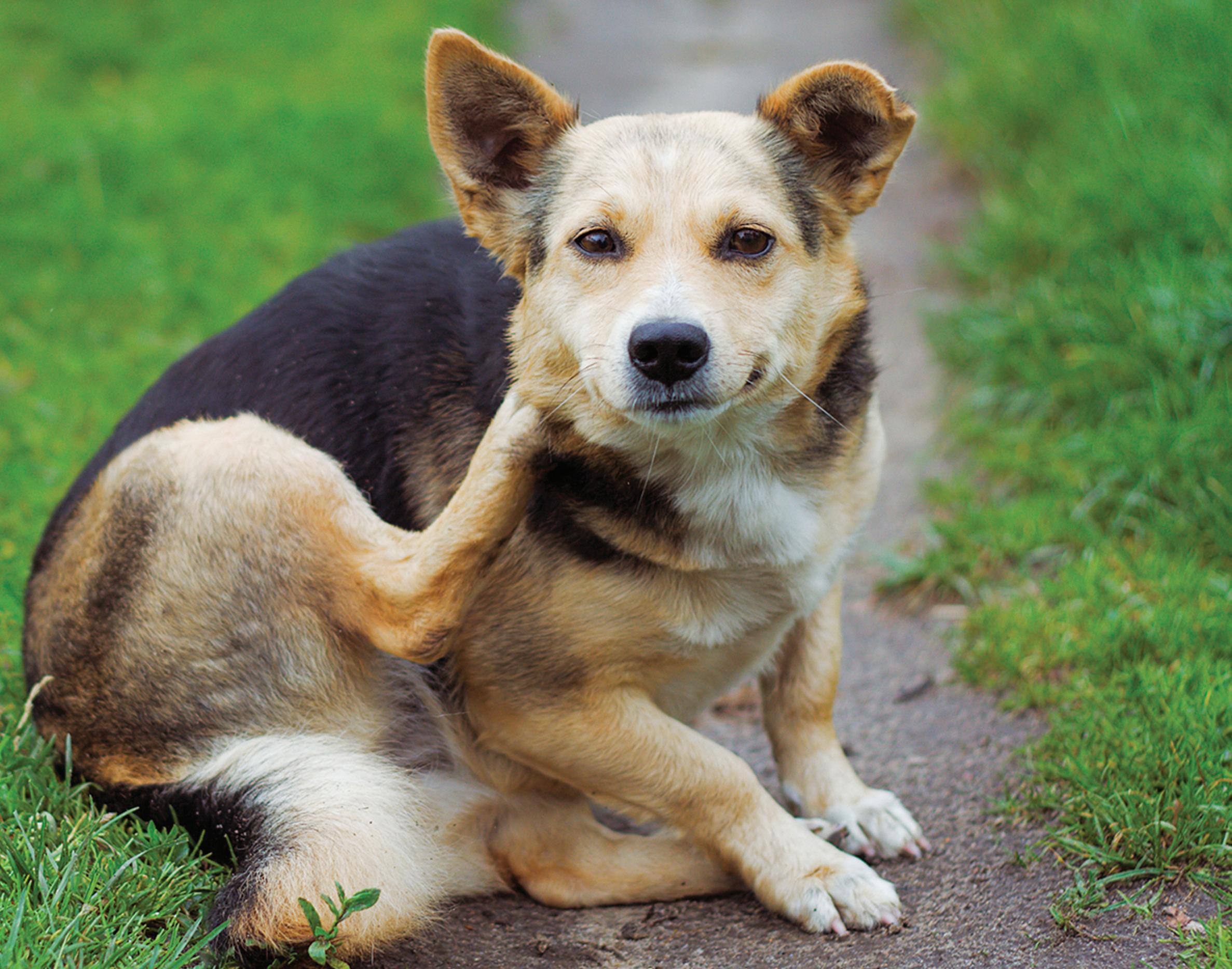
For years, Kelly struggled with the health of her beloved rescue dog, Harley. Harley, a golden retriever, suffered from a number of severe allergies causing him to scratch the sides of his body until they were raw. Harley also developed weepy lesions on his skin causing his coat to stink and feel gooey to the touch.
Kelly attempted to treat his allergies with a number of different remedies. She went to a traditional veterinarian and was given prednisone, a corticosteroid, to treat the constant itching. The pharmaceuticals caused Harley to develop polyuria/ polydipsia (PU/PD), which is characterized by the passage of large volumes of urine and excessive thirst. The PU/PD led to frequent “accidents.” Kelly also tried using numerous topical medicines, but found little relief for her suffering dog.
After two frustrating years, a friend of Kelly’s suggested that she explore some holistic options to relieve Harley’s allergies. Kelly followed the advice and sought out some alternative options including acupuncture and Chinese herbs. Kelly found these remedies to be very effective with none of the negative side effects that she encountered with traditional pharmaceutical treatments. Kelly is now happy to report that Harley’s allergies have been under control for
over a year. She is approaching the upcoming allergy season without the anxiety that she had in previous years.
There are many pharmaceutical options on the market that promise quick results, but the ensuing side effects can be worse than the allergic condition they are intended to treat. Dr. Bessent, founder of Herbsmith, Inc., a company that produces specialized herbal formulas for ailments such as arthritis and allergies, says there is an alternative way to address problems like these. Traditional Chinese Medicine (TCM), a more natural, holistic approach to veterinary care, has proven to be successful for thousands of years.
“Traditional Chinese Medicine teaches us that allergies, like all medical conditions, are symptoms of an underlying disharmony within the body,” Dr. Bessent says. “To effectively treat the problem, you must first address the underlying disharmony that is causing the allergy to occur.”
An allergy is a hypersensitive reaction to an allergen (from a food or an inhalant). These allergens cause the body’s defenses to overreact, which leads to the overheating of a dog’s body. Some of the associated symptoms include itchy and reddened skin, panting, and restlessness. Another way that allergies can affect a
dog’s body is through the accumulation of phlegm. All of these symptoms stem from an imbalance in the dog’s liver, referred to as “Liver Qi stagnation”. According to TCM, the liver is the organ responsible for the smooth flow of Qi (pronounced “chee”), which is the body’s overall life-force. The liver acts as a “pump” to produce the smooth flow of energy throughout the entire body. When that pump “overheats” as a result of an allergic reaction, the vital fluids within the body evaporate and phlegm starts to accumulate. The accumulation of phlegm causes the dog’s coat to give off a foul odor and become greasy or gooey. Any imbalance within the body can be explained using the model of “yin and yang”, which is at the base of all TCM theory. Yin and yang both exist within the body at all times. “Yin” represents the concepts of cooling, fluids, quietness, and passive behavior. “Yang” represents the concepts of heat, inflammation, outward energy, and aggressive behavior. A healthy animal will have a perfect balance between the two forces. According to TCM, any imbalance of the two is regarded as a disease. From this perspective, allergies are commonly seen as an excess of yang (heat) in the body causing the allergic hypersensitivity. Dr. Bessent compares the body of an allergic dog to a boiling pot of water. “In order to stop the boiling of the water, you can either turn down the heat or add more water to the pot.” Herbsmith Clear AllerQi contains cooling herbs that bring down the yang (or heat) within the body and yin tonifying herbs that increase the fluids of the body overall, bringing the dog’s body back to a balanced state. Herbs used in TCM focus on a holistic way of treating diseases. In the case of canine allergies, they work to bring down the heat within the body, thus reducing inflammation of the skin and accumulation of phlegm. Unlike traditional pharmaceuticals, the herbs address the root cause of the allergy while still relieving the associated symptoms. Generally, when people see their dogs begin to itch, their response has been to visit a veterinarian who would typically advise the owner to put the dog on antihistamines and corticosteroids.
However, this approach may not be the best for the animal in the long run. “Corticosteroids work great the first year by bringing down the itching,” Dr. Bessent says. “The dog feels great and only has to take a small amount. However, steroids damage the liver over time.”
The consequences of using corticosteroids can accumulate relatively quickly. During the next allergy season the dog often has more extensive allergies and the symptoms are more extreme. Instead of allergies starting in August and September when ragweed is at its height, the allergies start in July and extend into late October. The itching increases and the dog develops more lesions. To quell the symptoms, the dog is given more steroids and antihistamines, and the cycle of symptom suppression continues. In addition, the long-term use of traditional pharmaceuticals causes damage to the liver, creating an even greater imbalance within the body. After years of treatment, the dog is typically allergic to just about everything. Allergies often continue into the dead of winter and can extend through the entire year.
Chinese herbs address the problem from a holistic point of view. In the early stages, the dog will respond quickly to the herbs. However, when the liver is damaged over the course of several years with steroids, it becomes more difficult to resolve the underlying disharmony. At that point, herbs can certainly be used to resolve the issue, but the treatment typically takes more time.
The most important idea to remember about Chinese herbal blends is that they do not just treat the symptoms of allergies. They address the root imbalance, making for a happier, healthier dog.
“It’s really about the underlying disharmony,” Bessent says, “And when you resolve that, the symptoms of the allergies go away.”
Dr. Bessent started Herbsmith as a way to bring her years of experience formulating veterinary herbal blends to a larger group of pet owners. Her product line includes remedies for various different ailments in canines and equines.
• Healing Hands • Compassionate Hearts
• Affordable, Quality Care
• Complimentary Examination For New Clients
• Indoor/Outdoor Dog Run Boarding
• Cageless Playground
• Kitty House (coming soon)
• Full Surgical, Medical and Dental Services
• On-Site Ultrasound
Open House Celebration Coming Soon! www.MaybankAnimalhospital.com
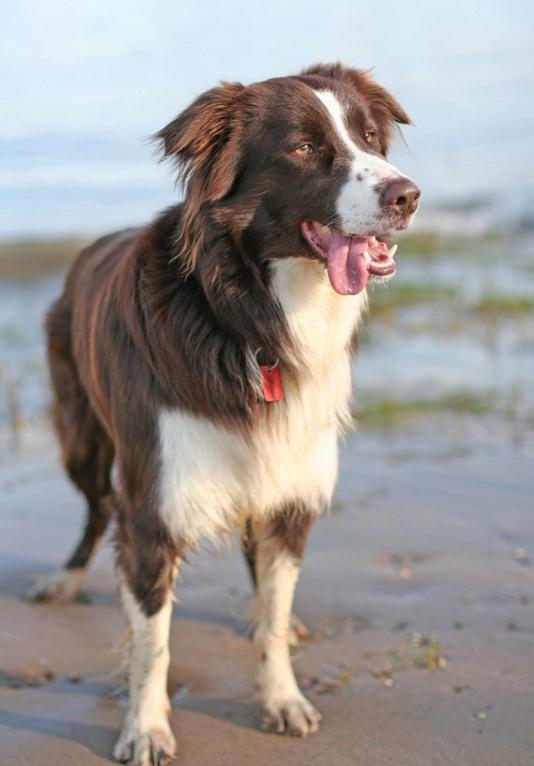

Saturday, Sept. 17, 2011
Pet Expo! 11 a.m.-4 p.m., Exchange Park in Ladson
There will be fun activities, treats (yum!) and plenty of new pals to meet. And something for the owners too: educational demonstrations and tons of local businesses and organizations who want to meet you and your pet(s)!
For details go to: postandcourier.com/petexpo

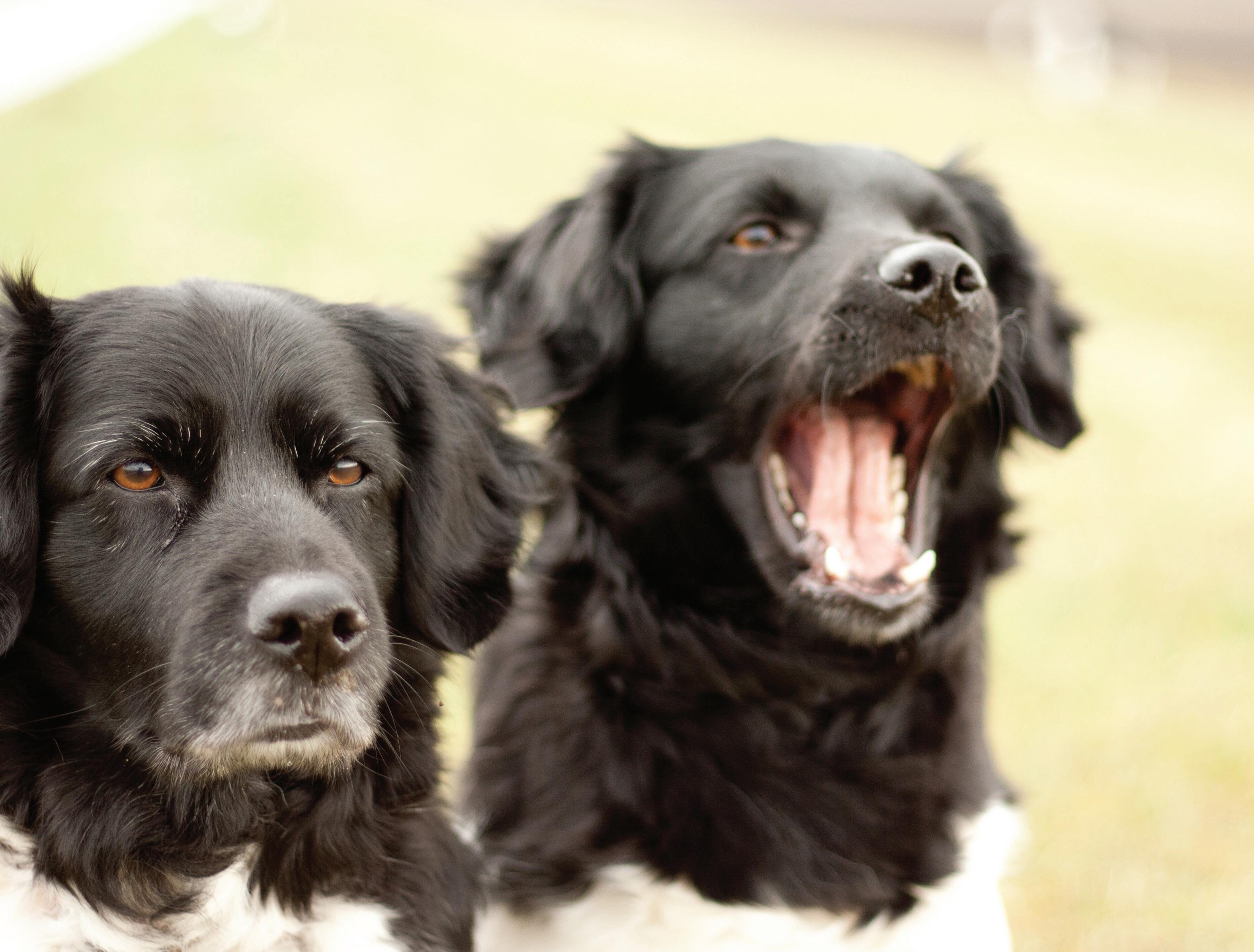
Does any of this sound familiar? You get ready to leave the dog park and your dog just can’t leave his pals to come when called. Your evening walk is disrupted when your dog goes into Cujo mode, barking and lunging at every dog in sight. Your loving dog turns into a quivering mass of fear when someone new comes to visit. Your normally well behaved dog turns into a maniac when he sees a ball, turning a fun experience into a battle of wills. Your agility or rally partner leaves you on course to go sniff or visit every person or dog outside of the ring.
Regardless of which scenario resonates with you, they all create problems for us and our dogs. Whether it is fear, excitement, or anxiety we suddenly have a dog that is in trouble and needs our help.
Leslie McDevitt, author of Control Unleashed, has provided many companion
and performance dog owners with the help needed to guide their dogs to a better, calmer, happier life. One of the greatest strengths of this program is its versatility; it works just as well for companion dogs who need to learn to relax as it does for the agility dog who needs to focus to run a course.
The true beauty of this program is the connection that is formed between human and dog. The exercises and games are a way for us to communicate with our dogs. They also help to change the emotions that drive a dog’s reactions. If a dog is happy and engaged with his owner, he will be more open to learning a new, appropriate behavior or skill, and the owner will be more relaxed and confident.
One of the main components of Control Unleashed is helping a dog learn to relax and develop self control. McDevitt
Cindy Carter
is a proponent of Dr. Karen Overall’s Relaxation Protocol, a series of exercises designed to help a dog remain calm when things happen around him. Whether it is the door bell ringing, their human leaving, or a dog jumping in his face, a dog that can keep his cool is less likely to get in trouble. McDevitt also uses massage and breath work to help a dog learn to remain calm.
Having a dog that responds to his name instantly, regardless of the environment, is vital; McDevitt calls it a Whiplash Turn. It is the beginning point of a good recall, which involves more than coming to you. When you break a recall down into to its parts, your dog must respond to his name ( whiplash turn), ignore the environment ( leave it), and then come quickly.
It is important to remember that all of the games and exercises used in CU, as in
any other training program, are initially taught in as controlled an environment as possible.
We frequently set up ring gates in classes to create a mock environment, in which the dog can move freely and make his own decisions about sniffing or engaging with his owner.
Classes are structured so that games can be customized for each dog. As your dog begins to understand the rule structure of the game we add more distractions and open the ring up to include more of the real world.
One of the signature “games” in Control Unleashed is Look at That. For anyone that has a dog that is reactive to other dogs, people, cars, bikes, etc, it can be life changing. Instead of trying to teach your dog to watch you while ignoring scary or interesting things, this game gives the dog permission to look at it, then reorient to you for a reward. Regardless of how good your dog becomes at watching you, he is very aware of the dog or person, making it difficult for him to relax in the presence of the trigger. Successfully having a dog watch you instead of the other thing requires you to see the trigger first. It is much easier to create a rule structure that allows the dog to see the trigger then reorient to you.
We begin by teaching the dog to look at a neutral object, marking his glance and rewarding him when he looks back to his owner. When he is successful, we bring in a person or another dog, at a distance that does not make him react. We gradually decrease the distance and/or increase movement. If the dog reacts or begins to show signs of stress, we increase the distance from the trigger. As the dog begins to understand the rules, he starts to offer quick glances at the trigger and immediately turns to his human for a reward. In many cases, over time, the dog begins to view the appearance of another dog as part of a game that earns him a reward.
Layla, a cockerpoo who lives on a large farm with little contact with strangers or dogs, really struggled at the family’s second home at a local resort. Surrounded by new people, dogs, and loud noises, walks with her owner involved barking, lunging, and snapping at other dogs. We taught Look at That in the house using a toy, then took it
continued on page 27
Carolina Coonhound Rescue is a 501(c)(3) non-profit organization founded in June 2010. This rescue began out of love for all scent hounds, a passion for educating people about them, and a desire to see these wonderful dogs placed in loving homes.
While many hunters take excellent care of their hunting dogs, others are not cared for properly. Dogs are left behind because they don’t do well, even if it is their first hunt. Others are neglected in kennels. Some are lost on hunts. Also, some hunters believe their dogs’ hunting abilities are hindered if the dogs are spayed or neutered. Therefore, countless unwanted puppies are born every year. While many find homes with responsible hunters who hope they will be the next great dog, others will be abandoned in the woods.
Carolina Coonhound Rescue is made possible by the hard work of our foster families and donors. We don’t currently operate out of a shelter, so we are limited in how many dogs we can save only by how people are willing to foster until permanent homes come along. If you think fostering may be for you and your family, or would like to make a donation, please click to our website at www.carolinacoonhoundrescue.com
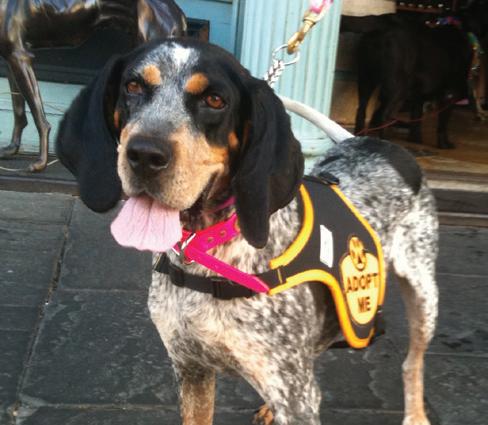
Laney is a 2-3 year old female Bluetick Coonhound. She is very laid back and loves to just hang out, but she’s still got the energy to play in the yard or go for a walk! She is great with other dogs and kids but hasn’t been tested with cats yet. She’s such a great girl and she deserves a great home!
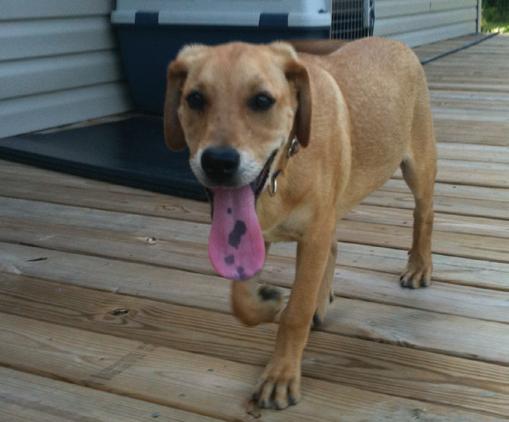
Sammy is a sweet little lab/chow mix that was abandoned on the side of the road. He loves kids and other dogs. He would love a great family to call his own!
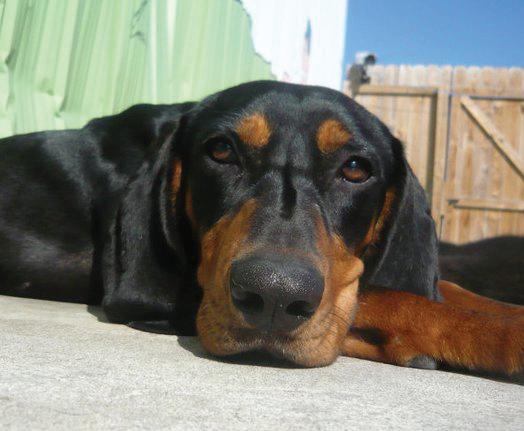
Tater is a super cute boy! He’s around 1-2 years old and is a Black and Tan Coonhound mix. He is good with kids, and other dogs and loves to play! He would do best in an active home since he is still young, but he has a good training background and knows basic commands!
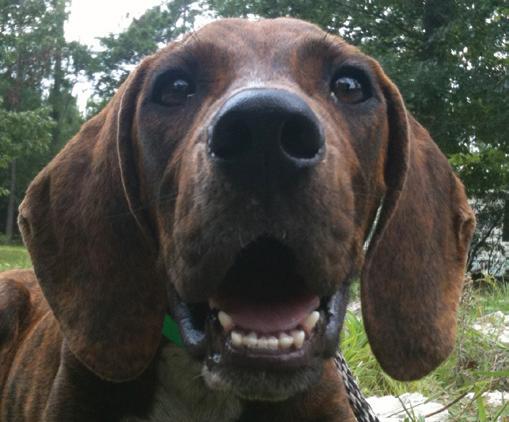
Tigger is a cute little boy! He is a 6 month old Plott Hound that was found running the streets. He loves kids, and other dogs but may be a little too “houndy” for cats. He is an active dog and really loves to play!
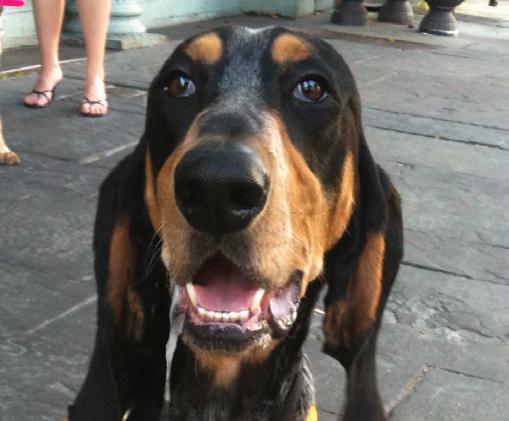
Sara Beth is a great girl who would love a home with an active family. She is a 1-2 year old Bluetick Coonhound. She loves other dogs and kids but her hunting drive is a little too strong for a home with cats. She would be great with a family that runs or that likes to be outside often. She isn’t a crazy dog but she likes to be active! Sara Beth has a good training background and knows basic commands.
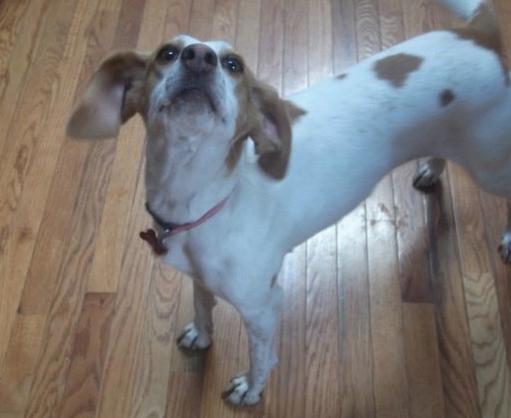
Dolly is a sweet girl who is around 2-3 years old. She is a hound mix and medium in size. She is housebroken and loves other dogs and kids and even potbellied pigs! She would love to be a part of your family!
continued from page 25
on the road. Layla played the game with a neutral dog at a distance and when she was happily whipping her head back for a treat, we moved closer. Layla got it quickly so by the second lesson she was happily looking for other dogs to play the game with, pointing them out to us for a reward, and she’s never looked back. Walks have become fun for Layla and her mom, who can stop and chat with people, with or without dogs.
Not all dogs move as quickly as Layla, but we do see improvement fairly quickly for most dogs. The structure of the games helps the dog feel more confident because it is predictable.
The Gimme a Break game uses the Premack Principle to build value for what the human side of the team wants. Simply put, Premack, means give me what I want and you can have what you want. It is so much easier to work with the environment than against it. For instance, your dog really loves to chase squirrels but you want to teach him to heel. You start with something that is extremely rewarding for your dog, such as a great food treat. Every time that he reorients to you, he is





rewarded, quickly and with several treats. Immediately you release him to go back and chase the squirrels. The more you do this, the more quickly he will return to you for the reward. When he is coming back to you, begin to take a few steps with him, then release him back to the squirrel. The end game, working with you, actually becomes more rewarding than chasing the squirrel.
We have frequently been told to have a stranger feed a frightened dog, which can create a situation where the dog suddenly finds himself too close and bites out of fear. Instead, Gimme a Break creates a rule structure that allows the dog to make the decision to approach or not.
With Jude, we used ring gates to begin playing the game with food tossed into a corner. As he began playing, a stranger moved closer to the corner but on the outside of the gates. Because Jude was comfortable with the rules, he chose to move forward and get the treat off of the ground and return to his safe place, a mat near his mom. The more he played the game, the less worried he was about the person and we were able to remove the
gates and Jude approached the person on his own.
This is a very quick, simple glance at an amazing program that has impacted the lives of countless people and dogs, with or without issues. The games can be used with puppies, adult dogs, performance or companion dogs. They build confidence and focus and help a dog relax around stimulating environments, whether it is children playing chase or a dog on a teeter. The underlying principles are about changing a dog’s emotional response to help him have a better life. The methods and games that McDevitt teaches are positive, fun and engaging to both sides of a team.
Cindy Carter, owner of Mindful Manners Dog Training, lives and works in Charleston, where she shares her life with two dogs, one of which is a reactive Control Unleashed dog. She offers Control Unleashed classes and workshops in various parts of the Lowcountry. For more information, please visit her website at www.mindfulmanners.net