canine heart conditions physical vs. mental exercise do you suspect animal abuse?

canine heart conditions physical vs. mental exercise do you suspect animal abuse?
Publisher
Leah England (843) 478-0266 leah@lowcountrydog.com
Guest Photographer
Julia Lynn www.julialynn.com
Staff Photographer Ashley Smith Blackburn www.lowcountryfocus.com
Accounting Carrie Clark Financial Services (843) 367-9969 carriecl@comcast.net
Intern Maggie Lott maggie@lowcountrydog.com
For Ad Rates Call (843) 478-0266
Lowcountry Dog Magazine PO Box 22 Mt. Pleasant, SC 29465 www.lowcountrydog.com
Subscribe to LCD at www.lowcountrydog.com/subscribe.html
This magazine is printed on 100% recycled paper. Continue the green process by recycling this copy.
Lowcountry Dog’s mission is to be the one and only local resource for dog owners regarding regional events, health and wellness information, trends, style and lifestyle choices. We also strive to be a mouthpiece to the public for various dog related non-profits and promote pet adoption and other responsible pet care practices.
Dog lovers can pick up the bi-monthly magazine for free at most area veterinarians and pet stores throughout the lowcountry, as well as numerous restaurants, coffee bars and retailers. A full distribution list is posted to the magazine’s web site, lowcountrydog.com. Subscriptions are also available. Please call 843-478-0266 for more information.
The entire contents of this magazine are copyrighted by Lowcountry Dog Magazine with all rights reserved. Reproduction of any material from this issue is expressly forbidden without permission of the publisher.
Lowcountry Dog Magazine does not endorse or guarantee any product, service, or vendor mentioned or pictured in this magazine in editorial or advertising space. Views expressed by authors or advertisers are not necessarily those of the publisher.
what my dog taught me about business 5 suspect animal abuse? 6
animal advocates 12 don’t call me disabled 16 calendar 20 health and wellness 22
Heart Conditions
Vs. Physical Exercise

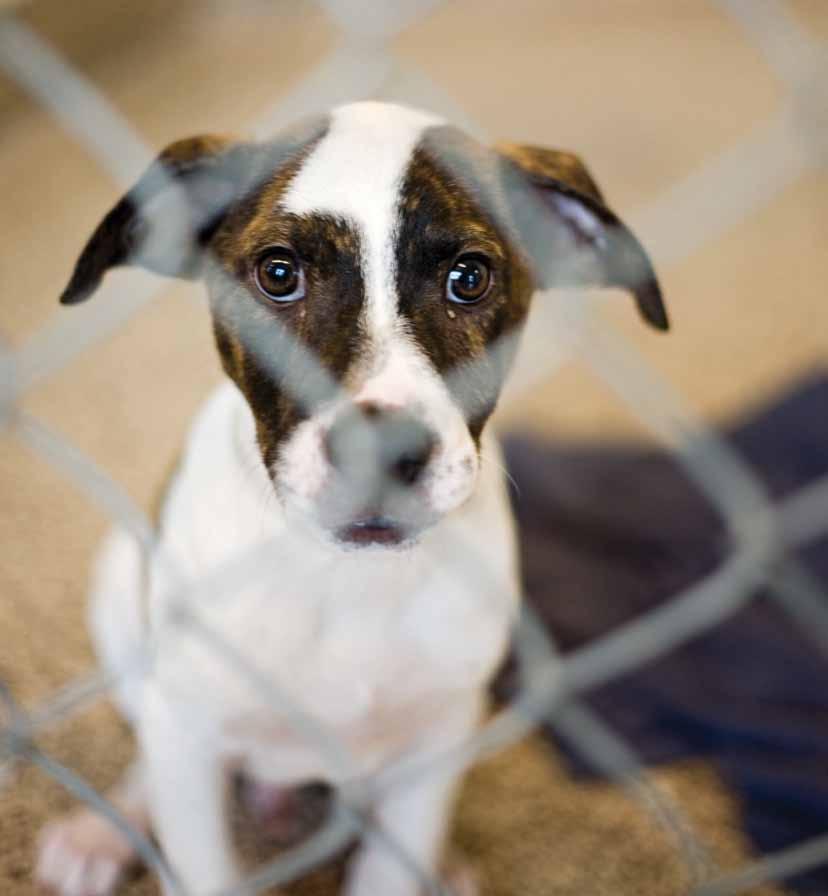
Interested in adopting the adorable puppy on our cover? Contact Charleston Animal Society at (843) 747-4849 or learn more at www.charlestonanimalsociety.org.

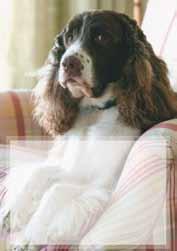









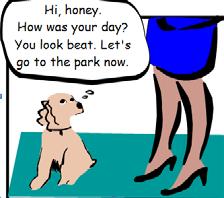
Not too long ago, my dog died. She lived with me for 16 years, practically since I’ve been on my own. The decision to end her life was one of the most difficult I’ve encountered. In the days leading up to the end (which were mercifully few), I relived so much of the past 16 years. Jazz taught me so much, about both business and life. Here are a few business tips I gathered from watching my beloved dog.
Do things to stand out from the pack. One of Jazz’s favorite attention grabbers was plundering my guests’ suitcases, pulling out underwear or some other embarrassing unmentionable, and parading all through the house with it in her mouth. People always noticed her. While we may not be able to get away with such behavior in business, we can be creative and devise unique ways to stand out from the crowd through marketing, branding, unique promotional itmes or simply by our approach to potential business.
me, and she always knew her bedtime. I would often find her curled up in the bed with her head on a pillow just like a person, snoring contentedly. It was really quite cute. Personally, I cannot function without enough rest. My clients deserve my best attention and efforts, and taking the time to rest makes me more productive. (Note: This works for people in general, not just me.)
Andra L. Watkins CPA CMC is a Certified Management Consultant specializing in small business growth. With her help and advice, many of her clients have doubled or tripled their revenues while investing in the right tools for growth. www.positusonline.com.
Tackle problems with ingenious solutions. Early in my 20’s, I made a multi-course meal and invited guests over. Because I had slaved over the meal, I decided to leave it on the table for a while afterwards and visit with my guests. I heard clinking in the dining room and raced in to find Jazzmine on the table grazing from everything left. She smelled the food, jumped up on a chair and reached the table by being extremely smart (and terrible!) If you’re struggling with some business issue, step back from it and look at it from a different perspective or with fresh eyes. You might see a solution lurking there somewhere, all because you forced yourself to see things differently.
Know when to rest. Before I met my husband, Jazz slept with
Be sensitive to others’ needs. I cannot count the stupid decisions I’ve made that resulted in my finding myself crying all alone. Jazz always knew how to comfort me without saying a word. People who notice little things and offer support and encouragement are appreciated in the rat race business world.
Always take the time to evaluate the person standing in front of you, and offer kind words when it seems appropriate.
Beg gracefully. Jazzmine could stand on her hind legs and turn around and around in circles for a treat, and she would not take “No” for an answer. Learn how to turn those rejections into “Yes!” for more business success by evaluating your sales pitch and getting objective feedback. Some small tweaks could make a big business difference.
Jazzmine was my oldest friend, and I will always miss her.
text & illustration by les schwartz

Charleston Parks Conservancy I Bark for Parks Winning Essay
Every evening, Sera and I join the gang for yappy hour at the dog park. For you unfortunates without one, a dog park is a partial acre fenced off like a huge play pen for pups and their people. The water fountain is designed with a second bowl low enough for a Pekinese. The gate is also for the dogs.
To get in the dog park, you go through a gate into what some call the foyer. Please latch the gate behind you.
When someone enters, most of the dogs at play stop and rush over to greet who’s coming in. That is why there is a second gate to enter the play area. When you open that gate, dogs will swarm like fish to bait welcoming you. It is very gratifying.
therapy. “I know he’s young but it’s like he protests being house broken. I don’t know what else to do.”
“Heidi’s intense separation anxiety breaks my heart.”
“I had that problem. You should leave the radio on for her.”
As one might expect, there’s even puppy love in the dog park. There is a lot of flirting but none sweeter than when an 89 year-old gentleman escorting his standard poodle would spend time courting the 91 year-old woman with her Maltese. One evening he brought her the latest edition of Lowcountry Dog. It was too cute. It was also an inspiration for the single, middle-aged women looking for a mate.
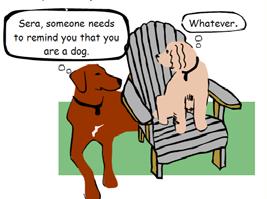
Our dog park is lavishly furnished with the finest plastic furniture most of which was snagged from trash piles on the side of the road. This is where the people pack gathers to unwind. You’ll find very young to very old, doctors, lawyers, students, a marine biologist and a pizza maker socializing. We all have at least one thing in common—we are willing to leave everything on hold for love of pup.
Think of one of those old movies with the row of nannies lined up watching the children play together. “Your Great Dane has grown so much. How much does he weigh now?”
“Oh, is this your new addition? What breed is she?”
“Look at the paws on that one.”
Some nights it sounds like group
That reminds me of the steamy summer evening when some really hot shirtless guys were playing Frisbee with a golden retriever. The ladies in the crowd were never so quiet as they followed every move panting like dogs in heat.
Last evening, a park regular entered with a third dog in tow. “Who’s the Chihuahua?” “Beats me. He followed us for six blocks. I don’t know who he is.”
I recognized the little guy. I had seen him roaming the neighborhood one evening and tried to catch him. The little guy was just too fast. “That’s Chewy. He lives over on Maple Street. His people let him run loose.”
”Oh my gosh. I could never
do that.” said the Bouvier owner. “You’re kidding. That’s so bad.” said the terrier owner.
For twenty minutes, Chewy got to run
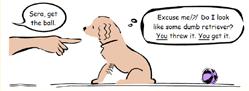
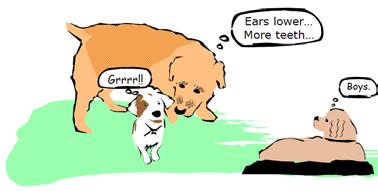
with the big dogs. When it was time to go, his designated escort tried to catch him to put him on a leash to take him back. (Such a responsible young man.) Well, Chewy would have none of that. For the next ten minutes three people and two herding dogs raced around in hot pursuit. It wasn’t until Chewy skirted under a chair and was surrounded that he got clipped. Still protesting, he was escorted off. I hope they made it home okay. So how does Ms. Sera fit into this scene? With the humans, of course. As a fashion editor for the local paper (and owner of Lucy, the pug) once said, “Sera isn’t a player.” She is amused by big dogs romping but you’ll never catch her acting so juvenile. And fetching a nasty, dirty ball is just nonsense. Even so, when we approach the dog park, Sera is every bit as excited as the rest. She likes sports but she is no athlete. Sera likes to watch. She strolls into the dog park past all the fur. On rare occasion she might stop and sniff around.

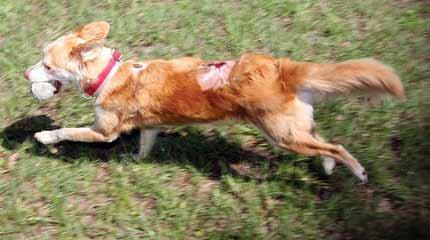
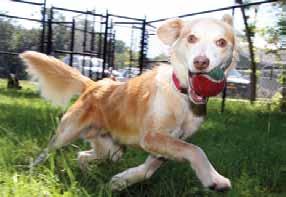
Shelter workers in the lowcountry witness firsthand the effect cruelty has on animals. Animals are routinely brought in who have been hit by cars and left to suffer, abandoned on chains with no food or water, imbedded collars left forgotten about, animals physically abused – and these are the lucky ones who have made it to the shelter. Toby is one of these dogs. Originally adopted from the Charleston Animal Society (CAS) last year, his owner recently surrendered him because of concerns for his safety. After she discovered him with large wounds spreading across his back, an emergency vet visit confirmed that someone had dumped something on Toby that resulted in severe chemical burns. Although a neighbor who had shown a dislike for Toby was suspected, a lack of proof prevented his owner from pressing charges.
danille young

Crimes against animals for the sake of sport, such as dog fighting, cock fighting, and dog-hog fighting, all of which are present in the lowcountry, perpetuate violence, drug-related crimes, and horrific cases of animal cruelty. These animals are raised in horrendous situations where they are bred and raised to be vicious fighters. Animals used for animal fighting spend their lives in isolation, starvation,
Violence against animals in our communities cannot and should not be tolerated. These cases of cruelty and neglect are sad marks on the morality of humanity. Combating them will require members of our community taking a stand and demanding that local and state animal cruelty codes are enforced. There are clear links indicating that a person’s proclivity for violence against animals is an indicator of potential violence toward people. A study conducted in fifty battered women’s shelters across the nation found that 85% of women and children in the shelters also reported violence, by their abuser, against animals. It also concluded that children who are abusive to animals often report being victims themselves of physical or sexual abuse in the home. Indisputable evidence exists of violent offenders to animals subsequently committing violent crimes against humans.
on our animals. Denying an animal the appropriate level of food, water, or shelter can lead to a slow, painful death. Starvation and exposure to extreme temperatures (in our case, heat exhaustion, dehydration, and heat stroke) are very real threats in the summer months. Leaving an animal chained outside for long periods of time potentially exposes these naturally social dogs to boredom and loneliness, as well as harassment from people or attacks from other animals. Particularly in South Carolina, these dogs may be exposed to extreme temperatures with inadequate shelter and water, or potentially harmful bug bites. Chained dogs are also at risk of strangling themselves with their chains or tethers. Leaving a dog chained outside without adequate shelter, food, or water is against the law in South Carolina.
with constant beatings to build endurance, until they are eventually put to battle against another animal. These animals are trained to fight to the death and survivors either die of untreated wounds, are killed because of low performance, or live on to fight again. All fifty states have laws against animal fighting but it’s an atrocity that lives on nonetheless.
Other forms of non-violent animal cruelty have an equally devastating effect
Though not all inclusive, below is a list of suggestions and resources for individuals who witness one of these forms of violence or neglect. Please remember a few important steps to take if you think you are witnessing cruelty. First, DO NOT attempt to rescue the dog yourself! Although tempting, you are putting yourself, and potentially the animal, in physical danger and may face the risk of legal ramifications, depending on the circumstances. Instead, figure out who has authority in the given circumstance and notify them immediately. In most cases, animal cruelty calls are directed to Animal Control or a local shelter. (See list below). Second, be specific and succinct. Information like dates, times, who was present, animal species, age, breed, and any other specific facts will all aid in a subsequent investigation. Photographs, if they can be safely taken, are helpful. Third, be
patient but persistent. Politely reminding local enforcement agencies that you are concerned can help create an atmosphere where animal welfare is a priority. Included is a list of local agencies that either have the authority to enforce state and local laws or can help direct you to those agencies. Also included are a couple of ideas that might be of interest. First, consider incorporating animals into your Neighborhood Watch organization. Get to know local pets. If you’re aware of the pets that live around you, you’ll be more prepared to act if you see one of them being abused or wandering alone. If you notice something unusual, such as an injured animal not being treated, a chained dog, or a house with a lot of cats, remain observant. If the situation persists, call the humane officer in your town. Second, watch out for cruelty to wild animals as well. The link is clear: violence against animals is connected to violence against humans and these cases should be taken seriously. Finally, teach humane education to the young. If we
teach them to respect animals as children, they will carry this lesson into adulthood. At a recent animal law conference a question was asked about how we can best affect change in our community. The answer was simple. Be a role model. Animals cannot protect themselves; they need our voices to speak for them. Talk to people, volunteer at local shelters, call elected officials, write letters, and persist, persist, persist.
As for Toby, he has remained sweet and social throughout his treatment and stay at CAS. He was adopted over the Fourth of July weekend to a new family. A special thank you to Kay Hyman at the Charleston Animal Society for sharing Toby’s story with me.
To locate local animal cruelty enforcement agencies in other areas please visit: www.Pets911.com.
For information about the connection between animal cruelty and human violence, please see: www.hsus.org
Please direct questions and comments to Danielle Young at csolsaldf@gmail.com.
Charleston Animal Society: 747-4481
Pethelpers Rescue & Shelter: 795-1110
Berkeley Animal Control: 723-7603
Charleston Animal Control: 554-4700
Dorchester Animal Control: 832-0070
Folly Beach Animal Control: 583-2433
North Chas. Animal Control : 740-2815



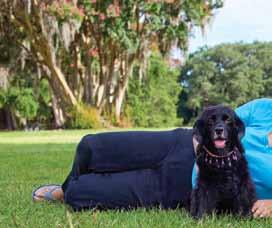

More than likely, she heads straight for an empty chair, jumps on it and sits herself down. A few of my peers have actually pulled up a chair for her leaving me to find my own. Sera is accepted for who she is. That’s what makes this place so special. Unwinding in the dog park is the most important part of our day. I’ve spent many an evening there complaining about the heat and mosquitoes, and too many shivering in spite of heavy layers. And there have been rainy nights that made no sense at all. For us, it’s like watching the nightly news and catching up with the world. Our world is a ¼ acre with two gates and many kindred spirits.
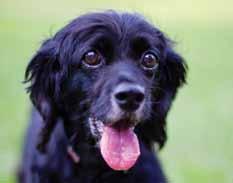
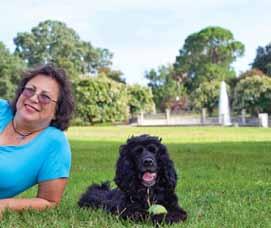
Special thanks to Els Spikes of Nuance Pet Photography for these amazing photos of Les, Sera and Jetta at Hampton Park. Els Sipkes is a photographer, graphic artist, and dog-mom to a yellow Lab named Cooper. You can see more of her pet photography, and read her blog, at www.nuancepetphotos.com. To learn more about the Charleston Parks Conservancy and discover how you and your dog can become Park Angels, visit www.charlestonparksconservancy.org
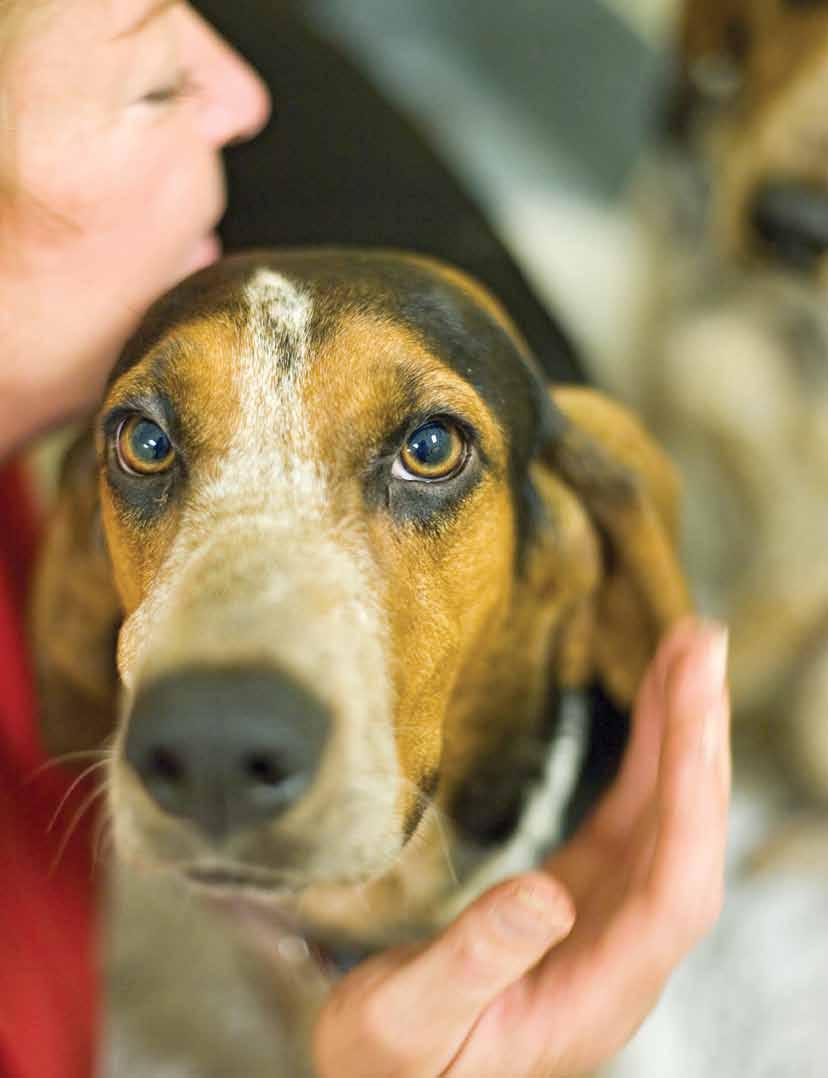
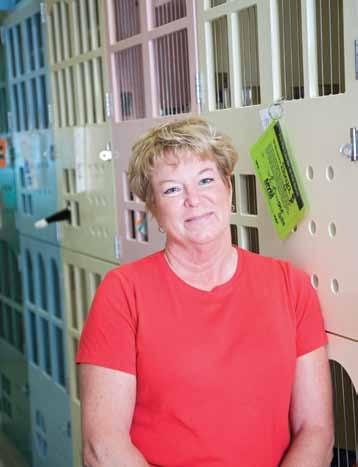
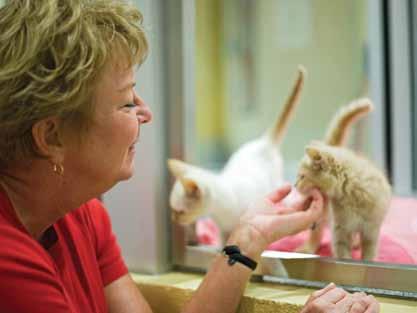
When DeDe Tyler, a Charleston native, left her banking job of 31 years she decided it was time to discover her passions. She found her calling with animals, and from there got involved with PetHelpers on James Island.
You can find her at the shelter doing anything from cleaning the cages to simply socializing with a pet in need of human touch. Not only does she interact with the animals, she is also the coordinator for the Humane Net program designed for people who need financial assistance getting their animals spayed or neutered. DeDe says she finds a sense of satisfaction when she can walk people through the process because one animal can turn into 15 in a matter of a year.
DeDe also enjoys fostering cats. She often takes home kittens that are too young to be left by themselves overnight or that have special needs. She recently finished fostering 5 kittens, full of fleas and in need of nurturing, for 4 weeks.
She is also a member of the trap, neuter and return program at PetHelpers. She regularly feeds colonies of cats around the area, and traps and neuters as many strays as she can –all at her own expense.
DeDe’s favorite part about working with PetHelpers is the no-kill policy. After moving to the new facility they have been able to take in around 160 cats and 50 dogs. She says she has the time to do something positive, and volunteering is a way to give back to the community.
“She’s my go-to girl. I know I can ask her, she doesn’t complain, she’s on time and ready to go,” says Emily Laurie, director of public relations and outreach at PetHelpers.
DeDe’s motto is “I may not be able to save them all, but I will save all that I can, one by one.” She plans to continue her work with both pets and those who love them for as long as she can.
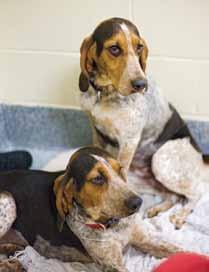
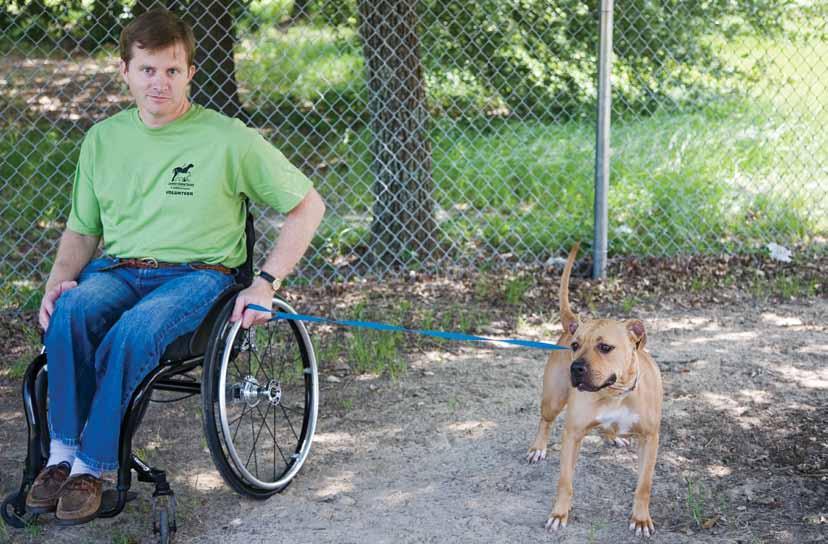
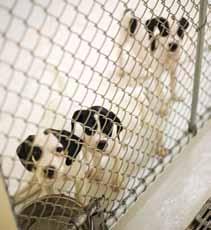
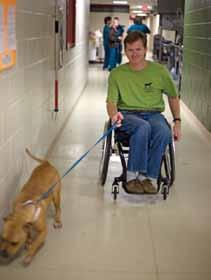
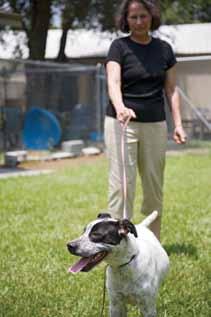
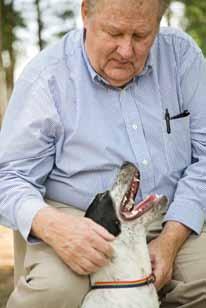
Ward Reynolds is an active volunteer at the Charleston Animal Society. Visiting about three times a week, he gives the dogs some much-needed love and an opportunity to run around. This not only makes life at the shelter better for the dogs, but also increases their chance of adoption.
It all started when a neighborhood newsletter revealed volunteer opportunities at the shelter. Ward waited a few months before pursuing the idea, worried he would start bringing the dogs home with him. With two already, a Weimaraner and a corgi mix adopted 10 years ago, his hands are full.
Ward says he is surprised at how he’s been able to separate himself from the dogs. He works in the back room and never knows which dogs are sent to the front for adoption, and which don’t make it for health or other reasons. He interacts with as many dogs as he can – sometimes up to 20 in a three-hour visit. Ward says the sheer volume of dogs at the shelter is not only the reason he stays so busy, but also the reason volunteers are so important.
Despite being in a wheelchair, Ward does whatever he can to help. “It’s funny to watch some of the more excited dogs pulling me down the hall. It’s kind of like waterskiing,” says Reynolds.
His favorite interactions are with the pit bulls. He says many come and go from the shelter, and they are just looking for some affection. He even lets them jump on his lap for a hug.
“Many of the dogs he takes out are frightened and do not trust humans. Ward helps to calm their fears, giving them a better outlook on life and people,” says Kay Hyman at the Charleston Animal Society.
Ward was looking to make good use of his time when he decided to volunteer at the shelter. He is now a devoted friend to the animals, looking to extend his work for as long as he can.
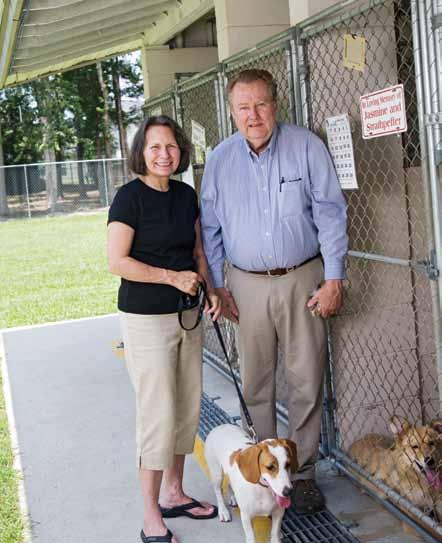
Volunteer Coordinator Cheryl Burns says the Kiraly’s are “good down to the soul.”
After Terry Kiraly retired two years ago, he decided to volunteer at the Francis R. Willis SPCA. He started visiting the shelter regularly and would go home and tell his wife, Patti, about the animals. His enthusiasm was contagious. Since then, the Kiraly’s have fostered and found homes for 10 dogs and been regular volunteers at the SPCA.
While Terry visits the shelter everyday if he can, Patti works around her job at Windsor Hill Elementary. “You don’t know how many times we come home and cry. They all have their individual personalities, their own little quirks, and you just love them all. It’s so hard to put them back in that kennel and close the door,” says Patti.
The duo have housebroken, socialized, trained and loved 10 foster dogs in the past two years. One of their own pack, consisting of a cat and three dogs, is Reagan. The puppy had been thrown from the window of a moving car, and was brought to the shelter by an older couple that had stopped to inspect. With a bruised spine, Regan was in pain and couldn’t walk, but the shelter was closing. The Kiraly’s took him home and after a failed adoption, gave him a permanent family.
Terry and Patti were recently voted onto the Board of Directors for the shelter. They attend monthly meetings, and Terry is looking to add money-raising events to the calendar. They find great reward in simply getting the animals out of their cages, but also enjoy spending quality time as a couple at the shelter.
Whether it’s to walk a dog, or just hand out a few treats, the Kiralys are devoted volunteers. According to the volunteer coordinator at the SPCA, Cheryl Bruns, Terry is a constant at the shelter always willing to help, and Patti is a guide often full of insight as to how to handle a tough situation. “You can tell by the way they treat animals that they are good down to the soul,” says Bruns.
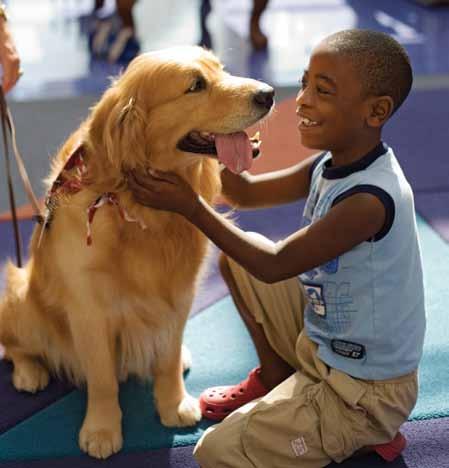
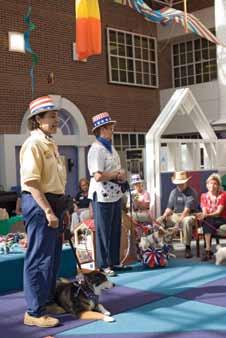
email jehirsch@comcasT.neT for info on Trot for the Cure.
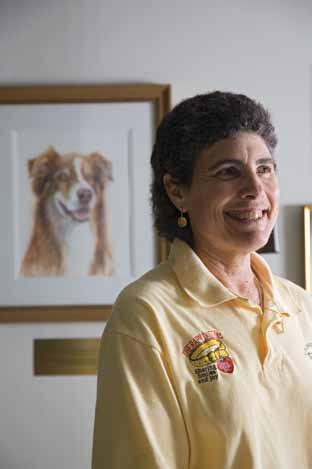
“It’s ironic,” says Jane Hirsch, “that I was a cancer survivor and then got a dog that was diagnosed with cancer.”
After Jane found three melanomas in two years, she packed up her tennis gear and left sunny Florida for home. A 7th generation Charlestonian, she hung up her racket and tennis shoes and got an Australian Shepherd puppy. Rafter was 2 years old when he was diagnosed with bone cancer and given 18 months maximum to live. Already a therapy dog at the Veterans Administrations hospital, Jane decided his story would benefit sick kids.
She wanted the children with cancer to meet Rafter and be able to ask questions about what he had been through. According to Jane, Rafter was never a “loveydovey” therapy dog. He entertained with tricks: marching, boxing and pulling a hanky out when she sneezed. While Rafter passed away this last year, Jane is still involved with therapy.
Jane Hirsch is not only involved in pet therapy at children’s hospitals, camps, nursing homes, schools and other places in need, but is also the founder of Trot for the Cure.“I had no idea cancer in dogs was so prevalent,” says Jane. She decided more fund-raisers were needed to support canine cancer research and created the event to raise both awareness and funds. Since its inception in 2005, Trot for the Cure has raised over $65,000 for research at the University of Georgia.
Jane Hirsch is a leader when it comes to pet therapy in the Lowcountry. She has mentored many human/dog teams interested in making the lives of hospital patients better. She has helped form the rules and regulations in place at MUSC to protect both therapy dogs, and those they are helping. Her now annual event is dedicated to the wellness of our canine counterparts, and she works tirelessly to try and ease the pain of those around her.
heather hobbs
I have sat in a room with countless numbers of clients and counseled them on the fact that animals are survivors. I have told them that a pet can lose its vision and still go on to live a happy and fulfilled life. A pet that is non-visual can still play and participate in family activities. I was able to give this advice because, while working for a veterinary ophthalmologist, I had witnessed first-hand how blind pets have been able to overcome any obstacle placed in their paths.
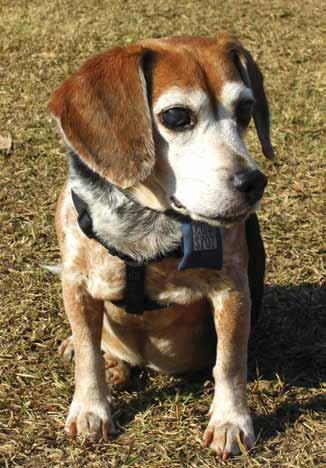
Eventually there came a day, however, when the counselor became the counselled. I was the “parent” sitting in the exam room listening to my doctor explain that my beloved beagle, Ben, had lost his 6 year battle with glaucoma. I was devastated. Had I been advising something I didn’t truly believe? Or had I not fully appreciated the loss associated with the word ‘blind’? I had a choice to make. Should I let him retain the very limited vision he maintained in this remaining eye? Or should I relieve his pain and end his suffering, but in exchange, take away his vision?
Somehow my decision didn’t seem as easy since it was my best friend Ben. I knew what animals where capable of handling. I had seen pets lose their vision from various diseases and cope, as not many humans could, without complaint or self-pity. I had been in the exam room, standing next to my doctor as owners thanked her for ending their pets’ suffering, even if the pets could no longer see. I had seen first-hand how much better the quality of life was for a non-visual, pain-free pet compared to a visual pet who suffered from uncontrolled glaucoma. I found myself looking into Ben’s loyal and understanding eyes
knowing he trusted me to make the right decision and end his pain.
What would it be like not to be able to look into his eyes and feel, whether true or not, that he knew exactly what I felt when I spoke to him? What would it be like to never again play our favorite game, affectionately named “chase ‘em”? My personal feelings of loss aside, what if I made the wrong decision? Had I tried my very best to
it were your dog?” What was I going to do?
The day came and I followed through with what I had advised so many clients before. Ben would have to lose his vision. It was best for him. Ben earned the right to be happy; he didn’t deserve to be in pain just because I couldn’t be strong.
I will never forget that day of surgery. I was nervous, sad, and most of all, concerned for Ben. However, in true Ben fashion, like most beagles, his greatest concern after surgery was dinner. In my mind, I had built up this surgery to be a huge undertaking…yet for Ben it was just another day in his journey with glaucoma.
give him all his medications on time? Had I truly considered at all possibilities and made an educated decision rather than an emotional one? Now all the questions that were asked of me while I was a technician were running through my mind – the most difficult of which: “What would you do if
It has been a year since Ben’s complete vision loss, but let me assure you, he has been very busy. He has snuck out of our locked fence, only for us to find him sunbathing on the driveway. He has been caught standing on the kitchen table, in what appeared to be a crime scene, with his muzzle covered in pasta sauce. (The only evidence was a destroyed Tupperware container which he had left lying on the kitchen floor.) He has also spent time chasing our cats, hurdling baby gates, and finding all food dropped by any child within a 100-foot radius of the house. Ben continues to remind me that nothing is out of the reach of a determined beagle, blind or not.
When you see us at the beach, in the dog park, or walking downtown, please don’t feel sorry for Ben. Don’t pity him for all the things you feel he might miss out on or can’t participate in, because as soon as you do, he will be sure to prove you wrong. So call him spoiled, call him ornery or call him a chow-hound, but please don’t ever call him disabled.






august 8th 9am-1pm animal communication mini-clinic taught by barbara rawson. Grounding methods, boundary setting, and telepathic skills will be taught and practiced. $50 Email barbararawson@ hotmail.com or call 843.364.2210.
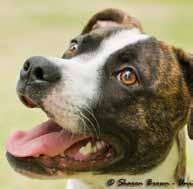
august 8th 11am-3pm sc pit bull rescue meet & greet at petsmart summerville. As always, we will have some of our wonderful Pit Bulls in attendance, ready to find their new homes. For driving directions, store hours, or information about this store, please visit www.petsmart.com.
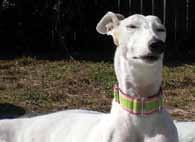
august 15th 11am-2pm greyhound pets of america charleston meet and greet at Petsmart in Summerville. More info at our website www.adoptcharlestongreys.org.
august 22nd 10am-2pm noble ones bully breed rescue bubbles for bullies at chick-fil-a in west ashley. Stop by The West Ashley Chickfil-a to support dog rescue, get a chicken biscuit and get your canine clean and micro chipped! To learn more please visit www.NOBBR.org.
august 22nd 11am-2pm greyhound pets of america charleston meet and greet Petsmart Sam Rittenberg. More info at www.adoptcharlestongreys. org.
august 23rd 5pm pug days of summer. It’s too hot outside for the pugs! Bring them inside for a fun pug event! PetSmart 2076 Sam Rittenberg Blvd. Charleston, SC 29407 for more info visit http://pug.meetup.com/688.
august 26th 5pm - 8pm doggy dining and drinks. Join The Low Country Golden Retriever Rescue at The Dog and Duck at Belle Hall for a good time. 571 - 7177 or visit www.lcgrr.org.
august 30th 11am-3pm sc pit bull rescue meet & greet at petsmart, mount pleasant. As always, we will have some of our wonderful Pit Bulls in attendance, ready to find their new homes
For driving directions, store hours, or information about this store, please visit www.petsmart.com.
september 6th 12pm- 1pm bully walk with sc pit bull rescue and the pit chicks group at hampton park. The purpose of the Bully Walk is to bring together responsible pet owners and their dogs to walk and bring positive awareness to good dogs owned by normal people. For more information, please visit www.scpitrescue.org and click on Events to view our Calendar of Events.
september 9th 6-8pm shih tzu & furbabies rescue yappy hour at red’s. You AND your pooch are welcome to enjoy dinner and a brew on the deck! Meet some of our local foster dogs and volunteers in a fun, relaxed setting.
september 9th 5-8pm dog tails with golden tails. Come by for drinks and dinner and join The Low Country Golden Retriever Rescue on the patio of the Dog and Duck in Summerville. Visit www.lcgrr.org or call 571 - 7177.
september 12th 11am-2pm
greyhound pets of america charleston meet and greet All is Well west ashley 11am-2pm. More info at www.adoptcharlestongreys.org.
september 12th 10am frw
spca 6th annual pawker run. Dorchester Shrine Club, off Highway 61 in Summerville. 5 stops on a 100 mile run. Food, music and prizes for all participants. 50/50 drawing. 10 a.m. registration, 11 a.m. first bike out. For more info visit www. summervillespca.com.
september 13th 12pm-6pm dog day afternoon at whirling waters. A dogs-only day at the Whirling Waters Adventure Water Park in North Charleston. $10 per dog. $8 if Gold pass holder. Concessions will be available for purchase. Visit www.ccprc.com for more info.
september 19th 11am-2pm
greyhound pets of america charleston meet and greet
petsmart summerville. More info at our website www.adoptcharlestongreys.org.
september 19th 10am-2pm charleston air force base pet fest. Activities, vendors, rescue village and K9 working dogs. Current and retired military, base workers and their families welcomed. Contact Rick Baker for more info: 843-963-1672/1732 or rick.baker@ charleston.af.mil.
september 20th 5pm pug’s country fair. If pugs had a country fair what would their contests be? Curliest tail, biggest eyes, shortest, heaviest, you name it! Everyone votes! Much fun! PetSmart 2076 Sam Rittenberg Blvd. Charleston, SC 29407 For more info visit http://pug.meetup.com/688.
september 23rd 5pm - 8pm doggy dining and drinks. Join The Low Country Golden Retriever Rescue on Wednesday evening at the Dog and Duck Mt. Pleasant for a casual get together to meet some of our Goldens and their human friends. Visit www.lcgrr.org or give us a call at 571 – 7177 for more info.
september 26th 11am-4pm post and courier pet expo. Charleston Area Convention Center. Rescues, vendors, demonstrations, food. Email jneville@ postandcourier.com for more info or visit www.lowcountrypaws.com.
Call 843-478-0266
Want to submit event information? Visit www.lowcountrydog.com and click on Contact Us. We will do our best in include your event as space allows. Our online calendar lists all events in full.



abigail kaufman, DVM
to control rhythm disturbance.
Although some dogs with endocardiosis can develop severe heart failure, many dogs remain stable for years or never even develop symptoms. Those dogs that develop symptoms of left-sided heart disease often experience coughing, exercise intolerance and breathing difficulty from congestive heart failure.
The best advice is to have your dog evaluated by a veterinarian on a regular basis, especially if symptoms begin to change. Tests that should be performed on a regular basis include cardiac ultrasound, chest x-rays, and an electrocardiogram. Depending on what is seen, medications can be prescribed to stabilize the dog’s condition.
Categories of heart diseases can be divided into those that primarily affect the right side of the heart and those affecting the left side. Primary right-sided heart diseases are less common and usually develop as a result of lung disease: since the right side of the heart pumps blood through the lungs, anything that causes the lungs or the vessels associated with them to become stiff and non-compliant causes right -sided heart weakness.
The most common causes of right sided heart failure in dogs are heartworm disease, chronic bronchitis, and allergic lung disease.
The most common acquired disease in dogs is known as endocardiosis. In this condition, the valve becomes damaged by the deposition of fibrous-like tissue, which causes the valve to become thickened and irregular and thus unable to close normally. This condition is an aging change that we see in many dogs that may also have a genetic basis.
The most common valve to become affected is the mitral valve, which separates the left atrium from the left ventricle. When the left ventricle attempts to pump blood forward to the body, some of the blood goes backward across the damaged valve into the left atrium.
This backward flow of blood causes turbulence, which causes a heart murmur.
Over time, as blood continues to flow backward,the left atrium can become enlarged and dogs often begin to cough.
One cause of coughing is the left atrium pressing on the windpipe, causing it to become irritated or even to collapse. Coughing due to left atrial enlargement is often triggered by stress or excitement, anything that causes the heart to rate to increase and more blood to flow backwards.
A second more serious cause of coughing that occurs with left atrial enlargement is when blood backs up into the vessels in the lungs and causes fluid to accumulate in the lung tissue. This condition is called congestive heart failure and usually causes the dog to suffer breathing difficulty along with coughing.
If this disease progresses, the left ventricle may also fail in its ability to pump blood forward adequately. This happens because too much blood remains on the left side of the heart, and the volume of blood overwhelms the left ventricle’s muscular strength. Sometimes dogs with endocardiosis will also develop abnormal heart rhythms.
Treatment of heart valve disease consists of drugs to remove fluid from the lungs, drugs to lower blood pressure, and drugs to modify heart rate and pumping action. Animals having arrhythmias will require medication
Dilated cardiomyopathy is a heart muscle disease whereby the left ventricle primarily weakens and loses its ability to pump blood forward. Secondarily, the heart chambers become enlarged and the valves become stretched and don’t close well.
Symptoms seen with this disease are often very similar to those seen with endocardiosis; however, they are usually much more insidious. Since the heart muscle fails gradually, the dog is often able to adapt to these small changes until it reaches a critical level where the heart can’t pump at all. The dogs often cough, and many have episodes of collapse.
The most common breeds to be affected are Doberman pinschers, boxers, cocker spaniels and retrievers. The condition tends to be genetic in these breeds and the prognosis varies by breed, with Dobermans tending to have the worse long-term survival rate. Besides conventional medication, dogs with dilated cardiomyopathy often benefit from the administration of certain nutritional supplements.
Although cardiac disease is very serious, many dogs can live healthy, long and happy life spans. It is very important, however, to diligently follow your veterinarian’s recommendations.
Abigail Kaufman attended veterinary school at Tufts University, followed by residency at the University of Georgia College of Veterinary Medicine. In 1993 she established Coastal Carolina Veterinarian Internal Medicine in Charleston.





james & michelle rodriguez
During the summer heat outdoor playtime hours are reduced with your dog. The dog park can be a convenient way to tire your dog if you can go first thing in the morning or during the early evening hours. However, it is essential that you know your dog. Not all dogs enjoy meeting new dogs. Don’t let your dog get overwhelmed by meeting too many dogs at once. Testing your dog in a controlled environment with one dog is ideal before you go into the dog park. If he is not acting polite or is aggressive outside of the dog park then it is not the right fit for you, seek other environments to play together. Professional help is available to socialize your dog that does not involve putting other dogs and yourself at risk.
If outdoor exercise is not a viable option for you this time of year and Fido has energy to burn -what can you do? Think about this. “How am I stimulating my dog’s mind?” If your answer is “I do not know,” the following are some suggestions to help you differentiate between physical and mental exercise, which in turn will help tire your dog on those really hot or rainy days. This is an area where there is a parallel between dogs and people. If you have a mentally stimulating day where your brain really gets a workout, you are usually very tired and ready to just relax. If you don’t have any mental stimulation, you have more energy at the end of the day. The same holds true with your dog. Have you noticed that a physical
workout energizes you? The physical conditioning builds more stamina. It’s the same with dogs. There is a point where the exercise will tire them, but it takes a lot! Dogs can run and run for hours and still be ready for more, but 10 to 15 minutes of making them concentrate and THINK is exhausting, and they’ll be ready for a nap.
Just as the physical exercise will give you
stimulating his brain. He needs to think about what he’s doing and he needs to concentrate. He doesn’t want a correction. He wants to be praised, so he has to think about what he’s doing.
A very slow walk—making sure he is right next to you—is another brainstimulating exercise. The slower you walk, the more your dog has to think about what he’s doing. You can walk inside of your home, it will be a surprise to your dog to be on leash indoors and he will not be able to anticipate what is coming next. Go up and down the stairs or through the doorways first and keep your dog’s focus on you. We’ve seen, over and over again, very highenergy dogs crash as soon as they finish a very structured five- to ten-minute walk. A “power walk” will give them more energy, but a walk that requires brain power will be exhausting.
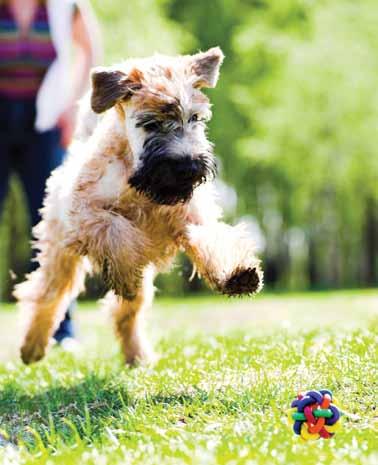
Teaching your dog to retrieve on command can be both a mentally and physically rewarding exercise.
and your dog physical stamina, exercising the brain will build mental stamina.
So, how can you exercise your dog’s brain? Obedience training is one great way. Making your dog sit and stay, correcting his mistakes and praising him for the right behavior is a great way of
Puzzles are a great way to mentally stimulate your dog’s brain. Take one of his favorite treats, let him sniff it and then hide it. Let him try to find it or freeze treats mixed with peanut butter inside of a Kong toy and make him figure out how to get it out.
Scatter feeding is another great mental game. Take his usual amount of kibble and toss it on the floor or in your yard. Your dog will have to search for his supper. Scatter feeding also works well if your dog has a tendency to wolf down his food. There are very few food motivated dogs that don’t love this game.
The more you exercise your dog’s brain, the happier and calmer he’ll be. He does need physical exercise, just as we do, but he also needs mental stimulation. Dogs who are bored are more likely get into trouble.
If your dog is digging or chewing inappropriate items or if he’s running all over the house out of control, look at the mental side of the equation. A mentally stimulated dog is a tired dog and a tired dog is a calm dog. A calm dog is happy and that’s what we all want.
James & Michelle Rodriguez are dog behavioral therapist and trainers with Bark Busters, the world’s largest dog training company. Bark Busters trainers, who have trained more than 500,000 dogs worldwide, are renowned authorities in correcting dog behavior with all-natural, dog-friendly methods. Bark Busters training is the only service of its kind that offers guaranteed lifetime support. For more information, call 1-877-500-BARK (2275) or visit www.BarkBusters.com.





Wild Heir Labrador Rescue (WHLR) is a labor of love on behalf of unwanted Labrador Retrievers – and Lab mixes. Informally begun in 2001 and becoming ‘official’ in 2005, WHLR is an all volunteer 501c3 non-profit organization. In 2008 alone, WHLR placed over 250 neglected and abandoned Labs into loving, responsible forever homes. WHLR is dedicated to saving Labs from life threatening situations and the rescued Labs come from a variety of sources in South and North Carolina – and beyond. The Labs come from animal control facilities, humane societies, owner surrender and good Samaritans. Many of the Labs find their way to WHLR from loving homes that are facing life changes such as moving, divorce, death and children. Others have endured lives of neglect and isolation.
Despite their origin, each Lab that enters WHLR is treated as an individual and receives the vetting, socialization and training it needs to be a devoted family companion. It is the mission of WHLR to ensure the training, structure and safe, stable environments along with lots of love and playmates to allow the unquenchable ‘Labby’ personality to shine through in each and every dog that crosses their doorstep.
For more information please visit our website at www.wildheirlabradorrescue.org or call (843) 240-0174.
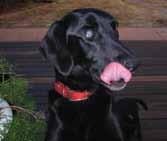
Ray is a super sweet guy that loves to play with his foster brothers and sisters – and he loves to carry his favorite football toy in his mouth as he runs in the yard. He’s still young and has lots of energy, but he’s well behaved in the house. Oh, by the way, did we mention that Ray is blind? It doesn’t slow him down a bit!
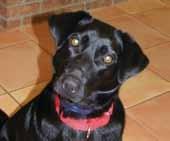
Meet Missy! She was found in the middle of a busy road, trying to shield a young puppy from oncoming cars. She is house trained, knows basic commands, is good with other dogs, has had all of her medical work and is a delightful, playful companion.

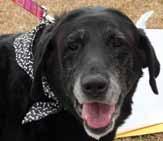
Mabel is our senior celebrity! Wild Heir teamed up with the generous pilots from Pilots ‘n Paws to get Mabel to Charleston from a Tennessee shelter! Mabel is a healthy senior gal and has been fully vetted, is heartworm negative and would love to find a forever home to enjoy her golden years.
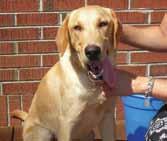
Calvin is a happy go lucky puppy who’s still growing into his big frisbee feet! He spends hours playing in the yard with his foster brothers and sisters and loves to play fetch. Even though he’s still a pup, he’s very well behaved and is learning how to be part of a family!
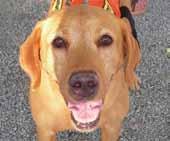
Honey came into rescue when her owner became terminally ill and could not take care of her. She used to be a hunting dog, but now she’s content to be a companion dog! Honey will be your best friend; her favorite thing in the world is to be with her people.
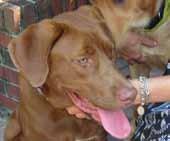
Trevor is an energetic young Lab who loves to play with other dogs. Retrieving his ball is one of Trevor’s favorite pastimes and he enjoys going for walks and running. Trevor positively beams when praised and is learning basic obedience. He’s looking for a forever family to give him lots of love!
I recently had a wonderful experience with Preppy Pets and I wanted to tell you and the world about it!
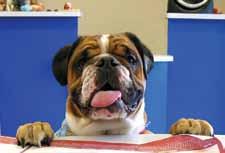
I had to put my 2 year old Olde English Bulldog to sleep because of a terminal sickness.
I have been out of work since February



and my boyfriend was recently laid off. Needless to say, we have little money.
I went into Preppy Pets to apply for a job this past Saturday since my bulldog, Marshmallow, used to go to daycare there. I talked to the owner about our recent loss, how I needed a job badly, and how we were even selling furniture for the money needed to obtain Marshmallow’s ashes from the crematorium.
It was then that she turned into my angel. She gave me the $120 needed
to pick up my dog’s ashes so I wouldn’t have to sell my furniture. I was brought to tears.
My mother suggested that I write a letter to LCD as a way of showing my sincere gratitude for what this stranger did for me.
There are still good, kind people in this world, and one of them owns and operates Preppy Pets in Ladson!
Thank you, Stacey
* Luxury Canine Boarding
* Large Suites and Runs
* Therapeutic Hydrosurge Bathing
* Day Camp/Half or Full days
843.471.2275 (BARK) 2471 Clements Ferry Road