S A N A N TO N I O
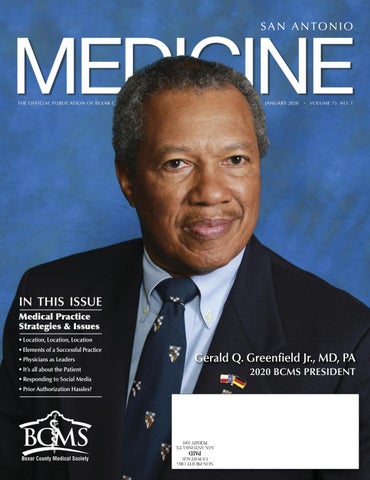
IN THIS ISSUE Medical Practice Strategies & Issues • Location, Location, Location • Elements of a Successful Practice • Physicians as Leaders • It’s all about the Patient • Responding to Social Media • Prior Authorization Hassles?
SAN ANTONIO, TX PERMIT 1001
PAID
NON PROFIT ORG US POSTAGE
MEDICINE SAN ANTONIO
TA B L E O F CO N T E N T S
THE OFFICIAL PUBLICATION OF THE BEXAR COUNTY MEDICAL SOCIETY
•
WWW.BCMS.ORG
•
$4.00
Medical Practice Strategies & Issues
Practice Location By Bernard T. Swift, Jr., DO, MPH ......................10 Medical Retail By Steve Raub, CCIM..................12 5 Elements of a Successful Practice By Michal Waechter ...........................................13 Selecting a New EHR By Christiane Escobar, CMRM ...........................14 Physicians as Leaders – Six Ways to Ruin a Decision By Robert Hromas, MD, FACP...........16 It’s all about the Patient By David N. Henkes, MD ..18 Responding to Social Media – Physicians Beware! By Gracie Awalt, Marketing Associate, TMLT, and Laura Hale Brockway, Assistant Vice President, Marketing, TMLT................................20 Prior Authorization Hassles? By Jayesh B. Shah .........................................................................................................................22 Enhancing Productivity By John Spiekerman ......................................................................................................................24 BCMS President’s Message ........................................................................................................................8 Post-Amputation Challenges By Demetrios N. Macris, MD ........................................................................26 Vascular Surgery – Then and Now By Gerardo Ortega, MD ........................................................................28 Pride Community Clinic – Evolving Healthcare for LGBT People By Donald Egan, MSIII at the UT-LSOM....30 BCMS Legislative News ............................................................................................................................32 BCMS Alliance News..................................................................................................................................34 BCMS Circle of Friends Physicians Purchasing Directory............................................................................36 Recommended Auto Dealers......................................................................................................................43 Auto Review: 2020 Mercedes AMG GT Coupe By Steve Schutz, MD ........................................................44 PUBLISHED BY: SmithPrint Inc. 333 Burnet San Antonio, TX 78202 Email: medicine@smithprint.net PUBLISHER Louis Doucette louis@smithprint.net ADVERTISING SALES: AUSTIN: Sandy Weatherford sandy@smithprint.net BUSINESS MANAGER: Vicki Schroder
4
San Antonio Medicine • January 2020
ADVERTISING SALES: SAN ANTONIO: Gerry Lair gerry@smithprint.net Janis Maxymof janismaxymof@gmail.com Madeleine Justice madeleine@travelingblender.com Janet Sandbach janet@travelingblender.com PROJECT COORDINATOR: Amanda Canty amanda@smithprint.net
•
JANUARY 2020
•
VOLUME 73 NO. 1
San Antonio Medicine is the official publication of Bexar County Medical Society (BCMS). All expressions of opinions and statements of supposed facts are published on the authority of the writer, and cannot be regarded as expressing the views of BCMS. Advertisements do not imply sponsorship of or endorsement by BCMS.
EdITORIAl CORRESPONdENCE: Bexar County Medical Society 4334 N Loop 1604 W, Ste. 200 San Antonio, TX 78249 Email: editor@bcms.org
MAGAZINE AddRESS CHANGES: Call (210) 301-4391 or Email: membership@bcms.org
SUbSCRIPTION RATES: $30 per year or $4 per individual issue
AdvERTISING CORRESPONdENCE: SmithPrint Inc. 333 Burnet San Antonio, TX 78202
For advertising rates and information
Call (210) 690-8338 or FAX (210) 690-8638
Email: louis@smithprint.net San Antonio Medicine is published by SmithPrint, Inc. (Publisher) on behalf of the Bexar County Medical Society (BCMS). Reproduction in any manner in whole or part is prohibited without the express written consent of Bexar County Medical Society. Material contained herein does not necessarily reflect the opinion of BCMS, its members, or its staff. San Antonio Medicine, the Publisher and BCMS reserves the right to edit all material for clarity and space and assumes no responsibility for accuracy, errors or omissions. San Antonio Medicine does not knowingly accept false or misleading advertisements or editorial nor does the Publisher or BCMS assume responsibility should such advertising or editorial appear. Articles and photos are welcome and may be submitted to our office to be used subject to the discretion and review of the Publisher and BCMS. All real estate advertising is subject to the Federal Fair Housing Act of 1968, which makes it illegal to advertise “any preference limitation or discrimination based on race, color, religion, sex, handicap, familial status or national orgin, or an intention to make such preference limitation or discrimination.
For more information on advertising in San Antonio Medicine, Call SmithPrint, Inc. at 210.690.8338 SmithPrint, Inc. is a family owned and operated San Antonio based printing and publishing company that has been in business since 1995. We are specialists in turn-key operations and offer our clients a wide variety of capabilities to ensure their projects are printed and delivered on schedule while consistently exceeding their quaility expectations. We bring this work ethic and committment to customers along with our personal service and attention to our clients’ printing and marketing needs to San Antonio Medicine magazine with each issue.
Copyright © 2020 SmithPrint, Inc. PRINTED IN THE USA
BCMS BOARD OF DIRECTORS George Rick Evans, Legal Counsel
Brissa Vela, Membership Director
Gerald Q. Greenfield, Jr., MD, PA, President
Jayesh B. Shah, MD, TMA Trustee
Al Ortiz, Chief Information Officer
Rajeev Suri, MD, Vice President
Ramon S. Cancino, MD, Medical School
ELECTED OFFICERS
Rodolfo “Rudy” Molina, MD, President-elect John Joseph Nava, MD, Treasurer Brent W. Sanderlin, DO, Secretary Adam V. Ratner, MD, Immediate Past President
Representative Corinne Elizabeth Jedynak-Bell, DO, Medical School Representative Robyn Phillips-Madson, DO, MPH, Medical School Representative
DIRECTORS Michael A. Battista, MD, Member John D. Edwards, MD, Member Vincent Paul Fonseca, MD, MPH, Member Danielle Hilliard Henkes, Alliance Representative David Anthony Hnatow, MD, Member
Ronald Rodriguez, MD, PhD, Medical School Representative Carlos Alberto Rosende, MD, Medical School Representative Stephen C. Fitzer, CEO/Executive Director (ex-officio)
PUBLICATIONS COMMITTEE Kristy Yvonne Kosub, MD, Chair Louis Doucette, Consultant Charles Hirose Hyman, MD, Member Tzy-Shiuan B. Kuo, MD, Member Fred H. Olin, MD, Member Alan Preston, Community Member Rajam S. Ramamurthy, MD, Member Adam V. Ratner, MD, Member David Schula, Community Member John Joseph Seidenfeld, MD, Member Alexis A. Wiesenthal, MD, Member
Lyssa N. Ochoa, MD, Member Gerardo Ortega, MD, Member
BCMS SENIOR STAFF
Manuel M. Quinones, Jr., MD, Member
Stephen C. Fitzer, CEO/Executive Director
Chinwe Anyanwu, Student Member
John Milton Shepherd, MD, Member
Melody Newsom, Chief Operating Officer
Darren M. Donahue, Student Member
Richard Edward Hannigan, MD, Board of Ethics
Yvonne Nino, Controller
Anirudh Madabhushi, Student Member
August Trevino, Development Director
Teresa Samson, Student Member
Nora Lee Walker, MD, Board of Ethics Co-chair
Mary Nava, Chief Government Affairs Officer
Stephen C. Fitzer, Editor
Charles Gregory Mahakian, MD, Military
Phil Hornbeak, Auto Program Director
Co-chair
Representative
6
San Antonio Medicine • January 2020
Mary Jo Quinn, BCVI Director
Tyler Adams, Student Member
PRESIDENT’S MESSAGE
Physicians Must Lead By Gerald Q. Greenfield Jr., MD, PA, 2020 BCMS President
It is my pleasure to serve as the elected President of the bexar
the hospital, is
pressed their confidence in me by electing me to this position. I
challenge. While
County Medical Society in 2020. I wish to thank those who ex-
will endeavor to provide my best efforts in leading this organization
during my elected year and leave a legacy of which you can all be
an
ongoing
there is value in
managing clinical problems that occur after midnight, the oppor-
proud. The concept of leadership is very important to me.
tunities to do this in residency training are more limited now than
in work ethic. lately, we as physicians have abdicated our leader-
should be adjunct but not absolute. Facts and techniques for patient
Physicians must lead. We must lead intellectually, socially and
in the past. In this quest for knowledge, books and computers
ship role to physician assistants and nurse practitioners. There
care are honed by experience gained during residency training.
carriers and other payors decrease there is a requirement for a
providers, for the knowledge and skill levels to normalize. In this,
are many reasons for this situation. As payments by insurance
There is the tendency, as physicians work with mid-level
higher volume of patients to be seen. However, we must still
the knowledge of the physician remains static or decreases in
We as physician leaders must provide direction for patient care.
occurs, leadership cachet decreases as there is no perceived dif-
strive to maintain quality.
However, we must never neglect the hands-on requirements of
comparison to the knowledge of the mid-level provider. As this
ference in the skills of the physician compared to those of the
direct patient care. We must strive to be involved in this direct care
mid-level. leaders must continue to train, educate and improve in
separate ourselves physically from the patients for which we pro-
The mantle of leadership may weigh heavily on the shoulders
as often as possible. Advances in technology are an enticement to
both knowledge and hands-on skills.
vide care. Techniques which are now becoming more popular,
of physicians. It is, however, a weight whose rewards far outweigh
when there is a choice, will continue to provide a basis for patient
be constantly honed by both formal and informal education and
such as telemedicine, encourage care from afar. Care from afar,
the strength required to carry the load. The skills of a leader must
practitioners pay and will increase their separation. The end result
training. Only through continued training can we as physicians
called mid-level providers.
ership will be relegated to a position of lowered respect and low-
will be displacement of physicians and replacement by other so-
Medical and scientific knowledge is gained from experience oc-
curring over the breadth, and depth of involvement in direct patient care. Physician training occurs over 7 to 12 years after baccalaureate completion. Training for mid-level providers is a 2
to 4 year process. This results in a difference in the knowledge
and skill level of the practitioner. The increased amount of knowl-
edge required, coupled with the changes in physician training in
8
San Antonio Medicine • January 2020
continue to lead. Those who failed to take up the mantle of lead-
ered importance to society. Each of us have sacrificed to reach
this level; let us all strive to continue to lead and to provide an ex-
ample for those who follow.
Gerald Greenfield, MD, PA is an Orthopedic Surgeon in Bexar County
and is the 2020 President of the Bexar County Medical Society.
MEDICAL PRACTICE STRATEGIES & ISSUES
Practice Location By Bernard T. Swift, Jr., DO, MPH
location, location, location. We’ve all heard that the key to a successful business is its location. First and foremost, make no mistake; you are a bUSINESS! You just happen to be in the business of medicine. If you don’t adhere to reasonable business principles in today’s environment, you won’t be in the practice of medicine very long. As few as 20 years ago, physician revenue was sufficient that if you were deficient in some of your business dealings, you could still overcome it with a good revenue stream. but that’s not the case anymore as all physician revenues have shrunk relative to inflation over the intervening period. 10
San Antonio Medicine • January 2020
MEDICAL PRACTICE STRATEGIES & ISSUES
Integral to an efficient and successful business model is where you locate your practice. So, how do you decide? The first issues are to determine what type of practice you want, and where in the city you want to locate. Those decisions should be based on (1) demographics of the target population you propose to serve; (2) your specialty; (3) proximity to your home and/or kids’ schools; (4) ability to negotiate equitable managed care contracts; and (5) proximity to a hospital where you may admit your patients (if you’re not hospital based, then #5 isn’t applicable). DEMOGRAPHICS AND SPECIALTY do you want to provide care in an underserved area of the community, thereby taking on a heavy Medicaid load? If so, that will require a different location than if you’re performing procedures for a cash-paying crowd. Is your specialty such that you will be treating mostly Medicare aged patients? If so, you will likely want to be near other specialists who have a similar demographic since there is a greater likelihood of referrals back and forth made easier because of that proximity (i.e. multispecialty office building). All practices would like to contract with the bUCA’s (bCbS, UHC, Cigna, Aetna), but will they want to contract with you? Your location and specialty will have a lot to do with that. If they have a plethora of your specialty in a given geographic area, there may be a reluctance to add another person to their roster, or they may only want you to come on board if you accept their low-ball offer. Researching this very important issue is fundamental to future success. A more detailed discussion about the process of contracting with the bUCA’s is beyond the scope of this article, but remains a key factor in determining where to locate. Younger physicians with kids in school will want to consider the proximity of those schools, as that dictates your commute time. Nothing new here. Just one more variable to consider. RETAIL VS OFFICE Fundamental to the decision about where to set up a practice is whether you consider your type of practice a “retail” or an “office” practice. And that, in turn, depends on your specialty to a large extent. Historically, most physicians new to practice located in an office building (Ob) near, next to, or even connected to a hospital. And with an announcement in the newspaper of your new office location, patients just came. Some of you may remember how that worked… “if you build it, they will come”. And they did. Until they didn’t. It all began to change in the mid-1980’s with the “retailization” of medicine. It became important to more actively market your practice.
The location became part of that marketing process as practices evolved from being in Ob’s to shopping centers. So, are you a “retail” specialist or an “Ob” specialist? It varies, and it depends on how you see yourself marketing yourself and your practice. Many practices today that are in Ob’s could do better by having the exposure of a retail site. We are seeing movement nearly across the board in that direction. but, what’s the difference in a retail vs non-retail building? We all understand that an Ob is a big multi-story, multi-tenant type facility wherein you just select a box of a certain size, and then with a little help, just show up one day with your stethoscope (or whatever accoutrement you use). Parking is far away in a separate building, and costs your patients money. but only the building owner sees that revenue. Signage is very limited, usually to a directory in the lobby. Patients have to know ahead of time where you are, and they learn of you slowly through word of mouth, advertisements that you may undertake, and referrals from your colleagues (which, in many cases, you’re in competition with). A retail location, on the other hand, is usually in a shopping center. You can find an “in-line” location near or next to a big box retailer, or possibly in a smaller outbuilding. In either case, your visibility to the public is much greater, usually owing to drive-by traffic and signage. You still have to undertake some advertising, but people who visit that big box retailer will likely see your sign, and know you’re there. Your advertising costs are less than they otherwise would be because you have exposure to drive-by traffic. Sounds easy, right? If you haven’t experienced it before, it's not! Retail is usually more expensive on a per square foot basis (but not always), and there is normally an upfront cost to finishing out the space. The key issues are that the rent structure and potential out-of-pocket costs to get a space ready for your use are significantly different in a retail vs. office building. In order to navigate the potential landmines you will encounter, hiring a good real estate agent is the best way to minimize pitfalls. He/she can also help you work through the multitude of issues identified above to arrive at the ideal location for your needs, both personal and professional. Dr. Swift is the Managing Partner of Texas MedClinic, an Urgent Care and Occupational Medicine practice, with 19 locations throughout San Antonio, New Braunfels, and the Austin area. He is also a former Board member of the Bexar County Medical Society.
visit us at www.bcms.org
11
MEDICAL PRACTICE STRATEGIES & ISSUES
Medical Retail By Steve Raub, CCIM
Physicians want to be close to their patients, however, this takes on additional meaning in regard to the physical spaces in which physicians practice their specialties. A new trend is developing and coming to shopping centers near you, which may answer the needs of medical providers who want to be more accessible to their patients. likewise, for reasons of convenience and time-saving, patients yearn for easier access to their medical providers. All types of medical professionals typically want to be as close to their patients as they can get. “First Floor - Front door”, is the theme which encapsulates the desire for practices to get closer to their existing and prospective patients. Easy access helps drive the addition of new patients. For example, a cardiology group saw their patient base skyrocket when they relocated to a first-floor space near a movie theater because of their enhanced visibility to so many movie goers walking by their office. They had people walking in for screenings, which would never have happened when they were tucked away in the back corner of an upper floor of a hard-to-reach medical office building. Oftentimes patients don’t find it convenient to go to the doctor. It may be hard to drive across town, find the medical office building and try to find a parking spot near the building. Then they have to make their way to the lobby in the heat, cold, rain or wind, find an elevator or stairs and follow long hallways. This becomes an unpleasant and perhaps difficult experience. Should it be this painful? Medical professionals can make it easier for current and prospective patients to find them. It makes a lot of sense for everyone. This is called Medical Retail, a trend of blending the need of medical offices for easy access with the convenience of shopping centers. First Floor – Front door locations give physicians high visibility, high traffic offices with easy parking that is very accessible. landlords like having medical professionals as tenants because they tend to stay in the same location for many years, once they are established. While tenant improvements can be expensive for 12
San Antonio Medicine • January 2020
medical offices, a long-term lease may be the answer of how it all becomes more affordable for physicians and landlords. Advancements in technology have led to the proliferation of ambulatory surgery centers. Going forward, more surgeries are expected to become outpatient procedures that no longer require an overnight stay. Micro hospitals are already popping up in San Antonio and it’s just a matter of time before retail centers get the chance to provide these smaller hospital venues to patients across the Alamo City. Then large, difficult-to-access, back-office medical space and physician’s offices could become a thing of the past. So, Medical Retail will certainly be more popular in the future to get patients closer to their physicians. Successful physician practices will be those that are easily accessible to the public. Steve Raub, CCIM is a Circle of Friends sponsor with IRC, Investment Realty Company, LC
MEDICAL PRACTICE STRATEGIES & ISSUES
5
Elements of a Successful Practice
Cultivating a successful medical practice is hard. The reality is, while physicians are expertly trained in their chosen medical specialty, few physicians are taught how to start and run a practice as a successful business. Experience and observation indicate there are five key elements that enable physician practices to become successful. For the purposes of this discussion, quality is assumed. If you think quality is an issue, that should become the first priority.
When a physician starts a practice, the initial focus should be on developing a STRATEGY. This means really taking time to identify the priorities of the practice and narrowing them down to five priorities around which all energy and resources can be centered. Then identify a few goals that will help you achieve that strategy. don’t forget to establish your timeframe; clarify what you hope to achieve in the first month, 90 days, 6 months and year. Now the critical part – stick to the strategy! The tactics may be dynamic and may change slightly as you become operational, but the strategy should remain the same. The next area of focus should be on OPERATIONS. At a high level, the practice should focus on efficiency and return. For example, the electronic medical record (EMR) chosen to start the practice should be one for your type of practice that offers
ease of documentation, coding for optimal reimbursement, the ability to mine data and run analytics along with a consumer friendly interface for scheduling and communication. Some EMR systems may actually slow your operations down. Take your time and choose the right one and then – you guessed it – stick with it! Having separate systems for scheduling, documenting and communicating with patients will be too decentralized to be efficient. Arguably, the most important aspect of your practice (besides you, of course) is your STAFF. Recruiting top talent for your team is important, but retaining that talent is critical. Achieve staff engagement by taking a well-rounded approach. Compensation is baseline, but dig deeper to find out what really drives each member of your team. Is it recognition? Continuing education? Quarterly team retreats can be a great opportunity to check in with your team, gain feedback through open dialogue and strengthen the connection between them as well as with the practice. Regular 1:1 meetings with each employee are also a great way to understand, support and motivate in combination with team retreats. And what would a successful practice be without PATIENTS? The patient experience is what will make or break you. Evaluate this with either in-person, word-of-mouth or with online digital reviews (for the viewing of you and your staff only). Create a culture where the patient is king and care is given to every aspect of their experience. Interaction with the front desk staff, wait-time, interaction with the provider, billing and payment – it’s all important. Implement a patient survey early on so that you have an ongoing pulse on the patient experience and opportunities for improvement.
By Michal Waechter The last, but arguably the most important element of practice success, is MARKETING. The most successful practices are those that believe marketing and outreach is an inherent part of operational expense. The two in combination are business development. Just as you invest in keeping the lights on, you have to invest in business development for your practice. Start by establishing your practice’s brand. You want your practice to be recognizable to consumers and physicians alike, so make sure your brand reflects what you believe your practice to be. Then, put ongoing energy into physicianto-patient relationship building and consumer engagement. It is unwise to invest heavily at startup and back-off when your practice starts growing. business development has to be ongoing and consistent in order for your practice to remain relevant in the market and continue to grow. bakein time every week for business development and make it a part of your practice strategy. You’ll never regret it. No matter what your practice goals are, you will need aspects of these five elements to achieve success. How you prioritize them and where you place your resources will be specific to your preference and that of your team. You have invested in yourself to achieve an unmatched level of training and expertise. Now it’s time to invest in these elements to achieve the success you envision. Michal Waechter, owner of Waechter Consulting Group, specializes in developing marketing and business strategies for physician practices and is a BCMS Circle of Friends member. Ms. Waechter can be reached at (210) 913-4871 or Michal@WaechterConsulting.com. visit us at www.bcms.org
13
MEDICAL PRACTICE STRATEGIES & ISSUES
Selecting a New
EHR
By Christiane Escobar, CMRM
Doctors around the nation are looking to not only provide quality care to their patients, but to stay up-to-date with how their practice is running. The right EHR system helps physicians document patient care, meet governmental reporting requirements and create a more efficient business foundation. It’s important to go about looking for a new EHR the right way, identifying wants and needs. doing the hard work on the front end will help alleviate potential burdens that would otherwise come up if an EHR were picked with minimal research. Tips for picking a new system include the following: 1.Understand your current EHR and its Software Issues Software issues can and often times do impact your bottomline revenue. What appear to be minor details today add up in the long run. Identifying those details (holes) is the first step to finding the software that works for your practice. The wrong EHR can negatively impact everything from compliance to patient retention; failure to amend said issues can result in patients seeking services elsewhere. because EHRs handle an immense amount of information (patient accounts, charting, billing, etc.), it is important to make sure the software itself is reliable. Using an EHR that incorporates an iCloud-based program is critical. 2. Find Out if the EHR is Up-to-Date and Compliant When shopping around, ask these important questions – Is everything integrated? does the software continuously update? Will it keep us in compliance? There are reports constantly flying around about falsified attestation data and non-compliant EHRs. be aware of these claims and make sure that whatever software system being researched is certified software; demand to see the credentials of such. With MACRA/MIPS coming into play with many private practices, there’s a higher risk that Medicare reimbursement could sink to an all-time low. On average, the 14
San Antonio Medicine • January 2020
MEDICAL PRACTICE STRATEGIES & ISSUES new regulations put 12% of Medicare reimbursement on the line if there is poor organization within a practice. Problems can be averted by making sure your system is being used to its full capability, even going as far as contacting your current provider and asking for remote training for new staff. 3. Reduce Burnout Not only does full utilization of the correct EHR improve a practice’s financial bottom line, but it impacts users on a much more human level. by streamlining your practice, there’s a higher chance of having a more manageable work/life balance. Full integration will save valuable time that could be otherwise spent on seeing patients as well as being able to leave work at the office. The Mayo Clinic surveyed 6,000 physicians about EHRs. It demonstrated that the clerical burdens of outdated EHRs are a key factor in the decline of job satisfaction. Your practice’s examination of the entire workflow of the system, from the front office all the way to billing, weighs out the pros and cons in terms of time management. 4. Upgrading EHRs is Not as Expensive As You Think Physicians often stay with their current EHR due to the rising
cost of switching, even if their software isn’t meeting standards within their practice. but shopping for EHRs is like shopping for any other high-end service. Some companies out there charge an arm-and-a-leg as initiation fees; but there are plenty of EHRs available that are more than happy to work with your needs. When considering a new system, it never hurts to ask about any promotions or offers that can reduce the initial cost of the software. Many companies don’t hesitate to make you and your practice happy and, if cost is a breaking point for you and your team, make it a priority when negotiating. Switching your practices’ EHR system might sound like a big burden. While it can be a big transition, you shouldn’t feel trapped with a system that isn’t meeting your wants and needs. Changing to an EHR that is customized to your practice needs can be the foundation to quality improvements, can lead to better patient experiences and, most importantly, better office workflow. Christiane Escobar, CMRM, is a Certified Medical Revenue Manager with Acumen Systems. Acumen is a Circle of Friends donor to the Bexar County Medical Society. Christiane can be reached at 210-687-5506 or cescobar@acumen.systems
visit us at www.bcms.org
15
MEDICAL PRACTICE STRATEGIES & ISSUES
Physicians as Leaders – Six Ways to Ruin a Decision By Robert Hromas, MD, FACP Medicine is a team sport. The lone physician delivering babies and taking out gall bladders in a small town is rare. Medicine has become so complex that it requires many types of health care providers, not only many medical specialists, but also nurses, dieticians, social workers, pharmacists, techs, administrators, and the custodians and maintenance workers that keep the clinic or hospital clean and functional. leading these teams requires accurate solutions to complex problems. If you make a mistake, it can harm the entire team. Sometimes decisions are required rapidly, either there is an opportunity that is fleeting or there is a problem so large it requires immediate attention. Usually, this kind of decision has even higher risk for everyone involved. despite the risk of making a mistake and harming the team, or worse, your patients, few physician leaders think much about the science of decision making. There has been great deal of research on how we make decisions, and it is not reassuring. Our experience is often wrong, as we are all anchored by the emotions we attach to past experiences, which commonly have little relationship to what actually happened. Worse, we rely on our instincts, which means that we forsake real data for our own likes and dislikes. For example, if we really like the person who is on one side of the decision, then our instincts will favor that side of the decision. Even if we recognize our bias in making a decision, and do our best to contain it, we will often fail because the very fact that we identified the bias makes us too comfortable. We falsely reassure ourselves that our decision is now unbiased and we can proceed without caution. There are seven common mistakes in making a decision that are easy to make, and I have made them all. Unless I am conscious of how these mistakes can worm their way into my thought process, I will be shocked when things go wrong. The field of behavioral economics has been at the forefront of research into faulty decisionmaking and has resulted in the Nobel Prize for Economics for dan Kahneman. This prize also honored his long-time colleague, Amos Tversky, who died of melanoma a few years before Kahneman won. One of their later collaborators, Richard Thaler, famed for his principle of Nudging, also won the Nobel Prize just three years ago. Much of what I write about below, on the seven mistakes that ruin 16
San Antonio Medicine • January 2020
decisions, comes from their studies. The first mistake is that we mistake anecdote for data. These anecdotes can be our own experiences or those of someone else we trust. Kahneman and Tversky showed that most of us have bad intuition of the laws of chance. We readily assume a small sample randomly drawn from a population is highly representative. We think it is similar to that population in all essential characteristics, even characteristics we have not directly measured. Thus, we expect that drawing another sample from the same population will be similar to the first sample, and similar to the population. We extrapolate from small samples to make future predictions. Worse, we use our own experience as that small sample of the population. If it happened to us, we extrapolate to the entire population. For example, if I flip a coin and it lands heads 4 times in a row, I feel that the fairness of the coin entitles me to expect that any deviation in one direction will soon be cancelled by a corresponding deviation in the other. This is not the case. Coin flipping does not make up for its past behavior. There is a 50% chance every time the coin is flipped that it will be heads again. This mistaken belief in “fairness” is why the compulsive gambler keeps betting even after losing a great deal. The second mistake is letting the wrong person make the deci-
MEDICAL PRACTICE STRATEGIES & ISSUES sion. For any decisions I am part of, I always assume I should make the decision! However, I am often not the best person to make the decision. victor vroom demonstrated that if the ones who have to implement the decision are not part of it, then they are less likely to care whether it succeeds or fails. If the success or failure of the decision impacts someone, but they had no role in the decision, then they learn helplessness, and stop trying. No matter what the decision is, it will fail because the wrong person made the decision. There is a famous story about stakeholders – A pig and a chicken decide to open a bacon and eggs breakfast diner. The chicken is involved, but the pig is committed. Thus, the pig should have the most say in any decisions involving that diner. but we often let the loudest or most passionate person have the most say. Passion is not necessarily equivalent to truth. Related to this, the third mistake is that the wrong person benefits, and this harms the very people the decision was supposed to help. In fact, we cannot get around the huge bias towards self-benefit, and the person who benefits from a decision I make is usually me. No matter how hard we try to be objective, we make decisions that benefit us personally, and they can inadvertently harm other members of the team. One way to prevent this is to switch sides in the discussion and argue for the reverse of the decision. This helps you to see the decision through the eyes of others on the team. The fourth mistake is to make a decision where a lot of assumptions have to come true for our decision to be correct. The more assumptions we make for any decision, the more chance that the decision will be in error. The famed statistician Carlo bonferroni showed that we need to divide our chance of success by the number of assumptions that must come true for success. We should apply this correction to all
our decisions. be ruthless! Remember the principle of Kahneman and Tversky that we easily assume our past experience is comprehensive data when it is really only a single data point, and a biased one at that. Fifth, some decisions harm current operations in the long run more than they benefit the team in the short term. Why do we make decisions where the true opportunity costs were both knowable and too high? We do this because we fall in love with certain decisions and fail to count all the true costs. We all would agree that we cannot lose more than we would gain, yet if we love a decision, we subconsciously start shaving off its true costs. We need to count all true costs of any decision - lights, heat, personnel, computers and offices in analyzing any true decision. Why do we fall in love with a decision where the opportunity costs are too high? Most often, we fall in love with a given decision because we personally benefit from it. It might not be that we benefit financially, rather it may just be that we benefit by gaining selfesteem or increased esteem in the eyes of others. We ignore such secondary individual gain even though it is just as real as money. The best way to avoid this is to ask what the costs are if we do the opposite, and then compare those to the preferred decision. If the opposite decision results in less true costs than the proposed direction, then you have fallen in love with a bad decision. Sixth, we make a decision based on a painful or delightful past event. The more recent a loss or a gain in a related event, the more it influences our decision. I can be trying to rescue a previous poor decision that I made, because I cannot accept that I made a bad decision. Sunk costs must be counted as already lost. A renowned example of this is the European Union central bank, where the loan officer who made an original loan is far more likely to extend further credit than a neutral, new, loan officer. like flipping the coin, the current decision must be independent of all past related decisions, but this is especially hard if those decisions were our own. These mistakes can ruin a decision, and unless I am ruthless in my self-assessment, I will not understand why. Many of these decision-making errors are described in my book, Einstein’s Boss-Ten Rules for Leading Genius. The bexar County Medical Society has a physician leadership course that also discusses decision-making process. If you are really dedicated to mastering this area, many local universities offer MbA’s and MHA’s. Many physician leaders are well versed in medical science but understand less well the science of how we make decisions, yet the power these principles can lend to leadership is significant. Robert Hromas, MD, FACP, is the Dean of the Long School of Medicine and Vice President for Medical Affairs of UT Health San Antonio. Dr. Hromas is a member of the Bexar County Medical Society. visit us at www.bcms.org
17
MEDICAL PRACTICE STRATEGIES & ISSUES
It’s all about the
Patient Focus on the patient might sound strange coming from a physician whose practice deals largely with patient tissues and samples. But that is the philosophy that has fueled our pathology practice for several decades and resulted in expansion and growth. Remaining patient-centered while employing strategies like practice evolution, innovation, convenience, communication, advocacy and progressive leadership can be easily translated into any type of medical practice.
18
San Antonio Medicine • January 2020
By David N. Henkes, MD
EVOLVING PRACTICE MODELS Staying attuned to opportunities to grow, being open to shifts in services offered, service locations and specialization is key to all practices. Five partners launched Pathology Reference laboratory (PRl) as a local, physician-owned anatomic pathology and cytopathology laboratory. As a hospital-based specialty, the practice was balanced by creating this out-patient lab. The move proved successful. Today it is a regional provider of anatomic pathology and cytopathology services and has grown to twelve partners and a total of 26 pathologists. The creation of the new company led to regional expansion, enabling us to move beyond San Antonio to serve a client base that spans from the Rio Grande valley, Austin, Corpus Christi to the Hill Country.
MEDICAL PRACTICE STRATEGIES & ISSUES Additionally, the types of clients we serve has evolved, which now includes services to hospitals, surgery centers, physicians and other laboratories throughout Texas. Offering medical specialization has also spurred growth, although it’s nothing new; in the 1970s, the group recruited the first pathologist dedicated to pediatric pathology in San Antonio. Pathologists in our practice currently hold specialized training in dermatopathology, hematopathology, urologic pathology, gastrointestinal pathology, cytopathology, pediatric pathology, gynecologic pathology, breast pathology, fine needle aspiration pathology, and renal pathology. The pathologists staff offices at multiple hospitals and other locations so there are pathologists who are strategically placed in areas where those specialties are most needed. INNOVATION Responding to shifting client needs as the healthcare environment changes, is vital. To be sure, we have reports that can be tailored to best communicate with our referring physicians. PRl developed its own patient reporting system. Over the years, it has been important to listen to referring partners and as a result have construct billing and IT platforms to meet their needs. An extensive IT department that is tasked with keeping the practice abreast of new trends and maintain records and reporting systems in an efficient manner. CONVENIENCE Making our services convenient and personalized is crucial, including an extensive courier system to pick up specimens from laredo, del Rio, Eagle Pass, Fredericksburg, Kerrville, New braunfels and several other cities in central and south Texas (in addition to San Antonio). direct communication with referring physicians is essential, so there are pathologists practicing locally in Kerrville, Fredericksburg, laredo, and New braunfels. The goal for any practice should be reliability, accountability and consistency. So if a physician is working with a pathologist on hospital cases, we also try to pair their outpatient cases with that pathologist. Communi-
cation with a pathologist is typically fast and the referring physician usually knows the doctors on a personal basis. developing and maintaining positive, long term relationships with clients is key. Our billing department is local and directly under our control. That means that when clients call, they are able to talk to a “real person” in San Antonio. And since San Antonio is largely Hispanic, our customer service and billing divisions are staffed by associates fluent in English and Spanish. Employee retention is also important to success. Most of our employees have been with our company for 10 years or longer, several for 30+ years. PROGRESSIVE LEADERSHIP The practice group treats older and younger partners as equals. All major decisions are made by the group as a whole. This differs from many practices where those with seniority hold the bulk of decision-making. This strategy has worked very well. Our team relies on experience from the older partners as well as the innovation and entrepreneurship of the younger physicians. We believe this strategy will enable a continued upward trajectory into the future. ADVOCACY Advocacy is important in enabling physicians to provide quality patient care. Involvement in local, state and national societies is key, serving in various leadership roles, to include the Texas Medical Association, the American Medical Association, the Texas Society of Pathologists, and bexar County Medical Society. Service in these organizations is an important way to give back to the medical profession and promote and assist physicians and patients. Although many physicians disdain “politics”, the fact is that the financing and practice of health care is controlled by many decisionmakers who have little knowledge of how medicine is practiced. All physicians need to be there to advocate for quality health care on behalf of doctors and patients. PATIENT CENTERED The real secret to success is the understanding that behind every tissue, cytology specimen, blood or other sample, there is a patient. Many are apprehensive about the changes in health care, with good reason, and we share in that apprehension. but, like any other medical practice, it is the patient who helps get us over the mountains of paperwork, the reimbursement slights, and the general headaches of running a business. It’s why we became doctors in the first place. David N. Henkes, MD is a pathologist in San Antonio and is a member and Past President of the Bexar County Medical Society. Dr. Henkes is also the former Chair of the Texas Medical Association Board of Trustees. visit us at www.bcms.org
19
MEDICAL PRACTICE STRATEGIES & ISSUES
Responding to Social Media – Physicians Beware! By Gracie Awalt, Marketing Associate, TMLT, and Laura Hale Brockway, Assistant Vice President, Marketing, TMLT
Case study A dental practice in dallas was recently fined $10,000 by the Office of Civil Rights (OCR) after publishing protected health information (PHI) in response to a patient review on Yelp, a social media platform. In a complaint filed with the OCR, a patient reported that Elite dental Associates posted their name, details of their treatment plan, insurance, and cost information in a comment on the Yelp review page. While investigating the complaint, the OCR discovered that the practice had responded to several patient reviews on Yelp and revealed patient information in the process. “Social media is not the place for providers to discuss a patient’s care. Doctors and dentists must think carefully about patient privacy before responding to online reviews,” said OCR director Roger Severino. The OCR also found that Elite dental Associates did not have policies or procedures addressing the release of PHI on social media or public platforms. The practice also failed to create a sufficient Notice of Privacy Practices. 1 Along with the $10,000 fine, the practice implemented a corrective action plan with the following requirements. 2
• develop, maintain, and revise federally approved PHI policies and standards and distribute to all employees; • train employees on PHI policies and procedures;
20
San Antonio Medicine • January 2020
• revise policies and procedures annually; • revise authorization forms and the Notice of Privacy Practices to comply with the HIPAA Privacy Rule; • identify Elite employees who must be contacted in the event of a HIPAA violation or questions; and • apply sanctions to those who fail to comply with policies. Risk management considerations Yelp is one of the most popular physician review sites used by patients. A survey found 61% of patient respondents read online reviews before choosing a physician, and 20% used online reviews to evaluate their current physician. 3 As more people go online to research products and services, online reputation management has become increasingly relevant for physicians. Online reputation management often involves addressing reviews on sites like Yelp. 4 because of the HIPAA Privacy Rule, physicians cannot respond to online reviews in any way that reveals PHI. Even if a patient discloses their own personal information in a review, physicians cannot respond with the same level of disclosure. 5 What you CAN do 1. Speak in person with the patient who wrote the review. listening
MEDICAL PRACTICE STRATEGIES & ISSUES to the patient in an office setting will allow you to thoroughly understand their feedback and propose productive solutions. Sometimes, patients will remove negative reviews after a face-toface conversation, and may even post a positive review to show the practice is listening. 2. If you choose to respond to the complaint, reply with something general that moves the discussion offline. “At our medical practice, we strive to provide the highest levels of patient satisfaction. However, we cannot discuss specific situations due to patient privacy regulations. If you are a patient and have questions or concerns, please contact us directly at [phone number].” 3. One bad review will not destroy your reputation. People who browse online reviews typically do not consider one bad review as representative of the practice.5 What you CANNOT do 1. Respond immediately. Wait and respond in a measured, productive way. 2. disclose any information about the patient. Even acknowledging that the reviewer is a patient is a violation of HIPAA. 3. Ignore criticism. Instead, take criticism as an opportunity to improve your practice or your policies from the patient’s point of view. 4. Avoid online reviews. Most online reviews are positive and provide positive information.5 If you use a reputation management company Many physician practices use outside vendors to manage their social media presence and help respond to online reviews. There are hundreds of companies offering these services; however, physicians are urged to be cautious when choosing a reputation management company. Make sure the company has experience in health care and under-
stands the constraints that are placed on physicians in responding to online reviews. We’ve had several incidents reported to TMlT in which a social media company told the practice how to respond to a review, and the suggested response was a violation of HIPAA. Other companies may offer to post reviews on behalf of physicians. but where do these reviews come from? It is unethical and dishonest to post reviews on these sites that are not from actual patients. Physicians are held to a different standard than other businesses and posting fake patient reviews is problematic. Of course, it is acceptable to ask patients to review you. Contact patients (through their preferred, HIPAA-approved method) after their visit and encourage them to let you know how you’re doing. The next time you receive a thank you note or email from a patient or family member, encourage that person to post their comments on your website, on your linkedIn profile, or on physician rating sites. Gracie Awalt can be reached at gracie-awalt@tmlt.org. Laura Hale Brockway can be reached at laura-brockway@tmlt.org.
FURTHER READING TMLT article — “Online reputation management for physicians” TMLT podcast — “Survival guide to social media and reputation management” TMLT CME course — Online Reputation Management for Physicians (2nd edition) AMA article — How to respond to bad online reviews
Sources
1 dental Practice Pays $10,000 to Settle Social Media disclosures of Patients’ Protected Health Information. Press Release. U.S. department of Health & Human Services. October 2, 2019. Available at https://www.hhs.gov/about/news/2019/10/02/dental-practice-pays-10000-settle-social-media-disclosures-of-patients-phi.html. Accessed december 2, 2019. 2 Resolution Agreement. U.S. department of Health & Human Services. September 30, 2019. Available at https://www.hhs.gov/sites/default/files/elitedental-ra-cap.pdf. Accessed december 2, 2019. 3 What every physician needs to know: About online reputation management. Texas Medical liability Trust website. Available at https://hub.tmlt.org/slideshare/what-every-physician-needs-to-know-about-online-reputation-management. Accessed december 2, 2019. 4 brockway, lH. Online Reputation Management for Physicians. TMlT blog. October 3, 2013. Texas Medical liability Trust website. Available at https://hub.tmlt.org/tmlt-blog/online-reputation-management-for-physicians. Accessed december 2, 2019. 5 Henry, TA. How to respond to bad online reviews. American Medical Association. September 2, 2016. Available at https://www.ama-assn.org/delivering-care/patient-support-advocacy/how-respond-bad-online-reviews. Accessed december 2, 2019. Reprinted with permission from Texas Medical liability Trust.
visit us at www.bcms.org
21
MEDICAL PRACTICE STRATEGIES & ISSUES
Prior Authorization Hassles? By Jayesh B. Shah, MD
Every day it seems that regulations and red tape are increasing, and the hurdles to provide the best possible care ratchet higher. We physicians in the trenches who are seeing patients are experiencing burnout as we try to do the best for our patients. For example, I have to do at least two peer-to-peer reviews every week with insurance carriers to make sure my patients get the care they deserve. Sometimes I worry about the peer-to-peer decision, as it is difficult to grasp how a doctor reviewing a chart can make a better decision than the treating physician on the care for their patient. My typical day-to-day struggle is that insurance companies always expect an X-ray to be done before a CT scan or MRI. In my practice, where I treat chronic wounds, an X-ray is a waste of time and money, since in most situations I am looking for an abscess or osteomyelitis. Chronic osteomyelitis changes take weeks or even months before they can be seen on an X-ray. but I have to do an X-ray even when I do not need it. I am not alone in my frustration with prior authorization. The American Medical Association’s FixPriorAuth.org project launched in July 2018. Since then, it has had 15 million impressions, 490,000+ engagements, 610+ patient and physician stories captured, 90,000+ petitions signed, and 270,000+ messages sent to Congress. According to a recent AMA survey, 86% of American physicians rated the prior authorization burden in their practices as “high” or “extremely high,” and 50% said that burden has “increased significantly” in the past five years. but this is more than just an issue for the physicians. Our patients suffer the most because of delayed care or no care. The same AMA survey reported that 91% of physicians said that the prior authorization process has a somewhat or significantly negative impact on their patients’ clinical outcomes; 75% said wading through the delays, denials, and appeals lead to patients abandoning their recommended course of treatment; and 28% reported that the prior authorization intrusion led to a serious adverse event for a patient under their care. The Texas Medical Association had a significant win in this legislative session with the passage of Senate bill 1742. This new law requires state-regulated health plans to post any prior authorization requirements on the Internet and opens the door for utilization reviews to be conducted earlier in the appeal process by a 22
San Antonio Medicine • January 2020
physician in the same or similar specialty as the physician requesting treatment approval. This law definitely will help both physicians and their patients. Physicians should ask two basic questions before starting a peer-to-peer conversation: 1. Is the doctor conducting the peer-to-peer review from Texas? 2. Is the doctor conducting the peer-to-peer review of the same specialty? Physicians must document in the patient’s chart their peer-to-peer conversation if the physician conducting the review is from Texas and if he or she is making decisions on the management of the patient. Is utilization review considered the practice of medicine? Can complaints against peer reviewers or insurance medical directors be reported to the Texas Medical board? Let us review current opinions by the Board of Councilors at Texas Medical Association on this subject. The board of Councilors serves as the ethical, policy-making body of the Texas Medical Association. Opinions of the board of Councilors at TMA are based on the American Medical Association’s Principles of Medical Ethics, current law, and the board of Councilors' authority to investigate the general ethical conditions pertaining to the practice of medicine in Texas. The current opinion of the TMA board of Councilors outlines the role of insurance medical directors, medical necessity determination and utilization reviewer’s roles and determines whether it is the practice of medicine:
MEDICAL PRACTICE STRATEGIES & ISSUES “MEdICAl dIRECTORS. Simply because a physician is not providing direct patient care does not mean that the physician is not practicing medicine or obligated to adhere to the principles of medical ethics. Whenever physicians employ professional knowledge and values gained through medical training and practice, and in so doing affect individual or group patient care, they are functioning within the professional sphere of physicians and must uphold ethical obligations. This is true not only if the physician is making determinations of medical necessity or coverage, but also if the physician is involved in developing a health plan’s general policies that affect patient care, e.g., utilization guidelines”. “MEdICAl NECESSITY. The determination of medical necessity is the practice of medicine; it is not a benefit determination. Whether or not a proposed treatment is medically necessary should be decided in a manner consistent with generally accepted standards of medical practice that a prudent physician would provide to a patient for the purposes of preventing, diagnosing or treating an illness, injury, disease or its symptoms. This is true even if the physician making the medical necessity determination is making those decisions on behalf of a managed care organization. That physician must not permit financial mechanisms to interfere with his/her determination as to whether a treatment is medically necessary. Although the physician may take cost considerations into account, the physician may not refuse to approve the medical necessity of a treatment simply based on cost, and must approve the treatment if it is clearly more therapeutically effective than other treatment options that may be covered under the plan, even if those treatment options are less expensive than their more costly counterpart”. “UTIlIZATION REvIEW. The physician who performs prospective and/or concurrent utilization review is obligated to review the request for treatment with the same standard of care as would be required by the profession in the community in which the patient is being treated”. Texas Medical Association has Policy 145.024 regarding the same issue. “Medical decision Makers licensed in Texas: The Texas Medical Association will (1) support legislation that would amend the Texas Insurance Code to require utilization review agents to be supervised by physicians licensed to practice medicine in the State of Texas and all denials of care based on medical necessity to be made by physicians licensed to practice medicine in the State of Texas and in the same or similar specialty as the treating physician seeking authorization of medical care; and (2) work to amend the Medical Practice Act to clearly include the supervision of persons perform-
ing precertification or preauthorization based on medical necessity as the practice of medicine; and include any denial of precertification or preauthorization of medical services based on a determination of medical necessity as the practice of medicine” Pre-authorization was instituted by insurance companies saying they wanted to make sure physicians are not ordering unnecessary services and tests when the patient does not need them. However, the practice of medicine by physicians is sacrosanct in ensuring proper patient care. Please let TMA and AMA know about your hassle stories because they want to create momentum and they want to defend physician and patient rights and develop a comprehensive priorauthorization bill. Jayesh B Shah, MD is board certified in Internal Medicine and Undersea and Hyperbaric medicine, is a member of the Board of Trustees of the Texas Medical Association, and was the 2016 President of Bexar County Medical Society. visit us at www.bcms.org
23
MEDICAL PRACTICE STRATEGIES & ISSUES
Enhancing Productivity By John Spiekerman
Gastroenterology Consultants of San Antonio (GCSA) is a large, diverse physician practice offering all areas of gastro-intestinal (GI) care. Like most physician groups, it excels at patient care and delivers service that is frequently recommend to friends and family without hesitation. The typical struggle with a physician practice is to gain alignment regarding the most valuable activities. In the practice of gastroenterology, working in an ambulatory surgery center (ASC) and using a snare and other techniques to remove polyps to improve patient health is the most desirable part of patient care. Most GI physicians prefer procedures in an ASC setting over seeing patients in clinic. The preference is logical, since the ambulatory setting offers more medically interesting work, delivers the satisfaction of seeing results in a short period of time, and involves less paperwork. The challenge is to define, communicate, and manage an expectation of business performance in this key area of the practice. All practices, including GI, struggle with individual management of schedules to maximize providers’ personal satisfaction or productivity. The consequences of a schedule that ignores business efficiency causes a very expensive ripple effect throughout the practice. GCSA has been able to recognize the cost of inefficient scheduling and began working to better utilize resources more efficiently. The communication of the costs and benefits of a change were presented in the form of break-even analysis. It was very easy to get a unanimous consensus not to operate an ASC room unless operating costs could be covered. As a result, ASC rooms would only be available to physicians who had enough cases to cover the cost of operations. The data would be tracked for all physicians at all locations and reviewed weekly. It was no simple task to communicate to physician owners that they would not get the time they wanted! The collaboration between leadership, spearheaded by physician owners holding each other accountable, teamed with clear, simple communication about the why, and a plan to track results was crucial to the rollout of the change. The results have been subtle when looking at the practice on a daily or weekly level. However, the results, when consolidated on a monthly and quarterly basis, are impressive from this very simple change. Most importantly, patient and staff 24
San Antonio Medicine • January 2020
satisfaction are up significantly. Physician owners are more productive and efficient. but why? What was done that made this change successful? How did this situation develop? It is very well-documented that efficiency is valuable. Efficiency is about doing the same with less. Improving labor efficiency to produce the same level of output in less time translates into profitability because the company spends less. The challenge is to figure out how any physician practice gets into a situation where valuable areas of the business operate at a loss. Physicians are well-educated leaders of patient care. They communicate with patients and staff constantly, but the business communication back to them is all too often limited to a summary of monthly charges and a profit and loss statement. GCSA found itself operating areas of the practice at a loss because of a lack of communication about the financial reality of a specific service. The lack of communication was not intentional, and the overall monthly financials being reviewed by physician leaders looked healthy. We had failed to look at the business operations on a daily basis. So daily schedules were broken down to manageable pieces. The most basic measure is per physician, per room, per day; breaking the business operations down into pieces that could be measured and understood by everyone. Once the facts were understood and seen by all, the solution was very clear – consolidate some ASC rooms together and close others. Consolidating schedules is a very normal part of managing a business, but a detail that can be easily missed. It was a very basic change that was successful because of simple, actionable data implemented with physician leadership. John Spiekerman is Executive Director of Gastroenterology Consultants of San Antonio.
MEDICINE IN SAN ANTONIO
Post-Amputation Challenges By Demetrios N. Macris, MD At the national level, two million Americans live with limb loss, 500 people in the United States lose a limb each day and 185,000 individuals have an amputation each year. At a more regional level, the numbers are just as astonishing. In the state of Texas, 16,005 amputations were performed in 2014, and that number is expected to double by 2050. The highest percent (46%) of amputees are between the ages of 45-64, which is the prime age for highest earning potential, thus likely placing a financial burden on the amputee, their family and the community. The sedentary lifestyle resulting from being wheelchair bound following amputation is linked to more disease, potentially a second amputation, and contributes to over $130 billion in related health costs. An amputee without mobility has an impact on the number of people in the workforce, as well as the economy and tax revenue. Is there a way to avoid limb loss and its negative impacts? Yes, preventing amputation is possible. It takes 100% community awareness, early detection of a limb at risk, control of diabetes (preferably thru diet and exercise but also with appropriate medications that are administered correctly), full service hospitals, reliable and knowledgeable home health providers, aggressive wound care teams, and 24/7 access to the expertise of a team of vascular surgeons who are all dedicated to the diagnosis, treatment and lifelong care of the patient subject to limb loss as a result of vascular insufficiency. Notably, the patient and their family/caretakers, not just the healthcare 26
San Antonio Medicine • January 2020
MEDICINE IN SAN ANTONIO providers, are crucial to the solution for amthetic limb. Some individuals simply cannot who lose a limb but have no financial means putation prevention (often viewed as a simple use a prosthesis, regardless of access, due to of paying for a prosthetic limb. did you solution). As all of us have witnessed that this mental or physical problems such as demenknow that Texas is ranked #1 in uninsured “simple solution” is full of cracks through tia, paralysis, stroke, contractures, and/or residents and has a poverty rate of 16%, which many people fall. overall debilitated state. The fact that many which is higher than the national average? In life as a new amputee presents a maze of these unfortunate individuals actually obTexas, Medicare covers prosthetic limbs for which would humble even daedalus and the tain a prosthetic limb (which they will never persons age 65 and over, and Medicaid covers half bull Minotaur of Crete. Most health use) is the topic of another day. let’s focus prosthetic limbs for children. Medicaid does care providers, including physicians, assume on the people who lose their leg and could not cover prosthetic limbs for adults. This is that obtaining a prosthetic limb is so frewalk if they had two legs, even if one or both counterintuitive and surprising to most peoquent that the system and process is simple are prosthetic. ple. There is no state financial help for amand direct. On the contrary, despite the fact Amputees seeking a prosthetic limb need putees in Texas who have no insurance or that there is no shortage of prosthetists, no help in choosing a prosthetist. despite havwho have insurance that does not cover prosshortage of prosthetic compathetics, or who have a denies, no shortage of physical ductible so large that they therapists, and no shortage of cannot afford a prosthetic limb. “Amputees can resume normal lifestyle prosthetic limb parts, some amRegardless of which group an with access to prosthetic limbs: without putees never walk again. Alamputee is in – insured or not limbs is nearly impossible.” though there is no actual – it is better for everyone that Minotaur, a simple wrong turn he obtain and use a prosthetic or missed opportunity after amputation can ing written prescriptions for prosthetic limbs limb rather than a wheelchair. For a person lead to devastating consequences. for over 30 years, it was not until the last few to be nonambulatory due to lack of funds to While the patient recovers physically and years that I actually interacted with the prospay for a prosthetic limb is illogical, irrational, mentally from limb surgery, he/she has to thetists who perform this singular and and in my opinion, an embarrassment in a find and adjust to a rehab facility, find somerestorative process. There are many good state as giving and compassionate as Texas. one to modify the home, including the bathprosthetists in our city and it is essential that Having worked with amputees for over 30 room, and look for a prosthetic company. we help our patients connect with them. years, and having served as president of The Of course, during this time the patient has They follow Texas guidelines and best pracProsthetic Foundation since 2012, I can unmultiple doctor visits, home health visits, tices and are devoted to their patients. On equivocally declare that helping a person physical therapy sessions, plus they require a the other hand, there are many patients that walk again is the right thing to do. The imdriver whose vehicle will transport them are not so lucky; they get no guidance and pact of investing efforts here not only along with a wheelchair. It is during this time make their decision solely based on the reaches the recipient but also their family and that all of the bills and insurance documents promises of a company representative. Althe community at large. beyond statistics, the begin to arrive. Consequently, financial conthough prohibited by Texas law, the repreramifications of ambulation extends far past siderations are often a major factor in choossentatives will often approach the patient the obvious. As amputees regain independing a prosthetics company instead of being without a request from a doctor, inside the ent mobility, their physical health vastly imbased upon the abilities and dedication of hospital, the rehabilitation center, or even in proves while their overall mental, social, and the prosthetic company. The role of the the nursing home. It is of great benefit to all emotional wellness increases, and their qualprosthetics company is crucial. A well-fitted if the doctors personally interact with the ity of life improves. The re-integration of prosthetic limb will allow the amputee to reprosthetics companies. How a limb is fitted, these individuals ensures that they can return turn to nearly normal activities and resume manufactured and maintained is of parato a level of community engagement not their careers, their hobbies and their responmount importance to the ability of the ampreviously obtainable. sibilities. Conversely, an amputee with no putee to ambulate. Acting as an advocate for prosthetic limb or a poorly fitted prosthesis our patients in this arena is foreign to most Demetrios N. Macris, MD is a vascular surgeon cannot walk and is confined to a wheelchair. of us, but it should be routine. at Peripheral Vascular Associates and is a member Not all amputees will benefit from a prosFinally, let us consider the fate of people of the Bexar County Medical Society. visit us at www.bcms.org
27
MEDICINE IN SAN ANTONIO
Vascular Surgery Then & Now By Gerardo Ortega, MD
I came to San Antonio in August 1981 to start my practice in vascular surgery with Peripheral Vascular Associates. The specialty of vascular surgery was interesting and rewarding because of the ability to immediately see the results of revascularization of a lower extremity, the removal of a blood clot from an artery or vein, the removal of a plaque that is producing a stroke, and the removal or repair of a ruptured abdominal aortic aneurysm. However, the treatments NOW have changed a lot from what they were back THEN. THEN, the causes of vascular disease were a combination of risk factors to include smoking, hypertension, hyperlipidemia, hypercholesterolemia, obesity, diabetes, lack of exercise and hereditary as well as poor diet. NOW, while the causes of vascular dis28
San Antonio Medicine • January 2020
ease continue to be the same, the incidence of diabetes and obesity throughout the world and the United States have increased considerably, thereby causing the incidence of vascular disease to also increase. THEN, the workup for vascular disease consisted of asking the history and physical examination followed by a doppler study; alternatively, a vascular study and then the gold standard arteriography. After one of these processes was completed, then open surgical procedures such as femoralpopliteal bypass graft or carotid thromboendarterectomy was the principle mode of therapy. NOW, the workup of a patient is similar to the way we did it then. However, more advanced noninvasive studies prevent or help avoid invasive diagnostic procedures. The development of minimally invasive procedures from around the year 2000 until now have increased the ability to perform these types of procedures and with more efficacy and less trauma to the patient, with smaller devices, including stents. THEN, the patient could be admitted to the hospital for diagnosis and management of vascular disease and stay in the hospital
until all problems were resolved. NOW, the patient is worked up at an outpatient clinic to include an angiography and intervention or angioplasty and stent placement in most of the cases. Carotid artery occlusive disease continues to be a participant in a large number of strokes in our population. THEN, a patient would be treated with the gold standard carotid thromboendarterectomy, and if the patient was symptomatic, could be admitted to the hospital and placed on Iv heparin for several days in preparation for surgery. We had NO dRG, HMO, PPO, or CAPITATION. Patients would stay in the hospital as many days as needed. NOW, the gold standard continues to be carotid thromboendarterectomy for the treatment of symptomatic or high-grade carotid artery occlusive disease at the bifurcation of the carotid artery. For high risk patients, either because of difficult anatomy or high cardiac risk, angioplasty and stent placement of the carotid artery bifurcation can be utilized. THEN, revascularization of the lower extremity was always an open surgical pro-
MEDICINE IN SAN ANTONIO cedure lasting several hours with prolonged hospitalization of several days, with slow recovery. NOW, most of the treatments for revascularization of the lower extremities can be done at an outpatient cath lab including angioplasty, atherectomy and stent if indicated. THEN, the treatment of an abdominal aortic aneurysm was only open repair, whether as elective or as an emergency, in patients presenting with a ruptured abdominal aortic aneurysm. This was associated with very high morbidity and mortality. NOW, most of the elective patients are treated with a stent graft. All the workup is done as an outpatient. Following that, the patient presents to the hospital the morning of surgery and most of the time, they are discharged the following day. The treatment of ruptured abdominal aortic aneurysm now can also be done with endovascular procedures, like a stent graft, if indicated. THEN, the treatment for acute and chronic renal insufficiency was dialysis; however, catheters were not available and “a Scribner shunt� was necessary to be implanted for the treatment of acute hemodialysis. Artificial grafts, like bovine grafts and PTFE grafts, were primarily used at that time for chronic hemodialysis. very few primary fistulas were created. NOW, we have numerous catheters that can be placed for acute temporary hemodialysis as well as permanent hemodialysis while waiting for maturation of a fistula or graft. For many years now we have attempted to create a primary fistula when possible, for all patients, because we have realized the longevity of primary fistulas compared to grafts and they have a low grade of infection. THEN, amputation prevention was, for the most part, revascularization. Education
of patients and the community at large was minimal. Open surgical procedures were the standard of care. NOW, the patient can be seen at the office in the morning, followed by noninvasive studies, angiograms, and angioplasty or stent placement, and return home all in the same day. THEN, wound care consisted mainly of debridement and wet-to-dry dressings as well as betadine sponge dressings. The patient would take a long time to recover and required prolonged hospitalizations. NOW, we have wound care centers that provide delicate and continuous care of these patients. The wide variety of wound care products have resulted in excellent healing of these wounds. besides specialists in wound care, we have realized patients who have podiatry care have less chance of leg amputation. Education has improved and continues to elevate the level of health in the community. NOW, we have a vascular disease awareness month, cardiovascular disease awareness month, and stroke awareness month; all trying to educate the community at-large of symptoms related to vascular disease in a way to prevent complications. THEN, smoking was very popular. doctors and patients were able to smoke anywhere, including in the hospital. NOW, we have designated areas and the incidence of smoking continues to decrease. THEN, the medical therapy for vascular disease consisted of a wide variety of medications to include Persantine, aspirin and Trental; additionally we prescribed exercise programs, lifestyle modification and cessation of smoking. NOW, with the advent of new medications and new anticoagulation therapy together with lifestyle modification, cessation
of smoking and an exercise program, we are able to medically manage and hopefully prevent vascular disease. THEN, the specialty that offered all available modalities for diagnosis and treatment, including follow up of a patient with vascular disease, was the vascular surgeon. NOW, after all the improvements of minimally invasive procedures like angioplasty, atherectomy and stents, other specialties offer some of the modalities to treat vascular disease. However, vascular surgeons continue to offer prevention, and all modalities of treatment for vascular disease and long term follow up, remembering that vascular disease lasts a lifetime. We have made a lot of progress in the treatment of vascular disease over the last 40 years; however, we continue to have cerebrovascular accidents and amputations despite having many more modalities for therapy and intervention to include smaller balloons, stents, and delivery systems. The problem is that we continue to treat the complications of vascular disease and not the origin of vascular disease. An important factor in the prevention of vascular disease and its complications is the education of the community; this is the best way to improve the health of our community. I believe that in the future, the answer for this problem is in the prevention of vascular disease. Meanwhile, we hope to conquer re-stenosis and hyperplastic tissue formation that develop in all areas of invasive treatment, minimally invasive or not. We hope to develop medication that will encourage the regression of plaque and prevent the complications that we have now. Gerardo Ortega, MD is a vascular surgeon at Peripheral Vascular Associates in San Antonio and is a Board Member and Past President of the Bexar County Medical Society. visit us at www.bcms.org
29
MEDICAL STUDENT PERSPECTIVES
Pride Community Clinic – Evolving Healthcare for LGBT People By Donald Egan, MSIII at the UT-LSOM In the heart of downtown San Antonio, a group of medical students from the long School of Medicine gather at the Alamo Area Resource Center (AARC) once a month to offer free healthcare to the often-marginalized lGbT community. Students treat all lGbT patients, but provide special focus on transgender patients with provisions for hormone replacement therapies (HRT), counseling, and sexual health. The student-run free clinic, named the Pride Clinic, has been a monumental success. Starting in 2014, students began by conducting a community needs assessment. The assessment’s findings demonstrated that most lGbTQI+ people were not getting screened for HIv or STIs. Many did not reveal important sexual health information to physicians, reporting a lack of trust in their doctors to provide them with dignified care. However, they responded favorably and comfortably to the idea of an lGbT-oriented clinic or being treated by an openly lGbT-friendly doctor. The students were determined to provide a more welcoming clinic that could meet the health care needs of lGbTQI+ patients while empowering them to feel comfortable discussing their private health care needs. The clinic began seeing patients in 2017. Since then, the patient list has grown substantially with a waiting list to receive care; a clear demonstration for the growing need for more lGbT-friendly services in the city. The state of Texas has the second-largest population of transgender residents in the United States. The U.S. numbers approximately 125,350, with the largest portion of transgender individuals in Texas (19,200) aged 18-24 years. The Texas legal landscape and social climate contribute to an environment in which lGbTQI+ people are at risk for experiencing stigma, harassment, and discrimination that can lead to economic instability and poorer health outcomes. A large source of these health disparities come from the lGbTQI+ population’s underutilization of healthcare services, especially among transgender patients, due to fear of discrimination. Transgender individuals report high levels of anxiety about receiving healthcare due to perceived 30
San Antonio Medicine • January 2020
discrimination from the medical field. 19% of transgender or gender non-conforming individuals report being refused medical care due to their gender identity or expression when ill or wounded; 28% of transgender of these individuals postpone care due to fear of discrimination. Working at the Pride Community Clinic continues to shape my education by offering me experience that is not traditionally covered in medical education. What’s more, I have been able to teach my fellow students how to be better suited to provide medical care to a vulnerable community. Through training, we prepare our medical student volunteers to address the complex nature of lGbT healthcare. At its core, we hope our training will teach volunteers to recognize and move beyond their biases to treat the person rather than the stereotype. In doing so, we hope to foster growth within our medical community which will percolate outside of medicine, creating a safer space for all Texans. Regardless of gender identity or sexual orientation, each person deserves to live their fullest and healthiest life. Donald Egan, MSIII at the UT-LSOM, 2021 University of Texas School of Public Health Master of Public Health Candidate, 2021 TMA MSS, AMA Delegate Co-Chair PRIDE, Communications Chair & Research Chair
BCMS LEGISLATIVE NEWS
BCMS Physician and Alliance Members wrap-up Phase 1 First Tuesdays in the District meetings. Since the launch of First Tuesdays in the district (FTId) last fall, bCMS physician members, Alliance members and medical students have participated in numerous meetings with our state representatives and senators in their district offices in San Antonio. An extension of the TMA Alliance First Tuesdays at the Capitol, the goal of the first phase of the FTId program was to thank each legislator for their hard work in support of medicine during the 86th legislative Session. bCMS worked diligently to bring physician, Alliance and medical student participants to these visits who either live or work in each of the legislative districts. The visits were well-received by our legislators and they thanked us for taking the time to come visit them in their district offices. Phase II of the program is set to begin in the spring. during these visits, the goal will be to learn more about where our legislators stand on medicine’s issues and to offer our assistance as a
1
1. Standing (l-r): Michael battista, Md; Alex Kenton, Md; State Representative lyle larson (district 122); Jenny Shepherd and Jim Humphreys, Md pause for a photo during a reception honoring Rep. larson at Embassy Suites landmark on October 30.
trusted source on these issues. The third and final phase of the program will be in the fall of 2020. The goal of Phase III of the program will be to share and discuss the TMA Healthy vision 2025 legislative agenda as we prepare for the kickoff to the 87th legislative Session in January 2021. Additionally and on a separate note, bCMS participants also attended a variety of local legislative receptions held in honor of several of our bexar County state representatives and senators.
To learn more about how you can be involved in our First Tuesdays in the District visits, and for local discussion on these and other legislative advocacy topics, consider joining the BCMS Legislative and Socioeconomics Committee by contacting Mary Nava, chief government affairs officer at mary.nava@bcms.org.
2
3
4
2. On Nov. 19, Rep. diego bernal (district 123), center, met with (l-r): Alex Kenton, Md; Pam Hall, Md; Jenny Shepherd and John Menchaca, Md at his office and was presented with a plaque on behalf of the Texas Medical Association for his support of medicine’s issues during the 86th legislative Session.
3. Alex Kenton, Md (left), pauses for a photo with State Representative Ray lopez (district 125) on November 20 during a reception honoring Rep. lopez at Club Giraud.
4. On december 3, Sen. Jose Menendez (district 26), center, met with (l-r): Marc Ghosn; Pam Hall, Md; Mary Nava; varda Ratner and dan deane, Md at his district office and was presented with the Patient Protection Award on behalf of the Texas Medical Association for his support of medicine’s issues during the 86th legislative Session.
32
San Antonio Medicine • January 2020
BCMS DELEGATION NEWS
Call for Resolutions It’s time to get your resolutions turned in to the BCMS Delegation to TMA.
If you have any issues you would like the bCMS delegation to TMA to consider regarding changes in policy or a stance you would like them to take on a particular issue, the time is now to get your submissions in. The bCMS delegation to TMA will meet in early February to review any resolutions submitted for consideration. The deadline to submit your draft resolutions to BCMS is Friday, January 24, 2020. To submit your draft resolutions or if you need assistance with drafting your resolution ideas, please contact Mary Nava, bCMS chief government affairs officer and delegation liaison at mary.nava@bcms.org.
visit us at www.bcms.org
33
BCMS ALLIANCE NEWS
We are the Family of Medicine bCMS Alliance 2020
leadership: (l-r) Cheryl
Pierce-Szender, Jennifer
Torres, Taylor Frantz,
Aleida Colen, Jenny
Shepherd, Nichole
Eckmann, danielle
Henkes, lori boies, Alyse Garber Craun, virginia
Profenna, Ryan
Ramos,Jennifer lewis.
Not pictured: Jazmin
Gibbons, Rebecca
Christopherson
Who are we? We are multi-generational. We are young physician spouses… looking for assurance that the student debt, the moves, the
long hours will someday ease. We’re business owners with active kids… looking for camaraderie among those who “get it” — who under-
stand the dynamics of the physician family and why we’re often shuttling kids or attending events as a single parent. We’re empty-nesters…
looking to re-define ourselves and find meaningful ways to reach out to one another and our community. And we’re those approaching or
past retirement… looking for opportunities to encourage and mentor the younger generations with the wisdom earned through years of
service. Who are we? We are the Family of Medicine.
Where are we going? We’ll continue to reach out to the county’s neediest neighborhoods, bringing programs like TMA’s Hard Hats for
little Heads and be Wise Immunize. We’ll look for new opportunities to partner with others who reach out and address issues like teen preg-
nancy, homelessness, AIdS, food insecurity, sex trafficking. We’ll continue to have fun together. We’ll have Sips & dips, book club, lunch
bunch but add more family-centered, kid-friendly events and learning opportunities. We’ll advocate for the physician-patient relationship in new ways. We’ll find fresh ways to honor our 100+ years of traditions. Where we’re going is shaped by every one of us, by our diverse experiences, passions and skills. We are the Family of Medicine – our ability to positively impact each other and our community is limitless.
Danielle Hilliard Henkes, 2020 BCMSA President
Connect with us on Facebook: https://www.facebook.com/BCMSAlliance.org/ Check out our website: https://bit.ly/2q3ihn6 34
San Antonio Medicine • January 2020
PHYSICIANS PURCHASING DIRECTORY Brought to you by the BCMS Circle of Friends
By supporting these sponsors with your patronage, you are supporting the BCMS. ACCOUNTING FIRMS Sol Schwartz & Associates P.C. (HH Silver Sponsor) We specialize in areas that are most critical to a company’s fiscal well-being in today’s competitive markets. Jim Rice, CPA 210-384-8000, ext. 112 jprice@ssacpa.com www.ssacpa.com “Dedicated to working with physicians and physician groups.”
ACCOUNTING SOFTWARE
Express Information Systems (HHH Gold Sponsor) With over 29 years’ experience, we understand that real-time visibility into your financial data is critical. Our browser-based healthcare accounting solutions provide accurate, multi-dimensional reporting that helps you accommodate further growth and drive your practice forward. Rana Camargo Senior Account Manager 210-771-7903 ranac@expressinfo.com www.expressinfo.com “Leaders in Healthcare Software & Consulting”
ARCHITECTURE LK Design Group, Inc. (HH Silver Sponsor) LK Design Group has over 24 years of experience designing various medical and hospital buildings. We have experience in both ground up developments and re-design of interior spaces for medical professionals. Lynn Kuckelman Peters President 210-824-8825 Lynn.p@lkdesigngroup.com Kristin Savage Director of Business Development 210-824-8825 Kristin.s@Lkdesigngroup.com www.lkdesigngroup.com
ATTORNEYS
Constangy, Brooks, Smith & Prophete (HHH Gold Sponsor) Constangy, Brooks, Smith & Prophete offers a wider lens on
36
San Antonio Medicine • January 2020
workplace law. With 190+ attorneys across 15 states, Constangy is one of the nation’s largest Labor and Employment practices and is nationally recognized for diversity and legal excellence. Kathleen Barrow Partner 512-382-8796 kbarrow@constangy.com Ashlee Mann Ligarde 512-382-8800 aligarde@constangy.com John E. Duke Senior Counsel 512-382-8800 jduke@constangy.com www.constangy.com “A wider lens on workplace law.”
Kreager Mitchell (HHH Gold Sponsor) At Kreager Mitchell, our healthcare practice works with physicians to offer the best representation possible in providing industry specific solutions. From business transactions to physician contracts, our team can help you in making the right decision for your practice. Michael L. Kreager 210-283-6227 mkreager@kreagermitchell.com Bruce M. Mitchell 210-283-6228 bmitchell@kreagermitchell.com www.kreagermitchell.com “Client-centered legal counsel with integrity and inspired solutions”
Norton Rose Fulbright (HHH Gold Sponsor) Norton Rose Fulbright is a global law firm. We provide the world’s preeminent corporations and financial institutions with a full business law service. We deliver over 150 lawyers in the US focused on the life sciences and healthcare sector. Mario Barrera Employment & Labor 210 270 7125 mario.barrera@nortonrosefulbright.com Charles Deacon Life Sciences and Healthcare 210 270 7133 charlie.deacon@nortonrosefulbright.com Katherine Tapley Real Estate 210 270 7191 katherine.tapley@nortonrosefulbright.com www.nortonrosefulbright.com “In 2016, we received a Tier 1 na-
tional ranking for healthcare law according to US News & World Report and Best Lawyers”
ASSETS ADVISORS/ PRIVATE BANKING
BB&T (HHH Gold Sponsor) Banking Services, Strategic Credit, Financial Planning Services, Risk Management Services, Investment Services, Trust & Estate Services — BB&T offers solutions to help you reach your financial goals and plan for a sound financial future. Claudia E. Hinojosa Wealth Advisor 210-248-1583 CHinojosa@BBandT.com www.bbt.com/wealth/start.page "All we see is you"
512-663-7743 mdl@bankmd.com www.bankmd.com “BankMD, "Specialized, Simple, Reliable" Banking for Doctors”
BB&T (HHH Gold Sponsor) Checking, savings, investments, insurance — BB&T offers banking services to help you reach your financial goals and plan for a sound financial future. Joseph Bieniek Vice President Small Business Specialist 210-247-2985 jbieniek@bbandt.com Ben Pressentin 210-762-3175 bpressentin@bbandt.com www.bbt.com
BANKING
Amegy Bank of Texas (HHH Gold Sponsor) We believe that any great relationship starts with five core values: Attention, Accountability, Appreciation, Adaptability and Attainability. We work hard and together with our clients to accomplish great things. Jeanne Bennett EVP | Private Banking Manager 210 343 4556 Jeanne.bennett@amegybank.com Karen Leckie Senior Vice President Private Banking 210.343.4558 karen.leckie@amegybank.com Robert Lindley Senior Vice President Private Banking 210.343.4526 robert.lindley@amegybank.com Denise C. Smith Vice President | Private Banking 210.343.4502 Denise.C.Smith@amegybank.com www.amegybank.com “Community banking partnership”
BankMD (HHH Gold Sponsor) We believe Physicians deserve specialized products and services to meet the challenging demands of their career and lifestyle. Moses D. Luevano Market President
BBVA Compass (HHH Gold Sponsor) We are committed to fostering our clients’ confidence in their financial future through exceptional service, proactive advice, and customized solutions in cash management, lending, investments, insurance, and trust services. Josh Collins SVP, Global Wealth Executive 210-370-6194 josh.collins@bbva.com Mary Mahlie SVP, Private Banking 210-370-6029 mary.mahlie@bbva.com Mark Menendez SVP, Wealth Financial Advisor 210-370-6134 mark.menendez@bbva.com www.bbvacompass.com "Creating Opportunities"
Broadway Bank (HHH Gold Sponsor) Healthcare banking experts with a private banking team committed to supporting the medical community. Ken Herring 210-283-4026 kherring@broadwaybank.com Daniel Ganoe Mortgage Loan Originator 210-283-5349 www.broadwaybank.com “We’re here for good.”
The Bank of San Antonio (HHH Gold Sponsor) We specialize in insurance and banking products for physician groups and individual physicians. Our local insurance professionals are some of the few agents in the state who specialize in medical malpractice and all lines of insurance for the medical community. Brandi Vitier, 210-807-5581 brandi.vitier@thebankofsa.com www.thebankofsa.com
Synergy Federal Credit Union (HHH Gold Sponsor) BCMS members are eligible to join Synergy FCU, a full service financial institution. With high savings rates and low loans rates, Synergy can help you meet your financial goals. Synergy FCU Member Service (210) 750-8331 or info@synergyfcu.org www.synergyfcu.org “Once a member, always a member. Join today!”
Miranda Rihn, Associate Realtor 210.642.5429 mrihn@investmentrealty.com www.InvestmentRealty.com Expect Extensive research, innovative solutions, value added services, unparalleled service."
DIAGNOSTIC IMAGING
Touchstone Medical Imaging (HHH Gold Sponsor) To offer patients and physicians the highest quality outpatient imaging services, and to support them with a deeply instilled work ethic of personal service and integrity. Caleb Ross Area Marketing Manager 972-989-2238 caleb.ross@touchstoneimaging.com Angela Shutt Area Operations Manager 512-915-5129 angela.shutt@touchstoneimaging.com www.touchstoneimaging.com "Touchstone Imaging provides outpatient radiology services to the San Antonio community."
BUSINESS CONSULTING Waechter Consulting Group (HH Silver Sponsor) Want to grow your practice? Let our experienced team customize a growth strategy just for you. Utilizing marketing and business development tactics, we create a plan tailored to your needs! Michal Waechter, Owner (210) 913-4871 Michal@WaechterConsulting.com “YOUR goals, YOUR timeline, YOUR success. Let’s grow your practice together”
COMMERCIAL PROPERTY MANAGMENT
Investment Realty Company, L.C. (HHH Gold Sponsor) We act as Trusted Advisors leveraging our expertise as we assist Physicians in making the best commercial real estate decisions for their practices whether it's leasing, purchase or asset acquisiton. Connie P. Raub Executive V. Pres., Broker Associate Realtor 210.314.7838 cpraub@investmentrealty.com Joanne Vollmer Mirelez, CCIM, MHA, Broker Associate Realtor 210.314.7843 joanne@investmentrealty.com
FINANCIAL ADVISOR
Elizabeth Olney with Edward Jones ( Gold Sponsor) We learn your individual needs so we can develop a strategy to help you achieve your financial goals. Join the nearly 7 million investors who know. Contact me to develop an investment strategy that makes sense for you. Elizabeth Olney, Financial Advisor (210) 493-0753 Elizabeth.olney@edwardjones.com www.edwardjones.com/elizabetholney "Making Sense of Investing"
FINANCIAL SERVICES
Merrill Lynch ( 10K Platinum Sponsor) We are uniquely positioned to help physicians integrate and simplify their personal and professional financial lives. Our purpose is to help make financial lives better through the power of every connection. Mike Bertuzzi Senior Financial Advisor 210-0278-3804 michael_bertuzzi@ml.com Tiffany Mock Briggs Wealth Management Advisor
210-278-3813 Tiffany_briggs@ml.com Rene Farret Wealth Management Advisor 210-278-3806 rene_farret@ml.com Ruth Torres Financial Advisor 210-278-3828 ruth.torres@ml.com https://www.local.ml.com/san_an tonio_0506ub/ “Life’s better when we’re connected®”
SWBC ( 10K Platinum Sponsor) SWBC for Personal and Practice: Physician programs for wealth management and homebuying; For Your Practice: HR administration, payroll, employee benefits, property insurance, and exist strategies Jon M. Tober SWBC Mortgage—Sr. Loan Officer NMLS #212945 (210) 317-7431 jon.tober@swbc.com Maria Martinez SWBC Insurance Services, Commercial Lines Producer (210) 376-3478 maria.martinez@swbc.com Michael Gugliotti SWBC PEO, Sales Manager 830-980-1236 MGugliotti@swbc.com Tom Jordan SWBC Investment Services, Executive Benefits and Business Planning Advisor 210-376-3378 thomas.jordan@swbc.com www.swbc.com SWBC family of services supporting Physicians and the Medical Society
specialized products and services to meet the challenging demands of their career and lifestyle. Moses D. Luevano Market President 512-663-7743 mdl@bankmd.com www.bankmd.com “BankMD, "Specialized, Simple, Reliable" Banking for Doctors”
Elizabeth Olney with Edward Jones ( Gold Sponsor) We learn your individual needs so we can develop a strategy to help you achieve your financial goals. Join the nearly 7 million investors who know. Contact me to develop an investment strategy that makes sense for you. Elizabeth Olney Financial Advisor (210) 493-0753 Elizabeth.olney@edwardjones.com www.edwardjones.com/elizabeth-olney "Making Sense of Investing" Avid Wealth Partners (HH Silver Sponsor) The only financial firm that works like physicians, for physicians, to bring clarity and confidence in an age of clutter and chaos. You deserve to be understood and wellserved by a team that's committed to helping you avidly pursue the future you want, and that's our difference. Eric Kala CFP®, CIMA®, AEP®, CLU®, CRPS® Founder & Wealth Management Advisor 210.446.5752 eric.kala@nm.com avidwealthpartners.com “Plan it. Do it. Avid Wealth”
HEALTHCARE BANKING Aspect Wealth Management (HHH Gold Sponsor) We believe wealth is more than money, which is why we improve and simplify the lives of our clients, granting them greater satisfaction, confidence and freedom to achieve more in life. Jeffrey Allison 210-268-1530 jallison@aspectwealth.com www.aspectwealth.com “Get what you deserve … maximize your Social Security benefit!”
BankMD (HHH Gold Sponsor) We believe Physicians deserve
Amegy Bank of Texas ( Gold Sponsor) We believe that any great relationship starts with five core values: Attention, Accountability, Appreciation, Adaptability and Attainability. We work hard and together with our clients to accomplish great things. Jeanne Bennett EVP | Private Banking Manager 210 343 4556 Jeanne.bennett@amegybank.com Karen Leckie Senior Vice President Private Banking 210.343.4558 karen.leckie@amegybank.com Robert Lindley Senior Vice President Private
continued on page 38
visit us at www.bcms.org
37
PHYSICIANS PURCHASING DIRECTORY continued from page 37 Banking 210.343.4526 robert.lindley@amegybank.com Denise C. Smith Vice President | Private Banking 210.343.4502 Denise.C.Smith@amegybank.com www.amegybank.com “Community banking partnership”
BBVA Compass (HHH Gold Sponsor) We are committed to fostering our clients’ confidence in their financial future through exceptional service, proactive advice, and customized solutions in cash management, lending, investments, insurance, and trust services. Josh Collins SVP, Global Wealth Executive 210-370-6194 josh.collins@bbva.com Mary Mahlie SVP, Private Banking 210-370-6029 mary.mahlie@bbva.com Mark Menendez SVP, Wealth Financial Advisor 210-370-6134 mark.menendez@bbva.com www.bbvacompass.com "Creating Opportunities"
HEALTHCARE CONSULTING
recovery through education and research. Central referral line 210-592-5350 “Joint Commission COE.” Methodist Healthcare System (HH Silver Sponsor) Palmire Arellano 210-575-0172 palmira.arellano@mhshealth.com http://sahealth.com
INFORMATION AND TECHNOLOGIES
Express Information Systems (HHH Gold Sponsor) With over 29 years’ experience, we understand that real-time visibility into your financial data is critical. Our browser-based healthcare accounting solutions provide accurate, multi-dimensional reporting that helps you accommodate further growth and drive your practice forward. Rana Camargo Senior Account Manager 210-771-7903 ranac@expressinfo.com www.expressinfo.com “Leaders in Healthcare Software & Consulting”
INSURANCE
CareAllies (HHHH 10K Platinum Sponsor) CareAllies works side-by-side with health care providers to accelerate the transition to valuebased care, helping improve the quality, value and experience of care for patients and make health care better for everyone. Sabrina Moreno, Network Operations Senior Manager (713) 437-3088 X 523088 Sabrina.Moreno@careallies.com info@careallies.com https://www.careallies.com/ “For Better Health and Better Business”
HOSPITALS/ HEALTHCARE SERVICES
Warm Springs Medical Center Thousand Oaks Westover Hills (HHH Gold Sponsor) Our mission is to serve people with disabilities by providing compassionate, expert care during the rehabilitation process, and support
38
San Antonio Medicine • January 2020
TMA Insurance Trust (HHHH 10K Platinum Sponsor) Created and endorsed by the Texas Medical Association (TMA), the TMA Insurance Trust helps physicians, their families and their employees get the insurance coverage they need. Wendell England 512-370-1746 wengland@tmait.org James Prescott 512-370-1776 jprescott@tmait.org John Isgitt 512-370-1776 www.tmait.org “We offer BCMS members a free insurance portfolio review.”
Humana (HHH Gold Sponsor) Humana is a leading health and well-being company focused on making it easy for people to achieve their best health with clinical excellence through coordinated care. Jon Buss: 512-338-6167
Jbuss1@humana.com Shamayne Kotfas: 512-338-6103 skotfas@humana.com www.humana.com
OSMA Health (HHH Gold Sponsor) Health Benefits designed by Physicians for Physicians. Bill Brooks Senior Vice President (214) 329-4584 BBrooks@abadmin.com www.osmahealth.com/ “People you know Coverage you can trust”
INSURANCE/MEDICAL MALPRACTICE
Texas Medical Liability Trust (HHHH 10K Platinum Sponsor) Texas Medical Liability Trust is a not-for-profit health care liability claim trust providing malpractice insurance products to the physicians of Texas. Currently, we protect more than 18,000 physicians in all specialties who practice in all areas of the state. TMLT is a recommended partner of the Bexar County Medical Society and is endorsed by the Texas Medical Association, the Texas Academy of Family Physicians, and the Dallas, Harris, Tarrant and Travis county medical societies. Patty Spann 512-425-5932 patty-spann@tmlt.org www.tmlt.org Recommended partner of the Bexar County Medical Society
The Bank of San Antonio Insurance Group, Inc. (HHH Gold Sponsor) We specialize in insurance and banking products for physician groups and individual physicians. Our local insurance professionals are some of the few agents in the state who specialize in medical malpractice and all lines of insurance for the medical community. Katy Brooks, CIC 210-807-5593 katy.brooks@bosainsurance.com www.thebankofsa.com “Serving the medical community.” MedPro Group (HH Silver Sponsor) Medical Protective is the nation's oldest and only AAA-rated provider of healthcare malpractice insurance.
Kirsten Baze 512-375-3972 Kirsten.Baze@medpro.com www.medpro.com ProAssurance (HH Silver Sponsor) ProAssurance professional liability insurance defends healthcare providers facing malpractice claims and provides fair treatment for our insureds. ProAssurance Group is A.M. Best A+ (Superior). Delano McGregor Senior Market Manager 800.282.6242 ext 367343 DelanoMcGregor@ProAssurance.com www.ProAssurance.com/Texas
MEDICAL BILLING AND COLLECTIONS SERVICES
Acumen Systems, LLC (HHH Gold Sponsor) Acumen Systems specializes in helping practices become more efficient and profitable, and aims to accelerate their growth with proven successes and systems Christiane Escobar, CMRM Certified Medical Revenue Manager 210-687-5506 cescobar@acumen.systems Angeles Hubard Medical Revenue Representative 210-867-3834 ahubard@acumen.systems https://acumen.systems When was the last time your medical practice had a check-up? Commercial & Medical Credit Services (HH Silver Sponsor) A bonded and fully insured San Antonio-based collection agency. Henry Miranda 210-340-9515 hcmiranda@sbcglobal.net www.cmcs-sa.com “Make us the solution for your account receivables.”
MEDICAL FURNITURE
CBI Group (HHH Gold Sponsor) From reception to waiting rooms to workstations, CBI Group is your trusted partner for turnkey office furnishing solutions. Our culturedriven approach and unique access to factory-direct pricing allow us to work within any budget/timeline. Brent Warrilow 210-504-3740 brent.warrilow@cbi-office.com Brody Whitley
210-741-0438 brody.whitley@cbi-office.com Craig Hewines 210-941-1257 craig.hewines@cbi-office.com www.cbi-office.com
MEDICAL PRACTICE
UT Health Physicians (HHH Gold Sponsor) UT Health Physicians, the faculty practice of UT Health San Antonio, features the region's most comprehensive array of specialists & sub-specialists. Now offering free, secure access to your patients’ records. Most health plans accepted. For referrals or questions, contact: Jose Gamez, Director, Physician Relations (210) 450 8347 GamezJ4@uthscsa.edu www.UTHealthcare.org “Offering daily grand rounds with no-cost CME to local physicians since 1969.”
MEDICAL SUPPLIES AND EQUIPMENT Henry Schein Medical (HH Silver Sponsor) From alcohol pads and bandages to EKGs and ultrasounds, we are the largest worldwide distributor of medical supplies, equipment, vaccines and pharmaceuticals serving office-based practitioners in 20 countries. Recognized as one of the world’s most ethical companies by Ethisphere. Tom Rosol 210-413-8079 tom.rosol@henryschein.com www.henryschein.com “BCMS members receive GPO discounts of 15 to 50 percent.”
MORTGAGE
PrimeLending (HHH Gold Sponsor) Doctor Loans, Construction Loans, VA Loans, Conventional and FHA Loans. Cleo Garza Sr. Loan Officer NMLS#218858 210-483-4907 cleo.garza@primelending.com www.lo.primelending.com/cleo.garza Home Loans Made Simple
OFFICE FURNITURE
CBI Group (HHH Gold Sponsor) From reception to waiting rooms to workstations, CBI Group is your trusted partner for turnkey office furnishing solutions. Our culturedriven approach and unique access to factory-direct pricing allow us to work within any budget/timeline. Brent Warrilow 210-504-3740 brent.warrilow@cbi-office.com Brody Whitley 210-741-0438 brody.whitley@cbi-office.com Craig Hewines 210-941-1257 craig.hewines@cbi-office.com www.cbi-office.com
PRACTICE SUPPORT SERVICES
SWBC ( 10K Platinum Sponsor) SWBC for Personal and Practice: Physician programs for wealth management and homebuying; For Your Practice: HR administration, payroll, employee benefits, property insurance, and exist strategies Tom Jordan SWBC Investment Services, Executive Benefits and Business Planning Advisor 210-376-3378 thomas.jordan@swbc.com Maria Martinez SWBC Insurance Services, Commercial Lines Producer (210) 376-3478 maria.martinez@swbc.com Michael Gugliotti SWBC PEO, Sales Manager 830-980-1236 MGugliotti@swbc.com Debbie Marino SWBC Employee Benefits, SVP Corporate Relations (210) 210-525-1248 DMarino@swbc.com www.swbc.com SWBC family of services supporting Physicians and the Medical Society
Acumen Systems, LLC (HHH Gold Sponsor) Acumen Systems specializes in helping practices become more efficient and profitable, and aims to accelerate their growth with proven successes and systems
Christiane Escobar, CMRM Certified Medical Revenue Manager 210-687-5506 cescobar@acumen.systems Angeles Hubard Medical Revenue Representative 210-867-3834 ahubard@acumen.systems https://acumen.systems When was the last time your medical practice had a check-up?
PROFESSIONAL ORGANIZATIONS The Health Cell (HH Silver Sponsor) “Our Focus is People” Our mission is to support the people who propel the healthcare and bioscience industry in San Antonio. Industry, academia, military, nonprofit, R&D, healthcare delivery, professional services and more! President, Kevin Barber 210-308-7907 (Direct) kbarber@bdo.com Valerie Rogler, Program Coordinator 210-904-5404 Valerie@thehealthcell.org www.thehealthcell.org “Where San Antonio’s Healthcare Leaders Meet” San Antonio Group Managers (SAMGMA) (HH Silver Sponsor) SAMGMA is a professional nonprofit association with a mission to provide educational programs and networking opportunities to medical practice managers and support charitable fundraising. Tom Tidwell, President info4@samgma.org www.samgma.org
REAL ESTATE SERVICES COMMERCIAL
CARR Healthcare (HHH Gold Sponsor) CARR Healthcare is the nation’s leading provider of commercial real estate services for tenants and buyers.Our team of healthcare real estate experts assist with start-ups, lease renewals, expansions, relocations, additional offices, Purchases and practice transitions Matt Evans Agent 210-560-1443 matt.evans@carr.us www.carr.us “Maximize Your Profitability Through Real Estate”
Investment Realty Company, L.C. (HHH Gold Sponsor) We act as Trusted Advisors leveraging our expertise as we assist Physicians in making the best commercial real estate decisions for their practices whether it's leasing, purchase or asset acquisiton. Connie P. Raub Executive V. Pres., Broker Associate Realtor 210.314.7838 cpraub@investmentrealty.com Joanne Vollmer Mirelez, CCIM, MHA, Broker Associate Realtor 210.314.7843 joanne@investmentrealty.com Miranda Rihn, Associate Realtor 210.642.5429 mrihn@investmentrealty.com www.InvestmentRealty.com Expect Extensive research, innovative solutions, value added services, unparalleled service."
KW Commercial (HHH Gold Sponsor) We specialize in advising Medical Professionals on the viability of buying & selling real estate, medical practices or land for development Marcelino Garcia, CRE Broker Assciate 210-381-3722 Marcelino.kwcommercial@gmail.com Leslie Y. Ayala Business Analyst/ CRE Associate 210-493-3030 x1084 Leslie.kwcommercial@gmail.com www.GAI-Advisors.com “Invaluable Commercial Real Estate Advice for The Healthcare Professional”
RETIREMENT PLANNING
Merrill Lynch ( 10K Platinum Sponsor) We are uniquely positioned to help physicians integrate and simplify their personal and professional financial lives. Our purpose is to help make financial lives better through the power of every connection. Mike Bertuzzi Senior Financial Advisor 210-0278-3804 michael_bertuzzi@ml.com Tiffany Mock Briggs Wealth Management Advisor 210-278-3813 Tiffany_briggs@ml.com Ben Taylor Wealth Management Advisor
continued on page 40
visit us at www.bcms.org
39
PHYSICIANS PURCHASING DIRECTORY continued from page 39 210-278-3802 ben_taylor@ml.com Ruth Torres Financial Advisor 210-278-3828 ruth.torres@ml.com https://www.local.ml.com/san_an tonio_0506ub/ “Life’s better when we’re connected®”
STAFFING SERVICES
Favorite Healthcare Staffing (HHHH 10K Platinum Sponsor) Serving the Texas healthcare community since 1981, Favorite Healthcare Staffing is proud to be the exclusive provider of staffing services for the BCMS. In addition to traditional staffing solutions, Favorite offers a comprehensive range of staffing services to help members improve cost control, increase efficiency and protect their revenue cycle. Donna Bakeman Office Manager 210-301-4362 dbakeman@favoritestaffing.com www.favoritestaffing.com “Favorite Healthcare Staffing offers preferred pricing for BCMS members.”
40
San Antonio Medicine • January 2020
TELECOMMUNICATIONS ANSWERING SERVICE
TAS United Answering Service ( Gold Sponsor) We offer customized answering service solutions backed by our commitment to elite client service. Keeping you connected to your patients 24/7. Dan Kilday Account Representative 210-258-5700 dkilday@tasunited.com www.tasunited.com “We are the answer!"
For questions regarding services, Circle of Friends sponsors or joining our program please contact August Trevino, Program Director at 210-301-4366, August.Trevino@bcms.org, bcms.org/COF.html
RECOMMENDED AUTO DEALERS • • • •
Bluebonnet Chrysler Dodge Ram 547 S. Seguin Ave New Braunfels, TX 78130 Matthew C. Fraser 830-606-3463
We will locate the vehicle at the best price, right down to the color and equipment. We will put you in touch with exactly the right person at the dealership to handle your transaction. We will arrange for a test drive at your home or office. We make the buying process easy! When you go to the dealership, speak only with the representative indicated by BCMS.
11001 IH 10 W at Huebner San Antonio, TX Esther Luna 210-690-0700
Northside Chevrolet 9400 San Pedro Ave. San Antonio, TX 78216
Northside Ford 12300 San Pedro San Antonio, TX
David Espinoza 210-912-5087
Marty Martinez 210-525-9800
GUNN AUTO GROUP
GUNN AUTO GROUP
GUNN Acura 11911 IH 10 W San Antonio, TX
GUNN Honda 14610 IH 10 W San Antonio, TX
Coby Allen 210-625-4988
Eric Schwartz 210-680-3371
Northside Honda 9100 San Pedro San Antonio, TX 78216
Cavender Audi Dominion 15447 IH 10 W San Antonio, TX 78249
Sean Beardsley 210-988-9644
Rick Cavender 210-681-3399 KAHLIG AUTO GROUP
Mercedes Benz of San Antonio 9600 San Pedro San Antonio, TX
Mercedes Benz of Boerne 31445 IH 10 W Boerne, TX
North Park Mazda 9333 San Pedro San Antonio, TX 78216
William Taylor 210-366-9600
James Godkin 830-981-6000
Scott Brothers 210-253-3300
KAHLIG AUTO GROUP
KAHLIG AUTO GROUP
KAHLIG AUTO GROUP
KAHLIG AUTO GROUP
North Park Subaru 9807 San Pedro San Antonio, TX 78216
North Park Lexus 611 Lockhill Selma San Antonio, TX
North Park Lexus at Dominion 21531 IH 10 W San Antonio, TX
North Park Subaru at Dominion 21415 IH 10 W San Antonio, TX 78257
Mark Castello 210-308-0200
Tripp Bridges 210-308-8900
Justin Blake 888-341-2182
Stephen Markham 877-356-0476
KAHLIG AUTO GROUP
KAHLIG AUTO GROUP
KAHLIG AUTO GROUP
North Park Toyota 10703 SW Loop 410 San Antonio, TX 78211
North Park Lincoln 9207 San Pedro San Antonio, TX
North Park VW at Dominion 21315 IH 10 W San Antonio, TX 78257
Justin Boone 210-635-5000
Sandy Small 210-341-8841
James Cole 800-611-0176
Cavender Toyota 5730 NW Loop 410 San Antonio, TX Gary Holdgraf 210-862-9769
Land Rover of San Antonio 13660 IH-10 West (@UTSA Blvd.) San Antonio, TX Ed Noriega 210-561-4900
Porsche Center 9455 IH-10 West San Antonio, TX Matt Hokenson 210-764-6945
Call Phil Hornbeak 210-301-4367 or email phil.hornbeak@bcms.org
AUTO REVIEW
2020 Mercedes AMG GT Coupe By Stephen Schutz, MD
44
San Antonio Medicine • January 2020
AUTO REVIEW I’ve written about a good, “call in car” before, but it’s been a while. driving the 2020 Mercedes AMG GT Coupe reminded me that’s time to write about it again. Regular readers of this column may recall what that is: imagine a 3AM phone call during which you know, after less than 2 minutes, that you have to go in. It’s an acute MI, variceal bleed, ruptured appendix, epidural hematoma, or any number of other medical emergencies that can’t wait until 6AM. You’re needed at the hospital. Right. Now. As you think intently about what you’re going to face and dress quietly so as to not wake your significant other, you curse your career choice – I should have been an accountant! – and head for the garage. Ugh, here we go. but wait, this time you have a good call in car. A special vehicle that excites you and makes the drive to the hospital somehow ok. What kind of car are we talking about? It’s not an F-150, Highlander, or Accord, and it’s definitely not a Prius. It’s something cool that settles you down and reminds you that you’re exactly the right person to help your sick patient in the middle of the night. There are quite a few cars that fit the bill – my 2018 bMW M3 qualifies, as many after-hours drives to the hospital have reminded me – but I can’t think of any better than the AMG GT Coupe. Mercedes’ answer to the Porsche 911 is as good as it gets for driving to the ER or OR to fix something serious. despite being a competitor, the AMG GT Coupe is no 911 carbon copy. No, this very sporty two-seater coupe – sibling convert-
ible and second cousin 4-door versions are also available – which starts at just under $116,000 (911 territory, to be sure) is best thought of as an extroverted 911 alternative. For one thing, while the 911’s boxer six-cylinder engine is relatively quiet and its exterior design is understated, the AMG GT Coupe provides a loud exhaust note and look-at-me styling. That raucous exhaust note comes from a 4.0l 469HP twinturbo v8 connected to a seven-speed dual-clutch transmission, and it fills the cabin even if you don’t push the button for the (optional and unnecessary) sports exhaust. Rather than nothing, all that sound and fury signifies a ton of thrust, to the tune of 0-60 MPH in 3.9 seconds. The exterior of the AMG GT Coupe is very eye catching. The profile actually looks a bit 911-ish, but the front end is its own thing entirely, featuring a big toothy grille highlighted by a huge Mercedes emblem. The coupe’s posterior is visually quieter, but it’s also wide, giving Mercedes’ performance flagship a decidedly
Kardashian-esque look from the rear. Overall it works, and, even though my press car was a boring shade of gray, it got many approving looks – way more than I ever get when I’m behind the wheel of a 911. driving the AMG GT Coupe is a very positive experience. As noted above, it’s very fast, and it handles well, too, despite a (devilish?) 3666 lbs curb weight and relatively large footprint. Naturally, it’s not as nimble as a Miata, but it handles tight turns and city streets comfortably. And on b-roads or the interstate the AMG GT Coupe sparkles. Since it’s Mercedes’ ultimate sports car, I expected the seats and sitting position to be difficult, and that was not the case. In fact, while the standard seats look too racy to be comfortable, they felt great during a two hour trip I took during my time with the car (my wife asked me to add that she thought they were the most comfortable seats she’s ever sat in). The cabin of the AMG GT Coupe is as sumptuous as it needs to be given its price range. Mercedes has improved the interiors of all their cars, crossovers, and SUvs – pushed by Audi, it must be said – and the one in their most expensive sports car is their best interior, in my opinion. Everything you see and touch looks and feels rich, and the cockpit-like gauges and controls impart information without making your copilot feel like they’re not invited to the party. So it’s the perfect car, right? No. Again, it seats just two, luggage space is limited, and fuel economy is an uninspiring 16 MPG City, 22 Highway (I can picture Greta Thunberg frowning as I type that). but boy is the Mercedes AMG GT Coupe a good call in car. It’s fast and luxurious, making sure you get to the hospital on time and unflustered. And it’s a car you can drive every day. Honestly, I think we physicians deserve a car like this. After all, why should the administrators get all the good cars? Their grades were much lower than ours in college, and now that they’re “the boss” they get to sleep at night while we work. To get your best deal on a new Mercedes, call Phil Hornbeak at bCMS at 210-301-4367. Stephen Schutz, MD, is a board-certified gastroenterologist who lived in San Antonio in the 1990s when he was stationed here in the US Air Force. He has been writing auto reviews for San Antonio Medicine since 1995.
visit us at www.bcms.org
45
THANK YOU to the large group practices with 100% MEMBERSHIP in BCMS and TMA ABCD Pediatrics, PA
MEDNAX
Clinical Pathology Associates
Peripheral Vascular Associates, PA
Dermatology Associates of San Antonio, PA
San Antonio Eye Center, PA
Diabetes & Glandular Disease Clinic, PA
San Antonio Gastroenterology Associates, PA
ENT Clinics of San Antonio, PA
San Antonio Infectious Diseases Consultants
Gastroenterology Consultants of San Antonio
San Antonio Kidney Disease Center
General Surgical Associates
San Antonio Pediatric Surgery Associates, PA
Greater San Antonio Emergency Physicians, PA
South Alamo Medical Group
Institute for Women's Health
South Texas Radiology Group, PA
Lone Star OB-GYN Associates, PA
The San Antonio Orthopaedic Group
M & S Radiology Associates, PA
Star Anesthesia (USAP Texas-South)
MacGregor Medical Center San Antonio
Urology San Antonio, PA
Contact BCMS today to join the 100% Membership Program! *100% member practice participation as of December 19, 2019.
46
San Antonio Medicine • January 2020