DARK IMAGINING
SONGS FOR SOPRANO BY JEFF MYERS
Rachel Schutz, soprano
Andrea Christie, piano
Christopher Gross, cello
Ashleé Miller, clarinet POE SONGS
Rachel Schutz | Andrea Christie
I. BRIDAL BALLAD
II.
Producer Jeff Myers
Cover art Jeff Myers
Recording Engineer & Mastering Ryan Streber
BAUDELAIRE SONGS
Rachel Schutz | Andrea Christie
Rachel Schutz | Christopher Gross
PROGRAM NOTE
“Over the past twenty years, I’ve been drawn to art song as an expressive outlet. There’s something about its intimacy—a few min utes to create a world, a character, a mood—that I find endlessly compelling. Dark Imagining brings together several songs that rep resent different facets of my voice: Poe Songs, Boy, Baudelaire Songs, and three Hawaiian songs.
The album opens with Poe Songs, my settings of Edgar Allan Poe’s dark, unsettling verse. These are songs of obsession, mortality, and the uncanny, where I explore the tension between wonder and dread. Bridal Ballad tells the story of a lost love and a marriage of convenience. Unusual for Poe, this poem is told from a female perspective. The Lake and An Enigma serve as strange interludes: between clusters of sound and flagrant atonality, the poet reaches peaks of giddy excitement. Buried within my setting of An Enigma are a few “Easter eggs”—see if you can find them! The classic poem, A Dream Within a Dream, tears into a vocal solo fit for an opera as Poe decries the mystery of mortality. Written when Poe was just a young man, the final song, Alone is a prequel of sorts; like a menacing demon cloud, it serves to foreshadow his melancholy life, revealing its source. Poe Songs was premiered in 2025 by Rachel Schutz and Andrea Christie at Ithaca College.
A friend of mine since 1st grade, writer Jennifer de Guzman gra ciously let me set her heartfelt poem, Boy. It offers a contrast to the Poe—warmer, theatrical, playful at times, with bright rhythms and melodies. Boy was originally written for mezzo Anna Laurenzo and premiered at the Chicago songSLAM in 2019.
Baudelaire Songs returns to the Gothic thread with songs full of fire and ecstasy. A champion of Poe, Charles Baudelaire picks up the torch with A celle qui est trop gaie, a strange fantasy on lust and desire which was so sexual and violent that it was banned in France from 1857 to 1949. In Obsession, the second song, Baude laire points his fury at nature, which he hates for its inability to soothe his existential woes. La Beauté, the last song, makes extensive use of piano harmonics and overtone chords to create a
- JEFF MYERS
lush accompaniment to Baudelaire’s embodiment of beauty. Baude laire Songs was written in 2005 during my graduate study at the University of Michigan, where it was premiered by Suzanne Klock and Ming Hsiu Yen.
Closing out the album, the Hawaiian songs lift the mood, celebrating love, nature, and desire within the frame of island lore. In The Hula Pa Ipu, cellist Christopher Gross imitates a Hawaiian gourd drum, hitting and strumming the strings as the singer tells the story of rain soaked love dalliances. He Mele no Kāne is a reverent chant devoted to Kāne, the Hawaiian god of creation. The water of Kāne brings life—he is everywhere: the clouds, the streams, and beneath the soil. Here we have growth, life, and a sense that the spirit of Kāne is every where. In contrast to the earlier Gothic poetry, we are no longer haunt ed by the world, but at peace within it. The final track, The Hula Manō, dives back into the animal world. The shark (manō) strikes again with its fearsome bite—perhaps a sly met aphor for love making? Clarinetist Ashleé Miller plays the protagonist in this final trio. The Hawaiian songs were premiered by Rachel Schutz from 2015 2017.
For me, this album documents quite an artistic journey: an opportunity to share some of the worlds I’ve been living in for the past two decades. Many thanks to the wonder ful players—Rachel, Andrea, Chris, and Ashleé—for bringing this album to life!”
POE SONGS
POEMS BY EDGAR ALLAN POE
TRACK 1: I. BRIDAL BALLAD (1837 VERSION)*
The ring is on my hand, And the wreath is on my brow— Satin and jewels grand, And many a rood of land, Are all at my command, And I am happy now!
He has loved me long and well, And, when he breathed his vow, I felt my bosom swell, For—the words were his who fell In the battle down the dell, And who is happy now!
And he spoke to re assure me, And he kissed my pallid brow— But a reverie came over me, And to the church yard bore me, And I sighed to him before me, “O, I am happy now!”
And thus they said I plighted An irrevocable vow— And my friends are all delighted That his love I have requited— And my mind is much benighted If I am not happy now!
(refrain omitted)
I have spoken—I have spoken— They have registered the vow— And though my faith be broken, And though my heart be broken, Behold the golden token That proves me happy now!
Would God I could awaken! For I dream—I know not how! And my soul is sorely shaken, Lest an evil step be taken, And the dead who is forsaken May not be happy now!
(reprise added)
The ring is on my hand, And the wreath is on my brow— Satin and jewels grand, And many a rood of land…
* The original uses "satins" and "o'er," which I altered to "satin" and "over." Line 13 “re asure” was changed to “re assure” for clarity.
TRACK 2: II. THE LAKE (V. A, E, F)* (1827-1845)
In spring of youth it was my lot To haunt of the wide world a spot The which I could not love the less— So lovely was the loneliness Of a wild lake, with black rock bound, And the tall pines that towered around.
But when the Night had thrown her pall Upon that spot, as upon all, And the mystic wind went by Murmuring in melody— Then—ah, then I would awake To the terror of that lone lake.
Yet that terror was not fright, But a tremulous delight— And a feeling undefined, Springing from a darkened mind.
Death was in that poisoned wave And in its depth a fitting grave** For him who thence could solace bring To his dark imagining; Whose wild’ring thought could even make An Eden of that dim lake.
* The poem here starts with version F until "a tremulous delight," where it switches to version A in the next line. ** Version E uses "depth" here, which I preferred over "gulf."
TRACK 3: III. A DREAM WITHIN A DREAM (1849)
Take this kiss upon the brow! And, in parting from you now, Thus much let me avow—
You are not wrong, who deem That my days have been a dream; Yet if hope has flown away In a night, or in a day, In a vision, or in none, Is it therefore the less gone?
All that we see or seem
Is but a dream within a dream.
I stand amid the roar
Of a surf tormented shore,
And I hold within my hand
Grains of the golden sand—
How few! yet how they creep
Through my fingers to the deep,
While I weep—while I weep!
O God! can I not grasp
Them with a tighter clasp?
O God! can I not save
One from the pitiless wave?
Is all that we see or seem
But a dream within a dream?
TRACK 4: IV. AN ENIGMA. (1848)
“Seldom we find,” says Solomon Don Dunce, “Half an idea in the profoundest sonnet.
Through all the flimsy things we see at once
As easily as through a Naples bonnet—
Trash of all trash!—how can a lady don it?
Yet heavier far than your Petrarchan stuff—
TRACK 5: V. ALONE (1829, PUB. 1875)
From childhood’s hour I have not been
As others were—I have not seen
As others saw—I could not bring
My passions from a common spring— From the same source I have not taken My sorrow—I could not awaken
My heart to joy at the same tone— And all I lov’d—I lov’d alone— Then—in my childhood—in the dawn
Of a most stormy life—was drawn
From ev’ry depth of good and ill
The mystery which binds me still—
From the torrent, or the fountain—
From the red cliff of the mountain—
From the sun that ’round me roll’d In its autumn tint of gold—
From the lightning in the sky
As it pass’d me flying by— From the thunder, and the storm— And the cloud that took the form (When the rest of Heaven was blue) Of a demon in my view—
Owl downy nonsense that the faintest puff Twirls into trunk paper the while you con it.”
And, veritably, Sol is right enough.
The general tuckermanities are arrant
Bubbles—ephemeral and so transparent—
But this is, now,—you may depend upon it—
Stable, opaque, immortal—all by dint
Of the dear names that lie concealed within ’t.
POEM BY
JENNIFER DE GUZMAN
TRACK 6:
for my son
Problem child —
They may say
You’re a problem, child
You may think You’re a problem, child.
But —
You are the edges of my temper
You are the loose ends of my attention Bundled into four foot nothing of boy — Into brown eyes, Brown hair, Long legs. You are all the energy I do not have, The streak of activity that whirls around me as I sit, Hands folded in my lap.
But —
BAUDELAIRE SONGS
POEMS BY CHARLES BAUDELAIRE
TRACK 7: I. À CELLE QUI EST TROP GAIE
Ta tête, ton geste, ton air
Sont beaux comme un beau paysage; Le rire joue en ton visage
Comme un vent frais dans un ciel clair.
Le passant chagrin que tu frôles
Est ébloui par la santé
Qui jaillit comme une clarté
De tes bras et de tes épaules.
Les retentissantes couleurs
Dont tu parsèmes tes toilettes
Jettent dans l'esprit des poètes
TRACK 7: I. TO ONE WHO IS TOO CHEERFUL
Your head, your gesture, your expression Are as beautiful as a scenic landscape; Your laughter plays across your face Like a cold wind in a clear sky.
The dreary people that you encounter Are struck by your vitality Which bursts forth, shining From your arms and your shoulders
You are not my tangle to unsnarl, to work, starting at the center and then outward, until a clean, smooth length of thread is in my hands and I can wind it through my fingers.
But instead —
I must learn
To chase while you run And to spread my arms wide, To be ready — when you have a moment to be still — to close them around you and then —
Let you go again.
L'image d'un ballet de fleurs.
Ces robes folles sont l'emblème De ton esprit bariolé; Folle dont je suis affolé, Je te hais autant que je t'aime!
Quelquefois dans un beau jardin Où je traînais mon atonie, J'ai senti, comme une ironie, Le soleil déchirer mon sein;
Et le printemps et la verdure
Ont tant humilié mon coeur, Que j'ai puni sur une fleur L'insolence de la Nature.
Ainsi je voudrais, une nuit, Quand l'heure des voluptés sonne, Vers les trésors de ta personne, Comme un lâche, ramper sans bruit,
Pour châtier ta chair joyeuse, Pour meurtrir ton sein pardonné, Et faire à ton flanc étonné Une blessure large et creuse,
Et, vertigineuse douceur!
À travers ces lèvres nouvelles, Plus éclatantes et plus belles, T'infuser mon venin, ma soeur!
The flamboyant colors With which you adorn your attire Stir in the minds of poets The vision of a flower ballet.
These wild dresses are the emblem Of your kaleidoscopic mind; You terrify me, intoxicating woman, I hate you as much as I love you!
Once, as I apathetically dragged Myself through a beautiful garden, I felt the sun, ironically, Tearing at my breast;
And the greenery of springtime Had so humiliated my heart, That I tore a flower to pieces To punish Nature's insolence.
So I would like, one night, When the hour of pleasure strikes, To crawl silently, like a coward, Toward your body’s treasures,
To punish your joyful flesh, To bruise your tender breast, And make in your astonished side
A wide and deep wound,
And, dizzying sweetness! Through these new lips, More dazzling and more beautiful, To infuse you with my venom, my sister!
BAUDELAIRE SONGS
POEMS BY CHARLES BAUDELAIRE
TRACK 8: II. OBSESSION
Grands bois, vous m'effrayez comme des cathédrales; Vous hurlez comme l'orgue; et dans nos coeurs maudits, Chambres d'éternel deuil où vibrent de vieux râles, Répondent les échos de vos De profundis.
Je te hais, Océan! tes bonds et tes tumultes, Mon esprit les retrouve en lui; ce rire amer De l'homme vaincu, plein de sanglots et d'insultes, Je l'entends dans le rire énorme de la mer.
Comme tu me plairais, ô nuit! sans ces étoiles Dont la lumière parle un langage connu! Car je cherche le vide, et le noir, et le nu!
Mais les ténèbres sont elles mêmes des toiles Où vivent, jaillissant de mon oeil par milliers, Des êtres disparus aux regards familiers.
TRACK 8: II. OBSESSION
Great woods, you frighten me like cathedrals; You howl like an organ; and in our damned hearts, Mourning chambers ringing with ancient groans, The echoes of your De Profundis respond.
I hate you, Ocean! your turbulent, surging waves Reside within my soul; that bitter laughter Of vanquished man, full of sobs and insults, I hear it in the enormous laughter of the sea.
How you would please me, O night! without these stars
Whose light speaks a language I have known! For I seek the void, the black, and the nude!
But darkness itself is a canvas
On which live, springing from my eye by the thousands, Vanished beings with familiar gazes.
TRACK 9: III. LA BEAUTÉ
Je suis belle, ô mortels! comme un rêve de pierre, Et mon sein, où chacun s'est meurtri tour à tour, Est fait pour inspirer au poète un amour Éternel et muet ainsi que la matière.
Je trône dans l'azur comme un sphinx incompris; J'unis un coeur de neige à la blancheur des cygnes; Je hais le mouvement qui déplace les lignes, Et jamais je ne pleure et jamais je ne ris.
Les poètes, devant mes grandes attitudes, Que j'ai l'air d'emprunter aux plus fiers monuments, Consumeront leurs jours en d'austères études;
Car j'ai, pour fasciner ces dociles amants, De purs miroirs qui font toutes choses plus belles: Mes yeux, mes larges yeux aux clartés éternelles!
TRACK 9: III. BEAUTY
I am beautiful, O mortals! like a dream of stone, And my breast, where each has bruised himself in turn, Is made to inspire in the poet An eternal and silent love, like matter itself.
I sit enthroned in the heavens, a misunderstood sphinx; I unite a heart of snow with the whiteness of swans; I hate all movement that disturbs my lines, And never do I weep, and never do I laugh.
Poets, beholding the grandeur of my poses
Borrowed from the proudest monuments, Will spend their days in austere study.
For I have, to enthrall these docile lovers, Pure mirrors that make all things beautiful: My eyes, my wide eyes of eternal light!
*All Baudelaire translations are by Jeff Myers.
TRACK 10: THE HULA
PA-IPU
FROM THE HULA PA-IPU • MELE • PALE II
Kauo pu ka ‘iwa kala pahe‘e, Ka ‘iwa, ka manu o Kaula i ka makani.
E ka manu ou paniwai o Lehua, O nā manu kapu a Kuhai moana, Mai hele a luna o Leinoai, O kolohe, o ālai mai ka Unulau.
Puni‘a iluna o ka Halauaola;
A ola aku i ka luna o Makaikioleo.
I ka lulu, i ka la‘i o kai maio, Ma ka ha ‘iwa i ka mole o Lehua i, Lehua!
O na lehua o Alaka‘i ka‘u aloha, O na lehua iluna o Ko'ialana;
Ua nonoho ho‘oipo me ke kohekohe; Ua anu, mae‘ele i ka ua noe.
Ua mai oe; kau a'e ka nana laua nei, e‘e, Na ’li‘i e o'oni mai nei, e‘e!
HE MELE NO KĀNE
TRACK 11:
He ui, he nīnau
E ui aku ana au iā ‘oe:
Aia i hea ka wai a Kāne?
Aia i ka hikina a ka lā
Puka i Ha‘eha‘e
Aia i laila ka wai a Kāne.
E ui aku ana au iā ‘oe:
Aia i hea ka wai a Kāne?
Aia i Kaulanakalā
I ka pae ‘ōpua i ke kai
Ea mai ana ma Nihoa
Ma ka mole mai o Lehua
Aia i laila ka wai a Kāne.
E ui aku ana au iā ‘oe:
Aia i hea ka wai a Kāne?
Aia i ke kuahiwi, i ke kualono
I ke awāwa, i ke kahawai
Aia i laila ka wai Kāne.
E ui aku ana au iā ‘oe:
The iwa flies heavy to nest in the brush, Its haunt on windy Keula.
The watch bird, that fights off the rain from Lehua Bird sacred to Kuhai, the shark god Shrieks, "Come to Leinoai, And will Unulau fiercely attack you."
Storm sweeps the cliffs of the islet; A thicket they seek beneath the hills, In the sheltered lee of the gale, The cove at the base of Lehua. The shady groves there enchant them, The scarlet plumes of lehua. Love dalliance now by the water reeds, Until cooled and appeased by the rain mist. Let it rain; the two heads press the pillow: Prince and princess stir in their sleep!
A query, a question I put to you:
Where is the water of Kāne?
At the Eastern Gate
Where the sun comes in at Ha eha e There is the water of Kāne.
A question, I ask of you:
Where is the water of Kāne?
Out there at Kaulanakalā
In the clouds at sea, Rising at Nihoa, This side of the base of Lehua, There is the water of Kāne.
One question I put to you:
Where is the water of Kāne?
Yonder on mountain peak, on the ridges, In the valleys, in the streams, There is the water of Kāne.
This is the question I ask of you:

Aia i hea ka wai a Kāne?
Aia i kai, i ka moana
I ke Kualau, i ke ānuenue
I ka pūnohu, i ka uakoko
I ka ‘ālewalewa
Aia i laila ka wai a Kāne.
E ui aku ana au iā ‘oe:
Aia i hea ka wai a Kāne?
Aia i luna ka wai a Kāne
I ke ao ouli, i ke ao ‘ele‘ele
I ke ao panopano
I ke ao pōpolohua mea a Kāne lā ē
Aia i laila ka wai a Kāne.
E ui aku ana au iā ‘oe:
Aia i hea ka wai a Kāne?
Aia i lalo, i ka honua, i ka wai hū
I ka wai kau a Kāne me Kanaloa
He waipuna, he wai e inu
He wai e mana, he wai e ola
E ola nō! Ea!
Where, pray, is the water of Kāne?
Yonder, at sea, on the ocean
In the driving rain, in the rainbow, In the smoke, in the blood rain, In the ghost pale cloud form, There is the water of Kāne.
One question I put to you:
Where, where is the water of Kāne?
Up on high is the water of Kāne, In the heavenly blue, in the black piled cloud, In the black black cloud, In the black mottled sacred cloud of the gods, There is the water of Kāne.
One question I ask of you:
Where flows the water of Kāne?
Deep in the ground, in the gushing spring, In the ducts of Kāne and Kanaloa, A wellspring of water, water to drink
A water of magic power, the water of life! Long may it live! Life!
THE HULA MANŌ
TRACK 12:
Auwē! pau au i ka manō nui, e! Lālākea niho pākolu.
Pau ka papakū o Lono
I ka ai ia e ka manō nui,
O Niuhi maka ahi, ‘Ōlapa i ke kai lipo.
Ahu e! auwē!
A pua ka wiliwili,
A nanahu ka manō,
Auwē! pau au i ka manō nui!
Kai uli, kai ‘ele, Kai pōpolohua o Kāne.
A le‘ale‘a au i ka‘u hula, Pau au i ka manō nui
Alas! I am seized by the shark, great shark! Lalakea with triple banked teeth.
The stratum of Lono is gone, Torn up by the monster shark, Niuhi with fiery eyes, That flamed in the deep blue sea.
Alas! and alas!
When flowers the wiliwili tree,
That is the time when the shark god bites.
Alas! I am seized by the huge shark!
O blue sea, O dark sea, Foam mottled sea of Kane!
What pleasure I took in my dancing!
Alas! now consumed by the monster shark!
*All Hawaiian texts are from Unwritten Literature of Hawaii, by Nathaniel B. Emerson, [1909]
The music of American composer Jeff Myers (b.1977) has been called “Striking…and harmonically rich” by the New York Times and “brilliant and powerful” by The Classical Voice of New England. He was hailed as a "gifted young composer" by New York Times critic Anthony Tommasini for the “engrossing” 2016 Fort Worth Opera staging of his opera Buried Alive.
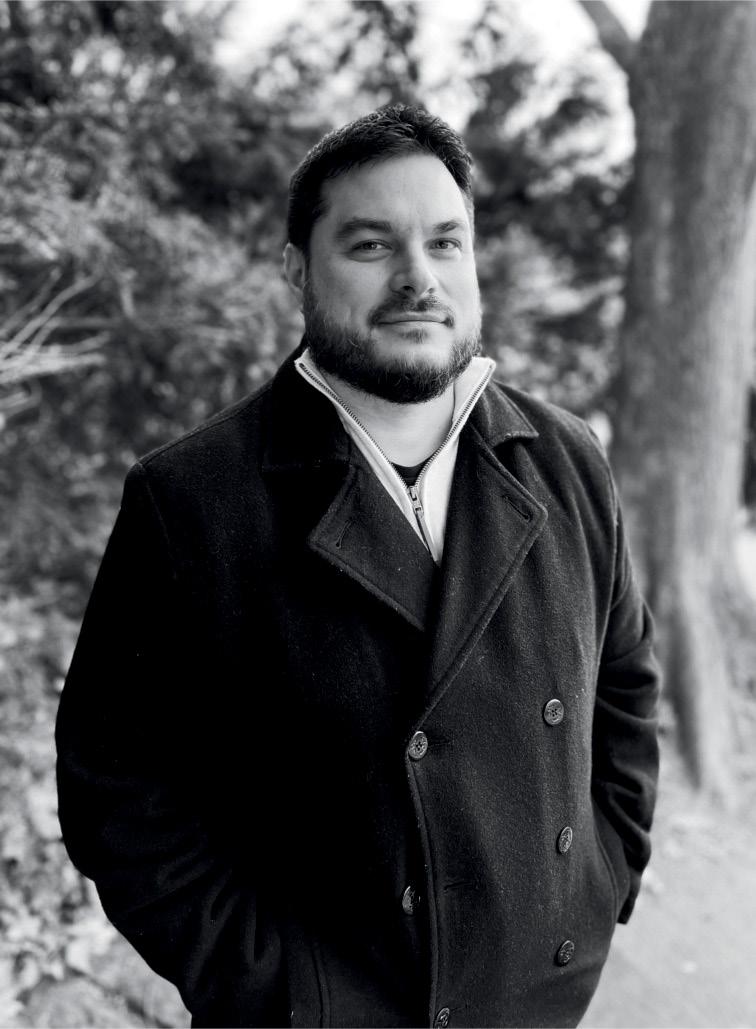
Vocal music has been central to Myers’s output, from his operas with librettists Quincy Long (Buried Alive, The Embalmer’s Daughter) and Royce Vavrek (The Hunger Art, Maren of Vardø), to collaborations with American Lyric Theater, Beth Morrison Projects, Ekmeles, mezzos Rachel Calloway (Requiem aeternam, Islands of Death) and Anna Laurenzo (The Embalmer’s Daughter, Boy), as well as poet Jennifer de Guzman (Boy, Advice to a Migraineure). This album’s featured soprano, Rachel Schutz, has been a constant collaborator, having performed and premiered several songs over the years since they met while on faculty at the University of Hawai‘i at Mānoa.
Myers’ discography has been slowly growing over the last few years. His violin duo The Angry Birds of Kauai, commissioned by Hilary Hahn, appears on her Grammy winning album In 27 Pieces: The Hilary Hahn Encores and is published by Boosey & Hawkes. His debut album Requiem, with mezzo Rachel Calloway and JACK Quartet, was released on Innova Recordings in 2024, followed by his electronic album Goodnight on Neuma Records in 2025. Other works have appeared on albums by Miolina, Yang Jing, Laura Klock, and Music in the American Wild.
His music has been performed at venues such as Carnegie Hall, Disney Concert Hall, Library of Congress, Darmstadt, festivals such as Tanglewood, Aspen, Acanthes, and Gaudeamus, and he has received awards from the American Academy of Arts and Letters, Fromm Foundation, BMI, ASCAP and others.
A student of grammy winning composers William Bolcom and Michael Daugherty, Myers holds degrees from the Eastman School of Music and the University of Michigan. He lives in New York City, where he works as a freelance composer and music engraver.
RACHEL SCHUTZ ANDREA CHRISTIE
Welsh American soprano Rachel Schutz is in demand for her sensitive and evocative performances and wide range of repertoire. She is active both in the opera house and on the concert stage, having sung extensive ly around the United States, Asia, and Europe, and was the 44th NATS Artist Award Competition and 2018 Pro Musicis Competition winner. She has sung with Opera Paralèlle, Hawai'i Opera Theatre, Stockton Opera, and Opera Ithaca, and her concert and recital appearances have included Carnegie Hall's Stern, Weill and Zankel Halls, the Ravinia, Ojai, Tanglewood, and Yellow Barn Festivals, the Dame Myra Hess Concert Series, DCINY, with the Hawai'i Symphony, and the Boston Pops Orches tra. She holds a DMA from Stony Brook University and serves as an Associate Professor of Voice at Ithaca College. She is also an active scholar and has recent ly published a book with Routledge titled Welsh Vocal Music: A Guide to Lyric Diction and Repertoire.
RACHELSCHUTZ.COM
CHRISTOPHER GROSS
Cellist Christopher Gross' performances have been praised by The New York Times ("beautifully meshed readings....lustrous tone"). He is a founding member of the Talea Ensemble, a member of the Da Capo Chamber Players, and has appeared at Weill Recital Hall, Alice Tully Hall, Disney Hall, Darmstadt Festival, and the Mostly Mozart Festival. His premieres of new works are numerous, including works by Boulez, Babbitt, Wuorinen, Haas, Ferneyhough, Neuwirth, Dillon, Read Thomas, and many others. His recordings are featured on Bridge, New Focus, Tzadik, and New World records. An active educator, he is a Teaching Artist with the New York Philharmonic and has given classes and lectures at Harvard University, the Peabody Conserva tory, the Sydney Conservatory, and the Cleveland Cello Society. He is the creator of Cello Solos Today, which commissions new works for young cellists. He received his doctoral degree from the Juilliard School and teaches at Lehigh University.
CHRISGROSSCELLO.COM
Andrea Christie is a Canadian American pianist known for her versatility in late romantic and contemporary music. Andrea performs as a soloist and a chamber musician. She is a member of The Parhelion Trio, hailed by New York Concert Review as “excellent” and praised by The Strad for their “effervescent” playing. She has appeared at renowned venues such as NYC’s Carnegie Hall, Metropolitan Museum of Art, Symphony Space, National Sawdust, Harpa Concert Hall in Reykjavík, and The Royal Danish Academy of Music in Copenhagen. Upcoming and recent collaborations include performances/projects with ChamberQUEER, The Curiosity Cabinet, violinist Anne Sophie Andersen, sopranos Rachel Schutz and Sharon Harms; compos ers Lisa Bielawa, Daniel Felsenfeld, Nirmali Fenn, Whitney George, Jeff Myers, and Derek Weagle; and members of Eighth Blackbird, Wet Ink, and The Knights ensembles. Dr. Christie serves as Lecturer of Contemporary Performance and Keyboard Pedagogy at Rutgers University and Adjunct Professor of Keyboard Studies at Adelphi University.
ANDREACHRISTIE.COM
ASHLEÉ MILLER
American clarinetist Ashleé Miller has been praised for her rich “color and imagination” [NPR]. Ashleé is the clarinetist (+bass clarinet) of The Parhelion Trio and Nu Deco Ensem ble, a genre bending orchestra that regularly collaborates with recent R&B and Jazz Grammy winners and nominees. Collaborations include: Anthony Hamilton, Angélique Kidjo, Derrick Hodge, Lawrence, Allen Stone, X Ambassadors, and Corey Wong. Ashleé also performs with the American Composers Orchestra and DCINY. She serves on the faculties of Adelphi University and The Juilliard School's Preparatory Division, and provides clarinet demonstrations for the NY Philharmonic educational programs. She is the Founder/President of Collective Music Theory, a comprehensive music education curriculum adopted by prestigious pre college programs and conservatories. Ashleé holds Bachelor and Master of Music degrees from Mannes College, The New School for Music, and a Doctor of Musical Arts from The Graduate Center, CUNY with a dissertation on Charles Ives.
ASHLEEMILLER.INFO
JENNIFER DE GUZMAN
Jennifer de Guzman writes about sad songs, smart girls, and silly boys. Her work has appeared in Strange Horizons, The Colorado Review, and the comics anthology Womanthology: Space and Insider Art. A San Francisco Bay Area native, Jennifer is committed to creating art that reflects the diversity of the Bay and her family heritage. She holds a Master of Fine Arts from San José State University.
JENNIFERDEGUZMAN.COM

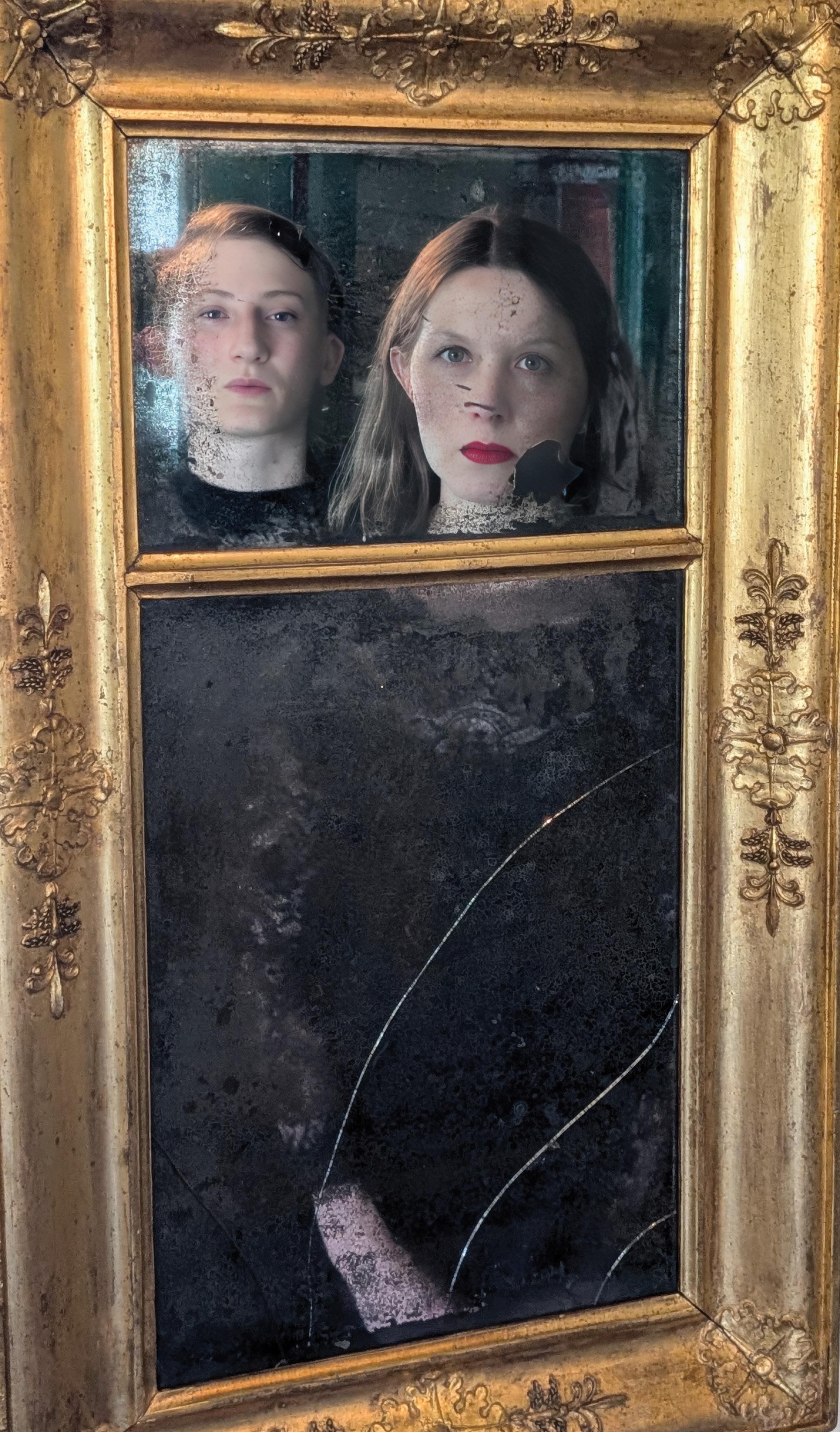
Photo: Rachel Schutz and Andrea Christie