Insights
LP Magazine’s Origin Story
Building a Workplace Violence Strategy
Cash Management and Security
PLUS: What Top Interviewers Do Differently




LP Magazine’s Origin Story
Building a Workplace Violence Strategy
Cash Management and Security
PLUS: What Top Interviewers Do Differently
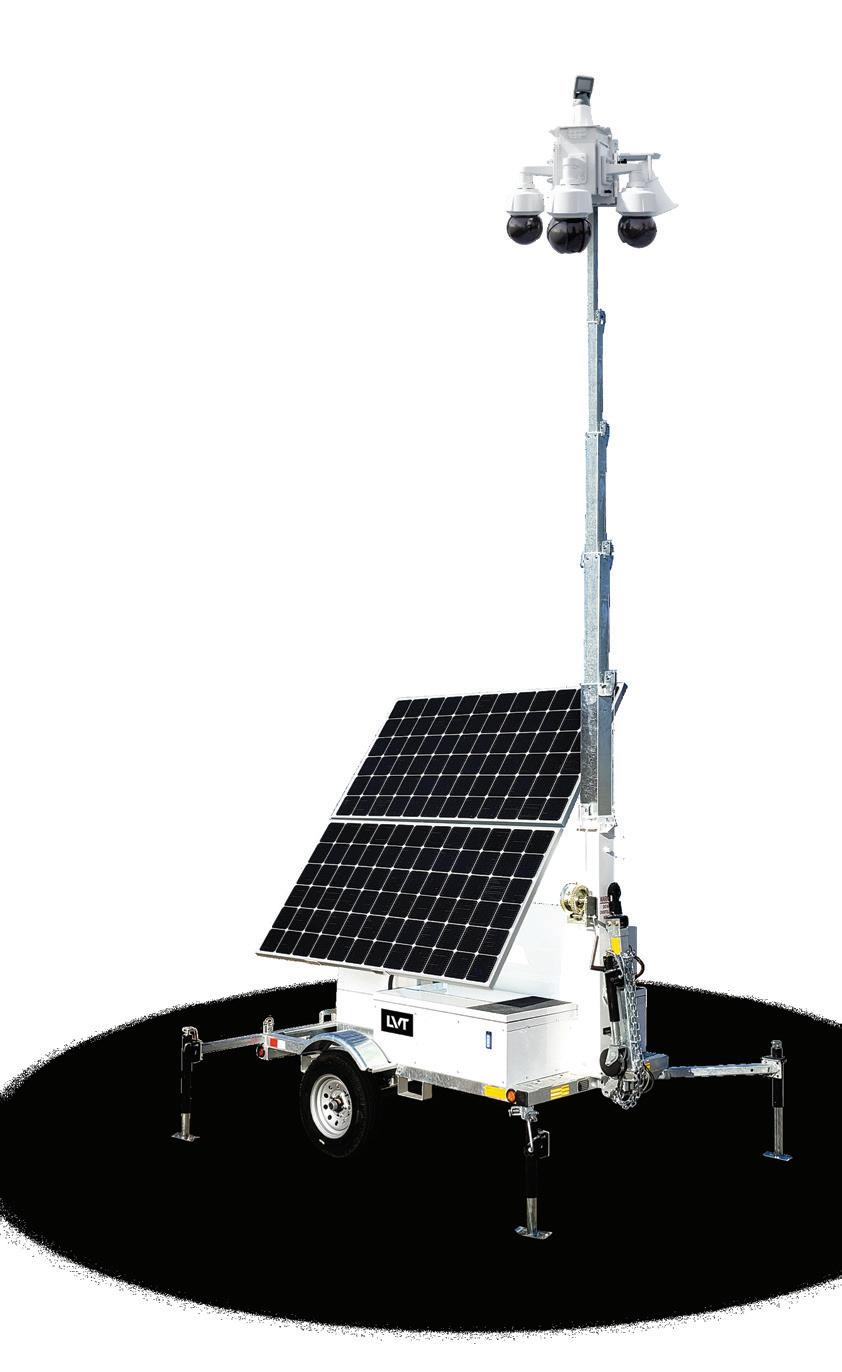
Frost & Sullivan names LVT the leader in innovation in the mobile surveillance industry. The objective evaluation presented in the Frost RadarTM: Mobile Surveillance positions LVT as the most innovative mobile surveillance partner by setting a high bar for intelligence, autonomy and system integration. What makes

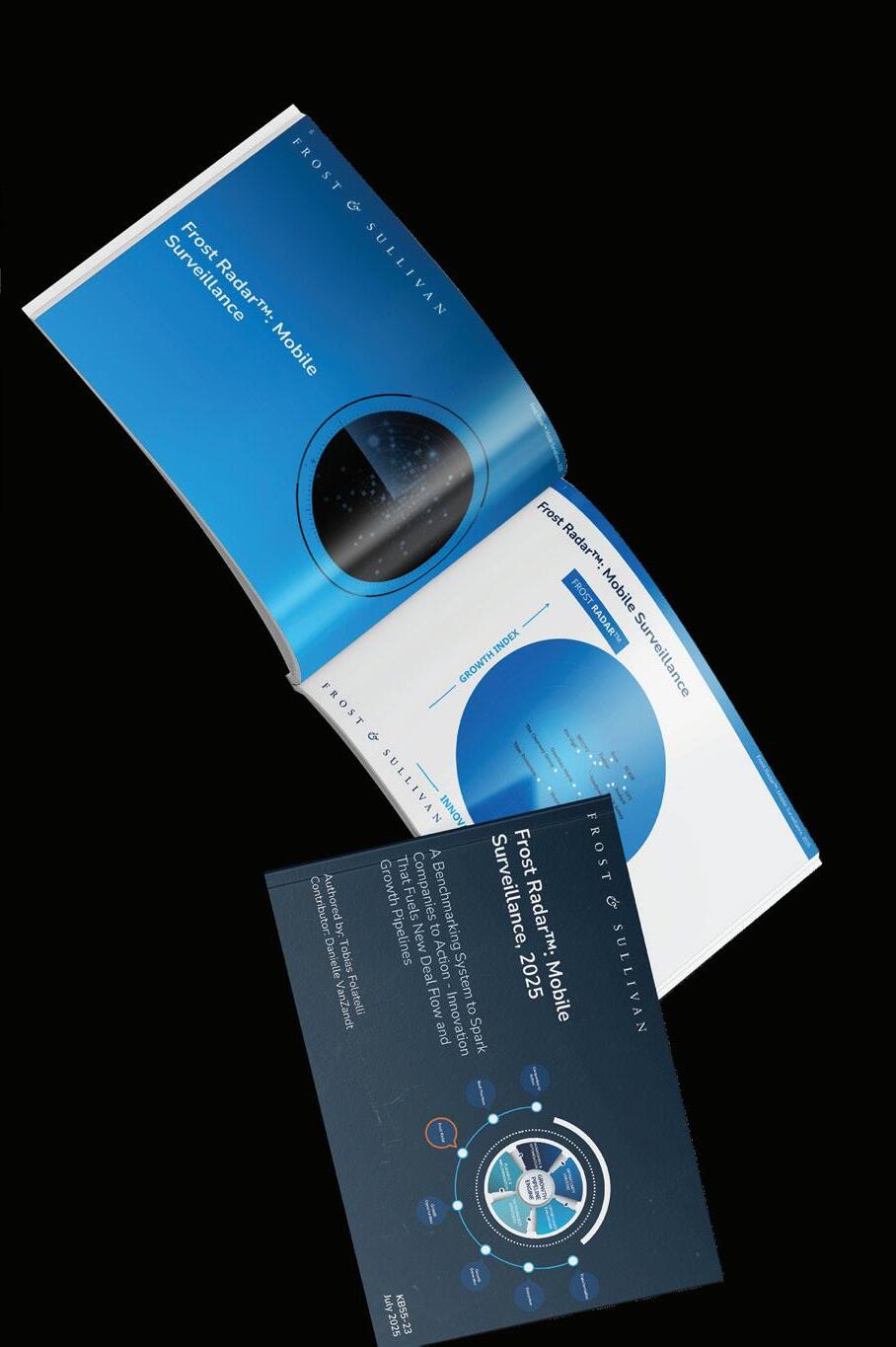
Scan to access the full report and read key insights.
Have you got it all covered? From early detection outside your store to identification of loss at the point of impact – layers of security ensure that your store is protected in every zone. Thanks to actionable analytics, your technology allows you to stay ahead and detect suspicious activity, identify potential wrongdoers, respond quickly, and protect against future incidents.

Jody O’Guinn,
Stefanie Hoover, CFI
Kelsey Stamey
The Retail Defense Paradigm Part 4: Agentic AI Fraud Evolution By John Matas, CFE, CFCI
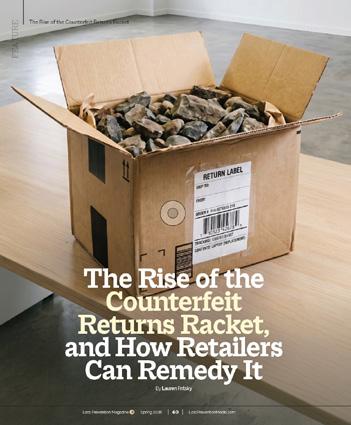
Lauren Fritsky

Cory Lowe, PhD
In the old Superman comics, it’s called Bizarro World; in the more recent Stranger Things show, it’s called “The Upside Down.” In Marvel comics, there are multiverses where crazy stuff happens constantly. What timeline are we living in?
I hear this phrase used to describe how we feel about the current era. Our conversations and language reveal a mood. My mood (not all the time, but a lot more lately) has been, in the words of George Jetson, “Get me off this crazy thing.”
Things are out of whack, and retail is a good example.
I was thinking about the path of LP over the last forty or so years, and it seems that we are now upside down. Retailers have always wanted to sell things. To sell things, you must have them on the shelf. Thieves realized retail was an easy target, so retailers began to protect those things. What started out as door security, plainclothes detectives, or items behind glass cases has evolved into retailers hiring and maintaining what resembles their own police force. Retailers are using advanced tools like GPS, cameras, RFID, feature-matching AI, and drones to surveil bad guys. Does this sound like law enforcement’s job to anyone else?
I understand how we got here. Budget cuts (from both sides of the aisle, by the way), increased crime, illicit drug use, and ineffective or lax laws. Changing norms in our society. There are too many reasons to list here. Was there a point in the journey to Big Time Organized Retail Crime, where we are today, where an intervention could have happened? Could we have nipped the problem in the bud thirty years ago? I don’t know, but maybe our society could have provided more resources—like hiring more law enforcement and empowering DA’s, instead of doing the opposite. The opposite didn’t work. We have become so desperate for solutions that retailers have resorted to working with lobbyists to get legislation passed to fight ORC. Why is that necessary? Isn’t that upside down? Shouldn’t our legislature be in front of that and working for us? It’s frustrating to watch our peers before panels in Congress repeatedly asking for support to fight ORC when, to me, it’s

Stefanie Hoover, CFI Editor-in-Chief
self-explanatory. Organized retail crime = bad. End of story. Pass the laws already; let DAs and cops do the work, so retailers can get back to selling stuff.
The crime problem in this country is a deep issue. It’s not going to be fixed by passing one piece of legislation, but it’s a move in the right direction. Problems can only ever be solved if we get to the root of the matter. We’re past the point of band-aids.
I love thinking about and researching changes in language and how things like slang evolve. Did you know that AI is influencing our language? For instance, the word “delve” was rarely used, but because AI was trained to prefer Latin-based language, it began to appear more often in AI writing over the last couple of years. Because of that, the word “delve” is now being used more by humans in their actual communication. If AI can influence language, can we harness its power for good and use it to address our crime problem?
What if AI could identify crime trends before they become endemic and alert us to communities that need intervention? What if it could advise us on real and effective actions to take? What if AI could streamline all communication between crime victims, law enforcement, and the courts? What if AI could help identify and provide services to those in need? And what if all this could be done without interfering with our constitutional rights?
I am cautious about AI; I feel it needs regulation and ethical and moral guidance from humans. And AI is arriving at a time when our society is already upside down. Can it help flip us back around? That’s a tall order.
I have a lot of questions and not many answers, sorry. But I do know what my eyes tell me, and that’s that this merry-go-round needs to stop. It’s not about going back; that time has passed. We need the next generation of visionary leaders in LP, law enforcement, DA offices, and government to help us exit Bizzaro World.
Who knows—there might be a solution in this edition that can start us down that road. There could be a leader mentioned in these pages, or reading this issue, who has a brilliant idea and takes us into the next era. I’m ready! l
President Caroline Kochman Caroline.Kochman@losspreventionfoundation.org
Vice President, Editor-in-Chief Stefanie Hoover, CFI StefanieH@LossPreventionMedia.com
Editorial Director Jacque Brittain, LPC JacB@LossPreventionMedia.com
Managing Editor Courtney Wolfe CourtneyW@LossPreventionMedia.com
Assistant Editor Allie Falk AllieF@LossPreventionMedia.com
Retail Technology Editor Tom Meehan, CFI TomM@LossPreventionMedia.com
Contributing Writers Lauren Fritsky Kelsey Stamey David Thompson, CFI
Design & Production SPARK Publications info@SPARKpublications.com
Creative Director Larry Preslar
Advertising Strategist Ben Skidmore 972-587-9064 office 214-597-8168 mobile Ben@PartnersPR.com
Subscription Services New or Change of Address LPMsubscription.com or circulation@LossPreventionMedia.com
Postmaster Send change of address forms to Loss Prevention Magazine 33 Walt Whitman Road, Suite 121W Huntington Station, NY


Andrews,
Vice President, Loss Prevention, VF Corporation


Robert Holm Director, Global Safety and Security McDonald's


Rick Beardsley Senior Director of Loss Prevention and Safety, At Home Group


Mike Lamb, LPC Vice President, Asset Protection and Safety, (Ret.) Kroger

Mark Stinde, MBA, LPC Vice President, Asset Protection,

Vice President of Asset Protection Walmart




and Revenue Management





Lund, MBA, LPC, CFI Executive Director, International Association of Interviewers


LPM's Editorial Board is composed of some of the loss prevention and asset protection industry's top executives from a wide range of retail sectors. These senior executives provide guidance to the LPM team on article topics and industry issues that are of current concern and interest to LP professionals. To learn more about the Editorial Board, contact Stefanie Hoover, CFI, at StefanieH@LossPreventionMedia.com.







Rhett Asher SVP, Community Relations and Partnerships

Sharon Costanza Senior Enterprise Account Executive

Frank Panebianco VP Sales and Marketing NA

Craig Greenberg Chief Commercial Officer

Dave Sandoval President

Alix Arguelles Director of Product

Tom Meehan, CFI CEO




Scott Thomas National Director for Signature Brands

Cita Doyle, LPQ, LPC VP, Sales and Marketing

Brianna Witts Senior Industry Marketing Coordinator


Amy Day-O'Connor Senior Director, Enterprise Marketing


Rex Gillette VP, Retail Sales


Oscar Arango VP of Retail Strategy
Robb Northrup Director, Marketing Communications


Mike Jennings VP Sales, US Retail

Tony Sheppard, MSM, CFI, LPC VP, Retail Risk Solutions






Tom Chamard Senior Director Business Development


Vy Hoang Chief Customer Officer

Matt Kelley, MBA Head of Retail, Go To Market


Steve Fahey Global Head of Retail Strategy

Kevin O'Brien EVP of Business Development

Allan Watters, LPC Director, Security Sales
LPM's Solution Partner Board is composed of the magazine's strongest solution provider supporters. These executives provide their counsel on how the magazine can better advance and serve the loss prevention and asset protection industry. To learn more contact Ben Skidmore at Ben@PartnersPR.com.



Cathy Klein Global Leader, Strategy and Transformation

Nick Rykhoff President
Join these great companies as an LPM corporate sponsor. Email Editor@LossPreventionMedia.com for more information.

























By Courtney Wolfe
Those who work in pharmacy loss prevention know that while it shares similarities with typical retail LP, it is truly a world of its own.
“Pharmacy loss prevention is unique because it goes beyond traditional retail security,” explained Kevin O’Brien, executive vice president of business development at SEMM Holdings. “You’re dealing with healthcare responsibilities, regulatory oversight, and public safety all at the same time.”

Cathy Langley, LPC, is senior leader of AP and major accounts at Solink and spent more than thirty years with Rite Aid’s pharmacy LP team. She said that pharmacy LP is often misunderstood when people compare it to broader retail LP. “In pharmacy, the work is not only about reducing loss and protecting employees and customers. It is about safeguarding sensitive products and information, supporting compliance, and creating the visibility teams need to respond effectively.”

“Early on, the focus was mostly on shrink—inventory loss, internal theft, and making sure controlled substances were accounted for,” O’Brien said. “Those things are still important, but the scope of pharmacy LP today is much broader.”
Now, LP teams must deal with a mix of compliance, healthcare regulations, internal theft, controlled substance risk, auditability, employee safety, patient privacy and data protection, and external theft.
University of Cincinnati School of Criminal Justice
Adjunct Professor Karl Langhorst, CPP, CFI, LPC, who has more than thirty years of experience working with regional and national pharmacy operations, including both traditional pharmacies and retail health clinics, has witnessed the industry’s evolution firsthand.

care than they may have previously used to protect patient information.
“Overall, pharmacy LP has moved from being mostly about shrink to being much more focused on risk mitigation, compliance, and protecting both the business and the patient,” O’Brien said.
“The job today is genuinely unrecognizable from what it was twenty-five years ago,” the anonymous LP professional shared. “It is better in a lot of ways and more complicated in almost all of them.”
Pharmacy employees—pharmacists especially—have become targets in a way that simply did not exist at this scale, our anonymous source said, when they started working at pharmacies twenty-five years ago.
When those pieces work together, LP becomes much more than a security function—it becomes an important part of how the business protects people and operates responsibly.
One anonymous source we spoke with, who has spent more than twenty-five years working in loss prevention for one of the world’s largest pharmacy chains, stressed that pharmacy LP is not a subset of retail LP but its own discipline.
“I think the industry does itself a disservice when it treats [pharmacy LP] as anything less than [its own discipline],” they said. “The stakes are different. When a pharmacy loses controlled substances, a patient may not get their medication. When a pharmacist is hurt in a robbery, a community loses access to healthcare, and sometimes the only convenient healthcare option available to them. When patient data gets compromised in a poorly managed investigation, real people are harmed in ways that go far beyond inconvenience. You carry that with you in this work—or at least you should.”
Similar to retail LP, pharmacy LP has undergone a significant transformation over the years.
Langhorst lists take-over robberies for drugs, Health Insurance Portability and Accountability Act (HIPAA) regulations, and growth in state and federal regulatory oversight as some of the biggest changemakers.
“The increase in pharmacy take-over robberies necessitated a stronger focus on strengthening visible physical security measures in the pharmacy,” he said. “This included security measures such as more cameras, public view monitors, and time-delay safes to store highly sought-after narcotics that could be easily resold on the streets.”
The implementation of HIPAA regulations made it necessary that LP personnel involved in pharmacy regulations not only take HIPAA training but also utilize greater awareness and
“Some of it is tied to the opioid crisis, which created a population of people who are desperate and who view a pharmacy as a potential source of relief,” our anonymous source continued. “Some of it is the broader shift in how brazen retail crime has become generally. And some of it is harder to quantify—a kind of erosion in what people consider acceptable public behavior that has hit service workers across the board and pharmacy workers particularly hard.”
Jump-over robberies are the most visceral example. When someone is willing to vault a counter and physically confront a pharmacist to get to controlled substances, that’s a different threat than a shoplifter stuffing merchandise into a bag. The physical danger to the employee in that moment is very real and intense.
The US Drug Enforcement Administration (DEA) said there were nearly 900 burglaries involving the theft of controlled substances reported to them in

“The job today is genuinely unrecognizable from what it was twenty-five years ago. It is better in a lot of ways and more complicated in almost all of them.”
2023. The organization had not released the number of burglaries in 2024 or 2025 at the time this article was published.
“Beyond the acute incidents, there’s a chronic, cumulative stress pharmacy staff absorbs that doesn’t get talked about enough,” the anonymous source said.
“Customers frustrated about insurance denials, medication availability, and wait times—that aggression lands on the person behind the counter every single day. It’s not always dramatic, but the cumulative effect on employee wellbeing is significant, and organizations need to continue to address these impacts.”
One 2025 survey about pharmacy working conditions found that 71.9 percent of pharmacists deemed working conditions unsafe, and 78.4 percent struggled to provide quality care due to work stress.
“In addition to robbery risks, pharmacy teams are also dealing with more aggressive customer behavior,” O’Brien agreed. “That can come from people seeking controlled medications,
protections in place. “Loss prevention should protect pharmacy employees with a combination of physical security, controlled cases, clear procedures, and better visibility into risk,” she said.
It’s also important to have lone-worker protections, secure opening and closing procedures, and well-documented incident workflows so teams can respond consistently and confidently, Langley added. “In a pharmacy setting, employee safety is closely tied to compliance and accountability, so the most effective programs treat it as both a people issue and a business risk issue.”
Panic alarms and robbery response procedures are also efficient protections. In addition, employees should be trained on how to handle difficult situations, recognize suspicious behavior, and respond appropriately during a robbery.
“Training is a big piece of this,” O’Brien explained. “Employees should know how to identify prescription fraud, manage escalating situations, and follow proper procedures when

One 2025 survey about pharmacy working conditions found that 71.9 percent of pharmacists deemed working conditions unsafe, and 78.4 percent struggled to provide quality care due to work stress.
dealing with prescription issues, or simply frustration with the healthcare system. The opioid crisis also changed the landscape quite a bit. Pharmacies became a focal point for people seeking certain medications, and unfortunately, that has led to increased security concerns. Because of all that, protecting pharmacy employees has become a much bigger part of loss prevention strategy than it used to be.”
Langley said that pharmacies now have a better understanding of how closely employee safety is tied to visibility and response, which puts more of a responsibility on LP teams to put the right
something doesn’t seem right. The goal is to create an environment where employees feel supported and protected while still maintaining strong operational controls.”
Our anonymous source also stressed the importance of training to keep employees safe. De-escalation training, they said, is critical and chronically underfunded in the industry. LP can’t stand next to every pharmacy counter, so the people most likely to be in the room when something escalates are the technician and the pharmacist.
“They need trained responses, not just instincts,” they said. “Clear, rehearsed
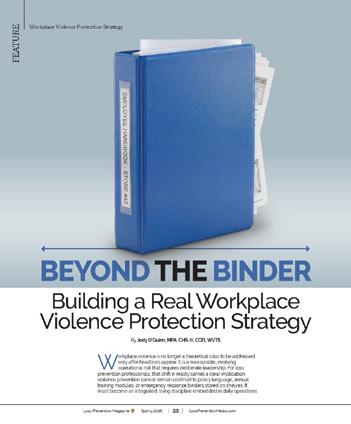
response protocols for robbery and active threat situations—trained behaviors, not a policy document in a binder nobody’s read. There’s a meaningful difference between an organization that has a plan and an organization where every employee knows what to do.”
Post-incident support for employees is crucial as well. “This is the one I feel most strongly about that may be overlooked,” the source continued. “An employee who just went through a robbery doesn’t need a form to fill out. They need a human response, psychological support, and a clear signal that the organization is taking what happened to them seriously. The responsibility of compassionate response doesn’t end when the police leave the building.
“Employee safety liability has become increasingly significant. If LP had documented knowledge of a specific threat pattern at a location with prior robbery attempts, escalating incidents, and flagged intelligence and failed to act on it, and then an employee was harmed, that’s an exposure. LP carries a duty of care for the people inside the buildings it protects. That responsibility must be taken seriously operationally, not just philosophically.”
Scroll through the DEA Diversion Control Division’s website, and you will find hundreds of examples of internal theft at pharmacies. In January, a Pensacola, Florida pharmacist was charged with an illegal drug diversion conspiracy. In September, a Chicago pharmacy was charged with enabling the diversion of opioids after two pharmacy techs conspired to steal more than 56,000 pills of hydrocodone and sold them outside of the pharmacy. Last July, a North Carolina pharmacist was sentenced to prison for illegally distributing more than 1,500 oxycodone pills.
Internal theft—especially drug diversion—has always been one of the biggest concerns in pharmacy operations, and that hasn’t changed. Pharmacy internal theft is different from typical retail cases because you’re losing potentially dangerous controlled substances, rather than deodorant or baby formula. So, when diversion happens, it’s not just a loss issue; it can involve regulatory violations, criminal charges, and patient safety concerns.
“Internal theft in pharmacy keeps a lot of people up at night, and it should,
“Pharmacy internal theft, committed by both pharmacy technicians and pharmacists, is always a real concern.”


there is often a need to collaborate with law enforcement, state or federal, depending on the type of product being stolen, the quantity, and the geographic location of the offense, as different state pharmaceutical boards have different investigative requirements. This can lead to a very complex and tedious investigative process.”
doing their job, and a pharmacist diverting OxyContin looks almost identical from the outside. So, you’re not looking for someone who’s somewhere they shouldn’t be; you’re
Companies must rely heavily on measures like controlled substance audits, cycle counts, and inventory reconciliation. Data analytics also play a huge role in identifying internal theft—patterns in dispensing activity, prescription behavior, or inventory adjustments can help identify issues early.
“You’re looking for things like an employee who consistently processes prescriptions for high-demand controlled substances, unusual voids or overrides clustered around specific shifts, or inventory reconciliation discrepancies that correlate with one person’s schedule,” the anonymous source said. “The signal is in the data, not in what you see on a camera. The investigation methodology
Introducing SWAT our latest innovation developed with Organized Retail Crime in mind. These anti-theft labels are designed to leave a stamp on the product upon removal of the circuit, e ectively deterring merchandise resale. We empower retailers to safeguard their inventory and mitigate losses due to theft.

is also different. When you get to the point of a formal inquiry into a pharmacy employee, everything you do from that point forward has to be built to a standard that can withstand DEA scrutiny, not just internal review. That means tighter documentation, earlier involvement of Legal and Compliance, and a much more deliberate evidence chain than a typical retail investigation requires.”
Because of all these challenges, O’Brien said it is beneficial to have someone on your team with DEA diversion experience. “A former DEA diversion investigator can bring a valuable perspective when it comes to identifying potential risks around controlled substances. They also understand how the DEA evaluates cases and what regulators are looking for, which can be extremely helpful when navigating sensitive situations or discussions with the agency. Having that level of expertise involved can help organizations stay ahead of potential issues and ensure they’re approaching compliance and diversion prevention the right way.”
As Cathy Langley points out, pharmacy LP carries liabilities that go well beyond ordinary retail shrink, including controlled substances, patient privacy, and regulatory compliance.
“When controls fail in a pharmacy setting, the consequences can extend far beyond product loss to include legal exposure, compliance issues, reputational damage, and potential harm to people,” she said.
Pharmacies are understandably very regulated by both state and federal agencies. Langhorst added, “This oversight, and changing regulations, can be intensive and as such requires a strong collaborative effort between a company’s corporate counsel, pharmacy operations, and loss prevention to ensure that both state and federal regulations are implemented and followed. Quite often this includes internal operational audits conducted by LP staff that require at a minimum both knowledge of the regulations and basic operational pharmacy procedures.”
The DEA’s Controlled Substances Act says that all controlled substance transactions must take place within a “closed system” of distribution established by Congress. Within this “closed system,” all legitimate handlers of controlled substances (including
pharmacies) must be registered with the DEA and maintain strict accounting for all controlled substance transactions.
Penalties for violating this act are high. In 2024, Rite Aid agreed to pay $7.5 million in civil fines and allowed an “unsubordinated, general secured claim” of $401.8 million in the company’s Chapter 11 bankruptcy case after allegations that, from May 2014 to June 2019, their pharmacists knowingly dispensed at least hundreds of thousands of unlawful prescriptions for controlled substances that lacked a legitimate medical purpose and were not issued in the usual course of professional practice, or were not valid prescriptions. The government alleged that Rite Aid pharmacists filled these prescriptions despite clear “red flags” indicating they were unlawful.
In 2025, Walgreens agreed to pay up to $350 million for illegally filling unlawful opioid prescriptions. In 2024, the Justice Department filed a nationwide lawsuit alleging CVS dispensed controlled substances in violation of the Controlled Substances Act, though CVS has publicly denied the allegations.
The Health Insurance Portability and Accountability Act of 1996 (HIPAA) also has a huge impact on how pharmacy LP teams can operate.
“HIPAA governs every piece of patient information that moves through a pharmacy environment from prescription records and diagnosis codes to insurance
details and patient identifiers,” our anonymous source said. “The tension that creates for LP is real and specific—the tools you use to investigate theft, fraud, or diversion may incidentally capture protected health information, and how you handle that information throughout the entire investigation life cycle must be HIPAA-compliant. That’s not something you can figure out as you go.”
A pharmacy’s case management system, evidence storage, law enforcement reporting, document retention policies—everything has to be built with a privacy lens alongside the LP lens, the source continued. “This requires a standing working relationship with your privacy and legal teams, and in my experience, LP departments that don’t invest in those relationships end up either overcautious to the point of ineffectiveness or exposed in ways they don’t see coming. HIPAA breach liability is real and career-ending if mishandled. A poorly managed investigation that results in the unauthorized disclosure of patient health information can trigger breach notification obligations, regulatory fines, civil exposure, and reputational damage that dwarfs whatever the original LP event was worth.”
Even camera footage can be complicated in the pharmacy setting. A pharmacy camera captures patients in moments that are private and sensitive, such as picking up a prescription for a mental health condition, or filling
“Employees should know how to identify prescription fraud, manage escalating situations, and follow proper procedures when something doesn’t seem right. The goal is to create an environment where employees feel supported and protected while still maintaining strong operational controls.”

Kevin O’Brien
FaceFirst® delivers real-time alerts the moment a known threat enters your store, giving your team time to react. With the visitor search feature, investigations run 8x more efficiently* capturing activity seamlessly across every location in your enterprise.
Fewer confrontations. Less shrink. Safer stores.
Are you attending NRF Protect? Come see us @Booth 1100!


Probable Match
Repeat Offender
Liquor Booster

*Source: LPRC
a medication tied to a stigmatized diagnosis. So, the governance around who can access that footage, under what circumstances, and how long it’s retained is a compliance obligation.
“As AI-driven analytics tools push further into LP, the data protection questions are only going to get more complex,” said the anonymous source. “You’re increasingly feeding patientadjacent data into algorithmic systems, and the regulatory frameworks governing that are still well behind the technology.”
There are also risks around prescription fraud and identity theft. Criminals will sometimes attempt to exploit pharmacy systems to obtain medications or personal information; because of that, LP teams often work closely with IT and compliance departments to monitor access, secure systems, and make sure proper safeguards are in place.
“A data breach in a pharmacy setting can have serious consequences—not just financially, but also from a regulatory and reputational standpoint,” O’Brien stressed.
“Pharmacies face all of the common data protection concerns around personally identifiable information, but they also have to manage protected health information, which brings an added layer of sensitivity and regulatory responsibility,” Langley added. “That includes information tied to a patient’s health status, treatment, prescriptions, payment, and other health-related details. Because of that, pharmacy LP has to be especially mindful about how information is accessed, reviewed, shared, and retained. Protecting data in a pharmacy environment is not just about preventing misuse; it’s also about maintaining trust, supporting compliance, and making sure case-sensitive information is handled with the right level of care.”
Looking at the multitude of changes the industry has faced in the past thirty years, how might pharmacy LP teams operate in the future?
“I believe pharmacy LP will continue to become more proactive, more connected, and more intelligence-driven,” Langley said. “The future is less about simply recording incidents and more about identifying meaningful risk sooner, reducing manual effort, and giving teams clearer direction on where to focus.”
“When controls fail in a pharmacy setting, the consequences can extend far beyond product loss to include legal exposure, compliance issues, reputational damage, and potential harm to people.”

Cathy Langley, LPC
Langley also predicts we will continue to see a stronger connection between security, operations, and compliance at pharmacies. The organizations that do this best, she said, will be the ones that create better visibility across locations, reduce noise for their teams, and make it easier to act quickly, document well, and maintain consistent standards.
Our anonymous source agreed that integration of LP with other departments is key to future success.
“We will see the end of LP as a standalone department that only thinks about shrink,” they said. “The traditional model is already giving way at leading organizations to a unified risk framework where LP, physical security, fraud, supply chain integrity, workplace safety, and compliance are managed as connected disciplines.
Pharmacy is one of the most compelling cases for integration because the risks are so deeply connected; a diversion event is simultaneously a criminal matter, a regulatory matter, a patient safety matter, and an employee welfare matter. Managing those threads separately is inefficient, leaves gaps, and creates risk.”
This integration will also lead to a change in what is expected of those seeking a career in pharmacy LP. “The next generation of pharmacy LP leaders will need to be comfortable with data science, regulatory frameworks, and AI tools in a way that was not required before,” the source shared. “The job is evolving faster than the pipeline of people trained to do it.”
Langhorst added that pharmacy regulations will surely continue to grow, alongside the desire to obtain pharmaceuticals illegally.
“Pharmacy LP technology and operational methodology will evolve out of a necessity to meet these new opportunities,” he said.
O’Brien agreed, saying that pharmacy LP will become even more data-focused. “Artificial intelligence and predictive analytics will probably play an even bigger role in identifying potential diversion, fraud, or unusual activity before it becomes a major problem. Automation in pharmacy operations may also reduce opportunities for diversion by limiting manual handling of medications. Overall, the future of pharmacy LP will continue to move toward prevention, intelligence, and integrated risk mitigation.”
“What I’ve seen over twenty-five years is that organizations that take pharmacy LP seriously, invest in it, build it right, and give it the authority and resources it needs to function, create genuinely safer environments for both employees and patients,” the anonymous source concluded. “And that outcome isn’t just a security metric; it’s a business outcome, a brand outcome, and a community outcome at the same time. The work matters, it always has, and it matters more now than it ever has. l

Courtney Wolfe is LPM’s managing editor focusing on creating and curating editorial content for the magazine’s print publication and website. Prior to LPM, she was managing editor for SDM Magazine, a trade publication for security systems integrators. She received her bachelor’s degree in multimedia journalism from Columbia College Chicago. She can be reached at CourtneyW@LossPreventionMedia.com.





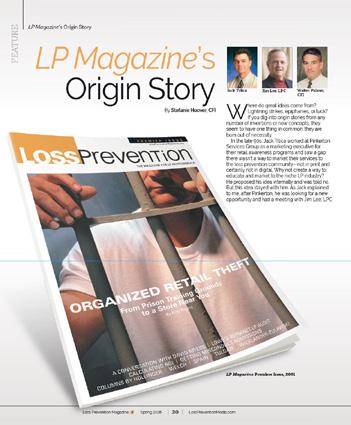
Where do great ideas come from?
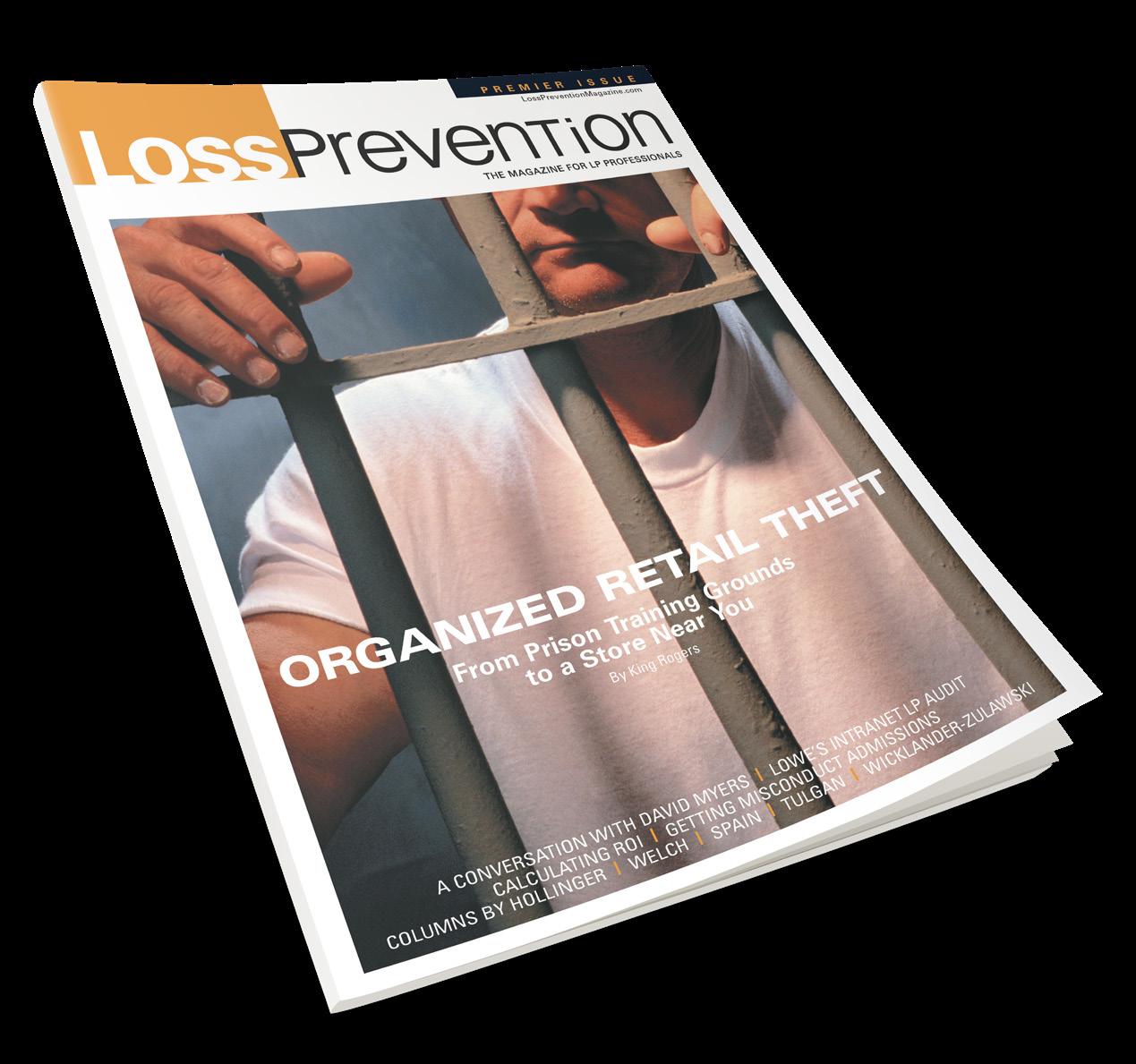
seem to have one thing in common: they are born In the late 90s, Jack Trlica worked at Pinkerton
the loss prevention community—not in print and LPC,
who, together with Walter Palmer, CFI, owned an awareness company called Contact. During that meeting, Jack proposed a loss prevention-focused educational magazine that could also serve as a marketing channel for solution partners. Jim and Walter were focused on awareness programs at Contact; Jack proposed the magazine as an alternative that could reach all levels of LP.
Realizing there was something there, Jim proposed they start in print first. From there, according to Jim, “Jack took over as creative director of the magazine, and we were off and running.” After further meetings and discussions about numbers and advertising, they decided to build a prototype and introduce the concept at the 2001 NRF conference in Vancouver, where it received a positive reception despite some skepticism about content sustainability. What could there be to possibly write about LP with any frequency? Turns out, there was and continues to be a lot. After an amazingly short ramp-up time, the magazine launched in September 2001, with its first full year of publication in 2002.
Early on, there were challenges securing funding, content, and writers, but recruitment efforts by the trio paid off. Industry leaders saw and understood the vision and began to support the magazine. With key contributors including Dr. Hollinger, King Rogers, Doug Wicklander, CFI, Dave Zulawski, CFI, CFE, and Claude Verville, LPC, among others, they were able to build LPM’s legitimacy and credibility off the bat.
A little moxie never hurts, either. Jim said they were fairly bold in their recruitment of leaders; in fact, they took “the first issue of the magazine, put a Post-it on it saying, ‘Dear Tom, we’d like to interview you for our magazine’ and sent it out.” And just like that, they secured an interview with Walmart CEO Tom Coughlin. “That interview was a big help to us. Over the years, we did a lot of interviews with top-notch executives.”
Jack emphasized that the magazine’s success was built on credibility, high-quality content, and its distinctive design approach. “It looked like a consumer publication rather than a typical B2B magazine.” There was, from the beginning, a complementary website. And, as media increasingly moved to online formats, LPM created a newsletter in 2006. But the move to fully online formats was never really on the table—print readership grew and continues to grow. Being able to see your peers and read about what’s happening in print is a tangible experience you just can’t replace with a digital one.
It wasn’t always easy, according to Jack. Since those early days, challenges have increased in getting companies to participate



due to corporate pushbacks around media and legal concerns. “The key has always been helping retailers understand the magazine’s educational focus,” and that LPM is not your typical media. “I’m really proud of the magazine’s legacy and impact on the industry,” said Jack. Indeed, its quality and influence endure.
After a year or so, Walter stepped away to focus on other endeavors but continued
to contribute many articles over the years. To this day, he is an active supporter of LPM and LPF.
Part of the journey Jim has fond memories of involved the annual board meetings that celebrate those who contributed to the magazine’s success. The first meeting was held in Tampa, Florida, with about eight attendees, and has now combined forces with The Loss Prevention Foundation and evolved into the LP Leadership Summit with over 200 attendees every year. Networking, educational speakers, and fun remain on the agenda as this meeting grows. Purchased by the LPF in 2022, LP Magazine continues its educational mission in support of the LPF.
Others that Jack, Jim, and Walter wanted to recognize as instrumental over the years include Mark Stinde, LPC, Mike Lamb, LPC, Paul Jones, LPC, Scott Glenn, LPC, SPARK Publications, Bob DiLonardo, Mimi Welch, Garrett Seivold, Adrian Beck, Kevin McMenimen, LPC, Norman Spain, and Jacque Brittain, LPC.
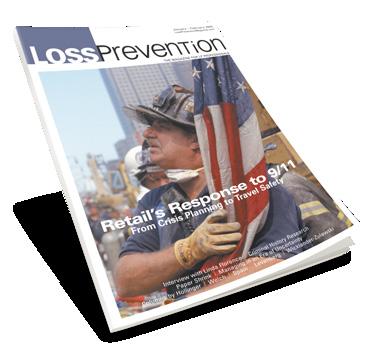
When asked to share his favorite covers and articles, Jack immediately mentioned the 9/11 cover feature and chose the following articles for you all to check out. We will post the links online as well:
l The Many Faces of LP, May-June 2002, by Mimi Welch
l Beyond Shrinkage: Introducing Total Retail Loss, Nov-Dec 2016, by Adrian Beck
l Facial Recognition: A Game-Changing Technology, May-June 2013, by Chris Trlica
l The Evolution of the Retail Loss Prevention Professional, Sept-Oct 2014, by Jack Trlica and Jacque Brittain, LPC
l Women in Loss Prevention, May-June 2018, by Jacque Brittain, LPC
l Shoplifting Response, Reaction, and Recourse: What’s a Retailer to Do?
Jan- Feb 2019, by Walter Palmer and Jacque Brittain, LPC
Jack and Jim are both now retired and living the good life. Jack and his wife, Cindy, split their time between Mexico and North Carolina, enjoying sunshine, friends, and golf. Jim resides in North Carolina, enjoying sports and keeping in touch with industry friends. Walter continues to work in the industry as senior adviser at CAP Index, sharing his expertise as a mentor and friend to countless individuals, and travels extensively.
There are hundreds of individuals who helped or contributed in some way to the success of LPM, and we apologize if we couldn’t include everyone. Please know we at LP Magazine are indebted to those who joined us on this twenty-five-year journey, and we encourage you to reach out with your memories and stories. We’d love to hear from you. l

By Jody O’Guinn, MPA, CHS-III, CCFI, WVTS
Workplace violence is no longer a theoretical crisis to be addressed only after headlines appear. It is a measurable, evolving operational risk that requires deliberate leadership. For loss prevention professionals, that shift in reality carries a clear implication: violence prevention cannot remain confined to policy language, annual training modules, or emergency response binders stored on shelves. It must become an integrated, living discipline embedded in daily operations.
Retail and corporate environments today operate in a landscape of heightened volatility. Economic stressors, workforce fatigue, mental health challenges, social polarization, organized retail crime aggression, and domestic instability increasingly intersect within the workplace. While each variable alone may not predict violence, together they form a backdrop that increases the likelihood of escalation when grievances arise.
LP professionals stand at a unique convergence point of physical security, investigative rigor, behavioral awareness, and operational oversight. That position places LP leadership squarely in the center of workplace violence protection strategy. The question is no longer whether organizations need a plan; it's whether their plan is real.



Many organizations equate workplace violence preparation with active assailant training. They produce instructional videos, post evacuation maps, and conduct occasional drills. These measures are important—but not a full strategy.
The focus on extreme scenarios often obscures a more important truth: most workplace violence does not begin with sudden, unpredictable action. It evolves along a continuum. Grievances intensify, behaviors shift, communication deteriorates, and policy violations increase. In hindsight, warning signs were present.
A mature violence prevention strategy acknowledges that escalation is a process. The responsibility of leadership, particularly loss prevention leadership, is to build systems capable of recognizing the process before it culminates in harm.
Retail operations present unique exposure. Frontline employees manage customer disputes, confront theft, enforce return policies, and interact with the public under stress. Managers conduct performance discussions and terminations in accessible environments. Domestic conflicts follow individuals into parking lots and store aisles. Each scenario carries potential risk, but it is unmanaged escalation, not interaction alone, that creates danger.
Organizations must ask themselves whether their systems are designed to detect escalation early or merely respond after damage occurs.
A written policy does not equal preparedness. Cameras do not equal prevention. Panic buttons do not equal culture.
The question is no longer whether organizations need a plan; it's whether their plan is real.
Many organizations point to a workplace violence policy, annual online training, or access control infrastructure as evidence that they are covered. These elements are necessary foundations, but they are not sufficient on their own.
The most frequent breakdown in violence prevention is fragmentation. Human resources may receive reports about escalating hostility. Managers may witness troubling behavioral changes. Security teams may observe access irregularities. Without coordination, those signals remain isolated and lose urgency.
Workplace violence prevention requires defined communication pathways. Employees must know how to report concerning behaviors, managers must know when to escalate those reports, and leadership must understand who evaluates the information and what criteria guide intervention decisions.
Without structure, organizations drift into a reactive posture. When escalation is treated as a personality conflict rather than a risk trajectory, opportunities for prevention vanish.
Serious workplace incidents rarely arrive without indicators. Patterns of escalation typically manifest before physical aggression

occurs. The challenge lies not in identifying these indicators individually, but in tracking them and evaluating them collectively and objectively.
Warning behaviors often include:
● Persistent grievance or fixation on perceived injustice
● Conditional or direct threatening language
● Expressions of humiliation, desperation, or revenge
● Escalating hostility toward coworkers or supervisors
● Repeated boundary-testing or policy violations
These behaviors do not automatically signal imminent violence. However, they represent movement along the escalation continuum. When organizations dismiss these behaviors as venting or personality traits, they delay intervention.
Loss prevention professionals are accustomed to identifying anomalies in data and behavior. The same disciplined lens must apply to violence prevention; escalation patterns deserve structured evaluation, not informal conversation.
One of the most effective ways to manage escalation is to establish a Behavioral Threat Assessment Team (BTAT). Unlike a crisis committee convened after an event, a BTAT functions proactively. Its goal is not prediction, but risk management.
A properly structured team typically includes representation from loss prevention, human resources, legal counsel, and operational leadership. This diversity ensures that decisions reflect investigative discipline, employment law guidance, and operational practicality.
Threat assessment frameworks evaluate behaviors and context rather
than intent or diagnosis. They focus on trajectory. Is the grievance intensifying? Is communication becoming more hostile? Has desperation increased? Are there signals of planning behavior?
The emphasis remains on proportional intervention. Threat assessment is not about labeling employees as dangerous; it is about recognizing when behavior patterns warrant support, mediation, corrective action, or security awareness.
LP’s role in this structure is central. LP leaders contribute documentation rigor, investigative objectivity, and insight into environmental security. They help ensure that evaluations remain factual and that decisions align with operational realities.
Security infrastructure remains an essential component of violence protection strategy. Surveillance systems, access controls, controlled entry points, lighting, and panic alarms reduce vulnerability and response time. However, infrastructure must align with threat intelligence.
For example, when terminating an employee whose behavior has shown signs of escalation, coordinated planning is essential. Considerations may include immediate badge deactivation, discreet security presence, secure meeting locations, and post-termination monitoring for potential return attempts.
Proportionality matters. Over-securitizing routine situations can inflame tensions, while underestimating credible warning behaviors introduces risk. Structured evaluation, not instinct, must guide decisions.
Environmental design principles continue to play a preventive role in retail. Clear sightlines, secure cash-handling areas, visible employee presence, and accessible exit routes significantly influence interaction dynamics. Yet hardware cannot compensate for cultural weaknesses.
An organization’s internal culture profoundly shapes its risk of violence. Employees who perceive disciplinary processes as arbitrary or humiliating are more likely to harbor unresolved grievances. While most grievances do not result in aggression, nearly all targeted acts of workplace violence begin with a grievance.
Fairness functions as a protective measure. Transparent communication during performance discussions, consistent
A written policy does not equal preparedness. Cameras do not equal prevention. Panic buttons do not equal culture.
policy enforcement, and respectful termination processes reduce resentment. Employees who believe they are treated with dignity, even during conflict, are less likely to externalize hostility.
LP leaders must advocate procedural fairness as a core strategy for preventing workplace violence. When leadership signals that conflict will be handled professionally and consistently, the pathways for escalation narrow.
Employees must also trust reporting mechanisms. Reporting concerning behavior should not feel like betrayal; it should feel like protection. When organizations protect whistleblowers and reinforce confidentiality, early warning channels remain open.
Retail environments are uniquely volatile. Associates regularly confront shoplifting attempts, refund disputes, intoxicated patrons, and emotionally distressed customers. Without structured de-escalation training, these interactions can escalate quickly.
De-escalation competency requires more than theoretical awareness. It requires practiced skills. Associates must understand how tone, posture, and language influence outcomes. They must recognize when disengagement is appropriate. Above all, they must internalize a nonnegotiable principle: no merchandise is worth personal harm. When organizations implicitly reward aggressive intervention by highlighting apprehension numbers without equal emphasis on safety, employees absorb that expectation. LP leadership must consistently communicate that safety takes precedence over asset recovery.
That reinforcement should be visible, not implied.
Domestic conflict entering the workplace remains an underestimated risk factor. Retail locations, with predictable schedules and accessible entrances, can become stages for personal disputes.
When employees disclose domestic safety concerns, organizations must respond thoughtfully and proportionately. Protective planning may include temporary schedule adjustments, communication with local law enforcement, discrete awareness briefings for management, and coordinated safety planning.
Sensitivity is essential. Mishandled domestic disclosures can re-traumatize victims and escalate danger. Confidential handling and clear communication reinforce trust and safety simultaneously.
No strategy guarantees the elimination of risk. Preparedness must include a well-defined response plan. Emergency procedures, communication pathways, lockdown or evacuation protocols, and law enforcement coordination must be clear and periodically exercised.
Equally important is recovery. Following a violent or high-threat incident, employees require reassurance and transparency. Structured communication reduces rumors and anxiety. Access to counseling services aids emotional stabilization. Conducting after-action reviews strengthens resilience and demonstrates commitment to improvement.
Recovery is not simply about returning to normal operations; it is about restoring trust.
In workplace violence prevention, documentation is more than a record; it is a safeguard. Failure to act on credible threats can expose you to liability. Acting impulsively without structured documentation carries equal risk.
Threat-related documentation should clearly reflect observed behaviors, risk assessments, interventions taken, and follow-up evaluations. Proportionality and consistency must be visible in writing. Legal counsel should periodically review violence prevention frameworks to ensure alignment with evolving employment and safety standards.
Documentation signals seriousness, and seriousness signals professionalism.
Policies do not create culture. Leadership behavior does.
When executives treat concerning behavior lightly to avoid disruption, reporting declines. When managers dismiss early warning signs as personality conflicts, silence grows. Conversely, when leadership demonstrates calm, measured seriousness, employees respond in kind.
The strongest workplace violence protection cultures consistently communicate three principles:
1. Concerning behavior will be evaluated objectively.
2. Reporting safety concerns is encouraged and protected.
3. Interventions will be proportionate and respectful. These commitments reduce fear while increasing accountability.
Resilience is built through structure, repetition, and alignment. It requires regular review of reporting systems, termination procedures, de-escalation training, and threat assessment practices.
LP leaders should routinely evaluate whether warning behaviors are escalated appropriately, whether interdisciplinary communication flows smoothly, and whether after-action learnings are incorporated into operational adjustments.
Resilience is not a policy—it is a practice.
Workplace violence protection cannot remain a secondary initiative. It must become a strategic operational standard. LP professionals operate at the crossroads of security infrastructure, investigative rigor, behavioral awareness, and leadership influence. That vantage point carries responsibility.
The objective is not alarmism—it is preparedness rooted in discipline. Organizations that succeed in preventing workplace violence do not





eliminate every risk factor. Instead, they reduce vulnerability through coordinated action, transparent communication, and consistent evaluation.
Protection is not achieved through fearbased messaging or reactive enforcement; it is achieved through structured systems and responsible leadership.
In today’s environment, anything less is insufficient. ●

Jody O’Guinn, MPA, CHS-III, CCFI, WVTS, is a retired police chief with thirty-four years of law enforcement experience and the CEO and principal investigator of Calabash Investigative Consultants, LLC, a Georgia-licensed investigative firm. A veteran SWAT and regional WMD SRT commander, he also held key roles with the DEA and MEGSI narcotics task forces. A graduate of the FBI National Academy and LEEDS program at Quantico, he holds an MPA from Southern Illinois University. He pioneered the world’s first board-certified cryptocurrency forensic investigator course and serves as director of law enforcement operations at Baker Group International..

















David Thompson, CFI


Thompson is the CEO of Wicklander-Zulawski & Associates, providing investigative interview and interrogation training to a global audience. He has served as a subject-matter expert in developing curriculum and providing consultation to investigators, attorneys, and the academic community. He can be reached at dthompson@w-z.com.
© 2023 Wicklander-Zulawski & Associates, Inc


As we celebrate 25 years of Loss Prevention Magazine, looking back at the articles on interviewing, one thing has become increasingly clear: the gap between an average interview and a great one isn’t experience—it’s behavior, preparation, and adaptability.
Most professionals in this field have access to the same training and toolsets. But even with consistent training and supporting resources, the outcomes of their interviews can look very different. Some interviewers consistently gather detailed, reliable information that moves investigations forward (often information previously unknown). Others struggle to get beyond surface-level responses or rely heavily on confirmation rather than discovery. The difference is typically not what they know, but what they consistently do—and how leaders define success.
Top interviewers don’t rely on tricks or coercive tactics, but often these shortcuts are perceived as measures of success. Lying about evidence, implying leniency, or threatening consequences are all shortcuts to gaining information—often resulting in unreliable details and a high risk of negative results. Instead, top interviewers execute the fundamentals at a higher level, with greater discipline and intention. While their approach may not look dramatically different on the surface, the way they apply these foundational skills sets them apart.
One of the clearest distinctions between elite and average interviewers is how they prepare. Average interviewers tend to organize the facts and form a working theory that they are ready to simply confirm in the conversation. This approach can feel efficient, but it often narrows perspective before the conversation even begins. We often see this result in admissions of guilt that are siloed into “what we already knew,” or in

confrontation from the interviewer when they aren’t receiving the information they thought they had.
In contrast, top interviewers prepare with a different objective: to learn something new. They focus on identifying gaps in the information and thinking through what still needs to be understood. Rather than scripting questions in advance, they develop focus areas that allow them to remain flexible. This mindset creates space for new information to emerge instead of simply reinforcing what is already believed.
Top interviewers don’t rely on tricks or coercive tactics, but often these shortcuts are perceived as measures of success. Lying about evidence, implying leniency, or threatening consequences are all shortcuts to gaining information—often resulting in unreliable details and a high risk of negative results.
Another key difference is how top interviewers manage the pace and timing of the conversation. One of the most common mistakes in interviewing is rushing to our perceived goal; this could be rushing to ask the next question, rushing to address inconsistencies, and ultimately rushing to reach a conclusion. Pressure and speed will also demonstrate a desperate need from the interviewer, which is likely to result in increased resistance or hesitation from the interviewee.
Skilled interviewers understand that pace is a tool. They slow the conversation down, allowing interviewees time to retrieve information and for their responses to develop fully. They use silence strategically, recognizing





that people will often continue speaking when given the opportunity. We’ve all had conversations where silence has led to an interviewee sharing more information than expected. A controlled pace communicates confidence and reduces cognitive load on the interviewer. Speed tends to create resistance, while patience creates an opportunity for disclosure.
The quality of questioning, including structure and sequencing, is another area where top interviewers separate themselves. Less experienced interviewers often rely on closed or confirmatory questions that limit the depth of the response. Questions framed in a way that suggest a specific answer may produce quick responses, but they rarely produce meaningful insight or additional details. We’ve covered these examples in several articles over the last couple of decades, but still encounter interviewers who fall back into leading and confirmatory questions.
Top interviewers take a different approach by prioritizing open, narrative-driven questions. These questions invite the subject to explain, describe, and provide context. Instead of seeking agreement or denial, they create space for a more complete account of events. This is especially useful in fact-gathering investigations, where an interviewer has to rely on human intelligence to establish context and assess the credibility of an incident.
Equally important, skilled interviewers pay close attention to how their questions are worded. Clear, neutral language reduces confusion and avoids unintentionally influencing the response. Over time, this approach leads to more detailed and reliable information.
Closely tied to questioning is the ability to listen effectively. Many interviewers listen just enough to move on to their next planned question. While the subject is speaking, they are already thinking ahead. Top interviewers, however, listen with a different level of intent. They pay attention to gaps in the narrative and areas that warrant further exploration. Because they are fully engaged in the moment, their followup questions are more precise and relevant.
This creates a more natural flow to the conversation and often uncovers information that might otherwise be missed. In many cases, the most effective next question is not preplanned but emerges directly from the answer just given. Think of a conversation you’ve had where you left feeling heard and engaged—it’s likely because the person provided space for your answer, and their follow-up questions were curious rather than scripted.
Emotional control also plays a critical role in effective interviewing. Interviews can be unpredictable, and responses may be incomplete or inconsistent. Less
experienced interviewers may allow those reactions to show, even in subtle ways.
Changes in our tone or pacing can influence how the subject responds and may increase defensiveness. Additionally, those sarcastic eye-rolls and sighs of frustration will be met with negative energy and resistance from the interviewee. Top interviewers maintain a consistent, neutral demeanor throughout the interaction, yet they are adaptable to the necessary energy. Their tone remains steady, and their reactions are measured and consistent regardless of what they hear. This level of control helps keep the conversation focused and productive. More important, it reinforces a sense of professionalism and stability that encourages continued dialogue.
As the loss prevention profession continues to evolve, expectations around interviewing have grown.
Top interviewers also demonstrate a high level of adaptability. No two interviews are exactly alike, and each individual brings a different communication style and level of cooperation. Rigid approaches often break down when the conversation does not follow the expected path. Average interviewers may struggle in these moments, particularly if they are relying heavily on scripts or checklists. This is when the conversation has a possibility to become high-risk if interviewers fail to plan for this pivot.
In contrast, experienced interviewers adjust in real time. They “read the room,” modify their approach as needed, and remain responsive to the dynamics of the interaction. Rather than forcing the conversation into a pre-determined structure, they allow it to evolve naturally while still maintaining purpose. This flexibility can be seen in adapting to a better understanding of an interviewee’s resistance to disclosing information, or even in awareness of risk factors present in the conversation.
As the loss prevention profession continues to evolve, expectations around interviewing have grown. There is greater scrutiny, increased accountability, and a smaller margin for error. The difference between average and exceptional performance is not found in complex strategies or advanced techniques; it is found in the consistent execution of fundamental skills, while embracing the evolving science that impacts this skillset. We have been proud to cover many of these elements over the last 25 years in Loss Prevention Magazine.
Top interviewers are not doing entirely different things. They are applying the same foundational practices, preparation, pacing, questioning, listening, emotional control, and adaptability. Over time, it is this consistency that leads to better conversations, stronger information, and more reliable outcomes. ●
Changes in our tone or pacing can influence how the subject responds and may increase defensiveness.

Scan the QR code and answer questions about this article to earn CEUs towards your CFI designation or to learn more about the advantages of becoming a Certified Forensic Interviewer.

By Kelsey Stamey
In some ways, retail cash management in 2026 is the same as it was in 2016, which is the same as it was in 2006 and 1996, and on and on—maybe until you reach all the way back to those old-timey dry goods stores. We’re still making change, depositing cash to the bank, and doing everything we can to prevent theft and error. The US dollar looks, feels, and spends the same, too— but we aren’t necessarily tucking stacks of bills into little metal cash boxes anymore. Advanced technologies are driving powerful changes in cash management and security. And the ways cash passes through the retail ecosystem look different, too.
With the official demise of the penny and the friendly chimes of tap-to-pay transactions enlivening checkout lanes everywhere, it seems like the use of cash is falling by the wayside. It’s true that cash use has dropped among US consumers, but it’s not as much as you might think. In a 2026 research report, NCR Atleos found that “while cash payments declined during the pandemic, usage has stabilized and shows no indication of disappearing.” In other words, yes, digital payments are increasing, and cashless payment options are widespread. But cash remains a steady component of the average US consumer’s shopping behavior.
Government data bears that narrative out. Consumers made an average of seven payments in cash per month in 2024, a statistic that has been unchanged since 2020, according to the 2025 Federal Reserve Diary of Consumer Payment Choice. This number equates to about 14 percent of all payments in that calendar year. What’s more, it seems more than 90 percent of US consumers say they intend to use cash either as a means of payment or store of value in the future. “A core amount of cash use appears resilient to broader shifts in the payment ecosystem,” say the report’s authors.
Looking at the big picture, it’s safe to say that cash will remain a societal concern for the time being. Unfortunately, physical banknotes, with their inherent value and anonymity, remain an evergreen vulnerability and a target for criminals. As much as it seems like it would simplify matters of risk to eliminate the cash option in retail stores, “consumers want payment choice,” says Sal Salpietro, founder and CEO of ATM services provider ATM Up. Retailers that still see a lot of cash transactions are reluctant to cut off that revenue flow, even
to reduce risk. “When you’re fighting for 1 to 5 percent comps, you’re not going to cut off 20 percent of your revenue source. So, the risk of cash is not going to compete with the desire of the business to grow,” says an LP industry veteran and QSR expert who wished to remain anonymous.
populations that do not have access to electronic payments, and they live in cash,” says Salpietro.
But some folks who technically could, say, add a credit card to their digital wallet may not want to do so, according to Kevin Trimble, founder and CEO of Loss Prevention Solutions Inc., and founding

“There’s a tremendous amount of underbanked populations that do not have access to electronic payments, and they live in cash.”
Sal Salpietro
To apply our best risk mitigation strategies, it’s helpful to narrow the focus. Where and by whom is cash being used most, and why? According to the data, cash is most often used in the following contexts.
Older consumers and lower-income households. The Federal Reserve report confirms what we might suspect: consumers over the age of 55 and lower-income consumers tend to pay in cash more often than people in other demographics. These segments likely differ in their reasons for using cash, however. For lower- income households, it may have to do with challenges securing credit. “There’s a tremendous amount of underbanked
partner of Maverick Safe Co. Instead, they opt for cash out of old habits. “There are people out there [for whom] it’s still their way of life, and they’re not trusting some of the technologies to manage money.”
Smaller transactions and international influences. Sometimes the choice to pay in cash has less to do with age or income and more to do with location or purchase value. For example, retailers handling small-value transactions see a lot of cash. “Cash continues to play a significant role in the convenience store environment,” says Mike Suppe, asset protection director with Casey’s. “Fuel purchases and smaller dollar transactions remain heavily cash-driven.” Cannabis dispensaries, too, deal frequently
with cash transactions, given the challenges they face in working with banks due to the federal status of their products.
Cash use may also be more prevalent in major metro cities and border cities in the US. Pete Morello Jr., CFI, EVP of global sales and operations with CIS Security Solutions, says he’s seen physical notes and coins used with a greater frequency in other countries compared to domestically, and international visitors tend to bring that habit with them when they come to major metros or border cities. Of course, he says, “that’s also where the risky transactions happen. You see more folks using that norm [of paying in cash] to pass bad cash.”
Circumstances requiring analog options. Consumers in rural areas without easy internet connectivity tend to pay in cash, although those places seem to be fewer and farther between. Importantly, cash is also used as a backup option in the event of a cybersecurity breach. “I’m not a doom and gloom person, but with the threat of a cyber-attack, let’s say the financial system shuts down—that means your credit card system and POS terminal— you’ve got to go back to analog and pay cash,” says Steve Collins, head of growth at Wilson Safe.
Retailers know that the inclusion of cash in their payment ecosystem means there will be vulnerabilities. LP and AP pros know this, too. “While necessary to serve these customers [who prefer cash], cash also introduces ongoing exposure to shrink, robbery risk, internal theft, and labor-intensive handling processes,” says Suppe. And cash loss is a serious problem. Its business impact is difficult to overstate: not only is it categorized as an expense rather than a top-line reducer in the budget, but the time and resource costs of LP investigations into a cash loss incident impose unwanted burdens on a retailer.
The following areas seem to require the most focus on risk mitigation:
● Internal Theft: Employee theft is a top contributor to cash loss, with employees pocketing cash directly from a register, diverting excess change to a friend, or under-ringing sales intentionally. In some cases, the employee’s friend or family member may be encouraging them to steal. In other cases, the access and opportunity
may be too much temptation for an early-career manager with the heady feeling of newfound power. “This is definitely an industry trend: those supervisor-level folks are, like, five minutes into a new experience in their career,” says our anonymous expert. “They did a really good job of being a frontline contributor, and now they’re getting their first experience in life, typically, of being a shift supervisor. Sometimes there are maturity issues.”
● Human Error: Employee inexperience can also be the cause of mistakes. In a business with high-dollar transactions, even one little mishap can have a significant impact. Inputting the wrong denomination or misfiling bills in the


“While necessary to serve these customers [who prefer cash], cash also introduces ongoing exposure to shrink, robbery risk, internal theft, and labor-intensive handling processes.”
Mike Suppe
register might be honest errors, but they cause confusion at best—and significant discrepancies in cash counts in the worst case.
● External Theft: Cash appeals to criminals because it’s anonymous and can be immediately used without being traced. In retail, robbery threats tend to be concentrated in early/late hours (when an associate may be in the store alone), or when cash is in transit to a safe or the bank. Holding large amounts of cash in a store is a surefire way to draw the attention of bad actors.
● Fraudulent Transactions/Social Engineering: In its takeaways from a 2025 meeting on cash loss, the ECR Retail Loss Working Group dubbed
“social engineering” as a top challenge. Member-retailers reported increases in cash scams, counterfeit currency, and POS fraud. Morello also notes how commonplace cash scams are, saying that one of the biggest changes since he started in the industry is that “the aftermarket is no longer the black market. It’s legitimate.” He cites an example, saying: “I can go to [a hardware retailer], especially in construction, where cash is king. I can buy a DeWalt drill for $400 with four bad hundreds and then sell it on Facebook Marketplace: ‘Hey, I don’t need this anymore, I’m going to sell it for $200,’ and then I get $200 in real dollars.”
● Poor or Unsafe Handling Processes: Systemic risk comes from poor processes. Retail teams that don’t secure and standardize their reconciliation, audit, or other cash handling processes make it easier for bad actors to hide theft—or for discrepancies to go unnoticed. Some business owners want to reduce their costs and do cash pickups and bank runs themselves, for instance, says Trimble. “But there exists a massive amount of risk, because the bad guys are, in fact, studying these behaviors.”
The modern take on a retail cash management strategy starts with a reframing of the task list from reactive and manual to predictive and autonomous. Instead of a ledger entry expressed in dollars and cents, the amount of cash handled by a retailer becomes a data point. Here are a few industry best practices to prevent cash loss in 2026. Leverage automated technologies. Smart safes are no longer an early-stage technology for retailers. In many stores, these devices, designed to streamline cash handling and security, are approaching standard infrastructure. “More than 1.1 million retail outlets worldwide handle daily cash transactions, with 61 percent of high-volume stores adopting automation solutions,” according to global data shared by Business Research Insights. In the US, although many retailers have already implemented smart safes into their stores, the ECR Retail Loss Working Group noted that at their October 2025 meeting on cash loss, some member-retailers had “just
deployed [smart safes], while others were on the edge of some trials.” In other words, adoption is becoming widespread, and for good reason.
These advanced cash management systems offer a ream of benefits. Smart safes prune labor costs and time by counting cash automatically and verifying note legitimacy. They securely store cash and create event logs that track deposits, transactions, and pickups. “The validation process obviously makes sure the currency is good, but at the same time, there’s also a guarantee of deposit,” says Trimble. “The liability falls on the bank or on the armored car.” Smart safes with a network connection enable staff to maintain visibility into their contents and automatically report cash deposits to the bank, scheduling a pickup at a time that makes sense.
For added efficiency or security, retailers can choose to upgrade the locks on their safes, advises Collins. “I can retrofit a lock and make it mobile, so I just scan my phone instead of entering a PIN. I can control how many times [employees] are
“It’s all about [instilling] that feeling of accountability.” anonymous


allowed to go in there,” he says. “You’re adding another way to audit the access.”
Taking that smart safe technology to the next level means looking for a solution that combines with a cash recycler, which can re-dispense or ‘recycle’ deposited cash for future use. For example, “instead of having till drawers, you have a recycler,” says Collins. When an employee begins her shift, she logs in, and it will issue her starting register fund of, say, $175 in cash.
It gives retailers instant use of their cash for a small daily fee per store. “You’re not even dealing with the armored car relationship,” Collins notes.
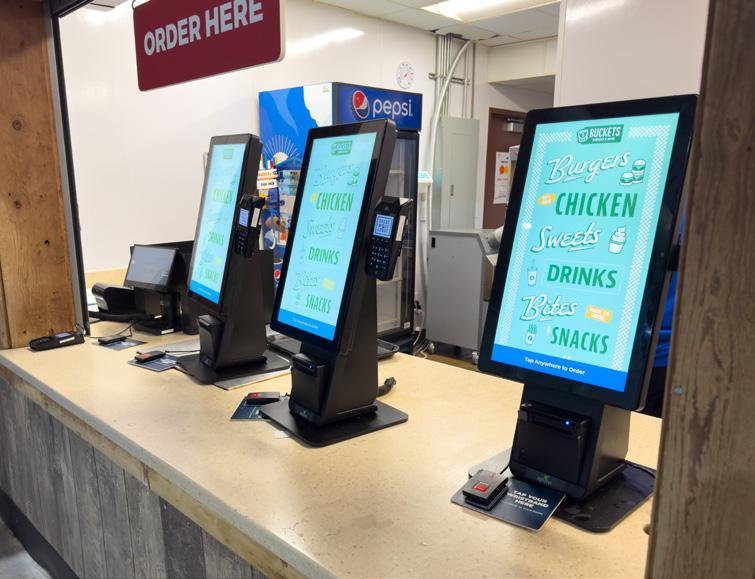
Customer-facing kiosks at a supermarket self-checkout or quick-service restaurant can serve as cash recyclers, too. Where this is the case, cash entered at the point of sale syncs with the back-office count data, creating a closed-loop system with minimal to no employee contact with cash.
What if a retailer hasn’t yet committed to an automated system? With a range of options available, LP pros should first partner with finance operations and other business leaders to develop a cash management strategy that makes sense. Factors to consider before making a choice include the amount of cash a store typically handles, specific areas of risk in that store, and the resources available to invest in the system.
Circumvent human error. Whether an employee steals cash or mishandles it, the hit to the business is the same. It’s critical to standardize your processes and train associates to ensure

“The whole picture has been very hard to get with these siloed systems... whether it’s for cash handling and data analysis, face detection, or interactive monitoring—it’s all being talked about as different buckets.”
Vy Hoang
they understand cash-handling expectations—and consequences.
“It’s all about [instilling] that feeling of accountability,” says our anonymous expert. When people feel accountable they will “slow down, double count the cash, hand it back, and for sure not put it in their pocket if they know they will be seen.”
At a minimum, employees should use unique identifiers to access registers and safes. They should be trained (and re-trained) on solid, unambiguous cash handling processes, such as what to do when a till needs to be shared or when a customer attempts to pay with a bill that appears to be counterfeit. “Loss prevention guidance consistently shows that complexity drives inconsistency and error,” says Suppe. “Well-defined expectations around cash counts, variance thresholds, deposit timing,
and escalation protocols help minimize unintentional loss while reducing opportunity-based theft.”
Of course, the implementation of a good closed-loop system that minimizes or eliminates human interaction with a store’s cash is likely the best way to eradicate the risk of human error. To that end, some quick service restaurants (QSRs) are cutting back on POS terminals in favor of more kiosks designed to accept customer orders and their cash payments.
Think about the future state. In 2026, we use lots of different tools in the name of efficiency—but they aren’t necessarily talking to each other. The top challenge today in the cash management space might be the lack of integration among solutions. What if your cash management tools were integrated with your POS systems, inventory platforms, or
logistics management systems? Your employee scheduling platform?
“The whole picture has been very hard to get with these siloed systems,” says Vy Hoang, chief customer officer and partner at i3 International. “This discussion, unfortunately, isn’t being held fast enough or [on a large enough scale] because everyone wants to build their own widget, whether it’s for cash handling and data analysis, face detection, or interactive monitoring—it’s all being talked about as different buckets.”
When retailers integrate their tools and processes, they are rewarded with complete visibility into a fully automated cash life cycle—one that minimizes the need for human input. Features in such an optimized cash life cycle might include:
● Real-time dashboards (to provide a snapshot of cash on hand at any given moment)
● Cash flow forecasting (to have an accurate idea of liquidity, seasonal fluctuations, or inventory planning)
● Instantaneous anomaly detection
● Predictive alerts aimed directly at the person who needs to act on them
“That way, you can keep the AP department smaller, your budget down to a certain size, and you get more out of the systems you’re integrating,” Hoang says.
As it was in those old-timey dry goods stores, proper cash control is still critical to a retailer’s profitability, security, and operational performance. And as long as cash remains commonly used by consumers, its inherent risk will persist. Retailers today acknowledge the ways in which the role of cash in stores is changing—not so much for consumers, but for retailers themselves. Its handling is becoming invisible to the eye. The future state of cash management is moving away from a set of manual reconciliation and transit tasks and toward automated, real-time, AI-driven systems—systems that, in a perfect world, work in harmony. ●

Kelsey Stamey is an experienced freelance writer and former staffer of LP Magazine. She can be reached at kelseykstamey@gmail.com.

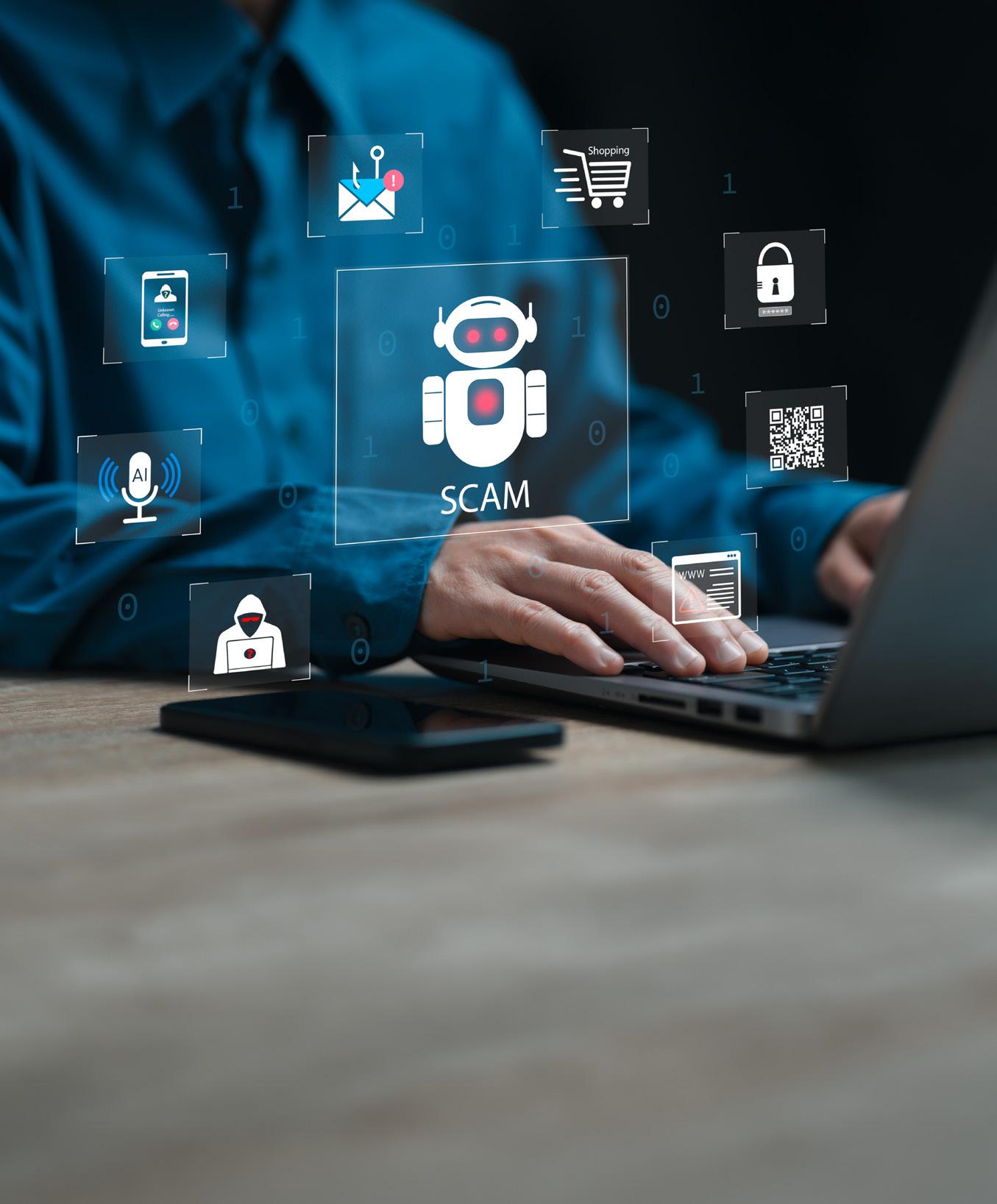
The Retail Defense Paradigm Part 4:
By John Matas, CFE, CFCI
Let me start with a very simple truth I’ve learned over the decades, from leading investigations and ORC at Macy’s to building digital marketplace fraud programs at Etsy, and now as an industry adviser at Blacklight Strategy: The complexity of retail today is unlike anything we’ve ever faced before. Retail protection teams are doing heroic work every day against increased loss, shrinking margins, reduced staffing, evolving criminal tactics, highly sophisticated ORC networks, store threats or violence, decriminalization, bail reform, illegal migration, and the macroeconomic pressures no one could have predicted a decade ago.
This article is the fourth in my ongoing series for Loss Prevention Magazine on moving beyond what I call the Retail Defense Paradigm—that familiar, frustrating cycle where protection teams (LP, fraud, investigations) are always reacting to the latest threat, patching one hole just as criminals open three more (a.k.a. Whac-A-Mole!)
The retail world continues to hyper-accelerate, and what I’m seeing with clients and across the industry validates everything I’ve discussed—but it also adds a renewed sense of urgency. The newest evolution in threats and opportunities is agentic AI (autonomous AI agents that can plan, reason, and execute multi-step tasks like shopping or abusing policies, with minimal human input). It’s the latest, fastestturning example of why the old reactive loop is so exhausting and unsustainable without a dramatic change in our industry.
Let’s ground this in reality: two years ago (late 2023), generative AI tools like ChatGPT drove essentially zero percent of meaningful referral traffic to retail sites.
Now there are two main causes of traffic: referral traffic, shoppers who land on a retailer’s site because another site or tool sent them there, for example, clicking a Walmart link inside ChatGPT. There is also agentic traffic, visits or actions made by autonomous AI “agents” that shop on behalf of a person. Instead of the customer browsing themselves, the agent compares products, places orders, or even exploits promotions automatically.
In Q4 2025, ChatGPT alone accounted for approximately 20 percent of referral traffic to Walmart.com (up dramatically monthover-month), with similar double-digit shares at Target (approximately 15 percent), Etsy
In Q4 2025, ChatGPT alone accounted for approximately 20 percent of referral traffic to Walmart.com (up dramatically month-over-month), with similar double-digit shares at Target (approximately 15 percent), Etsy (more than 20 percent), and others.
(more than 20 percent), and others. Broader AI influence (including agentic tools) touches 40–48 percent of high-intent digital orders at multiple enterprise retailers.
Walmart’s October 2025 partnership with OpenAI, enabling direct checkout inside ChatGPT, has accelerated this further, with early indicators showing sustained growth into the holidays.
Referral traffic is still a small slice of total visits (less than 5 percent), but it’s the highestROI slice: shoppers arriving ready to buy, often with higher average order values (AOV). For retailers who’ve invested in real-time, accurate data (inventory, pricing, fulfillment), this feels like a gift. Their systems are trustworthy, so AI agents recommend them more often.
Most agentic traffic is legitimate. Customers are using AI agents to save time, find deals, and simplify their lives. But fraudsters are already exploiting the same tools. Forter saw an 18,510 percent spike in agentic traffic the moment ChatGPT Agent launched—with fraud hiding inside the surge.
Riskified found 73 percent of shoppers now use AI in their journey, but AI-referred traffic is 1.1–1.7 times riskier than traditional search. Spec reports 99 percent fewer account takeovers and $9 million in AI attacks were prevented when journeys were unified. Sift tracked a 122 percent year-over-year surge in account takeover attacks in fintech as agentic commerce grows.
Fraudsters aren’t inventing new tricks; they’re scaling old ones with agentic AI.
Hidden within those seams is an underground economy. The dark web industrializes fraud with off-the-shelf services:
● Marketplaces for stolen or discounted gift cards
● “Refund-as-a-service” operations that guarantee cash back from major retailers
● Stolen account credentials are traded openly
● Counterfeit goods are sold through hidden shops
● Promotion abuse kits that automate coupon stacking
● Phishing and malware campaigns targeting retail staff and customers Just as retailers rely on suppliers, criminals rely on theirs. Fraud is scalable, repeatable, and constantly evolving.
This is where loss orchestration matters:
● One real-time view of data across channels
● Unified leadership with shared goals
● AI and machine-learning scoring every journey, not just flagging anomalies after the fact
● Feedback loops that make our teams smarter with every incident
It’s not about chasing every exploit; it’s about seeing the whole field, anticipating the play, and moving faster than the attackers.
If you lead LP, fraud, risk, or digital, and want to start stepping out of the Retail Defense Paradigm and into a Unified Loss Orchestration Model in the next twelve months, here are three concrete moves you can get off the ground and headed in the right direction.
1. Unified Data-Point Audit
Transactional data points, both online and in-store POS, are your lifeblood.
Riskified found 73 percent of shoppers now use AI in their journey, but AI - referred traffic is 1.1–1.7 times riskier than traditional search.
Conduct a transactional data-point audit of the points you are sending to your third-party decision engines and exception-based reporting (EBR) systems:
Online Data-Points:
● Understand all available data points within a singular digital transaction packet in your online platform.
Warning: Digital transaction packets are considered “High Cardinality Data,” meaning there could be 300-900 unique identifier data points within a singular transaction packet.
● Identify what data points are being transmitted to your third-party decision engines. Understand what’s available, what’s being sent, and what’s not being sent. New data points evolve, so your current roster of data points being analyzed by your third-party services could be outdated and thus inefficient in identifying suspicious events and
machine-learning models.
● Have your data-science teams update the API accordingly.
In-Store POS Data-Points:
● Same exercise as the online data-point audit.
● Identify what data points are being transmitted to your exception-based reporting system or third-party EBR solution provider. Again, understand what’s available, what’s being sent, and what’s not being sent.
● Have your data-science teams update the API accordingly.
Opportunity:
● This is an opportunity to create unified datasets of online and in-store transactions for internal analysis.
● Ensure that data-point labeling is consistent within both sets of data before merging. Make certain that your data science teams are partnered.
2. Get Agentic AI & Referral DataPoints into Your Fraud Stack
If you’re already seeing traffic from ChatGPT, Claude, Gemini, Perplexity, or custom shopping agents, you cannot afford to treat them as “just another referrer.”
At a minimum, identify where AI traffic shows up today. Are those referrers visible in your web analytics? Your thirdparty fraud tool? Your data warehouse? Promote it from “nice-to-know” to “decision signal.” Work with your fraud/data-science teams to tag “AIinfluenced” orders so you can compare approval, chargeback, and abuse rates over time.
Then, watch for pattern drift. Legit traffic shows high intent, good history, and solid conversion. Malicious traffic shows bursty behavior, multiple
For those of us who’ve lived this fight for decades, the lesson is clear: we can’t keep playing a game of never-ending Whac - A - Mole. We need loss orchestration, not reaction.
accounts, repeated promo abuse, and BOPIS no-shows.
The point isn’t to panic and block AI traffic; it’s to stop being blind to how it behaves. Strong data signals over time could then be used to train machine learning loss models.
3. Create One Shared KPI Across Teams
Silos survive because everyone has their own scoreboard. You don’t break the Retail Defense Paradigm without changing what “winning” looks like.
Pick one shared KPI that AP, fraud, payments, and finance all agree to own together. For example:
Customer Experience (CX) Protected KPI
● KPI = numbers of legitimate repeat customers who completed checkout with zero frictio n (no block/review/ refund fight)
● Include customer lifetime value
The Silent Win KPI
● Dollar value of attacks stopped automatically (no human touched them/ system identified/shut down)
Cost of Customer Friction Avoided KPI
● Prevented fraud value + avoided falsedecline revenue loss + freed inventory from abuse
What makes this moment different is the speed and scale—in just two years, autonomous agents have gone from novelty to material impact, reshaping both opportunity and risk. For those of us who’ve lived this fight for decades, the lesson is clear: we can’t keep playing a game of never-ending Whac-A-Mole. We need loss orchestration, not reaction. We need to speak the language of growth, trust, and customer experience if we want C-suite leaders to listen. And most of all, we need to remember that behind every data point is a human being, a customer, an associate, a leader, whose trust we’re protecting. 2026 isn’t the year to wait and see; it’s the year to step forward, unify, and prove that loss prevention is not just defense, but a driver of retail’s profit- driven future. ●
John Matas, CFE, CFCI, is a retail industry consultant with over thirty years of experience in omnicommerce fraud, financial crimes, asset protection, and investigations. John was the VP of investigations, fraud, and ORC for Macy’s for over twenty-five years. Most recently, John served as the global head of risk and fraud for Etsy Inc., where he was responsible for the organization’s fraud strategy and framework. He now works as the founder and principal consultant at Blacklight Security.
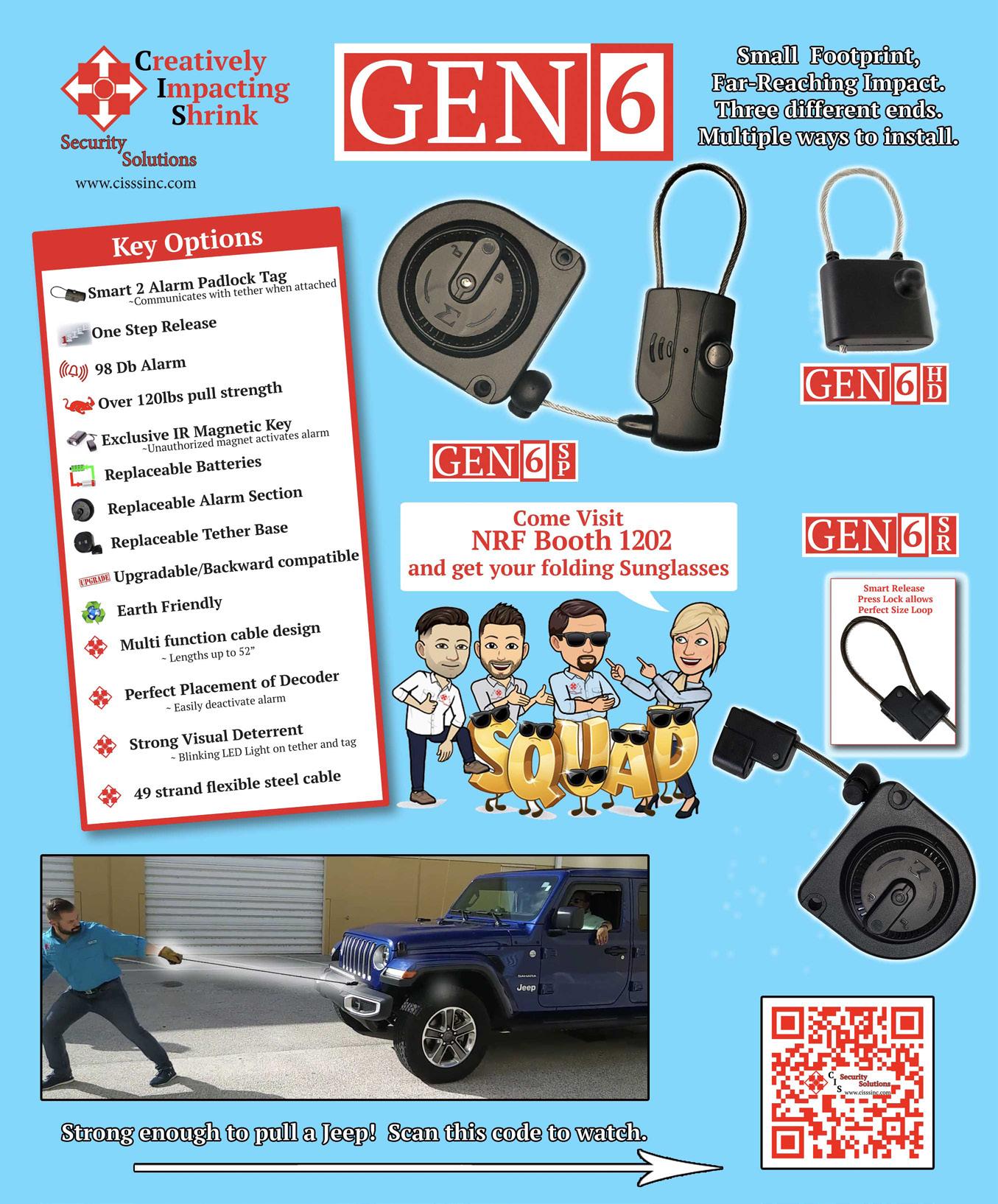
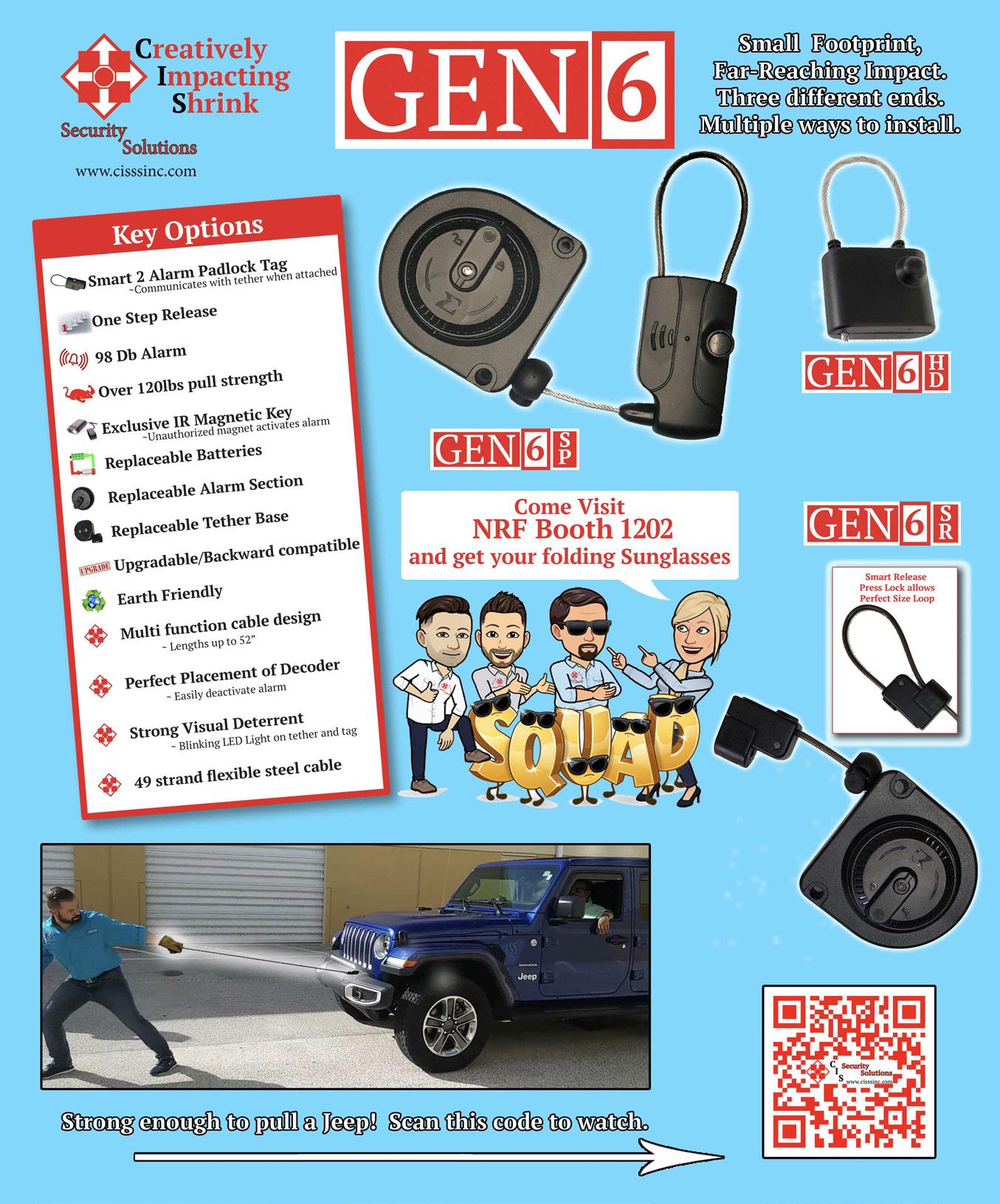

The LP Magazine Founders’ Awards offer a means to celebrate industry accomplishments on an ongoing basis, recognizing the loss prevention professionals, teams, solution providers, law enforcement partners, and others who demonstrate a stellar contribution to the profession.
The ability to influence change is a product of drive, creativity, and determination, but it also requires a unique ability to create a shared vision that others will understand, respect, support, and pursue. Each of the following recipients reflects that standard of excellence, representing the quality and spirit of leadership that makes a difference in our lives, people, and programs. Please join us in celebrating the accomplishments of our latest honorees.
“When designing your program, use the philosophy that form follows function,” says Rogers. “Select and train the right people for the right positions.”
Over a long career, when selecting future leaders, Rogers always believed in leaning toward some key personal traits:
● Integrity in what we do, how we do it, and who we are

● Curiosity, as good investigators are tactically and strategically curious by nature
● Strong and thoughtful communication skills
Rogers credits the different training experiences he endured in the military for laying the groundwork for the leader that he would become, impressing upon him the value of and need for training to succeed at the task. After flying 160 combat missions in Vietnam and serving
Executive Director of Central Investigations, CVS Health
“Looking back at my career, I feel my greatest accomplishments have been in the development of others,” says Dugan. “Transitioning from an expert to building experts is incredibly rewarding. Coaching people to raise performance and achieve their career goals has brought me the most satisfaction.”
with the National Security Agency, he left the military, eventually joining Strawbridge & Clothier as an executive management trainee. Rogers moved up the ranks quickly, taking on positions with increasing responsibility and eventually assuming the role of VP of asset protection with Target. He has remained closely tied to the industry since retiring, taking on different consulting roles and following his passion for the LP community.
Throughout his career, King has had numerous opportunities to create and staff asset protection programs; and in the process, he has always been a champion for building strong, diverse teams.
“Organizational diversity is extremely important, whether it involves diverse experience, gender, racial diversity, or age diversity,” he says. “Finding AP leaders with diverse backgrounds is critical to understanding our clients and our customers—and essential to the development of strong programs and future leaders.”
“My advice to young leaders is to be curious,” he adds. “Strive to grow in as many different ways as you possibly can. And while you have a responsibility to form your own opinions, don’t force your opinions on others. Listen, learn, and look for ways to make a difference.”

Dugan joined retail loss prevention after leaving the criminal investigations division of the US Army. He has held leadership roles with department store, catalog, pharmacy, and specialty retailers, with most of his career spent leading specialized teams that mitigate employee dishonesty, drug diversion, and organized retail crime. His contributions in ORC have led to engagement at the highest levels of the industry as well as law enforcement and government, earning him an official designation as an expert by the US Justice Department. He has also previously
served as president of the National Coalition of Law Enforcement and Retail (CLEAR).
Ben feels that resiliency—the ability to adapt, recover, and grow from professional challenges—is what sets true leaders apart. “Leadership requires a proactive mindset, fostering social support, and utilizing resources to turn obstacles into opportunities,” he says. “Retail has been through tough times in recent years, navigating through unprecedented theft and violence in the communities we serve. Great leaders carry a progressive mindset, fostering support and utilizing new innovations to drive meaningful, positive change. I strongly believe it is the responsibility of asset protection to lead the great comeback of retail.”
Dugan stresses the importance of understanding how asset protection impacts the rest of the business, and how true leaders can influence and support the success of others. “It’s critical to never lose the ability to think independently and bring unique, innovative solutions to the complex problems we face. As you advance, the more you need to focus and understand the overall strategic business impact of LP operations.” ●
siffron loss prevention systems deter theft and reduce shrink while maintaining accessibilty for customers.



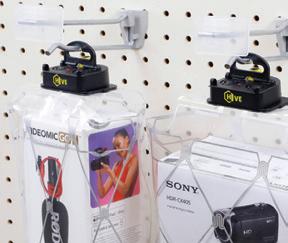

Retailers should not have to choose between protecting product and delivering a seamless shopping experience. siffron loss prevention solutions are engineered to do both.
From anti-sweep hooks and intelligent dispensers to security gates, alarmed systems, and closed-loop protection, siffron delivers layered solutions that deter theft at the shelf without disrupting the shopper journey. These systems prevent bulk removal, maintain organized and front-faced displays, and keep merchandise accessible for legitimate purchases.
The result is stronger in-stock performance, reduced shrink, and improved associate efficiency, all while preserving the open, shoppable environment today’s customers expect. Whether you need a targeted fix or a storewide strategy, siffron provides scalable solutions that adapt to your store, your category, and your level of risk.

By Lauren Fritsky
Return fraud, a perennial problem in retail, became a more persistent concern for retailers since the pandemic shifted consumer shopping online.
According to the latest data from the National Retail Federation in conjunction with Happy Returns, a UPS company, 9 percent of all returns are fraudulent. The tactics include overstated return quantity (71 percent), empty boxes or “box of rocks” (65 percent), and decoy returns, such as counterfeit items (64 percent). That last nefarious practice is particularly difficult for retailers to pinpoint for several reasons.
We talked to firms investigating counterfeit returns, companies developing technology to prevent them, and one retailer with firsthand experience of the crime to get a more comprehensive picture of the issue and how to fight it.
Counterfeit returns involve a fraudster swapping authentic products with realistic-looking fakes and then returning them for either a full refund or the legitimate products at full value. It usually involves high-value goods that are easy to replicate as an authentic-looking product, such as designer handbags and jewelry. Retailers often unknowingly accept counterfeit items and issue refunds, leading not only to financial losses but also to reputational damage if the items are put back into inventory.
Four main trends have caused a spike in counterfeit returns in recent years: 1) the quality and relative cheapness of the fakes themselves; 2) the explosion of e-commerce; 3) more generous return policies; and 4) new technology used to generate fake documents, such as receipts.
“These articles are nearly indistinguishable from the genuine ones, reaching a level of predatory accuracy that exploits unsuspecting consumers—items that would have been obvious fakes five years ago are now passing visual inspection at the return desk,” said Mike Matta, co-founder and CEO of Solink.
These hard-to-detect fakes then started circulating in online marketplaces, which “turned distribution global, sped up resale, and made it easier to sell counterfeit products at a higher price point,” said Hank Siemers, CFI, vice

president of global protection services at Tiffany & Co.
Mick Pinneke, MBA, vice president of investigations at Allied Universal Enhanced Protection Services, which investigates counterfeit return fraud, said that, from his perspective, the issue began to crop up more frequently when the pandemic hit in 2020.
“You saw several retailers expand their no-receipt return policy in the name of customer service,” he said. “In addition to that, you obviously had massive online shopping taking place.”
This pivot in return policies triggered popularity in return-for-exchange practices, Matta added. “Fraudsters are increasingly savvy enough to know that a cash refund triggers more scrutiny than an exchange, so they return a counterfeit and walk out with a genuine product, doubling their gain.”

While many consumers played by the new return rules, the shift created a breeding ground for bad actors looking to make a quick buck. “Add in digital receipts and complex return systems, and it created the perfect environment for counterfeit returns to grow quickly,” said Kevin O’Brien, executive vice president of business development at SEMM Holdings. Today, three-and-a-half years after the launch of ChatGPT, more fraudsters can also tap into technology such as AI to “generate fake receipts, purchase documentation, or images of damaged goods to collect product refunds,” said Tony D’Onofrio, president of Sensormatic Solutions.
Counterfeit fraudsters use a playbook similar to that of other organized retail crime groups. Many are based outside of the US and conduct multi-country, multi-layered operations that span from where the counterfeits are manufactured to where they are picked up and then returned. The bad actors either operate within their ORC group or hire others outside of it to help commit the crime.
“In the age of online shopping and travel, it’s easy for retail crime groups to order, purchase, or return merchandise from anywhere,” D’Onofrio said. “People can also cross state lines to purchase items or make returns. We’re also seeing organized groups coordinate across multiple store locations in the same metro area within a single day, essentially stress-testing a
retailer’s detection threshold before the system flags anything.”
Most of the counterfeit return crime begins in major coastal hubs, where criminals have access to ports, but, like other ORC, has begun trickling into the middle of the country, such as major cities with higher densities of stores.
“The cities that we have seen that have been hit the hardest have been frequently impacted, including Los Angeles/Long Beach, New York, Miami, Houston, Dallas/ Fort Worth, Chicago, Atlanta, Las Vegas, San Francisco/Bay Area, Phoenix, Toronto, Montreal, and Vancouver,” O’Brien said. “These places aren’t causing the problem—they just have the conditions that make fraud easier to scale.”
He said most counterfeit schemes follow the same pattern:
1. Buy the real product or get a valid receipt
2. Buy a counterfeit version that looks close enough to pass inspection
3. Swap the products, putting the fake one back in the original packaging
4. Return the counterfeit for a refund or gift card
5. Keep or resell the real item and repeat the process at other stores
“Organized groups scale this by rotating stores, using multiple identities, and exploiting policy inconsistencies,” he added.
Lax and inconsistent authentication protocols contribute to the issue. Return policies vary by associate, by shift, and by the manager on duty—and fraudsters keep track of this.
“They know which stores, which times, and which registers are more likely to process a return without necessary scrutiny,” Matta said. “Consistency in procedure, enforced by AI-driven technology, not just policy, is underutilized.”
O’Brien noted five of the biggest challenges with catching a counterfeit at the time of return:
1. No serial number tracking at sale or return
2. Inconsistent product inspection
3. Refunds converted to gift cards, which act like anonymous cash
4. Frequent point-of-sale overrides
5. Limited data analytics, so patterns go unnoticed
“Because counterfeits are getting better and returns look normal on paper, the fraud often hides inside regular return activity,” he said.
“People can also cross state lines to purchase items or make returns. We’re also seeing organized groups coordinate across multiple store locations in the same metro area within a single day, essentially stress-testing a retailer’s detection threshold before the system flags anything.”
—Tony D'Onofrio

Jewelry brand Tiffany & Co. has experienced attempts to return non-authentic products for a refund or store credit. It is not persistent across their business, but it is a major focus for one reason.
“If a counterfeit piece were accidentally sold to a client, the damage would be immediate and lasting,” Siemers said. “We treat every credible attempt as a serious threat to our clients, our teams, and the integrity of the brand.”
Siemers has been with Tiffany for almost thirty years, so he has “watched this build step by step.” Certain scenarios elevate Tiffany’s risk of this type of crime. The first is when they enter new markets. The second—and the more pronounced—circumstance comes with new product line launches.
“Counterfeiters are amazingly fast, and they watch launches closely, so we treat launch windows as higher exposure periods,” Siemers said. “We tighten confidentiality, and we scan the market ahead of launch for early counterfeit activity and related signals, so we can adjust controls, communication, and the store’s readiness before the product reaches full distribution.”
Siemers said the frontline poses the greatest vulnerability to counterfeits. Whether it’s general complacency, high price points, or the pressure to sell, Tiffany’s teams are trained to deliver a luxury experience, which sometimes results in softened or skipped verification steps. As a result, the jewelry brand focuses on staff’s product knowledge and trains frontline teams to spot counterfeits using a small set of key identifiers that most counterfeiters miss or cannot duplicate.
“The goal is repeatable validation, even under pressure,” he said. “We teach a consistent routine at the point of sale and at return, built around specific checks tied to our product. When an issue arises, we instruct them to pause the transaction and escalate to the appropriate experts for verification before issuing any refund or credit. We also provide talking points for the frontline staff that do not accuse the returnee but make it clear that the item is counterfeit.”

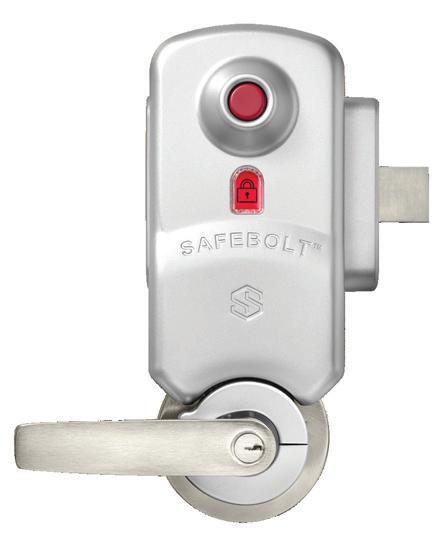
Fast, reliable, keyless instant lockdown that turns any room into a safe space for your employees and customers during threatening conditions
■ RETROFITS to EXISTING commercial lever locksets and throws a large deadbolt in under a second by pushing the red button
■ Comes with a large indicator to let those in the room know it is secured
■ Outside key entry for first responders
■ Meets all Life Safety and ADA Codes, single-motion unlocking, no special tools or actions to lock or unlock
■ Easily/quickly installs using the included metal template
®

Even for retailers who suspect a pattern of counterfeit returns at their business, proving the crime can be tough.
“The real vulnerability gap lies on the investigation side, where brand protection and retail loss prevention teams are not working as closely as they should,” Matta said. “When a counterfeit is recovered at a return desk, a retailer’s instinct is to process a refusal and move on. But that item is evidence, and the transaction record around it is a thread that can connect to a broader network.”
Law enforcement referral remains underutilized, he added, with most counterfeit return incidents absorbed as shrink rather than escalated. The cases that do get prosecuted are almost always the result of a retailer building a documented pattern, multiple incidents, cross-location data, and video evidence before engaging law enforcement.
Retailers who have experienced counterfeit return incidents can engage external companies to fully outsource investigations or augment a loss prevention team’s efforts. These groups can focus on:
● Data analysis to spot patterns in returns, overrides, and customer behavior
● Case building, including timelines, video review, and product authentication
● Mapping organized retail crime activity across multiple locations
● Policy and control reviews to find operational gaps
● Executive-level reporting to show financial impact and risk areas
Pinneke believes the return counter is not where investigating counterfeit issues begins. Rather, it’s counteracting the manufacturers of the counterfeit goods. He admits this is a tricky exercise, as some other countries don’t follow the same policies and procedures as the US in areas such as intellectual property protection and copyright infringement. In extreme cases, some of Allied’s clients establish local offices in the countries where their products are manufactured, working with local authorities and government to shut down counterfeit production.
Monitoring online activity—both on the legitimate web and the dark web, as sales activity can be found in both places—is a

“If a counterfeit piece were accidentally sold to a client, the damage would be immediate and lasting. We treat every credible attempt as a serious threat to our clients, our teams, and the integrity of the brand.”
Hank Siemers, CFI

good first step, Pinneke said. He suggests watching where your brand is mentioned and making covert purchases of your own products to determine whether they are fakes. Serializing higher-risk merchandise can also help.
“Not tracking the inventory by SKU, but tracking it by the specific item,” he said. “That helps identify whether it’s legitimate—counterfeit manufacturers can’t do this yet.”
While fraudsters increasingly use technology to commit counterfeit return fraud, technology also presents a way to combat the issue.
Platforms can use AI to work alongside LP teams to search and alert suspicious activity across camera feeds by transaction type, dollar threshold, or associate identification. This helps regional LP managers overseeing dozens of stores to quickly and more easily surface suspicious return patterns without physically being on-site. If a $400 item is returned to a retailer, for instance, it is immediately analyzed for a risk score and flagged for escalation to the loss prevention team.
“They’re watching exactly what happened at that counter, second by second,” Matta said. “Speed matters because counterfeit return fraud often happens in bursts, with multiple locations hit in a short window, often by the same crew.”
On the brand side, he is seeing more sophisticated digital fingerprinting and serialization, as well as Quick Response (QR) codes, RFID, and Near Field Communication (NFC) chips embedded in products, enabling authentication at the point of return rather than relying on visual inspection. However, adoption is uneven.
Some organizations have a dedicated AI team that helps identify groups of interest involved in counterfeit returns by analyzing up to 40,000 sources of information in its investigations. Incorporating the right investigative elements, such as appropriate evidence and documentation, is imperative for prosecuting a case.
“I might have 1,000 sources of data on something, and we can use AI to bring that down to maybe 100 that are actionable, that are reviewed by a human that understands the
investigative processes,” said Miquel Martinez, VP of strategic sales at Pinkerton. “To me, intelligence is the key to success, because you understand the trends, the targeted items, the people, or groups of interest. If you don’t have that, you don’t know where you’re going.”
Other technology gives retailers insight into item-level inventory. Embedded RFID tags are designed to remain with the item after the sale so that they can be electronically validated as merchandise in that retailer’s inventory—even if purchased at a different store location or online—at the time of return.
“With this data and insight, retailers can both prevent fraudulent returns and gather critical data on theft patterns to inform criminal activity reports and stop theft before it happens,” D’Onofrio said.
Striking the right balance between combating fraud and theft and delivering satisfactory customer service has long been a challenge for retailers as criminals turn to more sophisticated tactics.
While fraudsters increasingly use technology to commit counterfeit return fraud, technology also presents a way to combat the issue.
Counterfeit returns present an even more complex dilemma, as most shoppers want to get in and out of the store quickly if making a legitimate return. But some of the deterrents stores put in place can also deter consumers from continuing to shop there. According to data from Happy Returns, 71 percent of shoppers say a poor return experience will stop them from shopping for certain brands again.
“You have return policies that are designed for speed and customer satisfaction; they’re not designed for what I’ll call forensic verification,” Pinneke
said. “The associate working in the store that’s having a customer come and want to conduct a return is probably being measured on both experience and speed. That’s never a good thing when you’re talking about really good counterfeits. If the frontline associates aren’t capable of fully authenticating that product and they’re being pressured to do so in a very quick turnaround, that’s a recipe for disaster.”
He said that delaying a refund is one way to stay diligent while also maintaining an adequate customer experience. If an item exceeds a certain price threshold, an associate can say they will inspect it and, if it meets the criteria, return the funds within a specified time period. This enables due diligence to ensure the product is legitimate and moves the transaction away from the returns counter, avoiding a poor returns experience for other customers in line.
The ultimate goal is not to make returns difficult but to make verification consistent and defensible, said Siemers.
“Strong controls and a premium client experience must coexist,” he said. “When
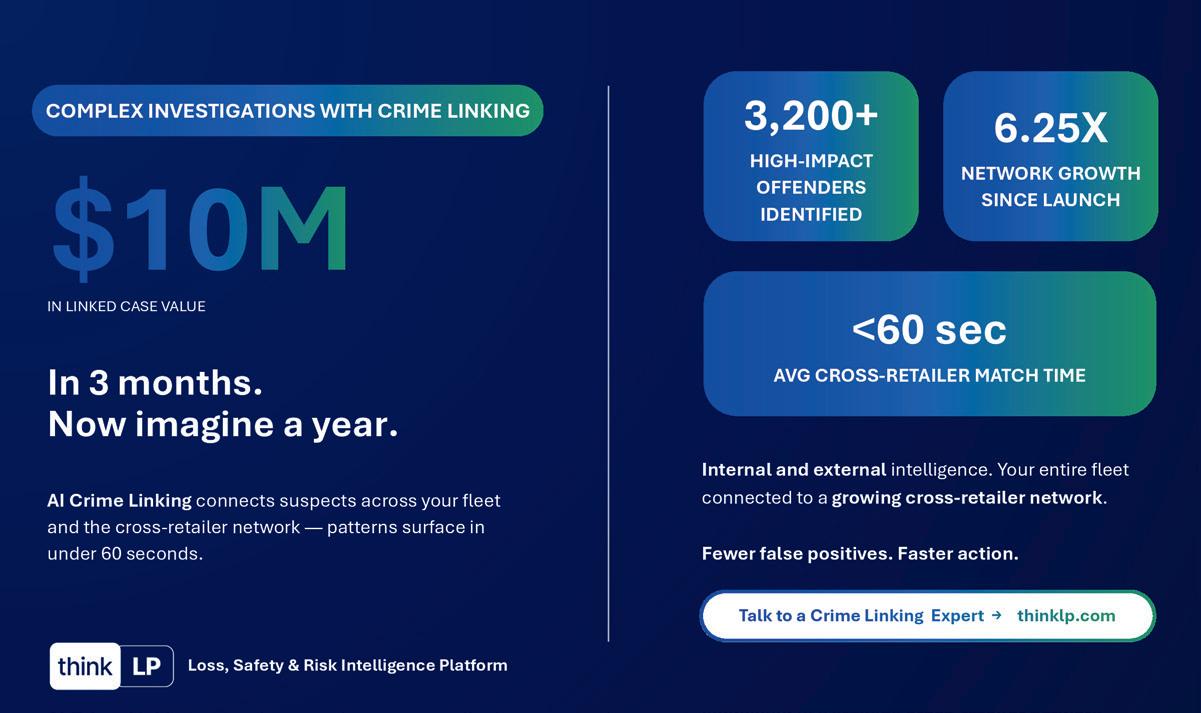
teams have a clear script and an escalation path, they stay professional, and the client experience stays intact. Treat counterfeit refunding like organized crime. Monitor activity and share patterns fast. Harp on policy, training, and data, and you cut both loss and repeat attempts.”
We asked some of our sources for closing thoughts on the most proactive ways retailers can prevent counterfeit returns while maintaining customer satisfaction:

D’Onofrio:
“Prioritize comprehensive employee training on products and consumer behavior. Knowing and identifying the unique qualities of genuine products can help associates detect counterfeit merchandise.
Expand RFID systems to track merchandise from source to store. This can help identify shrink drivers within the supply chain, providing a more precise picture of how losses occur and informing strategies and key focus areas. Embrace embedded labels. Hard tags, merchandise tags, stickers, and other identifiers can all be removed after purchase or theft. Integrating EPCs and RFID into merchandise—by sewing it into a handbag’s lining at the point of manufacturing, for example—helps retailers identify and verify product origins to block fraudulent returns.”


Martinez:
“Strengthen the return policies and really train people on what to look for, and the secondary inspection from a manager is a quick win for them.”
Matta:
“The technology stack that leading retailers are building around this has a few key layers. Video AI intelligence tied to POS is foundational; it creates an evidence trail that didn’t exist before. Beyond video, the retailers doing this best are layering in return analytics and connecting those dots.”

“Embrace embedded labels. Hard tags, merchandise tags, stickers, and other identifiers can all be removed after purchase or theft.”
—Tony D'Onofrio
O’Brien:
“Refund original payment only—limiting gift card refunds removes a key monetization method. Capture serial numbers at both the sale and the return for high-risk categories. Use analytics—not just store-level judgment— to flag unusual return patterns. Retailers that succeed combine strong policies, serialization, analytics, ORC case development, and consistent execution.”

Pinneke:
“Most of your sophisticated LP programs aren’t just reviewing a single return; they’re analyzing customer behavior and patterns. If someone makes a return and you see that they’ve had no sales in the last year, but this is the second bag they’re returning, that’s an immediate flag. The more data analysis and rigor they’re putting around behavior at the customer level, the better—especially when you’re talking about high-value items.”

Siemers, CFI:
“Connect data across all locations and distribution channels. Offenders are very mobile, so shared visibility into return activity and customer behavior patterns helps you spot repeat attempts early and respond consistently. Second, train for behavior and process, not only product. Frontline teams need to recognize that urgency, distraction, and pressure are all tools in offenders’ hands. Teach them to slow the transaction professionally, control the sale, bring in a second set of eyes, and document the attempt.” ●

Lauren Fritsky is a seasoned journalist and content marketer whose work has appeared on CNN, AOL, USA TODAY, Huffington Post, Travel+Leisure, Entrepreneur, Adweek, and many other websites. She’s spent the last eleven years writing about IT, adtech, martech, retail, and e-commerce for global companies. Lauren earned a bachelor’s degree in English from La Salle University in Philadelphia. Contact her at Lauren.fritsky@gmail.com.

Frank Panebianco is vice president of sales and marketing for Checkpoint Systems North America, Intelligent Retail Solutions Division, where he leads commercial strategy and customer engagement for advanced retail technology solutions. With more than thirty years of leadership experience and over twenty years at Checkpoint, Frank has held senior roles in sales and product management, giving him a comprehensive, end-to-end perspective on the retail ecosystem.

LPM: What are the benefits for LP professionals when implementing EAS Intel?
Frank Panebianco: EAS Intel allows LP professionals to know what is being stolen, when the theft is happening, where it is happening, and how much is being stolen—all in real time. This is something the LP industry has wanted for a long time.
Checkpoint Systems ItemOptix™ EAS Intel elevates loss prevention from a necessary cost into a measurable, strategic investment. By combining ItemOptix RFID software with RFID-enabled EAS hardware and item-level intelligence, EAS Intel delivers clarity retailers have never had before— turning alarm events into actionable insight that directly improves profitability.
LPM: How can the insights from EAS Intel help LP teams be more proactive in their theft prevention strategies?
Panebianco: As one of the global leaders in RFID technology, Checkpoint and Alphas’ holistic LP suite of offerings work together and report into cloud-based software to help get ahead of theft and protect goods and revenue. With this data, you can see which items are most frequently stolen, along with when and where these thefts occur. Instead of reacting to alarms with limited context, retailers gain precise visibility into which products are targeted, where theft is occurring, and when risk is highest. This intelligence enables focused protection of the right items at the right locations, reducing shrink and lifting sales.
LPM: What are the key metrics from EAS Intel that are most valuable for LP professionals when making decisions for staffing, product/store layout, or enforcement decisions?
Panebianco: When you have the data on what, when, where, and how much is being stolen, you can now adequately allocate staffing, know how best to adjust store layout for product visibility and protection, and when it is best to scale enforcement
strategies. It’s not just a hunch but data-based decision-making and better budget allocation. Retailers that rely solely on traditional EAS operate with limited visibility, while their competitors leverage item-level intelligence to better protect margins, optimize inventory availability, and respond faster to organized retail crime and high-theft events.
LPM: How can integrating EAS Intel with LP tools and systems such as CCTV, POS data, and case management tools improve overall shrink reduction?
Panebianco: Integrating EAS Intel with other LP systems can significantly speed up shrink reduction. When integrating CCTV, you can now add the “who” to the “what, when, where, and how much.” Combined with POS data and exporting all this forensic data into case management systems allows for higher success in the identification of ORC and prosecution. ItemOptix EAS Intel is not about installing more security—it’s about investing in better decisionmaking. Retailers that move forward gain a measurable advantage; those that don’t risk paying more for shrink, inefficiency, and missed insight every single day.
LPM: How does EAS Intel reporting demonstrate ROI and operational impact to executive leadership?
Panebianco: Over time, with historical data, you can see the reduction in loss across multiple segments. This reduction is based on clear visibility to hightheft products, focused LP strategies, and solid prosecution cases achieved with Item Optix data. You can look at the geography, product category, or even individual item-level detail. The ROI can be seen, proven, and then replicated across sites and locations, and products. The return is meaningful and practical. Retailers consistently see improved recovery of high-risk merchandise and stronger alignment between loss prevention, merchandising, and operations. It truly is a scalable ROI! ●

With this data, you can see which items are most frequently stolen, along with when and where these thefts occur.

By Cory Lowe, PhD
There is no shortage of innovation in loss prevention, security, or retail. New technologies, strategies, and ways of operating are constantly being introduced to address theft, violence, and operational risk. Yet at the LPRC, we regularly speak with leaders who cannot get approval for their initiatives, much less fully implement strategies that both they, and research, suggest will benefit the organization.
This is the most disheartening part: these initiatives do not fail because they are bad ideas or lack evidence. They stall and ultimately fail because those driving them do not account for how decisions are actually made within organizations.
Many assume that having a good idea that delivers value is sufficient. While logical, this is not how organizations typically operate. LP initiatives often have broad implications, introducing risk, uncertainty, and new dependencies (conditions that must be met for success) especially when they involve unproven approaches. All of this creates additional work for stakeholders who already have competing priorities. In other words, your

An initiative that benefits one part of the business often creates real or perceived risks and work for another, and research consistently reinforces this.
In large retail organizations, most meaningful initiatives require coordination across multiple functions, such as legal, IT, HR, operations, finance, and others. Each of these groups operates with different priorities, incentives, and definitions of success. For example, legal is focused on avoiding and mitigating legal risk, IT on system stability and security, and operations on execution and customer service.
An initiative that benefits one part of the business often creates real or perceived risks and work for another, and research consistently reinforces this. In their Harvard Business Review article “Why Great Innovations Fail to Scale,” Hill, Tedards, and Wild explain that innovation breaks down at the point where different functions must work together, not the
Many assume that having a good idea that delivers value is sufficient. While logical, this is not how organizations typically operate.
brilliant idea is often someone else’s burden in terms of risk, time, and effort.
In this article, we review the LPRC PISCES Model for obtaining stakeholder buy-in, which focuses on understanding stakeholders, identifying their priorities and concerns, building champions and coalitions, and positioning initiatives for success.
At the LPRC, we often talk about modifying risk, effort, and reward to influence people’s behavior. In the case of getting buy-in for an initiative, LP leaders must work to reduce the real or perceived time, effort, and risk associated with an initiative, as well as increase the perceived benefits to the organization.
idea stage. Each group brings its own constraints, incentives, and risk concerns. If you can achieve broad alignment, you are still not in the clear. Research on “collaboration drag” has found that nearly 80 percent of leaders report that crossfunctional efforts are slowed by excessive coordination, unclear decision-making authority, and the need to continuously secure stakeholder buy-in. The more complex the initiative, the more likely it is to stall because of organizational issues, not necessarily the merits of the idea.
One of the most important things to understand about the success of an initiative is that it does not come down simply to the feasibility, permissibility, or

“value” of a project or initiative—it must also be acceptable to the organization. Organizational acceptability is shaped by whether there is internal trust among the involved functions; the ability of an organization to sustainably govern and manage the effort in the long-run; any reputational risk associated with the project or program; alignment with organizational values; and other things, like executive risk tolerance.
This is especially true for many of the most intriguing, promising, and buzzworthy technologies like AI, computer vision analytics, or biometrics, where perceived risk can outweigh the likely benefits. As a result, strong ideas do not win because they are correct. They win when stakeholders formally and informally align around both the value and the acceptable level of risk.
The LPRC PISCES Model was developed to address this exact challenge. It is a structured, research-informed approach for obtaining and maintaining stakeholder buy-in in complex organizations.
PISCES is an acronym and stands for:
P — Profiling Stakeholders and Aligning Incentives
I — Identifying and Proactively Addressing Risk
S — Shaping the Narrative
C — Co-Designing Solutions
E — Engaging Champions and Building Coalitions
S — Starting Small, then Institutionalizing
At its core, the model is not about designing better solutions; it is about navigating the process by which decisions are made within an enterprise.
The strength of the PISCES Model is that each element directly addresses a known failure point identified in organizational and innovation research.
The strength of the PISCES Model is that each element directly addresses a known failure point identified in organizational and innovation research.
While it is essential to understand who has formal authority, appealing to formal authority is often the final domino in a sequence, not the first and greatest focus. People often have this backward and start by focusing on appealing to those with formal authority on merits unique to LP. This strategy neglects to consider others and their objectives and objections.
Therefore, in addition to formal authority, LP leaders need to consider who has informal influence—who else’s opinion will be considered and who is likely to challenge the proposal. Research on innovation and collaboration shows the importance of identifying and engaging the right partners early; without this, misalignment emerges later and is much harder to resolve. Similarly, successful leaders tailor their approach to the priorities and motivations of decision-makers.
To do this, you must first profile stakeholders and align incentives—that is, identify all the individuals and parts of the business involved in the development, implementation, or management of the initiative. Then identify what “makes them tick,” including performance metrics, values, incentives, and the nature of their work. This allows you to tailor the proposal to address their concerns and potentially highlight benefits to them, reducing hurdles and questions.
It is not enough to focus on what drives stakeholders’ incentives and values; you must also consider the risks they are trying to avoid or mitigate. People are not just risk-aware— they are risk-averse, meaning they actively work to avoid and reduce risk. More importantly, different business functions are concerned with, and less
tolerant of, different types of risks due to risk asymmetry. For example, a new biometric analytic may raise concerns about legal liability, added complexity may create risk of system failure or downtime for IT, and human resources may worry about employee backlash. Research on change and innovation shows that resistance is often driven by perceived risk, not disagreement with the goal. In a case study on AI adoption at Pernod Ricard, employees initially resisted new tools not because they doubted their value, but because they feared loss of control and accountability. Adoption increased only after the company reduced perceived risk by adjusting incentives, providing support, and demonstrating outcomes.
others throughout the business. To you, your license plate recognition initiative might seem like a great way to identify known threats to people and property and intervene as early as possible, as well as to more effectively and efficiently conduct investigations. However, to IT, it looks like an implementation headache; and to compliance it might look like regulatory risk exposure.
Research on influencing senior leaders shows that framing is one of the most critical factors in gaining buy-in. In their article, “Get the Boss to Buy In,” Ashford and Detert found that successful leaders tailor their message to align with organizational priorities and clearly connect their ideas to business outcomes.
The implication is that it is not sufficient to simply “present the solution” and let its merits (from your perspective) do the work. Rather, you need to explicitly identify the merits of the proposal to your partners in the business (from their perspective). You need to speak their language to show that you are concerned about their concerns, and that your proposal is not working against their concerns.
You already know what is meaningful to you, and if you are the one proposing the initiative, you do not need convincing—your job is to convince others.
The lesson is clear that risk must be addressed early, explicitly, and from the perspective of key stakeholders. Profiling stakeholders at the outset helps identify who they are and what risks concern them most. But identifying risks is not enough; you must also address them so that, when discussing the initiative, stakeholders understand that you recognize their concerns and are working to protect their interests.
Because of the differences in incentives, values, perceived risks, and other things, the same initiative will be interpreted differently according to the audience. LP leaders need to keep this in mind as they are engaging with
Many initiatives fail because stakeholders are brought in too late and are asked to contribute to a project for which they were not consulted or they did not help create. By profiling stakeholders and identifying and addressing the risks, you can ensure they are at least consulted. But, going one step further, you may want to engage some partners in the development of the solution and the associated processes and plans.
Research on strategy execution reinforces this point. Studies show that strategies developed in isolation by leadership teams or external consultants often fail because the people responsible for execution were
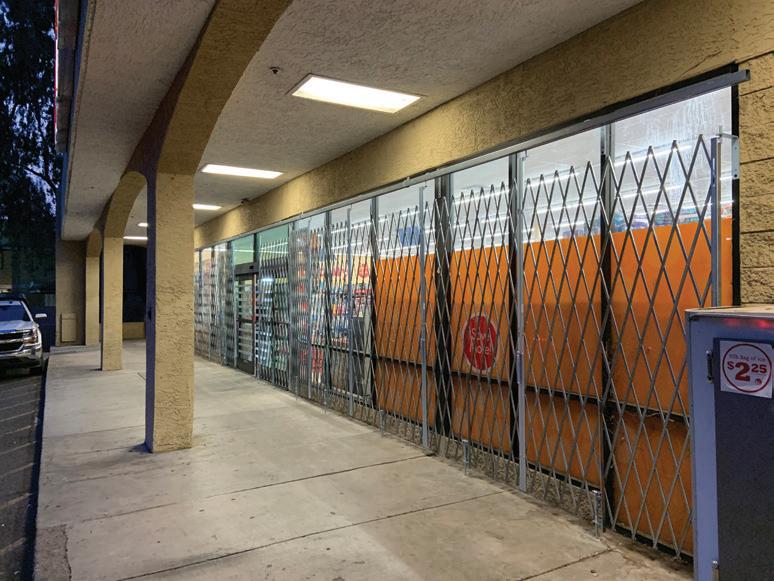
AFTER HOURS PROTECTION
Secure your perimeter and deter unauthorized access
EVERYTHING
From storefront gates to portable barriers and custom builds. LPS delivers complete loss prevention solutions designed for real-world retail environments.
PROTECT WHAT MATTERS

DAYTIME CONTROL
Manage access and protect inventory where you need it most.
not involved in shaping them. In contrast, organizations that involve stakeholders early through discussion and collaboration are more likely to succeed.
Co-design does three critical things. First, being part of the design creates a sense of ownership and meaningful contribution to the initiative. Second, it enables organizations to identify obstacles and opportunities early—for example, you might realize there is a
initiative. For example, bootleggers and Baptists might both support bans on alcohol for very different reasons— the Baptists for moral reasons, and the bootleggers to eliminate legal competition (but sometimes they are one and the same).
This research also highlights leaders who build trust, translate across functions, and create shared commitment. These individuals
Your strong ideas do not succeed in an organization because they are right or strong from your perspective; they succeed because they are right and strong from many perspectives within the organization.
technical challenge to implementation, but you might also discover that there are additional benefits to the organization (and you should always be on the lookout for additional value).
By creating a sense of ownership and identifying obstacles and opportunities early, you have the opportunity to shift people in the business from critics to contributors.
As discussed earlier, formal authority is rarely sufficient for ensuring the successful and sustainable implementation of an initiative. Informal influence also plays a critical role. In many organizations, respected peers and colleagues of the individual with formal authority can shape decisions. IT leaders can slow things down or speed things up depending on whether they support an initiative, and a trusted adviser can make all the difference by accelerating approval. Stakeholders who support an initiative are champions.
However, the individual influence of champions is often insufficient to gain acceptance and approval. Research on organizational influence shows that successful initiatives are supported by coalitions—groups of individuals driven by a shared purpose or by different objectives that align in support of the
generate broad support and reduce resistance. Ultimately, successful LP leaders identify credible insiders (those with informal influence), build coalitions among those with aligned interests, and create momentum for the formal process.
Large-scale initiatives create largescale risk. Information is always imperfect—this is at the heart of bounded rationality. To make a perfect decision, you would need infinite resources to identify everything that could go wrong and mitigate those risks while maximizing all the benefits of an initiative.
In reality, no one has access to infinite time and resources, so decisions are made with imperfect information. We often see how imperfect that information is during implementation—when the “warts” of an initiative that looked great on paper begin to emerge.
Starting small allows organizations to test assumptions, generate evidence, reduce uncertainty about outcomes and impact, and build confidence. This approach is strongly supported by research on innovation and transformation, which shows that organizations using pilots, experiments, and phased rollouts are more successful in driving adoption.
The PISCES Model provides a structured way to move from idea to implementation in complex environments. It recognizes that decisions are shaped by the real and perceived incentives and risks of stakeholders throughout an organization. It recognizes that influence and formal authority are two very different things that are often tightly intertwined. It recognizes that adoption requires involvement and support among stakeholders. Most importantly, it shapes the focus from business case development to organizational navigation.
In many cases, following this model will turn the process on its head. A common mistake we see is that people begin with a “just the facts” approach, and focus their business case on the benefits of the initiative from the perspective of LP or security. This process turns that on its head and encourages leaders to identify all the stakeholders and approach the business case from their perspectives, and asking and answering: what are their objectives, what is their risk exposure, and what is meaningful to them. You already know what is meaningful to you, and if you are the one proposing the initiative, you do not need convincing—your job is to convince others.
Often, the greatest challenge in retail LP is not just figuring out what to do: it is getting it done across functions and stakeholders, with real-world constraints. Your strong ideas do not succeed in an organization because they are right or strong from your perspective; they succeed because they are right and strong from many perspectives within the organization. The LPRC PISCES Model offers a practical, research-informed way to achieve that alignment. l

Cory Lowe, PhD, is the director of research at the Loss Prevention Research Council. He received his doctorate in criminology in 2020 from the University of Florida where he specialized in crime and delinquency prevention, communities and crime, criminological theory, and research methods and data analysis. Lowe has published in peer-reviewed journals and other scholarly publications on the causes of crime, crime and delinquency prevention, and the factors associated with substance use and delinquency. He can be reached at Cory@LPresearch.org.
Smash-and-grab incidents continue to challenge retailers, driving demand for solutions like DefenseLite® Pro that delay entry, protect assets, and maintain operations.
Retailers are navigating an increasingly complex retail security environment as organized retail crime (ORC) and smash-andgrab incidents continue to challenge store operations. As a result, many are turning to retail security glass solutions to strengthen vulnerable entry points. According to the National Retail Federation, nearly 70 percent of retailers report equal or increased concern about ORC, with many citing smash-and-grab events as an ongoing threat.
While overall retail crime trends fluctuate year-over-year, forced-entry tactics remain consistent. Offenders target glass doors and storefront windows because they provide the fastest path inside. In many cases, entry occurs within seconds, making glass one of the most critical vulnerabilities in a retail environment.
Modern retail spaces prioritize visibility, daylighting, and open design. However, these features create exposure during forced-entry attempts. Smash-and-grab incidents rely on speed, and traditional glazing systems cannot withstand repeated impact.
Loss prevention professionals and facility managers must focus on delaying entry, not just preventing it. Even short delays can disrupt an attack, trigger alarms, and increase the likelihood of abandonment. This shift has increased interest in retail security glass as a practical, targeted solution.
DefenseLite® Pro is a retrofit retail security glass system designed to reinforce existing commercial windows and door glass. Installers mount the system over the existing glazing, creating a secondary barrier that absorbs
impact and retains broken glass during forced-entry attempts.
Retailers can upgrade security without replacing existing storefront systems. Each installation is customized to meet field conditions, supporting consistent performance across building types.
DefenseLite® Pro uses thicker polycarbonate panels and a heavy-duty extrusion system secured to existing frames. This design disperses impact energy, making it significantly harder to create an opening large enough for entry.
In smash-and-grab scenarios, offenders rely on quick glass breakage. DefenseLite® Pro disrupts this tactic. Instead of shattering and clearing, the system holds the barrier in place after repeated strikes.
Key performance characteristics include:
l Energy Absorption: Polycarbonate panels disperse impact forces
l Glass Protection: Over-mount system protects the primary glazing
l Delayed Breach: Multiple strike attempts increase time to entry
l Forced Entry Protection: Provides 24/7 protection for retailers
These features position retail security glass as an effective deterrent against opportunistic crime.
Retailers need solutions that enhance security without disrupting operations or customer experience. DefenseLite® Pro meets these requirements:
l Minimal Disruption: Crews complete installation during off-hours
l Maintained Transparency: Clear panels preserve visibility and merchandising
l Aesthetic Continuity: The system integrates with the existing storefront design
l Durability: Engineered components perform in high-traffic environments
A patented venting system also manages moisture and supports long-term system integrity.
Multi-location retailers require consistent security strategies. Retrofit retail security glass systems like DefenseLite® Pro support scalable deployment without major capital investment.
Through nationwide access to installation and support, Impact Security helps retailers implement security upgrades across multiple locations with a unified approach.
Glass is no longer just a design feature—it is a frontline security consideration. Reinforcing storefront openings with DefenseLite® Pro provides a practical way to delay intrusion, reduce loss, and improve resilience.
Loss prevention teams should evaluate vulnerable entry points and align solutions with broader security strategies. To learn more or request a threat level assessment, visit www.defenselite.com or email info@defenselite.com.


PHR, SHRM-CP, LPC, CHS-III
Mulhall is a senior director of asset protection and risk services with more than forty years of experience in the restaurant industry. He currently leads security and risk initiatives across two brands and is passionate about developing leaders who protect both people and business through accountability, awareness, and servicedriven leadership.

In the restaurant business, we talk a lot about service, but we don’t always talk about responsibility. Speed, execution, and guest experience often take center stage. We focus on throughput, accuracy, and the customer experience—and rightfully so. In that focus, something critical can get overlooked: the responsibility that comes with serving others.
Protection is often viewed through a narrow lens. Cameras, alarms, policies, and procedures dominate the conversation. While those tools are important, they are not the foundation of protection; they are support systems. Protection starts with leadership.
Over the course of my career, I’ve come to view protection differently. It’s not just about preventing loss or responding to incidents; it’s also about protecting both sides of the counter, including the people serving and the people being served. If we fail one side, we fail both.
This is what I call protecting both sides of the counter.

Protection is not limited to internal accountability. It extends to every guest who walks through our doors.
This perspective changes how we lead. It moves protection out of the realm of compliance and into the realm of responsibility. It challenges leaders to think beyond policies and consider the real human impact of their decisions. Because every decision we make— whether we recognize it or not—affects someone else.
I once faced a situation involving an employee I had known for more than twenty-five years. This was someone respected, dependable, and always willing to step in and help when needed. Over time, we had built a strong professional relationship.
Then that individual became the subject of a serious investigation.
My team brought the situation to my attention, aware of the relationship I had with him. In that moment, the decision wasn’t about facts—it was about leadership. Would I allow personal history to influence the outcome?
Or would I uphold the same standard expected of everyone else?
I made it clear: treat him like anyone else. Let the facts determine the outcome.
The facts did just that. When confronted, he acknowledged his actions and referenced our longstanding relationship. My response was direct and unwavering: accountability applies to everyone, without exception. I would not compromise that standard. He was terminated. That decision wasn’t about one individual; it was about every employee who depended on a consistent, fair, and safe environment. The moment we make exceptions, our standards lose meaning. Leadership requires the courage to do what is right, especially when it is difficult.
Protection is often viewed through a narrow lens. Cameras, alarms, policies, and procedures dominate the conversation. While those tools are important, they are not the foundation of protection; they are support systems. Protection starts with leadership.
Protection is not limited to internal accountability. It extends to every guest who walks through our doors.
I received a call from a customer who was visibly distressed. She had been accused of a crime and felt that no one at the restaurant was willing to listen or help her prove her innocence. It would have been easy to dismiss the situation or pass it along, but something didn’t feel right.
I asked a series of questions about time, location, and vehicle description, and reviewed the available video. What I found was clear: she was exactly where she said she was, doing exactly what she described. The accusation was
unfounded; we shared the information with the appropriate parties and were able to establish her innocence.
That moment reinforced something important: protection extends beyond defending the business. It means standing up for what is right for all parties, even when it requires additional effort. When we choose not to act, we risk allowing harm to occur, not just to our brand, but to individuals who place their trust in us.
Most major incidents do not start as major events. They start as small issues that go unaddressed:
l A safety hazard overlooked
l A policy ignored
l A behavior dismissed
These moments are often seen as minor, but they are not. They are indicators; they signal where attention is needed and where leadership must step in.
The difference between prevention and reaction often comes down to whether someone chose to act early. Leaders set the tone. What we tolerate becomes the standard. Nobody ignores a robbery—but we ignore the things that lead to one.
Protection is not a department. It is not a checklist. It is not a piece of equipment. It is a leadership responsibility. It requires awareness: seeing what others might overlook. It requires decision-making: acting when it
It requires awareness: seeing what others might overlook. It requires decision-making: acting when it would be easier not to. It requires accountability: holding the line, regardless of circumstance. And above all, it requires consistency.
would be easier not to. It requires accountability: holding the line, regardless of circumstance. And above all, it requires consistency.
Because every decision we make is greater than ourselves. It impacts our teams, our customers, and the environment we create.
That is the standard we are called to uphold. At the end of the day, the role we play extends far beyond operations. It is not just about running a successful restaurant; it is about protecting the people within it.
Protecting those who place their trust in us is a serious responsibility, one that cannot be taken lightly and requires a true servant’s heart. l
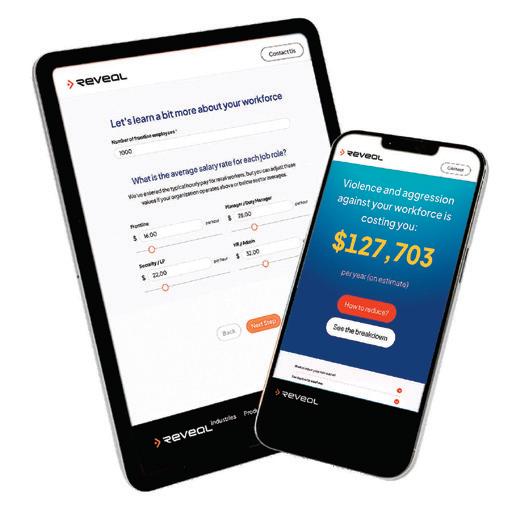

Protection is not a department. It is not a checklist. It is not a piece of equipment. It is a leadership responsibility.


J.T. Manoushagian
Manoushagian is a recently retired police chief from a metropolitan law enforcement agency in North Texas. With more than two decades of public safety experience, he is a strong advocate for collaborative policing and public-private partnerships. Chief Manoushagian is known for his strategic approach to crime prevention and his leadership in forging innovative alliances between law enforcement and the retail sector. In retirement, Chief Manoushagian serves as a public safety executive advisor with one of the nation’s top public sector SaaS companies.

Retail crime is evolving. It’s more organized, more aggressive, and in many cases, more frequent. At the same time, law enforcement agencies across the country are operating with limited staffing and competing priorities.
In that environment, strong partnerships between LP professionals and police departments aren’t a luxury; they’re a force multiplier.
But here’s the truth: trust between LP and law enforcement isn’t built during a 911 call; it’s built long before that call is ever made. As a police chief, I’ve seen the difference between transactional relationships and true partnerships. The difference isn’t personality, it isn’t policy—it’s behavior.
If you want to build trust with your local police department, focus on three things:

Small gestures matter. In policing culture, recognition carries weight.
If you want to be treated like a partner, act like one first.
Let’s start with the most important principle: we share the same goal—safer stores, safer employees, and safer communities. Neither side can fully succeed without the other.
From the policing side, we respond differently to partners who approach us as teammates rather than service providers. When the interaction feels like “we called—now it’s your problem,” trust erodes. When it feels like “how do we solve this together?” trust grows.
Organizational trust research consistently shows that perceived shared goals significantly increase cooperation and long-term collaboration. The classic model developed by Mayer, Davis, and Schoorman identifies ability, integrity, and benevolence as the core components of trust. A team mentality signals all three.
You can operationalize this immediately:
l Introduce yourself to patrol supervisors or detectives before you need them.
l Share trend data periodically—not just incident reports.
l Let them know what you’re seeing across locations.
l Thank officers when they do strong work and copy their supervisors when appropriate.
Small gestures matter. In policing culture, recognition carries weight. If you want to be treated like a partner, act like one first.
This separates good partnerships from great ones. After a significant case, ask a simple question: “What could we have done better to make that easier for you?” It’s a powerful moment.
Let’s start with the most important principle: we share the same goal—safer stores, safer employees, and safer communities. Neither side can fully succeed without the other.
Research in organizational psychology shows that feedback-seeking behavior increases perceptions of competence and trustworthiness. Leaders who actively invite critique are viewed as more credible, not less. Similarly, research on psychological safety by Amy Edmondson demonstrates that environments where feedback is welcomed outperform those where it is avoided. In plain terms: vulnerability builds trust.
From a police chief’s perspective, nothing signals maturity more than a partner who says, “Help us improve.”
Here’s how to make it practical:
l After an arrest or major case, call or email the responding officer or detective.
l Ask whether your documentation was complete.
l Ask whether your video exports were usable.
l Ask whether anything slowed the process down.
l Then—and this is critical—adjust your internal checklist accordingly.
Over time, you will develop a case preparation process that aligns precisely with what your local agency needs.
That alignment reduces friction. Reduced friction builds confidence, confidence builds trust, and trust leads to stronger collaboration on the next call.
If you really want to build trust, make your partner’s job easier than they expect. One of the greatest pain points in retail theft cases isn’t the crime itself, it’s logistics, incomplete statements, disorganized evidence, unlabeled video files, missing receipts, and unclear timelines. None of this is malicious, it’s just operational friction. But friction slows cases down, and slow cases are less likely to result in strong outcomes.
Research on interorganizational collaboration consistently shows that perceived competence and reliability are foundational pillars of trust. When one partner demonstrates consistent preparation and professionalism, the other partner becomes more willing to invest time and resources. So, what does “above and beyond” look like?
l Prepare a complete case packet before officers arrive.
l Label video files with clear timestamps and suspect descriptors.
l Provide printed or digital receipts tied directly to the incident.
l Include a concise timeline of events.
l Anticipate evidentiary requirements rather than waiting to be asked.
Get very good at the administrative side of your work. It may not be the most exciting part of LP, but from the law enforcement perspective, it’s often the difference between
a case that moves forward and one that stalls. When officers know that your store consistently provides clean, organized, court-ready documentation, your calls carry weight. Detectives prioritize reliable partners; professionalism builds credibility, and credibility builds trust.
Trust isn’t built in a single interaction; it’s built through consistency.
Research on procedural justice, including work by Tom R. Tyler, shows that people and organizations are more likely to cooperate when they perceive fairness, respect, and shared purpose. That applies just as much to LP and law enforcement relationships as it does to community interactions.
When LP professionals:
l Approach law enforcement as teammates
l Invite and act on feedback
l Reduce operational friction through preparation
They move the relationship from transactional to trusted.
And trusted partnerships produce better outcomes— faster responses, stronger cases, safer employees, and ultimately safer communities.
From where I sit as a police chief, I can tell you this: agencies remember the partners who make collaboration easy, professional, and respectful. If you’re looking to strengthen your relationship with your local police department, don’t wait for the next incident.
Make the call this week. Introduce yourself, ask for feedback, and tighten your process. Trust is built in the margins, and it compounds over time. l

Get very good at the administrative side of your work. It may not be the most exciting part of LP, but from the law enforcement perspective, it’s often the difference between a case that moves forward and one that stalls.



Meehan is retail technology editor for LP Magazine as well as CEO of CONTROLTEK. Previously, Meehan was director of technology and investigations with Bloomingdale’s, where he was responsible for physical security, internal investigations, and systems and data analytics. He currently serves as the chair of the Loss Prevention Research Council’s (LPRC) Innovations Working Group. Meehan recently published his first book titled Evolution of Retail Asset Protection: Protecting Your Profit in a Digital Age. He can be reached at TomM@LossPreventionMedia.com.

Istarted my career twenty-nine years ago, and thought it would be fitting to write about the evolution of technology for this 25th anniversary edition. If you started your career in the ‘90s like I did, you probably worked in a cramped, dimly lit office. If you had any tech capability at all, or if you were fortunate, you were in a department store environment with pan-tilt-zoom (PTZ) cameras or a “mouse track” camera system and a whole bank of small monitors.

The first major shift was the replacement of VHS tapes by digital video recorders (DVRs). This was a revolutionary advancement in investigations.
You used the same VCR tapes over and over again. If you were lucky, that VHS tape could be used as evidence; often, it was a grainy, lined video that was barely perceptible. You had to have a strict policy for pulling tapes in and out, and “covert” cameras often consisted of a large camera duct-taped to a ceiling tile with a VCR strategically placed nearby and a very long extension cord. So much for building codes.
Today, in 2026, that same office size likely manages a fleet of stores. In many cases, your office has become a tablet or a virtual command center receiving real- time alerts on your cell phone. Those alerts can be as specific as behavioral cues at a self-checkout or exception- based reporting. In some cases, AI now has the potential to identify deviant behavior before it actually occurs. As we read this 25th anniversary edition of Loss Prevention Magazine and reflect on a quarter- century of innovation, it is clear the industry has moved from “behind the scenes cops and robbers” to the center of the boardroom.
Once we realized the year 2000 wasn’t the end of the world, it became the “turn of the millenium.” Retail security was largely “catch and release” and very handson. Electronic article surveillance (EAS) was in its heyday; many of us remember the various versions of EAS towers and the struggle of deactivating tags, or the chaos when we didn’t. It wasn’t perfect, but those early systems
laid the groundwork for the smarter, more connected technologies we rely on today.
The first major shift was the replacement of VHS tapes by digital video recorders (DVRs). This was a revolutionary advancement in investigations. By the mid-2000s, IP cameras began to replace analog ones, turning legacy security cameras into the first version of digital data capture devices. Simultaneously, we saw the birth of “source tagging,” where manufacturers began embedding EAS sensors directly into products, shifting the labor burden away from the stores.
LP professionals quickly realized that knowing exactly what was on the shelf was vital to understanding how loss was occurring.
The 2010s were defined by the early stages of the Internet of Things (IoT). No technology better represented this in a retail setting than the inception of radio frequency identification (RFID). Originally introduced as an inventory tool, LP professionals quickly realized that knowing exactly what was on the shelf was vital to understanding how loss was occurring. At the same time, edge device readers were evolving to digitize traditional barcodes and product data, creating more connected store environments and expanding item-level visibility.
At the same time, cloud computing was maturing. I recall many meetings in which I was told there was “zero chance” we would ever put video or data in the cloud because of privacy issues. Eventually, those data silos began to crumble. Point-of-sale (POS) data was finally integrated with video, allowing exception-

based reporting (EBR) systems to flag sweethearting or fraudulent returns in seconds rather than weeks. I’m sure some readers remember using an actual paper journal and a highlighter to manually match transactions for refund fraud, a process that could take weeks at a high-volume location.
The last decade also ushered in the era of social media and the “everywhere” camera. In my view, the most significant shift regarding shoplifting has been the fact that everyone now carries a high-definition camera in their pocket. Between smartphones, smart glasses, and even body cameras, nearly every interaction today has the potential to be documented. In the early 2000s, apprehensions were private affairs; fast-forward to today, and they can become a viral moment regardless of the circumstances.
We now live in an era of reciprocal surveillance. While we are using AI to monitor for deviant behavior, the public is using their smartphones to watch the professionals. Today, the public has the ability to create a narrative, regardless of its accuracy, and set the stage for how an incident is perceived.
The onset of social media has fundamentally changed how we are forced to operate. Not only does everyone have a high-definition camera, but they also have the ability to livestream an event, potentially reaching an audience of millions before a retailer even has a chance to respond.

I call the period from 2021 to today the “Intelligent Age.” These last five years have been the most volatile and innovative in our history. In my opinion, the surge in ORC forced a radical evolution. We moved beyond the “eyes” of the camera to true computer vision.
Whether it is identifying deviant behavior or assisting in investigations, modern AI-powered systems don’t just record—they interpret. They can distinguish between a customer browsing and a shelf sweep in seconds. These systems send real-time alerts and utilize technology like feature matching to identify individuals with a history of theft. In many cases, they are also paired with license plate recognition to help connect incidents to vehicles and ORC groups moving from location to location.
We are seeing the dawn of “aggressive hospitality,” where we can identify a deviant actor and address them proactively. In some cases, we can even identify a violent offender before violence occurs. While “just
walk out” frictionless technology has been a buzzword for some time, retailers are still grappling with the shrink challenges that come with it.
With all these technological shifts, the greatest evolution hasn’t been the hardware; it’s been the people. The star detectives of the late ‘90s have evolved into modern asset protection professionals. We are no longer just the people who catch shoplifters; we are real business partners, data scientists, technologists, and champions of the customer experience. We have become an integral part of the business unit.
As we look toward the next twenty-five years, the trend is clear: the convergence of asset protection and loss prevention is now a unified part of the retail ecosystem. Security technology doesn’t just protect the bottom line; it enables the shopping experience and supports a frictionless future.
If we look toward the 2050s, the “back office” of AP will likely disappear entirely. By then, I expect to see much more autonomous intervention, where AI nudges customers to correct mistakes at the self-checkout in real-time. We may see a more high-tech version of aggressive hospitality, perhaps through a smartphone message subtly letting a subject know they are being monitored.
Biometrics will continue to revolutionize the shopping experience. We are moving toward a truly frictionless environment that goes beyond phones to include face, palm, or even gait analytics. These will likely replace traditional payment methodologies and loyalty programs altogether.
Furthermore, the advent of digital twin technology will allow retailers to simulate millions of different scenarios within a virtual model of their store. This will enable us to develop predictive and preventive approaches before a physical store even opens its doors.
In my view, the most significant shift regarding shoplifting has been the fact that everyone now carries a high-definition camera in their pocket.
I also foresee the rise of the asset protection intelligence officer. This role will continue to drift away from the physical sales floor, leading to remote command centers where a single professional manages hundreds of locations simultaneously, overseeing everything related to security and safety.
I don’t have a crystal ball; these are simply speculations based on my nearly thirty years in the industry. The journey from grainy VHS tapes to predictive analytics has been quite a ride. If the last twenty-five years taught us how to see, the next twenty-five years will show us how to think. We are no longer just guarding doors; we are the strategists and architects of a secure, seamless future for retail. l

Biometrics will continue to revolutionize the shopping experience. We are moving toward a truly frictionless environment that goes beyond phones to include face, palm, or even gait analytics.











































































Retail loss prevention strategies have evolved well beyond cameras and analytics. Today’s leaders are expected to protect people as effectively as they protect product—and that expectation doesn’t stop at the storefront.
Increasingly, incidents of workplace violence, smash-and-grab activity, and organized retail crime are forcing security teams to reexamine what happens inside the building once a threat breaches the perimeter.
One of the most overlooked elements in that conversation is interior door security— specifically how quickly employees can create a safe refuge without compromising life safety, code compliance, or day-to-day operations.
That’s where lockdown hardware, such as the Securitech SAFEBOLT®, is changing the conversation.
Video systems and sensors deliver valuable intelligence, but they don’t physically stop someone from entering a space. When an incident escalates, employees often retreat to offices, cash rooms, stockrooms, or secure back-of-house areas. In those moments, the ability to secure a door instantly—without keys, training delays, or complicated procedures—becomes critical.
SAFEBOLT is designed specifically for that scenario. With a single press of a high-visibility interior button, a 1-inch stainless steel deadbolt projects into the frame, immediately securing the door—no power, no access control system dependency, no waiting.
For professionals accustomed to layered defense strategies, this represents a practical extension of physical security that aligns with existing emergency response planning.
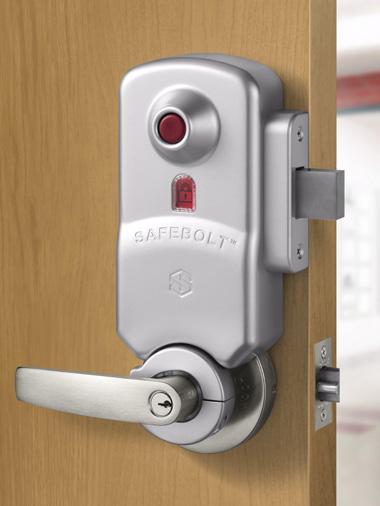
One of the persistent challenges with lockdown devices has been compliance. Improvised barricades and aftermarket solutions often introduce serious risks— blocked egress, key-only exits, or violations of fire and accessibility codes.
SAFEBOLT was developed to eliminate those tradeoffs. The lock is ADA compliant, supports single-motion egress, and allows keyed entry from the corridor side, ensuring that first responders and authorized personnel can always enter the secured space. Importantly, it is UL-listed for use on fire doors up to a three-hour rating, enabling deployment in code-sensitive retail environments without triggering compliance concerns.
Retail environments rarely have the luxury of retrofit solutions. Hardware solutions must integrate with existing doors and schedules.
SAFEBOLT is engineered as a retrofit solution, mounting over many existing commercial mortise or cylindrical locksets using a collar and adapter ring, with no additional door preparation required in many applications. For multi-site retailers, distribution centers, or legacy facilities, that translates into faster rollout and lower implementation risk.
Equally important is usability. The slightly recessed red activation button is intentionally designed to avoid accidental engagement, while a visual indicator shows when the door is secured—small but meaningful details when stress levels are high.
Loss prevention has always been about minimizing risk—but today that includes safeguarding employees during unpredictable, high-impact events.
Mechanical lockdown solutions like SAFEBOLT acknowledge a hard truth: not every incident can be prevented at the perimeter.
What LP leaders can control is how quickly their teams can respond, where they can safely shelter, and whether those spaces function as intended under pressure. By integrating code-compliant, instant lockdown hardware into interior security planning, retailers close a critical gap between detection and protection.
In an era where seconds matter, the doors behind the sales floor deserve as much strategic attention as the technology watching the front of house. Learn more at www.securitech.com.

The Loss Prevention Foundation (LPF) is a leader in educating and certifying retail loss prevention and asset protection professionals by providing relevant, convenient, and challenging educational resources. The LPF is dedicated to elevating the industry through its accredited LPQualified and LPCertified courses. For more information, visit losspreventionfoundation.org.




“Earning my LPC is one of my greatest professional accomplishments. With nearly ten years of experience in retail loss prevention, the program challenged me to expand my perspective and truly understand the breadth of the retail business. While the coursework was demanding and pushed me outside my comfort zone, it was through that challenge that I experienced the most growth. The LPC strengthened my understanding of how loss prevention partners with and supports every area of the organization, reinforcing the value of collaboration across the business. I am extremely grateful for the opportunity, as the experience has not only broadened my knowledge but also strengthened my confidence and effectiveness as a loss prevention professional.”

“I’m proud to share that I am officially LPC certified, joining the elite group of professionals recognized for their expertise in the loss prevention and asset protection industry. This milestone reflects nineteen years of experience, including my work at ThinkLP, and underscores my commitment to excellence, leadership, and advancing best practices in the field. LPC certification validates my skills and knowledge while reinforcing my dedication to protecting assets, fostering safe environments, and supporting the continued growth and professionalism of the industry.”
Newly Certified The following are individuals who recently earned their certifications
Recent LPC Recipients
Adam Rutkowski, LPC, CFI, LPQ REI
Joey Lawrence, LPC
Books-A-Million
Mario Wimbley, LPC
TJX
Kacie Hunt, LPC
Casey’s
Bryan Theis, LPC
The Home Depot
Wesley Fry, LPC
Dale Graul, LPC
PetSmart
Stuart Rennie, LPC
PetSmart
Raj Parmar, LPC ThinkLP
Recent LPQ Recipients
Kaloeb Morris, LPQ Tacala Companies
Chad Scott, LPQ Protos Security
Scott Wiese, LPQ
7-Eleven
Lauren Whitcomb, LPQ
7-Eleven
Melissa Miller, LPQ 7-Eleven
Jessica Shaner, LPQ
7-Eleven
Scott Stewart, LPQ
Walmart
Bryan Batchelor, LPQ
Walmart
Heather Meyer-Kieper, LPQ
TJX
Maurizio Gulluni, LPQ
Rexall Pharmacies
Tyler Giardina, LPQ
Fanatics
Michael Rubino, LPC Village Super Market
Nicholas Creech, LPC LiveView Technologies
Hailey Whitaker, LPC, LPQ TJX
James Franks, LPC
Macy’s
Dustin Birchenough, LPC, LPQ
Walmart
Migdalia Tomas, LPC, LPQ TJX
Elizabeth Bachmann, LPC, LPQ TJX
Noah Warren, LPQ DICK’S Sporting Goods
Keith Bogan, LPQ TJX
Carol Arce, LPQ HomeGoods
Khamijai Conaway, LPQ TJX
Angel Bravo, LPQ TJX
Melvin August, LPQ TJX
Alex Flores, LPQ
Walmart
Eduardo Rojas Martinez, LPQ
Belk Department Stores
Christopher Verdi, LPQ
7-Eleven
Benjamin Ballou, LPQ Lowes Foods
David Gonzalez, LPQ
Heritage Grocers Group
Alexis MacMaster, LPC
Staples
Jessica Laflamme, LPC
Meijer
Ben Edwards, LPC
Tractor Supply Company
Kiana Hines, LPC
Gregory Travers, LPC Ulta Beauty
Sharon Allen, LPC Ulta Beauty
Hillary Jacques, LPC REI
Matthew Bennett, LPC REI
Kelsey Smith, LPC, CFI Wallis Companies
Stephen Turocy, LPC Walgreens
Ashley Lopez, LPC
DICK’S Sporting Goods
Robert Loranger III, LPC Lowe’s
Phillip Richert, LPC Lowe’s
Mike DeNardo, LPC
Bridgestone Retail Operations
Elizabeth Larson Clouse, LPC REI
Omar Moreno, LPC
Bonnie Eggen, LPC Walgreens
Sydney Willis, LPQ TJX
Sarah Schulte, LPQ TJX
Christopher Ware, LPQ TJX
Brian Kramer, LPQ Saks Off 5th
Fetihi Ibrahim, LPQ
7-Eleven
David Levy, LPQ The Home Depot
Kenneth Reil, LPQ
The Home Depot
Steven Mathis, LPQ
The Home Depot
Armando Galaviz, LPQ
Cardenas Markets
Nicholas Jardine, LPQ
Fanatics
Eliza Poore, LPQ TJX
Karina Thomas, LPQ TJX
David Dasilva, LPQ TJX
Brydon Campanella, LPQ TJX
Wesley Brenz, LPQ TJX
Robert Quirk Jr., LPQ TJX
Tyler Burkett, LPQ
Steven Almond, LPQ
John Kalafatis, LPQ
The Home Depot
Alexis Glode, LPQ TJX
Katherine Pates, LPQ Meijer
Joseph Gassmann, LPQ Festival Foods
Madison Hines, LPQ TJX

Everon Active Video Monitoring is a proactive, real-time, remote monitoring service designed to help detect, deter, and respond to threats before they escalate. Operating through Everon’s UL-listed redundant monitoring centers, the service can leverage retailers’ existing camera infrastructure to reduce upfront costs while providing high engagement security oversight and an LP solution across both indoor and outdoor environments.
With Active Video Monitoring, retailers can enhance after-hours security, reduce loss, cut down on loitering and vandalism, and protect high-value inventory.
Everon Active Video Monitoring is ideal for: l Stores with high-value merchandise including jewelry, electronics, or other luxury assets.
l Retailers with outdoor spaces like dealerships, garden centers, lumber yards, or rental equipment.
l Distribution centers with loading docks or dumpsters that experience unwanted activity.
l Properties dealing with recurring vandalism including property damage or copper theft.
Most traditional security systems, like burglar alarms and motion detectors, are reactive. They trigger alerts only after a
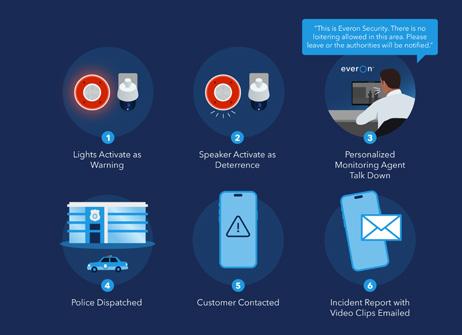
door is opened, glass is broken, or motion is detected.
Without live intervention, traditional intrusion solutions can lead to:
l False alarms (and associated costs)
l Delayed response from police
l Theft or property damage
Active Video Monitoring by Everon takes a different approach. Our video monitoring team:
l Watches your property after hours
l Identifies suspicious behavior early
l Intervenes before a crime escalates
l Deters unwanted activity
l Dispatches police with verified video
Everon’s monitoring center actively deters threats by engaging directly when suspicious activity is detected, enabling a faster, more effective response that helps prevent crime before it escalates.
Step 1 – Detection: Activity is detected in a defined area and evaluated by Everon monitoring agents in real time.
Step 2 – Evaluation: Trained monitoring professionals determine whether the behavior is suspicious or a real threat. If obvious criminal behavior is observed, police will be notified immediately.
Step 3 – Intervention: If suspicious activity is observed and persists, Everon responds using:
l Visible deterrents—like lights or strobes
l Pre-recorded audio warnings
l Personalized talk-down communication, referencing the intruder’s clothing or location
Step 4 – Response: If the suspicious activity continues, authorities are contacted and your call list will be notified. You will receive an email with associated video clips and a description of the occurrence.
The key difference is that Everon Active Video Monitoring can detect unwanted behaviors and deter crime
before the situation escalates into a true security incident.
As crime patterns and police response policies evolve, many businesses are rethinking traditional alarm systems. There are a few reasons why active video monitoring is gaining traction, especially in commercial and retail environments:
l It Helps Prevent Crime—Not Just Record It: Intervening in real time can stop incidents like break-ins, copper theft, vandalism, trespassing, and more.
l It Can Reduce False Alarms: Because activity is video verified by monitoring agents, businesses can avoid unnecessary alerts and disruptions.
l It Improves Police Response: Verified incidents are often more likely to receive priority response from law enforcement compared to unverified alarm signals.
l It Can Lower Security Costs: Many businesses use active video monitoring to reduce costs associated with onsite guards, patrol services, and other alarm-related expenses.
By combining real-time visibility with immediate response, Active Video Monitoring turns surveillance into an active layer of protection.
Visit everonsolutions.com/avm to learn how Everon can keep watch on your retail locations to help identify and deter threats, reduce loss, and provide peace of mind that your stores and inventory are protected across your locations.



By Courtney Wolfe
As the loss prevention landscape continues to evolve, the need for more structured workforce development and greater industry alignment has never been more critical.
To meet these changing needs, The Loss Prevention Foundation (LPF), a non-profit organization, has introduced OneLP, a forward-looking initiative aimed at strengthening the next era of talent and elevating professional standards across the LP industry.
But to understand the significance of OneLP, it’s important to first revisit the history of the LPF.

"OneLP is a simple but powerful model to help LP/ AP strengthen their internal teams while also advancing the profession as a whole."
— Caroline Kochman, LPF President
Twenty years ago, approximately seventy-five retail leaders came together with a shared mission: to standardize and professionalize the LP industry. That effort led to the creation of the LPQ and LPC certifications—programs that established a clear benchmark for knowledge, professionalism, and career progression within the field.
“Today, the certifications remain strong and respected; however, despite their recognized value, adoption has not kept pace with the original vision,” said LPF President Caroline Kochman. “While those leaders built a strong foundation, today we are still without a scalable mechanism to drive consistent industry-wide participation. OneLP is designed to solve for that.”
Historically, workforce development in LP has largely been managed independently by each retailer. As a result, the industry is left with inconsistent training and uneven skillsets that don’t easily transfer from retailer to retailer and role to role.
OneLP introduces a different approach.
OneLP is a corporate partnership model for retail LP teams of all sizes. At its core, it brings together retailers as strategic partners, and provides them with a unified
framework to align around professional standards, certification, and workforce development—with the LPF serving as the central steward to not only provide core education and content but also the infrastructure to work hand-in-hand with internal teams to support that alignment.
“OneLP is a simple but powerful model to help LP/ AP strengthen their internal teams while also advancing the profession as a whole,” Kochman shared. “When retail companies align around common goals—clear career pathways, professional standards, certification, and leadership development—the LP community builds a stronger, more sustainable talent pipeline that benefits everyone.”
OneLP creates the mechanism to embed certification and development into organizational strategy.
This shift allows retailers to:
l Standardize expectations across teams
l Accelerate development timelines
l Create consistency in leadership capability
l Scale training efforts more efficiently
At the same time, it enables the LPF to extend its reach and deliver on its mission at a much larger scale.
A group of leading retailers has already committed as founding partners, including The Home Depot, Casey’s, TJX, American Eagle Outfitters, Ulta Beauty, Lowe’s, Meijer, and REI.
Their participation reflects a broader recognition that investment in workforce development should no longer be a siloed function, but an industry-wide strategic priority.

“There is a strong belief that OneLP will help attract and develop the next generation of leaders,” Kochman said. “A more clearly defined and unified path also helps elevate how the profession is perceived—both internally and externally.”
Mark Stinde, MBA, LPC, chair of the LPF board, emphasized the operational implications: “Stronger talent pipelines improve hiring outcomes. More structured development produces stronger leaders. And stronger leadership ultimately drives better business performance.”
Retail partners recognize that OneLP strengthens their ability to protect what matters most: their people, their customers, and their brand.
For retailers, the value of OneLP goes beyond professional development—it drives measurable business impact.
Organizations that engage in the OneLP movement benefit from the “rising tide” effect, where elevating the profession strengthens outcomes at the company level. Key advantages include:
l Stronger, more capable LP teams
l Improved operational performance and reduced loss
l More effective, standardized leadership
l Higher retention through clear career pathways
l Stronger hiring pipelines and talent attraction
l Enhanced brand reputation and industry leadership
As many organizations have recognized, investment in structured development is not just about talent—it’s about results.
“Retailers participating in OneLP are making a clear statement about their commitment to people and performance,” Kochman said. “That commitment strengthens their culture, their employer brand, and their position in the industry.”
Ultimately, OneLP strengthens teams, reduces risk, enhances brand value, and elevates the profession—all while delivering real, measurable business value.
The launch of OneLP represents more than a new program; it signals a potential inflection point for the loss prevention profession.
“This generation of LP leaders has a unique opportunity not just to maintain what was built twenty years ago, but to scale it for the next twenty,” Kochman said. “OneLP is about taking that next step. It is the momentum driver the industry needs to raise the bar once again—by investing in people, aligning around standards, and working together to build a stronger future.”
In an environment where retail risk continues to evolve, the need for capable, well-developed professionals has never been greater.
Long-term, the success of LP will not be defined solely by what organizations protect—but by how effectively they develop the next generation responsible for protecting it. l

OneLP strengthens teams, reduces risk, enhances brand value, and elevates the profession—all while delivering real, measurable business value.
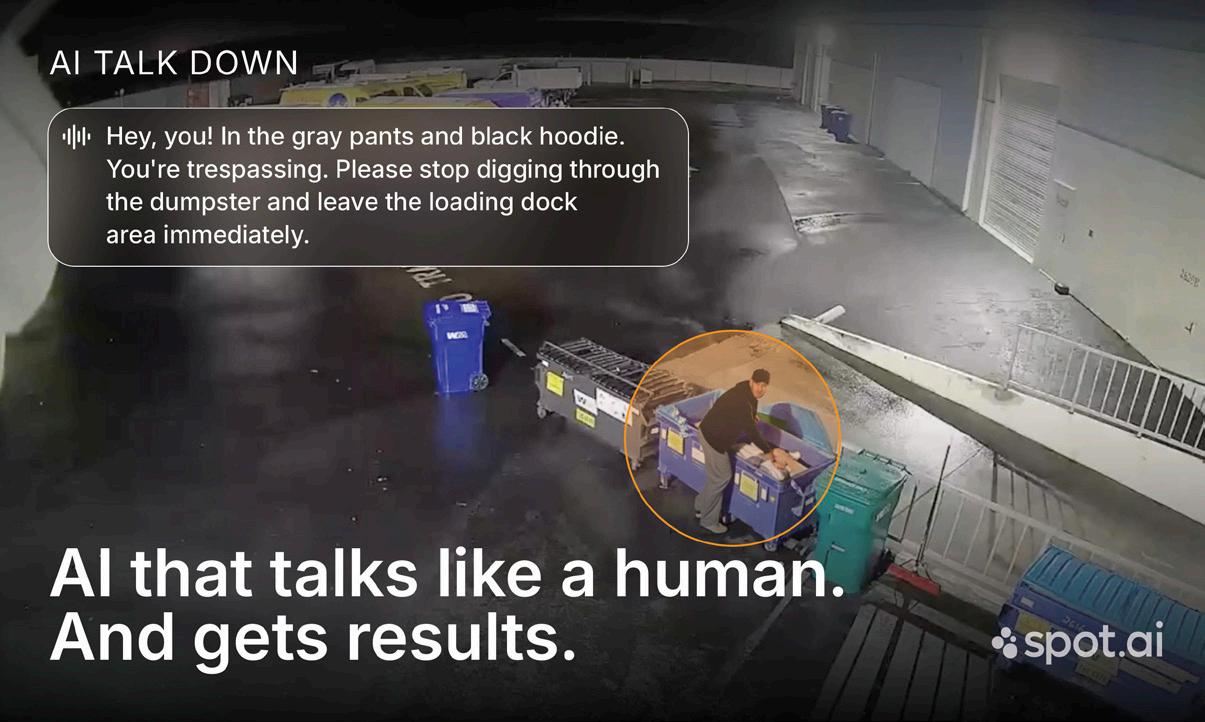


Fahey is the retail strategy lead at Motorola Solutions, where he spearheads the development of integrated technology solutions designed to protect people, secure assets, and optimize store operations. With a deep understanding of the modern retail landscape, Steve works cross-functionally to align Motorola’s innovation pipeline with the real-world demands of loss prevention and workforce management. By uncovering operational blind spots and leveraging data-driven insights, Steve helps the world’s largest retailers build resilient communication architectures that empower frontline teams.
LPM: We’ve seen a dramatic rise in the aggression associated with ORC. How has this shifted the primary focus of LP leaders when it comes to technology investments?
Steve Fahey: The mandate has fundamentally changed. It has always been almost exclusively about reducing loss. Today, the priority is total employee safety. When 91 percent of retailers report increased aggression from shoplifters, your technology can’t just be a passive recording device; it has to be a de- escalation tool. We are seeing a massive shift toward proactive deterrence—investing in tech that stops an incident before it turns violent, ensuring associates feel protected from the moment they clock in.

We believe that the key to stopping ORC is making sure the employee never has to choose between calling for help and capturing the evidence.
LPM: Motorola Solutions often speaks about the Safer & Smarter Retail Ecosystem. For a retailer with disparate systems, what does a truly integrated ecosystem actually look like in practice?
Fahey: An ecosystem is about breaking down silos and having data/information move with speed—creating actionable insights. Most retailers have cameras, radios, and alarm systems that don’t talk to each other. A Safer & Smarter environment means these tools work as a single unit. For example, when a fixed camera with AI-powered analytics detects suspicious behavior in a high-theft aisle, it shouldn’t just record it—it should automatically trigger a notification to the nearest associate’s radio or wearable. It’s about moving from a reactive posture to a real-time posture (responding to what is happening in the moment).
LPM: Many ORC events begin long before the suspect enters the store. How is Motorola Solutions extending the security perimeter beyond the four walls of the retail space?
Fahey: That’s a critical point. The LP program needs to begin outside the four walls; collecting data in the parking lot is critical. Almost every ORC event involves
a vehicle. By integrating license plate recognition (LPR) into the ecosystem, we can identify known suspect vehicles the moment they enter the premises. This allows LP teams to be alerted and take preventive measures before the individual even steps through the door. By linking that vehicle data to in-store video, we create an end-to-end chronological record that is incredibly powerful for building legal cases against repeat offenders. Most importantly, it provides the opportunity to limit loss and improve safety.
LPM: In an era of labor shortages and high turnover, how can security technology actually help with employee retention?
Fahey: Employees stay where they feel safe. If an associate is constantly worried about a confrontation they can’t handle, they’ll leave. By providing tools that offer immediate, one-touch access to help and support—like live-streaming audio and video to a security operations center (SOC)—we are essentially putting virtual support on their shoulders. That safety net builds confidence, reduces the mental load of the job, and ultimately builds long-term brand loyalty among staff.
LPM: Industry insiders are hearing rumors about a new device under development. Can you tell us how a new device might solve the multiple safety device problem in retail?
Fahey: The industry has device fatigue. Associates don’t want to carry a radio, a body camera, and a phone. We believe that the key to stopping ORC is making sure the employee never has to choose between calling for help and capturing the evidence. Stay tuned—we’re very excited about what’s coming.
Ready to learn more about how Motorola Solutions is creating a safer environment for retail? Please visit us at booth #209 at this year’s upcoming NRF PROTECT show.
NRF PROTECT is the leading event for retail professionals responsible for protecting people, operations and brands. Each year, the community comes together to stay informed, benchmark strategies, exchange ideas, build trusted partnerships and explore practical solutions that reduce risk and strengthen resilience across retail organizations.
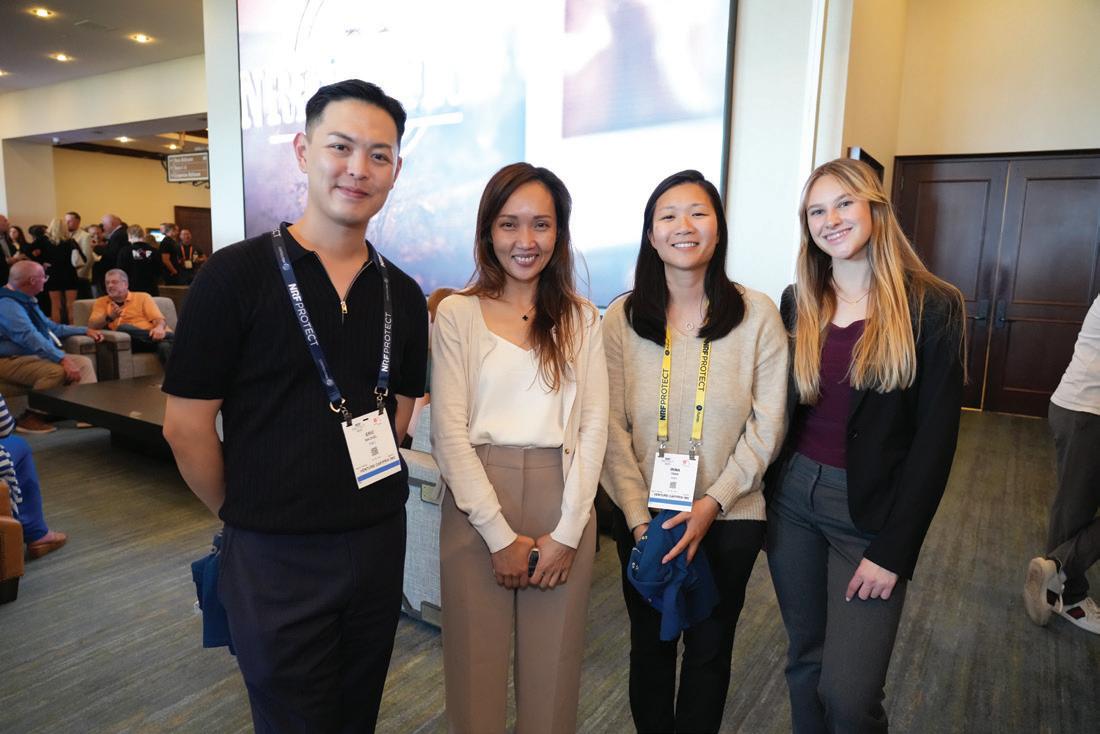
To stay up-to-date on the latest career moves as they happen, visit the Professional Development page on the LPM website LossPreventionMedia.com.
To inform us of a promotion or new hire, email us at PeopleOnTheMove@LossPreventionMedia.com.


This edition of People On the Move is powered by the Loss Prevention Fondation
Jason Breese is now a market LP manager at Academy Sports + Outdoors.

Steven Panarelli, CFI, was promoted to senior manager of global security operations at Abercrombie & Fitch.
Logan Closser and Jason Garcia Jr. are now district AP managers; and Andrés García Lee (Spain) was promoted to district AP investigator at Abercrombie & Fitch.
Ashley Barnes is now director of AP and safety; and Goda Stonciute (UK) is now a regional AP manager - Europe at ALO.

Mike Limauro, LPC, is now head of AP, Amazon Worldwide Grocery Stores/VP global AP, Whole Foods at Amazon.
Rachel Maugeri, PMP, was promoted to senior program manager, worldwide operations security, global solutions; Kyle Skardon is now senior program manager, worldwide operations security, global under-theroof solutions; Antonio Torres was promoted to senior program manager, WWOS global solutions; Michael Greenwell, MBA, LPC, was promoted to senior physical security program manager; Darlene Jackson, MS, CFE, was promoted to global investigations manager; Joseph Carter, LPC, CFI, was promoted to manager, AMER dynamic risk; Ryan Alvarez was promoted to senior program manager - global solutions; Scott Sanford and Christopher Santiago (Canada) were promoted to senior program manager; Chris Di Pelino was promoted to senior regional manager, security and LP; Gerard Geronimo, PMP, and Mark Miller, LPC, were promoted to senior manager, security and LP; Juan Carlos Hernandez is now a security program manager; Paul Witten, MA, was promoted to senior risk manager; Usman Naseer, James Foster, and Frederick Lopez were promoted to cluster LP manager; and Andy Rosenthal was promoted to security and LP expert at Amazon.
Brian Rachford, CFI, LPC, CPD, is now a regional LP manager at America’s CAR-MART.
Tiffany Thompson was promoted to AP business partner at America’s Thrift Stores.
Mark A. Zibel, CFI, BA, is now a regional AP and risk manager at Areas USA.
José Eduardo Martínez Suárez is now security coordinator at Aruma (Peru).
Donald Ward Sr. is now senior regional health, safety, and security manager at Ashley Furniture.
Charlotte Amar was promoted to regional security manager France, Belgium, Netherlands at Associated British Foods (France).
Jeremy Kauffman, LPC, is now a regional LP manager at AutoZone.
Yusuf Emlek is now internal control and LP manager at Azadea Group (UAE).
Luiz Fernando Pereira Da Silva is now an LP supervisor at Barra Oeste Supermarkets (Brazil).
Tim Jevitz Jr. was promoted to director of AP - field and Jeremy Wolfe is now senior manager of campus AP at Bath & Body Works.
Jon Erb, LPQ, is now senior director of physical security and facilities at Buffalo City Mission.

Michael Mata was recently named VP of AP at Big 5 Sports/Worldwide Golf.
Michael Ibarra, CFI, is now director of LP at Big 5 Sports/Worldwide Golf.
Victoria Burge-Thomas was promoted to head of LP operations and investigations; Damien Jones is now state investigations manager; and Karen Adema was promoted to head of central LP services and insights at Bunnings (Australia).

Darrel Freeman was promoted to VP of AP, inventory control, distribution/ supply chain at Burlington Stores.
Robert Rockwell, LPC, was promoted to senior manager of AP operations; Eddie Berberich is now manager, AP equipment and technology; and David Schmook, MS, CFI, CORCI, Brian Starling, CFI, Jordan Marshall, Luis Barragan Banuelos, and Robert Henle are now district AP managers at Burlington Stores.
Justin Knickerbocker, CFE, CFI, is now senior manager, global investigations and security at Carhartt.
Tam Schliebe, CFI Legacy, Christopher Ferdinand, Karen Lelito, Alfred Baena, Dan Kilborn, Evan Beck, and Todd Passey were promoted to area AP managers at Catalyst Brands.
Laura Neal was promoted to national LP manager at Cellular Sales
Alexis Gallardo Gutierrez is now head of internal control and logistics security at Cencosud (Chile).
Lawrence (Buck) Riva was promoted to senior manager of AP, drug diversion; Brett Harvey was promoted to division diversion manager; and Brad Schmidt is now an ORC manager
Juan Felipe Zuleta was promoted to LP leader at Grupo Éxito (Colombia).
Deanna Bonachea is now a regional AP manager at Family Dollar.
Stephen Starkey, LPQ, CCPS, is now security operations manager at Fanatics.

Julie Marzheuser is now senior project lead, enterprise protection services at Chick-fil-A Corporate Support Center.
Fernando Barragan, Crystalyn Eschelbach, and Adam Obornick are now LP specialists at Claire’s.
Kevin Stone, LPC, CFI, is now director of LP at Columbia Sportswear.
Joshua Salthouse, CFI, is now senior investigator - enterprise fraud and investigations team and Teresa Wyatt is now a security manager, ORC/retail at Comcast.
Trent Pringle is now a senior regional manager of AP, supply chain at Crate and Barrel.
Cheyne Collins, CCII, CORCI, CEFI, is now senior national director of LP, retail, and supply chain at C.T.I.A.I Security (Canada).
James Schroeder was promoted to regional LP manager at David Yurman.
Gustavo Montanez was promoted to regional LP director at dd’s DISCOUNTS.
Raffaele Francisco De Carli is now head of corporate security, LP, and AP at Despar Nord (Italy).
Jason daCosta, LPC, is now a regional LP manager at DICK’S Sporting Goods.
Gina Warren, CFI, was promoted to senior manager, corporate AP; and Kenneth Baerga and Bryan Haire are now regional AP managers at Dollar General.
Deanna Bonachea is now a zone AP director at Dollar Tree Stores.
Monica Gerace was promoted to regional LP manager at DTLR.

Christian Hardman, LPQ, was promoted to manager of global criminal and regulatory investigations/ PROACT at eBay.
Welton Silva is now assistant corporate LP manager at Ferreira Costa Home Centers (Brazil).
Vito Chieffi Jr. has been promoted to manager of investigations at Five Below.
Crystal Sweatt, CFI, is now a divisional AP manager at Food Lion.
Liz Burkholder is now director of AP and safety; Randall Anderson is now AP systems manager; and Tomas Negron, LPC, was promoted to regional AP manager at Gabe’s.

Meghan Hoppes was promoted to director of AP digital commerce at Gap Inc.
Thiago Henrique Aguiar is now a regional LP manager at GMAP SUPERMERCADOS (Brazil).
Kristen LePage is now a senior LP manager at Goodwill Industries of Middle Georgia and the CSRA.
Francisco Coelho is now head of LP at GPA (Brazil).
Steven Scholz, LPC, was promoted to sales market security manager at H&M.

Joe Esterreicher was promoted to senior director - LP, risk management, and privacy at Harry Rosen (Canada).
Ivy Campbell was promoted to area LP manager at H-E-B.
Paul Morrison is now director, total loss and risk at Henry’s (Canada).
Orlando Torres is now director of LP at Heritage Grocers.
Sarah Edward was promoted to regional AP manager - Canada East at The Home Depot (Canada).
Michael Kassebart, CFI, is now an area business risk and compliance specialist at IKEA.
Alex Giauque was promoted to senior director of operations and logistics at Industrial Security Solutions.
Alessandro da Silva Motta is now an LP supervisor at Jadlog Logístics (Brazil).
Jonathan Scruggs, MA, is now senior LP manager at J.Crew.
Jim Negrete was promoted to area AP manager at JCPenney.

Scott Crawford was promoted to senior director of profit and AP at JD Finish Line.
Keith Gregory was promoted to director of profit AP, North America; and Octavio Andres, Garcia Torres, and Jasiel Martinez, LPQ, were promoted to regional AP managers at JD Finish Line.
Hamza Saib is now an LP partner at John Lewis & Partners (UK).
Thays Dias was promoted to loss prevention supervisor at Grupo Koch (Brazil).
Justina Reading, CFE, CFI, is now a district LP manager at Kohl’s.
Marvin Rivera and Jenna Beare, LPC, were promoted to ORC manager at Kroger.
Matt Davies was promoted to lead profit protection manager at Marston’s (UK).
Silvio Martins is now an LP supervisor at Master Vigilância Especializada (Brazil).

Rose Janssen is now VP of client services at Learn it Media.
Gene Traylor is now a global security area manager at Meta.
Débora Felix was promoted to manager of LP at Mercado Livre (Brazil).
Ben Eisenberg is now a senior regional LP investigator at Lids. BreeAnna Whitney was promoted to senior security analyst, investigations at Light & Wonder.
Todd Hunt was promoted to director of corporate security at Loblaw Companies (Canada).

Renee Sirianni is now VP of operations and student success at The Loss Prevention Foundation.

Gina Hoelderlin is now senior program director at The Loss Prevention Foundation.
Mohit Dabral is now national manager - security, safety, and LP at Linfox (India).

Lesley Manzo, LPQ, is now student success coordinator at The Loss Prevention Foundation.
Mike Jones was promoted to AP physical security specialist at Lowes Foods.
Heather Cameron was promoted to director of AP, global fulfillment; Danielle Palentino-Dederick was promoted to senior manager of AP; and Tyler Kuchinos and Heather Rawlings are now ORC investigators at lululemon.
Forest Joel is now an ORC market investigator at Nordstrom.

Jamie Van Dusen is now senior director of AP operations at Macy’s.
Romoaldo Farias is now executive manager of LP at Grupo Mundial Mix (Brazil).
Cori Picanso is now director, AP programs, training, and compliance; Christopher DiFonzo was promoted to senior division AP investigations and training manager; Samantha NewtonHenry was promoted to divisional director of AP; Brianna Thompson, Nekko D’Alessio, and Melanie Kaylor are now senior managers, AP investigations and training; and Chad Tucker, CORCI, is now a multi-store investigator, ORC at Macy’s.
Kimberley Tassitano and Andrea Forni are now ORC investigators at Metro One Security.
Kamil Regucki is now corporate investigations and ORC program manager at Northeast Grocery.
Adam Backus and Tim Gartner are now district LP managers at Ollie’s Bargain Outlet.
Bryan Lee, MBA, CFE, CFI, is now a regional security and LP manager at OnTrac.
David Zwernemann, CFI, LPC, is now senior director, global physical security operations at Oracle.
Tom Conner is now an LP investigator at Pep Boys.
Melanie Millaway, CFI, LPC, was promoted to senior director, AP investigations and security at PetSmart.
Jeff Bristol, LPC, was promoted to senior director, AP and safety, strategy, compliance, and business support at PetSmart.
Ettiene Rautenbach is now a regional LP manager EU at POP MART (UK).
Kim Reed is now director of client services at PRA Law Firm, PLLC.
Krystal Alaniz is now a regional LP manager at Public Storage.
Paul Mordaunt is now director of consumer LP at Puma North America.
Yannick Labelle is now senior manager of AP operations at PVH Corp.
Brandon Erickson is now a regional LP manager at REBEL Convenience Stores.
Graham Twidale, CFI, LPC, was promoted to division AP manager at Safeway.

Khristopher Hamlin was named VP of AP and retail technology at the Retail Industry Leaders Association (RILA).
Jeffrey Keats was promoted to director of field external investigations; Jacobs was promoted to manager of LP operations; and Andre Harrell Lilibeth Lopez were promoted to senior area LP managers at Ross Stores.

Tunde Adekunle promoted to VP, LP intelligence at Ross Stores.
John Burgbacher is now lead AP coordinator at Rouses Markets.
Tom Harrison is now head of crime, security, fraud, and retail risk at Sainsbury’s (UK).
Eve Sirianni, MA, LPC, to manager of inventory accounting systems at Sally Beauty.
Rogerio Rodrigues Pereira an LP coordinator at Grupo São Vicente (Brazil).
Tony Chiaverini was promoted to senior regional LP manager at Savers | Value Village.
Lisa Gutierrez was promoted to global VP of advanced client services and sales enablement at Securitas Technology.
Jason Davies, CFI, CORCI, SMIA, is now VP - strategic partnerships at Sekura Global.
Pierce Hentzeis now a corporate investigator at SEMM Holdings.
Jasdeep Kaur, Talmage Svehla, and Maria Beeler are now district AP managers; Aria Wothke was promoted to interim district AP manager; and Carla Alvarez is now an AP partner at SEPHORA.
Matt Johnson is now VP and GM, LP at siffron.
Steven Troughton is now national manager of AP at Sporting Life Group (Canada).
James Selman is now senior director of AP/safety/facilities at Sun Holdings.
Brendan Eberle is now national LP and information security manager at Swatch Group (Canada).

Andrew Grummett (Canada) was promoted to assistant VP, LP investigations; Megan Walsh was promoted to senior global safety and security business partner; Stephanie Jolly was promoted to shortage control manager - digital; Doug Ronspies was promoted to manager of AP and technology; Joe Nekic, CPP, (Australia) was promoted to manager of LP specialized services; Michelle Chalmers (Canada) was promoted to manager of store investigations; Julia Kerr (UK) was promoted to regional LP manager; Calandra Guiry (Canada) is now LP market manager; Marissa Oakley was promoted to national task force investigator; Elaine Nelson was promoted to field investigations manager; Anthony Aiello is now a district LP manager; and Michelle Bárdos, LPQ, was promoted to district LP supervisor at TJX.
Edmundo Velazquez, MBA, MA, LPC, CFI, is now director of AP at Ulta Beauty.
Colt Baty was promoted to senior AP manager, global supply chain at URBN.
Nicole Nelson, CFE, CFI, is now an AP business partner at US Foods.
Fabricio Pacheco was promoted to LP supervisor at Verlos Soluções Logístics (Brazil).

Brad Buckley was promoted to VP of LP at TJX.
David G. Smith has been named CFO at Vector Security.
Derrick Boyd is now a regional LP manager at VF Corporation.
Cherise Barr, CFI, is now a regional AP manager; Branden Bearup is now senior investigative analyst; and Jodi Palermo is now a market investigator at Victoria’s Secret & Co.
Kerry Cyganiewicz Jr. is now a retail investigator at Wakefern Food.
Nicole Toyloy, MBA, Jim Weisser, and Jay Spahr are now divisional AP directors; and Jeff Walkup was promoted to metro major crimes investigations manager at Walgreens.
James Lewandowski was promoted to senior director, AP store operations; Paul Hancock is now senior manager, AP fraud strategy; Tom Maciejewski was promoted to regional AP director; Sabrina Barnes is now a senior analyst; and Lamar Johnson is now an area AP manager at Walmart.
Ed Jean-Baptiste is now AP manager, retail stores at The Walt Disney Company.
Bryan Barlow, MJ, CFI, is now staff instructor/professional standards lead at Wicklander-Zulawski & Associates.
Chris Bitner is now VP, chief information security officer at Winn-Dixie.

Chris Norris, CFI, was promoted to VP, International at WicklanderZulawski & Associates.
Leonardo Oliveira is now national LP coordinator at WizMart Mercados Inteligentes (Brazil). l




O riginally named the Loss Prevention Memorial Fund when it was founded in 2012, The Loss Prevention Benevolent Fund (LPBF) has served as a lifeline to loss prevention professionals and their families in times of crisis for fourteen years.
“Sudden unplanned loss of life or serious bodily injury can be financially devastating,” said Chris Duke, who has been involved in the Fund since its inception and now sits on its board of directors as treasurer. “Even if a professional has planned sufficiently with various insurances, it can take weeks or months to work through the red tape and get a family financially prepared for the life-changing event. Having a well-known, pre-established fund with the ability to fill that gap with a quick infusion of grant money can be a great benefit in a family’s time of need.”
back on their feet. We’re going to put every penny toward rebuilding our home. Every bit of this grant will help my family as we try to get our lives back to normal.”
Money is raised for the LPBF through multiple fundraising events. At the Retail Industry Leaders Association’s (RILA) AP Conference, LPBF board members gather prizes from solution providers and retailers to raffle off at the conference. Every year, RILA provides a matching gift that doubles the funds raised by raffle participants. At NRF PROTECT each year, the Zellman Group generously donates sports memorabilia in order to hold a silent auction to raise money for the Fund. In addition, the NRF makes a generous donation to the LPBF as a supporter of Swing for Certification.


As an industry-wide effort, the LPBF supports the broader LP community by enabling practitioners to collaborate to support fellow professionals and by providing financial support for LP pros during the most difficult times in their lives and those of their families.
The first funding went to the family of Luis Jons, an LP associate in Miami who was tragically killed while apprehending a shoplifter. Since then, multiple families have received assistance from the LPBF.
One particularly impactful story Duke shared was about the LPBF providing funds to Glynis Eaton, the wife of Brian Eaton, after the father of two and regional LP manager for Pep Boys passed away at age 42 in 2019.
Glynis was so moved by the gesture that she said she was going to propose that the industry she works in adopt a similar fund.
In 2024, after the devastation of the California fires, the LPBF Board made a specific amendment to the organization’s guidelines to expand its purpose to include assistance for the LP pros who lost their homes in the California wildfires.
“I’m so grateful that the LP Benevolent Fund took action to set up this fund for people like us who lost everything in the fire,” one recipient said at the time. “It really shows they care about helping families get
The annual Swing for Certification Golf Outing, hosted by The Loss Prevention Foundation in June preceding NRF PROTECT, is a cornerstone in the ongoing health of the LP Benevolent Fund. The various Swing sponsors and partners enable the LPF to designate all of the funds raised from raffles and on-course activities, like the “Beat the Pro” competition, to go directly to the LPBF. Swing allows both the LP Foundation and LPM to bring together industry friends, partners, and leaders for a great day on the course in support of the LPBF.
“Everything about the LPBF is emblematic of the caring and collegial nature of the retail LP industry, and I especially appreciate the inclusiveness of the LPBF fundraising model,” said LPF President Caroline Kochman. “It allows anyone and everyone in the industry to contribute their support at whatever level suits their interest and their means. There are support options for every level—whether you just buy a raffle ticket or two at RILA’s AP Conference every year, you bid on Zellman’s sports memorabilia auction at NRF PROTECT, or you are one of the generous industry partners that sponsor Swing for Certification—it doesn’t matter. We are all supporting our fellow LP professionals and their families in times of need.”
To learn more about the LPBF or to make a secure online donation, go to yourlpf.org/donations l


ONE ONE PROFESSION PROFESSION
ONE ONE STANDARD STANDARD ONE ONE FUTURE FUTURE

OneLP is LPF’s corporate partnership model for retail loss prevention teams. It brings together retailers as strategic partners, and provides them with a unified framework to align on professional standards, certification, and workforce development.
FOUNDING CORPORATE PARTNERS













matter experts lead each tour date, preparing you and your team for conversations that matter.
Investigative Interviewing Techniques | Baltimore, MD
Practical Application Workshop | Baltimore, MD
Investigative Interviewing Techniques | Los Angeles, CA
Investigative Interviewing Techniques | Virtual Investigative Interviewing Techniques | Leamington Spa, England
Advance your skills with the latest techniques, delivered in-person or virtually. Now available in Spanish!
24-25 24-25 24-25
Investigative Interviewing Techniques | Virtual
Investigative Interviewing Techniques | Newark, NJ
Técnicas de Entrevistas Investigativas | Mexico City, Mexico


Practical Application Workshop
Go deeper with immersive skillbuilding and investigating cases from initial complaint to full conclusion.
CFI Preparation Workshop
Refine your skills and gain the confidence needed to prepare for the Certified Forensic Interviewer (CFI) exam.
Zero in on the specific skills you need, from organized retail crime to remote interviewing and everything in between. Now available in Spanish!
Trauma-Informed Interviewing
Explore techniques that reveal what memory hides, avoid missteps, and unlock more productive conversations.
Practical Application Workshop | Atlanta, GA
Investigative Interviewing Techniques | Irvine, CA
Investigative Interviewing Techniques | Virtual APAC
Explore the schedule, view webinars, or bring the training to you.





By Robert K. Brown, LPC, Solutions Engineer, Axis Communications
Aretail parking lot is now so much more than a perimeter. This area has transformed into a key source of insight and information.
For loss prevention teams, the parking lot once represented a relative blind spot— not so much from an overall surveillance perspective, but in terms of having the same quality of data that was typically available within the store walls. Eventually, these teams started to look outward, understanding that the path to shrink often starts before anyone walks through the front door.
This understanding was important, but it didn’t necessarily solve any profound issues when it came to retail crime. What has changed the game is license plate recognition (LPR).
Once considered a niche and expensive solution, LPR is now a flexible and intelligence-driven tool. It provides retailers with something they’ve always needed but rarely had: advanced awareness. In an era defined by organized retail crime (ORC), repeat offenders, and limited resources, this awareness can make all the difference.
Much like video surveillance systems, LPR has evolved over the years. The earliest iterations of LPR were fairly limited in their capabilities. They often required specialized cameras with strict installation requirements. Even then, environmental challenges would lead to reduced accuracy.
Today’s systems are fundamentally different. Modern LPR systems like AXIS License Plate Verifier are powered by
deep-learning technology, so they can consider context beyond the actual characters on a plate. Even if a license plate isn’t entirely visible (or present, as some states don’t require a front license plate), the software can still identify the make, model, and color of a vehicle. This results in fewer false reads and more usable information.
Installation has also become less restrictive. Analytics are now far more forgiving, and this flexibility allows retailers to deploy cameras across entrances, exits, and parking areas, all without sacrificing performance. This makes for a lower barrier to entry.
The rise in the effectiveness of these LPR systems couldn’t have come at a better time. The tactics of ORC groups are becoming more sophisticated; they move quickly, hit multiple locations across cities and states, and rely on mobility and the lack of communication between stores. For LP teams, it’s becoming increasingly difficult to combat these groups.
This is where advanced tools like LPR can shine. Retailers can build internal watch lists of vehicles associated with known offenders. When a flagged car enters a parking lot, the security teams will get a heads-up before the individuals even step into a store. While these crime groups will become savvier when it comes to LPR, loss prevention teams can stay one step ahead by associating multiple plate reads to a vehicle or individual.
To understand the strategic value of LPR, it helps to look at it through the lens of the “Five Zones of Influence,” a framework created by the Loss Prevention Research Council.
Zone 1: Precise location of a target, be it a person or property
Zone 2: General location of a target (department, stock room, etc.)
Zone 3: Store entrance, exits, and interior
Zone 4: Parking lot and store curtilage
Zone 5: The broader community (including cyber)
LPR solutions exist primarily in Zone 4, often acting as an early detection system. If a flagged vehicle enters a lot, it triggers an alert, giving the loss prevention team time to prepare to take additional action, as necessary.
This also has a ripple effect on the rest of the zones. In Zone 3, LPR software can complement storefront surveillance, reinforcing awareness as individuals enter the building. As a potential offender moves from Zone 2 to Zone 1, LP teams will already have a head start and won’t need to react blindly.
Best of all, an LPR solution is just as valuable in reverse, helping to trace vehicles, confirm timelines, and build stronger cases after a crime has occurred. When thieves leave the parking lot for the broader community of Zone 5, LPR solutions can help investigators connect the dots. ORC groups will prey on multiple locations, and their actions in one store’s first four zones can provide helpful context to prevent future loss at others.
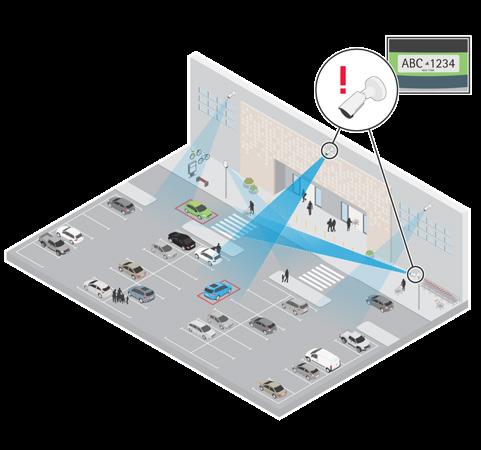
One of the most compelling aspects of LPR is that it supports both proactive prevention and reactive investigation.
From a reactive perspective, investigators can use the footage to search license plates or vehicle attributes. LPR systems can also help tie incidents together quickly and build stronger cases to share with law enforcement.
From a proactive perspective, this technology can alert LP teams when a known vehicle arrives at a store. Additionally, LPR identifies any patterns that emerge across multiple visits or locations, which helps loss prevention teams better allocate resources in real time.
Consider a few real-world scenarios: l In Colorado, a shoplifting suspect fled store property without recognizable plate data from parking lot cameras. By backtracking entry footage, LP teams were able to match the suspect’s vehicle to a plate read from an inbound LPR camera.
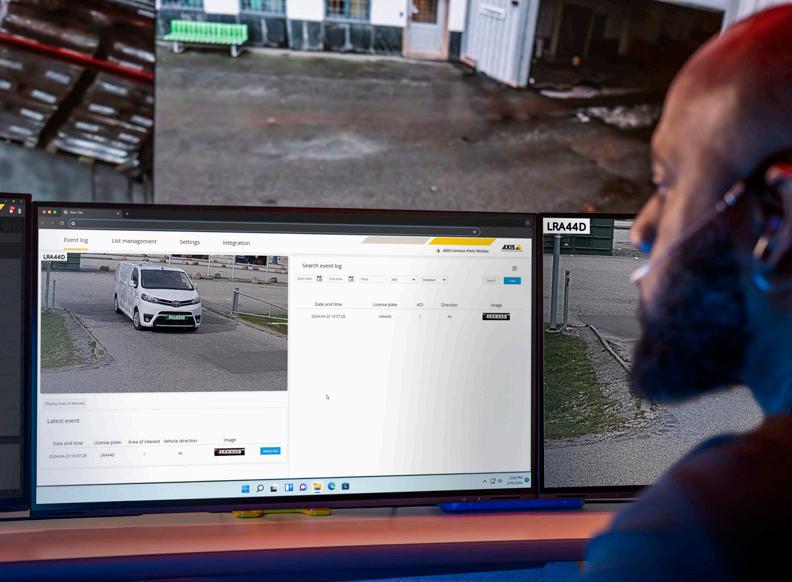
l In Georgia, a jewelry theft went cold until the suspect’s vehicle reappeared nearly a month later. The LPR system flagged it instantly, leading to an arrest.
l In Missouri, even when a retailer didn’t report a theft, LPR-enabled footage helped identify suspects and support the police investigation.
In each case, license plate data was a key factor that augmented existing video surveillance systems, bringing better and faster results than simple video searches alone.
Any conversation about video surveillance and private data in public spaces will raise understandable concerns. LPR is no exception.
While a license plate itself is publicly visible information, much like a street address or a vehicle’s make and model, the privacy concerns surrounding LPR often stem from the widespread collection and aggregation of this data. The true challenge is in data management and governance: how and where is LPR data stored, who has access to it, how is it shared, and how might it be used beyond its primary security purpose? The potential for misuse of data, especially without clearly documented procedures or oversight, is at the heart of many privacy debates.
With that said, implementation still matters. Self-contained systems that limit data sharing, rely on clearly defined (and transparent) use policies, and align with local regulations all play a role in maintaining trust.
If you ask any LP professional what they need more of, the answers are usually the same: time, budget, resources, and (of course) awareness. Well-designed LPR systems can help with all four.
Retail crime isn’t going away. If anything, it’s becoming more coordinated, more organized, and more complex. Staying one step ahead of criminals requires something other than just video surveillance footage or hiring additional personnel. It requires more data and greater context.
LPR offers just that: a way to gather additional details from outside the store, which in turn help understand not only what’s happening inside, but what’s happening before and after those incidents. When it comes to modern retail, that broader view may be the most valuable asset of all.
To learn more about AXIS License Plate Verifier, visit www.axis.com.
Retail asset protection leaders face pressure from every direction. They are expected to reduce loss, support operations, protect employees, improve case outcomes, and preserve brand trust. At the same time, every technology decision now carries greater scrutiny from legal, privacy, IT, procurement, and executive stakeholders.
That shift is important because, in retail, trust plays as much of a role in adoption as capability.
Retailers still want technology that helps teams move faster, solve more cases, and work more efficiently. But internal stakeholders want clear guardrails, visibility into system usage, and confidence that deployment decisions will withstand scrutiny. For AP leaders, the challenge has shifted from finding tools that work to finding tools they can confidently stand behind across the business.
For many retailers, Flock entered the conversation with license plate readers (LPR). LPR remains core to the value proposition, but it is no longer the whole story. Flock’s platform now spans LPR cameras, video cameras, mobile security trailers, audio detection, video integration, FreeForm, Flock Business Network, and FlockOS, the operating layer that connects those tools.
That platform approach is critical because retail threats are not isolated. Incidents often begin before a subject enters the store. Activity starts in the parking lot, moves through entrances and exits, and connects to repeat threats across stores and markets. Flock’s retail positioning is built around extending a retailer’s security perimeter beyond
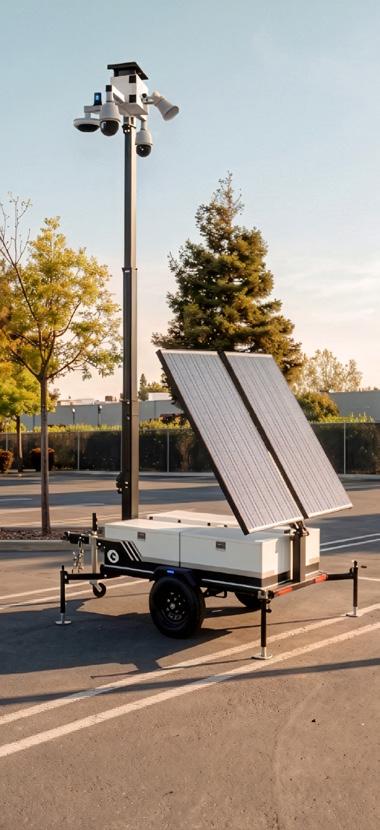
For AP teams, this reduces the time spent hunting through footage and increases the time spent acting on useful leads.
the front door and improving visibility in parking lots and other on-property areas.
For retail teams, that translates into practical outcomes: earlier awareness, stronger investigations, less manual work, and more informed responses. Instead of reviewing disconnected footage after an incident, AP teams can work from better intelligence earlier in the incident cycle.
Artificial intelligence is part of that value. Flock’s platform messaging highlights advanced AI and machine learning capabilities across the ecosystem, including Vehicle Fingerprint, NightVision, and FreeForm. FreeForm is especially relevant for retail because it helps teams search in plain language instead of relying on slower, filter-based workflows. It scans LPR and video networks (including, where enabled, shared devices) and supports shared camera search, VMS integrations, and real-time alerts.
For AP teams, this reduces the time spent hunting through footage and increases the time spent acting on useful leads.
Dependable technology alone is not enough. Retailers operate in a high-scrutiny environment. Legal and privacy review is rigorous. Brand risk can impact reputation. Public perception shapes brand trust. Every conversation about platform capability also becomes a conversation about governance, control, and accountability.
Trust cannot be treated as a side topic. It is a business requirement. Retail security leaders often need support from functions that define success differently than AP teams. Operations may focus on efficiency. Legal may focus on exposure. Privacy teams may focus on data use and retention. Communications and brand leaders may focus on reputational implications. If a platform cannot address those concerns
clearly, adoption slows down, no matter how strong the technology may be.
Flock’s Trust Hub reflects this reality. It’s a centralized external resource for trust and compliance information that customers can use to understand how the company operates. The broader trust and privacy resources now give customers a clearer starting point for conversations with internal partners about privacy, security, and compliance.
Just as important, Flock’s approach is built around a simple principle: accountable technology requires real limits, visible controls, and built-in guardrails. While policy provides a framework, trust is ultimately built through operational controls.
Trust is earned through the level of control a platform gives customers, not through promises.
Flock’s approach is increasingly centered on core principles that are paramount to retailers: customer ownership of data, control over access and sharing, timebound retention, auditability, oversight, and configurable guardrails.
In practice, retailers need answers to straightforward but critical questions: Who can access the system? What can be shared? How long is information retained? Can usage be reviewed later? Flock’s platform includes safeguards, such as administrator controls for usage and permissions, automatic deletion after thirty days by default, and the requirement of search reasons or case numbers to create an audit trail, helping shift the conversation from “interesting technology” to “responsible platform.”
It also changes how AP leaders talk about the program internally. Instead of asking legal or privacy teams to trust good intentions, they can provide specifics: how access is restricted, how retention works, how activity is logged, and where Flock provides transparency resources for review.
For AP teams, trust and compliance materialize when they are tied to usable tools.
Trust and compliance include access controls, sharing controls, audit logs and reporting, retention practices, and transparency resources like the Trust Hub, along with clear customer policies and oversight. These tools are essential because many AP leaders are building internal coalitions every time they bring forward a
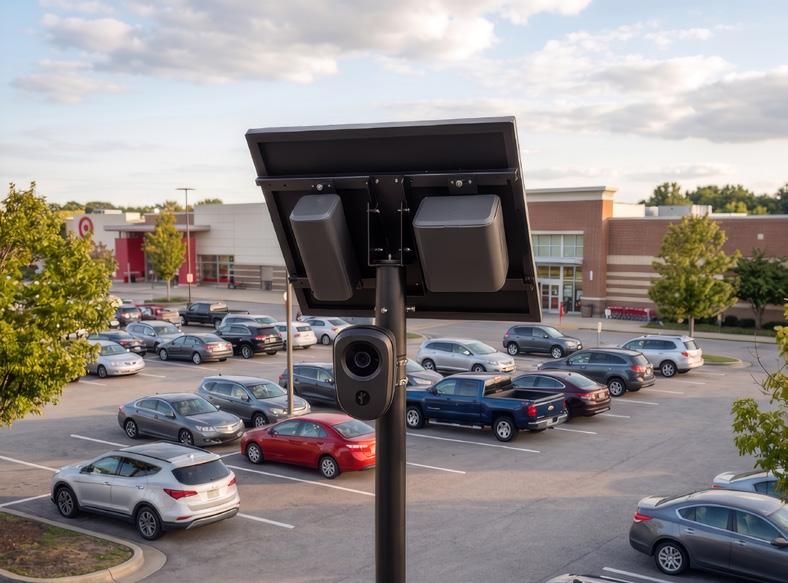
Flock technology can help teams share evidence with clearer controls and oversight.
new technology initiative. They need to explain what the system does, why it is appropriate, how it is governed, and what protections are in place.
The more visible those controls are, the easier it becomes to align with legal, privacy, compliance, procurement, and brand teams.
In retail, trust grows when it supports better outcomes.
First, Flock technology can improve perimeter awareness. Although many incidents begin before a subject enters a store, many retail security programs begin at a building’s entrance. Flock can extend visibility to the property perimeter, including parking lots and other common areas, giving teams more time to assess and respond.
Second, it improves case building. Examples include solving a $1.7 million gift card tampering ring, helping dismantle a multi-city ORC ring, and solving ORC and theft cases while recovering stolen vehicles in the first few months of deployment. Those stories show what
happens when visibility, evidence, and collaboration come together.
Third, Flock technology can help teams share evidence with clearer controls and oversight. Technology is easier to adopt when leaders can demonstrate that evidence is being used within defined policies, with clear oversight and auditability.
Retailers should not have to choose between advanced technology and responsible governance controls.
The platforms that win in retail will be the ones that deliver both. They will help AP teams move faster, build stronger cases, and work more efficiently. But they will also provide the transparency, control, and accountability needed to earn trust across the business.
That is where Flock is investing: product innovation, connected workflows, AIdriven efficiency, and a stronger trust framework that helps retailers adopt technology with confidence.
Adoption depends on what a platform can do and whether your organization can trust how it does it.
In retail, trust in practice is what turns innovation into adoption. Learn more at www.flocksafety.com.

R
etail loss prevention is at a turning point. For years, the industry has relied on siloed technologies, EAS at the door, cameras overhead, and inventory systems in the back office. Each plays a role, but none delivers a complete picture.
The challenge today is not just detecting loss, it is understanding what is happening in the moment with enough clarity to act.
At CONTROLTEK, we see loss prevention differently. It is not a stand-alone function. It is part of a broader operational strategy. The same data that reduces shrink can improve inventory accuracy, guide store execution, and enhance the customer experience.
That shift is being driven by sensor fusion.
Traditional EAS answers one question: Did something leave the store?
Sensor fusion answers a better one: what left, was it paid for, and what should happen next?
By combining RFID with POS integration, every item carries a unique identity that can be verified at the exit. When a product leaves, the system checks it against transaction data.
Now, instead of a general alarm, retailers gain precise insight:
l Paid items move through without disruption
l Unpaid items trigger targeted, informed alerts
l Teams know exactly what product is involved
This reduces false alarms, improves response, and gives associates the confidence to act.
It is the difference between reacting and knowing.
But the value goes further. Every exit event becomes operational data. Retailers can understand what products are leaving the store in real time and use that insight to trigger faster replenishment, reduce out-ofstocks, and maintain shelf availability.
It is not just about preventing loss. It is about keeping the store running at full performance.
The exit is critical, but the opportunity to stop loss starts earlier.
With RFID-enabled zonal tracking, retailers can monitor product movement across highrisk and high-value areas of the store.
This makes it possible to identify unusual activity, such as:
l Multiple high-value items removed at once l Rapid movement across zones
l Product appearing where it should not be
These signals create early awareness. Instead of waiting for an alarm at the door, store teams can engage sooner.
This is where loss prevention and customer service come together. A simple interaction can disrupt theft before it happens while maintaining a positive shopping experience.
At the same time, this visibility provides a clearer understanding of how products and customers move through the store. Retailers can identify high-traffic areas, adjust merchandising, and improve store layout based on real behavior, not assumptions. Sensor fusion allows teams to act earlier, with greater confidence and less friction.
No two retail environments are the same. Store formats, risk profiles, and operational priorities all vary. A one-size-fits-all solution does not work.
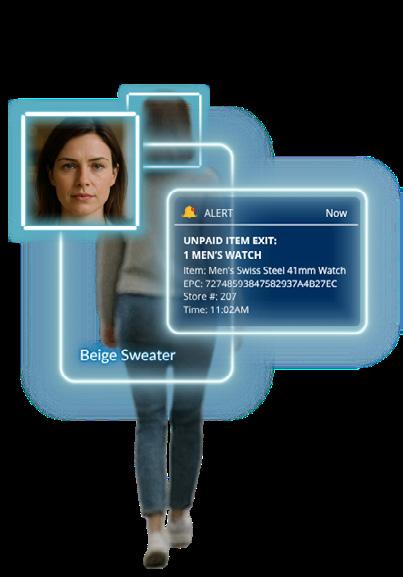
CONTROLTEK takes a technologyagnostic approach, enabling retailers to deploy the right combination of RF, AM, and RFID based on their specific needs.
This flexibility allows solutions to align with how each store operates, rather than forcing stores to adapt to the technology. It also ensures systems can evolve over time. As risk changes or operations scale, the approach adapts without requiring a complete reset.
The value is not just in the technology itself, but in how it is applied, integrated, and delivered in real-world environments.
At CONTROLTEK, we focus on where we deliver the most value, bringing technologies together and making them work in complex retail environments.
While we lead in EAS innovation and system integration, we partner with bestin-class manufacturers such as Zebra Technologies, Axis Communications, and Hanwha Vision to incorporate leading RFID and video capabilities into a unified solution.
This approach allows retailers to benefit from proven, high-performance hardware while relying on CONTROLTEK to connect those technologies into a cohesive system.
Our team includes one of the largest groups of Zebra-certified professionals in
the industry, along with deep experience deploying integrated solutions across thousands of locations. This ensures systems are implemented correctly, perform reliably, and scale effectively in live retail environments.
The result is a connected system where technologies do not operate in isolation, but work together to deliver clear, actionable insight.
One of the biggest challenges in retail is fragmentation. Systems operate independently, creating gaps in visibility and slowing decision-making.
Sensor fusion eliminates those gaps by bringing data together into a single, unified platform.
Through a centralized view, retailers can:
l See events tied to specific items
l Connect exit activity with in-store movement
l Link RFID, video, EAS, and transaction data
l Act quickly with clear, contextual insight
This unified view does more than support loss prevention. It enables better operational decisions across the store.
Retailers can analyze traffic patterns, understand peak hours, and adjust staffing levels accordingly. Labor can be aligned to actual demand, improving both efficiency and customer experience.
Instead of disconnected systems, teams gain a complete picture that supports both protection and performance.
The storefront is where detection, validation, and response converge.
CONTROLTEK’s SmartPost Z™ solution brings sensor fusion together in a single, integrated device.
By combining RFID, EAS, AI-powered video, and traffic insights, SmartPost Z™ delivers complete visibility at the most critical point in the store.
At the moment of exit, it does more than alert. It validates what left, connects it to transaction data, and captures the full context of the event.
This creates a clear, actionable picture that supports both immediate response and faster investigations.
It also provides a continuous stream of operational insight. Retailers can understand how many people are entering and exiting, how traffic flows throughout the day, and how that activity connects to product movement and store performance.
It is a modern approach to the front end, designed to replace fragmented systems with a unified solution.
The goal is not more technology. It is better outcomes.
A connected, sensor-driven approach allows retailers to operate with greater clarity and confidence. Instead of reacting to isolated events, teams can understand what is happening across the store and respond accordingly.
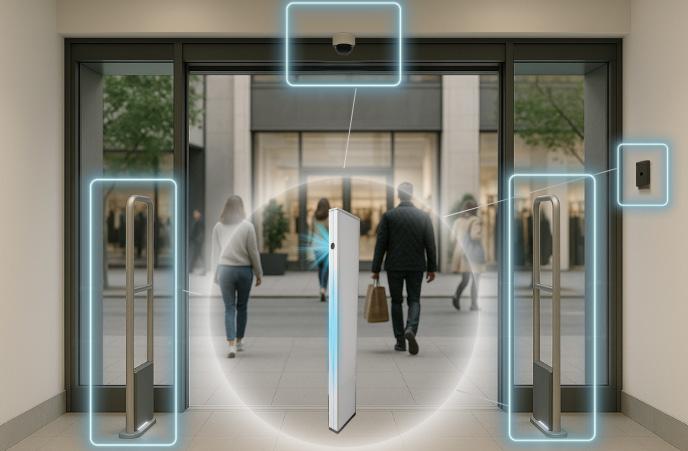
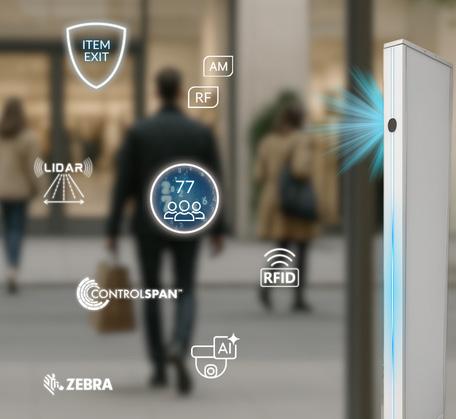
This shift supports stronger loss detection, better in-store execution, and a more consistent customer experience. It enables:
l More precise visibility into what is leaving the store
l Faster, data-driven replenishment decisions
l Clear insight into traffic patterns and store activity
l Smarter labor allocation based on real demand
l Fewer unnecessary disruptions for legitimate shoppers
The value comes not just from the technology itself, but from how it is implemented and used day to day. Systems that are thoughtfully deployed and properly integrated are what ultimately drive results in a live retail environment.
Loss prevention is evolving. Siloed systems and delayed insight are no longer enough.
The future belongs to connected environments where technologies work together, data is immediate, and decisions are informed.
Sensor fusion is making that possible today.
CONTROLTEK is helping retailers move from detection to decision, from reaction to control, and from loss prevention to full store performance.
Because when you can truly see what is happening, you can take control of what happens next. Learn more at www.controltekusa.com.
Workplace violence and aggression in retail are rising. The human cost is well understood. The financial cost rarely is. Reveal Media has built a free tool to help LP leaders put a number on it.
According to the NRF’s 2024 report on
The Impact of Retail Theft & Violence, over 90 percent of retailers report an overall increase in aggression since 2019, 73 percent say shoplifters are more threatening than in previous years, and 42 percent have experienced physical assaults on staff. The LPRC and Verkada’s 2025 State of Retail Safety survey found that roughly one in five US retail workers have personally experienced physical violence at work.
For many frontline workers, verbal threats, intimidation, and aggressive confrontations have become normalized— absorbed as an accepted pressure of customer-facing work rather than something worth reporting. A Perceptyx study found 61 percent of retail workers have recently dealt with an unruly or threatening customer, with over a third feeling physically unsafe. The volume of what workers absorb daily without it entering a formal record means the true scale of exposure is significantly higher than incident data typically reflects.
That normalization carries a financial cost. It compounds quietly across multiple budget lines and rarely gets attributed to its source.
The financial impact of staff violence and aggression is real, but it is distributed. Absenteeism sits in HR. Turnover costs are absorbed by operations. Reduced productivity after an incident is invisible
by definition—the worker is back on shift, but not fully present. No single budget line carries the total picture.
That is the problem Reveal Media’s Violence & Aggression Cost Calculator is designed to solve. The free online tool consolidates those dispersed costs
into a single annual figure, built from an organization’s own workforce data and grounded in sector-specific research. For those wanting a more accurate and tailored calculation incorporating more known inputs such as absence rates, incident severity data, and turnover
percentages, Reveal also offers a walkthrough experience.
Across both versions, six cost categories are used: incident management and lost time; absenteeism; presenteeism; abuse-linked staff turnover; indirect operational drag; and an optional shrink component. Industry defaults drawn from NRF research and BLS compensation benchmarks for US retail are preloaded, so organizations can generate a credible baseline estimate immediately. Those with internal data can refine further and even incorporate shrink into a more complete total retail loss calculation.
Presenteeism is consistently the largest cost driver in the model, capturing the sustained productivity loss from workers who return to the floor still affected by what happened to them. Turnover is typically the second largest. Neither appears as a violence-related line item anywhere in the business, which is why the aggregated figure tends to be new information for the finance and operational leaders who need to see it.
Scale and format both shape the output in meaningful ways, and this is where a calculator walkthrough with a Reveal expert comes into its own.
For a regional grocery or pharmacy chain with 15,000 frontline staff, the calculator estimates an annual cost of approximately $1.6 million, based on default US retail salary and incident assumptions. At that headcount the sheer volume of daily customer interactions drives a large incident base, and even relatively conservative assumptions about absence and attrition compound significantly. Turnover alone, at just a 2 percent per-incident quit probability against a $10,500 US retail replacement cost benchmark, accounts for around $630,000 of that total.
For a convenience store operator with 4,000 frontline staff across several hundred locations, the picture is different in character. Smaller teams, frequent lone working, and overnight shifts create an environment where per-worker exposure is among the highest in retail, and where the severity profile of incidents tends to be more weighted toward moderate and serious events. Robbery risk, isolation, and late-night confrontations with no backup are features of the environment, not exceptions to it. Running those dynamics
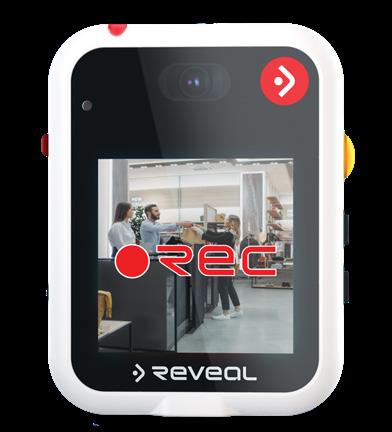
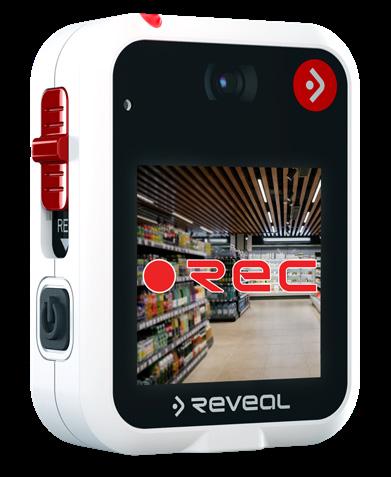
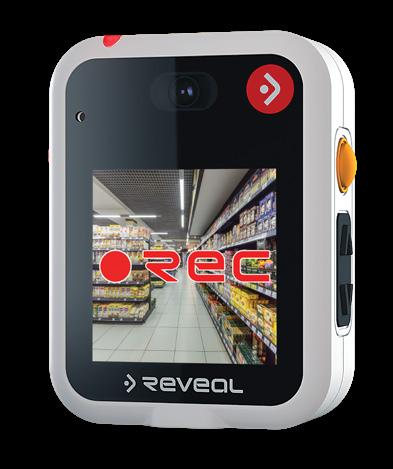
through the calculator at a severity mix that reflects c-store conditions produces an estimated annual cost of approximately $495,000. That is a lower absolute figure than the large-format chain, but the perworker cost is actually higher, at around $124 per employee compared to $108 across the grocery estate. For a format that already struggles with retention, that distinction matters.
With every calculation, a PDF report is generated that LP teams can bring directly into conversations with finance and operational leadership with a cost breakdown by category and framed around the organization’s own data rather than generic industry averages.
For teams building the case for investment in staff protection, the tool also allows them to model what a meaningful reduction in incident frequency would be worth financially. Deployment data from retail clients who have adopted Reveal body-worn cameras shows consistent incident reductions of 40 to 70 percent. These are outcomes specific to Reveal’s body camera programs where the cameras’ front-facing screens change behavior at the point of potential escalation. Aggressors who can see they are being recorded consistently de-escalate before incidents develop. Applied to the cost baselines the calculator generates, the savings that a Reveal deployment delivers are substantial, and the investment case is clear.
LP leaders have long been able to make the human argument for protecting their people. The Violence & Aggression Cost Calculator gives them the financial one.

Access the Reveal Violence & Aggression Cost Calculator to calculate your indicative cost at www.revealmedia.com/ violence-aggression-cost -calculator.
Want a walkthrough with one of our experts? Get in touch with the team at salesusa@revealmedia.com +1 888 269 9924 www.revealmedia.com/talk-to-our-experts.


This New Product Spotlight section provides readers with information on new products and services from leading retail asset protection solution providers. If your company is looking for new technology or solutions, please check with these vendors as well as the other advertisers throughout the magazine. Visit LossPreventionMedia.com for more information about these new offerings.
Axon Body Mini brings real-time recording and panic activation to frontline workers. Designed for enterprise environments, it deters incidents, livestreams to security teams, and captures evidence with one touch— helping staff stay safer, more confident, and more supported throughout every shift.


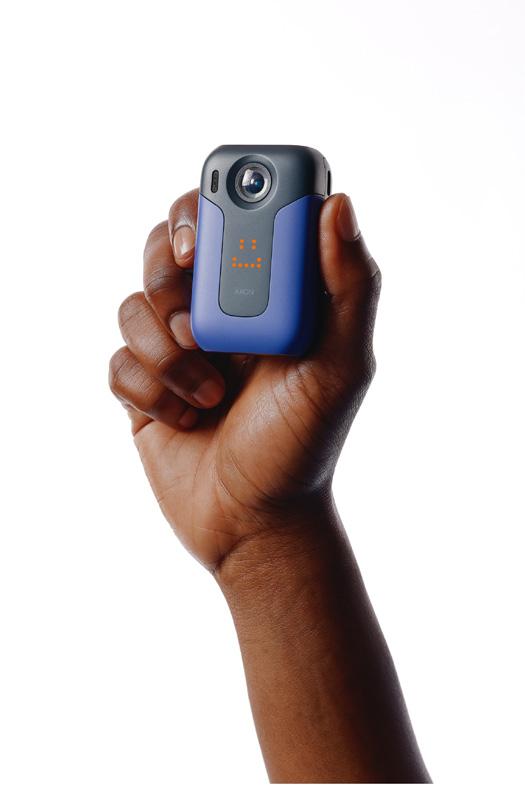
The Sloth Lock allows a single tether to hang independently in almost any location. The lock communicates with the tether base and the all-in-one decoder for fast deactivateand-release functionality. It offers discreet and flexible placement, compatible with Gen5 SR, Gen6 SR, and Gen6 SP Slide. For more information, contact us at info@cisssinc. com or call 772-287-7999. Booth #1202 at NRF PROTECT.
Alpha Zone 2.0 helps retailers protect high-value merchandise without disrupting the shopper experience. This zonal security solution uses a hub and tags to trigger alarms when items leave designated areas, are tampered with, or concealed, while automatically resetting upon return—reducing shrink and safeguarding inventory with minimal staff intervention.
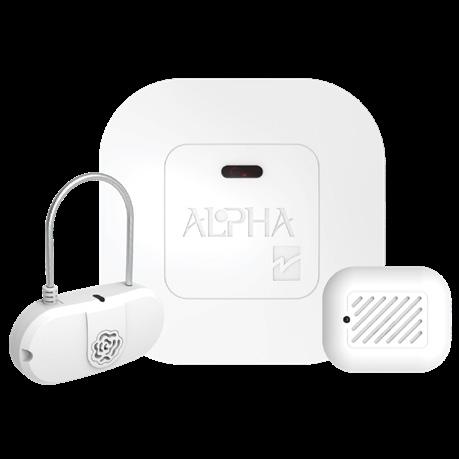





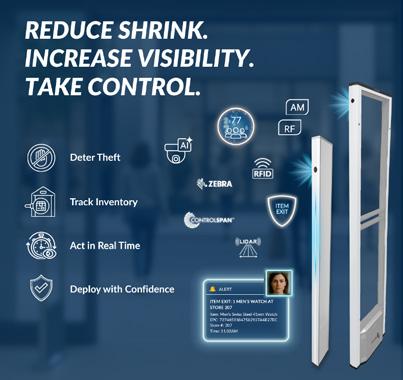
From the store floor to the supply chain, CONTROLTEK helps retailers reduce shrink, combat organized retail crime, and improve overall performance. By combining proven technologies with a practical, results-driven approach, we deliver solutions that strengthen visibility, enhance control, and support smarter decision-making across your entire operation.


Gatekeeper Systems’ Purchek® technology and FaceFirst AI-enabled face matching software do more than stop pushout theft—they uncover patterns, identify repeat offenders, accelerate case building, and empower retailers to respond proactively to ORC and violence. Let’s connect at NRF Protect: Booths 622 (Gatekeeper Systems) & 308 (FaceFirst) to learn more about how Gatekeeper Systems’ solutions can help protect your people, products, and profits.
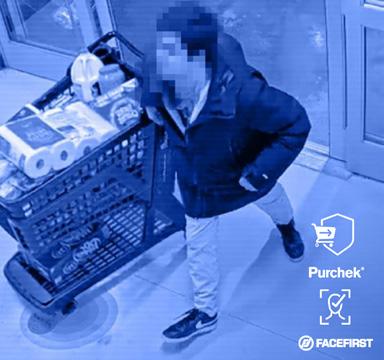


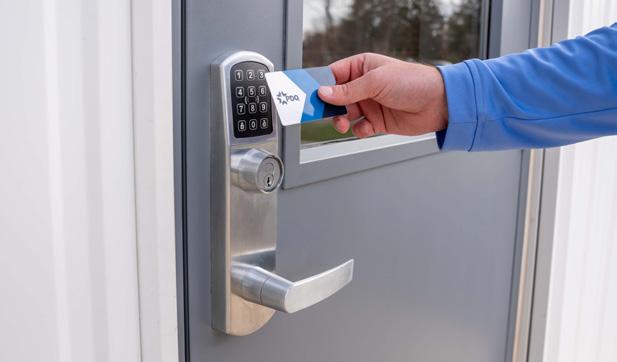

DEFENSELITE® AccessShield™ stands as the zenith of forced entry defense. Designed to effortlessly substitute standard entrance doorlites, it thwarts illegal access and smash-and-grab incidents. Offering a budget-friendly solution for retrofitting retail access points, AccessShield™ and AccessShield™BR minimize vulnerabilities, ensuring your premises are fortified and invulnerable. Available in forced entry and bullet-resistant options.

InstaKey invites you to enhance your access control with the all-new Spirit Series. Whether you prefer RFID, PIN code, mobile access, or key override, we’ve got the perfect solution for you. Available in leversets, deadbolts, mortise locks, and exit trims. Contact us to learn more at instakey.com/smart-locks.

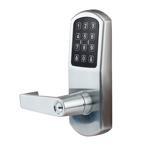


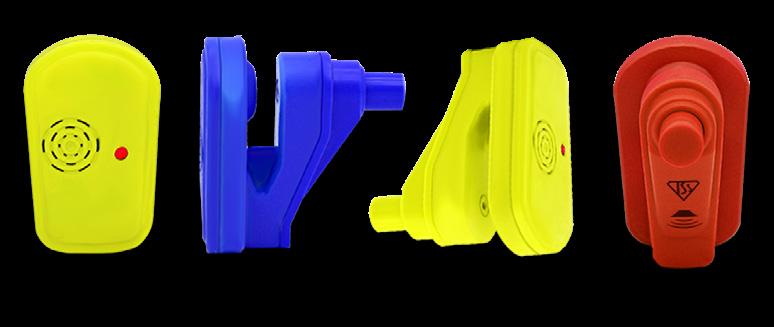
An alarming upgrade to our popular Concealed Pin Tag has arrived! The new Alarming Concealed Pin Tag adds even more security to our exceptionally effective solution. Retailers who have already realized the cost savings of the one-piece design can now benefit from additional deterrence as well. We also offer custom color options and branding.
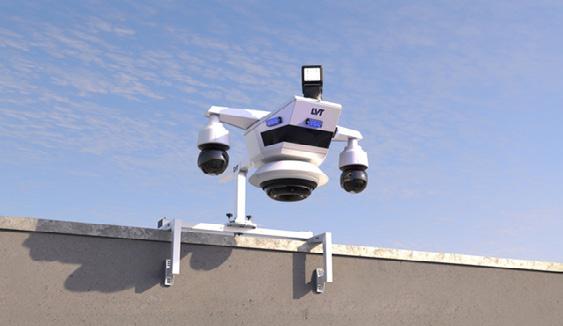
From MSUs to a fully connected ecosystem, LVT’s latest evolution combines advanced hardware with intelligent features to eliminate blind spots, deliver actionable intelligence, and create layered security across your operations. With additions like Surround, GuardGate, LPR, and more, gain the visibility you need across your enterprise to drive smarter, more informed decision-making. NRF PROTECT booth #1009.




How do you ensure your business keeps moving when incidents occur? Motorola Solutions’ Enterprise Resilience Platform empowers your store to focus on swift, coordinated action during disruptions. Maintain situational awareness, communicate effectively, and manage resources to minimize impact.
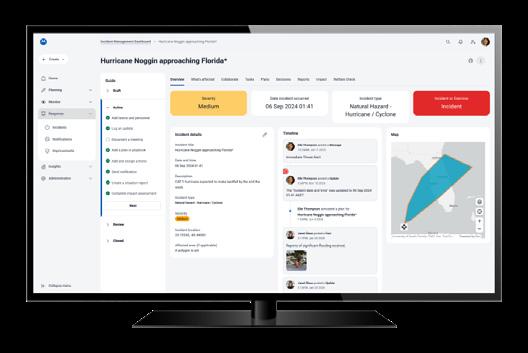


Before partnering with new vendors and suppliers, know the risks. SCOUT Business due diligence quickly screens business partners for fraud, criminal history, and misconduct—helping retailers avoid costly mistakes. Protect your supply chains and locations against untrustworthy partners with comprehensive due diligence that’s fast, thorough, and easy to use.


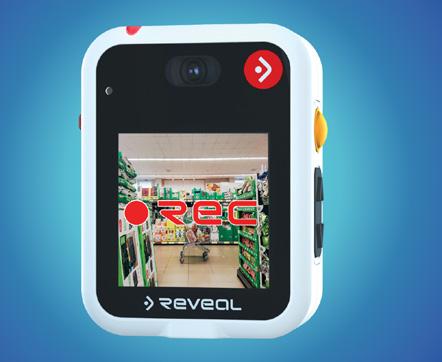
The R1 is the latest retail body camera from Reveal, purposefully designed to boost wearer safety. Compact yet powerful, the R1 offers a full-shift battery and pre-record buffer to capture footage before recording activation. A customizable front display supports overt recording messages or retailer branding.
As retailers battle repeat offenders while managing rising server costs, traditional, infrastructure-heavy security systems are becoming harder to justify. SAFR Guard introduces a modern approach to retail security, connecting prevention and investigations in one system. Now retailers detect patterns, reduce shrink, and act in real time without added complexity.

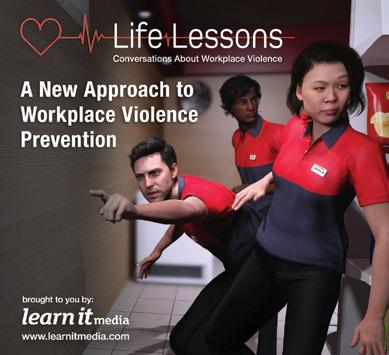



Are your profits going off the rails? Increase OSA with smarter, flexible protection and a frictionless customer experience. Double duty theft protection with the LynxLoc Flex and Rail Attachment. Designed to keep merchandise accessible while delivering discreet, tamper resistant security that helps keep products protected and securely in place.
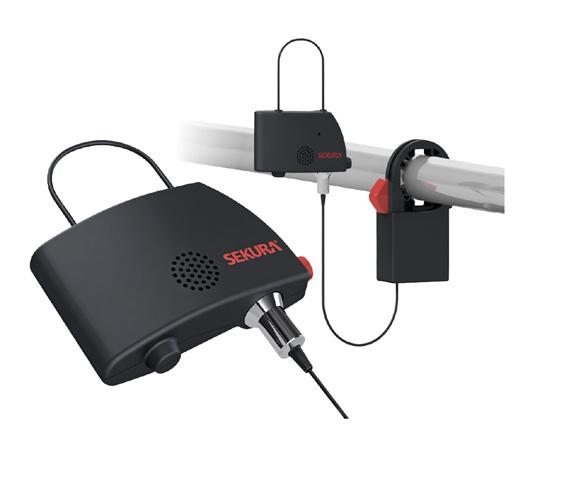


A series of conversation-based modules delivered in a cadence to keep safety discussions active and top of mind. By encouraging ongoing dialogue around workplace violence prevention, we help you build a culture where awareness, preparedness, and shared responsibility develop practical life skills that matter at work and beyond.


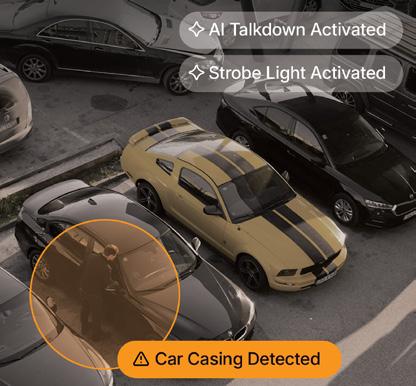
Spot AI turns retail cameras into AI teammates that help LP teams spot risk sooner and act faster. It deters suspicious behavior like loitering or vehicle casing outside with human-like, automated talk down, surfaces incidents like register theft inside, and delivers caseready evidence instantly for faster, more effective investigations.

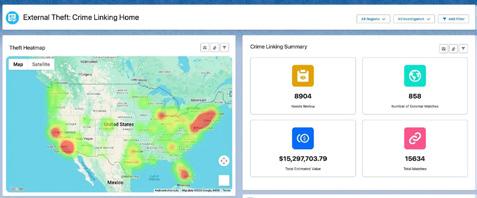
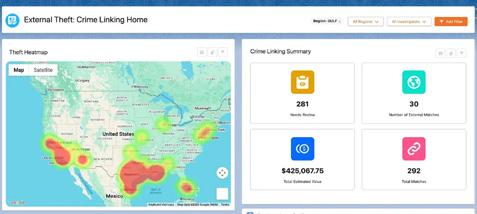
Surface patterns your investigators can act on, in under sixty seconds, by connecting suspects across your entire fleet and the cross-retailer network.




The Integritus Group delivers Sharpvue Mobile Surveillance Trailers—made in the USA with four-day continuous power, true unlimited 5G/Starlink connectivity, and instant cloud video access. Customizable, VMS-compatible, and cost- effective, Sharpvue provides enterprise-grade protection for parking lots, remote sites, and more. Trusted by asset protection leaders to stay ahead of threats.


The AXIS D4200-VE is a multi-purpose network strobe speaker that provides both visual and audio alerts. This durable, outdoor-ready device offers customizable strobe lights with multiple colors and supports live or prerecorded audio for warnings, announcements, and background music. It includes built-in two-way audio and analytics to detect sounds. It can be powered via PoE and can also provide power to a network camera to provide proactive surveillance for stores.


























s staffing and security woes become increasingly difficult for retailers, the promise of autonomous solutions becomes more compelling.
Don’t miss any of our award-winning magazines. Subscriptions are free to retail professionals, law enforcement, and solution providers serving the loss prevention industry in the US and Canada. Have each issue of the magazine sent to your home or office by simply going to LPMsubscription.com or scan the QR code.
Want to have magazines sent to your entire organization?


Provide a list or handout magazines to your office or store associates. Bulk quantities of the magazine can be requested by emailing circulation@LossPreventionMedia.com. We will contact you to work out the best method to fit your organization.
Subscribe to our Digital Channel for Daily and Weekly News and Information
Our digital channel offers original articles written by LP Magazine staff, thought-leadership contributions from industry experts, breaking news, podcasts, and much more. Stay in-the-know by adding your email address to our digital channel database. Go to LossPreventionMedia.com/email or scan the QR code.
Circulation Customer Service

For help with any subscription issue, including address changes, email changes, or cancellations, contact circulation@LossPreventionMedia.com.


Brittain is the editorial director for LP Magazine. Prior to joining the magazine, he was director of learning design and certification for Learn It Solutions, where he helped coordinate and write the online coursework for the Loss Prevention Foundation’s LPC and LPQ certifications. Earlier in his career, Brittain was vice president of operations for one of the largest executive recruiting firms in the LP industry. He can be reached at JacB@LossPreventionMedia.com.
As a service industry, loss prevention performance is built on flexibility. Reaching far beyond the traditional roles that marked the early years of the profession, we have carved out a deeper and more influential function as part of the business of retail by keeping our minds open to new and different ways of approaching the responsibilities that help keep our stores safe, our products available and protected, and our customers happy.

Retail is a world where the ground is constantly shifting. Economic challenges, customer demands, and fierce competition require innovation and a fluid mindset.
Retail is a world where the ground is constantly shifting. Economic challenges, customer demands, and fierce competition require innovation and a fluid mindset. Roles are evolving and responsibilities mounting as we are continuously looking to do more with less. As a result, successful career development is directly impacted by the capability to learn more about the business in every way—as a practitioner, as a partner, and as a leader.
This involves more than just a willingness to adjust—it requires the ability to pay attention. We can’t simply wait and react to change when it hits us in the face. We must look at ourselves as well as the world around us and always look for ways to get better at what we do.
Knowledge is power, but perspective gives that knowledge greater meaning. Having the capability to see things from different points of view strengthens our foundation, making us better partners and more effective decision makers. It shows humility and demonstrates respect. This does more than open doors to new information; it opens opportunities for new ways to put that information to good use.
As the profession continues to move forward, LP leaders must shift their professional expectations. Leaders will be asked to wear many new and different hats to keep pace with the changing needs of the business. It’s just as important for us to understand that all our retail partners are following the same tracks, with new demands, new challenges, and new responsibilities. And with all these moving parts, it’s important to work together to keep things running smoothly. The more we
learn about all the moving parts, the greater value we offer to the business as a whole—both as part of a team and as part of the leadership of the organization. High performing leaders learn that there are different ways to address this aspect of their professional growth and development. Some choose to take the path of formal learning through academic classes, specialized programs, and professional certifications. Others spend valuable time shadowing their operational peers throughout the organization to gain essential insights and fresh perspectives. Smart leaders learn to do both. But there are also those that take a more aggressive path.
Several of the strongest and most successful leaders in the LP community have made long-term professional commitments by stepping away from their position and into a different role within the organization. Whether exploring opportunities in operations, human resources, supply chain and logistics, information technology, or some other professional discipline within the retail structure, they share their talents and learn new skills that take their experience, expertise, and value to new heights.
Often this is simply a step sideways to take two steps forward, and many return to LP with a new perspective and fresh outlook. Some choose to stay in the new role but bring a different understanding of the LP function to their new position. Either way, this career decision adds value to the organization and significantly expands the career opportunities for those that follow the journey. When considering your own career growth, don’t limit your options. Whatever decision you may make, always look for ways to turn limitations into opportunities. Reach out to your partners in retail—especially if it means stepping outside of your comfort zone. Consider the value you can bring by asking questions and learning something new. Develop your skills as both a teacher and student of retail. Expand the way you think to improve both your contributions and your opportunities. Professional credibility is built on a mountain of talents— make sure you use them all. l


A retailer’s biggest risk isn’t just theft. It’s not having the right protection in place when it matters. When partners fall short, stores are left exposed.
That’s why for 50 years, CONTROLTEK has focused on one thing: delivering, consistently, at scale, without compromise.
Because your protection is only as strong as the partner behind it.

Trusted for 50 Years Proven