









By Amber Taylor

There are few places where American history comes alive quite like Flint, Michigan. As the birthplace of General Motors and one of the communities that helped put America on wheels, Flint has long stood as a symbol of innovation, craftsmanship, determination, and pride.
This summer, Back to the Bricks® invites car lovers, families, volunteers, and spectators from across the country to celebrate both our incredible automotive heritage and a once-in-a-generation milestone: the 250th Anniversary of the United States of America. From Tuesday, Aug. 11, through Saturday, Aug. 15, Main Event Week returns with five unforgettable days of classic cars, live entertainment, family fun, cruising traditions, and patriotic celebration.
"Together, we will honor the nation that built the automobile and celebrate the city that helped put America on wheels," said Amber Taylor, president of Back to the Bricks®. Main Event Week kicks off Tuesday, Aug. 11, with Bricks Flicks, presented by Huntington Bank, at the historic US 23 Drive-In. Gates open at 4 PM for an evening of family fun featuring live music from Dave Lagness, entertainment from DJ Scott Kool, RC car races for kids, vendors, concessions, beautiful collector vehicles, and this year's featured movie, F1, shown at dusk.
On Wednesday, Aug. 12, the celebration rolls into Grand Blanc for the popular Roll On In event at Grand Blanc High School, presented in partnership with the Grand Blanc Chamber. This community favorite features hundreds of classic vehicles, food trucks, vendors, live entertainment, and family activities.

Wednesday and Thursday, Aug. 12 and 13, the evenings will bring back one of Michigan's largest cruising traditions: the legendary Back to the Bricks® Rolling Cruise. From Downtown Flint through Burton and Grand Blanc, thousands of collector cars will travel Saginaw Street as spectators line the route to cheer, wave, and enjoy the sights and sounds of automotive history in motion. The popular Mega Site at Saginaw and Hemphill will once again serve as a destination along the cruise route, offering live entertainment, sponsor displays, automotive vendors, food vendors, Back to the Bricks® merchandise, and family friendly activities.
"It is more than a cruise. It is a tradition, a reunion, and a celebration of the people who keep automotive history alive," said Kevin Murphy, chairman of Main Event Week.
Friday night belongs to Downtown Flint as the annual Cruise N Concert fills the streets with cars, food, music, and energy. Beginning at 3 PM, visitors can enjoy downtown restaurants, local businesses, vendors, food trucks, and collector vehicles throughout the city. At 6 PM, the streets become one enormous outdoor concert venue. The evening opens with Allentown – A Billy Joel Tribute, followed by Lookin' Back – A Tribute to Bob Seger, celebrating the 50th Anniversary of Bob Seger's iconic Night Moves album.
Then comes Saturday: the grand finale. On Saturday, Aug. 15, Downtown Flint will welcome thousands of collector vehicles for the Back to the Bricks® Main Event, one of the nation's premier automotive gatherings.

The day begins with a moving Opening Ceremony honoring veterans, active-duty military personnel, first responders, and those who made the ultimate sacrifice in service to our country. New this year, Back to the Bricks® will recognize and honor its Veteran of the Year, celebrating a local veteran whose service and dedication exemplify the very best of our community.
As America celebrates its 250th birthday, this year's ceremony carries even greater meaning. It is a reminder that the freedoms we enjoy today were earned through courage, commitment, and sacrifice.
Following the ceremony, Downtown Flint comes alive with spectacular collector vehicles, feature displays, automotive vendors, sponsor exhibits, Miss Back to the Bricks, the Swap Meet, the FREE Car Sales Lot, food vendors, live entertainment, Automotive Heritage displays, and activities for the entire family.
This year, everyone is invited to become part of the celebration. Decorate your collector vehicle with American flags. Wear your favorite patriotic apparel. Show off your stars and stripes. Then, on Saturday, help turn Downtown Flint into a sea of red, white, and blue.
From the first movie under the stars on Tuesday to the final cruise through Downtown Flint on Saturday, Main Event Week 2026 promises five extraordinary days of cars, music, friendships, patriotism, and community.
Join Back to the Bricks® as we celebrate America 250 — one classic car, one family, and one unforgettable memory at a time.


Isure hope everyone is enjoying this Michigan summer as much as I am. As I write this column, we’re just past the Fourth of July celebrations and appreciating the fact that this beautiful country is now 250 years old. My husband and I were fortunate to be invited to two get-togethers on Lake Fenton on July 4. One party was filled with young families and children enjoying the lake, while the other reunited old friends. Both were equally wonderful. We ended the evening on our patio, taking in the fireworks all around us. We’re especially grateful that our dog doesn’t pay attention to the loud booms.
As you’ll notice in our Can’t Miss List on page 50, August is jam-packed with fun events for the whole family. From free concerts in parks across the county to Back to the Bricks events and Tune Up Parties, there are plenty of activities to enjoy. You’ll also want to check out the 14th Annual Flint Drop Fest, Flint ArtWalk, the 49th Annual HAP Crim Festival of Races, The Ally Challenge at Warwick Hills, and Genesee County Day at Crossroads Village & Huckleberry Railroad. There’s no room for boredom in August. Be sure to check out My City’s Children and Teens’ Health section, including an excellent nutrition article by Dr. Shan Jackson. Another article encourages parents to limit their children’s screen time. It probably wouldn’t hurt parents to cut back on their own screen time, either. If you haven’t seen Toy Story 5 yet, it touches on this topic while providing plenty of entertainment for the kiddos.
My City writer Keegan Deloney highlights the many milestones school districts across Genesee County are celebrating in our Education section. It’s a great read.
Gary Fisher, a My City writer and president of the Genesee County Historical Society, shares the highlights of the GCHS Heritage Day Dinner. You won’t want to miss his story or the accompanying photos.
My City writer Mark Spezia takes an in-depth look at Addyson Stiverson, a student athlete with an incredibly bright future. Mark does a wonderful job showcasing her accomplishments.
Our August issue also includes My City’s Student Standout, Love Story, and columns from our talented regular contributors. I always look forward to what our writers have to say.
August also brings Michigan’s Primary Election on Aug. 4. Be sure to make your voice heard by getting out to vote. The primary determines which candidates advance to the general election in November and includes races for Governor, U.S. Senator, State Senator, Representatives in Congress, delegates to the county convention, District Court judges, and more. Registered voters will also decide several local proposals.
Sharon Stone Editor-in-Chief
Fenton’s
810.629.8000
Publisher
Laura Constable
Editor-in-Chief
Sharon Stone
Freelance Writers
Keegan Deloney
Mark Spezia
Contributing Writers
Brice P. Carter
Dr. Christopher Douglas
Gary Fisher
Dr. Shan Jackson
Alexandria Nolan-Miller
Noah Morgan
Mark Rummel
Leslie Toldo
Shannon White
Stacy Sawyer
Wes Morris
Contributing Artist Design2pro
Accounting/Circulation
Carolyn Golota
Account Executive
Terese Allen

ISSN#1559-3436 is published monthly by My City Magazine, 1032 N. Leroy St., Fenton, MI 48430. Canadian Mail Agreement #41971515. For back issues, inquire for availability. Editorial Correspondence: Address product information and inquiries to: Editorial Department, My City Magazine, 1032 N. Leroy St., Fenton, MI 48430, phone 810.215.3900. To authors, photographers and people featured in this publication: All materials, articles, reports and photographs in this publication are the property of My City Magazine and cannot be used without written permission. The opinions and conclusions recited herein are those of the respective authors and not of My City Magazine. My City Magazine is not responsible for returning unsolicited manuscripts, photographs or other materials. Every effort will be made however, to return rejected manuscripts, etc., if they are accompanied by sufficient firstclass postage, but the Publisher will not be responsible for any loss of such material.






For more than a century, Michigan Lumber Company has supplied quality building materials to contractors, builders and homeowners throughout midMichigan. Founded in 1916, the third-generation, family owned company is celebrating 110 years in business while continuing the traditions that have defined it for generations.
Helping lead that legacy is General Manager Matthew Paruch, whose career in the building materials industry spans more than three decades. Matthew began his career in 1989 at Churches Lumber in Auburn Hills. Five years later, he joined Erb Lumber as a driver, steadily advancing into operations and sales positions at several locations throughout the Detroit area. When his branch closed in 2004, he accepted a position with a millwork manufacturer in northern Oakland County.

Like many in the construction industry, Matthew’s career took an unexpected turn during the housing downturn in 2008. He returned to school, earned a degree in radiological physics and began working at Pontiac Osteopathic Hospital, now McLaren Oakland.
But the lumber business never stopped calling.
In 2013, Matthew learned of a part-time opportunity with his former employer, Churches Lumber. While balancing both jobs, he quickly realized where his passion truly belonged. “At that time, I realized how much I missed the building materials industry,” he recalled. “I left Pontiac Osteopathic Hospital and returned to Churches full time.”
Another opportunity came along in 2018 when Matthew became General Manager of Carter Lumber’s growing door and millwork distribution operation

IT HAS BEEN AN ABSOLUTE HONOR LEADING MICHIGAN LUMBER INTO ITS SECOND CENTURY AT OUR FLINT LOCATION ON CLIFFORD STREET, WHERE THE COMPANY HAS OPERATED SINCE 1916.”
— Matthew Paruch
in Lansing. Two years later, he accepted the position with Michigan Lumber Company, bringing him closer to home and to what he describes as a more personal, family oriented business under the ownership of Gerry Haan.
“It has been an absolute honor leading Michigan Lumber into its second century at our Flint location on Clifford Street, where the
company has operated since 1916,” Matthew said.
That family atmosphere remains one of the company’s greatest strengths. Yard Supervisor Tommy Howay has been with Michigan Lumber since 1988 and represents the third generation of his family to work for the company. In the millwork department, Harvey and Chris Jamick continue another

family tradition as father and son, crafting custom doors and moldings — a specialty Michigan Lumber has proudly offered for 110 years.
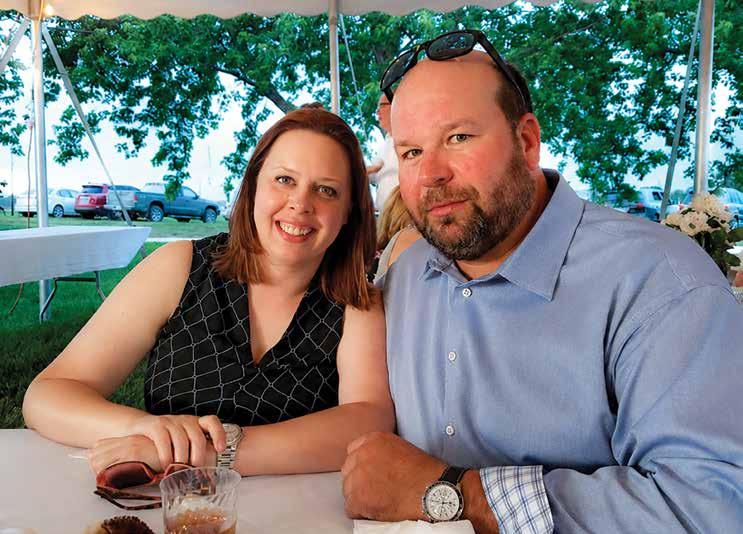
Matthew says that commitment to family extends beyond the company’s history. “The family tradition carries on by bringing my oldest son, Jeffrey, into the fold during his summer breaks from school,” he said.
As Michigan Lumber celebrates 110 years of serving the community, its enduring success is rooted in the same values that have guided the company from the beginning: family, craftsmanship, quality service and a commitment to the people of mid-Michigan.
Matthew took a few minutes from his busy schedule to answer the following questions for My City Magazine.
A bass player in a rock band. At a young age, I didn’t have the confidence to be the front man, but that eventually changed.
Baseball. I enjoy watching the game and attending Detroit Tigers games whenever I can. When I was younger, I spent many nights playing in softball leagues with friends and played baseball throughout my school years.
CELEBRATING 20 YEARS OF MARRIAGE TO MY WIFE, WHICH IS A MIRACULOUS ACHIEVEMENT.

Raising my two children, Jeffrey, 19, and Jacob, 14, alongside my wife, Lyndsay. Ensuring we raise grounded, well-rounded and confident children is our first job as parents and the most important job I’ll ever have.
Celebrating 20 years of marriage to my wife, which is a miraculous achievement. In my early 20s, I couldn’t imagine myself getting married. It’s amazing how much your life can change from your original plan. One minute you’re thinking you’ll be a bachelor for life; the next, you’ve been married for 20 years and have two children. God has a plan — listen.
Golf. Although I have a lot of room for improvement, I always enjoy getting out on the course.
Put in the work and never stop learning. Don’t try to be someone you’re not. A strong work ethic is something I strive to instill not only in my children, but also in my team at Michigan Lumber Company. First and foremost, you have to do the work. Show up, be present and give it your best.
I love boating, snowmobiling and cats ... not necessarily in that order.

Genesee County Historical Society honors six extraordinary individuals whose achievements continue to inspire their hometown while celebrating 113 years of preserving local history
BY GARY FISHER PHOTOS COURTESY OF GENESEE COUNTY HISTORICAL SOCIETY

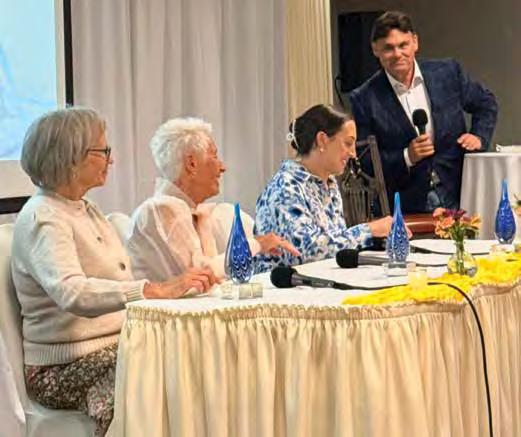
On June 12, the Genesee County Historical Society (GCHS) held its annual Heritage Day celebration. The GCHS has been an integral part of preserving Genesee County history for 113 years. Originators and contributors have included Charles Stewart Mott, J. Dallas Dort, Walter Chrysler, and Charles Nash, among many other notables.
The Heritage Day event is not only a time to reflect on the long history of the GCHS, but also an opportunity to recognize leaders who have achieved success and shined a positive light on Genesee County while making an important impact in their chosen endeavors. These individuals are recognized as Genesee County History Makers and inducted into the Genesee County Historical Society Hall of Fame during the event.
Past inductees include Reggie Williams, NFL “Man of the Year” and chief innovator of the Walt Disney Wide World of Sports at Disney World in Orlando, Florida; Pat McInnis, co-founder of Quicken Loans and creator of Fathead; Darryl “D.J.” Johnson, Flint basketball legend, Michigan State University standout, and NBA and international professional basketball player; Pete Flanders,
legendary disc jockey, entrepreneur, and impresario; longtime Congressman Dan Kildee; Exact Sciences (Cologuard) CEO Kevin Conroy; Flint’s first female professional basketball player, Linnell Jones McKinney; and, in memoriam, “Wild” Bob Bur-
man, race car driver for the Buick Racing Team and member of the Motorsports Hall of Fame. This year’s event was held at the Genesys Banquet Center in Grand Blanc before a capacity crowd, and it was the biggest Heritage Day celebration yet in a variety of ways.
The annual meeting for members kicked off the proceedings, as usual, with GCHS business and an update on the Saginaw Street Arches revitalization project. The famous arches are owned by the GCHS, and the three-year restoration project is winding down with


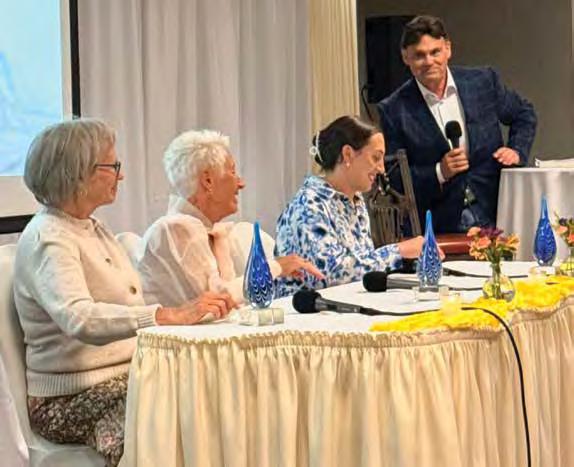

repairs, maintenance, and preservation work nearing completion.
Following a terrific dinner and to kick-start the History Maker program, always the “meat and potatoes” of Heritage Day, the audience was greeted by United States Secretary of Health and Human Services Robert F. Kennedy Jr., who joined via Zoom with a special message of congratulations, support, and encouragement for the GCHS, Genesee County, and the History Maker honorees.
The theme for this year’s event was Health and Fitness = Strong Communities, and each honoree embodied that message.
Then it was time for the History Maker honorees to take the stage, with this author serving as moderator and GCHS president, always the most enjoyable part of the evening.
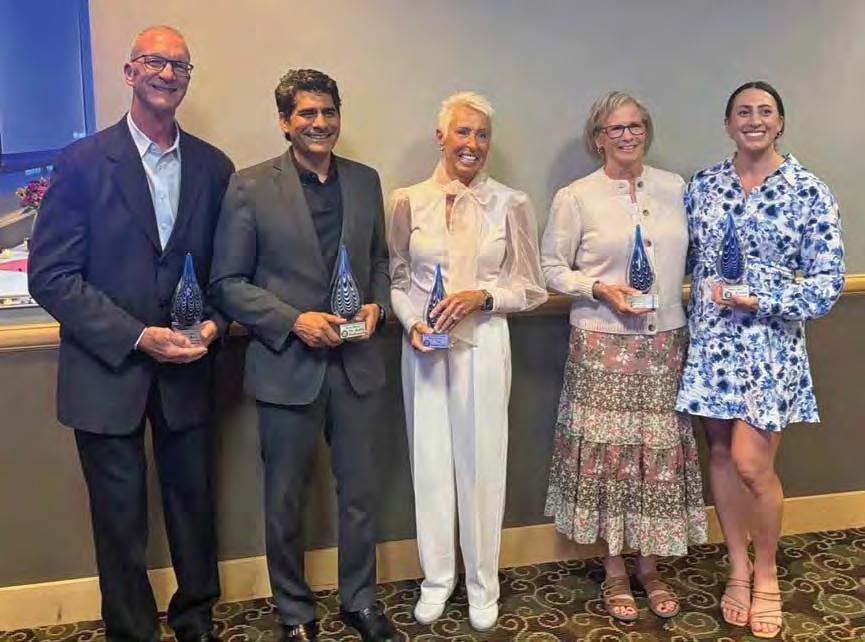
The 2026 History Maker honorees and Hall of Fame inductees were an estimable group with world-class credentials:
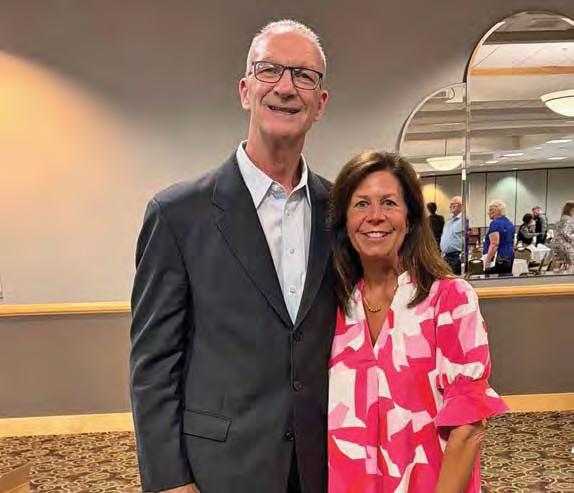
The class was headlined by Ken Morrow, a member of the 1980 “Miracle on Ice” Olympic gold medal-winning team and a four-time Stanley Cup champion with the New York Islanders. Morrow was born and raised in Flint, growing up on Kellar Avenue, where he learned to play hockey. He credits his blue-collar mindset to his Flint childhood, where he honed his skills on local outdoor rinks and through the Greater Flint Hockey Association at the IMA Ice Arena. His family later moved to Davison, where he graduated from Davison High School while focusing on travel hockey before becoming Bowling Green’s first hockey All-American and the 1979 NCAA Player of the Year. During his appearance, the final minute of the legendary 1980 U.S. vs. Soviet Union game was replayed, culminating with Al Michaels’ iconic call: “Do you believe in miracles?” It was an electric moment, both in 1980 and once again at Heritage Day. Morrow is a member of the U.S. Hockey Hall of Fame.
One of the most dominant track cyclists in American history, Sue Novara Reber was born and raised in Flint. A Flint Northwestern graduate, she became the youngest woman ever to win the World Sprint Championship at age 19 and repeated the feat in 1980, ultimately earning seven medals at the UCI Track Cycling World Championships. She also won U.S. National Sprint Championships in 1972, 1974, and 1975, and held the American record in the 200-meter sprint. Her success continued into the 1980s as she won multiple stages of the Tour de France Féminin. After narrowly missing the U.S. Olympic Team in 1984, she coached the U.S. Women’s National Team from 1986 to 1988. She is a member of the U.S. Bicycling Hall of Fame.
President of the American Medical Association, Dr. Bobby Mukkamala is a graduate of the University of Michigan’s accelerated medical program and a Powers Catholic alumnus. Today, he is a
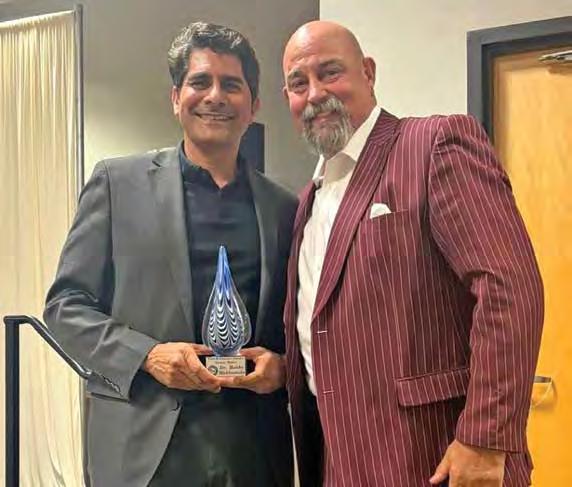
highly respected otolaryngologist and national health care leader dedicated to medicine and the revitalization of his hometown of Flint. During the past 25 years, he has become a cornerstone of the Greater Flint medical community. His personal experience following a brain tumor diagnosis has made him a passionate advocate for medical research and the advancement of genomic testing. That leadership has extended to the national stage, yet he continues bringing his knowledge,
connections, and leadership home to Flint and Genesee County.
A Grand Blanc High School graduate, Geena Gall Levoe was an elite American middle-distance runner, member of the 2012 U.S. Olympic Team, and University of Michigan track standout. She is one of the greatest female track athletes in the history of Flint, Genesee County, Michigan, and arguably the nation. Born in Flint, she initially excelled

in basketball before turning her focus to track. In high school, she won three consecutive national championships while setting a longstanding record in the 800 meters. At Michigan, she earned All-American honors and captured 10 Big Ten titles, including back-to-back outdoor championships in 2008 and 2009. As a member of Michigan’s famed “Fab Four” relay team, she helped set two collegiate records at the prestigious Penn Relays. Gall Levoe became one of the youngest inductees into the Greater Flint Area Sports Hall of Fame.
One of the most prolific athletes ever produced by Flint and Genesee County, Pam Stockton Brady is arguably the greatest female badminton player in American history. The Flint Southwestern graduate used her exceptional court sense and shot-making skills to help transform Flint into the undisputed badminton capital of the United States during the 1970s. Her remarkable career includes 20 U.S. National Championships between 1972 and 1985, 24 National Junior Championships, the South African Open singles championship, a Women’s Doubles World Championship, and three consecutive Uber Cup captaincies between 1971 and 1981. Her dominance was so complete that she failed to win a national championship only once between 1965 and 1983, missing 1975 following the birth of her daughter. Her coaching and mentorship led to hundreds of badminton success stories as she and her mother, Lynn Stockton,


conducted clinics and organized leagues throughout the 1970s. She is a member of the U.S. Badminton Hall of Fame.
A Flint Central graduate, Jim Ananich has served as a teacher and education coordinator before entering politics in 2005 as a member of the Flint City Council, where he served for four years. He was elected to the Michigan House of Representatives in 2010, followed by a 2013 special election victory to the Michigan State Senate. In 2015, he was elected Senate Minority Leader, a position he held until 2023, becoming the first person in Michigan’s termlimit era to lead a Senate caucus multiple times. Today, he serves as president and Chief Executive Officer of the Greater Flint Health Coalition, a university lecturer, and chair of the Michigan Gaming Control Board.
Gary L. “Fish” Fisher is President of the Genesee County Historical Society. Born and raised in Flint, he has lived in the area most of his life and his family has been a part of the Flint area for over 115 years. His fascination with the history of the city has existed as long as he can remember. In addition to writing, he is the President of G.L. Fisher Capital Management, LLC an investment and financial planning firm he founded in 1992. He asserts that Flint has produced the best cars, athletes and coney islands the world has ever known – and the toughest people! Fisher can be reached at ply2win2006@aol.com.


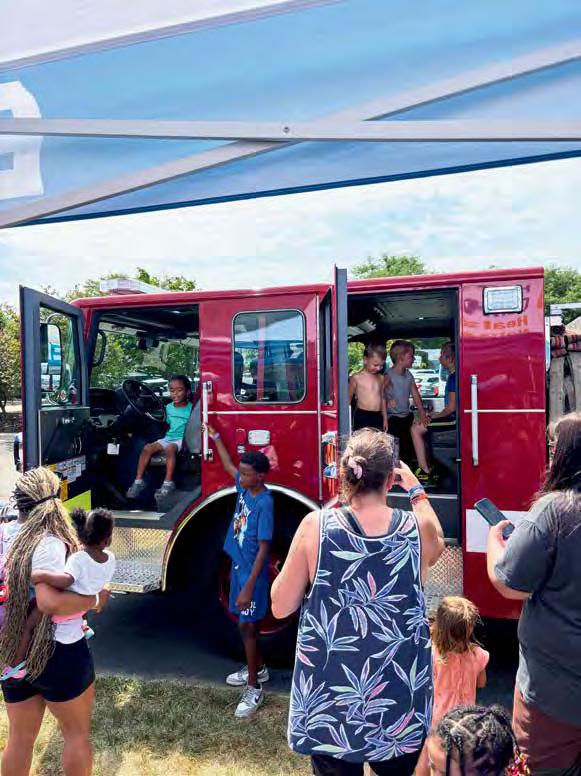
HOPE & HEALTH DAY
MONDAY, AUGUST 3
Hamilton-Flint 812 Root Street, Flint 10:00AM - 1:00PM
Lunch, Resources, Personal Needs & more!
FAMILY FUN FEST
TUESDAY, AUGUST 4
Hamilton-Whitmore Lake 10 Jennings Road, Whitmore Lake 10:00AM - 1:00PM
Inflatable Games, Kona Ice, Resources & more!
HEALTHY HARVEST
WEDNESDAY, AUGUST 5
North Pointe Clinic 5710 Clio Road, Flint 10:00AM - 1:00PM Farm Fresh Produce Give-A-Way, Fun Activities & Kona Ice!
HEALTHY FUTURES
THURSDAY, AUGUST 6
Burton Campus
G-3375 S. Saginaw Street, Burton 10:00AM - 1:00PM
Inflatable Games, Backpacks, Kona Ice & more!
FAMILY FUN DAY
FRIDAY, AUGUST 7
Hamilton-Main
2900 N. Saginaw Street, Flint 10:00AM - 2:00PM
Inflatable Games, Lunch, Kona Ice, Community Resources & big prizes!





















Over the past century, schools have changed in ways that are both visible in the hallways and invisible in the hearts of the communities they serve. What was once a collection of one-room schoolhouses scattered across rural landscapes has evolved into complex systems of education, technology, and community support. Yet despite dramatic changes in structure, curriculum, and tools, the core purpose of schools has remained steady: to educate children and prepare them for the future while strengthening the communities around them.
A hundred years ago, many schools were simple wooden buildings where one teacher might instruct students of all ages in the same room. Lessons centered on reading, writing, arithmetic, and practical skills needed for farming or trade. Attendance could be irregular, and resources were limited. But even then, schools were more than academic spaces. They were gathering places. Town meetings, social events, and community discussions often took place in the same rooms where children learned. Education and community life were deeply intertwined.
As the 20th century progressed, schools expanded in size and scope. Consolidation

brought smaller rural schools together into larger districts, allowing for more specialized teachers, broader curriculum offerings, and improved facilities. Subjects like science, literature, foreign languages, and the arts became standard. Physical education programs grew, reflecting an increasing awareness of health and wellness in childhood development. School buildings themselves became symbols of community pride—brick structures with gyms, auditoriums, libraries, and cafeterias designed not just for learning, but for gathering.
In the modern era, the pace of change has accelerated even further. Technology has reshaped the classroom experience, moving from chalkboards to interactive whiteboards, tablets, and digital learning platforms. Students today can access global information instantly, collaborate with peers across the world, and explore subjects through simulations and multimedia tools that were unimaginable a generation ago. At the same time, schools have taken on expanded roles in supporting students’ emotional and social well-being, recognizing that learning cannot happen
effectively without safety, stability, and connection.
Despite these advances, the heart of a school remains unchanged. A good school is defined not by its technology or size, but by the relationships within it. Teachers who notice when a student is struggling, coaches who encourage perseverance, counselors who guide students through difficult transitions, and staff who create a sense of belonging all form the invisible foundation of a strong school community.
Equally important is the role schools play in shaping local identity. In many towns and cities,

schools are the center of community life. Friday night football games, school plays, music concerts, science fairs, and graduation ceremonies bring together generations of families. These events are not just extracurricular activities; they are shared experiences that reinforce connection and pride. A strong school often reflects a strong community, and a strong community invests in its schools.
Research shows that students perform better when families and communities are engaged in
A GOOD SCHOOL IS NOT JUST A PLACE WHERE EDUCATION HAPPENS. IT IS WHERE A COMMUNITY BELIEVES IN ITS FUTURE—AND INVESTS IN IT EVERY DAY.
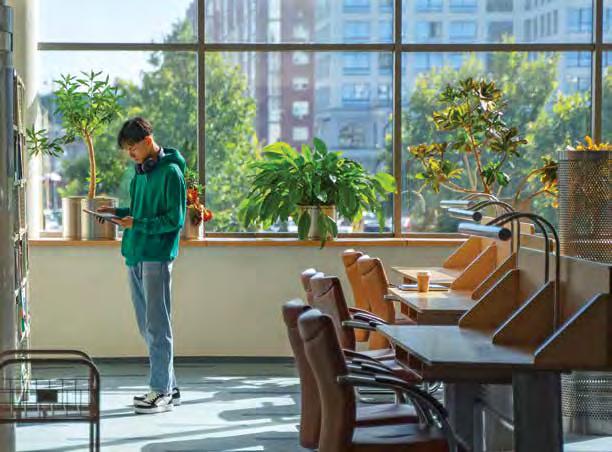
education. Schools that maintain strong partnerships with parents, local businesses, and civic organizations tend to have higher levels of student achievement and well-being. This connection reinforces a powerful truth: schools do not exist in isolation. They are living parts of the communities around them.
Today’s schools also carry a broader responsibility than ever before. In addition to academics, they help students develop critical thinking skills, digital literacy, emotional intelligence, and social awareness. They prepare young people not only for careers, but
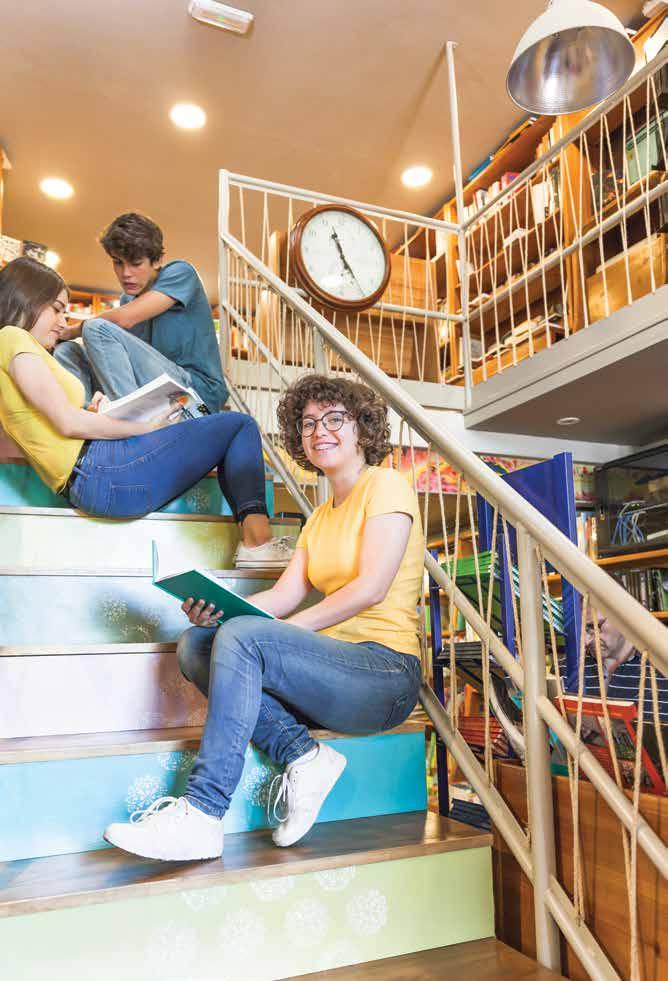
for citizenship in an increasingly complex world. At their best, schools teach students how to adapt, collaborate, and contribute meaningfully to society.
Looking back over the past century, it is clear that schools have evolved from small, local institutions into dynamic centers of learning and support. But looking forward, their most important role remains the same: to nurture the potential of young people and strengthen the communities they call home.


BY KEEGAN DELONEY
Schools have never been just buildings for teachers and students. They have been gathering places, focal points of their communities, and part of local history.
“The sense of community among our staff, students, and families,” said Grand Blanc Superintendent Trevor Alward when asked what he loves most about his school district. “Our staff have their kids in the district, and we all share milestones in our families’ lives together.”
The school districts below have left lasting impacts on individuals and communities alike for 100 years or more. This is their celebration.
The Atherton school district began as a one-room schoolhouse in 1836 in the farming settlement of Atherton, one year before Michigan officially became a state. It continued as a one-room
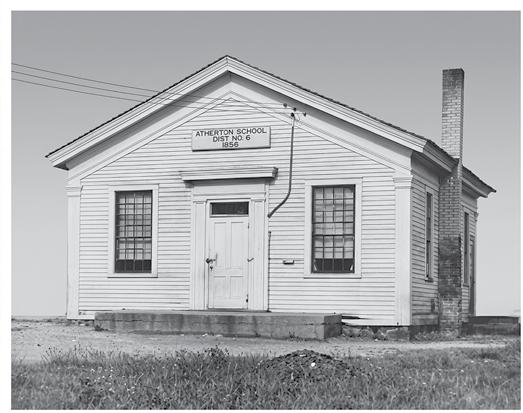
schoolhouse for the next 100 years, occasionally serving as a church. Little is known about the school during that time. It was closely connected to Flint Township reports and other area schools, simply being referred to as “District 6” in its earliest days. However, none of that diminishes Atherton’s legacy or the pride its community has in it. This year marks its 190th anniversary.
ATHERTON’S SCHOOLHOUSE
Atherton continued as a one-room schoolhouse for the next 100 years, occasionally serving as a church.
John Bendle and his wife, former members of the Atherton settlement, were the land donors and namesakes of this school that first opened in 1925. Bendle High School followed roughly 30 years later and served students until 2008, when a new building replaced it. Although voters considered consolidating Atherton,
Bendle, and Bentley in 2003, the proposal did not pass. Bendle continues to flourish as an independent school district and is also the alma mater of NFL veteran Paul Krause.
Bentley Community Schools, like many of the districts on this list,





had humble beginnings as a one-room school after Seymour Bentley donated the land in 1914. Located in Burton, the district gradually expanded to include additional buildings, including Barhitte Elementary, named for longtime teacher and Parent-Teacher Association organizer Ruth M. Barhitte; the current high school, established in 1958; and the Bentley Little Bulldog Learning Center, which opened in January 2026 after McLaren Health donated the building.

Clio built its first school in 1888 during a period of exceptional growth.
Clio built its first school in 1888 during a period of exceptional growth. It expanded again in the early 1900s as the number of school-aged children increased, adding a high school to the existing Clio School. By 1928, Clio had grown enough to officially become a fifth-class city with a population between 750 and 2,000 residents. A new elemen-
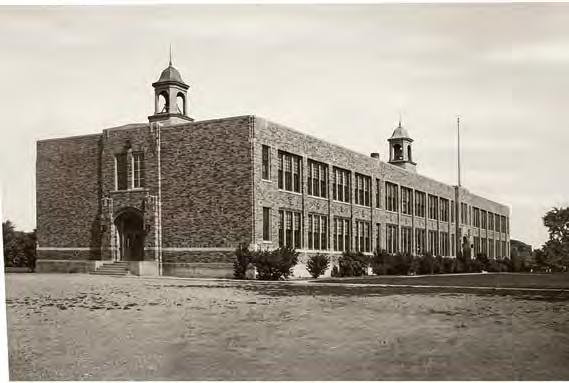
tary school soon followed. As the community continued to grow, so did its schools, with additional high schools, one of which later became Carter Middle School, and several new elementary schools.
Among the many one-room schoolhouses dating back to 1850, Davison’s main school was a twostory building heated by wood stoves in the late 1880s. It officially began serving all 12 grades in
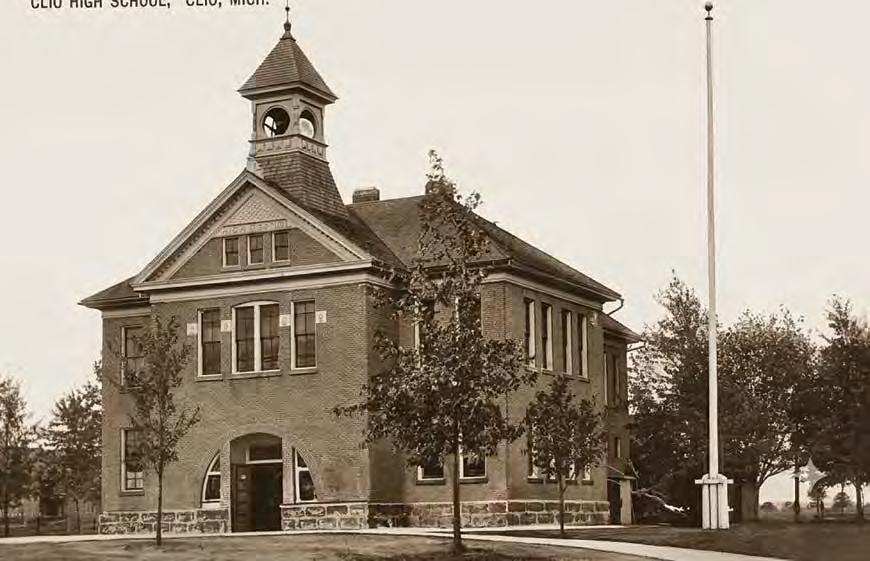
1907, but its life was cut short when fire destroyed the building in March 1930. After local taxpayers initially resisted funding a replacement, Davison built what became Central Elementary in 1932, followed by Hill Elementary in 1958. During the late 1900s, more than five additional school buildings were constructed. Today, the site of Davison’s original twostory school is home to Davison City Hall.
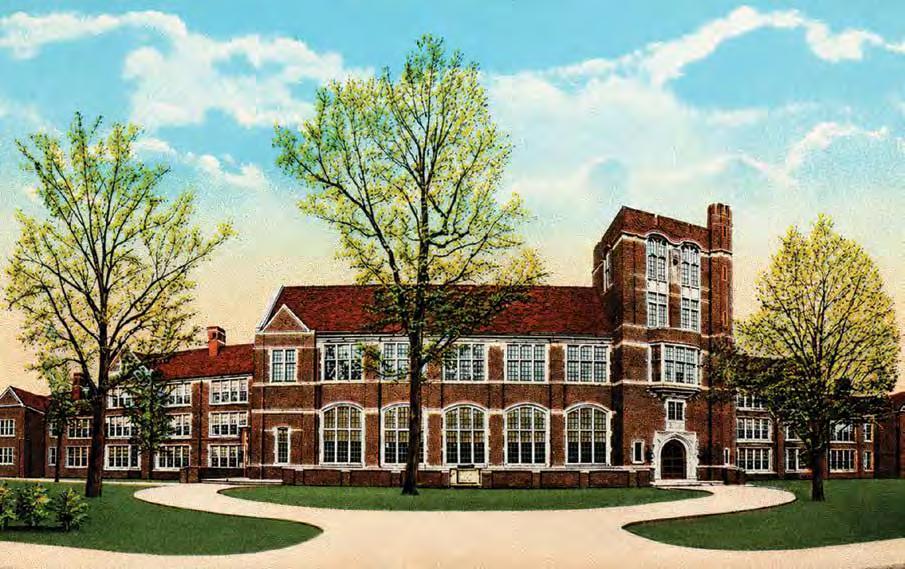
Fenton’s first schoolhouse opened in 1838, one year after settlers William F. Fenton and Robert LeRoy purchased the land and water rights from original founder Clark Dibble. A high school known as the Central Building opened in 1861. The district expanded in 1956 when voters approved a bond for additions and two new elementary schools, North Road and State Road, which opened the following year. A new Fenton High School was completed in 1969. Rather than disappearing into history, the Central Building found new life as the Ellen Street Campus, home to the World of Wonder preschool, preserving an important piece of Fenton’s educational legacy.
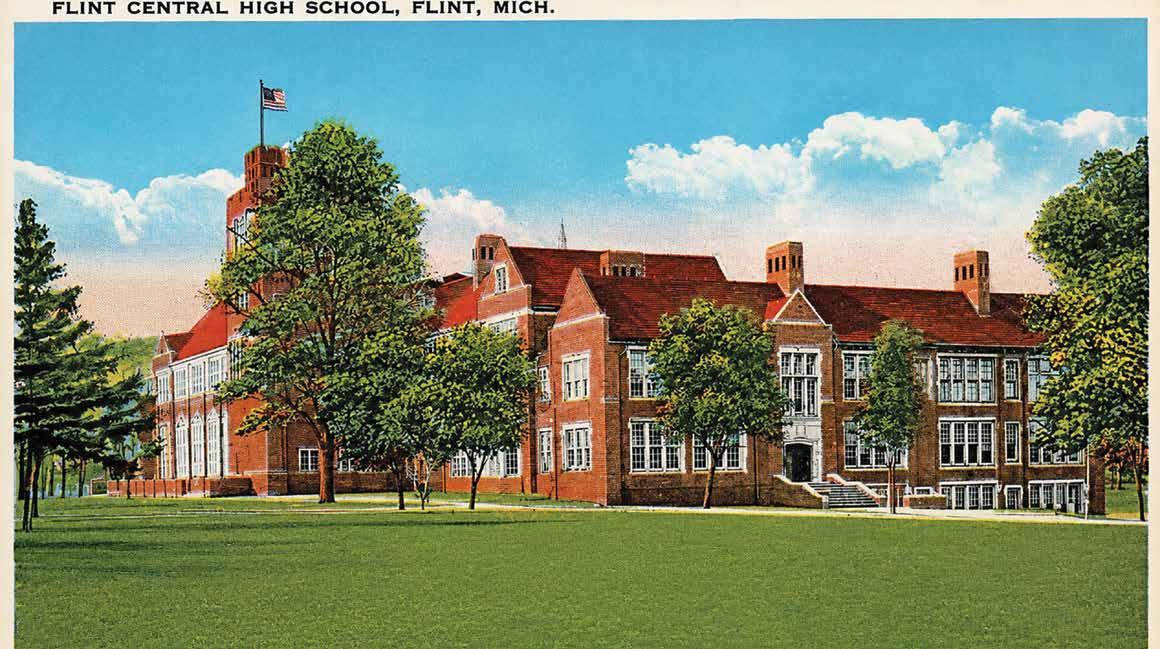
During the early 20th century, Flint became a national leader in the “community school” movement.
Flint’s public school system traces its roots to the mid-1800s, growing alongside the city as it evolved into one of America’s great industrial centers. During the early 20th century, Flint became a national leader in the “community school” movement, where schools focused not only on students’ educational needs but also on their social, recreational, and community well-being. The model emphasized meeting the needs of the entire community while bringing people together through education. Unfortunately, declining enrollment and a lack of funding led Flint Central High School, which first opened in 1923, to close in 2009. But that is not
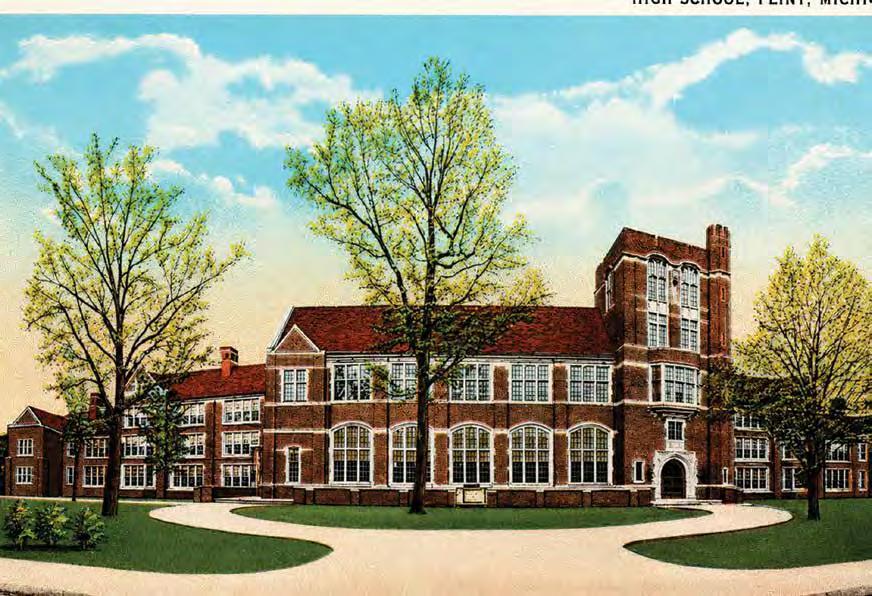
the end of its story. The Charles Stewart Mott Foundation has announced plans to build a new high school on the site, once again rallying the Flint community together. The school is expected to open in 2028.
Flushing’s educational history dates to 1841, when citizen commissioners established the boundaries of School District No.
5. Thirty-four years later, Flushing High School was founded as the community’s oldest public high school. Today, the district includes seven academic buildings serving approximately 4,130 students.
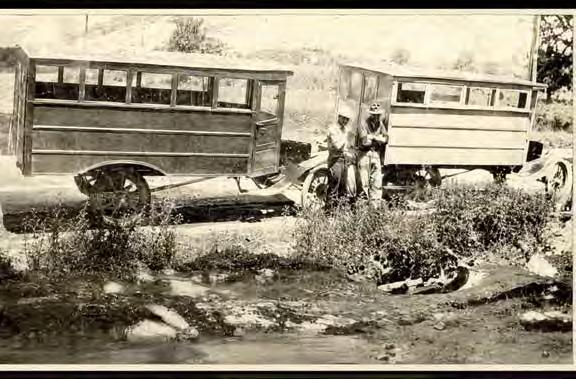
According to district historian Max Harrison, Edmund Perry built Genesee County’s first school on his property in 1830. It was also the first school between the settlements in Pontiac and the Straits of Mackinac. From 1903 through 1904, local school districts were consolidated into one district and one building, making Grand Blanc the first district in Michigan to accomplish such a feat.
That spirit of community continues today.
“Grand Blanc continues that legacy by remaining committed to improving outcomes for our kids,” Alward said. “Our students have gone on to do amazing things, becoming Olympians, judges, doctors, attorneys, and educators.”
From 1903 through 1904, local school districts were consolidated into one district and one building, making Grand Blanc the first district in Michigan to accomplish such a feat.
1924, a new facility housing all 12 grades opened in 1926.
Kearsley’s educational history began before the Civil War when its first school opened at Genesee and Richfield roads. Although the building burned in 1929, the district quickly rebuilt a larger school that same year. In 1940, four local districts merged to form the Kearsley Rural Agricultural School District, laying the foundation for today’s Kearsley Community Schools.
Linden’s first schoolhouse and first grist mill were both built by L.B. Hyatt on Main Street. After the mill burned in 1840, Hyatt’s wife, Frances, a schoolteacher, convinced him and community leaders to relocate the school to South Bridge Street. Between 1870 and 1871, community donations of labor and materials helped construct a two-story brick schoolhouse. Over the years, it served as both a high school and later the district’s administrative offices before being demolished in 2002 despite community opposition. Today, a historical marker near North Bridge Street preserves its memory.
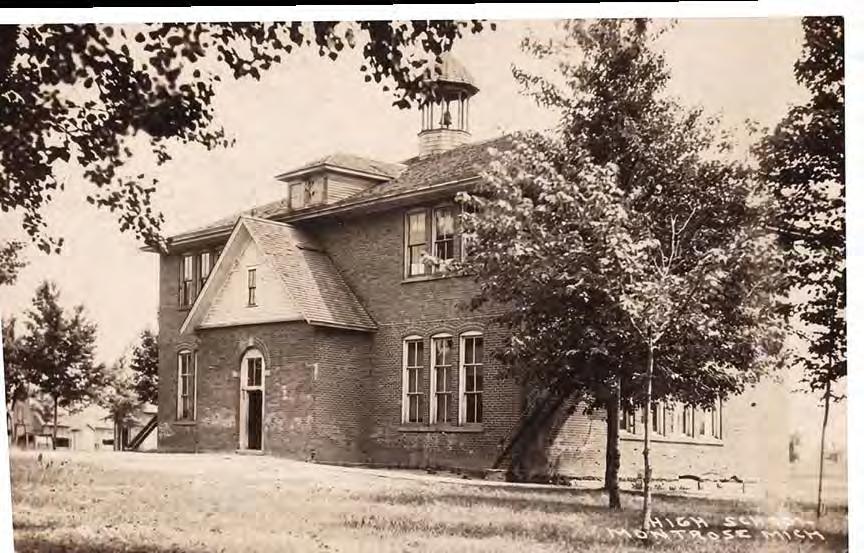
Montrose’s educational legacy began in 1845, not in a schoolhouse, but in George Wilcox’s home, where the community held its first school meeting. Plans for the first school building were scheduled to begin that summer. After that building was destroyed by fire in
As enrollment grew, three school buildings were moved to Hickory Street in 1948. One of them, the Slade School, later became the Montrose Historical Museum, opening on October 23, 1983. When KuehnHaven Middle School opened for the 1978 school year, the 1926 school became an elementary school before retiring in 1981.
This list includes only a fraction of the history each of these schools possesses, just as it barely scratches the surface of the histories of the many other schools throughout Genesee County.
Many of these stories share common themes, but their impact on countless lives, whether 100 years ago or just this past school year, cannot be denied. They shaped us. They continue to shape us. And they will continue to shape future generations.
We can only imagine what legacy the next century of Genesee County’s schools will leave.



Every generation believes the world is changing faster than the one before it. In many ways, today’s parents are navigating challenges unlike any in history. Children are growing up surrounded by smartphones, social media, artificial intelligence, endless entertainment, academic pressures, and packed schedules. While technology has brought incredible opportunities, it has also made protecting our children’s physical, emotional, and spiritual well-being more important than ever.
The good news is that the healthiest children are not necessarily those with the newest gadgets or the busiest calendars. Research consistently shows they are surrounded by strong relationships,
healthy habits, loving guidance, and meaningful purpose.
Good health begins with the basics. A nutritious diet filled with fruits, vegetables, lean proteins, whole grains, and healthy fats provides growing bodies and brains with the fuel they need to thrive. Limiting sugary drinks, highly processed foods, and excessive fast food also helps reduce the risk of childhood obesity, Type 2 diabetes, heart disease, and other chronic illnesses. The eating habits children develop today often become lifelong habits.
Exercise is equally essential. The Centers for Disease Control and Prevention recommends that children and teens get at least 60 minutes of physical activity each day.
Whether it’s riding bikes, playing soccer, swimming, dancing, hiking, or simply playing outside, regular movement strengthens muscles and bones while improving heart health, reducing anxiety, boosting self-confidence, and improving academic performance.
Just as important as physical health is emotional health. Children today often face pressures previous generations never imagined. They need safe places where they can talk openly about their feelings
without fear of judgment. Families who regularly eat meals together, laugh often, and truly listen help build emotional resilience.
Faith can provide an extraordinary foundation. Children who grow up learning compassion, forgiveness, gratitude, humility, and hope often develop a stronger sense of purpose and belonging. Faith reminds young people that their value is not determined by social media likes, athletic trophies, or grades, but by the character they build and the lives they touch.
Healthy families also understand the importance of slowing down.
Reading together, playing board games, taking family walks, sitting around a campfire, fishing, gardening, or watching a sunset create memories no screen can replace. Adequate sleep, quiet moments, and unstructured play are essential for healthy development.
Never underestimate the healing power of animals. Studies show children who bond with pets often experience lower stress, increased empathy, improved self-esteem, and greater emotional security. Caring for a beloved pet also teaches responsibility, patience, and unconditional love.
One of the greatest gifts parents can give their children is the opportunity to serve others. Volunteering at a food pantry, helping an elderly neighbor, participating in community cleanups, or performing simple acts of kindness teaches children that true happiness often comes from giving rather than receiving.
Respect also deserves renewed attention. Teaching children to say “please” and “thank you,” make eye contact, hold doors open, speak kindly, respect teachers and older adults, and treat every person with dignity creates stronger communities. Kindness and good manners never go out of style.
Perhaps the greatest protective factor of all is family. Children do not need perfect parents. They need present parents who provide hugs, encouragement, healthy boundaries, consistent routines, and unconditional love while modeling honesty, perseverance, forgiveness, gratitude, and compassion.
Our world will continue to change. New technologies will emerge. New challenges will arise. But the timeless principles that build healthy children remain remarkably unchanged: nutritious food, daily movement, loving families, faith, service, respect, friendship, rest, time outdoors, and caring for others.
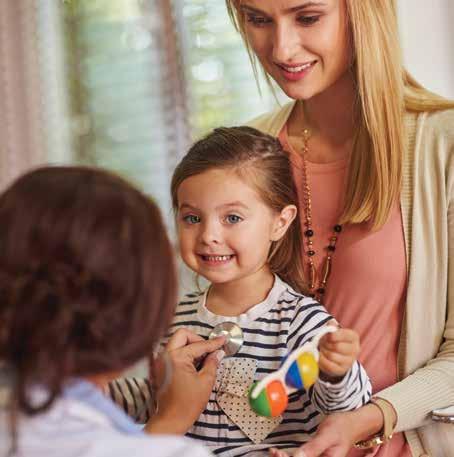

When we intentionally nurture both the body and the heart, we are doing far more than raising healthy children. We are raising compassionate neighbors, responsible citizens, resilient leaders, and hopeful adults who will someday shape a healthier world for all of us.
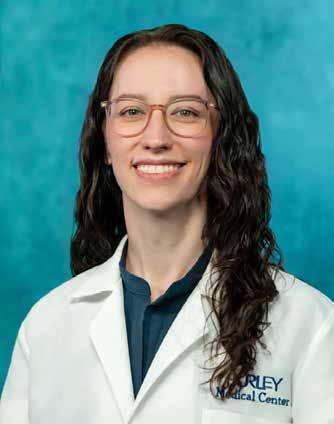
Dr. Emily N. Schapka is a Pediatric Critical Care specialist, providing advanced life-saving care for children, from fragile newborns to growing adolescents. Her work is at the heart of the highly specialized care families rely on every day in our region’s only Pediatric Intensive Care Unit (PICU).
Dr. Schapka earned her degree from the University of Michigan in Ann Arbor, graduating cum laude, before going on to complete medical school at the University of Illinois College of Medicine in Peoria. She continued her training with a pediatric residency at Children’s Hospital of Richmond at Virginia Commonwealth University, followed by a Pediatric Critical Care Medicine fellowship at Children’s Hospital of Michigan.
She has been recognized for her excellence and dedication, including being named Resident Teacher of the Month at Children’s Hospital of Richmond, receiving the Ashok & Ingrid Sarnaik Foundation Research Travel Grant in 2024, and earning board certification from the American Board of Pediatrics.
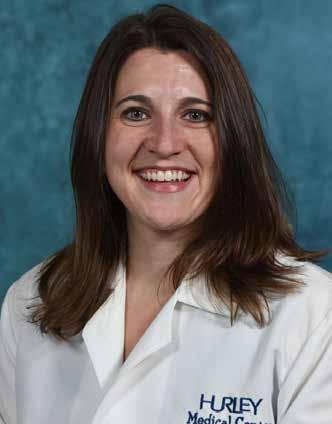
Dr. Brooks is a Pediatric Emergency Medicine specialist dedicated to helping children and families during some of their most critical moments. She earned her medical degree from Jefferson Medical College of Thomas Jefferson University, completed her internship at Michigan State University, and went on to finish her residency at Helen DeVos Children’s Hospital in Grand Rapids. She later completed a fellowship at Beaumont Hospital in Royal Oak, further specializing in pediatric emergency care.
Her commitment to advancing pediatric medicine goes beyond the bedside. From 2017 to 2022, Dr. Brooks served as the Clinical Site Director for the University of Michigan Pediatric Emergency Medicine Fellowship Program, helping train and mentor the next generation of pediatric emergency physicians. Today, she continues to make a meaningful impact in several important roles. Dr. Brooks serves as the Medical Director of Pediatric Advanced Life Support (PALS) at Hurley Medical Center, helping ensure medical teams are prepared to provide life-saving care to children. She also serves as the Medical Director for Camp Copneconic in Fenton, supporting the health and well-being of children in a fun and safe camp environment.
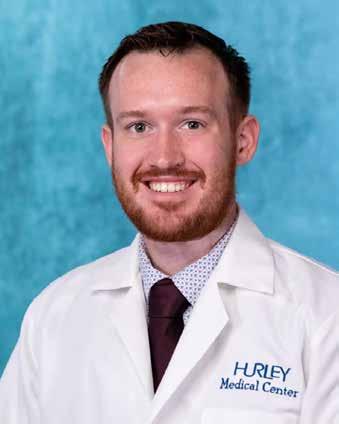
Dr. Swanson joined Hurley in 2022, but his connection to Flint began years earlier. While attending medical school, he conducted a Flintbased research study related to the Flint water crisis and presented his findings at Flint’s regional research conference, demonstrating an early commitment to understanding and serving our community.
Dr. Swanson earned his Bachelor of Science degree with honors in Molecular Biology from Michigan State University before completing his medical degree at Michigan State University College of Human Medicine. He then went on to complete a combined Internal Medicine/Pediatrics residency at the University of Illinois at Chicago.
Whether caring for children, adults, or entire families, Dr. Swanson is committed to providing compassionate, comprehensive care close to home.

Hurley Children’s Hospital, a proud Children’s Miracle Network Hospital, provides the region’s most advanced pediatric care, including the area’s only
Hurley Children’s Hospital, a proud Children’s Miracle Network Hospital, provides the region’s most advanced pediatric care, including the area’s only
Pediatric Level II Trauma Center, Level III NICU, Pediatric ICU and Burn Unit serving Genesee, Lapeer and Shiawassee counties.
Pediatric Level II Trauma Center, Level III NICU, Pediatric ICU and Burn Unit serving Genesee, Lapeer and Shiawassee counties.
From cancer and birth defects to trauma, asthma, diabetes and more, Hurley cares for children facing complex medical challenges — and helps turn setbacks into comebacks.
From cancer and birth defects to trauma, asthma, diabetes and more, Hurley cares for children facing complex medical challenges — and helps turn setbacks into comebacks.


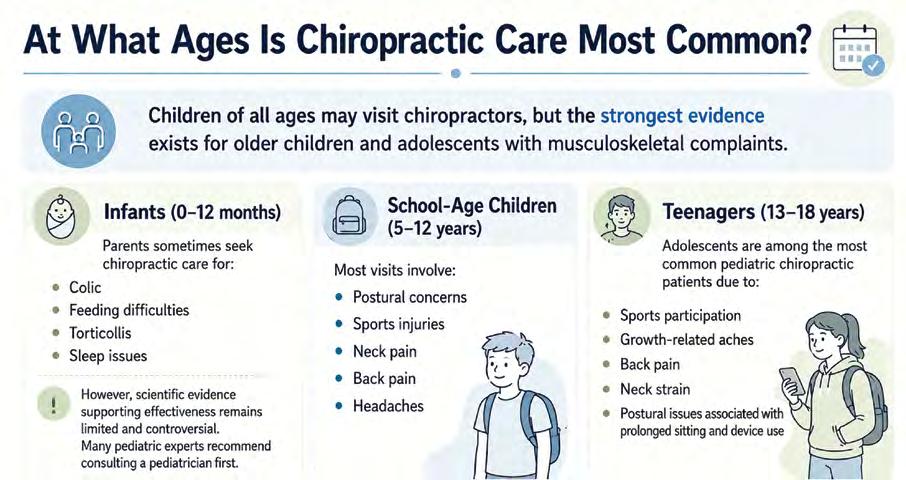
Many parents seek chiropractic care for their children in hopes of improving comfort, mobility, posture, athletic performance, or overall well-being.
Pediatric chiropractic care has grown in popularity over the past two decades, with many chiropractors offering services for infants, children, and teenagers.
However, before deciding whether chiropractic care is appropriate for a child, parents should understand what current research does and does not support.
Chiropractic care focuses on the diagnosis and treatment of musculoskeletal conditions, particularly those involving the spine, joints, muscles, and nervous system.
Chiropractors use a variety of techniques that may include:
→ Spinal manipulation or adjustment
→ Joint mobilization
→ Soft tissue therapy
→ Stretching exercises
→ Postural training
→ Movement and exercise recommendations
→ Ergonomic and lifestyle counseling
PEDIATRIC CHIROPRACTIC TECHNIQUES ARE GENERALLY MODIFIED TO USE SIGNIFICANTLY LESS FORCE THAN THOSE USED ON ADULTS.
The best-supported use of chiropractic care in children involves certain musculoskeletal complaints.
Research reviews have found some evidence that spinal manipulation and manual therapies

may help certain children and adolescents with:
→ Mechanical neck pain
→ Back pain
→ Some types of headaches
→ Sports-related joint and muscle discomfort
→ Certain movement and mobility limitations
These are conditions involving the muscles, joints, and spine, which fall directly within the traditional scope of chiropractic practice.
For adolescent athletes, chiropractic care is sometimes used alongside physical therapy, stretching programs, strength training, and sports medicine treatment to help manage musculoskeletal injuries.
A 2024 review published in Clinical Pediatrics concluded that pediatric chiropractic care remains minimally researched and that evidence supporting many claimed benefits is limited. The authors noted that many systematic reviews have found low-quality evidence regarding effectiveness in children and adolescents.
Similarly, a large systematic scoping review published in BMC Pediatrics examined available evidence on spinal manipulation and mobilization in infants, children, and adolescents. Researchers found that while some studies reported benefits, the overall quality of evidence remained low and further research is needed.
A first visit typically lasts 30 to 60 minutes and includes:
→ Health history
→ Physical examination
→ Movement assessment
→ Discussion of symptoms
→ Treatment planning Follow-up visits generally last 10 to 20 minutes.
The number of visits depends entirely on the child’s condition.
For an acute sports injury or muscle strain, treatment may involve several visits over a few weeks. For chronic issues, visits may occur less frequently over a longer period.
THERE IS NO UNIVERSALLY ACCEPTED SCHEDULE FOR PEDIATRIC CHIROPRACTIC CARE. RECOMMENDATIONS VARY AMONG PRACTITIONERS AND SHOULD BE INDIVIDUALIZED.
a Child Starts Chiropractic Care Early, Must They Continue for Life? No.
There is no scientific evidence suggesting that children who receive chiropractic adjustments must continue receiving them throughout adulthood. Some families choose ongoing maintenance visits, while others seek care only when a specific issue arises. Long-term treatment should
be a personal decision based on symptoms, goals, response to care, and discussions with healthcare professionals.
When choosing a chiropractor for a child, experts recommend:
→ Verifying state licensure
→ Asking about pediatric-specific training
→ Discussing treatment goals clearly
→ Requesting evidence supporting proposed treatments
→ Ensuring the chiropractor works collaboratively with pediatricians and other healthcare providers
→ Avoiding practitioners who promise to cure serious medical conditions
PARENTS SHOULD BE CAUTIOUS OF CLAIMS THAT CHIROPRACTIC CARE CAN ROUTINELY CURE DISEASES UNRELATED TO THE MUSCULOSKELETAL SYSTEM.

Chiropractic care may provide benefits for some children, particularly those experiencing musculoskeletal complaints such as neck pain, back pain, headaches, and sports-related injuries. However, the scientific evidence supporting pediatric chiropractic care remains limited for many other childhood conditions.
Most experts agree that chiropractic care should be viewed as one potential component of a child’s healthcare plan rather than a replacement for pediatric medical care. Parents considering treatment should discuss options with both their pediatrician and a licensed chiropractor, weigh the available evidence, and make decisions based on their child’s individual needs.
As research continues to evolve, the most responsible approach is one grounded in evidence, realistic expectations, and collaboration among healthcare professionals.

By almost any measure, childhood has changed dramatically in the past 20 years. Many children now spend hours each day using smartphones, tablets, computers, televisions, and gaming devices. While technology offers educational benefits and convenience, a growing body of research suggests that excessive recreational screen time may interfere with healthy brain development, learning, emotional regulation, sleep, and mental health.
The question is no longer whether screen time affects children. The more important question is how much, at what ages, and what parents can do to create healthier habits.
THE DEVELOPING BRAIN WAS NOT DESIGNED FOR CONSTANT SCREENS
Childhood and adolescence are periods of rapid brain develop-
ment. During these years, the brain strengthens neural pathways that support language, attention, memory, emotional regulation, and decision-making.
Researchers involved in the National Institutes of Health’s Adolescent Brain Cognitive Development (ABCD) Study, which follows more than 11,000 children across the United States, found that children who reported more than two hours of daily screen time scored lower on thinking and language tests than children with less screen exposure. Researchers also observed differences in brain structure among some children reporting very high levels of screen use.
Other ABCD research has linked higher screen time with sleep disruption, changes in brain structure, and increased psychological symptoms during adolescence.
THE SCREEN TIME AND MENTAL HEALTH CONNECTION
One of the strongest concerns among researchers involves emotional and mental health.
A large longitudinal study in-
volving more than 9,500 children found that higher screen time at ages 9 and 10 predicted higher levels of depressive symptoms, attention problems, conduct issues, and other mental health challenges during later follow-up periods.
BRAIN DEVELOPMENT EFFECTS ASSOCIATED WITH EXCESSIVE SCREEN TIME
Area of Development
Attention
Language & Learning
Memory
Sleep
Emotional Regulation
Research Findings
Increased risk of attention difficulties and ADHD-like symptoms.
Lower performance on language and thinking assessments.
Higher early-childhood screen exposure associated with weaker working memory later in childhood.
Increased screen use is associated with shorter and poorer-quality sleep.
Greater risk of anxiety, depression, and behavioral problems.
Source: National Library of Medicine
The strongest relationship was observed with depression.
In another large analysis of more than 50,000 children and adolescents, researchers found that children spending four or more hours per day on screens had significantly higher risks of anxiety, depression, behavioral problems, and ADHD symptoms. Reduced physical activity and disrupted sleep explained part of the relationship.
Even more striking, a recent meta-analysis combining 117 studies and more than 292,000 children found consistent links between greater screen use and emotional difficulties such as anxiety, depression, aggression, and lower self-esteem.
→ Better sleep
→ Improved attention
→ More family interaction
→ Increased outdoor play
→ Better mood stability
→ Improved school performance
→ Greater creativity and independent play
Many pediatricians observe that children frequently become calmer and more engaged after an initial adjustment period when recreational screen time is reduced.
→ Art projects
→ Building toys
→ Family walks
4. Use the “Earned Screen Time” Model
Many families find success when children earn recreational screen time through:
→ Homework completion
→ Chores
→ Reading
→ Physical activity
5. Model the Behavior
Children notice parental habits.
A parent asking a child to put down a tablet while scrolling endlessly through a phone sends a mixed message. Familywide limits tend to work better than child-only restrictions.
Source: American Psychological Association
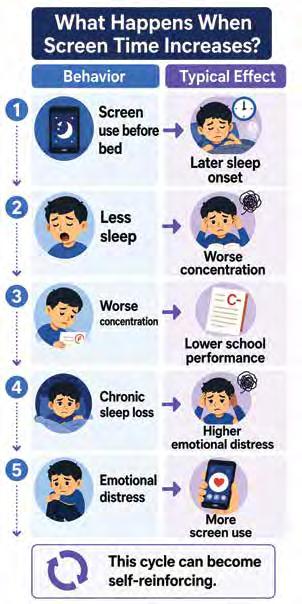
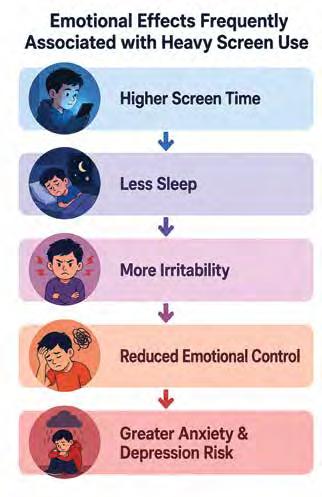
Many children use screens shortly before bedtime. The stimulation from videos, games, and social media can delay sleep onset and reduce sleep quality. Poor sleep has been linked to weaker memory, lower academic performance, increased emotional reactivity, and higher rates of anxiety and depression.
Many parents hear recommendations to reduce screen time and immediately think, “That sounds great, but who has the time?”
The goal is not perfection. It is progress.
1. Create Screen-Free Zones
Designate certain places where screens are never used:
→ Dinner table
→ Bedrooms
→ Family gatherings
→ Car rides under 20 minutes
This change alone can significantly increase family conversation.
THE GOAL IS BALANCE, NOT ELIMINATION
Technology is not inherently harmful. Children use screens for learning, communication, creativity, and entertainment. The evidence suggests the greatest concerns arise when screen use becomes excessive, displaces sleep and physical activity, replaces human interaction, or dominates a child’s daily life.
Source: American Psychological Association
Researchers believe multiple factors contribute:
→ Less face-to-face interaction
→ Reduced physical activity
→ Sleep disruption
→ Exposure to social comparison on social media
→ Constant stimulation that makes everyday activities feel less rewarding
THE HIDDEN CASUALTY
Sleep may be one of the most important pieces of the puzzle.
Researchers increasingly believe that some of the negative effects attributed to screen time may actually occur because screen use displaces sleep.
The encouraging news is that the research is not all negative. Studies consistently show that children benefit when parents actively manage screen use. Researchers note that emotional and behavioral problems and screen use often influence each other, meaning positive changes can work in reverse as well.
Parents who establish reasonable limits often report:
2. Protect Sleep First
If reducing screen time feels overwhelming, start with bedtime.
Experts frequently recommend:
→ No screens for at least one hour before bed
→ Charging devices outside bedrooms
→ Using traditional alarm clocks instead of phones
3. Replace, Don’t Just Remove
Children often struggle when screens disappear without alternatives.
Replace screens with:
→ Board games
→ Sports
→ Bike rides
→ Reading
The healthiest families are not necessarily those that ban screens entirely. Rather, they are families that ensure screens remain a tool instead of becoming the center of childhood.
When parents establish boundaries, encourage realworld experiences, prioritize sleep, and model healthy habits, children gain opportunities that no device can fully replicate: meaningful relationships, imaginative play, physical activity, emotional resilience, and the chance to develop into healthy, well-rounded adults.
The research increasingly suggests that those experiences are not just beneficial—they are essential.

BY DR. SHAN JACKSON | HEALTHY JUST FEELS RIGHT
As parents, grandparents, and caregivers, we all want to see our children thrive—not just academically, but emotionally and socially as well. When a child struggles with focus, impulsive behavior, mood swings, or hyperactivity, many families immediately look for external causes. While there are certainly many factors involved, one area that is often overlooked is nutrition.
What children eat affects far more than their physical growth. The brain is constantly developing, and the foods we provide serve as fuel for concentration, emotional regulation, memory, and behavior. While there is no single “magic food” that guarantees perfect attention or calm behavior, consistent, healthy eating habits can make a remarkable difference.
Many children begin the day with sugary cereals, pastries, or juice, which can cause rapid spikes and crashes in blood sugar. These fluctuations often lead to irritability, poor concentration, and low energy.
A balanced breakfast that includes protein helps stabilize blood sugar and provides the brain with the amino acids needed for neurotransmitter production. Some excellent options include:
→ Eggs with whole-grain toast
→ Greek yogurt with berries
→ Oatmeal topped with nuts and seeds
→ Peanut butter on whole-grain bread
→ Smoothies made with milk, fruit, and nut butter
WHAT CHILDREN EAT AFFECTS FAR MORE THAN THEIR PHYSICAL GROWTH.
Children who start the day with protein often experience more sustained energy and improved attention throughout the morning.
The brain is composed largely of fat, making healthy fats essential for learning and cognitive development. Omega-3 fatty acids, in particular, have been linked to improved attention and emotional regulation.
Good sources include:
→ Salmon and sardines
→ Chia seeds
→ Flaxseeds
→ Walnuts
→ Avocados
Including these foods regularly can support brain health and overall development.
Many packaged snacks contain excessive amounts of sugar, artificial ingredients, and refined
carbohydrates. While these foods may provide a quick burst of energy, they are often followed by fatigue, irritability, and difficulty concentrating.
Instead of eliminating treats entirely, I encourage families to focus on moderation and balance. Replace heavily processed snacks with:
→ Fresh fruit
→ Cheese and whole-grain crackers
→ Yogurt
→ Nuts and seeds (for age-appropriate children)
→ Homemade smoothies
→ Hummus with vegetables
Small changes can add up to big improvements over time.
Certain nutrient deficiencies can affect behavior, energy, and cognitive performance.
Iron deficiency may contribute to fatigue, poor attention, and learning difficulties. Iron-rich foods include:
YOU DON'T HAVE TO OVERHAUL YOUR ENTIRE PANTRY OVERNIGHT. START WITH ONE SMALL CHANGE. ADD MORE PROTEIN AT BREAKFAST. SWAP SODA FOR WATER. INTRODUCE ONE NEW FRUIT OR VEGETABLE EACH WEEK.
→ Lean meats
→ Beans
→ Spinach
→ Fortified cereals
→ Lentils
Zinc also plays a role in brain function and immune health. Good sources include:
→ Beef
→ Pumpkin seeds
→ Chickpeas
→ Yogurt
→ Cashews
If you suspect a deficiency, consult your healthcare provider before beginning supplements.
Sometimes what appears to be inattentiveness or irritability is simply dehydration. Even mild dehydration can affect concentration and mood.
Encourage children to drink water throughout the day and limit sugary beverages and excessive juice consumption. Sending a reusable water bottle to school can help children develop healthy hydration habits.

Children thrive on routine.
Skipping meals or going too long without eating can cause drops in blood sugar that may lead to crankiness, emotional outbursts, or difficulty paying attention.
Aim for:
→ Three balanced meals each day
→ Healthy snacks between meals, when needed

→ Consistent meal and snack times
Regular nourishment helps provide the brain with a steady supply of energy.
Magnesium supports the nervous system and plays a role in mood regulation and relaxation.
Natural sources include:
→ Bananas
→ Almonds
→ Pumpkin seeds
→ Spinach
→ Black beans
→ Whole grains
These foods can easily be incorporated into family meals and snacks.
Mealtime should not simply be about filling stomachs; it is also an opportunity for connection. Eating together without screens encourages conversation,
emotional bonding, and healthier eating habits.
Children who participate in family meals often consume more fruits and vegetables and develop a healthier relationship with food.
It’s important to remember that behavior and attention challenges are complex. Nutrition is one piece of the puzzle. Sleep, physical activity, emotional health, learning differences, and environmental factors all play important roles.
As a healthcare professional, I always remind parents that progress doesn’t require perfection. You don’t have to overhaul your entire pantry overnight. Start with one small change. Add more protein at breakfast. Swap soda for water. Introduce one new fruit or vegetable each week.

Healthy habits are built gradually, and consistency matters far more than perfection.
Our children are growing physically, mentally, and emotionally every single day. The foods we provide are not simply calories; they are information for the brain and building blocks for lifelong health.
When we nourish children well, we are investing in more than their bodies. We are supporting their ability to learn, manage emotions, develop confidence, and reach their fullest potential.
At Healthy Just Feels Right, I believe wellness begins with simple, sustainable choices. By feeding our children with intention, patience, and love, we give them one of the greatest gifts possible: a strong foundation for a healthy future.
and CEO
Just
is a certified holistic mental health and wellness specialist, book author and motivational speaker. She has a passion for nutrition and loves to cook, develop recipes and write about health and wellness. Dr. Jackson aims to help individuals and families transition to a healthier lifestyle by incorporating more fresh foods into their diets. She believes that food c an play an important role in managing chronic health issues, symptoms of depression and other mood disorders without using medications that can have harmful side effects. To discover more creative and fun ways to inspire a healthier lifestyle, visit healthyjustfeelsright.com.
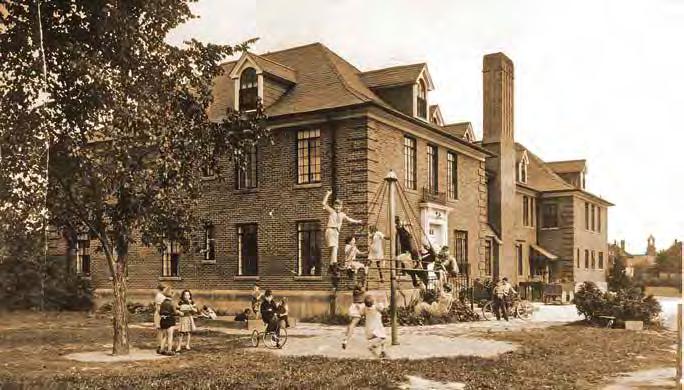
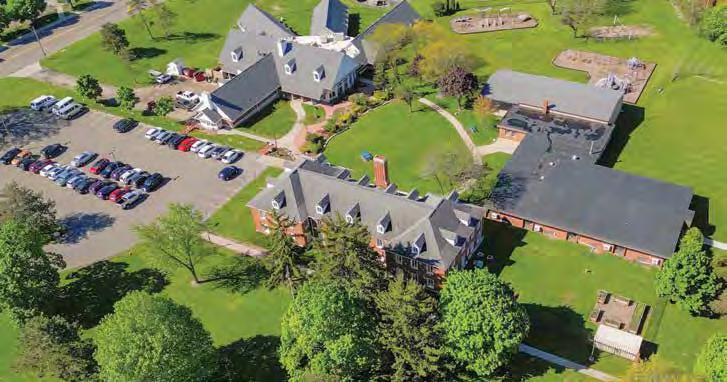
For 100 years, Whaley Children’s Center has been a place where children find safety, stability, and hope. As the Flint-based nonprofit celebrates its centennial in 2026, the organization is reflecting on a century of service while continuing to evolve to meet the changing needs of Michigan’s most vulnerable youth.
Founded in 1926 through the vision and generosity of Robert and Mary Whaley, who believed every child deserved a safe and nurturing place to call home, Whaley Children’s Center has become a cornerstone of child welfare services in Genesee County. Through
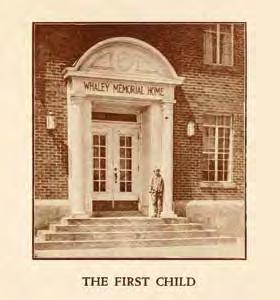
economic downturns, social change, the Flint Water Crisis, the COVID-19 pandemic, and shifts in the child welfare landscape, one thing has remained constant: Whaley’s unwavering commitment to children who need it most.
When Whaley first opened its doors, the child welfare system looked dramatically different than it does today. The organization originally served children who had lost parents or whose families could not care for them. Over the decades, as society’s understanding of childhood trauma, mental health, and family dynamics evolved, Whaley did, too.
In 1976, Michigan enacted the Child Care Organizations Act (Act 116), and Whaley shifted to a more structured model of care, operating as a residential facility for children in foster care.
Today, Whaley Children’s Center is much more than a residential
facility. It is a comprehensive care organization providing homes, therapeutic services, educational support, life-skills development, and independent living opportunities for children and adolescents who have experienced significant trauma. Whaley now operates as a Behavioral Health Stabilization Program, providing safe housing and intensive support for youth who have experienced severe abuse, neglect, and other traumatic events.
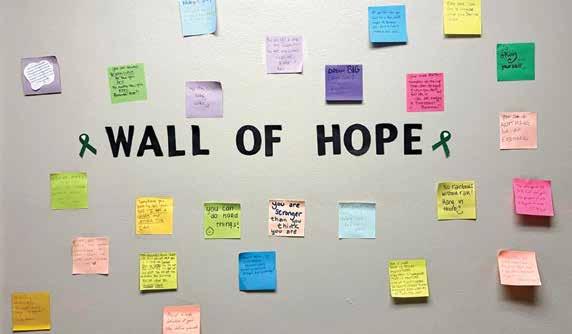
“The children we serve today face challenges that are often complex and deeply rooted in trauma,” said Mindy Williams, President and CEO of Whaley Children’s Center. “Our responsibility is not only to provide safety and shelter, but also to help young people heal, grow, and build a path toward a successful future.”
One of the most significant changes in recent years has been the shift in the population Whaley serves. Before the pandemic, many of the children living at the Center were younger. Today, the majority are teenagers.
That shift has required the organization to rethink its programming, staffing, and services. Adolescents often arrive with more significant behavioral health needs, requiring specialized interventions and increased clinical support. In response, Whaley expanded its clinical, intervention, residential, and management teams to provide a higher level of care designed to help youth experiencing acute emotional and behavioral challenges.
The organization has also strengthened its Independent Living Program, helping older youth prepare for adulthood by teaching practical skills such as budgeting, employment readiness, educational planning, and healthy relationship development. Journey Home and Hope House have been operating at full capacity for the past several years, and plans are underway to open two additional homes within the next year.
“We’re constantly evaluating how we can best serve the children who come through our doors,” said Melissa Taylor, Director of Independent Living. “The needs of youth change, and we must be willing to adapt while staying true to our mission.”

Throughout its 100-year history, Whaley’s success has been deeply connected to the Flint community. Businesses, foundations, faithbased organizations, civic groups, and individual donors have consistently stepped forward to support the children. From school supplies and holiday gifts to volunteer projects and financial contributions, community members have helped ensure Whaley remains a place where children can thrive.
The organization’s annual events, including its Tux and Tennies Gala, Golf Classic, and Cars 108 Roof Sit campaign, have become opportunities for residents to invest in the lives of local youth. Whaley is excited to bring back the World’s Greatest Office Party in December 2027 after the event was paused during the pandemic. For years, community members have asked for its return,
and Whaley looks forward to reigniting one of the community’s longest-running and largest annual events, bringing people together once again to celebrate, connect, and support its mission.
While these signature events inspire community-wide engagement, many of the most meaningful contributions happen quietly every day: a donor purchasing winter boots, a volunteer helping a teenager prepare for a job interview, a local business providing opportunities for youth to learn workplace skills, or anonymous donors making financial gifts to support the children. Together, these acts of generosity, both large and small, help ensure Whaley’s youth have the support they need to heal, grow, and thrive.
“Flint has always been a community that takes care of its own,” Williams said. “The support we receive is a reflection of the incredible
people who live here and believe every child deserves a chance.”
The journey has not always been easy. Like many child-serving organizations across the country, Whaley has navigated changing regulations, funding challenges, workforce shortages, and increasing mental health needs among youth.
Yet resilience has become part of the organization’s identity.
As Whaley Children’s Center celebrates its centennial, the milestone is both a celebration of the past and a commitment to the future. The organization continues to explore new ways to strengthen services, expand opportunities for youth, and address the evolving needs of children and families across Michigan.
While much has changed since 1926, the heart of the mission remains remarkably similar.
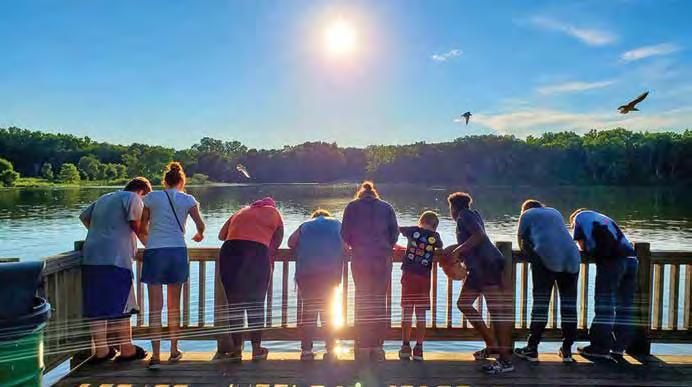
During times of uncertainty, Whaley has continued investing in programs, facilities, and staff development to ensure children receive the highest quality care possible. The organization has embraced innovation while remaining grounded in its mission.
Perhaps most importantly, Whaley has never lost sight of the individual stories behind its work. Every child who arrives on campus brings unique experiences, hopes, and dreams. While statistics help tell part of the story, it is the personal transformations that define Whaley’s impact.
Former residents have gone on to serve in the military, graduate from college, build successful careers, become parents, and contribute positively to their communities. Their accomplishments stand as a testament to the power of support, stability, and belief.
For a century, Whaley Children’s Center has opened its doors to children facing some of life’s most difficult circumstances and offered them something every child deserves: safety, compassion, and hope.
One hundred years later, that promise continues.
As Flint celebrates this remarkable milestone, the community can take pride in an institution that has spent a century proving that when children are given support, encouragement, and opportunity, their futures can be transformed. And for Whaley Children’s Center, the next chapter is just beginning.
AFor more information, visit whaleychildren.org.


BY SHARON STONE
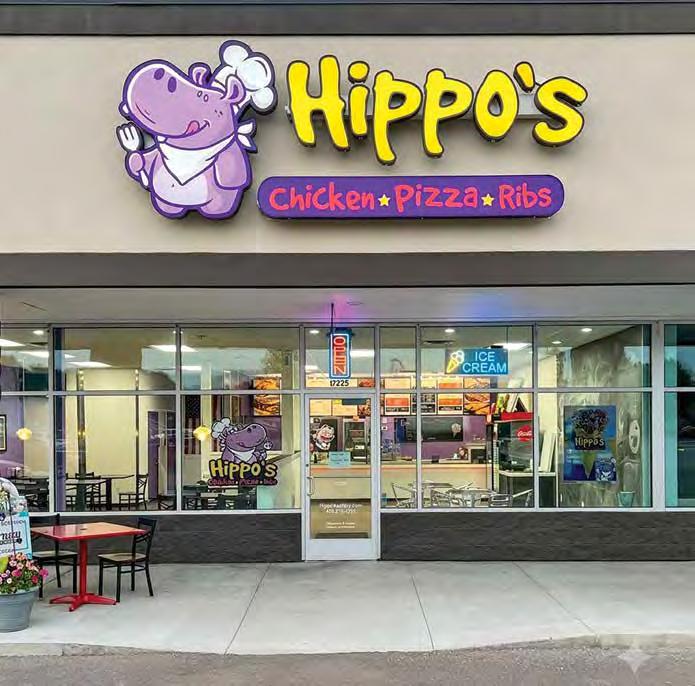
Tucked into the Silver Pointe Shopping Center on Silver Parkway in Fenton, Hippo’s Pizza may be easy to overlook from the road, but locals who have discovered it know there’s something different about this independently owned restaurant.
For owner John Forsmark, a Fenton native and U.S. veteran, Hippo’s isn’t part of a national chain or franchise. It’s the product of nearly four decades in the restaurant business and a philosophy that’s refreshingly simple.
“If I don’t like it, I won’t sell it.”
That commitment has guided every decision Forsmark has made over the past 38 years while operating restaurants in Michigan, Florida and North Carolina.
Along the way, Forsmark perfected recipes that continue to define Hippo’s today. His signature sweet BBQ sauce and

the unique touch of adding pickles to many menu items were inspired by his years in the Carolinas, where he also perfected the restaurant’s fall-off-the-bone baby back ribs.
When it came time to open his own restaurant in Fenton in March 2020, there was never any question that quality would come before shortcuts.
Because Hippo’s is independently owned and operated, Forsmark isn’t tied to corporate recipes or franchise rules. Instead, he focuses on generous portions, fresh ingredients and affordable prices.
“I only sell food I like to eat,” he says.
That philosophy is evident throughout the menu.
The restaurant’s jumbo chicken tenders have become one of its biggest customer favorites. Made from whole chicken breast fillets,

they’re cooked fresh to order and are available regular, spicy or grilled. The chicken is steroid- and hormone-free, offering customers a higher-quality alternative to the pre-made products often found elsewhere.
Hippo’s also offers combination meals featuring pizza, chicken and ribs served with jumbo breadsticks, a choice of 18 sauces and a variety of comfort-food sides, including mac and cheese, fries, potato wedges, tater tots, mashed potatoes and gravy, BBQ baked beans, and coleslaw.
Pizza lovers have plenty to choose from, with sizes ranging


“I ONLY SELL FOOD I LIKE TO EAT.”
— John Forsmark
from 10-inch personal pizzas to the restaurant’s legendary Beast Pizza.

Measuring an incredible 28 inches across and weighing nearly 15 pounds, the Beast is piled high with approximately 200 slices of pepperoni and six pounds of cheese. Forsmark proudly says it’s the largest pizza in Michigan.
His favorite line?
“You don’t come to Hippo’s to lose weight.”
Even the restaurant’s name reflects its larger-than-life personal-

ity. Forsmark first heard the name “Hippo’s” while visiting a beach burrito stand in Oahu, Hawaii, in 1982. He never forgot it, eventually creating the fun logo and family friendly brand customers recognize today.
Whether guests dine in, order carry-out, take advantage of curbside pickup, arrange delivery or book catering, Forsmark hopes every customer leaves feeling they received great food and an even better value.

And while many successful restaurants eventually expand into multiple locations, Forsmark is content keeping Hippo’s exactly where it started.
“This is the only Hippo’s,” he says proudly.
For Fenton residents looking to support a locally owned business with deep community roots, generous portions and an owner who still believes quality comes first, Hippo’s Pizza continues to deliver one meal at a time.
Hippo’s is at 17225 Silver Parkway, Fenton. Call 810-215-1255 or visit hipposmi.com.







Montrose junior Addyson Stiverson
has become one of the country’s most dominant shot putters, with
national records and Olympic Trialscaliber distances now within reach
BY MARK SPEZIA
PHOTOS BY JOHN NEPOLITAN AND ADAM STIVERSON

Conditions on the day Addyson Stiverson heaved the shot put farther than any female high school competitor in the nation this year were rather off-putting. Records were the furthest thing from Montrose junior Addyson Stiverson’s mind as she stared at a sandy, somewhat damp throwing circle under dreary, overcast skies at Chesaning Union High School on April 29.
Having powered through the weather to an easy discus throw win during the tri-meet against the Indians and Ovid-Elsie, Stiverson fought to find the right mindset as the shot put competition drew near.
“I swear, that was the worst day possible for throwing,” she said.
“After throwing the discus, I told my dad (Montrose track and field coach Adam Stiverson), I wasn’t sure if I should even throw the shot put.”
With some reassurance from her father, Stiverson coaxed herself back into the circle only to see conditions worsen as a chilly rain began to fall following her second throw. Concerned about slipping and getting injured, Stiverson’s first two efforts were a tad timid by her standards.
“Addy was so over the rain and wet sand in the ring at that point and being worried about not getting hurt meant she was not going all out,” Adam Stiverson recalled. “It’s hard to warm up the muscles enough to throw well in cooler
RECORDS WERE THE FURTHEST THING FROM MONTROSE JUNIOR ADDYSON STIVERSON’S MIND AS SHE STARED AT A SANDY, SOMEWHAT DAMP THROWING CIRCLE UNDER DREARY, OVERCAST SKIES AT CHESANING UNION HIGH SCHOOL ON APRIL 29.
weather, but I told her the best thing would be to stop holding back, let the shot go and see what happens.”
Yes, it was time to throw caution, and the shot put, to the wind. On her fourth throw, Stiverson uncorked the big one.
“The Chesaning officials did the best job possible to clean up the ring before the throw and Addy was able to generate decent speed,” Adam said. “She didn’t have the perfect form, but the shot flew off her hand well. I turned to Addy and was like, ‘I think you have your first 54-foot throw.’ Then we pulled the measuring tape and were like, ‘Whoa!’”
The nearly nine-pound steel ball had landed 55 feet, 7.5 inches




from the throwing circle, extending the state record Stiverson already owns by more than 2.5 feet. The throw was nearly 3 inches farther than any other high school girl had thrown this season.
Only three high school shot putters have ever thrown farther.
“My dad felt there was still a good throw in me that day if I just quit being hesitant and thinking
SHE IS ONE OF THE STATE’S TOP DISCUS THROWERS DESPITE NOT DISPLAYING NEARLY THE SAME FONDNESS FOR THAT IMPLEMENT.
that I can’t,” Addy said. “I let the throw that beat my record go and was like, ‘Holy crap, everything just connected for me on that one.’ Dad was like, ‘See, there you go.’”
For perspective, Stiverson’s throw would have placed her 11th at the 2024 Olympic Trials and 12th at this year’s NCAA Division I Championships. As of late June, only five shot putters under age 20 in the world, including just one American (University of Nebraska sophomore Donna Douglas), had thrown farther.
Stiverson’s mark also placed her among the top 30 female shot putters of any age in the United States this year.
“Our winter training was decent as we kept working on some form issues,” Adam said. “We took her out to see her main coach (Dane Miller of Throws University in

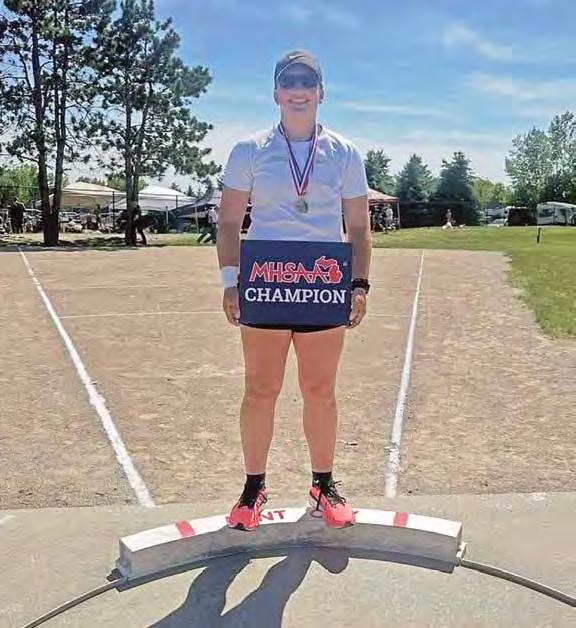
Reading, Pennsylvania) for five days of productive, focused training. Addy came back feeling really good and was ready to have a great season.”
Miller, who has coached Olympians, world team members, and national champions, began working with Stiverson during her freshman year.
“I was excited when he reached out (after we attended a camp of his) about coaching me because I can trust that everything Dane says



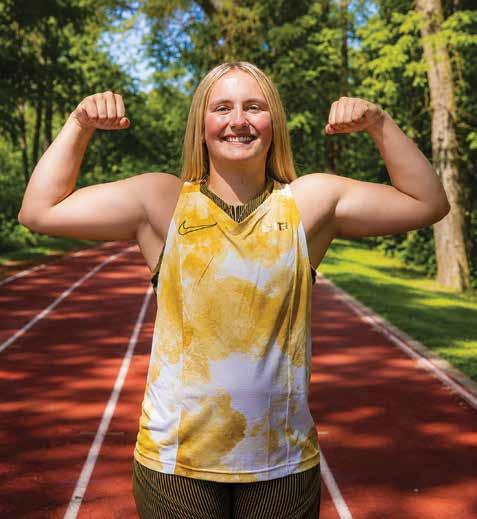

IN MY MIND, ADDY NEVER FAILS AT ANYTHING BECAUSE, EVEN ON HER WORST DAYS, SHE FINDS A WAY TO GRIND THROUGH DIFFICULTY AND LEARN FROM THE SITUATION TO BECOME BETTER.”
—ADAM STIVERSON
is the right thing,” she said. “He is a huge reason I am where I am today. He is always telling me to throw hard, not pull back and smash it.”
Stiverson continued smashing it the remainder of this season.
In May, she unleashed a personal-best discus throw of 1571, which ranks 11th in Michigan history and second in the state this year. The next month, Stiverson
captured her third straight Division 3 state shot put championship by more than 16 feet with a toss of 556.5 and was second in the discus (131-4) for the second time in three years. Stiverson was also state discus champion last year.
She is one of the state’s top discus throwers despite not displaying nearly the same fondness for that implement.
“I truly do not like the discus as much and spend maybe about 20% of my training on it,” Stiverson admitted. “I threw the discus maybe five times the week before the state meet. Still, I would like to get my best over 160 feet.”
Stiverson maintains a busy competition schedule outside of high school, squaring off against some of the nation’s best throwers.
She has placed in the top 10 at Nike Outdoor Nationals three times and in the top seven at the United States U20 Outdoor Championships twice. Stiverson has also
twice made the top nine at Nike Indoor Nationals.
In June, she was seventh at the U20 championships and third (for All-American honors) at Nike nationals, held on consecutive days at historic Hayward Field in Eugene, Oregon, which has hosted the 2022 World Championships and eight Olympic Trials.
Only one Michigan athlete (pole vault winner Katie Blue of Grand Ledge) finished higher in any girls event at Nike nationals. However, Stiverson was left wondering what might have been considering that she threw under 50 feet both days.
“I pulled my hamstring a little after my first three U20 throws, which messed me up a bit,” she said. “I was mad considering what I’m capable of doing. I fixed a couple of things and the hamstring was not bothering me the next day, which was better, but not what I was hoping for.”
Adam Stiverson is equally proud of his daughter’s maturity in handling setbacks as he is of her accomplishments.
“In my mind, Addy never fails at anything because, even on her worst days, she finds a way to grind through difficulty and learn from the situation to become better,” he said. “That determination and will to succeed, combined with the natural strength she knows how to use, are the biggest reasons for Addy’s success.”
Stiverson actually began her track career as a sprinter in sixth grade, but was soon looking for other events to try. She had already begun competitive powerlifting thanks in part to the influence of her father, a competitive powerlifter for more than two decades who owns Iron Athletics gym in Clio.
This led to the suggestion that Stiverson try her hand at throwing events.
“My brother and his friends who were throwers were like, ‘You’re strong, why don’t you try the heavy ball thing?’” she recalled.
Turns out, the heavy ball was Stiverson’s thing, and remarkable progress followed. She finished sixth grade with a best of 25-7 before reaching 34-6 in seventh grade.
“The powerlifting kind of gave me a head start for throwing,” she said. “My strength for those events was already there.”
Stiverson’s progress accelerated even more after attending one of Miller’s camps for the first time roughly a month before she began eighth grade.
“Thanks to Dane’s coaching, I was throwing 40 feet by the time I left the camp and that’s when it really clicked that throwing could take me far and I could be really good at this,” she said. “Middle schoolers usually don’t throw 40 feet.”
During eighth grade, Stiverson extended her best mark with the six-pound shot put to 47-10.5 and

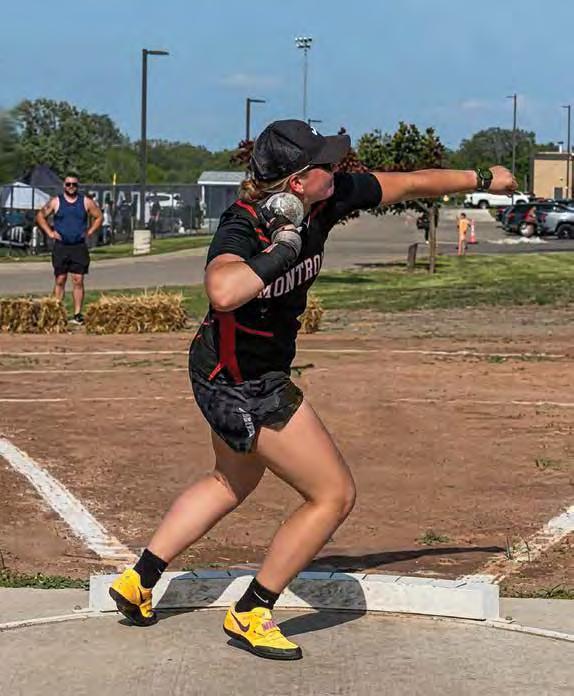
captured shot put and discus titles at the USA Track and Field National Youth Outdoor Championships.
Transitioning to the heavier high school shot put as a freshman, Stiverson upped her personal best to 49-2 in winning the first of three regional titles and surpassing the Genesee County record of 48-2.75 set by Powers Catholic’s Nikole Sargent in 2016.
As a sophomore, she surpassed the state record of 51-11 established by Byron’s Sarah Marvin in 2021 by nearly a foot with a throw of 52-10.75. No American high school sophomore has ever thrown farther.
Also last year, Stiverson joined the Nike Elite Program, which includes 40 of the country’s top high school track and field athletes and provides guidance, performance tools, mentorship from professional Nike athletes, equipment and apparel, while also helping offset travel costs to national meets.

Along the way, Stiverson’s allaround athletic talent has played a role in her throwing success as well. While track is now her primary focus, she played varsity basketball as a freshman and sophomore and even played football through her freshman year.
Stiverson has also won plenty of powerlifting competitions and boasts bests of 425 pounds (deadlift), 405 (squat), and 235 (bench press).
This is also the time of year Stiverson increases her training, which is made more convenient by the shot put and discus throwing rings in the family’s backyard.
“I can really train when I have fewer meets to compete in and I like to use an even heavier shot put and do more weight training,” she said. “We are focusing on things like getting into better positions when I throw and improving my form to become more explosive.”
Adds her father: “Fixing Addy’s form will fix her throwing distance, so we’re concentrating on getting

her muscle strength to work even better with her form.”
Stiverson hopes to announce her college decision in November. She has narrowed more than 20 Division I scholarship offers to 10. Goals for Stiverson’s final season at Montrose include breaking the national high school shot put record of 58-1 and becoming Michigan’s first four-time girls shot put state champion.
“I want to get the national record, but I’d also love to be the first high school athlete to throw 60 feet,” she said. “Once I won the shot put title as a freshman, I was like, ‘Now I have to win all four years.’”
Presented by
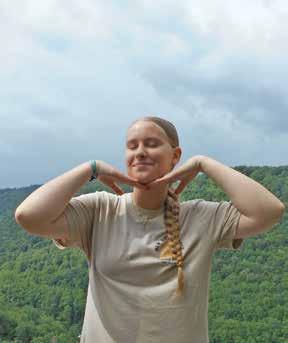



Rylee Harmon is a phenomenal person and a true leader who will be entering her senior year this fall, said Principal Wesley Webster. She is a vital member of the Principal Advisory Council, and her dedication to the school community is unmatched. Whether she is helping organize staff appreciation events for bus drivers, assembling snack bags for students during state testing, or stepping into the spotlight as one of the student emcees welcoming incoming freshmen, Rylee leads with enthusiasm and compassion.
Rylee also is an outstanding scholar, maintaining a 4.086 cumulative GPA. Her heart for service shines just as brightly outside the classroom, where she routinely volunteers her time to support students in the school as a member of the Hope Squad and younger students throughout the district at West Shore Elementary. Rylee also volunteers with multiple youth groups, where she serves as a high school leader. Even when facing personal adversity this past year, Rylee’s resilient spirit never wavered.
Describe a typical day.
During the school year, I wake up and start my day by reading my Bible before getting ready for

school. Then I drive to school for my classes. After school, I usually go to the gym and get some work done while I’m there. Then I head home, eat dinner, and finish any schoolwork I have left.
Who has been your biggest inspiration and why?
My biggest inspiration has, by far, been my school librarian and Young Life leader, Maryalice Taneyhill. She has supported and uplifted me since my sophomore year, and she is someone I constantly strive to be like because of her kindness and generosity.
Which sport do you like the best?
I grew up watching and playing softball. It has been the sport I have loved since kindergarten. I haven’t been able to play in almost a year and a half because I had to undergo two shoulder surgeries, but I still stay involved with my team and enjoy cheering on my teammates.
Where do you see yourself in five and 10 years?
Because I have a passion for serving kids, I hope to become either a registered nurse or an occupational therapist specializing in pediatrics.
In the next few years, I hope to be in college, and in 10 years, I hope to be settled into my career.
What are your college plans?
I want to stay in Michigan for college and hope to attend Wayne State University with the goal of specializing in pediatrics after graduation.
What’s your advice for incoming freshmen?
Savor every single moment. When you start freshman year, it feels like you have so much time left to make memories, but time truly flies by. Take the time to hang out with friends, go to dances, and attend sporting events. Those are moments you can never get back, so enjoy them.
Do you know a standout student in athletics, academics or the arts? Nominate them to be featured in an upcoming issue!






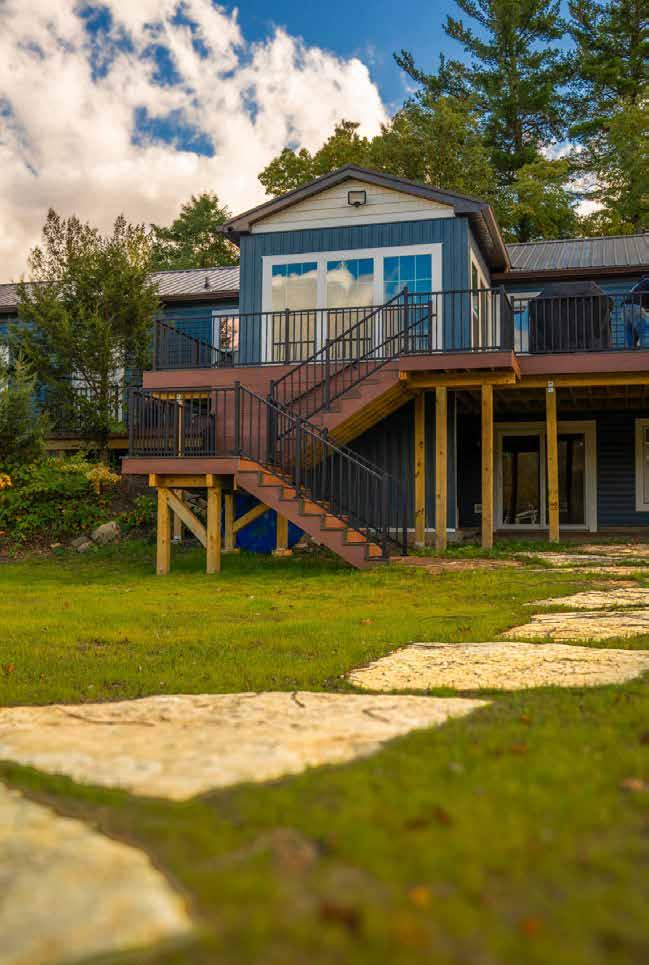








Norman Ott, 90, and his wife, Nancy, 89, have been married for 67 years and currently reside at Vicinia Gardens Independent Living in Fenton. Their families moved to Royal Oak in the mid-1940s and lived about three blocks apart. Norm and Nancy were preteens at the time. Other than casual “hi’s,” they did not formally meet until one day when their mothers, while having a conversation on the sidewalk, introduced them. This led to Nancy becoming a babysitter for Norm’s younger sisters.

They went their separate ways until their mid-teens, when they started spending time with the same group of kids in a church youth group. However, they were still not an item.
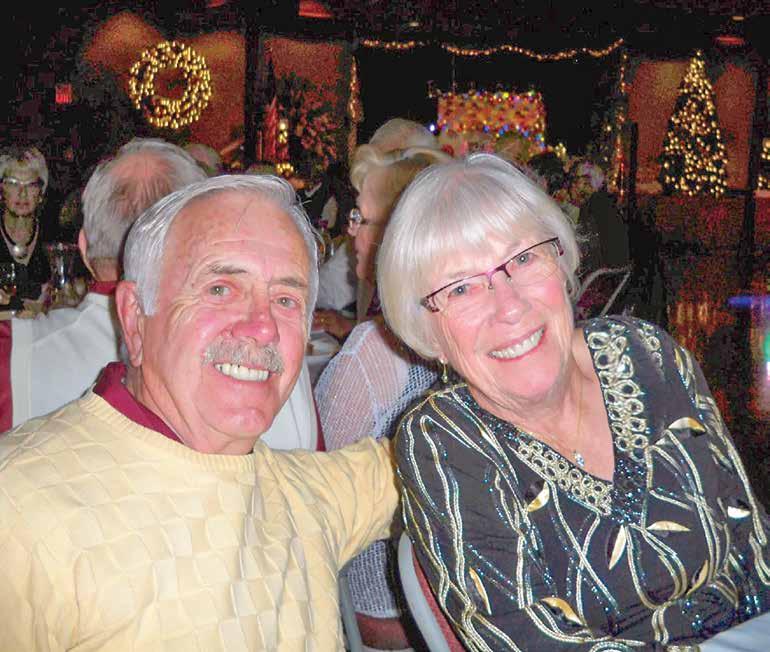
When Norm turned 16, his mother planned a surprise birthday party for him. He had worked all day at a neighborhood store and was not feeling well when his dad asked him to carry something down to the basement, which was full of kids. “Surprise!”
The next morning, he came down with the measles. The only person to catch the measles was Nancy. An omen of the future? Perhaps a foregone conclusion?
They continued as good friends through high school. It wasn’t until 1957 that they started dating. Prior to that, they had doubledated a few times with other dates. Once, Norm fixed Nancy up on a blind date with a fraternity brother who later served as the best man in their wedding.
Tell us about the proposal. Our decision to get married did not include a formal, kneel-down proposal, but rather a discussion at a drive-in movie. “Let’s get married.”
Shortly afterward, we committed to each other when Norm pinned Nancy with the Theta Tau Fraternity Sister Pin.
Tell us about your wedding.
We were married on Jan. 24, 1959, at the First Congregational Church in Royal Oak. That day, Detroit was hit with 14 inches of snow. After a reception in the church parlor, Norm and his groomsmen spent the next hour helping guests dig their cars out of the parking lot.
Following an in-home reception, we headed through the snow to our honeymoon in Chicago, filled with dreams of the future.
Tell us about your marriage.
We spent our first year of marriage living in Ferndale, with Norm finishing school at Wayne and Nancy working at GM and supporting Norm. In early 1960,
we moved to Midland, where Norm started his career at Dow Chemical, and we started a family. We remained there for 63 years, except for four years when we lived in São Paulo, Brazil.
It was in São Paulo that Nancy really showed her strength, adjusting to a new culture while Norm worked. She was, and still is, the real rock of our family.
Looking back, we cherish the love, understanding, acceptance, patience, and respect we have for each other. We are truly blessed by these 67 years together and by the loving family we now have, which includes three children, nine grandchildren, and, at last count, 11 great-grandchildren.
HAVE A LOVE STORY THAT DESERVES THE SPOTLIGHT?
Apply now to be featured. Scan the QR code to submit your story.







BY SHANNON WHITE
Late summer in Michigan brings a unique style shift as the calendar transitions toward autumn. August delivers a blend of warm daytime sunshine and crisp evening breezes. Whether you are strolling the fairways, dancing at an outdoor concert, or preparing for the upcoming school year, this transitional season is all about effortless layers, relaxed tailoring, and elevated casual pieces.
Here is your comprehensive guide to navigating Michigan’s packed August social calendar in style.
When the PGA Tour Champions arrive at Grand Blanc’s renowned Warwick Hills Golf & Country Club for The Ally Challenge presented by McLaren (Aug. 24-30), your attire should balance country club








etiquette with functional comfort. Modern golf fashion has evolved far beyond stiff khakis and polo shirts.
→ The Daytime Look: Opt for a chic wrap skirt or a breathable, tailored athleisure skort paired with a stylish tank top. Complete the look with upscale sneakers designed for walking the 18-hole course.
→ The Layer: A lightweight, coastal-inspired striped pullover tied over your shoulders adds a classic touch while preparing you for a breezy afternoon along the ropes. It also transitions beautifully into an evening of incredible music.
August is prime time for country music in the Great Lakes State. A major highlight is country superstar Keith Urban, who headlines the Ally

Community Concert on Saturday, Aug. 29, on the Warwick Hills driving range.
→ The Western Ensemble: Ditch the predictable dark boots for a fresh, seasonally inspired look. Try light-colored cowboy boots paired with a breezy dress or flirty skirt and a denim shirt or classic white tank. Gingham and floral prints are two of our favorite go-to choices for August. Give your hat a glow-up with vintage feathers and suede or velvet ribbon that complements your outfit.
→ The Accessories: Lean into the resurgent boho-chic trend with a stylish hat, layered necklaces, and a fringe crossbody bag. If temperatures drop during the evening concert, a vintage denim jacket with a custom designer




scarf or hand-beaded accents provides the perfect practical edge.
Before the books open, Michigan’s coastal towns and vibrant downtown districts host countless late-summer gatherings. For a casual weekend getaway or an evening food festival, comfort meets style through thoughtful simplicity.
→ The Outfit Formula: Try a simple 3-3-3 micro-capsule wardrobe strategy, focusing on versatile, highquality basics that mix and match effortlessly.
→ The Pieces: High-waisted, wideleg trousers paired with a fitted tank and a structured blazer—or the aforementioned denim jacket—strike the ultimate “effortlessly cool” balance. Swap in a favorite tee or tank with a lightweight, all-American cardigan or pullover for ideal seasonal style during America’s 250th year. Complete the look with comfortable sandals or retro lifestyle sneakers for all-day walkability.
Transitioning from beach days to lecture halls means blending nostalgic trends with everyday practicality. This season’s campus style celebrates individuality while making it easy

to get out the door for those early morning classes.
→ The Statement Base: Lowrise or classic “mom” jeans with a relaxed, wide-leg silhouette are expected to dominate the upcoming semester. Pair them with vintage pop culture or band T-shirts to serve as instant conversation starters with new classmates.
→ The One-Piece Wonder: On mornings when you’re running late, utility jumpsuits or denim overalls offer a chic, one-and-done solution that can be dressed up with a statement bag or kept casual with classic sneakers.

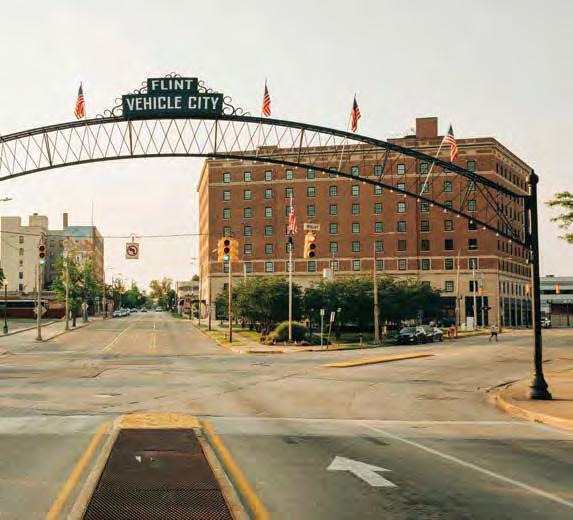
4 GO WILD: Nature Detective!
Presented by Genesee County Parks
Time: 10 to 11:30 AM at Flushing County Park, Pavilion 1 Recreation Pop-ups bring exciting outdoor activities to parks across Genesee County! Drop in and try your hand at archery, disc golf, nature art, or wildlife observation in a fun, casual setting. No registration, no pressure—just a chance to explore, play, and connect with nature. Ages 5 and older. Cost: Free
Karaoke at the Mill Pond & Food Truck Fun
Presented by Happening in Linden and the Linden DDA
Time: 6 to 9 PM Join some of the area’s best singers. This free family friendly event features dinner, popcorn, cotton candy, giveaways, and fun for all ages. In the event of rain, activities will move to the Community Center.
Grand Blanc
Presented by Physicians Park Time: 6 PM Enjoy a free outdoor concert featuring “Still Rain.” Upcoming concert: Aug. 26 – “After It All.”
Back to the Bricks Tune-Up Party
Flushing
Presented by Back to the B ricks
Time: 4 to 8 PM Free event featuring official Back to the Bricks merchandise, vendors, a DJ, live music at select locations, street dancing, and giveaways, including 250 collectors’ T-shirts.
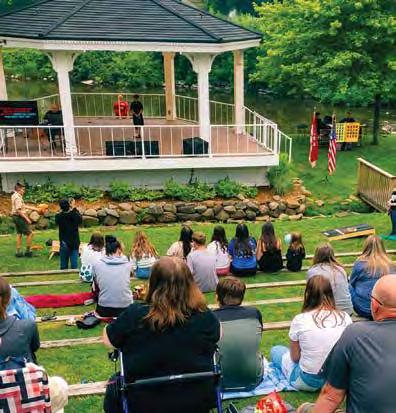
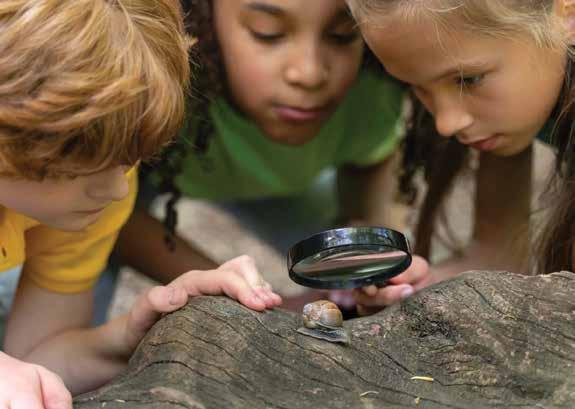

7
Back to the Bricks Tune-Up Party
Fenton
Presented by Back to the Bricks Time: 5 to 8 PM
The event includes concessions, official Back to the Bricks merchandise, vendors, a DJ, live music at select locations, street dancing, and giveaways, including 250 collectors’ T-shirts.
Cruisin’
Downtown Davison
Time: 6 to 8 PM
Enjoy classic cars, great people, local shopping, dining, and a fun-filled evening in the heart of Downtown Davison. Free and open to the public.
Presented by Southern Lakes Parks & Recreation and the Fenton DDA
Time: 5 to 8 PM
Rev up your engines for a night of classic cars, double concerts in the park, a live DJ, the Fenton Farmers Market, food trucks, and shopping and dining in Downtown Fenton.


Presented by Genesee County Parks Time: 6 to 7:30 PM Join us to start your fishing journey or to brush up on your skills. Fishing rods and bait are provided. Each week, we will learn about fish biology and ecology, then cast out and try to land the big one! Anglers 16 and younger will not need a fishing license. Anglers 17 and older will need a license to fish actively. Adults must accompany youth under 16. Ages 5 and older. Cost: Free


Presented by Flint Drop Fest
Time: 11 AM to 10 PM Join us in the streets of Downtown Flint to celebrate the electronic music and arts community with more than 10 open-air stages featuring 100plus performances by local, regional, and national artists, along with arts, crafts, and food vendors.
Mt. Morris
Presented by Back to the Bricks Time: 3 to 8 PM

The event includes concessions, official Back to the Bricks merchandise, vendors, a DJ, live music at select locations, street dancing, and giveaways, including 250 collectors’ T-shirts. 9 Vintage Store Day: Outdoor Vintage Market Deer Park, Grand Blanc Presented by Deer Park Vintage Co. Time: Noon to 4 PM Join us for the kickoff of our 2026 Sunday Market Series! 14 Flint ArtWalk
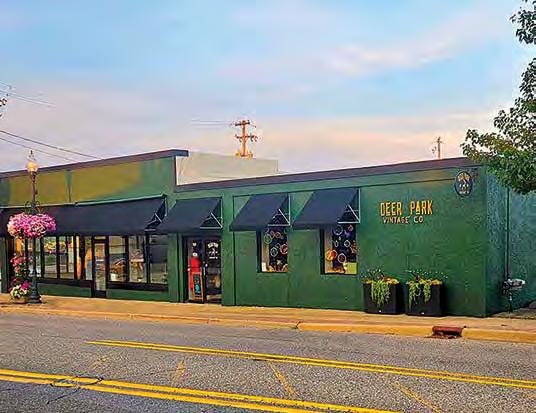
Downtown Flint Presented by Back to the Bricks Time: 10 AM to 7 PM Drivers will begin arriving at 6 AM in the staging area on Fifth Avenue at Saginaw Street. The opening ceremony begins promptly at 10 AM. This day-long event features thousands of classic and custom vehicles, hot rods, and dream cars.

49th Annual HAP Crim Festival of Races
Presented by the Crim Fitness Foundation Events include the signature 10 Mile, Half Crim 5 Mile, 5K, Michigan Mile, and Teddy Bear Trot.
Genesee County Fair

Annual Kiwanis Art in the Park
Presented by Swartz Creek
Kiwanis
Time: 3 to 7 PM on Aug. 21; 10 AM to 5 PM. on Aug. 22
Event includes fine arts and crafts, local food, and engaging children’s activities while enjoying beautiful Elms Park in Swartz Creek.

Presented by the Genesee County Fair
Enjoy this annual family event in Mt. Morris featuring carnival rides, livestock, crafts, games, and daily grandstand events. For admission prices and tickets, visit gcf.org.

The Ally Challenge
Warwick Hills, Grand Blanc
Presented by McLaren
An official PGA TOUR Champions event owned and operated by Tournaments for Charity, a Michigan nonprofit corporation. Visit The Ally Challenge’s official website for tournament information and a complete schedule of events.
28
Full Moon Hike
Sturgeon Moon at For-Mar
Nature Preserve & Arboretum, Burton
Presented by Genesee County Parks Time: 8:30 to 10 PM
Join a naturalist on a full moon hike and experience the tranquil beauty of the park under the moonlight. This hike is at least one mile long with some stops along the way. The trail has some small hills and exposed roots. For all ages. Cost: $5 per person. Pre-registration required by Aug. 27.
Presented by the Greater Flint Arts Council Time: 5 to 9 PM This program is a collaboration among businesses and cultural organizations in Flint’s Downtown Entertainment District. Maps are available at the Greater Flint Arts Council.


At Crossroads Village & Huckleberry Railroad – Flint
Presented by Genesee County
Parks Time: 12 to 9 PM
Celebrate community, history, and hometown pride during this special day at Crossroads Village. Enjoy games, food trucks, local vendors, and family activities. Village-only admission is FREE for Genesee County residents.
Crossroads Village & Huckleberry Railroad, Flint | 6.20.2026
PHOTOGRAPHY BY GENESEE COUNTY PARKS
The Curious at Crossroads: Oddities Fest 2026 was held Saturday, June 20 and Sunday, June 21 at Crossroads Village & Huckleberry Railroad in Flint.
The family friendly event featured more than 100 oddities and artisan vendors, food trucks and the Crossroads Cafe. It also featured historical demonstrations, including 19th-century medicine, cosmetics, and mourning costumes.
The most popular attraction was the “Tub of Terrors.”
The event boasted live entertainment throughout the village.
Special guest was Butch Patrick, who portrayed Eddie Munster on “The Musters,” with appearances, autographs, and his Munsters-themed vehicles.
This event is just one of the featured special weekends during the 50th anniversary season of Crossroads Village & Huckleberry Railroad.



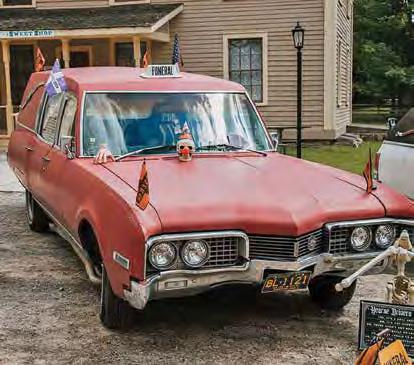
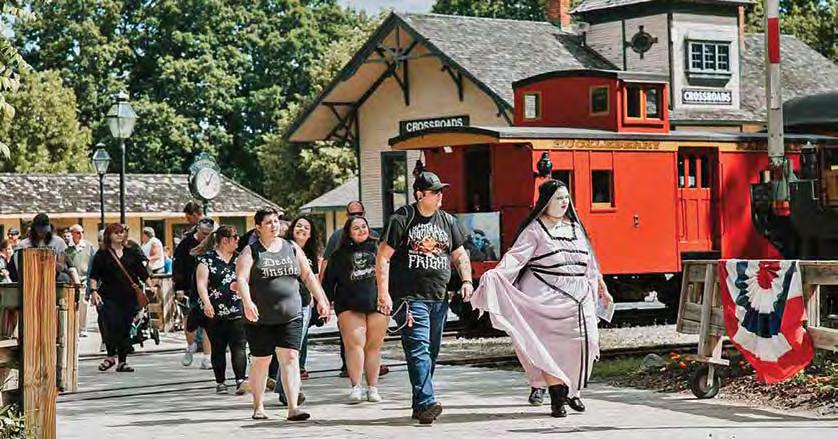

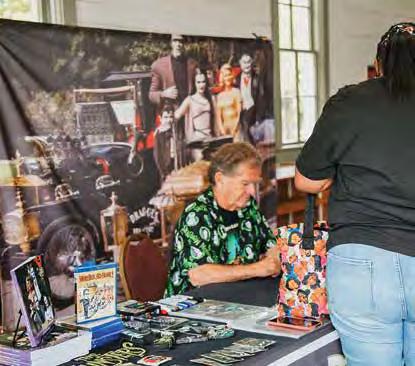
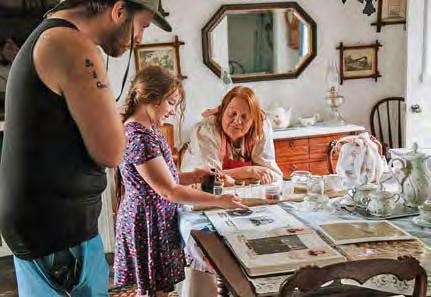

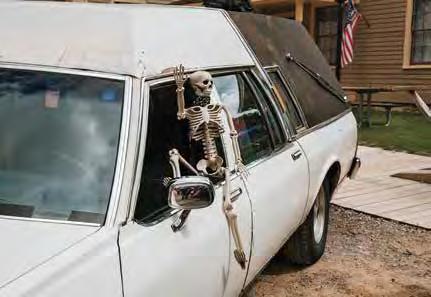
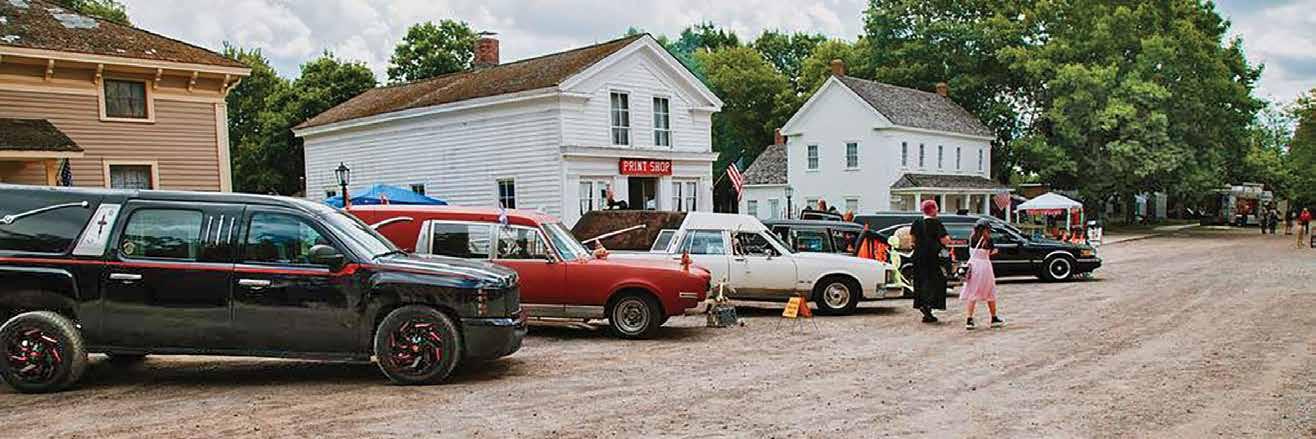

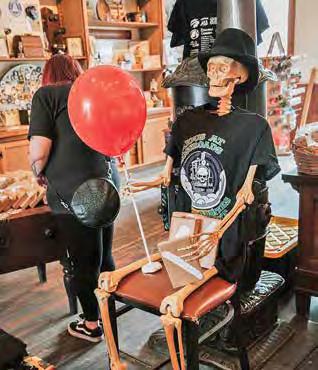




This is Tootsie Roll! She is a 1½- year-old Abyssinian Guinea pig. She is very sweet. She likes to be handled and will let out a squeal if she hears a bag crinkle. She loves snacks. She has been at the Humane Society of Genesee County since April. Her adoption fee is $40.
An Abyssinian guinea pig can make a wonderful pet. Guinea pigs typically live 5–8 years, with some reaching 9 or more with excellent care.
Here are the most important things to know before adopting one.
First, guinea pigs should not live alone
Guinea pigs are highly social animals and generally do much better with another compatible guinea pig. If the one you’re adopting currently has a cage mate, ask whether they should be adopted together. Introducing unfamiliar adults later can sometimes take patience, especially males.
Find out why it’s being rehomed.
Cage size matters.
Diet is critical
A healthy guinea pig’s diet should consist of:
• Unlimited timothy hay (available 24/7)
• About 1 cup of fresh vegetables daily, especially leafy greens
• A quality guinea pig pellet containing stabilized vitamin C
• Fresh water at all times
Avoid iceberg lettuce, onions, garlic, potatoes, chocolate, and sugary treats. They need vitamin C every day.
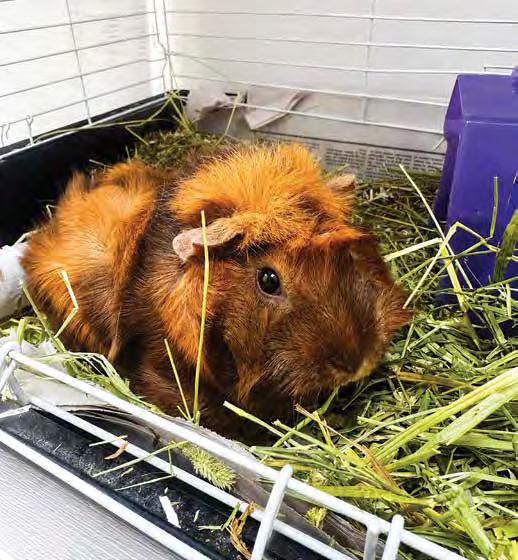
To adopt Tootsie Roll or to see other animals available for adoption, VISIT GENESEEHUMANE.ORG OR CALL 810.744.0511.
Grooming
Abyssinians have distinctive swirls (rosettes) in their fur. They generally need:
• Weekly brushing
• Occasional nail trimming (every 4–6 weeks)
• Regular checks for mats, skin problems, and parasites
Veterinary care
Not every veterinarian treats guinea pigs, so locate an experienced exotic animal veterinarian before an emergency happens.
Costs to expect
Expect to spend $30–$75 per month on routine care, plus occasional veterinary expenses.
Every shelter animal has a story ... Let’s change their ending.
COMPILED BY KAREN PIACENTINI





August invites us to slow down and savor the final, golden days of summer. It’s the perfect month to pick up a great book and escape into another world, discover new ideas, or revisit timeless classics. Reading sharpens the mind, reduces stress, expands vocabulary, and strengthens empathy by allowing us to experience life through another person’s eyes. Whether you’re relaxing on the beach, sitting on the porch, or enjoying a quiet evening at home, a great book offers lasting rewards long after the final page is turned. Make time this August to read—you’ll enrich both your mind and your soul..

BY WES MORRIS
We sometimes use the phrase, “a thorn in my side.”
It’s the nagging problem, difficult person, or ever-present challenge.
Do you feel that you have a thorn in your side?
In the Bible, a man named Paul was mightily used by the Lord. He preached the Gospel, prayed for people who were healed, witnessed a dead man raised to life, and received a vision of Heaven. At the same time, he said that a thorn in the flesh had been given to him.
Paul prayed three times that God would remove whatever the thorn was, but the Lord told him, “My grace is sufficient for
you, for power is perfected in weakness.”
While God could have removed the thorn, He allowed it to remain so that Paul would trust in grace to sustain him rather than in the relief that would come from its removal.
But why? What other purpose did the thorn serve for Paul, and perhaps even for you today?
Paul said that the ultimate purpose of the thorn was “to keep me from exalting myself.”
It is difficult to admit that our hearts are prone to arrogance when blessings come our way. Some may be more vulnerable to this temptation than others.
Whatever the case may be for you, I encourage you to consider
that the thorns you endure in this life may be the very thing preventing your heart from succumbing to the poison of pride.
So yes, we can ask God to remove them. Sometimes He does. Other times, we may do best to embrace our thorns as a kind of preservative that keeps our souls humble enough to carry the blessings God pours into our lives.
The greatest blessing of all is that God sent Jesus to set us free from the curse of sin and the captivity of death. Jesus became our sin, shame, guilt, and unrighteousness. He paid the debt for our souls on the cross.
He rose from the dead, proving that He has the power to give
us victory over death and grant eternal life.
We receive this life by faith. If you have never found true peace and forgiveness, I urge you to take a moment and call upon the Lord Jesus. Ask Him to redeem your weary heart and save your soul.
God bless you.

is passionate about preaching the good news of the gospel and s eeing people find peace with God through simple faith in Jesus Christ. In addition to preaching most Sundays at The Rock Church in Fenton, Michigan, he travels throughout the USA and to other countries, wherever there is an opportunity to preach the gospel.

BY MARK RUMMEL

Americans eat pigs, cows, chickens, and turkeys by the millions each year, but our Western culture tells us not to eat dogs and cats. Why do we choose to dine on some animal proteins while deciding not to eat others?
Author Jonathan Safran Foer explores those questions in his 2009 book Eating Animals. A 2018 documentary of the same name also examined the topic, particularly in the context of the rise of factory farming in America.
The book grew out of Foer’s personal decision about what to feed his newborn son. That prompted a yearslong examination of the foods we choose to eat. He explored the ethics of eating animals and how industrial agriculture has contributed to the decline of family farming traditions. We

humans choose to love some animals while consuming others. About 99% of people would never consider eating dogs — except, perhaps, a backyard hot dog on the grill.
But pigs are just as intelligent as dogs and cats. Why do we find it acceptable to raise, slaughter, and eat swine? Comedian Johnny Carson often joked that pigs are among the smartest animals — yet our final encounter with them is often on a grill or between two slices of bread.
Some cultures do eat domesticated animals, especially where protein has historically been scarce. In those places, people have often relied on whatever food sources were available to combat hunger.
Experts say there is no essential biological difference between the animals many people eat — birds, cattle,

We humans choose to love some animals while consuming others.
fish, and pigs — and those many Western cultures generally avoid eating, such as horses, dogs, and cats. Why, and how, do we make those choices?
To give people something to chew on, Foer even presented a recipe for “Stewed Dog, Wedding Style” during an interview on NPR’s All Things Considered. At the time, dog meat was still consumed in parts of Korea. In some places, young dog was considered a delicacy. Is that really much different from our own acceptance of veal — meat from young cattle?
Today, eating dogs is rapidly disappearing in South Korea. A law passed in 2024 bans the breeding, slaughter, and sale of dogs for human consumption, with the practice scheduled to end completely after a three-year transition period. Younger generations, in particular, overwhelmingly oppose the practice.
It is illegal to slaughter dogs or cats for human consumption anywhere in the United States under a federal law passed in 2018. Horse meat, however, occupies a different legal and cultural space. While private consumption is generally not prohibited in most states, federal restrictions have effectively ended commercial horse slaughter for human consumption in the U.S.

Horses, for some reason, are viewed differently in various parts of the world. Horse meat remains a delicacy in parts of Asia, South America, and Europe. However, it remains a strong cultural taboo in English-speaking countries such as the United States, Australia, and the United Kingdom. During World War II, horse meat frequently appeared on dinner tables throughout much of Europe because food shortages left families with few alternatives. Americans also consumed more horse meat during that era than they do today.
The Japanese delicacy basashi is thinly sliced raw horse meat, often served sashimi-style. Thousands of restaurants across Japan serve horse meat, particularly in regions where it remains a traditional specialty.
Foer does not insist that everyone become vegan. Instead, he encourages readers to think critically about the choices behind what they eat, weighing tradition, taste, and convenience against concerns such as animal welfare, environmental impact, and the public health risks associated with factory farming. Since his book’s publication, conversations about food ethics and sustainability have only grown. Perhaps the true delicacy is not what we choose to eat, but being thoughtful about why we make those choices.
Mark W. Rummel is a lifelong news guy who has worked in communications since 1972. Along the way, the Fenton, Michigan, resident and his wife Sally even worked for the Walt Disney Company. They opened and operated the Mancino’s of Fenton restaurant in 1998 and now enjoy traveling and spoiling their grandkids. Mark always appreciates your comments at MarkWRummel@gmail.com
BY BRICE CARTER, CFP®, CIMA®, CHFC®
Before I became a Chief Investment Officer and financial advisor, I spent a good chunk of my life competing in various sports. As a competitor, you don’t stop competing. You’re always looking for the optimal strategy, the best outcome, and the smartest way to protect your family’s future.
As a father planning for my kids, education is a top priority for me. When it comes to
college savings, the 529 plan has historically been a good tool. But thanks to recent legislative changes, it just became an undisputed champion.
For years, the 529 plan has been the heavy hitter of education savings. You contribute after-tax dollars, the money grows tax-free, and as long as you use the withdrawals for qualified education expenses, the distributions are entirely tax-free. Additionally,

We can’t predict the exact cost of college in 10 or 15 years, nor can we predict exactly what our kids will want to do, but we can plan for multiple outcomes.
you often receive a state tax deduction for making the contributions. It’s an amazing tool.
However, parents always threw the same counterpunch: “Brice, what if my kid decides not to go to college? What if they earn a full-ride scholarship or go to trade school?”
Historically, if you pulled the money out for non-educational purposes, you’d get hit with taxes and a 10% penalty on the earnings. That risk made some families hesitant to fully fund a 529 plan, leaving them underprepared when tuition bills eventually arrived.
Enter the SECURE 2.0 Act.
Starting in 2024, the rules changed in a way that completely shifted the college savings landscape. Now, if your child doesn’t use all the money in their 529 plan, you can roll the remaining balance directly into a Roth IRA in the beneficiary’s name, without taxes or penalties.
But like any good strategy, you have to understand the rules of engagement:
1 |The 15-Year Rule: The 529 account must have been open for at least 15 years before you can execute a rollover. This means opening an account early is more critical than ever.
2 |The Lifetime Limit: You can roll over a maximum of $35,000 per beneficiary during their lifetime.
3 | Annual Limits Apply: The rollover is subject to the annual Roth IRA contribution limits (e.g., $7,500 in 2026). You can’t move the entire $35,000 in a single year; it must be parceled out over several years.
4 |The 5-Year Rule: Contributions made to the 529 plan within the last five years (and their earnings) are ineligible for the Roth conversion.
This update takes the biggest objection to 529 plans off the table. It provides a safety net that ensures your hard-earned savings won’t be penalized if your child takes a different path. Instead of a penalty, they get a massive head start on their financial independence.
We can’t predict the exact cost of college in 10 or 15 years, nor can we predict exactly what our kids will want to do, but we can plan for multiple outcomes. By leveraging the new 529-to-Roth conversion rules, you are setting your family up for a win, no matter what path they choose.

Brice Carter, CFP, ChFC, CIMA, CAP, CDAA, MSFS, has served as a Financial Advisor and the Chief Investment Officer (CIO) at Financial Strategies Group (FSG) since 2011. He joined the family run, SEC-registered firm and today plays a central leadership role in shaping investment strategy, portfolio management, and long-term planning for a growing client base. FSG has offices in Okemos and Fenton.

another way to fund their public services. The benefits of owning a home remain high, but the property tax bill falls. This increases demand for housing, meaning homes will sell for higher prices than before. The same is true if property taxes no longer uncap when a home is sold. The property tax savings enjoyed by the new owner are largely offset by the higher purchase price.
BY DR. CHRISTOPHER DOUGLAS
Politicians in Michigan and other states are proposing the repeal of property taxes. An additional proposal in Michigan would eliminate property tax “uncapping.” Property taxes are based on a home’s taxable value, whose annual increase is limited to 5% or the rate of inflation, whichever is lower. When a home is sold, its taxable value “uncaps” and immediately rises to its true market value. This means the new homeowner
pays a higher property tax bill than the previous owner.
The idea behind repealing property taxes or eliminating uncapping is to make homeownership more affordable. However, this may not occur because of the concept of “house price capitalization.” This means the price of a house reflects all of the costs and benefits associated with owning it. If the benefits of a house increase or the costs associated with it decrease, those

Demand remains strong while the supply of housing is constrained.
Repealing
property taxes does not address either of these factors.
changes are reflected in a higher purchase price. This is why a house with a new roof or an updated kitchen sells for more than a comparable house whose roof will need to be replaced soon after purchase.
House price capitalization also applies to local public goods, such as roads, schools, parks, police and fire protection, and other community amenities. A house in a community with high-quality public services will sell for more than a comparable house in a community with lower-quality services. This is one significant reason why home prices in Detroit remain relatively low. Detroit has some of the highest property tax rates in the state but has struggled to provide high-quality local public goods. High property tax rates without corresponding public services are capitalized into lower home prices.
Suppose property taxes are abolished and local communities find
The effect of repealing property taxes or eliminating uncapping would be a transfer of wealth from local governments, where property taxes fund public services, to existing homeowners, who would likely be able to sell their homes for higher prices. The financial benefit to new homeowners, however, may be minimal.
This assumes local governments can replace the lost revenue with another funding source. If they cannot, the quality of local public goods will decline, putting downward pressure on home prices and reducing the value homeowners receive when they sell. While lower home prices may appear to improve affordability, homes in communities with weak public services are generally less desirable to buyers.
Housing affordability is fundamentally a supply-and-demand issue. Demand remains strong while the supply of housing is constrained. Repealing property taxes does not address either of these factors. Instead, it increases demand, making the policy ineffective as a means of improving housing affordability.

came to the
of Michigan-Flint in 2006. He earned a B.S. in Electrical Engineering and a B.S. in Economics from Michigan Technological University in 2001, and his Ph.D. in Economics from Michigan State University in 2007. As Professor of Economics, he teaches Principles of Microeconomics, Principles of Macroeconomics, International Economics, Public Finance and Sports Economics.
BY LESLIE TOLDO
“The Ruby Jubilee? What is that?” you ask.
That’s what some people call a 40th anniversary. I am not sure why Ruby earned that distinction, but I can tell you that it wouldn’t matter what kind of stone was involved; in my mind, celebrating your 40th anniversary of anything means one thing: You’re getting old. I guess maybe that is why only about a fifth of my senior class — the Class of 1986 — decided to attend our reunion this summer.
I was there. I even helped plan the event in my hometown, Baton Rouge, Louisiana. I was president of my student body and vice president of my senior class. It is now my duty to be involved in these things. There were three of us on the planning committee. We met via Zoom and over the phone, and we exchanged numerous texts.
All the three of us wanted was to put together a great evening of reminiscing and totally awesome ‘80s music. We pulled it off, including a great venue and food. There was just one little problem: It was like pulling teeth trying to convince our former classmates to attend.
Never in history has it been easier to pull together a class reunion than it is in 2026, because we now have the internet and social media to help us track people down. Ironically, our 1996 10-year reunion was better attended than this one. The crowd seems to get smaller every five years since that first gettogether at the old skating rink.
My grandmother spoke fondly of her class reunions, which went on until she was well into her 80s. They didn’t seem to have any trouble drawing a crowd.
Could social media be killing reunions? It’s so easy to keep in touch with people nowadays.
More than one former classmate got candid with me and said, “I keep in touch with the people I care about. I don’t need a reunion.”
If you share those sentiments about your own high school reunion, hold the phone. I am here to tell you, there are people you haven’t thought of since graduation who will make your heart skip a beat the moment you lay eyes on them. I looked around the room at the small crowd in Baton Rouge this year, and I was amazed by how many people I
had known not just since high school but since fourth grade.
I spent the first nine years of my life as an Army brat. We moved around a lot. It was hard to form connections with other kids. The people in this hall with me were lifelong friends. Sure, many of us had lost touch, and some of us looked a little different than we did 40 years ago (that’s why they make name tags), but that connection was still there.
I remember how my grandmother used to talk about her former classmates. She treasured the bond she shared with them. As the years rolled by and many of those old friends passed away, she truly missed them in the way you can only miss something so familiar.
My fellow committee members
and I vowed, after this year’s debacle, that we would not be involved in planning another class reunion. However, I am starting to rethink that. I want to see these people, and I can only hope that as the years go by, more of them will realize what Bob Hope once said: “When we recall the past, we usually find that it is the simplest things, not the great occasions, that in retrospect give off the greatest glow of happiness.”

An Emmy-nominated anchor/meteorologist/reporter at FOX66 and NBC25, Leslie Toldo recently retired from TV news after a career of over 30 years, nearly 20 in Flint. She is a blogger, writer, wedding and funeral officiant. Born and raised in Baton Rouge, LA she graduated from the University of Wyoming. An avid kayaker, boater and runner, Leslie lives in Linden with her husband, Ellie the cat and three dogs: Henry, Gus and Lucy.

SOMETIMES A VACATION ISN’T WHAT WE EXPECTED
BY ALEXANDRIA NOLAN-MILLER
Sometimes it isn’t better or worse — it’s a third thing entirely. Interesting. A lesson. An opportunity.
My family is currently in Spain. We’re on the coast about an hour and a half from Barcelona, in the Costa Brava. We’ve been here before, but usually only as a day trip. The last time we visited, in 2024, we promised we’d come back and stay longer — away from the hot, crowded streets of Barcelona and instead escape to where Spaniards come to get away from it all.
Suffice it to say, when it comes to adventure, we keep our promises.
Even when there’s a little more adventure than we planned for.
Because the Costa Brava isn’t exactly a quick ride from Barcelona, we knew we’d need a rental car. Ah — you may already see where this story is going.
handed the keys to the valet, headed straight to the pool overlooking the ocean, and thought: This is it.
Fairytale stuff. The kind of vacation you daydream about on an ordinary Tuesday.
And it would have been.
Except ... well, what’s a beautiful European vacation without a few curveballs?
After a few days of sun, beach days, sangria, and then a little more sangria, we decided to explore beyond the beach town.
Within an hour and a half or less, there’s an abundance of charming medieval villages, whitewashed coastal towns, and historical sites. We chose a walled medieval village with churches and buildings that had stood since the last millennium.
Sometimes, it seems, a vacation is a relaxing escape. And sometimes it’s just an escape in general.
We rented the car months in advance, paid in advance, and had everything lined up. At first, it really did seem that way.
We piled our carry-ons into the Fiat and started the drive to Tossa de Mar along the beautiful coast. An hour and a half later, we arrived,

tried again in Spanish. We visited every station we could find, only to discover broken chargers, occupied chargers, chargers requiring apps we couldn’t use without European addresses or phone numbers, and chargers we plugged into only to realize 30 minutes later they weren’t working at all.
At first, it was funny, then annoying.
Then suddenly I was crying because my son was hungry, and somehow our one-hour drive home had become four.
Sounds lovely.
Worth the drive, right?
Maybe not.
See, the car we rented was electric.
Although the friendly man at the agency assured us there were chargers “everywhere,” we quickly discovered this was not actually true.
In fact, they were almost nowhere.
On the drive back, it became immediately clear we had a very small chance of making it to the hotel. We Googled “EV charger near me,” then
We couldn’t find a way to charge the car.
Finally, a kind man helped us locate a charger — which was also broken and had to be fully reset — but after 40 minutes on the ultra-fast charger and €80 later, we reached a 75% charge, enough to safely make it back.
Defeated, drained, and exhausted, we rolled into Tossa de Mar and immediately found a charging station in town. We would be prepared now.
Except ... not quite.
We plugged in.
Well, we tried to plug in.
Two chargers weren’t recognized. Finally, we found one across the street, stretched the cable around the entire car until it connected, and watched it finally begin charging.
Then we walked a mile uphill back to the hotel and declared: No more day trips.
Sometimes, it seems, a vacation is a relaxing escape.
And sometimes it’s just an escape in general.
An escape from routine. A reminder that the world is a big place and that not every memorable day is an easy one.
Sometimes the stressful days pull you farthest from your normal life. And honestly, both kinds of escape are pretty exciting.

Alexandria Nolan-Miller is a misplaced Michigander navigating the vibrant chaos of Houston’s urban jungle. She travels with her husband and young son, contributing her insights and experiences to various print and digital publications. As the author of historical books rooted in Michigan, Alexandria brings the past to life through her writing. When not on the road, she can be found immersed in books, teaching, sharing stories, and chasing new adventures to inspire her next piece.

























BY SHARON STONE
There is something special about August in the Greater Flint area. Summer is in full swing, the days are still long and warm, and families are determined to squeeze every last drop of fun out of the season before the school bells ring once again. At the same time, parents are shopping for school supplies, planning schedules, and preparing their children for a new academic year. August becomes a month that beautifully balances summer freedom with the anticipation of new beginnings.
Fortunately, families throughout Genesee County have no shortage of opportunities to enjoy quality time together before fall arrives.
One of the month’s biggest attractions is the legendary Back to the Bricks. For many local families, this beloved tradition signals that August has arrived. Throughout the month, Tune-Up Parties take place in communities including Fenton, Flushing, and Mt. Morris before
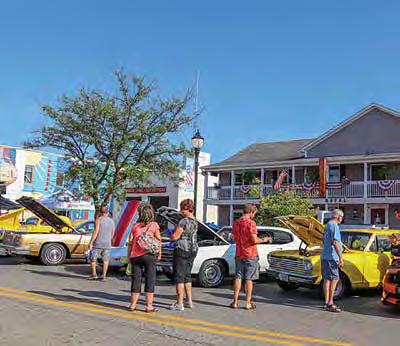
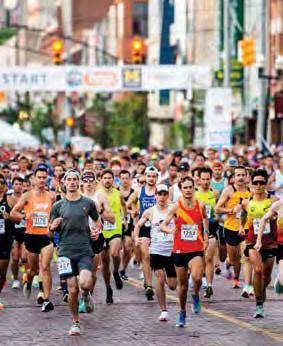
the celebration culminates with the Main Event in downtown Flint. Children marvel at classic cars, parents share memories of vehicles they once owned, and families gather to celebrate a cherished piece of Flint’s automotive heritage.
August also brings one of the area’s most inspiring community traditions, the HAP Crim Festival of Races. Whether participating in a race or cheering from the sidelines, families come together to celebrate fitness, perseverance, and community spirit.
For those who enjoy the sights, sounds, and flavors of a traditional fair, the Genesee County Fair offers everything families love about summertime. From carnival rides and livestock exhibits to games, food vendors, and grandstand entertainment, the fair continues to create memories that span generations.
Golf enthusiasts and casual spectators alike look forward to The Ally Challenge at Warwick Hills. Beyond world-class golf, the event has become a significant community gathering that showcases the region while raising millions of dollars for charitable causes.
Art and culture thrive throughout August as well. Flint ArtWalk invites residents to explore galleries, exhibitions, and creative spaces throughout downtown. Meanwhile, Flint Drop Fest fills the city with music, art, and energy, attracting visitors from across Michigan and beyond.
Families seeking a more relaxed pace can enjoy Kiwanis Art in the Park in Swartz Creek, featuring talented artists, local food, and activities for all ages. Likewise, Genesee County Day at Crossroads Village celebrates local history,

community pride, and family fun in one of the county’s most treasured destinations.
Throughout the month, free concerts in parks across Fenton, Grand Blanc, Linden, Davison, and Flushing provide opportunities to spread out a blanket, enjoy live music, and spend time together. These gatherings remind us that some of the best summer memories come from the simplest moments.
Just south of Flint, the Michigan Renaissance Festival opens its gates, transporting visitors to another era filled with knights, entertainers, artisans, and adventure. Meanwhile, sunflower fields, farm markets, and agritourism destinations across MidMichigan offer beautiful opportunities for family outings.
As August unfolds, families naturally begin shifting their focus toward the school year ahead. New backpacks appear in shopping carts. Calendars fill with activities and commitments. Yet amid the preparations, the month serves as a reminder to pause and enjoy the season while it lasts.
The Greater Flint area offers an incredible variety of events that bring neighbors together, celebrate local traditions, and strengthen family bonds. Whether attending a festival, exploring a fair, cheering on runners, listening to live music, or simply enjoying an evening outdoors, August provides countless opportunities to create lasting memories.
Before summer slips away, take advantage of all that our community has to offer. These are the moments children remember for years to come and the memories families treasure long after the season has ended.