Do you need approval to plant a creeper on a strata building’s wall?
Page 8 | Empire Estate Agents
Can a strata company start raising levies for unapproved repair works?
Page 24 | magixstrata
What do the 2027 embedded network reforms mean for WA strata schemes?
Page 26 | EnergyTec
About Us
Welcome to the latest issue of The LookUpStrata Magazine!
For over a decade, LookUpStrata has been Australia’s premier resource for everything related to strata living. Our mission is to keep strata communities informed and connected, providing thousands of lot owners, strata managers, and professionals with reliable, unbiased, easy-to-understand information to help you solve your strata problems and make informed decisions.
The WA Strata Magazines, published bi-monthly, are just one of the many ways we’re dedicated to supporting you. They’re packed with articles from industry experts and include our comprehensive printable strata directory.
Beyond these pages, we also offer:
• Q&A Service: Our team of leading strata specialists answer hundreds of your questions every month, which helps shape the magazine topics we cover.
• Newsletters: Our weekly newsletters deliver timely updates on legislative changes and the latest strata news straight to your inbox.
• Webinars: Join our founder, Nikki Jovicic, for weekly webinars where she hosts and partners with industry experts to discuss key topics.
• The LookUpStrata Directory: A free resource that showcases hundreds of trusted strata service professionals nationwide. You’ll find it at the end of every magazine and on our website.
• Website: Find all our resources, articles, and news in one convenient location, accessible 24/7.
Subscribe now at no cost. To enjoy unrestricted access and connect with our strata community simply click here
Stay Connected - follow us on LinkedIn, Facebook, and YouTube. Thank you for being a vital part of what makes our community so vibrant and trusted.
Nikki Jovicic Managing Director I Founder lookupstrata.com.au
Can poor maintenance in one building affect insurance for the whole scheme?
Taking a closer look: The value of simplicity and certainty in strata funding
Paul Morton and Gemma Davey, Lannock Strata Finance 8 Do you need approval to plant a creeper on a strata building’s wall?
Jamie
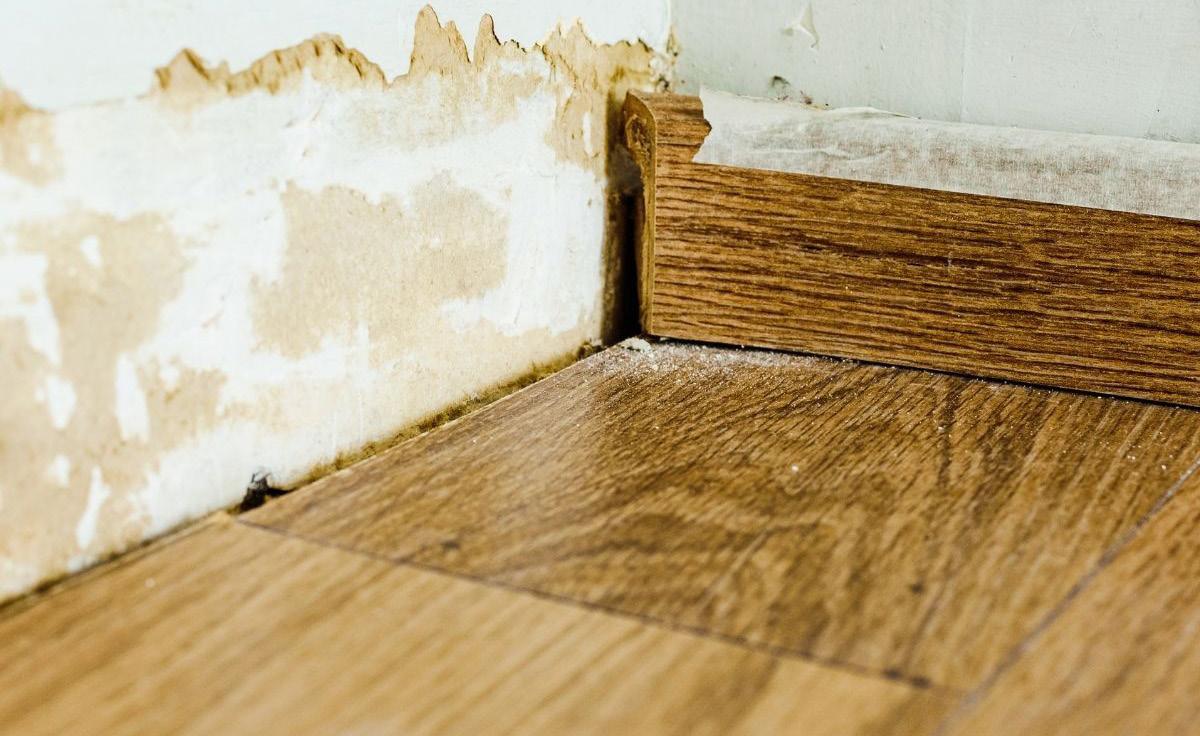
Who pays for flooring damage caused by a failed common property pipe?
Tyrone
Are you the only active owner in your strata scheme?
20 The price of waiting: Two reasons why deferring maintenance costs more than you think
ESM Strata
Can AGM decisions be challenged if a new agenda is issued on the day?
Rick Blampey, SVN Perth
Can a strata company start raising levies for unapproved repair works?
Marietta Metzger, magixstrata
What do the 2027 embedded network reforms mean for WA strata schemes?
Damien Moran, EnergyTec 28 What happens if you oppose a strata improvement you cannot afford?
Jamie Horner, Empire Estate Agents
Do strata records need to be kept in hard copy or can they be digital?
SVN Perth
Can a strata company replace tilt doors with roller doors?
Courtney Butters-Kerr, B Strata
Who decides the time and location of an AGM in strata schemes?
Marietta Metzger, magixstrata
Can lot owners arrange their own lot insurance in strata schemes?
Tyrone Shandiman, Strata Insurance Solutions
The WA LookUpStrata Directory
Can poor maintenance in one building affect insurance for the whole scheme?
What options do owners in a large strata scheme have if strata insurance is withdrawn due to poor maintenance in one building?
We live in a large strata scheme with multiple accommodation buildings. Most buildings are well maintained, one is not. The scheme’s strata insurance has been qualified for two years in a row because repairs and maintenance have not been carried out on the poorly maintained building. If the insurer withdraws cover, what options are available to owners who live in the well maintained buildings?
If insurers refuse, the strata company needs to rectify the issues, making the property insurable so cover can be reinstated.
Under the Strata Titles Act 1985 (WA) (the Act), the strata company must insure all buildings. If the strata company cannot obtain insurance, they are technically in breach of the Act.
In practice, brokers will try to place cover with alternative insurers (often with higher premiums or exclusions). If insurers refuse entirely, the strata company or lot owners usually need to rectify the issues, making the property insurable so cover can be reinstated.
Mention this offer when requesting a quote from us, and we will provide a discount off our standard fee for service of $250 (GST Inc) for buildings with 10-25 lots or $500 (GST Inc) for buildings with more than 25 lots for the first year you insure with Strata Insurance Solutions
To redeem this offer email a copy of your current policy schedule to Strata Insurance Solutions within 1 month of the publication of this magazine Your policy can expire any time in the next 12 months However we can only provide quotes 30 days prior to the expiry of your policyif your policy is not due now, we will schedule a quote at the appropriate time To ensure we apply this offer to our quotes, please specifically mention you would like to redeem the "LookUpStrata Special Offer".
MANAGER. Take the test todaysee how much you can save.
Every strata community must make decisions about how to fund capital works. How that moment is met matters - not just for the existing owners but for future owners as well.
The options have always been drawing on a capital works (sinking) fund, raising a special levy or the body corporate taking out a strata loan. Of the three, the benefits of a strata loan are clear, but not always well understood.
A correctly-structured, straight forward strata loan is typically:
• the lowest cost after tax for most owners,
• the fairest way to share the cost of capital works among current and future owners, and
• an excellent way to spread the cost over the life of the asset.
Taking a Closer Look: The Value of Simplicity and Certainty in Strata Funding
By Paul Morton, CEO, and Gemma Davey, Head of Business Development, Lannock Strata Finance
For the 60–70% of owners who are investors, the levy that repays a strata loan should be 100% tax deductible. Special levies and capital works fund contributions are not.
A strata lender will not ask for personal financial disclosure or guarantees. There is no impact on individual credit profiles or borrowing capacity.
Some strata loan products are incredibly complex. Greater complexity increases risks for owners. Before owners are asked to vote, the committee should have the loan structure reviewed by an independent strata lawyer or accountant with expertise in strata funding. The adviser should be able to identify the risks, the gaps and what the lender has not been upfront about. Pay particular attention to any loan structure that asks owners to commit capital upfront.
Ensure that your strata lender has the strength to support you and your community for the life of the loan. Strata loans can extend for up to 15 years – will your proposed lender last the distance or leave you stranded with no access to funds as happened recently?
Before any committee tables a loan structure, two conversations need to happen. One with the lender and one with a strata-experienced independent adviser:
Ask your strata lender:
Question
Do you pay commissions to strata managers or anyone else?
What you should hear
No - confirmed in writing and verified unambiguously in the loan contract.
How long has your company been lending?
Are all fees disclosed upfront - not just the interest rate? And what is the impact of those fees on total costs when converted to an interest rate?
Will you attend our general meeting and answer owner questions directly?
Who is our dedicated contact for the life of the loan?
Years of operation.
Full written schedule: application, establishment, drawdown, administration, early repayment and importantly a comparison rate.
Yes - with state-specific support documentation.
A real person with the required expertise, not a concierge or call centre.
Why
it matters
The person introducing or recommending a lender should have no financial interest in the outcome. Any commission is a conflict of interest and breach of fiduciary duty.
The only exception is an accredited finance broker.
Lenders have entered this market, made some loans, and then left clients with little or no service or support.
The headline interest rate is never the whole story!
Owners need direct answers, not marketing material via a strata managing agent.
Committees change. The relationship with your lender lasts the entire term of the loan.
Ask your accountant, lawyer, and financial adviser:
Question What you should hear
Does this structure comply with strata legislation in your state?
Yes - with relevant state-specific information.
Any grey areas on compliance with strata legislation in your state means greater risk.
Why it matters
If the product is non-compliant, for example relying on journalling levy credits or offsets, then the committee will have to oversee work to remedy the problems which ensue.
Does the loan structure create new risks for owners?
How are levy repayments and levy credits treated under tax law?
If the loan structure involves levy credits (e.g., “hybrid” or “participating” strata loans), does it have an Australian Tax Office (ATO) product ruling?
Does the product comply with the existing ATO product rulings and how are upfront contributors taxed under the ruling?
A clear explanation of all risks for the body corporate and individual owners. If the structure creates different classes of owners, those differences and their implications must be fully explained clearly.
How the structure qualifies for tax deductions for eligible owners, on what legislative basis, and with what certainty?
ATO Product ruling PR 2024/2 is the only product ruling currently issued for a loan structures where the owner ‘pays upfront’.
A specific answer, including tax treatment of any upfront remittances by lending owners.
If the strata loan is not straight forward, you need to understand the risks that complexity introduces.
60–70% of owners in most buildings are investors. Tax treatment of the levies is critical.
A product ruling is ATO confirmation of tax treatment and can be obtained quickly. Owners who rely on the claims of others are at risk of non-compliance and a desk audit.
ATO Product ruling PR 2024/2 states that upfront contributors under one structure will be taxed on their interest (even if a levy credit means that they never actually receive the cash).
Owners and advisers should read the ruling itself, not a lender’s summary.
If the answers to any of the questions above fall short, ask why your lender has not been upfront with you. Transparency, stability and long-term service aren’t extras - they’re the baseline.
Take a closer look: Get the advice. Ask the questions. Then decide.
For a full comparison of funding options and tax treatment watch the following webinars:
• The Principles of Corporate Finance and Tax
• Tax Traps for Strata Owners and Committees
This article provides general information only and does not constitute legal, financial, or tax advice.
For more information speak with our expert team:
1300 851 585 lannock.com.au
Do you need approval to plant a creeper on a strata building’s wall?
Do strata by-laws require an owner to seek permission before planting a creeper that will climb an outside wall?
Before doing anything, the owner must confirm the boundaries of their lot on the strata plan.
In most strata schemes, the key issue is where the owner will plant the creeper and what it will affect.
1. Check whether the wall is common property
Before doing anything, the owner must confirm the boundaries of their lot on the strata plan. In many buildings, external walls are common property, even if they form part of the boundary of your lot. If the outside wall is common property, you generally must obtain approval from the strata company (usually via the strata council or a general meeting) before planting anything that will attach to or grow on it.
2. Even if it’s within your lot
If you plant the creeper within your lot boundaries, permission may still be required if it:
• Affects the appearance of the building: Most strata schemes have by-laws regulating the exterior appearance of the building. A creeper climbing an outside wall alters the building’s look, and this typically requires council approval.
• Impacts or damages common property: If the creeper attaches to, penetrates, stains, or otherwise damages common property (such as brickwork, render, waterproofing, or paint), you may be held responsible.
3.
Maintenance liability
If you plant a creeper without approval and it causes damage to the building, the strata company may require you to:
• Remove the plant
• Repair the damage
• Pay the costs of rectification
Even if approval is granted, you may be made responsible for ongoing maintenance under a by-law or written agreement.
Who pays for flooring damage caused by a failed common property pipe?
Who is responsible for damage to a lot’s floating floors caused by a failed common property pipe?
I live in a strata block of around 50 apartments. A fault in the main water riser valve caused water damage to the floating floors in two apartments. The building insurance does not cover floating floors.
The council of owners say it is not responsible for the damage, even though the failure came from a common property pipe. They’ve directed the affected owners to make a claim under their own contents insurance. The council will not meet to discuss the issue and has instructed all communication to go through the strata manager. The strata manager says they cannot assist and will follow the council’s instructions.
If a common property pipe caused damage to the lot flooring and the building insurance does not cover the flooring, is the strata company required to pay for repairs, or do the affected owners have to claim on their own insurance?
If an owner believes the damage occurred due to the failure of common property that the strata company is responsible for maintaining, they may pursue the strata company for the cost of the damage.
A strata company has a statutory duty under section 91 of the Strata Titles Act 1985 (WA) to control and manage the common property and to keep it in good and serviceable repair, properly maintain and, if necessary, renew and replace the common property.
Where a common property pipe fails and causes damage within a lot, the strata company is responsible for maintaining that infrastructure. In many strata insurance policies, floating floors are not considered part of the building. They are often treated as contents, meaning they may not be covered under the building section of the strata insurance policy.
However, the absence of building insurance cover does not automatically determine liability. If an owner believes the damage resulted from the failure of common property that the strata company is responsible for maintaining, they may pursue the strata company for the cost of the damage.
One possible avenue is for the affected owner to lodge a claim under their contents insurance policy. If the contents insurer considers that the strata company was responsible for the loss, the insurer may then seek to recover the costs from the strata company (or its insurer) through the normal recovery process.
In circumstances where the strata company is considered legally liable for the loss, a claim may potentially be made under the public liability section of the strata insurance policy, which is designed to respond where the strata company is found liable for damage to a third party’s property.
Strata experts that help you make informed decisions
.
Effective strata management is about clarity, compliance and making the right decisions at the right time.
At Realmark Strata, our experienced managers work alongside council of owners and stakeholders to support the smooth operation of schemes across residential, commercial and mixed-use properties.
From governance and financial management to maintenance planning and legislative guidance, our team provides considered, proactive advice at every stage of the strata lifecycle.
Connect with Realmark Strata for a tailored management proposal or to discuss how your community can be better supported.
Are you the only active owner in your strata scheme?
If no one is interested in helping, how does the only active owner stop being the contact person who does all the unpaid tasks at the scheme?
We have an eight lot strata scheme. I am struggling with the workload because no one nominated for the council of owners, and only a few owners attend the AGM.
I am retired, and as the only active owner, the strata manager expects me to be the contact person when contractors attend the site. I find this stressful, and I have tried to step back, but the strata manager says no one else is available. Contractors often want someone to open gates or provide access codes.
I also end up doing other unpaid tasks for the scheme, such as putting bins out and bringing them in, turning reticulation off in winter, approving accounts for payment in an automated system, reporting emergencies, and following up on maintenance.
Do I have the right to refuse to act as the contact person and stop doing these tasks? What process should the scheme follow if no one else is willing to take them on?
An owner who no longer wishes to perform tasks is entitled to withdraw from them, and the strata manager must ensure the scheme’s functions are carried out through appropriate contractual or organisational arrangements.
In a strata scheme, the duties of the council of owners are set out in Schedule 1, By-law 8 of the Strata Titles Act 1985 (WA) (the Act). These duties fall on the council as a whole, not on any individual owner, unless that owner has been formally elected to the council or has voluntarily agreed to take on specific tasks.
If no owners nominate for the council of owners at the annual general meeting, the strata company is still required to function, but this does not create an obligation for any particular owner to act as the default contact person or to perform operational tasks on behalf of the scheme.
Tasks such as:
• meeting tradespeople
• opening gates or providing access
• taking bins in and out
• managing reticulation
• approving invoices
• reporting emergencies
• coordinating maintenance
are not statutory obligations of an ordinary lot owner. These are administrative and operational functions that should be managed by:
• the strata manager, if one is appointed under a written contract and these tasks are included in the contract for the strata manager to perform, or
• the council of owners, if a council exists.
If an owner has been informally relied upon because they are available or willing, this does not create a legal duty to continue performing those tasks. An owner is entitled to decline ongoing involvement, and the strata manager must then make alternative arrangements. The strata company may need to:
• appoint a functioning council of owners,
• increase the strata manager’s contracted duties (and likely the payment for service), or
• engage contractors who can operate independently without requiring an owner’s presence.
The fact that other owners do not attend meetings or volunteer for roles does not impose additional responsibilities on the owner who happens to be available. The strata manager cannot require an owner to act as the point of contact or perform operational duties simply because it is convenient.
Helping the strata community navigate their
building concerns
BUILDING CONSULTANCY
• Defect reports and forensic engineering
• Scope of works
• Dilapidation and risk surveys
• Dispute mediation and expert witness
• Contrator procurement and cost validation
• Construction management
• Capital works funds / maintenance plans
• Digital capability
• Façade assessments
REPAIR SOLUTIONS
• Emergency make safe
• Fire water damage restoration
• Leak detection
• Contamination response
• Building repairs
• Cost validation services
• Digital capability
Strata properties are made up of privately owned lots and shared common property.
While lot owners maintain their individual spaces to their own standards, the
responsibility for maintaining common property
sits collectively with the ownership group.
Although there is a clear obligation to maintain
common property, there is often no consistent or clearly defined approach to how this should be done in practice
Why Maintenance Often
Becomes Reactive
Maintenance is often approached without a structured plan or defined standard Over time, this lack of direction can lead to a familiar pattern - responding to one issue after another, often only once problems become urgent or costly.
As buildings age, this reactive approach frequently results in:
Ongoing cycles of repairs
Unexpected major works
The need for special levies to fund
unplanned expenses
What Drives Maintenance
Costs
It’s Not Just About the Price Tag
Maintenance discussions are often driven by
cost alone However, focusing only on cost can
overlook what actually drives it.
Understanding cost drivers allows for a more
effective maintenance approach.
For example, repainting a building is largely driven by labour costs, while the cost of paint
itself is relatively minor Given that painting is often one of the largest expenses for a building, extending the life of paintwork can significantly reduce long-term costs.
This can be achieved through:
Regular cleaning and wash-downs
Monitoring the condition of painted surfaces
Addressing minor issues early
Repainting within warranty periods
A proactive approach helps maximise value and reduce the frequency of major expenditure
1 3 0 0 3 0 9 2 0 1
w w w . q i a g r o u p . c o m . a u
i n f o @ q i a g r o u p . c o m . a u
Assessment
Why Ongoing Building Reviews Matter
Regular assessment of common property plays
a critical role in effective maintenance
By inspecting the condition of the building over time, owners can:
Identify early signs of deterioration
Detect minor issues before they escalate
Establish a baseline understanding of the
building’s condition
Maintain the durability of key building elements
Without this visibility, issues can develop
unnoticed until they require significant repair.
How a Building Maintenance
A Building Maintenance Assessment provides a clear and practical way to manage both routine
maintenance and potential defects
The report:
Identifies building condition issues
Separates general maintenance from more
serious concerns
Provides guidance on how and when to address issues
Recommends appropriate specialists where required
This ensures that maintenance is managed
efficiently, and that specialist investigations are only undertaken when necessary.
A QIA Group Building Maintenance Assessment
includes:
On-site visual inspection by a qualified
professional
Categorisation of issues into:
General wear and tear
Potential defect-related concers
Maintenance recommendations and required
frequencies
Prioritisation of repairs and further
investigations
Guidance on appropriate contractors
Full colour photos highlighting key issues
A clear summary schedule for easy reference
This structured approach allows owners to
prioritise works and clearly understand the
condition of their building
Assessment Report Helps What the Report Includes A More Proactive A
Maintenance
Without a structured approach, maintenance can become unpredictable, costly and difficult to
manage.
By focusing on early identification and structured
planning strata schemes can move away from
reactive maintenance and towards a more
controlled approach
Looking to better manage building maintenance?
Contact QIA Group to learn more about Building Maintenance Assessments. Get In Touch
Can
a strata company replace tilt doors with roller doors?
Can an owner insist on a tilt garage door if the strata company wants to standardise on cheaper roller doors?
Our strata company plans to standardise garage doors across the scheme. The current tilt garage doors are the strata company’s responsibility. They’re considering replacing them with roller doors, which cost half as much. One owner feels a roller door is inferior and is insisting on a tilt door.
Can an owner insist on a tilt door option, and if so, does the strata company need to provide it rather than standardising on roller doors?
An individual owner does not have the right to dictate the type of replacement simply because they believe one option is superior.
No, the owner cannot insist on a tilt door option that the strata company must adhere to. Because the garage doors are common property, the strata company is responsible
for their maintenance, repair, renewal and replacement under section 91(1)(c) of the Strata Titles Act 1985 (WA). There is no requirement that replacement be like-for-like, and an individual owner does not have the right to dictate the type of replacement simply because they believe one option is superior.
However, as replacing tilt doors with roller doors is not a like-for-like replacement, it would need to be treated as an alteration or improvement under section 91(2). This means the approval requirements in section 102 apply. If the cost per lot is under $500, the change may be approved by ordinary resolution. If the cost per lot exceeds $500, a special resolution is required. Provided the correct resolution is validly passed at a properly convened general meeting, or via a compliant vote outside a meeting, the strata company may proceed with standardising the doors, and the owner cannot require a tilt door instead.
Courtney Butters-Kerr | B Strata operations@bstratawa.com.au
Who decides the time and location of an AGM in strata schemes?
Who decides the time and location of an AGM? Can the AGM be held at an owner’s home?
I understand an AGM can be held within 12 to 15 months of the previous AGM, but who decides the start time for the next AGM, e.g., 4 pm or 6 pm? Who decides the location of the AGM, and can the meeting be held at a lot owner’s home?
The council or the strata manager should choose a time that is reasonable and facilitates attendance by owners.
Usually, it is the person convening the meeting that determines the proposed date and start time when issuing the notice of meeting. This is usually the secretary of the council of owners, in collaboration with the council as a whole, or the strata manager.
The strata manager acts under delegated authority from the council or management agreement.
There is no fixed statutory requirement for a specific start time (e.g. 4pm vs 6pm). However, the council or the strata manager should choose a time that is reasonable and facilitates attendance by owners.
Evening meetings (e.g. 5:30pm–7:00pm) are common for residential schemes because many owners work during the day. If the strata scheme is managed by a professional strata manager, meeting times are also common during business hours.
If owners raise concerns about accessibility or attendance, it is good governance practice to consider adjustments, if possible and reasonable.
It is also the person convening the meeting who usually decides the location of the AGM. The Strata Titles Act 1985 (the Act) does not prescribe a specific venue, but it must be reasonable, accessible to owners and suitable for holding a meeting.
Smaller schemes often choose to hold their meeting at the premises. If the strata manager provides a meeting room facility, it could be at the strata manager’s office. Larger schemes may hire a suitable venue offered by the local authority or other associations. Since COVID, and with the subsequent changes to the Act, owners are also able to attend meetings electronically – See Section 131 of the Act.
Holding meetings remotely
1. A person (including a proxy of a member of a strata company) may, in accordance with any requirements of the scheme by-laws, attend, and vote, at a meeting of a strata company by telephone, video link, internet connection or similar means of remote communication (provided that provision of relevant facilities does not place an unreasonable burden on the strata company).
2. A person attending a meeting by remote communication is taken to be present at the meeting.
There is no prohibition in the Act against holding an AGM in a lot owner’s residence. However, practical considerations apply such as that the owner agrees and provides consent that the meeting is held at their premises, the venue is large enough to accommodate all owners and there is no safety or accessibility issues.
However, we consider it best practice to choose neutral ground for the meeting, particularly if contentious issues, personal conflicts between owners or privacy issues need to be discussed and resolved.
We suggest the council discuss and agrees on preferred arrangements before a meeting is convened. The strata manager may recommend suitable options, historical meeting times and venues to provide owners with options for their preference.
This is general information and should not be considered to be legal advice. You should obtain legal advice specific to your individual situation.
Strata properties must be insured for their full replacement value (not market value), or last year’s estimate.
Yet many buildings are unknowingly underinsured.
An Insurance Replacement Valuation ensures your coverage reflects the true cost to rebuild - including demolition, professional fees, statutory costs and construction escalation
Without it, your owners corporation could be exposed to significant financial shortfalls.
The Price of Waiting
T H I N K
2 0 2 0 i s u n l i k e l y t o r e f l e c t e
o c
m i l l i
c o r r o s i o n s p r e a d s . P r o a c t i v e m a i n t e n a n c e c o n s i s t e
r e a c t i v e r e p a i r .
I N S U R A N C E W O N ' T C O V E R T H E G A P
S t r a t a i n s u r a n c e p o l i c i e s e x c l u d e g r a d u a l d e t e r i o r a t i o n , o n g o i n g n e g l e c t , a n d k n o w n d e f e c t s l e f t
u n a d d r e s s e d W a t e r d a m a g e r e s u l
i n s u r e d e v e n
B e t w e e n 2 0 2 1 a n d 2 0 2 2 , r e s i d e n t i a l c o n s t r u c t i o n c o s t s n a t i o n a l l y r o s e o v e r 1 5 % - t h e
h i g h e s t o n r e c o r d . P e r t h e x p e r i e n c e
t o p o f t h a t . A r o o f r e p l a c e m e
$ 1 2 0 , 0 0 0 . A b a l c o n y w a t e r p r o o f i n g j
d i t i o n a l p r e s s u r e f r o m r e s o u r c e s e c t o r d e m a n d o n
5.3%
C O S T G R O W T H I N P E R T H I N 2 0 2 6
3x
M O R E E X P E N S I V E T O R E P A I R
R E A C T I V E L Y T H A N T O
M A I N T A I N P R O A C T I V E L Y
S t r a t a b u i l d i n g s a g e w h e t h e r c o u n c i l s a c t o r n o t T h e d i f f e r e n c e b e t w e e n s c h e m e s t h a t
m a n a g e t h i s w e l l a n d t h o s e t h a t d o n ' t u s u a l l y c o m e s d o w n h o w h o n e s t l y t h e n u m b e r s i n t h e
p l a n r e f l e c t t h e m a r k e t t h e y ' r e o p e r a t i n g i n r i g h t n o w .
Q U E S T I O N S W O R T H R A I S I N G A T Y O U R N E X T M E E T I N
▢ W h e n w a s t h e 1 0 - y e a r p l a n l a s t r e v i e w e d , a n d d o t h e c o s t e s t i m a t e s r e f l e c t t o d a y ' s
m a r k e t ?
▢ H a s t h e r e s e r v e f u n d b a l a n c e b e e n a s s e s s e d a g a i n s t c u r r e n t c o n s t r u c t i o n p r i c i n g r a t h e r
t h a n 2 0 2 0 e s t i m a t e s ?
▢ A r e t h e r e k n o w n w o r k s o n c o m m o n p r o p e r t y b e i n g d e f e r r e d t h a t w i l l c o s t m a t e r i a l l y
m o r e i n 1 2 m o n t h s ?
▢ H a s a c u r r e n t i n s u r a n c e r e p l a c e m e n t v a l u a t i o n b e e n o b t a i n e d ? R e p l a c e m e n t c o s t s h a v e
r i s e n s h a r p l y s i n c e m o s t v a l u a t i o n s w e r e l a s t u p d a t e d
▢ A r e l e v y c o n t r i b u t i o n s s e t t o m e e t t h e a c t u a l s c o p e a n d c o s t o f w o r k s a h e a d o r i s t h e r e
a f u n d i n g s h o r t f a l l b u i l d i n g ?
Can AGM decisions be challenged if a new agenda is issued on the day?
Is an AGM valid if a revised agenda is issued on the day?
For our AGM, the original agenda notice met the 14 days notice requirement under section 129(1) of the Strata Titles Act 1985 (WA) (the Act).
On the day of the AGM, a revised agenda notice was issued to all owners with one motion added, one removed, and changed information on the front page. The meeting relied on the revised agenda.
Our scheme has 72 lots and is effectively self managed, with a council of only three members performing strata management duties, despite nine owners nominating for the council at the AGM.
Given that the revised agenda was issued on the day and did not meet the notice period, is the AGM valid? What are the implications for owners who granted proxies or pre-voted based on the original agenda?
The validity of the AGM as a whole is less likely to be affected; however, individual resolutions arising from the revised agenda may be vulnerable.
Based on the information provided, the original AGM notice issued satisfied the minimum 14-day notice requirement prescribed under section 129(1) of the Strata Titles Act 1985 (WA).
However, the subsequent issue of a revised agenda on the day of the AGM, which introduced an additional motion, removed another motion, and amended information contained on the front page, raises concerns from a procedural and governance perspective.
While the Act does not expressly prohibit the circulation of a revised agenda, any new or amended motions that were not included in the properly issued AGM notice and did not receive the required notice period may be open to challenge. This is particularly relevant when those motions require owners to make informed decisions, or when owners are unable to consider or vote on those matters in advance.
In addition, where owners submitted proxy forms or pre-determined voting instructions based on the original agenda, the use of a revised agenda on the day of the meeting may have prejudiced those owners’ ability to participate meaningfully in decision-making. This may further expose resolutions arising from the revised agenda to dispute.
As a general principle, resolutions passed on matters that were not properly notified in accordance with the Act may be considered invalid or unenforceable if challenged. The
validity of the AGM as a whole is less likely to be affected; however, individual resolutions arising from the revised agenda may be vulnerable.
Given the size of the scheme and the governance concerns raised, it would be prudent for the council of owners to seek independent legal advice to assess the validity of the affected resolutions and determine whether any corrective action is required. This may include reconvening an extraordinary general meeting to properly table and consider the relevant motions with appropriate notice.
This response is provided for general information purposes only and should not be taken as legal advice.
Rick Blampey | SVN Perth rblampey@svn.com.au
Can a strata
company start raising levies for unapproved repair works?
Before a decision to repair has been made, can a strata company raise levies to fund pool decking repairs?
Our strata company is concerned about the condition of the decking around our pool. Quotes to repair the decking were rejected at an AGM, and discussions with the builder regarding rectification are still ongoing.
While decisions about the next steps are in progress, can the strata company begin to raise funds? Our strata company clearly states on the levy notice that the additional amount is for pool decking.
While the strata company is responsible for ensuring that common property is properly maintained, the council of owners does not have the authority to impose additional levies on owners without a formal resolution of the strata company at a general meeting.
Under Section 91 of the Strata Titles Act 1985, the strata company has a statutory obligation to manage, control, maintain and, where necessary, repair or replace the common property of the scheme.
If the pool decking forms part of the common property, the responsibility for any required repair or replacement would therefore fall to the strata company. Ordinarily, such works would be funded through the approved annual budget, with appropriate allowances included in the administrative or reserve funds.
However, if quotes for the repair works were previously presented and not approved at the Annual General Meeting, and the council
of owners is now considering proceeding with replacement works that require additional funding beyond the approved budget, the following would apply:
• The strata company cannot unilaterally increase levies or impose additional charges on owners.
• Any additional expenditure not already approved in the budget would need to be considered and resolved by the owners at a duly convened General Meeting.
• At that meeting, the owners would need to resolve to amend the budget and approve the raising of a special levy to fund the works.
Accordingly, while the strata company is responsible for ensuring that common property is properly maintained, the council of owners does not have the authority to impose additional levies on owners without a formal resolution of the strata company at a general meeting.
If the proposed works to the decking require funding that is not currently provided for in the approved budget, a general meeting of owners would need to be convened to consider and vote on the additional expenditure and any associated special levy.
The above information is general in nature and should not be considered legal advice. As we are not familiar with the specific circumstances of the strata scheme, including the registered strata plan and by-laws, you may wish to seek independent legal advice regarding the particular situation and obligations that may apply.
This is general information and should not be considered to be legal advice. You should obtain legal advice specific to your individual situation.
What do the 2027 embedded network reforms mean for WA strata schemes?
What should a WA strata company do about the January 2027 embedded network requirements?
We are in a Western Australia strata scheme with an embedded electricity arrangement. Our strata company has always negotiated pricing with the provider, used metering, and had our strata manager bill lots based on usage.
We understand that from January 2027, a government requirement means we must engage an external company to manage this process on our behalf, which will add costs and take control away from our council of owners and building manager. We have kept levies low through hands-on management, and we are concerned that companies approaching us will buy and on-sell electricity on their terms, not necessarily to our benefit.
What practical steps should a volunteer council of owners take to prepare, and what risks should we watch for when selecting a provider?
Under the new framework, the strata scheme is the legally responsible party.
Strata communities across Western Australia are understandably concerned about the upcoming regulatory changes affecting embedded electricity networks. Many schemes like yours have managed their networks responsibly for years through negotiated supply agreements, on-site metering arrangements and diligent internal oversight. The new requirements coming
into effect from January 2027 will introduce additional obligations, and the volunteer council of owners’ members must have clear, practical information.
What the new rules mean
It is important to clarify that the new regulatory framework does not prevent strata communities from continuing to operate their own embedded electricity networks, provided they meet the compliance requirements. However, the reforms will introduce additional costs, including mandatory registration with the Economic Regulation Authority and the Energy and Water Ombudsman, as well as compliance with the new code when it comes into effect in around January 2027.
Who is responsible for compliance?
Under the new framework, the strata scheme is the legally responsible party. This means the scheme is the entity that must comply with the AES Code of Practice and all associated regulatory obligations.
A strata manager can assist with coordination and administration, but embedded network compliance is not their area of technical expertise. The requirements involve specialised regulatory knowledge, consumer-protection obligations, and detailed reporting that fall outside the scope of standard strata management.
To meet its obligations, the scheme may need to instruct the strata manager to obtain specialist advice or engage a specialist provider on the scheme’s behalf. This ensures the scheme meets the regulatory requirements, while still maintaining oversight and decision-making authority.
Schemes generally have two pathways
Retain ownership and outsource compliance
Engage a thirdparty electricity retailer
The scheme keeps ownership of its metering and renewable assets and engages a specialist provider on a fee-for-service basis to manage compliance. This allows the scheme to maintain control, continue negotiating competitive electricity prices, and retain long-term savings from solar, batteries or EV charging (if applicable).
Some retailers offer to take over the entire energy‑selling role. While this may reduce administrative work, it usually means the scheme hands over ownership and control of its infrastructure and loses the ability to benefit from future cost savings. Pricing and decision-making shift to the retailer.
Each scheme will need to carefully consider which model best protects owners’ long-term interests.
Industry advocacy and next steps
The Strata Community Association WA (SCA WA) has recently reiterated concerns to the State Government about the practical impacts of the reforms. The Government has released an Exposure Draft of the AES Code of Practice. Still, several important elements from the earlier Voluntary Embedded Network Code of Practice have not yet been addressed. A further draft is expected, and the sector is awaiting clarity.
What volunteer CoO members can do now
• Review your current embedded network arrangements
• Ask your strata manager how they plan to obtain specialist compliance support
• Be cautious about unsolicited offers from retailers
• Consider the long-term value of retaining ownership of your infrastructure
• Stay informed as the final code is released
Damien
Moran | EnergyTec damien.moran@energy-tec.com.au
READ MORE HERE
Chambers Franklyn Strata Management Where Expertise Meets Excellence
Dedicated Strata People Helping Strata Owners
Over 3 Decades of Strata Industry Leadership and Expertise
Cultivating long-lasting relationships offering a personalised experience and understanding your property’s needs.
Experienced, Accredited Strata Community Managers
For a proposal and to discuss how we can help benefit your Strata Scheme
Please email strata@chambersfranklyn.com.au or call 9440 6222
www.chambersfranklyn.com.au | 3/47 Cedric Street, Stirling WA 6021
What happens if you oppose a strata improvement you cannot afford?
Can an owner object to a survey strata installing electronic driveway gates on common property if they cannot afford the cost?
I am in a four lot survey strata. The strata company proposed installing electronic gates on the common property driveway. I do not support the proposal because of the installation cost, ongoing maintenance costs, and I cannot afford it.
What options do I have to stop the installation? If it goes ahead, how are costs shared in a four lot survey strata?
You are entitled to vote against the proposal and have your objection recorded, but if it is lawfully approved by the other owners, you will be required to contribute.
The proposed installation of electronic driveway gates on common property (CP) in your survey strata must be approved at a properly convened general meeting under the Strata Titles Act 1985
The motion must be voted on, including the costs, and the vote can be done by a majority, or you can request that it be conducted by unit entitlement. The unit entitlement on the strata plan for each of the 4 lots may be even or different.
Some issues may be raised as legitimate concerns:
• Installation cost
• Ongoing servicing
• Future motor replacement
• Emergency access issues,
There are also recognised benefits, including:
• Increased security
• Reduced unwanted access
• Potential uplift in capital value
• Greater privacy for residents
At the meeting, owners will weigh these factors.
If the motion passes, the cost becomes part of the strata levies or a special levy, and all owners must contribute according to their unit entitlement.
In summary, while there are installation and ongoing maintenance costs, there are also potential benefits such as improved security and possible increased capital value. Ultimately, you are entitled to vote against the proposal and have your objection recorded, but if it is lawfully approved by the other owners, you will be required to contribute.
New strata education requirements are now in effect. Act now to stay compliant.
Meet Landgate’s requirements with flexible, role-specific strata training. Complete the full Cert IV qualification or only the four or six units required for your role.
“REIWA is the first RTO offering this certification in WA, and with the regulation changes now in effect, I’m glad to be ahead of the game.”
REIWA’s CPP40521 Certificate IV in Strata Community Management offers flexible, self-paced study with individual support from industry-leading trainers.
• Interest-free payment plans available
• Individual support sessions with experienced trainers
• Self-paced online learning — start anytime via REIWA’s world-class training portal
• Delivered by WA’s trusted real estate training provider Get started today
NIKKI D’AGOSTINO, REZZI STRATA REIWA Training graduate
Do strata records need to be kept in hard copy or can they be digital?
Can a strata company keep all records digitally, or do some documents need to be kept in hard copy?
In Western Australia, can a strata company archive all records and documents digitally, or are there specific records that must still be kept in hard copy?
The legislation specifies what records must be kept and for how long, but it does not prescribe the format in which those records must be stored.
Under the current Western Australian strata framework, including the Strata Titles Act 1985 (WA) and the Strata Titles (General) Regulations 2019, there is no requirement for strata records to be kept in hard-copy form. The legislation specifies what records must be kept and for how long, but it does not prescribe the format in which those records must be stored.
This means strata companies and strata managers may lawfully maintain records in electronic form provided they are complete, secure, backed up, and readily accessible for inspection by owners and other entitled persons. Digital records must also be capable of being reproduced if required (for example, for audits, disputes, or State Administrative Tribunal proceedings).
As a matter of best practice (not legal requirement), some schemes choose to retain original hard copies of high-value or legally significant documents, such as executed contracts, tribunal orders, or registered instruments, in case originals are later requested for evidentiary purposes. However, the strata legislation itself does not mandate the retention of paper originals.
In short, fully digital record-keeping is compliant in WA, so long as statutory retention periods are observed and records remain accessible, accurate, and secure.
SVN Perth info@svnperth.com.au
Can lot owners arrange their own lot insurance in strata schemes?
Can owners arrange their own individual building insurance for their lots, while the strata company only insures the common property?
Splitting insurance in the way you’ve suggested would typically leave the strata company non-compliant with its statutory obligations.
In Western Australia, individual lot owners cannot generally arrange their own building insurance separately, as this approach is not permitted under the requirements of the Strata Titles Act 1985 (WA).
Specifically, section 97 of the Act requires that the strata company must insure all insurable assets of the scheme for their full replacement value. Importantly, this obligation
is not limited to common property. It extends to the buildings as a whole, including improvements within individual lots (such as kitchens, bathrooms, and built‑in fixtures).
As a result, the legislation effectively mandates a single, strata-held building insurance policy, rather than allowing individual owners to insure their lots separately. Splitting insurance as you’ve suggested would typically leave the strata company non-compliant with its statutory obligations.
There are limited exceptions, most commonly in survey strata schemes, where there are no shared buildings. However, for most built strata schemes, the requirement under Section 97 remains that the strata company must insure the building in its entirety.