Committee WHS responsibilities when an owner targets caretakers
Page 14 | Grace Lawyers
Can the body corporate use an exclusive use car park for trades’ parking and storage?
Page 18 | Strata Solve
About Us
Welcome to the latest issue of The LookUpStrata Magazine!
For over a decade, LookUpStrata has been Australia’s premier resource for everything related to strata living. Our mission is to keep strata communities informed and connected, providing thousands of lot owners, strata managers, and professionals with reliable, unbiased, easy-to-understand information to help you solve your strata problems and make informed decisions.
The QLD Strata Magazines, published monthly, are just one of the many ways we’re dedicated to supporting you. They’re packed with articles from industry experts and include our comprehensive printable strata directory.
Beyond these pages, we also offer:
• Q&A Service: Our team of leading strata specialists answer hundreds of your questions every month, which helps shape the magazine topics we cover.
• Newsletters: Our weekly newsletters deliver timely updates on legislative changes and the latest strata news straight to your inbox.
• Webinars: Join our founder, Nikki Jovicic, for weekly webinars where she hosts and partners with industry experts to discuss key topics.
• The LookUpStrata Directory: A free resource that showcases hundreds of trusted strata service professionals nationwide. You’ll find it at the end of every magazine and on our website.
• Website: Find all our resources, articles, and news in one convenient location, accessible 24/7.
Subscribe now at no cost. To enjoy unrestricted access and connect with our strata community simply click here
Stay Connected - follow us on LinkedIn, Facebook, and YouTube. Thank you for being a vital part of what makes our community so vibrant and trusted.
Nikki Jovicic Managing Director I Founder lookupstrata.com.au
Chris
caretaker restricts our short term guests’ access to common facilities
Michael
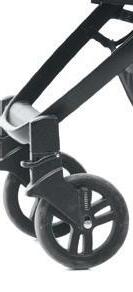
are the fire safety rules about residents storing a pram in a fire stairwell?
Stefan Bauer, Fire Matters
risks from short-term rentals: Do airbnbs increase the fire risk in your apartment building?
Stefan Bauer, Fire Matters
Todd
can we do to fulfil our obligations and ensure we have the correct resident contact details?
Grant
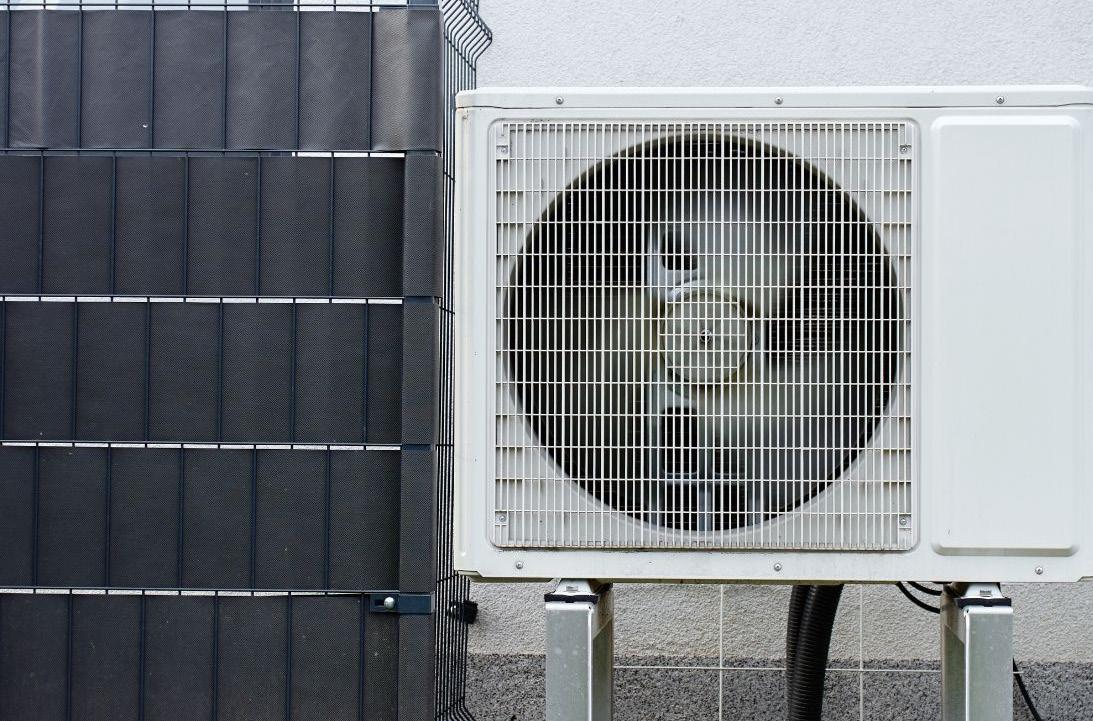
How to deal with water damage from a neighbour’s air conditioner
How can I force an owner to fix a leaking air conditioner that is damaging my balcony? Who pays to repair the damage?
The unit above has two air conditioners that are leaking water onto my balcony. Water from the overflow pipes makes the balcony floor wet and seeps into the ceiling, causing the paint to bubble.
The unit is rented. Our strata manager contacted the owners to ask them to fix the issue, but they have not responded.
How can I get the owners to repair the leaking air conditioners if they will not reply? Who is responsible for repairing the damage to my balcony ceiling?
The better you can define the problem, the closer you are to a resolution.
Assuming the air conditioners are the owner’s property rather than body corporate, it appears the owner above is responsible for the damage and the rectification. How you make them attend to that is a more difficult question.
As you indicate, the strata manager has already contacted them and received no reply. You could ask the manager for a copy of the roll and contact them yourself.
If you contact them and they don’t reply, you may need to escalate via the legal avenues available. File a complaint with the Commissioner’s office or go to QCAT. Get some legal assistance if necessary.
Should the body corporate be involved? If this issue is damaging common property, the body corporate should seek to resolve it. We can’t really tell, but if the waterproofing membrane on the balcony has failed, that could be a body corporate issue. If the spitter pipes are too short, that could also be body corporate. If it is a body corporate problem, it would at least have the power to enter the lot to resolve the issue.
These types of problems can be really hard to resolve. Mostly, they flounder because the evidence and information are not that clear. I would gather as much evidence as possible – get photos and make a timeline of the incident and the damage. Present the information in a report, or have a professional write one for you. The better you can define the problem, the closer you are to a resolution.
William Marquand | Tower Body Corporate willmarquand@towerbodycorporate.com.au
Can owners of free standing lots opt out of body corporate building insurance
Can owners of free-standing lots opt out of the body corporate building insurance?
Our standard format plan complex is more than 20 years old and consists of duplexes plus single-level and two-storey standalone homes. From the records we can find, the annual building insurance premium has always been paid by all lot owners, whether their homes are attached or free-standing.
I believe that under Queensland legislation, a lot owner must insure their own building if it is free-standing (does not share a common wall with another building) and is registered under a standard format plan. The legislation also says a body corporate can set up a voluntary insurance scheme to insure buildings that do not have common walls, but owners of free-standing lots do not have to take part in that scheme.
Several owners of free-standing lots have stated they do not want to participate in the body corporate building insurance. There is no evidence that these owners originally “opted in”, so it appears a voluntary insurance scheme has always operated by default. What options does the body corporate have? Can owners of free-standing lots opt out of the body corporate building insurance?
Many insurers are reluctant—or outright refuse—to provide cover for only part of a strata complex.
Owners of freestanding properties within the complex will have the opportunity to opt out of the body corporate insurance if they choose. However, it is important to note that, under best practice, this should be an opt-in arrangement, reviewed annually to ensure clarity and compliance with the Body Corporate & Community Management Act 1997 (and regulations)
To progress this matter, raise it formally with the body corporate committee or your strata manager, as any changes to the current insurance structure would need to be properly reviewed and implemented in accordance with the relevant legislation and body corporate processes.
Before making a decision, it is crucial to consider the broader implications for the body corporate and all lot owners:
• Insurance market constraints: Strata insurers typically require full participation from all lots within the scheme. Many insurers are reluctant—or outright refuse—to provide cover for only part of a strata complex. This means that if a portion of the owners opt out, it could jeopardise the availability of insurance for those who remain in the body corporate policy, including those who have no provision to opt out.
• Cost-effectiveness and risk considerations: Depending on the circumstances of your body corporate— including past claims history, potential building defects, or materials used— remaining insured under the strata policy may be a more viable and cost-effective option. In many cases, strata policies provide more cost-effective solutions than individual home insurance policies.
Given these factors, before opting out, we strongly recommend ensuring that obtaining individual building insurance is both feasible and beneficial for your specific circumstances. We encourage owners to seek independent advice from an insurance professional to make an informed decision that does not inadvertently create challenges for the broader body corporate.
Mention this offer when requesting a quote from us, and we will provide a discount off our standard fee for service of $250 (GST Inc) for buildings with 10-25 lots or $500 (GST Inc) for buildings with more than 25 lots for the first year you insure with Strata Insurance Solutions
To redeem this offer email a copy of your current policy schedule to Strata Insurance Solutions within 1 month of the publication of this magazine Your policy can expire any time in the next 12 months However we can only provide quotes 30 days prior to the expiry of your policyif your policy is not due now, we will schedule a quote at the appropriate time To ensure we apply this offer to our quotes, please specifically mention you would like to redeem the "LookUpStrata Special Offer"
Take the test todaysee how much you can save.
Key advocacy priorities shaping the future of strata communities
With so much change in strata, what are the next big advocacy priorities for owners and councils?
There is a lot of change happening in strata at the moment, from new technology and AI tools to reforms around insurance, building standards and compliance. It can feel overwhelming to keep up with everything.
What are the big advocacy battles on the horizon for strata communities? Where should owners and councils focus their energy next to have the most impact, whether that is on legislation, insurance, building safety, fairer governance, or something else?
Think about what you need to reasonably do to ensure your investment is protected and enhanced.
I always take the view that strata is about business-like relationships and business-like transactions. You’ve spent maybe upwards of a million dollars, perhaps a lot more in some cases, to be part of this strata scheme. Keep that in mind.
Ask yourself, “What is it that I need to reasonably do as an owner to ensure my investment is protected and, in an ideal world, is enhanced over a period of time?”
Chris Irons | Owners Corporation Network chris.irons@ocn.org.au
TOBACCONISTS & INSURANCE COSTS
Insurers have recently focussed on schemes which have tobacconists within them (or other businesses selling tobacco related products). Where there is a tobacconist (or similar business) operating from within the scheme, this has led to:
• insurance renewals being refused; or
• if insurance is offered, increased premium costs and excesses for fire events.
Due to the way insurance premiums are apportioned, all lot owners in the scheme are then required, in the first instance, to bear the increased insurance premium costs – which can be 2 or 3 times more than if the tobacconist was not operating within the scheme.
Insurance premium costs
The starting point is that the costs of the body corporate’s insurance premium is funded by lot owners in shares proportionate to their:
• interest schedule lot entitlements – for lots created in a building format plan; or
• reinstatement cost – for lots created in a standard format plan (assuming the body corporate is required to insure such buildings).
Adjustment of insurance premium costs
However, there is a mechanism in the regulation module which allows the body corporate to adjust these initial lot owner insurance contributions in a way in which fairly reflects:
“...the proportion of the total risks covered by the policy attributable to activities carried on, or proposed to be carried on, on the owner’s lot...”
Accordingly, the Body Corporate can recover the increased insurance costs as a result of a tobacconist operating within the scheme from the owner of the lot where the tobacconist is located – even if the tobacconist is a tenant.
Linking the increased insurance costs to the existence of the tobacconist (and the amount of the increase) would typically require a statement or calculation provided by the insurer or insurance broker.
Tenancy concerns
There is no ability for the body corporate to recover the costs from the occupier. However, usually the commercial lease between the owner and the tobacconist tenant allows for the owner to seek recovery of the increased insurance costs from the tobacconist or for the lease to be terminated – which may make more commercial sense than paying the insurance increase.
Other considerations
Although there is a mechanism for cost recovery from the owner, it does not always address the fundamental issue of the increased costs and often requires recovery steps to be taken against the owner (who does not always readily or easily agree to bear the increased insurance costs).
Accordingly, we often recommend a by-law which regulates the use of a lot by tobacconists (or similar businesses) to better prevent the issue from existing and give the committee further control over the use of commercial lots in the scheme for the purposes of preserving its insurance requirements.
Contact us if you need assistance recovering increased insurance costs from owners and implementing by-laws to help avoid the issue.
Committee WHS responsibilities when an owner targets caretakers
If an owner spreads false information about the caretakers and encourages other owners to monitor them, does this amount to workplace bullying? What should the committee do?
In our large building, one owner emailed all other owners with false and misleading claims about the management team and caretakers. They urge owners to follow the caretakers, record or photograph any supposed breaches, and keep records for possible future legal action. They’ve also circulated misleading financial information about how the building is run.
This owner has organised separate meetings and created a WhatsApp group to discuss these claims and continues to send weekly emails to all owners. How can the committee best support and protect our caretakers in this situation? Could this behaviour amount to workplace bullying? What options do we have to address the false financial information that the owner has circulated? Would it be appropriate for the committee to send a rebuttal email that sets out the correct facts and directs owners to verified information on our community hub?
The body corporate has a responsibility to ensure the workplace is free from bullying and harassment.
From a body corporate context, I think the caretaker is certainly the one with an interest in pursuing the matter further, because we are talking about their reputation and potential financial loss.
The body corporate has a responsibility to ensure the workplace is free from bullying and harassment, subject to a few criteria that they must meet. So I think the committee should act on that if it feels it is an unsafe environment, or if the caretaker makes a complaint about whether their employees are operating in a safe environment. There are obligations under the Fair Work Act 2009
The committee should certainly send something out about the situation. They should also check the by-laws. There may be bylaws regarding communication and how it should be conducted. They could take some enforcement processes through that by-law, if needed. Otherwise, it’s really up to the caretaker to pursue any rights they feel they have.
Strong owner engagement plays a key role in the smooth running of any strata scheme. When owners feel informed and understand the reasons behind decisions, they are more likely to participate constructively, support necessary works and trust the advice provided by their strata manager. Many challenges faced in strata including meeting delays, disputes or resistance to expenditure arise not from disagreement, but from a lack of clarity. Clear, consistent communication helps owners understand risks, compliance obligations and long -term planning considerations, leading to more productive discussions and better outcomes for the scheme as a whole.
How QIA Group Can Help
QIA Group supports strata managers with plain -English reports and educational fact sheets designed specifically for owners. Our materials explain complex compliance and planning issues in a clear, accessible way, helping to reduce confusion and improve engagement. By providing owners with understandable information, strata managers can facilitate more informed conversations and smoother decision-making.
Are by-laws registered under the BUGTA overridden by Standard Statement by laws?
Our body corporate registered a change of by-laws under BUGTA in 1997. In 2000, we requested a new CMS with the Standard Module By-Laws. Which by-laws now apply?
On 12 March 1997, our body corporate registered a change of by-laws under BUGTA with the Titles Office of QLD. On 13 July 2000, the new BCCM Act 1997 came into force.
On 15 July 2000, a new CMS was requested, providing for a new CMS with the Standard Module By-Laws at the time.
Given that the new CMS was registered after 13 July 2000, do the Standard By-Laws apply or the original registered in March 1997?
The registered by-laws are the ones that apply.
The registered by-laws are the ones that apply. The ‘standard statement’ that was registered automatically on 13 July 1997 incorporates exactly what you had in place when the BCCM Act commenced in 1997. That was really just a default CMS for those bodies corporate that hadn’t yet adopted one.
Frank Higginson | Redchip Strata
Law FrankH@redchip.com.au
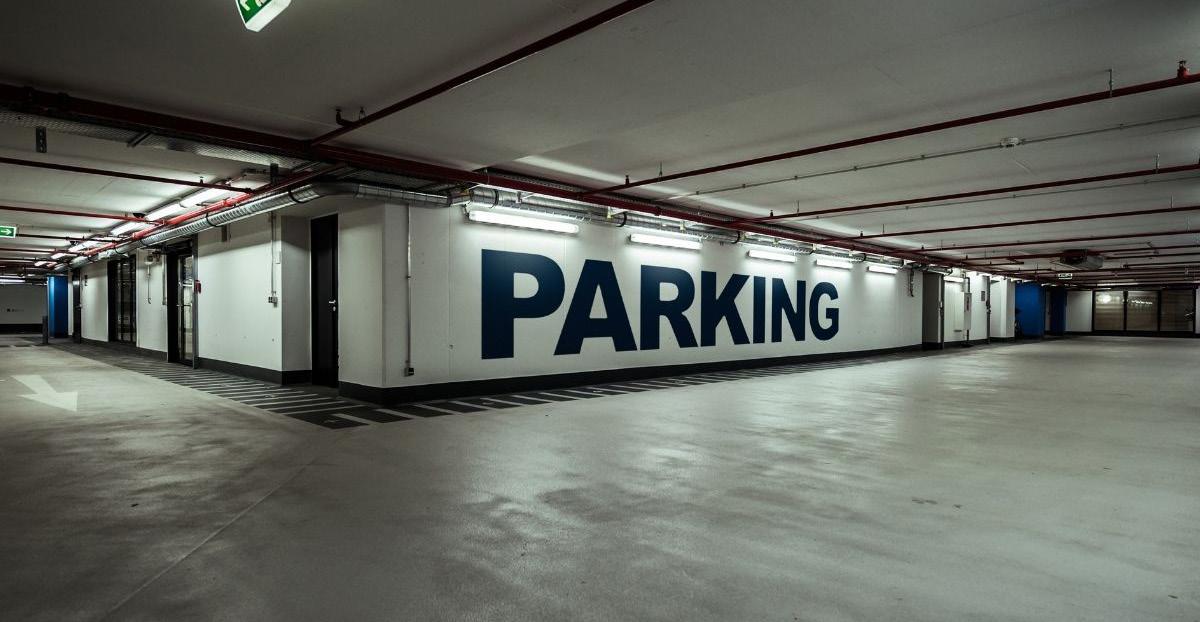
Can the body corporate use an exclusive use car park for trades’ parking and storage?
Can the body corporate use my exclusive use car park for trades when they are carrying out works in an unrelated area?
I have an exclusive use car park. The by-laws state that the space must be used only for parking, not for storage. My understanding is that the committee can temporarily restrict access to my exclusive use area during maintenance or repairs to that area after providing written notice, unless it is an emergency.
Can the body corporate use my exclusive use car park for tradespeople to park vehicles or store equipment when they are carrying out repairs or maintenance on another part of the common property that is not physically located within, next to, or related to my car park?
Because the works are unrelated to my exclusive use area, is the committee required to have my consent before allowing trades to use my car space?
Ensuring contractors have a car park and space to store tools isn’t your problem or your responsibility.
It’s impossible to respond definitively, given that each situation and exclusive use by-law is different. That said, your general rule of thumb is that an exclusive-use area (be it a car park or something else) is allocated for the use and enjoyment of the party (occupier or owner) to whom it is allocated. In other words, if you have an exclusive use area, it’s generally yours to use, subject to the terms of the by-law, and it doesn’t become a general use common space.
There is a legislated process for amending an exclusive use by-law, and that process does not involve a unilateral committee decision. While a body corporate does have
a legislative right to enter a lot, as you point out, that right is limited to specific purposes and requires notice. This situation doesn’t appear to be about the power of entry, though.
It may be the case that your exclusive use park is convenient. Or that parking is scarce, and yours is the only spot available. Even if either of these is true, that doesn’t empower the committee to use the space as they see fit and when it suits them. To be blunt, ensuring contractors have a car park and space to store tools isn’t your problem or your responsibility. This is general information only and not legal advice.
Chris
Irons | Strata Solve
chris@stratasolve.com.au
Solve helps you protect the value of your strata asset, without the need for timeconsuming, expensive and stressful legal proceedings. Director and Founder of Strata Solve Chris Irons (pictured with the late Ernest, Strata Solve mascot) has an unrivaled strata perspective. As Queensland’s former Commissioner for Body Corporate and Community Management, Chris has seen it all in strata Now under the Strata Solve banner, Chris emphasizes communication, mediation , strategic advice and straight - talking , relying on his experience as an accredited mediator to empower owners, committees, managers, caretakers and tenants and help them get the outcome they want
Book a free, initial consultation now to find out how we can work with you to resolve your strata issue. And BRAND NEW from Strata Solve, our ‘Strata-As-You-Go’ (SAYG) service: on-demand telephone advice from an expert to help you, when you need it. Visit https://strataasyougo.com.au/ to learn more.
Our caretaker restricts our short term guests’ access to common facilities
How can we stop our body corporate’s caretaker/letting agent from wrongly restricting our short term guests’ use of common property?
We short-term let our lot through a rental provider who is not our onsite caretaker/ letting agent.
The caretaker/letting agents have repeatedly confronted our guests, saying they cannot use the swimming pool, the pontoon to tie up a boat or jet ski, and cannot park a jet ski in our lot’s car park. Our guests have provided written incident reports, stating they felt uncomfortable and that the caretaker imposed incorrect restrictions on them.
How can we end this behaviour so our guests don’t feel unwelcome or misled? It is also unclear whether this person is acting as a lot owner, caretaker, or letting agent when speaking to our guests. Guidance on the appropriate path forward for each of these roles would be helpful.
Your next steps will come down to what you can prove, and what the ‘angles’ are that the onsite manager is using.
Some onsite managers have gotten into fairly big trouble for these sorts of hijinks. There are many potential ways to approach the issue. As a general rule, I like to see the evidence first, whether that’s photos of signs on the pool gate (‘Guests of Onsite Management Only’), mobile phone recordings of non-letting pool guests being told off, or even statutory declarations from angry tenants (and I’ve seen all of these things in my time). In my view, it’s always best to get the evidence first.
That’s including so that once you know you actually have a problem, you can assess the scope and severity of it. One swallow does not make a summer, and one ‘bad day’ of the onsite manager is rarely actionable. Once you have the evidence, you’ll also, crucially, understand the onsite manager’s ‘angles’. That is, what particular issues or restrictions are they pushing to try to annoy your tenants? No doubt, this is in the hope that the tenants won’t come back, which is stupid, because that will hardly make you want to put your unit into the onsite manager’s letting pool!
You have mentioned potential angles, such as the use of the pool, the pontoon and the car parks. If that is their angles of attack, then you can take legal advice about both what (you can then prove) the onsite manager is saying and/ or doing, what the real position is, and, if there is a difference between the two, what you can do about it.
We don’t give ‘advice’ here on LookUpStrata, but we do discuss similar situations and what other people have done in them, or what principles may apply. When I have seen and been able to prove behaviour such as this in the past, I have seen the affected lot owners take various approaches to solving the problem. This has ranged from indirectly (through the body corporate committee and then the body corporate) on the one end, all the way through to directly, on the other end, by squaring up to the onsite manager, giving them a chance to mend their ways, in default of which the lot owners then made complaints to the Office of
Fair Trading (against the onsite manager in their capacity as a letting agent).
What you do in your instance will come down to what you can prove, and what the ‘angles’ are that the onsite manager is using, and where that leads you, in terms of the best ‘bang for buck’, to address the issue/s.
Helping the strata community
navigate their building concerns
BUILDING CONSULTANCY
• Defect reports and forensic engineering
• Scope of works
• Dilapidation and risk surveys
• Dispute mediation and expert witness
• Contrator procurement and cost validation
• Construction management
• Capital works funds / maintenance plans
• Digital capability
• Façade assessments
REPAIR SOLUTIONS
• Emergency make safe
• Fire water damage restoration
• Leak detection
• Contamination response
• Building repairs
• Cost validation services
• Digital capability
What are the fire safety rules about residents storing a pram in a fire stairwell?
Can I store a pram in the fire stairwell
Compliance depends on the specific conditions of the stairwell and the nature, size, and placement of the item.
Under the Building Fire Safety Regulation 2008 (BFSR 2008), items may only be placed in an exit or evacuation route (including fire-isolated stairwells) if they do not reduce the required width of the path of travel, obstruct egress, or create a potential hazard during an emergency.
As long as the pram fully complies with the relevant clauses of the BFSR 2008—meaning it does not impede evacuation, restrict access for occupants or emergency services, or create any additional fire or trip hazard—its storage may be permitted.
However, please note that we are unable to give definitive approval for this situation, as compliance depends on the specific conditions of the stairwell and the nature, size, and placement of the item. This response also does not extend to other types of objects stored in a stairwell, each of which must be assessed individually for compliance.
If you require a formal assessment or further clarification, we recommend reviewing the exact stairwell layout against the BFSR 2008 requirements or seeking on-site professional advice.
Stefan Bauer | Fire Matters sbauer@firematters.com.au
s h o r t - t e r m
r e n t a l s
Do airbnbs increase the fire risk in your apartment building?
The rise of short-term rentals is changing how apartment buildings are used but is your fire safety keeping up?
Buildings designed for long-term residents (Class 2) assume occupants are familiar with exits and evacuation procedures Short-term guests (Class 3) are the opposite they are unfamiliar, may ignore or misunderstand alarms, face potential language barriers and be more likely to delay evacuation.
This creates a fundamentally higher risk profile that your original fire safety measures may not have been designed to handle
DON’T RISK IT!
If a retrospective investigation finds any aspect of your fire safety non-compliant, you risk voided insurance, hefty fines and even jail That’s why it’s crucial to get an independent third-party consultant to audit your building.
When units are used for Airbnb without an upgrade to safety measures, you create a hidden liability. This informal change of use can:
Put occupants at risk
Void your insurance
Expose owners and committees to legal action
Don’t leave safety to assumption A professional fire safety audit identifies whether your building’s design still matches its actual use, ensuring you have the correct detection, compartmentation and evacuation planning for transient guests.
Stefan Bauer Fire Matters
Click HERE for more Risk Management Considerations for Owners and Body Corporates
Fire Matters provides an unbiased fire compliance assessment that could save you thousands We also ensure your residents are fully trained in the event of a fire, giving you peace of mind when signing your occupier’s statement.
Can a body corporate stop one owner using common parking while allowing others
The body corporate stops me from using common property parking, but allows my neighbour to use the space whenever they like. How is that fair?
My partner and I live in a townhouse in Brisbane, QLD. For years, our neighbour has parked their car in a common area space beside their house. After they sold that car, I parked in the space.
The neighbour complained to the body corporate, and the committee said that I am not allowed to park there. When we asked why, the body corporate did not supply a reason. The neighbour now uses the space on weekends without any issues.
We have been told that the parking spaces are for visitors only and that townhouse owners must park on the street. However, due to increasing car thefts, we would prefer to park inside the complex. The body corporate will not authorise us to park there. If I use the space, the neighbour comes out and tells me to move.
It’s reasonable for the body corporate to restrict residents from using the space, but it’s unfair if they’re applying the rules to one owner and not others.
The body corporate is entitled to enforce the parking by-laws, but it also needs to treat all residents equally.
You indicate that the space in question is a common area. It’s worth double checking via a review of the CMS and by-laws. Assuming you are correct, most likely, no one should be parking in that area.
On that basis, it is reasonable for the body corporate to restrict all residents from using the space, but it’s not fair that they are applying the rules to one owner and not the other.
As a starting point, you could submit a letter to the body corporate asking for a clear explanation. Maybe you are missing something. Perhaps the body corporate has sent breach letters to your neighbour, and you are unaware. Whatever the reason, provide the body corporate with an opportunity to explain, and hopefully that will move the issue to the next stage.
If that explanation is not forthcoming, you can escalate accordingly. Ask for your correspondence to be tabled and discussed at the next committee meeting. If necessary, submit an owners motion to force the committee to vote on the matter and bring it out into the open. Submit a Form 1 notice to the body corporate, advising them of your neighbour’s breach of the by-law. Be proactive in pushing the issue so it becomes something the body corporate must address directly.
If you are still not getting any progress, file your issue with the Commissioner’s office. Gather your evidence and make a submission.
For what it is worth, your request to park inside the confines of the scheme on the common property is likely to be unreasonable. I understand there are crime issues, but it’s not usually possible for the body corporate to create extra parking
spaces. Parking in your space or off-site is an immutable law of the body corporate. I think you can expect the body corporate to enforce the parking by-laws and require both you and your neighbour to adhere to them, but if the goal is a revision of the parking facilities, you need to look at that in a different capacity.
William Marquand | Tower Body Corporate willmarquand@towerbodycorporate.com.au
Should our body corporate manager charge individual owners for making direct enquiries?
Can a body corporate manager oncharge owners for fees incurred by direct contact?
Our body corporate has 12 lots across six floors, operating under the BFP module. Some owners contact the body corporate manager directly instead of communicating directly with the seven committee members, despite the committee encouraging owners to follow this process to avoid additional fees. These owners say they do not trust the committee. The body corporate manager charges a $25 fee for time spent processing and responding to these direct enquiries, and these costs are currently charged to the body corporate.
In many cases, the body corporate manager forwards the enquiry to the chairperson for the committee to answer or investigate, but the fee is still incurred. Can these fees be oncharged to the individual owners who make direct contact?
The body corporate manager charges individual owners for matters such as late levy payments, animal applications, and other lot specific requests. Why can’t enquiry related fees be oncharged to the individual owner instead of the body corporate?
The administration agreement is between the body corporate and the body corporate manager, and there is no ability to charge a third party pursuant to that contract.
There is no ability for the body corporate manager’s fees to be oncharged to lot owners. The administration agreement is between the body corporate and the body corporate manager, and there is no ability to charge a third party pursuant to that contract. If the charges are what the engagement of the body corporate manager provides for, this is a cost the body corporate must bear. The adjudicator in Balmattum [2011] QBCCMCmr 483 relevantly provided that:
‘‘Again, this is just a cost of administering a community titles scheme, which is borne by the body corporate.”
Levy recovery costs are different because the legislation provides that these can be recovered. Other applications by lot owners do not have a right of recovery but the committee may be reasonably imposing a condition of approval that the related costs are borne by the lot owner (or agreeing to expedite the request on the basis that the costs are borne by the lot owner).
Todd Garsden | Mahoneys tgarsden@mahoneys.com.au
Finance without the Fights
Real Choices. Real Support.
What can we do to fulfil our obligations and ensure we have the correct resident contact details?
How can the committee make sure the owner roll is up to date so owners and tenants can be properly notified?
I’m on the committee of a body corporate operating under the accommodation module and building format plan. Over the years, we’ve reminded owners to update their details in the owner roll, including their tenancy and contact information, but several still haven’t done so. This has created ongoing problems when we need to notify people about maintenance or arrange access to units.
In one case, a tenant refused entry to a contractor because they hadn’t received notification of scheduled work on common property within their unit. Some owners live overseas and only have international postal addresses, so sending notices takes too long. It’s not practical for the committee to visit everyone on-site to check that all residents have received notices. What steps can we take to meet our obligations and make sure we have accurate contact information for all owners and occupants?
It appears you have already done all you can to seek updated details of owners and tenants.
From the background you have provided, it appears you have already done all you can to seek the details and the next step for seeking owners compliance of any body corporate matter which is a legislative obligation is to seek enforcement via the office of the commissioners for body corporate and community management with detail on how to do this here: Queensland Government: Disputes in a body corporate
If you are seeking guidance on how to provide notice of entry to a lot or exclusive use area for authorised purposes such as maintenance, this is a different matter and does not necessarily require the owner to provide their letting agent or occupant contact details, but certainly does help. This notice of entry is required to be provide to the lot occupant if the owner is not the occupier and can be provided direct to the occupier by placing the notice in the letter box for the unit or even under the door if there is concern that the letter box is not being checked. Registered post is another option to be certain the lot occupant receives the notice and takes away the burden of evidencing the notice has been properly served on the lot occupant as this can occur via Australia post.
The important part is that the notice is provided within the required time frame of at least 7 days before entry and that the entry will be at a reasonable time. The legislation does not specify what information must be included on the written notice but to be certain the notice is accepted as reasonable, the notice could include the following details:
1. Who will be entering the lot or exclusive use area
2. When they will be entering and for how long
3. What they are entering for
4. How to contact the body corporate to for any questions or to seek alternative entry arrangements
5. Any details they would like to provide for issue of any future notice of entry
More on the requirements for the body corporate to decide to enter a lot or exclusive use area can be read Here: Queensland Government: Entering a lot or exclusive use area
If entering when the occupant is not present is proposed, this should be carefully considered and certainty that this is absolutely necessary before proceeding. For any concerns of claims being made about what happened when entry occurred, a record of the entry should be made and perhaps seek legal advice if there is to be any major disruptions due to the nature of the entry required to ensure that notice is provided strictly within legislative requirements and entry also occurs specifically as stated within the notice issued.