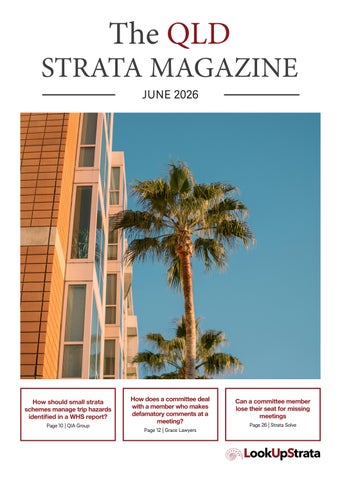
How should small strata schemes manage trip hazards identified in a WHS report?
Page 10 | QIA Group
How does a committee deal with a member who makes defamatory comments at a meeting?
Page 12 | Grace Lawyers
Can a committee member lose their seat for missing meetings
Page 26 | Strata Solve
About Us
Welcome to the latest issue of The LookUpStrata Magazine!
For over a decade, LookUpStrata has been Australia’s premier resource for everything related to strata living. Our mission is to keep strata communities informed and connected, providing thousands of lot owners, strata managers, and professionals with reliable, unbiased, easy-to-understand information to help you solve your strata problems and make informed decisions.
The QLD Strata Magazines, published monthly, are just one of the many ways we’re dedicated to supporting you. They’re packed with articles from industry experts and include our comprehensive printable strata directory.
Beyond these pages, we also offer:
• Q&A Service: Our team of leading strata specialists answer hundreds of your questions every month, which helps shape the magazine topics we cover.
• Newsletters: Our weekly newsletters deliver timely updates on legislative changes and the latest strata news straight to your inbox.
• Webinars: Join our founder, Nikki Jovicic, for weekly webinars where she hosts and partners with industry experts to discuss key topics.
• The LookUpStrata Directory: A free resource that showcases hundreds of trusted strata service professionals nationwide. You’ll find it at the end of every magazine and on our website.
• Website: Find all our resources, articles, and news in one convenient location, accessible 24/7.
Subscribe now at no cost. To enjoy unrestricted access and connect with our strata community simply click here
Stay Connected - follow us on LinkedIn, Facebook, and YouTube. Thank you for being a vital part of what makes our community so vibrant and trusted.
Nikki Jovicic Managing Director I Founder lookupstrata.com.au
should the OC take if an occupier disables their smoke alarm? Stefan Bauer,
Craig
Can a committee member be appointed to inspect common property?
How do we make sure common property issues get picked up and reported when most of our committee members don’t live in the scheme?
The majority of our committee members do not live in the scheme, and we don’t have an on-site manager. We have some older maintenance issues that remain unresolved.
Can the committee approve one member to inspect the garden and report any issues back to the committee, then review that report at a committee meeting and decide on next steps, such as obtaining quotes? Are there other practical options for monitoring and managing common property in a scheme like ours?
In this situation, committees should recognise the potential for an information gap and take practical steps to monitor common property.
There is no legislative requirement for committee members to live onsite, and it’s increasingly common to have committees with no onsite residents.
Committees in this situation must recognise the potential for an information gap resulting in unreported site issues.
At larger schemes, the committee might engage a caretaker or facilities manager to assist with site operations.
Arranging for periodic safety or building condition reports can also provide coverage and understanding of scheme issues.
The committee can also set up more informal channels, such as making sure they get reports from helpful tenants or property managers. Individual owners are also entitled to identify issues and raise them with the committee.
There is no fixed way to run a scheme, but the key thing is to think through the potential issues and risks, and consider ways to mitigate them.
In this case, you say that some committee members live onsite. There is no problem with those people acting as the eyes and ears for the whole committee if people are comfortable with that.
As a next step, you could raise your concerns with the committee. Even if they are already addressing these issues, it never hurts to review the systems that are in place to make sure the body corporate is running efficiently.
William Marquand | Tower Body Corporate willmarquand@towerbodycorporate.com.au READ MORE HERE
POPULAR?
Do Queenslanders really prefer special levies… or are they just easier to pass?
It’s a question that begs an answer. Why are special levies more “popular” in Queensland?
That’s “popular” in inverted commas. For most owners, the sudden shock of a large, unexpected bill is about as welcome as a tax audit or root canal therapy.
Yet far more bodies corporate in Queensland use special levies to fund major projects than anywhere else in Australia.
In most respects, Queensland is not that different. Like the rest of the country, buildings carry hidden defects from when they were built or suffer the ravages of time. The tropical climate we love, unfortunately, makes buildings harder to maintain – salt air accelerates corrosion and spalling, cyclone risk increases across the north and the beating sun we all love breaks down the paint that protects a building from the elements.
What differs for bodies corporate is the choice between the three funding options – drawing down a sinking fund, raising a special levy or taking out a loan.
At Lannock, we make a compelling case that a strata loan is always the best way to fund major remedial works.
Strata corporations often opt for a mix of all three to accommodate the different views of owners.
In Queensland, a strata loan has to clear a much higher voting threshold than a special levy, which goes a long way to explaining why special levies are so “popular”. Accommodation and commercial schemes have more flexibility, but for most residential bodies corporate, the bar is set higher than almost any other decision the scheme can make. The only other decision at the same level is selling part of the common property – and even knocking the building down for redevelopment can go ahead with 25 per cent of owners opposed.
That’s a legislative reality, not a reflection of whether a loan is the right funding option for QLD bodies corporate. It just means committees need to make the case to owners earlier, more clearly and with better information – which is exactly what the best committees are doing on all important agenda items.
No wonder many Queensland committees are deterred from considering a loan. A special levy can be raised with a simple majority in an ordinary resolution. That grumpy owner in lot 17 has little chance of derailing the plan.
Even worse, some owners will defer major remedial projects altogether.
Kicking the can down the road tends to compound the initial problem and blow out the budget with
• growing repair scopes
• urgent compliance pressures
• stress on committees and managers
• greater risk in the long-term condition and value of the building
That is why more and more committees are making the case to owners for strata loans, simply because they make much more sense than the alternatives.
Once all the facts are laid out, owners get on board when they see how a loan is typically the best way to go.
Delays, and the inevitable increase in costs that goes with them, can be avoided with a mature, informed discussion at the outset, when the problems first become apparent.
Owners should be given every opportunity to have their say and make sure their interests are part of the conversation.
Raising funds for anything from a $10,000 paint job to a multi-million-dollar structural fix hits every “hip pocket” differently.
A committee is legally bound to act in the “best interests” of all owners, but when it comes to a major financial decision, that can be very different for each owner - for example:
• The Retiree: On a fixed income and budget
• The First Home Buyer: Cash poor after raising a deposit
• The Family: Stretched by interest rates, groceries and daycare
Capital Works Fund
The Retiree Feels safe and familiar. Costs often outpace growth, causing financial strain.
The First Home Buyer Strata costs feel manageable until a major repair.
The Family Feels secure until the fund can’t cover a major repair.
The Downsizer Comfortable with regular levies and expects high standards.
The Investor No tax benefit on contributions. Interest taxed at 30%, lags construction inflation.
• The Downsizer: New to strata and high expectations
• The Investor: Predictable costs, reliable tenants, tax
Special Levy
On a fixed income, a large lump sum levy is a significant blow to super, savings and investments.
Financially tapped out after raising a deposit. Lump sum compounds stress of mortgages and living costs.
A large one-off hit to a stretched family budget means hard choices on life’s “extras” or even essentials.
Can pay a lump sum, but values control over when and how they spend.
Diverts capital and reduces returns on other assets. Zero tax advantage.
Strata Loan
Predictable levies, easy to budget and manage. Super and savings intact. No lump sum to find.
Protects cash flow and borrowing power. Loan stays with the lot when moving on.
Manageable, predictable repayments keep funds available for family life and what matters most.
Cost of investment is matched to the life of the asset. No impact on personal finances. Work starts promptly.
Principal and interest repayments through admin fund are 100% income tax deductible. Predictable future levies, costs matched to life of asset.
Lannock can structure a funding facility to be drawn down as the work progresses. Interest is only charged on funds used. Flexibility includes interest-only periods of up to 2 years, terms of up to 15 years and the ability to repay the loan early. With a well-structured loan, future owners will contribute to the cost of repairs or upgrades as well as reap the benefits. And work can start promptly at today’s rates. Get started today.
Calculate, Compare and Score Your Levies with LevyPlanner.
Australia’s first tool to calculate and score the real cost of every funding option: for any scheme, any mix of owners, any capital works plan. Enter your scheme details and owner profile; LevyPlanner instantly calculates and visualises the pre-tax and after-tax cost of each option, and scores them against the best and worst possible outcomes.
Built by Lannock, modelled by financial mathematicians and reviewed by Australia’s foremost strata tax accountant.
Visit LevyPlanner.com.au – try it free today.
Richard Claus
Business Development Manager
Queensland P 0417 030 871
E rich@lannock.com.au
Jason Triplett
Business Development Manager
Queensland P 0467 777 272
E jason@lannock.com.au
Do owners have to notify the body corporate after renovations?
Once complete, are owners required to notify the body corporate of the renovations and cost, particularly where it may affect insurance?
Putting approval for renovations to one side, is it mandatory that owners notify the body corporate at the conclusion of their renovations? Are they required to provide information on the improvements made and the resulting costs, where that may affect insurance increases borne by the owner?
Whether any insurance premium is likely to increase may be doubtful and unknown at the time.
Tyrone Shandiman, Strata Insurance Solutions:
From a body corporate perspective, there can be obligations around renovations. These are usually set out in the by-laws or renovation approval conditions, and, in some cases, may include notifying the committee upon completion of works. It depends on the scheme’s specific rules rather than a universal requirement.
From an insurance standpoint, it works a bit differently. The building policy is designed to cover the full replacement of the building up to the declared sum insured. Most strata policies include an additional allowance for lot owners’ fixtures and improvements, typically $250,000 to $300,000 per lot, and sometimes capped at a percentage of the building sum insured. This allowance is intended to account for upgrades such as renovated kitchens, bathrooms, or higher-end finishes.
It is also worth noting that insurance is based on replacement cost, not the original spend. In many cases, a newly renovated area may not materially change the replacement value if the cost to rebuild it is similar to what was already there on a new-for-old basis.
In practice, these built-in allowances act as a buffer for most renovations. Owners generally do not need to notify the insurer of upgrades unless the value of the improvements exceeds the limits ($250,000 to $300,000 per lot). If that happens, the building sum insured may need to be reviewed and increased to ensure adequate cover.
Jarad Maher, Grace Lawyers:
From a legislative perspective, yes.
Section 202 of the Body Corporate and Community Management (Standard Module) Regulation 2020 (the Standard Module) (section 192 of the Body Corporate and Community Management (Accommodation Module) Regulation 2020 (the Accommodation Module)) requires an owner to give the body corporate notification of the details of the nature and value of improvements made to the lot, or common property for the benefit of the lot, where the premium for reinstatement insurance required to be taken out by the body corporate is likely to increase.
If the owner fails to provide the requisite notification, the owner is liable to reimburse the body corporate for any payment that has to be made for the cost of reinstatement or repair to the lot, another lot or the common property (but only to the extent that the need for the payment is attributable to the owner’s failure to provide the required notice).
Of course, as Tyrone indicates, whether any insurance premium is likely to increase may be doubtful and unknown at the time. Nonetheless, if the owner wants the guarantee of protection for the works, they should provide the requisite notice to the body corporate. Of course, if the premium does increase as a result of the works, then the owner is likely to have to bear the cost of the additional premium in accordance with the powers of the body corporate to adjust the insurance contributions levied on that owner as a result of the improvements (section 201 of the Standard Module; section 191 of the Accommodation Module).
Mention this offer when requesting a quote from us, and we will provide a discount off our standard fee for service of $250 (GST Inc) for buildings with 10-25 lots or $500 (GST Inc) for buildings with more than 25 lots for the first year you insure with Strata Insurance Solutions
To redeem this offer email a copy of your current policy schedule to Strata Insurance Solutions within 1 month of the publication of this magazine Your policy can expire any time in the next 12 months However we can only provide quotes 30 days prior to the expiry of your policyif your policy is not due now, we will schedule a quote at the appropriate time To ensure we apply this offer to our quotes, please specifically mention you would like to redeem the "LookUpStrata Special Offer"
Take the test todaysee how much you can save.
How should small strata schemes manage trip hazards identified in a WHS report?
Do we have to follow a WHS report recommending yellow markings and signage for trip hazards on a small strata driveway?
We are a small strata complex of five villas, about 25 years old, with a shared common driveway leading to our individual garages. All residents are retired or semi retired owner occupiers.
On our strata manager’s advice, we arranged a work health and safety report. We have addressed most items, but one issue remains.
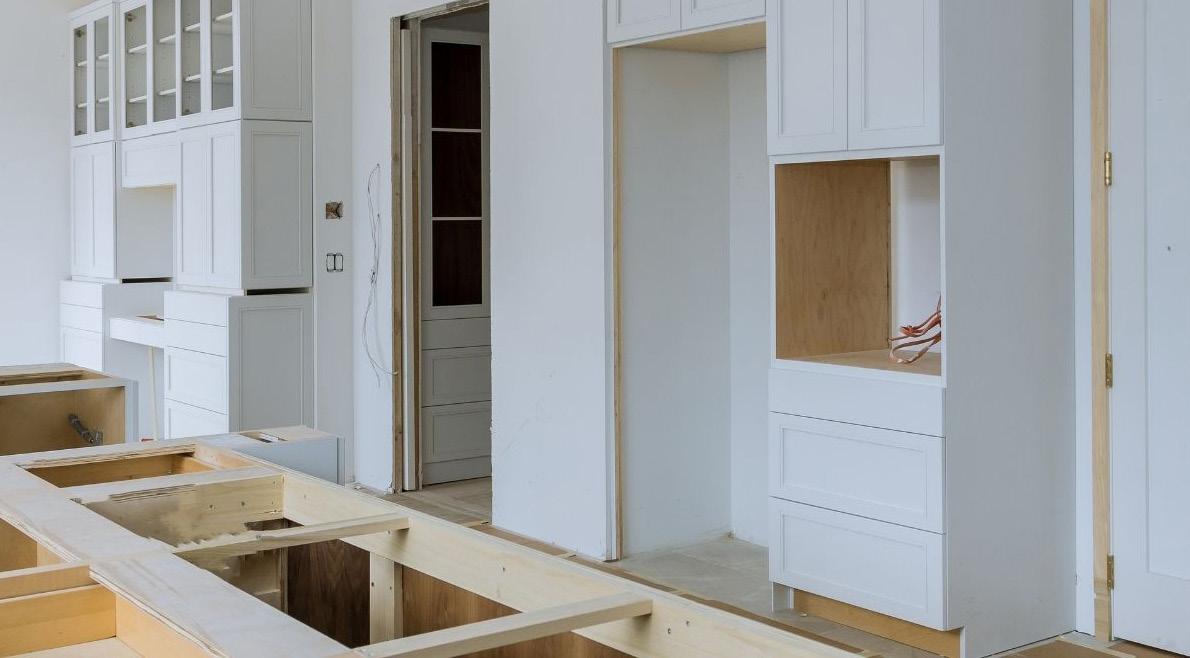
The driveway is stamped decorative concrete, long, and slightly undulating in places that are not always obvious. The report says we must highlight all edges, drains, and non level areas with yellow non slip paint and install a “shared pedestrian zone” sign at the entrance to minimise any potential trip hazards.
All owners agree this would look unsightly, detract from the complex, and feels unnecessary for a small scheme. We have not seen other small strata complexes with this type of driveway marking.
Do we have to implement these specific markings and signs, or can we use a less industrial option, such as a smaller sign and more subtle markings, for example, in light grey instead of bright yellow?
Dealing with safety issues requires consideration of a hierarchy of controls. This methodology prioritises removing a risk rather than relying on human behaviour to address an issue.
Undulating, uneven, and disjointed driveways are a common occurrence in strata properties, small and large, and also a common cause of tripping/falling incidents across the country. Maintenance and remediation of damaged or irregular surface finishes should be part of any property’s ongoing maintenance budget.
Based on the information you have provided, the advice appears sound. The signage at the complex’s entry would advise residents and visitors to maintain a low speed and reduce the likelihood of an impact incident. It will warn vehicles of the undulating concrete.
However, smaller complexes need to consider that their driveway is not just for vehicles but also serves as the pathway for the property, and therefore, increased maintenance obligations may need to be considered over and above those that would normally be required for vehicles. Dealing with safety issues requires consideration of a hierarchy of controls. This methodology prioritises removing
a risk rather than relying on human behaviour to address an issue. The best way to deal with a hazard is to eliminate it: repair the undulation, repair any uneven drains, and remove any lips that may result in an incident. As an alternative, highlighting the areas would be considered an administrative control designed to change how people act in the area.
Therefore, the recommended highlighting is not to “minimise any potential trip hazards” but to draw attention to them in an effort to avoid potential incidents. Yellow is the preferred colour, as it remains bright, is highly visible to area users, and is actually quite commonly used for this purpose. Alternative colours may be considered so long as they are sufficiently contrasting to the surrounding colours to achieve the same goal. For this reason, grey is not usually a good colour.
Ultimately, any highlighting should be considered a short term option as the long term benefit of the property will be best served by repairing the affected areas.
Craig Welsh | QIA Group info@qiagroup.com.au
READ MORE HERE
How does a committee deal with a member who makes defamatory comments at a meeting?
Can a communications by-law be used to address defamatory comments made by a committee member during a committee meeting?
Does a communications by-law apply to a committee member during the course of a committee meeting, specifically where defamatory comments are made about an owner?
A communications by-law that covers defamatory or unreasonable communication generally applies to all owners and occupiers.
In Queensland, a communications by-law in a body corporate scheme applies generally to how owners and occupiers communicate with the body corporate, committee members, and others in the scheme, for example, setting reasonable standards for tone, frequency, and mode of communication. These by-laws are part of the body corporate’s Community Management Statement or CMS and, once registered, are enforceable under the Body Corporate and Community Management Act 1997 just like other by-laws.
A communications by-law doesn’t typically distinguish where the communication happens, such as outside meetings or at a committee meeting. It’s a general rule about communication. If the scheme’s registered by-laws include a communications by-law that covers abusive, defamatory or unreasonable communication, that by-law technically applies to all owners and occupiers, including committee members. In other words, a committee member could be in breach of the scheme’s by-laws if they communicate in a way that contravenes that by-law even during a committee meeting, unless the by-law itself says otherwise.
Queensland law gives committee members a general protection from civil liability for acts done in good faith and without negligence in performing their role. But that protection explicitly does not apply to defamatory publication, meaning defamatory comments aren’t protected simply because they are made “in the course of duties.” Outside of the bylaws, there may be rights under defamation laws. That was explored in the following recent webinar: Defamation in a body corporate: What you can (and can’t) say.
If you’re dealing with a real dispute, it’s often wise to get specific legal advice because the wording of the particular by-law and the facts can matter a lot.
Levy recovery is possible without the legal blowtorch
Frank Higginson, Redchip Strata Law
When interest rates and inflation are on the march, body corporate levies are often one of the first bills that people don’t pay.
Much of the time it’s not because they don’t want to pay – it’s sometimes because they can’t
So how should a body corporate respond?
While there may be sympathy for those who can’t afford their levies, that’s not to say that the body corporate can sit on their hands about the issue
It’s a very rare piece of legislation that actually obliges someone to commence a legal proceeding, but that’s what the Body Corporate and Community Management Act does
The Act says that if a levy has been outstanding for more than two years and two months, the body corporate must commence a proceeding to recover it
There’s obviously a lot of water that can go under the bridge between that two years and two months and when the levy was first due
From our perspective, when it comes to acting reasonably, a body corporate should engage with its owners when they’re not paying their bills The sooner they do that the sooner there is an understanding about why.
If an individual owner is not paying their levies, the rest of the owners are effectively subsidising them.
Equally, if someone doesn’t pay, it doesn’t result in an insolvency for the body corporate the next day like it can for a large debtor with a business – body corporate cash flow knocks around Payments are due at different times and money comes and goes
Unless a whole lot of people aren’t paying, it’s very rare to see an administrative fund in deficit
But good financial hygiene means making sure that you’re staying on top of things – and that is where the human element to this kicks in
If someone is struggling to pay, lawyering-up straight away, sending letters of demand and charging recovery costs and rock star interest rates of 30% per annum (that statutory standard) simply isn’t nice.
And it is unnecessary when there are other ways to achieve payment
Engaging with people when they’re late is worth doing Offering payment plans that are on reasonable terms is worth doing. Not pinging people with the interest if you can avoid it is worth doing.
There are certainly businesses out there that charge headlong and do these things and, for want of a better phrase, belt the daylights out of people who havent paid from day one
We don’t think that’s necessary.
To the extent you can engage with people, you should do so
Ultimately, some people aren’t going to pay bills, and you’ve got to do what you’ve got to do because the legislation requires you to do that
But there is a window for other ways to approach people who aren’t paying and those should be exhausted before you embark on legal action
There’s a reason schemes are referred to as strata communities – the ‘community’ aspect shouldn’t be forgotten when levies are overdue
Was I unfinancial
after a levy payment error?
I made an error paying my levies and was declared unfinancial at the meeting. Was I financial? Was the body corporate manager obliged to tell me about the shortfall?
Our AGM was held on Zoom. When I joined, I was told I was unfinancial. A week earlier, I made a typo when paying my levy, leaving a shortfall of around $200.
The chairperson, who was also the body corporate manager, said that if I paid “now” I would be financial. They directed someone in their office to send me the levy notice. It arrived within seconds.
The Body Corporate and Community Management (Standard Module) Regulation 2020 states that a levy can be paid “at the time of the meeting”, so I believed I was financial. My vote was not counted. If it had been, my motion would have passed. Was I financial? And why didn’t the body corporate manager notify me of the shortfall before the meeting?
The responsibility for paying levies and remaining financial rests with the owner, not the body corporate manager.
The responsibility for paying levies and being financial rests with the owner. If there’s an outright error (e.g., keying error with email, notice not sent to the right address for service on the roll), that’s possibly a different story. In this instance, we’re (very) doubtful there’s an obligation on the body corporate manager to inform you of an outstanding amount. Especially because, by your own admission, you made the error in the first instance.
That’s not to say you don’t have an issue here. Ultimately, it would be up to an adjudicator in the Commissioner’s Office to determine whether you were financial and whether the appropriate steps had been taken (and whether the body corporate had acted reasonably throughout). Your comments about the manager leaving the meeting to issue you with the notice aren’t entirely clear in this regard: we’re not sure
what difference it makes whether they told you what they were doing, while the ‘attend’ issue is also unclear and might be subject to interpretation. We also assume that, on receipt of the invoice for the (apparently) outstanding amount, you did not immediately pay same.
What is apparent here is that the vote was close, and as you say, had you been financial, things may have been different. Adjudicators will tend to look more closely at situations where the numbers are tight and the vote is close. It would be a different story if the vote was, say, 10 – nil. So ultimately, you’d need to decide how much time, effort, resilience, and, yes, money you’d be prepared to spend disputing this issue. The obvious starting point is the importance of the motion you’re referring to. You might also like to consider seeking some specialised advice about this issue, and investigate previous adjudicators’
orders to see how similar issues have been treated in the past.
This is general information only and not legal advice.
Chris Irons | Strata Solve chris@stratasolve.com.au
READ MORE HERE
and stressful legal proceedings.
Director and Founder of Strata Solve Chris Irons (pictured with the late Ernest, Strata Solve mascot) has an unrivaled strata perspective. As Queensland’s former Commissioner for Body Corporate and Community Management, Chris has seen it all in strata Now under the Strata Solve banner, Chris emphasizes communication, mediation , strategic advice and straight - talking , relying on his experience as an accredited mediator to empower owners, committees, managers, caretakers and tenants and help them get the outcome they want
Book a free, initial consultation now to find out how we can work with you to resolve your strata issue. And BRAND NEW from Strata Solve, our ‘Strata-As-You-Go’ (SAYG) service: on-demand telephone advice from an expert to help you, when you need it. Visit https://strataasyougo.com.au/ to learn more.
Strata Solve helps you protect the value of your strata asset, without the need for timeconsuming, expensive
Responsibility for utility infrastructure maintenance
Determining who is responsible for utility infrastructure – whether it be an air-conditioning unit, electricity wires and cables, smoke alarms, plumbing or stormwater drainage – is one of the most common questions arising in a community titles scheme.
To answer this question, it is first necessary to consider who owns the infrastructure, which depends on whether the utility infrastructure constitutes common property. If the infrastructure is common property, it is owned by the body corporate.
The Body Corporate and Community Management Act 1997 (Qld) (BCCMA) provides that utility infrastructure is common property unless it is:
solely related to supplying utility services to a lot; and
within the boundaries of the lot; and
located other than within a boundary structure for the lot.
There are also other exceptions that exclude utility infrastructure from being common property, including where:
the body corporate is a party to an agreement confirming that ownership does not vest with the body corporate; or
the utility infrastructure is a device which measures water reticulation or the supply of water for a community titles scheme established after 1 January 2008 and was installed after 1 January 2008 under a permit issued under the Plumbing and Drainage Act 2018 or in relation to a compliance request made after 31 December 2007 under the repealed Plumbing and Drainage Act 2002 on infrastructure which supplies water to a lot or common property.
“In short, if the utility infrastructure is common property, then the Body Corporate has an obligation to attend to maintenance, unless a further exception applies.”
One such exception is found in section 180(4) of the Body Corporate and Community Management (Standard Module) Regulation 2020, which relevantly provides:
the owner of the lot is responsible for maintaining, in good order and condition, utility infrastructure, including utility infrastructure situated on common property to the extent the utility infrastructure –
(i) relates only to supplying utility services to the owner’s lot; and (ii) is 1 of the following types—
(A) hot-water systems;
(B) washing machines;
(C) clothes dryers;
(D) solar panels;
(E) air-conditioning systems;
(F) television antennae;
(G) another device providing a utility service to a lot.
By Todd Garsden and Holly Oddo.
In Ocean Plaza Apartments[2023] QBCCMCmr 9 (OPA Case), the adjudicator considered the application of the Exception, and relevantly stated (our emphasis):
While there is little doubt that grease traps are ‘utility infrastructure’ within the meaning of section 20 of the Act, the question arises whether the grease traps at the scheme constitute a “device” providing a utility service to the applicant’s lot and whether the relevant pipe is ‘associated’ with the grease traps…
…Even if I were to find that the grease traps are a device providing a utility service to the Commercial Lot, I do not believe that the Subject Pipes are “associated” with those devices. The Subject Pipes form part of the Sewerage System which is separate (but connected to) the Trade Waste System. I am of the view that “associated” must mean directly associated with the utility service supplied by the device. The cast iron pipe is not directly associated with the grease trap system because it is downstream from the grease trap system and carries both trade waste and effluent from the sewerage system. Unless the pipes relate only to the device supplying the utility service to the lot, it cannot be properly considered to be “associated” with the device for the purpose of subsection 170(4)(a) of the Accommodation Module.
Ultimately, the Exception will only apply to make a lot owner responsible for:
a device (such as an air-conditioning unit) that solely services that lot in the scheme; and
cables, wires, pipes, sewers, drains, ducts, plant and equipment that are directly connected to the device and do not relate to other infrastructure services.
In the OPA Case, the cast iron pipes carried both trade waste and effluent from the scheme and were not directly and solely connected to a device (such as a grease trap) that serviced only a single lot. For this reason, the cast iron pipes were not subject to the Exception and their maintenance remained the responsibility of the body corporate.
Mahoneys’ dedicated body corporate team regularly advises lot owners and bodies corporate on the maintenance obligations of utility infrastructure.
Feel free to contact us if you need assistance determining body corporate maintenance obligations.
Experts in Body Corporate Law and Disputes
About the firm
Mahoneys is an independent law firm offering a range of commercial advice, transaction support, and dispute resolution services. With offices in Brisbane and the Gold Coast, we have a dedicated team of lawyers who specialise in body corporate and strata law.
We have a long history of acting for bodies corporate - our work includes acting for lot owners and bodies corporate on all matters relating to the Body Corporate and Community Management Act and associated legislation – including in the following areas:
Management rights assignments and variations
Common property subdivision and sales
General disputes and advice
Community management statements
By law enforcement and by law reviews
Selling schemes to developers
Caretaker performance issues
About the Team
Debt and levy recovery
Lot entitlement issues
Building defect disputes
Building management statements
Laan access notices
Defamation
Neighbouring development issues
A key to our success has been the quality of our team and our unwavering commitment to providing market leading legal services. Our dedicated body corporate team is made up of leading industry lawyers, led by 2 experienced partners:
Todd Garsden who heads up Mahoneys’ body corporate practice is an industryleading body corporate lawyer who predominately acts for bodies corporate, body corporate managers and lot owners on all matters affecting bodies corporate.
Ben Seccombe who heads up Mahoneys’ Dispute Resolution team, is a nationally recognised litigator with significant experience advising bodies corporate including on contract issues between resident manager and body corporate, by-laws, building and construction (including defect management), statutory compliance and insurance. Ben also has significant experience helping bodies corporates terminate and sell body corporate schemes to developers.
Which lift components need regular replacement and which reach end-of-life?
Which lift components are most commonly replaced during modernisation projects, and which parts reach end-of-life?
Which components are most commonly replaced during lift modernisation projects? Which parts of a lift require regular replacement, and which parts reach full end-of-life?
The building height, population and usage behaviour will have a huge impact.
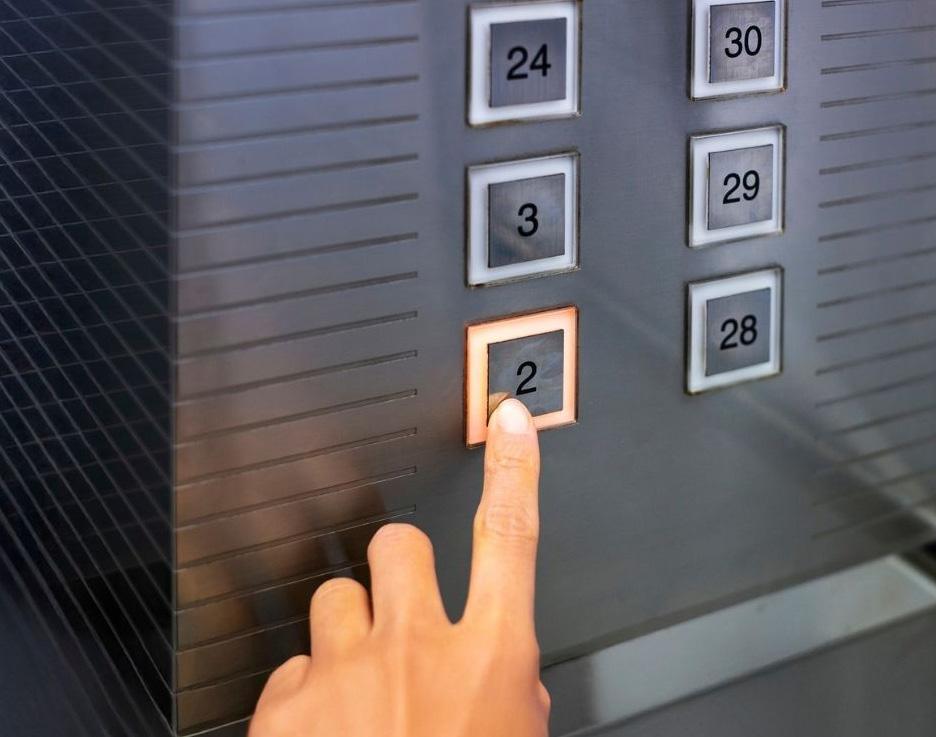
Lift controllers, drives, buttons, indicators, door operators, and landing door mechanisms are used each time the lift is moving, and thus typically need replacement after 10 to 15 years. It will depend on the type and model, as some components
become obsolete and replacement is not possible. Also, the building height, population and usage behaviour will have a huge impact. However, with low-rise lifts of 10 to 12 levels, replacing the entire lift would be more costeffective.
Andrew Batynski | ABN Lift Consultants Andrew@abnlift.com
What action should the OC take if an occupier disables their smoke alarm?
A tenant in our complex covered their smoke alarm with a plastic bag to stop it from triggering while they cook. Can the body corporate take any action?
A tenant in our complex covered the smoke alarm with a plastic bag, apparently because it keeps going off when they cook. Their property manager has been notified, but nothing has happened.
As a committee member, I’m worried about our liability if something goes wrong. Does the body corporate (BC) have any power to step in when the issue is inside a lot, or is that entirely between the landlord and the tenant? And are we exposed if we know about it and don’t act?
Responsibility for smoke alarms inside a private unit generally rests with the occupier, not the body corporate, which has no general authority to regulate conduct inside lots.
Smoke alarms inside lots: What is the body corporate’s role?
Occupiers disabling or covering a smoke alarm because it activates during cooking is a common issue in Queensland community titles schemes. While this raises obvious safety concerns, the legal position for BC is often misunderstood.
Under the Building Fire Safety Regulation 2008 (the Regulation) and Queensland tenancy laws, responsibility for smoke alarms inside a private unit generally rests with the occupier, not the BC.
Importantly, the BC is not a general regulator of conduct inside lots. Its obligations are matters involving common property, by-law enforcement, and scheme governance. Simply becoming aware of a possible smoke alarm issue does not automatically give the committee authority to enter the lot, investigate the tenant, or enforce tenancy obligations.
Privacy and quiet enjoyment are also important considerations. Committees should be cautious about overstepping into private lot affairs.
It is also important to consider whether the smoke alarm location itself is appropriate. Occupants should be able to undertake normal residential activities, such as cooking or showering, without routinely triggering smoke alarms. Frequent nuisance activations may indicate the alarm is installed too close to kitchens, bathrooms, or other sources of steam or cooking fumes. This does not justify disabling an alarm, but it may indicate the need for assessment of the alarm type or location to ensure both safety and practicality.
Under the Regulation, Queensland Fire Department (QFD) officers have enforcement powers relating to fire safety offences, including the tampering with or disabling of smoke alarms and prescribed fire safety installations. Prosecution powers sit with the regulator, not the body corporate.
For this reason, the committee could approach this issue by documenting the concern, notifying the owner or property manager discreetly, requesting that the matter be investigated, and then allowing the owner, tenant, or relevant authorities to address compliance.
In most cases, this is sufficient to demonstrate that the committee acted reasonably without exceeding its authority.
Legal disclaimer: This article is general information only and does not constitute legal, strata, or fire safety advice. Specific obligations may vary depending on the scheme by-laws, building classification, and individual circumstances. Independent professional advice should be obtained for specific situations.
Stefan Bauer | Fire Matters sbauer@firematters.com.au
i r e s a f e t y ?
Body corporates or the body corporate manager?
There is a common misconception that if your building has a body corporate manager who schedules routine maintenance and maintains your documentation, they take on the liability associated with fire safety However, this is not the case. If something is missed, the ultimate responsibility remains with the body corporate.
For this reason, some oversight of the body corporate manager is advisable. This requires body corporates to be aware of the fire responsibilities applicable to their building. This includes documentation, licensing and annual evacuation exercise compliance, among others, all of which should be reviewed annually.
DON’T RISK IT!
If a retrospective investigation finds any aspect of your fire safety non-compliant, you risk voided insurance, hefty fines and even jail. That’s why it’s crucial to get an independent third-party consultant to audit your building.
Alternatively, body corporates can engage a fire safety compliance auditor qualified to review and confirm whether or not compliance can be demonstrated
This should be verified before signing the annual occupier statement, as in signing this document, the body corporate assumes legal liability.
It is also important to note that Queensland legislation requires a retrospective investigation when fires occur.
Body corporates must be able to demonstrate compliance with all regulatory requirements, both for fire authority inspections and for insurance purposes
In Queensland, all documentation must be kept for a minimum of two years This includes maintenance, repairs, testing, evacuation drills and emergency plans.
Stefan Bauer Fire Matters
Fire Matters provides an unbiased fire compliance assessment that could save you thousands. We also ensure your residents are fully trained in the event of a fire, giving you peace of mind when signing your occupier’s statement
Should all units be checked after concrete cancer is found in one block
Concrete cancer has been found and remediated in one of our strata scheme’s three blocks. Should we check all units?
Our strata scheme has three blocks under the same strata title. We discovered concrete cancer in one block and it has now been remediated.
Should every unit be checked? How is that done? Owners will be reluctant. If more concrete cancer is found, the cost of remedial works could be colossal.
If concrete cancer is found in one part of a strata building, it is highly recommended to check all areas of similar design or construction.
It is highly recommended to check any areas of similar design or construction for signs of concrete cancer if it has been previously discovered elsewhere.
If it is the same strata property under the same title, it would have been the same builder who constructed the units, and likely the same trades used. Unfortunately, we do see a high volume of defects duplicated in strata schemes due to repeat installation issues. Therefore, it is always best practice to check.
A building consultant or engineer can undertake a visual assessment for telltale signs. If there are any suspicious areas, further investigation can be undertaken. It is possible that only minor works may be required (if any) in comparison to the work already undertaken. Owners
Helping the strata community navigate
their building concerns
BUILDING CONSULTANCY
• Defect reports and forensic engineering
• Scope of works
• Dilapidation and risk surveys
• Dispute mediation and expert witness
• Contrator procurement and cost validation
• Construction management
• Capital works funds / maintenance plans
• Digital capability
• Façade assessments
REPAIR SOLUTIONS
• Emergency make safe
• Fire water damage restoration
• Leak detection
• Contamination response
• Building repairs
• Cost validation services
• Digital capability
Can a committee member lose their seat for missing meetings
If a committee member misses two consecutive meetings without leave, do they automatically lose their position? Who is responsible for enforcing this?
Our committee has a member who failed to attend consecutive meetings in the same financial year without lodging an apology. Does this automatically end their membership on the committee? If so, who enforces this? Some committees may not be aware of this rule. Should the body corporate manager raise it after each meeting?
If the member’s position ends, can they return during the current financial year, or are they effectively barred until the next AGM? Could they give an undertaking to participate fully and be renominated?
Does the casual vacancy have to be filled, and what happens if there are no candidates? What’s to stop another owner from being nominated who has just as little intention of showing up? The only interested party appears to be the person at risk of removal.
A committee member’s term of office ends automatically if they miss two consecutive meetings without the committee’s leave.
A committee member’s term of office is provided for under section 44 of the Body Corporate and Community Management (Standard Module) Regulation 2020 (the Regulation) (equivalent provisions of other Modules). Your specific query in relation to the ending of that term of office is covered under section 44(2)(d) of the Regulation, which provides that a position becomes vacant where a member is “not present personally, by proxy or by any electronic means authorised by a resolution of the committee, at 2 consecutive meetings of the committee without the committee’s leave.”
Who’s responsible for enforcing this? It is automatic. The legislation provides that the term of office ends at that point. It’s a form of self-regulation, if you want to think of it that way. Oversight for that rests with the rest of the committee and with the owners. To put it another way: if it becomes apparent that a committee member’s term ends this way and nothing is being done about it, an owner can take steps to make it happen. A professional and knowledgeable body corporate manager should be aware of this, yes, and should raise it with the committee. To be clear, the body corporate manager has no decision-making power or enforcement capability.
There is no ‘barring’ for them as a result of this. Nothing is stopping the committee from reappointing that person to a casual vacancy, although why on earth they would do so is another matter entirely. They could be ineligible for other reasons, though (e.g., they are not financial). They can be renominated, and there is no obligation for them to give an undertaking. That said, it is open to you or any other owner to make others aware of that person’s lack of attendance. Be careful on this: there may be some very good — and very personal — reasons for non-attendance. You might also want to consider that some
people will react very badly to being told they have not attended meetings and will be booted off the committee as a result.
The casual vacancy must be filled. The number of committee members elected at an AGM must be maintained until the next one. If there are no candidates, I can only assume no one is putting their hand up or expressing an interest. If that is the case, your body corporate has some problems.
What if you can’t find another willing owner? I’ll answer this by asking you a question: how would someone’s interest in participating be measured anyway? Do they sign a stat dec promising to participate? Do they take a test? An oath? Our system of body corporate regulation in Queensland relies, rightly or wrongly, on owners being sufficiently engaged to protect their investment by participating in decision-making. If they cannot or will not do so, they must be prepared to accept the inevitable consequences, and, unfortunately, the onus falls to the engaged owners to pick up the slack. Is that fair? Hardly. That’s what we have got, though. I personally believe that legislation should allow bodies corporate to contract out committee responsibilities to a professional in full. That’s just my view, of course.
This is general information only and not legal advice.
Chris Irons | Strata Solve chris@stratasolve.com.au