Is parking on common property allowed if it does not obstruct others?
Page 4 | Strata Life
Do owners need separate insurance to rent a storage cage in strata?
Page 18 | Strata Insurance Solutions
Why now is a very good time to take a laser-like view of your financials
Page 26 | McCormacks Strata Management
About Us
Welcome to the latest issue of The LookUpStrata Magazine!
For over a decade, LookUpStrata has been Australia’s premier resource for everything related to strata living. Our mission is to keep strata communities informed and connected, providing thousands of lot owners, strata managers, and professionals with reliable, unbiased, easy-to-understand information to help you solve your strata problems and make informed decisions.
The NSW Strata Magazines, published monthly, are just one of the many ways we’re dedicated to supporting you. They’re packed with articles from industry experts and include our comprehensive printable strata directory.
Beyond these pages, we also offer:
• Q&A Service: Our team of leading strata specialists answer hundreds of your questions every month, which helps shape the magazine topics we cover.
• Newsletters: Our weekly newsletters deliver timely updates on legislative changes and the latest strata news straight to your inbox.
• Webinars: Join our founder, Nikki Jovicic, for weekly webinars where she hosts and partners with industry experts to discuss key topics.
• The LookUpStrata Directory: A free resource that showcases hundreds of trusted strata service professionals nationwide. You’ll find it at the end of every magazine and on our website.
• Website: Find all our resources, articles, and news in one convenient location, accessible 24/7.
Subscribe now at no cost. To enjoy unrestricted access and connect with our strata community simply click here
Stay Connected - follow us on LinkedIn, Facebook, and YouTube. Thank you for being a vital part of what makes our community so vibrant and trusted.
Nikki Jovicic Managing Director I Founder lookupstrata.com.au
Advertising and Admin Enquiries: administration@lookupstrata.com.au
Disclaimer: The information contained in this magazine, including the response to submitted questions, is not legal advice and should not be relied upon as legal advice. You should seek independent advice before acting on the information contained in this magazine. Strata legislation is updated regularly. The information in this magazine is based on the legislation at the time of publishing.
do I need child-proof window locks if no children live in or visit my lot? Anthony
a strata manager have the right to chair general or committee meetings?
Sean
will ABS recognition of strata managers affect salaries and career paths?
Aaron
all the money need to be in the bank before major strata works can start in
Tim
Does a contractor need a licence to access locked common property areas?
Thanks to our sponsors
Is parking on common
property allowed if it does not obstruct others?
Can a lot owner in a duplex park on a shared common driveway if it does not block access to the other lot?
We own unit 2 in a duplex. Unit 1 recently changed ownership. The two lots share one common driveway.
We are a family of four and want to park in the common driveway in front of our garage. We do not block access to unit 1’s garage.
Unit 1 can drive into their garage and reverse out down the driveway, and we do the same. Neither unit has a turning bay. Can we park on the common driveway in front of our garage if unit 1 can still access their garage?
Verbal arrangements and historical parking do not prevent a dispute.
In most strata schemes, a shared driveway is common property unless it is specifically included within a lot on the registered strata plan. You should check the strata plan to confirm whether the area between the two garages is lot property or common property. If it is common property, no individual owner has the right to use it for parking unless the owners corporation has given consent, for example, through a by-law granting exclusive use or a special privilege.
A long-standing verbal agreement between previous owners does not override this, although the arrangement can be formalised by proper approval, such as a registered by-law.
You should also review the current by-laws, as many schemes have parking and obstruction by-laws. A common model by-law is along these lines:
• An owner or occupier of a lot must not park or stand any motor or other vehicle on common property, or permit a motor vehicle to be parked or stood on common property, except with the prior written approval of the owners corporation or as permitted by a sign authorised by the owners corporation
• An owner or occupier must not obstruct or unreasonably interfere with the use of common property by others
Even if parking on common property has occurred historically, it can still be challenged, particularly if it interferes with another owner’s access.
Practical next steps include confirming the status of the area on the strata plan, checking whether any by-law permits or restricts parking, and seeking a written agreement with clear conditions, which can then be recorded in the minutes of a general meeting. If you want the arrangement to be ongoing, the most secure option is to adopt a by-law granting exclusive use or a special privilege over that part of the driveway.
If agreement cannot be reached, the dispute may need to proceed through NSW Fair Trading mediation and, if unresolved, NCAT.
Jana Antelmann | Strata Life jana@thestratalife.com.au
Leading the way in strata funding
Lannock Strata Finance has been at the forefront of strata finance for twenty years, pioneering simple and flexible strata funding for strata communities.
As Australia’s leading strata lender, our flexible-use funding is designed exclusively to meet the needs of all strata communities, no matter how large or how small, including:
Building Remediation
Repairs and Maintenance
Upgrades to Common Property
Cladding Rectification
Experience the Lannock difference
Green and Sustainability Projects
Levies in Arrears
Litigation
Insurance Funding
Speak with your local Lannock expert about how we can tailor flexible funding to suit your specific needs.
1300 851 585 | lannock.com.au
Can our strata scheme levy owners for repairs and keep the insurance payout?
Can an owners corporation levy owners for repairs and use the insurance payout for other purposes?
Our owners corporation recently received an insurance payment under “litigation cover”. We were told this part of the policy only covers items belonging to an owner that were damaged during repairs to common property. The insurer advised that $60,000 was paid to the owners corporation. The owners corporation then levied all lots to cover the cost of the repairs.
Can the owners corporation use the $60,000 insurance payment for other purposes, or must it be applied to the purpose for which the insurance claim was made?
How the funds are treated will depend on the characterisation of the damaged items.
In New South Wales, the way insurance proceeds are dealt with depends on the nature of the claim.
Section 163 of the Strata Schemes Management Act 2015 requires that where an owners corporation receives insurance money for the destruction of or damage to a building, those funds must be applied to rebuilding, repairing or restoring the building (unless there is a unanimous resolution otherwise). Under strata legislation, “building” may extend beyond common property to include parts of a lot, such as fixtures and fittings.
In this case, the $60,000 was not received for building damage. It was paid under “litigation cover” for lot owners’ property that was damaged during common property repairs. Whether section 163 applies depends on the nature of the damaged items:
• If the items fall within the definition of “building” (for example, fixtures and fittings), section 163 may apply and the funds may need to be used to rectify that damage unless a unanimous resolution is passed otherwise.
• If the items were not considered “building” (for example, contents such as carpets, furniture or personal effects), section 163 would not apply. In that case, the $60,000 forms part of the owners corporation’s general funds and can be taken into account in the next budget to reduce contributions or offset expenses.
Ultimately, how the funds are treated will depend on the characterisation of the damaged items, and it is a matter for the owners to decide through the budget and levy process once that is clarified.
Tyrone Shandiman | Strata
Insurance Solutions
tshandiman@iaa.net.au
Mention this offer when requesting a quote from us, and we will provide a discount off our standard fee for service of $250 (GST Inc) for buildings with 10-25 lots or $500 (GST Inc) for buildings with more than 25 lots for the first year you insure with Strata Insurance Solutions
To redeem this offer email a copy of your current policy schedule to Strata Insurance Solutions within 1 month of the publication of this magazine Your policy can expire any time in the next 12 months However we can only provide quotes 30 days prior to the expiry of your policyif your policy is not due now, we will schedule a quote at the appropriate time To ensure we apply this offer to our quotes, please specifically mention you would like to redeem the "LookUpStrata Special Offer"
Should a strata manager promote services to lot owners?
Can our strata manager promote services to owners? Does this raise any conflicts of interest?
Our strata manager emailed owners about a new policy relating to airspace development. The email also appears to promote or recommend a specific airspace company.
Is it appropriate for a strata manager to send this type of promotional material to owners? Does it raise any conflict of interest or disclosure issues if the manager appears to be advertising or showing bias towards a specific provider?
Why certain communication was sent to lot owners should be a question raised with the strata committee.
The NSW Government has introduced a policy to increase medium-density/midrise housing across metropolitan Sydney, the Central Coast, Illawarra-Shoalhaven and Hunter regions. This policy aims to address housing affordability. This may include airspace development through strata (or even stratum) subdivision of existing residential flat buildings. This policy does not compel owners corporations to engage in airspace development. It is government policy (the Strata Environmental Planning Policy)
that such development may be preferred, and an indication that it’s more likely to receive development consent (it will still be considered on a case-by-case basis). The owners corporation may, at a general meeting, decide whether to apply for airspace development.
In respect of the strata manager, pursuant to section 53 of the Strata Schemes Management Act 2015 (NSW), the strata managing agent (strata manager) may be delegated functions of the owners corporation. This may include exercising functions on behalf of the strata committee and its officers: section 54. Unless the strata manager is a compulsory strata manager, pursuant to section 237, the delegated power is revocable. Accordingly, the strata manager should act on the instructions of the strata committee and its officers. Why certain communication was sent to lot owners should be a question raised with the strata committee.
Where the owners corporation is tendering for providers, the tender from those providers tends to paint the provider positively. Subject to the tender not being misleading or deceptive, there is no law, regulation, or code that prohibits a provider from preparing a favourable tender.
Matthew Lo | Kerin Benson Lawyers enquiries@kerinbensonlawyers.com.au
Strata properties are made up of privately owned lots and shared common property
While lot owners maintain their individual spaces to their own standards, the
responsibility for maintaining common property
sits collectively with the ownership group.
Although there is a clear obligation to maintain
common property, there is often no consistent or clearly defined approach to how this should be done in practice.
Why Maintenance Often
Becomes Reactive
Maintenance is often approached without a structured plan or defined standard
Over time, this lack of direction can lead to a familiar pattern - responding to one issue after another, often only once problems become urgent or costly
As buildings age, this reactive approach frequently results in:
Ongoing cycles of repairs
Unexpected major works
The need for special levies to fund
unplanned expenses
What Drives Maintenance
Costs
It’s Not Just About the Price Tag
Maintenance discussions are often driven by
cost alone. However, focusing only on cost can
overlook what actually drives it
Understanding cost drivers allows for a more effective maintenance approach
For example, repainting a building is largely driven by labour costs, while the cost of paint
itself is relatively minor. Given that painting is often one of the largest expenses for a building, extending the life of paintwork can significantly reduce long-term costs
This can be achieved through:
Regular cleaning and wash-downs
Monitoring the condition of painted surfaces
Addressing minor issues early
Repainting within warranty periods
A proactive approach helps maximise value and reduce the frequency of major expenditure.
1 3 0 0 3 0 9 2 0 1
w w w . q i a g r o u p . c o m . a u
i n f o @ q i a g r o u p . c o m . a u
Assessment
Why Ongoing Building Reviews Matter
Regular assessment of common property plays
a critical role in effective maintenance
By inspecting the condition of the building over time, owners can:
Identify early signs of deterioration
Detect minor issues before they escalate
Establish a baseline understanding of the
building’s condition
Maintain the durability of key building elements
Without this visibility, issues can develop
unnoticed until they require significant repair.
How a Building Maintenance
A Building Maintenance Assessment provides a clear and practical way to manage both routine
maintenance and potential defects
The report:
Identifies building condition issues
Separates general maintenance from more
serious concerns
Provides guidance on how and when to address issues
Recommends appropriate specialists where required
This ensures that maintenance is managed
efficiently, and that specialist investigations are only undertaken when necessary.
A QIA Group Building Maintenance Assessment
includes:
On-site visual inspection by a qualified
professional
Categorisation of issues into:
General wear and tear
Potential defect-related concers
Maintenance recommendations and required
frequencies
Prioritisation of repairs and further
investigations
Guidance on appropriate contractors
Full colour photos highlighting key issues
A clear summary schedule for easy reference
This structured approach allows owners to
prioritise works and clearly understand the
condition of their building
Assessment Report Helps What the Report Includes A More Proactive A
Maintenance
Without a structured approach, maintenance can become unpredictable, costly and difficult to
manage.
By focusing on early identification and structured
planning strata schemes can move away from
reactive maintenance and towards a more
controlled approach
Looking to better manage building maintenance?
Contact QIA Group to learn more about Building Maintenance Assessments. Get In Touch
How does an owners corporation decide which fund pays for
expenses?
What expenses should an owners corporation pay from the administrative fund versus the capital works fund?
How does an owners corporation decide whether to pay an expense from the administrative fund or the capital works fund? How should we handle expenses such as repairs or upgrades?
The
correct allocation depends on the nature of
the work.
There is a clear legislative framework outlining what expenses should be paid from the administrative fund and the capital works fund, as set out in Sections 73 and 74 of the Strata Schemes Management Act 2015 (NSW) (the Act). However, it does not prescribe a strict list of expenses. In practice, the correct allocation depends on the nature of the work.
The administrative fund is the scheme’s operating account and is used for recurrent, day-to-day expenses required to run the building. This typically includes cleaning, gardening, utilities for common areas, strata management fees, insurance premiums, minor repairs, and routine maintenance.
The capital works fund, on the other hand, is more of a savings account. It is a forward-looking fund used for major expenditure and designed to fund the repair, replacement or renewal of common property assets over time. This includes items such as painting, roofing works, lift replacement, major remedial works, and upgrades to building infrastructure.
As a general rule:
• If the expense is recurring or operational, it is paid from the administrative fund
• If the expense is non-recurring, capital in nature, or part of long-term renewal, it is paid from the capital works fund
73 Administrative fund and 74 Capital works fund
Extract from section 73 of the Act:
1. An owners corporation must establish an administrative fund.
2. Contributions and other prescribed amounts are to be paid into that fund.
Extract from section 74 of the Act:
1. An owners corporation must establish a capital works fund.
2. Contributions and other prescribed amounts are to be paid into that fund.
Why this issue matters
Incorrect allocation between funds is a common issue in strata schemes and can lead to underfunding, cash flow problems, or disputes between owners. Using the administrative fund to cover capital items may create short-term relief but can leave the scheme exposed when major works arise. Conversely, overfunding one fund at the expense of the other can distort levy contributions and planning.
Clear financial management ensures the scheme remains compliant, financially stable, and prepared for future works.
What are your next practical steps?
If your scheme is unsure how to allocate expenses, there are several practical steps to take.
1. Review your capital works fund plan. This document should forecast major expenditure over a 10-year period and guide what should be funded from the capital works fund.
2. Check how expenses are currently being allocated. Your strata manager or treasurer should be able to provide a breakdown of recent invoices and confirm which fund they were paid from.
3. Seek clarification early. If an expense is unclear, it is always better to confirm allocation before payment rather than reclassify it later.
4. Ensure your budgets are aligned. Both the administrative and capital works fund budgets should reflect the scheme’s actual needs, including anticipated repairs, maintenance, and long-term upgrades.
Finally, adopt a consistent approach. Clear guidelines agreed by the committee and manager help ensure expenses are allocated correctly in the future and reduce confusion or disputes. A proactive and well-structured approach to fund management helps ensure the scheme can meet its day-to-day obligations while remaining financially prepared for major works in the future.
Does all the money need to be in the bank before major strata works can start in NSW?
Does NSW strata legislation require the owners corporation to have all funds on hand before starting major works?
We own an apartment in Dee Why, Sydney. The building is about 35 years old, and the owners corporation plans major common property works, including the replacement of the roof membrane. There are 21 lots, and the cost is about $25,000 per owner.
According to our strata manager, the owners corporation must have the entire amount collected and available in the capital works fund before works can begin. Does NSW strata legislation require the owners corporation to have all funds on hand before starting major works? Are there any situations where the scheme can proceed without first collecting the full amount? An example could be either staged payments or financing.
The strata manager’s advice that the money needs to be in place before works begin is sound.
Does all the money need to be in the bank before major strata works can start in NSW?
Great question, and it comes up more often than you’d think, especially for older buildings facing significant capital works like roof membrane replacements, waterproofing, or façade repairs.
The short answer is: yes, in practice, the funds need to be secured before the owners corporation can responsibly enter into a contract with a builder.
This isn’t actually a specific provision of the Strata Schemes Management Act 2015, it’s a fundamental principle of contract law. Entering into a binding contract without the means to
meet your payment obligations can expose the owners corporation and those who authorised the contract to serious legal consequences. In the most serious cases, contracting without secured funds can amount to fraudulent misrepresentation. It represents to a contractor that you have the funds to pay when you do not.
The scenario that illustrates the risk
Imagine the owners corporation raises a special levy to fund the works, signs a contract with a builder, and work begins. Then some owners don’t pay their levy. The owners corporation now has a contractual obligation it cannot meet. The builder has done the work, or part of it, and the path to resolution involves expensive, time-consuming legal action to recover unpaid levies, with no guarantee that the contractor will be paid on time or in full. The committee members who approved the contract may also find themselves personally exposed.
A resolved but unpaid special levy creates a debt owed by owners, but it does not put money in the bank. Those are two very different things.
So what does “having the money” actually mean?
Before signing any contract for major works, the owners corporation must have the funds genuinely secured. In practice, that means one of the following must be in place:
• The full amount is physically held in the capital works fund, or
• A confirmed loan facility is in place, meaning a lender has approved the loan and the funds are available to draw down, or
• A combination of existing fund reserves and a confirmed loan that together cover the full contracted amount.
The good news is that the Strata Schemes Management Act 2015 (the Act) does give owners corporations the power to borrow money. Section 100 of the Act expressly permits
this, provided a resolution approving the loan is passed at a general meeting first. Strata loans are increasingly common for exactly this kind of situation, and they allow works to proceed without every owner having to produce a large lump sum upfront. Instead, the loan is repaid through levies, over time.
What this means for your building
With 21 lots and approximately $25,000 per owner, the total project budget is around $525,000. That’s a significant sum. The strata manager’s advice that the money needs to be in place before works begin is sound. The question worth asking is how the owners corporation intends to secure those funds. Will this be through a special levy collected in full before contracts are signed, a strata loan, or a combination of both?
If a special levy is raised, you and the other owners should be clear on when payment is due, what happens if some owners don’t pay, and whether a loan is in place to bridge any
shortfall. These are entirely reasonable questions to put to the strata committee or strata manager in writing.
For more information on how strata finances work, NSW Fair Trading has a range of plainEnglish guides available at fairtrading.nsw. gov.au. The full text of the Strata Schemes
Helping the strata community navigate
their building concerns
BUILDING CONSULTANCY
• Defect reports and forensic engineering
• Scope of works
• Dilapidation and risk surveys
• Dispute mediation and expert witness
• Contrator procurement and cost validation
• Construction management
• Capital works funds / maintenance plans
• Digital capability
• Façade assessments
REPAIR SOLUTIONS
• Emergency make safe
• Fire water damage restoration
• Leak detection
• Contamination response
• Building repairs
• Cost validation services
• Digital capability
READ MORE HERE
Can a special resolution shift responsibility for windows and doors to lot owners?
Can the committee pass a special resolution making lot owners responsible for repairs and maintenance of windows and doors?
Can the executive committee pass a special resolution stating that all lot owners are responsible for repairing and maintaining their own windows and doors? If this special resolution passes and owners disagree or vote no, do they still have to comply with the decision?
Owners corporations should be very cautious about attempting to transfer maintenance obligations for windows and doors.
In NSW, an owners corporation cannot shift responsibility for the repair and maintenance of common property (including windows and doors) merely by passing a special resolution.
Under section 106 of the Strata Schemes Management Act 2015, the owners corporation is responsible for maintaining and repairing common property. In most strata schemes, windows and external doors form part of the common property.
If an owners corporation wants to transfer responsibility for common property windows and doors to individual lot owners, this must be done by way of a registered common property rights by-law under section 108 of the Act, not a standalone special resolution.
Critically:
• A by-law is required (not just a motion or resolution)
• The by-law must pass by special resolution
• The written consent of each affected lot owner is required
• The by-law must be properly drafted and registered on title
Without all of the above, any attempt to “shift responsibility” of all windows and doors is ineffective and unenforceable.
Do dissenting owners have to comply?
If a valid common property rights by-law has been passed and registered, and the affected owner has provided the required written consent, the owner is bound by the by-law even if they voted against the motion or expressed disagreement at the meeting.
However, if an owner did not give written consent, or if the owners corporation relied only on a special resolution without a registered by-law, the responsibility remains with the owners corporation and the owner is not obliged to comply.
Owners corporations should be very cautious about attempting to transfer maintenance obligations for windows and doors. Done incorrectly, these arrangements expose the scheme to disputes, invalid resolutions, and ongoing liability under section 106.
Mark Louis | Vital Strata Management mark@vitalstrata.com.au
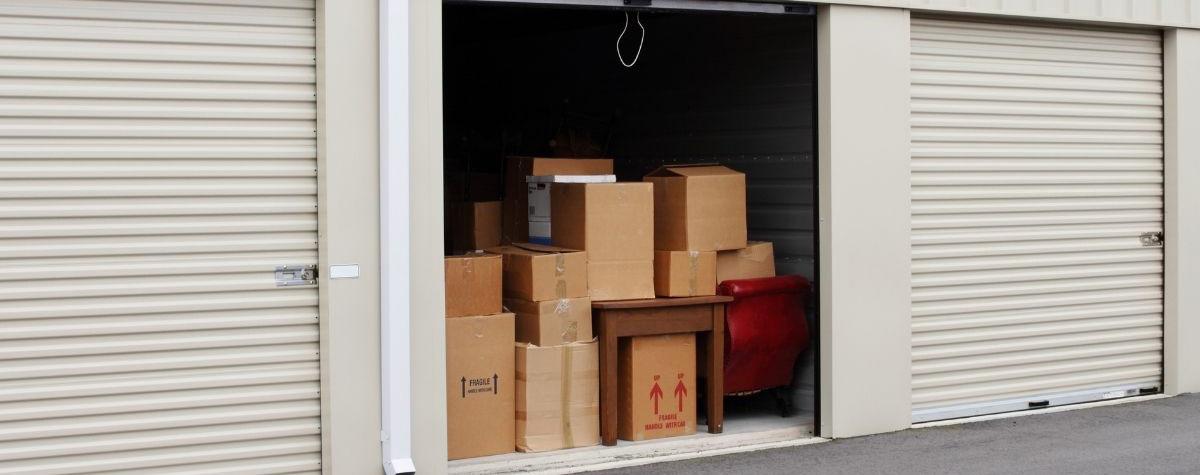
Do owners need separate insurance to rent a storage cage in strata?
Can a strata committee rent out unused storage cages? Are the renting owners required to take out insurance?
Our strata scheme has eight unused storage cages in the garage. Some owners have expressed an interest in renting the cages.
The committee agree, in principle, to rent them out for a small fee. Our strata management company requires each renter to take out an insurance policy for $10,000,000 before renting a cage.
Is it reasonable or required for the committee to impose this insurance requirement? If renters do not take out insurance, could the owners corporation or committee be exposed to liability?
From the committee’s perspective, the key issue is risk management rather than mandating a specific insurance product.
It is not necessarily standard or required for each lessee of a storage cage to take out a separate $10,000,000 public liability policy. In many cases, lot owners (or tenants) will already hold appropriate cover under an existing contents or landlord insurance policy, which typically includes a public liability component.
What is important is whether their existing policy responds to this specific use — i.e. storing
personal belongings in a rented storage cage on common property at the address they are also residing at. This is something the individual should confirm with their insurer. If the cover extends to this situation, there would generally be no need to arrange a separate standalone liability policy.
From the committee’s perspective, the key issue is risk management rather than mandating a specific insurance product. The owners corporation should already carry public liability insurance covering common property, which would respond where the owners corporation is negligent (for example, failure to maintain the building area, being common property, leading to injury or damage).
Conversely, if a loss arises due to the actions or negligence of the storage cage user (for example, unsafe storage of items causing damage or injury), liability may rest with that individual.
Because liability is always determined based on the specific facts of an incident, it isn’t possible to prescribe a one-size-fits-all outcome in advance.
In this instance, I would recommend first checking with your contents or landlord insurer to confirm whether this use is covered under your existing policy and if it is, reverting to the strata manager to clarify whether it meets the requirements.
do I need childproof window locks if no children live in or visit my lot?
I live by myself and do not ever have small children in my townhouse. Why do I have to have child-proof window locks on my windows?
The regulation is designed to eliminate risk proactively, rather than react after an incident.
This is a really common question, and it’s completely understandable.
In NSW, window safety requirements come from the Strata Schemes Management Regulation 2016 (NSW), which requires owners corporations to ensure that certain windows in strata lots are fitted with compliant safety devices (such as restrictors or locks).
These devices must limit the opening to no more than 125mm and be robust enough to prevent a fall. Most compliant devices are designed to be over-rideable, allowing occupants to fully open the window when it is safe to do so, while still maintaining compliance when engaged.
Importantly, this obligation applies to the lot itself, not the current occupant. So even if you don’t have children living in or visiting your townhouse, the requirement still applies.
The reason behind this is safety and liability:
• Apartments and townhouses change occupants over time (future owners, tenants, visitors, etc.)
• A child visiting the property, even temporarily, could be exposed to a fall risk.
• If a compliant device is not installed and an incident occurs, there can be serious legal and financial consequences for both the owner and the owners corporation.
A simple example:
If a future tenant moves in with young children, or a visitor brings a child into the home, and a fall occurs from a non-compliant window, the absence of a safety device could expose all parties to liability claims. The regulation is designed to eliminate that risk proactively, rather than react after an incident.
In short, it’s not about your current living situation. It’s about ensuring every lot is consistently safe, now and into the future.
Anthony Shakar | ASQB info@asqb.com.au
READ MORE HERE
Does a strata manager have the right to chair general or committee meetings?
Can a managing agent’s representative chair a general meeting or strata committee meeting without an owner’s vote?
Does a representative of the managing agent have an automatic right to chair a general meeting or a strata committee meeting, or do owners or committee members need to vote to appoint them as chair?
Any instance of a managing agent representative chairing a meeting must be supported by an appropriate delegation of authority.
For clarity, under the Strata Schemes Management Act 2015 (NSW), there is no automatic or inherent right for a managing agent to chair either type of meeting.
In relation to General Meetings of the owners corporation, the meeting is to be presided over by the chairperson. While a managing agent may assist in convening and facilitating the meeting, they may only chair the meeting where this function has been formally delegated to them, typically under the strata management agreement or by resolution of the owners corporation.
With respect to strata committee meetings, the position is more prescriptive. The chairperson is required to preside at meetings of the strata committee. In the absence of
the chairperson, another member of the strata committee may be appointed to chair the meeting. Not being a member of the committee, a managing agent does not have the authority to assume this role unless there is a valid and specific delegation of functions.
Accordingly, any instance of a managing agent representative chairing a meeting must be supported by an appropriate delegation of authority. In the absence of such delegation, the role of the managing agent is limited to providing administrative and advisory support rather than presiding over proceedings.
Sean Bermingham | The Strata Collective info@thestratacollective.com.au
The Strata Collective. Where People Matter.
The Strata Collective was formed with a simple goal –to provide a professional strata management service to clients who want a close, personal relationship with their Strata Manager.
We are a next generation Strata Management business that you can count on.
Find out more about our award-winning services at thestratacollective.com.au
How will ABS recognition of strata managers affect salaries and career paths?
How might the ABS recognising strata managers as a distinct occupation affect salaries and career progression?
The Australian Bureau of Statistics (ABS) now recognises “strata manager” as a distinct professional category. How do you expect this to affect salary expectations and career advancement pathways for junior and senior strata management staff?
This will absolutely help us track data more effectively and will strengthen career pathways over time.
It was amazing and overdue that strata management was finally recognised as a distinct occupation. The biggest impact we’ll see is on visibility and recognition of the role as a profession, rather than on immediate salary shifts. It will take a little bit of time before that happens.
A huge advantage of the recognition is that it should result in clearer benchmarking of what strata management remuneration looks like. To date, much of the statistical data has been skewed and not quite accurate because of where strata management sat. This will absolutely help us track data more effectively and will strengthen career pathways over time.
When the Right Hire Matters, Choose Sydney’s Most Trusted Partner.
From the North, East, South, or West of Sydney, no agency is as deeply connected to Sydney and NSW’s top talent as Property Recruitment Partners. Specialising in the strata and property sectors, we offer unmatched expertise, leverage strong long-term relationships with passive candidates, and provide local market insights that general and national recruitment agencies simply cannot match.
With a strong Strata and Facilities Management network, PRP connects us with top talent quickly and efficiently."
People & Culture Partner, PICA Group
Aaron Petrilli
“PRP demonstrated a profound understanding of the real estate
They offered invaluable insights that significantly contributed to our team's success."
Premium Strata, Strata & Building Management
Why now is a very good time to take a laser-like view of your financials
All the new changes in NSW strata legislation ultimately result in higher costs of strata living for owners.
Take a very laser-like view of your financials.
I’m all for a well-maintained building because it will lead to lower long-term costs.
Some strategies to combat higher costs of strata living are getting preferred rates with your trades, making sure you’re putting your services out to competitive tender, and reviewing your budget to understand exactly where your money is going each year.
If you’re thinking, “we’re spending a lot on our mechanical services”, this should trigger the thought, “do we need to replace that? Is there an issue?”
Just take a very laser-like view of your financials.
For 30 years, Sydney’s landmark buildings have partnered with us as their trusted advisors.
• Proactive leadership grounded in strata best practice
• Low building-to-manager ratios ensure dedicated support and tailored solutions
• Expert financial and professional management led by an experienced team
• Industry-leading inclusive and transparent fee structures
Make the change to McCormacks, for proven customer satisfaction that consistently outperforms the industry.
LEADERSHIP • Service • expertise
The common good, made exceptional by McCormacks 1300 991 825 solutions@mccormacks.com.au mccormacks.com.au
Can an owner refuse to pay for common property repairs in a duplex?
What can one owner do if the other owner refuse to pay for common property structural repairs in a duplex?
I live in a self managed duplex in NSW. I bought my villa three months ago and, at the owner of the other villa’s insistence, we moved the duplex from a professional manager to self-managed
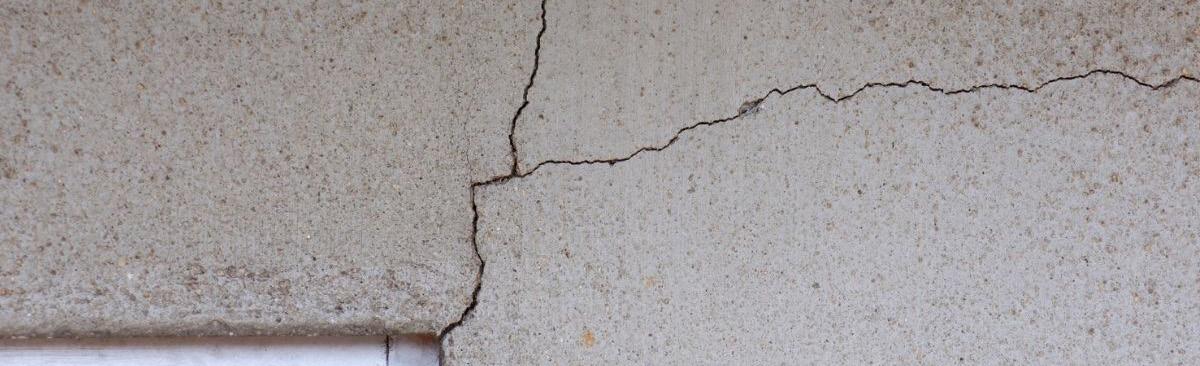
Recently, I discovered subsidence or dropping in the strip footing along the rear wall, which I believe is common property. The movement has caused doors in my villa to jam and large cracks to appear above doorways. Several repair companies have said we need to carry out repairs to prevent further damage.
Although the issue appears on my side of the building, I believe it is a common property structural problem, and the cost should be shared. The owner of the other villa recently sold and refuses to pay their share of the repairs.
Can a villa owner refuse to contribute to common property repairs? How do I progress the repairs and recover their share of the cost?
Make a qualified request for a general meeting, or if you are the secretary, convene a general meeting.
The answer to whether you or the owners corporation should pay the costs of repair would depend on various factors, including:
• Strata Plan: whether the rear wall is lot or common property. This can be determined
by inspecting the strata plan. If a thick black line on the strata plan indicates the wall, the wall is common property.
• By-law: Whether works have been done to the rear wall by previous owners, noting that if works have been done to a common property wall, the owners corporation could have transferred the repair and maintenance responsibilities to the lot owner.
Assuming that the wall is common property, the owners corporation is responsible for its repair and maintenance.
I suggest that you make a qualified request for a general meeting, or if you are the secretary, convene a general meeting. You should request or include a motion for the owners corporation to rectify the common property.
If the adjoining property has been exchanged but not settled, the vendor may have to notify the incoming purchaser of the motion. If the property has settled, the new owner will have to attend the meeting and vote on the motion to rectify the common property.
If the owners corporation does not resolve to rectify the defects, you should consider mediation with the other villa owner through Fair Trading and/or Tribunal proceedings.
It may be worthwhile to appoint a strata manager to assist with the management of the strata scheme.
Angus Lau | Bannermans Lawyers enquiries@bannermans.com.au
Does a contractor need a licence to access locked common property areas?
Can an owners corporation give a contractor access to a locked common property laundry without granting a formal licence?
I own an apartment in a mixed-use scheme with residential and holiday lets. We recently engaged a contractor to carry out daily maintenance tasks, including sweeping, moving bins, cleaning the BBQ and pool. The contractor works on site about 5 to 12 hours per week, depending on the season.
One owner passed a motion at an EGM to have the common property laundry locked, and the contractor doesn’t have access. The laundry does not have a washer or dryer, but it has a sink. The contractor needs hot water to carry out their duties and a secure place to store the pool-testing equipment.
We want to reverse the EGM motion at our upcoming AGM so the contractor can access the laundry. One owner says we cannot do this without passing a special resolution to grant a licence under section 112 of the Strata Schemes Management Act 2015.
Can the owners corporation (OC) resolve to give the contractor access to this common property area for maintenance purposes, or does it need a formal licence and special resolution?
It may not be necessary to repeal the motion, but simply to resolve to provide the contractor with a key to the locked door.
I’m assuming the laundry is common property and that there are no exclusive use by-laws over this area. In which case, there are several issues here. Let’s break them down.
The first issue relates to the contractor. I suggest looking at the terms of their contract, as it should clearly set out their tasks (which you have indicated require access to hot water). By preventing the OC’s contractor from accessing hot water to enable them to complete their duties, the OC may have breached their contract. Depending on the terms of the contract, it may allow the contractor to terminate the agreement and seek damages from the OC. If the contract also specified where the contractor is to store items on the common property, e.g., in the now locked laundry, then this too could be a breach of contract.
The second issue relates to the repeal of the door locking motion. There may be another reason for locking the door unrelated to the contractor using the area. It may not be necessary to repeal the motion, but simply to resolve to provide the contractor with a key to the locked door.
The third issue is the potential need for a licence to use the laundry. Section 112 of the Strata Schemes Management Act 2015 requires a special resolution to be passed to authorise a licence. The key question is whether it is needed. A contractor carrying out work on behalf of the OC does not need a licence to enter an area of common property to conduct their work. To put it in context, if a licence was required just to access the common property, then every time a contractor attended to change a light bulb, they would need a licence authorised by a special resolution. A licence would potentially be needed if the contractor needs the area to store items.
The first question I’d ask is who owns the pool equipment? I suspect the OC likely pays for it and that it is the OC’s personal property. If this is correct, a licence would not be required. If the equipment were the contractor’s personal property, they would need a licence to store it
on the common property, and I suggest looking at their contract. Why? The right to use the area for storage may have been provided for in the contract. In this case, you need to review the motion to appoint the contractor. If it did provide for storage rights for the contractor’s property, were those rights granted by a special resolution and a licence?