Do I have to give the strata committee my sons’ personal details for a by-law breach?
Page 8 | Premium Strata
When must the strata committee advise owners the administration fund is in deficit?
Page 14 | Bannermans Lawyers
Can the strata committee make waterproofing repair decisions without formal meetings?
Page 20 | Strata Life
About Us
Welcome to the latest issue of The LookUpStrata Magazine!
For over a decade, LookUpStrata has been Australia’s premier resource for everything related to strata living. Our mission is to keep strata communities informed and connected, providing thousands of lot owners, strata managers, and professionals with reliable, unbiased, easy-to-understand information to help you solve your strata problems and make informed decisions.
The NSW Strata Magazines, published monthly, are just one of the many ways we’re dedicated to supporting you. They’re packed with articles from industry experts and include our comprehensive printable strata directory.
Beyond these pages, we also offer:
• Q&A Service: Our team of leading strata specialists answer hundreds of your questions every month, which helps shape the magazine topics we cover.
• Newsletters: Our weekly newsletters deliver timely updates on legislative changes and the latest strata news straight to your inbox.
• Webinars: Join our founder, Nikki Jovicic, for weekly webinars where she hosts and partners with industry experts to discuss key topics.
• The LookUpStrata Directory: A free resource that showcases hundreds of trusted strata service professionals nationwide. You’ll find it at the end of every magazine and on our website.
• Website: Find all our resources, articles, and news in one convenient location, accessible 24/7.
Subscribe now at no cost. To enjoy unrestricted access and connect with our strata community simply click here
Stay Connected - follow us on LinkedIn, Facebook, and YouTube. Thank you for being a vital part of what makes our community so vibrant and trusted.
Nikki Jovicic Managing Director I Founder lookupstrata.com.au
Advertising and Admin Enquiries: administration@lookupstrata.com.au
Disclaimer: The information contained in this magazine, including the response to submitted questions, is not legal advice and should not be relied upon as legal advice. You should seek independent advice before acting on the information contained in this magazine. Strata legislation is updated regularly. The information in this magazine is based on the legislation at the time of publishing.
4 How do we recoup 11 years of incorrect GST charges from a contractor?
8 Do I have to give the strata committee my sons’ personal details for a by-law breach?
Leanne Habib, Premium Strata 10 What happens if the committee ignores a known trip hazard on common property?
Mark Louis, Vital Strata Management
12 How should conflicting repair-orreplace advice for common property doors be handled?
Sam Hogg, PASG Projects 14 When must the strata committee advise owners the administration fund is in deficit?
Matthew Jenkins, Bannermans Lawyers 16 How many votes does an owner with multiple lots get on the strata committee?
Sean Bermingham, The Strata Collective 18 Does one fire door tag cover both doors in a set?
Chris Chatham, LINKfire
Can the strata committee make waterproofing repair decisions without formal meetings?
Jana Antelmann, Strata Life
Can an owners corporation challenge new fire-stopping compliance requirements?
Rob Broadhead, 2020 Fire Protection
Does a strata management agreement stay valid after the company changes ownership?
Megan Parkins, Tender
Does pecuniary interest apply to general meetings as well as committee meetings?
Tim Sara, Sara Strata
Can a strata ask another organisation to take out a positive covenant over its common property?
Matthew Lo, Kerin Strata Lawyers
Can a lot owner garden on common property with strata committee approval?
Hugh McCormack, McCormacks Strata Management
Thanks to our sponsors
How do we recoup 11 years of incorrect GST charges from a contractor?
Our contractor has been incorrectly charging GST on invoices for 11 years. The committee says it’s aware but won’t take action to recover the overpayment. What can we do?
Our contractor has been charging GST on all their invoices for 11 years. We informed the secretary eight months ago and also raised it with the strata managing agent. They eventually came back and said the committee is aware, the contractor has stopped charging GST, and no further action will be taken.
How do we hold the committee accountable to recoup this overpayment?
The outcome depends on whether the plan is registered for GST. If registered, the overcharging would have been claimed back via the BAS. If not, the contractor would owe the plan for all GST overcharged.
If the plan is registered for GST, the overcharge would have been claimed back from the ATO on the BAS.
The tax/BAS agent would have to answer for lodging with errors, in addition to the contractor.
If the plan is not registered for GST, the contractor would owe the plan for all GST overcharged. The committee may have the authority to write off the receivable as not recoverable, depending on the committee’s expenditure threshold. As far as keeping the committee accountable, I don’t believe committee members are financially responsible for their decisions (no one would ever join a committee).
A plan could take the contractor to NCAT. The cost of lawyers may be prohibitive of taking action in the Petty Claims court, but the amount concerned is not mentioned. The eight-month delay in responding to your advice and the failure to pursue the overcharges are topics to discuss at the next general meeting. Why is that contractor still being used? There is nothing stopping owners from bypassing the committee and reporting matters straight to the strata managing agent.
Matthew Faulkner | Matthew Faulkner Accountancy PTY LTD matt@mattfaulkner.accountants
Does insurance commission disclosure really protect strata committees?
Does handing a complex disclosure document to a volunteer committee equal transparency?
Experts note that disclosure often fails as a regulatory tool because volunteer committees often lack the technical expertise to decipher complex commission structures, tax implications, and broker fees. Does handing a complex disclosure document to a volunteer committee equal transparency? What practical steps must strata managers take to ensure truly informed consent?
Committees rely heavily on their strata managing agent’s recommendation, so disclosure alone is not enough to ensure truly informed consent.
Absolutely not. I think the biggest problem with a lot of committees is that they rely on their strata manager heavily in the decisionmaking process. What I’ve seen in this industry is that you can hand an absolutely awful deal to a client, fully disclose it, and they take the deal because the strata manager says it’s a great deal.
Disclosure alone does not assist. A lot of committees are retired volunteers who don’t really know a lot about strata insurance, and they generally just accept the recommendation the strata manager puts forward.
I understand that businesses have rights to have certain models, but some models are just so unfair that they should not occur. For example, when a consumer is paying 40% of their insurance premium on commissions. When they signed up with the strata manager a few years ago they were only paying 20%, but through the course of being handed documents that may have disclosed the increase in commissions on page 8, have come out with a much worse off deal that didn’t get picked up because the committee didn’t read every page of that document.
Do I have to give the strata committee my sons’ personal details for a by-law breach?
Our strata committee wants my sons’ personal details to issue a parking by-law breach notice. Am I legally obliged to provide them, or can the notice be sent to me as the owner?
My sons sometimes park in the visitors car park, which is a breach of the by-laws. I agree that this is not acceptable. The strata committee wants to issue a by-law breach notice and has asked for my sons’ details. I requested that they send the breach notice to me as the property owner. Am I legally obliged to provide my family’s details?
An owner is not legally obliged to provide personal details of visitors who have breached a by-law, but the owner remains responsible for ensuring their guests comply with the scheme’s rules.
You are not legally obliged to provide your family members’ or visitors’ personal details to the owners corporation in relation to an alleged by-law breach.
There is no specific provision under the Strata Schemes Management Act 2015 (NSW) that compels an owner or occupier to disclose the identity or contact details of their guests in these circumstances. However, this does not mean the issue ends there.
By-laws are generally not directly enforceable against visitors or invitees. Responsibility lies with the owner or occupier of the lot. In most schemes, by-laws require owners and residents to ensure that their guests comply with the scheme’s rules. The owners corporation is entitled to pursue the matter against you as the owner, rather than against your visitors directly.
What are your next practical steps?
If you are in this situation, there are several ways to respond constructively.
First, acknowledge the breach where appropriate. As you have done, confirming that the behaviour is not compliant can help de-escalate the situation.
Second, redirect the process. Request that any breach notice or correspondence be issued to you as the owner.
Third, ensure future compliance. Make it clear to your visitors that they must follow the by-laws, particularly in areas such as visitor parking, which are commonly enforced, can be sensitive, and may create disharmony among residents.
Fourth, review the by-laws. Check how your scheme regulates visitor parking and whether signage, markings, or communication are clear. Sometimes disputes arise from ambiguity rather than intent.
Finally, maintain open communication with the committee. A cooperative approach often leads to better outcomes than a strictly adversarial one, especially for minor or occasional breaches.
A practical and balanced approach recognises that while owners are not required to disclose personal details of their visitors, they remain responsible for ensuring that by-laws are respected within their lot and by those they invite into the scheme.
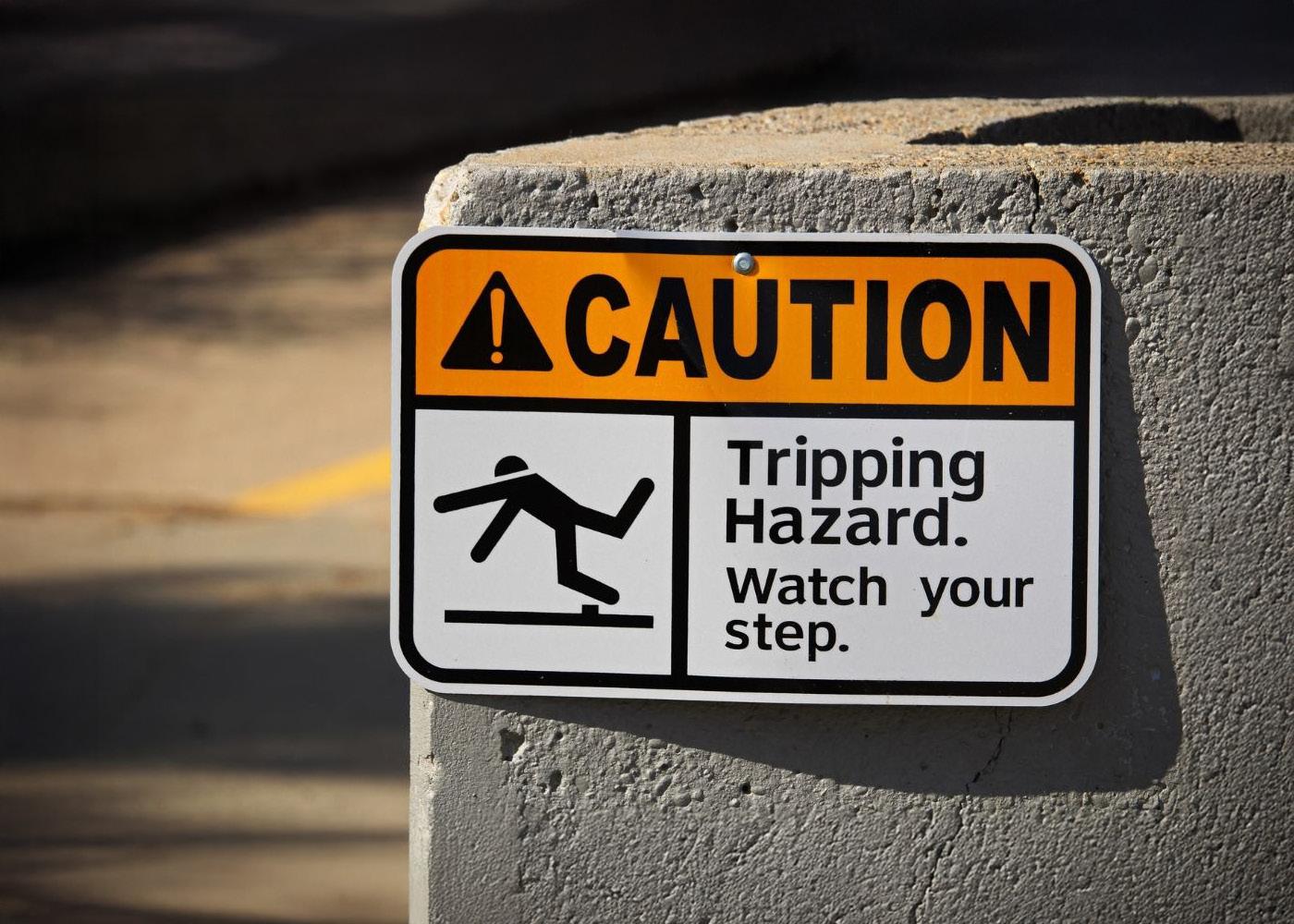
What happens if the committee ignores a known trip hazard on common property?
A trip hazard on our common property has been reported to the committee repeatedly, but remains unaddressed. What are the insurance and liability implications?
A resident has repeatedly requested the committee repair a known trip hazard that hasn’t been fixed for years. What are the insurance implications around known hazards the committee will not address?
An owners corporation that ignores a known trip hazard faces real liability and insurance risks. Failure to act could strengthen a negligence claim and impact the insurer’s position if an injury occurs.
If the owners corporation is aware of a trip hazard on common property and does not take reasonable steps to repair or make the area safe, there are potential liability and insurance implications
Under section 106 of the Strata Schemes Management Act 2015 (the Act), the owners corporation has a duty to properly maintain and keep the common property in a state of good and serviceable repair. Where a hazard has been reported multiple times and remains unaddressed over an extended period, this can increase the scheme’s risk exposure.
Should an injury occur as a result of the known hazard, there is a risk of a public liability insurance claim against the owners corporation. In those circumstances, insurers may closely examine whether the owners corporation was aware of the issue and whether reasonable action was taken to
mitigate the risk. Evidence that the hazard was known but not addressed could potentially impact the insurer’s position and may also strengthen a negligence claim against the owners corporation.
For that reason, it is important for known safety hazards to be assessed and rectified within a reasonable timeframe to reduce both safety risks to residents and potential liability exposure for the scheme.
Mark Louis | Vital Strata Management mark@vitalstrata.com.au
How should conflicting repair-or-replace advice for common property doors be handled?
Conflicting reports say our common property doors can be repaired or replaced, and owners are divided. How does the owners corporation decide on the right approach?
The common property doors in our building are in varying states of disrepair. The owners corporation is ready to address the problems, but the strata managing agents have obtained conflicting quotes and reports. One advises that the doors can be repaired. Another says they should be replaced.
The owners corporation doesn’t want to incur unnecessary expenditure if the doors can be repaired at a lower cost. It also doesn’t want to breach its duty to maintain the common property, given that one builder recommends full replacement.
How should the owners corporation proceed when owners also have differing opinions on whether the doors should be repaired or replaced?
Engaging an independent project manager can help resolve conflicting advice on common property repairs by providing a practical, evidence-based recommendation.
When an owners corporation receives conflicting advice about whether common property doors should be repaired or replaced, engaging an experienced project manager can provide clarity.
A project manager can independently inspect the doors and review the reports and quotes already obtained to identify where the advice aligns or differs. They can then provide a practical recommendation based on the condition of the doors, long-term performance, risk and overall cost outcomes.
In many cases, not all doors will require the same solution. It may be appropriate to replace the most heavily damaged doors while repairing others that remain in serviceable condition. This staged approach can help the owners corporation manage costs while still meeting its maintenance obligations.
Where owners hold differing opinions, an independent assessment can also assist the committee in making a balanced, evidencebased decision that focuses on the long-term interests of the building rather than individual preferences.
Sam Hogg | PASG Projects info@pasg.com.au
When must the strata committee advise owners the administration fund is in deficit?
Should the strata managing agent or committee notify owners when the administration fund is in deficit? Does using capital works fund money to cover the shortfall require a meeting?
At what point does a strata managing agent or committee need to advise the owners corporation that the administration fund is in deficit? Does using capital works fund money to cover payments require a committee meeting? Is this covered under any NSW law?
There is no specific legal requirement to notify owners of an administration fund deficit, but transferring money between funds triggers a mandatory general meeting resolution within three months.
There is no specific requirement for the strata managing agent or committee to advise the owners corporation that the administration fund is in deficit.
However, if an owners corporation has expenses it cannot meet from its administrative or capital works fund, it must levy on each owner of a lot in the strata scheme a contribution determined at a general meeting, in shares proportional to the unit entitlements of their respective lots, to meet the expenses
— see section 81(4) of the Strata Schemes Management Act 2015 (the Act).
To use the money from the capital works fund, the committee should determine whether the payment for work is for repair and maintenance, or improving or enhancing common property:
For repair and maintenance of common property: the committee can decide by a majority of strata committee or general meeting to approve the payment (subject to spending restrictions imposed by the owners corporation).
For improving or enhancing common property: this requires a special resolution from the owners corporation at a general meeting to specifically authorise the taking of the particular action proposed.
If the owners corporation uses funds from the capital works fund for the administration fund (or vice versa), the owners corporation must, within 3 months of the transfer or payment, determine by resolution at a general meeting whether the payment of part of the money should be reimbursed to the correct fund.
If the owners corporation resolves to reimburse the fund, it should also determine the amount to be reimbursed and whether it is to be levied or transferred from the other fund — see section 76 of the Act.
Matthew Jenkins | Bannermans Lawyers enquiries@bannermans.com.au
How many votes does an owner with multiple lots get on the strata committee?
One owner in our scheme holds 6 lots and brags about their voting power. During committee meetings, how do we push for capital works spending if they keep blocking?
We have an owner who holds 6 lots and sits on our strata committee. There are 4 other owners on the committee. Does this owner get 6 votes at committee meetings, making it 10 votes total, or is it one vote per member, making it 5?
This owner brags about their voting power, continues to block spending on repairs, and refuses to get quotes. We want to put forward a motion to increase the capital works fund. Our balance is $28k, strata fees are $730 per quarter, with only a tiny portion going toward future repairs, and we are 10 years behind on maintenance.
On the strata committee, each member has one vote, regardless of the number of lots owned. At a general meeting, it’s one vote per lot.
In terms of voting at meetings, the process varies depending on the type of meeting.
At a strata committee meeting, it is one member one vote, as set out in Schedule 2 of the Strata Schemes Management Act 2015 (the Act). There can only be one person per lot elected to the committee, up to a maximum of 9 under section 30 of the Act.
At a general meeting, the voting is one vote per lot owned, as set out in Schedule 1 of the Act.
In the example below, if the owner with 6 lots is on a committee of 5, they have only 1 vote, not 6. They can easily be voted down by the other 4 committee members.
However, if the meeting is a general meeting, then they have their full 6 votes.
Sean Bermingham | The Strata Collective info@thestratacollective.com.au
The Strata Collective. Where People Matter.
The Strata Collective was formed with a simple goal –to provide a professional strata management service to clients who want a close, personal relationship with their Strata Manager.
We are a next generation Strata Management business that you can count on.
Find out more about our award-winning services at thestratacollective.com.au
Does one fire door tag cover both doors in a set?
A fire services provider wants to replace both doors in a set, but only one is untagged. Do perfectly good doors really need to be replaced?
Our building was built in 1993. We have two fire door sets covering an electrical riser cupboard. Both doors are fire doors, and there is no closer or hardware apart from a lock.
The right-hand door and the frame are both tagged, identifying the installation as a “doorset.” The left-hand door is not tagged. The owners corporation maintains that the right-hand door tag applies to both doors as a set.
Our new fire services provider wants to remove both doors and replace them with a new door, keeping the old frame. The replacement is very expensive, and replacing otherwise perfectly good doors seems unnecessary. Can you advise on the best solution here?
The standard requires tagging on both leaves of a fire door set, but one tag may simply be missing.
AS1905.1-1990, under Clause 6.1.2.3, makes no specific mention of how tags are to be applied to two-leafed doorsets. One would assume both leaves, but the standard doesn’t specify.
However, AS1905.1-1997, under Clause 6.1.3, specifically mentions two-leafed doorsets and states that both leaves must be tagged.
Perhaps it was common to tag only one leaf before 1997. Or perhaps one tag has gone missing.
Either way, start by contacting the original certifier listed on the remaining tags (if possible) and asking them to assess the door leaf and replace the missing tag.
Chris Chatham | LINKfire Chris.Chatham@linkfire.com.au
Can the strata committee make waterproofing repair decisions without formal meetings?
Our strata committee has spent thousands on repeated waterproofing repairs with no formal meeting minutes, no quotes on record, and decisions made by text and email. Is this legal?
Is it legal for a strata committee to make decisions about a waterproof membrane and ensuite leaking without holding formal meetings that owners corporation members can observe? The committee can only provide some email trails and private text messages to the strata managing agent. There’s no documentation of the trades chosen or an explanation for spending thousands of dollars on multiple repairs that still haven’t solved the leak. Is this legal?
The strata committee is generally permitted to make decisions between formal meetings including by email, but transparency, record keeping and documentation requirements must still be met.
In NSW strata schemes, the strata committee is generally permitted to make decisions between formal meetings, including by email, if the committee has delegated authority from the owners corporation and the decision-making process complies with the Strata Schemes Management Act 2015 (the Act) and the scheme’s by-laws.
However, there are important requirements around transparency, record keeping and spending of owners corporation funds.
The strata committee should normally document their decisions in meeting minutes or written resolutions, and records relating to expenditure, quotations, invoices, reports and correspondence should form part of the owners corporation records.
If substantial amounts of money have been spent on multiple unsuccessful repairs, owners are generally entitled to inspect the books and records of the owners corporation, which may include:
• meeting minutes,
• resolutions,
• contractor quotations,
• invoices,
• waterproofing reports,
• expert reports,
• work orders, and
• correspondence held by the strata managing agent on behalf of the owners corporation.
The fact that email or text messages render them invalid.
In relation to waterproof membrane and leaking issues specifically, the owners corporation also has a statutory duty to properly maintain and repair common property under repairs are repeatedly failing, owners may reasonably request further explanation, independent expert reports or evidence supporting the repair strategy adopted.
An owner may wish to:
• request access to the owners corporation records under section 182 of the Act,
• request copies of quotes and reports relied upon by the committee,
• raise the matter formally with the strata committee,
Helping the strata community navigate their building concerns
BUILDING CONSULTANCY
• Defect reports and forensic engineering
• Scope of works
• Dilapidation and risk surveys
• Dispute mediation and expert witness
• Contrator procurement and cost validation
• Construction management
• Capital works funds / maintenance plans
• Digital capability
• Façade assessments
REPAIR SOLUTIONS
• Emergency make safe
• Fire water damage restoration
• Leak detection
• Contamination response
• Building repairs
• Cost validation services
• Digital capability
Can an owners corporation challenge new fire-stopping compliance requirements?
Our building manager says new fire protection laws require us to inspect all apartments’ firestopping penetrations in our 2003 building at a high cost. Is this required?
At a recent EGM for our 119-apartment complex in Zetland, NSW, our building manager advised of strengthened fire protection laws requiring the owners corporation to provide proof of sealing for fire-stopping measures within the walls of all apartments.
The building manager has suggested we penetrate the bathroom walls of all apartments to inspect whether they comply with the new fire regulations. This project would be costly and may require a special levy.
Our building was completed in 2003. Most owners feel this is an unreasonable requirement for an older building, particularly given that amendments to fire protection legislation a few years ago already subjected us to high costs to ensure compliance. Can we challenge these new requirements?
The new regulations do not require upgrades to fire-stopping penetrations, but if an Accredited Practitioner has concerns about passive fire performance, they may request further work before issuing an AFSS.
The new regulations do not require any upgrades or otherwise. There may be other reasons to assess penetrations, and we do recommend a passive register to ensure you know what you have and can track changes as they occur, but please be aware that the AS1851-2012 does not require this.
That said, if the Accredited Practitioner (Fire Safety) found something causing them concern about the performance of passive fire or penetrations, they may be able to request this before issuing an AFSS (Annual Fire Safety Statement).
Either way, your contractor and building manager should be able to explain the full reasons for the work in plain English before you agree to proceed, as the audit results could be extensive and expensive.
Rob Broadhead | 2020 Fire Protection rob.broadhead@2020fire.com.au
Strata and Community Title Law Specialists
Whether you are an owner, developer, owners corporation, or managing agent, we provide practical, experienced advice at every stage — from the drafting table to litigating disputes.
• Advice
• Building, construction and defects
• Building management agreements
• By-laws and management statements
• Common property and maintenance and loss claims
• Leasing, licensing and subdivision
• Strata & community title dispute resolution
Every strata matter is different. To discuss how we can assist you with your specific situation, contact Benson Legal: enquiries@bensonlegal.com.au
Does a strata management agreement stay valid after the company changes ownership?
Our strata management company has changed hands, and we are now charged for services that were previously included. Does our existing agreement still apply?
Does our strata management agreement remain valid and current after the company buy out?
Yes. The existing agreement remains valid until the contract term expires.
Our strata managing agent recently changed ownership. Although we were told that any changes to our service would be transparent, we are now being charged for additional services not charged before the ownership change.
The simple answer is yes. The terms of the existing agreement, which the incoming company has purchased, remain valid until the contract expires.
Notwithstanding this, the reference to “now being charged for additional services not charged before the ownership change” could
mean several things. The previous agent who had carriage of your owners’ corporation may have overlooked, or failed to exercise, all rights to charge additional services under the terms of the agreement.
The only way to establish whether the charges are erroneous would be to:
• obtain a copy of the current agreement,
• request a summary of the year to date additional charges, and
• cross reference the charges against the fee schedules in the agreement.
That said, managing agency agreements can be difficult to understand as they have multiple fee schedules and legalistic terminology. A forensic review of the owners corporation’s financials and the managing agency agreement by a suitably qualified professional may assist in determining whether any additional charges are consistent with the agreed terms.
When the Right Hire Matters, Choose Sydney’s Most Trusted Partner.
From the North, East, South, or West of Sydney, no agency is as deeply connected to Sydney and NSW’s top talent as Property Recruitment Partners. Specialising in the strata and property sectors, we offer unmatched expertise, leverage strong long-term relationships with passive candidates, and provide local market insights that general and national recruitment agencies simply cannot match.
“A true champion in the field.
With a strong Strata and Facilities Management network, PRP connects us with top talent quickly and efficiently."
People & Culture Partner, PICA Group
Aaron Petrilli
“PRP demonstrated a profound understanding of the real
They offered invaluable insights that significantly contributed to our team's success."
Premium Strata, Strata & Building Management
Does pecuniary interest apply to general meetings as well as committee meetings?
The strata legislation is clear that committee members must declare pecuniary interests at committee meetings. Does the same requirement apply at a general meeting like an EGM?
Does pecuniary interest apply to an extraordinary general meeting? The Strata Schemes Management Act 2015 is very clear on committee meetings but silent on owners corporation meetings.
The pecuniary interest regime applies strictly to committee meetings. General meetings have no equivalent requirement, though specific restrictions apply to proxies and strata managing agents.
The Strata Schemes Management Act 2015 (the Act) treats the two settings very differently, and the distinction is worth understanding.
The committee regime
Schedule 2, clause 18 of the Act requires a strata committee member to disclose to the committee if they have a direct or indirect pecuniary interest in a matter being considered, where that interest appears to raise a conflict with the proper performance of their duties. Once disclosure is made, the member must not be present during any deliberation of the strata committee on the matter, and must not take part in any decision on it. Failure to disclose carries a maximum penalty of 10 penalty units.
General meetings are different
Schedule 1, which governs annual general meetings and all other general meetings of
the owners corporation, contains no equivalent pecuniary interest declaration regime for lot owners. An owner attending a general meeting is a member of the owners corporation exercising their ownership rights, not a fiduciary exercising a delegated governance function as a committee member is. That distinction explains the gap. Owners are generally entitled to vote in their own interests.
But there are still disclosure obligations at general meetings
The absence of a committee-style pecuniary interest regime doesn’t mean general meetings are entirely unregulated. There are specific circumstances where interests must be disclosed or where votes can be invalidated:
Proxy holders who are building managers, on-site residential property managers, or strata managing agents face a hard restriction under Schedule 1, clause 25(7) of the Act. A vote by such a proxy is invalid if it would obtain or assist in obtaining a “material benefit” (as defined in clause 25(8)) — including, for example, extending their own appointment or influencing litigation in which they are involved. This isn’t merely a disclosure obligation; the vote is simply invalid.
Strata managing agents have a standing disclosure obligation under section 71 of the Act. A person appointed as strata managing agent or building manager who has a direct or indirect pecuniary interest in the strata scheme, other than an interest arising only from the prospective appointment, must disclose that interest to the owners corporation before their appointment. This is a pre-appointment obligation, but it feeds into what owners are entitled to know before they vote.
Original owners (developers) should also be on the radar of anyone asking this question. While the Act does not contain a freestanding
pecuniary interest declaration requirement for original owners at general meetings equivalent to the committee regime, original owners do carry specific statutory obligations and their voting rights are restricted in certain circumstances, for example, their vote is reduced when electing strata committee members or appointing a strata managing agent where they hold more than half the lots. Anyone concerned about an original owner’s influence at a general meeting where the developer has a financial stake in the outcome should seek independent legal advice on the obligations and restrictions that may apply in their specific circumstances.
The practical takeaway
If you’re concerned about a lot owner who has a personal financial interest in a motion being decided at a general meeting (say, they’re a contractor tendering for works), there’s no statutory mechanism under the Act that requires them to declare that interest or
prevents them from voting as a lot owner. Their vote is generally their entitlement.
That said, putting the issue on notice at the meeting, both for transparency and as a record, is always sound practice, even without a strict statutory obligation. In appropriate cases, conduct at general meetings can be relevant if decisions are later challenged at NCAT as having been made oppressively or in bad faith.
This is general information only and does not constitute legal advice. If you have a specific concern about a conflict of interest situation, seek independent legal advice.
Tim Sara | Sara Strata tim@sarastrata.com.au
Can a strata ask another organisation to take out a positive covenant over its common property?
Is it permissible for strata to ask another organisation to take out a positive covenant on our common property, including retaining walls and safety fencing?
Can a strata ask another organisation to take out a positive covenant on all its common property, when its common property includes sandstone retaining walls (structural elements) and fencing (safety elements)?
Yes. A positive covenant can be created over strata common property, but the resolution type depends on who initiates it.
A positive covenant imposes conditions that need to be performed in respect of the land. For example, a positive covenant may impose the need to perform specific maintenance to parts of the property.
Given the limited information, I can’t speak to the appropriateness of the positive covenant, but a positive covenant may be created over any land (which includes strata title). Positive covenants are made pursuant to Part 6, Division 4 of the Conveyancing Act 1919
(NSW); in respect of privately owned land, particularly section 88E
In the context of strata title there are two common categories of positive covenant: one created by an owners corporation; and one created by an external party, such as a public authority (e.g. local council, Sydney Water, etc.) or by owners of adjoining land over shared infrastructure (e.g. in respect of shared driveways, boundary fences, or access ways).
An owners corporation can accept a positive covenant by ordinary resolution (see section 34(2) of the Strata Schemes Development Act 2015 (the SSDA); section 30(2) of the Community Land Development Act 2021 (the CLDA)) but may only initiate a positive covenant by special resolution (see section 34(1) of the SSDA; section 30(1) of the CLDA).
Liability limited by a scheme approved under Professional Standards Legislation.
Matthew Lo | Kerin Strata Lawyers matthew@kerinstratalawyers.com.au
Can a lot owner garden on common property with strata committee approval?
Do any strata laws stop a lot owner from doing general gardening tasks on common property if the committee approves?
As a lot owner in our building, can I garden on common property? I want to trim the edges, clean up dead leaves, and perform routine garden tasks. Do any strata laws stop me from doing work in the garden or in a common area if I have approval from the strata committee?
General pottering is fine with strata committee approval, but agree the scope upfront and check your voluntary workers insurance covers the activity.
We often get asked about gardening and community gardens in particular, which are a trend in strata. In our experience, owners who take pride in their building and want to help keep gardens and common areas looking their best are typically welcomed by owners and the committee.
With the strata committee’s approval, owners can attend to the gardens on the common property, but within reason. We suggest you agree the scope of what can and cannot be done with the strata committee: tidying
leaves and edges, no problem. Planting or removing plants, and making significant changes to the garden, may constitute changes or enhancements to the common property that may require resolutions of the owners corporation. If you’d like to do larger changes, you’ll need to take a proposal to the committee for discussion and approval.
Your building will have a voluntary workers insurance policy, which is compulsory under section 164 of the Strata Schemes Management Act 2015.
This covers persons undertaking work on the common property without monetary reward if there is an accident or injury. This should provide your committee with a level of comfort, too.
In summary, general pottering in the garden is fine, but check in with your strata committee and strata managing agent first.