





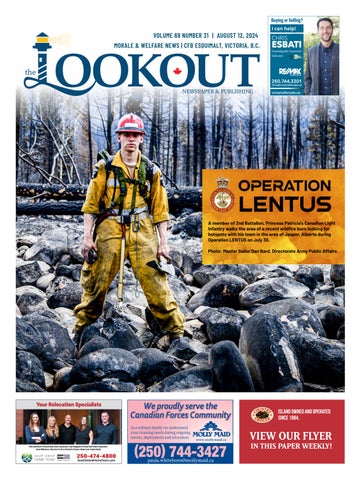
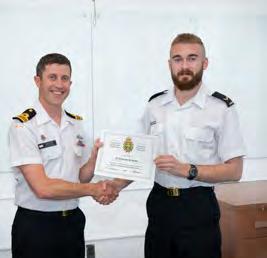
Photo: Master Sailor Dan Bard, Directorate Army Public Affairs.
JUST-4-FUN
4

COST:
Regular: $110
4
COST:
Regular: $110
Kateryna Bandura Lookout Contributor
Reflecting on the diverse tapestry of Canada’s history, one family’s story stands out as a living embodiment of dedication and service to our country.
The Kahler family, with their astonishing 140-plus years of combined service in the Canadian Armed Forces (CAF), offers a unique perspective on how personal commitment intertwines with national heritage. From the Second World War to modern-day operations, their story parallels our nation’s journey, highlighting the enduring values of duty, sacrifice, and patriotism that have shaped Canadian identity.
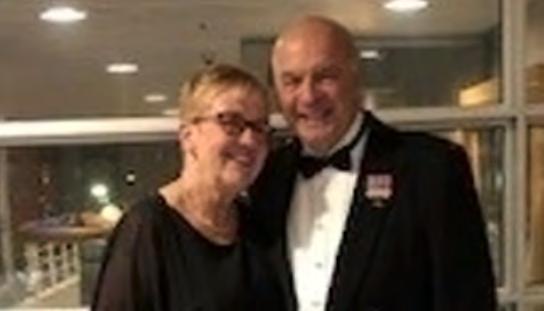
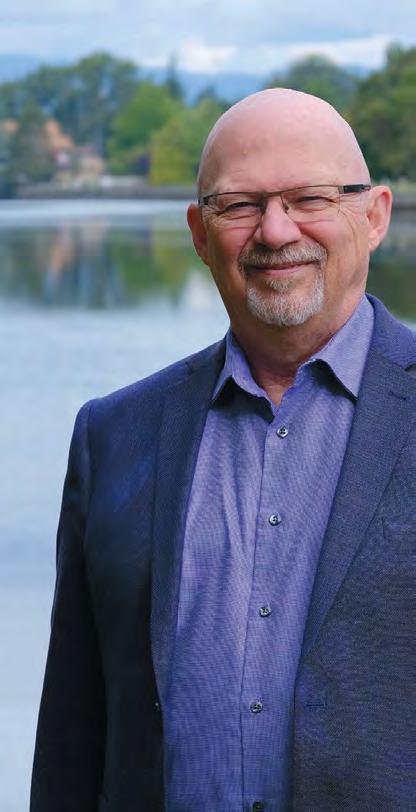
Commander (retired) Eric Kahler, who served from 1972 to 2014, speaks proudly of his family’s contributions.
Reservist at HMCS Tecumseh;
• Hugh Price (father-in-law) served from 1948-1979 and onboard HMCS Sioux during the Korean conflict;
• Allan George (cousin) served in the RCAF from 1963-1974;
• Steve Kahler (brother) served from 1967-1968;
• John Stone (uncle) served in the RCN in the 1960s until 1968;
• Eric Kahler (self) served from 1972-2014 as a Supply Officer in HMCS Saskatchewan, including more than six years onboard ships, more than 5 years in Germany, and four years in Colorado Springs as Commanding Officer of the support unit for NORAD;
“I think ‘commitment’ is a word we firmly believe in,” he says. “By contributing 83 years continuous service from one family and over 140 years combined, I feel we have grown up with Canada and our legacy will always be that we served our country to the best of our ability.”
The family’s service spans generations:
Registration Now Open:
Start 8:00 am
Lunch 1:30 pm
• Bret Kahler (son) served with the RCAF from 2007-2024.
This legacy of service has profoundly shaped the family’s view of Canadian heritage and patriotism.
Meilleure balle par groupe de 4 joueurs à chaque coup (scramble) De nombreux prix !
• Chuck Kahler (uncle) served from 1941-1946;
• Wylie Jenkinson (uncle) served from 1941-1945 and onboard HMCS Haida from 1943;
• Ed George (uncle) served in the RCAF from 1941-1945;
Régulier:
• Larry Kahler (father) served 1946-1977 including as the first Command CWO for NDHQ, then as a
Kahler sees their service as a reflection of Canada’s values. He emphasizes their readiness to defend the country they love if ever called upon.
“We are very fortunate to live in a country where we can live without fear and with pride in our place in the world,” he says. He also notes the changing fabric of Canadian society through immigration, expressing pride in the country’s welcoming nature.
Today, Eric Kahler is a public servant as Director of the Naval Museum of Alberta.
Ordinaire:
Associé: $170
Le tournoi comprend : les droits de jeu, les balles d’entraînement, la voiturette électrique, le déjeuner et une journée de plaisir.
Les inscriptions sont ouvertes :
Jeudi 19 septembre
Début

“It’s
all about challenging yourself and testing your limits. By putting yourself under pres-
sure, you
will eventually surprise yourself and turn a negative into a positive just by giving it your
best shot.”
Mallett Staff Writer
Petty Officer 2nd Class (PO2) Lee Thibault has grown accustomed to grappling with problems great and small, turning them into victories.
When organizers of the recent Can-Am Martial Arts Expo in Vancouver announced a last-minute cancellation, the Small Arms Instructor at Naval Fleet School (Pacific) turned that into a positive that would pay off greatly.
“Sometimes the big and small problems you encoun ter in life have a way of work ing out for the better,” says PO2 Thibault, also coach and convener of the Esquimalt Tritons Grappling Team.
This was one of those cases.
The six-time Canadian Armed Forces (CAF) Combatives and Grappling Heavyweight Champion quickly got approval from from his Chain of Command and became a late entry in the AVA Western Submission Grappling Championship.
Petty Officer 2nd Class Lee Thibault
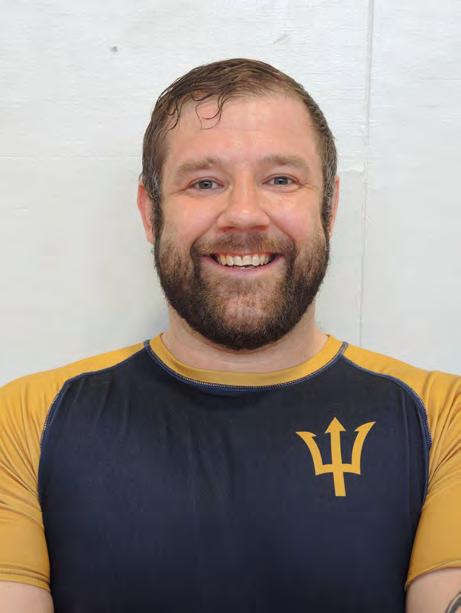
Chalk it up as another chapter in PO2 Thibault’s silver linings playbook.
PO2 Thibault would soon be engaged in one of the best, most meaningful fights of his life. At the AVA Championship, he would face a formidable opponent in Jackson Mann of Vancouver’s Lions MMA. Five years his senior, Mann is a purple Jiu-Jitsu belt who possesses an astonishing ground game as a grappler, says PO2 Thibault.
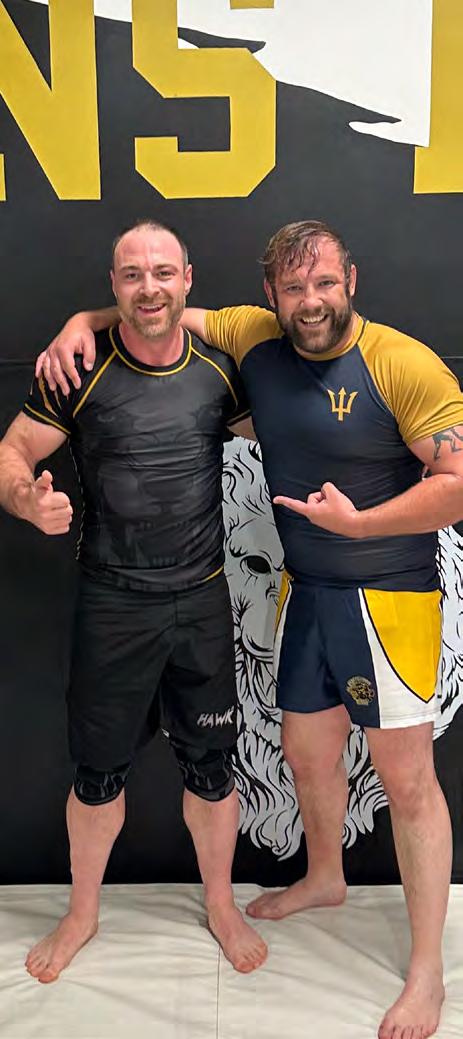
After two closely contested matches, each fighter claimed a victory apiece, forcing a tiebreaker. In the end, Mann prevailed in the rubber match, won gold with PO2 Thibault settling for the tournament’s silver medal. The rivalry and camaraderie between the two men did not end there.
“After the match, we were in awe of each other and our different abilities and were very congratulatory,” said PO2 Thibault.
“We shook hands and I told him he has an unbeatable ground game and he told me that I was a great wrestler.”
Mann then told PO2 Thibault the result would have been different and his wrestling moves would have resulted in victory if the time clock in the tiebreaker hadn’t wound down so quickly.
The two fighters agreed to continue their rivalry the next day at Mann’s home club. What was supposed to be a rematch of the previous day’s fight instead morphed into a grappling clinic. PO2 Thibault demonstrated and sparred against Mann along with other members of the club for over
With both fighters completely exhausted after two days of grappling, they shook hands and agreed to meet again for a rematch someday.
“He said statistically, he may have gotten the tournament but he said he has never felt wrestling moves like mine before,” recalled PO2 Thibault. “We learned so much from each other and have become friends from this experience.”
Last summer, PO2 Thibault was the five-times Heavyweight Champion; he lost a hard-fought decision in ADCC World Championship and got eliminated in first round; but that, he says, made him better – he went to CFB Edmonton and became the six-time heavyweight champion.”
“I told the team as long as you try your best and learn from your mistakes, that is the key to success,” PO2 Thibault says. The Tritons grappling team has approximately 30 members. Members hold practice every Tuesday and Friday at 4 p.m. at the Naden Athletic Centre. The club is always looking for new members.

MANAGING EDITOR
Jazmin Holdway jazmin.holdway@forces.gc.ca
PRODUCTION
Teresa Laird production @lookoutnewspaper.com
Leslie Eaton
250-363-3127
leslie.eaton @lookoutnewspaper.com
ADMINISTRATION AND ACCOUNTS
Andrea Modesto
ADVERTISING
Joshua Buck
250-363-3127
Andrea.Modesto@forces.gc.ca
778-977-5433 military.base.advertising@gmail.com
EDITORIAL ADVISORS
Lt(N) Wilson Ho
250-363-4006
Published every other Monday, under the authority of Capt(N) K. Whiteside, Base Commander.
The editor reserves the right to edit, abridge or reject copy or advertising to adhere to policy as outlined in PSP Policy Manual. Views and opinions expressed are not necessarily those of the Department of National Defence.
Circulation: 4,000 plus online engagement per week
Follow us on Facebook and Instagram to join our growing social media community. A Division of Personnel Support Programs
Web: www.lookoutnewspaper.com
Fax: 250-363-3015
Canadian Mail Product Sales Agreement 40063331
Thomas Goenczi Lookout Contributor
Traumatic events interacting with our psychological state can generate profound psychic wounds like Post-Traumatic Stress Disorder (PTSD), forming a perfect storm for mental anguish. Our past experiences and psychic makeup meet a critical event that will change our lives forever.
While trauma responses share commonalities, individual experiences and processing differ significantly. However, how we got there and how we will process it is unique and distinct to us. This is a reason why our trauma affects us differently.
Trauma often follows a cyclical pattern:
1. Wounded: Individuals lack effective coping mechanisms, experience overwhelming emotions, and have limited insight into the event’s impact. This can lead to psychological stagnation where one finds oneself often repeating the same self-destructive patterns. This can be torturous because there is typically an awareness of this cycle and how it may be derailing one’s life. We sometimes dwell in this wounded state, and we often find
justifications to stay wounded - we stay comfortable.
2. Discovery: Realizing and accepting the traumatic event’s detrimental effect on one’s psyche. It takes time to discover and most importantly accept that we went through something traumatic. We wade through waters of shock and denial, with some of us believing we can manage independently because we have the resources and psychological makeup to do so. Others feel doubt and fear, paralyzed by the trauma.
3. Processing: Unconscious processing begins almost immediately after the event, manifesting as dreams and flashbacks. Conscious processing involves actively seeking help and we can begin to do the work ourselves. Mindful awareness during this stage can bring a sense of purpose and gratitude.
4. Changing: We begin to either become psychologically stronger or weaker. Trauma can be a fire at sea for the ego, however, we must realize our trauma does not have to define us. It can be a catalyst for personal growth, pushing us back onto our life’s path and potentially helping others.
These categories flow into one another and can occur simultaneously. For example, discovery isn’t just about realizing the trauma but also understanding its deep impact and origins.
Trauma is not linear, it develops uniquely in each person. There isn’t a one-sizefits-all trauma treatment, which can be extremely deflating; the wheel of trauma spins. Yet, we also have a chance to grab a hold of that wheel and direct our lives better. By consciously reflecting on and working through our trauma, we can start to regain control and reduce our attachment to it. Though wounded, we are not broken, and our lives can become worth living again.
Thomas Goenczi is an RCN Veteran and MA Clinical Counsellor with Private Practice: Well Then Therapy.
The content is not intended to substitute professional advice, diagnosis, or treatment. Always seek the advice of your mental health professional or other qualified health provider with any questions regarding your condition.




A/SLt Alexandre Khoury MARPAC PA
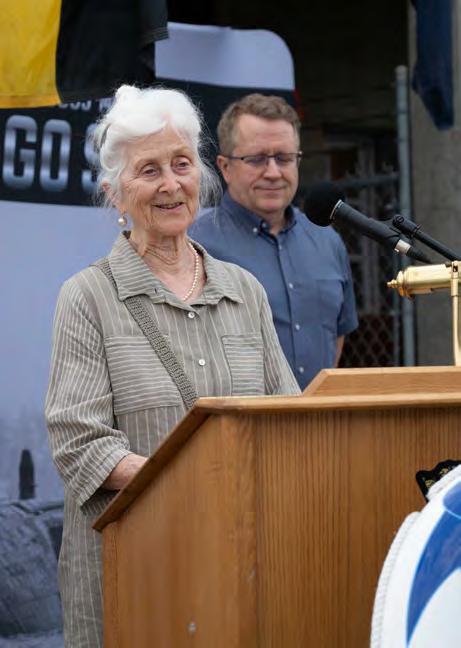
Aug. 5, marked the 110th anniversary of the Canadian Submarine Service. In recognition of the day, Canadian Submarine Force (CANSUBFOR) hosted a building naming ceremony on Aug. 2, in memory of those who have lost their lives performing their duty underneath the sea. Often called the silent service because submarines are generally required to operate undetected in the interest of stealth, submariners are a proud and a distinguished part of Canadian Naval Military History.
Building D85 was renamed after Lieutenant (Lt) William McKinstry Maitland-Dougall, the first Royal Canadian Navy (RCN) officer to volunteer for the new submarine service and one of Cowichan’s most promising sons. He was the first Canadian to command a British submarine and the youngest to earn a command. William attended the Royal Naval College in Halifax. Upon graduations he put in a request to the Dominion Government to transfer to the Royal Navy. Maitland-Dougall would then be tasked to the British Navy for the duration of the first World War.
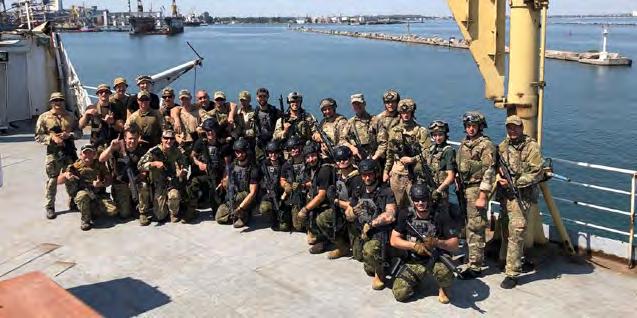
The Naval Tactical Operations Group (NTOG) is soliciting highly motivated, physically fit volunteers for employment within a small teams environment. To keep pace with today’s complex littoral maritime operating environment and evolving threat, NTOG provides the CAF with an agile, high readiness unit capable of:
• Conducting Maritime Interdiction Operations (MIO) in a high-risk environment;
• Advanced force protection duties;
• Providing direct support to Special Operations Task Force (SOFT) led opposed boardings as part of a CAF Joint Expeditionary Opposed Boarding (JEOB) capability;
• Conducting operations in support of Canadas building partner capability strategy.
• NTOG is accepting applications from all CAF MOSID. Previous tactical training and operational experience is not essential. All
applicants must be deployable for overseas operations.
The application process is initiated by submitting a DND 4916 Notice of Intent (NOI) to apply form to respective Career Manager (CM) and the RCN PSO at rcn-psel@forces.gc.ca
Applicants do not need to wait for CM acknowledgement of their NOI before proceeding with other application forms.
Applicants must also conduct the MTO PFE. The test must be within six months of Nov. 17, 2024.
Reserve Force personnel who wish to apply for this opportunity must also update their AVREP and submit an NOI through their Chain of Command to the appropriate CM for action. Completed application packages must be sent to rcn-psel@forces.gc.ca via encrypted e-mail no later than Sept. 13.
On March 7, 1918, Lt. MaitlandDougall, took His Majesty’s D3 Submarine as Commanding Officer to patrol near Le Havre, France. But D3 would never return due to being hit by friendly fire. D3 sunk sometime between March 12 and 15, with Maitland-Dougall and the crew of 29 all being lost in the incident. He was the first, the youngest, and the only Canadian submarine commanding officer to be lost in action.
CANSUBFOR building D85 is one of a large number of facilities constructed at the Esquimalt Naval Base between 1890 and 1903. It is recognized as a Federal Heritage Building because of its historical associations, and its architectural and environmental value. It is one of the primary buildings on the West Coast for serving submariners.
A new commemorative plaque in the memory of Lt. William Mckinstry Maitland-Dougall was unveiled by family members, the Mayor of the Township of Esquimalt Barb Desjardins, Captain(N) Alex Kooiman, Commander of CANSUBFOR and Rear-Admiral (RAdm) Christopher Robinson, Commander Maritime Forces Pacific & Joint Task Force Pacific, during the ceremony.
“This weekend we celebrate the 110th anniversary of Canadian Submariners and their legacy of service to Canada which all started five miles south of Trial Island on Aug. 5, 1914. Today in particular we’re paying tribute to a gallant officer of the silent service, killed in action at a young age,” said RAdm Robinson.
“By naming this building in his memory, we ensure the ultimate sacrifice made by Lt. Maitland-Dougall, as well as all the other submariners who were lost at sea, will never be forgotten. A Vancouver Islander, his talent had already been recognized by the Admiralty and I can’t help but be saddened at the loss of potential represented by his death, two days before his 23rd birthday, and a mere 11 months after his brother Hamish was also killed in action at Vimy Ridge.”

■ eye Health examinations ■ contact Lens specialists, Dry eyes, Allergies, eye injuries
■ Designer eyewear Boutique
■ Aircrew cyclo exams
■ sunglasses: prescription & non-prescription








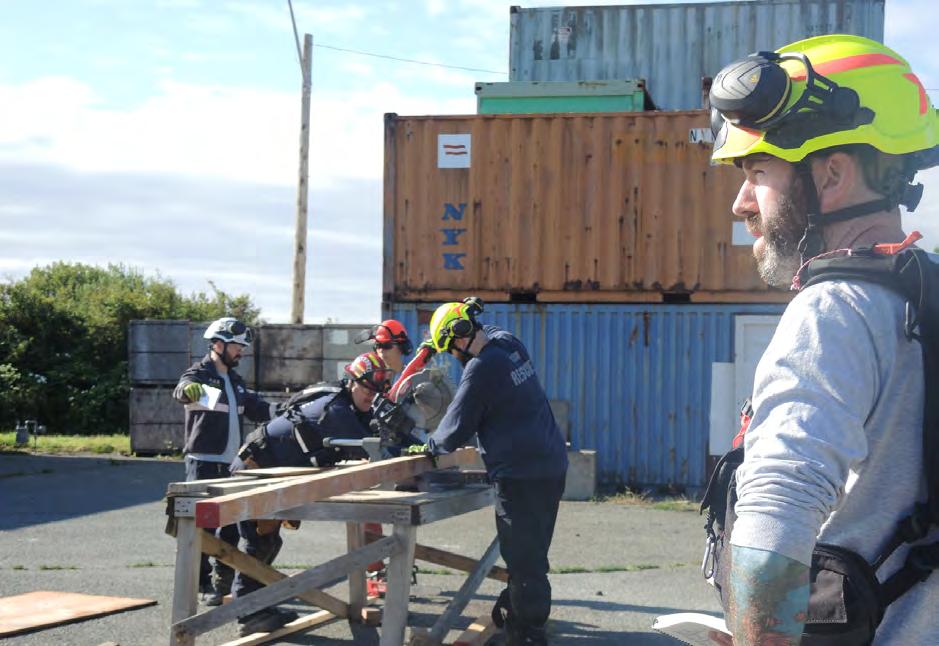
Once a survivor is located, the real work begins. The team is equipped with an arsenal of specialized tools: concrete saws, rotary hammers, hydraulic spreaders, and more.
In a nondescript building at CFB Esquimalt, the rhythmic sound of concrete saws and the clang of metal tools echo through the air.
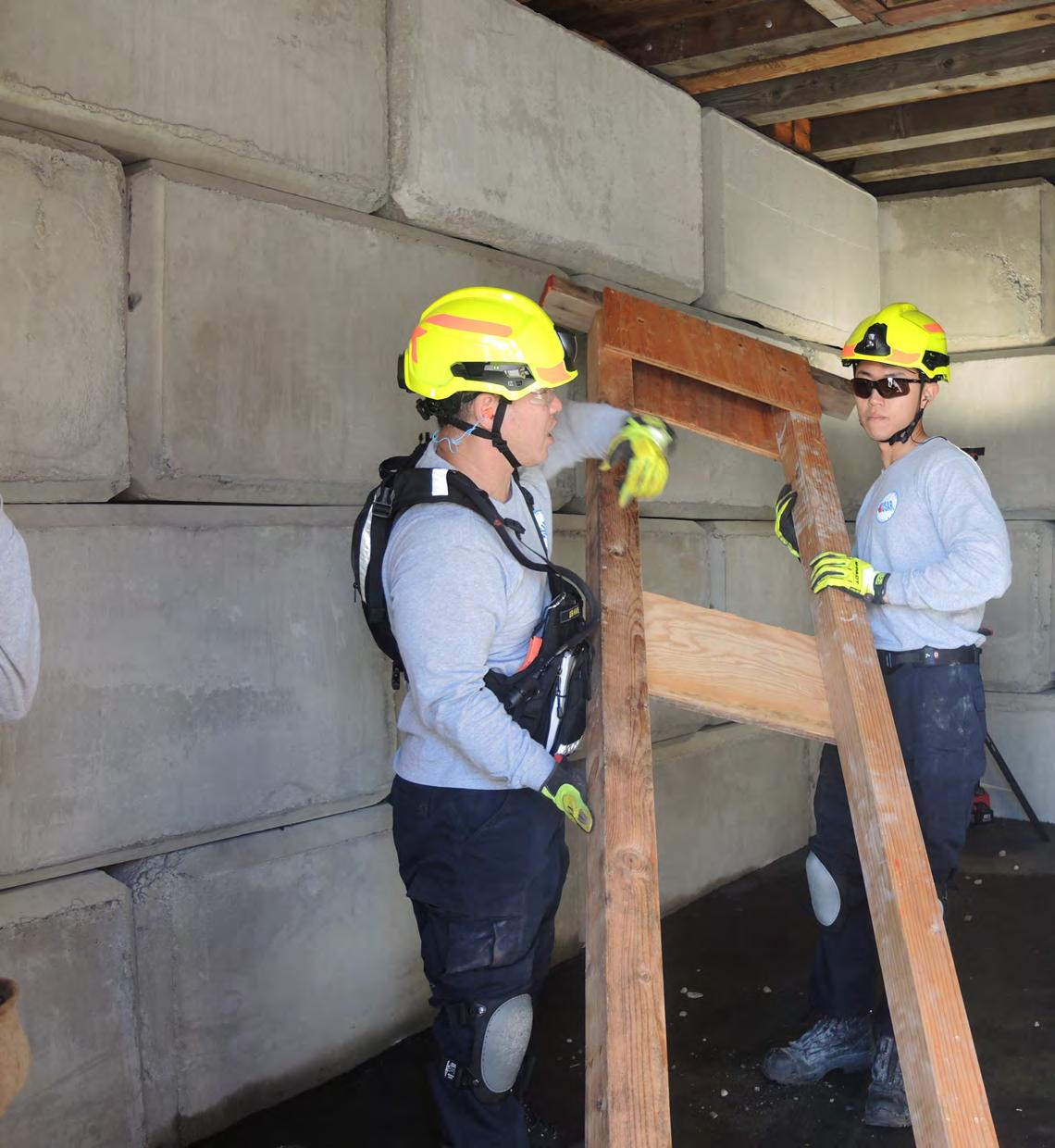
Men and women in yellow helmets carefully maneuver a massive concrete slab using wooden rollers, while nearby, others breach a wall with specialized cutting equipment. Across the room, team members practice intricate patient extraction techniques.
This is not a scene from a disaster movie, but a typical training day for Vancouver Island’s elite Medium Urban Search and Rescue (MUSAR) team.
The MUSAR team stands as a unique blend of military personnel from various trades and ranks. They are the frontline defense against potential disasters on Vancouver Island, ready to spring into action at a moment’s notice when catastrophe strikes.
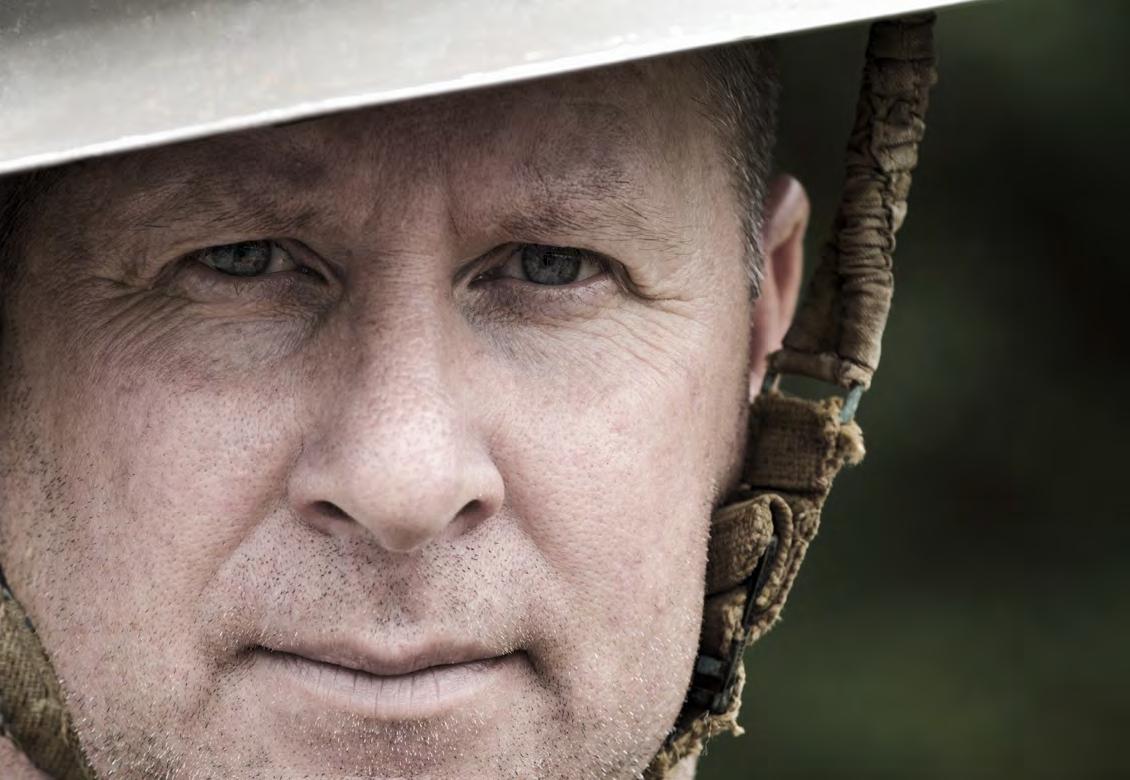
“We live in a disaster zone, whether people admit it or not,” says Petty Officer 2nd Class (PO2) Connor Nijsse. “B.C. doesn’t train for earthquakes the way it probably should, considering our earthquake potential around here.”
PO2 Nijsse, a 12-year veteran, embodies the team’s spirit of dedication. Balancing roles on three different search and rescue teams, including MUSAR, Juan de Fuca Search and Rescue, and the B.C. Alberta Cave Rescue team, PO2 Nijsse jokes, ‘I just don’t sleep’. His extensive experience in rope rescue and disaster response makes him an invaluable asset to the team.
The team’s mission extends far beyond addressing structural collapses and earthquakes. They are a versatile unit, capable of responding to landslides, conducting large-scale surveys, and tackling various disaster scenarios.
“Our main priority is to get the base functioning,” PO2 Nijsse says, underscoring their critical role in maintaining operational continuity.
What sets this team apart is their unique position: they’re the only Urban Search and Rescue team on Vancouver Island.
The team’s capabilities are as diverse as its members. They train in a wide array of skills, from operating sophisticated search equipment to performing complex rescue operations in unstable structures.

“We have a system called DelSAR, which uses probes that are hypersensitive to sound,” says Lieutenant(N) Kyle Knight. “When a building is damaged, we can use these probes to call out for sounds of survivors in the pile. We can then move the probes around, triangulating their position to dial in where they are.”
“If you want to go through a wall, we have chainsaws for wood or concrete. If you need to get through the wall and not cut it out to not hurt someone on the other side, we can do a clean break using chipping hammers,” says PO2 Nijsse.
Safety is paramount in these high-risk scenarios. Team members don steel-toed boots, long pants, long sleeves, hearing protection, and dust masks.
The team’s training regimen is rigorous and constant. They meet at least once a month for full-day sessions, with some members participating in additional week-long courses to gain international certifications in structural collapse rescue.
“Most of our training days are just a single day,” says PO2 Robyn Jutras. “We show up and practice one particular skill. We might do shoring one day, go over some basics in the morning, and then a more complicated training that we haven’t done before in the afternoon.”
This continuous training has paid off in real-world scenarios. Lt(N) Knight recounts the team’s response to a natural gas explosion at CFB Comox in 2022:
“The bottom few floors were actually all destroyed. There was no actual egress on the lower levels. What we ended up doing was going through room by room. We stayed there long enough to reinforce the old building. Although we didn’t find anyone alive, we were then able to recover all the members’ personal belongings out of their rooms. If our team did not recover their items, they would have been lost as no one else would have been able to return to the unstable building.”
One of the unique aspects of the MUSAR teams is their egalitarian culture. Ranks and trades are left at the door, fostering an environment where every team member is equal and valued for their contributions.
“It’s nice to have that kind of distinction,” says PO2 Nijsse. “If this team was 100 per cent military, there’s a good chance it would be based on rank. Here, it doesn’t really matter. Some people don’t even know most people’s ranks.”
The team members find their work deeply fulfilling, despite - or perhaps because of - its challenging nature.
As they continue to train and prepare, the MUSAR team hopes their skills won’t be needed in a real disaster. But should the worst happen, they stand ready to respond, providing a critical lifeline for CFB Esquimalt and the surrounding community.
“We live in a disaster zone, whether people admit it or not. B.C. doesn’t train for earthquakes the way it probably should, considering our earthquake potential around here.”
Petty Officer 2nd Class Connor Nijsse










supplied

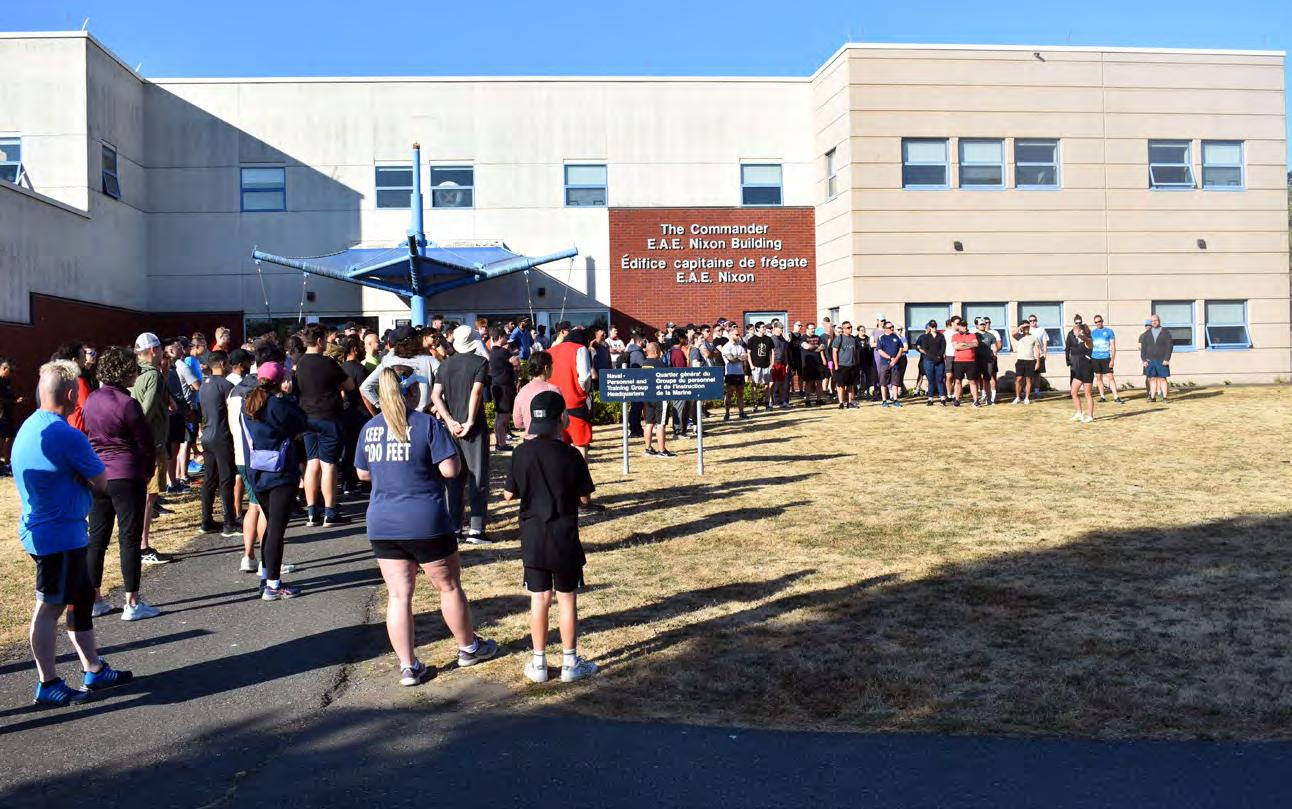
On July 19, HMCS Venture held its inaugural Resilience Run, as part of a new unitwide fitness initiative.
“The enthusiasm for the run was fantastic, highlighting the strong commitment to fitness among many people at Work Point,” said Sub-Lieutenant (SLt) Aisling Wydysh, Venture Sports Officer and event organizer.
The event was widely attended with over 120 students, staff and other members of the Venture and Naval Training Group teams participating in the 5km walk/run.
“I am inspired by this level of participation and I am eager to maintain and build on this momentum. My goal is to make the Resilience Run a monthly event so we can continue to train together, fostering a sense of mutual support in our fitness journeys,” she said.
The intent is for the Venture team to participate in unit-wide PT once a month.



Dr. Darrell Menard OMM MD, Dip Sport Med Defence Stories
One of our soldiers recently did an extremely intense workout and was hospitalized with rhabdomyolysis. Could you explain what rhabdomyolysis is and if it can be prevented? - Dedicated D Dear Dedicated D:
Rhabdomyolysis (commonly called rhabdo) is a potentially life-threatening condition that can occur when muscle is damaged by factors like burns, electrocution, crush injuries, severe dehydration, medications, and substance use. Also, exercising too intensely for too long can cause exertional rhabdomyolysis. In rhabdomyolysis, damaged muscle cells release their contents into the blood where they cause serious problems such as:
• Kidney damage and kidney failure when muscle contents clog the kidney’s filter system and have a toxic effect on kidney tissue;
• Heart arrhythmias – triggered by electrolyte imbalances;
• Seizures;
• Blood clotting throughout the body; and
• Compartment Syndrome – swelling causing reduced circulation to muscle tissue.
The risk of developing exertional rhabdomyolysis is greatest for people who suddenly and significantly increase their activity levels.
Exertional rhabdomyolysis is more common in military, police, and firefighting personnel who are often required to do heavily demanding physical work. Other risk factors include:
• Hot/humid weather;
• Previous history of a heat-related injury;
• Dehydration;
• Excessive alcohol use;
• Stimulant use;
• Certain medications such as statins;
• Infections;
• Diseases such as diabetes.
Exertional rhabdomyolysis symptoms range from mild to severe and don’t always occur immediately after the damage is done. They could include:
• Excessive muscle pain;
• Weakness;
• Dark coloured urine;
• Significant fatigue;
• Nausea and vomiting;
• Fever;

• Increased heart rate.
After an intense workout, if you develop some of the above symptoms, especially the first three, you should seek immediate medical attention. If you have exertional rhabdomyolysis, the sooner you get care, the better your chances of recovery.
The best way to deal with exertional rhabdomyolysis is to prevent it. The following advice can reduce your risk of experiencing this problem:
• Avoid sudden large increases in your fitness program;
• Be acclimatized before doing intense exercise in hot/humid weather;
• Stay hydrated when you exercise;
• Don’t exercise intensely if you are sick;
• Avoid using stimulants such as energy drinks prior to exercising.
Dr. Menard is the Surgeon General’s specialist advisor in sports medicine.
Strengthening the Forces is the CAF/DND’s health promotion program providing expert information, guidance, training, tools, and leadership support to improve CAF members’ health and well-being.
While rare, CAF personnel can experience exertional rhabdomyolysis which can have serious health and career consequences. Be aware of the symptoms and seek immediate medical care should you develop them. Exercise is medicine but too much of a good thing can be dangerous.
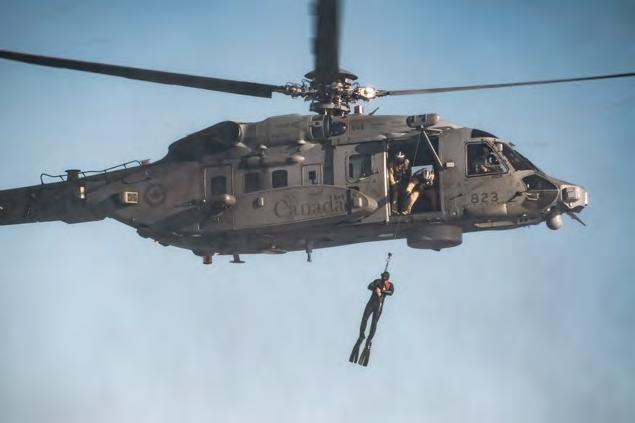
On Aug. 18, 443 Maritime Helicopter Squadron (MHS) joins the global celebration of World Helicopter Day. This global celebration highlights the vital role helicopters play in our society, and nowhere is this more evident than in the critical missions undertaken by 443 MHS.
The squadron, which traces its roots back to the Second World War, has evolved into a crucial component of Canada’s maritime defence strategy. Operating the advanced CH-148 Cyclone helicopters, 443 MHS provides essential support to the Royal Canadian Navy’s Pacific Fleet.
While 443 MHS is part of 12 Wing Shearwater, its home base is in North Saanich. It provides three helicopter air detachments known as HELAIRDETs in support of the Pacific Fleet here in Esquimalt.


443 MHS works with the RCN supporting government efforts to combat drug, fisheries, and environmental violations in Canadian waters. Internationally, it supports operations in surface and sub-surface surveillance as well as peacekeeping and humanitarian operations.
As they mark World Helicopter Day, the men and women of 443 MHS continue to embody their motto – ‘Our Sting Is Death’ – a reminder of their lethal effectiveness in combat and their unwavering dedication to protecting Canadian interests at home and abroad.

The Lookout wishes 443 MHS a happy World Helicopter Day and thanks them for their service.
The squadron provides service to the RCN and frequently embarks HELAIRDETS in the Halifax-class frigates HMCS Calgary, Ottawa, Regina, Vancouver, and Winnipeg and other vessels.

WALK JOG RUN
WALK JOG RUN WALK JOG RUN WALK JOG RUN WALK JOG RUN
WALK JOG RUN WALK JOG RUN WALK JOG RUN WALK JOG RUN
WALK JOG RUN WALK JOG RUN WALK JOG RUN WALK JOG RUN
WALK JOG RUN WALK JOG RUN WALK JOG RUN WALK JOG RUN
WALK JOG RUN WALK JOG RUN WALK JOG RUN WALK JOG RUN
WALK JOG RUN WALK JOG RUN WALK JOG RUN WALK JOG RUN
Jessie
Wyllie Health Promotion Specialist, PSP
WALK JOG RUN WALK JOG RUN WALK JOG RUN WALK JOG RUN
WALK JOG RUN WALK JOG RUN WALK JOG RUN WALK JOG RUN
WALK JOG RUN WALK JOG RUN WALK JOG RUN WALK JOG RUN
July’s Formation 5K Results: 213 participants
WALK JOG RUN WALK JOG RUN WALK JOG RUN WALK JOG RUN
1st ...... 17:43 .... Lt(N) Adrian Thow .......................... HMCS Ottawa
WALK JOG RUN WALK JOG RUN WALK JOG RUN WALK JOG RUN
2nd 18:52 PO2 Dan Richard NFSP
3rd 19:05 SLt Simon Gonsalves MARPAC HQ 4th ..... 19:06 ... S1 Amanda Polus ............................................ PCC
WALK JOG RUN WALK JOG RUN WALK JOG RUN WALK JOG RUN
The Family Violence Advisory Team (FVAT) is a Canadian Armed Forces (CAF) initiative that serves in an advisory capacity on matters related to family violence. The FVAT also provides a front-end role in education, prevention and awareness of family violence while planning and promoting programs, campaigns and services that work to recognize the diverse needs of military families. The team is comprised of CAF community members who work closely with members and their families. The CFB Esquimalt team includes Social Workers from the Base Hospital, Transition Centre and MFRC, Mental Health practitioners from the Base Hospital, Health Promotion Specialists, Military Police Officers, Chaplains, and local civilian community workers. The team is also fortunate to have the direct support of the Base Commander.
WALK JOG RUN WALK JOG RUN WALK JOG RUN WALK JOG RUN
5th 19:10 PO1 Trevor Scoville PCC
6th ..... 19:12 .... S3 Felix Zheng ................................................ PCC
WALK JOG RUN WALK JOG RUN WALK JOG RUN WALK JOG RUN
Team members provide educational briefs as part of violence prevention and some also work directly with those who have or are experiencing violence. Although not a crisis response team, the FVAT is able to provide general guidance and support in potential or identified situations of family violence and maintain relevant and updated community-based information and resources.
7th 20:03 SLt Marc-Antoine Trudel HMCS Calgary 8th ..... 20:40 .. S3 Steven Bran............................................... PCC
WALK JOG RUN WALK JOG RUN WALK JOG RUN WALK JOG RUN
If you have any questions, are seeking support, or are interested in scheduling a Healthy Relationship brief, please contact:P-ESQ.FVAT@intern.mil.ca
Additional resources:
WALK JOG RUN WALK JOG RUN WALK JOG RUN WALK JOG RUN
9th 20:41 S1 Christian Thompson MPU
10th 20:46 MWO Christopher Macintyre SVCS
WALK JOG RUN WALK JOG RUN WALK JOG RUN WALK JOG RUN
• Healthy Relationship Campaign: https://cfmws.ca/support-services/health-wellness/healthyrelationships
See you Friday, August 30 for the next Formation 5K
WALK JOG RUN WALK JOG RUN WALK JOG RUN WALK JOG RUN
• Family Information Line 1-800-866-4546 / 00-800-771-17722 (International) FIL-LIF@cfmws.com
• Chaplains/Padres: 250-363-4106 (Business Hours) / 250-363-4032 (24 hours)
• MFRC: 250-363-2640 (Local) / 1-800-353-3329 (Toll-free)
• CAF Health Ser vices: 250-363-4122 / https://collaboration-cmp-cpm.forces.mil.ca/sites/SG_HSG/MU/PHS/web/SitePages/Home.aspx
• Canadian Forces Member Assistance Program (CFMAP) 1-800-268-7708
• Employee Assistance Program (EAP) 1-800-663-1142
• CAFKIDS Crisis Text Ser vice: 686868
• SISIP Financial: 250-363-3301

PRIVATE 1250+ SQ FT SUITE ON ACREAGE $2,380/month. Available the first week of September. Private entry, bright sunny southern exposure with sound proof ceiling, semifurnished or unfurnished; with wood-burning air-tight fireplace (firewood included), heated bathroom floor, insuite washer and dryer, wifi and parking spot close to entry. Located on a quiet, private 2 acre property on the Saanich peninsula with greenspace in abundance accented by penned free-range chickens. Contact luisdawn@ proton.me 08/12
SUITE IN LANGFORD $1,800/month. Near View Royal, bright, modern, clean, private, and quiet 1 bedroom suite with patio, appliances. Incl. dishwasher, microwave, washer & dryer. Quiet neighbourhood. Beautiful view. Easy access to bike paths. Parking available. 1 yr lease, then month to month. No smoking/vaping, pets, or subletting. Renter’s insurance with proof of coverage, references and proof of employment mandatory. Utilities and wi-fi included. Contact Max by text 613-449-2836 08/12
SHORT STAY 30-90 day accommodation in quiet family home. Fully furnished renovated 1 bedroom basement suite ideal for relocating or military employee on temporary assignment. No smoking, no pets, parking for 1 car, laundry. Located in Colwood. $2,000 per month, all inclusive. Available now. Call Shelly direct 250-213-7444. 08 / 12
COOK ST VILLAGE 2 bedroom suite with hardwood floors. Quiet, very clean, well maintained apartment building. Heat, hot water and parking included. No pets. No smoking. One year lease. $2,400
ESQUIMALT HOUSE WITH IN-LAW SUITE 5 bed, 2 bath on Wollaston St. South facing deck & back yard. $965,000 Call Vicky 250-380-7323. 06/03







Addiction, Mental Health & Trauma

Help is at hand: Powell River-based Sunshine Coast Health Centre and Georgia Strait Women’s Clinic— Canada’s only trauma program exclusively serving women—provide highly personalized addiction, mental health and trauma treatment for male and female clients respectively. We’ll pick you up from the ferry for our daily inpatient treatment tailored to your unique needs.
Services include 24 hour-medical service, psychiatric assessment, EMDR, rTMS, psychotherapy, a dedicated group for military clients and much more.

Serving the Department of National Defence and Veterans A airs Canada since 2009.