Esquimalt Military Family Resource Centre (MFRC), Family Wellness and Counselling Team
Family Wellness and Counselling Team: 778-533-7736
MFRC: 250-363-2640
Chaplains
Office: 250-363-4106
24hr duty: 250-363-4032
Employee Assistance Program (EAP)
24 hour line: 1-800-663-1142
Member Assistance Program (MAP)
24 hour phone line: 1-800-268-7708
CF Mental Health Services
To access, the member must contact local CAF Medical Clinic Reception at 250-363-4122
Personnel Support Programs (PSP)
Health Promotion: 250-363-5621
Fitness & Sports: 250-363-5677
Recreation: 250-363-1009
Integrated Complaint and Conflict Management Services (ICCM)
Local contact 250-418-0885
CCMSEEsquimalt@forces.gc.ca
The Canadian Armed Forces Transition Group (CAF TG)
250-363-4477
Sexual Misconduct Response Centre (SMRC) 24hr: 1-844-750-1648
DND.SMRCCIIS.MDN@forces.gc.ca
Mental Health Awareness Week May 6–12
#CompassionConnects
A Cal to be Kind
This year’s Mental Health Awareness Week is centered on the healing power of compassion. From May 6 to 12, join the Mental & Social Wellness Working Group of the MARPAC Health & Wellness Strategy to explore how compassion connects us all.
#CompassionConnects
A Call to be Kind is the theme for this year and focuses on extending compassion not just to others, but to yourself. Self-compassion means approaching ourselves with the same kindness we extend to others and recognizing our pain to give ourselves comfort and care. Cultivating self-compassion not only fosters more positive mental health but supports the development of stronger connections with others.
Here are 5 ways you can practice self-compassion:
• Pay attention to your inner voice;
• Replace unhelpful thoughts, such as “I shouldn’t feel this way” or “I’ll never fit in” with more helpful ones, like “anyone would feel disappointed in these circumstances” or “I accept my whole self”;
• Try specific self-compassion exercises such as writing a letter to yourself or engaging in a loving-kindness meditation;
• Prioritize self-care with activities like going for a walk, journaling, calling a friend, or treating yourself to your favourite dinner;
• Cultivate a mindfulness practice.
Contribute to the growing Gratitude Trees
Check out one of the three Gratitude Trees posted up! You can find them at the Naden Gym, FMF, and Venture Galley. Take a moment to reflect on something that you are grateful for, write it on a sticky note and post it on the tree. You’ll see posts from other members of the Defence Team and can read what they’re grateful for.
Participate in Yoga in the Park Tuesday, May 7 @ 1200-1300 on the Admiral’s Lawn Led by PSP Fitness Instructors! Bring a mat, water bottle, hat, and sunscreen.
Drop into the EAP Information Session
Thursday, May 9 @ 1100-1200 N92 MSE Theatre
No registration required! Come learn more about the tools and services available to support your well-being. The Employee Assistance Program (EAP) is designed to support DND employees and family members with a wide range of personal, family, and work-related concerns.
Visit the Wellness Benches
Take a stroll to visit one of the five wellness benches located around CFB Esquimalt.
Check out the CMHA Website https://cmha.ca/mental-health-week
You’ll find resources on Mental Health Week, including the Toolkit complete with information on compassion, creating a compassionate workplace, selfcompassion, the mental health impacts of compassion.
Follow us on Instagram @pspesquimalt_ hp for more updates during Mental Health Awareness Week!
CFB Esquimalt Mental Health Awareness Week
Testimonials from Defence Team members
Steve Faust, EAP Peer Advisor, Marine Electrician, FMF CB:
“Compassion is being able to relate to someone else’s situation and wanting to help them. Incorporating compassion into your daily life can be as simple as holding the door open for someone behind you or picking up something that someone else dropped. It could be actively listening to a friend or colleague and asking curious questions about what they are saying. I try to remind myself to respect other’s opinions and experiences, knowing they can be different than my own.”
CPO1 Andre Aubry:
“My relationship between compassion and mental health has been quite a journey of self-discovery. My world was rocked by a traumatic experience on a ship over a decade ago. Who I thought I was, no longer was. My self-esteem and worth took a dive into an abyss within myself. Self-compassion was the last thing I had.
When we look within, take responsibility over our lives, and surround ourselves with good healthy people, our overflow of kindness and compassion towards others is healthy, genuine, and heartfelt because that is a byproduct of how we treat ourselves. I had to dig into multiple parts of my life equally - my mental health, nutrition, sleep, physical movements, and exercise disciplines. I had to “do the work” with lifestyle changes and maintain them. The reward of this kindness and compassion towards myself, I would say is worth every moment to fight for.
I have come to be grateful for my trauma as it has brought me into an amazing ongoing journey of self-discovery. I now have a different lens and can explore what it means to genuinely love myself (not easy at times). A part of this self-discovery was unlocking a whole lot of kindness and compassion towards myself. Hopefully, this kindness and compassion is contagious - I say it’s worth it.”
Students become sailors-for-a-day
Peter Mallett Staff Writer
Learning from textbooks in a university classroom is one thing, but getting a briefing straight from the source is definitely another – and one University of Calgary student can attest to that.
Claire Dickson hopes to land a career in global affairs, defence or security sectors. She is currently writing her thesis on how advanced technology and mass surveillance impact the perpetration and prevention of genocide in the 21st century, with a focus on the alleged genocide of Uyghurs and other Ethnic Turks in China’s Xinjiang region.
But instead of hitting the library shelves back home, she was fortunate to attend a briefing about China’s activity in the South China Sea by Brett Witthoeft, a Senior Analyst at Maritime Forces Pacific N39 International Engagement Office.
“Brett’s briefing was fascinating since my research ties to what is being moved through that region, including goods produced that will pass through the South China Sea,” she said. “This provided a better understanding of how China is impacting the Indo-Pacific [region] as a whole.”
The briefing was part of the Canadian Students at Sea program, a new interactive course of study with the Royal Canadian Navy (RCN). Founded in 2020, the program allows Canadian secondary and post-secondary students to understand the RCN through an immersive, hands-on experience at sea and ashore.
Dickson was among the 15 students from the University of Calgary, Centre for Military and Strategic Studies (CMSS),
joined by 16 students from the University of Alberta‘s Engineering Department who relished their visit to CFB Esquimalt on Apr. 15-16.
Their at-sea part included a sail aboard HMCS Yellowknife and HMCS Edmonton. Lieutenant (Navy) Rodney Newcombe, HMCS Yellowknife Combat Systems Engineering Officer, said the students were genuinely interested in the Navy and had a lot of good questions.
“Our sail aboard Yellowknife provided the students a great opportunity to interact with the majority of the ship’s company on a level that can’t be achieved on shore,” said Lt(N) Newcombe.
The students received a guided tour of the vessels and met many trades of each department onboard, including Maritime Technicians, Naval Warfare Officers, Cooks, Boatswains, Naval Communicators and Naval Combat Information Operators (NCIOP). The ship’s company conducted maneuvering demonstrations, a person overboard exercise, damage control and firefighting.
Alongside components of the visit included tours of the Fleet Diving Unit (Pacific), Naval Personnel Training Group’s Collier Building and Bridge Simulator, Fleet Maintenance Facility Cape Breton, Albert Head’s Naval Electronic Systems Test Range (Pacific), CFB Esquimalt Naval and Military Museum.
Dickson says the visit went above and beyond her expectations.
“I was pleasantly surprised with how much of the Base we could see; having the opportunity to be surrounded by complex instruments, cyberwarfare capabilities and hearing how they are operationalized was highly interesting,” she said.
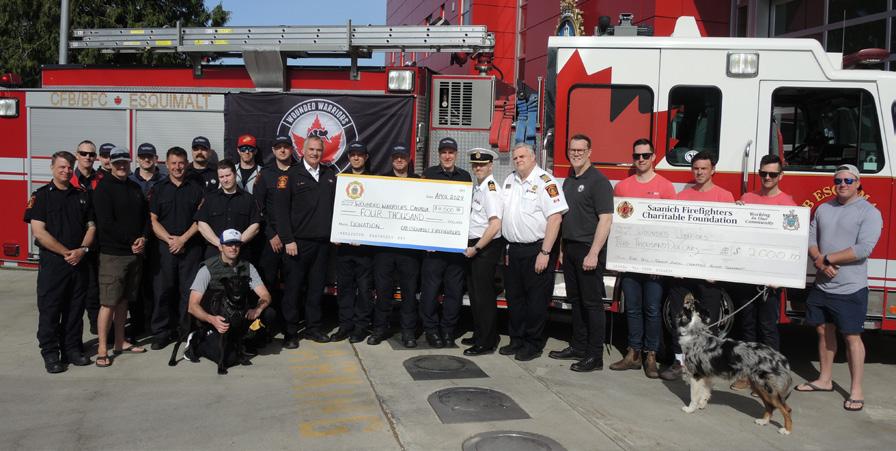
Members of CFB Esquimalt Fire Rescue and the Saanich Fire Department gather with Commander Sebastien Fleury, Commanding Officer of Base Logistics, to present cheques of $4,000 and $2,000 to Doctor Tim Black, Clinical Director of Wounded Warriors Canada. Both departments raised the monies by finishing first and second, respectively, at the Ken Gill and Forrest Owens memorial hockey tournament, Apr. 5 at Archie Browning Arena.
The 4-on-4 style tournament brought together nine local fire departments to increase awareness of mental health and cancer incidences affecting members of the fire service community. Each fire department paid $1,000 to participate in the tournament.
Photo: Peter Mallett/Lookout Newspaper
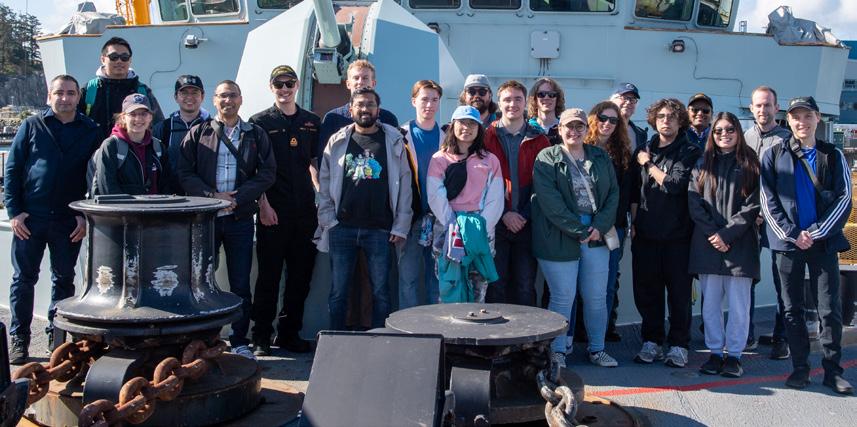
Bottom: Canadian Students at Sea (CSaS) take a tour onboard HMCS Ottawa, and pose for a group photo on the foc’sle.
Photo: Sailor 1st Class Brendan McLoughlin
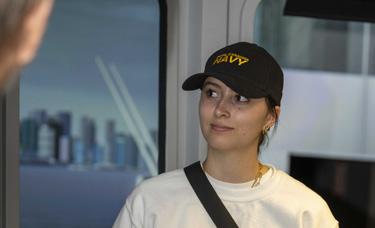
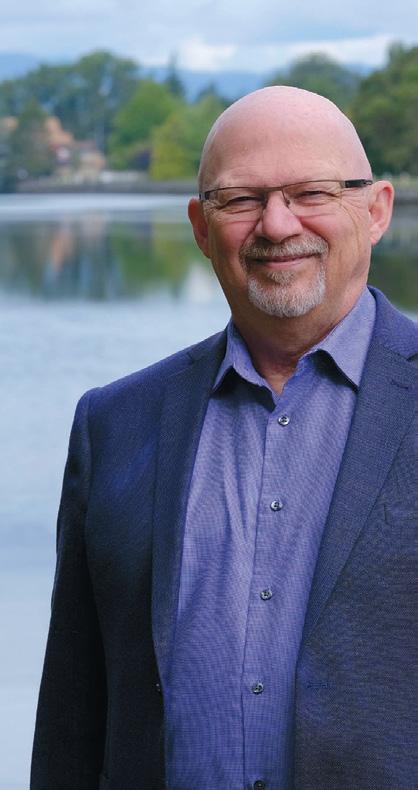
Top: Claire Dickson, University of Calgary student, visited CFB Esquimalt as part of the Canadian Students at Sea program. Photo: Corporal Tristan Walach, MARPAC Imaging
MANAGING EDITOR
Jazmin Holdway jazmin.holdway@forces.gc.ca
EDITOR
Kate Bandura
WRITER
250-363-3130 kateryna.bandura@forces.gc.ca
Peter Mallett mallett.peter@cfmws.com
PRODUCTION
Teresa Laird production @lookoutnewspaper.com
Leslie Eaton
ACCOUNTS
Jazmin Holdway
ADVERTISING
Joshua Buck
250-363-3127 leslie.eaton @lookoutnewspaper.com
250-363-3127 jazmin.holdway@forces.gc.ca
778-977-5433 military.base.advertising@gmail.com
EDITORIAL ADVISORS
Capt Christopher Dubé
Ashley Evans
250-363-4006
250-363-7060
Published each Monday, under the authority of Capt(N) K. Whiteside, Base Commander.
The editor reserves the right to edit, abridge or reject copy or advertising to adhere to policy as outlined in PSP Policy Manual. Views and opinions expressed are not necessarily those of the Department of National Defence.
Le LOOKOUT est publié tous les lundis, sous l’égide du Capv K. Whiteside, Commandant de la Base.
Le Rédacteur se réserve le droit de modifier,de condenser ou de rejeter les articles, photographies, ou annonces publicitaires pour adhérer au Manuel des politiques des PSP. Les opinions et annonces exprimées dans le journal ne réflètent pas nécéssairement le point de vue du MDN.
Circulation: 2,000 plus online engagement per week Follow us on Facebook, Twitter and Instagram to join our growing social media community.
A Division of Personnel Support Programs
CFB Esquimalt, PO Box 17000 Stn. Forces Victoria, BC V9A 7N2 Web: www.lookoutnewspaper.com Fax: 250-363-3015 Canadian Mail Product Sales Agreement 40063331
Recognizing your dissociative trauma
Thomas Goenczi
Lookout contributor
When we habitually dissociate amid a traumatic flashback, we create a grim relationship with our reality. Dissociation through trauma is physically, mentally, and emotionally overwhelming and prevents us from fully engaging in our psychological wounds. This vacates us from the present moment into a vacuous void.
Of course, this isn’t necessarily a conscious decision—very rarely is this the case. Instead, it is an unconscious survival technique that we default to. Our conscious awareness slips into the cracks of our unconscious mind until the cold emptiness, free of the pain of consciousness, fully envelops us.
It’s essential to distinguish between dissociation and detachment. They both attempt to reach the same goal—moving away from insufferable feelings and thoughts about current circumstances. However, detachment is a concerted and conscious effort to give up worry and desire to witness life as it is and accept it as such. On the other hand, dissociation is usually an unconscious coping mechanism where we disconnect from our thoughts, feelings, memories, and identity to escape into a void.
It is unquestionable that to process trauma fully, we have to free ourselves
from the psychic overstimulation and pain. Dissociation paves the way for the characteristics of nonattachment; the unconscious mind usually provides solutions when we reflect on it deeply enough. The goal is then to identify when we are in a dissociative episode so we can pull ourselves back into reality to confront the trauma. When we don’t confront our pervading trauma, we live a life sequestered by fear and denial. How do we begin to pull ourselves out of a dissociative episode?
First, we identify that we are dissociating. It is almost impossible to overcome anything without knowing what we’re against and how we got there. Nevertheless, this won’t always be amid a dissociative episode, and in the early stages, it will need to be a self-reflective practice. Self-reflection is, without question, required to eventually become familiar enough with what dissociation looks like for us.
Some common forms of dissociation include the following:
PHYSICAL
Blank stare:
Our visual focus slips into an inability to connect with the world around us. There is often a cold nothingness in the gaze.
Hollow body sensation:
There is a certain empty feeling in the body; it almost feels like we’re not in our body. There is a lack of physical awareness
of the environment around us.
Unconscious self-soothing
This may be anything, from grabbing our phone to mindlessly scroll to biting your fingernails. We use our external to bring us out of our dissociation, but since there is no consciousness, it merely concretizes the dissociation.
EMOTIONAL & MENTAL Disconnection
It feels like a lack of anything because there is nothing. We feel as though nothing is anchoring to the scaffolding of our personality that has been embedded and nurtured into usw. We are merely disconnected from the source of thought and emotion.
We all want to achieve some sense of non-attachment to our trauma, a life where we aren’t persuaded by our fears and desires, just to release and let them go. The answer to solve our dissociation is knowing it and how to confront it; then it will no longer have the pull it once had one us.
Thomas Goenczi is an RCN Veteran and MA Clinical Counsellor with Private Practice: Well Then Therapy.
The content is not intended to substitute professional advice, diagnosis, or treatment. Always seek the advice of your mental health professional or other qualified health provider with any questions regarding your condition.
Veterans and Families have long identified suicide prevention as a priority and emphasized the need for additional support for mental health and well-being.
In recognition of this, the Atlas Institute for Veterans and Families has developed a suite of suicide prevention resources in collaboration with veterans and family members and in partnership with the Centre for Suicide Prevention.
“Statistics confirm the veteran population is at a higher risk for mental health concerns than Canadian general population,” said Fardous Hosseiny, President and CEO of the Atlas Institute, “with reported rates among veterans of 26 per cent for depression, 24 per cent for posttraumatic stress disorder (PTSD) and 21 per cent for anxiety. These facts support upstream strategies focused on increasing protective factors.”
Hosseiny also added that tackling this issue must include equipping veterans and families equally with practical strategies and tools to understand and support their mental health.
The resources released on March 14 were co-created with an advisory committee of people with lived and living experiences from the veteran and family community, including Atlas Institute Lived Experience team members.
Laryssa Lamrock, National Strategic Advisor for Veteran Families at the Atlas Institute, who was involved in the resource
development, explained that while Canadian Armed Forces and Royal Canadian Mounted Police Veterans are at higher risk of mental health concerns as a result of their service, their loved ones can also be significantly impacted when the veteran is living with suicidal thoughts and behaviours. She noted that it is critical to acknowledge that veteran family members’ mental health is essential to consider in its own right, and they may have their challenges to be addressed.
“Our goal was to develop the new tools to support both veterans and their family members, so they can find answers based on the experiences of people like them for the questions they may have about mental health and suicide, be that immediate access to resources such as direct supports, tips and strategies for loved ones or for themselves outside of the needs of their loved ones. These resources aim to acknowledge and support people’s needs at different points,” Lamrock said.
Hosseiny notes that for veterans and family members dealing with suicidal thoughts and behaviours in themselves and their loved ones, it can be overwhelming and challenging to know where to turn.
“While there is work to be done, these resources are an important part of a muchneeded multilayered approach to suicide prevention which can continue to grow,” he said. “Our hope is to help veterans and their families know they are not alone and that this is a tool they can add to their toolkit to support both their own mental health and that of the person they’re caring for.”
It’s ‘Victory Oar Duff’ in race to Alaska
vic·to·ry /ˈvikt(ə)rē/ | noun an act of defeating an enemy or opponent in a battle, game, or other competition. oar /ôr/ | noun a pole with a flat blade, pivoting in an oar lock, used to row or steer a boat through the water. duff /dəf/ adjective, informal 1. Dessert 2. Indicates that something is not working.
Peter Mallett Staff Writer
A team of Royal Canadian Navy (RCN) sailors will soon embark on a perilous race to Alaska in a small, adapted, open-hulled boat with no motor.
The 750 nautical mile Race to Alaska (R2AK) from Port Townsend, Wash., to Ketchikan, Alaska, commences on June 9 and should take 18 to 21 days. The challenge is daunting, but the six members of team ‘Victory Oar Duff’ of Naval Fleet School (Pacific) (NFS(P)) say they are up for it.
“It’s so epic and crazy and such a great idea, why wouldn’t someone want to be involved in this?” said Sailor 1st Class (S1) Maxime Vandal, a Maritime Technician of NFS(P). “I have been in the routine of going to class every day, but this race is a completely different ball game and a chance for adventure and fun.”
Lieutenant (Navy) Ellery Down of Naval Fleet School (Pacific), the team captain, says approximately one-third of the teams entering the infamous race along the Inside Passage to Alaska never finish.
“The Pacific Coast will throw everything at us in terms of winds, waves, rain, fog and currents of up to 15 knots, debris like logs or even dead calm,” he said. “Race organizers like to embellish the challenge a little bit and describe the race as the Iditarod [sled dog race] of the sea, with chance of drowning, being run down by a freighter or being eaten by a grizzly bear.”
Visit www. broadmeadcare. com/veteranslegacy to make your donation today.
Victory Oar Duff will journey in a 28-foot fiberglass Montagu Whaler, which belonged to Naval Reserve Unit HMCS Quadra and was recently donated to NFS(P). Lt(N) Down and his team are presently making alterations and repairs to the vessel, such as equipping it with new sails, covered foredeck and an icebox.
Acting Sub-Lieutenant (A/SLt) Max Lucas, a Naval Warfare Officer of HMCS Venture, loves the choice of the Whaler as a racing craft for the team because of its historic significance. The craft they will sail is the same style of boat used by explorer Earnest Shackleton and crew for their life-saving 800 nautical mile (1,200km) journey across the Southern Ocean from Antarctica in 1916.
Team members quickly point out that victory will almost certainly not be theirs, but completing the course will be all the reward they need. A/SLt Benjamin Roth, also of HMCS Venture, says the R2AK is an exercise in ‘pure seamanship’ and the ‘ultimate challenge’ on the Pacific Coast.
“There will be nothing out there except the boat we are now building and us and the weather, wind and waves,” he said. His teammate, Lt(N) Jeff Phillips, added he didn’t want to regret not embarking on the race later in life.
All team members are avid sailors, and Lt(N) Down says participating in the race is a ‘Bucket List’ challenge for him.
“I think this race really trumpets the fact there are many things to get excited about within today’s Navy and there are opportunities for travel and adventure in the RCN even if it doesn’t involve being in a deployed warship overseas,” said Lt(N) Down.
The team plans to compete in the Round Saltspring Race, May 18 to 19, as a warmup for the R2AK. Updates on the race news and progress of all teams will be available via the webpage r2ak.com/race-news, and a team bio was recently posted on the team race website.
R2AK
The R2AK began in 2015. It permits only sail or human-powered propulsion and involves an eclectic mix of craft, from ultrafast racing multi-hulled boats to stand-up paddleboards.
Race organizers boast that the competition follows the spirit of maritime tradition, exploration, and self-reliance while cautioning potential competitors that they will require ‘physical endurance, salt-water know-how and the tenacity of a bulldog’ to finish.
The team participates in the race through the Canadian Armed Forces Adventure Training Program. The program typically involves challenging outdoor pursuits
aimed at developing participants’ planning, leadership, team-building skills, and mental and physical endurance in potentially hazardous situations, and R2AK fits the bill.
The team will stock the vessel with enough food and water to last the journey. They will also carry onboard a satellite phone, two very high frequency (VHF) radios, an Automatic Identification System receiver, electronic chart navigation system, an emergency position-indicating radiobeacon and a first aid kit. The race rules forbid outside support, so there will be no crew swaps, food drops, or weather routing information.
The top prize for the winners is $10,000; the second-place team gets a set of steak knives.
To find out more through a confidential conversation, contact Mandy at Mandy.Parker@broadmeadcare.com, or visit www.broadmeadcare.com.
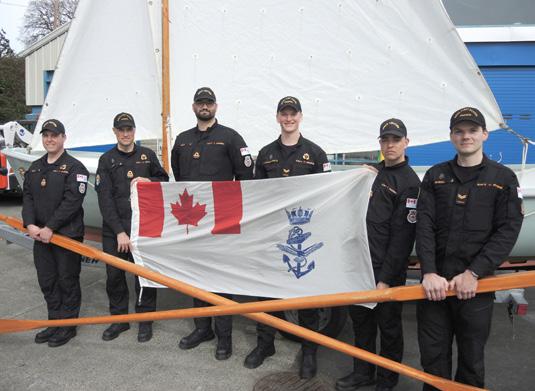
Members of the Victory Oar Duff racing team gather for a team photograph on Apr. 10 at the Seamanship Training Centre in Naden. (L-R): Lieutenant (Navy) (Lt(N)) Jeff Phillips, Lt(N) Ellery Down, Acting Sub-Lieutenant (A/SLt) Benjamin Roth, Sailor 1st Class (S1) Evan HelgasonThorpe, A/SLt Maxwell Lucas, and S1 Maxime Vandal.
Photo: Peter Mallett/Lookout Newspaper
Engineering victory for all at Beaver Cup
Peter Mallett Staff Writer
Family ties ran strong on the ice at this year’s Beaver Cup hockey tournament in Esquimalt.
While the two father-son duos that played in this year’s tournament did not capture the coveted Beaver Cup tournament trophy, they say their love of hockey, family and community embodies the true spirit of the recreational hockey tournament.
“Playing on the same sheet of ice with your son or dad is just the hockey mentality as hockey is in our blood in Canada,” said LieutenantColonel (LCol) (ret’d) Doug Foreman.
Foreman, former Chief Engineer at CFB Esquimalt, retired from the military in 2000. Today, he helps run the tournament with Warrant Officer (WO) Robert James Kerr of Real Properties Operations (RPOPs) Pacific. The Beaver is a symbol representing the Canadian Military Engineers (CME). It is also the name of the CME’s hockey, golf, and curling tournaments, which military and civilians in the
unit have competed in for over 50 years at bases and wings across Canada.
Foreman has played in Beaver Cup hockey tournaments at various locations nationwide since the 1980s. For the first time, both of his sons joined him on the ice simultaneously for this year’s competition at Wurtele Arena. WO Ian Foreman of 1 Combat Engineer Regiment in Edmonton and Scott, a high school teacher, formed the Foreman family forward line for their team, the Pioneers, one of the tournament’s five teams.
The 77-year-old retiree is also one of the two oldest players in the tournament. It’s an honour he shares with teammate and Pioneers goaltender Chief Petty Officer Second Class (ret’d) Butch Boucher, who was recruited to play in the tournament at the Base back in 1998.
“Everyone seems to love the thought of having fathers and sons playing in the tournament and you can’t beat the feeling of playing hockey with your own son,” said Boucher.
Boucher is an Educational Advisor with the Victoria Grizzlies Junior ‘A’ hockey team. He once helped guide his son Nick to an Ivy League
Scholarship in the NCAA and a professional career with the Fort Wayne Komets of the International Hockey League.
The third father-son duo on the ice was LCol
Jeff Barr, a retired member of the Canadian Army’s armoured regiment the Royal Canadian Dragoons, and his son Lt(N) Mitchell Barr, Deck Officer of HMCS Ottawa, who played for the tournament finalists, the Sappers.
“I have been playing hockey with my dad since I was four years old and he was coaching me but this is the first time we have played together in the Beaver Cup so a very special feeling to be on the ice with him,” said Lt(N) Barr.
Bandits win the title
The Esquimalt edition of the Beaver Cup hockey tournament began in 1996 but has not been staged since 2019. This year’s tournament spanned three days starting on Apr. 16, including five teams playing 13 games. The tournament attracts military and civilian engineers and their families and friends while promoting physical fitness and camaraderie within the engineering community.
A late-game rally helped the Bandits defeat
the Sappers 2-1 in the tournament final on Apr. 19. The Sappers scored early in the first period and held on to a one-goal lead behind the solid goaltending of Jeff Clarkson. Then, midway through the third period, the Bandits equalized. The Sapper’s short bench and a pair of penalties late in the third period helped drain their energy and helped seal their fate. Alex Hall, a senior Contracts Inspector with Defence Construction Canada, scored the winning goal with just 30 seconds remaining in the game to give the Bandits the victory.
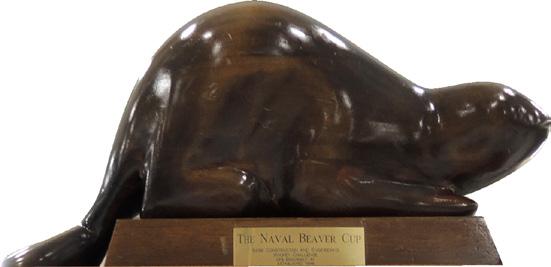
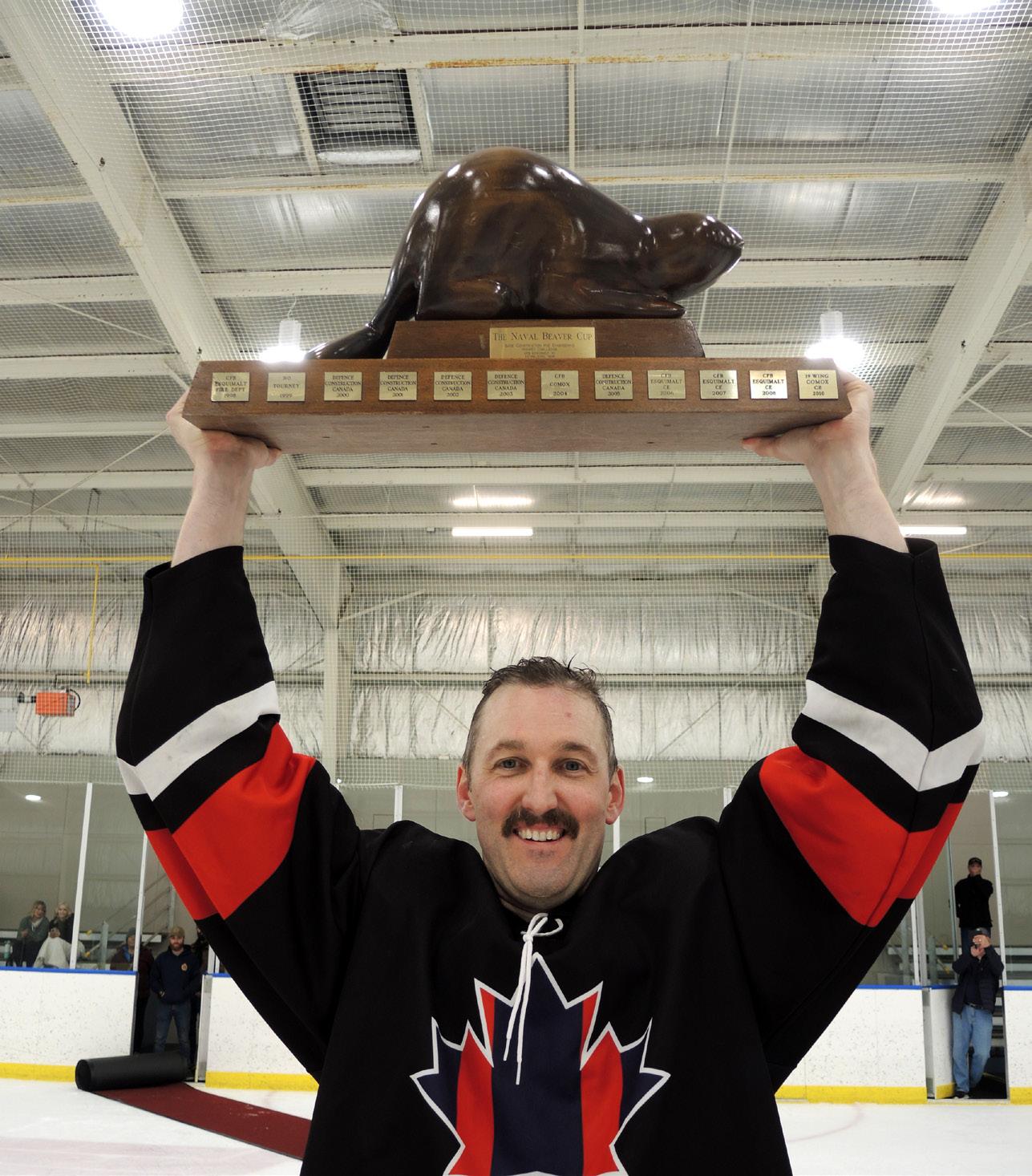
After the final buzzer, Bandits Team Captain Jordan Semeschuk, a civilian employee of Defence Construction Canada, accepted the tournament trophy on behalf of his teammates from tournament sponsors LCol Michael Ulloa, Commanding Officer RPOPs Esquimalt, and Master Warrant Officer Drew Scott, RPOPs Section Esquimalt.
“It feels great to be champions after a long stretch of hockey and six games over three days but hats off to our opponents, the Sappers, who gave it a great fight,” said Semeschuk.
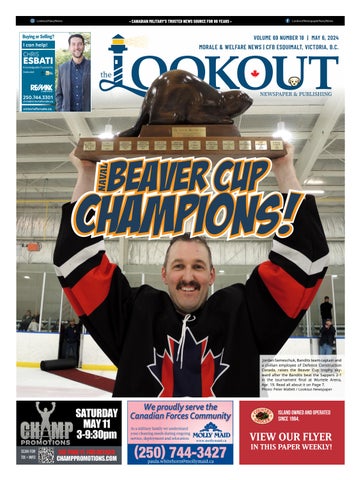
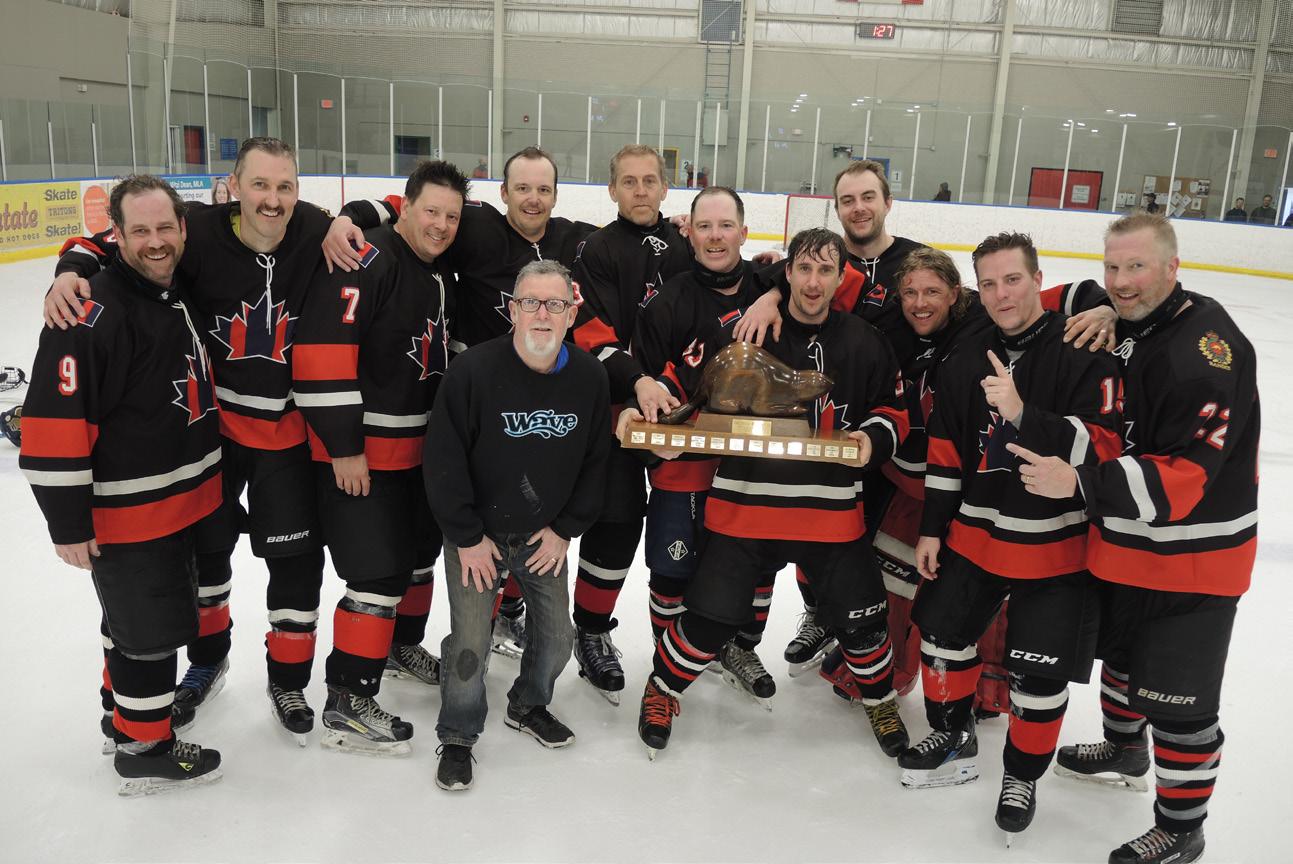
Members of the Bandits celebrate their victory following the conclusion of the Beaver Cup hockey tournament at Wurtele Arena, Apr. 19. The Bandits beat the Sappers 2-1 in the championship game. Photo: Peter Mallett/Lookout Newspaper
Unraveling the story of AB Zbarsky
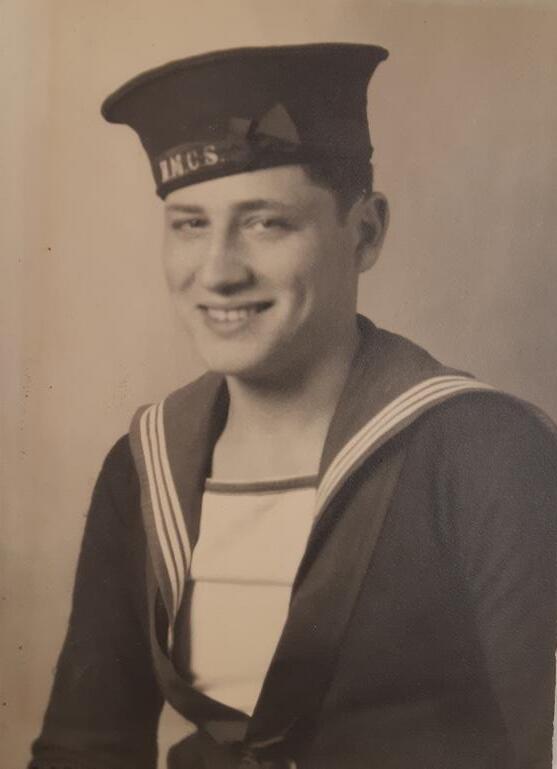
Able Seaman (AB) Ralph Zbarsky was born on Oct. 23, 1924, in Saskatoon, Sask. He later attended the University of Saskatchewan and was president of the Saskatchewan branch of the Canadian Young Judaea before his family moved to British Columbia. He enrolled in the Royal Canadian Navy in 1941 at 17. During the attack on HMCS Esquimalt, AB Zbarsky managed to scramble into a lifeboat but died of exposure before the rescue of survivors by a passing ship. He is buried at Schara Tzedek Cemetery in New Westminster.
Peter Mallett Staff Writer
An unopened letter postmarked Apr. 16, 1945, holds significant meaning to a retired electrical engineer from Vancouver; it is a cherished link to a personal tragedy aboard HMCS Esquimalt.
The letter is one of 40 hand-written war letters by Able Seaman (now Sailor 2nd Class) Ralph Zbarsky, one of the 44 men who died on HMCS Esquimalt in an attack carried out by a German U-Boat on that fateful day.
The letter will never be opened, or its contents read, says Ralph Zbarsky, AB Zbarsky’s nephew. He bears the same name as his uncle.
“Despite the curiosity of what is inside the envelope, this letter serves the family as an important reminder of a life sacrificed and never com pleted and will remain unopened,” he said.
For the past decade, Zbarsky has attended every annual memor ial for the Second World War minesweeper and its crew at Esquimalt’s Memorial Park. He says it has brought him closer to understanding a family member he never got the chance to know.
In recent years, Zbarsky has connected with relatives of the HMCS Esquimalt crew on multiple navalthemed Facebook groups. Meeting others connected to the ship and unlocking his
uncle’s story has led to a more formidable riddle that weighs daily in Zbarsky’s mind.
“I am trying to figure out, and probably never will [understand], why a 17-year-old kid halfway through his university degree in Saskatchewan would enlist in the navy in the first place,” said Zbarsky. “He had never seen the ocean so what caused him to give up everything and enlist?”
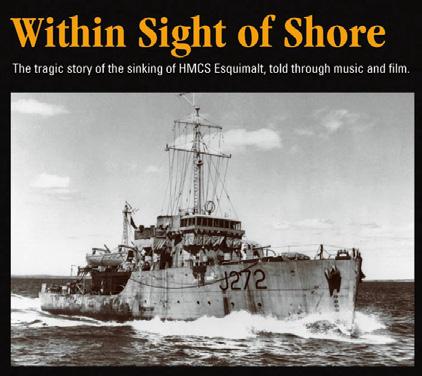
While searching for answers, Zbarsky befriended Scott MacMillian, a Canadian musician and composer and grandson of Lieutenant-Commander (LCdr) Robert MacMillan at the time of the tragedy, the captain of HMCS Esquimalt. Scott MacMillan has written a musical composition about the attack titled Within Sight of Shore
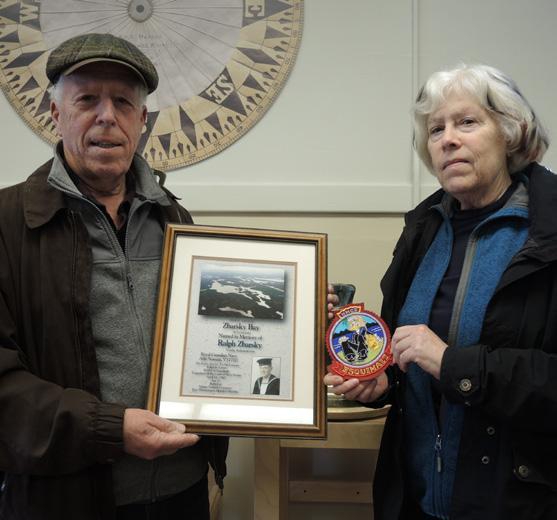
In 2016, at the opening of the CFB Esquimalt’s Naval & Military Museum’s HMCS Esquimalt exhibit, Zbarsky donated several family possessions. This year, Zbarsky stopped by the museum for a tour with his sister Debby to view the donation with her. Some of the items include official correspondence from LCdr MacMillan regarding Zbarsky’s fate after the sinking, a government letter with further details of the sinking, two telegrams from AB Zbarsky to his family, a monogrammed cigarette lighter, AB Zbarsky’s war medals and a Mother’s Cross and Silver Tablet.
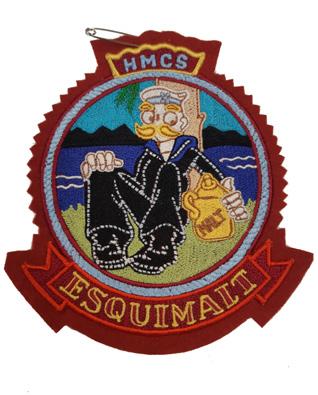
Ralph Zbarsky and his sister Debby display a plaque commemorating the naming of Zbarsky Bay in Saskatchwan and an HMCS Esquimalt morale patch at the CFB Esquimalt Naval and Military Museum, Apr. 16. Photos: Peter Mallett/Lookout
AB Zbarsky was one of 44 members killed after a torpedo attack by a German submarine in 1945.
A morale patch of HMCS Esquimalt presented by Ralph Zbarsky to members of the CFB Esquimalt Naval and Military Museum.
Naval Training Group Change of Command
Naval Training Group (NTG) bid farewell to one leader and welcomed another during a ceremony presided by Commodore Patrick Montgomery, Commander of the Naval Reserve, at CFB Esquimalt’s Wardroom on April 25. Capt(N) Matthew Coates had been NTG’s fourth Commander since its establishment in June 10 years ago. He assumed command in 2021 and has led NTG through a period defined by renewed focus on its core training mandates and increased collaboration with partner agencies to pursue the long-term vision of the Future Naval Training System. Capt(N) Coates relinquished command early to facilitate the transition to his next appointment.
Cdr Darren Sleen, the current Commanding Officer of HMCS Venture, assumed command of NTG and will provide leadership for both organizations until the Commander NTG (designate) Capt(N) Mike Stefanson arrives mid-summer.
BRAVO ZULU
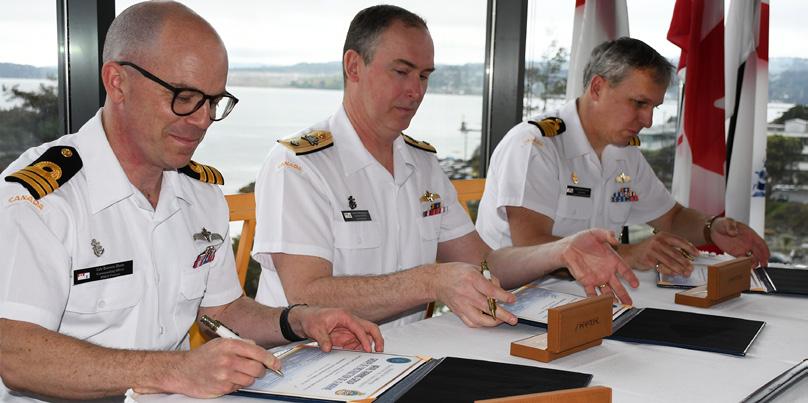
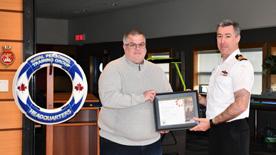
Dale Serrao (left) receives his Long Service Award – 35 Years from Commander Maxime Maugeais (right).
Dale’s military career began in 1987 as an Armour Crewman, with tours in Cyprus and the former Republic of Yugoslavia. He transitioned to NavComm in 2000, where he spent the next 13 years, including time spent on HMCS Vancouver and achieving Golden Shellback status. His interest in IT grew during shore postings, leading him to become a CS/IT professional in the public service. Recognised with a MARPAC BZ award for his service during the 2010 Olympics, Dale was well-known in tech support before joining the TTI team at NTG where he works today.
BRAVO ZULU NTG
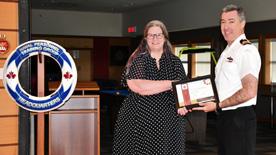
Laura Brackenbury (left) receives her Long Service Award – 25 Years form Commander Maxime Maugeais (right). Laura began working for DND at FMF in 1999 as a Computer Science Co-Op student. Transitioning to training in 2001, she became the west coast administrator for the Naval Training Documentation system. With NPTG’s inception, she spearheaded implementing national survey software and launching the NPTG website. In 2014, she was among the first to move into D113 as part of NPTG’s expansion. Over 25 years, Laura has shaped the Future Naval Training System and various projects, including CSC. She takes pride in supporting others and values the relationships she’s built.
BRAVO ZULU!
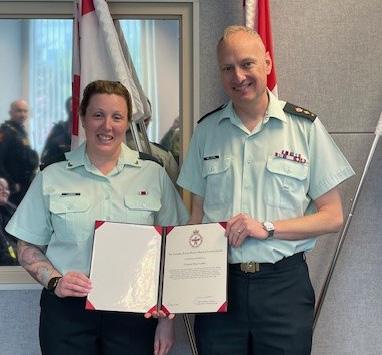
VICE CHIEF OF THE DEFENCE STAFF COMMENDATION Corporal Mary Larkin
On Oct. 6, 2023, Corporal (Cpl) Mary Larkin completed a 1,200-kilometer charity bike ride from Northern Vancouver Island to the B.C. Legislature as part of the Cops For Cancer Tour de Rock Team.
Cpl Larkin trained for 10 months and completed the ride in demanding weather conditions. Managing full-time duties, Cpl Larkin conducted numerous fundraising initiatives with minimal Base support, raising $10,000 towards the team’s $1,000,000 goal to support the Canadian Cancer Society, and Camp Good Times summer camp.
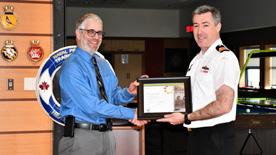
Sebastien Auger (left) receives his Long Service Award – 35 Years from Commander Maxime Maugeais (right). Sebastien’s military service began when he enrolled as a MARS Officer on June 30, 1987. He spent 32 years in the RCN, before accepting his civilian position as the Head of Current Operations for NTG HQ. Having served at NTG HQ since 2017, Seb celebrates 37 years of dedicated service with DND.
ACROSS:
2. Ship’s kitchen (6 letters)
4. Shipboard term for “right” (9 letters)
6. The person in charge of a ship (7 letters)
8. A small boat used by navy sailors (6 letters)
9. A large ship in the navy (7 letters)
DOWN
1. A distress call via radio (6 letters)
3. Name of the RCN Flag (4 letters)
4. The place where navy ships are built (8 letters)
5. The part of the ship where sailors sleep (5 letters)
7. An object designed to prevent or slow down a ship (6 letters)
FOR SALE
SAILBOAT 1974 CS 22 for sale. Located at CFSA. 4 head sails. All safety gear, too many accessories. Outboard motor needs carb work. $1,500. Call 250-208-4845.
BUSINESS FOR SALE –
Great for a retiring member! Opportunity to own a well established, limousine service in Victoria; Ascot Limousine Services. Seller retiring after 29 years. Business purchase includes: special authority (3) licences, 3 limousines, website, phone #, legal and accounting (if required), loyal clients & goodwill, will with the transition. $110,000. Contact Gilles at 250-812-2775 or gilles@ ascotlimo.com. More info available at ascotlimo.com
Real Estate for Sale
Esquimalt - House with inlaw suite - 5 bed - 2 bath - on Wollaston St. South facing
deck & back yard. $965,000 Call Vicky 250-380-7323
$2,195/MONTHRENOVATED 2 BDRM in Esquimalt Top-floor, corner suite in a serene, adult-oriented building. Prime location near Esquimalt Plaza, gym, library, Naval base, and downtown Victoria. New carpets, fresh paint, updated bathroom, and appliances. Cat-friendly. For inquiries, please contact 250-888-1212, between 9-5 Mon.-Fri. SUITE WITH OCCUPANCY FOR ONE IN LANGFORD near View Royal. Bright, modern, clean, private, and quiet 1 bedroom suite with patio, appliances incl. dishwasher, microwave, washer & dryer. Quiet neighbourhood. Beautiful view. Easy
access to bike paths. Parking available. 1 yr lease, then month to month. No smoking/vaping, pets, or sub-letting. Renter’s insurance with proof of coverage, references and proof of employment mandatory. $2,400/ month furnished, $2,200/ month unfurnished. Utilities and wi-fi included. Contact Max by text 613.449.2836.
The old Navy Chief finally retired and got that chicken ranch he always wanted. He took with him his life-long pet parrot.
First morning at 0430, the parrot squawked loudly and said, “Reveille, Reveille. Up all hands. Heave out and trice up. The smoking lamp is lighted, now Reveille.”
The old chief told the parrot, “We are no longer in the Navy. Go back to sleep.”
The next morning, the parrot did the same thing. Chief told the parrot, “If you keep this up, I’ll put you out in the chicken pen.”
Again, the parrot did it, and true to his word, the Chief put the parrot in the chicken pen.
About 0630 the next morning, the Chief was awakened by one heck of a ruckus in the chicken pen. He went out to see what was the matter. The parrot had about 40 white chickens at attention in formation, and on the ground laid 3 bruised and beaten brown chickens.
The parrot was saying, “By God, when I say fall out in dress whites, I don’t mean Khakis!”
Treatment IS WITHIN REACH
Addiction, Mental Health & Trauma
Help is at hand: Powell River-based Sunshine Coast Health Centre and Georgia Strait Women’s Clinic— Canada’s only trauma program exclusively serving women—provide highly personalized addiction, mental health and trauma treatment for male and female clients respectively. We’ll pick you up from the ferry for our daily inpatient treatment tailored to your unique needs.
Services include 24 hour-medical service, psychiatric assessment, EMDR, rTMS, psychotherapy, a dedicated group for military clients and much more.
Serving the Department of National Defence and Veterans A airs Canada since 2009.