




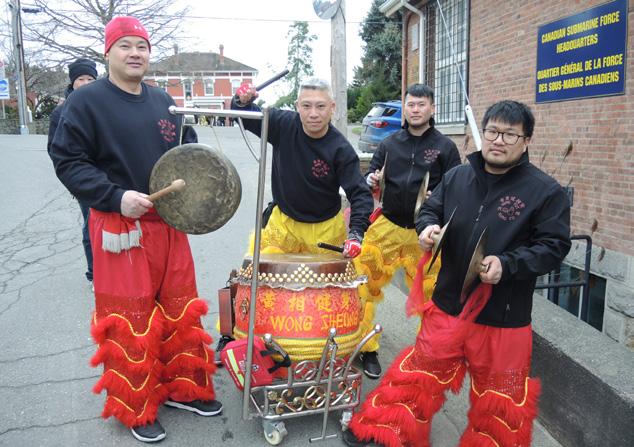
Members of Victoria's Wong Sheung Kung Fu Club perform a Lion Dance, Feb. 14, at the Canadian Submarine Force Headquarters in Dockyard.
Photo: Peter Mallett/Lookout


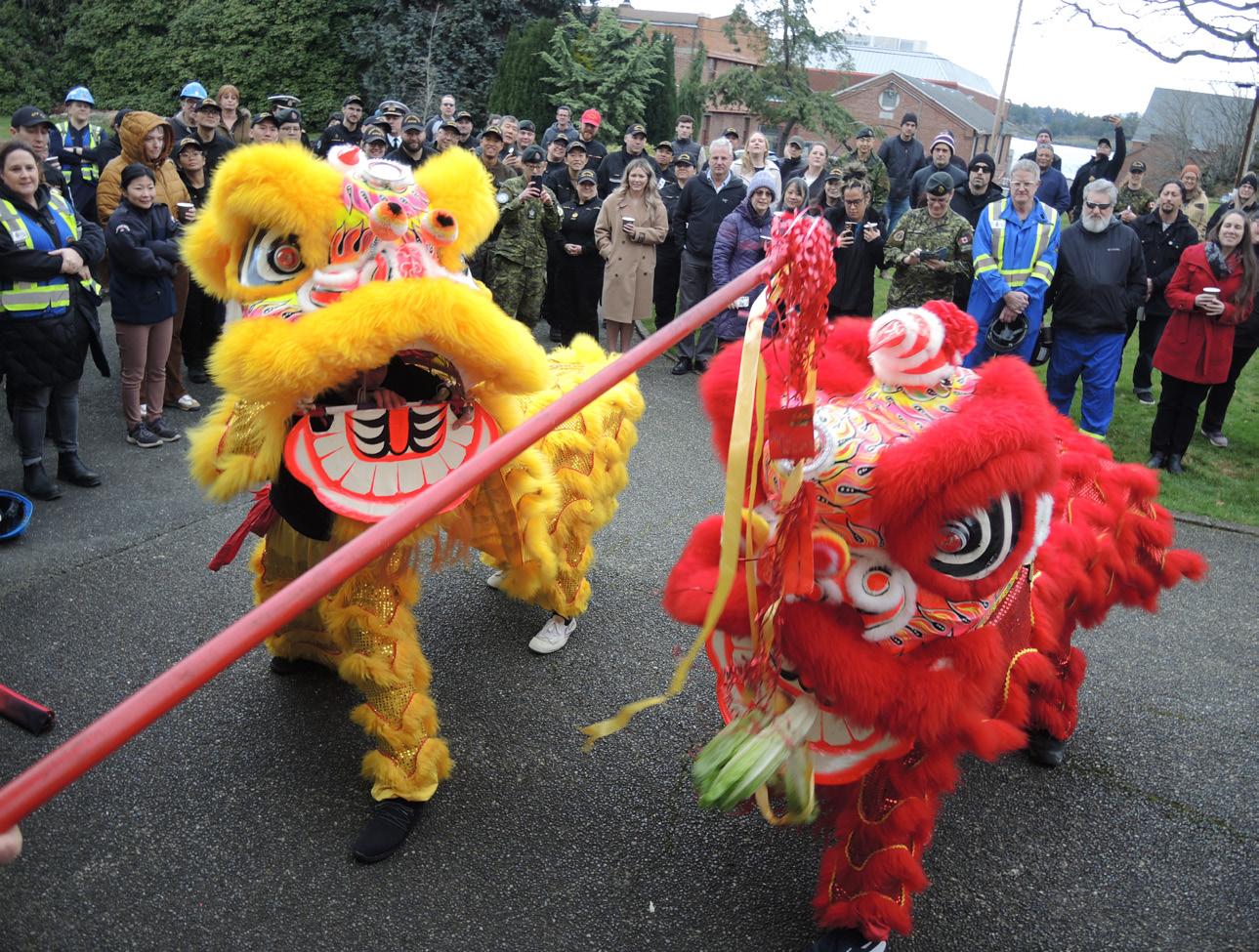

Members of Victoria's Wong Sheung Kung Fu Club perform a Lion Dance, Feb. 14, at the Canadian Submarine Force Headquarters in Dockyard.
Photo: Peter Mallett/Lookout
Peter Mallett Staff Writer
A giant drum, hand-hammered gong and cymbals sounded at the main entrance of RearAdmiral (RAdm) Christopher Robinson’s official residence as two brightly coloured red and yellow lions warmed up the mood on Feb. 14.
The lion dancers from Victoria’s Wong Sheung Kung Fu Club have cleansed CFB Esquimalt of ‘bad mojo’ while wishing Defence Team members a Happy Lunar New Year. Communities worldwide celebrated the Lunar New Year between Feb. 9-24, welcoming the Year of the Dragon in Chinese astrology.
“The symbolism of the lion dance is to ward off evil spirits and bad energy and welcome in the New Year with lots of noise and bright colors.” the Club’s Daniel Low said as he wished ‘Gong Hei Fat Choi’ (‘prosperity and good fortune’) in Cantonese to more than 200 visitors at the Admiral’s Residence.
As part of a symbolic payment for the lion dancer’s efforts, RAdm Robinson fed the lions a head of lettuce on a stick.
“They viciously ripped it apart,” declared RAdm Robinson in jest after the dancers, operating the beasts’ mouths with hand-controlled levers, gobbled up the veggies and spat them onto the pavement. “It was an amazing performance, which built some excitement and awareness around our Defence Advisory Groups.”
Low said performing at CFB Esquimalt for the Rear-Admiral, senior leadership, and service
people was an honour. The lion dancers also performed at Nelles Block and HMCS Venture, attracting big crowds.
During their visit, lion dancers stopped by the CANSUBFOR Headquarters in Dockyard and performed outside the building. It was intended as a gesture of friendship and goodwill to Lieutenant-Commander Harrison Nguyen, one of the Kung Fu Club’s former members and lion dancers, who has since moved on to Halifax to become Commanding Officer of HMCS Windsor
Manipulating the 10kg costume is no easy task. Lion dancer Jack Detlor described it as a combination of a ‘full-body workout and being in a sauna’, which he says often pushes the dancers to the brink of physical exhaustion. Low says he and other Kung Fu Club members were kept busy throughout the holiday, performing lion dances at 18 other engagements.
Excitement for the performances was further driven by MARPAC's Defence Visible Minority Advisory Group (DVMAG) who promoted the Lunar New Year and its celebrations by handing out brightly coloured invitations to the events at multiple locations across the Base on Feb. 8. Andrew Au, DVMAG Civilian Co-Chair, said he was impressed with the performances.
“I am pleasantly surprised with the excellent turnout and the way this event came together despite the cold weather, which exceeded my expectations,” Au said.
MANAGING EDITOR
Jazmin Holdway jazmin.holdway@forces.gc.ca
EDITOR
Kate Bandura
WRITER
250-363-3130
kateryna.bandura@forces.gc.ca
Peter Mallett mallett.peter@cfmws.com
PRODUCTION
Teresa Laird production @lookoutnewspaper.com
Leslie Eaton 250-363-8033
leslie.eaton @lookoutnewspaper.com
ACCOUNTS
Jazmin Holdway jazmin.holdway@forces.gc.ca 250-363-3127
ADVERTISING
Joshua Buck
778-977-5433
military.base.advertising@gmail.com
EDITORIAL ADVISORS
Capt Christopher Dubé 250-363-4006
Ashley Evans 250-363-7060
Published each Monday, under the authority of Capt(N) K. Whiteside, Base Commander.
Le LOOKOUT est publié tous les lundis, sous l’égide du Capv K. Whiteside, Commandant de la Base.
The editor reserves the right to edit, abridge or reject copy or advertising to adhere to policy as outlined in PSP Policy Manual. Views and opinions expressed are not necessarily those of the Department of National Defence.
Le Rédacteur se réserve le droit de modifier,de condenser ou de rejeter les articles, photographies, ou annonces publicitaires pour adhérer au Manuel des politiques des PSP. Les opinions et annonces exprimées dans le journal ne réflètent pas nécéssairement le point de vue du MDN.

Circulation: 2,000 plus online engagement per week
Follow us on Facebook, Twitter and Instagram to join our growing social media community.
A Division of Personnel Support Programs
CFB Esquimalt, PO Box 17000 Stn. Forces Victoria, BC V9A 7N2
Web: www.lookoutnewspaper.com Fax: 250-363-3015
Canadian Mail Product Sales Agreement 40063331

Thomas Goenczi Lookout contributor
When trauma occurs, avoidance strikes. We can’t avoid avoidance, especially in the aftermath of trauma. Frankly, avoiding is a necessity to begin processing trauma. If we are to engage in the traumatic experience immediately after it occurred psychologically, we may not withstand it. We must avoid, step back from the fire, and regain control over ourselves. However, never confronting the trauma and perpetually avoiding engaging in it will cause it to engulf us eventually.
An excellent way to view trauma is as a psychological fire. Once it erupts, the explosiveness shocks our reality, and the fire burns. The fire’s size depends on the trauma’s intensity and how it affects our psyche. The goal of working on our trauma is to find a way to contain the fire and reduce its effect on our psyche – if the fire cannot be fully extinguished, it can be contained and managed. In the early stages, we should quickly assess how we are doing as we scan for shock and denial.
Throughout the days following a traumatic event, we’ll check in on the psychological fire by noticing thoughts and emotions tied to the experience; some days, we avoid it altogether. However, if we create a
pattern of avoidance, the fire will rage on without any wherewithal of its influence on our daily lives. Then, one day, some months later, a spark will remind us of the fire, a trigger. If we are aware that the trigger leads back to the traumatic incident, and if we realize we’ve been avoiding tending to the blaze, a deep sense of avoidance anxiety quickly settles in.
How do you confront something that has such a striking impact on your mind, body and soul? An excellent place to start is to evaluate your general level of avoidance.
Are you typically an avoider who waits to confront them until things get significantly worse?
Do you perpetually avoid difficult circumstances to dismiss them as real and to push away the anxiety?
Are you relatively quick to recognize your avoidance and confront it to try and combat it?
Meditating on your past experiences where your avoidance was used is an excellent way to understand the long-term influences avoidance can have on your psyche.
After reflecting on your interplay with avoidance, try to assess how you supported the avoidance through distraction. This can be with the current trauma or past experiences where you distracted your way to evading altogether. An excellent way to


The Lookout is seeking content creators and contributors! If you're interested in trying your hand at writing or in expanding your writing portfolio, we want to hear from you! Everyone has a story to tell. Please reach out to Kate: kateryna.bandura@forces.gc.ca
notice if you’re employing a maladaptive coping strategy is to see if you are gaining short-term relief for long-term anguish. In cases of intense trauma, we’ll need an outside source to hold us accountable for our avoidance. This can come as confiding in a friend, family member, partner, or therapist. If we are the type to avoid out of the fear of confrontation, we will undoubtedly need guidance from a counsellor. A deeply traumatic experience requires the support to confront the inherent avoidance that comes with it.
We can think we can battle the psychological blaze by ourselves, but we may need a trained professional to pinpoint our blind spots and provide the compassion and support needed to confront our avoidance. This doesn’t make us any less strong or courageous. Asking for help when we need it is one of the first proper steps in confronting the psychic flames that burn from our trauma.
Thomas Goenczi is an RCN Veteran and MA Clinical Counsellor with Private Practice: Well Then Therapy. The content is not intended to substitute professional advice, diagnosis, or treatment.
Always seek the advice of your mental health professional or other qualified health provider with any questions regarding your condition.




I was most interested in reading the Feb. 12 Lookout article featuring the Admiralty Dingy, its restoration and donation. In my early career in the Royal Navy (RN), I sailed, raced and maintained many of these boats. They were designed in 1937 by the Royal Naval Sailing Association (RNSA) in its official capacity as advisors to the Admiralty in all matters of sailing and sail training. They were mainly used for recreational sailing, and most RN ships carried them for this purpose. In the UK, they were called the ‘RNSA 14s’. Other Commonwealth navies adopted the same boat design. In the UK, they stayed in service until 1959 and were replaced by the fibreglass Bosun Dingy.
I was introduced to these boats as a boy seaman aboard HMS Wessex, the Naval Reserve ship in Southampton. After seeing me sail, my divisional officer was impressed with my ability and informed me I had been chosen to represent the ship in the upcoming Naval Reserve Annual Regatta held in Portland Harbour. To everybody’s delight, I won the Presidents Cup and held on to it for three years out of four.
Following these successes, my commanding officer permitted me to have one of the 14s on loan in my home port of Poole in Dorset, where I raced it in all the local club regattas. My crew was Able Seaman (now Sailor Second Class) Frank Howell, who had served through the war and taken me under his wing to teach me seamanship and to keep me out of trouble! We became very good shipmates.
On one occasion, we entered a race for 14s in the Southampton regatta. I remember a stiff wind blowing, and Southampton water was rough. The boats were very wet and, having no decks, could ship a lot of water. A helmsman and one crew staffed all the boats, jockeying for the start. Then, just before the start, a brand new 14 rolled up to the line with His Royal Highness (HRH) Prince Phillip at the helm. This was ‘Kiwi’, a 14 built in New Zealand and given to HRH as a gift. But there were three bodies aboard ‘Kiwi’! The extra weight would be an advantage in the conditions because, as water came aboard, the third person could bail, whereas the rest of us would have to come up into the wind to allow our crew member to bail. Obviously, we let HRH win!
Correction:
I was in charge of all the boats (cutters, whalers, motor boats, surf boats and 12 RNSA 14s) while serving aboard HMS Warrior in 1957 as part of the British hydrogen bomb caper in the South Pacific. I spent weeks splicing and making up all the new rigging required and really learned to love those boats.
My final memory of the 14s was while serving aboard HMS Wave, flagship of the British Fishery Protection Squadron.
We had just returned from the First Cod War off Iceland, and the squadron anchored off North Berwick in the Firth of Forth for the squadron’s regatta.
I was to represent the ship in the 14s race. All the ships were anchored in a straight line stretching about five miles. The course was to sail around the fleet. After crossing the line, it was a deadbeat to windward up to the lead ship. I realized the tide was about to turn and managed to squeak around, laying as close to the wind as I possibly could. Our boat was the downwind turn, and we rounded to great cheers – miles ahead of the rest of the fleet. Although we now had to fight the tide, we finished well ahead of the rest. That was definitely one to remember.
Years later, I saw several 14s in Esquimalt Dockyard, but they looked very sad. I also saw one repaired and looking great at the Victoria Classic Boat Show a few years ago. Sadly, it had been painted; all of ours were varnished, and the mahogany hulls always looked gorgeous.
I am informed that many are cherished and sailing in the UK. It is wonderful to know that one now resides in the Calgary Naval Museum. There is also one in the Maritime Museum of the Atlantic in Halifax, N.S. I am sure that viewing these boats will bring back fantastic memories to many old sailors – like me!
John Horton serves as Captain of the B.C. Squadron of the Royal Naval Sailing Association, which in June 2024 will hold the 50th anniversary running of the wellknown RNSA Single Handed Race across the Gulf of Georgia.
All photos supplied.
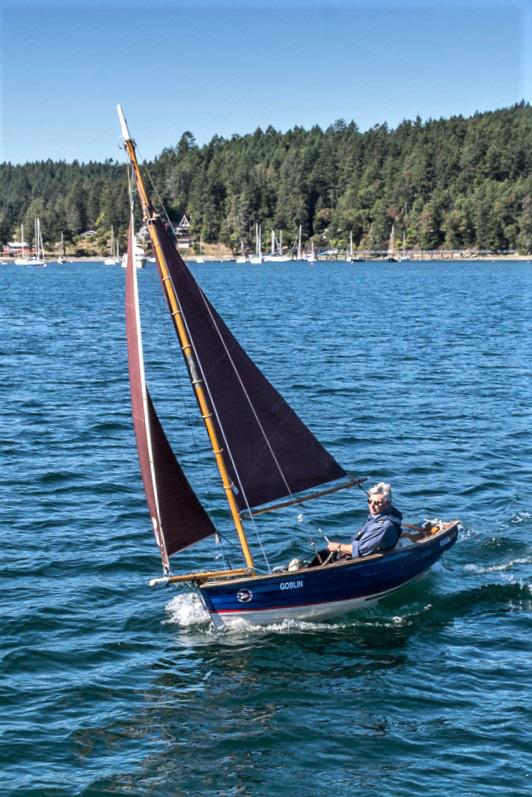
Top: A recent picture of John, age 88, sailing the ‘American Classic’ 12-footer.
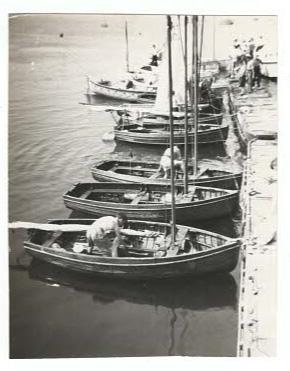
Bottom left: A row of 14s in Portland, England harbour.
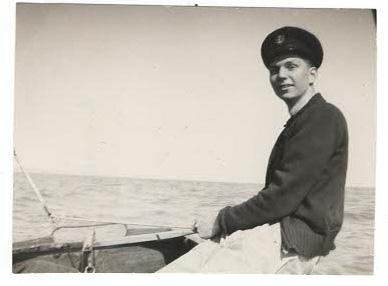
Bottom right: John helming a 14 in 1952.
In our last issue we incorrectly stated that the Canadian flag was first raised on Feb. 15, 1967. The correct date is Feb. 15, 1965. Thank you to all our keen readers for pointing that out!
Peter Mallett Staff Writer
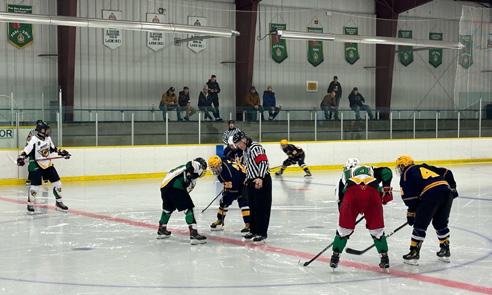
The Esquimalt Tritons senior hockey team are Canada West gold medalists again.
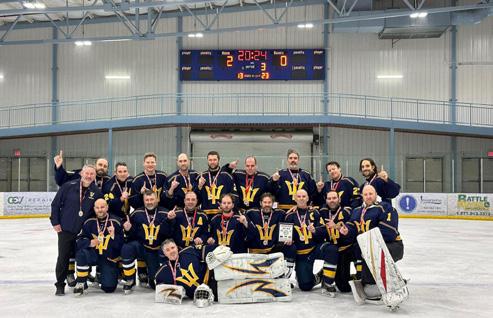
The senior men’s Tritons successfully defended their Canadian Armed Forces Old Timers Regional hockey title with a 2-0 victory over CFB Comox in the tournament championship game, Feb. 3 in Wainwright, Alta.
Esquimalt prevailed in a tight-checking gold medal game and, backed by solid goaltending from Petty Officer First Class (PO1) Randy Collens. Chief Petty Officer Second Class (CPO2) Glen Thompson and Master Corporal (MCpl) Marc Gagnon scored the only goals of the game. The Tritons registered five wins and one loss over six games with their only defeat a 2-1 overtime loss to Winnipeg.
The Tritons outscored opponents by an overall margin of 22-8.
Master Warrant Officer (MWO) Paul MacQueen of 443 Helicopter Sqn, Esquimalt

Please join the MARPAC Health & Wellness Strategy and the Women’s Defence Advisory Organization as we explore “A New Age is Dawning for Every Mother’s Daughter” with renowned journalist Sally Armstrong. Sally Armstrong is a renowned journalist and author who has covered conflicts worldwide, from Bosnia to Somalia, Congo to Afghanistan. She is a four-time Amnesty International Media Award winner.
Team Captain and forward, said Comox and Winnipeg gave the Tritons their toughest tests in Canada West play.
“It feels great to win and more so this year than last because the competition was much better and some of the scores were much closer,” MWO MacQueen said. “By sticking with our game plan, we scored goals when it mattered most, and our head coach Rick Pyle deserves great credit for his calm presence on the bench.”
MWO MacQueen also credited PO1 Collens who does double goaltending duty, also playing with the Tritons men’s open age as key to his team’s success. He said CPO2 Ray Moore, CPO2 Marc Lavoie and MCpl Gagnon were some of Esquimalt’s other top players at the tournament.
With the victory, the Tritons move on to the Canadian Armed Forces Oldtimers Hockey Championship, March 23 to 28 at CFB Borden.
MWO MacQueen and PO1 Collens both said the team is taking a down-to-earth
approach to their chances of capturing a national title.
The Tritons men’s and women’s hockey team saw their hopes for a national title melt away in Alberta, with both settling for silver medals at their respective Canada West Regional tournaments.
Our women’s team put together four consecutive wins to start their Canada West campaign at CFB Edmonton before suffering a 7-3 loss to the tournament hosts in the championship game.
“All our players gave their best efforts and we had more shots on goal but Edmonton’s goaltending was excellent and deserved full marks for the victory,” said CPO2 Dave Hillier, Tritons coach.
The Tritons men’s team also finished runners-up in the tournament after falling 7-1 to hosts Edmonton in their gold medal game on Jan. 26. Esquimalt registered five consecutive victories in their path to the championship game, while outscoring their opponents 41-6.

COOK ST VILLAGE 1 bedroom suite with hardwood floors. Quiet, very clean, well-maintained apartment building. Heat, hot water and parking included. No pets. No smoking. One year lease. $1,700 per month. Available Mar. 15 or April 1. Call 250-588-5457.
APARTMENT FOR RENT NEAR
NADEN GATE 2-bedroom apartment at 636 Admirals Road available March 1. 672 sq ft, recently renovated. $2,100/month. $50 reduction for military. Parking available. Electricity not included. Contact Murray Harris at murrh@shaw.ca to view.
BEAUTIFUL & SPACIOUS 1 BDRM, 1 BATH BASEMENT SUITE available March 1 (with the possibility of moving in earlier). $1,950/mo and open to one dog. The suite is brand new and situated in a new home just nearing completion. The open concept suite has a modern kitchen, stainless steel appliances, quartz countertops, heated floor in the bathroom & in-suite laundry. The property is located one minute from the ocean, base parking, on a major bus route, a 5 minute walk to Red Barn market and a 10 minute walk to the new and upcoming Saxe Point Public House. Call 250-507-4012
MOTORBIKE 2020 KTM Duke Selling my KTM Duke 200 with about 3K kms on it. Bought used from Barnes, comes with the Akrapovic exhaust system. Used gently and sparingly last summer, has been in storage since September. Runs smoothly, has no issues. Cheap on insurance. An awesome starter bike and great for commuting through Victoria. Please email kateryna.bandura@forces.gc.ca for details.
SAILBOAT 1974 CS 22 for sale . Located at CFSA. 4 head sails. All safety gear, too many accessories to list. Outboard motor needs carburetor work. $1,500. Call 250-208-4845
Interested in what is happening with health and fitness? The MARPAC Health and Wellness Expo is open to everyone in the Defence community. On March 7, please visit the Expo at Naden Athletic Centre any time between 10 a.m. and 2 p.m. Free food, free massages and lots of prizes and giveaways.
With the requirements of the future fleet on the immediate horizon, RCN leadership recognizes that today’s occupation structures will not meet tomorrow’s requirements. Instead of addressing each occupation in silos, RCN leadership made a deliberate decision to conduct this occupational analysis holistically.
A new team called the Future Occupation Structures Development Team was set up to define both pan-RCN problem sets and the problem definition for each in-scope RCNmanaged occupation. RCN members posted in Chief Military Personnel will begin the occupational analysis this summer using this framework. Working with the MAR TECH community, we are trying to correct course by moving towards a maintainer/operator approach. Two years of research, analysis, and engagement with MAR TECHs inform the new occupation structure.
We can all expect to experience more change as we imagine solutions to accomplish our goals. Sometimes, stress creates space for the most creative solutions, like the Naval Experience Program (NEP). The program has shown promise in bringing new sailors to help offset current shortages and is putting the Navy front of mind for those joining the Canadian Armed Forces. The Marine Career Expo (MCE) gives the Canadian public a unique opportunity to engage with our sailors. The NEP and MCE programs are designed to help the RCN recruit our target of 1,200 new sailors.
HMCS Frédérick Rolette is scheduled for sea acceptance trials in July. This critical phase precedes the ship’s delivery in September. We will then begin the post-delivery work to ready the vessel for operations in 2025.
Post-delivery work on HMCS William Hall should conclude early this year, followed by readiness training and operational test and evaluation activities. William Hall will be used to assess class-wide capabilities.
HMCS Max Bernays’ transfer to Esquimalt in April will mark the first Harry DeWolf-class ship assigned to the West Coast Fleet. After its May commissioning ceremony, the ship will deploy to the Arctic for cold-weather trials before participating in Op Nanook and Exercise RIMPAC.
Advancements for our Joint Support Ship (JSS) are expected in 2024. The outfitting of HMCS Protecteur is ongoing in Vancouver, and its launch and naming ceremony are on track to occur later this year. Deployment is projected for late 2025.
Many initiatives are underway to improve our ability to fight. Our biggest challenge remains our ability to generate enough sailors ready to help, lead and fight. Difficult decisions must be made to prioritize more sea time above other needs.
While the progress towards our future fleet is exciting, we know it will further stress our already existing personnel shortages. We will need to continue to be resilient by focusing on what we can do now and keeping in mind that there is still a lot of positive and exciting work every day.
Excerpt from Our Navy Today.
2024 will see many milestones, with our newest platforms demonstrating their indispensable role in Canada’s Arctic and global maritime operations. Several new ships will be delivered while the Canadian Surface Combatant (CSC) project makes progress in its design, forecasting the Critical Design Review for the end of this year.








Peter Mallett Staff Writer
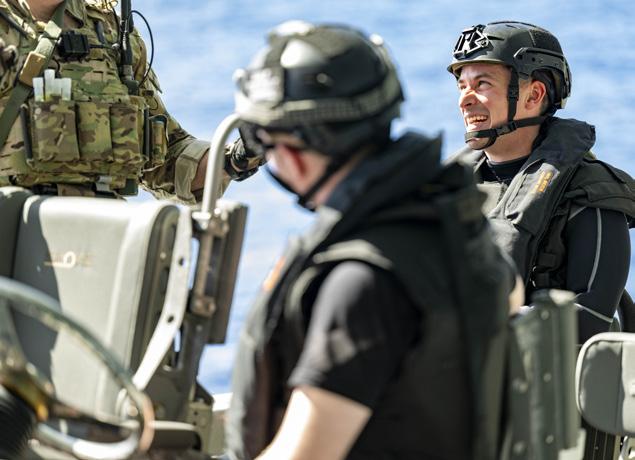
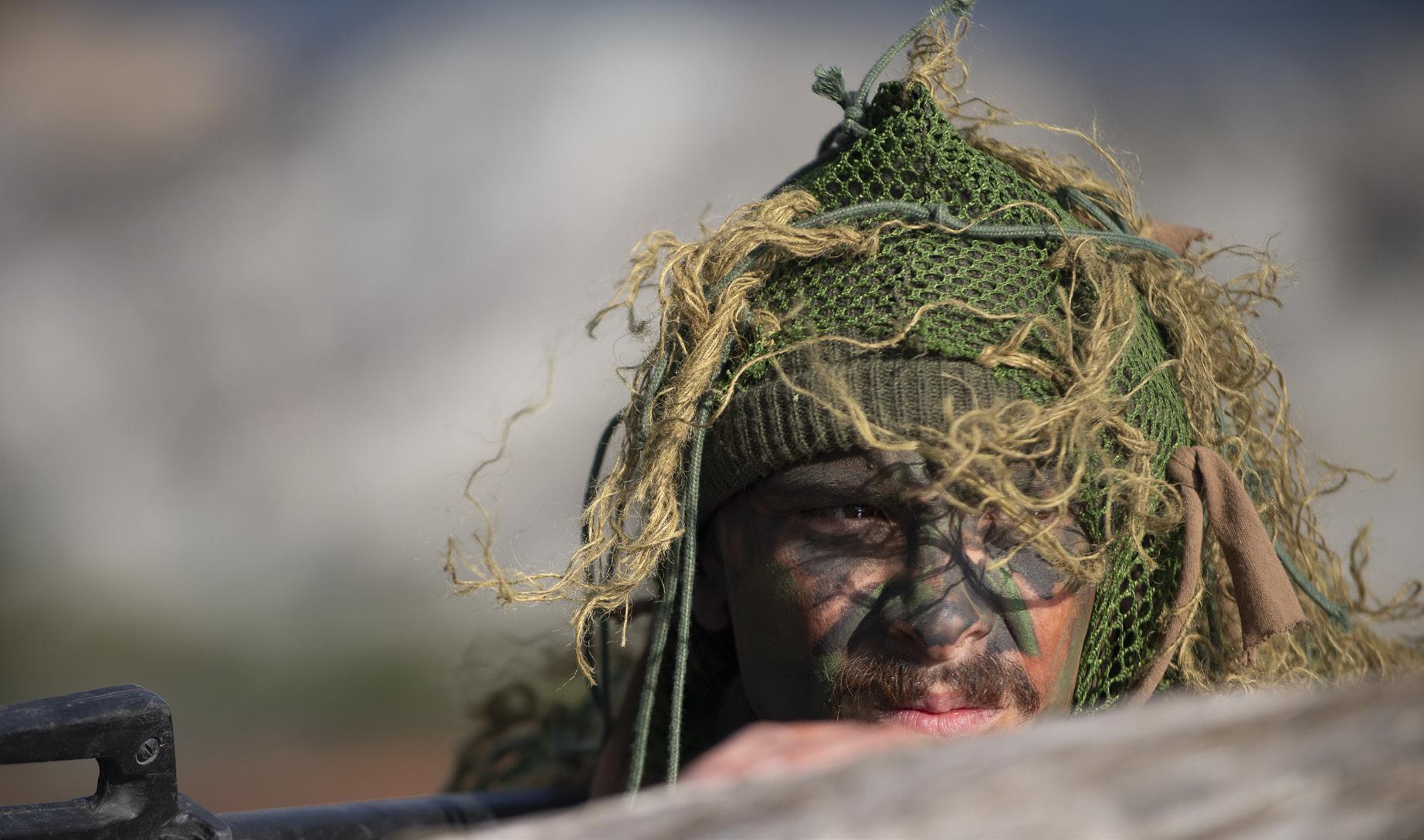
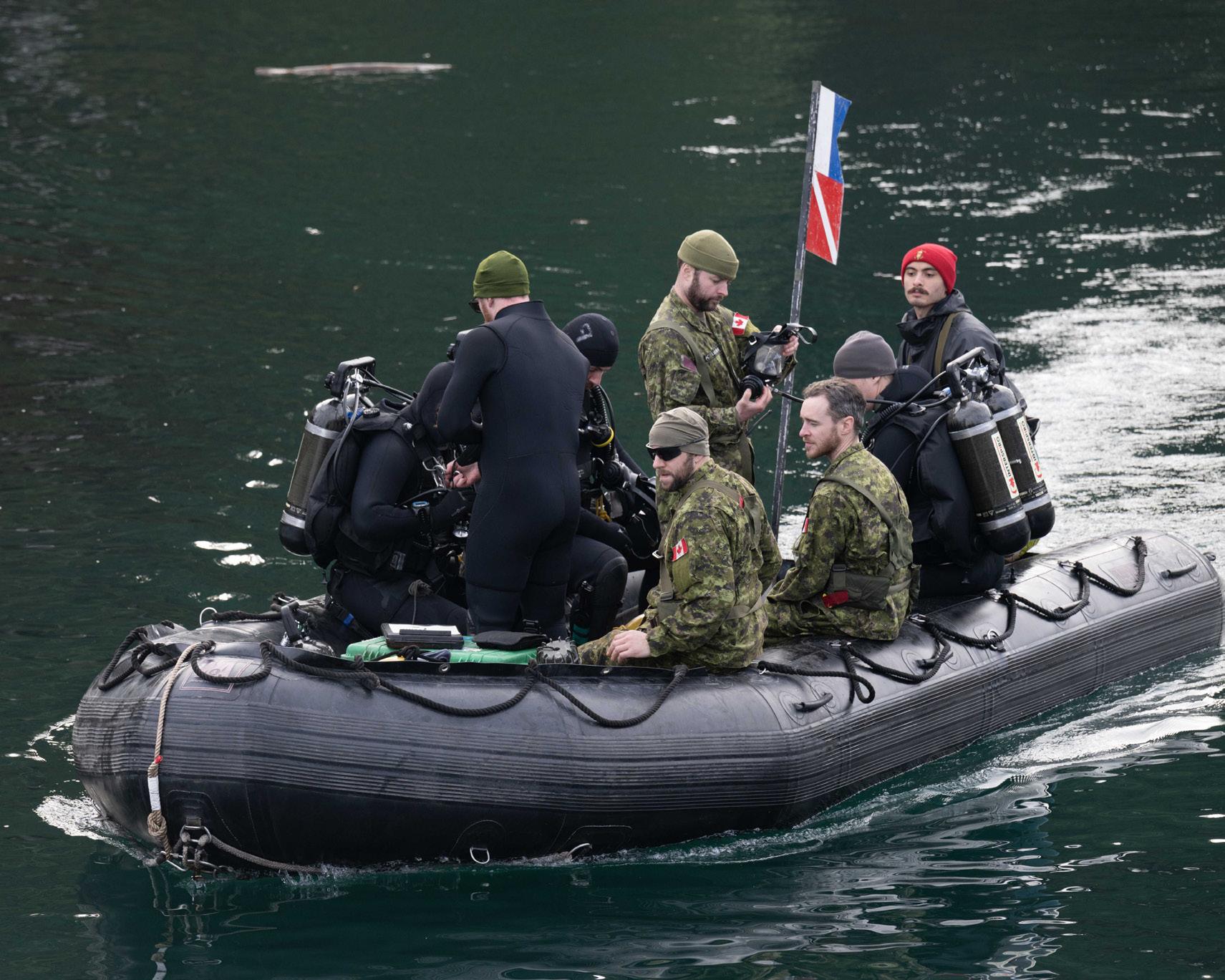
After a four-year hiatus, Exercise Roguish Buoy returned to Metchosin on Jan. 29 for two weeks, allowing 65 Army Combat Divers from Canada and worldwide to test their teamwork skills.
Working in the tides and currents of the Strait of Juan de Fuca provided a new dynamic as Combat Divers normally work in inland waterways and bodies of fresh water, said Lieutenant-Colonel (LCol) Cindy Legarie, Canadian Forces School of Military Engineering (CFSME) Commandant.
“It was a little like being a fish out of fresh water and definitely something different,” LCol Legarie said. “But our objectives were achieved, and the Canadian divers and our NATO teams integrated fantastically.”
Combat Divers are Combat Engineers by trade, grouped into mission-specific teams. Part of their role includes conducting reconnaissance operations on river crossings and bridges and clearing underwater obstacles to help maintain the mobility of friendly forces.
The theme of this year’s exercise was Mobility Support. Much of the training involved surveillance of a pier off Metchosin and making beaches and shorelines safe for landing parties.
Captain (Capt) Alexander Scott, Officer-In-Charge of the Army Dive Centre’s Tactics Squadron and Exercise Coordinator says the overall focus was to enhance interoperability, develop skills and standardize tactics, techniques and procedures between dive teams.
“Familiarity between divers under the water is very important to improve moving in the correct formation keeping in mind the visibility [underwater] and tides can make things tricky,” said Capt Scott.
The divers broke into four teams for the exercise. Using a combination of Rigid Hulled Inflatable Boats (RHIB) and ‘Nav 19’ boats to move their people and equipment, the divers dived to depths of 15m while employing the Compressed Air Breathing Apparatus (CABA) Lite Diving System. They tested their navigation and interoperability diving skills by swimming in formation to locate and conduct surveillance of the pier.
Once at the site, their task was to measure and record its dimensions and take photographs and drawings of the pier to determine weak spots before developing a plan for its demolition.
Capt Scott quickly offered a favourable assessment of this year’s event.
“The exercise was very successful, and everyone is leaving a better soldier and diver,” he said. “It was certainly beneficial to get this exercise back on track as it is the only collective dive training event the Army has and also ensures best practices with NATO divers so we can enhance our capabilities.”
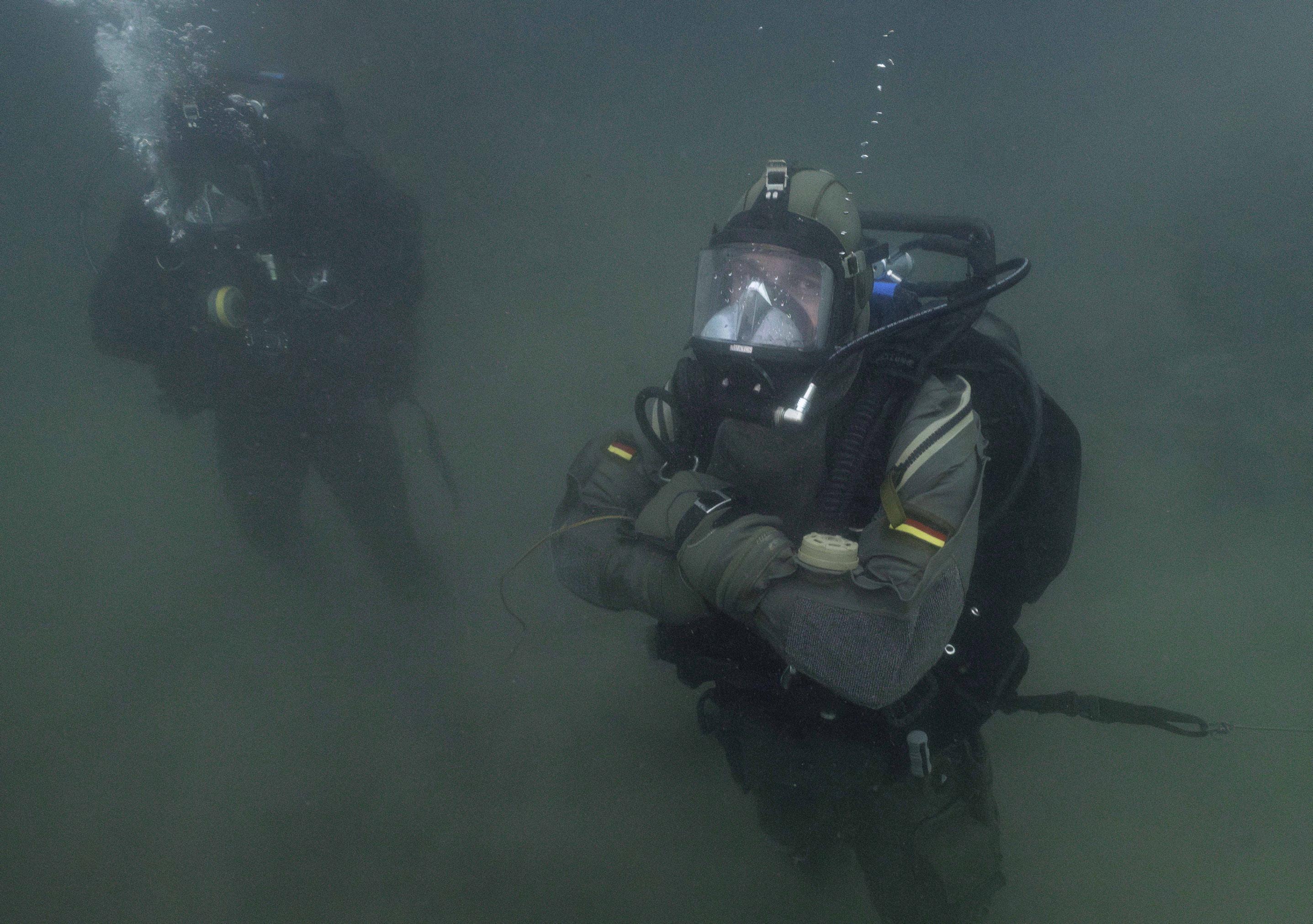
Roguish Buoy 2024 involved 72 Canadian Armed Forces (CAF) Combat Divers and support staff, and 18 military divers from NATO member countries: the United States, Germany, the United Kingdom, France, Belgium, and the Netherlands.
Roguish Buoy was hosted by the Army Dive Centre and Canadian Forces School of Military Engineering (CFSME) of Canadian Division Support Base Gagetown, N.B. The exercise takes place in a different location each year.
The last iteration of Roguish Buoy was in 2020, as complications related to the COVID-19 pandemic and other logistical issues contributed to successive postponements.
The Canadian contingent of Combat Divers for Roguish Buoy 2024 came from four dive units based in Edmonton, Alta., Petawawa, Ont., Valcartier, Que., and Gagetown, N.B. All divers were housed at the Cadet Training Centre, with the facilities at CFB Esquimalt providing the perfect backdrop to enhance the teamwork dynamic.
Other activities during Roguish Buoy 2024 included:
• Underwater Dive Team Navigation;
• Teaching divers how to swim in teams of two to eight divers from one location to another without coming to the surface;
• Landing Site Reconnaissance;
• The gathering of information on beaches and areas of the shoreline suitable for landings;
• Explosive Minefield Breaching;
• Removing obstacles placed by the enemy so divers can land there;
• Obstacle Emplacement, involving divers placing obstacles on the beach, including steel hedgehogs and unloaded land mines;
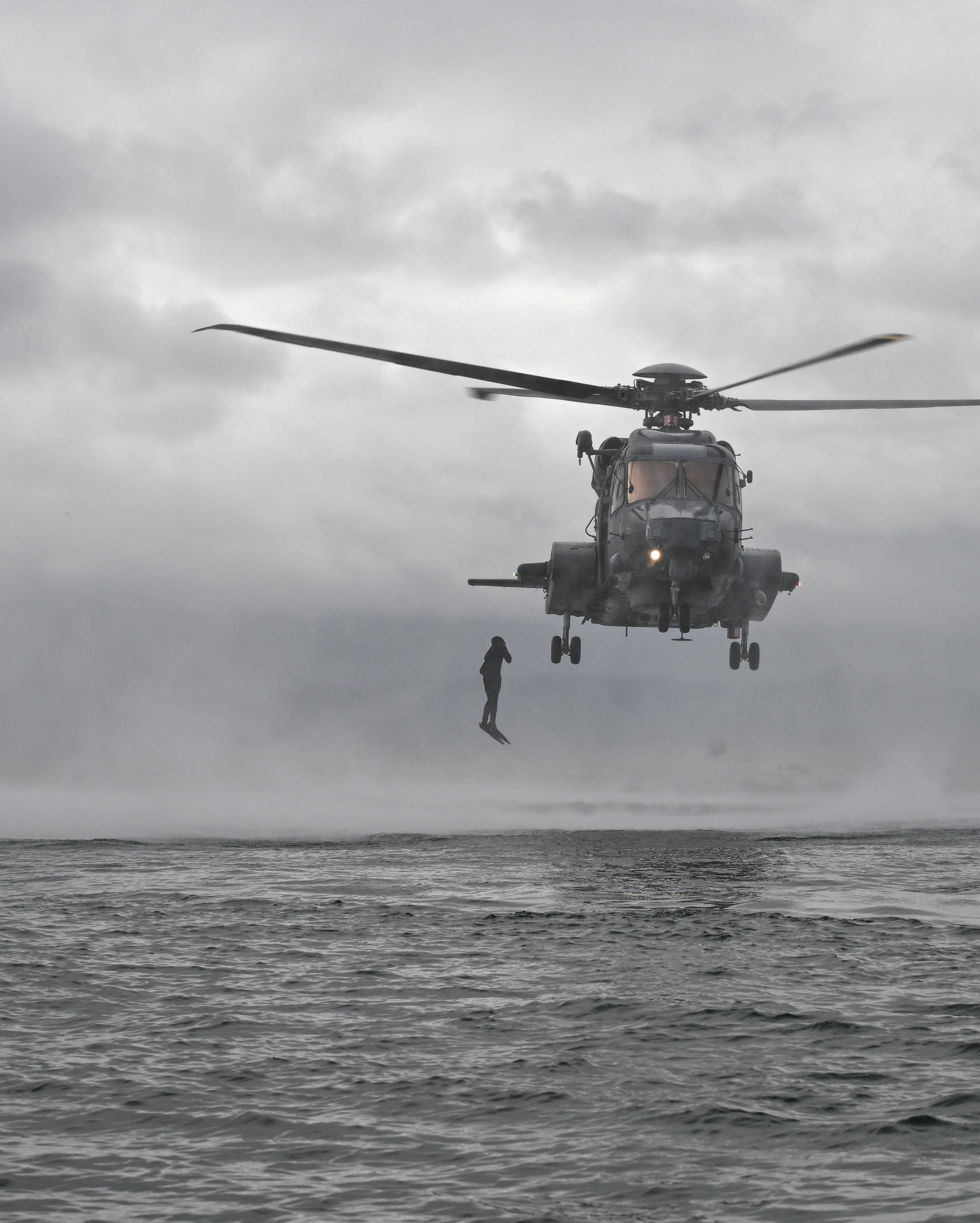
• Helocasting, a method of inserting divers into the water by helicopter.
The exercise also allowed divers to recertify their qualifications.






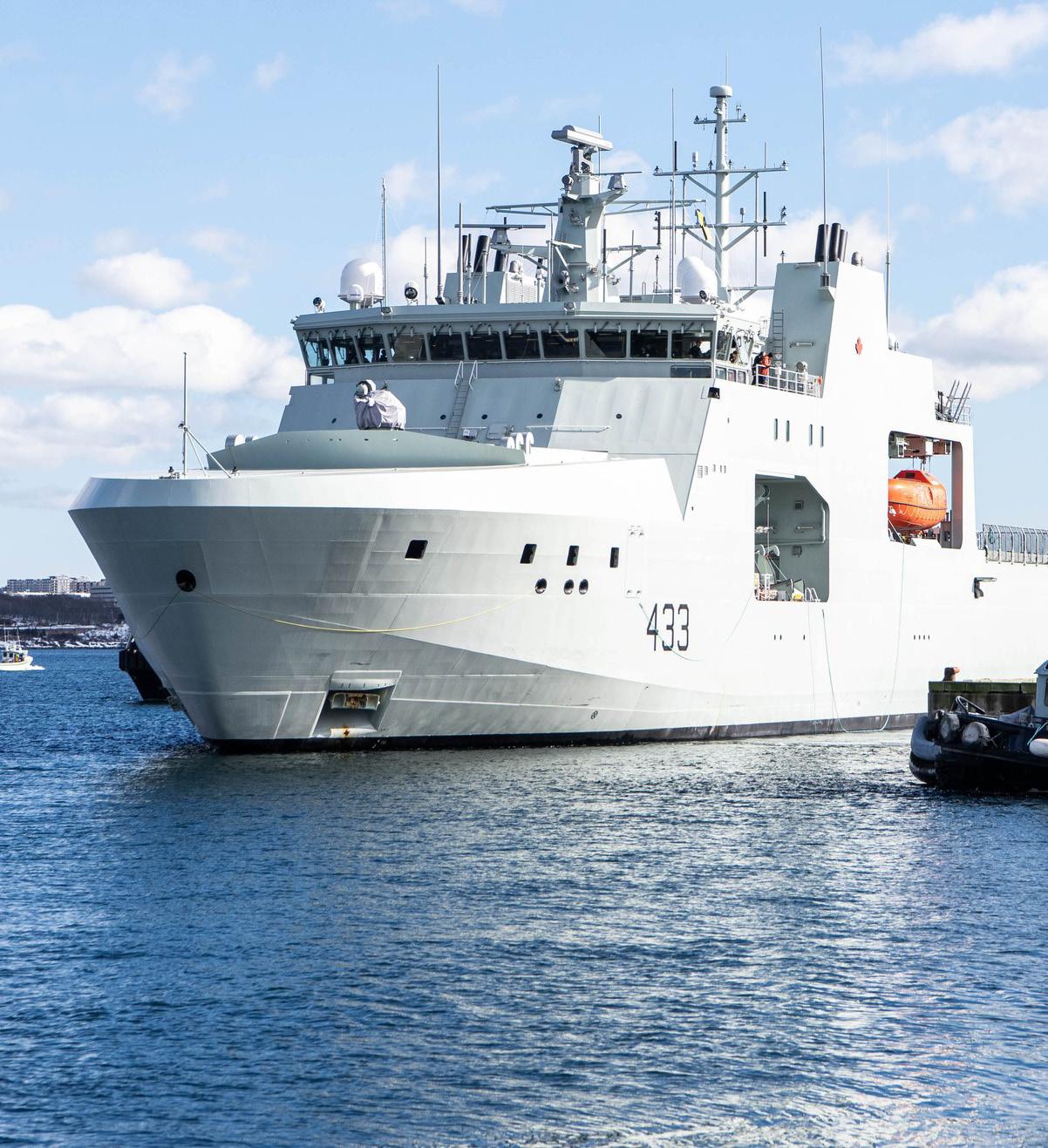


The Royal Canadian Navy’s (RCN) newest Arctic and Offshore Patrol Vessel (AOPV) has left Halifax for its first set of sea trials, just as the ship’s namesake was set to be honoured by the Province of Nova Scotia.
HMCS William Hall departed from Halifax on Feb. 12 for a sail to Boston for a port visit, then to waters off Newfoundland for cold-weather trials and training. William Hall was officially delivered to the RCN from builder Irving Shipbuilding in September 2023.
For the ship’s company, some
of whom have been with the unit since it was first stood up, the moment represents the culmination of many months of work and preparation.
“To watch the crew grow and come together – from five of us in the shore office to a full ship’s company now ready to go to sea – it’s been such an unforgettable experience,” said Master Sailor (MS) Sarah MacKenzie. “There’s a real sense of pride being part of
the commissioning crew and honoring William Hall’s legacy.”
That legacy is also being celebrated this month, with Petty Officer William Hall himself being chosen as the 2024 Honouree as part of Nova Scotia Heritage Day.
to a virtual education program focused on William Hall’s life. The ship’s company has made efforts to forge ties with members of the Black community and Black historians, researchers and others as they explore the best ways to strengthen the connection between William Hall the ship and William Hall the man.
Chief Petty Officer First Class (CPO1) Brent Williamson, who is both the ship’s first Coxn and first Black Coxn, described a ‘poetic’ feeling being in this role with a ship tied to the story of a heroic Black sailor.

Born in Horton, N.S., William Hall was a son of formerly enslaved parents who served in the Royal Navy from 1852-1876 – he was the first Black person and the first Nova Scotian to receive the Victoria Cross, for his actions and bravery under fire during the Relief of Lucknow.

Along with a Heritage Day celebration of William Hall at the Naval Museum of Halifax on Feb. 19, a separate William Hall community day was held at the Black Cultural Centre in Cherry Brook, and junior high school students across the province were introduced
“I believe the story of my career, specifically my training, the challenges, and the sacrifices I made, all guided me to this exact point in time,” he said.
The command team shared regrets the ship was away from Halifax during these significant Heritage Day events, but they highlighted this necessary work at sea will allow the ship to be brought fully into the fleet – eventually sharing William Hall’s story in cities and ports around the world.
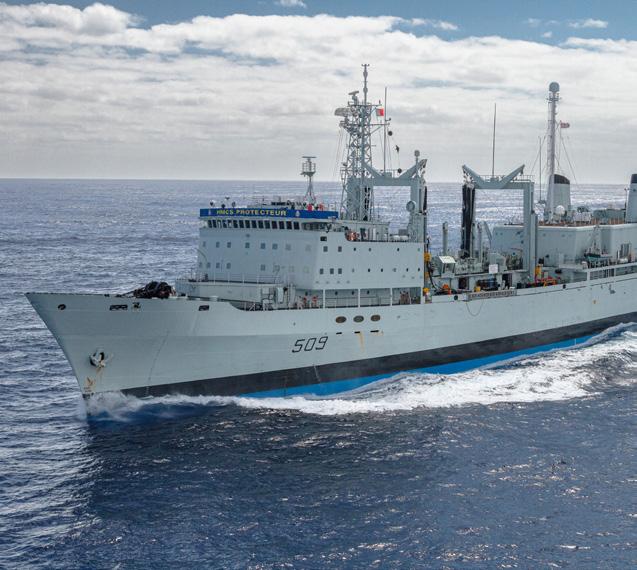
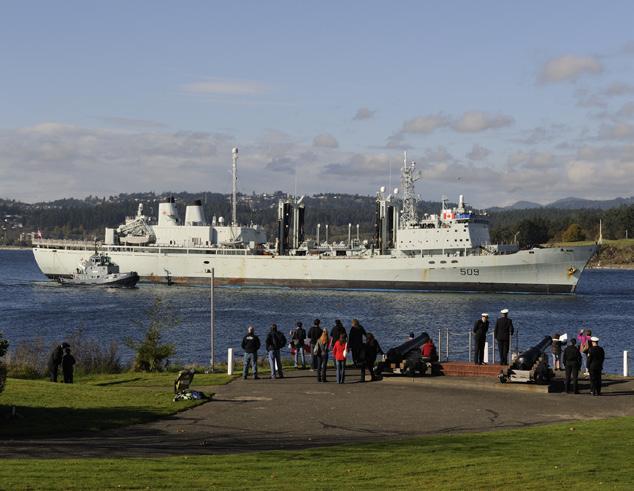
The following is written by Gordon Kijek, who joined the crew aboard HMCS Protecteur during the onboard fire in February 2014. He was part of a ‘Tiger Cruise’ – when friends and family sail back onboard a ship to its home port. This seven-day Tiger Cruise ended more dramatically than any before it. Gordon passed away in 2023 but left the following account to be shared.
The day we joined the ship, it was doing a resupply at sea with an American-guided missile destroyer, the USS Michael Murphy
In mid-afternoon on Day 2, a sailor asked me if I’d like to tour the ship’s engine room. I agreed and joined a group of civilians as we descended into the lowest areas of this great ship.
The engine room went down 40 feet below the water line. We toured the entire three floors of incredibly complex machinery and experienced the ever-present extreme heat and overpowering noise. I could only see the guide’s mouth moving at certain points but heard nothing.
At around 7 p.m. that evening, my son Dean and I were in the Chief and Petty Officers’ Mess when we heard the loud CLANG, CLANG, CLANG of an alarm followed immediately by a loud announcement, ‘Fire, fire, fire! Fire in the engine room!’
Every crew member jumped up and ran to the door, putting their flash gear on. I was instructed to head to the large ‘dispersal area’ in the ship’s centre, where crew members were already putting on fire suits, donning helmets and air tanks and running to the areas leading down to the engine room.
A senior non-commissioned officer announced loudly that his was the only voice that should be heard. He had total and instant control and directed the civilians where to stand. We were given flash gear to put on, and he cleared a path for a sudden flow of casualties (smoke inhalation) that were being taken to the medical facility located in the front section of the ship.
He directed a fire crew returning from the engine room to catch their breath and cool off, sending in the next group. They were rotating for four to seven minutes as the temperature near the fire was over 350ºF. Stairs and railings were so hot the metal was sagging and bending.
The ship lost all power, meaning we had no interior lights or propulsion. Only a tiny bit of battery power was saved for the PA system and some critical radio communication equipment.
A fire is one of the most dangerous things on an oiler replenishment vessel. A ship containing fuel and large stocks of ammunition can lead to a potentially catastrophic situation. Getting far enough away not to be caught in what would most likely be an enormous explosion would be extremely challenging.
Since fire is such a critical issue on a ship such as this, everyone is trained in firefighting. Many of the crew were involved, with the continual replacement of fire crews. We kept hearing ‘Sitreps’ (Situation Reports) that the fire crews were taking ‘defensive positions’ and ‘containment areas’ were being set up. ‘Defensive’ and ‘containment’ did not indicate success.
After standing together in that dark corner for what felt
like an eternity, we were directed to the ship’s wardroom. The existing furniture was pushed to the sides of the room, and sleeping cots were brought in. It was close to 10 p.m., and the fire continued to burn.
The wardroom was dark except for a few flashlights. We had no running water or electrical power of any kind. The fire was destroying the ship’s engine room, so we also had no means of propulsion. We were drifting in the middle of the Pacific Ocean, about 350 miles from Hawaii. With many people and no ventilation, we quickly became very uncomfortable. A few individuals got some tools and tried to remove a couple of forward-facing windows. These windows were bolted on and had likely never been removed. It took almost an hour to take off each window. The resulting cool breeze was so refreshing.
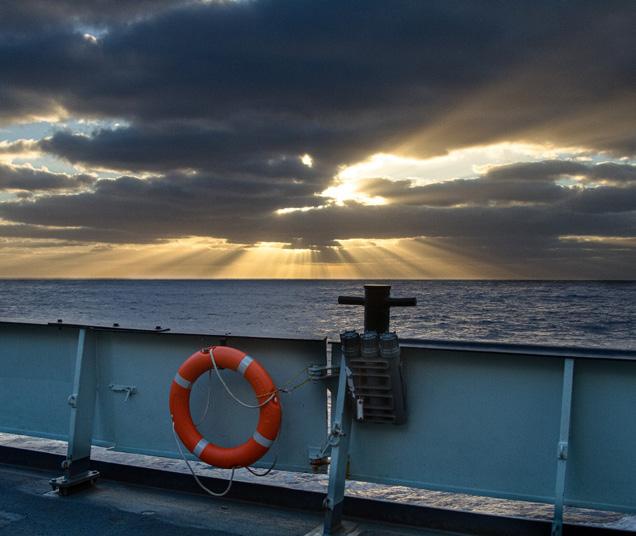
Through the crew’s courage and tenacity, the fire was put out around midnight, five hours after the first alarm sounded. The crew had trained for these situations, and this was where all the preparation paid off.
Knowing that our ship was drifting was an unsettling feeling. Even with almost 300 people on board, there was an overpowering sense that we were all alone.
We first heard and then saw a U.S. Coast Guard plane flying low over our ship around mid-morning. We were told that the U.S. was dispatching three ships to our location, but they were still far away. We would first see the guided missile destroyer, USS Michael Murphy, which Protecteur had just refuelled the day before. Help had arrived.
The civilians were moved to USS Michael Murphy by helicopter. Everyone on the U.S. crew was friendly. They gave us toiletry items, jumpsuits and their embroidered uniform hats. Anywhere we met the crew, they always had a friendly ‘Welcome aboard’, ‘How are you, sir?’ and mostly, ‘Are you lost?’ They called us their ‘extended family’ since we were related to their counterparts in the Canadian Navy.
For just over a day, we stayed escorting the Protecteur as the ocean-going tug, the USNS Sioux, was towing it. My son Dean was still over there on Protecteur. I both missed and worried about him. They were still without power or running water. Dean said afterward that they could take ‘saltwater showers’. After a day and a half of staying with Protecteur, we broke away and went full speed to Hawaii.
After getting off Michael Murphy, we gathered one last time to give the ship, our most gracious hosts, a hearty triple ‘Hip, hip hooray’.
"Through the crew’s courage and tenacity, the fire was put out around midnight, five hours after the first alarm sounded."



Peter Mallett Staff Writer
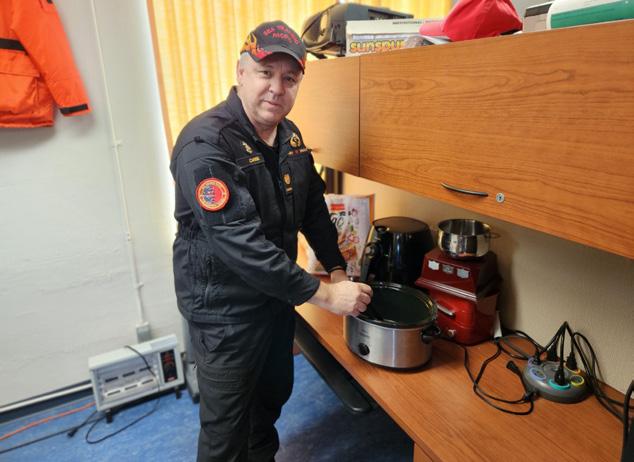
The CFB Esquimalt’s Great Chilli Cookoff winner has some important culinary advice for would-be chefs attempting to achieve taste bud nirvana.
The Naval Communicator at Sea Training Pacific (STP) took the top prize in the third annual Great Chilli Cookoff at STP last fall. He shared a few chilli cooking tips with the Lookout to mark the National Chilli Day on Feb. 22, observed mostly down south.
“Don’t make it too spicy,” cautions Chief Petty Officer Second Class (CPO2) Chris Carisse. “Most loved that my dish wasn’t too spicy and liked to add their accoutrements to compliment the chilli.”
CPO2 Carisse says cooking comfort foods in the home kitchen or on the backyard BBQ is pure enjoyment and a great way to unwind from work. He helps deliver operational-focused training for HMC ships as they progress through Tiered Readiness Programs.
While he has no formal training in cooking, CPO2 Carisse admits he learned more than a few cooking tips from his son Shay, who is a Red Seal Chef.
He is convinced his creation’s lack of spicy heat made all the difference in the contest. While he refuses to divulge the full details of his secret family recipe, CPO2 Carisse says the key to a good chilli sauce base is a good amount of garlic, while adding some coffee and brown sugar helped tantalize the taste buds of those participating.
“I am no health expert, but I would say that chilli is certainly a comfort food that most can identify with; it also provides some good nutritional benefits,” said CPO2 Carisse. “It is always


a hit for me at potluck dinners and family gatherings, and I would say good food and friends create good memories, and chilli certainly falls into this category.”
The Great Chilli Cookoff bubbled to fruition at STP, supporting the National Defence Workplace Charitable Campaign (NDWCC), the Base’s annual charitable drive.
It was organized by CPO2 Ryan Kristiansen, the unit’s Sonar Chief. He and six other members whipped up their dishes of varied styles and tastes, ranging from vegetarian to over-the-top smoked and everything in between.
“I was absolutely surprised to win because the other entries also tasted amazing,” CPO2 Carisse said.
His competitors and coworkers, Sea Training, were impressed by CPO2 Carisse’s dish.
“As a young chilli-making entrepreneur, I always look forward to learning from the great chilli masters,” said CPO2 Justin Perreault, a Weapons Engineering Technician (WENG) by trade, whose creation came in second place. “CPO2 Carisse’s submission had the perfect balance of seasonings, meat, beans and accoutrements that you can look forward to enjoying during a cold rainy day in Victoria.”
The unit’s Sonar Chief, CPO2 Ryan Kristiansen, says he also remembers CPO2 Carisse’s creation very well.
“It was a hearty meal of chilli with some unique Mexican fusion [cooking] which brought an explosion of flavours to the palate,” said Kristiansen. “The queso [cheese] added a nice creamy taste to the dish while guacamole salsa was the kicker which brought everyone to flavour town.”
In the end, STP’s Great Chilli Cookoff contributed over $260.00 to the NDWCC while also earning a few tomato sauce stains.


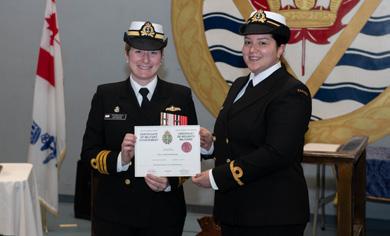
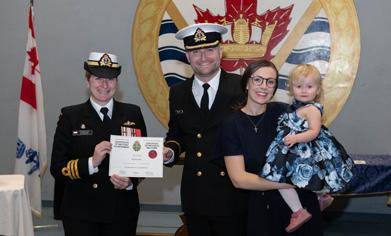
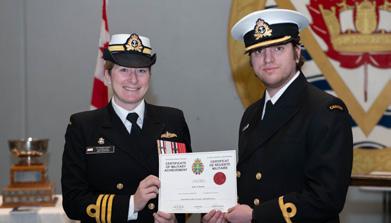
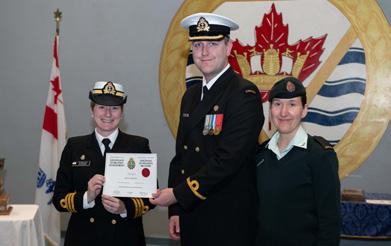
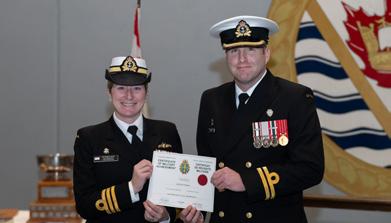
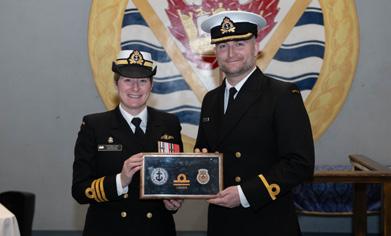
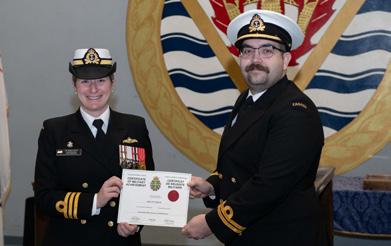
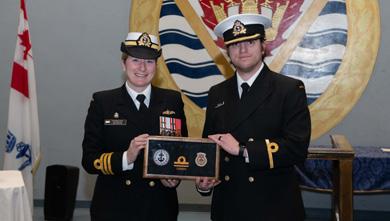
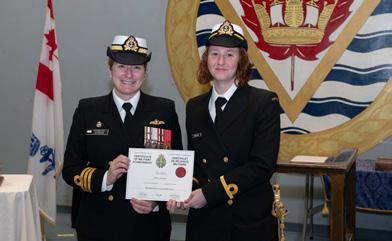
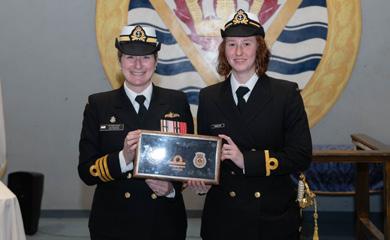
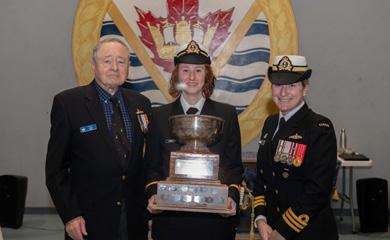
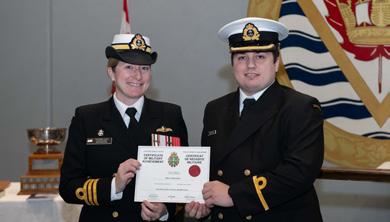
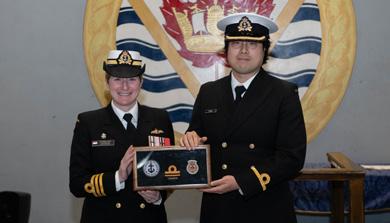
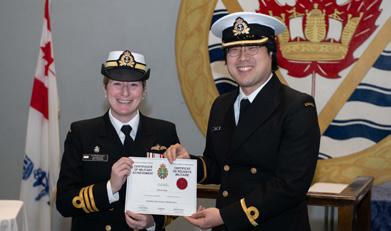
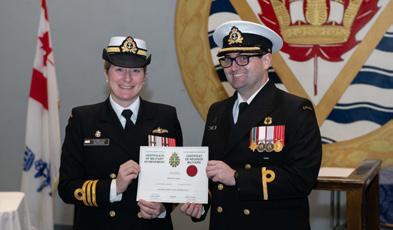
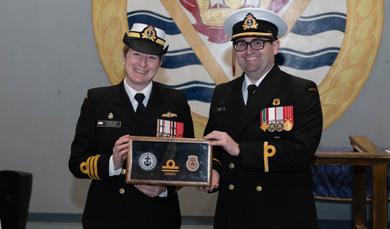
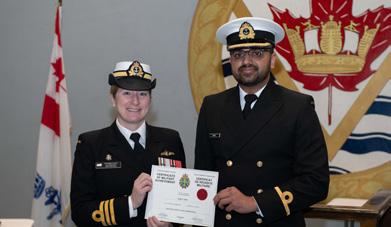
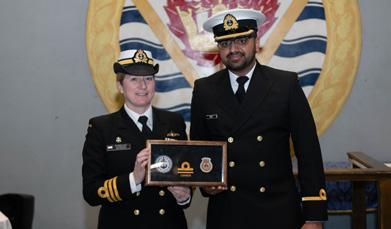
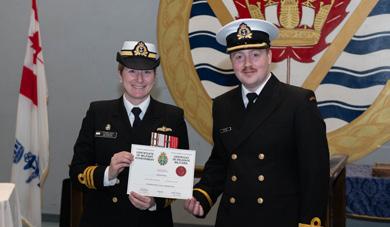
Graduation ceremony for the Naval Warfare Officer Phase IV MATANE course held on Feb. 6 at Work Point. Presented by Commander Meghan Coates, Commanding Officer of HMCS Vancouver Photographer: Corporal Jay Naples, MARPAC Imaging Services
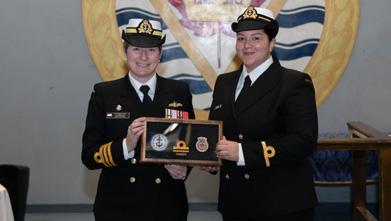
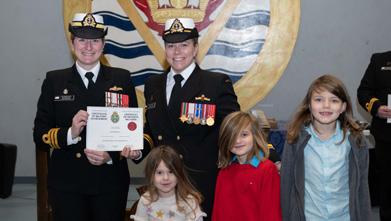
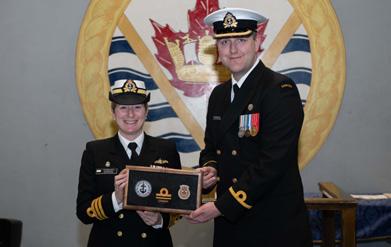
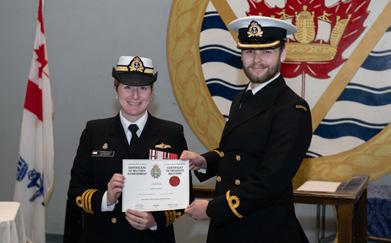
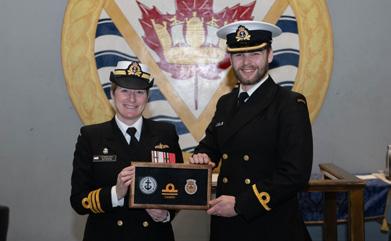
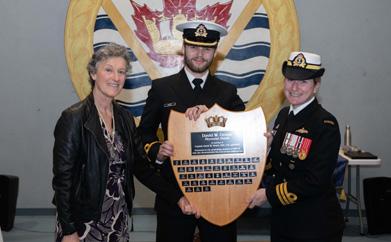
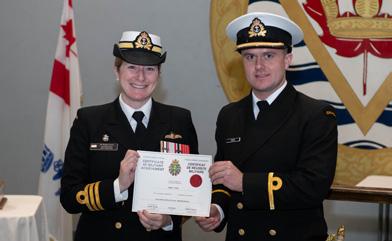
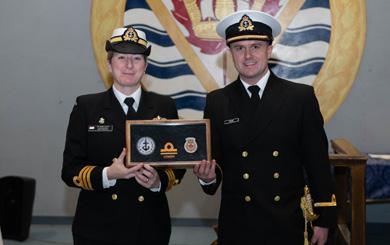
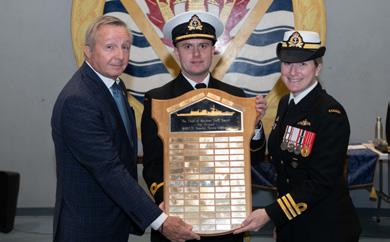
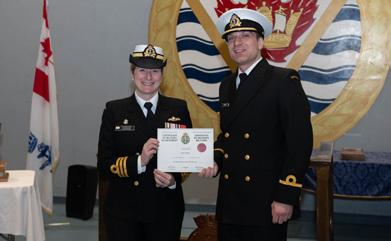
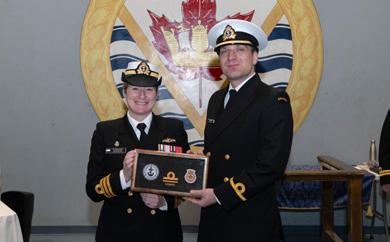
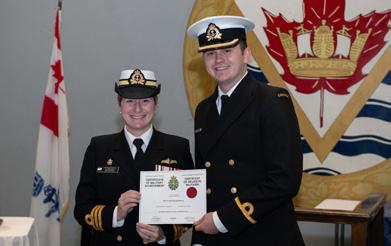
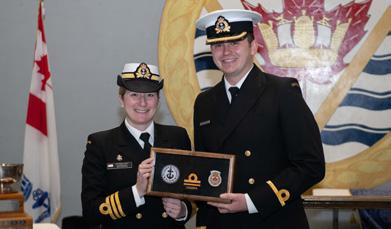

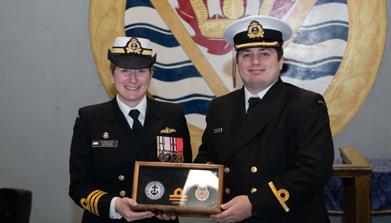
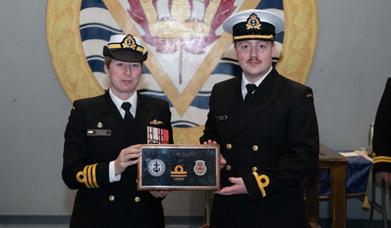
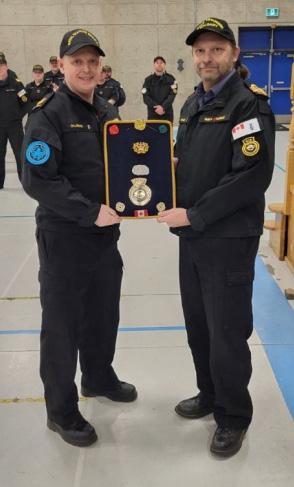
On Feb. 14, Chief Petty Officer Second Class (CPO2) Nicholas Dalebozik was promoted to his current rank during divisions at HMCS Tecumseh (Calgary) by Commander Andreas Paschke, on behalf of Cdr Maxime Maugeais, Commanding Officer of Naval Training Group (NTG) HQ Esquimalt.
CPO2 Dalebozik is currently employed with NTG HQ, New Capability and Training as an Analyst. His role is to facilitate the integration of over 200 projects in support of the delivery of training to the Royal Canadian Navy.




Help is at hand: Powell River-based Sunshine Coast Health Centre and Georgia Strait Women’s Clinic— Canada’s only trauma program exclusively serving women—provide highly personalized addiction, mental health and trauma treatment for male and female clients respectively. We’ll pick you up from the ferry for our daily inpatient treatment tailored to your unique needs.
Services include 24 hour-medical service, psychiatric assessment, EMDR, rTMS, psychotherapy, a dedicated group for military clients and much more.

Serving the Department of National Defence and Veterans A airs Canada since 2009.