Kraken Good Work




February 5–9
Sgt Paul Hare Security Section/Evidence/Property, MPU Esquimalt
Greetings, fellow members of CFB Esquimalt! The time of year has rolled around again when we discuss, emphasize, and pay attention to security and its relevant matters during Security Awareness Week.
Although great focus is paid to these features throughout this week, security awareness is, in fact, a mentality necessary throughout all 52 weeks of the year. It should be treated as something other than a cursory topic during a particular period, only to be neglected during the remainder of the year. It behooves us as members of the Canadian Armed Forces (CAF), and integral parts of the Defence Team, to maintain constant vigilance, which is why this year’s theme is ‘Security beyond the Office’.
Let’s look at some common issues and examples of measures members can take to mitigate these concerns.
One area of vulnerability is the loss or compromise of your personal or military identification. This can occur during commercial air travel while producing your photo ID during check-in for your flight, passing through security, or boarding your flight at the Gate. Annoying as it ca be, offering proof of ID at many different points, this process is not as annoying as the realization you’ve misplaced or lost your ID upon reaching your destination. While travelling, do the wise thing and ensure you promptly secure your IDs after passing through security, not in the overhead bins, but in their appropriate place within your wallets and purses.
Another time when military IDs become vulnerable is while CAF mem


bers explore the many parks and trails in B.C. These are ideal for accommodating the physically-minded lifestyle, but many of you run and bike on these trails with your IDs without a wallet. Should you conduct your outdoor activities in the glorious splendour of our beautiful province with loose ID cards, ensure they are secured within a deep pocket or one with a zipper; otherwise, you may really get your steps in while retracing the route looking for your ID.
We are all familiar with the risks of not providing due care (such as protecting our PIN codes) when using debit cards at commercial outlets and ATMs. Many of you know of the malicious and currently aggressive phone and internet scams fraudulently reporting unusual Amazon or credit card purchases to obtain and confirm your personal and banking information. These types of phishing scams are far less successful and are easily avoided by the informed public. However, a newly emerging scam is finding greater success by taking advantage of the more impulsive investor who may be guided by the social anxiety known as the ‘fear of missing out’. These new scams prey on the current trend of cryptocurrencies and NFTs, promising potential investors lucrative returns and dividends only for those same individuals to have no means of withdrawing or accessing their investments. Victims have found their portfolio holder and the fund portal suddenly closed and is no longer accessible or responsive, and their investment capital is gone. Ensure you engage in investing and banking through reputable and well-known institutions so that you do not find yourself a victim.

Following these simple but important suggestions and strategies will enable you to protect yourself and improve the security of personal and professional information.

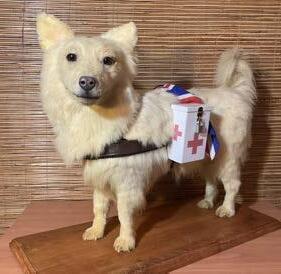
“The money this white, fluffy, pint-sized lap dog raised was used to support the needs of sick and injured soldiers and sailors overseas and in Canada.”
Captain (Navy) (ret’d) Paul Jenkins, Red Cross historian
Peter Mallett Staff Writer
Muggins, the First World War Red Cross fundraising dog which got lost and resurfaced around Victoria over the past century, has finally concluded his journey.
The iconic taxidermized purebred Spitz captured national headlines in 2022 when Captain (Navy) (ret’d) Paul Jenkins, Red Cross historian, revealed that Muggins, who had been hidden away in an attic for years, has been lost again.
“We assumed he had just been forgotten about and disintegrated over time,” said Jenkins.
The story intrigued a Sidney-based author who captured the life of the beloved mascot in a book, Muggins: The Life and Afterlife of a Canadian Canine War Hero
“This little dog who was lauded by famous Canadian military officers and by the visiting Prince of Wales (the future King Edward VIII), served his country through another war and then slept in an attic for decades,” said author Grant HayterMenzies in reaction to the recent discovery.
Hayter-Menzies says his book builds on the research of Dr. Sylvia Van Kirk, a retired University of Toronto professor who first spearheaded the research on Muggins.
A large amount of money raised in Victoria to support the First World War troops came from Muggins. He earned a special place in the hearts of Victoria residents and even became a cult hero. He would wander through the streets, sat perched at his booth in front of the Empress Hotel or outside the Legislature, and residents and tourists alike would delight in filling up his collection tin to the brim.
Muggins was such a proficient canvasser that he deduced a fool-proof plan to seek out sizable donations from passengers in the casino of one of the ocean liners docked in Victoria Harbour.
“Muggins knew where the money was,” writes Hayter-Menzies. “He would circle the table bumping the men’s knees and nipping at them; then he would sit and bark; and if that didn’t work, he would jump on the table and sit on the cards until they put money in his collection box.”
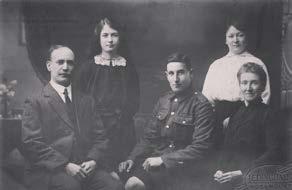
According to the research, Muggins contracted pneumonia and died in

1920. His body was taxidermized and eventually assisted in fundraising for the Second World War. By the late 1950s, the dog and his legacy had been largely forgotten.
Following the Second World War, the Army and Navy veterans building at Broughton and Wharf prominently displayed Muggins in its front window until a renovation project forced its closure. In 1955, Muggins was displayed in the living room of Colwood residents John and Elsie Citra and then moved to their attic when the family moved in 1960.
Dave Citra, their son, found Muggins in 2018 when he was selling his house and gave him to his friends Phil Sommerard and Jo-Ann Gallagher in View Royal. They contacted Jenkins, who confirmed his identity by the original taxidermy stamps on the bottom of the stand.
Jenkins says all fuss raised over the pup’s discovery was warranted.
“Muggins reflects a community coming together around something significant,” Jenkins said. “The money this white, fluffy, pint-sized lap dog raised was used to support the needs of sick and injured soldiers and sailors overseas and in Canada.”
According to Jenkins, Muggins probably surpassed all other individual fundraisers in the provincial capital’s First World War fundraising, with an astounding $21,000 in collections. He notes this sum would be equivalent to over $300,000 today.
After he was discovered, the Citra family donated Muggins to the Red Cross. Hayter-Menzies agreed to pick up the restoration tab because Muggins’ condition wasn’t optimal.
After the makeover, restorer Max Bergman of Dulchis Mortem in Mission, B.C., recreated a collection outfit to portray how Muggins looked back in the early 20th century using an old postcard. A Union Jack kerchief was added to Muggins' collection box and harness to match the postcard.
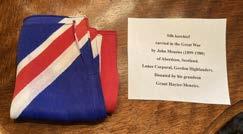
The kerchief has its own legacy: it came from the war chest of Hayter-Menzies’ grandfather, Lance Corporal John Menzies (1899-1980). He carried the kerchief on the battlefield of France in the First World War as a member of the United Kingdom’s Gordon Highlanders. Government House is delighted to feature Muggins as a temporary onloan display this summer.

MANAGING EDITOR
Jazmin Holdway jazmin.holdway@forces.gc.ca
EDITOR
Kate Bandura
WRITER
250-363-3130 kateryna.bandura@forces.gc.ca
Peter Mallett mallett.peter@cfmws.com
PRODUCTION
Teresa Laird production @lookoutnewspaper.com
Leslie Eaton 250-363-8033 leslie.eaton@lookoutnewspaper.com
ACCOUNTS
Jazmin Holdway jazmin.holdway@forces.gc.ca 250-363-3127
ADVERTISING
Joshua Buck
778-977-5433 military.base.advertising@gmail.com
EDITORIAL ADVISORS
Capt Christopher Dubé
Ashley Evans
Rodney Venis

Thomas Goenczi Lookout contributor
250-363-4006
250-363-7060
Published each Monday, under the authority of Capt(N) K. Whiteside, Base Commander.
Le LOOKOUT est publié tous les lundis, sous l’égide du Capv K. Whiteside, Commandant de la Base.
The editor reserves the right to edit, abridge or reject copy or advertising to adhere to policy as outlined in PSP Policy Manual. Views and opinions expressed are not necessarily those of the Department of National Defence.
Le Rédacteur se réserve le droit de modifier,de condenser ou de rejeter les articles, photographies, ou annonces publicitaires pour adhérer au Manuel des politiques des PSP. Les opinions et annonces exprimées dans le journal ne réflètent pas nécéssairement le point de vue du MDN.
& PUBLISHING
Circulation: 2,000 plus online engagement per week
Follow us on Facebook, Twitter and Instagram to join our growing social media community.
A Division of Personnel Support Programs
CFB Esquimalt, PO Box 17000 Stn. Forces Victoria, BC V9A 7N2 Web: www.lookoutnewspaper.com Fax: 250-363-3015
Canadian Mail Product Sales Agreement 40063331


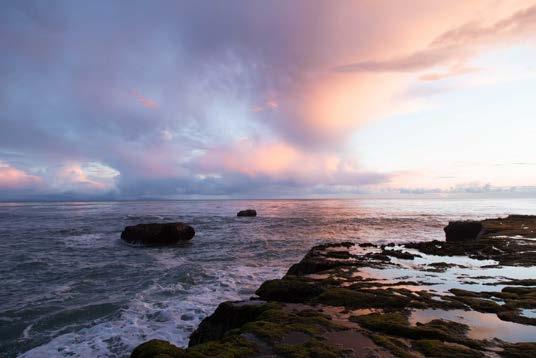
After the dust settles following a traumatic event, we begin the road to healing from Post-traumatic stress disorder (PTSD). How our minds, emotions and behaviours react to the shocking event determines the way. This is unique to each individual. Yet, there are some common reactions at the outset of PTSD.
It is Reactions are typically more nuanced than a single response; it can be a blend of both shock and denial.
Disbelief after being a part of a traumatic experience often comes in waves. We lament why this happened to us and others and how this could’ve happened at all. We can’t shake the images and the sounds of the event; we become so overwhelmed that our minds and bodies seem to be stuck with them.
Our body can feel numb to it all, and not grounded in reality. It’s challenging to find the rhythm of our breath; our skin is cool and clammy like an ocean’s stone, our stomach spins in anxiousness, causing a bundle of knots, and our pulse quickens. These body responses might be related to the adrenaline dump and the disengagement of our nervous system. The fight or flight system has become overheated.
Our mind also feels detached, and our capacity to focus seems frayed. This detachment opens a void in our mind where we often begin to sow the seeds of ruminating on the event. We fill this detachment from the mind with thoughts of the event to ground ourselves back into reality. This is neither good nor bad, but it is one of the laws in processing trauma: going back into what happened.
When shock occurs in our psychic system, we seem to be frozen in time; we can’t move out of it. This can often translate to being detached from the concept of time. It can be argued this is the reason why it is difficult for PTSD survivors to recount the date and time of the event.
The original shock inevitably dissipates after the event as the mind, body, and emotions begin consciously and unconsciously processing what occurred. This can take hours or sometimes even days, but the shock eventually wears off and is often not as intense as time passes.
Shock is one of the most common reactions in the development of PTSD, but it is not the only common reaction. If one is genuinely shocked by an event, it can indicate that trauma is and has occurred. Reviewing how shock showed up for us might be beneficial if we think or are questioning whether we’ve been part of a traumatic event.
How does one deal with the initial shock
from a traumatic situation? Shock is often embedded in the fear of the uncertainty of the situation. One of the better ways to reduce the vibration of shock is to bring grounding back into one’s body and mind. For the mind, it is important to recognize and be aware that you may be experiencing some shock, whether the intensity is extremely pronounced or relatively subtle, the mere acknowledgement can go a long way with escaping the potential repression or suppression of experiencing the event. With insight we can begin to start working through it. For the body, we can take longer and controlled inhalations and exhalations with the intention of trying to settle our system. Following our breath is a good way to unify the body and the mind, and it can be a proactive boundary in not being totally consumed by the shock.
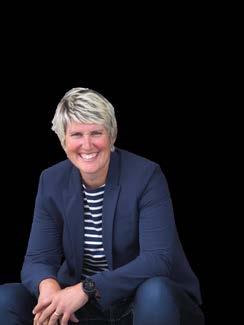
Thomas Goenczi is an RCN Veteran and MA Clinical Counsellor with Private Practice: Well Then Therapy.
The content is not intended to substitute professional advice, diagnosis, or treatment. Always seek the advice of your mental health professional or other qualified health provider with any questions regarding your condition.


The Lookout is seeking content creators and contributors! If you're interested in trying your hand at writing or in expanding your writing portfolio, we want to hear from you!
Everyone has a story to tell.
Please reach out to Kate: kateryna.bandura@forces.gc.ca
All opportunities are volunteer

SLt Luisa Aranda-Ahumada
HMCS Calgary’s Change of Appointment
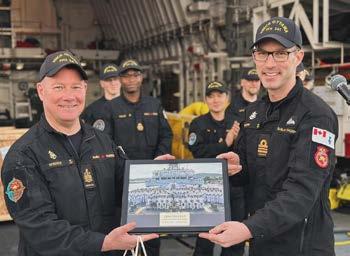
Ceremony on Jan. 18 preceded heavy snowfall, as if Mother Nature was expressing her sorrowful unwillingness to let Chief Petty Officer First Class (CPO1) Armand Reelick relinquish his Coxswain position to CPO1 Timothy King.
As such, the ceremony brought the Ship’s company together in the morning to bid farewell to CPO1 Reelick and extend a warm welcome to CPO1 King.
Since March 2022, CPO1 Reelick has been an exemplary leader onboard the Calgary, setting a standard of excellence through personal example and holding officers and the crew to the highest standards.
CPO1 Reelick motivated the ship’s company

to participate in all sports events on the base. His physical fitness and positive competitive spirit were among the many vital attributes CPO1 Reelick brought to the unit. He will be missed as a dedicated member of the ship’s soccer and hockey teams. The Ship’s Company knows he will be an excellent addition to HMCS Ottawa and that Calgary will always be his home. Fair winds and following seas, Swain!
Calgary is also excited to welcome incoming Coxswain CPO1 Timothy King. CPO1 King joins Calgary from Base Administration, returning to his first home unit in the RCN. “Happy to be back”, he said, acknowledging the shore office environment will generate unique challenges. CPO1 King is determined to bring back the memories and amazing experiences he lived with the unit years ago.
“ONWARD!”








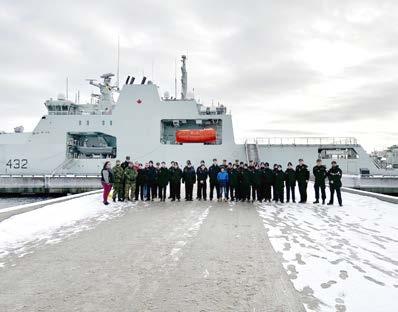
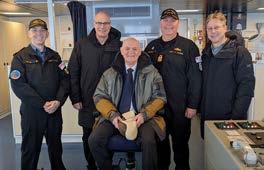
Max Bernays had a wonderful Port visit in Sept-Iles. We received a warm welcome from the Mayor, Mr. Denis Miousse. Our command team visited the Mayor's Office and to visit the Port Authorities facilities. HMCS Joliette, the naval reserve unit of Sept-Iles, along with its command team and crew were very welcoming to us. They helped us organize our arrival alongside and received us in their mess on Saturday. We had the opportunity to create friendship between Max Bernays crew and Joliette crew.
We also received the cadets of Sept-Iles and Port-Cartier. It was a great opportunity for them. They really enjoyed their visit and we hope we will create vocation for the Navy.
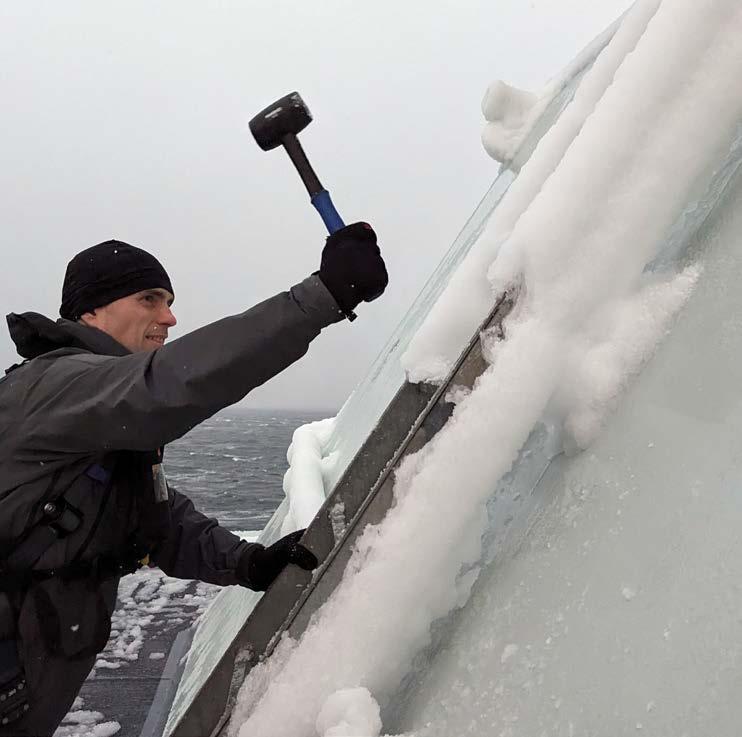
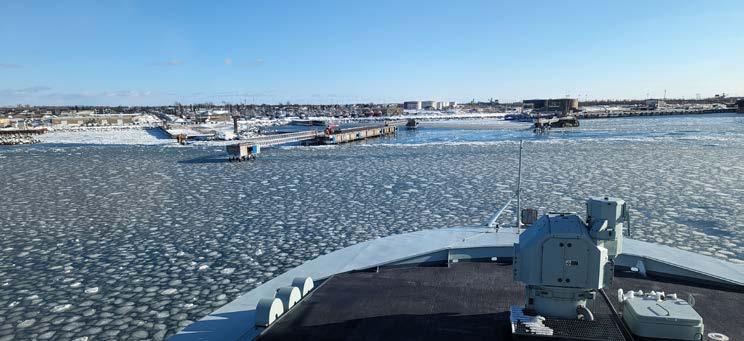
Before our port visit in Sept-Iles, Max Bernays navigated through ice for the first time during this sail, testing our equipment in cold weather. It was a great experience for the crew.
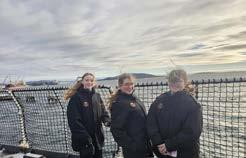
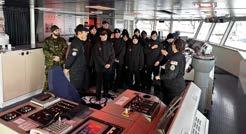
Cadets from RCSCC 117 Jacques-Cartier and RCSCC 227 Shelter Bay visited HMCS Max Bernays on Jan. 27 as the ship briefly passed through the Seven Islands. The crew warmly welcomed the cadets on board, showed them around the ship, and shared their passion for their profession.


A new process is being implemented to reach the Duty Chaplain for emergencies after hours, on weekends, and holidays. As a result, a new number has been established (below). To aid in this transition, the old number will have a message directing personnel to the new number.
During business hours, personnel should contact their unit chaplain or the Chaplain Services main office at 250-363-4106.
Starting Feb. 1, Defence Team members and their families will initiate after-hours chaplain engagement via a dispatcher who will collect basic information and triage their request. The member will receive a call-back from the Duty Chaplain, as required.
Peter Mallett Staff Writer
Athletes from the Base revelled in the recent opportunity to travel the globe and represent Canada internationally.
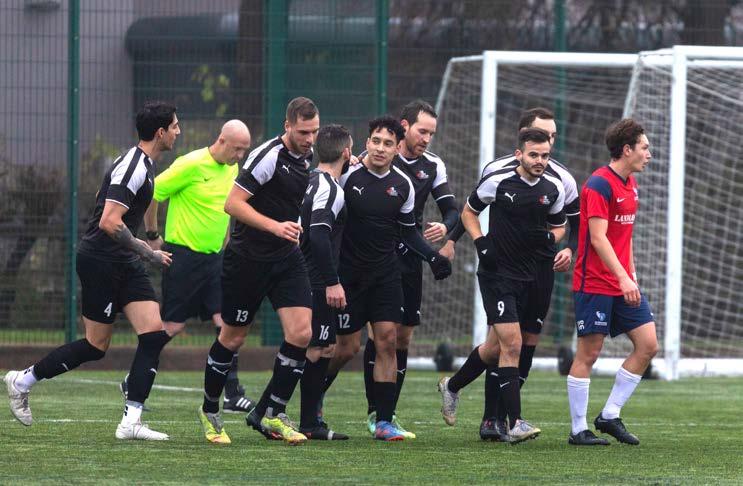
Before the holiday break, members of Canada’s men’s CISM (Conseil International du Sport Militaire) soccer team went to Ireland and the United Kingdom for training and a series of matches against other nation’s military teams. The CISM men’s basketball team also journeyed across the big pond to Holland and Belgium for a training camp and international tournament.
Canada CISM soccer coach Lieutenant (Navy) Demetris Mousouliotis, Executive Officer of Fleet Diving Unit (Pacific) (FDU(P)), says the trip provided an opportunity to grow relations with international counterparts through sport. He typically volunteers as an assistant coach for CISM but took over as head coach for their game abroad.
Before the team hit the field in Dublin, Lt(N) Mousouliotis reminded the players of brotherly duty.
“No matter what happens on the pitch, we are always brothers-in-arms off it.” The pep talk worked.
After the last ball was kicked in Yorkshire,
Lt(N) Mousouliotis concluded that the team had improved its ability to compete against formidable opponents.
Three players from CFB Esquimalt joined Lt(N) Mousouliotis for the 20-player training camps and matches in Dublin and Richmond, U.K., Dec. 2-14.
Victoria-based players who made the selection for the CISM soccer camps included Master-Corporal and central midfielder Max Hache, central defender Sailor Third Class Owen Sewell of HMCS Winnipeg and Sailor First Class Nathaniel Hartley, a striker with HMCS Regina
Canada lost both matches and went goalless in the Dublin Triangular Tournament. They fell 2-0 to the hosts on Dec. 4 and were then blanked 1-0 against the United States in their final match on Dec. 6.
Canada is traditionally an underdog in the CISM soccer world, notes Lt(N) Mousouliotis. He said that Canada routinely faces military teams with much deeper talent pools, so having some measured success was an invaluable confidence booster.
Canada recorded a 2-1 victory over the i2i Football Academy on Dec. 12 and then held the UK Army Northern Selects to a 3-3 tie on Dec. 14.
Meanwhile, on the basketball court, Acting Sub-Lieutenant (A/SLt) Brent Martindale of HMCS Winnipeg also expressed appreciation for this international experience.
“Our guys showed grit and battled adversity on the court,” he said. “We were also very lucky to have an opportunity to represent Canada on the international stage, one that not many others have.”
A/SLt Martindale plays center for the Tritons basketball team and was particularly proud of how he and his CISM teammates performed under pressure against international opposition.
Canada’s men’s and women’s basketball teams held training camps in the Netherlands before their international tournament in Belgium from Nov. 27 to Dec. 2.
Guards Lt(N) Connor Duke, Logistics Officer of HMCS Winnipeg, and Lt(N) Owen Murphy, Marine Systems Engineering Officer on HMCS Ottawa, also participated in the games and camp with A/SLt Martindale.
The men’s team was hosted by Nieuwe Haven Naval Base, where they held a training camp and played exhibition games against the Dutch Navy team. Then, it was off to Mons, Belgium, to compete in an international basketball tournament hosted by NATO’s SHAPE (Supreme Headquarters
Allied Powers Europe).
Canada finished 5th among nine teams at the 53rd annual SHAPE International Basketball Tournament (IBT). Our CISM men’s team lost to the United States and France but scored morale-boosting victories over Germany, the United Kingdom and the Netherlands.
Like our CISM soccer team facing international opposition, our basketball players also faced much deeper and experienced player pools.
Canada’s game with France on Nov. 30 was one A/SLt Martindale was particularly proud of despite the result on the scoreboard.
“We came out hard and strong against an opponent who was a more talented team,” said A/SLt Martindale. “We ultimately came up short in the final moments, but I find more value in closely contested games than onesided blowouts.”
He says the results put the team in a more confident frame of mind heading into their Canada West Regional Basketball that tips off Feb. 12 in Moose Jaw, Sask.
“I think far too often Canada is regarded strictly as a hockey nation, and by achieving a winning record on the basketball court, it bodes well for our program and the game’s growth in general as we go forward,” concluded A/SLt Martindale.


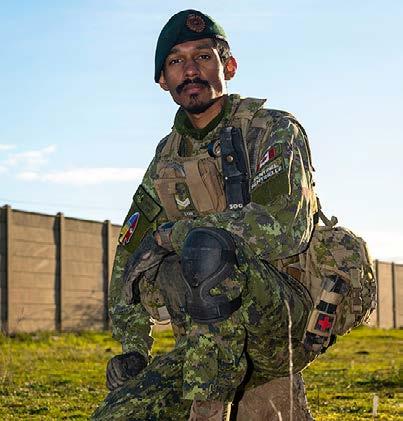



Captain Breanne Brezinski Public Affairs Officer, Joint Task Force-Ukraine
“Growing up, I had a lot of interest in military history. Through constant visits to my hometown’s local armoury and passing the recruitment centre on the way to school, I decided my future was with the Canadian Armed Forces,” said Corporal (Cpl) Colin Lall, a sapper from 2 Combat Engineer Regiment in Petawawa, Ontario.
Cpl Lall was recently deployed as part of Operation Unifier Rotation 16’s training element in the United Kingdom. He was part of the team providing ngineering training to Armed Forces of Ukraine (AFU) soldiers.
While deployed, Cpl Lall taught engineer survivability skills so that AFU soldiers can operate safely in explosive environments. He explained that on the battlefield, combat engineers’ primary roles are mobility, counter-mobility, and survivability.
“We enable friendly forces to live, move, and fight on the battlefield while denying the same to the enemy,” said Cpl Lall.
For Cpl Lall, the deployment gave him the opportunity to have a meaningful impact in assisting the AFU reclaim their country.
“Working with the AFU is very rewarding and humbling," said Cpl Lall.
“These candidates arrived as bakers, pas-
tors and teachers. They all leave this training as soldiers. You can see in their eyes the determination to reclaim their homes and to push the illegal invaders out of the country.”
Reflecting on his time deployed on Op Unifier, Cpl Lall explains that his key takeaway from this deployment is learning that a soldier’s strength comes from their teammates.
“At some point you stop fighting to keep yourself alive, but you’ll always fight to protect your friends you went through hell with. This is a lesson I learned from seeing the AFU throughout these courses,” he said.
When asked why people should consider becoming combat engineers, Cpl Lall recommends the trade to anyone who likes lifting heavy objects or explosions.
“Engineers are the jacks-of-all-trades for the Army. We do everything from breaching doors to assault boating. Our specialties include heavy equipment, combat diving, explosive ordinance disposal and a few others.”
However, Cpl Lall highlights that the key aspect of the engineer trade is the camaraderie.
“When building a bridge, there needs to be a lot of trust and team cohesion; same with when we set up explosive charges or conduct breaches. No matter what I’m doing, I can always trust my fellow sappers to have my back.”

CFB Esquimalt
Registered Retirement Savings Plans (RRSPs) are Canada’s most well-known type of investment account. They’re a proven way to invest your money, get an immediate tax break, let your savings grow tax-free until retirement, and even pay less tax in retirement.
With the RRSP deadline on Feb. 29, you might think it’s time to make your contribution - but not so fast. There are some great reasons why you should contribute to an RRSP this year and a few reasons why you shouldn’t. We’ll break it down for you here.
1. You can get a tax deduction this year.
Let’s say you made $70,000 in 2023. If you were to contribute $10,000 to an RRSP, you could deduct it from your taxable income. That means you’d only be taxed on $60,000 ($70,000 minus the $10,000 deduction). The result? You could save over $3,000 in taxes. Know what else? You could use that $3,000+ tax refund to make another RRSP contribution and start growing your wealth like a giant snowball rolling downhill.
2. You can grow your money tax-free. The money you put into your RRSP can be invested,
earning interest, dividends and capital gains. And the best part is that all the money you make can grow taxfree. How fast can it grow? The Rule of 72 is one way to get a rough estimate. Divide 72 by your expected rate of return to see how many years it will take to double your money. So, if you expect to make 6 per cent per year, 72 divided by 6 means your money would double about every 12 years (and it would keep doubling every 12 years).
3. You have goals that fit.
An RRSP is mainly for helping you save for retirement, but it can also be part of your plan to purchase your first home or set yourself or your spouse up for higher education. The Home Buyers Plan and the Lifelong Learning Plan are two programs that make it possible to borrow money from your RRSP tax-free to help finance these goals.
1. You don’t have an emergency fund. Life has a way of happening, and that’s why an emergency fund is essential. Whether it’s a car repair, a leaky roof, a broken furnace, or something that disrupts your income, it’s wise to have some money set aside somewhere safe, like a savings account, just in case. Trust us, you don’t want to contribute to an RRSP now and must make an emergency withdrawal later. You’ll have to pay tax on the withdrawal, and you will never

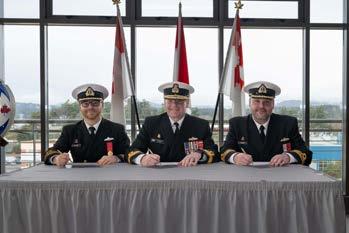
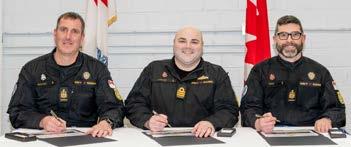
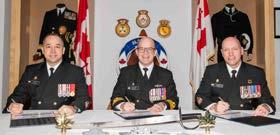
L-R: Lieutenant-Commander Kevin Lashinski, incoming Commanding Officer Patrol Craft Training Unit (PCTU), Commodore David Mazur, Commander Canadian Fleet Pacific, and Lieutenant-Commander Ryan deForest, outgoing Commanding Officer PCTU, sign certificates during the PCTU Change of Command at the Wardroom on Jan. 26.
get that RRSP contribution room back again.
2. You’ve got expensive debts.
In most cases, you’ll be better off paying down debts – especially credit cards and loans with double-digit interest rates – than putting money in an RRSP. It comes down to how much interest you’re paying on the debt versus what rate of return you can expect from your investments. Not sure how the numbers look? This is a great topic to discuss with a SISIP Advisor.
3. Your earnings were low this year.
The whole idea of an RRSP is to get a tax deduction today when you are paying a high income tax rate and take the money out when you are retired and likely to be in a lower tax bracket. However, if you’re already in a relatively low tax bracket, something other than this strategy might work better. Don’t worry about it – you can still invest in a Tax-Free Savings Account (TFSA) now and save your unused RRSP contribution room until a future time when you’re in a higher tax bracket.
Deciding how much to contribute to your RRSP – or whether to contribute at all – is a financial planning decision you do not need to make alone. SISIP Advisors are salaried experts who can help you weigh the pros and cons, provide objective advice, and help make sure that your Canadian Armed Forces pension and your RRSP work together beautifully. Book a chat with a SISIP Advisor and get all the answers you need! SISIP Financial is located at 98 CFB Naden, 1343 Woodway Rd, Esquimalt. Call (250) 363-3301.
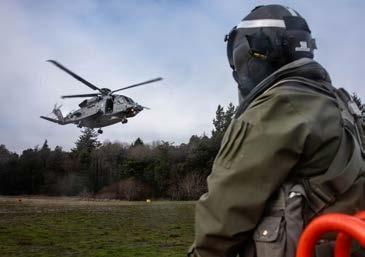

SLt Brendan Kerbiriou, NWO
“But my dear Hose, you don’t understand, it’s impossible!”
If we had to sum up the Royal Canadian Navy (RCN) in one man, it would be Vice-Admiral (VAdm) Walter Hose.
The circumstances of his birth might have foreshadowed a destiny closely linked to the maritime world. Of English origin, he was born to an Anglican bishop in the middle of the Indian Ocean on Oct. 2, 1875, aboard the Peninsular & Oriental steamer Surat.
He joined the Royal Navy (RN) at the tender age of 14 as a cadet, as was customary in those days for the sons of clergymen. That same year, he embarked on HMS Britannia and spent most of the next 21 years at sea. His formative years in the British Navy, from 1890 to 1895, took him through various ships: HMS Brittania, Hyacinth, Impérieuse, Centurion, and Calypso. In 1896, he received his first command of a small 15-ton torpedo boat (HM Torpedo Boat 44). He went on to command a gunboat in China, HMS Tweed.
naval reserve, Hose, who had become close to Admiral Kingsmill, proposed the creation of a volunteer citizen Navy. Kingsmill’s famous reply: “But my dear Hose, you don’t understand, it’s impossible!”
Impossible or not, Hose worked hard to make his vision a reality. With the help of boaters and businessmen interested in a volunteer reserve, he obtained permission from Ottawa to begin training 140 volunteers in July 1913. This was done on a shoestring budget with the help of the Rainbow’s crew and its commander, Hose himself. Hose then won the support of the Premier of British Columbia, who was aware of the weakness of Canada’s maritime defence, and then that of the Governor General, the Duke of Connaught.
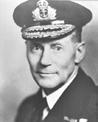
His first sighting of North America was in 1901. At the time, he was a First Lieutenant aboard HMS Charybdis. He was also involved in training the British Naval Reserve Division in Nova Scotia, which consisted of sailors and fishermen trained to serve on warships in case of need.
Here, he met his future wife, a St. John’s girl. Hose decided to join the RCN rather than remain in the British Navy because he wanted to stay close to his wife.
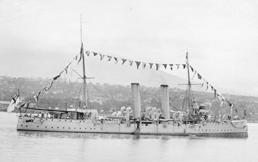
In Nova Scotia, he met VAdm Sir Charles Kingsmill, who gave him his first position in the RCN: command of HMCS Rainbow, following the departure of the former commander. He was then appointed Commander on Loan in exchange for a commission from the RN. But the following year, 1912, he was officially transferred to the Canadian side.
Hose was an ambitious man. Well aware of the slow pace of promotions in the RN, he had decided to seek new challenges in the RCN. He was aware of the Navy’s state at the time and saw it as the ‘ugly duckling of the Canadian Armed Forces’.
His vision for legitimizing the Navy across Canada was to form a reserve of volunteers in units scattered across the country, including the central Prairies. He understood this challenge from his work with the Royal Naval Reserve and put it paradoxically: ‘The Navy must be brought into the country’.
The notion of a naval reserve has been introduced previously. Militias had been formed as early as the day after the Battle of the Plains of Abraham in 1759 but were later disbanded. Since there was no stable, permanent


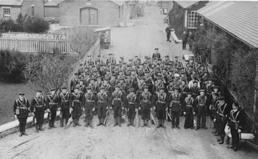
Thus, with Ottawa’s help, the Royal Naval Canadian Volunteer Reserve (RNCVR) was officially born on May 14, 1914, as the war in Europe loomed on the horizon.
During the First World War, Hose sailed the Rainbow across the Pacific Ocean to deter German surface ships from attacking commercial vessels. He commanded the Rainbow until 1917. The following year, the last year of the war, he was appointed Patrol Captain in charge of anti-submarine operations in the St. Lawrence.
After the war and the Washington Conference on Naval Disarmament in 1922, budget cuts saw the volunteer service reduced to the bare minimum. The government, however, was aware of the importance of maintaining an efficient navy. On this notion of efficiency, Walter Hose, having succeeded Admiral Kingsmill as Director of the Naval Service, launched his proposal: a reserve navy supervised and trained by members drawn from the permanent force, enabling the training of competent and disciplined sailors. It would also be a naval force viable in the long term.
On Jan. 15, 1923, the Royal Canadian Naval Reserve, as we know it today, was born from the ashes of the Volunteer Reserve.
Thus, Walter Hose became the father of the Royal Canadian Navy and the founder of the Royal Canadian Naval Reserve. He was promoted to Commodore that same year. He remained Director of the Naval Service until the last day of his career, July 1, 1934. On the same day, he was promoted to the rank inseparable from his Vice-Admiral name.
He passed away in June 1965 under his daughter’s roof in Riverside, Ont. Two years after his death, a memorial was erected in his honour in Halifax, facing the sea, which reads:
“In adversity neither politics, lack of money nor ridicule could beat the determination and courage of this officer.”
His career spanned 44 years in the service of England and then Canada. As it is today, the Canadian Navy is the image he wished for.
“In adversity neither politics, lack of money nor ridicule could beat the determination and courage of this officer.”
~Memorial to Vice-Admiral Walter Hose




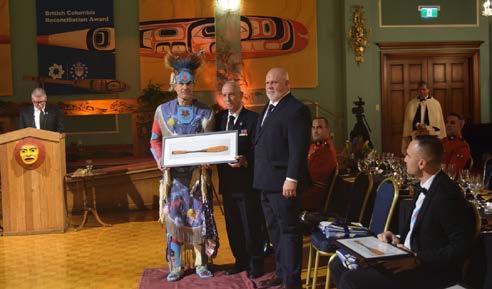
Last Post Fund (LPF) received a 2023 B.C. Reconciliation Award at a ceremony at Government House in Victoria on Jan. 18.
The Honourable Jane Austin, Lieutenant Governor of B.C., presented six awards to groups and individuals who demonstrated exceptional leadership, integrity, respect, and commitment to furthering reconciliation or inspired others to continue reconciliation efforts under the theme ‘Paddle Together’. Three members attended the ceremony: Gino Simeoni from Burnaby, president of the B.C. branch, volunteer researchers Glenn Smith from Abbotsford and Ted Usher from Courtenay.
LPF is dedicated to ensuring that no veteran is denied a dignified funeral, burial, or military gravestone due to insufficient funds at their death.
Over 18,000 Indigenous veterans served in the Canadian Armed Forces (CAF) – often without benefits and facing discrimination upon their return home. In March 2019, LPF established the Indigenous Veteran Initiative (IVI) as part of its mission and in alignment with the federal and provincial governments’ efforts toward reconciliation and building a renewed relationship with Indigenous communities. This initiative commemorates and honours Indigenous veterans by addressing two key components: the Unmarked Grave and the Traditional Name Marking.
“The Unmarked Grave component focuses on providing grave
markers to Indigenous veterans who have been buried without an existing tombstone,” Usher said. “These efforts make certain their resting places are properly recognized and marked while preserving their memory and contribution.”
The Traditional Name Marking component acknowledges that names were changed in residential schools or omitted on their military papers. IVI is responsible for adding their traditional name to any existing tombstone placed by Last Post Fund, ensuring the acknowledgement of their identity and heritage.
LPF collaborates with researchers who are either Indigenous Elders or former Canadian Armed Forces members working alongside Elders. These researchers follow specific protocols when engaging with Elders, respecting the cultural and community requirements. The involvement of Elders is crucial as they possess valuable knowledge and information about deceased Indigenous veterans and their histories.
Usher is also a dedicated volunteer at the Comox Air Force Museum and is recognized for his work on locating all veterans in the Comox Valley cemeteries to ensure no veteran is forgotten.
“The event featured local First Nations’ offering traditional songs and drum dances, and stories of their heritage and history, as well as a traditional meal,” he said. “We are all in the same canoe and must paddle together to ensure we, who live in British Columbia, protect Mother Earth and respect and recognize the heritage of our First Nations neighbours.”





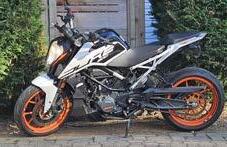

Selling my KTM Duke 200 with about 3K kms on it. Bought used from Barnes, comes with the Akrapovic exhaust system. Used gently and sparingly last summer, has been in storage since September. Runs smoothly, has no issues. Cheap on insurance. An awesome starter bike and great for commuting through Victoria. Please email kateryna.bandura@forces.gc.ca for details.