










Peter Mallett Staff Writer
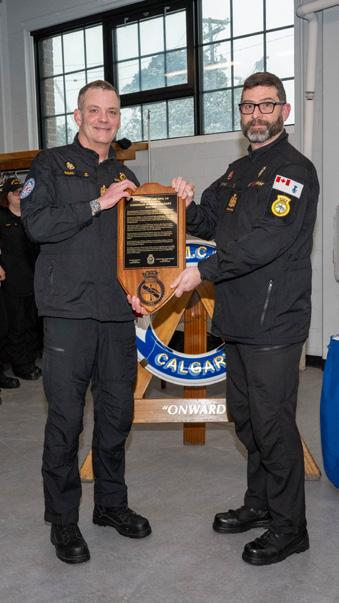
St. John Ambulance has honoured Lieutenant-Colonel (LCol) Andrew Currie, Regional Surgeon Pacific, for his life-saving efforts outside the workplace.
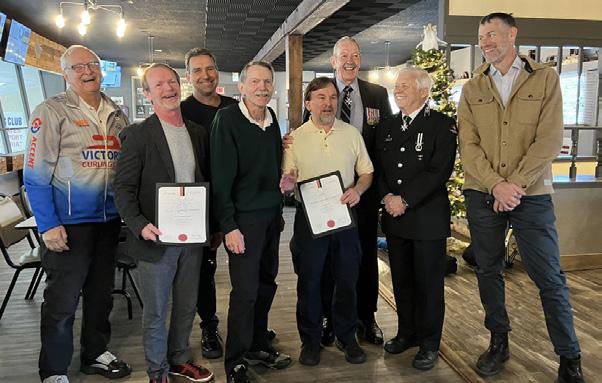
He and his Victoria Curling Club teammate Doug Butler are the latest St. John Ambulance Life-Saving Award recipients. The awards were presented to LCol Currie and retired paramedic Butler during a ceremony at the Victoria Curling Club on Dec. 16.
Earlier last year, the pair administered vital cardiopulmonary resuscitation (CPR) to a teammate who had suffered a heart attack and collapsed on the ice during one of the club’s Sportsman League games.
LCol Currie says the situation presented some unique and unfamiliar challenges to him despite his years of experience as a medical doctor.
“As a clinician, you try to stay calm and detached to perform effectively and efficiently, but this was much more emotional,” said LCol Currie. “It is much different when you know the person you are trying to save in a large rink full of people watching. It became eerily silent as time went on before the EMS team arrived.”
The incident occurred on the morning of Feb. 11, as the curlers had just begun a game. After throwing one of the first rocks, they noticed their teammate Keith North had lost consciousness and collapsed on the ice.
“Keith had just thrown quite a good stone
that I was sweeping,” recalled LCol Currie. “I looked back, and it quickly became obvious he was in a great degree of distress, and Doug and I rushed to help him.”
LCol Currie and Butler immediately began CPR. The pair performed CPR for approximately eight minutes until first responders with the Victoria Fire Department arrived with life-saving equipment.
“I was tremendously worried that I was working on a teammate who was not going to pull through because a long resuscitation without a response did not fuel much optimism,” said LCol Currie.
Once the EMS team arrived and provided additional treatment, North was bucking the [breathing] tube and spontaneously breathing, LCol Currie said. First responders indicated North survived thanks to Butler’s and LCol Currie’s efforts.
During the awards presentation, LCol Currie and St. John Ambulance volunteer E. David Hodgins emphasized the importance of military members and civilians receiving CPR instruction and updating it regularly.
“St. John Ambulance is proud to recognize these two men for their heroic actions in a life-saving emergency,” Hodgins said. “These exceptional individuals are honoured with St. John Ambulance Life-Saving Awards for their swift and skilled response during a critical incident.”
LCol Currie is happy to report that North has recovered and is back on the rink with his teammates.





Peter Mallett Staff Writer
Playing hockey with a childhood goaltending idol was a moment to remember for Petty Officer First Class (PO1) Randy Collens of Naval Fleet School (Pacific).
The goaltender with the CFB Esquimalt men’s and senior men’s Tritons hockey teams met Bill Ranford as they shared goaltending duties in this year’s Hockey Day in Canada Celebrity and Alumni Classic game on Jan. 17 at Ship Point.
“Getting to see the Stanley Cup up close and play with some of hockey’s legends reinforced to me how happy and fulfilling hockey has been for me my whole life,” said PO1 Collens. “I am currently showing the same to my 16-year-old son Tristan so he can pursue his hockey dreams too.”
The game was part of events leading up to the 24th annual Scotiabank Hockey Day In Canada on Sportsnet. The yearly celebration of our national winter sport was broadcast live from Victoria’s Ship Point on Jan. 20.
Others taking part in the game included former NHLers Greg Adams, Andrew Ference, Kevin Bieksa, Wendel Clark, Kirk McLean, and Nathan LaFayette, along with Sportsnet commentators Ron MacLean, Evanka

Osmak, David Amber, Ken Reid and Jennifer Botterill.
The ‘wow factor’ amped up a notch for PO1 Collens when he strapped his goalie pads and skates for Darcy Tucker’s alumni team in their game against Lanny McDonald’s team at the Save on Foods Memorial Centre on Jan. 19.
PO1 Collens made some key saves, including stopping Bieksa on a breakaway with a poke check
and turning back multiple shots by Clark.
“Wendel tapped me and said ‘nice save’, Kirk McLean rubbed my head and said the same,” said PO1 Collens. “It was also nice hearing that I did great from my teammates in the dressing room during the intermission.”
He says the final score didn’t matter much to him, as merely playing on the same patch of ice with NHL legends was an unforgettable experience.
The Sportsnet broadcast team also visited Dockyard on Jan. 20 to share a cup of coffee and talk all things hockey with Base sailors, aviators and soldiers.
Sportsnet’s Elliotte Friedman, Rogers
Sportsnet personality, and Kevin Bieksa, also a former NHLer, completed a brief tour of HMCS Ottawa
“My family would not be in Canada without all of the people who served in our military over 80 years ago and I have never forgotten that,” said Friedman.
“That is why attending CFB Esquimalt and meeting its members was a great honor for me.”
Captain (Navy) Kevin Whiteside, CFB Esquimalt Base Commander, also welcomed the Sportsnet delegation to the base in front of his former ship, HMCS Vancouver.
“The building was packed and loud with over 7,000 fans,” he said. “Playing in the game and getting to chat with so many NHL legends during the game and in the locker room was an amazing experience that I will never forget.”
Meanwhile volunteers and staff of the Esquimalt Military Family Resource Centre (MFRC) and their corporate sponsors helped sate the appetites of hockey fans during Hockey Day in Canada. Lisa Church, MFRC Community Engagement Manager, reports that no fewer than 1,500 pancakes, 1,200 burgers, 800 hot dogs and other refreshments were served up for patrons at Ship Point on Jan. 20.
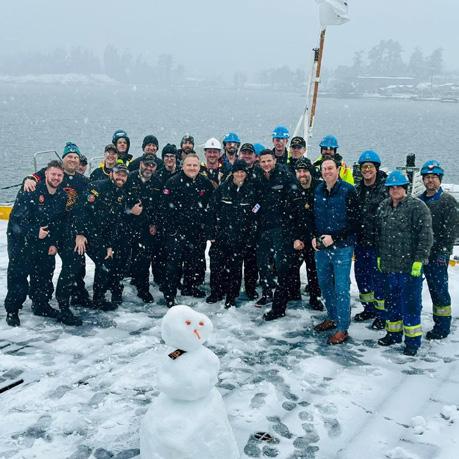
“Meeting and hosting Elliotte, Kevin, and the rest of the Hockey Day in Canada team, was an absolute honour,” Capt(N) Whiteside said. “It was awesome to see them share their time with sailors, soldiers, and aviators, and, of course, to listen to their anecdotes and insights from life inside the NHL.”
“We are grateful for the inclusion of the Base in many Hockey Day in Canada events, and for the incredible support we receive from our surrounding communities in the CRD and from Canadians nation wide.”
MANAGING EDITOR
Jazmin Holdway jazmin.holdway@forces.gc.ca
EDITOR
Kate Bandura
WRITER
250-363-3130 kateryna.bandura@forces.gc.ca
Peter Mallett mallett.peter@cfmws.com
PRODUCTION
Teresa Laird production @lookoutnewspaper.com
Leslie Eaton 250-363-8033 leslie.eaton @lookoutnewspaper.com
ACCOUNTS
Jazmin Holdway jazmin.holdway@forces.gc.ca 250-363-3127
ADVERTISING
Joshua Buck
778-977-5433 military.base.advertising@gmail.com
EDITORIAL ADVISORS
Capt Christopher Dubé
Ashley Evans
Rodney Venis
250-363-4006
250-363-7060
Published each Monday, under the authority of Capt(N) K. Whiteside, Base Commander.
Le LOOKOUT est publié tous les lundis, sous l’égide du Capv K. Whiteside, Commandant de la Base.
The editor reserves the right to edit, abridge or reject copy or advertising to adhere to policy as outlined in PSP Policy Manual. Views and opinions expressed are not necessarily those of the Department of National Defence.
Le Rédacteur se réserve le droit de modifier,de condenser ou de rejeter les articles, photographies, ou annonces publicitaires pour adhérer au Manuel des politiques des PSP. Les opinions et annonces exprimées dans le journal ne réflètent pas nécéssairement le point de vue du MDN.
& PUBLISHING
Circulation: 2,000 plus online engagement per week
Follow us on Facebook, Twitter and Instagram to join our growing social media community.
A Division of Personnel Support Programs
CFB Esquimalt, PO Box 17000 Stn. Forces Victoria, BC V9A 7N2 Web: www.lookoutnewspaper.com Fax: 250-363-3015
Canadian Mail Product Sales Agreement 40063331









Thomas Goenczi Lookout contributor
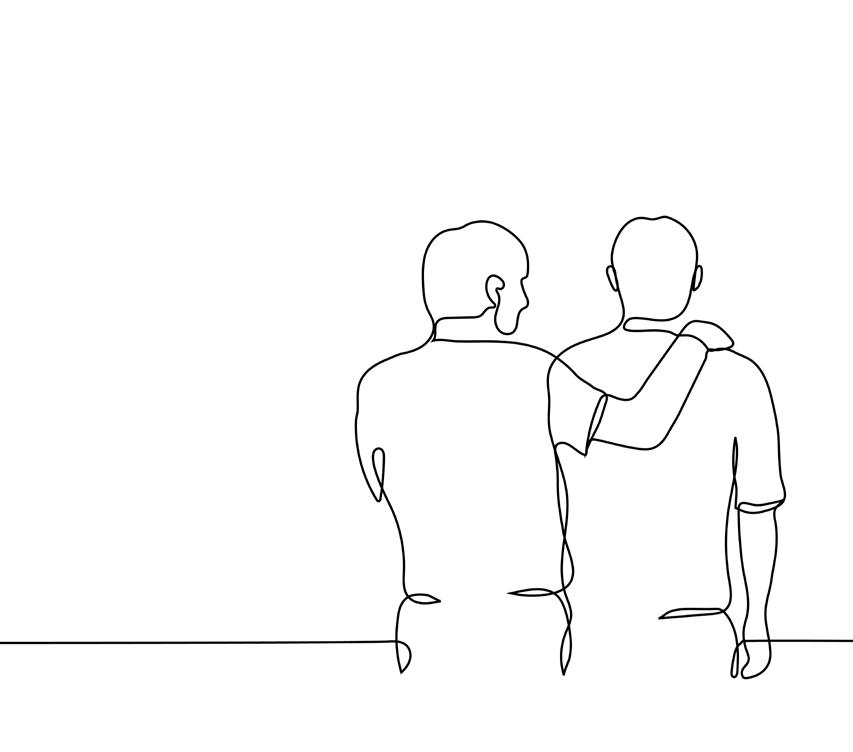
The term ‘trauma’ has become entangled in the collective psyche. It’s now a pop psychology expression that led to inner awareness of how trauma may have, or is, affecting you. Trauma has many forms; it can be childhood trauma, sexual and physical trauma, and collective/societal trauma, just to name a few.
It must be said that everyone reacts to a traumatic event in their own unique way. How you react to a traumatic clash is more than likely different than how I or anyone else would react to it. Over the next few weeks, I will unpack reactions to trauma and the consequences of it to helps us better understand what Post-Traumatic Stress Disorder (PTSD) is and how
it may be affecting you. And I don’t know a better place to start than…
Several almost instantaneous feelings arise when people are in the throes of a traumatic event. First, there’s often an initial shock to the system, followed by a momentary pause which feels like getting sucked back into reality. This is the first crossroad of a traumatic event, the engaging of the fight or flight system. Very rarely this reaction is conscious, rather it is our predisposition that has been hard-wired and nurtured into us.
Within this change of events, emotions begin to well up inside, trying to evaluate the situation. It is important to remember that emotions can be viewed as
rational evaluators of reality. When a traumatic event is occurring one should expect anxiety or fear predominate their mental faculties. The emotion in this situation gleans that something traumatic is occurring and it must find the appropriate measure to express it.
There then begins an inner battle between one’s capacity for courage and the tidal wave of fear that has rung the alarm in the amygdala. This fluctuates given the situation; if you feel you are the centre of the event then the need for courage would be more than being a bystander. The element of courage also helps evaluate how much one needs to be involved in a situation. Once this is decided one becomes enmeshed in the event until its completion, however long that may be.
The aftermath of a trau-
matic episode is where one’s PTSD journey begins. Often the body is still buzzing with adrenaline, but you can start to feel the intensity of the situation go down a bit. Here is where one can seemingly feel like they can breathe again, and begin the collection of thoughts and emotions.
Thomas Goenczi is an RCN Veteran and MA Clinical Counsellor with Private Practice: Well Then Therapy.
The content is not intended to substitute professional advice, diagnosis, or treatment. Always seek the advice of your mental health professional or other qualified health provider with any questions regarding your condition.














Time does not diminish their courage, or the cost paid by the Canadian service members who defended our rights and freedoms in war. Whether it was more than a century ago during the Great War, or 10,000 kilometres away at the scene of the Korean Conflict, we as Canadians have a responsibility to remember their valour and dedication to duty.
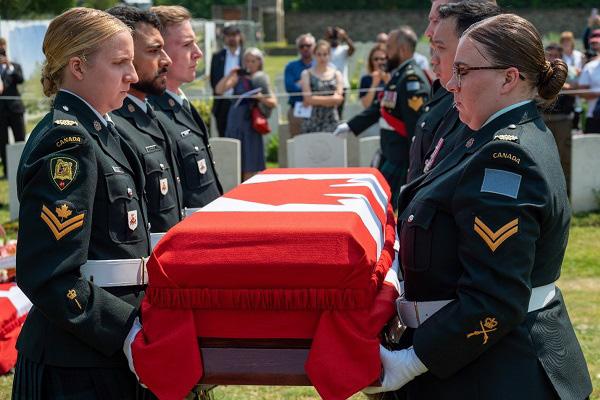
But not all those who made the ultimate sacrifice have been laid to rest in a known grave, and to honour them we must first know them. It is the work of the Casualty Identification (ID) Program, under the Directorate of History and Heritage, to identify the remains of Canadian war dead so that they may be buried with their name, by their regiment, and in the presence of family.
Dr. Sarah Lockyer, Casualty ID Coordinator and forensic anthropologist for the Canadian Armed Forces, says her goal is to return the names and faces to those who died in service to Canada. She knows
just how important that is.
“The families of those we have identified and those who are still missing show us why this work is important,” Dr. Lockyer said. “I have heard many stories of families continuing to honour their ancestors who died in conflict and have no known grave, no matter how much time or how many generations have passed.”
Despite their best efforts and their numerous successes in identifying Canada’s war dead – and closing the chapter for so many families missing a loved one – the work of the Casualty ID Program is far from over. There are nearly 28,000 Canadian military members who died in the First World War, the Second World War, and the conflict in Korea with no known final resting place, including those buried as unknowns.
The process of identifying remains discovered during construction, farming activity or roadwork is so exacting it can take years, sometimes up to a decade, before an iden-
tity is confirmed. To accelerate the identification process, the Casualty ID Program has created an online registration form. Family members of those whose final resting place is not known can help in the program’s investigations by completing the form and providing valuable information about the soldier and relevant family information, such as genealogy.
Only your contact information and information about the soldier who is a part of your family is required. All personal information will be protected, used and disclosed in accordance with the Privacy Act.
Since it was founded in 2007, the Casualty ID Program has identified the remains of 35 Canadians. In 2019, the Program officially took on the additional responsibility of identifying the graves of Canadian service members buried as unknowns, and has since identified 12. There are currently 39 active investigations involving remains, and 38 involving graves.

For more information on the Casualty Identification Program, please visit the Casualty Identification Program webpage: canada.ca/en/department-nationaldefence/services/military-history/history-heritage/casualty-identificationmilitary.html










Canadian Forces Newspaper Association
To foster a sense of identity and leave a lasting legacy, the Royal Canadian Air Force (RCAF) is gearing up to introduce its mascot, an initiative inspired by the iconic Army Run held in September.
Honorary Colonel Andrew Abbott and Colonel (Col) Maggie Jacula witnessed how Juno, the Army’s mascot, enhanced the morale of the participants and the onlookers and decided the Air Force deserved a similar symbol. The decision to adopt a mascot is seen as a great legacy marking the Centennial of the Air Force.
“I am delighted to witness the development of our new Eagle Mascot, a symbol that will undoubtedly enhance the spirit and identity of the Royal Canadian Air Force,” says Col Jacula.
The chosen mascot holds a special place
within the Air Force. The eagle is prominently featured on the Air Force cap badge, symbolizing strength, majesty, and keen vision.
The selection team is confident the perfect name will resonate with the spirit and values of the organization, aim ing for an unveiling at the end of January.
The grand introduction of the mascot is sched uled for Winterlude in early February, making the timely release of the poster crucial for broad awareness.
The mascot is poised to appear at vari ous RCAF 2024 events nationwide, includ ing the RCAF Run, air shows, Tulip Festival, and more. The mascot is not just a symbol, but a dynamic presence set to create memorable experiences at events throughout the year.
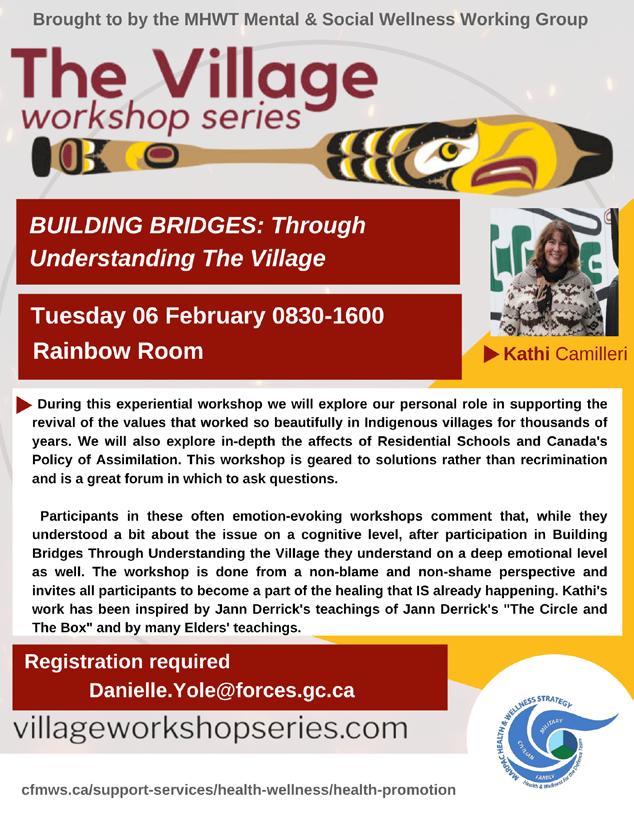
To participate or for more information, info@ RCAF2024ARC.ca.



Canadian Armed Forces (CAF) members, veterans, and their immediate families will have the opportunity to enjoy free daily admission to all Parks Canada administered locations by presenting their CF One card or their Veteran’s Service Card through 2024.
The program, announced by the Government of Canada on January 1, aims to acknowledge and respect the extraordinary contributions and sacrifices made by the military community.
According to the Parks Canada, national historic sites, national parks, and national marine conservation areas provide excellent opportunities to get outside, relieve stress, and connect
with loved ones. By providing free daily admission, they are supporting the health and wellness of CAF members and veterans. CF One cards are administered through Canadian Forces Morale and Welfare Services (CFMWS). CFMWS works on behalf of the Chief of the Defence Staff, under the authority of the Minister of National Defence, and provides programs and services in support of CAF members, veterans, and their families. To obtain your CF One card visit cfmws.ca. For more information about the Veteran’s Service Card visit canada.ca/ veterans-service-card.

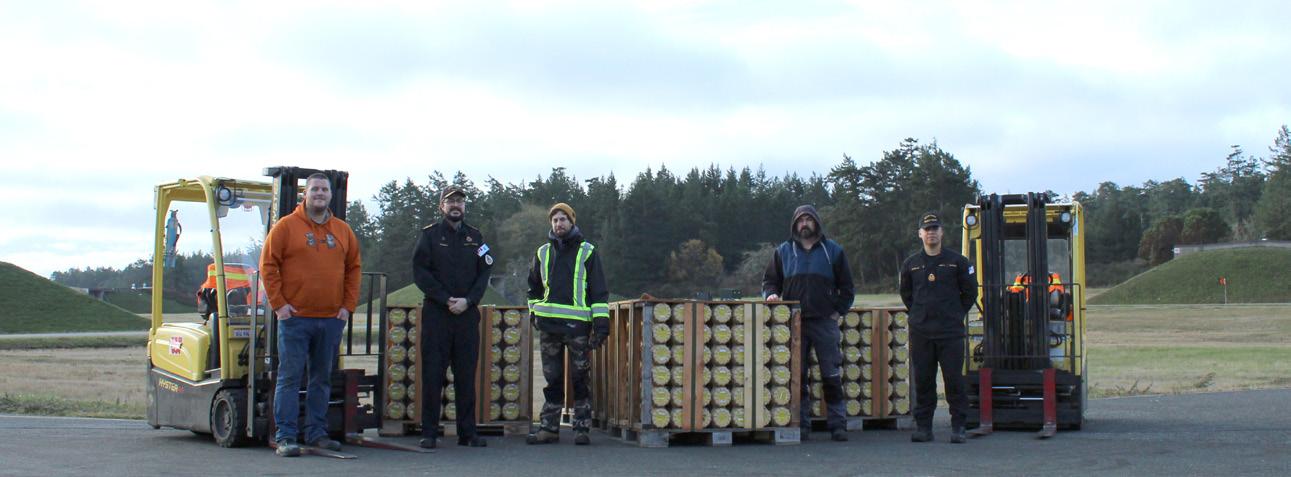
Wooden pallets sit amid 26 ammunition magazines on a chilly November morning at Canadian Forces Ammunition Depot (CFAD) Rocky Point near Metchosin.
Each pallet contains 42 rounds of 76-millimetre naval ammunition waiting to be loaded on an unmarked military 18-wheeler to make their way to Bedford, N.S. There, the Canadian Materiel Support Group will pool it with donations from CFADs across Canada (Dundurn, Angus, Bedford).
The ammunition is destined for the Armed Forces of Ukraine (AFU). Officials in Ottawa decide the type of requested equipment; where the equipment will end up is up to the Ukrainian officials.
This is the first donation to Ukraine by the Rocky Point Depot. Lieutenant-Commander (LCdr) Craig Newman, CFAD Rocky Point Commanding Officer, says the Depot is very proud to participate and support Ukraine.
“This donation is a demonstration of the continued support that Canada has for Ukraine,” LCdr Newman said. “Making contributions where and when we can with what we have to offer is, no doubt, a meaningful demonstration of that support to our allies.”
The ammunition has been residing at
CFAD Rocky Point since 2015, when HMCS Algonquin, the last Iroquois-class destroyer that used this type of ammunition, was paid off. The current fleet of Halifax-class frigates employs a different kind of ammunition, making the 76-millimetre surplus to requirements.
The strict ammunition safety program with the Department of National Defence ensures that stored ammunition remains serviceable, even if it’s been stowed away for almost a decade.
A Lifecycle Materiel Manager (LCMM) is assigned to every piece of military equipment and is responsible for the ‘cradle-tograve’ care from procurement until disposal. The LCMM assigned to the 76-millimetre gun ammunition had yet to decide on the course of action to dispose of the items.
“A donation is certainly an exceptional way to dispose of military equipment,” LCdr Newman says.
“I’m certain we would not donate something that wouldn’t be of use to them.”
The conditions inside each magazine storage at
CFAD Rocky Point help keep the ammunition safe and dry at up to 25°C, and measures have been put in place to prevent moisture, corrosion, and pests.
Besides undergoing the required periodic inspections, the 76-millimeter ammunition has been inspected again in preparation for issues to Ukraine. During issue inspections, all required ammunition is brought to the Transit Facility that doubles as an explosives workshop, which permits unboxing activities.
“We inspect it twice, which is our quality assurance method,” LCdr Newman says.
While the ammunition technicians move the pallets out of the magazine, Jason Roberts, Civilian Ammunition Technician Supervisor, visually inspects the pallets.
“We’ve checked all the pallets individually over the past week, so we already know what goes on board,” he says. “Now, we ensure the safety and security of the items. Other than that, this is just another shipment.”
Roberts ensures the Depot complies with all policies associated with

moving ammunition and explosives under the Transportation of Dangerous Goods Act and signs off on the final paperwork.
The pallets are stacked next to each other very tightly in the back of the truck, horizontally as opposed to on top of each other, which would require two-by-fours to brace the load up hills and around tight curves. From here, the truck will board the dangerous goods ferry in Sidney and the drivers will drive non-stop from Vancouver all the way to Bedford. Once the staff at Bedford receive the ammunition, they will let Rocky Point know the donation has reached its destination.
Now that there is 25 per cent more free space in the storage magazine, LCdr Newman says the Depot is preparing for the anticipated ammunition and explosives storage requirements of the future Canadian Surface Combatant.
The Depot has a very small group of skilled ammunition technicians and ship repair technicians responsible for ammunition, not just with the Royal Canadian Navy but also with the Army and Air Force.
“It is a point of pride for our ammunition technicians, to see their effort help Armed Forces achieve operational success, whether on exercise in the United States or halfway around the world,” LCdr Newman said.


The Lookout Newspaper would like to extend its greatest appreciation and best wishes for Trina Winters, our Administration and Accounts Assistant, as she takes on a new adventure within DND. Fair Winds and Following Seas!


whereharm reductionworkswhereharm reductionworks
oularéductiondes méfaitsfonctionned oularéductiondes méfaitsfonctionned
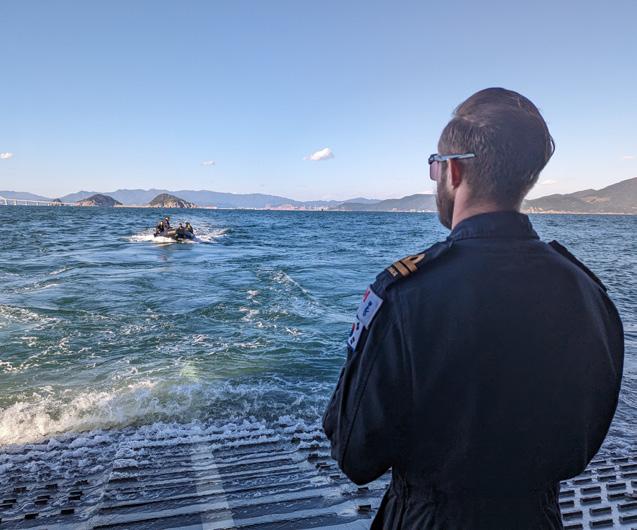


Last autumn, Fleet Diving Unit Pacific (FDU(P)) Clearance Divers participated in Multinational Mine Warfare Exercise 23 (MNMIWEX 23) hosted by the Republic of Korea in Busan.
Led by Lieutenant (Navy) (Lt(N)) Alex Castagna, the team of eight Clearance Divers and one Marine Technician trained in mine countermeasures alongside Canada’s partners and allies from around the world. Such exercises provide the opportunity to increase interoperability, readiness response to threats, and strengthen coordination to improve combined capabilities.
The FDU(P) team mainly conducted mine countermeasures diving from the Republic of Korea Ship Il Chul Bong, alongside Clearance Divers from the Republic of Korea, New Zealand, and the Philippines, but also participated in a variety of collective activities with the United States, the United Kingdom, Belgium, Italy, and Australia.
Each day started with search teams from New Zealand and Belgium sending out Unmanned Underwater Vehicles (UUV) such as the REMUS to scan the designated areas of the ocean for Mine-Like Contacts (MILCOs). UUVs can scan large areas for hours; then, using the data collected and their expertise, the UUV teams identified the MILCOs most likely to be sea mines for further investigations. This is where the Clearance Diving teams, such as the one Canada sent, get to work.
Under Lt(N) Mackenzie Labrecque, the second-in-command of the Canadian team, FDU(P) Clearance Divers used a Canadian-built handheld SONAR device –the Shark Marine – to identify the objects and reported their findings. Sometimes, these objects were simply debris, but the goal was to find and identify sea mines that could be a threat.
“Our job was to investigate the object,” says Sailor First Class (S1) Morgun Knutson, “whether it happened to be a mine or a crab trap; it was our job to go down there and determine what it was.”
Mine countermeasures proficiency is critical to maintaining open sea lanes, maritime stability, and unimpeded lawful commerce.
MNMIWEX 23 culminated in the final Pouncer Operation, where Clearance Divers from each team participated in mine detonation training. In teams of two, Clearance Divers were tasked with entering the water from a helicopter and detonating a dummy mine using prepared demolition charges. FDU(P) Clearance Divers worked in stronger currents and warmer waters than they were used to.
“This was a great Exercise to improve our skillset and experience in moving our divers and dive gear across the globe and working in foreign environments and different languages,” said Lt(N) Labrecque.
Canada’s longstanding relationship with the Republic of Korea dates to the Korean War when hundreds of Canadians gave their lives in defence of freedom for the Korean people. The Republic of Korea and Canadian navies honour that sacrifice by continuing to build their relationship through these exercises.
FDU(P)’s participation in MNMIWEX 23 represents part of a continuum of multinational training and exercises meant to increase mine countermeasures readiness to protect the free flow of legal commerce throughout the Indo-Pacific region. The FDU(P) has a solid reputation in mine warfare, interoperability, and operational readiness. The Mine Counter Measures team has deployed worldwide to neutralize ordnance, sustaining the Royal Canadian Navy’s reputation as an agile fighting force that can be rapidly and flexibly employed.












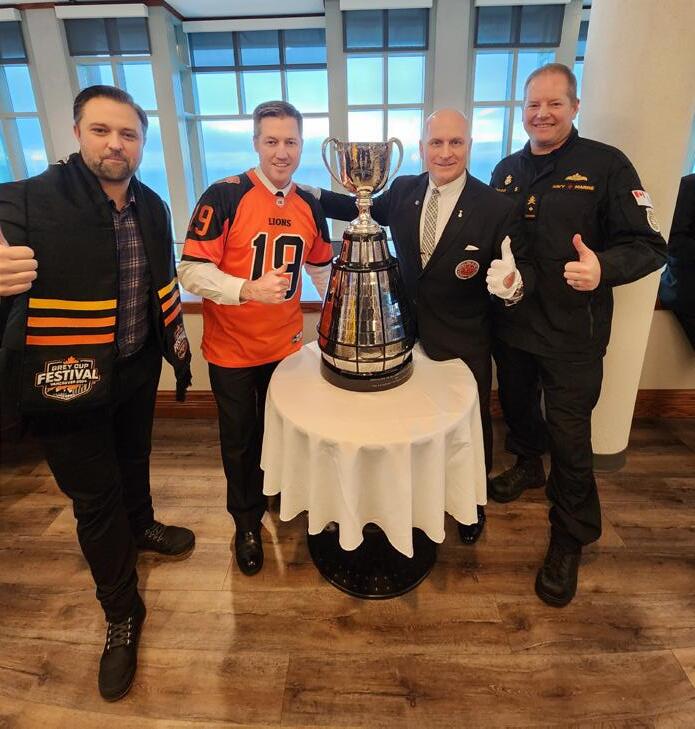
The trophy was commissioned in 1909 at a cost of $48 (approximately about $1,618 today). The chalice is made of sterling silver. Its original base was made of wood, with silver shields listing each championship year and winning team's name.
A 1947 fire destroyed the clubhouse of the Toronto Argonaut Rowing Club and damaged the Grey Cup. Many other trophies and artifacts in the clubhouse melted or were damaged beyond repair but the Grey Cup survived by catching onto a nail attached to a surviving wall when the shelf upon which it sat collapsed.
THE TROPHY HAS BEEN BROKEN ON SIX OTHER OCCASIONS: in 1978, when it was dropped by celebrating Edmonton Elks (formerly Eskimos) players;
• in 1987, when an Elks player sat on it;
• in 1993, when Elks Blake Dermott head-butted it;
• in 2006, when the chalice broke away from its base as the BC Lions celebrated their victory;
• in 2012 when one of the handles broke off as the Toronto Argonauts celebrated;
• in 2014 when the chalice broke away from its base again as the Calgary Stampeders celebrated their win.
THE GREY CUP HAS BEEN STOLEN ON TWO OCCASIONS:
• it disappeared for three days in 1967 when it was taken from the Hamilton Tiger-Cats as a prank, and
• in December 1969 it was stolen from the offices of the Ottawa Rough Riders at Lansdowne Park. The thieves attempted to ransom the trophy, but the CFL refused to pay and made plans to replace it with a duplicate. An anonymous phone call led to the trophy's recovery two months later in a locker at the Royal York Hotel in Toronto. The thieves were never found.
The current design of the Grey Cup's base was introduced in 1987, coinciding with the 75th anniversary of the first Grey Cup championship. The base stands at 84 centimetres (33 in) high and is made of black-lacquered aluminum with silver plates engraved with the names of each winning team's players and executives since 1909.
Source: Wikipedia