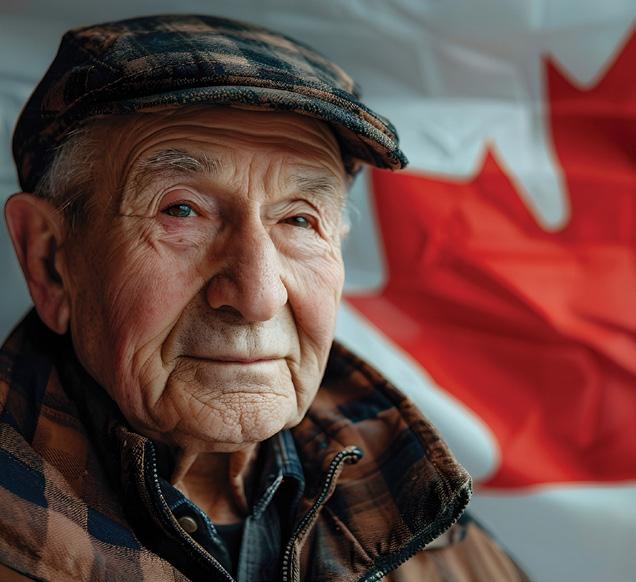
Indigenous soldiers brought valuable skills from their backgrounds, excelling as snipers and reconnaissance scouts. At least 50 were awarded medals for bravery, including Métis sniper Henry Louis Norwest, known for his remarkable patience and credited with 115 enemy kills before his death on Aug. 8, 1918.
Despite past injustices, Indigenous soldiers enlisted again during WWII, taking on roles like 'code talkers.' Charles 'Checker' Tomkins translated military messages from English into Cree, safeguarding critical information from enemy forces.
Indigenous soldiers also participated in the Korean War, including Sgt. Tommy Prince of the Brokenhead Nation, recognized as Canada’s most decorated Indigenous veteran. After serving in elite military units during WWII, Prince advocated for Indigenous rights and re-enlisted for the Korean War, where his leadership and bravery continued to shine.
National Indigenous Veterans Day: Honoring Indigenous Contributions
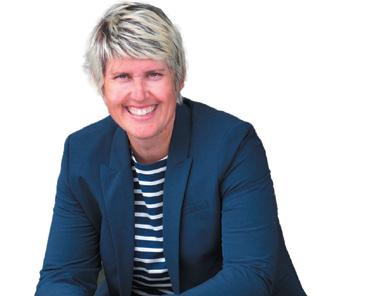
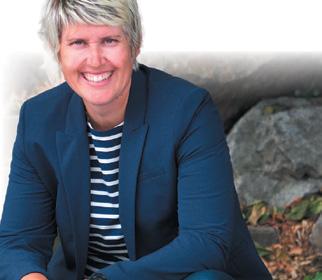
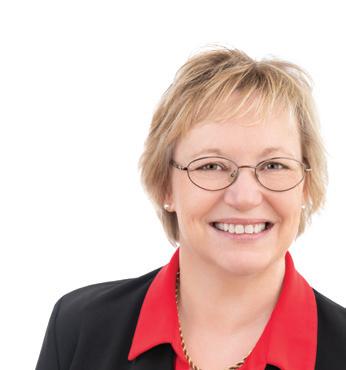
Marie Ormiston Indigenous Engagement Officer, MARPAC
National Indigenous Veterans Day, observed on Nov. 8, honours the contributions of First Nations, Métis, and Inuit people who served in Canada’s military during the First World War (WWI), Second World War (WWII), and the Korean War. Recognizing this distinct day requires understanding the historical context of Remembrance Day.
Initially called Armistice Day, Remembrance Day was first observed in 1919 across the British Commonwealth to commemorate the armistice that ended WWI. For many veterans of that generation, Armistice Day was a complex occasion, blending joy at victory with sorrow for lost lives. It offered a collective moment to express gratitude for the sacrifices made for peace.
However, this recognition largely excluded Indigenous Veterans, who faced significant discrimination. They were not allowed to lay wreaths at cenotaphs or enter Legion Halls to celebrate with fellow soldiers.
Upon returning from service, many First Nation veterans discovered they had lost their Indian status due to the Gradual Enfranchisement Act of 1869, which penalized extended absences from reserves. This act created a process of 'enfranchisement,' forcing Indigenous members to choose between their status and participation in Canadian society, including military service.
Indigenous ex-servicemen were also denied the benefits of the War Veterans Act that their nonIndigenous counterparts received, including educational support and land grants. They faced a
double screening process for pensions, requiring them to prove financial responsibility to Indian Agents before receiving any benefits.
The 1917 Soldier Settlement Act aimed to assist veterans in transitioning to civilian life by providing access to land and low-interest loans. However, Indigenous veterans were ineligible for these grants, though a small number did manage to secure loans.
During WWI, the Canadian government launched the 'Greater Production Effort,' which allowed the leasing of 'idle Indian land' to nonIndigenous farmers. This initiative was facilitated by amending the Indian Act in 1918, removing the requirement for Indigenous consent.
Despite not being recognized as citizens or having the right to vote, Indigenous people enlisted in disproportionately high numbers in WWI, WWII, and the Korean War. It is estimated that 12,000 Indigenous individuals served in these conflicts, with at least 500 losing their lives.
In WWI, nearly 4,000 Indigenous men enlisted, representing about one-third of able-bodied First Nation men aged 18-45. Notably, every man aged 20-35 from the Head of Lake Band in British Columbia enlisted.
Most Indigenous recruits served in the Canadian Army, as the Royal Canadian Air Force (RCAF) and Royal Canadian Navy (RCN) had discriminatory policies requiring volunteers to be 'of pure European descent' until the early 1940s. By mid-WWII, there were 29 Status Indians in the RCAF, nine in the RCN, and 1,800 in the Canadian Army.
National Indigenous Veterans Day began in Winnipeg on Nov. 8, 1994. By Nov. 11, 1995,
Indigenous veterans were invited to lay wreaths at the National War Memorial in Ottawa.
In recent years, Canada, particularly the Defence Team (the Canadian Armed Forces and the Department of National Defence), has worked to improve its relationship with Indigenous peoples.
The Defence Indigenous Advisory Group (DIAG), composed of Indigenous CAF members and public service employees, advises on policies affecting Indigenous members and recommends ways to create a more inclusive environment.
Programs such as the Indigenous Leadership Opportunity Year, Bold Eagle Program, Raven Program, and the Indigenous Entry Program offer culturally relevant pathways to recruitment.
The Indigenous Career Navigator program, in partnership with the Knowledge Circle for Indigenous Inclusion, supports new and existing Indigenous public service employees.
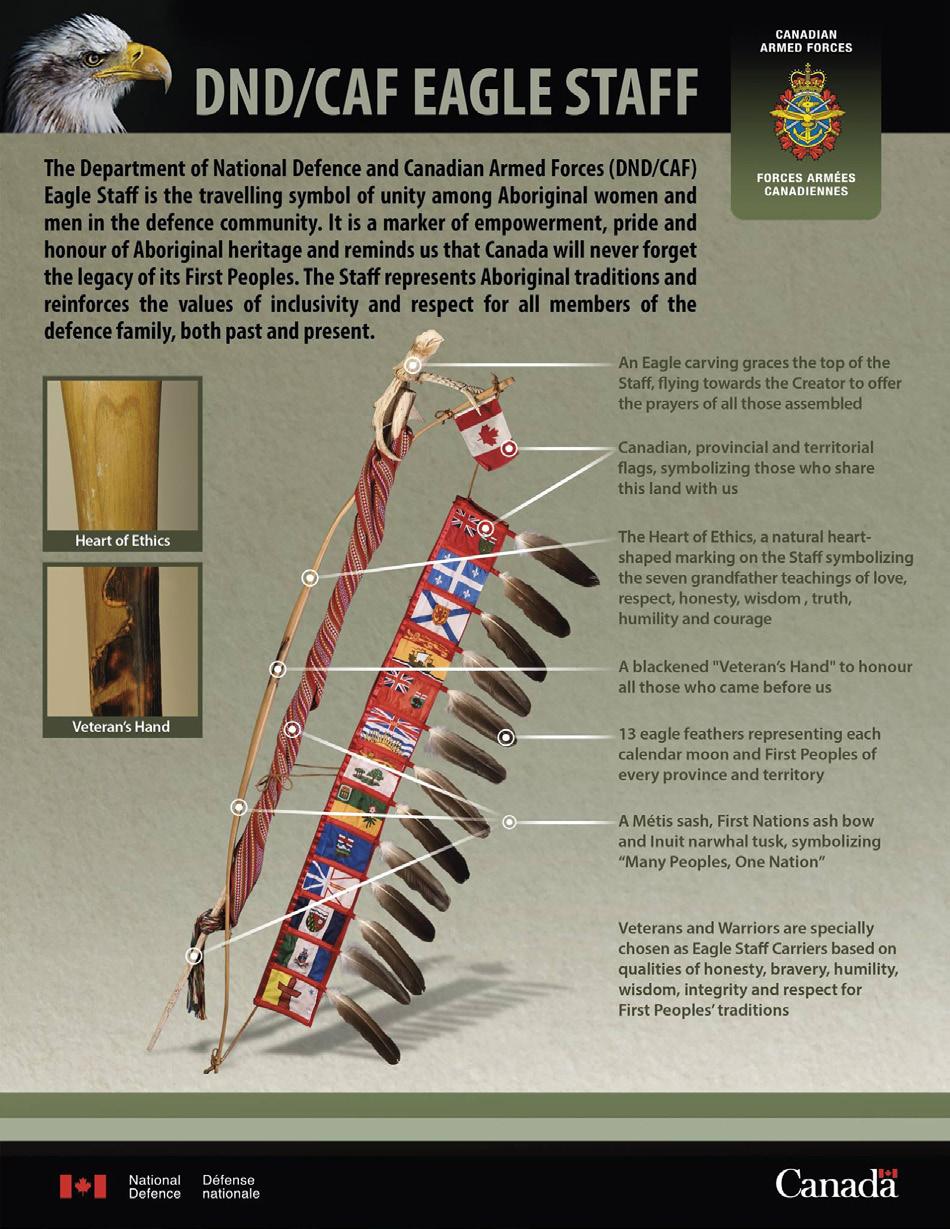
A significant symbol of this evolving relationship is the Eagle Staff, representing strength, leadership, and unity. Indigenous leaders who carry the Eagle Staff are viewed as protectors of their communities.
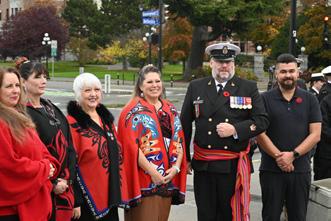
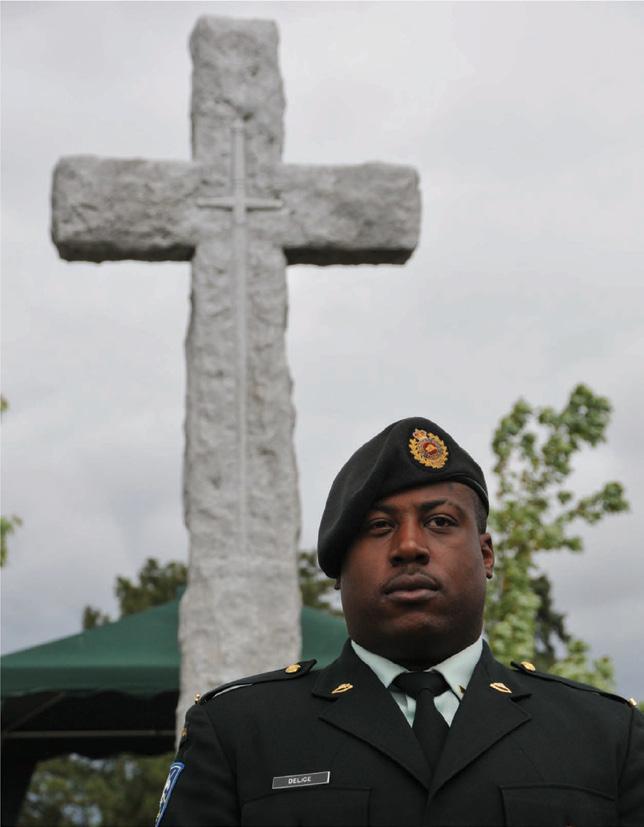
At the 2023 Indigenous Veterans Day ceremony in Ottawa, Indigenous Advisor to the Chaplain General, Chief Petty Officer 2nd Class Patrick Stevens, emphasized the sacred duty of being a land protector and the importance of remembering the sacrifices of Indigenous veterans.
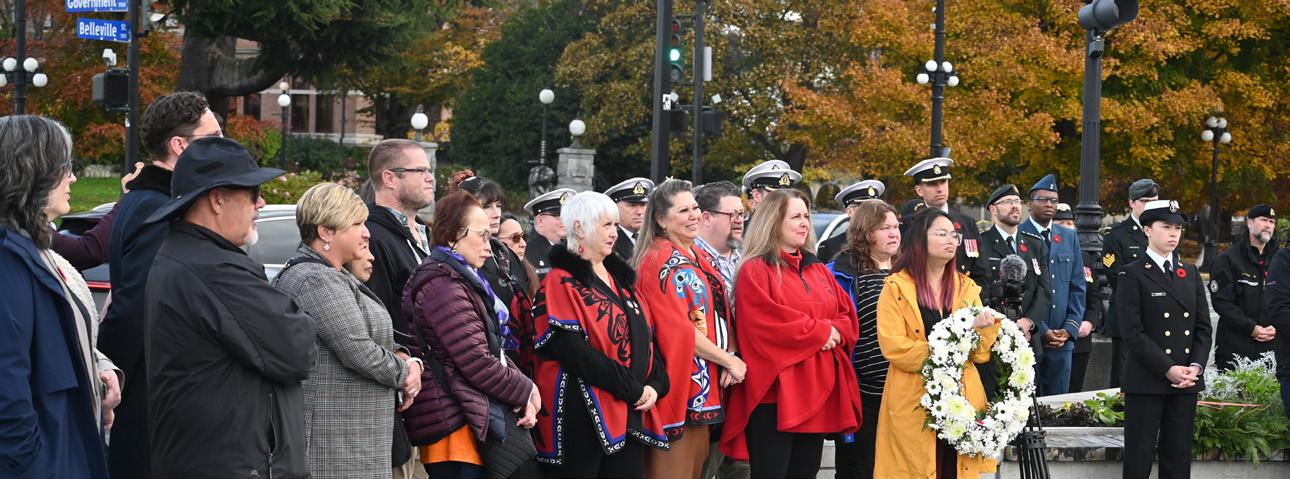
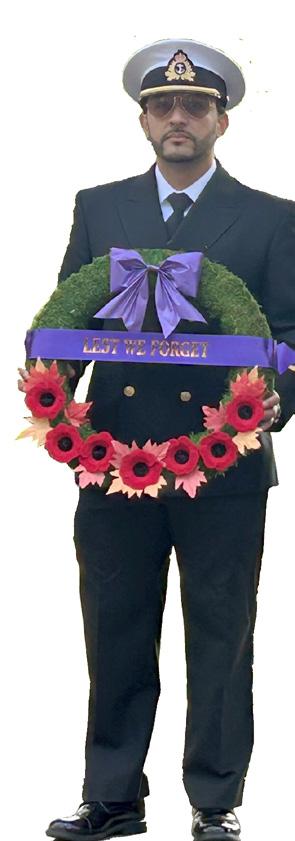
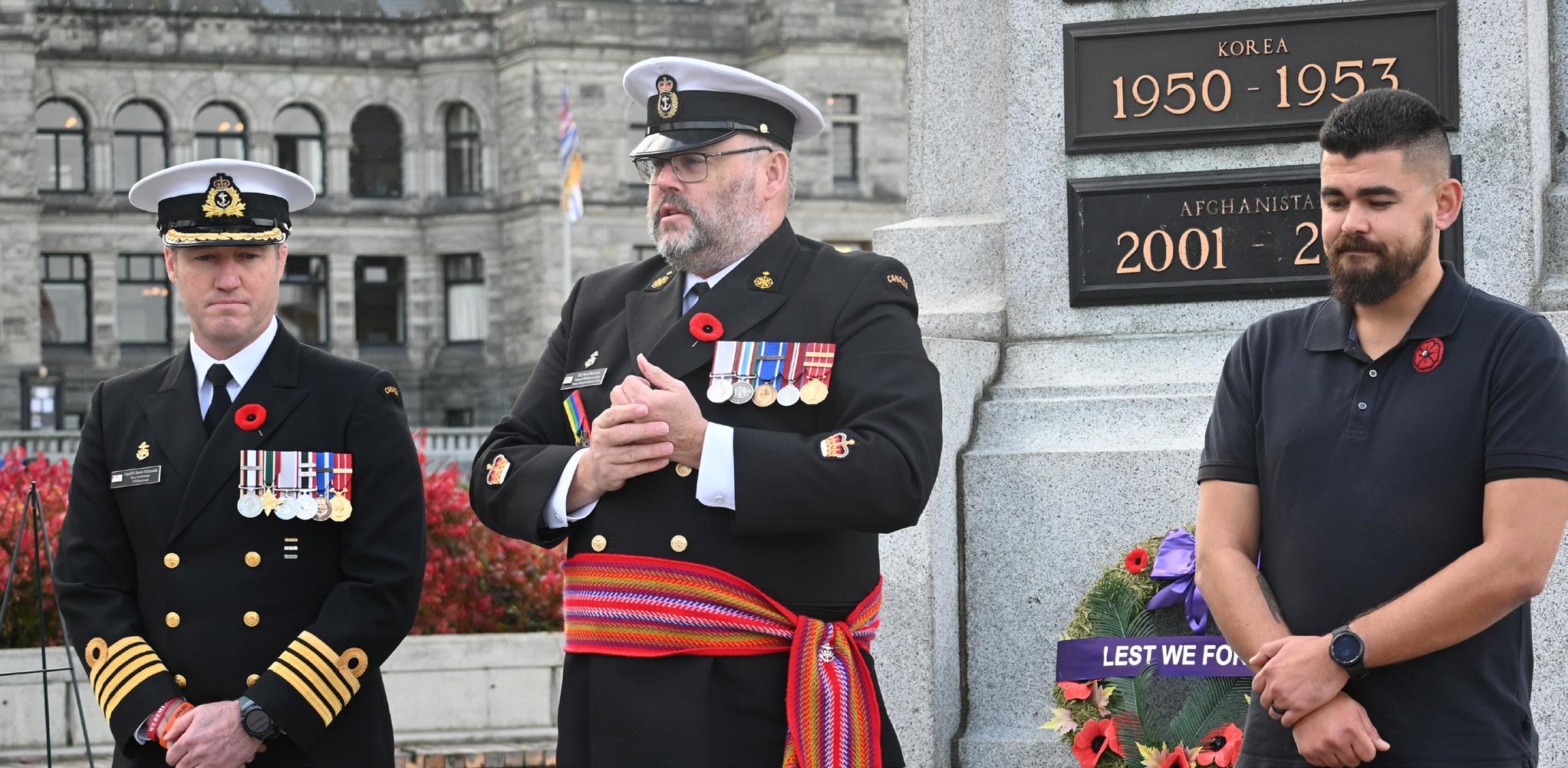
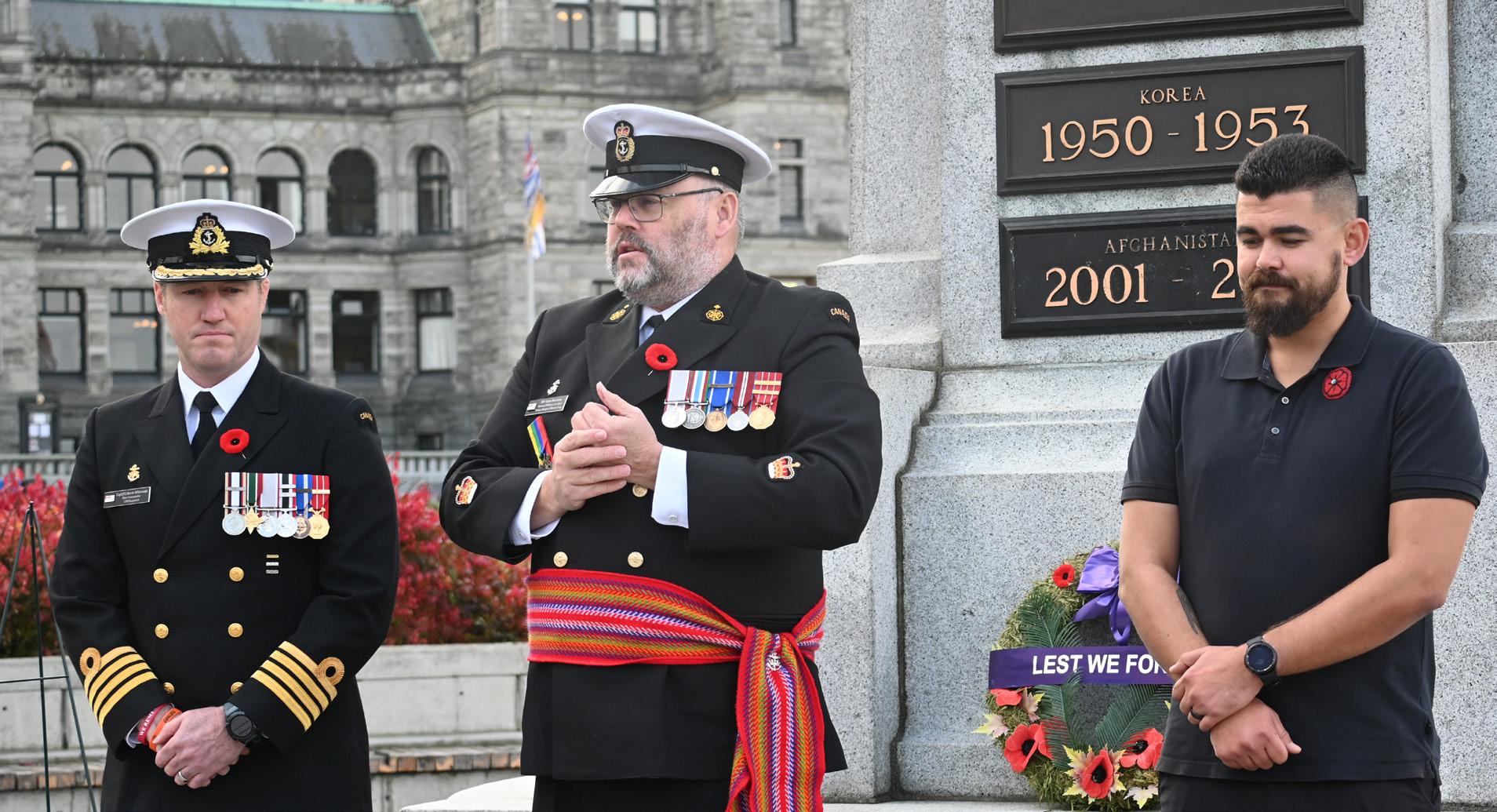
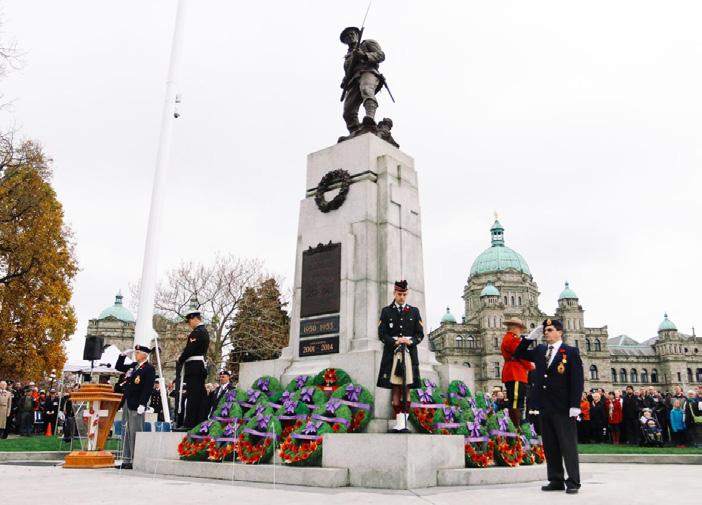
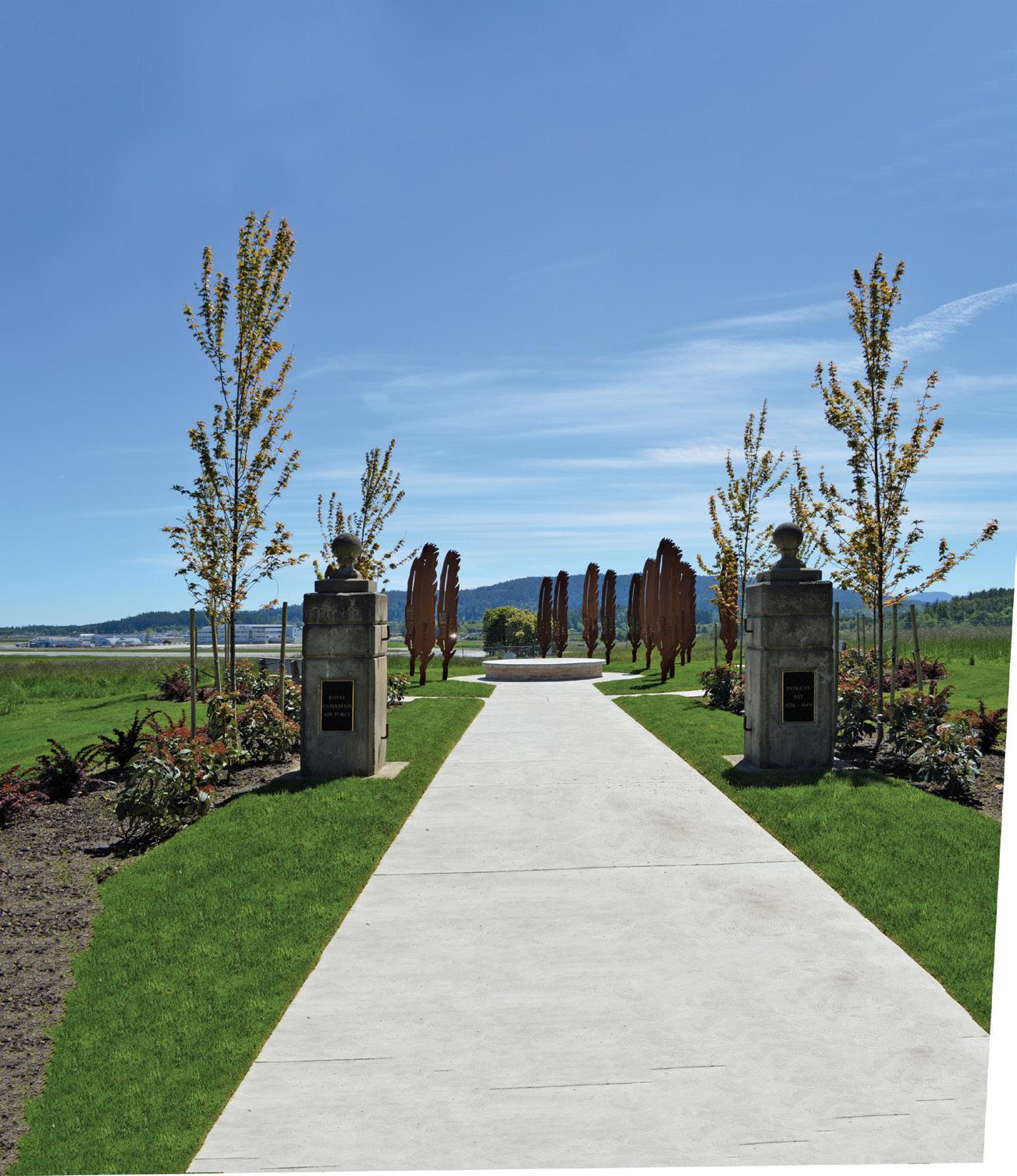
The Indigenous Veterans Day ceremony will take place on Friday, Nov. 8, at the BC Legislature Cenotaph at 10:45 AM, with shuttle services available for Defence Team members.
Indigenous Veteran’s Day
November 8
Dress is N1s and business attire for civilians
SHUTTLE PICK UP
1045-1115: Ceremony 1145 Pick up at the Victoria Cenotaph 1205: Nelles
1225: Dockyard Main Gate
1240: Work Point
Photo supplied
THE LOOKOUT TEAM
MANAGING EDITOR
Jazmin Holdway jazmin.holdway@forces.gc.ca
WRITER
Paul Dagonese dagonese.paul@cfmws.com
PRODUCTION
Teresa Laird production @lookoutnewspaper.com
Leslie Eaton
250-363-3127 eaton.leslie @cfmws.com
ADMINISTRATION AND ACCOUNTS
Andrea Modesto
ADVERTISING
Joshua Buck
250-363-3127
Andrea.Modesto@forces.gc.ca
778-977-5433 military.base.advertising@gmail.com
EDITORIAL ADVISORS
Rodney Venis
250-363-4006
Published every other Monday, under the authority of Capt(N) K. Whiteside, Base Commander.
The editor reserves the right to edit, abridge or reject copy or advertising to adhere to policy as outlined in PSP Policy Manual. Views and opinions expressed are not necessarily those of the Department of National Defence.
Circulation bi-weekly print and online: 4,000 per issue plus social media engagement
Follow us on Facebook and Instagram to join our growing social media community.
A Division of Personnel Support Programs
Web: www.lookoutnewspaper.com
Fax: 250-363-3015
Canadian Mail Product Sales Agreement 40063331
What You Need to Know
New Home Buyer Plan Changes
T.J. Burnett SISIP Financial Advisor Comox, BC
In a significant move to support first-time homebuyers, the government has recently announced changes to the Home Buyers’ Plan (HBP). This plan, designed to make homeownership more accessible, now allows individuals to withdraw up to $60,000 from their Registered Retirement Savings Plans (RRSPs), a substantial increase from the previous $35,000 limit. This enhanced limit provides prospective homebuyers with a greater financial cushion to cover down payments and associated costs, potentially easing the journey towards owning a home. Additionally, another crucial change has been made regarding the repayment period. Previously, individuals had to start repaying their RRSP withdrawals within
two years of purchasing their home. This timeframe has now been extended to five years, offering more breathing room for new homeowners to stabilize their finances and adapt to the responsibilities of homeownership without the immediate pressure of repayment. This extension is particularly beneficial in the current economic climate, where financial stability can be unpredictable.
These changes are expected to make a significant impact on the housing market, especially for first-time buyers who often struggle with accumulating a sufficient down payment. The increased withdrawal limit allows for more substantial initial investments, which can also lead to better mortgage rates and terms.
Furthermore, the extended repayment period provides a more manageable timeline for individuals to rebuild their RRSP savings without sacrificing their financial health. For members of the Canadian military and their families, these changes present an excellent opportunity to reconsider their homeownership plans.
Understanding the implications of these changes and how to best leverage them can be complex, and that’s where professional financial advice becomes invaluable. SISIP is here to help. With expertise in serving the financial planning needs of Canadian military personnel, SISIP advisors can provide tailored advice and guidance.
To navigate these new changes effectively and plan your path to homeownership with confidence, reach out to SISIP and book an appointment today. Your dream home is closer than ever.
5 Questions with: Naval Unit NPF personnel
NPF Operations Advisor, PSP Naval Unit
Can you share more about your new role as the Naval Unit NPF Operations Advisor and what it entails?
Canadian Forces Morale and Welfare Services (CFMWS) in partnership with the Royal Canadian Navy (RCN) has recently stood up the Personnel Support Programs (PSP) Naval Unit, consisting of myself, Mike Miller, NPF Operations Advisor, and Paolou Lagrimas as the Procurement Coordinator.
We will provide the support and expertise for all things NPF, most notably the provision of goods for the onboard Messes and Canteens across the Fleet. With the retirement of the Steward Occupation scheduled to be completed in April 2026, we will provide the continuity and support to sailors in the Fleet, who will be taking on some of these duties as a secondary responsibility, and with our Finance Team we will be supporting them from ashore. How do you plan to ensure the fleet is equipped with all necessary NPF goods before and during deployments?
Working with the Logistics department onboard, and local suppliers ashore, we will source the best quality products available, at the best possible value, and coordinate deliveries and resupply as needed to ensure that the sailors continue to enjoy a quality standard of living, when deployed on operations. From crested items to favourite snacks and personal amenities, we hope to make life at sea as comfortable and convenient as possible. Working from a central warehouse and dealing directly with major manufacturers, we hope to realize increased buying power and provide increased value to the services we provide. What are some of the key challenges you anticipate in this new role, and how do you plan to address them?
Understanding that the sailors taking care of the canteen and messes onboard have other, significant, primary duties to perform, we are looking to simplify the process of ordering and accounting for goods onboard so that these new responsibilities do not become too cumbersome for the members involved. Moving away from cash boxes and chits, customers will be able to make purchases with debit/credit cards, greatly enhancing security and removing the burden of storing and counting cash on a regular basis.
What are some of the most significant changes you’ve seen in the organization?
Messes will still provide beverages and snacks at sea, as well as leisure activities for the members such as movies and games. The Canteens will still provide a taste of home with popular snacks and toiletries alongside clothing and other items that build a sense of pride within the unit.
What will change is who is running the NPF operations onboard, and it will provide an opportunity for the ships company to become more involved with their mess mates and the crew.
What are your goals for the PSP Naval Unit, and how do you plan to achieve them?
We will be continuously working with sailors across the Fleet as they take on these new responsibilities for the first time, and we will continuously work on streamlining the process and making the role one that sailors will embrace in the future. Knowing that you are making life at sea better for your crew has always been a rewarding experience, and we are eager to help the next generation of sailors embrace this much needed role on behalf of their shipmates.
Remembering Ancestors
̏The history of Latin American Canadians in the Canadian military is both rich and remarkable. They served with distinction in both World Wars, overcoming many challenges and the financial burden of paying their own way to Canada to serve in the Canadian Armed Forces. These courageous individuals volunteered to serve, and in doing so showed their adaptability, dedication and resilience in their commitment to Canada.̋ – Canada.ca
Paul Dagonese Lookout Writer
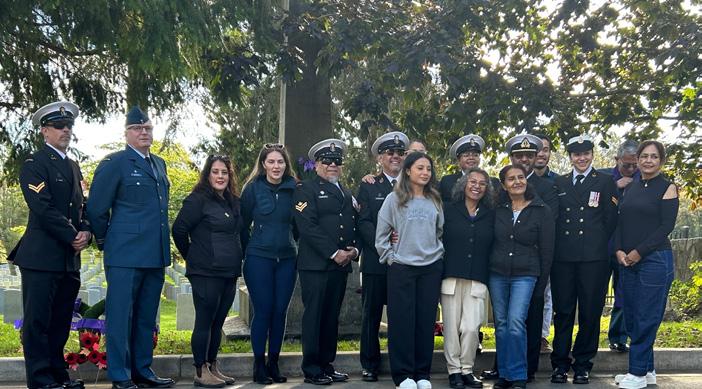
In a solemn yet joyous gathering at Veterans Cemetery, God's Acre, the Royal Canadian Navy’s (RCN) Latin American community held its 3rd Annual Remembrance Ceremony. Soldiers, families, and friends came together on Oct. 6 to commemorate the sacrifices and contributions of Latin American service members to Canadian freedom.
The ceremony began with a call to “Remember our ancestors,” followed by the playing of the Canadian national anthem.
This year, Peru was named the Host Nation, continuing a tradition of honouring a different Latin American country each year for its military contributions. Sailor Third Class Anna Ortiz Ruis, the event’s organizer, highlighted how the tradition started in Ottawa and recognizes families with ties to soldiers from the First and Second World Wars.
Padre Anthony Divinagracia officiated the eulogy and emphasized the importance of divers ity in Remembrance.
“May our diversity, far from being a source of division, make us stronger together,” he said, acknowledging the challenges faced by Latin American military members, including lan guage barriers and separation from family, as they serve Canada. “Lest we forget,” he closed.
In Flanders Field was read, both in Spanish and English, followed by a moment of silence. To close the cere mony, wreaths were laid to mark the sacred ground and Remembrance of soldiers now deceased.
At the National Military Cemetery in Ottawa, the Latin American community also marked their 3rd Annual Remembrance Ceremony. Both events took place in October, which is recognized as Latin Heritage Month.
Monday, November 11
Services: Cash Bar
Sandwiches, Cookies and Coffee will be provided 1130-1300 (while supplies last).
Open to All Ranks Serving or Retired
Mike Miller
First World War Veteran Ralph Hodgson Inspiring a Generation
War Amputees
War Amps
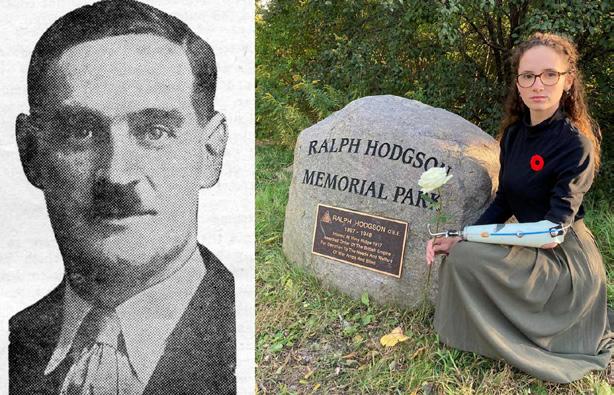
Ralph Hodgson (1895-1948) lived by the motto inscribed on his tombstone: “It’s not what you have lost that counts but what you have.” These words defined his life’s work, as he dedicated himself to ensuring that his fellow war amputee veterans could thrive despite their injuries.
Hodgson, a law student when the First World War began, quickly enlisted with Toronto’s 24th Battalion. In April 1917, he was wounded during the Battle of Vimy Ridge, resulting in the amputation of his right leg below the knee.
Hodgson became a founding member of The War Amps, an organization established over a century ago by amputee veterans of the First World War. Their mission was to unite, support and advocate for the rights of amputee veterans.
These First World War veterans played a pivotal role in welcoming and mentoring a new generation of amputees returning from the Second World War, helping them adapt and sharing their hard-earned wisdom.
Hodgson was perhaps best remembered for greeting hospital ships as they returned with injured soldiers from the Second World War. His presence offered encouragement to these young men, helping them come to terms with their amputations and motivating them to move forward.
Cliff Chadderton (1919-2013), a Second World War veteran who lost part of his
right leg in Belgium in 1944, vividly recalled Hodgson’s unforgettable impact. “Our joy at being home was mingled with a bit of apprehension,” said Chadderton. “Then a strange and wonderful thing happened. Into the ward bounced Ralph Hodgson. Swinging between a thumb and a forefinger was a miniature artificial leg. Not only did Ralph walk, spin and dance, but he finished up by jumping off a waist-high table.”
As The War Amps first Dominion Placement Officer, Hodgson travelled across Canada, tackling the challenge of unemployment for amputees from both world wars.
“He kept plugging away until all amputees from the wars had found jobs, which Ralph thought should be rightfully theirs,” Chadderton noted.
For his remarkable efforts, Hodgson was awarded the Order of the British Empire, a distinction given to civilians who contributed to the war effort by supporting veterans and their families.
“Mr. Hodgson showed other war amputee veterans that their amputations wouldn’t hold them back from succeeding in life,” says Rachel Quilty, a graduate of The War Amps Child Amputee (CHAMP) Program.
“He’s remembered not just for securing jobs for amputees, but for giving them the confidence and strength to persevere.”
Today, Ralph Hodgson Memorial Park in Port Hope, Ontario, stands as a lasting tribute to his extraordinary commitment to Canada’s war amputee veterans.
Rachel Quilty, a graduate of The War Amps Child Amputee (CHAMP) Program, pays tribute to First World War amputee veteran Ralph Hodgson at Ralph Hodgson Memorial Park in Port Hope, Ontario.
Ralph Hodgson. Photos: War Amps Canada
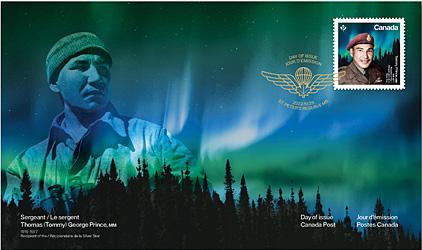
Born on St. Peter’s Reserve, Manitoba, into the Brokenhead Ojibway Nation, Sergeant Thomas (Tommy) George Prince, mm (1915-77), was one of Canada’s most decorated Indigenous non-commissioned officers and war veterans, and a prominent Anishinaabe activist. In 1940, during the Second World War, Prince enlisted with the Royal Canadian Engineers and trained as a sapper. He later joined the 1st Special Service Force, a joint Canada-U.S. specialized reconnaissance and raiding unit where he gained a reputation for marksmanship, stealth and tracking skills, as well as sheer nerve. His courage and service earned him the Military Medal, Silver Star (U.S.) and nine other decorations, including three (one posthumous) from his two tours of duty in the Korean War.
Between the wars, Prince waged a different battle when, as vice-president of the Manitoba Indian Association, he spoke out in favour of abolishing the Indian Act and respecting existing treaties.
Sharpshooter: Henry Louis Norwest
Glenbow Archives Canada.ca
One of the most famous Canadian snipers in the First World War was a Métis marksman who went by the name of Henry Louis Norwest. Norwest was born in Fort Saskatchewan, Alberta, of French-Cree ancestry. In his nearly three years of service with the 50th Canadian Infantry Battalion, the lance-corporal achieved a sniping record of 115 fatal shots. The former ranch-hand and rodeo performer also merited the Military Medal and bar, making him one of roughly 830 members of the CEF to be awarded this double honour.
Norwest’s career in the army did not begin so gloriously. He enlisted in January 1915 under the name Henry Louie, and was discharged after three months for misbehaviour. Eight months later, he signed up again, under a new name and with a fresh slate. Ultimately, Norwest proved to be an inspiration to his unit. A fellow soldier wrote of him:
Our famous sniper no doubt understood better than most of
us the cost of life and the price of death. Henry Norwest carried out his terrible duty superbly because he believed his special skill gave him no choice but to fulfil his indispensable mission. Our 50th [Battalion] sniper went about his work with passionate dedication and showed complete detachment from everything while he was in the line . . . . Yet when we had the rare opportunity to see our comrade at close quarters, we found him pleasant and kindly, quite naturally one of us, and always an inspiration.
Sniping was a hazardous infantry role. Most snipers worked in pairs, with one partner shooting and the other observing—scanning the surroundings and reporting enemy movements. It is said Norwest possessed all the skills required of a sniper: excellent marksmanship, an ability to keep perfectly still for very long periods and superb camouflage techniques. Much of his time was spent in No Man’s Land, the dreaded area between opposing forces. As well, Norwest and his observer often slipped behind enemy lines.
The battalion’s star marksman earned the MM in 1917 at a
peak on Vimy Ridge dubbed “the Pimple.” The Canadian Corps, part of a massive Allied offensive, was tasked with capturing the Ridge. Although previous Allied attempts to take it had failed, the elaborately planned Canadian assault succeeded. Most of the Ridge was taken on the first day, April 9. Three days later, the two remaining enemy positions, including the Pimple, were conquered.
According to his award citation, Norwest showed “great bravery, skill and initiative in sniping the enemy after the capture of the Pimple. By his activity he saved a great number of our men’s lives.”
The following year, Norwest was awarded a bar to his MM. It is not known why, and in August 1918, his bravery was again evident. During the Battle of Amiens, in France, Allied forces advanced 19 kilometres in three days. For his part, Norwest destroyed several enemy machine-gun posts and achieved a sniping record that was a battalion high.
A week later, the 50th Battalion was moving into position for its next assignment when the sharpshooter held his final post. On
August 18, three months before the war ended, Norwest and two others were looking for a nest of troublesome enemy snipers. A sniper’s bullet hit the Métis marksman, killing him instantly. For the members of his battalion, a genuine hero had been lost.
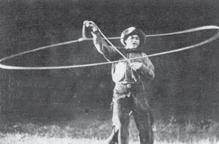
Like Pegahmagabow, Henry Norwest developed an impressive reputation as a sniper during the war. The former rodeo performer and ranch-hand was considered a hero by other members of the 50th Battalion. They were stunned when he was killed by an enemy sniper three months before the war ended.
Leading up to Remembrance Day, we think about the sacrifices that were made for our freedom today, and the impacts those sacrifices have made on families, communities, society and the world.
We honour those who gave their lives in hope of a peaceful tomorrow, and think of them with pride and our utmost respect. To all who have once served, and to all who continue to serve today, we thank you.
We are proud to work in support of the Canadian Armed Forces, its members, and in Remembrance of its past members who are no longer with us.
We will remember you.
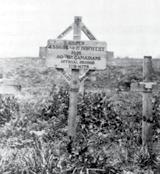
Henry Norwest’s grave marker. (Glenbow Archives)
Henry Norwest. Photos Canada.ca
The Bay Street Music Project: Armoury comes alive with the sound of music
Paul Dagonese Staff Writer, Lookout Newspaper
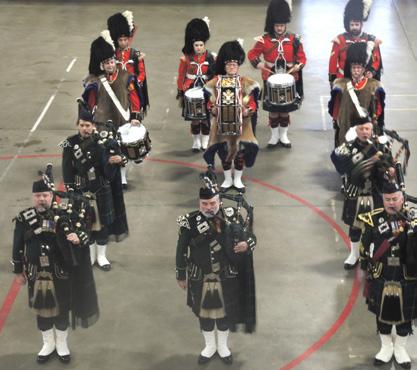
At noon sharp on Oct.19, the Bay Street Armoury’s ceiling and walls skirled loud and bright to Highland bagpipes and beats of their drums. From up high in the mezzanine and down below, those attending stopped, watched, and listened as the Pipe Major marched the Pipes and Drums Regiment up and down the Armoury floor.
This scene kicked off the first ever Bay Street Music Project (BSMP) opening with the Canadian Scottish Regiment Pipes and Drums, led by Pipe Major Roger McGuire.
McGuire is not only the Regiments’ Pipe Major, but he’s also the Chairman of the Victoria Military Music Festival Society (VMMFS), the host of the BSMP. As Chairman, McGuire was one of the chief architects for envisioning the festival’s initiative.
“This event is designed to entice young people, to get them exposed to music and the variety of musical instruments that are out there, particularly the ones that are involved in military bands, both brass and reed bands and pipes and drums,” he said.
McGuire, now 66, recounted how music enticed him early in life. At fiveyears-old, he watched the Changing of the Guard Ceremony on Parliament Hill in Ottawa. “I used to watch the pipe band of the Canadian Guards, and one day I just told my mother, ‘I’m going to do that. I’m going to be a piper’.”
But things have changed since McGuire’s generation. Musicians in Victoria are increasingly worried, noting that fewer young people today are showing interest in learning music and picking up instruments.
This has created a pressing issue that military and civilian musicians can no longer ignore: uncertainty about whether a new generation will emerge to keep their long-standing, historically significant bands alive.
But McGuire and likeminded musicians in the community believe they’ve found an answer.
Make music experiential.
Get the ceiling and walls skirling again with music so young people take notice and get interested.
And the Royal Canadian College of Organists (RCCO), Victoria Centre branch, had their own unique response to the festival’s initiative.
Their booth displayed a miniature box-like organ. On one side, a child could press a pump, and on the other, a musician pressed keys to create intriguing sounds and musical compositions. This interactive experience was designed to spark those experiential acoustic and tactile senses, particularly intriguing to young people.
If it worked, the children with their parents were directed over to the Organ & Pipes Room. In a room tucked just outside the main armoury floor, renowned organist Steven Benson waited to greet them and share his passion for the organ.
“This is like a recruiting centre for future musicians,” Benson said. As a member of the RCCO, he is serious about teaching and knows what to look for in a student.
“We’re looking particularly for teenagers. If you can infect a 14-year-old with music, there’s a chance. Fourteen is a magic number. The brain is still young enough to learn a musical instrument. After that, it becomes a bit harder.”
Benson recounts how he met an 18-year-old guitarist who one day heard the pipe organ. The young musician fell in love with its sounds. He decided to put guitar on hold for a while and learn the organ.
“So that’s it. Boom! We got another organist for the future.”
Carl McLean, Event Director for the VMMFS, shares Benson’s optimism.
“A lot of us here today come from a military background, and this, in my view, is that we are really good at plan-
ning, organizing, and executing.”
Because of tenacity like McLean’s, recruiting musicians have managed to fill a gaping one-third hole in retiring military band members with civilians.
This takes persistence. McLean made it clear that these recruiting musicians don’t get compensated for their efforts. “They do it for the love of it.”
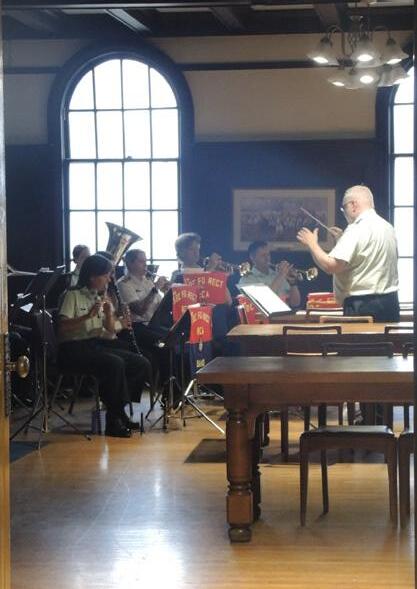
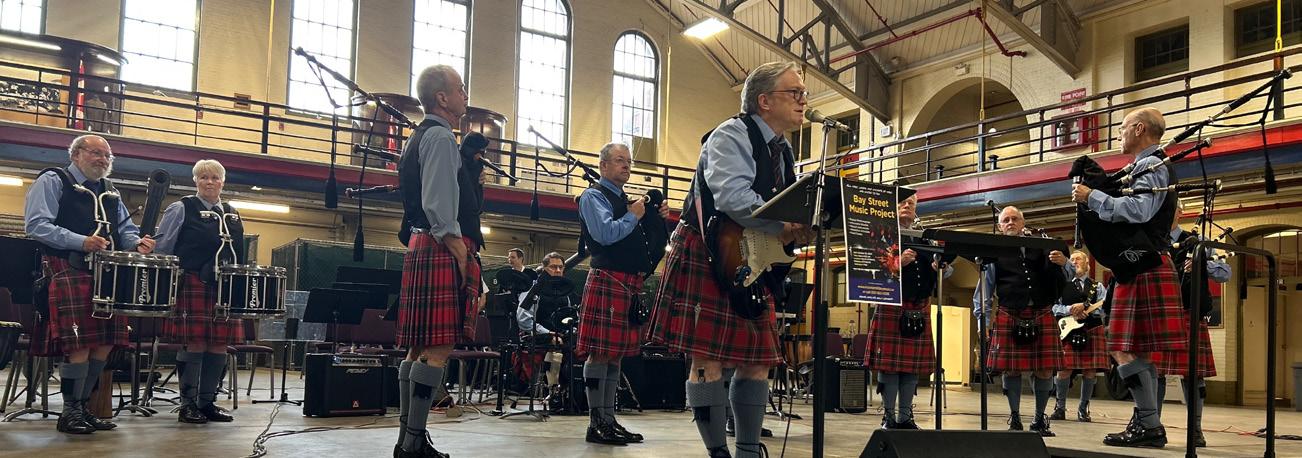
The Naden Band of the Royal Canadian Navy, The 5th (BC) Field Regiment Royal Canadian Artillery Band, the Canadian Scottish Regiment Pipes and Drums, the Chiefs and Petty Officers Band, and the Cowichan Pipes and Drums all gave outstanding performances while organizations including the Capital City Pipe Band, The Duke of Edinburgh Awards, University of Victoria School of Music, and Veterans Affairs Canada (VAC) participated in the event by hosting information booths for all the music lovers in attendance. VAC even hosted a Veterans Open Mic Night in partnership with the Bay Street Music Project.
“It’s an opportunity for veterans, as well as their supporters and families, to come on down, play a few tunes, share their stories, and have a chance to interact with their comrades and their supporters in more of a laid-back environment,” said Brent Bell, VAC Program Director.
A veteran himself, serving over 30 years in the Canadian Armed Forces, Pipe Major Roger McGuire retired as Pipe Major in 2012. But shortly before the pandemic, he was asked to return until a successor was found to fulfill his role.
“Of course, that was five years ago and I’m still here. But maybe this kind of event is a way of finding out who my replacement might be in the future.”
Bands perform at the Bay Street Armoury as part of the Music Project on Oct. 19.
Photos: Paul Dagonese
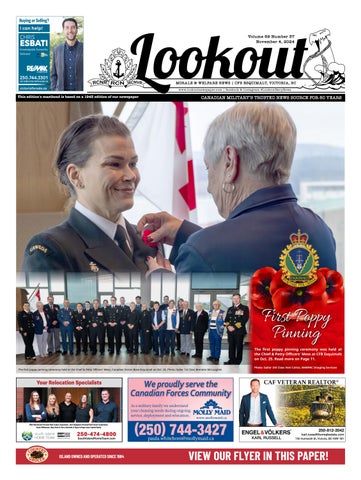
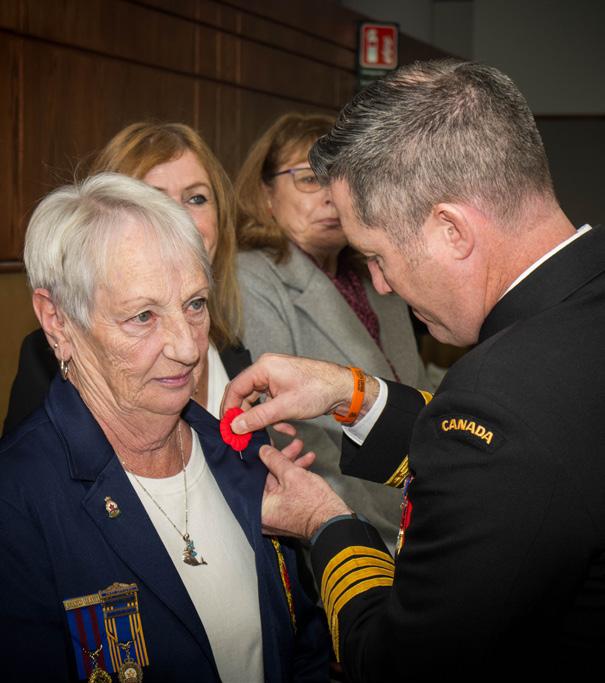
The Pinning of the First Poppy AT CFB ESQUIMALT
The last Friday of every October officially marks the opening of Remembrance for the Canadian Armed Forces (CAF). And for CFB Esquimalt, the two weeks leading up to Nov. 11 signify the official beginning of Remembrance with the Pinning of the First Poppy Ceremony.
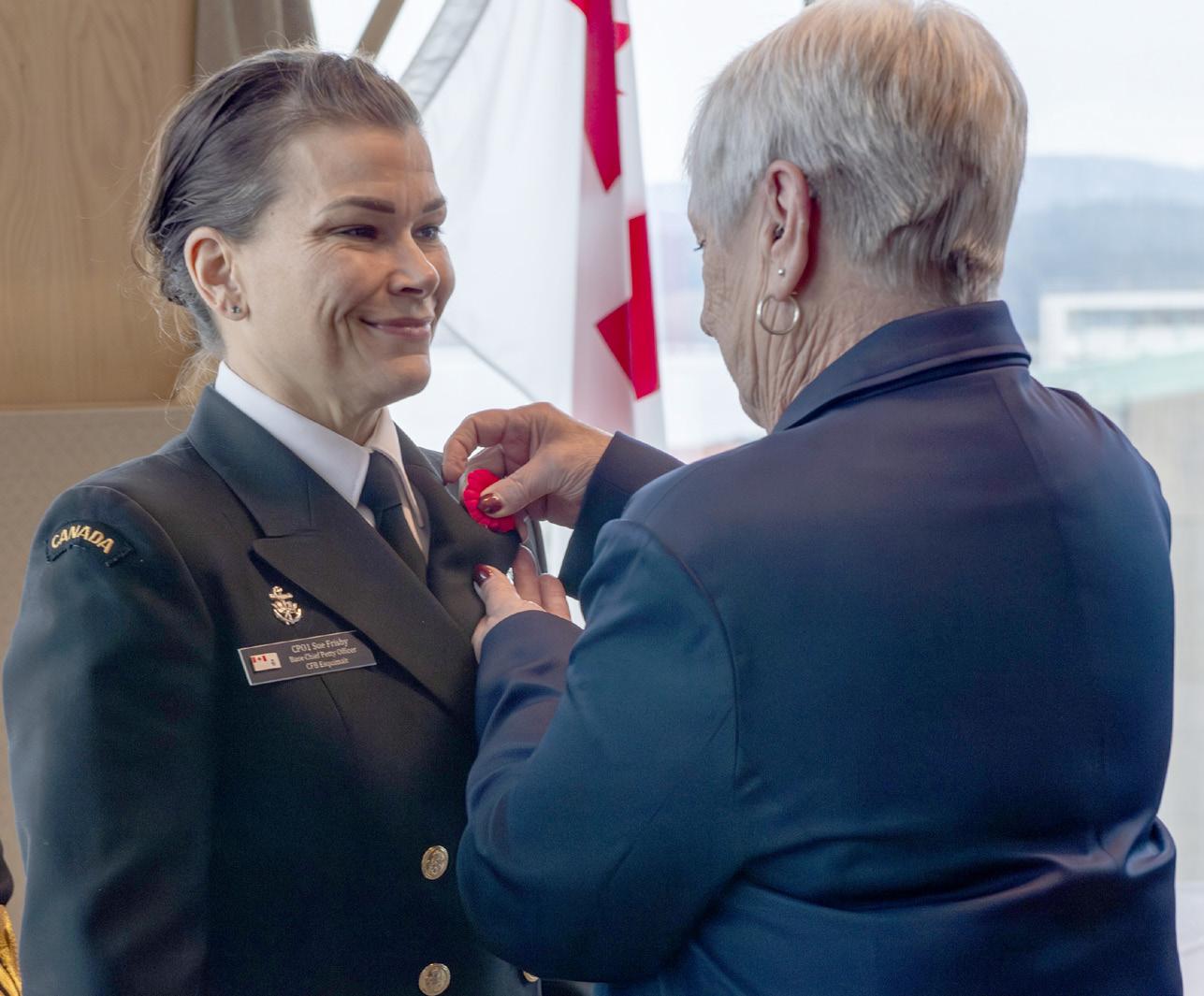
“It’s small and simple, but it’s meaningful”, said Chief Petty Officer 1st Class Sue Frisby, CFB Esquimalt Base Chief in her opening remarks. “It’s important we continue to recognize this time of year and all the sacrifices that have gone before us, and those that are around us still.”
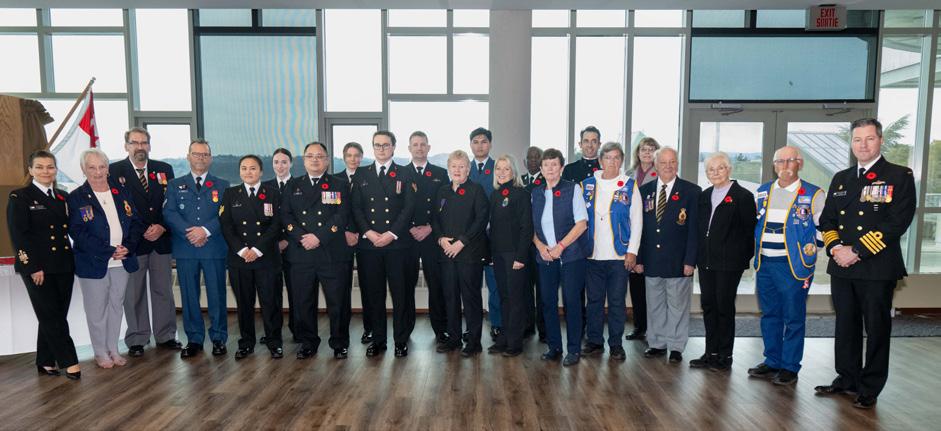
The event was held at the Chief & Petty Officers' Mess where members representing different parts of the CAF stood at the front of the room, at attention, waiting to receive their poppy.
It's tradition for the Base Commander to pin poppies on those soldiers, as well as the civilians and volunteers attending. Captain (Navy) (Capt (N)) Whiteside opened the ceremony by greeting all those in attendance and thanked them for being there. But before he could start the pinning ceremony, Sylvia Vink took the honour to pin his poppy first.
Vink is the Poppy Chair of Esquimalt 172 Royal Canadian Legion
(RCL). For 13 years she’s been organizing this ceremony and managing the Poppy Campaign. The Campaign is the RCL’s way of commemorating the sacrifice of all 120,000 Canadian soldiers who have given their lives during war and subsequent operations throughout Canada’s military history.
Capt (N) Whiteside noted how he loved the diverse representation of uniforms in attendance.
Constable Ian Diack, with the Victoria Police Department, was one such uniform. As Esquimalt’s Community Resource Officer, he said he was “very privileged and honoured” to attend.
Amongst the military uniforms that day were a sea of purple and yellow vests worn by members of the Lions of Canada. Right after the ceremony, people like Gary and Alana, who’ve been Lion members for 40 years, and who have been attending this ceremony for the last six years, will canvas Victoria and hand out poppies so people can begin their acts of Remembrance.
Base Commander Captain (Navy) Kevin Whiteside, pins a poppy onto Syvlia Vink, 1st Vice President and Poppy Chair of Royal Canadian Legion Branch 172 at the first poppy pinning ceremony held at the Chiefs & Petty Officers' Mess, Canadian Forces Base (CFB) Esquimalt on Oct. 25.
Photo: Sailor 1st Class
McLoughlin, MARPAC
Treatment IS WITHIN REACH
Addiction, Mental Health & Trauma Treatment just a Ferry Ride Away
Help is at hand: Powell River-based Sunshine Coast Health Centre and Georgia Strait Women’s Clinic— Western Canada’s only trauma program exclusively serving women—provide highly personalized addiction, mental health and trauma treatment for male and female clients respectively. We’ll pick you up from the ferry for our daily inpatient treatment tailored to your unique needs.
Services include 24-hour medical service, psychiatric assessment, EMDR, rTMS, psychotherapy, a dedicated group for military clients and much more.
Serving the Department of National Defence and Veterans A airs Canada since 2009.
Georgia Strait Women’s Clinic is Western Canada’s only trauma program exclusively serving women
November 2024
The DAG Connection
The Maritime Forces Pacific Defence Advisory Group
“It is not our differences that divide us. It is our inability to recognize, accept, and celebrate those differences.”
–Audre Lorde (Writer)
Novembre 2024
« Ce ne sont pas nos différences qui nous divisent. C’est notre incapacité à reconnaître, à accepter et à célébrer ces différences. »
- Audre Lorde (écrivain)
The Champions Les champions
Each DAG has a champion—someone who fights for the cause. In MARPAC, they are selected from the seven Captain (Navy) in the Formation and are appointed by the Rear-Admiral to the DAG that best aligns with their personal interests or passions where possible. For example, since the Base Commander works closely with our local Indigenous communities as part of his daily duties, they always Champion the Defence Indigenous Advisory Group.
The role of the Champions is to support employment equity and diversity programs and initiatives. They must show a commitment to the group’s success, exercise leadership to ensure diversity is an integral part of decision making and planning and seek opportunities to advocate and promote the DAGs they champion.
Another role of the Champions is to give the DAG a voice and an advocate at the highest levels of leadership in the Formation. Today, they do not necessarily belong to the group that they represent, but they can still act as allies and megaphones that allow the messages from the DAG to reach the widest possible audience. That is why the DAG are especially important; by working to break down barriers and foster an inclusive environment, they help ensure that all voices are heard. The Champions are not there to direct the efforts of the DAG to support the Formation, but rather to assist the DAG to support our workforce.
Ultimately, the Champions are ready and eager to foster an equitable and welcoming workforce.
Chaque GCD a un champion — quelqu’un qui se bat pour la cause. Dans les FMAR(P), ils sont choisis parmi les sept capitaines de vaisseau de la formation et sont nommés par le contre-amiral au GCD qui correspond le mieux à leurs intérêts personnels ou à leurs passions, dans la mesure du possible. Par exemple, comme le commandant de la base travaille en étroite collaboration avec les communautés autochtones locales dans le cadre de ses fonctions quotidiennes, il est toujours le champion du Groupe consultatif des Autochtones de la Défense.
Le rôle des champions est de soutenir les programmes et les initiatives d’équité en matière d’emploi et de diversité. Ils doivent montrer en engagement envers le succès du groupe, faire preuve de leadership pour veiller à ce que la diversité fasse partie intégrante de la prise de décision et de la planification, et rechercher des occasions de défendre et de promouvoir les GCD qu’ils défendent.
Un autre rôle des champions est de donner au GCD une voix et un défenseur aux niveaux les plus élevés de la direction de la formation. Aujourd’hui, ils n’appartiennent pas nécessairement au groupe qu’ils représentent, mais ils peuvent néanmoins agir comme des alliés et des porte-voix qui permettent aux messages du GCD d’atteindre le public le plus large possible. C’est pourquoi les GCD sont particulièrement importants; en s’efforçant de faire tomber les barrières et de favoriser un milieu inclusif, ils contribuent à faire en sorte que toutes les voix soient entendues. Les champions ne sont pas là pour diriger les efforts du GCD en vue de soutenir la formation, mais plutôt pour aider le GCD à soutenir notre maind’œuvre.
En fin de compte, les champions sont prêts à favoriser une main-d’œuvre équitable et accueillante et désireuse de le faire.
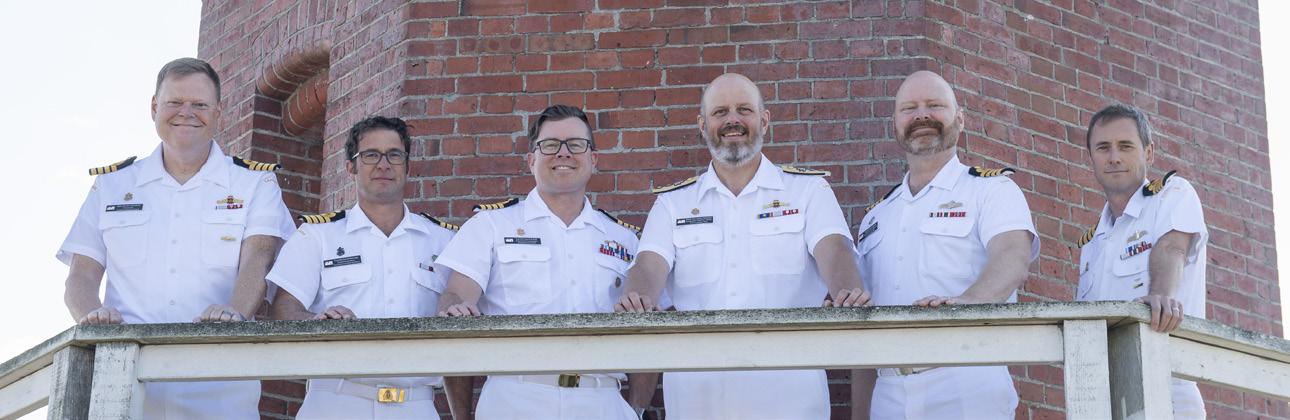
Photo: L-R Capt (N) Kooiman – Addiction-free Living / Social and Organizational Wellness / Family Violence Advisory Committee; Capt (N) Roberge – DAGPWD; Capt (N) Patchell
DVMAG / Active Living; RAdm Robinson; Capt (N) Sproule – DTPAO /Mental and Social Wellness; Capt (N) Stefanson
DWAO; Not shown: Capt (N) Whiteside
DIAG / Healthy Nutrition Chaque GCD a un champion quelqu’un qui se bat pour la cause. Dans les FMAR(P), ils sont choisis parmi
GCMVD / Vie active; RAdm Robinson; Capv Sproule
La Journée du souvenir trans (JST), célébrée chaque année le 20 novembre depuis 1998 en mémoire de Rita Hester, a pour but de rappeler les vies des personnes transgenres perdues dans notre société et dans le monde entier. La Victoria Pride Society organisera une veillée dans la matinée du 20, probablement à l’Assemblée législative provinciale.
Depuis 25 ans, la JST attire l’attention sur les vies tragiquement altérées et perdues à cause des discours, des actes, des mesures et de la violence transphobes. Partout dans le monde, la transphobie inspire la violence et la rhétorique haineuse à l’encontre des personnes transgenres, en particulier les femmes transgenres autochtones et noires. Cette rhétorique peut provoquer une détresse psychologique, et touche non seulement les vies transgenres, mais aussi les parents, les enfants, la famille, les amis et les collègues qui voient leurs êtres chers souffrir d’anxiété, de peur et de répression.
Chacun d’entre nous peut se mobiliser pour lutter contre la stigmatisation à laquelle sont confrontés chaque jour des centaines de milliers de Canadiens et Canadiennes transgenres et des millions de personnes dans le monde. Vous pouvez le faire en offrant soutien et sécurité dans les espaces et les groupes dont ils ont besoin, en dénonçant les comportements non inclusifs et en s’y opposant, en enseignant aux autres que les identités transgenres sont réelles, valables et acceptées, et en encourageant et en soutenant la création de politiques qui garantissent la disponibilité des soins médicaux et de santé mentale de l’enfance jusqu’à l’âge d’or. Nos actions collectives peuvent faire bouger les choses.
novembre
des vétérans autochtones
La Journée des vétérans autochtones au Canada, célébrée le 8 novembre, reconnaît le rôle crucial et les sacrifices de plus de 12 000 Autochtones qui ont servi dans les Forces armées canadiennes de la Première Guerre mondiale à la guerre de Corée. Malgré leur service exceptionnel et leur bravoure remarquable, les vétérans autochtones ont dû faire face à des défis systémiques pendant et après leur carrière militaire.
Sur le champ de bataille, les soldats autochtones ont souvent fait face à des préjugés et de traitements discriminatoires, alors même qu’ils faisaient preuve d’un courage et d’une habileté extraordinaires. À leur retour de la Première et de la Seconde Guerre mondiale, de nombreux autochtones avaient espéré que leur service en temps de guerre et leurs
sacrifices leur permettraient d’accroître leurs droits au sein de la société canadienne, mais le Canada ne les a pas traités de la même manière que les autres vétérans une fois qu’ils sont retournés à la vie civile. Le Canada ne les a pas traités de la même manière que les autres anciens combattants après leur retour à la vie civile. Souvent, ils se sont vu refuser l’accès à l’ensemble des avantages offerts aux vétérans, aux soins médicaux, aux services de soutien, aux concessions de terres, aux pensions et aux possibilités d’apprentissage. En outre, de nombreux vétérans autochtones ont constaté à leur retour que leur statut et leurs droits en tant qu’autochtones avaient diminué : beaucoup ont par exemple perdu leur statut d’autochtone au titre de la Loi sur les Indiens en raison de leur service
militaire, ce qui les a davantage éloignés de leur communauté.
L’importance culturelle et l’expérience distincte des vétérans autochtones n’ont pas été reflétées dans les commémorations courantes du jour du Souvenir, ce qui a entraîné un sentiment d’exclusion et de marginalisation. La Journée des vétérans autochtones a été instaurée en 1994 au Manitoba en réponse à la sousreprésentation et au manque de reconnaissance des vétérans autochtones dans le contexte plus large du jour du Souvenir, le 11 novembre.
Des cérémonies auront lieu le 8 novembre, à 10 h 30 au cénotaphe de Victoria et au cénotaphe de Comox.
Transgender Day of Remembrance (TDOR), annually observed on November 20 since 1998 in memorial to Rita Hester, is to remember the lives of transgender people lost in our society and across the world. Victoria Pride Society will be holding a vigil on the morning of the 20th, likely at the provincial legislature.
For the last 25 years, TDOR has brought awareness to the lives tragically altered and lost to transphobic speech, actions, and violence. Around the world, transphobia inspires violence and hateful rhetoric against transgender people, especially Indigenous and Black transgender women. This rhetoric can cause psychological distress, affecting not just transgender lives but also the parents, children, family, friends, and colleagues who see their loved ones suffer from anxiety, fear, and repression.
Indigenous Remembrance Day
Indigenous Veteran’s Day in Canada, observed on Nov. 8, recognizes the crucial role and sacrifices of the over 12,000 Indigenous peoples who served in the Canadian Armed Forces from World War I to the Korean War.
Despite their exceptional service and remarkable bravery, Indigenous veterans faced systemic challenges both during and after their military careers.
On the battlefield, Indigenous soldiers often encountered prejudice and were subjected to discriminatory treatment, even as they exhibited extraordinary courage and skill. After returning home from World War I & II, many Indigenous people had hoped their wartime service and sacrifices would
increase their rights within Canadian society but Canada did not treat them the same as other veterans after they returned to civilian life. Often, they were denied access to full Veteran benefits, medical care, support services, land grants, pensions and educational opportunities. Additionally, many Indigenous veterans returned to find that their status and rights as Indigenous people had been undermined: many, for instance, lost their Indigenous status under the Indian Act due to their military service, which further alienated them from their communities.
Un allié est une personne qui utilise ses propres privilèges pour gérer les inégalités, soutenir les groupes marginalisés et s’efforce de lutter contre les inégalités systémiques. Cela comprend des mesures et d’aller au-delà des gestes vides de sens pour créer un milieu favorable. Il s’agit également d’être conscient des différentes formes de discrimination et d’œuvrer activement à l’amélioration de la situation. S’attaquer à des problèmes courants tels que les actions performatives,
où le soutien vise davantage à faire bonne figure qu’à avoir un effet réel, ou reconnaître et comprendre que différents types de discrimination peuvent se chevaucher — par exemple, une femme autochtone homosexuelle est confrontée à un ensemble de défis uniques et croisés par rapport à un homme blanc homosexuel. Être un bon allié veut dire écouter les besoins des collègues marginalisés et d’agir en conséquence, de s’élever contre les comportements injustes
et de créer des espaces sûrs pour des conversations honnêtes. Un allié efficace ne se contente pas de faire des déclarations de soutien; il exige des comportements actifs et cohérents et de surmonter la peur de l’inconfort ou de la critique. En intégrant ces pratiques dans nos habitudes quotidiennes, nous pouvons œuvrer en faveur d’une société plus juste et plus inclusive.
Every one of us can stand up to fight the stigma faced by the hundreds of thousands of transgender Canadians every day, and the many millions worldwide. You can do this by offering support and safety in the spaces and groups they need, calling out and standing up to non-inclusive behaviour, teaching others that transgender identities are real, valid, and accepted, and encouraging and supporting the creation of policy that sees medical and mental health care is available from childhood to golden years. Our collective actions can make a difference
An ally is someone who uses their own privilege to address inequalities, support marginalized groups and works to address systemic inequalities. It involves real actions and going beyond empty gestures to create a supportive environment. It also involves being aware of different forms of discrimination and actively working to make things better.
Tackling common issues like per-
The cultural significance and distinct experience of Indigenous veterans was not reflected in mainstream Remembrance Day commemorations, leading to a sense of exclusion and marginalization. Indigenous Veterans Day was established in 1994 in Manitoba as a response to the underrepresentation and lack of recognition that Indigenous veterans faced within the broader context of Remembrance Day on Nov. 11.
The more you know Plus vous en savez :
formative actions, where support is more about looking good rather than making real impacts or recognizing and understanding that different types of discrimination can overlap one another—such as a gay Indigenous woman facing a unique and intersecting set of challenges compared to a gay white man. Being a good ally involves listening to and acting on the needs of marginalized colleagues, speaking up
There will be ceremonies held on Nov. 8, at 10:30am at both the Victoria Cenotaph as well as the Comox Cenotaph.
against unfair behavior, and creating safe spaces for honest conversations. Effective allyship involves more than just making statements of support; it demands active, consistent behaviors and overcoming fears of discomfort or criticism. By making these practices part of our daily routines, we can work towards a more fair and inclusive society.
HOW TO JOIN A DAG
All CAF members and DND public service employees, regardless of their ethnicity, gender, orientation, disability, age or background, are welcome to join any DAG. DAGs are looking for people committed to the principles of employment equity, diversity and inclusion.
For more information about joining, contact: Vanessa.Nicholson@forces.gc.ca
WORD OF THE MONTH:
in(t)ərˌsekSHəˈnalədē/ noun
The interconnected nature of social categorizations such as race, class, and gender as they apply to a given individual or group, regarded as creating overlapping and interdependent systems of discrimination or disadvantage.
CALENDAR: November 1 - January 31
COMMENT REJOINDRE UN GCD
Tous les membres des FAC et les fonctionnaires du MDN, quels que soient leur origine ethnique, leur sexe, leur orientation, leur handicap, leur âge ou leurs antécédents, sont invités à se joindre à n’importe quel GCD. Les GCD recherchent des personnes déterminées à respecter les principes d’équité en matière d’emploi, de diversité et d’inclusion.
Pour plus de renseignements sur l’adhésion, communiquez avec Vanessa.Nicholson@forces.gc.ca
LE MOT DU MOIS :
/ nom
la nature interconnectée des catégorisations sociales telles que la race, la classe et le sexe, telles qu’elles s’appliquent à une personne ou à un groupe donné, considérées comme des systèmes de discrimination ou de désavantage qui se chevauchent et sont interdépendants.
CALENDRIER: 1er novembre - 31 janvier
Mois du patrimoine hindou Novembre
Diwali 1er novembre
Journée des vétérans autochtones 8 novembre
Journée mondiale/nationale de l’enfant 20 novembre
Journée du Souvenir trans 20 novembre
16 jours d’activisme contre la violence fondée sur le sexe 25 novembre –10 décembre
Journée internationale des personnes en situation de handicap 3 décembre
Journée internationale de commémoration et d’action contre la violence faite aux femmes 6 décembre
Journée des droits de l’homme 10 décembre
Hannoucah 25 décembre – 2 janvier
Noël 25 décembre
Kwanzaa 26 décembre1er janvier
Journée nationale de la jupe à rubans 4 janvier
Journée de l’excellence noire 15 janvier
Journée mondiale de la culture africaine et afro-descendante 24 janvier
Journée internationale dédiée à la mémoire des victimes de l’Holocauste 27 janvier
Journée nationale de commémoration de l’attentat à la mosquée de Québec et d’action contre l’islamophobie
29 janvier
Nouvel An lunaire (la date change chaque année) 29 janvier
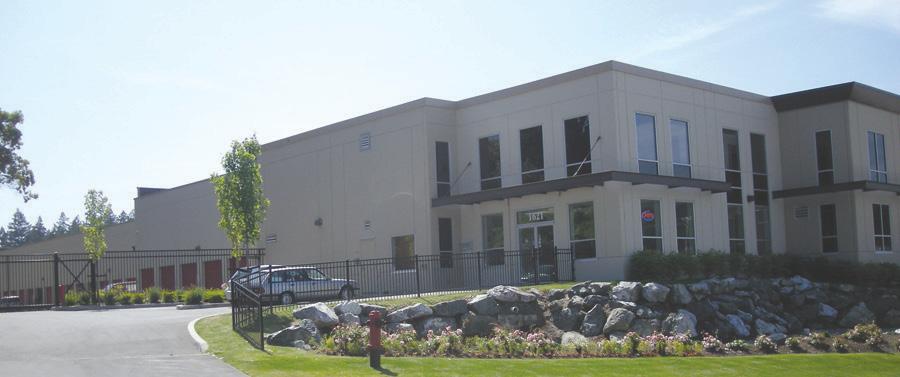
The CFB Esquimalt Detachment Matsqui (EDM) has installed a new flood barrier system to protect its vital communication infrastructure. This move comes in response to repeated flooding incidents that have threatened the site’s operations.
EDM, situated on the unceded Matsqui First Nations land near Abbotsford, is designated Ae—a high-risk floodplain by The Federal Emergency Response Plan. Historically, the area has long faced periodic flooding. With the increasing frequency of such events, Canadian Armed Forces officials decided that a more permanent solution was necessary. The Garrison Mayim Flood Barrier (GMFB), chosen for its quick deployment and effectiveness, can protect against floodwaters up to 28 inches.
The barrier’s primary purpose is to safeguard the Transmitter Building, which houses the high-power transmitters crucial for HF and LF communications across the Pacific Ocean. These communications are essential for naval and air operations,
especially as they provide an alternative to satellite communications, ensuring continuous connectivity even in adverse conditions.
EDM personnel have been trained to deploy the system, which uses interlocking panels supported by the floodwaters themselves. This simple, yet efficient system can be installed rapidly, minimizing damage during moderate flooding and allowing operations to continue.
EDM test trainings conclude that only a fivemember crew, with minimal training, is needed to deploy the entire perimeter of Transmitter Building #12. The crew consists of a team leader, who will direct a distribution and install team to set the GMFB system up in approximately 30 minutes.
Although designed for EDM’s specific needs, the barrier system is transportable and can be deployed to other military installations if required.
The installation of this system marks a proactive step in preserving critical national communications infrastructure against future natural disasters.
Career Transitioning Military Join
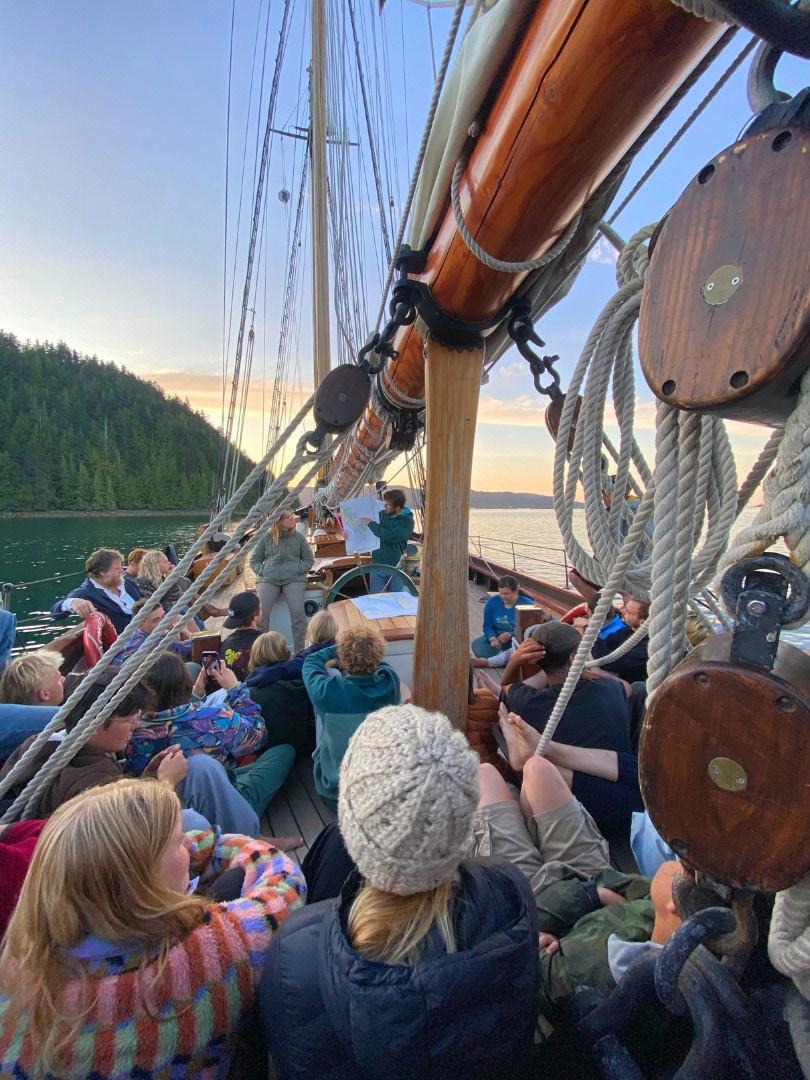
Do you have a passion for helping youth grow, love spending time outdoors, and want to sail on board a tall ship?
Apply now to join the SALTS crew!
Not an experienced sailor? That’s okay – SALTS provides all training necessary to safely operate our ships and fulfill your role. Experienced sailor? We have senior officer roles too.
We are currently accepting applications for the paid crew positions of Captain, First Mate, Bosun, Watch Officer, and Cook, with positions starting as soon as suitable candidates are available.
SALTS is an independent Christian-based registered charity located in Victoria BC. We seek to create an environment that is caring and re-
spectful, where young people from all walks of life are encouraged, inspired, and heard. If you are passionate about supporting our mission and values, we want to hear from you!
All crew members guide and mentor the young people who sail with us, and each role has an additional focus on either group leadership, ship maintenance, or cooking. SALTS operates two schooners based out of Victoria BC, and each year 1700 young people participate in our program as trainees, on 4-10 day trips in coastal BC waters.
Annual crew salaries range from $40K-$90K (up to $109K total compensation). Employment for all roles is typically full-time, year-round, but we also have need for some experienced relief (part-time) crew members.
Ottawa Memorial Project from Report to Plaque
Commissionaires Canada
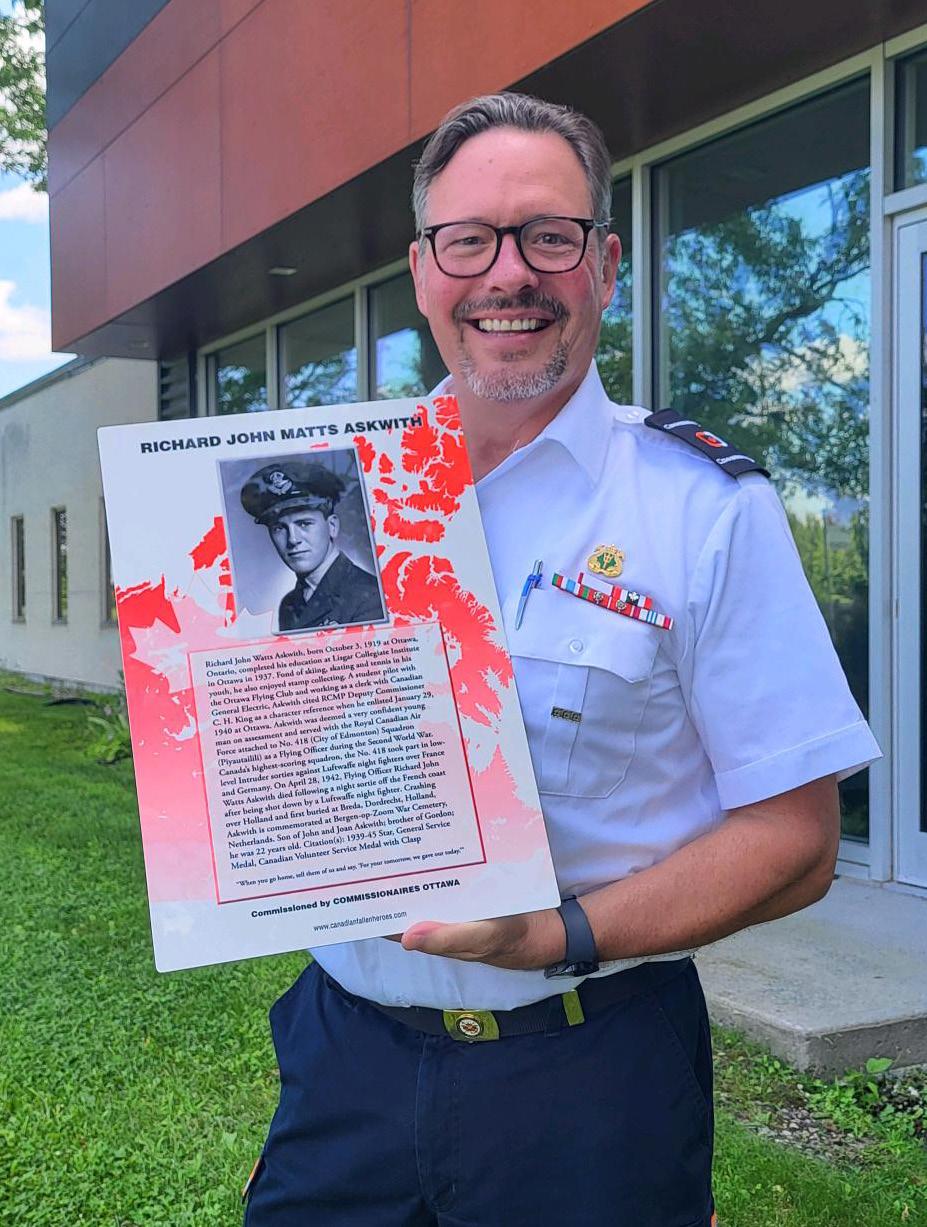
Call it coincidence, or call it fate, but Scott Peddle (Chief Petty Officer 2nd Class, Retired) was most certainly in the right place at the right time.
THE BACKSTORY
In November 2023, Commissionaires sponsored the Ottawa Memorial Project led by the Canadian Fallen Heroes Foundation. The initiative is dedicated to preserving the memory of Canada’s fallen military personnel.
Metal art memorials (wall plaques featuring photos and an inscription) were designed to pay homage to the men and women who selflessly sacrificed their dreams for the future. In doing so, they helped secure the freedom Canadians enjoy to pursue our own aspirations.
At the heart of the project is a focus on providing a place of honour for them in the community they once called home. Over 500 communities have taken part in the project over the past 20 years and Commissionaires was honoured to step forward as a sponsor for the campaign in Ottawa.
PRESENT DAY
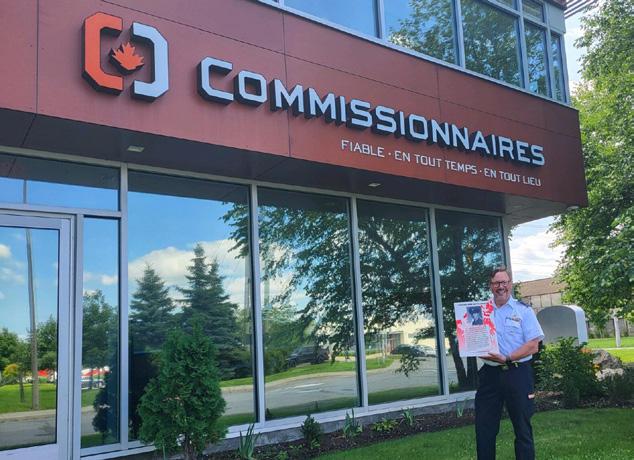
Circle back to July 2024. As a thank you for our sponsorship of the project and event, organizer Mike Dalton mailed a plaque featuring a Fallen Hero to one of our office locations. Scott Peddle, Ottawa Division’s dedicated Headquarters Driver, was dispatched to collect the package and deliver it to our Director of Communications and Marketing.
When our director received the plaque, she opened it and showed Scott. It was at that moment when Scott recognized the name and photo of Richard John Matts Askwith.
SCOTT SHARED HIS STORY
During his time in the military, as part of getting promoted to Petty Officer 1st Class, Scott needed to take and complete a Senior Leadership course. One of his assignments required him to select a topic and write a report.
Scott was a Navy man, but he always held a special place for the RCAF and chose to write about No. 418 (City of Edmonton) Squadron Piyautailili (Inuktitut for “Defend even unto death”). In particular, when completing his research on No. 418
Squadron, one particular man stood out: Richard John Matts Askwith. Scott wrote a considerable amount about Askwith in his report.
RICHARD JOHN MATTS ASKWITH
As a member of No. 418 Squadron, Askwith took part in low-level Intruder sorties against Luftwaffe night fighters over France and Germany.
On April 28, 1942, Flying Officer Richard John Watts Askwith died following a night sortie off the French Coast after being shot down by a Luftwaffe night fighter.
Crashing over Holland and first buried at Breda, Dordrecht, Holland, Askwith is commemorated at Bergen-op-Zoom War Cemetery, Netherlands. His citations include the 1939-45 Star, the General Service Medal, and the Canadian Volunteer Service Medal with Clasp. Askwith was only 22 years old.
COINCIDENCE
Scott still can’t believe the coincidence and timing. “Usually, when I give someone a package, I hand it to them and leave, but I talked to Andrée for a little bit and was there when she opened it,” he said.
Scott was with the Canadian Armed Forces for 37 years, and has worked at Commissionaires for four. “I wrote about him and the Squadron back in 2006 and it was an honour to carry his plaque and be one of the first at our Headquarters to see it.”
This was a true full circle moment, almost 18 years in the making!
When Mike Dalton of the Canadian Fallen Heroes Foundation was contacted to share the story, he said, “Richard was chosen from our honour roll of 2,770 former residents of Ottawa to fall serving with Canada’s military.”
WHAT ARE THE ODDS?
At Commissionaires, while we can’t promise moments like this all the time, but we can promise meaningful work at a company that exists to support our veterans, their families, and our communities. We truly value the unique skills, experiences and training that men and women in uniform have to offer.
And now, there is a special place for Richard John Matts Askwith at our Commissionaires Ottawa Headquarters. May he rest in peace.
COBBLE HILL
Garden of Remembrance 1475 Fisher Rd.
COLWOOD Juan de Fuca Recreation Centre 1767 Island Hwy
Royal Rd.s University 2005 Sooke Rd.
DUNCAN
Charles Hoey Park 130 Canada Ave.
ESQUIMALT
Veterans Cemetery Service 1190 Colville Rd.
Memorial Park 1220 Esquimalt Rd.
LANGFORD Veterans Memorial Park. 2815 Aldwynd Rd.
LANTZVILLE Legion Branch 257 7227 Lantzville Rd.
METCHOSIN The Church of St. Mary the Virgin 4354 Metchosin Rd.
NANAIMO
Dallas Square Park 501 Belleville St.
OAK BAY
Uplands Park 2800 Beach Dr.
PARKSVILLE Community Park 100 Jensen Ave. E.
PENDER ISLAND Legion Branch 239 1344 Mackinnon Rd.
South ISland Cenotaph loCatIonS
SAANICH Municipal Hall 770 Vernon Ave. Pioneer Park 1209 Clarke Rd.
SALT SPRING ISLAND Centennial Park 138 Fulford-Ganges
SIDNEY
Sidney Town Hall 2440 Sidney Ave.
SOOKE Sooke Legion 6726 Eustace Rd.
VICTORIA Legislative Building 501 Belleville St.
Ross Bay Cemetery 1495 Fairfield Rd.
Goldstream Provincial Park Finlayson Arm Rd. off Hwy 1
EXPLORING ECONOMIC ABUSE:
Recognizing the Signs and Available Resources
This resource provides information and guidance to Canadian Armed Forces (CAF) members and their families on recognizing and addressing economic abuse. Exploring the topic can be highly sensitive and may evoke a range of emotions in some individuals. If you need support, assistance is available to you 24/7 through the Family Information Line. (English and French, free, confidential) Canada: 1-800-866-4546
International: 00-800-771-17722
Email: FIL-LIF@cfmws.com
EXPLORING ECONOMIC ABUSE
Economic abuse is when someone uses money and resources to control another person. This can happen in families or couples, where one person might stop another from having their own money, from making decisions about spending, or getting a job. They might take away their credit cards, make them ask for money, or keep track of every dollar they spend. This kind of control can make the other person feel trapped.
Economic abuse is often a hidden form of family violence that is difficult to identify because it occurs in the private domain, including between partners or spouses. Many people may not know how common economic abuse is, what it looks like, or the different ways it can happen. For many people, talking about economic abuse can feel taboo, making it even harder to seek help.
Even after a relationship ends, some individuals may continue to face economic abuse from their ex-partner in various ways. It is important to know that there are supports available to you and that you don’t have to face this alone.
HOW
DO ECONOMIC ABUSE AND FINANCIAL ABUSE DIFFER?
Financial abuse is often thought of as a form of economic abuse.
Financial abuse is when someone controls another person’s money and financial resources, like taking their money, using their credit cards without permission, or stopping them from having their own bank account.
Economic abuse is broader and includes financial abuse but also covers other ways someone might control another person’s life using resources. Economic abuse can be broken down into three various forms:
• Economic control: involves the perpetrator exerting dominance over financial resources, often restricting the survivor’s access to money, bank accounts, or employment. For example, a perpetrator might prevent their partner from having a personal bank account or require them to account for every expenditure, thus limiting their financial autonomy.
• Economic exploitation: includes the perpetrator using the survivor’s financial resources for their own benefit, often to the detriment of the survivor. An example of this would be
a perpetrator forcing their partner to take out loans or credit cards in their name, only to use the funds for the perpetrator’s personal needs, leaving the survivor in debt.
• Economic sabotage: entails actions that deliberately damage the survivor’s ability to maintain financial stability. An example of this is when a perpetrator deliberately causes their partner to miss work or damages their work equipment, thereby jeopardizing their employment and income.
ECONOMIC ABUSE: WHO IS MOST AT
RISK?
Economic abuse can affect anyone, although certain groups of people are more likely to experience this type of abuse. It is a deeply gendered issue that affects women from all backgrounds, regions, sexual orientation and income levels. For example, women from marginalized groups, such as Black, racialized and Indigenous women and people from the 2SLGBTQIA+ community, are at a significant higher risk of experiencing economic abuse. These women often face extra challenges because of unfair treatment, discrimination, and a lack of resources.
Economic abuse can also occur within the military community and among military families, which may occur in unique ways due to the distinctive nature of military lifestyle. Frequent relocations, extended or frequent deployments, and the demanding nature of military service can increase financial dependency and isolation, making it easier for one partner to control and manipulate finances.
In the military context, economic abuse might include restricting access to family bank accounts, or preventing a spouse/partner from seeking employment or education.
The stressors associated with military service, such as long separations and the pressures of adapt-
ing to new environments, can further complicate the situation, making it difficult for survivors to seek help.
The Intimate Relationships Continuum shows how relationships can change over time, moving from healthy to struggling, to unhealthy, and even to abusive in some cases. The related chart explores how CAF couples manage their finances and shows how economic abuse can appear in different stages of a relationship. If you are unsure about where your relationship stands, consider taking a moment to check out this helpful tool on our Healthy Relationships website. https:// cfmws.ca/support-services/health-wellness/ healthyrelationships
UNDERSTANDING THE IMPACT OF ECONOMIC ABUSE
Economic abuse can have severe economic, physical, and emotional impacts. Survivors may find themselves with restricted access to family finances, which can lead to dependency and financial instability. This can make it difficult to manage everyday expenses, save for emergencies, or plan long-term financial goals.
Physically, the stress caused by economic abuse can lead to new or worsen existing health issues, including anxiety, depression and chronic illnesses.
Emotionally, experiencing financial control and manipulation can lower self-esteem and create feelings of helplessness and isolation.
The unique pressures of the military lifestyle, including long or frequent separations and the need to adapt to new environments after a relocation, may make matters worse. This may make it harder for survivors to seek support and regain stability, however there are supports available and more information can be found below.
SAXE
room self-contained suite with private entrance, full bathroom, storage, queen bed, washer/dryer, dishwasher, fridge, range, microwave, large tv, and small appliances. 10 minute walk to Work Point and Naden, near oceanfront parks, running trails, cycling and bus routes and all amenities. Includes 1 parking spot. Available for one person. No smoking, no pets. $1,750/mo includes hydro. 250-216-9030. 10/08
SHARED ACCOMMODATION, SINGLE BEDROOM Shared bathroom, kitchen, common area. Includes: heat, hydro, hot water, WiFi, Secure Bike Room. Laundry facilities in building. In Victoria, close to downtown and Oak Bay Village. Royal Jubilee Hospital, transit and amenities. Parking not incl. (can be requested if one available). Quiet, safe neighbourhood, nice neighbours. 900.00 a month, Partly or unfurnished room for a mature female (Oak Bay Junction) Non Smoker. Contact Leslie at winterpeg100a@gmail.com 10/08
FURNISHED CONDO FOR RENT 1-3 month housesitting, furnished, 2 bed 2 bath in Belmont Park, underground parking, $2500 per month, no smoking, no pets. Contact James at James@rayndt.com
Private entrance. No sm/vape/ party or pets allowed. 250 893 4003 11/04
TWO BEDROOM FURNISHED SUITE: SHORT TERM RENTAL AVAILABLE NOV. 10: Comfortable, 2 bed suite, fully furnished, in
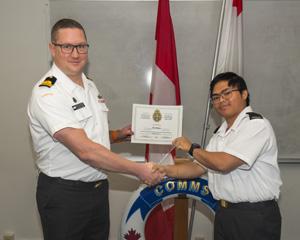
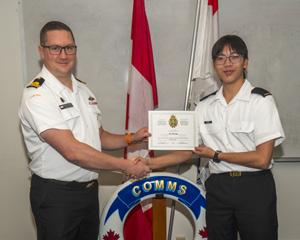
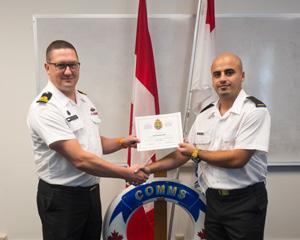
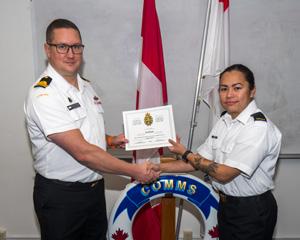
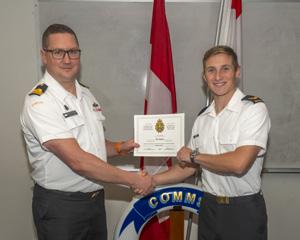
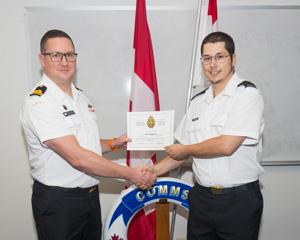
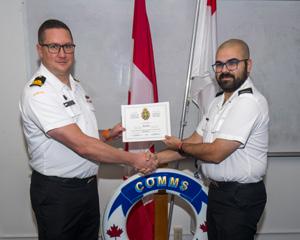
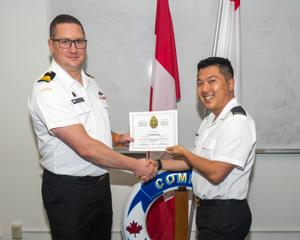
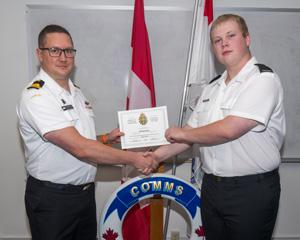
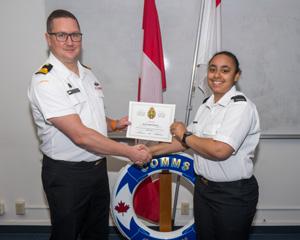
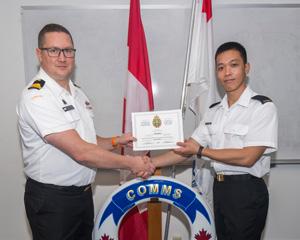
Congrats Grads! Junior
Sailor Third Class Black receives their Certificate.
Sailor Third Class Hassanzadeh receives their Certificate.
Sailor Third Class Mindo receives their Certificate.
Sailor Third Class Gabon receives their Certificate.
Sailor Third Class Humphries receives their Certificate.
Sailor Third Class Ronayne receives their Certificate.
Sailor Third Class Chung receives their Certificate.
Sailor Third Class Levy receives their Certificate.
Sailor Third Class St Aubin-Francis receives their Certificate.
Sailor Third Class Grant receives their Certificate.
Sailor Third Class Lim Ka Lan receives their Certificate.
Sailor Third Class Susa receives their Certificate.
The graduation was held Oct. 16. – Presenting Officer: Lieutenant(N) Vincent Charlebois Photographer: Sailor 1st Class Brendan McLoughlin, MARPAC Imaging.
“Can
you hear me now?” NAV COMM RQS2 Training at NFSA
Master Sailor Danny Laplante Naval Communicator Instructor Naval Fleet School (Atlantic)
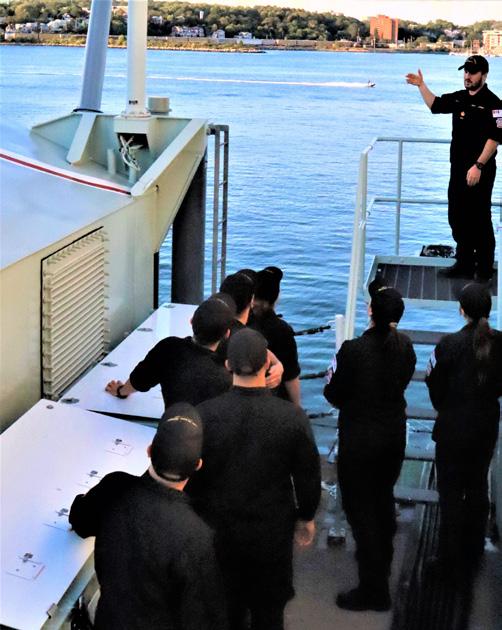
A unique training opportunity unfolded for seven students from the Naval Communicator (NAV COMM) Rank Qualification Sailor Second Class (RQS2) course in Halifax. Naval Fleet School Atlantic trialed a hands-on learning experience early within the overall NAV COMM training sequence of studies for the first time this summer. Traditionally, practical training occurs only after students have completed their initial NAV COMM training and are posted to a ship.
NAV COMM RQS2 is the first step in NAV COMM trades training once the sailor’s Basic Military Qualification (BMQ) and Naval Environmental Training (NETP) is complete. Having access to a ship this early in the NAV COMM program for hands-on training is unique and complements classroom lessons.
Students boarded HMCS St. John’s in the evenings while the vessel was alongside for a set of intensive training sessions during the final week of this 12.5-week course. The aim is to deepen trainees’ practical skills sooner rather than later by putting the theory behind voice and data
communications to the test while also maximizing opportunities with the Fleet to enhance training efficiency through practise and familiarization.
Sailor Third Class (S3) Kylie McKenzie, a reservist from HMCS York, reflected on the value of this practical approach, stating, “It was a lot easier to understand the equipment when we could physically do the steps rather than trying to picture it after learning the theory.”
The decision to conduct the training in the evenings was made to avoid disrupting the daily operations of the HMCS St. John’s crew and to ensure safe transmission on High Frequency (HF) frequencies. Sessions were carefully designed to provide the students with hands-on experience in setting up, troubleshooting, and dismantling voice and data communication systems. Each student engaged in setting up Ultra High Frequency (UHF) and HF voice/data circuits and faced various troubleshooting scenarios posed by their instructors. A notable component of the training included connecting to the Halifax Naval Communication Station to test an HF Broadcast data circuit, an essential communication tool when satellite communications face interruptions.
“It was encouraging to witness the stu-
dents’ increasing engagement and teamwork as we introduced system faults. The progression from the first to the last day in their problem-tracing skills was evident, and their growing confidence with the equipment was remarkable,” said Master Sailor (MS) Chris Nash, RQS2 instructor with Naval Fleet School Atlantic.
This hands-on experience has been invaluable for the students, bridging the gap between theoretical knowledge and practical application, and further enhances their readiness for real-world scenarios in communications when they finally do get the opportunity for sea time with the Fleet.
The plan is to continue these weeklong practical training sessions on future RQS2 NAV COMM courses. Pursuing these practical opportunities allows the students to familiarize themselves with their future working environment once posted to a new unit. Furthermore, by training in the actual work environment, trainees will have a better understanding of the operational setup and execution of daily taskings, and responsibilities required for those at the RQS2 rank level.
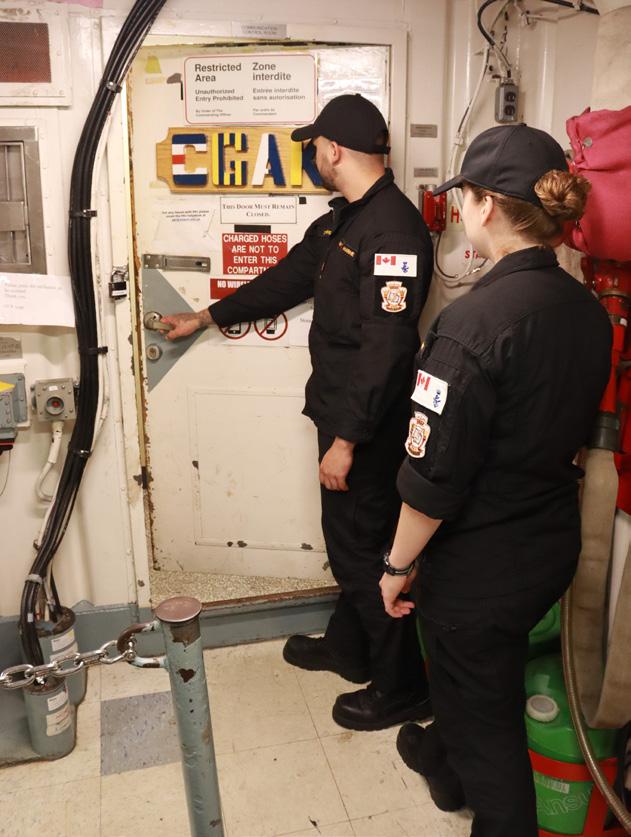
S1 Hannibal Stephenson and S3 Erica Jackson head into the Communications Control Room during an RQS2 course held at NFS(A), CFB Halifax this summer. Photo by MS Danny Laplante, Naval Fleet School (Atlantic)
Memory Anchor app collecting stories of those who served
Officer Cadet Laura Lascelle
As much as the Royal Canadian Air Force (RCAF) has embraced its future during this year’s centennial celebrations, using an augmented reality application, digital exhibitions, virtual reality cockpit experiences and flight simulators to showcase the organization’s rich history; so, too, has the remembrance of our fallen soldiers benefitted from advancing technology.
A Canadian veteranfounded start-up software company, Memory Anchor, recently partnered with the RCAF Foundation to provide walking tours for the Toronto Union Station’s RCAF Centennial Banners project.
Memory Anchor aims to continue to change the way the world remembers its veterans.
Memory Anchor started from an idea in 2017, when co-founder Ryan Mullens visited France and Holland for the 100th anniversary of the Battle of Vimy Ridge. Mullens, who owns a set of flutes carved from the wood of Vimy oaks, played “Amazing Grace” at several Canadian memorial sites he visited.
“I was with a World War II vet - his name was Willie McGregor, and it was his second time visiting his brother, John McGregor. He had asked me to play ‘Amazing Grace’ for him and his brother,” says Mullens. “It was just a really beautiful experience playing that and, as I’m finishing up, I was talking to Willie about his brother, looking over Groesbeek Canadian War Cemetery - there’s 3,000 Canadians buried there; and, thinking of some of the guys we lost in Afghanistan…. You know, there’s so much more to those individuals than just a name or a headstone.
“That’s where it really hit me: we have to really do something different in order to really connect people to the stories of who these people were.”
Memory Anchor has now commemorated over 200,000 soldiers, a number that grows exponentially every week.
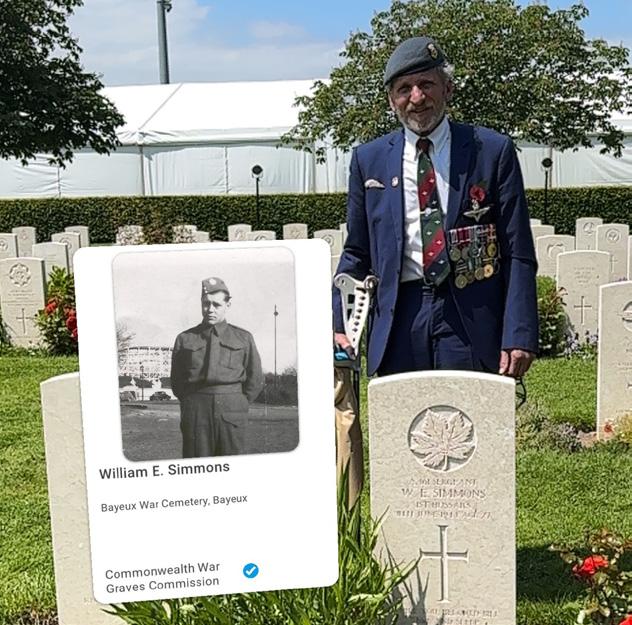
“We’re now at the point where we can geolocate, using our AI processes, tens of thousands of people per day,” says co-founder Matthew Cudmore. With the Commonwealth War Graves Commission (CWGC) as a primary client, the Calgary-based company has only scratched the surface of its goal to create meaningful, easily-accessible biographies of fallen soldiers using AI technology.
“The CWGC tend to 1.7 million graves and 22,000 graveyards around the world, and we really are aiming at servicing our G7 countries and being able to bring our technology to them so they can commemorate and remember their soldiers,” says Mullens.
Memory Anchor’s current clients care for
over two million burials in over 23,000 locations in more than 150 countries.
“It’s been a really cool and humbling experience to be able to see an idea of a headstone in a graveyard overseas, now in the hands of hundreds of people; and WWII vets using it to find their friends,” says Mullens, who was also able to attend the D-Day 80th anniversary in Normandy this year.
“That was a really emotional and powerful experience.”
For Cudmore, a charitable project with the No Stone Left Alone Foundation in Edmonton left a lasting impression with him.
“They’re a charity that really does an amazing job connecting school kids and schools, to get them out to military cemeteries and, every Remembrance Day, place a poppy on each of those graves. The student will research each of those soldiers as well.
Cudmore read one soldier’s file, and it stood out how young he was - in his early twenties, and what he went through getting a character referral letter from the department store he worked at so he could enlist.
“That was really touching: to profile him, and then to visit him in the cemetery. It was really special to me.”
Memory Anchor has partnered with Veterans Affairs Canada to accomplish multiple digital projects across Western and Central Canada.
“It’s not just old conflicts - these are modern conflicts, too,” says Mullens. “I took my good buddy, Josh Morris, who served in Afghanistan in ’06 with the PPCLI (Princess Patricia’s Canadian Light Infantry); to the Peacekeepers Park Wall of Honour in Garrison Green, in Calgary. It was a meaningful moment: we joined around the same time, we’ve been friends ever since and just him seeing some of the guys he’s served with, sitting and talking with him as he used the Memory Anchor app on that wallthat was a very poignant moment.”
With their projects spreading across the country, the founders hope to extend into Atlantic Canada.
“It’s all about engaging people coast to coast,” says Cudmore. “We haven’t made it east of Ottawa yet in terms of projects, and we would love to. I have family still in the Annapolis Valley and in Halifax.”
Cudmore had seven family members serve in the Second World War. All returned home, including his grandfather, Arthur King Cudmore, who returned to Middleton to serve as the Royal Canadian Legion Branch No. 1 president; and his uncle, Mark Smith, who served with 429 Bison Squadron and later erected the 429 Squadron Monument at the Old Trinity Church Cemetery in Middleton.
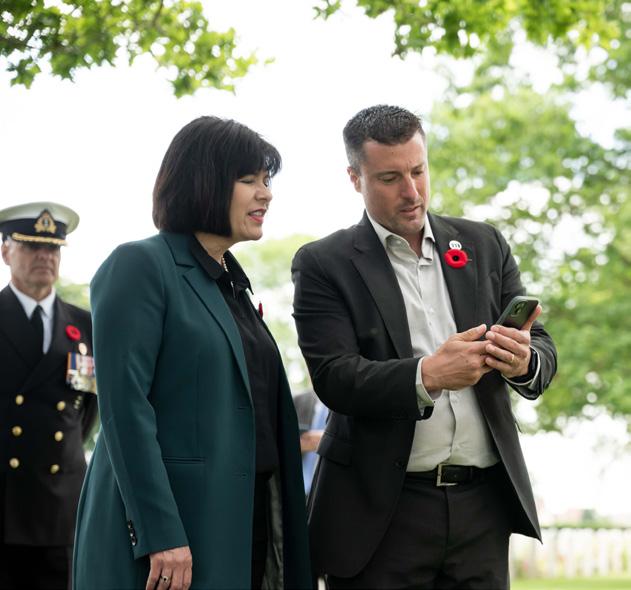
Minister of Veterans Affairs Canada and Associate Minister of National Defence Ginette Petitpas Taylor, left, and memory Anchor co-founder Ryan Mullens use the company’s interactive app during D-Day 80 services at the Bretteville-sur-Laize Canadian War Cemetery in Normandy, France. Photo: Veterans Affairs Canada
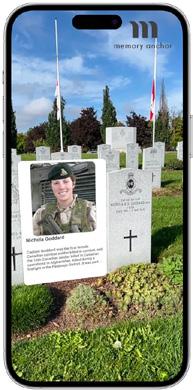
Graphical representation of what the Memory Anchor app displays. Photo: MemoryAnchor.com
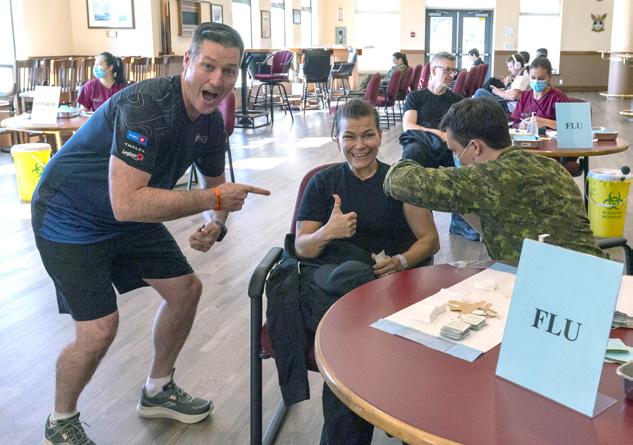
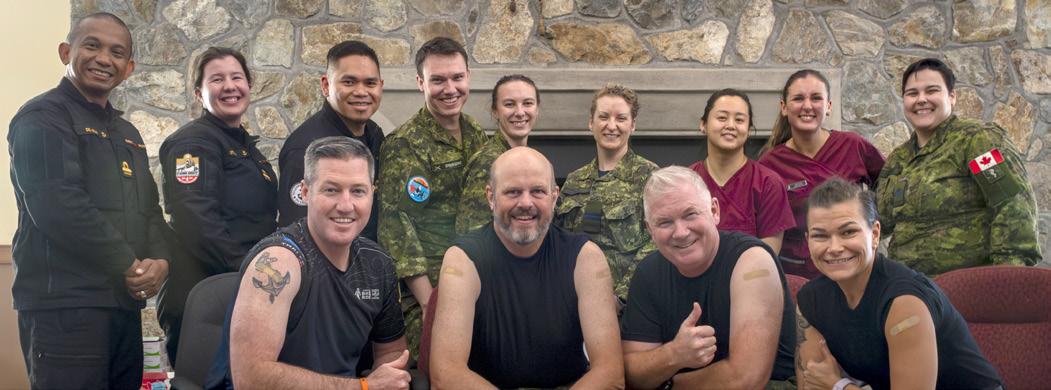
The Fall upper respiratory illness season has begun. Influenza and COVID19 infections are preventable – get vaccinated! Influenza as well as COVID continue to present a risk to the general population and CAF members. Vaccination is proven to reduce transmission, hospitalization, and long-lasting effects. Staying up to date on annual vaccines is important for both Influenza and COVID as protection wanes over time; the most up-to-date vaccines are targeted to the most prevalent virus strains.
Members can access either one or both vaccines, and they are safe to be given on the same day. There will be a standard monitoring period of 15 minutes after receiving the vaccine prior to the members leaving.
Group Photo of Rear-Admiral Christopher Robinson and Captain (Navy) Kevin Whiteside with the Vaccination Clinic staff at Wardroom, CFB Esquimalt on Oct. 22.
Base Commander Captain (Navy) Kevin Whiteside, Supports Base Chief Petty Officer Susan Frisby receiving immunization shots from the Vaccination Clinic at Wardroom.
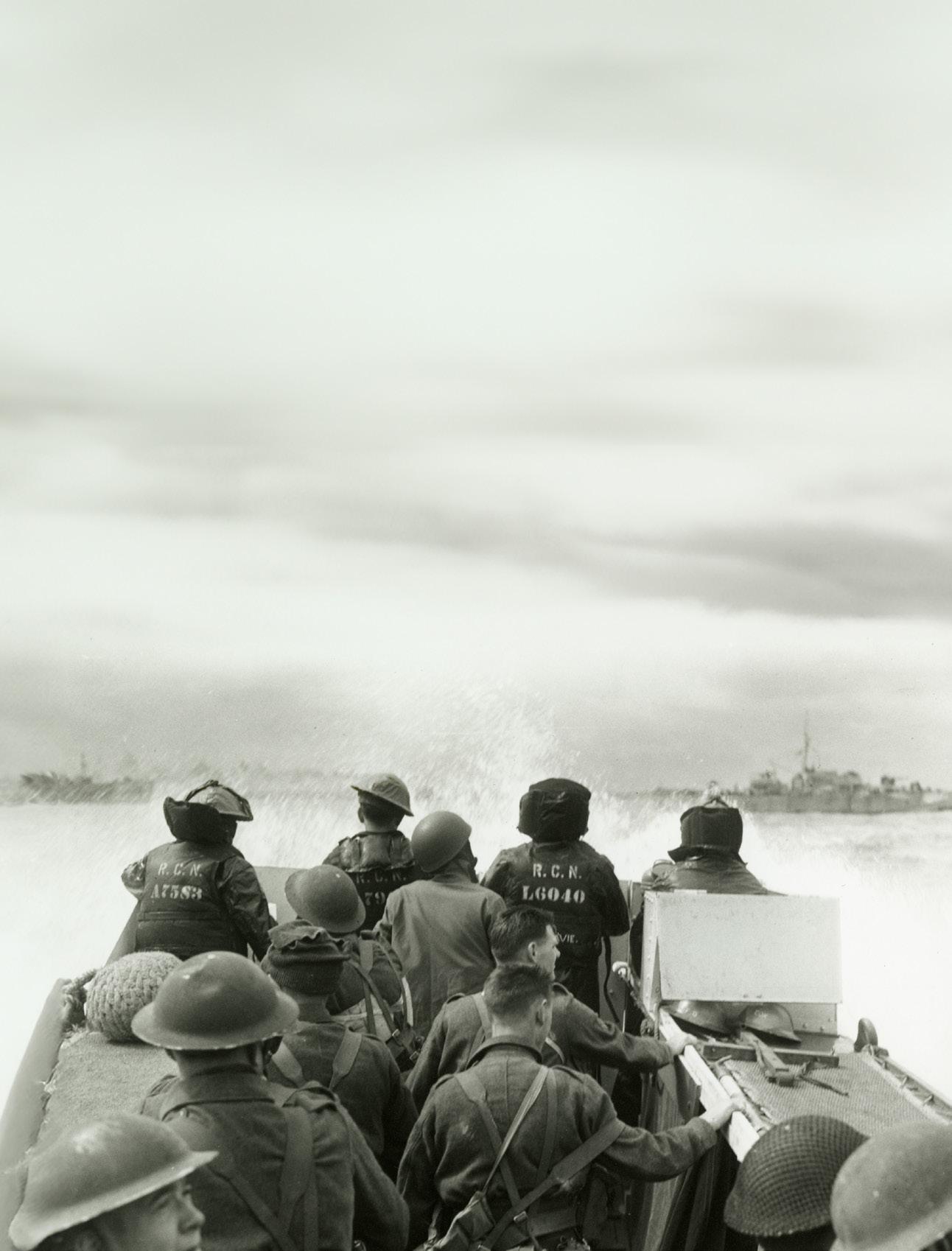
George Metcalf Archival Collection Canadian War Museum Collection d’archives George-Metcalf Musée canadien de la guerre 20020045-1906