
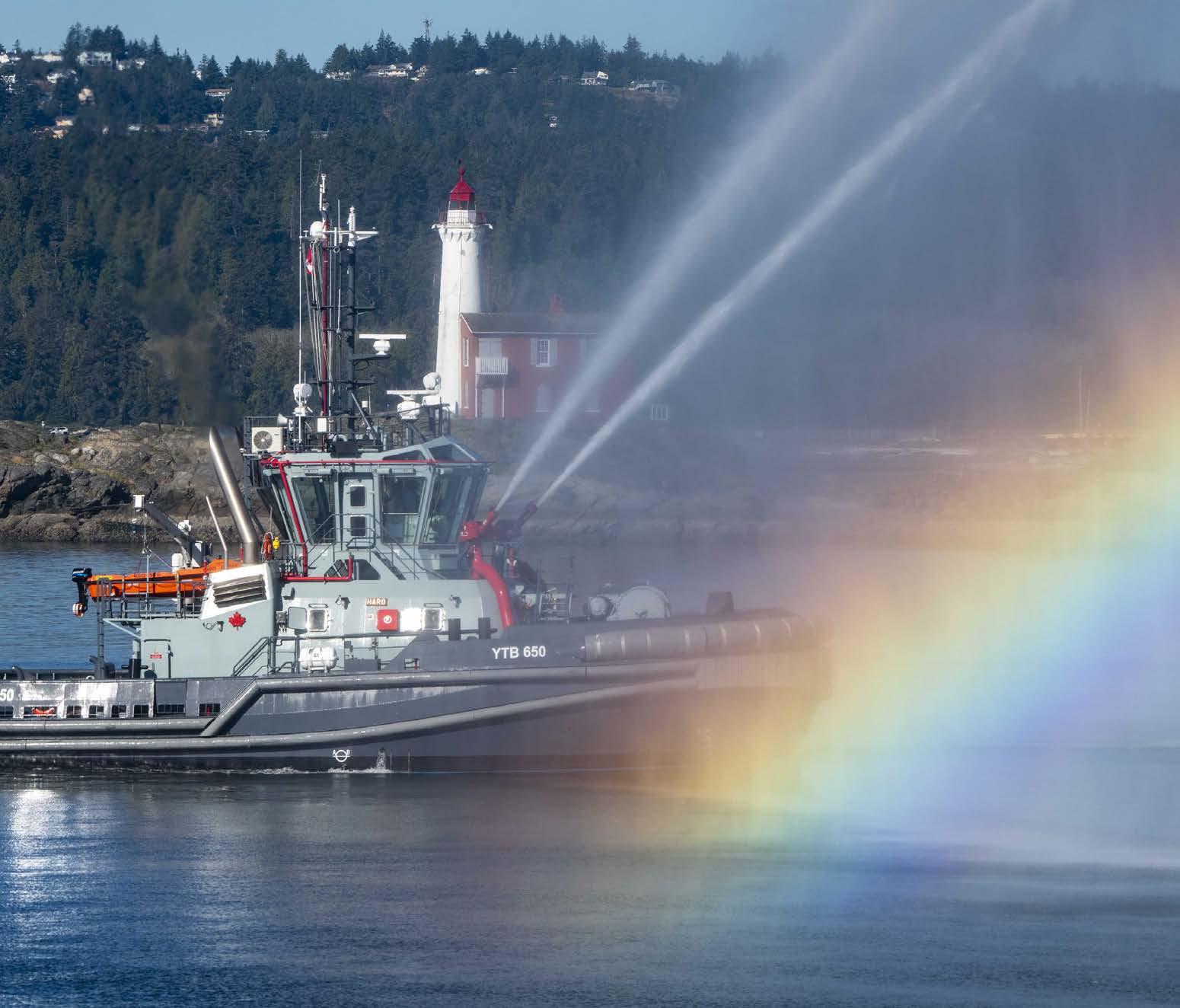





Photo: Sailor 3rd Class Veni Colico



Addiction, Mental Health & Trauma Treatment just a Ferry Ride Away
Help is at hand: Powell River-based Sunshine Coast Health Centre and Georgia Strait Women’s Clinic— Western Canada’s only trauma program exclusively serving women—provide highly personalized addiction, mental health and trauma treatment for male and female clients respectively. We’ll pick you up from the ferry for our daily inpatient treatment tailored to your unique needs.


Services include 24-hour medical service, psychiatric assessment, EMDR, rTMS, psychotherapy, a dedicated group for military clients and much more.
Serving the Department of National Defence and Veterans A airs Canada since 2009.




Kate Bandura Lookout Contributor
Beneath the waves, Canada’s Submarine Force (CANSUBFOR) operates in one of the most challenging environments known to humankind. The silent service demands not only courage and skill but also an unwavering commitment to safety.
In an exclusive interview with The Lookout, Chief Petty Officer 2nd Class (CPO2) Nelson Harvey, National Submarine Search and Rescue Coordinator, pulls back the curtain on the sophisticated equipment and rigorous training that safeguard Canada’s submariners.
From recompression chambers to individually tailored escape suits, CANSUBFOR employs an arsenal of technology designed to protect its personnel in the most extreme scenarios.
But technology alone isn’t enough. As CPO2 Harvey reveals, it’s the relentless focus on training and preparedness that truly sets CANSUBFOR apart in the realm of submarine safety and rescue operations.
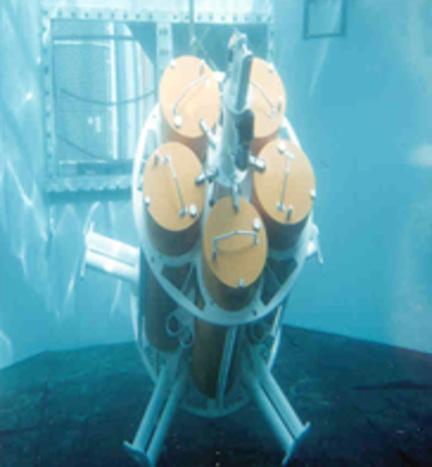
The immediate first aid crown jewel of CANSUBFOR’s rescue equipment is the Submarine Re-Compression Chamber (RCC), a portable hyperbaric unit that can be rapidly deployed to submarine incident sites. According to CPO2 Harvey, it’s a fully transportable chamber that can be flown to a port close to the submarine incident and loaded on a ship for quick deployment.
The RCC’s importance cannot be overstated. In the critical moments following a submarine incident, this chamber can mean the difference between life and death. It is crucial in treating decompression sickness, a potentially fatal condition affecting submariners who surface too quickly.
“We know that for every 10 sailors that are sent to the surface from a distressed submarine, 7 will most likely die without medical intervention and recompression,” CPO2 Harvey says, underlining the crucial role of this equipment in submarine rescue operations.
By providing immediate recompression treatment at the incident location, the RCC dramatically improves survival rates for affected sailors. The international submarine community are investing in multiple research projects to see if we can leverage cutting edge technology in solving getting a large RCC that is still portable.
CANSUBFOR equips its submariners with specialized escape suits designed for emergencies. These suits are the submariners’ lifeline in extreme situations, allowing escape from depths that would otherwise be fatal.
But the suit’s functionality doesn’t end at escape: the suit provides buoyancy and air supply so the submariner can breathe normally all the way to the surface. Once there, submariners can deploy individual life rafts attached to their suits, offering protection from the elements and improving visibility for rescue operations.
Attached to each escape suit is an individual life raft, a compact but crucial piece of survival equipment.
“The single place life raft is attached to the leg of the escape suit and is deployed by the submariner once they reach the surface,” CPO2 Harvey says.
The raft’s deployment is designed for speed and ease of use in high-stress situations: it is an easy single pull on a lanyard to deploy the raft, which inflates in seconds.
These rafts are more than just flotation devices. They come equipped with a salt-water-activated light for visibility, a sea anchor to slow drift, a bailer to remove water and can be lashed together for safety and to be better seen from a ship or airplane.
CANISTERS:
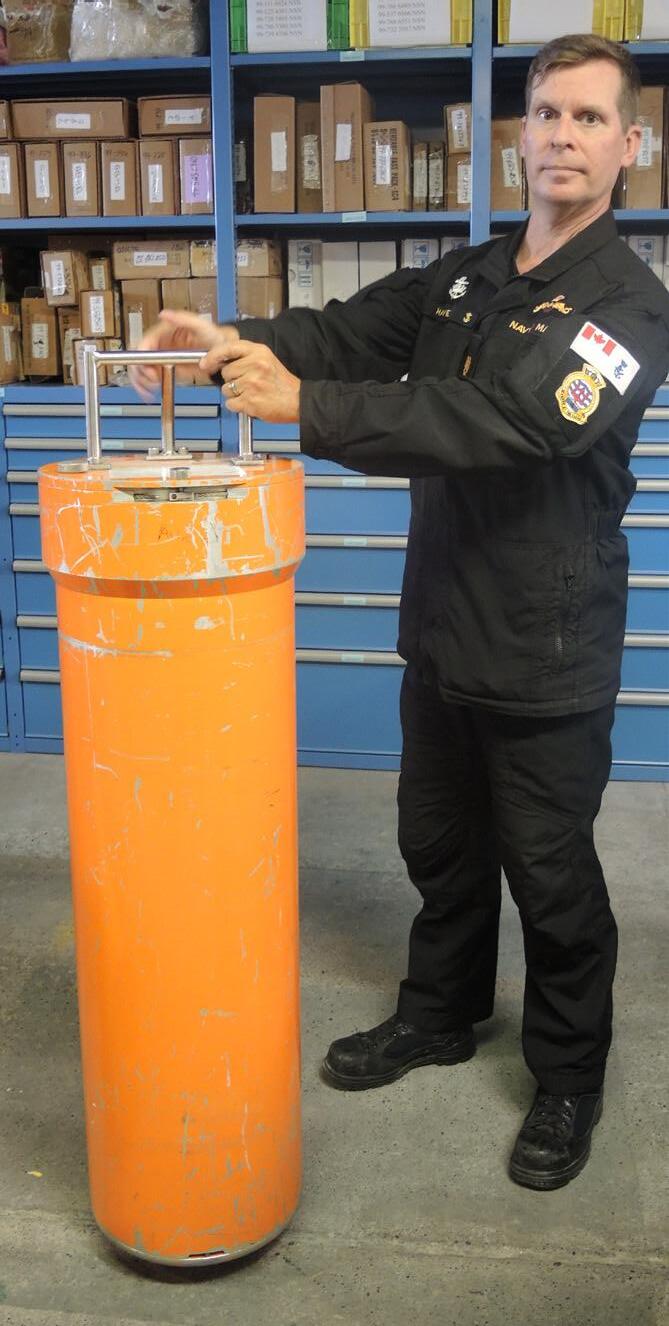
Air quality management is crucial in the enclosed environment of a submarine. CANSUBFOR employs chemical oxygen generators and CO2 absorption systems to ensure air quality and maintain breathable air. The oxygen generators can provide up to seven days of breathable air in worst-case scenarios, while CO2 absorption canisters and lithium hydroxide curtains keep carbon dioxide levels in check.
“The submarine chemical oxygen generator provides 2,600 litres of breathable oxygen per candle by ‘burning’ a chemical in an insulated canister,” CPO2 Harvey explains. “These ‘candles’ are a vital resource, with every Royal Canadian Navy (RCN) submarine carrying hundreds of these onboard for daily use and a specific amount of reserve designated only for escape.”
Complementing the oxygen generators are CO2 absorption canisters and curtains. These are not specifically for escape but can be used to bring down the CO2 levels inside the ship.
“Strictly for escape, we have lithium hydroxide curtains that absorb many gasses and can keep the atmosphere in spec for up to seven days,” CPO2 Harvey says.
Fire safety is another crucial aspect of submarine operations as fire poses an extreme threat in the confined spaces of a submarine. CANSUBFOR submarines are equipped with multiple firefighting systems, including chemical foam hoses, pneumatic systems, and Halon-based suppression units.
“The submarines have two designated fire fighting stations with centre-
“The submarine escape suits are specifically designed to allow a submariner to escape through the specialized escape tower on a submarine from a depth down to 180m (600 ft),” CPO2 Harvey says.
fed hose reels that use a chemical concentrate foam to help put out fires,” CPO2 Harvey says.
For situations where power is lost, the submariners also have two pneumatic systems that use compressed air to push out the water foam combination called the SFU-90. The submarines are also equipped with several compartments that have a fitted system with Halon and, finally, there is a deluge system in the engine room. This multi-layered approach to fire safety underscores CANSUBFOR’s commitment to crew protection in all scenarios.
Regular training ensures all submariners are proficient in using this equipment in the confined spaces of a submarine.
Every two years, personnel must recertify their escape qualifications, undergoing medical evaluations and practical training in escape procedures. All submariners are taught the basics of escape on their Basic Submarine Course (BSC) and must consolidate that knowledge to the satisfaction of the Coxswain before they achieve the Submariner qualification (their Dolphins).
CANSUBFOR maintains a unique system called the POD, which simulates the delivery of supplies to a distressed submarine on the ocean floor. This system allows submariners to practice critical skills in receiving emergency supplies and managing crisis situations.
“In a simulation of an event like this, we train to have a group of submariners contact a ship on the surface on the Emergency Under Water Telephone with items they need. The ship will lower the POD to the submarine where a diver or remote-operated vehicles (ROVs) can place the POD in the pod posting bag rigged in the escape tower. The crew then shuts the hatch, drains down the tower and lowers the POD into the escape compartment to retrieve supplies,” CPO2 Harvey explains.
The Force’s commitment to safety extends beyond its own fleet: CANSUBFOR plays a significant role in international submarine rescue efforts, participating in global exercises and offering expertise through the International Submarine Escape and Rescue Liaison Office (ismerlo.org).
“Going to sea on a submarine is like going into space – it’s inherently dangerous, but not foolhardily so,” CPO2 Harvey says.
CPO2 Harvey stresses the RCN not only has submarines but also the ability to help save submariners if there ever was an incident. The Force’s involvement in the 2023 Titan submersible incident demonstrates its readiness to assist in international emergencies.
Looking to the future, CANSUBFOR is exploring innovative technologies to enhance its rescue capabilities. Plans include acquiring ROVs for deep-water interventions and developing mini-pods for supply delivery at greater depths.
Managing Editor
Jazmin Holdway jazmin.holdway@forces.gc.ca
P r od UC t ion
Teresa Laird production @lookoutnewspaper.com
Leslie Eaton
250-363-3127
leslie.eaton@lookoutnewspaper.com
a d M i nistration and aCC o U nt s
Andrea Modesto
adv E rtising
Joshua Buck
250-363-3127
Andrea.Modesto@forces.gc.ca
7 78-977-5433 military.base.advertising@gmail.com
E d itoria L advisors
Lt(N) Wilson Ho

250-363-4006
Published every other Monday, under the authority of Capt(N) K. Whiteside, Base Commander.
The editor reserves the right to edit, abridge or reject copy or advertising to adhere to policy as outlined in PSP Policy Manual. Views and opinions expressed are not necessarily those of the Department of National Defence.
Circulation: 4,000 plus online engagement per week
Follow us on Facebook and Instagram to join our growing social media community. A Division of Personnel Support Programs
Web: www.lookoutnewspaper.com Fax: 250-363-3015 Canadian Mail Product Sales Agreement 40063331
Thomas Goenczi Lookout Contributor
When we are psychologically wounded by trauma, we have many avenues we can take. However, our choices and our sense of autonomy are often shrouded by old patterns. These patterns develop on emotional, behavioural, and mental levels. This is a very unconscious process for most. Due to this unconsciousness, we are unable to notice how far we’ve strayed from our path of psychological well-being.
The issue isn’t necessarily downplaying the magnitude of what happened at this point, but rather our capacity to cope and process it. When we are psychologically wounded by a traumatic event, we consciously and unconsciously do the best we can to address it. However, with trauma, any coping deficits that we’ve carried through the event often get amplified. Because of this, we can be led down a path of desperate overindulgence which turns into dependency in the pursuit of comfort.
When we become over-reliant on one way to cope, the cycle of habit becomes constricted. Our life becomes a perpetual revolution of the same pattern day in and day out. It is debilitating when we can’t see ourselves moving forward and there isn’t a vision of what we can become. Feeling and thinking as though we have run aground, we often unconsciously choose to double down on the method we know all so well. This approach of healing from the trauma in tandem with dull inactivity can create a
perfect storm for addiction.
One way to look at addiction is by viewing it as an unconscious habit turned into conscious reliance. From the outset, when dealing with trauma, we are looking to bring relief and distance from the psychic wound. This is done in earnest at first but becomes artificial when one realizes how detrimental the habit has become.
Studies, exploring the link between PTSD and substance use have found the two often statistically coexist; estimates suggest that in the low range, they co-occur at a 25 per cent rate with the prevalence of the association being as high as 49 per cent.
The ego in some sense no longer has the capacity to hold all the pain that it has endured. Our ego - the conscious part of ourselves - explodes like a light bulb in the night sky with our latest trauma. We are without light, and darkness begins to creep in.
We can’t see what’s happening at first, the old excessiveness becomes the new norm. This is what makes addiction by trauma so insidious. At the end of the day, we are just looking for some relief, to escape and to give up our ability to choose. However, to give up oneself in this manner, without authentic confrontation of the core issues of our lives is to live a life guided by fear.
The topic of addiction seems to have a significant pull on the collective psyche these days. And, it does cause you to take a moment to step back and look at some of your habits.
Some queSTionS you can aSk of yourSelf:
• Where are my psychological patterns birthed from?
• Why are my emotional and thinking patterns like this?
• How much did the trauma I needed to endure influence these ways of living?
• What are my current ways to cope with it?
• Who is making the calls? My conscious self or am I driven by unconsciousness? Asking yourself questions about your patterns is the first step to self-enquiry. When we are curious about ourselves, we find the hooks that we are snagged to. Once there is that awareness of a pattern, one can begin to explore options on how to best navigate it moving forward. This sounds all rather easy, but it is not easy. It may be simple, but not easy.
The first part of choosing is knowing we have options again and options give us light. And, when we begin to piece together the shards of our ego again, we can do so in a manner of awareness and choice.
Thomas Goenczi is an RCN Veteran and MA Clinical Counsellor with Private Practice: Well Then Therapy.
The content is not intended to substitute professional advice, diagnosis, or treatment. Always seek the advice of your mental health professional or other qualified health provider with any questions regarding your condition.




Jackie Carlé Executive Director, Esquimalt MFRC
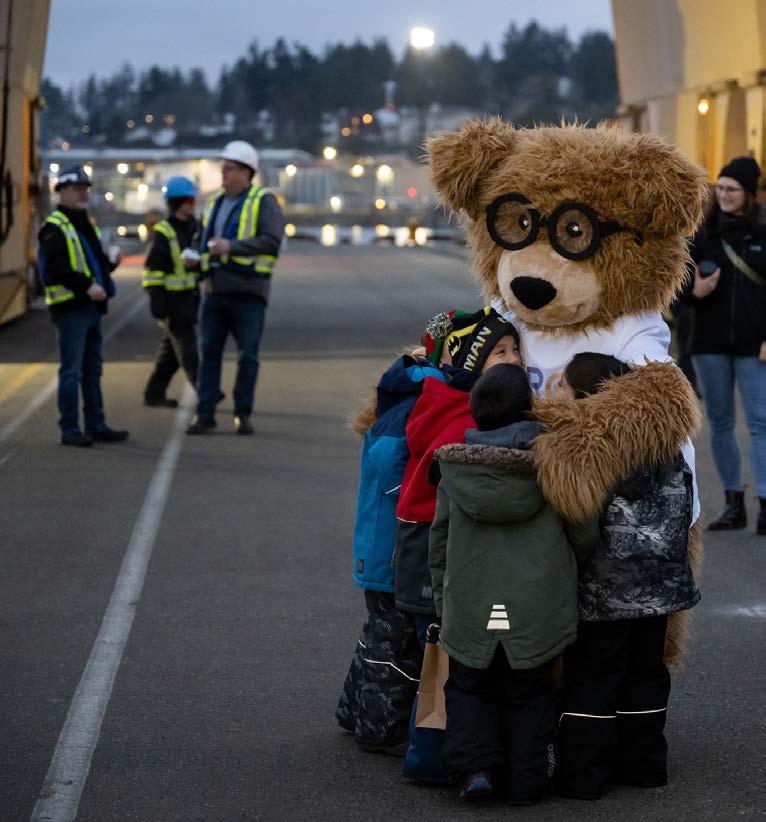
At the Esquimalt Military Family Resource Centre (MFRC), we are honoured to walk alongside military connected families everyday. Our team of staff and volunteers are constantly impressed with the way military families navigate relocations and work-related absences of their military member while still maintaining their mental health and well-being. On Sept. 15, we come together to acknowledge how strong and dynamic our military families are as we celebrate Military Family Appreciation Day; the official day when we honour military-connected families.
We know that living the military family lifestyle has its ups and downs. Our goal at the MFRC is to be present with family members as they traverse the realities of being part of a military family. The word resilience is often used in relation to military families and the unique challenges they experience. We believe that resilience does not mean that we are strong and capable all the time, though. For us, resilience means that we seek support when we need it, and we explore new coping mechanisms when we recognize that our usual strategies aren’t enough. Resilience is about sharing our collective wisdom and supporting one another for the greater good and without personal agenda.
Research on well-being highlights the importance of building healthy networks. Support networks don’t need to be large, but they do need to be empathetic and affirming. These are especially








Photos supplied
important in military families, whether that be when a member deploys and a family needs support in the absence of a parent, or in navigating the unique lifestyle the military offers with someone who understands it well.
The MFRC Family Wellness and Counselling team offers counselling for military family members looking for support. We have great partnerships in the broader community and can facilitate meaningful referrals when required. We offer wellness and preventative programs aimed at supporting well-being and increasing healthy networks for families. Our Family Network volunteers and Work-Related Absence team strive to connect loved ones with information, a sense of belonging and peace of mind. We also offer children’s services to encourage play, creativity and fun in a caring environment where staff understand that sometimes it is hard to have a significant family member away or settle into a new community.
Military Family is a big concept for us at the MFRC. It refers to those who are near and dear to a military member, whether that be immediate family, extended family or a circle of friends that constitute the military member’s support system. It is all encompassing. The common thread is the service of the military member and sacrifices made by their families, all in support of keeping Canadians safe.
Military Families are the homefront and we honour and recognize their contribution to this country.











Dr. Darrell Menard OMM MD, Dip Sport Med Defence Stories
It may come as a surprise to many: did you know that according to the scientific evidence available, even the best helmets cannot prevent concussions? Hundreds of millions of dollars have been spent on the design of protective helmets for many different sports, yet despite this enormous investment, there continues to be no such thing as a concussion-prevention helmet for any sport –regardless of how expensive a helmet is.
Right now, you may be asking - why bother wearing a helmet then, when you are biking, skiing, rollerblading or playing hockey and football? Even though helmets have not been shown to prevent concussions, they continue to be an important piece of protective equipment. When properly worn, helmets are very effective at preventing cuts to the scalp, brain bleeds and skull fractures–damage that can be permanent and disabling.
So why can’t a helmet prevent a concussion? This is due to the way the human head is designed. You have the hard bony covering of the skull, a set of protective membranes and the brain floating in a pool of fluid. As a result, when you get hit, your brain moves around inside your skull like a yolk inside an egg. If you are hit hard enough, your brain will bang around inside your skull and get bruised at the points of impact. Since almost all hits apply some rotational force to the head, this will subject the brain to forces that can cause microscopic tears to the brain and its blood vessels.
Even if helmets won’t prevent concussions, wearing one is a smart idea. Wearing a helmet is the law in B.C. and you could
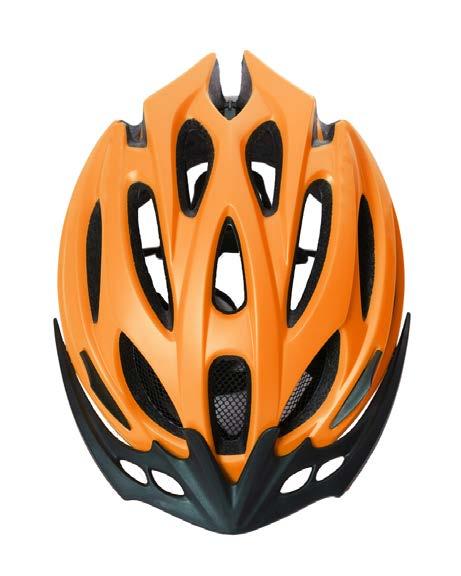
be fined for not wearing one, and the benefit to you is greatest if your helmet:
• Fits properly – snug and comfortable!
• Is the right design for your sport.
• Has a chin strap that is done up, so your helmet doesn’t fall off.
• Is in good repair.
• Is sticker free – stickers will weaken the plastic!
• Is safety certified by CSA, CPSC or ASTM.
Remember, your helmet won’t be much help if it is sitting in the garage when you fall off your bike! You only have one brain; please take good care of it!
Learn more about preventing concussions with Brain Injury Canada – www.braininjurycanada.ca.
Dr. Menard is the Surgeon General’s specialist advisor in sports medicine.
Strengthening the Forces is the CAF/DND’s health promotion program providing expert information, guidance, training, tools, and leadership support to improve CAF members’ health and well-being.


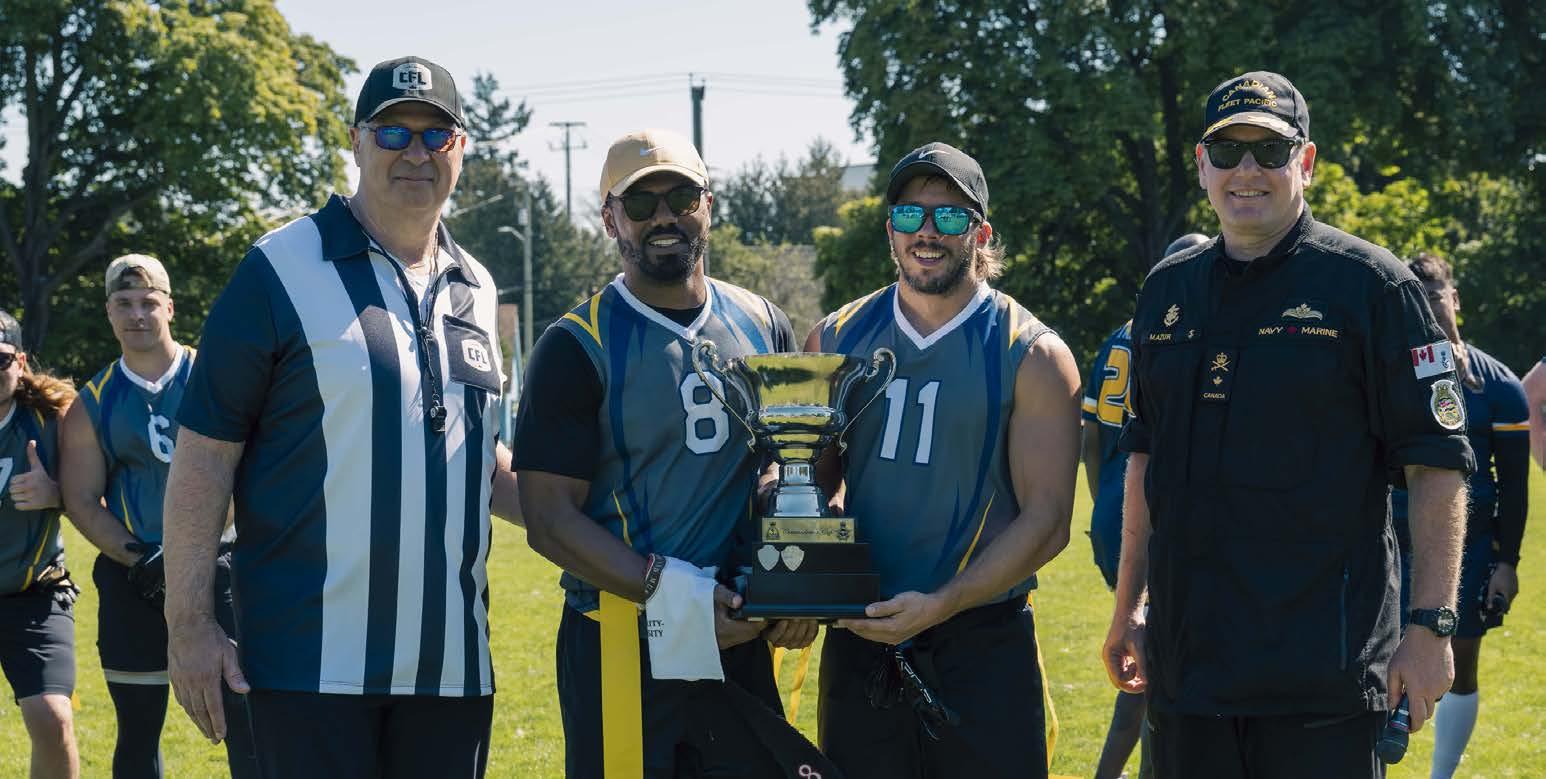
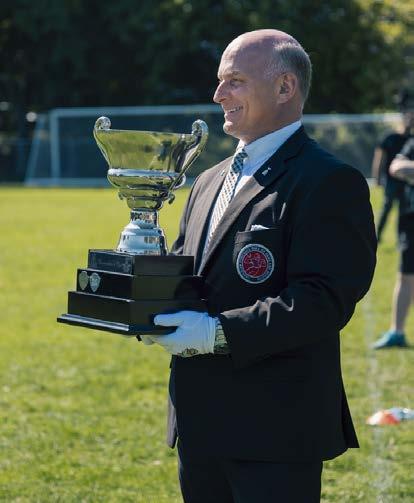
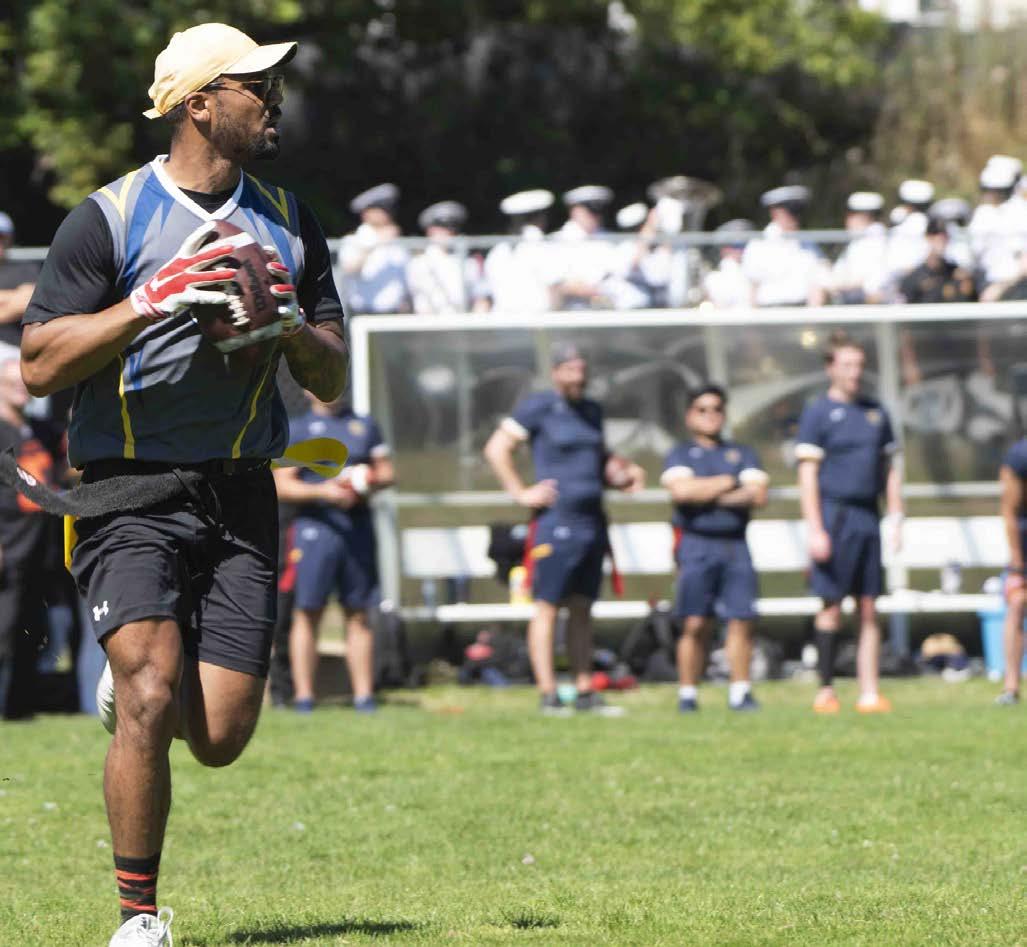
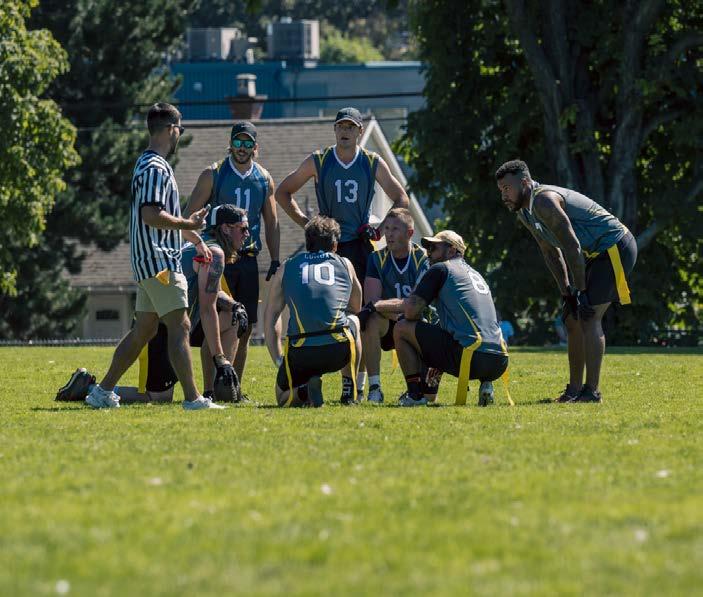
The Royal Canadian Navy (RCN) took on the Royal Canadian Air Force (RCAF) in the third annual Commodore’s Cup flag football game yet at Colville Fields on Aug. 29.
In the closest game since the Cup’s beginning, the Navy took the early lead while the two teams were trading defensive stands until the dying minutes of the first half where each team scored on big plays. The RCN took a 20-13 half-time lead and started with the ball to start the second half.
The RCAF made some adjustments at the break and came back with a solid defensive game plan forcing three turnovers in a row and scoring touchdowns on two of them. Putting them up 27-20 with around ten minutes left, the RCN focused offensively and managed to score a touchdown with five minutes left in the game to make the score 27-26. They didn’t manage to score on their conversion to tie the game.
After forcing a turnover on defence, the RCN took possession of the ball with two minutes left in the game and only needing 1 point (or a rouge) to take the game to overtime, but the Air Force forced a turnover and intercepted the ball before they let the clock run out, winning their third straight Commodore’s Cup.
The excitement continued beyond the game as Canadian Football League (CFL) Commissioner, Randy Ambrosie watched from the stands with former BC Lion slotback and 1983 Grey Cup champion, Jan Carinci. Along with them was the Grey Cup, displayed for visitors and players in attendance.
The Commodore’s Cup began in 2022 as an opportunity for Vancouver Island’s Maritime Forces Pacific (MARPAC), 443 Maritime Helicopter Squadron and 19 Wing Comox to build esprit de corps and some friendly competition.
The cup now returns to 19 Wing Comox for the third year in a row as planning begins to bring it home to Esquimalt in 2025.





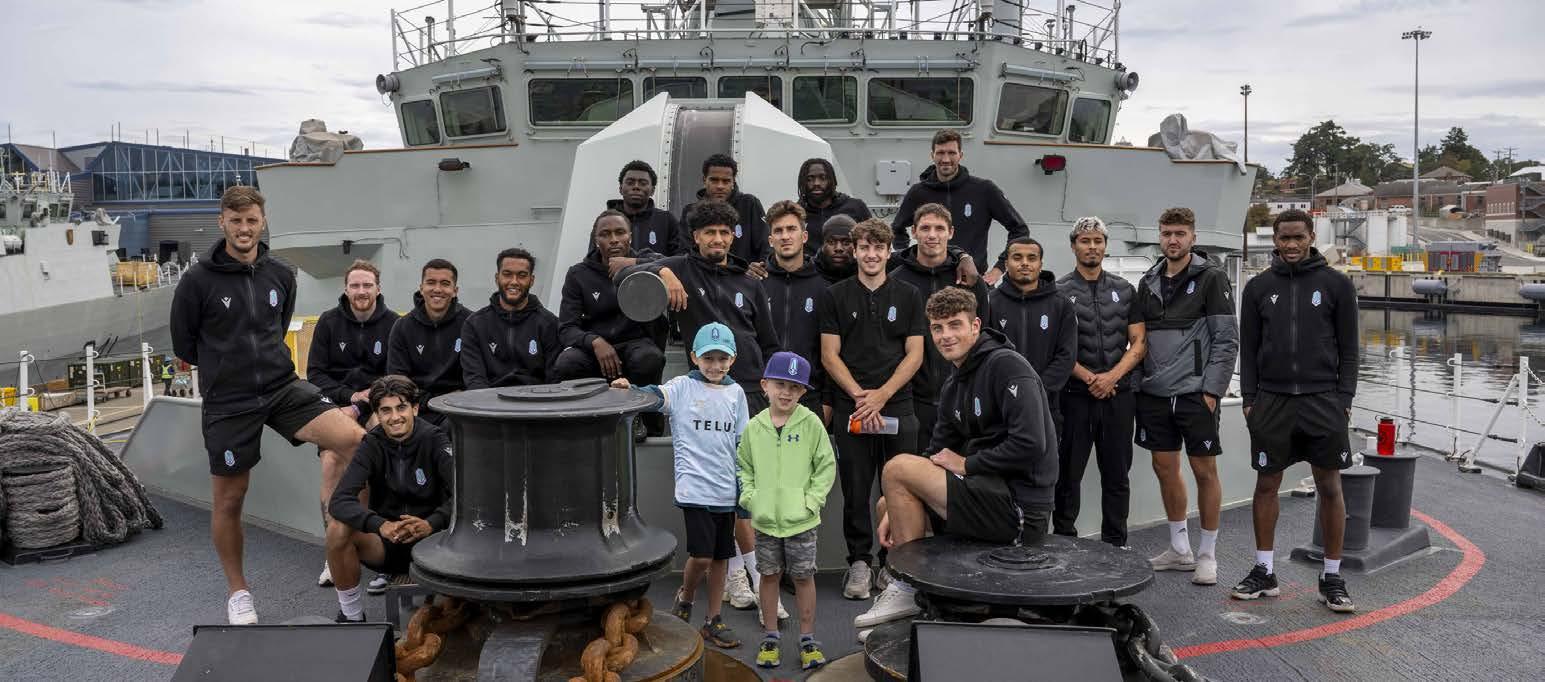
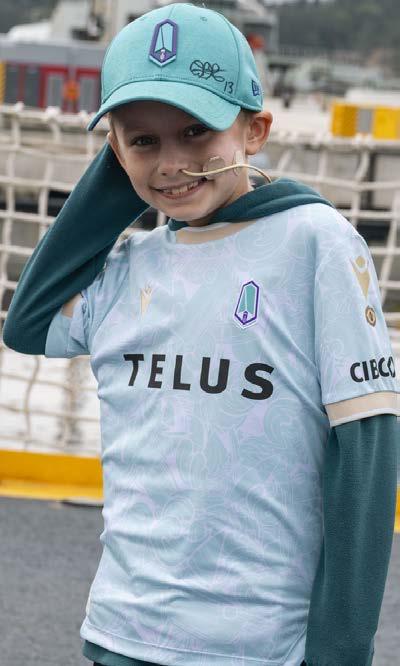
The Pacific Football Club (PFC), Canada’s professional soccer club based in the Westshore, spent an exciting afternoon visiting CFB Esquimalt on Aug. 21 as the crew of HMCS Regina hosted the team for an extensive ship tour.
Learning about life at sea, touring around the many unique areas of the ship and hearing from Royal Canadian Navy members as they shared stories of their deployments, players of
PFC were immersed in a full Navy experience.
Team Captain Josh Heard, a Victoria native, expressed his admiration for the Navy and the importance of teamwork.
“It was good for the team to come see this,” said Heard. “There are similarities between what the Navy does and what we do, when it comes to working as a team and everythingthere are a lot of parallels that can be drawn.”
The players were left inspired by the experience and thankful to connect with the local military community and some of their newest team fans!
Pacific Football Club CFB
Esquimalt Appreciation Night followed on Sept. 7 at Starlight Stadium where they took on the Halifax Wanderers in a classic battle of East Coast versus West.


Coming soon
Enjoy the finest in single-level living, where 2-bedroom, 2-bathroom villas line European-inspired streets, just moments from the ocean and a wealth of amenities.
A/SLt Alexandre Khoury MARPAC PA
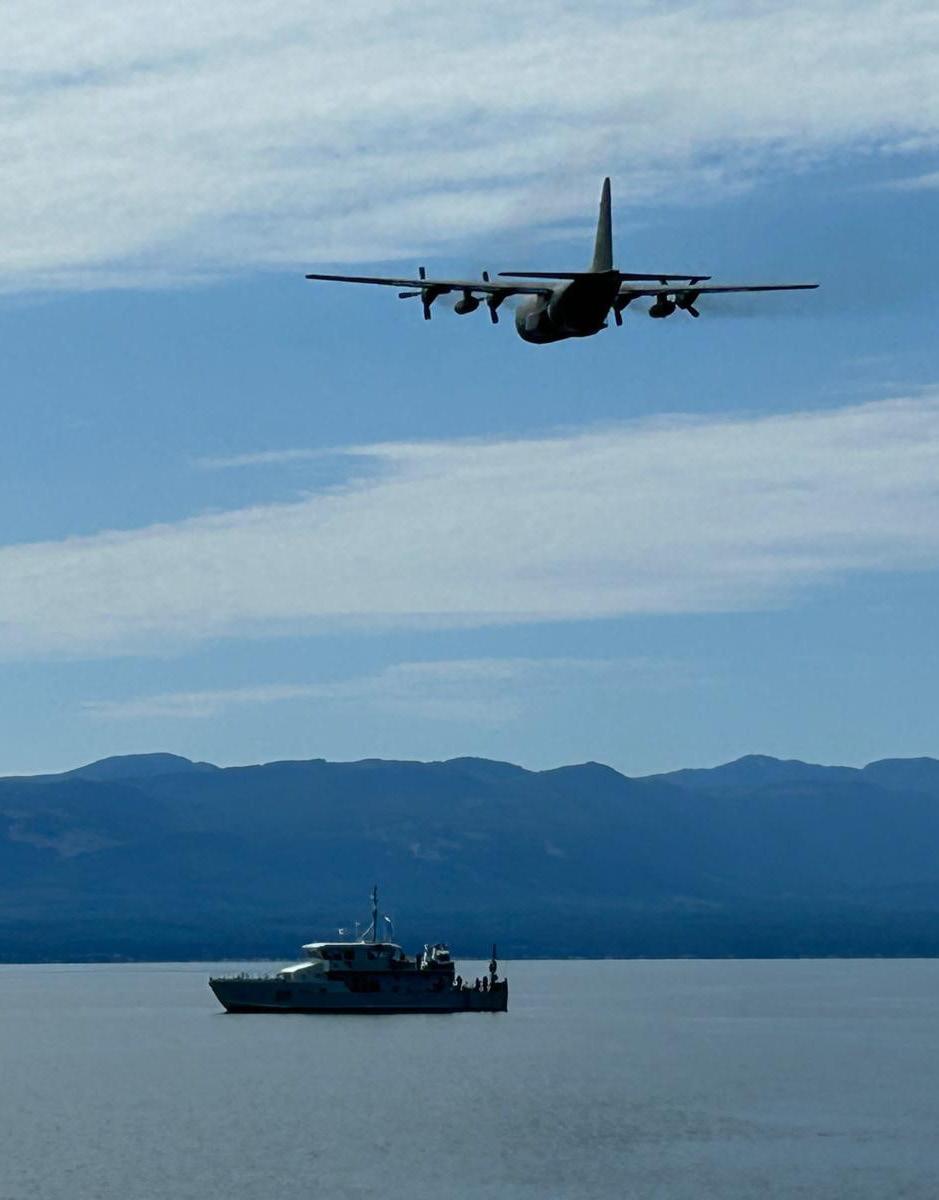
A Royal Canadian Air Force (RCAF) CC-130H Hercules (CC-130H) from 442 Squadron in Comox flew near patrol craft training vessels as part of a small search-and-rescue exercise with sea cadets, a last-minute collaboration between the Royal Canadian Navy and RCAF.
The day before the exercise, Lieutenant(N) (Lt(N)) Serge Sabourin, an experienced Naval Warfare Officer, Captain (Capt) Sebastien Lemire, a pilot, Lt(N) Konnor Brett, Officer in Charge (OIC) of one of the Orcas, and Lt(N) Derek Frank, Coordinating Officer at the Patrol Craft Training Unit quickly collaborated on a plan that would require the CC-130H to fly close to the Orcas during their exercise and drop search and rescue equipment for the sea cadets to go recover with the zodiac.
During the exercise, Capt Lemire from Comox 442 Squadron piloted the aircraft, as members of his crew practiced dropping emergency equipment to the Orca vessels.
“It was good training for the ones who are doing the drop in the back of the plane,” said Capt Lemire. “Overall, it was a very good exercise, and I was happy that we were able to organize it the day before with the crew of the two ships.”



Wolf 59 and Moose 62, both Orca-class vessels, were scheduled to sail with HMCS Quadra cadets to show them what life at sea is like aboard a ship.
From driving the zodiac and recovering dropped equipment of the CC-130H to throwing handling lines, the cadets had the chance to experience and learn the basics of seamanship. Involved with a small crew on each vessel, they would act as lookout, helmsman and even had the chance to manoeuvre the ship taking orders from an OIC.
Lt(N) Sabourin was the OIC of one of the patrol craft at sea.
“The goal of that week was to allow the cadets to be involved as much as possible” said Lt(N) Sabourin. “They wanted to be there, and they did not want to leave after two and a half days; they wanted to stay on board and were hoping to sail again.”
Lt(N) Sabourin was really impressed by the appreciation of the sea cadets for the experience they had and practical knowledge they got to learn. “It was a nice interaction between the Royal Canadian Air Force and the Royal Canadian Navy to achieve a common goal and common purpose: to save lives and conduct a search-and-rescue exercise” he said. “The cadets were very helpful; they were eager to learn and to participate, and they wanted to be there.”
Veterans Affairs
www.veterans.gc.ca
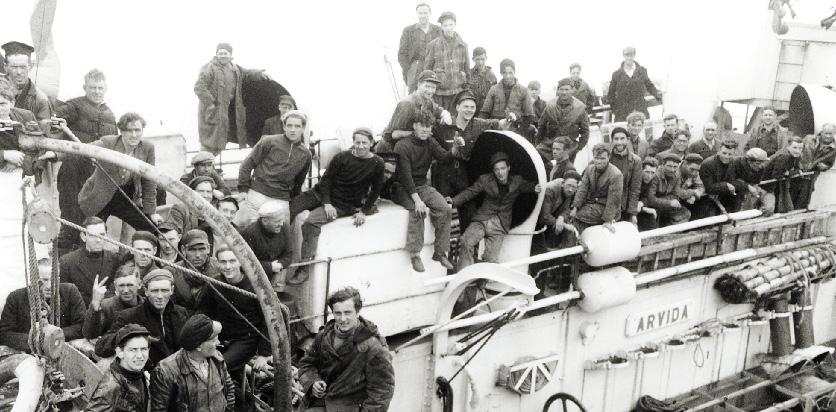
The achievements and sacrifices of Canadians during the Second World War were great and covered a broad spectrum of efforts. Wartime was often a time of great danger, but the danger was not faced only by those in military uniform. Those who served in Canada’s Merchant Navy, our country’s fleet of transport ships that carried desperately needed equipment, fuel, goods, and personnel to Europe and around the world, had to do their vital job knowing that their ships were prime targets for enemy action.
Most of those who served in the Merchant Navy would find themselves as participants in the Battle of the Atlantic, the struggle between the Allies and the Germans for control of the Atlantic Ocean. Merchant mariners showed tremendous bravery on this ocean battlefield, demonstrating the heroism of ordinary Canadians who chose to risk so much to help protect the rights of others.
• A total of 12,000 men and women served in Canada’s Merchant Navy.
• More than 25,000 merchant ship voyages were made during the war.
GoinG to WAr
It was known right from the beginning that Canada’s merchant ships would have an important role to play in the war effort. In fact, early information gathered by British intelligence agents about German ship movements led Canada to conscript all merchant ships two weeks before the war actually began. On August 26, 1939, the Royal Canadian Navy (RCN) took control of all shipping. Despite the fact that merchant crews were not compelled to sail on the dangerous ocean passages, most indeed did.
• When the war began, Canada had 38 ocean-going merchant vessels. By war’s end 410 merchant ships had been built in Canada.
• Because so many merchant sailors experienced the dangers of mines and submarines during the First World War, they knew firsthand the dangers of wartime shipping.
• Merchant crews were given training at special schools such as the Marine Engineering Instructional School in Prescott, Ontario.
FAcinG the “WolF PAcks” “Wolf-packs” of German submarines, known as U-boats, preyed on merchant ships, causing heavy losses and high mortality rates for merchant crews. The term U-boat is from the German word for submarines, Unterseebooten (undersea boats).
• To help protect merchant ships, the Royal Canadian Air Force (RCAF) supplied air escorts and the RCN organized merchant ships into convoys that were accompanied by armed naval escorts. These escorts included specially designed boats such as corvettes that could outmaneuvre submarines.
• German production of U-boats was so efficient that for a time they could turn out U-boats faster than the Allies could sink them.
• The German Navy continued to improve submarine technology during the war. For example, German scientists invented the schnorkel – a breathing device that allowed U-boats to charge their batteries underwater and stay submerged for up to ten days. Previously, the submarines had to resurface frequently. This fact helped the U-boats in the face of the Allies’ air superiority and radar systems.
the BAttle oF the Atl Antic
From the very beginning of the war, German submarines tried to cut supply routes across the Atlantic, threatening the transportation of vital goods and personnel to Britain. Along with the RCN and the RCAF, the Merchant Navy played a key role in the six-year campaign to clear the Atlantic of U-boats. It was far from easy - they faced fierce attacks by German submarines and hazardous, lifethreatening weather conditions in the North Atlantic - but they put themselves in harms way in the quest for peace and freedom in the world.
• The Battle of the Atlantic was the only battle of the Second World War that was waged close to North American shores. German U-boats attacked coastal
Every year, Canadians honour the dedication, bravery, and personal sacrifice of the 12,000 men and women who served in Canada’s Merchant Navy during the Second World War.
The Merchant Navy was a vital lifeline and played a decisive role in the Allied war effort throughout the Battle of the Atlantic -- the longest continuous battle of the Second World War beginning on the opening day of the war in September 1939 and ending almost six years later with Germany’s surrender in May 1945. Merchant mariners crewed the vessels that carried essential personnel, equipment, and supplies all over the globe while relentlessly pursued by enemy U-Boats. Over 25,000 of these dangerous voyages were completed by our ships throughout the Second World War.
shipping from the Caribbean to Halifax. During the summer of 1942, they even penetrated deep into the Gulf of St. Lawrence and sank ships.
• Early in the war, many merchant ships were lost because escorting aircraft reached the limits of their flight capacity and had to turn back before the ships reached their destinations. The Navy helped solve the problem by building flight decks on merchant ships, and even creating Merchant Aircraft Carriers (MACs) - tankers or grain carriers equipped with a deck and three or four aircraft.
• The Battle of the Atlantic was a battle of technology as well as guns. When the Germans developed acoustic torpedoes that homed in on the noise made by a ship’s propellers, Allied scientists responded in 17 days with a noise-making device towed behind a ship that fooled the torpedo, diverting it harmlessly away.
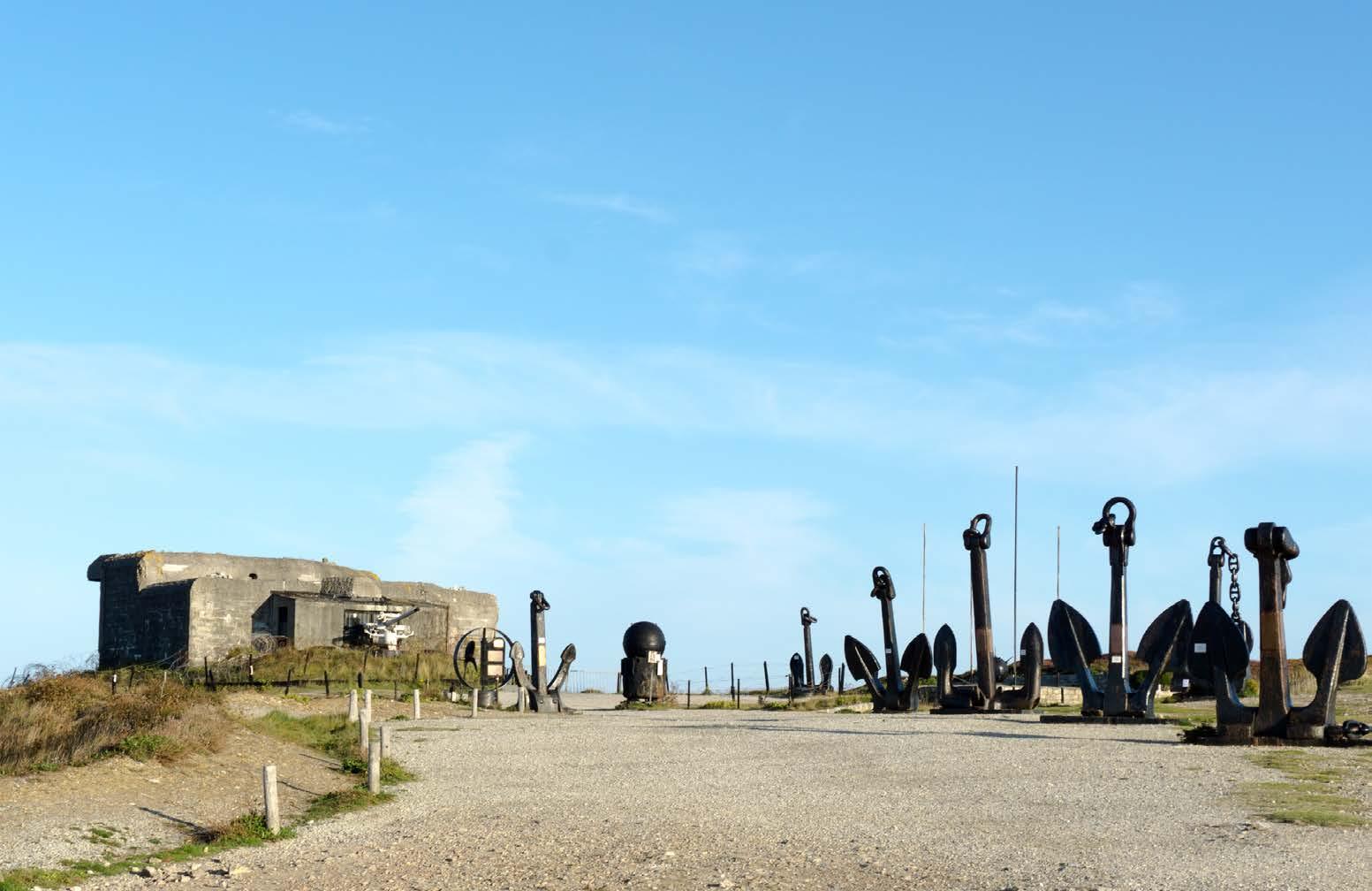
• Merchant mariners bore much of the brunt of the Battle of the Atlantic. The casualty rate was one in seven, a higher percentage of total casualties than those suffered by any of Canada’s fighting services. Approximately 1,500 Canadians died, including eight women. As well, 59 Canadian-registered merchant ships were lost.
The collective experiences and stories of all Canadians during the Second World War, including those in the Merchant Navy, provides us with a proud and lasting legacy that will continue into the country’s future.
To commemorate the Naval Reserve Centennial in 2023, each of the 24 Naval Reserve Divisions (NRDs) across Canada celebrated by holding a series of activities and events to mark the exceptional year.
For HMCS Malahat, Victoria’s Naval Reserve Division, this included a Freedom of the City parade through downtown Victoria, an Open House, a reception for Malahat alumni, and various efforts with the other NRDs at the national level (like the Centennial-themed Navy Bike Ride).
However, to underscore the theme of commemoration, Malahat’s Public Affairs Officers and Malahat Centennial Committee Co-chairs, Lieutenant(N) (Lt(N)) Donald
Den and Lt(N) Adam Smith, wanted to come up with something special that could act as an ‘archive’ of the people and Naval history over the many years at Malahat and in the Naval Reserve. Thus, the idea of putting together an in-house documentary film came together.
“I knew how big an undertaking the project was going to be at the outset,” notes documentary director and co-producer Lt(N) Donald Den. “I have a few years experience in videography and making short films in the past, so the prospect of a well-produced full-length documentary film was a monumental task.”
First proposed to then Commanding Officer of Malahat, Commander (Cdr) Cameron Miller, in December 2020 as part of an initial brainstorming of ideas for Malahat’s contributions for the Naval
Reserve Centennial, the documentary film was eventually given the green light to proceed as one of Malahat’s signature Centennial contributions.
Over the next two years, leading up to 2023, Lt(N)s Den and Smith spent countless hours reaching out to hundreds of Malahat alumni and current members as well as several people in the Navy community to contribute to the making of the film.
Eventually, with the support of Malahat’s current Commanding Officer, Lieutenant Commander (LCdr) Anne Gardam, filming would take place at Malahat sporadically throughout the fall of 2022, leading into the winter of 2023, with close to 50 current and former members of Malahat being interviewed for the film, and several others providing archival materials, includ-
ing photos and various pieces of Malahat memorabilia.
Editing and post-production of the film took place throughout 2023, leading to a planned in-house premiere of the film for Oct. 28, 2023, to coincide with Malahat’s Open House and Alumni Reception.
“There were many busy nights leading up to the premiere of the film,” comments Lt(N) Den. “We were editing and reviewing cuts of the film right up until the morning of the premiere.”
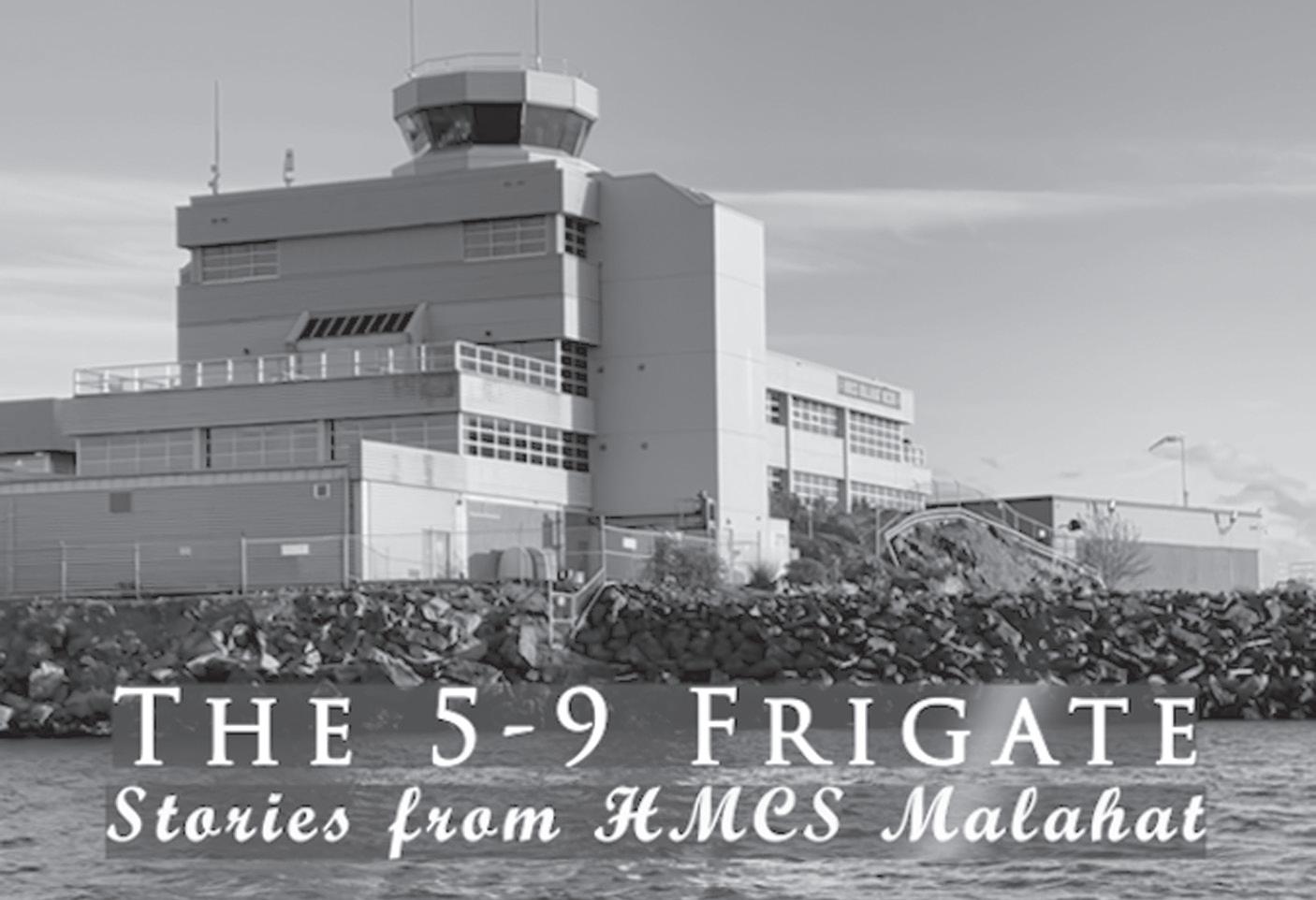
Malahat’s full-length in-house created documentary film, ‘The 5-9 Frigate: Stories from HMCS Malahat’ was screened that evening as close to a hundred members of the Malahat alumni packed the Drill Deck where the film was projected onto a nearby wall.
“We knew that ‘stories’ was going to be in the title because
HMCS Malahat’s documentary film, The 5-9 Frigate: Stories from HMCS Malahat is available at bit.ly/3XbwycV
of the nature of the film,” said Lt(N) Smith, co-producer of the film. “We chose ‘5-9’ as the title because your typical full-time workday, like the Dolly Parton song says, is ‘9-5’ but we wanted to reflect that for most reservists, this was something they were doing beyond that, often in the evenings, so ‘5-9’ just sounded right.”
Post-premiere, Lt(N) Den started the work on getting together a final cut that would be available to the public (not to mention the many Malahat alumni who voiced that they wanted to see the film again and share it with their Navy friends and colleagues).
In addition to extensive sound-editing, white-balancing, and adjusting multiple frames of the film for high-definition so it would look even better than it had at the premiere in October
2023, the film also was given professionally translated French subtitles, to reflect the Navy’s bilingualism.
Finally, on Tuesday, Sept. 3, to coincide with Malahat’s return for the start of another training year, the film was launched on Malahat’s Facebook page, where it is currently available for anyone to watch and enjoy.
“I am very pleased to finally see this come together so that now both members of the Navy community and the public can enjoy watching this film about Malahat’s history,” notes LCdr Anne Gardam. “The Centennial of the Naval Reserve was a significant milestone for us, and I appreciate that we can now add this contribution from Malahat to our local naval history.”

SLt Judy Chan BWK Under training, Portland, OR
The participation of the Royal Canadian Navy (RCN) in Portland Rose Festival and Fleet Week, June 3 to 18, highlighted the building of valuable connections with the U.S. Navy, U.S. Coast Guard (USCG), Astoria, the city of Portland, local businesses, and the Canadian Consulate. This annual celebration in Portland, Oregon, is renowned for its stunning display of naval vessels, parades, and community events, attracting visitors from across the globe.
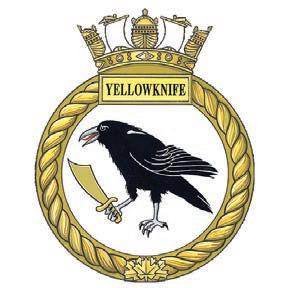
Two of the RCN’s Maritime Coastal Defense Patrol Vessels (MCDV), HMCS Yellowknife and HMCS Edmonton, sailed along the Columbia River to attend the festival. This event provided a rare opportunity for the public to engage directly with Canada’s naval personnel and learn about our operations. The ships were docked at a prominent location alongside Waterfront Park Trail, where festival attendees were invited on board to explore the various sections of the vessels. Guided tours were conducted by the junior officers who shared insights into the daily operations and functional-
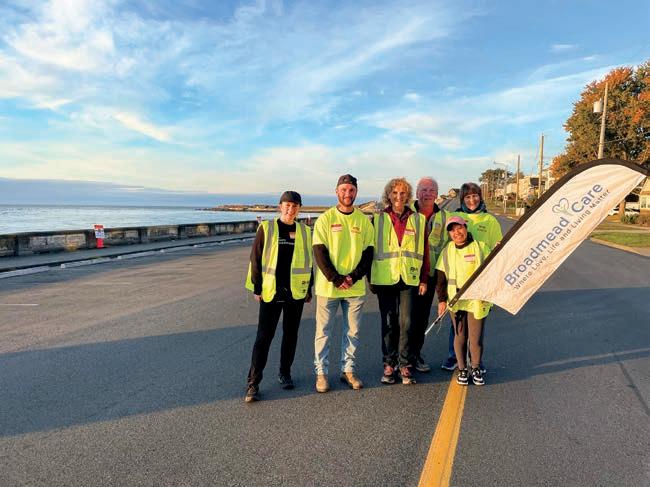
Visit www. broadmeadcare. com/veteranslegacy to make your donation today.
ities of the ships. One of the festival attendees said, “It was incredible to see the inner workings of the ships. My children were thrilled to learn about the array of instruments and controls on board a Canadian Ship”.
Local businesses like Arcteryx Portland and the Nike Factory Store, embraced the Canadian sailors, offering special promotions and organizing events to celebrate the international friendship. Restaurants, shops, and hotels in the downtown area reported a surge in patronage, attributing much of the economic boost to the festival’s naval component. Officers and crew from the RCN worked side by side with their American counterparts, sharing best practices and fostering camaraderie.
Lieutenant(N) Tom Eagle, Executive Officer (XO) of Yellowknife remarked, “This is my second year coming to Portland as a Kingston Class XO, and the welcome we get from Portlandians is incredible. The RCN has a long history of supporting the Rose Festival, which marks the first of several fleet week engagements in yearly cycle, bringing leaders from the RCN, the USCG, and Navy together. Next on the schedule is Seattle’s Sea Fair
in August”. The reception hosted onboard Edmonton at such a prestigious event emphasized the importance of fostering goodwill, enhancing cultural exchange, and strengthening diplomatic ties between the U.S. and Canada.
The Portland Rose Festival, established in 1907, is one of the city’s most cherished traditions, celebrating the rich culture, history, and community spirit of Portland. This festival features a wide array of activities including parades, dragon boat races, carnival rides, and the iconic Grand Floral Parade.
Fleet Week, an integral part of the festival, showcases naval and coast guard ships from around. Being regular visitors to Fleet
Week, the participation of Yellowknife and Edmonton underscores the festival’s international appeal, symbolizing Portland’s deep maritime heritage, fostering a tradition of cross-border camaraderie and naval cooperation.
As the Portland Rose Festival and Fleet Week concluded, the impact of the RCN’s involvement forged stronger bonds with the U.S. Navy, USCG, local businesses, and the city of Portland, promising future collaborations and mutual support. The RCN looks forward to continuing its tradition of excellence and partnership. Until next year, fair winds and following seas to all who navigate the waters of friendship and cooperation.




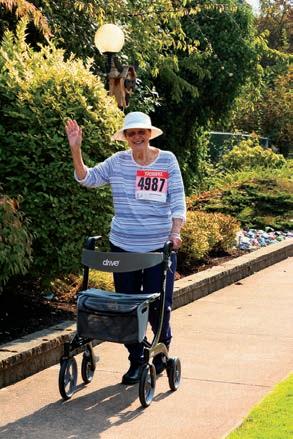


Peter Mallett Staff Writer
With the summertime posting season slowing down, military members on the move to and from bases and wings across the country are settling into their new homes.
Military spouses and partners facing disruptive relocations or deployments now have a free support program at the ready to help find new jobs or maintain existing careers while juggling complicated schedules.
“The intent of CareerCOACH+ is to help individuals make informed career decisions, set and achieve career-related goals and overcome challenges in their professional journeys,” says Vanessa Walsh, a Senior Manager of Canadian Forces Morale and Welfare Services (CFMWS)
CareerCOACH+ is a new online initiative launched by CFMWS and powered by private sector human resources firm CareerJoy to deliver the service. It boasts free bilingual virtual career coaching with its career professionals and useful online resources.
“CareerJoy has collaborated with CFMWS to ensure that every coach involved in this support program comprehensively understands the distinctive career challenges encountered by military
spouses,” Walsh says.
Demand for help is urgent, says Walsh while noting a recent survey by the Director General Military Personnel Research and Analysis indicated 42 per cent of military spouses report employment is one of the to three challenges they face. Military spouses also report feeling under-employed or overqualified for their current role, added Walsh.
“Prolonged absences of the family’s serving member due to deployments or operations and frequent relocations can act as barriers for employment and career advancement,” she said.
The resources are now just a mouse click away for partners of Canadian Armed Forces members, both Regular Force and Reserves. It pledges to provide clients the power, autonomy and flexibility to shape career development regardless of career history, career goals or geographic location.
Walsh says there has been a strong uptake and interest in the program in other locations across the country with almost 300 military spouses utilizing the program.
“We hope more people in Victoria take advantage of this opportunity,” said Walsh. “It is a strong example of the commitment by CFMWS to improving the resilience and well-being of military family members and empowering individual skills and training.”
For more information, visit cfmws.ca/careercoach.

The support includes five hour-long virtual coaching sessions on Zoom, MS Teams, or telephone. A dedicated career coach will provide counseling and advice on topics including career exploration, assistance with employment searches, resume and cover letter support, interview tactics, social media utilization and professional networking strategies.
With their registration, clients can also gain access to the CareerCOACH+ learning lab. It offers online access to a resource portal with modules in career development, growth and advancement tips on what to expect when working with a career coach, preparing for interviews, upgrading LinkedIn Profiles and negotiating future employment.
Bartholomew says.
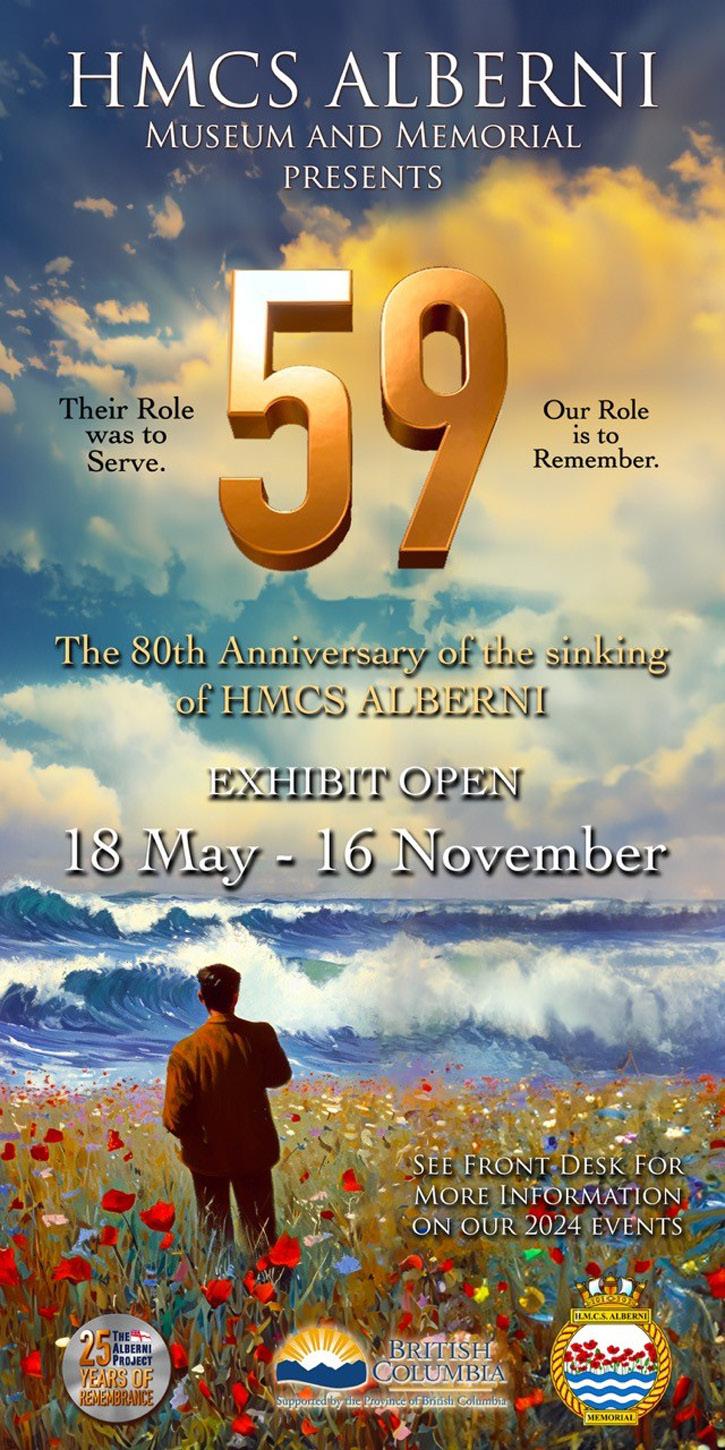
This summer, the HMCS Alberni Museum and Memorial (HAMM) in Courtenay is shining a spotlight on a pivotal moment in Canadian naval history with its compelling new exhibit, simply titled ‘59’.
The exhibit, which culminated in a commemorative ceremony on Aug. 21, pays tribute to the 59 Canadian sailors who lost their lives when HMCS Alberni was torpedoed and sunk by German submarine U-480 on Aug. 21, 1944.
The exhibit ‘59’ could never have been produced without the inspiration of Lewis Bartholomew, founder of The Alberni Project Society (TAPS) and the driving force behind HAMM, to find out everything he could about the 59 Canadian sailors who died Aug. 21, 1944.
“Within the past 12 or so months, we have finally received all the necessary information to not only understand more about the role of HMCS Alberni in the Battle of the Atlantic, but to make sure these 59 crewmen will not be forgotten or lost on some granite plaque combined with hundreds of other men and women who we know little of,”
The ‘59’ exhibit offers visitors a deeply personal look at the lives and sacrifices of the Alberni’s crew.
“We have graciously received on loan the wristwatch worn by crew member Leo McVarish, which stopped at the time of the explosion,” Bartholomew notes.
McVarish became a vocal advocate for remembering the Alberni. One of the things he gave to future Canadians is his poem, ‘Destruction Came Fast’, which the museum printed in a booklet form and produced a 16-minute interpretation of the poem on Digital. This film was started in 2014 and completed about a month ago. As part of the summer program, HAMM is offering free copies of ‘Destruction Came Fast’ in its Education Centre, along with screenings of the poem’s film narration.
On Aug. 21, the exhibit served as a backdrop to a solemn ceremony dedicating a new memorial wall honoring all who served aboard the ill-fated corvette. The new memorial wall features eight stainless steel panels listing the names of 214 Canadians, one Welsh, and one British crewman who served on Alberni, as well as the 52 German submariners of U-480. This inclusive approach
reflects HAMM’s commitment to honoring all those affected by war.
Bruce and Geoff Bell, descendants of Acting LieutenantCommander Ian Hunter Bell, Alberni’s surviving captain, were key speakers at the event. Their presence underscored the multi-generational impact of the Alberni’s story and the importance of preserving these memories for future generations.
The ceremony concluded with the reading of the 59 names of those lost and the tolling of a bell at 11:45 a.m., marking the exact time of Alberni’s sinking. Attendees were then invited to view the new memorial and explore the ‘59’ exhibit which delves into the personal stories of those who perished.
“We want to bring these times in Canadian history to a young generation of Canadians,” Bartholomew explains. “For many young people, the wars older than Vietnam might as well be Roman history because they have no connection as my generation did with our parents living through Second World War and Korea.”
In a poignant display of international remembrance, a simultaneous ceremony took place at the St. Lawrence Peace Garden in Ventnor, Isle of Wight, over-
looking the English Channel where Alberni and U-480 rest. A custom-made bench and Canadian Maple Tree were dedicated there, with both ceremonies live-streamed on social media.
HAMM’s commitment to preserving military history extends beyond the Alberni. The museum houses artifacts and stories from various conflicts, including both World Wars, Korea, and more recent peacekeeping missions. However, like many cultural institutions, HAMM faces financial challenges in the postCOVID era.
“Support for HAMM and TAP can be described as ‘Funding, Funding, Funding’,” Bartholomew states. “We need steady financial sponsorship and support to continue our role in Remembrance while helping to bridge the gap between generational awareness of Canadian military history from a civilian viewpoint.”
HAMM invites the public to visit the museum to learn more about HMCS Alberni and Canada’s rich military heritage. The commemoration was a moving tribute to those who made the ultimate sacrifice and a powerful reminder of the importance of remembering our shared history. For more information about the ‘59’ exhibit or to plan your visit, contact HAMM at 250-897-4611. The museum is open Tuesday through Saturday 10 a.m., - 4 p.m., at 625 Cliffe Ave., Courtenay.
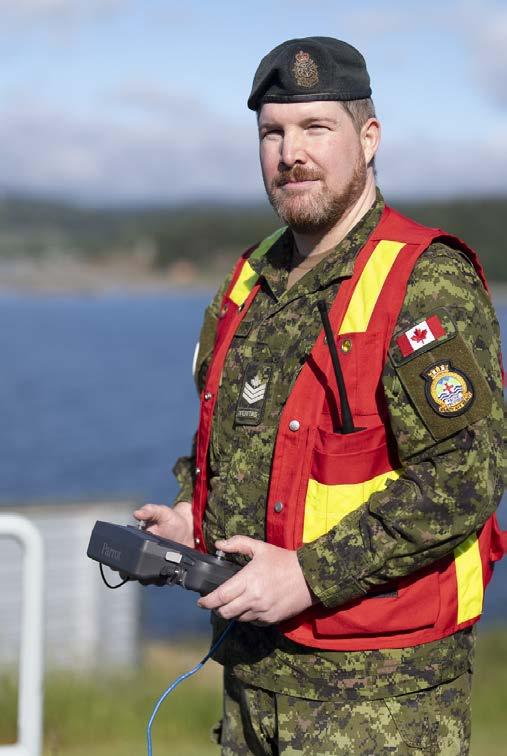
Can you describe your role and daily responsibilities as a military image technician?
I am the Imagery Supervisor for Maritime Forces Pacific (MARPAC) Imaging Services. My role is the daily management and coordination of photo and video services for MARPAC. This includes coordination of deployed teams on naval ships as well as support to all activities in and around the base. Recently, I have also become the chief drone pilot as we expand into new capabilities within MARPAC.
We support not only CFB Esquimalt but all lodger units and other units in the area, including Naval Reserves, Army Reserve, and 443 Squadron.
What inspired you to pursue a career in military photography and videography, and how did you get started?
I always had a technical and creative passion. In high school, I was involved in stagecraft light production and video editing but decided to join the Army Reserve in the Okanagan Valley as an armoured crewman in 1999 while initially pursuing
a computer science degree.
In 2002, while still a Reservist, deciding I didn’t want to be in a cubicle the rest of my life, I went to film school and received a certificate in Digital Film. While at film school, it was brought to my attention through military colleagues that there was a trade I could employ my skills in rather than having to relocate to Vancouver, Toronto, or Los Angeles to pursue gig work in the film industry.
In 2003, I deployed as part of Operation (Op) Peregrine, to support forest fire suppression in B.C., while my hometown of Kelowna burned. This was the precursor to what is now Op Lentus. While deployed, I saw the amazing imagery and video coming off the fire lines from imagery techs and really decided to pursue it. I applied but as the trade is very competitive for entry, it wasn’t until almost four years later in 2007 that I was accepted after multiple attempts.
Can you share a memorable or challenging assignment you’ve worked on, and what made it stand out?
In 2017, I deployed as part of the Initial Response Unit

(IRU) for Op Lentus, this time on the other side of the lens, in support of the evacuation and fires around Williams Lake, B.C.
It was uncomfortable to drive into a town of over 10,000 that was now a complete ghost town. In the choking smoke with very limited visibility and only the occasional police lights for a roadblock breaking through the haze, it felt truly apocalyptic.
Documenting this experience for the Canadian Armed Forces and general public at large knowing that you’re the only one capturing it is humbling, but at the same time pushing through the fatigue to tell the story was fulfilling. On the back end of this operation, seeing and documenting the thankful public streaming back into the town during the resettlement was heartwarming. how do you balance the technical and creative aspects of your work while ensuring that your images and videos effectively convey the intended message?
Developing technical skills is important even if you have cre-
ative skills. Creative skills can develop over time but having that core technical knowledge is key. Working with our clients and partners in public affairs to develop key messages and other critical items before an event helps ensure success. What advice would you give to someone interested in becoming a military image technician, and what skills or qualities do you think are essential for success in this field?
Consistency is key. In today’s age of digital photography anyone can take a pretty picture, but a true professional can constantly provide that imagery at a high level. Most people assume that all we do is take pretty pictures but there is a lot more to the trade in technical and intelligence work that often goes unnoticed. It can be a shock to new members of the trade when they are posted to units that are less focused on the creative side of things. Come talk to us to get a better understanding of what you’d be getting yourself into: malcolm.byers@forces.gc.ca

3 Bed, 2 Bath UnfUrnished Upper sUite. Available Sept. 15 or Oct. 1 $3400 7 km from CFB Esquimalt, on Bus routes 21 and 8. Shared laundry, looking for quiet tenants – landlord lives in lower suite. 1 cat or dog considered deposit. No smoking or vaping inside. No sublets. Credit checks, references, proof of income required. Contact dimayzes@ gmail.com 7/09
One BedrOOm sUite with private entrance. Available Oct. 1. Fully furnished (linens, towels, dishes, etc.), bright, immaculate, shower and tub, queen bed, sofa, TV, washer/ dryer, small kitchen appliances, dishwasher, range, fridge. Close to amenities. 10 min walk to Work Point or Naden. Bus stops one block away. Parking for one car. $1750 incl. hydro and water. Nonsmoker. No Pets. Contact Carol-Ann 250-216-9030. 7/09
private 1250+ sq ft sUite On acreage $2,380/month. Available the first week of September. Private entry, bright sunny southern exposure with sound proof ceiling, semi-furnished or unfurnished; with wood-burning
air-tight fireplace (firewood included), heated bathroom floor, insuite washer and dryer, wifi and parking spot close to entry. Located on a quiet, private 2 acre property on the Saanich peninsula with greenspace in abundance accented by penned free-range chickens. Contact luisdawn@proton.me 08/12
sUite in LangfOrd $1,800/ mOnth. Near View Royal, bright, modern, clean, private, and quiet 1 bedroom suite with patio, appliances. Incl. dishwasher, microwave, washer & dryer. Quiet neighbourhood. Beautiful view. Easy access to bike paths. Parking available. 1 yr lease, then month to month. No smoking/vaping, pets, or sub-letting. Renter’s insurance with proof of coverage, references and proof of employment mandatory. Utilities and wi-fi included. Contact Max by text 613-449-2836 08/12
shOrt stay 30-90 day accommodation in quiet family home. Fully furnished renovated 1 bedroom basement suite ideal for relocating or military employee on temporary assignment. No smoking, no pets, parking for 1 car, laundry. Located in Colwood. $2,000 per month, all inclusive.
Available now. Also available for longer stay unfurnished $1600 plus 1/3 house heat, hydro and basic cable/wifi. Call Shelly direct 250-213-7444. 07/ 09
cOOk st viLLage 2 bedroom suite with hardwood floors. Quiet, very clean, well maintained apartment building. Heat, hot water and parking included. No pets. No smoking. One year lease. $2,400 per month. Available Sept 1, 2024. Call 250 588 5457. 08/12 avaiLaBLe immediateLy, UntiL sept 29. Super convenient and comfortable 2 bedroom furnished suite, ten minute walk to CFB Esquimalt. Spacious, full equipped kitchen, garden level, private entry, shared laundry, includes linens/utilities/wifi. Street parking. Ideal for someone on short-term placement. No smoking or pets. $2200 for Sept; any days in August would be pro-rated. Call Margaret 240-740-1300. 08/26
esqUimaLt hOUse with in-Law sUite 5 bed, 2 bath on Wollaston St. South facing deck & back yard. $965,000 Call Vicky 250-380-7323. 06/03
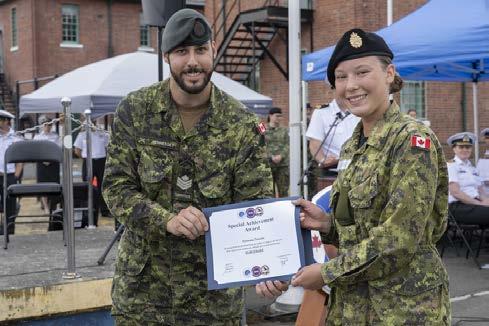
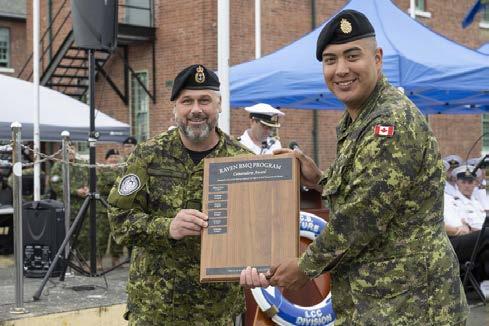
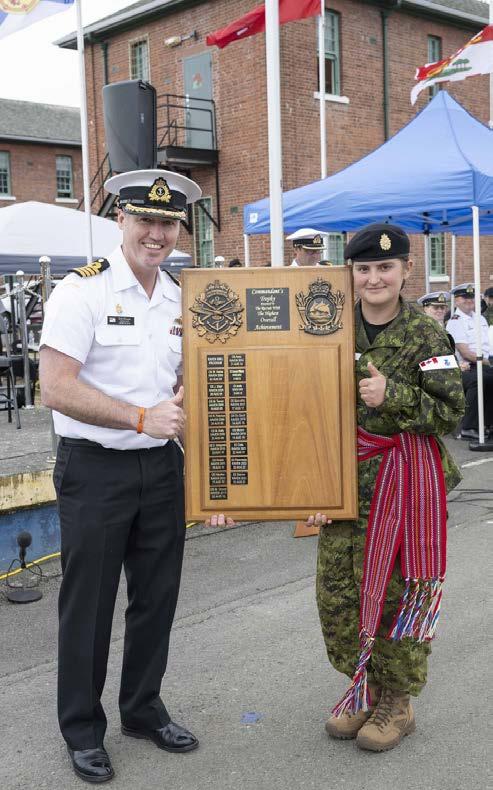
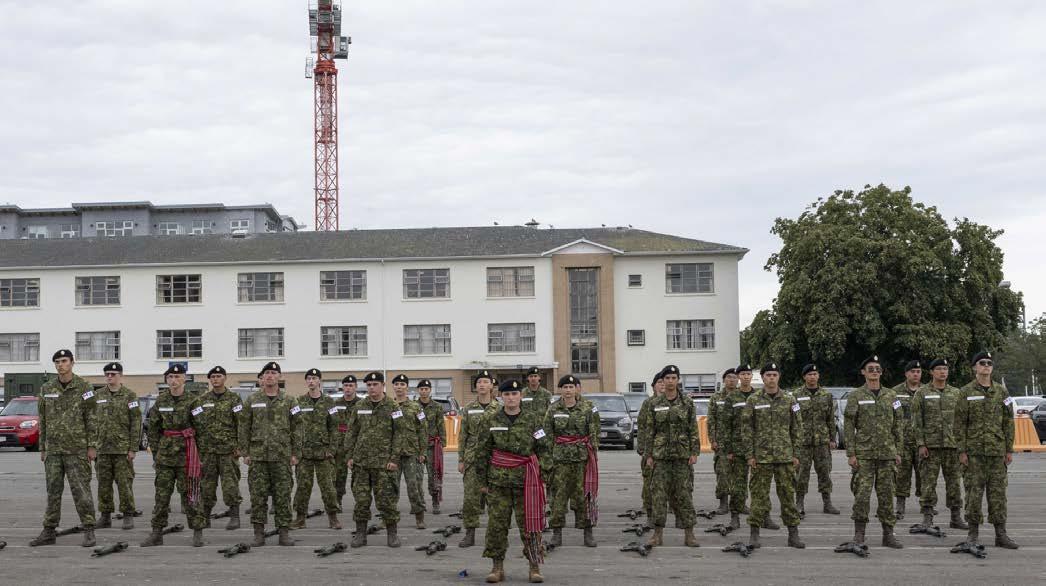
Congratulations to this year’s graduates of the Raven Summer Training Program for Indigenous peoples!
Thirty-one Ravens received their Basic Military Qualification on Aug. 19 after completing six weeks of training at CFB Esquimalt through HMCS Venture’s Leadership, Conduct and Culture Division.
Captain (Navy) Kevin Whiteside, Commander Canadian Forces Base Esquimalt, was this year’s Reviewing Officer.