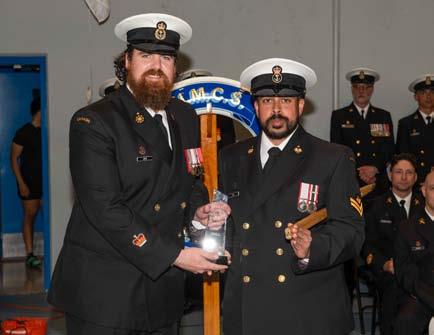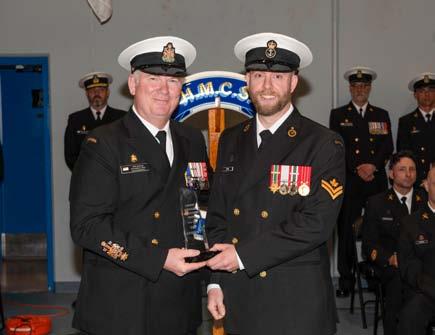

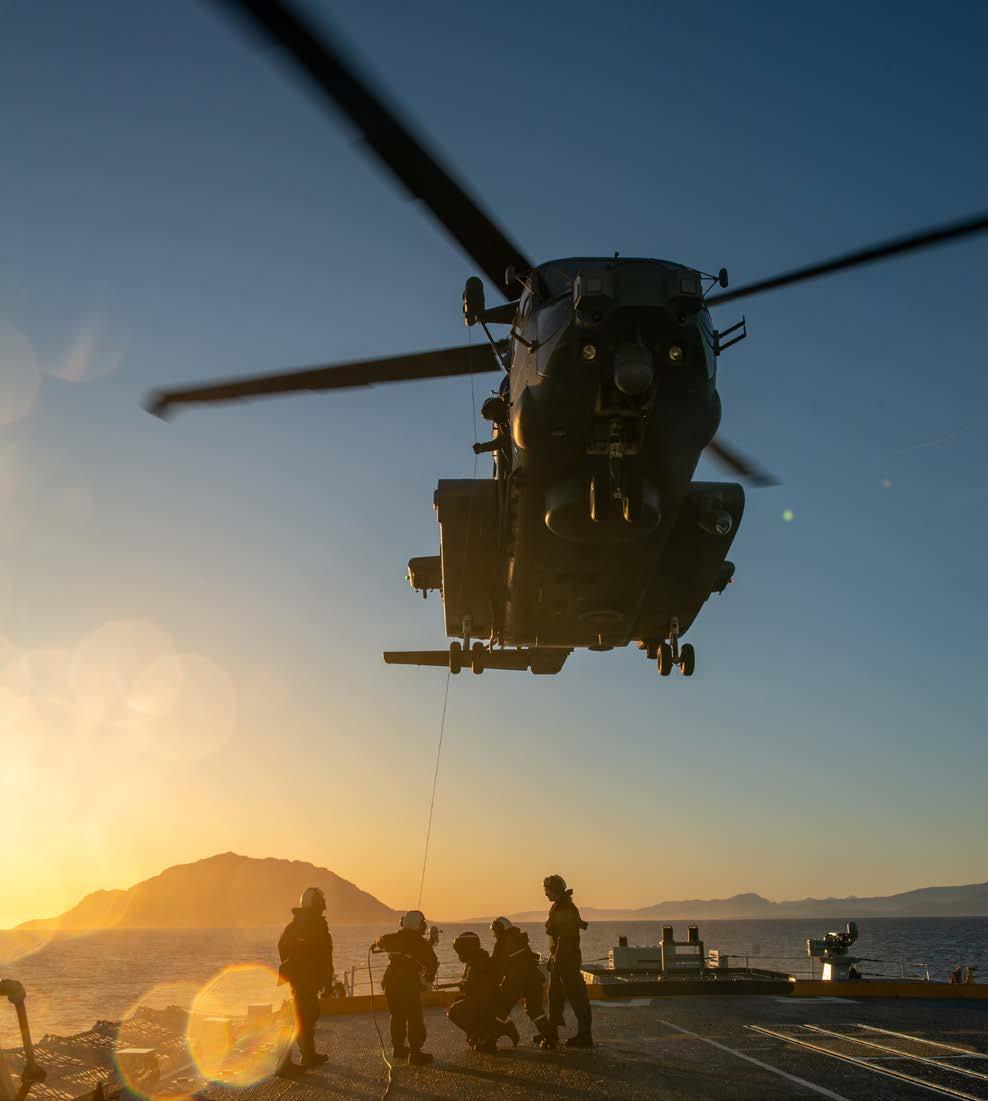







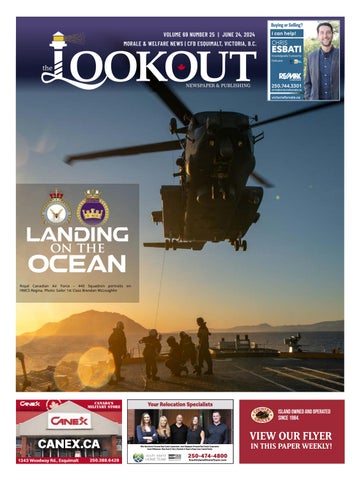
Royal Canadian Air Force – 443 Squadron portraits on HMCS Regina. Photo: Sailor 1st Class Brendan McLoughlin




Esquimalt MP
Esquimalt MP
Peter Mallett Staff Writer
Military Police Officer Captain (Capt) Liam Kenney is always up for new and exciting challenges.
“I guess I’m that guy who likes to stick my nose in everything and is always willing to try something new; if there is a special event going on, I will end up being there,” says Capt Kenney.
Later this summer he will turn the page on a new adventure, when he hops on his bicycle with other police riders for a grueling 14-day, 1,200 km cycling tour across Vancouver Island known as the Tour de Rock. Through its official charity Cops For Cancer, Tour de Rock raises awareness and funds for pediatric cancer research and support programs of the Canadian Cancer Society.
A member of the Military Police Unit Esquimalt for the past three years, the 25-year-old previously spent six years as an Army Reservist of 39 Signal Regiment. His duties at work involve managing day-to-day operations of the unit including managing police presence at Canadian Forces Base (CFB) Esquimalt events.
As far as bicycles go, Capt Kenney is a recreational cyclist and former BMX rider. He says he was immediately attracted to Tour de Rock because of the physically demanding challenge and teambuilding dynamic.
“Corporal Mary Larkin’s involvement last year showed me how amazing this cause is and inspired me to get involved,” he said. “I am unbelievably thankful to be part of this year’s tour and to contribute to a great cause.”
Capt Kenney and this year’s team introduced themselves to a packed auditorium of students and staff at St. Margaret’s School at a Tour de Rock kickoff event on May 10. The event included speeches from past Tour de Rock riders and saw Capt Kenny and other riders presented their training jerseys by the students.
To prepare for the tour’s physical tests, members of the team have been holding three practice sessions per week involving long-distance rides along the Saanich Peninsula, incline training up and down a two-kilometer stretch of roadway to Observatory Hill, and formation sprints along Sunnymead Way in Cordova Bay.
Capt Kenney is painfully aware of the grueling physical toll riding in the blazing heat and cold rain will take on his body. There is also a mental challenge ahead for him and his teammates.
“Immediately following our long daily rides we will meet the communities we are riding through and hear the stories of the impact of Cops for Cancer,” he said. “I expect this too will take a mental toll as some of these stories will be heartwarming and inspiring but I’m certain some will also be heartbreaking.”
When they are out on the road and their legs grow weary, Capt Kenney and other riders will have the support of their junior riders to motivate them. Each rider supports and mentors a junior rider with cancer throughout their fundraising campaign. Capt Kenny was paired with a 17-year-old girl from Victoria who was diagnosed with complex lymphoma when she was 12 and who has since gone on to beat cancer.
Through his junior rider, Capt Kenney says he has learned about the benefits of the many programs Cops For Cancer supports including Camp Good Times, a summer camp near Maple Ridge, B.C., for children with cancer and their families.
“Camp Good Times provides a place for these children to go back to being kids and forget about the hardships they are facing,” said Capt Kenney. “In talking with my honorary rider and her mother, I have learned the toll cancer takes on a family and Camp Good Times provides reprieve from this.”
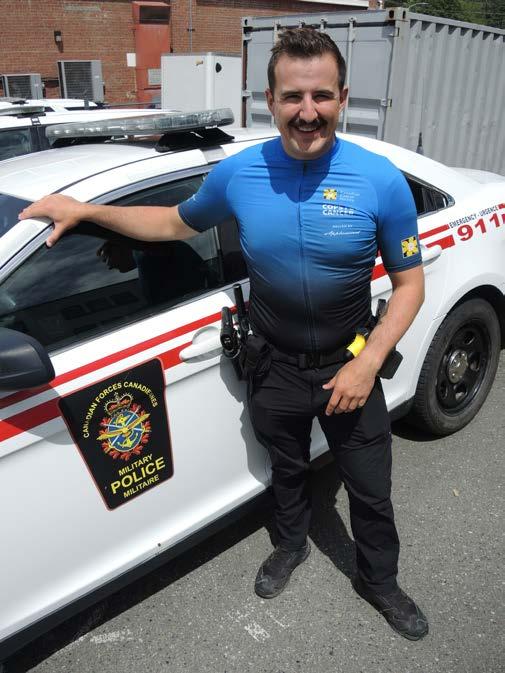

Aside from a physical and mental challenge of Tour de Rock, there is also a financial imperative for Capt Kenny and the other riders; each rider has been tasked to raise $5,000 during this year’s campaign. So far, Capt Kenney has proven up for that challenge, amassing over $7,500 in donations – above and beyond most of his teammates. His personal goal is $10,000. He says that financial support has come from his friends, The Royal Canadian Legion, Heart Pharmacy Group and all three CFB Esquimalt messes.
On July 20, he and the Esquimalt Lions Club will hold a fundraising bottle drive at the Archie Browning Sports Centre and Capt Kenney also plans to pedal in a fundraising spina-thon at the Base in September before the tour.
To support his fundraising and the Tour de Rock’s campaign visit: https://bit.ly/4c5O1Kc
This year’s Tour de Rock involves 17 riders representing police forces, first responders and media outlets across Vancouver Island.
They will set off from the northern community of Port Alice, B.C., on September 21st, and pedal with a police escort while visiting dozens of communities and fundraising events along the way before arriving at the finish line in Victoria on October 4th
Tour de Rock is now its 27th year and has raised more than $29 million.
MANAGING EDITOR
Jazmin Holdway jazmin.holdway@forces.gc.ca
EDITOR
Kate Bandura
WRITER
250-363-3130
kateryna.bandura@forces.gc.ca
Peter Mallett mallett.peter@cfmws.com
PRODUCTION
Teresa Laird production @lookoutnewspaper.com
Leslie Eaton
250-363-3127
leslie.eaton @lookoutnewspaper.com
ADMINISTRATION AND ACCOUNTS
Andrea Modesto
ADVERTISING
Joshua Buck
250-363-3127
Andrea.Modesto@forces.gc.ca
778-977-5433
military.base.advertising@gmail.com
EDITORIAL ADVISORS
Capt Christopher Dubé
Ashley Evans
250-363-4006
250-363-7060
Published each Monday, under the authority of Capt(N) K. Whiteside, Base Commander.
The editor reserves the right to edit, abridge or reject copy or advertising to adhere to policy as outlined in PSP Policy Manual. Views and opinions expressed are not necessarily those of the Department of National Defence.
Circulation: 4,000 plus online engagement per week
Follow us on Facebook and Instagram to join our growing social media community.
A Division of Personnel Support Programs
Web: www.lookoutnewspaper.com
Fax: 250-363-3015
Canadian Mail Product


The term ‘nightmare’ comes from the 14th-century ‘mare’, which stood for an evil female spirit or entity that would torment people (or horses) in their sleep. The details of this myth vary across cultures, but the gist of the story would go that a mare would wait for you to lay your head to rest for the evening, and while you drifted off to the world of dreams, the entity would slip through the keyhole to your room and creep onto your bed, sit on your chest and suffocate you with its weight. This would leave you paralyzed and unable to wake from the horror. Notably, the term ‘nightmare’ was initially explicitly coined for sleep paralysis, but by the 1800s, it became a catch-all term for any bad dream.
Each culture would deal with their nightmare differently. In Polish culture, people would use protective measures such as inviting the mare for breakfast, leaving a bundle of hay in one’s bed, and sleeping in another room to prevent the mare from draining one’s energy. In Japanese folklore, they would summon the mythological creature Baku by calling upon it three times
to devour one’s bad dreams. In Africa, they would rely on shamans or spiritual healers to interpret dreams and assist in cleansing the individual of any malevolent spirits. How we deal with nightmares has shifted since the advent of psychology. Freud and Jung - the fathers of psychology - believed that nightmares were a re-experiencing of a stressful dilemma. This thread of thought has become the basis of PTSD-like dreams. When we think of a trauma-based dream, there is a general understanding that we are dealing with some part of ourselves that has yet to be fully processed.
When we continue to have this theme pop up in our psyche, we have a tiny reprieve for our body and mind to restore themselves fully. The trauma is unrelenting and continues to suffocate us with its images and the emotions that come along with it.
One of the most difficult tasks we face when dealing with our trauma is understanding it so that we can finally confront it. When we can garner insights, we know what we are up against. In some sense, the ‘entity’ that we face is no longer mysterious; this allows us to relate to our trauma from a more groundedplace . We must demystify the trauma because that’s where the trauma
demonstrates its power—in the unknown. Trauma-based nightmares can be horrifying. Whether they happen rarely or frequently, it’s never easy to withstand the mental, emotional, and physical effects they may have on us. However, these dreams can also provide a progress report on where we are with our trauma. Oftentimes, people living with PTSD will notice their dreams shift along as they make progress with their trauma. Specific images will intuitively make this known.
Nightmares are jarring and destabilizing. However, they shouldn’t be why we avoid them; rather, we can view them as an invitation to deeper exploration within ourselves. Knowing ourselves is one of the greatest responsibilities we have in our lifetime. Our psyche gives us certain opportunities for this exploration, and nightmares are just one of them.
Thomas Goenczi is an RCN Veteran and MA Clinical Counsellor with Private Practice: Well Then Therapy.
The content is not intended to substitute professional advice, diagnosis, or treatment. Always seek the advice of your mental health professional or other qualified health provider with any questions regarding your condition




Kate Bandura Lookout Editor
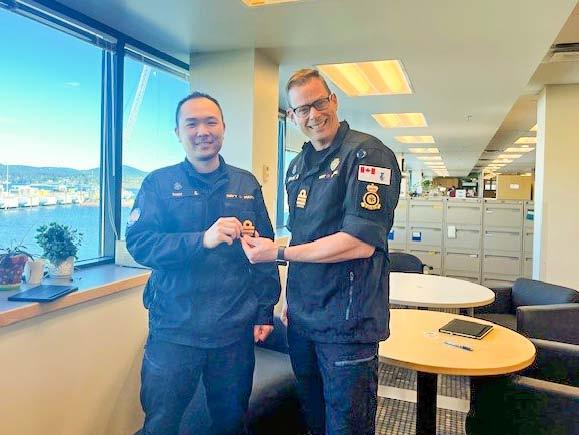
In a remarkable leap for maritime technology, Fleet Maintenance Facility Cape Breton (FMFCB) is harnessing the power of 3D scanning to transform ship repair and manufacturing. This cutting-edge technology not only streamlines operations but also promises significant time and cost savings for the Royal Canadian Navy (RCN).
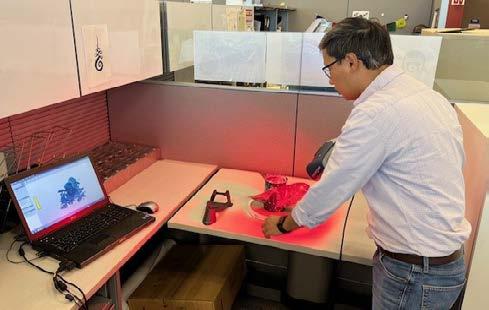
“By streamlining the repair process and reducing downtime, 3D scanning helps FMFCB reduce costs and avoid unnecessary delays due to the supply chain, enabling us to promptly respond to operational requirements of the RCN while ensuring vessels return to service faster,” says Si Thu Naing, supervisor of the Drawing Office within FMFCB’s Naval Architecture subsection.
The star of this technological show is the CreaForm 3D handheld scanner, a device capable of capturing intricate details with an astonishing accuracy of up to 0.040mm; that’s less than half the diameter of a typical human hair.
In a recent demonstration, Naing trained Dawson Mork, a co-op student from Camosun College’s Mechanical Engineering program, in the art of capturing 3D point cloud data. Using a small propeller dotted with tiny surface targets, the pair showcased how the scanner can create a perfect digital twin of complex shapes.
But the applications of this technology extend far beyond simple measurements. FMFCB team have successfully used 3D scanning to accurately measure the propeller of a Victoria class submarine, a task that would have been painstakingly difficult
and time-consuming with traditional methods.
Perhaps even more exciting is how 3D scanning is revolutionizing the prototyping process.
“In the past, creating a prototype could be a costly adventure, requiring tooling, casting, or molding,” Naing explains. “Now, we can scan an existing part or design and print a prototype in a matter of hours.”
To illustrate this, Naing proudly displays a 3D-printed prototype created using data from the CreaForm scanner and a Stratasys 3D printer. The result is a precise replica made of ABS plastic, produced at a fraction of the cost and time of traditional methods.
The implications of this technology are farreaching, Naing says. It enables the rapid production of custom parts and tools, a capability that could prove invaluable during naval operations or in remote shipyards. Moreover, it has the potential to significantly reduce dependency on complex supply chains, allowing for faster responses to operational requirements.
As Naing is quick to point out, this technological leap is very much a team effort.
“FMFCB Engineering Department does all the design work to prepare the 3D models,” he says.
“Once that’s done, it’s ready for additive manufacturing process."
W ith this powerful combination of 3D scanning and printing at their disposal, FMFCB is sailing into a future where ship repair and manufacturing are faster, more precise, and more efficient than ever before. As navies worldwide grapple with the challenges of maintaining complex fleets, innovations such as these may well be the key to staying afloat in the 21st century.













ECHO, Gablecraft Homes' newest collection of townhomes in Royal Bay, is turning heads. Choose from 2-bed + den, & 3-bed townhomes designed by award winning architects & interior designers. Discover exceptional natural beauty and convenient amenities, including scenic trails, parks, ocean views, nearby schools, and the bustling new retail hub – The Commons. Register now at EchoAtRoyalBay.ca.
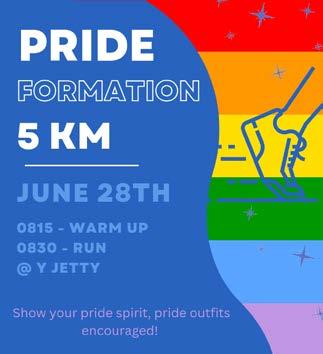
0815 - WARM UP
0830 - RUN @ Y-JETTY
Show your pride spirit, pride outfits encouraged!



Peter Mallett Staff Writer
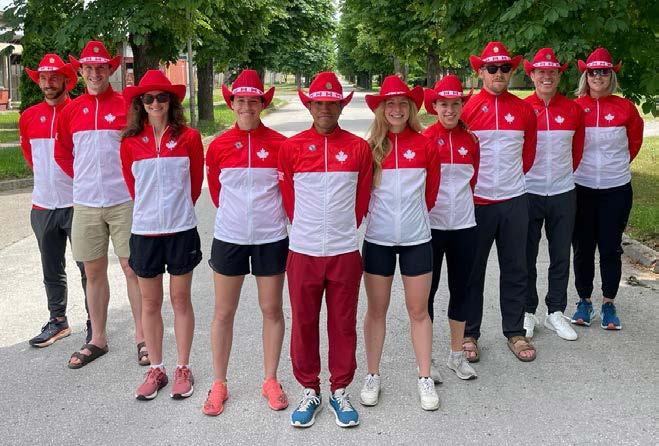
Three sailors from Victoria paced Canada to a successful performance in a Conseil International du Sport Militaire (CISM) women’s half-marathon in Bosnia and Herzegovina.
The CISM men’s and women’s races involved military runners and support staff from 29 nations covering 21 km through the streets of Sarajevo on May 26. Our women’s team finished tenth overall in the competition while the Canadian men’s team was 17th.
Sailor 1st Class (S1) Amanda Polus of the Personnel Coordination Centre Pacific says she and her teammates were encouraged by the results.
“I am proud of how we performed as a team since many of the runners we were competing against are from militaries of countries where being an athlete is their trade and full-time military occupation,” said S1 Polus.
It was S1 Polus’ first time competing in a CISM running event and her second

half marathon; the race also marked her personal best time: S1 Polus was 36th with a time of 1:27:01.
S1 Polus began her journey in competitive running a little over a year ago after participating in the Fleet race and the Vancouver Island Racing series in 2024. Success quickly followed, when she won a gold medal in the women’s 25 to 29 category in the Victoria Marathon. She said the trip to Sarajevo was a life-changing event because of her top-notch training environment. She also rubbed shoulders with some of the world’s top marathon and long-distance runners.
“We met and raced with several professional athletes who are currently training for the 2024 Olympics in Paris, so this was a huge honor for me and my teammates,” said S1 Polus.
Petty Officer 2nd Class (PO2) Bailey Toupin, a reservist of HMCS Malahat, Sub-Lieutenant (SLt) Aisling Wydysh from HMCS Venture and Major (Maj) Isabelle Turner of CFB Kingston made up the rest of the Canadian women’s team.
SLt Wydysh posted Canada’s top time among 71 females in the field, finishing 32nd with a time of 1:25:37. Like S1 Polus, SLt Wydysh is new to competitive running. The race in Sarajevo marked her second time competing in a CISM running competition; this followed her debut in a CISM half marathon in Switzerland last year. She reported to be ‘overjoyed’ with her performance in Sarajevo.
“Going into the half marathon, I had set
a goal of 1:27 but I beat that time and set a personal best,” said SLt Wydysh. “I was so lucky to have my teammates from Victoria with me to compete and train together, to motivate each other and share in each other’s successes.”
Just 46 seconds after SLt Wydysh was PO2 Toupin, finishing in the 34th position with a time of 1:26:23. Maj Turner was 52nd crossing the finish line at 1:36:58. The next competition for Canada’s CISM running team is a cross-country event for the 5th CISM Military World Winter Games, March 23-30, 2025, in Lucerne, Switzerland.
WOMEN:
Sailor 1st Class Amanda Polus, Petty Officer 2nd Class Bailey Toupin, Sub-Lieutenant Aisling Wydysh, Major Isabelle Turner. Finish: 10th MEN:
Master Corporal Ryan Albano, Master Sailor Antony Dionne, Lieutenant-Colonel Johnny Coffin. 2nd Lieutenant Logan Roots, Finish: 17th
COACH:
Lieutenant (Navy) Michael-Lucien Bergeron
TRAINER: Major Rebecca Wheaton-Sparks
MANAGER: Major Michael Mueller
PATRON: Colonel Catherine Marchetti
















A/SLt Kim Wachockier MARPAC
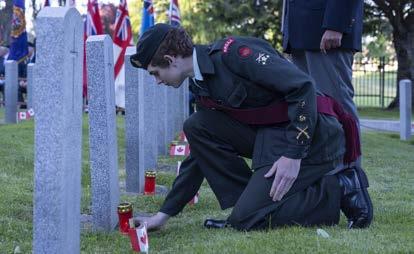
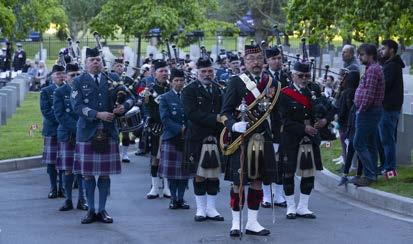
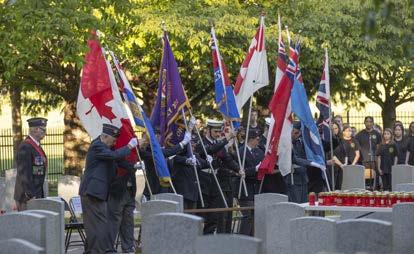
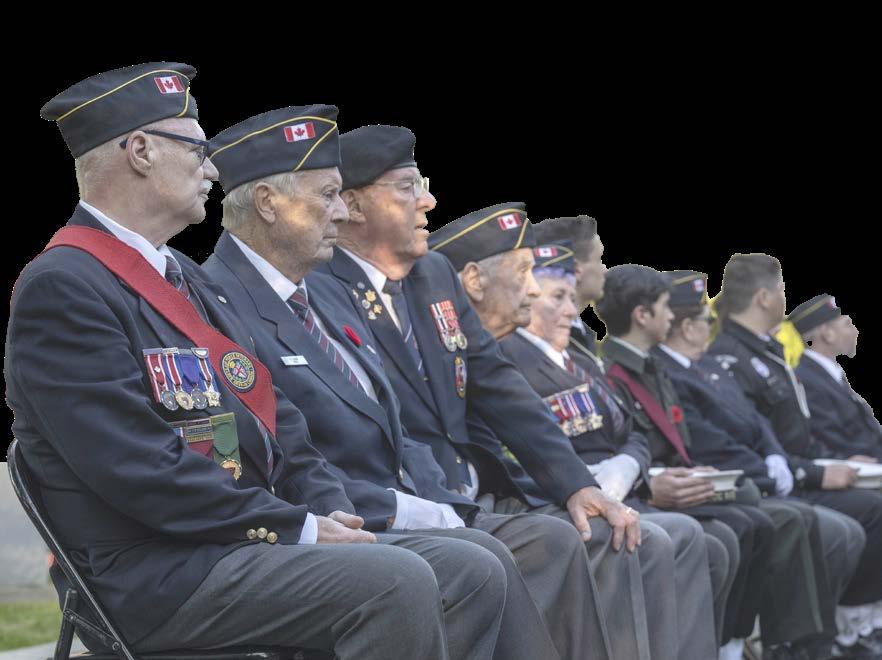
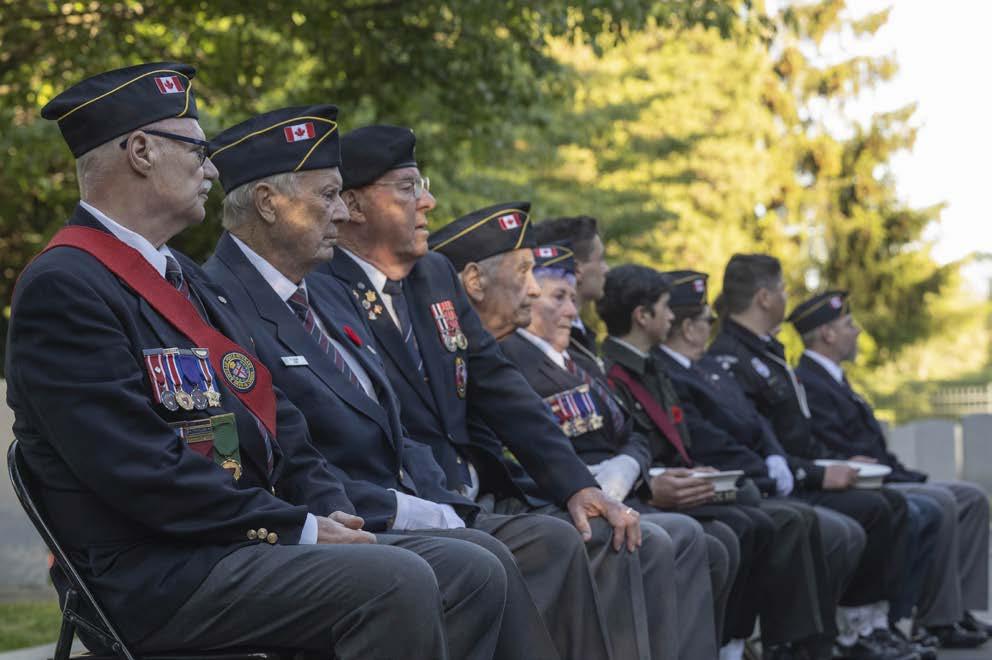
On May 30, the Candlelight Vigil at God’s Acre Veteran’s Cemetery marked the 100th anniversary of the Royal Canadian Air Force (RCAF). This event was a poignant moment to honour the bravery and service of the RCAF.
During the ceremony, speeches honored the achievements of the Canadian air force. Retired members participated in a march, while school children placed candles on the graves of fallen military members – in remembrance and recognition. In a heartwarming display of community spirit, three off-duty Military Police Officers volunteered to help transport people with mobility issues, highlighting the ethos of service that Canadian Armed Forces members embody – fitting during a ceremony acknowledging exactly that.
The roots of the RCAF extend back to the First World War, where Canadian aviators served alongside the British Royal Flying Corps and the
Royal Naval Air Service. In 1924, the RCAF was formally established as an independent air force, marking a significant milestone in Canada’s military history. Throughout its history, the RCAF has played a crucial role in defending Canada’s interests and contributing to global security efforts.
From the First World War to conflicts in the Middle East, the RCAF has defended Canada’s interests with immense courage and dedication. During the Second World War, the RCAF personnel made significant contributions to the Allied victory, participating in key battles such as the Battle of Britain and the strategic bombing campaign over Nazi-occupied Europe. The RCAF also played a vital role in the Cold War era, contributing to NATO operations and North American air defense.
The commemoration of the RCAF’s 100 years is not just about looking back; it is a reminder of the commitment to serve our country. The RCAF has always been prepared to face challenges, living up to its motto, “Through Adversity to the Stars”.

This event brought people together to reflect on the sacrifices made by those who served Canada, and served as a poignant reminder of the past and a tribute to the heroes who have made Canada proud.
‘Supply and demand’ is a concept often used to understand consumer behaviour.
But the model extends beyond economics and can shape a range of management decisions including those affecting the naval training system.
Case in point: Naval Environmental Training Programme (NETP) courses are conducted on both coasts. For the past 20 years, the Navy’s two state-of-the-art Damage Control Training Facilities (DCTF Galiano in Esquimalt and DCTF Kootenay in Halifax) have been operating near-capacity, teaching shipboard firefighting and damage control. The qualifications are mandatory for every sailor before employment onboard ships, with periodic refresher training conducted for the rest of their careers. Demand is constant and high, and predictably surges during summer months with the addition of Naval Reservists. Occasional staff shortages or facility maintenance actions can result in backlogs.
When the Navy initiated the Naval Experience Programme (NEP), it became clear to Naval Training Group (NTG) leadership that a new and innovative approach was required to accommodate the hoped-for increase in recruits.
“We are well-supported by CFB Valcartier when conducting general military training,” explained Petty Officer 1st Class (PO1) Anne Milot, Naval Fleet School (Quebec’s) (NFS(Q)) NETP Coordinator. “We have the staff but lacked the necessary infrastructure for firefighting, flood control or sea survival training (NETP Modules 3 and 4).”
However, the civilian equivalent of a DCTF exists just across the St. Lawrence River from NFS(Q). An idea became a plan, and the plan
Sailors
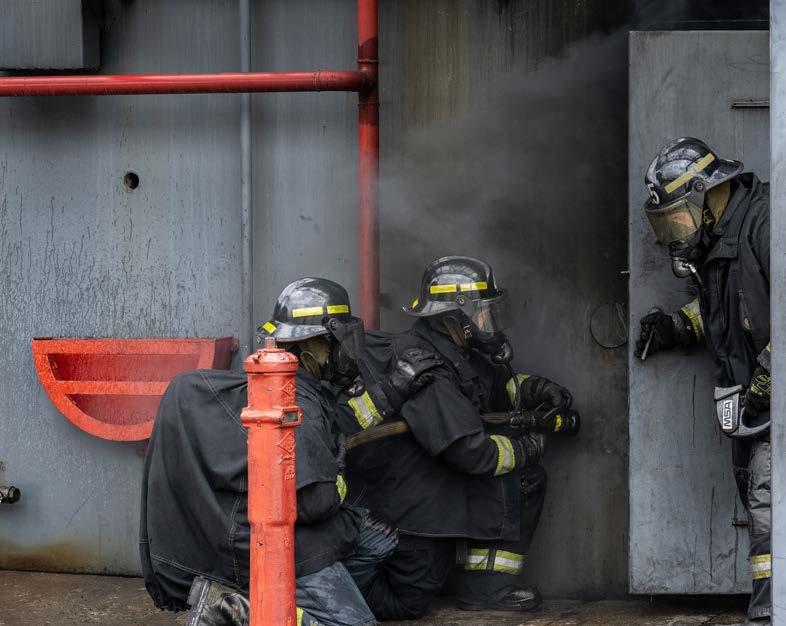
became a service contract with Institute Maritime de Quebec (IMQ) for use of their Emergency Measures Training Center in Lévis, Que.
“We began contracting support with IMQ in spring 2023. It’s been a tremendous success, and we are continuing with the first of two option years,” said PO1 Milot.
In its inaugural year, NFS(Q) ran three courses of twenty personnel each. They anticipate adding a fourth serial for 2024.
Although the contract is capped at $1.8 million annually, training sessions are scheduled ‘as required’ and fees are calculated on a per student basis: consequently, DND only pays for what it needs.
“The arrangement provides us with a great deal of flexibility,” said PO1 Milot. “It’s an effective option for when the Navy needs additional training capacity that can be tailored to suit our needs.”
Independent curriculum oversight is performed by authorities at Naval Fleet School (Pacific) in Esquimalt. Because the Canadian government and civilian agencies refer to the International Maritime Organization convention on the Standards of Training, Certification and Watchkeeping for Seafarers (STCWS) the task of administering a consistent training standard is simplified. Naval Training Group is committed to seeking innovative ways to improve the quality and efficiency of the military training system. Its leadership is confident the novel arrangement with IMQ will reduce the time taken for new sailors to join their first ship, permit unconstrained trainee throughput and ultimately bolster Royal Canadian Navy personnel readiness.
“This is a very exciting and positive development for instructional staff,” said PO1 Milot. “We are now able to deliver the entire NETP programme and feel our efforts are having a positive effect across the Navy!”


Dear Lookout Newspaper:
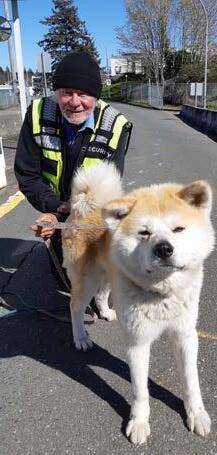
It has been a most remarkable month since my dog Teddy, my companion at my Commissionaires Security Gate at the Base, graced the front page of your newspaper.
Thanks to your choosing to highlight Teddy in such a way, hundreds of sailors and civilian workers at CFB Esquimalt have stopped by Y-Gate to meet with Teddy, some spending 10 or 15 minutes with him at a time. They have taught him to sit, shake a paw – actions hitherto unknown to him, as a disability of his previous owner prevented him from being trained like most dogs.
So, Teddy has thrived in the CFB Esquimalt environment, as have all those who have come to know him, as have I.
Teddy is now one of the family and even has his own Identification Card.
Thanks again from Teddy and Bob at Y-Gate!
Bob Cosman, Commissionaire
The Canadian Armed Forces (CAF) recognition program was established to recognize exemplary Regular Force and Reserve Force sailors, soldiers, aviators, Special Operations Forces (SOF) Operators, musicians, Canadian Rangers and Indigenous members during ceremonies held throughout the year. The program publicly acknowledges the dedication, efforts, professionalism and performance of deserving CAF personnel.
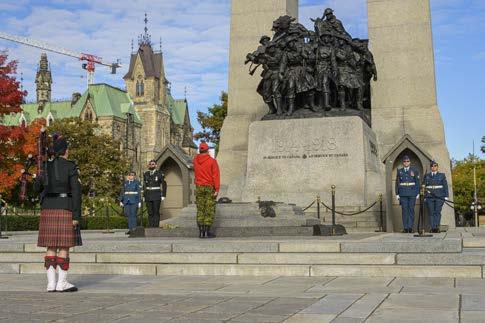
The Remembrance Day Sentry Program will take place Nov. 5-12 this year, (travelling days included), at which time, selected CAF members, Royal Canadian Mounted Police personnel, Eagle Staff bearers, Canadian Rangers and Musicians are given the honour of representing their country at the National War Memorial. A wounded hero will also be selected as the special guest to the Chief of Defence Staff and Canadian Armed Forces Chief Warrant Officer at the National War Memorial.
All elements are responsible for selecting one member and submitting the nomination for each designation by Aug. 23. Queries can be directed to the following:
• Command Chief Petty Officer of the Royal Canadian Navy or their assistant, CPO2 Maisonneuve at 613-901-6935;
• Sergeant Major of the Canadian Army or their assistant, MWO Friars at 613-904-6564;
• Command Chief Warrant Officer of the Royal Canadian Air Force or their assistant, MWO Gaboriault at 613-904-6555;
• Indigenous Advisor to the Chaplain General, LCol Askew at 613-617-1245.
Final Sentry selection criteria is as follows:
• The sentries should have a minimum of three years of service and a record of exemplary conduct;
• The Sentry commander shall have outstanding work performance and leadership along with the ability to call out words of command precisely and clearly in both official languages;
• The Sentries, the Sentry Commander, and the nursing officer with medical employment limitations (MELS) will be considered on a case-by-case basis; and
• Consideration should be given to personnel with community involvement.
Recognising the efforts of our sailors, soldiers, aviators, SOF Operators, Indigenous members, Canadian Rangers and Musicians is of the upmost importance, and all commands and group principals are encouraged to nominate deserving individuals to the Remembrance Day Sentry program.







Peter Mallett Staff Writer
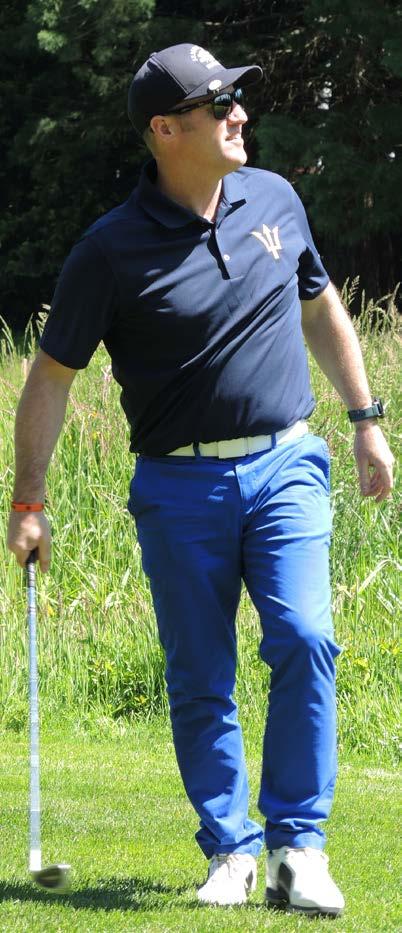
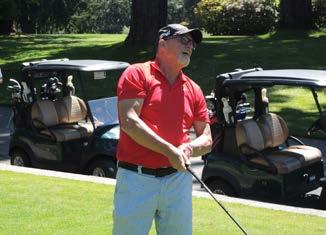
Team Army/Air Force edged out Team Navy while helping set a new fundraising record at this year’s Broadmead Care Charity Golf Tournament.
The 21st annual fundraiser for Broadmead Care’s Veterans Memorial Lodge saw 144 participants hit the links at the Royal Colwood Golf Club on the afternoon of June 6. The tournament established a new fundraising record of more than $197,000 with proceeds to support renovations to the outdoor courtyard area at the Saanich longterm care senior’s home, said Mandy Parker, Broadmead Care Vice-President.
“The tournament was a resounding success thanks to the efforts of Canadian Armed Forces members and all involved who showed how powerful teamwork can be,” said Parker.
Parker says monies raised came from sponsorship, donations, registration fees, a tournament auction and raffles.
Team Army/Air Force captured this year’s Challenge Trophy by raising $20,461, leading by a margin of $425. The two teams consisted of current-serving members and veterans of all three branches of Canada’s military service. Several members of Victoria’s business and corporate community and supporters of Broadmead Care also participated in the tournament and greatly contributed to the fundraising efforts, said Parker.
Following their afternoon of golf, Team Challenge winners Kent Foster and Michael Caine, representing Team Army-Air Force, accepted the winner’s trophy in a ceremony in the golf club’s clubhouse with Broadmead Care CEO Derrick Bernardo.
The 1st Place Team at this year’s tournament was Hutcheson & Co. LLP with a combined score of 56. Tournament play followed a Texas Scramble format, involving teams of four, combining scoring elements of individual and team play.



Master Seaman N. Araujo
Master Sailor A. A. J Blum
Master Sailor M. B. Bramwell
Master Sailor I. T. Brightman
Master Sailor N. J. Bunn
Master Sailor M. D. Capstick
Master Sailor M. Charron
Master Sailor S. Clements
Master Sailor S. C. Coyne
Master Sailor S. O. Desfosses
Master Sailor E. J. Edmondson
Master Sailor T. Gantulga
Master Sailor J. S. Gill
Master Sailor M. C. Kathol
Master Sailor W. F. D. Lambert
Master Sailor H. L. Leong
Master Sailor J. W. Loughead
Master Sailor M. Lutyk
Master Sailor A. N. J. MacLean
Master Sailor F. McDowell
Master Sailor J. H. Park
Master Sailor T. M. Parlee
Master Sailor N. R. Pietracupa
Master Sailor M. Poulin
Master Sailor M. Ramm
Master Sailor J. Ross
Master Sailor J. J. Shaw
Master Sailor J. Shi
Master Sailor L. Southby
Master Sailor B. S. Sproule
Master Sailor D. A. Street
Master Sailor W. J. Thomas
Master Sailor D. Tse
Master Sailor B. L. Turner
Master Sailor L. A. Wakefield
Master Sailor I. T. Whiteway
Master Corporal D. C. Wyllie