











Peter Mallett Staff Writer
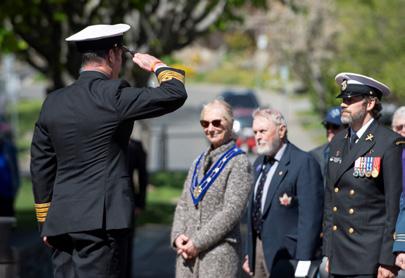
On a bright spring day, Esquimalt’s military community paused to commemorate one of its darkest moments – the sinking of its namesake vessel and those who perished aboard.
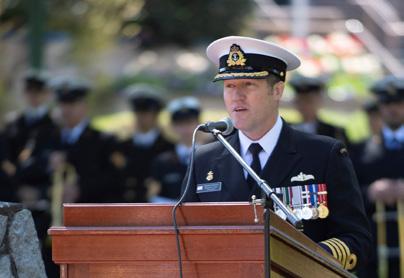
Captain (Navy) Kevin Whiteside, CFB Esquimalt Base Commander, attended the Apr. 16 ceremony at Esquimalt’s Memorial Park, organized by the Base Commander’s Office.
During his address at the memorial service, he said the fate and sacrifice of those aboard is one of the cruellest imaginable for a sailor succumbing to the freezing water and waves. At the same time, the promise of safety and
the Halifax Harbour beckoned just out of reach on the horizon.
“The loss of HMCS Esquimalt ripples across many lives, nearly eight decades and two coasts,” Capt(N) Whiteside said. “Few losses in Canadian history so poignantly and heartbreakingly illustrate that link between the gap of sea and shore.”
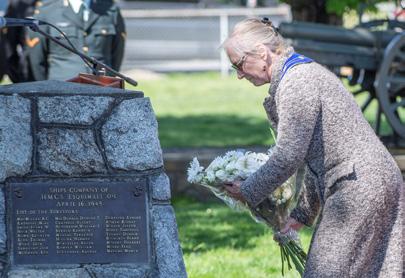
Capt(N) Whiteside attended the ceremony along with Chief Petty Officer 2nd Class (CPO2) Jason Tucker, Assistant Base Chief Petty Officer, and Barbara Desjardins, Mayor of Esquimalt. Capt(N) Whiteside and Mayor Desjardins joined in an Act of Remembrance and laid wreaths and flowers at the HMCS Esquimalt cairn, along with Sean Gaudet, Sergeant of Arms of the Royal Canadian Legion Branch 172.
Lieutenant-Commander (ret’d) Gerald Pash, the event’s emcee, noted the constant threat posed by enemy submarines during the Battle of the Atlantic and praised the wartime legacy of the Royal Canadian Naval Volunteer Reserve.
“They were ordinary men from all walks of life but who did extraordinary things in time of national crisis,” said Pash. “With grateful hearts we must never forget the sacrifice of those who gave their today for our tomorrow.”
The service was also attended by approximately 20 uniformed members from CFB Esquimalt and an ensemble of the Naden Band who played O Canada, Last Post, and Rouse under the direction of CPO2 Dan Keels.
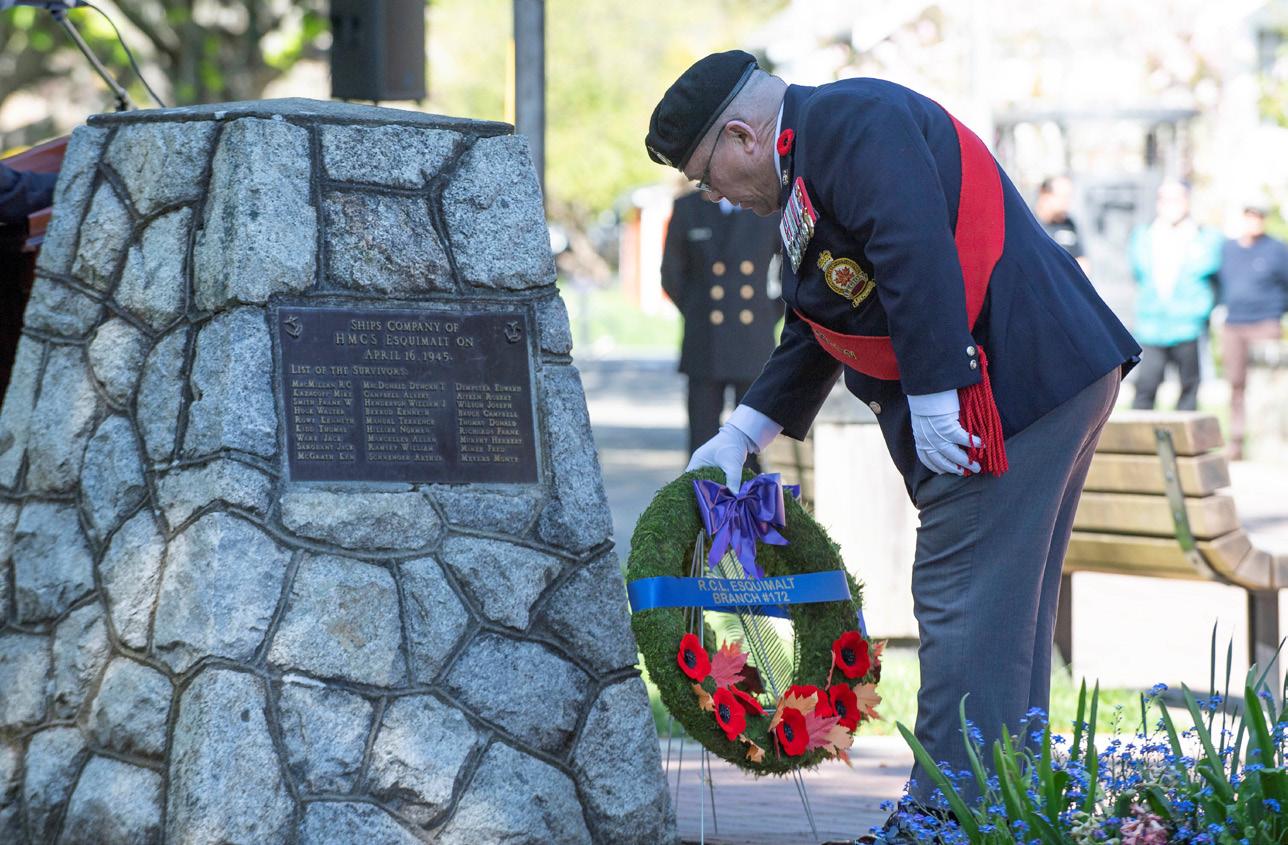
HMCS Esquimalt, a Royal Canadian Navy Bangor-class minesweeper, sank just three weeks before the end of the Second World War. The ship was attacked by the German U-Boat 190 while on anti-submarine patrol near Halifax Harbour on Apr. 16, 1945, resulting in the loss of 44 crew members.
Lieutenant-Commander Robert MacMillan was commanding the ship when an acoustic-homing torpedo significantly damaged the starboard quarter. Crew members below deck were thrown violently to the deck, and those who survived had to navigate through dark, tilting passageways as water filled the ship. Once on the surface, they entered the icy water and reached four Carley floats. The tragedy claimed the lives of 28 sailors during the torpedo attack and sinking, which happened in less than four minutes, while an additional 16 perished during the six hours before rescue.
Peter Mallett Staff Writer
The flame of remembrance burns brightly on the West Shore for soldiers who fought in Canada’s most celebrated military victory.
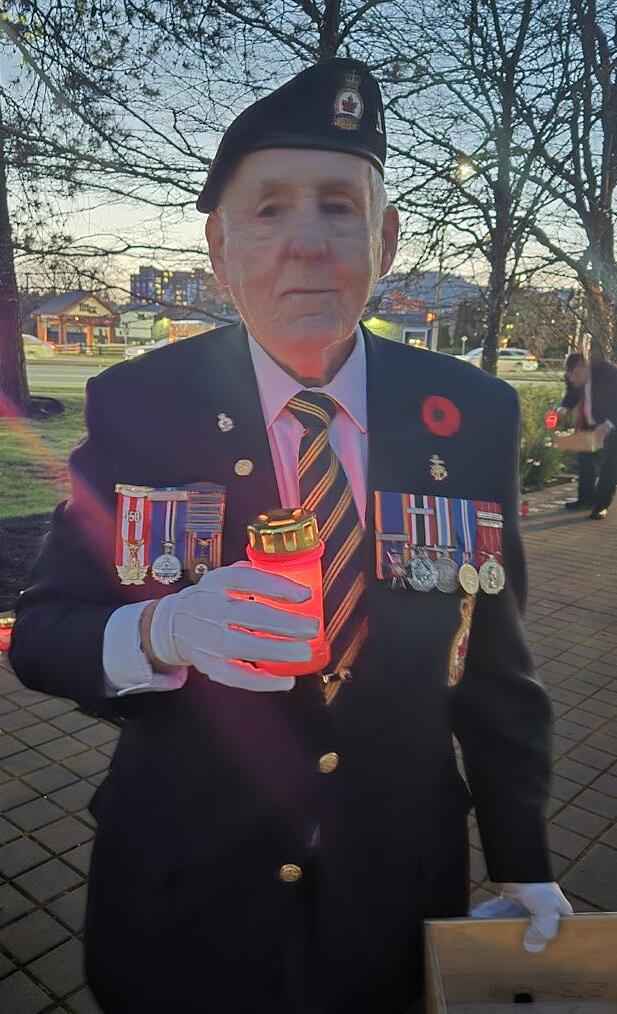
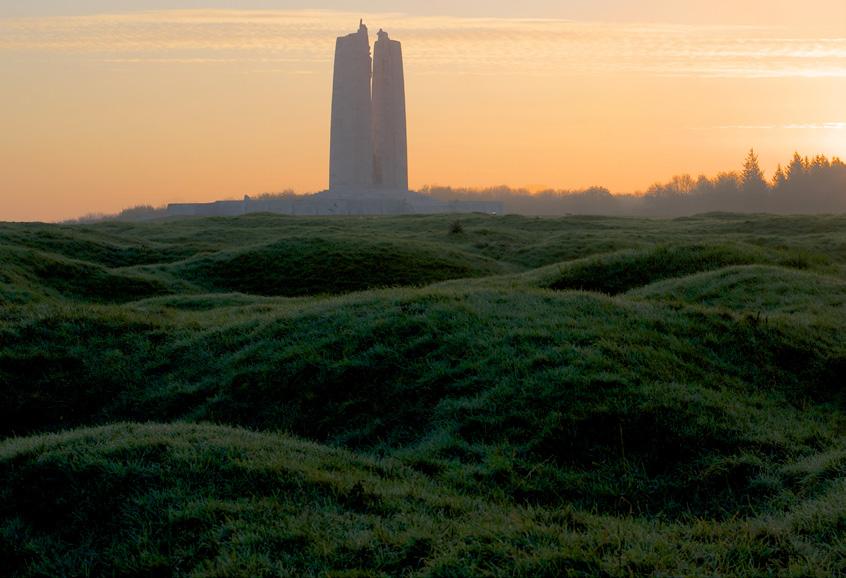
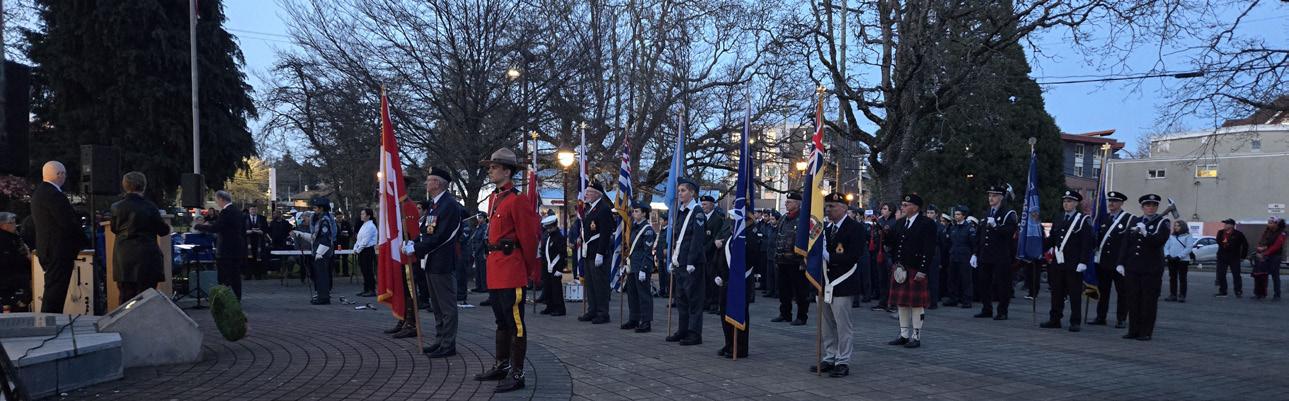
On the evening of April 9, the glowing light grew a little stronger as a sizable crowd gathered at Veterans Memorial Park in Langford for its annual Battle of Vimy Ridge Candlelight Tribute, organized by the Royal Canadian Legion (RCL) Prince Edward Branch #91.
Major (ret’d) Grant Whittla, the event’s Master of Ceremonies and Legion member, is convinced the cause of peace and freedom is not lost on younger members of the community.
“People are quite reflective of the Battle of Vimy Ridge and the youth who were present indicated this inspired them to think about the Canadian soldiers who died in support of Canada’s peace and freedom,” said Whittla.
Whittla is a former Canadian Army Signals Intelligence Specialist and Royal Canadian Air Force Communications and Electronics Engineer. He has been the tribute’s emcee for the past five years and says it is all about ‘passing on to our youth the memory of heroes who sacrificed in order to provide Canada with peace and security’.
The Battle of Vimy Ridge, Apr. 9-12, 1917, was a defining moment in Canadian history but did not come without significant cost. Of the
100,000 members of the Canadian Corps who served there, approximately 3,600 lost their lives, and 7,000 more were wounded.
The tribute holds special personal meaning to Captain (Navy) Kevin Whiteside, CFB Esquimalt Base Commander. His Great-Grandfather, Private (Pte) William Otten Whiteside, fought at Vimy Ridge as a member of the 18th Battalion of the Canadian Corps. Wounded twice, Pte Whiteside received the Military Medal for Bravery in the Field, the British War Medal, and the Victory Medal.
“The candlelight ceremony at Veteran’s Memorial Park is a special opportunity to honour a seminal moment where our young country and military came of age and prevailed in the face of shocking and grueling circumstances,” said Capt(N) Whiteside. “As Base Commander, I could not be more thankful to organizers who enable us to remember and reflect on what have become national touchstones of valour and sacrifice.”
Capt(N) Whiteside attended the ceremony with Chief Petty Officer 1st Class Susan Frisby, CFB Esquimalt Base Chief.
The candlelight tribute included the Westshore Community Concert Band and Legion Comrade Ralph Gonyea playing The Last Post. At dusk, veterans, military members, and youth carried candles to memorial markers in the park. Similar candlelight tributes occur across Canada and at the National War Memorial in Ottawa each year.

MANAGING EDITOR
Jazmin Holdway jazmin.holdway@forces.gc.ca
EDITOR
Kate Bandura
WRITER
250-363-3130 kateryna.bandura@forces.gc.ca
Peter Mallett mallett.peter@cfmws.com
PRODUCTION
Teresa Laird production@lookoutnewspaper.com
Leslie Eaton
ACCOUNTS
Jazmin Holdway
ADVERTISING
Joshua Buck
250-363-3127 leslie.eaton@lookoutnewspaper.com
250-363-3127 jazmin.holdway@forces.gc.ca
778-977-5433 military.base.advertising@gmail.com
EDITORIAL ADVISORS
Capt Christopher Dubé
Ashley Evans
250-363-4006
250-363-7060
Published each Monday, under the authority of Capt(N) K. Whiteside, Base Commander.
The editor reserves the right to edit, abridge or reject copy or advertising to adhere to policy as outlined in PSP Policy Manual. Views and opinions expressed are not necessarily those of the Department of National Defence.
Le LOOKOUT est publié tous les lundis, sous l’égide du Capv K. Whiteside, Commandant de la Base.
Le Rédacteur se réserve le droit de modifier,de condenser ou de rejeter les articles, photographies, ou annonces publicitaires pour adhérer au Manuel des politiques des PSP. Les opinions et annonces exprimées dans le journal ne réflètent pas nécéssairement le point de vue du MDN.
Circulation: 2,000 plus online engagement per week Follow us on Facebook, Twitter and Instagram to join our growing social media community.
A Division of Personnel Support Programs
CFB Esquimalt, PO Box 17000 Stn. Forces Victoria, BC V9A 7N2 Web: www.lookoutnewspaper.com Fax: 250-363-3015
Canadian Mail Product Sales Agreement 40063331


Thomas Goenczi
Lookout contributor
Flashbacks tend to shackle us back into our trauma and withhold our ability to process the moment that was once incurred. Sometimes, this mental anguish is too much to bear, and we dissociate to get away from re-living it. When we dissociate amid a flashback, we try to cope with it. However, it benefiting our psychological well-being in the long run is another question.
Recognizing the distinction between managing a flashback and processing it is essential. Coping with a mental health issue often happens in the present moment—it is an immediate intervention to ground ourselves back into the present moment.
On the other hand, trauma processing is usually a long-term enduring operation of relentlessly garnering understanding through insight and eventual acceptance of the psychic wound. The labour-intensive element is often needed to find some sense of healing from the trauma. An excellent way to conceptualize processing is to view it not only as a literal lifelong endeavour
but as a symbolic one. Nevertheless, these two typically work together and contribute to one another’s successes and failures. If we can learn to manage our symptoms to some degree, it can give us the psychological space to process the trauma.
Typically, we face disbelief and terror at our first encounter with a traumatic flashback. When this occurs, our fight, flight or freeze system activates, and we often default to how we manage other psychological stressors.
Depending on your tact, mental flexibility, and ability to modulate emotions, you might immediately pull yourself out of the flashback. However, we often can’t successfully pull ourselves out of the trauma, especially when we first encounter the flashback.
This is why dissociation as a means to manage a traumatic flashback can be psychologically detrimental. We use it to pull ourselves out of the immensity of the feelings that have bubbled out of the psychic cauldron. On the surface, it can effectively neutralize some of the overwhelming emotions. Dissociation becomes alluring when we notice its power in man-
aging the traumatic flashback. It allows us to slip into detached hollowness, cemented with a blunted numbness in the body and the mind. The issue arises once this way of coping becomes an unconscious reaction to the majority of flashbacks.
When we perpetually dissociate to cope with flashbacks, anxiety, stress or a highly emotional state, we create an empty detachment from the world in front of us. Dissociating from traumatic flashbacks takes away our power and energy from recognizing and dealing with the wound. When we uncontrollably split from reality, it feels like we have no autonomy. However, when this does happen, we need to be aware, courageous, and psychically nimble to beat not only the flashbacks but also the disassociation that has come with it.
Thomas Goenczi is an RCN Veteran and MA Clinical Counsellor with Private Practice: Well Then Therapy.
The content is not intended to substitute professional advice, diagnosis, or treatment. Always seek the advice of your mental health professional or other qualified health provider with any questions regarding your condition.




Last year, the Canadian Armed Forces (CAF) introduced the Canadian Forces Housing Differential (CFHD), which replaced the Post Living Differential (PLD). CFHD is a monthly payment designed to help CAF members secure suitable housing across Canada. CFHD rates reflect the economic situation and vary based on location and salary.
This year, 24 locations are seeing a rate increase more significant than 10 per cent. Esquimalt is seeing an increase of 16.5 per cent, which equates to $350 per month for Corporals.
The updated CFHD rates will be effective on July 1 and are now live. Eligible CAF members who have yet to apply for CFHD previously are encouraged to do so now. If you have already registered, you only have to re-apply if you have relocated.
Are you eligible for CFHD?
You’ll need to know your pay level, based on monthly pay, and the 2024 CFHD rate for your pay level and place of duty.
You can apply for CFHD by com-
pleting form DND 4899 if you are eligible. Many variables comprise a person’s CFHD rate (pay rate, posting status, living situation, etc.). For more information on your rate and how to apply for the CFHD, please speak to your Orderly Rooms (ORs).
Understand your PPLD and CFHD rates.
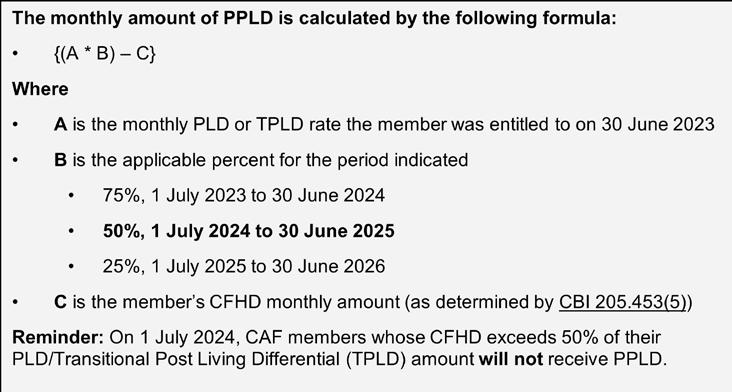
The Provisional Post-Living Differential (PPLD) was introduced to reduce financial stress on CAF members transitioning from the PLD to the new CFHD. It is a temporary benefit for individuals whose CFHD monthly payment is less than what they originally received under the PLD or Transitional Post-Living Differential (TPLD). Unlike CFHD, PPLD monthly payments are adjusted and paid automatically.
Note that on Apr. 1, members received an economic increase, which could change their CFHD rates. As planned, monthly PPLD will decrease incrementally from July 2023 to June 2026. On July 1, 2026, PPLD payments will stop.

■ eye Health examinations
■ contact Lens specialists, Dry eyes, Allergies, eye i njuries
■ Designer eyewear Boutique
■ Aircrew cyclo exams
■ sunglasses: prescription & non-prescription


It is important to note that CFHD rates are updated annually to ensure they are up to date with the most up-to-date costs across Canada. The CFHD and PPLD payments ensure CAF members and their families can find suitable housing, no matter where they are posted. For more information, please speak with your chain of command.


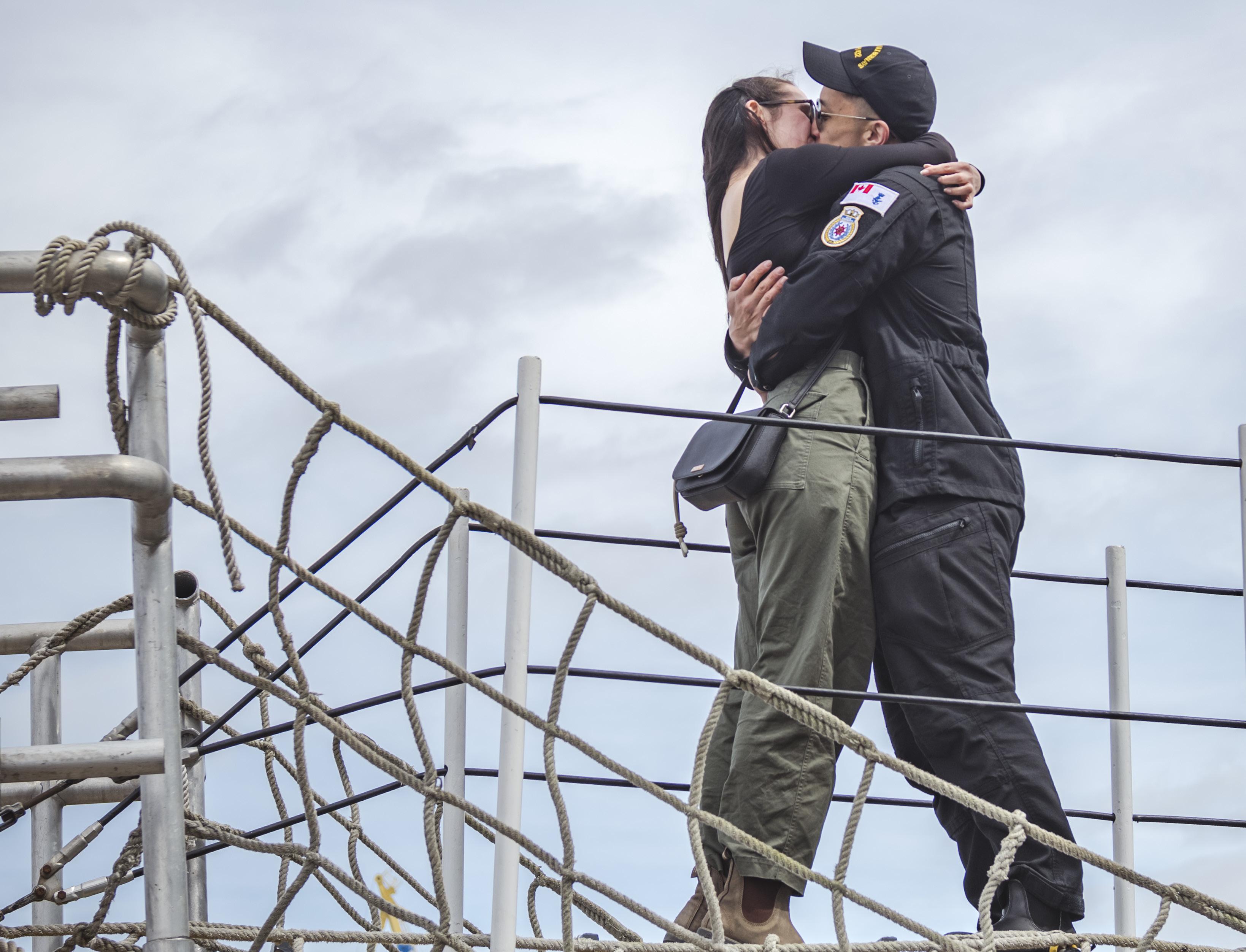
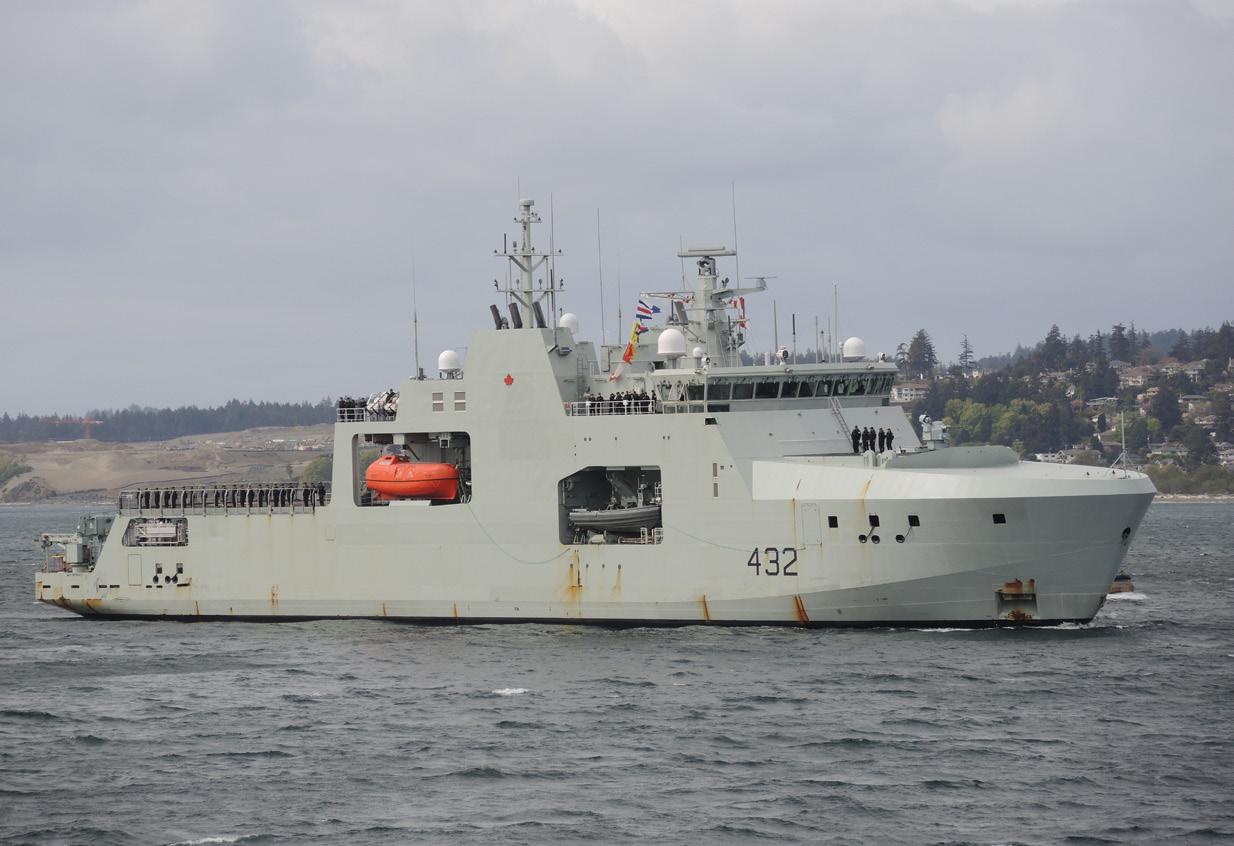
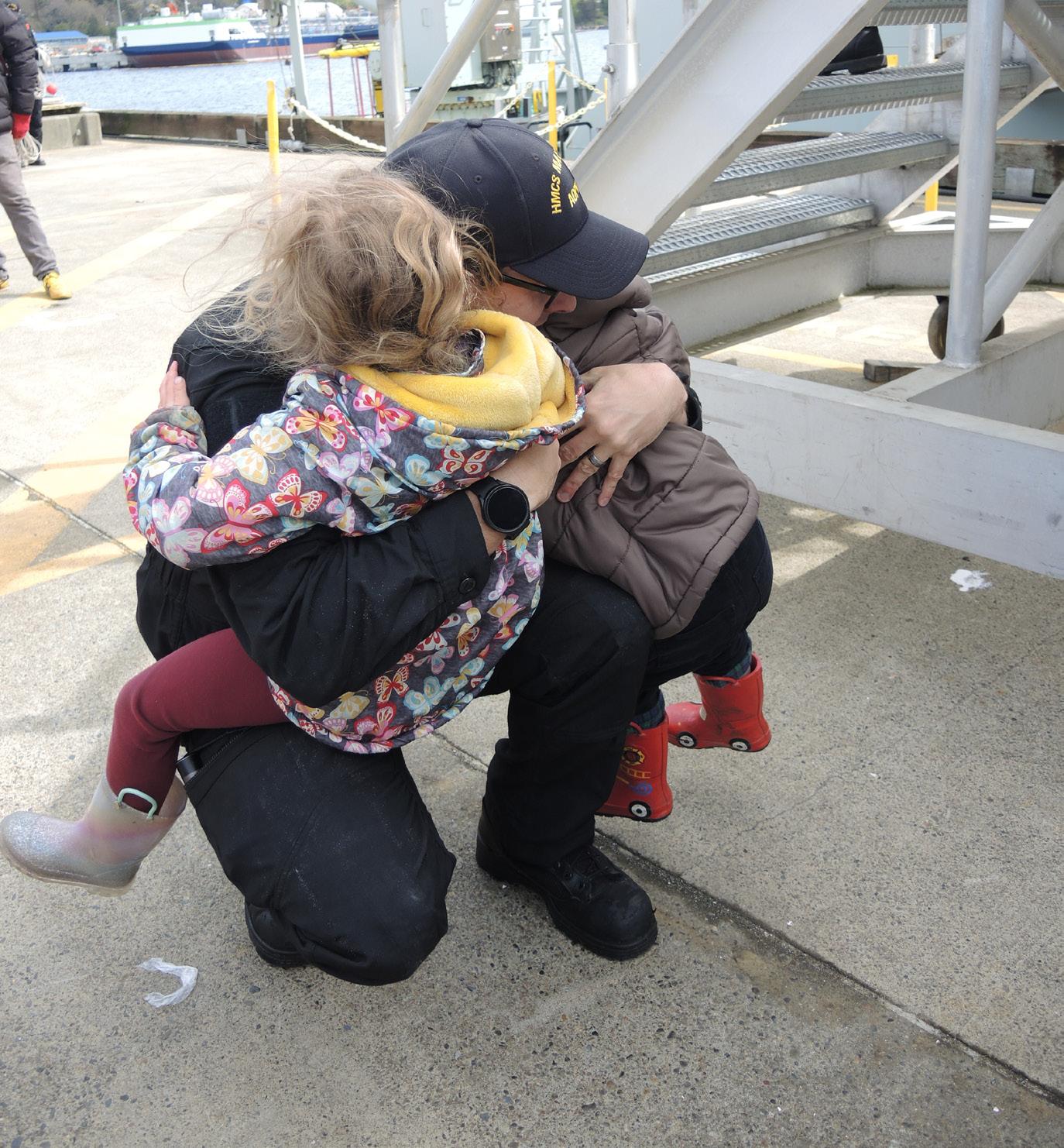
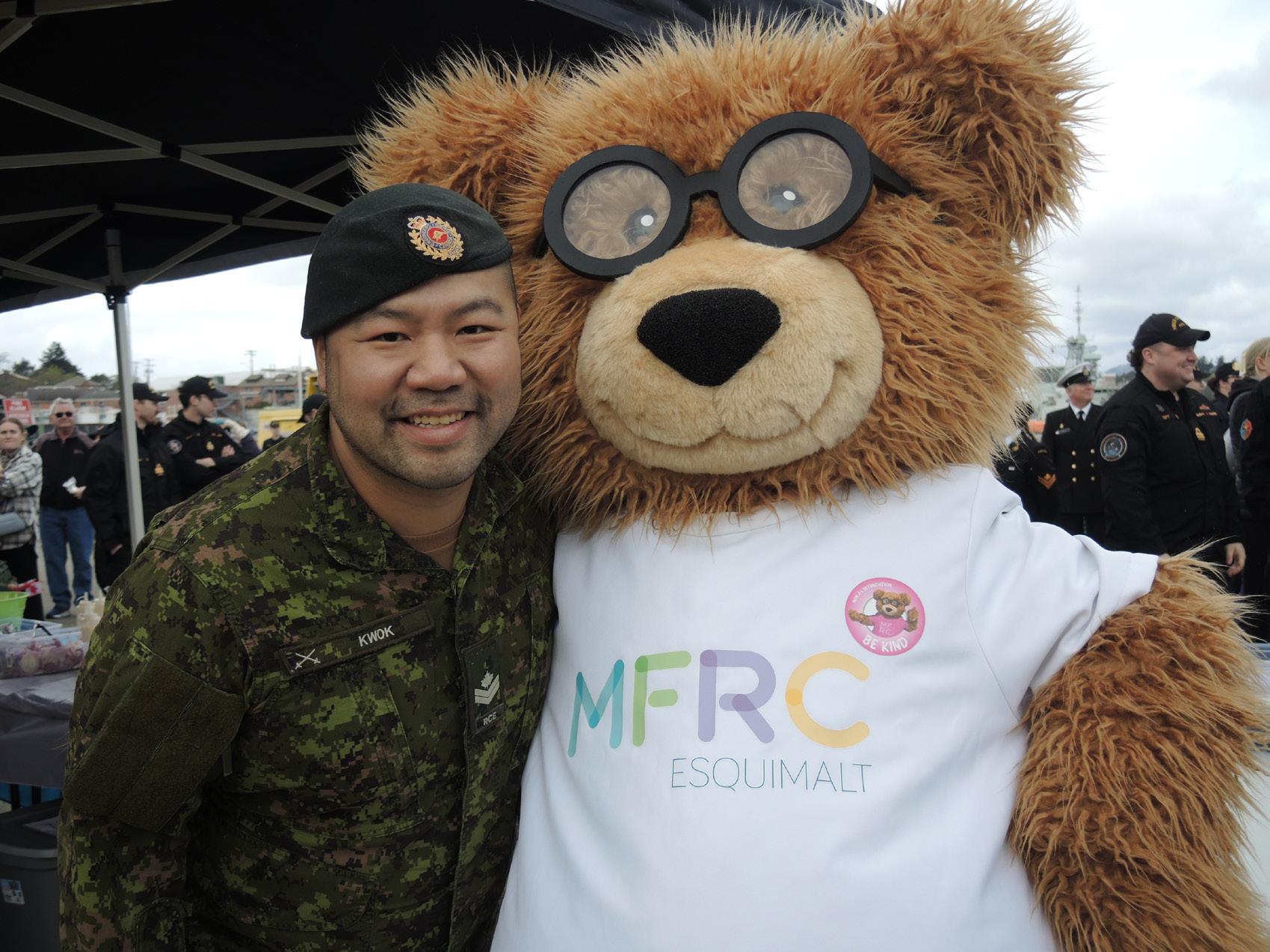
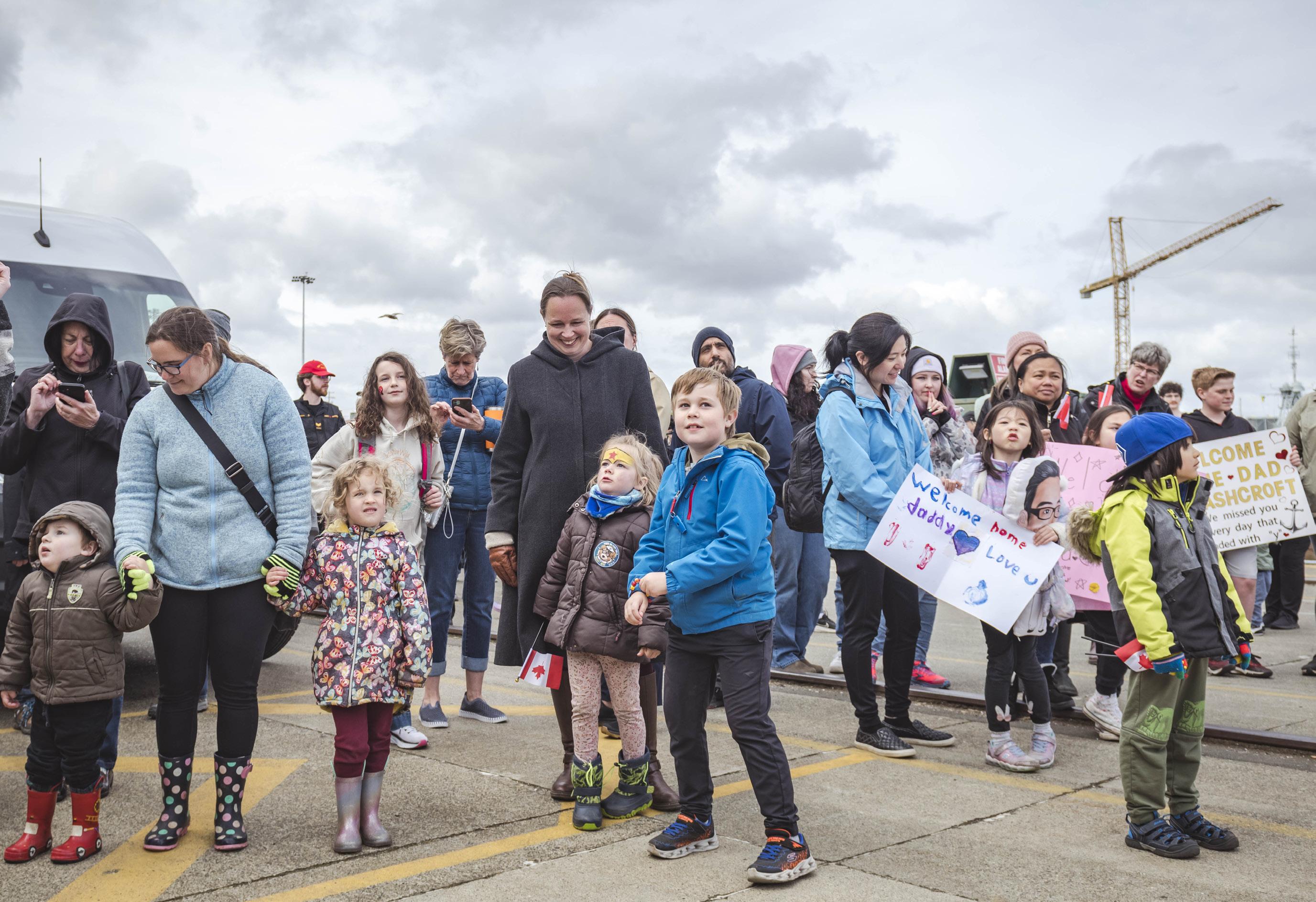
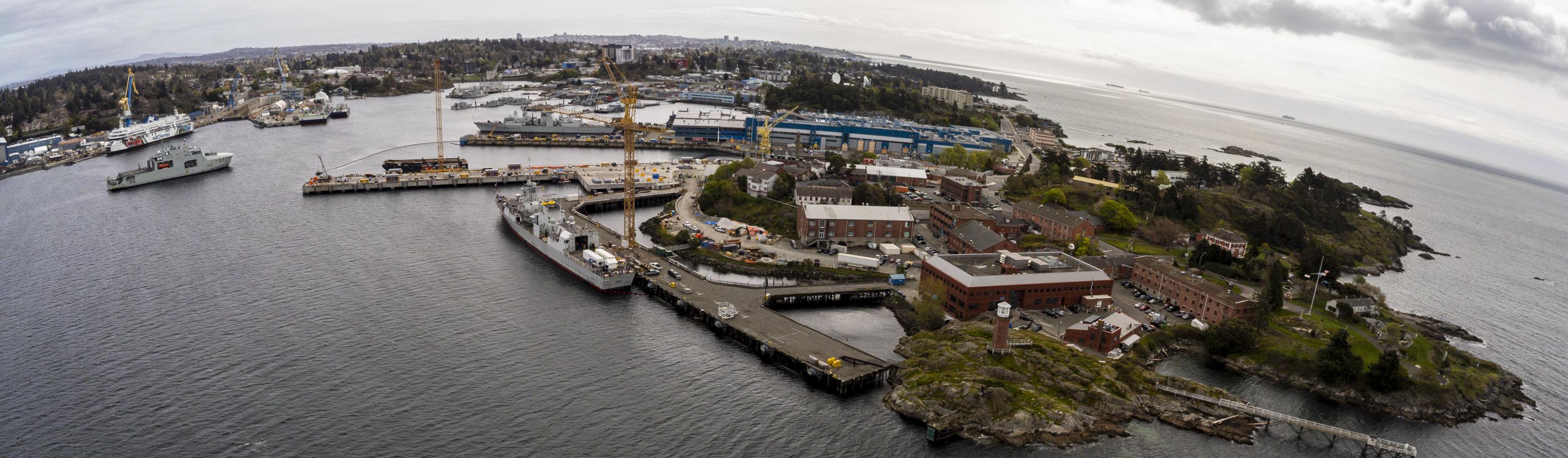
HMCS Max Bernays, Canada’s newest vessel, docked at CFB Esquimalt around 10:30 a.m. on April 15 following its transit from Halifax that began on March 11.
HMCS Max Bernays is one of two Arctic and Offshore Patrol Vessels that will be stationed in Esquimalt.

Peter Mallett Staff Writer
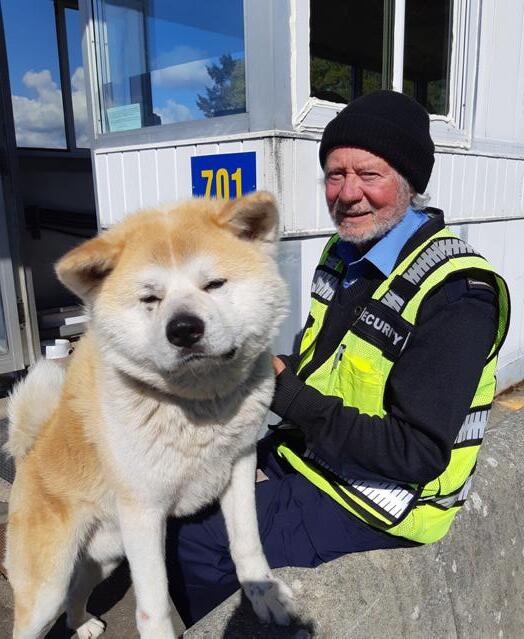
These days, Y-Jetty visitors are greeted by a cute, huggable, fluffy therapy dog at the security gate.
Appropriately named Teddy, the canine is a three-year-old Akita recently adopted by one of CFB Esquimalt’s friendliest Commissionaires, Bob Cosman. Cosman is convinced Teddy provides comfort and happiness to visitors at Y-Jetty.
“I have a new joy in my life, and it is such a great experience to bring Teddy to work with me and make others smile,” said Cosman. “Everyone at the Base is getting to know me better because of my dog and I am grateful to my employer for understanding my need for a therapy dog.”
Cosman, 78, is a former Naval Cadet turned lawyer who joined the Commissionaires over 20 years ago. For 25 years, he worked as a parliamentary legal specialist at Parliament Hill and the Saskatchewan Legislature until he fell on tough times, experiencing personal challenges including unemployment and homelessness. After receiving support from his family, Cosman went to a career fair in Toronto where he was introduced to the Commissionaires. He relocated to Victoria following his mental health recovery.
Cosman used to greet visitors to the Y-Jetty with his previous therapy dog, a 13-year-old Husky named Mia until she passed away last year. Cosman says her loss was tough to take, and for a time, his life seemed very empty. Then Teddy came along.
“Teddy really likes coming to work with me, the people he meets and the attention he gets at Y-Jetty and seems to be getting very acclimatized to his new routine,” concluded Cosman.
Cosman adopted Teddy in late January when Teddy’s previous owner in Richmond agreed to pair him with Bob. Akitas are working dogs originating in the northern mountains of Japan and are known for their loyalty and skills as rescue dogs.
Teddy helps Cosman cope with bouts of depression and anxiety he still sometimes experiences. He often stands with Bob outside his booth as they welcome military members and civilian workers entering the Dockyard from Naden before asking them for their identification. Sometimes, when visitors approach the security gate, Teddy is busy napping in the booth or the tailgate of Cosman’s truck, getting food or water.
“When people approach the gate and they don’t see Teddy they always ask where he is. People who have never seen him before raise quite a big fuss over him,” says Cosman.




SAILBOAT 1974 CS 22 for sale. Located at CFSA. 4 head sails. All safety gear, too many accessories. Outboard motor needs carb work. $1,500. Call 250-208-4845.
BUSINESS FOR SALE –
Great for a retiring member! Opportunity to own a well established, limousine service in Victoria; Ascot Limousine Services. Seller retiring after 29 years. Business purchase includes: special authority (3) licences, 3 limousines, website, phone #, legal and accounting (if required), loyal clients & goodwill, will with the transition. $110,000. Contact Gilles at 250-812-2775 or gilles@ ascotlimo.com. More info available at ascotlimo.com
$2,195/MONTHRENOVATED 2 BDRM in Esquimalt Top-floor, corner suite in a serene, adult-oriented building. Prime location near Esquimalt Plaza, gym, library, Naval base, and downtown Victoria. New carpets, fresh paint, updated bathroom, and appliances. Cat-friendly. For inquiries, please contact 250-8881212, between 9-5 Mon.-Fri.
SUITE WITH OCCUPANCY FOR ONE IN LANGFORD near
View Royal. Bright, modern, clean, private, and quiet 1 bedroom suite with patio, appliances incl. dishwasher, microwave, washer & dryer. Quiet neighbourhood. Beautiful view. Easy access to bike paths. Parking avail-
able. 1 yr lease, then month to month. No smoking/ vaping, pets, or sub-letting. Renter’s insurance with proof of coverage, references and proof of employment mandatory. $2,400/ month furnished, $2,200/ month unfurnished. Utilities and wi-fi included. Contact Max by text 613.449.2836.

Peter Mallett Staff Writer
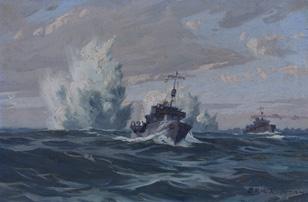
A retired financial services worker is on a mission to locate 13 missing paintings featuring Canadian warships in the Battle of the Atlantic.
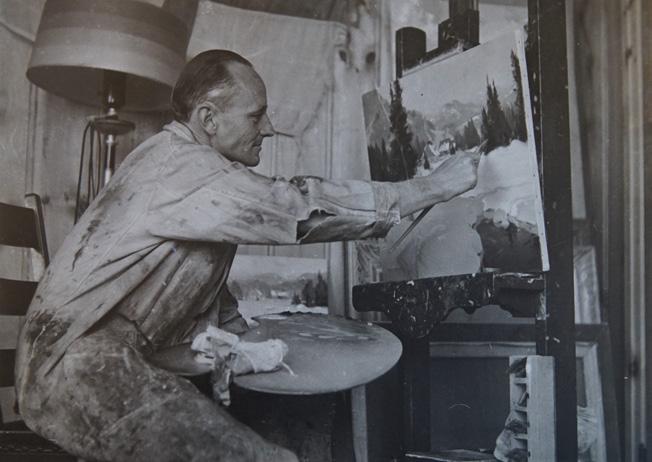
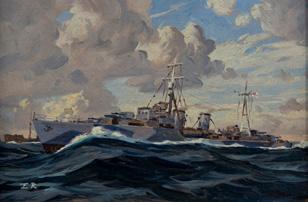
Art enthusiast David Emmerson believes you or someone you know could be in possession of long-lost Battle of the Atlantic paintings by Lieutenant-Commander (LCdr) Eric Riordon, a Canadian Naval Reservist who served during the Battle of the Atlantic.
“It’s turned into a bit of an obsession for me, and I keep finding more and more clues and material,” says Emmerson.
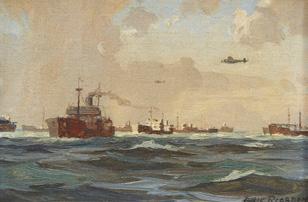
LCdr Riordon joined the Royal Canadian Navy (RCN) in 1940 at the height of the Second World War. His wartime service inspired him to paint a series of 34 miniature naval scenes depicting typical trans-Atlantic convoy manoeuvres during the Battle of the Atlantic.
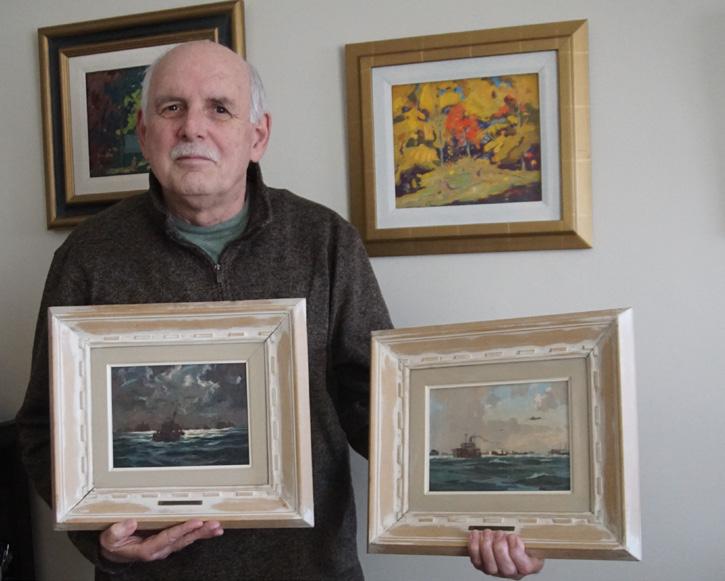
Emmerson says his fascination with the paintings began when he purchased two of the convoy series paintings at an auction in April 2020. Emmerson bought them because he liked the subject and their look.
“When I learned about the exhibition and the man behind the paintings, I started to wonder where the other 32 paintings and/or photographs of them were located,” Emmerson says. “I had no idea what I was getting into.”
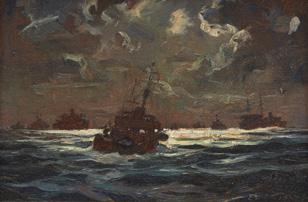
One of Emmerson’s favourite LCdr Riordon paintings is his fourth in the series. It features an RCN frigate at night during the Battle of the Atlantic.
“Riordon had a faculty for painting moonlight which is amply demonstrated here,” said Emmerson. “It is a beautiful calm picture but there is menace as well, knowing the U-Boats are about and can inflict death and destruction at any moment while the air of menace exists in the frigate itself as it is also a purpose-built killing machine.”
LCdr Riordon’s paintings were displayed and eventually sold after the North Atlantic Convoy Art Exhibit finished its tour in 1952, with many of their whereabouts still unknown. Emmerson says this post-war traveling exhibition must have had an immense impact on the many people across Canada who attended it over 72 years ago.
“Many of these exhibition visitors would have been current and former navy personnel at the time,” said Emmerson. “Riordon had credibility with them as he himself was a veteran who served in North Atlantic convoys.”
Now, Emmerson operates an expansive website on LCdr Riordon: ericriordon.ca. It features biographical information and photographic imagery of the artist’s naval paintings. It was the next logical step in Emmerson’s efforts to unlock clues and the tantalizing mystery surrounding the paintings and their whereabouts. The website helped find another missing painting and one picture from the book “Canada’s War At Sea” two weeks ago; it was in the collection of a website visitor from the East Coast.
Emmerson is still on the hunt for the remaining paintings.
“The paintings could be displayed in someone’s home or business, or have been stored away in an attic or basement,” Emmerson says.
John Eric Benson Riordon was born in St. Catharines, Ont., Dec. 5, 1906, and moved with his family to Montreal two years later. A dropout at McGill University, he later attended art classes at La Grande Chaumière and Académie Julian in Paris from 1932 to 1934. He is more widely known for his landscape art featuring the Quebec wilderness and seascapes.
During his wartime service, LCdr Riordon’s ship, HMCS Kenora, engaged in anti-submarine warfare and protection of convoys during the Battle of the Atlantic. Riordon painted while on shore service. Most of his paintings were oil-based. He cut down 12” x 16” pieces of artist board into 6” x 8” panels.
He had a fondness for those small panels and painted many of his landscapes and naval paintings in that format and for two volumes of a book he was contributing to: Canada and the Sea, A Maritime History of Canada by Canadian author and humourist Stephen Leacock, and later Canada and The War at Sea by broadcaster and writer Leslie Roberts.
After the war he held the rank of Lieutenant-Commander in the Naval Reserves.
LCdr Riordon died in 1948.












PHEV Twin Motor System
Innovative Pedal (One-Pedal Driving)
7 Passenger Seating (5+2) / Power Panoramic Sunroof with Sunshade / 9” Smartphone Link
&
Audio with Android
/ 671 km of Combined Range** / 3-Zone Automatic Climate Control / Multi View Camera System / Super All-Wheel Control (S-AWC) with Drive Mode Selector (ECO/NORMAL/ SNOW/GRAVEL/TARMAC/ MUD/POWER)
