



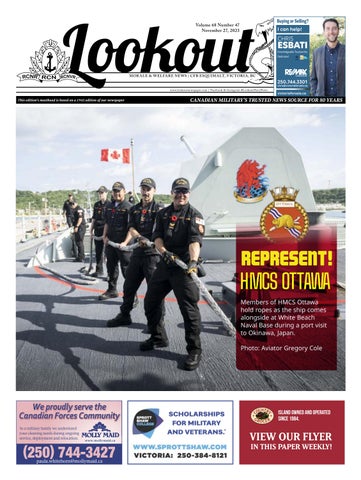
Photo: Aviator Gregory Cole


Peter Mallett Staff Writer
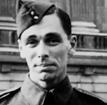
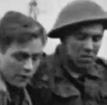
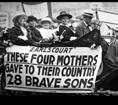
Canadian Armed Forces (CAF) members are providing long-overdue recognition to our nation’s war heroes of the 20th Century who came from Latin America.
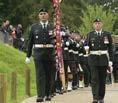
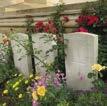
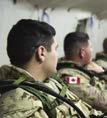
In October, three Latin American Remembrance ceremonies commenced in Ottawa, Valcartier, and Esquimalt and further afield in Italy. They recognized the sacrifice of over 160 soldiers from Central and South America who fought for the CAF in the First and Second World Wars.
The ceremonies began in 2022 and were organized by Captain (Capt) Rey GarciaSalas, a Liaison Officer of the Chief of Defence Staff and founder of the Latin American Soldiers Committee of Canada.
“These events stand out not just as a commemoration, but a heartfelt tribute to the unsung heroes who traversed continents, leaving their homes to defend our freedom during the First and Second World Wars,” says Capt Garcia-Salas. “They all joined voluntarily, demon-


strated compassion, braveness, courage and loyalty while fighting along other Canadian soldiers, but their legacy is unknown and needs to be recognized.”
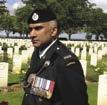
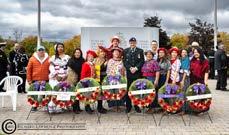
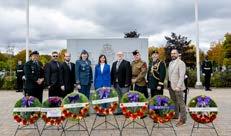
Capt Garcia-Salas organized a ceremony at the National Military Cemetery in Ottawa on Oct. 15. Over 100 people attended, including Lieutenant-General Frances Allen, Canada’s Vice Chief of the Defence Staff, Major-General Michel-Henri St. Louis, Canadian Defence Attaché to the United States, and Josefina Martínez Gramuglia, Argentina’s Ambassador to Canada.
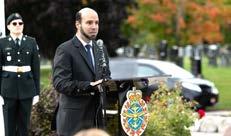
During her address, Martínez Gramuglia highlighted the efforts of over 90 soldiers from Latin America who fought for Canada’s Expeditionary Force in the First World War and others who volunteered for Canada and England in the Second World War.
About 4,800 combatants travelled from Argentina to fight in the British Army during the Great War, some 5,800 in the French Army and about 32,400 in the Italian Army. Among those volunteers were 400 women,
noted Martínez Gramuglia. They included the legendary ‘Pilot of Las Pampas’ Maureen Dunlop, who joined the Air Transport Auxiliary of the Royal Air Force (RAF) and flew over 38 different types of aircraft duringher career. Post-war, she worked as a flight instructor.
Community organizations representing Guatemala, Peru, and the Dominican Republic also participated in the ceremony and adorned themselves in colourful traditional garments and clothing. Capt Garcia-Salas says he is encouraged by progress since last year’s inaugural ceremony at Beechwood. He has also encouraged other Latino Remembrance ceremonies that are now becoming a tradition in other parts of Canada.
“I am impressed by the momentum that is building and that more people are becoming aware of their contributions,” said Capt Garcia-Salas.
Military members from Esquimalt also took time on Oct. 15 to remember the Latin American soldiers in the CAF with a smaller ceremony at Veterans Cemetery (God’s Acre).
Sailor Third Class (S3) Anna Ortiz Ruiz, a Bos’n of HMCS Calgary, organized the event in its second year. The group held a moment of silence, listened to a reading of the Spanish version of John McCrae’s poem In Flanders Fields and laid two commemorative wreaths.
“We were determined to show our respects to the Latin American members who have served in Esquimalt and across Canada, and those who paid the supreme sacrifice,” said S3 Ortiz Ruiz. Corporal Eddy Castillo organized the CFB Valcartier Spiritual Centre ceremony on Oct. 24. A fourth ceremony occurred in Northern Italy at Villanova Canadian War Cemetery in Bagnacavallo. It was organized by Sergeant Guillermo Garza Risueno. On Oct. 6, Major Mario Gonzalez and Bombardier Ovidio Espinoza solemnly gave a Latin American Remembrance short message from the National Cemetery in Riga, Lavia, to be used at Beechwood National Cemetery on Oct. 15.



Michael McWhinnie NTG
People join the Canadian Armed Forces to go places and do things they may have never had the chance to. Unsurprisingly, there was no shortage of volunteers when the Royal Canadian Navy Commander invited the Commander Naval Training Group to select two participants for the 2023 International Wargaming Symposium in Peru.
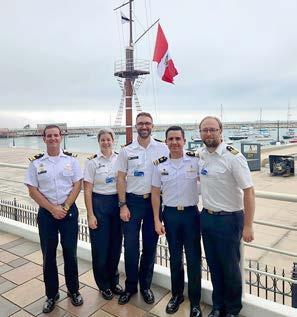
Lieutenant-Commander (LCdr) Josiane Desautels, Commandant Naval Fleet School (Quebec), and Sub-Lieutenant (SLt) Luke Brannigan, HMCS Venture Instructor, were chosen to represent Canada and joined participants from the United States, Germany, France, Italy, Spain, the Netherlands and six Latin American nations.
The Peruvian Navy hosted the symposium from Oct. 17 to 19 at their Naval War College, 10 kilometres west of Lima, with support from the German military academy, Helmut-Schmidt University, Hamburg.
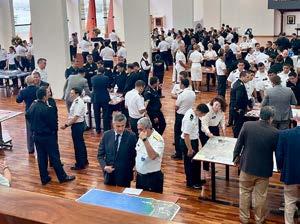
“When people hear the word gaming, they usually think of an activity done simply for diversion,” stated LCdr Desautels. “This was very different. We spent two days in lectures and one day in practical exercises engaged in the very serious topic of military instruction techniques.”
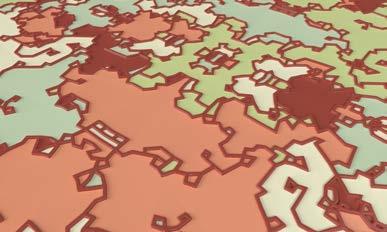
The practice of wargaming as training traces its roots to a Prussian Army Officer named Georg von Reisswitz, who, in 1824, developed the first realistic game on maps and modelled on actual capabilities. Every modern military has employed wargaming in some form ever since.
“In our naval training system, we work alongside Training Development Officers to explore innovative methods to impart the knowledge and skills our sailors need to do their jobs professionally, safely and with confidence,” said LCdr Desautels. “The seminar did a great job promoting wargaming as a potential alternate educational tool.”
Many national militaries and alliances, such as NATO, are investing increasingly in wargaming to educate personnel, improve

their decision-making capabilities in a ‘safe-to-fail’ environment, and inform operational doctrine development. Wargaming demands few resources compared to maritime exercises requiring vessels, crews, armaments, logistic support, and weeks to plan and conduct.
SLt Brannigan, who helps train Naval Warfare Officers (NWOs) at HMCS Venture, said the Unit has been teaching wargaming for over a year and has seen excellent results.
“Although we use it primarily to introduce junior officers to the basics of maritime operations, there remains a wide scope of potential applications such as Cyber and Information Operations, Humanitarian Assistance and Disaster Relief missions and a host of Domestic Ops,” SLt Brannigan said.
Amongst its advocates, wargaming is promoted as a mindset that encourages military planners to theoretically test their ideas or technologies, analyze outcomes and refine their plans based on the lessons learned.
Both officers agree the experience was richly rewarding, both professionally and on a personal level.
“We are extremely grateful to the staff of the Peruvian Naval War College for their warm reception and generous hospitality,” said LCdr Desautels.
SLt Brannigan agreed, saying that connecting with officers from other nations and learning how they leverage wargaming was great.
“Our hosts ensured we were exposed to Peruvian culture: we sampled local cuisine, attended traditional dance performances, drove into the desert, and explored the ruins of 2000-year-old Inca pyramids. It was awesome!” he said.
The trip underscores that when you choose a career in the Royal Canadian Navy, you never know where it will take you.




MANAGING EDITOR
Jazmin Holdway jazmin.holdway@forces.gc.ca
EDITOR
Kate Bandura
WRITER
250-363-3130 kateryna.bandura@forces.gc.ca
Peter Mallett mallett.peter@cfmws.com
PRODUCTION
Leslie Eaton
250-363-8033 workstation3@lookoutnewspaper.com
ACCOUNTS/RECEPTION
Trina Winters
ADVERTISING
Joshua Buck
250-363-3127
778-977-5433 NEW military.base.advertising@gmail.com
EDITORIAL ADVISORS
Capt Christopher Dubé
Ashley Evans
Rodney Venis
FRENCH EDITORIAL ADVISOR
250-363-4006
250-363-7060
A/Slt Alexandre Springer alexandre.springer@forces.gc.ca
Published each Monday, under the authority of Capt(N) K. Whiteside, Base Commander.
Le LOOKOUT est publié tous les lundis, sous l’égide du Capv K. Whiteside, Commandant de la Base.
The editor reserves the right to edit, abridge or reject copy or advertising to adhere to policy as outlined in PSP Policy Manual. Views and opinions expressed are not necessarily those of the Department of National Defence.
Le Rédacteur se réserve le droit de modifier,de condenser ou de rejeter les articles, photographies, ou annonces publicitaires pour adhérer au Manuel des politiques des PSP. Les opinions et annonces exprimées dans le journal ne réflètent pas nécéssairement le point de vue du MDN.
Circulation: 2,000 plus 300 pdf downloads per week Follow us on Facebook, Twitter and Instagram to join our growing social media community.
A Division of Personnel Support Programs
CFB Esquimalt, PO Box 17000 Stn. Forces Victoria, BC V9A 7N2 Web: www.lookoutnewspaper.com Fax: 250-363-3015
Canadian Mail Product Sales Agreement 40063331


Thomas Goenczi Lookout contributor
We so easily slip into exhausting ourselves with thought. To overthink is to think about something for far too long, with an exertion of energy intended solely on our function of thought. When we do this, we ultimately negate our emotions, intuitions, and senses.
Interestingly, we often place a negative connotation on overthinking. This is mostly due to how we ruminate on the negative aspects of a situation and disregard the potential positive outcomes. However, when we overthink one aspect of a situation – the negative – we actually underthink the circumstances entirely because we aren’t seeing the full picture of possibilities. Whether it’s biological or conditioned, we are predisposed toward the negative. We create elaborated ‘what ifs’ often shrouded in anx-

iousness and fear. We build these negative images and thoughts with such strength in our mind that it inherently causes our body to weaken due to stress. A 2017 study on mice indicated that chronic stress impacts the activation of genes. When our genetic sequencing is altered due to stress, we inherently give rise to the potential of passing down this stress to future generations. This discovery gives biological credence to the notion of generational trauma.
I don’t believe people want to stew in their negativity. Nevertheless, when we are comfortable with something, the fear of change becomes much more heightened. We can become so content with our negativity that we lose track of its power over us. This leads to a unconsciously pessimistic default interaction with the world.
But why is positivity difficult to channel during these
times? It has a lot to do with an inability to move out of the negative space we have created.
Picture your mind as a house on which you’ve spent a lot of time and effort, but the space you’ve created is wrecked. You develop a warped kinship to the space: you enjoy the couch with the springs popping out, the stained covered rug and the stench of the mouldy walls. To move out of that space would mean all that time and effort would have gone to waste. Once that realization is made, panic emerges with false rationalizations such as ‘I don’t deserve to live in better conditions’ or ‘there is nothing better for me anyways’. This reactive doubling down is an unconscious recognition that one must make equal or more effort in creating a more ‘habitable’ space in your mind’s house. This is understandable because many don’t have the motivation or capacity to leave the
decaying space. This is where positive ‘overthinking’ is quintessential to leaving the negative space, one where we can see the full spectrum of possibilities, from negative to positive. When we open our minds to the possibilities of a situation, we liberate ourselves from harmful thoughts. We become aware of our options and come to the crossroads of choice: do we stay in the cheapest room in the house, or do we move into something we truly deserve?
Thomas Goenczi is an RCN Veteran and MA Clinical Counsellor with Private Practice: Well Then Therapy.
The content is not intended to substitute professional advice, diagnosis, or treatment. Always seek the advice of your mental health professional or other qualified health provider with any questions regarding your condition.




Steffa MacLintock
PSP Fitness Sport and Recreation Coordinator
In August, eight members from HMCS Ottawa conquered the tallest peak in Japan, Mount Fuji. Standing at 3,776m in elevation, this active volcano provided many challenges to our Royal Canadian Navy members, from the possibility of acute mountain sickness to inhospitable weather…and I missed it!
Being the Personnel Support Programs (PSP) Fitness, Sport and Recreation Coordinator embarked on Ottawa and missing this once-in-a-lifetime opportunity to challenge my mental and physical fortitude did not sit well with me. Seeing the epic photos, smiles, and the three-day post-climb wobbly legs of those who returned triumphantly solidified that I would not miss the next mountain climbing opportunity.
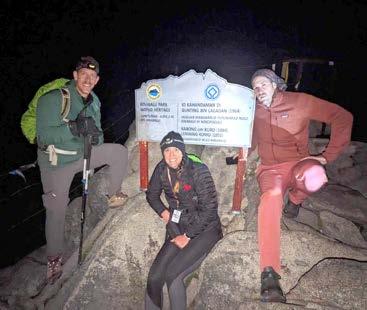
That is how I found myself sitting atop Borneo and Malaysia’s tallest peak at 5:15 a.m. on Oct. 13 with two other brave souls from the ship.
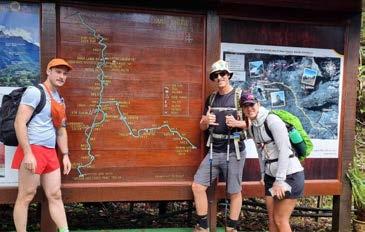
The journey started at 5:30 a.m. on Oct. 12 for me, Master Corporal (MCpl) Jeff Zwicker and Lieutenant (Navy) Graeme Stout when we set off towards the National Heritage Site Kinabalu Park. Arriving around 8:30 a.m., we were processed to start our climb – only 186 climbers were allowed on the mountain daily, and they were all required to fill out a ream of paperwork and waivers.
Let’s jump to the internal monologue I had with myself, as a girl who grew up in Regina, Sask.: “What business do I have on the side of a mountain, let alone the 20th tallest mountain by topographical prominence? This is how I die” But there we were, signing all the paperwork, the intrepid three and their trusty guide, Terrance, loaded with backpacks containing all-weather clothing, snacks and water for the next two days. We stepped off around 10 a.m. for the first installment of our 8km hike up Mt. Kinabalu.
This mountain lulls you into a false sense of security; you start the trek in the coolness of lush greenery and the sounds of river water and rushing waterfalls ringing in the distance. With the first 500m behind us, we bid farewell to the only waterfall and said hello to the clay-coloured ground covered in small, irregularly shaped rock formations and stairs. So…many…stairs. Approximately 600 flights, or nearly 10,000 steps, to be more precise.
We trekked on, passing small ‘rest stops’ that consisted of benches, curious and all too friendly squirrels, a covering and, if we were lucky, a toilet. Of course, we were sweating too much to require a restroom as the temperature had climbed to over 30 degrees C. At the 4km mark, we had our packed
lunch, and at the 6km mark, we made it to the Pendant Hut, where we would rest for the night. Here, we all started to feel the effects of the mountain. Our step rate slowed, our breathing became more laboured, and we all started noticing some brain fog. Our guide told us to take it slowly and to rest more frequently. We were happy to oblige.
The Pendant Hut was far from glamorous, but it did provide us with all we needed. We had our hut Crocs (we were provided Crocs to rock), hostel-style bunk beds, all-you-candrink instant coffee and tea, two meals, heated showers and flushing toilets. Here, we received our brief for the upcoming day, the day we summit and complete the Via Ferrata, Italian for ‘iron path’, an assisted route that allows climbers to access remote locations and vistas using metal rungs and ladders.
To make the sunrise summit, we would wake up at 1:30 a.m. After a glorified nap which ended far too soon, we dressed in many layers and set off into the darkness, following our headlamps. We all felt exponentially better than the previous day and could pursue the hill quicker than anticipated, meaning we summited 15 minutes ahead of the 5:30 a.m. sunrise.
There we sat atop Mt. Kinabalu. Triumphant and FREEZING! We huddled together and took in the breathtaking view as the sun peaked over the horizon. We couldn’t lallygag too much, though, as we had an appointment at 6:30 a.m. to complete the world’s highest Via Ferrata, starting at a cool 3,500m above sea level.
If you have never completed a Via Ferrata, this may not be the one to start. It may have been designed for beginners and recommended a pace of 3+ hours, but that was too slow for my far more experienced climbing partners. But this was my first Via Ferrata. This experience delivered on mental fortitude and was indeed a once-ina-lifetime opportunity to have unobstructed views across the Malaysian skyline. I am glad I did it.
With the Via Ferrata behind us, we rushed back to Pendant Hut, ate, showered, changed, packed our bags and hit the path back down the mountainside. We closed our epic adventure at approximately 4 p.m. on Oct. 13. When we checked off the mountain and loaded into our transport back to the ship, the rain started to pour!
Would I do this again? Yes, ten out of ten, I recommend taking on this challenge! The sleepless night, freezing temperatures, acute mountain sickness, and three-daypost wobbly legs were well worth it. The photos and my words will never do it justice; it’s one of those experiences you must do yourself.
It is the world’s third-highest island peak
With an elevation of 4,095 metres, Mount Kinabalu is the tallest mountain in Malaysia and Borneo and the world’s third-highest peak of an island, after New Guinea’s Puncak Jaya and Mauna Kea in Hawaii.
It is the highest peak between the Himalayas and New Guinea.
It is more than 15 million years old During the last Ice Age, it was enveloped by huge sheets of ice and glaciers that later
scoured its surface and carved out features like the 1,800-metre deep Low’s Gully on the north side.
It is part of a world heritage site Exceptionally rich in flora from the Himalayas, China, Australia and Malaysia as well as pan-tropical flora, the park was inscribed as a UNESCO World Heritage site in 2000 and is a Centre of Plant Diversity for Southeast Asia.




Peter Mallett Staff Writer
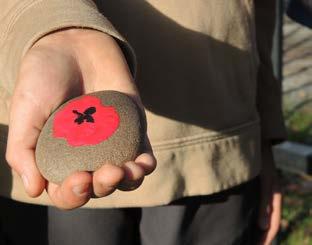
Holding small rocks decorated with hand-painted poppies, over 270 elementary school students fanned out across the national historic site and military cemetery on Colville Road on November 9 and 10.
Each placed a poppy on some 2,500 marked headstones of soldiers, sailors and aviators.
The Rockheights Middle School was the first school in B.C. to participate in the No Stone Left Alone ceremony ten years ago. Since then, the students and staff have been hosting ceremonies at God’s Acre Veterans Cemetery to remember the sacrifice of fallen military members.Built in 1868 by RearAdmiral George Fowler-Hastings as a place of rest for Royal Navy sailors, Veterans Cemetery has since expanded to encompass all Canadian Armed Forces members.
Many of the gravesites in the cemetery have already been adorned with one or more poppies from past years. Nov. 8 marked their tenth consecutive year of participation, says Principal Aaron Maxwell.
“It’s really important that we think about how important this place is and what it represents, the people buried here and the sacrifices they made,” Maxwell said during his address to the students. “Each of the headstones represents a story and life, and somebody that chose to serve and protect the freedoms that we have today, so we want to make sure we really respect that.”
Maxwell also noted his family’s historic connection to the military. His great-grandfather, Gordon Cookson Thomas, served at the Battle of Vimy Ridge where he lost an eye; his greatuncle, Leonard Thomas, paid the ultimate sacrifice during the First World War.
Many of the students at Rockheights also have parents or family members who are veterans, current-serving military, or work at CFB Esquimalt as civilian employees. This included a Grade 7 student Coen, also a member of Princess Patricia’s Canadian Light Infantry (PPCLI) 2487 Royal Canadian Army Cadets.
“Being here today and paying my respects is very important for me because my mother previously served in the militia [Army] and then the Royal Canadian Air Force (RCAF), my father served 26 years in the Royal Canadian
Navy (RCN) including three tours of the Persian Gulf, and my brother is a current RCAF member,” Coen said.
He placed a poppy on the gravestone of Private Gabriel Clarkeson, a fellow Patrician who died Sept. 12, 1973.
“I think [Gabriel] probably served in the Korean War but I am uncertain, and seeing his grave and knowing he also served for PPCLI makes me want to research who he was and find out more about him,” he said.
Coen is already leaning towards the military – he is interested in pursuing a career with Joint Task Force 2, a special operations force of the Canadian Armed Forces that focuses on counterterrorism and hostage rescue.
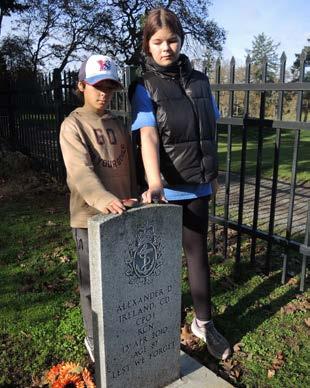
Joining Coen in remembrance were Grade 6 students McKenzie and Kohei. They placed a poppy on the gravestone of former RCN member Chief Petty Officer First Class Alexander D. Ireland. While looking at grave markers of others buried in the cemetery, McKenzie noticed a gravestone of a Lance Corporal.
“The gravestone caught my attention and stoked my curiosity,” she said. “He has the same last name as me and we have a long stretch of family in the area with the same last name so now I want to find out if we are related.”
Following their visit to the cemetery, the students participated in reflection exercises. The intention, says Grade 6 teacher Tania Singh, is for them to explain why they chose a particular gravestone and any possible personal connections to them or the community.
“It’s a great exercise for them to participate in because it not only makes them realize the importance of Remembrance Day but also helps understand what goes on in the world today and how it is relevant to them,” said Singh. “Making a connection to God’s Acre helps them connect with the community they live in and recognize that the people who serve our country live and work right across the street.”
Last year, 9,788 students from 168 communities across the country honoured 79,896 veterans in 226 No Stone Left Alone events. The annual campaign continued to grow after its launch in 2011 by Edmonton’s Maureen G. Bianchini to honour our fallen soldiers.













Peter Mallett Staff Writer
The growth of our nation’s war remembrance began outside the Battle of Vimy Ridge.
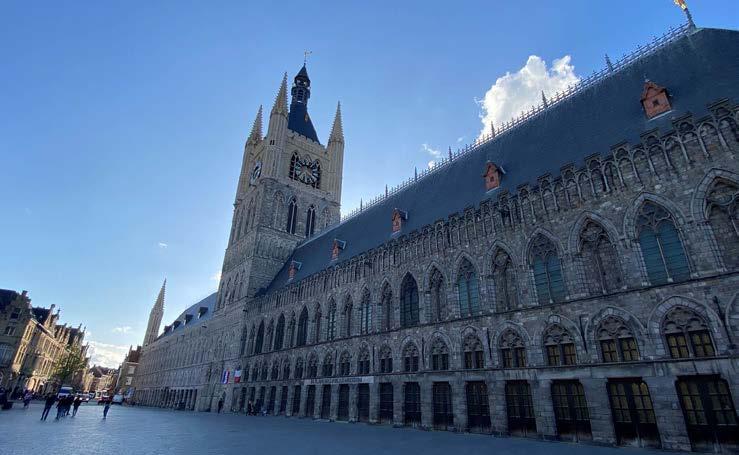
Instead, that watershed moment occurred 184 km away and nearly two years earlier, in the spring of 1915, at The Second Battle of Ypres. The events that transpired in Flanders, Belgium, and how we remember them are the focus of the latest documentary by Professor Geoff Bird of Royal Roads University’s School of Communication and Culture.
“The Second Battle of Ypres and the intensity of this battle was actually a more seismically important moment in Canadian history,” says Bird. “It was Ypres that more truthfully provided the blank slate of how we commemorate war as a nation and was the start to our rituals of remembrance.”
The Second Battle of Ypres Salient, April 22 to May 25, 1915, was the first major battle fought by Canadian troops in the Great War. Fought in Flanders, Belgium, the Canadians faced overwhelming odds at Ypres Salient. Canada suffered over 6,000 casualties against the Germans, who chose the location to launch the first large-scale chlorine gas attack of the war.
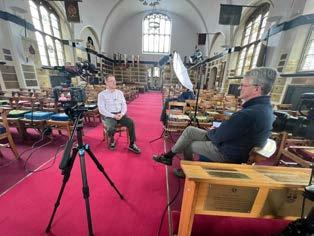
Bird’s 70-minute documentary film Ways We Remember focuses on the events at Ypres Salient and, most importantly, Canadian’s reaction to the substantial loss of life that occurred. The documentary was his longstanding goal that he began working on in 2017. Ways We Remember is not a rehashing of history or battle tactic but about memories and emotions.
“So few people know about the Second Battle of Ypres; it’s a powerful story,” says Bird.
Since so many of Canada’s legends of war and battlefields are overseas, few Canadians can see them first-hand. Bird hopes his film transports viewers to these places so they can gain a better understanding of their importance.
HOW WE REMEMBER
Ypres is also where Canada’s first steps of war remembrance commenced. The documentary explores how literature, landscape art and artifacts inform traditions of remembrance and contemporary perceptions toward war in Canada.
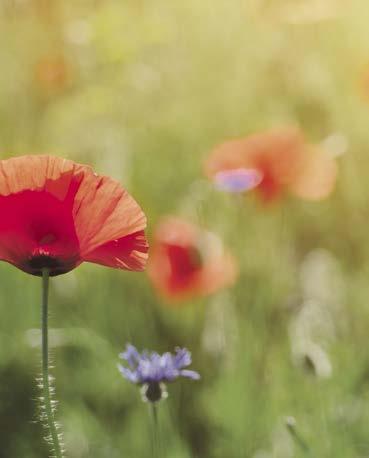
The significant loss of life at Ypres gave rise to influential artwork and literature, including Lieutenant-Commander John McCrae’s legendary poem In Flanders Fields, First World War artist William Roberts’ graphic painting The First German Gas Attack at Ypres, and Sir Max Aitken’s book Canada in Flanders which provided a detailed and official story of the Canadian Expeditionary Force at Ypres.
One of Canada’s most important war monuments at St. Julien, The Brooding Soldier, has been the subject of Bird’s first same-titled documentary. The monument was created by Frederick Chapman Clemesha, Regina architect and sculptor. The 11-metre monument, nestled in a farmer’s field at Ypres, features a Canadian soldier with helmeted head bowed, resting on the stock of a riffle. Instead of celebrating a glorious battlefield victory, Bird says Clemesha’s monument invokes memories of a heartfelt, sombre moment and tragedy.
Such art and literature, Bird says, help better understand the traditions, practices and myth-making related to war.
WAR HERITAGE
While he never served in combat on the battlefields of Europe, Bird previously served as a member of the Canadian Naval Reserves (NAVRES) from 1984 to 1992. He earned his ticket as a Bridge Watchkeeper and qualifications to become a Maritime Surface and Sub-Surface Officer (MARS).
He has a personal connection and understanding of First World War battlefields. He previously worked as a tour guide at Vimy Ridge National Historic Site in France during the 1990s. Also, his great-uncles served in the British Army at the Battle of the Somme.
Ways We Remember premiered following Royal Roads’ annual Remembrance Day ceremony at the Grant Building. Later that day, an edited 45-minute version was broadcast on local television station CHEK.
Bird has amassed an impressive inventory of 35 documentary films focusing on sites of war memory, financing them through grants and private donations. Those wishing to support his efforts and learn more about his work, can do so at Warheritage.royalroads.ca


Continued from Issue 46 of the Lookout Newspaper
Peter Mallett Staff Writer
Sergeant (Sgt) Evenden and the Highlanders played a crucial role in that campaign after landing in Pachino, Sicily, in 1943. He was a highly regarded sniper for the unit and was injured three times in action. His marksmanship and soldiering abilities are mentioned in the book Dileas: A History of the 48th Highlanders of Canada 1929-1956.
On Aug. 1, 1943, Sgt Evenden and his platoon had come under fire from a column of Panzer tanks near Regalbuto, a small farming community in the center of the island. A shell landed less than five feet from them, with fragments killing their Commanding Officer instantly. The shells would continue to fall, with Sgt
Evenden losing the tip of his trigger finger in the attack and his platoon mate losing an eye.
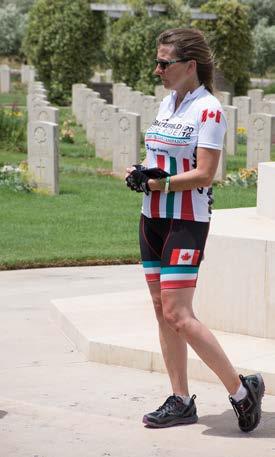
Days before the Battlefield Bike Ride (BBR) began this year, Susan travelled to Regalbuto to see with her own eyes where the Panzer attack and the source of her grandfather’s injuries took place. She didn’t make the trip to Sicily alone but went with her two teammates from Victoria, Master Sailor (ret’d) Raymond Hall and Chief Warrant Officer (ret’d) Mark Dankwerth.
Hall served 29 years in the Canadian Armed Forces (CAF), including work as an Integral System Technician in the Royal Canadian Air Force. He was also deployed internationally as a Reservist, spending nine months working at a base in Kandahar, Afghanistan. Hall also lives with service-related injuries, including Post-Traumatic Stress Disorder (PTSD) and
depression. He was medically released in 2012.
He met Evenden and Dankwerth for the first time during the BBR 2017, and the three became friends. He is convinced Evenden’s story is one so many people can relate to.
“When she started to talk about her grumpy grandfather after the war, I saw myself in that story,” he said. “When she started her speech at the cemetery, a lot of the participants couldn’t hold back tears, including myself.”
Hall says Evenden’s speech helped others realize the devastation and sadness before their own PTSD and mental health injury diagnoses.
Dankwerth, a former Administration Chief at CFB Esquimalt, served 35 years in the CAF before his retirement in 2019 and said he also related to Evenden’s memories of her grandfather.
“Her address was very moving for the entire group and her story sums up what so many soldiers went through silently with PTSD and what the spirit of the Battlefield Bike Ride is all about,” he said.
Dankwerth’s Grandfather, Auty Gray, and his Great Uncle, Wellington Gray, served in the 4th Battalion Canadian Infantry (Saskatchewan Regiment)
in the First World War at Vimy Ridge and other battle sites in France. Wellington was killed in battle in March 1917, while Auty suffered an injury to his arm. Auty’s deep mental scars obtained during battle would last forever and significantly impact Dankwerth’s family life.
Dankwerth says it was years later when he learned about PTSD and mental trauma, gaining a better understanding of why his grandfather could seem so angry. He applauded Evenden’s courage to talk about the long-lasting impact of war and mental injuries on the family unit to a group that had also experienced this first-hand.
Evenden says being in the places Tom and the 48th Highlanders had fought in and seeing the actual battle sites he attended has brought her closer to her grandfather. It also gave her an understanding of the personal sacrifices of military members and their long-lasting impacts that so many others can relate to.
“I have learned more on Battlefield Bike Ride and grown up more than anywhere in my life,” she said. “Every year I say I am not coming back on the tour and every year I return because this has been such an amazing experience.”



Captain Jennifer MacCosham 4CRPG
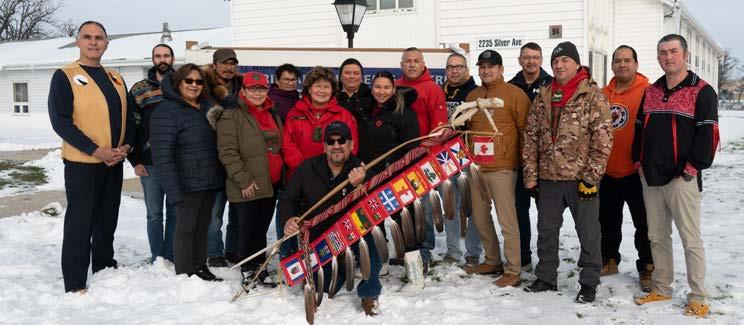
Thirteen Canadian Rangers from across the country gathered in Winnipeg at the Spiritual Centre in October to embark on a two-day initiative. They learn about the significance and magnitude of tasks required to be an Eagle Staff carrier.
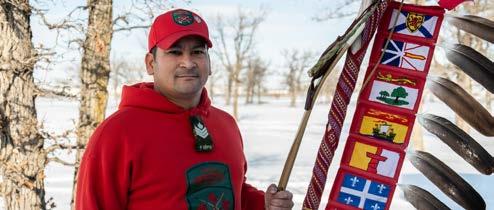
Sergeant (Sgt) Adrian Last represented the 4th Canadian Ranger Patrol Group in B.C.
Sgt Last currently serves as Commander of the Gold River Patrol and finds his career as a Canadian Ranger to be incredibly rewarding because he has the honour of serving both his community and country.
He described the Eagle Staff as a symbol of strength, leadership, and unity, representing the connection between earthly and spiritual realms.
“It holds a significant place in the cultural and spiritual traditions of many Indigenous peoples,” Sgt Last said. “The Eagle Staff is believed to have a direct line of communication with the Creator; it is seen as a messenger between the spiritual and earthly realms. The eagle’s ability to soar high in the sky symbolizes freedom, vision, and strength, qualities that are deeply valued in Indigenous communities.”
According to Sgt Last, the Eagle Staff, carried during ceremonies or pow-
wows, brings pride and unity to the participants, fostering a deep connection to their ancestral roots.
“Indigenous leaders who carry the Eagle Staff are seen as protectors and advocates for their people. They are entrusted with the responsibility of upholding the traditions and values of their culture, and the Eagle Staff serves as a reminder of their role in the community,” he said.
Recently implemented training of Rangers to carry the Indigenous Eagle Staff represents a powerful step towards recognizing and honouring Indigenous traditions and fostering a stronger connection between the Canadian Armed Forces (CAF) and Indigenous communities.
“By training Canadian Rangers to carry the Indigenous Eagle Staff, the CAF is acknowledging and respecting the importance of Indigenous traditions and incorporating them more fully into their practices,” Sgt Last said.
The training demonstrates a commitment to cultural diversity and inclusion. As a result, the Canadian Rangers, often recruited from remote and Indigenous communities, can be trained to carry this sacred object that holds deep meaning and significance within their cultural context. This inclusion and recognition can help foster a sense of pride, belonging, and unity among Indigenous Rangers
while serving to strengthen their connection to both their cultural heritage and their military service.
The training process for carrying the Indigenous Eagle Staff within the Canadian Rangers is sacred and ceremonial. According to Sgt Last, it involves teachings, guidance, and protocols to ensure the Staff is respected, and carried with the utmost reverence. This training emphasizes the importance of upholding the cultural and spiritual significance of the eagle staff according to the Seven Grandfather Teachings. The Seven Grandfather Teachings, humility, bravery, honesty, wisdom, truth, respect, and love, are guiding principles deeply rooted in Indigenous cultures. These teachings, often represented by animals, provide moral and ethical guidance for living a balanced and harmonious life. When applied to the Indigenous Eagle Staff, each learning has a unique significance, symbolizing the values and virtues associated with the Staff.
Sgt Last said these days at the Spiritual Centre in Winnipeg have been meaningful.
“I’ve learned a lot and cultivated many meaningful relationships; I look forward to deepening my knowledge and journey as a Canadian Ranger who can now bear the Eagle Staff,” he said.







Lab Health Physio Team
Esquimalt Rec Centre
Physical activity impacts overall health and wellbeing in various ways, but how does it affect your ability to withstand infection?
We are deep in the cold, flu and COVID season, so we wanted to help you unlock your immunity-boosting potential.
Your immune system is a network of cells and proteins that work together to sense potential pathogens (harmful viruses, bacteria, etc.) as quickly as possible and destroy them before they can significantly negatively impact your body. Your immune system changes and adapts over your life. Each time it is exposed to a new pathogen, it learns to recognize that intruder so it can deal with it quicker the next time.
A virus or bacteria can cause harm because your immune system has not seen it before and won’t necessarily recognize it as a threat.
This initial unfamiliarity can allow a foreign germ to take hold and cause harm before your body destroys it. The ability of your immune system to grow and learn is also why adults are often seemingly impervious to the minor illnesses that affect children: adult immune systems have been exposed to the germs of those illnesses often enough that they are immediately recognized and neutralized before they can cause harm.
As with many aspects of health and wellness, there is a relationship between how active and healthy your immune system is: we call this a dose-response factor.
Consistent, moderate-level activity has been shown to boost the immune system, improve resistance to pathogens and reduce the risk of infections.
A recent study by Forte, Branquinho & Ferraz (2022) suggests regular physical activity can change gene presentation, specifically, genes that respond to stress,
inflammation, and tissue repair. This means individuals who can increase and maintain regular physical activity may have improved stress tolerance, reduced inflammation, and can recover quicker following an injury or illness.
The impact of exercise on the immune system is multifactorial: staying or becoming active results in increased cardiovascular fitness, helps support metabolism and digestion, and can help improve sleep quality.
Like with every coin, there is a flip side to this research: exercise and immunity can have a negative relationship, albeit temporarily. Studies completed on competitive cyclists and long-distance runners show that the immune system is briefly suppressed immediately after long, intense bouts of exercise. This suppression only lasts a few hours and is related to increased stress hormones released during higher-intensity exercise. To mitigate these short-term immune impacts of vigorous exercise, athletes can make sure they eat well, stay



hydrated, get enough sleep, wash their hands, and manage other stressors to reduce their chance of getting sick. Enough consistent moderate physical activity helps support your immune system while not overtaxing it. Moderate exercise varies for everyone, but a quick trick is to focus on your breath. If you can carry a conversation but not quite have enough breath to sing, then you are pushing yourself at a moderate intensity. For some, walking a few blocks is enough to start, while for others, it requires a quicker pace or steeper terrain to feel like they’ve pushed themselves. Remember, whatever your starting point is, choosing to be consistently active with a routine can help support your immune system and maintain a higher quality of life.









Peter Mallett Staff Writer
Fans, players, and organizers declared an overwhelming victory in the Third Annual Victoria Class Cup hockey fundraiser.
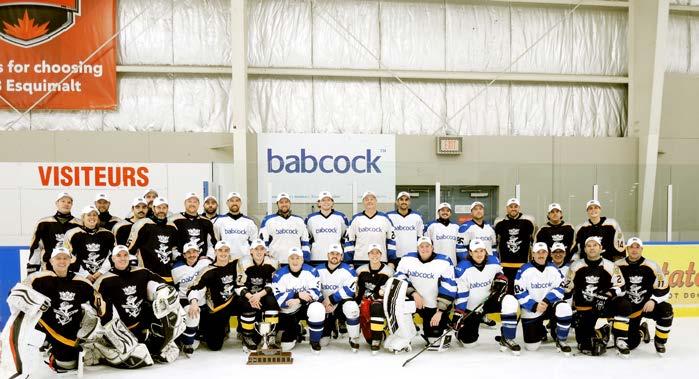
The MARPAC Selects defeated the Babcock Blues 11-5 before a packed house at Wurtele Arena on the afternoon of Nov. 9. But the final score didn’t matter too much when compared to the friendship, camaraderie and community-building victories that were scored.
“The Victoria Class Cup is quickly becoming a wonderful hockey tradition and a great way to bring everyone who contributes to the submarine program and the wider Defence community closer together,” said Gordon Szczepski, Babcock Director of Marine Engineering. “We are happy to have a common link like hockey where we can all take a break from our tasks at work and enjoy doing something fun together.”
Babcock, a private sector engineering services provider, has enjoyed a close working relationship with members of the Canadian Submarine Force (CANSUBFOR) and its fleet of four Victoria-class subma-
rines for several years.
On the ice, sharpshooter Sailor First Class (S1) Patrick Pilon scored a hat trick and paced the MARPAC Selects to their lop-sided victory. Chief Petty Officer Second Class Glen Thompson opened the scoring after tipping in a pass from Lieutenant (Navy) Mike Zens less than 30 seconds into the game.
MARPAC never trailed in the game. The team led 3-2 before the first intermission, 7-5 at the end of the second period and then broke things open in the third period with four unanswered goals. A few CFB Esquimalt team members even suited up in Blues uniforms to help out due to a shortage of players.
Chief Petty Officer First Class Szczepski, CANSUBFOR Chief, presented Petty Officer First Class (PO1) Curt Gillies, MARPAC Selects Team Captain, with the Victoria Class Cup trophy following the final horn.
“It was great to get a little redemption from last year but a good way to boost morale and friendship with our opponents,” said PO1 Gillies. The game also gave a chance to our very capable Tritons women’s team members lace up their skates and make key contributions with the team.”
MARPAC’s Acting Sub-Lieutenant (A/SLt) Frederique Gauthier of HMCS Venture, of the Esquimalt Tritons women’s team, won the Rob Sneath Memorial Trophy for Sportsmanship. She is the Assistant Captain of Esquimalt’s women’s team.
“It was so cool to play in a game that was more on the level of fun than some of the more competitive games I play with the Tritons,” said A/SLt Gauthier. “It was also a great personal challenge playing against an all-male team as I have never done this before. It was great to participate.”
She scored a goal late in the third period to give Esquimalt a 10-5 lead and also had another goal denied by the officiating crew after it was ruled she directed the puck into the goal with her foot. She suited up for the game with Lieutenant-Commander Malorie Aubrey, Executive Officer of HMCS Calgary, and S1 Julie Reid of HMCS Winnipeg, two of her teammates from the Tritons women’s team.
With the win, the MARPAC Selects avenged last year’s 4-3 loss to Babcock and gave them a 2-1 all-time series lead: in the inaugural game in 2019, the Esquimalt Senior Tritons prevailed with an 8-2 win.
Several off-ice victories were also scored during the afternoon of fun at Wurtele Arena. Following the conclusion of play and trophy presentations, Gordon Szczepski presented the Esquimalt Military Family Resource Centre (MFRC) and its Board of Directors volunteer member Erin Walsh with a donation of $5,000.
“I am not only a board member but one of the military family members who benefits from the support of the MFRC,” said Walsh. “I wanted to thank Babcock for not only their generous support here today but also the support they have provided during some very trying times for the entire community over the past few years.”
The spirit of giving and friendship began over an hour before the opening faceoff with a free barbeque and refreshments provided for all in attendance. MFRC staff and volunteers hosted the barbecue while all supplies were paid for by Babcock.
The winners also included those who claimed prizes and gift certificates drawn during the first and second intermission. Participants in a Red Line Shootout Contest and tricycle race also received awards after entertaining the crowd.
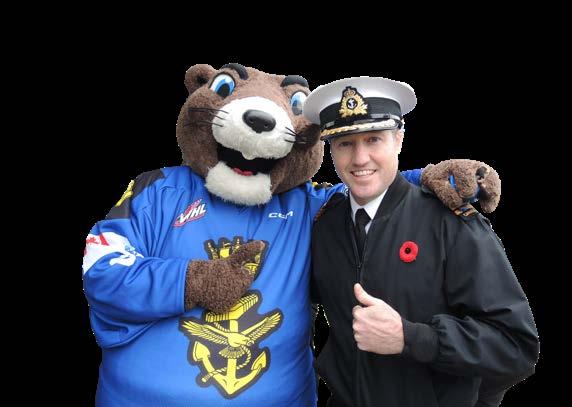
Representatives of the Victoria Royals and the team mascot, Marty the Marmot, also attended the game and addressed the crowd.
Through the Royals, Babcock donated 150 seats, used by military members and their families in the Nov. 10 Military Appreciation night for the Western Hockey League team’s game against the Seattle Thunderbirds.