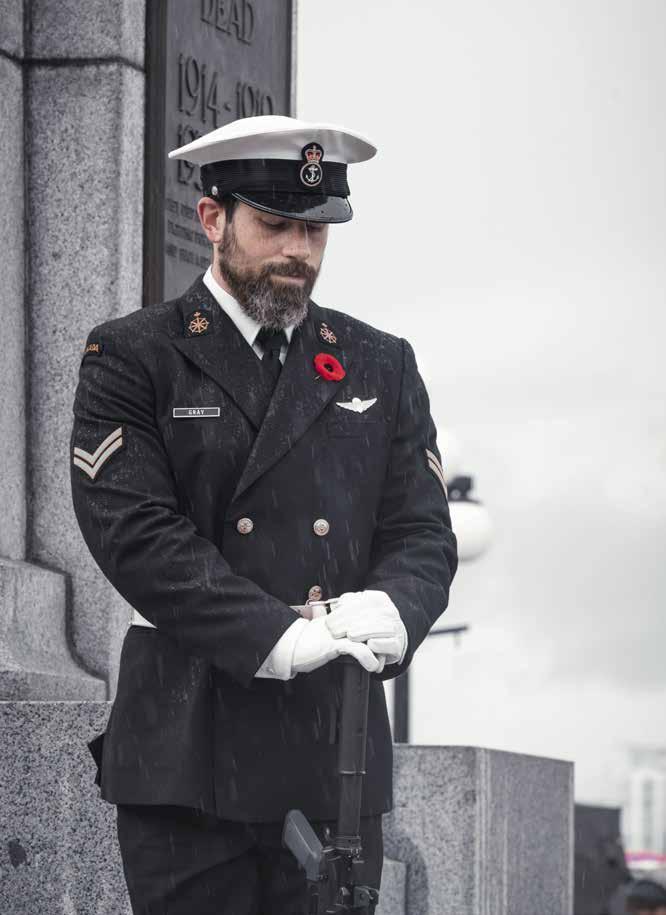


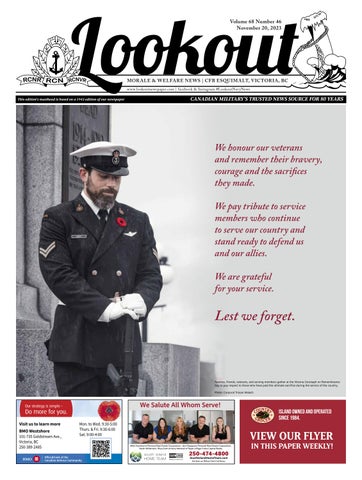
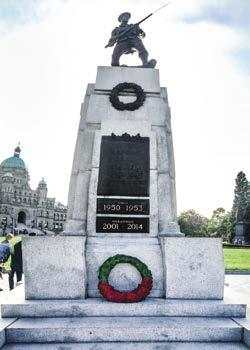
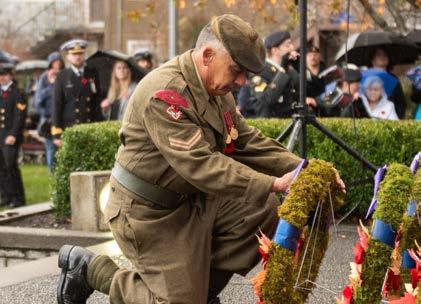
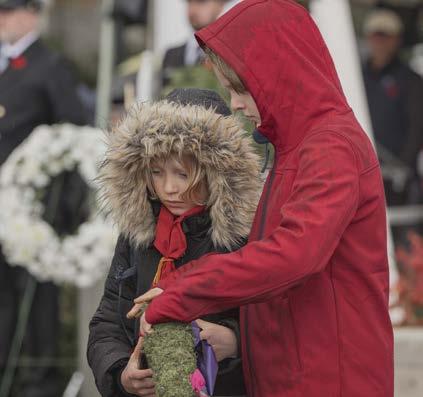
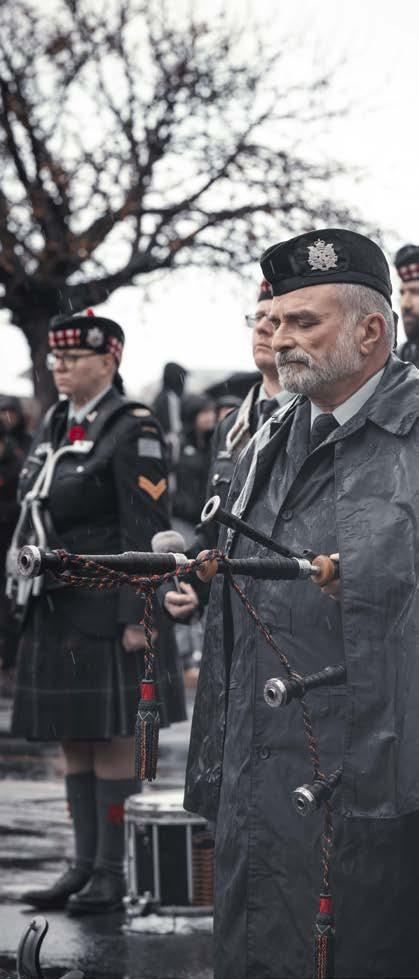
Families, friends, veterans, and serving members gather at the Victoria Cenotaph on Remembrance Day to pay respect to those who have paid the ultimate sacrifice during the service of the country.
Photo: Corporal Tristan Walach
Peter Mallett Staff Writer
Organizers of the Indigenous Veterans Day ceremony in Victoria are encouraged to see growing support from the community –this year’s ceremony saw a big contrast from last year’s two lone participants.
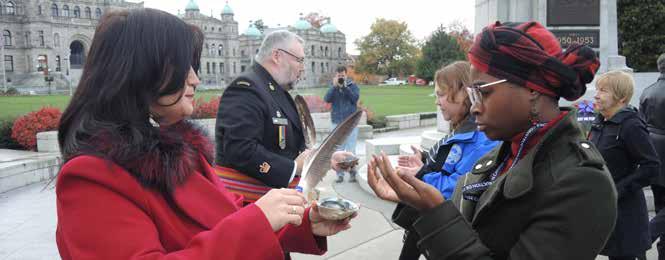
Over 100 people gathered at the Victoria Cenotaph on the B.C. Legislature grounds on Nov. 8 to pay their respects to First Nations, Métis and Inuit Veterans.
“This is an important day to recognize the dedication and contributions of all Indigenous Veterans as well as the unique challenges Indigenous members faced during the enlistment process and after they returned home,” said Ken Hall, Defence Indigenous Advisory Group (DIAG) Civilian Co-Chair.
Esquimalt’s military community greatly supported its Indigenous brothers and sisters this year, says Petty Officer First Class (PO1) Stephen Morrison, DIAG National Co-Chair. Last year, PO1 Morrison and Hall sent out a request for attendance, but it went unnoticed as he and Hall were the only people to come. Still, they remained determined to grow the event.
This year’s ceremony included a contingent from the Office of the Base Commander, including Capt(N) Kevin Whiteside and Chief Petty Officer First Class Susan Frisby, Base Chief. A group from the Hospital Employees Union and three Members of the Legislative Assembly attended.
“It’s heartwarming to see that so many people have taken time out of their day and I am hoping this is setting the precedent for

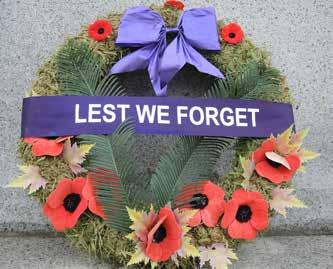
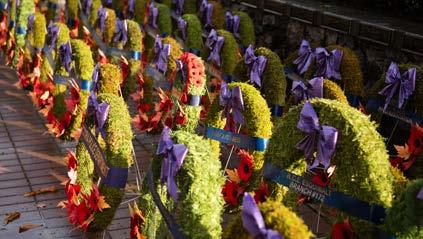
a bigger ceremony next year,” said Hall. Hall and Vanessa Nicholson, Employment Equity Diversity and Inclusion Coordinator, organized the ceremony. It included opening remarks from Hall, a smudging ceremony performed by PO1 Morrison and Lisa de Wit, former DIAG co-chair, a moment of silence and the laying of wreaths at the cenotaph. The ceremony included great symbolism as the wreaths were bows of cedar and traditional medicine wrapped in red wool, which also has a religious and spiritual meaning. According to PO1 Morrison, red wool is a colour that both the spirits and ancestors can see.
During his address, PO1 Morrison, Métis, said he would remember his family members and ancestors who served in the military. He can trace his family’s military


Hunter and Hunted
This graphic novel for young adults follows Charlie, a young man, who like so many Canadians during WWII didn’t want to miss out the action when Canada declared War on Nazi Germany. He signed up to join the Royal Canadian Navy and was soon to take part in the longest battle of the war – the Battle of the Atlantic.
To order your copy today from the Naval Association of Canada, contact executivedirector-nac@outlook.com
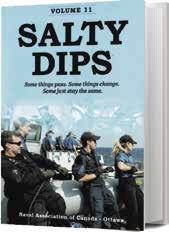
SALTY DIPS Vol 11
The intent of the Salty Dips series is to educate Canadians, through interviews, stories and reminisces, about their navy’s history as seen through the eyes of those who served. This latest volume in the Salty Dips series mostly focuses on social change in the Canadian Navy that has taken place from the 1950’s to 2001. A worthy, entertaining read!
Available for purchase in paperback and eBook from Amazon, Friesen Press, Google, Chapters & Apple.



heritage to the North-West Rebellions of 1869 and 1870. His great-great-grandfather Louis Schmidt was a crucial figure in the rebellion and also Louis Riel’s secretary. Just before the Battle of Duck Lake, Schmidt was arrested by federal troops.
“His grandchildren all stepped forward and fought for the crown in the Second World War. My brother and I carry on our family’s military tradition today,” said PO1 Morrison. “It’s a great source of pride for me.”
Indigenous Veterans Day began in 1994 in Manitoba and has since grown into a day of national recognition to honour Canada’s Indigenous soldiers.





Peter Mallett Staff Writer
This year marks the 25th anniversary of the Sentry Program, which recognizes the Canadian Armed Forces (CAF) and Royal Canadian Mounted Police (RCMP) for their dedication, professionalism and performance in their service to Canada.
Participants of this year’s program comprised of 11 members standing vigil at the National War Memorial and ten participating in the first-ever Remembrance Day ceremony at the National Military Cemetery at Beechwood.
The Remembrance Day Sentry Program, created in 1998, publicly acknowledges exemplary Regular Force and Reserve Force sailors, soldiers, aviators and RCMP officers.
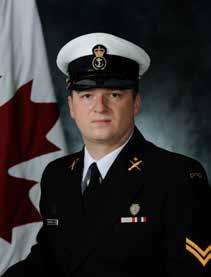
SAILOR FIRST CLASS
MICHAEL TOWNSHENDJAMES
S1 Townshend-James, a Weapons Engineering Technician of HMCS Winnipeg, said he learned about his selection off-duty and was excited to participate.
“When the clock strikes 11, I would think about the men and women who gave their lives for our freedom,” said S1 TownshendJames. “They risked their lives not for themselves, but so future generations could continue to live in peace.”
The former resident of Burlington, Ont., says his participation in the Remembrance Day Sentry Program allowed him to reunite with his mother. She made the 460km drive to be with her son for the week’s events.
S1 Townshend-James, 29, has served nine years in the CAF. He is the only current-serving member of his family; his grandparents and great grandparents served in the Second World War and Korea.
The program expanded this year from six CAF members and one RCMP officer to 19 CAF members and two RCMP officers to better reflect the diversity of our military and security personnel.
Three members from CFB Esquimalt travelled to Ottawa last week to participate in the Remembrance Day Sentry Program.
Sailor First Class (S1) Michael Townshend-James of HMCS Winnipeg, Master Sailor (MS) Tristan Harris of HMCS Regina, and Corporal (Cpl) Jorgen Allan Gleerup from 443 Squadron participated in the Remembrance Day ceremony at the National Military Cemetery at Beechwood on Nov. 11.
All selected members joined in a week of drill practice leading up to the event while also participating in some excursions and visits.
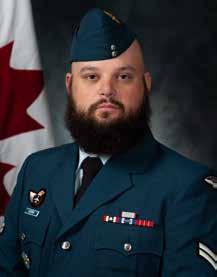
JORGEN ALLAN GLEERUP
Cpl Gleerup is from Surrey, B.C., and has served 16 years in the CAF. He works as an Aviation Technician for the Royal Canadian Air Force at the Maritime Helicopter Squadron in Saanich.
Cpl Gleerup said he looked forward to Remembrance Day and its moment of silence when he would think about all the service members Canada lost over the years.
“Every man and woman who has died in service did so with the wellbeing of complete strangers in mind, and this is the most selfless sacrifice,” he said. “Also, in my thoughts were the far-reaching and painful effects war has on its survivors.”
His maternal grandfather served in the Royal Canadian Air Force. His paternal grandfather was a member of the Danish Underground who died when Cpl Gleerup was very young.
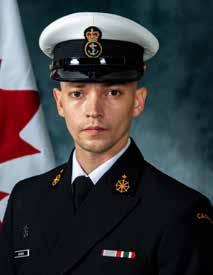
MS Harris, a Boatswain of HMCS Regina, is from Seabird Island, B.C., of Stó꞉lō First Nation. He was CAF Eagle Staff Bearer for the ceremony at the National Military Cemetery.
MS Harris had served in the CAF for ten years and is a representative of the Defence Indigenous Advisory Group (DIAG). He was in disbelief and surprised when he heard about his selection.
The CAF Eagle Staff was created in 2002 by Petty Officer Second Class (ret’d) Chris Innes and Chief Petty Officer Second Class (ret’d) Debbie Eisen. It is a highly honoured item which many Indigenous people consider sacred. The Eagle Staff has become a travelling symbol of pride and unity for all members of the Defence Team and a reminder of the sacrifices and courage of Indigenous members, past and present.
A point with which MS Harris agrees.
“Through the Eagle Staff we can show our brothers and sisters across this great nation that even though we may differ by location and teachings, we can come together as one and be proud of those who served, currently serve and those yet to come,” said MS Harris.
Their trip to Ottawa included tours of The House of Commons and Senate, the National War Museum, Afghanistan Memorial Hall, and a formal dinner hosted by the CAF Chief Warrant Officer at National Defence Headquarters. They also visited the Canadian Aviation and Space Museum, the Diefenbunker, a four-story bunker built in 1961, and participated in a horse-drawn tour of Ottawa’s Byward Market.
Before departing for the Nation’s Capital for a week-long schedule of activities, each Sentry acknowledged their pride and gratitude for making the program’s selection. Each indicated they would have different thoughts and people on their mind when they stood vigil on the 11th hour of the 11th day of the 11th month.
Capt Natasha Tersigni 4CRPG
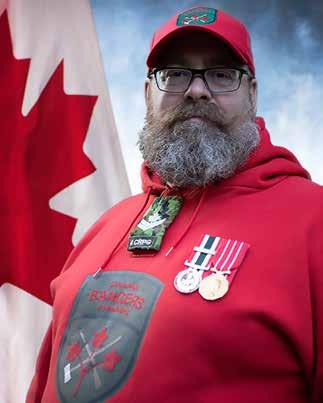
Canadian Ranger Master Corporal (MCpl) Randall Chuckry of the Gillam Canadian Ranger Patrol in northern Manitoba was chosen as one of the participants to form the vigil at the National War Cemetery in Ottawa for the annual Remembrance Day Ceremony on Nov. 11.
“Participating in this national Remembrance Day ceremony allows me to honour the sacrifices of those who served and reminds me of the solemn duty to uphold their legacy and preserve the values they fought for while ensuring their bravery is never forgotten,” explained MCpl Chuckry. “It symbolizes our commitment to stand united, paying tribute to the fallen and embracing the responsibility to safeguard the freedoms they defended.”



MANAGING EDITOR
Jazmin Holdway jazmin.holdway@forces.gc.ca
EDITOR
Kate Bandura
WRITER
250-363-3130 kateryna.bandura@forces.gc.ca
Peter Mallett mallett.peter@cfmws.com
PRODUCTION
Leslie Eaton
250-363-8033 workstation3@lookoutnewspaper.com
ACCOUNTS/RECEPTION
Trina Winters
ADVERTISING
Joshua Buck
250-363-3127
778-977-5433 NEW military.base.advertising@gmail.com
EDITORIAL ADVISORS
Capt Christopher Dubé
Ashley Evans
Rodney Venis
FRENCH EDITORIAL ADVISOR
250-363-4006
250-363-7060
A/Slt Alexandre Springer alexandre.springer@forces.gc.ca
Published each Monday, under the authority of Capt(N) K. Whiteside, Base Commander.
Le LOOKOUT est publié tous les lundis, sous l’égide du Capv K. Whiteside, Commandant de la Base.
The editor reserves the right to edit, abridge or reject copy or advertising to adhere to policy as outlined in PSP Policy Manual. Views and opinions expressed are not necessarily those of the Department of National Defence.
Le Rédacteur se réserve le droit de modifier,de condenser ou de rejeter les articles, photographies, ou annonces publicitaires pour adhérer au Manuel des politiques des PSP. Les opinions et annonces exprimées dans le journal ne réflètent pas nécéssairement le point de vue du MDN.
Circulation: 2,000 plus 300 pdf downloads per week Follow us on Facebook, Twitter and Instagram to join our growing social media community.
A Division of Personnel Support Programs
CFB Esquimalt, PO Box 17000 Stn. Forces Victoria, BC V9A 7N2 Web: www.lookoutnewspaper.com Fax: 250-363-3015
Canadian Mail Product Sales Agreement 40063331


Thomas Goenczi Lookout contributor
Forgiveness isn’t as easy as saying ‘sorry’. We’ve all experienced being on the prowl for vindication from someone, for something, and in return, they give us the sorriest of ‘apologies’ if they even bother to.
Sometimes, we know offering forgiveness will be futile when we seek accountability from someone else, but we still can’t help ourselves. We pursue it because we want justification for how we reacted. The majority of us want to be heard and not feel as though we are off with the situation that had just happened.
One of the elements that block forgiveness is feeling wronged or betrayed. Betrayal is a tremendous psychological inhibitor because it prevents the individual from reaching wholeness or acceptance. Ultimately, it stands in the way of letting go and getting peace.
Some of us end up holding lifelong grudges. Sometimes, this may feel like the right thing to do, to cause them a level of anguish that they may have caused us. However, this holding on becomes detrimental when we default to the notion that it would only be enough if they do. When this happens,

we become the obstacle to reaching complete forgiveness.
A perpetual vexation is due to losing trust in that person and in ourselves because we think we made a mistake by letting that person close to us when they ended up causing us harm. Moreover, it can make us more cautious and vigilant in our relationships. When betrayed, we question our relationships and inevitably project our trust issues onto others. At the root of all this external relational turmoil is the deprivation of trust in ourselves.
Losing trust in ourselves is a difficult task to overcome. When we lose trust in ourselves, we often default to others to fill the void we can no longer fill. This can quickly turn into a highly volatile co-dependent cycle of gaining and losing trust but never truly being in full possession of it. When we lose trust, assertive and confident decisions come with great effort, and sometimes, we can’t regain our confidence.
So, how does forgiveness play a role in all of this? To fully extend genuine forgiveness, we must find an element of humility within ourselves. When there is true humility, there is selfcompassion. We must be okay with how the world humbles us, which isn’t easy; at times, it feels impossible.
Sometimes, when we have been
wronged, everything about the world seems grotesque and uninhabitable. We’re battered by the ugliness of it all. However, when we liberate ourselves with self-forgiveness, we can feel the grip of our grudge slip away because we no longer want to put our energy towards upholding our resentment. Slowly, we realize how exhausting it has been to shroud our minds with anger toward another and ourselves.
I’m not saying you must forgive everyone because that might be more detrimental than good. However, evaluating why you’re still holding onto anger and how much of it occupies your mental space might be worthwhile. We owe it to ourselves to try and learn how to forgive ourselves in our own way because when we do so, we forgive others in a capacity we never imagined before.
Thomas Goenczi is an RCN Veteran and MA Clinical Counsellor with Private Practice: Well Then Therapy.
The content is not intended to substitute professional advice, diagnosis, or treatment. Always seek the advice of your mental health professional or other qualified health provider with any questions regarding your condition.







Peter Mallett Staff Writer
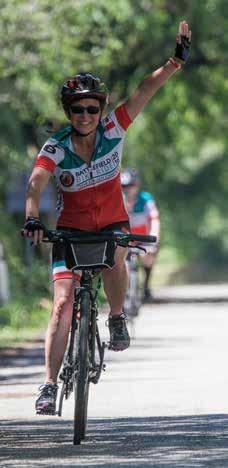
A Battlefield Bike Ride (BBR) member has received unwavering support from teammates while sharing a heartfelt revelation of her grandfather’s wartime injuries.
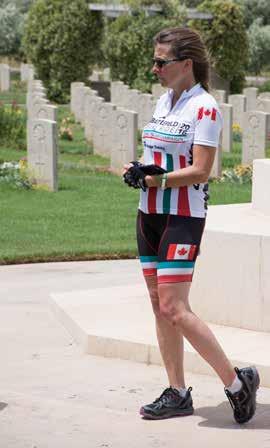
“I am not a spiritual person, I’m unsure if there is a place in the afterlife, but if there is, I hope I get a chance to see my grandfather again because I am so proud of him,” said Susan Evenden while breaking into tears during Day 4 of the group’s ride from Senegalia to Cattolica.
Evenden is a military mother of two from Kenora, Ont. She told her story of personal growth and understanding
surrounding the wide-ranging impacts of Post-Traumatic Stress Disorder (PTSD) during the cycling tour’s stop at a Second World War Commonwealth Cemetery on Italy’s Adriatic Coast this summer.
The tears were for her grandfather, Sergeant (Sgt) Tom Evenden of Canada’s 48th Highlanders of Canada Regiment, and the several years of pain he endured long after his military service had ended.
“He was a man I never truly understood or knew until recently,” says Evenden. “I came to Italy to make peace with Grandad and learn about his experience in the war because he never talked about it, and
nobody ever dared to ask him.”
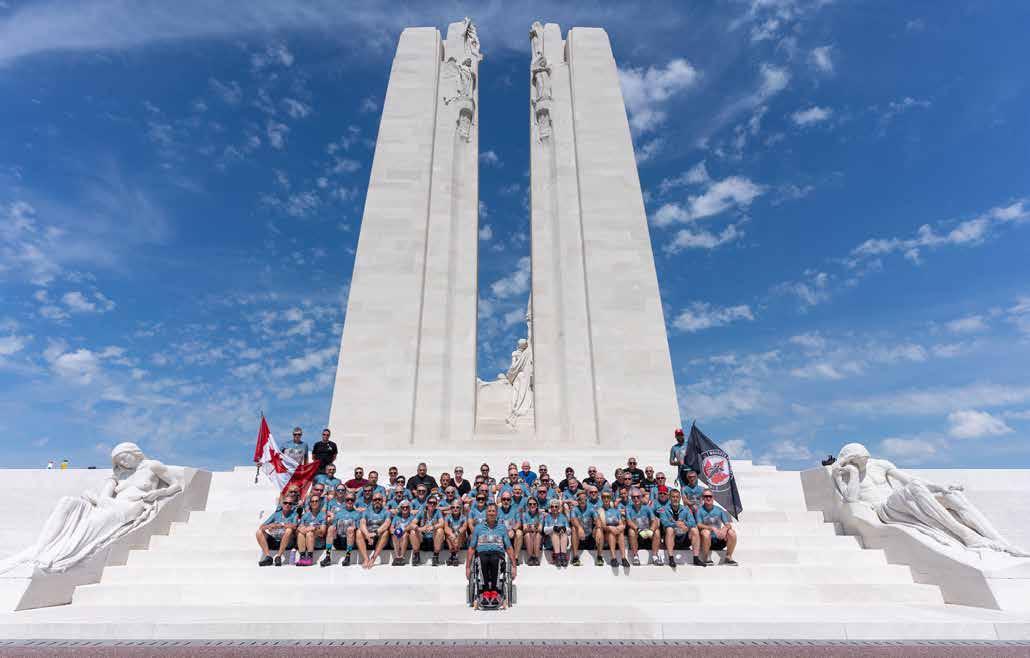
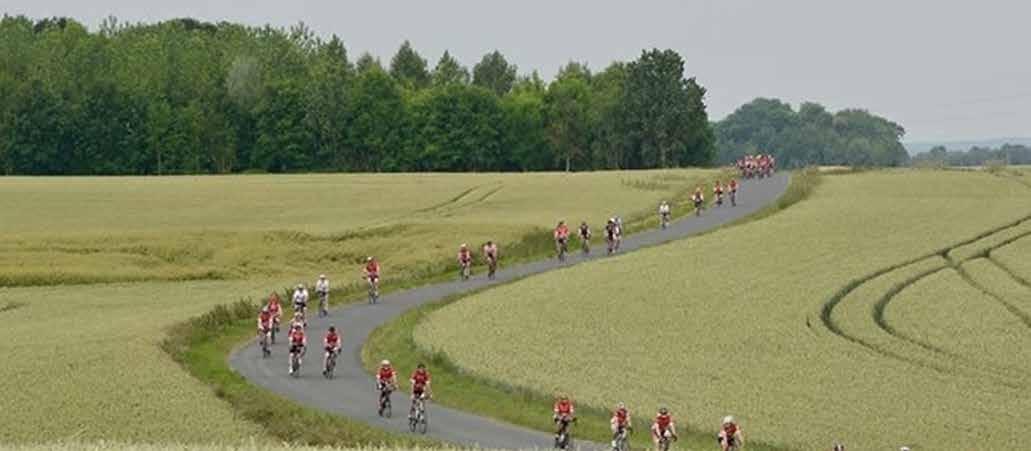
The Battlefield Bike Ride is an annual event organized by the national nonprofit Wounded Warriors Canada. It combines cycling with Canadian military history under the mantra ‘Honour the Fallen and Help the Living’.
This year’s ride took place June 11-17 between Ortona and Ravenna, Italy. It commemorated Canada’s role in the Allies’ Italian Campaign of the Second World War. Evenden has participated in four previous BBR events, but this year’s ride, she says, changed her entire understanding of her
family and the man her grandfather was.
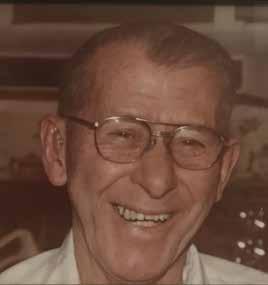
“To me, Grand Dad was a man who sat in his chair and didn’t say too much to us kids,” says Evenden. “Grandma tended to run interference to keep us quiet and so many of his grandkids, including me, just assumed he didn’t like us because he was often grumpy.”
Her grandfather lived with all the telltale signs of PTSD and says in today’s world, Tom would have been instantly diagnosed.
Tom died of cardiac arrest in 1982. It wasn’t until several years after his death that Evenden would begin to learn about her grandfather’s important role in the Second World War and the Allied invasion of Sicily, code-named Operation Husky.
Part 2 next issue.

Slegg Building Materials remembers and thanks all those who have sacrificed and served.
Slegg Building Materials remembers and thanks all those who have sacrificed and served.
Military discount available at all Slegg stores with proper ID


Lumber, Siding, roofing, doorS & WindoWS, PaverS, fLooring, KitchenS & more!


Discount available at all Slegg stores with proper ID.
Kateryna Bandura Lookout Editor
Corporal (Cpl) Eric Kappler sees Remembrance Day as a time to reflect on what his family has given in service.
Remembrance Day holds special meaning for an Avionics Technician (AVS) aboard HMCS Ottawa – his grandfather was a Carpenter’s First Mate aboard USS Medusa, a repair ship during the attack in Pearl Harbour.
It’s hard not to think about the visceral combat experiences his grandfather faced as they change a person forever, Cpl Kappler says.

Cpl Kappler has also received recognition throughout his 16 years in the military. Along with a Canadian Forces’ Decoration, he has been awarded a Special Service Medal for Operation (Op) Reassurance and a Unit recognition for Tech of the Quarter.
The amazing and challenging life of an AVS would not have opened for Cpl Kappler if not for his father, Staff Sergeant Steven Kappler, a former U.S. Air Force Staff Sargent with operational tours in Holland, Turkey, and Lackland Air Force Base in Colorado with the Emergency Response Team and Nuclear Weapons Unit.
Before joining the military in 2007, Cpl Kappler worked in the vehicle electronics industry, where the work was drying up. Rather than move cities to start at the bottom again, his father suggested enrolling would provide him with the necessary skills and tempering.
“I didn’t give it much more thought
until I started exploring what was involved in my trade a few months later and decided to call a recruiter,” Cpl Kappler says.
The recruiter asked if Cpl Kappler liked camping and said he could join as a land trade and re-muster to AVS when it was open, but Cpl Kappler decided to wait for AVS.
“A couple of weeks later it happened, and I have never given another trade a second thought,” he says.
During his exit interview at SaintJean sur Richelieu, the course director said his career would resemble working in an office and suggested to expect a lot of detail-oriented paperwork. From there, his words echoed as Cpl Kappler progressed through Trades training. But, he says, being an AVS is more than just working in an office.
His first posting was to 443 Maritime Helicopter Squadron in Patricia Bay, B.C., as an apprentice Avionics Technician on the CH-124 Sea King. He says a few people joked he was now in the Navy instead of the Air Force, but Cpl Kappler kept an open mind and waited to see how things would shape up after becoming a Journeyman Technician.
“Integrating with the folks in the Naval environment at sea and at home has become easier with my experience as we continue to develop new ways of doing business together,” he says.
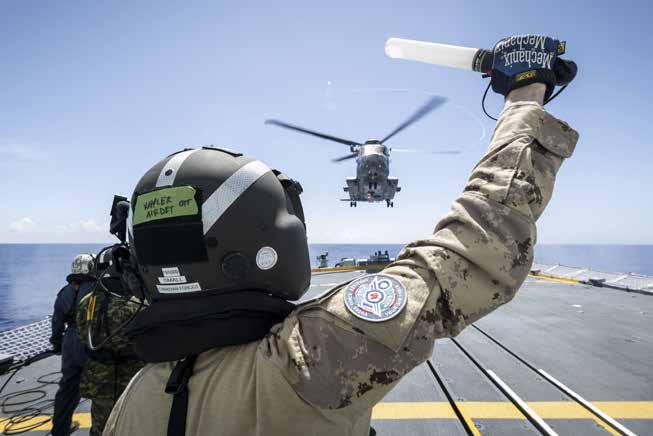
For example, the Shipboard and Land-Based Helicopter operations are evolving to incorporate wireless headsets. Cpl Kappler says it’s a long overdue capability that other nations
have already included.
“It’s an approach that employs modern communication platforms and just makes good sense,” he says.
Over the years, Cpl Kappler has had several opportunities to employ core skill sets, specialty skills and professional development courses that have all served him well. He was deployed during RIMPAC 2012 with HMCS Algonquin, then HMCS Protecteur during its final Exercise Midpac Oiler, and HMCS Winnipeg, Calgary, Vancouver, and Regina for various SWOADs (Ship Without Air Detachment for recovering a helicopter when Air Detachment is not embarked) and other fleet training support exercises. He also deployed with HMCS Charlottetown during Op Reassurance from the East Coast in 2016. Op Reassurance also presented a unique opportunity for him to visit a relative in Europe instead of flying directly home from France. He took full advantage of the opportunity to drive through the Alps from France and ended up in Belgium – a feeling Cpl Kappler will never forget.
Exercise Midpac Oiler was the most memorable time of his career and one of the most intense situations Cpl Kappler has experienced.
HMCS Protecteur was 300 miles from the coast of Oahu, heading home when the engine room suffered a catastrophic fire due to an oil line on the main engine rupturing, sending atomized oil into the space, which then ignited, producing a fire hot enough to warp walkways and melt
Continued on next page
“It’s an approach that employs modern communication platforms and just makes good sense”
~ Corporal Eric Kappler
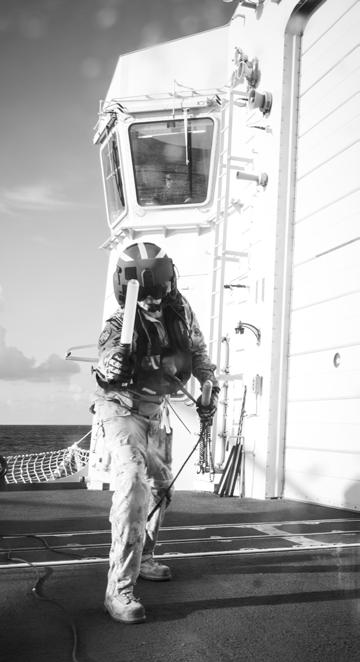
glass on gauges. During that time, Cpl Kappler was deployed as a Flight Deck Handler.
“There were some definite ‘lessons learned’ moments in the way the D.C. response was managed that have been since put into the current training doctrines,” Cpl Kappler says.
The ship was irreparably crippled, resulting in being towed back to Hawaii to be later towed back to Esquimalt before being finally pulled to the East Coast. The Royal Canadian Navy Lessons Learned Programme took what didn’t work during a significant fire event and changed the program so people can better respond and have more control over potentially confining a fire in a shorter time.
Life lessons that Cpl Kappler took on his personal growth journey involve learning more about Post-Traumatic Stress Disorder (PTSD) and finding resources for Canadian Armed Forces (CAF) members. He found an echo of this pursuit in the book A Soldier First by General (ret’d) Rick Hillier.
“His book shed some very important light on mental health resource deficiencies in the CAF at the time. To say it struck a chord with me would be putting it lightly,” Cpl Kappler says. “We’re socially conditioned to expect people in the military to be bulletproof. Nothing lands further from the truth.”
Hillier is a former Chief of Defence Staff for Canadian Armed Forces who commanded troops from a platoon to a multi-national formation level within Canada, Europe, Asia, and the United States. The unique command situations Hillier faced dur-
ing the Rwandan genocide ignited significant PTSD. Cpl Kappler says his story provided hope that it’s possible to come out on the other side and carry on and has shed light on how the CAF can improve its support to members in need.
“There’s still stigma around asking for help, regardless of how much the CAF offers support,” Cpl Kappler says. “I believe we can do far more for those who are living with mental health challenges and re-evaluate why members still fear reprisal for reporting things or leadership styles that are not working.”
Living through intense experiences encouraged Cpl Kappler to mentor and bestow his personal lessons learned upon others. During his current deployment aboard HMCS Ottawa, Cpl Kappler mentored a junior AVS Technician who grew both professionally and personally.
“I make sure those who have helped get me on track for success know it, and I try and model those qualities for people who can benefit from them,” Cpl Kappler says. “For me, the greatest impact has been sharing knowledge with junior members and watching them develop, use new skills, and develop professionally. It’s a satisfaction all on its own.”
A piece of advice Cpl Kappler would offer to those starting their military journey is to seek out education opportunities.
“Build marketable skills that will serve you well long after you’ve finished serving,” he says.
“A special shout out to Team Greywolf. These are some of the most professional, knowledgeable, steadfast empathetic and resilient people I have worked with, and I would wager you will not find a better group to develop to the next level with,” Corporal Eric Kappler, Avionics Technician (AVS) aboard HMCS Ottawa.

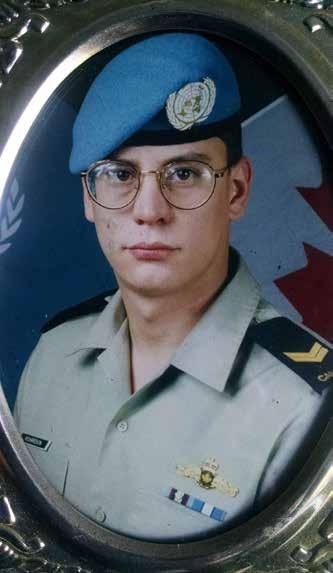
Kateryna Bandura Lookout Editor
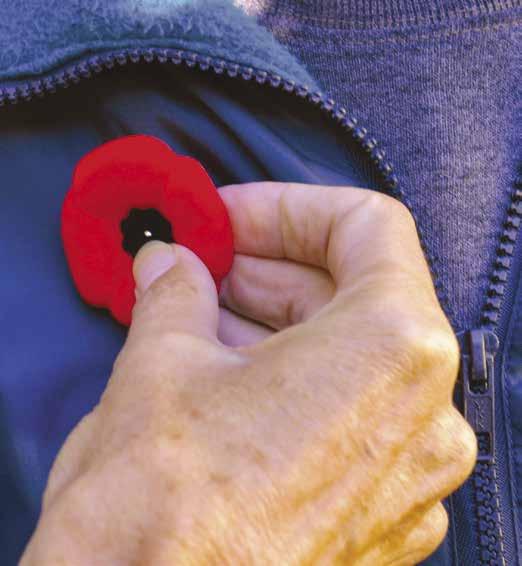
As November arrives and the calm wind blows against the bright red poppies gently pinned to our chests, we think about the men and women who served throughout battles and operations worldwide in many capacities. No matter the role, they were imperative to military success. One that has been important to both the sustainability of the units and the morale are Cooks.
In anticipation of Remembrance Day this year, the Lookout was honoured to sit down with Leading Seaman (ret’d) Christopher Evan Richardson, veteran and retired Navy Cook who served two years in the Reserves and ten years in Regular Force before retiring in 1995. He shared his experiences at sea and his thoughts about each year as November rolls around.
“In Reg Force, a cook could go anywhere, and I wanted to go to sea,” Richardson says. “I was lucky to get posted to sea after my Trade Qualification 3’s as a Cook in CFB Borden. When the DEU (Distinctive Environmental Uniforms) came out, I recall being asked to list which DEU to get in

order of preference, so I put ‘Sea, Sea, Sea’ and annoyed my Chief Cook, who felt that I had not quite understood the question. Thankfully, I got the navy one.”
Richardson’s military career started with #24 Royal Canadian Sea Cadet Corps Magnificent in Dartmouth, N.S., which he attended in 1979-84. While in cadets, he sailed in HMCS Nipigon and Margaree, the Tall Ship Our Svanen and various summer camps. Later, in 84, he joined the then-Militia (now Primary Reserves) as a Cook with 33 (Halifax) Service Battalion, and then, in early 1986, joined the Regular Force also as a cook. His time in casualty clearing in the Navy sparked his interest in first aid, and he has stayed active as a first aid instructor/ instructor trainer to this day. Richardson voluntarily released in the fall of 1995 and has made a career in the dive industry since, from working as a Cayman Dive Instructor teaching diving, cave diving, public safety diving, to managing dive shops, working for gear manufactures and eventually starting his own gear brand.
While attending cadets, Richardson sailed in HMCS Nipigon – the same ship he got his first posting to in the early fall of 1986.
“Every meal was important, and getting a ‘great meal, Chef’ was impactful every time. Sometimes, it really is the small things.”
~Leading Seaman (retired) Christopher Richardson
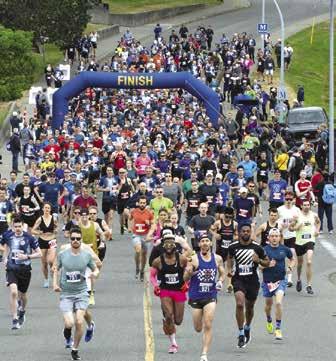

As a former sea cadet, Richardson was familiar with the naval environment, so he spent time learning the trade rather than the navy stuff that comes along with a posting to ships.
“I didn’t expect the sheer volume of burns and cuts a new cook would experience at sea. For a new cook, getting timing down is everything, but overall, I loved it,” he says. “Every meal was important, and getting a ‘great meal, Chef’ was impactful every time. Sometimes, it really is the small things.”
The long hours meant getting an entire day off, even in a foreign port, on a trip, which was unusual, but he is proud to see old shipmates talk on social media about the excellent food they enjoyed. As the Cook, Richardson believes the best tradition in the Canadian Armed Forces is the Stand Easy/10 o’clock soup.
While off the coast of Newfoundland, his ship rescued two civilian fishermen in very challenging conditions, so challenging that the aircrew involved was decorated with the Star of Courage. Like many cooks, Richardson was assigned casualty clearing and helped bring one of the casualties from the hanger to the sick bay.
“Being it was my first trip as an actual member of the forces, and so young, I thought that was normal, when in fact it was anything but,” he recalls.
From Nipigon, Richardson went to work in submarines, then back to surface ships and finally to CFB Borden in the summer of 1992. Borden allowed him to work with civilian employees and helped teach him leadership when simply rank or position wouldn’t cut it. Who knew he would return to Borden at the end of his career to the same bosses, all with a few ranks higher.
Continued next page


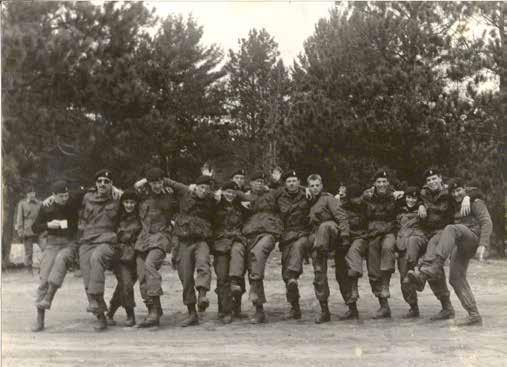
In 1992 Richardson travelled all over Europe with HMCS Skeena and spent a couple of days on a Norwegian Frigate and a Danish Submarine.
“If Instagram had been a thing back then, all the amazing places I went to in the navy would have given me endless content,” he jokes.
He had a chance to meet many famous and influential people during service, including our current King, our next King and his brother, the Duke, and even a few celebrities such as Timothy Hutton.
“For me, the truly significant people were those I served with, peers and bosses that helped shape who I am and many who I am still in contact with today,” he says.
Richardson has been deployed to the Gulf War with the 2nd crew of HMCS Protecteur, NATO with HMCS Skeena and peacekeeping with the United Nations Force in Cyprus.
“We were, of course, quite happy to be headed home and the job having been done, especially as there were no Canadians that fell during the fight,” he says. “I think it would be nice if we stopped having wars,
frankly, but I am so proud of all Canadians that have stood the line for us all, because sometimes it just has to be done.”
Richardson was made a member of the Order of St John (MStJ). He received tour medals and the Canadian Peacekeeping Service Medal after his UN tour. He also has submarine dolphins, which he calls ‘a persistence in learning many things in great detail’ award.
As a former RCN member, Richardson says the meaning of Remembrance Day has evolved for him over time.
Richardson attended parades as a young sea cadet with veterans of the First World War, Second World War and Korean War. Over time, he says, the First World War veterans started to disappear, and now the Second World War and Korean veterans are following suit.
Like many Canadian Armed Forces (CAF) members, Richardson’s family has a long service line.
“I grew up aware of the military, mostly the Navy, and always wanted to go to sea,” Richardson says.
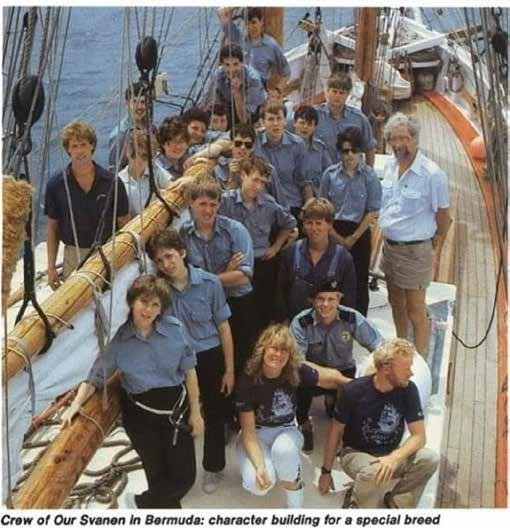
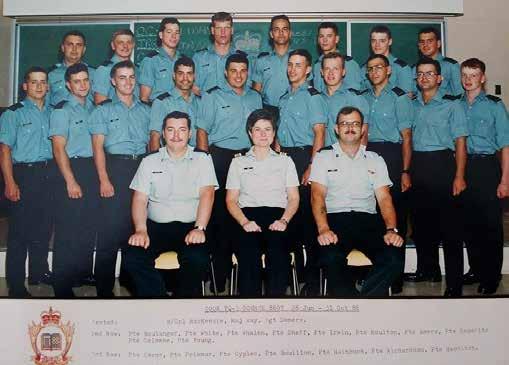
When asked for his reason to join the military, he points to his Grandfather without hesitation. Commander (Cdr) Charles (Wag) Richardson had a long career in the Royal Canadian Navy, going from Ordinary Seaman to Chief and then the wardroom as a Warrant Gunner then commissioned officer. He fought in the Second World War and Korea and became the Commanding Officer of HMCS Nootka and Athabaskan.
Richardson’s father, Charles Richardson Jr., had joined the Royal Canadian Air Force as a pilot, but shortly after being qualified as a pilot and completing advanced training had an explosive decompression event
damage his ears permanently, leading to his medical release.
His uncle, Commissioned Officer Claire (Kip Tully), an anti-submarine weapons officer, died in a Sea King crash in 1967 while flying from HMCS Bonaventure while Richardson was still an infant.
This Remembrance Day, Richardson will think about his friends whom he served with who are now gone: Sub-Lieutenant Corey Wells, Master Sailor Billy Hynes, Sergeant Don Kloss, Petty Officer First Class Rick Mohr, and Petty Officer Second Class Craig Blake.


Lookout staff
MV Asterix PAOs
When talks about community outreach were pushed through the Naval Replenishment Unit (NRU) Asterix ranks, Sailor Third Class (S3) Mark-Andre Jeske immediately knew this was something he would be interested in.
The Asterix, in cooperation with the Philippine Navy, conducted an outreach activity at the Agusuhin Elementary School in Subic Bay, Philippines, on Sept. 18. The activity was funded by the Boomer’s Legacy Fund (BLF).
S3 Jeske says opportunities to help people in need overseas are few and far between, but the feeling of internal gratitude during and afterwards is immeasurable.
“When reviewing the outreach brief, I was excited to see I would use skills from my previous jobs – carpentry and overall construction – to both help those in need and get my hands dirty, as I rarely get to use said knowledge in my current line of work,”
S3 Jeske said.
Subic Bay is on the west coast of the island of Luzon in the Philippines, about 110 kilometres northwest of Manila. A part of the South China Sea, it used to be the site of a central U.S. Navy facility, the U.S. Naval Base Subic Bay. Today, it is an industrial and commercial area named the Subic Bay Freeport Zone.
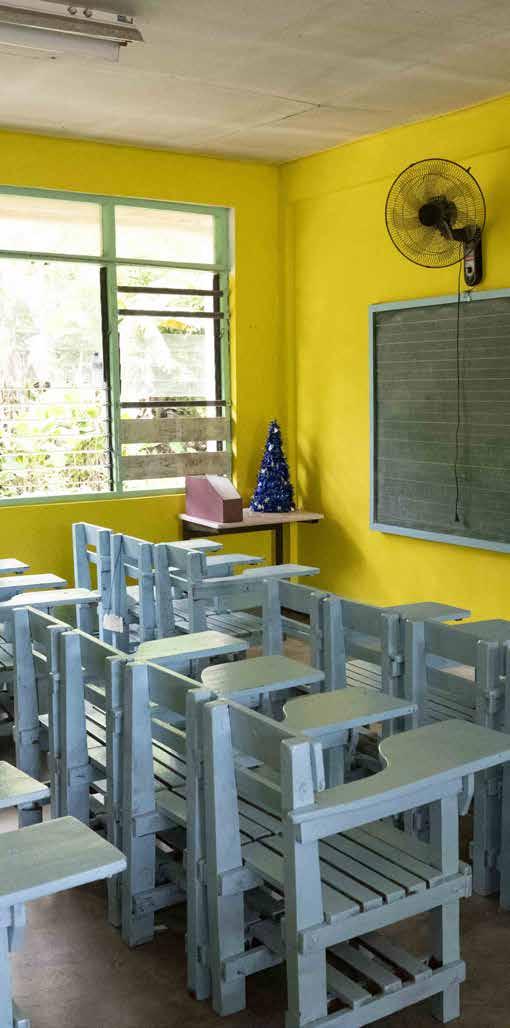
The brief laid out the work as fixing some doors in the Agusuhin Elementary School, patching a few walls and painting them, and sealing floors. A long day was expected, given the nature of the Philippine heat and humidity. However, the weather conditions took the crew by surprise.
Lieutenant-Commander (LCdr) Jeffrey Leung, NRU Asterix Executive Officer, said the adverse effects the weather had on the sailors, who spent an entire day working in above 34-degree heat and near 100 per cent humidity, could not be captured in photos.
“The team was visibly tired within two hours, but they kept going knowing the lasting impact their efforts would have on the school children, their families, and the teachers,” LCdr Leung said. “I am extremely proud of the dedication and perseverance the Asterix team displayed, and I know this amazing experience will be one of our most memorable moments in the Royal Canadian Navy.”
S3 Jeske spent long days working in blazing mid-summer Quebec heat, however, he says he underestimated the difference in weather.
“By noon we were covered from head to toe in sweat; we ensured personnel were
staying hydrated and resting appropriately,” he said.
Sailor First Class (S1) Maxime CampeauTardif says meeting the school staff and the children made the experience very real and personal. One class at a time, books, desks and shelves were removed, expedited thanks to the combined efforts of teachers, parents, and military members.
“I felt that I was doing something greater than me and at the same time it was very concrete,” S1 Campeau-Tardif said.
Other activities included repairs of classroom doors, the pick-up of garbage from the premises and a thorough cleaning of the school. The interior and exterior of the school were painted with bright colours that fit in with the local scenery of forests and ocean.
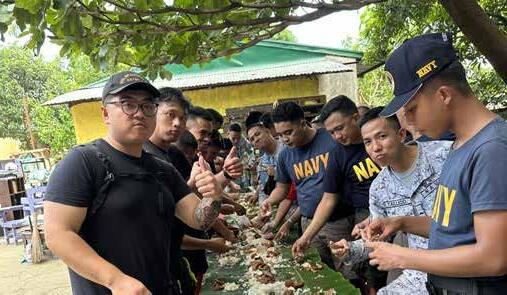
Although the event took place during a heat wave, the participants were all smiles as they were surrounded by the school children who showed their excitement throughout the event. The school staff prepared kamayan – an assortment of spring rolls, chicken wings, and fish on a bed of rice laid out over huge banana tree leaves stretched along a table.
“I must say, those were some of the best spring rolls and chicken I’ve ever had,” S3 Jeske recalls.
For Master Sailor Matthew Ellis, repairing the school helped positively impact the local communities.
“Having elementary-school-aged kids myself, I felt I knew how much it would mean to the kids to have the military come and make the school a better place to be. I’m sure they will have lasting positive impressions,” he said.
Lieutenant-Commander (LCdr) Bucky Branscombe, NRU Asterix Commanding Officer, is confident the members will remember it as one of the highlights of their deployment.
“None of this would have been possible without coordinating efforts between the Subic Bay community, Philippine Navy, Canadian Defence Attaché Office, and the Boomer’s Legacy Foundation,” LCdr Branscombe said. “Goodwill activities such as this are fundamental to deepening Canada’s ties to a region of critical strategic importance.”
Looking back, S3 Jeske can say with certainty Subic Bay is a place to remember.
“I was shocked at how grateful the locals were for our work,” he concluded. “My time with the school will forever be remembered, and I am grateful for the opportunity to help others across the seas, in beautiful Subic Bay.”


The Boomer’s Legacy Fund (BLF) enabled the Royal Canadian Navy to continue in the footsteps of Corporal Eykelenboom by improving the lives of those with whom our sailors had contact, where small efforts pay significant dividends in the lives of the Philippine children and their families. Thank you for your support.
The BLF is a registered charitable foundation that is dedicated to the memory of Corporal Andrew ‘Boomer’ Eykelenboom, a Medical Technician killed in Afghanistan in 2006. Corporal Eykelenboom was dedicated to improving the lives of those with whom he had contact and realized that small efforts paid large rewards in the lives of Afghans. His death was the catalyst that led his family to start the Boomer’s Legacy Foundation.
In 2006, the Afghanistan Assistance Trust Fund (AATF) was established for the betterment of the Afghan people. As a result of the changing role of the CAF around the world and the realization that similar benefits could be derived for the less fortunate wherever Canadian troops deployed, it was agreed that the AATF would be renamed the “Boomer’s Legacy Fund”.




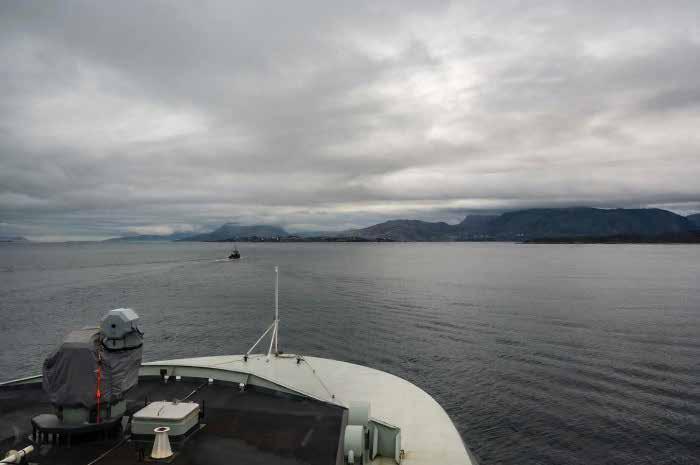
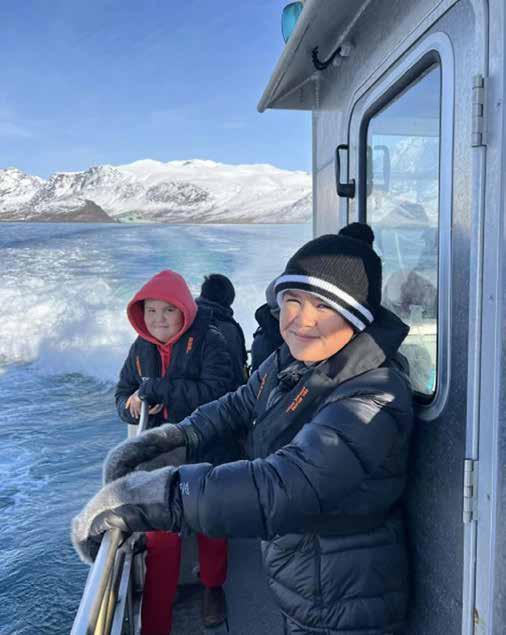
The Arctic Offshore and Patrol Vessels (AOPVs) provide increasing value to the Royal Canadian Navy (RCN) and our nation in Canada’s North. Our Navy familiarizes with the unique Arctic environment, reinforces relationships with local communities, and demonstrates Canada’s presence in the region.
The Arctic strategic and operational environment is rapidly evolving due to climate change, technological advancements and strategic competition by nations hoping to assert sovereignty. The North is becoming increasingly accessible, and human activity, at sea and ashore, is rising. The transformation of the Arctic environment creates both opportunities and challenges for Canada’s security and prosperity.
To succeed in this changing, complex security environment, the Canadian Armed Forces (CAF) has increased its presence in the Arctic. Over the long term, the CAF will continue to employ a series of programs, cooperating with Indigenous communities, as well as domestic and international partners.
“The response so far has been very positive,” said Lieutenant-Commander (LCdr) Jim Little, Senior Staff Officer, Operations, Readiness and Air Capabilities, New Capability Integration. “The RCN will continue to operate in the Arctic for the foreseeable future. Our sailors, aviators and soldiers have enjoyed working with our partners that regularly operate in the North.”
Our Navy plays a crucial role in achieving the goal of increased presence and strong relationships with Northern communities, given the importance of the maritime environment in the Canadian Arctic.
With the acquisition of our six ice-capable Harry DeWolf-class AOPVs, four of which have already been delivered, we’re increasing our range, endurance, and effectiveness throughout the area.
AOPVs are designed to operate in ice up to 1.5 metres thick, permitting operations from late spring to late fall. This will allow the RCN to have unescorted access to areas of the Arctic that were previously unreachable.
These operations in the North support Canada’s defence policy: Strong, Secure, Engaged through search and rescue when required, assistance to
other government departments, and participation in research and scientific studies.
“AOPVs can capture various meteorological and ocean data related to the Arctic Ocean and the overall environment,” explained LCdr Little. “This will increase the CAF’s knowledge of the Arctic, the challenges posed to its residents and the overall marine environment.”
With their considerable space to transport cargo and the capacity to embark a Cyclone helicopter, small vehicles, and deployable boats, AOPVs can facilitate helicopter operations and landing craft support, provide storage and transport, and command and control capabilities.
Given the significant range of AOPVs, each ship can spend extended periods in the North through the summer months, ensuring Canadian sovereignty by conducting patrols and surveillance of Arctic waters.
By participating in northern operations such as Operation Nanook in support of the Canadian Joint Operations Command and other government departments, AOPVs conduct visits to remote villages and hamlets to increase awareness of the RCN and CAF’s presence in the North.
Each of the six AOPVs will be affiliated with the Inuit Nunangat regions of the Arctic to deepen ties. His Majesty’s Canadian Ship (HMCS) Harry DeWolf established an affiliation with the Qikiqtani Inuit Association, Margaret Brooke is affiliated with Nunatsiatvut, Labrador, and Max Bernays formalized its affiliation with the Kitkmeot region.
“We have learned a lot through participation in operations such as Nanook, and collaboration with our partners, including the Canadian Rangers and other federal, territorial and local governments, has been exceptional,” said LCdr Little.
Building these relationships increases the RCN’s understanding of the Inuit culture, provides transparency of our northern operations with local communities, and allows the ships’ crew to connect and learn from local communities.
AOPVs are scheduled to deploy annually for Nanook but may also proceed north to conduct surveillance operations or to operate in or near the ice shelf outside of the navigable season.
As the Arctic environment continues to experience significant change, every AOPV represents an innovative and important capability for the RCN.
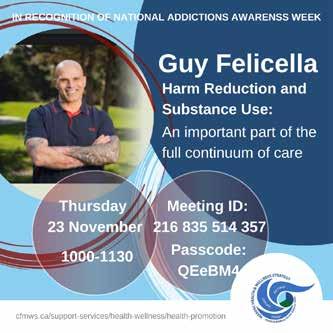
MARPAC Health & Wellness Strategy
CFB Esquimalt
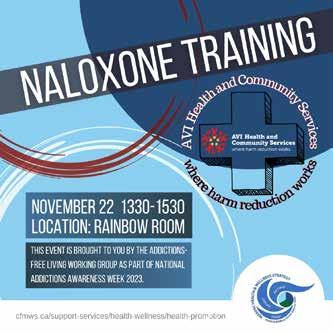
This year, the Canadian Centre on Substance Use and Addiction (CCSA) National Addictions Awareness Week is from November 19 – 25th. The theme for this year’s campaign is ‘Inspiration, Innovation & Inclusion’ and focuses on the key ingredients for a healthier Canadian society, where evidence transforms approaches to substance use health in light of the impact of the COVID-19 pandemic on substance use. The mental health and well-being of people living in Canada were significantly impacted during the pandemic where the substance use landscape grew even more complex. The inequities that exist in our country were exacerbated.
The Addictions-Free Living Working Group of the MARPAC Health & Wellness Strategy is working to drive change here at MARPAC by creating a culture that encourages healthy lifestyle choices and reduces the risk of problems with
Myth #1: “Alcohol and cannabis are legal so they are safe.”
Fact: Recent guidelines highlight the risks associated with alcohol use and cannabis use. These guidelines and research studies can be viewed at: www.ccsa.ca (alcohol) https://www.canada.ca/en/ health-canada/services/ drugs-medication/cannabis/ resources/lower-risk-cannabis-use-guidelines.html (cannabis).
Myth #2: “If I see a base addictions counsellor for help with substance use / an addiction I will need inpatient treatment.”
Fact: Base addictions counsellors complete an initial full assessment and treat-
ment recommendations vary between inpatient and outpatient care depending on prevalence and severity of a substance use disorder or addiction.
Myth #3: “If I seek support for my substance use I will be required to be 100% abstinent.”
Fact: Base addictions counsellors work with clients on their personal goals around substance use and communicate regularly with primary care to ensure medical employment limitations are put in place as needed.
Myth #4: “Cannabis is found in nature so I cannot be addicted to it.”
Fact: Addiction to cannabis is possible and cannabis use can cause numerous risks associated with mental
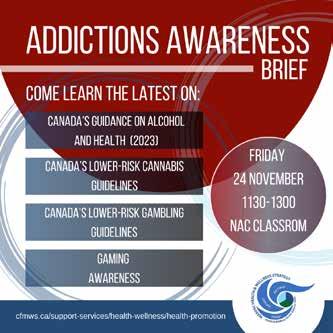
alcohol, cannabis, gambling, gaming and other potentially harmful substances and behaviours. According to the MARPAC Health & Wellness Strategy Evaluation Report Card results (2018), the top priorities for addictions-free living were: (1) continued work on reducing stigma around substance use and addiction and (2) continued education and resources about addictions and substance use. While the 2023 Culture Evaluation project is currently undergoing its pilot phase, the yielding results from the completed evaluations in 2024 will provide an understanding of the military culture around addiction compared to the 2018 Strategy Evaluation Report Card.
The Addictions-Free Living Working Group continues to work towards creating a culture of health and wellness at MARPAC, and encourages members of the Defence Team to visit the CCSA National Addictions Awareness Week website ccsa.ca/national-addictions-awareness-week for information, and to seek help and support if you or someone you know is struggling with an addiction or substance abuse.
health. Learn more at: https://www.canada.ca/en/ health-canada/services/ drugs-medication/cannabis/ resources/lower-risk-cannabis-use-guidelines.html
Myth #5: “If I disclose to a base addictions counsellor that I use illicit substances it will end my military career.”
Fact : Base addictions counselors communicate with primary care clinicians
to make recommendations for future employment. Treatment recommendations for help with a substance use disorder focus on recovery and gainful employment when possible.
To access Health Services/Base Addictions Counsellors, military members must contact local CAF Medical Clinic Reception at 250-363-4122
The passport includes a checklist of addictions-freepromoting activities - finished them all to be entered to win a Wellness Kit donated by the MARPAC Mental Social Wellness Working Group.
Contact vicky.doucette@forces.gc.ca for an emailed copy or come in at the Health Promotion offices at Naden Athletic Centre.
Once completed, passports can be dropped off at the Health Promotion offices during the week of November 26-December 2.
Health Services/Base Addictions Counsellors: To access, military members must contact local CAF Medical Clinic Reception at 250-363-4122
Members Assistance Program (MAP): 1-800-268-7708
Military Family Resource Centre (MFRC): 1-800-353-3329
The Chaplains Service: 250-363-4106
GREATER VICTORIA RESOURCES
CARE (Centralized Access and Rapid engagement Services)
Addictions Outpatient Treatment
Support and education groups, counselling, day treatment, assessment, referrals and consultations with physicians. 250-519-3485
Alcoholics Anon: Support Line
Support groups for those who have a desire to stop drinking. 250-383-7744
BC Alcohol and Drug Info Referral Service Line Info and referrals for alcohol and drug use and misuse. 1-800-663-1441 (24hr)
LifeRing
Non-religious self-help groups promote abstinence to alcohol and other addictive drugs. 1-877-254-3348
Narcotics Anon. Support Line Support groups for those who have a desire to stop using drugs. 250-383-3553
Problem Gambling Help Line 1-888-795-6111
Gambling Support BC bcresponsiblegambling.ca
Umbrella Society
For those who struggle with addictions and mental health disorders. 250-380-0595
Homewood Health – Ravensview Addiction treatment for military members and veterans 1-866-203-1793
Edgewood Inpatient Mental Health and Addiction Centre 250-751-0111



















Sunshine Coast Health Centre and Georgia Strait Womens Clinic are registered B Corp, licensed, and accredited mental health facilities that use an evidencebased, non-12-step, meaning-centred, strengths-based approach that interconnects all our services and therapies including medical withdrawal, anger management, rTMS, trauma therapy, and PTSD treatments.
Our gender-speci c* programs provide a safe space for clients to get help with underlying issues driving trauma, mental health su ering, or addictive behaviour that can be hard to address in co-ed environments. Moving beyond a focus on abstinence and symptom reduction allows clients to experience the full, transformative bene t of our treatment programs.
*Individuals a end the program with the gender they identify as or, for gender uid and non-binary individuals, the program they are most comfortable and safe in. Our admissions coordinators will work with prospective clients to determine which program is the best t.