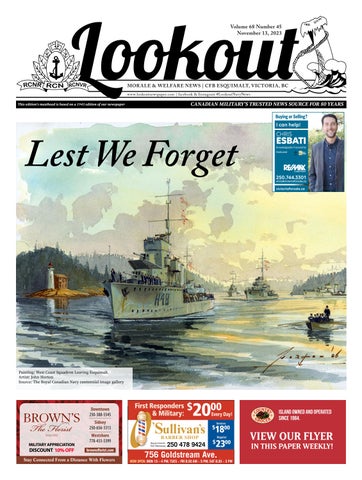
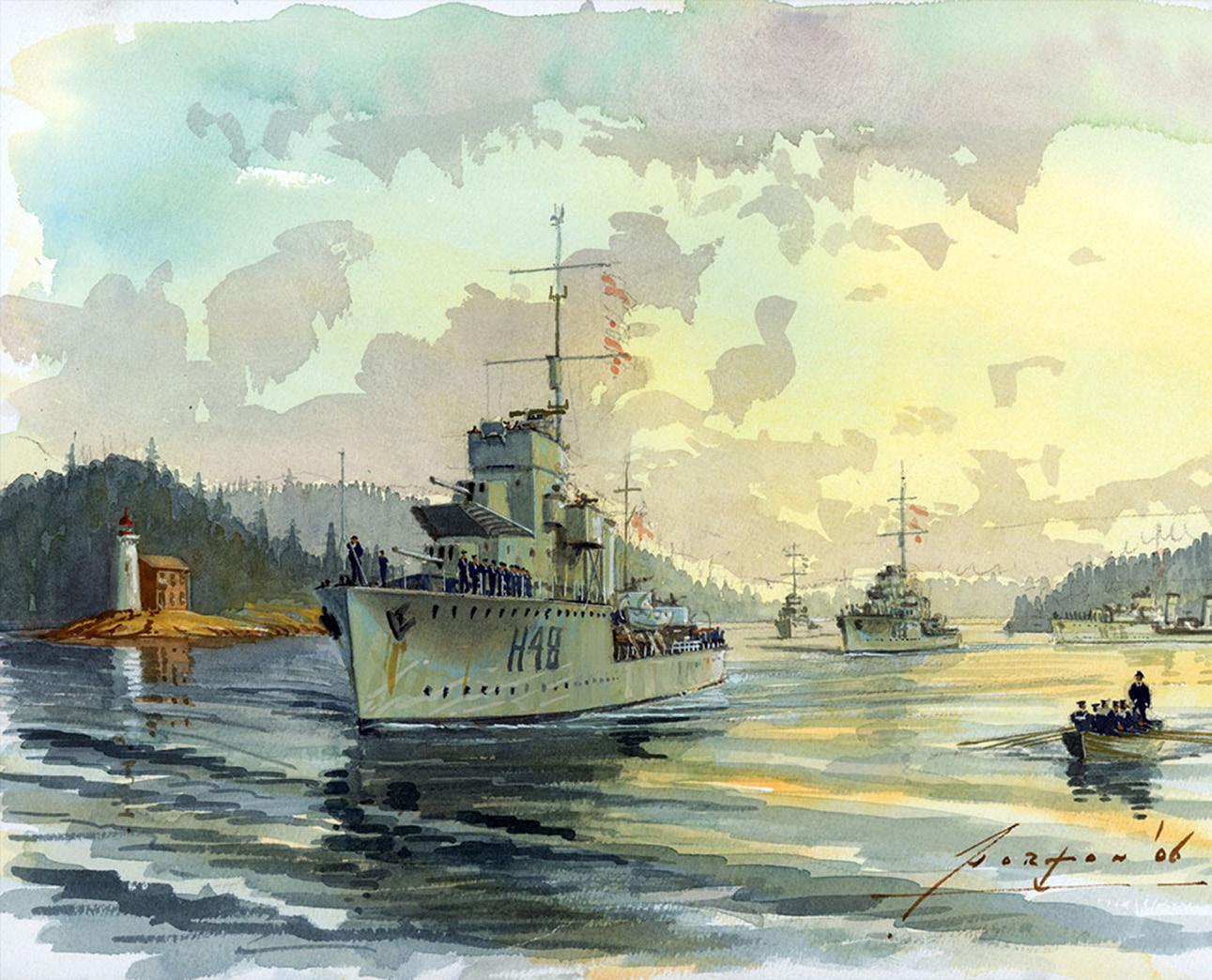
Painting: West Coast Squadron Leaving Esquimalt. Artist: John Horton
Source: The Royal Canadian Navy centennial image gallery
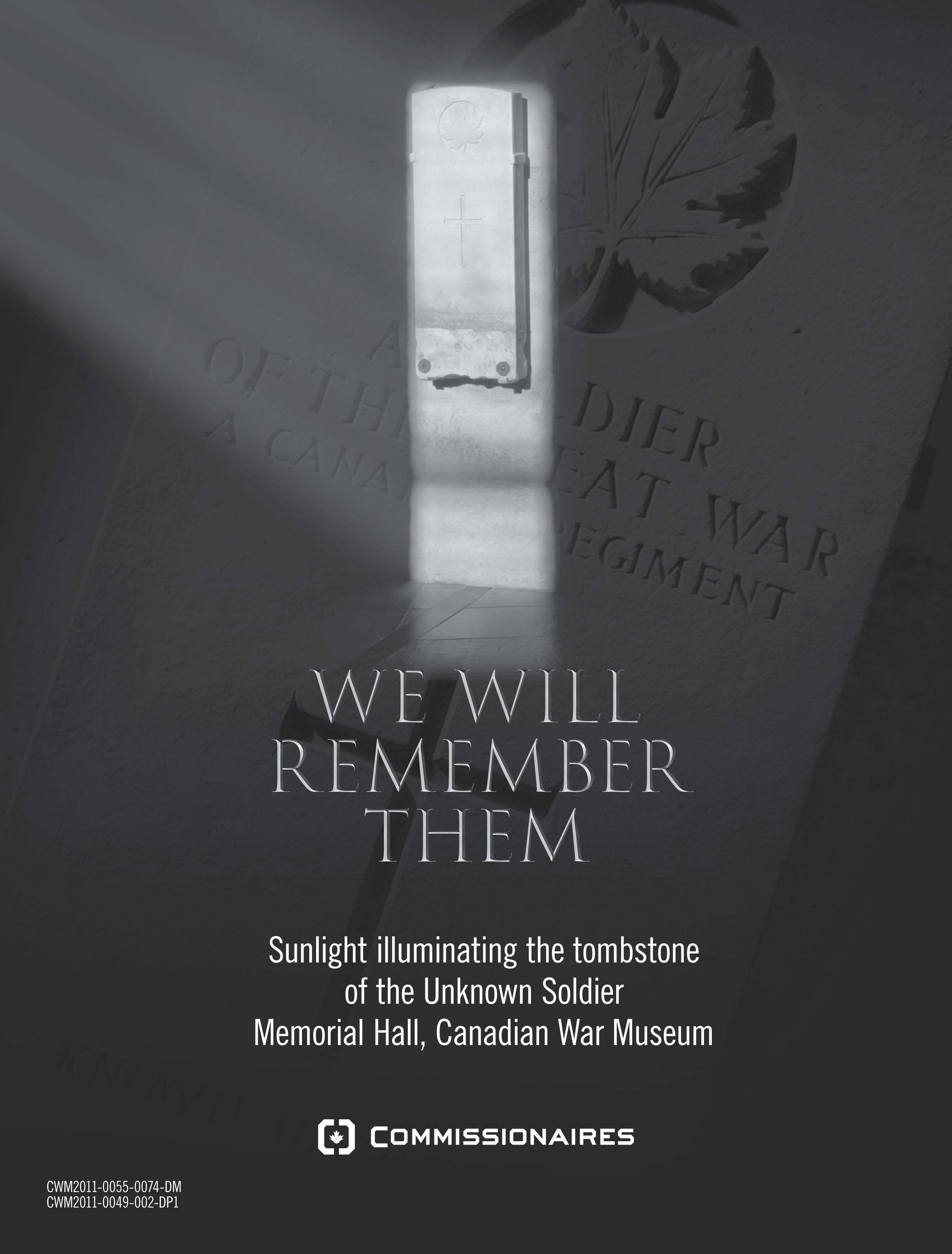
CWM2011-0055-0074-DM CWM2011-0049-002-DP1
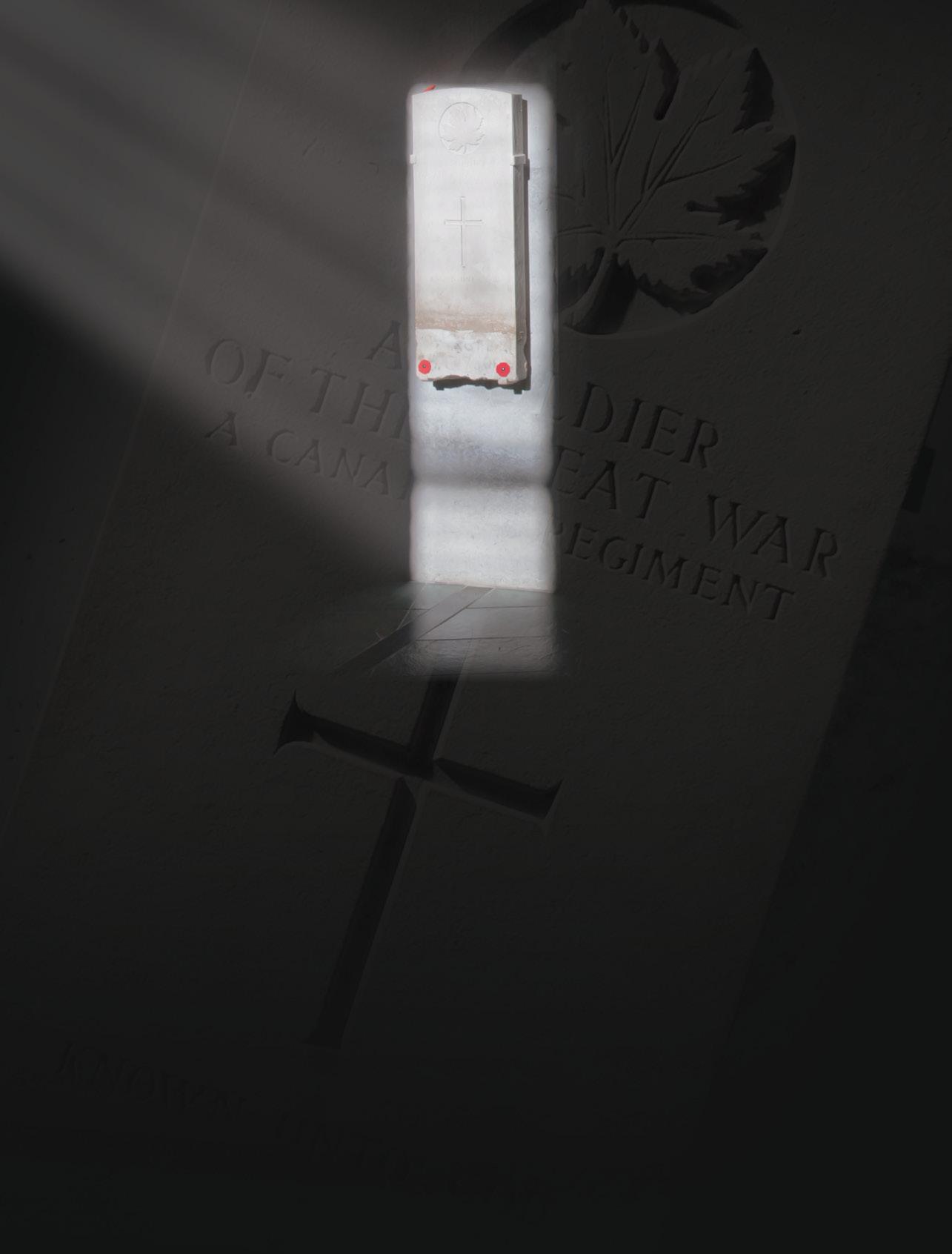
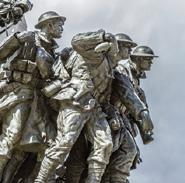
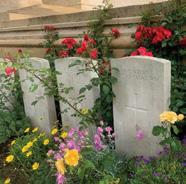
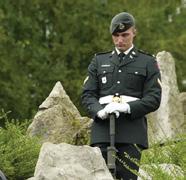
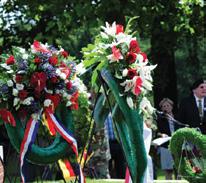
Sunlight illuminating the tombstone of the Unknown Soldier Memorial Hall, Canadian War Museum
Cobble Hill Vigil marks 10 th anniversary
Peter Mallett Staff Writer
A small town on Vancouver Island continues its unique tradition of honouring Canadian Armed Forces (CAF) members who died in the line of duty while on Canadian soil.
The first vigil in Cobble Hill and Garden of Remembrance, located approximately 40km north of Victoria, occurred on Oct. 22, 2014. It marked the day Army Reservist Corporal (Cpl) Nathan Cirillo was shot and killed while guarding the Tomb of the Unknown Soldier at the Canadian National War Memorial in Ottawa.
The Cobble Hill Vigil began after a heartfelt inquiry from a veteran in the Shawnigan Lake area, says Cpl Bob Collins. The veteran approached Cpl Collins and stated there was no one at the Cenotaph.
“I immediately went home, changed for the weather and attended the Cenotaph, and there I stood for 39 hours,” remembers Cpl Collins. “I have continued to follow through on that veteran’s request to this day, as it is extremely important to have these men and women recognized.”
Cpl Collins served as a Reservist in Winnipeg with the Queen’s Own Cameron
Highlanders for four years. He is currently a member of the Security Team for Brentwood College in Mill Bay.
The vigil is now a yearly tradition on Oct. 22 from 6:36 a.m. (Pacific), the moment Cpl Cirillo died, until 11 a.m. the following day. The memorial also honours Warrant Officer Patrice Vincent, who was struck down and killed by a motorist days before Cpl Cirillo’s death, and for the other 2,663 non-combat deaths on Canadian soil, says Cpl Collins.
The first year, Cpl Collins stood watch at the Cenotaph in the cold and rain, with no
one else to relieve him of the watch. In 2015, he was joined by his close friend Lieutenant (Navy) (ret’d) James Baird, who served ten years in the Royal Canadian Navy. Then, four other people also agreed to share shifts to cover the watch. The following year, three members of the 2422 Canadian Scottish Royal Canadian Army Cadet Corps from Nanaimo joined the vigil. With Baird’s help, support from other members of the community, and the Royal Canadian Legion Branch 134 Malahat, the vigil is now in its tenth year. It has grown into a well-attended annual tradition.
Organizers also put up a portable 52-foot memorial wall displayed at the Cenotaph each year for the vigil. It lists the names and ranks of those who died and includes a separate display board with members who died of causes related to Post-Traumatic Stress Disorder (PTSD).
Cpl Collins and his supporters convinced Alistair MacGregor, their local Member of Parliament, to introduce a private member’s bill, C-333 (44-1), which marks Oct. 22 a national Memorial Day for ‘Peacetime Service and Sacrifice’. The bill passed its first reading in the House of Commons but has yet to become law, says Cpl Collins.
PAYING THEIR RESPECTS
Each year, interest in attending the vigil grows.
A formal memorial ceremony to mark the vigil on the morning of Oct. 22 this year saw approximately 75 people. They included a delegation from the CFB Esquimalt Base Executive, which included Captain (Navy) (Capt(N)) Kevin Whiteside, Base Commander, members of 443 Squadron, The Canadian Scottish Regiment, 2924
Royal Canadian Army Cadet Corp, Shawnigan Lake RCMP, Mill Bay Fire Department, Brentwood College and officials from local regional government, including MacGregor.
Members laid wreaths to represent those who died over the past year. They included the names of Captain David Domagala and Captain Marc Larouche of 450 Tactical Helicopter Squadron, who died during a training flight
in June 2023. The ceremony also included the lighting of candles for soldiers who died due to PTSD.
Capt(N) Whiteside thanked Cpl Collins and Baird for spearheading the vigil and its importance.
“Please take time today to reflect and remember our selfless Canadian service personnel who have lost their lives here at home, in the everyday duty of keeping our nation safe and strong,” said Capt(N) Whiteside. Cpl Collins said he was thankful for the strong turnout by CAF members and, for the first time, official representation from CFB Esquimalt.
“I have utmost respect for the members that make the long trek from Esquimalt to Cobble Hill,” said Cpl Collins. “It affirms what I have known in my heart from the first day: the loss of any member of our military on Canadian soil is a tragedy.”
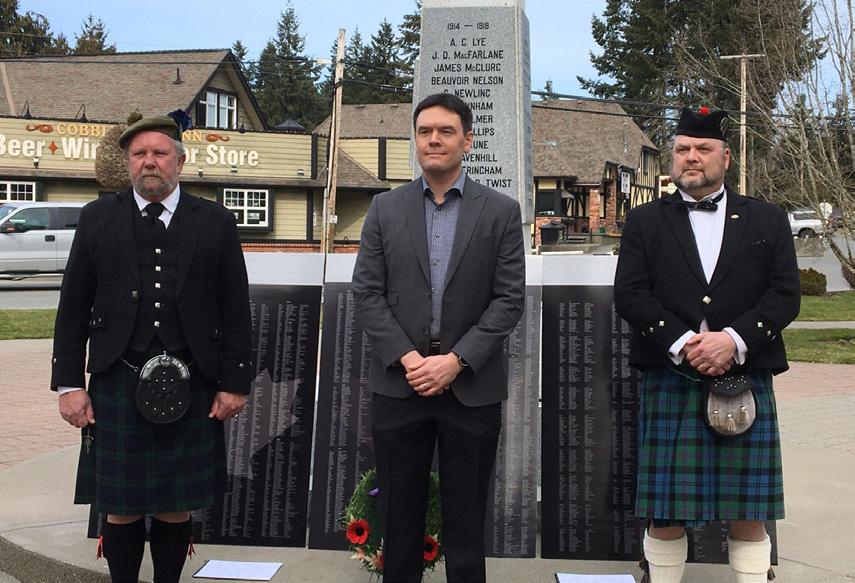
(Left) Former Army Reservist Bob Collins, Member of Parliament representing Cowichan-Malahat-Langford Alistair MacGregor, Lt(N) (ret'd) James Baird attend a memorial service and vigil at the Cobble Hill Cenotaph and Garden of Remembrance. Photo: Brentwood College
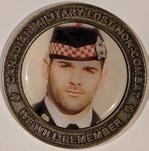
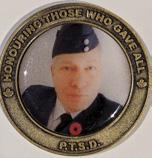
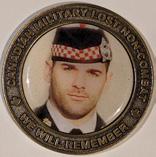
Two sides of a commemorative challenge coin for the vigil in Cobble Hill show Cpl Nathan Cirillo and MWO Colin Bell.
MANAGING EDITOR
Jazmin Holdway jazmin.holdway@forces.gc.ca
EDITOR
Kate Bandura
WRITER
250-363-3130 kateryna.bandura@forces.gc.ca
Peter Mallett mallett.peter@cfmws.com
PRODUCTION
Leslie Eaton
250-363-8033 workstation3@lookoutnewspaper.com
ACCOUNTS/RECEPTION
Trina Winters
ADVERTISING
Joshua Buck
250-363-3127
778-977-5433 NEW military.base.advertising@gmail.com
Published each Monday, under the authority of Capt(N) K. Whiteside, Base Commander.
Le LOOKOUT est publié tous les lundis, sous l’égide du Capv K. Whiteside, Commandant de la Base.
The editor reserves the right to edit, abridge or reject copy or advertising to adhere to policy as outlined in PSP Policy Manual. Views and opinions expressed are not necessarily those of the Department of National Defence.
Le Rédacteur se réserve le droit de modifier,de condenser ou de rejeter les articles, photographies, ou annonces publicitaires pour adhérer au Manuel des politiques des PSP. Les opinions et annonces exprimées dans le journal ne réflètent pas nécéssairement le point de vue du MDN.
Circulation: 2,000 plus 300 pdf downloads per week
Follow us on Facebook, Twitter and Instagram to join our growing social media community.
A Division of Personnel Support Programs
CFB Esquimalt, PO Box 17000 Stn. Forces Victoria, BC V9A 7N2 Web: www.lookoutnewspaper.com Fax: 250-363-3015
Canadian Mail Product Sales Agreement 40063331
Tackling Procrastination
Procrastination marches at the beat of its drum – we’re not ourselves when procrastinating. We seemingly vacate our body and mind and temporarily let procrastination take the wheel. We turn to vast options of instant gratification to avoid our duties. However, this detracts from our growth and reaching our full potential.
No one is devoid of procrastination; it affects everyone, albeit slightly differently. Procrastination is a common issue among us all. I’d be lying if I told you I wasn’t encountering some form of procrastination even while writing this article, but alas, here we are.
Procrastination is delaying the task, hoping it will complete itself. So, at the core of procrastination is a disillusionment with reality and the inability to take on the circumstances in life.
We are given tasks daily. Sometimes, we bestow tasks on ourselves in the form of self-care; other times, they are provided to us by a job, partner, or
any other external obligations we may have. When tackling procrastination, we must know how it impacts all areas of our lives. Tackling procrastination can be extremely overwhelming and could also lead to more procrastination if not handled appropriately. However, understanding your peculiar inner workings about procrastination will be easier with a proper evaluation of how procrastination drives your life.
A perfect example of procrastination would be when you notice your perfectionism causes you to delay completing tasks. This notion of perfectionism and procrastination often weave into one another. From the perfectionist’s perspective, the task needs to be done flawlessly. This pressure can psychologically paralyze perfectionists because they might think one wrong step or decision can entirely invalidate the completion of the task. Thus, they would instead not decide to move at all.
Once you understand how procrastination affects your life, you will notice it more in your everyday activities. You will see how you delay taking on a task as almost an unconscious default, and it will take a lot of effort not to avoid falling back into this old pattern of behaviour.
Here are some things to keep in mind when facing a task you honestly are dreading to do:
Breaks are essential – when we are in the throngs of procrastination, we lose sight of how to manage our time properly; we think it needs to be done all at once. This approach to completing a task is a testament to our strength of will, but we fail to use our will skillfully When we take breaks, we approach the task with compassion and ensure we aren’t working frantically but rather with a sense of diligence.
Coming back into work when your intuition notifies you – we all eventually hear that inner voice urging us to return to work. This is the crossroads of procrastination; do we choose to repress this hunch and continue in our distraction, or do we step back into the task?
Reminding ourselves of the sense of accomplishment once the task is complete is important to keep in mind. Knowing there is a sense of relief and achievement awaiting at the end can be extremely helpful in combatting procrastination.
Thomas Goenczi is an RCN Veteran and MA Clinical Counsellor with Private Practice: Well Then Therapy.
The content is not intended to substitute professional advice, diagnosis, or treatment. Always seek the advice of your mental health professional or other qualified health provider with any questions regarding your condition.
Thomas Goenczi
Lookout contributor
HMCS Malahat HRA enjoying Bahrain deployment Sailor Profiles
Peter Mallett Staff Writer
Going to Bahrain to support Operation Artemis required no hard thinking for one Naval Reserves sailor.
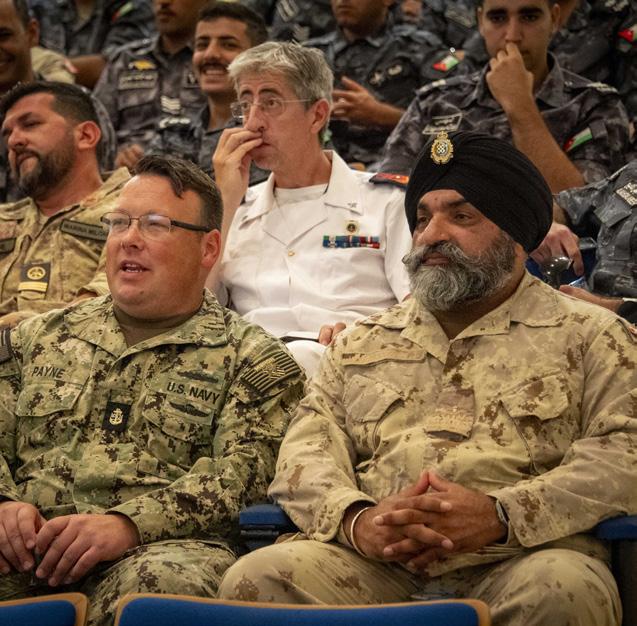
Petty Officer First Class (PO1) Kanwar Nijjer, Human Resources Administrator (HRA) of HMCS Malahat, has been stationed at U.S. Base Naval Support Activity (NSA) Bahrain for the past five months but says he is loving every minute of his deployment.
“I am proud to represent Canada’s military,” said PO1 Nijjer in an email. “The deployment is very rewarding but also demanding and it’s hard not to mention I also miss my family.”
PO1 Nijjer is one of five Canadian Armed Forces (CAF) members posted to the NSA Bahrain. He immigrated to Canada from India at 15 and has now served 29 years in the CAF. One of his sons, S1 Udhay Nijjer, is also a member of the CAF with Canadian Fleet Pacific.
PO1 Nijjer speaks English, Punjabi, Hindi and Urdu and says his fluency in four languages has been an asset
during his travels.
“A large segment of the population in Bahrain is from India, Pakistan, Bangladesh and Nepal so Hindi and Urdu languages are common,” he said.
PO1 Nijjer’s deployment to the Middle East has been filled with enjoyable experiences, including travelling to exotic locations and enhancing his professional development. He visited Seychelles and Jordan where the Naval Tactical Operations Group team from Victoria offered Northern Readiness Capacity Building training.
His role as Administrator for the NSA includes providing operational support to Canadians and Combined Maritime Forces. His day-today responsibilities include keeping an updated Nominal Roll containing the names of training participants, overseeing vehicles, accommodations, Canadian assets and any support required by the team.
In September, PO1 Nijjer was one of 17 Canadian military members involved in Exercise Northern Readiness at the Royal Jordanian Naval Base in Aqaba, Jordan. PO1 Nijjer’s duties during the
exercise included compiling the personal data of participants, finalizing their travel plans, assisting in their transit from the airport and taking care of their individual needs.
CAF members also acted as ambassadors for Canada to Jordanian military members, says PO1 Nijjer.
“We not only shared our experience as Canadians with members from the host nation but also learned about their culture,” he said.
For several years, he has volunteered as the Military Co-Chair for the Defence Visible Minority Advisory Group (DVMAG). Selected members advise senior leadership while facilitating public outreach and enhancing Royal Canadian Navy recruitment efforts at numerous public events.
Aside from sailing on multiple HMC ships, PO1 Nijjer was previously deployed to Baghdad in 2019 as part of Operation Impact at the United States Military’s Union III Base.
He deployed on Op Artemis in May 2023 and expects a return to his unit in early 2024.
Petty Officer First Class Kanwar Nijjer is currently deployed to Base Naval Support Activity in Bahrain in an administrative role. Photos supplied.
HMCS Oriole wraps up Great Lakes Deployment 2023
SLt Wilson Ho
HMCS Oriole PAO
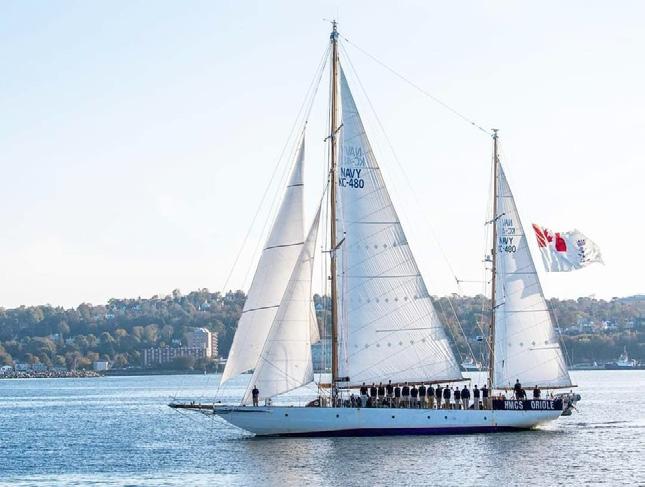
After travelling over 5,000 nautical miles, making 14 port visits in Prince Edward Island, Quebec and Ontario, and greeting over 10,000 visitors, 40+ dogs and one cat, HMCS Oriole returned to CFB Halifax on Oct. 3.
While approaching Halifax Harbour, the crew raised the Main, Mizzen, Jumbo and Yankee sails, flew the giant Navy Ensign one more time, and brought the ship proudly into the harbour.
On the way in, HMCS Oriole was overtaken by HMCS Montréal at the Sailor’s Monument. HMCS Montreal had just finished a six-month deployment and was returning to CFB Halifax as well. While over-
taken, HMCS Oriole’s crew lined the guardrails and paid their respects to the frigate. Homecoming after any deployment is always joyous, as deployed military members are reunited with family, friends, and loved ones after a long time away from home. For the crew of HMCS Oriole, and particularly Lieutenant-Commander (LCdr) Robert Pelton, the Commanding Officer of HMCS Oriole, the return was also bittersweet. He handed over command of the vessel to LCdr Gregory Morris in an Oct. 4 Change of Command Ceremony, presided over by Commodore Trevor MacLean, Commander Canadian Fleet Atlantic.
Now that HMCS Oriole is back at CFB Halifax, it will go into a short work period for maintenance and winterization.
Naval Experience Program a huge win for S3 Kevin Hassa
The first sailor to successfully join the Royal Canadian Navy’s (RCN) new Naval Experience Program (NEP) says the concept is a ‘huge win’ for those who apply.
“This is going to be a really good way to get people to join the Navy,” says Sailor Third Class (S3) Kevin Hassa. “If I was to sign a fiveyear contract and go into (a trade) which I have no clue about, I might be kind of apprehensive. But with this program, I get to see everything before choosing.”
The NEP, which got underway in April, provides prospective sailors with enough exposure to life in the Navy to decide if it’s right for them.
S3 Hassa says meeting like-minded people has been one of the best things about NEP. He recommends
the program to anyone interested in a career with the RCN.
“You get to see every trade the Navy has to offer. It’s great to see what the sailors in the ship are doing and get some hands-on experience,” he says.
S3 Hassa, from Burnaby, B.C., considered joining the Naval Reserve Division in his community. His father served in the Navy as a Naval Combat Information Operator, and S3 Hassa says he is a little jealous of his son starting in the Navy.
“Maybe he’s thinking a bit about coming back too,” S3 Hassa laughs. “He’s turning 50 so he doesn’t have much time if he wants to hop onto the train again! He was happy I wanted to join the Navy, and my little sister is also thinking about it.”
He is excited about going to sea and travelling to different parts of the world as
his career progresses.
“I get to travel and experience everything the Navy has to offer. I wouldn’t get that opportunity if I went straight in the normal way,” he says.
Following an eight-week basic military training and four weeks of naval training, the candidates join the fleet on either the East or West Coast. Over several months, they learn the ropes of being a sailor by shadowing various jobs and gaining exposure to several skills. The program culminates with a going-to-sea portion so they can get a sense of the adventure found in a naval career.
Once participatns complete the program, they will be offered a selection of trades should they choose to continue to serve3 with the RCN.
For more information on the NEP, visit canada.ca/en/ navy/nep.
S3 Hassa is the first successfully enrolled participant in NEP. Photo supplied.
SLt Brendan Kerbiriou NWO
Sailor Profiles
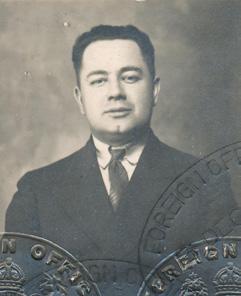
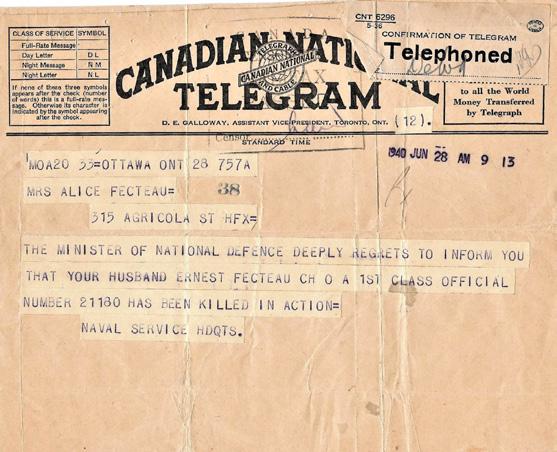
Ernest Fecteau was born in Quebec City on Jan. 9, 1897. He came from a family with a military tradition.
His father, Major J.A. Fecteau, was superintendent of the Quebec City Armoury and had served in the First World War. His brother had also served in the Royal Canadian Navy, and his uncle, Captain Fecteau, had taken part in the 1870 campaign in France.
It was only natural that he decided to join the military as well. On June 29, 1923, at the age of 26, Ernest Fecteau enlisted as a sailor in the newly formed HMCS Montcalm. As a sailor, he worked as a Mechanical Systems Operator and was soon promoted to Master Sailor (Master Seaman at the time).
As a Francophone, he was part of the first Commonwealth unit to provide instruction in French, which would benefit him greatly. He was the first Francophone to attain the rank of Chief Ordnance Artificer in 1933, when he served on HMCS Skeena.
In 1924, he asked to join the crew of HMS Hood, the flagship of the Royal Navy at the time, to carry out the ‘Special Squadron World Tour’. He began by tak ing the train from Quebec City to Vancouver. Once onboard HMS Hood, he passed through San Francisco and the Panama Canal, arriving in Halifax on Aug. 5, 1924. Until the mid-1930s, he served on several ships, calling at numerous ports.
When the Second World War broke out, he became a crew member on HMCS Fraser, which left Canadian shores in March 1940 to help liberate France.
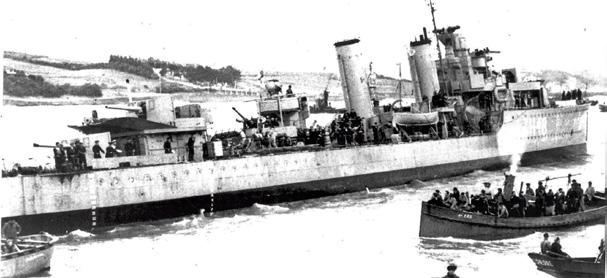
25, 1940, en route from Saint-Jean de Luz in France to Plymouth, HMCS Fraser collided with the British ship HMS Calcutta at the mouth of the Gironde off Bordeaux. The ships followed each other, all lights out, on a moonless night. The Officer of the Watch mis-performed the maneuver ordered by the Commanding Officer, who had instructed him to ‘turn to port to close on the cruiser and slip her to starboard without cutting her course’. The operation consisted of making the ships follow each other. But he turned much broader than planned, and a collision was inevitable. At a speed of 34 knots, the bow of the Calcutta ripped open the starboard side of the Fraser.
The ship sank. This was the first Canadian ship to be lost in action during the war, not in combat, but due to an error of judgment caused by the exhaustion of the men, who had only brief rest periods between evacuation trips.
Ernest Fecteau lost his life. Forty-four of his brothers-in-arms met the same fate. The remaining 115 crew members were saved.
Ernest Fecteau served his country for 16 years and 361 days. He was over 40 when the war broke out. As such, he was expected to serve ashore. Despite this, he insisted on serving at sea. He left behind his wife, Alice, and their three children, JeanPaul, Raymond-Marie and Colette.
On the afternoon of June
Before embarking, he had a conversation with someone also named Fecteau, but unrelated to him. He had said to him:
‘You’ll see your family again, but I won’t see mine’. His daughter Colette claimed years later that he had experienced a premonition. She carried the cross of her father’s memory throughout her life.
Ernest Fecteau, Naval Museum of Quebec
HMCS Fraser three days before the accident.
Sea Training (Pacific)
CPO2 Justin Perreault CSEC, Sea Training (Pacific)
Sea Training (Pacific) (ST(P)) welcomed alumni and friends to the third annual Great Chili Cookoff on Oct. 13. The cookoff kicked off the National Defence Workplace Charitable Campaign (NDWCC) for ST(P).
Seven Sea Trainers entered the cookoff with varied styles of chili ranging from vegetarian to over-the-top smoked and everything in between.
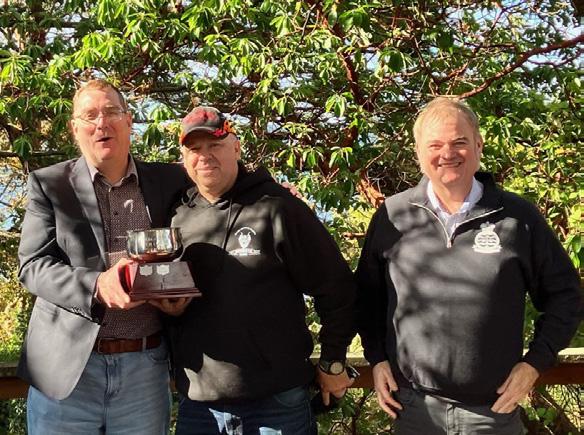
The first place this year went to Chief Petty Officer Second Class (CPO2) Chris Carisse, ST(P) Chief Naval Communicator, with CPO2 Justin Perreault, ST(P) Chief WENG, coming in as a close second.
The real winner, of course, was the NDWCC, with $260 raised to be donated to charity.
The Navy tells the Air Force where to go
Capt Christine MacNeil 19 Wing PAO
Air traffic control is a familiar sight at 19 Wing Comox, and as the name implies, it controls aircraft. But who controls aircraft when they are flying over the ocean? Sometimes, the Royal Canadian Navy (RCN) does!
A SAC, or Shipborne Air Controller, is a specialized position in the RCN. They are employed on our Canadian patrol frigates and work with the ship’s embarked helicopter air detachment personnel and the CH-148 Cyclone.
The SAC primarily acts as the line of communication between the ship’s chain of command and the aircraft, passing tactical and safety information to accomplish the mission. In the event of any aircraft equipment failure or emergency, the SAC is responsible for guiding the helicopter back to the ship safely.
Depending on the mission type, SACs will also work with maritime patrol aircrafts. CP-140 Aurora from 19 Wing Comox has worked with the RCN on various training
exercises. While working with the ship, communications come from the SAC.
Recognizing the importance of the relationship between SAC and aircrew, students taking the SAC course visited 407 Long Range Patrol Squadron as part of their training. Touring the Aurora and meeting the aircrew is valuable for the students because it gives them perspective and a better understanding of what the aircrew need and expect from them. Further, it increases their knowledge of the capabilities and procedures of the aircraft. The reverse is also true. When the aircrew meet the SACs, they learn what the SAC expects, as well as their procedures and capabilities.
A SAC qualification is a NATO qualification. As they gain experience, they can qualify at higher levels. Each level has restrictions for controlling the number of aircraft, flight rules in effect due to the weather, and what type of control the SAC can perform.
Whatever their level, the SAC will be the one to tell the Royal Canadian Air Force where to go.
Family bids farewell to a beloved sailing instructor
Regarding
Esquimalt’s
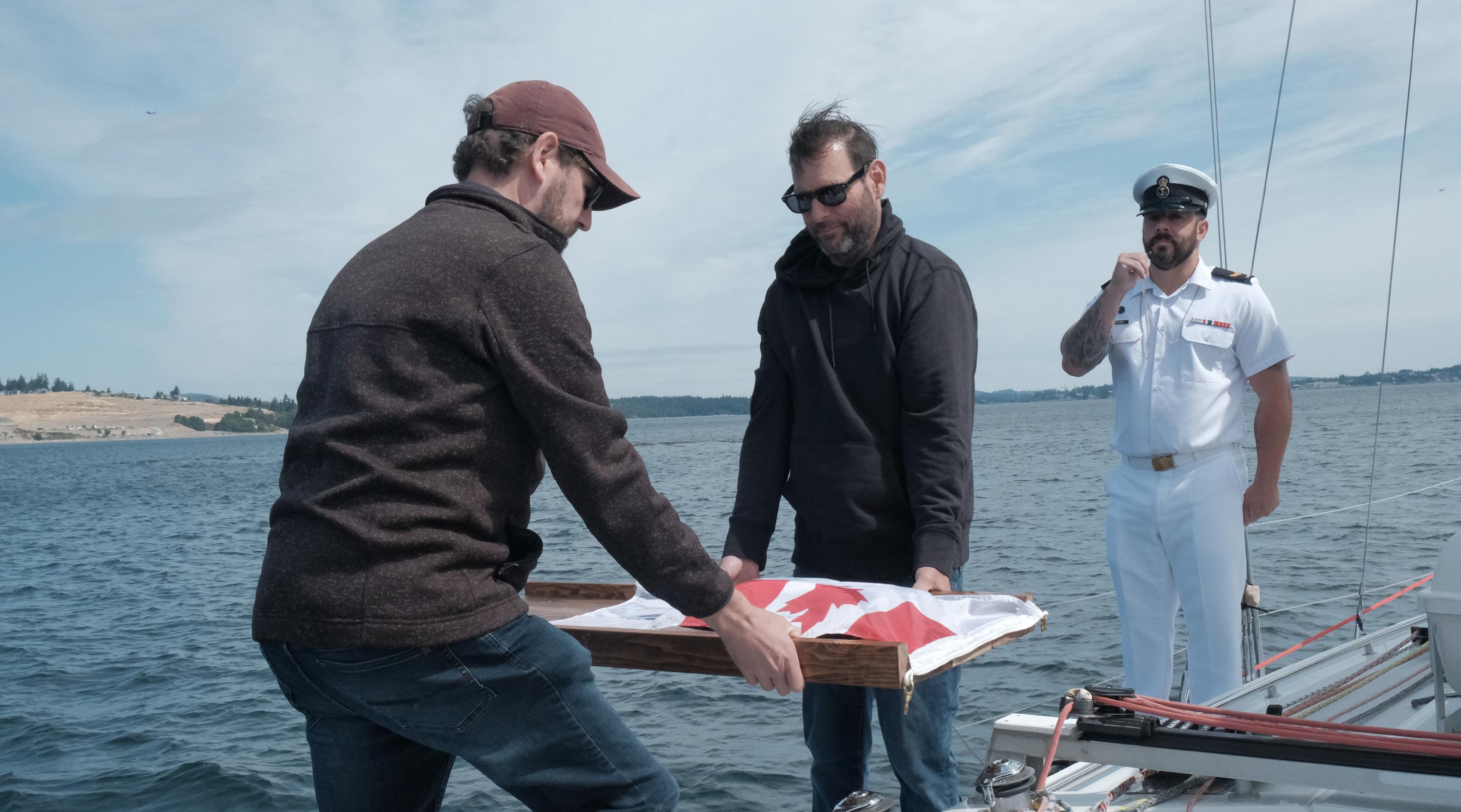
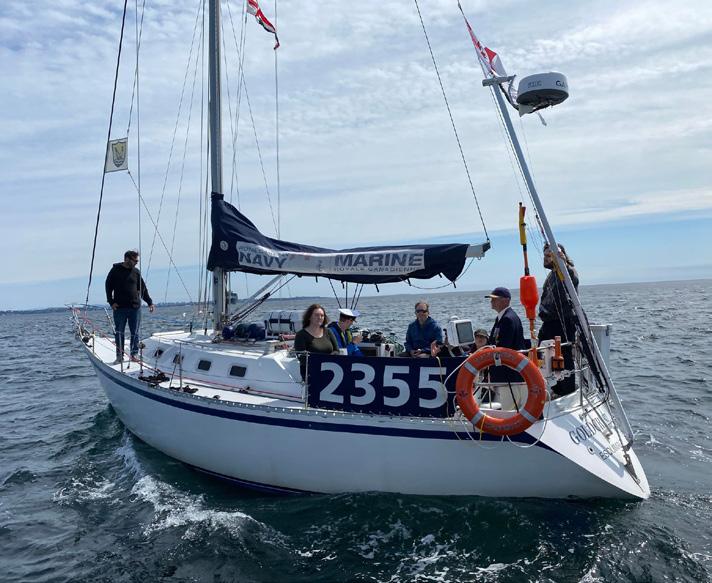
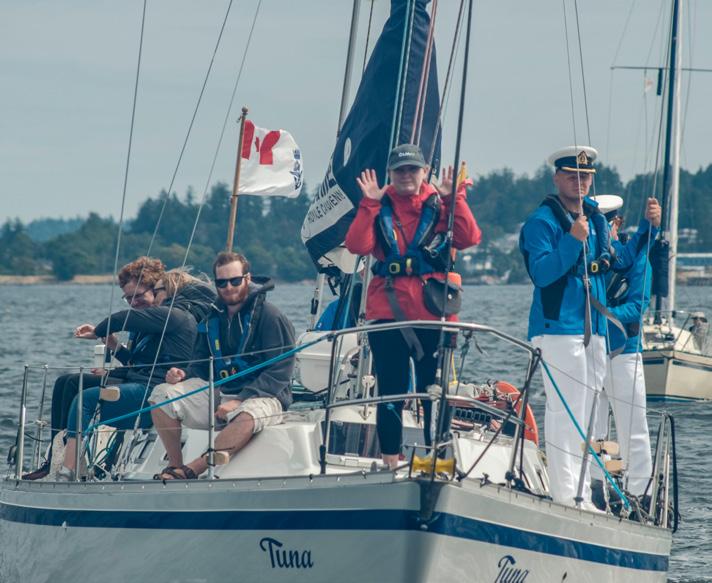
the company of SV Tuna, Hanna’s ashes were scattered into the waters of the Strait of Juan de Fuca by members of the Canadian Forces Sailing Association (CFSA), colleagues, friends, and family. Approximately 30 people boarded the two RCN sail training vessels, followed by three CFSA boats for a sail to commemorate the life and legacy of Chief Hanna.
The participation of SV Goldcrest in the service was significant to the life and memory of Chief Hanna and his connection with long-time friend and current Goldcrest Skipper, Chief Petty Officer Second Class (CPO2) (ret’d) John Haggis.
“For me, it is an honour to skipper the boat because when I came to the West Coast as a new sailor in 1987, I was sent to Goldcrest to work while awaiting training and that’s where I met Chief Hanna. Now, I am the Skipper here today.”
One of Hanna’s final assignments as a member of the RCN was to bring the Goldcrest into service. Hanna was a Boatswain and its first Skipper following its commissioning in 1985. Haggis and Hanna served together with the Naval Fleet School (Pacific) (NFS(P)) on this vessel they came to love. In subsequent years, they built on their friendship while fulfilling leadership roles at the CFSA, further supporting the sailing community.
The committal of Hanna’s ashes followed the naval tradition for at-sea memorials, says Haggis. He remembered his friend as a dedicated teacher and mentor to the community.
“Chief Hanna was a chief’s chief and was a valued member of the CFSA, spending years on the executive in charge of training for both adults and junior members,” said Haggis. “I never called him by his first name, even years after he retired; he was always Chief Hanna to me.”
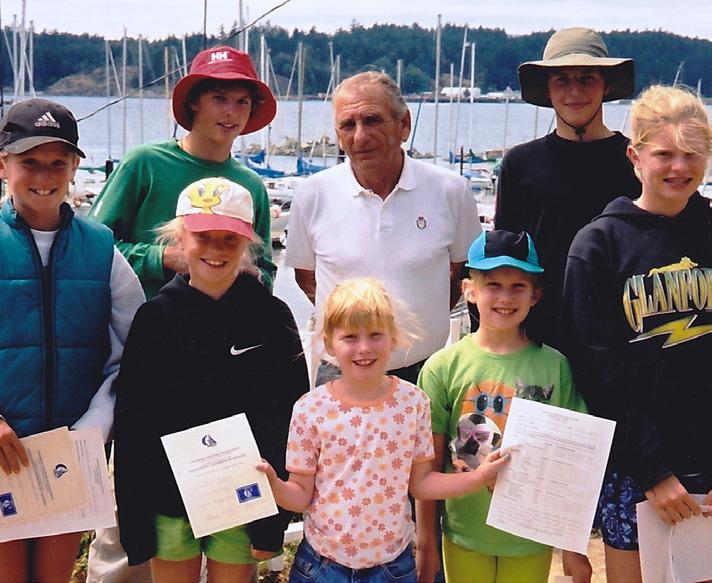
Hanna died on Dec. 23, 2022, after serving over 43 years in the RCN. Of those, he spent eight years working with the Naval Reserves, setting up sailtraining programs throughout B.C. for Sea Cadets, significantly impacting the development of the sailing community on the West Coast.
A love of the Goldcrest Haggis, 66, is a Sailing Instructor with RCN Sail, a department of the NFS(P) Campus Support division. He previously served 30 years in the RCN as a Naval Combat Information Operator and is also a former Commodore of the CFSA.
Haggis recalls the Goldcrest was Chief Hanna’s pride. It also helped develop the personal connection between them.
The 36-foot CS 36 Sloop rigged sailboat was adapted by the military for sailing, adventure, and navigation training.
Goldcrest passed its sea trials in 1985 and arrived in Esquimalt one year later.
According to Haggis, Hanna loved the sailboat and worked tirelessly to keep it immaculate.
Haggis can still recall his less-thancordial first encounter with Chief Hanna in 1987 when he arrived in Esquimalt as a young sailor. Haggis, a lifelong sailboat enthusiast, recalled how his eyes lit up when he noticed the Goldcrest tied alongside Naden.
“I quickly made my way down to the old boat shed and there was Chief Hanna, squared away, a salty Chief Petty Officer Boatswain,” said Haggis. “I introduced myself, he grumbled at me and
later during my Seamanship Training coursing he quickly put me to work, and I was at his beckon call for weeks.”
It was only when the two finally got out on the water, and the younger sailor’s sailing skills became evident that some of the barriers between them came down. It was at that point, says Haggis, that Chief Hanna developed a ‘quiet respect’ for his new charge.
“He was strict, but he had a good heart, and he ran Goldcrest like a military vessel,” recalled Haggis. “He had cleaning stations, a designated meal hour and study hour. He expected us to pay close attention to everything and learn how to sail, and I really learned a lot from him.”
Other tributes and memories flowed in for Chief Hanna from those who worked under his command. Former CFB Esquimalt Base Chief, CPO1 (ret’d)
Gino Spinelli was certified as a Skipper of Goldcrest from 1995 to 1998 under Chief Hanna’s tutelage. Spinelli also described Hanna as a no-nonsense Chief who, under his rough exterior, truly loved and cared for the personnel who worked for him.
“He was a larger-than-life figure and life coach to so many young sailors within the formation and loved teaching seamanship skills,” said Spinelli. “On first encounters people would say he was someone who was rough around the edges, but he had a positive way and was a good person that really truly cared about the Navy.”
Master Sailor (ret’d) Ron Ingalls served in the RCN for 25 years before his retirement in 1997. As a Small Boats Instructor for the Seamanship Division in 1992 and later Skipper of the Goldcrest and Chief Bosun Mate on HMCS Oriole Ingalls also has fond memories of Chief Hanna and his love for sailing.
“Chief Hanna wanted sailing and seamanship to be a bigger part of life in the Navy,” said Ingalls. “He was what I call an old-time chief, a guy who corrected you when you didn’t get it right and
made sure you knew how to do it correctly afterwards and I am really going to miss him.”
Following ‘naval TradiTion’
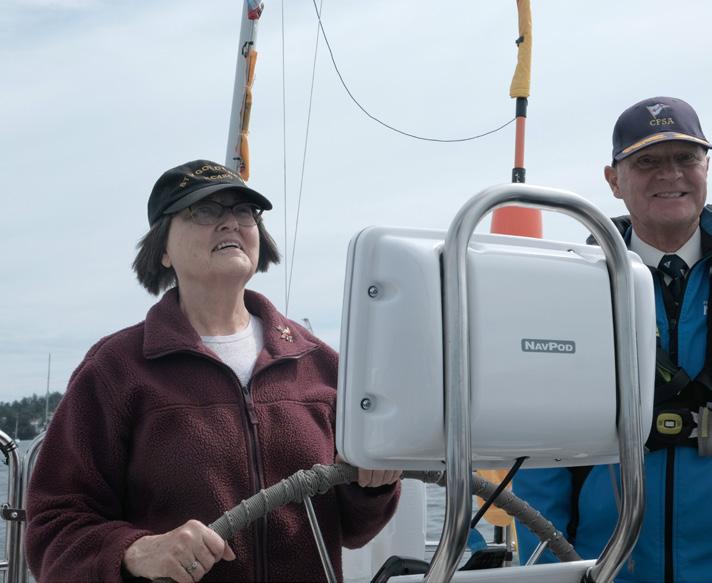
Haggis organized the ceremony and skippered SV Goldcrest, the ceremony’s lead vessel. In a gesture of kindness, Haggis let Cheryl Hanna, Chief Hanna’s wife, take the helm of the boat Chief Hanna loved so much. Once off Albert Head, Goldcrest lowered its ensign to half-mast and then raised the Church pennant off the starboard side, indicating service was in progress.
Sailor First Class Anthony Berardi performed the Boatswain’s Call, and the ashes were placed on a slide by two of his sons, Craig and Mark Hanna. The siblings then lifted the slide as their father’s ashes were committed to the sea.
The committal of ashes was proceeded by a moment of silence and words of remembrance by the family. CFSA member Ian Webster then performed a Lament on his bagpipes aboard the sailboat Teazer.
Hanna’s eldest son Kevin noted his father was also the Sail Training Officer of the CFSA and would delight in teaching a new generation of mariners, skippers, and sea-faring leaders with the local sailing club. Kevin said the family was ‘very touched’ by the ceremony, which exceeded their expectations.
“The experience was unexpected and just so beautiful to see. We were so touched so many people took time out of their busy lives to remember our father,” said Kevin Hanna.
The idea to inter his ashes at sea came a few weeks after Haggis attended Chief Hanna’s Celebration of Life Ceremony at the Chief and Petty Officers’ Mess on Apr. 23. It was then that Haggis and Kevin Hanna decided a ceremony at sea would be an excellent way to celebrate his legacy.
Mallett Staff Writer
How the desire for knowledge and growth led Padre Chang to the Canadian Armed Forces
Major Christopher Daniel Joint Task Force-Ukraine Senior Public Affairs Officer
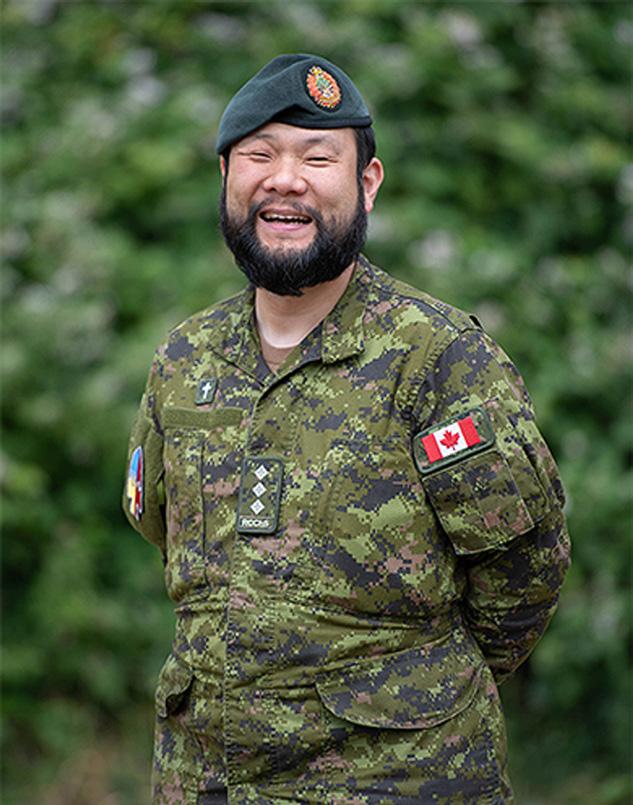
Among the many positive things that Captain Euikyun (David) Chang likes about the Canadian Armed Forces (CAF) is the endless opportunity to learn and grow. He was deployed on Operation Unifier Rotation 15 as the Task Force Chaplain and was known as Padre Chang to many CAF members across Task Force- Unifier
“This deployment gave me a lot of opportunities to meet people from different backgrounds and cultures, and I’m very grateful to learn and grow. It is something that has drawn me to join the CAF,” he said.
CAF chaplains are responsible for fostering the spiritual, religious, and pastoral care of CAF members and their families, regardless of religious affiliation, practice, and belief. They have privileged access to CAF members of all ranks to provide them with an active, personal, and supportive presence.
“It was over four years ago when a friend from my pastoral ministry told me about the Chaplaincy occupation in the CAF,” recounts Padre Chang. “My friend was also applying to become a chaplain in the CAF, he gave me the recruitment website and that sparked my interest after finding out the many opportunities available to CAF members to learn and grow as a human being.”
Padre Chang said his main preoccupation
has been to keep learning and develop himself throughout his life. Joining the military as a chaplain was an extension of his journey to constant personal development and, in turn, serving people by using his talents.
“As a Korean immigrant to Canada, being a chaplain in the CAF has been instrumental in deepening my understanding and appreciation of my new country. It has embedded in me the Canadian values and has given me a profound understanding of Canadian society and what it means to be Canadian,” he said.
He also said that joining the CAF allows him to serve Canada as best as he can, and his deployment on Operation Unifier gave him a sense of pride to be a Canadian.
“I was excited when I learned that my first deployment would be to support the CAF soldiers who were training Ukrainians with military skills to defend their sovereignty and freedoms,” he said. “It’s an honour to use my pastoral ministry to help keep the morale of our troops who are making a difference in the world.”
During his deployment, Padre Chang had the privilege of providing the ministry of presence not only to the Canadian troops but also to Ukrainian soldiers at the training camp in southeast England.
“The participation of Ukrainian soldiers during the church service is really high. I’m glad to be of service to them, and in turn learn and grow from this experience,” he said.
crisis in the DTES, two decades of being homeless, multiple life-threatening bone infections, and six drug overdoses.
Today, Guy has escaped the grips of the turmoil that kept him suffering and currently resides with his wife and three young children with nearly a decade of recovery and sobriety under his belt.
Guy is passionate about advocating for the vulnerable people who still suffer with addiction/mental health and is adamant about educating communities on the importance of a full spectrum of care from harm reduction to recovery and to eliminate the stigma that exists around drug addiction.
Guy is a sought-after International Public Speaker who shares his personal experience and expertise at conferences, seminars and summits and TEDx Talks. Guy attends various school districts and post secondary institutions to educate students on drug addiction. Guy spent nearly his entire life suffering with addiction and is now using his experience to change the hearts and minds of people. He cares deeply about giving back to the communities that helped him through his most difficult times, and is focused on spreading his message of hope to those struggling, to young people, to families, and to the world.
Captain Euikyun (David) Chang, a Chaplain from CFB Shilo, shares his CAF journey from the recruitment centre to Operation Unifier.
Photo: Master Sailor Valerie LeClair
National Sports Day boosts healthy workplace
Peter Mallett Staff Writer
Military members experienced the thrill of victory, agony of defeat and all emotions in between during National Sports Day on Oct. 26.
In recognition of National Sports Day, staff of Personnel Support Programs (PSP) organized sports of all kinds to participate at the Naden Athletic Centre (NAC). National Sports Day is an annual event put on by National Sports HQ and run by local PSP Sports. Ryan Elborn, Sports Coordinator at PSP, said the dates conveniently worked out well as the Healthy Workplace Month also took place during that time.
“National Sports Day is an annual event where members across Canada can appreciate and experience sport,” Elborn said. “It allows members to improve on their physical and mental health and to have fun playing a new sport with their unit and other Canadian Armed Forces members.”
Sailor First Class (S1) Audrey Cruz of Canadian Fleet Pacific said National Sports Day was a perfect fit for Healthy Workplace Month. She played badminton with coworkers and said it helped her recharge and blow off steam.
“Being active and physically fit allows people to break up the workday and it is something they have control over,” said S1 Cruz. “Physical health is also tied to mental health, so participating in activities such as this is very important.”
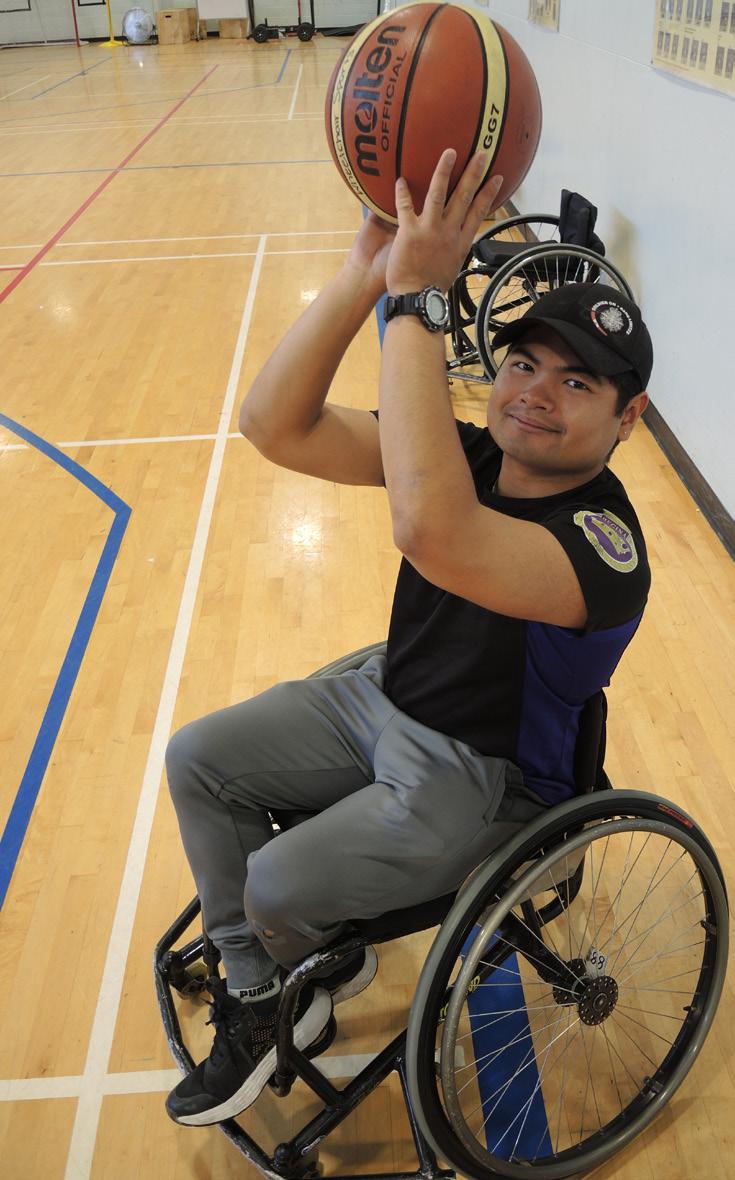
Acting Sub-Lieutenant (A/SLt) Chris Mejia of HMCS Regina tried his hand at wheelchair basketball for the first time by taking part in the fullcourt game in the upper gym. He said the experience was certainly a break from how he usually plays basketball, put his upper body strength to the test and changed his perspective on life.
“I wanted to take up a new challenge,” he said. “I wanted to see what some people with disabilities experience in efforts to stay fit and it was a fun experience and a great time.”
Other activities for Physical Well-being Week included fitness classes in the NAC and Dockyard Gym, the GoByBike Week Celebration (Oct. 25), and the monthly Formation Run on Oct. 27.
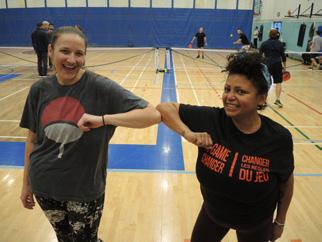
(Left) Master Sailor Tamera-Lee Hobbs of the Personnel Coordination Centre and Sailor Third Class Anna Ortiz of HMCS Calgary perform a celebratory elbow bump. Photos: Peter Mallett, Lookout Newspaper
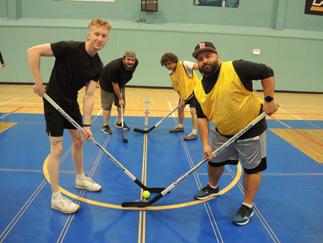
(Left) Acting Sub-Lieutenant Kyle Stymest of HMCS Venture and Master Sailor Jeff Boismier of Naval Fleet School (Pacific) get ready for the opening face-off for their floor hockey game.
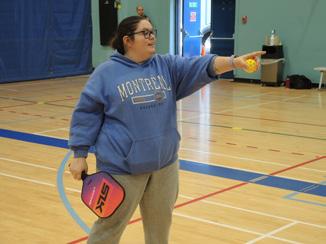
Sailor Second Class Ravenne Hull of HMCS Calgary reacts during a time-out in a pickleball match.
They shall grow not old, as we that are left grow old: Age shall not weary them, nor the years condemn. At the going down of the sun and in the morning We will remember them.
CENTENNIAL COURT
OFFERING STUDIO, 1 AND 2 BEDROOM SUITES IN LANGFORD
Centennial Court features a fully equipped gym, sauna, steam room, and yoga studio.
For those active days outside, a pet wash station is the perfect solution for keeping your furry friend and your surroundings clean. Perfect for hosting a work meeting, Centennial Court offers a lobby Starbucks coffee kiosk, business meeting centre, games room, and interor and exterior lounges to all residents
LIMITED TIME
One month free rent on a 13 month lease
Laurence Binyon 1914
Sailor Profiles
A Submariner’s Life: PO1 Thomas ‘Keith’ Griffin
Thomas ‘Keith’ Griffin was born on July 29, 1937, in Winnipeg, Man. Griffin joined HMCS Chippawa Naval Reserve in 1954 and served sea time in HMCS Kentville and HMCS Athabaskan. In July 1958, he joined the Royal Canadian Navy (RCN) Regular Force.
This was the start of a very long and distinguished career. Griff, as he was always called, first served on Canadian Destroyers, but in 1962 he was loaned out to the British Royal Navy (RN) to serve and learn all about submarines. From Feb. 9, 1962, to June 21, 1968, he served on four RN Submarines: HMS Aurochs, HMS Andres, HMS Opossum and HMS Orpheus. Griffin logged 866 days of sea time in these British submarines. After five years, he returned to the RCN, where he was sent to serve in HMC Submarines Onondaga, Okanagan and Ojibwa. From June 1967 to August 1976, Griffin logged 813 days of sea time as a Marine Technician/ Engine Room Artificer aboard submarines that were the pride of the RCN. Griffin was part of the engine room crew made up of 17 sailors. These 17 sailors all slept in the back aft of the sub in the same small area and ate together. They looked after the main engines and the electrical generators, while Griff also looked after the spare gear and parts for machinery. These were stored everywhere in the sub. Work for the engine room crew never stopped, even when tied up at dockside. On one long sail, Griffin’s sub was under the ice in the Greenland Ice sheet, sometimes called the gap, for seven days.
Keith Griffin’s best friend aboard the subs, and for many years afterwards, was Leading Seaman Donald Henry ‘Buster’ Brown, MMM, CD. Buster moved up through the ranks, and in 1989, he was appointed to the Admiral’s staff in Halifax, where he was promoted to the Command Chief Petty Officer, Maritime Command, a post he held until retirement. In 2001, Brown was lured into the Hollywood business, where he worked as a Submarine Technical Advisor for the movie K-19 The Widowmaker starring Harrison Ford. Donald ‘Buster’ Brown died on April 11, 2020, and is sadly missed by Griffin.
A brief story of the Canadian submarine service
On Aug. 5, 1914, Canada bought its first two submarines from a Seattle shipyard in the United States at the outbreak of the First World War. British Columbia’s premier, Richard McBride, bought the subs, and they were called His Majesty’s Canadian Ships CC-1 and CC-2.
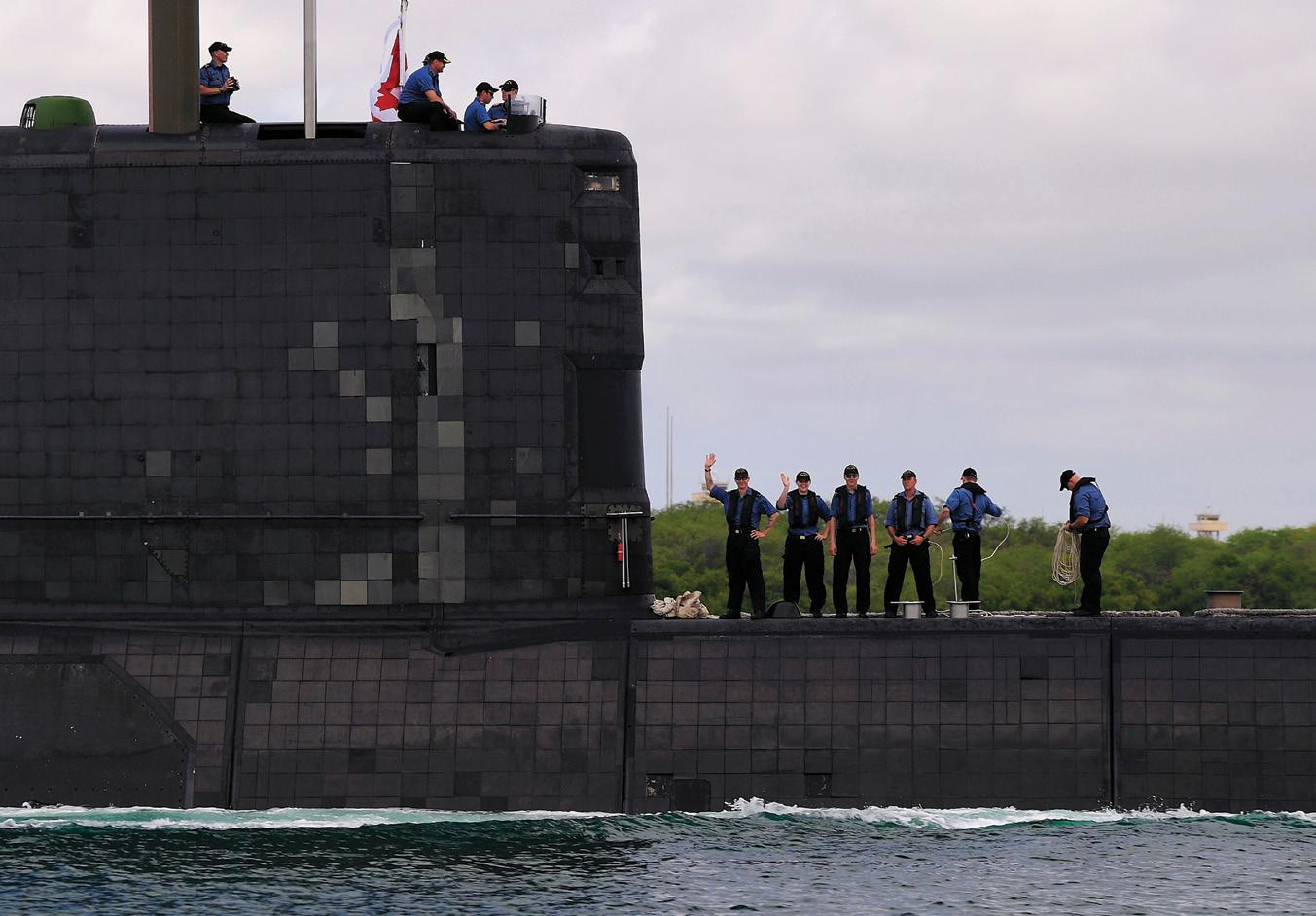
In 109 years, the RCN has commissioned 15 submarines. Initially, there were only 20 officers and sailors on these first subs. Then, from 1965 to 2000, there were 65 officers and sailors onboard. The four present-day submarines, HMCS Victoria, HMCS Windsor, HMCS Corner Brook and HMCS Chicoutimi carry a complement of 48 officers and sailors each.
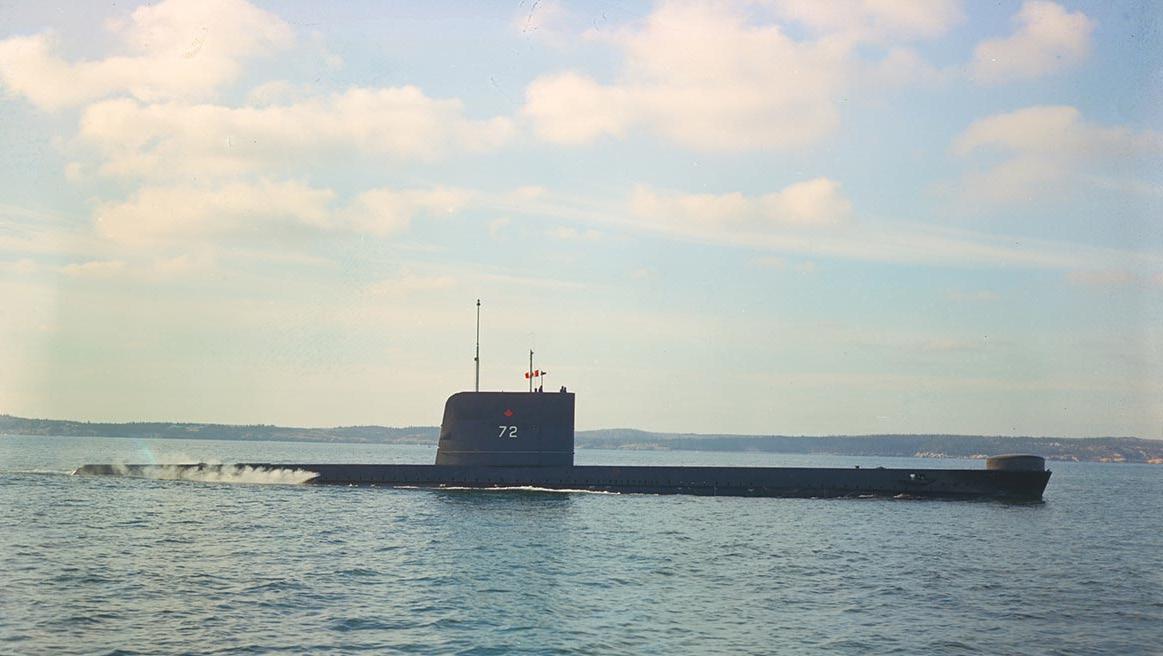
HMC Submarines Ojibwa, Onondaga and Okanagan were part of the Oberon class, or the big ‘O’s’. A two-shaft diesel-electric system powered them, and each had two ASR-1 16-cylinder diesel engines with a range of 17,000 kilometres.
These subs were built in Great Britain in HM Royal Dockyard Chatham, Kent, South-East England. They arrived in Canada in the mid1960s, and they were among the quietest subs in the world. These submarines formed the Halifax-based first Canadian submarine squadron, the 6th Submarine Division, and their names were chosen to honour several First Nation communities. In Halifax, these subs were meant to counter the presumed Soviet opponents during the Cold War. Most times, they were on very secret missions. A trip at sea could last from only a week to almost three months. On these extended trips, they had to head back to port to refuel and re-supply, plus allow for rest for the officers and crew.
The Oberon-class submarines had a big bubble on the bow/front of the sub, where the sonar was situated. Another feature of these subs was that they could dive to a depth of 700 feet, and they excelled at silent running (still moving).
Griffin was honoured many times while he served on the Oberon submarines. Some of his honours include:
• “Crossing The Equator”, which was King Neptune’s ceremony a Proclamation certificate for the Arctic Circle while he was aboard HMCS Margaree on April 17, 1977, and again on HMCS Huron on July 21, 1978, which earned him the honour of being declared a member of our Numb Friends League (Northern Branch)
• As a Leading Seaman, Griffin was presented a certificate from HMCS Onondaga, noting that he received the last ‘Rum Tot’ among the crew on March 30, 1972.
During his long naval service, Griffin spent 2,454 days at sea between June 25, 1954, and July 29, 1979. He retired from the RCN in July 1981 and from the Reserves in July 1991 at the rank of Petty Officer First Class. When asked, ‘Would you do it all over again if you had the chance?’ he responded, “yes, but I would do it differently.”
“You see, in the submarine service it was very hard to move up in the ranks because there were only a few crew members aboard the sub. To move up in ranks, a crew member had to wait for another to retire, keeping in mind that we were all about the same age. But don’t get me wrong, I’m very proud of my service to Canada!”
Vince Joyce Pictou County Military Museum
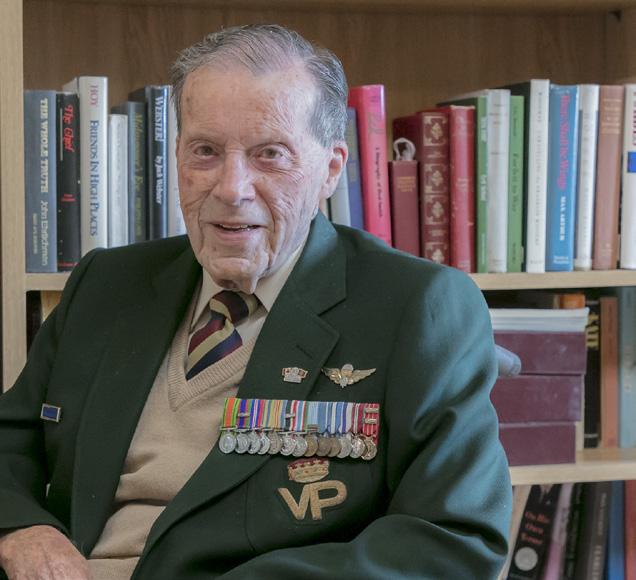
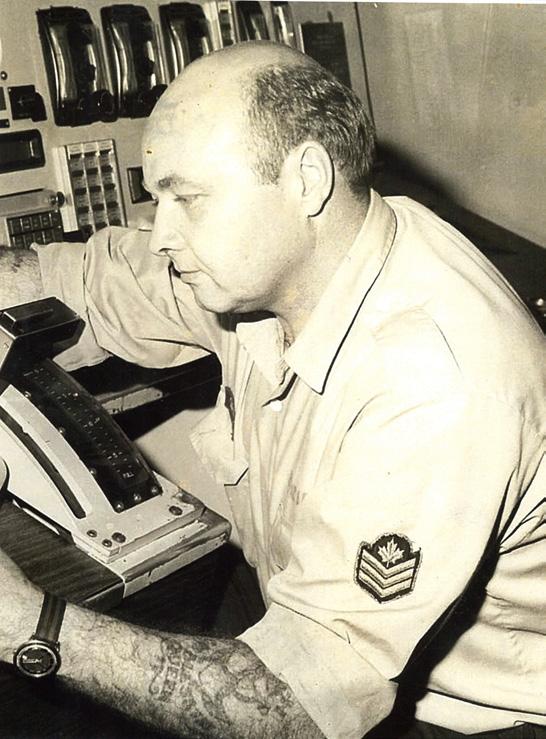
Above: Thomas “Keith” Griffin served in the Royal Canadian Navy from 1958 to 1981 before continuing his career as a Reservist, retiring in 1991. Thomas “Keith” Griffin sailed in Canada’s Oberon-class submarines, including HMCS Ojibwa,
HMCS ORBS in the Indo-Pacific
LCdr Christine Hurov HMCS Ottawa
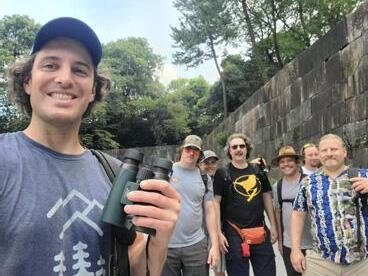
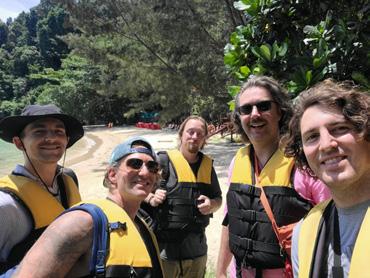
While deployed in the IndoPacific region, HMCS Ottawa’s crew took full advantage of the variety of port visits by forming a birdwatching club. His Majesty’s Canadian Ship Ottawa Roaming Bird Seekers, or HMCS ORBS for short, is the brainchild of Petty Officer Second Class (PO2) Simon Dakin and has conducted excursions as the ship has stopped in Japan, the Philippines, Thailand and Malaysia.
Inspired by his fiancée’s love of birds and his fondness for the outdoors, PO2 Dakin formed the club to explore the diverse ecosystems that Ottawa would be passing through as they conducted operations in the IndoPacific. So far, the bourgeoning club has been a resounding success. While alongside Yokosuka, the ORBS conducted urban birding in Tokyo through the grounds of the Imperial Palace. They were surrounded by skyscrapers, and the ponds and trees provided refuge for Japanese Tits, Oriental TurtleDoves and a single Little Grebe.
After Japan, the ORBS explored
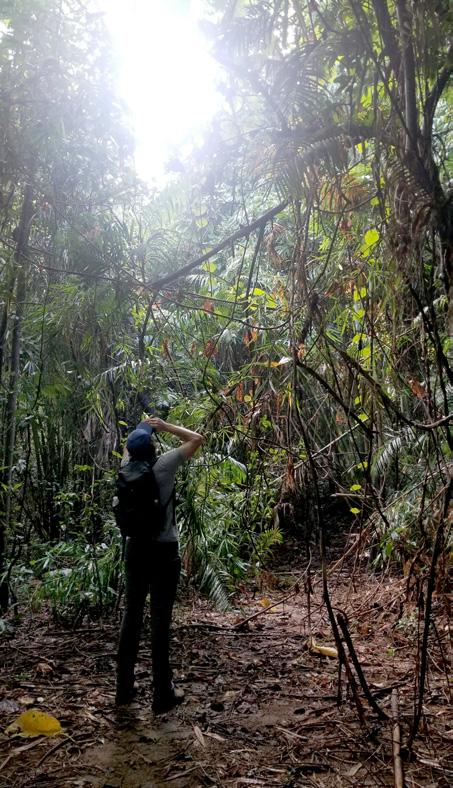
the jungle around Subic Bay and saw several endemics (species located only in the Philippines), including a Luzon Hornbill and Red-Crested Malkoha. In Thailand and Malaysia, members visited island conservation areas in Samae San Island and Tunku Abdul Rahman Park.
Both locations provided exciting birding and the opportunity to see pristine South China Sea beaches.
Between ports, crew members have taken a keen interest in identifying sea-giong birds that visit the ship. Knowing the difference between a Cattle Egret and a Red-Footed Booby has become easier with their shared experience.
In the latter half of the deployment, HMCS ORBS hopes to introduce more crew members to the wide hobby of birdwatching and will host more excursions. These activities will be even more impactful thanks to four pairs of binoculars secured by the PSP amenities fund. Follow the club’s Instagram, HMCS_ORBS, for updates on their adventures!
Club members visit the Imperial Palace in Tokyo. Photos supplied.
Members visit island conservation areas in Malaysia.
HMCS ORBS members in the Philippines.
A first-class opportunity:
Haida Sentry gives the public a taste of the Navy’s history and future
Royal Canadian Navy
Alongside Hamilton, Ont., sits HMCS Haida. It is a relic of the Second World War, the Korean Conflict and the Cold War, and proof of Canada’s longstanding commitment to international service.
Piquing the interest of onlookers and history buffs, the Haida Sentry program has Naval Reservists on-site at HMCS Haida during the summer months offering tours, and answering questions about the ship and the Royal Canadian Navy’s (RCN) participation in historic events.
Over the summer, 16 Reservists spent a week at Haida in teams of four, engaging with the public, veterans—one of whom served in Haida—and fellow reservists to learn and teach about the Navy’s history.
“They gained a first-class opportunity to learn about our Naval history,” said Commander (Cdr) Kevin Ng. “They benefited from building some comradeship and esprit de corps with sailors from across the country they wouldn’t have the chance to meet before.”
Cdr Ng says the unique program provides an opportunity to reservists who might not otherwise have such an immersive experience with the Navy. The Haida Sentry program currently targets junior reservists, but with this summer’s success, Cdr Ng hopes the program will become available to more sailors in future years.
The uniqueness of the Haida Sentry program appealed to Sailor First Class (S1) Hong Pan from the moment she heard of the opportunity. S1 Pan is stationed in Vancouver at HMCS Discovery but jumped at the chance to head to Hamilton.
“When I saw this job posting, I thought ‘I have to put my name there’. It’s such a great opportunity, it was out of my imagination,” she said. “When I applied, I was thinking I would get to see those museums, war airplane museums and Haida. By the time I got there, I was so amazed by the entire program set up.”
3 col (5.066”) x 5”
44, Nov. 4, 2019
Having initially joined the RCN with an interest in Canada’s naval history, S1 Pan was amazed by the planned activities for the participating Reservists and the public’s appreciation for her service.
Activities included learning about weapons, meeting veterans and visiting museums, working with Parks Canada staff, greeting visitors, and offering ship tours. However, the Financial Services Administrator was most impressed by her team. To her surprise, she says she was the most senior sailor in her group, allowing her to take on a leadership role within the group.
“I didn’t want to be a leader, but I had no choice but to become the leader,” S1 Pan says.
However, the discomfort of this unexpected role didn’t last long. She says her team was very experienced in deployments, and she was impressed by the group dynamic.
“This group is fascinating. We all came from different units, but we are similar in our time management,” she said.
S1 Pan says connecting with the public and answering questions about her role within the RCN was a highlight of her time with Haida Sentry. Some visitors even showed interest in their children joining the Navy in the future as she told them about her career.
For Cdr Ng, putting Reservists on the ship’s site also promoted the new Naval Experience Program (NEP).
“Recruitment is a huge aim of the Haida Sentry program. Given that we have the NEP, it’s a great new opportunity to share with the public,” he said.
The NEP offers naval training and a year of paid service with the RCN to allow aspiring sailors to explore a career with the Navy.
“Hoping some of those seeds are planted and people will be excited to join up with the Navy in the coming weeks and months and years,” Cdr Ng said.
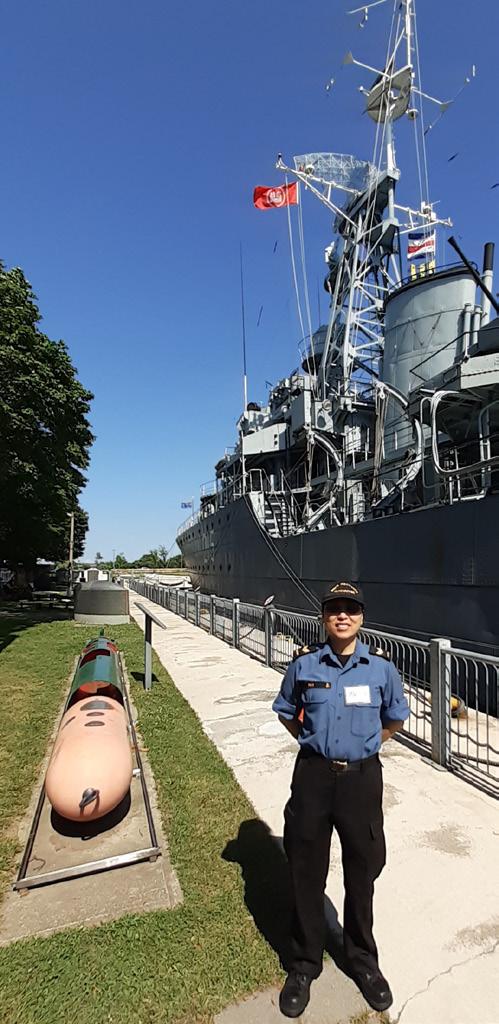
Sailor First Class Hong Pan in front of HMCS Haida. Photo provided.
First Home Savings Plan- a new way to save
Shannon Childs Financial Planner, CFB Esquimalt
New this year, the First Home Savings Plan (FHSA) is a registered product that takes pieces of the TaxFree Savings Account (TFSA) and the Registered Retirement Savings Plan (RRSP) to make a more accessible vehicle to save for a home. Similar to its counterparts, this investment account can hold various products. Individual risk and timeline for using funds will guide you in selecting which is best for you.
To open a FHSA, you must be a Canadian resident between 18 and 71. To qualify, the home must reside in Canada, and you must be a first-time home buyer intending to occupy the space as your principal residence within a year of buying or building. A first-time home buyer is classified as an individual who has not lived in a home owned by them or their spouse in the past four calendar years.
The annual contribution limit is $8,000 annually, with a lifetime contribution limit of $40,000. There is no need to feel rushed to maximize; the plans are suitable for various timelines, allowing the account to be open for 15 years. You can take your time and ensure the property purchased is right for you.
When allocating contributions to the FHSA, claiming the deductions against our taxable income is a huge benefit. This helps lower taxable income and helps us to achieve your goals faster. However, only the account holder is eligible to claim the deduction. Income and capital gains earned in FHSA are not taxable and grow tax-free.
If the budget is tight – do not worry; similar to the TFSA, your room will carry forward to the following year (up to a maximum of $8,000 cumulative carry forward from past years). On the other side, if you can maximize each year, beware that contributions over the allowed limit are subject to a penalty of 1% per month.
The FHSA provides you with a specific vehicle focused on one goal: to purchase a home. Unlike the TFSA, FHSA cannot be accessed as readily; withdrawals outside the first-time home purchase are subject to taxes. Everyday TFSAs can be drained too quickly for subsequent purchases or to pay down debt, and we can find ourselves starting from scratch again. The FHSA allows us to continue our commitment to purchasing a home.
Knowing that $40,000 does not go far in Victoria, FHSA can be combined with other vehicles, such as the RRSP and TFSA, thereby maximizing our down payment. Although we can withdraw up to $35,000 from our RRSP for the first-time home buyers plan, we must pay back any funds withdrawn for our home purchase. This can take away benefits from future contributions when our tax brackets have increased, and repayment contributions do not count towards lowering that income. With this in mind, funds can also be moved from existing RRSP into the FHSA. The transfer does not count towards another deduction and will utilize the available FHSA room. Talk to an advisor to see if this decision makes the most sense for you.
After years of savings, you are nearing your goal and ready to withdraw funds for our down payment. What happens to our FHSA account? FHSA accounts must be closed the year following the qualifying withdrawal. What if you do not purchase a home within the designated period? After 15 years have passed or the account holder has reached the age of 71, the FHSA account must be closed. Unused funds can be transferred to an RRSP or Registered Retirement Income Fund (RRIF) tax-free without needing a contribution room. Alternatively, funds can be withdrawn subject to taxes.
Please book an appointment with our SISIP Financial Planners to maximize your savings and design a plan to help you reach your goals.
HMCS VENTURE
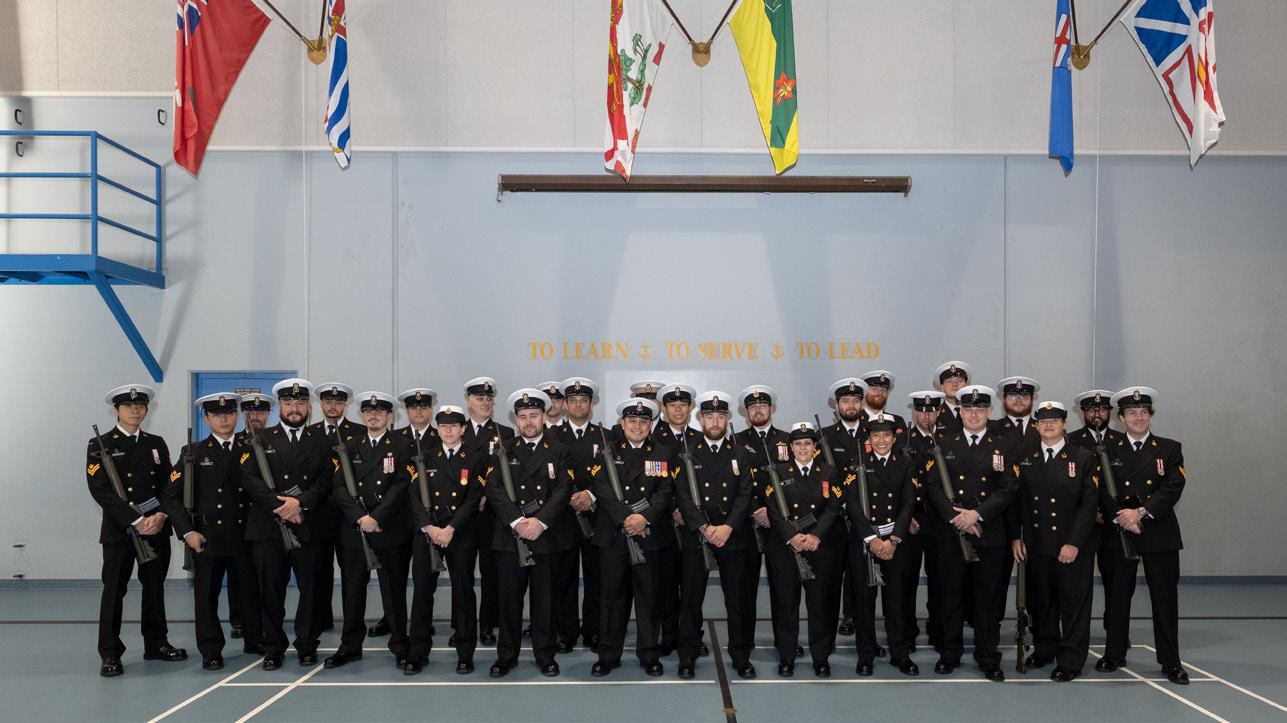
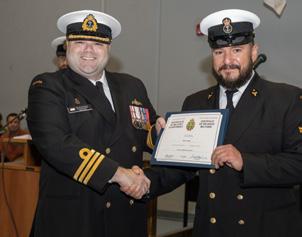
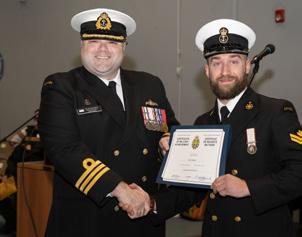
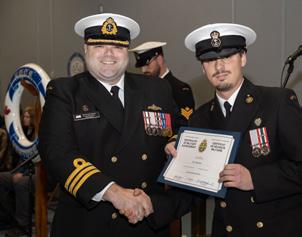
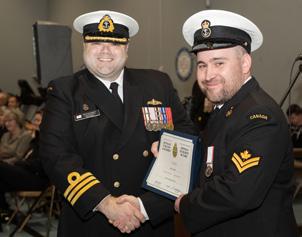
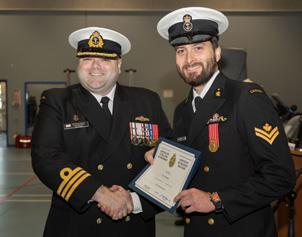
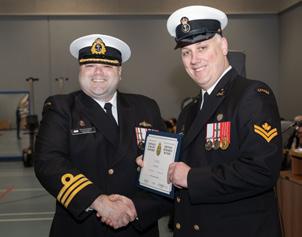
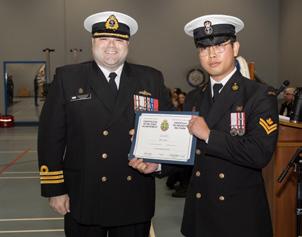
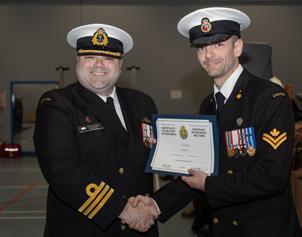
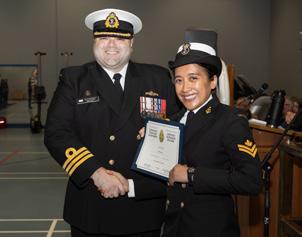
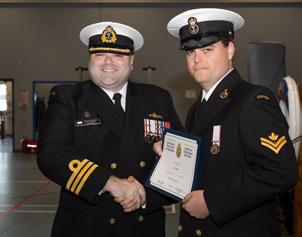
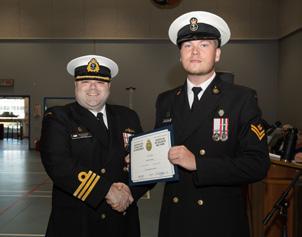
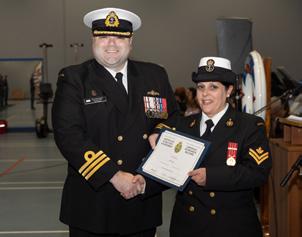
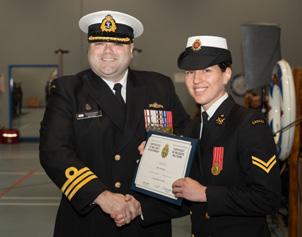
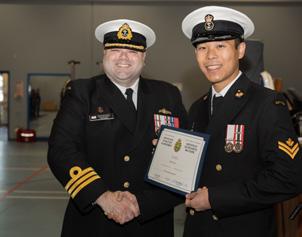
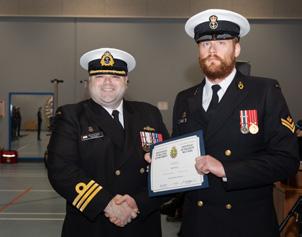
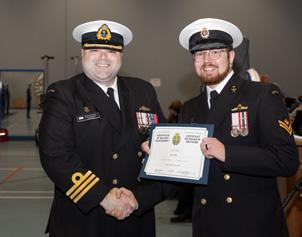
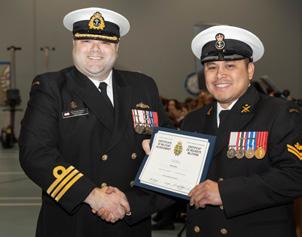
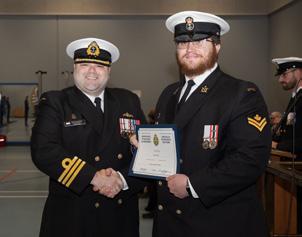
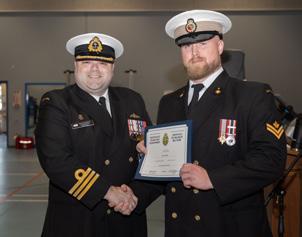
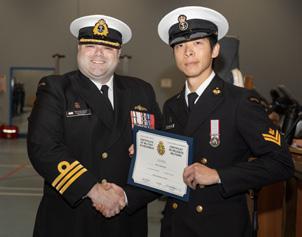
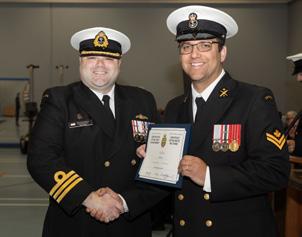
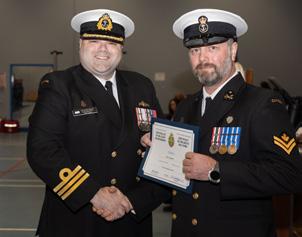
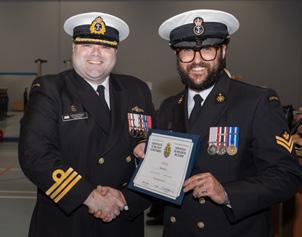
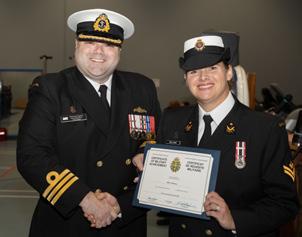
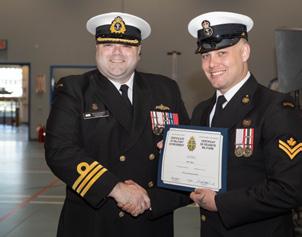
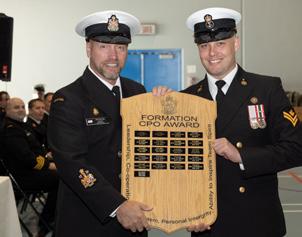
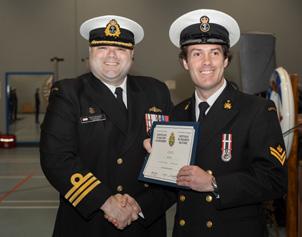
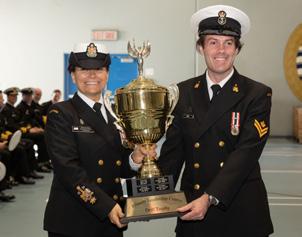
Commander Jeremy Samson presented at the Primary Leadership Qualification 0578 Graduation Ceremony, Nixon Bldg WP-1367, Work Point Barracks, CFB Esquimalt on Oct. 27
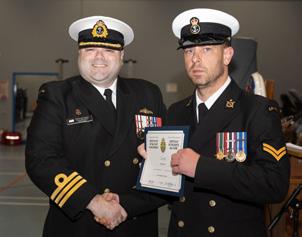
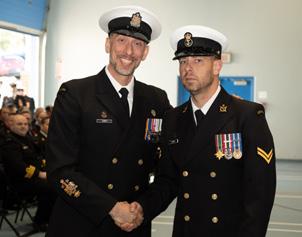
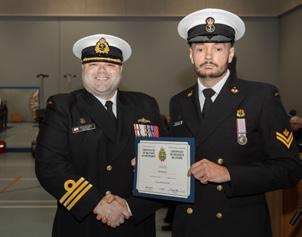
Master Sailor A. Abela accepts a Certificate of Military Achievement.
Master Sailor G. Chamberlain accepts a Certificate of Military Achievement.
Master Sailor M. Connors accepts a Certificate of Military Achievement.
Master Sailor V. Cornes accepts a Certificate of Military Achievement.
Master Sailor P. Earle accepts a Certificate of Military Achievement.
Master Sailor P. Galicia accepts a Certificate of Military Achievement.
Master Sailor T. Haggith accepts a Certificate of Military Achievement.
Master Sailor B. Hart-Young accepts a Certificate of Military Achievement.
Master Sailor J. Hayes accepts a Certificate of Military Achievement.
Sailor First Class N. Lamontagne accepts a Certificate of Military Achievement.
Master Sailor K. Loung accepts a Certificate of Military Achievement.
Master Sailor G. McLean accepts a Certificate of Military Achievement.
Master Sailor F. Miller accepts a Certificate of Military Achievement.
Master Sailor A. Beverly accepts a Certificate of Military Achievement.
Master Sailor C. Bissonette accepts a Certificate of Military Achievement.
Master Sailor C. Caddell accepts a Certificate of Military Achievement.
Master Sailor T. Marsh accepts a Certificate of Military Achievement.
Master Sailor R. Mckinstry accepts a Certificate of Military Achievement.
Master Sailor T. Moe accepts a Certificate of Military Achievement.
Master Sailor M. Mojica accepts a Certificate of Military Achievement.
Master Sailor M. Prince accepts a Certificate of Military Achievement.
Master Sailor V. Routhier accepts a Certificate of Military Achievement.
Master Sailor S. Samos accepts a Certificate of Military Achievement.
Master Sailor A. Saygnavong accepts a Certificate of Military Achievement.
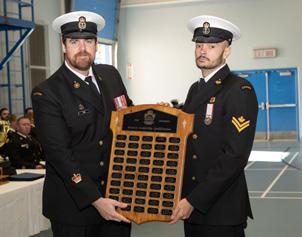
Master Sailor T. Marsh accepts the Formation Chief Petty Officer Award from Chief Petty Officer First Class Steve Wist.
Master Sailor T. Moe accepts the Drill Trophy for all-around best drill performance from Chief Petty Officer First Class Sue Frisby.
Sailor First Class S. Samos accepts the CAF Ethos Award from Chief Petty Officer First Class Andre Aubry.
Master Sailor R. Mckinstry accepts the Top Student Award from Petty Officer First Class Adrian Jack.
Master Sailor J. Sidhu accepts a Certificate of Military Achievement.
Master Sailor S. Van Maurik accepts a Certificate of Military Achievement.
Master Sailor M. Walczak accepts a Certificate of Military Achievement.
Master Sailor A. Williams accepts a Certificate of Military Achievement.
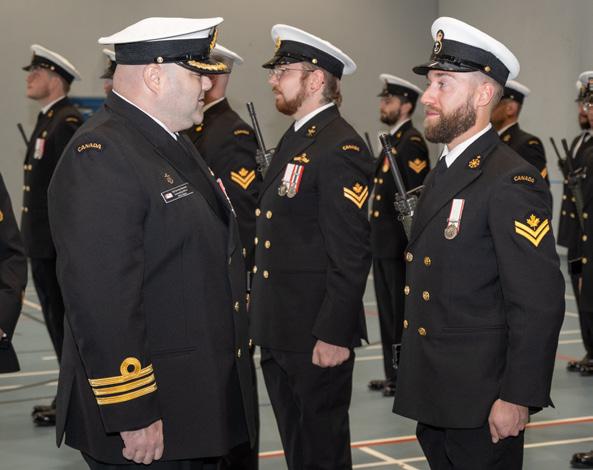
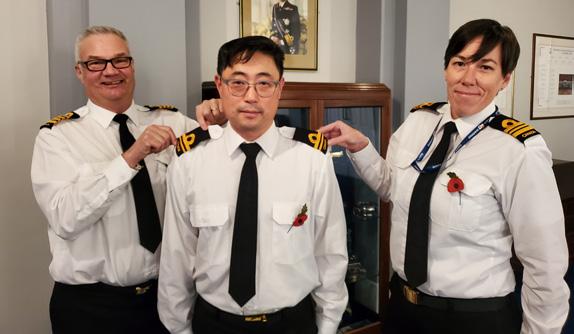
Captain (Navy) Christopher Peschke, Canadian Defence Liaison Staff in London, England (left) and Lieutenant-Commander Haley van Poorten of HMCS Venture (right) promote Sub-Lieutenant Young Min Kim while on course on Nov. 3 at HMS Sultan in Gosport, UK.