MORALE & WELFARE NEW S | CFB ESQUIMALT, VICTORIA, BC
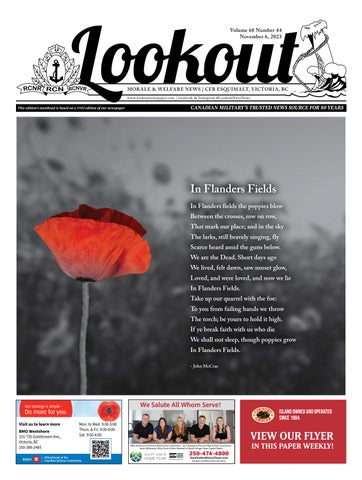
In Flanders Fields
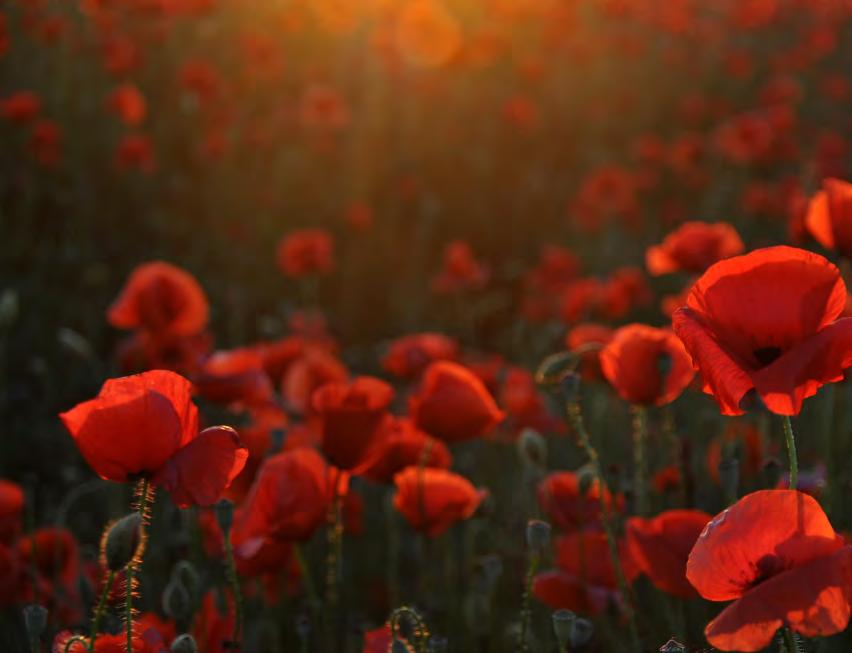
In Flanders fields the poppies blow
Between the crosses, row on row,
That mark our place; and in the sky
The larks, still bravely singing, fly Scarce heard amid the guns below. We are the Dead. Short days ago
We lived, felt dawn, saw sunset glow, Loved, and were loved, and now we lie In Flanders Fields.
Take up our quarrel with the foe:
To you from failing hands we throw The torch; be yours to hold it high.
If ye break faith with us who die
We shall not sleep, though poppies grow In Flanders Fields.
- John McCrae
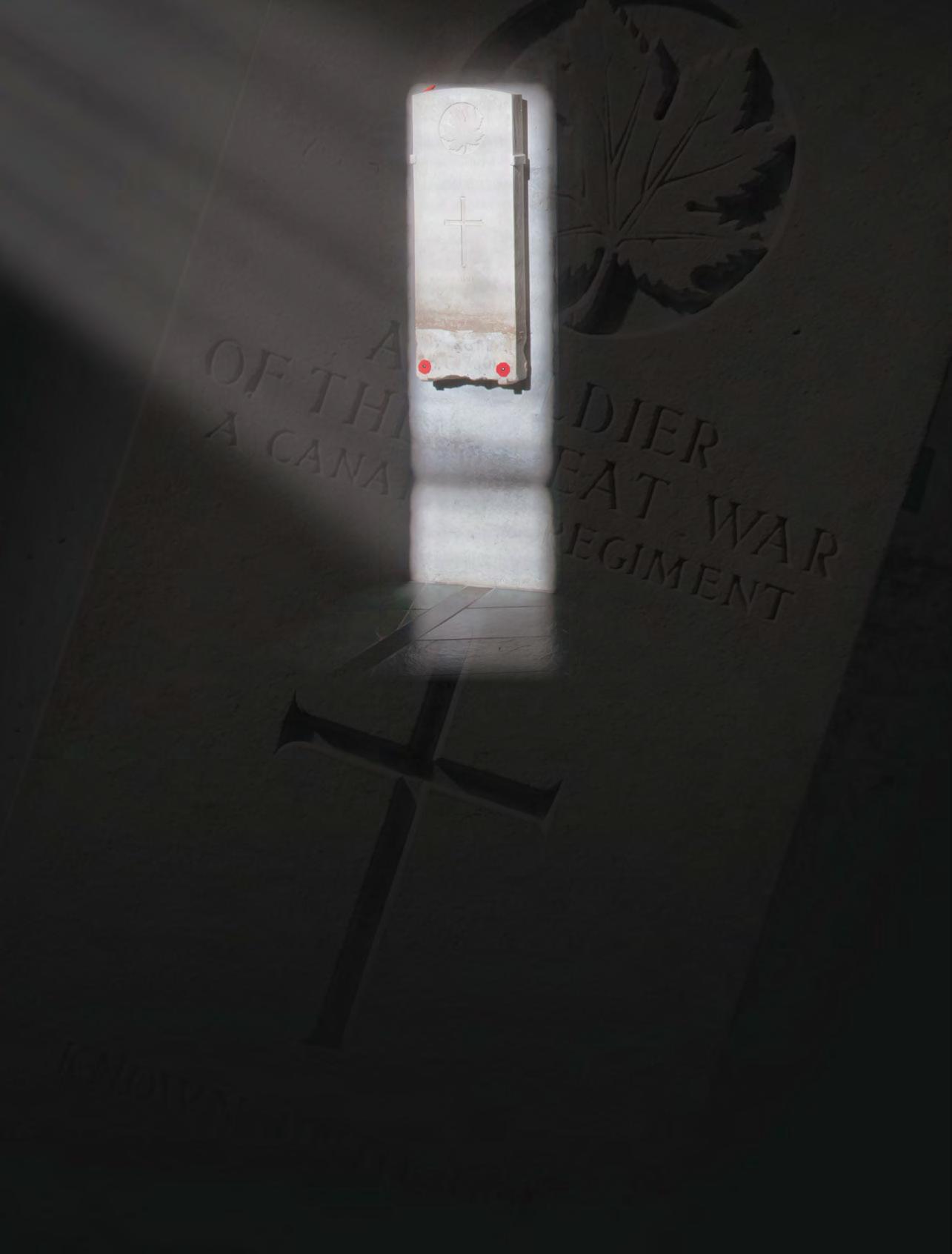
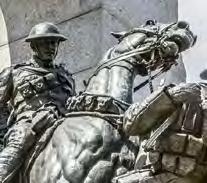
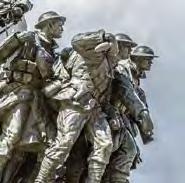
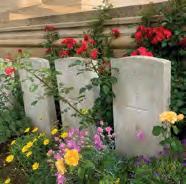
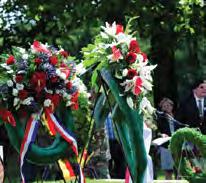
Sunlight illuminating the tombstone of the Unknown Soldier Memorial Hall, Canadian War Museum
CWM2011-0055-0074-DM CWM2011-0049-002-DP1
A sea of poppies is coming to CFB Esquimalt
Peter Mallett Staff Writer
The Poppy Campaign is one of the most important events for the CFB Esquimalt Base Commander, as it is also a personal link to his late grandfather.
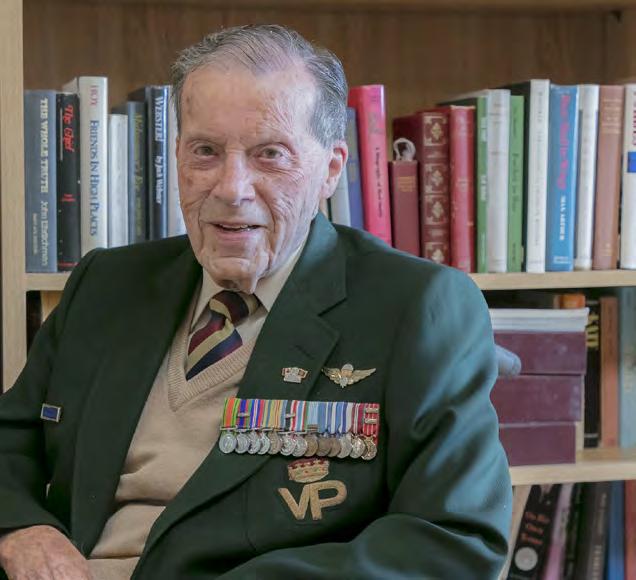
Sergeant (Sgt) William Whiteside, Captain (Navy) (Capt(N)) Kevin Whiteside’s grandfather, was a member of the Royal Canadian Air Force No. 428 ‘Ghost’ Squadron during the Second World War. Capt(N) Whiteside says he wishes more meaningful, detailed conversations about his grandfather’s wartime experiences took place before he passed away two years ago at the age of 98.
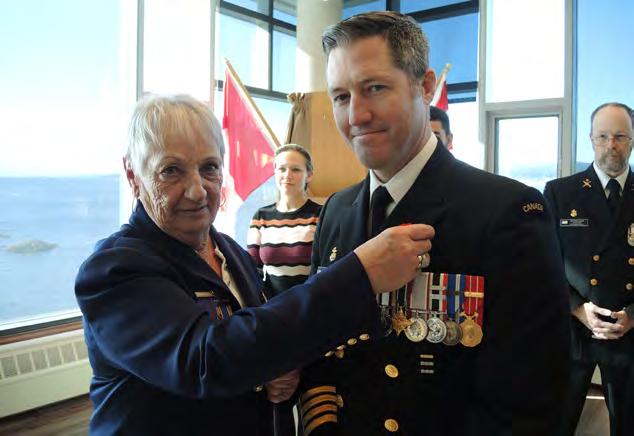
Capt(N) Whiteside kept his grandfather in his thoughts as he and other members of CFB Esquimalt joined representatives of the Royal Canadian Legion at the Chief and Petty Officers’ Mess on Oct. 27 to kick off this year’s Poppy Campaign at the Base.
“We must take advantage of every opportunity to get to know members of the Greater Defence Team and the community that supports us so much,” Capt(N) Whiteside said.
The Base Commander’s sentiment rang true for Sylvia Vink, this year’s Poppy Chair of the Esquimalt Royal Canadian Legion Branch 172. Vink, also the second Vice President of the branch, has been pinning poppies on members of CFB Esquimalt for the past 12 years.
“It’s always very exciting to kick off the campaign at the base,” said Vink. “This year, I am pinning poppies on 19 attendees, and I always look forward to meeting and interacting with CFB Esquimalt members.”
Capt(N) Whiteside was the first of the 19 recipients to receive a poppy.
“On Remembrance Day, we remember past and present members, who set the conditions for the free lives that we lead today,” said Capt(N) Whiteside.
The National Poppy Campaign started on Oct. 20. at a ceremony at Rideau Hall in Ottawa with Her Excellency Mary Simon, Governor General of Canada, and Bruce Julian, Royal Canadian Legion Dominion President, pinning the very first ceremonial poppy for 2023.
On Oct. 25, a ceremony commenced at Victoria’s Government House, kicking off the 2023 Poppy Campaign in British Columbia.
The Honourable Janet Austin, Lieutenant Governor of British Columbia, and Craig Thomson, President of the Legion’s BC/Yukon Command, pinned the first poppy.
Vink says that Branch 172 continues searching for volunteers to help distribute poppies at area businesses and canvass donations. Interested individuals can contact her at svink@shaw.ca or 250-361-8124.
Sylvia Vink, Poppy Chair of Royal Canadian Legion Esquimalt Branch #172, pins the first poppy on the lapel of Captain (Navy) Kevin Whiteside, CFB Esquimalt Base Commander, during a First Poppy ceremony at The Chief and Petty Officers' Mess.
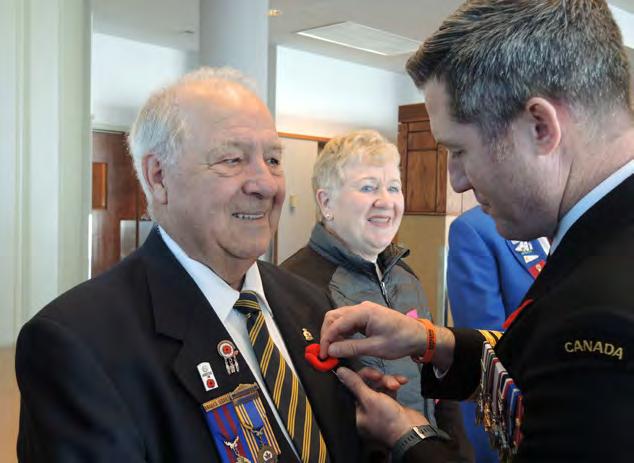
Capt(N) Kevin Whiteside, CFB Esquimalt Base Commander, pins a poppy on the lapel of John Williams, Royal Canadian Legion Esquimalt Branch #172 member. Photos: Peter Mallett/Lookout Newspaper
MANAGING EDITOR
Jazmin Holdway jazmin.holdway@forces.gc.ca
EDITOR
Kate Bandura
WRITER
250-363-3130 kateryna.bandura@forces.gc.ca
Peter Mallett mallett.peter@cfmws.com
PRODUCTION
Leslie Eaton
250-363-8033 workstation3@lookoutnewspaper.com
ACCOUNTS/RECEPTION
Trina Winters
ADVERTISING
Joshua Buck
250-363-3127
778-977-5433 NEW military.base.advertising@gmail.com
Published each Monday, under the authority of Capt(N) K. Whiteside, Base Commander.
Le LOOKOUT est publié tous les lundis, sous l’égide du Capv K. Whiteside, Commandant de la Base.
The editor reserves the right to edit, abridge or reject copy or advertising to adhere to policy as outlined in PSP Policy Manual. Views and opinions expressed are not necessarily those of the Department of National Defence.
Le Rédacteur se réserve le droit de modifier,de condenser ou de rejeter les articles, photographies, ou annonces publicitaires pour adhérer au Manuel des politiques des PSP. Les opinions et annonces exprimées dans le journal ne réflètent pas nécéssairement le point de vue du MDN.
Circulation: 2,000 plus 300 pdf downloads per week
Follow us on Facebook, Twitter and Instagram to join our growing social media community.
A Division of Personnel Support Programs
CFB Esquimalt, PO Box 17000 Stn. Forces Victoria, BC V9A 7N2 Web: www.lookoutnewspaper.com Fax: 250-363-3015
Canadian Mail Product Sales Agreement 40063331
Thomas Goenczi Lookout contributor
As a past-serving member, I remember how the build-up to 11/11 was stricken with an interesting sense of anxiety. I think such anxiousness is present mainly for those in the earlier years of their careers in the Forces.
In my first two to three years, I feared my uniform wouldn’t be good enough. I would spend the night before working on my boots until my hands looked like a coal miner’s; I was always the type of person to look for a little ‘butane beautification’ to get my boots looking glassy. I guess therein lay my anxiety.
On the other side of that anxiousness though, was a genuine and immense sense of pride, which kicked in after picking up the DEUs (Distinctive Environmental Uniforms) from the dry cleaners (for some of you, this is the first time you’ve been back to the cleaners since last year – you know who you are).
There is no sweeter feeling than pulling out your dress uniform that faithful morning in November, putting it on, and needling the poppy into the fabric. There’s this peculiar sense of excite-
ment that is unavoidable at this point, possibly because everyone who is serving is doing the same thing at the same time, preparing for the solemn contemplation of those who have fallen.
Once at the Cenotaph or with the parade, the mood shifts. That excitement turns to earnest reflection, and a sense of astonishment is evoked. It is hard not to be struck by the magnitude of the day when you witness the fields of poppies placed over the hearts of many.
All of us, from all walks of life, military to civilian, have taken the time to meditate on the losses that provided us the peace we live in today. It is a powerful, collective affirmation that induces thoughts of our mortality and those we hold dearest in our hearts.
When the bugler hits that first note of the ‘Last Post’, something within gets conjured up. The atmosphere is enveloped by a shared mournful contemplation. This deep reflection on the people who sacrificed their lives to uphold the sanctity of this country is sometimes too much for us to grasp.
To think that someone took their last breath fighting for their country, for their family, and for what they stood for has always been something difficult for me to come to terms with. Sure, we all sign on the dotted line knowing that it is a potential, but when the selflessness of others truly confronts us the way we are on Remembrance Day, it brings a much-needed level of compassion to those affected by those
who sacrificed it all. The tension caused by lamentation is released at the end of two minutes of silence, and we make our way to our friends and families with a more profound sense of appreciation for them. Afterwards, for some, there is a celebration, an outlet for the joy, to share in the gratitude we have for the fallen. This is a way to honour those by living how they had hoped we would, to enjoy the peace that we share.
Remembrance Day can be difficult for individuals. Many veterans are still healing from the wounds and need their time away from it all. Some of us are endowed with a deep sense of patriotic pride and are ready at a moment’s notice to do whatever we are all called upon for our country. No matter where you find yourself on this day of commemoration, give your attention and gratitude to those who made the ultimate sacrifice for our country; perhaps it may lead you to have a more profound sense of compassion for yourself and the others around you.
Thomas Goenczi is an RCN Veteran and MA Clinical Counsellor with Private Practice: Well Then Therapy.
The content is not intended to substitute professional advice, diagnosis, or treatment. Always seek the advice of your mental health professional or other qualified health provider with any questions regarding your condition.
I Stage and I Sell!
The fallen red poppy
Heather Cowley Admin Assistant to MARPAC HQ CO
It’s that special time of year! We see many people bearing the Remembrance Day red poppy pin. What’s the meaning behind the red flower? What does it symbolize for you? Brave soldiers marching? The In Flanders Field poem? Wartime historic missions of long ago?
For some people, this red poppy means the above and significantly more, yet for others, perhaps it represents just a change of season.
One early November evening, my husband Rick and I were out for dinner at a local establishment, watching a ballgame on the big screen. The table in front of us seated three friends, who had arrived from the cold outside. As one removed her warm coat, her red poppy dislodged and fell to the ground. We saw it land, face down under her seat on the dusty floor. My husband, an Airforce veteran of 36 years, felt the value and significance of this poignant poppy immediately. This red poppy, intended to be worn proudly, could not be left abandoned on a cold floor to be crushed, ruined, or forgotten. Duty compelled him to protect and return this meaningful emblem to its rightful owner.
Silently, he rose from the comfort of his chair, walked over, retrieved the precious fallen red poppy, and dusted it off, gently and quickly placing it face up beside its owner. He was completely unnoticed in this busy, noisy establishment, by anyone, except me.
I was humbled though not surprised by this small act of thoughtful kindness from my husband, forever and always, a soldier’s heart.
I desperately wanted to tell the customer of my husband’s retrieval of her fallen poppy, but Rick instantly said, ‘No, say nothing please’. His humility is always first and foremost, not only in this instance but in his many acts of instinctive generosity, often unnoticed.
He astounds me. His civility and kindness performed without expecting praise, exudes from his big heart, much bigger than mine can comprehend. He sincerely and without a doubt, is my hero.
I sat teary-eyed, fully aware of what a simple fallen red poppy meant to him. As a military spouse, I witnessed many joys and heartaches, and understood the life of a Canadian Armed Forces member. My husband has lived through countless times away from family and loved ones, never having a home for long, the numerous moves, the dangerous overseas tours, fears, and loneliness. Military life is full of ups and downs, with tireless dedication to all else, this country and the monarch; a career well done with many achievements, though hand-inhand with endless sacrifices.
So, as time came for the three friends to leave, I again said to Rick, ‘I have to tell them what you did!’ and, again, his response was, ‘No, I did what was important, there’s no need to draw attention to it’.
Sometimes, a story is so deserving it needs to be heard. I ran
outside and introduced myself to the lady whose poppy had fallen. I explained how my retired military husband had noticed it fall to the ground, and how he couldn’t let it rest alone on the cold floor. She said she noticed it on the table beside her and wondered how it got there but thought nothing more. Yet now, she wanted to meet Rick to pay her respect. All three friends were visibly moved by his simple performance to return one red poppy, quietly and unobserved. ‘Please, I’d like to meet him and thank him!’ she said.
As the four of us returned to Rick’s table, he gave me a ‘look’, yet shyly said hello and shook hands with each lady. He graciously accepted the thank-yous and listened to why they each displayed a poppy. We were all briefly united, very grateful to express our sentiment for that fallen poppy, now a positive outcome story to tell. They thanked him for what he’d done that evening and for his many selfless years of dedicated service to our country. My heart was proud and bursting as we all shared a moment of thankfulness amongst strangers. As they said goodbye and turned to walk away, I overheard them say, ‘Well now, wasn’t that so very special!’, and ‘Indeed, it certainly was!’. You never know who’s watching and listening, you never know what a small act of kindness can mean to someone else. I’m glad we shared this moment. We need uplifting, inspiring news and to know there are people out there doing the right thing, no matter how small.
Fardous Hosseiny
Atlas
Two minutes. It isn’t that much time, right? We are supposed to take two minutes to brush our teeth. In that time, we can easily tidy up our workspaces, heat leftovers, or make our beds. We don’t put much thought or effort into those trivial day-to-day things.
It’s also possible to accomplish important things in that short amount of time. One of those is spending two minutes on November 11 reflecting on those who have served our country.
When we think of veterans, those responsible for many of the freedoms we enjoy as Canadians, we may picture a man in his eighties, marching on Remembrance Day, wearing a beret and a row of service medals. While this is accurate, it is just one of the many different faces who could be representing what a veteran is. In Canada today, there are over 450,000 veterans of all ages with diverse backgrounds and experiences, each with a different story. Some may have served in the Second World War or the Korean War decades ago. Others in the
Gulf War, Somalia, Rwanda, or the Balkans in the 1990s, in Afghanistan from 2001 to 2014, or more recently in Iraq or Latvia. Veterans have also served on home soil, providing support during natural disasters such as devastating wildfires or floods and in long-term care homes to relieve healthcare workers during the global pandemic. They are all veterans.
Throughout these many conflicts, we have lost more than 100,000 Canadians to war service. Their families, friends, comrades-in-arms and Canada feel their loss.
This doesn’t consider the daily acts of courage that are a part of service or those whose lives continued when they returned home, their lives forever changed and sometimes haunted by what they’ve seen. Many of them live with injuries due to their service, including invisible ones such as Post Traumatic Stress Disorder (PTSD), depression and anxiety.
Throughout this service, the families of Canadian Armed Forces (CAF) members are at home, holding down the fort while their loved ones fulfil their sworn duty. These family members are the ones who welcome CAF members back and support them through recovery from their physical, mental, and moral injuries. Their sacrifices also deserve our recognition, as they often are the people living with the impacts of service and related injuries of their loved ones. While most of us will never know what it’s like to walk in their combat boots, there is
much we can do to support active military members and veterans. We can advocate for the highest level of care and improved mental health supports that take into account the unique costs of service on both the mental and physical well-being of our members and the needs of the whole person and their families. We can listen, acknowledge, and honour the military sacrifices of generations past and present.
We can also offer support by thanking them and listening to their stories when we see them. A simple 'thank you for your service' or asking questions like 'Can you tell me something about the world that you learned during your service?' can go a long way in making service members and veterans feel recognized and heard. They have given up so much of themselves in service of our country, to give back, to stand up for the freedom of their fellow Canadians and foreign countries so that others can live in peace and free of terror.
This Remembrance Day, take those two minutes to remember those who gave up their lives for our freedoms and to think of our living veterans and those who continue to serve each day.
Remembrance Day and Veterans’ Week is not the only time to remember our veterans and their families. We can engage with them, listen to their stories, learn from them, and keep the conversation going throughout the year. Lest we forget.
A moment to reflect and to remember them
“Your order has been delivered”
Michael McWhinnie NTG
The first of two recently acquired Royal Canadian Navy (RCN) Sail training vessels arrived at Esquimalt Harbour, its new ‘home port’, on Sept. 26.
Created in the Bavaria manufacturing facility in Germany, the C45 sailboats were shipped over 8,000 kilometres by cargo vessel, rail, and truck to the contactor facility on Granville Island for assembly and final preparation. The last leg of the journey, the ship completed under sail.
The contract for the two sailboats was awarded to Yacht Sales West in Sidney. Crewed by a half dozen RCN Sail instructors and under the care and custody of a contractor representative, the official delivery concluded with the boat’s arrival at the small boat floats in Pilgrim’s Cove adjacent to Naden Building #126.
The vessel was met by a small group of representatives from the Naval Fleet School Pacific (NFS(P)), including Commander (Cdr) Meryl Sponder, Commandant of NFS(P).
“The tradition of sail train-
ing is as old as the RCN itself,” she explained. “The CS36s we currently operate have served the Navy well since 1985. The procurement of the Bavaria C45s will allow us to do much more and ensure we maintain a vibrant sail training program for decades to come.”
After the second boat is delivered to NFS(P), they will both undergo a naming ceremony and receive visual identifiers and RCN-branded sails. Most importantly, once NFS(P) staff have familiarized themselves with the new vessels, they must qualify their instructor cadre and develop new training material for students. Managers anticipate the boats will reach full operational capability by late spring 2024.
RCN Sail runs courses for several groups, prioritizing Regular Officer Training Program participants during the summer and personnel awaiting training throughout the year. Instruction levels vary from introductory to advanced, and any member of the local military community may apply.
“Today is a great day to be in the Navy,” said Cdr Sponder. “These boats are an investment
in the professional development of our people that will also be fantastic public ambassadors for the RCN.”
Compared to their older counterparts, the C45s represent a step up regarding size and accommodations. The addition of 8 berths will eliminate the need for 'hot bunking' and logistical provisions such as hotels and a support vessel on longer races. The extra deck space will allow for greater student throughput, more advanced training, participation in a wider variety of sailing competitions as well as operating the boats in more impactful outreach and attraction activities.
Cdr Sponder said the benefits of sail training for military personnel range from developing an understanding of the maritime operational environment to honing small team leadership skills.
“For anyone not yet enrolled but considering a dynamic and exciting career in the RCN, I hope the possibility to experience sailing, under direction of our experienced staff aboard these modern, state-of-the-art vessels is added incentive,” concluded Cdr Sponder.
All Quality Foods stores will be closed November 11 to allow all of our people the opportunity to observe Remembrance Day with their families, friends, and neighbours.
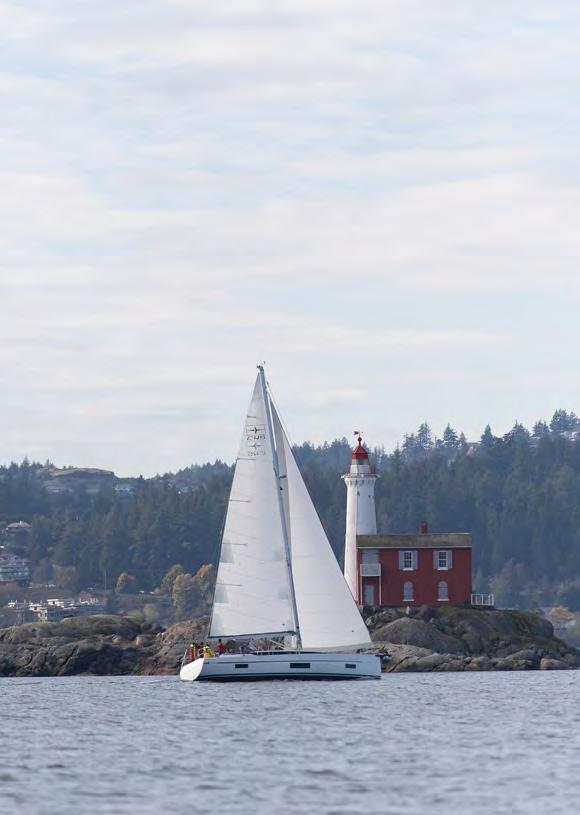
Bavaria 45 Class sails into Esquimalt Harbour. Photo: Master Sailor Valerie Leclair, MARPAC Imaging Services
Hard work pays off for Asterix member
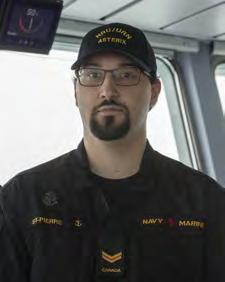
The winner of the Sailor of the Third 2023 Quarter Award did not believe he was selected at first. So, his chain of command decided to play a little prank.
As Sailor First Class (S1) Marc-Andre St-Pierre recalls, he saw one of his
OP PROJECTION
supervisors carrying a large envelope with the words ‘UDI (Unit Disciplinary Investigation) for S1 St-Pierre’.
“I was very confused since I did not recall doing anything wrong,” S1 St-Pierre says.
Later that day, his supervisor led him into a meeting in the ship’s portside hangar. The Senior Naval Communicator (NAVCOM) started to read off the Sailor of the Quarter Award presented by the Commanding Officer. Upon completion, S1 St-Pierre received a warm round of applause from the crew.
S1 St-Pierre works as a Senior Hand of the Watch in Naval Replenishment Unit (NRU) Asterix, currently deployed in the Asia-Pacific Region on Operation (Op) Projection
The award is commonly bestowed to junior-rank members who have gone above and beyond the call of duty. An internal Royal Canadian Navy (RCN) memo stated that S1 St-Pierre’s dili-
Sailing aboard the Asterix has provided a sense of wonder and many perks for military and civilian employees aboard, S1 St-Pierre says.
“It’s impossible not to think about having a single cabin with your own shower and an amazing gym with a personal trainer,” he said.
His job is far from a vacation, though. Senior Hand of the Watch has many responsibilities, including message processing and maintaining communication with international partners from Japan, Australia, the United States, and the Philippines.
His other responsibilities include managing and updating computer servers onboard, assisting members with IT issues, creating DWAN accounts for new members,
gence, hard work, and attention to detail had caught the attention of his supervisors, who named him for the award.
In winning the award, S1 St-Pierre acknowledged the contributions of his coworkers and supervisors and said he would remain committed to continually enhancing his abilities as a sailor.
“I have been inspired by so many of the military members and DND civilian staff I have met during my career,” said S1 St-Pierre. “The military has not only provided me with a stable job, but it has given me different goals and challenges, heading towards a new direction in my life.”
Before joining the military five years ago, S1 St-Pierre had been working for several years for a catering company while also advancing his post-secondary studies in Computer Science, Biology, and History. He said joining the military put him on a new course.
ensuring security clearance for visitors onboard, and monitoring and maintaining communication security, including encrypted radio transmissions and other communications between ships.
When the Lookout reached out to him for an interview, S1 St-Pierre and the ship’s crew had recently conducted Replenishment at Sea Operations with the U.S. Navy Arleigh Burke-class Destroyer USS Rafael Peralta, as well as a vessel of the Japanese Self-Defense Forces and the Philippine Navy.
His direction on the home front is also changing course to parenthood as he and his partner are expecting their first child next spring.
Asterix is expected to return from Op Projection on Dec. 18, after which a formal presentation and certificate will be presented to S1 St-Pierre by the leadership of Canadian Fleet Pacific.
Peter Mallett Staff Writer
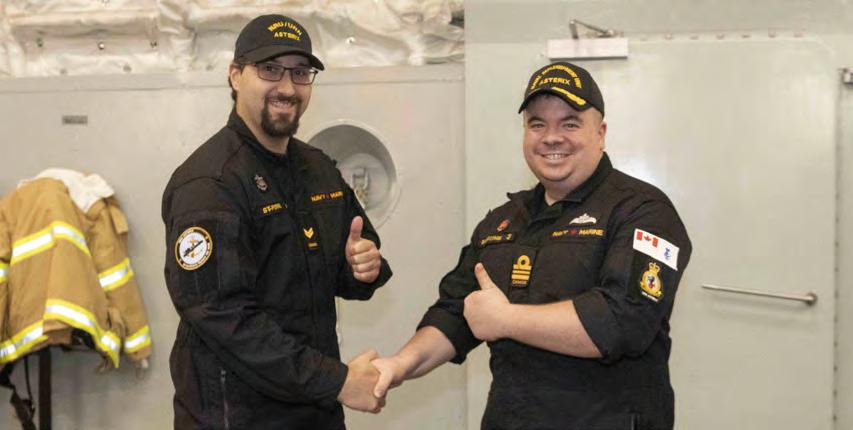
Sailor First Class Marc-Andre St-Pierre shakes hands with LieutenantCommander Bucky Branscombe, Commanding Officer of MV Asterix, upon receiving the Sailor of the Third 2023 Quarter award.
Naval Reserve sailors complete navigation exercise in B.C.
SLt Fadi Khalil HMCS Donnacona
PAO
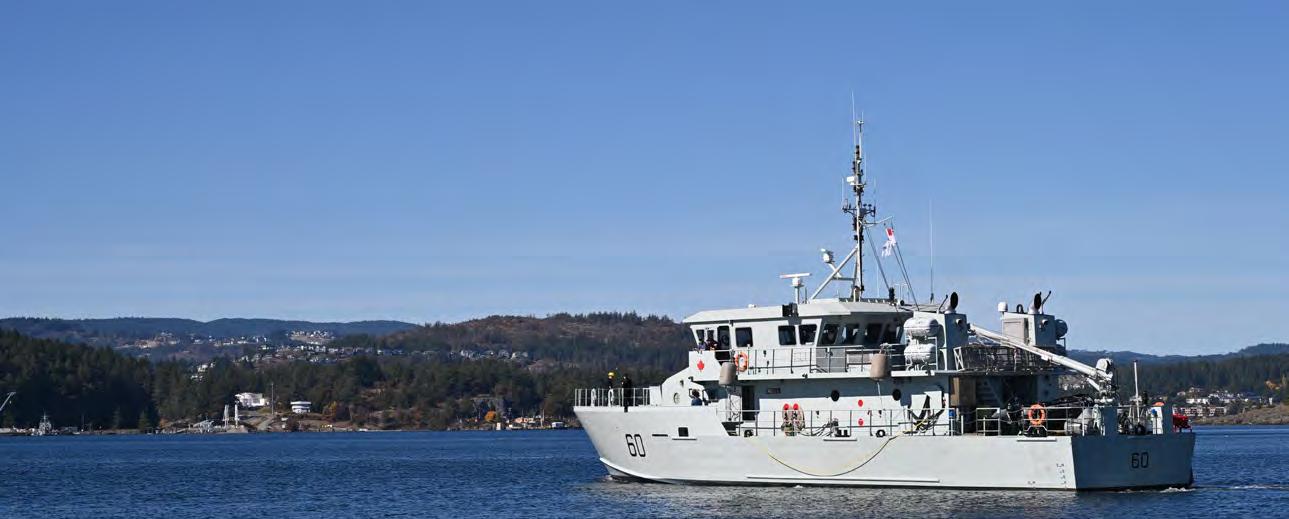
Members of various Naval Reserve Divisions tested their skills during at-sea training in the coastal waters of British Columbia aboard Orca-class patrol vessels Oct. 4-10.
Approximately 70 sailors from across Canada, including HMCS Donnacona, who led the exercise, crossed the Gulf Islands and visited several small ports on the mainland for a seamanship deployment aboard the Orca-class patrol vessels Caribou (57), Grizzly (60), Renard (58) and Wolf (59). The eight Royal Canadian Navy patrol ships train personnel at the Naval Fleet School (Pacific) and support fleet training.
Shiphandlers, Mechanics, Naval Warfare Officers, Cooks, and Naval Communicators were also employed aboard the Training Patrol Vessel Unit ships. During the deployment, crew members practiced navigation, engineering, maintenance, and emergency response, including fire and person-at-sea drills. Some seamanship training was also carried out aboard HMCS Yellowknife and HMCS Saskatoon
The Naval Reserve Command Team, including Commodore P.J. Montgomery and Chief Petty Officer First Class R.C. Campbell, visited the crews on their return to CFB Esquimalt and congratulated them on their successful training and orientation in line with the Chief of Defence Staff’s Reconstitution Directive.
Photos: Sub-Lieutenant Fadi Khalil, HMCS Donnacona Public Affairs Officer.
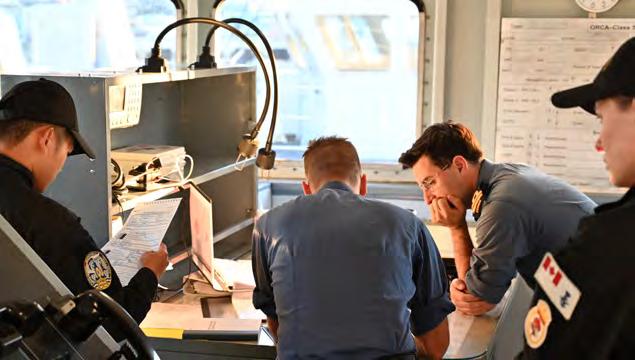
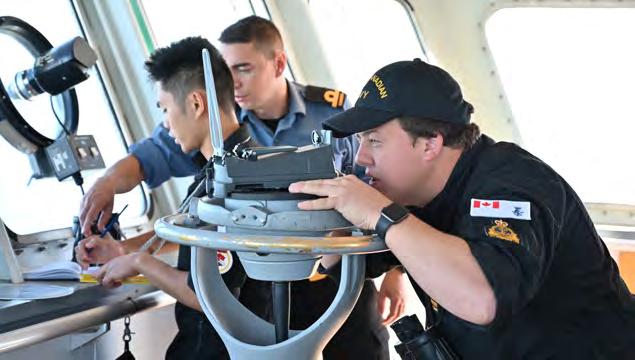
Naval Warfare Officers who manage and direct maritime strategy, tactics and procedures for the use of the ship, maritime sensors and intelligence gather in the ship's operations room. Leadership and team spirit are two of the essential skills required of Naval Warfare Officers.
A Naval Warfare Officer tracks the course, surrounding vessels and potential obstacles to ensure the ship's safety. Directing and making decisions that will affect the overall conduct of operations and the safety of the ship's crew is part of a Naval Warfare Officer's responsibilities.
Royal Canadian Navy gets ready to showcase future Protecteur-class
Royal Canadian Navy Public Affairs
Two new ships currently under construction will provide core replenishment, limited sealift capabilities and support to operations ashore for the Royal Canadian Navy (RCN).
The first, future His Majesty’s Canadian Ship (HMCS) Protecteur will be the longest ship ever built in Canada, at close to 174 metres in length. It is expected to be delivered to the RCN in 2025 and will be the class’s lead ship. The second will be named HMCS Preserver. Protecteur will remain on the West Coast, with Preserver destined for Halifax.
According to Commander (Cdr) Brian Henwood, Project Director of the Joint Support Ships (JSS), the first ship’s hull is now structurally complete with the recent instalment of replenishment-at-sea posts. The ship’s crew has begun being posted, with most of the crew expected to arrive in summer 2024.
The second JSS, a future HMCS Preserver, commenced assembly in 2022 and has 43 of 115 blocks under construction. A keel laying ceremony hosted by Seaspan took place on Oct. 27 and represents a significant milestone in the ship’s construction as it marks the ‘birth’ of the vessel. As part of the ceremony, a newly minted coin is laid near the keel, where it remains for the life of the vessel and is thought to bring the ship and crew good luck.
“JSS brings a critical capability that will allow the RCN to operate around the world without the need to rely on partner nations or port visits in other countries,” said Cdr Henwood. “It will be a key enabler of the Government of Canada’s ability to operate in the Indo-Pacific theatre of operations and will support allied and partner nations working alongside the RCN such as NATO or Combined
Maritime Forces.”
As with most naval supply ships, capabilities of the JSS include providing fuel, food, supplies, water, maintenance, and medical support, but Cdr Henwood said they can do so much more.
With a full Combat Management System and Communications Suite, JSS can participate in any fight, using its robust sensors, including 3D Air Search Radar and Links 16 and 22 (encrypted, jam-resistant tactical data links) to support and develop the common operating picture. They will also be capable of embarking Task Group Command Staff and have all required Command, Control, Communications, Computers, Intelligence, Surveillance, and Reconnaissance systems to support the Task Group Commander.
The ships will have two close-in weapons systems (CWIS), four naval remote weapons systems and four manual .50 calibre heavy machine guns. In addition, the ship is fitted with a Nixie Towed Torpedo Decoy system, a chemical, biological, radiological, and nuclear (CBRN) detection and monitoring system, and CBRN citadel and filtration systems.
Significant magazines will allow them to carry re-supply ammunition for the fleet, including missiles and torpedoes. They will also be capable of embarking up to two CH-148 Cyclone helicopters with hangar facilities to conduct second-line maintenance of fleet helicopters.
JSS can carry up to 60 20-foot-long containers. Other future RCN fleet ships, including Canadian Surface Combatants (CSC) and Arctic Offshore Patrol Vessels (AOPV), will also be capable of embarking mission-specific containers.
“It’s feasible that a JSS could carry sev-
eral types of mission containers and be able to assist a CSC or AOPV in changing roles using containerized mission systems in-theatre vice having to return to our naval bases in Esquimalt or Halifax,” Cdr Henwood says. “JSS will also be a strategic asset capable of supporting strategic sea lift for the Canadian Army and the Royal Canadian Air Force.”
The JSS will also embark on the RCN’s new sea-to-shore connectors. These modular selfpropelled barges can quickly carry quantities of mission-essential equipment, stores, and personnel to and from shore. They are stored or transported like standard shipping containers and have multiple uses and configurations when not in use. They are engineered to be assembled from the JSS itself.
Apart from all the state-of-the-art systems and technologies of a modern naval vessel, the JSS will be home to a core crew of 240 personnel.
The JSS will have full medical capabilities, including an X-ray machine, blood bank, laboratory facilities, surgical bay, full dental facilities, and two ICU beds. It will normally sail with a Medical Officer, Physician’s Assistant, Medical Technician, Dental Officer, and Dental Technician. This team can be augmented with surgical teams for specific humanitarian and disaster relief missions.
The JSS will have accommodation facilities similar to the current fleet, with a Wardroom, Chiefs and POs mess as well as Master Sailor
and Below Mess. Accommodations are based on single cabins for senior officers and the Coxswain, double cabins for officers and Chiefs, quad cabins for Petty Officers and six-person cabins for the remainder of the crew. Heads and wash places are built to be gender-neutral, with individual shower and toilet stalls. There will be two gyms, library, computer lab, training and conference room, and a dedicated barber shop.
“Each department will have a dedicated office and there will be many Defence-Wide Area Network stations throughout the ship to ensure excellent access for all crew,” says Cdr Henwood. “JSS will also have a robust Wi-Fi network for quality of life that has access ports throughout the ship to ensure connectivity to sailors’ personal devices and enable future wireless technologies.”
The future Protecteur-class Joint Support Ships are a tribute to the dedication and sacrifices of generations of sailors who served aboard the former Protecteur-class auxiliary oiler replenishment vessels of the same name. As such, the new ships are carrying on the battle honours of the boats that came before them.
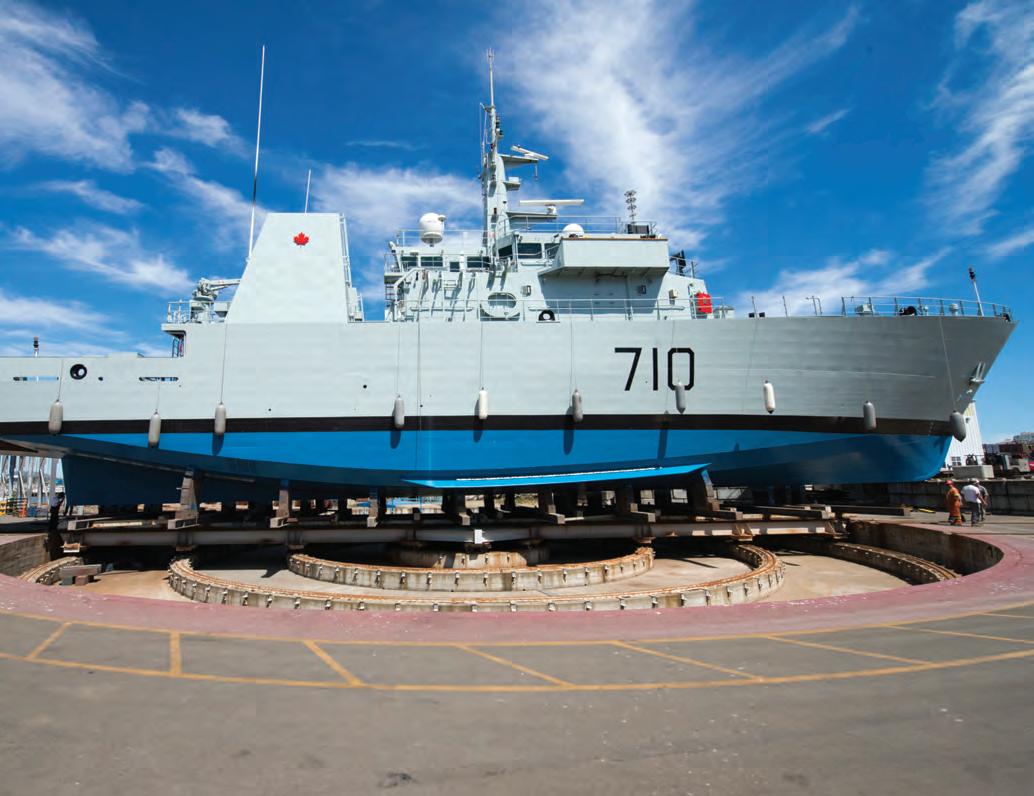
Bottom view of the hull of the future HMCS Protecteur, the longest ship ever built in Canada.
Artifacts of local Midshipmen lost during WWII
Paul Seguna, CFB Esquimalt Naval & Military Museum
Two naval artifacts connected to local community history will be displayed at the CFB Esquimalt Naval & Military Museum this November.
They are associated with the loss of two warships of the Royal Navy (RN) during the Second World War, and members of the RN and Royal Canadian Navy (RCN) lost with them who were linked to Victoria and Esquimalt.
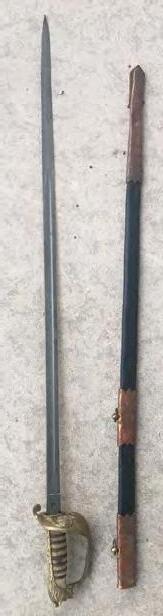
HMS Royal oak naval SwoRd
The first artifact was a naval sword held in Victoria by James Atwood, a retired Royal Canadian Air Force Sea King helicopter pilot. The sword is believed to be linked to the sinking of HMS Royal Oak in 1939.
The subject of the sword arose during a casual dinner conversation with James – an HMCS Algonquin ship’s bell my wife Eva and I found at Everything Old, a collectibles store in Brentwood Bay. We donated the bell to the museum.
James mentioned his family has had a naval sword in their possession for decades linked to the Royal Oak. The sword was given to his grandfather
in the United Kingdom by a former professional diver claiming it had been recovered from the wreck site of the Royal Oak in the former fleet anchorage at Scapa Flow in the Orkney Islands off the northern tip of Scotland.
The battleship, a veteran of the famous First World War naval battle of Jutland in 1916, was again at war on the evening of Oct. 13, 1939 – a little over a month after the start of the Second World War. Anchored in the supposedly secure waters of Scapa Flow, the ship was torpedoed by U-47, captained by Günther Prien, after a daring nighttime penetration of the protected anchorage through a narrow gap in the anti-submarine defences.
The Royal Oak, caught unaware with watertight doors still open, was struck by three torpedoes amidships on its starboard side, causing rapid flooding as a massive fireball spread through the ship from a magazine explosion.
The ship capsized and sank within thirteen minutes of being hit. Of the Ship’s Company which consisted of 1,234 people, 835 perished, including 135 boy sailors under 18 years old and 92 Royal Marines.
A local link to the sword’s provenance was found in the casualty list.
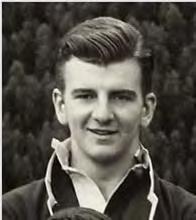
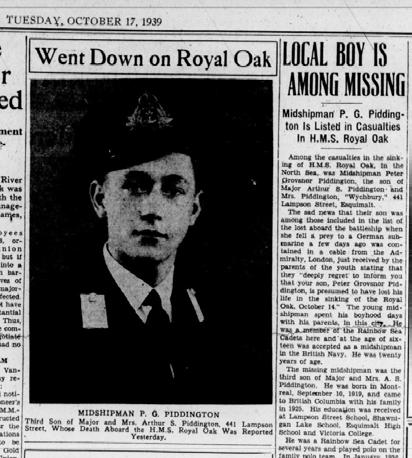
One of those lost was Peter Grosvenor
Piddington, a 20-year-old Midshipman serving in the RN, who was from a well-known Esquimalt family. Peter, the son of Major Arthur Piddington and Helen Piddington (née Wychbury), had attended Lampson Street, Shawnigan Lake, and Esquimalt High Schools, and Victoria College. He was also a member of the Rainbow Sea Cadet Corps for several years before joining the RN in 1936.
Given its potential historical significance at this juncture, James decided the sword should be repatriated to the United Kingdom to join other Royal Oak artifacts in the collection of the Scapa Flow Museum. Accordingly, the museum wanted to acquire the sword based on the supporting background information. The UK government authorities in Canada have also been made aware of the sword and the intention to see it repatriated to the museum. In the interim, until repatriation arrangements are finalized, the intent is to temporarily exhibit the sword at the CFB Esquimalt Naval & Military Museum during the Remembrance Day observation timeframe in honour of Midshipman Piddington’s memory.
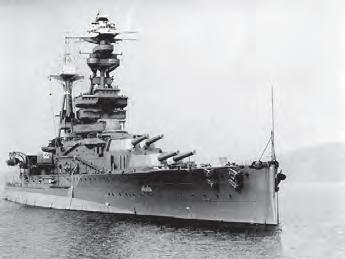
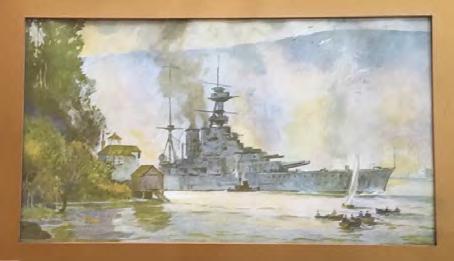
HMS Hood aRtwoRk
The second artifact is a piece of artwork dated to 1925. It illustrates the arrival of the RN Battlecruiser HMS Hood in Vancouver on June 25 – July 5, 1924, during its world cruise in 1923–24. The ship also visited Victoria from June 21–25 that year.
The framed artwork is a lithograph of an original watercolour painting, and again, was found at Everything Old. I purchased and donated it to the museum collection. The artwork is on display in a permanent exhibit of a naval mess dinner that dates to the 1939 royal visit of King George VI and Queen Elizabeth (The Queen Mother) to Victoria. The exhibit includes a model of HMS Hood atop the piano, and the donated artwork will be placed on the wall above it.
The model and the artwork are also reminders of the human cost of the RCN’s contribution to the war at sea during the Second World War. Three RCN Midshipmen were lost in HMS Hood’s sinking when it engaged with the German battleship
Bismarck and heavy cruiser Prinz Eugen on May 24, 1941, in the icy waters of the North Atlantic’s Denmark Strait. During the battle, Hood exploded from shellfire and within minutes, the shattered hulk sank, taking 1,415 of the crew down. Only three survivors were eventually rescued hours later.
Three RCN Midshipmen serving in Hood were among those lost. All three had a local connection:
• Midshipman Thomas Norman Kemp BEARD, RCN – son of Commander Charles Beard and Kathleen Beard of Victoria. Thomas attended Shawnigan Lake School before he joined the RCN as a cadet on Aug. 25, 1939. He joined Hood’s Ship’s Company on Oct. 26, 1940. He was twenty years old at his death. His father served in the RCN during the Second World War as the Captain of an Armed Merchant Cruiser.
• Midshipman Francis Llewelyn Lloyd JONES, RCN – Victoria born, ‘Johnny’ later spent his early years in Revelstoke, B.C. His parents were LieutenantColonel Arthur Jones, O.B.E, M.C., and Marie Jones. A graduate of Royal Military College in Kingston, Ont. in 1940, he joined Hood’s ships’ Company on Jan. 1, 1941. He was 20 years-old when he was lost with Hood.
• Midshipman Christopher John Birdwood NORMAN, RCN – Born in Duncan, B.C., to Captain Cyril Norman and Lydia Norman of Victoria. He attended Victoria College from 1936-39 and was noted for his athletic abilities as a member of the cadet corps and studies in physics there. He joined the RCN on Sept. 1, 1940, and HMS Hood on Jan. 1, 1941. He was 19 at his death.
The CFB Esquimalt Naval & Military Museum at the Naden (Admiral’s Road gate) is open seven days a week, from 10:00 a.m. to 3:30 p.m.
The museum’s permanent exhibit will be supported by placards describing the story of the Hood along with the biographical information of the three RCN Midshipmen lost in their memory and highlighting the significance to our community history of the ship’s loss so far from their home. These artifacts are important in illustrating our naval history and heritage while also adding to the significance of our Remembrance Day observation this year and in the future.
We are proud to honour the dedication and achievements of those serving in the Canadian Armed Forces, and we regard with reverence the bravery and sacrifices of Canada’s veterans and soldiers.
revered.
forgotten.
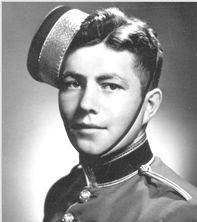
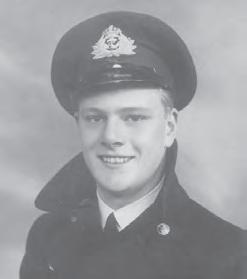
Midshipman Beard Midshipman Jones Midshipman Norman
Excerpt from the Oct. 17, 1939 Daily Colonist in
Three Naval Cadets from RMC onboard HMCS Oriole
During His Majesty’s Canadian Ship (HMCS) Oriole’s Great Lakes Deployment, Junior Sailors and Junior Officers experienced life at sea. Six Royal Military College of Canada students were invited to join HMCS Oriole during the annual Great Lakes Deployment and spend their On-the-Job (OJT) summer onboard. Each had a unique opportunity to sail and experience life at sea onboard. Here are their stories:
Naval Cadet Malcolm Ross
Public Affairs Officer (PAO): Please introduce yourself.
Naval Cadet Ross (NCdt Ross): My name is Naval Cadet Malcolm Ross, and I am from Milford, Ont. I am a fourth-year mechanical engineering student at the Royal Military College of Canada.
PAO: Why did you join the Royal Canadian Navy? What is your trade, and what are your career aspirations?
NCdt Ross: I was a Sea Cadet in
Naval Cadet Junsung Lee
Public Affairs Officer (PAO): Please introduce yourself.
Naval Cadet Junsung Lee (NCdt Lee): My name is Naval Cadet Junsung (Jun) Lee, and I was born in Seoul, South Korea. My family immigrated to Vancouver in 2011, and I’ve lived there ever since. I am a third-year physics student at the Royal Military
Naval Cadet Joseph Evans
HMCS Oriole’s Public Affairs Officer
(ORI PAO): Please introduce yourself.
Naval Cadet Joseph Evans (NCdt Evans): My name is Naval Cadet Joseph Evans, and I am from Quebec City, Que. I am a third-year aeronaut-
high school, and I knew that the Navy interested me from a young age. I love working at sea and engineering, so I combined my passions and joined the Royal Canadian Navy.
PAO: How did you get the opportunity to come onboard HMCS Oriole?
NCdt Ross: During my summer On-The-Job Employment (OJE) at CFB Halifax, the opportunity to sail onboard HMCS Oriole came up, and so I took it, and I am now part of the ship’s company until Kingston, Ont.
PAO: Onboard HMCS Oriole,
College of Canada.
PAO: Why did you join the Royal Canadian Navy? What is your trade, and what are your career aspirations?
NCdt Lee: I enrolled in the Royal Canadian Navy as a Marine Systems Engineering Officer to travel and explore different places. The postings and the Navy’s opportunities interested me, and I decided to join! I am interested in ocean physics and naval
ical engineering student at the Royal Military College of Canada.
PAO: Why did you join the Royal Canadian Navy? What is your trade, and what are your career aspirations?
what are your day-to-day tasks and responsibilities?
NCdt Ross: I work onboard HMCS Oriole as one of the Watch-On-Deck. This means that in my day-to-day tasks and responsibilities, I take shifts being on the helm and as a lookout for the ship.
PAO: What was your best experience onboard so far?
NCdt Ross: One of the best experiences onboard for me so far is to see and take in the sights and geographical locations Canada offers. Sailing
architecture, so this is an excellent opportunity to further my interests.
PAO: What was your best experience onboard so far?
NCdt Lee: One of the best experiences I’ve had so far is the opportunity to travel to new places. For example, during this deployment, I’ve been able to explore Charlottetown, P.E.I., and I’d never been! In addition, you get to meet new people in the Navy
onboard the oldest ship in the Royal Canadian Navy is a rare opportunity. In addition, the food onboard is fantastic!
PAO: What lessons will you take away from this experience?
NCdt Ross: For me, it is taking every opportunity the Navy gives you. Even if they don’t fit perfectly in your plans, try to make the most of it. I was hesitant to come on board at first, but now that I am here, it is a oncein-a-lifetime opportunity and a really worthwhile one.
and learn from their expertise.
PAO: What lessons will you take away from this experience?
NCdt Lee: One of the lessons I will take away from this experience is that the Navy is a team effort, and no matter what rank you are, you will always be responsible to the ship and your shipmates. Overall, it has been a fantastic experience, and I recommend this opportunity to everyone.
PAO: How did you get the opportunity to come onboard HMCS Oriole?
NCdt Evans: I was offered an opportunity to come on board, and said yes!
PAO: What was your best experience onboard so far?
NCdt Evans: I joined the Royal Canadian Navy because I wanted a unique job and experiences I could not get in the civilian world. As such, I enrolled as a Naval Warfare Officer.
NCdt Evans: My best experience onboard was putting up the sails and shutting the engine off. The ship heeled over, and sailing with wind power was a surreal experience!
SLt Wilson Ho HMCS Oriole PAO
Photos: SLt
Peace may not be perfect
Maj Daniel Walton Sr Chaplain, CFB Esquimalt
We hear a lot about peace today, but what does it mean? If we think about it, we see very little peace in the world around us; all we have to do is turn on the news to see what’s happening. Though, many don’t want to hear it or see it.
We talk about peace as though it’s easy to attain, yet we see more hurt and pain around us than most have ever thought possible. We see families hurting because of illness, financial strain, work-related stress, and poor decisions. That doesn’t sound like peace to me. To be even more hon-
est, it isn’t something we can successfully grasp, nor would we want to.
When I think of peace, I think of calm, pleasure, enjoyment, and likely even some laughter. I think about opportunities to sit around a campfire with family and friends and share life. But sadly, I’m not convinced that’s what we see. Even more honestly, I’m not sure that’s what people believe can happen any longer. What we need to do is look for personal inner peace. We need to look for an inner calm that helps remove us from the chaos and confusion around us and takes us to a spot to relax and just ‘be’. What does that look like for you?
How do you get there?
Today, peace has to be personal. If we expect to find global peace, we’re mistaken. What brings you to a place of inner harmony? Is it your spiritual practices, family, or hobbies? What brings you to a place where you can step aside from the spinning of life to a place where you can unwind and be yourself?
Maybe it is recognizing not everything in your life will be perfect. Perhaps it’s realizing you must forgive yourself for things you’ve said and done, even if you think someone else might not. Perhaps it’s knowing who the most trusted person/people in life are, who
will accept you for who you are, even though they’ve seen your imperfections. Perhaps it’s being able to accept who you are and learn to live with yourself. Many are harder on themselves than they are on others and start to punish themselves without giving themselves any measure of grace and mercy.
Peace means accepting the imperfections in life and living in spite of them instead of pretending they don’t exist. And maybe, one day, hopefully you’ll find yourself sitting around a campfire with your people, accepting what is and becoming personally content with who and where you are in life.
On this day of Remembrance, we think about the sacrifices that were made for our freedom today, and the impacts those sacrifices have made on families, communities, society and the world.
We honour those who gave their lives in hope of a peaceful tomorrow, and think of them with pride and our utmost respect. To all who have once served, and to all who continue to serve today, we thank you.
We are proud to work in support of the Canadian Armed Forces, its members, and in Remembrance of its past members who are no longer with us.
We will remember you.
Sailor for a Day celebrates successful launch
Peter Mallett Staff Writer
A Grade 8 student at Spencer Middle School says CFB Esquimalt’s new public outreach program helped her discover new career options.
Seeing the cooks of Base Foods aboard HMCS Regina was the highlight of the day for Savanah Conway on Oct. 20.
“I thought this would be a fun job,” she said. “Being on this big ship and cooking for people seems like so much fun and I never realized this could be a career possibility until today,” she said.
Conway was one of 42 students selected for the day-long Sailor for a Day program, directed under Maritime Forces Pacific (MARPAC). The visit showcases trades and career opportunities in the Royal Canadian Navy (RCN) while giving students related hands-on experiences.
Lieutenant-Commander (LCdr) Anne Gardam, Commanding Officer of Naval Reserve Unit HMCS Malahat, says discovering new options is precisely what the program is for.
“This initiative helps high school and middle school students understand what it is that we do,” LCdr Gardam said. “I always talk about us having every job that exists in a small town. So, if you enjoy the culture and the way we do things, there
ACTIVITIES INCLUDED:
is a job for every kind of person.”
The students shared exciting moments throughout the visit.
Robbie Cleveland, a Grade 8 student at the Centre Mountain Lellum Middle School, says the tour of Esquimalt Harbour aboard a Rigid-Hulled Inflatable Boat (RHIB) was his favourite part.
“It was a really fun ride because, at some points, the boat was bouncing off the waves,” Cleveland said.
“I also enjoyed our visit to the diving unit and seeing the decompression chamber because I have seen this only on television before.”
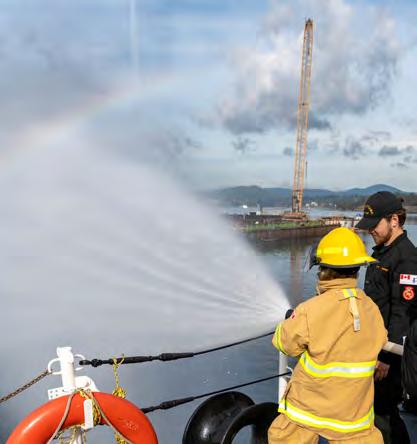
The students enjoyed a guided tour of HMCS Regina and learned about several trades and jobs on the warship. They also witnessed a demonstration of a minor boat attack, casualty clearing, firefighting demonstration, escape drills and knottying instruction.
Lieutenant (Navy) (Lt(N)) Harrison Irvine, Regina’s Navigation Officer, said sailors on his team were excited to welcome the students into their ship.
“Our sailors were keen to show off their life at sea to the next generation of sailors,” Lt(N) Irvine said. “Every single one of us had a first day in this ship too so we were happy to make their first time a positive experience.”
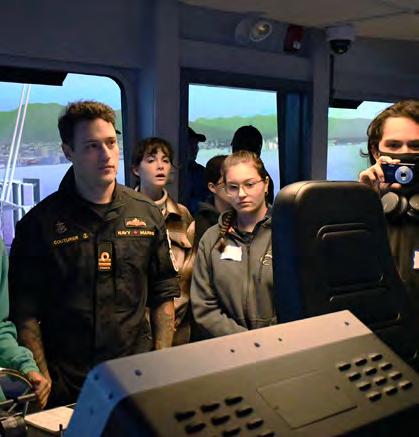
• A visit to the Naval Personnel Training Group, where the students toured the bridge simulators and received an introduction to Naval Warfare Officer Training;
• A visit to the Damage Control Training Facility Galiano in Colwood, where they witnessed a demonstration of firefighting techniques with the facility’s new Helo Trainer Sikorsky CH-148 Cyclone;
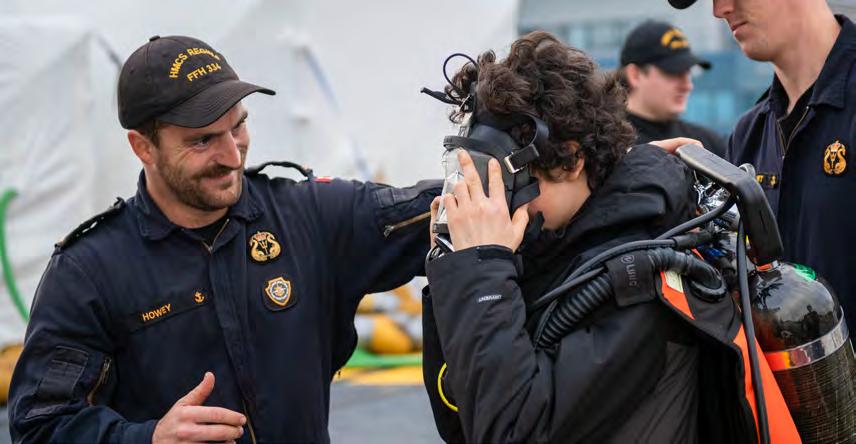
• A tour of the Fleet Diving Unit (Pacific), including its Bomb Disposal Unit, static displays of diving equipment and the unit’s decompression chamber;
• Tours of HMC Submarine Corner Brook and Fleet Maintenance Facility (Cape Breton).
Students from local high schools experience what it would be like to be a sailor in the Canadian Armed Forces at CFB Esquimalt on October 20. Photos: Sailor Third Class Jacob Saunders
Firefighting demonstration aboard HMCS Regina.
A visit to the Fleet Diving Unit (Pacific).
A visit to the Damage Control Training Facility (DCTF) Galiano in Colwood.
A visit to the Naval Personnel Training Group at Work Point.
Historical overview: Peruvian volunteers in CAF during the First and Second World Wars
The Latin American community has significantly defended Canadian values and ethics from the Confederation onwards. Peruvian soldiers who volunteered in the Canadian Armed Forces during the First and Second World Wars displayed remarkable dedication, bravery, and sacrifice; their service exemplifies the shared values between Latin America and Canada, serving as a testament to the solid and lasting bond between the two regions.
During the First World War, Canadian and Allied merchant ships and mariners of the Merchant Navy played a crucial role in transporting personnel, munitions, weapons, and food to Great Britain and Europe. This massive undertaking involved navigating treacherous waters evading German U-boats and mines that claimed the lives of tens of thousands of Allied personnel and thousands of ships. Canada’s Grand Armada, in October 1914, saw over 31,000 troops transported on 31 ocean liners, escorted by Royal Navy warships, as they sailed for England.
In the face of this daunting challenge, the Royal Canadian Navy and the Canadian Merchant Navy
rose to the occasion. The Royal Canadian Navy, though relatively young and small at the outbreak of the war, expanded significantly by 1918. Their fleet grew to nearly 9,500 sailors and over 130 commissioned vessels, including numerous merchant marine vessels and sailors. However, the Canadian Merchant Navy needed more supply vessels, troop carriers, and trained sailors. In response, thousands of Canadian merchant sailors, including some Peruvians, bravely left behind the comforts of home and familiar waters to serve their country and fight for freedom abroad.
Trimmers played a vital role in the Merchant Navy. These individuals ensured that coal was evenly distributed to maintain the ship’s trim and supplied the firefighters with adequate coal for the boilers. They performed their duties using shovels, wheelbarrows, and sheer physical strength, often working in cramped and challenging conditions. The engine room crews, including trimmers, regarded themselves as highly skilled professionals, as their responsibilities were critical to the ship’s operation.
The introduction of German U-Boats magnified the perils faced by the Canadian Merchant Navy. These submarines silently lurked beneath the surface, posing a
significant threat to the merchant ships. The Canadian Merchant Navy, responsible for transporting troops and essential supplies, became a lifeline for the soldiers fighting overseas. The convoy system was implemented to mitigate the risk, grouping merchant ships together and providing them with warship escorts for protection. Trans-Atlantic convoys, consisting of up to 60 boats, travelled from Eastern Canada to European ports. These efforts were crucial in ensuring that vital resources reached the Allies, ultimately contributing to the Allied victory in late 1918.
The sacrifices made by Peruvians and other members of the Canadian Merchant Navy during the First World War should never be forgotten. Their dedication, brav
ery, and selflessness played an instrumental role in safeguarding Canadian and Allied interests. Memorials, such as the Tower Hill Memorial in London, United Kingdom, are a testament to the fallen Canadian seafarers, including Vic Crothalin and Sailor A. Velasquez, who died while serving their country.
The Latin American Soldiers in Canada Committee’s mission is to publicize the names and stories of Canadian Latinos who were part of the Canadian Armed Forces.
TRIMER VIC CROTHALIN
During the First World War, Trimer Vic Crothalin was born in Peru and enlisted in the Canadian Mercantile Marine in the SS Halifax Wreck. Trimer Crothalin’s commitment to serving his newfound homeland is noteworthy. He joined countless other Peruvians who volunteered to defend Canada’s values, demonstrating the spirit of camaraderie and sacrifice. Trimer Vic Crothalin’s selflessness exemplifies the Latin American community’s dedication to upholding shared principles and the strength of the bond between Peru and Canada.
SAILOR A. VELASQUEZ
Sailor A. Velasquez was born in Peru in 1894. He died on Aug. 13, 1915, as a Canadian Mercantile Marine. Velasquez’s service as a sailor exemplifies the dedication and courage of Latin American individuals who joined the Canadian Armed Forces. As a representative of Peru, Velasquez contributed to protecting Canadian values and promoting international peace. His commitment to the Navy reflects the Latin American community’s deep-rooted respect for maritime traditions and the importance of collective defence.
ROBERT JOHN LANCASHIRE
In Callao, Robert John Lancashire was born in Peru on Sept. 9, 1891. He died on Jan. 16, 1923, in Callao, Peru. His mother was Sofia Francisca Gillis (1868-1925) and his father Lewis Charles Lancashire (1853-1900). Both parents are from Callao, Peru.
Before he joined the Canadian Expeditionary Force, he was a Telegraph and Cable Operator in New York. His demobilization was in Ottawa on Nov. 26, 1918. He made significant contributions as part of the Canadian Expeditionary Force during the First World War.
His enlistment showcases the commitment of individuals from Latin American backgrounds to stand alongside Canadian Soldiers. Serving with honour and courage, Lancashire symbolizes the Peruvian soldiers who fought for freedom, justice, and a brighter future for all in Canada during the First World War, which ended on Nov. 11, 1918.
CAPTAIN HEDLEY MAURICE HARRISON
Capt Hedley Maurice Harrison was born in South Africa and died on Aug. 14, 1944, at age 30. He joined the Royal Canadian Artillery, 19th Field Regiment. He was an exceptional leader in the Canadian Armed Forces during the Second World War.
Captain Hedley Maurice Harrison, a proud Canadian and son of Ernest Harrison and Annie Gladys Harrison (nee Anyan), of Lima, Peru. B.Sc. (University of Toronto).
Captain Harrison demonstrated his unwavering commitment to defending Canadian values and upholding global peace. He is buried at Bretteville-SurLaize Canadian War Cemetery.
Captain Rey Garcia-Salas Vasquez
NALOXONE TRAINING
FORMATION SUR LE NALOXONE
Naloxone training
DATES, TIME, LOCATION:
• Wednesday, 22 November 1330-1530 / Rainbow Room
• Wednesday, 7 February 1330-1430 / Rainbow Room
REGISTRATION:
• No registration required.
JOIN AVI HEALTH AND COMMUNITY SERVICES FOR A HANDS-ON NALOXONE AND OVERDOSE RESPONSE DEMONSTRATION.
PARTICIPANTS CAN EXPECT TO LEARN ABOUT:
• the history of Naloxone (drug poisoning crisis);
• the history of the War on Drugs;
• the influence of colonization, racism, stigma, and white supremacy on the present-day crisis);
• what is Naloxone and how it works;
• what are the two types of Naloxone administration;
• how to identify an overdose;
• how to respond to an overdose;
AUCUNE INSCRIPTION REQUISE
surdose. SALLE DE RAINBOW
CETTE ACTIVITÉ EST APPUYÉE PAR LE GROUPE DE TRAVAIL DE VIE SANS DÉPENDANCE DE LA STRATÉGIE DE SANTÉ ET BIEN-ÊTRE DES FMAR(P).POUR DE PLUS AMPLES RENSEIGNEMENTS, VEUILLEZ COMMUNIQUER AV EC VICKY DOUCETTE À VICKY.DOUCETTE@FORCES.GC.CA
• what are the risks;
• kit demonstration;
• complex overdoses; and influencing factors (influence of benzodiazepines and stimulant overdoses [time permitting]).
This event is brought to you by the MARPAC Health and Wellness Strategy Addictions-Free Living Working Group. Contact vicky.doucette@forces.gc.ca for more information.
Memorial forging bonds between Japanese town, WWII pilot’s family
Yuta Okumura Kyodo News
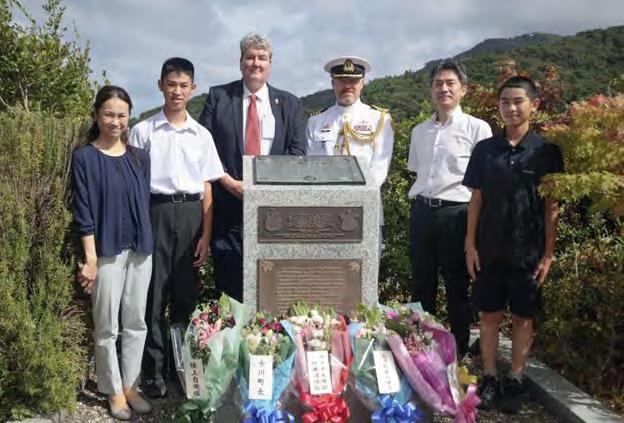
A memorial dedicated to a Canadian naval pilot who died while leading an air raid against Japan in the waning days of the Second World War stands in the northeastern town of Onagawa, Miyagi Prefecture, one of the communities most severely damaged in the 2011 earthquake and tsunami.
There are, in fact, two memorials erected in the Pacific Coast town – one commemorating the area’s Japanese war dead and one memorializing Lieutenant Robert Hampton Gray, a recipient of the Victoria Cross for whom a Cenotaph was erected on the shores of Onagawa Bay.
Today, there is hope that a friendship forged between the two countries, once enemies, will continue into future generations.
This summer, a memorial service was held before Gray’s monument. He was 27-years-old when, as a member of the Royal Canadian Naval Volunteer Reserve, his fighter plane crashed.
The Victoria Cross, which he was posthumously awarded, is the highest medal for valour in the British Commonwealth.
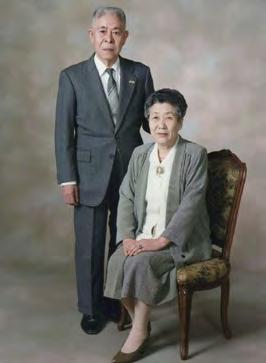
Among the roughly 20 attendees was Yoshitake Kanda, 47, grandson of the late Yoshio Kanda, a Communications Officer in the Onagawa Defense Force of the former Japanese Navy, who was instrumental in constructing the two memorials.
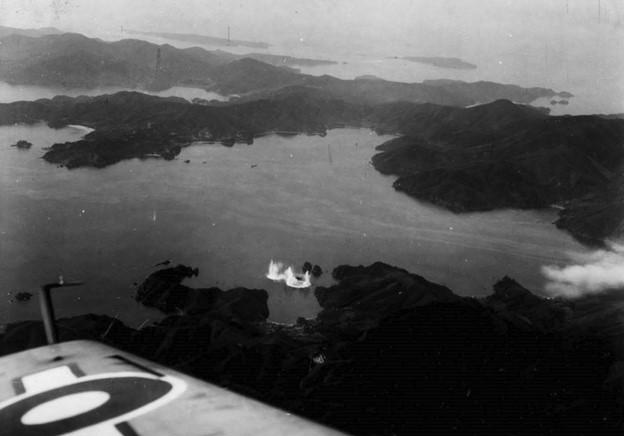
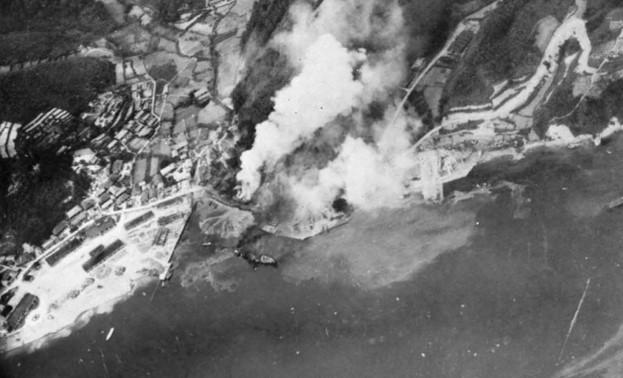
On Aug. 9-10, 1945, near the end of the war, the U.S. and British aircraft carrier forces attacked Onagawa Defense Force vessels, which were escorting Japanese naval ships along the Pacific Coast.
Gray led the attack on the Japanese vessels before his plane went down in Onagawa Bay. According to the Onagawa Town Journal, over 200 people, both military and civilians were killed on the Japanese side.
Yoshio was born in Saitama Prefecture near Tokyo but ran a clothing store in Onagawa after the war. He called on his war comrades to help build a memorial for the Japanese victims, which was eventually completed in 1966.
When the Canadian Embassy moved to erect the monument dedicated to Gray in 1989, some of the Japanese victims’ family members were opposed. It was Yoshio who changed their minds, convincing them by saying, 'It is not enemy soldiers we hate, but the war itself'.
After the monument was completed in Sakiyama Park, Yoshio invited Gray’s family members, who had come to Japan for the occasion, to a reception at his home. They began to hold annual memorial services, and both families began a tradition of visiting each other’s countries.
Yoshitake takes to heart the words of his grandfather Yoshio who said, “We should overcome the past and join hands”.
Yoshio died in 2005 at age 83.
Gray’s memorial was toppled in the March 11, 2011, disaster, but it was restored and moved to higher ground in 2012. When the Canadian family learned that the tsunami had swept away the Kanda family’s air raid-related materials, they returned letters, photos and other mementos Yoshio had given them.
Provided by Gerry Pash, with permission from the author.
Yoshitake Kanda and his family members are pictured with two officials from the Canadian Embassy in Japan at a memorial dedicated to Lieutenant Robert Hampton Gray in Onagawa, Miyagi Prefecture, in August. Photo: Kyodo
Photo taken Aug. 10, 1945: A ship under attack by British military aircraft at Onagawa Bay, Miyagi Prefecture. (From Yozo Kudo’s book on air raids on Japan by U.S. Navy carrier-borne plane)
Photo taken Aug. 9, 1945: Onagawa Bay in Miyagi Prefecture under attack by U.S. military aircraft. (From Yozo Kudo’s book on air raids on Japan by U.S. Navy carrier-borne aircraft)
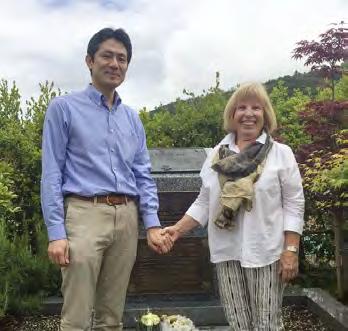
Anne George, Gray’s niece, who has been to Onagawa several times, visited Yoshitake’s parents’ grave and the two war memorials for the first time after the disaster in 2018. Yoshio Kanda (L). Photo courtesy of Kanda’s family
MUSAR team falls in for ‘ShakeOut’
Peter Mallett Staff Writer
Not too often does the Medium Urban Search and Rescue (MUSAR) team get to train in a building where they can breach walls and floors.
But Naden 1, the abandoned structure near the Naden Gates, provided the perfect training grounds at the end of October.
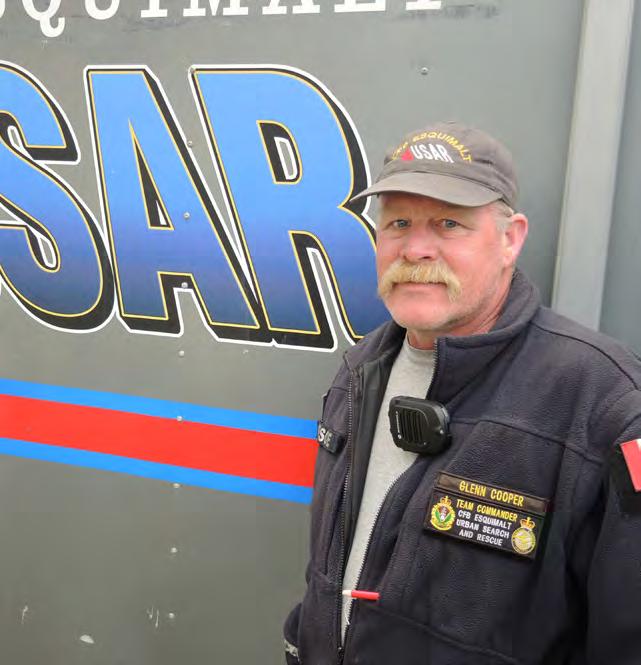
“Since none of our volunteers know the ins and outs of this building, it makes the situation that much more real,” said Glenn Cooper, MUSAR Team Lead.
The team trains to rescue casualties trapped in a structural collapse. They usually conduct training serials from their training facility at Work Point. Naden 1 served as a detention barracks before the Second World War and has since been used for other purposes.
MUSAR’s week-long semi-annual training coincided with the Great British Columbia ShakeOut on Oct. 19. According to Cooper, during a major earthquake, the team will need to design and execute an entry and exit strategy for buildings they come upon with the equipment available to them.
In their latest training scenario at Naden 1, MUSAR crews could not access the top floor or the main entrance to rescue casualties. The six team members propped up a collapsed wall on the building’s ground floor and entered the building safely.
Although the scenarios MUSAR prepares for are grim, one long-standing volunteer
says the work is vital.
“I fell in love with MUSAR from day one,” said Petty Officer Second Class (PO2) Kevin McCarthy. “I had never been involved with a similar organization before but quickly realized it combines many of the skills and knowledge I have learned in the Navy, and it piqued my interest.”
PO2 McCarthy works as a Divisional Supervisor with Fleet Maintenance Facility Cape Breton’s Above Water Weapons Shop (Shop #162) and is an Exercise Controller for MUSAR. He began volunteering for MUSAR ten years ago and hasn’t looked back.
PO2 McCarthy and Cooper both emphasize that MUSAR is always looking to add to its roster of volunteers with or without search and rescue experience.
Interested members and civilians can go to the CFB Esquimalt USAR Recruiting website on the DWAN (collaboration-navy.forces. mil.ca/sites/ESQ_USAR/SitePages/Home. aspx) and submit their applications (with Chain of Command authorization) to the indicated personnel on the webpage or to glenn.cooper@forces.gc.ca.
MUSAR has been operational for 23 years and became a unit of Maritime Forces Pacific (MARPAC) in June 2022. MUSAR is a department of the Port Operations and Emergency Services Branch (POESB) and is made up almost entirely of volunteer military members from various trades, ranks and units across the base.
The MUSAR team won’t be deployed to a disaster zone immediately after an earthquake. Instead, their job is to extract the last of casualties from hard-to-reach places.
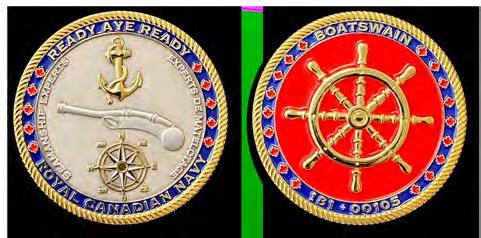
Alerting all Boatswains, serving and retired!
The Annual Boatswain Gathering will take place at 1100 on Dec. 1 at the Langford Branch of the Royal Canadian Legion, 761 Station Road, Langford.
This year marks the 40th year the West Coast Boatswain’s will gather for the yearly Boatswain Gathering. Cost is free.
The former Boatswain’s Association ‘Pacific’ was formed in 1983, with serving senior NCM Boatswains as its membership with the aim of bringing the Trade together in a social environment. However, in 1985, with failing membership, Chief Petty Officer First Class (CPO1) Tom Eustace, the president of the Association at the time, changed the membership requirements to be more inclusive of the whole occupation and invited all ranks of the trade, both serving and retired, to become members.
Years later, the Association ceased formal membership requirements in 1998 and commenced the yearly Boatswain Gathering the next year, typically held in December, at a Mess, Legion or local watering hole.
The Gathering continues again this year to provide the opportunity for past and present shipmates, classmates, and friends to get together, socialize and renew those friendships, recant the deployments, good times as well as remember those that have moved across the country or have crossed the bar.
The tools they use include a combination of Search and Rescue tools a fire department and construction company would have in their kit. These include safety helmets, gloves, and safety boots. Rescuers are equipped with an arsenal of tools, including chain and hacksaws, chisels, bolt cutters, sledgehammers, and hydraulic tools.
Glenn Cooper is Deputy Chief of the Malahat Volunteer Fire Department and MUSAR’s only full-time employee. He draws his team of military volunteers from various units of CFB Esquimalt (MARPAC).
Visit www. broadmeadcare. com/veteranslegacy to make your donation today.
MUSAR Team Commander Glenn Cooper.
Photo: Peter Mallett/Lookout
From Sea to Sky: Twin brothers find careers with the Canadian Armed Forces
Royal Canadian Navy
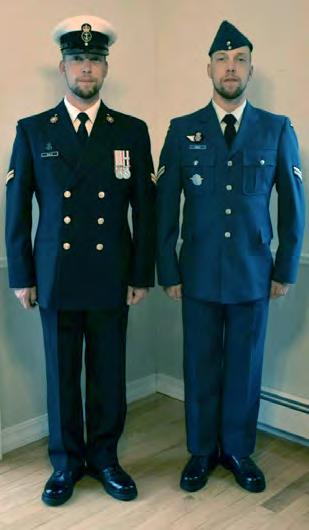
Distance makes the bond grow more robust, according to twin Canadian Armed Forces (CAF) members, Sailor First Class (S1) Keiran Sidle and Corporal (Cpl) Evan Sidle.
Despite their inclinations for sky and sea and the distance between their bases in Halifax, N.S., and Quinte West, Ont., the Sidle brothers find a way to show up for each other at every milestone.
Having joined the CAF first as a Boatswain with the Royal Canadian Navy (RCN), S1 Sidle encouraged his brother to follow in his footsteps. He thought it was only fitting that he be the one to swear his twin into the Air Force, surprising him at his ceremony.
“They were calling people alphabetically and someone behind me got called ahead,” Cpl Sidle recalls. “As soon as they called my name, I saw Keiran coming up the laneway.
I couldn’t believe he was there.”
It was a proud moment for both brothers.
“I read him the solemn affirmation, and shook his hand,” S1 Sidle recounts. “It was wicked. Being able to say that I swore my own brother into the military is pretty sweet.”
The Sidle brothers were cadets as teens but didn’t immediately enroll in the CAF when they became eligible. They both held several jobs, including starting an ‘odd jobs’ crew that involved everything from mowing lawns to changing lightbulbs.
But with time, S1 Sidle’s passion for the military eventually called him back. He wanted to share the discipline, responsibility, and reward he found in a Navy career with his brother.
“I was just looking out for him,” S1 Sidle said. “The CAF is fantastic. It’s steady paying and you have security. I got a house and cars and started a family. I figured that if I could do that so quickly, my brother could too and have a good life.”
Cpl Sidle, studying to become a police officer, always wanted to be in uniform. He heeded his brother’s advice and joined the Air Force. Now a Mobile Support Equipment Operator, he operates transport vehicles, heavy equipment, and fuelling planes.
He says it’s the teamwork and camaraderie that has kept him around.
“I loved how you could rank up and gain respect and responsibility through dedication and hard work,” Cpl Sidle said. “Having the uniform is a way to show pride in your work and I love that.”
Cpl Sidle aspires to rank up to Master Corporal in the coming years. He says he’s thankful his brother pushed him in the right direction despite his initial hesitation to enlist.
“I wish I would have joined sooner,” he said. “Just seeing what the job offers…I would have joined sooner had I known what the military was actually like.”
The Sidle brothers believe there is still work to improve the CAF’s reputation. In
recent years, S1 Sidle found a passion for teaching and a way to create a positive space as an instructor. He says there is room for positive change despite negative conceptions about the military.
“I’m trying to be the difference that the Navy needs,” he said. “I’m leading positive change through the way I teach my students. I just want to instill positive change at the beginning, so they have a positive experience with the Navy from the get-go.”
He says the next step in creating a better culture within the CAF is more support for Post-Traumatic Stress Disorder (PTSD). The sailor was reminded of the prevalence of PTSD among CAF members when he recently helped a neighbour and veteran with PTSD.
“I want to bring more awareness,” said S1 Sidle, who believes a robust support system is essential to working in the CAF. “Locally, there is a group called Replenish Around Shipmates (RAS), a retreat for veterans, police, and firefighters to attend and speak about their problems, and get help.”
He hopes more groups become available so his fellow members find a safe and supportive space. S1 Sidle is thankful to have a support system through his brother despite their 1,620 kilometres of separation. The feeling is mutual for his twin.
“When I get to see him, it’s like I saw him yesterday,” Cpl Sidle said. “It’s an instant connection.”
Twin brothers Corporal Evan Sidle and Sailor First Class Keiran Sidle.
Volunteer Reserve sailors altered the course of the Battle of the Atlantic
Royal Canadian Navy
From humble beginnings early in the 20th century to exemplary service during the Battle of the Atlantic, sailors of the Royal Canadian Navy’s (RCN) Reserve Force have made an extraordinary commitment to Canada.
Throughout the Second World War, the reserve force was the backbone of the RCN, providing recruits from across Canada, including those in land-locked communities far from its three oceans.
As the 100th-anniversary celebrations are underway this year, the Naval Reserve continues to generate trained sailors for Canadian Armed Forces operations, both domestically and abroad, while at the same time supporting the Navy’s efforts in connecting with Canadians through positive interactions in the community. Many of these sailors also hold down full-time jobs in the civilian world.
A predecessor of today’s modern reserve force, created in 1923 by Rear-Admiral (RAdm) Walter Hose, was called the Royal Canadian Navy Volunteer Reserve (RCNVR). This force and the RCN Reserve (RCNR) provided additional support to the RCN when needed.
The RCNVR was established when the Navy was under drastic budget cuts. RAdm Hose saw a volunteer reserve force as a great way for the fledgling RCN to build support from coast to coast, and he created Naval Reserve Divisions in every major Canadian city. These buildings were called ‘stone frigates’ and were designated as His Majesty’s Canadian Ship (HMCS).
Its worth was demonstrated in 1939 at the onset of the Second World War when it was used to recruit and build much of Canada’s wartime navy. By the end of the war, Canada had the third-largest Navy in the world, with a complement of nearly 100,000, most of whom were members of the RCNVR.
Officers in the regular Navy wore straight stripes on their uniform sleeves, while RCNVR officers had wavy stripes, giving rise to the nickname ‘Wavy Navy’.
While their RCNR colleagues were primarily professional sailors with experience in the merchant marine, RCNVR sailors were amateurs with limited pre-war training or simple experience as yachtsmen.
For those who made the initial selection, life in the RCNVR began with enlistment at their closest Naval Reserve Division and the promise of $48 monthly pay. After completing a medical board and swearing an oath of loyalty to the King, recruits were taken on divisional strength and issued a uniform.
While training began at the local level, recruits were eventually sent to the coasts for advanced training; however, this training needed to be more adequate when compared with pre-war regular force standards. Instead, it offered just enough information on ship handling and anti-submarine warfare to at least survive on the bridge of a ship.
On Sept. 10, 1939, the RCNVR went to war, joining Canada’s fleet of six destroyers, four minesweepers and a schooner, along with 2,000 officers and men of the RCN.
An organization of 19 recruiting and primary training centres nationwide provided
the RCN with all necessary workforce further inland than the Navy had ever reached.
Overnight, the RCNVR almost doubled the size of the RCN, and by January 1941, more than 8,000 of the 15,000-strong RCN were volunteer reserves. At the peak of the war, nearly 100,000 Canadians wore navy blue. Of those, more than 77,000 were proud members of the Wavy Navy.
According to naval author Richard Mayne, what had yet to be taught in pre-war training had to be quickly learned aboard ship.
“Both the sea and enemy inflicted many painful lessons,” he wrote in Citizen Sailors: Chronicles of Canada’s Naval Reserve, 19102010. “As confusing as training ashore for young men fresh out of school, the office, or off the farm, life on the North Atlantic was worse: long periods of boredom and sea sickness, followed by convoy actions and moments of sheer terror. In time, however, reserve sailors would become just as professional as their regular force counterparts.”
The Canadian sailors also had an uphill battle in winning recognition from the Royal Navy (RN) but eventually proved their value.
“Those RCNVR boys won Canada a good name,” wrote Lieutenant Gordon B. Jackson, the first RCNVR officer to be commissioned from the ranks. “Their record was a good one. We won the respect of the RN and that takes some doing.”
The Battle of the Atlantic, fought mainly by reservists, was the longest continuous battle of the Second World War and Canada and the RCNVR played a central role. The battle began on the opening day of the war in September 1939 and ended almost six
CENTENNIAL COURT
OFFERING 1, 2, AND 3- BEDROOM SUITES IN LANGFORD
Centennial Court features a fully equipped gym, sauna, steam room, and yoga studio.
For those active days outside, a pet wash station is the perfect solution for keeping your furry friend and your surroundings clean.
Perfect for hosting a work meeting, Centennial Court offers a lobby Starbucks coffee kiosk, business meeting centre, games room, and interor and exterior lounges to all residents
LIMITED TIME OFFER
One month free rent on a 13 month lease
years later with Germany’s surrender in May 1945.
At stake was Great Britain’s survival and Western Europe’s liberation from German occupation. Britain could be saved from starvation and strengthened into the launching pad for the release of Europe only by delivering supplies, troops and equipment from Canada and the United States.
Everything had to be carried in vulnerable merchant ships that faced a gauntlet of enemy naval forces in the notoriously unforgiving North Atlantic. The most crucial measure of its success was the safe passage of over 25,000 merchant ships under Canadian escort during the war. These cargo vessels delivered nearly 165 million tons of supplies to Britain and the Allied forces that liberated Europe.
During these operations, the RCN sank and shared in destroying 31 enemy submarines. The RCN lost 14 warships to U-boat attacks and another eight ships to collisions and other accidents in the North Atlantic. Most of the 2,000 members of the RCN who lost their lives died in combat in the Atlantic.
Following the war in 1946, the RCNVR and the RCNR were combined to form the Navy’s new Reserve Force. With the merger, the distinctive RCNVR wavy lace was exchanged for the regular force braid, ending an era.
While celebrating the accomplishments and proud history of the Naval Reserve during its centennial this year, the RCN looks forward to the continued exceptional contribution of its 4,100 citizen sailors in 24 Naval Reserve Divisions across the country.
in POWELL RIVER, BC, CANADA
Sunshine Coast Health Centre and Georgia Strait Womens Clinic are registered B Corp, licensed, and accredited mental health facilities that use an evidencebased, non-12-step, meaning-centred, strengths-based approach that interconnects all our services and therapies including medical withdrawal, anger management, rTMS, trauma therapy, and PTSD treatments.
Our gender-speci c* programs provide a safe space for clients to get help with underlying issues driving trauma, mental health su ering, or addictive behaviour that can be hard to address in co-ed environments. Moving beyond a focus on abstinence and symptom reduction allows clients to experience the full, transformative bene t of our treatment programs.
*Individuals a end the program with the gender they identify as or, for gender uid and non-binary individuals, the program they are most comfortable and safe in. Our admissions coordinators will work with prospective clients to determine which program is the best t.