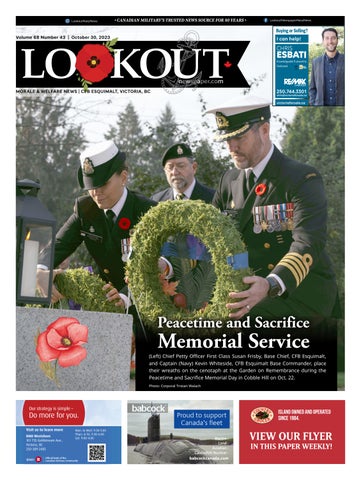
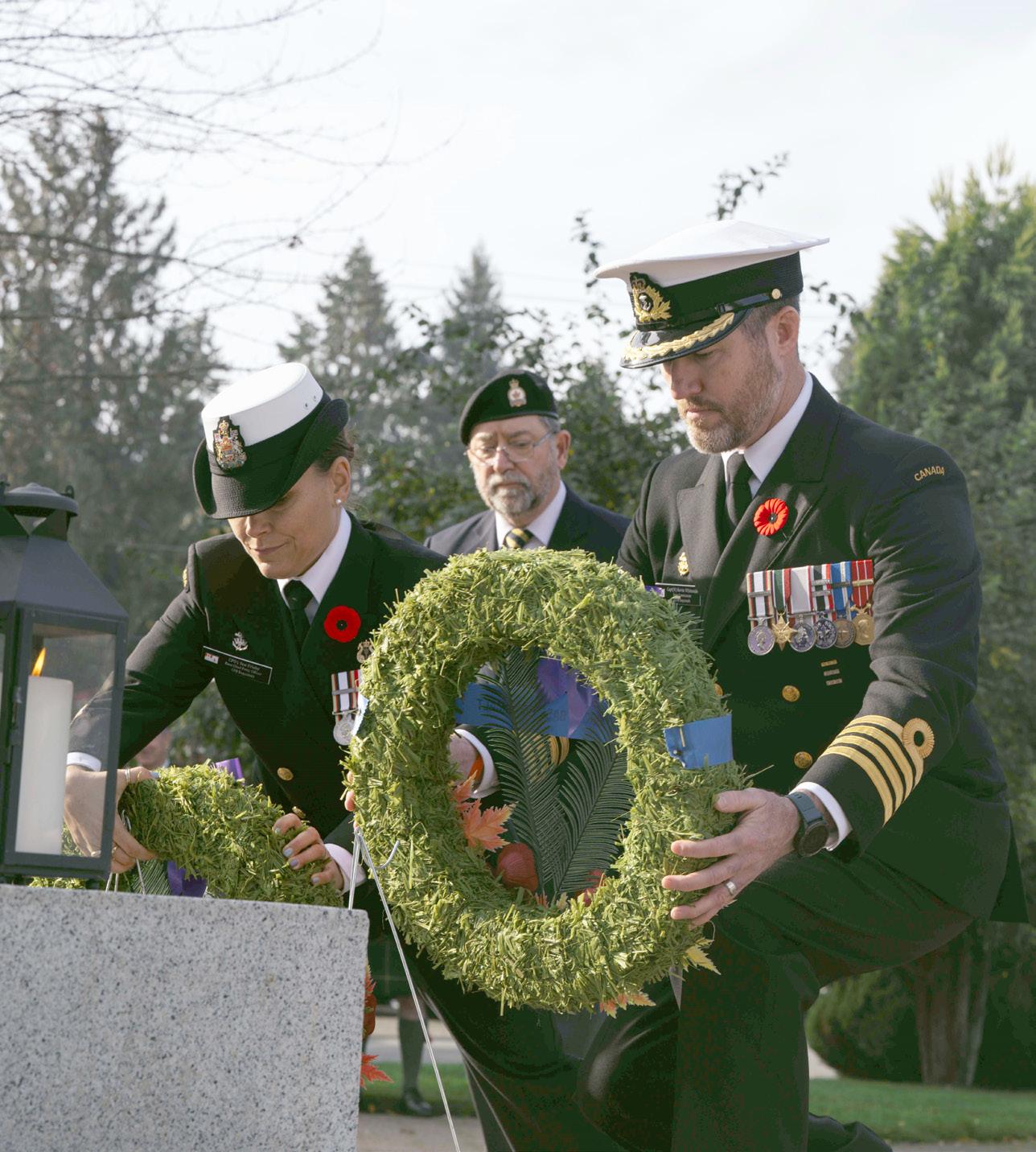
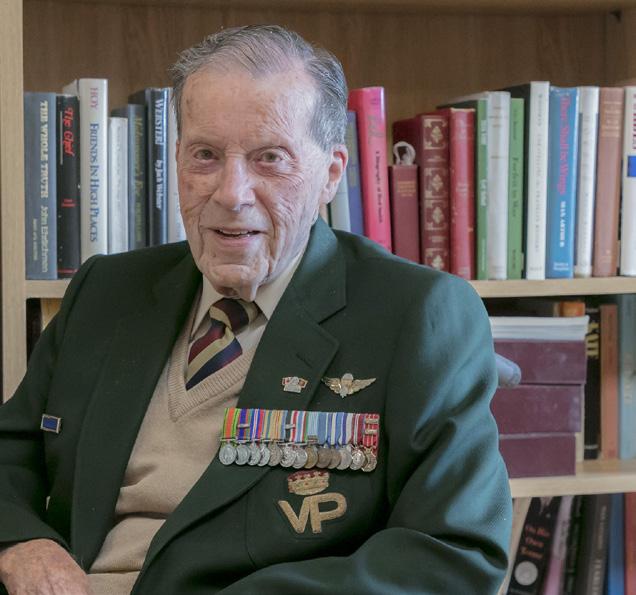
(Left) Chief Petty Officer First Class Susan Frisby, Base Chief, CFB Esquimalt, and Captain (Navy) Kevin Whiteside, CFB Esquimalt Base Commander, place their wreaths on the cenotaph at the Garden on Remembrance during the Peacetime and Sacrifice Memorial Day in Cobble Hill on Oct. 22.
Photo: Corporal Tristan Walach
POESB offers oil spill response refresher
Kateryna Bandura Lookout Editor
True or false: if you spot an oil spill, you are responsible for reporting it to the Environmental Protection Office and waiting for them to arrive to clean it up. False.
While Marine Systems Engineers and deck departments fuel the ships, everyone is responsible for acting during a spill.
“You spilled it, you’re cleaning it up,” says Lyle Fairley, a Marine Environmental Emergency Response Officer from the Port Operations and Emergency Services Branch (POESB). “If you spot a spill, you report it and you do everything you can to clean it up while waiting for us to arrive.”
Oil spill clean-up tactics were among multiple discussions during the yearly Marine Spill Response refresher course, which Fairley ran with Lorraine Crinkley, Branch Environment Officer & HAZMAT Coordinator.
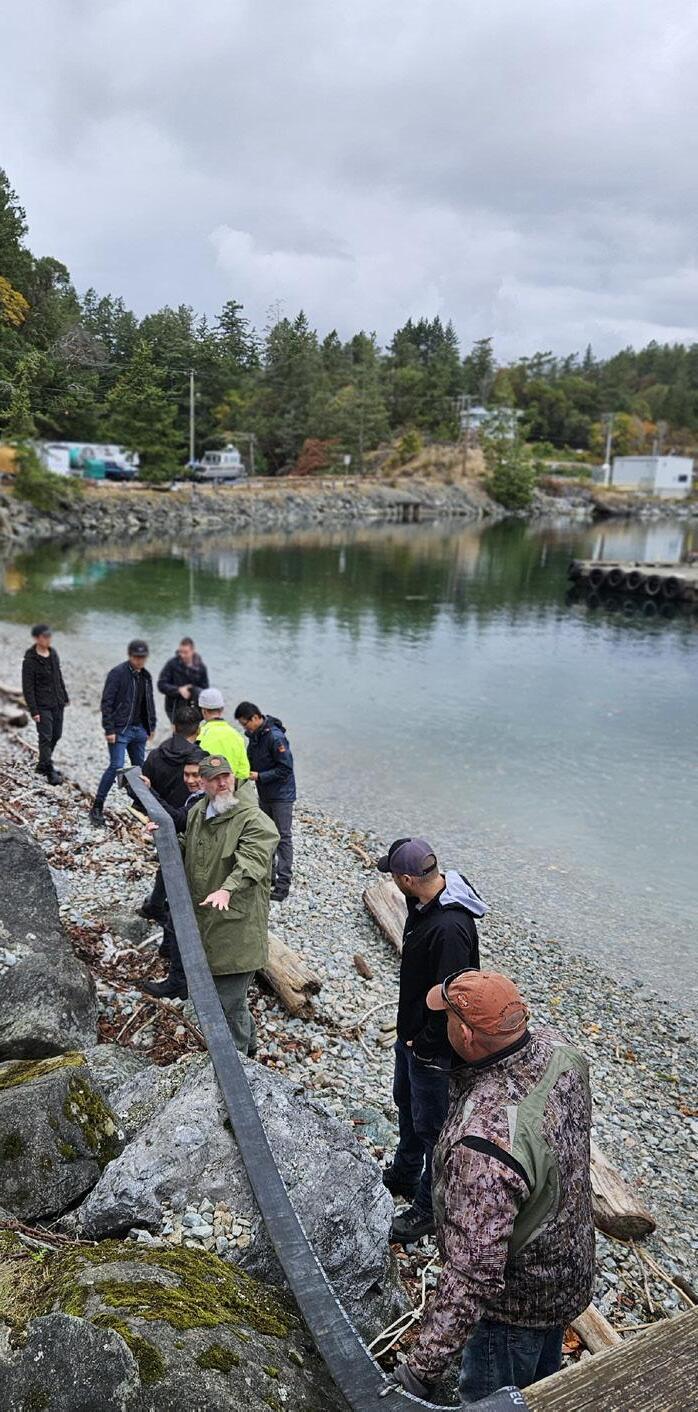
The unique instructional course for sailors and civilians combines classroom experience with hands-on training.
“A lot of training was starting to happen before COVID hit,” Fairley said. “Now that the Navy needs to get many new people prepared, we’re back up and running.”
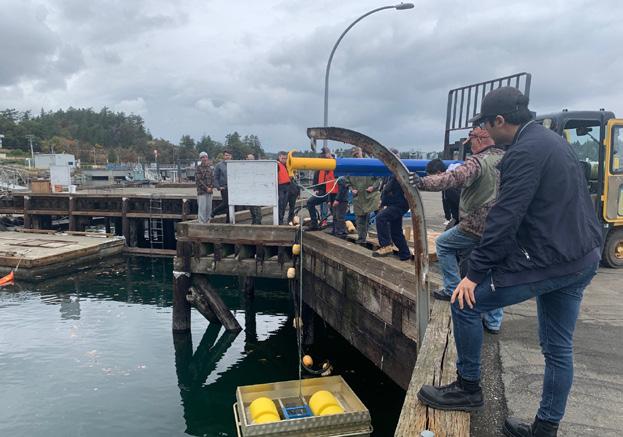
The course comprises theory and practice. The morning lecture covers the basics, such as oil constitution and behaviour, safety factors during a spill, environmental considerations and how to clean up. In the afternoon, members play with a spill kit and participate in a spill scenario, practicing their theory.
“People play with the kits and observe how diesel or paint behaves in a contained environment, and then learn to clean it up. It’s like a big sandbox for adults,” Fairley says.
The personnel are trained to respond to minor leaks and spills onboard ships, and many course participants have previous spill clean-up experience. Petty Officer Second Class (PO2) Erich Pertl took this year’s course to refresh the skills he gained during his 23.5 years of sea time.
“The equipment has gotten more advanced and user-friendly,” PO2 Pertl said. “Before you needed subsurface equipment to run everything, now you just need a small motor that can run a whole system.”
PO2 Pertl, a Bosun with the Naval Fleet School (Pacific), says the course is essential for learning to minimize environmental exposure and mitigate longterm effects on wildlife sanctuaries.
His sentiment is echoed by Sailor First Class (S1) Travis Steevs.
“Anybody who works in this environment has a right to protect it,” S1 Steevs says. “All those ships and submarines have oils, fuels and lubricants, so it's good to know how to clean it up.”
S1 Steevs, a Stoker at Canadian Submarine Force HQ, says the course is perfect for Marine Systems Engineers and other oil and liquid subject matter experts. He also took this course as a refresher.
Fairley said the goal of the course is to make sure people know how to deploy spill kits and have things rolling by the time his team arrives at the scene. He has been overseeing the course since 2014.
“I just really enjoy this,” he says. “The majority of our day is mocking up ‘what if’ scenarios. I like solving problems. And that’s what spill response is about.”
The Marine Spill Response course is step one in preparations for a significant exercise mandated by Environment Canada next spring.
Marine
MANAGING EDITOR
Jazmin Holdway jazmin.holdway@forces.gc.ca
EDITOR
Kate Bandura
WRITER
250-363-3130 kateryna.bandura@forces.gc.ca
Peter Mallett mallett.peter@cfmws.com
PRODUCTION
Leslie Eaton
250-363-8033 workstation3@lookoutnewspaper.com
ACCOUNTS/RECEPTION
Trina Winters
ADVERTISING
Joshua Buck
250-363-3127
778-977-5433 NEW military.base.advertising@gmail.com
Published each Monday, under the authority of Capt(N) K. Whiteside, Base Commander.
Le LOOKOUT est publié tous les lundis, sous l’égide du Capv K. Whiteside, Commandant de la Base.
The editor reserves the right to edit, abridge or reject copy or advertising to adhere to policy as outlined in PSP Policy Manual. Views and opinions expressed are not necessarily those of the Department of National Defence.
Le Rédacteur se réserve le droit de modifier,de condenser ou de rejeter les articles, photographies, ou annonces publicitaires pour adhérer au Manuel des politiques des PSP. Les opinions et annonces exprimées dans le journal ne réflètent pas nécéssairement le point de vue du MDN.
Circulation: 2,000 plus 300 pdf downloads per week Follow us on Facebook, Twitter and Instagram to join our growing social media community.
A Division of Personnel Support Programs
CFB Esquimalt, PO Box 17000 Stn. Forces Victoria, BC V9A 7N2 Web: www.lookoutnewspaper.com Fax: 250-363-3015
Canadian Mail Product Sales Agreement 40063331
Thomas Goenczi
Lookout contributor
Most of us love nothing more than putting something off for a later time. Procrastination is unique to human experience as no other species has the luxury to delay in their duties. In that regard, we are incredibly fortunate to have the space and time to not be in a constant fight-or-flight state. However, procrastination could manifest as a ‘flight’ state of mind when you aren’t willing to take on what’s worth taking on.
We’ve all encountered procrastination to some degree. Some people are completely crippled by it; they end up dwelling in a perpetual state of ‘not doing’. Others delay until external deadlines get so close they have no choice but to either do the task or let themselves and others down. Then, some can effortlessly accom-
Exploring Procrastination
plish everything, but when they have zero interest in the task, they often won’t bother with it.
Procrastination is a peculiar type of avoidance. When we experience an overindulgence in putting off the tasks we know we need to complete, we feed our tendency to evade. Often, procrastination leads to seeking some form of instant gratification to alleviate current stress, the proverbial 'fight or flight' intersection. When we choose to delay instead of completing our task, we quickly create an unconscious pattern that is difficult to shake.
Procrastination can be short-sighted. It is a counterfeit solution to a real problem. To wish it away by not paying attention to it doesn’t get rid of it.
‘Elite’ procrastinators continually put many tasks off until one grows until it can longer be ignored, which causes a sense of being overwhelmed.
People procrastinate because there is a reservation about whether the task is going to be entirely worth it or not. We sometimes accomplish something that feels a little ‘flat’ afterward, and we don’t get the feeling we were hoping for. This could build a preju-
dice of not wanting to take anything on because we believe it’s not going to be worth it. This is a distorted perspective because it ultimately feeds into the avoidance that procrastination so sorely needs to thrive.
Procrastination is a silent but deadly killer concerning our growth as human beings. It inhibits us from accomplishing our true potential and living life to the fullest. When we begin to understand how pervasive procrastination is in our lives, the more we can have a say in choosing fight or flight.
Stay tuned for part 2, where we talk about how to combat procrastination.
Thomas Goenczi is an RCN Veteran and MA Clinical Counsellor with Private Practice: Well Then Therapy.
The content is not intended to substitute professional advice, diagnosis, or treatment. Always seek the advice of your mental health professional or other qualified health provider with any questions regarding your condition.
Designed by Freepik
The Lasting Legacy of Canadian War Amputee Veterans
Royal Canadian Navy
Amid the wars, countless Canadian soldiers and nurses displayed extraordinary bravery and unwavering dedication, putting their lives on the line for our country. Many of these individuals returned home bearing the profound physical and emotional scars of war, having lost limbs in the line of duty. Their experiences as amputees not only shaped their own lives but, as members of The War Amps of Canada, left a legacy on generations of
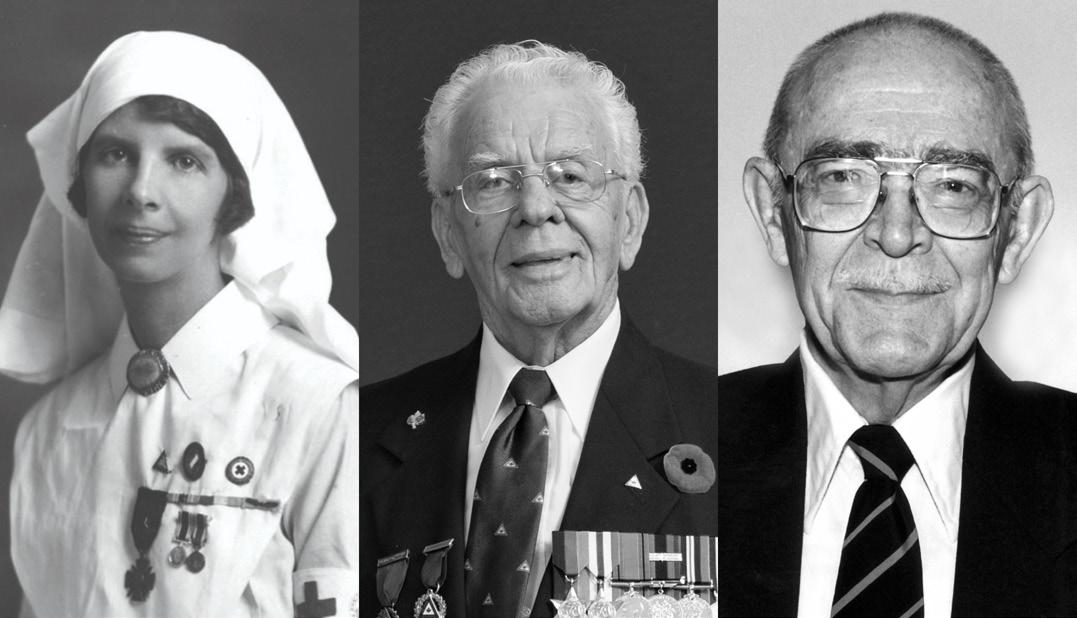
amputees to come. During the First World War, Madeleine Jaffray (1889-1972) served as a nurse in a military hospital near Bordeaux, France. German aviators bombarded the hospital where she was working, and she was wounded in the foot by a piece of shrapnel from one of the bombs. Her injury led to an amputation, making her Canada’s only female war amputee of the First World War. It was amputees like Jaffray who welcomed the new con-
tingent of amputee veterans following the Second World War, sharing with them all that they had learned.
One of these was Mike Krulicki (1925-2020), who was just a teenager when he volunteered for service in the Second World War. He enlisted with the Irish Regiment of Canada, and in 1944 while fighting in the Italian Campaign as part of the attack on the Gothic Line, he stepped on a landmine and lost his right leg below the knee.
Another veteran was Arthur Johnson (1929-2006), who served with the Canadian Army Special Force as a mortar man with the Royal Canadian Regiment and who joined 26,000 other Canadians in the fight for the freedom of South Korea. In August 1952, he found himself on Hill 355 near Seoul amid intense enemy shelling. A mortar landed close by, wounding him and resulting in the loss of his right leg above the knee and damage to his right arm.
United by the common bond of amputation, ampu-
tees from the First World War, along with those from the Second World War and Korean War, were instrumental in pushing for advancements in prosthetic technology, confronting the stigma of disability, advocating for fair pensions for veterans and providing much-needed support to each other.
Rob Larman, a Senior Advisor at The War Amps and a leg amputee himself, said, “These honorable individuals contributed their time to various activities of the Association and shared their
experiences as amputees with others, including modern-day veterans and children. On Remembrance Day especially, but also throughout the year, we pay tribute to the sacrifice and service of all those who served and continue to serve.”
Madeleine Jaffray (First World War), Mike Krulicki (Second World War), Arthur Johnson (Korean War)
Friends and Allies concert coming to Victoria
Mallett Staff Writer
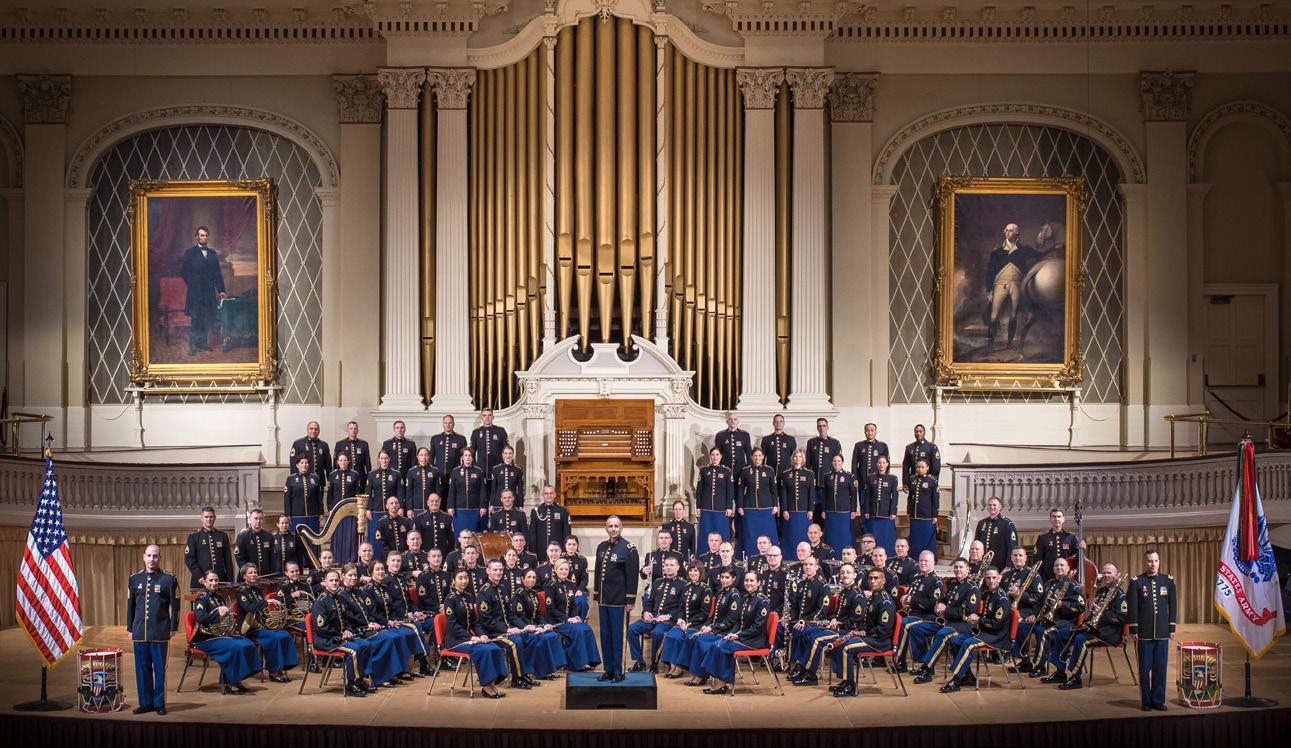
Members of the Naden Band prepare to embark on a new collaboration and a series of upcoming concerts with the prestigious U.S. Army Field Band.
Founded in 1940, The Naden Band of the Royal Canadian Navy is comprised of 35 professional full-time musicians. Their role within the RCN is to support Naval Operations, ceremonial events and public outreach initiatives.
The collaboration with the U.S. Army Field Band grew from a request of a former band member, says Naden Band member Petty Officer Second Class (PO2) Rebecca Hissen.
According to PO2 Hissen, former Band member Captain (Capt) Marie-Perle Broadley, Commanding Officer / Director of Music of the Band of the Royal 22nd Regiment, conducted the U.S. Army Field Band at the Midwest Band and Orchestra Clinic in Chicago in 2022. When the U.S. Army Field Band announced their west coast tour earlier this year, she put Lieutenant (Navy) (Lt(N)) Benjamin Van
Slyke, Commanding Officer of the Naden Band, in touch with them, and the collaboration grew to fruition.
Lt(N) Van Slyke says he and band members are very much looking forward to the series of concerts.
“This is very exciting from a military music perspective because we look up to these folks,” said Lt(N) Van Slyke, who plays trumpet and is the band’s conductor. “They play presidential inaugurations and big sporting events and are thought of in the United States along the same lines of a major symphonic orchestra.”
Founded in 1946 and based in Washington, D.C., The U.S. Army Field Band is the premier touring musical representative of the United States Army. Its Concert Band and Soldiers Chorus recently began a 16-city tour of the West Coast of North America as part of its Fall National Outreach Tour. Their tour involves a trio of performances entitled their Friends and Allies Concerts with the Naden Band of Maritime
Pacific (MARPAC). The U.S. Army Field Band will be bringing along 55 musicians and a 22-person chorus who make up their concert band. To haul their gear and band members from the D.C. area, they will require four buses and two 18-wheeler trucks.
Lt(N) Van Slyke will split conducting duties for the concerts with Colonel Jim R. Keene, the U.S. Army Field Band’s Commanding Officer. The two bands will have a daylong rehearsal in Seattle before their first concert.
“Our musicians are familiar with all the songs and at rehearsal they will need to know which song the conductors will want,” said Lt(N) Van Slyke. “The musicians in both bands are of such great caliber that it will just happen on stage.”
The concerts will feature familiar military songs and marches such as the RCN’s Official March Heart of Oak, the Canadian Army’s March Great Little Army, Henry Fillmore’s Rolling Thunder
March and the national anthems of both nations. Other selections will include composer John Williams and his theme from Star Wars and Harry’s Wonderful World Then, instead of finishing their concert with the field band’s rendition of Stars and Stripes Forever, the bands will belt out their rendition of the original theme song for Hockey Night In Canada: The Hockey Theme by Dolores Coleman.
The series of concerts is a golden opportunity for outreach with a unique demographic, says Lt(N) Van Slyke.
“This unique collaboration provides a fantastic opportunity for our musicians to showcase themselves to the students and faculty at Canadian universities,” he said. “This will give students and staff a greater understanding of what we do in the Canadian Armed Forces and wide array of career opportunities available.”
The Naden Band has collaborated with other military bands in past years, before the COVID-19 pandemic. This includes an annual cross-border concert with military bands from the state of Washington for the past three decades.
Peter
Forces
NADEN BA ND OFTHE ROYAL CANADIANNAVY
Canada’s Three Musketeers
Lookout Newspaper
Throughout its 100-year history, the Royal Canadian Navy (RCN) has performed in many theatres in war and peace, and many fascinating stories emerge.
One such story is that of the ‘Three Musketeers’: three naval officers from Vancouver who enlisted through HMCS Discovery and served with distinction in command of Motor Gun Boats (MGB) during the Second World War in the Mediterranean.
Lieutenant-Commanders Doug Maitland, Corny Burke and Tom Ladner were awarded the Distinguished Service Cross and bars along with numerous ‘Mentioned in Dispatches’. Their daring exploits make the heart pound, filling one with gratitude for their devotion to duty. The exploits are also why the trio became known as the ‘Three Musketeers’.
These exploits inspired John Horton, a Canadian naval war artist in the Canadian Forces Artist Program.
In celebration of the 100th anniversary of the Royal Canadian Navy, the RCN requested sketches as ideas that could be developed into final paintings. The intention was to illustrate, at least in part, the history of the RCN.
From these ideas, the Navy commissioned three paintings. Later, Horton produced two additional paintings to illustrate some of the escapades of the Three Musketeers in the Mediterranean.
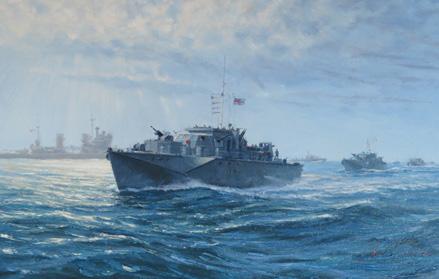
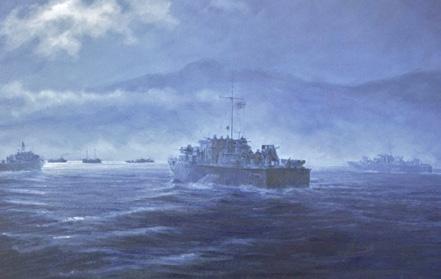
“I felt these highly decorated officers played a significant part in Canadian naval history,” Horton said. The first painting shows them travelling from England to Gibraltar under the fire of German ships and submarines; the second shows them fighting German supply boats.
The officers were members of the Royal Vancouver Yacht Club and the Naval Officers Association (NOA) and remained close friends. Horton had the privilege
of meeting all three. The NOA held a mess dinner to celebrate their success at HMCS Discovery just before their passing, where they all signed a book with their stories and photographs. HMCS Discovery now holds the medals of all three officers.
“ARRIVAL
OFF GIBRALTAR”
In April 1943, after completed workups, a flotilla of 15 MGBs set out to bolster boats in the Mediterranean and help foil German forces being supplied in North Africa. The weather finally cleared as they turned southeast for Gibraltar after a rough passage from the United Kingdom under constant German air surveillance and attack.
About 150 miles from Gibraltar, the convoy sighted the Battleship Duke of York with three escorting destroyers steaming north. As they passed, a lighthearted signal was flashed from the destroyers, ‘Hope you get there’.
“FOR WHAT WE ARE ABOUT TO RECEIVE”
As the Allies moved north, German forces had to move people and materials from Sicily and other islands. It was vital to success that control of the sea be held, and enemy movements be thwarted. Attacking these convoys at night became the primary game plan.
With a convoy silhouetted against the moon, the three MGBs (667,658 and 663) creep out of the darkness to commence their attack against transport vessels protected by German E-boats and deadly flack ships. Surprise and close teamwork brought them much success even though some damage would be expected and injuries and death amongst the crew would be the high cost.
With materials from Mary and John Horton
CENTENNIAL COURT
OFFERING 1, 2, AND 3- BEDROOM SUITES IN LANGFORD
Centennial Court features a fully equipped gym, sauna, steam room, and yoga studio.
For those active days outside, a pet wash station is the perfect solution for keeping your furry friend and your surroundings clean.
Perfect for hosting a work meeting, Centennial Court offers a lobby Starbucks coffee kiosk, business meeting centre, games room, and interor and exterior lounges to all residents
LIMITED TIME OFFER
One month free rent on a 13 month lease
Arrival off Gibraltar
For What We are About to Receive
Peter Mallett Staff Writer
with Veterans Lodge visits
Ahead of Remembrance Day, sailors took the time to say ‘thank you’ to the men and women who served before them.
On the third Thursday of each month, military members from CFB Esquimalt gather for coffee, tea, and conversation with residents of Broadmead Care’s Veterans Lodge. On Nov. 9, volunteer members from various units at the base will make a memorable trip to the Saanich long-term care home as part of its weeklong lineup of Remembrance Day activities.
“This type of outreach is extremely special as it offers us a connection to those who served before us,” says Petty Officer Second Class (PO2) Emily
Whalen. “These visits leave a lasting impression on our sailors and offer a greater sense of pride to wear the uniform.”
As a Business Manager for the Base Executive Branch who organizes and attends the monthly visits, PO2 Whalen says the gratitude and learning process is a two-way street. On Oct. 19, she was one of 20 members who stopped in to socialize with the veterans at Veterans Memorial Lodge’s Oak Room. Veterans Memorial Lodge is home to the Second World War, Korean War, and veterans who served in Canada’s Peace Keeping Missions during the Cold War era.
There are several centenarians at the lodge, including 108-year-old Albert Middleton. Middleton served as a General Serviceman and repaired Royal Canadian Air Force (RCAF) air-
crafts in England during the Second World War. Middleton says he truly relishes the visits.
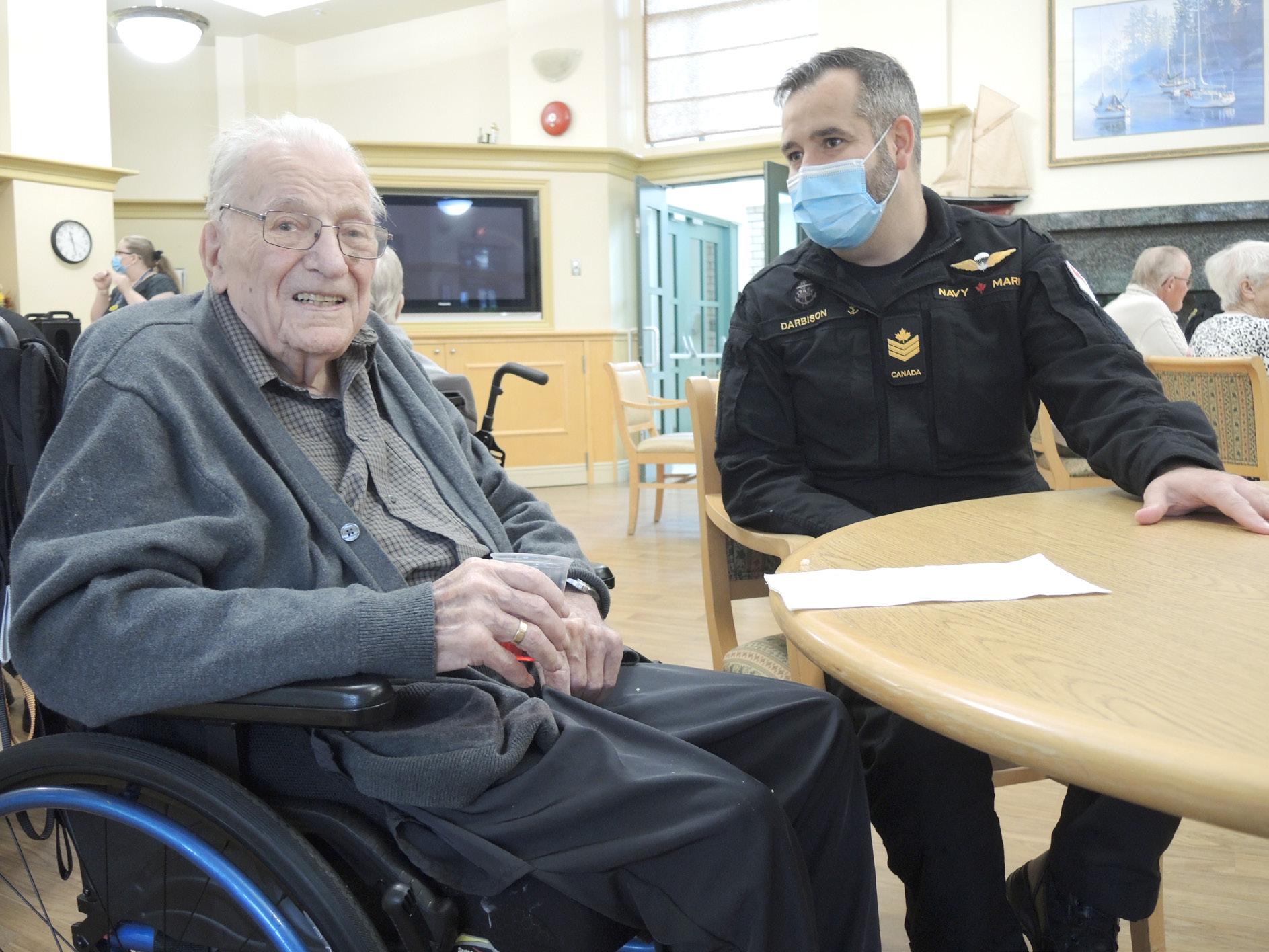
“I’m having a good time and really look forward to these visits,” said Middleton. He had been chatting with PO2 Joseph Darbison of the Transition Unit about the CAF’s new uniforms and rules and regulations for military dress.
“This was my first time attending and I find it very interesting to share stories of military service and say hello,” said PO2 Darbison.
There are also many repeat visitors from the base, including Master Sailor (MS) Ingeborg LeClair, who says she loves the opportunity to meet with Veterans Memorial Lodge residents.
“The reason it’s such a great experience is because I always learn something new and see
familiar faces whom I have met before and also new ones,” said MS LeClair.
“It’s really very nice to have this sort of interaction – with or without masks – as I find it very interesting to speak with today’s military members and exchange stories,” said 98-yearold Malcolm Bull, a former RCAF member who served during the Second World War.
“Even though they wear different uniforms and technology has changed, I think it’s very important to sit down and talk to today’s members about what life in the military is like for them,” said Keith Lavender, 98, who previously served 30 years in Canada’s Air Force and Army.
Carolyn Cameron, Broadmead Activity Worker Team Lead, says residents of Veterans Memorial Lodge and Broadmead’s Veterans Day program look for-
ward to the monthly meetings with military members with great anticipation.
“The visits are about sharing stories and making connections, and this is a great opportunity where residents can find meaning from the engaged and organic conversations,” says Cameron. “Being a veteran is a huge part of the residents' identity, so it is a privilege for me to provide an environment where they are seen, heard, and cared for.”
Broadmead Care is a nonprofit organization that offers long-term care and programs for people who require everyday assistance. Veterans Memorial Lodge at Broadmead contains six different lodges (living areas) and a total of 225 residents. For more information about their Homes and programs, visit broadmeadcare.com.
Former RCAF member and Second World War veteran Bob Miller visits with Petty Officer Second Class Joseph Darbison at Veterans Lodge.
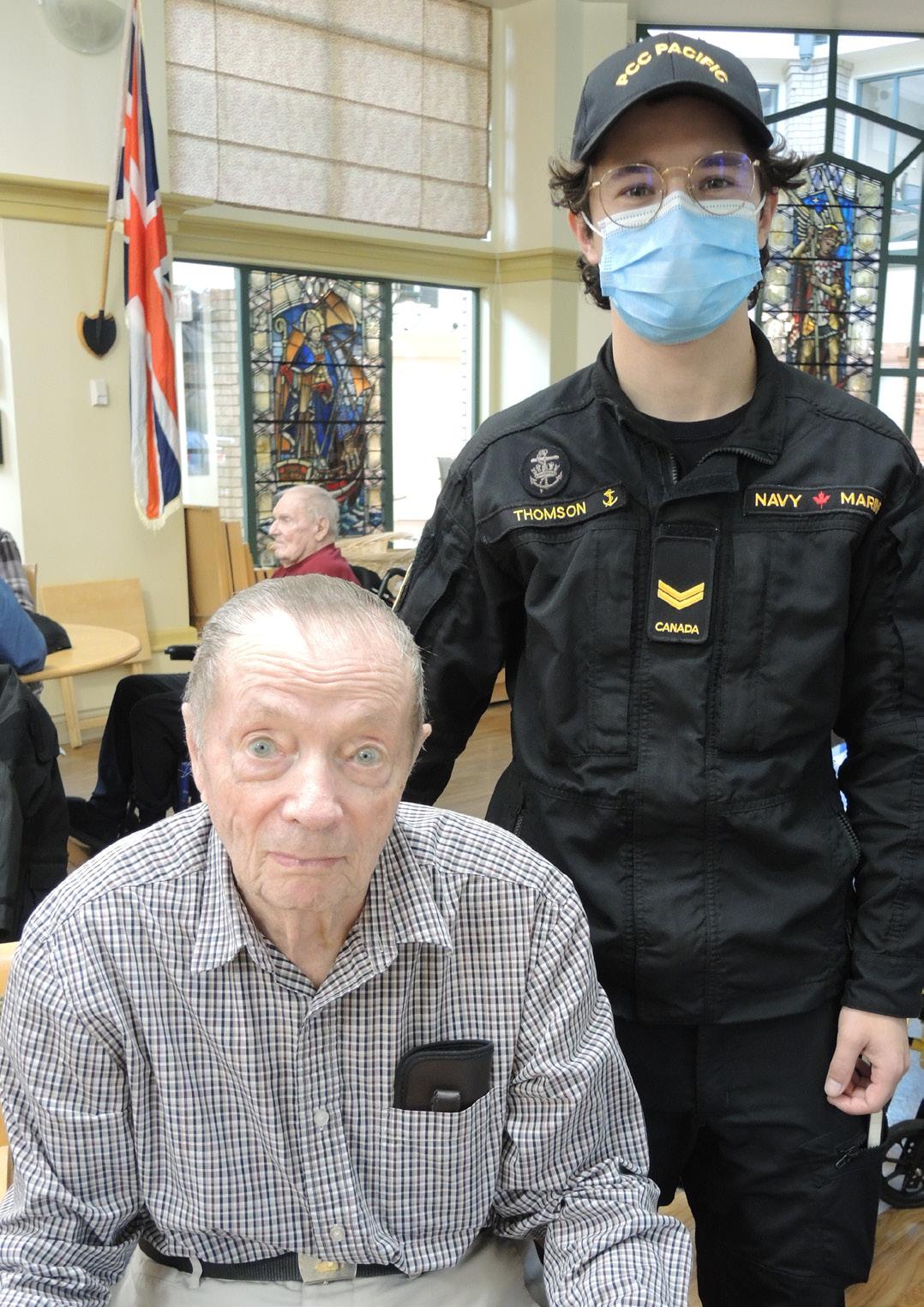
Sailor First Class Jacob Thomson of the Personnel Coordination Centre meets with 92-year-old Army and Air Force veteran Keith Lavender.
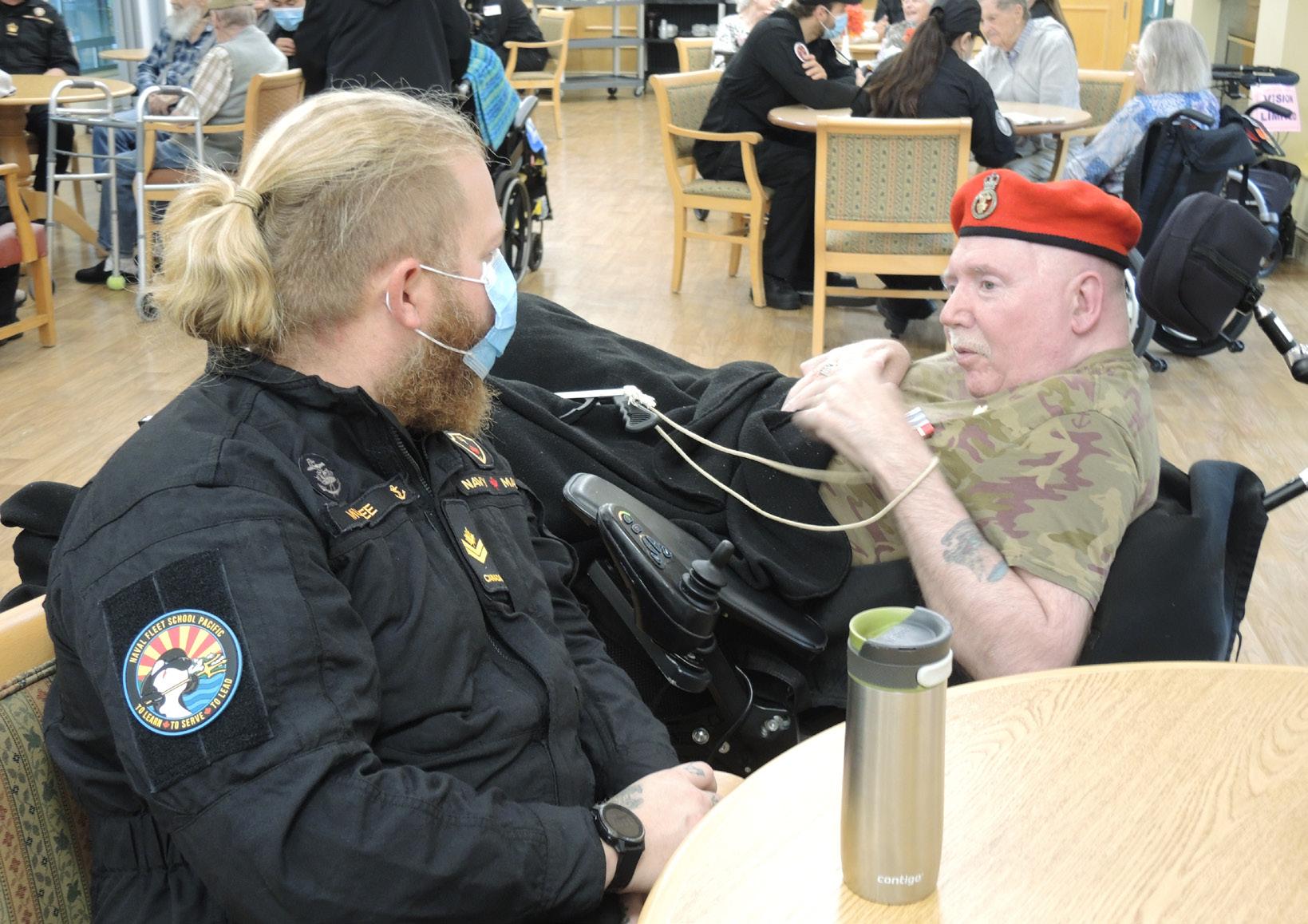
Sailor First Class Robyn Murree of Naval Fleet School (Pacific) meets with Veterans Lodge resident Francis 'Fritz‚' Keegan, a former Army soldier who served Canada's UN Peacekeeping missions in Cyprus, Egypt and the Golan Heights.
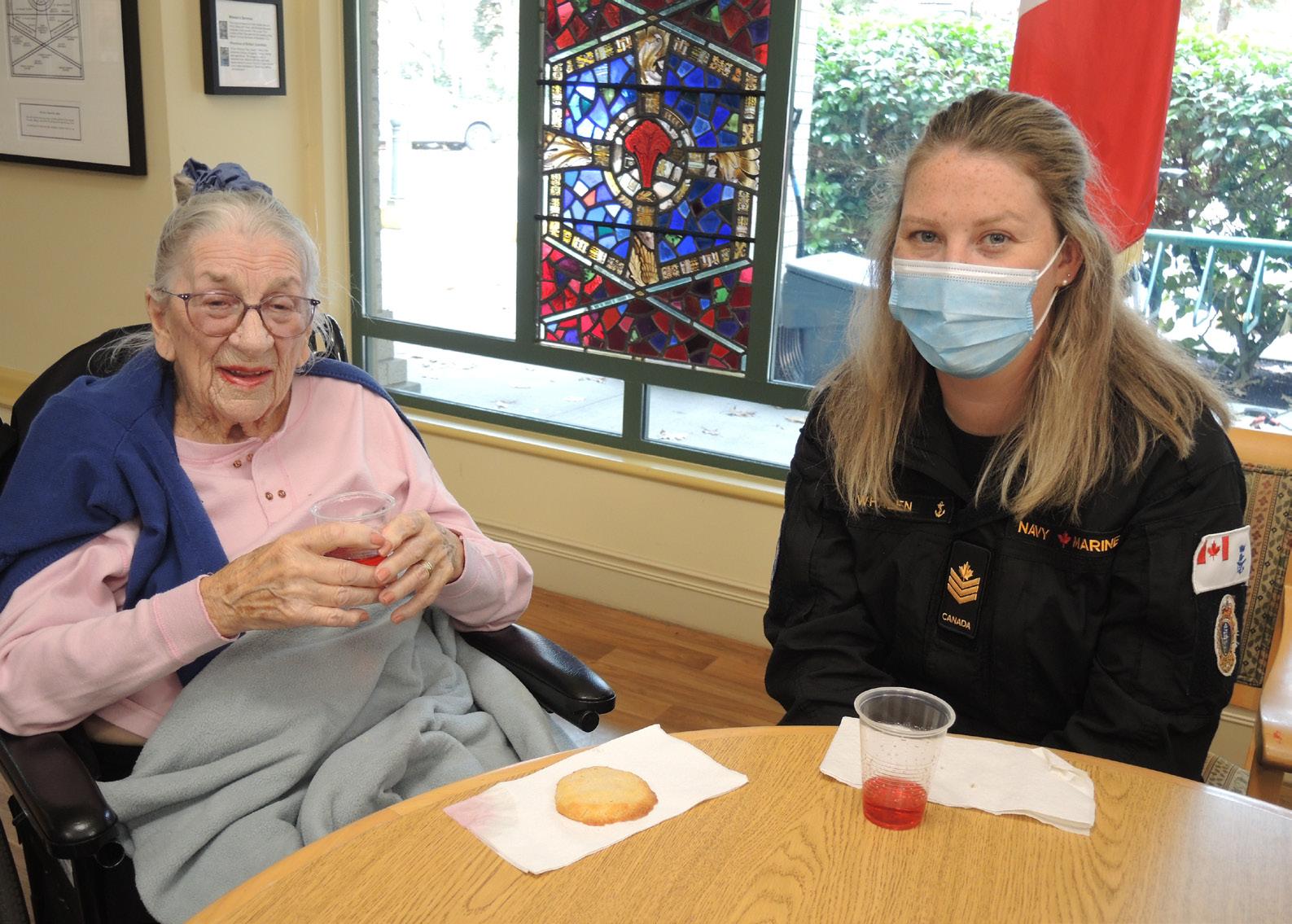
Second World War veteran Jose Goold chats with Petty Officer Second Class Emily Whalen over a glass of juice.
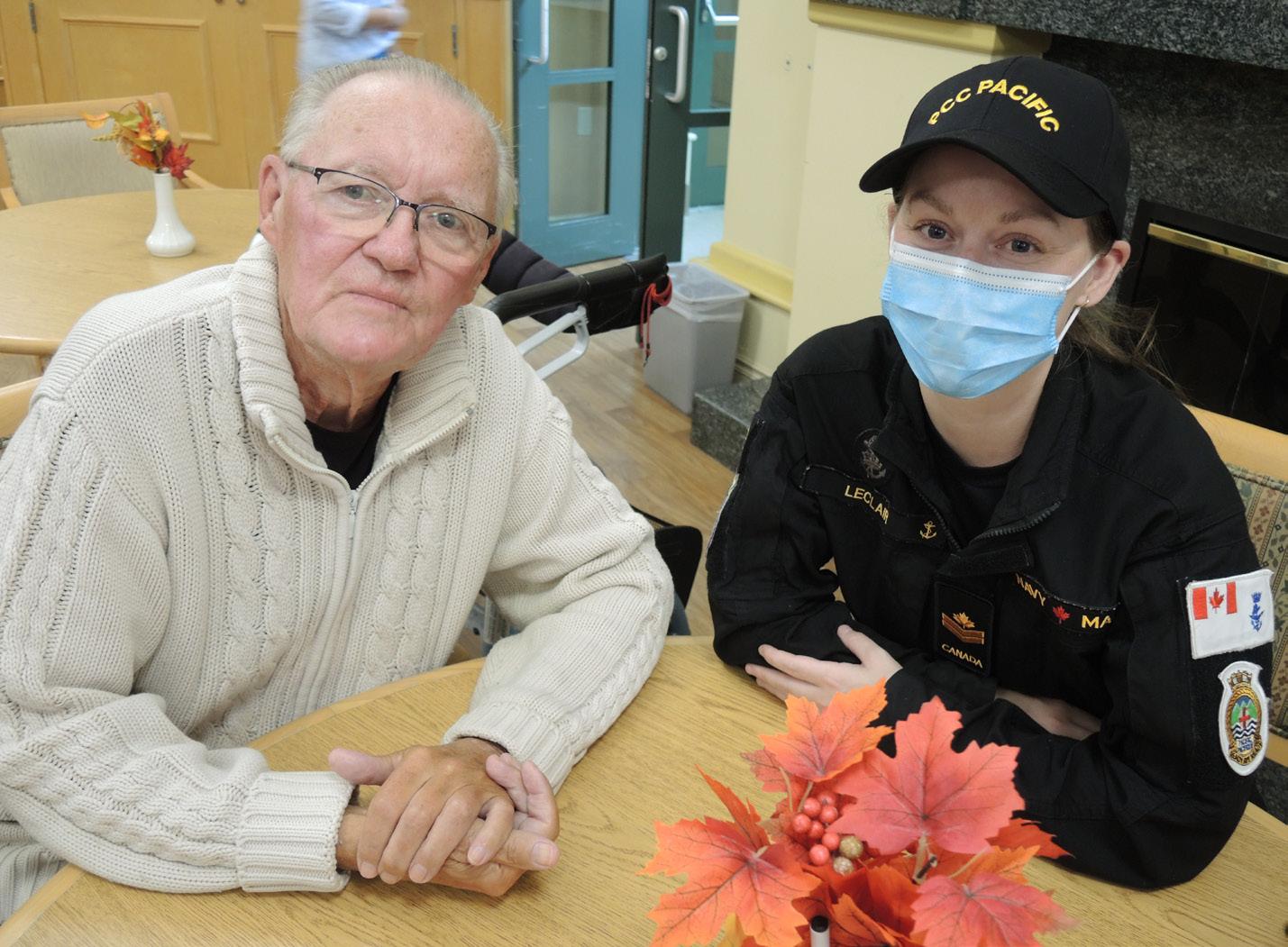
Lieutenant (ret'd) Larry Glover meets with Master Sailor Ingeborg LeClair.
Photos: Peter Mallett/Lookout Newspaper
We will care for them. And we will thank them. You
too, with a gift in your Will for Broadmead Care,
help ensure comfort and care for the veterans
at Veterans Memorial Lodge.
To find out more through a confidential conversation, contact Mandy at Mandy.Parker@broadmeadcare.com, or visit www.broadmeadcare.com.
Stronger Together: Padre portrait commemorates diversity: Chaplains
White, Thomas, and Cass
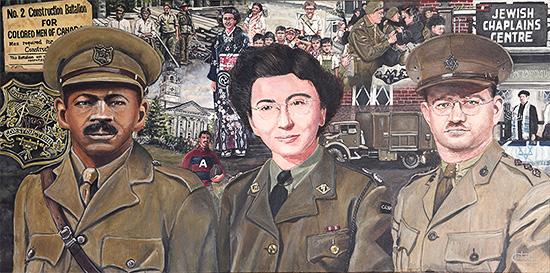
The Canadian military’s first Black chaplain, Padre William Andrew White, witnessed the death of a soldier because of racism. Canada’s first female military chaplain, Padre Wilna Thomas, created an unprecedented standard that hundreds would follow. One of Canada’s first Jewish chaplains, Padre Samuel Cass, experienced a spiritual liberation that overcame evil.
Padre White, Padre Thomas, and Padre Cass are each featured in the portrait ‘Stronger Together’ – unveiled at the Department of National Defence’s Carling Campus in May by Brigadier-General Guy Belisle, the Canadian Armed Forces’ (CAF) Chaplain General.
During the First World War, Padre White was the No. 2 Construction Battalion chaplain. The unit worked in eastern France to ensure vital lumber supplies reached the Western Front. In a military hospital, a sick Black soldier was refused medical care. The attending physician accused the young soldier of faking his illness. Padre White’s adamant disagreement was ignored. He stayed with the soldier and comforted him as he breathed. Padre White advocated for his soldiers, who often lacked proper clothing, equipment, or shelter. He was often a conduit of understanding and respect between the Black soldiers and white officers of his unit.
regret was not being allowed to enlist three years earlier. Padre Thomas opened the door for the hundreds of women military chaplains who would follow.
Padre Cass served the Canadians fighting their way through northwest Europe. He also worked to alleviate the suffering of the Dutch Jewish community. In Amsterdam, he sent 60 Jewish children who had been in hiding after losing their parents in the Holocaust. Padre Cass cared for them, gave them the first gifts they had received in years, and helped re-locate them with Jewish families in Britain and North America. He also helped re-establish Jewish communities in Belgium and the Netherlands. During the war, Padre Cass conducted the first public Jewish prayers on German soil. It provided a poignant memory for Canadian soldiers; they were part of a spiritual liberation that no amount of evil could silence. Padre Cass helped establish the Canadian Jewish Chaplains Centre in Amsterdam after the war. The building had served as the headquarters for the Nazi Gestapo but now welcomed hundreds of Canadian Jewish service personnel. Padre Cass effectively served Canadians in uniform and a minority population devastated by war.
During the Second World War, thousands of women served, often in unprecedented ways. One woman’s service ushered in a new military role for women – as mil itary chaplains. Padre Thomas enlisted in the Canadian Women’s Army Corps and was commis sioned and posted to Ottawa after graduating from officer’s training. She was adept at bringing people of differing perspectives together. Her only
Roger Chabot illuminates the work of Padres White, Thomas, and Cass in his artistic portrait ‘Stronger Together ’ Chabot’s 32 years of military service is reflected in his work as a military artist. His paintings have been presented to the Governor General, members of the Royal Family, and the Canadian War Museum. Chabot is also the founder and producer of Bravery in Arms Productions. In creating Stronger Together, Chabot sought to convey to all members of the CAF that there is more that unites us than divides us and that we are stronger together.
Defence Stories
Major Tom Hamilton, historian
From the left, Roger Chabot’s portrait features The Canadian military’s first Black chaplain, Padre William Andrew White; its first woman chaplain, Padre Wilna Thomas; and one of its first Jewish chaplains, Padre Samuel Cass. Photo courtesy of Roger Chabot
Military artist and former CAF
member Roger Chabot. Photo by John Serviss, Bravery in Arms Productions
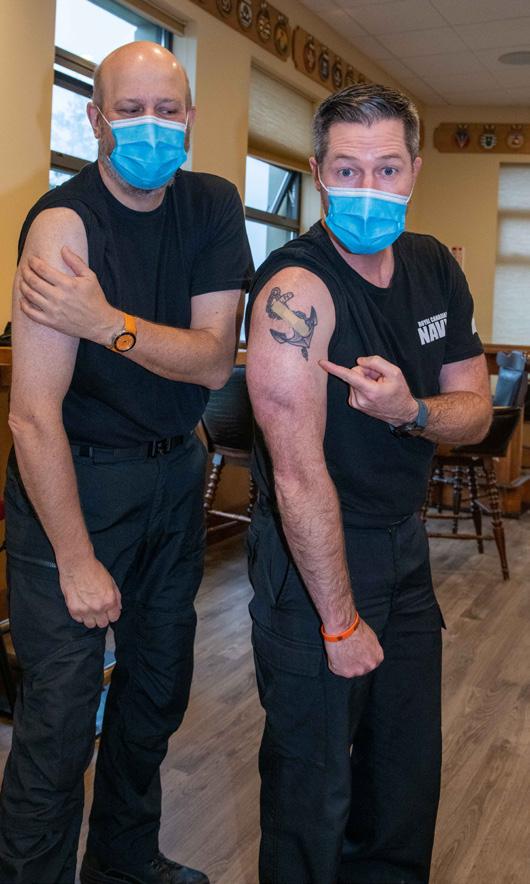
Rear-Admiral Christopher Robinson (Left), holds his bicep, and Captain (Navy) Kevin Whiteside, Base Commander, CFB Esquimalt, points to his band-aid after
at the Wardroom.
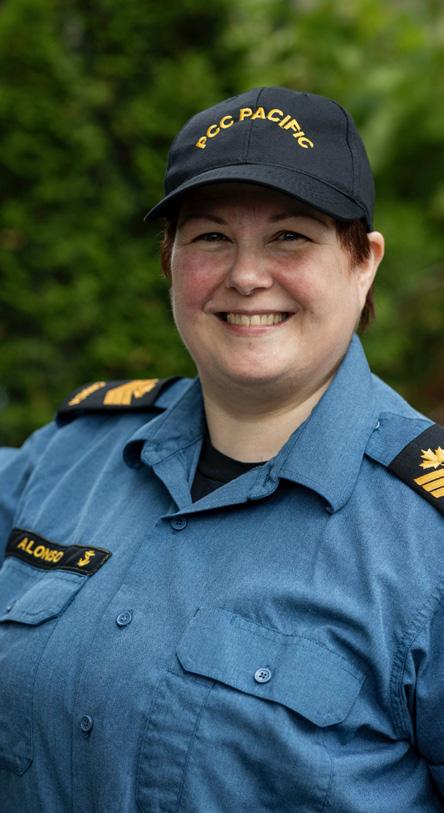
RCN Digital Leadership: PO2 Julie Alonso
(DFC). In this role, she helps ensure the information within the Ship’s Naval Offboard anti-Missile Active Decoy and the shore image in Monitor Mass (MM) reflects the RCN’s actual personnel taskings. She often helps the PCC Management Consulting Services Support Cell with troubleshooting and makes suggestions regarding fixes. She also provides support to the Naval Personnel Management Business Technology Team, which works directly with Military Command Software Centre to manage requirements.
Elizabeth Wolfe Business Analyst/Technical Advisor, NPTG
Originally from the south shore of Montreal, Petty Officer Second Class (PO2) Julie Alonso joined the Royal Canadian Navy (RCN) as a Reservist in November 2006. Her brother was in the Army and suggested she join the Naval Reserves since she liked being outside, working with (and on) the water and the environment.
She studied to be an environmental technician during CEGEP (Collège d’enseignement general et professionnel). In 2010, she was introduced to IT fundamentals while sailing on the MCDVs as a Naval Communicator. In 2013, she was posted to Naval Reserves HQ Helpdesk as an IT technician providing support for any IT and DWAN issues reported by Reserve units. While working for NAVRES HQ, she completed a certificate in networking via College O’Sullivan on her own time to support her skills development.
PO2 Alonso was posted to Personel Coordination Centre (PCC) Pacific in 2018 as a Personnel Controller and is currently the 2IC of her section, the Data Fusion Cell
MM and Canadian Forces Taskings, Plans and Operations (Canada) (CFTPO) are the key players in PO2 Alonso’s workday. She relies on MM to ensure the information on the ship’s personnel and their movements are accurate, not conflicting, and reflect reality. She uses CFTPO to create and amend sailing bricks and uses it as a tool to confirm members’ movements.
While her team works on-site at CFB Esquimalt, she lives in Gatineau and works remotely from home. Without Microsoft Teams, she would not be able to perform her current supervisory role remotely – it’s a critical tool for awareness. She also relies on someone on site to relay the section’s whereabouts and issues. On average, she visits quarterly – with plenty of warning for the rest of the team!
FOR THOSE WISHING TO DEVELOP THEIR TECH SKILLS, JULIE SUGGESTS THE FOLLOWING:
• Study on your initiative, if possible;
• Take your time and make sure you are thorough;
• Be persistent;
• Pay close attention to detail;
• Don’t make any assumptions;
• Always confirm with another source;
• Trace your way back when troubleshooting; and
• Google is your friend. It’s an excellent tool for research!
Sailor profiles:
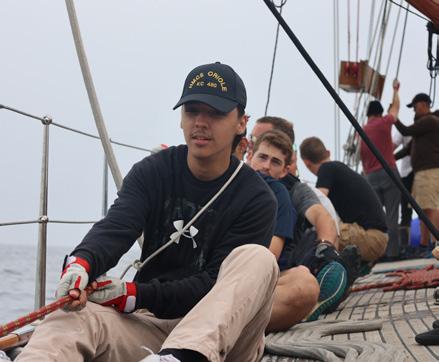
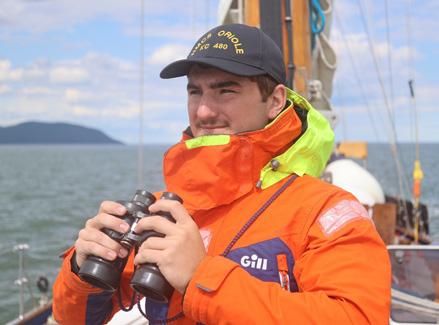
Three Naval Cadets from RMCC onboard HMCS Oriole
During His Majesty’s Canadian Ship (HMCS) Oriole’s Great Lakes Deployment this year, junior sailors and officers across Canada experienced life at sea. Three Royal Military College of Canada cadets were invited to join HMCS Oriole during the annual Great Lakes Deployment and spend their On-The-Job (OJT) summer onboard. Each had a unique opportunity to sail and experience life at sea onboard – here are their stories.
Naval Cadet Jackson Carter
HMCS Oriole’s Public Affairs Officer (ORI PAO): Please introduce yourself.
Naval Cadet Jackson Carter (NCdt Carter): My name is Naval Cadet Jackson Carter, and I am from Ottawa, Ont. I am a third-year electrical engineering student at the Royal Military College of Canada.
ORI PAO: Why did you join the Royal Canadian Navy (RCN)? What is your trade, and what are your career aspirations?
NCdt Carter: I enrolled as a Combat Systems Engineering Officer in the RCN. In my career, I aspire to become a Head of Department onboard a frigate, and I also want to do Project Management in
Naval Cadet Gabriel Curt-Cavenz:
ORI PAO: Please introduce yourself.
NCdt Curt-Cavenz: Hello, my name is NCdt Gabriel Curt-Cavenz, and I am from Montréal Qué. I am a student at the Royal Military College of Canada (RMCC).
ORI PAO: At RMCC, what year are you, and what are you studying?
NCdt Curt-Cavenz: I am a secondyear Cadet, going into my third year in September. At RMCC, I study Mechanical Engineering.
ORI PAO: What is your trade in the RCN? What are your career aspirations, and can you share why you chose to join the RCN?
NCdt Curt-Cavenz: I am a Marine Systems Engineering Officer, and for my career aspirations right now, I want
Naval Cadet Bohdan Kyslenko
ORI PAO: Please introduce yourself.
NCdt Kyslenko: My name is Naval Cadet Bohdan Kyslenko, and I am from Ottawa, Ont. I am a second-year psychology student at the Royal Military College of Canada. I transferred from the Naval Reserves out of HMCS Carlton, and as such, this is my third year in the RCN.
ORI PAO: Why did you join the RCN? What is your trade, and what are your career aspirations?
NCdt Kyslenko: I enrolled in the Royal
Ottawa. I joined the Navy because my grandfather was in the Royal Canadian Air Force. The Navy had a lot of benefits that it could offer me, and I wanted to do something rewarding.
ORI PAO: How did you get the opportunity to come onboard HMCS Oriole?
NCdt Carter: I saw the On-The-Job Experience posting for the summer through the Staff Careers Office, and I jumped at the chance to sail onboard HMCS Oriole.
ORI PAO: Onboard HMCS Oriole, what are your day-to-day tasks and responsibilities?
NCdt Carter: I am a Watch-On-Deck, and I do a variety of tasks. I stand watches as helm and lookout, and I also help where I can throughout the ship,
to explore all the available options in the RCN. I joined the RCN because I love the sea and I love to sail. I also wanted to have a stable job and enjoy life!
ORI PAO: How did you get the opportunity to come onboard HMCS Oriole?
NCdt Curt-Cavenz: My On-theJob Experience (OJE) was at Fleet Maintenance Facility Cape Scott this summer. I had a supervisor who mentioned that there was an opportunity to join HMCS Oriole during its annual Great Lakes Deployment, so I put my name in, and here I am!
ORI PAO: During this transit between Gaspé and Saguenay, what was your best onboard experience?
NCdt Curt-Cavenz: Having the opportunity to be on the helm. It is unique to have the responsibility of steering a 102-year-old Marconi Ketch!
Canadian Navy as a Naval Warfare Officer. I joined because of the fantastic opportunities to travel and see the world. For my career aspirations, I want to one day become a ship’s OfficerIn-Charge or even the Commanding Officer of HMCS Oriole one day.
ORI PAO: How did you get the opportunity to come onboard HMCS Oriole?
NCdt Kyslenko: Initially, I didn’t have much of a choice but to come onboard HMCS Oriole. However, when I came on board and experienced what it was like to sail, I requested to stay longer because I liked it very much.
including scullery, rope-handling, etc.
ORI PAO: What was your best experience onboard so far?
NCdt Carter: While HMCS Oriole was alongside Charlottetown, P.E.I., I saw my family in town.
ORI PAO: What lessons will you take away from this experience?
NCdt Cater: Through my time onboard, I’ve learned a lot about the structure of the Navy, and I have a more in-depth knowledge of how everything works. HMCS Oriole is like a miniature version of a frigate, and I now better appreciate how the Chain of Command works. I also improved my social skills and how to interact with everyone in tight quarters onboard a ship.
ORI PAO: What lessons will you take away from this entire experience?
NCdt Curt-Cavenz: Self-discipline. For example, it’s hard to wake up in the middle of the night when you are on the mids watch, but you have to because everyone depends on each other. It is a small crew onboard the ship, and it takes the entire ship’s company to ensure all the tasks are completed. ORI PAO: Is there anything that you would like to add?
NCdt Curt-Cavenz: Take every opportunity that is presented! I was aware there were opportunities to sail onboard HMCS Oriole when I started my summer OJE. It has been an excellent experience, and I recommend it to other Naval Cadets when possible!
ORI PAO: What was your best experience onboard so far?
NCdt Kyslenko: My best experience so far is on the lookout, and the swells become big. The ship pitches and rolls, and it is a fantastic feeling to stand at the bow and experience that.
ORI PAO: What lessons will you take away from this experience?
NCdt Kyslenko: I learned a lot about sailing in general, how a ship functions while it sails, and most importantly, how the crew must always work together as a team to be successful.
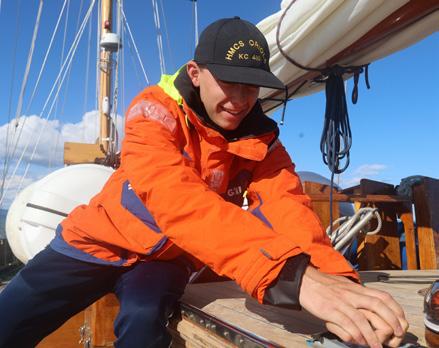
Top: Naval Cadet Jackson Carter helps with routine maintenance onboard HMCS Oriole. Inset: Naval Cadet Jackson Carter
Centre: Naval Cadet Gabriel Curt-Cavenz in a “bobsled” team, ready to help tack the Yankee sail onboard HMCS Oriole. Inset: Naval Cadet Gabriel Curt-Cavenz. Bottom: Naval Cadet Bohdan Ksylenko at the helm onboard HMCS Oriole. Inset: Naval Cadet Bohdan Ksylenko.
Photos: Sub-Lieutenant Wilson Ho, HMCS Oriole Public Affairs Officer
Part 3
Provided by PSP
In 2017, the abandoned Canadian military camp remained a dormant enigma, its history shrouded in mystery and whispers of the supernatural. Most had forgotten the camp, a distant memory in the annals of time. Yet, it would once again stir with life—or rather, a lingering specter of life—when three soldiers were tasked with exploring the site in preparation for a planned training exercise scheduled for October.
Sergeant James Marshall, Corporal Emma Collins, and Private Ethan Bennett were selected for the mission. They were seasoned soldiers, hardened by years of training and service, but none could deny the unease that settled over them as they entered the overgrown campsite. The air was thick with tension, and the atmosphere seemed to pulse with the weight of unseen eyes.
Their initial reports to the chain of command hinted at the unsettling nature of their experience. Once abandoned and decayed, the camp’s buildings now bore signs of habitation. The mess hall, which
had stood for decades in disrepair, had been restored to its former state—a quaint dining area ready to welcome its longlost guests. But what disturbed the soldiers the most was the chilling familiarity surrounding them.
In their reports, Sergeant Marshall, Corporal Collins, and Private Bennett spoke of whispers that lingered at the edges of their hearing, like secrets carried on the wind.
The soldiers described how the night air came alive with the sounds of footsteps and hushed conversations as if the past were being replayed before their eyes. Objects shifted on their own accord, much like the stories told by the soldiers of the past.
The spectral figures the soldiers encountered were more vivid than the memories they’d read about in the historical records. The apparitions, dressed in military uniforms from decades ago, appeared as living soldiers rather than wraiths. The trio claimed the figures moved purposefully, executing drills and training exercises that mirrored the camp’s active days.
As October approached, the atmosphere grew even more charged. The soldiers spoke of hearing a haunting melody,
A Story for the Halloween Season
a tune that seemed to weave itself into their very souls. The haunting melody resonated through the trees and buildings, and they could feel it tugging at their memories, evoking a longing for a past they had never experienced.
In their final report, penned just days before their scheduled return, the tone grew more frantic. The soldiers described how the camp seemed to change, the buildings morphing and shifting in ways that defied the laws of physics. They spoke of a nightmarish vision in which the camp was alive with the echoes of battles long fought, a cacophony of phantom gunfire, and anguished cries. And then, silence. The reports ceased, and the soldiers were never heard from again. The chain of command was left with the chilling accounts of the soldiers’ experiences, a haunting tale that was both inexplicable and unsettling. The scheduled training exercise in October came and went, but the soldiers never returned to fulfill their duties.
The abandoned Canadian military camp, once a canvas for training and camaraderie, had claimed more souls.
The story of Sergeant James
Marshall, Corporal Emma Collins, and Private Ethan Bennett became a cautionary tale—a stark reminder that some mysteries were never meant to be unraveled, and some memories were never meant to be disturbed.
To this day, the fate of the three soldiers remains unknown, lost to the enigmatic embrace of the abandoned camp. The haunting melodies, the whispers, and the spectral figures continue to linger, a testament to the camp’s timeless grip on the living and the lingering presence of those who once walked its grounds. The stories of the soldiers who disappeared within its confines serve as a chilling reminder that the past is not always willing to release its hold, even in the face of modernity and progress.
Author’s Note:
As we bid farewell to the chilling journey through the abandoned Canadian military camp, I want to extend my heartfelt gratitude to all brave readers who have followed the haunting tale from its inception. Your curiosity and engagement have made this story come alive in ways I could never have imagined.
As Halloween approaches,
may the spirits of the past remind us of the mysteries that lie beyond our understanding. May the whispers of the camp and the echoes of the soldiers continue to send shivers down your spine, and may you find yourself pondering the delicate balance between the realms of the living and the departed.
In a final twist, rumors abound that artifacts from the camp are set to be displayed in military museums across Canada. One can’t help but wonder, will the hauntings follow as these relics find new homes? Will the memories etched into each artifact’s fibers reawaken in the hearts of those who dare to explore their history?
As we embrace the Halloween season, let us remember the line between reality and the supernatural is often blurred and that the past has a way of leaving an indelible mark on the present. From the depths of my writer’s heart, I wish you all a spinetingling, bone-chilling, and utterly Happy Halloween. Stay curious, stay brave, and remember—the unknown is often the most captivating.
“Ąnd then, silence.”
AWARD CEREMONY HIGHLIGHTS
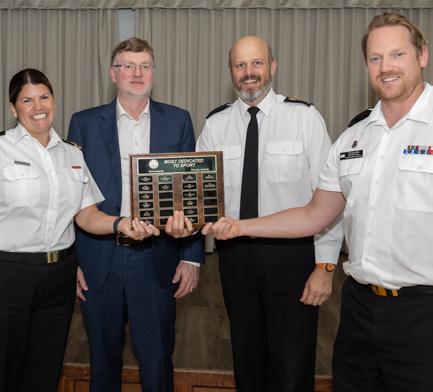
Most Dedicated to Sport Award presented to Lieutenant Courtney Looye-Pohoney (left) and Petty Officer First Class Curtis Gillies (right) by Mr. David Cyr and Rear-Admiral Christopher Robinson.
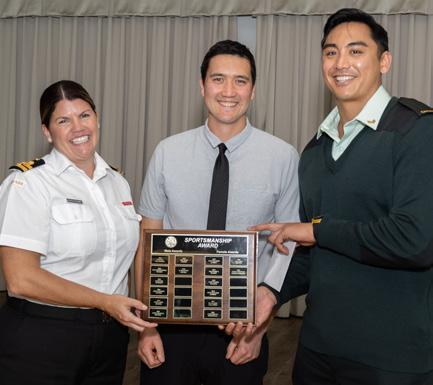
Sportsmanship Award presented to Lieutenant Courtney Looye-Pohoney (left) and Master Corporal Kristopher Faucon.
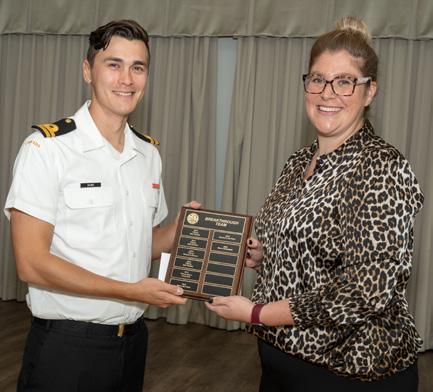
Lieutenant (Navy) Duke accepts the Breakthrough Team Award presented to the Men’s Basketball Team by Senior PSP Manager, Alyssa Jesson.
Top all Round Team Performance Award is presented to the Men’s Volleyball Team by Senior PSP Manager, Alyssa Jesson.
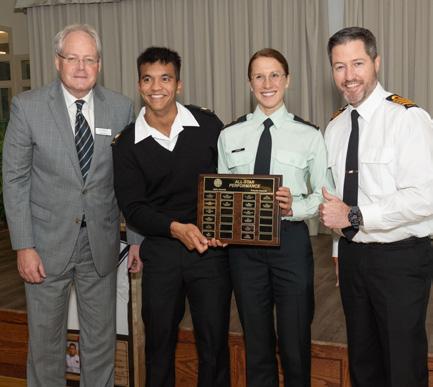
All-Star Performance Award presented to Sailor First Class Nathaniel Hartley and Lieutenant Anabelle St-Martin by (right) Captain (Navy) Kevin Whiteside, Base Commander, CFB Esquimalt and (left) Keith Wells, Executive Director, Greater Victoria Sport Tourism Commission.
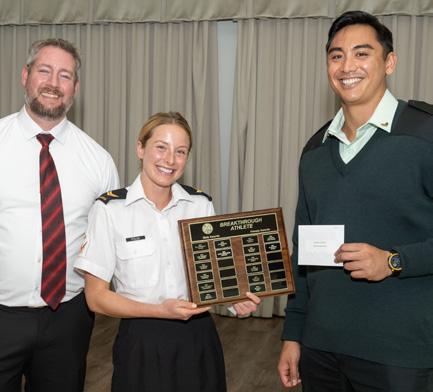
Breakthrough Athlete Award presented to Sailor 1st Class Amanda Polus and Master Corporal Kristopher Faucon by Matt Kingstone, Manager, Fitness, and Sports, Personnel Support Programs.
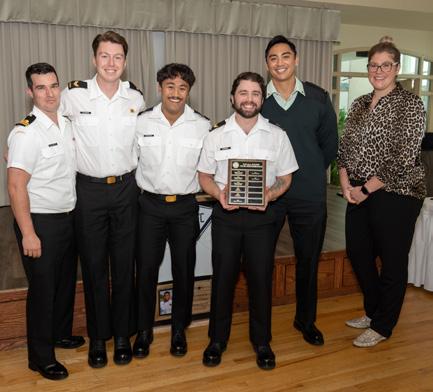
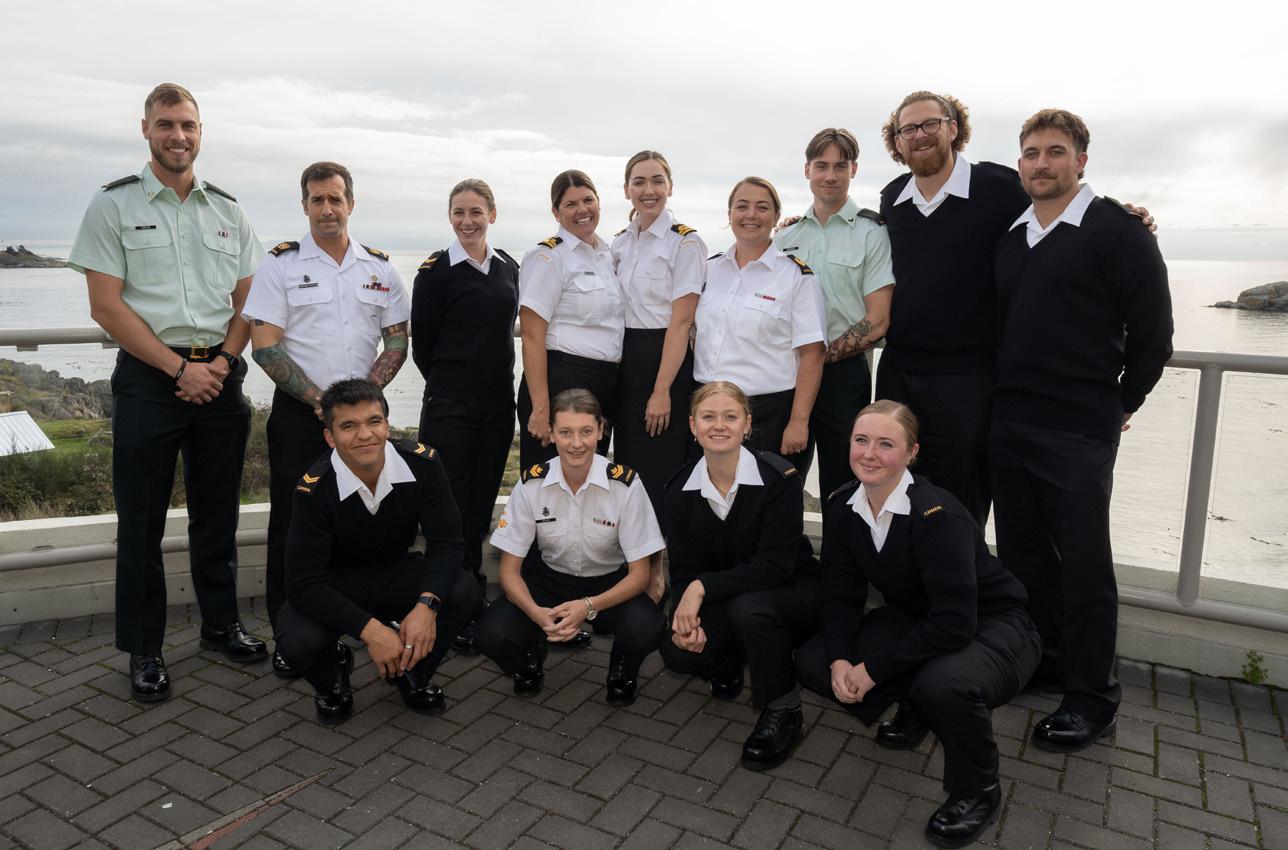
Members of the Men’s and Women’s Tritons Soccer teams take a group photo.