






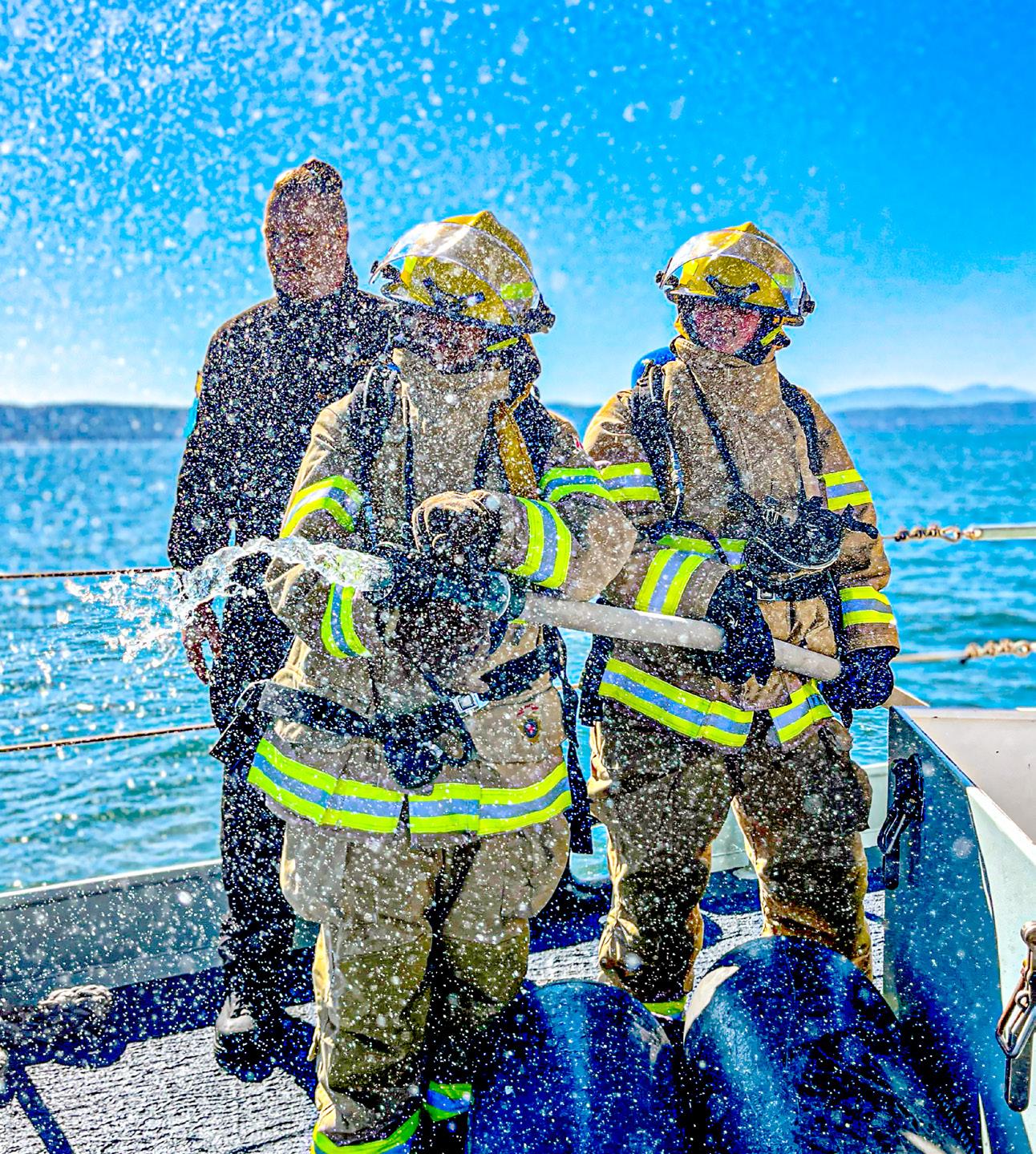





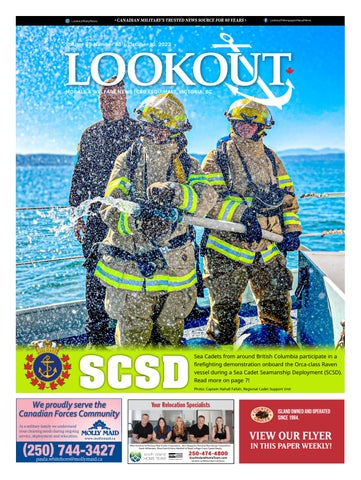
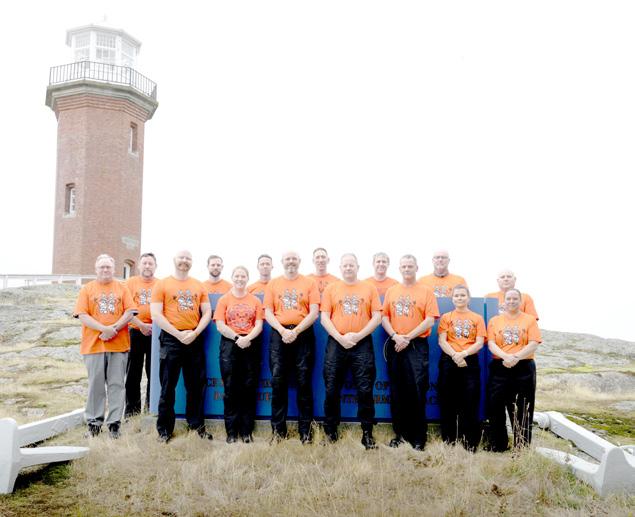
Photo: Captain Nahall Fallah, Regional Cadet Support Unit

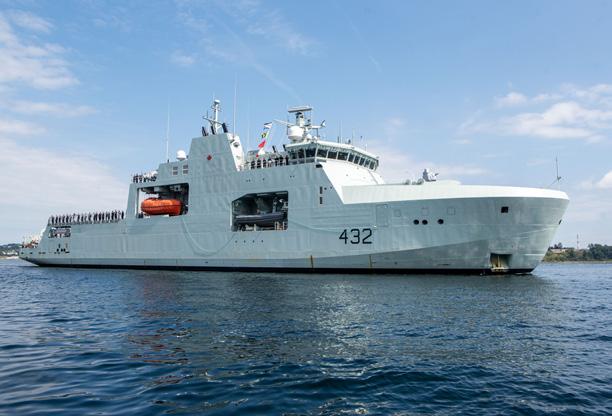
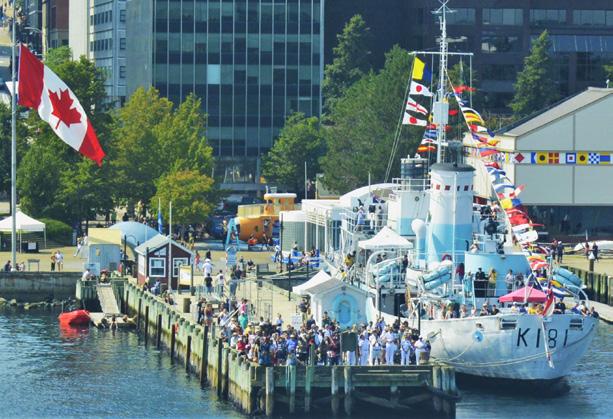
SLt Kerbiriou
HMCS Max Bernays UPAR
During the last days of summer, an annual exercise off the coast of Halifax led by Canada took place.
From Sept. 10-22, Exercise Cutlass Fury brought together several nations, including the United States, France, Germany and the United Kingdom. Cutlass Fury aims to test operational capability between Allied countries and the various elements of the Canadian Armed Forces, primarily to strengthen the capacity for air and maritime integration in operations and to respond to the threat of undersea warfare. In all, the shores of Halifax welcomed 1,400 personnel from five Allied countries aboard eight ships of various classes.
Canada was represented by two frigates, HMCS Fredericton and Charlottetown, two Maritime Coastal Defence Vessels, HMCS Glace Bay and Moncton, and the
Canadian fleet’s newest operational ship, HMCS Max Bernays, a Harry DeWolf-class Arctic and Offshore Patrol Vessel.
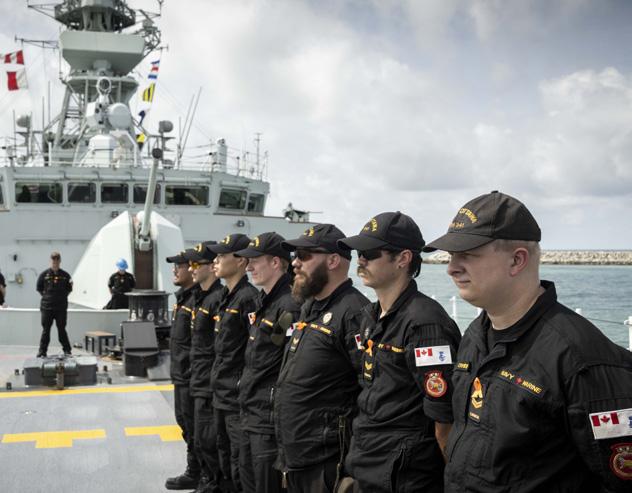
The first day saw a parade of ships along the Halifax waterfront in Bedford Basin. The docks were packed with delighted visitors who turned out in force to watch the procession.
Crew members aboard the ships could hear the crowd cheering from the docks.
Later in the week, HMCS Max Bernays was the first Harry DeWolf class ship to launch Vindicator drones from its flight deck.
A Vindicator drone is a training target designed to simulate the threat of a missile or aircraft. They can be launched from land or ship to meet the training needs of another ship’s air defence systems. HMCS Max Bernays operated in support of HMCS Charlottetown’s training requirements.
The launch on the flight deck was an honour and a moment much appreciated by the crew.
“We’re making history!” exclaimed one crew member at the launch.
The following week, a PhotoEx with Max Bernays and the other ships took place 50 nautical miles off the coast of Halifax. It was a testing day for all concerned after a series of formation maneuvers that produced impressive results every time.
Cutlass Fury was an opportunity to train together at sea in a simulated war environment, enabling sailors to maintain and perfect their skills, individually and collectively, and among allies. It was also HMCS Max Bernays’s first opportunity to participate in an exercise. The newest commissioned ship in the fleet proved its operational capability and the competence of its crew, currently made up of sailors from both the West and East Coasts. Max will soon be heading for its home port of Esquimalt while the crew ensures the ship is ready for the intercoastal transfer next spring.




Mallett Staff Writer
Happiness rings loud and clear for a Westshore family after a stranger returns a cherished family heirloom.
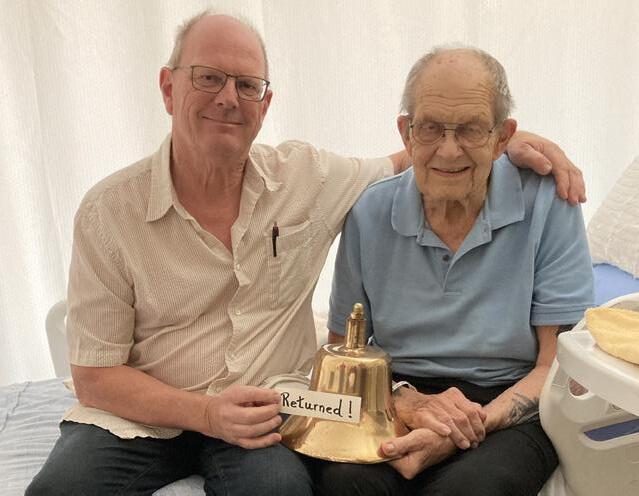
A 22 kg brass bell, stolen from the property of an 87-year-old Royal Canadian Navy (RCN) veteran, has been returned.
The bell once resided in the former Balao-class submarine HMCS Grilse, which served Canada’s Navy during the Cold War. It belonged to Clyde Rose, 87, who served 43 years in the RCN before it was stolen off his property in April.
Mike Rose, Clyde’s son, couldn’t believe the bell was returned safely after being gone for nearly five months.
“We wouldn’t have the bell back without the Lookout publishing an article about it,” Rose said.
After months of searching and almost giving up on hope for its return, Rose received a call from a stranger named Alex on Sept. 7.
The stranger didn’t provide any details of how she acquired the bell. She originally intended on gifting it to a friend, but after discovering a news article she contacted the Rose family to see it safely returned.
“She said, ‘I think I have something that belongs to you’,” Mike said.
They met up in Esquimalt. She pulled it out of her knapsack, and it was the missing bell.

“Dad truly cherishes that bell, has it professionally polished and cared for and even goes to the trouble of replacing the bell’s knotted rope,” Rose said.
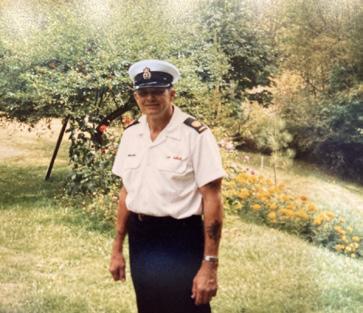
Clyde Rose received the bell as a present following the vessel’s decommissioning in 1969. A bell from a decommissioned ship is a prized item often gifted to those making substantial contributions during its operations. During his navy days, Clyde worked as a mechanical engineer and retired as Chief Engine Room Artificer (ERA) in the ship’s engine rooms.
Do you have any war time stories or memories you would like to tell us?
The Lookout Newspaper annually features Remembrance Day stories as told from soldiers and sailors and also their family members.
We would love to hear from you and tell your story.
Lest we forget.

“I can die a happy man now that the bell is back in the family and now resides with my son,” Clyde said after getting the news.
Mike was cleaning out the Rose family home in Colwood when he realized the bell disappeared from its wooden post at the top of the driveway sometime between Apr. 16 and 17.
The family still doesn’t know who took the bell or why, but is happy it was returned and paid the reward.
Clyde Rose suffered a broken hip after a fall on Aug. 1 and has since been recovering in a hospital. Rose says that Clyde’s morale boost upon hearing the news was priceless.
“We went to the hospital and showed him the bell while celebrating its return with him,” said Mike. “He immediately lit up after seeing it had been returned and was still in great condition.”


www.lookoutnewspaper.com







MANAGING EDITOR
Jazmin Holdway jazmin.holdway@forces.gc.ca
EDITOR
Kate Bandura
WRITER
250-363-3130 kateryna.bandura@forces.gc.ca
Peter Mallett mallett.peter@cfmws.com
PRODUCTION
Leslie Eaton
250-363-8033 workstation3@lookoutnewspaper.com
ACCOUNTS/RECEPTION
Trina Winters
ADVERTISING
Joshua Buck
250-363-3127
778-977-5433 NEW military.base.advertising@gmail.com
EDITORIAL ADVISORS
Capt Christopher Dubé
Ashley Evans
Rodney Venis
FRENCH EDITORIAL ADVISOR
250-363-4006
250-363-7060
A/Slt Alexandre Springer alexandre.springer@forces.gc.ca
Published each Monday, under the authority of Capt(N) K. Whiteside, Base Commander.
Le LOOKOUT est publié tous les lundis, sous l’égide du Capv K. Whiteside, Commandant de la Base.
The editor reserves the right to edit, abridge or reject copy or advertising to adhere to policy as outlined in PSP Policy Manual. Views and opinions expressed are not necessarily those of the Department of National Defence.
Le Rédacteur se réserve le droit de modifier,de condenser ou de rejeter les articles, photographies, ou annonces publicitaires pour adhérer au Manuel des politiques des PSP. Les opinions et annonces exprimées dans le journal ne réflètent pas nécéssairement le point de vue du MDN.
Circulation: 2,000 plus 300 pdf downloads per week Follow us on Facebook, Twitter and Instagram to join our growing social media community.
A Division of Personnel Support Programs
CFB Esquimalt, PO Box 17000 Stn. Forces Victoria, BC V9A 7N2 Web: www.lookoutnewspaper.com Fax: 250-363-3015
Canadian Mail Product Sales Agreement 40063331



“Attention is devotion on a psychological level.”


Thomas Goenczi Lookout Contributor
The ability to pay genuine attention is one of the most challenging things; attention is a valued commodity in our busy lives. We’re so often pulled in multiple directions by multiple conditions by multiple people that our psychological gaze is often splintered.
To pay authentic attention to someone or something is one of the greatest gifts we can give not only to one another but to ourselves as well. Attention is devotion on a psychological level.
WHY IS IT SO DIFFICULT TO OFFER OUR MOST PROFOUND ATTENTION TO ANYTHING?
This is a multi-layered issue.
• First, how we are nurtured plays a significant role in our capacity to pay attention. I never recall being taught how to pay attention; all I ever heard as a child was that disdained ‘Pay attention!’ without knowing how.
• Second, attention often leads to attachment. Giving a person or activity attention is a psychological offering, which implies it is worthwhile. This often triggers our ego’s need for mutual reciprocity: we want some-
thing in return when we give attention. This ultimately sets the individual up for expectation, often leading to being let down when the expectation is not fully met.
• Third, attention is difficult to ascertain when we are not physically, mentally, or emotionally balanced. For instance, in a state of heightened anxiety, we are out of equilibrium, and harnessing the attention needed to get out becomes much more difficult. What does giving our full attention feel like? When thoroughly entranced in the present moment, it feels like life has a heightened sense of intensity. We become immersed in the now, not bothered by the past or worried about the future. The world becomes more vibrant and more real. Attention feels like the childhood attentiveness we get when we read our first book that captivates our spirit, where we want nothing more than to read our favourite story.
We can strengthen our capacity for attention by incorporating it into everyday chores such as cooking. If you need help to make a wholesome meal, start paying attention to the cooking process. Notice the sound of the knife hitting the cutting board, the aromas swimming in the air, the brightness of the flavours at play, and the texture of the ingredients. Now, cooking becomes almost an otherworldly act and brings fulfilment and nourishment that take-
out would never give us.
We can also train our attention in conversations with others. When we fully engage with another person, we immerse ourselves in who they are.*Tips: Keep eye contact and openness in the body, relax the shoulders, and become receptive to what they share. When you do so, the conversations you have become far more interesting with everyone around you.
Lastly, provide some devotion to reflecting on your patterns of behaviour. This is the big one and is not accomplished quickly. Attention here might be subtle. The first step to changing a behaviour is noticing it; once attention is drawn, it emerges from the darkness and can be worked upon further.
We can’t focus on something or someone 100 per cent of the time. We can raise our attention; when we do, we become more in tune with ourselves. We gain a sense of strength and selfesteem because when we provide our utmost devotion to someone or something, we are truly being ourselves.
Thomas Goenczi is an RCN Veteran and MA Clinical Counsellor with Private Practice: Well Then Therapy.
The content is not intended to substitute professional advice, diagnosis, or treatment. Always seek the advice of your mental health professional or other qualified health provider with any questions regarding your condition.

























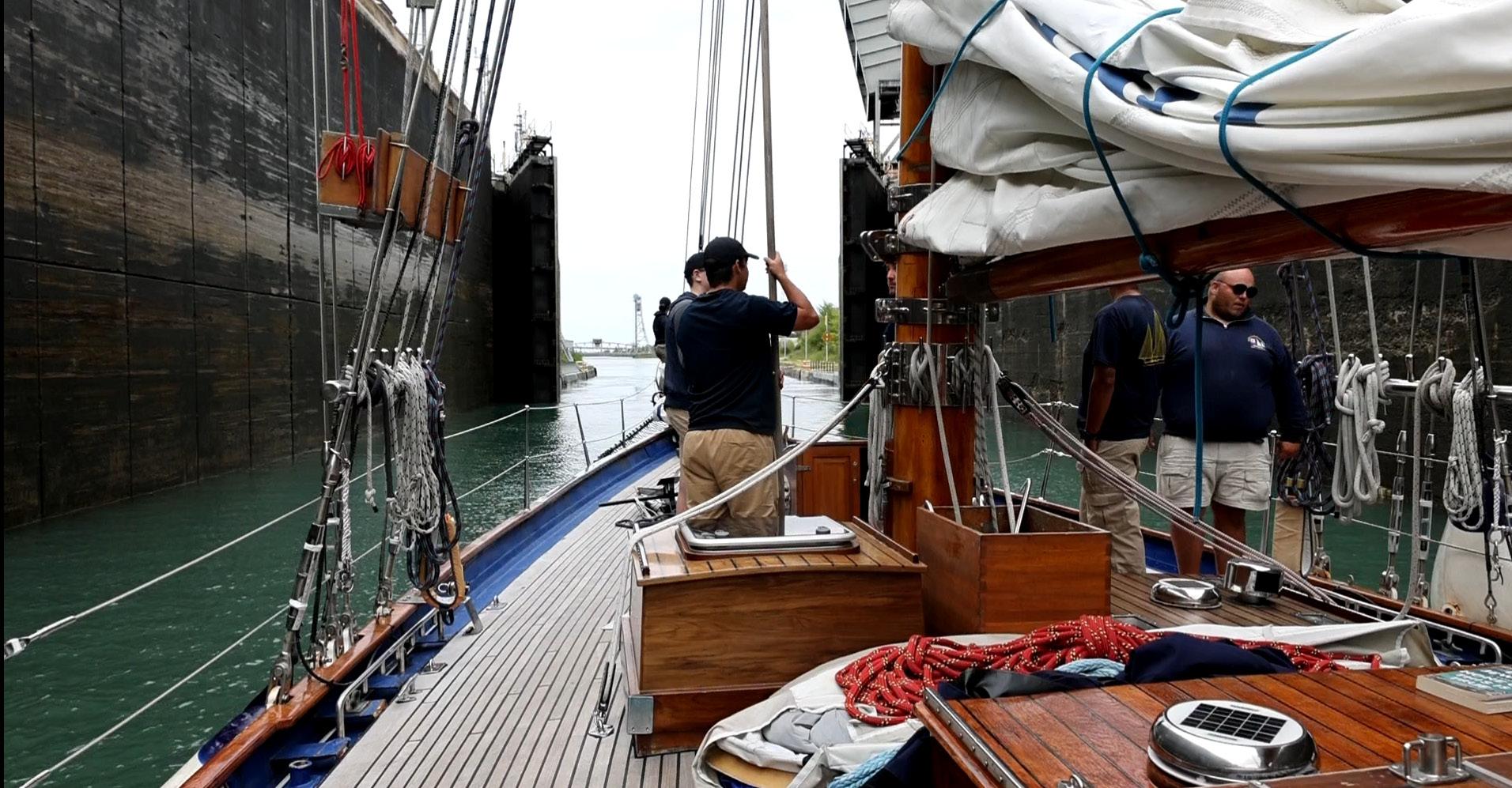
On Sept. 8, His Majesty’s Canadian Ship (HMCS) Oriole transited through the Welland Canal, which connects Lake Ontario to Lake Erie, while participating in the Royal Canadian Navy’s (RCN) annual Great Lakes Deployment (GLD).
There are eight locks in the Welland Canal, raising and lowering vessels approximately 100m between the water levels of Lake Ontario and Lake Erie, initially constructed in 1829 to offer ships a safe detour around Niagara Falls.
The transit of the Welland Canal was an all-day evolution for the crew of HMCS Oriole and took over twelve hours to complete. Throughout the transit, there were ‘Lakers’ (ships that only transit between the Great Lakes) and ‘Salties’ (sea-going ships) that passed by, their size dwarfing the 102ft long and 102ft tall HMCS Oriole
“Transiting the Welland Canal was an amazing experience,” said LieutenantCommander (LCdr) Gregg Morris, interim Commanding Officer of HMCS Oriole, who was given control of the ship’s movements through the transit of the Welland Canal by
LCdr Robert Pelton, Commanding Officer at the time. “Everyone had a part to play, and it required the teamwork of the entire ship’s company to accomplish. I am incredibly proud of the entire team’s hard work throughout the transit.”
The GLD 2023 is an annual deployment that brings the RCN closer to non-coastal Canadians traditionally not exposed to navy personnel and operations. This opportunity allows Canadians to speak to sailors and recruiters to learn about an RCN career. The GLD serves as an opportunity to pique interest in maritime life / service at sea through ship tours, outreach activities and presence in Canadian communities.
HMCS Oriole will continue its Great Lakes Deployment in Lake Ontario and visit multiple coastal ports in Ontario, Quebec, and the eastern provinces of Canada before finally returning to Canadian Forces Base (CFB) Halifax in early October.
For more information and to follow HMCS Oriole along its Great Lakes Deployment, visit canada.ca/en/navy/campaigns/hmcs-oriole-great-lakes-deployment.html
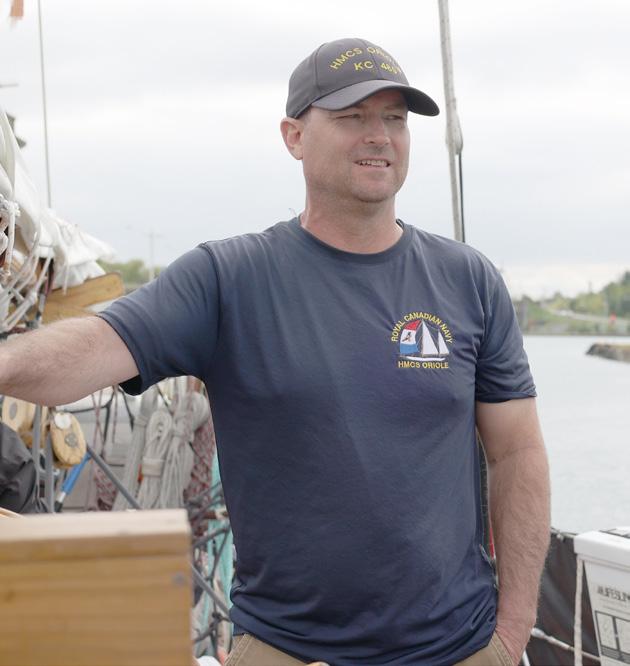

Peter Mallett Staff Writer
The Defence Indigenous Advisory Group (DIAG) at CFB Esquimalt wrapped up their hard work last week in organizing various events preceding the National Day for Truth and Reconciliation, Sept. 30.

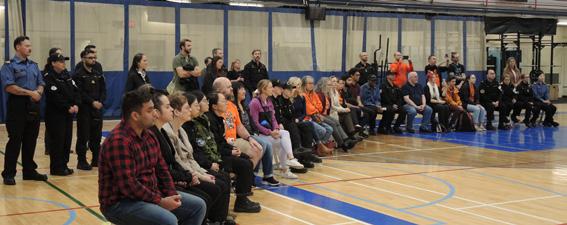
The group provided a chance for Defence Team members to experience Indigenous culture and reflect on the devastating impacts of Canada’s residential school system and the process of Truth and Reconciliation.
Besides inviting an award-winning author for a Truth and Reconciliation virtual event on Sept. 17 and holding a small ceremony at the Fleet Maintenance Facility on Sept. 26, the DIAG also asked the ləkʷəŋən Traditional Dancers for a presentation of song and dance at the Naden Athletic Centre on Sept. 28.
Beth Dick, drummer and singer of the ləkʷəŋən Traditional Dancers, performed three songs together with Justin Thomas, her 14-year-old nephew. Dick is a member of the Songhees Nation and said she and her nephew were delighted to share their presentation because it offered a break from the past.
“My parent’s generation was forbidden to perform and sing these songs,” Dick said. “I truly value being acknowledged as a native person and sharing my culture and the stories of our elders.”
The ceremony began with a land acknowledgement by the DIAG and opening remarks by Captain (Navy) (Capt(N)) Kevin Whiteside, CFB Esquimalt Base Commander.
“Public commemoration of this painful part of our history is vital to reconciliation and healing, and I
encourage you to reflect on the history and harms done by the residential school system,” Capt(N) Whiteside said.
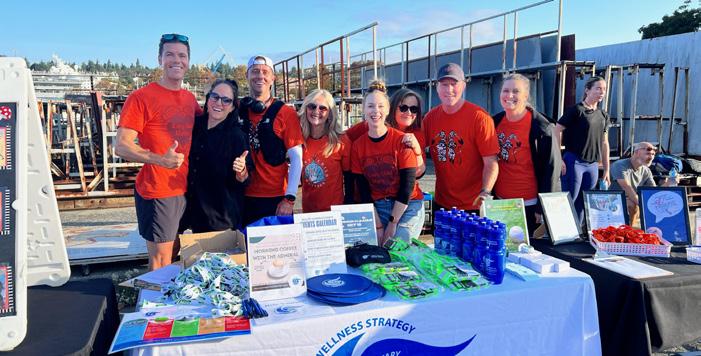
The DIAG also held an information booth, where HMCS Venture’s Raven Mask was on display. Complimentary Bannock bites and literature surrounding Truth and Reconciliation by Indigenous authors were also available to the attendees.
The Formation Run on Sept. 29 marked the conclusion of Truth and Reconciliation observances at the Base for 2023.
Hundreds of military members dressed in orange shirts took to the Dockyard and Naden streets for the monthly early-morning 5 km run. Capt(N) Mark O’Donohue, Deputy Commander Canadian Fleet Pacific and MARPAC Active Living Working Group Champion, declared the event an overwhelming success.
“I was so proud to see such a high turnout of civilian and military personnel wearing orange to acknowledge Truth and Reconciliation and to see that people are engaged and respectful of our Indigenous communities,” he said.
Ken Hall, DIAG Civilian Co-Chair, attended each event and said the national day of recognition is a time to spread the word about the challenges facing the Indigenous people of Canada.
“These events are positive steps toward learning Truth and Reconciliation but these are just baby steps and we are not fully there yet,” said Hall. “There was excellent support from the Base Commander’s Office in staging these events and they went above and beyond what was expected for anything we needed to be successful.”
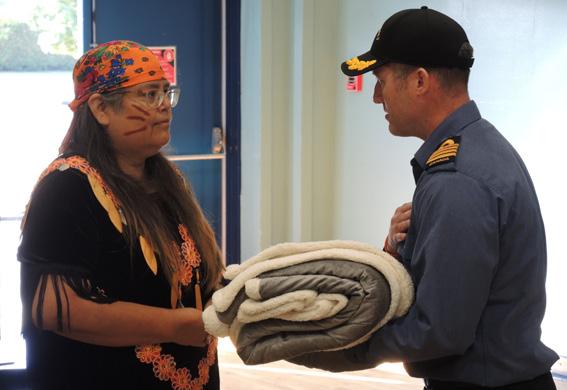
Captain Nahall Fallah News Media & Production Officer, Regional Cadet Support Unit (Pacific)
Twenty-two Sea Cadets and two Cadet Instructor Cadre Officers got the opportunity of a lifetime to experience life at sea for a week.
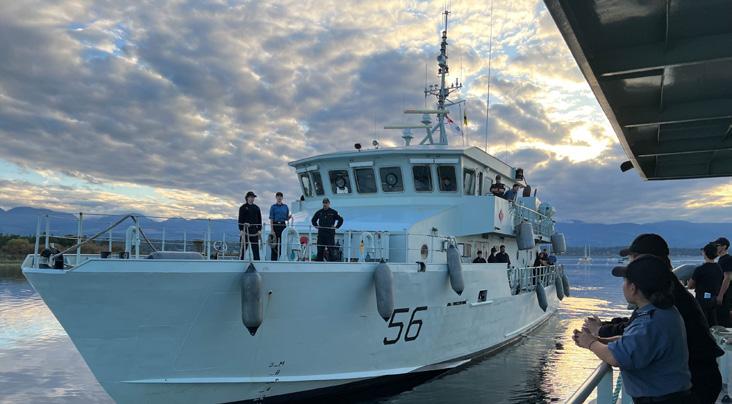
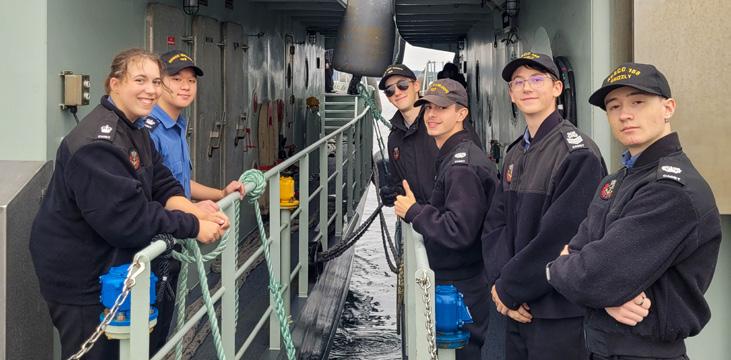
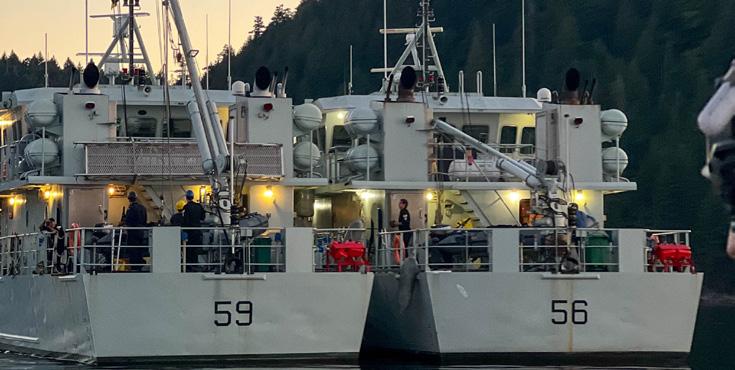
Cadets from all over British Columbia immersed themselves in the lifestyle of the Navy while embarked on the Orca-class Raven (PCT 56) and Wolf (PCT 55) vessels Sept. 11-15 during a Sea Cadet Seamanship Deployment (SCSD).
This marked the first sailing experience for the program since 2019.
One of the three aims of the Cadet program is to stimulate an interest in the Canadian Armed Forces. A SCSD allows cadets to hone their relevant ship-borne skills onboard a naval vessel. Cadets take these at-sea experiences back to their local corps and pass them on to the cadets they lead and train. Additionally, cadets learn self-discipline, increase their confidence, and gain a sense of accomplishment.
This SCSD consisted of five days at sea, starting at CFB Esquimalt and going around Vancouver Island. The cadets experienced a variety of adventures. They engaged in duty watches; each assigned a designated time during the week. They participated in ‘person overboard’ drills, maneuvering a Zodiac to respond to a simulated person (a dummy named Oscar) in perceived danger of drowning. They also donned firefighting gear to respond to a simulated fire. They boarded HMCS Winnipeg by Rigid Hull Inflatable Boats for a tour and Banyan, a special kind of party particular to the Navy involving a fun occasion held outdoors with good food and fellowship.
Cadet Petty Officer Second Class (C/PO2) Alexander Pelekh from 102 Fraser Royal Canadian Sea Cadet Corps (RCSCC) described his deployment as ‘a remarkable adventure packed with learning opportunities’.
“I wanted to go on this deployment because I have future
aspirations of joining the Navy as a Naval Warfare Officer (NWO), and since NWOs have a mandatory segment of their training done on an Orca-class vessel, I thought it would be a perfect learning experience,” he says.
C/PO2 Pelekh, 14, embraced every opportunity on the ship, including navigating the uncharted territories of an engine room.
“I would volunteer for everything, from washing dishes with our cooks to helping out in the engine room; it allowed me to get the most from this experience,” C/PO2 Pelekh said. “I would even wash the heads if it would teach me something useful about the ship’s daily operations!”
Among the highlights of his journey was being at the helm of the Orca vessel.
“There really isn’t anything like being at the wheel of a 210ton, 33-metre-long ship,” C/PO2 Pelekh said. “Feeling the ship respond to my actions, and that I am contributing to a bigger picture like getting from Point A to Point B, is something that I feel proud of.”
The journey allowed C/PO2 Pelekh to explore stunning locations such as Lund, Desolation Sound, Teakerne Arm, and Cassel Lake. It also gave him a glimpse into naval warfare and left him with a treasure trove of memories and knowledge to share with his fellow cadets at RCSCC Fraser.
“I am grateful for this trip, especially because of all the people I talked to, including the Officer-In-Command (OIC) on board to the NWO students and the Executive Officer of a frigate, I learned a lot about the NWO trade,” C/PO2 Pelekh said.
The deployment would not have happened without Lieutenant (Navy) (Lt(N)) Derek Frank from the Patrol Craft Training Unit. Notably, Lt(N) Frank and Lt(N) Joseph Martin, the two Orca OICs, were sea cadets at HMCS Quadra together. Lt(N) Frank was a Bos’n, and Lt(N) Martin was the first sea cadet Marine Engineer ‘ticketed’ on the Orca class in 2008.








Due to the unique circumstances of military life, transitions between curricula and interruptions to education continuity are significant barriers for school-aged learners in Canadian Armed Forces (CAF) families.
The Support Our Troops Tutoring Program works to provide financial assistance to CAF families to ease curriculum transitions in the first year of a posting to a new community.
Could you, or a military family you know, benefit from this program? Please help us spread the word!
Applications are now open and will close on Jan. 2, 2024. All 2023/2024 Support Our Troops Tutoring Program applications may be submitted continuously between Sept. 1, 2023, and Jan. 2, 2024.
• Family must be in the first year at the CAF member’s new place of duty, either inside or outside of Canada;
• Priority will be placed on program applicants attending an accredited elementary or secondary school with an Individual Education Plan. In extenuating circumstances, a letter of support from the program applicant’s school may be submitted in place of an Individual Education Plan;
• Eligible applicants will be accepted on a first-come, first-served basis for up to $1,000.00 for the 2023-2024 school year. In this first year of the program, we anticipate being able to serve a minimum of 50 eligible applicants.
Tutoring services must be delivered by registered tutoring companies, academic institutions or community organizations that specialize in providing academic support to children and youth. Support Our Troops will not approve reimbursements for tutoring services delivered by friends or family of program applicants.





Peter Mallett Staff Writer
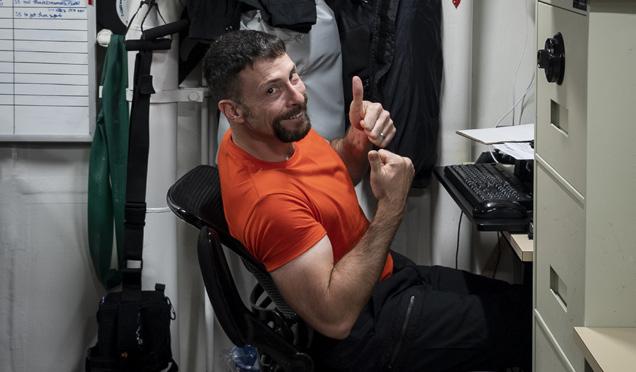
Ironman races are among the world’s most physically demanding and exhausting sports competitions, but that doesn’t faze Sergeant (Sgt) Chris Pullman.
A Detachment Fire Chief at the Canadian Forces Maritime Experimental Test Range at Nanoose Bay, Sgt Pullman is an accomplished Ironman. On Sept. 10, he entered the elite level of competition in his sport by competing in the 2023 Ironman World Championships in Nice, France.
Components of an Ironman event include a 3.8 km swim and 180 km bike ride capped off with a fulldistance 42.2 km marathon. When completing such a race, most competitors are exhausted, and of two minds when they cross the finish line, he explains.
“I like that it’s hard,” Sgt Pullman says. “Before you cross the finish line you contemplate quitting the race 100 times, but the low points and doubt are contrasted by the excitement and thrill of racing.”
Sgt Pullman qualified for this year’s event after recording a personal best time of 11:00:32 and 241st place overall in his fifth-ever fulldistance Ironman race. He finished at 13:31:13 and in 1,500th place overall out of 2001 competitors. Sam Laidlow of France won the race with a time of 8:06:22.
“It’s hard to be upset with my result after completing something so difficult,” he said. “I adjusted my expectations as I raced but as soon as I finished, I started looking ahead to the next race and how to get faster.”
The running and cycling portions of the race in Nice proved problematic: competitors were met with steep inclines into the Maritime Alps to elevations of 2,500m, along with gusty winds between the two climate
zones and warm and humid conditions with temperatures hitting 28 Celsius.
Running triathlons and Ironman events is something relatively new for Sgt Pullman.
He previously enjoyed competing in Muay Thai kickboxing but shifted to road cycling and running in 2015; then, he signed up for his first triathlon. His training for Ironman competitions consists of 12-15 hours of weekly swimming, cycling, running and strength training.
“The program’s intensity is designed like a set of stairs,” he says. “I ramp it up over two weeks and then I get a week of recovery.”
He says that training and having something to shoot for is highly beneficial for mental and physical health and leads to a healthy worklife balance.
“My Chain of Command has always been very supportive of my athletic endeavours, and I am happy to represent the CAF at these events,” he said.
Sgt Pullman joined the Army Reserves in 2001 and then completed a tour of Afghanistan in 2008 in the Infantry. He then transferred to the Regular Forces and was deployed again to Afghanistan. In 2012, he transferred to the Royal Canadian Air Force and became a firefighter.
His wife, Capt (ret’d) Mallory Pullman, was a Medical Officer and an accomplished triathlete. Mallory has competed in five Ironman distance triathlons and numerous Ironman competitions, giving her spouse constant encouragement.
“My wife and I both share a love for triathlon and are lucky enough to be able to train together and use that time to bring us closer together as a couple,” he said.
On Oct. 14, Chris will provide encouragement and support as Mallory competes in the 2023 Ironman World Championships for women in Kona, Hawaii.

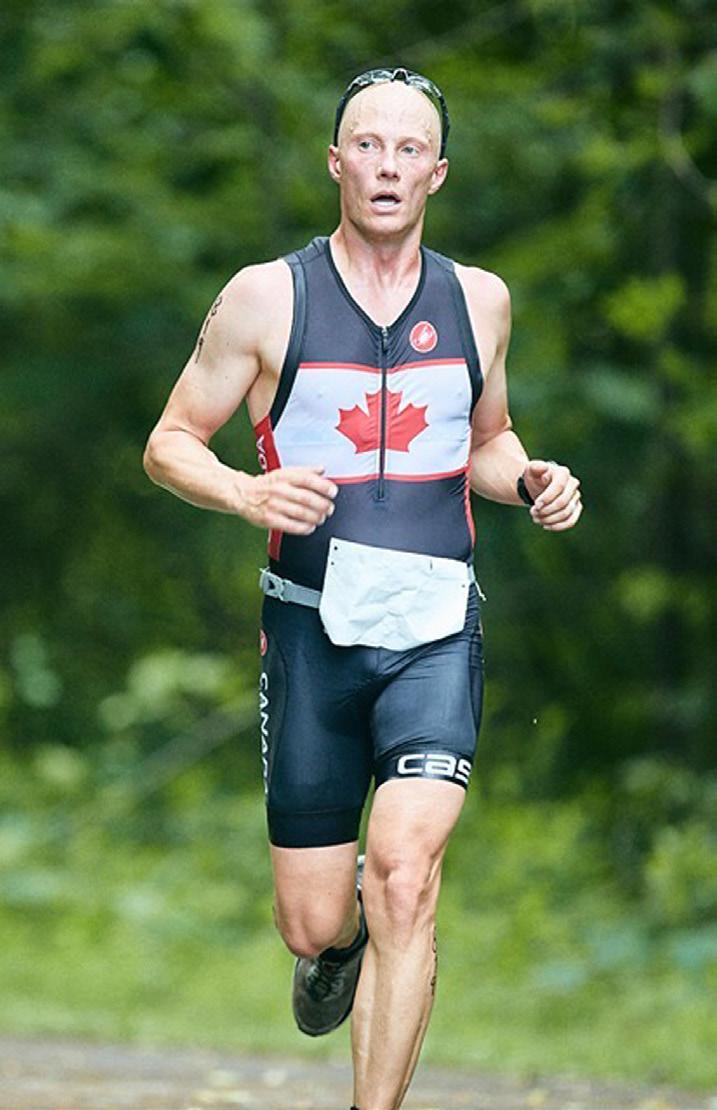






“My Chain of Command has always been very supportive of my athletic endeavours, and I am happy to represent the CAF at these events."
~Sergeant Chris Pullman
Capt Natasha Tersigni 4CRPG PAO
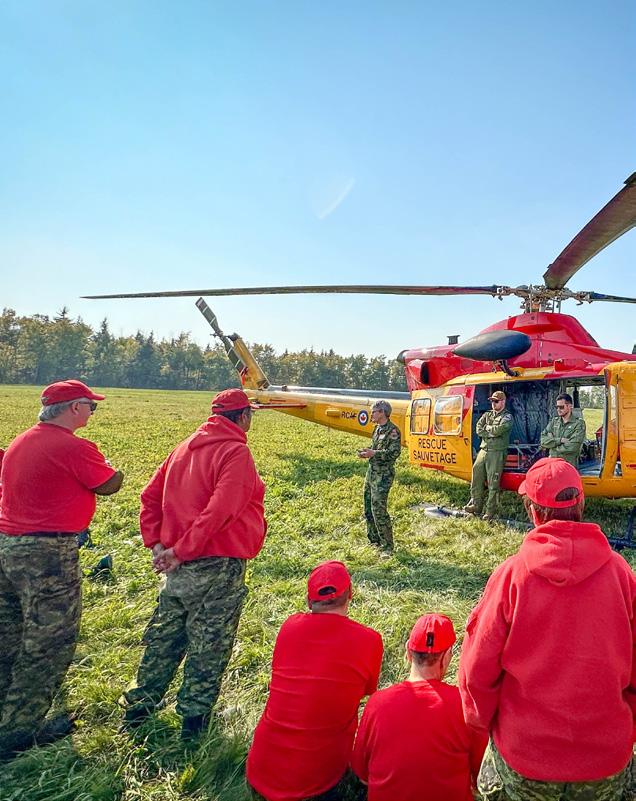
To ensure that Canadian Rangers (CRs) are prepared and ready to deploy on domestic operations in support of the Canadian Armed Forces (CAF), the 4th Canadian Ranger Patrol Group (4 CRPG) hosted Exercise Canadian Ranger Ready 1 (Ex CRR1) at 4 Wing Cold Lake, Alta., Sept. 20-27.
This training saw over 180 Canadian Rangers and staff from across Canada come together to train in their domestic operations skillset and share best practices.
With close to 5,000 Canadian Rangers in over 200 communities nationwide, ensuring all CRs have the baseline knowledge needed for success in operations is essential.
“We train fundamental skills we want all CRs to have, which are to shoot, move, communicate, and save lives,” explained Major (Maj) Darin Jenkins, Ex CRR1 Director and 4 CRPG Deputy Commanding Officer. “We don’t know what the next mission for the Canadian Rangers will
be, but we do know it will involve these broad skillsets.”
He said Canadian Rangers are increasingly in demand to assist with domestic operations. Just this month, 4 CRPG had CRs and a Canadian Ranger Instructor deployed to northern British Columbia to assist with Operation Lentus 23-08, which supported the fight with wildfires.
The three main training streams for Ex CRR1 were marksmanship, rope training and lifesaving first aid. CRs led each training stream. Exercise participants spent one day at each site and received hands-on experience with those skills.

“While the focus was on the hard, tangible skills, we also wanted CRs to be put in situations where they could further develop their leadership, communication, teamwork, and personnel management skills, Maj Jenkins said.
“As staff, we wanted to enable the CRs to execute training self-sufficiently and safely, so this exercise further emphasized the importance of having the CRs lead training and staff support when needed.”















for a series of presentations geared towards the various stages in your career. Contact the Esquimalt SISIP office at 250-363-3301 for more information and to receive the Microsoft Teams link for the event.
TUES 17 OCT @ 1030 – EARLY-MID CAREER
Early-Mid Career – Financial Foundations
Financial Planning 101 – Starting to invest early to prepare for the future. Understanding different investment accounts, investment products, etc., and how to use them efficiently based on your goals
Tax-efficient investing and how to put more money in your pocket. How to plan to retire from the military comfortably
Financial Counselling – Learning to budget, understanding your paycheque, paying down debt, building emergency fund and financial literary. Access to financial assistance through Support Our Troops.
Life Insurance – Learn why life insurance is important and the types of insurance SISIP offers. How do life changes such as marriage, divorce and kids affect your needs for insurance and what changes do you need to make when these things happen.
WED 18 OCT @ 1030 – LATE CAREER
Late Career – You built your wealth, now let it build you
Financial Planning – How your CAF pension, government pensions and investments come together to build your retirement picture. An investment in knowledge is the best interest.
Financial Counseling – Improving your budget, paying down debt, how to plan for major purchases and how to adjust your budget for life changes. How to ensure you are on track to retire debt-free.
Life insurance – How does releasing from the CAF affect your needs for life insurance. What types of insurance does SISIP offer to CAF veterans and what needs to be done with your existing SISIP policies when you release.


Cooking brings family and friends together, provides an outlet for creativity and can be relaxing. Did you know that cooking fires are the number one cause of home fires and home injuries?
By following a few safety tips you can prevent those fires.
Cooking brings family and friends together, provides an outlet for creativity and can be relaxing. But did you know that cooking fires are the number one cause of home fires and home injuries? By following a few safety tips you can prevent these fires.
• Be on alert!




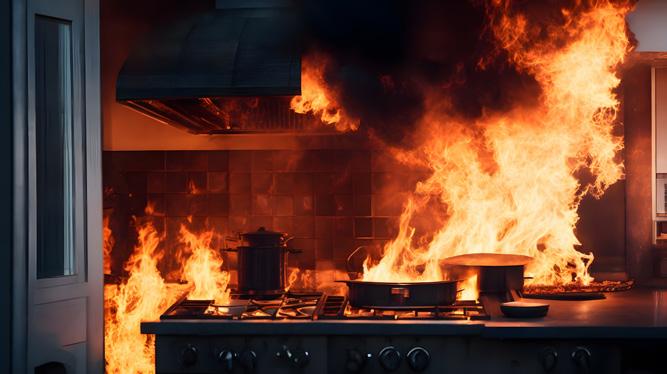
• If you are sleepy or have consumed alcohol, don't use the stove or stovetop.
• Stay in the kitchen while you are frying, boiling, grilling or broiling food.
• If you heave the kitchen even for a short period of time,turn off the stove.

• If you are simmering, baking, or roasting food, check it regularly.
• Remain in the home while food is cooking.
“Cook with Caution”
• Use a timer to remind you that you are cooking.
• Keep anything that can catch fire away from your stovetop.
• Be on alert! If you are sleepy or have consumed alcohol don’t use the stove or stovetop.
If you have a small cooking fire and decide to fight the fire
On the stovetop:
• Stay in the kitchen while you are frying, boiling, grilling, or broiling food. If you leave the kitchen for even a short period of time, turn off the stove.
• Smother the flames by sliding a lid over the pan and turning off the burner.
• Leave the pan covered until it is completely cooled.
In the Oven:
• Turn off the heat and keep the door closed.
If you have any doubt about fighting a small fire
• If you are simmering, baking, or roasting food, check it regularly, remain in the home while food is cooking, and use a timer to remind you that you are cooking.
• Just get out!
• Keep anything that can catch fire — oven mitts, wooden utensils, food packaging, towels or curtains — away from your stovetop.
• When you leave close the door behind you to help contain the fire.
• Call 911 once outside.
if you have a small (grease) cooking fire and decide to fight the fire...
• On the stovetop, smother the flames by sliding a lid over the pan and turning off the burner. Leave the pan covered until it is completely cooled.
• For an oven fire, turn off the heat and keep the door closed.
if you have any doubt about fighting a small fire…
• Just get out! When you leave, close the door behind you to help contain the fire.
• Call 9-1-1 or the local emergency number from outside the home.
Have a "kid-free zone" of at least 1 metre around the stove and areas where hot food or drink is prepared or carried.
Have a “kid-free zone” of at least 3 feet (1 metre) around the stove and areas where hot food or drink is prepared or carried.

• The leading cause of fires in the kitchen is unattended cooking.
• Most cooking fires in the home involve the kitchen stove. ! !