
























Kateryna Bandura Lookout Editor
Defence on the Dock is back with past favourites and new highlights.
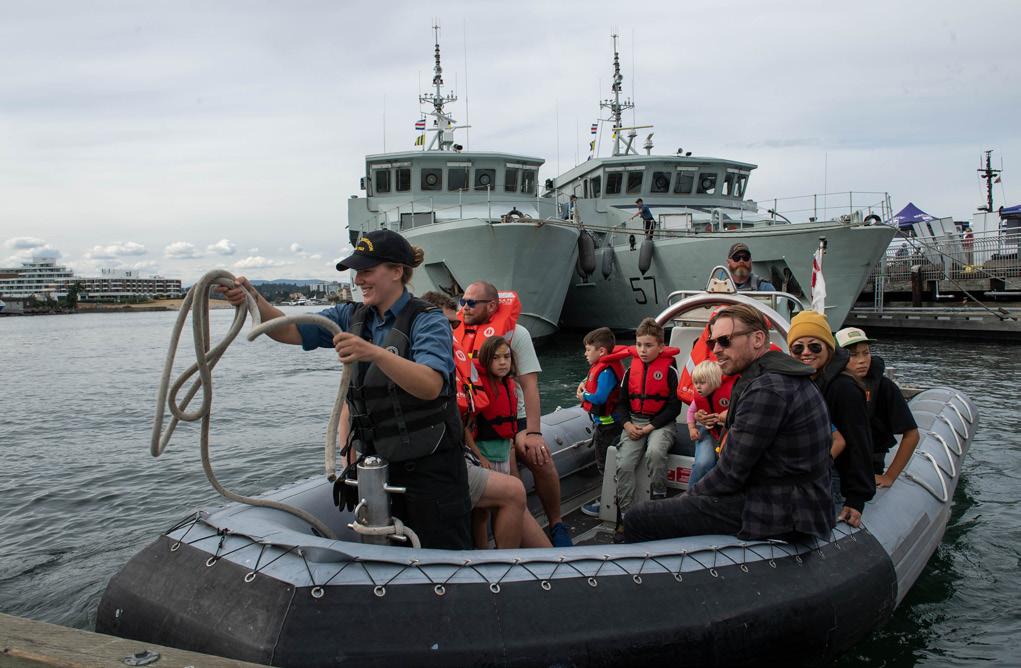
Open-house-style and family-friendly, CFB Esquimalt’s signature event gives Vancouver Island a glimpse into life in the Canadian Armed Forces (CAF) and on the base, offering the public a chance to meet members of the Defence Team while interacting with various displays and presentations.
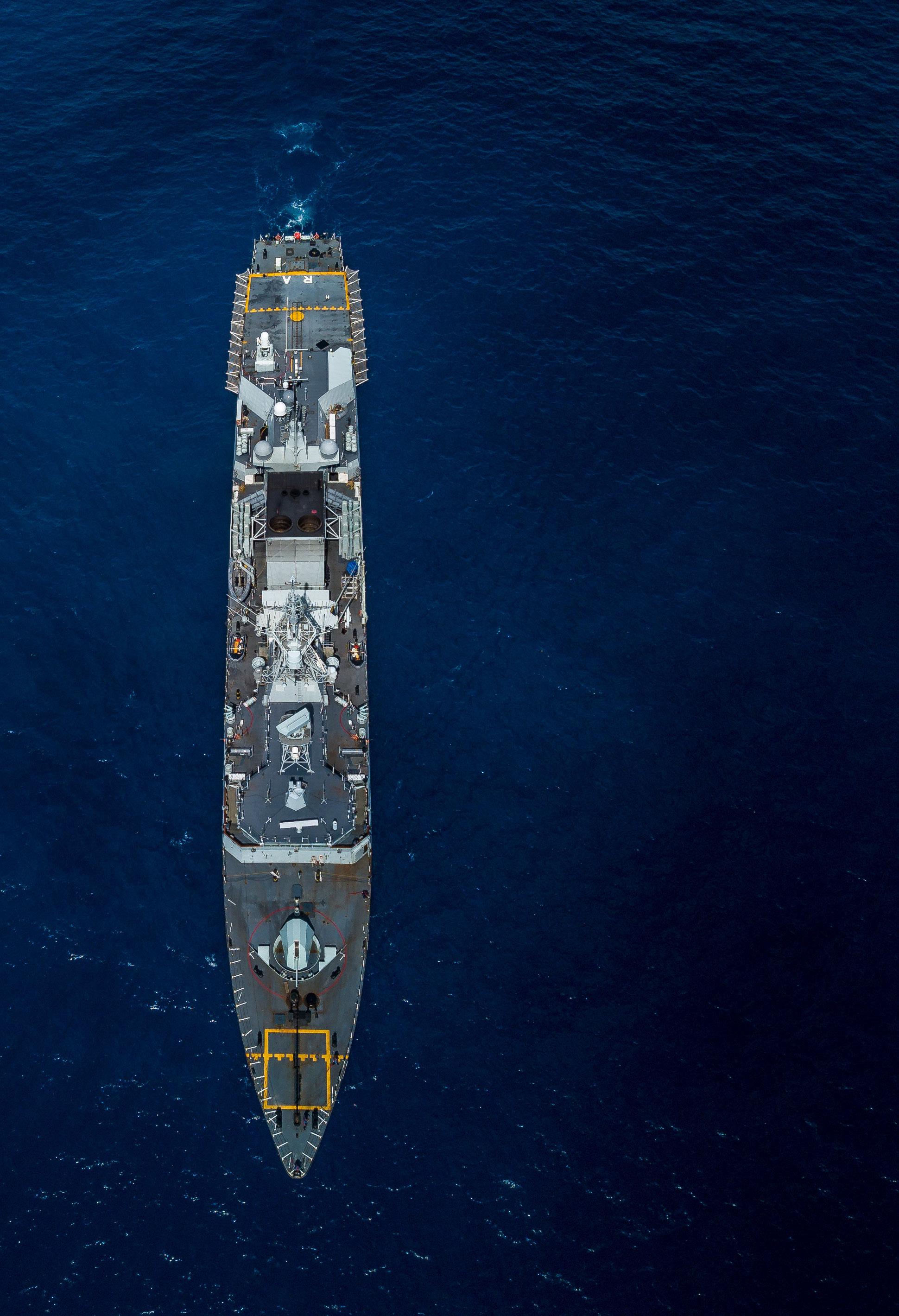
It returns to the Ogden Point Breakwater District (Cruise Ship Terminal) on Sunday, Sept. 17 from 10 a.m.-3 p.m. – featuring ship tours in HMCS Winnipeg and HMCS Yellowknife for the first time since 2019.
“It has been a few years since we have hosted the event at Ogden Point so we’re really excited to return and to showcase what the Canadian Armed Forces is all about,” said Matt Carlson, Projects Officer with CFB Esquimalt Base Public Affairs. “We hope the community comes away from the event with a greater understanding of what the Base does locally, but also on a larger scale what the CAF does in serving Canadians.”
Other new features include an interactive cockpit display of a CF-18 fighter jet and a search and rescue (SAR) helicopter demonstration with Comox’s 442 Transport and Rescue Squadron. The aerial SAR display takes place south of Ogden Point at 11 a.m.
The Base Commander for a Day contest is also back from 2019. Everyone 16 and under who attends Defence on the Dock can enter a draw for a chance to become honorary Base Commander. They will receive a special tour of the Base, take part in some fun experiences, and meet the people who make up the Defence Team.
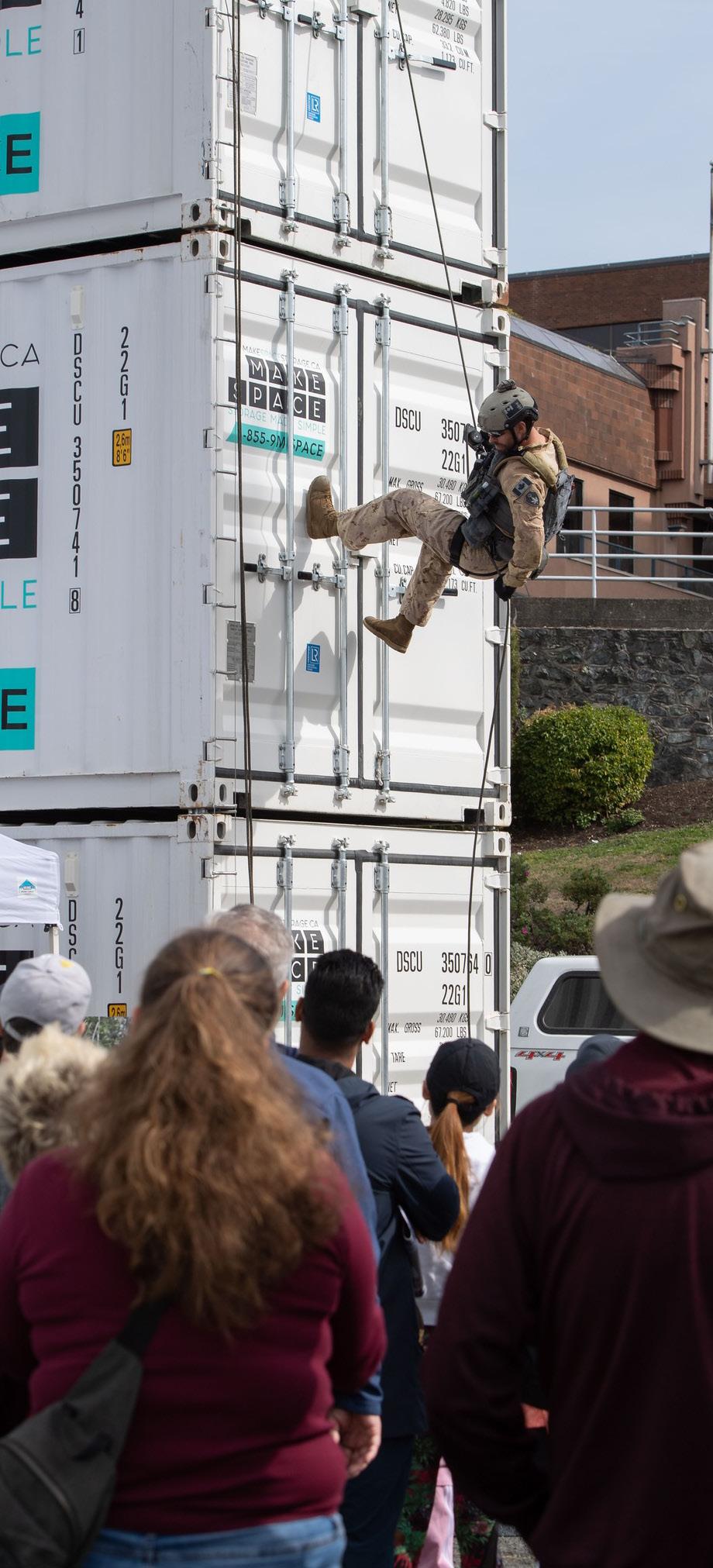
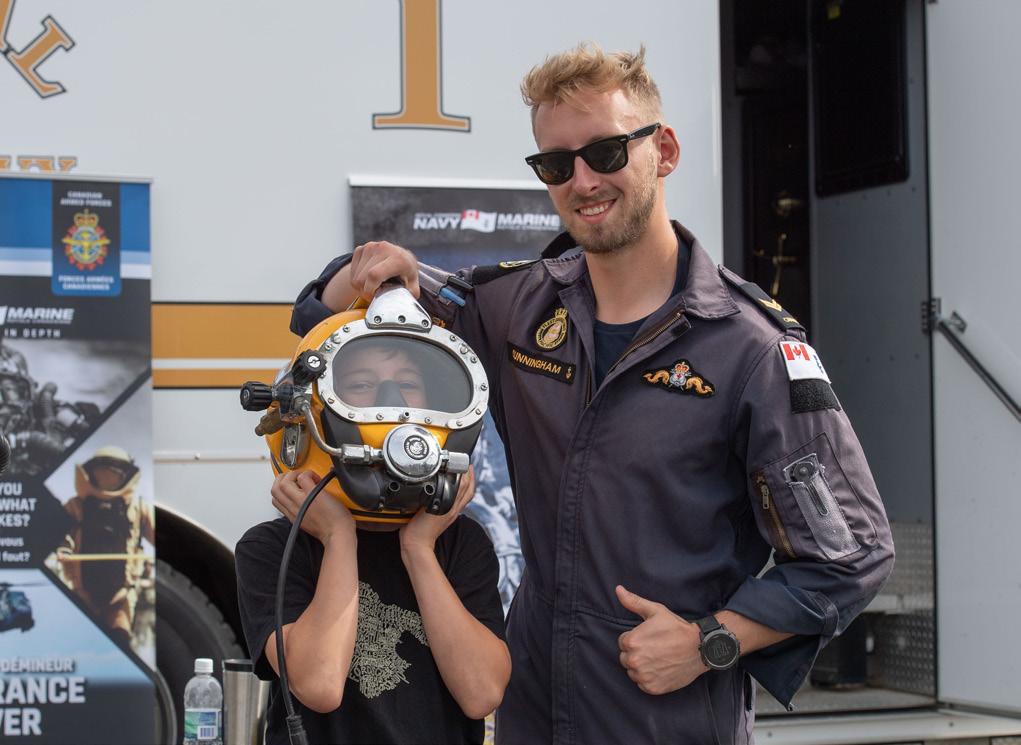
Carlson said the crowd favourites from last year that are set to return include live music performances from the Naden Band of the Royal Canadian Navy, the Naval Tactical Operations Group’s rappelling demonstrations, Fleet Diving Unit (Pacific)’s bomb disposal truck, Rigid-Hull Inflatable Boat (RHIB) rides, Orca tours, and HMCS Venture’s Research and Design interactive exhibit.
To find out more through a confidential conversation, contact Mandy at Mandy.Parker@broadmeadcare.com, or visit www.broadmeadcare.com. Visit www. broadmeadcare. com/veteranslegacy to make

Peter Mallett Staff Writer
The steep hills of the scenic RBC GranFondo Whistler course aren’t keeping one Invictus Alumni from participating in this year’s GranFondo.
Major (Maj) Patrick Lévis of Esquimalt’s Canadian Armed Forces (CAF) Transition Group, who uses a wheelchair, says he’s looking forward to competing in the Invictus category at this year’s event despite the steep hills.
“I saw the GranFondo as an opportunity to be amongst other Invictus alumni and provide encouragement and support while also giving myself quite a gruelling physical challenge,” said Maj Lévis.
The RBC GranFondo Whistler cycling event has added the Veteran and Current Military and Invictus Alumni categories to support the Invictus Games 2025. When Maj Lévis learned that GranFondo was introducing an Invictus Alumni category, he registered immediately.
The event offers discounted rates for military members and free participation for former Invictus Games athletes to thank members for their service, says Neil McKinnon, founder of the RBC GranFondo Whistler.
“My father was a proud Canadian Military man, so naturally I am delighted to support the Invictus Games Vancouver Whistler 2025 as well as new opportunities for our valued service people, veterans and Invictus
Alumni,” said McKinnon.
McKinnon’s father, Lieutenant-Colonel Albert James Keith MacKinnon, died in 1999. He was a Royal Canadian Air Force (RCAF) member and later worked in Esquimalt for Base Construction Engineering (BCEO).
The Invictus Games has inspired Maj Lévis to lead a physically active lifestyle. Since his Invictus Games experience, he’s been competing on multiple fronts in national and provincial competitions in para-kayaking, para-canoeing, rowing, and wheelchair tennis. He is also a Military Co-chair for the Defence Advisory Group for Persons with Disabilities (DAGPWD)
He first looked at using an adaptive bike to hand-cycle the course but realized this would prove next to impossible due to the steep inclines along the route, so instead, Maj Lévis will borrow his friend’s e-bike to participate in the 55 km MedioFondo.
“My left leg is functional but my right quad has no function so I will be relying on my left leg and the e-cycle to do the work,” he said. “The hills on the course are very steep and challenging so my overall goal is to start the race and participate and if I do not finish the entire course, I will not be ashamed.”
Maj Lévis was diagnosed with PostTraumatic Stress Disorder following a deployment to Afghanistan in 2009. Then, during surgery to remove a cancerous tumour in his abdomen, his femoral nerve was damaged, and he was left with permanent mobility disability in his legs. He previously competed at the Invictus Games in
The Hague in 2022 in wheelchair racing, wheelchair basketball, wheelchair rugby, sitting volleyball and indoor rowing. He has served 31 years in the CAF and was previously Deputy Commanding Officer of the Canadian Scottish Regiment (Princess Mary’s). Maj Lévis will end his military service later this year and pursue a career in Architectural Technology.
“We are delighted that this incredible sporting event has made this opportunity available to the Invictus family to help further our mission to foster greater understanding and respect for the dedicated individuals who serve this country,” said Peter Lawless, CEO of the Invictus Games Vancouver Whistler 2025.
North America’s largest GranFondo race organizers expect over 5,500 cyclists to compete in this year’s ride on the Sea-to-Sky Highway from Vancouver to Whistler. The ride began on Sept. 9, covering distances of up to 122 km with multiple competitive and non-competitive categories, open to cyclists of all levels.
GranFondo cycling events began in Italy in the 1970s
as a mass cycling festival with its name in English translating to ‘the big ride’. The RBC GranFondo Whistler was founded in 2010 and is a point-to-point annual cycling event.









Managing Editor
Jazmin Holdway jazmin.holdway@forces.gc.ca
Editor Kate Bandura
WritEr
250-363-3130 kateryna.bandura@forces.gc.ca
Peter Mallett mallett.peter@cfmws.com
ProdUC tion
Leslie Eaton
250-363-8033 workstation3@lookoutnewspaper.com
aCCoU nt S / rECEP tion
trina Winters
advErtiSing
Joshua Buck
250-363-3127
778-977-5433 nEW military.base.advertising@gmail.com
EditoriaL adviSorS
Lt( n ) Michelle Scott
250-363-4006 a shley Evans rodney venis

250-363-7060
FrEnCH EditoriaL adviSor a /Slt alexandre Springer alexandre.springer@forces.gc.ca
Published each Monday, under the authority of Capt(N) K. Whiteside, Base Commander.
Le LOOKOUT est publié tous les lundis, sous l’égide du Capv K. Whiteside, Commandant de la Base.
The editor reserves the right to edit, abridge or reject copy or advertising to adhere to policy as outlined in PSP Policy Manual. Views and opinions expressed are not necessarily those of the Department of National Defence.
Le Rédacteur se réserve le droit de modifier,de condenser ou de rejeter les articles, photographies, ou annonces publicitaires pour adhérer au Manuel des politiques des PSP. Les opinions et annonces exprimées dans le journal ne réflètent pas nécéssairement le point de vue du MDN.
Circulation: 2,000 plus 300 pdf downloads per week Follow us on Facebook, Twitter and Instagram to join our growing social media community.
A Division of Personnel Support Programs
CFB Esquimalt, PO Box 17000 Stn. Forces, Victoria, BC V9A 7N2 Web: www.lookoutnewspaper.com Fax: 250-363-3015 Canadian Mail Product Sales Agreement 40063331


“When there is a lack of relationship between our conscious and unconscious sides, we are living a life outside of harmony.”

We spend so much time moving through life unaware of every moment or action that it’s difficult to differentiate which of our behaviours are conscious and what are deeply entrenched unconscious reactions to the world.
We’ve all experienced the unconscious; some might be doing it while reading this as your mind trails off to a more decadent fantasy, letting your unconscious take in this information. The unconscious is the unknowable part of ourselves, the deep and boundless inner universe that our ego lacks awareness of.
Current scientific studies estimate approximately 95 per cent of brain activity is unconscious. Included in the unconscious are formed habits and patterns, automatic body functions such as digestion and breathing, creativity, emotions, personality, beliefs and values, cognitive biases, and long-term memory.
We overlook our unconscious because it is truly out of our awareness. Our ego, the seat of our conscious awareness, is merely
a cork bobbing on the vast ocean of the unconscious. Yet, when there is a lack of relationship between our conscious and unconscious sides, we live a life outside of harmony. Our unconscious drives and impulses dictate how we go through life. In the words of the Swiss psychiatrist Dr. Carl Jung: “Until you make the unconscious conscious, it will direct your life, and you will call it fate”.
So, how do we build a relationship with our unconscious? An excellent place to start is a simple observation: noticing the subtle trends in our behaviour.
An evocative emotion is sweeping up a common manifestation of the unconscious. We see this in sudden outbursts, such as arguing with our partner over a simple request like taking the garbage out. This simple reactive emotion can quickly turn into a mood, which forms a dark cloud over our psyche. After the cloud dissipates and we reflect on what happened, we realize we weren’t ourselves. An unconscious mode of reaction took us over. Once that realization is made (whether by us or our partner), we can reflect on the unconscious causes of this emotional outburst. The process can take days, and sometimes months, to fully understand the causal factors behind this unconscious outburst.
It is often said that contemplation is the purification of the unconscious. When we look to excavate the root cause and follow the threads that cause our unconscious thoughts, emotions, and patterns of behaviour, we can work to shift how we move
through life. However, this is a lifelong venture. We must constantly try to shine our spotlight on the dark unknown of our psyche to build a strong foundation for our relationship with the unconscious. The unconscious is a powerful place, yet we often resist its power. The ego craves control and will stop at nothing short of tyranny to achieve its conquest. Yet, the unconscious will still find its way out and ensure it speaks its peace. So, it then becomes our duty to develop a working alliance between the two. This allows for reciprocity, understanding, and growth.
To move through and beyond our growth challenges, we must recapitulate our relationship with the unconscious. By cooperating with and consulting with our unconscious, we bring balance and equilibrium into our psyche, thus bringing back control and insight into our lives. When we know we have power, we walk through life with confidence and understanding that translates to living a fuller and whole existence.
Thomas Goenczi is an RCN Veteran and MA Clinical Counsellor with Private Practice: Well Then Therapy.
The content is not intended to substitute professional advice, diagnosis, or treatment. Always seek the advice of your mental health professional or other qualified health provider with any questions regarding your condition.























For years, you’ve been diligently socking away money for your child’s education, checking your progress occasionally. It’s now time to start drawing from the account so your young adult can fund their postsecondary education.
Check out these six tips to ensure you get the most significant benefit from all those years of saving and find out why it is better to wait and draw from the PostSecondary Education (PSE) fund only after you’ve depleted the Educational Assistance Payments (EAP).
1. Consult your SISIP advisor 12 to 18 months before your first intended withdrawal. Your advisor can verify that your funds are invested appropriately as your child readies for post-secondary education. They can also review your statement, confirm the beneficiary information and outline the types of withdrawals associated with your Registered Education Savings Plans (RESP) that give you the best tax advantage and cost-benefit.
2. Research your child’s post-secondary institution to determine if you can use the RESP toward their fees. RESPs can be used for university, college, trade schools, apprenticeships, etc.
However, certain programs, such as private flight training schools, may not be covered. The Government of Canada lists qualifying institutions to help you start your search here: canada.ca/en/ employment-social-development/programs/designated-schools.html
3. Understand your RESP statement. There are two types of contributions to your RESP – your contributions and the government grants and interest earned in the account.
4. Use government grants and interest first. A general rule is to draw from the EAP first, if possible. This is the government grant and combined interest portion of the account, which must be used toward post-secondary costs, or it could be lost. The beneficiary makes EAP withdrawals and is taxed as income in your child’s name. Post-secondary students are often in a relatively low-income tax bracket in the earliest years of their studies. Drawing from the EAP in those early years means they won’t pay an exorbitant tax. If, however, the beneficiary finds they’re in a higher-than-average income tax bracket in year one, you may consider claiming EAP income in a future tax year.
5. Be aware of limitations on EAP withdrawals. In the first 13 weeks of your child’s full-time study period, you can withdraw a maximum of $5,000 from the EAP portion of the account; for part-time studies, the maximum EAP withdrawal in the first term is $2,500. There are no restrictions on EAP withdrawals after that initial 13-week period.
6. Hold back on using your contributions if you can. The post-secondary education (PSE) withdrawals come from the capital contributions made by you, the subscriber. Once your child is enrolled in post-secondary, you can withdraw the PSE funds with no limits.
ThErE arE Two Good rEaSonS
To waIT and draw froM ThE PSE Fund only aFter you’ve depletEd ThE EaP:
1. The withdrawals from the PSE fund are not subject to income tax. Your child will likely be in a low-income tax bracket in the early years, so any income tax they pay on the EAP will be low. As your child progresses in their post-secondary career and beyond, they may start earning money and paying income tax on their earnings. You
can draw from the PSE fund on their behalf to top up their income without negatively affecting their income tax.
2. The PSE funds belong to you. This gives you more flexibility to use the money if paying for your child’s education is optional. Any EAP funds left when you retire the account may be lost. On the other hand, the PSE portion belongs to you. Talk to your advisor about reinvesting the RESP’s capital portion without incurring a tax penalty or loss. If you have an RESP and your child doesn’t attend a post-secondary institution, contact a SISIP advisor to discover how to retain your contributions and pay minimal tax.

The Chief and Petty Officers’ Association Band (CPO Band) is a 25-member community concert band associated with the Chief and Petty Officers’ Association in Victoria, British Columbia.
The band was first established as an ‘alumni’ band for retired Canadian Forces Band system members in the fall of 1987 under the auspices of Branch 91 (Prince Edward Branch) of the Royal Canadian Legion in Langford. The following year, the band moved to Esquimalt and aligned itself with the Chief and Petty Officers’ Association. The newly formed CPO Band held its first concert called ‘Salute to Seniors’ on April 13, 1988, in what is now the Archie Browning Centre.
After 30+ years, the CPO Band continues to provide high-quality, entertaining concerts, including the annual Wounded Warriors Fundraiser, scheduled for April 14, 2024, at the Peace Lutheran Church in Sidney. In addition to concerts, the band supports the military community in Esquimalt (including Remembrance Day and Canadian Peacekeepers Day Parades) and events such as the opening of the Greater Victoria Yacht Club.
The band currently has a core group of retired military musicians and welcomes serving military members, base personnel or family members who want to continue to use their musical skills. If you are interested in joining or trying out the band, please get in touch with cpoband@gmail.com or contact us via the website chiefsband.weebly.com/contact.html
The 2023/24 season resumes Sunday, Sept. 10, at 1900 in the Naden Band Room (N33) with an ‘open to the music community’ reading session on Sunday, Sept. 17.

One of the most intriguing artifacts on display at the CFB Esquimalt Naval and Military Museum is a black-and-white image from Nov. 14, 1939.
The snapshot in time shows members of Princess Patricia’s Canadian Light Infantry’s (PPCLI)
‘B’ and ‘D’ Company on parade and marching from Work Point Barracks and past a familiar site, Victoria’s famous Empress Hotel.
The soldiers, marching in columns, passed by the hotel while going to the Steamship terminal and then to Winnipeg for deployment in the Second World War.
The photo is part of an exhibit celebrating the PPCLI’s legacy and strong connections with the City of Victoria.
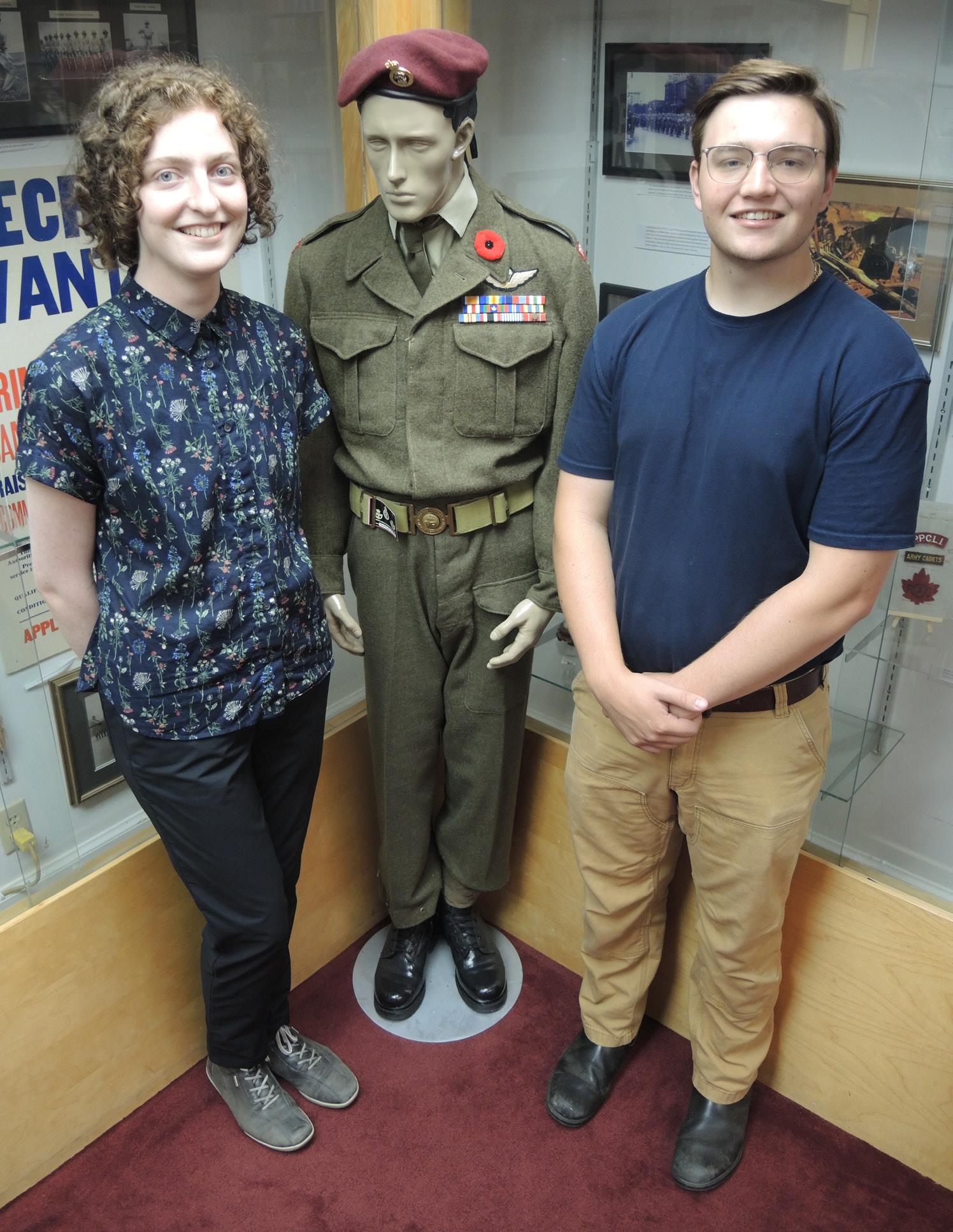
“Looking through a half-dozen photo books from the regiment and artifacts preserved by PPCLI members, some of them as old as 103 years, you really get a sense of what a regiment can mean to its members,” said Jakob Svorkdal, a third-year History Honours University of Victoria (UVic) student.
Svorkdal has been working alongside Cas Stevens, a fourthyear student at the UVic’s Writing program, on leading the exhibit’s makeover, spending the lion’s share of their summertime placements updating and redesigning the display.
Both historians are brimming with pride about their work.
“We have tried to make the exhibit more accessible for the layperson to appreciate,” Stevens said. “Our focus is shifting towards people who may not have lived in Victoria while the PPCLI were here; it’s still an important part of local history.”
The duo concluded their threemonth work-study placements at the end of August and returned to class in September.
historic photos of the unit during its time in Victoria and elsewhere. Improvements offer a more detailed and chronological history of PPCLI and the three occasions it was stationed at Work Point barracks in Esquimalt. Each item on display includes a written passage identifying the item and its historical significance.
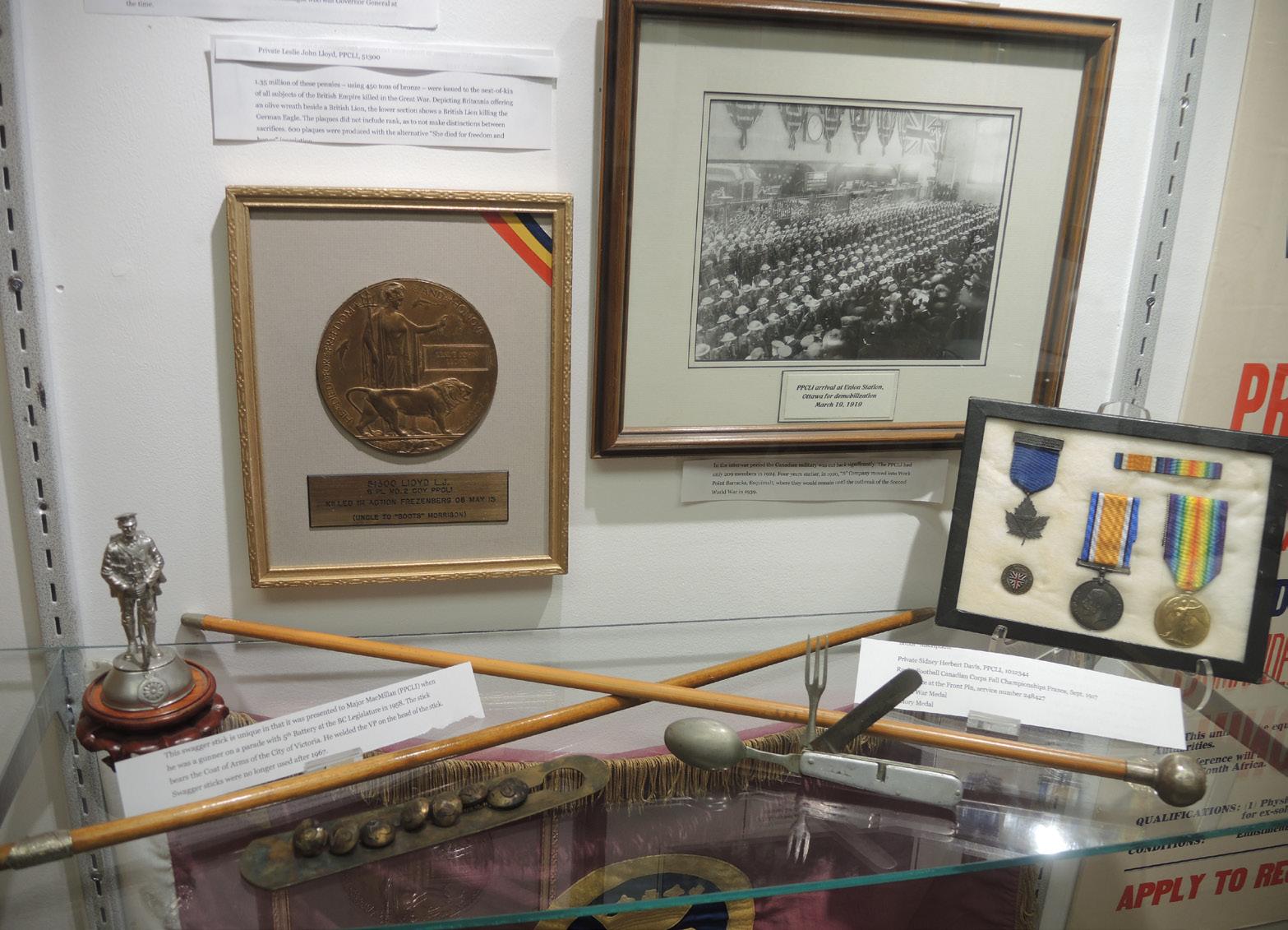
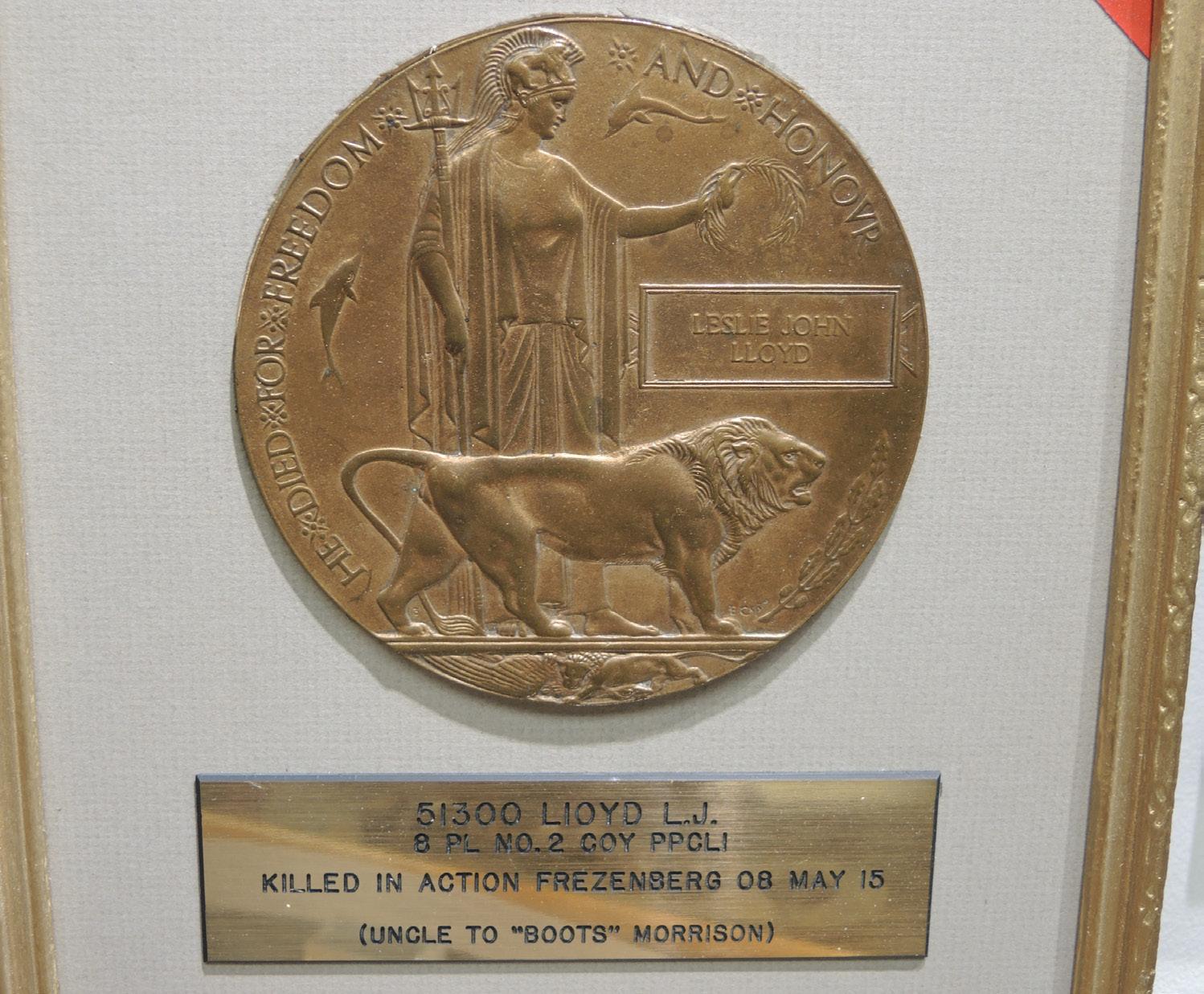
Besides the black and white snapshot, other fascinating items include a large-framed coin measuring over 15cm in diameter a First World War Memorial Plaque, also known as the ‘Dead Man’s Penny’.
placement and work on the exhibit has been very beneficial for day-today and future operations.
“It’s always enjoyable to have a fresh perspective of student employees as they notice areas where we could improve our visitor’s experience,” she said.
Over the years, the exhibit has been maintained and updated by former PPCLI and other veterans.
One of those volunteers is Jack Bates, who operates a historical society and website focused on the Canadian Army’s rich history on Vancouver Island and the lower mainland called the Organization for Preservation of Canadian Military Heritage (OPCMH).
Bates thinks PPCLI veterans who visit the museum will be delighted with the student’s improvements to the exhibit, noting their input was always thoroughly professional and scholarly.
Bates served in the Royal Canadian Corps of Signals in the 1960s and has volunteered at the Base Museum for several years. He advised the students on their work while contributing some items of interest for the exhibit.
One item offered up by Bates was a stained-glass window from the PPCLI’s former Protestant Chapel that previously existed at Work Point. Another is a bronze plaque commemorating the departure of 3 PPCLI from Work Point in June 1994.
The student’s work has focused on more than PPCLI, though.
During their Co-Op placements, they also engaged visitors at the museum. They answered their questions, worked on databases and other museum displays and participated in an outreach event with the British Columbia Aviation Museum.


































The updated exhibit showcases a variety of items from both World Wars, the Korean War and peacekeeping missions, along with
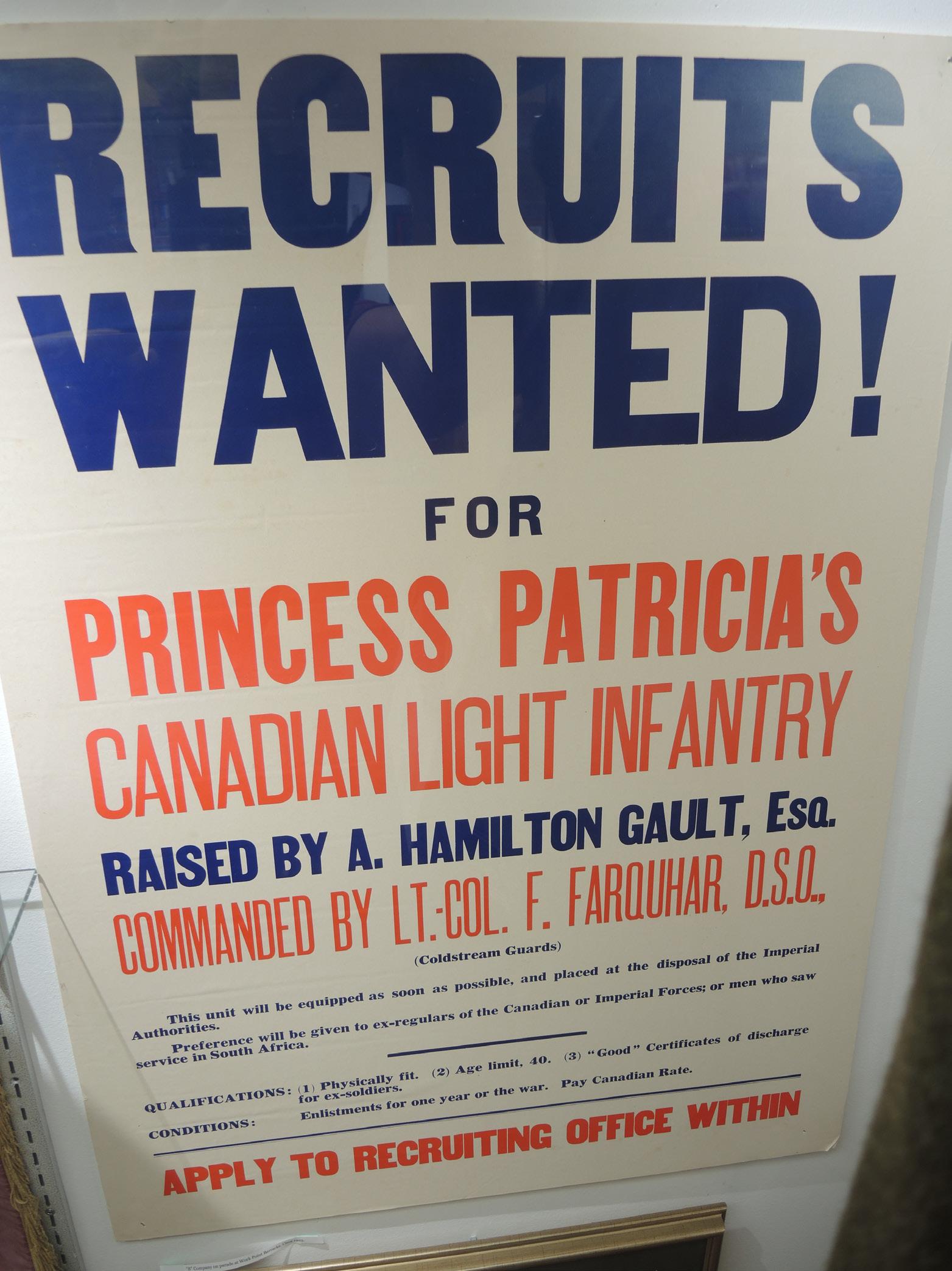
According to Stevens, the Dead Man’s Penny is a long-forgotten item by most Canadians which was issued to next-of-kin of commonwealth personnel who died during the First World War. The students also point to a ceremonial swagger stick gifted to PPCLI Major MacMillan by the City of Victoria in 1958. It was presented to MacMillan on parade with the 5th Field Regiment at the B.C. Legislature. The swagger stick was carried by a figure of authority as part of their uniform, especially while walking out on duty. However, the most eye-catching item is a First World War recruiting poster replica. Printed at the behest of the founder Andrew Hamilton Gault, it provides a historical record of how PPCLI was the first privately raised unit in the British Empire. PPCLI was established with a massive $100,000 donation by Gault, a former military officer of the 2nd Royal Canadian Dragoons. With eye-catching dark red and blue bold typeface, the poster proclaims, ‘Recruits Wanted!’ and says PPCLI ‘will be equipped as soon as possible and placed at the disposal of Imperial Authorities’. The poster also mentions how ‘preference will be given to ex-regulars of the Canadian or Imperial Forces who saw service in South Africa [The Second Boer War].’
Tatiana Robinson, CFB Esquimalt Naval and Military Museum Curator says the student’s Co-Op
The PPCLI exhibit is open for museum visitors, but the finishing touches, including proper artifact description, will be completed in September.













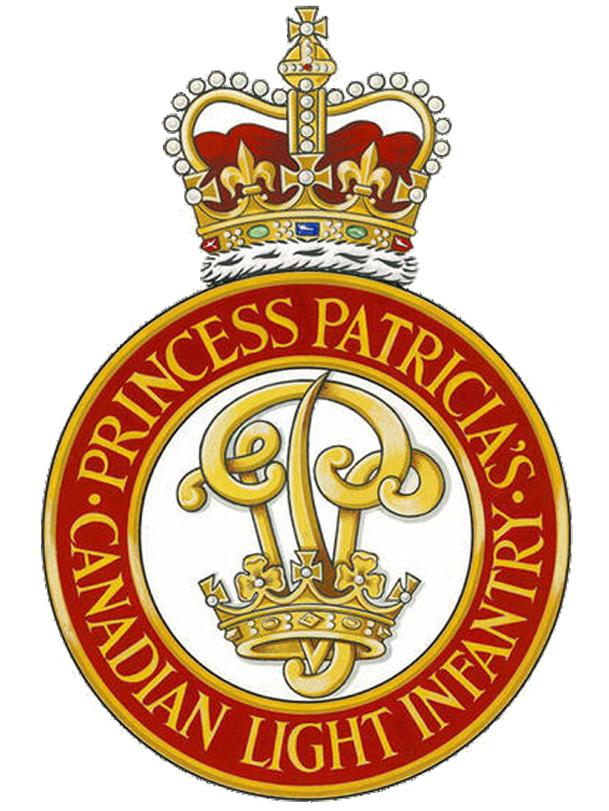
PPCLI is one of three Regular Force Infantry Regiments of the Canadian Armed Forces. Formed in 1914 and Named for Princess Patricia of Connaught, the daughter of the then Governor General of Canada. It is the central Lodger Unit of CFB Edmonton, and its three battalions are independent operational entities under the 1 Canadian Mechanized Brigade Group (1 CMBG).
PPCLI operated out of Work Point barracks on three separate occasions in the 20th century: 1920 to 1939 (B Company), 1957 to 1963 (First Battalion) and 1970 to 1994 (3rd Battalion). The updated museum exhibit presents visitors with an enhanced chronology of PPCLI, including a precise timeline of its activity in the provincial capital.
Capt véronique Sabourin HMCS Vancouver PAO
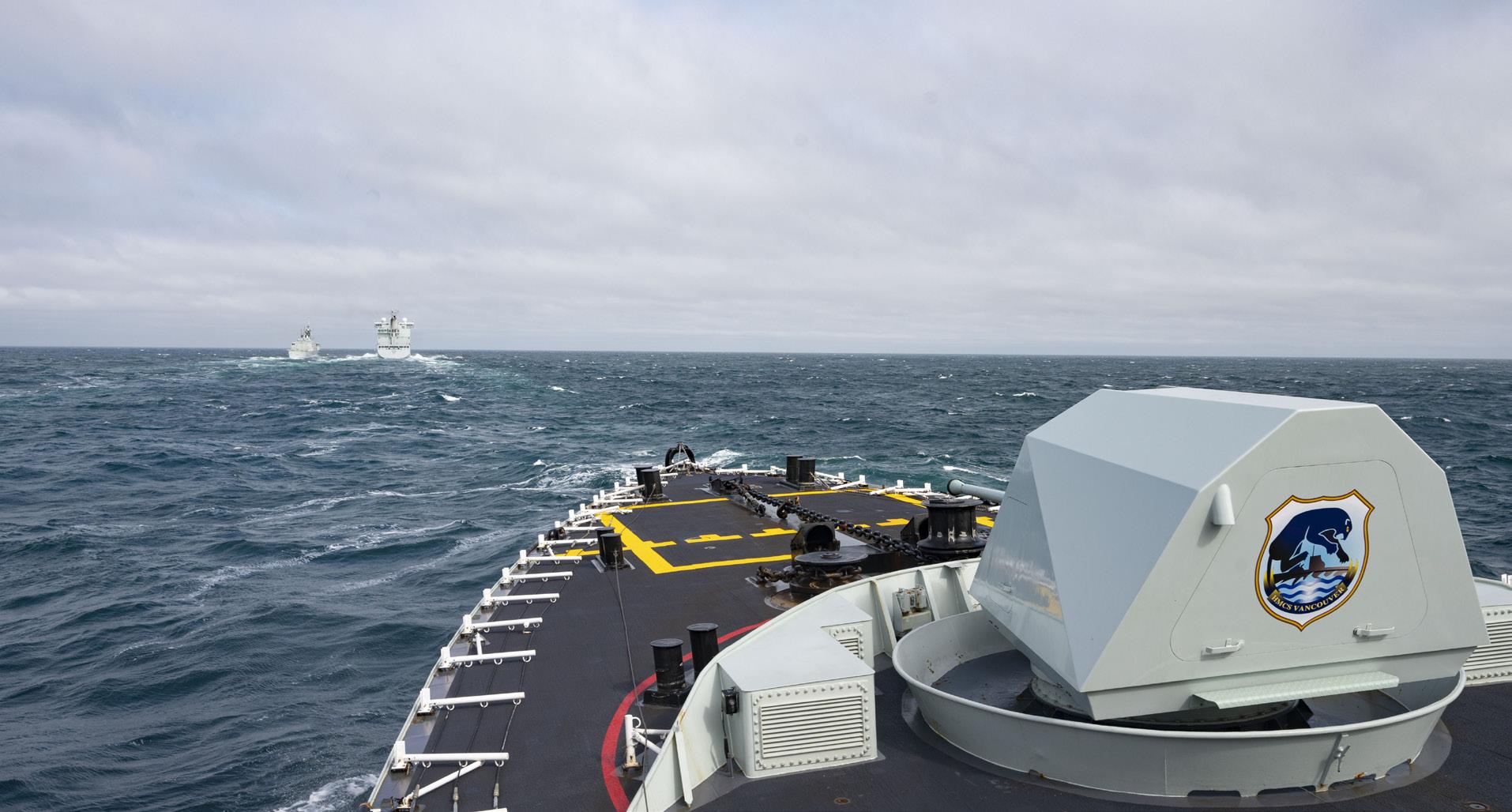
With mixed emotions, His Majesty’s Canadian Ship (HMCS) Vancouver's ship's company departed Canadian Forces Base Esquimalt. It sailed past the Victoria waterfront on Aug. 14, bidding farewell to families and friends as we embarked on another exciting adventure in the Indo-Pacific region.
Following our departure from Esquimalt, we embarked on our CH-148 Cyclone helicopter, call sign Canuck, which provides us with extended depth and range during our operations before joining our friends in HMCS Ottawa and Naval Replenishment Unit Motor Vessel (MV) Asterix During our transit across the Pacific Ocean, weather conditions were relatively nice, with ocean waves averaging one to two meters.
A few days after our departure, a Royal Canadian Air Force CP-140 Aurora patrol aircraft from 19 Wing, 407 Squadron conducted a flyby of HMCS Vancouver on Aug.
16. Our ship was transiting by the CP-140’s patrol route; as such, the aircrew elected to reach out and requested the fly-past in the interest of joint interoperability and morale. Both crews established good communications and quickly arranged the fly-past before returning to their respective operations. The CP-140 flight that day supported Operation Limpid, providing presence and surveillance in the approaches to Canadian waters. Both HMCS Vancouver and CP-140 personnel enjoyed this interaction of opportunity.
HMCS Vancouver continued its journey as we operated alongside the Atlantic Condor in the North Pacific Ocean, supporting Canada’s increased presence in the Pacific region. Fisheries and Oceans Canada (DFO) conducts Operation North Pacific Guard, a multilateral operation with personnel from DFO, the Canadian Coast Guard and the U.S. Coast Guard to detect and deter illegal, unreported, and unregulated fishing activity, which is a significant cause of declining fish stocks
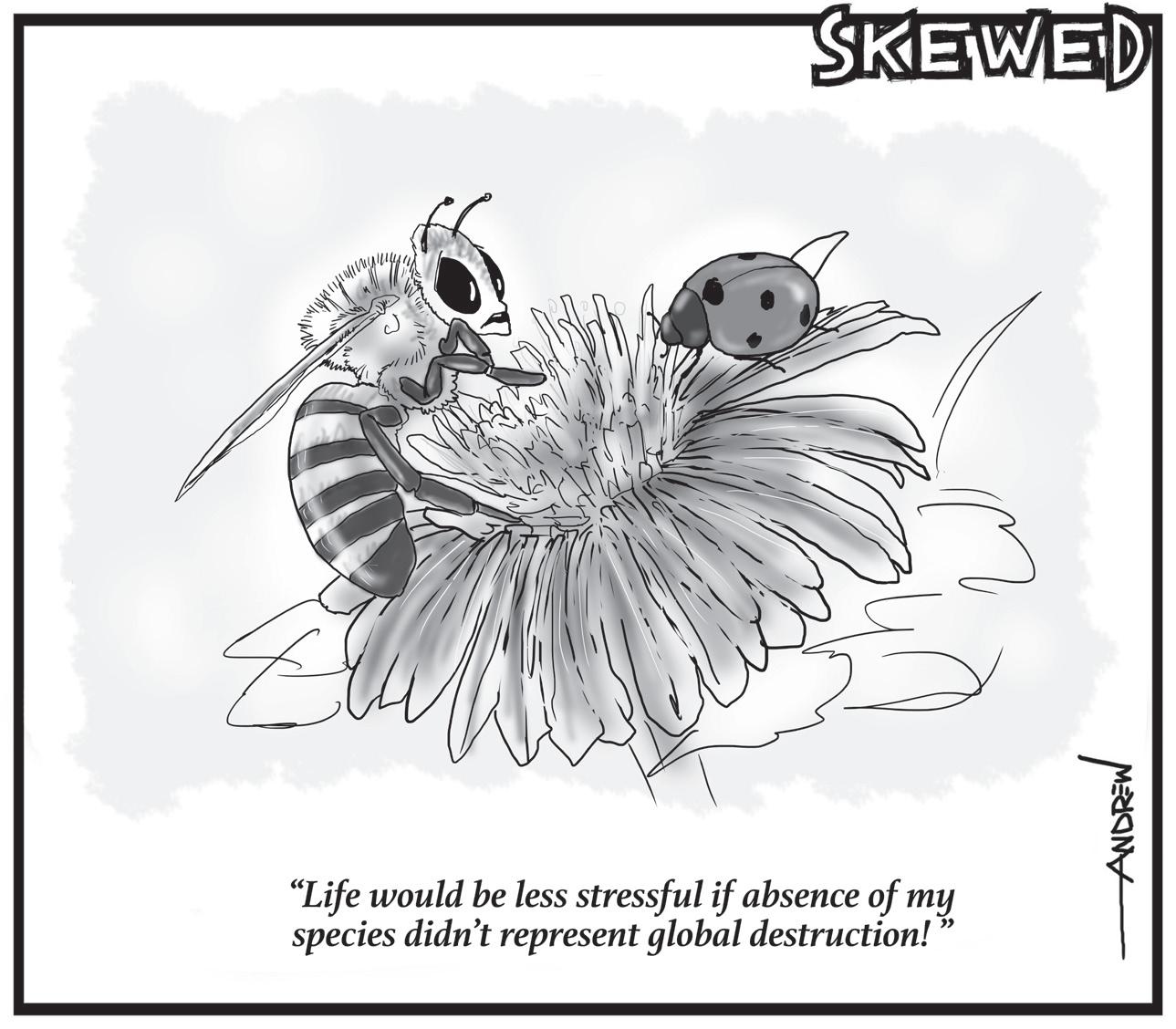
and marine ecosystem destruction in Canada and around the globe.
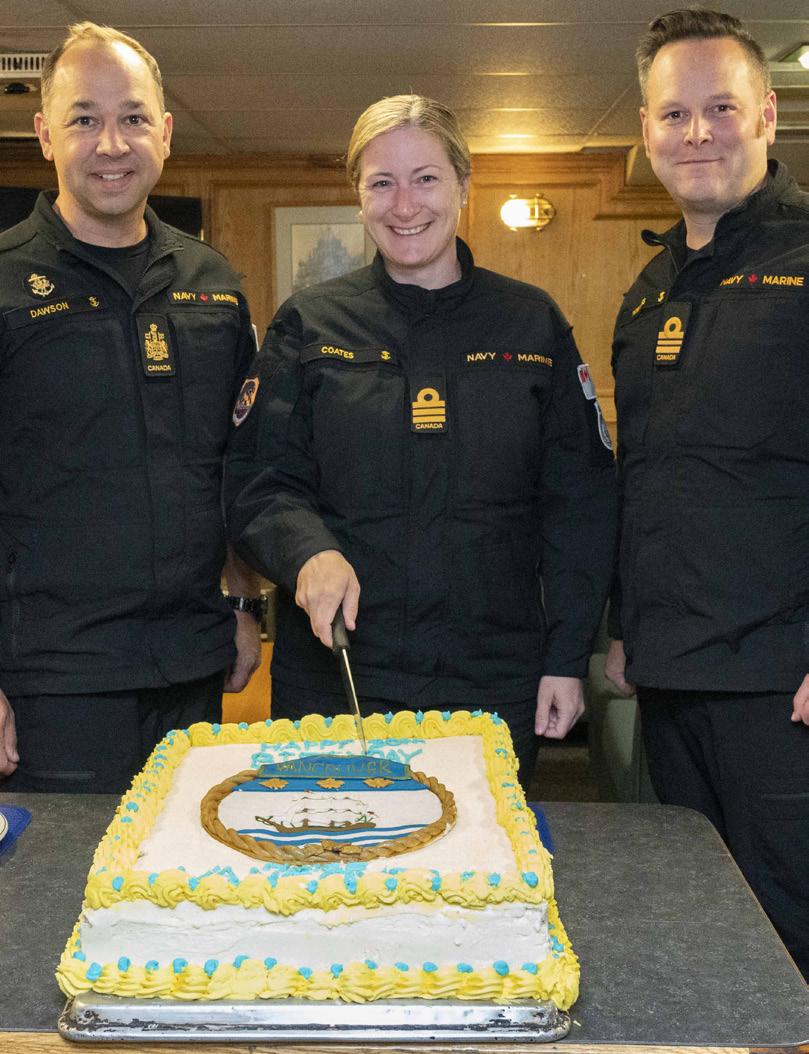
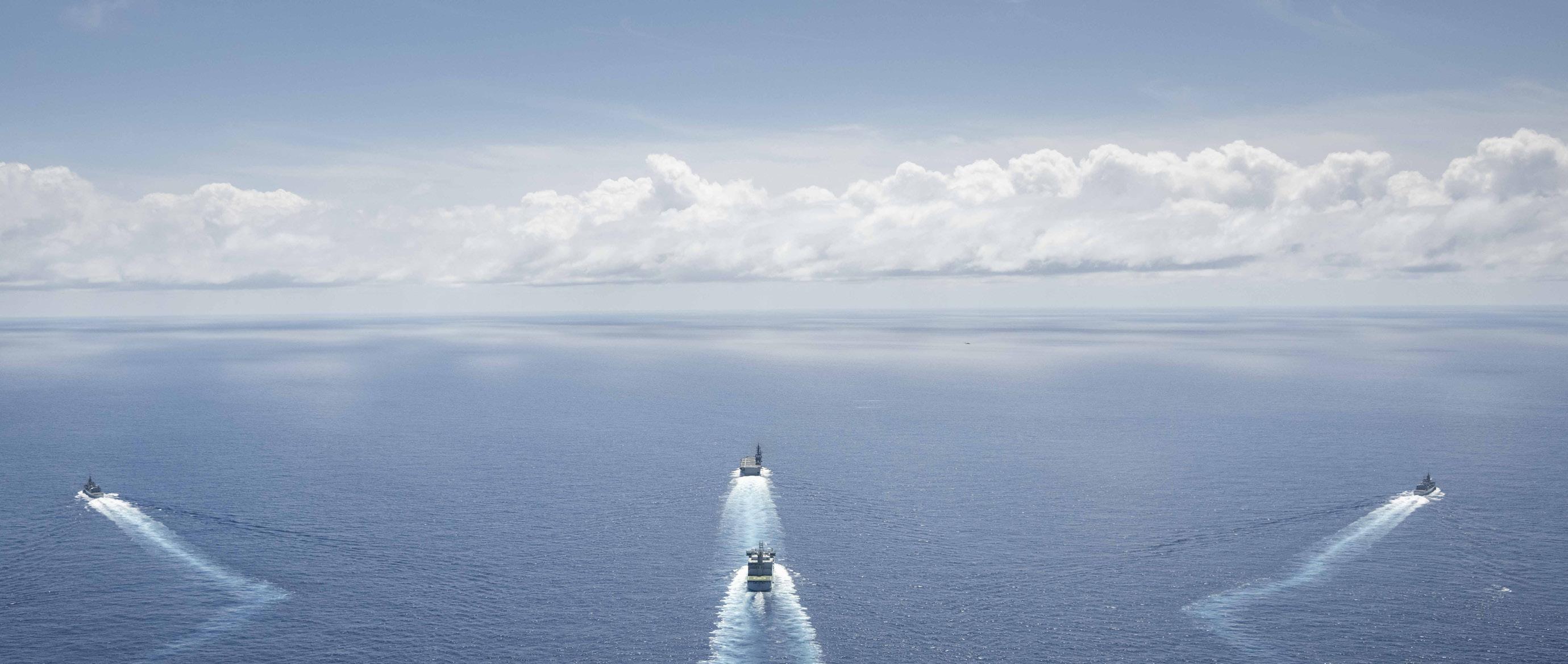
During our first two weeks at sea, we conducted several training serials, keeping us fighting for the mission at hand, including Replenishment-at-Sea (RAS) with MV Asterix. We have been routinely exercising our skills in responding to emergencies, from person overboard drills to flood and fire responses, ensuring we remain adaptable and capable of responding to whatever situation may arise. We also celebrated Vancouver’s commissioning anniversary on Aug. 22, as we crossed the international date line and completely missed the 23rd, jumping right to the 24th. Don’t worry, though, we still had cake! As we approached Japan, Vancouver, Ottawa, and Asterix conducted manoeuvres with Japanese Ship (JS) Hyūga and USS Benfold, collaborating with regional partners to foster an open and free Indo-Pacific. As part of our deployment in the Indo-Pacific region, we will continue to conduct forward naval

presence operations and participate in international naval exercises with partner nations.
During our port visit to Yokosuka, Japan, our command team attended strategic engagement events with diplomats and partner nations. At the same time, crew members had some well-earned time off to discover Yokosuka, Tokyo and Mount Fuji. We are now back at sea supporting Operation Neon, Canada’s contribution to United Nations Security Council sanctions against North Korea. During the next few weeks, we will conduct surveillance operations to identify suspected maritime sanctions evasion activities, particularly ship-to-ship fuel transfers and other commodities banned by United Nations Security Council resolutions.
We wish you all the best back home in Canada and look forward to sharing more about Vancouver’s journey in the coming weeks and months.


HMCS Vancouver PAO
The ship’s company went to bed on Aug. 22 and woke up on Aug. 24 as His Majesty’s Canadian Ship (HMCS) Vancouver crossed the international dateline in the Pacific Ocean on the ship’s birthday.
Thirty years ago, on Aug. 23, 1993, HMCS Vancouver was commissioned at Canada Place in the Port of Vancouver. The commissioning of the ship marked the beginning of the revitalization of the Pacific Fleet but also the re-establishment of naval ties with Canada’s third-largest and fastestgrowing city.
“As captain of HMCS Vancouver, I accept the challenge given to the ship and
crew,” said Commander Brian Matthews, Vancouver’s Commanding Officer, in 1993 at the ship’s commissioning.
“We are extremely proud of our ship, well-trained in our jobs and eager to set the highest of standards which will keep our successors and HMCS Vancouver, Ever on Guard.”
Vancouver has a rich maritime history that includes extensive ties with the Navy.
The commissioning of HMCS Vancouver provided the ideal venue to reaffirm and enhance this relationship, which continues today as the ship carries the name of the city worldwide.
“I am confident HMCS Vancouver will not only provide Canada with a period of distinguished naval service but will also bring pride to the city after
which the ship is named,” said The Honourable Tom Siddon, Minister of National Defence, in 1993.
HMCS Vancouver represents the culmination of many people’s hard work and determined efforts. Through out service, the ship has been on an exciting voyage of discovery, adventure and service. Today, HMCS Vancouver continues to serve Canada in our territorial waters and worldwide.
“Throughout the past 30 years to this day, HMCS Vancouver continues a proud legacy of distinguished naval service to Canada bringing pride to Canadians and to the City of Vancouver,” said Commander Meghan Coates, HMCS Vancouver’s Commanding Officer. “It is an honour for me to lead the ship’s company during this

historic time.”
Chief Petty Officer First Class (CPO1) Derek Dawson, Coxswain of HMCS Vancouver, is also proud to carry on a legacy of dedicated service to Canada.
“My time as Coxswain of HMCS Vancouver is certainly one of the most rewarding times of my career in the Royal Canadian Navy,” CPO1 Dawson said. “It is a great responsibility and privilege to fulfill the high expectations placed upon our crew to accomplish our missions.”
HMCS Vancouver is currently in the Indo-Pacific region along with HMCS Ottawa and Motor Vessel Asterix on Operation Projection, working with partners, building trust, doing exercises, and asserting Canadian interest over the region.




“Being a part of the Greyshirt community, and finding a way to use my skills from the military to help people … it is soul food to be able to give of myself through team rubicon Canada to disaster survivors.”
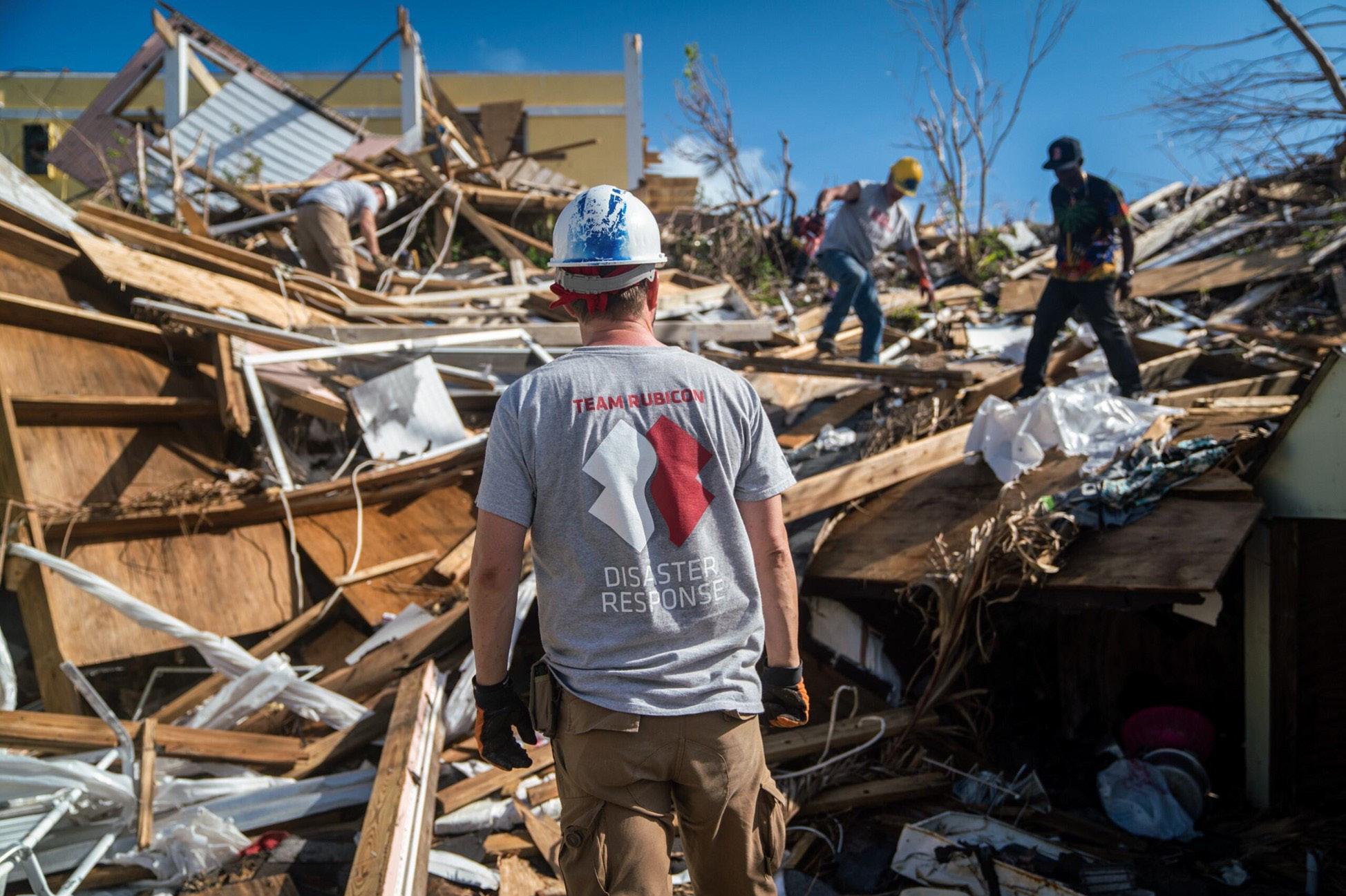
Military ethos is ingrained deeply into every Canadian Armed Forces (CAF) member from basic training through our careers and even past retirement. That ethos lends support during tough times, puts us on a path to professionalism, and is the heartbeat behind every kind of decision we make in uniform. It does not leave us even when we eventually remove the uniform, and that is where Team Rubicon Canada started.
In the aftermath of the 2010 earthquake in Haiti, six U.S. Marine veterans set off to aid the disaster-stricken nation. With little support, they provided medical assistance to communities in the interior that other organizations had yet to reach, and around a campfire, they came up with what would become Team Rubicon. Later, in 2016, Team Rubicon Canada supported the Fort McMurray wildfire response, starting with food bank support and re-mustering into HAZMAT gear for heirloom recovery. After seven years with over one hundred missions served worldwide, the veterans and first responders remain committed to ensuring no one must face disaster alone.
A day on an operation starts early: orders are cut, and trucks leave the forward operating bases by 0800. Kit squared away the day before for expedient home repair, remediation (mucking out), debris management, sawyer operations, or humanitarian aid is loaded and ready for use by ‘strike teams’. Simultaneously, command and general staff are busy at base coordinating orders for the next day, liaising with local authorities, and running logistics lines for a self-supported response. The day is long, and the work is hard, but the impact is felt by all, including the volunteers known as ‘Greyshirts’.
“Being a part of the Greyshirt community and finding a way to use my skills from the military to help people – it is soul food to give myself through Team Rubicon Canada to disaster survivors,” said Master Corporal (ret’d) Jeff Becker, National Training Manager.
Greyshirts come from every service branch and background, united by the call to service or a continuation of it. For them, Team Rubicon Canada is an outlet for purpose, community, and identity. Communities benefit during their worst weeks following the disaster, where Team Rubicon Canada can bridge the gap between an immediate emergency and long-term recovery. For Canada, the organization is a strong humanitarian force of over three thousand volunteers that integrate into more considerable response efforts using the Incident Command System framework.
Under blue skies, Team Rubicon Canada conducts training and service projects across Canada to generate and develop specific skillsets necessary in a disaster and connect to their communities. When grey skies come, Team Rubicon members are there before, during, and after the disaster in service to those communities. This was no more apparent than 2019 during the flooding in our National Capital Region. There, Greyshirts could be found on the ground sandbagging, mucking out homes, and in incident command centers working alongside municipal authorities and the CAF deployed on Operation Lentus
On Vancouver Island, approximately 60 Greyshirts train and deploy these skills, most recently on Project Fair Catch. The service project involved mucking out homes after a flood displaced local community members, where three students onboard HMCS Venture worked with other Greyshirts
on the recovery. Training continues on the Island with a campaign to create a section-strength team of chainsaw operators.
Greyshirts are fiercely independent, tenacious, and highly principled, so what brings them together is a mission much more significant than themselves. If fidelity in service is our uniform code, so must it last with us in retirement. That sense of ethos makes the Greyshirts of Team Rubicon Canada exemplary humanitarians, building a more resilient nation one disaster at a time.
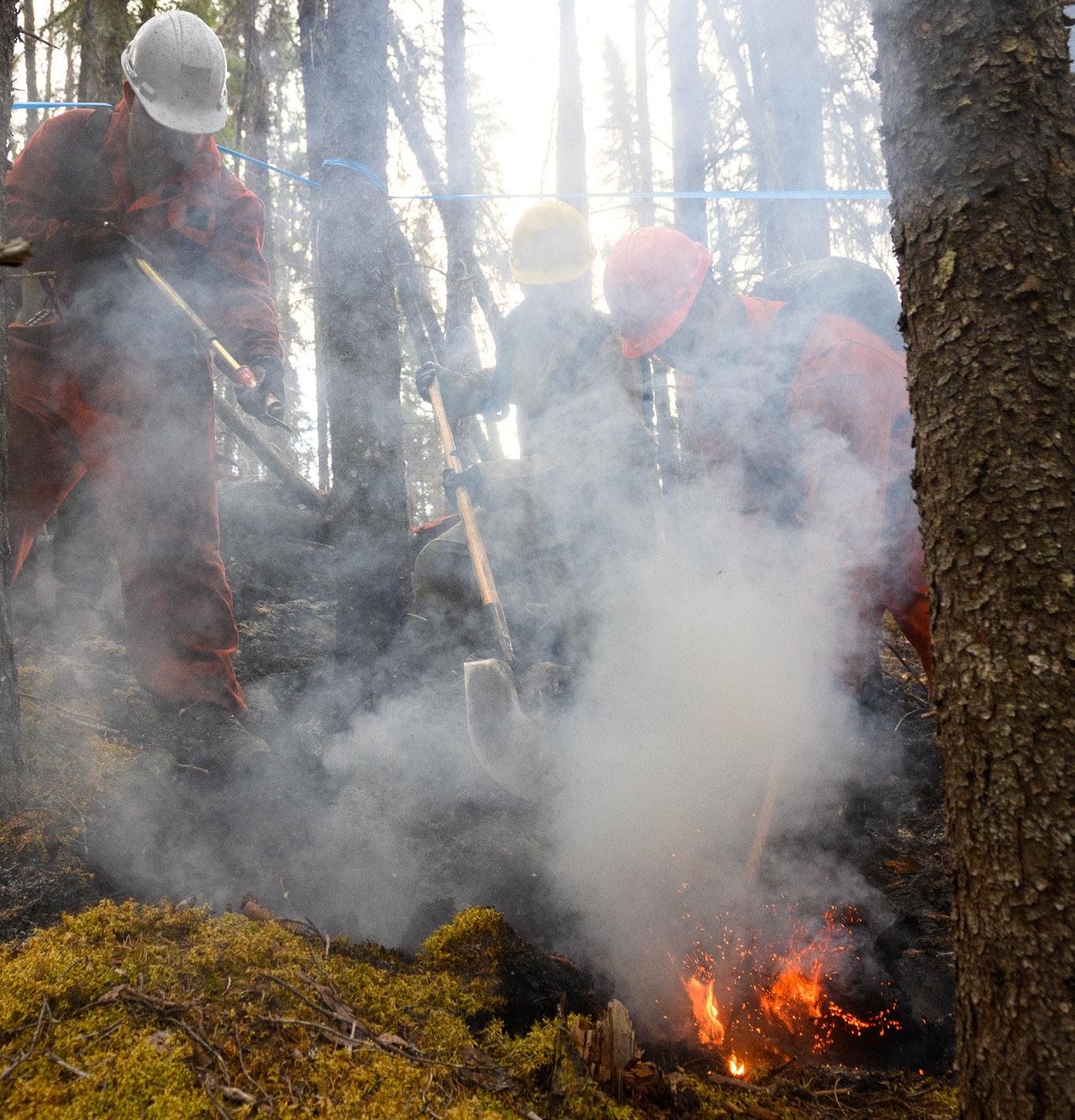
Millions of people worldwide can now recognize the burnt smell, the thick smoke, and the red haze of a fire burning kilometres away. With the effects of climate change increasing their number, frequency, and intensity, wildfires have spread across Canada at an unprecedented rate. We are in the middle of the worst wildfire season yet, with 5,530 recorded so far this year.
To help confront this threat, Defence Research and Development Canada (DRDC) is working on a technology that could help detect wildfires sooner, allowing decisionmakers and responders to spring into action faster.
Early detection of ignition is critical to limiting the spread of wildfire and mitigating the harm done to nearby communities. Real-time awareness from a network of ground sensors would provide responders with the necessary information to act earlier and more effectively. The United States Department of Homeland Security Science and Technology Directorate (DHS S&T) is testing wildfire ground sensors in its second development phase. DRDC has deployed twenty of these sensors at Canadian Forces Base Valcartier, where they successfully detected small wildfires. Twenty additional sensors were also deployed at the City of Baie-Comeau.
The sensors detect the levels of small ashlike particles (particulate matter) and volatile organic compounds (VOC) (i.e., carbon monoxide) that are in the air. These levels are then input into sophisticated computer algorithms that determine whether par-
ticulate matter and VOCs correspond to an actual fire or a false alarm.
ThE dEPLoyMEnT haS ThrEE MaIn GoaLS:
1. Identify the best placement for the sensors to maximize range and detection speed;
2. Gain an understanding of how the use of ground sensors, in conjunction with other detection capabilities, such as satellites, better protects communities; and
3. Improve the sensors’ user interface to be adaptable to different contexts and users.
Developing solutions that will enable adaptation and resiliency will ensure Canada is prepared for the ongoing effects of climate change. In addition to our DHS S&T partners, DRDC is undertaking this forward-looking initiative with the Canadian Forest Service at Natural Resources Canada, the Canadian Forces Fire Marshall, and SOPFEU (Société de protection des forêts contre le feu), the Québec wildfire agency. With these trials, DRDC is using innovation to secure a safer future for all Canadians.










SUNDAY / DIMANCHE SEPT 17
OGDEN POINT • BREAKWATER DISTRICT 2023 10 am – 3 pm
BRINGING CFB ESQUIMALT TO YOU




LA BFC ESQUIMALT S’INVITE CHEZ VOUS
SHIP TOURS & BOAT RIDES
EXCITING DEMOS & INTERACTIVE EXPERIENCES
MILITARY BANDS ACTIVITIES & GAMES BARBECUE SO MUCH MORE!
VISITES DE NAVIRES ET PROMENADES EN BATEAU DÉMONSTRATIONS PASSIONNANTES ET EXPÉRIENCES INTERACTIVES
MUSIQUES MILITAIRES ACTIVITÉS ET JEUX BARBECUE ET BIEN D’AUTRES CHOSES ENCORE !