







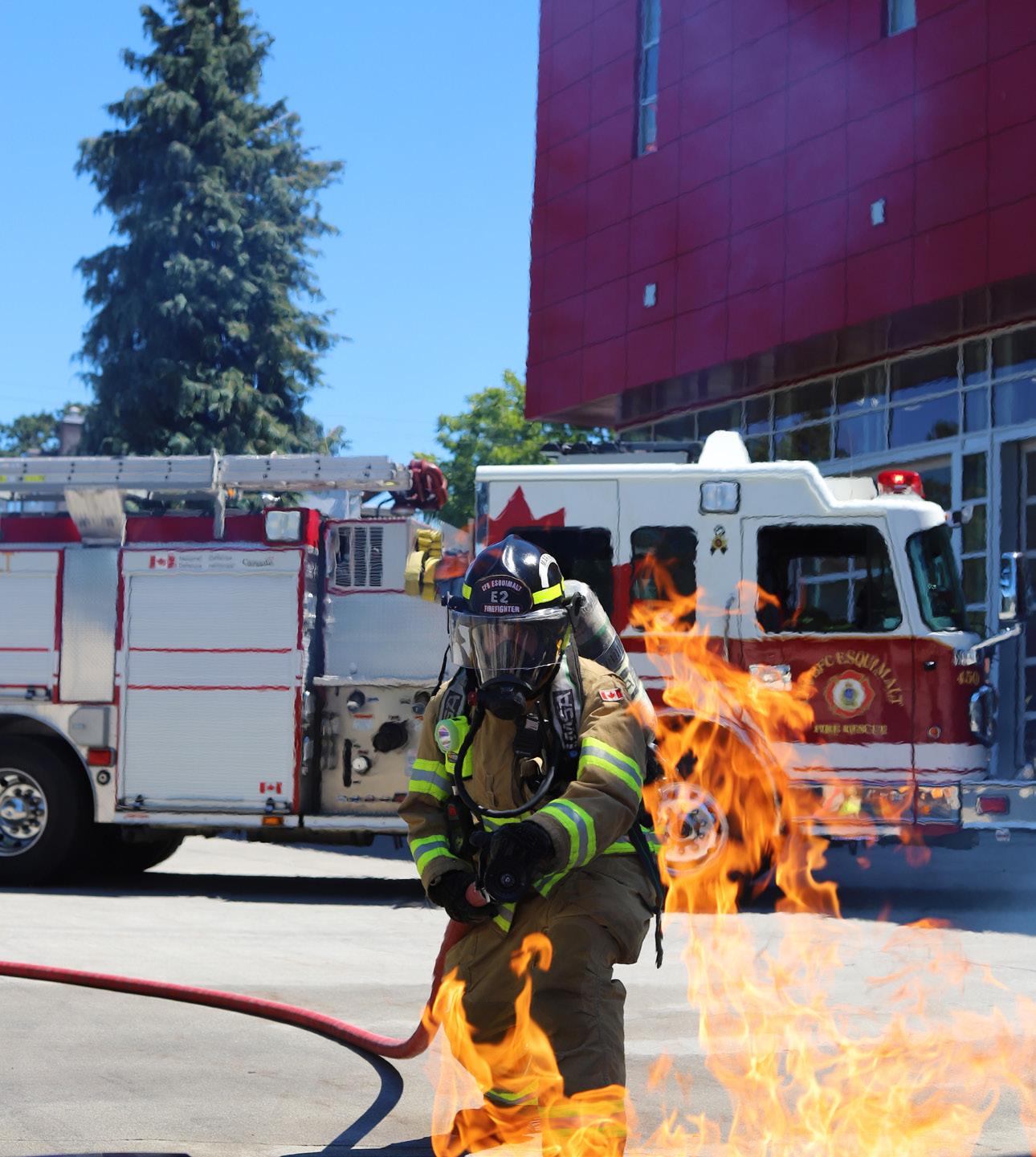
Cover: Firefighter Lisa Marino from CFB Esquimalt Fire Department during a demonstration on July 19. Photo: Jazmin Holdway, Lookout Newspaper


















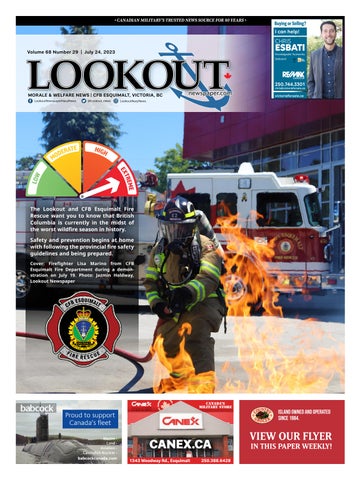
Cover: Firefighter Lisa Marino from CFB Esquimalt Fire Department during a demonstration on July 19. Photo: Jazmin Holdway, Lookout Newspaper
Mallett Staff Writer
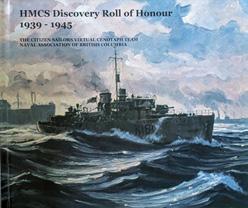
A new Book of Remembrance featuring Second World War Naval Reservists has enriched the list of citizen sailors who made the ultimate sacrifice.
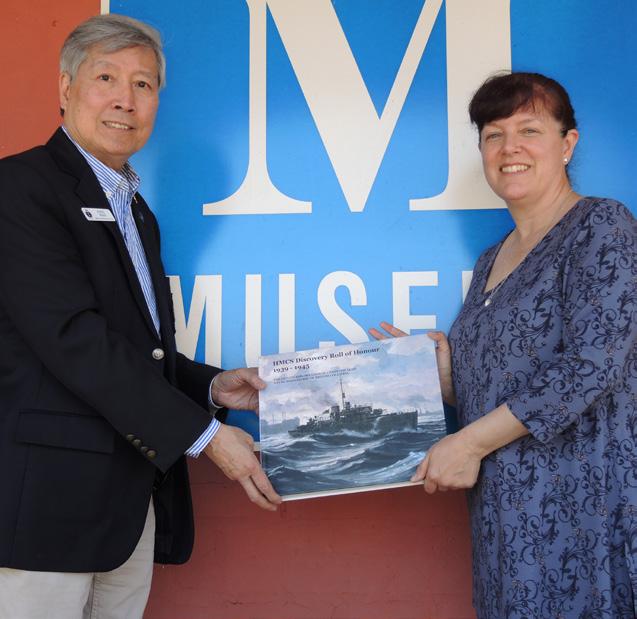
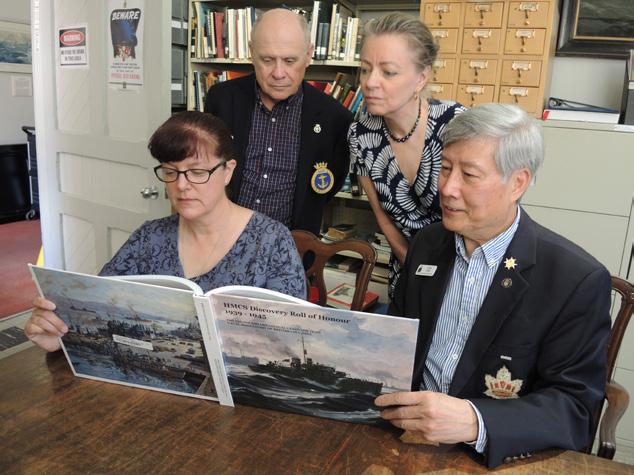
Now, names of 19 previously unheralded Naval Reservists who died in their wartime service to HMCS Discovery are added and featured in HMCS Discovery Honor Roll, 1939 to 1945. On July 14, Commander (Cdr) (ret’d) King Wan, Naval Association of British Columbia (NABC) President, accompanied by NABC members Mark Fletcher (Vice President) and Judy Bell (Social Director), presented a copy of the book at the CFB Esquimalt Naval and Military Museum.
“These naval reservists featured in our book were just regular people from all walks of life, cooks, accountants, office managers,” said Wan. “Because such a large number of the Royal Canadian Navy’s (RCN) war dead came from the Naval Reserve, we wanted to make sure we remembered our citizen sailors.”
While the names of 61 men from the Vancouver-based unit of the Royal Canadian Navy Volunteer Reserve (RCNVR) who lost their lives during their Second World War are included in HMCS Discovery’s large wooden plaque displayed at Discovery’s headquarters, is incomplete, says Lieutenant-Commander (retd) Bob White, Editor-in-Chief.
The new Book of Remembrance is an effort to give all sailors in the unit who paid the supreme sacrifice proper recognition, says White.
“We were surprised that [the names] of men had been missed, but, given the times and the number of men who enlisted in Vancouver, it was understandable that some would slip through the cracks,” said White.
White and the book’s other researchers are former members of the Discovery and present-day members of the Naval Association of B.C. Their research began in 2022.
Their book is part of a celebration of this year’s 100th anniversary of Canada’s
Naval Reserve.
Of the 2,170 RCN war dead, 1,769 were Naval Reservists, says Wan. Many sailors are commemorated on a memorial in Halifax but they were largely unknown in the small towns and cities they came from.
“The 100th anniversary of the Naval Reserve was an opportune time to repatriate this history back to the cities, towns and villages where these sailors grew up and began their naval service and create a lasting memorial,” said Wan.
The limited-edition 345-page hardcover was self-published by the Naval Association of B.C. and contains detailed biographies and information about the reservists, including photographs and newspaper articles.
Tatiana Robinson, CFB Esquimalt Naval and Military Museum Curator, was delighted with the book’s presentation to the museum.
“The information puts a human face on something impersonal instead of just looking at names on a scroll or text,” Robinson said. “I can see this being a very valuable resource for the museum.”
She noted the book and its contents would be a big help in frequent requests to the museum for genealogical information. At the same time, its contents may also be included in exhibits such as the Battle of the Atlantic.
White believes there is still more work to do.
“There is no organization to the names on the plaque; they are not alphabetical or chronological yet,” White said.
The book was released in May, with a copy presented to the Commanding Officer of HMCS Discovery, Cdr Rebecca Hardie, at the unit’s Battle of the Atlantic Dinner.
Approximately 50 copies of the book are destined for libraries across Vancouver Island, the Lower Mainland, and military museums. A digital version of the book is also available online at: https://sites.google. com/view/dy-honour-roll/home?authuser=0






MANAGING EDITOR
Jazmin Holdway jazmin.holdway@forces.gc.ca
EDITOR
Kate Bandura
WRITER
250-363-3130 kateryna.bandura@forces.gc.ca
Peter Mallett mallett.peter@cfmws.com
PRODUCTION
Teresa Laird
Leslie Eaton
250-363-8033 production@lookoutnewspaper.com
250-363-8033 workstation3@lookoutnewspaper.com
ACCOUNTS /RECEPTION
Trina Winters
ADVERTISING
Joshua Buck
250-363-3127
778-977-5433 NEW military.base.advertising@gmail.com
EDITORIAL ADVISORS
Ashley Evans
FRENCH EDITORIAL ADVISOR
A/Slt Alexandre Springer alexandre.springer@forces.gc.ca
Published each Monday, under the authority of Capt(N) K. Whiteside, Base Commander.
Le LOOKOUT est publié tous les lundis, sous l’égide du Capv K. Whiteside, Commandant de la Base.
The editor reserves the right to edit, abridge or reject copy or advertising to adhere to policy as outlined in PSP Policy Manual. Views and opinions expressed are not necessarily those of the Department of National Defence.
Le Rédacteur se réserve le droit de modifier,de condenser ou de rejeter les articles, photographies, ou annonces publicitaires pour adhérer au Manuel des politiques des PSP. Les opinions et annonces exprimées dans le journal ne réflètent pas nécéssairement le point de vue du MDN.
Circulation: 2,000 plus 300 pdf downloads per week Follow us on Facebook, Twitter and Instagram to join our growing social media community.
A Division of Personnel Support Programs
CFB Esquimalt, PO Box 17000 Stn. Forces, Victoria, BC V9A 7N2 Web: www.lookoutnewspaper.com Fax: 250-363-3015 Canadian Mail Product Sales Agreement 40063331




If we are honest with ourselves, we can admit to being defeated by lethargy on various occasions in our lives.
Lethargy works like quicksand; we don’t often realize we’re in it until we’ve begun to slowly sink into its impending depths. This psychological indolence when not intentionally attended to creates a negative unconscious pattern. Once it is formed it slips into other areas in our life, thus creating a habit. For example, we notice that we don’t have much motivation for our work, it’s lost its vibrancy for one reason or another, and our quality of work suffers. This sluggishness then begins to seep into being uninterested in our relationships, our parenting, and our self-care practices.
Lethargy is a multi-headed monster and can sink its teeth into us in a variety of ways. It can pull us down by persistently allowing the ‘easy-going’ side of our nature to dominate our lives – this easy-going nature could at times be an indication of the unwillingness to confront our fears to ‘take the trouble’, to pay the price demanded by a worthwhile undertaking.
It also seems that lethargy holds us down when we are mentally and emotionally taxed and, thus keeps us entangled in an existential fatigue. When this persists in our lives, we become fundamentally ambivalent
about the world around us, which naturally gives birth to a pessimistic outlook on society as a whole.
Lethargy has a way of spreading into all life areas, and therefore it isn’t devoid of seeping into one’s therapeutic journey. This deeply rooted apathy is one of the main obstacles one faces on a regular basis in therapy, and we typically can see this throughout the individual’s therapeutic journey. In the early stages, we can presume here that most individuals prior to coming to therapy are already mentally and emotionally in a deficit. When we are already in this state of being burned out psychologically lethargy compounds the effect; the motivation to pull oneself out of the belly of lethargy is no small feat and it does take a deliberate effort to do so. We somehow need to dig deep into the minimal remaining reserves we have just to even show up to therapy. This is an act of defiant will towards the status quo of lethargy that has been engendered in our lives.
Another manner in which lethargy manifests in therapy can occur at any point in the therapeutic process. The avoidance of confronting the fears that are the root of one’s struggles represents a weariness to take on something worth taking on. Letting our easy-going side begin to take control of the counselling experience is the best way to become uninterested in the work that one has embarked on. That constant propensity to do the “side missions” instead of going down the path of most resistance breeds indifference in the process and only delays the change needed in one’s life. So how does one overcome this ominous threat to the betterment of ourselves:
1. Reflection – Ask yourself why are you feeling lethargic; is it due to feeling burned out? Is there a lack of curiosity about the topic? Is it easier to keep the status quo?
2. Move your body! We typically function by first either visualizing or thinking about an activity and then acting on it. However, sometimes it’s beneficial to do it in reverse and use our body in a way that precipitates positive thinking and emotion. Going into nature, expressing oneself with art, or competing in an activity all can stimulate motivation.
3. Discuss lethargy with your therapist – This helps offload the burden of guilt and shame that bubbles to the surface when one finds themselves battling boredom in life. It also opens the door to collaborating and developing ways to overcome it when it comes up again in life.
One of the best ways to disarm lethargy is through curiosity and wonderment. When we ask ourselves what our lassitude is doing to us and what it keeps us from doing, we invite ourselves to discover how lethargy plays a constant role in how we can better ourselves.
Thomas Goenczi is an RCN Veteran and MA Clinical Counsellor with Private Practice: Well Then Therapy.
The content is not intended to substitute professional advice, diagnosis, or treatment. Always seek the advice of your mental health professional or other qualified health provider with any questions regarding your condition.












































Nathalie Garcia Chief of Staff
Canadian Submarine Force
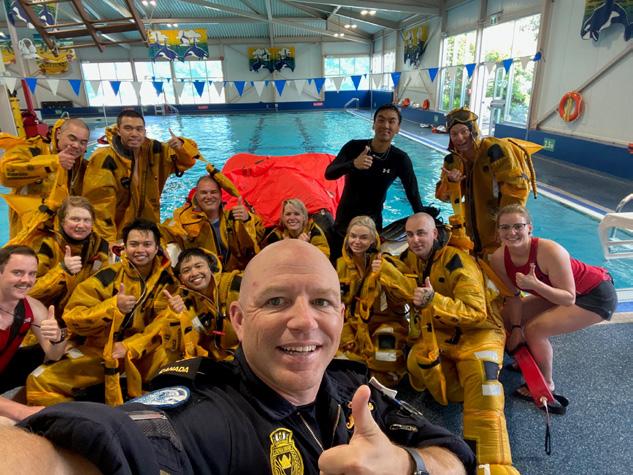
Members of HMCS Corner Brook conducted the first West Coast submarine escape refresher training at the Naden Athletic Centre pool on July 12.
The training is part of the requirements under the Submarine Safety (SUBSAFE) Program, a quality assurance program to provide maximum reasonable assurance of the integrity of submarine design, systems and materials. This unpressurized training is normally conducted in Rimouski, Que.; conducting the training in Esquimalt means that members can be requalified without travelling.
“Submariners, and sailors in general, are away from home enough. Any time we can
find a way to complete the mission without straying from home is good for the Navy and the team,” said Commander Eric Isabelle, Commanding Officer of HMCS Corner Brook, who also benefited from the training.
The nine members conducted pool sea survival and escape training in the forenoon, followed by forward escape tower training in the afternoon under the supervision of Chief Petty Officer Second Class (CPO2) Michael Tibbetts, Corner Brook’s Coxswain.
“The training offered locally utilizes the six-person life rafts held onboard, a functional escape tower, and the realism of onboard training. The entire team, including our rescue swimmers, get involved, adding to the training experience and team cohesion,” said CPO2 Tibbetts.


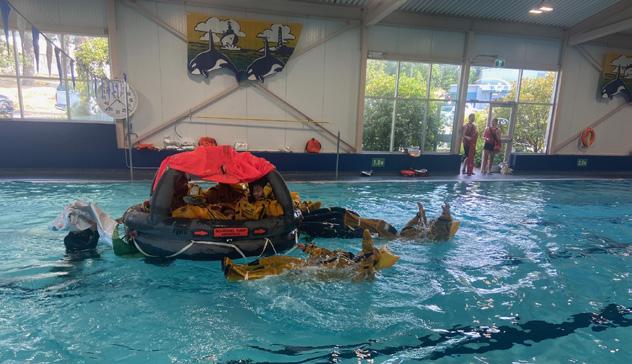
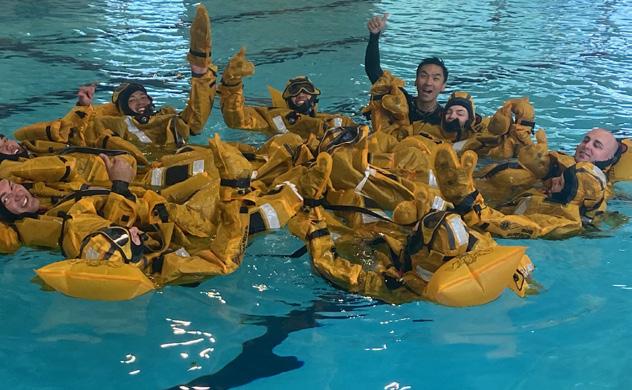
Above: Members conduct pool sea sur-





























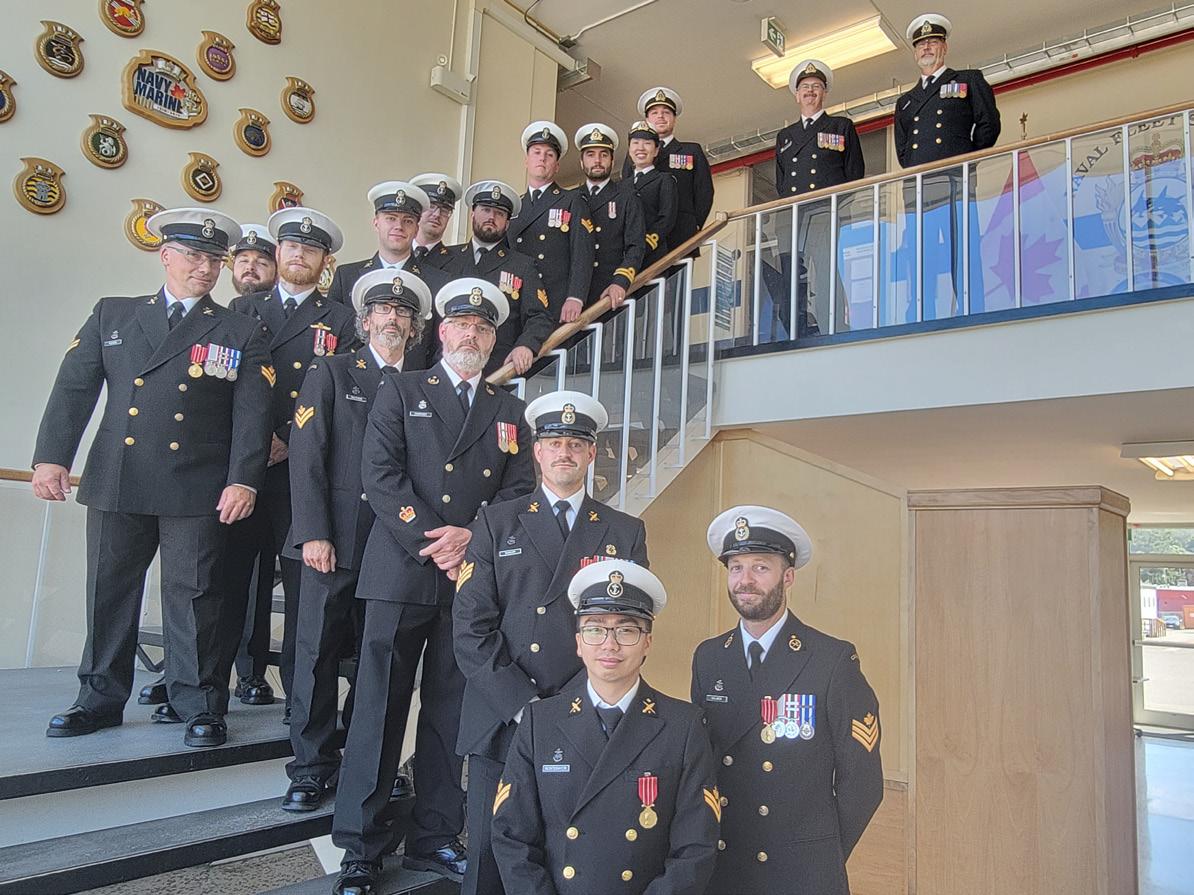
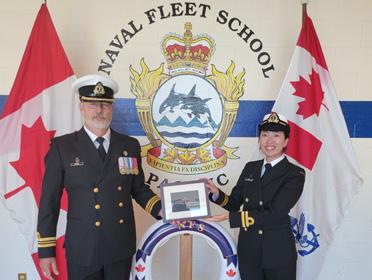
From top of stairs down:
At top back rail: Lieutenant-Commander Roy Blume, Chief Petty Officer First Class Stan Budden, NFSP Coxswain.
Stairs from top to bottom: Lieutenant (Navy) Etienne Laurier, Lieutenant (Navy) Yeojin Kim, Lieutenant (Navy) Daemen Wolch, Master Sailor Christopher Cale, Petty Officer Second Class Tom Eustace, Sailor First Class Timothy Brett, Sailor First Class Joseph Kendall, Master Sailor Seth Elinsky, Master Sailor Robert Richard, Master Sailor Allan Gauthier, Petty Officer First Class Jesse Humphrey, Petty Officer Second Class Jeffery Dunlop, Master Sailor Klarck Montemayor, Petty Officer Second Class Bradley Salmon.
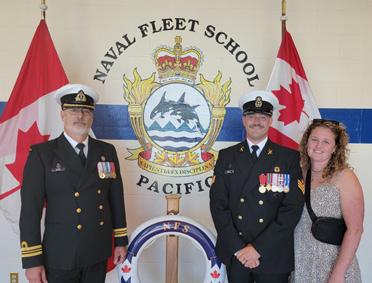
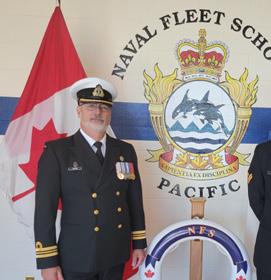
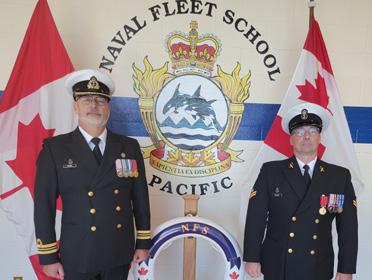
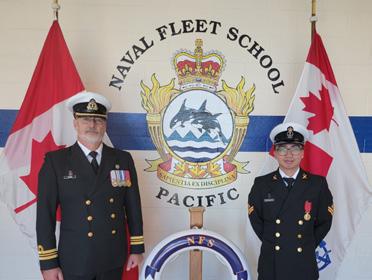
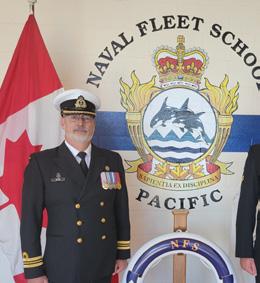
School (Pacific) held an Awards and Ceremony, presented by Acting Lieutenant-Commander Roy Blume.
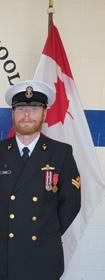
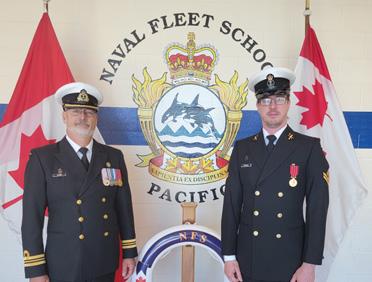
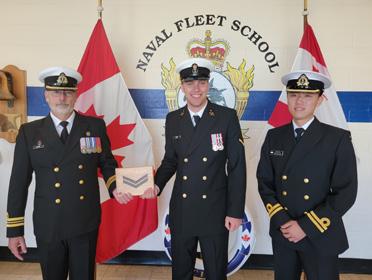
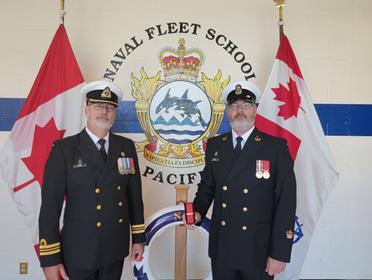
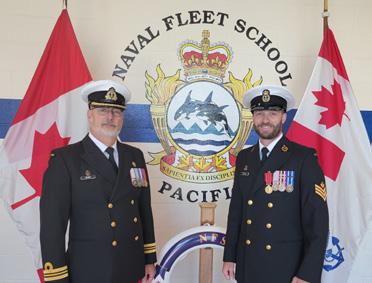
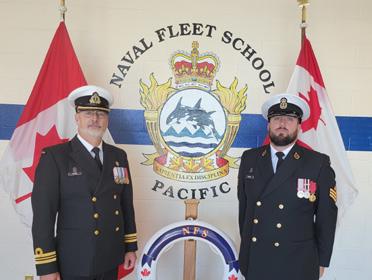
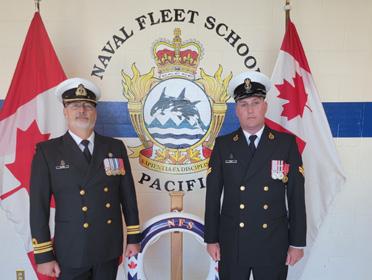
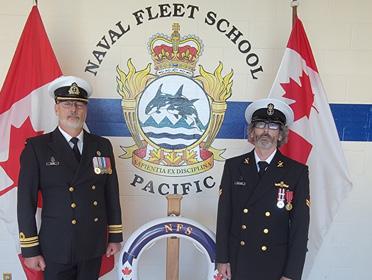
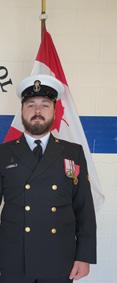
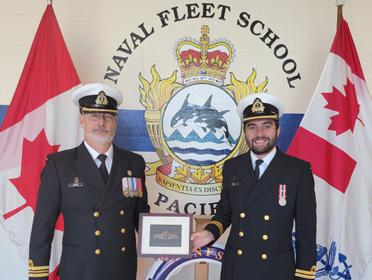
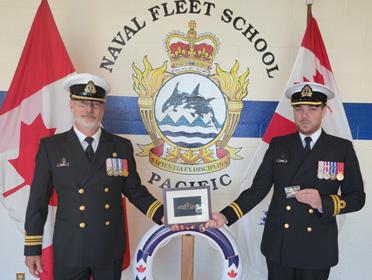

Sub-Lieutenant Wilson Ho HMCS Oriole PAO

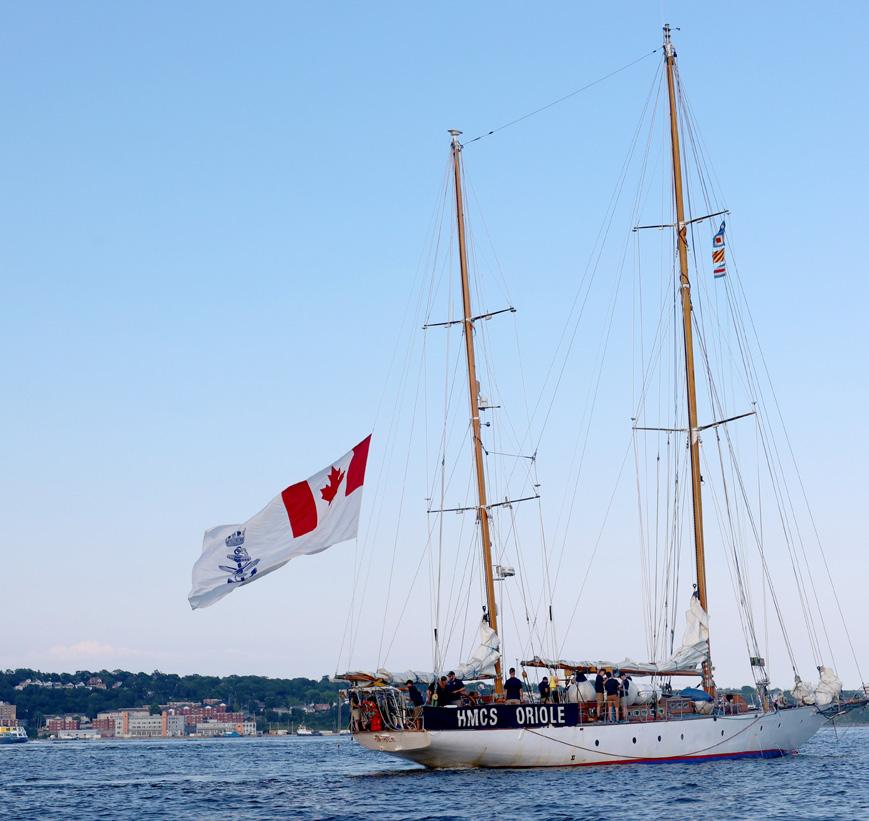
On July 13, His Majesty’s Canadian Ship (HMCS) Oriole departed CFB Halifax and commenced its Great Lakes Deployment.
This summer, HMCS Oriole will visit communities along the Great Lakes and St. Lawrence Seaway, bringing the Royal Canadian Navy (RCN) to Canadians as part of this year’s Great Lakes Deployment. The ship will be open to visitors in certain ports along the way, and there will be plenty of opportunities to see the Navy up close and meet sailors who operate the RCN’s tall ship.
HMCS Oriole is the oldest and longest-serving vessel in the RCN. Launched in 1921 and commissioned in 1954, HMCS Oriole remains true to its original design as an ocean racing yacht. HMCS Oriole excels in its mission, providing leadership training for sailors and visiting ports of call as a goodwill ambassador for the RCN.
The Great Lakes Deployment is an annual deployment, bringing the RCN closer to Canadians. It is also an opportunity to showcase maritime life and service at sea, and conduct outreach activities and presence in Canadian communities.
For more information and to follow HMCS Oriole along its Great Lakes Deployment, visit: https://www. canada.ca/en/navy/campaigns/hmcs-oriole-great-lakesdeployment.html.


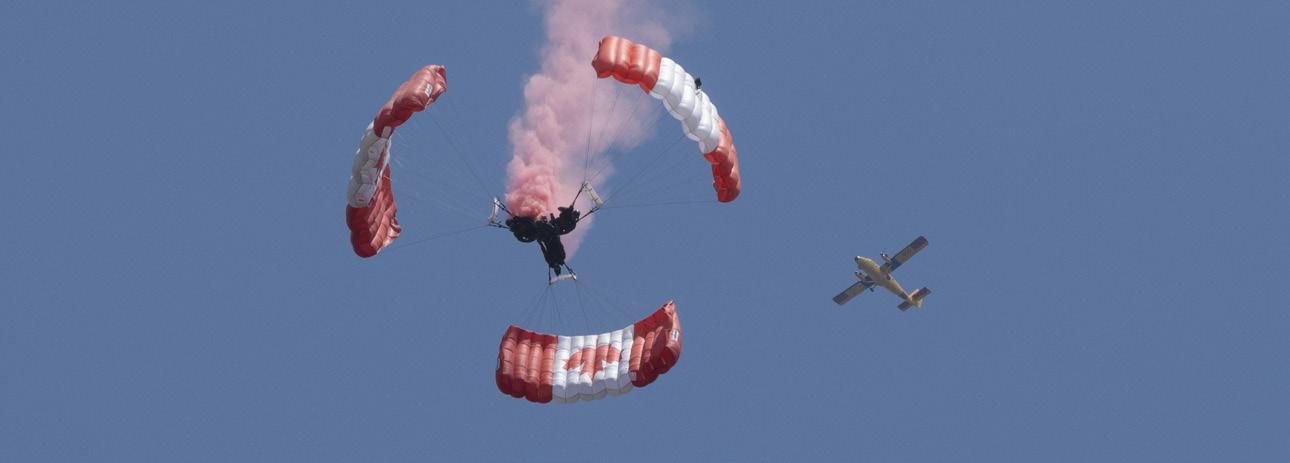
The Canadian Armed Forces Parachute Team, the SkyHawks, is seeking motivated individuals to join their ranks for the 2024 season. The SkyHawks offers an exciting opportunity for Canadian Armed Forces members to join a prestigious team of skilled parachutists. By becoming a member of the SkyHawks, you will have the chance to showcase your abilities to audiences worldwide while representing the Canadian Armed Forces. Applications are now being accepted until Nov. 30. Canadian Armed Forces members who are interested must meet the following minimum criteria:
• Qualified DP1 or Second Lieutenant in any trade or classification;
• Qualified Military Freefall Parachutist or hold an “A” certificate issued by the Canadian Sport Parachuting Association with a minimum of 50 freefall jumps; and
• Be recommended by their unit Commanding Officer.
The SkyHawks Parachute Team takes pride in assembling a diverse and inclusive group of individuals from the Canadian Armed Forces. Our team is made up of both Regular Force members and Reserve Force members, representing all elements and trades. If you want to learn more about joining our team, please contact The SkyHawks Administration Officer at CSN 827-2049 or 613-392-2811 Ext. 2049.

Capital Regional District
Stage 1 Watering Schedule of the Water Conservation Bylaw for the Regional Water Supply System (Greater Victoria) is in effect May 1 through September 30, each and every year, unless more stringent water conservation measures are required.
In summer months, water use in the capital region increases by 44%, mostly due to non-essential outdoor uses like lawn and garden watering.
The fall and winter rains replenish the Sooke Lake Reservoir and must last the entire year for drinking water, protection against wildfire events and droughts and support vital habitats for many endangered species.
By following the Stage 1 Watering Schedule and using water wisely outdoors, you can help save water, money, time, as well as help the environment.
WATER CONSERVATION BYLAW
The CRD Water Conservation Bylaw applies to any customers of the Regional Water Supply System receiving drinking water from the Sooke Lake Reservoir in the Greater Victoria area including residential, commercial, institutional and municipal properties.
Even Addresses Odd Addresses Lawn watering allowed Lawn watering allowed Wednesdays & Saturdays Thursdays & Sundays 4-10am and 7-10pm 4-10am and 7-10pm
*For multi-unit properties, the street address applies, not the individual unit number.
Established trees, shrubs, flowers and vegetable gardens may be watered by a hand-held hose with a shut-off device or hand held container, or micro/drip irrigation system, on any day at any time.
Established trees, shrubs, flowers and vegetable gardens may be watered with a sprinkler on any day, but only during the designated watering times 4-10am and 7-10pm. Municipalities may water lawns and boulevards on Monday and Fridays during the hours of 1-10am and 7-10pm.
WHAT CAN YOU DO TO MAKE EVERY DROP COUNT?
• Go golden. Lawns naturally go dormant in the summer months and return with fall rains.
• Green lawns only need one inch (2.5cm) of water per week, including rainfall during the hottest, driest weeks of the year.
• Use cycle and soak watering with three short bursts of water to allow it to seep into the soil, reducing runoff and water waste.
• Garden with drought tolerant native plants.
• Water wisely. Water trees, shrubs, flowers and vegetable gardens at the root and use mulch to hold in moisture - water with a container or hose with a shut-off nozzle.
• Clean smart. Avoid washing vehicles or boats unnecessarily, unless for safety reasons (windows and headlights).
• Sweep outdoor surfaces such as driveways or decks with a broom instead of using a hose or power washing.
https://www.crd.bc.ca/education/water-conservation/at-home/watering-schedules
Taking action to FireSmart your property will dramatically decrease the risk of wildfire damaging your home. The best part is, it's surprisingly easy to do.

Clean under your deck to remove any combustible material. Establish a 1.5 metre non-combustible zone around the perimeter of the house and deck.

Clean and maintain gutters and roofs. Keep decks and balconies clear of leaves and debris. Keep grass and weeds cut below 10 centimetres.


Have a wildfire evacuation plan and make sure everyone in your household knows what to do.




Hold sheds and other structures to the same standards as your home.




Relocate propane tanks 10-30 meters from your home, and keep combustible vegetation a minimum of 10 metres from propane tanks. Download the FireSmart home
Move firewood and lumber 10-30 meters away from home.
Prune trees to create a two-meter clearance from the ground to the lowest branches.
Add non-combustible 3 millimetre screens to external vents (except dryer vents).

Reduce the flammability of your landscaping and plant wildfire resistant vegetation. Learn landscaping.
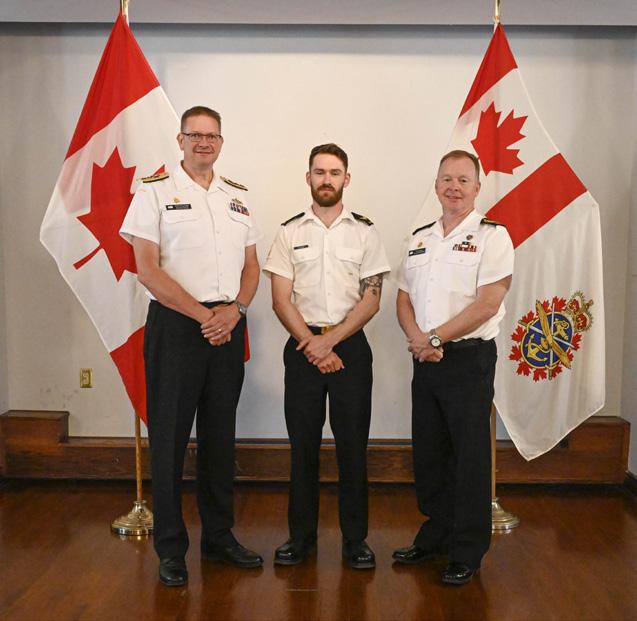
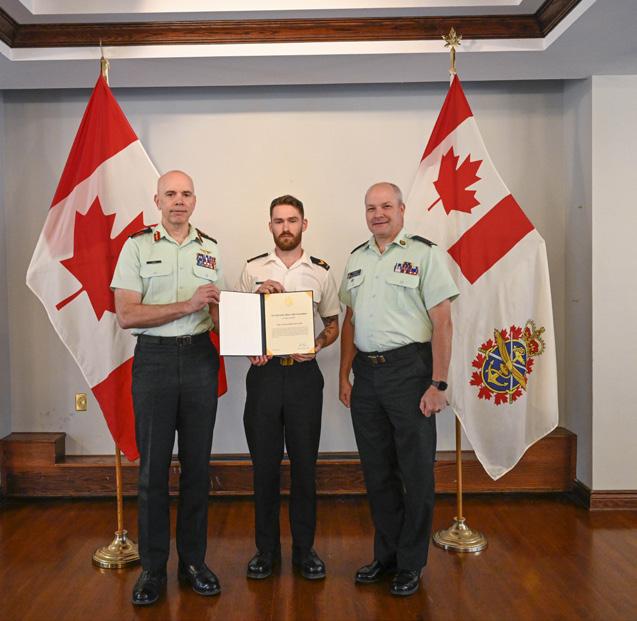
When HMCS Vancouver’s member saw his friend experiencing a health emergency in December 2021, his military training kicked in.
A year later, Sailor First Class (S1) Charles Tucker received a Chief of Defence Staff Commendation and a BC Emergency Health Services Vital Link Award for saving the life of a former classmate. S1 Tucker reposted to HMCS Calgary recently but was with Vancouver when he performed the rescue on Dec. 19, 2021, during his vacation in Kelowna.
“I don’t really see myself as a hero but am indeed humbled and honoured to receive this award,” S1 Tucker said. “I hope anyone reading my story realizes the importance of getting proper CPR training. It could save the life of your best friend, family member or even a stranger.”
S1 Tucker is a 28-year-old Naval Electronic Sensor Operator (NESOP). He was visiting the home of his former high school classmate Tasia when she collapsed.
“When I came into the room and saw her convulsing, at first I thought she was playing a practical joke; she sometimes has a morbid sense of humour,” said S1
Tucker. “I soon realized something was terribly wrong.”
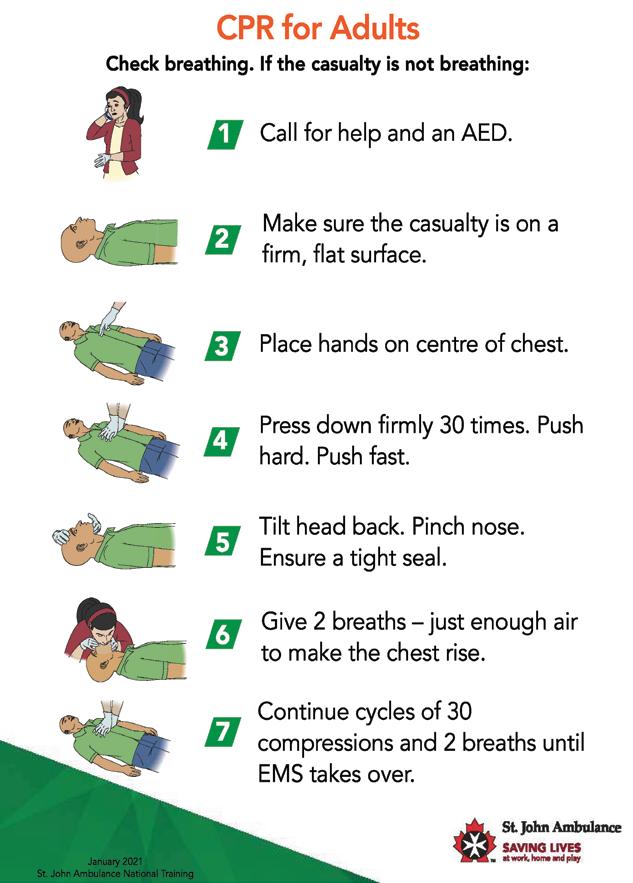
He immediately called 911, used his Canadian Armed Forces medical training, and performed CPR on Tasia with assistance from the dispatcher until the paramedics arrived and took over.
A surgeon operated on Tasia and inserted a pacemaker near her heart. S1 Tucker is happy to report she has since made a full recovery.
Tasia has since resumed her post-secondary education, while S1 Tucker said his story should be a lesson for everyone who thinks a CPR rescue will be smooth sailing.
“Do not treat the refresher lightly or as a day off; realize the utmost importance of paying attention during CPR training and give your full attention to the instruction so it sinks in,” he said. “Just like me, you may be the one performing the CPR and will need to be prepared to save your friend or loved one.”
While military members are required to have CPR Training refreshed every three years, St. John’s Ambulance offers a variety of CPR training courses here in Victoria and locations across the country, with registration available through their website: www.sja.ca/en.
The Chief Professional Conduct and Culture (CPCC) is proud to present its first ‘Real Talk: Conversation on Leadership, Teamwork, Identity, and Service’ panel discussion.
This rank- and role diverse panel drawn from the Department of National Defence (DND) and Canadian Armed Forces (CAF) shares lessons learned, perspectives and thoughts on the key attributes of operationally effective leadership and teamwork through the lens of service and identity.
CPCC’s Real Talk panels are a series of candid discussions with Defence Team members about topics that relate to the unique job we do through the lens of our organizational values. Each discussion features individuals with a broad range of operational and functional experience within DND/CAF, sharing insights and lessons learned.
Our initial broadcast will be available throughout the summer via Microsoft Stream. We encourage all members of the Defence Team to take time out of their day to click on the link and tune in: https://web.microsoftstream.com/ video/1ba08243-6fba-4f41-af1a-455365bf8fd4
REAL TALK PANEL
• Moderator: Capt Adam Orton, Host of the Army Podcast, Canadian Army
• Panellist: Master Sailor Catherine Gouthro, Naval Tactical Operations Group, MARPAC
• Panelist: Master Warrant Officer Avril Jno-BaptisteJones, Leadership Support Team, CPCC Panellist: Lieutenant-Colonel Joseph O’Donnell, Commanding Officer, 1 RCHA
• Panellist: Ms. Danielle Smith, Chief of Staff, CFB Esquimalt
We invite all who watch to offer feedback to CPCC on the Real Talk panel discussion and offer ideas for future panel topics by emailing cpcccommunications-communicationsccpc@forces.gc.ca.
850 sqft, 2 bed, 1 bath, ground-level suite
$2,300 a month (double occupancy or negotiable for single or additional occupants). Available August 1 or possibly July 15.
• Located in Strawberry Vale near VicGen Hospital & Camosun College;
• Hydro/Cable not included;
• Water, garbage and recycle included;
• Parking for one vehicle on site and more off street;
• Private side entrance.
No smoking/partying; tenancy agreement and tenancy insurance required. If interested, please email Smalltown09@yahoo.ca
Suite available for rent (Fernwood) $2,400
Large bright, clean, spacious 2 bedroom character suite in Fernwood available for August 1.

Approximately 1,000 sq. ft. main level, recently painted. Vinyl and fir flooring. Full bathroom. Shared coin-op laundry on suite with 2 other suites. Garbage, sewer, water, hydro included. Tenant pays for own heat. Street parking. Suitable for 2 people. No pets, no smoking on property.
2 bed, 2 bath, 815 sq ft condo for $2,300 / month in, "The Ovation" on the corner of Esquimalt and Admirals. On the quiet side of the building. Walk to Naden or Dockyard. Public transportation around the corner. Pets allowed, En suite laundry, one parking spot, storage locker on same floor. No smoking, must have rental insurance. Features: workout room, common area, bike lock-up cage on parking level, water, garbage, and recycling all included Unit available August 1. Contact: dmwildeman@shaw.ca

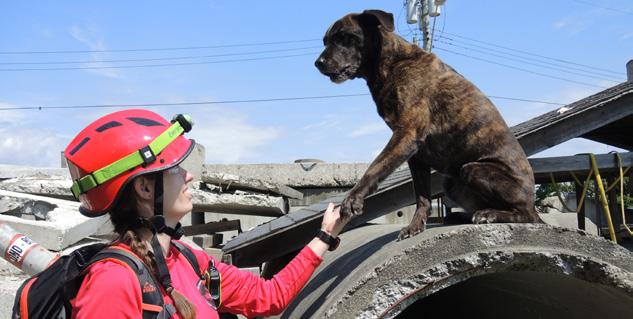
ties,” he said.
A team of internationally certified rescue dog handlers has completed their first training exercise with the Canadian Armed Forces (CAF).
Four handlers and K9s from Vancouver Island Search and Disaster Dogs Association of Canada (VISDDAC) worked with 25 members of CFB Esquimalt’s Medium Urban Search and Rescue (MUSAR) team in the weeklong exercise at Work Point at the beginning of June.
Richard Berben, a retired firefighter and VISDDAC president, says the first-ever opportunity to work alongside CAF members in such a scenario is crucial to his team’s training for a real-life disaster.
“To be imbedded with an Urban Search and Rescue team and learn how best to use the K9 resource in a training scenario provides invaluable learning opportunities,” said Berben.
The volunteer handlers and their dogs were involved in a training scenario where casualty actors were trapped in collapsed buildings following a catastrophic 7.5 earthquake. The Search and Rescue K9s use their acute olfactory sense, estimated to be 100,000 times greater than humans, to detect the presence of trapped people in the rubble.
The actors were positioned in safe locations beneath the rubble, and the dogs narrowed their sites down to a couple of feet, says Glenn Cooper, MUSAR Team Commander
“The K9s decreased the amount of effort and time required to safely extract the casual-
With the help of K9s and their handlers, MUSAR volunteers located 100 per cent of the live casualty roll players.
Cooper says VISDDAC volunteers have used his team’s Disaster Response Training site at Work Point for the past few years to gain international certification. VISDDAC volunteers were highly professional and focused during the recent training exercise, says Cooper, while also noting their integration into the training was nearly seamless and highly successful.
“These interagency exercises are very important to the Department of National Defence and our partner agencies,” said Cooper. “We will be working alongside each other when a major disaster happens so we need to be familiar with operating procedures.”
VISDDAC volunteer Jeannette Van Dijk, a Rehab Assistant for a Vancouver-based veterinarian, and her dog Phoenix, a Labrador retriever mix, says the key to freeing survivors is determining if her dog has detected the scent.
“Once Phoenix gets excited, I can help direct her to the rubble pile and get as close as possible to the hidden subjects,” said Van Dijk.
Van Dijk and the other dog handlers said their interactions with the MUSAR team and other military members during their time at the Base were very positive.
VISDDAC is looking to expand its membership, so if you are interested in learning more, Berben suggests connecting with them through their website: www.visddac.org

• MUSAR’s volunteer team consists of military personnel of varying ranks from different units at the Base. Members of the Canadian Army’s Light Urban Search and Rescue (USAR) team, the 15th Field Artillery Regiment of the 39 Canadian Brigade Group, and the 12 (Vancouver) Field Ambulance medical units also participated in the training.
VISDDAC is a member of the Austria-based International Search and Rescue Dog Organization (IRO) and is one of two teams recognized in Canada by the IRO. Based in North Saanich, the non-profit was founded in 2014 and has 12 members residing in Victoria, Vancouver, Whitehorse and Comox.
• VISDDAC’s 12 team members also include first responders, medical professionals, trades and industry workers and others. Their dogs must meet IRO standards, deploy to disasters domestically, and support and supplement United Nations International Search and Rescue Advisory Group certified teams.
• Volunteers spend countless hours training their dogs for search and rescue work domestically and abroad.





Yukon Blonde
The Naden Band
The Fabulous B Sides
The New Groovement
Mister Mojo and his Magic Band Performers
Canada’s Drag Race Performers
Kendall Gender and Vivian Vanderpuss with friends
Passion and Performance Arts Inc. dancers
Bouncy castle
Interactive games
Arts and crafts area
Balloon Twister
Face painting
Starlight Stadium in Langford AUGUST 27
1-9 pm