The NEBRASKA MUNICIPAL REVIEW (ISSN 0028–1906) is published monthly and the official publication of the League of Nebraska Municipalities, an association of the cities and villages of Nebraska, published at 1335 L St., Lincoln, Nebraska 68508. Subscription rates are $5 per single copy — $50 plus tax for 12 issues. Periodicals postage paid at Lincoln, Nebraska. Views of contributors, solicited or unsolicited, are their own and not to be construed as having the endorsement of the League unless specifically and explicitly stated by the publisher
The NEBRASKA MUNICIPAL REVIEW is a nonprofit publication administered and supervised by the League of Nebraska Municipalities. All revenue derived from the publication is used by the association to defray publication costs.
League of NE Municipalities staff 402-476-2829 • www.lonm.org
L. Lynn Rex, Executive Director Christy Abraham, Legal Counsel
Lash Chaffin, Utilities Section Director
Cherie DeFreece, Admin Assistant/ Membership Services Assistant
Brenda Henning, Membership Services Assistant/ LIGHT Admin Assistant
Ethan Nguyen, LNM/LARM Information Technology Manager
Shirley Riley, Membership Services Director
Jackson Sash, Utilities Field Representative/Training Coordinator
Ashley Wolfe, Marketing/Communications Director
LARM staff
Dave Bos, Executive Director
Tracy Juranek, Asst. Executive Director, Customer Service Specialist
Diane Becker, Communications/Marketing Director
Kyla Brockevelt, Executive Administrative Assistant
Drew Cook, Customer Service Specialist
John Hobbs, Loss Control Specialist
James Kelley, Loss Control Specialist
Fred Wiebelhaus, Loss Control/Claims Manager
POSTMASTER: SEND ADDRESS CHANGES TO NEBRASKA MUNICIPAL REVIEW, 1335 L STREET, LINCOLN, NEBRASKA 68508.
Have an idea, project or opinion to share? The League welcomes member articles, information, and op-eds.
Want to reach local decision makers? The League can help you get your message out to Nebraska’s 3,500+ municipal officials.To learn more, contact Ashley Wolfe at 402-476-2829 or ashleyw@lonm.org
President Marlin Seeman, Mayor, Aurora
President-Elect Bryan Bequette, Mayor, Nebraska City
Vice President David Black, Mayor, Papillion Past President Deb VanMatre, Former Mayor, Gibbon
Directors
Leirion Gaylor Baird Mayor, Lincoln
John W. Ewing, Jr. Mayor, Omaha
Sharon Powell Village Board President, Utica
Larry Evans Mayor, Minden
Rod Petersen Mayor, Louisville
Jim Bulkley Mayor, Columbus
Betsy Vidlak Mayor, Scottsbluff
Pat Heath City Administrator, Gering
Janine K. Schmidt CMC/Treasurer, Morrill
Kyle Svec City Admin./Utilities Supervisor, Geneva
Affiliated Sections
City Managers
Wes Blecke, Wayne Clerks Derek Bargmann, Seward
Munic. Accounting & Finance
Kellie Crowell, Ravenna Fire Chiefs Corey Schmidt, Grand Island
Utilities Gary Thurlow, Atkinson

2026 Legislative session in review
Finding the way – Grants: PlantNebraska
Nebraska Game & Parks: Nebraska’s 2026 – 2030 Statewide Comprehensive Outdoors Recreation Plan
ACE awards its 2026 Project of the Year awards
Center for Rural Affairs: Increasing solar access
21
23
MEAN presents service award to Kirby Bridge of Alliance
One-year extension granted for state and local government ADA digital accessibility compliance
USDA RD: Home repair financing available in rural communities
Numerous rural Nebraska libraries awarded funding through American Library Association program
27
Bike Walk Nebraska: Happy bike month!
The Director's Message - L. Lynn Rex, LNM Executive Director - LB 596 (incorporating League bill – LB 1145): Signed by Governor to amend the OMA
The Legal Corner by Tara Stingley, Cline Williams Wright Johnson & Oldfather, L.L.P. - Disability accommodation claims: Lessons from a municipal employer’s successful defense
John McGhehey, Mayor, Alliance
J.D. Cox, City Manager, Alliance
Tobias Tempelmeyer, City Administrator, Beatrice
Rusty Hike, Mayor, Bellevue
Jim Ristow, City Administrator, Bellevue
Mindy Rump, Mayor, Blair
Phil Green, City Administrator, Blair
David Scott, Deputy City Administrator of Operations, Blair
Tom Menke, City Manager, Chadron
Jim Bulkley, Mayor, Columbus
Tara Vasicek, City Administrator, Columbus
Dave Bauer, Mayor Crete
Tom Ourada, City Administrator, Crete
Jody Sanders, City Administrator, Fremont
Kent Ewing, Mayor, Gering
Pat Heath, City Administrator, Gering
Roger Steele, Mayor, Grand Island
Patrick Brown, City Administrator, Grand Island
Mike Evans, Mayor, Gretna
Paula Dennison, City Administrator, Gretna
Mark Funkey, City Administrator, Hastings
James Liffrig, Mayor, Holdrege
Chris Rector, City Administrator, Holdrege
Brenda Jensen, City Manager, Kearney
Brad DeMers, Asst. City Manager, Kearney
Doug Kindig, Mayor, La Vista
Kevin Pokorny, Director of Administrative Services, La Vista
John Fagot, Mayor, Lexington
Joe Pepplitsch, City Manager, Lexington
Margaret Blatchford, Assistant City Attorney, Lincoln
Riley Slezak, Senior Advisor to the Mayor, Lincoln
Linda Taylor, Mayor, McCook
Nate Schneider City Manager, McCook
Bryan Bequette, Mayor, Nebraska City
Perry Mader, City Administrator, Nebraska City
Justin Webb, Council Member, Norfolk
Scott Cordes, City Administrator, Norfolk
Brandon Kelliher, Mayor, North Platte
Layne Groseth, City Administrator, North Platte
Steve Krajewski, Mayor, Ogallala
Kevin Wilkins, City Manager, Ogallala
Thomas Warren, Chief of Staff, Omaha
David Black, Mayor, Papillion
Amber Powers, City Administrator, Papillion
R. Paul Lambert, Mayor, Plattsmouth
Emily Bausch, City Administrator, Plattsmouth
Don Groesser, Mayor, Ralston
Brian Kavanaugh, Council President, Ralston
Jack Cheloha, City Administrator, Ralston
Art Lindberg, Mayor, Schuyler
Lora Johnson, City Administrator, Schuyler
Betsy Vidlak, Mayor, Scottsbluff
Kevin Spencer, City Manager, Scottsbluff
Joshua Eickmeier, Mayor, Seward
Greg Butcher, City Administrator, Seward
Brandon Bonregard, Mayor, Sidney
Brett Kerkman, Vice-Mayor, Sidney
Lance Hedquist, City Administrator, South Sioux City
Randy Meyer, Council Member, South Sioux City
Jill Brodersen, Mayor, Wayne
Wes Blecke, City Administrator, Wayne
Barry Redfern, Mayor, York
Dr. Sue Crawford, City Administrator, York
Chaired by Tom Goulette, City Administrator of West Point
Lisa Schroedl, City Administrator/Clerk/Treasurer, Ainsworth
Jessica Quady, City Administrator, Ashland
Crystal Dunekacke City Administrator/Economic Developer, Auburn
Marlin Seeman, Mayor, Aurora
Adam Darbo, City Administrator, Aurora
Chris Anderson, City Administrator, Central City
Andrew Lee, Admin/Clerk/Treasurer, Curtis
Alan Michl Chairperson, Exeter
Becky Erdkamp, Clerk/Treasurer, Exeter
Kyle Svec, City Administrator, Geneva
Matt Smallcomb, City Administrator, Gibbon
Gary Greer, City Administrator, Gothenburg
Jana Tietjen, Clerk, Hebron
Barb Straub, Admin/Clerk/Treasurer, Hemingford
Kelly Oelke, City Administrator, Hickman
Janine K. Schmidt, CMC/Treasurer, Morrill
Sandra Schendt, Clerk/Treasurer, Nelson
David Russell, Director of Gov. Affairs, NMPP Energy
Sandy Kruml Clerk/Treasurer, Ord
Mike Feeken, Mayor, St. Paul
Sandra Foote, Council Member, Superior
Warren Myers, City Administrator, Sutton
Jessica Meyer, City Administrator, Syracuse
Kelly Adamson, City Council Member, Tekamah
Sharon Powell, Village Board President, Utica
Kyle Arganbright, Mayor, Valentine
Melissa Harrell, City Administrator, Wahoo
Desiree Soloman, City Attorney, Waterloo
Stephanie Fisher, City Administrator, Waverly
Tom Goulette, City Admin./Utility Superintendent, West Point
Randy Woldt, Utilities Superintendent, Wisner
Robert Costa, Community Planner, Yutan

(All statute citations to Revised Statutes of Nebraska)
JULY 2026
• July 1 - Chair of the Park and Recreation Commissioners must file with City Clerk an itemized statement of all expenditures of the Park and Recreation Board. (16-697)
• Between July 10 and July 30 Advertise for Class C Liquor License renewals. (53-135.01)
• Between July 15 and August 15 Job titles and salaries of employees shall be published. (19-1102)
• Prior to publication of notice of budget hearing Council prepares proposed budget statement and makes it available to the public. (13-504) *Does not apply to cities with a biennial budget that are in the second year of the biennial budget period.
• On or before August 20 County Assessor certifies to each governing body the current valuation of all property subject to the applicable levy. (13-509)
• On or before September 30 Budget Statement filed with County Clerk and State Auditor (13-508) *Does not apply to cities with a biennial budget that are in the second year of the biennial budget period.
• Within 10 working days following meeting or before next meeting (whichever is sooner) Clerk to have minutes available for public inspection. (84-1413)
• Within 15 days of passage Clerk publishes ordinances passed. (16-405)
• Within 30 days following Council meeting Clerk publishes official proceedings of meetings, including claims. (19-1102)
• Within 20 days after end of month Treasurer files monthly financial report. (16-318)
• * * Clerk must prepare agenda prior to next Council meeting. (84-1411)
• End of Each Quarter Report from Depository Banks due. (16-714)
• By July 31 Clerk files Lane Mile Report with Nebraska Department of Transportation (39-2517 and 39-2518)
• Between July 10 and July 30 Advertise for Class C Liquor License renewals. (53-135.01)
• Between July 15 and August 15 Job titles and salaries of employees shall be published. (19-1102)
• Prior to publication of notice of budget hearing Governing body prepares proposed budget statement and makes it available to the public. (13-504) *Does not apply to cities with a biennial budget that are in the second year of the biennial budget period.
• On or before August 20 County Assessor certifies to each governing body the current valuation of all property subject to the applicable levy. (13-509)
• On or before September 30 Budget statement filed with County Clerk and State Auditor. (13-508) *Does not apply to cities with a biennial budget that are in the second year of the biennial budget period.
• Within 10 working days following meeting or before next meeting (whichever is sooner) Clerk to have minutes available for public inspection. (84-1413)
• Within 15 days of Passage Clerk publishes or posts ordinances passed. (17-613)
• Within 30 days following Council meeting Clerk publishes official proceedings of meeting including claims. (19-1102)
• Within 20 days after end of month Treasurer files monthly financial report. (17-606)
• * * Clerk must prepare agenda prior to next Council or Board meeting. (84-1411)
• By July 31Clerk files Lane Mile Report with Nebraska Department of Transportation (39-2517 and 39-2518)




Signed by Governor to amend the
Meetings
how political subdivisions provided ‘reasonable advance publicized notice’ of public meetings for 45 years, from 1975 until passage of LB 148 in 2020
BY L. LYNN REX, EXECUTIVE DIRECTOR, LNM
Thanks to Sen. Dan Lonowski of Hastings for introducing LB 1145 at the request of the League, Nebraska Association of County Officials (NACO), and Nebraska Association of School Boards (NASB). Thanks to Bellevue Sen. Rita Sanders, Chair of the Government, Military, and Veterans Affairs Committee, and Omaha Sen. Bob Andersen who were cosponsors of LB 1145. The Government Committee incorporated the provisions of LB 1145 into its Standing Committee Amendment to LB 596, a Committee Priority Bill introduced by Sen. Sanders. Provisions of several other bills also were incorporated into LB 596. LB 596 (as amended by the Committee Amendment) was adopted on General File and subsequently passed on Final Reading 46-3 on April 10. The Governor signed the bill April 14. LB 596 will take effect July 18, 2026. LB 596 amends Section 84-1412 to delete the word “posted” from the ongoing requirement that at least one current copy of the Open Meetings Act be “in the meeting room at a location accessible to members of the public.” After July 18, 2026, at least one current copy of the Open Meetings Act can be placed on a table in the meeting room accessible to citizens; although a copy can be “posted” on the wall, it no longer will be required. (Consequently, the League will discontinue providing posters of the Open Meetings Act. Before
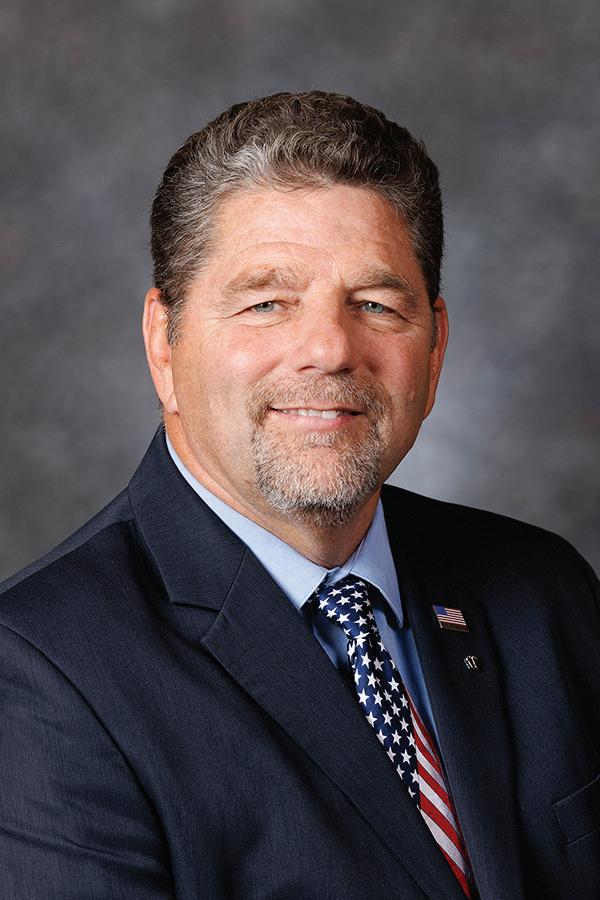
Sen. Dan Lonowski District 33
LB 596 takes effect on July 18, the League will email members the most current copy of the Open Meetings Act. It is sufficient, and likely more convenient, for citizens attending public meetings to review the Open Meetings Act on a table.) Although LB 596 requires at least one current copy of the Act, the League recommends having two or three copies available in the meeting room.
LB 596 also amends Section 84-1411 of the Open Meetings Act to require public bodies subject to the Act to provide “reasonable advance publicized notice of the time and place of each meeting by a method designated by each public body and recorded in its minutes,” as political subdivisions did before passage of LB 148 in 2020. Before passage of LB 148 in 2020, some political subdivisions published notice in a newspaper of general circulation within their jurisdiction, but most posted notice in three public places. LB 148 in 2020 changed notice requirements for political subdivisions but did not change the requirements for providing reasonable advance publicized notice for other public bodies subject to the Act. Pursuant to the provisions of LB 148 in 2020, cities of the second class and villages were the ONLY political subdivisions which could continue solely providing written notice by posting “in three conspicuous public places in such city, village, or district” in the same three places for each meeting. In 2024, the Legislature passed LB 287 (incorporating LB 47,
introduced by Sen. Myron Dorn) to also allow rural and suburban fire protection districts to only provide written notice by posting in three public places for each meeting.
In 2026, after passage of LB 596, ALL political subdivisions again have the choice of whether to post notice, publish notice in a newspaper of general circulation, place notice on the political subdivision’s website, or any combination of the three. Each public body still is required to record the methods and dates of such notice in its minutes. Due to passage of LB 596, municipalities (and other political subdivisions) need to update their ordinance (or formal resolution) on how they will provide “reasonable advance publicized notice of the time and place of each meeting.”
In addition to providing “reasonable advance publicized notice,” the bill states that notice provided by political subdivisions also shall be given at least FOUR times a year of the regular meeting schedule, location, and the method designated by the public body to provide reasonable advance publicized notice. Such notice shall be given by publication in a legal newspaper of general circulation within the public body’s jurisdiction. (There is no statutory requirement on when these four publications must occur during the year.) This publication requirement does “not apply in the case of the governing body of a city of the second class or village, any advisory committee of such governing body, the governing body of a rural or suburban fire protection district, or any public body that only meets intermittently and is not required to hold regular meetings.”
LB 596 also provides a safe harbor provision by outlining procedures for a public body that decides to publish notice in a newspaper of general circulation within the public body’s jurisdiction to meet the notice requirement in case of refusal, neglect, or inability of the newspaper to publish notice: “the public body shall (i) post such notice on its website, if available, (ii) request the newspaper submit a post on a statewide website, if available, established and maintained as a repository for such notices by a majority of Nebraska newspapers, and (iii) post such notice in a conspicuous public place in such public body’s jurisdiction. The public body shall keep a written record of such posting… and a written record of the request to the newspaper…. The record of such posting shall be evidence that such
posting was done as required and shall be sufficient to fulfill the requirement of publication.”
Finally, LB 596 modernizes how legal notices are given, authorizing digital news publication as an alternative to newspaper notices. LB 596 defines “digital newspaper” and “E-edition” providing that “E-editions” of legal newspapers are considered legal newspapers under certain circumstances. LB 596 also provides for the use of “digital newspapers” for public bodies to give public notice under the Open Meetings Act when no print edition or “E-edition” of a legal newspaper is published.
Section 84-1414 provides serious consequences for a public body that violates the Act: “Any motion, resolution, rule, regulation, ordinance, or formal action of a public body made or taken in violation of the Open Meetings Act shall be declared void by the district court if the suit is commenced within one hundred twenty days of the meeting of the public body at which the alleged violation occurred. Any motion, resolution, rule, regulation, ordinance, or formal action of a public body made or taken in substantial violation of the Open Meetings Act shall be voidable by the district court if the suit is commenced more than one hundred twenty days after but within one year of the meeting of the public body in which the alleged violation occurred. A suit to void any final action shall be commenced within one year of the action.” (There also are consequences for a member of a public body “who knowingly violates or conspires to violate or who attends or remains at a meeting knowing that the public body is in violation of any provision of the Open Meetings…”)
BY DARYL BOHAC, CHAIR, NE SEMIQUINCENTENNIAL COMMISSION
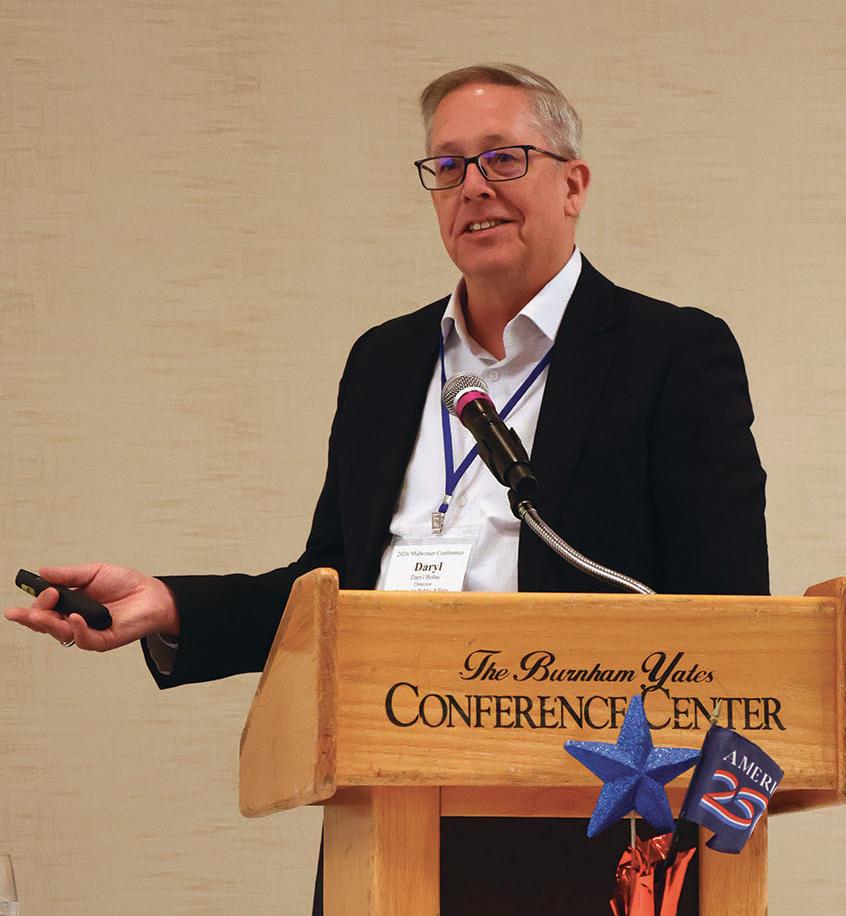
While Nebraska was not a state, or even a territory, when our nation was born with the signing of the Declaration of Independence on July 4, 1776, it has certainly played a notable role in our nation’s history since then. In light of that history, the Nebraska Legislature established the Semiquincentennial Commission in 2021 and declared that the 17-member commission shall be housed with the Nebraska State Historical Society for administrative and budgetary purposes and that the Director of the Nebraska State Historical Society shall serve as the chairperson. It was also the intent of the Legislature for the commission to include members from all regions of the state, representing all major interests and a diverse array of industries.
As the commission formed, it focused on being the point of contact for state and national organizations and events related to the Semiquincentennial celebration of the United States. In embracing that role, the Commission works to connect Nebraskans to resources and events celebrating America’s 250th birthday in 2026 and has established a website at america250. nebraska.gov featuring educational programs, community celebrations, volunteer opportunities, and national initiatives, which serves as a hub for finding, sharing, and participating in this once-in-a-generation celebration across the state and nationwide. Together, we’re working to make sure every Nebraskan has a chance to be part of this historic milestone. There are now over 130 events listed on the website, with 34 of 93 counties represented. We continue to reach out to the counties, chambers of commerce, visitor centers, and tribal contacts, asking them to submit their event information through the website at https://america250.nebraska.gov/submit-an-event/.
In addition to the website, the Commission took on the task of selecting items from Nebraska to be placed in America’s Time Capsule, which will be buried in Philadelphia at the Independence Mall on July 4, 2026, and is to remain sealed for 250 years until 2276 as a record of the nation at its

250th anniversary. We had the option of a single sheet of paper or selecting items that would fit into a 5”x 6”x 2” archival box. We opted to use the box and provided 22 prints and narratives of our state, including Chimney Rock, images of our second and third State Capitol Buildings, the Crazy Horse Monument at Fort Robinson, the Omaha Stockyards, Lake McConaughy, and others. We sent a 4” set of Vise-Grip locking pliers representing the ingenuity and innovation that was required to be successful in our state. The Coinery in Lincoln, Nebraska, generously donated a set of the 2006 Commemorative Nebraska Quarter featuring Chimney Rock and an America the Beautiful Quarters Three Coin Set featuring the Homestead National Monument. Finally, a copy of Jewel Rodgers poem, Nebraska’s State Poet, titled, A Home of Our Hands, was also included. Jewel’s recitation of the poem can be viewed courtesy of the Nebraska Arts Council America 250 and I-80 Sculpture Project kick-off video at https://youtu.be/jYYMNdv7W7c?si=D2i3PfLzwi6ooRc1 at around the 6-minute mark.
While there will be many events on or around the 4th of July across Nebraska, the featured events will be at Seward, Nebraska’s 4th of July City, where many of their activities will be focused on America’s Semiquincentennial celebration. Among those will be a Chautauqua event featuring the Faces of Rushmore with re-enactors representing George Washington, Thomas Jefferson, Theodore Roosevelt, and Abraham Lincoln on July 3 at 10 AM, followed by a First Ladies Tea at 2 PM at the Nebraska National Guard Museum.
But you don’t have to wait until the 4th of July to participate in what is meant to be a year-long celebration. The Nebraska Sports Council and the Nebraska Game and Parks Commission have a 250 Challenge to get us all out exploring Nebraska and engaging in activities to keep us healthy and moving.
The Semiquincentennial Commission sponsored the Signers of the Declaration of Independence Exhibit at the State Capitol, which is free and available during public access hours until the end of August. The Nebraska Arts Council will have a series of events across Nebraska celebrating 50 years of Nebraska’s 500-mile Sculpture Garden, an enduring set of sculptures at rest areas across the state and likely the only remaining public art project in America from the 1976 Bicentennial Celebration. The Nebraska History Museum will open to the public an America 250 exhibit titled “Our Nebraska” on June 30, celebrating Nebraska’s contributions to our nation’s history and those who made it happen. From Albion to Aurora, Ralson to Rising City, Norfolk to Nebraska City, Chadron to Columbus, and from Ogallala to Omaha, there will be activities for all ages and walks of life to experience in 2026. As our friends at Visit Nebraska put it, Let’s Party Like it’s 1776 – we have a lot to celebrate.

D.A. Davidson & Co. is a trusted financial services firm with deep roots in Nebraska, partnering with cities and villages across the state to deliver meaningful results. From infrastructure improvements to economic growth initiatives, we help communities flourish. Our client-focused approach ensures every solution is tailored, every relationship valued, and every project designed to make a difference.
GRIEGER | (402) 392-7986 | pgrieger@dadco.com
WICKHAM | (402) 392-7989 | cwickham@dadco.com
FORNEY | (402) 392-7988 | aforney@dadco.com

BY CHRISTY ABRAHAM, LEGAL COUNSEL, LNM
The Nebraska Legislature adjourned sine die on April 17, 2026. The 2027 session is scheduled to begin on January 6, 2027.
During the 2026 session, 547 bills were introduced. There were 715 bills introduced during the first session for a combined total of 1262 bills for the 109th legislative biennium. An additional 42 “A” bills (appropriations bills) were introduced this session. One hundred sixty bills were approved by the Governor in 2026. The Governor vetoed five bills (LBs 839, 878, 929, 1029 and 1256) and the Legislature did not override any of them. One bill, LB 1237, became law without the Governor’s signature.
This article lists some of the bills enacted by the Legislature that may be of interest to municipal officials.
Hundreds of bills were introduced in the 2026 legislative session that the League of Nebraska Municipalities supported, opposed, or monitored according to prior directives or policies of the League Executive Board. The bills that the League Executive Board directed to be introduced on behalf of the League and the bills that the Board voted to support are marked with a [League]. The Executive Board met before the 2026 legislative session to review recommendations of the League Larger and Smaller Cities Legislative Committees and met during the legislative session.
Legislation enacted in 2026 becomes effective three calendar months after the end of the legislative session unless the bill has an emergency clause or a different operative date. Unless otherwise noted, bills enacted in the 2026 legislative session take effect July 18, 2026.
Copies of the bills can be found on the Legislature’s website at http://nebraskalegislature.gov/.
Introduced by Sen. Moser
Introduced by Sen. Lippincott
Introduced by Sen. Sanders

Introduced by Sen. Brandt
Amends the Nebraska Workers’ Compensation Act to remove the requirement that employers subject to the Act have a safety committee.
Allows cities and villages that own and operate natural gas distribution systems to sell discounted gas contracts to some limited large natural gas customers outside of the normal natural gas territory of the city or village before January 1, 2027.
Modernizes and updates the Open Meetings Act including how legal notices are given and authorizes digital news publication as an alternative to newspaper notices. The Standing Committee Amendment included the provisions of several bills including LB 1145 [League] With the amendment, the bill requires public bodies subject to the Open Meetings Act to provide “reasonable advance publicized notice of the time and place of each meeting by a method designated by each public body and recorded in its minutes.” Political subdivisions, not including cities of the second class and villages, are also required to publish notice in a legal newspaper at least four times a year of the regular meeting schedule, location, and the method designated by the public body to provide reasonable advance publicized notice. The bill provides a safe harbor provision in case of refusal, neglect, or inability of the newspaper to publish notice if a public body decides to publish notice in a newspaper to meet the notice requirements. Finally, the bill deletes the word “posted” from the requirement that at least one copy of the Open Meetings Act be accessible at public meetings to members of the public. Finally, the penalty provisions for municipal clerks and treasurers for failing to issue certain reports or publications is repealed.
Transfers most regulatory duties related to swimming pools, recreation camps, and mobile home parks from the Nebraska Department of Water, Energy and Environment (NDWEE) to local governments including counties, municipalities, and local public health departments that have jurisdiction over these facilities. LB 759 authorizes NDWEE to start charging both permit application fees and annual fees on wastewater treatment facility National Pollutant Discharge Elimination System (NPDES) permits, stormwater NPDES permits, and pretreatment NPDES permits. Also, well registration fees are increased.
Introduced by Sen. Dover
LB 778
Introduced by Sen. Dungan
Introduced by Sen. Hallstrom
Restructures the management of Nebraska’s housing and investment programs by expanding the authority of the Nebraska Investment Finance Authority. Under the Rural Workforce Housing Investment Act, the definition relating to the cost of workforce housing is increased and grants will continue to be awarded through fiscal year 2031-32 if funds are available. LB 768 also narrows the definition of state building regarding the energy code and plan reviews to exclude certain buildings constructed and repaired using state funds.
Amends the Civic and Community Center Financing Act to provide that from July 1, 2027, to June 30, 2028, the Nebraska Department of Economic Development will give preference to any municipality that is partnered with a certified creative district when awarding grants from this program.
Reduces the number of continuing education hours from 32 to 24 per year for law enforcement officers employed by an agency with less than 25 full-time law enforcement officers. (Provisions are operative on January 1, 2027.)
Introduced by the Urban Affairs Committee

Introduced by the Urban Affairs Committee
Introduced by the Revenue Committee
Increases the minimum bidding amount requirements for cities of the first class, cities of the second class, and villages. Under LB 797, advertisements for bids are required for any contract costing over $90,000 for enlargement or general improvements. The previous bid threshold was $30,000. The bill also raises the minimum bid for municipal electric utilities entering into contracts for the enlargement or improvement of the electric system without needing to advertise for bids. Also, the bill increases in tiered amounts the minimum bidding amount for municipal electric utilities depending on the amount of retail sales by the electric utility. [League]
Contains two League-supported proposals. First, the bill allows a city of the second class to elect council members by ward or by large. Secondly, the bill allows cities of the second class and villages to have three-member planning commissions. [League]
Contains the provisions of several bills of interest to municipalities including: LB 1154 [League] amends the Property Tax Growth Limitation Act to change the calculation of a political subdivision’s unused property tax request authority; LB 1116 allows cities of the second class and villages to use funds under the Sports Arena Facility Financing Assistance Act (SAFFAA) for 10 years, up from five years. The bill changes certain provisions about review and approval of applications by the SAFFAA board, including the change that all actions of the board will be determined by a majority vote of the board members present at the meeting and that the Governor no longer has to be one of the members voting in approval; and LB 575 repeals the Property Tax Request Act and replaces it with a new process. The bill outlines the requirements for a notice created by the county that is delivered to property owners on or before June 1 regarding the assessed value of real property not exempt from taxation. The notice also includes the time and place of the first budget hearings for each city (not villages), county, and school district in that county. Every city, county, and school district levying a property tax will participate in a joint public hearing which is held on or after July 1 and prior to July 15. Each political subdivision designates one representative to attend the joint public hearing on its behalf and at least one voting member of the governing body of each political subdivision also needs to attend. During the hearing, the designated representative will give a brief presentation on their budget process as outlined in the bill. LB 575 also makes changes to the process when a political subdivision (including cities and villages) wants to set its property tax request at an amount that exceeds its property tax request in the prior year, requiring a two-thirds majority vote of the governing body, except for seven-member boards which requires a four-sevenths majority vote. (Provisions of LB 1116 took effect on April 16, 2026; Provisions of LB 575 are operative on January 1, 2027.)
Introduced by the Retirement Systems Committee
Introduced by Sen. Jacobson
Renames the Police Officers Retirement Act to the Cities of the First Class Police Officers Retirement Act.
Expands laws relating to financial exploitation of vulnerable or senior adults. Included in the Standing Committee Amendment is LB 837 that contains provisions providing a framework for businesses, including municipalities, to round cash transactions to the nearest nickel because of the elimination of the penny. Under the bill, cash transactions are impacted but not digital or non-cash payment methods. If the final digit of the transaction ends in 1, 2, 6, or 7, the amount is rounded down to the nearest multiple of five cents. If the final digit of the transaction ends in 3, 4, 8, or 9, the amount is rounded up to the nearest multiple of five cents. For transactions totaling only 1 or 2 cents, the amount shall be rounded up to 5 cents. (Provisions of LB 837 took effect on April 14, 2026.)
LB 883
Introduced by Sen. Andersen
LB 912
Introduced by Sen. Hardin

LB 935
Introduced by Sen. Bosn
LB 972
Introduced by Sen. Fredrickson
Introduced by Sen. Brandt
LB 1067
Introduced by Sen. Hallstrom
Introduced by Speaker Arch at the request of the Governor
LB 1075
Introduced by Sen. Sanders
Changes provisions relating to the Civic and Community Center Financing Act and the Revitalize Rural Nebraska Grant Program regarding demolition and duties of the State Historic Preservation Officer regarding grants for substandard and abandoned property.
Includes the provisions of LB 891 that prohibit political subdivisions, including municipalities, from instituting residency requirements for a family childcare home. Municipalities may regulate business use relating to outside appearance, nuisances, or public health and safety of these homes.
Allows a political subdivision, including municipalities, to request attorney fees and court costs when it defends a claim that is frivolous or intended primarily to harass the political subdivision or its public officials. [League]
Includes the provisions from the Department of Motor Vehicles (DMV) cleanup bill. LB 972 was amended to include LB 1005 that allows municipalities to adopt an ordinance to authorize the operation of all-terrain vehicles and utility-type vehicles between sunset and sunrise if they meet certain conditions.
Provides for the Power Review Board’s approval authority over stand-alone energy storage resources and requires written consent of the impacted electric supplier prior to construction. The bill requires a private electric supplier to enter into a joint transmission development agreement with a public power entity and to maintain a contractual agreement with a public power entity for the output of the privately owned energy storage resource.
Increases the documentary stamp tax to $3.32 until January 1, 2032. The one dollar ($1.00) increase in the documentary stamp tax is split between the Rural Workforce Housing Investment Fund and the Middle-Income Workforce Housing Investment Fund.
Amends provisions relating to the Municipal Equalization Fund (MEF). The bill provides that the 3% collection fee of local option sales tax that funds MEF is reduced to 1.05%, while 1.95% is credited to the Department of Revenue Enforcement Fund, likely causing a reduction of MEF funds to municipalities. (Provisions took effect on April 7, 2026.)
Provides that every year at the reorganization meeting in December, or as soon as reasonably possible, the village board needs to pass a resolution authorizing the village clerk to prepare claims and issue warrants for the village if vacancies exist for more than one-half of the members of the board. After the vacancies have been filled, the village board needs to review any claims and warrants issued during the period when the village clerk exercised this authority. Amended into this bill are provisions of LB 969 requiring the Department of Administrative Services to develop and maintain a database of financial information about all counties, cities, and villages in the state before January 1, 2027. (Provisions of LB 969 are operative on July 18, 2026; Provisions relating to village clerks took effect April 15, 2026.)
LB 1096
Introduced by Sen. Bostar
Introduced by Sen. Clouse
Expands the type of public records that may be withheld from the public to include critical water infrastructure and critical telecommunications and broadband infrastructure.
Modernizes public bidding laws for entities formed under the Interlocal Cooperation Act that generate electricity as well as public power districts. The bill raises the public bid threshold for certain joint public entities that generate electricity to mirror the bidding thresholds for public power districts. The bill also lowers the publication requirements for joint public entities that generate electricity and public power districts to one publication in a legal newspaper. [League]
Introduced by the Urban Affairs Committee

LB 1126
Introduced by Sen.Moser
LB 1135
Introduced by the Urban Affairs Committee
Reduces the number of years a structure or vacant lot needs to be within the corporate limits of the municipality from 60 to 25 years for the property to be eligible for micro-TIF. The Standing Committee Amendment included the provisions of the following bills: LB 850 amends the Local Option Municipal Economic Development Act (also known as the LB 840 statutes) to allow Omaha and Lincoln to use LB 840 funds for the purpose of constructing or rehabilitating certain housing. LB 915 increases the number of inland port authority districts that may be created under the Municipal Inland Port Authority Act from five to eight. Additional provisions provide for real or personal property subject to a lease agreement of an inland port authority to be exempt from property taxation. LB 976 changes provisions relating to the elections of sanitary and improvement district (SID) trustees and requires SID construction contracts with expenses over $50,000 be let to the lowest responsible bidder. LB 981 gives the Omaha City Council the authority to regulate the Omaha Housing Authority with respect to code enforcement, complaint-based inspections, setting penalties for code violations, and requiring monthly updates to the Omaha City Council. LB 1130 creates the Community Improvement District Act (Act) that allows property owners to voluntarily form Community Improvement Districts (CIDs). CIDs can finance, construct, and maintain public infrastructure and amenities within city or village limits. The Act includes several requirements for municipalities when a CID is created, including requirements that municipalities approve the formation of a CID, use of eminent domain, installation of public infrastructure, use of special assessments, and changes to increase or decrease the CID territory. CIDs may levy a property tax up to the maximum levy rate specified in the ordinance passed by the city council or village board in which the CID is located, but the levy is not included in the maximum levy rates for cities and villages. LB 1114 also includes the provisions of two additional bills: LB 1129 expands tax-increment financing (TIF) eligibility to include underdeveloped parcels that have been in extraterritorial zoning jurisdictions for over 25 years and adjusts the criteria for extremely blighted areas by lowering the unemployment and poverty thresholds; and LB 1152 creates the New Taxpayer Recruitment Grant Act. Under the Act, cities or nonprofits can apply to the Department of Economic Development for a grant to incentivize households to relocate from locations outside of Nebraska to municipalities in Nebraska. (Provisions of LB 1130 took effect on April 16, 2026.) [League]
Creates a state infrastructure bank, known as the Infrastructure Development Investment Program, to provide financing to eligible transportation projects of political subdivisions and other eligible entities as defined in the bill. The bill also modernizes alternative delivery contracting requirements as previously authorized by the Legislature.
Makes several changes to the land bank laws, including allowing people to serve on the land bank board who live three miles outside of the corporate boundaries of the municipality. It also gives additional flexibility to land banks on the issue of board member expertise, providing that voting board members must have expertise in the fields relevant to land bank operations, instead of the more specific qualifications previously in law. Standalone land banks are still required to have specific members of the board, if such individuals can reasonably be found. The Omaha Land Bank has an additional requirement that at least one land bank board member reside in a certain city council district. The bill expands the criteria for land banks to hold property for nonprofits, eases the reporting requirements for land banks, and expands when the land bank can acquire commercial properties. The Standing Committee Amendment includes the provisions of several additional bills: LB 799 creates the Services Contract Reporting Act, which requires Omaha, counties with populations over 500,000, and certain state agencies to annually report service contracts awarded during the prior fiscal year. Failure to comply results in suspension of state aid until the required report is submitted. LB 842 allows cities of the first class, cities of the second class, and villages to enter into contracts or agreements with private entities or other political subdivisions for parking operations, including enforcement service. LB 1163 provides clarifying language to ensure that liens are properly placed on properties with delinquent property assessed clean energy (PACE) loans. (More on the next page)
Introduced by the Urban Affairs Committee
Introduced by Sen. von Gillern
(continued from the previous page) Includes the provisions of LB 1168 that amends the Community Development Law to authorize a community redevelopment authority to issue conduit revenue bonds on behalf of a private investor under which the authority’s liability for repayment is limited to the ad valorem taxes generated by the project area. The provisions of two additional bills were added to LB 1135: LB 811 [League] provides that every municipality is allowed to create a standalone landbank. Additionally, landbanks, other than land banks in Omaha and Lincoln, are required to advertise the availability of residential properties as prescribed and given authority to include certain provisions in a contract to reacquire the property; and LB 1250 authorizes cities and villages to sell or transfer waterworks, sewer systems, or water systems owned by the city or village to Indian tribes, if the city or village is operating entirely within tribal lands and the tribal headquarters are in the city or village. (Provisions of LB 1163 took effect on April 14, 2026.) [League]
Adopts the Grow the Good Life Act that provides incentives to encourage large in-state employers to retain workforce and their headquarters in the state. Under the bill, the employer is required to meet certain performance criteria and failure to meet these performance standards will result in a recapture of past credits with penalties. The Standing Committee Amendment includes the provisions of LB 1192 that redefines eligible facility under the Convention Center Facility Financing Act to allow facilities located in Lincoln with seating capacities larger than 16,000 to be eligible for assistance. Also included in LB 1165 are the provisions of LB 806 that allows cities of the first class to apply for a grant or loans not to exceed $2.5 million a year through the Site and Building Development Act to prepare for industrial development. The city must have a population of less than 50,000 inhabitants and have been impacted by a sudden private-sector entity closure. (Provisions of this bill, other than LB 1192, took effect on April 16, 2026.)
Introduced by the General Affairs Committee
Introduced by Sen. DeKay
Reorganizes the Nebraska Medical Cannabis Regulation Act. The Standing Committee Amendment to the bill includes the provisions of two bills of interest to municipalities. LB 1085 requires the Liquor Control Commission to consider whether an applicant is delinquent in paying taxes when determining licensure. LB 1128 makes changes to entertainment districts by creating a consumption-only entertainment district license. Under these provisions, a local governing body may designate areas within an entertainment district where alcohol can be consumed but not sold.
Allows and clarifies the authority of a private entity to own a privately-owned electric generation facility that is constructed to provide electricity to an industrial customer at a single site if the customer is projected to require a load greater than one gigawatt. The bill outlines several conditions that must be met to allow this type of facility.
Much of the work of the Legislature and the League staff during 2026 was spent “playing defense” on issues such as a rebuttable presumption for firefighters on workers’ compensation cancer benefits and additional property tax caps.
Before the Legislature reconvenes in January 2027, the League will be working on various interim studies that have been introduced and referred to legislative standing committees. Some of the topics include substandard and blight designations, inland port authorities, building codes, shortage of affordable housing, strategies for municipalities to attract young people to the state, countywide local option sales tax, and the Municipal Equalization Fund.
The League’s most effective and important lobbyists are municipal officials, elected and appointed. Thanks once again to all the municipal officials who came to the Capitol to testify and reached out to their Senator(s) to discuss issues vital to municipalities. It is working in partnership with our municipal officials that legislative victories are won. The League is ever grateful to municipalities for their time and commitment to these issues.

The League Insurance Government Health Team (LIGHT) helps hundreds of its members throughout Nebraska obtain affordable health insurance coverage.
With seven plan options and three networks to choose from, you’re sure to find one that meets your group’s coverage and benefit needs.
Offering your employees much-needed protection against the high cost of medical care:
• Three PPO options
• Four HSA-eligible high deductible options
• Prescription drug coverage
Single: Covers the employee only
Employee and spouse: Covers the employee and their spouse
Employee and children: Covers the employee and their eligible dependent children, but does not provide coverage for the spouse
Family: Covers the employee and eligible dependents including a spouse
RECEIVE DEDUCTIBLE AND OUT-OF-POCKET CREDIT FROM YOUR CURRENT VALID GROUP PLAN WHEN YOU SWITCH!
With several networks available, you have easy access to quality providers:
• NEtwork BLUE (Statewide)
• Premier Select BlueChoice (Regional)
• Blueprint Health (Regional)
• Out-of-state network availability
Contact your current local Agent/Broker Or contact
Dennis Maggart
Executive Vice President P: 913-378-9841 or 816-718-0335
Dennis@McInnesGroup.com
Jane Limbach
Account Man ager P: 913-378-9840
Jane@McInnesGroup.com
So many people within municipalities and municipal government have great ideas–but we often run into issues with funding and finding the resources to get the idea done. This is the second part of a threepart series highlighting organizations offering grants and funding opportunities for municipalities.
BY MICHELLE DeRUSHA, COMMUNICATIONS & EVENTS COORDINATOR, PLANTNEBRASKA


Green spaces aren’t a luxury — they’re essential infrastructure for healthy, thriving communities. Trees and plants improve air quality, absorb stormwater, cool cities and towns, support biodiversity and create spaces where people want to live, work, and gather. Research also links green spaces to lower crime rates, energy savings, and improved physical and mental health. Yet many of Nebraska’s community forests are struggling. In fact, Nebraska currently leads the nation in tree canopy loss, and green infrastructure is often one of the first things cut from municipal budgets. That’s where PlantNebraska’s Greener Towns and Trees for Nebraska Towns grants can make a difference, helping communities create gardens, plant trees, and expand green spaces through funding, resources, and education.
“Green spaces are just as important to healthy communities as roads, buildings, businesses, and the electrical grid, but funding for them often gets cut. These grants help close that gap.”

It was all hands on deck — 250 pairs of hands, to be exact — when students, staff, and volunteers at Rose Hill Elementary School transformed a former blacktop area into a shade garden filled with more than 100 plants, including coral bells, hostas, and dogwood shrubs.
The project was funded, in part, through a PlantNebraska Greener Towns grant, with additional support from the Country Club Historic District, the Mahzy Project, and Fager Excavating.
“We wanted the front of the school to reflect the beauty of the education happening inside,” said PTO Treasurer Anna Wastell. “It’s also been a great learning opportunity with students helping to plant and learning about the garden in classes.”

Wastell said the partnership was especially meaningful for the school community.

“Rose Hill is located in a low-income area, so fundraising can be challenging,” she said. “PlantNebraska provided the funding, plants, and labor to help make this project possible. It’s been a wonderful partnership.”
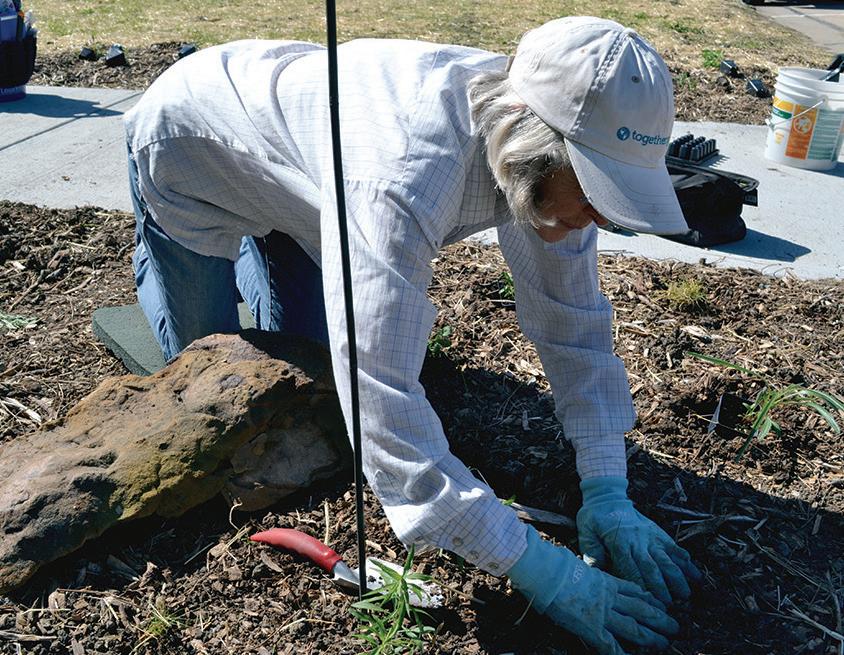
A small but determined group of volunteers recently transitioned the turfgrass lawn in front of the Denton Community Historical Society into a prairie-inspired landscape featuring native perennials, grasses, and trees, including bur oak and catalpa. Funded through a Greener Towns grant, the project also includes a natural lawn

mix of clover, yarrow, and fescue designed to reduce long-term water use and maintenance.
“We wanted the landscape to reflect the history of this place before settlement, when this area was prairie,” said lead volunteer Jane Reinkordt.
The Historical Society planting was designed to complement another Greener Towns project across the street at the Denton Community Center.

“This grant helped us tremendously, especially through the expertise of the PlantNebraska staff,” Reinkordt said. “We hadn’t even considered trees in the design, and now the bur oak is my favorite part of the landscape.”
Continued on page 30 / See Grants
BY AMELIA BAKER, OUTDOOR RECREATION PLANNER, NEBRASKA GAME AND PARKS
As of February 2026, the National Park Service approved Nebraska’s SCORP, and it is now available online and in print. The plan is updated every five years and continues to be our state’s guide to the development, improvement, renovation, and acquisition of land for outdoor recreation across our state. The plan is also a federal requirement for the state to receive outdoor recreation funding from the Land and Water Conservation Fund.

While developing SCORP, input was gathered from Nebraskans about the outdoor recreation activities
they enjoy, as well as what developments they would benefit from in the future. If this is your first time encountering SCORP, be sure to start with the Introduction. This section gives background of the SCORP and the LWCF grant program. This base knowledge will help everything else make sense. SCORP is our resource to assist the state, Natural Resources Districts, counties, local communities, and outdoor recreation advocates in outdoor recreation planning and development. Whether you are someone curious about outdoor recreation in Nebraska or a community leader planning for outdoor recreation development, there are resources in SCORP for you! To
The RTP grant application is now open! RTP is part of a federal grant program that provides funding to develop and maintain recreational trails or to purchase, lease, or rent equipment for trails for a variety of activities, such as walking, biking, horseback riding and off-road vehicle use. RTP supports accessibility, trail construction and maintenance, signage, and training and education.
The application can be accessed by visiting OutdoorNebraska.gov and searching “RTP.”
RTP Grant application window
Since the grant application just opened, we wanted to provide some helpful tips for successful grant writing.
• Start early – Read and review all the information available related to the grant for requirements and eligibility.
• Involve your community – Public engagement throughout the planning process indicates strong community commitment. This is essential for a successful application!
• Tell your story – Tell the story of your project, including the process that led to its inspiration and the intended impact on your community.
• Get feedback – Have someone review your application prior to submitting it. A second set of eyes is always helpful.
These tips and more are explained further in SCORP on Page 29.
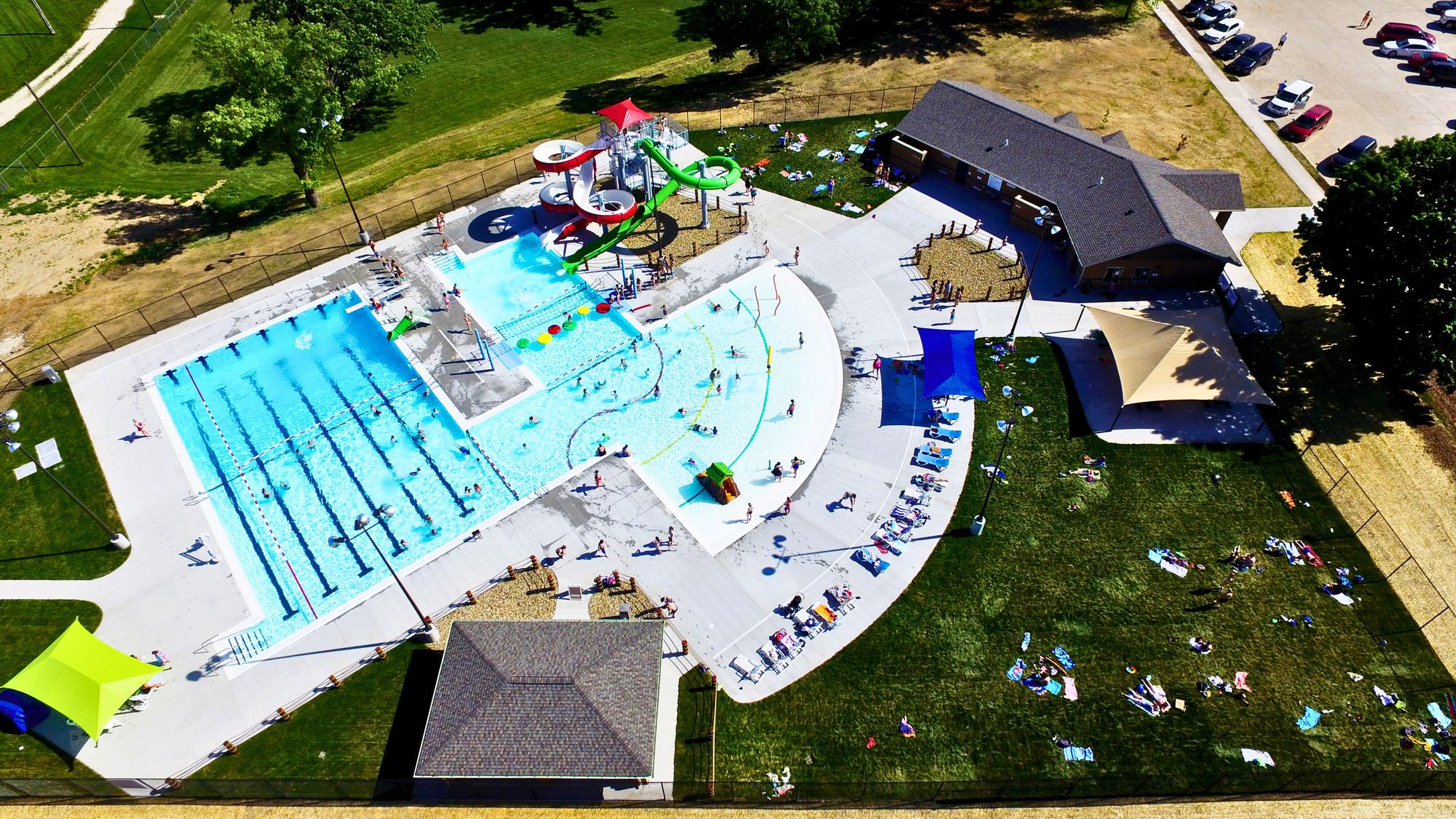
LWCF is a federal program that supports outdoor recreation in Nebraska by providing funding to eligible state and local government entities for acquiring, developing, and renovating parks, recreation areas, and public lands. This grant helps fund urban projects such as playgrounds, sports fields, and aquatic centers. It also supports activities like hiking, camping, fishing, and wildlife viewing, and ensures the ongoing preservation of green spaces for activities such as birdwatching, trail running, and outdoor play.
Opens:
Grant application window
3,
Continued on page 22 / See Game & Parks
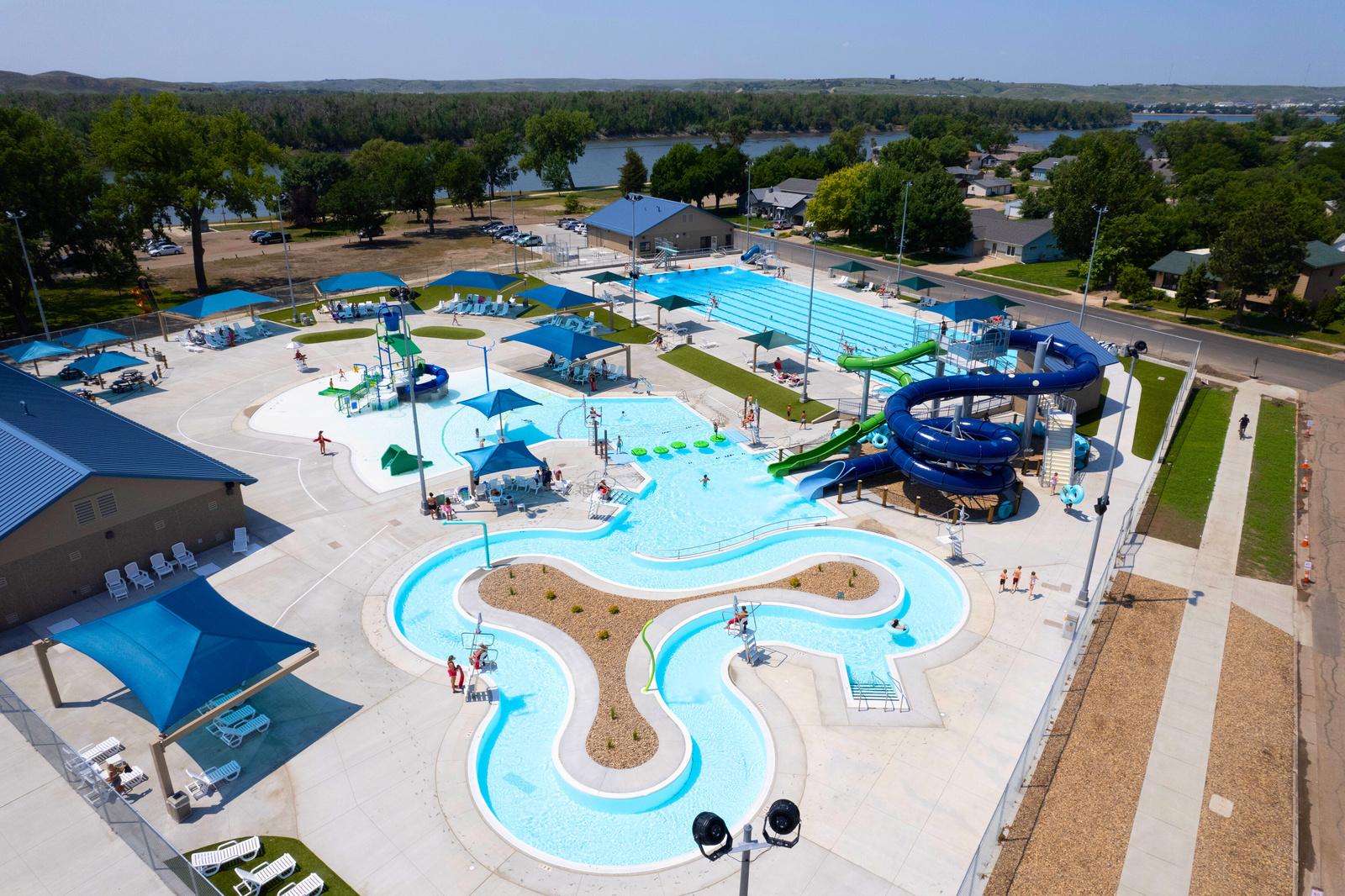
ACE (Public Alliance for Community Energy), the community-owned natural gas commodity supplier, presented Project of the Year awards to three of its member communities at the NMPP Energy Annual Conference March 18 in Lincoln. Through its revenue return program, ACE returns funds to its 75 Nebraska member communities. These funds are used by each community for various community betterment projects. Earlier this year, the ACE Board of Directors approved returning $400,000 to its Nebraska member communities. Since forming in 1998, ACE has returned more than $4.7 million to its Nebraska member communities. Communities submitted project nominations and winners were determined through voting on ACE’s Facebook page. The awards were presented in three community population categories. The following projects were awarded a plaque and $200 to be used toward future community betterment projects: City of Blue Hill Historical Mural Project (Pop. less than 1,000) – The city used its ACE funds to collaborate with the Blue Hill Community
Continued on page 22 / See ACE





BY RHEA LANDHOLM, MEDIA & MARKETING MANAGER, CENTER
The Center for Rural Affairs now offers community and business solar loans as well as personal solar loans.
Community and business solar loans are for construction, to enable investment tax credit safe harboring, and for working capital for qualified solar businesses. These loans are for $100,000 to $3 million and are targeted to serve local businesses, schools, and municipal buildings.
Personal loans are for construction loans for solar arrays up to 99 kW in size for projects located in Nebraska, with limited ability to consider well-qualified projects elsewhere. Personal loans will be awarded in an amount between $5,000 to $250,000.
“By providing essential construction and working capital, we want to empower local contractors and entrepreneurs to own and build these systems themselves, cultivating a Nebraska [solar] workforce,” said Daniel Padilla, the Center’s Director of Climate Lending.
Alongside the loans, Center staff is providing predevelopment and feasibility support by conducting site assessments and system sizing, while coordinating with local utilities to ensure a successful grid connection.
“I think of the Center's work and our loan products as
RURAL AFFAIRS
a critical backstop to ensure rural and Tribal communities in Nebraska are not left behind,” Daniel said. “We need to ensure low-to-moderate income households and small rural businesses are not priced out of the energy transition.” In Nebraska and across the country, solar energy is needed for both reliability and load growth.
For example, in the Cornhusker State, today data centers account for almost 25% of generation, while in 2018, it was 1%. By 2035, data centers are projected to account for 41% of generation.
“I think utilities are being pragmatic about solar,” Daniel said. “With electric utilities implementing rate hikes, solar is a proven solution and a hedge against rising electric rates. This is making smaller cities and villages consider small community solar projects while making residential solar more attractive.”
This aligns with the Center’s mission of cultivating strong communities rooted in social and economic justice, environmental stewardship, and opportunity for all.
“The Center wants to be part of this transformation by helping our cities and families generate their own power and lock in energy savings for decades, making the communities we live in more resilient,” Daniel said.
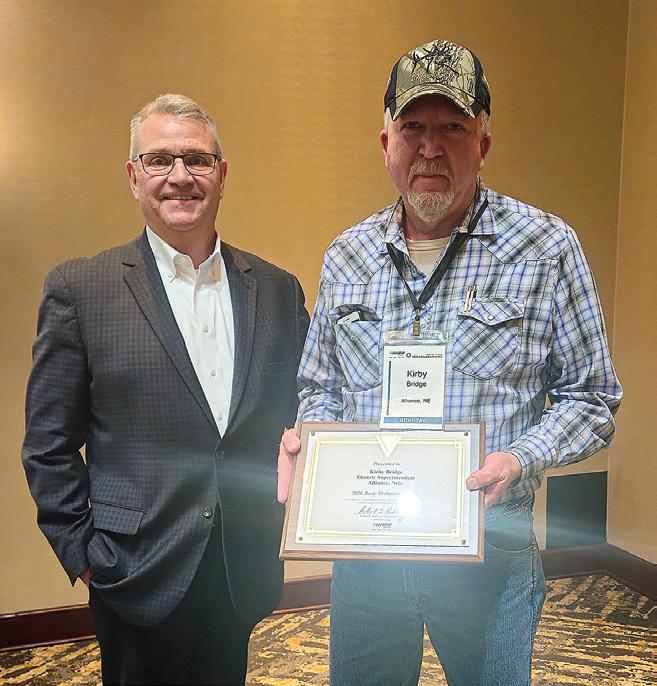
NMPP Energy Executive Director Bob Poehling (left) presents Kirby Bridge, Electric Superintendent for the City of Alliance, with the Municipal Energy Agency of Nebraska’s Rudy Hultgren Dedicated Service Award.
The Municipal Energy Agency of Nebraska (MEAN) presented Kirby Bridge, Electric Superintendent for the City of Alliance, with its Rudy Hultgren Dedicated Service Award March 18 at the NMPP Energy Annual Conference in Lincoln.
The award is presented annually to an individual of a MEAN member utility who has displayed commendable efforts in promoting the use of public power and its ideals. MEAN, the wholesale power supply organization of NMPP Energy, serves wholesale power supply and related services to more than 60 communities in Colorado, Iowa, Nebraska, and Wyoming. The award is a memorial tribute to Rudy Hultgren, a utility
Continued on page 30 / See Kirby

Continued from page 18
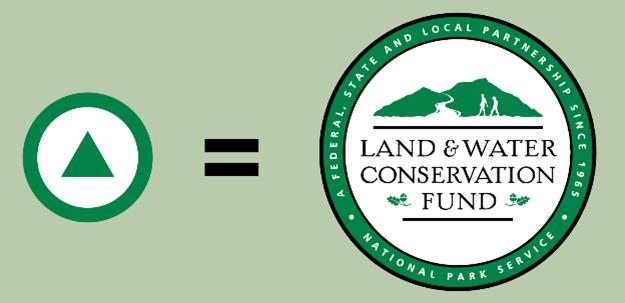
If you’re applying for LWCF, the green triangle symbol throughout SCORP indicates information that is significant for a LWCF grant application.
In addition to SCORP, the Nebraska Game and Parks Commission has other resources specific to trail planning and natural playscape design to help you make your outdoor recreation visions a reality.

Trails are one of the most valuable recreational amenities in Nebraska. This guide will help you create trail plans and take the necessary steps to expand trails in your local parks and communities.

This guide can help facilitate your creative ingenuity and assist in the development of blueprints for what will become real and tangible landscapes for creative play and adventure.
Continued from page 19
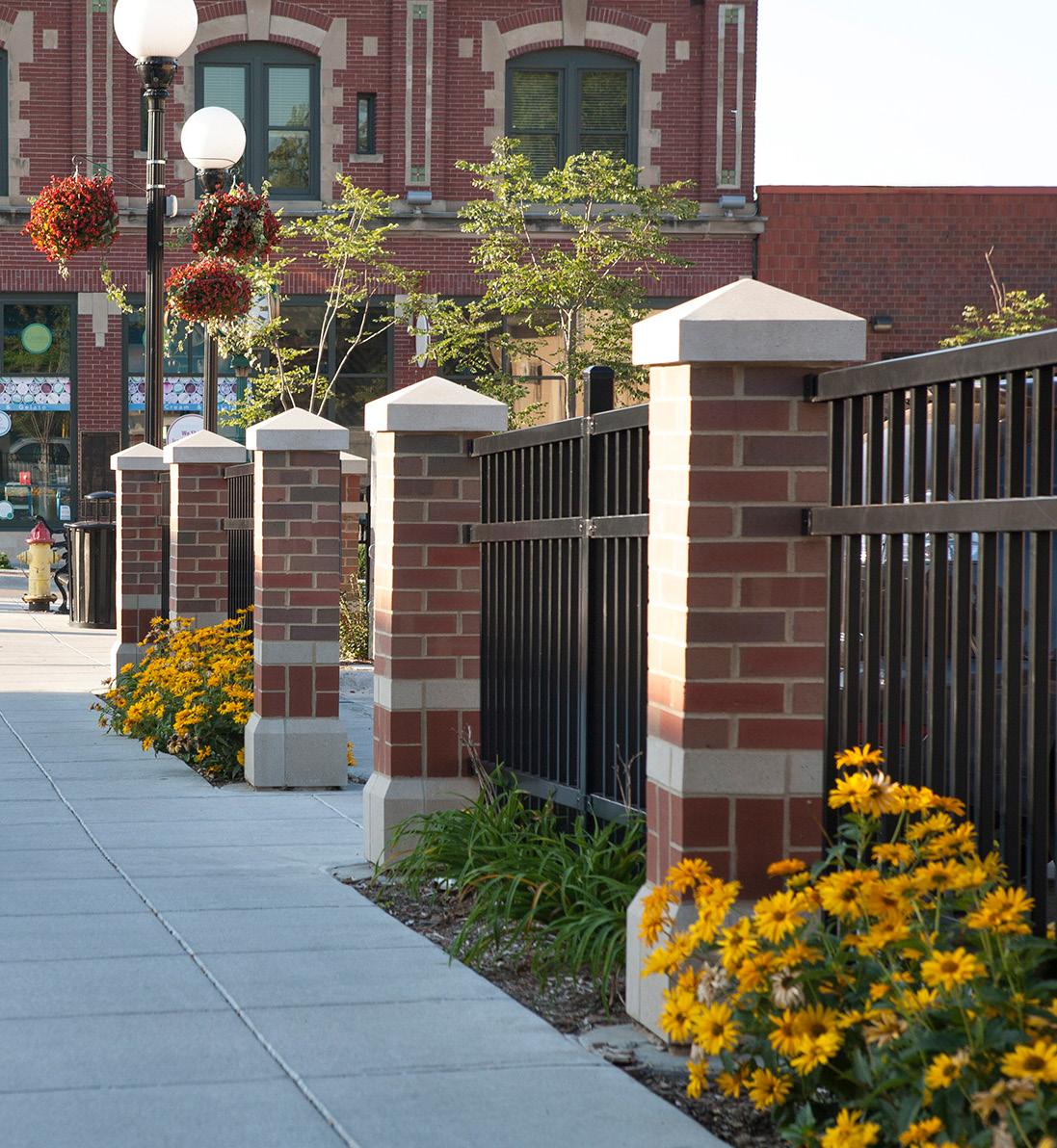
Foundation to create a historical mural on the exterior wall of the downtown Community Senior Center. The city paved the adjoining lot to provide additional parking and space for community activities. Lighting was installed to illuminate the mural and parking area, making the space safe and functional for evening events. The goal of the project was to revitalize and beautify the downtown district to help attract new businesses. The mural highlights significant moments in the city’s history in an engaging and educational format. The outdoor space will be used for various community events and will serve as a community asset for years to come.
City of Terrytown Hascall Park Beautification Project (Pop. 1,000-2,000) – The City of Terrytown used its ACE funds for a mural project at Hascall Park. The murals adorn the restrooms at the park and depict several vibrant scenes to highlight the community on multiple sides of the facility. The murals include community
activities and beloved historical community landmarks. The project highlights the effort and pride that city employees have in making Terrytown’s parks pleasing to residents.
City of Gothenburg Pony Express Sculpture Project (Pop. more than 2,000) – The City of Gothenburg used its ACE funds to support bringing a life-sized bronze sculpture of the Pony Express to its Pony Express Station in the city’s Central Park. The project included fundraising and commissioning an artist to design and build the sculpture. ACE funds were combined with funds from local donors, city funds, and visitor’s tax funds to complete the project. The sculpture is located next to the Ehman Park Pony Express Station, where more than 25,000 visitors explore the station and museum each year.
Nebraska communities formed ACE to provide competitively priced natural gas while retaining local control and keeping more revenue in Nebraska’s ACE member communities.
The U.S. Department of Justice (“DOJ”) issued a final rule in April 2024, titled “Nondiscrimination on the Basis of Disability; Accessibility of Web Information and Services of State and Local Government Entities,” (the “Rule”) which adds specific regulations under Title II of the Americans with Disabilities Act (“ADA”). The Rule requires that state and local governments ensure their websites, applications, and mobile services are accessible to individuals with disabilities. The Rule originally established compliance deadlines beginning in April 2026. However, just one week before the April 2026 deadline, the DOJ issued an interim final rule extending compliance deadlines. Under the revised timeline, jurisdictions with populations over 50,000, will have until April 26, 2027, to comply and jurisdictions with populations under 50,000, and any special district government, will have until April 26, 2028. The DOJ extended the compliance deadline based on new information indicating that there were “challenges related to the compliance dates,” including staffing limitations, technical complexity, and higher-than-expected implementation costs. Although some disability advocacy groups opposed delaying the rule, the DOJ concluded that the original deadlines were not feasible and that an extension would reduce litigation risk and allow for more effective implementation.
Source – West Group Law
D.A. Davidson & Co. is committed to strengthening the infrastructure and enriching the lives of people in our communities throughout Nebraska and across the nation.
Our bankers specialize in:
• Bond Anticipation Notes
• Paving Bonds
• Water and Sewage Bonds
• General Obligation Bonds
• Utility System Revenue Bonds
• Lease-Purchase Financing
(402) 392-7986 | Paul Greiger (402) 392-7989 | Cody Wickham (402) 392-7988 | Andy Forney (402) 392-7933 | Jerry Spethman



Many of our small rural communities have aging housing stock in their towns, and homeowners may not always have the financial means to repair or update on their own. To name a few examples, some are looking to replace a roof in significant disrepair, address trip hazards, make an entryway more accessible, or replace water and sewer lines. USDA Rural Development has a program that can provide loan and grant assistance to eligible homeowners to complete home repairs and modifications.
The repair program is available to assist eligible homeowners with repairs to their homes located in eligible rural areas. In all cases, the property must be the applicant’s sole and primary residence. Additionally, total household income must be within the verylow-income limit (maximum varies by county and household size). Repairs may be made to improve and modernize the home, to remove health and safety hazards, or to make the home accessible.
All communities in Nebraska are eligible for Repair Loans and Repair Grants with the exceptions of Fremont, Grand Island, Hastings, Kearney, Lincoln, North Platte, Omaha, and South Sioux City/Dakota City. Who is eligible?
What
The repair loan has no age requirement and offers a very low, affordable payment as it will be amortized over 20 years at a 1% interest rate. Repair grants are only available for those households that are at least 62 years of age or older. Grant funds are available for repairs to remove health or safety hazards only. Applicants must have legal authority to borrow money and be unable to finance the project from their own resources. Applications are available year-round.

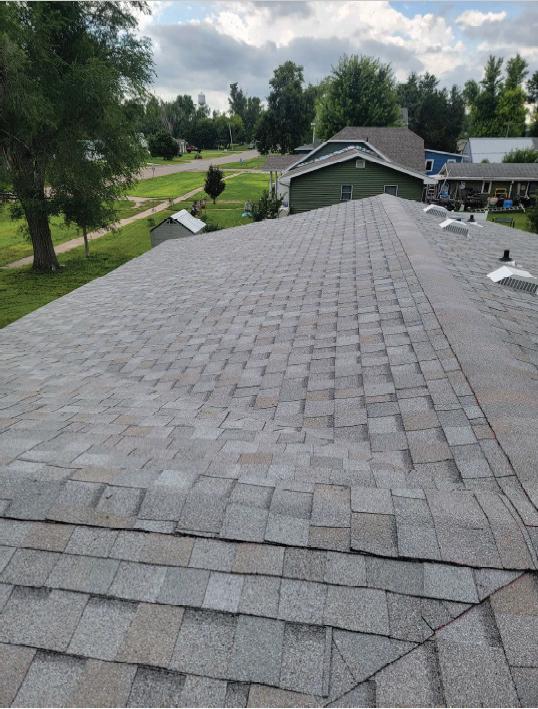

Success Story: before after
Rural Development’s Single Family Housing Team was contacted by a 78-year-old homeowner with an aging roof in disrepair that was made worse from storm damage resulting in water damage inside her home. Upon review for eligibility, she was approved for grant assistance to assist with her roof and interior damage repairs. She was able to work with a trusted roofing company and team that traveled to her small town to complete the repairs working with Rural Development. Once the project was complete, the contractor shared “I am extremely proud of the job this crew did. We worked hard all day, and it really turned out nice. Many of the towns’ people stopped by to thank us for taking care of this roof.” Thanks to a caring community, a hard-working crew, and a Rural Development Single Family Housing Grant, this homeowner now has an improved quality of life, as well as an improved neighborhood.
To learn more about any of the USDA Rural Development Programs that might be of value to your community, visit its website at rd.usda.gov/ne or call the USDA RD main line at (402) 437-5551.
Also known as the Section 504
Home Repair program, it provides loans to very-low-income homeowners to repair, improve, or modernize their homes, or provides grants to elderly, very-low-income homeowners to remove health and safety hazards.
To qualify, you must:
• Be the homeowner and occupy the house
• Be unable to obtain affordable credit elsewhere
• Have a family income within the very-low-income limit
• For grants, be age 62 or older
What is an eligible area?
Properties must be located in an eligible rural area. You can visit the USDA Income and Property
Eligibility website (available at this link: https://go.usa.gov/xzcdM) for complete details.
How can funds be used?
• Loans can be used to repair, improve, or modernize homes, or to remove health and safety hazards.
• Grants must be used to remove health and safety hazards.
How much money can I get?
• Maximum loan is $40,000.
• Maximum grant is $10,000.
• Maximum grant if repairing a home damaged in a presidentially declared disaster area is $15,000.
• Loans and grants can be combined for up to $50,000 in assistance.
What are the terms of the loan or grant?
• Loans are repaid over 20 years.
• Loan interest rate is fixed at 1 percent.
• Full title service is required for loans greater than $25,000.
• Grants have a lifetime limit of $10,000, except in presidentially
declared disaster areas in which they have a $15,000 lifetime limit.
• Grants must be repaid if the property is sold in less than three years.)
Is there a deadline to apply?
Applications are available year-round as long as funding is available, and are processed in the order they are received.
How long does an application take?
Approval times depend on funding availability in your area. Talk to a state or area office-based USDA home loan specialist (a map is available at this link: rd.usda.gov/browse-state) for help with your application.
How do I get started?
Contact a USDA home loan specialist (information is available at this link: rd.usda.gov/browse-state) in your area.
What governs this program?
• The Housing Act of 1949 as amended; 7 CFR, Part 3550 (available at this link: go.usa.gov/xzcvG)
• HB-1-3550 - Direct Single Family Housing Program Field Office Handbook (available at this link: go.usa.gov/xzcvM - PDF)
NOTE: Because information changes, always consult official program instructions or contact your local USDA Rural Development office for help. A list is available at this link: tinyurl.com/RDStateOffices. You will find additional RD program resources at rd.usda.gov. Information about other USDA programs and services is available at this link: ask.usda.gov/s/. USDA is an equal opportunity provider, employer, and lender.
May 2025
The
has been a catalyst to improve disability access to library services
American Library Association (ALA) recently announced the fourth and final round of recipients of its Libraries Transforming Communities (LTC): Accessible Small and Rural Communities grant, an initiative to help small and rural libraries increase the accessibility of facilities, services and programs to better serve people with disabilities.
The 300 funded proposals represent 46 U.S. states and the Northern Mariana Islands. Of the selected libraries, 73 percent serve communities with populations of 5,000 or fewer. One hundred and twenty-six of the libraries also received funding in previous rounds of the grant initiative, bringing the total number of LTC: Accessible Small and Rural Communities grantees to 836. Sixteen libraries received funding in all four rounds of the initiative.
their library’s services across the board and will continue to do so for years to come.”

Selected libraries have identified a primary audience they wish to serve (e.g., people with physical disabilities, learning disabilities, or intellectual disabilities). Library staff will conduct community inputgathering sessions with the identified primary audience to discuss accessibility in the community and library to collaboratively identify existing resources, needs/gaps and priorities. The libraries will then use the funds to create services, or improve their facilities, services or program offerings based on the needs identified by their audience.
Fifty libraries will receive grants of $20,000, and 250 libraries will receive grants of $10,000. In accordance with the Institute of Museum and Library Services (IMLS) definitions, eligibility was limited to communities with populations of less than 25,000 located at least five miles from an urbanized area.
“The outcomes of LTC: Access will not only impact communities but also the library workers who wrote the grant, plan community conversations, and implement their projects,” said ALA President Sam Helmick. “This initiative has been a catalyst for ongoing disability access. It will continue to teach nearly 900 library workers the fundamentals of accessibility and guiding improvements to
Previously funded LTC projects have included installing chair lifts and hearing loops, hosting arts and crafts programs for community members living with Alzheimer’s and memory loss, creating accessible outdoor spaces like community gardens and playgrounds and mental health programs for high school students.
Since 2014, ALA has distributed LTC funding to foster community engagement skills among library workers and support need-driven projects. LTC: Accessible Small and Rural Communities is offered in partnership with the Association for Rural & Small Libraries (ARSL).
Libraries Transforming Communities is administered by the ALA Public Programs Office. To be notified of future LTC initiatives and other grant opportunities, sign up for ALA’s Programming Librarian newsletter.
Bridgeport Public Library (Bridgeport) 4
Crete Public Library (Crete) 4
Kilgore Memorial Library (Kilgore) 2
Kimball Public Library (Kimball) 4
Lied Tekamah Public Library (Tekamah) 2
Morrill Public Library (Morrill) 4
Ravenna Public Library (Ravenna) 4
Schuyler Public Library (Schuyler) 2, 3
Sidney Public Library (Sidney) 4
Stanton Public Library (Stanton) 4
Valley Public Library (Valley) 2
Note: The number following the municipality shows which year the award was given.
Source – American Library Association

BY JULIE HARRIS, EXECUTIVE DIRECTOR, BIKE WALK NEBRASKA
Welcome to May, otherwise known as National Bike Month. Everyone is anxious to get out and enjoy the warmer days, and with schools dismissing for the summer soon, we will start to see many more people biking - in addition to walking, scootering, and skateboarding - in our communities.
The formal, statutory term for someone enjoying those activities and transportation modes is “vulnerable road user” (VRU). Bike Walk Nebraska (BWN) was successful in getting this term defined in in 2025, and beyond cyclists and pedestrians, it generally includes anyone using our roads outside of a vehicle: people using mobility devices, utility and road construction workers, people and first responders on the side of the road, or someone driving slower-moving agriculture equipment.
In addition to getting VRU formally defined, the 2025 bill also increased the menu of options available to judges when dealing with drivers who injure or kill a VRU and increased the fines for excessive speeding. Important to bicyclists in particular, the bill included an expansion of Nebraska’s existing 3-foot passing law to the safer, and easier to understand, “change lanes to pass a VRU when possible.”
The VRUs we are hearing most about these days (and we assume the same is true for those of you at city hall) are people using e-motos. E-motos are devices going beyond the features of standard electric bicycles, including bikes with throttles in place of operable pedals, mini motor bikes, and scooters with enhanced motors for faster speeds. We are seeing new variations of e-motos popping up all the time, with more manufacturers than ever. No one is exactly sure how these fit into existing ordinances and kids using these devices are causing concern. More simply put: the market is outpacing the policy and existing rules of the road.
BWN is currently collecting data and researching policy options for e-motos, with the goal of providing guidance and template policy language for Nebraska communities to consider. Our goal is to find a balance between maintaining safety with common sense guidelines, without denying people options to get around. Standard e-bikes, falling within the 3-tier classification system, are legitimate transportation and recreation options for the widest range of people, and we do not want to see these inadvertently restricted with well-meaning policies or ordinances drafted in response to e-moto concerns.
This is where we could use your help. BWN wants to hear from you:
What are you seeing on your local streets? What concerns and complaints are coming into your police and public works departments? Is this an isolated issue in your community or one that needs to be addressed on the policy level? Please take a moment to email me with your thoughts: julie@bikewalknebraska.org.
In the meantime, I hope you’ll get out and enjoy Bike Month and remember to be watching for the VRUs in your community if you’re behind the wheel.

BY TARA A. STINGLEY, CLINE WILLIAMS WRIGHT JOHNSON & OLDFATHER, L.L.P.
federal court decision offers a valuable case study for municipal employers facing disability accommodation claims under the Americans with Disabilities Act (ADA). In Mackey v. City of Pine Bluff, No. 4:24-CV-00350-KGB, 2026 WL 900903 (E.D. Ark. Mar. 31, 2026), the court granted summary judgment in favor of the City of Pine Bluff on the plaintiff’s ADA claims for failure to accommodate, failure to engage in the interactive process, and disparate treatment claims. The Mackey decision illustrates how well-documented job descriptions, consistently applied policies, and a clear understanding of essential job functions can position a municipal employer to defend itself successfully against ADA claims.
I. General Legal Principles
The ADA prohibits employers from discriminating against qualified individuals on the basis of disability in regard to hiring, advancement, discharge, compensation, training, and other terms and conditions of employment.i This prohibition includes failing to make reasonable accommodations to the known physical or mental limitations of an otherwise qualified individual with a disability, unless the employer can demonstrate that the accommodation would impose an undue hardship on its operations.
To establish a prima facie case of disability discrimination under the ADA, an employee must show that they:
1. have a disability within the meaning of the ADA, 2. are a qualified individual under the ADA, and 3. suffered an adverse employment action as a result of the disability.ii
To be a “qualified individual,” the employee must possess the requisite skill, education, experience, and training for the position, and must be able to perform the essential job functions with or without reasonable accommodation. The employee bears the burden of proving they are a qualified individual.
Importantly, an employer’s judgment about whether a function is essential to a particular job is considered “highly
probative.”iii On this point, courts look to several factors, including:
• the employer’s judgment
• written job descriptions prepared before advertising or interviewing
• the amount of time spent performing the function
• the consequences of not requiring the function
• the current work experience of incumbents in similar jobs
A task may be an essential function even if the employee performs it only rarely, and even if other employees are available to perform the task for the disabled employee.iv Additionally, while reassignment to a vacant position can be a reasonable accommodation under the ADA, it is not required in every instance. Reassignment is considered an accommodation of last resort, and is required only if there is a vacant position for which the employee is otherwise qualified.v
Christopher Mackey began working with Pine Bluff Fire and Emergency Services (PBFES) as a firefighter in March 2011 and was later promoted to the position of engineer. The engineer position is second in command of the fire engine and is responsible for driving the engine and responding to emergencies. According to PBFES’s written job description, the engineer position is highly physical, requiring the employee to frequently stand, walk, climb, balance, stoop, kneel, crouch, or crawl, and to occasionally lift and move more than 100 pounds. The essential functions of the engineer position also included serving as a first responder, Haz-mat technician, and EMT as needed.
In mid-2022, Mackey suffered an ankle injury by stepping into a pothole in the fire station parking lot, and he underwent surgery in January 2023.
Following his surgery, Mackey requested light duty work—specifically asking to serve as an instructor for the department’s in-house EMT training program. His battalion chief informed him that the department did not offer light duty work. Mackey also asked the chief if he could continue
as an engineer “without the firefighting — without having to be inside fighting the fire,” but the chief responded that if Mackey was going to be on the engine, he “had to be able to fight fire.” vi
In August 2023, Mackey’s treating physician determined that Mackey had reached maximum medical improvement but did not clear him to return to active firefighting, stating that Mackey “will be medically retired unable to return to that type of work at this time.”vii Mackey described his ankle condition as an inability to feel the right side of his foot, causing him to trip over himself.
In November 2023, Mackey accepted a workers’ compensation settlement and signed a voluntary resignation. Before doing so, Mackey was informed by an administrative law judge that he did not have to settle his claim and could leave it open and continue receiving benefits. Mackey stated he understood his rights and the terms of the settlement. Notably, the settlement agreement did not preclude Mackey from pursuing his EEOC failure to accommodate claims under the ADA.
The federal district court granted summary judgment in favor of the City of Pine Bluff on all of Mackey’s ADA claims.viii
First, the court found that no reasonable factfinder could conclude Mackey was capable of performing the essential functions of his engineer position without accommodation, given the undisputed physical requirements of the job and Mackey’s permanent ankle injury.ix
Second, the court examined whether Mackey could perform those essential functions with reasonable accommodation. Mackey’s first proposed accommodation — continuing as an engineer without firefighting duties — failed as a matter of law because it would have required the elimination of essential job functions. Mackey’s second proposed accommodation— reassignment to the assistant trainer position — also failed because the undisputed record showed that the trainer position contained the same physically demanding essential functions, including the ability to perform basic firefighting. The court noted that even if the trainer might only rarely need to perform firefighting functions, that did not make it any less essential to the position.x
Third, because no reasonable factfinder could conclude that Mackey could have been reasonably accommodated in any uniformed position, Mackey’s failure to engage in the interactive process claim also failed. Under Eighth Circuit precedent, even if an employer failed to engage in the interactive process in good faith, no ADA violation occurs if no reasonable accommodation existed.
The Mackey decision provides several actionable lessons for municipal employers seeking to protect themselves from ADA discrimination and failure to accommodate claims:
1. Maintain detailed, accurate written job descriptions that identify essential functions. The City’s written job descriptions clearly set forth the physical demands and essential functions of both the engineer and assistant trainer positions. The court relied on these descriptions in determining Mackey could not perform the essential functions of any uniformed position. Because an employer’s judgment about essential functions is considered “highly probative,” investing the time to create and maintain clear, current job descriptions can pay dividends when defending against accommodation claims.
2. Do not eliminate essential functions. When Mackey asked to remain an engineer without firefighting duties, the City declined. The law is clear that an employer need not reallocate or eliminate essential job functions to accommodate a disabled employee.xi Employers should understand that saying “no” to a request that would fundamentally alter a position’s core duties may be legally defensible, provided that the functions at issue are genuinely essential and documented as such.
3. Understand the limits of the duty to reassign. Reassignment to a vacant position is an accommodation of last resort, not a first-line obligation, and it is only required if there is a vacant position for which the employee is otherwise qualified. In Mackey, the court found the employee could not have performed the essential functions of the alternative position he requested, so reassignment was not a viable accommodation. Employers should evaluate reassignment requests by asking: Is the position vacant, and can the employee actually perform the position’s essential functions with or without accommodation?
4. Train leaders on how to respond to accommodation requests. While the court ultimately ruled in the City’s favor, the case could have been more complicated if the employer’s response to Mackey’s informal requests had been less defensible. Employers should train front-line supervisors and department heads to recognize when an employee is requesting an accommodation (even informally), to document those requests, and to direct the employee to the appropriate human resources process.
The Mackey decision is a reassuring example for employers who invest in clear job descriptions, consistently applied physical standards, and lawful responses to accommodation
Continued on page 30 / See Legal
Continued from page 17
When Peter Smith noticed a sharp decline in tree canopy in his Lincoln neighborhood, he decided to take action. He went door-to-door and recruited 10 neighbors to participate in a street tree planting project through PlantNebraska’s Trees for Nebraska Towns grant program. The grant supplied the trees, while Smith and neighborhood volunteers helped plant, water, and care for them.
The success of the project inspired neighbors on nearby streets to do the same. Volunteers later planted 10 additional trees along South 35th Street and plan to add more along South 36th Street this year.
“This program is vital because it empowers people to turn neighborhoods back into shady, welcoming spaces,” Smith said. “Trees build community, and planting 10 trees at a time makes urban forestry feel approachable for everyday people.”
Continued from page 29
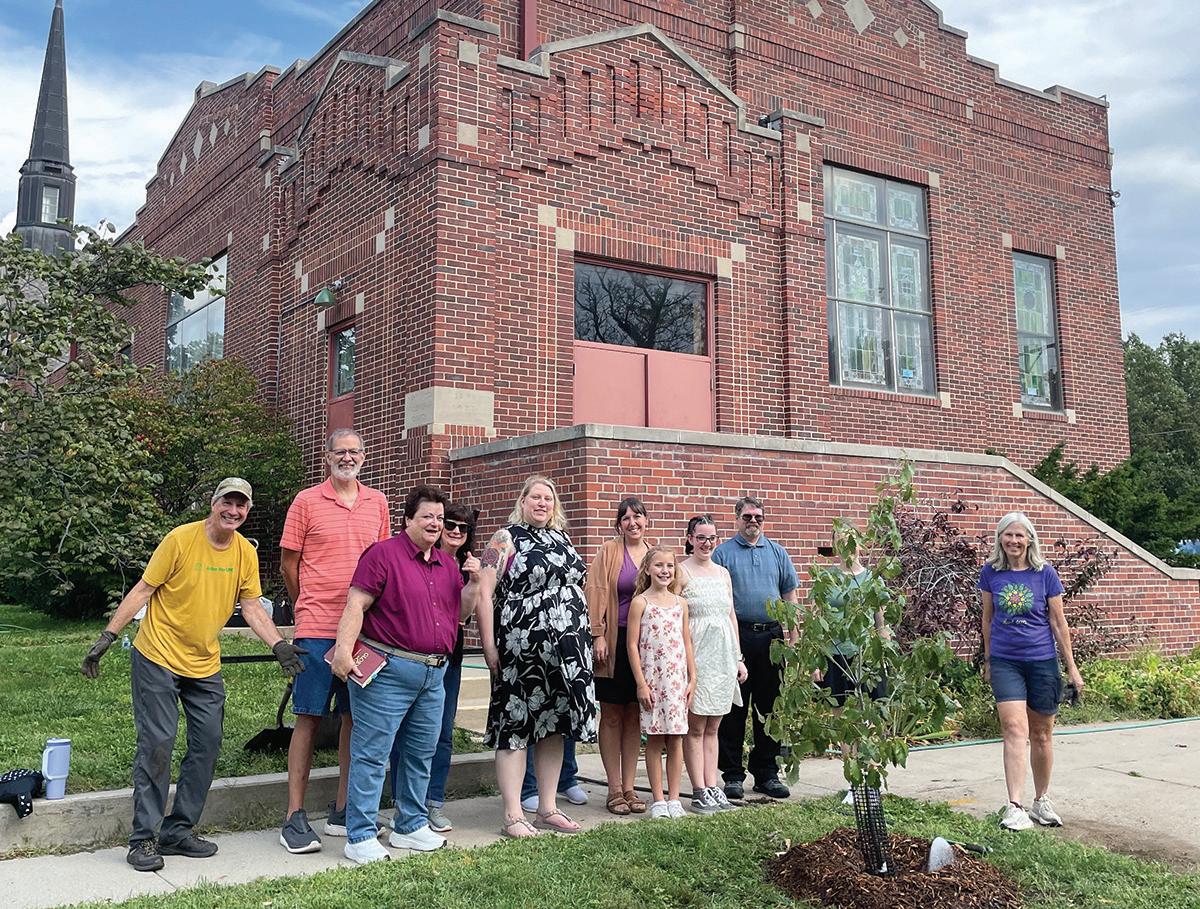
requests. While every case is fact-specific, the City of Pine Bluff’s success demonstrates that thoughtful policy development and consistent application of essential job function requirements remain the strongest foundation for defending against disability discrimination claims.
Editor’s Note: This article is not intended to provide legal advice to its readers. Rather, this article is intended to alert readers to new and developing issues. Readers are urged to consult their own legal counsel or the author of this article if they wish to obtain a specific legal opinion regarding their particular circumstances. The author of this article, Tara A. Stingley, can be contacted at Cline Williams Wright Johnson & Oldfather, L.L.P., 12910 Pierce Street, Suite 200, Omaha, NE 68144, (402) 397-1700, tstingley@clinewilliams. com, or www.clinewilliams.com.
i See 42 U.S.C. § 12112.
ii Mackey, 2026 WL 900903, at *6 (citations omitted).
iii Id.
iv Id.
v Id.
vi Id. at 2.
vii Id. at 4.
viii The court declined to exercise supplemental jurisdiction over Mackey’s remaining state-law workers’ compensation retaliation claim, dismissing it without prejudice. Id. at 10.
ix Id. at 8.
x Id.
xi Id. at *7 (quoting Dropinski v. Douglas County, Neb., 298 F.3d 704, 709–10 (8th Cir. 2002)).
Continued from page 21
consultant and well-known and respected citizen of Lyons, Colo., who played an active role in community service and leadership. Along with serving the City of Alliance, Bridge has been active within MEAN by serving on the MEAN Board of Directors and on the MEAN Services Committee as well as on a joint-utility committee that is researching new regional utility training opportunities.
Under Bridge’s leadership, the City of Alliance converted its electric distribution infrastructure to underground to significantly improve system reliability. He also led the city’s transition to AMI (Advanced Metering Infrastructure) metering to modernize operations and led efforts to advance the city’s recent community solar project.
Bridge’s award nomination cited his unwavering dedication and commitment to excellence and collaboration in serving the Alliance community and MEAN.
As the recipient of the award, Bridge received $350 which will be designated to go to a community project or group.
Source – NMPP