
The NEBRASKA MUNICIPAL REVIEW (ISSN 0028–1906) is published monthly and the official publication of the League of Nebraska Municipalities, an association of the cities and villages of Nebraska, published at 1335 L St., Lincoln, Nebraska 68508. Subscription rates are $5 per single copy — $50 plus tax for 12 issues. Periodicals postage paid at Lincoln, Nebraska and at additional mailing offices. Views of contributors, solicited or unsolicited, are their own and not to be construed as having the endorsement of the League unless specifically and explicitly stated by the publisher
The NEBRASKA MUNICIPAL REVIEW is a nonprofit publication administered and supervised by the League of Nebraska Municipalities. All revenue derived from the publication is used by the association to defray publication costs.
League of NE Municipalities staff 402-476-2829 • www.lonm.org
L. Lynn Rex, Executive Director
Christy Abraham, Legal Counsel
Lash Chaffin, Utilities Section Director
Cherie DeFreece, Admin Assistant/ Membership Services Assistant
Brenda Henning, Membership Services Assistant/ LIGHT Admin Assistant
Ethan Nguyen, LNM/LARM Information Technology Manager
Shirley Riley, Membership Services Director
Jackson Sash, Utilities Field Representative/Training Coordinator
Ashley Wolfe, Marketing/Communications Director
LARM staff
Dave Bos, Executive Director
Tracy Juranek, Asst. Executive Director, Customer Service Specialist
Diane Becker, Communications/Marketing Director
Kyla Brockevelt, Executive Administrative Assistant
Drew Cook, Customer Service Specialist
John Hobbs, Loss Control Specialist
James Kelley, Loss Control Specialist
Fred Wiebelhaus, Loss Control/Claims Manager
POSTMASTER: SEND ADDRESS CHANGES TO NEBRASKA MUNICIPAL REVIEW, 1335 L STREET, LINCOLN, NEBRASKA 68508.
Have an idea, project or opinion to share? The League welcomes member articles, information, and op-eds.
Want to reach local decision makers? The League can help you get your message out to Nebraska’s 3,500+ municipal officials.To learn more, contact Ashley Wolfe at 402-476-2829 or ashleyw@lonm.org
President Marlin Seeman, Mayor, Aurora
President-Elect Bryan Bequette, Mayor, Nebraska City
Vice President David Black, Mayor, Papillion Past President Deb VanMatre, Former Mayor, Gibbon
Directors
Leirion Gaylor Baird
Mayor, Lincoln
John W. Ewing, Jr. Mayor, Omaha
Sharon Powell Village Board President, Utica
Larry Evans Mayor, Minden
Rod Petersen Mayor, Louisville
Jim Bulkley Mayor, Columbus
Betsy Vidlak Mayor, Scottsbluff
Mindy Rump Mayor, Blair
Pat Heath City Administrator, Gering
Janine K. Schmidt
CMC/Treasurer, Morrill
Kyle Svec City Admin./Utilities Supervisor, Geneva
Affiliated Sections
City Managers
Wes Blecke, Wayne Clerks Derek Bargmann, Seward
Munic. Accounting & Finance

Roger Nash, Hastings Fire Chiefs Cory Schmidt, Grand Island Utilities Gary Thurlow, Atkinson 16 24 28 30 31 5
CISA to host free insider threat mitigation workshop
Plattsmouth: A look inside the historic $90 million FEMA flood recovery wastewater project
USDA Rural Development: Infrastructure replacement and renovation projects
NLC: Municipal Infrastructure Conditions Report 2026
Blair: Gov. Pillen holds Blair signing ceremony to highlight housing affordability bill
Center for Rural Affairs: 5 lessons from rural grocery stores
Funding opportunities with NAC: Creative Aging Arts Program
FEMA Corps program resumes, application period open for 2027 class of future emergency managers
Burnside retires after 20 years with the City of Lexington
Columbus native’s design becomes city seal
City of Norfolk projects recognized at the 2026 ACEC Nebraska awards
City of Blair named 2025 Tree City USA
Grand Island Public Library hosts First Responder Storytime series
4 The Director's Message - L. Lynn Rex, LNM Executive Director - Plan now to attend the League Annual Conference on Sept. 23-25 at the Cornhusker Marriott
Guest Commentary - Clarence Anthony, NLC Executive Director - Why cities & towns should celebrate the 21st Century ROAD to Housing Act
Guest Commentary - U.S. Sen. Pete Ricketts - Happy 250th birthday, America!
LARM – Safe celebrations for America’s 250th anniversary
The Legal Corner by Andrew R. Willis & Alison Janecek Borer, Cline Williams Wright Johnson & Oldfather, L.L.P. - The role of municipalities in implementing Nebraska’s Community Improvement District Act
Chaired by Mayor Don Groesser of Ralston
John McGhehey, Mayor, Alliance
J.D. Cox, City Manager, Alliance
Tobias Tempelmeyer, City Administrator, Beatrice
Rusty Hike, Mayor, Bellevue
Jim Ristow, City Administrator, Bellevue
Mindy Rump Mayor, Blair
Phil Green, City Administrator, Blair
David Scott, Deputy City Administrator of Operations, Blair
Tom Menke, City Manager, Chadron
Jim Bulkley, Mayor, Columbus
Tara Vasicek, City Administrator, Columbus
Dave Bauer, Mayor Crete
Tom Ourada, City Administrator, Crete
Jody Sanders, City Administrator, Fremont
Kent Ewing, Mayor, Gering
Pat Heath, City Administrator, Gering
Roger Steele, Mayor, Grand Island
Patrick Brown, City Administrator, Grand Island
Mike Evans, Mayor, Gretna
Paula Dennison, City Administrator, Gretna
Mark Funkey, City Administrator, Hastings
James Liffrig, Mayor, Holdrege
Chris Rector, City Administrator, Holdrege
Brenda Jensen, City Manager, Kearney
Brad DeMers, Asst. City Manager, Kearney
Doug Kindig, Mayor, La Vista
Kevin Pokorny, Director of Administrative Services, La Vista
John Fagot, Mayor, Lexington
Joe Pepplitsch, City Manager, Lexington
Margaret Blatchford, Assistant City Attorney, Lincoln
Riley Slezak, Senior Advisor to the Mayor, Lincoln
Linda Taylor, Mayor, McCook
Nate Schneider, City Manager, McCook
Bryan Bequette, Mayor, Nebraska City
Perry Mader, City Administrator, Nebraska City
Justin Webb, Council Member, Norfolk
Scott Cordes, City Administrator, Norfolk
Brandon Kelliher, Mayor, North Platte
Layne Groseth, City Administrator, North Platte
Steve Krajewski, Mayor, Ogallala
Kevin Wilkins, City Manager, Ogallala
Thomas Warren, Chief of Staff, Omaha
David Black, Mayor, Papillion
Amber Powers, City Administrator, Papillion
R. Paul Lambert, Mayor, Plattsmouth
Emily Bausch, City Administrator, Plattsmouth
Don Groesser, Mayor, Ralston
Brian Kavanaugh, Council President, Ralston
Jack Cheloha, City Administrator, Ralston
Art Lindberg, Mayor, Schuyler
Lora Johnson, City Administrator, Schuyler
Betsy Vidlak, Mayor, Scottsbluff
Kevin Spencer, City Manager, Scottsbluff
Joshua Eickmeier, Mayor, Seward
Greg Butcher, City Administrator, Seward
Brandon Bonregard, Mayor, Sidney
Brett Kerkman, Vice-Mayor, Sidney
Lance Hedquist, City Administrator, South Sioux City
Randy Meyer, Council Member, South Sioux City
Jill Brodersen, Mayor, Wayne
Wes Blecke, City Administrator, Wayne
Barry Redfern, Mayor, York
Dr. Sue Crawford, City Administrator, York
Chaired by Tom Goulette, City Administrator of West Point
Lisa Schroedl, City Administrator/Clerk/Treasurer, Ainsworth
Jessica Quady, City Administrator, Ashland
Crystal Dunekacke, City Administrator/Economic Developer, Auburn
Marlin Seeman, Mayor, Aurora
Adam Darbo, City Administrator, Aurora
Chris Anderson, City Administrator, Central City
Alan Michl, Chairperson, Exeter
Becky Erdkamp, Clerk/Treasurer, Exeter
Kyle Svec, City Administrator, Geneva
Matt Smallcomb, City Administrator, Gibbon
Gary Greer, City Administrator, Gothenburg
Jana Tietjen, Clerk, Hebron
Barb Straub, Admin/Clerk/Treasurer, Hemingford
Kelly Oelke, City Administrator, Hickman
Janine K. Schmidt, CMC/Treasurer, Morrill
Sandra Schendt, Clerk/Treasurer, Nelson
David Russell, Director of Gov. Affairs, NMPP Energy
Sandy Kruml, Clerk/Treasurer, Ord
Mike Feeken, Mayor, St. Paul
Sandra Foote, Council Member, Superior
Warren Myers, City Administrator, Sutton
Jessica Meyer, City Administrator, Syracuse
Kelly Adamson, City Council Member, Tekamah
Sharon Powell, Village Board President, Utica
Kyle Arganbright, Mayor, Valentine
Melissa Harrell, City Administrator, Wahoo
Desiree Soloman, City Attorney, Waterloo
Stephanie Fisher, City Administrator, Waverly
Tom Goulette, City Admin./Utility Superintendent, West Point
Randy Woldt, Utilities Superintendent, Wisner
Robert Costa, Community Planner, Yutan

(All statute citations to Revised Statutes of Nebraska)
CITIES OF THE FIRST CLASS
• Within 10 days following meeting or before next meeting (whichever is sooner) Clerk to have minutes available for public inspection. (84-1413)
• Within 15 days of Passage Clerk publishes ordinances passed. (16-405)
• Within 30 days of Council meeting Clerk publishes official proceedings of meeting, including claims. (19-1102)
• On or before September 1 City Council determines final allocation of levy authority for its subdivisions (77-3443)
• On or before September 30 File adopted annual or biennial budget statement with County Clerk and State Auditor’s Office. (13-508)
• File information on tradenames and interlocal agreements with State Auditor’s Office (13-513)
• Within 20 days after end of month Treasurer files monthly financial report. (16-318)
• September 30 - Last Day End of Fiscal Year (16-701)
• * * Clerk must prepare agenda prior to next Council meeting. (84-1411)
• No later than 90 days after end of fiscal year report on collection and use of occupation taxes (18-1208)
CITIES OF THE SECOND CLASS
• Within 10 days following meeting or before next meeting (whichever is sooner) Clerk to have minutes available for public inspection. (84-1413)
• Within 15 days of Passage Clerk publishes ordinances passed. (17-613)
• Within 30 days following Council meeting Clerk publishes official proceedings of meeting, including claims. (19-1102)
• On or before September 1 City Council determines final allocation of levy authority for its subdivisions (77-3443)
• On or before September 30 File adopted annual or biennial budget statement with County Clerk and State Auditor’s Office. (13-508)
• File information on tradenames and interlocal agreements with State Auditor’s Office (13-513)
• Within 20 days after end of month Treasurer files monthly financial report. (17-606)
• September 30 - Last Day End of Fiscal Year (17-701)
• * * Clerk must prepare agenda prior to next Council meeting. (84-1411)
• No later than 90 days after end of fiscal year report on collection and use of occupation taxes (18-1208)
• Within 10 days following meeting or before next meeting (whichever is sooner) Clerk to have minutes available for public inspection. (84-1413)
• Within 15 days of Passage Clerk publishes ordinances passed. (17-613)
• Within 30 days following Trustees’ meeting Clerk publishes official proceedings of meeting, including claims.(19-1102)
• On or before September 1 Village Board determines final allocation of levy authority for its subdivisions (77-3443)
• On or before September 30 File adopted annual or biennial budget statement with County Clerk and State Auditor’s Office. (13-508)
• File information on tradenames and interlocal agreements with State Auditor’s Office (13-513)
• Within 20 days after end of month Treasurer files monthly financial report. (17-606)
• September 30 - Last Day End of Fiscal Year (17-701)
• * * Clerk must prepare agenda prior to next Council meeting. (84-1411)
• No later than 90 days after end of fiscal year report on collection and use of occupation taxes (18-1208)
TO: Members of the League of Nebraska Municipalities
FROM: L. Lynn Rex, Executive Director
DATE: July 2026
RE: Annual Business Meeting
The Annual Business Meeting of the League of Nebraska Municipalities will be held Sept. 25 at 10:30 a.m. at the Cornhusker Marriott Hotel. Agendas will be available at the conference registration desk.
Learn about nuisance abatement, new housing laws, economic development strategies, data centers, grants, and many other timely issues!
BY L. LYNN REX, EXECUTIVE DIRECTOR, LNM
The number of challenges facing cities and villages are increasing as well as the complexity of how to successfully address them. Nuisance abatement is one of the most difficult and controversial issues for municipal officials. An experienced panel of municipal attorneys will be presenting the Preconference Seminar on Sept. 23 outlining best practices, practical strategies, legal insights, and actionable tools to improve your municipal nuisance abatement process.
It is a privilege to have Michael Wallace, Legislative Director for Community and Economic Development on the Federal Advocacy team at the National League of Cities (NLC), open the conference on Sept. 24 with a general assembly session on the 21st Century ROAD to Housing Act. Michael is the author of the article entitled, “10 Things for Local Leaders to Know About the 21st Century ROAD to Housing Act.” The Act by design does not preempt local or state zoning. Don’t miss this overview of the first comprehensive housing legislation to pass Congress in decades! It is important to understand how this bill will significantly affect housing strategies in your city or village!
Michael will elaborate on how the Act will benefit small and rural communities; unlock private capital and reduce federal regulatory barriers; enhance flexibility for existing grant programs like CDBG; streamline federal NEPA environmental review requirements for housing; authorize new grants and pilot programs to boost local and regional housing plans; provide new resources for technical assistance and capacity-building; codify an annual authorization for the CDBG Disaster Recovery Program; and recognize unmet infrastructure needs as an impediment to increasing housing supply and bringing down costs.
Courtney Dunbar, Director – Site Selection with Burns & McDonnell, and Robyn Domber, Senior Vice President
– Research with Development Counsellors International, are nationally recognized speakers who will be presenting a 90-minute general assembly session on “How your municipality and the State of Nebraska can better compete economically and attract talent.” This session will focus on how your municipality and the state can better provide optimal site and facility options coupled with funding strategies to entice economic growth and redevelopment. This was highly recommended by several municipal officials who attended a recent conference of the Nebraska Economic Developers Association.
Our Annual Conference program includes so many other great speakers and topics including civility training; onboarding newly elected and/or appointed officials; data centers; Civic and Community Center Financing Fund (CCCFF) grants; employee benefit trends for municipal employers; initiatives relating to workforce/affordable housing; the new law on Community Improvement Districts (CIDs); workers’ comp laws relating to independent contractors and volunteers; the federal ADA Title II Digital Accessibility mandate; best practices addressing E-bikes, E-motos, and scooters on municipal streets, sidewalks, and trails; an update on “6 Regions/One Nebraska”; the Water Leaders Academy; and navigating issues relating to artificial intelligence (AI) in your city or village.
Networking is an important part of every League conference allowing the exchange of best practices, practical ideas, and solutions to shared administrative, policy, and infrastructure challenges. There is no need to reinvent the wheel when you can learn how other municipalities resolved difficult issues, successfully avoided costly missteps, or established innovative programs. The League Executive Board and staff look forward to seeing you at the Annual Conference!
BY CLARENCE ANTHONY, EXECUTIVE DIRECTOR, NATIONAL LEAGUE OF CITIES
America’s cities, towns and villages are getting a boost for their housing efforts.With a shortage of four million housing units, the housing crisis impacts every community across America in some way. As long as leaders have been contending with the issue, NLC’s position as the voice of cities, towns and villages has been clear: Local governments are looking for good partners to help meet the housing needs of our residents.
Last week, the federal government improved the federallocal partnership AND cleared the way for better publicprivate partnerships focused on housing needs with the 21st Century ROAD to Housing Act. The bill passed both chambers of Congress with overwhelming bipartisan support and became law days later. The passage is an achievement we all need to claim credit for, celebrate and take advantage of.
The 21st Century ROAD to Housing Act was only made possible after years of on-the-ground work to improve the bonds between public and private sector stakeholders, as well as grassroots advocacy and testimony to Congress about housing needs on the ground and innovations and solutions local governments are pioneering nationwide. Through our advocacy efforts, NLC made it clear that local governments are one part of the solution, but cities and towns need more partnership, not preemption. That message resonated with the bill’s bipartisan co-sponsors, Senate Banking Committee Chairman Tim Scott and Ranking Member Elizabeth Warren, and House Financial Services Committee Chairman French Hill and Ranking Member Maxine Waters. As a result of their leadership and others, including Reps. Mike Flood and Emanuel Cleaver , local governments have more flexibility in using Community Development Block Grants, HOME Investment Partnership Program and several new highly flexible pilot grant programs. Those include an Innovation Fund, a Whole-Repair Program, grants for pattern book homes and new regional housing planning grants. Local leaders have always excelled at solving their residents’ challenges and issues through innovation. Today,
with the newly enacted housing bill, local governments have new flexibility and freedom to experiment and innovate with housing — from streamlining building standards to allow housing to be built more quickly and affordably, to the ability to provide gap financing to encourage more attainable housing development in our communities.
The goal: to help all your residents, including the young couple purchasing their first home, and seniors who want to sell their current home and downsize to one that better fits their needs and help extended families create and retain generational wealth through greater access to homeownership.
Read our Ten Things Local Leaders Need to Know About the 21st Century ROAD to Housing Act to understand what’s in the law.
We all have work to do — and NLC will be here to help you. From giving you the resources that you need to understand the various pieces of this legislation, to our technical assistance programs that can support your policy goals and objectives around housing. We owe it to our residents to deliver on the promise of attainable housing for all.
This legislation offers something for cities and towns of all sizes. Housing assistance programs across the board have been improved, from those at HUD to those at USDA and others. Local government program improvements, in conjunction with many new private sector incentives and improvements meant to unlock greater private investment in housing, can benefit all municipalities.
NLC has been in this fight for a long time and is keeping the needs and voices of cities, towns and villages front and center. The 21st Century ROAD to Housing Act was a long time coming and an accomplishment that we will celebrate — and do what local governments do best: Deliver. So, I encourage local leaders to join NLC in claiming this victory for our residents and our communities.
Source – National League of Cities
BY U.S. SEN. PETE RICKETTS
ThisIndependence Day is special. This year, we are celebrating 250 years of American freedom. Our nation was founded 250 years ago, not only through a revolution, but through a revolutionary idea. Our Founders believed that God gave people their rights, not the government. This was a radical idea at the time. Other countries were governed as if kings gave citizens their rights. Our Founders believed that all people are created equal and are endowed by their Creator with certain unalienable rights. American democracy was formed to protect the God-given rights of our citizens. We have a government of the people, by the people, for the people. We believe that all have the right to life, liberty, and the pursuit of happiness.
Holding to these ideals, our nation became the greatest in the world. We overcame internal trials. We changed course to create a better future for our people. We endured economic hardships. We inspired generations. We gave a voice to the voiceless. We built the world’s best military. We dominated on the world stage. We secured global leadership. When attacked by our enemies, we united.
Since 1867, Nebraska has been the prime example of what America is supposed to be. Nebraskans have cared for their neighbors and answered the call of duty. Nebraskans have dedicated their lives to feeding the nation and the world. Folks have shown up for their
communities and gone above and beyond for those in need. We saw that this year with the wildfires.
Community members and local first responders rallied together to protect their neighbors.
Nebraskans don’t live this way out of obligation. We also don’t live this way because the government tells us to. We do these things because we agree with our Founders. We are guided by the belief that our Creator has given us our rights. And we know that together, we can carry on American freedom for generations to come.
This 250th birthday offers all Americans the opportunity to reflect on our great nation. It allows
us to thank those who have defended us, both past and present. It provides us with moments that reignite our love for the United States. And it encourages us to pause and consider what it will require to preserve this nation for the next 250 years.
As President Reagan reminded us, “Freedom is never more than one generation away from extinction.” To protect and preserve this freedom, we need to recommit to the values that built this great country. If you want to see how that’s lived out, look no further than Nebraska. Nebraska is what America is supposed to be. Happy Birthday, America. And may God always bless the United States of America.

The Cybersecurity and Infrastructure Security Agency (CISA) Region 7 (Iowa, Kansas, Missouri, and Nebraska), invites you to participate in a two-hour security webinar designed to strengthen your organization’s resilience to insider threats.
The CISA Insider Threat Mitigation Workshop provides public and private-sector stakeholders with an overview of threats posed by trusted insiders and the potential consequences of a successful malicious act or unintentional insider incident. Participants will also learn practical, cost-effective measures to reduce risk and improve prevention, detection, and response.

This training is based on the principles outlined in the CISA Insider Risk Mitigation Program Evaluation and is delivered in two parts: Part 1 provides a high-level overview of insider threat concepts, and Part 2 guides participants through steps to begin building— or strengthening—an insider threat mitigation program.
Source – Cybersecurity and Infrastructure Security Agency - Region 7


In case you missed it State launches Workforce Pell Grant Program to expand short-term training access for workers
Recently, Gov. Jim Pillen joined Metropolitan Community College, the Nebraska Department of Labor, the Nebraska Department of Correctional Services, employers, and student trainees to announce the launch of Nebraska's Workforce Pell Grant Program. The program allows federal Pell Grant funding to be used for short-term job training programs leading to high-skill, high-wage, and in-demand occupations across the state. Metropolitan Community College is the first institution in Nebraska to establish this, offering programs in CDL, CompTIA Tech + with Google IT Support, Pharmacy Technician, and Phlebotomy Technician. Students will apply through the same process as regular Pell funding. Institutions can apply for Workforce Pell program approval through the Department of Labor’s website at Nebraska Workforce Pell.
Source – Office of the Governor

Plattsmouth

For the citizens of Plattsmouth, March 2019 serves as a devastating point in time that will long live in their memory. The entire region was ravaged by the flooding of the Missouri River, but this municipality was hit especially hard. Washed out roads, the river choosing its own course and flowing where trailers used to be—while a flooded water plant and flooded sewer plant created additional problems for the city.
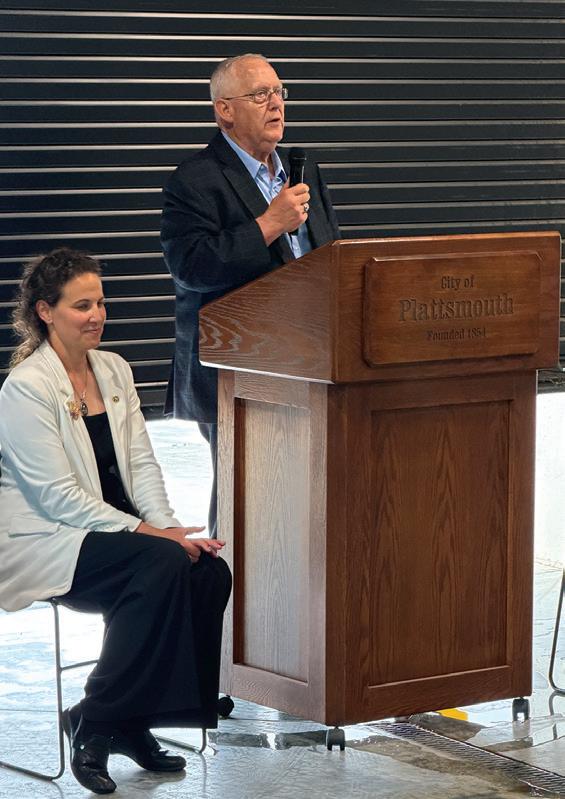
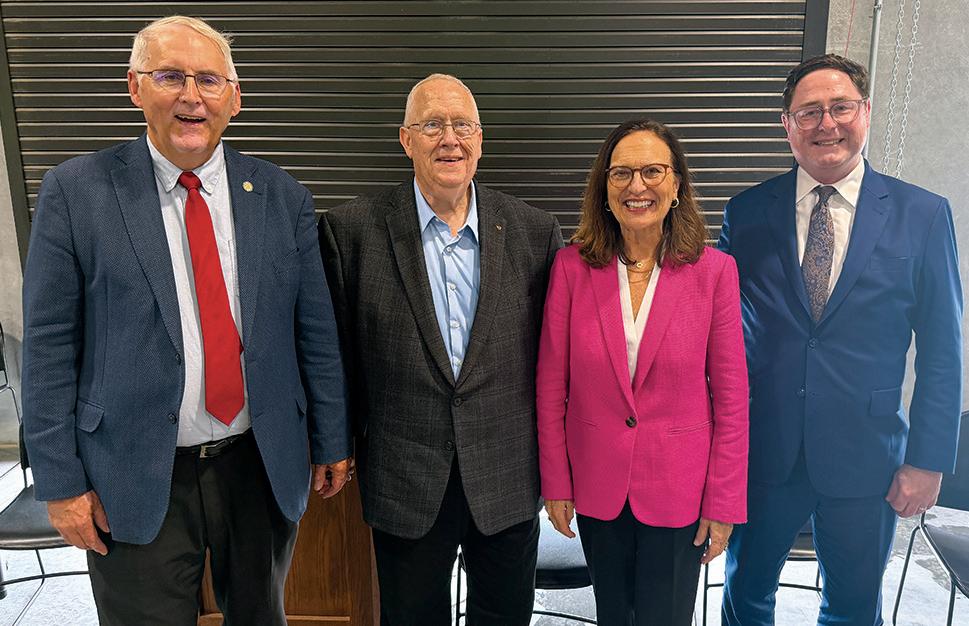
But fast forward 7 years and in late May, city leaders, state and federal partners, engineers, contractors, and residents gathered for a ribbon cutting to celebrate the largest public works project in the history of municipality-the FEMA Flood Recovery Project #88688, a comprehensive wastewater system recovery and resiliency initiative valued at more than $90 million.
This ceremony signaled the end of a many years-long effort to rebuild and modernize the community’s wastewater system following the historic flood disaster.
“Today we celebrate much more than a building. We celebrate the successful completion of one of the cornerstone
projects of the City of Plattsmouth’s long-term flood recovery efforts.” said Plattsmouth Mayor Paul Lambert. “This facility stands as a symbol of our community’s resiliency, preparedness, and commitment to protecting public health and infrastructure for generations to come.”
Looking back, this project involved so many people and moving parts. Following the flood, Plattsmouth issued a Local Disaster Declaration on March 13, followed by a State Disaster Declaration on March 18 and a Federal Disaster Declaration on March 21. Floodwater severely impacted wastewater infrastructure, prompting an extensive recovery effort involving the City of Plattsmouth, the Nebraska Emergency Management Agency (NEMA), and the Federal Emergency Management Agency (FEMA).
FEMA conducted an initial site inspection on May 16, 2019, and the city submitted a disaster-related project addendum later that month. Emergency cleanup and debris removal continued through the summer of 2019 while city officials worked to stabilize damaged facilities and evaluate long-term recovery options.
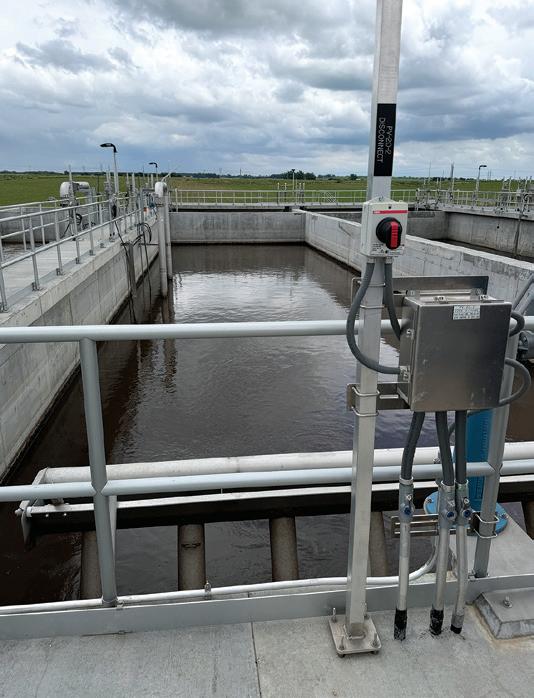


For nearly two years, from May 2019 through May 2021, city staff met weekly with FEMA and NEMA representatives to develop a comprehensive recovery strategy. While planning continued, crews focused on restoring operations at the city's existing wastewater treatment plant at 2219 Main Street.
Continued on page 14 / See Plattsmouth
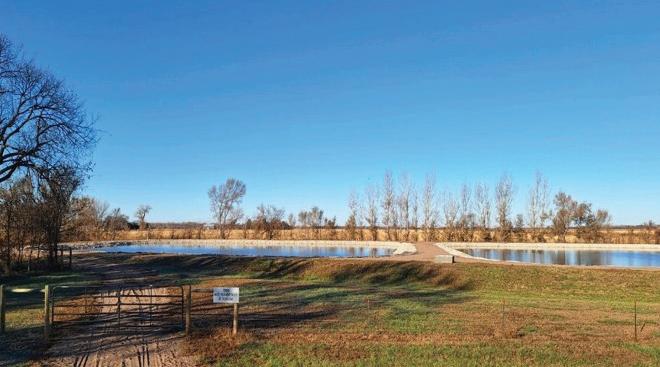
Manyrural communities in Nebraska are taking inventory of their existing water and wastewater systems by evaluating the age of the infrastructure and identifying parts of the system that may need to be repaired or replaced. In this article we highlight a community that is benefiting by having complete retention lagoons instead of its 52-year-old treatment plant. This transition has lowered its operating and maintenance expenses and will serve it for decades to come. Does your current water and wastewater system meet the needs of your residents? A preliminary engineering report can help evaluate your system and provide the most cost-effective alternatives. USDA Rural Development has several different programs to help a community with many different projects. Our Water and Waste programs can potentially help eliminate some of your water and wastewater concerns. Your municipality may also be eligible for grant funds to offset the cost of the Preliminary Engineering Report.
What does this program do?
Provides funding for clean and reliable drinking water systems, sanitary sewage disposal, sanitary solid waste disposal, and storm water drainage in rural areas.
Who is eligible?
Most state and local governmental entities, private nonprofits, and Federally recognized Tribes in rural areas and municipalities with populations of 10,000 or less, or Tribal lands in rural areas.
What kind of funding is available?
Long-term (up to 40 years), lowinterest loans. If funds are available, grants may be combined with a loan if necessary to keep user costs reasonable. Loan term based on useful life of facilities financed and has a fixed interest rate for the life of the loan. Interest rate based on need for the project and the median household income of the area to be served.
USDA RD funds were used to assist the Village of Edison upgrade its wastewater system.
The old system consisted of a wastewater collection system, treatment plant, and lift station. The collection system and treatment plant were built in 1969 and were designed using the common practices in place during that time. The entire system had exceeded its useful life.
Due to its age, many parts had to be special made for the treatment plant because stock parts were no longer being produced. When breakdowns occurred, the operator would have to make temporary “band aid” adjustments to allow the plant to continue to operate. The existing lift station needed to be replaced immediately to avoid the risk of it failing completely.
This project was completed in two phases. Phase 1 allowed the village to urgently replace the lift station and seek land for the lagoons. Phase 2 included the construction of the lagoons and demolition of the plant. These improvements will decrease operating expenses and serve the community for many years.
How may funds be used?
To finance the acquisition, construction, or improvement of drinking water sources, treatment, storage, and distribution, sewer collection, transmission, treatment, and disposal, solid waste and storm water systems.

To learn more about any of the USDA Rural Development Programs that might be of value to your community, visit the website at rd.usda.gov/ne or call the USDA RD main line at (402) 437-5551.


This program provides funding for clean and reliable drinking water systems, sanitary sewage disposal, sanitary solid waste disposal, and storm water drainage to households and businesses in eligible rural areas.
This program assists qualified applicants who are not otherwise able to obtain commercial credit on reasonable terms. Eligible applicants include:
• Most state and local governmental entities
• Private nonprofits
• Federally recognized Tribes
What is an eligible area?
Areas that may be served include:
• Rural areas and towns with populations of 10,000 or less – check eligible addresses
• Tribal lands in rural areas
• Colonias
What kinds of funding are available?
Long-term, low-interest loans. If funds are available, a grant may be combined with a loan if necessary to keep user costs reasonable
How may the funds be used?
Funds may be used to finance the acquisition, construction, or improvement of:
• Drinking water sourcing, treatment, storage, and distribution
• Sewer collection, transmission, treatment, and disposal
• Solid waste collection, disposal, and closure
• Storm water collection, transmission, and disposal
In some cases, funding may also be available for related activities such as:
• Legal and engineering fees
• Land acquisition, water and land rights, permits, and equipment
• Start-up operations and maintenance
• Interest incurred during construction
• Purchase of facilities to improve service or prevent loss of service
• Other costs determined to be necessary for completion of the project
• See 7 CFR Part 1780.7 and 1780.9 for a complete list
What is the loan term and rate?
The loan term is up to a 40-year payback period, based on the useful life of the facilities financed with a fixed interest rate. The interest rate is based on the need for the project and the median household income of the area to be served. Contact us for details and current interest rates applicable for your project.
Are there additional requirements?
• Borrowers must have the legal authority to construct, operate, and maintain the proposed services or facilities.
• All facilities receiving federal financing must be used for a public purpose.
• Partnerships with other federal, state, local, private, and nonprofit entities that offer financial assistance are encouraged.
• Projects must be financially sustainable.
Communities across the country depend on reliable infrastructure to ensure public safety, economic opportunity, and quality of life. Over the past several years, growing costs, workforce shortages, and shifting funding landscapes have forced cities, towns, and villages to rethink how they plan, finance, and maintain these essential systems.
The 2026 Municipal Infrastructure Conditions (MIC) Survey provides a timely snapshot of how responding municipalities assess the condition of their infrastructure today—and how those conditions and priorities have changed since 2022.
The Realities of Municipal Infrastructure Finance: Trends and Strategies
Cities operate within a challenging fiscal environment where infrastructure investments compete with essential daily services. Property taxes—representing 60 percent of municipal tax revenue and relied upon by nearly 90 percent of cities—remain the foundation of local infrastructure finance.
The 2026 MIC survey reveals a notable shift in funding strategies. Compared to 2022, when sample cities reported a more balanced mix of borrowing and own-source revenues, today’s municipalities are increasingly relying on local, cash-based funding. Non-borrowing methods continue to play a central role in how surveyed cities pay for infrastructure, underscoring both fiscal caution and limited financing capacity.
Infrastructure Conditions: Progress and Pressure Points
Municipal leaders continue to grapple with aging assets, rising construction costs, and evolving federal funding rules. When asked to grade the condition of 11 infrastructure categories, respondents indicated that recent federal investments have improved their ability to assess and understand system needs—but not eliminated underlying challenges.
The 2026 results point to an uneven infrastructure landscape. While some asset types have stabilized or improved slightly, others show increasing strain. These findings reinforce the need for sustained, predictable funding, and technical assistance to help communities address long-standing capital needs and modernize critical systems.
Municipal infrastructure priorities in 2026 closely mirror those reported in 2022. Cities continue to prioritize core systems that support daily operations and public safety, including streets, water, sewer and stormwater systems, and water treatment facilities. These assets consistently rank as top priorities, even as their conditions shift.
By contrast, public buildings, parking facilities, broadband, and public transit remain lower priorities for many communities—reflecting long-standing local planning patterns.
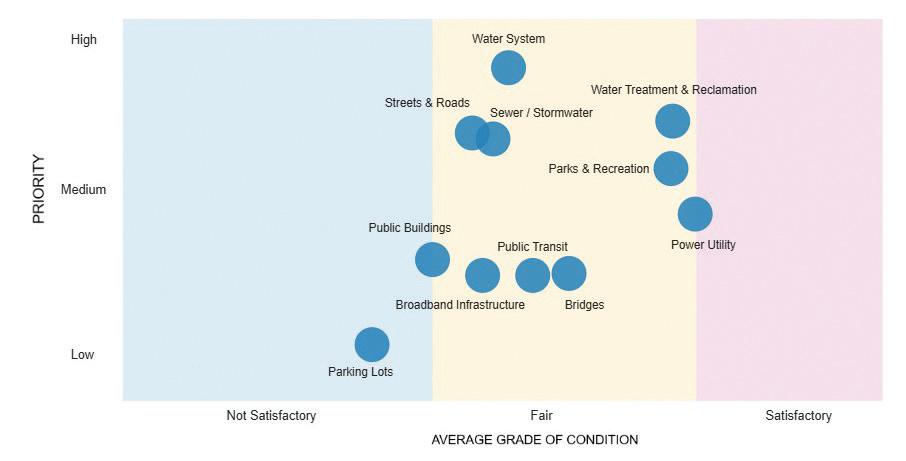
Source: National League of Cities Municipal Conditions 2022 (N=177) and 2026 (N=70) Survey.
Figure Note: Differences between years are not statistically significant, possibly due to small sizes. Key factors determined as those were identified as influencing municipal capital decisions “to a great extent.”
Factors shown here were the most common identified in 2026 survey.
Taken together, the findings suggest that municipal leaders are directing attention toward the systems under the greatest pressure. This alignment underscores the importance of long-term planning and dependable funding to address immediate risks while advancing major capital projects.
The factors influencing capital decisions in 2026 remain largely unchanged from 2022. Funding availability continues to be the single most important driver of infrastructure investment. Respondents also emphasized the role of staff capacity, strategic plans, and elected officials’ priorities in determining which projects move forward—and how quickly.
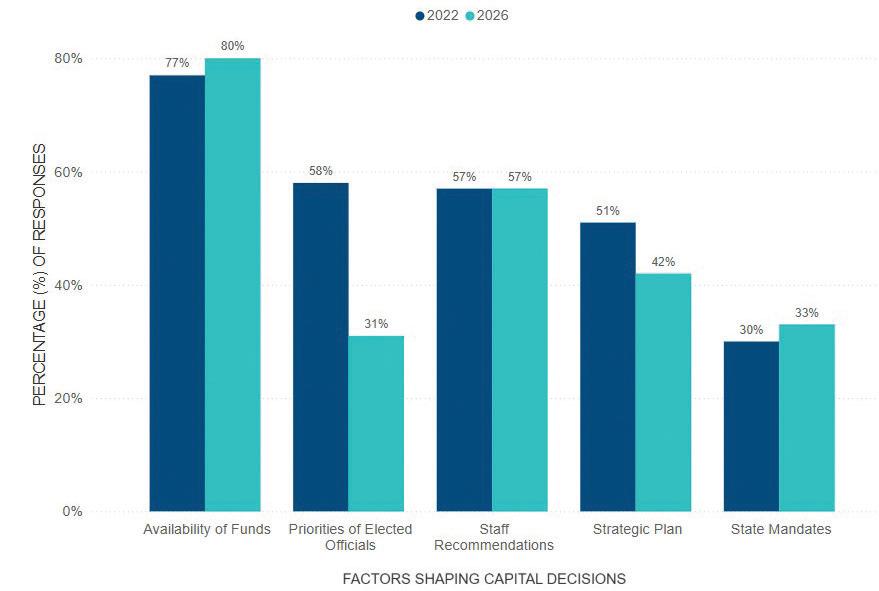
Source: National League of Cities Municipal Infrastructure Conditions 2026 Survey (N = 64)
Figure Note: Ratings D+F, C and A+B are labeled as Not Satisfactory, Fair and Satisfactory respectively. High, Medium and Low represent priority levels.
Cities report that federal grants have been particularly valuable for transportation and water infrastructure, aligning closely with major funding priorities of the Infrastructure Investment and Jobs Act (IIJA).
NLC’s Rebuilding Together analysis shows that more than 1,600 cities have already secured approximately $12.7 billion in federal infrastructure funding, demonstrating both the impact of these programs and the importance of local capacity to pursue them.
The 2026 MIC Survey highlights both resilience and rising pressure across municipal infrastructure systems. Local governments remain deeply committed to maintaining and improving the assets their residents rely on — even as fiscal, administrative, and workforce constraints shape what is feasible.
While the full impact of recent federal investments will take time to emerge, this report offers a clear, grounded view of how municipalities are balancing immediate needs with long-term goals. Sustained funding, technical support, and strong local capacity will be essential to ensure communities can fully leverage available resources and build infrastructure that meets the demands of a changing future.
The report can be found here:
https://www.nlc.org/resource/municipal-infrastructure-conditions-report-2026/
Continued from page 9
Repairs began in October 2019 and were completed by November 2020. Temporary repairs successfully returned the facility to operational status on January 13, 2021, allowing the city to maintain wastewater service while construction of replacement facilities moved forward.
Public involvement became an important part of the project beginning in 2021. Elected officials toured potential project sites and treatment technologies in August of that year. A public open house was held in November 2022 and the city formally broke ground on the project on March 3, 2023, and later hosted a public meeting focused on force main construction along Lincoln Avenue in October 2023.
The recovery project ultimately consisted of several major infrastructure components, including a new Raw Wastewater Pump Station, nearly seven miles of force main piping, a new wastewater treatment plant, and new collection system improvements.
Engineers designed the new Raw Wastewater Station to accommodate projected 2042 peak-hour wet-weather flows of 9.11 million gallons per day. To minimize future flood impacts, the entire facility was elevated approximately two feet above the 2019 flood elevation.
A major component of the project involved installation of a new dual-force main system connecting the pump station to the new wastewater treatment plant located at 13949 Vireo Parkway in the Four Mile Industrial Park. The system includes 12-inch and 24-inch diameter force mains designed to handle both daily wastewater flows and peak wet-weather conditions.
The force main project required approximately seven miles of HDPE and PVC pipe installation, extensive fusion welding operations, pavement and sidewalk reconstruction, retaining wall construction, and relocation of numerous utilities, including water, electrical, sanitary sewer, and storm sewer infrastructure. Most of the work occurred along the Lincoln Avenue corridor and represented one of the largest utility construction efforts undertaken in the city.
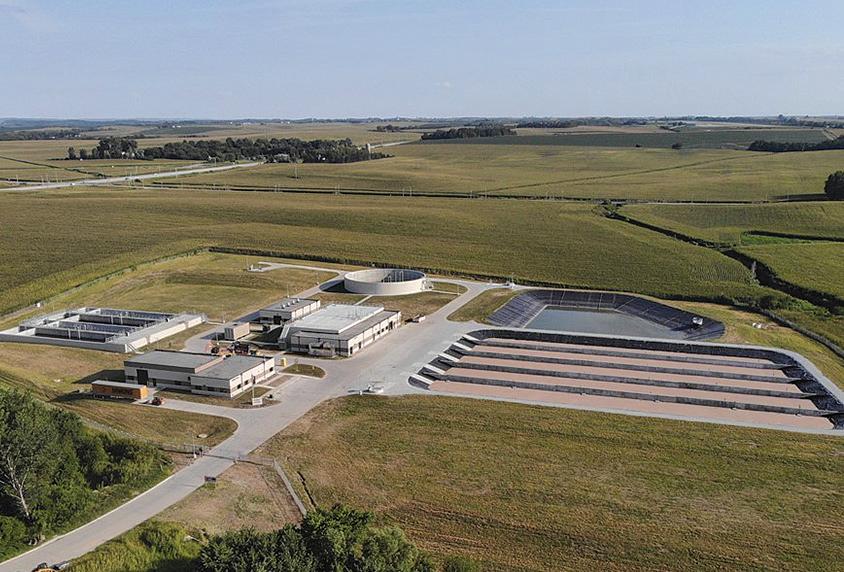
At the heart of the project is the new wastewater treatment plant, strategically located outside the city’s flood-prone areas. The facility was designed to process up to 4.0 million gallons of wastewater per day. During heavy rainfall and peak flow events, excess wastewater can be temporarily stored in a 3.0-million-gallon equalization basin before treatment.
The treatment process begins at the Raw Wastewater Pump Station, where wastewater undergoes preliminary screening before being conveyed to the treatment campus. At the new plant, wastewater is treated using continuous inflow
Sequencing Batch Reactors and then disinfected through ultraviolet light treatment before being discharged to a tributary of Four Mile Creek.
Project officials said one of the most significant challenges throughout the recovery effort was maintaining uninterrupted wastewater operations while simultaneously constructing an entirely new treatment and conveyance system. The city relied on the temporarily repaired wastewater treatment plant at 2219 Main Street for several years while multiple phases of construction occurred across the community. Careful coordination among city staff, engineers, contractors, FEMA, and regulatory agencies was required to ensure essential wastewater service continued without disruption while major infrastructure improvements were underway.
Construction teams also faced numerous weatherrelated obstacles during the project's duration. Periods of heavy rainfall, seasonal weather delays, and a significant 2024 flood event tested project schedules and site conditions. The 2024 flooding affected portions of the Raw Wastewater Pump Station site before final grading and elevation improvements had been completed, causing temporary setbacks. However, project teams adapted construction schedules, implemented mitigation measures, and continued work to keep the overall project moving forward.
The project involved six prime contractors and approximately 64 subcontractors, making it one of the largest and most complex infrastructure undertakings ever completed in Plattsmouth. The successful coordination of multiple construction contracts, utility relocations, regulatory requirements, public engagement efforts, and ongoing system operations demonstrated a remarkable level of collaboration among all project partners.
With the project now complete, city officials say Plattsmouth has transformed a devastating flood disaster into an opportunity to build a modern, resilient wastewater system capable of serving the community for generations.
What began as an emergency response to one of Nebraska's most destructive flood events has become a landmark infrastructure investment—one that strengthens public health, protects the environment, improves flood resilience, supports future growth, and secures reliable wastewater service for the citizens of Plattsmouth for decades to come.
Editor’s Note: Thank you to Emily Bausch, Plattsmouth City Administrator, for the detailed information and all her work on helping craft this article!

The League Insurance Government Health Team (LIGHT) helps hundreds of its members throughout Nebraska obtain affordable health insurance coverage.
With seven plan options and three networks to choose from, you’re sure to find one that meets your group’s coverage and benefit needs.
Offering your employees much-needed protection against the high cost of medical care:
• Three PPO options
• Four HSA-eligible high deductible options
• Prescription drug coverage
Single: Covers the employee only
Employee and spouse: Covers the employee and their spouse
Employee and children: Covers the employee and their eligible dependent children, but does not provide coverage for the spouse
Family: Covers the employee and eligible dependents including a spouse
With several networks available, you have easy access to quality providers:
• NEtwork BLUE (Statewide)
• Premier Select BlueChoice (Regional)
• Blueprint Health (Regional)
• Out-of-state network availability
Contact your current local Agent/Broker Or contact
Dennis Maggart
Executive Vice President P: 913-378-9841 or 816-718-0335
Dennis@McInnesGroup.com
Jane Limbach Account Man ager P: 913-378-9840
Jane@McInnesGroup.com
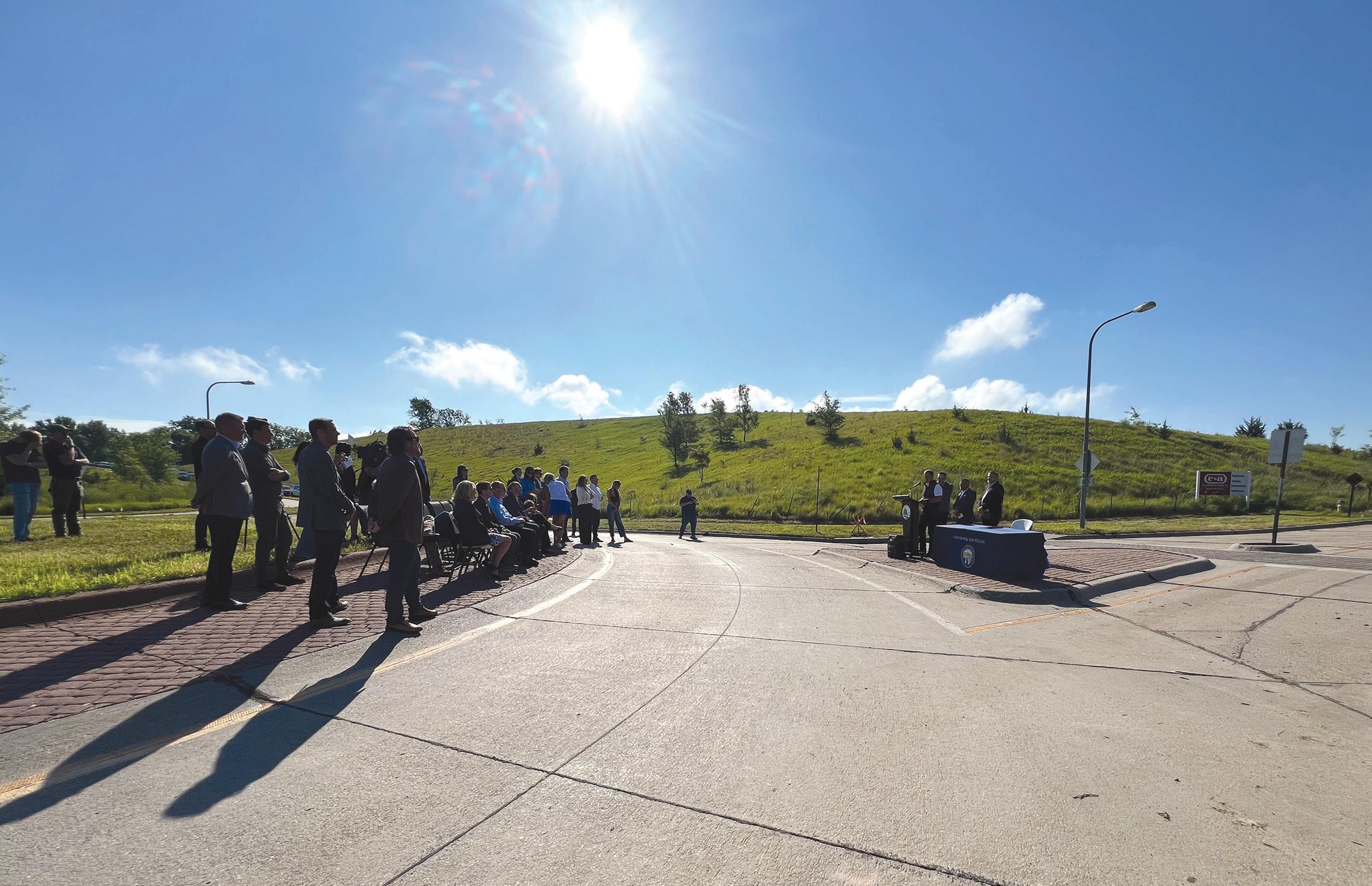
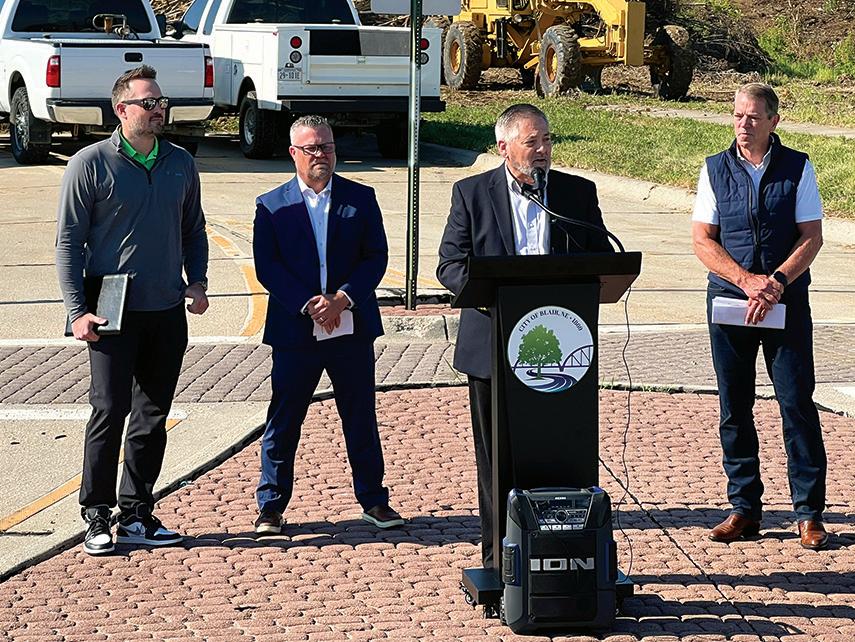
On June 22, Gov. Jim Pillen joined local leaders, housing advocates and contractors in Blair for the ceremonial bill signing of LB 1114. Advanced as a priority by the Legislature’s Urban Affairs Committee, the comprehensive package contains the Community Improvement District (CID) Act introduced by Sen. Mike Jacobson. The new law provides a tool designed to allow property owners to voluntarily form specialized districts to finance, construct, and maintain vital public infrastructure within city or village limits.
To highlight its impact, Gov. Jim Pillen held the event at the future site of the Bear Creek housing development. Bear Creek plans to be among the first in Nebraska to utilize the new CID tool to construct 137 new homes at a starting price of $320,000.
“The rising cost of housing across the country has created a steep barrier for far too many people who want to achieve the dream of owning a home,” said Gov. Jim Pillen. “LB 1114 tackles this problem head-on by paving the
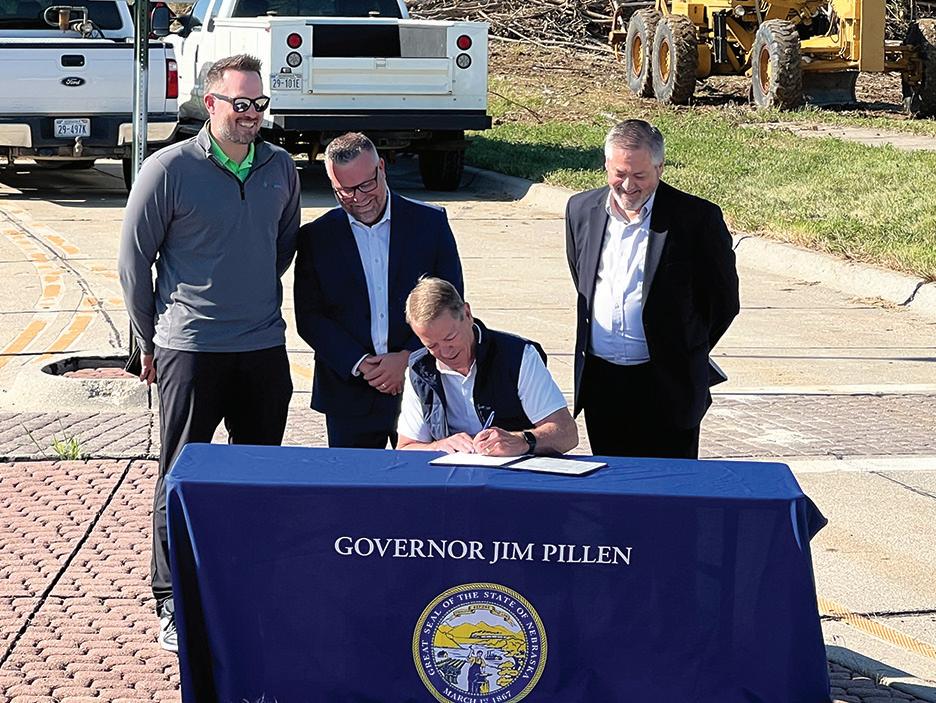
way for the development of hundreds of new homes at a more affordable starting price for Nebraska families.”
Traditionally, infrastructure requirements for a new development - such as utility hookups, grading, streets, and sewer lines – add a staggering $30,000 to $50,000 per lot. Because local communities often face financing hurdles to build these systems, affordable housing projects frequently struggle to get off the ground, or they produce homes that are simply too expensive for the middle class.
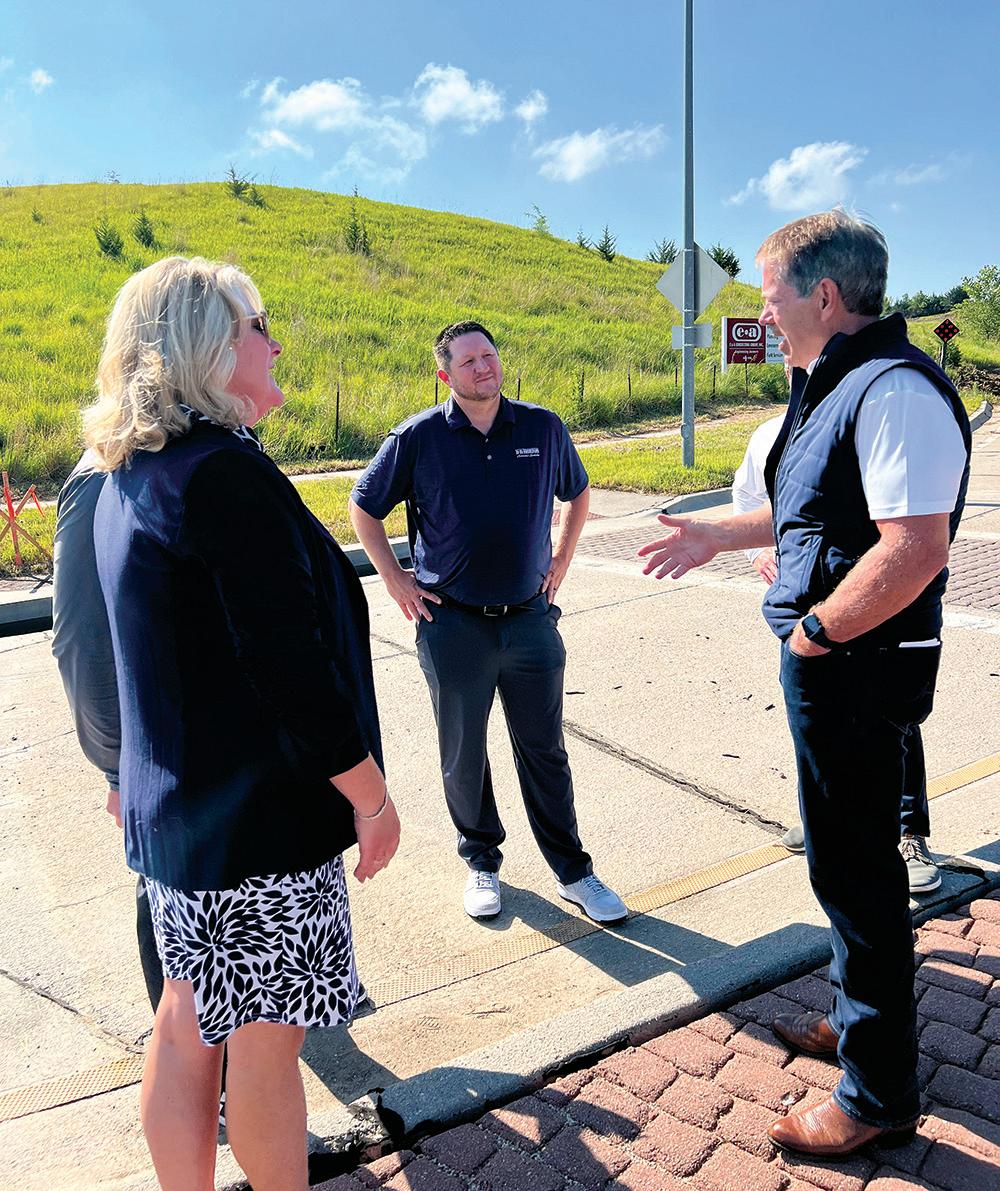
“The provisions from LB 1130, included in LB 1114, give Nebraska communities a new, locally controlled tool to finance infrastructure and support responsible growth. By reducing upfront development costs, these provisions can encourage the construction of much-needed housing, improve affordability, and create opportunities to address their unique needs,” said Sen. Jacobson. “I appreciate the collaborative effort that brought these ideas together and look forward to the positive impact they will have across Nebraska.”
LB 1114 creates an in-city framework where CIDs can leverage tax-exempt financing to defer upfront infrastructure costs. The debt is slowly repaid over time through revenues generated within the district itself, rather than being front-loaded onto the home’s initial price.
“We would like to thank the Governor’s office, Senator Jacobson, the Urban Affairs Committee, the City of Blair and the Welcome Home Coalition in helping to move this transformation bill forward,” said Adam Flanagan, managing director and co-owner of Bluestem Capital Partners “Bluestem Capital Partners is excited to immediately use this new tool across Nebraska to tackle the housing shortage, particularly, the affordable housing shortage.”
By applying the new CID mechanism to Blair’s Bear Creek development, the project will reduce upfront lot costs and final home prices by approximately 30%. This
will save new homeowners hundreds of dollars per month compared to traditional private developments.
“LB 1114 is the most important financial tool that has been passed in the State of Nebraska since the TIF law was passed in 1978,” said Jason Thiellen, CEO of E&A Consulting Group and president of the Welcome Home Coalition. “LB 1114 provides the opportunity for communities all across Nebraska to finance public infrastructure to help them grow and prosper by being able to partner with local developers and builders to provide the much-needed housing stock at a more affordable price than ever before. We at Welcome Home appreciate the public/private partnership it took to get LB 1114 across the finish line.”
Brought forward in partnership with the Welcome Home Coalition, a nonprofit network of individuals, businesses, and organizations dedicated to proactively improving Nebraska’s starter housing market, the CID framework targets upfront development roadblocks. Blair will secure the housing supply and expanded property tax base it needs, while the development itself will drive local jobs and commercial spending.
“We appreciate Gov. Pillen joining us today for this historic step forward creating Community Improvement Districts in Nebraska,” said Phil Green, Blair City Administrator. “This district is an incredible tool in helping finance public infrastructure for communities like Blair.”
Source – Press release from the Office of the Governor; Photos provided by the City of Blair.

BY CARLIE JONAS, THE CENTER FOR RURAL AFFAIRS
AcrossNebraska, rural grocery store owners are doing far more than stocking shelves. Running a grocery in a small town is more complex and more essential than it often appears.
When a rural grocery store struggles, the impact affects the entire community. Here’s five lessons we learned from working alongside grocery stores:
1. Ownership models matter: In locally owned stores, owners constantly weigh what their community needs against what the business can sustain. That stands in contrast to corporate ownership models, where decisions may be made far from the community. Ownership isn’t just a business structure, it directly impacts responsiveness, risk tolerance, and long-term viability.
2. More than grocery stores: These stores are essential infrastructure. They are employers, gathering spaces, and access points for food.
3. Workforce is important: Hiring is difficult. Retention is harder. And flexibility is non-negotiable. Employees shift constantly between roles, running the register, stocking shelves, and managing deliveries. Even one staffing gap can disrupt the entire operation.
4. Price and distribution are challenges: Distribution shapes what rural grocery stores can offer and at what cost. Constraints can include delivery schedules, minimum order requirements, rising costs, and limited supplier options. Stores are getting creative, sourcing products locally when they can. These efforts don’t replace larger distribution systems, but they do offer flexibility.
5. Trust is important: Community members have to weigh the reality of their own decisions. Price, convenience, and household budgets matter, but so does supporting local business owners.
Often the stores that make it have a deep connection to their communities, shown in the way customers greet owners, in the conversations at checkout, and in the sense of familiarity with the communities they serve.
D.A. Davidson & Co. is committed to strengthening the infrastructure and enriching the lives of people in our communities throughout Nebraska and across the nation.
Our bankers specialize in:
• Bond Anticipation Notes
• Paving Bonds
• Water and Sewage Bonds
• General Obligation Bonds
• Utility System Revenue Bonds
• Lease-Purchase Financing
Call:
(402) 392-7986 | Paul Greiger (402) 392-7989 | Cody Wickham (402) 392-7988 | Andy Forney (402) 392-7933 | Jerry Spethman





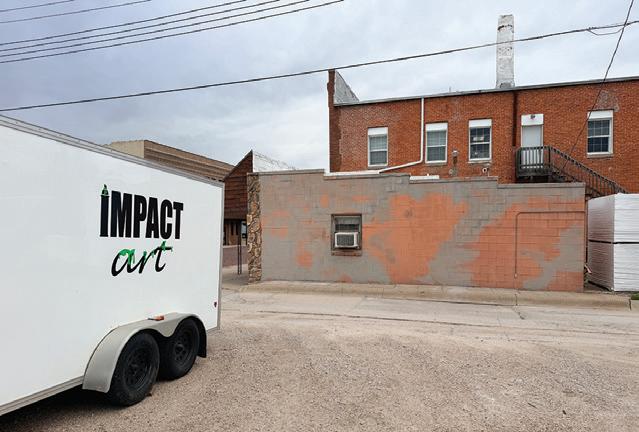
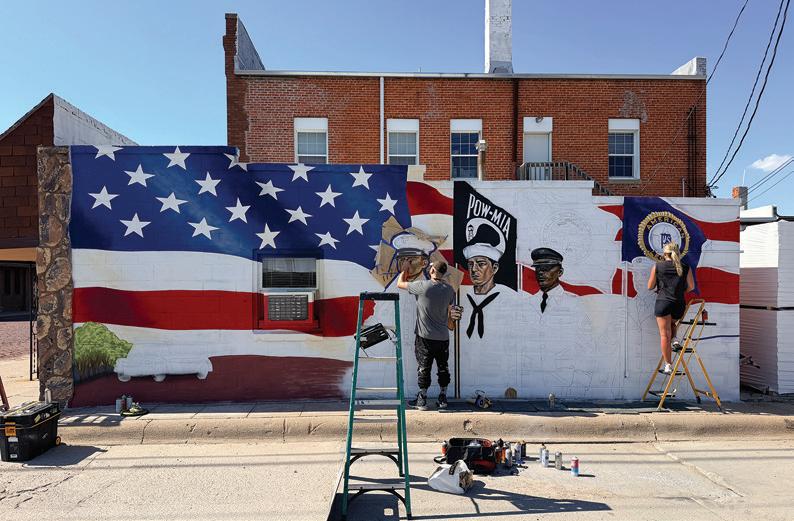
Check it out! There is a new mural in Gibbon recognizing members of the U.S. armed forces. Thank you to Derek Rusher and the team at Impact Art for sharing these photos.


America’s 250th anniversary promises to be a memorable milestone, bringing communities together through parades, festivals, concerts, and fireworks. While these events create excitement and civic pride, they also increase exposure to risk. With thoughtful, proactive planning, municipalities can manage these challenges effectively and ensure celebrations remain safe and successful.
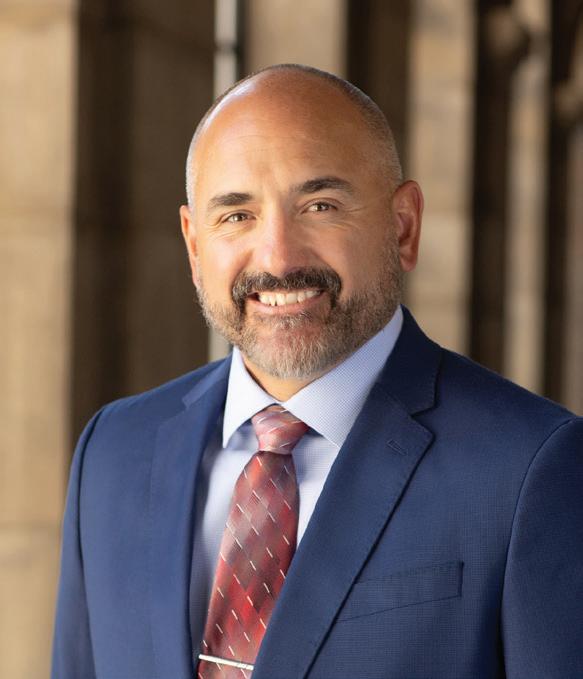
JAMES KELLEY LOSS CONTROL SPECIALIST, LARM
Strong risk mitigation begins with early, organized planning. Municipalities should review each event with a focus on potential exposures, including large crowds, traffic impacts, and weather-related disruptions. Keeping the approach straightforward is key. Clearly define roles across departments, establish communication protocols, and outline contingency plans. Even a brief planning session or tabletop exercise can help teams identify gaps and build action plans ahead of time.
Large gatherings are typical of these celebrations, so they require careful coordination. Designing event layouts with clearly marked entry and exit points helps maintain steady crowd movement and reduces congestion.

Simple measures like effective signage, designated walkways, and visible staff presence can significantly improve safety. When attendees understand how to navigate the space, the overall environment becomes more orderly and manageable.
Vendors enhance the event experience but can introduce additional risk if not properly managed. Municipalities should ensure all vendors provide appropriate insurance, name the municipality as an additional insured, meet permit requirements, and follow safety standards.
Particular attention should be given to higher-risk operations, such as fireworks displays, temporary amusement rides, and food services. Clear contracts and hold-harmless agreements, along with basic verification steps, help reduce liability and support smoother event operations.
If alcohol is part of the celebration, additional safeguards are essential. Municipalities should confirm that a liquor license or Special Designated License (SDL) is obtained prior to the event. Equally important is obtaining proof of Liquor Liability insurance from vendors, organizers, or any entity serving alcohol.
For beer gardens, establish controlled, fenced areas with ID checks at designated entry points. Provide trained staff and on-site security to monitor behavior and respond quickly. These measures help reduce alcohol-related risks while maintaining a safe, well-managed environment.
High attendance can place extra stress on public infrastructure. Conducting pre-event inspections of streets, sidewalks, parks, and facilities helps identify and address potential hazards early.
Temporary structures like stages, tents, and seating areas should be installed securely and meet applicable safety standards. Adding lighting, barriers, or additional oversight in high-traffic areas can further protect both people and property.
Effective traffic management is an important part of reducing risk. Road closures, detours, pedestrian routes, and parking plans should be established in advance and clearly communicated.
Sharing updates through websites, social media, and signage ensures residents and visitors know what to expect. When traffic patterns are predictable and clearly marked, it reduces confusion and helps prevent accidents.
Even well-organized events need to be ready for the unexpected. A coordinated emergency response plan ensures that police, fire, and medical services can act quickly if needed.
Placing first aid stations in high-traffic areas and providing access to hydration or cooling stations during warm weather events can reduce health-related incidents. Monitoring weather conditions and having clear guidelines for delays or cancellations also supports consistent, safety-focused decision-making.
While planning any celebration, it’s wise to review the municipality’s insurance coverage to ensure it aligns with planned activities. Confirm that proper coverage is in place and that any event-specific risks are addressed.
Engaging with insurance providers or risk pools ahead of time can help identify gaps and provide added peace of mind as celebrations approach.
Clear communication ties all risk mitigation efforts together. Providing straightforward information about event logistics, safety expectations, and routes helps attendees make informed decisions.
Maintaining a positive and professional tone encourages cooperation and creates a sense of shared responsibility. Volunteers or event ambassadors can also support communication efforts and provide guidance on the ground.
America’s 250th anniversary is a once-in-a-lifetime opportunity for communities to come together and celebrate. By focusing on practical risk mitigation such as planning ahead, managing crowds, addressing related exposures, and staying prepared, municipalities can reduce risk while still delivering safe, memorable events for everyone.
Helping communities move safer, smoother, and more efficiently—one intersection at a time.

Funding opportunities with NAC:
BY THE NEBRASKA ARTS COUNCIL
Welcome back to the next installment of quarterly articles from the Nebraska Arts Council, where we will highlight a different grant program and how it can be used in your community.
The Creative Aging Arts Program (CAAP) provides grants to hire an artist to lead workshops at senior centers, assisted living facilities, libraries, and nonprofit organizations serving older adults. Participating in the arts is shown to improve memory, fight loneliness, improve hand-eye coordination, and build community ties by providing a social connection.
The CAAP program allows applicants to select from a list

of teaching artists trained in best practices of engaging older adults. During a residency, artists will share their expertise through sequential arts lessons, helping participants hone their skills in a variety of disciplines. Programs culminate with a special event to showcase their work with peers and the community.
Trained teaching artists can be found across the state and in all manners of disciplines, from writing to theatre to painting.
The Hastings Public Library held a series of writing workshops with teaching artist Eric Tucker. Eric guided participants through each stage of the writing process as they created their own short works. The class culminated in the publication of their stories in a journal designed by the instructor. One participant reported, “This workshop exceeded my expectations. It motivated me and enabled me to fast track a project that had been stalled for years. I highly recommend it to anyone who needs structure in their writing project. So many programs offered in the community target children or young families. This project was for me – at age 72.”
Applicants have reported seeing the strong connections that were created during the programs. The Willard Community Center in Lincoln held an eight-week printmaking class with teaching artist Liz Shea-McCoy. The class evolved into more than an art course. It became a supportive social circle, with one participant volunteering to facilitate a new Mahjong group, which further expanded opportunities for social engagement.
In McCook, teaching artist Kim Darling taught two weeks of creative workshops for older adults at senior facility Kinship Pointe. During the workshops, participants learned about different art styles, techniques, and mediums. The culminating display at a local non-profit, ArtBank, was well attended by residents, their families, and community members.
Applications are currently open and are due at least six weeks prior to the event date. For more information, please contact the Nebraska Arts Council at 402-595-2122 or info@nebraska.gov.




The FEMA Corps program announces the open application period for the next cohort of future emergency managers. The program is launching the next application cycle aligned with FEMA’s core mission and the Trump administration’s priorities, ensuring good use of taxpayer dollars and providing professional opportunities. FEMA is pleased to announce that the application period opened on July 1 and runs until Oct. 19 for FEMA Corps members and until Sept. 30 for FEMA Corps team leaders.
The new class of FEMA Corps candidates will host approximately 80 members and 10 team leaders, who will begin serving in Feb. 2027 and will finish in Nov. 2027. FEMA Corps teams will deploy nationwide to support emergency management efforts, bolster operational readiness, and assist with locally led, state-managed, federally supported disaster events.
Through participation in the FEMA Corps program, young adults will have the opportunity to serve communities impacted by disasters, while gaining valuable professional development skills and emergency management experience. FEMA Corps teams rotate

through multiple projects within their service year and gain experience in areas such as logistics, individual assistance, community outreach, data collection and more!
Graduates from the FEMA Corps program may receive an education award upon completion, which can be used for tuition or student loans, as well as a relocation expense. Additionally, FEMA Corps teams are provided weekly stipends and a living allowance while deployed to a FEMA project.
To date, over 4,400 FEMA Corps members have assisted their fellow Americans across a variety of disasters. This equates to more than 5 million service hours in support of FEMA operations, including survivor registration, logistics, community engagement and disaster recovery center staffing.
• Applicants interested in team leader positions, which have no upper age limit requirement, have until Sept. 30 to apply.
• Applicants between the ages of 18 and 24 who are interested in serving as a members of FEMA Corps can apply for the Feb. 2027 class by Oct. 19. Learn more about either program at www.americorps. gov/NCCC.
Source – FEMA


Andrew R. Willis Alison Janecek Borer
In April 2026, Governor Jim Pillen approved LB 1114, enacting the Community Improvement District Act (the “Act”).i The Governor’s office described LB 1114 as part of a broader effort to increase the stock of affordable housing in Nebraska, explaining that the Act establishes a new “in-city framework” that enables the formation of Community Improvement Districts (each a “CID”) to finance public infrastructure and defer upfront development costs.ii
The Act authorizes property owners to propose formation of a CID, situated wholly within city or village limits.iii
A CID is a political subdivision empowered to levy property taxes and special assessments, issue bonds, and construct public infrastructure. iv For purposes of the Act, “public infrastructure” means “any publicly owned electric service lines and conduits, gas service lines and conduits, sanitary sewer lines, sanitary sewer system improvements, storm sewer lines, storm sewer system improvements, flood control improvements, water lines, water system improvements, emergency management warning system improvements, sidewalks, roads, streets, highways, pedestrian walkways, skywalks, public spaces, public facilities, parks, playgrounds, recreational facilities, offstreet motor vehicle parking facilities, public waterways, docks, wharfs, rail lines, flood control systems, flood control improvements, and related appurtenances, whether owned or to be owned by the [CID] or another political subdivision.”v
While CIDs are initiated by private landowners and governed by a board of trustees, the Act assigns central gatekeeping, regulatory, and oversight roles to host municipalities. This article examines the mechanisms through which municipalities may exercise that authority.
BY ANDREW R. WILLIS & ALISON JANECEK BORER, CLINE WILLIAMS WRIGHT JOHNSON & OLDFATHER, L.L.P.
To form a CID, a majority of the owners of real property within the proposed CID must first sign articles of association proposing the CID’s creation.vi The articles must identify the CID’s name, perpetual existence, boundaries, property owners, affected tracts, proposed trustees, and proposed maximum aggregate levy rate, and the signing owners must obligate themselves to pay CID taxes and special assessments authorized by the Act.vii The articles and a request for approval must then be filed with the city or village clerk, who must schedule a hearing before the city council or village board within ninety (90) days.viii The city or village clerk must also publish notice of the proposed CID in a newspaper and mail the notice to the owners of real property within the proposed CID who did not sign the articles of association.ix
After the hearing, the city council or village board may create the CID, which must be done by municipal ordinance specifying the included property, naming the initial trustees, approving the maximum levy rate, and declaring the CID a duly formed political subdivision.x If an owner of real property within the proposed CID did not sign the articles and objects to the CID’s formation, the city council or village board may not approve the CID by ordinance unless it removes the objecting owner’s property from the boundaries or determines that inclusion is necessary to public health or welfare or appropriate because the property will be specially benefited by expected public infrastructure improvements.xi The municipality also may not pass the ordinance unless and until all property in the proposed CID is within the city or village’s corporate limits.xii
Continued on page 26 / See CIDs
Lexington
Congratulations to Dennis Burnside for retiring after 20 years with the City of Lexington. As Assistant City Manager, Dennis played key roles in projects and initiatives that improved infrastructure, supported economic development, expanded housing opportunities, strengthened public services, and helped move municipality forward.

According to an article in the city newsletter, during his career Dennis helped secure millions of dollars in grants and development funding benefiting the municipality. His work touched nearly every part of city government, including support for the Lexington Public Library, community improvement projects, and public infrastructure initiatives.
He was also instrumental in the creation of the Veterans Wall and also helped secure grants resulting in the planting of more than 500 trees throughout the community, leaving a legacy future generations will continue to enjoy.
Dennis served during a period of tremendous growth and progress for Lexington, including the community being recognized as Nebraska’s 2015 Showcase Community.
Thank you, Dennis Burnside, for 20 years of leadership, professionalism, humor, and service to the City of Lex ington.


Source – City of Lexington
Continued from page 24
Funding and Financial Administration
Funding for a CID is designed to come primarily from within the CID itself. The CID may annually levy a property tax on taxable property within the CID, subject to the maximum levy rate approved by the municipal ordinance at formation.xiii The CID may also impose special assessments on properties specially benefited by CID improvements.xiv To finance infrastructure costs up front, the CID itself, not the city or village, may issue bonds and warrants to be repaid from the approved levy, special assessments, and other available funds.xv A default on CID bonds or warrants does not constitute a debt or obligation of the city, village, county, or state.xvi
The county treasurer of the county in which the greater portion of the CID is located will serve ex officio as treasurer of the CID, establishing CID funds and accounts, collecting CID taxes and special assessments, and disbursing CID funds at the direction of the board of trustees. xvii This structure makes the CID a self-financing mechanism for public infrastructure, with the municipality retaining oversight authority while the financial burden remains with the CID and benefited property owners.
Board Governance, Operations, and Municipal Oversight
Operational authority is primarily vested in the CID’s board of trustees. At formation, the municipality names the initial trustees in the ordinance creating the CID, and, thereafter, the trustees are elected through elections administered by either the election commissioner or county clerk.xviii The CID’s board manages its affairs by keeping records, adopting resolutions, rules, and regulations, and employing the accountants, attorneys, engineers, underwriters, municipal advisors, and other personnel needed for the operation of the CID.xix The
i Neb. Rev. Stat. §§ 18-3501 to 18-3559. ii Gov. Pillen Holds Blair Signing Ceremony to Highlight Housing Affordability Bill, Office Of GOveRNOR Jim PilleN (June 22, 2026), https:// governor.nebraska.gov/gov-pillenholds-blair-signing-ceremony-highlighthousing-affordability-bill (announcing the ceremonial signing of LB 1114 at the future site of Blair’s Bear Creek development, one of the first developments expected to use the new CID financing tool).
board may also “construct, install, improve, equip, maintain, and repair public infrastructure” and contract with the city, village, or other political subdivisions for public purposes.xx The CID itself has the powers of a body corporate and politic, including the authority to hold property, make contracts, sue and be sued, and carry out the purposes of the Act.xxi
However, the exercise of authority by the CID and its board of trustees remains subject to municipal approval and oversight under the Act. The city or village must approve infrastructure plans, contracts, and estimated costs before improvements proceed and may enforce compliance with approved plans.xxii In addition, the municipality retains regulatory, zoning, and permitting authority over the CID, and the CID’s exercise of property acquisition and eminent domain requires approval by the municipality having zoning jurisdiction over the property.xxiii
Therefore, while CIDs operate with a significant degree of independence, the Act ensures that municipalities remain a check on their formation, financing, and ongoing operations.
We look forward to partnering with municipalities and developers to implement CIDs and promote more affordable and innovative development across Nebraska.
Editor’s Note: This article is not intended to provide legal advice to its readers. Rather, this article is intended to alert readers to new and developing issues. Readers are urged to consult their own legal counsel or the authors of this article if they wish to obtain a specific legal opinion regarding their particular circumstances. The authors of this article, Andrew R. Willis and Alison Janecek Borer, can be contacted at Cline Williams Wright Johnson & Oldfather, L.L.P., 233 South 13th Street, Suite 1900, Lincoln, NE 68508, (402) 474-6900, awillis@clinewilliams.com, aborer@clinewilliams.com or www.clinewilliams.com
* Special thanks to Katie M. Fischer, law clerk for Cline Williams, for her assistance in the preparation of this article.
iii Neb. Rev. Stat. § 18-3503(1)(a).
iv Neb. Rev. Stat. § 18-3507.
v Neb. Rev. Stat § 18-3502(6).
vi Neb. Rev. Stat § 18-3503(1).
vii Neb. Rev. Stat § 18-3503(1)–(3).
viii Neb. Rev. Stat. §§ 18-3503(4), 183504(1).
ix Neb. Rev. Stat.18-3504(2)–(3).
x Neb. Rev. Stat § 18-3506(1).
xi Neb. Rev. Stat § 18-3506(2).
xii Neb. Rev. Stat. § 18-3506(1).
xiii Neb. Rev. Stat. § 18-3521(1).
xiv Neb. Rev. Stat. §§ 18-3525(3), 183530, 18-3532.
xv Neb. Rev. Stat § 18-3536(1), (5)–(6).
xvi Neb. Rev. Stat § 18-3536(2)(b).
xvii Neb. Rev. Stat. § 18-3521(2)–(3).
xviii Neb. Rev. Stat. § 18-3514.
xix Neb. Rev. Stat. § 18-3509.
xx Neb. Rev. Stat § 18-3522(1).
xxi Neb. Rev. Stat § 18-3507.
xxii Neb. Rev. Stat § 18-3522(2).
xxiii Neb. Rev. Stat. §§ 18-3522(7), 183518, 18-3519.

D.A. Davidson & Co. is a trusted financial services firm with deep roots in Nebraska, partnering with cities and villages across the state to deliver meaningful results. From infrastructure improvements to economic growth initiatives, we help communities flourish. Our client-focused approach ensures every solution is tailored, every relationship valued, and every project designed to make a difference.
GRIEGER | (402) 392-7986 | pgrieger@dadco.com
WICKHAM | (402) 392-7989 | cwickham@dadco.com
| (402) 392-7988 | aforney@dadco.com

The City of Columbus is putting a new stamp on its identity - unveiling an official city seal designed not by a firm or consultant, but by a lifelong resident
BY MATT LINDBERG, PUBLIC COMMUNICATIONS MANAGER, CITY OF COLUMBUS
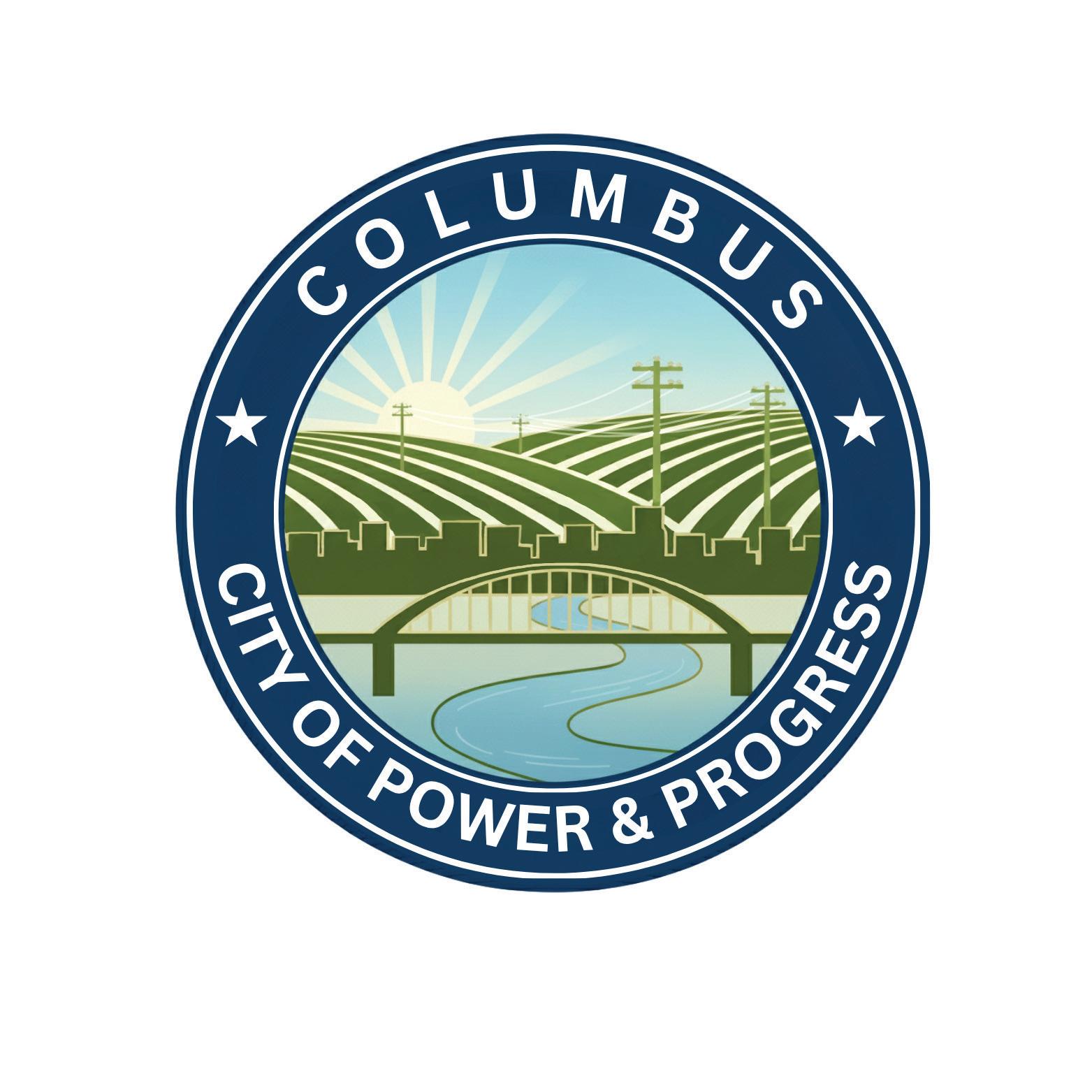
The City of Columbus is putting a new stamp on its identity - unveiling an official city seal designed not by a firm or consultant, but by a lifelong resident whose vision is rooted in the very landscapes and experiences that define the community.
The new seal, created by Columbus native Jennifer Davila, was selected through a community-driven process that began in late 2025, when the city issued a public call for submissions. A committee made up of council members and city staff reviewed the entries before ultimately selecting Davila’s design.
For Davila, the decision to enter was simple: Take the chance or miss it.
“When I saw it, it was one of those moments where if you don’t do it, you’ll never know,” she said. “I’ve lived here my whole life and plan on staying, so I thought it would be meaningful to create something I could see and be part of.”
Her design reflects both personal experience and shared community identity. Drawing from her upbringing in Columbus, Davila incorporated imagery that represents familiar and meaningful elements of the city, including the river, a longtime gathering place from her childhood, and the old Loup River Bridge that served as a recognizable feature of the local landscape. She also included agricultural elements, most notably corn, to reflect the region’s strong farming presence.
“No matter which way you leave Columbus, there’s corn everywhere,” she said, with a laugh.
City Administrator Tara Vasicek praised Davila and her creation.
“The new city seal thoughtfully captures foundational elements people associate with Columbus,” Vasicek said. “Jennifer did an excellent job of blending those elements in a way that reflects our community’s identity.”
Although Columbus continues to grow and evolve, Davila said she intentionally focused on preserving the city’s defining characteristics within the seal.
“I wanted to keep the staples of Columbus in the seal,” she said. “We’re changing and growing, but those core things still matter.”
A graduate of Scotus Central Catholic High School, Davila later studied accounting at Central Community College. She now works with her mother in a family tax business and also runs a photography business, continuing her creative pursuits.

She credits her mother, Maria, as a driving force behind her willingness to step outside her comfort zone and engage with the community.
Growing up, Davila spent time volunteering and supporting local initiatives, including efforts connected to Centro Hispano, a nonprofit her mother helped co-found.
“Being involved in the community is something that was instilled in me,” she said. “This felt like a way to contribute - like putting a mark on Columbus.”
Davila said she was surprised when she learned her design had been selected.
“I was shocked. I didn’t think I would be picked,” she said. “I remember going to tell my mom right away because I couldn’t believe it.”
City Director of General Services Betsy Eckhardt said officials are appreciative of everyone who contributed their ideas for the seal.
“We want to thank all the Columbus residents that contributed to the re-design,” Eckhardt said.
“It is exciting to think that a Columbus resident will have a mark in our history!”
As the new seal is introduced across city materials, Davila said she hopes it serves as both a reflection of Columbus’ past and a symbol of its future.
“I hope people see that Columbus can leave a mark on you,” she said. “Even as we grow, it’s still a great place to put down roots. We have a welcoming community and a lot to be proud of.”

TwoNorfolk projects have earned top honors in the 2026 American Council of Engineering Companies of Nebraska Engineering Excellence Awards.
North Fork Riverfront Development received the Honor with Distinction Award in the Water Resources category. Completed in September 2024, the project reconnected the community to the North Fork Elkhorn River through bridge and roadway improvements, removal of the historic mill dam, seven whitewater drop structures, ecological restoration, and a revitalized Johnson Park. The riverfront has quickly become a regional destination for recreation and community events.
Benjamin Avenue (13th Street to 1st Street) earned a Merit Award in Transportation. Schemmer Associates led a full reconstruction of the corridor, adding a center turn lane, underground utilities, upgraded stormwater systems, widened sidewalks, and improved lighting—enhancing safety, mobility, and the appearance of Norfolk’s commercial core.
“These awards highlight Norfolk’s commitment to innovative, community-focused infrastructure,” said Mayor Shane Clausen. “Both projects improve quality of life and showcase the impact of strong engineering partnerships.”
The City of Blair has been recognized as a 2025 Tree City USA by the Arbor Day Foundation, honoring the community’s ongoing commitment to planting, maintaining, and celebrating trees.
The Tree City USA designation is awarded to cities that meet four core standards of sound urban forestry management, including maintaining a tree board or department, having a community tree ordinance, investing in urban forestry, and celebrating Arbor Day.
Trees play a vital role in enhancing Blair’s quality of life—helping improve air quality, reducing stormwater runoff, lowering energy costs, and creating more attractive and livable neighborhoods.
“We are proud to receive this recognition and remain committed
NLAF operates with the investment needs of Nebraska local government units in mind. It focuses on safety of principal, daily liquidity, and earning a competitive yield.
Learn more at NLAFpool.org
This information is for institutional investor use only, not for further distribution to retail investors, and does not represent an offer to sell or a solicitation of an offer to buy or sell any fund or other security. Investors should consider the Fund’s investment objectives, risks, charges and expenses before investing in the Fund. This and other information about the Fund is available in the Fund’s current Information Statement, which should be read carefully before investing. A copy of the Fund’s Information Statement may be obtained by calling 1-877-667-3523 or is available on the Fund’s website at www.nlafpool.org. While the Fund seeks to maintain a stable net asset value of $1.00 per share, it is possible to lose money investing in the Fund. An investment in local government investment pools, such as the Fund, are not insured or guaranteed by the Federal Deposit Insurance Corporation or any other government agency. Investments in a local government investment pool are subject to liquidity risk, which may impact the pool’s ability to sell investments in a timely fashion or at near face value in order to fulfill a participant’s redemption request. Such


The Grand Island Public Library and first responders have teamed up and are offering a weekly storytime for area families. First Responder Storytime brings children and public safety personnel together through reading and interactive activities. Each session features a first responder reading a children’s story followed by a themed coloring


activity. The program was developed to create positive connections between Grand Island youth and public safety professionals who serve the community, while also encouraging early literacy and family engagement.
Thank you to Spencer Schubert with the City of Grand Island for sharing this information with the League!
Source – City of Grand Island