Nebraska City is one of 13
Nebraska City is one of 13
The NEBRASKA MUNICIPAL REVIEW (ISSN 0028–1906) is published monthly and the official publication of the League of Nebraska Municipalities, an association of the cities and villages of Nebraska, published at 1335 L St., Lincoln, Nebraska 68508. Subscription rates are $5 per single copy — $50 plus tax for 12 issues. Periodicals postage paid at Lincoln, Nebraska. Views of contributors, solicited or unsolicited, are their own and not to be construed as having the endorsement of the League unless specifically and explicitly stated by the publisher
The NEBRASKA MUNICIPAL REVIEW is a nonprofit publication administered and supervised by the League of Nebraska Municipalities. All revenue derived from the publication is used by the association to defray publication costs.
League of NE Municipalities staff 402-476-2829 • www.lonm.org
L. Lynn Rex, Executive Director
Christy Abraham, Legal Counsel
Lash Chaffin, Utilities Section Director
Cherie DeFreece, Admin Assistant/ Membership Services Assistant
Brenda Henning, Membership Services Assistant/ LIGHT Admin Assistant
Ethan Nguyen, LNM/LARM Information Technology Manager
Shirley Riley, Membership Services Director
Jackson Sash, Utilities Field Representative/Training Coordinator
Ashley Wolfe, Marketing/Communications Director
LARM staff
Dave Bos, Executive Director
Tracy Juranek, Asst. Executive Director, Customer Service Specialist
Diane Becker, Communications/Marketing Director
Kyla Brockevelt, Executive Administrative Assistant
Drew Cook, Customer Service Specialist
John Hobbs, Loss Control Specialist
James Kelley, Loss Control Specialist
Fred Wiebelhaus, Loss Control/Claims Manager
POSTMASTER: SEND ADDRESS CHANGES TO NEBRASKA MUNICIPAL REVIEW, 1335 L STREET, LINCOLN, NEBRASKA 68508.
Have an idea, project or opinion to share? The League welcomes member articles, information, and op-eds.
Want to reach local decision makers? The League can help you get your message out to Nebraska’s 3,500+ municipal officials.To learn more, contact Ashley Wolfe at 402-476-2829 or ashleyw@lonm.org
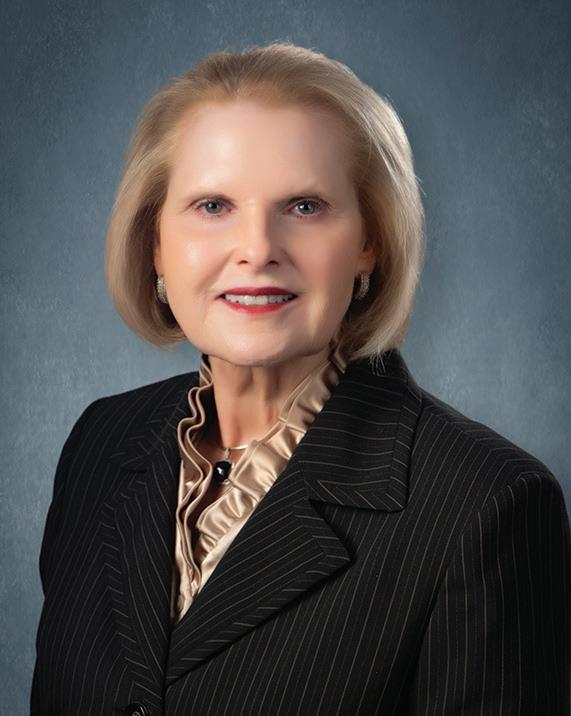
President Marlin Seeman, Mayor, Aurora
President-Elect Bryan Bequette, Mayor, Nebraska City
Vice President David Black, Mayor, Papillion Past President Deb VanMatre, Former Mayor, Gibbon
Leirion Gaylor Baird Mayor, Lincoln
John W. Ewing, Jr. Mayor, Omaha
Sharon Powell Village Board President, Utica
Larry Evans Mayor, Minden
Rod Petersen Mayor, Louisville
Jim Bulkley Mayor, Columbus
Betsy Vidlak Mayor, Scottsbluff
Pat Heath City Administrator, Gering
Janine K. Schmidt CMC/Treasurer, Morrill
Kyle Svec City Admin./Utilities Supervisor, Geneva
Affiliated Sections
City Managers
Wes Blecke, Wayne Clerks Derek Bargmann, Seward
Munic. Accounting & Finance
Kellie Crowell, Ravenna Fire Chiefs Corey Schmidt, Grand Island Utilities Gary Thurlow, Atkinson 16 30 31 5 6
LB 834/(AM 3142): Compelling remarks by Elkhorn Sen. Brad von Gillern, Chair of the Revenue Committee, in opposition to AM 3142
Thanks to Speaker John Arch for his steadfast leadership since first being elected Speaker in 2023 and again in 2025!
Learning with intention - League President and Aurora Mayor Marlin Seeman shares highlights from NLC’s Congressional City Conference in Washington, D.C.
Flood hosts housing workshop at the League office
How local leaders can strengthen democracy by supporting election staff
Nebraska Arts Council awards grants to 13 Creative Districts in the state
An era comes to an end in Norfolk - Finance Officer Randy Gates announces plan to retire
Finding the way – Grants: Nebraska Department of Economic Development
ServeNebraska shares why Nebraska’s volunteers deserve to be seen — and how to nominate them
Whatever it takes - Gov. Pillen, Adjutant General Strong tour Cottonwood Fire; visit the Village of Brady
NMPP Energy honors Ryan Hurst of Wahoo Utilities with service award
Governor Pillen appointed to serve on the federal Council of Governors
Up to $15 million available to help municipalities build new playgrounds
4 The Director's Message - L. Lynn Rex, LNM Executive Director - Before adjourning sine die, Senators passed numerous bills and debated a uniform ‘hard cap’ on political subdivisions levying property taxes
LARM – Work Zone Safety – Protecting crews, pedestrians, and drivers
The Legal Corner by Tara Stingley, Cline Williams Wright Johnson & Oldfather, L.L.P. - Hostile work environment claims: When racial hostility can create liability for employers
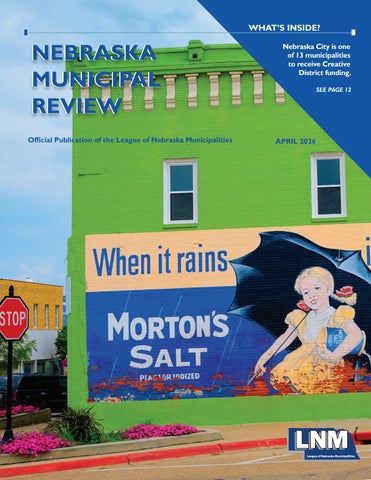
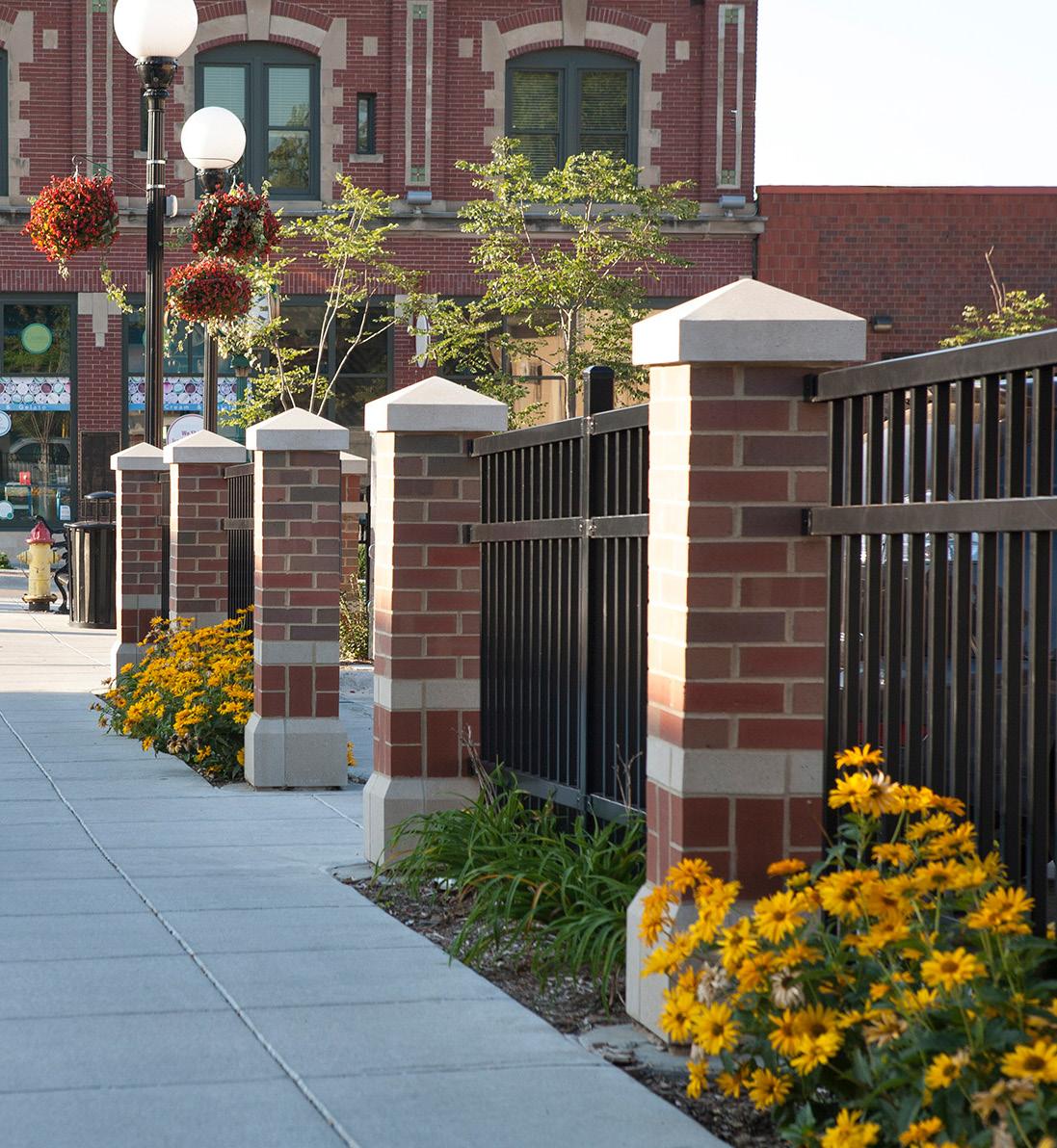
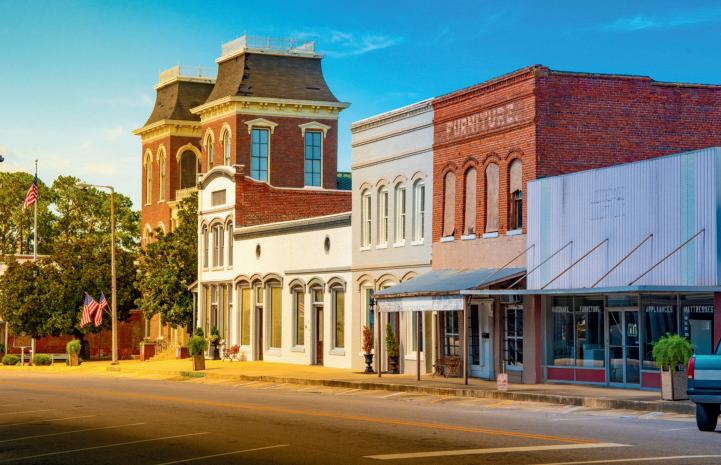
The Morton’s Salt and Whitebreast Lard mural in downtown Nebraska City. Photo by Josh Wolfe.
John McGhehey, Mayor, Alliance
J.D. Cox, City Manager, Alliance
Tobias Tempelmeyer, City Administrator, Beatrice
Rusty Hike, Mayor, Bellevue
Jim Ristow, City Administrator, Bellevue
Mindy Rump, Mayor, Blair
Phil Green, City Administrator, Blair
David Scott, Deputy City Administrator of Operations, Blair
Tom Menke, City Manager, Chadron
Jim Bulkley, Mayor, Columbus
Tara Vasicek, City Administrator, Columbus
Dave Bauer, Mayor Crete
Tom Ourada, City Administrator, Crete
Jody Sanders, City Administrator, Fremont
Kent Ewing, Mayor, Gering
Pat Heath, City Administrator, Gering
Roger Steele, Mayor, Grand Island
Patrick Brown, City Administrator, Grand Island
Mike Evans, Mayor, Gretna
Paula Dennison, City Administrator, Gretna
Mark Funkey, City Administrator, Hastings
James Liffrig, Mayor, Holdrege
Chris Rector, City Administrator, Holdrege
Brenda Jensen, City Manager, Kearney
Brad DeMers, Asst. City Manager, Kearney
Doug Kindig, Mayor, La Vista
Kevin Pokorny, Director of Administrative Services, La Vista
John Fagot, Mayor, Lexington
Joe Pepplitsch, City Manager, Lexington
Margaret Blatchford, Assistant City Attorney, Lincoln
Riley Slezak, Senior Advisor to the Mayor, Lincoln
Linda Taylor, Mayor, McCook
Nate Schneider City Manager, McCook
Bryan Bequette, Mayor, Nebraska City
Perry Mader, City Administrator, Nebraska City
Justin Webb, Council Member, Norfolk
Scott Cordes, City Administrator, Norfolk
Brandon Kelliher, Mayor, North Platte
Layne Groseth, City Administrator, North Platte
Steve Krajewski, Mayor, Ogallala
Kevin Wilkins, City Manager, Ogallala
Thomas Warren, Chief of Staff, Omaha
David Black, Mayor, Papillion
Amber Powers, City Administrator, Papillion
R. Paul Lambert, Mayor, Plattsmouth
Emily Bausch, City Administrator, Plattsmouth
Don Groesser, Mayor, Ralston
Brian Kavanaugh, Council President, Ralston
Jack Cheloha, City Administrator, Ralston
Art Lindberg, Mayor, Schuyler
Lora Johnson, City Administrator, Schuyler
Betsy Vidlak, Mayor, Scottsbluff
Kevin Spencer, City Manager, Scottsbluff
Joshua Eickmeier, Mayor, Seward
Greg Butcher, City Administrator, Seward
Brandon Bonregard, Mayor, Sidney
Brett Kerkman, Vice-Mayor, Sidney
Lance Hedquist, City Administrator, South Sioux City
Randy Meyer, Council Member, South Sioux City
Jill Brodersen, Mayor, Wayne
Wes Blecke, City Administrator, Wayne
Barry Redfern, Mayor, York
Dr. Sue Crawford, City Administrator, York
Chaired by Tom Goulette, City Administrator of West Point
Lisa Schroedl, City Administrator/Clerk/Treasurer, Ainsworth
Jessica Quady, City Administrator, Ashland
Crystal Dunekacke City Administrator/Economic Developer, Auburn
Marlin Seeman, Mayor, Aurora
Adam Darbo, City Administrator, Aurora
Chris Anderson, City Administrator, Central City
Andrew Lee, Admin/Clerk/Treasurer, Curtis
Alan Michl Chairperson, Exeter
Becky Erdkamp, Clerk/Treasurer, Exeter
Kyle Svec, City Administrator, Geneva
Matt Smallcomb, City Administrator, Gibbon
Gary Greer, City Administrator, Gothenburg
Jana Tietjen, Clerk, Hebron
Barb Straub, Admin/Clerk/Treasurer, Hemingford
Kelly Oelke, City Administrator, Hickman
Janine K. Schmidt, CMC/Treasurer, Morrill
Sandra Schendt, Clerk/Treasurer, Nelson
David Russell, Director of Gov. Affairs, NMPP Energy
Sandy Kruml Clerk/Treasurer, Ord
Mike Feeken, Mayor, St. Paul
Sandra Foote, Council Member, Superior
Warren Myers, City Administrator, Sutton
Jessica Meyer, City Administrator, Syracuse
Kelly Adamson, City Council Member, Tekamah
Sharon Powell, Village Board President, Utica
Kyle Arganbright, Mayor, Valentine
Melissa Harrell, City Administrator, Wahoo
Desiree Soloman, City Attorney, Waterloo
Stephanie Fisher, City Administrator, Waverly
Tom Goulette, City Admin./Utility Superintendent, West Point
Randy Woldt, Utilities Superintendent, Wisner
Robert Costa, Community Planner, Yutan

(All statute citations to Revised Statutes of Nebraska)
CITIES OF THE FIRST CLASS
• Within 10 working days following meeting or before next meeting (whichever is sooner) Clerk to have minutes available for public inspection. (84-1413)
• Within 15 days of Passage Clerk publishes ordinances passed. (16-405)
• As determined by the Mayor and Council - Board of Equalization meets. (16-707)
• Within 30 days following Council meeting Clerk publishes official proceedings of meetings, including claims. (19-1102)
• Within 20 days after end of month Treasurer files monthly financial report. (16-318)
• * * Clerk must prepare agenda prior to next Council meeting. (84-1411)
CITIES OF THE SECOND CLASS
• Within 10 working days following meeting or before next meeting (whichever is sooner) Clerk to have minutes available for public inspection. (84-1413)
• Within 15 days of Passage Clerk publishes or posts ordinances passed. (17-613)
• Within 30 days following Council meeting Clerk publishes official proceedings of meeting. (19-1102)
• Within 20 days after end of month Treasurer files monthly financial report. (17-606)
• * * Clerk must prepare agenda prior to next Council meeting. (84-1411)
• Within 10 working days following meeting or before next meeting (whichever is sooner) Clerk to have minutes available for public inspection. (84-1413)
• Within 15 days of Passage Clerk publishes or posts ordinances passed. (17-613)
• Within 30 days following trustees’ meeting Clerk publishes official proceedings of meeting, including claims. (19-1102)
• Within 20 days after end of month Treasurer files monthly financial report. (17-606)
• * * Clerk must prepare agenda prior to next Board meeting. (84-1411)




BY L. LYNN REX, EXECUTIVE DIRECTOR, LNM
The Second Session of the 109th Legislature adjourned sine die April 17, 2026. The Second Session is referred to as a “short session” since it has 60 legislative days, compared to the First Session which has 90 legislative days. Notwithstanding, this 60-day session seemed like a L-O-N-G legislative session, defined by late nights and numerous filibusters to stop bills from passing. It takes 33 of the 49 Senators voting in favor of a “cloture motion” to end a filibuster and then vote to try to advance the bill.
In Speaker John Arch’s closing remarks to colleagues on the last day of session (see page 6), he emphasized the Legislature accomplished a great deal! During the 109th Legislature, Senators introduced a total of 1,262 bills; 715 bills introduced in the first 90-day session in 2025 coupled with the 547 bills in the second 60-day session in 2026. Unlike many other states, a public hearing is required for every bill that is introduced. In 2026, Senators sent 167 bills to the Governor; an additional 171 bills were amended into the 167 bills for a total of 338 bills passed. The Governor vetoed five bills; no motions to override the Governor’s vetoes were successful. The Governor allowed two bills relating to security at the State Capitol to become law without his signature.
“Hard Caps” on Political Subdivisions
As reported in previous League publications, Plymouth Sen. Tom Brandt introduced LB 1219 to limit the total amount of property taxes that may be levied by any political subdivision to 2% plus the political subdivision’s “real growth percentage,” without exceptions above the cap. The Revenue Committee voted on Feb. 18 to advance LB 1219 to General File.
On April 9, Senators discussed an amendment filed by Blair Sen. Ben Hansen (AM3142 to LB 834) to impose a uniform “hard cap” on political subdivisions levying property taxes, in addition to current property tax caps. AM3142 is a version of his amendment
(AM2655) previously filed to LB 1219. The Legislature never voted on AM 2655, due in large part, to numerous amendments filed on behalf of the League, NACO, and the Nebraska Association of School Boards (NASB ) to filibuster Sen. Hansen’s Floor Amendment (FA999) and AM2655, which he filed to LB 1219 on General File.
Thanks to Senators Jane Raybould, Dan Quick, Jana Hughes, Machaela Cavanaugh, and Dunixi Guereca for filing these amendments to LB 1219. The Legislature also did not have an opportunity to vote on AM3142 to LB 834 since he did not have 33 votes to successfully pass a “cloture motion” to end the filibuster and try to advance the bill. Sen. Hansen ultimately withdrew AM3142 before a vote could be taken.
The following excerpts are from Sen. Hansen’s remarks made during Select File floor debate of LB 834 on April 9:
“I did change a few things in the language from LB 1219 to ensure this amendment [AM3142] is feasible for political subdivisions and effective in setting a hard cap in consideration of the taxpayer. This amendment moves a 2% cap in LB 1219 to 2.5% plus a real growth percentage. This real growth percentage allows improvements or expansions made by the cities, counties, and schools for updates. It also implements a biennium average. Over the course of a biennium, which is two years, a political subdivision will be limited to a total increase of 5%. If they don’t utilize the full 2½% in the first year, they can access the remaining amount in the second year. I know hard caps can cause heartburn, but this biennium average is a reasonable compromise. With AM3142, political subdivisions can exceed the hard cap only after it goes to the vote of the people and receives 60% of the vote in favor, similar with how we do school bonds…. It also addresses TIF and bonds as well, to make sure we don’t negatively impact those…. Actually, in consideration of fire, corrections, and law enforcement, I have included an option to exceed the 2½% cap by CPI
Continued on page 9 / See Adjourn
LB 834/(AM 3142): Compelling remarks by Elkhorn Sen. Brad von Gillern, Chair of the Revenue Committee, in opposition to AM 3142 filed by Sen. Ben Hansen to impose a uniform ‘hard cap’ on political subdivisions, in addition to current property tax caps
After congratulating the outstanding Nebraska Husker Men’s Basketball Team in the Chamber for their historic season, Sen. von Gillern stated the following on April 9 during floor debate on LB 834:
“Idon’t want to drag us down from one of the highest moments we’ve had for a long time here in the Chamber, but I’ve got to drag us back to reality. I stand opposed to the recommit motion [to return the bill to committee], I stand in favor of LB 834 but opposed to the AM3142 which is coming, which is roughly representative of LB 1219. In consideration of LB 1219 being a potential Revenue Committee bill, I worked over a period of about two months to do the following. I met with county officials to learn what impact it would have on the counties. I met with the League of Municipalities. I researched the impact on bonding for communities. I looked at the impact on TIF [tax increment financing] projects, both existing and in the future. I met with representatives of the Association of School Boards to find out what impact this would have on schools. I had lengthy conversations with all three of the school districts in my district. I met with representatives of the community colleges and then I met with Senator Hallstrom to learn how LB 1219 might dovetail with or possibly conflict with LB 575 [“pink postcard” revisions] which were recently advanced as part of LB 803. My staff reviewed what changes we made in 2024 in LB 34 and how those might be both positively and negatively impacted.
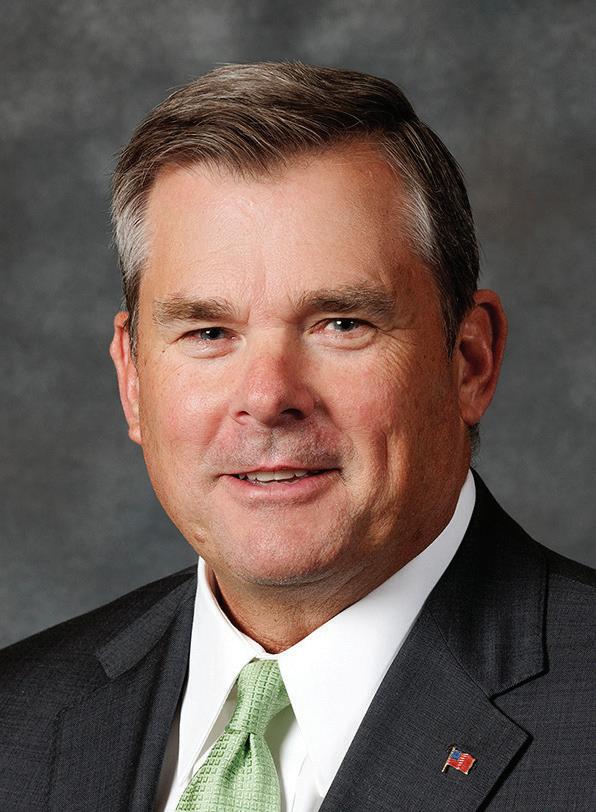
Sen. Brad von Gillern District 4
“I met with Senator Brandt on Feb. 10 and related all this information that I had collected at that point and asked whether he wanted me to continue with the bill as part of a Revenue Committee bill or whether he wanted to take it on his own and he decided he would take it on his own and work with Senator Hansen. I handed over a manilla folder about yeah thick [showing about an inch] full of information that I had gathered on this. [A] Story ran last week indicating that we as a Legislature had not done much to address property taxes this year. I just want to take a minute to remind us. This is a year where approximately $1.6 BILLION was provided in direct property tax relief within the budget. We provided approximately $160 million in homestead exemptions, funded entirely by the state which is entirely property tax relief for localities. Including the direct property tax relief, we funded approximately $2.5 billion in school funding. Direct property tax relief which represents about 40% of our state’s spending. It’s easy to complain about property taxes.
“It’s going to be real easy today to punch in, make noise about this, say how excited you are about it. It will be easy to say how important it is to you and your constituents and get credit for that before we all go home. And it is important. It is what I have spent more time working on here in the past four years than any other topic. And to take it as lightly as we’re taking it today, with an amendment that in my mind, is running with scissors right down the hall and not taking into account the potential negative impacts is irresponsible. You know what’s not easy? It’s not easy getting in the trenches and making structural changes and that’s why it hasn’t happened to a great degree in the last four years. It’s not easy to get 33 of you behind a plan that actually makes a difference. It’s not easy, but it’s worth it. And that’s why again, I have spent more time on this topic in my years here than any other topic. I believe it’s disrespectful and it’s disingenuous to those in the body who have worked hard to bring actual property tax reform and relief while ensuring the services that are important to all Nebraskans are not decimated. If you’re not concerned about the services that are happening in your counties, in your communities; if you’re not concerned about school class sizes; if you’re not concerned about any of that, then let’s just run down the road and we’ll do an offset of levies and valuations and we’ll fix the rate and then we’ll find out what the negative impacts are. I would rather do the homework up front which is what I did this session and find out what those impacts are and build a bill that actually works.
“Again, I stand opposed to the pending amendment but in support of the underlying bill 834. Thank you, Mr. President.”
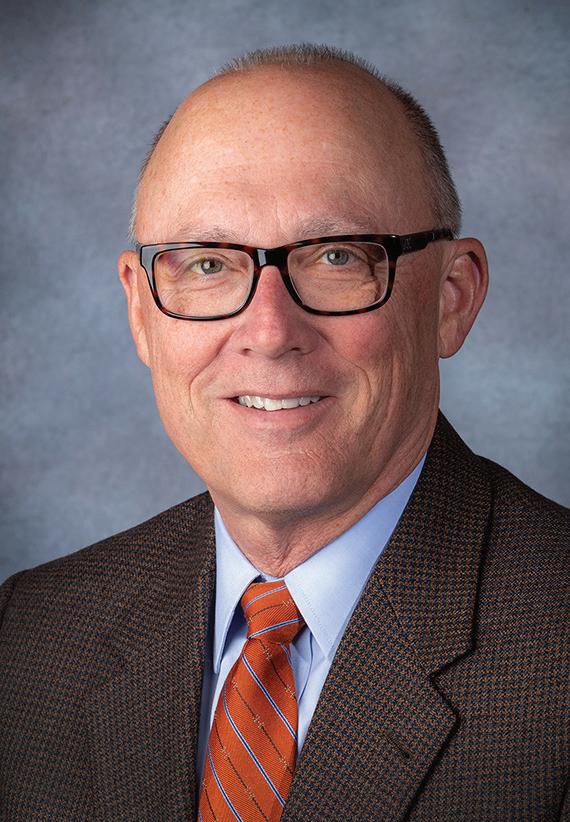
(Excerpts from Speaker John Arch’s closing remarks on April 17 before the Legislature adjourned sine die.)
“Colleagues,
we are coming to the end of our 60-day session. And while the second session of a Legislature is considered the short session, this session was definitely NOT short on extended debate. A good portion of that debate was our state budget. We knew coming into this session that the budget was going to be our focus. It needed to be our focus. It should always be our focus. As I said numerous times prior to this session and during this session, passing a balanced budget is the only – the only – action this body is constitutionally mandated to take.
“I would now like to speak to those who may be watching our final day of the session in an attempt to explain the process. I know that if you are not in the legislature, it may be very difficult to understand and can be frustrating. I will try to explain as best I can. Due to the time constraints of the session, there were other significant measures that were not heard on the floor. I know that some of you are very frustrated, but that is the reality of a short session. We have the same number of priority bills as the 90-day session with 30 days less to debate them all. With the budget requiring several rounds to pass on Select File, our time was pinched even further. So, as Speaker, I had to prioritize which bills to schedule. First, was the budget and related revenue bills necessary to balance the budget. Those were always at the top of my list to schedule. Second, was committee priority bills. Because those were most often a package of bills, we could accomplish the will of a committee of many members and pass multiple bills that the committee felt were important. All committee priority bills that advanced out of committee were debated on General File. Two committee bills did not advance from committee, one failed to advance on the floor, and one lost a cloture vote.
Those committee priorities were among the 107 bills that were designated as a priority this session. For comparison, that is four more priority bills than we had before us in the last 60-day session in 2024.
“Third, were Senator priority bills. These were the harder decisions. This is where I asked for your vote cards. There was only limited time to debate a bill that would require
a cloture vote. If the votes were not there for cloture, then I did not schedule the bill.
Some of you may remember Speaker Scheer’s solution to this problem by limiting debate to 3 hours and then requiring a vote card that showed that cloture would pass before scheduling the bill for another 3 hours. Future Speakers will always wrestle with the issue of priority bills and limited time. Perhaps they will have a different solution.
“Of the 25 Speaker priority bills, bills that I consider “good-government bills”, 24 passed as either a stand-alone bill or as an amendment to another bill. One did not get out of committee.
“Keep in mind that not all priority bills are created equal. Out of the 97 priority bills that advanced from committee, only 9 were not scheduled for floor debate due to time constraints. In 2024, that number was 11. This session, those 9 bills represented 72 hours of General File debate, 72 hours that we did not have to simply debate. 88 of the 107 priority bills this session were either passed as a standalone measure or were amended into another bill. That’s 85% of our priorities that we didn’t just debate - we passed into law. I think that’s pretty good.
“If I would have scheduled the 9 bills that would have gone to cloture and failed, about 36 other bills that did pass would not have been heard assuming they would have averaged two hours of debate.
“We did get serious work accomplished in spite of the time constraint of 60 days. 547 bills were introduced in this 60-day session. That is a total of 1262 bills that were brought by the 109th Legislature. Of those, 167 were sent to the Governor this session. In those 167 bills we sent to the Governor, an additional 171 bills were amended into those bills. So essentially, a total of 338 bills were passed this year.
“However, we weren’t just successful in advancing good policy, we were also successful in embracing a model of process for future legislatures. If the 2023 legislative session was this institution’s low point, then this session was a high-point, marking a return to the way the Legislature
Continued on page 27 / See Arch
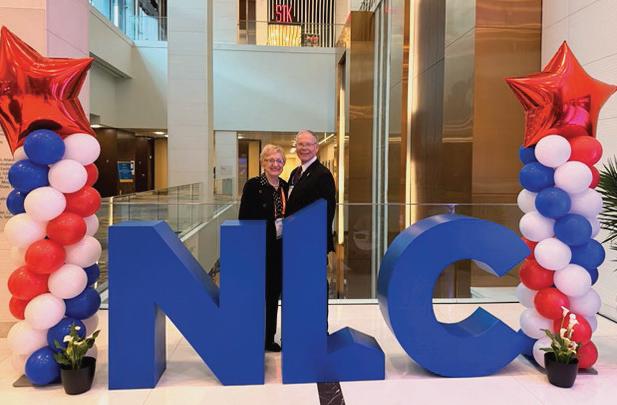
League President and Aurora Mayor Marlin Seeman shares highlights from NLC's Congressional City Conference in Washington, D.C.
BY LEAGUE PRESIDENT MARLIN SEEMAN, MAYOR OF AURORA
Municipal leaders from across the nation gathered in Washington, D.C., March 16–18 for the annual Congressional City Conference hosted by the National League of Cities. This year’s theme, “Local Governments Deliver,” emphasized the critical role cities play in innovation, collaboration, and shaping the future of communities across the United States.
Throughout the conference, municipal officials explored key topics including the upcoming celebration of America’s 250th anniversary, the importance of civility in public leadership, the emerging role of artificial intelligence in city government, and best practices for effective governance.
A major focus of the conference was preparation for the nation’s semiquincentennial in 2026, “America 250.” The initiative encourages communities to reflect on their history while envisioning the future.
Communities were encouraged to share their unique stories by recognizing how their past shapes their present and informs their future. This involves understanding local heritage while strategically planning for growth in key areas such as housing, employment opportunities, and partnerships among municipal, county, and state governments.
Continued on page 26 / See City
Congressman
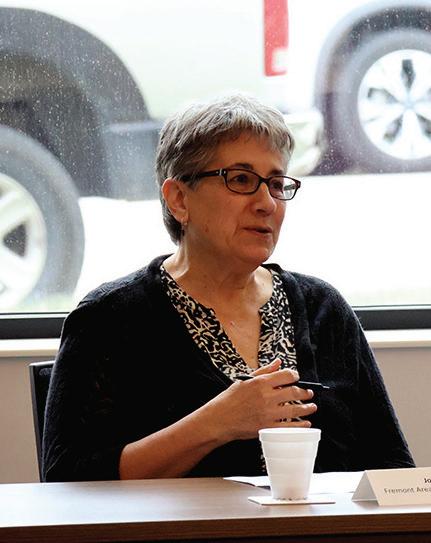
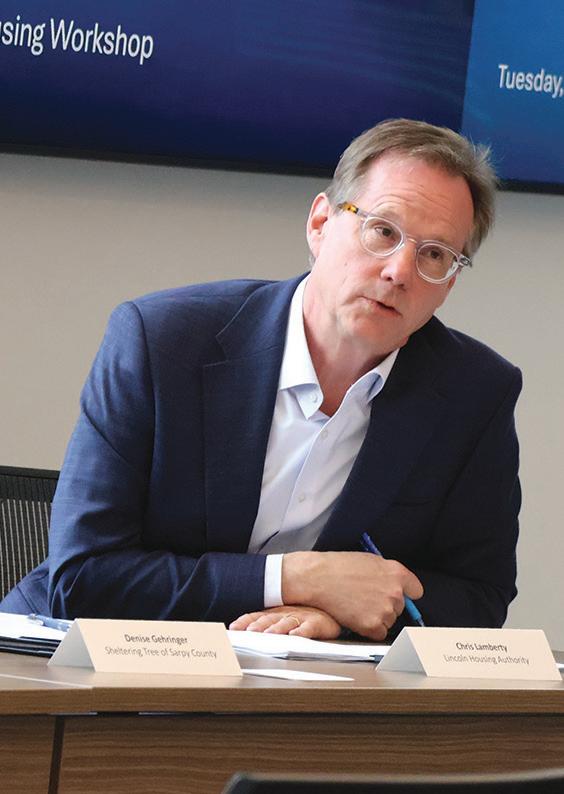
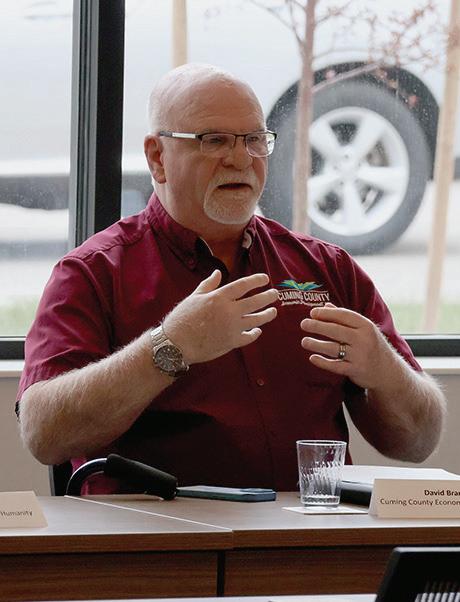
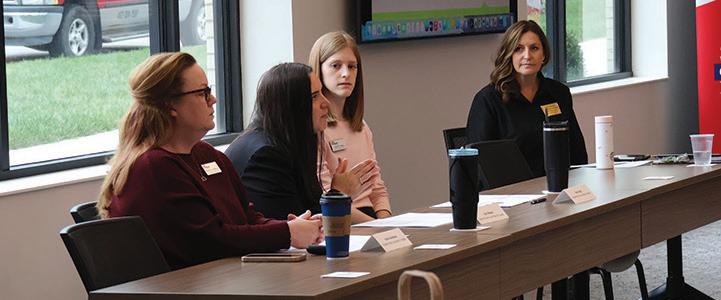
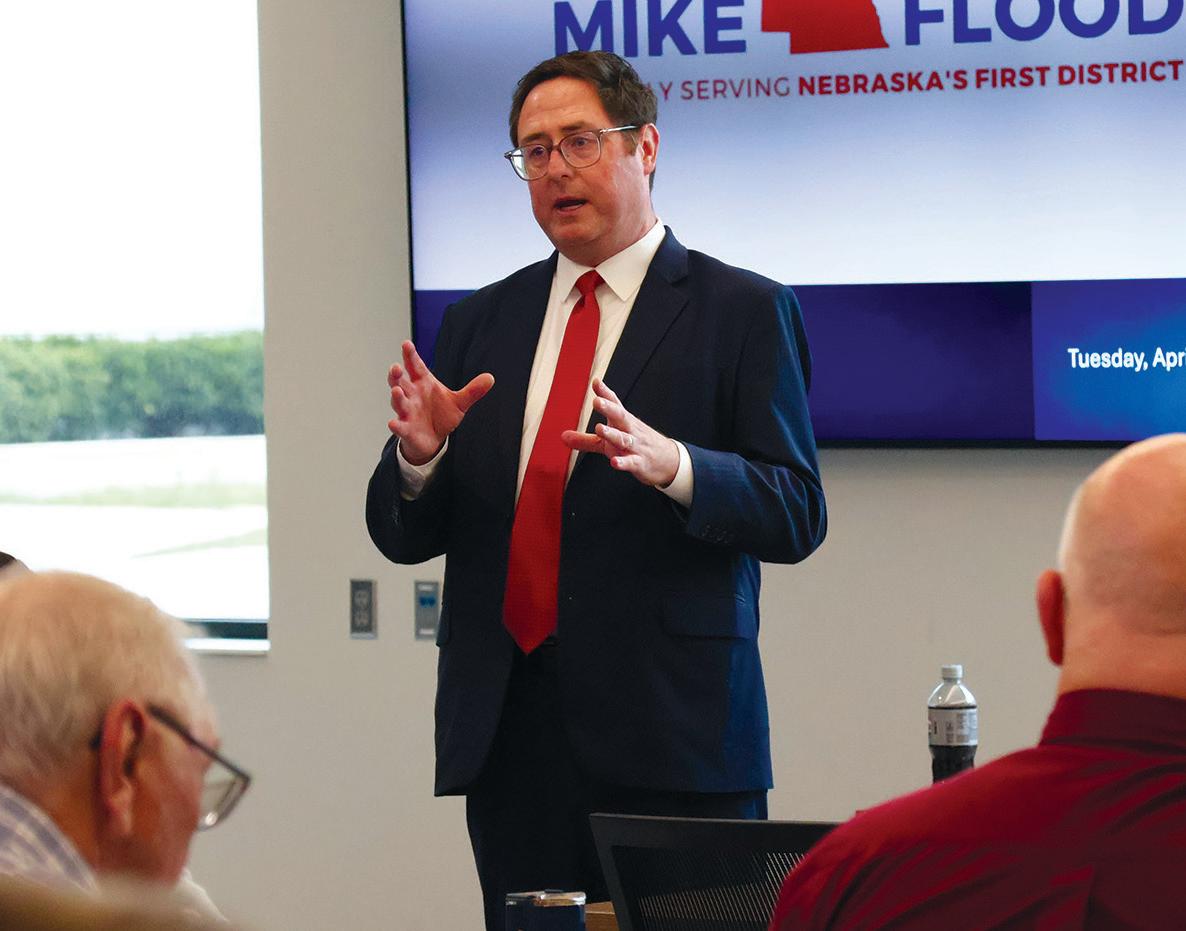
A group of approximately 40 individuals gathered in the Joe Hampton Conference Center on April 7 to discuss housing issues affecting the state. The morning opened with Congressman Mike Flood providing a Congressional Housing Update. He touched on changes on the horizon and the impact of the bipartisan Housing for the 21st Century Act. The package deal was led by Congressman Flood and members of the Financial Services Commitee.
Following the Congressman’s introduction, a series of panels were held. The first group was Federal Home Loan Bank of Topeka (FHLB) who touched on funds for housing and community development. The second panel was comprised of professionals from Cuming County Economic Development, Fremont Area Habitat for Humanity, Sheltering Tree of Sarpy County, and Continued on page 9 / See Housing
Continued from page 4
amount in order to fund these necessities…. “I’m just a little disappointed we couldn’t get to it this year. I ran a vote card. I tried to talk to all of my colleagues multiple times and we always ended one or two votes short. We are close colleagues. Close to real property tax reform and that’s what this can do.” Click here for his full statement.
Thanks to Senators Brad von Gillern, Jane Raybould, and Mike Moser for their strong statements on April 9 during floor debate in opposing AM3142 to LB 834. Undoubtedly, there will be further discussion in the 2027 session regarding “hard caps” on political subdivisions levying property taxes.
2026
There are a number of legislative resolutions (LRs) of municipal interest that will be considered throughout the summer and fall of 2026 to prepare for the 2027 session. Although there is a public hearing scheduled for every bill introduced during a legislative session, there is NOT a public hearing scheduled for every LR introduced by Senators requesting an interim study. The Chairperson of the Standing Committee to which the LR was referred decides whether to schedule a public hearing, meet with stakeholders, or just have staff research the request. Standing Committees typically have an LR to examine issues within the Committee’s jurisdiction that may arise during the interim. For example, Sen. Rita Sanders, Chair of the Government, Military and Veterans Affairs Committee, introduced LR385 to examine issues within the jurisdiction of her Committee; the League has requested that the Committee schedule a hearing on LR385 to address, in part, the financial and operational implications and consequences of the significant reforms within the Federal Emergency Management Agency (FEMA) on the State of Nebraska and its local governments.
Click here for a complete list of all LRs introduced in the 2026 session requesting an interim study.
Continued from page 7
Lincoln Housing Authority sharing success stories made possible by the FHLB Annual Housing Program (AHP), followed by a panel comprised of housing experts from across the state representing organizations including NIFA, Nebraska Housing Developers Association, Westgate Bank, and Hoppe Development. The event wrapped up with small group roundtables to allow workshop participants to visit with presenters and a grab-and-go lunch provided by the League.
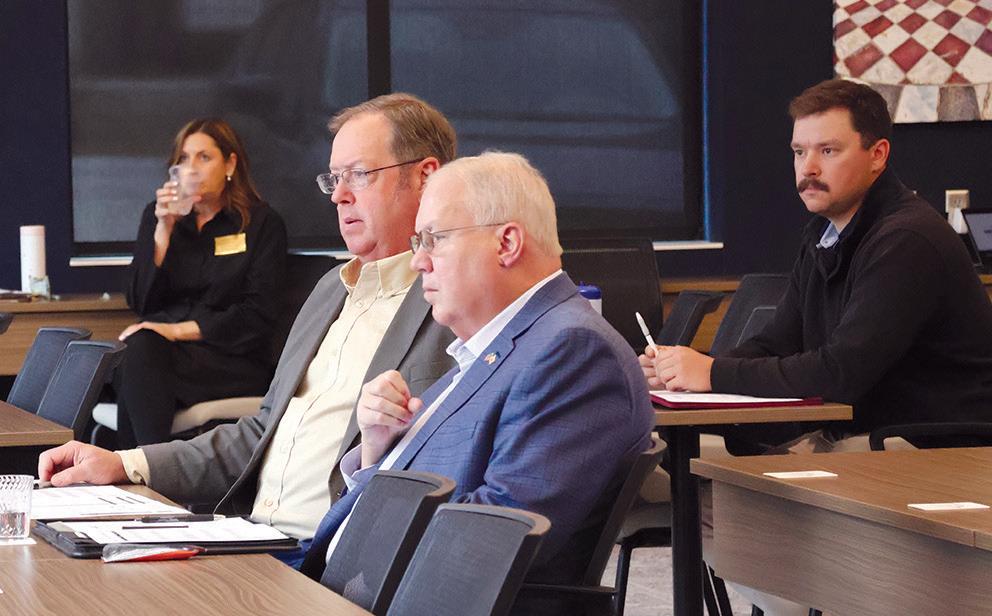
Attendees of the 2026 Housing Workshop listen to Congressman Mike Flood.
Thank you to all who were able to attend and participate in this valuable and ongoing conversation on affordable housing options in the state.
Our bankers specialize in:
• Bond Anticipation Notes
• Paving Bonds
• Water and Sewage Bonds
• General Obligation Bonds
• Utility System Revenue Bonds
• Lease-Purchase Financing
D.A. Davidson & Co. is committed to strengthening the infrastructure and enriching the lives of people in our communities throughout Nebraska and across the nation. Call: (402) 392-7986 | Paul Greiger (402) 392-7989 | Cody Wickham (402) 392-7988 | Andy Forney (402) 392-7933 | Jerry Spethman



BY LAURA WOOD, VICE PRESIDENT, DEMOCRACY, LOCAL POLICY LAB
Across the country, local governments serve as the frontline of American democracy — not just by engaging residents or hosting town halls, but by carrying out the essential, often invisible work of running our elections. At the center of this work are full-time election administration staff: the professionals who manage voter registration, oversee ballot logistics, recruit and train poll workers, and ensure every eligible vote is counted fairly and securely.
In recent years, these professionals have faced unprecedented challenges. From pandemic-era adaptations to navigating a surge in disinformation and political pressure, many election staff have been pushed to the brink. And alarmingly, many have been subjected to harassment, threats, and intimidation for simply doing their jobs. As a result, cities across the United States are grappling with declining retention, rising vacancies, and a loss of institutional knowledge — at a time when trust in elections has never been more crucial.
Smooth and secure elections don’t just happen. They require experienced staff, stable systems, and leadership that prioritize accessibility and engagement. When election departments are under-resourced or understaffed, the burden often falls on overworked employees — and ultimately on voters, who may face long lines, unclear information or unnecessary barriers to participation. This is where municipal leaders have a powerful role to play.
Here are several steps municipal officials can take to support full-time election staff and help ensure elections run smoothly and fairly for all eligible residents (of course, we realize that not all municipalities have the financial resources to invest here, but advocacy to county, state or federal officials can also be important and effective):

Advocate for competitive salaries and benefits that reflect the specialized knowledge and stress of the role. Fund ongoing training opportunities to help staff stay current on technology, voter engagement practices, and legal requirements.
Offer mental health and wellness resources to support long-term resilience and prevent burnout. While not specific to election workers, in Wood River, Ill., the city council passed an ordinance to create a mental wellness program for city employees, which included granting one personal day to employees who attend four counseling sessions annually.
Use your platform to publicly affirm the integrity and importance of election staff, especially during times of heightened scrutiny or misinformation. Celebrate their work with proclamations, internal recognition, or community-facing spotlights — small gestures can go a long way.
Example:
• In April 2022, after local elections, Mayor Cavalier Johnson of Milwaukee issued a public statement thanking and affirming the city’s election workers.
Ensure municipal departments and agencies are actively supporting the needs of election departments, not just during voting periods but year-round. Examples could include: legal and policy assistance, IT/technology support, communications support (registration deadlines, etc.).
Consider creating or enhancing interagency scenario planning teams ahead of high-turnout elections to improve coordination and reduce strain on staff. (Local Policy Lab has worked with jurisdictions in Pennsylvania and Wisconsin on these exercises and is happy to support other scenario planning workshops.)
Work with law enforcement and HR departments to create clear protocols for reporting and responding to threats or harassment.
Provide training for municipal staff and elected officials on how to de-escalate conflict and protect civic spaces from intimidation (non-profits such as Local Policy Lab or others might be able to provide support here).
Examples:
• In Maricopa County, election officials have recognized the increased stress and threat environment faced by poll workers, and have incorporated de-escalation training in recent years as part of their efforts to protect and support staff.
• In 2024, the Milton, Wis. City Council passed a resolution that commits to supporting and protecting election workers from harassment or threats.
Hold regular listening sessions with election officials and staff to understand what’s working — and what’s not. Ask what support they need most and make that feedback part of your municipality’s long-term civic engagement strategy.
When we talk about protecting democracy, we often focus on laws and litigation. But real resilience is built at the local level — in the way municipalities staff, support and sustain the people who make free and fair elections possible.
By investing in election administration professionals, local leaders aren’t just supporting their teams — they’re ensuring that every eligible resident can vote with confidence and ease. It’s one of the most important ways local governments can live up to their democratic promise.
Source – National League of Cities
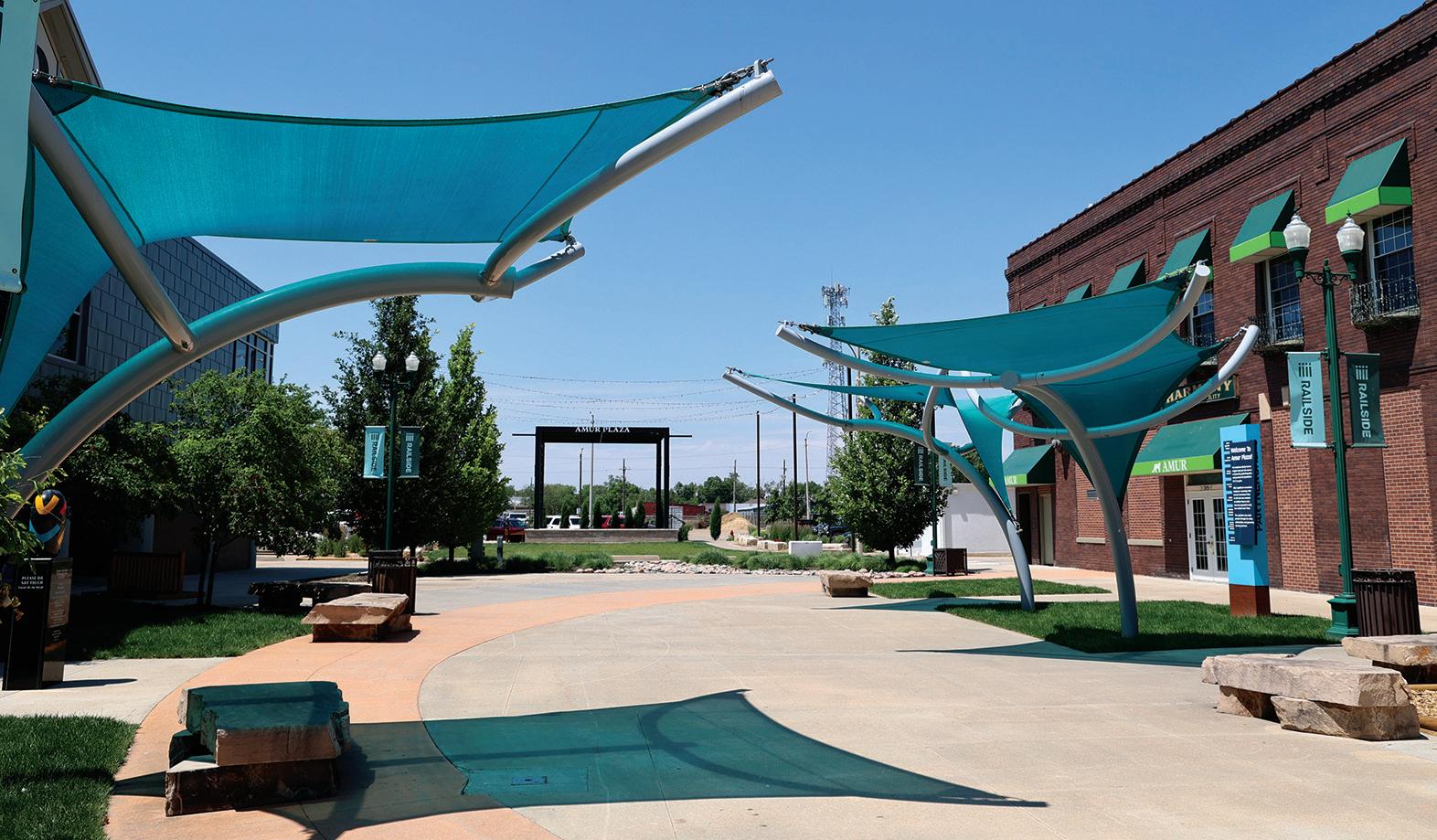
The Nebraska Arts Council recently awarded Development Grants for FY25 to Nebraska Creative Districts. The grants are available to all certified Creative Districts and are made possible through an appropriation from the State of Nebraska.
The purpose of the Development Grant is to provide funds to the Creative Districts of Nebraska for projects that focus on creating significant cultural tourism and economic development. Projects supported by the funds must demonstrate the potential to attract visitors, create jobs, attract or retain young people, and revitalize Nebraska communities.
Applications for the over $1 million in grants came from 17 Creative Districts across the state. With the available funds, the Arts Council was able to fund 13 Development Grants.
Continued on page 14 / See Arts
Auburn Creative District, Auburn: $100,000
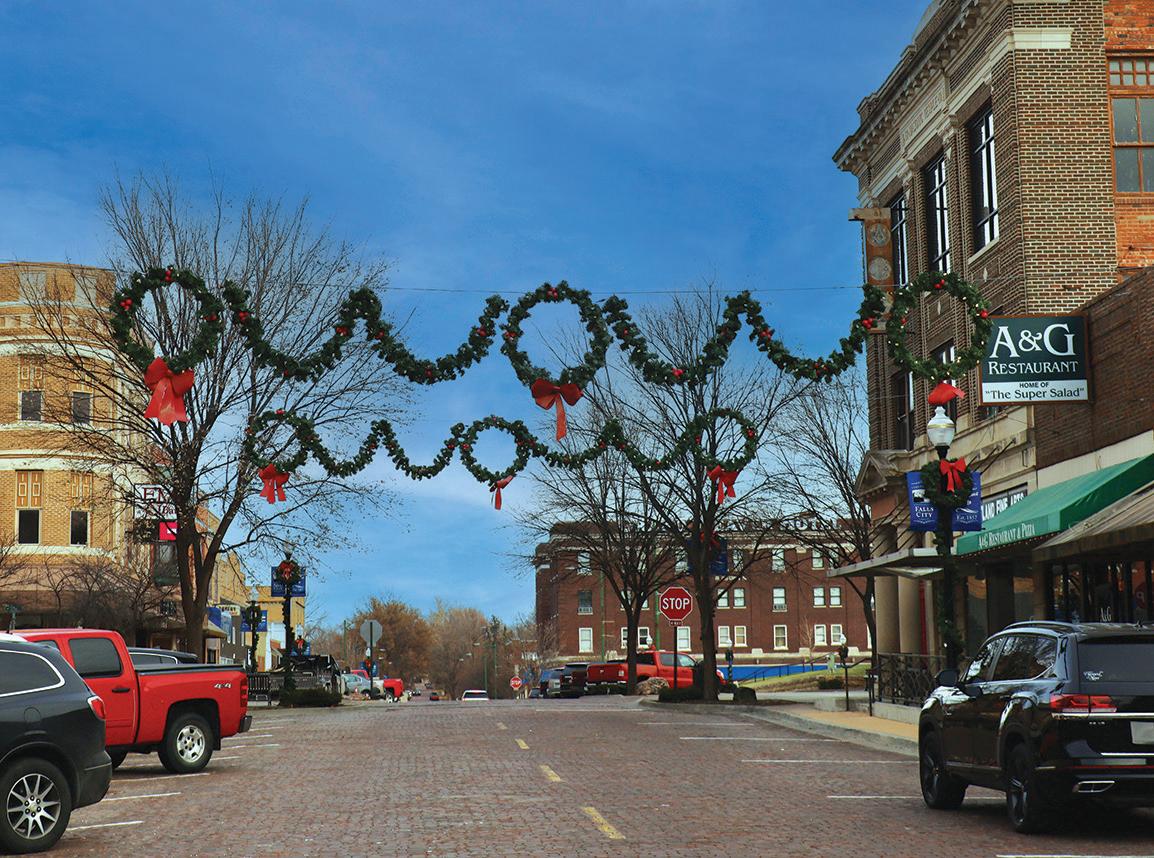
Falls City Creative District, Falls City: $100,000
Grand Island Creative District, Grand Island: $100,000
Heartbeat Creative District, Hastings: $100,000
The Bricks Creative District, Kearney: $100,000
UNI Place Creative District, Lincoln: $96,890
Nebraska City Creative District, Nebraska City: $100,000
Dundee Creative District, Omaha: $100,000
Benson Creative District, Omaha: $100,000
Valley County Creative District, Ord: $100,000
Oshkosh Creative District, Oshkosh: $100,000
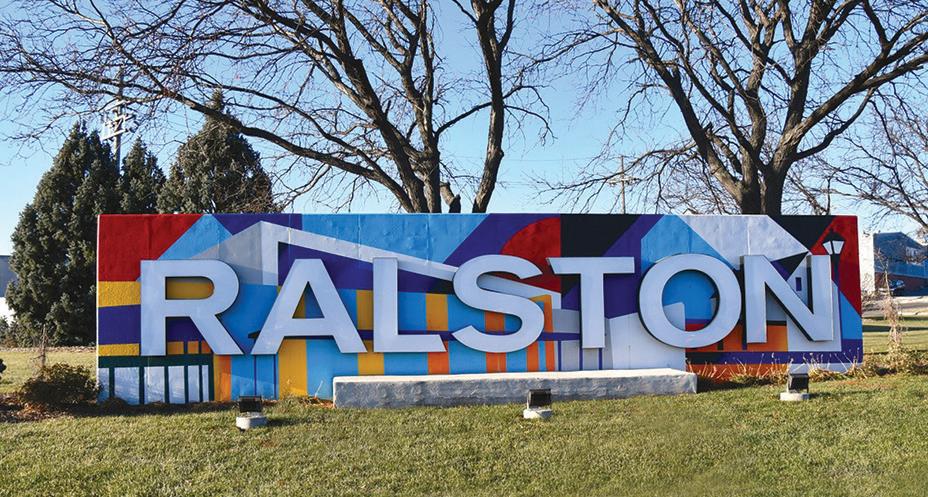
Ralston Hinge Creative District, Ralston: $100,000
Seward Creative District, Seward: $100,000

The League Insurance Government Health Team (LIGHT) helps hundreds of its members throughout Nebraska obtain affordable health insurance coverage.
With seven plan options and three networks to choose from, you’re sure to find one that meets your group’s coverage and benefit needs.
Offering your employees much-needed protection against the high cost of medical care:
• Three PPO options
• Four HSA-eligible high deductible options
• Prescription drug coverage
Single: Covers the employee only
Employee and spouse: Covers the employee and their spouse
Employee and children: Covers the employee and their eligible dependent children, but does not provide coverage for the spouse
Family: Covers the employee and eligible dependents including a spouse
RECEIVE DEDUCTIBLE AND OUT-OF-POCKET CREDIT FROM YOUR CURRENT VALID GROUP PLAN WHEN YOU SWITCH!
With several networks available, you have easy access to quality providers:
• NEtwork BLUE (Statewide)
• Premier Select BlueChoice (Regional)
• Blueprint Health (Regional)
• Out-of-state network availability
Contact your current local Agent/Broker Or contact
Dennis Maggart
Executive Vice President P: 913-378-9841 or 816-718-0335
Dennis@McInnesGroup.com
Jane Limbach Account Man ager P: 913-378-9840
Jane@McInnesGroup.com
Continued from page 12
Some of the projects made possible by this grant program include the creation of the Stone Street Amphitheater and Park in Falls City; public art in Auburn, Grand Island, Dundee, and Hastings; an Artistin-Residence Program in Seward; and the funding of six Creative District Coordinators in Kearney, Lincoln, Grand Island, Dundee, Valley County, and Seward. The planned projects will have significant impact on tourism and economic development in each district and their surrounding communities.
“We’re excited to support the Creative Districts and see the economic growth these projects will bring to their communities,” reports Rachel Morgan, Program Specialist at the Nebraska Arts Council.
The Nebraska Creative District Program was created through legislation in 2020 to utilize the arts as an economic driver to support communities in Nebraska by telling their stories and elevating the value of the arts. Creative Districts are designated cultural and economic areas where innovation flourishes and neighborhoods come together in the name of art. They provide significant economic impact by creating purposeful spaces like art galleries, theatres, and music venues.
“We’re excited to support the Creative Districts and see the economic growth these projects will bring to their communities.”
For more information on the Creative District program, visit: www.artscouncil.nebraska.gov/explore/creative-districts/
After more than four decades of service to the municipality, Finance Officer
Randy Gates announces plan to retire, effective May 15
Gates has served the city since 1982, when he was appointed as Norfolk’s first Finance Officer. During his 44-year career, he has played a key role in guiding the city’s financial management and helping ensure long-term fiscal stability for the community.
“Randy has been a loyal and dedicated public servant for four plus decades; his positive contributions to this community will long be remembered. I wish Randy nothing but the best in his retirement,” said Scott Cordes, City Administrator.
Throughout his career, Gates has been widely recognized for his leadership in municipal finance both locally and statewide.
In 2025, he received the prestigious L.E.A.D. Award from the League of Nebraska Municipalities, recognizing his Leadership, Excellence, Action, and Dedication in public service.
Under Gates’ leadership, the City of Norfolk consistently earned national recognition for its financial practices. The city received the Government Finance Officers Association’s Distinguished Budget Presentation Award for more than 30 consecutive years and the Certificate of Achievement for Excellence in Financial Reporting for over 35 consecutive years, demonstrating the city’s commitment to transparency and strong financial management.
In addition to his responsibilities with the city, Gates has contributed his expertise to numerous professional organizations, including the Government Finance Officers Association and the League Association of Risk Management. He has also served on committees and boards supporting municipal finance across Nebraska.
Reflecting on his career, Gates said he is grateful for the opportunity to serve the community and work alongside dedicated colleagues.
“When I started with the city as Finance Officer in 1982, I didn’t imagine I would be with the city for the next 44 years,” said Gates.
“It’s been a rewarding career, and I’ve worked with many great people during that time. I’m almost 70 and ready to step back and spend more time with family and doing the things I love. I look forward to more fishing and especially to training and hunting with my new German shorthair puppy.”
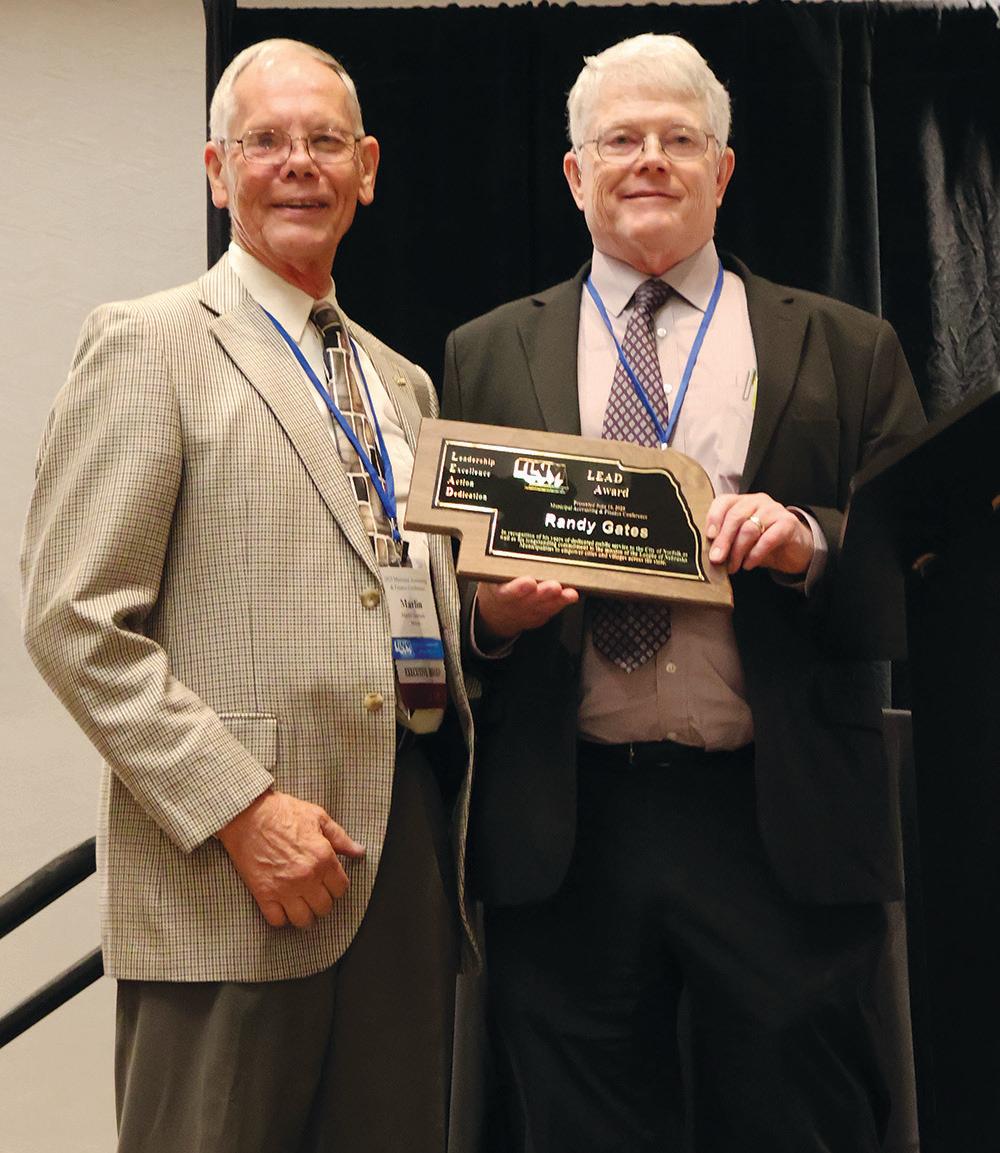
At the 2025 Municipal Accounting and Finance Conference, Randy
was presented with the League’s prestigious L.E.A.D. Award, recognizing his Leadership, Excellence, Action, and Dedication in public service. File photo by Ashley Wolfe.
During his 44-year career with the City of Norfolk, Gates worked alongside nine mayors and 47 different City Council members, helping guide the community’s finances through decades of growth and change.
“For 44 years, Randy Gates has been a steady and trusted leader for the City of Norfolk,” said Mayor Shane Clausen. “His experience and sound financial guidance have played a major role in the city’s growth and stability. We are incredibly grateful for his service and wish him all the best as he begins his well-earned retirement.”
Source – City of Norfolk
It’s been a rewarding career, and I’ve worked with many great people during that time. I’m almost 70 and ready to step back and spend more time with family and doing the things I love.
November in Nebraska often marks the onset of winter chill, but in early November 2025, children in Superior were in bathing suits. Stomping in puddles and dodging jets of water, they were taking advantage of unusually warm weather to try out the town’s new splash pad. Located in City Park, the splash pad had been completed just in time for families to enjoy it for a couple of days before it was winterized.
The splash pad is one of many community development projects the city has completed with the support of a Community Development Block Grant (CDBG) award.
“With funding from Nebraska Department of Economic Development [DED] we were able to construct a splash pad, improve some of our shade facilities on one of our pavilions, put in a new basketball court, and also improve our sidewalks all the way
around our park in order to put in an ADA-compliant walking path,” said Andrew Brittenham, Administrator for the City of Superior.

So many people within municipalities and municipal government have great ideas–but run into issues with funding and finding the resources to get the idea done. Over the next few months we will highlight some organizations offering grants and funding opportunities especially for municipalities.
BY BRENNAN HALLOCK, COMMUNICATIONS SPECIALIST, NDED
The projects are the outcome of a parks and recreation master plan, completed in 2023 with input from community members. “We saw that some of the biggest interests from the community members were improvements to city parks, namely splash pads, basketball facilities, and community walking facilities,” continued Brittenham.


For small towns like Superior, the journey from a project’s idea to its implementation can be daunting, especially from a financial perspective. Local tax revenues are regularly earmarked for repairs, leaving little to no money to add public amenities. Through DED’s funding opportunities, such as the Civic and Community Center Financing Fund (CCCFF) and CDBG programs, communities can access grants to complete larger projects. “Realistically, without the external funding, some of this stuff would have been unattainable,” Brittenham attested. These grants also serve as catalysts for local campaigns to raise funds for costlier investments.
After debuting last November, Superior’s splash pad is set to reopen in April. “We probably had 100 kids running through the splash pad enjoying it [last fall],” said Brittenham. “That was the best part of the entire project, being able to open that splash pad for 14 hours in the middle of November and seeing the middle schoolers and the elementary schoolers just hanging out.”
Red Cloud is a standout example of a small town that has come together to support growth with the help of DED-administered grants. Drawing on the community’s appeal as the childhood home of famed author Willa Cather, residents of Red Cloud created an economic development plan that emphasized tourism. Alongside projects directly tied to Cather’s time in Red Cloud, like restoration of her childhood residence, Red Cloud has received grants to develop other community assets to attract visitors. These include awards to restore Hardwick Park (CCCFF), create a recreational trail system (CDBG), and construct Hotel Garber in downtown Red Cloud (Shovel-Ready program). Using a CDBG-Tourism Development grant, Red Cloud has also built a creative hub within Hotel Garber to host art classes, writing workshops, and culinary experiences.


“People saw that you can do exceptional and interesting things in this town, and the community saw that you can leverage the resources to do these interesting things,” said Jarrod McCartney, Executive Director of Discover Red Cloud. Witnessing the major developments taking place in town has helped people realize the potential small towns have to grow and thrive. “They’ve seen that it’s okay to dream big,” said McCartney. “We don’t have to just get by and survive. We can do interesting things and improve the quality of life for everyone.”
While helping attract tourists, community development projects have also enhanced quality of life for Red Cloud’s residents. “Hardwick Park and the Recreation Trail might have some residual tourism, but these are amenities that locals will enjoy on a daily basis,” said McCartney.
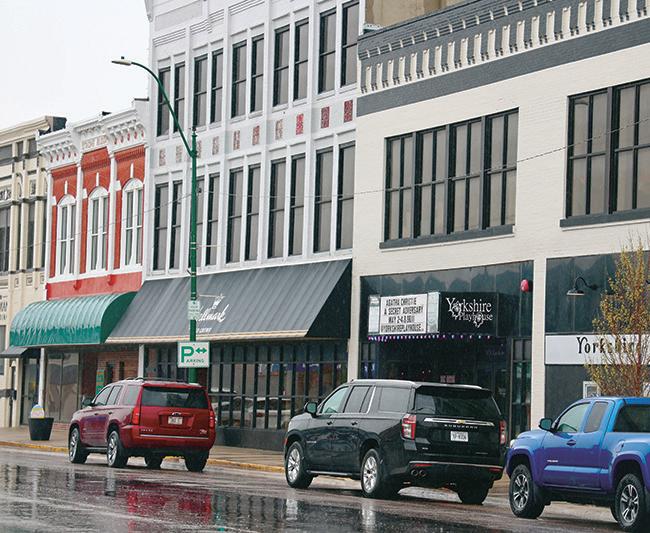
Downtowns are the heart and soul of small to mid-sized communities, and DED grants are encouraging community-wide efforts to invigorate main streets and city centers across Nebraska. The City of York has successfully applied for multiple CDBG grants to revitalize its downtown district.
With each phase of funding, York has assisted about 10 local businesses with improvements, such as new façades. These projects have also inspired several owners of prominent downtown buildings to make upgrades on their own dime—without the investment of CDBG funds. “The lack of selfishness is apparent. To me that is a lot of what [the grant funding] is supposed to do, to spur owner investment beyond what is done through the program,” said Madonna Mogul, Executive Director of the York Chamber of Commerce.
The ability to work together is fundamental for a community seeking state-administered funds. “The key for communities is collaboration – to bring your partners to the table and define your workload,” said Lisa Hurley, Economic Development Director for York. By connecting and collaborating, York has won multiple CDBG awards, which have encouraged business development, revitalized the downtown, and improved the quality of life.
Interested in learning more about the opportunities DED has to offer? Visit the agency’s website at opportunity.nebraska.gov/programs/community DED’s Community Development team welcomes the opportunity to provide support! Reach out to the following program leads for assistance:
Nicole Bartels
Community Development Block Grant Program 402-314-5852 or nicole.bartels@nebraska.gov

Tia Loftin
Civic and Community Center Financing Fund Program 402-471-6336 or tia.loftin@nebraska.gov
AJ Weigman
Community Development Assistance Act
aj.weigman@nebraska.gov or 402-471-3749
As construction season begins, municipal crews face increased exposure to moving traffic, heavy equipment, and unpredictable public behavior. Effective work zone safety depends on careful planning, proper barricade selection, clear communication, and constant awareness. When crews establish consistent and well-organized work zones, they protect themselves, pedestrians, and motorists throughout the construction season.
Work should always begin with a clear and welldefined traffic control plan. This includes identifying the proper signage, cone placement, lane closures, and the safest locations for flaggers. Advance warning signs need to be placed far enough upstream to allow drivers time to react, especially on higher speed roads. As weather, visibility, or traffic patterns change, crews should adjust the plan to maintain control and reduce risk. Thoughtful planning helps create a predictable environment that supports both worker and public safety.
Setting up the work zone correctly is just as important as planning it. Crews must choose cones, barricades, and taper lengths that match the needs of the roadway. All devices should be clean, clearly visible, and in good condition. If cones or barricades are blown over, damaged, or moved by vehicles or equipment, they must be repositioned or replaced right away. A well-built work zone helps drivers understand what to expect and react safely.
Selecting the right barricades for each task is a critical part of work zone safety. During sidewalk repairs, a single cone is not enough to alert pedestrians, especially those who are visually impaired. Instead, crews should use barricades that block the entire
JAMES KELLEY LOSS CONTROL SPECIALIST, LARM
sidewalk and form a solid detectable boundary that guides pedestrians around the hazard. In a different situation, such as pothole repair on a neighborhood street, cones and Type I barricades may be all that is needed. Cones guide drivers around the work area while Type I barricades mark where the zone begins and ends without restricting traffic flow.
More hazardous situations require stronger barricade systems. During a water main break on a busy collector road, crews should use Type II barricades, which offer greater stability and visibility, especially in poor light. If work continues into the evening, flashing lights should be added. Buffer areas and additional cones can help create safe separation between workers and live traffic. When a full road closure is needed, such as during culvert replacement or major excavation, crews must use Type III barricades. These wide, highly visible barriers clearly communicate that no traffic is allowed to enter. Detour signs must be placed well in advance so drivers have time to reroute safely.

Worker visibility and awareness are also essential elements of work zone safety. All workers should wear Class 2 or Class 3 high visibility apparel to ensure drivers and equipment operators can clearly see them. Crews must stay out of traffic paths and avoid standing in equipment blind spots. Spotters should be used whenever vehicles are backing or when large equipment is moving within the site. Staying alert to changing conditions helps prevent accidents.
Clear communication supports safe and efficient
Continued on page 22 / See LARM
Every Nebraska municipality is stronger because someone chooses to serve. These individuals don’t seek recognition—they simply show up, give their time, and make a difference. From mentoring and organizing drives to disaster recovery and supporting veterans, their impact is felt statewide.
The Step Forward Awards, presented by ServeNebraska, recognize these efforts as the state’s highest volunteer honor. Individuals and groups can be nominated based on their impact and commitment. A review panel evaluates nominations, and Governor Jim Pillen selects the honorees, who are recognized at an October luncheon. Nominations are open to anyone making a difference—individuals of all ages, volunteer groups, and those connected to schools, nonprofits, businesses, or community organizations. Recognition goes beyond celebration—it brings visibility to the people strengthening Nebraska communities and inspires others to get involved. Volunteers are the heartbeat of the state, and their stories deserve to be seen.
Submit a nomination by June 1 at 11:59 p.m. CST. Share their impact and help honor those who step forward to serve others.
Source – ServeNebraska
Award categories include:
Youth
Adult
Senior
Volunteer Group
Corporate
National Service
Veteran
Disaster
Lifetime Achievement





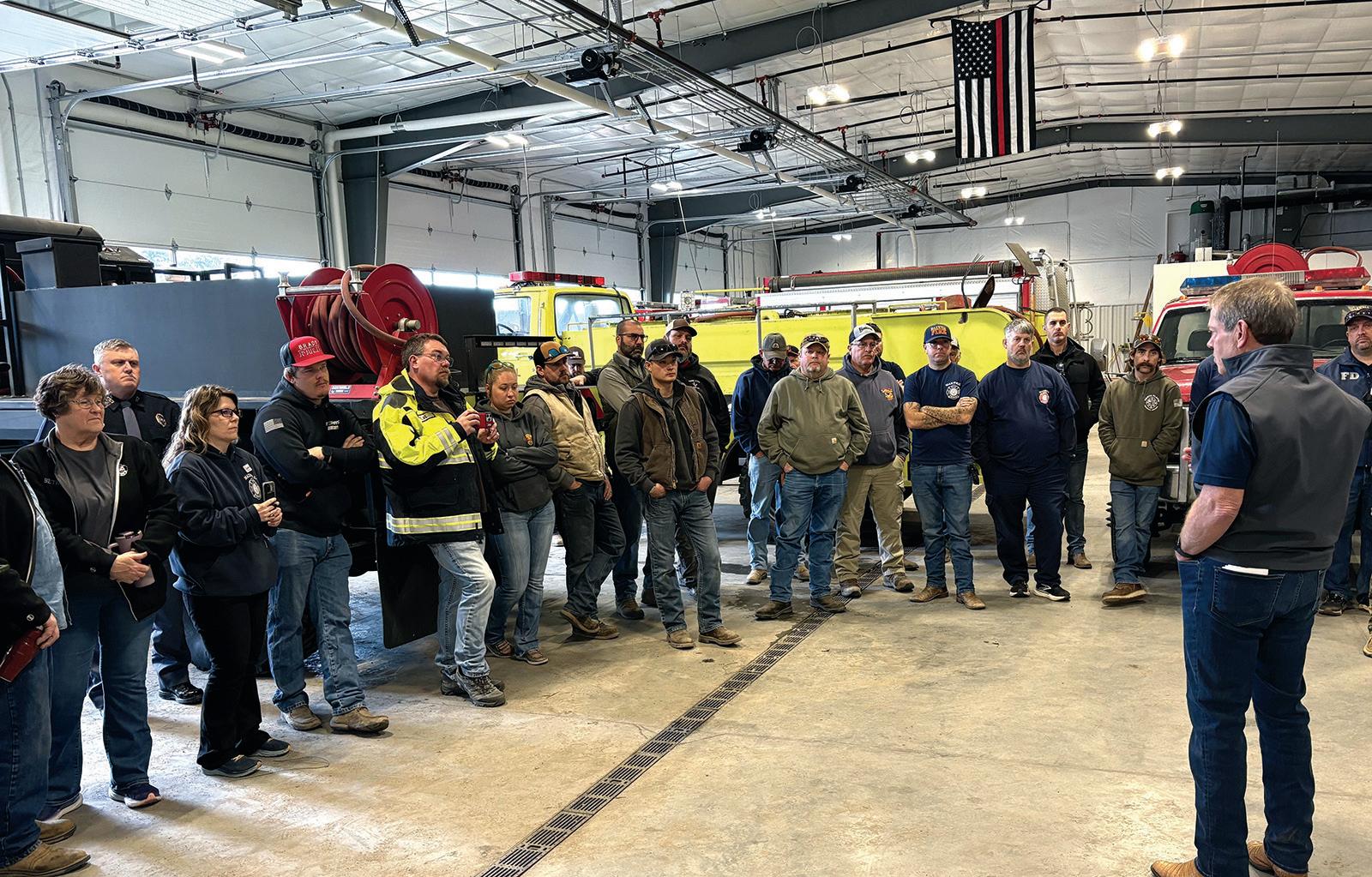
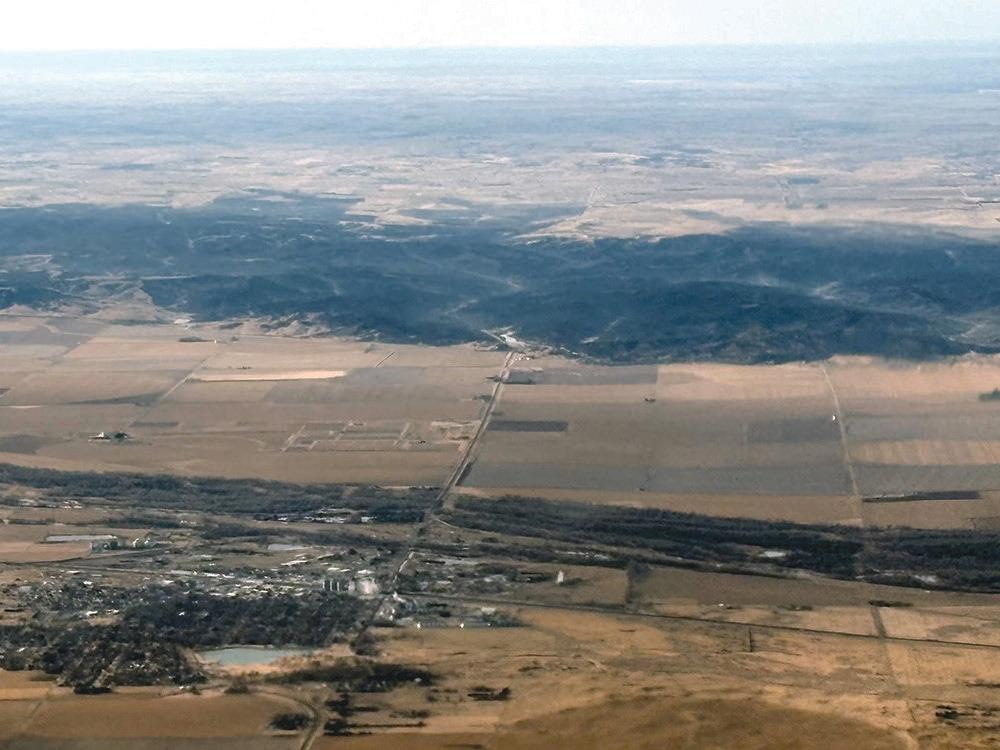
In mid-March Governor Jim Pillen and Major General Craig Strong, Adjutant General for the Nebraska National Guard, viewed the Cottonwood Fire from the air before meeting with firefighters, ranchers. and others affected by the wildfires. At this point, the Cottonwood Fire had destroyed 131,259 acres across Dawson, Frontier and Lincoln counties and was 40% contained.
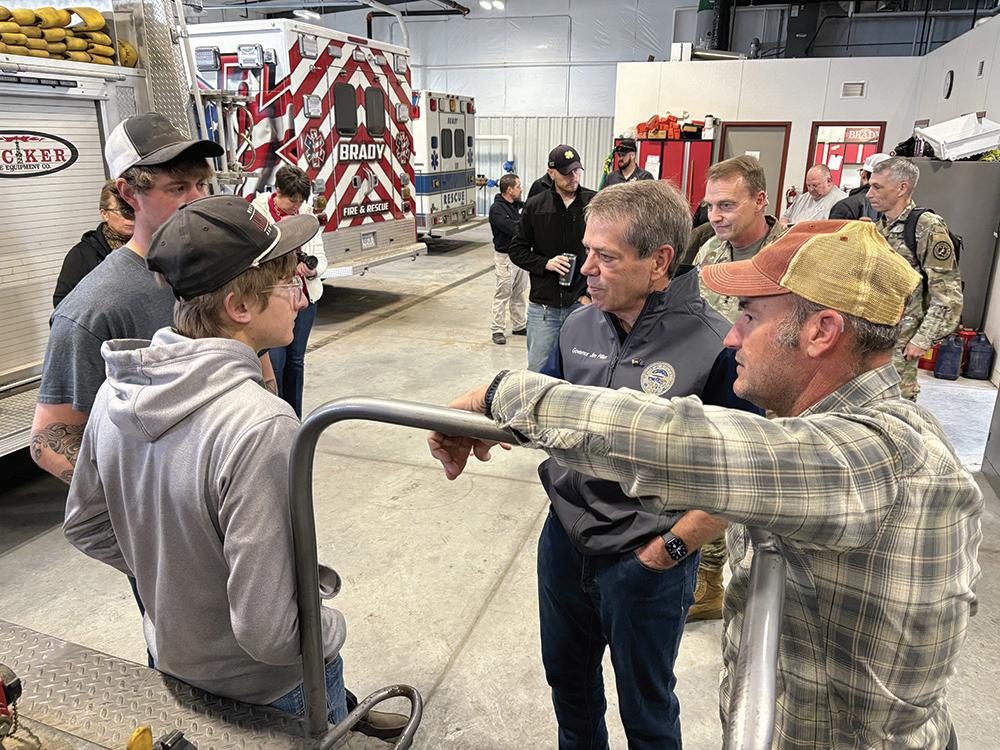
Upon landing in North Platte, the Governor and Maj. Gen. Strong traveled to the Fire Department in Brady where they met with emergency management representatives, members of the Nebraska State Patrol, firefighters, and county and village leadership from Brady and other nearby communities.
Continued on the next page
Addressing the crowd, Gov. Pillen shared, “Right here is the heart and the soul of this community – our volunteer firefighters. I can’t imagine what you have been through these past 72 hours or more. Our goal is to get you what you need. There are people from across our state and the nation who want to help Nebraska.”
Maj. Gen. Strong added, “I feel in awe being here with you today. I am humbled to be in your presence. When the fire started, the Governor had three words for us, ‘whatever it takes.’”
At the time of the press release, in addition to Cottonwood, there were three other significant wildfires burning in the state. Together these fires – Cottonwood Morrill, Road 203 and Anderson Bridge in Cherry County – have consumed nearly 827,000 acres of land.
Additional firefighting equipment was provided by Colorado and North Dakota to support efforts to extinguish the flames. They, along with Iowa, are answering requests made by Nebraska through the Emergency Management Assistance Compact (EMAC). The Iowa National Guard and the Nebraska National Guard both utilized helicopters with buckets to make aerial water drops. An additional 20-person Nebraska National Guard ground firefighting hand crew also supported the effort.
The number of personnel fighting the Cottonwood and Morrill fires at the time of the release, was estimated to be over 400. Those fires were being managed by the Complex Incident Management Team (CIMT), under the direction of the State of Nebraska.
Following their stop at the Fire Department, Gov. Pillen and Maj.
Continued on page 23 / See Fires
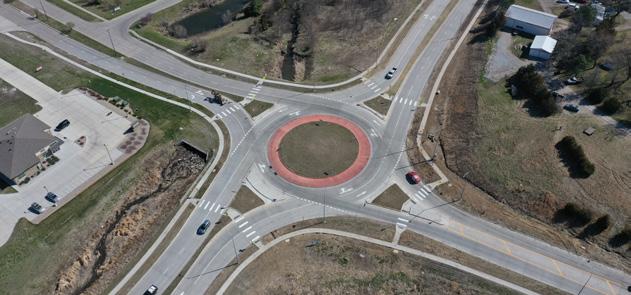
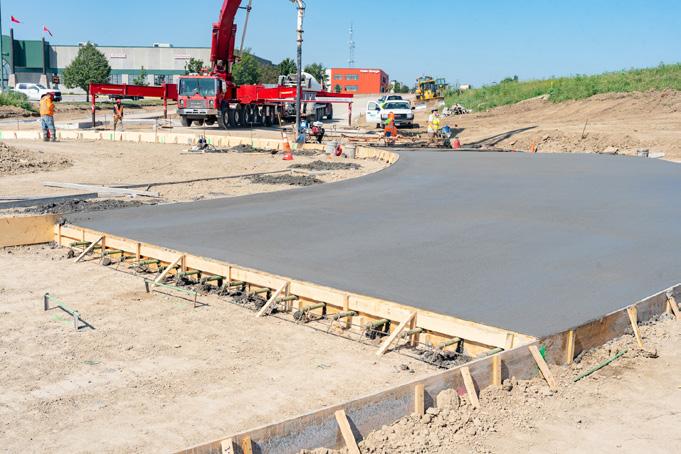
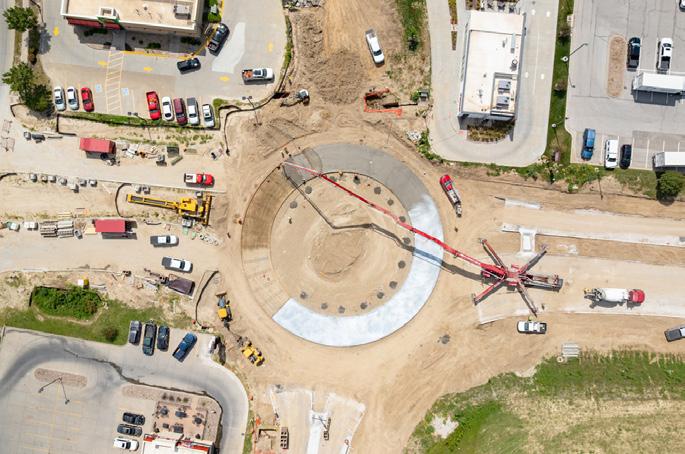
Helping communities move safer, smoother, and more efficiently—one intersection at a time.

In March, NMPP Energy awarded Ryan Hurst, Utility General Manager of the City of Wahoo Utilities with the Bob Arraj Service Award at the NMPP Energy Annual Conference.
The award is presented annually to an official or employee who has excelled in service in the utility industry. The award is a memorial tribute to Bob Arraj, former city administrator and utilities superintendent of Kimball. Arraj’s years of knowledge, insight and expertise in the energy field allowed communities to benefit from numerous energy and service projects.
Since joining the City of Wahoo in 2019, Hurst has demonstrated exceptional leadership, progressive decision making and an unwavering commitment. Here are some of Hurst’s accomplishments:
• Transitioning to a fully automated meter reading system;
• Overseeing electric, water, sewer, and natural gas service expansion to more than 170 new residential lots and multiple commercial lots;
• Serving as the lead negotiator for the city’s wholesale power agreements;
• Advancing a feasibility and siting study for Wahoo’s power plant expansion;
• Improving reliability and redundancy of the city’s electric distribution system;
• Securing a 30-year solar energy purchase agreement; and
• Leading a downtown water main project and securing federal grant funds for natural gas pipeline upgrades.
Hurst’s award nomination cited his leadership skills, including his dedication and the ability to be innovative and find common ground in problem solving.
As the recipient of the award, Hurst received $350 which will be designated to go to a local project or program of his choosing.
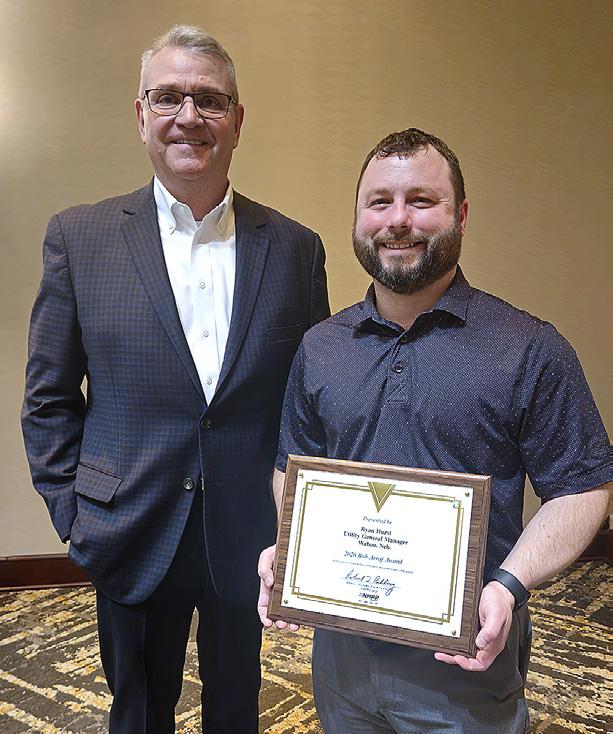
NMPP Energy Executive Director Bob Poehling presents Ryan Hurst, Utility General Manager for the City of Wahoo, with the Bob Arraj Service Award at the NMPP Energy Annual Conference March 18 in Lincoln.
Continued from page 18
work. Radios or agreed upon hand signals should be used to coordinate movements between workers and equipment operators. Making eye contact before approaching machinery helps confirm intentions and prevents misunderstandings. Crews must also stay aware of unpredictable behavior from motorists. Even in well-marked work zones, drivers may be distracted or confused. Workers should keep their movements predictable, minimize unnecessary time near active traffic, and report unsafe driving behavior when appropriate.
Work zone safety relies on thoughtful planning, correct barricade selection, strong communication, and constant situational awareness. When crews choose the right devices for each situation and follow proven safety practices, they protect themselves and the community. A well-organized work zone reduces risk, prevents incidents, and supports a safer environment for everyone.
Continued from page 21
Gen. Strong went to the Brady Community Center where they, along with Laura Field, Executive Vice President of the Nebraska Cattlemen, spoke with a large group of community members, farmers, and ranchers.
Gov. Pillen acknowledged the hardships presented by the raging fires and their effect on people in the community. “When we have a fire here, it affects our way of life. It’s our livelihood and it’s our economy. Ask for help. A lot of you have been through some tough stuff. We have to take care of each other.”
“The resilience and determination of our ranchers in the face of wildfire is deeply inspiring. The courage of first responders and volunteer firefighters who are risking their lives while stepping away from their own families and operations is nothing short of extraordinary,” said Executive Director Field. “In the weeks and months ahead, Nebraska Cattlemen stands ready to support recovery in every way it can. We are profoundly grateful for the heart and soul of Nebraska rallying around neighbors in need.”
At the time of the release, red flag warnings remained in effect across much of the state, complicating firefighting efforts. Assistant Director for NEMA Erv Portis reinforced the need for extreme caution in the face of ongoing weather conditions.
“Due to drought conditions, low soil moisture, strong winds, and extreme temperature changes, we are urging all Nebraskans to remain cautious with open burning. Fires can start quickly and spread unpredictably under these conditions, putting lives and property at risk. Please avoid burning and consider safer alternatives only when conditions improve.”
Source – Office of the Governor
The resilience and determination of our ranchers in the face of wildfire is deeply inspiring. The courage of first responders and volunteer firefighters who are risking their lives while stepping away from their own families and operations is nothing short of extraordinary




BY TARA A. STINGLEY, CLINE WILLIAMS WRIGHT JOHNSON & OLDFATHER, L.L.P.
Recently, the Eleventh Circuit Court of Appeals issued a significant decision in Melton v. I-10 Truck Center Inc., 166 F.4th 905 (11th Cir. 2026), vacating summary judgment on a hostile work environment claim and remanding the case for trial. The decision underscores a critical point for municipal employers: a workplace culture of racial hostility directed at any minority group—not just the complaining employee’s own race—may give rise to a viable hostile work environment claim. This case serves as a timely reminder that employers must take all forms of racially charged language seriously, even when the remarks are not directed at a specific employee.
Clennon Melton, a Black man, worked as a truck salesman at I-10 Truck Center in Florida beginning in March 2020. He was the only nonwhite employee at the business.
Throughout his employment, Melton’s workplace environment was permeated with racial hostility. His supervisors and co-workers regularly used racial slurs to describe nonwhite customers, referring to Indian customers as “dot heads,” Middle Eastern customers as “rag heads,” and using other derogatory terms for Asian and Hispanic customers. These remarks occurred “nearly every time a nonwhite customer entered I-10,” which happened frequently.i Nearly every time a Black customer paid in cash, the owners and a supervisor implied the money must have come from “illegal activity,” a suggestion not made about white customers. One supervisor also attempted to avoid serving nonwhite customers, passing them off to Melton instead.
Melton complained about these comments to the company’s owner, but no corrective action was taken.
Following a heated argument over a sales commission in April 2021, during which a supervisor told Melton, “Boy,
you’d better get out of my office,” Melton again reported the racially charged language.ii Rather than addressing the issue, the employer reprimanded both employees for arguing with each other.
After this incident, Melton overheard the owner’s son tell Melton’s direct supervisor that “they were going to get rid of [Melton] but they had to do it the right way.”iii Melton perceived this comment to mean they planned to “justify [his] termination as retaliation for [his] comments about discrimination.”iv In May 2021, Melton’s counsel contacted the employer alleging unfair treatment in the workplace and complaining that Melton had overheard the company’s owner and his son refer to a customer and Melton as “stupid n*****s.”v
The employer began documenting Melton’s performance issues. Melton was ultimately terminated in August 2021 and replaced by a white employee.
Melton sued under 42 U.S.C. § 1981, asserting claims of racial discrimination, retaliation, and hostile work environment. The district court granted summary judgment in favor of I-10 on all claims and dismissed Melton’s case.
To establish a hostile work environment claim on the basis of racial harassment, an employee must prove that: (1) he belongs to a protected class; (2) he was subjected to unwelcome harassment; (3) the harassment was based on his race; (4) the harassment was sufficiently severe or pervasive to alter the terms and conditions of employment; and (5) the employer is responsible for the hostile environment.vi
The “severe or pervasive” inquiry has both a subjective and an objective component: specifically, the employee must personally perceive the harassment as severe
or pervasive, and that perception must be objectively reasonable from the perspective of a reasonable person in the employee’s position.vii Courts typically evaluate these claims by examining the totality of the circumstances, including the frequency of the conduct, its severity, whether it is physically threatening or humiliating, and whether it unreasonably interferes with the employee’s work performance.
On appeal, the Eleventh Circuit affirmed summary judgment on Melton’s discriminatory termination and retaliation claims, finding that Melton failed to present substantial evidence that racial animus motivated his firing or that I-10’s legitimate, non-discriminatory reasons for his termination were pretextual. The court noted that I-10 had documented performance issues, including paperwork errors, missed deadlines, and a significant customer complaint, which the court concluded constituted legitimate grounds for termination.
However, the Eleventh Circuit vacated summary judgment on Melton’s hostile work environment claim and remanded the case for trial. The court held that evidence of pervasive racial hostility directed at nonwhite customers was sufficient for a jury to find that Melton’s work environment was hostile.
Critically, the court explained that when an employee belongs to a minority group relative to his specific workplace, the treatment of other non-majority groups may evidence a strong racial preference for the workplace majority such that all minorities are racially disfavored. In other words, Melton did not need to show that every racially hostile remark was directed specifically at him or at Black individuals. Rather, the pervasive hostility toward nonwhite groups, combined with some evidence of bias directed at Melton personally (such as the use of the term “boy” and the practice of questioning Black customers’ cash payments) was enough for Melton’s claim to survive summary judgment.viii
The Melton decision provides several important lessons for municipal employers, HR professionals, and supervisors:
1. Address all forms of racially charged language in the workplace—not just remarks directed at a specific employee. The Eleventh Circuit made clear that pervasive hostility directed at racial and ethnic minority groups can create liability if it makes the environment hostile for a minority employee. While
Title VII is not a “civility code” for the workplace, it does protect employees who face racial bias. Municipal employers should ensure that workplace policies prohibit all racially derogatory language, regardless of whether the remarks target employees, vendors/ suppliers, or members of the public.
2. Take employee complaints of racial hostility seriously and respond with meaningful corrective action. When an employee raises concerns about discriminatory conduct, employers must investigate promptly and take appropriate remedial measures. Merely reprimanding the complaining employee alongside the offender for arguing (without addressing the discriminatory conduct) may be viewed as evidence that the employer tolerated or condoned the hostile environment.
3. Train supervisors on recognizing and reporting discriminatory behavior. Supervisors who witness or participate in racially hostile conduct create significant liability for their employers. Regular training on anti-discrimination policies, recognizing subtle forms of bias, and properly responding to complaints are essential for all supervisory personnel.
4. Document performance issues thoroughly, but do not rely on documentation alone as a defense. While documentation of an employee’s performance issues can aid the employer in defending against a discrimination or retaliation claim, an employer’s failure to address a hostile work environment may still leave the employer exposed. Maintaining strong documentation practices is critical, but employers must also cultivate a respectful workplace culture and enforce anti-harassment policies consistently.
Editor’s Note: This article is not intended to provide legal advice to its readers. Rather, this article is intended to alert readers to new and developing issues. Readers are urged to consult their own legal counsel or the author of this article if they wish to obtain a specific legal opinion regarding their particular circumstances. The author of this article, Tara A. Stingley, can be contacted at Cline Williams Wright Johnson & Oldfather, L.L.P., 12910 Pierce Street, Suite 200, Omaha, NE 68144, (402) 397-1700, tstingley@clinewilliams. com, or www.clinewilliams.com.
i Id. at 910-11.
ii Id. at 911.
iii Id.
iv Id.
v Id. at 912.
vi Melton v. I-10 Truck Ctr. Inc., 166 F.4th 905, 918 (11th Cir. 2026).
vii Id.
viii Id. at 918-19.
Continued from page 7
Another important discussion centered on restoring and strengthening civility in public discourse. Keynote speaker Tim Shriver challenged local leaders to foster conversations grounded in respect and understanding.
Rather than focusing solely on compromise, Shriver encouraged leaders to acknowledge differing perspectives while practicing humility, curiosity, and attentive listening. One simple but powerful approach he emphasized was asking others, “Tell me more,” creating space for deeper understanding.
Local officials, he noted, are uniquely positioned to lead these efforts. Because city leaders interact directly with residents, they often serve on the front lines of civic dialogue and have the ability to model respectful engagement within their communities.
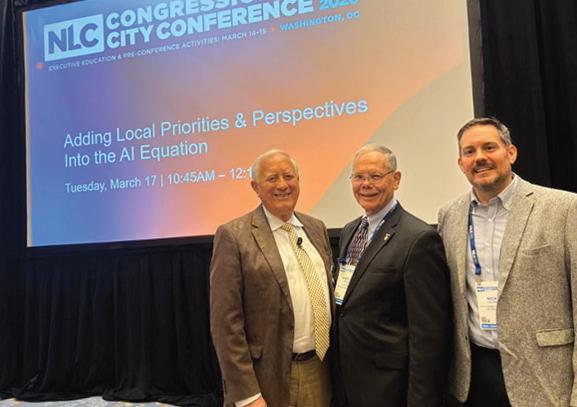
The conference also explored how artificial intelligence is beginning to transform communication between cities and their residents. A panel moderated by Mayor Don Groesser of Ralston examined the opportunities and challenges AI presents for municipal governments.
AI tools can help cities respond quickly to common questions about zoning regulations, utility rates, and points of contact within municpal government. However, panelists emphasized that strong safeguards—or “guardrails”—are essential to ensure accurate and responsible communication. Several key principles were outlined for cities implementing AI systems:
• Data Integrity: Municipalities must first dedicate staff time to reviewing and updating existing records to

ensure information is accurate and current.
• Accessible Information: Data should be organized and formatted so that residents can easily search key words or phrases and receive reliable answers.
• Staff Training: Municipal employees and legal advisors must receive comprehensive training to understand how AI-generated information should be used and shared with the public.
• Human Oversight: Despite the efficiency of technology, a staff member should always remain directly involved in reviewing AI responses to maintain accountability and the human connection in public service.
Participants also examined one of the most pressing issues facing communities nationwide: housing affordability. Municipal leaders shared strategies and experiences related to meeting the expanding housing needs of residents while balancing economic growth and community development.
The conference concluded with a powerful reminder of the role cities play in shaping the nation’s future. The overarching message was clear: “We are America.” Every community is part of the larger American story, and local governments are central to the continued vitality of the republic.
As the United States approaches its 250th anniversary, municipal leaders were encouraged not only to reflect on the nation’s past but also to dream boldly and envision the next 250 years—recognizing that strong, innovative municpalities remain the foundation of a thriving republic!
Continued from page 6
is supposed to function. For the most part, debate stayed on track, people were treated with respect, and opponents came together to hammer-out compromises and move legislation forward. I saw that on multiple occasions.
“You worked tirelessly this session –sometimes late into the evening. You advocated fiercely for the policies you supported and you fought hard against those you opposed. You did the people’s work and I commend you. And while there will always be more that you want to do, we fulfilled our responsibilities. Again, thank you for your dedication, your passion and for your hard work.
“As is custom, I would like to take a moment to thank all of those who are behind the scenes. These are people who have a true commitment to this institution and who work diligently to help us get our job done. As I say your name, could you please stand up.” (Speaker Arch recognized Brandon Metzler, Clerk of the Legislature, as well as the MANY individuals who serve Senators in various capacities.)

BY THE NEBRASKA ARTS COUNCIL
Welcome back to the next installment of quarterly articles from the Nebraska Arts Council, where we will highlight a different grant program and how it can be used in your community.
Mini Grants are designed to provide quick access to funds supporting a variety of arts projects that use artists or arts activities as a key component. Examples of projects include exhibitions, performances, poetry readings, commissions, and/or support of new work development, arts festivals, community murals, and cultural heritage projects.
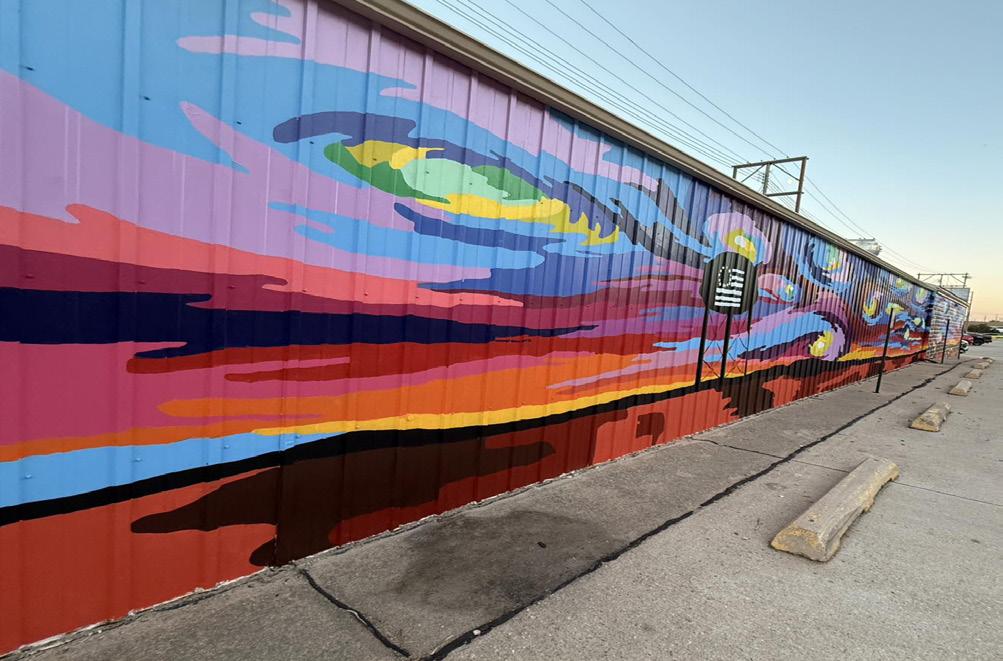
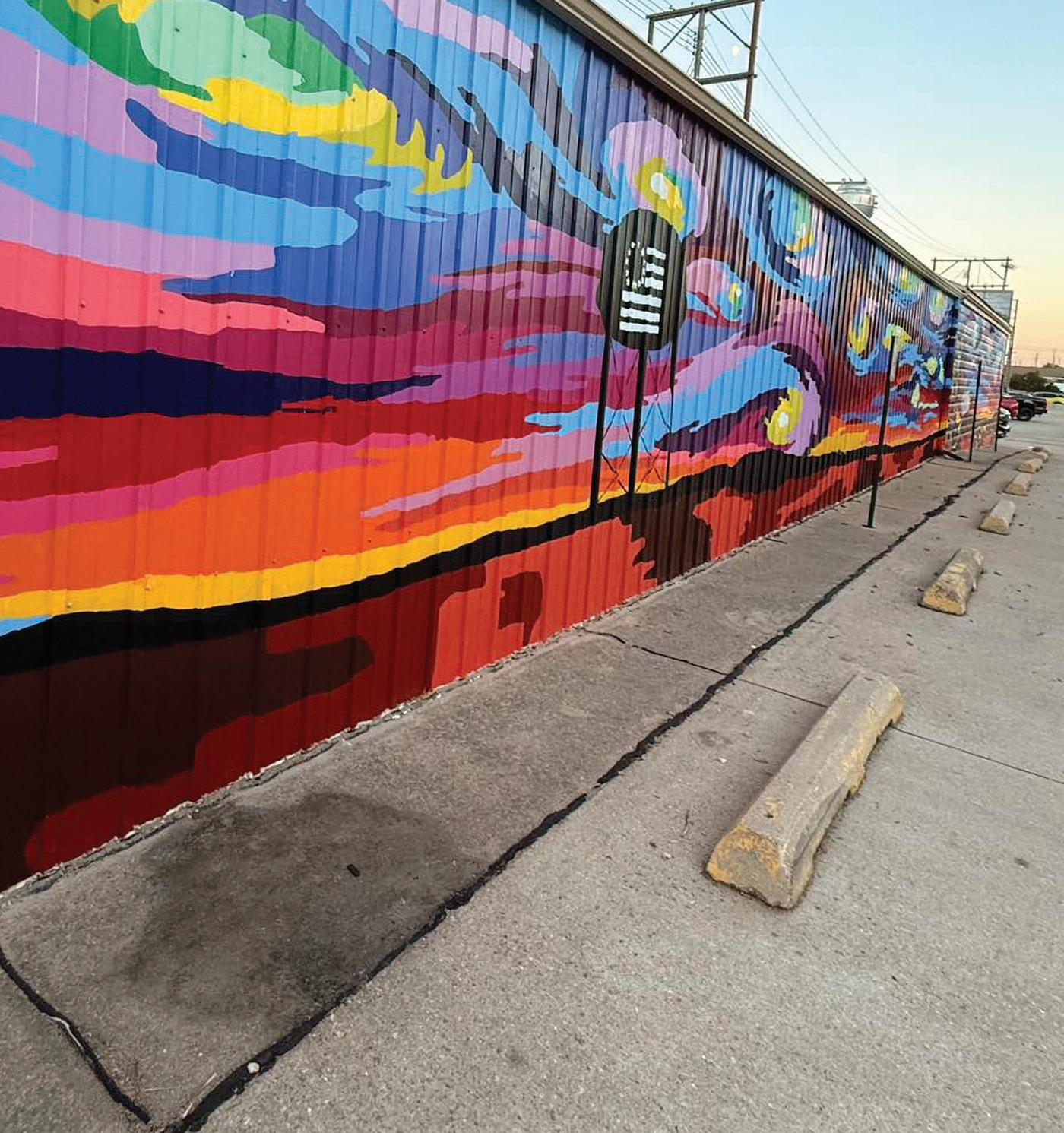
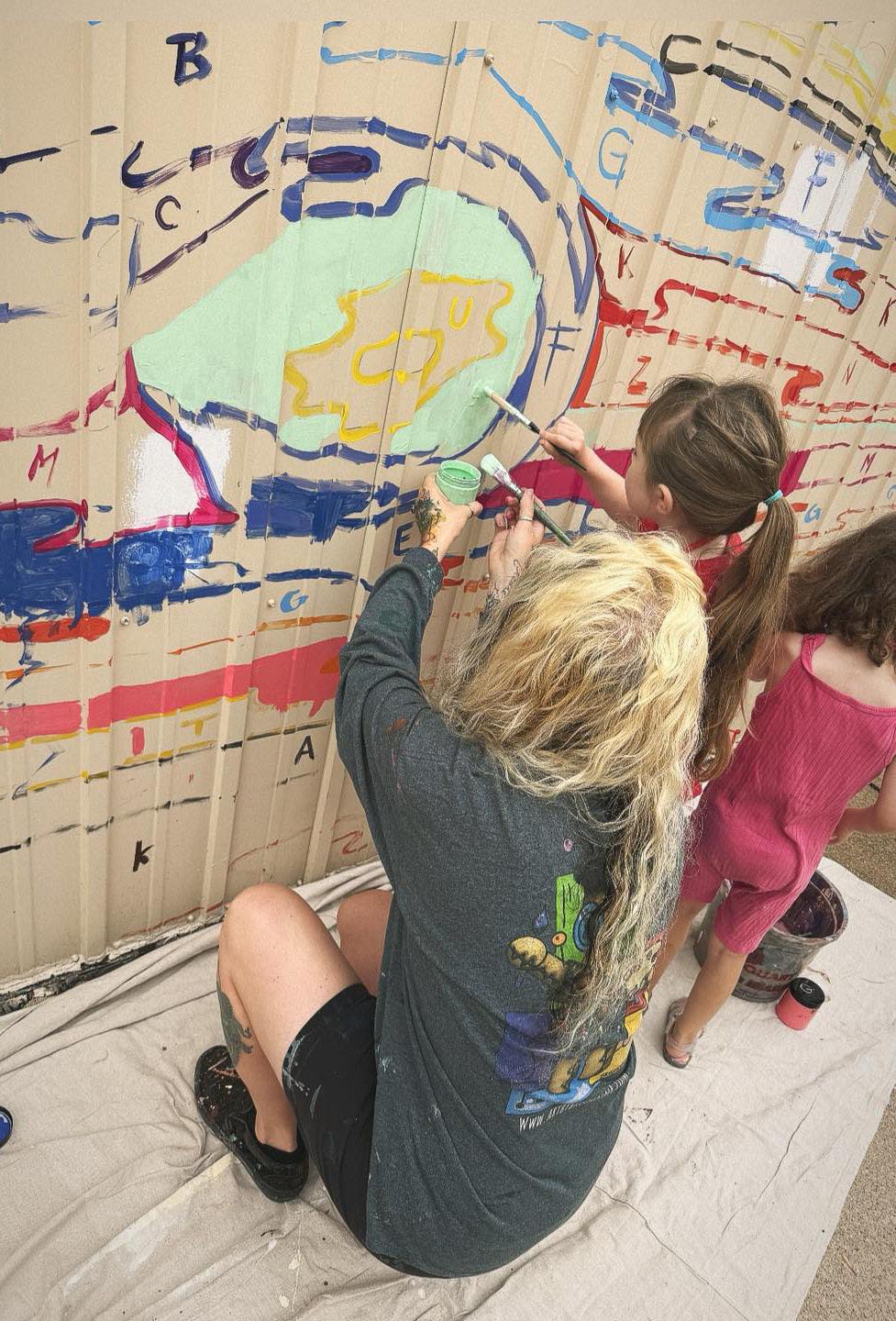
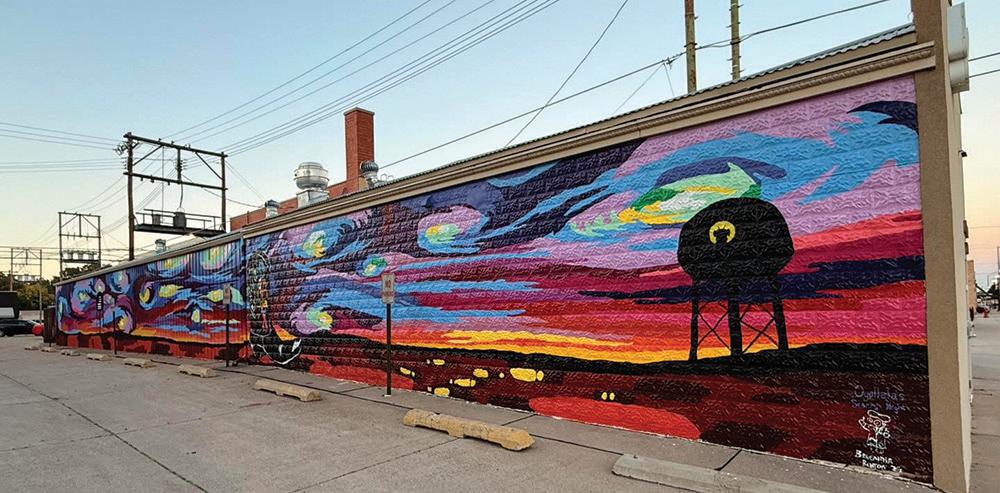
The Western Trails Creative District in Ogallala utilized the Mini Grant program for a community mural. Breeanna Benton is a local artist in Keith County and her goal for the project was to create a project where community members could actively be a part of the experience. This led her to create a paint-by-number style mural that gave everyone the opportunity to contribute.
The design was mapped out on the west-facing wall of the Elks Lounge in Ogallala to ensure an easy, enjoyable painting experience for participants. While they held registrations for specific time slots for community members to paint, they also welcomed walk ups.
The title of the mural is “Ogallala’s Starry Night” and was created to be a mural for the community, by the community. More than just beautification, the mural transformed a space into a cultural destination and a celebration of the community’s vibrant spirit.
The mural project was completed during the annual Ogallala Indian Summer Rendezvous in order to integrate as many community members as possible. Approximately 250 people of all ages, abilities, and backgrounds came together to create the piece. Participants ranged in ages 8 months – 87 years.



The Nebraska Arts Council Mini Grant category opened in April 2026 and applications are due at least eight weeks before the start date. Eligible projects must take place during the next fiscal year, which runs July 1, 2026 – June 30, 2027. For more information, or to see if a project is eligible, please contact the Nebraska Arts Council at 402-595-2122 or info@nebraska.gov.
To learn more about this grant program, visit https://www. artscouncil.nebraska.gov/mini-grant/.

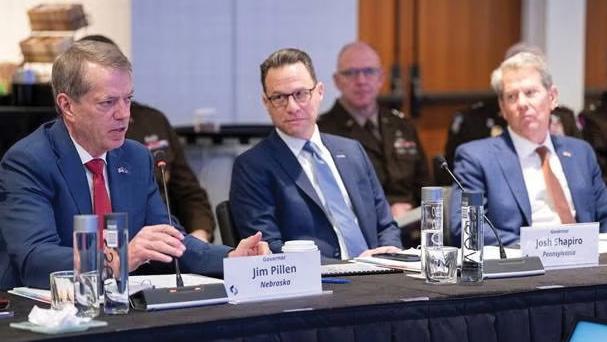
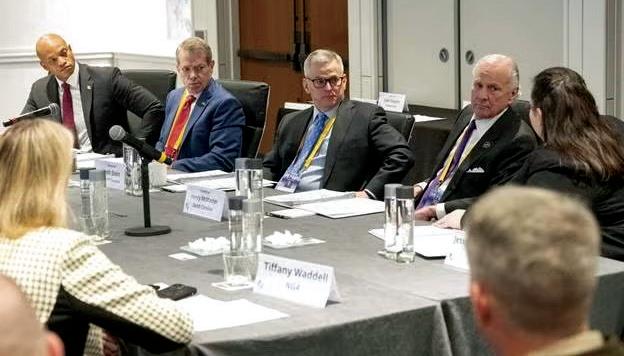
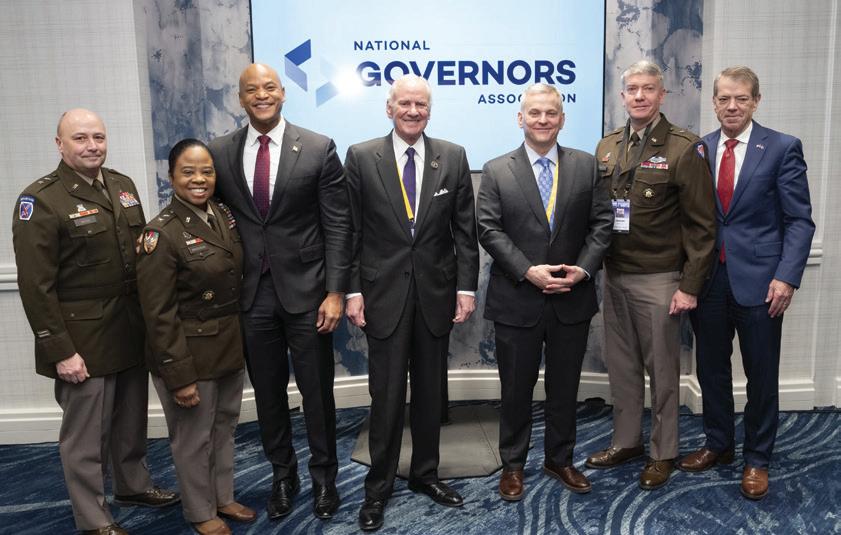
Governor Jim Pillen has been appointed by President Donald Trump to serve on the Council of Governors, a bipartisan group of state leaders focused on strengthening statefederal partnerships in national security, disaster response, and military coordination.
"It’s an honor to serve on the Council of Governors and I am grateful to be appointed by President Trump,” said Gov. Pillen. “Homeland security, disaster response, and supporting our men and women in uniform are our most important duties as leaders, and the Trump Administration has shown unwavering commitment on all these fronts. I am honored to serve in this role.”
The President appoints 10 governors to the Council for twoyear terms - five from each political party - with two governors serving as co-chairs. Federal participants on the Council include the secretaries of defense and homeland security, the President’s homeland security and counterterrorism advisor, commander of the U.S. Northern Command and the chief of the National Guard Bureau, among others.
Source – Office of the Governor
Communities across Iowa, Minnesota, Nebraska, North Dakota, South Dakota, Wisconsin, and New Jersey can now access up to $15 million in funding for new playground projects through the 2026 Healthy Kids Initiative. The program is offered by Play & Park Structures in partnership with Commercial Recreation Specialists (CRS).
The nationwide program is designed to help park districts, schools, and community organizations secure additional funding—addressing one of the most common barriers to moving playground projects forward.
Supporting projects that strengthen communities
The Healthy Kids Initiative supports a range of organizations, including:
• Municipal parks and recreation departments
• Schools and early childhood centers
• Faith-based and community organizations Projects supported through the initiative promote physical activity, inclusive play, and social connection—
key elements in supporting youth development and community well-being.
Helping communities move from planning to construction
In addition to funding support, communities receive guidance to navigate key project decisions—from early planning through implementation.
As the regional partner for Play & Park Structures, CRS works directly with communities to support the application process and align projects with program requirements.
“Funding is only part of the equation,” said Ryan Hartberg, Vice President of Sales and Marketing at CRS. “Communities still need to make key decisions around design, budget, and implementation. Our role is to help guide that process so projects can move forward with confidence.”
Applications Open for 2026 Projects
Communities considering a playground project in 2026 are encouraged to begin planning early, as funding is limited and awarded based on program criteria.
For more information, visit: https://crs4rec.com/hki-2026/
Source – Commercial Recreation Specialists