Defining the Future of Garden Leadership
Longwood Gardens Fellows Program 2025–2026
Carmen Grey
Jennifer Dick
Nate Cody
Yan Li

Longwood Gardens Fellows Program 2025–2026
Carmen Grey
Jennifer Dick
Nate Cody
Yan Li
Longwood Gardens Fellows Program 2025–2026
“A leader is anyone who takes responsibility for finding the potential in people and processes, and who has the courage to develop that potential.”
—Brené Brown
Longwood Gardens has long believed that the future of public horticulture depends on the leaders we invest in today. We are the beneficiaries of that belief and deeply grateful for the vision, generosity, and sustained commitment that make the Fellows Program possible.
We extend sincere thanks to the many individuals who gave their time and candor in support of our research. To the survey respondents and interview participants who shared their experiences and insights about leadership across the public garden sector: this study would not exist without you.
We are equally grateful to the colleagues, mentors, and senior leaders who offered guidance throughout the research process, and to the American Public Gardens Association, whose annual conference provided an essential forum for exchanging knowledge and gathering the field perspectives that inform this work.
To the public garden community, we continue to be inspired by your dedication, service, and leadership that helps define and reshape this field. We are honored to contribute to that legacy through this research and in our careers ahead.
Public gardens are facing an imminent leadership transition. Significant senior-level turnover is anticipated across the sector within the next three to five years, a wave the field is not yet fully prepared to meet. This research was designed to help change that.
Drawing on 45 senior-level job postings, a global survey of 47 senior garden leaders, and interviews with executive recruiters and human resource professionals, this study examines which competencies future public garden leaders will need, where gaps exist between current preparation and those expectations, and whether the sector has the pipelines in place to support succession. Our findings are analyzed through Ngayo Fotso’s integrated framework of 21st-century leadership competencies, which provided a consistent structure and shared language across all three data sources.
Across all three sources, six key competencies emerged as essential to effective public garden leadership: Organizational Skills, Communication Skills, Human Orientation, Cognitive Skills, Competence for Financialization, and Self-Awareness. These are the capabilities that describe leaders who can execute complex work, build trust across teams and stakeholders, manage financial complexity, and lead through relationships. They are also, our research shows, the areas where emerging leaders most consistently fall short. At the same time, the findings reveal a three-way misalignment: what is expected of senior leaders is not fully aligned with what is being communicated in hiring or developed through formal programs. Competencies like Adaptability & Flexibility, the Ability to Handle Complexity, and Self-Awareness are widely recognized as critical but remain underrepresented in job postings and talent development efforts. Nearly half of surveyed organizations have no internal leadership development program, and most professional development occurs only once per year or less, a structural gap that is difficult to reconcile with the scale of transition ahead. These findings point to a clear and urgent opportunity. Closing the gap between what leadership requires and how we develop for it demands coordinated action at every level. For individuals, that means taking ownership of competency development and not relying on job postings alone to signal what senior roles truly require. For organizations, it means moving from task-based training toward sustained, competency-aligned talent development strategies embedded in everyday practice. For the sector, it means building shared frameworks, collaborative pipelines, and accessible pathways so that leadership readiness is not limited by the size or resources of a single institution. The soil is fertile—public gardens attract talented, mission-driven professionals. What the sector needs now is the intentional cultivation to grow them into the leaders our gardens will need.
Every industry is consistently finding ways to face and overcome challenges; public gardens are no exception.
Specializing in the care of predominantly living collections and missions tailored to connecting people to nature, gardens face a unique blend of challenges. Environmental challenges, changing revenue streams, and shifts in workforce are creating new opportunities and demands on the public gardens. Leaders are at the forefront of steering the public garden sector towards the future.
Our cohort wanted to identify the gaps and weaknesses within the public garden sector that would help find where organizations need to focus in order to build the next generation of garden leaders who will be able to deal with future challenges. We heard from current leaders who shared a wide variety of concerns, including aging infrastructure, changes in funding and revenue sources, staffing shifts, and leadership skill gaps. We asked ourselves: how do we equip the next generation of senior leaders to guide their institutions through ongoing changes?
We feel that developing internal talent and strengthening resources to build leadership pipelines within the public garden industry is important. IBM defines talent development as “the process by which organizations ensure their workforce possesses the right skill sets and abilities to execute their jobs today and be prepared for changes to those jobs in the future” (IBM, n.d.). Organizational and sector-wide talent development strategies are one way to make this happen. They integrate workforce planning, learning and development, performance management, succession, and career pathways (Savarimuthu & Jothi, 2020). Learning programs, coaching and mentoring, stretch assignments, and rotating positions are examples of components of talent development to help leaders learn what they need to succeed. Training, one component within talent development, is a systematic process to acquire skills, knowledge, rules, concepts, or attitudes (Kraiger, 2017).
We narrowed our research to focus on competencies which we believe are a foundational element for creating a talent development strategy. Identifying the competencies leaders will need can help guide the creation of talent development strategies that align with organizational needs and the needs of the public garden industry as whole. Closing the gaps of leadership competencies within our industry could help lower the need to look outside of public gardens to find leaders who have the capacity to overcome current and future challenges.
The language used to describe competencies is often inconsistent across industries. To bring clarity, we use the definition of competencies as the knowledge, skills, personal characteristics, self- concepts, traits, and motives required for leaders to effectively guide organizations in changing environments (Ngayo Fotso, 2021). We have also used Ngayo Fotso’s integrated framework of 21st- century leadership competencies (2021). This framework combines traditional leadership competencies such as Self- Awareness, Values, Organization Skills, Communication Skills, and Transformational Ability with emerging competencies such as Adaptability and Flexibility, Ability to Handle Complexity, and Global Leadership, as well as new identified competencies like Collaboration & Participative Leadership Style, Sustainability Competence, and Competence for Financialization.
Our report examines the competencies future senior leaders of public gardens will need. We explore whether gaps exist between what leaders need and the competencies current leaders have, and whether gardens have internal pipelines strong enough to support future succession. These questions position leadership readiness not only as an individual skillset but also as an organizational and sector-wide responsibility with long -term consequences for public gardens.
To explore these questions, we drew on three sources of information:
– Senior- level public garden job postings from around the world,
– A global survey of senior garden leaders, and –
Interviews with executive recruiters and public gardens human resources professionals.
We hope this report proves beneficial for executives, senior leaders, boards, hiring managers, leadership development professionals, and aspiring leaders across the public garden field.
To ensure our research would be valuable for public gardens, we explored five elements that shape contemporary leadership expectations in public gardens.
1. The definition of leadership,
2. The current garden leadership landscape and identifying the current challenges,
3. Leadership development programs within public gardens,
4. Leadership theories and competency models in peer-reviewed literature, and
5. A modern leadership competency framework that define the capabilities most emphasized in contemporary research.
These elements provided a breadth of understanding, enabling us to better understand how leadership expectations are changing and what it will take to prepare leaders who can successfully guide public gardens into the future.
Definitions
For our study, we anchor our understanding of leadership in Brené Brown’s definition of a leader as “anyone who takes responsibility for finding potential in people and processes and has the courage to develop that potential (2018).” This framing positions leadership as an ongoing developmental practice, aligning with the collaborative, mission-driven nature of public garden organizations.
The American Public Gardens Association (APGA) defines a public garden as an institution that maintains plant collections for public education and enjoyment, research, conservation, and learning, and that is open and accessible to the public (APGA, n.d.).
For the purposes of our research, competencies are broad and transferable, shaping how leaders approach their roles rather than describing specific tasks (Ngayo Fotso, 2021). This definition emphasizes that leadership effectiveness is shaped by technical expertise and other attributes that influence how leaders think, decide, relate to others, and respond to complexity.
The competency model shown in Figure 1 illustrates how effective leadership emerges from the interaction knowledge, skills, personal characteristics, self- concepts, traits, and motives. The model can be used as a practical tool to identify leadership strengths and gaps, guide professional development, and assess readiness for increased responsibility. By linking individual attributes to organizational performance, it provides a structured foundation for understanding both leadership growth and institutional effectiveness.
Figure 1: Leadership competency tree model distinguishing observable competencies (knowledge and skills) from underlying ones (personal characteristics, self-concept, traits, and motives). Adapted from Spencer & Spencer’s foundational iceberg model (1993).
As new generations enter the workforce, with millennials now representing the largest proportion of employees and Generation Z beginning to establish a presence, expectations for leadership styles and organizational culture are also evolving (Ngayo Fotso, 2022). While some research argues that there are much more similarities than differences between generations (Ngayo Fotso, 2024; 2022), others note that there are certain leadership approaches that are more desired by Generation Z (Wasiluk, 2024). At the same time, the continued increase of women in leadership roles is further reshaping workplace dynamics and strengthening the diversity of leadership perspectives (Duchene, 2025). Women, however, still remain underrepresented in senior leadership roles across all industries (WEF, 2023), including in conservation organizations (Gigante, et al., 2025), and public gardens.
Therefore, part of the reason why workplaces are changing is because who is in the workforce is changing. That will affect what good leadership looks like and how gardens need to prepare leaders. Many of the competencies that served organizations well in earlier eras are no longer sufficient on their own for today’s more complex operating environment (Ngayo Fotso, 2021). Added to this is the unfortunate reality that leadership development is frequently under resourced and inconsistently implemented, with few organizations investing in intentional, organization wide leadership development strategies (Neal, et al., 2023).
There is, however, a global investment trend: leadership development has become a multi-billion dollar industry worldwide, with nearly half of the funds invested annually in the United States (Westfall, 2019). Notably, 95% of learning organizations expect to increase or maintain this investment, a pattern that has shown steady growth over time (Westfall, 2019), including post-pandemic (The People Management Magazine, 2025). These trends point to a shared understanding that developing leaders is a strategic priority across sectors (Prokopeak, 2018).
These dynamics present a clear and strategic opportunity for public gardens: to adopt a tailored talent development strategy shaped by a shared competency framework, one that strengthens the pipeline of future leaders, aligns hiring expectations with what senior roles actually require, and supports more intentional succession planning across our sector. Simply, public gardens need to modernize how they develop and support leaders because the workforce is becoming more diverse and values-driven. This kind of coordinated approach can better position public gardens to navigate ongoing change and fulfill our missions with strong, prepared leadership for years to come.
Leadership development programs in and adjacent to the public garden sector occur across a broad and varied landscape. Some examples are:
– Internal institutional initiatives,
– Formal academic programs,
– Cohort-based fellowships, and
– Shorter-term professional development opportunities.
These approaches differ in structure, accessibility, and intended audience. Collectively, they shape how current and emerging leaders build the skills needed to guide public gardens.
At an institutional level, internal leadership development looks like mentorship, stretch assignments, cross-departmental projects, and informal coaching. All of which play a significant role in preparing staff for advancement. However, these opportunities may be inconsistently structured across organizations and at times lack clearly defined competencies or intentional development pathways. On top of these challenges, financial constraints and staffing limitations can make this work even harder, as many gardens operate with lean teams and limited budgets making it difficult to dedicate resources to sustained, intentional leadership development.
There are a small number of formal programs for those who are seeking leadership development outside of their institution. They are structured, curriculum-based learning programs geared for emerging leaders preparing for senior leadership roles.
– The Longwood Fellows Program is a fully funded, year-long leadership accelerator designed to advance the skills, self-awareness, and strategic capacity of public garden professionals preparing for senior leadership roles. The program emphasizes leadership as a developmental and relational practice, integrating theory with real world application (Longwood Gardens, n.d.).
– Cornell University offers a concentration in Public Garden Leadership as part of its Integrative Plant Science Master of Professional Studies degree, providing graduate-level preparation grounded in the operational and strategic realities of garden management (Cornell Univerisity, n.d.).
While both programs are highly regarded, they serve different purposes and audiences: the Longwood Fellows Program focuses on accelerating the leadership readiness of mid-career professionals, while Cornell’s year-long program is an academic pathway for those seeking graduate credentials. Both are limited to small cohort sizes, require significant time commitments, and may pose geographic constraints since they occur in person.
Horticulture-focused training programs, including the Niagara Parks Commission School of Horticulture, the Kew Diploma in Horticulture, the New York Botanical Garden School of Professional Horticulture, and the RHS Wisley Horticulture School, provide strong technical foundations with some leadership skill building throughout. While these programs build deep horticultural expertise, they largely prioritize technical training over the broader leadership competencies that are expected of senior garden leaders.
Shorter-term professional development opportunities offered through organizations like APGA, provide more accessible, though less comprehensive, development experiences (workshops, conference sessions, and peer learning networks). These touch on leadership topics but rarely offer the sustained, structured development needed to build senior leadership capacity.
Looking ahead, Botanic Gardens Conservation International (BGCI) and APGA are actively exploring the development of a global, online modular leadership program designed to broaden access to leadership development across the sector (BGCI, 2024). This initiative reflects a growing recognition that scalable, flexible pathways are needed to reach professionals who cannot access existing programs due to geography, career stage, or institutional resource constraints.
Together, this landscape points to a meaningful opportunity: while a number of development options exists, our sector can benefit from competencybased talent development strategies that support leaders at all career stages. A more intentional approach that shares common definitions, clear frameworks, and accessible pathways would ensure that emerging leaders are prepared to guide public gardens into the future.
Consider this: the layout of a garden bed (paths, irrigation, sun exposure, etc.) is a framework. It determines where things can grow, and how the garden functions over time. You can choose different plants, but they all need to fit within the boundaries to survive. If we apply this concept to our research, a framework is a structured way of thinking that helps us organize information and allows us to design strategies in a purposeful way. This is why we anchored our research in Ngayo Fotso’s competency framework.
Ngayo Fotso synthesized work from across Western leadership literature to present an integrated set of competencies in his paper “Leadership competencies for the 21st century: a review from the Western world literature” (2021). This framework reflects a shift toward leadership that is adaptive, people-centered, and responsive to uncertainty.
Ngayo Fotso’s framework gave us parameters to work within. Importantly, it gave us a shared language to reference when we engaged with industry professionals—it allowed for consistency in all conversations throughout our research. We think this was a necessary decision because the perception of effective leadership is not universally the same. Competency-based frameworks have emerged as a practical synthesis of these perspectives, shifting the focus from fixed traits or prescribed behaviors to the broader
capabilities leaders need to navigate complex and evolving environments (Hollenbeck, et al., 2006; Longmore, et al., 2018; Ngayo Fotso, 2021).
Ngayo Fotso’s integrated framework brings together leadership competencies from “traditional,” “emerging,” and 21st-century” perspectives and is summarized in Figure 2.
This framework highlights that effective leadership is made up of a combination of interconnected capabilities. These competency sets reflect a broader, more holistic understanding of what effective leadership requires. Additionally, this synthesis provides a useful foundation for examining the competencies that public garden leaders may need in the future and points to an opportunity to explore how more consistent, sector-relevant frameworks can support leadership development.
Think of it this way: when diagnosing the health of a specimen in your plant collection, let’s use a mature oak tree for this example, you want to identify the true cause of its symptoms. Decline may be a result of a fungal infection, insect damage, or physical damage, etc. Imagine applying an insecticide to a limb that was snapped in a windstorm. In this case, the oak needs structural pruning but instead it received a dose of insecticide to treat the problem. It is no surprise that the desired result is not evident after the wrong care has been applied. The same idea from this example can be applied to leadership development. It is important to understand the competency mix that is present, and the competency mix that is needed to craft the appropriate talent development strategy.
Understanding the competencies is an important step toward strengthening leadership development. As public gardens face leadership turnover, shifts in the workforce, and growing operational complexity, there is a clear need to move beyond assumptions about what leaders need and examine those expectations through evidence. This includes both identifying what competencies are most emphasized today and exploring where gaps exist between current preparation and future demands.
Our study examines leadership competencies in public gardens through a mixed-methods approach. By bringing together data from senior-level job postings, surveys of current leaders, and interviews with recruitment professionals, this research offers a sector-specific look at leadership expectations, development gaps, and emerging needs.
This positioning allows our study to provide practical, evidence-based insights for public gardens as they consider how to strengthen leadership pipelines, refine development programs, and plan for succession. In doing so, we hope this information will support organizations in preparing leaders who can guide public gardens effectively.
Adaptability & Flexibility
Situations
People
Leadership style
Flexibility
New technologies
Leading virtual teams
New information systems
Results-driven
Hard working
Trustworthy
Care for the wellbeing of others
Curiosity
Authenticity
Optimism
Moral virtues
Cognitive Skills
Clever
Ability to conceptualize
Creative/innovative
Critical thinking
Analytical
Ability to synthesize
Strategic thinker
Creative
Entrepreneurial mindset Self-Awareness
Understanding one’s own needs, wants, drives, & expectations
Self-confident
Tolerant of stress
Purpose driven
Self-reflection
Self-regulation
Interpersonal skills
Oral
Listening
Written communication
Mastery of new media technologies
Organizational
Planning Organization
Distributing roles
Setting objectives
Providing structure
Providing procedures
Following up Ability
Navigate within networks
Navigate within systems Expertise
Mastery of new media technologies
Ability to manage & share knowledge
Continuous learning
Cross-functional competence
Collaboration & Participative Leadership Style
Discussion & exchanges with others
Openness to new ideas from others
Involving others
Focusing on customer satisfaction
Solving problems for customers
Customers as partners
Co-creation
Digital literacy
Data analytics
Digital vision & strategy
Digital business modeling
Digital tools & technologies
Real-time interactions with stakeholders
Focus on customer experience
Charisma
Leading change
Ability to develop a vision
Inspirational
Implementation ability
Helping others develop their skills
Coaching
Providing feedback
Ability to adapt to different cultures
International experience
Centralized decision making
Coercive leadership style
Mastery of Financial IT
Expertise in Finance & Financial strategies
Able to balance value creation & value extraction activities
Short-term orientation
Consciousness for social & environment impact
Strategic approach to sustainability
Know the five stages of a crisis
Transparency
We designed this study to explore how leadership expectations are currently communicated, where talent development needs are emerging, and how prepared public gardens perceive themselves to be for anticipated leadership transitions.
The following section outlines the approach used to gather and analyze this information, providing the foundation for the findings that follow.
To identify which competencies matter the most for future public garden leaders, and where current preparation may fall short, we focused on our research question “what specific competencies do future senior leaders need to successfully lead a public garden” from multiple angles. We drew on three complementary sources: senior- level job postings, a sector-wide survey of garden leaders, and interviews with executive recruiters and HR professionals. Looking across these sources allowed us to compare what employers publicly ask for, what leaders experience and value, and what recruiters see in practice.
Job postings (what employers signal):
We reviewed senior leadership postings (Director, VP, and C-suite roles) from public gardens, focusing on recent listings (2022–2025) to capture current expectations. We looked at gardens of various sizes and geography. We found job postings through our professional networks, sector-specific job boards (e.g., APGA, BGCI), LinkedIn, and garden career pages. Given that we used purposive sampling, we excluded large general job boards like Indeed. We chose to analyze job postings since this is a robust, established methodological approach for uncovering evolving professional expectations, particularly in rapidly changing fields, and has been used widely across sectors (Harper, 2012). Additionally, content analysis of job postings can reveal emerging skill demands, inform curriculum development, guide professional training programs, and support individual career planning (Pejic-Bach, et al., 2020; Chongwony, et al., 2020; Cheng, et al., 2025).
Survey (what leaders are experiencing):
We designed and administered an online survey via Qualtrics, a cloudbased experience management platform, to reach senior leaders efficiently and collect a mix of closed- and open-ended responses. The instrument balanced breadth, to hear from leaders across the sector, with targeted qualitative questions designed to capture nuance and context. The survey was distributed in November 2025 and remained open through the end of December 2025. Responses received after that date were excluded from analysis to ensure consistency across the dataset.
Interviews (what recruiters and human resources observe):
We conducted a small set of interviews with executive search firms and human resources leaders with recent experience recruiting senior roles in public gardens. Conversations focused on competency priorities, recurring gaps, and shifts in the leadership pipeline. Most interviews were conducted via video calls.
Across all sources, we used content analysis to organize large amounts of information into clear themes and comparable categories. For qualitative material such as job postings, open - ended survey responses, and interview notes, we coded text in QDA Miner Lite, a qualitative data analysis software. We looked for recurring references to leadership skills, attributes, and behaviors. Our approach combined both inductive and deductive strategies: we allowed themes to emerge naturally from the data, while also grounding our analysis in the Ngayo Fotso’s 21st- Century Leadership Competency Framework (2021).
This framework played a central role in shaping our analysis. Because it consolidates modern leadership expectations into clear competency categories, it provides a consistent structure for interpreting what organizations ask for, what leaders describe, and what recruiters observe. After inductive coding highlighted patterns across the data, we used the framework to deductively classify those patterns into established competency sets, such as Adaptability & Flexibility, Human Orientation, Cognitive Skills, Communication Skills, and Transformational Ability. This ensured that the competencies we identified were grounded in the data and aligned with a leadership model from peer-reviewed literature that has been widely cited.
For the survey’s closed- ended questions, we summarized results within Qualtrics, while open- ended responses were exported and thematically coded alongside the other qualitative findings. Using the same categories across all data sources allowed us to compare what appeared explicitly (e.g., in job postings) with what emerged implicitly (e.g., in leader and recruiter reflections), strengthening the clarity and consistency of our interpretations.
Finally, we looked across all sources to understand where expectations aligned and where meaningful differences surfaced: for example, the competencies employers emphasize in postings, the areas leaders identify as priorities or gaps, and the capabilities recruiters see most often in successful or unsuccessful candidates. This integrated view helped reveal where the sector is consistent about leadership expectations and where opportunities exist to strengthen leadership development for the future.
At various points throughout our project, we used generative AI as a tool. We used Microsoft 365 Copilot (through Longwood Garden’s license), Microsoft Copilot (public access), and ChatGPT (public access). We used ChatGPT to help make connections for thematic groupings in the interview responses (noting that all sensitive information was removed prior to using AI). We used Copilot to help refine our ideas, clean up our writing, and find a common voice through the various sections written by each of us. We also used Copilot to help us write clear summaries. Be assured that all ideas, opinions, and recommendations shared here are our own and based on the results of our research.
Using multiple sources strengthened confidence in our results, but we note some practical constraints. First, the interview sample was intentionally small, due to time limitations and the focus on open-ended questions to provide rich data, which are more time-consuming to analyze. Second, interviews relied on voluntary participation, introducing potential self- selection bias. Finally, it is important to recognize that interviewees and collected job postings captured few non-North American positions, so may not fully reflect global variation. These limitations are somewhat mitigated by our multimodal approach of integrating findings with postings and survey evidence.
Overall, the job postings emphasize an execution‑and‑relationships core which means the role is about actually delivering results and doing it through collaboration.
To simplify this even further, job postings are looking for leaders who are good at getting things done while working well with people. This is apparent as Collaboration & Participative Leadership Style, Organizational Skills, Communication Skills, Knowledge, Human Orientation, Social Skills, Competence for Financialization, and Cognitive Capability show up most often in postings.
We analyzed 45 postings for senior leadership roles in public gardens to identify the competency sets most explicitly sought by employers. While most postings were from gardens in the United States (39), shown in Figure 3, there were six from other countries: Canada (2), UK, New Zealand, Singapore, and Thailand.
Collaboration & Participative Leadership is virtually universal, appearing in all 45 postings (Figure 4). This signals cross -functional partnering and inclusion are baseline expectations for garden leaders.
All but two postings noted three competency sets—Organizational Skills, Communication Skills, and Knowledge—indicating senior leadership postings prioritize execution discipline, clear messaging, and domain/ operational expertise.
Human Orientation (39 postings), Social Skills (38), and Competence for Financialization (38) highlight a strong demand for people leadership (coaching, feedback), relationship fluency, and financial stewardship.
Cognitive Skills (35) also show substantial presence, reflecting the need for strategy, analysis, and problem - solving alongside daily operations.
4: Number of postings mentioning competencies in each set of the 21st-Century Leadership Competency Framework.
How competencies are listed varies from posting to posting, yet we see some commonalities between many jobs. While each line in a posting often showed the need for several competencies, in Table 1 we are only highlighting one competency set in each example. This makes the table easier to read and allows us to show more examples.
Table 1: How the most common 21st-century competency sets appear in job postings.
Collaboration
Ability to build and foster collaborative relationships with cross-organizational colleagues to stay informed of new and current work Chief Development Officer
Collaborate with the leadership team to align strategic and operational objectives, resolve challenges, and ensure effective communication with the Board Chief Financial Officer
Strong relationship-building skills, with the ability to collaborate effectively with internal teams and external partners Chief Operating Officer
Organizational Skills
Strong program management experience, including the ability to build strategic partnerships to accomplish departmental and organizational goals Director of Horticulture
Well organized and deadline-oriented, with exceptional attention to detail and follow-through; able to multitask and manage multiple projects simultaneously
Communication Skills
Excellent verbal and written communication skills, experience with public speaking and presentation delivery
Ability to serve as an environmental interpreter and promote educational programs that align with our goals of nature interaction and community engagement
Human Orientation
Demonstrated skills in public speaking, facilitating team and staff meetings, and providing training to diverse internal audiences
Demonstrated ability to listen effectively, appreciate diverse viewpoints, and empower staff and advisors to advance the botanic gardens’ mission and vision
Social Skills
Strong interpersonal skills and the demonstrated ability to forge positive and effective collaborative relationships with colleagues and staff at all levels
Collaborative with good interpersonal, communication and presentation skills and be dynamic, self-motivated and a versatile team player to work across boundaries
Competence for Financialization
Seven-plus years of experience in development with demonstrated success in securing annual major gifts of $100,000-plus for operations, endowments, and capital projects
of Corporate and Foundation Relations
of Operations
of Operations
of Development
Knowledge of and experience with finance management, business operations, notfor-profit accounting, policy, and audit compliance Director of Business Operations
Self- Awareness (15) is present in only a third of postings, despite its documented importance in leadership effectiveness. This may be an under- signaled requirement rather than a truly low priority.
Global Leadership (8) appears infrequently, suggesting most of the roles analyzed are locally or nationally anchored rather than cross - cultural/ international in scope.
Crisis Management Competence (1) is rarely listed explicitly in job ads we analyzed, even though leaders often face disruption. It is possible this is another case of implicit rather than explicit expectations.
These competencies were evident in fewer job postings, yet they were clearly defined in these examples.
Table 2: How the least common 21st-century competency sets appear in job postings.
Emotional intelligence with genuine care for people and ability to navigate sensitive situations
Strong interpersonal skills and emotional intelligence
Open-minded, agile and possesses the ability to anticipate and respond to changes positively and effectively
Confi dent decision-maker who listens well, gives thoughtful feedback, and leads with integrity and humility
Global Leadership
Demonstrated skill in understanding cultural differences
Consultation with tribal governments and leaders; experience fostering partnerships with Indigenous populations, and managing Native American land rights, sovereignty, and place names
Commitment to developing your cultural competency and understanding of te ao Māori
Crisis Management Competence
Coordinate emergency weather or conditions-related work during weather or other emergencies, in collaboration with Executive Director
President and CEO
Director of Horticulture
Project Director
Vice President of Horticulture
Executive Director
President and CEO
Senior Advisor Business Resilience
Director of Buildings, Gardens & Grounds
Our survey responses paint a clear picture of both the strengths and vulnerabilities within today’s public garden leadership landscape.
Two themes stand out across the data: leadership pipelines are not keeping pace with anticipated turnover, and there is a noticeable disconnect between the competencies leaders say they need and the areas that organizations are currently emphasizing in development efforts.
Our survey indicates that public gardens expect significant senior- level turnover within the next three to five years, a period that many leaders described as a major transition point for the sector. While there is a growing recognition of the need for internal leadership programs and increasing investment in their development, a structural mismatch remains: a growing need for ready leaders at the same time that many institutions have limited systems in place to develop them. Critically, these developmental efforts will likely not be fully established in time for the three- to five-year window when vacancies are expected to peak. This timing gap is already leading gardens to recruit leadership from outside the sector—specifically from other cultural non-profits and museums—a trend that will likely accelerate as the most senior opportunities at the top begin to open before the internal pipeline is ready to fill them.
Our survey data also revealed a persistent misalignment between leadership expectations, perceived competency gaps, and where organizations are currently focusing their leadership development efforts. Several competencies that senior leaders consistently rate as critical for effective leadership appear frequently as gaps in emerging leaders, yet do not rise to the top of priorities for future leadership development. In simpler terms, we know what matters, we know where the gaps are, but we are not focusing our talent development on those areas. If development efforts don’t target the real gaps, organizations will not see the improvements they are aiming for.
The competencies of Values and Organizational Skills illustrate this misalignment clearly. Both competencies were ranked among the most important for senior leaders and were commonly identified as areas where emerging leaders fall short. Despite this, neither appeared among the top competencies that respondents indicated should be targeted for future leadership development. This suggests that while these capabilities are
widely viewed as foundational for leadership effectiveness, they may be treated as assumed or innate qualities rather than areas requiring intentional, structured development.
A similar pattern is evident with Human Orientation. This competency is frequently cited as a gap during recruitment for senior roles and is one of the areas most often addressed through current leadership-focused training activities. However, it ranked only ninth among competencies prioritized for future development. Taken together, this suggests that organizations recognize people-focused leadership as essential and acknowledge it as a persistent gap, yet it remains underrepresented in formal, forward-looking talent development strategies for organizations.
This pattern points to a broader structural challenge that public gardens face: competencies that are viewed as critical to leadership effectiveness— particularly those related to values, people leadership, and organizational functioning—are often addressed reactively or informally rather than embedded as strategic priorities for sustained, long-term development. As a result, leadership development efforts may not be fully aligned with the competencies organizations themselves identify as most central to effective senior leadership. So, even though organizations know what good leadership requires, their talent development efforts do not entirely line up with those priorities.
Our survey captured insights from 47 senior leaders across public gardens worldwide. Respondents represented organizations in the United States, United Kingdom, Singapore, Canada, China, and New Zealand, with the majority based in the USA. Nearly half of participants serve as CEOs or Executive Directors, and more than one -third hold other senior leadership roles, giving the dataset strong decision - maker representation.
Participating gardens reflected a range of organizational sizes and contexts. Half of the responding gardens are classified as extra - large institutions according to APGA’s budget-based definition with budgets of over $10 million USD. Large gardens are defined as having budgets of $3–10 million USD, and medium gardens have budgets of $1–3 million USD. More than 80% are located in urban or suburban settings, with the remainder representing rural organizations. Additionally, the gardens represented a variety of models, including private non-profit foundations, governmentfunded public agencies, university affiliations, or public-private hybrid models. This diversity helps illustrate how leadership needs vary across different scales and environments.
The survey findings are organized into four areas that shape the current leadership landscape:
I. Core organizational challenges
II. Senior talent dynamics
III. Leadership development practices
IV. Competency priorities and gaps.
Together, these perspectives provide a strategic snapshot of the conditions influencing leadership readiness across the public garden community.
Our survey findings indicate that public gardens are confronting a convergence of structural and organizational pressures, including infrastructure, funding, staffing, and climate - related challenges, alongside evolving audience expectations and workforce dynamics (Figure 6). Aging infrastructure (54.3%) tops the list, undermining operations, safety, and maintenance costs while creating a funding-constrained cycle. Funding/ revenue source changes (50.0%) and staffing /skill gaps (43.5%) worsen this squeeze, reflecting industry-wide financial and talent concerns. This shift creates a mismatch between traditional roles and the new expertise required to manage changing income streams. Climate change (39.1%) adds complexity, threatening gardens as environmentally sensitive institutions.
Beyond core challenges, changes in audiences and engagement (30.4%) strain traditional models, requiring adaptive strategies. Space/capacity limitations (19.6%) and succession planning (15.2%) further constrain growth. Unique issues like employee unionization and encroaching development highlight localized challenges. The broad range of challenges that public gardens are facing need holistic leadership to integrate financial resilience, talent development, and innovative visitor experiences.
From a leadership perspective, what are some of the most pressing challenges your organization is preparing for now and in the future? Please select up to three.
Figure 6: Challenges public garden leaders are facing
Overall, our survey shows a mixture of potential turnover timelines shown in Figure 7. Organizations anticipate a three-staged succession cycle beginning with immediate hiring needs for President/CEO, COO, and VP of Development roles within the next two years. This shifts into a “peak turnover” phase between years three and five, characterized by widespread vacancies across nearly all senior functions—most notably in President/ CEO, Human Resources, Guest Services, and Horticulture—representing the most significant window for organizational restructuring. While the longterm outlook focuses on distant CEO succession and several key VP roles, the data also reveals that specialized roles like Chief Diversity Officer as well as VP of Research and Conservation/Sustainability are currently absent from the majority of organizational structures surveyed. Changes in US national priorities are likely a contributing factor to shifts away from these specific roles.
The short-term outlook reveals a need for immediate leadership replacements over the next two years, primarily at the highest levels of management and within critical operational roles. The most notable demand is for the President/CEO position, with 13.3% of organizations reporting a need within one year and 6.7% in the next 1–2 years. Significant operational demands also exist for the Vice President of Development (10.9% within the year and 10.9% in the next 1–2 years) and the Chief Financial Officer (6.5% within the year and 15.2% in the next 1–2 years). Additionally, some organizations highlighted immediate needs for a VP of Facilities and Operations and a Head of Retail.
This appears to be the most critical period for leadership transformation in gardens.
In this medium term, organizations are entering a “peak turnover” phase characterized by widespread anticipation of change across nearly all senior functions. Survey data shows that over 20% of participants expect vacancies in cornerstone executive roles, specifically the Vice President of Guest Services and Vice President of Human Resources (both at 26.1%), followed by the President/CEO (22.2%) and Vice President of Horticulture (21.3%). This period is identified as the primary window for leadership transitions, reflecting anticipated organizational movement.
In addition to these roles, there is a broad expectation of movement within the Vice President levels of Education, Marketing, and Public Programming, as well as for the Chief Financial Officer and Chief Operating Officer positions. This mid-term window also accounts for anticipated openings in
specialized leadership areas, including the Vice President of Facilities, the Director of Facilities & Capital Projects, and the Director of Arts Programs. Collectively, these findings suggest that the 3–5-year mark represents the most significant period of planned organizational restructuring and leadership succession.
In the long term (6–10 years and beyond), the focus shifts to distant CEO succession and specialized roles (e.g., Vice President of Horticulture).
The survey reveals a shift toward distant succession planning and anticipated stability. The 6–10-year window marks a peak transition period for several key executive roles, with 33.3% of participants anticipating a vacancy for the President/CEO. Other positions showing high projected turnover in this timeframe include the Vice President of Guest Services (26.1%), Vice President of Development (23.9%), Vice President of Marketing (23.9%), and Vice President of Education (20.0%).
Beyond the 10-year mark, the data highlights specific roles with extended planning horizons or high long-term demand, such as the Vice President of Horticulture, which remains a focus area both in the 6–10-year (25.5%) and 10+ year (21.3%) brackets. Conversely, roles within Facilities and Capital Projects are noted for their long-term stability, with needs predominantly appearing in the 10+ year category. Overall, this long-term phase represents the final horizon for current strategic talent mapping—specifically for the CEO and specialized horticulture leadership—as projections beyond ten years lose validity and reliability due to the extended time horizon.
Role Rarity: A substantial number of respondents selected “N/A” for some roles. This is particularly evident for specialized positions such as the Chief Diversity Officer (82.2%), Vice President of Research (71.1%), and Vice President of Conservation/Sustainability (68.9%). These high percentages indicate that these specific roles do not currently exist within many organizations and so are not currently a part of most gardens’ succession planning.
As you look at the coming years, do you see potential openings for senior-level staff positions at your organization as your current staff may be moving on or retiring? Please consider the following positions or their equivalent titles at your organization, as titles and structures may vary across organizations.
President/CEO
Chief Diversity Officer
Chief Financial Officer
Chief Operating Officer
Vice President of Conservation/Sustainability
Vice President of Development
Vice President of Education
Vice President of Guest Services (Operations)
Vice President of Horticulture
Vice President of Human Resources
Vice President of Marketing
Vice President of Public Programming
Vice President of Research
Other, please specify
Within the year In the next 1–2 years In the next 3–5 years
In the next 6–10 years In more than 10 years Do not anticipate needing to fill N/A
In the gardens surveyed, talent recruitment relies heavily on aligned sectors. The data shown in Figure 8 indicates a strong preference for recruiting from industries closely aligned with the respondents’ own sectors, with Public Gardens as the dominant source at 87.2%, followed by Cultural Non-Profits (72.3%) and Museums (63.8%).
A wide range of other industries provide a moderate talent pool, including Marketing/Communications (61.7%), Education/Training (57.4%), and Business/Finance (55.3%). Conversely, recruitment is much less frequent from sectors such as Healthcare (8.5%) and Engineering (12.8%), suggesting that skills and experience from these areas are less commonly sought after for senior positions within the respondent organizations.
Thinking about both recent and future hiring, from which industries have you recruited, or do you expect to recruit, senior-level talent? Please select all that apply.
Figure 8: Industries where organizations expect to recruit senior-level talent for both recent and future hiring
Nearly half of organizations surveyed (48.9%) currently lack a formal internal leadership development program. However, a positive trend shows that 23.4% are actively developing or planning such programs, indicating growing recognition of this need. The most common frequency for professional development is once per year (34.0%), suggesting a standard, cyclical approach that may need to become more continuous to address emerging competency gaps.
Leadership teams most commonly engage in annual professional development (Figure 9). “Once per year” was reported by 34.0% of organizations. Both “A few times per year” and “Every 2–3 years” are equally common, each accounting for 25.5% of responses. In contrast, longer intervals are less common: only 4.3% participate every 4–5 years, and 10.6% do so less frequently than every 5 years. This data suggests that a regular, cyclical approach to development is the standard practice for most gardens surveyed.
Approximately how often does your organization’s leadership team participate in leadership-focused professional development?
Leadership professional development training sessions in the past few years primarily focused on Human Orientation (12) and Cognitive Skills (9) competencies (Table 3). The former addresses individual consideration, while the latter encompasses strategic thinking and analytical problemsolving. The Human Orientation and Social Skills (4) training highlights the value gardens place on people-centered capacities in garden leaders.
Nearly one third of the 35 respondents to this question mentioned leadership training but did not specify topics. Since many responses described more than one type of training (code counts), the unspecified response accounted for 18.0% of all the codes. This indicates that many gardens are prioritizing leadership professional development for their teams.
Many organizations surveyed indicated they did not have any formal internal leadership development programs for cultivating talent, with 48.9% of survey respondents reporting no such initiative in place (Figure 10), signaling a gap in formal talent cultivation strategies. Yet while only 19.1% of organizations currently maintain these programs, a growing recognition of their importance is evident as 23.4% are actively developing or planning to implement them soon, showing a clear trend toward establishing these programs in the future. Certain organizations also engage in external training programs to meet leadership development needs.
Does your organization have an internal leadership development program for cultivating talent?
Our survey highlights clear priorities and gaps in leadership competencies for public garden leaders. Competencies of Values, Organizational Skills, Self-Awareness, Collaboration & Participative Leadership Style, and Communication Skills were highlighted, with a large majority of responses falling into the “very important” or “extremely important” categories. Respondents rated Digital Competence, Transformational Ability, Competence for Financialization, Global Leadership, and Crisis Management Competence as the areas with the greatest perceived room for growth for current leaders, and Competence for Financialization, Adaptability & Flexibility, Communication Skills, Ability to Handle Complexity, and Collaboration & Participative Leadership Style as development priorities.
Evaluate the significance of 18 leadership competency sets drawn from academic literature.
Ability to Handle Complexity
Adaptability & Flexibility
Cognitive Skills
Collaboration & Participative Leadership Style
Communication Skills
Competence for Financialization
Crisis Management Competence
Customer-centric Skills
Digital Competence
Global Leadership
Human Orientation Knowledge
Organizational Skills
Self-Awareness
Social Skills
Sustainability Competence
Transformational Ability Values
Extremely Important Very Important Moderately Important Slightly Important Not at all Important
Our survey results demonstrate strong consensus on the importance of key leadership competencies. Values emerged as the most critical competency, with unanimous agreement among respondents on it being “very” and “extremely” important, and 70.2% rating it as “extremely important” (Figure 11). This reflects the foundational role of ethical principles and vision in guiding public garden leadership. Other core competencies highly ranked were Organizational Skills (97.9%) and Self-Awareness (95.7%) as “very” and “extremely” important, and also Communication Skills (46.8%) as “extremely important”, emphasizing the need for structured management, emotional intelligence, and clear messaging in fostering organizational success.
Notably, competencies like Collaboration & Participative Leadership Style (50.0%) was deemed essential, suggesting a shift toward inclusive leadership approaches. In contrast, Global Leadership (2.1%) and Digital Competence (8.5%) received minimal “extremely important” ratings, indicating that these are viewed as supplementary rather than core to successful public garden leadership.
As part of the survey, 42 leaders shared what gaps they are noticing when hiring for recent senior leadership positions (Figure 12). Human Orientation was listed as a gap in 28.9% of responses. This aligns with Human Orientation training being the top professional development that organizations are investing in. Organizational Skills (26.7%) along with Transformational Ability, Cognitive Skills, and Communication Skills (all 24.4%) were frequently listed as gaps. Competence for Financialization also appeared frequently in 20.0% of responses.
What are some of the gaps in leadership competencies, if any, you’ve noticed in recent years when hiring for senior leadership positions?
Human Orientation
Organizational Skills
Cognitive Skills
Communication Skills
Transformational Ability
Financialization Competence
Self-Awareness
Collaborative and Participative Leadership
Values
Adaptability and Flexibility
Digital Competence
Knowledge
Ability to Handle Complexity
Social Skills
Crisis Management
Customer-centric Skills
Global Leadership
Sustainability Competence
We asked current senior leaders to identify areas for their own professional growth using the 21st-Century Leadership Competency Framework. Figure 13 shows that current leaders cited Digital Competence (36.2%) more often than any other competency as an area of growth for themselves, followed closely by Transformational Ability (31.9%), and Competence for Financialization (31.9%). These responses suggest a desire by current leaders to enhance their technological fluency, change-management skills, and improve financial literacy to navigate complex environments. Global Leadership (25.5%) and Crisis Management Competence (25.5%) further highlight the prioritization for strategic competencies to address the challenges of our industry. While Global Leadership is a high priority for individual growth, it stands in contrast to the lower emphasis placed on this competency at the institutional level.
Considering your own continued professional development, which competency sets best capture the areas where you perceive the greatest room for growth? Please select up to three.
Figure 13: Competency sets with the greatest room for personal professional development
For the development of future leaders, senior leaders prioritized a blend of financial acumen (Competence for Financialization, 36.2%) and the ability to quickly change course (Adaptability & Flexibility, 36.2%) (Figure 14). This indicates a focus on balancing technical capabilities with being able to work in a fast-changing environment. Additional priorities included Communication Skills (29.8%), Ability to Handle Complexity (29.8%), and Collaboration & Participative Leadership Style (27.7%), reinforcing the importance of comprehensive leadership training programs that integrate both hard and soft skills.
Considering the areas where current and emerging public garden leaders need the most development, which competency sets should senior leadership target for future leadership training? Please select up to three.
Figure 14: Competency sets senior leadership should target for future leadership training
Our
interviews reinforced
many of the themes that emerged from the job posting analysis and survey results, offering a deeper look at the competencies that recruiters and human resource professionals view as most essential for future public garden leaders.
Conversations with interviewees emphasized that effective leadership in public gardens requires a balanced blend of technical, relational, adaptive, and strategic competencies, reflecting the complexity of managing mission - driven institutions.
A consistent pattern across all interviews was the importance of Human Orientation and Adaptability & Flexibility. Human Orientation appeared in every interview, underscoring the need for leaders who demonstrate empathy, inclusive decision - making, and a strong commitment to developing others. Adaptability & Flexibility were also highlighted by most participants, reflecting a leader’s ability to shift between roles, recalibrate priorities, and guide their organization through ongoing transition while maintaining clarity of purpose and direction.
Interviewees also stressed that leadership effectiveness relies heavily on relational skills and self- awareness. Social Skills and Communication Skills, particularly the ability to build trust, influence without authority, and collaborate across teams, were cited as core strengths of successful leaders. Self- Awareness, including emotional intelligence and the ability to reflect on one’s own behavior, was also described as a critical capacity for managing both people and organizational complexity.
Despite these strengths, the interviews pointed to several persistent competency gaps. Fundraising emerged as a notable gap for emerging leaders, followed by challenges in people management and strategic thinking. These gaps suggest that while many leaders excel in technical or horticultural expertise, they may require additional development to step into broader organizational leadership roles.
Finally, interview participants described a shifting leadership pipeline. All noted that traditional pathways into senior roles are changing, driven by generational turnover, evolving workforce expectations, and the reduction of certain horticultural training programs. As a result, organizations are increasingly recruiting leaders from outside the public garden sector, including higher education, museums, and other cultural or nonprofit organizations.
“There are still a fair number of good candidates within the field, but I’ve seen an increasing desire from boards or hiring groups to look outside the field, mostly to adjacent professions like nonprofits, museums, higher education, government, hospitality, and other living collections.
There’s growing interest in candidates with public-facing experience, people who are good community stakeholders, comfortable with donors and other leaders. It’s not just about leaving the garden space entirely; it’s about casting a broad net.
Part of this is driven by the fact that there isn’t enough existing leadership talent within the garden space, which forces organizations to look elsewhere. That said, there’s still concern about whether outside candidates understand the field well enough to communicate effectively with staff and stakeholders.” Executive Recruiter.
This section presents findings from five interviews examining the competencies required for future leadership in public gardens, perceived gaps in current leadership capacity, and the state of leadership pipelines within the sector. Interviewees included human resource professionals at Longwood Gardens who recruit and hire leaders within the public garden sector, as well as Pennsylvania-based professional recruitment agencies who are contracted to conduct executive searches and fill high-profile leadership roles for public gardens nationally. Interview data were coded and analyzed using frequency analysis to identify patterns of emphasis across interviewees, with findings interpreted through the lens of Ngayo Fotso’s 21st-Century Leadership Competency Framework.
While these findings offer valuable insight into current leadership gaps in public gardens, they are shaped in part by the perspectives of the individuals interviewed, many of whom operate in or recruit senior-level roles within larger institutions across the US.
At the same time, these competencies remain relevant across the sector. Even in smaller organizations, leaders are increasingly expected to take on expanded responsibilities that mirror those of larger institutions, often with fewer resources and less formal preparation. The gaps identified here, therefore, should be understood not only as reflections of large garden leadership demands, but as indicators of broader trends shaping the skills needed for future leadership across public gardens of all sizes.
Additionally, these findings highlight an important methodological consideration: frequency should not be interpreted as a proxy for importance. Some competencies, such as Sustainability Competence, Competence for Financialization, and Global Leadership, appeared less frequently, yet their limited mention does not necessarily indicate low relevance. Instead, respondents may have assumed these competencies as baseline expectations for senior leaders or embedded them within broader categories such as organizational leadership or strategic thinking.
Conversely, frequently referenced competencies such as Adaptability & Flexibility and Human Orientation likely reflect areas of heightened concern or visible strain within current leadership contexts. In this sense, frequency signals relevance rather than hierarchy, aligning with Ngayo Fotso’s argument that leadership effectiveness depends on balanced competency portfolios rather than dominance in any single domain (2021). The findings therefore support a nuanced interpretation of frequency data as indicative of perceived pressure points rather than definitive rankings of importance.
Findings from interviews indicate strong alignment between the competencies required for future public garden leaders and Ngayo Fotso’s 21st-Century Leadership Competency Framework, particularly in the areas of Human Orientation, Adaptability & Flexibility, and the Ability to Handle Complexity. Across interviews, interviewees consistently emphasized that effective leadership in public gardens depends on both technical specialization and integrated behavioral, relational, and strategic capabilities.
Human Orientation emerged as the most universally emphasized competency, appearing in all interviews with six coded references (Table 4). Interviewees repeatedly described empathy, inclusive decision-making, and people-centered leadership as essential for managing diverse teams and advancing mission-driven work.
Adaptability & Flexibility were also frequently mentioned, appearing in 80% of interviews (four interviews) with seven references, making it the most frequently coded competency set overall. Participants linked adaptability to leaders’ ability to navigate rapid technological change, climate-related disruptions, evolving workforce expectations, and shifting public engagement models. This emphasis reflects the increasingly dynamic environment in which public gardens operate and reinforces Ngayo Fotso’s argument that adaptive capacity is a defining competency of 21st-century leadership.
Relational competencies further reinforced this pattern with Social Skills appearing in 80% of interviews, with five coded references. This competency highlights the importance of influence, trust-building, and effective interpersonal engagement over hierarchical authority. Interviewees consistently framed leadership effectiveness as dependent on the ability to connect with others, coach teams, and communicate across disciplines and stakeholder groups.
Self-Awareness appeared in 60% of interviews (three interviews) with five references. Participants associated Self-Awareness with coachability, leadership presence, and the ability to manage others effectively, noting that leaders who lack insight into their own strengths and limitations often struggle to adapt or grow into more complex leadership roles.
In addition to behavioral and relational competencies, interviewees emphasized capabilities associated with leading complex organizations. The Ability to Handle Complexity appeared in 60% of interviews, with four coded references, reflecting the multifaceted nature of public gardens as educational, scientific, cultural, and civic institutions. Organizational Skills were also mentioned in 60% of interviews with five coded references, reinforcing expectations that senior leaders manage diverse operations, funding streams, and stakeholder relationships simultaneously. Transformational Ability appeared in 80% of interviews with four coded references, highlighting the expectation that leaders act as change agents capable of guiding organizations through growth, reinvention, and shifting public expectations rather than simply maintaining existing structures.
Several competencies appeared less frequently but remain notable within the broader leadership profile. Digital Competence was referenced in 40% of interviews, suggesting growing expectations around technological fluency. Crisis Management Competence appeared in 60% of interviews, often in connection with the COVID-19 pandemic, climate-related disruptions, and public safety challenges. Sustainability Competence, Competence for Financialization, and Global Leadership appeared in only 20% of interviews.
Despite broad agreement on the competencies required for effective leadership, fundraising emerged as a particularly challenging area of competency development. Fundraising-related gaps appeared in 60% of interviews, reflecting concerns about leaders’ readiness to operate at scale and meet increasing financial demands. Interviewees noted that while fundraising is central to executive leadership, opportunities to develop this competency prior to senior roles are often limited.
Fundraising identified as central to executive leadership but underdeveloped prior to senior roles.
Indicates readiness challenges as leaders move into large, complex organizations.
Suggests uneven preparation for enterprise-level decision-making.
Highlights difficulty in developing balanced competency portfolios aligned with Ngayo Fotso’s model.
Reveals tension between technical specialization and leadership capability.
Findings also reveal a concern regarding the state of leadership pipelines within public gardens (Table 6). “Talent pipeline is changing” appeared in all interviews, with six references, indicating that leadership pathways are in flux. Interviewees attributed this change to multiple converging factors, including generational turnover, pandemic-related disruptions, and shifts in educational pathways.
Leadership recruitment is already looking to external and cross-sector sources. References to recruiting from higher education appeared in 60% of interviews, while museums and informal education appeared in 40% of interviews. Hospitality, finance, and for-profit organizations each appeared in 20–40% of interviews, illustrating the growing reliance on leaders from adjacent industries. These leaders often bring strengths aligned with the 21st-century leadership competencies, even when they lack direct experience in public gardens.
Interviewees unanimously reported disruption in traditional leadership pathways.
Pipeline shifts are attributed to structural and external factors rather than organizational choice.
Desire for internal pipelines exists, but capacity remains limited.
Organizations increasingly recruit from adjacent sectors to fill leadership roles.
With that in mind, when we recruit from within our own industry, we bring in people who can contribute quickly and understand the context of how a garden operates. This is one reason recruiters have expressed clear interest in strengthening internal leadership development. “Gap: internal leadership pipelines” appeared in 40% of interviews, suggesting limited current capacity to operationalize this goal.
Public gardens know leadership needs have changed but talent development efforts have not fully caught up with the new demands, yet.
Employers consistently emphasize the importance of Collaboration & Participative Leadership Style, Communication Skills, Organizational Skills, Competence for Financialization, and Human Orientation in postings, while current leaders highlight rising needs in Adaptability & Flexibility, Digital Competence, and the Ability to Handle Complexity. At the same time, our interviews reveal a shifting talent pipeline and lingering gaps in areas such as fundraising, people management, and strategic capacity. These areas are not always reflected in job postings or current talent development efforts. As a result, we are seeing a sector that understands the evolving demands of senior leadership but is still working to align expectations, talent development priorities, and internal pipelines. So, what does this mean for the future of public garden leadership and how organizations can better prepare the next generation of leaders?
In our research, we saw that public gardens are about to face a major leadership turnover, meaning that we must be very intentional about preparing future leaders. Rakow and Dunn (2024) said “the continued viability of botanic gardens requires the maintenance of a pipeline of professionally trained individuals to serve the leaders of the next generation.” There is an urgent need to build and sustain a leadership pipeline and that work should start before positions are vacant. However, we recognize that the steps our sector takes right now won’t be in time to fully prepare us for the immediate wave. With that being said, we strongly believe that there is an incredible opportunity for public gardens to amend the soil and sow the seeds for what and who comes next. Fortunately, public gardens attract professionals with a wide range of areas of expertise needed to run gardens, so we have fertile ground to cultivate.
With the imminent need to fill some key leadership roles, it makes sense that gardens have increasingly been looking to related organizations such as other cultural or non-profit sectors to find talent. While there are both challenges and opportunities to expand our leadership pipelines beyond the garden realm, our research did not investigate those pros and cons. In the museum sector, which is aligned in many ways with the public garden sector, Merritt notes that sometimes there have been issues when leaders from the for-profit world have a hard time adjusting to the realities of mission-driven operation (2026).
Similarly, in one of our interviews, an executive search professional revealed that as searches progress, there are concerns with how candidates from outside the sector will fit in with the unique culture of gardens.
“If you look in the corporate or for-profit space, they may have some great experience, but [do] their values, does [their] culture align with what the organization is trying to achieve? [You may] find some folks from outside the profession, [and] they may be really hard charging, [and have] more of an aggressive business style. And will that play within your organization? Sometimes it does. But I do think you have to be very mindful.”
Something to consider while our sector is facing a wave of senior leadership turnover is that frequently organizations approach CEO succession as an event, which is contrary to the practical evidence that CEO succession is a continuous process (Berns & Klarner, 2017). Succession planning is ultimately most effective when organizations anticipate turnover and build internal readiness long before vacancies occur (Agba, 2024).
Succession planning research shows that leadership continuity is not just an internal organizational issue but necessary at a system level, especially in sectors like ours that are facing simultaneous retirements or talent shortages. When succession is handled inconsistently across a field, it leads to leadership gaps, loss of institutional knowledge, and sectorwide instability—effects well-documented in nonprofit and public sector studies (Chou, et al., 2025; Froelich, et al., 2011). Scholars emphasize that coordinated, sector-wide approaches are essential because no single organization can sustain a sufficient pipeline on its own, particularly during broad demographic transitions (Chou, et al., 2025).
Leadership pipelines are the internal architecture for growing leaders (Lynch, 2024). Our findings suggest that the expectations for effective leadership are relatively clear, yet the systems designed to cultivate future leaders have not consistently kept pace. We, therefore, need to ensure we’re using effective talent development strategies to keep up with the harvest of candidates with backgrounds in public gardens who are favored in leadership searches.
This reinforces the need for additional training as identified by BGCI (2024), and it is also an opportunity to explore external talent development opportunities that would meet the needs of our sector. While learning in a sector-specific context is fantastic, gardens don’t need to be experts in all areas of leadership development. Integrating external transferable professional development opportunities into a talent development strategy is one way to expand the currently periodic trainings gardens are participating in. It is important to note though that training is only one part of talent development.
We focused so much of our research on competencies because we think it is foundational to all parts of leadership talent development, not just training. Throughout, we have taken the approach that leadership competencies are more or less universal across industries. Indeed, the research paper from which we sourced the competency framework has been cited in research across multiple disciplines around the world such as teacher education, digital transformation, government, and banking (Santos, 2025; Dillenburg, et al., 2025; Muringa & Shava, 2024; Chaniago, et al., 2025). We believe, however, that the importance of each of the competency sets differs across sectors, and perhaps even across different organizations within a sector.
As an example for cross-sector differences, while not all public gardens are nonprofits, most are mission- and values-driven. One notable distinction between nonprofits and for-profit organizations that bears mentioning is that nonprofit leadership is more values-centric. Nonprofit leadership research disproportionately identifies values-oriented, ethical, and principled leadership competencies as compared to for-profits (Abay, et al., 2023). While not referring to nonprofits or public sector organizations, Ngayo Fotso (2021) did conclude that 21st-century leaders are “expected to use high moral values to take action and make decisions.”
While much of our research focused on assessing the current situation in our field, we did ask leaders to share what future development they think our sector should focus on. We wanted to know this because we feel that understanding what the competency priorities are and where the biggest current gaps directly supports the identification of where we should target development for future leaders already working within the sector, as well as how they are recruited and evaluated.
Secondarily, this information could also be used to strengthen job postings to better set expectations for needs within leadership roles as well as provide a guidepost for future leaders who may aspire to those roles down the line.
Execution and relationships are the operating core of gardens. Across postings, surveys, and interviews, garden leaders shared that Organizational Skills, Communication Skills, Collaboration & Participative Leadership, Human Orientation, Cognitive Skills, Transformational Ability, and Competence for Financialization are widely required, frequent gaps, and central in leadership narratives. They are non - negotiable capabilities that need further development.
Training priorities identified by leaders confirm this. Leaders’ call to emphasize Competence for Financialization (36.2%), Adaptability & Flexibility (36.2%), Communication Skills (29.8%), Ability to Handle Complexity (29.8%), and Collaboration & Participative Leadership Style (27.7%) all mirror the need for leaders to be able to execute, relate, and adapt.
Survey results also place Values and Self- Awareness near the top of importance for senior leaders, and interviews elevate emotional intelligence, a component of Self-Awareness, as a leadership must- have, underscoring their role as cultural/behavioral foundations for gardens’ operating core.
Self- Awareness is highly valued in the priority ranking, appears in the new training priorities (23.4%), and interviewees indicate it is essential (60.0%), yet it is named in far fewer job postings (15/45). Perhaps, competency in Self-Awareness is tacit and applicants are expected to have this without explicitly listing it. This could be a selection risk if it is indeed a must-have and not just nice-to-have. Either way, organizations should plan to evaluate for Self-Awareness in the recruitment processes.
Ability to Handle Complexity and Adaptability & Flexibility are rated high in the training priorities survey question (29.8% and 36.2%) and interviews, but postings and gap counts under- reference them. Like Self-Awareness, this may suggest implicit, not explicit, requirements. Treating them as core capabilities in recruitment would be ideal.
Meanwhile, Knowledge (including technical expertise) appears almost universally in postings (43/45) and dominates most job postings, but registers as a low gap (3/45). Interviews emphasize that executive capacity (decision - quality, finance, change leadership, stakeholder alignment) is the binding constraint at the top rather than technical or functionally specific knowledge. Traditionally, job descriptions serve to define role responsibilities, determine job classification, and are used for performance management (Swarnalatha & Mukherjee, 2024), so it makes sense that Knowledge is heavily weighted. A traditional task-based format, though, is not sufficient for outlining needs for senior leadership roles given the importance of many competencies other than Knowledge. There has been a shift towards competency-based job postings in recent decades. However, as Lawler (1994) notes, applicants can be less attracted to organizations with this style of job description because they are more comfortable with traditional, task-based job descriptions even though a competency-based approach often is more appropriate. Having a realistic job description is an important way to support leadership success by attracting more qualified candidates, and better preparing the new leader selected (Pavur Jr., 2010).
Digital Competence ranked low in importance (only 8.5% of survey respondents rated it “extremely important”), yet it is identified as the top area for growth for current leaders (36.2%) and was identified as rising in importance in the interviews we conducted (specifically noting analytics, Customer Relationship Management software, and AI). This highlights an interesting contradiction—while leaders recognize the necessity of digital transformation, they have not yet elevated it to a key priority for training. One possible reason for this is that leaders may see Digital Competence as a gap for themselves but aren’t seeing that gap in up-and-coming leaders who are digital natives. Setting a baseline of expectation now, given rapid changes in technology, would help to equip future leaders.
With all the data in mind, we recommend prioritizing development for future senior leaders in the following six competency sets which are both high in demand and identified as a significant gap.
1. Organizational Skills: planning, procedures, objectives, follow-through.
2. Communication Skills: executive writing, public speaking, stakeholder messaging, listening.
3. Human Orientation: coaching, feedback, motivation, culture, psychological safety.
4. Cognitive Skills: strategy, analysis, problem - solving, synthesis, creativity.
5. Competence for Financialization: budgeting, forecasting, revenue strategy, fundraising confidence.
6. Self-Awareness: reflection, stress tolerance, emotional intelligence, understanding personal needs and strengths.
We used Brené Brown’s definition of a leader as “anyone who takes responsibility for finding potential in people and processes and has the courage to develop that potential (2018) .” Our research shows how it’s not only up to the individual to prepare themselves for future challenges but a shared responsibility from organization and the garden sector. It takes all levels to help prepare future leaders to face emerging challenges and have the competencies needed to face the unknown future.
Across the sector the top three challenges identified by survey respondents include aging infrastructure, changes in funding sources, and staffing and skills gaps. The six priority competency sets that we’ve identified play distinct but complementary roles in enabling effective leadership responses to these challenges.
Aging infrastructure requires leaders to balance long -term capital needs with financial constraints and operational realities. Strong Cognitive Skills and Competence for Financialization allow leaders to engage in strategic prioritization, lifecycle planning, and resource alignment. These competencies support informed decision - making about timing, investment trade - offs, and risk. Organizational Skills and Communication Skills then enable effective execution by coordinating complex projects and building stakeholder understanding and support, while relational competencies help sustain momentum over long planning horizons.
Changes in funding sources place increased demands on leaders’ financial judgment and their ability to engage donors, boards, and partners. In this context, Competence for Financialization and Communication Skills are particularly critical for revenue diversification, credible forecasting, and transparent financial storytelling. These are supported by Cognitive Skills that enable leaders to interpret financial uncertainty and by Human Orientation, which helps maintain trust and alignment during periods of change.
Staffing and skills gaps require leaders to diagnose capability needs, develop talent, and retain staff in competitive labor environments. Here, Human Orientation and Cognitive Skills are essential for fostering learning - oriented, psychologically safe environments where employees can grow and adapt. These competencies are reinforced by Organizational Skills, which help structure roles, development pathways, and workloads, and by Communication Skills, particularly in recruitment, performance feedback, and change management.
Across all three challenge areas, Self-Awareness functions as a keystone competency. While it does not directly solve operational problems, Self- Awareness shapes how leaders respond to complexity, pressure, and uncertainty. Leaders with strong Self- Awareness are better able to regulate stress, confront uncomfortable realities, recognize personal limitations, and make values - aligned decisions under pressure. In this way, Self- Awareness supports sustained leadership effectiveness across long -term infrastructure planning, financial uncertainty, and workforce challenges by influencing whether leaders respond thoughtfully or reflexively.
Knowing which nutrients the soil needs is only the first step, the work is in the planting. These six competencies are the conditions that allow future leaders to take root and grow into the roles the sector needs them to fill. The challenges are real, the timeline is short, and the opportunity is now. What follows is a set of practical starting points for how individuals, organizations, and the field as a whole can begin that work.
Building the next generation of public garden leaders is not simply a matter of hiring differently. It requires developing leadership as an integrated, shared, and ongoing practice one that intentionally cultivates the competencies needed to navigate complex challenges and sustain organizations into the future. The findings from this study are clear: the sector understands what effective leadership requires. What has been harder is translating that understanding into consistent, coordinated action. The recommendations that follow are organized across three levels: individual, organizational, and sector-wide because lasting change depends on movement at all three. No single level is enough on its own.
Clearer expectations about future ready leadership, paired with accessible development opportunities, can help emerging leaders navigate increasingly complex pathways to senior roles. At the same time, individuals often must interpret leadership expectations in environments where those expectations are not fully or explicitly articulated, as we have explored.
Job postings, for example, frequently emphasize technical expertise and role specific responsibilities, while under signaling foundational leadership competencies such as Self Awareness and Adaptability & Flexibility. As shown in this study, competencies that leaders widely agree are essential are not always named explicitly in hiring materials. For individuals, this means that leadership readiness cannot be inferred solely from job descriptions or role requirements, They are merely a starting point.
Individuals can take ownership of their leadership development while recognizing that leadership expectations are often communicated indirectly and unevenly across organizations. They can also advocate for sector-wide investment in leadership development.
– Use job postings as partial signals, not complete roadmaps
Recognize that postings often reflect qualifications and formal responsibilities, while many leadership expectations remain implicit. Aspirational leaders may need to look beyond posted requirements to understand what senior roles truly demand.
– Develop leadership competencies proactively
Prioritize competency-based development opportunities such as coaching, stretch assignments, peer learning, and reflective practice that build capabilities not always visible in formal role descriptions.
– Align personal development plans with shared competency frameworks
Where organizations and/or the sector have articulated leadership competencies, use these frameworks as guideposts to assess readiness, identify growth areas, and pursue targeted development, even when those competencies are not explicitly called out in postings.
Advocate for sector- and organization-wide leadership talent development strategies and opportunities
Collectively, we as emerging leaders have the ability and a responsibility to shape what future garden leadership looks like and how we prepare for that future. That includes building and sustaining peer networks that support growth across career stages. Our experience as Longwood Fellows made clear how much cohort-based development matters—the learning is deeper, the relationships are lasting, and the courage to lead grows when you are not doing it alone. Sector and organizational investment in those networks will only make that work richer.
At the organizational level, leadership development must move beyond ad hoc or episodic efforts toward system-wide approaches that intentionally build leadership capacity over time. Research consistently shows that most organizations continue to rely on episodic, program based approaches to leadership development rather than building leadership development systems, despite the need for leadership capacity at multiple organizational levels (Day & Dannhäuser, 2024). In the context of public gardens, this reliance on discrete programs rather than integrated systems limits organizations’ ability to prepare internal leaders for increasingly complex senior roles and anticipated succession demands.
Embedding leadership preparation into everyday practice is therefore essential. Ensuring that competencies such as Communication Skills, Competence for Financialization, and Adaptability & Flexibility, are actively cultivated rather than assumed supports more consistent leadership readiness across the organization. This holistic approach to talent development emphasizes practical, experiential learning as a means of integrating new skills into real organizational contexts (Santos, 2025). As Ngayo Fotso (2021) notes, many of the leadership competencies required in complex, contemporary environments are unlikely to be developed through formal training alone, underscoring the importance of intentional, organization wide talent development strategies.
What this could look like:
–
Conduct regular talent and competency gap assessments
Periodically assess leadership capacity against defined competency priorities to identify strengths, vulnerabilities, and development needs across leadership levels to adapt the organization’s talent development strategy.
– Integrate leadership competencies into succession planning
Use shared competency frameworks to identify internal successors, clarify readiness for future roles, and plan proactively for anticipated leadership transitions.
– Create planned developmental moves
Design stretch assignments, cross-functional projects, rotational roles, and interim leadership opportunities that intentionally build priority competencies.
– Align performance management with leadership competencies
Incorporate competency-based expectations into performance reviews, leadership assessments, and promotion decisions.
– Apply a competency lens to hiring and advancement
Write job postings and evaluate candidates with explicit attention to leadership competencies, not only technical expertise.
– Coordinate development efforts across the organization and align with the public garden sectors talent development strategies. Align training, mentoring, experiential learning, and advancement pathways around shared competency priorities.
While leadership development ultimately occurs within individuals and organizations, the findings from this study suggest that many of the challenges facing public gardens—particularly succession readiness and leadership capacity—cannot be fully addressed by single institutions acting alone. Anticipated leadership turnover, uneven access to development opportunities, and persistent competency gaps point to a need for greater coordination and shared investment at the sector level.
A sector-wide approach can help establish common expectations for leadership, reduce duplication of effort, and expand access to development opportunities, particularly for organizations with limited internal resources. By aligning around shared competencies and collaborative development strategies, public gardens can strengthen leadership pipelines more equitably and sustainably.
Supplying the pipeline the sector needs requires more than individual gardens acting in isolation. It requires a shared commitment to cultivating talent across the field—through coordinated strategy, shared resources, and a common language for what leadership readiness looks like.
This is a shared responsibility—and an opportunity to build something the sector has never had: a coherent, accessible, and equitable approach to developing the leaders public gardens will need.
What this could look like:
–
Establish a sector-wide leadership development strategy
Work with sector organizations such as APGA and BGCI to develop shared leadership competency expectations and a coordinated development strategy, plus templates for gardens to develop their own talent development strategies that align with the sector at large while meeting their individual organizational needs.
– Develop collaborative training pathways
Pool resources across institutions to design cohort based programs, modular courses, or shared learning experiences that target priority competencies. Collaborative approaches can expand access to leadership development beyond a small number of formal programs and reduce barriers related to scale, cost, and geography.
– Create scalable and accessible development offerings
Support flexible formats—such as online, hybrid, or modular learning—that allow leaders at different career stages and from diverse organizational contexts to engage in development. These models can complement existing flagship programs while reaching a broader segment of the workforce. This would work for many areas of talent development including mentorship, peer coaching, training, and encouraging a culture of learning and growth.
– Coordinate sector-wide succession thinking
Encourage dialogue and data sharing around leadership trends, anticipated retirements, and pipeline vulnerabilities. A shared understanding of succession risks can help the sector anticipate gaps and proactively invest in developing future leaders.
Strengthen partnerships with adjacent fields
Collaborate with other mission-based sectors like museums, cultural nonprofits, higher education, and conservation organizations to share leadership development expertise, curricula, and best practices—while still addressing the unique context of public gardens.
Future research could build on our findings by examining how leadership competencies are developed in practice.
While this study identifies key competencies associated with effective leadership, it only begins to explore how organizations intentionally cultivate these skills, or which training approaches would most effectively prepare emerging leaders for senior roles.
It also raises questions about the growing reliance on external or crosssector recruitment for leadership positions. Is this trend driven by a lack of internal leadership pipelines, or are other factors shaping hiring decisions?
Additional questions remain about sector-wide collaboration: what does actionable collaboration look like and how could gardens pool resources to train the next generation of leaders together? Future work could also investigate how competency-based development plans are implemented and how their success is evaluated. These questions help translate the competencies identified by our research into practical strategies that strengthen the industry’s leadership pipeline and enhance the public gardens workforce.
Finally, what does the research look like for non-profits in general, and cultural and creative institutions specifically? Are similar competency frameworks lacking in mission-driven institutions overall?
After analyzing job postings, surveys, and interviews, we believe there is a clear and urgent need for stronger, more intentional leadership development across our sector to prepare leaders who can guide gardens through the myriad of challenges ahead.
Using a leadership competency framework is a good way to lay the foundation for that talent development. We believe that leadership development must be approached as a structured and continuous process rather than an episodic or reactive effort. Competency-based hiring and succession planning will be most effective when paired with accessible, intentional talent development opportunities that support leaders at multiple career stages and across different organizational contexts.
Importantly, this is not solely an individual or organizational challenge, but a sector-wide one. The fragmentation of current leadership development pathways suggests that we need greater coordination across institutions, professional associations, and training providers. We need similar competency frameworks that are still reflective of each institution, more scalable and flexible training models, and collaborative approaches to succession planning to build a stronger and more equitable leadership pipeline.
Ultimately, the future of public garden leadership depends on our sector’s ability to cultivate leaders who can execute effectively, build and sustain relationships, and adapt to increasing complexity with clarity and purpose. By investing in the six key competencies which we’ve identified in this study, and by integrating leadership development into the everyday practices of organizations, we can better prepare the next generation of leaders to navigate change and advance the vital cultural, educational, scientific, and environmental missions of public gardens.
We are all invested in seeing the continued success of the many valuable contributions gardens make around the world. Let’s make it happen together.

The Longwood Fellows Program is a fully funded, year long leadership accelerator designed to advance the skills, self‑awareness, and strategic capacity of public garden professionals preparing for senior leadership roles.
The program brings together a small, global cohort of experienced practitioners who live and learn together through an intensive curriculum focused on leadership, organizational effectiveness, and sector- specific challenges.
Fellows study with subject- matter experts and thought leaders on topics including nonprofit leadership, strategic planning, governance and board relations, organizational culture, communications, and finance content tailored specifically to the realities of public garden leadership. Learning is reinforced through applied experiences, including a departmental immersion within one of Longwood Gardens’ core functional areas, a two - month externship at a partner garden in the United States or abroad, and a cohort- based capstone project.
The program emphasizes leadership as a developmental and relational practice, integrating theory with real -world application. By combining structured learning, experiential opportunities, and peer collaboration, the Longwood Fellows Program prepares participants to step into complex leadership roles with greater confidence, perspective, and organizational impact.
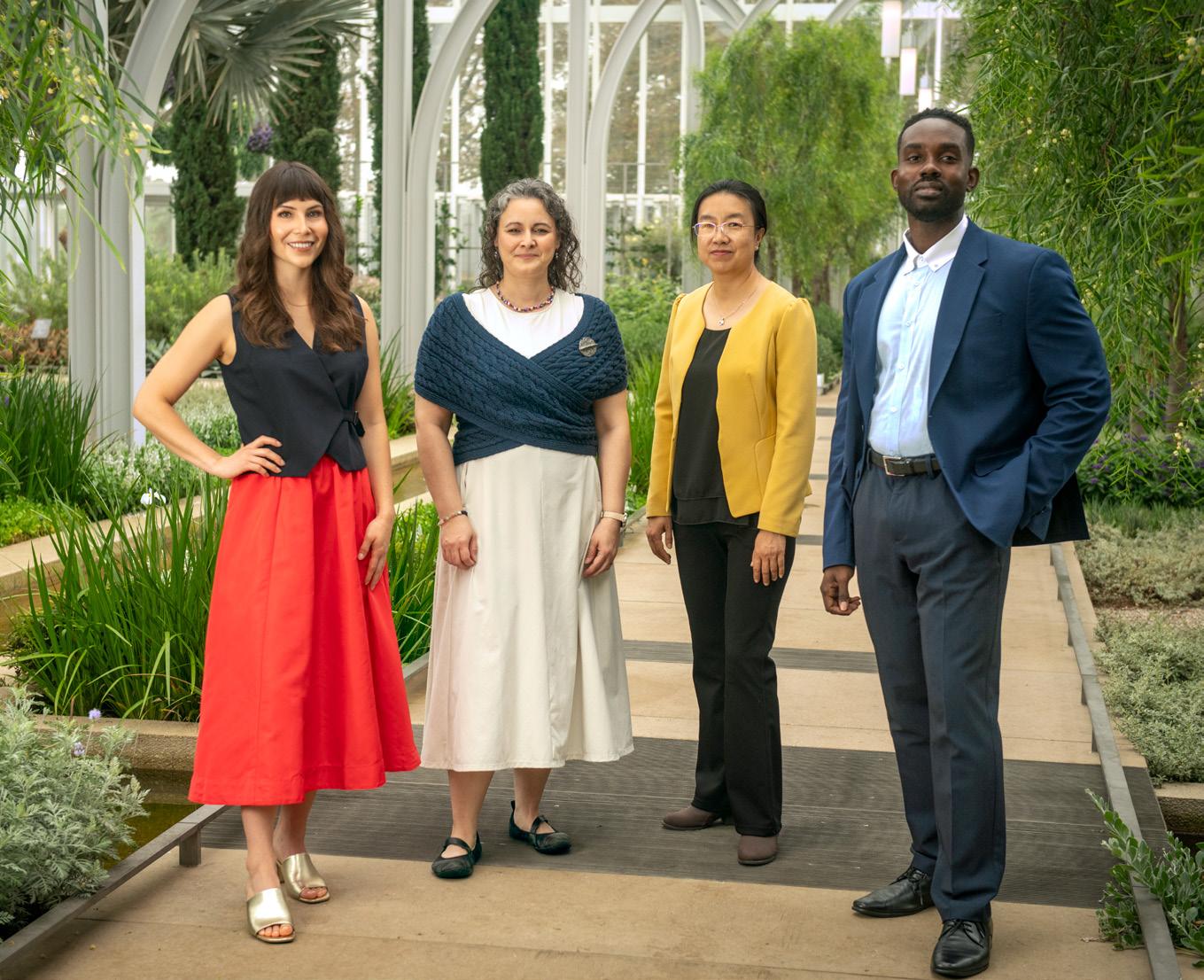

Carmen Grey joined the Longwood Fellows program from Assiniboine Park Conservancy in Winnipeg, Manitoba, where she oversaw plant records and documentation development for the living collections. A graduate of the Niagara Parks Commission School of Horticulture, Grey also holds a bachelor’s degree in business administration from the University of Winnipeg. Over the past 18 years, Grey has worked across Canada in public horticulture and urban agriculture. As an Indigenous horticulturist, Grey’s work is guided by the teachings of her culture and a deep respect for the land. During the Longwood Fellows Program, Grey traveled to Southern California to complete a field placement at The Huntington Library, Art Museum, and Botanical Gardens. There, she examined partnerships between Indigenous Peoples, First Nations, and public gardens, with a focus on moving beyond consultation toward more collaborative, co-creative models of working together. Grey is committed to fostering inclusive, reciprocal relationships between people and the natural world.

Jennifer Dick is a seasoned leader with two decades of experience in science communication and heritage interpretation with roles in gardens, museums, and nonprofits across Canada. She has dedicated her career to connecting people with the world around them through meaningful experiences, most recently at Royal Botanical Gardens Canada. Jennifer is a former Chair of Interpretation Canada. She holds degrees in biology, anthropology, and a Master of Science Communication, and she is a Certified Interpretive Trainer and a Certified Heritage Interpreter. She completed her field placement with the leadership team at Holden Forests & Gardens in Northeast Ohio where she contributed to the interpretive master plan process, shadowed various elements of the capital campaign, and completed background research for a possible new durable intergenerational experience at the Holden Arboretum.
Nathaniel Cody is a creative leader with experience in strategic storytelling, inclusive engagement, and public -facing impact. He previously served as Digital Content and Marketing Project Manager at Norfolk Botanical Garden in Virginia, where he led strategic campaigns and diversity- centered initiatives, including the Diversity Gallery. He holds a BFA with a minor in Mass Communication from Virginia Commonwealth University. During his time in the Longwood Fellows Program, Cody completed a two - month international field placement at Royal Botanic Garden Edinburgh, where he further developed his skills in marketing and communication and collaborated on the development of a tool designed to help translate institutional stories into more compelling donor-focused narratives.
Yan Li has led the Basic Information Department at Shenyang Arboretum in China for 14 years. As a “Shenyang Senior Talent” and engineer, she holds a Ph.D. in Ecology from Chinese Academy of Sciences. Her career features over 20 published articles, more than 10 patents, and editorial contributions to seven academic monographs. She specializes in plant diversity conservation and strategic research project management. During her fellowship at Longwood Gardens and two-month field placement at The Huntington Library, Art Museum, and Botanical Gardens, she focused on student educational programming, viewing these initiatives as a vital bridge between botanical research and cultivating future environmental stewards.
Abay, S. T., Gomes, J. F. & Mengistu, A. B., 2023. A comparative analysis of values-vased leadership theories: a review and future research agenda. The Journal of Values-Based Leadership, 16(2), p. Article 14.
Agba, I., 2024. Strategic Succession Planning: Ensuring Leadership Continuity and Organizational Success. Journal of Organizational Culture, Communications and Conflict, 28(2), p. 1–3.
APGA, n.d. A World Where Public Gardens Are Indespensible.. [Online]
Available at: https://www.publicgardens.org/#:~:text=What%20is%20a%20public%20 Garden,be%20made%20to%20all%20visitors.
[Accessed March 2026].
Berns, K. V. & Klarner, P., 2017. A review of the CEO succession literature and a future researchpProgram. Academy of Management Perspectives, 31(2), p. 83–108.
BGCI, 2024. Botanic garden leadership in the 21st Century. [Online]
Available at: https://www.bgci.org/news-events/botanic-garden-leadership-in-the-21st-century/ Brown, B., 2018. Dare to Lead: Brave Work. Tough Conversations. Whole Hearts.. s.l.:Random House.
Chaniago, A. A., Arief, M., Abdinagoro, S. B. & Setiadi, N. J., 2025. Building the 21st century leadership mindset among talents in Indonesian state-owned banks: The roles of knowledgeoriented leadership, learning Organisational culture, and breadth of experience. International Journal of Innovative Research and Scientific Studies, 8(6), p. 1972–1983.
Cheng, L. . S. P. et al., 2025. Supporting Career Progression in Publishing Through Systematic Analysis of Job Descriptions: A Cross-Industry Initiative. Learned Publishing, 38(2).
Chongwony, L., Gardner, J. L. & Tope, A., 2020. Instructional Design Leadership and Management Competencies: Job Description Analysis. Online Journal of Distance Learning Administration, 23(1). Chou, M.-T., Liu, C. & Kang, C. K.-T., 2025. Determinants of Succession Planning for Senior Executives in Nonprofit Organizations. Review of Economics and Finance, Volume 23, p. 237–251.
Cornell Univerisity, n.d. Public Garden Leadership Concentration. [Online] Available at: https://cals.cornell.edu/school-integrative-plant-science/degrees-programs/integrativeplant-science-mps-degree/public-garden-leadership-concentration
Day, D. V. & Dannhäuser, L., 2024. Reconsidering Leadership Development: From Programs to Developmental Systems. Behavioral Sciences, Volume 14, p. 548.
Dillenburg, C. J., Froehlich, C. & Bohnenberger, M. C., 2025. Belonging relationship of leaders’ multilevel skills for digital transformation. Revista de Administração da UFSM, 18(1), p. 28.
Duchene, K., 2025. The Transformative Power Of Women In Leadership Roles. s.l.:Forbes.
Froelich, K., McKee, G. & Rathge, R., 2011. Succession planning in nonprofit organizations. Nonprofit Management & Leadership, 22(1), p. 3–20.
Gigante, F. D. et al., 2025. Women in Conservation Leadership: A Global Landscape Study, Austin: Re:wild.
Harper, R., 2012. The collection and analysis of job advertisements: A review of research methodology. Research Methodology in Library and Information Studies (LIS), 36(112), p. 29–54.
Hollenbeck, G., McCall, M. & Silzer, R., 2006. Leadership competency models. The Leadership Quarterly, 14(4), p. 398–413.
IBM, n.d. What is talent development. [Online] Available at: https://www.ibm.com/think/topics/talent-development#:~:text=is%20talent%20 development?-,What%20is%20talent%20development?,with%20work%20or%20mental%20health. [Accessed 18 April 2026].
Kraiger, K., 2017. Training from an Organizational Psychology Perspective. In: F. C. Worrell, ed. Oxford Research Encyclopedia of Psychology online edn. New York: Oxford Academic.
Lawler III, E. E., 1994. From job-based to competency-based organizations. Journal of Organizational Behavior, 15(1), p. 3–15.
Longmore, A.-L., Grant, G. & Golnaraghi, G., 2018. Closing the 21st-Century Knowledge Gap: Reconceptualizing Teaching and Learning to Transform Business Education. J ournal of Transformative Education, 16(3), p. 197–219.
Longwood Gardens, n.d. Longwood Fellows Program. [Online]
Available at: https://longwoodgardens.org/education/longwood-fellows-program
Lynch, N., 2024. The leadership pipeline crisis in nonprofits: A call for action. Forbes Nonprofit Council. [Online]
Available at: https://www.forbes.com/councils/forbesnonprofitcouncil/2024/08/19/the-leadershippipeline-crisis-in-nonprofits-a-call-for-action/ [Accessed 6 April 2026].
Merritt, E., 2026. The Looming Leadership Crisis. American Alliance of Museums Museum Magazine, p. 20–27.
Muringa, T. P. & Shava, E., 2024. Examining the efficacy of core competencies of municipal leaders in transforming local government in South Africa. International Journal of Public Leadership, 20(5), p. 17.
Neal, S. et al., 2023. Global Leadership Forecast, s.l.: Development Dimensions International, Inc..
Ngayo Fotso, G. M., 2021. Leadership competencies for the 21st century: a review from the Western world literature. E uropean Journal of Training and Development, 45(6-7), p. 566–588.
Ngayo Fotso, G. M., 2022. Exploring Intra-generational Differences Among Young Millennial Leaders on the Perceived Required Leadership Competencies for the 21st Century. Journal of Human Resource Management, 10(1), p. 14–21.
Ngayo Fotso, G. M., 2024. Generational difference on the leadership competencies for the 21st century: a literature review. International Journal of Work Innovation, 5(1), p. 22–36.
Pavur Jr., E. J., 2010. Use Job Descriptions to Support Leadership. The Psychologist-Manager Journal, 13(2), p. 119–122.
Pejic-Bach, M., Bertoncel, T., Meško, M. & Krstić, Ž., 2020. Text mining of industry 4.0 job advertisements. International Journal of Information Management, Volume 50, p. 416–431.
Prokopeak, M., 2018. Follow the Leader(ship) Spending. [Online]
Available at: https://www.chieflearningofficer.com/2018/03/21/follow-the-leadership-spending/
Rakow, D. A. & Dunn, C. P., 2024. The Professional Development of Botanic Garden Leaders. University Museums and Collections Journal, 16(1), p. 9–17.
Santos, M. S., 2025. Managerial competencies of middle managers in teacher education institutions. International Journal of Research and Innovation in Social Science, IX(VI), p. 2242–5556.
Savarimuthu , A. & Jothi, A. D. A., 2020. Talent Management: A Conceptual Famework. International Journal of Research in Engineering, IT and Social Sciences, 8(11), p. 71–78.
Spencer, L. M. J. & Spencer, S. M., 1993. Competence at work: Models for superior performance New York: John Wiley & Sons.
Swarnalatha & Mukherjee, S., 2024. Competency based job description leads to organizational productivity: An integrated literature review approach. Academy of Marketing Studies Journal, 28(4), p. 1–12.
The People Management Magazine, 2025. Global Leadership Development Industry Set For MultiBillion Dollar Growth in 2025. [Online]
Available at: https://peopledevelopmentmagazine.com/2025/02/25/global-leadership-development/ [Accessed 6 April 2026].
Wasiluk, A., 2024. Assessment of leadership competencies by Generation Z. Scientific Papers of Silesian University of Technology Organization and Management Series, Volume 201, p. 365–377.
WEF, 2023. Global Gender Gap Report, Geneva: World Economic Forum.
Westfall, C., 2019. Leadership Development Is A $366 Billion Industry: Here’s Why Most Programs Don’t Work. Forbes, 20 June.
1: List of job postings analyzed
Year, job title, organization, location
Asia
1. 2025 Botanical Garden Director, Thailand
2. 2025 Project Director, Gardens By the Bay, Singapore
United Kingdom
1. 2025 Director of Horticulture, Royal Botanic Garden Edinburgh
New Zealand
1. 2025 Senior Advisor Business Resilience (ClimateWise), Auckland Botanic Garden
Canada
1. Manager Fanshawe Gardens
2. Senior VP. Engagement and Guest Experience _ Assiniboine Park Conservancy
United States
1. 2025 Assistant Director of Public Programs, Queens Botanical Garden
2. 2025 Associate Director, Beltline Arboretum
3. 2025 Chief Development Officer, Cheekwood Estate & Gardens
4. 2025 Chief Development Officer, San Antonio Arboretum
5. 2025 Chief Financial Officer - Mount Desert Land and Garden Preserve, Maine
6. 2025 Chief Financial Officer - National Tropical Botanical Garden
7. 2025 Chief Operating Officer, Mount Desert Land and Preserve, Maine
8. 2025 Chief Operating Officer, New England Botanical Garden at Tower Hill
9. 2025 Director Granogue, Longwood Gardens
10. 2025 Director of Arboretum, The University of Kentucky (UK) Martin-Gatton College of Agriculture, Food and Environment
11. 2025 Director of Buildings, Gardens and Grounds, Tudor Place Historic House and Garden
12. 2025 Director of Business Operations, Sonoma Botanical Garden
13. 2025 Director of Corporate and Foundation Relations, South Coast Botanic Garden’s
14. 2025 Director of Development Operations, Dallad Arboretum
15. 2025 Director of Development, Greenwood Gardens
16. 2025 Director of Development, Houston Botanic Garden
17. 2025 Director of Horticulture and Sustainable Landscapes, Bernheim Forest and Arboretum
18. 2025 Director of Horticulture, Coastal Maine Botanical Garden
19. 2025 Director of Horticulture, Dunn Gardens
20. 2025 Director of Horticulture, Greenwood Gardens
21. 2025 Director of Horticulture, Houston Botanic Garden
22. 2025 Director of Horticulture, Memphis Botanic Garden
23. 2025 Director of Horticulture, Queens Botanical Garden
24. 2025 Director of Operations and Guest Experience, The Wanderwood Gardens
25. 2025 Director of Operations, Cheekwood Estate & Gardens
26. 2025 Director of Operations, South Coast Botanic Garden’s
27. 2025 Director of Philanthropy, Red Butte Garden and Arboretum
28. 2025 Executive Director - Cornell Botanic Gardens
29. 2025 Executive Director of ELA, New England Botanic Garden at Tower Hill
30. 2025 Executive Director of Gardens and Landscapes, George Washington’s Mount Vernon
31. 2025 Head of Horticulture, The Merwin Conservancy
32. 2025 President and CEO, Seattle Botanic Gardens
33. 2025 Senior Field Technician, Atlanta Botanical Garden
34. 2025 Senior Manager of Donor Engagement, PHS
35. 2025 Senior Marketing Manager, The Morton Arboretum
36. 2025 Vice President of Finance and Infrastructure, Coastal Maine Botanical Gardens
37. 2025 Vice President of Gardens, Cheekwood Estate & Gardens
38. 2025 Vice President of Horticulture & Natural Resources, Naples Botanical Garden
39. 2025 Vice President, Cheekwood Gardens, TN
40. 2025 Vice President, Development, Dallas Arboretum
1. From a leadership perspective, what are some of the most pressing challenges your organization is preparing for now and in the future? Please select up to three.
Accessibility
Aging infrastructure
Board of directors changes
– Changes in audiences and engagement
Climate change – Funding/revenue source changes
Invasive species
– Loss of plant biodiversity – Organizational restructuring
Space/capacity limitations – Staffing/skill gaps
Succession planning
Other, please specify:
–
2. As you look at the coming years, do you see potential openings for senior-level staff positions at your organization as your current staff may be moving on or retiring? Please consider the following positions or their equivalent titles at your organization, as titles and structures may vary across organizations.
Positions
President/CEO
Chief Diversity Officer
Chief Financial Officer
Chief Operating Officer –
Vice President of Conservation / Sustainability
Vice President of Development
Vice President of Education
Vice President of Guest Services (Operations)
Vice President of Horticulture –
Vice President of Human Resources
Vice President of Marketing –
Vice President of Public Programming
Vice President of Research
Other, please specify:
Timeframe
Within the year – In the next 1–2 years – In the next 3–5 years
In the next 6–10 years – In more than 10 years
Do not anticipate needing to fill
N/A
3. Thinking about both recent and future hiring, from which industries have you recruited, or do you expect to recruit, senior-level talent? Please select all that apply.
Architecture (including Landscape Architecture)
Agriculture
Business/Finance
Consulting
Cultural Non-Profits
Education/Training (including Higher Education)
Engineering
Events/Entertainment
Food Services
Government
Healthcare
Hospitality
Marketing/Communications/Media
Museums
Recreation/Amusement (e.g., Theme Parks)
Zoos and Aquariums
Other, please specify:
4. Approximately how often does your organization’s leadership team participate in leadershipfocused professional development? – A few times per year
Once per year
Every 2-3 years
Every 4-5 years
Less than every 5 years
5. We invite you to tell us more about the leadership-focused professional development that your organization’s leadership team has participated in within the last few years, if any.
6. Does your organization have an internal leadership development program for cultivating talent?
Yes – No
We’re developing one now or will be soon –
Other, please specify:
The next portion of our survey will focus on leadership competencies. For our research, we are using the following definition of competencies: “the knowledge, skills, personal characteristics, self-concepts, traits, and motives that are required for leaders to successfully and effectively lead organizations” (Fotso, 2021).
Please note, we are ONLY focusing on leadership competencies. We are NOT considering subjectmatter expertise as part of this survey.
7. What are some of the gaps in leadership competencies, if any, you’ve noticed in recent years when hiring for senior leadership positions?
8. We will now ask you to evaluate the significance of 18 leadership competency sets drawn from academic literature. These sets of competencies will be shown in a random order across the next three pages. Please indicate how important you believe each competency set is for public garden leadership. – Not at all important
Slightly important
Moderately important – Very important
Extremely important
i. Adaptability & Flexibility
Situations
People
Leadership style
Flexibility
New technologies
– Leading virtual teams
– New information systems
ii. Organizational Skills
Planning
– Organization – Distributing roles
Setting objectives
– Providing structure
Providing procedures
Following up
iii. Competence for Financialization
– Centralized decision making
Coercive leadership style
– Mastery of Financial IT
Expertise in Finance & Financial strategies
– Able to balance value creation & value extractions activities – Short-term orientation
iv. Ability to Handle Complexity
Ability to cope with uncertainty
– Navigate within networks
– Navigate within systems
v. Human Orientation
Individual consideration
– Helping others develop their skills
Coaching
– Providing feedback
vi. Customer-Centric Skills
– Focusing on customer satisfaction
Solving problems for customers
Customers as partners – Co-creation
vii. Social Skills
Interpersonal skills
– Close with people
viii. Cognitive Skills – Clever
Ability to conceptualize ideas
Creative/innovative – Critical thinking
Analytical
Ability to synthesize – Strategic thinker – Entrepreneurial mindset
ix. Collaboration & Participative Leadership Style
Discussion & exchanges with others
– Openness to new ideas from others – Involving others
x. Crisis Management Competence
Know the 5 stages of a crisis
Transparency
xi. Values
Results-driven
Hard-working
Trustworthy
Care for the wellbeing of others
Curiosity
Authenticity
Optimism
Moral virtues
xii. Global Leadership – Ability to adapt to different cultures
International experience
xiii. Transformational Ability
Charisma
Leading change
Ability to develop a vision
Inspirational
Implementation ability
xiv. Digital Competence
Digital literacy
Data analytics
Digital vision & strategy
Digital business modeling
Digital tools & technologies
Real-time interactions with stakeholders
Focus on customer experience
xv. Knowledge
Expertise
Mastery of new media technologies – Ability to manage & share knowledge
Continuous learning
Cross-functional competence
xvi. Communication Skills
Oral communication
Listening
Written communication – Mastery of new media technologies
xvii. Self-Awareness
– Understanding one’s own needs, wants, drives, & expectations
Self-confident – Tolerant of stress
Purpose-driven
Self-reflection
Self-regulation
xviii. Sustainability Competence
Sustainable business models – Consciousness for social & environmental impact – Strategic approach to sustainability
9. Considering your own continued professional development, which competency sets best capture the areas where you perceive the greatest room for growth? Please select up to three.
i. Crisis Management Competence
ii. Transformational Ability
iii. Global Leadership
iv. Digital Competence
v. Human Orientation
vi. Customer-Centric Skills
vii. Ability to Handle Complexity
viii. Collaboration & Participative Leadership Style
ix. Knowledge
x. Organizational Skills
xi. Cognitive Skills
xii. Values
xiii. Communication Skills
xiv. Self-Awareness
xv. Sustainability Competence
xvi. Social Skills
xvii. Competence for Financialization
xviii. Adaptability & Flexibility
10. Considering the areas where current and emerging public garden leaders need the most development, which competency sets should senior leadership target for future leadership training? Please select up to three.
i. Cognitive Skills
ii. Ability to Handle Complexity
iii. Competence for Financialization
iv. Collaboration & Participative Leadership Style
v. Social Skills
vi. Organizational Skills
vii. Sustainability Competence
viii. Self-Awareness
ix. Values
x. Digital Competence
xi. Adaptability & Flexibility
xii. Human Orientation
xiii. Communication Skills
xiv. Customer-Centric Skills
xv. Crisis Management Competence
xvi. Global Leadership
xvii. Transformational Ability
xviii. Knowledge
11. If you have any additional comments or feedback about the survey topics, please share with us below.
1. When filling leadership positions, where do you typically see strong candidates coming from? (For example: public gardens, museums, nonprofits, business/finance, government, academia, hospitality, tech, zoos, landscape architecture.)
2. Is the talent pipeline changing? If so, when and how have you seen it change?
3. How has the profile or background of leadership hires changed over the past decade? (What is different now compared to 10 years ago?)
4. When recruiting senior leaders, which competencies are most important?
(Reference: Fotso competency framework.)
Note: You may define “senior leader” in the way that makes the most sense for your organization (e.g., Director, AVP, VP, Chief Officer, Executive Team).
5. When recruiting senior leaders, what leadership competency gaps do you most often observe?
(Reference: Fotso competency framework.)
6. Looking ahead, which competencies should leadership training focus on to best prepare the next generation of public garden leaders?
Optional follow-up for HR staff: What internal leadership development programs currently exist, and where do you see opportunities to strengthen them?
7. Is there anything else you think would be helpful for us to consider?