Welcome to issue 13 of The Long Lens! We are really thrilled to have an issue 13 so that we can fully embrace all things superstition and folklore As ever, our themes are not all encompassing and are only ever a framework on which to hang our content, so not all our articles will relate to the theme We really hope you enjoy some of the spooky, spiritual and superstitious content we have for you.
As an autumn term issue, it always feels like a little miracle to see it in its entirety. We have been really bolstered with the enthusiastic interest of our new Yr12 students and have loved the numerous contributions made by them, alongside our now regular Yr13 contributors. As ever, we are indebted to our fabulous technician, Shannon Johnston-Howes for her editorial and graphic design skills, we really couldn’t do this without you.
The film industry has lost some true icons in recent months including David Lynch, Gene Hackman, Diane Ladd, Robert Redford, Diane Keaton and just this week Rob Reiner These people were responsible for some of the most powerful pieces of storytelling that will transcend their lifetimes and keep being pa e power of film as a medium, to tran
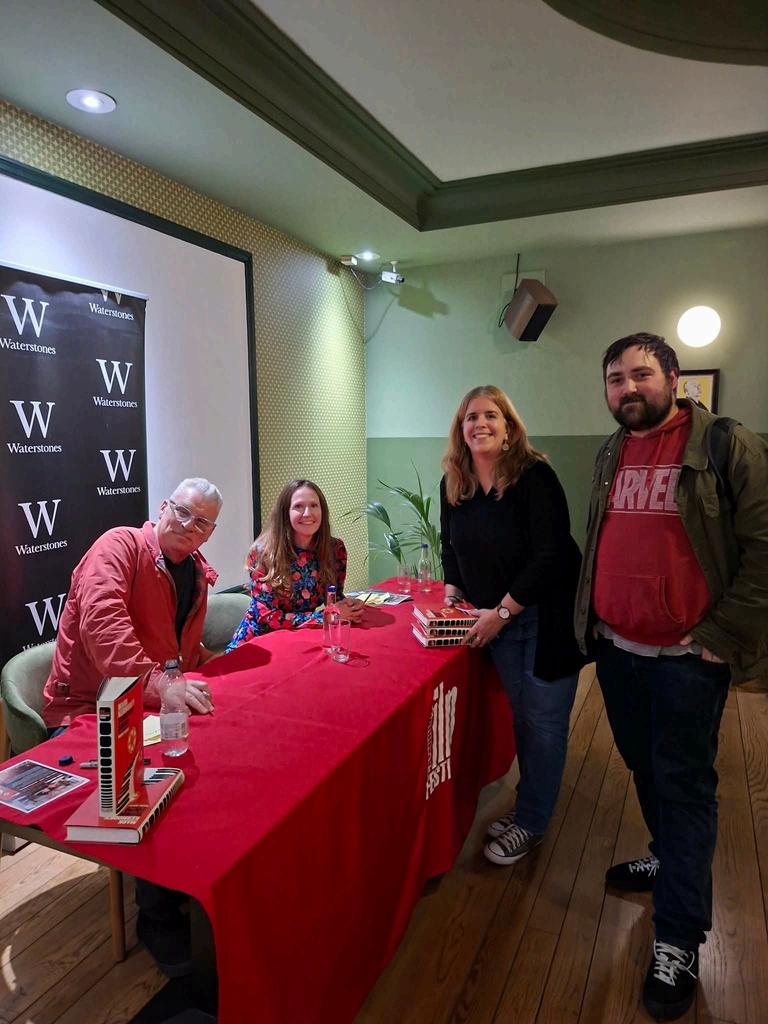
We had the joy of being involved i y was thrilled to attend the Mark Ke : The stories of movie music. This k Kermode, getting to talk to him after the event was just amazing. A brilliant bonus to that event was witnessing the brilliant Neil Brand give an improvised accompaniment on his piano to a scene from Buster Keaton’s ‘The General’. What a genius he is. We are so fortunate to have an event like the Cambridge Film Festival on our doorstep and we want to encourage you all to check it out next year.
Coming up next year we have th t D’Arcy of UEA and the return of th e to get involved with The Long Lens We wish you all a very restful festiv
Andrea, Sam, and The Long Lens Team
Film Festival Central: 2025 Round-Up by Sam Gamble
CFF Youth Lab by Izzy Brown
Haunted by Belief: Jane Campion’s Cinema of Superstition by Molly Cliff
Culture and Folklore in The Paradise of Thorns by Izzy Brown
The Evolution of Carrie by Daisy Houghton-Perry
David Lynch by Riley Martin
Scenes That Break Us (and Why We Go Back for More) by Sian McKillop
Hysteria over Suspiria by Seth Mason
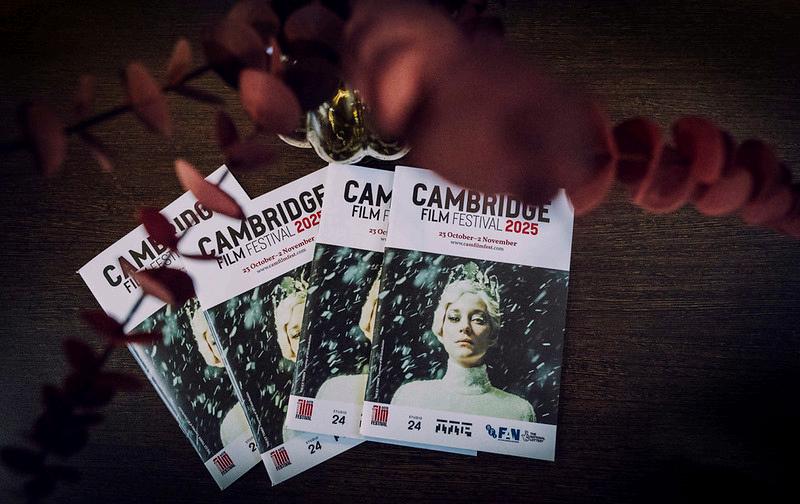
I have had the privilege of being able to be part of 2 film festivals over the last few months. I got to see some fantastic films, short films about love, animations that took my breath away, and even a couple of early previews.
London Film Festival Previews
London Film Festival often host UK-wide screenings of some of their more popular Gala previews and this year I got to see two of my most anticipated films early; those being Guillermo Del Toro’s Frankenstein, and Wake Up Dead Man: A Knives Out Mystery. Both have hit Netflix since these preview screenings, but it makes all the difference to see these with packed crowds.
Frankenstein
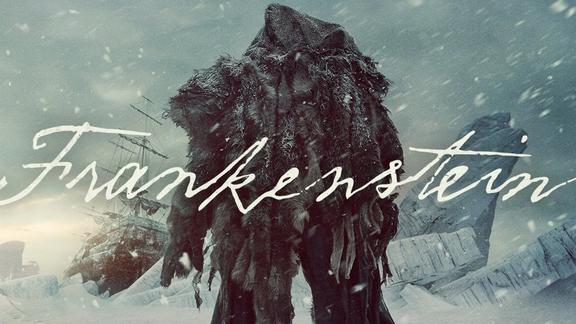
Let’s start with Frankenstein It’s been said several times, but it’s amazing that this pairing of director and source material has never been done before. They are truly tailor made for each other, and Del Toro’s prowess shows in pretty much every single frame His macabre sense of morbid fascination is on full display, with gloriously gothic, steampunk-esque set design and always impressive practical effects Frankensteins monster, in particular, is given a complete visual overhaul compared to the expected green skin and protruding bolts of earlier versions. In this version, he reminded me much more of a marble sculpture in his design, still with mismatched colouring of skin, but his features are much more gaunt. It plays into the casting of Jacob Elordi, a ridiculously tall man, who plays this creature with an innocence and grace that gives way
to anger compared to the more monstrous versions of previous iterations
The misunderstood monster subtext is made text in the screenplay. Capitalising on the original message and making it plainer isn’t necessarily a bad thing, and it allows Frankenstein himself, Oscar Isaac’s, to flex more of his darker, villainous muscles It might be contrived, and it might not be subtle, but it is drawing from a different place and a different time, to make the point of prejudice against those who are different
I have been a fan of the Knives Out movies since the original came out, and a fan of murder mysteries even longer Rian Johnson has directed all three of these movies with a confidence and understanding of the well-tread boards of this genre, and repeats his success again with this third outing
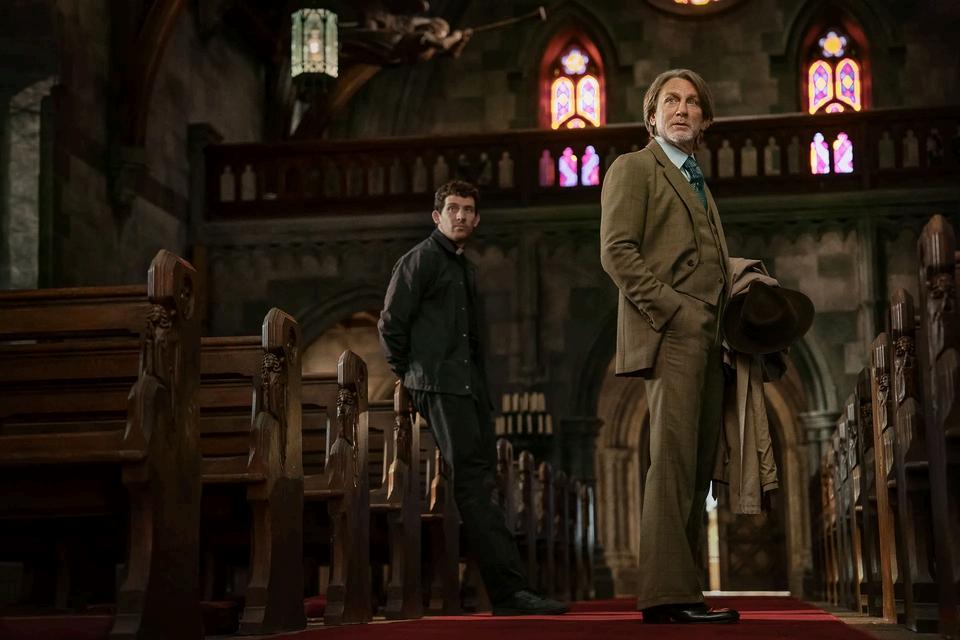
Daniel Craig returns as Benoit Blanc, his southern drawl ever-present and captivating as always, and Craig disappears completely into the role this time as he plays second fiddle to Josh O’Connor, who plays a priest looking to restore faith to his parish in upstate New York in the wake of the death of his less-thanangelic superior
O’Connor is the star of the show here, much like Ana De Armas and Janelle Monae before him It’s very much his story as we navigate some interesting observations on the nature of faith and its role in modern day society, how a powerful figurehead can easily steer masses wrong with a few choice words and false promises, but also how it can offer hope and give people a reason to keep going in this world It’s a very unbiased look at the role of religion in a way that I don’t think a lot of stories that tackle the topic are brave enough to do so.
The script opts for a slightly different tact, here. Whereas the others have shined as subversive exploration of the genre, Dead Man is probably the most straight-up muder mystery of the three We are never privy to a viewpoint of thinking we know what’s going on, always in the dark on who the killer is other than hints here and there Gone is the subversion of the genre, and instead Johnson shows that he really can make a bloody good mystery with some excellent humour sprinkled in
The supporting cast features a host of greats, including Jeremy Renner (hot sauce notwithstanding), Andrew Scott, Glenn Close and Josh Brolin all creating compelling caricatures for the audience to laugh at and with.
Seeing both of these movies on the big screen with a packed crowd is how its supposed to be. They’ll find their audience on Netflix, but I do hope that they’ll start to see the merit in theatrical distribution before it’s too late.
The Fisherman is a Ghanaian produced film about Atta Oko, a retiring fisherman who, after receiving some disappointing news, ends up stuck with a talking fish on a journey to achieve his lifelong dreams.
A truly charming directorial feature from Zoey Martinson, the Fisherman is packed with whimsy The jokes come rapidly in the second act, but the film remembers to keep the characters at its core, rather than sacrificing them for humour
Accompanying Atta and his fish companion is a rag tag group of chancers and determined dreamers, all looking to carve out their place and purpose in their various lives This theme of finding your place isn’t delivered in a subtle way, but it isn’t forcing it in front of you at the same time
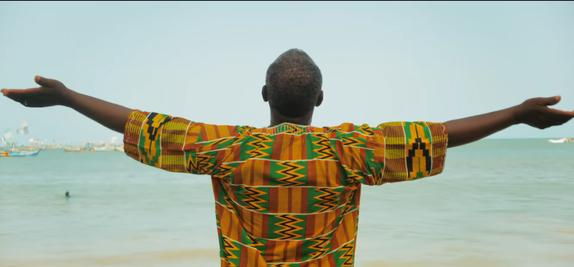
Journeying across Ghana gives way to some gorgeous scenery and cinematography, including a stretch of the film set entirely in a neon lit city which contrasts nicely with the deep and rich colours of the more rural areas that we see of Ghana. It presents a country that is grappling with tradition and being dragged kicking and screaming into a future that a lot of people view as unnecessary A future of lavish apartments, urban crime, and scrabbling to show everyone that you are the best Atta embodies a smaller life, a simpler life enjoying what he’s good at and being with the woman he loves.
A rare breed of contemporary fantasy that balances heart and sincerity with a masterful touch The fact that this is a debut baffles me, and I hope that people seek this film out
The Fisherman is currently available via Mubi.
Moving far away from talking fish, Mad Bills to Pay is a slice of social realism set in the Bronx of New York, and follows Rico in the months after he accidentally gets a girl pregnant and moves her in with his rather turbulent family
Taking a very observational approach, Mad Bills often has unbroken scenes of multiple minutes as dialogue spills over each other. It shoots for the skies in terms of naturalism, adopting this unbroken editing style and frequent single-camera scenes Performances often feel loose and improvisational, adding to the realism that this film embodies.
The plot takes place slowly, emphasising the dry spaces in between big moments as the pregnancy progresses, taking moments for the main character, Rico, to grow up and accept his lot in life very slowly
Arguments are frequent, either between brother and sister, mother and son, or teen girlfriend with an unexpected baby, they are frequent and furious The rapid fire dialogue creates a second-hand stress that ultimately makes it a rather uncomfortable watch
Mad Bills also opts for a rather unlikable protagonist in Rico. This is not because of his actors portrayal, but rather his languidness We begin the film with him slowly pacing the beach selling homebrew alco-pops to tourists, he cares little about people outside of his own immediate circle By the end of the film, he grows up a little, but it feels like he’s been forced into an image that people expect of him, rather than naturally evolving and growing up. It makes for an interesting resolution to the film that ultimately feels anticlimactic.
Describing a film as ‘uncomfortable’ and ‘anticlimactic’ may read as negative, but actually all of these decisions feel intentional and crafted. It’s not looking for you to like its characters, or enjoy your time It’s not even seeking to unsettle you or show you a world you haven’t seen before. It is truly a slice of life, a microcosm of a brief period in a very real life.
Amelie
A Ghibli-inspired French/Belgian animation set largely in Japan? Sounds like the recipe for a pretentious experience, but this is anything but.
Little Amelie follows Amelie as she grows up in Japan as the daughter of a Belgian ambassador, and embraces the idea from Japanese folklore that children are divine beings until the age of three They don’t talk or walk, not because they can’t but because they are choosing not to. This allows the film to embrace a sense of magical realism, taking expressionistic impressions of Amelie’s emotions When she has tantrums, there are explosions of weather, earthquakes and colours. As events transpire, the young girl is forced to tackle increasingly complex emotions, and learn how to be part of a family that she doesn’t completely understand
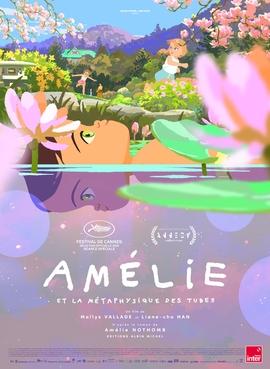
perfectly to the story being told of Amelie feeling torn between the two countries that she has come to call home in her brief time alive It feels instantly familiar but entirely unique in its execution.
The whole film feels like a dream, skipping between events as if looking back and picking out moments from your own childhood. It captures being so little in an incredible way. In particular, the moment when Amelie gains a level of consciousness and conversations, the first time she tastes chocolate for the first time, and when Amelie parts the waves to investigate the depths of the ocean
It’s a mature film, but will still be accessible to younger children. It’s a film that defies comparison in its narrative Whilst its visuals have clear inspirations, the narrative adapts a novel in a way that only animation can. It deserves to be seen by everyone.
Finally, I attended one of the strands of short films, focussing on LGBT experiences I’ve already rambled on, so I will highlight the two that stood out the most to me.
The first is Una Notte which, despite its title, is a British short film that captures the moments after a hook-up between two men as they have avoided a set of notso-understanding parents, and slowly wonder the village setting as the night melts away. The dialogue is gentle, with anchored performances that constantly discusses the traditional english setting against more modern values
The pair walk through a village fete, eat ice cream outside a shop, and wonder down country paths getting to know each other It encapsulates the gay dating scene, which is typically a physical-forward world that gives way to genuine emotional connections
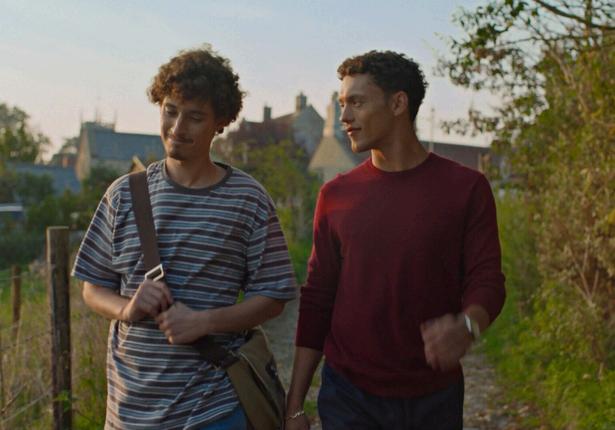
There’s a sense of longing hanging over the film. Not for each other, but for a world where they can be more accepted by the world Whilst strides have been made, there’s still some way to go in the traditional British communities.
The second is a documentary titled Beyond Eden, which follows a few days in a community of Lesbians who left the western world behind to live in a world without men The film demonstrates the resilience and tenacity of these women, how they’re growing older and the fears that the community that they’ve built will simply be lost to time
The overall feeling this documentary leaves you with is freedom. Freedom to embrace nature, your identity and be who you want to be, a feeling that all of these short films share
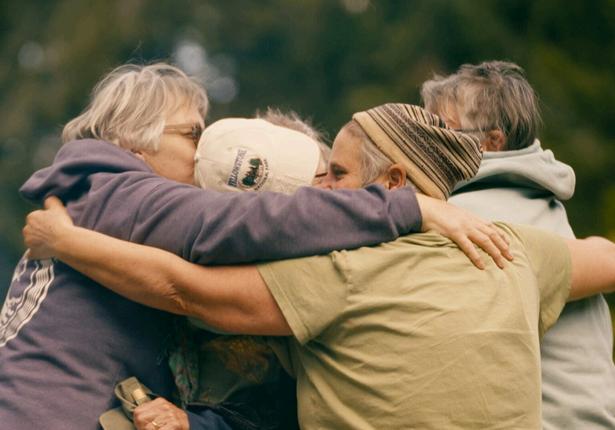
Cambridge Film Festival was jam-packed this year. It feels like the festival, despite having been around for 50 years, it feels like people are starting to take note
A lot of my screenings were busy, and there is just something about seeing a film with a group of people who also haven’t seen the film, and hearing the reactions around you as you experience the same feeling is a beautiful experience. The festival itself feels incredibly hand-made, there’s passion and thought behind every film and every selection
As always, I look forward to next year and what new films I’ll get to experience
BY IZZY BROWN BY IZZY BROWN
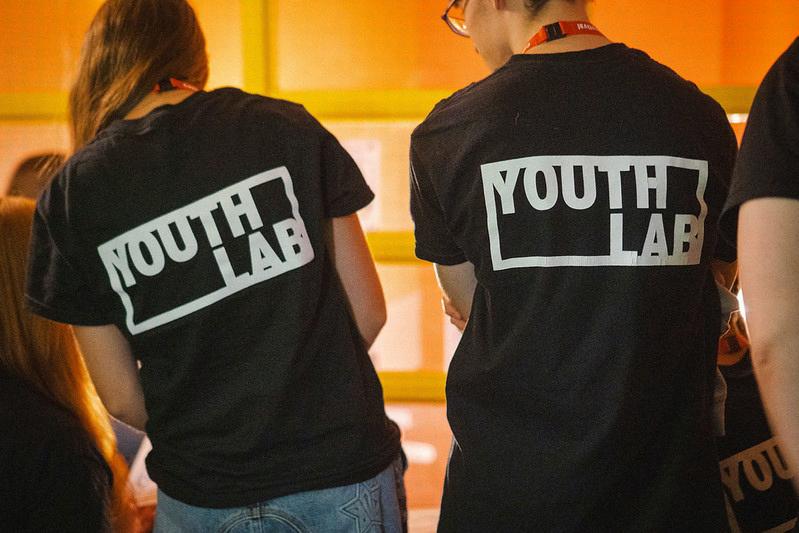
This year, I joined the Cambridge Film Festival’s Youth Lab, a group of young people working within the film festival team to try and break into the film industry. The Youth Lab has given me many wonderful opportunities to participate in the Cambridge Film Festival in many ways; As a viewer, such as when I got to see an early viewing of Bugonia on the festival’s opening night, as a critic when I helped judge the youth lab jury awards where we picked our favourite of a set of films for a special showing and as a participant by helping with fund raisers and hosting a film quiz. The experience altogether was so incredibly exciting and fun while also allowing me to do what I love, watching films and sharing that experience with others.
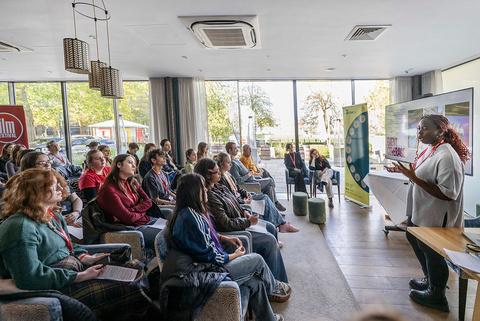
A highlight of the festival though would probably be the Industry Day which happens every year. This year, the event consisted of first a small but interesting talk from a few people about the different and lesserknown jobs in the film industry and what part they play within the film industry, helping show people that there are many paths that could be taken within the industry Following this there were a few different panels within
the cinema speaking about their experiences and work as well as the industry as a whole such as with the CFF’s Annual State of the Industry Panel
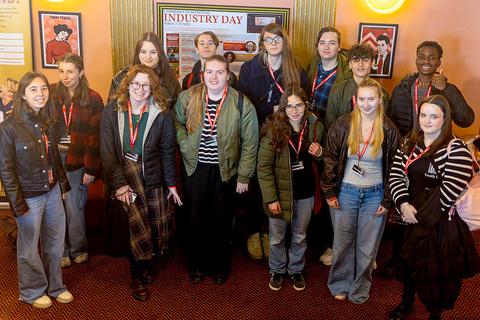
My favourite of all the panels was the BFI NETWORK South East: Short Film Showcase, paired with Behind the Shorts: Meet the Filmmakers, where we got the opportunity to watch professionally made short films and then see the filmmakers behind the creation of them. It was fascinating to see and talk to the real people behind such beautiful films and was really inspiring to hear about all their experiences and stories. The day closed with the opportunity to go to a networking event which allowed attendees to meet and talk while building other connections with the industry. Overall, it was a very enjoyable and informative experience, and I would advise any aspiring filmmaker to attend in the future
BY MOLLY CLIFF BY MOLLY CLIFF
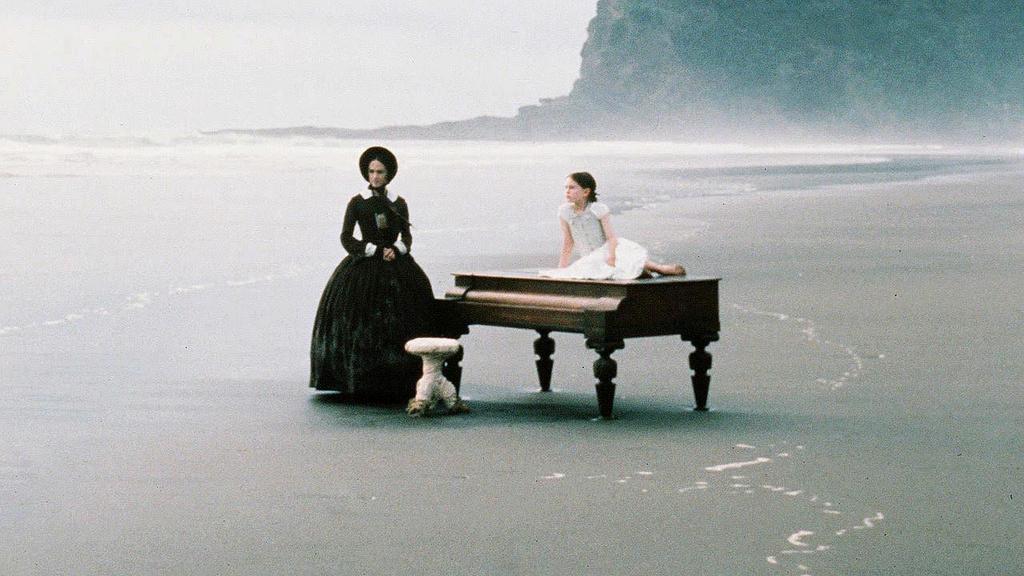
Director Jane Campion expertly explores a range of deep psychological themes throughout her work, incorporating superstitious beliefs into many of her films. She has won over 100 awards across her whole career, including multiple golden globes, BAFTA awards and academy awards; all incredibly deserved due to her unique approach to sensitive topics. Born and raised in Wellington, New Zealand, Campion grew up surrounded by the arts because of her parents’ theatre careers However, she initially rejected a career in the dramatic arts and instead graduated with a Bachelor of Arts degree in Anthropology After a few more years in education she ultimately graduated from the Australian film, television and radio school in 1984. Her main film debut came in 1989 with her first full length film ‘Sweetie’
She often takes inspiration from the world around her Some films are based on existing books, such as The Portrait of a Lady (1996), adapted from the Henry James novel. Others tell the stories of real people, like Bright Star (2009), which follows the last three years of poet John Keats’s life Campion’s films typically centre around a female “outsider” and explore psychological aspects many directors avoid This distinctive approach allows her to easily introduce superstitious beliefs, as seen in The Power of The Dog (2021) and Sweetie (1989).
This Power of the Dog is an amazing Western psychological drama that won Campion an Oscar for
best direction back in 2022. It is centred around the lives of two brothers – two cowboys – Phil, who has a deep-rooted belief in his own significance, and George who marries a woman “beneath” them. It is subtle in its exploration of superstitions as it is Phil’s belief in the natural order, and his place in it, that drives the plot along This superstition has been seen continuously throughout history; from the belief in the divine right of kings in the Jacobean era to the ancient Greek concept of cosmos – hierarchies have driven our society for thousands of years because of this idea that certain people naturally hold superiority over others
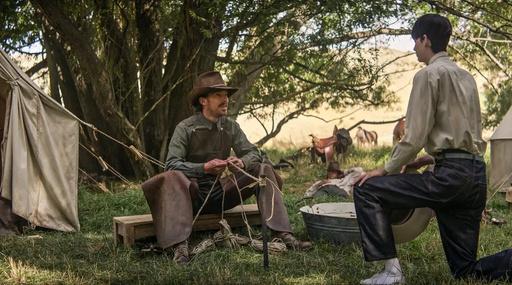
Phil frequently mistreats Rose (George’s wife) and her son Peter. This constant, cruel psychological warfare against them is an attempt to control and dominate them, a form of "black magic" or a ritualistic enactment of his power. He aims to break their spirits through his disdain and power plays, simply because of his belief in inherent power and his desire to prove the superiority he thinks he holds over them. Ultimately, Phil’s cruelty leads to his downfall, a demonstration of the toxicity that this belief carries and the backlash people may receive for acting upon it
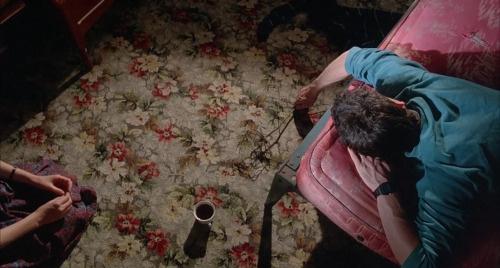
In contrast to The Power of the Dog, Sweetie is far more open about the theme of superstitions, as they play a crucial role in the plot This 1989 drama follows the very superstitious Kay as her parents struggle in their marriage. When her sister “Sweetie” (Dawn) returns home, she exposes the rotten roots of the family From the first few scenes, we get a clear idea of how deeply Kay’s life revolves around folklore and spirituality. Not even three minutes into the film, she has her tea leaves read and clings tightly onto every word, trusting every prediction made for her. Also, Kay talks very early on about her deep fear of trees because it seems to her “like they have hidden powers ”
Tea leaf reading, or tasseography, is a divination practice where patterns in tea leaves are interpreted to provide insights into the future. It is a very important ritual that means a lot to a great deal of people, having your fate read has always been a crucial part of spirituality It began in China but quickly spread throughout Europe in the seventeenth century as tea became more popular for trading Early tea drinkers noticed patterns left by the leaves remaining at the bottom of an empty cup and began to associate certain shapes with certain fortunes – something that has remained for several centuries since
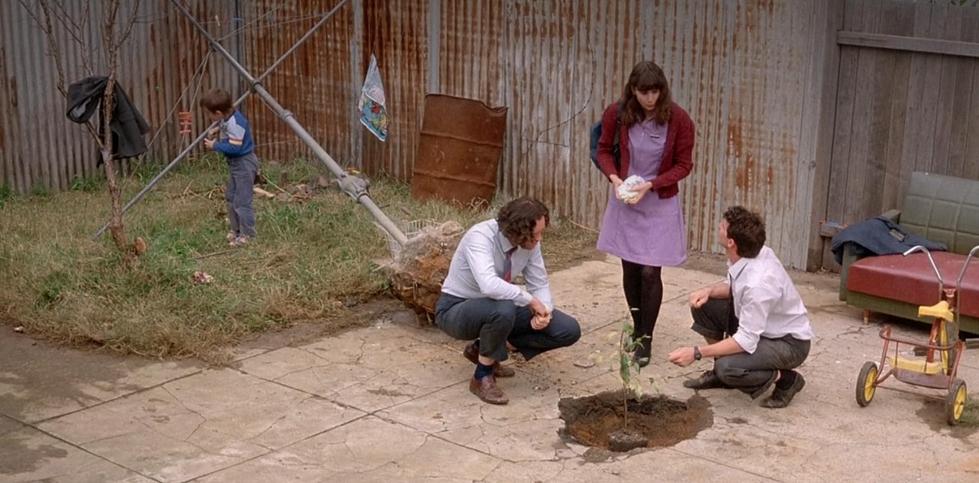
Kay’s phobia of trees stems from a childhood fear that roots would crawl under her house This resurfaces when her husband, Louis, plants an elder tree in their garden for their anniversary. Kay is distressed by the "sick yellow leaves," seeing them as a bad omen and fearing the roots will damage the house Her anxiety grows until she pulls the tree from the ground and hides it, now dead, under her bed.
Jane uses Kay’s character to explore the impact that trauma and fears from early childhood can have on people and the idea that people who believe deeply in folklore and fortunes may find comfort in the idea of fate, the idea that things will always work out, even when it feels like they won’t.
mpion’s body of work stands out for its exploration of psychological complexity and e, often haunting role of superstition in her rs ’ lives. She has many exceptional films that round this, including An Angel At My Table ut these are the two she is best known for, fully so, as they are both wonderfully unique ays
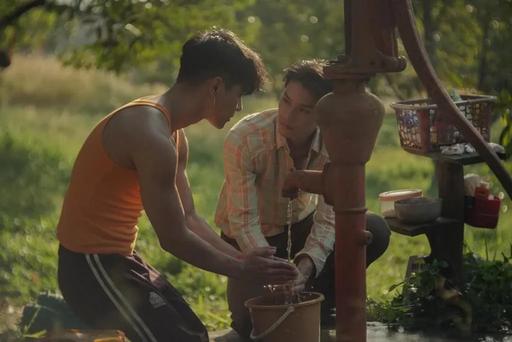
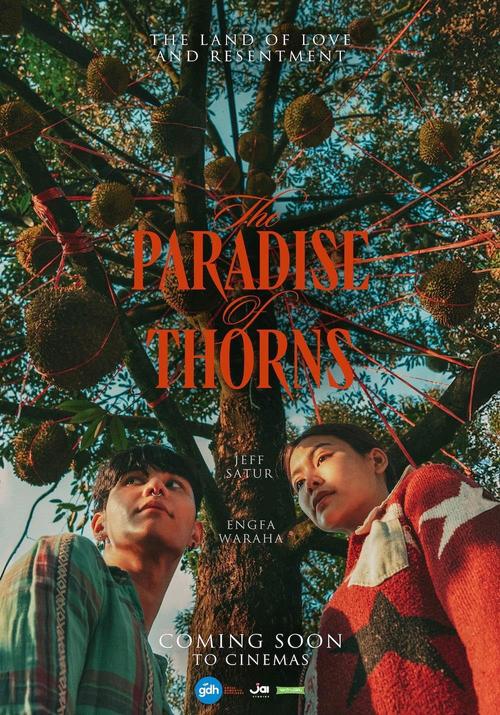
The Paradise of Thorns is a Thai film released in 2024, the film’s narrative surrounds Thongkham, a gay man in Thailand who loses his Durian Orchard after his partner dies because they were not seen as married in the eyes of Thailand's law, meaning he no longer had any legal rights to his home. The Durian Orchard being left to his partner’s elderly mother and adoptive daughter, Mo. The film depicts Thongkham’s struggle to reclaim what is his in a society that doesn’t accept it or his love
Though not the main focus of the film, the inclusions of Thailand's traditions and folklore help not only setting the atmosphere for the film, but also can be used to connote deeper meanings and presenting the characters struggles and experiences, subtly addressing the themes of the inequality faced by people because of Thailand's legal and social systems.
One of the significant cultural events which take place during the film is the depiction of the Bun Bung Fai Festival, an event in which a rocket is made and launched into the sky to call for rain fall from the gods. The folklore surrounding the festival is in relation to reminding the Thai rain god Phaya Thaen of his promise to give plentiful water to the land. The festival does have linking connotations and meanings that can be taken from it to the film’s themes of equality while not explicitly referencing it. While the festival aims to bring fertility and hope within these rural communities, there is a sense of bittersweetness coming from the inherent risks associated with the potential misfiring of
BY IZZY BROWN BY IZZY BROWN
rockets and the possibility that the festival may not yield any rain
In the film, the Bun Bung Fai Festival is vibrant and full of celebration; however, the only individuals who get to enjoy the festivities and rain arriving are Mo, the woman who now owns the Orchard, along with her male romantic interest. In contrast, Thongkham is depicted in much distress as his vehicle malfunctions, forcing him to rush through the storm to ensure that the durian orchard remains unharmed by the heavy rain. Thongkham continues to care for the orchard despite not having legal ownership over it, as it represents his last connection to his lost love, the only thing left he can protect. This scene mirrors the film’s themes of love and loss, highlighting how Thailand's legal and societal structures create inequality and allow certain groups to reap the fruits of other’s labour while others suffer due to the lack of equality, specifically same-sex couples who don’t have the same legal rights as their heterosexual counterparts.
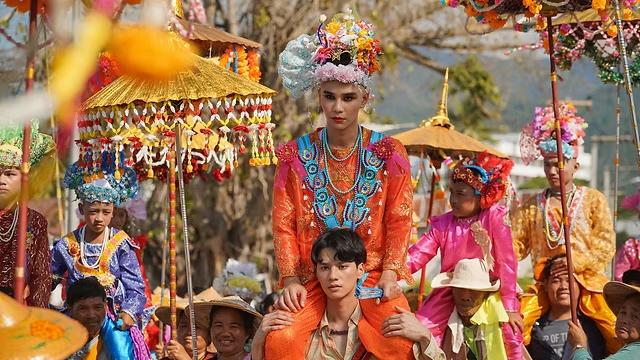
The Buddhist Thai ordination ceremony ‘Buat Nak’, has ties to both Buddhism as well as Thailand folklore and is one of the most visually and metaphorically striking scenes in The Paradise of Thorns The name stems from folklore, the words translating to buat (บวช) = ordaining the nak (นาค) = naga/novice and the ceremony involving a young man becoming a monk According to the myth, the Naga is a serpent god who wanted to become a monk but because the Buddhist monastery only allows humans to be ordained, the naga was rejected. Despite this, monk novices were now to be called “ naga ” or nak in appreciation and devotion to him The naga is a being who strives for more, to be able to achieve his dream of getting ordained but is limited by his physical form in which he cannot control. In the film, Thongkham's situation
reflects the naga, he is in the unknown space between belonging and exclusion, between his personal authenticity and societal expectations. The folklore mirrors Thongkham’s experience depicted in the film with his rejection from society based on who he is, his wish for recognition and acceptance, and the resilience required to navigate social boundaries.
The ceremony itself is a way for young men to make merit for their parents as well as symbolizing the moment a candidate's identity shifts, renouncing their past self and worldly identity to start anew In the context of the film, Thongkham uses the ordination ceremony as a way to be respected by his mother-inlaw enough that she would be willing to adopt him, giving him legal claim over his land once more when she passed. Though not explicitly stated, it is implied that he chooses to be ordained to gain her approval. In her eyes the ordination is a way of cleansing him of his previous “transgressions” (such as being in love with another man) in order to be worthy of being her adopted son
In The Paradise of thorns, elements of Thailand's folklore surrounding land creates the setting of the film, the belief that the land and nature is a living being and that we should respect it With this folklore the film’s narrative introduces the element of cultural embeddedness in which the story includes aspects about how people's lives and identities are intertwined with traditions and with their spiritual relationships with the land they labour upon. The story transforms to be about more than just a depiction of a fight for same-sex marriage but a statement about how the modern legal system, with its created definitions of ownership cannot consider the moral significance of work, commitment, and connection to that land that goes beyond legal ownership In the end, the tragedy of the film stems from the conflict between laws which breed inequality and the inherent equality of nature, never predictable and never biased paired with rural Thailand’s cultural and spiritual beliefs.
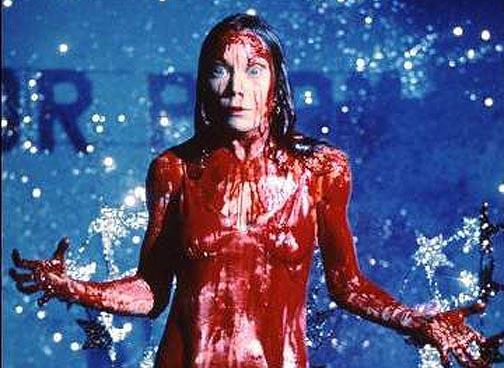
The original Carrie film, released in 1976, is a wellloved classic horror film based on the novel by Stephen King, known for his extensive work in the horror genre. The original film was highly successful, both critically and commercially following on to have 2 further film adaptations, a sequel to the original, and in 1988 it was adapted into a musical which had a short-lived run on Broadway before a more successful off-Broadway revival in 2012
The story follows a sensitive teen named Carrie White who was taunted by her classmates at school, while experiencing physical and verbal abuse from her mother at home. Carrie starts to notice st occurrences, leading her to suspect that sh supernatural powers Out of sympathy, she was i to the prom by Tommy Ross; however, things t violent turn when her special night is ruined. The film focuses on themes of religion an supernatural, with her mother's abuse being a re her intense religious beliefs.
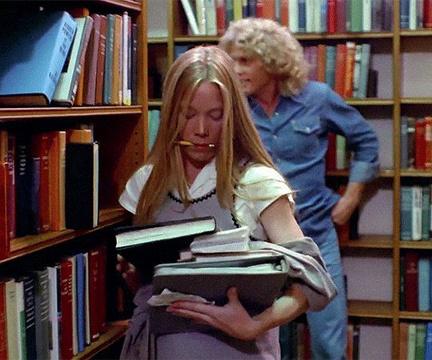
BY DAISY HOUGHTON-PERRY BY DAISY HOUGHTON-PERRY
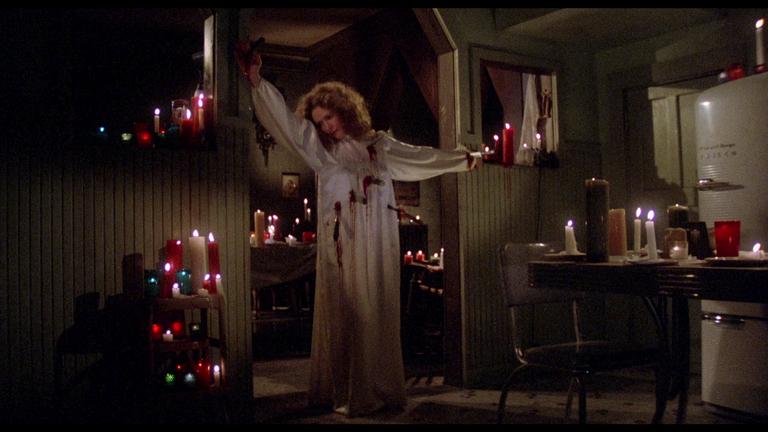
All three adaptations use biblical imagery, and one of the most noticeable examples of this is in the original film;
Carrie’s mother's death mirrors the close-up shot of the wall mounted crucifix we see at the beginning of the film, with her hands pinned to the sides of a doorframe, and the placement of each knife that Carrie inflicts on her positioned to directly correspond to the crucifix For me, this moment felt like it was attempting to remind the audience of the significant impact that religion had on her life especially whilst she was discovering her supernatural abilities that were seen by her mother as a sign of demonic ti
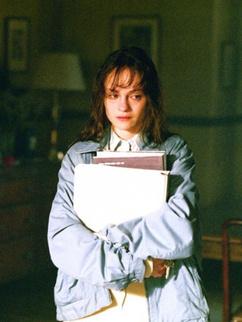
and details that were cut from the original, such as scenes of Carrie’s childhood and the epistolary format with police interviews. However, the others still focus on the same themes throughout with slightly different approaches that are more suited to the eras they were released
One of the most noticeable features of this would be the comparisons between the school environments
The 1976 film has a naturalistic, slightly dated aesthetic that feels authentic to a high school from the 70s, the 2002 film focuses on its documentary-style and aims to be more accurate to the novel and the most recent adaptation, from 2013, has a modern and more polished look to reflect a contemporary high school setting Alongside this, the 2002 and 2013 films present less as a horror film and rather follow the features of a coming-of-age.
This is then followed by an alternate ending showing Sue giving birth when suddenly Carrie’s blood covered hand tears through her stomach (which is a direct parallel to the initial shower incident from the very opening) crosscutting with shots of Sue on her bed being cradled and comforted by her mother as she wails and screams in agony, suggesting the birth is a nightmare Carrie’s mother, Margaret, describes her daughter's conception as a sin leading her to view Carrie as a result of temptation and the devil, which is reflected in Sue’s nightmare of her birth as the child is not normal, but seemingly monstrous
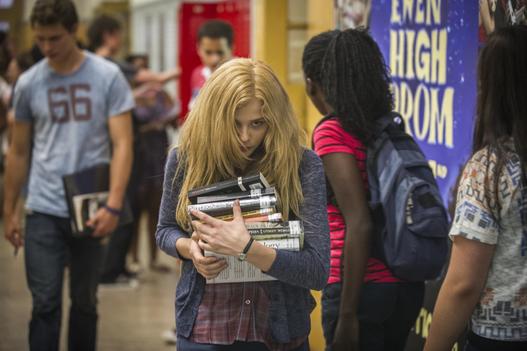
The 2013 adaptation differs most from the original novel, however I found the parallels in this film to be interesting. Much of the film steered back towards the original adaptation with highlights from the original script, but the ending sequence felt as if it was redirecting the plot. It showed Sue visiting Carrie’s vandalised grave which then cracks open as we hear a high-pitched scream of anger, suggesting Carrie is stil l
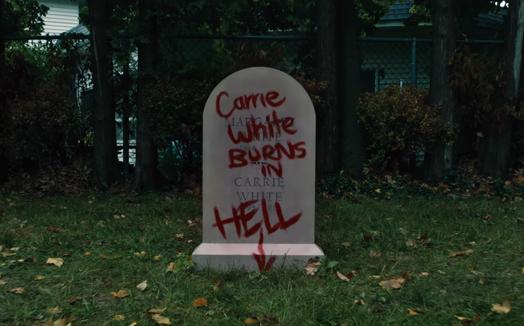
I personally think Sue’s character deserves the focus during the ending as it highlights that she is continuously being taunted by Carrie’s actions showing that even after her death, she has left Sue with psychological trauma after witnessing the prom massacre Throughout the events of Carrie’s high school experience, we see Sue feeling deep remorse for her part in the bullying and the nightmare could represent the everlasting guilt and inescapable consequences of her actions
Even though each film has taken its own creative liberty, specifically with the final scenes, they all remain true to the themes of the original novel, bullying and societal expectations, abuse from beliefs, sexuality during adolescence, and the consequences of uncontrollable power
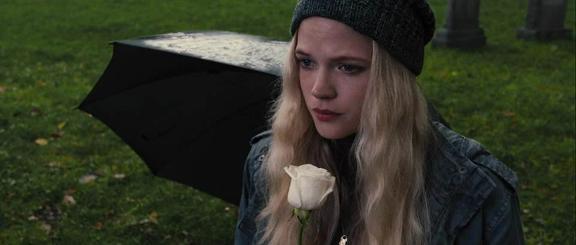
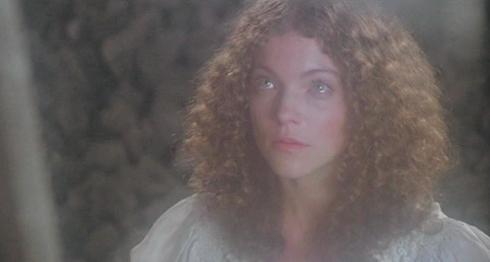
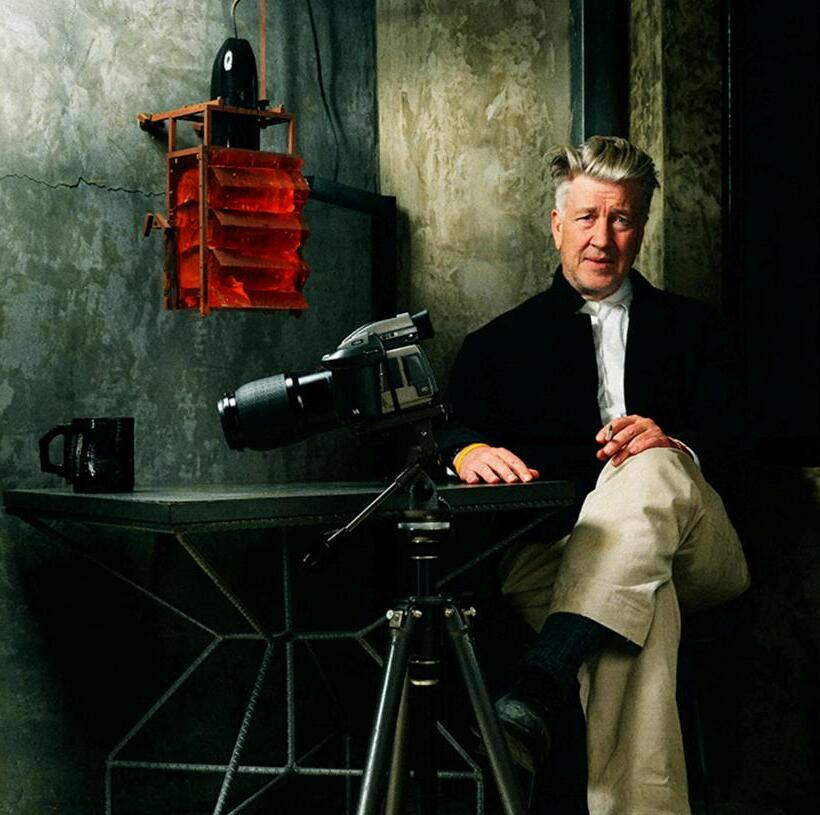
On January 15th, 2025, the film world mourned the major loss of David Lynch. My personal favourite director of all time, Lynch was well-known for his surreal and dark films and projects, including ‘Blue Velvet’, ‘Mullholland Drive’, and the cult TV show ‘Twin Peaks’. I’m biased whenever I talk about David Lynch because I have a real love and admiration for many of his projects; but objectively, Lynch is considered to be one of the greatest, boldest, and most influential people in film making If not, he was certainly a trailblazer who divided opinion.
Born in Montana in 1946, David Keith Lynch first embarked on artistic endeavours such as paintings and short films that emanated the style he would later become well-known for (I’d recommend ‘The Grandmother’, 1970, if you ’ re interested to see a preview of what was to come in Lynch’s career).
In 1977, Lynch released his first feature, ‘Eraserhead’, starring future consistent collaborator Jack Nance Eraserhead is a film about fatherhood. Specifically, fathering a deformed alien baby while meeting characters such as a lady in a radiator (named, of course, The Lady In The Radiator) Eraserhead changed everything. Not only did it become a major midnight movie with a cult following, it established Lynch as someone to watch, emerging onto the scene with darkness and disturbing absurdity.
Though Lynch’s planned next film, ‘Ronnie Rocket’ (an incredibly fun concept that you should definitely check out), didn’t make it to the screen, Lynch’s 1980 feature, the tragic but deeply empathetic biopic ‘Elephant Man’ nabbed Lynch his first Oscar nom for Best
BY RILEY MARTIN BY RILEY MARTIN
Director and was nominated for seven other Oscars, including Best Picture, immediately raising Lynch from strange but curious oddity to a majorly talented and distinct voice in Hollywood (Lynch was actually offered by George Lucas to direct ‘Return of the Jedi’, which as crazy as it sounds it would’ve been great to see nightmarish evil Ewoks and probably a much more disturbing death for Jabba the Hutt).
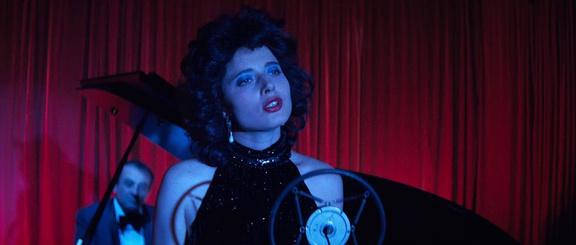
Elephant Man was followed up by Lynch’s even more successful ‘Blue Velvet’ (1986) starring Kyle Maclachlan, Isabella Rosselini, Laura Dern and Dennis Hopper (Hopper plays the deranged Frank, a wickedly evil madman but who is so engrossing and engaging to watch). Blue Velvet was highly sexually explicit and featured several shocking scenes that divided popular and critical opinion, but Lynch was Oscar-nominated once again for a Best Director.
Blue Velvet isn’t only a Magnum Opus but it also acted as a Hollywood gateway of sorts Filmmakers were no longer afraid to show the dark side of America and the American suburban experience. Though Lynch never got to direct Star Wars he did direct the first screen adaptation of ‘Dune’ , which despite in my opinion being delightfully crazy, was slammed by critics, audiences and the box office for being just too outthere
Lynch’s style wasn’t just his themes - the dark underbelly of suburbia, dreams, psychosexuality - it was also his people, his crew. Angelo Badalamenti was Lynch’s main composer, and is best known for his soundtrack for Twin Peaks (which is incredible, by the way) Lynch also formed an acting troupe of sorts, including frequent collaborators Laura Dern, Harry Dean Stanton, Jack Nance, Grace Zabriskie, Naomi Watts and Kyle Maclachlan, who all appeared in multiple of his projects. All six of these appeared in Lynch’s hit 1990 show, and my personal favourite thing to come out of his brain: Twin Peaks
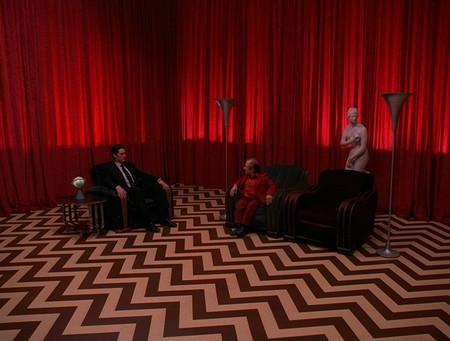
Twin Peaks aired for two seasons in the early 90s before being cancelled, and then returning with a somehow even weirder revival in 2017, which managed to avoid the curse of poor TV reboots and adhered closely to Lynch’s personal vision Twin Peaks was only half David – it was co-created by Mark Frost, who created much of the lore around the in-universe world and also wrote several tie-in novels Twin Peaks, since I discovered it late last year, is probably my favourite TV show of all time – I love it. It’s bizarre, it’s engrossing, it’s weirdly cozy and funny for a series themed around a tragic murder, and it had my jaw utterly on the floor when it was finally revealed who killed Laura Palmer (I bet you won’t get it). After the show was cancelled in 1991, the following year ‘Fire Walk With Me’ was released in cinemas, a feature-length prequel about the final week of Laura Palmer before her death The film marked a sharp contrast from the offbeat quirkiness of the show It was dark, brutal, and harrowing, and made for a tough watch Despite being received negatively when it first came out, Fire Walk With Me is now considered to be an underrated masterpiece that has grown on viewers with time.
In 2001, Lynch released ‘Mullholland Drive’ , probably his most critically acclaimed work – a surreal, neo noir mystery set in LA, which gave him his third and final Oscar nomination for Best Director. 2006 saw Lynch’s final film, ‘Inland Empire’ , a deeply bizarre (but typically Lynchian) film that nobody knows the meaning behind, still to this day.
Tragically, before his death, Lynch had been attempting to make several other films, many of which fell through due to lack of funding or a distrust in his vision, as Inland Empire was seen by most critics to have been a confusing downgrade from his previous work. In the meantime, he pursued multiple miniprojects (including paintings, sculptures, music and YouTube videos about the weather), until the 15th of January this year, when David Lynch passed away at the age of 78.
He was, and is, mourned by not just his colleagues in Hollywood, but also by his legions of passionate fans across the world.
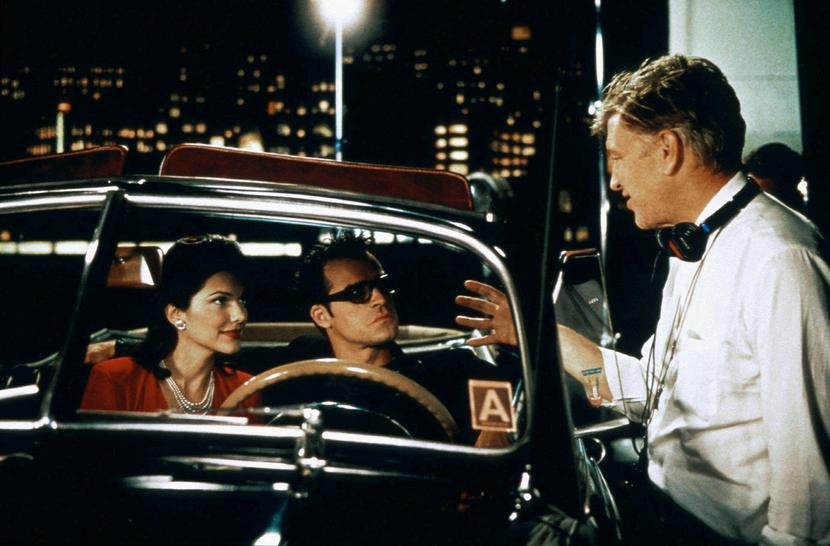
Lynch, in my view, was a one of a kind I truly don t believe there can ever be another “Lynchian” filmmaker that isn’t Mr Lynch himself, even though some really promising new talent (Jane Schoenbrun, for example) have definitely taken influence from the King of Weird David Lynch was strange, sure, but he was so many flavours of strange, and there was always a point to it; nothing was strange just for the sake of it whether it was to challenge norms (70s and 80s work), bring kooky worlds to life (Dune) or to bring together many complex themes and ideas to elevate his work (Twin Peaks Season 3) Rest in peace, David Lynch – as Deputy Sheriff Hawk of the Twin Peaks Police Department would say: He’s in the White Lodge now.
BY SIAN MCKILLOP BY SIAN MCKILLOP
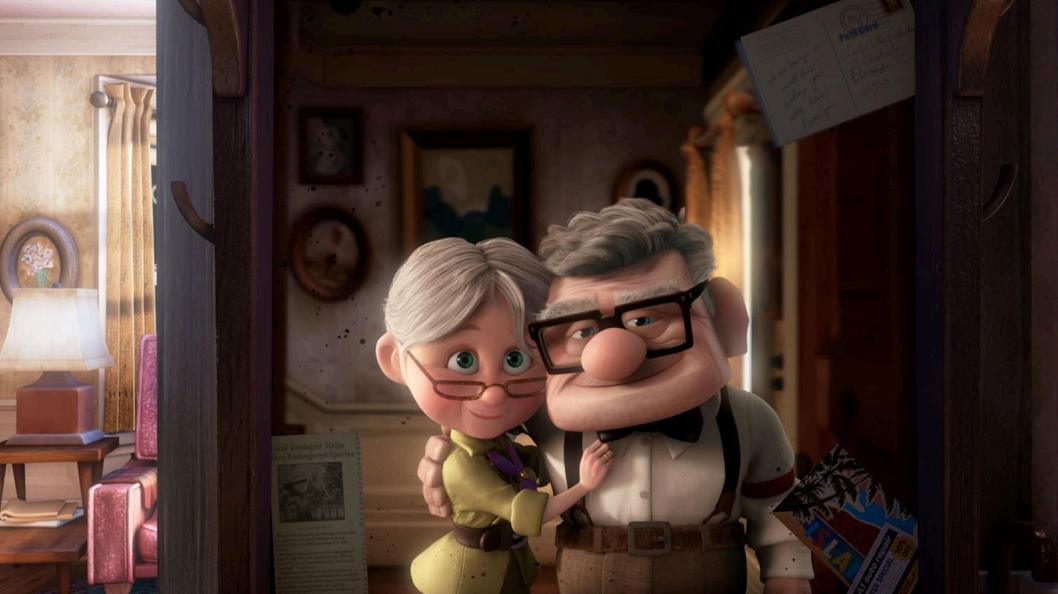
Some years ago, I had a group who struggled and one of the tasks they needed to use for their coursework was montage and so I decided to show them the opening montage of Up. There was no fidgeting, no whispering, nothing, nearly every student in that room moved to silence and, in one or two cases, tears. And this got me thinking. What is it about certain deaths in film that just strike us and stick with us? What is it about that one scene that you still remember ten, twenty, thirty years later? More to the point, why do we keep watching them and bringing the pain back?
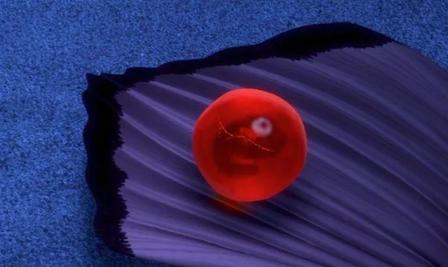
For many of us, our first taste of grief and reactions to death come from the animated films of our childhood. Disney is the cornerstone of this experience where it seems to be you can’t actually be a main Disney character without at least one dead relative. Generations of children have witnessed Cinderella weeping over her father, Bambi’s mother, Marlin’s realisation in Finding Nemo, even BingBong in Inside Out. This isn’t even a comprehensive list either, however these are the ones that many people mention as their most impactful, even years later. And why is that? What is it about these deaths that stick with a child as they progress to adulthood and make us want to share that experience with others?
For me I feel it’s not the deaths themselves but the reaction and meaning imbued by the filmmaker on them The death scene of Mufasa is scary to a child, yes but it’s Simba’s discovery and the intimate shots of that tiny lion cub trying to lift his father’s head that sticks with us Bambi is an excellent example of this storytelling in action – the sound of the gunshot is shocking, yes, but it’s Bambi calling for his mother in the dark and snow that gives us the meaning The audience understands the fear and terror a young one feels of being alone and how someone you depended on is no longer there, which can very much feel like being lost alone in the dark and snow Just ask any grieving child.
Even from the earliest days of silent film, cinematographers have been determined to show what loss, death and grief mean to the human experience 1901’s Death of Poor Joe – one of the earliest examples of Dickens’ work being put onto film – shows the character of Poor Joe expiring in what appears to be a snowy scene as his companion tries in vain to bring him back It’s simple and rudimentary by modern standards but it still is poignant to many
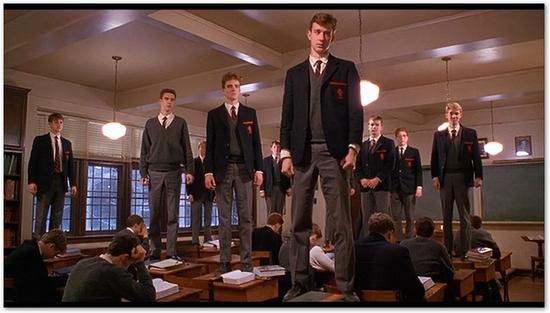
Part of this could be that humans are generally afraid of death, whether it’s their own or losing loved ones We hate to think of the end of things; that time has come to an end and film fulfills this visceral need to know that when we or a loved one goes, there are many different ways to mourn and grieve. For some, Carl’s silent sadness surrounded by balloons after the loss of Ellie is just as poignant as the dramatic outpouring of grief following a death in Dead Poets
Society or the extensive loss and death in The Killing Fields or Marley & Me In fact, many of us count the viewing of a death on film as a coming of age moment in our lives. In fact, ‘the scene that broke me ’ or #thescenethatbrokeme often trends on social media
Maybe this is what filmmakers, directors and cinematographers’ function actually is. Not as documentarians or visual historians but as gatekeepers to our emotions, finding new ways and models for us to express how we feel and how we show our feelings. They act as artistic psychologists, finding those ways we grieve and present us with visuals on how to deal with them. Manchester by the Sea is often cited by many as a visual handbook for dealing with loss and grief and how there is no right way to deal with loss
And then, even after we think we have processed our grief, we turn back to these moments Force ourselves to watch, mention and use these cinematic moments again and again – goodness knows I still watch Beaches with my auntie, both of us knowing that scene was coming But why bring back that pain? Time doesn’t change our first reaction, if anything it cements it. I think of this as the need to check in with our emotions, check that our reactions are still as we expect and that we can share these feelings with others to create a shared experience. Film provides us with this safe, dark space where we can feel loss and practice grief without it being attached to a living person. Watching Jojo Rabbit for the second time recently brought back the devastation I felt the first time I watched ‘that scene ’ and in a strange way it was reassuring to know I still had that response.
And right now, this is so important. With mental health being one of the leading causes of premature death in men, there is a real visceral need for men to experience a moment to express emotions. For the children of COVID, it helps them process in a fictional space; to be able to cry over the death of a character on screen hopefully before having to deal with it in the real world. For those women who are shouldering everyone else’s pain and difficulties, these devastating moments of cinema whisper ‘ you aren’t alone, let it all out’. Filmmakers need to be allowed to explore and show these moments to both young and old alike So grab your blanket, get the tissues, line up your tearjerkers and embrace the pain. After all, you may need it later.
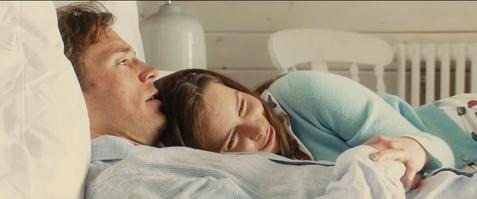
Straight Outta Compton (2015) Me Before You (2016) As You Are (2016)
Hunger Games: Mockingjay Part 2 (2015)
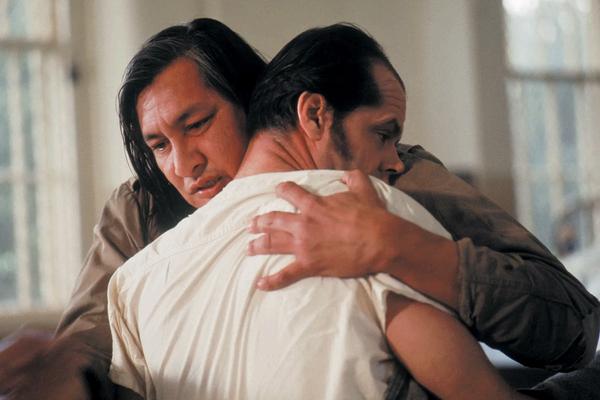
One Flew Over The Cuckoo’s Nest (1975)
American History X (1998)
Avengers: Infinity War (2018) The Green Mile (1999)
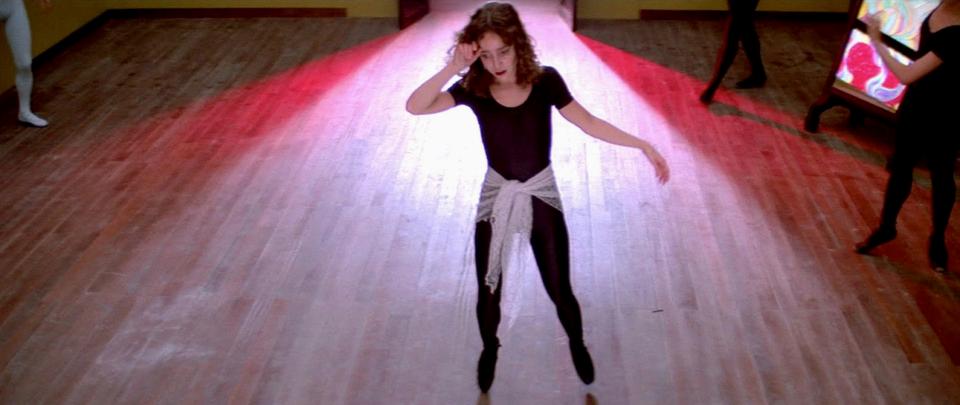
Witches have been seen in film, TV, and media for years but no one has ever come c showing witches as ruthless and as bad Dario Argento has. In 1977 Argento brou Suspiria, a technicolour nightmare fuelled by ballet and eerie, bone-chilling music Unlik horror films Argento made a masterpiece completely female centric cast. Argento e femininity throughout the whole film even thro lighting, he proved to a 1977 audience that wom do so much without the help of a man.
BY SETH MASON BY SETH MASON
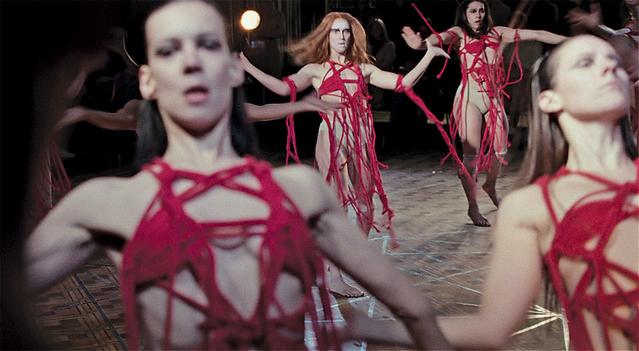
To protagonists and Antagonists, all of them are female, throughout the whole movie only three men appear in small cameo- sized parts. This was a huge milestone for female characters in horror films as they were mainly portrayed as helpless victims who needed a big strong man to save them. For years and years and even still to this day female characters are constantly getting oversexualised especially in horror films.
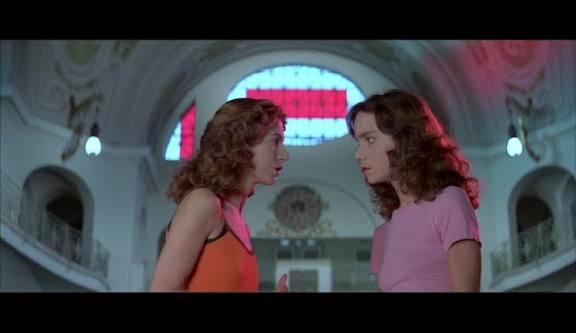
In 2018 Luca Guadagnino brought us a Suspiria remake, which proved, once again, that the original is always better. Guadagnino tore down everything that Argento had managed to achieve in 1977 Argento co-
oweve , Guadag o wo ed o a sc p o a M N called David Kajganich, and together they pretended to know how women talk and act for 2 hours and 32 minutes. And if that wasn’t enough Guadagnino sucked out all the incredible neon lighting, we know and love from the original film
However, Suspiria 2018 does have some redeeming features which, I suppose, is why it has so many fans It has an incredible score composed by none other than Radiohead's Thom Yorke. The score manages to encapsulate a mysterious melancholic feel, which lives up to its perfectly named title ‘Suspirirum’ Yorke expertly dissects the dark undertones of Guadagnino’s ‘suspiria’ making it very appealing to horror fans Guadagnino also explores things that Argento doesn’t He delves deeper into the state of post war Berlin. This exploration into the history element of Suspiria also makes the audience have a deeper connection with the characters by allowing them to understand what they have gone through. Again, making it understandable as to why Guadagnino’s ‘Suspiria’ is so appealing to people
The Wicker Man (1973) by Charlotte Davey
Blue Jay (2016) by Molly Impey
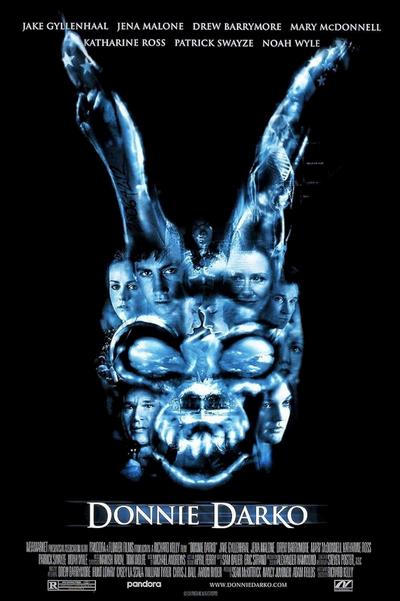
Donnie Darko (2001) by Cate Pratt
The Martian (2015) by Tom Parker Haus of Leaves (2000) by Michael Collins Nosferatu (2024) by Evie Price
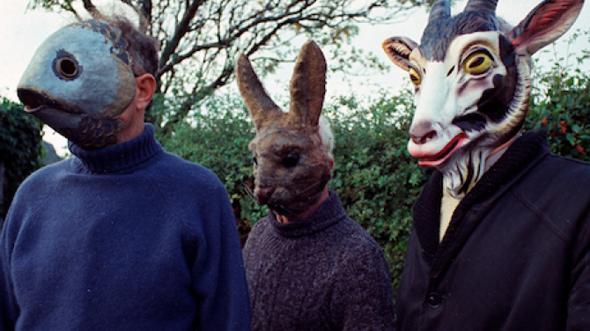
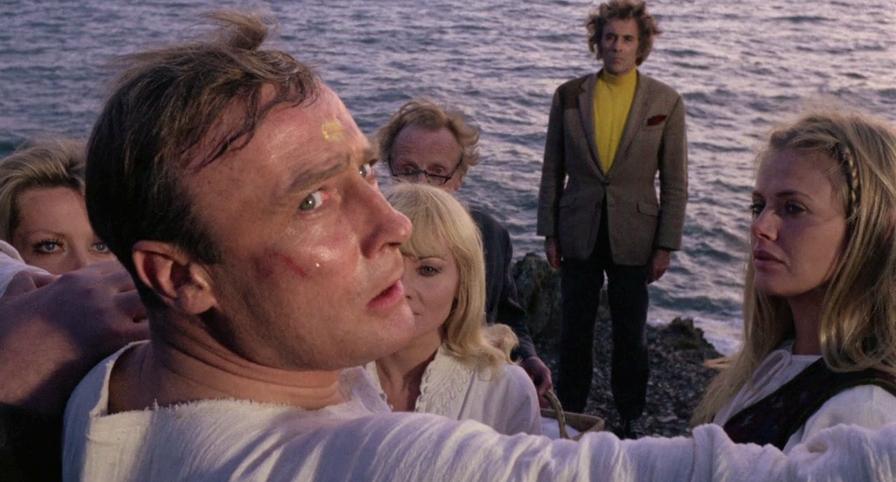
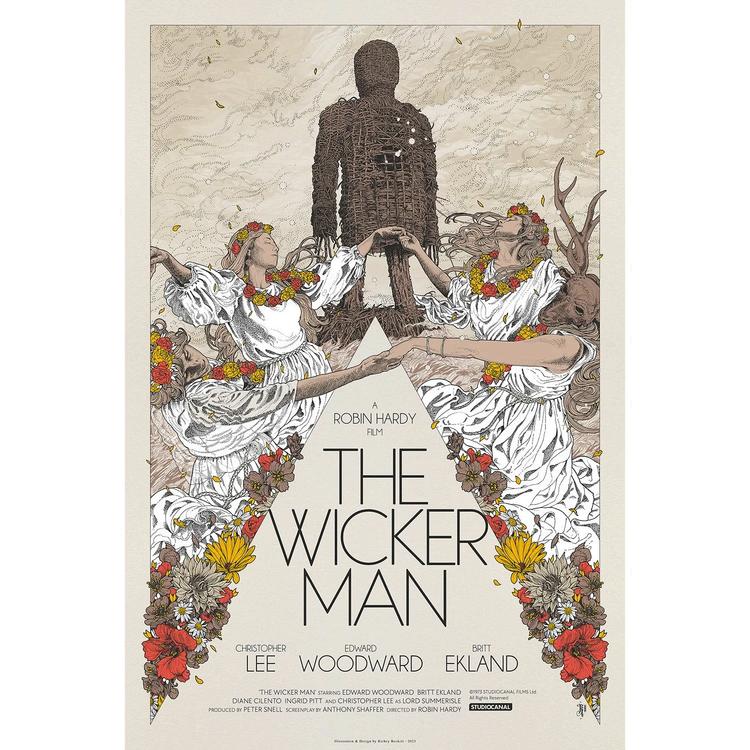
The 1973 cult classic The Wicker Man has kept its place in cultural history for over 50 years. This folk horror set on an isolated Scottish island called Summerisle during the week before May Day, was director Robin Hardy’s feature film debut and a testament to the folk genre that emerged from the hippie craze in the 60s and 70s. The hippies in this film, however, are a way away from the anti-violence peace-loving members we may think about when we think back to the ‘Make Peace not War’ groups of the 20th century. Wicker Man stands testament to the anti-hippie mindset of the time held by the majority Christian societies of the West
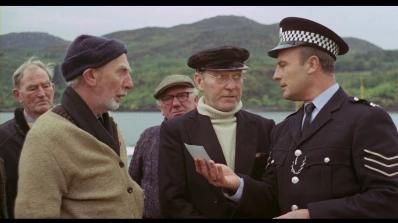
The protagonist Police Sergeant Neil Howie is sent to investigate the disappearance of a young girl – Rowan Morrison – who has not been seen for over a year, on the isolated island off the coast of the Scottish Highlands Here he encounters the wild, sex loving people of the isle who send him on many a wild goose chase as they insist Rowan either hasn’t existed at all or is already dead.
Despite the happy-go-lucky nature of these islanders the eternal allure of The Wicker Man comes from the underlying sinister energy that lurks in the background Never fully coming into the light until those last fatal 15 minutes. Unusually for a folk horror, it shies away from explicit gore or obvious pagan rituals.
The religion followed by the islanders is nondescript –partially because the story is told from Howie's point of view, a staunch Christian who has no time for the islander’s (quite sexual) games – and, other than the
BY CHARLOTTE DAVEY BY CHARLOTTE DAVEY
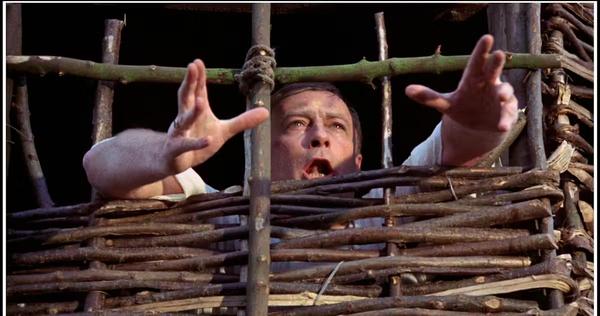
sexual nature, quite harmless. The film does not spend too much time demonising the islanders for their way of life; it is presented as rational and normal Instead, Howie is in the hot seat for his blatant rejection of their rituals, he even threatens them with the full force of the police from the mainland if they do not stop their rituals His ignorance is ultimately his downfall –as he becomes the sacrifice for a good harvest in the coming year Being burnt alive in a massive ‘Wicker Man’ made of wood
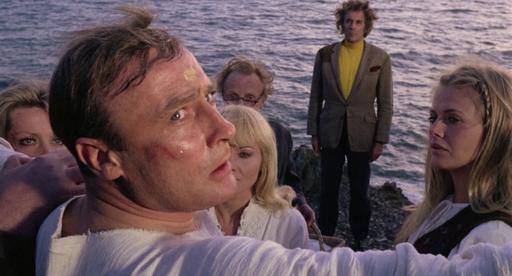
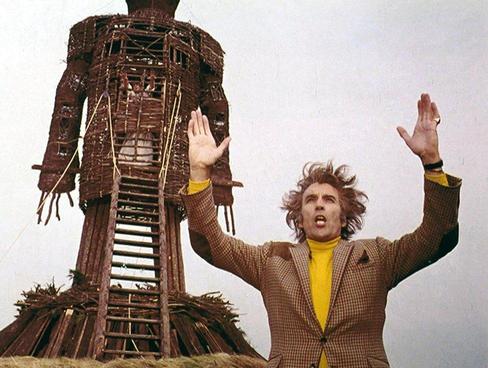
You could say this film preaches acceptance, if Howie had given into the islander's games he would’ve been saved as they would only accept a virgin as the ‘perfect sacrifice’. The Wicker Man is a time capsule into the debate raging in the 1970s of the ‘ common decency’ of the Christian Western society battling with the emergence of hippie and pagan culture post WW2.
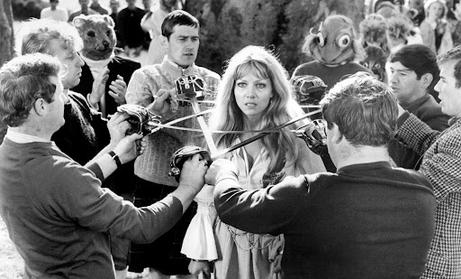
Tension rises throughout the film despite the presence of long winding shots of the summertime land the island and the lilting folk music is chee cheeky, again full of sexual innuendos islanders themselves are what sets alarm bells they are almost too helpful to Howie for his se a missing girl yet seem completely unbothere potential demise, they frequently leave clues t to dead ends – islanders direct Howie to t body of ‘Rowan’ who he digs up frantically b revealed its the corpse of a pet rabbit called It seems that Summerisle itself does not want find Rowan Morrison And the islanders are happy to oblige The sense of ‘ wrongness ’ is fu stone the night before May Day where man warn Howie, he ‘wouldn't want to be around May Day
Despite Howie’s gruesome demise via burning to death, the worst detail is that he brought it upon himself The islanders told him to leave, they frequently warn him he won't like it on the island around May Day, yet he stays, his sense of justice and Christian morality marching him towards his death, his inability to accept a different way of life sets the final nail in the coffin as his refusal to indulge in the sexual pleasures makes him the perfect victim
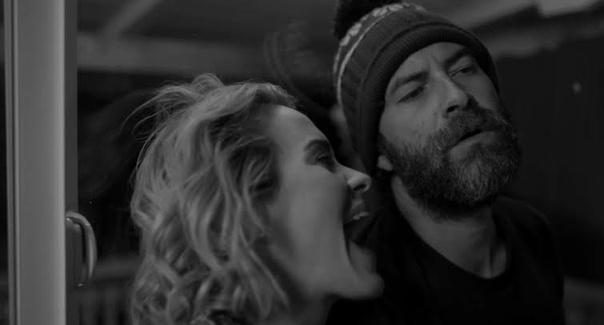
The heart-warming and heart breaking, 2016 movie, Blue Jay explores various themes of past love, chance, regret and acceptance, as two former high school sweethearts reconnect by coincidence and spend a day together. This romance drama directed by Alexandre Lehmann explores rather unconventional topics for a typical Netflix film. However, thoughtfully captures and covers topics many can sympathise with and relate to
The movie is named after the local coffee shop called ‘Blue Jay’ that the characters revisit in Crestline, California The film showcases a day spent by two previous high school sweethearts who coincidentally stumble across each other 20 years later in the supermarket The film explores the nagging question about young love that begs to be answered: can it survive life’s ups and downs? The magical and thoughtful nature of the movie some could say answers this question, whilst others could say leaves this question unanswered. Ultimately, it’s deeply down to personal interpretation, a relatively subject film.
BY MOLLY CLIFF BY MOLLY CLIFF
Blue Jay is written by Mark Duplass who also plays one of the two protagonists in the film; the other being Sarah Paulson who plays Amanda, the second protagonist. The use of Mark Duplass being the writer and actor creates a more personal touch to the film, as you know it is exactly how he envisioned it
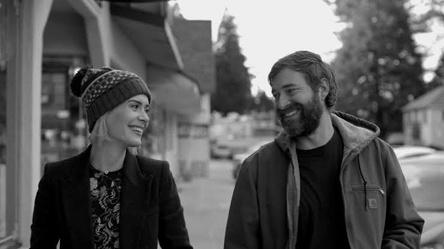
The movie is centred on two characters who are trying to relive their past, so they are roleplaying their younger selves to get a glimpse and relive what once was - reminiscing their teenage years. Teaching the audience to live in the moment and communicate their true feelings for someone before it’s too late The movie in my opinion, is like a breath of fresh air. I can’t think of many films to directly compare or relate this film to, which, to me, highlights its unique and dynamic approach to movie making that simply hasn’t really been done before and may perhaps be a new form of film making
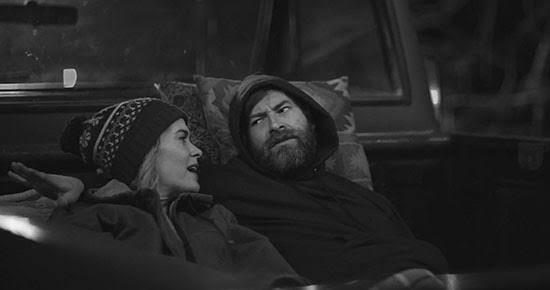
The main two actors, Jim (played by Mark Duplass) and Amanda (played by Sarah Paulson) are a match made in heaven, their acting feels so real and their chemistry even realer Chemistry is such an elusive thing and something I do not feel can be forced into existence, but I do believe that circumstances can be created for it to flourish In life, it’s up to chance; in art, it’s up to talent. This almost raw feeling creates the idea that while watching this film you feel as if you are there, like a spectator in the back, watching their every move and their every step To some degree this feels almost invasive and uncomfortable as you feel as the spectator, as though you shouldn’t be watching such touching scenes and personal conversations
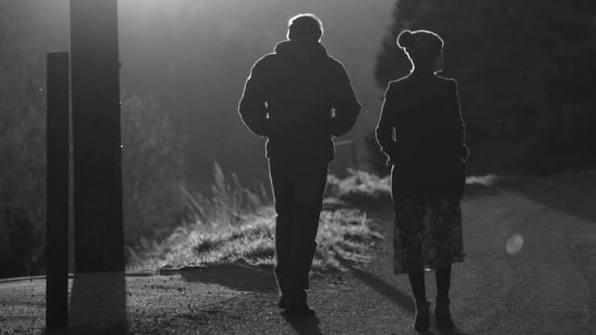
A special something about this film is the fact it is filmed in black and white This is a very bold and unconventional choice for a film of this decade However, I feel it is quite appropriate for the film to be in black and white because it is about remembrance and nostalgia, the use of black and white connotes the idea of reflecting back on a past memory. Furthermore, the use of black and white guides the audience to focus solemnly on the emotional aspect and performance of the film rather than the locations or backgrounds. Sometimes colour and complex backgrounds and locations can feel distracting however, the simplicity of the film to be made in black and white, highlights how the film is driven by emotional depth rather than a complex plot
Something that stands out most for me in this masterpiece of a movie is the cinematography The story is told through the lens The way in which the camera communicates with the audience highlighting the highs and lows to the characters day is completely beautiful Showing unique viewpoints and perspectives that the naked eye usually misses.
The production of the film faced many challenges, from directional challenges to get the film filmed, entirely, in 7 days and an acting challenge to have two people carry the entire film Another fascinating factor to the making of this film is the fact the actors had no strict script, instead were given a summary of the plot and left to improvisation, which completely blows my mind, and really shows the high level of talent both these actors have Their acting tugs at the heart strings, the emotions in the plot are raw as it is however, the acting enhances that rawness
When watching the film, I cried a little, but smiled a lot – and that is the fundamental element of the film. All in all, I recommend you take 85 minutes of your life to watch this movie and I can assure you won’t regret watching it.
BY
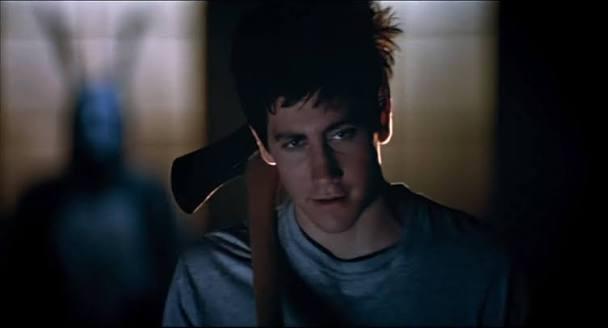
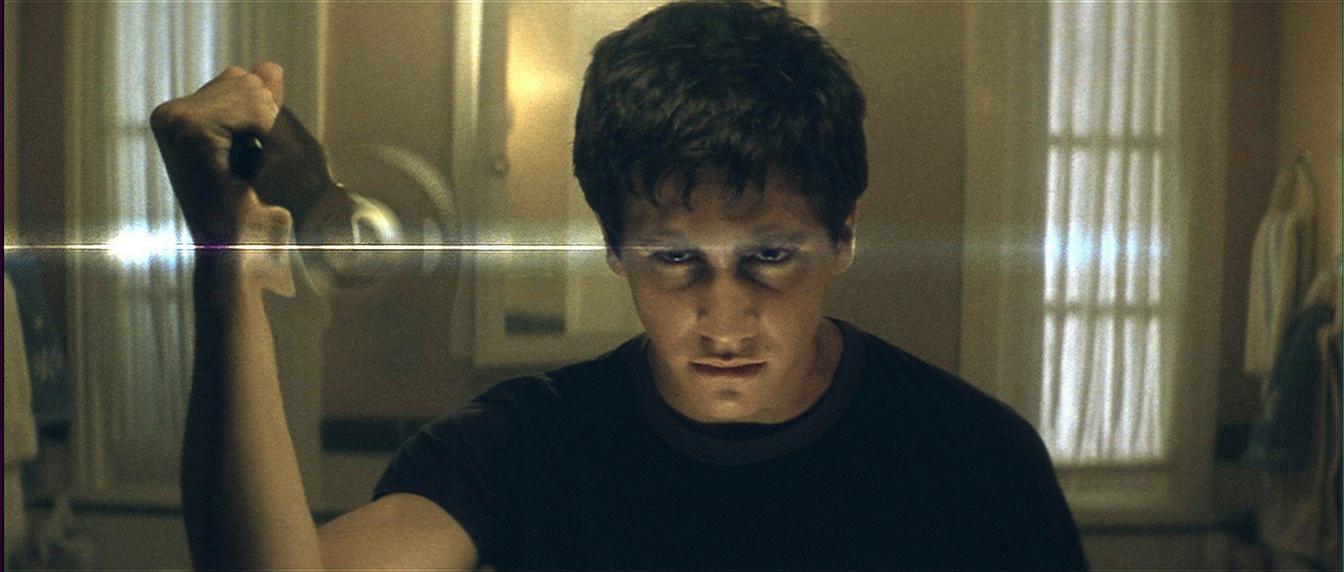
Donnie Darko (2001) is an unconventional blend of genres - including science fiction, psychological thriller and drama - which is known today as a cult classic due to its incomprehensible nature.
Because of this, over time it has become a Halloween favourite for many; this is largely due to how people find it beautifully complex and difficult to understand This element of mystery and supernatural emphasises its underlying tone of unease and creepiness So, what exactly about this movie gives it such an ominous feel..?
One key feature of the film which lends itself to the moody atmosphere is its haunting soundtrack and score. This is demonstrated through use of dark 80's new wave pop, such as Head over Heels by Tears For Fears, The Killing Moon by Echo and the Bunnymen, and Mad World by Gary Jules and Michael Andrews. Sound plays a vital role in establishing a melancholic tone; this could be put down to ambiguous lyricism within songs as they mirror the confusion created within the plot. In addition, these lyrics also contain themes of impending doom and death: for example, in Mad World:
‘I find it kind of funny and I find it kind of sad, the dreams in which I’m dying are the best I’ve ever had ’
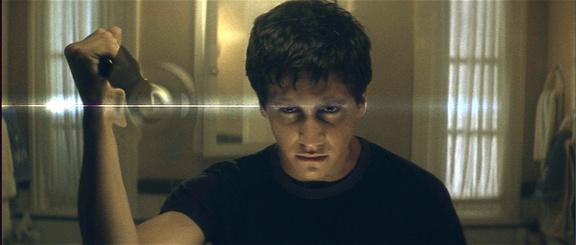
Further, the chilling musical score, also created by Michael Andrews, makes use of minor chords and infrequent prolonged pauses in order to amplify the sense of dread spectators are exposed to, as well as to add to the lingering feeling of uncertainty. This is because the music that the audience anticipates is never what actually comes next
This links to another way in which Donnie Darko goes about unnerving the viewers: each instrumental piece is titled in the same way as the movie’s chapters These also correspond to chapter titles within the inuniverse book ‘The Philosophy of Time Travel’ by the character Roberta Sparrow (also known as Grandma Death). These include such titles as ‘The Tangent Universe’, ‘The Artifact and the Living’, and ‘The Manipulated Dead’
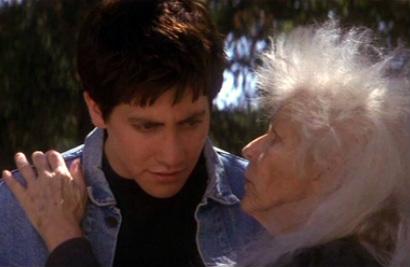
This structure allows the spectators to watch as Donnie’s life unfolds and descends into chaos. The audience learns to expect disaster (as explicitly told at the beginning of the movie) but only get a real sense of discomfort, which manifests itself as a sensation of dread as these chapters slowly reveal exactly why he is experiencing these hallucinations
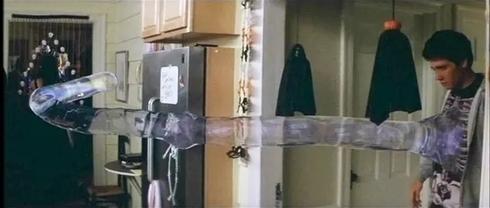
Another element which creates a dark, unsettling mood is the use of surrealism in the film’s visual effects This can be seen through imagery such as the ‘liquid spheres’ which emerge from characters’ torsos as they are visually striking and represent metaphysical concepts beyond human knowledge This is also very significant in cinema history as it was an early example of digital effects being used to serve the story within a movie, rather than just as an add-on Furthermore, montaging and time manipulation (seen in sped-up or slowed-down scenes) were used - perhaps to demonstrate how the progression of the movie could also be interpreted as a ticking time bomb counting down until the inevitable end of the world, subtly reminding spectators that the characters are destined to die
In addition, lighting is arguably one of the most effective features in this movie to scare viewers subconsciously. Cool toned, low-key lighting and frequent use of shadows play a significant part in producing an eerie atmosphere as it not only isolates characters positioned in spotlight to emphasise their importance, but it also distorts figures that are not entirely visible, making them feel more like an unnatural and threatening presence in the background as opposed to another character who is interacted with
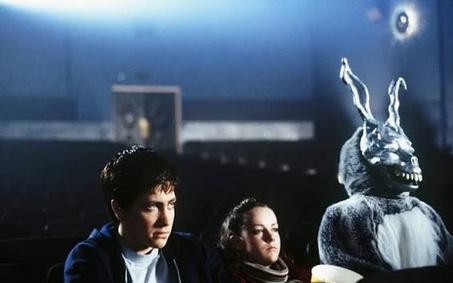
This disturbing vision can be explained by a final element which further creates discomfort to spectators: Costuming In Donnie Darko, one of the features which sticks out to viewers the most is Frank, a frightening six-foot-tall bunny rabbit with a terrifying skull-like face The way in which this character is presented is commented on within the movie, however it is never fully explained explicitly. This can be seen in the following dialogue:
DONNIE: Why do you wear that stupid bunny suit?
FRANK: “Why are you wearing that stupid man suit?”
This would unsettle spectators as they are met with more questions than they started with. However, the choices made with Frank’s appearance may have been very purposeful as the costume being a bunny connotes innocence. This could imply that Frank is the prey under the premise that Donnie is the hunter, foreshadowing how in order to save humanity, Donnie must kill him.
In Summary, Donnie Darko is an uncomfortable watch for various reasons, such as lighting, soundtrack and costuming, which all lend themselves towards the creation of a mysterious and dark atmosphere

“I’m gonna have to science the s**t out of this”
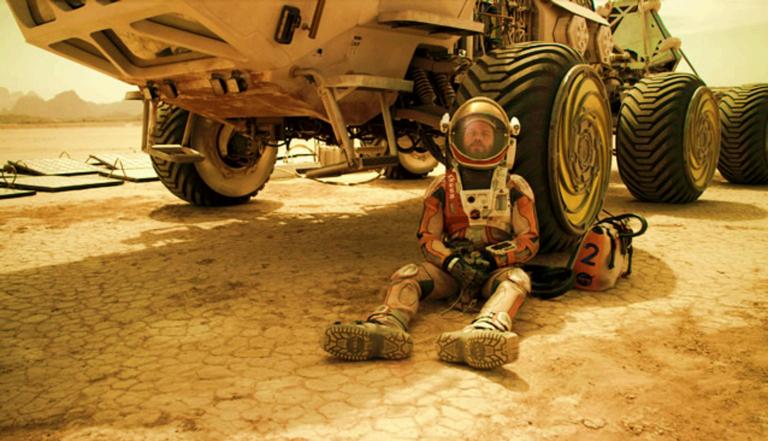
This is the realisation of Mark Watney (played by Matt Damon) upon discovering that he has been left alone on Mars, following a ferocious dust storm which forced his fellow astronauts to flee for their lives At the heart of The Martian (2015, dir Ridley Scott) is the story of one man ’ s ingenuity and courage in the face of unimaginable odds
In addition to stunning visuals depicting the inhospitable landscape of Mars and thrilling space travel sequences, this film charts an internal journey from despair to hope, through disappointment and acceptance. The detail of Watney’s fight for survival, including growing potatoes from organic waste and making water from hydrogen and oxygen, is hugely impressive in its authenticity.
BY TOM PARKER BY TOM PARKER
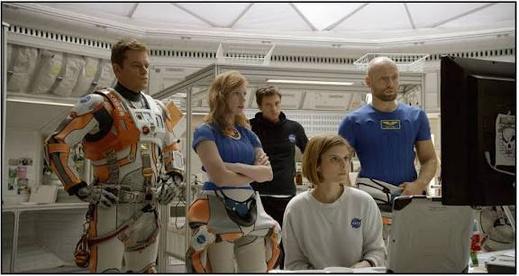
The story unfolds at a steady, measured pace, avoiding sensationalist and flashy catastrophes, in favour of paying close attention to the protagonist’s will to survive Actor Jeff Daniels excels in his role as the head of NASA Teddy Sanders, giving a subtle performance as someone overly concerned with the public face of his organisation, who nonetheless has deep respect for the capabilities of his team
The film feels ahead of its time in the way it places two women, played by Jessica Chastain and Kate Mara, in senior roles within the rescue mission, while sidestepping any clichéd gender-clash stereotypes. Donald Glover rounds out the stellar cast with an enigmatic performance as Rich Purnell, a highly gifted astrodynamicist who masterminds the rescue mission but is determined to remain in the background.
The movie shows the real heroes to be scientists dedicated to their work and suggests that a life well lived is one in which people strive to do their utmost day after day without expecting any glory
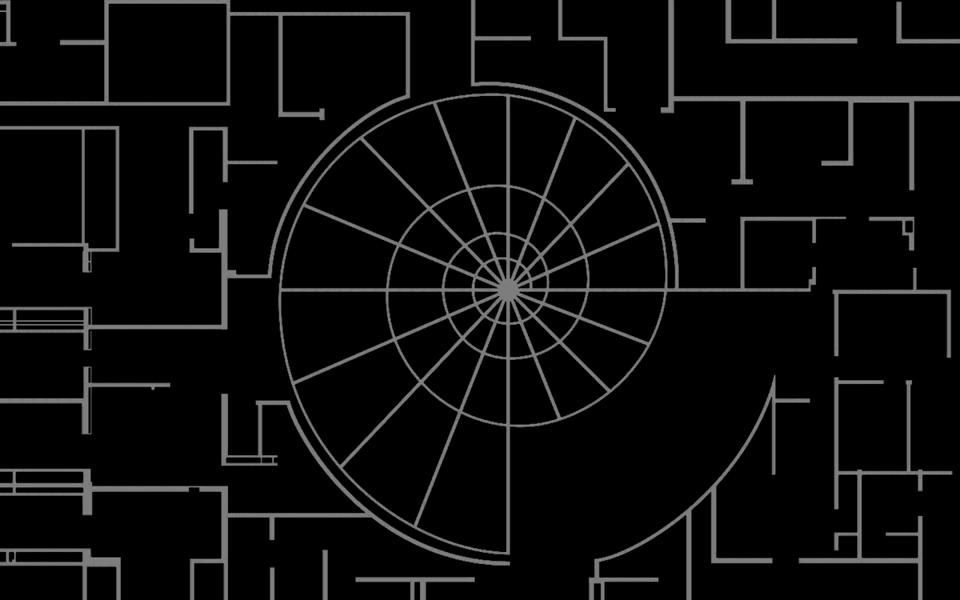
We should start with some facts. House of Leaves is a book. It was written by Mark. Z Danielewski, and was first published in March, 2000. The cusp of the 21st century. This feels very apt.
It is also 709 pages long Here are some of these pages
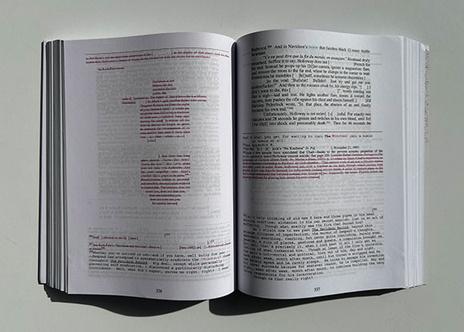
Beyond this, things get tricky. House of Leaves is a horror novel It is about a house, whose corridors grow longer and longer, and twist and turn into a labyrinth that engulfs its owner.
But it’s not It’s actually a work of film criticism, an academic book about a found footage horror film called The Navidson Record. It contains analysis, citations, footnotes, and other conventions we would expect to see in an academic book.
But it isn’t an academic book The film The Navidson Record does not exist The book was written by an old,
BY MICHAEL COLLINS BY MICHAEL COLLINS
blind man called Zampano, who suddenly died. All his documents have been pieced together by a man called Johnny Truant, who for reasons not even apparent to himself wishes to complete a definitive version of this academic book.
Except he doesn’t The book starts to lurch in strange directions. Johnny Truant starts to insert himself more and more into the narrative The pages seem to take on a life of their own A list of citations extends for two pages. Text starts to creep around the page, forming shapes, concepts that are increasingly alien. Some citations relate to books that exist, some clearly do not exist. All the while, the film criticism continues, and Navidson’s house gets bigger, bigger, and bigger.
It is impossible to adequately define what House Of Leaves actually is. At least without dissolving into pretentious nonsense This is because it is less of a conventional narrative, and more of a puzzle It is metafiction. It is a story about a story about a story. In many ways, it is the archetypal postmodern novel. The reader is encouraged right from the start to question what is actually real Even Johnny Truant, our ‘narrator’ is as unreliable as they come. So we begin to piece together information We start to follow citations, Google certain books, if only to work out if Stephen King really did say that. Most of all, we begin to imagine the film that is being described, through so many levels of diegesis, a sort of narrative version of the telephone game, the signal becoming more and more degraded until we have no idea what to believe anymore
Vladimir Nabkov (who wrote the most perfect example of metafiction in his novel Pale Fire) argued, somewhat mischievously, that there is no real difference between fiction and non-fiction. The ways in which we engage with a fine piece of criticism can often be as exciting as reading a thriller Other theorists have argued that there is no fundamental differences between books and games. A good detective novel encourages us to work out ‘whodunnit’ If we read Agatha Christie, Raymond Chandler, and House Of Leaves passively, then we are not going to get much out of it. Everyone’s interpretations will be different, and it will present our own theories
This is potentially a spoiler, but House Of Leaves might not offer a definitive answer It is up to the reader House Of Leaves may be a work of film criticism for a film that does not exist, but it might be more accurate to call House Of Leaves a video game This is because House Of Leaves is ergodic In his seminal 1997 book Cybertexts, cultural theorist Espen Aareph defines ergodicity as a state of non-trivial interaction. Turning a page or watching a film is trivial But pushing buttons in a video game or actively seeking out the answers to a mystery through wider research is nontrivial You have to get stuck in House Of Leaves is therefore upheld as an example of ergodic literature It confuses and conflates the notion of playing and reading, of narrative and games.
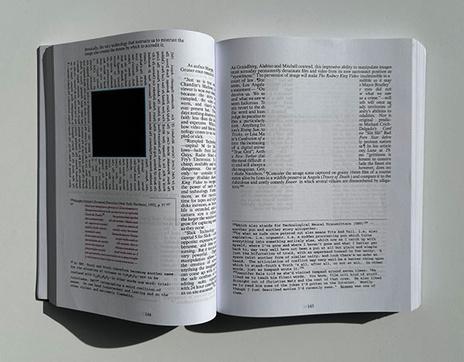
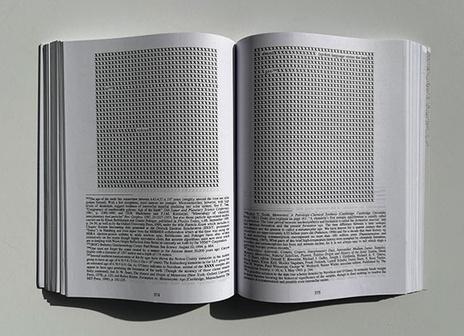
How much you get stuck in is completely up to the reader Personally, I prefer my mysteries unsolved I like the idea of a world existing beyond the novel that I cannot quite comprehend. For other readers, this is not a negotiable position There are online forums for fans who obsess over every detail, constructing detailed theories.
I like the fact these theories exist But for me, House Of Leaves is something more straightforward. It is a toxic book. It is haunted. One might even say that it is cursed The story of a house that is just too big is spooky enough to begin with With every level of diegetic obfuscation, unreliability and narrative weirdness, this spooky story becomes grainier, fuzzier, more malevolent I do not understand what this book is or what it wants to do to me. It is not simply a scary story. It is an academic analysis of an edited theatrical release of a record of a paranormal event that does not exist, written by a man who has never seen a film, and then edited by a man who absolutely cannot be trusted The slow, sickening anxiety that there will be no logical conclusion here is more scary than any haunted house.
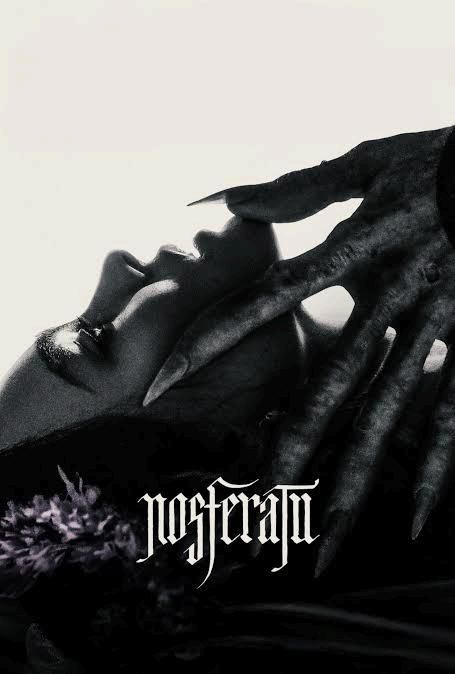
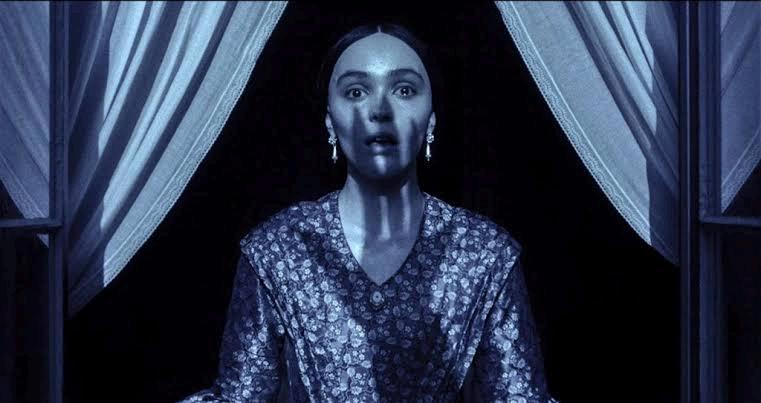
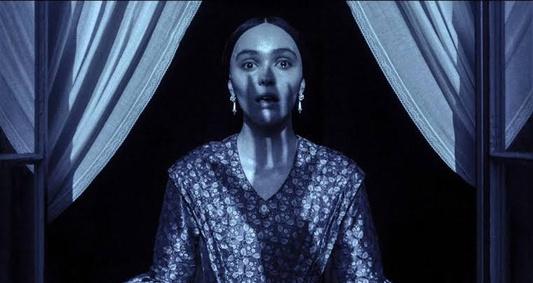
Nosferatu is a story of infatuation, psychosis and horror. Directed by Robert Eggers, headed with an all-star cast, and released in 2024, the story follows Ellen and Thomas Hutter (Lily-Rose Depp, Nicholas Holt) and their individual storylines which are unknowingly connected by one character. Set in the 1830’s, we see the turmoil that their lives have become.
Ellen Hutter suffers from sleep psychosis, with strange dreams plaguing her nights and the feeling of being ‘called upon ’ by an ominous figure, Thomas Hutter is a real estate agent, for whom a new opportunity has opened; a meeting with a potential client in Transylvania. As the story unfolds, and so do their lives, the audience sees problems begin to arise for them.
Ellen’s psychosis intensifies and her intrigue for the figure haunting her dreams escalates into an unnatural and strange romantic infatuation As the story continues, it is made clear that it’s not just their lives that are now entrapped into the cycle of death and paranoia.
BY EVIE PRICE BY EVIE PRICE
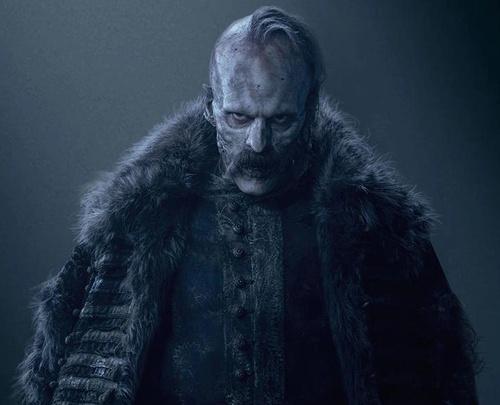
Throughout the film there are strong themes of gore and horror, with the costumes and settings all contributing. The film has a constant overlay of a blueish-grey hue adding to the eeriness of the storyline In my opinion, the film constantly provides the audience with a feeling of unease or uncertainty, however still manages to maintain a hint of beauty – I feel that this is strongly due to the way it is filmed and that even though the storyline is about want, confusion and, in a way, destruction, Eggers still maintains a fragility to the film even though it doesn’t feel like it from far away I also believe that this could be because of the way the characters are dressed and appear. I feel that this is most prominent in parts of Ellen’s character – she seems at peace at the beginning but slowly destructs as the plot darkens Based on the story of Dracula and still continuing with the supernatural theme, the storyline of the film is strong, as well as the acting, with the performances being full of commitment and passion I definitely recommend this film, and feel as though is has the perfect level of gore and horror combined with an intricate storytelling, and even though the story has been told before in 1922, the development of the film industry (with broadening capabilities and access) the story doesn’t feel recycled
‘Frankenstein: Crafting a Tale Eternal’ Exhibition by Shannon Johnston Howes
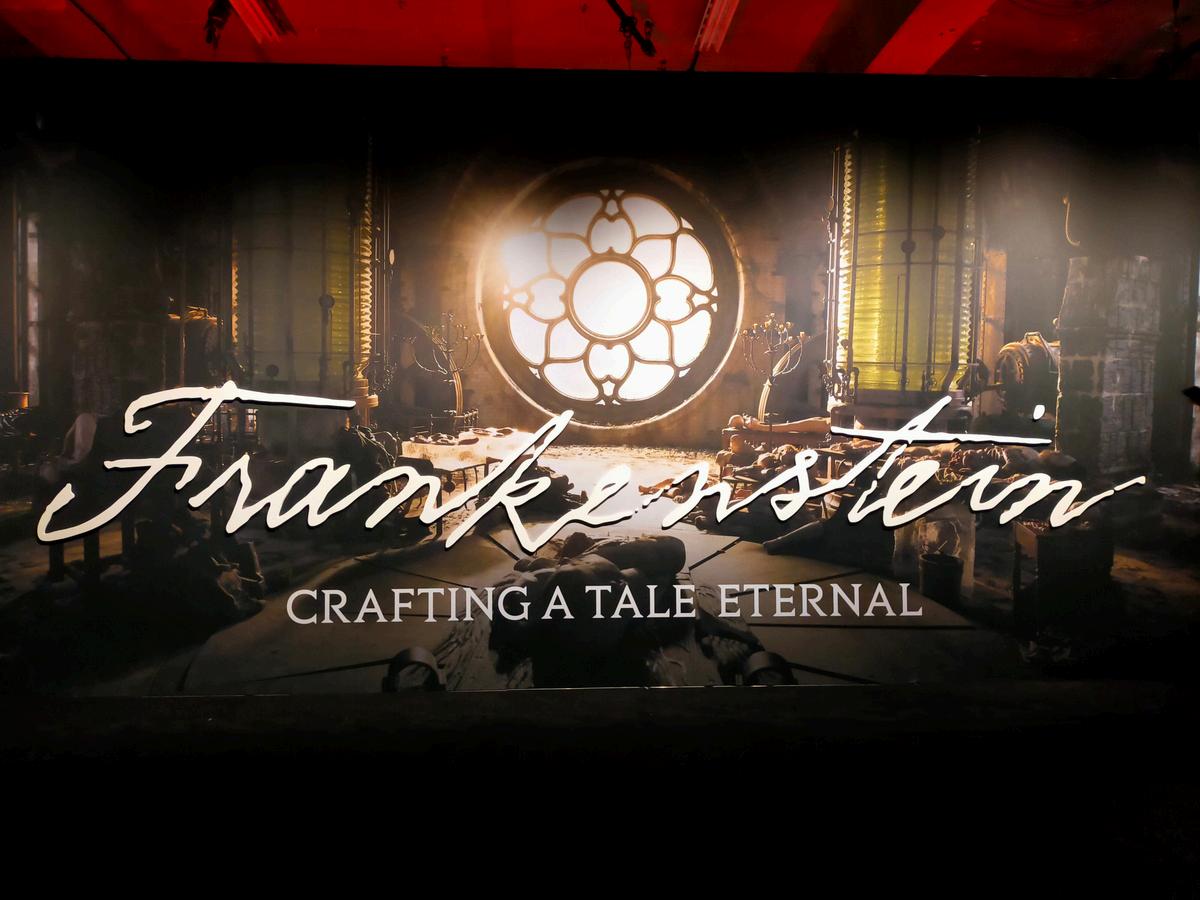
‘FRANKENSTEIN:
November saw the release of one of the most highly anticipated films of the year: Guillermo del Toro’s Frankenstein, starring Oscar Isaac, Jacob Elordi, and Mia Goth. It was originally planned for a release straight to Netflix, but was mercifully given a limited theatrical run, from October 17th until November 7th, when it was released on Netflix
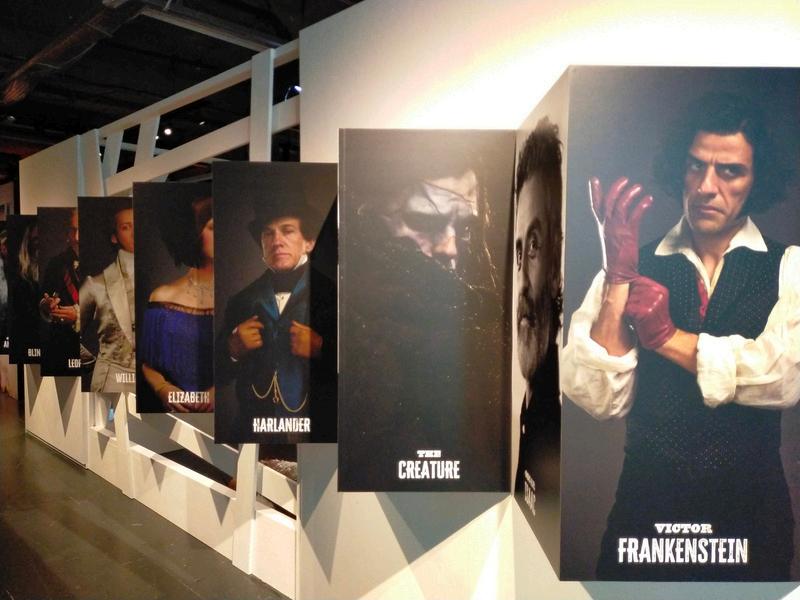
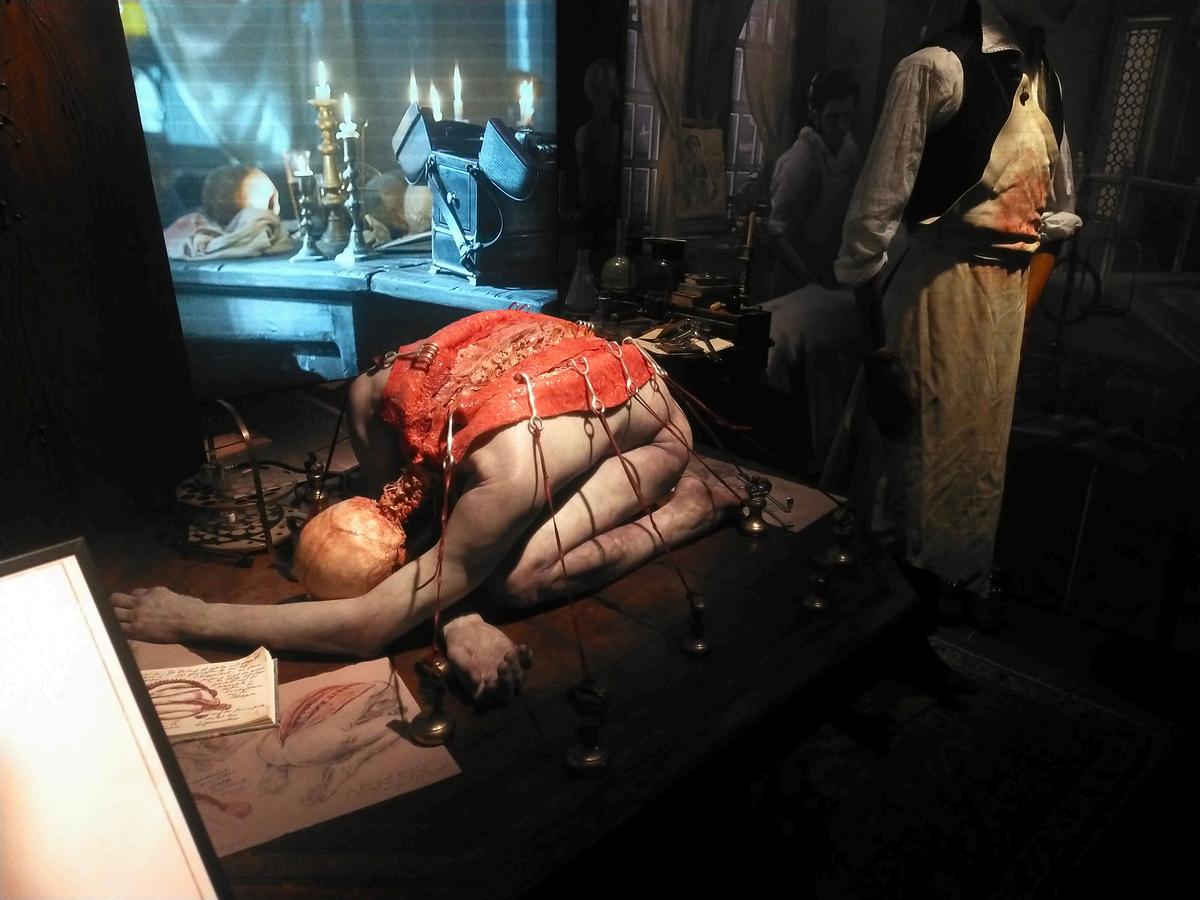
During its theatrical run, the Old Selfridges Hotel in London hosted a free exhibition for the film, featuring costumes, props, set design elements and behind the scenes concept and planning artworks. These revealed so many more intricate details and gave deeper context and understanding to so many elements of the film, it was truly a sight to behind. I saw the film before visiting the exhibition, not wanting to ruin any details for myself, and having done so, it made me want to watch the film again immediately
BY SHANNON JOHNSTON HOWES BY SHANNON JOHNSTON HOWES
The costuming is beautiful, and every garment, every accessory, tells a part of the characters story From Victor’s red leather gloves symbolising the blood on his hands, to malachite patterns - a stone of healing,
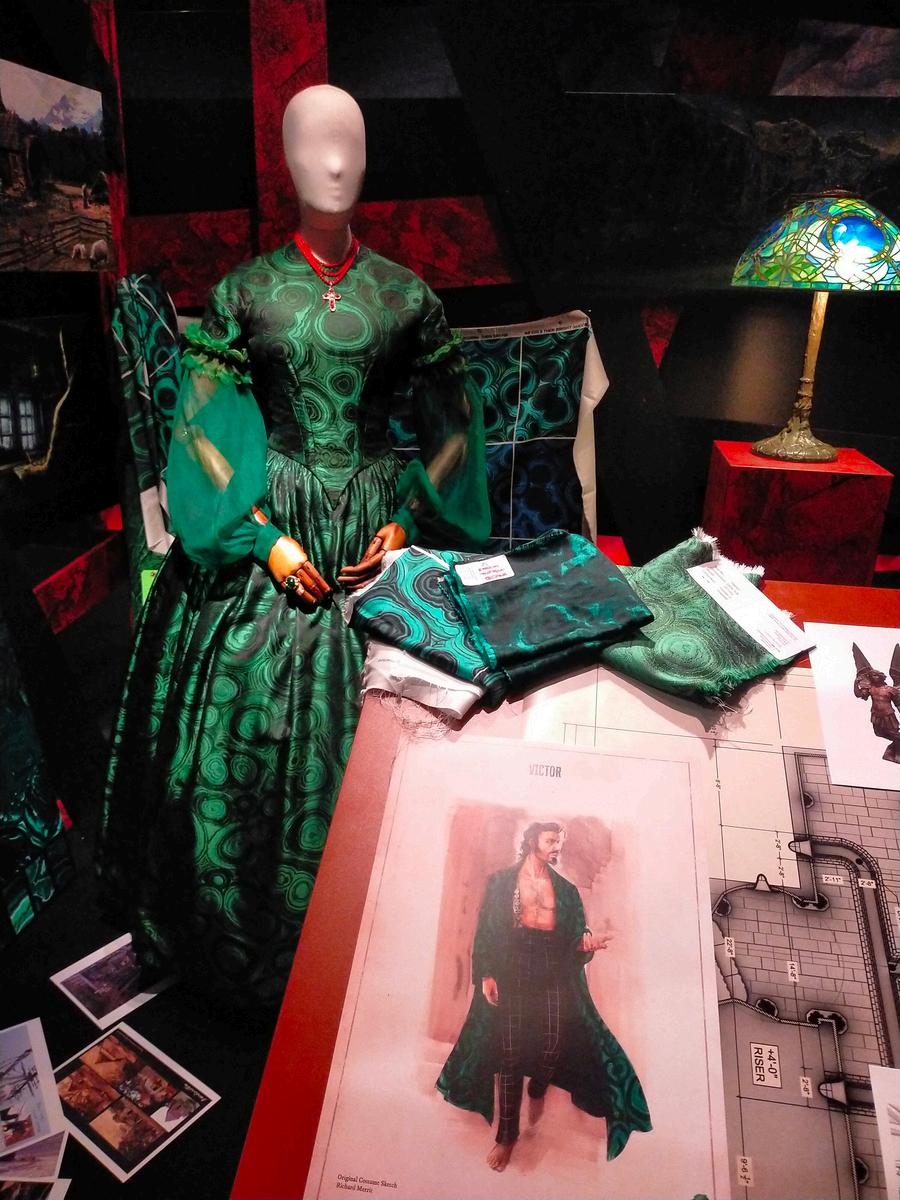
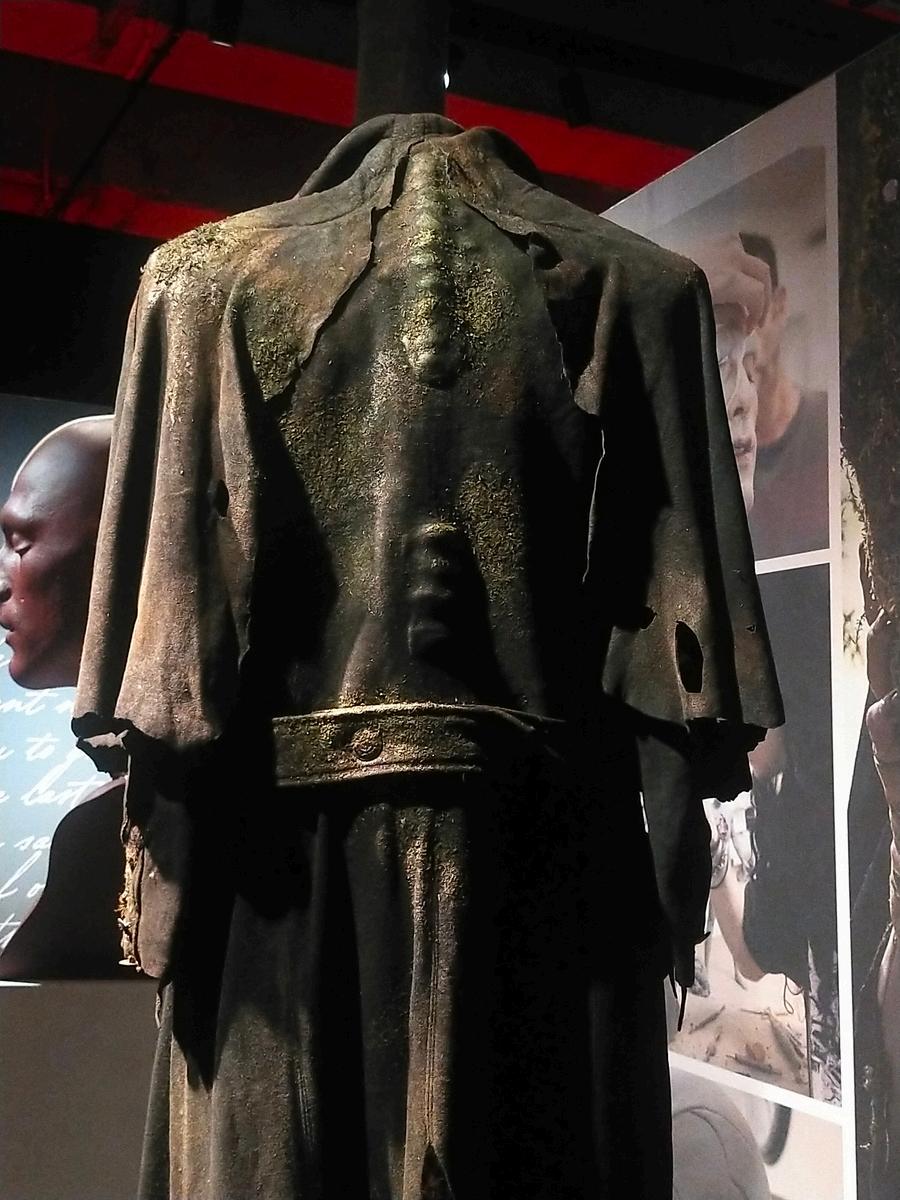
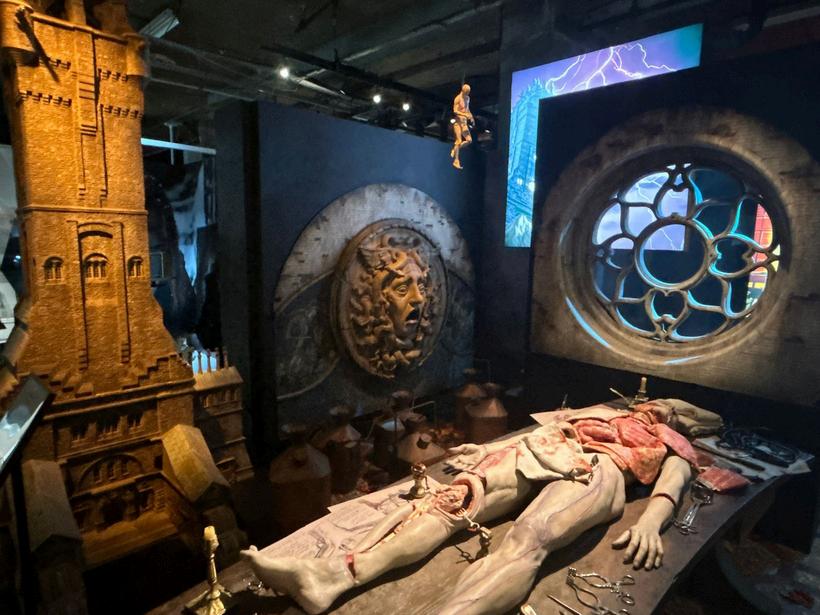
by the Wallace Monument in Stirling, Scotland
These were created at a fraction of the necessary scale, shot in specific conditions to force the perception of their size, and digitally added to the final scenes

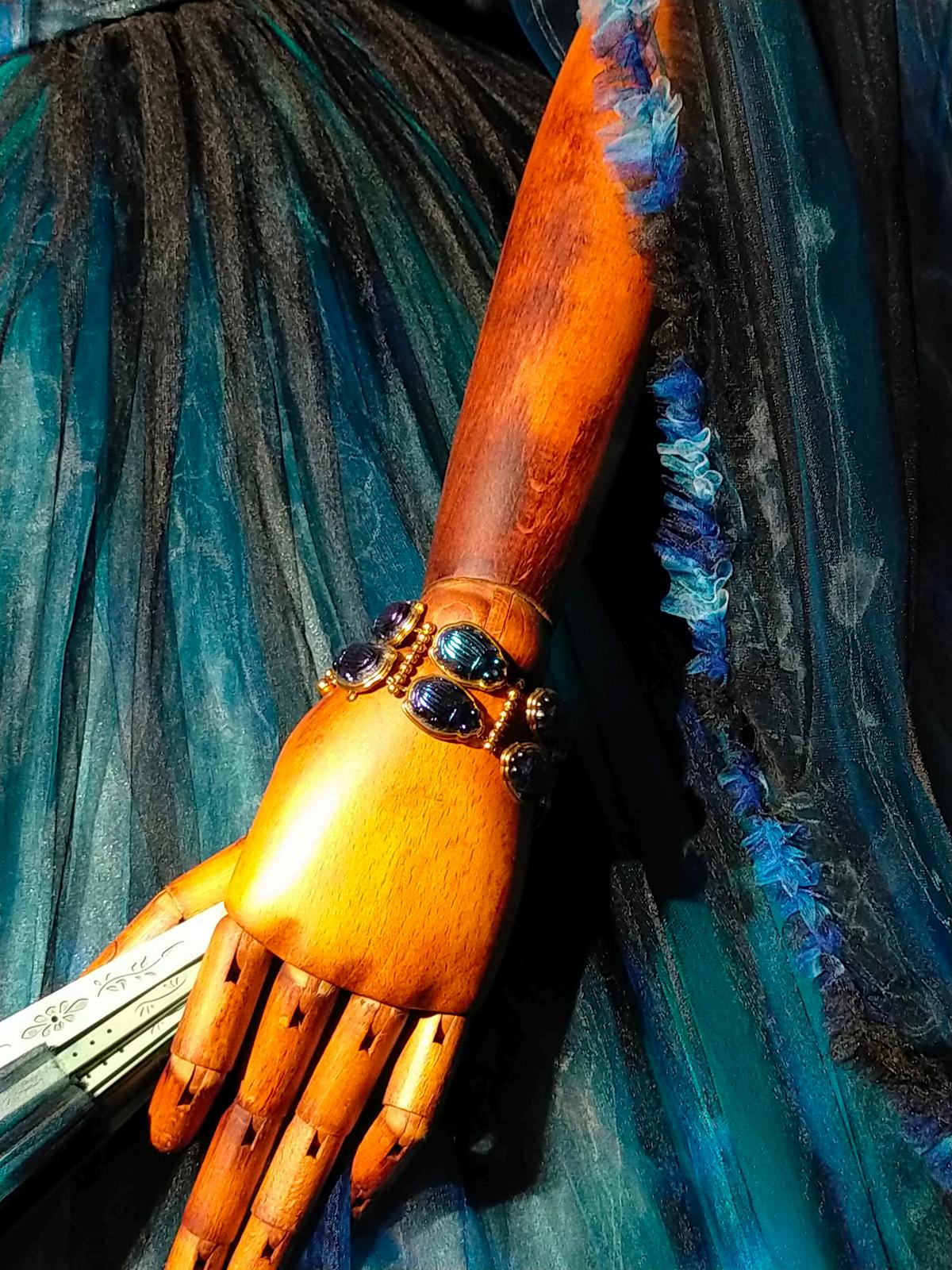
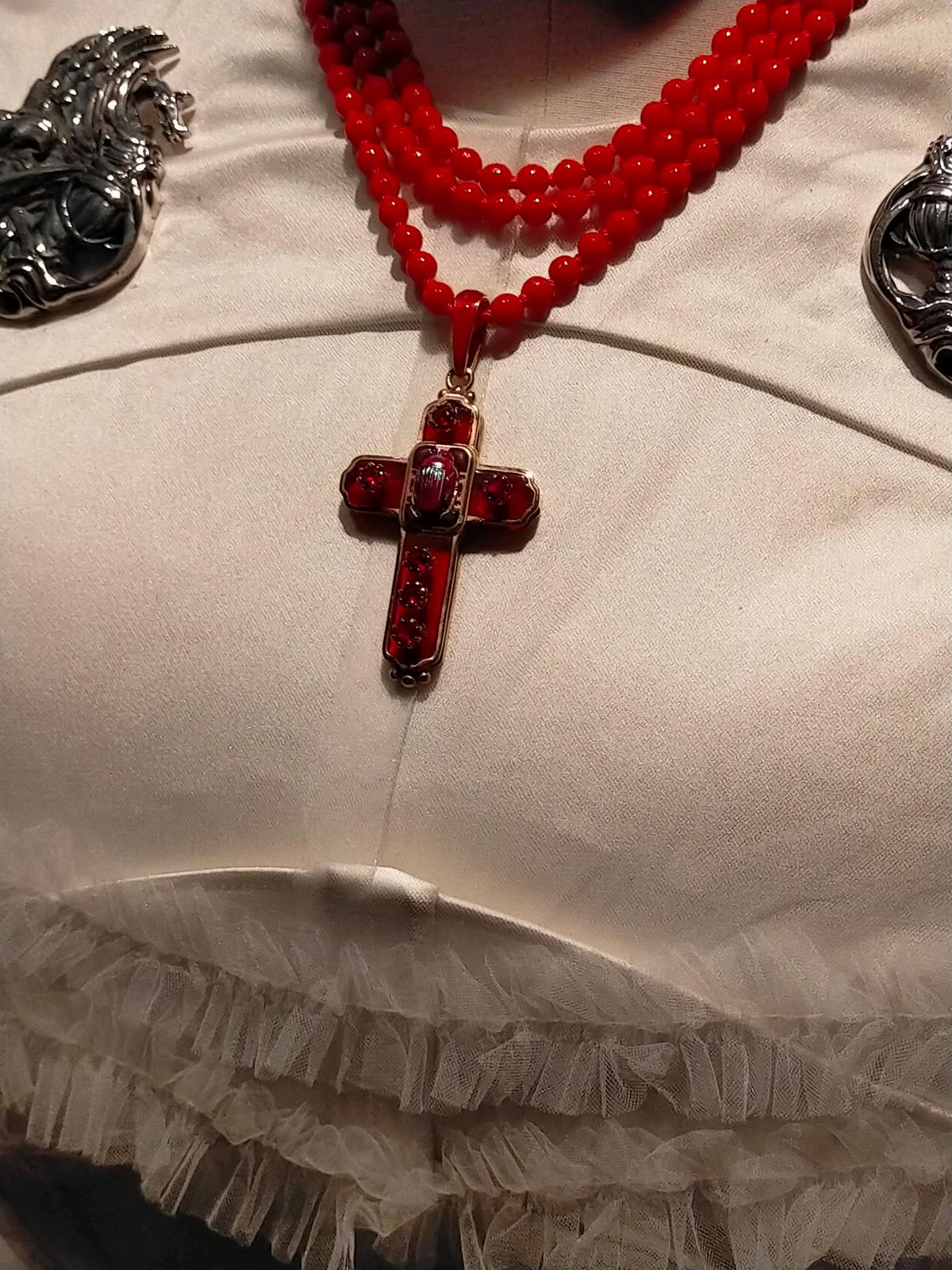
close was that so much beetles! Not real beet carved jewels set into shaped to look like sca with Elizabeth’s characte young woman with a lov insects.
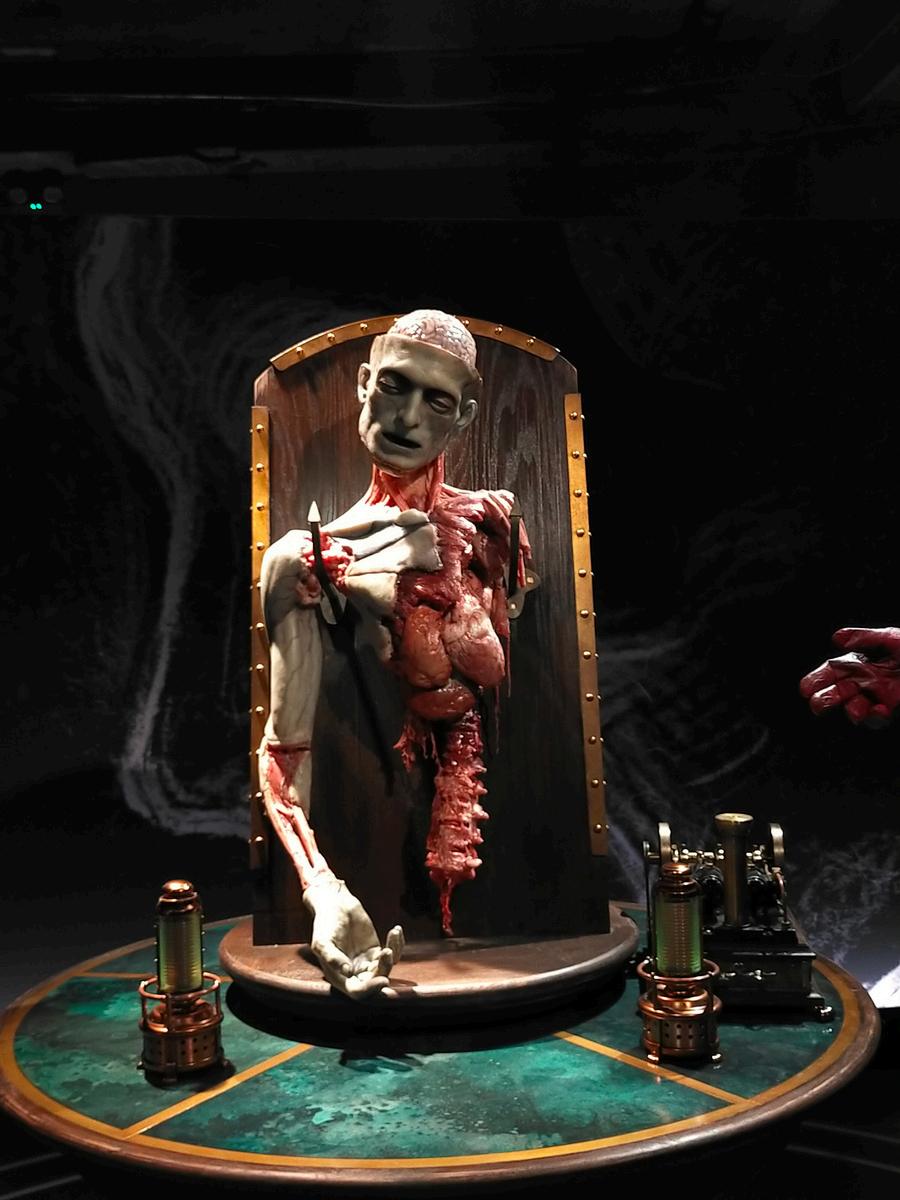
Being a film about creating a living creature from other human body parts, there was going to be a necessity for highly realistic anatomical models throughout most of the film. These included static models, animatronics, puppets, and prosthetics for use on The Creature himself They were all stylised to a degree, but also incredibly accurate to life, giving a feeling of the Uncanny Valley.
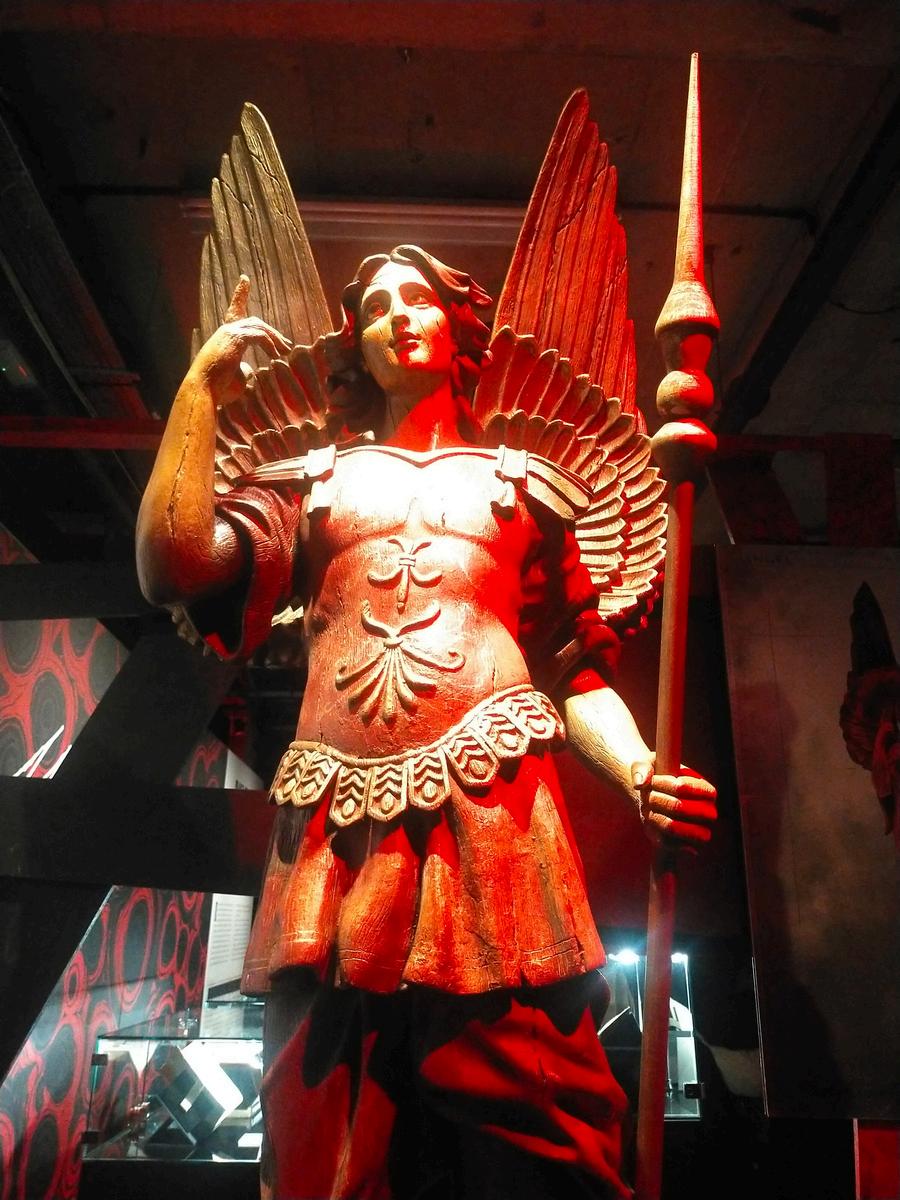
Frankenstein is clearly a passion project from Guillermo Del Toro, and is one of the most faithful adaptations around. Not just by being true to the book, but also in a literal sense of being full of faith, with Del Toro’s additions of fiery angels and his declaration of horror being his church, and Frankenstein’s Creature his shepherd.
Frankenstein is available to stream on Netflix