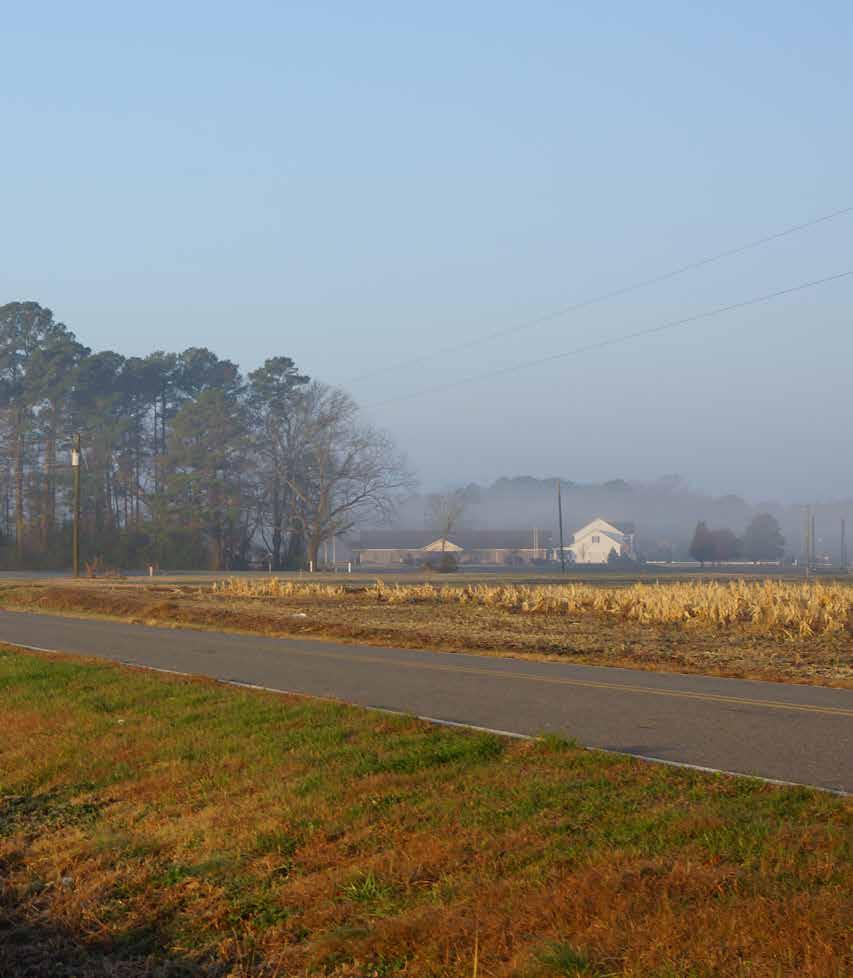
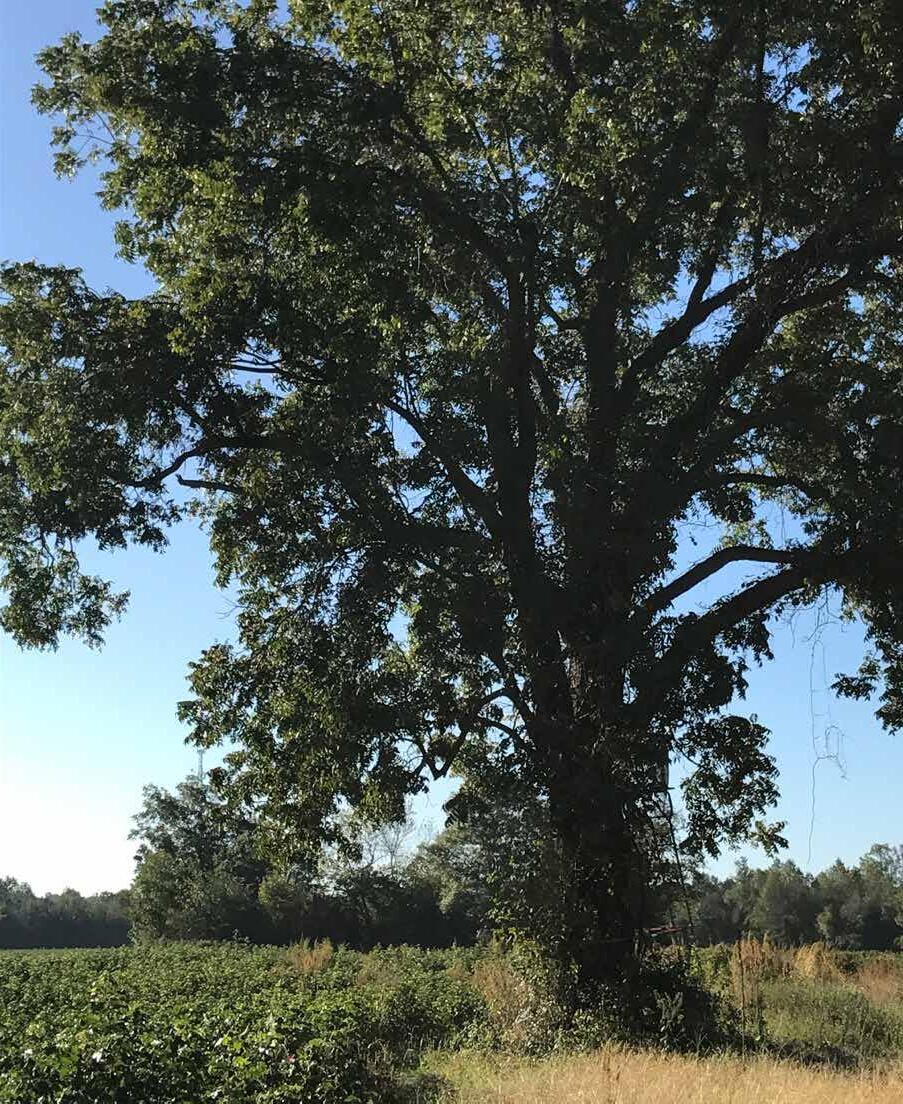
The mist falls over Lenoir County. Photo by Laura Ashley Lamm, Ed.D.
CONTRIBUTORS IN THIS ISSUE
Laura Ashley Lamm, Ed.D.
Editor-in-Chief
P.J. Drew
Writer and Photographer
Madeline Gray
Photography
Edward Hughes
Children’s Story Writer
M. Maillot
Children’s Story Illustrator
Denise Sharpe
Graphic Design
Grayson Smith
Writer and Photographer
Penelope Taylor
Writer
Project Gutenberg Library
Historical Text and Photographs
INQUIRIES
Advertising and Distribution: ads@lenoirlantern.com
Press Releases and Story Ideas: stories@lenoirlantern.com
CONNECT WITH US
facebook.com/thelenoirlantern @lenoirlantern
The Lenoir Lantern
Published by Long Leaf Pine Publishing, LLC www.lenoirlantern.com
CAN’T GET ENOUGH?
An online version is coming soon. To learn more about us, including digital copies, exclusive content, contributor bios, special surprises, and more be sure to keep watch as
FRONT COVER
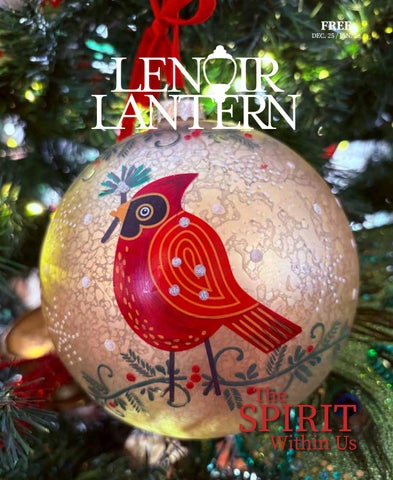
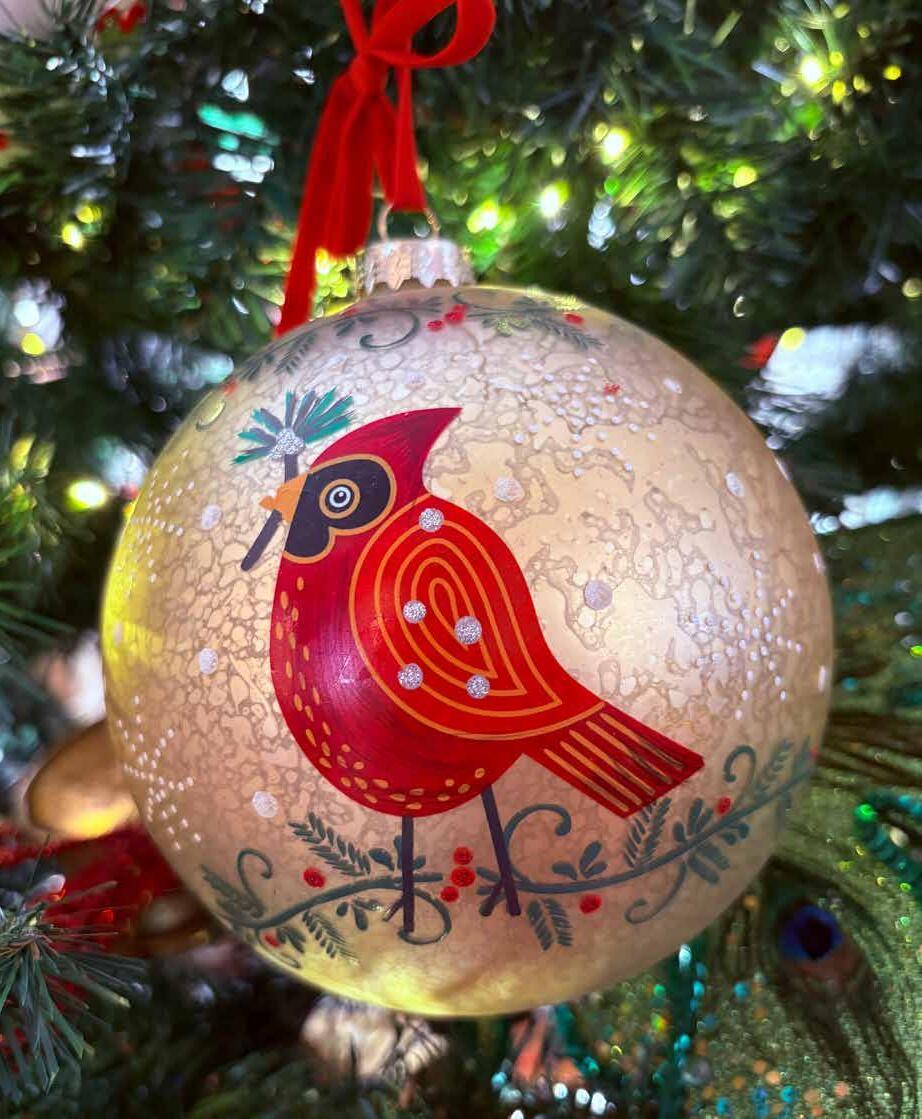
Spiritually, a cardinal symbolizes hope, resilience, transformation, love and vitality. Many believe seeing a cardinal represents a lost loved one paying them a visit. The cardinal is also recognized as the state bird of North Carolina. The cover image is of a cardinal ornament from a Christmas tree in Lenoir County.
Wake & Bake owner Lily Elmore talks of rising and mixing sweet treats
24 Blooming with Purpose, Designing with Grace
Inside Blooms-n-Grace where fresh flowers, laughing snowmen and Jesus meet
27 Chess: An Intergenerational Classic
Spend an evening with the Chess Club at the Kinston-Lenoir County Public Library
34 Punching Through Parkinson’s
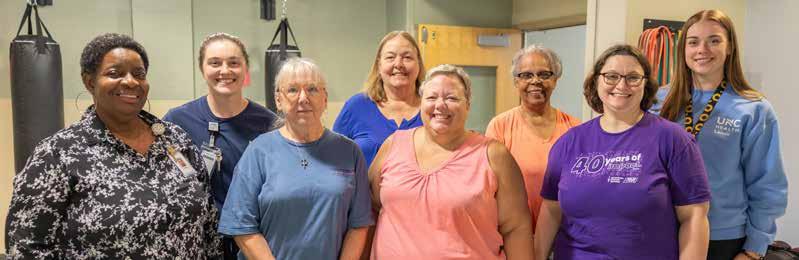
Members of the boxing group at Minges Wellness Center talk of the benefits of exercise and friendships while navigating Parkinson’s Disease
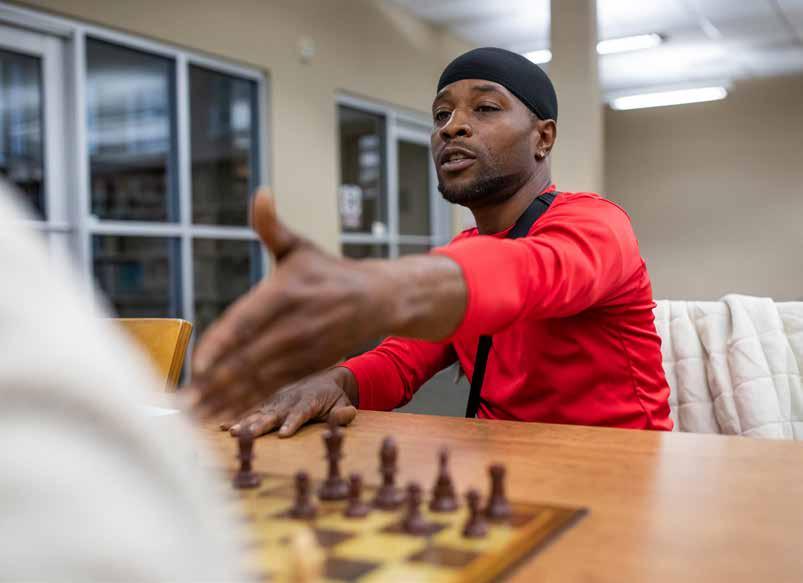
Antonious Laflare prepares to shake hands with his opponent following a match at Chess Club.
CHAPTERS
In Every Issue
NORTH
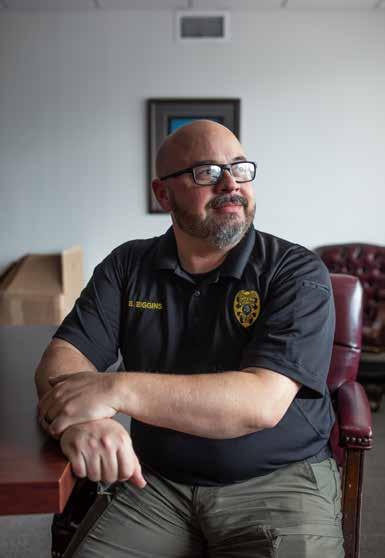
Meet Grainger, the newest KPD officer, on p. 42.
From chew bread to chicken salad, there are plenty of sweet dishes at Wake & Bake. Read more on p. 12.
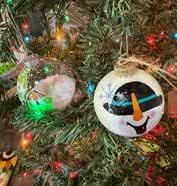
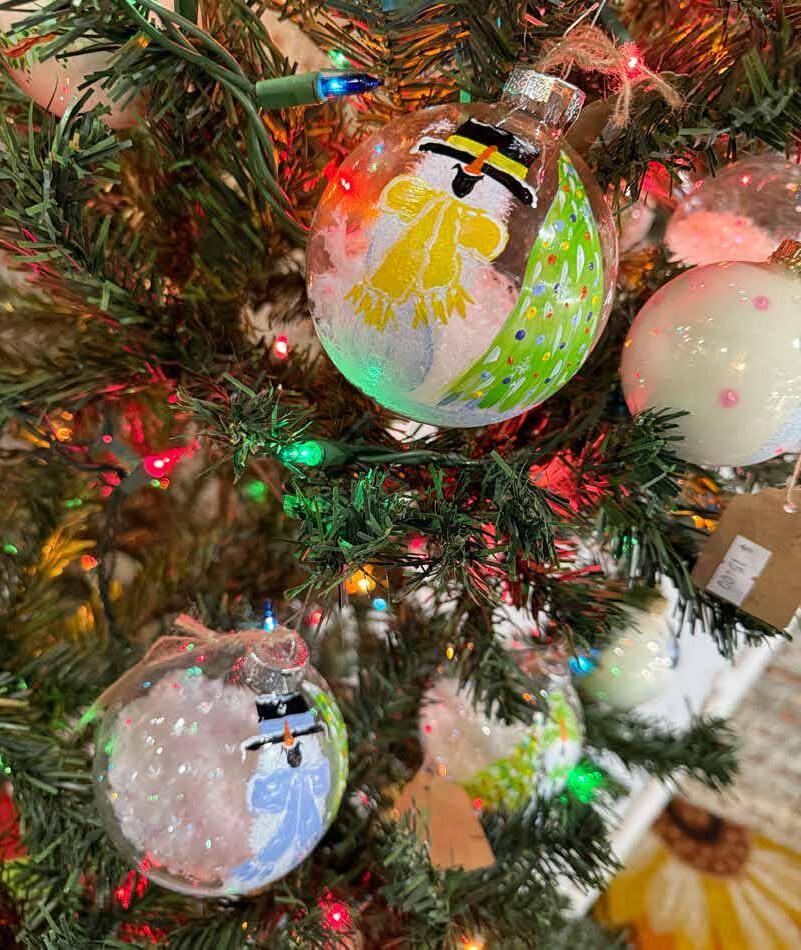
These handmade laughing snowman ornaments are exclusive to Blooms-n-Grace. See more on p. 28.
“May the God of hope fill you with all the joy and peace in believing so that by the power of the Holy Spirit you may abound in hope.”
Romans 15:13 (ESV)
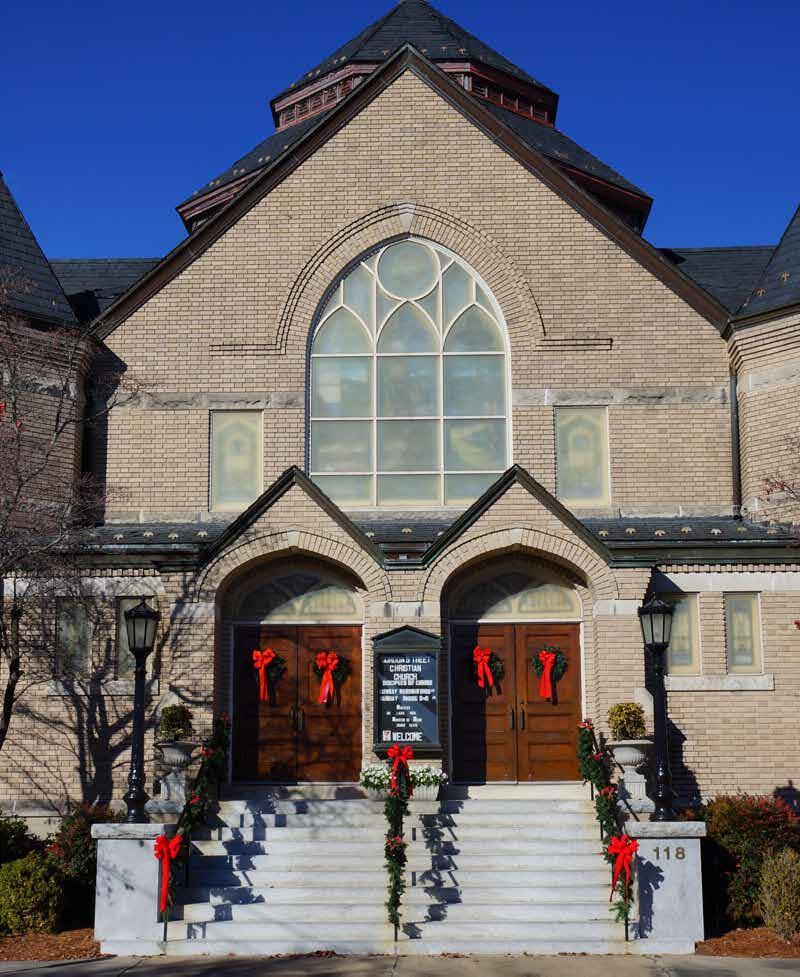
Gordon Street Christian Church. Photo by Penelope Taylor
Letter From the Editor
Well, I do declare, there is a crisp chill to the air, the frost has emerged over the ground in the morning, and calendar dates are quickly disappearing. This is nature’s way of signaling the year is winding down and a new dawn is approaching.
There is a hustle and bustle to the atmosphere. People are swishing about shopping, houses are twinkling with lights, and packages are covered in bows. Advent candles are lit, and the countdown to Jesus’ birth continues.
There is a spirit that surrounds us, but there is also a spirit among us.
Within this issue, you will read stories telling of community members using their skills and talents to create goods for the enjoyment of others. You will read stories telling of strangers who became family through navigating health challenges together. You will read stories of generations gathering around the table for an evening of connection. You will read stories of furry companions dedicated to bringing wellness to frontline workers. You will read stories that make you feel good about the place you call home.
The Gift of the Magi, our classic tale for this special issue, tells a beautiful story of two people who sacrifice what they love most to buy a present for the other. They believe that by giving something of themselves, the mere act will bring a much greater reward than anything they could receive in return.
These acts—those by our community members included—openly demonstrate the spirit within us. The driving force to give to others, share talents and skills, create comradery, honor faith, and so much more exists.
The spirit within us is undeniable. We all have a passion and commitment to that which we love, and it carries us onward into the new year, creating an even better Lenoir County for all.
Laura Ashley Lamm, Ed.D. Editor-in-Chief
Early morning sun and fog over Lenoir County. Photo by Laura Ashley Lamm, Ed.D.
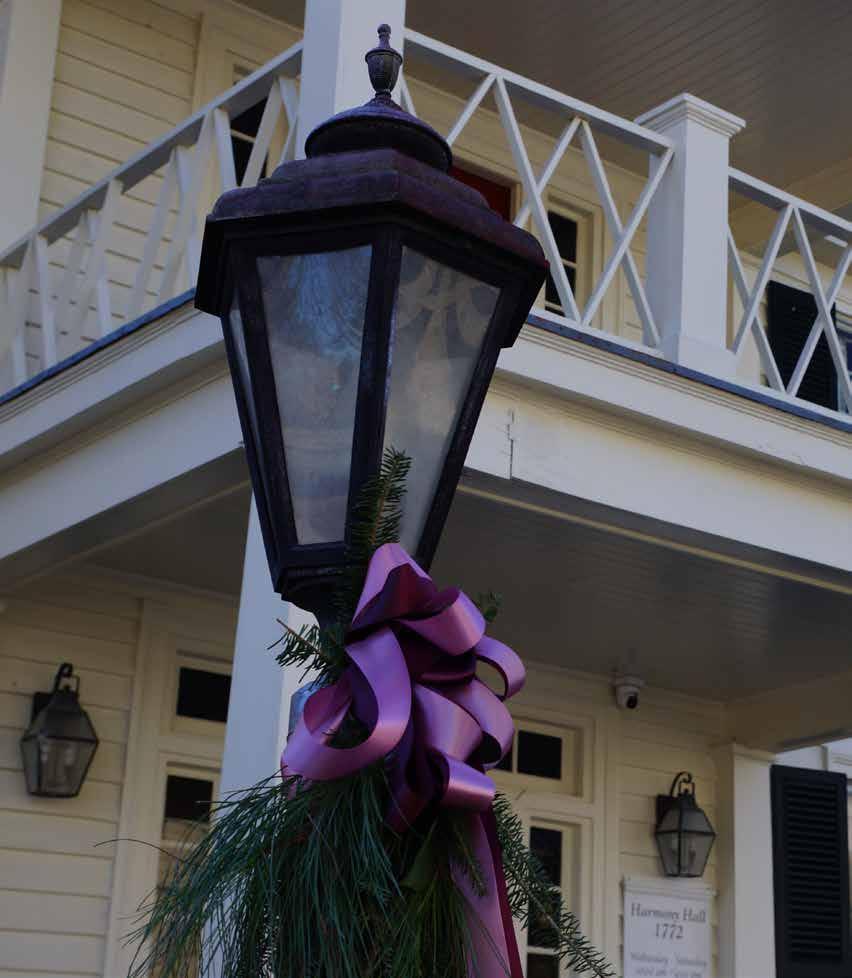
Harmony Hall. Photo by Laura Ashley Lamm, Ed.D.
SOUTHERN COMFORTS
Mixing a Sweet Treat
Written and Photographed by Laura Ashley Lamm, Ed.D.
As the sun begins to rise, the little red spatula gets pulled from the bin of baking tools in the kitchen. It is not a fancy spatula. Made of simple rubber and with a red handle, it is the spatula of choice for the baker at hand.
On the stovetop sits a pot with butter. Using her favorite red spatula, Lily Elmore stirs the butter as it slowly melts. She is making chew bread this morning. She moves the spatula over to the mixing bowl where she combines eggs, vanilla, flour and pecans. Once the ingredients are folded in, she pours the mix into a 9 by 13-inch pan. The chew bread will heat in the oven for 28 minutes before spending another 30 minutes cooling. When the bread is ready, Elmore slices and individually wraps each piece before carrying them to the Captain’s Corner, her mother’s store, where they will quickly sell out. She, then, returns to her bakery on Heritage Street where she will make cupcakes next. And…that is a typical day for her as she always wakes and bakes.
“We go through a lot of eggs, cocoa powder, pecans and
flour, 50 lb. bags, every week,” said Lily Elmore, the owner and talent behind Wake & Bake Bakery. Elmore was 19-years-old when she first opened her eatery in October 2023. She was at the University of North Carolina at Wilmington studying sports medicine when her father, Brad Elmore, passed away. Feeling the call to return home, she moved back to Kinston during the pandemic, and began delving more into baking, turning her favorite hobby into a booming business.
“After my dad died, I just kind of wanted to move back home,” said Elmore. “There is ‘no where’ down here that sells sweet treats, and I kind of took a leap of faith. When it came to naming the place, I thought it was a clever name and fun to say.”
Wake & Bake offers an assortment of pastries—muffins, cupcakes, cookies, poundcakes, apple turnovers, and brownies—and has expanded to include breakfast and lunch items. Soups, sandwiches, wraps, chicken salad, and
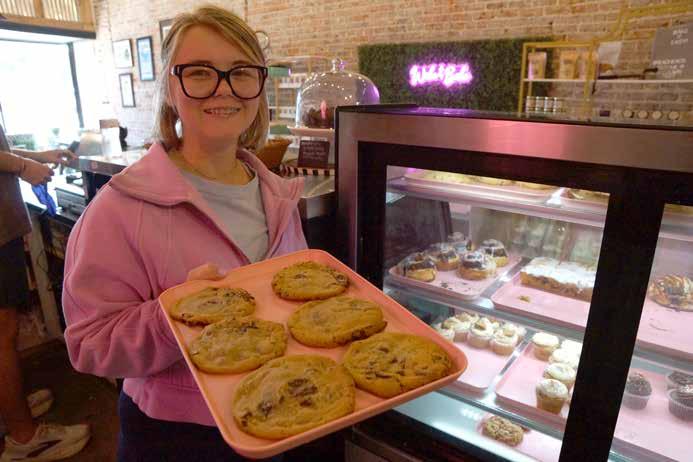
Lily Elmore, owner of Wake & Bake Bakery, puts chocolate chip cookies in the display case.
pasta salad are on the lunch menu. Chocolate chip cookies, lemon bars and cinnamon rolls are customer favorites. All of this baking and cooking for her bakery is in addition to the 10 pans of chew bread she makes a week for the Captain’s Corner.
“We offer $2 cupcakes on Tuesday and offer 5 – 10 different flavors,” added Elmore. “Two-dollar Tuesdays has been pretty popular for us.”
The menu is always changing and expanding. “We started lunch and breakfast, and that has gone really well. We do a lot of catering for corporate lunches and are looking for a second location somewhere,” she said. When she thinks of the bakery, “’Yummy,’ it’s the first word that pops into my head,” says Elmore. “This place has a homey feel, and that’s hard to find most places,” she added.
“I want everyone to feel welcome when they walk in here. For this to be a cozy space with a comforting vibe,” said Elmore.
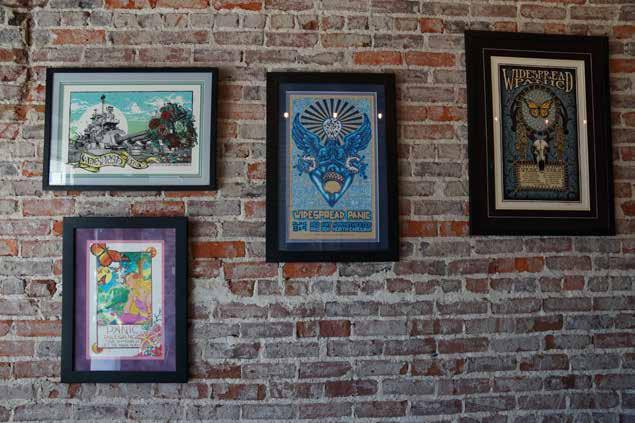
The aroma of fresh baked goods is palpable as there is always a treat baking in the oven. Inside, visitors will find delectable treats, music playing, LED neon lights, zebra print chairs, tables, and even a white pew, all flanked by brick walls adorned with Widespread Panic posters that carry an extra special meaning.
“These are all my dad’s posters. Every time he would go
to a concert, he would buy a poster from it, so our house is filled with them,” said Elmore. “All the ones at Sugar Hill were his, too. He always went to the concerts with the guy who owns Home Team Burgers, and his restaurant is filled with them, too.”
Widespread Panic was her father’s favorite band. In fact, Elmore was named after one of the band’s songs, “Little Lily,” she said. “It’s kind of cool to tell people.” Elmore started baking around the age of five. “Every time I would go to my grandma’s house there was always brownies or bread or something on the counter.”
“The first thing I remember making by myself is a pineapple upside-down cake,” she added. “Most of the stuff I bake is my grandma’s recipes or I’ll change it a little bit.”
Wake & Bake offers seasonal treats around the holidays. Spring, Easter and Mother’s Day ushers in an array of fruity flavors, such as strawberry, blueberry and lemon. Pecan, apple, and chocolate pies are available for Thanksgiving, and cakes and cookie boxes are popular at Christmas time. Chocolate-covered strawberries and heartshaped cakes are featured at Valentine’s Day.
In the kitchen, chocolate chips, butter, flour, sugar and brown sugar wait patiently on the shelves ready to be awakened for baking. “I always wanted something like this,” said Elmore. “Who doesn’t want a sweet treat?” LL
Widespread Panic concert posters, belonging to Lily Elmore’s father, Brad, hang inside the bakery’s downtown Kinston location.
The Gift of the Magi
Written by O. Henry
American author O. Henry teaches readers selfless love and sacrifice are more valuable than material possessions in this timeless tale first published in 1905.
One dollar and eighty-seven cents. That was all. And sixty cents of it was in pennies. Pennies saved one and two at a time by bulldozing the grocer and the vegetable man and the butcher until one’s cheeks burned with the silent imputation of parsimony that such close dealing implied. Three times Della counted it. One dollar and eighty-seven cents. And the next day would be Christmas.
There was clearly nothing to do but flop down on the shabby little couch and howl. So Della did it. Which instigates the moral reflection that life is made up of sobs, sniffles, and smiles, with sniffles predominating. While the mistress of the home is gradually subsiding from the first stage to the second, take a look at the home. A furnished flat at $8 per week. It did not exactly beggar description, but it certainly had that word on the lookout for the mendicancy squad.
In the vestibule below was a letter-box into which no letter would go, and an electric button from which no mortal finger could coax a ring. Also appertaining thereunto was a card bearing the name “Mr. James Dillingham Young.”
The “Dillingham” had been flung to the breeze during a former period of prosperity when its possessor was being paid $30 per week. Now, when the income was shrunk to $20, though, they were thinking seriously of contracting to a modest and unassuming D. But whenever Mr. James Dillingham Young came home and reached his flat above he was called “Jim” and greatly hugged by Mrs. James Dillingham Young, already introduced to you as Della. Which is all very good. Della finished her cry and attended to her cheeks with the powder rag. She stood by the window and looked out dully at a gray cat walking a gray fence in a gray backyard. Tomorrow would be Christmas Day, and she had only $1.87 with which to buy Jim a present. She had been saving every penny she could for months, with this result. Twenty dollars a week doesn’t go far.
Expenses had been greater than she had calculated. They always are. Only $1.87 to buy a present for Jim. Her Jim. Many a happy hour she had spent planning for something nice for him. Something fine and rare and sterling—something just a little bit near to being worthy of the honor of being owned by Jim.
There was a pier glass between the windows of the room. Perhaps you have seen a pier glass in an $8 flat. A very thin and very agile person may, by observing his reflection in a rapid sequence of longitudinal strips, obtain a fairly accurate conception of his looks. Della, being slender, had mastered the art.
Suddenly she whirled from the window and stood before the glass. Her eyes were shining brilliantly, but her face had lost its color within twenty seconds. Rapidly she pulled down her hair and let it fall to its full length.
Now, there were two possessions of the James Dillingham Youngs in which they both took a mighty pride. One was Jim’s gold watch that had been his father’s and his grandfather’s. The other was Della’s hair. Had the queen of Sheba lived in the flat across the airshaft, Della would have let her hair hang out the window some day to dry just to depreciate Her Majesty’s jewels and gifts. Had King Solomon been the janitor, with all his treasures piled up in the basement, Jim would have pulled out his watch every time he passed, just to see him pluck at his beard from envy.
So now Della’s beautiful hair fell about her rippling and shining like a cascade of brown waters. It reached below her knee and made itself almost a garment for her. And then she did it up again nervously and quickly. Once she faltered for a minute and stood still while a tear or two splashed on the worn red carpet.
On went her old brown jacket; on went her old brown hat. With a whirl of skirts and with the brilliant sparkle still in her eyes, she fluttered out the door and down the stairs to the street.
Where she stopped the sign read: “Mme. Sofronie. Hair Goods of All Kinds.” One flight up Della ran, and collected herself, panting. Madame, large, too white, chilly, hardly looked the “Sofronie.”
“Will you buy my hair?” asked Della. “I buy hair,” said Madame. “Take yer hat off and let’s have a sight at the looks of it.”
Down rippled the brown cascade.
“Twenty dollars,” said Madame, lifting the mass with a practiced hand.
“Give it to me quick,” said Della.
Oh, and the next two hours tripped by on rosy wings. Forget the hashed metaphor. She was ransacking the stores for Jim’s present.
She found it at last. It surely had been made for Jim and no one else. There was no other like it in any of the stores, and she had turned all of them inside out. It was a platinum fob chain simple and chaste in design, properly proclaiming its value by substance alone and not by meretricious ornamentation—as all good things should do. It was even worthy of The Watch. As soon as she saw it she knew that it must be Jim’s. It was like him. Quietness and value—the description applied to both. Twenty-one dollars they took from her for it, and she hurried home with the 87 cents. With that chain on his watch Jim might be properly anxious about the time in any company. Grand as the watch was, he sometimes looked at it on the sly on account of the old leather strap that he used in place of a chain.
When Della reached home her intoxication gave way a little to prudence and reason. She got out her curling irons and lighted the gas and went to work repairing the ravages made by generosity added to love. Which is always a tremendous task, dear friends—a mammoth task.
Within forty minutes her head was covered with tiny, close-lying curls that made her look wonderfully like a truant schoolboy. She looked at her reflection in the mirror long, carefully, and critically.
“If Jim doesn’t kill me,” she said to herself, “before he takes a second look at me, he’ll say I look like a Coney Island chorus girl. But what could I do—oh! what could I do with a dollar and eighty-seven cents?”
At 7 o’clock the coffee was made and the frying-pan was on the back of the stove hot and ready to cook the chops.
Jim was never late. Della doubled the fob chain in her hand and sat on the corner of the table near the door that he always entered. Then she heard his step on the stair away down on the first flight, and she turned white for just a moment. She had a habit of saying a little silent prayer about the simplest everyday things,
and now she whispered: “Please God, make him think I am still pretty.”
The door opened and Jim stepped in and closed it. He looked thin and very serious. Poor fellow, he was only twenty-two—and to be burdened with a family! He needed a new overcoat and he was without gloves.
Jim stopped inside the door, as immovable as a setter at the scent of quail. His eyes were fixed upon Della, and there was an expression in them that she could not read, and it terrified her. It was not anger, nor surprise, nor disapproval, nor horror, nor any of the sentiments that she had been prepared for. He simply stared at her fixedly with that peculiar expression on his face. Della wriggled off the table and went for him.
“Jim, darling,” she cried, “don’t look at me that way. I had my hair cut off and sold because I couldn’t have lived through Christmas without giving you a present. It’ll grow out again—you won’t mind, will you? I just had to do it. My hair grows awfully fast. Say ‘Merry Christmas!’ Jim, and let’s be happy. You don’t know what a nice—what a beautiful, nice gift I’ve got for you.”
“You’ve cut off your hair?” asked Jim, laboriously, as if he had not arrived at that patent fact yet even after the hardest mental labor.
“Cut it off and sold it,” said Della. “Don’t you like me just as well, anyhow? I’m me without my hair, ain’t I?” Jim looked about the room curiously.
“You say your hair is gone?” he said, with an air almost of idiocy.
“You needn’t look for it,” said Della. “It’s sold, I tell you—sold and gone, too. It’s Christmas Eve, boy. Be good to me, for it went for you. Maybe the hairs of my head were numbered,” she went on with sudden serious sweetness, “but nobody could ever count my love for you. Shall I put the chops on, Jim?”
Out of his trance Jim seemed quickly to wake. He enfolded his Della. For ten seconds let us regard with discreet scrutiny some inconsequential object in the other direction. Eight dollars a week or a million a year—what is the difference? A mathematician or a wit would give you the wrong answer. The magi brought valuable gifts, but that was not among them. This dark assertion will be illuminated later on.
Jim drew a package from his overcoat pocket and threw it upon the table.
“Don’t make any mistake, Dell,” he said, “about me. I don’t think there’s anything in the way of a haircut or a shave or a shampoo that could make me like my girl any less. But if you’ll unwrap that package you may see why you had me going a while at first.”
White fingers and nimble tore at the string and paper. And then an ecstatic scream of joy; and then, alas! a quick feminine change to hysterical tears and wails, necessitating the immediate employment of all the comforting powers of the lord of the flat.
For there lay The Combs—the set of combs, side and back, that Della had worshipped long in a Broadway window. Beautiful combs, pure tortoise shell, with jewelled rims—just the shade to wear in the beautiful vanished hair. They were expensive combs, she knew, and her heart had simply craved and yearned over them without the least hope of possession. And now, they were hers, but the tresses that should have adorned the coveted adornments were gone.
But she hugged them to her bosom, and at length she was able to look up with dim eyes and a smile and say:
“My hair grows so fast, Jim!”
And then Della leaped up like a little singed cat and cried, “Oh, oh!”
Jim had not yet seen his beautiful present. She held it out to him eagerly upon her open palm. The dull precious metal seemed to flash with a reflection of her bright and ardent spirit.
“Isn’t it a dandy, Jim? I hunted all over town to find it. You’ll have to look at the time a hundred times a day now. Give me your watch. I want to see how it looks on it.”
Instead of obeying, Jim tumbled down on the couch and put his hands under the back of his head and smiled.
“Dell,” said he, “let’s put our Christmas presents away and keep ’em a while. They’re too nice to use just at present. I sold the watch to get the money to buy your combs. And now suppose you put the chops on.”
The magi, as you know, were wise men—wonderfully wise men—who brought gifts to the Babe in the manger. They invented the art of giving Christmas presents. Being wise, their gifts were no doubt wise ones, possibly bearing the privilege of exchange in case of duplication. And here I have lamely related to you the uneventful chronicle of two foolish children in a flat who most unwisely sacrificed for each other the greatest treasures of their house. But in a last word to the wise of these days let it be said that of all who give gifts these two were the wisest. Of all who give and receive gifts, such as they are wisest. Everywhere they are wisest. They are the magi. LL
Christmas Traditions Around the World
Written By P.J. Drew
Christmas time brings the bountiful joy of traditions. Everyone has a favorite, and including those traditions helps make the holidays memorable. Traditions are passed down from generation to generation likes Grandma’s pecan pie recipe. Parishioners gather to sing carols to neighbors. Mothers and daughters bake cookies and sweet treats. Fathers and sons spend time in the outdoors. Friends watch holiday movies. Stockings for the pets are hung. Traditions are special and unique to all.
Every culture and community around the world take pride in embracing their own traditions. Many of those traditions have been adapted by Americans over the years, but some remain exclusive to their region of origin. The Lenoir Lantern offers a glimpse into some popular traditions, traces them back to their origins, and introduces lesserknown traditions exclusive to their country of origin.
ADVENT CALENDAR FOR CHRISTIANS
Christians celebrate advent or rather the period beginning with the four Sundays before Christmas. The word “advent” is derived from the Latin word “adventus” meaning “coming.” Christians count down to the birth of Jesus. In the 19th Century, German Protestants counted down the days to Christmas by marking 24 chalk lines on a door and erasing one off every day until December 25.
The development of the calendars, themselves, are credited to German Gerhard Lang. He is thought to have been the first person to mass produce them with the design concept inspired by a calendar his mother had made for him as a child. Years after their initial success, he created cardboard calendars with doors that open each day. The 1950s would bring Advent calendars that included chocolate.
FIR TREES IN EUROPE
During the Winter Solstice, Pagan Europeans brought fir trees into their homes at Christmas. Outdoor Christmas trees were popular, too, and were often decorated with ornaments reflecting the sun, moon, and stars. Scandinavians decorated their homes and barns with evergreens to symbolize eternal life. They believed using greenery would ward off evil. The idea of decorating a tree for Christmas is often believed to have begun in Germany. Once the leaves fell off the fir tree outside, Germans added fruits and nuts to symbolize the promise of spring to come. But in 1605, a fir tree was brought inside and adorned with paper roses, candles, nuts, and fruits.
A JANUARY 7 CHRISTMAS IN ETHIOPIA
In Ethiopia, the Julian calendar is followed, which means they celebrate Christmas, called “Ganna,” on January 7. The Christmas story tells of three wise men following a guiding star to Bethlehem. Today, many Ethiopians believe the wise men were Ethiopian, and they traditionally dress in a “netela,” a thin white cotton scarf with brightly colored stripes, and drape it across like a toga.
FILLING SHOES WITH GIFTS IN WESTERN EUROPE
Père Noël, also known as Father Christmas, is the gift-giving figure during the holiday season in France. Père Noël is often depicted as a bearded man in a red suit and hat. French children traditionally leave their shoes by the fireplace on Christmas Eve to be filled with gifts.
In the Netherlands, children leave their shoes by the fireplace or windowsill on December 5, known as Sinterklaas Eve. They also leave hay and carrots for Sinterklass’ horse. In the morning, they find their shoes filled with sweets, chocolate, and cookies. In Germany, children leave their boots on the doorsteps outside their homes on December 6. They awake to find their boots filled with chocolate, sweets, and money. In Iceland, children leave their shoes in the window on December 11. Children hope the 13 Yule Lads will fill them with gifts or candies. Children who have misbehaved will receive rotten potatoes in their shoes.
THE 13 YULE LADS IN ICELAND
Icelanders have long carried the folklore of the 13 Yule Lads through their Christmas time traditions. These mischievous trolls are known to visit children during the 13 nights leading up to Christmas, from December 12 to December 24. As noted above, they leave gifts and candies or rotten potatoes in the shoes of children.
PAPER ORNAMENTS IN DENMARK
Handcrafting ornaments from paper is a time-honored tradition in Denmark. Trees are adorned with the woven “julehjerte,” known as a Christmas heart, which symbolizes love and togetherness. The art of creating paper ornaments for the tree and home is passed down through the generations.
BROOMS AND MOPS IN NORWAY
Norwegian folklore advises hiding brooms and mops on Christmas night to prevent evil spirits and witches, who return to earth on Christmas, from taking the cleaning tools and using them to fly through the sky.
PIÑATAS IN MEXICO
Piñatas, or papier mâché animals and figures filled with candy, are connected to Mexico. At Christmas, they are covered with more glitz and sparkle as they come in the form of a seven-pointed star. The star symbolizes the seven deadly sins that are then broken by a stick to represent faith in God. These Christmas piñatas are filled with little treats like candy, fruits, and peanuts.
CHRISTMAS WAFER AND POPPY SEED CAKE IN POLAND
Before dinner on Christmas Eve, Polish families share a wafer and make Christmas wishes. The wafer symbolizes reconciliation and forgiveness. In addition, eating poppy seed cake, known as makowiec, on Christmas Eve is thought to bring happiness in the year ahead and protect families from evil.
CHRISTMAS DINNER FROM AMERICA TO NEW ZEALAND
Americans in the Southern United States opt for turkey, ham, stuffing, sweet potatoes, string bean casseroles and pecan pie for meals. Christmas dinner in New Zealand often includes a glazed ham or turkey, roasted vegetables, salads, and pavlova dessert. Some families also have hangi, a traditional Māori meal of steamed or smoked food. LL
From the Taste Kitchen of the Lenoir Lantern
Recipes from the collection of Grayson Smith
In the Southern kitchen, passing down recipes and cooking up something extra special for the holidays is a time-honored tradition. Families have their favorites whether it is Grandmama’s party mix for snacking or Aunt Barbara’s stew, there is always a dish on the table that sparks joy for tastebuds and holidays. From my recipe box to yours, enjoy trying a new beverage or hors d’oeuvre this season.
Do you have a beloved recipe you’d like to share with the community?
Send it our way and it may be featured in another issue. Email stories@lenoirlantern.com with your submission.
Wine Spritzer
Ingredients:
6 oz. white wine or blush wine (.75 cup)
6 oz. of lemon lime beverage (.75 cup)
Maraschino cherries and cherry juice
Crushed Ice
Combine wine, lemon-lime beverage, 3-4 cherries, and 2 tsp. of cherry juice. Pour into 2 wine glasses over crushed ice.
Dress with a lime or cherry.
Serves: 2
Ingredients:
Noel Spritzer
2 cups chilled dry white wine or non-alcoholic wine drink
1 cup chilled cranberry-apple juice
1 cup chilled sparkling water
Directions: Mix wine, juice, and sparkling water. Serves: 5
Bacon Bites
Ingredients:
22 thin bread sticks
2 cups brown sugar
22 bacon slices
Wrap bacon around sticks. Roll in brown sugar. Put on aluminum-foil covered baking pan. Bake at 350 degrees for 35 minutes.
Ingredients:
2 packages sliced, bagged beef Large cream cheese Horseradish to taste Toothpicks
Beef
Warm large cream cheese to make soft. Mix with horseradish to taste. Spread cream cheese mixture over individual beef slices. Roll each slice. Refrigerate for a couple of hours. Cut each rolled slice in half. Serve with toothpicks.
Shrimp Dip
Ingredients:
½ pound medium-size fresh shrimp, peeled and cooked
1 (8 oz.) container sour cream
1 (3-oz) package cream cheese, softened
2 tbsp. lemon juice
1 (0.7 oz.) pack Italian dressing mix
1/8 tsp. hot sauce
Chop shrimp. Stir together sour cream, cream cheese, lemon juice, dressing mix and hot sauce. Stir in shrimp. Cover and chill for 8 hours. Serve with celery, carrot sticks, and/or crackers. covered baking pan.
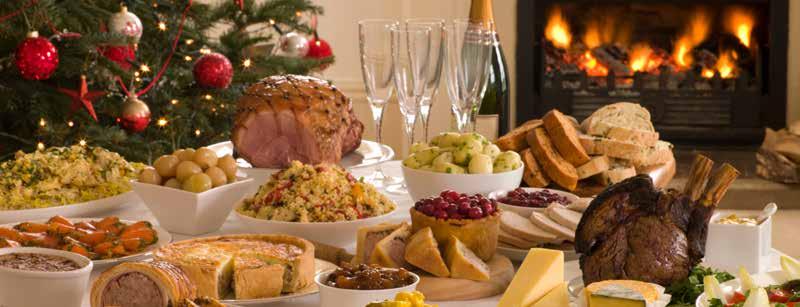
Thanksgiving feast featuring turkey and all the trimmings.
Buffet Etiquette 101
Written by Grayson Smith
The holiday season always calls for lots of food and fellowship, provided in homes and restaurants, and at various meeting locations. The primary methods of serving food include table service, assisted service, and self-service; the method selected for the event generally depends upon its formality and host/guest preferences. Options for serving food can vary as well—they may range from formal plated meals to casual pick-up foods to interactive food stations. One of the most popular self-service methods is the buffet where guests serve themselves from a variety of dishes positioned on a table or counter.
Responsibility of Guests
As guests, you have an obligation, however, to keep food safe for yourselves and others.
Food Safety
• Wash your hands before entering the buffet line.
• Use the serving utensil provided for each dish. Using the same utensil for multiple dishes could cross contaminate the food.
• Place the serving utensil on a spoon holder or plate following your use of the utensil. If there is
not a spoon holder, place the utensil back into the dish, without permitting the handle to touch the food. Multiple hands on the handle of a utensil could transmit bacteria or disease to the food, if the handle touches the food.
• If you don’t see a serving utensil for a dish, please ask the host/ server for one.
• Do not eat as you move through the buffet line. Saliva can spray on the food and transfer bacteria to other guests. If necessary, ask the host/server about dish ingredients or degree of spiciness rather than tasting the food.
• Use a clean plate as you go back through the line for additional servings.
• If you need to sneeze or cough, step away from the line. Cover your mouth with your elbow and turn with your back to the buffet. If necessary, wash your hands and return to the line. A sneeze guard doesn’t protect the food as well as it should.
• Take what you touch. Don’t change your mind and put the food back on the dish.
• Do not allow children to go through the buffet line without your helping them. Buffet guidelines apply to children as well as adults.
Responsibility of Hosts
As hosts of the event, you have responsibilities for buffet set-up and cleanliness and for food safety.
Buffet Set- up
• Establish a clear beginning to the buffet line. Begin with a stack of plates at the start of the line.
• Provide a logical order of food: salads, cold dishes, main courses (meat, starches, vegetables), and desserts.
• Serve more cold food than hot food. The ratio for buffets is about 80% cold food and 20% hot. Cold food is easier to refill and to control the temperature; that is, cold food is more practical and safer from a safe food handling standpoint.
• Vary the height of the dishes. Stack books under the table linens to help elevate dishes that do not have sauces or liquids. Dishes with sauces (that could be dropped on the linens) should be placed on the table and in close proximity to the sauces/condiments.
• Use name cards to identify each food and beverage provided.
• Place serving utensils in spoon holders to ensure no cross contamination.
• Place food in limited supply at the end of the buffet. Guests may not have space on their plates toward the end of the buffet to take large helpings.
• Place napkins and silverware at the end of the buffet line so guests will pick them up just before going to their table.
• Be conscious of traffic flow. Use the traditional single line, which keeps the flow compact and manageable in small serving spaces, or use the dual sided serving option, which permits larger groups to move through the two lines faster.
• Separate beverages from food. Set up a beverage station away from the buffet so guests may get their beverages either before or after going through the buffet line.
Buffet Food Safety
• Keep hot foods at 140 degrees Fahrenheit or warmer, and keep cold foods at 40 degrees Fahrenheit to prevent bacterial growth.
• Provide separate serving utensils for each dish.
• Install sneeze guards to prevent germs from reaching the food.
• Do not leave out perishable food longer than two hours; therefore, discard food in a timely manner and replenish as necessary.
• Replace the nearly empty dishes/platters of food instead of adding additional food to the dishes.
• Store cold back-up dishes in the refrigerator and keep hot dishes in the oven set at 200 – 250 degrees Fahrenheit prior to serving.
• Provide hand sanitizer for guests.
While the buffet calls for many guidelines for guests and hosts to consider, there are advantages to choosing this serving option. Guests benefit from having a variety of dishes from which to choose, flexibility with portion control, and interaction with various guests while preparing their plates. On the other hand, hosts benefit from an efficient self-service format, a reduced staff requirement, and a more cost-effective option in providing multiple dietary selections.
If you entertain over the holiday or new year, you may want to consider the buffet option. You may be glad you did! LL
DASH AND SPLASH
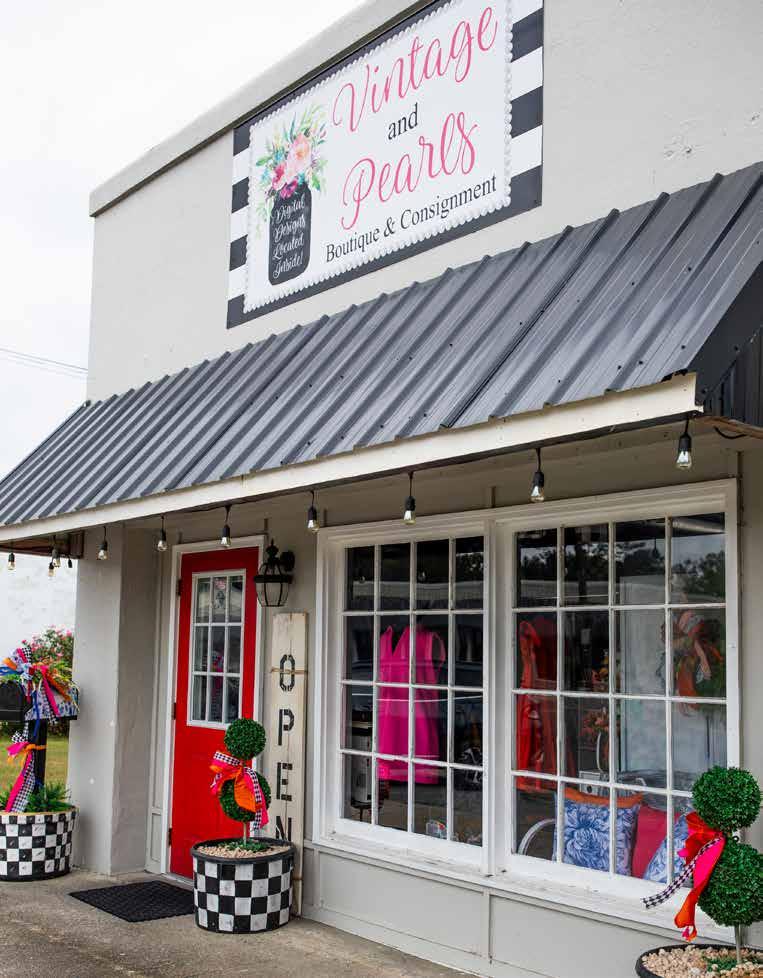
Vintage and Pearls Boutique of Pink Hill. Photo by Madeline Gray
Local florist Blooms-n-Grace is known not only for flower arrangements, but also for hand-painted laughing snowmen. These ornaments are made by shop owner Dondi Smith.
Blooming with Purpose, Designing with Grace
Walking inside the doors of Blooms-n-Grace, the air smells of sweet roses and fresh cut greenery while the atmosphere envelopes you like a warm blanket in a cozy cottage. Owner Dondi Smith is busy transforming simple stems into lasting memories.
“I want everyone to come in and feel a decompression,” said Smith. “I want the shop to smell good. I want it to be calm. I want everyone to feel like they are welcome here.”
Everyone does in fact. Blooms-n-Grace, a floral and gift shop in downtown Kinston, welcomes residents and visitors for flower arrangements, sentimental gifts, garden accessories, and good conversation. Opening the shop in April fulfilled a 30-year dream for Smith—a dream she quietly nurtured over decades of painting late at night.
“When my boys—I have a 25-year-old and a 30-yearold—when they were coming up, money was a little bit hilarious. I would paint, I would craft, I would make pretty things to bring me joy and to build income,” said Smith.
She made a name for herself hand-painting “laughing snowmen” ornaments in the evenings. Some nights were spent painting “laughing snowmen” to make others smile. Some nights were filled with painting couples and families as “laughing snowmen” to hang on Christmas trees. Before long, her painting requests grew into including snow angels and other designs honoring lost loved ones.
“I would paint all night long and pray over each ornament, ‘Lord, whatever family this ornament goes to, bless their home, their finances, their families and keep them safe,” said Smith. “When you buy an ornament from me, it has been prayed over. I pray while I paint.”
While her painting talent flourished, she was also nurturing her love for fresh flowers. “I have always loved fresh flowers. Hydrangeas, carnations, roses, peonies, daises, mums, sunflowers and all kinds of greenery. I don’t think there is a flower that I really don’t like,” she said.
Smith and her family would travel to Charleston, SC for vacations, and her dream of opening her own shop kept reoccurring.
“We would walk around in Charleston, and I would
Written and Photographed by: Laura Ashley Lamm, Ed.D.
look in shops and dream of having my own,” said Smith. “Finally, last February, God just whispered to me, ‘It’s time.’ I am 60 years old, and I thought, ‘Why am I going to do that right now?’ God just said, ‘If you don’t jump, I am going to push you.’”
Smith talked the idea over with her husband, Jeffery, and within three days their business, Blooms-n-Grace was coming together. A native of the Town of LaGrange, Smith has long enjoyed walkable streets, knowing neighbors and making new acquaintances. When searching for the right location for her shop, a unique space on Gordon Street in downtown Kinston became the perfect spot.
“It was a God thing,” said Smith. “This building was so perfect. Pillars run down the middle. Blooms is on one side, and Grace is on the other. Grace is on the right because there is a bible verse that says the righteous will sit at the right hand of God.”
The name, Blooms, is in recognition for the fresh flowers one can always find in the shop. The name, Grace, is in recognition for Jesus. She gives glory to God for leading her to the shop and making a way for its opening. Smith also spreads the light of Jesus through prayer, handing out tiny Jesus figurines, and offering a large selection of Christian gifts.
“People can come in and have a little quiet time. They can pull a devotional off the shelves, purchase one or bring their own,” said Smith. “And, if they ask me to pray with or for them I will.”
In addition to being a floral shop, Blooms-n-Grace offers garden accessories, devotionals, gifts, handmade goods and ornaments, group lessons on bow making and flower arranging, and a quiet space for visitors. Flowers are arranged in a variety of vase options, and delivery is available. As a florist, they can also be booked to create arrangements for weddings, funerals, baby showers, and table centerpieces for events. Thursdays are “Hug in a Mug” days in which cheerful mugs are filled with beautiful flower arrangements. Smith added, “I will promise customer satisfaction always; and of course, you can always get a little Jesus.” Visitors can find flowers, Jesus, a cozy space and more at Blooms-n-Grace, located at 108 West Gordon St. in downtown Kinston. LL
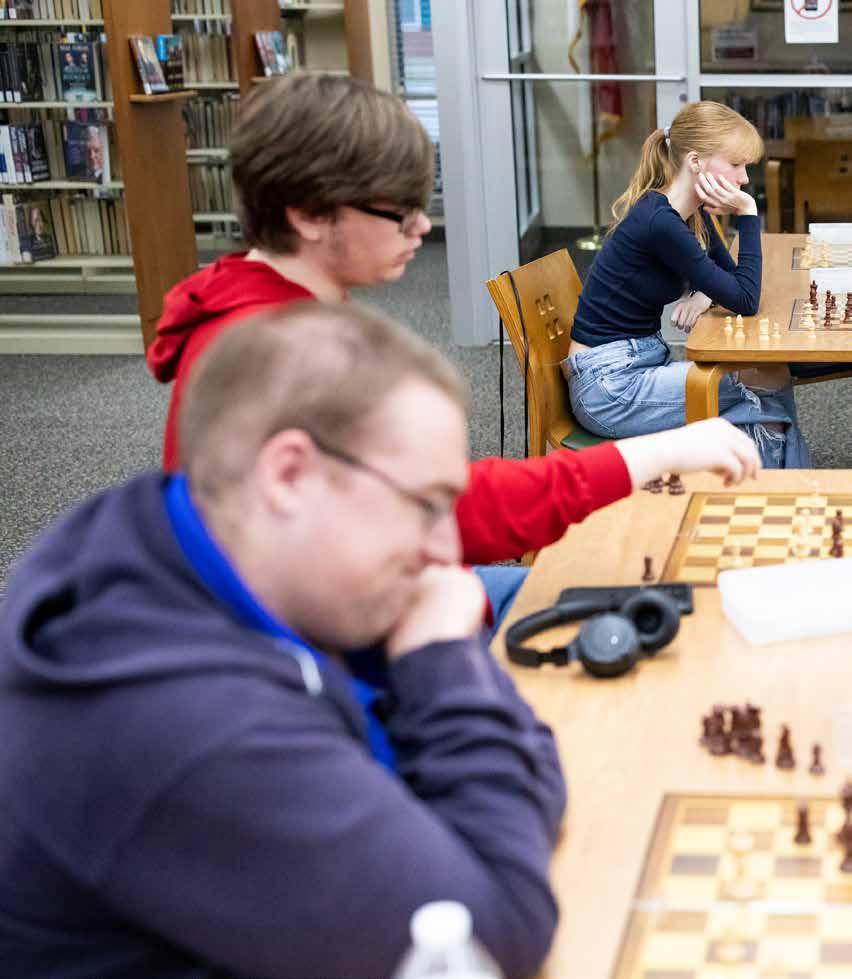
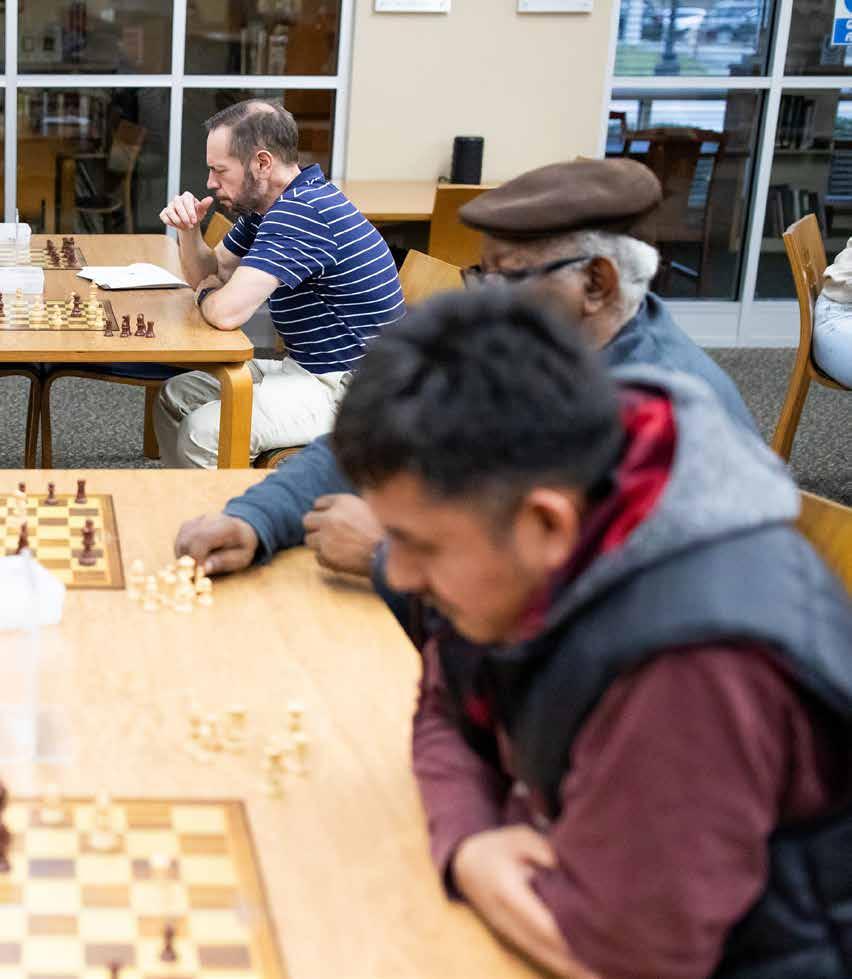
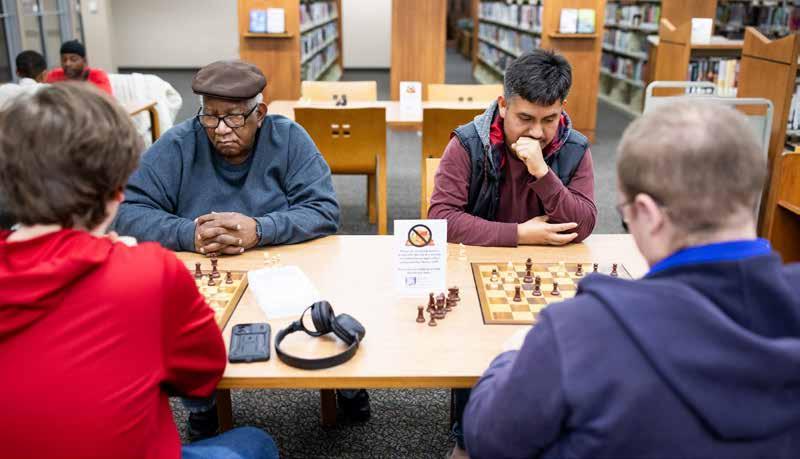
Community members gather on Tuesday evenings for Chess Club at the Kinston-Lenoir County Public Library.
Chess An Intergenerational Classic
Written by Laura Ashley Lamm, Ed.D.,
Photography by Madeline Gray
Chess: An Intergenerational Classic
Written by Laura Ashley Lamm, Ed.D., Photography by Madeline Gray
Chess is a timeless classic. A game with a rich history and strategic maneuvers, generations have reveled in executing a battle of wits with 32 pieces. From its inception, the king remains the most important piece on the board. The safety of the king determines the outcome of the game as the objective is to checkmate the opponent’s king while protecting your own. To “checkmate” comes from the Persian phrase, “Shah Mat,” which means “the King is dead.”
The game of chess was invented around 550 A.D. in Northwestern India. Its early form was called “chaturaṅga” with the literal translation meaning “four divisions of the military.” The four divisions were the infantry, cavalry, elephantry, and chariotry.
These divisions became the pieces known today as the pawn, knight, bishop, and rook.
“I’ve been playing for quite some time as I enjoy the game,” said Charles Allen, 67, of Kinston. Allen is one of the regular players who meet for Chess Club on Tuesday evenings at the Kinston-Lenoir County Public Library. Allen was encouraged by the senior center to join the library’s Chess Club and teach younger generations a skill and love for the game.
“The Chess Club has turned out to be an intergenerational program. We have people of all ages, from parents bringing young kids around four or five-years-old to older adults. Everyone has a different background, but they get along well and
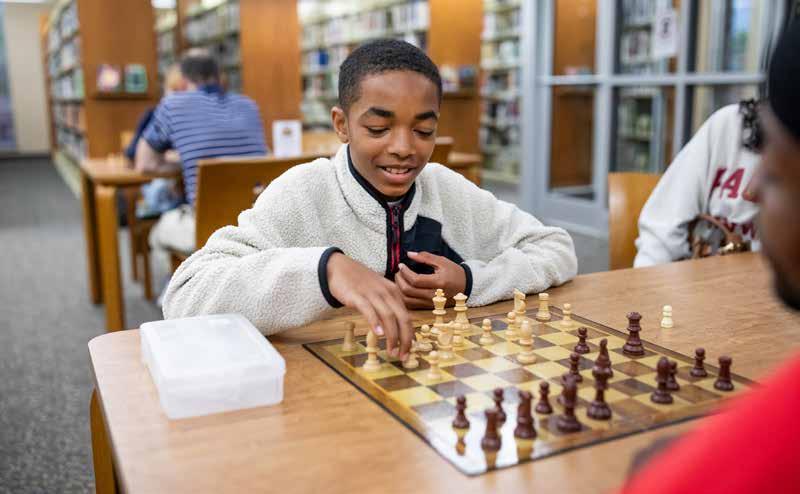
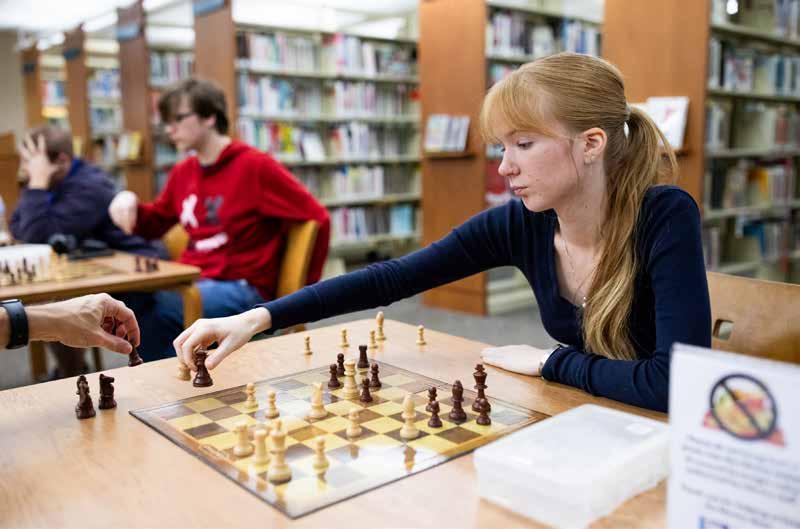
Chess Club has become a popular intergenerational activity for community members.
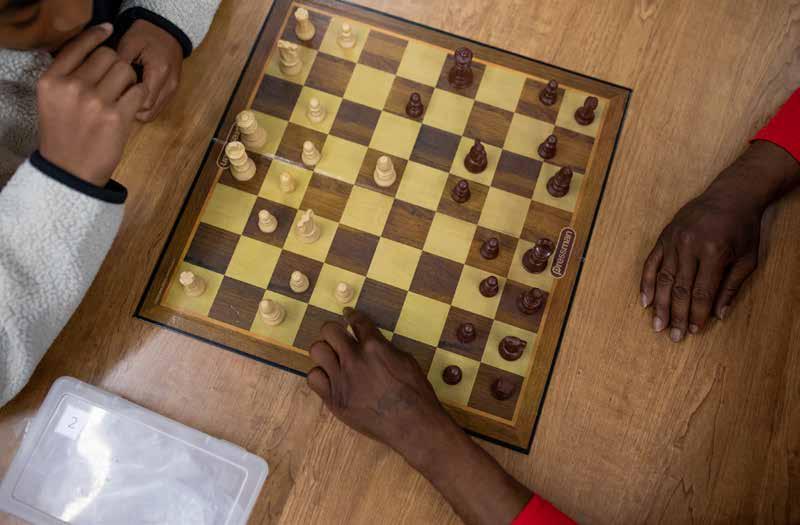
Top: Charles Allen, left, and Nathaniel Robles, right, contemplate their next moves during a chess match at the Kinston-Lenoir County Public Library. Bottom: Aiden Roberts, 12, plays a game of chess at the Kinston-Lenoir County Public Library.
have fun playing against each other,” said Justin Stout, head of information services at the Kinston-Lenoir County Public Library.
Bryant Cox, 26, of Kinston, learned to play chess from his father and continues challenging his skills and mind through the library’s weekly meetups. “You can come here and play with physical pieces instead of online and can meet new people while doing so,” said Cox. “It is also good for your brain.”
Indeed, playing chess stimulates and improves the cognitive function of the brain, including improved memory, problem-solving skills, and enhanced critical thinking abilities. Memorizing moves, strategies and patters are required for chess play, which strengthens short-term and long-term memory. This memorization process enhances neural connections in the brain, contributing to better recall abilities. Chess also encourages critical thinking in players. They must plan their strategies, several moves ahead, and anticipate their opponent’s actions.
This type of strategic thinking fosters critical analysis and problem-solving skills, which can be applied in everyday situations.
“I love the game because it challenges me,” said Susan Paddy of Kinston, “especially certain players,” as she nods towards Cox, her opponent for the first game.
“Chess is definitely a mind game as you calculate your moves,” added Allen. “I have tricks. They have tricks. We all have tricks we use when playing.”
Tricks can come in handy when trying to defeat one’s opponent. In fact, the number of possibilities of a knight’s tour is more than 122 million. The knight’s tour consists of a knight starting at any square of the board and moving to the remaining 63 squares without ever jumping to the same square more than once.
Whether it is strategic maneuvers to position the knight or one’s own favorite tricks, the end result is still the same. Be the first to declare “checkmate.” LL
Kaylee Hutson strategizes her next move during a game of Chess.
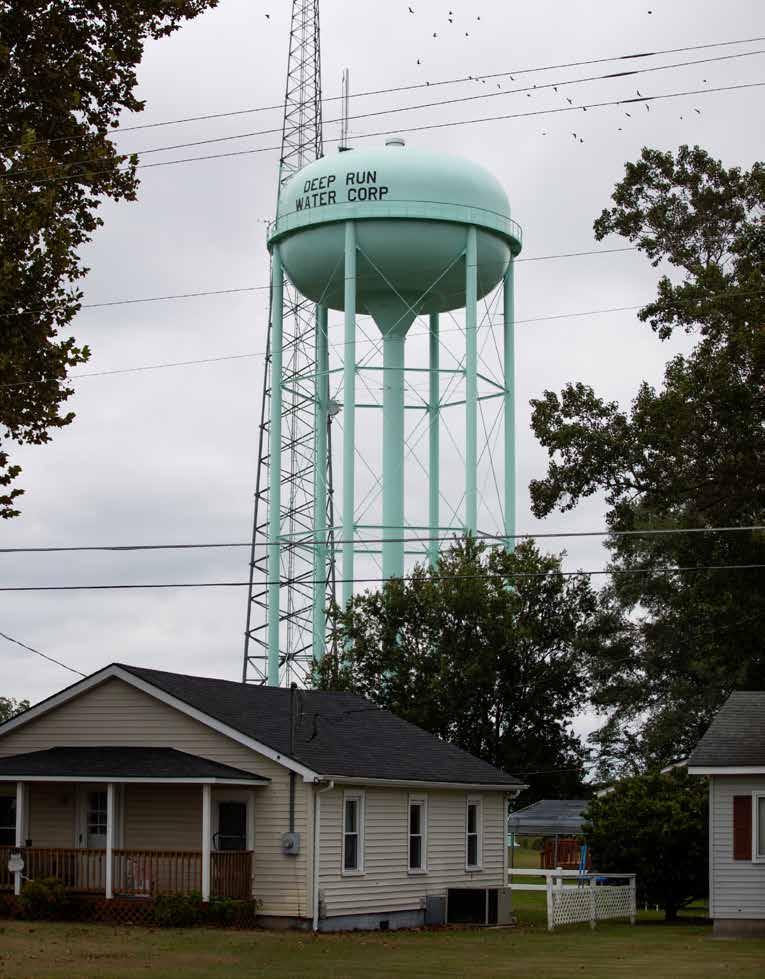
Deep Run Water Tower. Photo by Madeline Gray
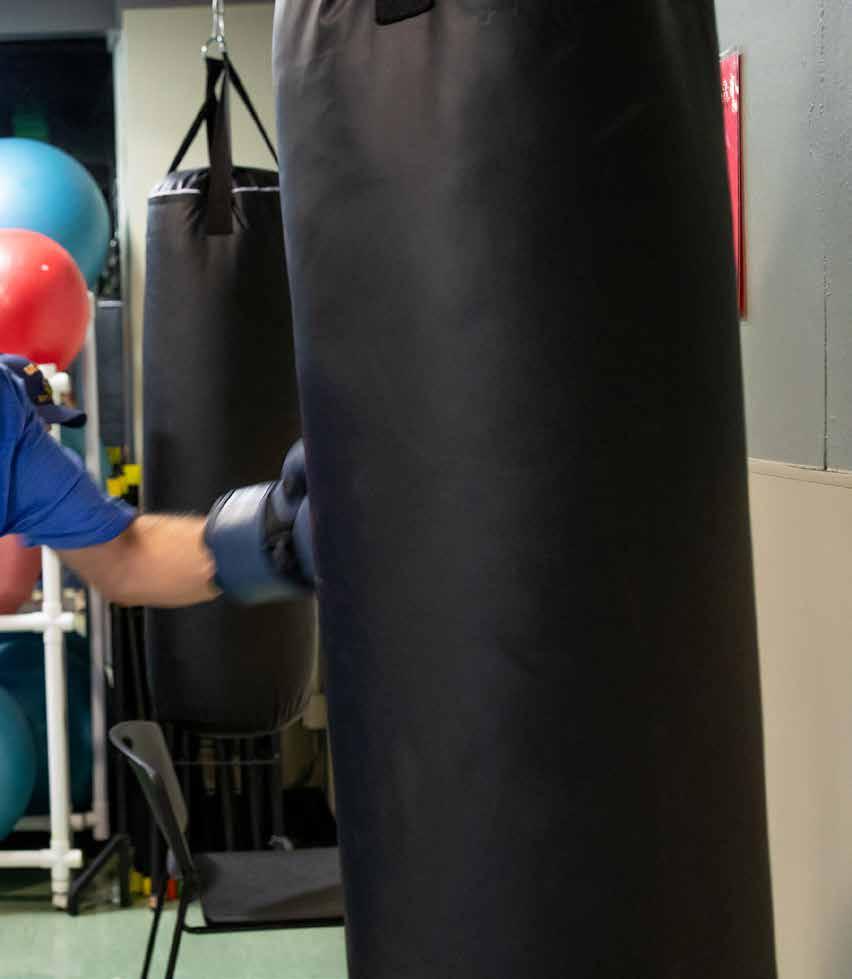
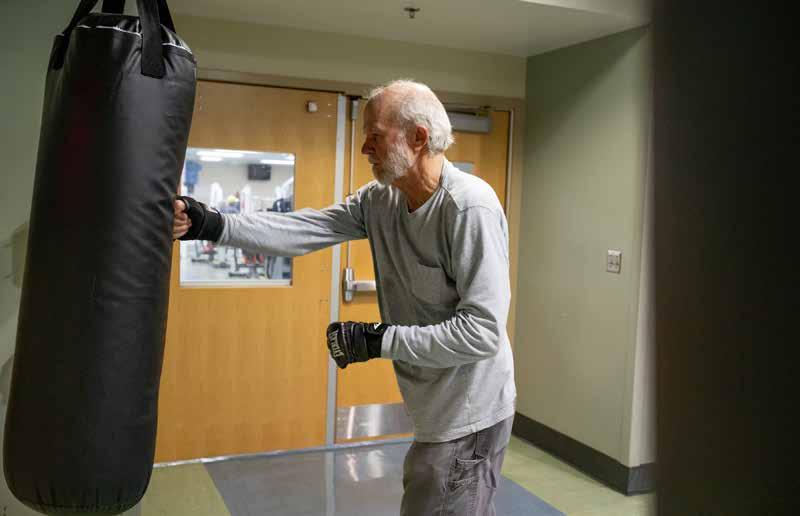
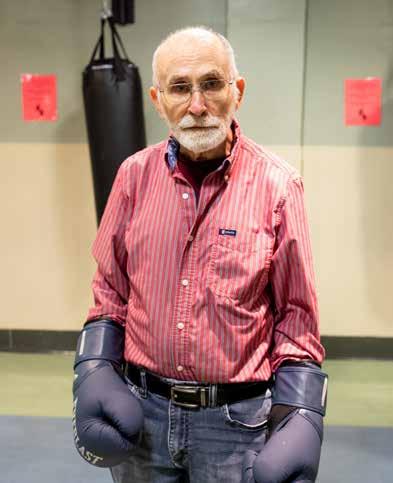
David Aycock of Kinston makes a left-handed punch into the boxing bag at Minges Wellness Center’s Punching Through Parkinson’s program.
Punching Through Parkinsons
Written by Laura Ashley Lamm, Ed.D.,
Photography by Madeline Gray
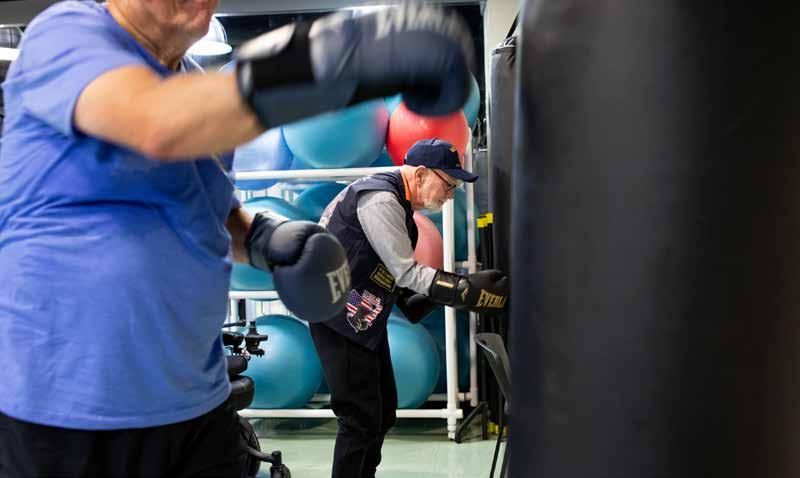
On a chilly Friday afternoon, the Minges Wellness Center echoed with the sounds of “pop!” “pop!” “pop!” as boxing gloves connected with punching bags. Chatter and laughter supervened while country music waffled through the speakers. Practice was in full swing.
For this group of friends living with Parkinson’s disease, connecting a fist to a bag was not just about exercise but also about connecting with each other and claiming control of their movements.
“We are all in different stages of Parkinson’s as it affects people in different ways,” said Doug Aycock of Kinston. “I started this program because I wanted to do whatever I could do to help my reaction times and muscles and to just talk with other people in my same situation.”
Aycock is one of the participants in Punching Through Parkinson’s, a boxing and movement program for individuals diagnosed with the neurodegenerative disease. Spearheaded by the Minges Wellness Center at UNC Health Lenoir, the program offers participants routines and exercises that strategically target and improve the
symptoms of Parkinson’s.
“There are many benefits to boxing for those with Parkinson’s disease. These benefits include improving balance, improving management of motor symptoms, increasing functional capacity, increasing reaction time, and improving emotional well-being,” said Alyssa Dunn, exercise specialist and coordinator of Punching with Parkinson’s. “The participants in the program have formed friendships and community, which make the benefits even greater.”
“This is like a family gathering, and I’m proud to call them my friends,” added Chet Harrison of Snow Hill. “We have Parkinson’s, but this is a group that helps you feel good about it.”
The Parkinson’s Foundation reports an estimated 1.1 million people in the United States and more than 10 million globally are living with Parkinson’s Disease. The number of people living with the disease in the United States is expected to rise to 1.2 million by 2030. Men are 1.5 times more likely to have Parkinson’s disease than women.
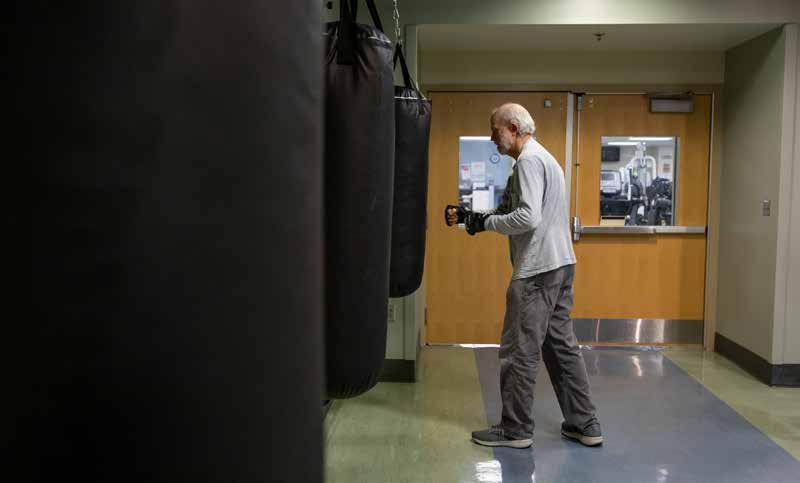
Punching Through Parkinson’s participant Doug Aycock of Kinston practices boxing sequences inside the Minges Wellness Center.
Currently, Parkinson’s is the second-most common neurodegenerative disease after Alzheimer’s disease.
Parkinson’s disease primarily affects movement, causing bradykinesia (slowness), tremor and rigidity, which are keys to diagnosis. Other movement symptoms, such as postural instability, stooped posture, and difficulty walking can develop later and vary between individuals. Exercise and physical therapy are essential for maintaining mobility, easing symptoms, and slowing disease progression. Often it can take years for a person to become diagnosed with Parkinson’s.
Danny Rowland of Kinston experienced tremors for roughly two to three years. After numerous medical appointments and misdiagnoses, he was finally diagnosed with Parkinson’s.
“I thought I had tremors, and my doctor said, ‘No, you have Parkinson’s.’ I decided at that point I wanted to try and do something to slow everything down so I joined this group,” said Danny Rowland of Kinston.
“All of us have some amount of tremors,” added David Aycock of Kinston, “This [hand gripper] helps the nerves in your hand—you give it a little squeeze—so you can actually
control your hand instead of the tremor controlling your hand.”
Doug Aycock and David Aycock are brothers, both diagnosed with Parkinson’s. The American Parkinson’s Disease Association reported approximately 15 percent of people carry a genetic mutation that increases their risk of developing Parkinson’s disease.
Dopamine is a chemical messenger (neurotransmitter) that is primarily responsible for controlling movement, emotional responses and the ability to feel pleasure and pain. In people with Parkinson’s, the cells that make dopamine are impaired. As Parkinson’s progresses, more dopamine-producing brain cells die. Your brain eventually reaches a point where it stops producing dopamine in any significant amount. This causes increasing problems with movement.
“When it’s the end of the day and I’m tired and want to take a nap, I come here, and it does better for me than a nap,” said Susan Brooks. “I appreciate they are going through the same thing I am, and we can laugh about it.”
“It really makes you come on the days you probably wouldn’t come if it was just you. When you come and they
David Aycock, left, of Kinston, and Jerry Leatherwood of Grifton participate in movement and balance exercises through the Parkinson’s boxing program twice a week.
are working hard, it makes you want to work hard, too,” said Rowland.
“I have to live with it [Parkinson’s] and cope the best I can. This exercise program is probably better than the medicine I take,” added David Aycock.
The hour-and-a-half sessions are offered twice weekly on Tuesday and Friday afternoons at the Minges Wellness Center on the campus of UNC Health Lenoir Hospital. The cost to participate is $40 a month. Lead by Dunn, each session is specifically tailored to improve movement and balance. Workouts vary week-to-week including a warm-up and cool down, punching sequences on the boxing bag, ropes, and practices geared toward improving walking, pivoting, and balance.
“We do a lot of things in class. We do things for coordination to help us move. Today, we were working on pivoting. With my situation, I tend to lean before I pivot. I am here to try to learn something to help slow down the progress and effects of Parkinson’s,” said David Aycock.
“We do a lot of boxing and also a balloon toss,” said Jerry Leatherwood of Grifton.
Doug Aycock added, “It is nice to have a space to get together, and it is nice to have an instructor of the program. We have about got her [Alyssa Dunn] converted into a country music fan.”
The benefits of exercising twice a week through Punching with Parkinson’s is already evident for participants. Neurologists are noticing marked improvements in yielding symptoms and improving quality of life.
“Punching Through Parkinson’s has helped me. I see my neurologist on a six-month basis. She noticed a marked improvement from February to the middle of this summer.,” said David Aycock. “I take that as a good thing. It is good to be able to go somewhere where people have an idea of what you are dealing with. It is kind of daunting to know that you’ve got this, and you want to live your regular life that you have lived before.”
More importantly, for the members of Punching with Parkinson’s the comradery and support they have found among each other is paramount. After sessions, they travel to the Sweet Frog for frozen yogurt and conversation.
“People here are just like a family, and it means a lot when they are going through the same thing you are going through,” said Rowland. “One of the main things for me is knowing I’m not alone in this fight.”
“This has given me hope, and I find the class fun to go to,” said Chet Harrison of Snow Hill. “Every muscle we gain more control of takes us back to a more normal life.” LL
Doug Aycock has completed more than 50 sessions of the Punching Through Parkinson’s program.
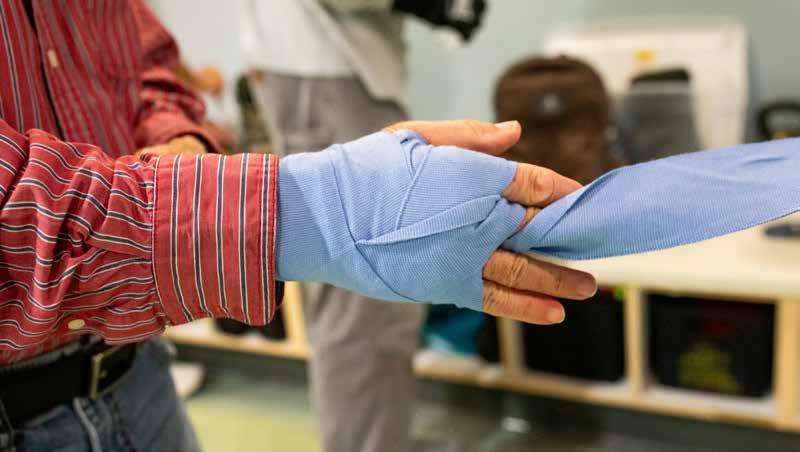
Clockwise from top: Chet Harrison of Snow Hill completed more than 50 workouts with the Punching Through Parkinson’s program. Jerry Leatherwood of Grifton prepares for this next punching session having already completed 50 sessions through the program. Chet Harrison has his hands wrapped before putting on boxing gloves.
More with Minges
Minges Wellness Center, a medically-based fitness center open to the community, offers strength and cardio equipment, group fitness classes, personal training, and innovative programs aimed at improving health and wellness and supporting residents with specific medical needs.
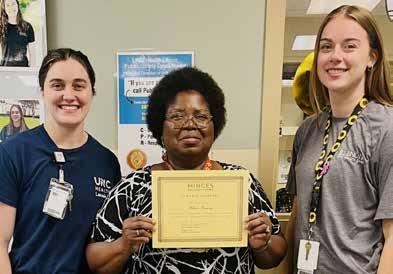
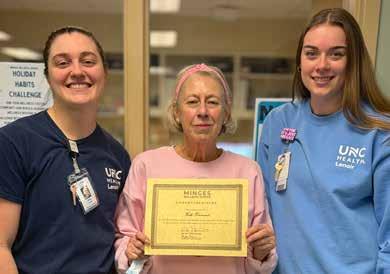
Recently, Classie Dawson and Vicki Townsend were recognized as Members of the Month. Known for their joyful spirt and encouragement of others, both Dawson and Townsend are valuable members of the fitness community.
UNC Health Lenoir, in partnership with the Comprehensive Cancer Support Program at UNC Chapel Hill and the Duke Endowment, began offering “Get Real and Heel,” an exercise program for cancer survivors at the Minges Wellness Center.
Cancer treatment often results in physical and psychological challenges, such as fatigue, reduced strength, and anxiety. With the addition of “Get Real and Heel” participants embark on a 12-week, tailored exercise program designed to improve physical and mental health, while also helping to relieve treatment side effects for cancer survivors. The program, which began in March, recently graduated its second cohort.
Wellnes Coordinator Julia Daniel, left, and Exercise Specialist Alyssa Dunn, right, are pictured with Classie Dawson and Vicki Townsend, left and right images, respectively, after being named Members of the Month.
From left Monica Cobb, Wellness Coordinator Julia Daniel, Sue Johnson, Janice Smith, Lori Bryan, Lee Whitfield, Dixie Szerokman, and Exercise Specialist Alyssa Dunn gather from a group photograph following the completion of the “Get Real and Heel” program.
Peaceful Paws:
A Therapy Dog on the Force
Written by: Laura Ashley Lamm, Ed.D.
Law enforcement agencies around the nation are adding therapy dogs to their force. The demanding duties and high-stress situations faced by officers have agencies seeking a counterbalance in the form of four paws. Therapy dogs, with their calm and peaceful demeanors, improve the mental health of officers and boost morale around the station.
Officer Grainger, an Aussiedoodle, joined the Kinston Police Department over the summer. A cross between an Australian Shepherd and Moyen Poodle, Grainger boasts an affectionate and energetic disposition.
“When the Chief [Keith Goyette] took over, one of the things he wanted was a dog in the station every day to help with officer wellness,” said Sgt. Brian Biggins, public information officer and Grainger’s
handler. “When you have a therapy dog on the team, you increase the wellness of officers. A puppy or a dog changes the attitudes of officers, reduces their blood pressure, helps with decompression and dealing with post traumatic stress.”
Therapy dogs on law enforcement teams provide an array of benefits to both the officers and the members of the communities in which they serve.
The National Police Foundation reports therapy dogs offer crucial emotional support by reducing stress and lowering cortisol levels through human touch via petting the animal. Therapy dogs aid in the combating of Post Traumatic Stress Disorder (PTSD), act as community engagement tools, boost oxytocin, and provide companionship during or after high-pressure situations and traumatic events.
Photography by Madeline Gray
There is a differentiation between the various canines employed within law enforcement agencies, which includes the Kinston Police Department. Currently, the Kinston Police have four multi-purpose canines trained in apprehension and narcotics detection. Grainger, is the only therapy dog on the force. Therapy dogs are purposed for holistic engagements and public relations, and trained for mental health stability through calming demeanors and actions.
“Grainger is doing great. He comes to work and knows he is here to visit people,” said Sgt. Brian Biggins. “He has a calm, friendly demeanor.”
Named in honor of the historic stadium where the Down East Bird Dawgs play baseball, Grainger joined the force in the summer of 2025. William and Erin Stanley gifted the then-puppy to the Kinston Police, and the NC Police Dog Association helped ensure a therapy dog program was in place at the KPD and at no cost to taxpayers. Grainger will undergo obedience
training with the NC Police Dog Association to prepare him for his vital work serving the department and community.
In his relatively short time on duty, Grainger has already grown in popularity having already amassed a social media following. He routinely updates the public on his daily pursuits. In fact, his Facebook followers helped select his name.
“The community came up with the name Grainger which is not only historic, but also a representation of the city,” said Biggins, who adopted the task of serving as his handler.
For those who see Grainger out in the community, be sure to say “hello.” Grainger makes rounds through the police, fire and emergency medical stations visiting officers and employees. He sings along to Christmas carols, vacations in the North Carolina mountains, binge watches Stranger Things, visits with school children, and generally loves people. LL
Left: Sgt. Brian Biggins serves as the public information officer and Grainger’s handler. Right: Officer Grainger enjoys attending police meetings, meeting new people and providing a sense of calmness for all.
OLD NORTH STATE
The pond behind the Biltmore Estate in Asheville. Photo by Grayson Smith
ASHEVILLE
Danish artists Thomas Dambo presents Trolls: A Field Study at the N.C. Arboretum. Visiting on their first North American excursion, these 12 interactive troll sculptures embark on a curious journey to learn about humankind. These friendly and fanciful sculptures evoke a sense of wonder and intrigue. Standing seven to nine feet tall, the creatures are crafted from materials like fallen branches, wooden pallets and twigs. Admission is included with the arboretum’s daytime parking fee of $20. Open through Feb. 17.
CHARLOTTE
The upper pond of the Whitewater River converts into a 24,000 sq ft ice skating center, the largest ice rink in the Southeast. The U.S. National Whitewater Center features four distinct skating areas including two ice trails, two free skate zones, and an Airstream in the middle of the rink serving hot and cold beverages. Single day pass is $25. Open through midFebruary.
CARY
Immerse yourself in a world of wonder with thousands of handcrafted, illuminated lanterns at the N.C. Chinese Lantern Festival. Showcasing various themes such as dragons and dinosaurs, each display comprises hundreds of parts and thousands of LED lights. A variety of ticket options are available. Open through Jan. 11.
SELMA
Brave the cold as the polar bears, do. The Town of Selma is hosting its annual Polar Bear Run with awards for top male and female runners along with finisher awards for adults, children and pets. Dogs have their own special race. Begins at 10 a.m. on Jan. 25. Visit selma-nc.com for more.
RALEIGH
The N.C. Museum of History will host the 25th Annual African American Cultural Celebration. Engaging demonstrations, inspiring presentations, and powerful performances will highlight the contributions that African Americans, past and present, have made to North Carolina’s history and culture. Scheduled for Jan. 31, the event is free and open to the public.
MANTEO
Peacocks, butterflies, deer and other enchanting creatures are taking up residence at the Elizabethan Gardens. Created with flowers, seeds and other natural elements, the lighted displays illuminate the spirit of nature. Tickets range from $6-22. Open through Dec. 30.
Seagrove
THE LAST WORD
Heart to Heart Prayer House, LaGrange. Photo by P.J. Drew
A New Year, A New Resolution
Written By P.J. Drew
The start of a new year serves as an opportunity to begin again. A refresh of sorts, it provides a time when many take stock of themselves and their work-life balance. Creating goals and committing to better habits becomes a focus. When the clock strikes midnight on January 1, many are swarming for resolutions with the energy and excitement fueled by the ball drop. But after the champagne wears off and the confetti is cleaned up, what happens to those resolutions?
Obtaining a gym membership, loosing weight, eating healthier, showing up for work on time, attending church more regularly, learning to cook, saving more money, spending less at Starbucks … if one can think it, there is a resolution for it somewhere.
As one year ends and another begins, we often feel the need to reinvent some aspect of ourselves by vowing to do better or change altogether. So, where exactly did this notion for a new year’s resolution come from?
Travel back 4,000 years to the time of the ancient Babylonians. The Babylonians were the first to make promises for the new year, what we affectionally call New Year’s resolutions. They celebrated the changing of the year in March when crops were planted rather than in January. Known as the Akitu, the Babylonians participated in a 12-day religious festival where they would crown a new king or reaffirm loyalty to the reigning monarch. During the festival, they would promise to pay their debts and return borrowed objects.
Making promises became a forerunner for New Year’s resolutions; however, it was the Romans who tweaked the calendar. In 46 B.C., Julius Caesar declared January 1, the start of a new year. Caesar selected the name for Janus, the two-faced god whose spirit loomed in doorways and arches, and was thought to symbolically look backwards on the previous year and ahead to the future.
In 1740, English clergyman John Wesley, the founder of Methodism, created the Covenant Renewal Service on New Year’s Day to pray for the coming year, read scripture, and sing hymns.
Even though New Year’s resolutions began with nations tying the practice to religion, it is mostly a secular practice today. And that brings us here, 4,000 years later, with resolutions becoming a fixture for
ringing in the new year.
Forbes Health completed a study on the connection between Americans and New Year’s resolutions. Surveying Americans on resolutions, they found the top five most popular goals to be: improved fitness (48%), improved finances (38%), improved mental health (36%), weight loss (34%), and improved diet (32%). The least popular resolutions include traveling more (6%), meditating regularly (5%), drinking less alcohol (3%) and performing better at work (3%). Forbes Health found the average resolution last roughly three months.
For readers who happen to select one of those five resolutions, then you are in luck as Lenoir County has much to offer towards goal achievement. For readers who select other resolutions or simply want to be more active and involved in the community, there is much you can find here, too.
Strength training and conditioning, group fitness classes, cardio machines, walking tracks, personal training sessions and more can be found at one of the many fitness and wellness centers across the county. There are options for all ages. Spend time outdoors at the Neuse Nature Park. Walk the streets of downtown in one of the vibrant communities found within Lenoir County. Bring an old friend, make a new friend. Exercising can be fun. Exercising can also improve mental health through the release of endorphins.
For readers working on self and life improvement, there are an array of clubs, organizations, volunteer opportunities, bible studies, and ways to help yourself and the community. There is a guarantee one’s mood will lift when helping others. There are many churches in the area, and all welcome you to visit. Ask anyone in town, and they will help you find the information you seek.
For readers seeking assistance with financial planning, savings accounts, retirements and investments, local banks stand at the ready. Find your local bank branch or visit one of the financial planners in town to ask questions to aid you in spending and saving money in ways that better suit you.
Whatever your resolution may be, there is a whole community ready and willing to aid you in achieving your goals. All you have to do is start. LL
Fitness Guide
Crossfit Kinston
2212 W. Vernon Ave., Kinston
Flexx Fitness Studios
5976 US Hwy 258 South, LaGrange
Good Bodies 24/7 Fitness
2817 Hull Rd., Kinston
Hornes Gym
202 W. Clay St., Pink Hill
Iron Den Gym
1508 Hull Rd., Kinston
Kinston Community Center
2602 W. Vernon Ave., Kinston
LaGrange Community Center
410 E. Washington St., LaGrange
Minges Wellness Center
100 Airport Rd., Kinston
Neuse Barbell Club
112 W. Gordon St., Kinston
Pink Hill Wellness and Education Center
301 S. Pine Street, Pink Hill
Planet Fitness
4050 W. Vernon Ave., Kinston
Sassy’s Fitness
1620 N. Queen St., Kinston
SupaStarz Athletics
104 Beverly Rd., LaGrange
Tee’s Cardio Fitness Center
105 W. Caswell St., Kinston
These are a sampling of the fitness facilities in Lenoir County. Any business omitted from the list was done so inadvertently.
Toasts for a New Beginning
Written by Grayson Smith
As the clock ticks down towards Midnight on Dec. 31, it is easy to shout “Cheers!” and take a sip of champagne or sparkling grape juice. Instead of offering a simple one-word phrase and moving on, take a minute to make a toast. We have compiled some of our favorite toasts below or you can simply speak from the heart.
“Be the change you wish to see in the world.”
Mahatma Gandhi
“Yesterday is gone. Tomorrow has not yet come. We have only today. Let us begin.”
Mother Teresa
“You are never too old to set another goal or to dream a new dream.”
C.S. Lewis
“The first step towards getting somewhere is to decide you’re not going to stay where you are.”
J.P. Morgan
“For last year’s words belong to last year’s language, and next year’s words await another voice. And to make an end is to make a beginning.”
T.S. Eliot
“Your present circumstances don’t determine where you can go; they merely determine where you start.”
Nido
Qubein
“May your troubles be less and your blessings be more, and nothing but happiness come through your door.”
Irish Blessing
“Here’s to the year past and friends who have left us. Here’s to the present and the friends who are here. Here’s to the New Year and the new friends who will join us.”
Emily Post
“Ring out the old, ring in the new, Ring, happy bells, across the snow: The year is going, let him go; Ring out the false, ring in the true.”
Alfred Lord Tennyson
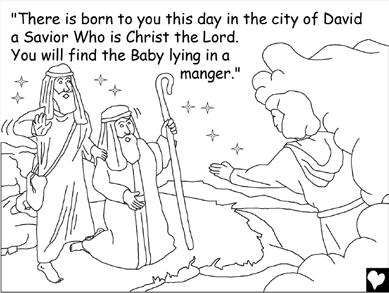
The Birth of Jesus Children’s Corner
Written by Edward Hughes, Illustrated by M. Maillot
Jesus’ birth story is told through words and illustrations. These pages are purposefully designed in black and white for children to be able to color the pages as they read and learn this most important story of The Bible.
Tell, Tales and Tails of Christmas
Complete the puzzle with your knowledge of things associated with the season of Christmas and the New Year.
Across
3. A sign of prosperity since pigs root forward
Across
3. A sign of prosperity since pigs root forward
7. A firm decision to do or not to do something
8. Drop one of these in a mailbox for Santa
7. A firm decision to do or not to do something
10. Cindy Lou lives here
8. Drop one of these in a mailbox for Santa
15. He’s a mean one
10. Cindy Lou lives here
18. “I Know Him!” is a line from this 2003 comedy
15. He’s a mean one
20. Maker of the crystal panels on the Times Square NYE ball
18. “I Know Him!” is a line from this 2003 comedy
21. Four Sundays before Christmas
20. Maker of the crystal panels on the Times Square NYE ball
21. Four Sundays before Christmas
23. Scottish folk song about friendships and memories. Three words.
24. TV station playing holiday romance movies
23. Scottish folk song about friendships and memories. Three words.
25. Go tell it on the mountain that He was born. Two words.
24. TV station playing holiday romance movies
30. ‘Twas the Night Before Christmas penman. Two words.
1. Gifts Claire a nutcracker
Down
Down
2. Bing Crosby and Danny Kaye musical. Two words.
1. Gifts Claire a nutcracker
4. Maker of holiday dinnerware; factory formerly in Kinston
2. Bing Crosby and Danny Kaye musical. Two words.
4. Maker of holiday dinnerware; factory formerly in Kinston
5. Dasher, Dancer, Prancer, Vixen, Comet, Cupid, Donner, and Blitzen
6. Family includes Cousin Eddie
5. Dasher, Dancer, Prancer, Vixen, Comet, Cupid, Donner, and Blitzen
9. Russian ballet. Two words.
6. Family includes Cousin Eddie
11. Last name of the six children who deliver “The Best Christmas Pageant Ever”
9. Russian ballet. Two words.
12. Drops at midnight on NYE in Raleigh
11. Last name of the six children who deliver “The Best Christmas Pageant Ever”
13. Bestselling toy of 1985. Three words.
12. Drops at midnight on NYE in Raleigh
14. They used to laugh and call him names
13. Bestselling toy of 1985. Three words.
16. Silver bell from Santa’s sleigh marks the first gift of Christmas in this classic. Two words.
14. They used to laugh and call him names
31. Brought with gold and frankincense
25. Go tell it on the mountain that He was born. Two words.
17. Drops at midnight in Times Square
33. Bubbly drink
30. ‘Twas the Night Before Christmas penman. Two words.
31. Brought with gold and frankincense
35. Greens, like collards or cabbage, symbolize this in a New Years Day feast
33. Bubbly drink
36. Symbol of the light Christ brought into the world
35. Greens, like collards or cabbage, symbolize this in a New Years Day feast
37. Composed the ballet in 9 Down
38. Hang by the chimney with care
36. Symbol of the light Christ brought into the world
39. Born in a manger
37. Composed the ballet in 9 Down
38. Hang by the chimney with care
40. Chicken stuffed into a duck stuffed into a turkey in this basis of this dish
39. Born in a manger
40. Chicken stuffed into a duck stuffed into a turkey in this basis of this dish
19. Food that symbolizes good fortune. Three words.
16. Silver bell from Santa’s sleigh marks the first gift of Christmas in this classic. Two words.
22. Has a corncob pipe, a button nose, and two eyes made of coal
17. Drops at midnight in Times Square
26. The Wet Bandits knew Kevin was this. Two words.
19. Food that symbolizes good fortune. Three words.
27. Fraser fir
22. Has a corncob pipe, a button nose, and two eyes made of coal
28. New York City’s precision dance troupe
26. The Wet Bandits knew Kevin was this. Two words.
29. Flowering plant used in Christmas displays
27. Fraser fir
32. Actor known as Scott Calvin or Santa Claus. Two words.
28. New York City’s precision dance troupe
34. The original host of Rockin’ Eve. Two words.
29. Flowering plant used in Christmas displays
32. Actor known as Scott Calvin or Santa Claus. Two words.
34. The original host of Rockin’ Eve. Two words.
let me letyougo
But before I do, let me tell you one more story . . .
Ralph Waldo Emerson was a prominent American writer and poet during the 1800s. His work is routinely read and studied by both literature lovers and gradeschool learners. Emerson is known for his thoughtprovoking lines that champion individualism, selfreliance and transcendentalism. He encourages trust in oneself, the rejection of conformity, and the value of listening to an inner voice.
One of Emerson’s most famous lines, through his attribution as originator, is questioned by some scholars: it states “What lies behind us and what lies before us are tiny matters compared to what lies within us.”
Personal history, successes, failures, and decisions are that which lie behind us. A future filled with goals, fate, destiny, and challenges are what lie before us. But it is our internal strength— our creativity, values, drive, passion, talents, and potential—which lie within us.
The Christmas season reminds us of the importance of the birth of Jesus. His birth set into motion that which is the foundation of Christianity. The spirit of the Lord is upon us, every day, each year through. Many years are behind us from the birth of Jesus to now, but the years brought us here and will sustain us in the years ahead.
The welcoming of the New Year ushers in time and opens the door to an entirely new beginning, should we allow it. The months and days before us provide an opportunity to meet our destiny, set goals, or change habitual patterns. Welcoming the change and not fearing it, can birth its own beauty.
The internal strength we carry is the spirit within us. We carry the strength of our faith, the optimism for the future, the support of those around us, and the belief in ourselves. This spirit drives us forward giving us the courage and the power to embrace the year ahead.