Advertising and Distribution: ads@lenoirlantern.com
Press Releases and Story Ideas: stories@lenoirlantern.com
CONNECT WITH US facebook.com/thelenoirlantern @lenoirlantern
The Lenoir Lantern
Published by Long Leaf Pine Publishing, LLC www.lenoirlantern.com
CAN’T GET ENOUGH?
An online version is coming soon. To learn more about what we are all about including digital copies, exclusive content, contributor bios, special surprises, and more be sure to keep watch as the website launches shortly.
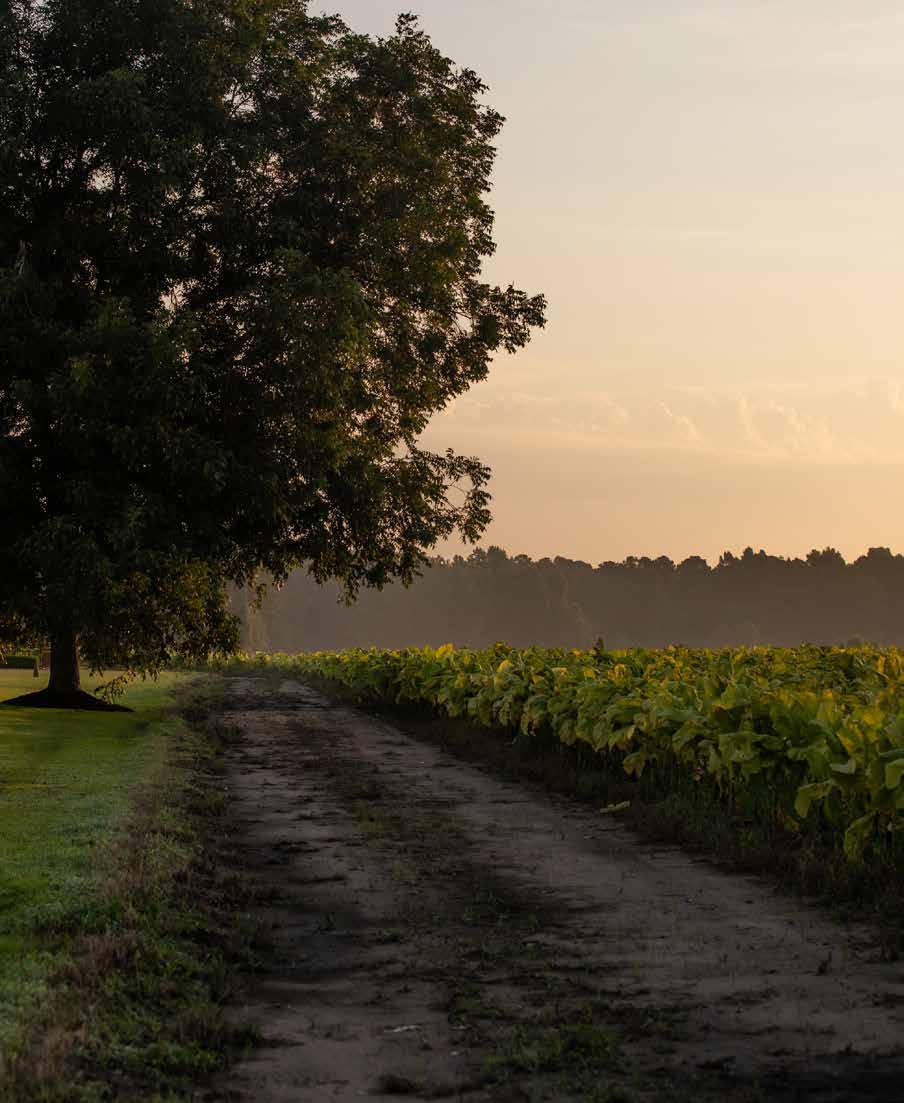
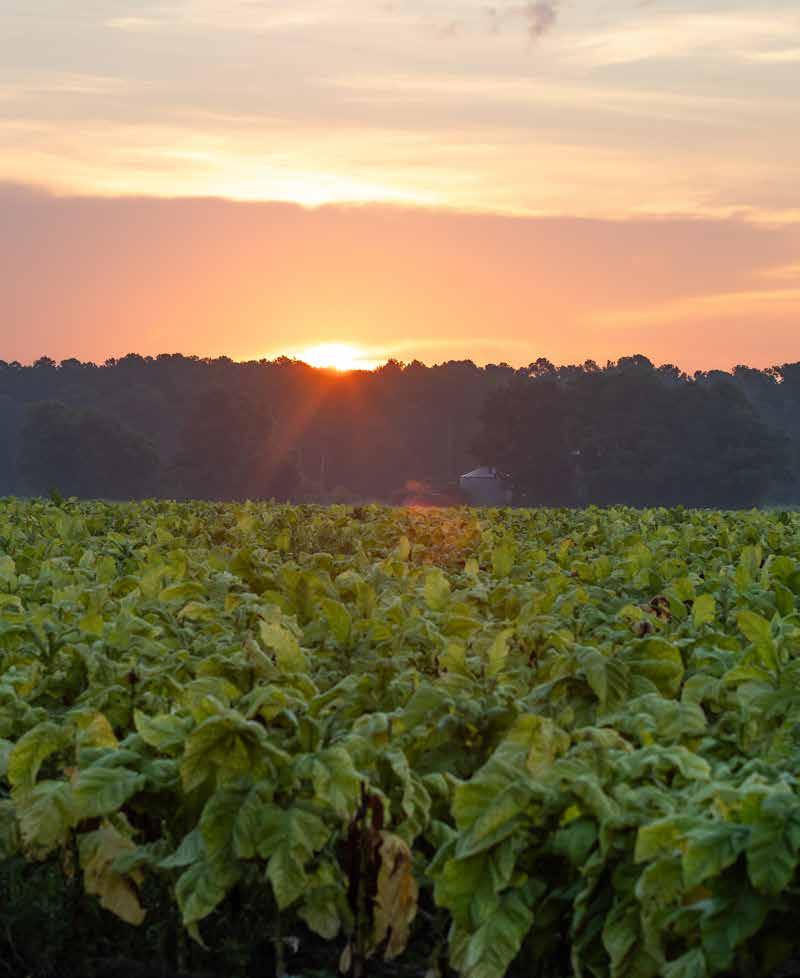
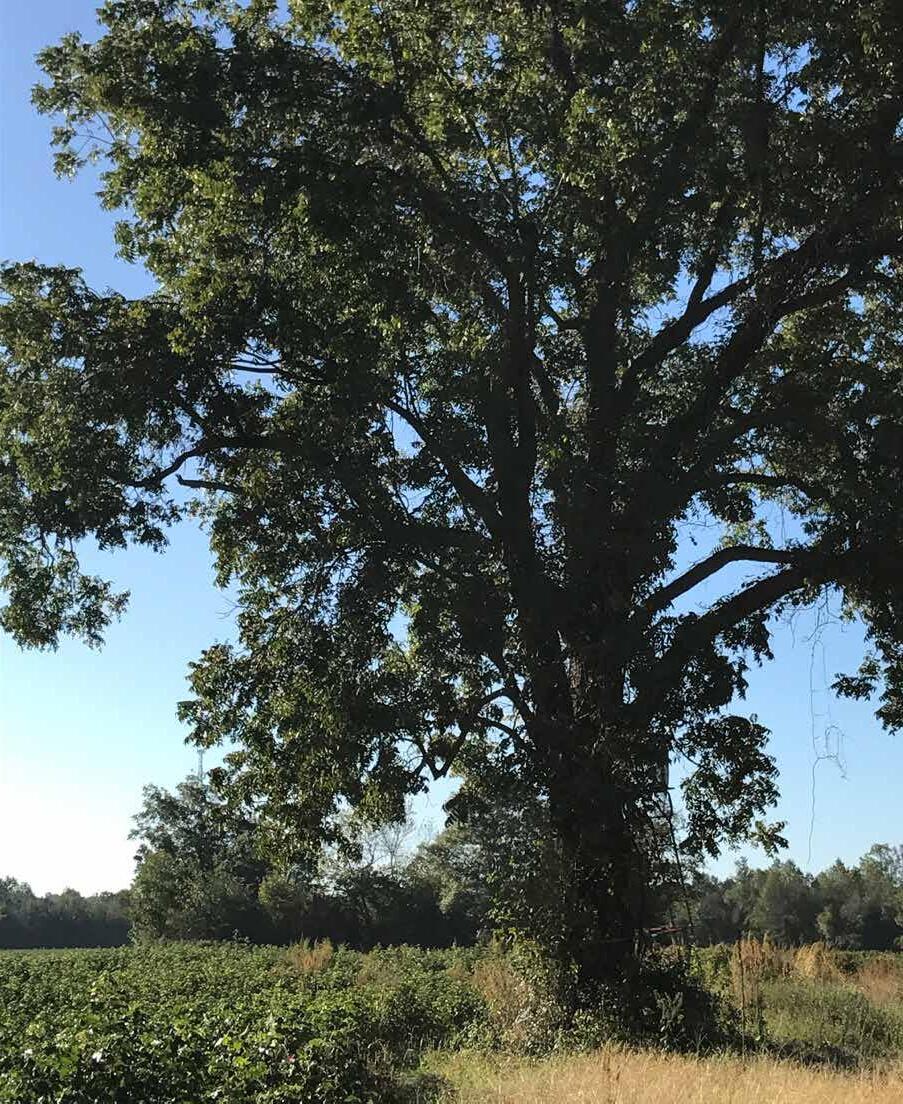
Agricultural farm at the corner of Hwy 258 North and Paul’s Path Road.
Learn the heart-warming backstory of Grounded and Baked Bakery where everything is made from scratch with family recipes
18
The Spirit of the Run
Kinston Spirits Track and Field team take us on a sprint as they balance academics and athletics
30 On the Leash: Exploring the Role of K-9 Units
From training to scent discrimination, go behind-the-scenes with the Kinston Police Department’s K-9 Unit
40
Beyond the Beat: The Benefits of Zumba
More than fitness fun, Zumba builds community and strengthens the heart.
Brad Mitchell, co-owner of Grounded and Baked prepares coffees for customers at the LaGrange bakery.
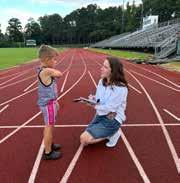
Kinston Spirits athlete Carson Whitfield, 6, tells of winning track meets with his teammates to Editorin-Chief Dr. Laura Ashley Lamm. Read more on page 18.
Go behind-the-scenes of canine narcotics training on pg. 30.
There is plenty to do around North Carolina. More on pg. 52.
“But
if we walk in the light, as he himself is in the light, we have fellowship with one another, and the blood of Jesus his Son cleanses us from all sin.”
1 John 1:7 (NRSV)
Highway 258 North, Kinston. Photo by Madeline Gray
Letter From the Editor
Well, I do declare, Lenoir County is a special place. It is our resolve to remind you of why.
The Lenoir Lantern is a free community magazine and this is our inaugural issue. With the functionality of a newspaper, the style of a magazine, and the commitment of high-quality journalism, we are confident you will find meaning in this magazine and return to it time and again.
Artistically, the magazine is divided into chapters and sections that pay homage to the characteristics of this county and region of the state. Southern Comforts are longstanding traditions such as those revolving around food, faith and sports. Dash and Splash showcases arts, culture and entertainment. The Inside Scoop takes you behind the scenes of government, education and healthcare. This is a mere sampling. There is so much ahead.
The Lenoir Lantern seeks to elevate the conversation within the county and past its borders. Connecting you, welcoming visitors, encouraging growth and strengthening support for this region are at its core.
Three words: Uplifting. Original. Illuminating.
This is our commitment to you, the reader. Within the pages of each issue, you will find stories that make you proud of your neighbors and home. With every page you turn, original content is waiting. The articles and photographs inside are authentic pieces, carefully crafted from award-winning journalists with a passion for journalism.
The Lenoir Lantern brings you crisp visuals depicting strong emotions and storytelling that captivates your feelings. Facts presented are to aid in the cultivation of knowledge. There are places for you to develop pride and people for you to meet. We are illuminating the best of the region.
Kinston. LaGrange. Pink Hill. Deep Run. There is greatness here in Lenoir County. You only have to look. The welcomes the opportunity to serve as your lens.
As we begin this journey, we join the steady momentum, that which we know to be true …
All over the county people are RISING.
Rising to orchestrate events that will bring people together. Rising to lend a helping hand when dogs need walking at the shelter. Rising to give children a place to succeed. Rising to clean up the streets. Rising to encourage others. Rising to spur imagination. Rising to enlighten minds. Rising to spread faith. Rising to make their corner of the community a better place. Rising to create a better Lenoir County.
Together we are illuminating you. Together we are illuminating the community.
Laura Ashley Lamm, Ed.D. Editor-in-Chief
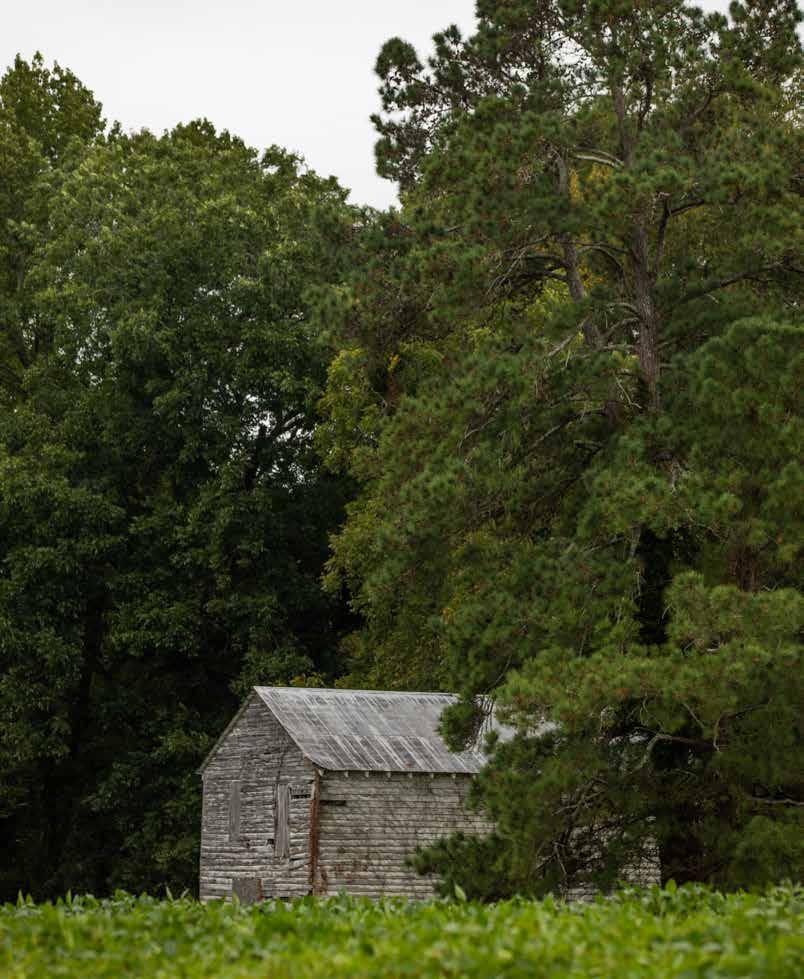
A lone packhouse sits amongst the trees and farmland along Willie Measley Road in Lenoir County. Photo by Madeline Gray
SOUTHERN COMFORTS
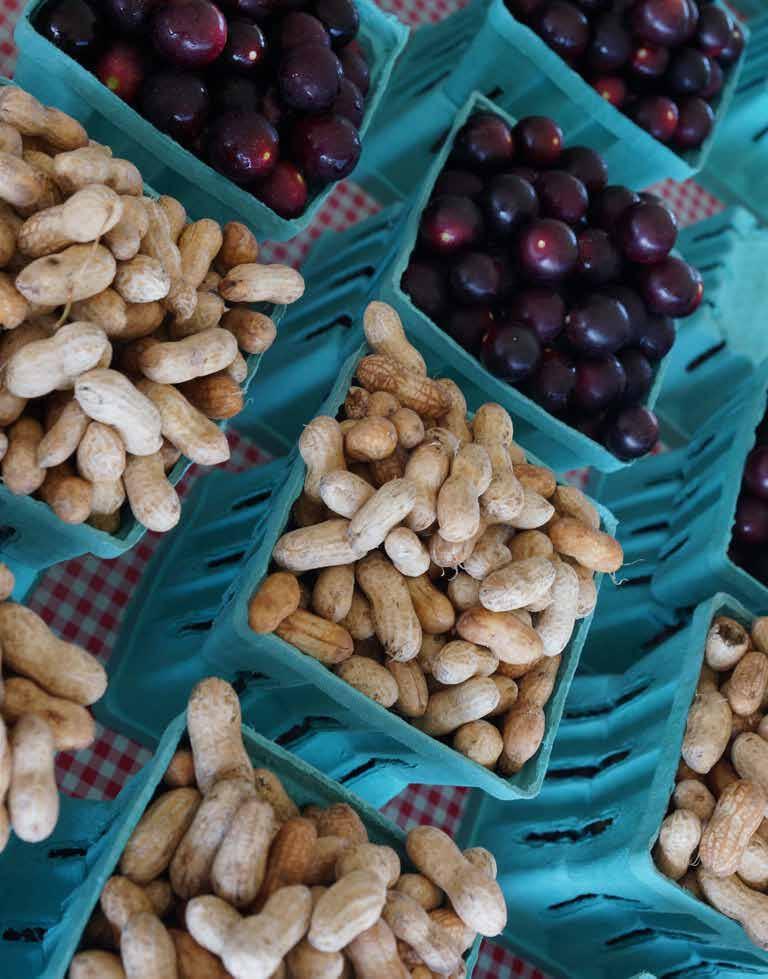
T.C. Smith Produce, Lenoir County Farmers Market. Photo by Laura Ashley Lamm, Ed.D.
Cinnamon rolls, fresh out of the oven, are available on Wednesdays.
The Proof in Tradition
Written By Laura Ashley Lamm, Ed.D. Photography by Madeline Gray
Making pastries from scratch is a labor of love. A time intensive process, bakers find themselves in the state of constant rolling, kneading and shaping. Dough must spend time sitting and proofing so the dough can rise, then it can be baked and the perfect pastry can appear.
In downtown LaGrange, the clock strikes 2:15 a.m., and Jennifer Bland flips the light switch on inside the commercial kitchen of a 100-year-old building on Railroad Street. She pulls the ingredients together to make donuts from scratch and begins the process. The donuts take between 3 ½ and 4 hours to make—from start to finish. She will make 400 today, and a total of 2,000 this week.
Bland is joined in the kitchen by co-owner Brad Mitchell around 5:30 a.m. to help ice the donuts and prepare for the influx of visitors. The doors to Grounded and Baked open at 7 a.m., and the community begins congregating inside to visit, share stories, select pastries, and grab a cup of coffee for the day. The cakes, dessert bars, donuts and cinnamon rolls are crowd favorites.
“Within communities and families, food has a key role in bringing people together. Everyone that walks in our bakery has a story. We want to learn those stories, learn what brought them in and what keeps bringing them back,” said Bland.
When Mitchell first opened Grounded and Baked in 2023, he was the lone baker. On opening day, he sold out of everything he made the night prior. He closed shop and began baking again for the next day. On the second day, the bakery sold out once again.
“I thought, ‘wow, this might actually be something.’ The bakery really started to blossom from there,” said Mitchell.
Blossom indeed. Grounded and Baked has three locations in Eastern North Carolina—La Grange, the original bakery, Goldsboro and Mount Olive. All the
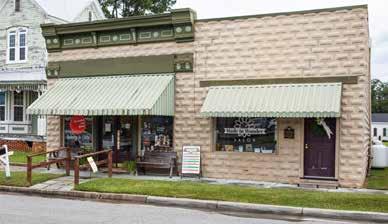
Grounded and Baked Bakery in LaGrange
donuts are made at the LaGrange bakery and then delivered to other locations.
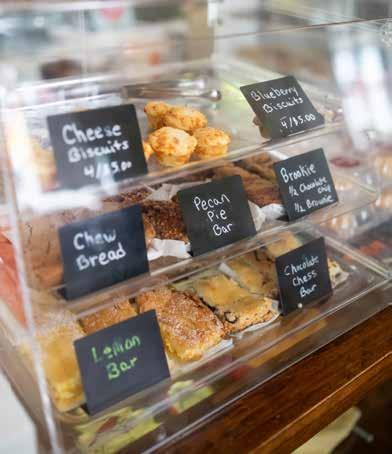
In addition to cinnamon rolls and donuts, the bakery offers cakes, cookies, bars, bread, and brownies. Each location adds a few extras like strawberry cake or banana pudding, but the Grounded and Baked staples will always be available. All items found in the bakery are made from scratch.
After years spent as running partners, Bland became Mitchell’s business partner in January 2024. By November of the same year, the business had grown to a full-time job, and Bland walked away from her role as a medical speech therapist.
Bland had always wanted to make donuts, only she never had before. However, she knew what type of donut she wanted to make—the ones she often ate with her family in Virginia. Bland asked the owner, Gary Sasser of The Donut Shop in South Hill, Virginia, to teach her. Sasser agreed, and the rest is ‘made-fromscratch deliciousness’ made daily.
“All the recipes were from Brad’s grandmother and his years growing up. These donuts were from my childhood and ones that I grew up on,” said Bland. “I had a tradition of going to the Donut Shop on Saturday mornings with my family, and we wanted to keep that feel with this business.”
For Mitchell and Bland, the bakery is about more than just delicious treats, it is about that which is grounded in tradition and baked with love—hence the bakery name.
“Everything here is based on tradition. This is where I am from, this is what means so much to me, and so everything is grounded in tradition,” said Mitchell, “… because that is what my grandma did.”
Mitchell’s grandmother, Norma Ann Vinson, 90, has
“One of the big things I value is time around the table with people. I think that is what heaven is going to be like for me.”
long been the inspiration behind his passion for baking, but her influence in the bakery is felt every day. It is her recipes, steeped in tradition and passed down for generations, from which the baked goods are made.
“My grandmother taught me how to bake. As she was getting older, she decided she wouldn’t be able to continue the recipes that she was known to bake,” said Mitchell. Vinson baked for harvest sales, church events, and holidays.
“Recipes, especially Southern recipes, they don’t go according to a recipe. Everything goes by feel and taste. My grandmother taught me how to cook that way and bake all her cakes,” he said.
Mitchell valued the time with his grandmother in the kitchen. The kitchen and baking became a strong connection that linked the two of them together. His earliest memories are of watching her assemble her seven-layer chocolate cake, licking the icing off the spatula and beaters, and leaving no icing to waste.
“It is the hardest cake to make because you are
putting hot icing on a cake you are stacking, which should not make sense. The cake should not stay stacked, but the icing must be hot to spread. When stacking the layers, they don’t stay as they should while you’re trying to build the cake, and well, making that cake may have made me call on Jesus a time or two,” said Mitchell.
All of her recipes are stored in a box that Mitchell now keeps. “Wherever I am, the recipes are with me,” he said. Bland typed up the recipes to preserve the originals, which are all handwritten by Vinson during the decades of her life.
“I enjoyed being in the kitchen with my grandmother. It was my connection with her, and baking was about spending time with her,” said Mitchell. “One of the big things I value is time around the table with people. I think that is what heaven is going to be like for me. It’s the one time you put down everything else. It doesn’t matter where you are from or your views, you sit and you enjoy a meal, and there is such beauty in that.”
“I always wanted to recreate that, but I just didn’t
A variety of made-from-scratch pastries are always available.
know what that was going to look like,” said Mitchell, “but, Grounded and Baked has been that avenue to do that.”
Baking has played a large role in Bland’s family, too. During the Christmas holidays, her mother would make cookies for the community.
“She would make 10 to 15 different types of cookies. She would lay shirt boxes out on the kitchen table and line all these boxes with each cookie depending upon how many members were in each family. If there were five members, then they got five of each type of cookie,” said Bland.
When it came time for delivery, Bland would join her mother, and together they would go house to house. She
said, “I didn’t understand it at the time, but the purpose wasn’t the cookie, but the time spent with these folks.”
In baking, the term “proofing” refers to the dough’s final rise that happens after shaping and just before baking. Some consider this step as the final fermentation or rise, which prepares the dough for the oven by making it ready and resistant. Bland makes sure the donuts have the appropriate amount of time to proof as it is a key step in the process.
The legions of donuts made each week are sold out by the time the bakery closes. Every day, the community waffles through the doors of the bakery to grab a pastry and converse about their lives. The recipes and routines of Bland and Mitchell provide the foundation to which the community gathers, a proof to the value of tradition. LL
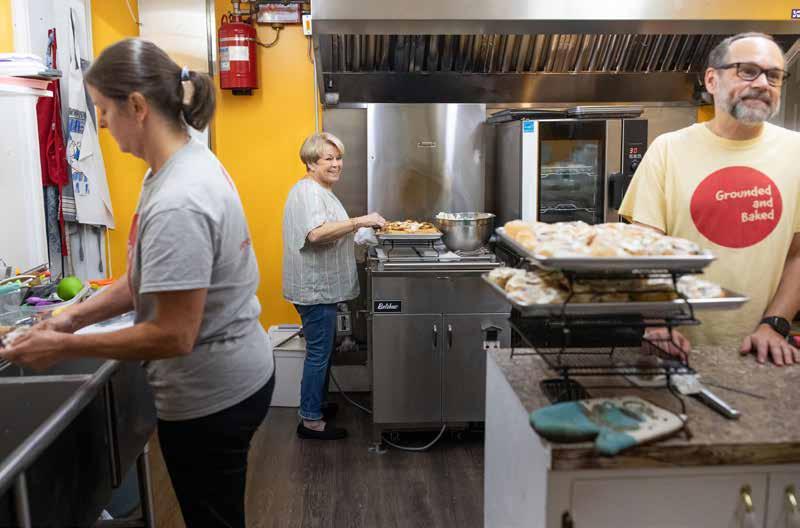
Co-owners Jennifer Bland, left, and Brad Mitchell, right, prepare cinnamon rolls alongside Christine Parrish in the bakery’s kitchen.
From the Taste Kitchen of the Lenoir Lantern
In a Lenoir County kitchen, passing down recipes is a cherished tradition. Written by hand, spackled with flour, and including an extra dash of this or splash of that, recipes are steeped in memories and cultural identity.
This Dream Salad recipe comes straight from Sarah Jones Wooten and was originally featured in the Kinston Junior Woman’s Club cookbook, “What’s Cookin’ in Kinston?”
Do you have a beloved recipe you’d like to share with the community?
Send it our way and it may be featured in another issue.
Email stories@lenoirlantern.com with your submission.
Dream Salad
Ingredients: 1 cup pineapple juice 1 lb. pkg. cottage cheese
1 pkg. lime jello 1 large can crushed pineapple
½ cup sugar ½ pt. whipping cream
1 cup small marshmallows 1 cup ground pecans
Bring juice, jello, and sugar to boil and turn off heat. Add 1 cup small marshmallows; stir until melted; cool. Add the ground pecans and cottage cheese and crushed pineapple. Whip the whipping cream and fold into mixture. Refrigerate.
SEASONING FOR CHANGE. PAWSITIVE CHANGES.
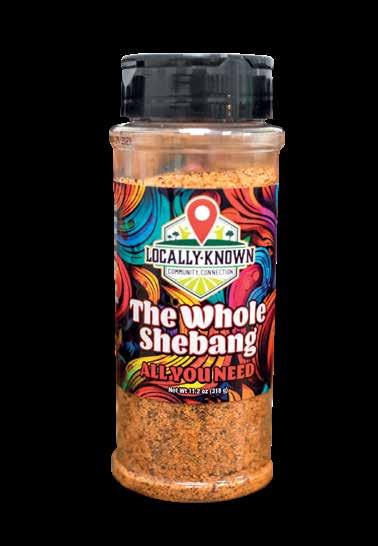
A finely crafted spice blend that will add flavor to any entree. Best of all, 100% of proceeds support Pawsitive Changes, a non-profit providing financial assistance for spay-neuter services in Lenoir County.
THE WHOLE SHEBANG
Available at Leon Thomas Treasures, Blooms-n-Grace and Savor the Season.
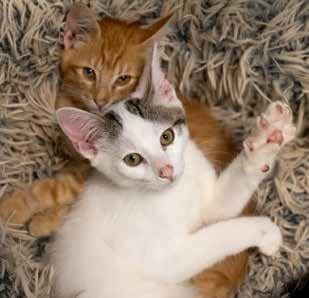
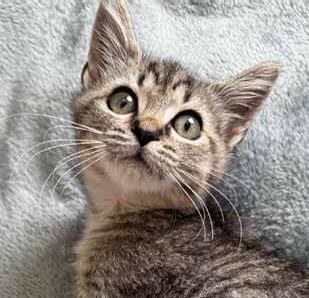
Adopt A Pet
For adoption applications, donation or volunteer opportunities, and all other inquiries, visit us at lenoircountyspca.org or call 252-520-0003.
Animals pictured were available for adoption at the time this publication went to press.
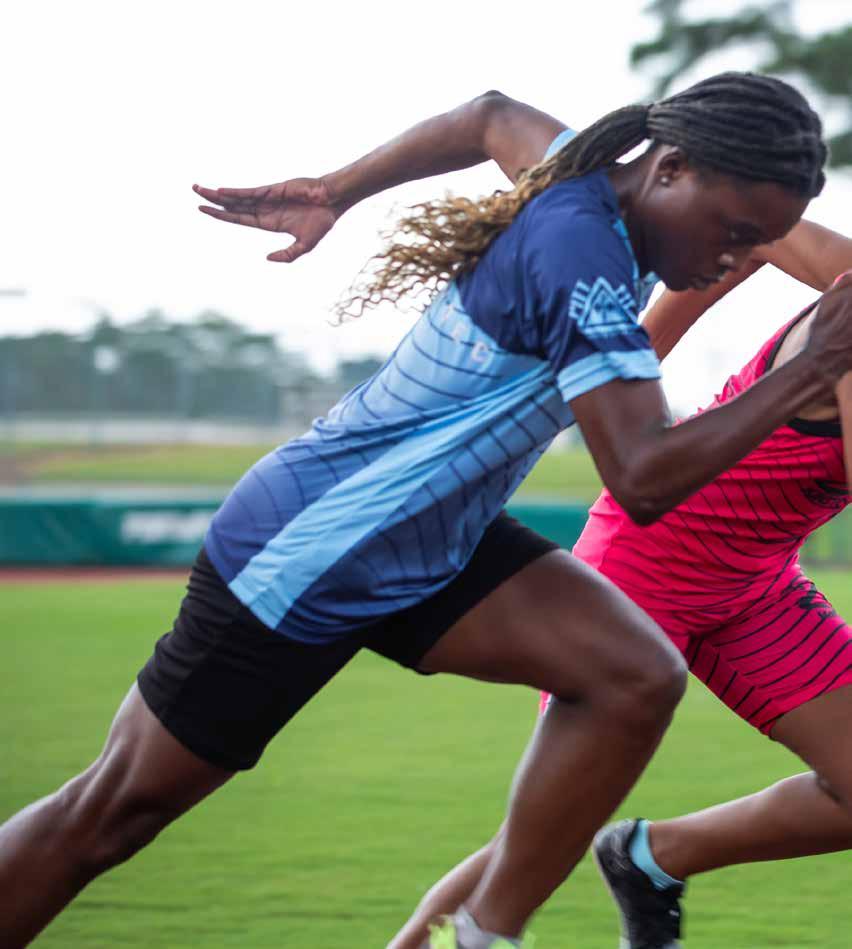
Jola Strayhorn, 17, of Hillside, NJ, and Mina Nailer, 13, of Richlands, start their sprints at the sound of the whistle.
The ofSpirit the Run :
Youth Development Through Track and Field
Written By Laura Ashley Lamm, Ed.D.,
by Madeline Gray
Photography
READY, SET, SPORT...
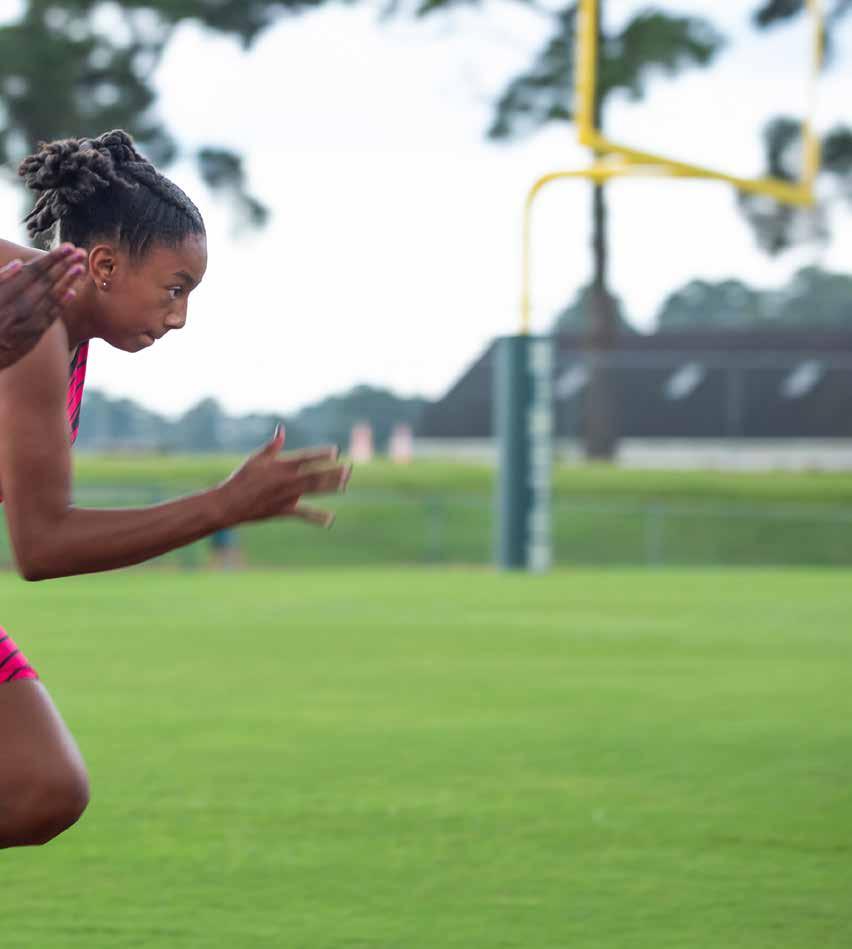
It is late afternoon and the heat of the day is barely starting to simmer. An amble breeze blows, but it is not enough to cool the pavement. The humidity, an ever-present guest, envelopes the young athletes. Undaunted, the young athletes take their places at the starting line. Track spikes dig into the clay, their eyes focus on the path ahead, and they wait.
The whistle trills and Coach Chappriel Pitt signals to the athletes to catapult forward. The race begins.
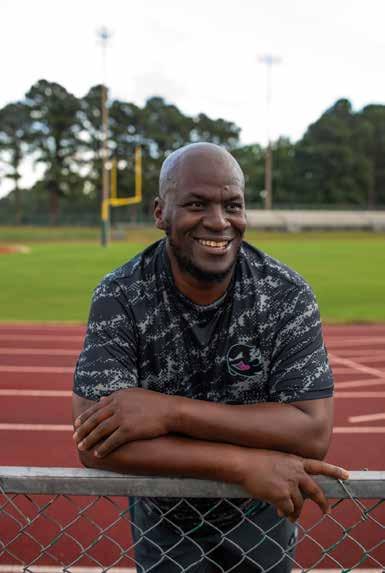
The Kinston Spirits are ready: ready for practice, ready for racing, ready for success on and off the field. “I tell kids when they are racing, ‘beat the last time you ran,’” said Pitt. “We don’t just train the body, but also the mind to build a cohesive unit, and the individual transformations are visible from week to week.”
Mina Nailer, 13, travels from Richlands to run with the team. “When I started, I used to walk the lap around the track. Now, I can run it and I’m first in my county (Onslow),” she said. “I’ve learned to keep my legs moving, focus on my breath, but mostly, I have a blast with everyone here. It is so much fun.”
The Kinston Spirits is a youth track and field program. Athletes can run for fun, run to compete or a little of both. One will be hard pressed to find a student athlete on the Spirits team who does not enjoy the team, the run, or the competition. The youth division is earmarked for those ranging in age from four to 18. (The program is also available for adults. The adult open division is for those aged 19 to 30, and the masters division is for those 31 years of age and older.)
competitive walking, sprints, mini distance (i.e. 100-meter dash), long-distance (i.e. 3,000 meters), or relays (i.e. 4 x 100m).
Pitt, 56, has been coaching most of his adult life and spent his formative years playing sports. He grew up in Kinston, moved away for work in the information technology field, but decided to return to his roots more than a decade ago. And in returning to his roots, he returned to what he enjoyed the most – coaching.
“My mother always told me, ‘No matter what community you live in, make sure they know who you are by the work you do. Help make change in the community,” said Pitt.
The Kinston Spirits is about more than stretches and sprint times, it is about developing the student athlete and preparing them for life after high school. Pitt checks each athlete’s progress reports and final report cards. The team has a requirement that grade point averages must be an 85 or higher.
“I want them to understand that to me, who you are and what your future is going to be is more important to me than any medal or sports accomplishments. They are student-athletes for a reason,” said Pitt. “I want them to know I care about them as a student-athlete and that learning to balance between the two roles is important.”
All athletes can build skills towards the track and field categories they are best suited whether it be the javelin, shot put, discus throw, hammer throw,
Students who balance studying with sports have different responsibilities to navigate, but for Pitt, its ultimately, about helping them become better humans and further their education. It is a balance that has paid off. Nine athletes from the Kinston Spirits have received track and field scholarships to colleges and universities, such as UNC Asheville, NC Central, UNC Pembroke and Fort Union Military Academy.
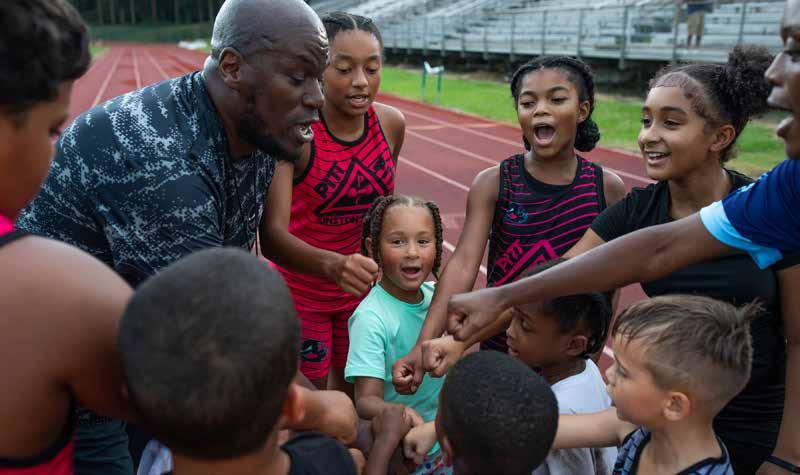
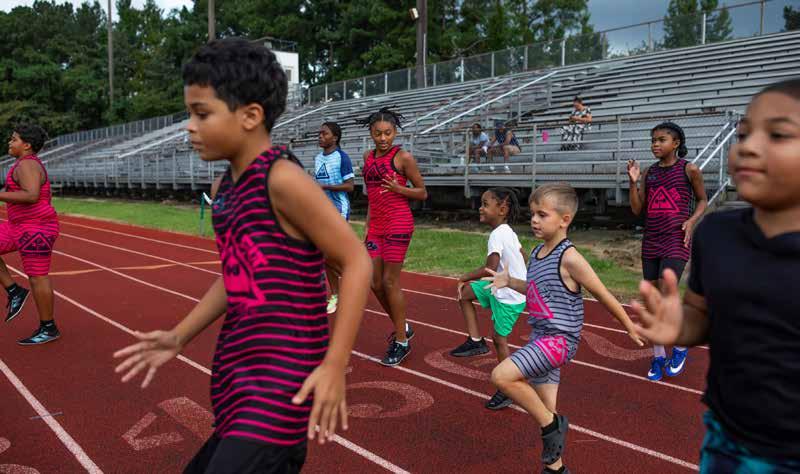
Top: Members of the Kinston Spirits shout, “We run Kinston,” at the conclusion of every team practice or meet. Bottom: The Kinston Spirts Track Team completes warm-up drills prior to practice runs on the track at Kinston High School.
Pitt pushes students to reach their potential and offers tough love when needed. “Kids know when it comes from a good place. They can see their own progress and results and realize I am not letting anyone fall through the cracks,” said Pitt. “If you have a work ethic, there is a career path for you towards success.”
Jola Strayhorn, 17, comes down to Kinston every summer from New Jersey to run with the team. It has been her summer tradition since she was eight years old. “I just love the team that we have built over the years and how we all work together. Either we win together or we lose together, but we always have each other’s backs,” said Strayhorn. “I feel like that is a core value to have in track and field because it can get lonely at times and hard to reach your goals, but together you can rise up to your potential.”
“The lessons I am learning here on the track I am able to use in the classroom, with my teachers and friends, and with group projects where you have to work together,” she added.
For Xavier Eokes, 9, and Jackson Dokes, 11, both of Kinston, they have found value in not only watching their improvements on the field, but also in the lessons learned on the field and the friends made on the team.
“This is hard work, but I like how we never give up. It means keep doing what you are failing at,” said Eokes. “My friends here are all nice, kind and helpful. I like the team a lot.”
Dokes added, “I’ve learned winning isn’t everything, but you should give it your all because you are only racing against yourself.”
The Kinston Spirits program is year-round with onehour practices four times a week, including Saturday and Sunday. The schedule is designed so most athletes can come at least once a week.
Pitt added, “It is an hour of work for moments of glory.” However, those moments of glory have sprinted Kinston into the national spotlight. The team has had
three AAU National Track champions and several athletes named All-American. This summer, five athletes were selected for the USATF National Junior Olympic Track & Field Championships in Savannah, Ga. “Even though we are from a small town, when we go somewhere, people know us,” said Pitt.
The athletes round the corner for their final laps and run to the finish line one after another. When one athlete finishes, they turn and cheer on those behind them. The next athlete does the same and so on until all have crossed the finish line. There is an energy on the team, a spirit of hard work, enthusiasm, and a pride in their accomplishments made together. They gather in a huddle, and Pitt shouts, “On three… 1-2-3.” In unison, the Spirits cheer, “We run Kinston!” LL
"When we all work to make a difference in the community, then we change the community "
Kinston Spirits Coach Chappriel Pitt
Falling for Jesus
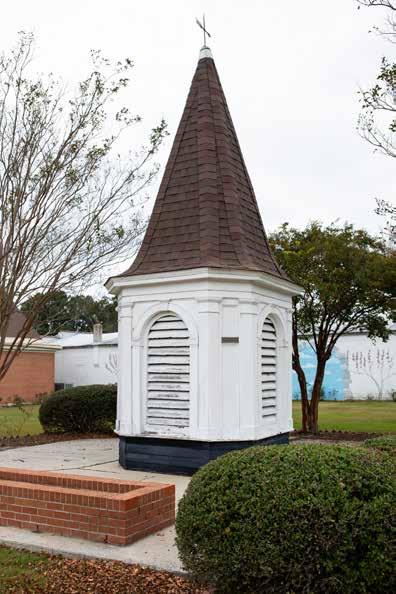
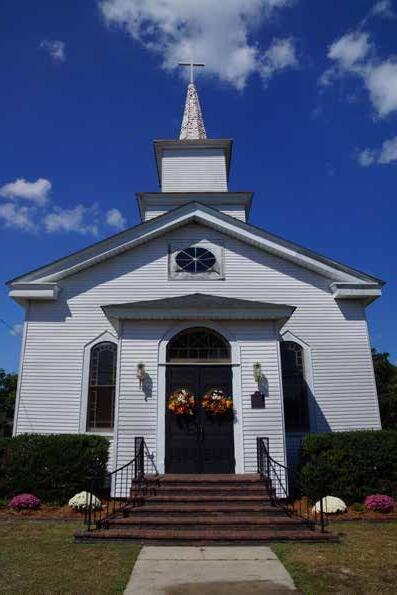
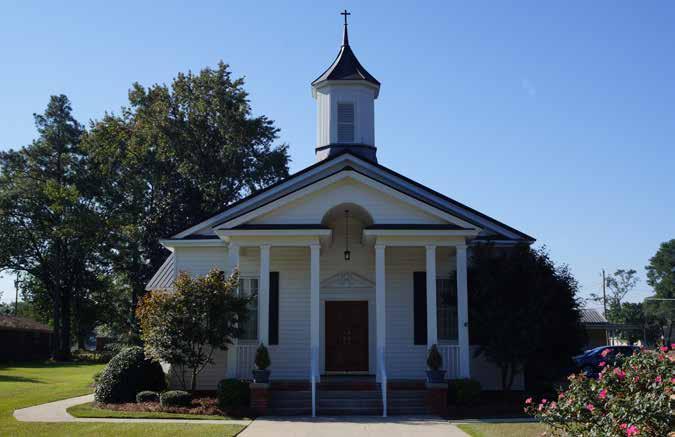
As the seasons change and leaves begin to fall, one can find comfort in these words from the good book. As written in 1 Chronicles 16:11, “Look to the Lord and His strength; seek his face always.” The autumn serves as a friendly reminder to fall for Jesus – his word, strength, grace, mercy, and unfailing love.
Lenoir County is home to many congregations. From historic and traditional to modern and contemporary,
there is a variety of churches and services found throughout the county. All of whom would welcome you to visit and call them your church home.
To begin the magazine’s first “Preaching the Gospel” section, the Lenoir Lantern gives you a few glimpses of churches around Lenoir County. In the coming editions, we will take you inside the church doors to meet the congregations and hear stories of enduring faith. LL
Pink Hill United Methodist Church
Photo by Madeline Gray
First Missionary Baptist Church, LaGrange
Photo by Laura Ashley Lamm, Ed.D.
PREACHING THE GOSPEL
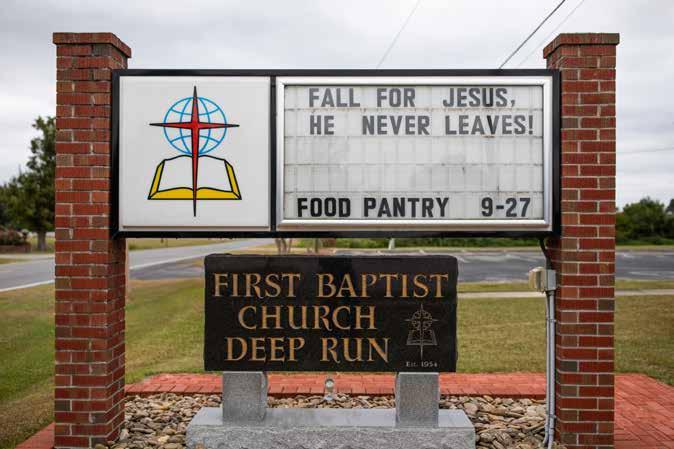
First Baptist Church of Deep Run
Pink Hill Presbyterian Church
Photography by Laura Ashley Lamm, Ed.D.
DASH AND SPLASH
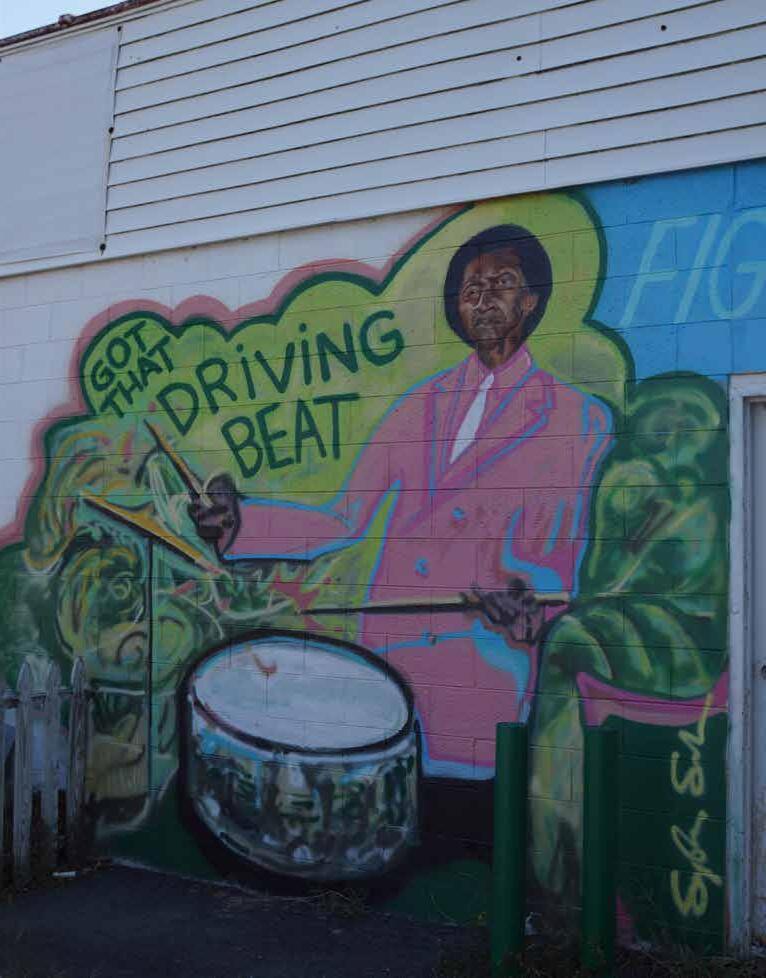
Fig Jones Mural, Pink Hill, Photo by P.J. Drew
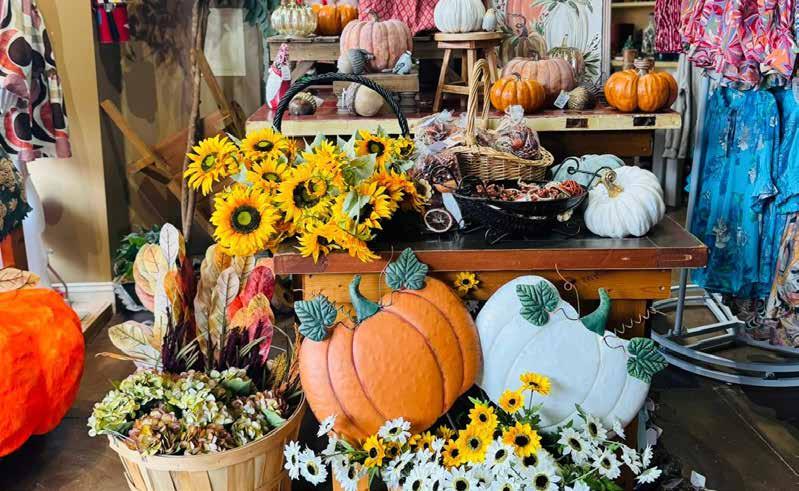
From housewarming parties and fall bonfires to potluck dinners and lavish football tailgates, every season brings forth a slew of gatherings and invitations, many of which require a gift. Bridal showers, weddings, birthdays, baby showers, fundraisers, and more. As a bonus, dinner parties and weekend visits ramp up as families return to a routine following a summer of freedom. It is often at these later events – dinner and weekend invites – that gifts are often forgotten as they are not for the party’s honoree, but for the host.
Before you arrive, the host will have gone through stages of preparation. From planning and preparing the menu to decorating and cleaning the house, the host is paying attention to every detail to make the gathering memorable. And, the host is likely stuffing knick-knacks and unsightly junk into closets and drawers only to be pulled out again after your departure. Arriving to the home with a simple gift serves as a token of your appreciation for the host’s effort and expense. Your host will be grateful for the gesture.
Written By P.J. Drew
The Collective Boutique, Deep Run
Pair any of the following gifts with a handwritten note, your calling card or pre-printed gift tag.
• A flower arrangement. Your host will be delighted if you bring flowers in a vase, whether a mason jar or a plastic cup, as your arrangement can immediately be placed on a table for viewing. Gather flowers from your garden or pick some from the local farmer’s market, florist, or flower farm. Large arrangements are unnecessary as small bouquets will do the trick. You will find adorable arrangements ready-to-go from Blooms-n-Grace or you can pick your own flower bunches from the beautiful Southern Oak Flowers stand.
• A fancy soap, candle or lotion. Wild Arrow Boutique offers an assortment of Cabana Sage candles to bring a soothing whisp of coastal destinations into the home. Foaming hand soaps by 8 Oak Lane in orange basil, lemon ginger or citrus sage from The Collective Boutique will leave hands fresh and clean.
• A pack of well-designed paper napkins. Cocktail napkins are always useful and Southern Roots Boutique offers the perfect collation to select from.
• A sweet treat or two. Chocolates, pastries, and home-baked goods are considered a happy gift for every occasion. Blueberry muffin and snickers cookies made by The Farmhouse Deep Run are sure to delight.
• A gourmet good. Shore Smoke Seasonings or a specialty blend of Carolina Coffee Co. Riley’s Southern Goods and Gardens can help you find a match for every taste bud.
• A gift that gives back. When you pick up a bottle of The Whole Shebang spice blend, you are supporting Pawsitive Changes, a non-profit dedicated to providing financial assistance for the spaying and neutering of pets locally.
• A bottle of wine. Delicious to the taste and with an assortment of flavors and price ranges to select from, a bottle of wine is considered an easy and suitable gift.
The host will find your gift meaningful, no matter the gift you choose. As the old saying goes, it is the thought that matters most. LL
Shopping Guide:
Blooms-n-Grace
108 West Gordon Street, Kinston
Southern Oak Flowers
376 Black Harper Road, Kinston
Wild Arrow Boutique
116 E. Broadway St., Pink Hill
The Collective Boutique
3492 Old Hwy 11, Deep Run
Southern Roots Boutique
101 W. Broadway St., Pink Hill
The Farmhouse Deep Run
3486 Old Hwy 11, Deep Run
The Whole Shebang sold at Leon Thomas Treasures
118 W. North St., Kinston
Riley’s Southern Goods and Gardens
405 E. Washington St., LaGrange
Lenoir County Events
Sand in the Streets
Grab your dancing shoes and enjoy live music. Sponsored by Kinston Strong, LaGrange natives, Spare Change, will kick of race weekend with a special concert. Friday, Oct. 17 from 7 p.m. – 9 p.m. on the street space in front of the Mother Earth Brewing Tap Room. Concert is free and open to the public.
Mother Earth Brewing Ironclad Half-Marathon & 5K
Whether you are a seasoned runner or just starting out, its time to lace up the running shoes and have fun on Saturday, Oct. 18. With a cannon start and a Granger Stadium finish, runners will converge on Kinston for the most welcoming race in Eastern NC. Advanced registration required. Visit www. ironcladraces.org for more.
Brad-Fest
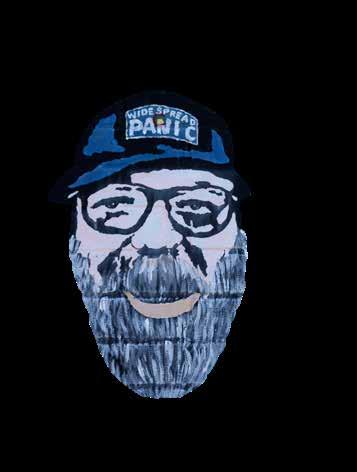
Join the community to celebrate the life of Brad Elmore through music. The third annual Brad-Fest takes place Saturday, Oct. 18 from Noon until 8 p.m. at Pearson Park. Featuring live bands, including 54 Bicycles, Thankfully Departed, The Wicked Shimmies, and Barefoot Manner. Food trucks and vendors. Event is free and open to the public.
Garden Spot Pageant
Tied to the crown and ready to sparkle. The Garden Spot Pageant will crown representatives on Saturday, Oct. 18 from 10 a.m. – 1:30 p.m. (tiny, little and juniors) and from 6 p.m. – 9:30 p.m. (teen and queen) at E.B. Frink Middle School in LaGrange. Tickets are $10 in advance and $15 at the door. Contact 252-286-01015 for more information.
Just Add Salt Boutique, Kinston. Photo by P.J. Drew
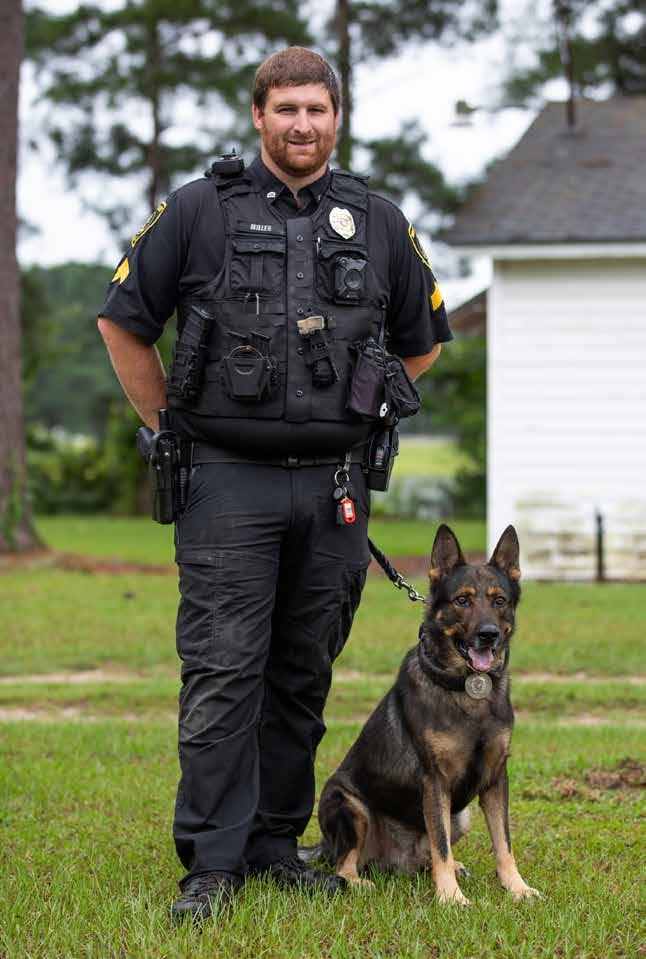
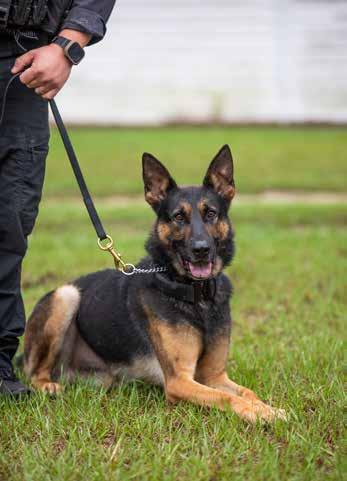
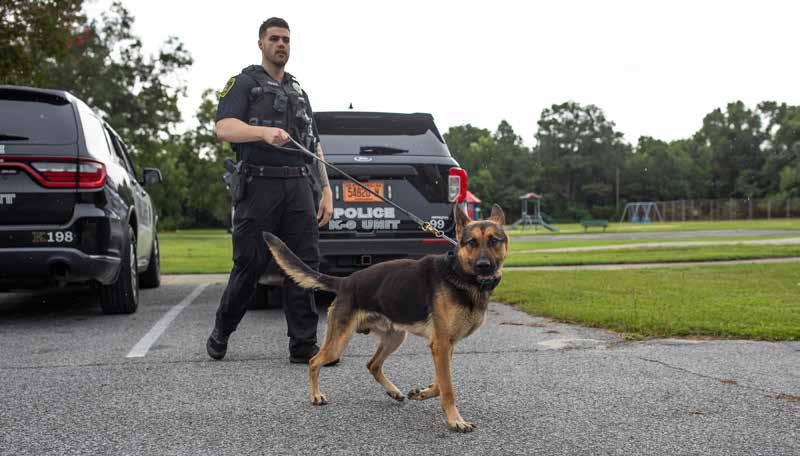
Sgt. Lucas Miller and Nero
On the Leash:
Exploring the Role of K-9 Units with the Kinston Police Department
Written By Laura Ashley Lamm, Ed.D. Photography by Madeline Gray
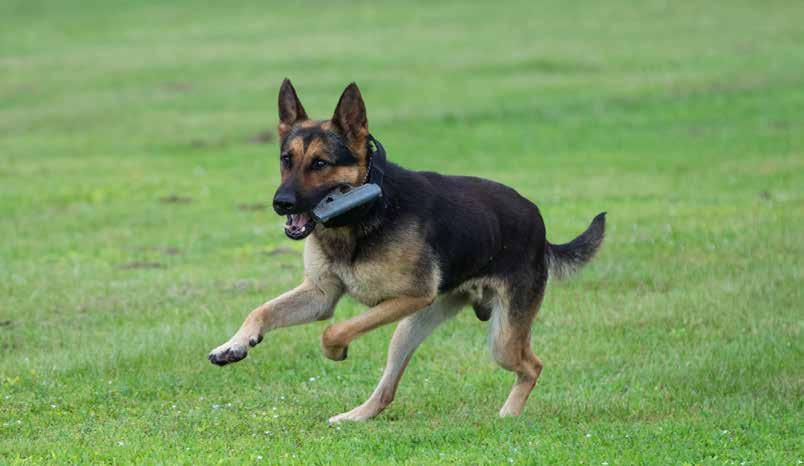
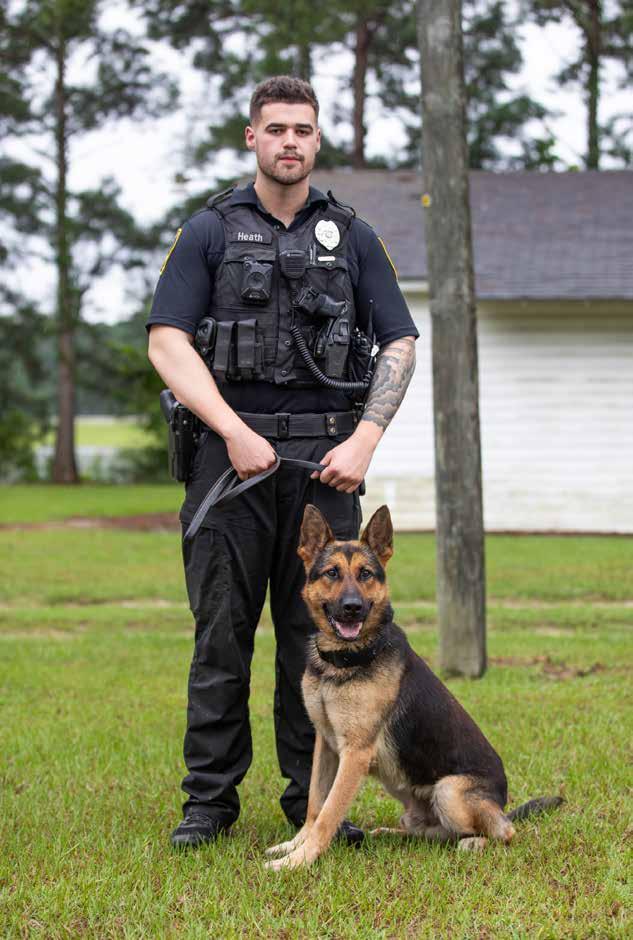
With his nose to the ground, Loki, a two-year-old German Sheppard and Malinois mix, was focused on the job at hand. His handler, Patrol Officer Christian Heath, had pulled the latch on the car, signaling to Loki it was time to get to work. Loki had a suspect to find.
Heath and Loki had been called in to assist in locating a suspect who had fled the scene. The suspect had broken into a storage unit by cutting a hole through a fence. The duo was called to the last known location, but the suspect had already fled. Loki was ready to find him.
“I went to the last location he was seen and started there. The dog smelled it, he walked down a path, and I followed,” said Heath. “When people are running from the police, they are nervous, they have a lot of adrenaline going and a lot of sweat to drop. There is more of a human scent, and it is easier for the dog to pick up on it.”
Loki tracked about three quarters of a mile and found the suspect hiding. He barked to alert Heath.
“When we find suspects, we let them know if they don’t surrender, we will send the dog. When Loki finds them, he will start barking. Since your hands are full with the dog, other officers will handcuff and take the suspect into custody,” said Heath. “Then you give the dog a Kong (toy), and the dog goes home happy.”
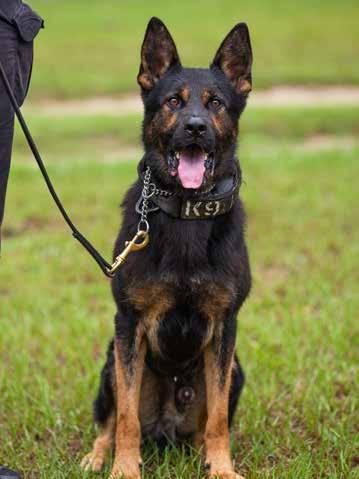
Loki and Heath are part of the Kinston Police Department’s K-9 Unit. Comprised of four full-service patrol dogs and their respective handlers, the dogs are trained for narcotics detection, article searches, tracking, and apprehension.
K-9 teams have been around for centuries in law enforcement and military contexts; however, the first U.S. police K-9 unit began in New York City in 1907.
Today, K-9 units are a regular, but vital, component of law enforcement agencies. Canines provide keen senses and the intellectual capacity for detection and tracking, while maintaining a strong bond as a partner to their human handler.
Selection and Training for the Field
The Kinston Police Department’s K-9s are obtained from and trained by Southern Police Canine in Nash County. The organization has a longstanding reputation around the nation for their experience and skills in developing reputable canine officers and trained handlers.
Southern Police Canine imports canines from Denmark. Every dog has a passport, and the selection process to obtain a K-9 is competitive and limited. For the dog and a handler’s training, the department spends approximately $15,000. Selection for a position as a K-9 handler is equally arduous.
“During our K-9 selection process, candidates go through a board review, run a physical fitness assessment and successfully pass, and they receive a rating on how close they live to the city as far as a call time on the dog. But really, they must be driven, hardworking, and have a lot of patience. The dogs can be hard-headed because they are dogs,” said Captain Caleb Ard, who oversees the K-9 teams.
“Just like you or me, sometimes you wake up, and you may not want to go to work. The dogs may wake up and not really want to go as they can be moody or temperamental, but this is the best group of dogs I have ever seen. They are spot on it,” he added.
When canines and handlers are selected, they
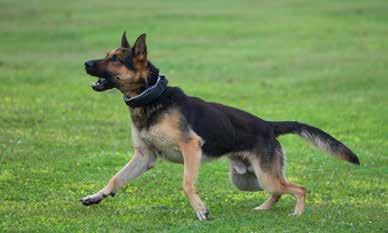
Loki, one of the Kinston Police’s K-9s, runs during a recent training day.
participate in six weeks of training at Southern Police Canine’s facility. Training focuses on bonding, scent discrimination, tracking, narcotics detection and more.
Scent Discrimination and the Science of Tracking
Dogs have an extraordinary olfactory capability, which far exceeds that of humans. They have a high number of olfactory receptors with close to 300 million in comparison to a human’s range of 5-6 million receptors.
Humans, by nature, have their own individual scent or rather a unique odor “fingerprint.” These human odors are created through a variety of components, including health and dietary factors, biological makeup, age, hormone levels, cosmetic products, and other types of residues. While there are other odor molecules humans naturally produce, all of these factors combine together, and they scent the skin grafts that leave the body.
As humans move, they create a unique odor trail through the loss of skin grafts, sweat and other odor
producing molecules. The stronger the odor, the stronger the scent for the dogs to track.
“If somebody broke into this building, the person will have more of a fear scent that any of us walking in,” said Sgt. Lucas Miller. “The dog tracks on crushed vegetation on the ground, skin flakes dropping off of you, and the increase in your sweat due to fear—your scent is stronger than a person walking in the door.”
As a result of proper training, the dogs have learned to discriminate the odor of one human even when that scent is mixed with the odor of others. They have also learned to identify to whom the odor belongs, a crucial skill to aid law enforcement.
Dogs can also follow the suspect’s footprints from the point last seen, using the scent of the crushed vegetation and other disturbances to the ground’s surface where the subject’s feet have made contact.
“Loki is trained to follow scent discrimination from where the suspect has touched the ground and caused changes in sedimentation,” said Heath. “He can find any drugs in a car, he can track someone who has run, and he can find articles. If you are chasing someone and they take a gun and throw it, he can find the gun.”
Humans leave an odor fingerprint on everything they touch. K-9s are trained to uses their senses to lead tactical tracking missions where human senses fall short.
On the contrary, heavy rain can wash away a scent. The length of time a scent is left can play a role in its ability to be tracked. Not only can the dogs smell and track, but also, they can just as easily listen and hear, and block out excess noise.
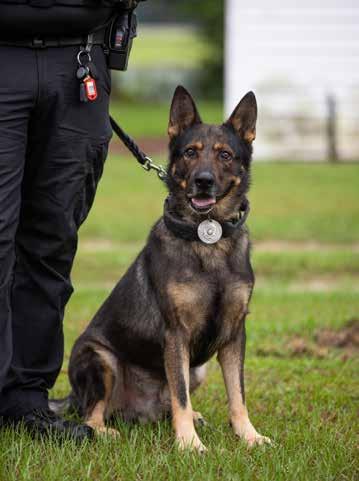
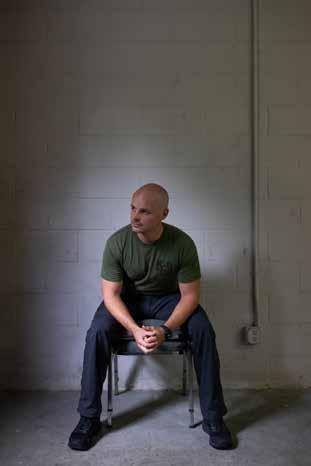
Miller and six-and-a-half-year-old Nero have been partners for the last five years. The most experienced K-9 in the field, Nero can hone his senses to narrow in on the scent he’s found while ignoring the distractions around him.
“Nero doesn’t really pay attention to the other animals, but small dogs he does not like. For the most part, he blocks them out and other people, too. If we are out looking for somebody, he will key up on people we are looking for. I don’t know how he knows, but he knows,” said Miller.
Trained canines who fully understand scent discrimination will be able to follow and maintain the correct trail, as Nero does, even in high traffic areas. Ignoring those who pass by and other distractions, the dog can locate the correct individual and communicate
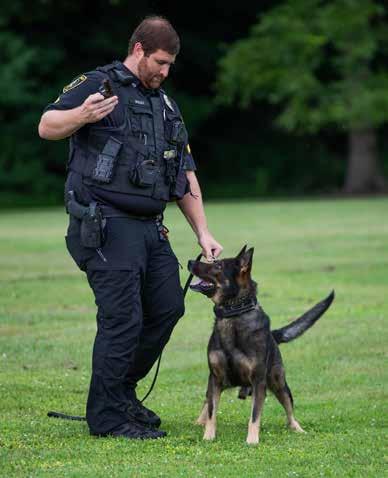
Nero locks eyes with his handler, Sgt. Lucas Miller, and waits for instructions following an article search training exercise.
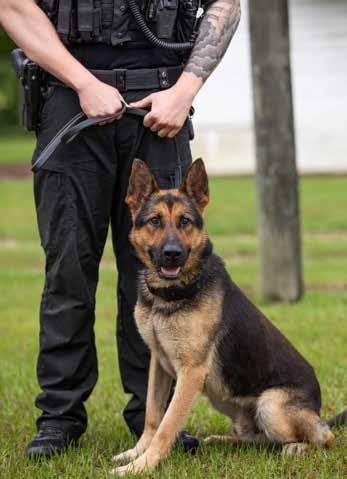
Clockwise from top: Loki, Kilo, Nero and Knox are trained in narcotics detection, article searches, tracking, and apprehension.
to the handler when that individual has been located.
“When someone is sweaty or they are in flight, they drop tons and tons of human DNA that me and you can’t smell, but the dogs’ senses are overwhelmed by it, and they go right to it,” added Ard.
The Science of Search Patterns and Tracking
K-9 search patterns and methods involve specialized techniques and directional cues from the handler to follow a ground scent or a scent article to find a person or object in a specific area. It combines the use of the dog’s sense of smell and the handler’s systematic approach.
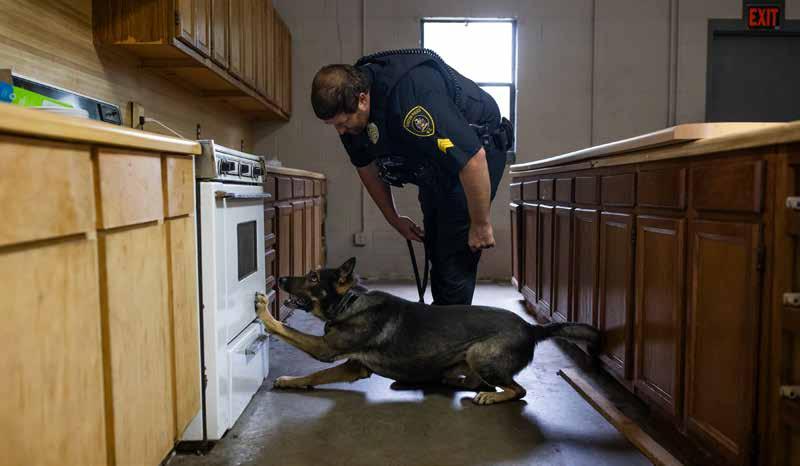
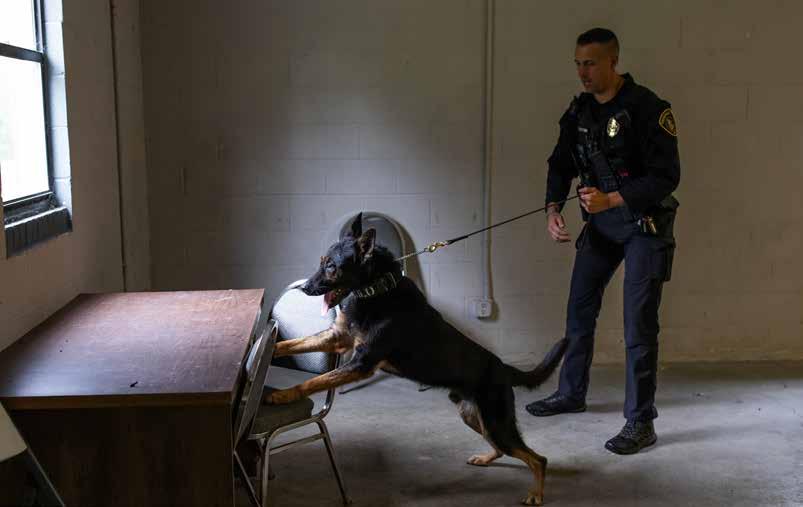
Drugs ceased from the streets are used as training aids for the dogs. They are trained to track methamphetamine, cocaine, and heroin. At a recent training day for the police department’s K-9 teams, the dogs were practicing narcotics detection by searching and locating black tar heroin, which had been hidden in the room of a training house.
“Your body language makes sure he (the dog) goes in the pattern or direction the handler has selected; pretty
much going up and down. You don’t want to differ from that,” said Miller. “I’m not presenting an area, but making sure he is going up and down to search every piece.”
Handlers guided the dogs to search the room by varying levels, with searches of the floorboards, cabinets, tables, chairs, and window sills.
“K-9 work is a very rewarding task at times. When it comes to the reward, you will have a lot of failures before you will get a reward,” said Miller. “A lot of times tracks are failures, and when I say, ‘failures,’ we don’t find the person.”
When a “failure” occurs, it is often because a suspect entered a vehicle or information supplied to officers about the whereabouts of the suspect was incorrect, causing tracking to occur in the wrong direction. For example, officers were told the suspect fled to the right, when they fled left.
Handlers give commands to the dogs in either Dutch or German. Handlers and commands vary with intonations, pitch, and inflection. Trained dogs can understand, on average, between 165-200 words. Because many working police dogs are imported from
Nero alerts his handler, Sgt. Lucas Miller, to black tar heroin hidden inside the oven during a K-9 training exercise.
European countries, they often arrive having already undergone initial training in their birth county’s language of origin.
K-9s are focused on commands. Miller can give commands to another K-9 on the force, but the dog will ignore him. “I can holler some commands at another dog, but he will ignore me because I am not his handler,” he said.
The ability for a handler to successfully give a command to a dog, is due in part to the handler’s ability to understand the non-verbal behaviors presented by the canine.
Identifying Non-Verbal Behaviors
Canines, like any animal, use a wide range of body language and facial expressions to communicate feelings like fear, aggression, stress and relaxation. These non-verbal behaviors can include ear position, tail movements, body posture, lip licking, yawning and eye contact. A handler’s ability to understand these cues is crucial for interpreting a dog’s intentions, emotional state and desire distance or interaction.
“Anytime the dog is doing something, he is going
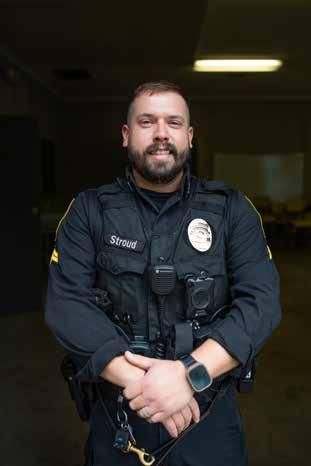
to have a behavior change; whether it is tracking and trailing, narcotics searching or article searching, anytime the dog gets an odor, his whole demeaner changes,” said Corporal Justin Stroud, who serves as handler for three-year-old Knox.
“His ears perk up. His breath gets rapid. He starts breathing heavier. You learn to pick up on those things. If you don’t see something at that moment, you can tell by the dog that you are near, and you can calm him down, and take a look at what you’ve got,” said Stroud.
“Knox will be checking, checking and checking. Then, all of sudden, you’ll see him change his behavior. He can’t talk to me and tell me what is going on. By learning him, I can tell when he has found something,” Stroud continued. “Every dog is different and has different characteristics, but with my dog, Knox, his breathing changes, and he gets really excited.”
Riding in the squad car and hearing the sirens provide auditory cues to the dogs. The unlocking and opening of the car door does, too. “When the door comes open, at that point, he knows to get out and look for a handler. He knows something is going on, and I need to find whoever I belong to,” said Stroud. The handler’s non-verbal cues will also signal to the dog.
“Your actions go down the leash. Your dog can feel how you’re feeling,” said Stroud.
Knox and all the K-9s can read and sense motions of suspect. If he is assaulted or the handler is assaulted, it will prompt him to bite. “If we tell him to bite, he will bite,” said Stroud. “He reads a lot of suspect behavior and movements and can pick up on those assaultive motions.”
Rewards, Relationships and Trust
In K-9 teams, rewards are evident for both the dog and handler. Whether it is the dog receiving a favorite toy after completing a designated task or the handler watching the dog’s excitement for finding a suspect. As the pair train and work together, they form a bond, and over time, it continues to strengthen and grow.
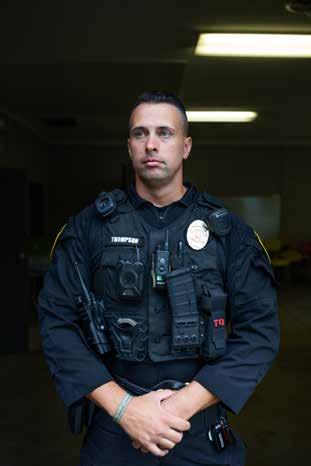
“You see them put in all this work and then it starts to come to fruition on the street. Yesterday, Kilo found a gun after a foot chase. Another week, he found cocaine. Nothing changes, we all do the same thing we do in training, but we are finding actual items. To me, it is the coolest thing. They can walk around a car and decipher
the odor that isn’t just sitting there but is inside a baggie or a glovebox,” said Officer Wil Thompson about his twoand-a-half-year-old canine, Kilo.
“For humans, when you walk into a room and smell a hamburger, you’re like, ‘that smells good.’ When they walk into the room, they smell the lettuce, the tomato, the meat, and the seasoning on the meat.”
For Thompson, working with Kilo is not just about his intelligence and skills but also about the connection between human and canine.
“Every time he comes out of the car, he is going to work. He is excited, and he spins around. He may be working, but he thinks he is playing,” said Thompson. “He is super sweet, and we have a bond that is unlike anything else. No one will ever understand the bond between a handler and a dog.”
That bond is something all the officers recognize and appreciate.
“The bond you have is great. This is a very rewarding career choice and path,” said Stroud. “You have a companion with you all the time. You may be out on an alarm call, and you can get him out to walk with you. He is extra protection and comfort, and I find myself
Patrol Officer Christian Heath and Loki
talking to him because he is in the car,” said Stroud.
Miller added, “He is pretty much your backup, and to be honest, I trust him (Nero) pretty well. After having him five years, I know what he is thinking, what he is going to do in situations, and I have no questions about it.”
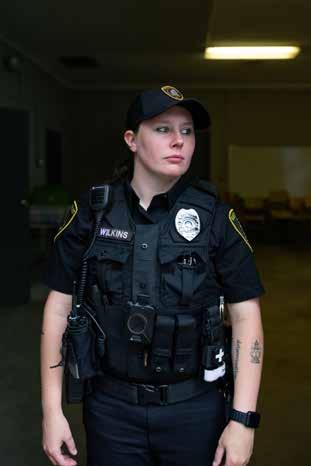
Having been promoted within the police department, Miller will transition from being Nero’s handler, and he passes the role over to Patrol Officer Candace Wilkins.
“I was very intrigued and excited about the work K-9 teams do. The bond the canines and handlers have, plus the team atmosphere, all of it is very nice. I have heard it is the most rewarding job, and I’ve heard that from everyone who has done it,” said Wilkins.
“Learning from Sgt. Miller has been beneficial, and I
am lucky to have had that opportunity. I’m nervous, but I’m also excited,” she added. “It is important to build a bond with your dog, be a team player and be dependable because a lot of times you are specifically called to spots because of the tool you have,” she added.
In the end, serving on a K-9 unit is a lot of hard work from both the handlers and canines.
Ard said, “This team is a great asset to the police department. I’m very proud of these guys. They put in a lot of hard work and that has really been showing on the streets from seizures to locating people.”
And one final reminder for the public about the dogs, “while they may be pretty, don’t touch them,” said Ard. Afterall, they are working as soon as they step out of the vehicle. LL
During narcotics detection, Officer Wil Thompson directs Kilo through a series of search patterns as they track black tar heroin.
Clockwise from top: Corporal Justin Stroud, Officer Wil Thompson, Captain Caleb Ard, and Patrol Officer Candace Wilkins of the Kinston Police’s K-9 Unit.
Beyond the Beat: The Benefits of Zumba
Written By Laura Ashley Lamm, Ed.D.,
Photography by Madeline Gray
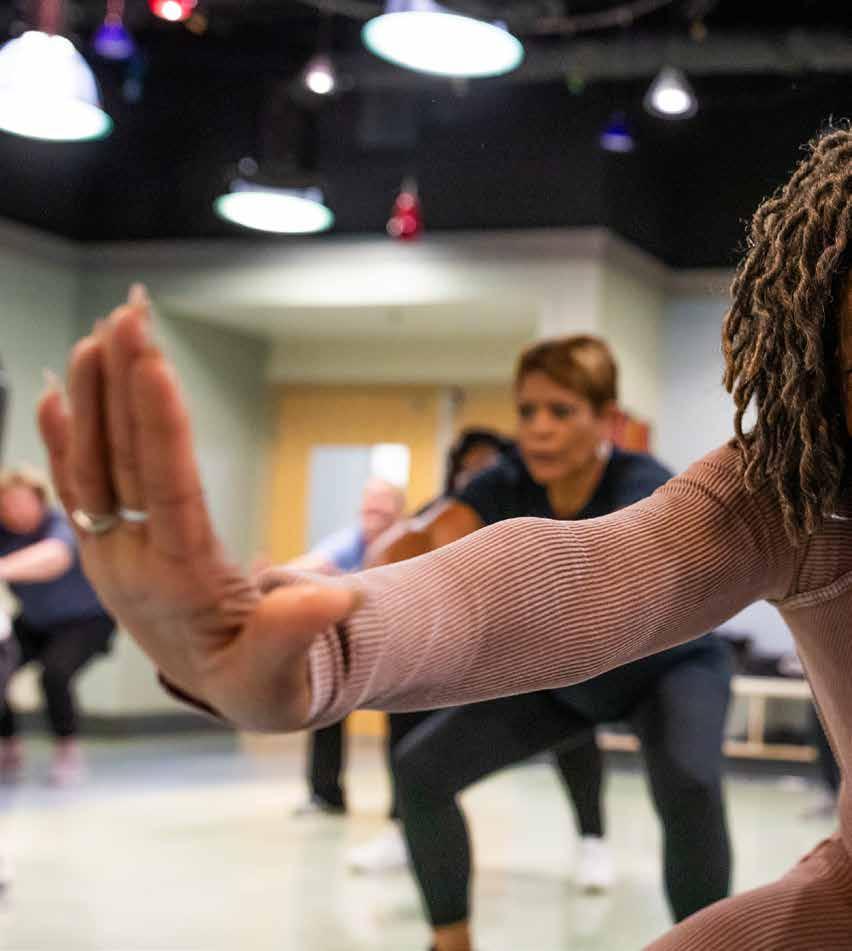
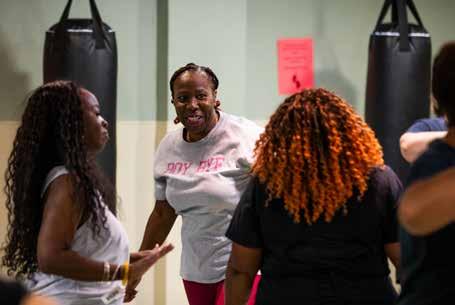
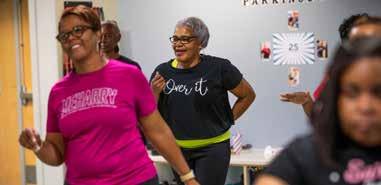
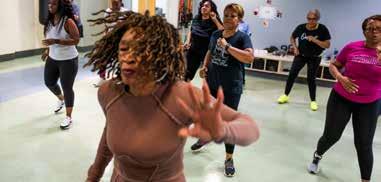
Zumba instructor Dianne Fisher leads a series of muscle strengthening exercises to build tone and increase balance.
Establishing healthy living practices, joining a motivating community, singing along to music hits, and moving to easy-tofollow dance steps will have you saying, “Let’s Zumba!”
Zumba Fitness defines itself as “taking the ‘work’ out of workout.” Featuring a mix of low-intensity and high-intensity moves in an interval style, the workout gets your heartrate pumping and calories burning at a safe pace. Billed as a total body workout, Zumba combines “all the elements of fitness—cardio, muscle conditioning, balance and flexibility, boosted energy, and a serious dose of awesome each time you leave class.”
Licensed Zumba instructors Theresa Hooker, Dianne Fisher, and Yoko McLawhorn lead the Zumba Fitness classes at the Minges Wellness Center (MWC) at UNC Health Lenoir. Zumba is one of the many group fitness classes offered and designed to help members stay active, exercise regularly, and improve their overall health and wellness.
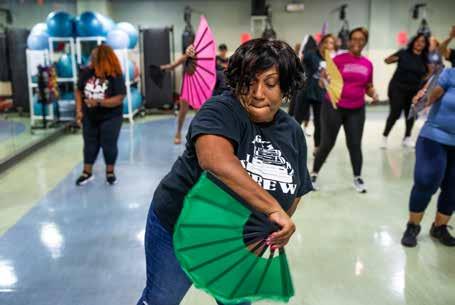
Each instructor brings her own style and musical choices. From Latin and gospel to 70s classic and modern pop hits, there is plenty of variety in movement and music. All instructors value motivating and encouraging attendees while fostering a supportive, community atmosphere.
“Zumba is a very energetic way to express yourself in losing weight and to enjoy it while you are doing it; that is the best way I can describe it. Zumba is a mindset of enjoying yourself and being around a community that loves to do what they do,” said Fisher.
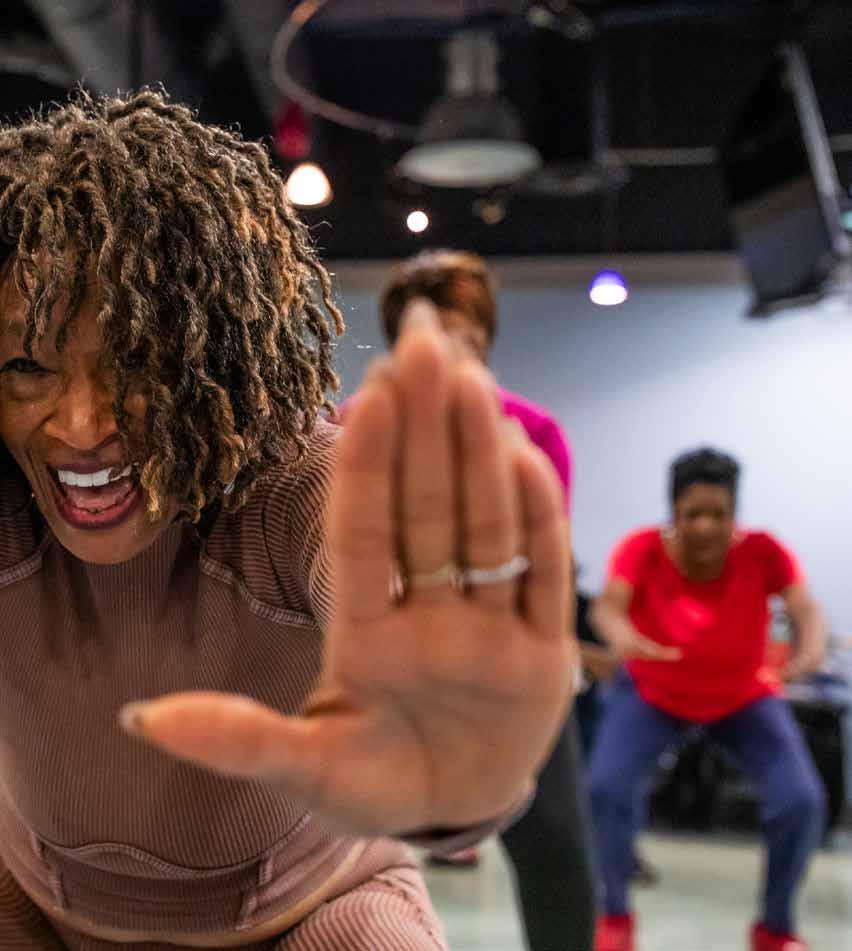
Classes start with a warm-up allowing for the gradual increase of heart and breathing rates, blood flow through the body, and muscle stretching—all in preparation for exercising. This program doubles as a way to help reduce stress on the cardiovascular system during workouts and to strengthen the heart muscle. Once the warm-up is completed, the beat drops, energy increases, arms go up, and its as if a firecracker goes off in the room.
“When I first started, I got my nickname, ‘Firecracker,’ because I was always excited and
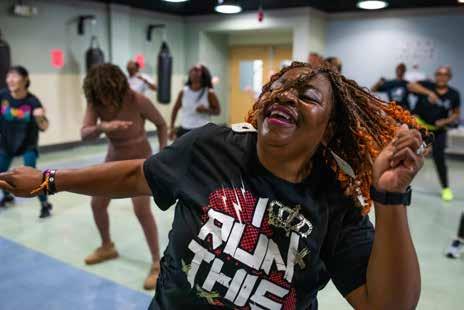
With fans, salsa steps and big laughs, classes offer a variety of movements and music to engage participants.
really into dancing every time I would come to Zumba,” said Hooker. “I’m still a firecracker. Now, people know if I wear my red shoes, we are going to pick up the tempo, but if I wear other shoes, we are going to tone it down a bit.”
Fisher brings her own style to class. She adds strength and toning exercises with light weights and abdominal crunches. Her music style ranges from hip hop and soul to Chrisitan with a goal of incorporating music to lift attendees emotionally and spiritually.
“In the beginning, I always open with a Christian song, add another midway through the class, and end the class with a Christian song. When I use music, especially at the warm up or closing of class, I use songs that talk about emotions, fulfillment, happiness, giving your life to Christ and the blessings you encounter every day that God has given to us. By the end of the class, people have more hope and stability.,” said Fisher. “Zumba helps me to be a better person in helping others, but the music encourages me to know that I can be a better person through Christ Jesus as can everyone in class.”
Both Hooker and Fisher continue leading classes with encouragement and acceptance. It is more important to keep moving during the one-hour than to have all the steps correct. “If this is your first time or 100th time to class, the people around you will encourage you. Don’t worry about the person next to you and what they are doing, you worry about you,” said Fisher. “As long as you’re moving, that is what matters.”
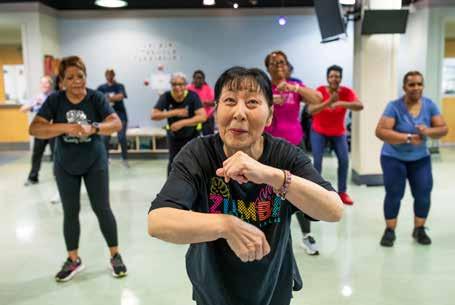
“When you come to the class, this is your hour. You are not going to do exactly everything I do as an instructor, but enjoy yourself. Do your pace. This is your hour to say, ‘I want to take care of me,’” added Hooker. While everyone arrives at Zumba class for the first time with a goal of improving her health, each keeps retuning not only for the health benefits but also for the extra gains—the friendships and the community atmosphere built on a linoleum floor to the soundtrack of dance hits.
“When you come in here, you will realize
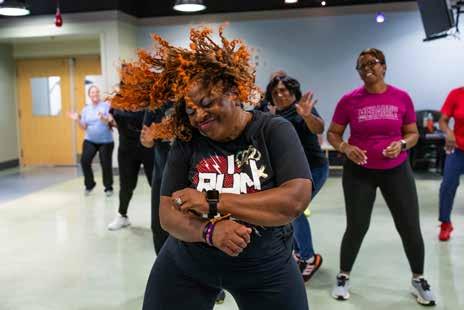
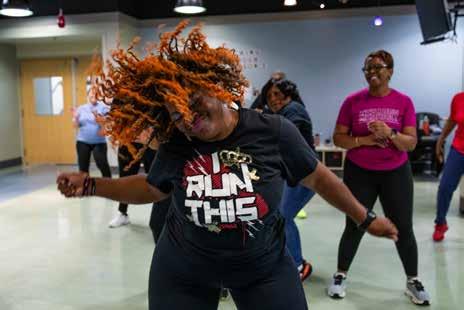
With hair swinging and music pumping, Zumba instructor Theresa Hooker helps increase heart rates with a high-energy routine.
it is more than just Zumba. It is friendship. It is family. We look out for each other. We take care of each other. Sometimes we have prayer if people are going through something. That is what I love about Zumba. It brings people together and makes us a family,” said Hooker.
She added, “People really connect here. They walk around the hospital track afterwards, workout on the gym equipment, meet up on the weekends, and continue getting together after class is over.”
If you miss too many classes, another class member will reach out and check on you. The MWC will mail you a postcard letting you know they are thinking of you. They send birthday cards in the mail, too. It is a place and a space where everyone is remembered.
Give Zumba a try, go at your own pace, take water breaks when needed, and make new friends. Feel encouraged and supported no matter where you are in your health journey. Find a community within a community, and watch the people become family. See the benefits to your mental, physical and spiritual health. And, as Hooker said, “Once the beat drops, let it all go, and put in on the floor.” LL
Benefits to the Heart Muscle
Zumba is a cardiovascular workout and thereby it plays a role in helping your heart grow stronger. Minges Wellness Center Coordinator Julia Daniel explains the how the heart muscle, blood flow, oxygen and Zumba are working together to create a healthier you.
“Your heart is a muscle made up of muscle tissue just like your skeletal muscles such as your bicep. When your heart rate gets higher, you are exercising the heart muscle at a quicker rate so it helps the heart to become stronger and pump blood more efficiently.
Sometimes you will hear about marathon runners having a resting heart rate of 30 beats per minute and that is because their heart muscle is stronger. With every beat that is pumping out more blood, your body needs a certain amount of blood per minute. If your heart is more efficient, then it can get out the same amount of blood with 30 beats than a less strong heart muscle can with 90 beats. When you exercise, all the muscles in your body need oxygen. The oxygen is in your blood and as the heart rate goes up, more oxygen is needed with the more muscles you are using.
Zumba is a good example. In Zumba, you are standing up and more muscles are working. The muscles are working against gravity to keep you up right. If you think about doing a seated new step, that is using less muscles because you are not using your postural muscles to stay up right.
This is why Zumba is a good cardio workout. You are moving around the whole time and using more muscles, especially when you incorporate things like the Zumba shaker weights. You are getting your heart rate up and keeping it up for a long period of time, which is how you make cardiovascular modifications and strengthen your heart muscle.” LL
Through dancing and smiles, members of the Minges Wellness Center focus on healthy living through group fitness classes.
More with Minges
Minges Wellness Center (MWC) offers 26 group fitness classes and specialized programs a week in addition to open gym hours for use of cardio equipment and weights or for walking laps on the indoor track.
Group fitness classes include: Tai Chi, Tabata, Zumba, Zumba Gold and Zumba Toning; cardio drums, chair aerobics, chair express, seated yoga, brick bodies, standing aerobics, simple strength, and boot camp. Classes run Monday thru Saturday and a schedule can be found at www.unclenoir.org/ wellness.
MWC provides specialized programs for individuals with Parkinson’s disease and those receiving cancer treatment. “Get Real and Heel” and “Punching Through Parkinson’s” classes are offered twice weekly. Speak with MWC staff for more information.
Standard rates for membership are $20 a month, $5 for a one-day pass, and $10 for a three-day pass. Fitness benefits are accepted from those enrolled in FitOn Health, Renew Active, Silver Sneakers, and Silver & Fit. LL
Member of the Month
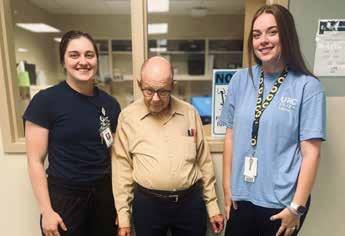
Wellness Coordinator Julia Daniel, left, and Exercise Specialist Alyssa Dunn, right, are joined by Eugene Kupstas, center, who was recently selected as the Minges Wellness Center Member of the Month. Kupstas was honored for his dedication to exercising and the overall joy he brings to other members in the gym
Navigating Breast Cancer from Early Detection to Treatment
Written By Laura Ashley Lamm, Ed.D.
by Madeline Gray
Thousands of Americans will face a breast cancer diagnosis this year. As Breast Cancer Awareness Month takes place this October, many will acknowledge the global campaign to raise awareness about the disease, share the importance of early detection, and place a focus on research and treatment options.
“One in eight women will be diagnosed at some time in their life with breast cancer. There are about 4 million survivors in the United States, but not everyone does survive. Early recognition remains important,” said Dr. Jamie Serrano, a general surgeon who specializes in disease of the breast, at UNC Health Lenoir Hospital in Kinston.
“When we think of breast cancer, we only think of women most of the time,” said added, “but it is estimated this year that 316,000 women and 2,800 men in the U.S. will be diagnosed with breast cancer. Men have breasts too, but they are not as hormonally active.”
drops to 87 percent. As soon as it goes anywhere else in your body, it drops to 32 percent,” she added.
The importance of early screening and detection are one of the reasons mammograms begin at 40 years of age. Serrano notes receiving a mammogram, every other year at 40, 42, and 44 years of age is acceptable. Upon reaching 45 years of age, a mammogram should be completed and occur every year thereafter. If there is a family history of genetically passed breast cancer, those individuals may begin mammograms at 30 years of age.
Early detection remains a critical factor in the battle against this disease. “Breast cancer is cancer of the breast. When we talk about the cancer itself, early detection is the number one thing,” said Serrano. “If you are diagnosed with breast cancer and it is local, it is still just in your breast, meaning it isn’t found in your lymph nodes or other parts of your body, the chance of being a survivor are 99 percent. That’s a big deal.”
“As soon as it goes to the lymph nodes underneath, it
“The average age of breast cancer is 62, but it is becoming more common in younger women and it tends to be more aggressive in that age demographic,” said Serrano. “Male breast cancer tends to be more aggressive well.”
The Lenoir Lantern sat down with Serrano for a one-onone discussion on breast cancer, covering important topics such as: risk factors, early detection, mammograms, breast cancer classification systems, biopsies, treatment options, and navigating the process. Read below for more on this conversation.
Breast Cancer and Risk Factors
“If you lie in a risk factor that is around 20-25 percent, that qualifies you for early screening, meaning starting at 30, and possibly MRIs mixed in with your
Photography
General Surgeon Dr. Jamie Serrano shares the importance of early detection and understanding a breast cancer diagnosis.
mammograms. When I say high risk, if you have been genetically tested and you have one of the genes that are associated with breast cancer, you can start your screenings earlier,” said Serrano.
Having radiation to the chest before the age of 30, reasons such as childhood leukemia, will cause individuals to be at a greater risk of breast cancer later in life.
The streamlined process of detecting and treating cancer, is part of the reason there is a higher rate of survivors, notes Serrano.
“You’re going from an initial mammogram showing a suspicious lesion to within a week or two having a biopsy by the radiologist team. At that point we have a diagnosis and I’m seeing a patient in my clinic within a week,” said Serrano. “My goal is to always have you in surgery, if surgery is the first step, within 30 days.”
For some, chemotherapy may be the first step and time to treatment remains within 30 days, said Serrano. There should be no more than a maximum of 60 days between the first mammogram to treatment. “Part of my job is bringing reassurance and feeling the urgency, too, and getting this done in the right timing,” said Serrano.
Early Dectection
In addition to routine mammograms, self-breast exams are another avenue for early detection, especially if you feel a lump or change in the breast.
month-to-month comparisons
• Conduct the self-breast exam in the shower
• Raise up one arm on the side of the body being checked first.
• Move hands around the breast in a circular motion feeling for lumps, bumps and changes.
• Notice any rashes, bruises or new nipple discharge. If signs of those appear, call the doctor and make an appointment.
Mammograms
“A primary care doctor should bring up a conversation about mammograms with you, if not, then you bring it up,” said Serrano. “If you have an OBGYN, that is a great person to ask, too.”
“By the way we are feeling it, by the time it is a centimeter or two, the risk of spread to those lymph nodes is still a little bit higher. Being said, I still tell my patients to do self-breast exams. You know your body better than anyone else,” said Serrano.
Serrano recommends completing self-breast exams by these steps:
• Menstruating women should select a time around their menstrual cycle.
• Select the same time each month for better
“Men, obviously, do not do mammograms. Their’s is more of a self-detection. If they have a family history of genetically passed breast cancer then that is something they can discuss with their primary care physician,” she added.
The Classification System: BI-RADS
Surgeons, radiologists and oncologists – all part of one’s cancer care team – needed a way to report and describe the results of a mammogram. The Breast Imaging and Reporting Data System, known as BI-RADS was developed. When a woman has a mammogram, the result she receives is a BI-RADS number. “This is a well-defined system that talks about what your risk of cancer is,” said Serrano. As explained by Serrano, the rating system is as follows:
BI-RADS 1: “A BI-RADS 1 is the most normal breast out there. There is nothing abnormal at all.”
BI-RADS 2: “BI-RADS 2 is ‘hey, there is something there, but we’ve seen it the last few years.’ It is has not changed or is perfectly round. No odd shape or calcifications to this and no biopsy is needed. There is a 90-99 percent chance of being benign.”
BI-RADS 3: “There is a 3 percent risk of being cancer.
It is not perfectly round, but a mix legion. Instead of waiting a whole year for another mammogram, let’s do it in three or six months. All BI-RADS have sub A, B, C categories, too.” If there is a change in the three-to-sixmonth window, a biopsy is scheduled.
BI-RADS 4 and BI-RADS 5: “This is when we go, ‘that might be a cancer.’ A BI-RADS 4 jumps over the 30 percent marker for being a cancer and 5 jumps into the 70-90 percent chance of being a cancer. Both of those get biopsied every time.”
Biopsy
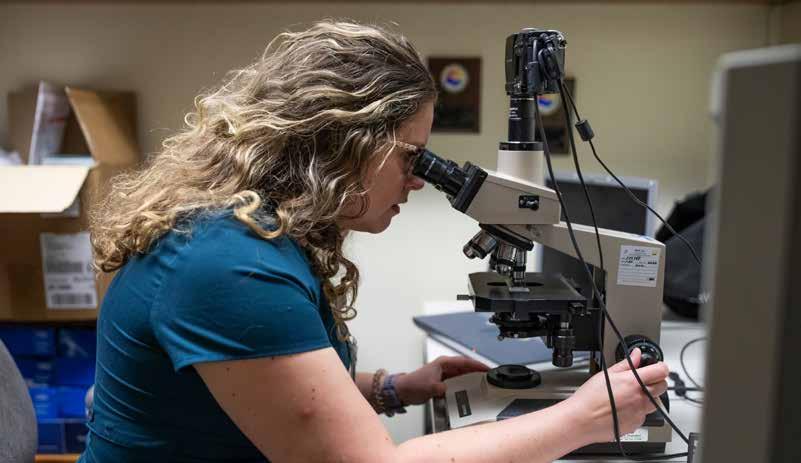
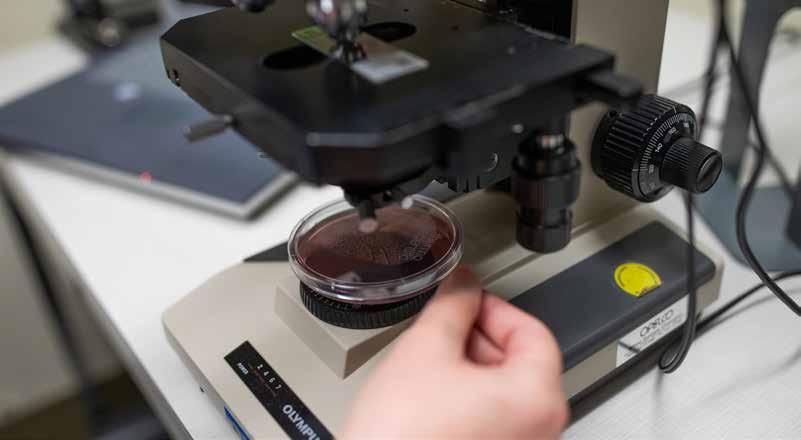
For patients requiring a biopsy, this will include the removal of a tissue sample from the suspicious lump in the breast for examination under a microscope.
“Patient comes in for an ultrasound of the breast. The breast will be numbed. A large bore needle will pull a sample of tissue out from the suspicious lump. A little clip will be left in there, because later during surgery, I’ll use the clip to find where the biopsy was done. The tissue then goes to the lab and a patient will receive
results in one to five days,” said Serrano. A pathologist will examine the tissue and determine the type of cancer. By the time a patient meets Serrano, the surgeon, she will have completed a mammogram, had an ultrasound and biopsy, and received a diagnosis.
The Classification of Breast Cancer: Stages and TNM
There are five stages of breast cancer from the earliest stage (carcinoma in situ) to stage IV (4). As a rule, the lower the number, the less the cancer has spread. The higher the number, the more the cancer has spread.
Stage 0: “This means the cancer has not left its original spot, be that in a duct or nodule gland. The cancer cells have not gotten aggressive enough to bust out of their membrane and invade the tissue around them,” said Serrano. “There is not a real mass to measure. There is this calcification to measure. The goal is to take all of that out, and a lot of time, those are hormonally active and will be followed up with a hormone treatment afterwards.”
Dr. Jennifer Serrano examines a tissue sample following a patient’s biopsy.
Invasive cancer has a tumor of varying size and this is when doctors will discuss staging, which includes the TNM Staging System. “T” representing the tumor size. “N” representing the lymph node status. “M” representing metastasis.
T1: The tumor is under 2 centimeters or less than 1 inch in size.
T2: The tumor is between 2-5 centimeters.
T3: The tumor is over 5 centimeters.
T4: The tumors are very aggressive. They may be in the skin or pectoralis muscle or they have invaded out of the breast locally.
N0: No lymph nodes are involved.
N1: Some nodes are found to have cancer.
N2: A larger number of bulky and matted nodes are present.
M classifications are either “yes” or “no” to whether the cancer has spread. Common places of metastasis are the lung, brain and bone.
The TMN results are used to classify the stages of breast cancer into what women commonly recognize,
Stages I – IV, based upon the results of tumor size, nodules, and metastasis.
Patient, Physician, and the Emotions of Cancer
“When you say to somebody, ‘you have cancer,’ it is a very emotional time. For breast cancer, it tends to be even more emotional. I don’t know if it is the cultural stigma that we have put around the breast to say this is what makes us a woman,” said Serrano.
“Do you know why you are here?” is the one question Serrano starts every appointment with. Then she proceeds to ensure you understand breast cancer and the breast in general.
“The breast is made up of two main components, ducts and lobules. Think about grapes, how you have the stem and the actual grapes. The stem part being the ducts and the grapes being the lobules. The breast is made to make milk, the lobules are the glands which makes the milk and then sends it down the stem, which is the ducts,” said Serrano.
Then she explains the type of cancer, such as invasive lobular carcinoma or invasive ductal carcinoma. She discusses cancer size, the biopsy clip and focusses on
explaining three main points: this is what you have, this is where it is and this is what is means for you. A physical exam and patient history will follow.
Treatment
Once the diagnosis of breast cancer has been made, the physician will discuss treatment options which can include surgery, medicine, radiation or chemotherapy.
“There have been a lot of great landmark studies in breast cancer focused on breast conservation meaning partial mastectomy,” said Serrano. “Part of this is providing a good cosmetic result for the patient. This is determined by current breast volume, tumor size and location of the tumor.”
Serrano reviews breast cancer studies with patents and tells them, “The best two options that we see women do really well with is either a total mastectomy or a partial with radiation. If we are going to do breast cancer conservation, then we must have a commitment
to radiation after surgery.”
Radiation can be completed at the UNC Health Lenoir Cancer Center and is typically a three-to-sixweek commitment. A patient will undergo radiation every day, but it only takes about 15-20 minutes to complete the treatment.
“You meet our radiation oncologist and they mark you by putting these little stickers on that help to guide the beam. Then you lay there, get your treatment and walk out,” said Serrano. “Radiation has a cumulative effect which is why you do it every day.”
Navigating the Process
The entirety of a patent’s breast cancer treatment can be completed within Lenoir County through the UNC Health Lenoir Hospital system. A cancer care team will be established for each patient with follow-up visits, appointments and physicals for five years following diagnosis.
The Laboratory Department’s motivational bulletin board.
OLD NORTH STATE
The North Carolina State Fair in Raleigh. Photo by P.J. Drew
BANNER ELK
The local folklore in the mountain region states woolly worms can forecast winter weather. The Woolly Worm Festival not only races worms up a string, but it offers food, fun, and festival atmosphere from Oct. 18-19.
RALEIGH
The N.C. State Fair returns Oct. 16-26 with free entertainment, thrilling rides, thousands of animals, endless family activities, deepfried delights and an abundance of vendors and competitions.
STATESVILLE
Celebrating 50 years, the Carolina BalloonFest takes place Oct. 17-19 by showcasing hot air balloons, balloon rides and a glowing balloon-filled sky.
Letthefun begin!
MOREHEAD CITY
The North Carolina Seafood Festival celebrates all things seafood while raising awareness of the industry’s importance on the state and raising funds to support organizations in Carteret County. Festival takes place Oct. 3-5 on the Morehead City Waterfront.
WILMINGTON
The Ironman 70.3 North Carolina Triathlon takes place on Oct. 25 featuring a 2-mile swim, a 56-mile bike ride, and a 13.1-mile run. The race starts at Wrightsville Beach and finishes in downtown Wilmington.
OCEAN ISLE BEACH
Oyster shucking and cooking contests take center stage at the N.C. Oyster Festival from Oct. 18 – 19. There is also fine arts and crafts, bands, and local food trucks.
THE LAST WORD
Sunset on the Neuse River. Photo by Madeline Gray
The County Crossword
Home of the Cavaliers
Played 18 Seasons with the NBA
Vivian’s Roots
Pizza Crackers
Take Me Out To the Ballgame
Ironclad Ship
Governor Richard
Kristy Woodson Harvey’s Debut Novel
Annual Kinston Festival
Serves Seafood and Oysters
Denzel Washington Film Character
Funk and Soul Jazz Saxophonist
1999 Hurricane
Little Eva’s Hit Tune
Home of the Million Dollar Biscuit
The Hill’s Not Red, Cherry or Blush
Baseball Team
Emmy-Winning Actress
Oldest Public Park
Adopt a Pet
let me letyougo
But before I do, let me tell you one more story.
A Norwegian playwright by the name of Henrik Ibsen devised a searing study of human courage – and lack thereof – in his 1882 play, “An Enemy of the People.” He scripted a line that has become revered the world over for its ability to summarize leadership within groups.
“A community is like a ship; everyone ought to be prepared to take the helm.”
The people of a community are its greatest asset. They bring their ideas, talents and enthusiasm for making the community a better place for those around them. Ibsen’s quote highlights the importance of shared responsibility and leadership within a community. The forward progression of a community is not the responsibility of one person, but of everyone. And, when something does not go according to plan, members do not criticize or shame, but offer to help. On a ship, when the captain falls, the next shipmate beside him steps in.
Here’s to all the leaders throughout Lenoir County. The ones in Scout troops, dance classes, and on sports teams. The ones in clubs, cafes, and churches. The ones in volunteer groups, retail shops, and factories. The ones in classrooms and medical care facilities. The ones you know and the ones you have not met yet. Here’s to illuminating the community through you, your stories, your places, and your events from this issue forward.