Matters of the Heart
Words by: Laura Ashley Lamm, Ed.D.
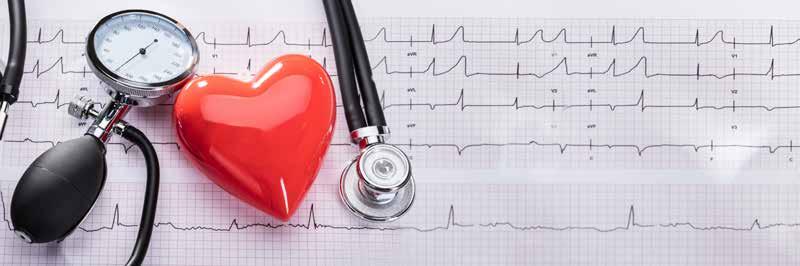
A healthy human heart beats approximately 100,000 times a day, pumping roughly 2,000 gallons of blood through the body. Over a 70-year lifetime, that is more than 2.5 billion beats. This tireless, daily activity keeps organs and tissues oxygenated, making the heart the body’s master engine.
“Cardiology is the No. 1 killer in Eastern North Carolina. It is the thing that causes the most symptoms for the most people, and it is the thing that when it doesn’t work, it is the lynch pin of everything else,” said Dr. Brian F. Simpson, interventional cardiologist at UNC Health Lenoir.
Identifying the Cause of Chest Pain
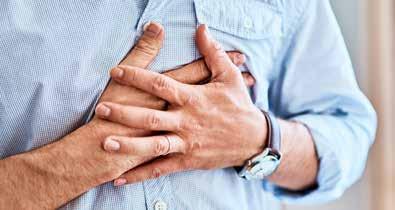
Most people associate chest pain as the first identifiable factor when having a heart attack. Chest pain can also be attributed to anxiety and panic attacks or even pulled muscles. Understanding the difference and when to see the doctor is crucial.
“The symptom I look out for the most is the classic chest
pain,” said Simpson. “The symptoms related to the heart can include you’re having more trouble breathing or you can’t walk as far as you used to. It can be that you are losing steam, and you can’t achieve what you used to be able to achieve.”
When it comes to pain in the chest, if it feels like the weight of an elephant pushing on you, take notice.
“We always think of the classic heart attack symptoms— pain in the center of the chest that feels like an elephant. More and more we are seeing people who have less typical symptoms like pain in the shoulder, pain going into the neck, and often times, symptoms that just don’t feel right,” said Simpson.
Often people feel a sense of doom, a sense that something is off, or experience a feeling they have not felt before, said Simpson.
“The first thing I always think of—if it is rapidly worsening and not getting better, that means be worried about your heart or be worried that it could be your heart. There is no definitive way, but the best approach is identifying something that is not improving over time,” he said.
“If it is rapidly worsening, know that muscles don’t usually do that,” said Simpson. If you move a particular muscle or are able to push on it, then you can know the muscle is the cause of the pain. But, you can still have the muscle evaluated by a physician to be sure.
Exploratory Appointments vs. Emergency Room Visits
With the sudden onset of chest pain and worsening symptoms, a visit to the emergency room follows. An
emergency room doctor evaluates and calls a cardiologist if necessary.
“If the emergency doctor is worried enough, they will call me into the emergency room, and we will talk. Sometimes we can do a few tests in the hospital, i.e., bloodwork, imaging, and electricity tests of the heart. If things are safe, stable, and improving, then we set up an appointment with the clinic. If not, we go directly from the emergency department to the cath lab,” said Simpson.
The better approach is when patients can be seen in the clinic, said Simpson, as it allows for a one-on-one discussion about health history, genetics, preventative measures and proactive plans.
“Ninety percent of what I do is looking at your story. What makes it better? What makes it worse? What is your family history? What is going on in your home life? What kind of foods have you been eating? What is your blood pressure? What are your cholesterol levels? From this we are able to tease out if you have a heart artery blockage or heart failure,” said Simpson.
When Simpson is in the room with the patient, he said he takes a broad approach to understanding the health of the patient, but he is also looking for five things to help answer the questions, “What is going on with your risk of heart disease and plaque in the heart arteries? What are we able to control? What is out of our control?” Those five things include the following: the role of genetics, the rate of blood pressure, the amount of physical activity, the levels of cholesterol, the intake of sugar and the use of tobacco.
The Role Genetics Play
Heart disease often has a strong genetic component, with inherited genes accounting for roughly one-third to one-half of the risk for coronary artery disease, reports the Journal of Cardiology. Genetic factors can cause inherited arrhythmias, cardiomyopathy, or high cholesterol.
“One way I think of heart plaque and heart artery disease is that it’s like having an above ground pool. You have two hoses going into the pool, and one hose is your genetics. You can’t change that. That hose is filling the pool no matter what. If that water reaches the top level of the pool, it’s flooding the whole yard,” said Simpson.
Cardiologists want to avoid the pool filling and overflowing into the yard as that action can cause heart attacks. Most of the cases seen in emergency situations by Simpson could have been prevented and treated differently to avoid the heart attack all together, he said. While one hose leading to the pool
is genetically related, the other hose contains all things that can be controlled, such as blood pressure and cholesterol.
The Rise of Blood Pressure and a Sedimentary Lifestyle Blood pressure, often known as the silent killer, is one condition that can be controlled.
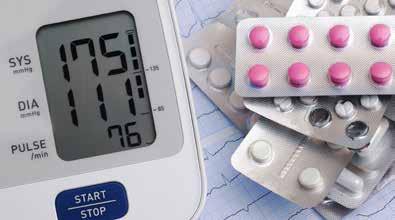
“Blood pressure is what we call the silent killer. Blood pressure being too high puts more strain on the heart. It damages the kidneys and the endorphins, but people don’t feel that day to day. When your blood pressure is high at home, you are not noticing that as your body gets used to that level,” said Simpson.
“The majority of people need blood pressure medicines to stabilize the risk,” said Simpson.
“It’s not a failure but the reality of our modern world where we have free access to salt and Southern food. One hundred years ago when we were working 12-hour days, it was very different,” he added.
Sedimentary jobs in which employees sit for long periods of time, long-haul truck drivers, and professions in which movement and walking is minimal increase the blood pressure.
“Sitting for long periods of time is hard on our bodies. Our bodies are not used to the idea of a 10-hour stressful environment, without physically doing things,” said Simpson. “So, the blood pressure goes up, and the plaque starts depositing. The act of being sedentary drives up the blood pressure over time.”
He continued, “In the moment, when you are being active, your blood pressure does jump up, but it trains your body to
Simpson
handle a normal blood pressure. When we are sedentary, our bodies maladapt to that, and the blood pressure goes up over time.”
The Impact of Cholesterol
When examining cholesterol levels, part include identifying the patient’s daily diet and the high fat content ingested during meals.
“Cholesterol that we take in by food doesn’t usually make a difference. It is really the fat intake and sugar intake combined with our genetics,” said Simpson. There are a wide range of medicines to help lower cholesterol, which include popular drugs, such as Lipitor and Crestor, and which reduce LDL (the “bad” cholesterol) and cardiovascular risk by blocking liver production. They also prevent plaque from becoming unstable, rupturing and causing a heart attack.
“What I usually tell my patients is that it is not a cholesterol lowering medicine, it is a plaque medicine,” said Simpson. “What we are trying to do doesn’t concern the cholesterol and the medicine—it the is plaque I am trying to prevent from getting worse.”
Sugar Intake and Tobacco Use
High blood sugars directly cause inflammation and plaque, said Simpson. Living in Eastern North Carolina, sugar is a food and beverage staple and can lead to high blood sugar. Watching one’s sugar intake can make a difference. Smoking damages the heart and blood vessels by promoting plaque buildup, and raising blood pressure leads to cardiovascular disease, among other damages to the human body. Simpson advises that quitting smoking is vitally important.
Maintenance vs. Testing
After careful analysis and discussion, the cardiologist will decide if preventative treatment or testing is warranted. Preventative treatment is maintaining low cholesterol and blood pressure, for example. “For those patients who do need more, we talk about imaging the heart with sound waves just like they do a baby’s ultrasound,” said Simpson.
Heart tests evaluate the structure, function and electrical activity of the heart to diagnose conditions like heart disease, arrhythmias, or damage. Tests include electrocardiograms for electrical activity, echocardiograms for imaging, stress tests for exercise response, and blood tests for cardiac damage markers.
Heart Catheterizations and Stent Placements
Heart disease progression may signal the need for a heart catheterization and a stent placement.
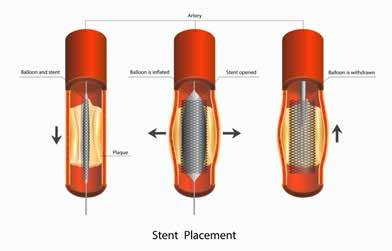
“This is an above ground pool we are talking about. We have those two hoses that are filling the pool with water. What the stent does is basically add another pool right beside it and filter some of that water out,” said Simpson. “We are not actually fixing the underlining problem of water constantly filling the pool; we are resetting the clock for when that blockage is a problem.”
The first human cardiac catheterization was performed in 1929 by German physician Werner Forssmann. According to the National Institute of Health, Forssmann at 25 years of age, performed the procedure on himself by inserting a catheter in a vein in his arm while under local anesthesia. His research was expanded upon by André Frédéric Cournand and Dickinson W. Richards, and collectively the trio was awarded the Nobel Prize in Physiology or Medicine in 1956 for the development of cardiac catheterization.
“The procedure itself is a very safe and well-tolerated procedure. Most patients are able to doze on the table during the procedure and do not remember it,” said Simpson of both heart catheterization and stent procedures. We are able to do most caths through the wrist. A small catheter about the size of spaghetti gets inserted into the wrist and all the way up to the heart.”
He continued, “If there is a problem there (in the heart) then we snake a wire, tinier than a strand of hair, all the way into the heart artery. Then we balloon with a small balloon all of that disease out of the way. We are not removing any of that disease, but we are pushing it out of the way. Then we put a stent.”
A heart stent is a tiny, expandable metal mesh tube inserted into a narrowed coronary artery to restore blood flow to the heart. Stents were pioneered by Dr. Julio Palmaz and Dr. Richard Schatz. Palmaz, a radiologist, invented the first commercially successful, balloon-expandable intravascular stent (the Palmaz Stent) in the 1980s, which revolutionized cardiac care by holding clogged arteries open. He co-developed this pivotal technology with cardiologist and Duke alumnus Schatz.
“Imagine a Chinese finger trap except it is facing the opposite direction. With a Chinese finger trap, you pull harder, and the harder you pull, the tighter it gets. A stent is designed the opposite way. Once it is put into place, it will not collapse. A stent is designed with rare earth metals to be the absolute strongest it can be, and it will hold open that artery,” said Simpson.
He continued, “A stent does not move the disease out of the way but instead pushes the disease out of the way—disease
meaning ‘the plaque and calcium.’ Those stents, once they are in place, hit a reset button. You now have an artery—like a pipe in your home—that is brand new and has great flow. Once we hit that reset button, the disease process starts again.”
Following stent placements, ongoing conversations with the patient’s cardiology team take place to prevent new problems and to protect the stent that was put in. Incorporating medications, lifestyle, physical activity, and non-smoking have an impact. The goal is to prevent the disease from rapidly growing in the area around the stent or in other areas of the heart that have not been treated. After the procedure, most patients return home the same day.
“Patients can live a long and happy life with stents. Heart disease itself is a dangerous disease if left untreated. If treated, patients can live full, normal lives,” said Simpson. LL