Five new works inspired by sculptor Constantin
Brâncuși

Brâncuși
Wednesday 15 July 2026
7.30pm
Southbank Centre’s
Queen Elizabeth Hall
William Cole conductor
LPO Foyle Future Firsts
Members of the London Philharmonic Orchestra
Arcus
Margot
Tonight’s concert lasts approximately 75 mins (there is no interval).
We’re the UK’s largest centre for the arts and one of the nation’s top five visitor attractions, showcasing the world’s most exciting artists at our venues in the heart of London. As a charity, we bring millions of people together by opening up the unique art spaces that we care for.
The Southbank Centre is made up of the Royal Festival Hall, Queen Elizabeth Hall, Purcell Room, Hayward Gallery, National Poetry Library and Arts Council Collection. We’re one of London’s favourite meeting spots, with lots of free events and places to relax, eat and shop next to the Thames.
We hope you enjoy your visit. If you need any information or help, please ask a member of staff. You can also email hello@southbankcentre.co.uk or write to us at Southbank Centre, Belvedere Road, London SE1 8XX.
Subscribers to our email updates are the first to hear about new events, offers and competitions. Just head to southbankcentre.co.uk to sign up.
You’re welcome to bring drinks from the venue’s bars and cafés into the Queen Elizabeth Hall to enjoy during the concert. Please be considerate to fellow audience members by keeping noise during the concert to a minimum, and please take your glasses with you for recycling afterwards. Thank you.
We hope you enjoy tonight’s performance. Could you spare a few moments afterwards to complete a short survey about your experience? Your feedback is valuable to us and will help to shape our future plans. Just scan the QR code to begin the survey. Thank you!

Welcome to Debut Sounds, an annual celebration of two of the London Philharmonic Orchestra’s Rising Talent programmes: LPO Young Composers and Foyle Future Firsts.
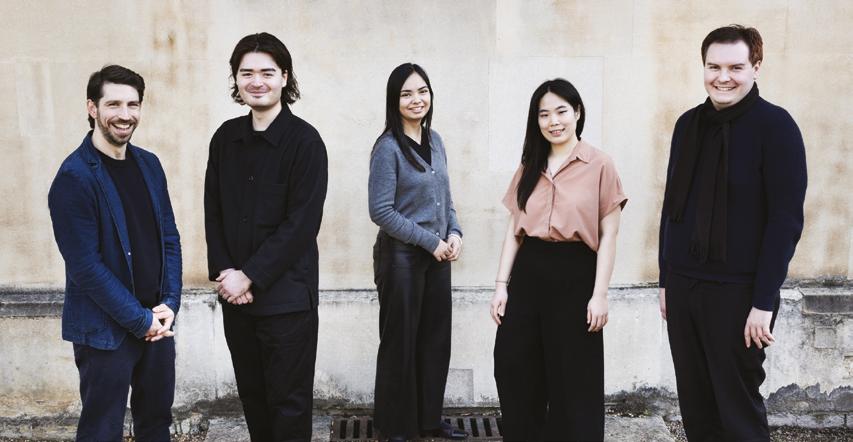
This year, five emerging composers turn to the visionary modern sculptor Constantin Brâncuși for inspiration, each creating a new orchestral work that explores his visionary art. Guided by LPO Composer-in-Residence Sir George Benjamin, their music pushes beyond the surface to uncover something deeper
The music will be performed by an ensemble of musicians from the LPO Foyle Future Firsts Development Programme, alongside LPO players, all under the baton of William Cole.
Tonight’s concert will be available to watch again on our YouTube channel at a later date – keep an eye on our social media to find out when it will be released.
The LPO Young Composers programme 2025/26 is generously supported by Jerwood Foundation, Art Mentor Foundation Lucerne, Vaughan Williams Foundation and The Marchus Trust.
The Foyle Future Firsts Development Programme 2025/26 is generously supported by the Foyle Foundation and Purposeful Ventures, alongside the Barbara Whatmore Charitable Trust, Idlewild Trust and Scops Arts Trust and with additional support from individual chair supporters. LPO Debut Sounds 2026 receives support from Mr Luke Gardiner.




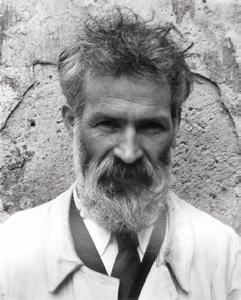
‘I pursue the inner, hidden reality, the very essence of objects in their own intrinsic nature.’
Constantin Brâncuși
Over the past year, our Young Composers have turned to the visionary sculptor Constantin Brâncuși for inspiration, each creating a new orchestral work that explores his extraordinary art. Brâncuși sought to represent ‘not the outer form but the idea, the essence of things’ in his work, a credo that seems made for music. Guided by LPO Composer-inResidence Sir George Benjamin, our composers have transformed that vision into sound, finding new musical possibilities in Brâncuși’s striking shapes and ideas.
The year began with each composer receiving a gift: a book of photographs of Brâncuși’s pioneering sculptures. Next came an illuminating seminar with Brâncuși expert Dr Jonathan Vernon. This opened up myriad creative paths inspired by this great artist, which each Young Composer has taken in their own direction. Along the way, the composers have developed their pieces through individual mentorship, a work-in-progress rehearsal with the Orchestra and conductor William Cole, and deep-dives with LPO musicians into less-familiar instruments, as well as meeting key artists and industry professionals to support their career progression in the music industry.
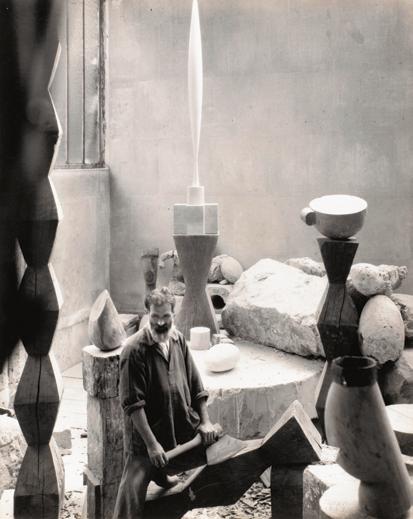
Considered one of the most influential sculptors of the 20th century, Constantin Brâncuși (1876–1957) helped redefine the possibilities of modern sculpture. Born in rural Romania, he learned traditional woodcarving techniques before studying at the Bucharest School of Fine Arts. In 1904 he arrived in Paris, where he spent most of his career.
Rather than pursuing detailed realism, Brâncuși sought to distil his subjects – whether human figures, animals or architectural forms – into essential, carefully balanced shapes. Through carving, casting and the continual reworking of recurring motifs, he developed a highly personal artistic language that combined influences from Romanian folk traditions with the spirit of innovation that shaped European modernism in the early 20th century.
‘This year marks the 150th anniversary of the birth of the great Romanian sculptor Constantin Brâncuși. His work has a daring simplicity, poised between the abstract and the figurative, pared back until only the essence of an object’s shape remains. Perhaps because of this, his materials – brass, marble, wood – seem magically revitalised, and the forms they embody have an iconic impact.
‘The themes Brancusi explored and the titles he chose are no less resonant, and my hope was that their almost mythic significance – coupled with such a radical re-evaluation of material – would prove richly suggestive for the composers.
‘Brâncuși enjoyed friendships with composers Erik Satie and George Enescu, and nearer our own time some highly distinguished figures have created remarkable works in direct homage to his sculptures. All five of our composers have responded to this challenge – each very much in their own way –forging works of an arresting ambition and scale. I hope our audience will be stimulated by the effect of a hugely potent creative force from a century ago on the imagination of a new generation of composers.’
Sir George Benjamin, June 2026
With thanks to Dr Jonathan Vernon, Aura Woodward, and The Romanian Cultural Institute in London.
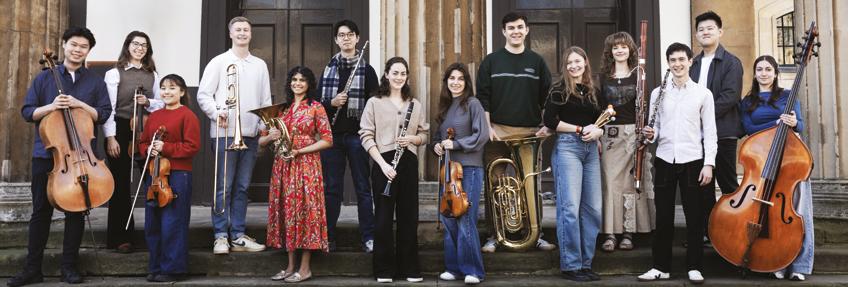
The 16 members of the Foyle Future Firsts programme are talented early-career instrumentalists who aspire to be professional orchestral musicians. As part of our programme, members are supported and nurtured to the highest standards, and we are proud to see current and past Foyle Future Firsts consistently taking professional engagements with the London Philharmonic Orchestra and other world-class ensembles.
Across the year, members of the Foyle Future Firsts programme benefit from individual lessons and mentoring from London Philharmonic Orchestra Principals, professional development sessions, mock auditions, and involvement in full orchestral rehearsals. They also take part in high-profile chamber performances, and work alongside London Philharmonic Orchestra musicians on Education & Community projects.
lpo.org.uk/futurefirsts
First Violins
Flutes
Kate Oswin†Leader
LPO chair supported by Eric Tomsett
Emily Trubshaw*
Lasma Taimina†
LPO chair supported by Irina Gofman & Mr Rodrik V. G. Cave
Second Violins
Claudia TarrantMatthews†
LPO chair supported by anonymous donors
Mio Takahashi*
Violas
Martin Wray†
LPO chair supported by David & Bettina Harden
Sara Ramirez
Rodriguez*
Cellos
David Lale†
William Lui*
Double Basses
Laura Murphy†
LPO chair supported by Ian Ferguson & Susan Tranter
Isabel Garcia*
Stewart McIlwham†
Billy Hui*
Piccolo/Alto Flute
Billy Hui*
Oboes
Jack Tostevin-Hall‡
Noah Rudd*
Cor Anglais
Noah Rudd*
Clarinets
Benjamin Mellefont†
LPO chair supported by Sir Nigel Boardman & Prof. Lynda Gratton
Emily Crook*
Bass Clarinet
Emily Crook*
Bassoons
Helen Storey†
Florence Plane*
Horns
Gareth Mollison†
Nivanthi Karunaratne*
Trumpets
Tom Nielsen†
Katie Bannister*
Trombones
David Whitehouse†
Ollie Plant*
Tuba
Archie McVicar*
Percussion
Tom Plumridge‡
Julie Scheuren*
Harp
Aisha Palmer*
Piano/Celeste
Mark Zang*
* Foyle Future First 2025/26
† LPO Member
‡ LPO Guest
Foyle Future First Instrument Chairs are kindly supported by David Burke & Valerie Graham (Clarinet), Michelle Crowe Hernandez & Christian Hernandez (Tuba), John & Sam Dawson (Percussion), Marie Power (Piano), and Nigel Phipps & Amanda McDowall (oboe).
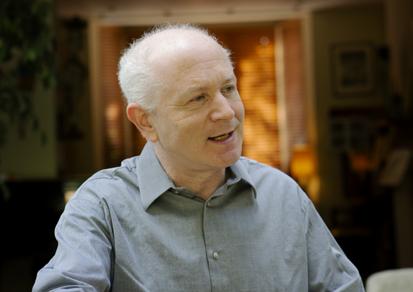
Sir George Benjamin CBE has been the London Philharmonic Orchestra’s Composer-in-Residence since September 2025. As well as presenting new commissions and performances of his earlier works, during his residency he also champions the work of today’s creators as mentor to our LPO Young Composers, providing guidance and expertise to the five participants each year.
On 25 November 2026, the LPO will present a semi-staged performance of Lessons in Love and Violence – the acclaimed opera by George Benjamin and Martin Crimp – at the Queen Elizabeth Hall with Principal Conductor Edward Gardner. On 24 February 2027, Benjamin’s Concerto for Orchestra opens a Royal Festival Hall concert that also features music by Sibelius and Tippett, again under Gardner.
One of the leading figures in contemporary classical music, George Benjamin studied with Olivier Messiaen at the Paris Conservatoire and with Alexander Goehr at King’s College, Cambridge. His early work Ringed by the Flat Horizon was performed at the 1980 BBC Proms when he was just 20, marking the start of a remarkable career. His music has been performed by notable conductors and orchestras worldwide, and his groundbreaking opera collaborations with playwright Martin Crimp have created the modern classics Into the Little Hill, Written on Skin, and Lessons in Love and Violence. His most recent opera, Picture a day like this, was premiered at the 2023 Aix-enProvence Festival, and its Nimbus Records recording by the Mahler Chamber Orchestra under the composer’s baton won the Contemporary Award at the 2025 Gramophone Awards.
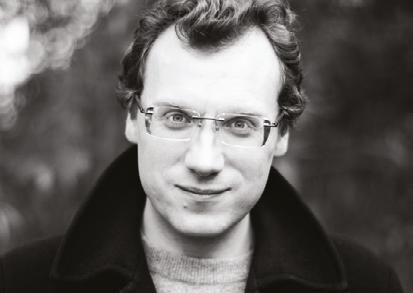
British conductor William Cole is emerging as a confident interpreter of music from Baroque opera to works by today’s leading composers. In 2025 he stepped in to conduct Handel’s Partenope at English National Opera to great public and critical acclaim. Other notable recent and future performances include debuts at Scottish Opera (Albert Herring) and English National Opera (Rigoletto), the Royal Opera’s production of Philip Venables’s 4.48 Psychosis at the Prototype Festival New York, and Hans Abrahamsen’s Schnee with the Royal Northern Sinfonia at The Glasshouse in Gateshead. He has a particularly close relationship with the Britten Sinfonia, with whom he has appeared several times as a guest conductor at venues including the Barbican and Wigmore Hall.
William enjoys a growing reputation as a dedicated exponent of late 20th-century and contemporary music. Recognised for his ‘precise direction’ (The Times), his early training and activity as a composer allows him to bring insight to the most complex scores. His repertoire includes major works by Ligeti, Boulez, Grisey, Vivier, Xenakis and Kurtág, and he has worked with many of today’s most exciting composers including Brett Dean, Patricia Alessandrini, Emily Howard, Tom Coult, Laurence Osborn and Lisa Illean.
William studied Music at Clare College, Cambridge, and composition with Philip Cashian and Oliver Knussen at the Royal Academy of Music. He furthered his studies at Royaumont’s Voix Nouvelles programme with Peter Eötvös, Birmingham Contemporary Music Group’s NEXT programme, and the Conducting Seminar at Tanglewood.
Tonight is William’s LPO debut.
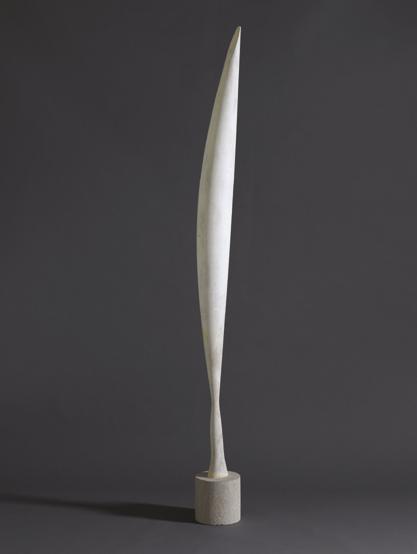
Arcus is a Latin word meaning ‘bow’ or ‘arch.’ In meteorology, an arcus cloud is a low, horizontal roll or shelf cloud formation found at the edge of thunderstorms. They hold, in my eyes, a particular kind of beauty which is dramatic but also dark in nature; a characteristic which I attempt to evoke in my music.
Arcus is also influenced by two works by Brâncuși: Infinite Column and Bird in Space. Conceptually, the two works represent opposing spirits – one which is obsessive and repetitive, and another free, always moving in an unpredictable manner.
MT
Bird in Space, 1936. A cast possibly made from the white marble model (1931–36, Australian National Gallery, Canberra). Placed on the plinth.
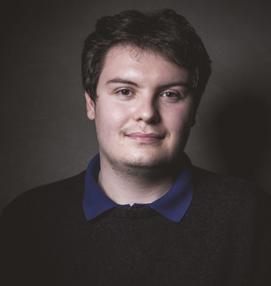
Michael Taplin is a composer based in London. He has worked with some of the UK’s leading ensembles including the London Symphony Orchestra (through the Panufnik Scheme) and the Philharmonia (as a recipient of the Royal Philharmonic Society Young Composer Prize). His music has also been performed at prestigious international festivals including the Archipel Festival in Geneva, Switzerland; the ISCM World Music Days in Vancouver, Canada; and the Gaudeamus Muziekweek in the Netherlands. He is also the recipient of multiple prizes including the RPS Composition Prize and First Prize in the 2023 Toru Takemitsu Composition Award for his orchestral work Selvedge. His music has been broadcast on Swiss Radio Espace 2, BBC Radio 3, and Japanese radio station NHK.
Michael recently completed his PhD in Composition at the University of Cambridge. He previously studied at the Guildhall School of Music & Drama and the Royal College of Music.
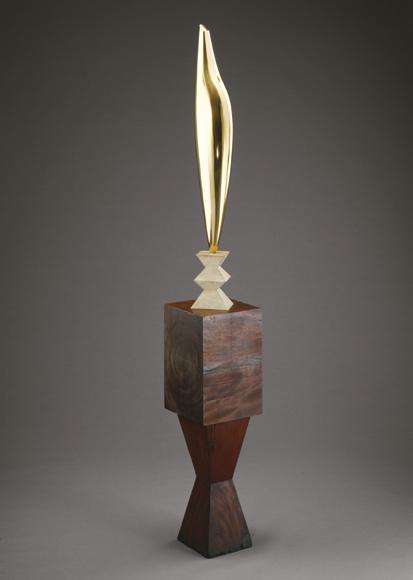
Étude pour un oiseau de bronze is an evocation of Brâncuși’s plastic investigations. In music, as in sculpture, the material stretches, erodes, and gradually takes the shape of a bird on the verge of flight. At moments dense and metallic, at others fleeting and evanescent, the bird’s presence moves away from its figurative representation to capture an impulse held still by the material itself.
The Étude – that process through which the viewer’s eye or the listener’s ear is granted a glimpse of the inner world that precedes the finished work – becomes the narrative of this search, with its imperfections, its profusion of ideas, and the spontaneity of a gesture guided by intuition.
MP
Golden Bird, 1919-20. Bronze, stone, and wood. 86 × 11 3/4 × 11 3/4 in. (217.8× 29.9 × 29.9 cm).
Partial gift of The Arts Club of Chicago, restricted gift of various donors, through prior bequest of Arthur Rubloff, through prior restricted gift of William E. Hartmann, through prior gifts of Mr. and Mrs. Carter H. Harrison, Mr. and Mrs. Arnold H. Maremont through the Kate Maremont Foundation, Woodruff J. Parker, Mrs. Clive Runnells, Mr. and Mrs. Martin A. Ryerson, and various donors. (1990.88) © The Art Institute of Chicago / Art Resource, NY/ Scala, Florence
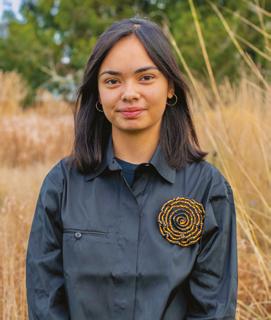
Margot Pommellet is a French composer and flautist based in Paris and London. Alongside her artistic practice, she maintains a strong interest in cultural policy, informed by her studies at Sciences Po Paris. She began composition in Nogent-sur-Marne with Mathieu Cepitelli and Sua Perrin, before continuing with André Serre-Milan at the Conservatoire of Reims. She graduated in 2025 from the Royal College of Music, where she studied Flute and Composition with Catherine Kontz and Mark-Anthony Turnage.
Margot’s music has been performed in France, Germany and the UK by artists including Augustin Dumay and Marc Coppey.
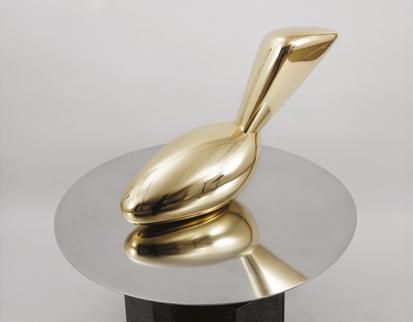
In polished bronze, Brâncuși’s Léda captures the power and beauty of a swan. It was designed to rotate gracefully on a steel base, ‘ceaselessly creating new life, a new rhythm’. This movement produces an ever-changing array of shimmering colour and warped reflection, absorbing both the viewer and their environment. For me, the statue also recalls an encounter with a family of swans while swimming in marshland outside Edinburgh. As I came upon them unexpectedly, one of the adult swans turned gently to meet my gaze – raising itself up to become impossibly huge and ward me off –before rotating calmly back to its children as I withdrew.
GS
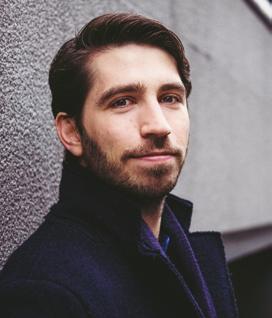
George Stevenson is a Scottish composer based in Edinburgh, creating harmonically rich and dramatic music ranging from largescale orchestral works to intimate electronics. His musical life began as a jazz pianist, and improvisation remains central to his work. Most recently, his orchestral piece Vanishing City featured on an album of new music commissioned by the London Symphony Orchestra, and a piano concerto titled Bloodshift was premiered at Kings Place by Clare Hammond and Britten Sinfonia. As a 2026 RPS Composer, George is currently working with the Royal Liverpool Philharmonic Orchestra on a new piece all about Beethoven and coffee.
Throughout his career, Brâncuși reused his own pedestals, pairing them with different sculptures, each base taking on new meaning with every new relationship. Written in a series of short movements, Socle builds on this as its foundation: each movement inheriting an idea from the last. The piece takes an unexpected turn, reflecting Brâncuși’s humorous side and his dear friendship with composer Erik Satie. At the end of Satie’s life, Brâncuși sent a friend to visit him in hospital. Satie jokingly requested caviar. Brâncuși obliged immediately, only for his friend to arrive the following day to find the composer had sadly passed away … ER
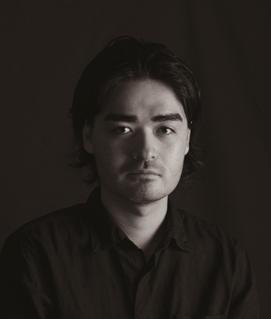
Edward Mascall-Robson is a Japanese-British composer and koto performer, currently based in London and Tokyo. With a background in traditional Japanese music, he studied the koto with Curtis Patterson. He then studied composition at the Royal Academy of Music with David Sawer, and at the Paris Conservatoire (CNSMDP) in the composition class of Gérard Pesson. At the Conservatoire, he also studied and practised electroacoustic composition with Yan Maresz, Luis Naón and Grégoire Lorieux. He is a composer on the London Symphony Orchestra’s Helen Hamlyn Panufnik Composers’ Scheme for 2026/27.
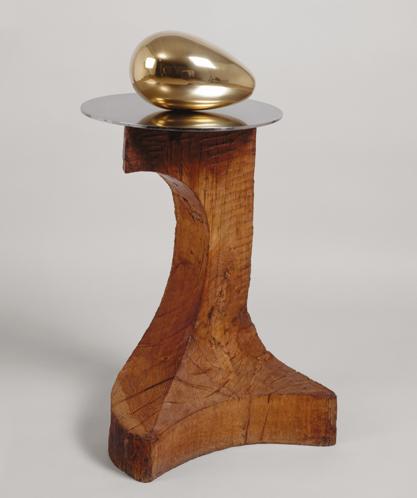
The sculpture Beginning of the World by Constantin Brâncuși consists of several different elements –an egg-shaped object made of extremely polished bronze, a polished steel disc, and a wooden socle in organic form.
I started from the idea of Creation and the opening of the Book of Genesis, where there was no form or shape but darkness. The piece starts from this abstract state, and elements of matter gradually appear. In the middle section, I focus on the tangible substance and mass of the earth such as thick mud, layers of soil and the shape of ancient fern plants. Lastly, the element of water appears and expands.
When I encountered the sculpture, the surface of the polished bronze and its reflection evoked the sensation of liquid and water dripping. This inspired the liquid-like piano texture and became the archetypal material of the piece. The egg-like object implies the life sleeping within it, including the world that’s about to flow out.
SO
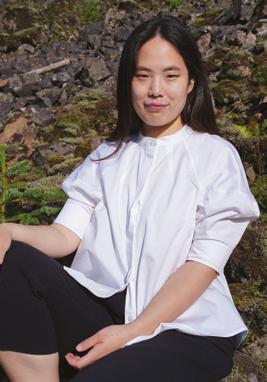
Seyoung Oh is a South Korean composer and singer based in Glasgow, Scotland. She translates diverse experiences in her life into music –often through exploration of texture and timbre to create dramatic effects as a whole. She writes for various vocal and instrumental forces and electronic sounds for the concert hall, film and stage.
Seyoung has enjoyed composing for ensembles such as London Sinfonietta, Hebrides Ensemble, Scottish Ensemble, Ensemble Offspring and University of Glasgow Chapel Choir. Her music was commissioned for the opening night concert of Nordic Music Days Festival 2024, ‘The Night With…’ concert series and Plug Festival. She was selected as a finalist for the Royal Over-Seas League Composition Award 2025.
Seyoung completed a Masters in Composition at the Royal Conservatoire of Scotland in 2024 under the tutelage of Stuart MacRae and Rūta Vitkauskaitė.