
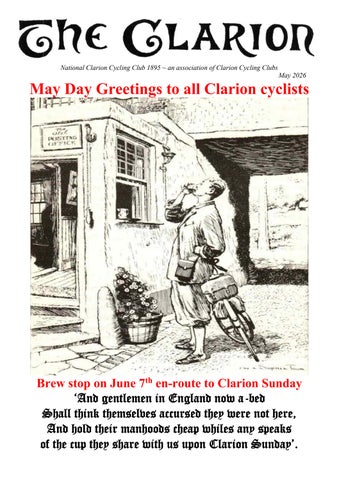
Brew stop on June 7th en-route to Clarion Sunday
‘And gentlemen in England now a -bed Shall think themselves accursed they were not here, And hold their manhoods cheap whiles any speaks of the cup they share with us upon Clarion Sunday’.
Brew stop on June 7th en-route to Clarion Sunday
‘And gentlemen in England now a -bed Shall think themselves accursed they were not here, And hold their manhoods cheap whiles any speaks of the cup they share with us upon Clarion Sunday’.
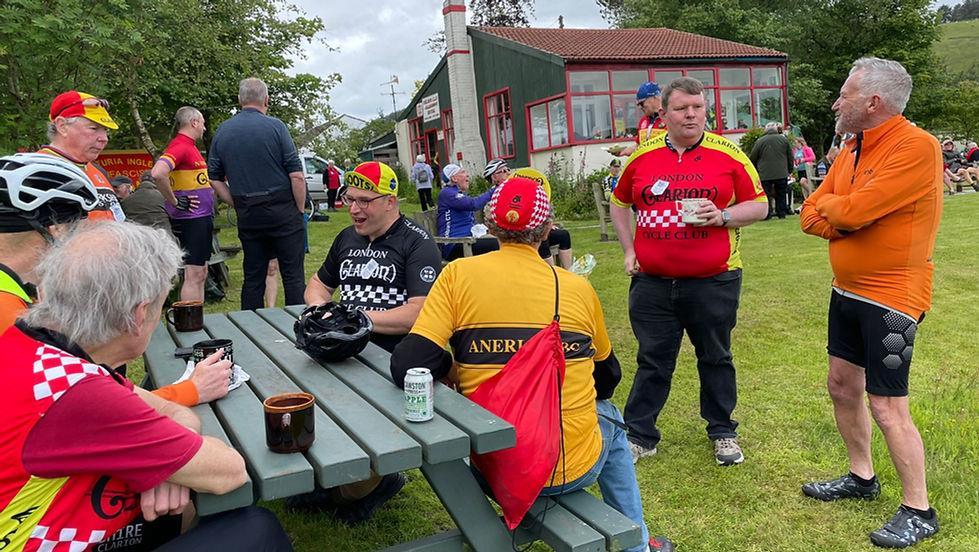
A ‘Call’ to all Clarion cyclists past and present to gather at the Nelson Independent Labour Party’s Clarion House, Newchurch-in-Pendle, BB12 9LL on Sunday 7th June 2026
‘Clarion Sunday’, attempts to resurrect the annual gathering of Clarion Vocal Unions at Hardcastle Crags in the late 1890’s. Hundreds of Clarion cyclists from Lancashire and west Yorkshire would ride out to listen to the combined Clarion choirs and hear speeches by leading Socialists such as Caroline Martyn , Selina Cooper, Sarah Reddish and Keir Hardy.
Why gather at Clarion House instead of Hardcastle Crags? Simply because there are now an increasing number of Clarion Cycle Clubs within riding distance of Nelson and their attendance maintains the Cl ub’s link to cycling and Socialism , whilst at the same time bringing much needed funds to this iconic building that has served tea and coffee to cyclists and walkers every single Sunday since 1913, bar the occasional snow drift and Covid.
Last year saw an attendance of over 250 including representatives from 13 different Clarion Clubs, as well as riders from several independent cycling clubs , ramblers and the East Lancs Clarion Choir and Bolton Wood Street Socialist Club Clarion Choir.
Built in 1912 by members of the Nelson Independent Labour Party, the last surviving Clarion House is situated within its own grounds, deep in the heart of ‘Pendle Witch Country’ between the hamlets of Roughlee and Newchurch in Pendle. Clarion House is also part of the ‘Pendle Radicals Trail ’, a new and exciting project developed by our comrades at Mid Pennine Arts which traces the lives , and locations, of those men and women who played an important role in spreading Socialism in the region and beyond.
Clarion House is open every Sunday 10.30am to 4pm serving pint pots of real tea (just 70p) soft drinks and light snacks. Everyone is welcome to bring their own sandwiches and cakes. Any members wishing to camp overnight for Clarion Sunday are welcome to do so , but please be aware there are no facilities for car parking at Clarion House.
For further information contact: Charles Jepson (clarioncc@yahoo.co.uk)
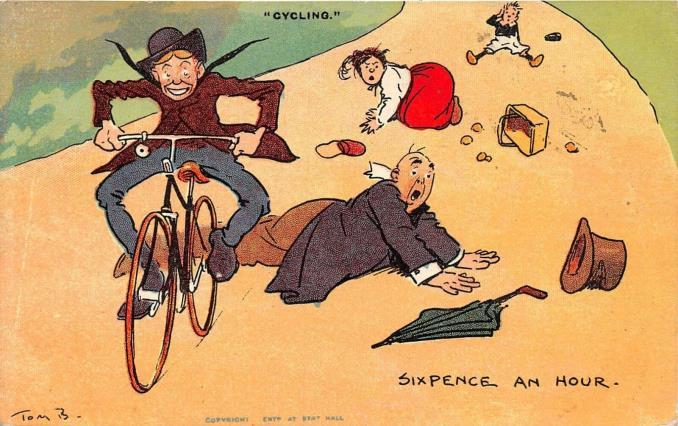
To many cyclists the name Tom Browne means nothing, yet to collectors of vintage comics and postcards the signature ‘Tom B’ holds great significance as he was the original master of British comic strip art. A skill he was to use to great effect on comic holiday postcards.
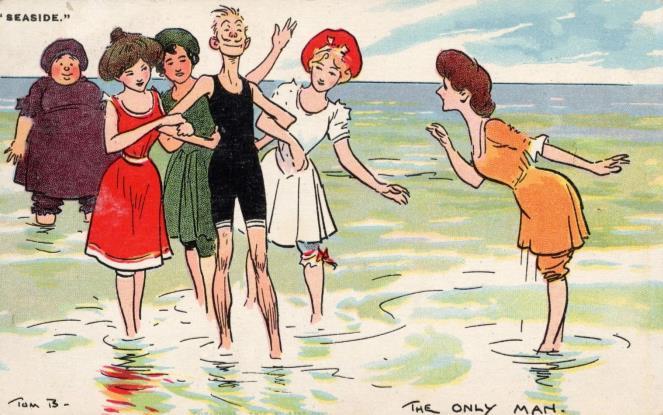
Tom Browne was born in Nottingham in 1870. He began riding a bicycle as an errand boy at the age of seven. Following a brief education at St. Mary’s Church of England ‘National School’, he began an apprenticeship at 12 pence a week with a printing company. It was here that his artistic talent for drawing simple cartoons rapidly developed. Needing more than his apprentice wage to live on Tom began moonlighting as a free -lance cartoonist for a number of London published comics. His first 8-page cartoon strip, published in Henderson’s ‘Scraps’ earned him 30 shillings, over six months wages for one night’s work.
On the completion of his apprenticeship Tom moved to London where he earned a living drawing cartoons for the increasingly popular ha’ penny comics. Tom’s earlier
published works were ‘one -offs’, but overtime he created fictional heroes. In 1896 a six-panel picture strip featuring two tramps: Weary Willy and Tired Ted appeared in Illustrated Chips leading to a large increase in the comics circulation.
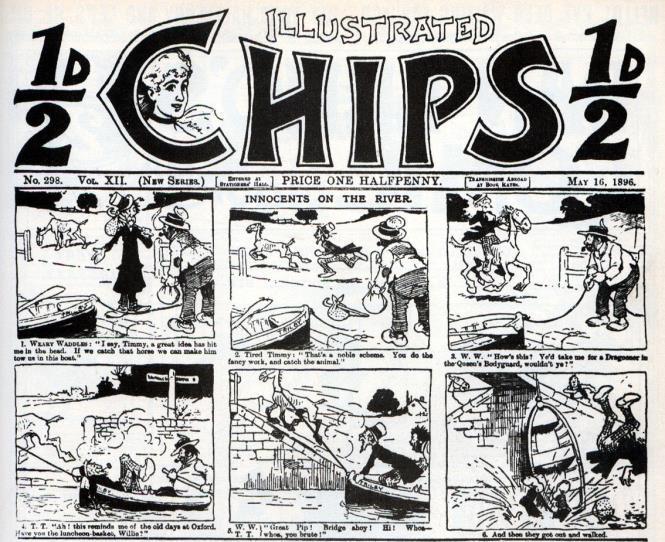
Soon other publishers were asking him to produce similar characters: Airy Alf and Bloated Billy soon followed, leading Tom’s income to rise to a staggering £150 per week. Tom was also an accomplished artist exhibiting his water colours at the Royal Academy.
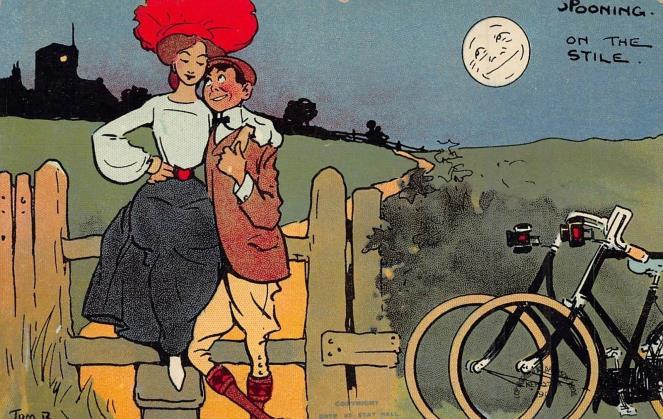
His greatest claim to fame came in the first decade of the 20th century when the boom in cycling linked to the relatively cheap trains fares created a boom in postcard publishing. Tom’s bold clear lines and unfussy style was ideally suited to this market . His postcards, many of which contained cyclists, are now becoming very collectable and can still be picked up surprisingly cheaply at Car Boot Sales and Flea Markets. He signed his work ‘Tom Browne’ or ‘Tom B’. He died in 1910 age just 39.
Pedal Power, a play (2004) by the Mikron Theatre: song from scene 8
‘I don’t like politics and I certainly don’t like Socialists – don’t expect you do much either. I don’t even know what a Socialist is. And you know what, I don’t think they do either. And if they did know what one was they wouldn’t know what to do with it. Allow me to explain: The BSP became the CPGB Gave ‘em all the heebie geebies
Now they all hate the SWP
Who took their bat from the WRP. This all sprung from the SDF
Who used to be the SDP,
But not I think the SDP
That’s more familiar to you and me you see , they’re actually very different
Of course the PLP was the LRC
Or the Fabians was the ILP
Now we all think that the PLP
Are a little bit like the more recent SDP….
Not the older one, which is really very different.
Marxist, Leninists, Trotskyists, Maoists, Stalinists, anarchists – can you please tell me how One is supposed to understand all this? When the BWSF is the NWSF
All under the IWSF and the IUWPE… that’s the International Union of Workers’ Physical Education by the way.
Had a bit of a narrow remit that one.
I don’t really think that it could be any harder, So lets all get a ticket for The International Red Workers’ Spart akiade That was supposed to be in Moscow in 1928, but we couldn’t go ‘cos it was organised by the Communists. The End.
The BWSF was a sports organisation active in Britain from 1923 until the late 1930’s. It was established by the National Clarion Cycle Club, Labour Party activists and Trade Unionists. It had branches nationwide but its real strength lay in London, Manchester, South Wales and the industrial areas of Scotland. In 1925 the BWSF participated in the first International Workers’ Olympiad in Frankfurt a m Maine and two years later London Clarion CC sent a football team to play a series of matches in the Soviet Union. The aims of the BWSF were international unity and peace through sport: Footballs, not cannonballs
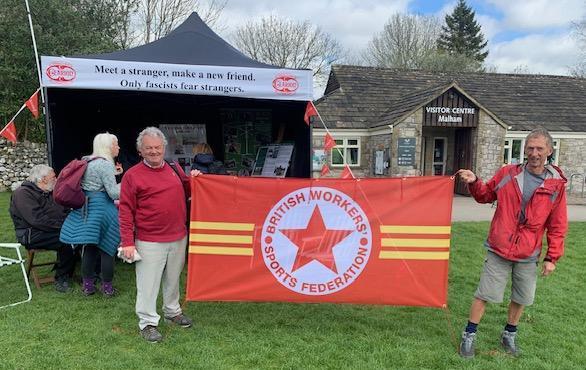
The recently formed Communist Party shared these aims and became increasingly dominant in the organisation leading to a conflict between those committed to the ideology of democratic centralism and those who favoured social democratic structures. Unable to accept the more militant stance of their comrades the Labour Party members and Trade Unionists left the BWSF to form a new body without the communists.
The British Workers’ Sports Association
The BWSA, initially called the National Workers’ Sport Association, was formed in July 1930 at a meeting in Transport House, HQ of the Labour Party. This organisation, which had the support of the Labour Party and the TUC, was largely due to the efforts of London Clarion’s George Bennett who became its first Secretary. The National Clarion Cycle Club joined the BWSA which was affiliated to the Lucerne Congress, this caused problems when some Clarion members were expelled for competing in the Red Workers’ Spartakiade in Moscow.
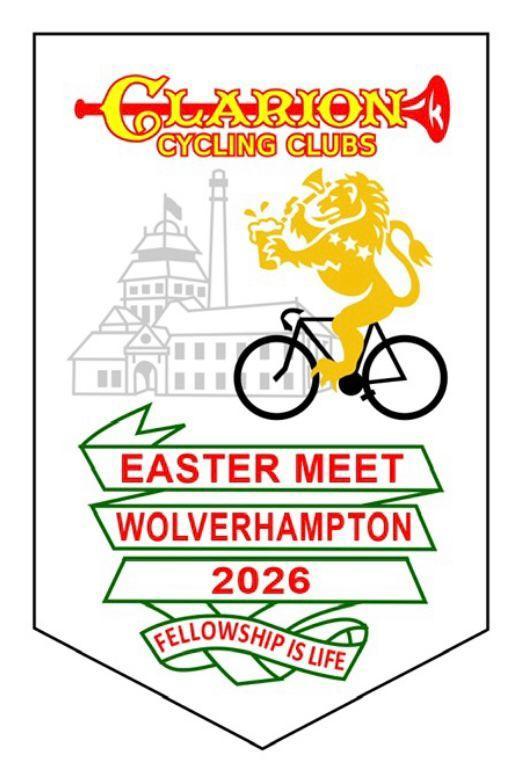
The National Clarion 1895 (NLU) Easter Meet held in Wolverhampton was a splendid affair which attracted members from: Bolton Clarion, Borders Clarion, London Clarion, National Clarion 1895, North Lancs Clarion C&A.C. and Yorkshire Coast Clarion. The event, with led rides on Good Friday, Easter Saturday, Easter Sunday and Easter Monday, was organised by our comrades in London Clarion, who also presented every attendee with an Easter Meet ribbon, honouring a Clarion tradition far too precious to lose.
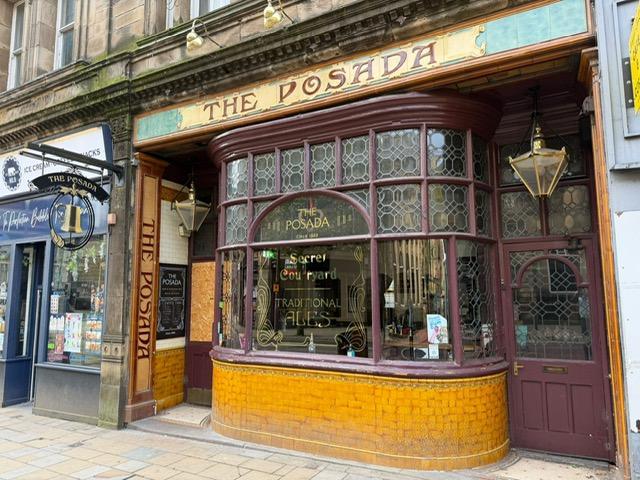
The first of many, and very good too.
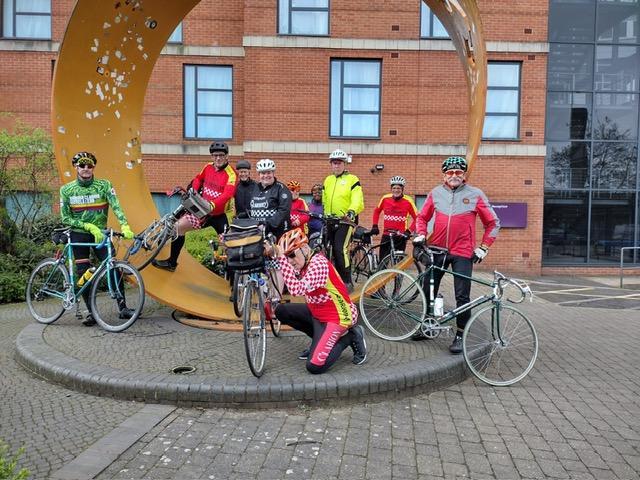
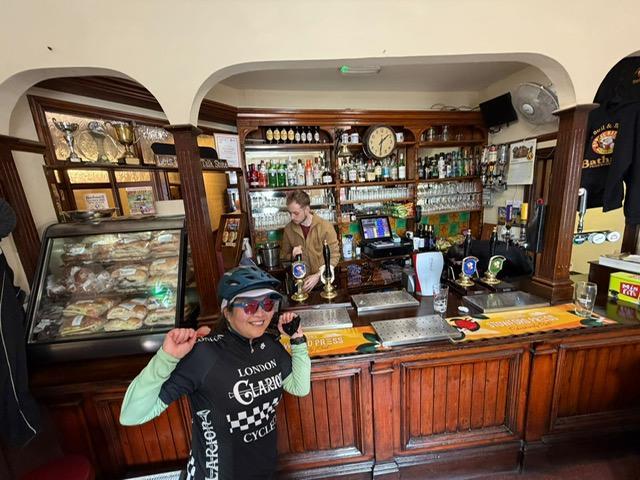
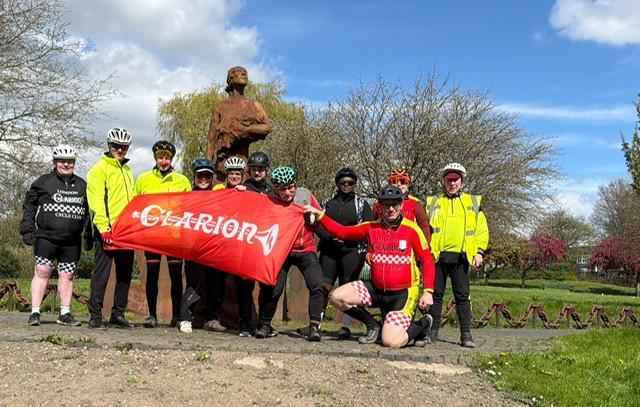
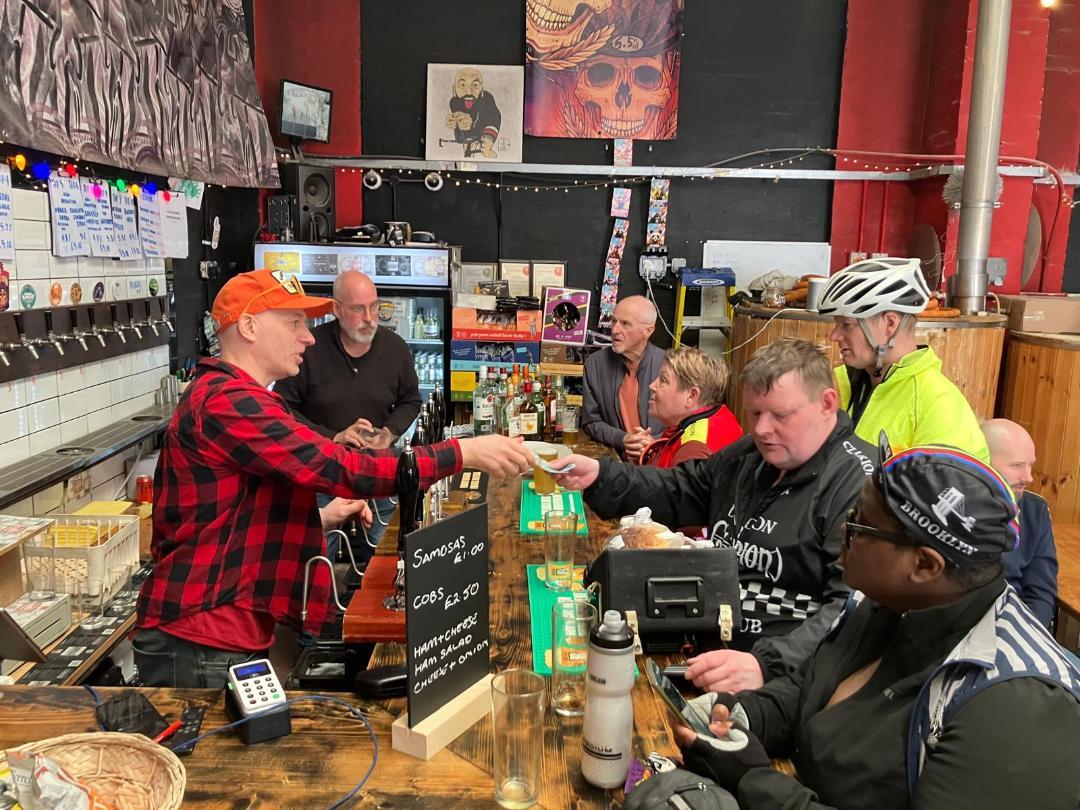
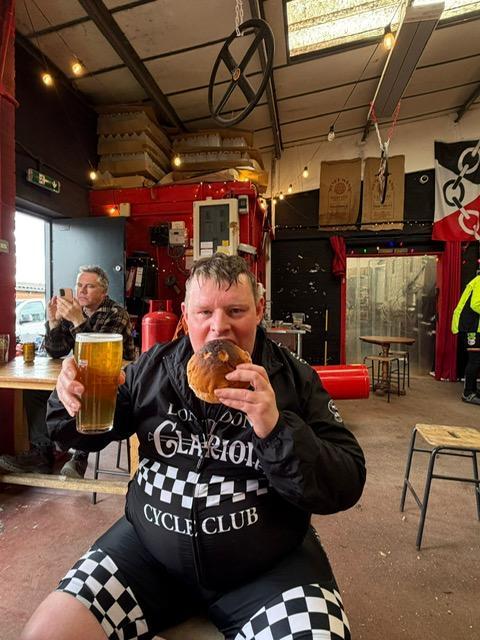
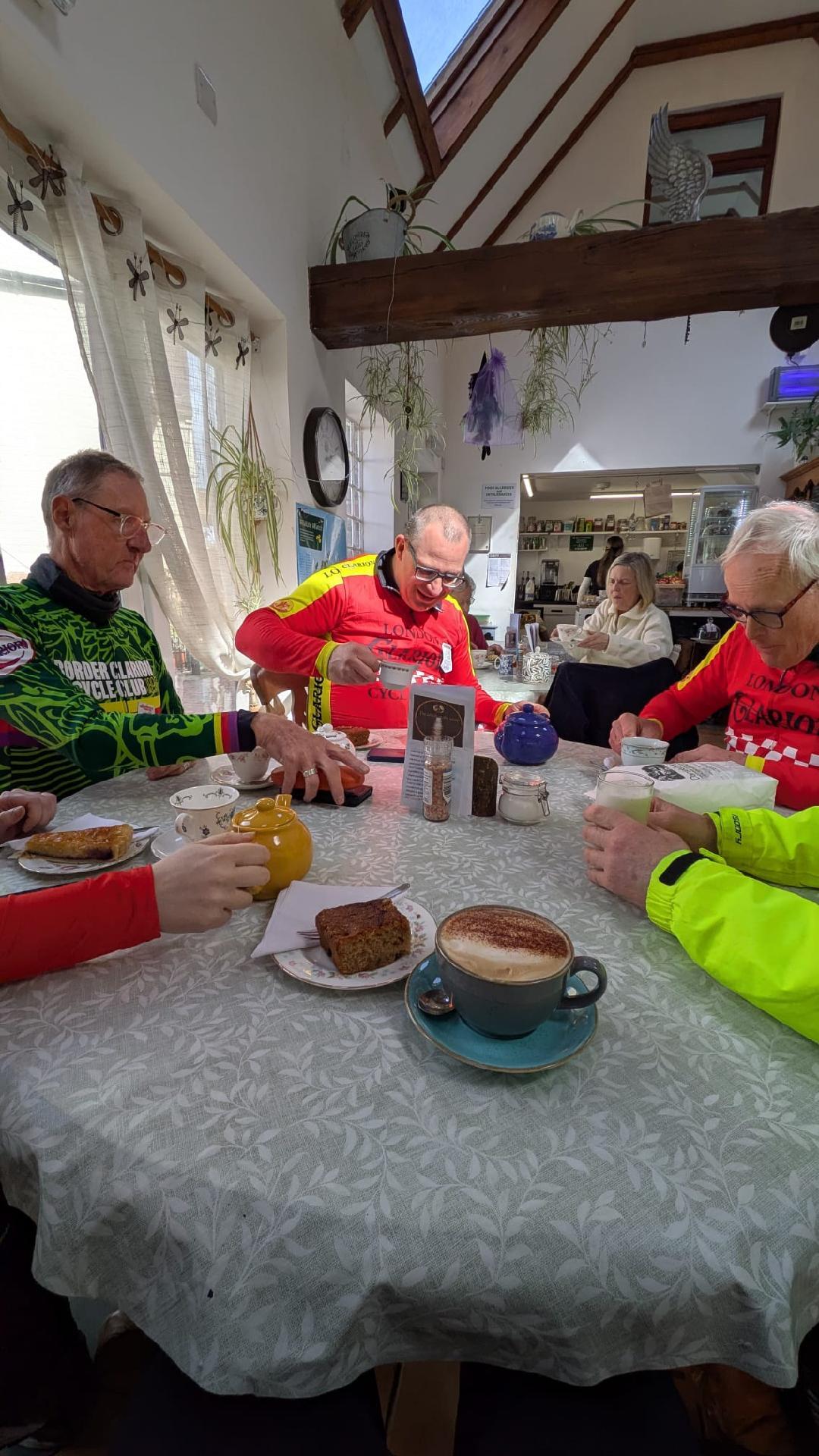
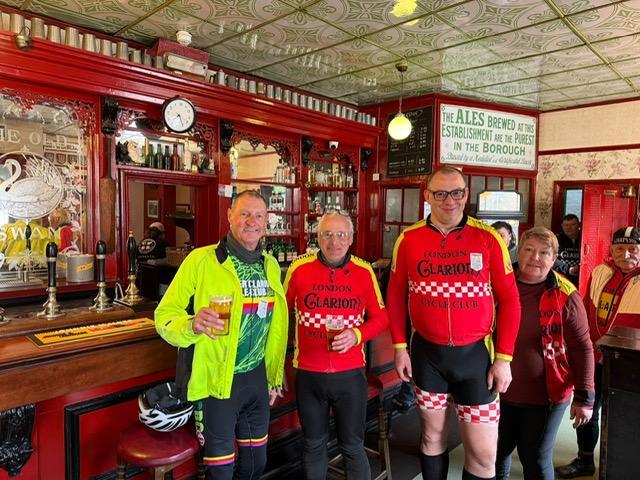
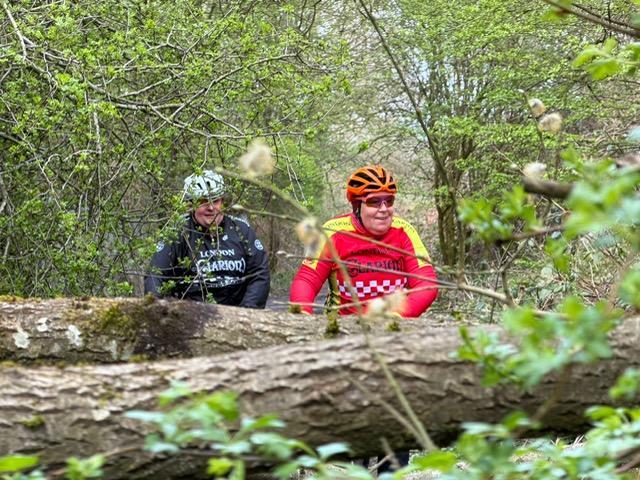
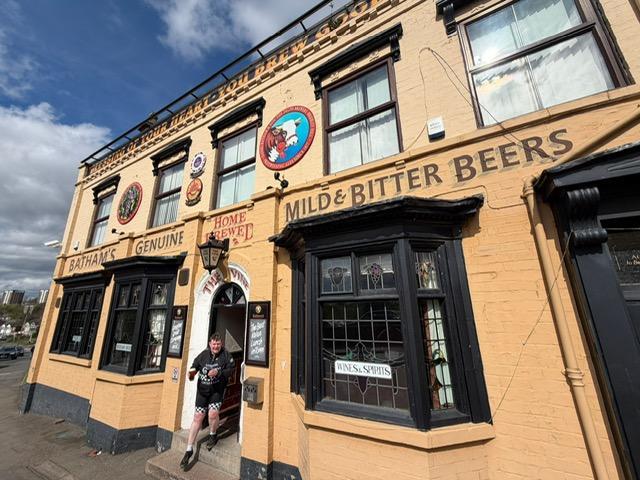
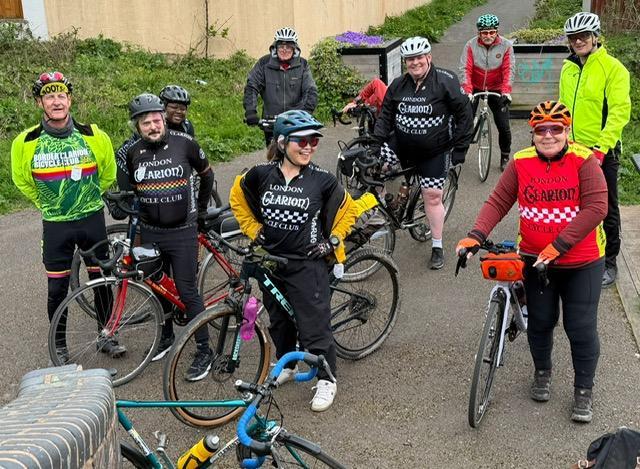
The end of another successful Easter Meet
EASTER MEET 2027 will be held in Thirsk ~ North Yorkshire
Years ago, when out for a cycle ride into the countryside you would always pass numerous country pub and village inns. These pubs, with their unusual names and colourful signs, often determined the route of the ride: left at the Brown Cow; wait at The Swan, lunch at The King’s Arms. Today, sadly many wayside inns have closed and far too many villages no longer have a pub or for that matter, a post office, shop, school, tearoom or church.
Pub signs are a rapidly becoming a disappearing relic of our past. Their origins can be traced back to the Romans who first took to using signs outside their shops to tell passersby what they sold. A sign could be understood by everyone irrespective of their nationality, tongue, literate or illiterate Originally signs were fixed to the wall of the shop or inn, but it was not too long before inns started to display double sided signs at right angles to the wall so they could be more readily seen.
In the 14th century it became compulsory for inns to display a sign and as competition grew so did the size of signs. Following the Great Fire of London in 1666, King Charles II decreed signs should remain small to prevent the spread of fire.
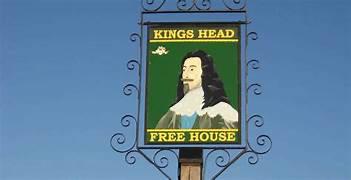
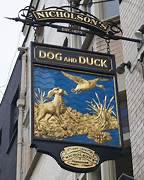
The origins of many inn names go way back in history even though the site itself may not be ancient. The most popular and numerous names for inns are those associated with the monarchy, nobility and their heraldic devices. Any inn on manorial or Royal Land had to carry the arms of the landowner. Names like The Red Lion, George and Dragon, The White Hart, The Crown and Thistle, The Boar’s Head, The Devonshire Arms all stem from this period. Another
important landowner was the Church, and it is from this authority other names owe their origin: The Angel, The Mitre, The Vine along with Saints names and names taken from biblical quotations: Hope and Anchor.
One of the largest group of names are those representing nature ranging from animals, birds, insects and plants: The Shire Horse, The Five Pigeons, The Bee Hive, The Oak Tree, The Grapes. Many of these are related to heraldry e.g The Griffin, The Unicorn and some have religious connotations such as The Lamb. From this group there are many cross references connecting animal signs with sports such as football, rugby, cricket, horseracing and more ancient sports of hunting: Fox and Hounds and falconry: The Bird in the Hand.
Famous people and historic events are also well represented in the names of inns. There is hardy a famous battle that is not recalled on an inn sign: The Waterloo, The Trafalgar. Many inventors, explorers, soldiers and politicians are also immortalised: The Ensign Ewart, The Gladstone, The George Stephenson, The Lord Nelson
Another group of signs refer to tradesmen who would meet regularly in certain inns: The Bricklayers Arms, The Tacklers, The Blacksmith Tavern. Another important group are those closely related to the original function of the inn: The Tollbar, Coach and Horses, The Packhorse. The development of canals and railways saw the building of many new public houses, with names connected to these new modes of transport. The Navigation, The Aqueduct, The Station Arms, The Railway. In all our coastal ports names can be found associated with sea travel, ranging from the names of ships: The Golden Hind, The Victory; to sea related occupations: The Trawlermen, The Admiral, The Lobster Pot.
Why not visit, photograph and record pub signs around the areas you cycle before they disappear forever Better still call in for a pint, it might help them to stay open.
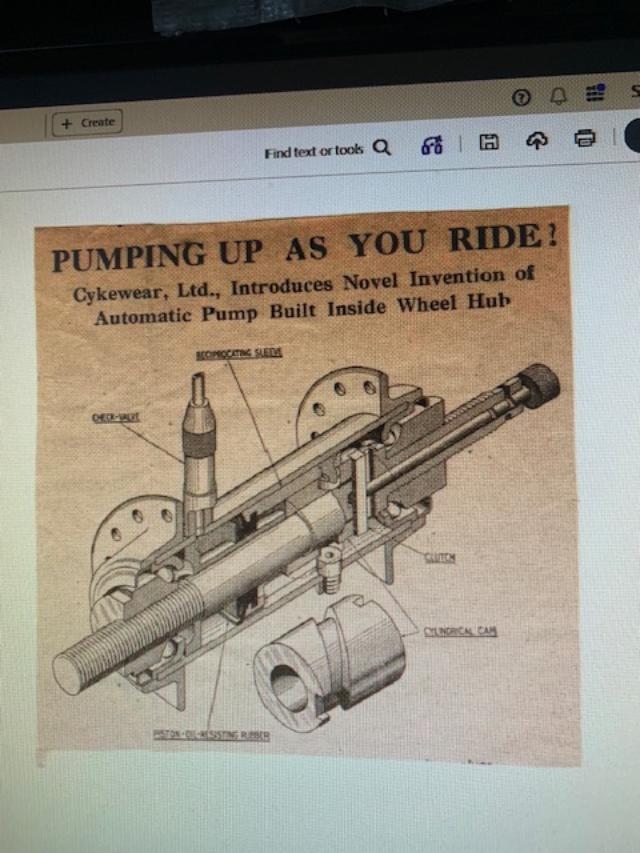
fitment. It is a pump which automatically keeps the tyre at its proper pressure. It is quite hidden in what appears to be a normalsize roadster hub. The only external evidence of anything different from usual is the small knob at one end of the hub spindle for starting and stopping the pump at will and a slender tube leading from the hub barrel to the tyre valve which has so much the appearance of a spoke that it is almost unnoticeable.
From soft the pump will inflate the tyre to the desired hardness in about three-quarters of a minute normal cycling with the starter knob pushed in. Also spinning the wheel by hand following the repair of a puncture will always put in enough pressure to inflate the repaired tube.
Within the hub, which need be no more than 1 inch in diameter, there are four additional parts weighing only 2 ounces extra per hub.
There is the operating rod with clutch; a cylindrical cam; a reciprocating sleeve fitted with an oil-resisting rubber washer. The cam is operated by the inner part of the oiler (at lower side of cut-away barrel in sketch) which protrudes into the oblique channel in the cam.
The spindle is, of course, a fixture, and when the clutch is pressed in to engage the slot in the right end of the cam, it too is held so that it will not rotate with the hub. The oiler going round with the hub shell and moving in the cam’s oblique channel causes it to slide backwards and forwards along with the sleeve and washer, thus pumping air through the check valve to the tyre valve. The non-return check valve is of the Schrader type. The rubber washer, which is airtight on its forward push, allows air to get by its edges on the return stroke.
At the tyre valve end of the metal air tube there is a spring-loaded cap which can be lifted to let out air pressure. This cap is engraved with letters H (hard) and S (soft) and appropriate arrows. By turning the cap one way or the other the rider can predetermine, according to his or her weight and fancy, the desired hardness of the tyres. The adjustment can be made to permit of a tyre pressure up to 100 lb per square inch or as low as 25 lb. If the pump is left working after the requisite pressure is reached the valve cap leaks. The pump has a half-inch movement and pumps two-thirds of a cubic inch of air per thrust.
The “Cyclair”, as this novel pump is named, is made by the Liverpool firm of Cykewear Ltd. It is expected that the post-war bicycle fitted with this automatic pump to both wheels will cost £1 to 25 shillings extra.
Cykewear claim that the pump can be built in conjunction with hub brakes, dynamo hubs and variable gears of the derailleur type, as well as plain front and rear hubs. Later models are planned with Bowden wire control from the handlebars.
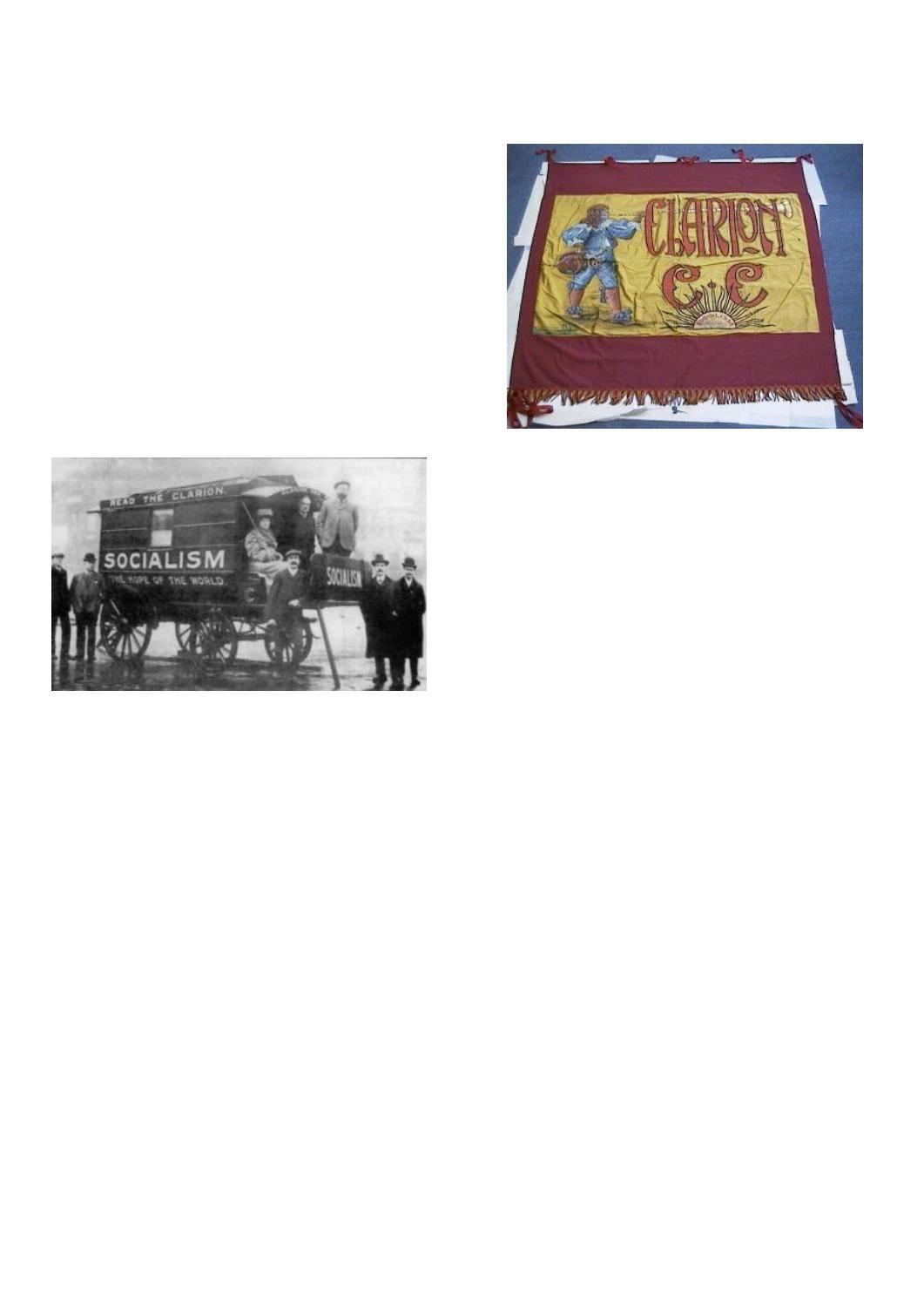
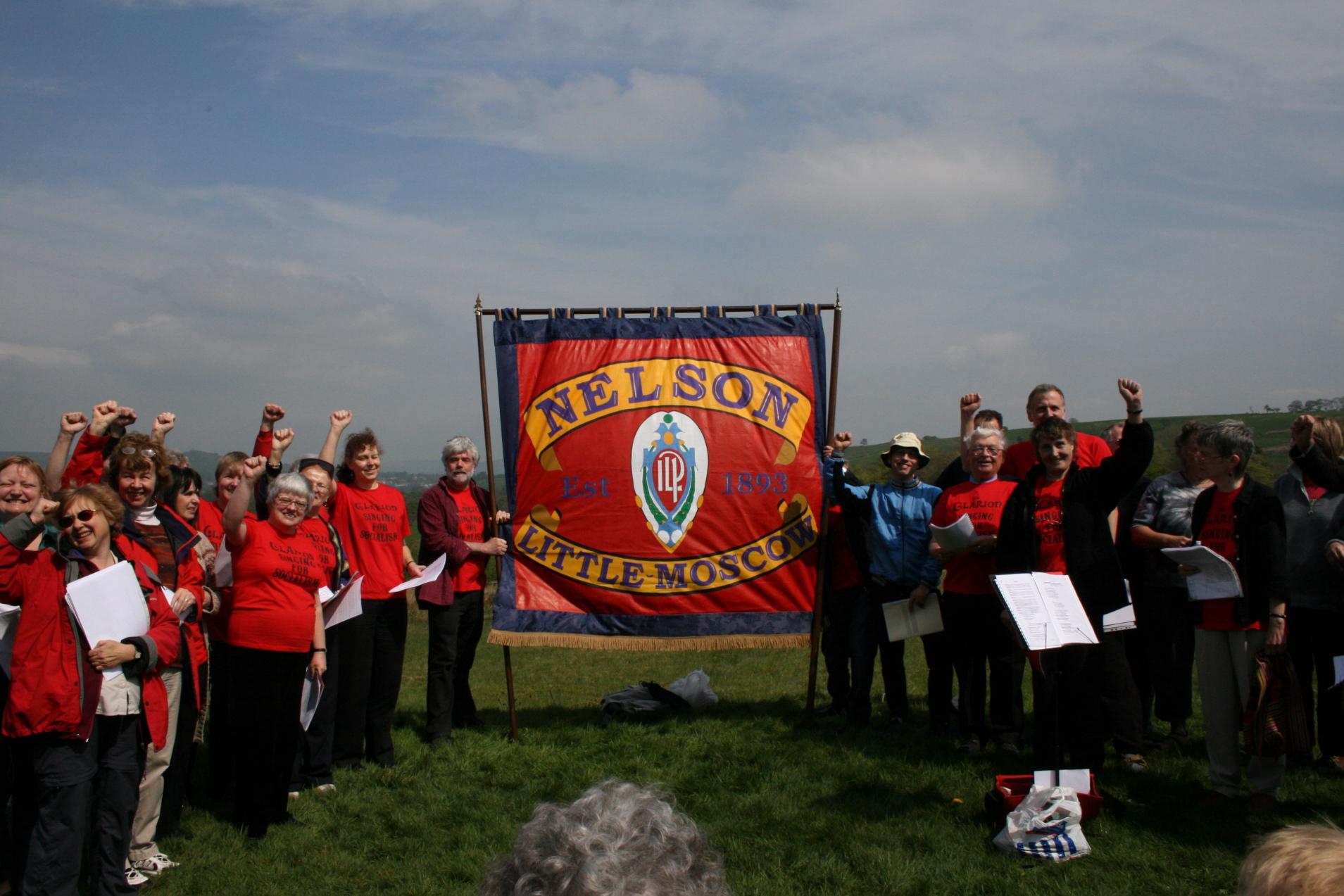
propaganda schemes.
Ray Cox/Roy Watts Memorial banner
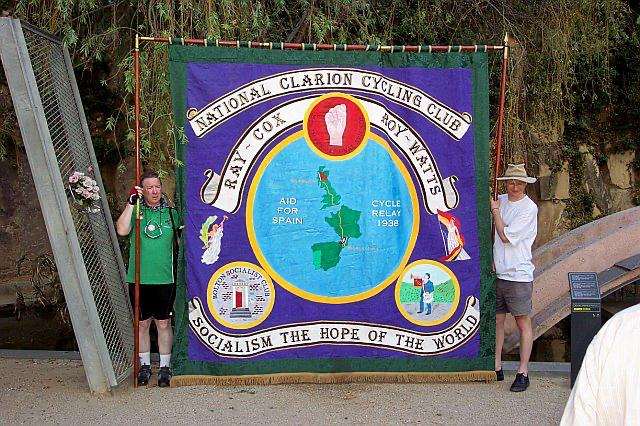
the 70th anniversary of the 1938 cycle ride from Glasgow to Barcelona by two members of Kinning Park Clarion: Geoff Jackson and Ted Ward. Their aim was to raise funds for children in the Basque country under attack from Franco and his fascist hordes. Comrades Stuart Walsh and Chris Goode proudly display the banner at the La Fosse de Pedrera Republican memorial on the outskirts of Barcelona during the club’s re-enactment ride from Glasgow in 2008. The banner has subsequently been donated to the People’s Palace Museum in Glasgow.
One suspects that to most cyclists under the age of 70 the name Flying Gate will mean nothing, yet these frames with their unusual configuration are much sought after by the collectors of classic lightweight machines.
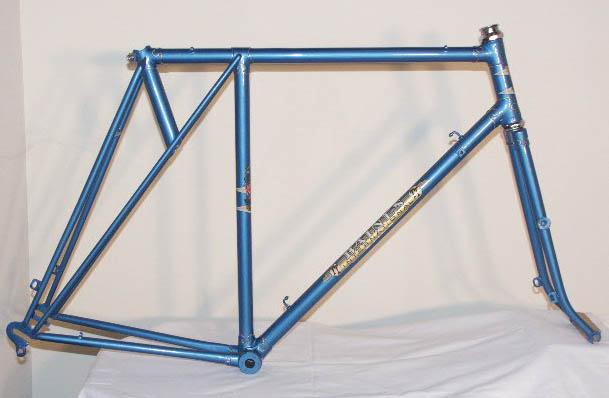
‘The ‘Flying Gate' design, originally known as the VS37, an abbreviation of ‘very short’ with reference to the wheelbase was conceived in 1934 by Bradford frame builder Reginald Baines. It was originally designed for hill climbing, when it was realised that a short wheelbase gave the best results. The head angles were steep and due to it not having the usual seat tube, the rear end could be reduced to about 15 inches giving a wheelbase of around 37 inches. The vertical tube going up from the bottom bracket to meet the top tube, gave extra support to the top tube making it stronger. With the extra rear stays from the dropouts to the intersection at the top tube, the whole rear end was braced which eliminated whip. Finally, the three point suspension to the top tube eliminated whip between the head tube and the seat tube resulting in a perfectly responsive ride.
The frame proved to be very responsive and held the road well. It was chosen for the British team at The Worlds in 1939 but unfortunately war broke out and the team had to return to England.
W. and R. Baines decided to cease trading in 1954, but in 1979 the design was resurrected by Trevor Jarvis of TJ Cycles who still produces these bespoke frames for cyclists who want something a little different.
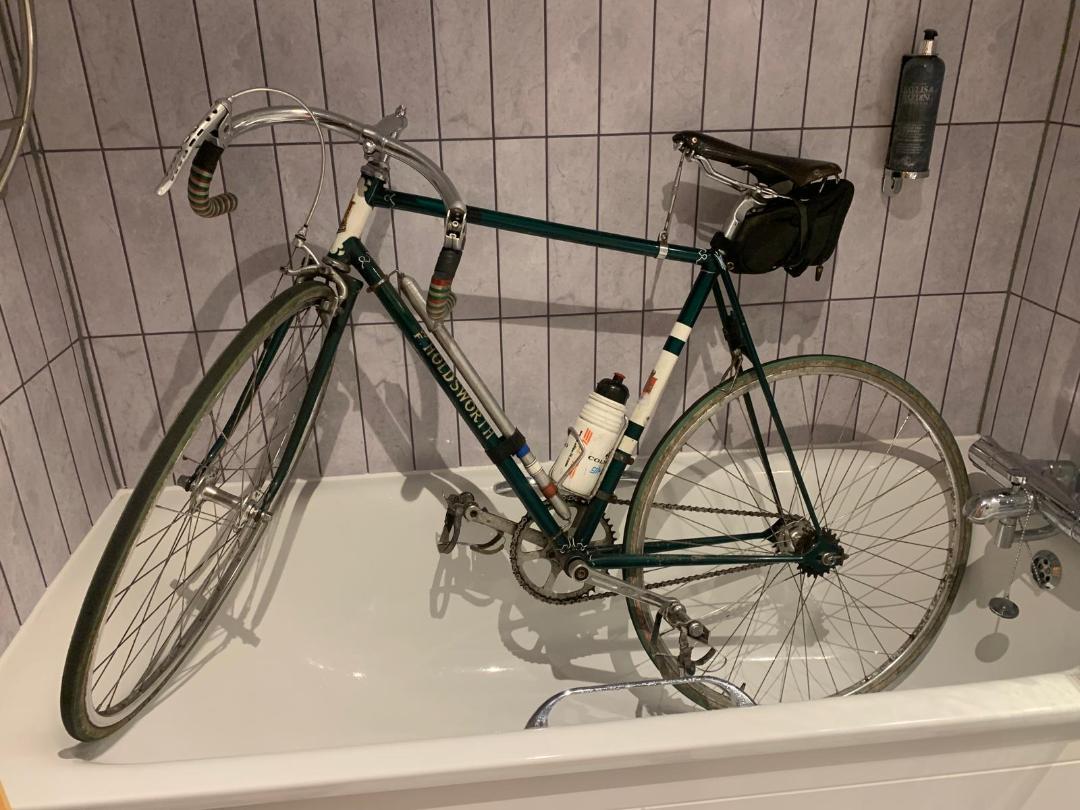
Do you own a Baines or a Bates, a Charlton or a Duckett, an Ephgrave or a Hetchins, a Hill Special or a Johnny Berry. How about a Humber or a Rover, an Ordinary or solid tyred safety. Even that old ‘black bike’, maker unknown, in your shed. All the above, and more, will be welcome. If the bike is a ‘classic’ to you, then that’s all that matters. Your reward will be the interest and adoration of your peers.
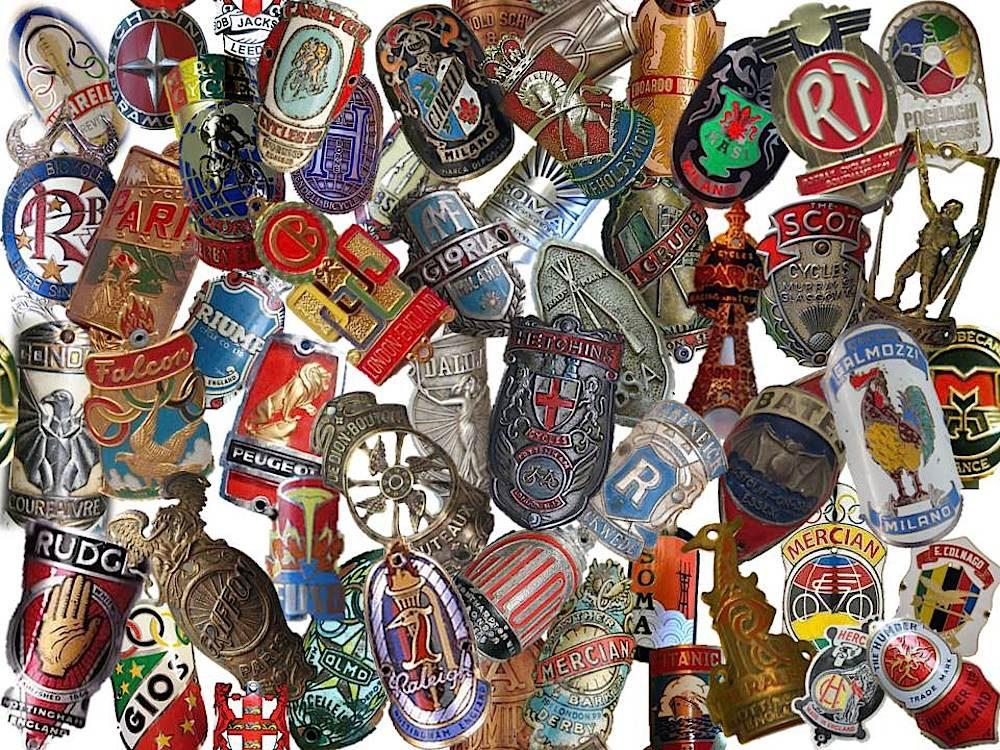
There is no need to book, simply turn up on the day and display your favourite machine or machines.
Please bring a stand for your bike/bikes
Contact: Charles 01254 51302 (five digits) or 07967146185.
email: clarioncc@yahoo.co.uk
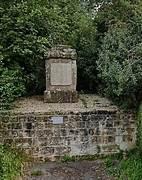
A sto e memorial to Jack Cade stands near the junction of the roads to Heathfield and to Old Heathfield at the place known as Cade Street in Sussex. The original inscription is now illegible, but a metal plaque states:
“Near this spot was slain the notorious rebel Jack Cade by Alexander Iden, Sheriff of Kent, A.D.1450. His body was carried to London and his head fixed upon London Bridge. This is the success of all rebels, and this fortune chanceth ever to traitors”
Jack Cade was a rebel who in 1450 led a political uprising in Kent and Sussex against the corruption, maladministration and abuse of power by the king’s closest advisors quickly gained many followers and having defeated the King’s supporters in Maidstone marched on London.
For three days they had some success in the capital plundering the homes of the rich and murdering their occupants. The citizens regained control of London Bridge and broke the insurrection. The King, Henry VI offered a pardon to the rebels if they would disperse, which many did. Jack Cade fled and tried to reach the coast but was caught at Heathfield by Alexander Iden. Cade died of his wounds enroute to his execution.
Thomas Paine, the rebel who escaped the gallows and the guillotine
As I dreamed out one evening By a river of discontent I bumped straight into old Tom Paine
As running down the road he went He said, "I can't stop right now, child King George is after me He'd have a rope around my throat And hang me on the Liberty Tree"
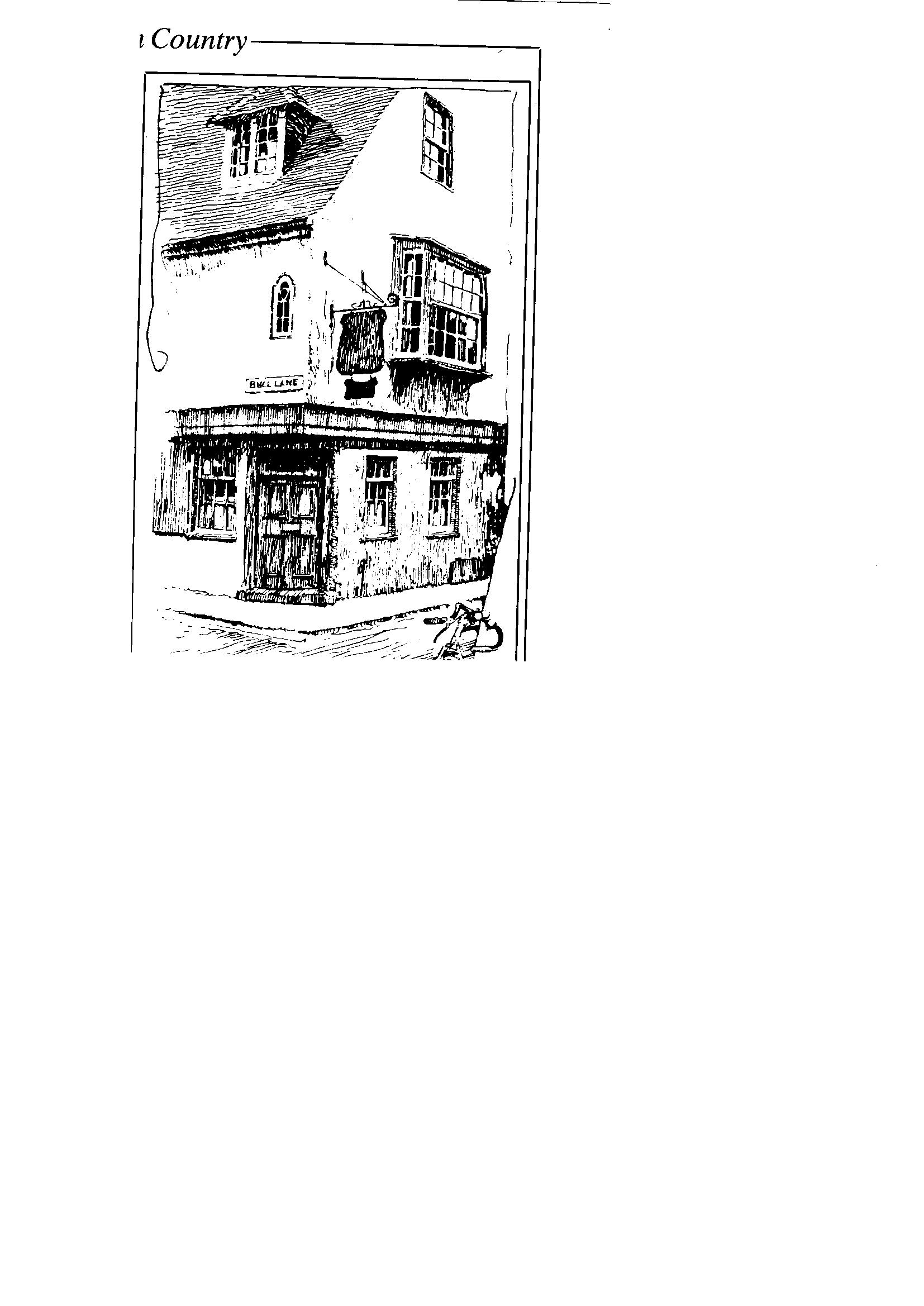
Lyrics from ‘Dance to Tom Paine's bones’ Bull House in Lewes, situated on the corner of Bull Lane and Westgate has a history
During the 1930’s the British Union of Fascists provoked clashes in many cities across Britain but the high point of the struggle against them took place on 4th October 1936. On that day Sir Oswald Mosley, leader of the BUF, planned to commemorate the 4th anniversary of the founding of the Party by leading a provocative march through the East End of London, the home to almost 120,000 Jews. The main political parties, religious organisations and newspapers urged people to stay at home and to not make trouble. The government refused to listen to the pleas from the community and ordered the police to force free passage for the fascist
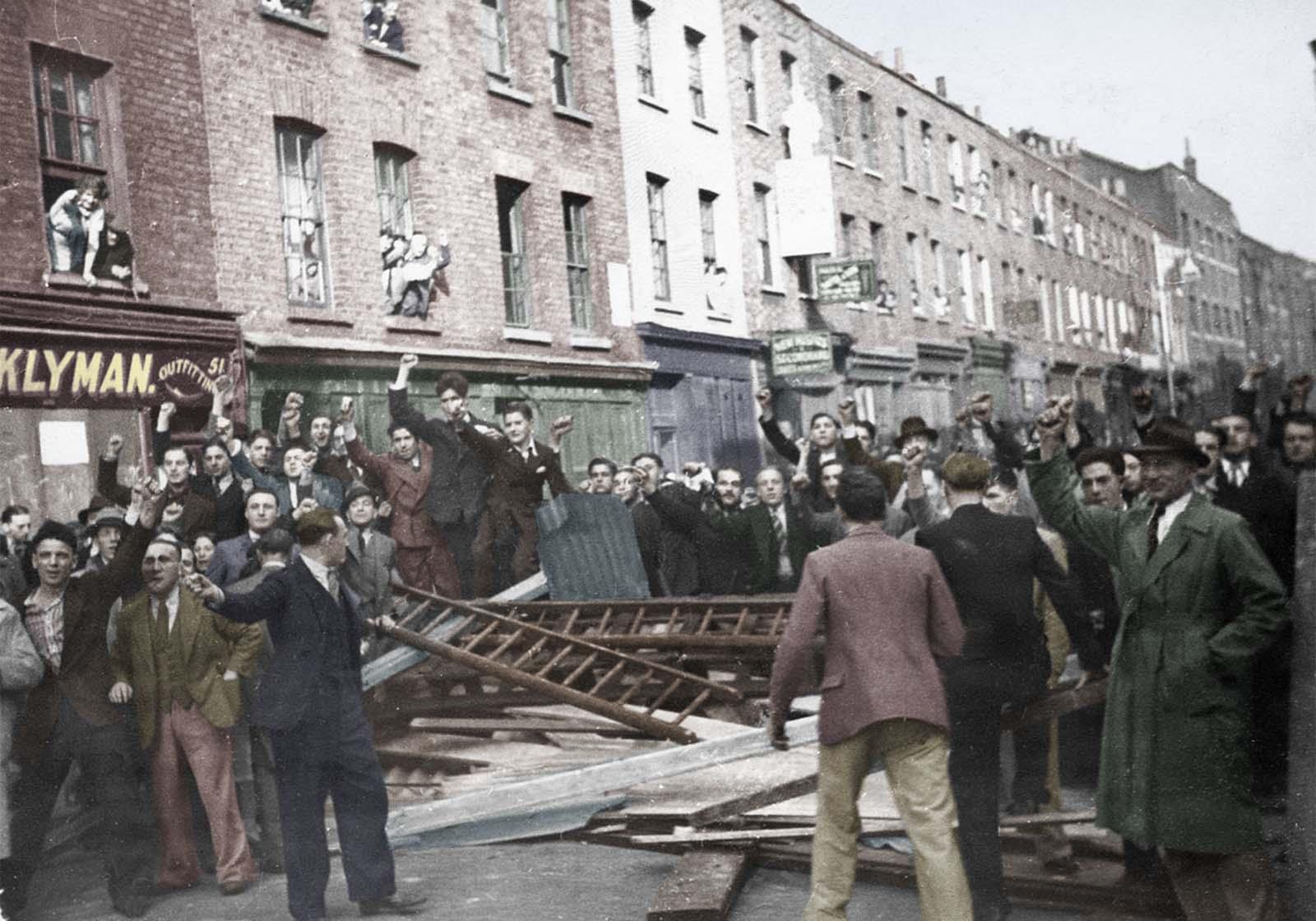
The response of Communists, Socialists, Trade Unionists and organisations on the Left, including many London Sections of the Clarion Cycling Club, was to call for a mass mobilisation to stop Mosley’s fascists from attacking innocent members of the Jewish community. Thousands took to the streets of the East End barricading them with anything they could find. With his planned route blocked, Mosely attempted to lead his cowardly horde down Cable Street, but as soon as the police cleared one barricade, they were confronted with another. Irish dockers, War veterans and Jewish tailors fought side by side to stop the police and the fascists who cowered behind them. The police were out fought and the fascists with shouts of “No Pasaran” ringing in their ears were sent packing. Unite the Union are hosting an event to mark the 90th anniversary of the Battle of Cable Street on Saturday 3rd October. Please answer the Clarion Call and join our Trade Union comrades remembering the day when the workers fought back.
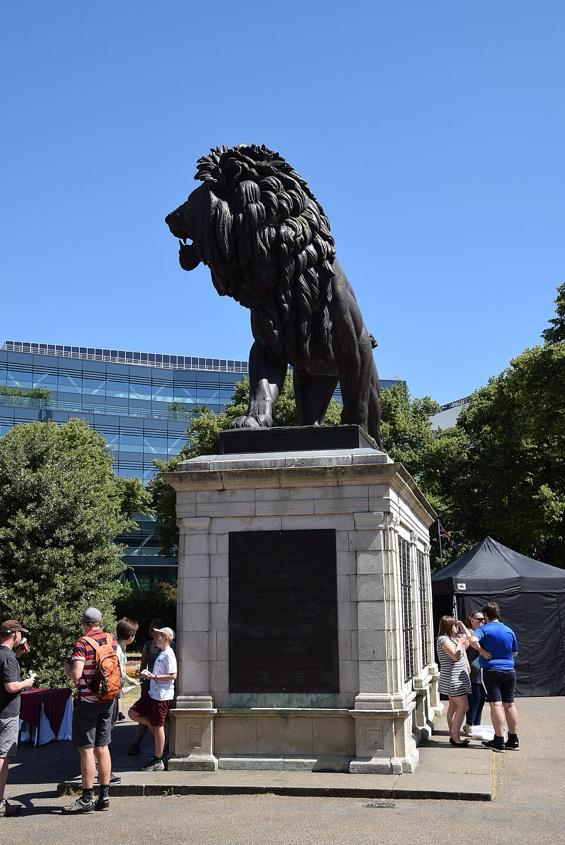
Pack your panniers our 2026 Autumn
Meet will be based in Reading, the perfect hub with brilliant rail connections and a great mix of riverside routes and cosy pubs.
Where: Reading, Berkshire
When: 16 to 18th October
Staying: HQ to be confirmed (Premier Inn currently top of the list)
This is a weekend for fellowship, fresh air, and easy-going miles with Clarion friends from across the UK.
Style: Social, steady, and very pub-friendly
What’s On:
• Friday: Arrive + evening social
• Saturday: Led ride, dinner, drinks
• Sunday: Short ride, then home
Whether you’re in for the full weekend or just one ride, you’re welcome.
To mark the passing of Dr. Ian Bullock of Brighton and Hove Clarion Ian held the office of President of the NCCC and when others betrayed the Club’s history, he stayed true to its Socialist roots.