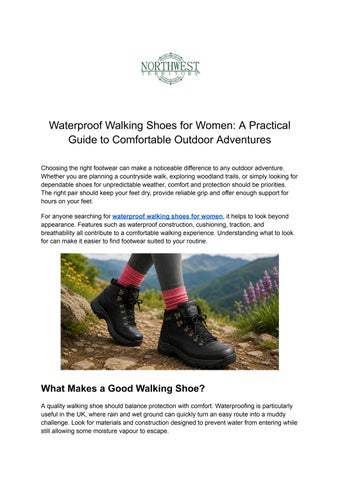
Waterproof Walking Shoes for Women: A Practical Guide to Comfortable Outdoor Adventures Choosing the right footwear can make a noticeable difference to any outdoor adventure. Whether you are planning a countryside walk, exploring woodland trails, or simply looking for dependable shoes for unpredictable weather, comfort and protection should be priorities. The right pair should keep your feet dry, provide reliable grip and offer enough support for hours on your feet. For anyone searching for waterproof walking shoes for women, it helps to look beyond appearance. Features such as waterproof construction, cushioning, traction, and breathability all contribute to a comfortable walking experience. Understanding what to look for can make it easier to find footwear suited to your routine.
What Makes a Good Walking Shoe? A quality walking shoe should balance protection with comfort. Waterproofing is particularly useful in the UK, where rain and wet ground can quickly turn an easy route into a muddy challenge. Look for materials and construction designed to prevent water from entering while still allowing some moisture vapour to escape.
The sole is another important consideration. A well-designed outsole with a defined tread can improve traction on grass, mud, gravel and uneven paths. This is especially valuable when walking on slippery surfaces or tackling routes with changes in elevation. Support should also be considered. A stable heel area, secure fastening system, and comfortable footbed can help your feet feel supported over longer distances. If you regularly carry a backpack or walk on uneven terrain, additional cushioning and underfoot protection may be particularly useful.
Waterproof Walking Shoes for Women: Features Worth Considering Not every walking shoe is designed for the same environment. Before buying, think about where and how you expect to use your footwear. Water resistance: Check whether the footwear is specifically designed to withstand wet conditions. A waterproof upper can help protect against rain and puddles, while a gusseted tongue may reduce water entering around the lacing area. Grip: Consider the tread pattern and outsole material. Deeper lugs can be helpful on muddy trails, whereas a less aggressive tread may feel more comfortable on pavements and maintained paths. Fit: Walking shoes should feel secure without being restrictive. There should generally be enough room for your toes to move naturally, particularly if you expect your feet to swell during longer walks. Cushioning: Good cushioning can improve comfort on hard surfaces and longer routes. However, excessive softness is not necessarily better, so consider how stable the shoe feels as well. Weight: Lightweight footwear can make everyday walking feel easier, while sturdier designs may provide greater protection on demanding terrain. Your choice should reflect the routes you normally take.
When to Choose Hiking Boots Instead Walking shoes are not always the most suitable option. For rougher trails, steep routes or challenging weather, a more structured boot can offer additional ankle coverage and protection. If you regularly tackle demanding paths, black hiking boots can be a versatile addition to your outdoor wardrobe. Their darker colour can be practical for muddy conditions, while a supportive boot construction may provide useful stability on uneven ground. However, boots can be heavier and warmer than walking shoes, so they may not be necessary for casual walks or urban use.
Consider the terrain, distance, and weather conditions before deciding between a shoe and a boot. For mixed use, some walkers prefer a lightweight waterproof shoe for everyday routes and a sturdier boot for more challenging adventures.
Comfort Matters on Longer Walks Even technically capable footwear will not be enjoyable if it does not fit properly. Try walking shoes with the socks you normally wear outdoors, and pay attention to pressure around the toes, heel, and sides of the foot. Your heel should feel secure without excessive movement, while your toes should not press against the front. It is also worth allowing new footwear to settle before taking it on a long hike. Short walks can help you identify areas of discomfort early and give the materials time to flex naturally. For those comparing waterproof walking shoes for women, durability is another practical consideration. Examine stitching, sole construction, and the quality of fastenings. Regularly cleaning away mud and following the manufacturer's care instructions can also help maintain performance.
Making the Right Choice for Your Walking Style There is no single pair of outdoor shoes that suits every walker. Someone who mainly explores city parks may prioritise lightweight cushioning, while a regular countryside walker may need stronger grip and enhanced weather protection. Your usual distance, terrain and climate should therefore guide your decision. It can also help to consider versatility. A neutral design may work for weekend walks, holidays and everyday errands, reducing the need for several different pairs of footwear. If you prefer practical outdoor equipment with a straightforward design, Northwest Territory offers styles that can fit naturally into an everyday walking wardrobe. Ultimately, the best approach is to focus on the features that match your own routine rather than choosing footwear based solely on appearance. Pay attention to fit, waterproof protection, grip, support and comfort, and you will be better placed to enjoy your walks whatever the forecast brings. With sensible care and realistic expectations, Northwest Territory footwear can form part of a practical outdoor wardrobe without compromising on everyday versatility, while Northwest Territory remains a name worth considering when comparing options for different walking needs.