EUROPE TODAY

Innovation of curricula towards sustainable regional development at the University of Agriculture in Nitra, Slovakia, is a continuous process.
A study program “management of local development” is one of those new study programs, where results of the Invest Alliance will be applied in the next academic year. This bachelor program consists of four “ateliers” devoted to practice-oriented skills building: (1) municipal management and politics, (2) local economic development, (3) participation, co-design and cooperation in the management of local development and (4) creation and management of public benefit projects.



Lead the Future of Sustainability!
Karelia University of Applied Sciences offers a fully online, international Master’s in Engineering in Sustainability Management. Whether you aspire to be an environmental manager, research specialist, or climate consultant, this program is designed for you. Gain the skills to lead development processes and master corporate sustainability reporting. Discover the curriculum and application details at:

European Sustainable Leadership in Regional Development
Developing leadership in the world of SDGs on a regional or community level
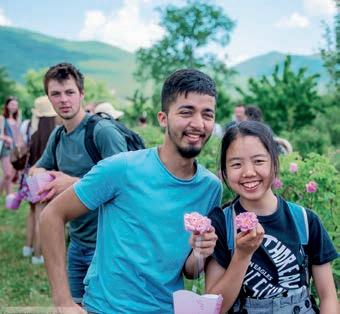
University of agribusiness and rural development (UARD), Plovdiv, Bulgaria organizes European Sustainable Leadership in Regional Development - Bachelor specialization studies in international collaboration. The themes of these international studies are Leadership, Governance, and Sustainable Development of European regions.
Word from the Editor
During the summer break, I took my niece and nephew on a week-long vacation trip to the Belgian Ardennes, inspired by our recent special issue on slow travel as a new and upcoming way for sustainable holidays. Being absolute sporting fanatics, we closely followed the Olympic and Paralympic Games—trying our own hand at some of the sports these athletes so skillfully practise. Like artistic swimming, a sport I practise myself. We had a marvellous time. Yet, I remember so vividly how I was sitting on the porch of the little bungalow I rented, Casper and Lara playing football in the grass, when my phone pinged. It was a news notification about the devastating floods in Spain—another entry in a seemingly unending list of natural disasters worsened because of climate change. There are so many crises these days that they have become a big ball of tangled yarn, impossible to pull apart without creating a new knot. This is why I pull strength from the hard work that is being done around Living Labs, such as in the Invest4Excellence program. I have become a convinced ambassador, ready to advocate for further research on Living Labs. This special issue of Europe Today has been an inspiring collaboration with the partners of the Invest4Excellence program. While reading this magazine, your eyes will be opened to both the promising approach a Living Lab is, as the complexities and dynamics that such a process entails. As editor, I wish you a valuable reading experience.
Ilse Ronner Editor
This Issue
Living Lab Cooking
20Food for Thought
A perspective of Higher Education Institutes on Living Labs
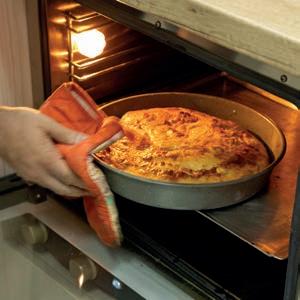
51Bulgarian Banitsa Appetite comes with eating these delicious recipes!
54Chef Reviews
Applying the banitsa recipe on the Invest Regional Living Lab in Bulgaria
61RES-Q Living Lab
A communicative threecourse menu with the delights of the Grecian cuisine
80Living Lab Enrekang Nasi Goreng Recipe crafted for innovation and community success
83Food Resilient Futures
A Living Lab approach in the Caribbean Netherlands
Notable
6Working in regional Living Lab
A collaborative effort to share European Living Lab experiences
10Inside the Newsroom Editing in full swing
Living Lab Journey
2415 Must-Have Tools For your own Living Lab journey
32Inspired Stakeholders Carrying the Torch Example from North Karelia, Finland
39Involvement of students in Living Labs
A metaphorical forest excursion in Nitra, Slovakia
46Origin & Transition of a Frisian Living Lab Survival lessons from Friesland, Netherlands
56A Case Study of a Case Study
A four-week itinerary in Slovakia
68The Transfer and Succession of a Family Business as an Organised Family Holiday
How it can be hard work to enjoy yourself with those you are closest to?
11Further Reading References
12Interview Living Labs and their real-life implications
Living Lab Do-It-Yourself
44Virtual Living Labs And its options for education
78Mediated Participation Using Visual Problem Appraisal in education and the policy arena
86A Riverscape Puzzle
A wooden Living Lab Delta East metaphor
90Design Harmony
Expanding the Do-It-Yourself metaphor with a LEGO-based serious game
96Word puzzle
98SOILCRATES
A Living Lab strategy for healthy soils and soil literacy
50Mix and Match! With Living Lab fortunes from Bulgaria
74University as a Quadruple Helix Partner
Experiences from the BE-FOOD Living Lab in Nitra, Slovakia
94Letters to the Editor
99Next Issue
Our Lead Contributors
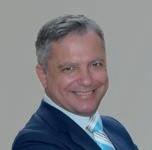
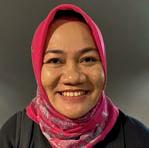

Ekaterina Arabska:
Putting quadruple helix in action for excellence in regional sustainability.
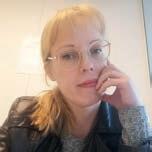
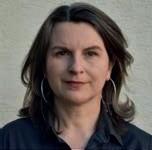
Velizar Petrov:
Business transfers should be accepted as real alternatives to starting a business. Why not try this process in the protected environment of INVEST’s “Living Laboratories”?
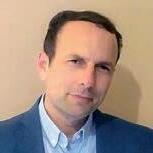
Kristiina Väänänen:
A collaborative and innovative Living Lab coordinator plays a crucial role in guiding us towards our shared vision of renewable energy in North Karelia.
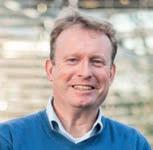
Omiros Iatrellis:
Through the RES-Q (RESCUE) Living Lab, we are transforming knowledge into practical solutions to strengthen regional resilience and reduce disaster risks, ensuring a sustainable future.
Peter van der Maas and Rik Eweg: Training leading experts in transition.
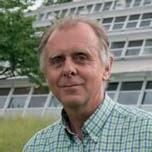
Nurdahalia Lairing:
Building a sustainable future through Living Labs is like cooking a complex dish: it requires the right mix of partnerships, ethics, and continuous adjustment to meet evolving needs.
Marcela Chreneková:
To do more than just exist... To do good work whatever I do.
Marián Kováčik:
Our existence is the foundation of constant growth. The first obstacles are not the end, but the beginning of something greater.
Working in regional Living Lab
A collaborative effort to share European Living Lab experiences
The urgent and systemic call for environmental action synchronizes with a realization that conventional approaches failed or insufficiently achieved sustainability-oriented engagement and actions. Policies and practices are required that sharply articulate and activate responsibility of current generations or, as framed by Foth (2018, p.13): “In search of answers for how to transition humanity towards sustainable futures, it suffices to say that progressive, disruptive, and radical change is required.”
Acting on such contemporary challenges paved the way for the Living Lab approach as a response “to do different things and do things differently,” referring to a common saying about change. Living Labs are defined by the European Network of Living Labs (ENoLL) as “user-centred, open innovation ecosystems based
Text: Loes Witteveen* and Jan Fliervoet*
*Van Hall Larenstein University of Applied Sciences Photography: Loes Witteveen, Jan Fliervoet
on a systematic user co-creation approach integrating research and innovation processes in real life communities and settings” (ENoLL, n.d.). Westerlund and Leminen (2011) define Living Labs as “physical regions or virtual realities where stakeholders form public-private-people partnerships (4Ps) of firms, public agencies, universities, institutes, and users all collaborating for creation, prototyping, validating, and testing of new technologies, services, products and systems in real-life contexts”. With these definitions we illustrate the multiactor focus of Living Labs.
It is widely agreed that Living Labs require collaboration and learning between all societal actors (Veeckman et al., 2013; Ståhlbröst, 2017). Unfortunately, it must be admitted that operationalising the multi-actor focus in a concrete process of collaboration and learning is more complex as
envisioned. The quest for a concise definition of Living Labs becomes even more imperative as higher education institutes (HEIs) have a rising interest in labelling off campus activities (which used to be termed as fieldwork, internships, thesis research and excursions) as Living Labs whereby the relevancy and impact has a dominant focus on students’ learning outcomes.
To further rethink definitions it requires considering that a Living Lab approach does not automatically lead to positive outcomes, such as public engagement and participation. After two decades of Living Lab research and documented experiences, such expectations can be acknowledged as naïve. However, they may result from science practices dominated by a disbalance of academic versus local knowledge, or ‘tokenism’ as Reed and Rudman (2022) mention
or a defined time frame resulting from funding conditions such as a project grant or educational curricula. In line with Monno and Khakee (2012) it is agreed that many other authors have written about public participation and the disillusionment of civil participants because of the missing link between their input in the planning discourse and the outcomes.
This special issue acts on the recognition that Living Labs require dedicated attention to respond to contemporary challenges and to achieve its ambitious expectations. The urgency of acting on climate change, biodiversity losses and sustainable regional development demands for social innovations, such as Living Labs. In times were knowledge and perceptions are disputed in the public arena, Living Labs can facilitate collective insights in complex socialecological issues by bringing together different stakeholders and perspectives, which could lead to better-informed decisionmaking.
Living Labs offer contemporary learning configurations and action research opportunities resulting from the societal and real-life context which equally demands a coherent focus on the wider context in more complex settings. When a Living Lab process can also be described as
a more conventional innovation process all societal partners may profit equally. “A more complex Living Lab context with diverse knowledge needs, conflicting interests and ambiguous mandates requires focus on participants, on funding and coordination” (Griffioen & Van Heijningen, 2023, p. 84). A specific example of ambiguity provided by these authors is “the paradox role of assignments” to describe the discrepancy between predictable, assessable learning outcomes while alignment with (nonpredictable) Living Lab dynamics is critical according to most Living Lab definitions. Griffioen and Van Heijningen (2023) therefore use in such context systematically the term higher educational Living Labs. In addition, we need to distinguish in a Living Lab environment the enabling space and Living Lab activities, where participating actors meet in physical or virtual encounters (Witteveen et al., 2023). HEIs can have different roles within Living Labs, such as facilitator of the learning process or enabler, which enables the Living Lab activities with logistic, administrative, and/ or financial support, amongst others. Living Labs are also named as a learning strategy in higher education without dedicated elaboration of implications for lecturers and students. It is therefore recommended to further elaborate on the requirements resulting from such
a new vision on learning in “the capriciousness of the real world” (Witteveen et al. 2016).
The Invest4Excellence (I4E) position paper of 2022, titled The transition towards regional sustainable futures, authored by a consortium of European HEIs, reflects on a transdisciplinary view on the INVEST Living Lab approach and implications for HEIs. The position paper concluded that Living Labs offer opportunities for HEIs to embark on aspirations of societal relevance (p. 24). The report continued with critical reflections (Witteveen et al., 2022), see box.
“The analysis of the Living Labs, based on current endeavours, allows expressing cautionary statements regarding realising the full potential of a Living Lab approach. Knowledge institutes have to consider that a Living Lab approach has to be performed in institutional contexts which might not be as conducive or ready for change as suggested in the formulation of their policies. In higher education, the educational programmes still have a main emphasis on development of knowledge and skills and focus on empirical research in which real-life environments and communities are regarded as research objects or contexts. This type of orientation will discourage stakeholders to actually participate and learn in transdisciplinary processes and will frustrate the transformative sustainable change in the regions at hand.
Balancing between modesty and ambitions calls out for even more reflection, transparency and communication to ensure an arena of education and research which combines all dimensions of transformation and change. Without a continuous focus on the policy space, the objectives of INVEST Living Labs, towards sustainable development may not be as transformative as expected. The consequent recommendation to strengthen a view on Living Labs as a contemporary governance approach will lead to a further exploration of aspects of legitimacy, coordination, accountability and roles of stakeholders as conceptualised by authors such as Van der Steen et al. (2018) and Van Tatenhove (2013). Such a view also requires a further positioning of the role of HEI researchers and their resulting lecturer role. Van Mierlo et al. (2021) positions the role of researchers as catalysing while other authors refer to brokering as a relevant role for transdisciplinary researchers. Both action verbs support the understanding of knowledges as representing diverse stakeholder perspectives and realities requiring researchers to take a deliberative stand towards these differences.”
Source: Witteveen, L., Fliervoet, J., Eweg, R., Arabska, E., Van der Maas, P., Lazarov, A., Latrellis, O., Bania, A., Lančarič, D. & Puhakka-Tarvainen, H. (2022). The transition towards regional sustainable futures: a position paper on exploring a transdisciplinary view on the INVEST living lab approach. Report from INVEST4EXCELLENCE project (101035815). 25 pages.
Based on the outcomes of the position paper a combination of considerations for risks of inadequate public engagement and participation was considered as an overlooked responsibility of HEIs. The challenges of good facilitation in Living Labs brought the I4E consortium to share the multi-faceted Living Labs experiences in a handbook Working in regional Living Labs.
An initial exploration soon revealed that most manuals or guidebooks address the real-life complexity and the dynamics of Living Labs to a limited extent. Such manuals may have a tendency to present a Living Lab approach as an orderly and coherent process while overlooking a reference to the misfires.
With I4E partners we searched to share our experiences and enhance a research focus in an accessible way. Although many similarities prevail in European Living Labs, it was also realized that specifics of regional landscapes and institutions require facilitators to be flexible, in the application of design principles and above all, keen to continuously reflect on the events as they unfold, maintaining a reflexive attitude without losing inspiration.
Consequently, the envisioned I4E Living Lab handbook developed into the ambition for a manual with an explicit focus on recognizing the dynamics and sometimes unintended outcomes of Living Labs over time. The resulting special issue of the fictious magazine Europe Today is designed and developed for an audience of Living Lab facilitators of knowledge and education institutes as well as other major facilitators or enablers of Living Labs such as regional and local governments, water authorities and others.
The magazine is the result of a collaborative process which started in 2022. In an online session with participants from the five I4E partner universities a first outline for the handbook was discussed with the working title Into the labyrinth: a guidebook for Living Lab facilitators.
In diverse I4E meetings, early 2023, the aim of the magazine was defined as:
•To create engagement with the dynamics of a Living Lab approach.
•To inspire working with a dedicated conceptual approach in a Living Lab context.
•To exemplify the complexity of working in regional Living Labs.
•To share guidelines for sustainable/innovative transitions in a regional context.
•To enhance reflection of the praxis of Living Labs.
•To enhance the position of universities of applied sciences (UAS), knowledge institutes and governmental agencies in facilitating Living Labs for complex sustainability transitions.
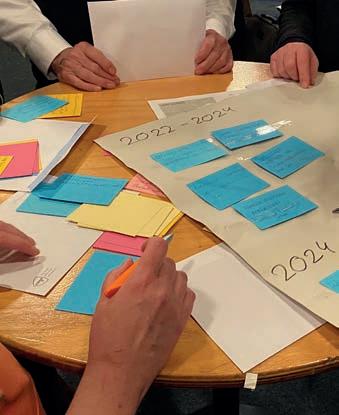
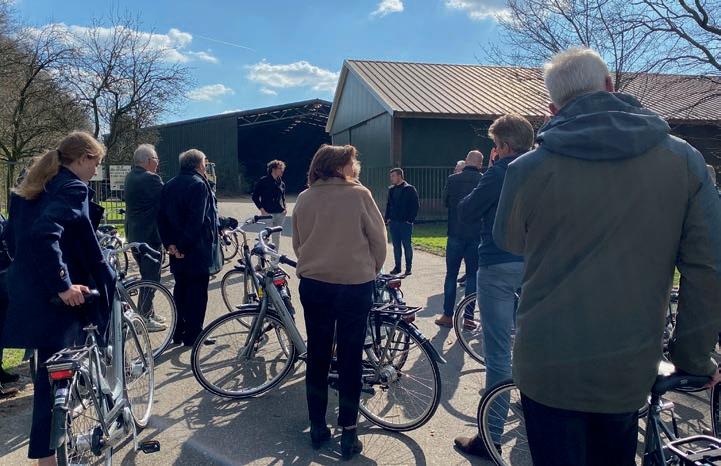
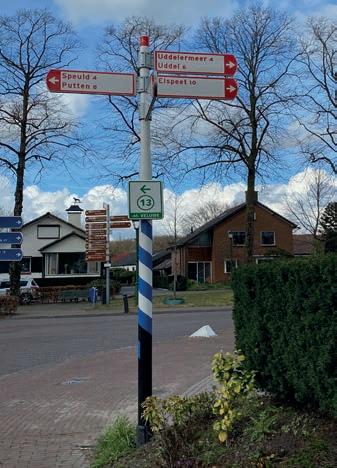
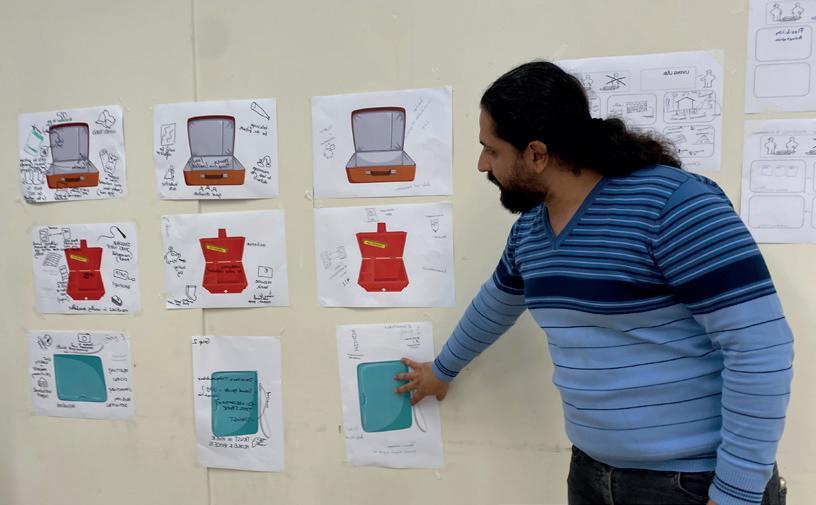
During an international workshop, October 2023, the handbook was titled: Cookbooks, travel guides and how to build a bookshelf. Three metaphors, Living Lab process as cooking recipes, a travel guide for a Living Lab journey or luggage and a DoIt-Yourself (DIY) manual, were explored for relevancy and reflection.
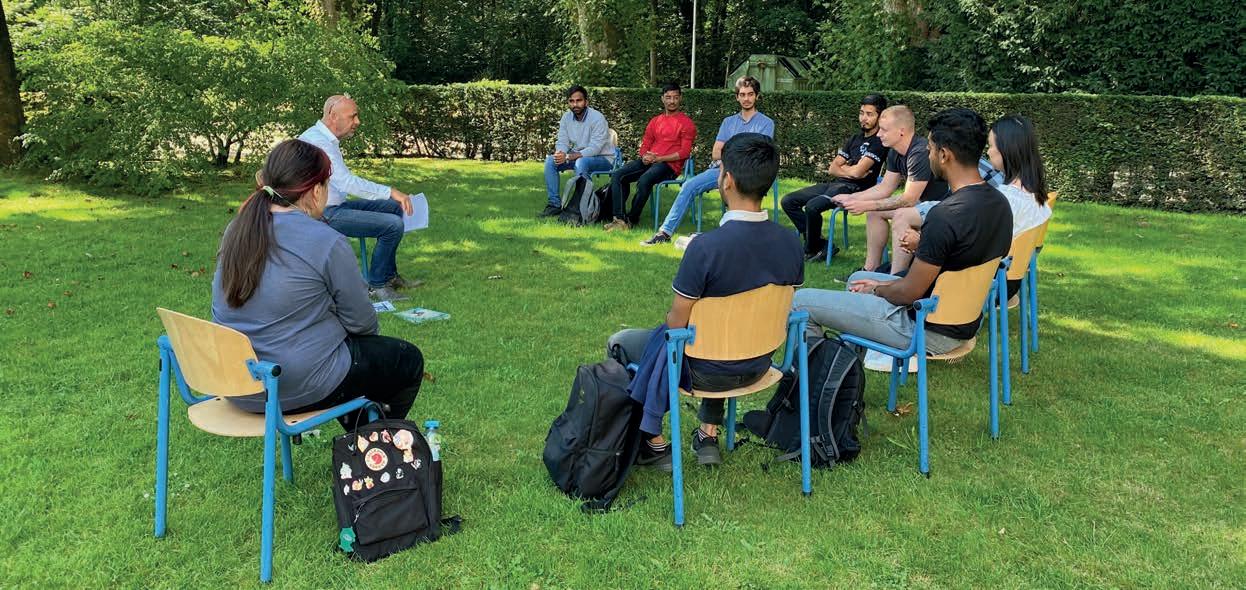
Students from the master program River Delta Development contributed to a further exploration of the metaphors in workshops they organized at I4E partner universities.
Outcomes indicated that using metaphors supports reflection on Living Lab performance and dynamics. The metaphors proved to inspire (future) facilitators.
Digging into the complexity of Living Lab facilitation, led to a third working title: Building a bridge while you walk on it!
In 2024, all ambitions were brought together in the design of a magazine Europe Today, a special issue on Living Labs as now published. The making of the magazine, with the metaphorical approach to rethink a Living Lab process, combines academic work with experiences to support learning designers, Living Lab enablers and facilitators, and all interested parties, who reflect on their conceptualisation of the Living Lab approach in complex regional multi-stakeholder configurations.
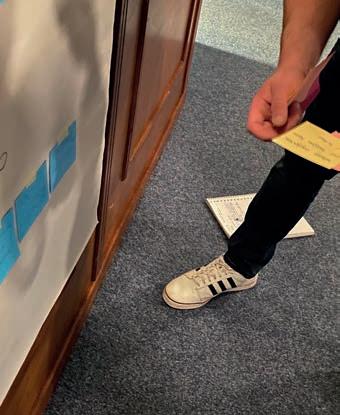

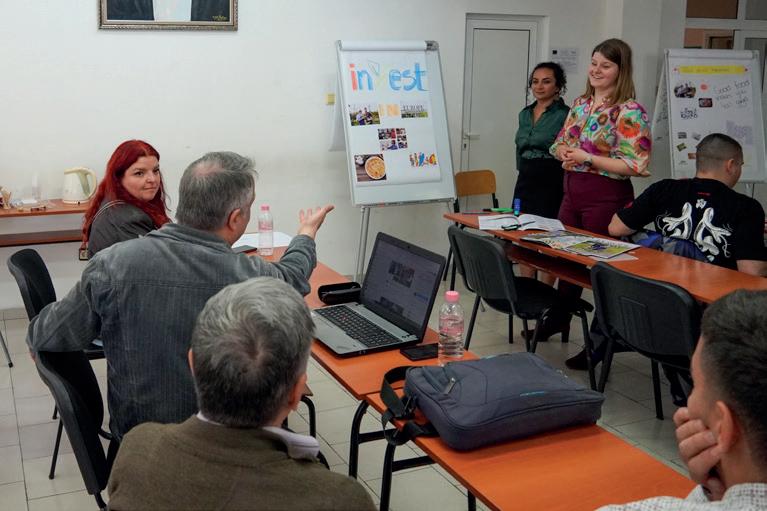
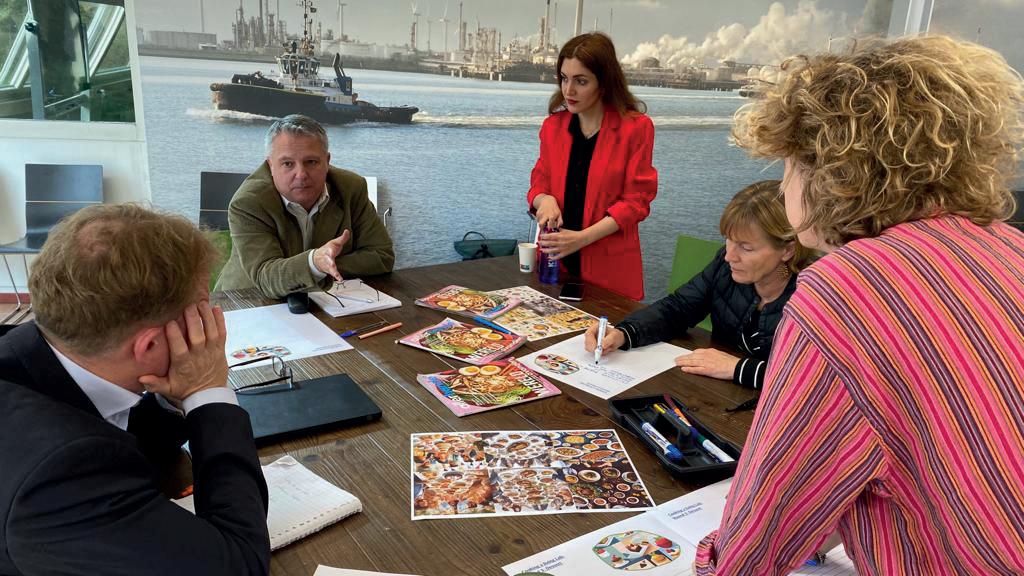
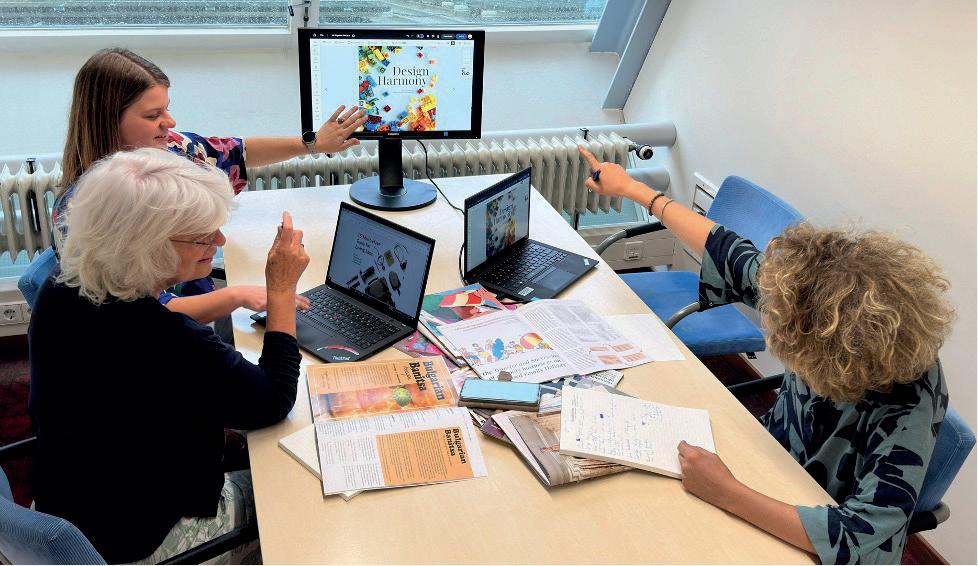
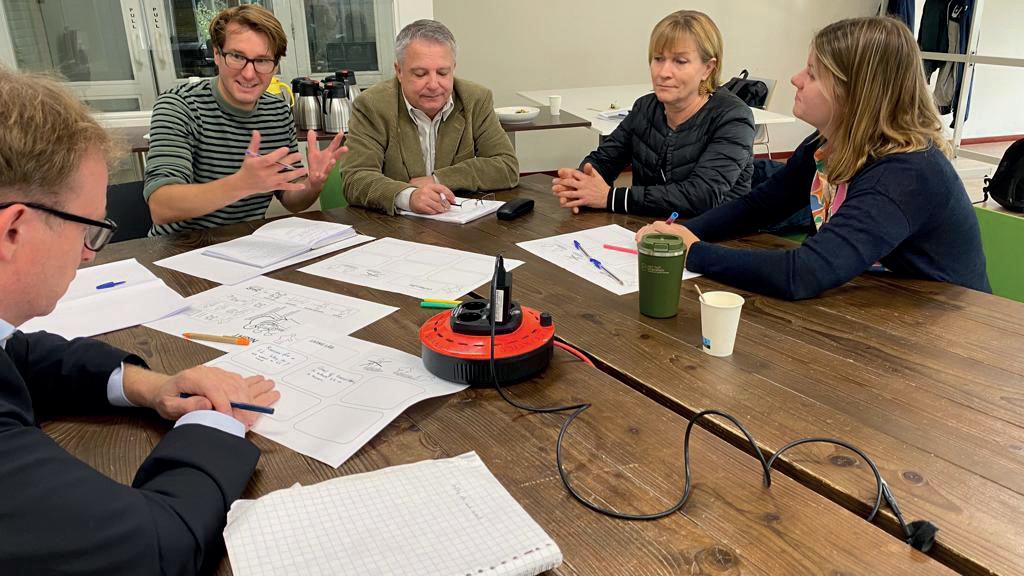
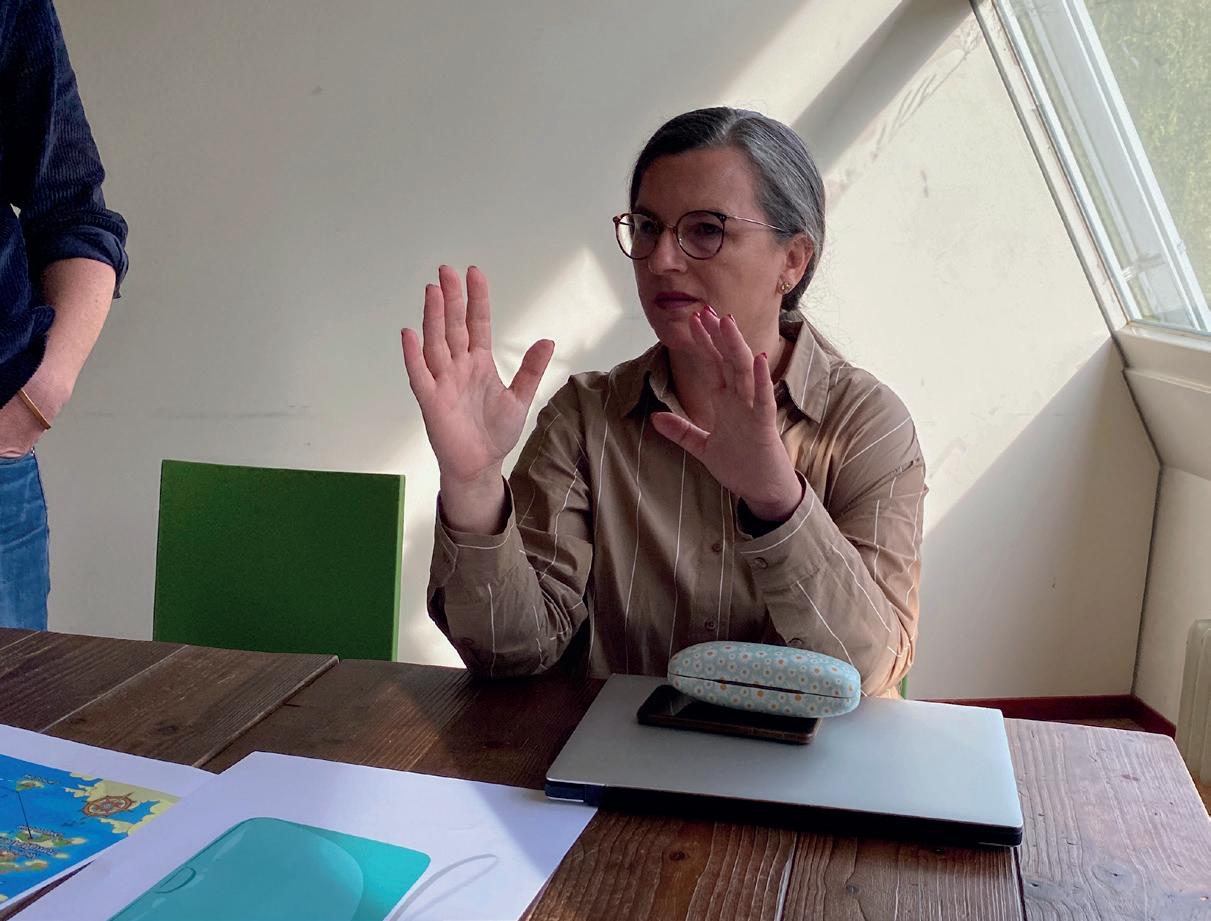
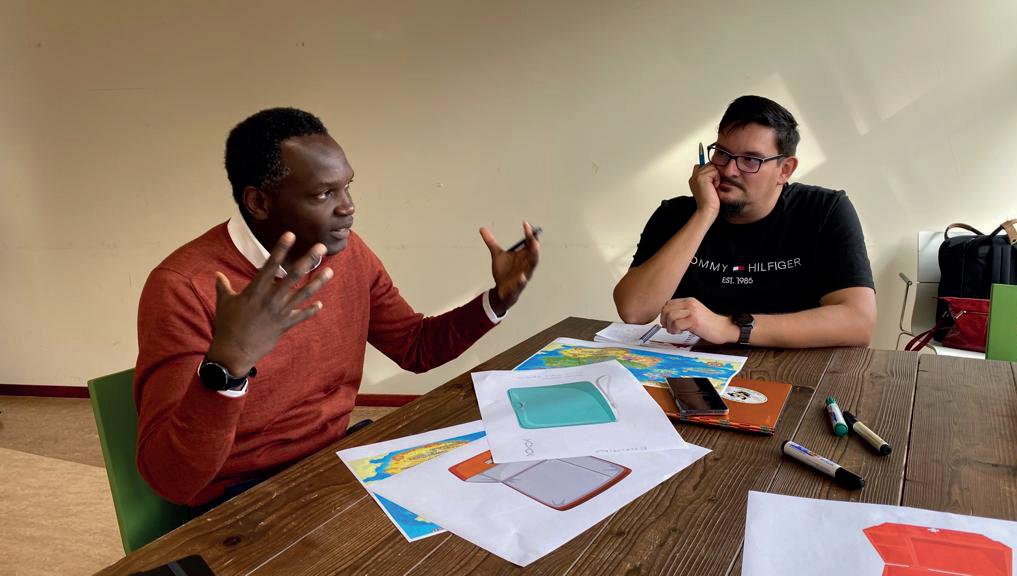
Inside the Newsroom
Editing in full swing
Further Reading References
ENoLL. European Network of Living Labs: https://enoll.org/ [Accessed: 21/01/22]
Foth, M. (2018). Participatory urban informatics: towards citizenability. Smart and Sustainable Built Environment, 7(1), 4–19. doi:10.1108/ sasbe-10-2017-0051
Fuglsang, L., Hansen, A.V., Mergel, I., & Røhnebæk, M.T. (2021). Living Labs for Public Sector Innovation: An Integrative Literature Review. Administrative Sciences, 11(2), 58. doi:10.3390/ admsci11020058
Griffioen, D.M.E., & van Heijningen, M. (2023). Living Labs Through Wenger’s Conceptual Lens: A Literature Review. Journal on Excellence in College Teaching, 34(4), 83-99.
Lie, R., Van Paassen, A., & Witteveen, L. (2023). Living labs and innovation platforms: A literature review. Penang, Malaysia: WorldFish. Program Report.
Monno, V., & Khakee, A. (2012). Tokenism or political activism? Some reflections on participatory planning. International Planning Studies, 17(1), 85–101. doi:10.1080/13563475.2011.6 38181
Reed, M.S., & Rudman, H. (2022). Rethinking research impact: voice, context and power at the interface of science, policy and practice. Sustainability Science, 18(2), 967–981. doi:10.1007/s11625-02201216-w
Tercanli, H., & Jongbloed, B. (2022). A Systematic Review of the literature on Living Labs in Higher education Institutions: Potentials and Constraints. Sustainability, 14(19), 12234. doi:10.3390/ su141912234
Van Der Steen, M., Van Twist, M.J.W., & Bressers, D. (2016). The Sedimentation of Public values: How a variety of governance perspectives guide the practical actions of civil servants. Review of Public Personnel Administration, 38(4), 387–414. doi:10.1177/0734371x16671369
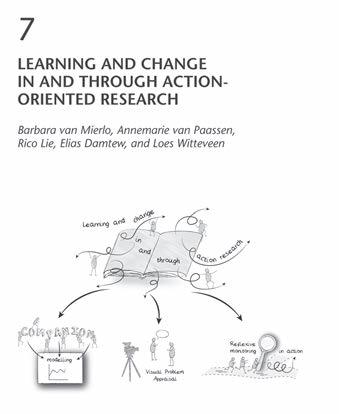
Van Mierlo, B., Van Paassen, A., Lie, R., Damtew, E. & Witteveen, L. (2021). Learning and change in and through action-oriented research. Book chapter in Ludwig, D., Boogaard, B., Macnaghten, P., & Leeuwis, C. (Eds) The Politics of Knowledge in Inclusive Development and Innovation (1st ed.). (pp. 119–133). Routledge. doi:10.4324/9781003112525
Van Tatenhove, J.P. (2012). How to turn the tide: Developing legitimate marine governance arrangements at the level of the regional seas. Ocean & Coastal Management, 71, 296–304. doi:10.1016/j. ocecoaman.2012.11.004
Veeckman, C., Schuurman, D., Leminen, S., & Westerlund, M. (2013). Linking Living Lab characteristics and their outcomes: towards a conceptual framework. Technology Innovation Management Review, 3(12), 6–15. doi:10.22215/timreview/748
Vinke-de Kruijf, J.V., Verbrugge, L., Schröter, B., Haan, R.D., Arevalo, J.C., Fliervoet, J., Henze, J., & Albert, C. (2022). Knowledge co-production and researcher roles in transdisciplinary environmental management projects. Sustainable Development, 30(2), 393–405. doi:10.1002/sd.2281
Witteveen, L., Eweg, R., Smits, A. & Voskamp-Harkema, W. (2016). Design principles for Living Lab’s aiming at sustainable development. The role of higher education in Living Lab’s. Paper presented at Conference: Competence 2016. Wageningen.
Witteveen, L., Fliervoet, J., Eweg, R., Arabska, E., Van der Maas, P., Lazarov, A., Latrellis, O., Bania, A., Lančarič, D. & Puhakka-Tarvainen, H. (2022). The transition towards regional sustainable futures: a position paper on exploring a transdisciplinary view on the INVEST living lab approach. Report from INVEST4EXCELLENCE project (101035815). 25 pages.
Witteveen, L., Fliervoet, J., Roosmini, D., Van Eijk, P., & Lairing, N. (2023). Reflecting on four Living Labs in the Netherlands and Indonesia: a perspective on performance, public engagement and participation. Journal of Science Communication, 22(03). doi:10.22323/2.22030201






Interview Living Labs and their real-life implications
Convinced in the great potential of Living Labs to facilitate change, Andréia Varela advocates a bold word of caution.
In this turbulent time faced with a dire need for systemic change, the Living Lab approach is increasingly seen as having great potential to tackle these urgent social and environmental sustainability challenges. Yet there is a lurking danger that people, influenced by the mushrooming of apparent success stories, initiate their Living Lab with rose-tinted glasses. Sometimes with dire consequences.
Senior policy advisor
Andréia Varela has a unique perspective on the concept, having been part of Living Labs in multiple ways—from both a professional capacity as on a more personal level. In this candid interview, she shares her hopes and concerns.
Andréia Varela is a senior policy advisor at the Ministry of Agriculture, Environmental Resources and Rural Enterprise, and a highly requested guest lecturer at Santo Domingo University of Applied Sciences (UAS). Having grown up on a farm and previously worked at the Regional Provincial Office, hers is a unique perspective on the current goings on around Living Labs, from their great potential to facilitate change, to an explicit word of caution on how the complexity and dynamics of life can influence and affect a Living Lab process.
Mrs. Varela, how did you get involved with Living Labs?
That is a nice question to answer as it shows that informal networks are actually so meaningful. I have my former colleague and good friend Roberto Morais to thank for this, back when I still worked in the Regional Provincial Office. There had come an invitation to participate in the Living Lab Future-Proof Agriculture, extended by a forming coalition of small and medium scale enterprises active in the agricultural sector and three higher education institutes.
They were still searching for governmental actors, such as municipalities, water authority, and our Regional Provincial Office. Interested to join the initiative, Roberto gave me the opportunity to represent our office. Sufficient to say, it was a highly interesting experience and certainly an eye opener for me.
Over the course of researching the phenomenon of Living Labs for this special issue, we stumbled upon dozens of definitions. Can you explain what they are?
It is certainly true that there are many definitions out there. Scholars actually argue that there is not a single definition of a Living Lab, but it is generally agreed that they are active in real-life environments and often bound to a certain geographical location and institutional boundary. The official definition states that they refer to open innovation or cocreation processes with quadruple helix participation. In practice, this means that different parties such a government bodies, schools, universities, citizens, businesses and industry come together to look for alternatives or innovations to solve complex problems. In my experience however, this is easier said than done. All these parties have different ways of communicating and involving just normal people or officially what is called civil society, in a meaningful way still holds much room for improvement.
The way you say that implies a negative experience in the field of participation, would you be willing to elaborate?
Ah, I have had several. From the sideline while I was supporting my aging father who’s still managing the family small-scale farm. I have seen him struggling to catch up with people who didn’t have an eye for his sentiments over the farm. It is a small piece of land that for generations, families with larger estates tried to buy out in re-parcelling processes. Meetings
at 20:00 hrs were too late for him as he got up at 5 o’clock in the morning to milk the cows and I think the digital questionnaires in his SPAM box are still there. I also have direct experience in a participation process in the neighbourhood where I live. I think the latter illustrates my personal reflection best, for the way the municipality set the whole thing up felt just like ticking a box. Whenever there is a severe downpour, our neighbourhood is subject to minor flooding. But, in addition to not being very climate adaptively designed, there’s a persistent problem of not having enough space for parking, leading to dangerous situations. And then there is also land subsidence due to short-sighted water management practices.
These problems are representative for the entire city, and so a Living Lab was “born”. The plan was to join forces between the municipality, UAS Santo Domingo, consultancy companies, and the whole neighbourhood for a co-created plan to redesign the streets. The municipality organised a series of consultation evenings. Only problem was that they were all organised on Tuesdays which are busy days’ work-wise but also when all the local sports clubs schedule trainings that we as parents have to consequently attend alongside our kids.
Therefore, the only people actually able to attend were pensioners such as my neighbour José who, bless his eccentric fisherman’s heart, are not very representative of the general concerns and wishes from the majority of inhabitants in the neighbourhood. So, when the municipality grandly presented the final design plan as having been “100% co-created by the people of the neighbourhood”, I found myself lamenting the loss of opportunity to truly create something that leveraged the full local knowledge that was available.
“If
you want to meaningfully involve civil society in Living Labs, you must design an inclusive participation process that considers the schedules and realities of all parties you want to involve”
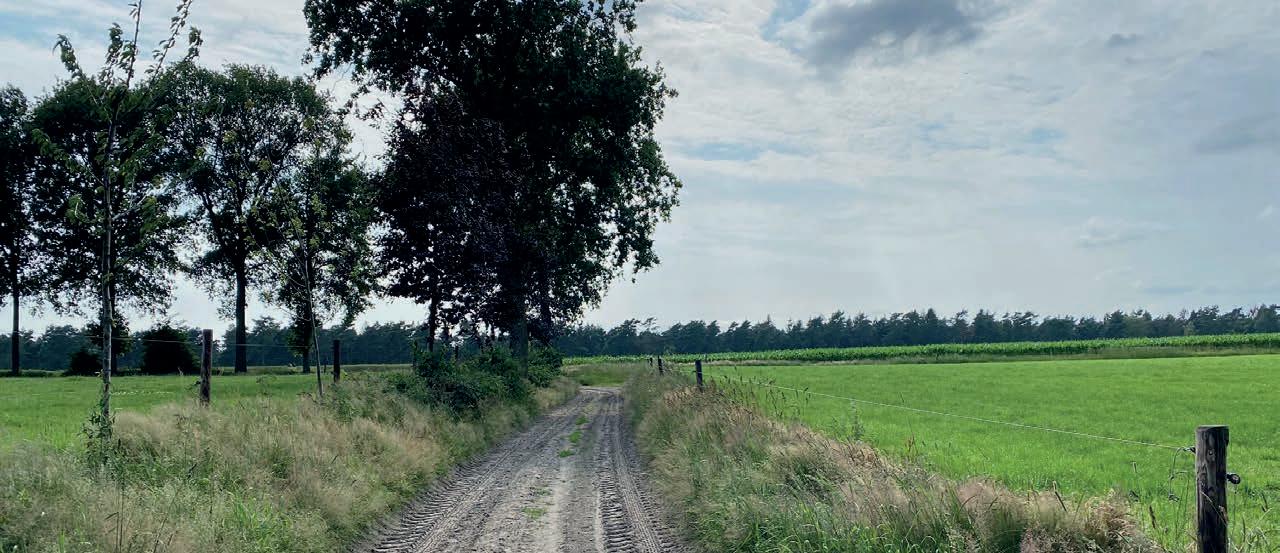
Let’s backtrack and reflect first on your professional career, for you made the step to senior policy advisor at the Ministry because of a special motivation.
That’s true. Participating in the Living Lab FutureProof Agriculture, I had a front-seat view of the great potential of Living Labs as experimental learning environment to facilitate change. Being part of the organising team, I could build on my personal experiences and supported a wider access to the sessions with options for free bus tickets, childcare, diverse days and time of sessions, and also other ways such as community walks.
Simultaneously, however, I also witnessed and experienced the challenges that such a process brings. You are working on complex matters in a society that doesn’t stand still: unravelling one knot can create a new, bigger one in your metaphorical ball of yarn. Moreover, you work with people representing organisations with their own separate agenda’s and priorities—there is still much to be improved, or maybe first understand well what people need to join.
We have to understand that participants who do not represent an organisation such as the government, or a school, or an enterprise are not paid for attendance and sometimes even have to select between an overwhelming offer of community-based processes. The other way around, we also have to be honest and deal with the fact that institutional participants also have private agenda’s.
I felt with my background and prior experiences with Living Labs, I could make a bigger impact in a different function. This made me apply for a senior policy advisor role at the Ministry of Agriculture, Environment and Rural Enterprise, whilst on the side also being a guest lecturer at UAS Santo Domingo. These days it seems everyone is starting Living Labs, but that’s also where I see a danger.
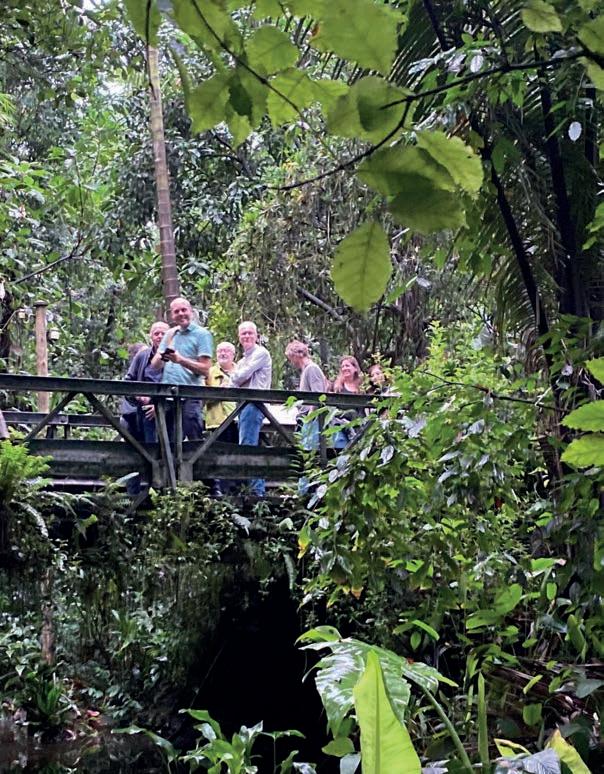
Can you elaborate why?
Well, achieving a process that makes sense, with public engagement and participation in a Living Lab, is sometimes experienced as a kind of fairy tale awaiting happy endings. Expectations that can be acknowledged as naïve. Although the rise in popularity of Living Labs certainly does help develop the body of knowledge around it, its rise in popularity also means a rise in expectations as to what Living Labs can achieve in the context of current big challenges.
“Living Labs are hot and happening: everyone wants to join in on the hype. Therein lies a danger and urgent request for modesty”
This creates a risk of disillusionment, as many participants don’t recognise the outcomes. What starts with an inventory of wish lists ends up with a lot of disappointment as the topics on the agenda do not link with the wider context of the problem, budget restrictions, and also policy mandates are sometimes overlooked. Even worse is when the Living Lab issues are part of future uncertainties and scenarios that are not conversant with. And here I hardly dare to mention the example of climate change as it is easily changing from a concern for future generations to a political opinion.
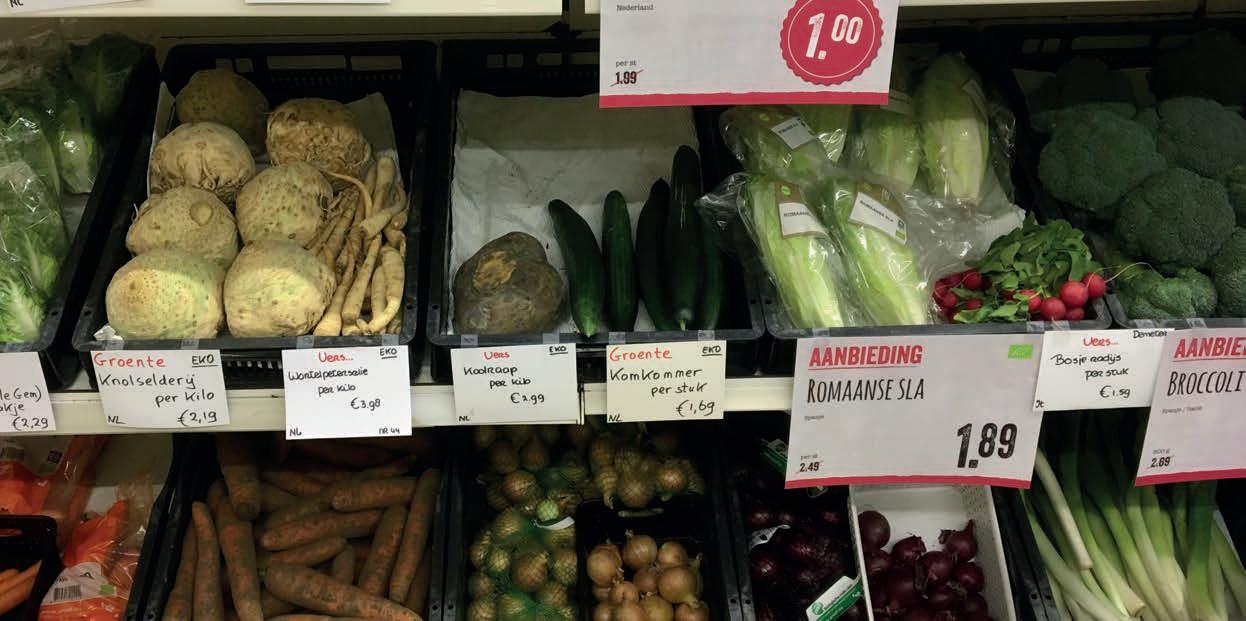
I have a friend, she is a filmmaker, who taught me the concept of location scouting which I now use. When it becomes clear we are going to work in a certain location, I take the family on a tour. Most often, while walking, eating ice cream or simply buying the groceries in a local market I started seeing traces of the topics on the agenda while buying beetroots or cheese or whatever, and I can hear the undertones of the things that matter.
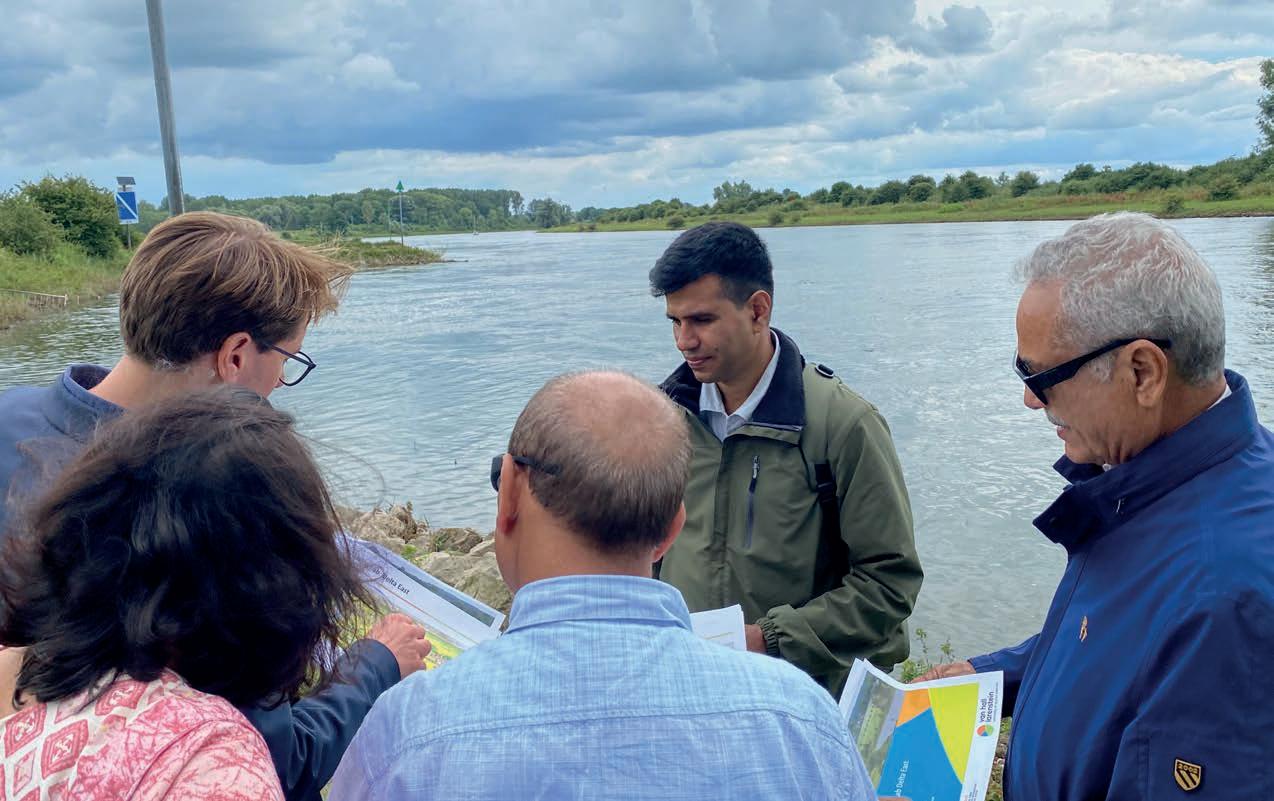
Are you elaborating now on what you called before the happy endings expectations?
Yes, we should not be naïve. People should recognize that Living Labs require dedicated attention to achieve its ambitious expectations. And that they must be aware of how a process of inadequate public engagement and participation may strongly affect the collective confidence of people, their capacity to have dreams and hope for solving issues they care about, especially of minority groups. I am of the opinion that many people do
not see just how big of a threat this poses to the quest of finding solutions to the complex issues of our modern time. If you cannot make true on your promise of what people’s input will turn into as outcome, they get disillusioned and disengaged. It is really tough to get them back on board in any participation processes going forward. Additionally, we also need to recognize that Living Labs not only lead to win-win situations, but need to deal with sharing the losses between involved parties.
I remember once talking to a journalist who turned collecting the stories of people living around the Río Caudaloso into a career, how often people’s trust has been damaged by governmental staff telling them that they can still choose things in a plan, when said plan is already fixed. He gave a very telling example and asked me if after hearing that, I could still honestly say that I’m surprised when people don’t want to volunteer their free time to public participation processes.
“You are using and abusing the dreams of people who are most hoping for the results”
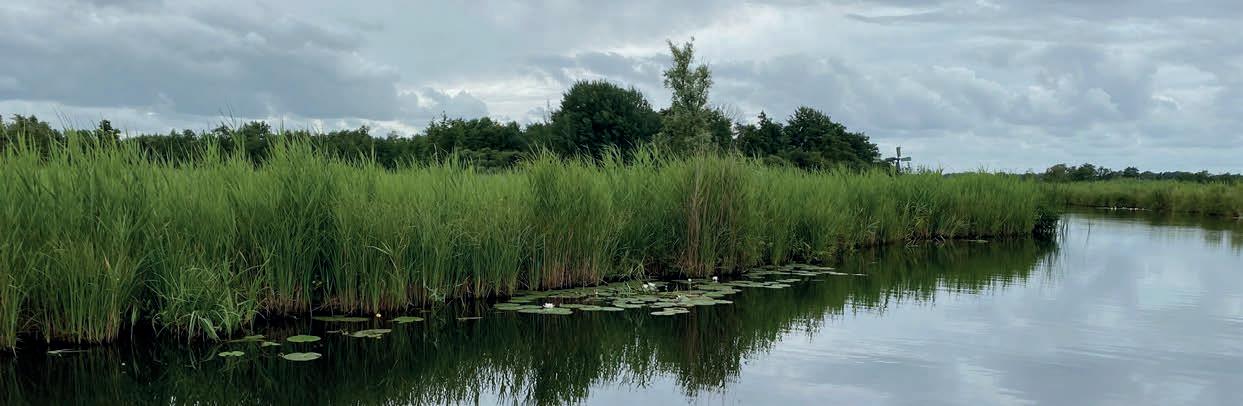
You have also been quite vocal on the boom of Living Lab handbooks. Why is that?
This is quite simple, for although many handbooks have been developed to support the facilitation in establishing Living Labs, none address the real life complexity and dynamics of Living Labs. I like to make the comparison that they thus become recipe books full of splendid photographs that nowhere refer to the misfires. A book as a showcase on a kitchen shelf, not something that become dirty with butter stains because you have been using it over and over again. The notion that you can just “begin” a Living Lab, and thus need a handbook to helpfully give you an A to Z plan on how to do that is a personal pet peeve of mine, for it is not something you can just make up from thin air. If you are adamant about starting a Living Lab, you need to be willing to put your heart and your brain in the work, and you need to not be expecting a magical fix to your complex problems. It can take years for Living Labs to really start working properly. They demand an investment of many resources before sufficient trust is built up amongst the participating actors. People think too easily about that in my opinion.
Hearing that, why would you still want to start a Living Lab?
The foundation of collaboration is often already there. As such, the Living Lab is not just “started”, you use the term to unify the actors that were often already collaborating with and place an explicit focus on a certain complex issue that you want to collectively address. Having done bringing these parties together, you can collectively assess which other parties are still
missing from the consortium—like how the Regional Provincial Office was invited to join Living Lab FutureProof Agriculture. I know that I can come across as a promotor while also being quite critical of the Living Lab approach. However, I am a firm believer that they have a unique potential to serve as a place where actors can collectively learn, make sense of complex issues, and work together on defining alternative, more desired futures.
Off the record you gave a beautiful example of when you supervised a group of students in a Living Lab. Can you use that to illustrate how actors’ different priorities can complicate and strain the collaborative process between the different actors in the quadruple helix?
I have warm contacts with UAS Santa Domingo and particularly to their master program Sustainable River Management. This program is unique in that there has been made a deliberate decision to build the curriculum around learning in Living Labs. From my work in the Ministry, I am in the privileged position to now and again supervise a group of students. One group received the assignment to facilitate the co-creation of a vision for a robust water system. The term “robust” is of course as descriptive of a system as the word “sustainable”. This was part of a Living Lab that had been active for quite some time already, albeit not under that label. In the years the consortium had been active, the process was rather slow, to the frustration of actors like me. The strain in the collaborative process occurred because the speed the consortium’s work had been progressing did not match the speed of the students. The students namely had three months for their assignment and were highly ambitious: their Living Lab assignment
was their number one priority. Although this is certainly praiseworthy and understandable, I saw some consortium partners begin to pull back as their work for the Living Lab was much lower on their priority list because they had many more things on their to-do list. There is therefore much work to be done to properly align the ways of working of the different actors in a way that works constructive to the Living Lab’s aims. I think this alignment issue also comes forward during my example of involving civil society in Living Labs.
On the other hand, a student’s stake in a Living Lab process is often only linked to their desire to graduate, which gives them a certain non-threatening neutrality in a Living Lab process. This makes them perfect to ask around and investigate where people might have started to feel disillusioned with the Living Lab process—provided they are capable of doing so with the required sensitivity and eloquence. This is vital information if a Living Lab collaborative process has grinded to a halt, and actors are looking at how to re-activate the Living Lab. Actors such as myself, as I am one of three enabling actors in a Living Lab on sustainable and integrated river management.
“Students are generally seen as nonthreatening and neutral—this makes them invaluable in a Living Lab process”
I am glad you mention the enabling actor, for there are different types of facilitators in a Living Lab process. Could you give your vision on the ultimate “Living Lab facilitator”?
Whenever I give a guest lecture on Living Labs I always start with the question: if you close your eyes and think about a facilitator, what image comes to mind? Answers always vary, but most popular is that of someone who facilitates a workshop or similar interactive session. However, there are a big range of facilitators and roles in a Living Lab. You have of course the people who facilitate multi-stakeholder sessions, but there are also the enabling actors. These actors make it possible for a consortium to work together in a Living Lab, for example through making funds available to allow researchers from academia to join sessions and assist with research.
You once said that the question whether you can own a Living Lab is a fascinating topic for discussion. Can you elaborate?
Ownership is a fascinating way of talking about Living Labs. Bringing together stakeholders is easy as long as you have the contact, however, if you fail to address the topic of ownership you are at risk of the Living Lab becoming a purpose in itself, rather than the means to an end it actually is. I think whoever initiates a Living Lab approach and starts bringing stakeholders together is easily tempted to take the responsibility of managing the Living Lab and thus sort of taking the ownership of it as well, without it being formally given by the others. The question then is whether you are able to bear that responsibility. As said previously, you don’t just “start” a Living Lab, you
need a long term guarantee of financial support for a collaborative journey where you cannot say where you will end up with. Therefore, managing a Living Lab is a major responsibility and very different from managing a project with a clear end objective and structured process of completing it.
What is the number one lesson you want our readers to take home after reading this special issue?
We shouldn’t forget that in its essence, Living Labs are about the collaboration between real-life actors on complex real-life issues. Envisioning a Living Lab process is good, but only if you do so with the awareness that the actual process itself is highly dynamic and subject to change at the drop of a hat. That the outcome you envisioned at the start might not be the one you end up with, but might just be what was needed. And if not, that this is all the more reason to keep bundling forces to facilitate positive change. I am convinced in the great potential of Living Labs to facilitate change and find beauty in their ability to confront us with the notion that how we think a certain problem should be solved and how to go about doing so is only one of the many perspectives, and that ultimately, we know more as a collective. I do like the metaphor of a Living Lab as a journey. After all we all pack a suitcase for journey; with similar items such as a toothbrush, while having different tastes for the toothpaste. And as we embark on the journey we should be ready for hurdles on the way and beautiful sunsets to enjoy with an unexpected group of people.
“In its essence, Living Labs are about collaboration between real-life actors”
Food for Thought
A perspective of Higher Education Institutes on Living Labs
Text: Erica Mosch*, Jouke Heringa** and Denise van Eekeren**
*Van Hall Larenstein University of Applied Sciences
**HZ University of Applied Sciences
Photography: Erica Mosch, Simone de Blouw

The SPRONG research program ‘Water as Connection’ aims to gain more insight in the role of Higher Education Institutes (HEIs) in Living Labs in the water domain. Ambitions for Living Labs are high, but studies on success factors for sustained development are relatively limited. The collaboration program between HEIs departs from the main features as described by the Rathenau Institute: cocreation and an authentic experimental space (Maas et al, 2017). The review of Living Labs in the water domain aim to explore the development and the life cycle of Living Labs. The researchers used “sensitizing concepts”, an approach that originated with Blumer (1954) who motivated the differences between a definitive concept and a sensitizing concept as shown in the box.
The exploration resulted in a framework of sensitizing concepts, questions for empirical research and articulated expectations inspired by Van Eck et al (2023), see table below.
Sensitizing Concept Question for Empirical
A definitive concept refers precisely to what is common to a class of objects, by the aid of a clear definition in terms of attributes or fixed bench marks […] . A sensitizing concept lacks such specification of attributes or benchmarks and consequently it does not enable the user to move directly to the instance and its relevant content. Instead, it gives the user a general sense of reference and guidance in approaching empirical instances. Whereas definitive concepts provide prescriptions of what to see, sensitizing concepts merely suggest directions along which to look (Blumer, 1954, p.7).
ResearchExpectation
Vision Is there a shared and articulated short- and long-term vision among the various parties involved? How has this evolved over time?
How have the dilemmas surrounding forming a vision been discussed and what choices have been made?
What does this vision do in practice with the activities of the Living Lab and her partners?
Stakeholder engagement
Which of the actors involved are the enablers, providers, utilizers and users of the Living Lab?
Are both core and peripheral stakeholders involved? And from which of these stakeholders do the ideas come?
Who ensures that parties remain involved and motivated?
A clearly shared and articulated vision of the future contributes to uniting stakeholders in the long term.
Drawing up and communicating a shared vision for a Living Lab takes time, and the process of maintaining and continuing to share the vision is a challenge that, if not carried out properly, can cause partners to potentially drop out.
If actors are aware of their own role and contribution in a Living Lab, and their relationship to other stakeholders, this helps in effectively setting up a Living Lab.
Leadership aimed at connecting, motivating and catalysing outcomes contributes to a successful Living Lab.
Organizing ability
How has the network structure of the actors involved developed?
To what extent is the Living Lab autonomous in relation to the participating organizations?
Why is it interesting for you to participate in the Living Lab? And why is it interesting for colleagues to participate?
Financing and value creation
On which financing flows does the Living Lab depend and within what period are these realized?
How and by whom are economic value, business value and public value created within the Living Lab?
An open network structure results in a higher degree of effectiveness of a Living Lab.
Living Labs are successful when they have sufficient autonomy for safety and creativity, and are sufficiently connected for follow-through and assurance.
Incentives are indispensable for involvement and motivation in the co-creation process.
When actors work together to create a constant flow of financing, this has a positive influence on the effectiveness of the Living Lab.
Different (financial) sources will have to be mobilized in different phases of the Living Lab.
Workshop on the performance of Living Labs in the water domain
A major follow-up activity was organised in Utrecht, May 2023, by the SPRONG research program with representatives of five Living Labs in the water domain: Living Lab Schouwen Duiveland, Fjildlab, CoP Plastics, Living Lab Delta Oost and Living Lab Terschelling. Three of the Living Labs were represented by Universities of Applied Science (Rotterdam, Zeeland and Van Hall Larenstein). The workshop compiled outcomes of exploring the life cycle of Living Labs in the water domain, inspired by the framework of approaches (see table 1) towards Living Lab development research by Van Eck and Van Popering (2023). The workshop focussed on three themes as success factors for Living Labs: goals and vision and the role of stakeholders.
The goals and vision theme focused on the articulation and agreements on a short- and longterm vision among the various parties involved and aspects of change or adaptation over time. It also focused on the process of recognizing dilemmas and the process of collective decision making regarding the articulation of the vision. A general finding amongst participants was the relative unclear starting point for the Living Labs. In some examples it seemed like an organic event where you start with a governance idea with a vision on starting a process without a clear point on the horizon. This corresponds with the expectation from the literature study that the process of maintaining the vision and continuing to share the vision must be carried out well to retain the partners. This is a recommendation for Living Lab facilitators to pay attention on.
The theme stakeholders departs from the wellrecognized importance to involve all stakeholder groups from the quadruple helix. These are not only different types of parties (public/private/ knowledge parties/citizens), but these parties also have different roles. Involving citizens appears to
be difficult, even though they do have ideas and interests that are useful for the Living Labs. Workshop participants agreed on conceptual issues regarding the identification of citizens. Who are the citizens? How do you involve them in your Living Lab? And in which phase of the process do you involve them? It was of common sense that as the origin of each Living Lab varies, this will also result in a different type of processes and questions of stakeholder participation which may change over time as not all parties may remain involved and satisfied with the dynamics.
The role of HEIs requires specific attention as they may play different roles such as subject matter expert, facilitator and other enabling roles while both staff and students deal with a preferred disentanglement of professional and citizen roles. An important role that every HEI plays is the reasonable objectivity with political sensitivity that conflicts to a certain extent with the envisioned real-life and authentic characteristics of a Living Lab. This is a characteristic in the water domain where issues such as drink water shortage, river pollution and extreme weather events are some examples of complex problems with overlapping spheres such as technology and governance.
However, a HEI has a limited focus and flexibility. The role in Living Labs is also of an educational nature whereby students’ learning processes may not always coincide with the Living Lab dynamics. Addressing the HEIs’ different roles in a Living Lab process may also be hampered by curriculum obligations and budget constraints. Safeguarding a role which can be lived up to will require reservations at the activation stage of a Living Lab to prevent withdrawing or other disappointments in a later stage. A major suggestion is to focus on curriculum adaptation to ensure that education and research do not become separate, but become integrated.
Further research on the roles of HEIs in Living Labs
Based on the results of the workshop, it has been concluded that the framework of approaches (table on page 21) towards Living Lab development research by Van Eck & Van Popering (2023) supports exploring the performance of Living Labs in the water domain.
The exchange of experiences between the various Living Labs is considered very valuable. Several participants indicate that they also find it interesting to physically visit the Living Labs, although accessibility can be an obstacle, for example in distance or travel time. A second question is what will be visited, such as observable (technological) works. Living Lab meetings are of no interest in site visits, as they are not of a public nature.
Participating knowledge institutes of the SPRONG research program and research, such as Tercanli & Jongbloed. (2022) indicate that the added value and insights on the role and position of HEIs for the Living Lab is still underexposed. Doing action research at the performance of Living Labs requires a sound consideration how it aligns with the prevailing aim and structure of the Living Lab. Mechanism should be put in place to prevent students embarking on individual or student group assignments for the sake of completing an educational unit rather than fitting in the Living Lab dynamics. Secondly, students are not consistent participants of the Living Labs. Research also shows that the “core Living Lab principles, such as transdisciplinarity, citizen involvement, and multistakeholder collaboration, are not yet fully integrated into the fabric of HEIs” (Tercanli & Jongbloed, 2022, p.18).
Finally, “the outputs of the HEI-governed Living Lab initiatives are found to be incremental, largely because of the temporality of the Living Lab projects, and the lack of long-term strategies and sustainable business models for Living Labs” (Tercanli & Jongbloed, 2022, p. 19). To create their desired social impact and transformative change, partners involved should discuss how collaboration will be continued after the financing of the Living Lab has ended and HEIs pull back their enabling role.

15 Must-Have Tools
For your own Living Lab Journey
Text: Rik Eweg*
*Van Hall Larenstein University of Applied Sciences
Photography: Rik Eweg







Each Living Lab expedition starts with pull-and push factors. Push factors create the need (often caused by external factors) for the Living Lab region to change, and pull factors are the opportunities that are part of an alluring future (connected with the ‘stake’ of the stakeholders). Push factors in Living Lab Achterhoek are threefold:
1. Due to water extraction for drinking water, in combination with an increased number of droughts due to climate change and having locally vulnerable soils, farmers suffer from lower productivity of their field. As a result, farmers fear for loss of their income and continuity of their farms.
2. The national policy on nitrogen deposition (reduction of 40% nitrogen deposition) will apply.
3. Herbicides and pesticides in the water exceed the standards of the National Water Framework (derived from the EU Water Framework Directive).
Pull factors are the following:
1. Bronckhorst has sensitive nature reserves and culturally and historically valuable areas, such as ‘t Zand and various country estates. The municapility included in its Environmental Vision 2035 that they want to stimulate a form of agriculture that contributes to the restoration of nature and biodiversity (nature-inclusive agriculture).
2. ANLb and GAP offer opportunities for payment of ecosystem services.
3. Opportunities for selling local products (short chains) and other activities (like healthcare).
Pull and push factors 2 1
Three questions for Living Labs
Considering most Living Labs address complex issues and operate over longer stretches of time, it is important to continuoulsly ask three transition questions during the journey:
1. What should be adapted?
2. What should be developed new?
3. What should be ended?
Development
• Design a price policy that guarantees a profitable margin for farmers
• Oblige retailers to be transparent about the division of margins in food-value chains.
• Invest in formal and informal trust-building activities.
• Recognize the right by local stakeholders to selfgovernance within pre-defined boundaries.
A big task is to motivate stakeholders to participate in the Living Lab. Internal motivation is very important. Stakeholders should not just participate because of subsidies, because subsidies are unreliable and not sustainable over time. In the context of Living Lab Acterhoek, more and more farmers are taking the initiative to convert and broaden their horizons with ancillary functions, such as healthcare and delivery to farm shops with local produce. For example, Agro Innovation Centre De Marke, located in the municipality Bronckhorst, has been playing a leading role in the transition from conventional agriculture to farming with environmental emissions as low as possible for more than 30 years.
Tools one can use for this task are: stakeholder workshops; authoritative external speakers; colleagues from the same and other regions; financial rewards for ecosystem services; and informing through internet, social media and farmers’ organizations.
Stop
• Remove obstacles related to prohibiting state aid to farmers for sustainable investments.
Adapt
• Develop area-specific goals for emission of nitrogen, herbicides and pesticides and enforce these through effective verification and monitoring by monitors that are accountable to both governments and farmers.
• Reward farmers for ecosystems-services with long-term agreed payments for achieving clear goals, instead of short-term subsidies for detailed measures.
• Actively engage in field-lab activities and be prepared to reflect and develop, adapt, or abolish regulations
• Align policies, communication, regulations, and implementation from different governments as best as possible
Sturdy hiking boots
Ever heard of the Japenese proverb: 急がば回れ? It means that if you're in a hurry, you should take a detour. This all relates to the challenge of dealing with uncertainty. Most Living Labs address ‘wicked problems’ and contain stakeholders with different ‘frames of reference’ (values). Innovations might have unforeseen effects in time and space. They may touch upon various aspects of societal systems: the world is complex. Innovations are therefore subject to inherent uncertainties and social controversies. For example, governments on local, provincial, national and European level change, and every few years there will be an election on one of these levels. This means that it is normal to encounter unforeseen road closures that force you to get creative and take a detour. To ensure your journey is as comfortable as it can be, we recommend a pair of sturdy hiking boots and to keep the focus on the powerful bottomup process, as the regional stakeholders generally are the only continuous actors in the transition processes.










Scan the QR-code to learn about Theory-U by Otto Scharner, a tool for number 3!





Guiding compass
Every Living Lab needs a guiding direction. For Living Lab Achterhoek this is a region with a healthy soil as a foundation, with an attractive and livable landscape with integrated space for food production, nature and social elements: a region where nature inclusive, regenerative agriculture flourishes and offers a sustainable income for farmers. As the transition process might take many years, with unpredictable encounters and events, it is crucial to keep an eye on the direction the Living Lab aims to go. This also unifies stakeholders that might have differing short term interests, but a common long-term goal. Regarding Living Lab Achterhoek, short-term goals of stakeholders are that farmers need a profitable business model. They have to cover the costs of transitioning towards nature inclusive farming (for
example transforming their grassland into herb-rich grass, planting and management of nature elements, hanging manure management, technological adaptions of stables, sometimes less cows).
On the other hand: their income is based on milk with unpredictable and volatile milk prices. The Living Lab goal is to design and implement profitable earning models of farmers combined with nature inclusive agriculture. This coincides with the national policy aim as described in the NPLG policy plan that nature, water and climate are leading, meaning:
• water: reduction of nutrients and chemicals;
• restoration of biodiversity and reduction of nitrogen deposition and emission;
• national climate goals.
Expedition tickets 5a
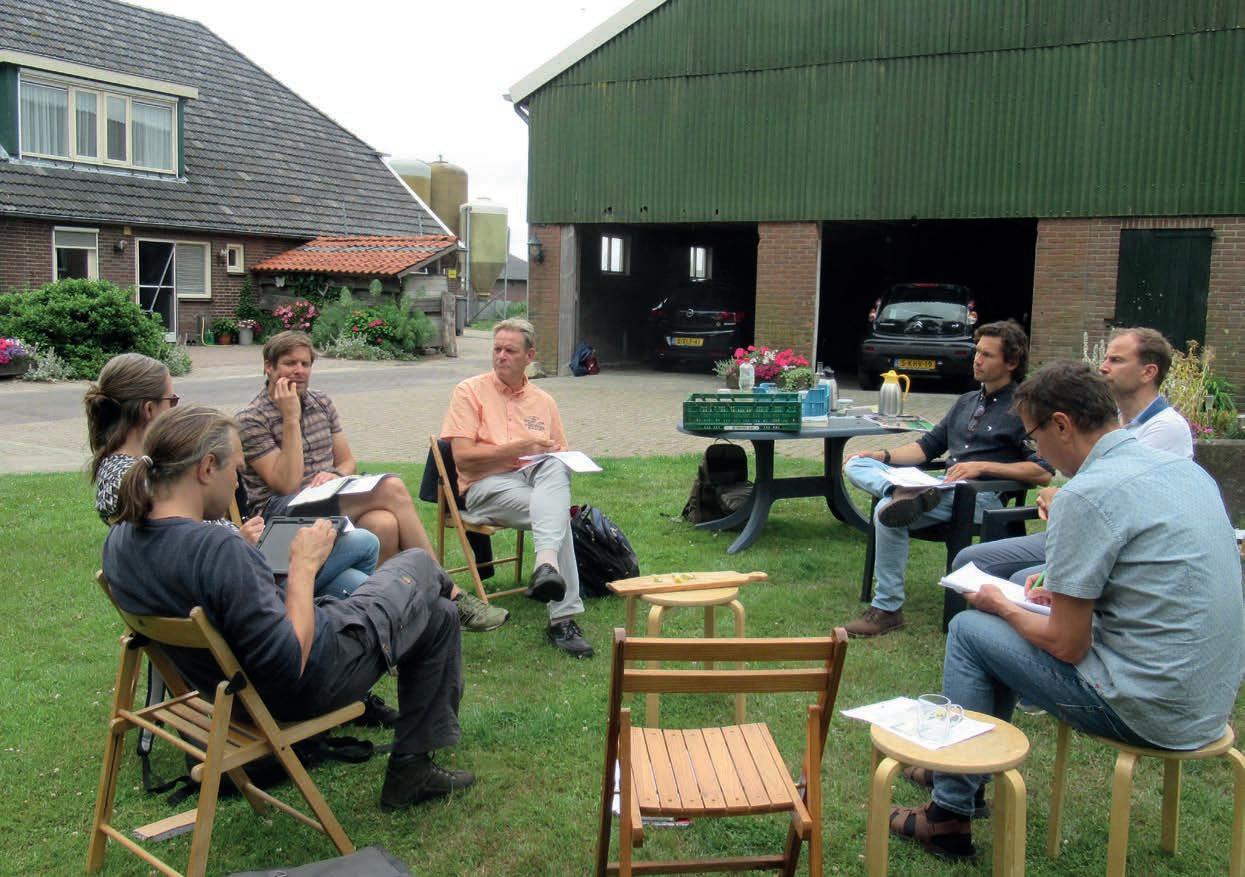
For any Living Lab expedition you will need several groups. Those connected to the expedition of Living Lab Achterhoek are: governance project team, workgroup of stakeholders, regional farmers’ organisation (agricultural collectives), and the core team. In the three green boxes, we will discuss each group’s purpose and tools. These tools can either be used by or for these groups.
Governance project team
‘Stays at home’. This group comprises decision makers from organizations and governing bodies that bear final responsibility for the transition process. Often also the financers. They contribute to increasing the productivity, economies of scale in dairy farming, and economic growth in the region.
Tools:
• (Reporting) Meetings;
• Field visits;
• Signing of a Memorandum of Understanding/contracts etc.;
• Ensuring and approving plans, finances etc;
• Political backing and ‘environment’ management.
To inspire stakeholders to follow your guiding direction, one needs to describe the vision in an appealing narrative. For Living Lab Achterhoek this means that the Living Lab takes the (short-term) interest of farmers in mind: working with farmers (amongst others) towards a profitable earning model as a decisive factor for them to join.
Workgroup of stakeholders
Has representatives of stakeholders that are part of the transition process (the quadruple helix partners).
Tools:
• Workshops;
• Meetings;
• Need a safe environment;
• (Informal) Trust building activities: investing time (also in the weekend or evenings) to visit local events and farms, and show interest (could be done more in the Living Lab, also by formal stakeholders).
For Living Lab Achterhoek, a lack of trust in authorities plays an important role in interviews with farmers;
• Approval with work progress and results.
Regional farmers’ organisation (agricultural collectives)
Relevant local organisations that are contact-partners/ representatives and a channel to reach the individual farmers.
Tools:
• Team building;
• Working meetings;
• Fieldwork, interviews, data collection, literature study, stakeholder analysis, proposal writing;
• Report to the governance project team and the workgroup of stakeholders.
Core team roles
The core team are the people that do the actual work. Based on the experiences in Living Lab Achterhoek, we distinguish three roles: the process leader, the process facilitator/supporter, and the monitor (observes and describes the process, which is crucial to enable learning).
The process leader, as the name implies, leads the process. This is not the knowledge institute, because for the knowledge institute the process is a ‘learning
of study’ process. They are not part of the region and its participation is often based on projects, so their involvement is not guaranteed for periods of 10-20 years. Within Living Lab Achterhoek there are several informal leaders, like estate managers, aldermen, and farmer’s leaders. Formally, it is the provincial regional manager. Preferably, it should be one of the stakeholders (public or private) who can be connected to the process for several years. The process facilitator/supporter, in turn, can be more persons such as knowledge institutes, private consultancies et cetera.
The core team can use all sorts of tools such as project management tools, reflective monitoring and specific tools for workshops and brainstorming.
The blueprint map
Time-action-owner-result. The map is not a blue print of an exact route, because, as a transition process in a wicked environment, this is unclear, so the roadmap should be flexible and adaptable. We are aiming to create a common perspective, which is agreed upon as the collective way. Based on that a roadmap is drawn up, but at each junction there is a discussion about which road should be taken. The number one tool one could employ here is creating a time planning and a planning/description of actions that must be taken.
Rules
of the game 8
Financing activities 7
Often the supporters (knowledge institutes, private/public supporters and facilitators) have to be paid. A transition process as a whole can take 10 to 20 years, so often is made up of several separate projects and different financiers. Financiers have their own rules and goals, which should be acceptable for the stakeholders. However, do not make the transition process completely dependable on subsidies, as this is a risk. Consortia, partners and projects might change during the transitions process, but if the common perspective is really internalised by the region, the transition process will continue in the agreed direction. Tools one can use here are creating clear contract for individual projects, not to make ‘budgets’ leading: work only with projects that contribute to the agreed direction of the transition. Finally, to support the internalisation of the common direction for all stakeholders: pay attention to continuous communication.
These should be mentioned explicitly. For example: what is discussed stays within the working groups. Farmers and civil servants should have the freedom to express their opinions and think out-of-the-box without being held accountable for their statements in public or outside the workshop.
To define the rules of the game, create a start document that is agreed upon by everybody. To create this document, you will need dialogue on four aspects:
1.A dialogue about interests and perceived problems; 2.Possible directions to establish shared goals; 3.a conversation about the joining of any other stakeholders in the process; 4.concrete agreements on interaction and behaviour.
9
Students
Students can bring the inconvient messages without being threatening. They have a large ‘favourability factor’, they are not threatening and are often met with sympathy as they are not part of the system. In meetings they can touch upon issues or ask question which cannot be addressed by formal actors. Concerning tools, include student research in the process and incorporate transition-oriented learning goals in curricula.
Concrete impact Knowledge institute
Knowledge institutes can take a neutral position, listening and being supportive and accessible for all stakeholders. It is critical to keep confidential information confident. This should be explicitly agreed upon. Concerning tools, one can use all tools that have been developed in the field of applied research.
11
Entrepreneurs need concrete insight of what measures could be taken, what the impact is for their (farm) management, to their value chain and the financial impact. Derive measures from literature and other projects, or design new ones and calculate the (financial) impact.
The design of a new, transformative, business models can be elaborated upon with five questions:
1.Which services and products can be financially rewarded?
2.Who will reward this product/service and why will they reward this and others not?
3.How will the product/service be rewarded? For example, a fixed contract, certification, structural/incidental reward, etc.
4.How is the reward asserted? How will the quality and the product be guaranteed/monitored?
5.How will the role of various chain partners change in this new business model? Touches upon the dynamics between partners and their role in the chain.
Celebration decoration
Each result (top) is the start of a new process or challenge. We must therefore celebrate the (in between) results! In the case of Living Lab Achterhoek, the first result aimed for was an intention, agreement of the offer from the region, by alll participating stakeholders to be communicated to and agreed with to the provincial government.
14
Ambush protection equipment
Ambush protection equipment touches upon the wickedness of transitions, and that these transitions should be robust and have perseverance, considering that they take decades. The wickedness of transitions is strengthened by changing policies and unpredictable events. For example in Living Lab Achterhoek, the previous Dutch Government outlined a clear perspective and policy plan for rural areas. However, the government changed in 2023. Also the European elections influence the political landscape. The provinces anticipated the national elections already in 2023, so already for two years, municipalities, provinces and farmers are uncertain about the new agricultural policies, how they will be implemented and whether they will be accepted by the European Union.
13
SDGs as compass
Sustainability projects should reflect on all Sustainable Development Goals (SDGs). The SDGs as compass method can help facilitate a dialogue among the stakeholders and to make their views and interests explicit (Heijmans & Eweg, 2023).
15
Reflexivity
For this last must-have for your Living Lab expedition, we have reflexivity as this expedition is very much meant for learning and investigating. The goal is to facilitate and stimulate the learning process of all stakeholders. So, create a learning history (during or at the end of the process). There are many articles and books on tools for reflexivity, but one recommendation is Reflexivity and Learning in System Innovation Processes by Beers & Van Mierlo (2017). For a specific project within Living Lab Achterhoek a reflection was carried out as a qualitative study. Observations were made during meetings of the agricultural working group. At three meetings, other farmers were invited in addition to the working group members. Interviews were also conducted where all working group members were invited to.
Inspired Stakeholders
Carrying the Torch Example from North Karelia, Finland
Text: Kristiina Väänänen* and Vilma Lehtovaara**
*Karelia University of Applied Sciences
**Centre for Economic Development, Transport and the Environment, and North Karelia Biosphere Reserve
Photography: Eetu Vänskä / y academy
Our shared experiences and scientific literature agree that obtaining and maintaining sustainable, long-term collaboration with stakeholders is challenging (1) (2) (3) and a necessity for a successful Living Lab. As our principal lecturer and Living Lab expert Lasse Okkonen (Karelia UAS) described:
“It is a long way from having a guest lecturer to having a truly committed stakeholder partnership.”
When discussing Living Labs, the quadruple helix model (4) often comes to mind. Indeed, government, academia, industry, and civil society are essential for a Living Lab to enhance regional innovation potential. However, this is just the beginning. Identifying stakeholders and partnerships is a good start, but it is only a start.
1. Manage expectations
The cornerstone of a successful Living Lab is to ensure that your stakeholders are truly motivated and see the benefit from the collaborative work. Finding people with similar goals is easy, but engaging less motivated experts is also necessary. Start small—a short meeting to learn from them or hear their opinion. This initial communication may lead to longterm collaboration, providing an opportunity to learn from each other.
Ensure that everyone is on the same page regarding expectations. Clear communication about what you can achieve, in what timeframe, and the resources required is crucial. Co-create your strategy, vision, and mission, and keep them in mind throughout your
Living Lab journey:
Agrilink project (5) suggests a simple three-question checklist to ensure alignment: “Do you agree on the direction of change? Do stakeholders agree on the solution? Is the challenge aligned with the end user’s private interest?”
2. Set principles for partnership management and meaningful communication
Determine the working principles together with the partners. Make a concrete cooperation plan aligned with your strategy, and regularly evaluate your work with stakeholders (6). If you have multiple stakeholders, maybe you can create different levels of commitment to accommodate everyone’s needs. Or you can even be as flexible as UNESCO’s biosphere reserves are, where all
3. Choose approaches and tools to fit your Living Lab
Create multiple working methods in your Living Labs. Combining bottom-up and topdown approaches can yield successful results (10). Top-down processes can provide long-term development and commitment, while bottom-up processes accelerate innovation and address local challenges (11) (12).
Refer to the toolkit from the European Network of Living Labs (ENoLL) (13) for practical tools for experimentation, strategy work, searching for new ideas, and gathering feedback and formulating needs. Beside the toolkit, consider using tools like the fishbowl conversation technique for brainstorming and promoting integration between diverse groups. And since Living Labs are joint efforts with HEIs participating, you most likely have a bunch of experts with useful tools nearby.
the partners can openly define their commitment to the project, within the scope of defined criteria (7). These UNESCO criteria are connected to the goals of biosphere reserves, including conservation, local development, and awareness and education. They leave ample room for all partners to focus on the matters most important for them. For example, the conservation section includes possibilities for protecting and promoting biodiversity, landscape and natural resources; protecting and promoting cultural heritage and distinctive charm; or minimizing environmental impact.
Scan me to see the ENoLL toolkit!
Well-planned and professionally implemented communication can make a difference. Make a communication plan, adjust it whenever needed, and actively follow it. Put your marketing hat on and try to get away from administrative language and jargon. For example, the UNESCO Biosphere Reserves in France named their key stakeholders eco-players, which sounds far more interesting than being a stakeholder. They also created a clear information package describing what it means to be an eco-player: how do you benefit from being an eco-player, and how can you work together for the biosphere (7) (8) (9)?
4. Measure and communicate your success
Regularly evaluate the Living Lab outcomes against the expectations to ensure stakeholder satisfaction (3). Since Living Labs are meant to be multi-actor open innovation processes in “real-life” (5), nurture the openness by evaluating your actions and communicating actively. Measure your actions and impact against the initial mission and strategy. Reflect on successes and areas for improvement and address unexpected challenges.
If unsure, refer to European Network of Living Labs (13) for 14 different feedback tools, and read the Stakeholder Involvement Tool (6) developed for Living Labs by Invest4Excellence project for practical evaluation tips.
Recognize and address also the challenges and possible pitfalls. Tools like pilot appraisal or I like, I wish, what if from the ENoLL toolkit can help express and manage negative feedback constructively.
Unforeseen hurdles
Scan me to see the Stakeholder Involvement Tool!
We have encountered situations where an organization appoints a person for a specific cooperation, but the collaboration does not go as planned. There is a lack of active participation, or cooperation gradually declines. We discovered that in such cases, there is insufficient personal
motivation or a weak connection to the individual’s everyday work, which is crucial for maintaining strong cooperation. From these experiences, we learned that internal motivation is significantly more important than common goals between organizations
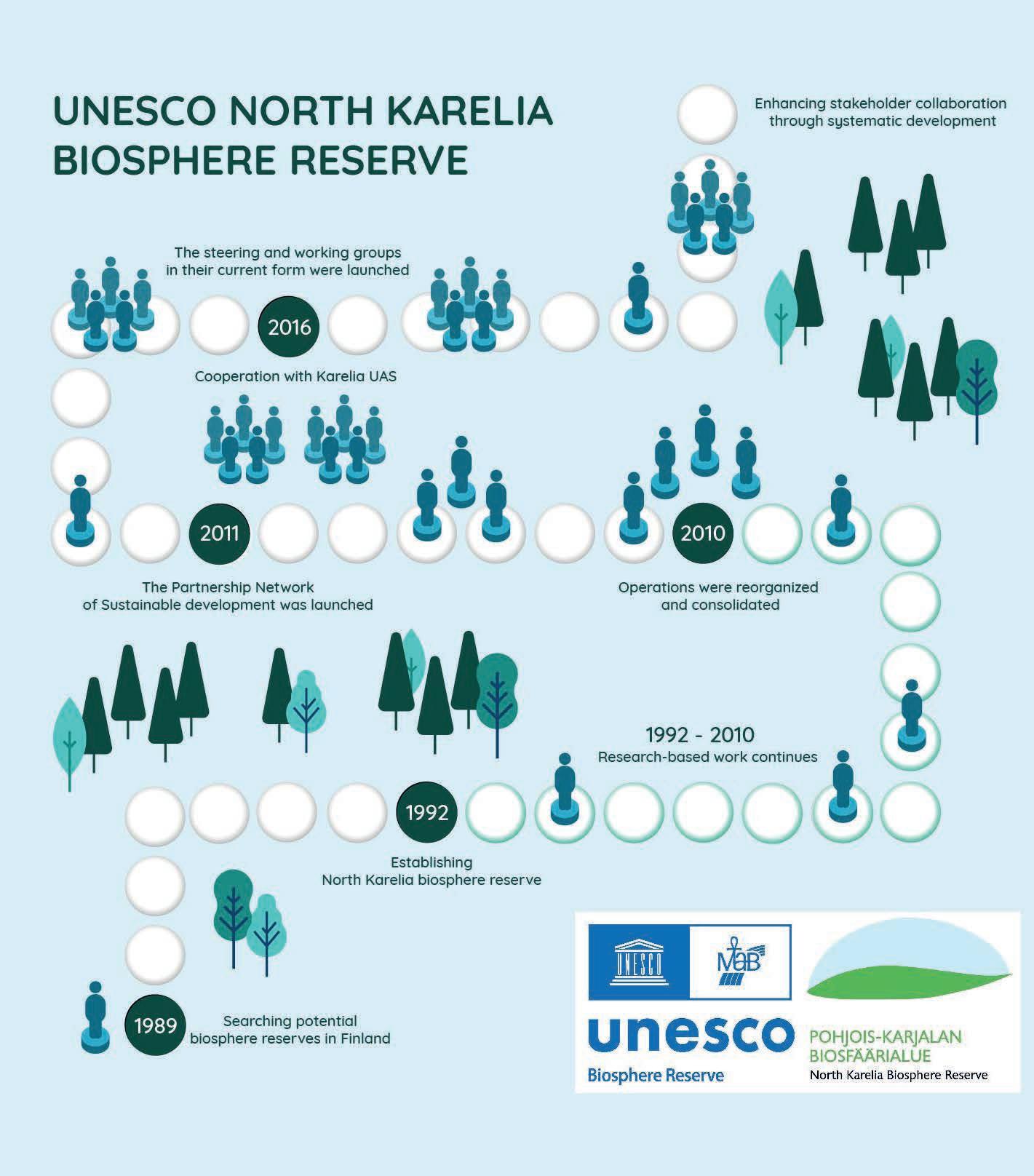





North Karelia’s Example of Inspired Stakeholders Carrying the Torch
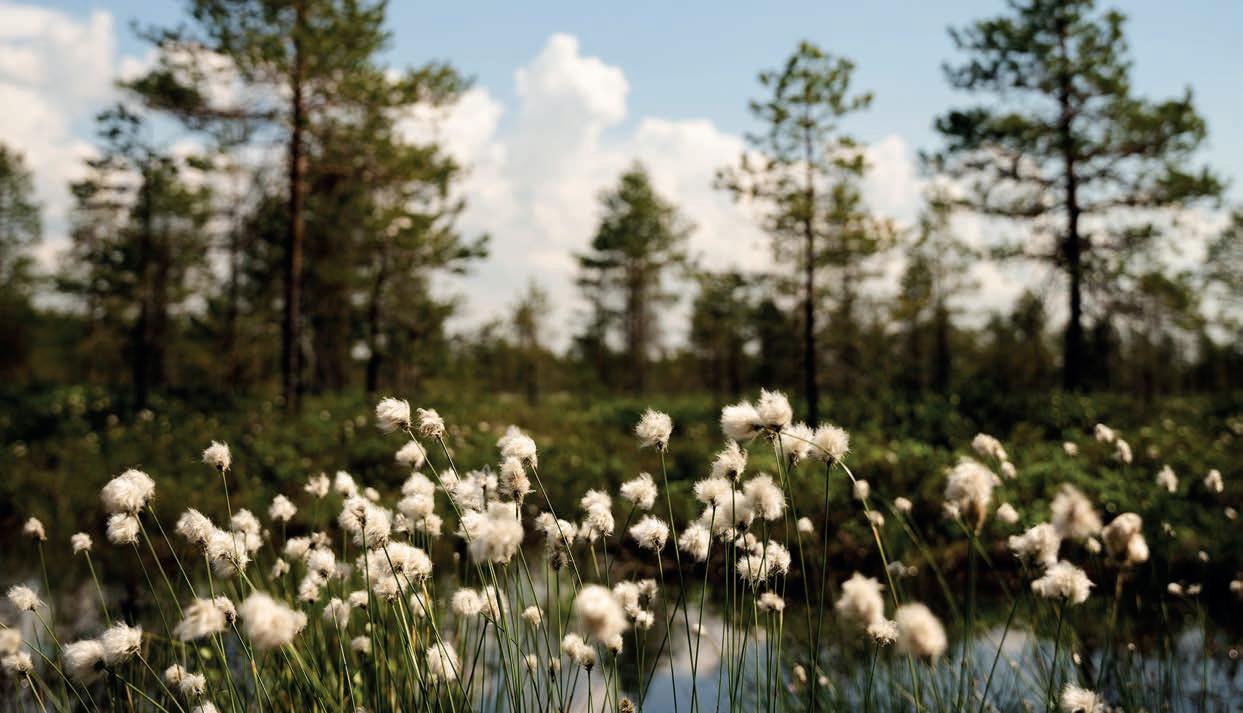
Biosphere Reserves are areas designated by UNESCO to experiment and showcase sustainable development practices at a local level, reconciling the social and economic development of populations with the conservation of biological diversity and, more broadly, the protection of the environment, while respecting cultural values.
From the stakeholders’ point of view, UNESCO North Karelia Biosphere Reserve has evolved from topdown regulated actions to close collaboration and stakeholder engagement, facilitated by changes in local management and organizational reforms. This shift from a research-oriented focus with shortterm project funding to financially and functionally sustainable operations has increased diverse partner engagement. However, it has required some time and plenty of groundwork to run everything smoothly, and to build trust between the partners with varying interests and different levels of expertise and commitment.
Our experience shows that engaging local stakeholders through steering and working groups fosters synergies. The members of steering and working groups consist of regionally active people who are open for collaboration. Involving actors with similar goals in joint discussions helps us in sharing information and aligning actions. We also seek to
include collaborators not yet involved but whose actions could have a significant impact. For example, asking them to join the forces for a short-term event, such as a guest lecturer, or a meeting with local people, has been a great way for increasing interest towards the North Karelia biosphere reserve.
Different ways to engage stakeholders include:
1.Steering group: large organisations, and strategically relevant individuals
2.Working group(s): active participants in regional development projects
3.Sustainable development network: smaller actors, or those with limited resources
4.Development projects and thematic subgroups: specific to certain actions
UNESCO North Karelia Biosphere Reserve is one of the INVEST Living Labs in Finland, in cooperation with Karelia UAS. Karelia UAS became part of the biosphere collaboration first by attending some meetings. The collaboration deepened through joint project actions, but it is not limited to that. A Karelia UAS staff member is the head of steering group and working group, and there are several joint development projects, ongoing cooperation in education and research related to theses or courses. For Karelia UAS, UNESCO’s clear framework makes it easy to find optimal ways for cooperation. However, these operations would not be functional without

strong, regional coordination from the Centre for Economic Development, Transport and the Environment. They are responsible for building and maintaining the partnerships for the biosphere reserve. In addition, they align all the actions with the biosphere reserve strategies, support us in the search for new partners and create opportunities for local organizations and citizens to collaborate.
Biosphere reserves and Karelia UAS’ Living Lab focus on sustainability
Our joint INVEST Living Lab adheres to the four design principles for Living Labs: fostering inclusive quadruple helix participation, creating authentic learning environments for a sustainable future, stimulating reflexivity in learning and innovation, and facilitating interaction and knowledge sharing. However, there is room for improvement, particularly in inclusivity, innovation alignment, and resource allocation for development and evaluation. To enhance innovation, we could search opportunities for seed funding for new businesses and
Onnistunutta Living Labia ei voi luoda yksin. Tarvitset siihen motivoituneita ja innostuneita kumppaneita. Kestävän yhteistyön luomisessa on myös tärkeää, että kumppaneiden odotuksiin pystytään vastaamaan, viestintä on tarkoituksenmukaista ja aktiivista, ja toiminta perustuu yhdessä luotuun strategiaan tai missioon. Suomen Pohjois-Karjalassa erinomainen esimerkki hyvästä sidosryhmäyhteistyöstä on UNESCO Pohjois-Karjalan biosfäärialue, jonka kumppanina Karelia-ammattikorkeakoulu toimii. Biosfäärialue on yksi INVEST-allianssin Living Labeista ja niiden toiminta linkittyy INVEST:in opetustarjontaan.
INVEST Alliance and their activities are linked to the INVEST educational offer.
A successful Living Lab cannot be created alone. You need motivated and enthusiastic partners. To create sustainable partnerships, it is also important that partners’ expectations are met, communication is appropriate and active, and activities are based on a jointly created strategy or mission. In Finland’s North Karelia, an excellent example of good stakeholder cooperation is the UNESCO North Karelia Biosphere Reserve, which Karelia UAS is a partner in. The Biosphere Reserve is one of the Living Labs of the
Turn me upside down to read the translation!
we can support Karelia students, staff, and alumni through the INVEST Entrepreneurship Program. For open system management, we should emphasize data sharing, feedback loops, and integrated systems in Living Labs. In their current form, the INVEST Living Lab at North Karelia is well aligned with curricula and teaching, making it effortless for the students to participate. Proactive and innovation-oriented teaching personnel is also something that has enabled us to perform this well. Maybe in the future, the Living Lab could also be interconnected with the studies on transferable skills to help students in building a comprehensive set of competences needed in working life.
Suggestions for successful stakeholder engagement
Maintain small action-based groups for project-scale cooperation and synergies. In addition, organise larger easy-to-access events and activities to increase participation and to enhance communication.
Hints
motivoituneita = motivated kumppaneita = partners viestintä = communication yhdessä luotuun = jointly created biosfäärialue = biosphere reserve
Involvement of Students in Living Labs A metaphorical forest excursion in Nitra, Slovakia
Text: Marcela Chreneková*, Michal Hrivnák* and Peter Moritz*
*Slovak University of Agriculture in Nitra
Photography: Marcela Chreneková, Marián Kováčik
Spatial development in the metaphor of a forest
A local community living in a specific territory can be metaphorically compared to a forest, an alternately thriving ecosystem where every tree, plant and creature plays a unique role. While the bounded space where the life of the community takes place is represented by a forest,
the trees in the forest symbolize institutions—pillars of strength and resistance, whose roots are deeply anchored in the soil and symbolize a connection with origins or values. Leaves and branches, plants and animals intertwine to form a complex network of institutions that reflect the density of ties throughout the spatial and social system. The soil and layers of foliage in this analogy represent the
forest’s ability to accumulate memories and experiences, social and cultural capital. They reflect evolutionary trends and historical contexts in territorial development. There is a constant cycle of growth, decay, and renewal in the forest. The entire flora and fauna play a key role in the processes in the forest—the inhabitants of the forest, the actors of its development. In the forest on the next page we show
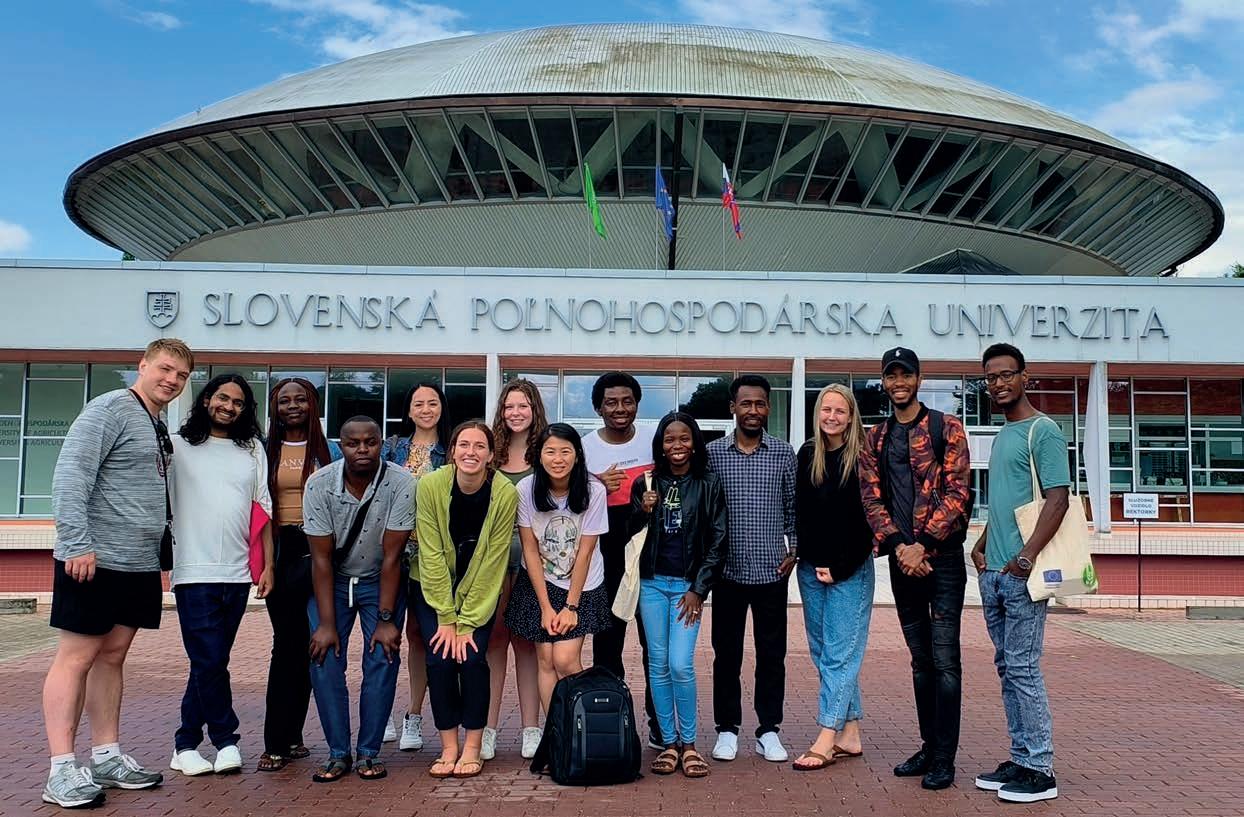

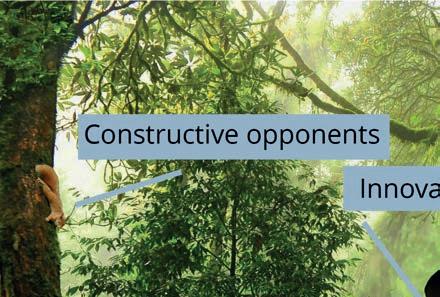
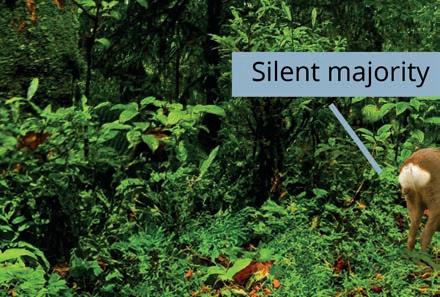
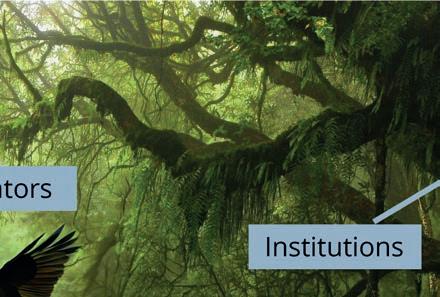
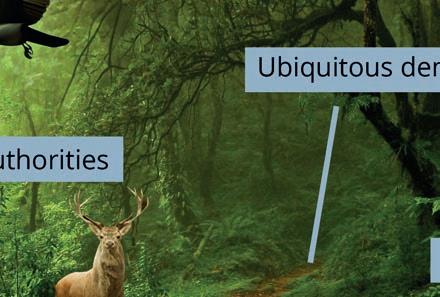
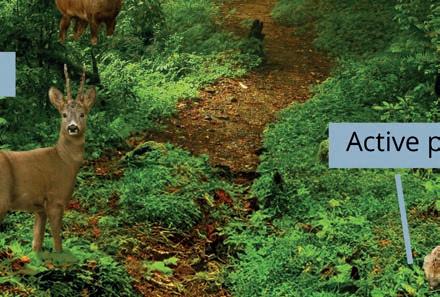
the key attributes of planning innovative solutions through the metaphor of forest life. We can find different actors among the inhabitants of the forest— different creatures that together generate specific and hierarchical bonds. Some animals appear in the position of the alpha male: authority, others in the position of partners, opponents, or the silent majority. Sunlight penetrating through the dense crowns of trees can be considered to be a symbol of growth and change, which is caused not only by impulses from within, but also impulses from outside (growth and change in SUA Living Lab means incorporation of new types of stakeholders: regenerative farmers, fruit processors, social
enterprises, reorientation from beverage production sector to food and beverage, or practicing the slow food idea). The same is true of participatory spatial planning. Social innovations can be initiated by the local government as well as by social enterprises, church (a catholic church in Nitra region started to cultivate its own vineyards in cooperation with the social enterprise while producing their own wine, and there are another new ideas in social farming) or diverse citizen groups (there are communities creating their own, relatively closed, local food supply systems) and platforms. In spatial planning, some actors are in the position of participants and some actors are in the position of the
silent minority. The initiators of the given solutions use unique local opportunities, or adapte knowledge and resources from the external environment, to initiate solutions fulfilling specific needs and addressing present challenges in the context of localspecific conditions. However, any change in society generates both compliant partners and passively or actively protesting actors. A specific position in these processes is held by experts who, thanks to their expertise, enter the innovation process, which is supposed to bring about certain social changes with insight “from above”, that is why they are depicted as birds in our analogy.
Students have been a specific segment in territorial development. They can represent the source of the innovation process from different points of view. They can be an important part of planning due to their knowledge, creativity, knowhow, analytical and scientific research competences, ability to get involved in prototyping or implementation through their
work or volunteer work. The metaphor helps to illustrate principal concepts of community and territory development as for example: rooting of values, resilience, challenges and opportunities, lessons learned.
University (and secondary) education process provides space for different types of contact of students with working life.
Interaction with stakeholders in real life is one of the most effective and reflective forms of learning and training. Living Labs provide an ideal space and methodology for this. Participation of students in a Living Lab can take various forms and levels, depending on the nature and objectives of the Living Lab and aims of educational programme.
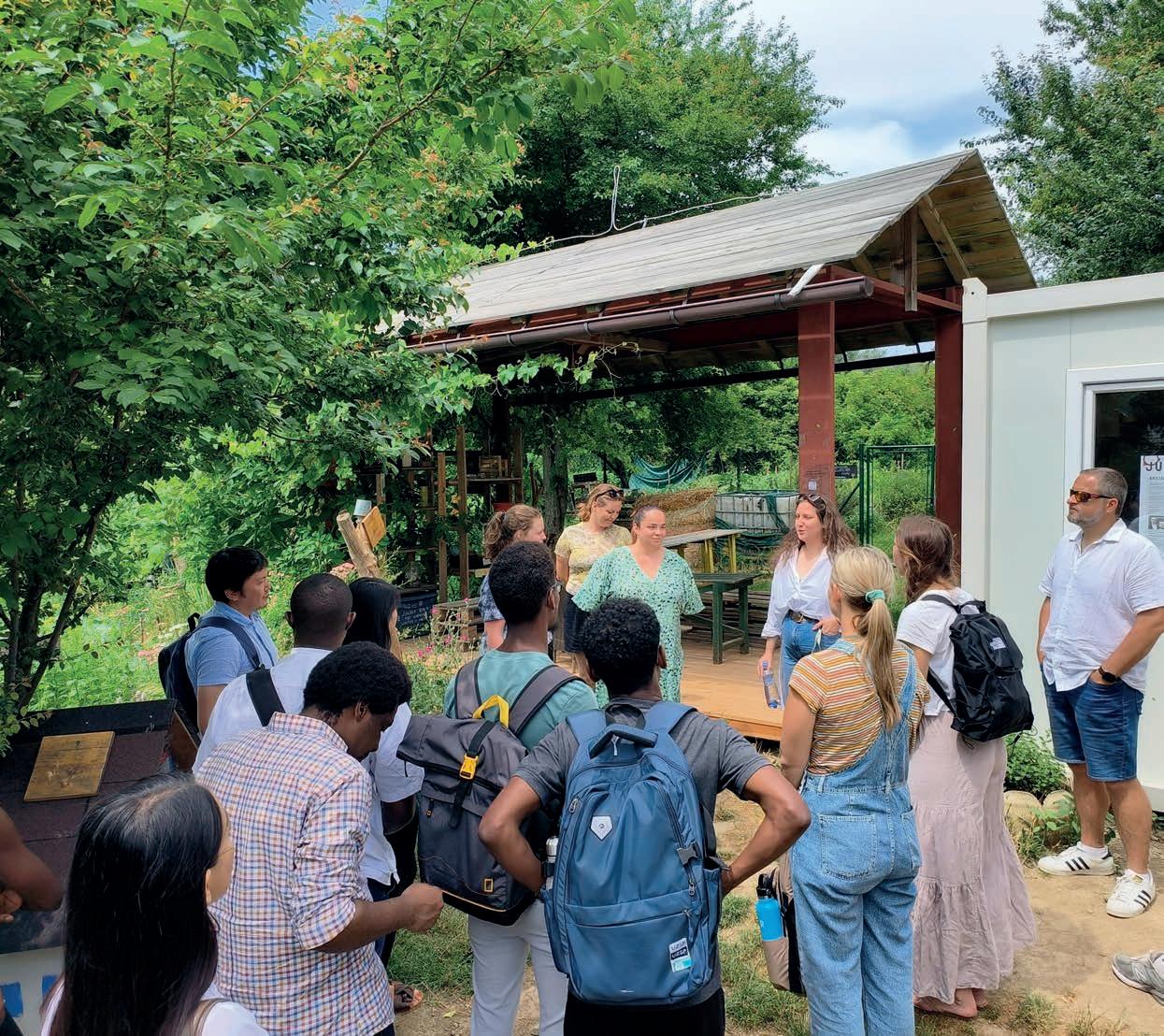
Forms and levels of student involvement and contact with working life
In a Living Lab that is aimed at community and territory development, students of various programs can find a place for contact with the working life and real world. They can observe, learn, train, design, et cetera.
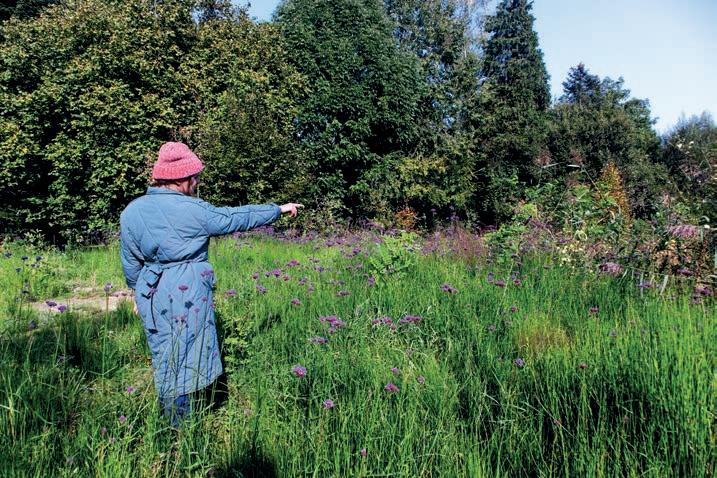





Student as an OBSERVER: plants, animals, sounds, weather
Student as unbiased DESIGNER: planting of trees and plants, forest management
Student as an INNOVATION INITIATOR: inspiration in nature, ways of nature conservation
Student as a LEARNER/TRAINEE: biology, ecology, natural cycles
Student as DATA MINER and PROCESSOR: analysis of species composition, wildlife observation
Student as an ANALYST: relationships, interactions, benefits, dangers
To bring the education process close to real life and a Living Lab, the curricula structure changed in more aspects. Working life or Living Lab stakeholders are brought to the university, or students are brought to villages, enterprises, NGOs, institutions, or to contact with citizens (target groups). This happens in person or virtually.
Many courses incorporate one or more ways or techniques:
•Inviting external lectures or streamed lectures—working life partners, other Slovak universities, and foreign university teachers;
•Organising discussions with various stakeholders;
•Organising excursions, co-create in-situ, and in-class activities (summer schools, case studies, participatory games etc.);
•Supporting student voluntarism;
•Inviting students to workshops, hackathons, trainings, conferences;
•Producing our own tailor-made teaching videos etc.
Support from SUA consists in building infrastructure and capacities. Premises of SUA AgroBioTech research center, creative centre, and co-working centre are used for various gatherings and events. Open air space of Hidepark Nitra—the independent cultural center (a non-profit and voluntary initiative) is also used. Teachers are encouraged to realize innovative educational projects and establish various cooperations with working life partners.
What is true and natural, in-situ contact always stays the most memorable and popular for students. They can “smell” the place, feel the genius loci, feel emotion of stakeholders, and react in real time.
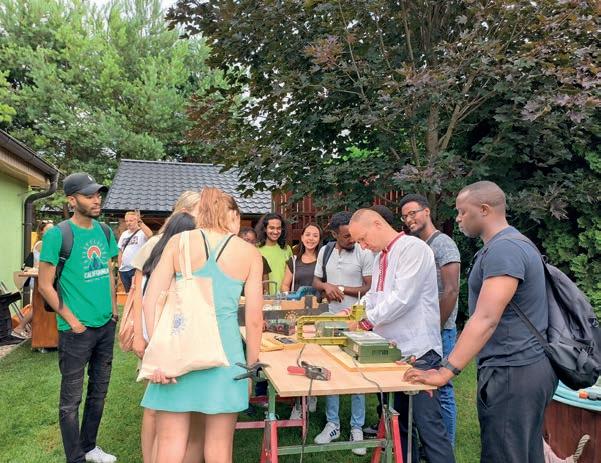
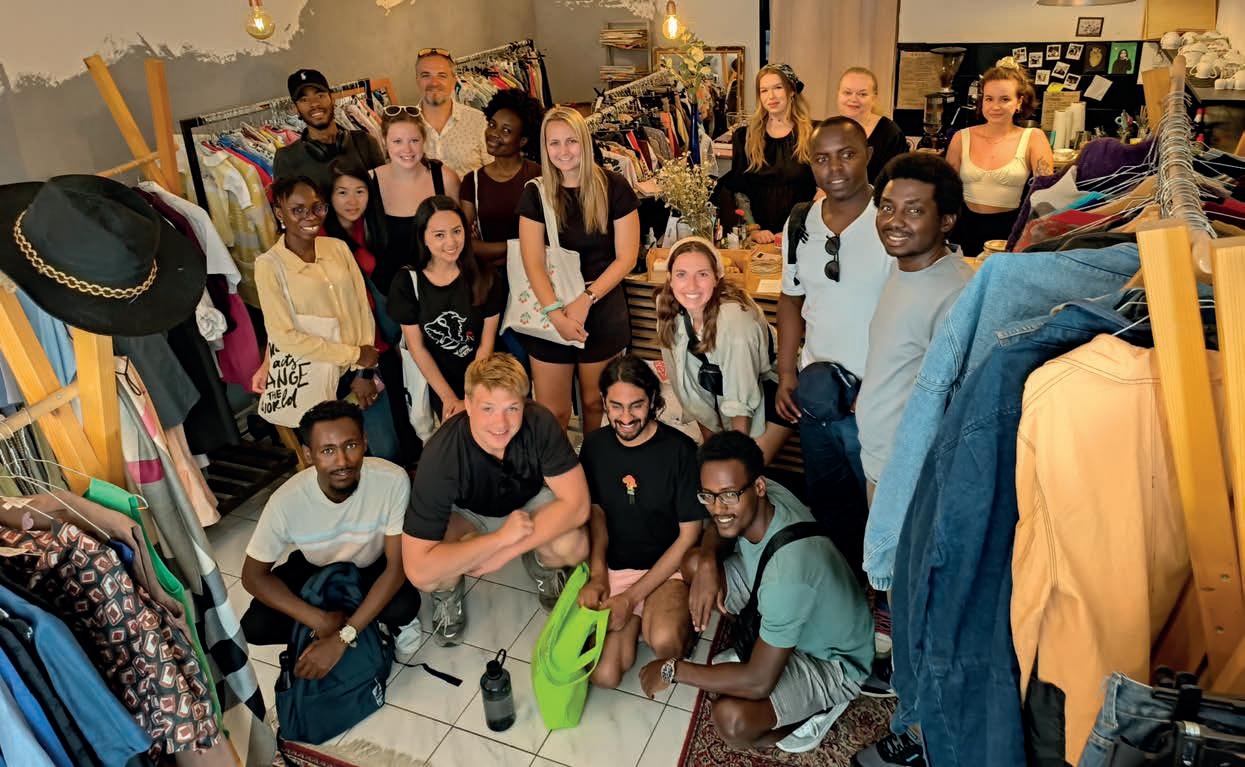
Virtual Living Labs
And its options of education
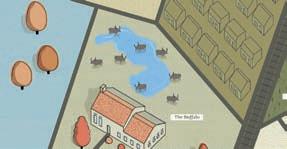
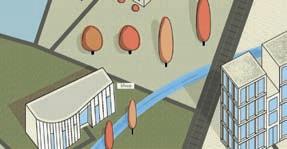
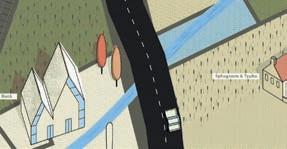

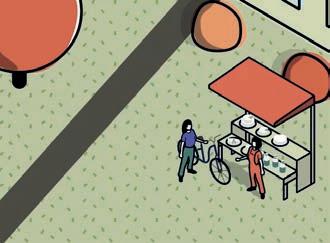
State of the art
Text: Marelle van der Snoek*, Kristiina Väänänen** and Erica Mosch*
*Van Hall Larenstein University of Applied Sciences
**Karelia University of Applied Sciences
Illustrations: Niels Mud, https://peatland.eu/

Introduction


The website focusses on user experience by following standardized interface requirements, incorporating expert advice, and scientific validity to ensure that relevant information is presented. Additionally, the website is maintained by an interdisciplinary design and content team to review and adhere (new) content to the style of https://peatland.eu/ (Witteveen et
The virtual Living Lab https://peatland.eu/ is designed and developed as an interactive, web-based environment focusing on climate robust use of peatlands. The design of peatland.eu as a virtual Living Lab follows a serious social game approach, as it brings a diversity of stakeholders and their contexts on stage: agricultural producers, policy makers, environmentalists, students and other interested parties. https://peatland.eu/ simulates a country with different farms and town buildings, where peatland-related issues are manifested and interact with each other. Users are invited to meet different stakeholders by clicking on the different buildings. They are then provided with an introduction to that stakeholder, and their views on the use of peatlands. Target users for peatland.eu are students, policymakers, stakeholders, and other interested groups.

al., 2024). The concept of Reality, Meaning and Play (methodology by Harteveld 2009) forms the cornerstone of every design and available content on the peatland.eu website, to achieve a serious gaming experience. In light of availability of content, peatland.eu has incorporated a peatland university, where substantial information on peatlands, business models, and greenhouse gas modelling is available. This aspect invites users to actively engage with
the topics, and experience dilemmas that arise first-hand. Nevertheless, the peatland.eu website is under constant scrutiny to further improve the userexperience and enhance user-learning. Workshops with stakeholders, educational institutions, and other parties provide feedback on available content and ease-of-use of the website. One example of further improvement of the peatland.eu website was highlighted in a workshop with international stakeholders, where the current situation and context of the peatland.eu website was viewed as mostly applicable to some specific countries in northwest Europe (e.g. the Netherlands with peat meadows), thus stakeholders found it difficult to identify their view of peatlands with the one presented on peatland.eu. This highlights the importance of different land uses on peatlands (e.g. arable farming, forestry) in different European countries, and acknowledging the impact of specific styles of the website on cultural values and peatland use.
Options for education
Students are encouraged to independently learn about various aspects of peatlands, and peat in general. For example, students from Peatland University (on https://peatland.eu/) are given an assignment to visit the Museum and analyse an exhibition of an Irish farmer.
In turn, assignments may lead students to other stakeholders and content. Different courses and assignments are available on the website to stimulate students to “roam free”, while achieving specific learning outcomes. Additionally, the range of topics about peatlands that is available to students is broad, and intrinsic motivation to learn more about specific topics is encouraged through in-depth information.
The most important part of the peatland.eu website is that it provides a safe learning environment for students, as conflicting views of stakeholders are challenging to navigate in real-life. The website offers students the opportunity to learn and make mistakes, with no repercussions for stakeholders or stakeholder processes. Additionally, it allows students to be exposed to, and empathize with, conflicting views of stakeholders—stimulating students to think about how these conflicting views might come together, and work on setting up stakeholder processes.
Virtual Living Labs are invaluable tools for education and understanding the context of different stakeholders. Especially as stakeholders are key to transitioning processes, where preparation and consideration are required from students. Although it will not replace real-life situations or field visits, it provides a solid basis for understanding the stakeholder playing field.


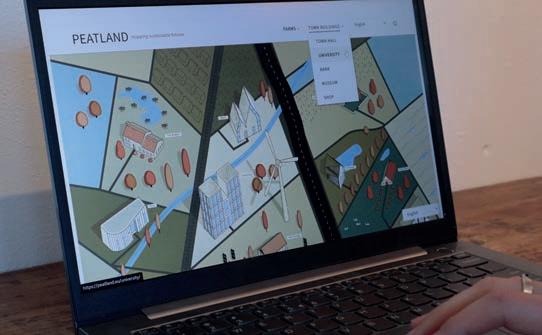


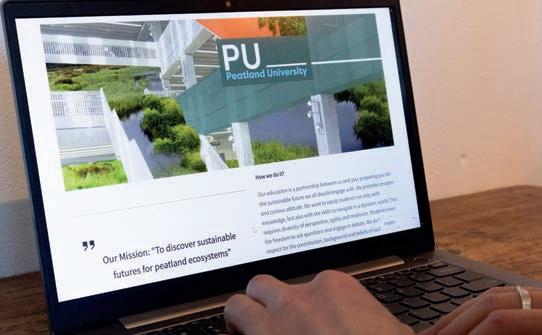
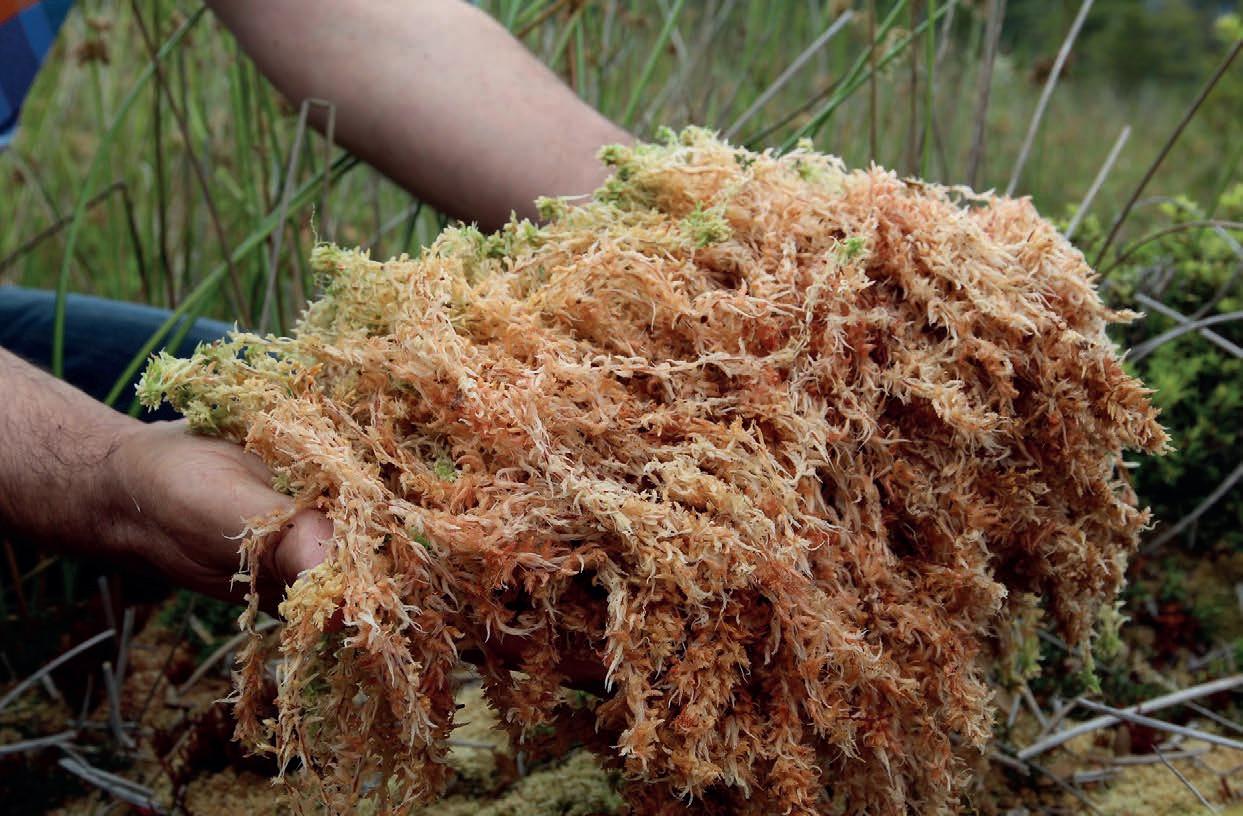
Origin & Transition of a Frisian Living Lab
Survival lessons from Friesland, Netherlands
Text: Peter van der Maas*
*Van Hall Larenstein University of Applied Sciences
Photography: Peter van der Maas
You drive through a beautiful landscape, which was dry, but is now getting wetter. The carrying capacity of the road is also decreasing: from solid asphalt, it is now slowly but surely turning into a muddy path. Your big, robust car, with lots of horsepower, is far too heavy, making deep tracks in the mud. Eventually, your car gets stuck. Your car was perfectly up for the task, but now it is not.
Finally back home, you start looking in a catalogue, but the selection is disappointing. It seems like we can only make big and increasingly heavy cars... Still, you need something so you can continue your journey... A car, but different, at least much lighter. And reliable, of course! Or maybe an amphibious vehicle would be better? For when it gets even wetter? After all, you don’t know what you’re going to encounter next. You might soon have to go through water... further down the road.
Can you relate the elements in this metaphor to the
Frisian Living Lab?
Context Living Lab
The Living Lab Frisian Peatlands is working on finding solutions for the future-proof use of peat meadow areas in Friesland. A large part of Friesland consists of peat meadow areas, with dairy farming as the dominant economic carrier. Peat soil is originally swamp. To enable agriculture (i.e. economically viable land use), the peat has been drained for centuries, but in recent decades (say after 1960) large-scale deep dewatering has been taking place to enable intensive land use (including heavy machinery). This has contributed to increasing productivity, economies of scale in dairy farming, and economic growth in the region.
Major drawbacks of peat soil drainage are compaction and peat oxidation, resulting in soil subsidence, greenhouse gas emissions and deterioration of
water quality. This situation not sustainable because:
1.Social pressure to prevent land subsidence (houses sinking);
2.Political pressure to reduce greenhouse gas emissions, especially since the ratification of the Paris Agreement and the Dutch Climate Agreement;
3.The feasibility of water management is finite: it costs too much to keep our feet dry in the long term.
To turn the tide and to meet political and social resistance, drainage in peat areas will have to be reduced and farming will have to cope with higher groundwater levels. The challenge then is: how do you do that?
Higher groundwater levels lead to a decrease in carrying capacity and productivity (grass yield decreases). This leads to less income and/or higher costs for dairy farmers. And yet decades have been invested in growth and upscaling.
The big question is therefore: how can you maintain profitable land use and regional earning capacity through sustainable management of peat (pasture) areas with higher groundwater levels?
Origin of the Living Lab: Better Wetter
The Living Lab Frisian Peatlands was created in the context of Better Wetter (BW), a partnership between government (municipality, water board, connection with the Province), business (consultancy firm, building company, product developer), NGOs (nature organization, agricultural nature association), Van Hall Larenstein and a (agricultural) secondary vocational education. The partnership originated in the Northeast region of Friesland. The first initiative was with the water board and an ecological consultancy firm. From the
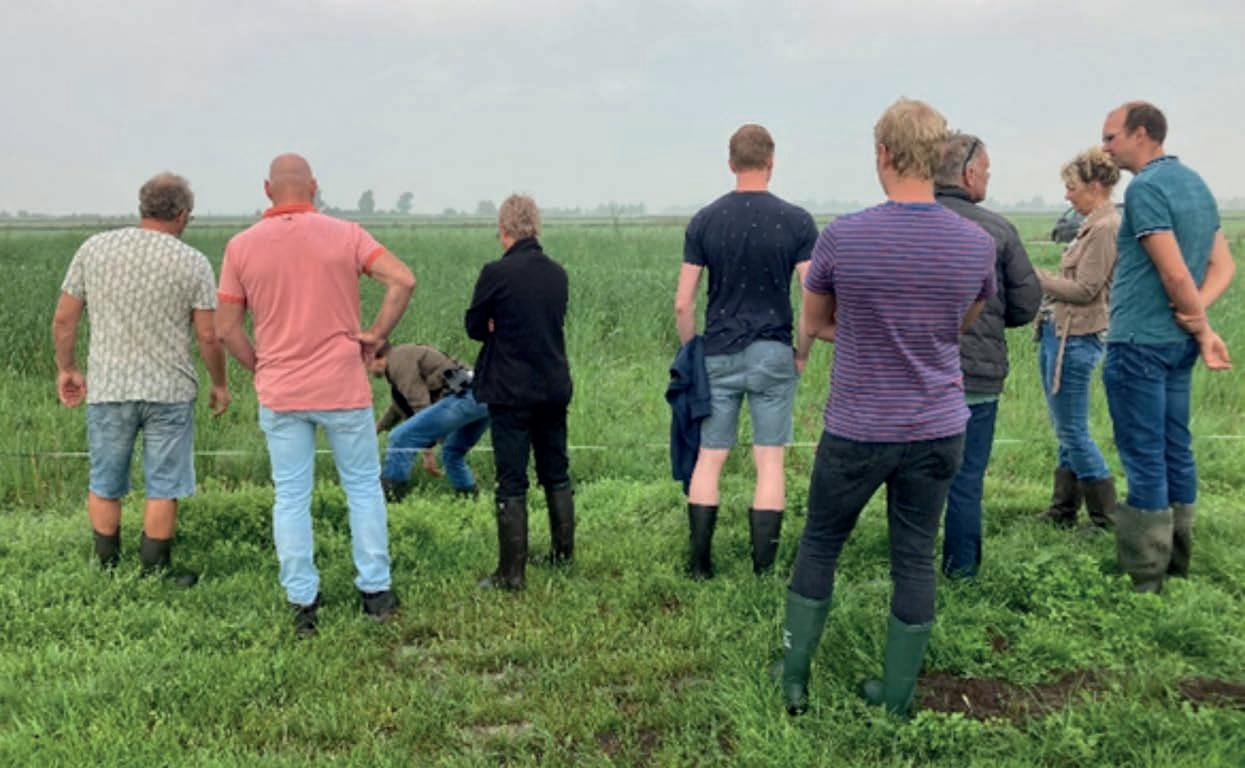
first moment, the focus of the collaborating parties was on innovation in the field of water management and land use: how to combine profitable land use with alternative, more natural forms of water management that are climate-proof?
HVHL joined Better Wetter when a collaboration already existed. According to the other parties, joining HVHL provided a good boost: knowledge development for transition. BW was supported by a research project, dealing with ‘wet crops’ as an economic carrier for wet peat meadows, with a subsidy from the Frisian Peat Meadow Program (Province and waterboard). However, BW was not a project, but a platform where people came together who wanted to develop something together, for the benefit of a shared future in an environment in which soil and water are ‘leading’, i.e. in which the ‘carrying capacity of soil and water’ forms the basis for a future-proof (regional) economy.
A few people, in particular a colleague from the municipality of Dantumadiel (secretary for the subsidy from the Frisian Peatland Program), supported the collaboration (LL) intensively.

When the person (municipality leader) retired, the ‘chemistry’ also partly disappeared. It became clear to me that LL is primarily about people, not about organizations or projects or programs.
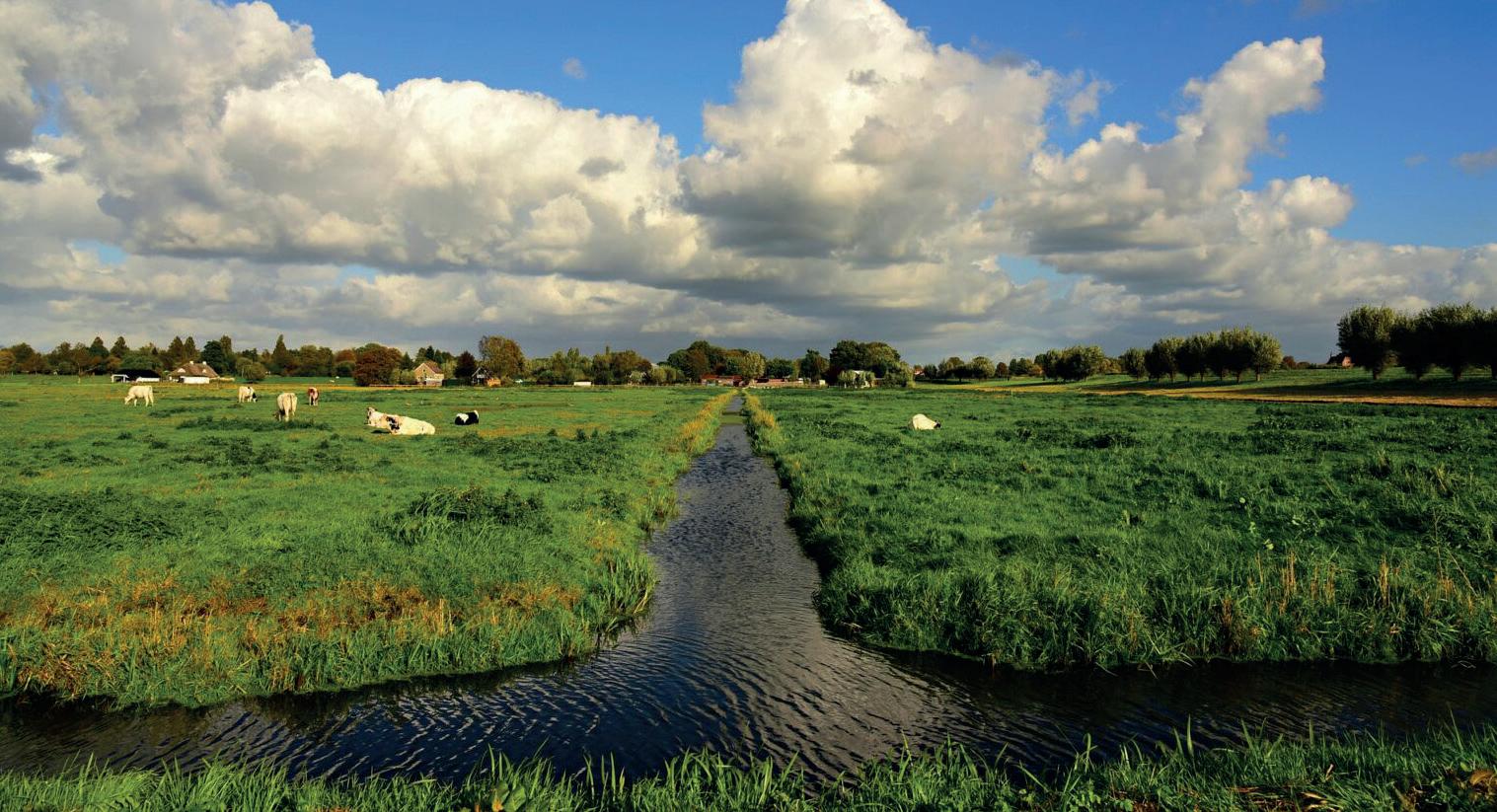



Learning points
• Living Lab develops. Organic, not autonomous, but unforeseen.
• It continues to exist (lives on) through the involvement and enthusiasm of the people involved.
• A Living Lab is not a project. It is a process driven by local energy. In a project, people are working together on a specific, well defined goal, with clearly defined results. In contrast, a Living Lab, can be seen as a joint ‘journey’, in which stakeholders co-create, aiming for workable solutions to complex problems.
• Project financing is crucial, but above all, involved people keep a Living Lab ‘alive’ If funding or people disappear, this is a threat to survival.
• Better Wetter, the context in which the Living Lab Frisian Peatlands arose, is not dead as a movement, parties are orienting themselves, based on regional involvement, in search of tasks within the framework of the Frisian Rural Area Program.
Transition to VIPNL
Better Wetter worked on futureproof water management, especially in peat meadow areas. When the research project, which was carried out in the Better Wetter partnership (Living Lab), ended, the funding disappeared. The province now wanted to continue research into wet crops (initially regional in Better Wetter) in a new national program: the Peat Meadow Innovation Program (VIPNL). A number of parties from the BW consortium, including HVHL, are active in that national program. The BW cultivation locations (small plots for cultivation of Typha) in Northeast Friesland are also part of VIPNL. However, VIPNL functions as a research program with a strict project and supervision structure. And not as a Living Lab. VIPNL focuses on research and innovation, and less
on regional transition, less on “the conversation”, less on people, less on the “question behind the question”. The risk of this position (which is different compared to BW) is that there is too little attention to good connections between stakeholders, too little attention to communication and therefore too little insight into (regional) needs and interests.
Mix and Match!
With Living Lab fortunes from Bulgaria
Text: Ekaterina Arabska* *University of Agribusiness and Rural Development
Wishes to address challenges and to have success in the INVEST Regional Living Lab in Bulgaria come by the idea to provide innovative solutions for sustainable regional development, particularly working on the encouragement of sustainable regional development
through local businesses and community engagement. The 10 lucky rhymes for the Bulgarian Living Lab could include the below challenges and needs for the future. Try to match all of them together!
Working for innovation
Encouraging competences and capacity building
Overcoming weaknesses and threats
Overcoming weaknesses and threats
Strengthening the image and impact
Working consistently and successfully
Providing the necessary resources to
Providing original solutions to wicked problems of the regions
Bulgarian Banitsa Recipes
6 servings
Preperation: 30 min
Cooking: 50 min
Banitsa is a true staple in Bulgaria. It is a traditional pastry dish made of layers of dough with a delicious filling baked in the oven. Bulgarians even put lucky charms into the the banitsa for special occasions such as Christmas Day or New Year’s Eve. The special Bulgarian Living Lab banitsa is a symbol of traditions and a space for open enduser-oriented innovations for excellence in regional sustainability.
For this Special Issue on Living Labs our Bulgarian chefs have included 10 very special charms that you can try and match to the challenges and future needs the Bulgarian Living Lab facilitators see.
Text: Ekaterina Arabska*
*University of Agribusiness and Rural Development
Appetite comes with making these delicious recipes!

Ingredients
For the dough sheets:
•Flour
•Water
•Salt
•Sunflower oil or butter
•Yeast or baking soda (optional)
•Sugar (optional)
For the filling:
•Eggs
•Bulgarian cheese
•Sunflower oil or butter (butter is preferred)
•Bulgarian yogurt (optional)
Quantities are according to preliminary research and a mutual understanding on the common wishes for taste and redundance. Ready-made sheets from the shope are forbidden to be used according to the rules of the Living Lab.
Preparation
1.Knead a smooth, non-sticky and elastic dough.
2.Divide the dough into approximately equal pieces shaped into nice balls. Place the balls of dough on the board and cover them with a towel. Let them rest for 30 minutes.
3.While the dough is resting, melt butter and let it cool. The fat should be runny but not hot. Crumble the cheese and beat the eggs in a bowl until smooth.
4.After the time for the dough to rest has expired, roll out the balls in all directions until the sheet is as thin as possible. While rolling, add a little flour.
5.Drizzle a little fat over the sheet and spread some of the crumbled eggs, cheese (and yogurt if you wish) evenly. Roll the sheet into a loose roll, then roll it up like a snail. Another option is to layer the sheets on top of each other with the filling mixture between them. This was not accepted in the Bulgarian Living Lab because of its striving to involve all quadruple helix actors equally.
Bulgarian Banitsa
The quadruple helix in action
“Banitsa” is a traditional pastry dish in Bulgaria made of layers of dough (sheets) and filling of mixtures baked in oven. Bulgarians put lucky charms into “banitsa” for certain occasions – Christmas Day or New Year’s Eve. These could be coins, a dogwood branch with a bud (symbolizing health and longevity) or small fold pieces of paper with happy wishes for health, happiness, success, etc. These “fortunes”, called in Bulgariaan “kasmeti”, are hidden inside banitsa which is cut to as many pieces as the members of the family with two additional – one for the house and another one for the Virgin Mary (the protector of the family). The fortunes predict what a person can expect in the new year, and the most common lucky charms are named for health, love, happiness, a baby, a house, a car, marriage, journey, wealth, friendship, etc.
Banitsa can be served for breakfast (but not only) with Bulgarian yogurt, ayrian or boza. There are different varieties of banitsa – with eggs and Bulgarian “cheese” most usual, but also with spinach, pumpkin, cabbage, potato, onion, rice, meat, etc. The word “banitsa” can be used for characterizing something which is at first look “very used”, even creating the impression of “badly maintained” (as crushed documents and students’ notebooks, crumpled passport, etc.) meaning that it is creased / wrapped as banitsa.

There are different ways of preparing banitsa. Bulgarian INVEST Living Lab’s banitsa has the “flexible” and amazing, but not easy, recipe.
6. Lightly grease the pan in which you will bake banitsa and place the first rolled crust in the center. Make each subsequent ball of dough like the first and wrap around the previous one.
7. Before you put your banitsa to bake, sprinkle it with the remaining fat on top.
8. Bake it at 200 degrees in a preheated oven on a medium grill without a fan. Bake until it gets a nice golden brown.
9. After removing the banitsa from the oven, lightly sprinkle it with cold water and cover for 15 minutes with a clean towel.
10. Serve warm or cold with a drink of your choice. Note: you can put the lucky charms as ingredients before or after the oven, depending on their type and your goals which are defined on the basis of the challenges and needs identified for future work.
11. Taste and say honestly what you feel. Think about what’s next and how to move forward in the perfection in the Bulgarian banitsa!
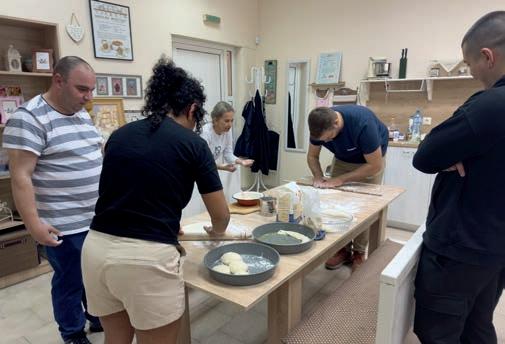
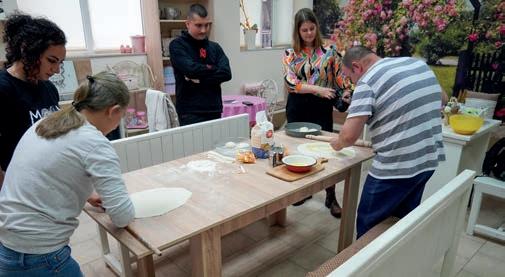
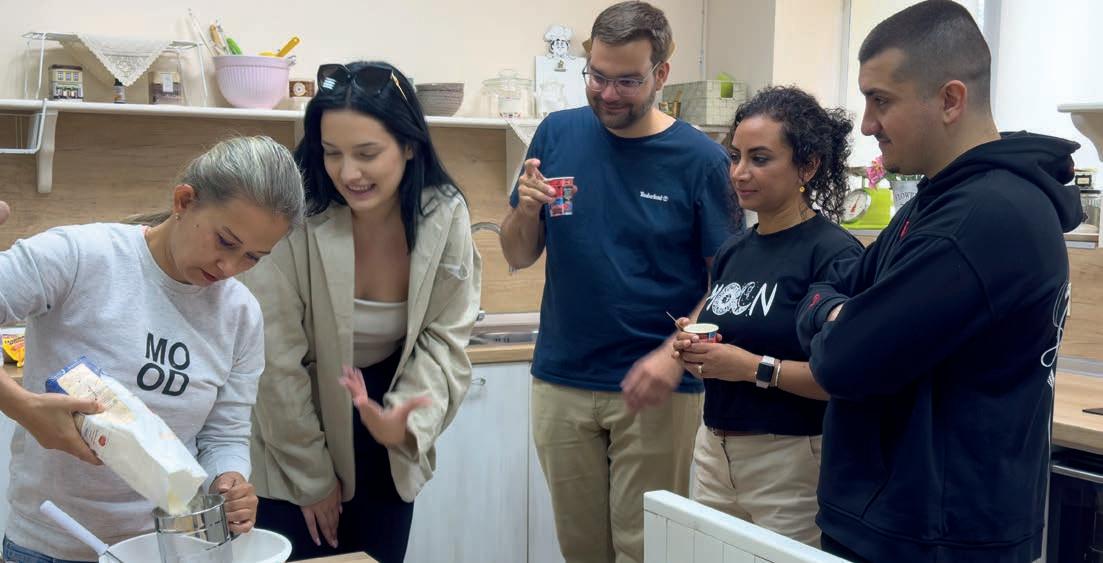
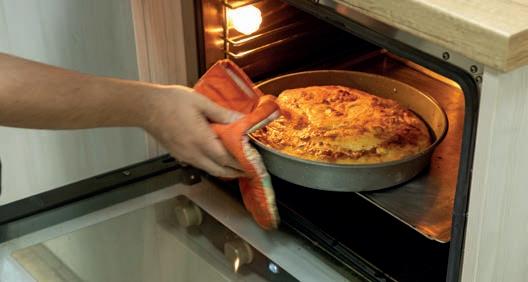


Chef Reviews
Applying the banitsa recipe on the Invest Regional Living Lab in Bulgaria
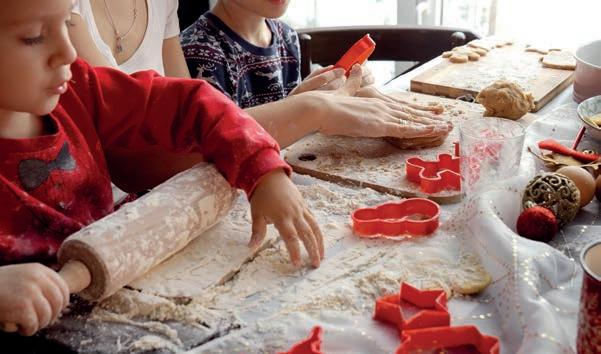
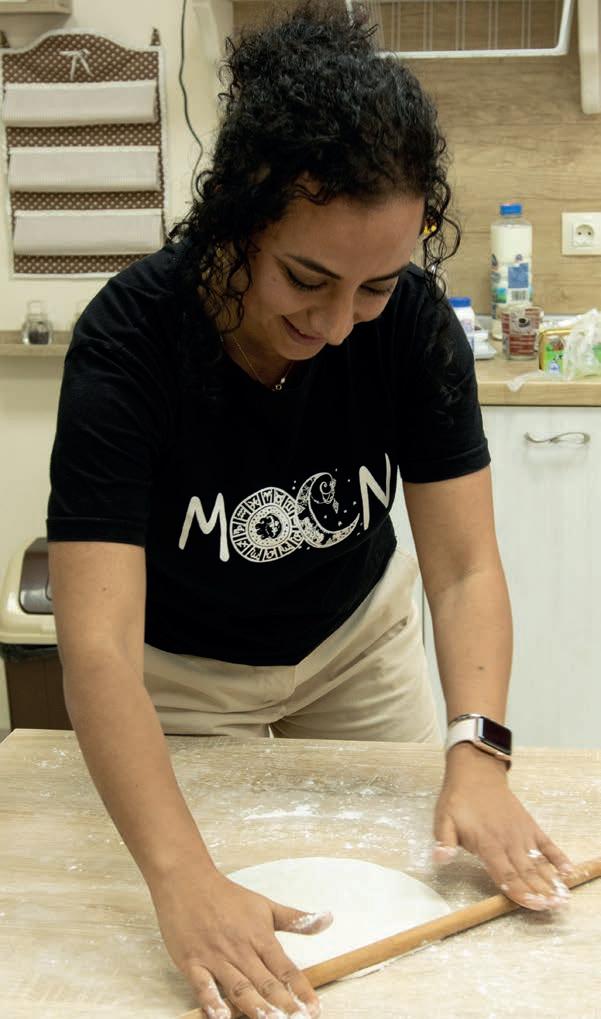

Ingredients
The ingredients for the dough sheets of the Bulgarian INVEST Regional Living Labs’ banitsa are our activities of “welding the dough of the quadruple helix” –engaging and uniting in a strong communication network all the stakeholders.
The ingredients for the filling of the Bulgarian INVEST Regional Living Labs’ banitsa are our research tasks, employing the transdisciplinary view needed, so far summarized as:
•Natural, cultural and historical heritage
•Sustainable tourism, innovation and territorial sustainability
•Climate change, agriculture, green economy
•Interconnected urban-rural territories
•Alternative food chains and new business models
•Smart cities
•Energy effectiveness
•Digitalization
The exact quantities required are unknown, paying special attention to the wicked problems, responsible innovations and transdisciplinary learning in our Living Lab.
Text: Ekaterina Arabska* *University of Agribusiness and Rural Development
Preparations
The preparation efforts reflect the four design principles adopted by INVEST Living Labs considering Living Labs as major learning configurations for achieving sustainable transitions.
The whole banitsa cycle includes the usual activities of a Living Lab:
•Co-Creation: co-design by users and producers –deciding on the types of banitsa
•Exploration: discovering emerging usages, behaviors and market opportunities – deciding on the recipes which has the potential to “win”
•Experimentation: implementing live scenarios within communities of users - baking banitsa by trying different ingredients and ways of preparation
•Evaluation: assessment of concepts, products and services according to socio-ergonomic, sociocognitive and socio-economic criteria - tasting the productx of banista
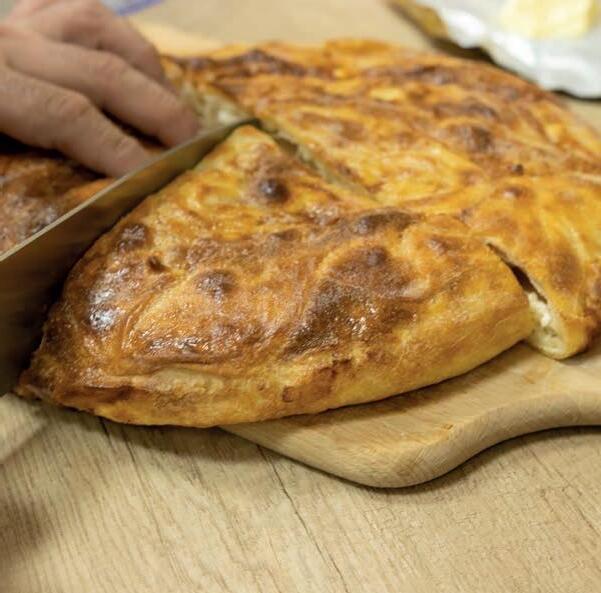
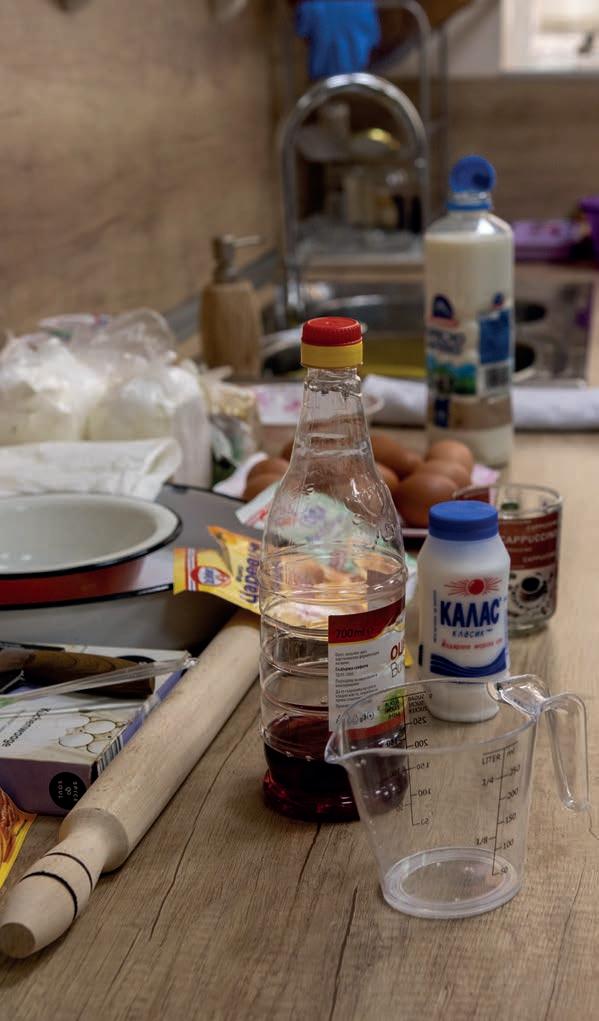
If we follow the banitsa preparation, these will look like this consequence of rules in working with stakeholders in the Living Lab network:
•Gather the stakeholders for the task.
•Divide the work in groups and let them work.
•Provide the best possible conditions for work.
•Mentor the planning of activities and target their direction in groups.
•Encourage the best interactions between groups engaging them in Living Lab activities.
•Render the activities with the participation of groups.
•Motivate all to work together.
•Encourage a proposal for a new solution/product.
•Award the efforts.
•Promote the results/outcomes.
•Assess and go to the next progress.
In INVEST Regional Living Lab in Bulgaria there is a mixture of ingredients (research tasks on sustainability topics) which can be “cooked” together into banitsas in our Living Lab as an example of the new solutions for the integrated sustainable regional development. But this unique and diverse mixture of research tasks (put together) doesn’t mean our Living Lab’s banitsas are “badly maintained” but rather they are “very used” because they are delicious, nourishing and satisfying our regions’ complex problems.
A Case Study of a Case Study
A four-week itinerary in Slovakia
Text: Marián Kováčik*
*Slovak University of Agriculture in Nitra
Photography:
Marcela Chreneková, Marián Kováčik
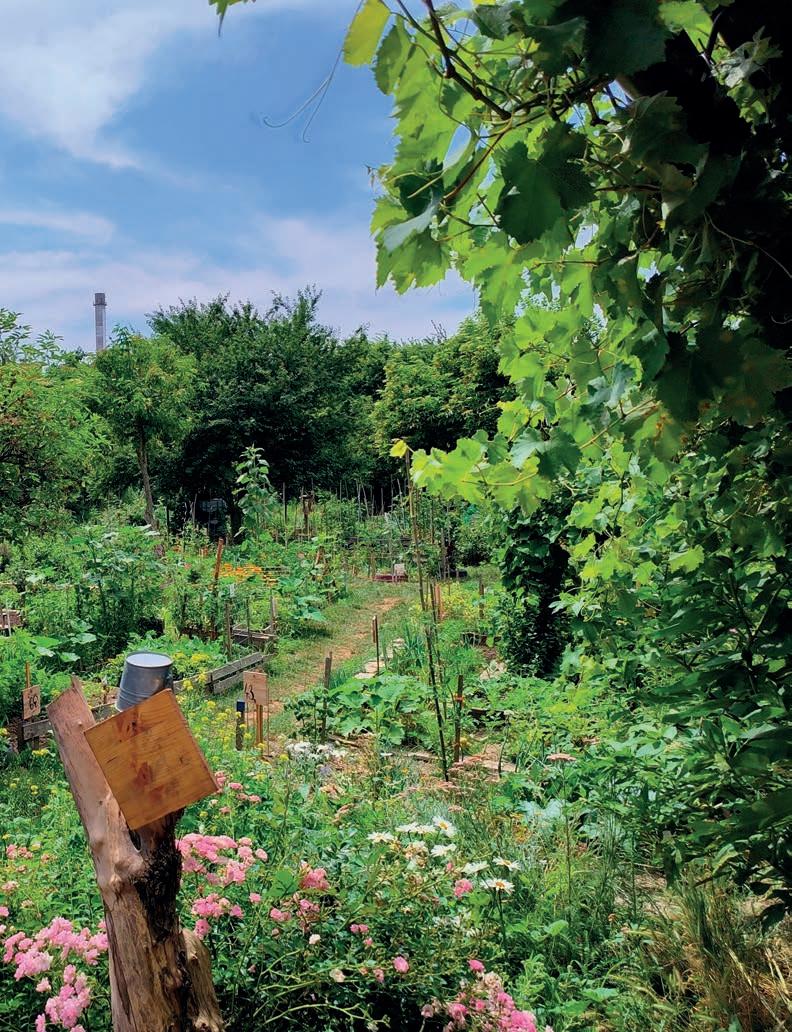
SUA has extensive experience conducting case studies for foreign students as part of the International Master of Rural Development program—a consortium involving six universities, including some out of Europe universities. The European consortium of universities are: Ghent University in Belgium; Slovak University of Agriculture in Nitra in Slovakia; University of Cordoba in Spain; Pisa University in Italy; Agrocampus Ouest France; and Hümboldt University of Berlin, Germany. The other partners are: the University of Arkansas; Korea University; Seoul National University; and Escuela Superior Politécnica del Litoral in Ecuador.
This program has been an integral part of SUA’s international offerings since 2006. The primary phase of the program takes place at Ghent University, where students receive theoretical foundations from all partner universities.
Subsequently, students are distributed among these partner institutions as they progress through different semesters. The case studies occur during the summer months, specifically from June to July. The most recent case study, conducted from June 26th to July 21st, 2023, focused on local trademarks as a crucial component of local sustainable development strategies.
The objective was to explore pathways for creating sustainable destinations. Lectures were delivered by SUA’s academic staff, including teachers and researchers, as well as external stakeholders from tourist organizations—those who hold local trademarks. Beyond acquiring theoretical knowledge, the participants worked collaboratively to establish evaluation criteria for these external stakeholders.
The most recent case study, conducted from June 26th to July 21st, 2023, focused on local trademarks as a crucial component of local sustainable development strategies. The objective was to explore pathways for creating sustainable destinations. Lectures were delivered by SUA’s academic staff, including teachers and
Program
Program itinerary Week 1
Week 1 covered regional development topics such as the rural development policy in Slovak conditions, placing a special focus on communityled local development (abbreviated as CLLD) and the Leader approach. External stakeholders provided theoretical background on researchers, as well as external stakeholders from tourist organizations—those who hold local trademarks. Beyond acquiring theoretical knowledge, the participants worked collaboratively to establish evaluation criteria for these external stakeholders.
City Trademark Support
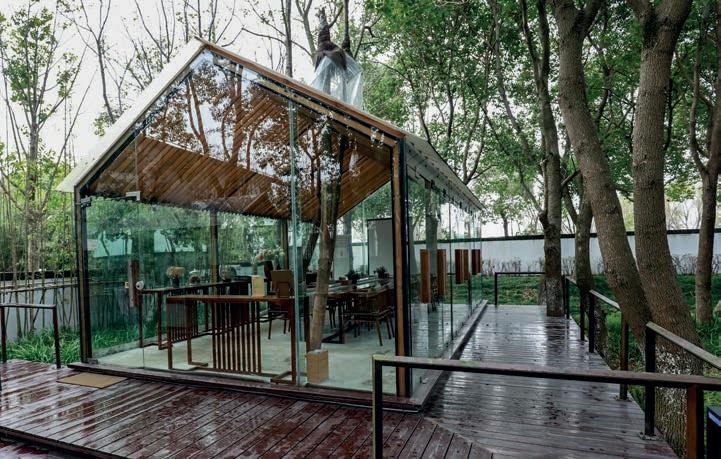
trademarking, quality, and networking; and quality system creation got introduced.
There were also the student introductions: with students introducing themselves and their countries. Most students came from Africa, Latin America and Asia. This was aimed at improving relations and understanding systems and legislation.
Quality criteria creation: students were focused on creating quality criteria for local products. They did desk research to understand the framework for evaluating trademarks and incorporated their ideas into their created criteria.
Event Participation: a visit to the traditional event site in Nitra with SUA facilitators. Event organization and product placement requirements were discussed with local stakeholders at this event.
Additionally, inquiries were made about whether the event met local producers’ expectations.
City Trademark Support: met with city representatives responsible for promoting local producers. There was a discussion on how the city aims to support the regional trademarks. Work to identify support benefits for the local producers who may not fully comply with regional trademark rules (e.g. full production cycle in the region) was also done.
Knowledge Gain: discussions drew from theoretical knowledge gained earlier. Students explored tools, such as advertising, to enhance visibility for high-quality regional products, marketing, and presentation of local trademarks.
Reports and Insights: students prepared reports based on their findings. Stakeholders provided additional information on local destination strategies.
Program itinerary
Week 3
In the third week, students conducted a comprehensive analysis of local trademarks, considering both theoretical and practical aspects. The central theme was the quality assessment system, which involved utilizing a range of tools to connect and


Program itinerary Week 4
During the fourth week, students had the unique opportunity to explore a distinct Slovak region of Banská Bystrica located in the middle of Slovakia—one where a collaborative model involving six Local Trademarks has been successfully established. In this immersive experience, they delved into the intricacies of networking and the overarching communication strategy employed by local trademark managers and tourist boards.
These field trips served as tangible illustrations, seamlessly connecting cultural heritage, local production, and tourism. By witnessing these practical examples of product marketing, experience based tourism and production of handmade products firsthand, students gained valuable insights into the symbiotic relationship between these elements.
As the week drew to a close, students synthesized all their accumulated findings from the
promote local producers. This segment served as a crucial preparation for upcoming field trips within the region. Coordinating stakeholders facilitated interviews with local producers, who specialized in diverse offerings such as food, woodcraft, and even unique services like the beekeepers’ relaxation cottage.

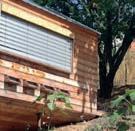

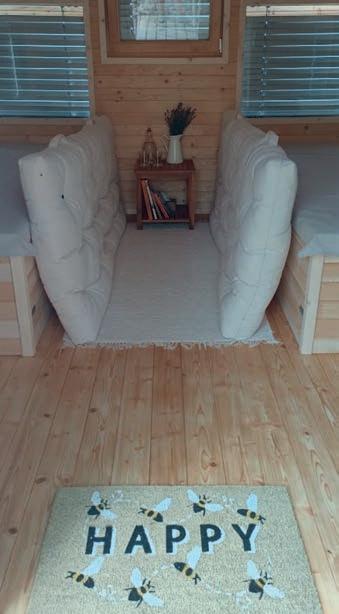
case study. They then presented their discoveries to a diverse audience of stakeholders. These engaged participants evaluated the outcomes and thoughtfully incorporated certain recommendations into their respective agendas.
This collaborative exchange not only enriched the students’ learning journey but also contributed to the ongoing development of sustainable practices within the region.
Fourteen students from diverse corners of the globe - Africa, various Eastern Asian countries, the United States, and the Caribbean - actively participated in the case study. These students were divided into two groups, each guided by a pair of facilitators from the Institute of European Policies and Public Services. Notably, both facilitators possess extensive experience delivering lectures in English and have practical expertise in coordinating student assignments.
“The administrative information dissemination and organization by the Institute of European Policies and Public Administration (FESRD) was detailed and very helpful. The content of the case study was very interesting. I appreciated learning about another approach to rural development. It complemented the learning we have in other courses. The site visits, field trips, and interaction with local individuals involved in sustainable development practices were effective in enhancing the knowledge about the context of Nitra and Slovakia.”
“Participating in the summer school gave me a handson experience with local producers and opened me up to experiential farming and territorial development. I was actively involved in promoting local products and even bought some local products for myself. It positively influenced my thoughts, and I will be happy to replicate this in my home country.”
Mitchiko Paulette Aljas
“Additionally, the summer school in Nitra helped me hone my teamwork and problem-solving abilities. This academic foundation became instrumental in my career, where I actively engage in promoting rural development strategies, aligning with broader EU and global initiatives for inclusive and sustainable progress. My time at the Slovak Agricultural University played a pivotal role in shaping my career by providing a comprehensive understanding of agricultural practices, rural challenges, and innovative solutions.”
Charles Kabalisa
Student reactions
“Beyond the semester at Nitra, I actively participated in the Summer Case Study on "Local Trademarks as an Integral Part of Sustainable Development Strategy" in June/July 2022. This experience honed my collaborative skills as we worked in teams, engaging multiple stakeholders in Nitra, including the Mayor, the Tourism department, and local businesspersons holding the regional trademark. Moreover, it provided hands-on experience in rural development; using a community collaborative model, my teammates and I utilized problem-solving and critical thinking skills to align existing resources with the government's vision. These experiences in Nitra taught me invaluable skills—problem-solving, critical thinking, research, presentation, and multicultural collaboration—that have proven instrumental in my career. These skills became pivotal during the European Blue Book Traineeship application process with DG REGIO and ultimately contributed to securing a PhD position at the University of Pisa in Italy.“
Lotte Hartejager
Oluwa Funmilayo
Main findings
Funding challenges:
• Ponitrie relies on financial support from local and national governmental organizations.
• Overreliance on these funds may jeopardize the trademark’s longterm sustainability.
• Explore alternative funding sources for viability and expansion.
New LT strategies:
• WG 1 emphasizes individualized quality assurance approaches.
• Acknowledge diverse developmental stages of businesses within the trademark framework.
• Flexible strategies are crucial, especially for producers engaged in experiential tourism.
Brand popularity:
• WG 2 focuses on increasing brand awareness among consumers and producers.
• Utilize communication tools and brand-building techniques.



Local trademark strategy highlights
Both student groups emphasized the need for new strategies and highlights.









• Enhance the trademark’s public image and promote local development. and producers. They utilized communication tools and brandbuilding techniques, and defined the goals: enhancing brand awareness, public image, and promoting local development businesses within the trademark framework. Furthermore, they highlighted the importance of flexible strategies for producers, especially in experiential tourism.
Group 1’s report highlighted an understanding of individualized quality assurance approaches, and it acknowledged diverse developmental stages of
Group 2’s report highlighted new strategies to increase brand popularity among consumers
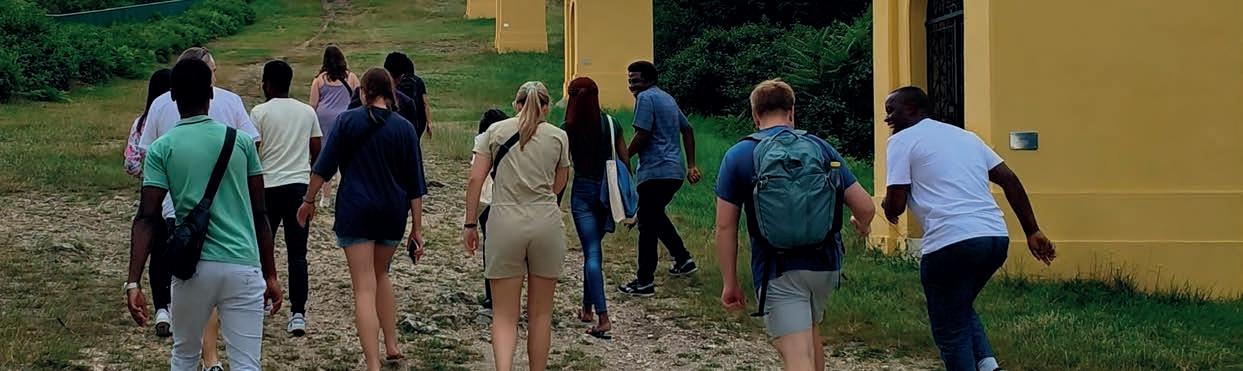
RES-Q Living Lab
A communicative three-course menu with the delights of the Grecian cuisine
Text: Omiros Iatrellis*
*University of Thessaly
Illustrations: Omiros Iatrellis
Introduction
In the realm of smart cities, managing disasters has become crucial, especially in the wake of rapid urbanization and the increasing frequency of natural and human-made crises, making effective disaster management a cornerstone of sustainable urban development.
The complexity arises from the collaboration of diverse entities with distinct functions and protocols, yielding information from disparate sources laden with semantic inconsistencies. This challenge prompted the creation of RES-Q (RESCUE), a semantic model catering to smart city postdisaster management, within the context of the RES-Q Living Lab organized in Thessaly, Greece. By consolidating data and enabling advanced analysis, RES-Q aims
to establish a unified knowledge repository using semantic web technologies for enhanced crisis management. This model’s development within the Living Lab framework amplifies its practical application and relevance to the specific challenges faced in Thessaly, Greece, aligning it closely with the region’s needs and disaster risk management strategies (Iatrellis et al., 2022).
Much like assembling a complex dish, the creation of the RES-Q ontology within the thematic context of the RES-Q Living Lab in Thessaly, Greece, involved a meticulous step-by-step process. Let’s craft this ontology recipe by breaking down the key steps into appetizers, a main course, and a dessert, akin to preparing a multicourse meal.
Setting the table by setting the stage
Imagine a city where during a disaster, each emergency service — like the fire department, police, and hospitals — uses a different language to communicate. This situation would be like trying to cook a complex dish where each chef only knows their own recipe and can't understand what the others are doing. Without a common language or a shared understanding, coordination becomes chaotic, responses are delayed, and more importantly, lives and properties might be at greater risk. A shared semantic model acts as a universal translator among these services, ensuring everyone speaks the same language, making their responses swift, efficient, and harmoniously coordinated, much like chefs in a well-run kitchen working together to prepare a perfect meal.
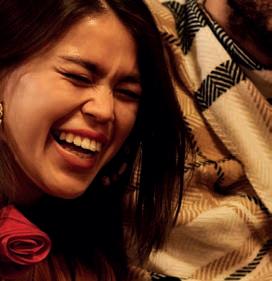
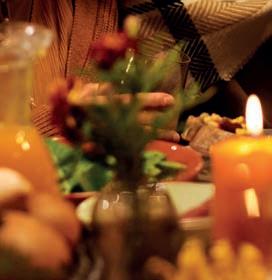

Appetizer
Saganaki, pan-seared local Graviera Agrafon cheese
Determining the domain and scope
Start by selecting the finest ingredients—the domain and scope of the ontology. Think of this as setting the foundation for our dish. The RES-Q approach involves defining a top-level ontology, akin to a rich broth, capturing the essential semantics of disaster risk management. This not only harmonizes disparate data sources but also creates a uniform base for transforming raw data into a more digestible format (RDF). Instead of a monolithic model, RES-Q proposes a “two-dimensional” approach, intertwining overarching concepts with domain-specific components, much like blending flavors to create a balanced appetizer.
For instance, overarching concepts might include general disaster response elements such as ‘Evacuation Procedures’,









‘Emergency Contacts’, and ‘Resource Allocation’. These provide a broad framework applicable to various types of disasters. On the other hand, domain-specific components could be tailored to particular scenarios like ‘Flood Response’, which would include flood-specific resources, high-water vehicle deployments, and waterway management. Another example might be ‘Earthquake Readiness’, involving building inspections, seismic retrofitting initiatives, and community earthquake drills. This two-dimensional approach ensures that while the general framework remains adaptable across different disasters, the specific needs of each type are meticulously addressed, enhancing both the effectiveness and efficiency of responses.










RES-Q “two-dimensional” approach
Main Course
Traditional
Greek moussaka with eggplant, potatoes, spiced meat and béchamel saucecheese
Crafting the semantic classes
The main course requires precision and structure, just like defining classes and their hierarchies in the ontology. Think of these classes as the main ingredients - Disaster, Risk, Agent, Process, Infrastructure, and Quality Assurance - each carefully associated with other components to form a cohesive dish (see figure). Much like layering flavors, this step establishes relationships and creates a well-structured ontology backbone, akin to assembling a multi-layered and flavorful main course, similar to how a traditional Greek moussaka is meticulously layered with eggplant, potatoes, spiced meat, and béchamel sauce.
Steps to prepare the main course: properties and instances
Add depth and complexity to our main course by defining properties—how the classes relate to one another. Object properties are like the interactions between ingredients, establishing connections. Datatype properties, akin to the seasoning of numerical information, add a nuanced
flavor to our dish. Finally, creating instances - molding abstract representations into tangible forms - is akin to garnishing our main course, mapping data to RDF, transforming it into a palatable and consumable format for advanced analysis.

Make it yourself!
Main Course
Preparation:45min
Cooking:60min
For: 8people
Ingredients
Base ingredients:
6 Eggplants
5 Potatoes (optional)
Vegetable oil for frying the eggplants
For the bechamel sauce:
900 ml Milk
120 g Butter
120 g Flour
2 Egg yolks
100 g Parmigiano-Reggiano, Kefalotyri or your favourite hard cheese
Salt to taste
A pinch of nutmeg
For the meat sauce:
750gBeef or lamb mince
2 Red onions chopped
2 Cloves of garlic (chopped)
3-4 Whole cloves (optional)
1 Tin of chopped tomatoes (400 gr)
2tbspTomato paste
1tspSugar
1 Glass of wine
50mlOlive oil
Pinch of sea salt and ground black pepper Bay leaf
Pinch of cinnamon or one cinnamon stick
Preparation
1.Prepare the eggplants by removing the stalks and cutting them into slices of 1cm thick.
Season with salt and place in a colander for about half an hour.
2.Rinse the eggplants with plenty of water. Squeeze to get rid of the excess water. Pat them dry and fry in oil until nicely coloured. Place the fried eggplants on some paper to absorb the oil. For a healthier option, drizzle the eggplants with olive oil and bake for 20 min.

3.(Optional) Cut the potatoes in slices of 0.5cm. Fry or bake in the same way as the eggplant. Season with salt.
4.Prepare the meat sauce (see instructions).
5.Prepare the béchamel sauce (see instructions to the right).
6.Time to assemble the moussaka! Take a large baking dish of approx. 20x30cm wide and 8cm deep. Butter the bottom and sides of the pan and layer the potatoes first if using. Put half the eggplants in before pouring all of the meat sauce in. Spread the sauce (don’t forget to take out the whole garlic cloves and bay leaf), and add a second layer of eggplants. Top with the béchamel sauce.
7.Finally, smooth out with a spatula and sprinkle with grated cheese.
8.Preheat the oven to 180C and bake for 60min or until its crust turns light golden brown. Wait for the moussaka to cool and be just warm to the touch before cutting. This prevents the béchamel sauce from pouring out.
9.Serve with a refreshing traditional Greek salad and enjoy with a glass of wine!
Preparing the meat sauce:
1.Heat a large pan to mediumhigh heat and add olive oil.
2.Stir the chopped onions and sauté until softened and slightly coloured.
3.Stir in the mince, breaking it up with a wooden spoon. When it starts to brown, add the garlic and tomato paste and sauté until the garlic starts to soften.
4.Pour in the red wine to deglae the meat juices and wait to evaporate.
5. Add the tinned tomatoes, sugar, a pinch of cinnamon, 1 bay leaf, the cloves (optional) and a good pinch of salt and pepper. Bring to a boil and then turn the heat down to simmer with the lid on for about 30min or until most of the juices have evaporated. Set aside when done.
Preparing the béchamel:
1.Use a large pan to melt the butter over low-medium heat. Add the flour, whisking continuously to make a paste.
2.Add the warmed milk in a steady stream. Keep whisking to prevent the sauce from getting lumpy. If the sauce still needs to thicken, boil over low heat while continuoing to stir. Its consistency should resemble a thick cream.
3.Remove the béchamel pan from the stove and stir in the egg yolks, salt, pepper, a pinch of nutmeg and most of the grated cheese. Reserve some to sprinkle on top. Whisk quickly to prevent the eggs from turning into an omelette.
4.Season with salt to taste. Take one spoon of béchamel to stir in the meat sauce and set both aside.
Dessert
Homemade
baklava with phyllo pastry dough, chopped walnuts, cinnamon and honey
Data harmonization and consolidation
Imagine a sumptuous dessert, crafted with layers of knowledge— much like the meticulous process of data harmonization and consolidation within RES-Q (see figure below). This dessert mirrors the layers of the Conceptual Layer (CL) forming a robust base, akin to a rich vocabulary defining the smart city disaster risk management domain. Implementing the RES-Q ontology in OWL format, the CL represents classes and properties, structured like layers in a dessert.
To visually represent the intricate process of data harmonization and consolidation within RES-Q, we could use an illustration of Baklava. This traditional Greek dessert, known for its multiple thin layers of phyllo dough filled with nuts and sweetened with honey, symbolizes the meticulous layering of the Conceptual Layer (CL) and the Data Layer in our ontology. Just as each layer of Baklava contributes to its overall
flavor and texture, each layer in our data model adds depth and detail to the semantic framework, creating a rich and cohesive structure.
The RES-Q Data Layer (RDL) holds instances in an RDF triple format within a GraphDB repository, reminiscent of a delectable filling, mapping diverse data sources into a unified schema. Just as flavors meld in a dessert, these data instances interconnect seamlessly. Much like the complex flavors in a dessert, the RES-Q methodology enables reasoning operations using SWRL and SPARQL. This allows the stored data to drive analysis and orchestrate disaster recovery processes, resembling the intricate flavors of a wellcrafted dessert. Constantly evolving, RES-Q allows for continual updates, ensuring the dessert of knowledge is always fresh and evolving, much like the dynamic flair of a dessert that surprises with every bite.



Do you want to make this delicious recipe yourself? Check all recipes of this issue on our website: www.europetoday.org/ lets-get-cooking


Glossary
SWRL (Semantic Web Rule Language)
A powerful language used to express rules that can be used within the semantic web. These rules help in making logical inferences based on the relationships and attributes defined in an ontology, enabling more dynamic and complex queries and operations.
RDF (Resource Description Framework)
A standard model for data interchange on the web. RDF extends the linking structure of the web to use URIs to name the relationship between things as well as the two ends of the link (this is usually referred to as a “triple”). This facilitates data merging even if the underlying schemas differ, and it also supports the evolution of schemas over time without requiring all the data consumers to be changed.
SPARQL (SPARQL Protocol and RDF Query Language)
A query language and protocol used for accessing and manipulating data stored in Resource Description Framework (RDF) format. It allows users to query, retrieve, and manipulate data in databases or information systems that use RDF, making it crucial for operations in semantic web technologies.
OWL (Web Ontology Language)
A language used for defining and instantiating Web ontologies. OWL is designed for use by applications that need to process the content of information instead of just presenting information to humans. OWL facilitates greater machine interpretability of web content than that supported by XML, RDF, and RDF Schema (RDFS) by providing additional vocabulary along with a formal semantics.

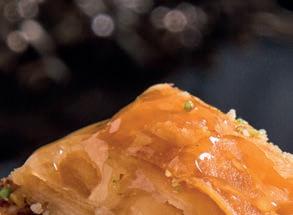





Tips & tricks by the chef
Start small and expand gradually
When developing complex systems like RES-Q, begin with a small, manageable scope. Focus on building a robust foundational model before expanding to incorporate more complex elements and functionalities. This approach allows for early detection of potential issues and ensures a solid base for upscaling up.
Engage stakeholders early Involvement of all relevant stakeholders from the initial stages is crucial. Their input not only enriches the model with diverse perspectives but also ensures their needs and requirements are met, facilitating smoother implementation and adoption.
Prioritize user training and support
Given the complexity of semantic models and ontologies, providing comprehensive training and ongoing support for all users is essential. This ensures that everyone can fully leverage the system’s capabilities and contributes to its continuous improvement and refinemet.


Iterative testing and feedback
Continuously test the system with real-world data and scenarios, and solicit feedback from users. This iterative process helps refine the system, making it more effective and user-friendly over time.
Document everything
Meticulous documentation is key in complex projects. Documenting decisions, changes, and processes helps maintain clarity, facilitates new team member onboarding, and serves as a valuable resource for troubleshooting and future developments.
Leverage semantic technologies
Utilizing semantic web technologies like RDF, OWL, SWRL, and SPARQL can significantly enhance data interoperability and system flexibility. These technologies allow for advanced data integration, querying, and reasoning, which are essential for effective disaster management systems.

Plan for scalability and flexibility
Design the ontology and overall system with scalability and adaptability in mind. Disasters and management strategies evolve, so the system should be capable of accommodating new types of data, evolving standards, and emerging technologies without requiring major overhauls.








The Transfer and Succession of a Family Business as an Organised Family Holiday
How it can be hard work to enjoy yourself with those you are closest to?
Text: Velizar Petrov*
*RDA BSC SMEs-Plovdiv
Illustrations: Walter Verspui












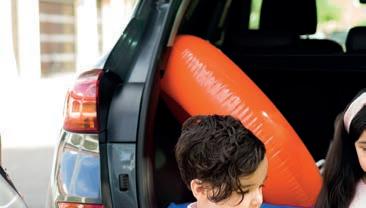

Very often, with great anticipation, we expect to take a break from everyday work and plunge into the timelessness of the holidays, trying to fill them with unforgettable positive emotions and experiences. Very often, however, family vacations turn into challenges that we will remember for a very long time. Although the vacation time is very limited, in general it is a week or two, in practice it is related to a long process that begins long before that and must be carefully planned. Likewise, the transfer and succession of a family business is not a short, one-time act, but a long process that must be carefully planned for years (generally 5-7 years) and become an integral part of the company strategy.
A joint family holiday – this is an amazing opportunity for the whole family to be together, get to know each other better and get closer. The family vacation is a chance for parents to get to know their own child better, to see and hear what he lives with. Shared recreation contributes to the strengthening of friendship and trust between parents and children. Joint recreation plays an important role in the education of children, and memories of a happy childhood are preserved for life. This is how family traditions are born, which are passed down



from generation to generation, and family values are formed.
Holiday is, by definition, a time that is “free”: free from work and from producing things for the profit of others, and holiday is “good times” (1) and also “fun, pleasure and entertainment” (2) and in opposition to home and structured life, holiday is leisure, anti-structure and liberal at least in the daydream/phantasy version. Holiday, in general, is defined as a distinct break away from everyday life, routines and chores; happy times that fly, and a time you long for, and the holiday is classified as a high involvement product (3) (4).
A family vacation is usually a family affair. Where and how would we like to spend the family holiday? There is very often no consensus here and very often multiple conflicts arise. In most cases, they arise from differences in age, education, our personal interests, even our gender characteristics. It is normal for the generational conflict to escalate. The main problem with family holidays is that if you are traveling with anyone under 25 or over 55, it is not a “holiday” as such, merely a change of scenery. So, what’s sparking family tensions? The top reason for fall-outs is what to do and see, closely followed by the age-old questions

of where and what to eat. The third most common argument is about the weather/heat, while the fourth is money and splitting bills, and the fifth is people not controlling their children. Such generational differences and conflict exist in every single family firm/family and are exacerbated or attenuated at different stages of the firm/family’s development, including the stage of transfer and succession. The individual visions of the family business owner, successors, and nonsuccessors for the future of a family business must be clearly articulated, shared, tested, and ultimately approved by all of them. An important question is whether to organize your holiday yourself or to take advantage of the many offers of travel companies. In the same way, we need to clarify whether we are going to deal with the challenges of the transfer and succession of a family business by ourselves, or whether we are going to do it with the professional support of a consultant or consulting firm. Achieving a shared vision for the future of the company, including the succession process, is a family task where a family business consultant can help both in defining and then integrating the individual visions into a coherent, agreed upon and shared vision.
The transfer and succession of a business can take place within the family, as well as outside it – to workers, employees or managers in the company or direct sale to outside owners. We will consider
only the first case where the family firm is transferred within the family from the older to the younger generation. In order for everything to happen as we want; we should work out a
plan/strategy. The whole cycle of the organized family holiday includes the usual activities of the Living Laboratory studying the processes of business transfer and succession:
Co-Creation: joint design by users and producers – decisionmaking on place, type, duration, etc.
Research: discovering new places and experiences and comparing them with previously known opportunities – deciding which ones have the potential to “win”
Experimentation: implementing live scenarios in user communities –making the family holiday happen with all the planned and unplanned “surprises”
So, let us imagine an average statistical family – a father (Bob) in his 50s; mother (Ann), a devoted housewife; a younger son (Aly) and a teenage sister (Lou). Bob has long dreamed of taking a well-deserved rest, he is tired of dealing with everything and already wants someone to cancel him for some more irresponsible duties. Ann does not even have time for dreams. She is torn daily by the demands of her husband, children, and responsibilities towards the family hearth. Lou would gladly leave home and go with her friends or boyfriend to travel the world without being burdened with cares and responsibilities. And Aly is too young to be left alone to deal with life's challenges, so he quite often annoys his sister with his presence.
Evaluation: evaluation of concepts, products, and services according to socioergonomic, socio-cognitive, and socio-economic criteria – answer to the question “will we rest like this next time”
1. Co-creation
Usually, children and parents have different understandings of vacation. Children prefer recess with more activities in which they can actively participate, and usually their “active” is significantly different from the “active” of adults. Children aged 14-15 years are primarily looking for communication with their classmates during school trips. Another significant desire is to do extreme activities (rafting, mountain climbing, etc.). It is important to know that including children in the vacation decisionmaking process improves the possibility of an optimal outcome. The same applies to joint design, decision-making in business succession. So, Aly and Lou should
be brought into the whole process as early as possible and actively involved in it for an optimal outcome.
What are the preferences of adults? For them, the main goals of a family vacation are “for the family to have shared experiences”, “for the children to have fun” and “to relax”. To achieve a holiday, the emphasis is on good weather, the “right mix” of relaxation and activities (organized and unorganized), but also time for each other, children friendly atmosphere, fun, nature and new experiences, good food, attractive facilities, freedom and independence. Looking for family cohesion. That would be the goal of Bob and Ann in our example family.
A similar cohesion is sought in family businesses as well, and it must be preserved before, during and after the succession of the family business. On the other hand, there is a schism between the wish for togetherness and the need for personal space. There is a common conflict between the agendas of children and adults during the holidays. Everyone is looking for the “right mix” of relaxation and activities, respectively how to grow the family business, but ideas about what the “right mix” is differ both between generations and between individuals. When considering family holidays, it
must be kept in mind that a family is a unit of individuals seeking experiences together. However, the criteria for what is relevant content and what allows for immersion and absorption are not necessarily the same. Usually, personal, and interpersonal conflicts are usually overcome by certain compromises.
2. Research
The availability of information is an important condition for making informed decisions, both when organizing a family holiday and in the strategic planning of a family business, which includes all stages
of business succession (some researchers consider three phases of this process: pre-inheritance; inheritance; after-inheritance) (1).
Once we have reached a compromise and a general decision on what kind of family holiday we want, respectively – what the future of the family business will be, research begins: discovering new places and experiences and comparing with the existing known possibilities – making a decision that has the potential to “win”. This can be set as a task for one of the family, or it can be a joint task for everyone.
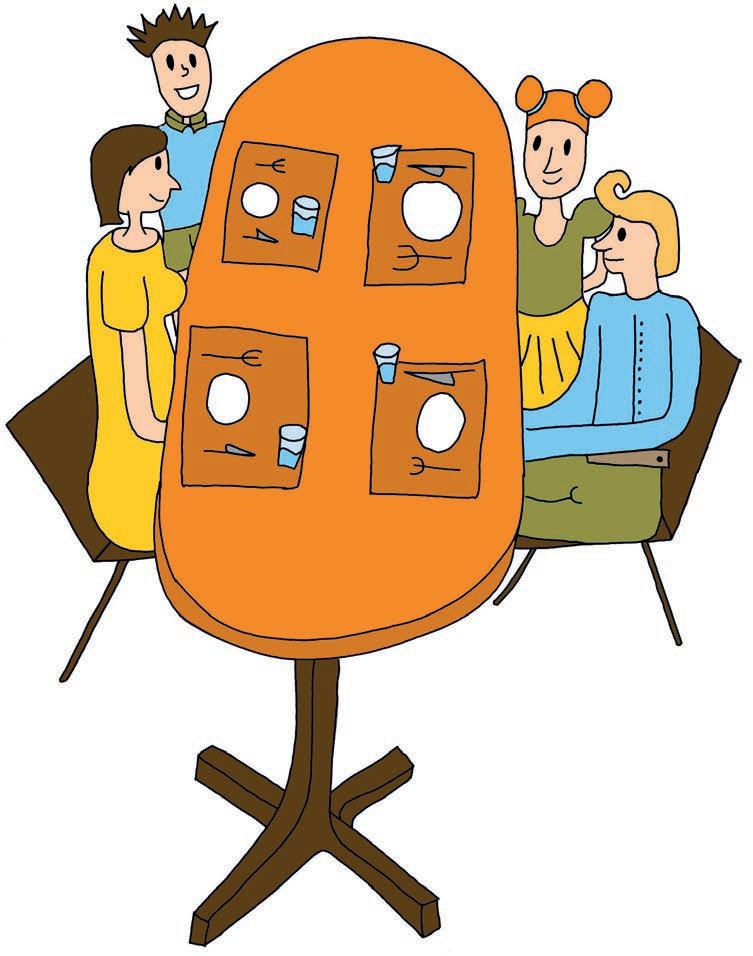




3. Experimentation
We take experimentation as an experience. The experience can be described as a “memorable event”. The experience could be considered in two ways, depending on what the families’ participation in it is. It can be active or passive. Whether the family is just a visitor to the family holiday or they play a key role in creating the performance or event. Here again, Bob and Ann would like to relax and be passive in the experimentation, while Al and Lou would be very enthusiastic to become actively involved in the family vacation. In the case of the family firm, the new generation could be passively involved, or take an active role in the overall management of the firm. This would largely be
influenced by the attitude of the older generation and to what extent the founder of the family firm would give the “helm” of managing the firm to the new generation of heirs.
An experience can be a short moment or a longer period and is always situational – related to a certain time and space. The content of the experience can be multifaceted, depending on the person, the time and the mood. It includes an element of surprise, of getting something extra and unexpected – a “wow-feeling”. When considering family holidays, sharing, and later communicating about the special moment should be seen as an added element of the experience. Positive experiences are interesting for the tourism industry, but experiences


can also be sad or traumatic, and positive experiences even often suggest trouble, waiting, boredom and routine. Bob and Ann may be savouring the pleasure of a relaxing family vacation, but it can easily be ruined by Aly getting sick or Lou having love problems with her boyfriend. The same can be said about the family business, where the involvement of the new generation in the business is planned to bring only positive results and emotions, it can turn out to be the exact opposite – lead to a collapse in financial indicators and even to the liquidation of the family company.
The answer to the question “will we rest like this next time” is not always positive when it comes to evaluating a family vacation or inheriting a family business. Families usually begin with a cautious assessment of the family vacation, emphasizing cohesion, consensus, and harmony, but upon closer examination, more and more cracks appear in the facade, evoking the uncomplicated image of the family vacation. Obviously, however, there are taboo topics around less successful family vacations and parents feel responsible for the success or failure of family vacations.
Conclusion
Because in both cases –organizing the family vacation and inheriting the family business, things are complicated, multifaceted and happen once a year, respectively. Once in the life cycle of the company, then all errors should be minimized. This could only happen if a protected environment is created, which is provided by INVEST’s Living Laboratories. In such a protected environment, we can test different business or life models and optimize them, because there is usually a conflict between ideals and practice. The children’s wellbeing seems to be paramount, and the parents’ enjoyment is
secondary. This can also be said figuratively, if it is assumed that the family firm is the “child” that must be raised and passed on to the next generations.
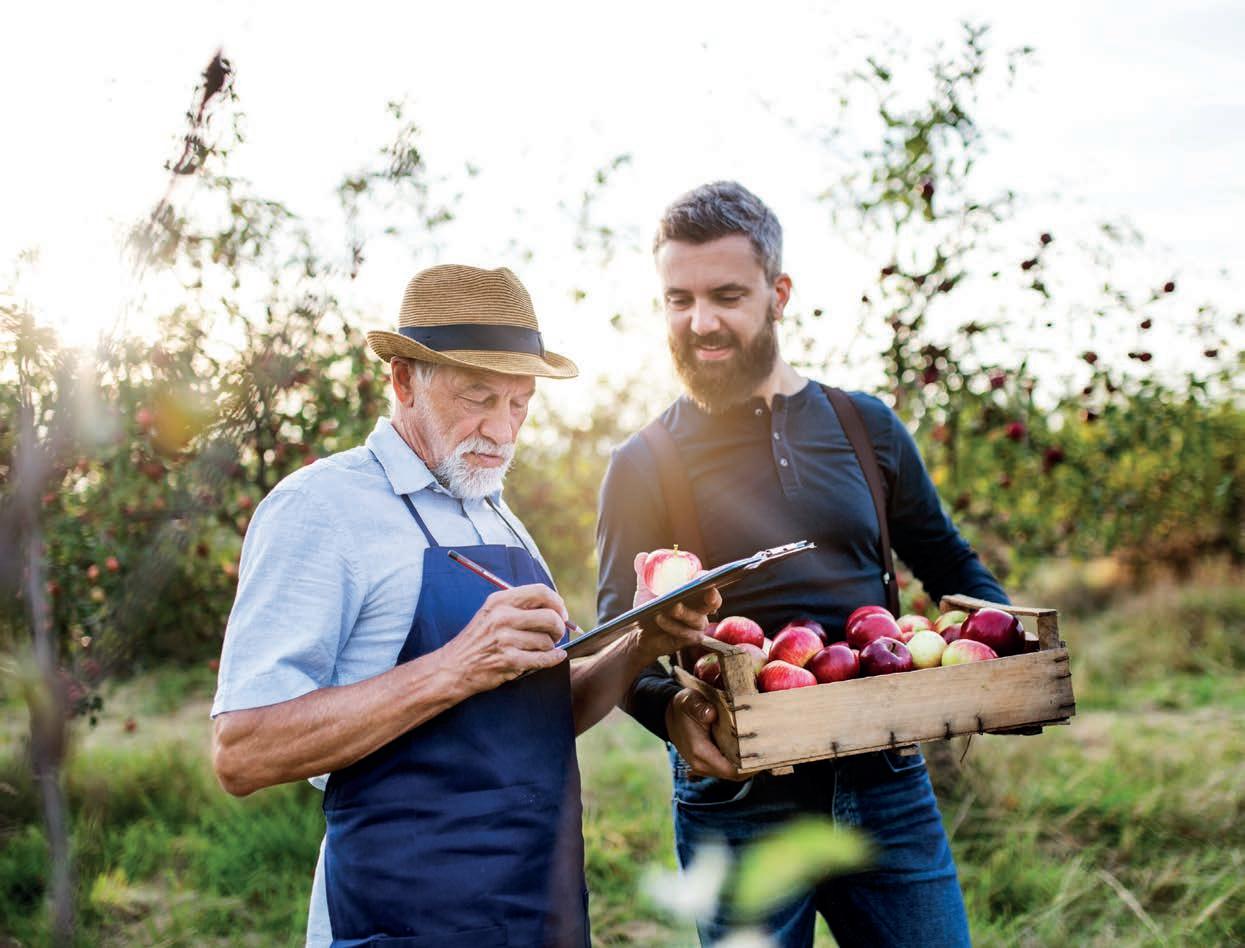
University as a Quadruple Helix Partner
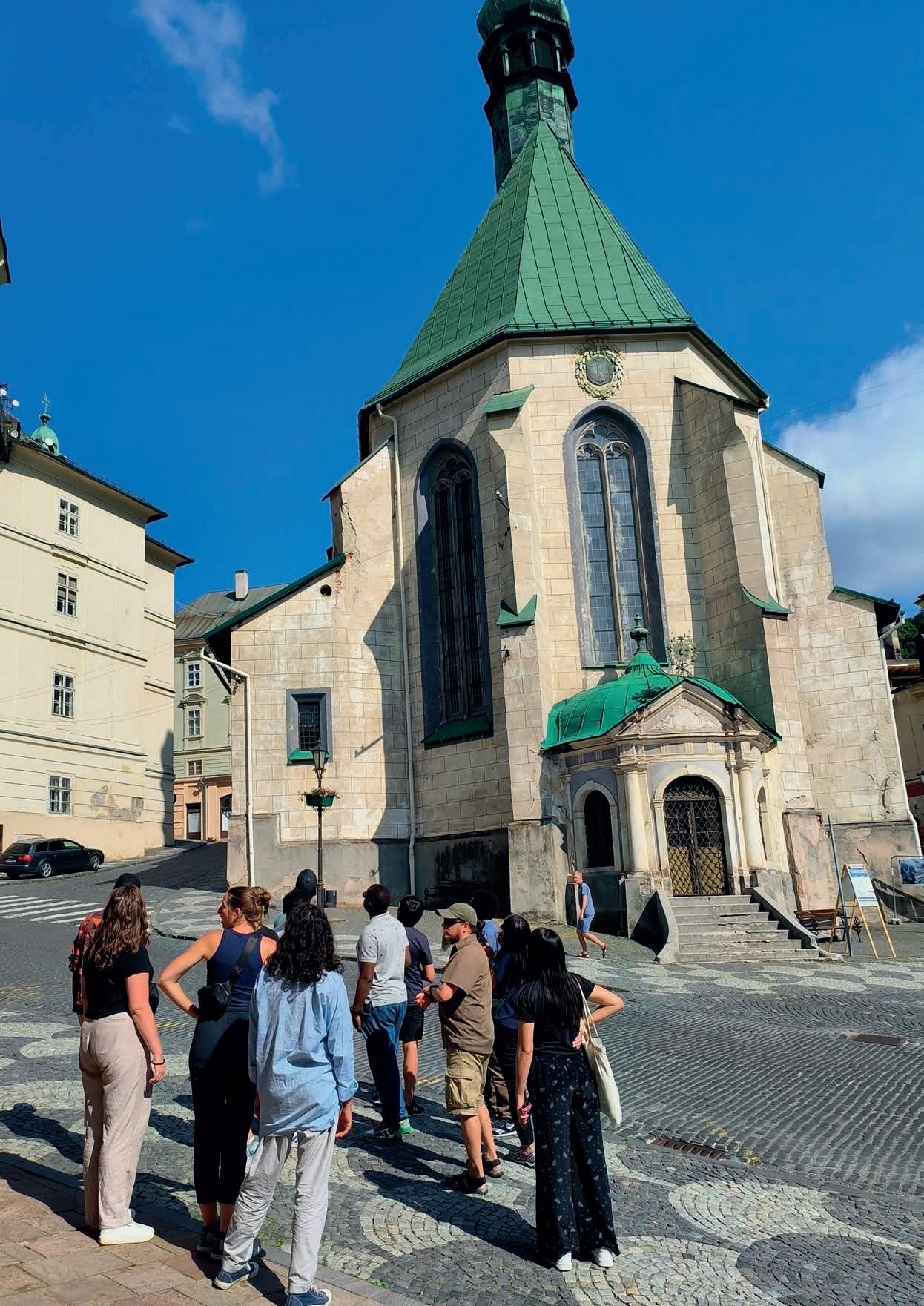
Text: Marcela Chreneková*, Michal *Hrivnák and Peter Moritz*
*Slovak University of Agriculture in Nitra
Photography: Marcela Chreneková, Marián Kováčik
What are the roles of a university within the quadruple helix?
Universities play an important role in spatial development. These are multifaceted institutions that fulfil several societal missions. In the evolutionary process, the social mission of universities in territorial development expanded from human capital development to supporting the economic growth or socio-cultural development of the territory. The history of the academic sector teaches us about the unique roles that universities play in processes of social change. This happens in cooperation with various development actors. The most valuable property of universities is the diverse knowledge that flows through the surrounding space through an indescribable volume of formal transfers and informal spillovers, as knowledge is inherently difficult to protect. When creating innovative solutions, universities generate rich cross-sector collaborations, especially with the public, private, and non-profit sectors. Their impact can extend both borders of regions, and countries. The quadruple (or quintuple) innovation helix is defined as a framework of interactions between industry, university, government, and public (and the environment). The fifth
element, for example educational environment and its culture, policy culture, existing social capital and other local societal factors, must be respected in the projects to ensure sustainability of the Living Lab and its results. The concept is used in the knowledge economy to describe the ecosystem of the innovation process. It brings not only a framework for the description of collaborative ties between actors in the space but also a philosophy of sharing and exchanging the roles of development actors. While the university can take over the models of academic entrepreneurship, the entrepreneur can focus on delivering socially responsible solutions addressing societal challenges, and the local government, in turn, can play the role of an efficient business unit that engages in research and development and propose sustainable solutions.
The Slovak Agricultural University (SPU) in Nitra (Slovakia) can be considered as suitable demonstrative example of the wide range of impacts that an academic institution can have within the spatial development. The university delivers both technical and social innovations in the field of agriculture and food production, development of biotechnology, food technology, development and construction
of machines and mechanization, but also spatial planning, and landscape engineering. SUA actively participates in the creation of policies on all stages of the vertical axis of governance. The university is a coordinator of the creation of selected sectoral strategies of national importance. Also, SUA is a bearer of significant competencies in development of many regional and local spatial development plans. In addition to partnering and clustering with diverse public and private sector actors, university participates in building the capacities of various civic platforms . SUA staff and students are involved in regional development through participation in territorial selfgovernance and voluntary activities in the Nitra region and their home regions. University teachers incorporate participative techniques in courses aimed at territorial and mainly social development. The role of civil society in endogenous development of a territory is explained and demonstrated. The main challenge is the motivation and engagement of students in civic platforms. To overcome this, SUA courses show civic engagement as the shortest and the most effective way to raise people’s quality of life and life satisfaction. Students work with real territory, real social groups and authentic challenges the groups may face.
How is the university involved in spatial planning?
SUA in Nitra is involved in all the stages of the process of formulation and implementation of local and regional development strategies. The main stages to which SUA contributes are stages as follows:
•Data analysis
•Communication with stakeholders and development actors
•Analysis of challenges
•Analysis of objectives
•Draft of a development strategy
•Prototyping of the strategy segments
•Final formulation of the strategy
•Design of projects contributing to the strategy fulfilment
• Monitoring of the implementation
The University is involved in the process also via learning and lifelong learning activities.
SUA as a BE-FOOD Living Lab stakeholder in regional development facilitation
Regional and rural development is one of the main topics of BEFOOD Living Lab. The Living Lab is located in Nitra Self-governing region.
SUAs Institute of Regional and Rural Development acts as a think tank and a stakeholder
Study degree
Bachelors Social development of Rural areas and Social Policy
Masters Rural Development
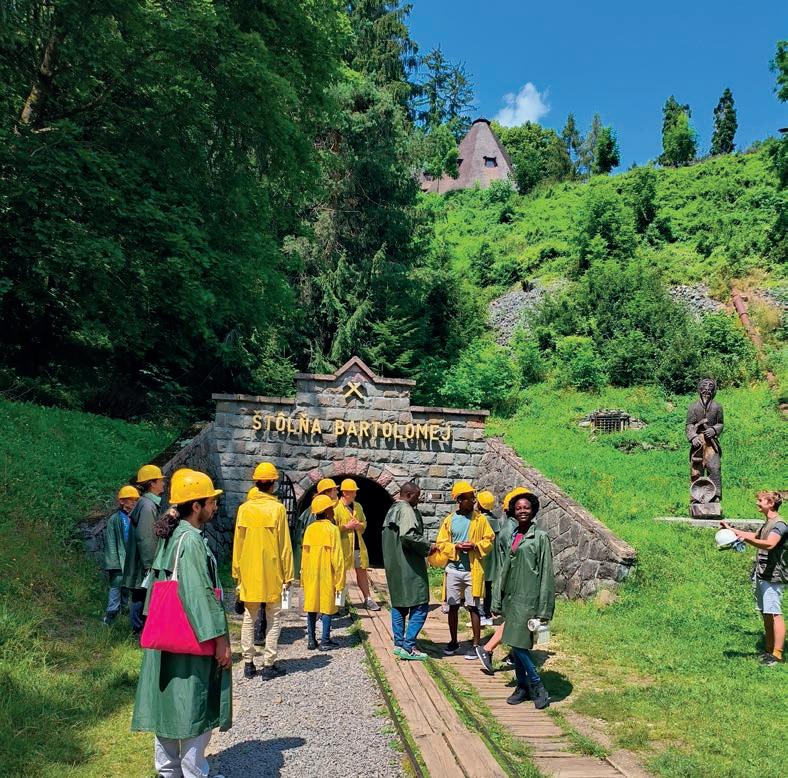
responsible for formulation of the regional development strategy and also several municipal development strategies and community plans. The Institute of Regional and Rural Development has capacities for participatory planning management. In the territory, it provides cutting-edge services in the field of designing co-design processes and cocreation of strategic plans, as well as selected innovative solutions co-deployed in cooperation.
Students are involved in segments of the process within several study courses (see table).
Creation and implementation of projects
PhD Social aspects of integrated rural development
Socio-demographical analysis
Creation of a Community development plan for selected target groups
Data analysis
Analysis of challenges
Analysis of objectives
Formulation of the strategy in selected sectors
Analysis of challenges
Formulation of projects
Formulation of key performance indicators (KPI)
Design of social innovations
They can create drafts of strategic documents, including the creation of a spatial analysis and the design of intervention logic, but at the same time, they can also design the plan of the participation and design the methodology of co-design. In the conditions of the institute, innovative planning techniques are prototyped and tested, such as the use of ICT platforms for joint decision-making, but also design thinking, decision maps, sentiment analysis, transection walks and others.
University main functions with a two-way and reciprocal flow. University spin off activities result in establishment of a university spin off company. The company utilizes knowledge or technology developed within university research. These companies often aim to commercialize innovations – products or services that can be brought to market. The university may retain a stake in the company or provide support (funding, mentoring, access to resources).
Success and struggles
The efforts to interconnect educational and scientificresearch activities or development activities at universities with real activities within the real world brings a lot of benefits, but also challenges that university need to overcome at the same time. The main benefit is the graduate who leaves the educational process and encounters real working life with real skills or, as has happened several times already, if the student says “ok, I know now what I want to do in my life”. What is the success and problems overcome or gained?


Success
• University perceived as an authority and an objective and independent partner.
• Exploring talents.
• Exploring innovative solutions.
• Gaining materials for further teaching.
• Exploring future research directions.
• Gaining data for research.
• Theses linked to real world.
• Possible spin off activities and employment for students (SUA spin off activities are aimed at commercialization of food and beverage products and technologies which resulted from university research).
Struggles
• Student and university staff brain drain.
• Contradictory interests of stakeholders (in the process of local strategy formulation, students often witness negotiation between different interests – for example NGOs located in the territory may have different objectives as local or regional self-government and entrepreneurs).
• Lack of technical skills in public administration.
• Political lobbying.
• Lacking system support (excursions, study trips, internships).
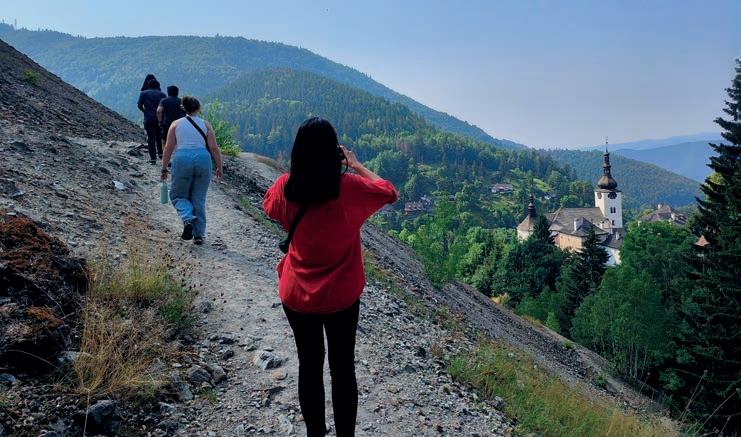
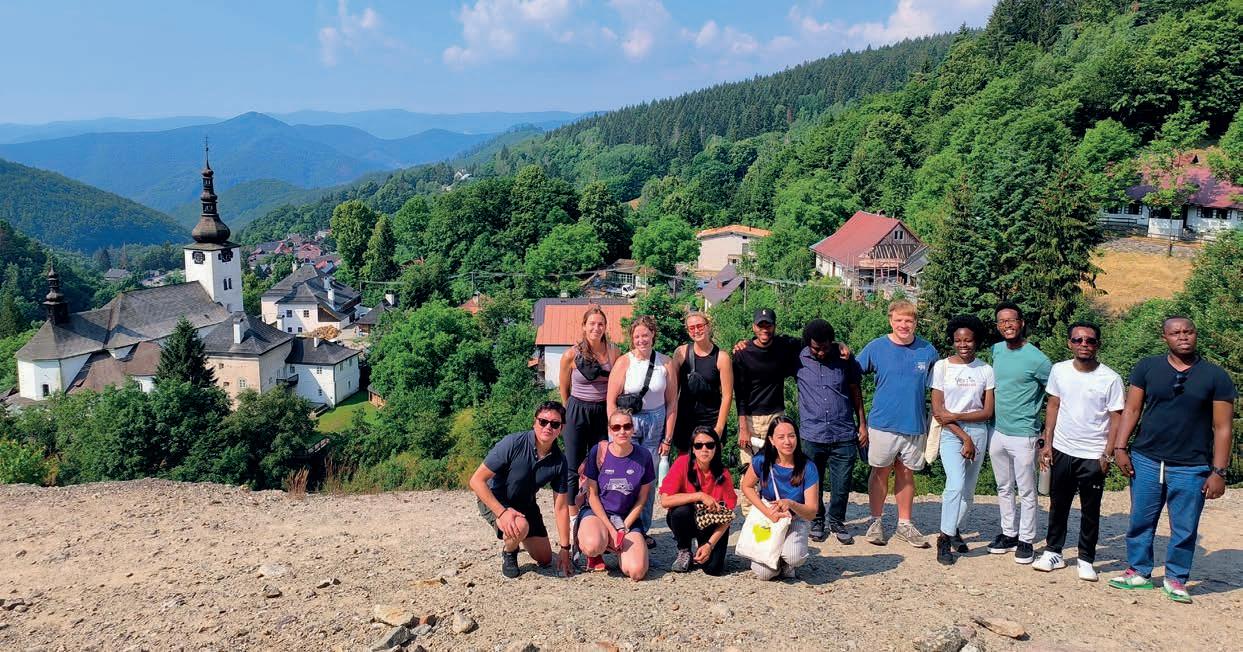
Mediated Participation Using Visual Problem Appraisal in education and the policy arena
Text: Sarah Zernitz*, Constant Hatenboer* and Herman Schulte*
*Van Hall Larenstein University of Applied Sciences
Photography: Simone de Blouw, André Dijkstra
Different participation methods are used in Living Labs to create learning and collaborative action. In these participation processes two well-known problems are: (1) shortage of time and means for stakeholders to participate (stakeholder fatigue) and (2) the fact that often the same people participate in diverse arenas (the usual suspects). To overcome these problems a mediated participation approach can be used, because “it allows policy and decision makers to ‘learn’ in mediated interaction with distant stakeholders” (Witteveen et al., 2009, p.32).
“It changed my perspective on learning”
An example of a mediated participation approach is the Visual Problem Appraisal (VPA) methodology. VPA is a film-based strategy with ethnographic, deliberative and artistic aspects, that aims to enhance the problem analysis of complex issues and to facilitate the development of actions by involved stakeholders. VPA creates a space for social dialogue. In other words: it creates a ‘safe’ learning environment to share narratives and perspectives. Other advantages of VPA are related to bridging geographical distance, the use of VPA for participation processes as well as for educational purposes and the power of listening.
A VPA set is to be used in diverse arenas such as policy making and education in a structured way, consisting of
three phases: (1) a scoping stage where participants become familiar with subject matter and issues through facilitated individual and group study, and deliberation; (2) a simulated stakeholder consultation, where participants select and view a selected number of interviews and provide feedback. ‘Meeting’ a number of stakeholders allows the participants to learn about the different perspectives of these interviewees and the way they frame their problems. (3) in an ‘action’ stage, participants interpret and organise confusing, contrasting, and contradicting information and formulate recommendations for action. This can take various shapes such as scenario development, policy design or elaborated project proposals.
Educational use
Within the curriculum of the Bachelor Coastal- and Marine Management, at Van Hall Larenstein University of Applied Sciences, students are taught the importance of various stakeholder- and (coastal)
community interests in the context of interactive planning and policymaking processes. The VPA Wadden Sea and VPA Kerala’s Coast 2003-2020 can play an important role in making students aware of the lived experience of stakeholders in relation to the marine and coastal context under study. Also, using VPAs in the bachelor curriculum can help instil students with the awareness as to the limitations of conventional stakeholder engagement methods and how to solve these.
The VPA Rhine River Branches is used in the Master River Delta Development to create a learning environment for students to become familiar with the issues and stakeholders in the river area.
“I really needed to listen”
Use in the policy arena
In the professional domain the VPA Rhine River Branches is used for trainees of the Dutch Water Authority to analyse participatory and deliberative governance.
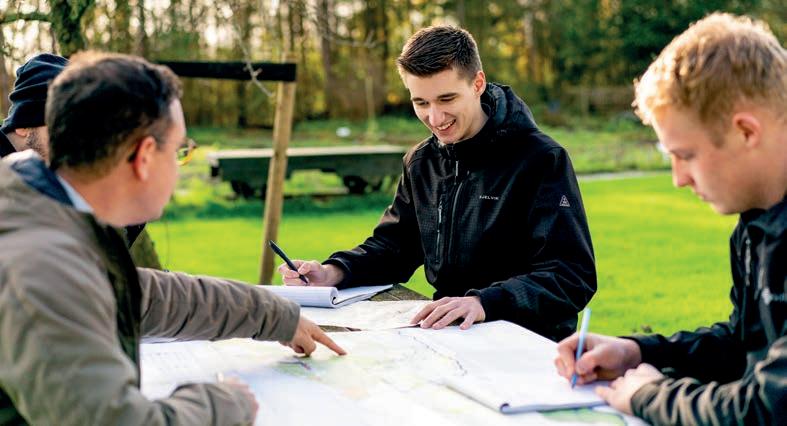

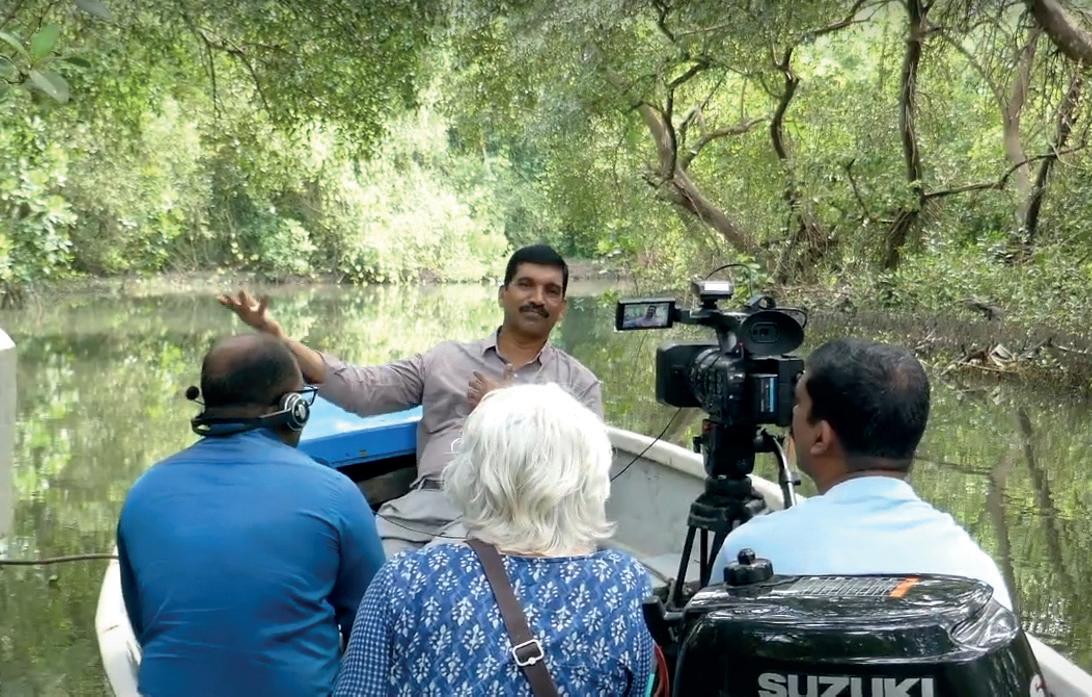
Opportunities for the use of VPA in the bachelor Management of the Living Environment
Students of the Bachelor Management of the Living Environment are taught knowledge and skills to develop plans for futureproof regions, rural areas, cities, and neighborhoods. Both in rural and urban areas important and complex issues are at play, such as climate change, biodiversity loss, the energy and agricultural transitions, and questions related to health and quality of life. These are topics that students work on in real-life cases.
Early on in the degree, students are taught of the importance of developing these plans in interaction with (professional) stakeholders and the community. Students learn to analyse stakeholder and community interests, interview techniques, to prepare and conduct interactive workshops, and to design interactive processes. Stakeholder engagement is an integral topic in the curriculum of this Bachelor degree.
VPAs could be used in the bachelor as a learning environment for the students to learn about different stakeholders and their interests and lived experiences within a specific
case. The VPA helps students to understand that there is not one truth, but that every stakeholder frames reality in a different way. In a safe learning space, it could motivate students to unravel a complex and wicked problem together. Based on the problem analysis, students can work on a product where they formulate recommendations for action. The VPA could offer a safe learning space in which students come acquainted with diverging views, perspectives and interests, without executing the interviews themselves. Also, it could provide valuable lessons and examples of how to execute an interview and interact with stakeholders.
A second opportunity for the use of VPA in the Bachelor concerns the method itself. During their real-life projects, students come to experience the limitations of stakeholder engagement, such as the “usual suspects” and “stakeholder fatigue”. Methods of mediated participation, such as the VPA, could show alternative methods of stakeholder engagement where these limitations are dealt with. In this sense, teaching students about a method such as the VPA could be very valuable.
Living Lab Enrekang
Text: Nurdahalia Lairing*
*Universitas Muhammadiyah Enrekang in Indonesia
Photography: Nurdahalia Lairing
Introduction
Living Lab Enrekang, situated in the Enrekang district of South Sulawesi, Indonesia, represents a collaborative effort between the district government, the University of Muhammadiyah Enrekang, and district offices focusing on agriculture, environment, and livestock. Its primary goal is to synchronize the efforts of various governmental rural service providers , thereby facilitating the development and implementation of sustainable solutions. At the heart of the Living Lab’s activities lies the Digital Farmer Field School (DFFS), an android-based learning platform intalled on tablets. This platform serves as an alternative to conventional extension services, fostering knowledge sharing and co-creation among farmer groups and extension agents. The development of DFFS represents an innovative approach to agricultural education, leveraging technology to empower farmers while promoting sustainable farming practices.




Nasi Goreng Recipe crafted for innovation and community success
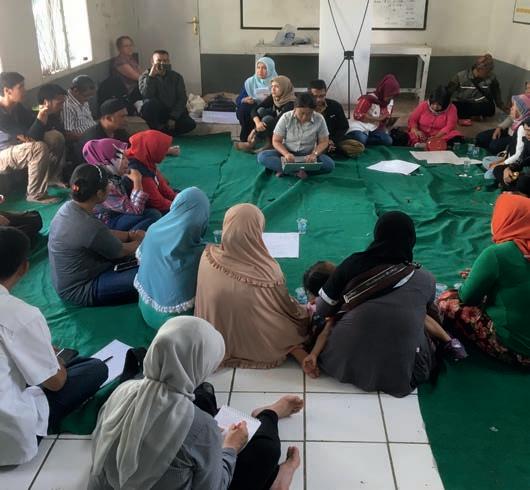


Ingredients
1 cup of strong partnerships
2 tablespoons of user-centric focus
3 slices of capacity building
A pinch of ethical standards
½ cup of diverse funding sources
2 teaspoons of continuity and stability
Cooking time
Patience and persistence are key. Allow the mixture to simmer over a long-term commitment for the best results.
Serving suggestions
Serve your Living Lab dish with a side of regular reviews and adjustments to keep it fresh and responsive to changing needs.
Preparation
1. Build strong partnerships
Ingredients: Government agencies, academic institutions, local communities
Preparation:
Combine these diverse stakeholders in a large mixing bowl. Stir gently to form a robust network, ensuring all parties are well-integrated. This mix will provide the essential resources, expertise, and support needed for a thriving Living Lab.
2. Prioritize user needs
Ingredients: Farmers, end-users.
Preparation:
Place farmers and end-users at the center of your mixing bowl. Incorporate their inputs and feedback actively. Ensure they are involved in every step of the process, from decision-making to co-creation. This will make your final dish highly relevant and effective.
3. Invest in capacity building
Ingredients: Training programs, educational resources.
Preparation:
Mix in training and capacity building initiatives generously. This empowers your local stakeholders, giving them the skills and knowledge necessary to actively participate in and sustain the innovation process.
4. Maintain ethical standards
Ingredients: Ethical guidelines, transparent practices.
Preparation:
Sprinkle ethical standards liberally through your mixture. Prioritize the well-being and satisfaction of end-users, ensuring transparency, accountability, and integrity in all activities. This ensures a trustworthy and ethical Living Lab environment.
5. Diversify funding sources
Ingredients: Grants, private sector partnerships, crowdfunding platforms
Preparation:
Pour in a diverse mix of funding sources. This can include grants, private sector partnerships, and crowdfunding. Stir well to mitigate financial constraints and ensure the sustainability of your innovation initiatives.
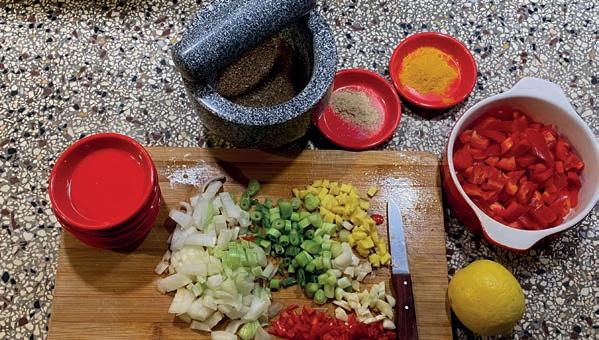
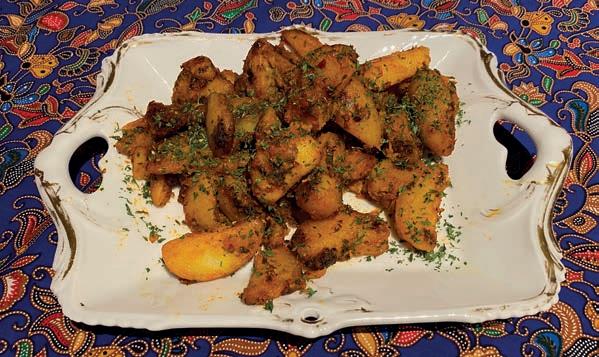


Challenges faced








High turnover of staff
The turnover of staff disrupts the composition and continuity of the DFFS design team, impacting the progress and effectiveness of initiatives. Maintaining institutional memory and knowledge transfer mechanisms through comprehensive documentation of processes, decision and lessons learned can help mitigate the adverse effects of staff turnover as well as to bring the new staff up to speed. All these documents are securely saved in a centralized digital repository set up by UNIMEN that can easily be accessed by DFFS team members.
Financial
constraints
Limited financial resources pose a significant challenge to the sustainability and scalability of Living Lab Enrekang’s activities.
Key features of the Living Lab
1. Collaborative partnerships
The involvement of multiple stakeholders, including the academic institutions, district government and offices as well as farmer groups, have been crucial in pooling resources, expertise, and perspectives to address local challenges effectively.
2. User-centered design
Living Lab Enrekang’s commitment to user-centered design principles ensures that DFFS are tailored to the needs, preferences, and contexts of farmers and extension officers, enhancing relevance and usability. These principles include active stakeholder engagement, iterative design process and continue feedback integration into DFFS. These principles have been articulated as DFFS Ethical Standards encapsulated by the slogan “we do not want to disappoint farmers”.
3. Capacity building
Through comprehensive training programs, Living Lab Enrekang has empowered local stakeholders
with the skills and knowledge necessary for active participation in the design, development, and implementation of DFFS Enrekang.
4. Innovation and adaptability
Living Lab Enrekang demonstrates a commitment to innovation by exploring new approaches, such as the DFFS, to address longstanding challenges in agriculture and environmental protection. These challenges include issues such as soil degradation, excessive use of pesticides and fertilizers and limited access to reliable information to informed decision of farmers. The design and development of DFFS Enrekang aimed to address these issues by providing a digital platform for knowledge sharing and co-creation. Moreover, the adaptability of the DFFS is evident in its design, which incorporates mechanisms for continuous user feedback, allowing the system to evolve in response to farmers’ needs and
environmental conditions. For instance, when farmers encounter unexpected weather patterns or pest outbreaks, the platform can quickly integrate new data and update recommendations accordingly. This flexibility enables the DFFS to remain relevant and effective in a rapidly changing agricultural landscape, continuously serve as reliable source for farmers and extension officers.
5. Ethical standard
By adhering to the ethical standard of “we do not want to disappoint farmers,” Living Lab Enrekang prioritizes the wellbeing and satisfaction of its end users to ensures that initiatives are aligned with the real needs and aspirations of the farming community, fostering trust and credibility.
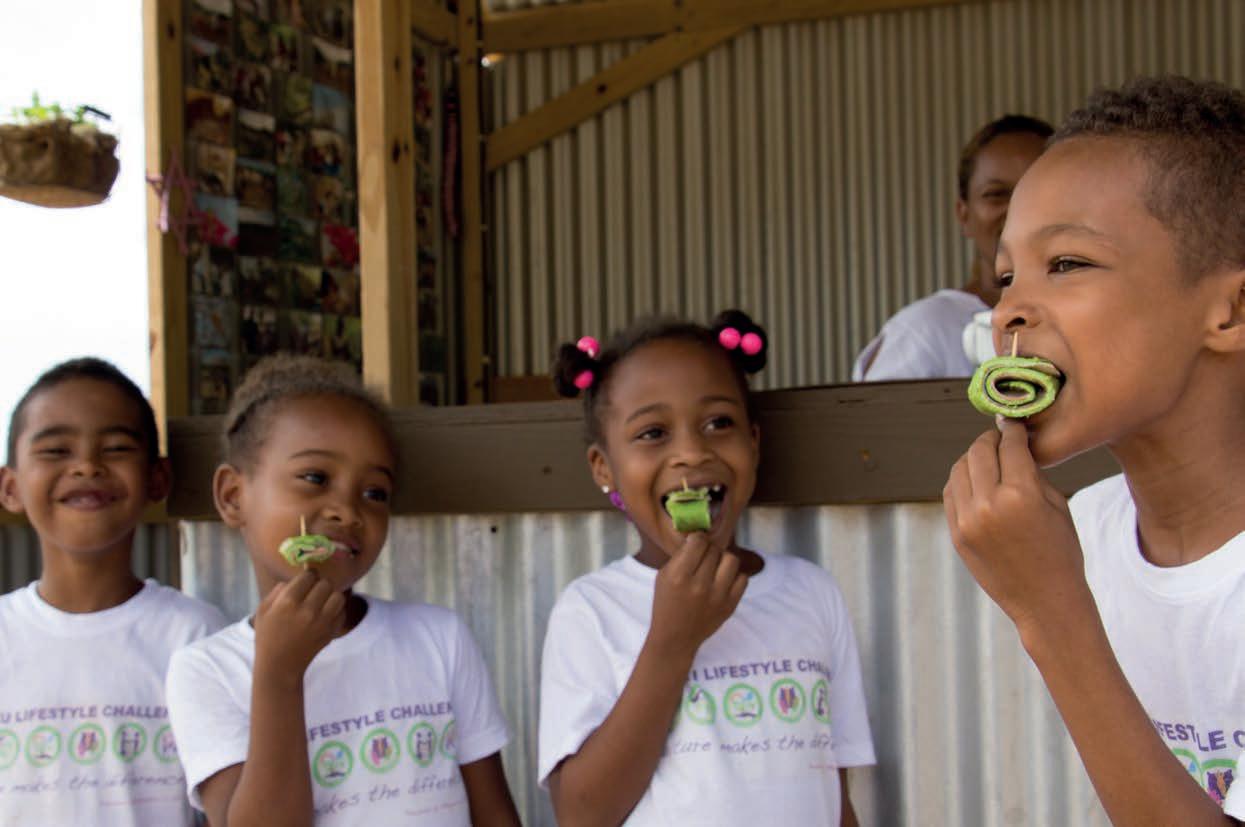
Food Resilient Futures
A Living Lab Approach in the Caribbean Netherlands
Text: Leonoor Akkermans*, Heleen Quartel**, Hinno Bel*** and Radinka Ustasia****
*Van Hall Larenstein University of Applied Sciences
**Cultural Park MangazinadiRei
***Aeres University of Applied Sciences
****Maanarak of GreyLtd.
Photography: Heleen Quartel, Jeralma Tromp, Hinno Bel
Challenges of food resilience
The Caribbean Netherlands are dealing with a situation where vegetables and fruits are mostly imported and hardly affordable. This leads to consuming unhealthy food and health problems such as
obesities as a consequence. A lack of good agricultural practices regarding water-smart and nature inclusive agriculture, as well as limited coping capacities to deal with hazards and climate change, result in very limited
local production and interest. Moreover, the ‘green’ and ‘blue’ domains are not seen as attractive career perspectives among youth, hampering a bright future for those domains.
A Living Lab approach
To address the above challenges, a Living Lab approach is adopted in the research project Food Resilient Futures in the Caribbean Netherlands. The project intends to contribute to a prosperous society with a resilient population and healthy natural environment in the Caribbean Netherlands.
Student facilitators from the Caribbean region, studying at a Dutch University of Applied Sciences, were selected and trained to co-facilitate the workshops. This strategy ensures that sound communication, local embedding, intercultural sensitivity and focus on youth (by youth) would be secured. After the training of students as (co)facilitators, a series of Living Lab meetings with local stakeholders has been implemented on the islands of Bonaire, St. Eustatius and Saba in May and June 2024.
During the workshop days on Bonaire we engaged the participants in a process of backcasting where we were discussing the current challenges in the food system. Together
we visited several farms and the fishermen’s association to experience challenges and successes. Moreover, together, we cooked a meal with locally available ingredients to appreciate the opportunities for a locally sourced cuisine. Based on the challenges perceived, the facilitators invited the participants to exchange imaginaries through a dreaming exercise. All participants were asked to close their eyes and concentrate while the facilitator would lead the dream by encouraging the participants to use all their senses while travelling on the island of Bonaire. After the participants “woke up”, they were asked to visualize and share their dream. This provided a solid ground for collectively desired futures where ambitions were articulated to a resilient food future.
On Bonaire, participants envisioned a future where everyone knows about healthy and local food through a magazine, offering both adults and children information on accessible methods of food
production. The more commercial farmers envisioned a distribution center or cooperative where agricultural products are collected and distributed to outlets such as supermarkets and restaurants. Commercial farmers will be organized to advocate for policies and oversee a system that plans and monitors agricultural production, ensuring a consistent supply to these markets.
On St. Eustatius, the Living Lab participants envisioned a future with sustainable water management by promoting the use of grey water and to catch water. On Saba, participants envision small scale food production and healthy lifestyle embedded in the school curriculum.
Based on these visions, experiments will be designed and implemented by the Living Lab community followed by dissemination of results among Living Lab participants as well as children and youth.
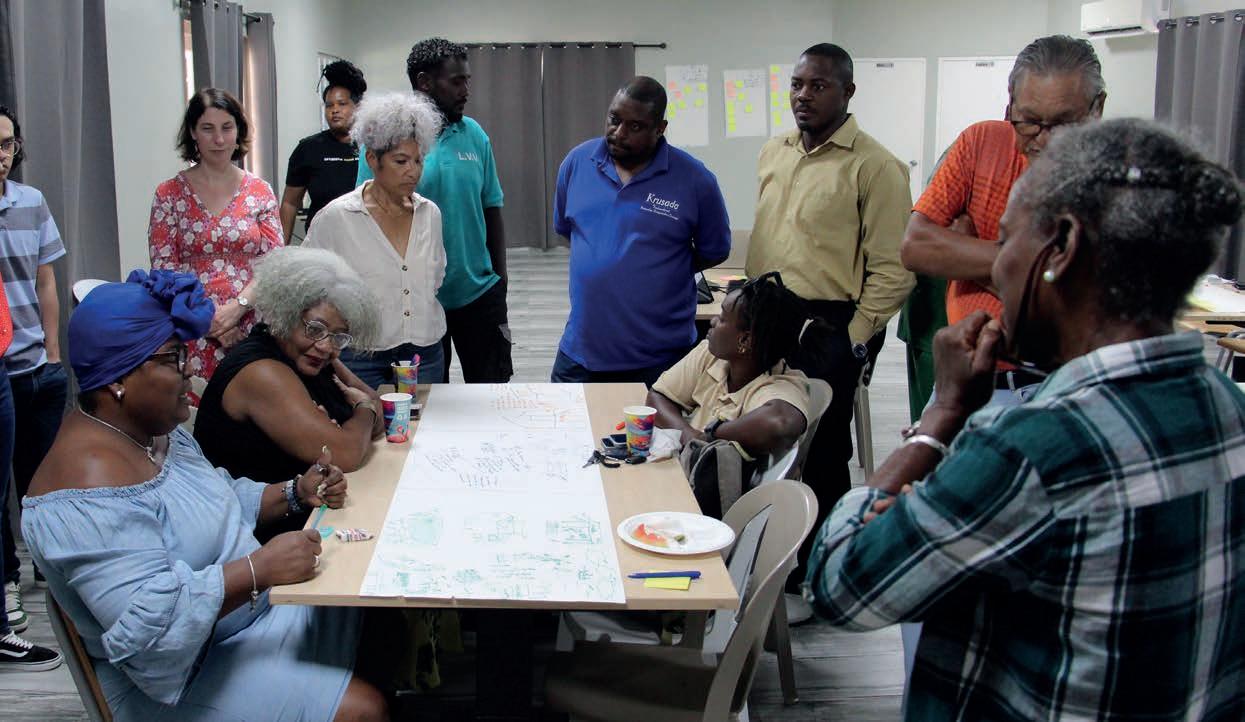
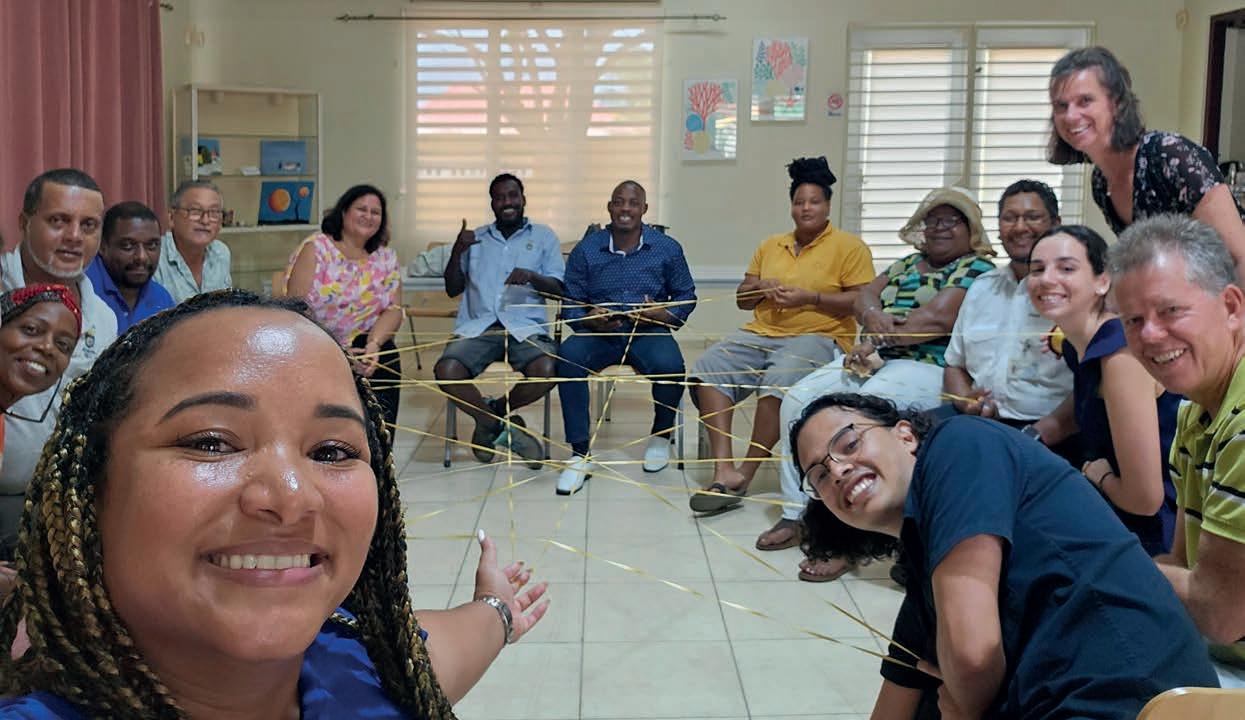
Conclusions
The series of Living Lab meetings confirms the relevance of formulation and adherence to sound design principles. For “setting and system” major challenges on all islands were related to the practical organisation and invitations prior to the Living Lab which influenced the composition of the Living Labs and as a consequence also the results of the scenarios and experiments.
Working with youth facilitators with a Caribbean background required first and foremost an investment in terms of a challenging recruitment procedure and a training programme tailored to the needs to become a good facilitator of a dynamic Living Lab process, rather than a focus on more technical agricultural subjects. Moreover, we encountered difficulties in
terms of motivation and conflicts with other educational activities, due to the fact that it was difficult to embed the training and Living Lab workshop as part of the official curricula of the students.
The training and Living Lab workshops were a great learning experience for the youth facilitators and the use of youth facilitators turned out to be very beneficial in terms of local embedding. For Bonaire it turned out to be very useful in terms of language, whereas youth facilitators for Saba and Statia supported the project practically with their network and organisation skills.
With regard to “stakeholder consultation” we encountered challenges at the start of the project to collaborate with our local partners in a virtual
environment only, and with challenges related to understaffed departments with a high workload, despite the willingness to work together. For the Living Lab workshops on Bonaire, the use of energizers was considered crucial to create mutual trust among the participants, which created a solid basis for the deliberative working methods.
For “approach, aim and focus” our focus was on the Living Lab workshops using deliberative and participatory working methods. Both the dreaming exercise and the excursion on Bonaire were contributing to this. Finally, the success of the Living Labs is determined by the motivation of the Living Lab participants. We are looking forward to conduct our experiments related to food resilient food futures!
A Riverscape Puzzle
A wooden Living Lab Delta East metaphor
Text: Ilse Ronner*, Jan Fliervoet* and Loes Witteveen*
*Van Hall Larenstein University of Applied Sciences
Artwork: Ilse Ronner, Walter Verspui
Introduction to a puzzle
You ever find yourself at a loss of what to give someone who already has everything they need? Those that say they are more than happy just having you be there on their birthday and don’t need a present?
This do-it-yourself wooden puzzle might just be the perfect solution if you like crafting and don’t want to arrive empty handed. The design of this puzzle is used as a metaphor to reflect upon Living Lab Delta East (abbreviated as LLDE).
This Living Lab provides an arena where the complex water related issues of the Dutch urbanized fluvial area link to an array of governance, knowledge and communication challenges and the quest for sustainable futures. Of course, we also provide you the step-by-step guide to make a Living Lab puzzle by yourself!
An island riverscape as metaphor
We designed our puzzle to represent a big island that is surrounded by a ring of smaller islands as a metaphor to describe the current status of the network structure and interactions in the Living Lab. During its active stage, all stakeholders were together on the main island working to elaborate a shared vision for the future of the riverine landscape. Then, when COVID hit, they were forced back to their own islands as physical collaborative workshops were impossible. The two enabling governmental actors needing time to further elaborate upon the foundation that was laid in the collaborative sessions and develop this into policies. After the pandemic was over, several major players retired or moved to other jobs, so stakeholders remained on their individual islands.
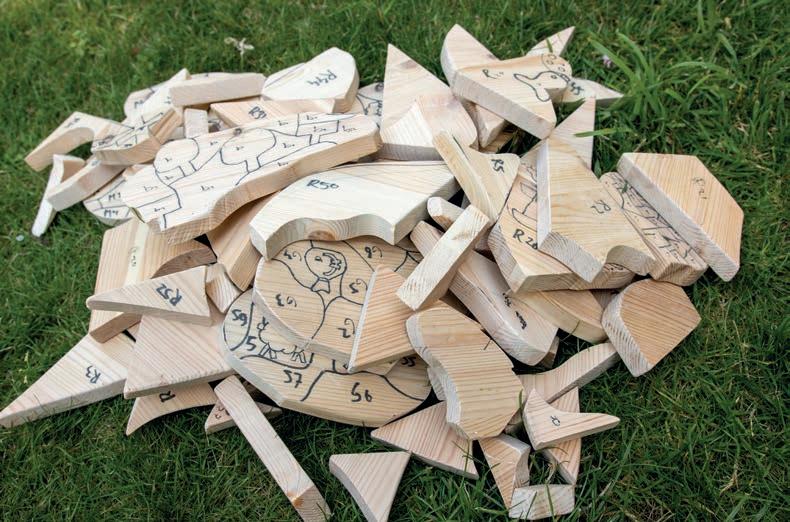
This does not mean there is no contact between stakeholders, on the contrary, this is certainly taking place, but the contact is mostly limited to individual visits from one island to the other—a big exception being the May 23rd symposium that has led to a new agenda of themes and topics. So, with the policy development work nearing completion, the logical next step is to bring all actors of Living Lab Delta East (LLDE) back to the main island to discuss how this policy (and vision) can be put into practice.
Using puzzle pieces to reflect upon barriers and success factors
Looking at all those many pieces in front of us, we will use them to reflect upon the success factors and barriers encountered during the process of LLDE. For convenience’s sake, we have organized this into four puzzle piece categories: technology, governance, public participation, and knowledge and competence.
Technology
Management of the digital knowledge infrastructure: barrier Change is required on the management of the knowledge infrastructure of LLDE, as referred websites of finished projects are no longer accessible. This is partially attributed to the project approach in the Living Lab activities as opposed to a longterm research, innovation and knowledge agenda
Wooden pieces in the making of a puzzle
Governance
Multi-actor sessions: success factor
This success factor relates to the multi-actor sessions that have been organised since the start of LLDE until it turned inactive due to the COVID-19 pandemic. In these sessions, participants formulated a shared future vision. This generated a lot of energy and the participants showed a high personal commitment to the network. This led prior to the COVID lockdowns to the implementation of jointformulated research projects, such as Circular Floodplain Management and ‘SteenGoed’, which focused on the cultural value of abandoned brick factories.
Collaborative efforts
Although the activities organized within LLDE have been more opportunistic than initially envisioned, they continue to happen as is evident in the recent symposium organised by the Self Supporting River Systems-team of the Dutch Water Authority and the research group Communication, Participation and Social-Ecological Learning (CoPSEL) from VHL UAS on May 23rd, 2024. In that, project-based Living Labs may be seen as the preceding steps toward embedding Living Labs more firmly in HEIs (Tercanli & Jongbloed, 2022).
Public participation
Involvement of citizens: barrier Undervaluing of citizens in LLDE may prove a barrier as their ideas and insights in the development of policies for sustainable river management can be invaluable. This must be handled with care considering the issues of participation fatigue and social capital. Time is a scarce resource of civil actors. Mediated participation and innovative methodological options require to be designed to overcome the absence of overlooked or distant voices (Roosmini et al., 2023).
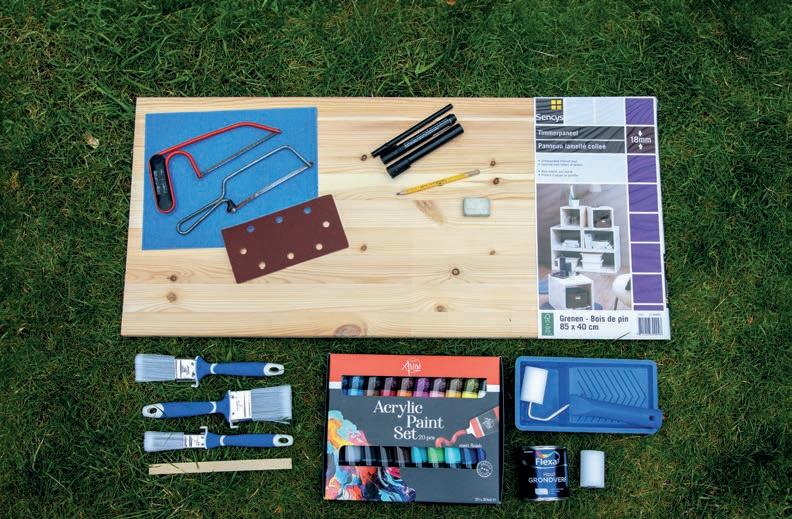
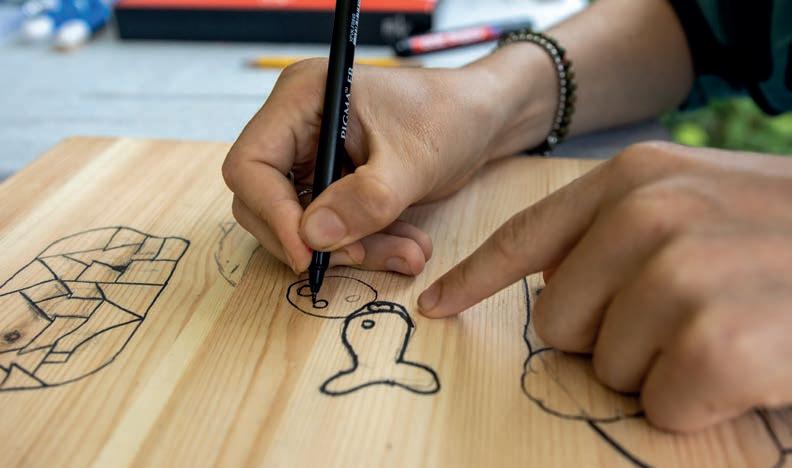
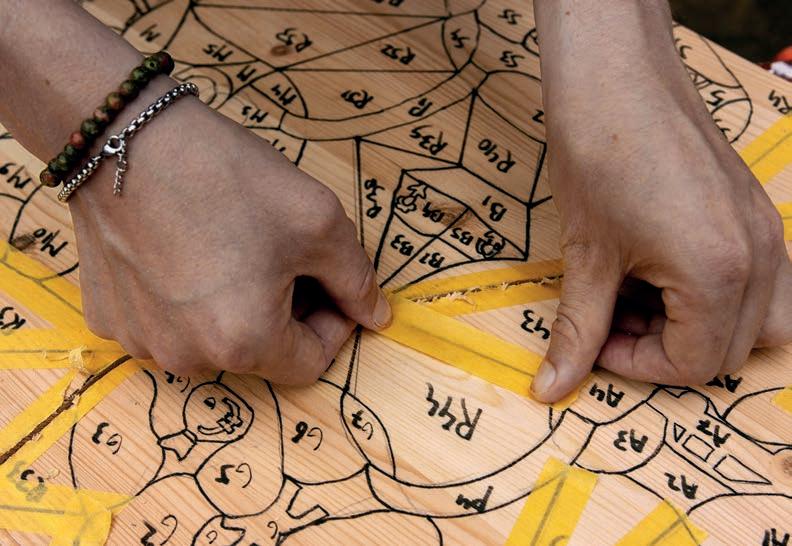
Step 1: Pick a wooden plank and gather your supplies
Step 2: Draw a pretty picture
Step 3: Mark it up
Lack of commitment: barrier Commitment from involved partners in a Living Lab process is an important condition in all phases of a Living Lab’s lifecycle, as detailed in Witteveen et al, 2023.
Involvement of students and role of HEI: success factor. LLDE has contributed to BSc and MSc programs from VHL UAS, such as the MSc River Delta Development (RDD). A success factor is ensuring a structural availability of Master students to participate in Living Labs such as LLDE, thanks to the dedicated design of the curriculum around learning in Living Labs. RDD students amongst others, researched the status of and investigated ways to reactivate LLDE.
Involving students can be a benefit because they generally have a large ‘favourability factor’: they are not threatening as they are not part of the system, and their stake in the project is limited to merely wanting to learn and achieve a good assignment result. Actors expect them to ask questions on how things work and why they are thus, as students are still learning. This allows them to touch upon issues or ask questions that cannot be addressed by formal actors within a Living Lab configuration.
Higher Education Institutes play diverse roles in a Living Lab in relation to the substance and facilitation of a Living Lab. This may carry implications for the inclusion of Living Lab competences in the curriculum of HEIs (Witteveen et al., 2016) to prepare students for participating in Living Lab environments in their professional future.
Knowledge and competence
Knowledge creation: success factor
During the process of LLDE, there have been continuous publications and contributions at conferences and expert
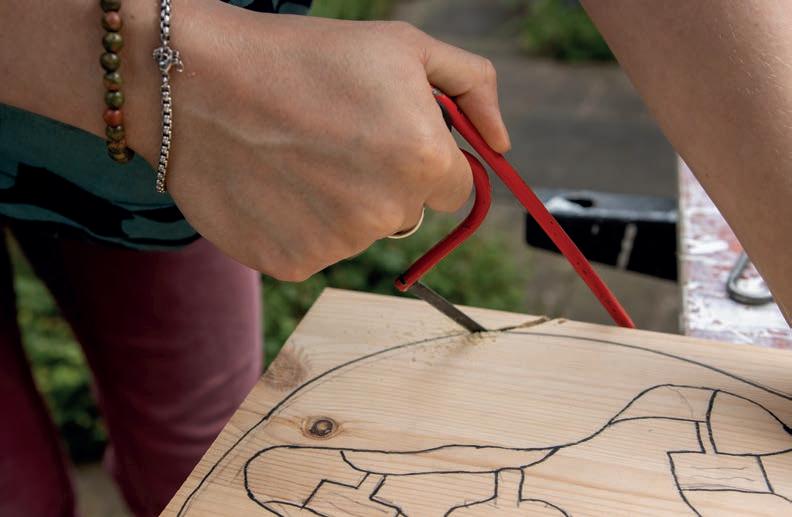
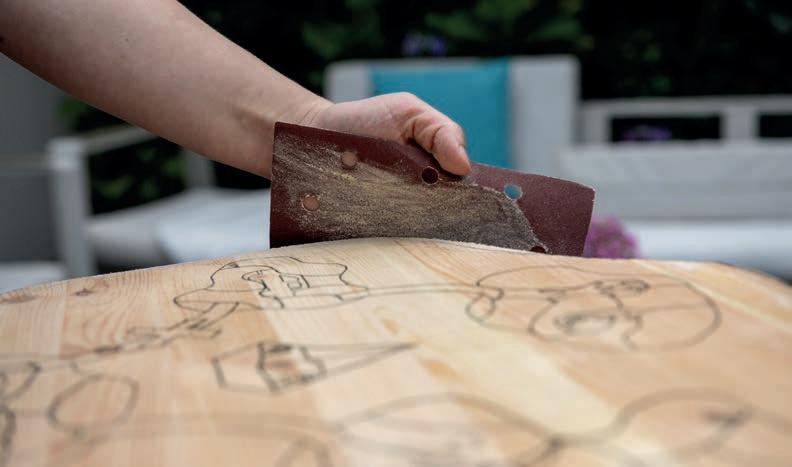
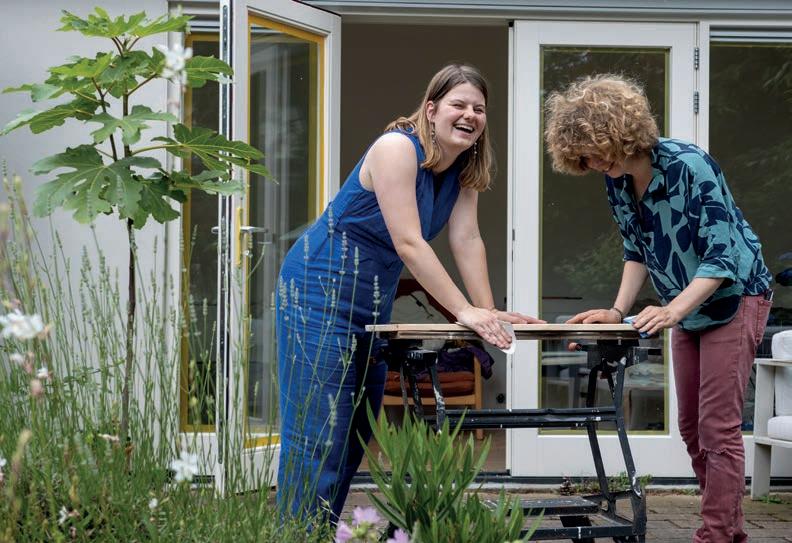
Step 4: Scribe and cut the outer shape
Step 6: Sand some more pieces and enjoy the process
Step 5: Sand the shape, repeat steps 4 and 5 for the inner shapes
meetings. This has also given new impulse to the research activities by the VHL UAS research group Communication, Participation and Social-Ecological Learning (CoPSEL) on the complexities and dynamics of enabling Living Lab processes.
Learning environments: success factor
Since its start in 2017, LLDE applied the concept of mediated participation by making use of the learning strategy Visual Problem Appraisal (VPA). The VPA ‘Rhine River Branches’ creates a learning environment about sustainable river management with a longitudinal series of filmed actor interviews. A continuation of the production to include more actor interviews is an ambition high on the agenda. The VPA ‘Rhine River Branches’ has been used in formal and non-formal learning environments, also during lockdowns and successfully contributes to mediated participation.
Complexity of working in a multiactor setting, missing urgency and perceived absence of actions and outcomes: barrier Based on interviews with LLDE partners revealed aspects that hindered the progress of LLDE such as the complexity of working in a multiactor setting, missing urgency and the perceived absence of actions and outcomes.
Collaborating in a quadruple helix configuration is challenging for many partners, because it is not their conventional approach, which leads to question institutional mandates, network leadership and the framing of ownership.
Network leadership (retirement key persons): barrier
Key persons within LLDE retired, taking a lot of knowledge with them. This also meant that replacements needed to be found who are as enthusiastic and motivated on taking over their role within the Living Lab consortium as they were. This proved challenging.
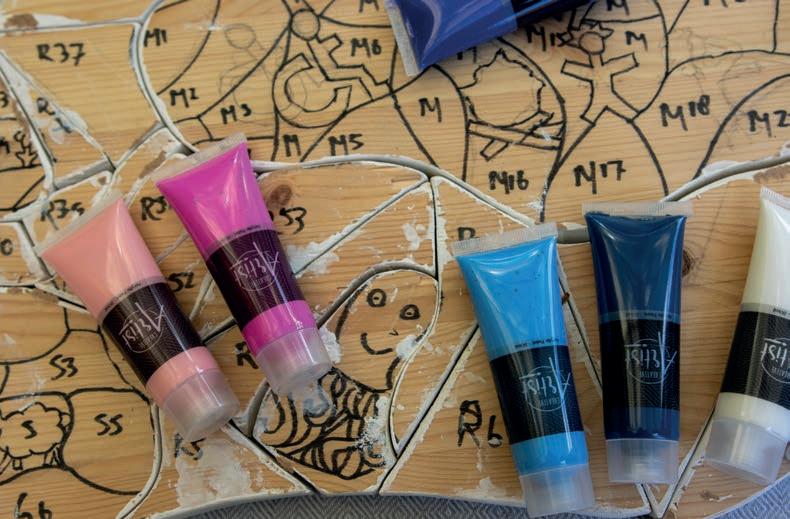
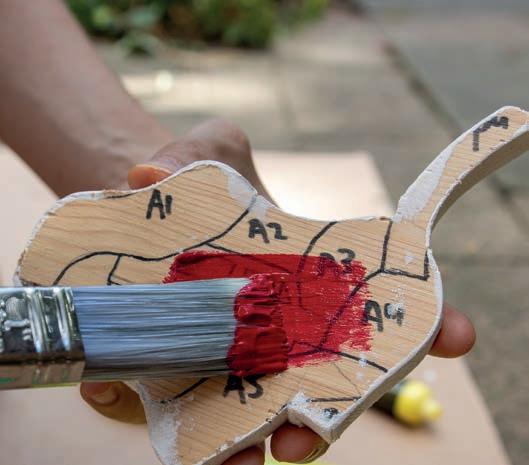
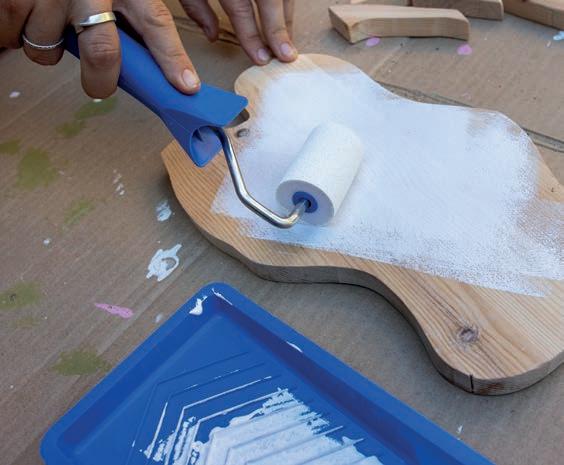
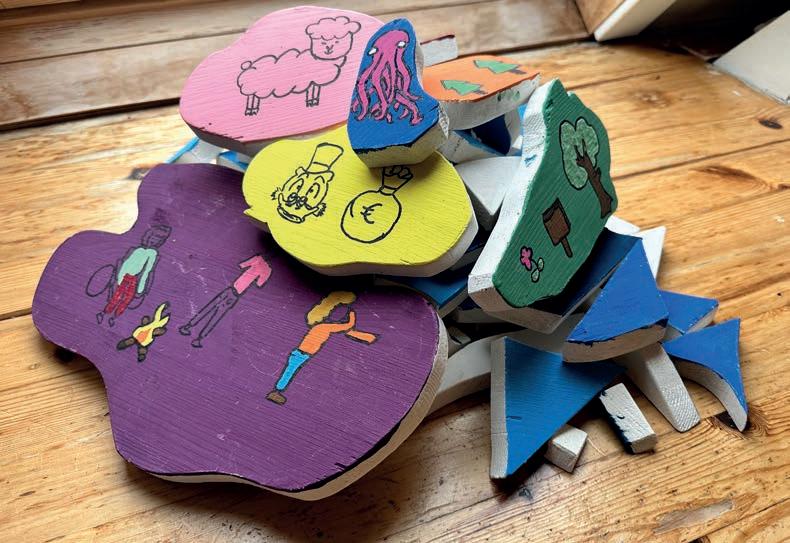
Step 7: Pick pretty colours for your pieces
Step 9: Release your inner Picasso and paint the front
Step 8: Give your pieces a first coating and pop your colours
Step 10: Paint the finishing touches, let dry and puzzle away!

Design Harmony
Expanding the Do-It-Yourself metaphor with a LEGO-based serious game
Text: Maryam Gholami*
*Student MSc River Delta Development Illustrations: Maryam Gholami
The Do-It-Yourself metaphor finds inspiration from the visual instructions of IKEA furniture. By expanding upon this metaphor, we transform the complex world of Living Labs into a DIY project.
Students from the MSc River Delta Development supported the development of the magazine. To further build upon the idea of the DIY metaphor, Maryam applied the concept of a construction project to the metaphor, designing a serious game using cards and Lego.














Serious game: Design Harmony
Serious games incorporate elements of challenge, scoring, and skill development, aiming to impart knowledge, skills, or attitudes that can be applied in real-world contexts. These games are distinct from purely entertainment-focused games and are intended to engage learners in a meaningful way to enhance their learning experience. (AriasCalderón et al., 2022) Serious games aim to increase motivation and inspiration for learning.
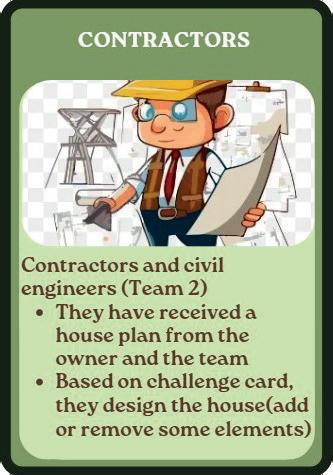
In Design Harmony as a serious game, participants work together to design a house using cards and Lego. The team and participants collaborate to create the best version of the house. During this process, they encounter challenges and limitations to simulate how Living Labs can be complex and dynamic.
So, let us imagine a construction project that wants to start. The owner of the house wants to














renovate or build a new house, he or she goes to the project manager, and they negotiate all opportunities and based on their challenges. During the process of the project all stakeholders such as architects, consultants, civil engineers, or conductors, faced some challenges and limitations. Problem-solving could be managed by collaboration and discussion between all stakeholders.
Role cards
In the Design Harmony game, all participants have roles and responsibilities. Role cards show them to connect more with the game and also have their action based on their responsibilities. In addition, these role cards show people how effective each person can be in Living Lab projects and his/her cooperation with the rest of the group members plays a vital role in advancing the project goals Therefore, it makes them more responsible.
Challenge cards
During a construction project challenges and limitations could happen. We show some of these challenges in this game (design harmony). With designed challenge cards for the game, we show the complexities and dynamics of Living Labs. These challenge cards will help participants navigate the complex, often unpredictable journey of projects, real-life engagement, and stakeholder contacts. You can use this point of view to have a deeper understanding of the real world’s challenges. With this point of view, you can examine the path and process without blaming people when it becomes difficult to achieve success. The COVID-19 pandemic has shown that such an empathetic and flexible approach is necessary to deal with new and unforeseen challenges and circumstances.
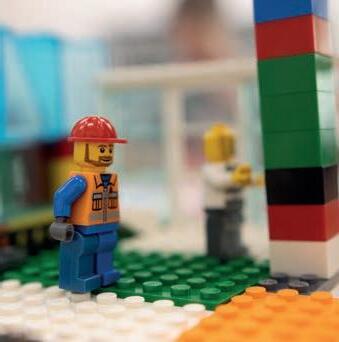
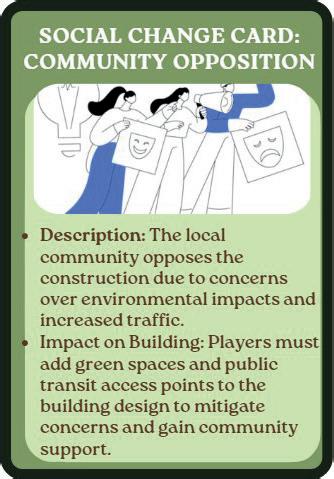
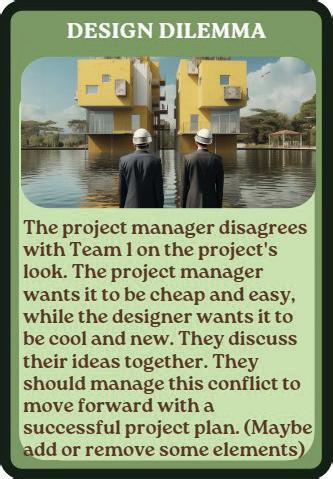
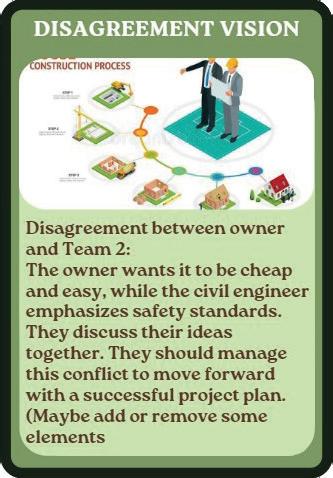
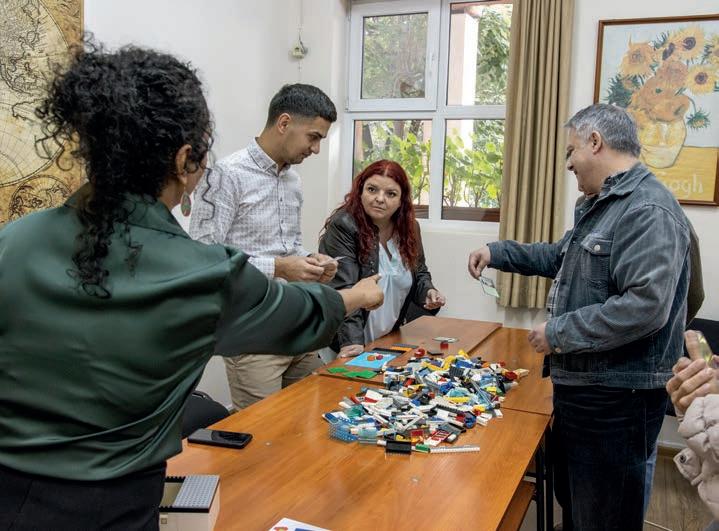
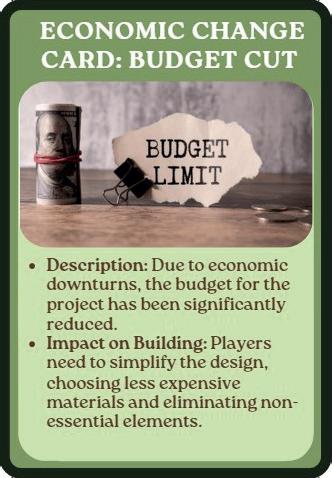
Conflict cards
In each project, there are various people with different responsibilities. When these people are supposed to work together on a project, they may have different opinions and views, to show these conflicts and disagreements in the projects, conflicting cards were designed in this game, which means making it clearer for the participants and practice how to face and solve problems and reach an agreement in the progress of the project.
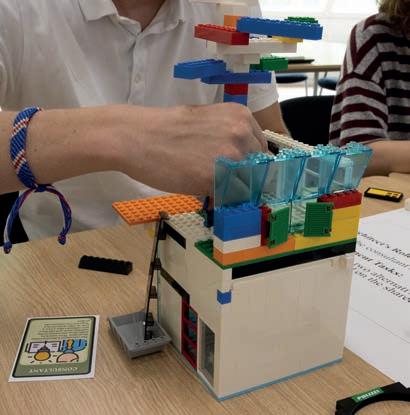
This serious game was tested and applied in three different workshops. In these workshops, there are various types of participants with different backgrounds. With the survey forms and the feedback of the participants, this game improved.
One of the important things in these workshops is to explain the goal of the game and relate to the metaphor approach and Living Labs for participants. By observing participants during the games, they were able to learn more about the concept of Living Labs and the methodologies. At the end of the game, survey forms were prepared for the
participants. By filling out these forms, they presented and reviewed their opinions about the serious games and the concept of a Living Lab.
Conclusion
Using metaphors in a serious game can help people better understand and work together on complex projects. The game makes abstract ideas easier to grasp and encourages people to share their knowledge. This leads to better problem-solving and decision-making. In the game, participants work together to design a house with Lego as a tool for a metaphorical approach.
All players have role cards and challenges and limitations cards. With role cards, they can have their responsibility for the project, and with challenge cards, they learn how Living Labs can be complex and dynamic. The role and responsibility card of the participants in the game can make them feel more ownership of the project. And by having this responsibility as well as challenge cards, they can adapt their
opinions more easily and provide suitable solutions.
Having a unique role on the one hand and cooperation and participation with the rest of the game roles on the other hand, allows the participants to have their opinions and on the other hand to strengthen the cooperation and exchange of opinions among their cohorts.
Building and designing a house acceptable to all participants, using Lego, was a simple but creative tool that made the concept of the DIY metaphor more understandable to the participants. In this game, they experienced a unique role in a project, the ability to solve problems by collaborating and exchanging ideas in a group, designing and implementing their ideas using Lego, as well as the complexity and dynamism of the project.
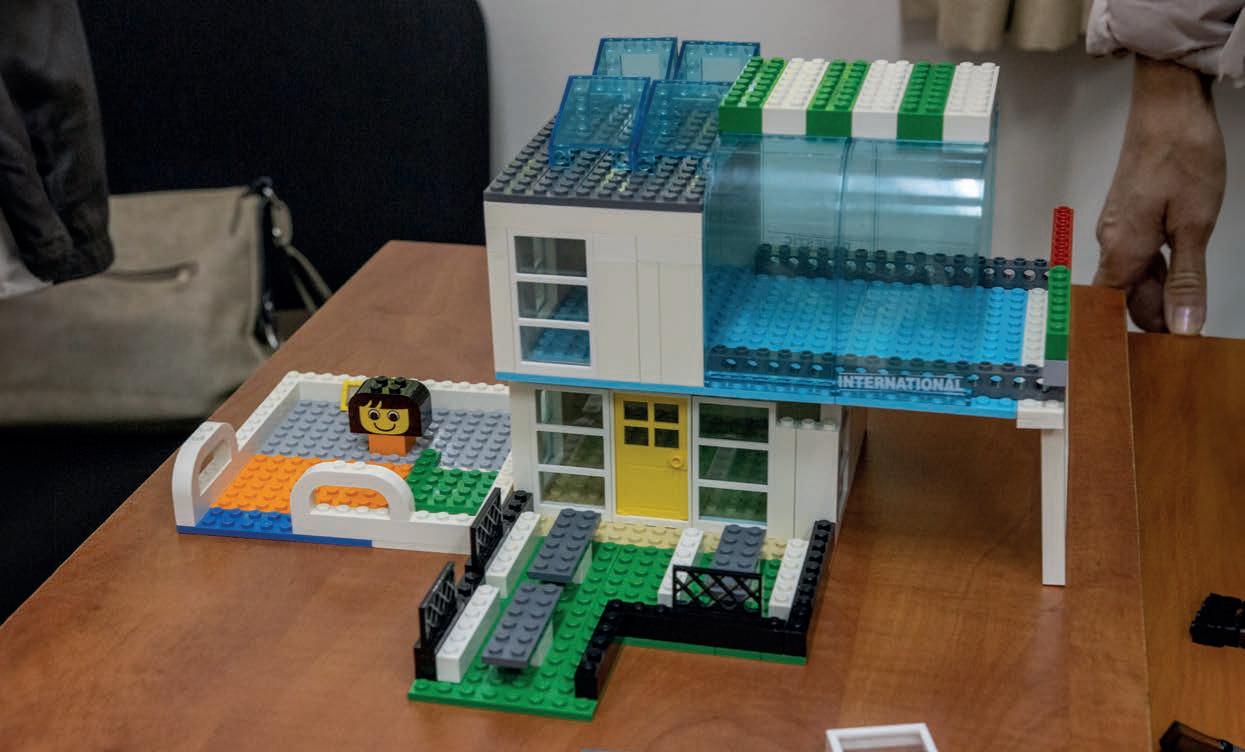




Letters to the Editor

Sehr geehrte Redaktion, ich möchte Sie dringend bitten, die nächste Sonderausgabe der Wasserwirtschaft zu widmen. Sehen Sie, ich bin 78 Jahre alt und habe immer direkt am Rhein gewohnt. Mit den jüngsten verheerenden Überschwemmungen an Ahr und Kyll in Rheinland-Pfalz und an der Erft in Nordrhein-Westfalen weiß ich leider besser als die meisten, wie tödlich Wasser sein kann. Lange Zeit haben wir von einer Dürre in Deutschland gesprochen, doch nun sind viele Regionen vom Wasser überschwemmt worden. Wie können sich die Behörden auf diese beiden Extreme vorbereiten? Diese Frage hält mich nachts wach, und ich hoffe, dass Sie und das Team von Europe Today die Aufmerksamkeit auf dieses komplexe Problem lenken werden.
Dear editor, I would urgently ask you to dedicate the next Special Issue on water management. You see, I am 78 years old and have always lived right next to Rhine. With the recent devastating floods in the Ahr and Kyll in Rhineland-Palatinate and the Erft in North RhineWestphalia, I sadly know better than most how deadly water can be. For a long while we have been talking of a drought in Germany; but now, many regions have been deluged with water. How do authorities prepare for these two extremes? This question keeps me up at night and I hope you and the Europe Today team will call attention to this complex problem.
Revision of the RES-Q approach following Storm Daniel in the Thessaly Region
In the aftermath of storm Daniel, the RES-Q Living Lab encountered a significant challenge necessitating adjustments in its semantic model and response plans. The unprecedented data generated by the storm prompted a reassessment of existing response plans stored in the repository of the RES-Q system. With rainfall levels breaking historical records and causing widespread flooding in the Thessaly Region, it became imperative to incorporate this new information into the semantic model to enhance the Lab’s ability to anticipate and respond to future disasters effectively. The team is now diligently working to exploit the insights gleaned from the storm data, updating the semantic model and response plans to reflect the latest knowledge. By leveraging this newfound understanding, the RES-Q Living Lab aims to strengthen disaster risk reduction efforts and bolster regional resilience, ensuring better preparedness for any future challenges the Thessaly Region may face.

Váženáredakcia,receptyzposlednéhošpeciálneho vydaniasamiveľmipáčiliadúfam,žeichbudete uvádzaťajvďalšíchvydaniach.Jaamojarodinasme námupieklivynikajúcičerešňovýkoláč(dvakrát!pretože čokoládovúhovyfúkolnášpes,takýzákernýchlapec!)Možno penudoďalšiehočísla?Takbudememaťporiadnydôvodignorovaťpsíkoveoči:)

Omiros Iatrellis, University of Thessaly

AdrianaVysoká andDeareditor,Ireallylikedtherecipesofthelastspecialedition hopeyoukeepincludingtheminthefollowingissues. Meandmyfamilymadeadelightfulcherryjampie(twice! boy!)becauseoutdogsnatcheditbeforewecould,suchasneaky Maybeachocolatemoussefornextissue?Thatwaywehaveaproperreasontoignoreourdog'spuppyeyes:)
AdrianaVysoká

Anton Kistler

Estimado redactor, estoy muy decepcionado por la forma en que anota sus referencias. Veo claramente que esta revista se ha escrito con un alto nivel académico, sin embargo, cuando quiero comprobar más a fondo una referencia interesante, no encuentro ninguna. Arréglenlo para el próximo número. También me decepcionó un poco encontrar sólo una referencia a los ‘virtual Living Lab’ porque me llamo la atención como opción fantástica en el caso de distancias de cualquier tipo. Sin embargo, supongo que esto se compensó con la idea de ir a estudiar asignaturas optativas a diversas universidades de toda Europa. Por supuesto, viajando en tren, como sugirió en su anterior edición.

Dear Editor, I am very disappointed by the way you write down your references. I clearly see that this magazine has been written to a high academic standard, however, when I want to check further for an interesting reference, I can't find any. Fix it for the next issue. I was also a little disappointed to find only one reference to ‘virtual Living Labs’ because it caught my attention as a fantastic option in the case of distances of any kind. However, I suppose this was offset by the idea of going to study electives at various universities across Europe. Of course, traveling by train, as suggested in your previous edition.
Salvador Vázquez, professor at the University of Cartavía
Dear professor Vázquez, our sincere thanks for sharing your concern regarding the references in our magazine. It is Europe Today’s mission after all to deliver high-quality information to our readers written in understandable language. You can find a complete reference list on our website: www.europetoday.org/references-special-issue-living-labs.
Editor-in-Chief Europe Today

Beste hoofdredacteur,



Wij zijn vanuit de spronggroep Water als verbinding erg blij met het artikel over ons onderzoek zoals dat opgenomen wordt in uw special over Living Labs. Wij vinden het echter wel een erg serieus artikel, natuurlijk zijn Living Labs serieuze werkomgevingen, begrijp ons niet verkeerd, maar we willen toch ook benadrukken dat er ook luchtigere verhalen te vertellen zijn. Zoals bijvoorbeeld over de bijna toevallige vorming van het Living Lab Schouwen Duivenland of de verwarring tijdens de eerste (online) bijeenkomsten van het Living Lab Terschelling. Misschien iets voor een volgende special?


Met vriendelijke groet,
Dear chief editor,





We from the SPRONG group Water as a connection are very pleased with the article on our research as included in your special issue on Living Labs. However, we think it is a very serious article, of course Living Labs are serious working environments, don’t get us wrong, but we would also like to stress that there are also lighter stories to tell. Like, for instance, about the almost accidental formation of Living Lab Schouwen Duivenland or the confusion during the first (online) meetings of living alb Terschelling. Perhaps something for the next special?
Warm regards,


Living Lab community.

The INVEST Regional Living Lab in Bulgaria has started building its virtual home – an interactive and secure space for our community that is engaging and inclusive. Our LL virtual house is an online community and networking platform - a network of interactions and an environment of collaboration, communication, learning and capacity building for sustainable regional development. We create the potential for stronger and more resilient societies in the home of Living Lab community.


Ekaterina Arabska, University of Agribusiness and Rural Development

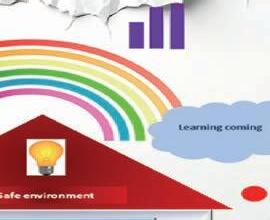



Erica Mosch, on behalf of the SPRONG Group Water as connection

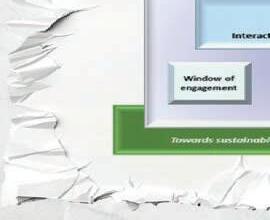
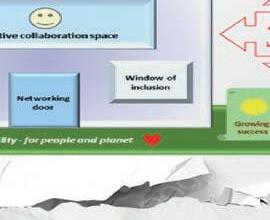




Word puzzle
Have you been paying attention and do you feel up for an extra difficult challenge? Find all the words in the puzzle piece! Flip through the magazine to see whether you can discover why they have been chosen. If you manage to complete this puzzle, look on www.europetoday.org/puzzles for the complete Living Lab puzzle challenge!
Author: Ekaterina Arabska*, Velizar Petrov**, Delyan Plachkov* and Aleksandar Tonkov**
*University of Agribusiness and Rural Development **RDA BSC SMEs-Plovdiv
Difficulty rating
Words Action Adaptation
Balance Banitsa Car Challenge Choice Cocreation Collaboration Collect Commitment
Communication Community Connections
Data Digitalization Directions Discover Engagement Enjoy Entrepreneur Evolution Experimentation Explore Family Gamer Gaming Gap Helix Holiday House
Inspiration Integrate Involvement
Key
Lab Legal Letter Love Manage Manual Map Mediation Mission Mixture Motivation
Negotiation Network Notable Notion
Objective Obstacle Orientation
Partnership Perspective Potential Process Project Ready Reality Recipe Research Respect Respond
Society Solution Solve Story Strategy Strong Study Success Sustainability Target Team Tip Trial Trigger Trip United Virtual Vision
Vital Yield
CSTARGETYNTPCEVXUZRYYERESEARCH OMDMJRLDLNURMOTIVATIONJTIPKZCD CMMHUPAWEKERWLNNQFGOBSTACLEHAC OFITJEVMAVRMATRNYBCVULNMGDNZRE BTXSRMESOAAICUWHELIXNOTIONEPSS ZINUSVTCQEREEBZGYCORIENTATIONC MBIJLISYTTPNDSXDYRTTQNVISIONNO NNLONIOWISEPNSUTEAAIOIYYFPLOYM JEVADRPNERQOSTYTRTZIOTRIIAIECM WNBKYYKRPEIESTTTNITLSNCHUTKXAI IDSOLVEEYTCTIECELUGWNASTCHFNYT DGAMERRUCOCLLEMALWYGQRRAELLEEM DDIJLTEEREIWLIGOPXWBEIQVTALGCE NINNNFRPJB ELREVIECNNVRIVUDIOWN HWGESIKOAROELERLDOTJATFNBANTBT SVLIDPRNOCPMZTBRIRTNCSAVLPTIAR VUAKTPILGXRUAAHTANSEOMMIVTEALE ISCMCAPREAYETNAPEIJNMGINWAGTAC GFACTXLLARMOAEAMQBJJMALDPTRINI HRFSEYRIOTNIRLEGOCAOUBYPAIAOCP SCUSFSETZCICNGIQELZYNLABSOTNEE TSZGIXSRCAOOAGFTKHOLIDAYINERTN RXSIUKPYMCTGNLPAYNDKCCHALLENGE AULPIYOSALNIDSORCOLLABORATIONT TJOHQCNMPERPOTENTIALTRVITALZBW ERVKZCDPRDATANWCZWZVILGDMUTRVO GREXYRKMEDIATIONDTJH OVSOCIETYR YMOQCOMMUNITYYIELDCPNMCGAPKFQK UNITEDWSOLUTIONXLSTRONGMDTNHQL YRCHOICEDGHOUSEPJNUPERSPECTIVE
SOILCRATES A Living Lab strategy for healthy soils and soil literacy
Text: Emiel Elferink*, Lena Madden**, Shane O’Sullivan**, Esteban Romero-Frías***, Nathalie Rousseau****
*Van Hall Larenstein University of Applied Sciences
**Technological University of the Shannon: Midlands Midwest
***University of Granada
****AGROBIO 40
Photography: Amélie Bourrillon, Martin Gigomas, Jesús RodrigoComino
The European SOILCRATES project held its official kick-off meeting on 7-9 October 2024. It seeks to contribute to the EU Mission for healthy agricultural soils through creating four Living Labs in the Netherlands, France, Ireland and Spain. The event gathered over 45 leading experts, researchers, Living Lab representatives and partner organizations to collaborate on strategies and innovations for sustainable soil management across Europe.
The spotlight was on Living Labs serving as innovation hubs where local stakeholders collaborate to tackle soil health challenges, drawing on agricultural practices. The second day began with a keynote presentation by Loes Witteveen and Jan Fliervoet, introducing the Living Lab approach and leading a lively discussion on the practical benefits of this innovative model. Each of the four Living Labs presented outlines for their work. The quadruple helix collaboration model ensures that insights from different sectors are integrated, creating a robust, multifaceted approach to soil management. To widen the impact, a second focus in the project is to address soil literacy.
Granada Living Lab, Spain
“Mobilizing all stakeholders in the soil and agricultural ecosystem”
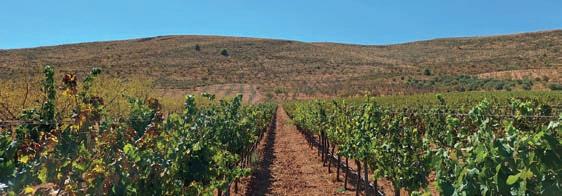
Living Lab Ireland Mid-West
“Soil literacy will spark further regional innovation”
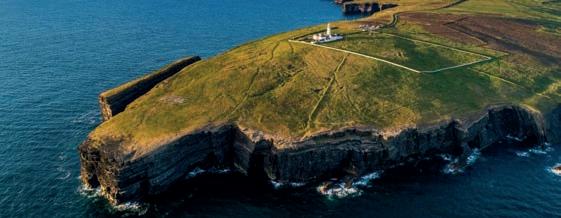
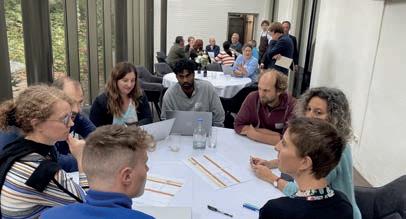
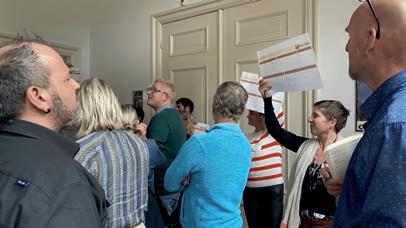
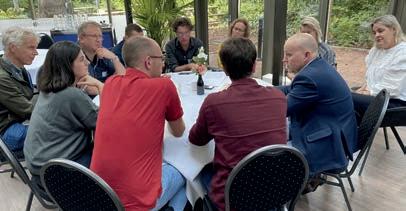
Living Lab France
“The farmer is the first observer of his environment and his system.”
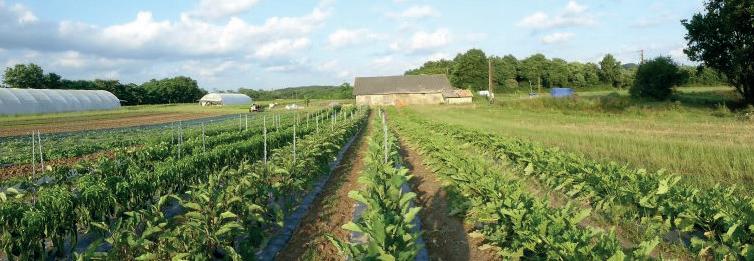
North of the Netherlands
“Living Labs go through cycles of participation and energy”
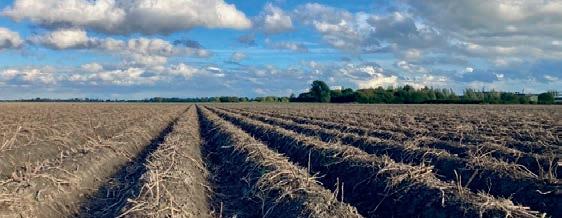
The European Tree of the Year
The next issue presents an interview with Gerard Robijn, winner of the prize puzzle. His interest in the European Tree of the Year election marks his interest for transdisciplinary learning for sustainable futures.
Europe Today Next Issue
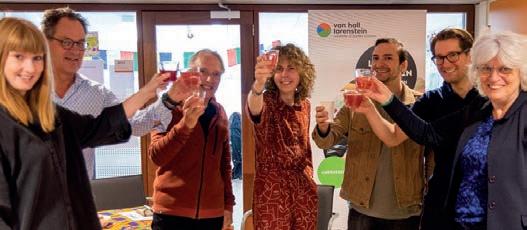
Visual Problem Appraisal Conference
Spring 2025 brings the 30-year jubilee of the Visual Problem Appraisal (VPA)! The VPA is a film-based learning strategy to enhance the analysis of complex issues and facilitate a plan of action. It is used in workshops dealing with problem analysis and policy design, and involves the participants ‘meeting’ stakeholders through the latter’s filmed narratives. It will be celebrated grandly so definitely keep an eye out on our socials to not miss out on this event!
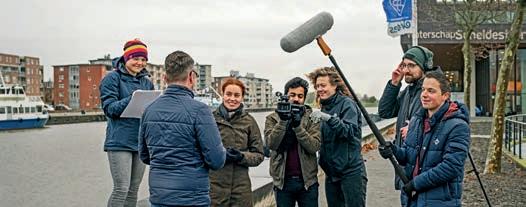
Poetry Route Nepal
What a poetry route can tell about the relationship between human and tiger. The poetry route In the bufferzone—farms, family and wildlife is a collection of thirteen poems written by local villagers living on the edge between civilization and the natural reserve where the tiger lives. Printed on canvas with paintings created by the villagers themselves, these poems dive deeper into their experiences. Both on the tiger and the pride in having such a majestic animal living close to them, as their very real fear of getting eaten; and the relationship with wildlife in general.
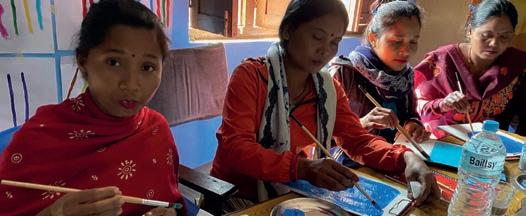
Europe Today is a publication of Invest4Exellence program by the research group Communication, Participation and Social-Ecological Learning (CoPSEL).
Editorial Board: Ilse Ronner, Jan Fliervoet, Walter Verspui, Loes Witteveen
Design: CoPSEL Studio
@Communication, Participation & Social-Ecological Learning - VHL UAS
Production: Research Group Communication, Participation and Social-Ecological Learning, Van Hall Larenstein University of Applied Sciences
Printing company: Magazine Masters B.V.
Authors, photographers and collaborating partners: Leonoor Akkermans, Ekaterina Arabska, Hinno Bel, Wouter Blankestijn, Simone de Blouw, Amélie Bourrillon, Marcela Chreneková, André Dijkstra, Denise van Eekeren, Emiel Elferink, Rik Eweg, Jan Fliervoet, Maryam Gholami, Martin Gigomas, Constant Hatenboer, Jouke Heringa, Michal Hrivnák, Marián Kováčik, Nurdahalia Lairing, Omiros Latrellis, Vilma Lehtovaara, Peter van der Maas, Lena Madden, Peter Moritz, Erica Mosch, Shane O’Sullivan, Velizar Petrov, Delyan Plachkov, Heleen Quartel, Jesús RodrigoComino, Esteban Romero-Frías, Ilse Ronner, Nathalie Rousseau, Herman Schulte, Marelle Snoek, Aleksandar Tonkov, Jeralma Tromp, Radinka Ustasia, Kristiina Väänänen, Eetu Vänskä, Walter Verspui, Loes Witteveen, Sarah Zernitz
All rights are reserved, including those for text and data mining, AI training and similar technologies.
To be cited as: Ronner, I., Fliervoet, J., Verspui, W., Witteveen, L., 2024. Europe Today. Special Issue on Living Labs. CoPSEL Studio. doi: 10.31715/2025.2
Follow us:
@Slovak University of Agriculture
@University of Thessaly
@University of Agribusiness and Rural Development
@Karelia University of Applied Sciences
@Van Hall Larenstein University of Applied Sciences



This Living Lab magazine is a deliverable for the Invest4Excellence program. The program was funded by the European Union’s Horizon 2020 Research. The magazine uses a visual design and metaphors to illustrate the complexity and dynamics of Living Labs and is based on true stories and experiences in Living Labs. The development and testing of the applied metaphors as well as the prototyping with Living Lab Facilitators and I4E partners is carried out in collaboration with Master River Delta Development students.
LAB VIVANT
RESTAURANT EUROPÉEN Menu
Appetizers
Saganaki
Pan-seared local Graviera Agrafon cheese
Sipelsop
Friesian onion soup with eggs, Friesian clove cheese and baguette
Bobalki
Traditional Slovak bread balls, sprinkled with ground poppy seeds, sweetened for warm conversations and dialogue



















Main Course
Traditional Greek moussaka
With eggplant, potatoes, spiced meat and béchamel sauce
Achterhoekse stimpstamp
With mashed potatoes, naegelholt sausage, endives, and sour cream
Indonesian Nasi Goreng
Fried rice with veggies, spices and sweet soy sauce. Crafted for innovation and community success
Desserts
Homemade baklava
With phyllo pastry dough, chopped walnuts, cinnamon and honey
Traditional Bulgarian Banitsa
With Bulgarian cheese, yogurt and feta
Karjalanpiirakka
Karelian pastry, consisting of a rye crust with rice porridge
Slices of design harmony
Encouraging people to share their knowledge and ideas