





Longer days, warmer evenings, and that unmistakable glow of summer, it’s the perfect moment to start planning your European escape. Europe has it all: golden beaches, turquoise seas, incredible food, fascinating history, and a range of hotels and villas to suit every style of traveller. At Prestbury Travel, we don’t just recommend holidays, we live them. Our team has explored these destinations on both personal holidays and work trips, experiencing the hotels, villas, and
resorts first-hand. That means our advice isn’t just informed; it’s lived. From hidden corners worth discovering to the perfect spots for a sunset or a leisurely meal, we know the details that make a trip truly memorable. Whether it’s a romantic break, a family adventure, or a multi-generational getaway, Europe has something for everyone, and our team can help you make it just right. Here’s a snapshot of some of our favourite European escapes, tried and tested by the Prestbury Travel team, to inspire your summer plans:
The Greek Islands have a way of capturing hearts year after year. Santorini’s iconic whitewashed villages, Corfu’s lush greenery, and Crete’s familyfriendly beaches all offer a mix of relaxation and adventure. Think refreshing swims in crystal-clear waters, long lunches by the sea, and evenings lit by spectacular sunsets. With a range of resorts, boutique hotels, and spacious villas, the islands are perfect for couples, families, and groups alike.
The Algarve: Sun, Sea, and Style
Portugal’s Algarve is where stunning beaches meet effortless sophistication. Dramatic cliffs, golden sands, and hidden coves create a picture-perfect backdrop, while championship golf courses, vibrant marinas, and exceptional dining make it more than just a beach escape. Families love the safe, welcoming beaches, and couples can unwind in chic resorts or serene inland retreats. Villas with private pools offer flexibility and space, while boutique hotels and luxury resorts add a touch of indulgence.
Mallorca is effortlessly stylish, sun-soaked, and endlessly inviting. Turquoise coves meet rugged mountains, while elegant marinas and golden beaches create the perfect setting for both relaxation and exploration. In Palma, wander through charming streets, browse boutique shops, and enjoy lively







calas, perfect for those who want a balance of culture, nature, and laid-back island glamour.
If you’re after guaranteed sunshine, the Canary Islands are hard to beat. Each island has its own personality: Tenerife’s sun-soaked south and lush north, Gran Canaria’s authentic Canarian charm, Lanzarote’s volcanic landscapes, and Fuerteventura’s windswept beaches. Families, couples, and active travellers will find plenty of options, from beachfront hotels and family resorts to stylish villas, making it easy to tailor your holiday just the way you like it.
Malta blends Mediterranean sunshine with history, culture, and stunning coastline. Honey-hued cities, sparkling harbours, and secluded coves set the scene, while the vibrant streets of Valletta and the Blue Lagoon’s turquoise waters offer both adventure and relaxation. From charming villages to sundrenched beaches and unforgettable dining by the sea, Malta is a destination that feels alive, welcoming, and effortlessly beautiful.
Looking for something a little different this summer? Montenegro and Croatia are rapidly becoming Europe’s hottest destinations. Montenegro’s dramatic coastline and untouched beauty are turning heads, while Croatia continues to shine with its crystal-clear Adriatic waters, historic towns, and idyllic islands. From the romance of Dubrovnik to Hvar’s relaxed charm and the stunning Dalmatian Coast, these destinations offer a perfect mix of culture, coast, and contemporary style. Boutique hotels, luxury resorts, and villas make the most of every breathtaking view, ideal for couples and families alike.
Europe’s versatility is what makes it so special. Grandparents, parents, and children can all find something to love. Lazy beach days can be balanced with cultural excursions, and
accommodation ranges from indulgent five-star hotels to private villas perfect for shared memories. With early booking offers, generous savings, and even free child places at selected resorts, there’s no better time to plan your escape.
Booking with Prestbury Travel doesn’t just mean securing a holiday, you’re getting the benefit of our expertise, first-hand experience, and personalised service at every step. We pride ourselves on helping you find the perfect escape, offering competitive prices, low deposits, tailored payment plans, free child places, and the latest special offers. Plus, with our strong partnerships with leading tour operators, including Jet2 Holidays, EasyJet, and TUI, you can be confident we’ll find the right holiday for you.
Whether you visit us at our Prestbury or Poynton branches, send us an email, or give us a call, you’ll be connecting with your local, trusted travel experts. Our 5-star, gold-awarded Feefo reviews reflect the care and attention we put into every booking. With Prestbury Travel, your summer escape is not only effortless and flexible, it’s designed to be truly unforgettable.


Welcome to our Spring edition of Cheshire’s Golden Triangle magazine!
Spring is here, and with it comes the much-anticipated Spring Break – a chance for families across Cheshire to slow down, reconnect, and savour the lighter, brighter days. Often overlapping with the Easter holidays, this pause in the calendar is the perfect moment to step outdoors, visit loved ones, and celebrate the season in all its colours, flavours, and joyful possibilities.
For my family, Spring Break always begins in the kitchen and garden. Gardens that were quiet all winter suddenly burst into life, creating the ideal setting for relaxed BBQs. Even with the classic British mix of sunshine and showers, there’s something magical about cooking outdoors – the smell of sizzling vegetables, laughter drifting over fences, and children racing across the lawn.
Food is at the heart of these gatherings. Seasonal lamb dishes, from slow-roasted legs infused with rosemary and garlic to hearty shepherd’s pies, are staples at our table. This year, I’ve added Adana lamb kebabs to the mix, giving a twist to family favourites. Baking also takes centre stage: chocolate tray bakes, colourful biscuits decorated by little hands, hot cross buns fresh from the oven — and don’t forget apples! From crumbles and spiced cakes to baked apples with custard or homemade chutneys, apples inspire endless sweet, savoury, and creative treats.
Spring Break is the perfect time to travel – near or far. Families pack up the car or hop on a train to visit friends and relatives throughout the UK. Perhaps a weekend with grandparents in the countryside, a coastal escape with cousins, or a city stay filled with museums and café stops. These reunions reconnect generations and create memories that outlast the school term. Personally, I can’t wait to share my trip down to Somerset in the next few pages!
While travelling, you can also make the journey part of the adventure: plan a local scavenger hunt, pack a picnic for a riverside stop, or explore a quaint village market along the way. Even short trips spark curiosity and shared laughter.
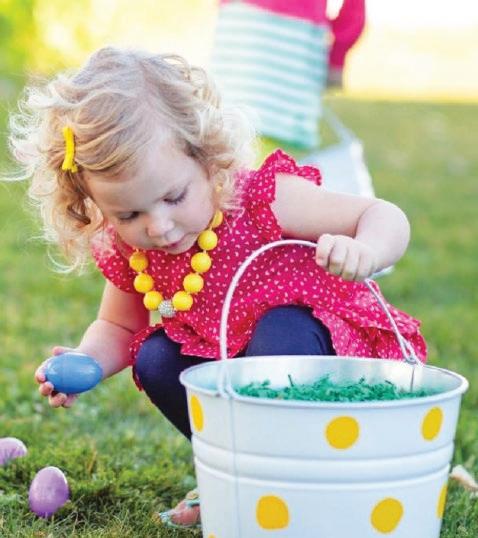
The season invites families to enjoy nature’s renewal together. Walks through blooming woodlands, picnics in parks, and visits to farm shops or spring fairs provide fresh-air fun for everyone. Children delight in Easter egg hunts, while adults rediscover the simple pleasure of a sunny afternoon stroll followed by tea and cake. Even everyday activities feel lighter and more magical when shared outdoors.
Contd p9...






2 Discover Europe With Prestbury Travel 10 Fire, Family & Flavour Adana Kebabs Recipe 12 Carrot Cake Cheesecake Recipe
14 Happy Radio in the Park A New Festival for Wilmslow 16 Prestige Uncovered 19 Setting Realistic Goals
Apogee Wealth
22 Five Minutes With: Lucy Cresswell
26 Testimonial 30 Harmonise Your Home Professional Decluttering
53 When Families Change Sinclair Law 26 50
33 Walking On Petals
A Cheshire Spring
38 Keeper Apples
40 Myths, Monks & Middle East Glastonbury
44 Eggsplore Cheshire!
National Trust Easter Adventures
45 Getting Ready For School
48 6 Ways to Prepare Your Child
Getting Emotionally School-Ready
50 Taking Centre Stage
Performing Arts in Wilmslow




Did you know that nearly four in 10 people (39%) avoid visiting relatives living with dementia because of how difficult it can be to communicate and connect * ?
Dementia can change the way someone communicates. Messages in the brain may take longer to reach the right place, which can make conversations more challenging.
As dementia progresses, families and friends may feel unsure how to stay connected. In a national survey, nearly all respondents (93%) said communication barriers made meaningful interaction harder, but it doesn’t have to be this way. Understanding why communication becomes more challenging is the fi rst step in remaining connected with your loved one.
Staying connected
We know many families feel they don’t have enough support with communication after their loved one develops dementia. That’s why Care UK created Staying connected: a guide to dementia-friendly conversations


This guide offers support for family members and friends to understand some of the ways dementia can impact a person’s ability to communicate and provides advice for making day-to-day communication less stressful. We share practical tips to help you communicate more easily and confidently with your loved ones.
Pick up a free copy in your local care home or download it as part of our ‘ The Big Dementia Conversation’ online advice hub.
We’re here for you
‘The Big Dementia Conversation’ online advice hub is all about sharing knowledge and real-life experiences to support those who are looking after someone living with dementia.
If you’re caring for a loved one with dementia and need a little extra support, why not visit our website to discover more ways we can help you and your loved one.
Visit our online advice hub to fi nd out more by scanning the QR code.
If you’re considering care, call your local care homes Cranford Grange and Long Stone Manor on 0330 029 3480 or visit careuk.com/manchester
Nearly 4 in 10 people say they’ve avoided visiting a relative living with dementia.
93% of people feel communicating barriers can prevent meaningful interaction with their relatives.
The top three things people fi nd most challenging are:
• having to repeat themselves (43%)
• not being recognised (42%)
• understanding what their loved one means (40%)* *According
Contd from p5...
Spring-themed crafting sessions are another way to enjoy indoor days: decorate eggs, make flower crowns, or create table centrepieces. Gardening with kids – planting flowers, herbs, or vegetables – adds another layer of joy as they watch their efforts grow throughout the season.
Spring Break isn’t just for the young. Visiting grandparents, elderly neighbours, or older relatives reminds us of the joy in giving care and sharing time. Cooking a meal together, swapping stories, or teaching traditional games strengthens family bonds and nurtures intergenerational connection. It’s these simple acts of togetherness that linger in memory long after the holidays end.
Spring also breathes life into our local communities. Cheshire’s cafés, bakeries, garden centres, and boutiques enjoy a lively pulse as families explore the area. Farmers’ markets brim with seasonal produce, restaurants delight with fresh spring menus, and shops showcase new collections. Everywhere you go, there’s a sense of optimism in the air –a promise of warmer days, new beginnings, and community spirit.
Ultimately, Spring Break isn’t about extravagant plans; it’s about simple moments that make life sweeter. It’s chatting around a BBQ as dusk settles, laughing over chocolate tray bakes, sharing seasonal lamb dishes, or enjoying apple desserts made from family recipes. It’s intergenerational storytelling, spontaneous picnics, local adventures, and spring crafts – all the little joys that mark the gentle transition from winter to spring.
As the season unfolds across Wilmslow, Prestbury, Alderley Edge and Knutsford... Spring Break becomes more than just time off; it’s a celebration of connection, renewal, and optimism. Families, friends, and communities come together to share good food, good company, and brighter, warmer days.
This is the true magic of Spring Break: laughter, love, and the joy of being together.





Adana lamb kebabs carry the warmth of family cooking at their heart — making them a beautiful addition to an Easter gathering centred on sharing food and time together. Originating in the city of Adana in southern Türkiye, these kebabs reflect a long tradition of cooking meat over open flames, a practice shaped by nomadic Turkic cultures and the rich agricultural history of the fertile Çukurova region. Over generations, local cooks refined the dish into something both rustic and precise: hand-minced lamb blended with spices, shaped onto wide metal skewers and grilled until smoky, juicy and deeply savoury.
For a relaxed Easter feast at home, the recipe can be wonderfully straightforward. Start with good-quality minced lamb that contains enough fat to stay juicy when grilled. In a large bowl, combine the lamb with finely grated onion, a clove or two of crushed garlic, salt, ground cumin, paprika and a pinch of chilli flakes. Some cooks add chopped parsley for freshness. Mix gently but thoroughly with your hands — overworking the meat can make it dense — then let the mixture rest in the fridge for about 30 minutes so the flavours meld.

Ingredients:
For the Kebabs:
● 500 g (about 1 pound 2 ounces) ground lamb
● 1 small finely grated onion
● 2 cloves crushed garlic
● Salt
● 1 teaspoon ground cumin,
● 1 tablespoon each chilli flakes + paprika
For Serving:
● Red onion, thinly sliced
● 6 pitta or flat bread
● 1 cup picked fresh parsley leaves
● 2 medium tomatoes, thinly sliced
● Pickled peppers
Method:
Divide the lamb into portions and shape each one into a long sausage around a skewer. If you don’t have traditional flat skewers, you can mould the mixture into elongated patties instead. Grill them over a barbecue if the spring weather allows, or cook under a hot grill pan or oven, turning occasionally until nicely charred on the outside and just cooked through.
Serve your Adana lamb kebabs family-style, piled onto warm flatbreads with sliced tomatoes, crisp lettuce and a spoonful of cooling yoghurt or tzatziki. A squeeze of lemon brightens the richness, while a simple salad keeps the dish feeling fresh – perfect for an Easter table that celebrates both renewal and togetherness. Above all, the joy of Adana kebabs lies not only in their smoky flavour but in the shared ritual of preparing and enjoying them with the people you love.

With a thick layer of creamy cheesecake covering spicy sweet carrot cake, this carrot cake cheesecake recipe is the ultimate Easter dessert! If you love carrot cake and cream cheese frosting, this carrot cheesecake combines both desserts into one showstopping treat –perfect for Easter brunch or a fancy spring dinner party.
Ingredients:
Carrot Cake Layer:
● 1 cup shredded carrot
● 1/2 cup applesauce or crushed pineapple
● 1/4 cup oil or additional applesauce
● 2 tsp pure vanilla extract ● 2 tsp vinegar
● 1 1/2 cups flour ● 1 1/2 tsp ground cinnamon
● 3/4 tsp salt ● 1/2 tsp baking soda
● 1/2 cup sugar or xylitol
Cheesecake Layer:
● 24 oz cream cheese or vegan cream cheese
● 2 cups yogurt
● 2 1/2 tsp pure vanilla extract
● 2 tbsp cornstarch or 1/4 cup protein powder
● 2/3 cup sugar or pure maple syrup or xylitol
Method:
To make the carrot cake cheesecake, first preheat the oven to 350 F. Grease a nine inch springform pan well. Whisk all carrot cake dry ingredients, then stir in remaining cake ingredients just until evenly mixed. Spread into the prepared pan, and bake 20 minutes. Let cool while you make the cheesecake. Blend all cheesecake ingredients in a blender or food processor just until smooth. Do not overbeat. Smooth on top of the carrot cake crust and place on the oven’s center rack. Fill any pan halfway with water and place it on the lower rack of the oven. Bake 30 minutes. Without opening the oven door, turn off the heat and let the recipe sit in the closed oven for five minutes. Remove the still under baked cheesecake and let cool fully. Then refrigerate uncovered for at least four hours or overnight, during which time the texture will firm up considerably. Slice and enjoy.



RADIO LAUNCHES BRAND-NEW FAMILY FESTIVAL FOR WILMSLOW
‘Happy Radio in the Park’ is set to bring music, fun and a town-wide celebration to the Carnival Fields this June.
One of the North West’s fastest-growing radio stations is bringing a brand-new family festival to the heart of Cheshire this summer.
Happy Radio in the Park will take place on Saturday 27 June 2026 from 2pm-10pm on the Carnival Fields in Wilmslow, promising a vibrant “festival in a day” experience for families, music lovers and the local community.
Hosted by your favourite Happy Radio presenters, the event will feature a packed afternoon and evening of live music, entertainment and family attractions – all designed to celebrate Wilmslow and bring the community together.
The festival will be headlined by award-winning tribute acts performing the music of some of the world’s biggest artists, including:
● The Voice of Whitney – Michelle Lawson
● Harry Styled – a spectacular Harry Styles tribute
● Duran – UK Duran Duran Tribute



● Benson Booned – tribute to rising star Benson Boone
More acts will be announced in the coming weeks, including local performers from across the Wilmslow area. Alongside the live music, Happy Radio in the Park will feature a variety of attractions for all ages including:

● Family entertainment and activities
● Traditional funfair rides
● Local food and drink vendors
● Pop-up market stalls from local businesses
● A lively festival atmosphere designed for the whole family
The event is being created by Happy Radio, which has become the fastest-growing radio station in the North West since launching in 2022, now reaching more than 750,000 monthly listeners. Its presenter line-up includes Steve Penk, Rachael & Wingman, Chelsea Norris, Spence Macdonald, Darren Proctor and Paul Crone, alongside many other well-known personalities.
Happy Radio broadcasts across the region on DAB, is available on Freeview TV (Channel 277), online, via Smart Speakers, and on the Happy Radio UK App for iOS and Android. The station is also the official radio partner of the Trafford Centre and AO Arena.
Max Eden and Darren Proctor, Co-Owners of Happy Radio, said:
“We’re incredibly excited to bring Happy Radio in the Park to Wilmslow this summer. Our goal is to create a fun, family-friendly festival that the whole community can enjoy together.
“Wilmslow is such a fantastic town with a brilliant community spirit. We’re really proud to be working with local businesses, performers and traders to showcase everything that makes Wilmslow special.
“This will be a true celebration of the town –great music, great food, local talent and a brilliant day out for families.”
With live music, entertainment and community spirit at its heart, Happy Radio in the Park is set to become one of Wilmslow’s biggest new summer events.



In the evolving story of Northern ambition, Cheshire’s Golden Triangle has become more than a postcode – it’s a brand. At the centre of this narrative sits Cheshire’s Golden Triangle Magazine, alongside the growing influence of CGT Networking, both shaping how prestige, entrepreneurship and community intersect across Alderley Edge, Wilmslow and Prestbury. Together, they are redefining what modern luxury looks like: connected, entrepreneurial and locally driven.
The Golden Triangle’s reputation has long been linked to high-value homes and high-profile residents, but a deeper shift is underway. Entrepreneurs, founders and investors are choosing the area not just for lifestyle, but for opportunity. Through curated features, founder interviews and property insights, Cheshire’s Golden Triangle Magazine has become a platform that celebrates this new wave of business leadership – spotlighting the people building brands, scaling companies and investing back into the region.
Property remains a powerful anchor of prestige, yet today’s buyers are thinking like entrepreneurs. Homes are lifestyle assets, content backdrops and strategic investments all at once. Developers and

investors featured through the magazine often blend design with commercial foresight, transforming the local property landscape into a reflection of ambition. By documenting these stories, the publication positions itself not simply as a lifestyle title, but as a voice of entrepreneurial culture within the Northwest.
Equally important is the role of CGT Networking, which has quietly become a catalyst for collaboration. CGT Networking events create a space where founders, creatives and investors connect organically. Deals start with conversations, partnerships form through community, and visibility turns into opportunity. The network reinforces the idea that prestige today is not only about exclusivity – it’s about access to the right circles.
This blend of media and networking reflects a wider evolution in how success is built. Entrepreneurs in the Golden Triangle are increasingly focused on personal branding, storytelling and strategic presence. Features within Cheshire’s Golden Triangle Magazine amplify voices that might otherwise remain behind closed doors, while CGT Networking transforms those stories into real-world connections. Together, they form a bridge between visibility and growth.
The region’s appeal lies in balance. Close enough to Manchester’s economic momentum yet distinct in identity, the Golden Triangle offers an environment where founders can build global businesses from a local base. Co-working hubs, boutique agencies and digital-first ventures are thriving, supported by a culture that values both ambition and lifestyle. Through its editorial voice and networking initiatives, the CGT platform highlights how prestige is evolving — less about status symbols alone and more about innovation, collaboration and influence.
Looking forward, the combination of Cheshire’s Golden Triangle Magazine and CGT Networking positions the region as more than a luxury enclave; it becomes a movement. By championing entrepreneurs, showcasing property visionaries and bringing ambitious people into the same rooms, the platform fuels a narrative where success feels accessible yet aspirational.
Ultimately, Prestige Uncovered tells a story not just about wealth, but about momentum. At the heart of Cheshire’s Golden Triangle, media and community converge – proving that modern prestige is built through connection, visibility and entrepreneurial spirit.
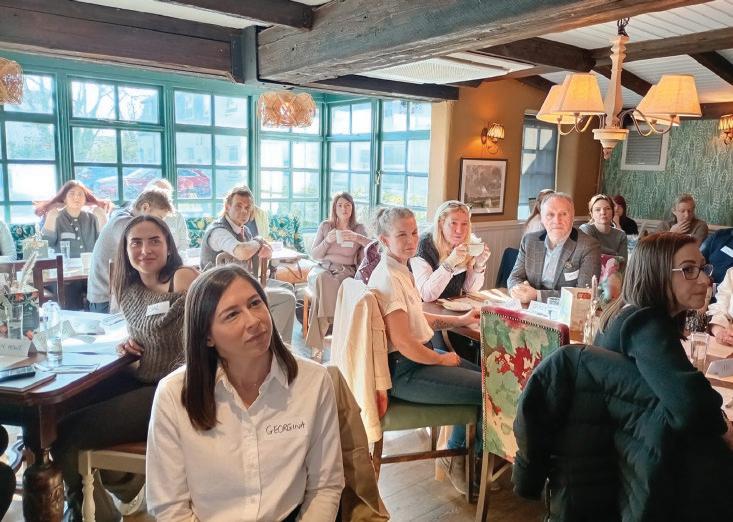



I’m James Riley, a senior financial planner based in Wilmslow, with clients throughout Cheshire and the north-west.
I specialise in helping individuals and business owners who are:
� Looking at options around retirement
� Concerned about Income Tax or Corporation Tax
� Wanting to explore options around their Inheritance Tax liability
� Needing to review their existing pensions and investments
� Requiring advice on their business or personal protection.
5 important things you need to know about Apogee Wealth Management:
� A Chartered firm
� Independent, so can recommend products from the whole of the market
� Highly experienced team
� Head office in Knutsford
� Rated highly by our clients, with a score of 4.9 out of 5 on VouchedFor from more than 200 reviews Get



The first quarter of 2026 is a good time to think about what you want to achieve in the coming months. A tailored financial plan can help you set realistic goals. Creating goals on your own can be challenging, especially if they bring together several different parts of your financial plan or have a long-term time frame. If you’re overly ambitious, it can be disheartening if you don’t reach the target you’ve set. On the other hand, if you’re too cautious, you could miss out on opportunities. Here are seven ways a financial plan could support your goals in 2026.
A valuable aspect of a financial plan is understanding your current financial position. To assess what’s possible, you first need to know where you are. A financial plan might involve reviewing your assets and budget so you’re in a better position to identify where changes could be made. For example, if your goal is to retire in 10 years, you may benefit from increasing your pension contributions. By understanding where your money is going, you might find that you could reduce your day-to-day spending or divert some of your savings to your pension.
Bourton-on-the-Water
While managing your finances often conjures thoughts of figures and calculations, what’s really at the centre is your goals. Working with a financial planner can create a space to explore what matters to you. Some goals might already be clearly defined, such as supporting children when they want to get on the property ladder or retiring by a set date. However, other goals might become apparent through discussions with your financial planner, such as being in a position to overcome a financial shock or achieve peace of mind.
Once your goals are set out, it’s time to consider what you’ll need to achieve them. If you set a vague goal, such as “retire comfortably”, it can be difficult to assess if you’re on track. A financial plan can help you get to grips with the numbers. So, your goal might become “to secure a retirement income of £40,000 a year”. You can then take it a step further to calculate what the size of your pension pot will need to be at retirement, and how you might need to alter current contributions.
Most people don’t have just one financial goal. It’s common to have several, often competing, priorities. You might be paying off your mortgage, saving for retirement, putting money aside for your children, and hoping to go on holiday at the same time. A financial plan can bring together these different goals, so you’re able to strike the right balance between short- and long-term objectives.
One challenge of creating an effective financial plan is that you’ll usually need to consider how your finances will change over decades. It can be difficult to assess how the decisions you make today could have a positive or negative impact in the future. A cashflow model is a tool that allows you to visualise how your wealth might change in different scenarios. For instance, you might use the model to see how adding different amounts to your investment portfolio each month will change your ability to reach your goals.
It’s not just the factors you can control that will affect the outcome of your financial plan. Sometimes, external influences, like the rate of inflation or stock market performance, might
have an impact. While you can’t know for sure what outside factors will occur, you can use a cashflow model to test different scenarios. For example, when investing, you might model several different average annual rates of return to assess what they’d mean for your goals. This allows you to consider how your finances would cope in different scenarios, and you may be able to take steps to help ensure your goals stay on track.
Every year, thousands of people make and break a new year’s resolution. According to a YouGov poll (17 December 2025), only 38% of people who made resolutions at the start of 2025 had kept all of them. Working with a financial planner means you’ll have regular meetings and someone who can hold you accountable. With a clear strategy to follow, you’ll know when you’re straying from the path that could turn your goals into reality. As a result, you might be less likely to break the commitments you’ve made. Talk to us about your goals for 2026 If your goals have changed or you’d like a review to understand whether you’re on track, please get in touch to arrange a meeting.
Please note: This article is for general information only and does not constitute advice. The information is aimed at individuals only. All information is correct at the time of writing and is subject to change in the future. The value of your investments (and any income from them) can go down as well as up and you may not get back the full amount you invested. Past performance is not a reliable indicator of future performance. Investments should be considered over the longer term and should fit in with your overall attitude to risk and financial circumstances. A pension is a long-term investment not normally accessible until 55 (57 from April 2028). The fund value may fluctuate and can go down, which would have an impact on the level of pension benefits available. The Financial Conduct Authority does not regulate cashflow modelling.











When Lucy Cresswell left school, she knew she wanted a career that combined problem-solving with helping people in a meaningful way. Law quickly stood out. Today, as an Associate Solicitor at Vault Private Client – part of Alderley Edge based Beyond Law Group – Lucy works closely with families to guide them through wills, probate and inheritance planning. Qualifying through the newer Solicitors Qualifying Exam (SQE) route, she represents a new generation of lawyers bringing warmth, clarity and a modern outlook to what can often be emotional and deeply personal conversations, and recently JP spent 5 Minutes With Lucy Cresswell to find out a bit more..
JP: When you left school, did you always know you wanted to be a lawyer?
LC: When we are younger, we have ambition and feel like we can take over the world. I first started with a career in dancing, where I travelled the world and competed in the world cup. However, the one thing that stopped me from devoting my life to dance was my desire to learn the law. I was lucky that I knew I wanted to be a lawyer from being in school, because it can be challenging to know what you want to do with so many opportunities on the horizon. I had a passion to advise, learn and be a leading lawyer in the industry and that spark has continued to grow as I have developed in my career.
JP: You recently visited Wilmslow High School to talk about your career. What advice would you give to young people considering a career in law?
LC: It is really important to inspire the younger generation and school was where my foundations were built. My advice to anyone, which I relayed to the students was take hold of everything school has to offer. The opportunities, although sometimes time-consuming and tedious are endless. Law is more than a textbook and those wider skills are what put you in front of the rest when it comes to winning work and advising clients. The personable approach to dealing with peoples lives comes from being in a team in say, a sports team. Your ability to learn and solve problems comes from exams and
education. My advice is to say yes to as much as you can, because the law lends itself to those that have things that others don’t. Being a reliable, responsive and knowledgeable lawyer comes from determination and growth from the inside, rather than just the qualifications that you have.
JP: Why did you choose private client law in particular?
LC: I fell into Private Client law, as I knocked on the door of Hill Dickinson where I got my first work experience back in 2016. I did several placements around Manchester, all in private client law and I took an instant love to the challenges, personable and client-facing tasks it included. Private client law is all about relationships. It allows you to help individuals, whether that is a sports professional or a business owner and advise clients to see estate planning as an opportunity, rather than a morbid and checklist exercise. Private Client was my passion, I had a passion for helping people through losing their loved ones and working with other professionals in the area on how to best structure assets in their estate.
JP: For families who may feel nervous about making a will, what would you say to them?
LC: We all work hard to have as many assets as we would like to ensure we provide for our loved ones. However, the risk associated with losing it all by not making a Will can be catastrophic. It is an opportunity to understand and shape what the future looks like and consider how your legacy will pass on to the next generation. My meetings are relaxed and there is no obligation to go ahead. There is really nothing to lose and I can guarantee that most clients leave feeling lighter without the burden of putting this off and have peace of mind about the future.
JP: What’s the most rewarding part of your job?
LC: I have two responses here, my first is the sense of accomplishment when I have clients who come to me with fairly complex estates and have no idea what is happening to their estate and they have worked with me and by the end of the process feel relieved and comfortable with the future. The second is being able
to connect with other professionals. It encourages me to grow and strive for success when I inspire other professionals and they comment and support my work, networking or accomplishments. I am an advocate for networking and find the importance of connecting with other advisors is something that is rewarding, especially in the cheshire area.
JP: What is your ambition for the future?
LC: My ambitions can sometimes run away with me, but for now…my personal ambition is to become a leading lawyer in the area and become an inspiration to young professionals. I am a committee member of Women in Wills, where I host events for all women in the sector across the UK and I wish to continue to be an advocate for change to ensure women are leading their way through the industry. I feel I have that in me to bring a new message, approach and vibe to Private Client law for women. On a business side, my ambition for Vault, is that we become the leading boutique private client firm in Cheshire. We are growing and clients are finding our approach a fresh perspective, responsive and overall an easy process to handle such challenging concepts.
Approachable, thoughtful and quietly driven, Lucy Cresswell is part of a new wave of solicitors focused not just on legal expertise, but on relationships. Her journey from school leaver with an interest in debate to trusted adviser for families shows how determination – paired with empathy – can shape a career that truly makes a difference to Cheshire’s Golden Triangle residents and the business community alike.

EMMA JAMES & VICTORIA ROSCOE HOLD
‘THE KEYS TO CHESHIRE’S GOLDEN TRIANGLE LIVING’ WITH EXCEPTIONAL LOCAL EXPERTISE AND A HIGHLY PERSONAL 1-1 APPROACH, TOGETHER THEY HELP BUYERS AND SELLERS ACROSS CHESHIRE’S PRESTIGIOUS GOLDEN TRIANGLE ACHIEVE OUTSTANDING RESULTS THROUGH MELLER BRAGGINS, 99 KING ST, KNUTSFORD WA16 6EQ.



Emma James is Sales Director at the Knutsford office of Meller Braggins and brings nearly 30 years of experience in the property industry. Specialising in the sale of high-quality and individual homes, Emma is particularly well known across Cheshire’s Golden Triangle for her honest advice, personal approach and consistently strong results. As a resident of the Golden Triangle herself, she combines professional expertise with genuine local insight, offering clients a real understanding of both the market and the lifestyle. With a long-established network and a hands-on approach from start to finish, Emma is trusted to guide clients through every stage of the moving process with care, discretion and confidence.
Victoria Roscoe is also a Sales Director at the Knutsford office of Meller Braggins and an integral part of the team, known for her proactive approach and strong understanding of the local market. Since beginning her career in 2017, she has built a solid reputation for providing accurate valuations and clear, well-informed advice across both traditional and auction sales. Friendly, approachable and highly organised, Victoria works closely with buyers and sellers to ensure a smooth and positive experience throughout. Her attention to detail and commitment to delivering a high level of service make her a valued support to clients across the Golden Triangle.
Working with Emma James from Meller Braggins has been an absolute pleasure. From start to finish, they demonstrated an exceptional level of professionalism, attention to detail, and commitment to ensuring the entire process went smoothly. Emma was always available to answer questions promptly, offered honest and informed advice, and handled every aspect with care and transparency. I particularly appreciated her conscientious approach – nothing was ever too much trouble, and she consistently went above and beyond to make sure we felt supported and well-informed. I would highly recommend Emma and Meller Braggins to anyone looking for an attentive, reliable, and genuinely professional estate agent. P Gibbons Testimonial Feb 26

Tel: 01565 656544
Info@mellerbraggins.com www.mellerbraggins.com


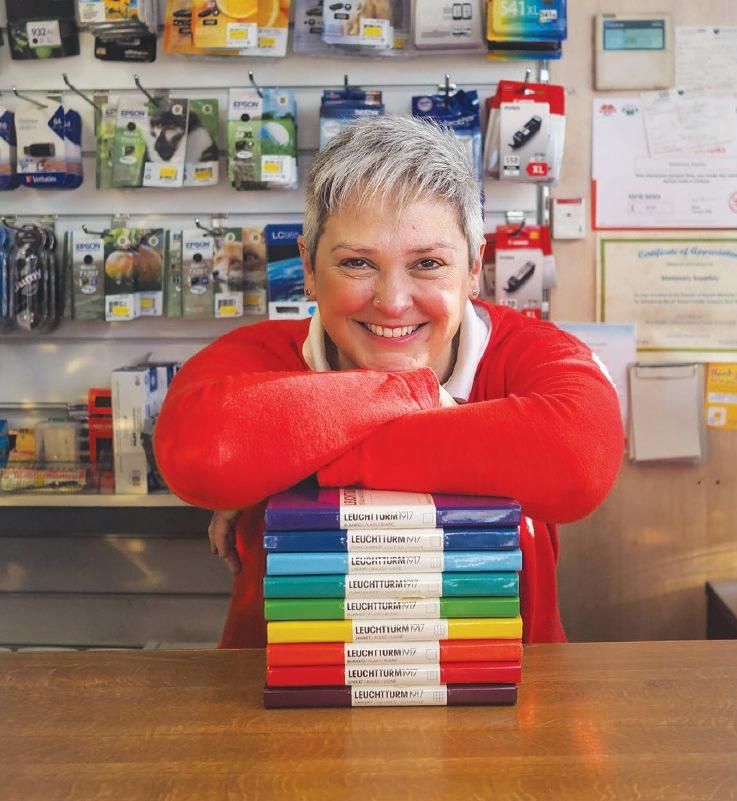
“I booked Wayne to survey both my shops and carry out a full fire review. He was immensely helpful and professional, and I was impressed by how thorough he was. He carried out a comprehensive inspection, ensured we had the correct extinguishers in the right locations, supplied and installed new ones where needed, and gave invaluable advice on fire prevention and response. He also provided a fire log so we can keep accurate records.” Sarah says.
Wayne replies, that for us, this is standard service – it’s what every client deserves. What concerned Sarah was that her previous provider did none of this. They simply arrived once a year, performed a basic service, and left. No guidance, no support. That’s not good enough. Fire extinguishers are there to protect your business in an emergency – you need confidence that they’ll work when it matters. We also ensure you know how to use them.
As Sarah explained:
“Wayne demonstrated how to use the extinguishers properly. We all hope we’ll never need to, but it’s so important to know how. He even demonstrated for neighbouring shops. We’re now confident we could act if needed.”
SARAH

When Sarah decided that it was time to review her fire systems she got in touch with Wayne Francis of Francis Fire who cares for many local Cheshire’s Golden Triangle homes and businesses and this is what she has to say...
When it comes to protecting your business from fire, knowledge truly is power. At Francis Fire, we include practical guidance and demonstrations as part of our service because we genuinely care about our clients’ safety and compliance. If your current provider feels rushed or impersonal, consider a local expert who takes the time to do things properly.
Francis Fire is proud to be your local 5-star rated fire extinguisher specialist, providing assessments, installation, commissioning, and annual servicing to keep your business protected and compliant.
















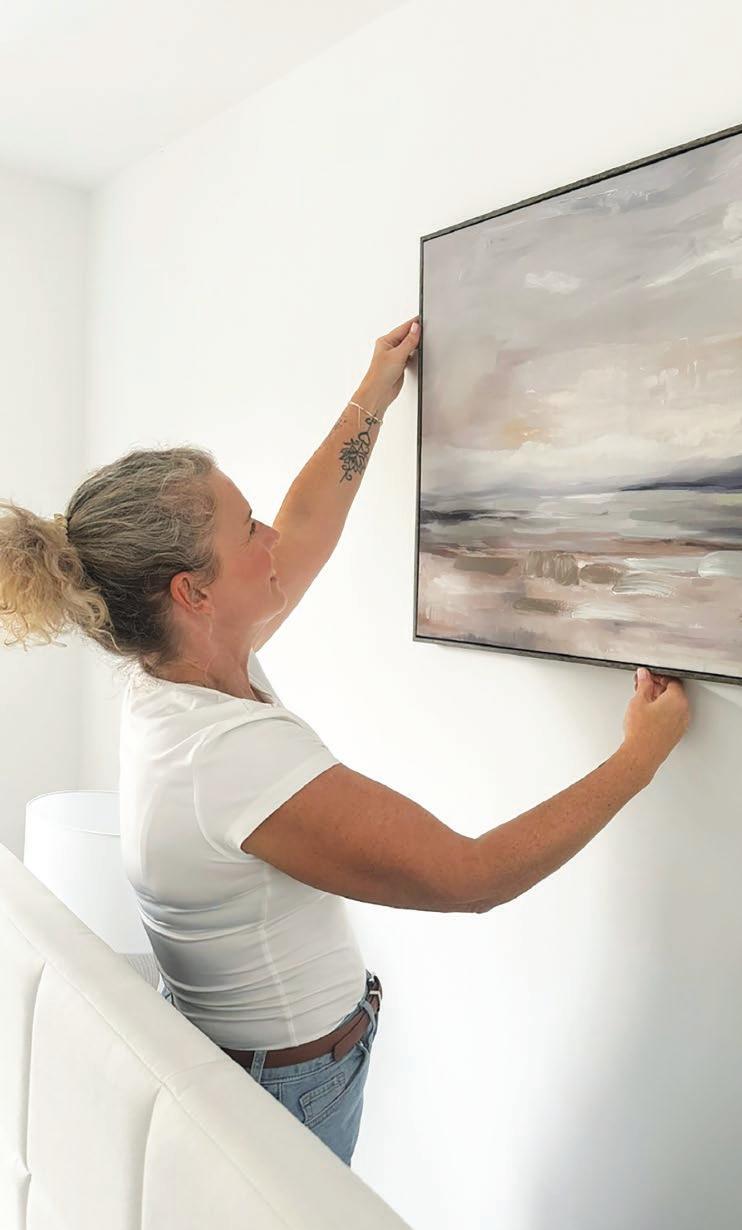

As spring arrives and thoughts turn to spring cleaning, going one step further by decluttering first makes all the difference. Clearing cupboards, surfaces, and storage areas before cleaning allows you to reach every corner properly, work more efficiently, and achieve fresher, longer-lasting results throughout your home.
In today’s fast-paced world, our homes should be more than places to sleep, they should be our sanctuaries. Spaces that restore energy, bring clarity and allow us to breathe deeply.
Harmonise Your Home is dedicated to creating calm, clutter-free environments that enhance wellbeing and restore balance. Through thoughtful decluttering, home organisation, house move preparation and compassionate support, founder, Kate and her team help clients rediscover the joy of living in a space that truly feels like home.
At the heart of Harmonise Your Home is Kate, grounded, practical and deeply passionate about helping others. Her calm presence and mindful outlook shape every session. Practising mindfulness daily, she brings clarity and balance not only to her own life but into the homes of her clients.
With a professional background in visual merchandising within the retail industry, Kate has an exceptional eye for presentation and flow. Her methodical approach and strong attention to detail ensure that each project is handled with precision, care and creativity.
But beyond systems and storage solutions lies something deeper, an understanding that clutter is rarely just about “stuff.” It can reflect life transitions, emotional overwhelm, low energy or simply years of accumulation that quietly build over time.
Harmonise Your Home works with the “gentle touch” approach. This means being aware of your energy, the energy within your home, and the pace that feels right for you.
Kate acts as a trusted guide, someone who listens without judgement and adapts to each individual’s needs. Respect for privacy, personal boundaries and emotional attachment to belongings is central to every session.
The result is not just an organised space, but a supportive and transformative experience.
Each session is entirely tailored and hands-on. It begins with a conversation, identifying the areas that feel overwhelming and clarifying how you want your home to feel.
● Sort and simplify belongings with sensitivity and encouragement
● Decide what to keep, donate, recycle or sell
● Create logical, easy-to-maintain systems suited to your lifestyle
● Establish simple habits to help maintain order long term
Practical details are thoughtfully managed, donation bags are provided, and where appropriate, a car load of items is delivered to a local charity shop at the end of the session to reduce the overwhelm and to appreciate the fresh space created.
Beyond the physical transformation, clients often experience renewed motivation, positive
energy and a sense of confidence that extends into other areas of life.
Moving home is widely recognised as one of life’s most stressful events. Whether upsizing, downsizing or beginning a new chapter, preparation makes all the difference.
Harmonise Your Home offers compassionate and practical support in the 4-8 weeks leading up to a move. Working methodically through one room at a time, Kate helps clients declutter, organise and pack using high quality materials to protect treasured belongings, ensuring only meaningful and necessary items travel to the next home. The service can also be used after the house move to settle in with ease.
This not only reduces removal costs but allows properties to be presented at their very best in preparation for going on the market. A thoughtfully edited space photographs beautifully, feels more spacious, creates a warm, inviting impression for potential buyers and can increase the turnaround time. This can also be enhanced with home staging and styling.
Ultimately, Harmonise Your Home is about more than tidy cupboards and storage boxes. It is about creating space, physically and emotionally.
Because when you streamline your home, you streamline your life too.

07478059663 harmoniseyourhome.co.uk @harmoniseyourhomecheshire
We’re celebrating 20 years of excellence – and you could win £20,000 in our Anniversary competition! To enter, simply spend £500 or more with us between now and the end of August 2026.
For over 20 years, Cloudy2Clear, a trusted family-run business, has been the UK’s leading domestic glass replacement specialists, serving as your One-Stop Shop for all your glazing requirements – and now we’re marking this milestone with an exciting competition where one lucky customer will win £20,000! We take pride in generating our own leads, crafting tailored quotes, and manufacturing our own glass using only the highestquality materials to ensure exceptional results. Unlike competitors, we never use subcontractors—our team consists entirely of skilled, in-house professionals, guaranteeing consistent quality and reliability. Every glass unit we fit comes with a 25-year guarantee, complemented by comprehensive aftersales care, providing you with lasting peace of mind.
Why opt for costly full window frame replacements that lead to unnecessary redecoration expenses? By replacing
only the failed glass unit, we save you money and minimise disruption –perfect for qualifying for our £20,000 prize draw while upgrading your home. Join over 344,000 satisfied customers who trust our ethical, affordable service. Failed double glazing can compromise your home’s protection and energy efficiency, so check your windows today to avoid future costs.
Since 2005, Cloudy2Clear has been committed to saving customers money while supporting local communities. Manager Anthony Wagstaff explains, “Our focus is on replacing just the glass, not the entire window, which reduces costs and upheaval. As a One-Stop Shop, we manage everything—from lead generation to crafting premium glass with a 25-year guarantee and dedicated after-sales support—making us the smart, costeffective choice in any economy.”
For a free quote (and your chance to enter the competition), call 0800 61 21 118 or visit www. cloudy2clear.co.uk today!
(Prize draw 28/8/2026 - T’s&C’s apply. Visit www.cloudy2clear.co.uk for more information)


Janet Beard




A spring walk through the Cheshire countryside is less a journey from one place to another than a slow unfurling of colour, scent and sound. It begins quietly, often beneath a sky still unsure of itself, where pale sunlight drifts over fields and hedgerows as if testing the day. The lanes are narrow and timeworn, stitched into the land, their edges softened by moss and the first brave flowers of the season.
Underfoot, the ground is still cool and damp, carrying the memory of winter rains. Yet everywhere there are signs of renewal. In the shadier corners of woodland and along the banks of streams, snowdrops linger like a final sigh of winter. Their white, nodding heads hang delicately from slender green stems, each petal marked with a subtle green heart. They are modest flowers, but in their quiet persistence they feel deeply hopeful, reminding the walker that spring is not a sudden arrival but a gentle negotiation.
Soon, the snowdrops give way to drifts of primroses, scattered generously along hedgerows and woodland edges. Their soft yellow petals seem to catch the light, glowing against dark earth and leaf litter. Each flower sits open and welcoming, its pale centre etched with faint orange markings, as though brushed by a careful hand. Primroses have





a reassuring presence – familiar, comforting, and faintly nostalgic – evoking childhood walks and the sense that spring has truly found its footing.
As the path opens out across meadows, the air begins to change. There is a sweetness to it now, mingled with the earthy scent of soil warming under the sun. Dotted across the grass are celandines, their bright, glossy yellow petals shining like little suns. Low-growing and exuberant, they cluster in cheerful abundance, opening wide when the sun appears and closing again if clouds drift across. Nearby, delicate white stitchwort stars scatter themselves through the grass, their fine petals trembling in the lightest breeze.
Cheshire’s hedgerows come into their own in spring, becoming living borders rich with texture and colour. Blackthorn blossom arrives early, frothing along the bare branches in clouds of white, each small flower sharp-scented and bright. A little later, hawthorn follows, its blossom creamier and softer, filling the air with a heady, almost almond-like perfume. Walking beside these flowering hedges feels like moving through a corridor of scent, alive with the hum of bees and the flicker of newly returned butterflies.
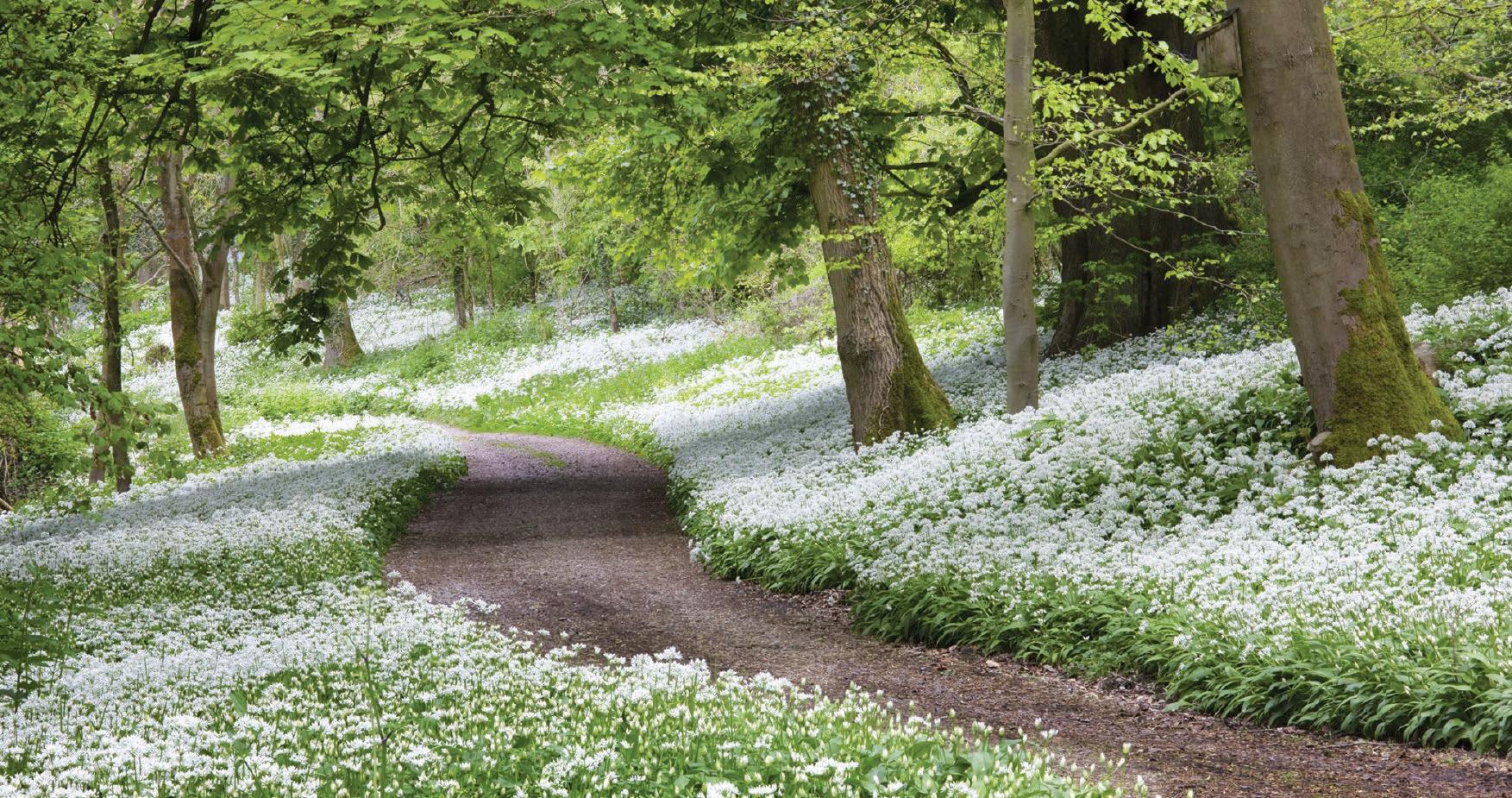
In damper ground and along the margins of woodland, wild garlic announces itself before it is even seen. Its unmistakable scent drifts through the air, fresh and pungent. Then come the leaves –broad, green, and glossy – spreading generously across the forest floor. Above them rise clusters of starry white flowers, each delicate bloom forming part of a soft, cloud-like head. When sunlight filters through the trees and catches these blossoms, the effect is almost luminous, as though the ground itself were glowing.
Perhaps the most iconic sight of a Cheshire spring comes a little later, when bluebells take centre stage. In ancient woodlands, they spread in vast, undulating carpets, turning the forest floor into a sea of violet-blue. Each bell-shaped flower hangs gracefully from its arching stem, releasing a gentle, honeyed fragrance that lingers in the still air. Walking through bluebells is an immersive experience; the colour seems to rise and fall with the land, drawing the eye forward and downward at once, inviting unhurried admiration.
Beyond the woods, orchards burst into bloom, especially in rural pockets where traditional apple and pear trees still thrive. Their blossoms are soft and painterly – white petals blushed with pink, clustered densely along gnarled branches. When the wind stirs, petals drift down like confetti, settling briefly on grass and paths before being carried away again. There is something celebratory about orchard blossom, a fleeting abundance that feels both joyful and fragile.
The meres and waterways that punctuate the Cheshire landscape add another layer of beauty to the walk. Along their edges, marsh marigolds blaze in rich yellow, their large, cup-like flowers reflected in the still water. Nearby, purple loosestrife and early irises begin to rise, hinting at the floral riches yet to come. These waterside blooms attract birds and insects alike, adding movement and sound to the scene: the plop of a frog, the flash of wings, the quiet industry of bees.
As the day warms, buttercups begin to assert themselves in open fields, turning pastures into shimmering sheets of gold. Their simple, glossy






petals catch the sunlight so brightly that they seem almost unreal, a childhood idea of a flower brought vividly to life. Cowslips appear too, especially on old meadows and gentle slopes, their nodding clusters of yellow bells rising above rosettes of crinkled green leaves. Subtle and lightly scented, they lend the landscape an air of old-fashioned grace.
By the time the walk draws to a close, the sense of immersion is complete. Spring in the Cheshire countryside is not about spectacle alone, but about accumulation: the layering of colours, the mingling of scents, the quiet conversations between flowers, insects, birds and light. Each step reveals something new, yet nothing feels hurried or forced. The flowers bloom as they always have, in their own time, shaping a landscape that rewards patience and attention.
To walk here in spring is to be reminded that beauty often lies in details – the curve of a petal, the way light touches a hedgerow, the soft hush of woodland air scented with bluebells and garlic. It is a season that invites lingering, asking the walker to slow down, look closely, and let the countryside tell its story, one flower at a time.

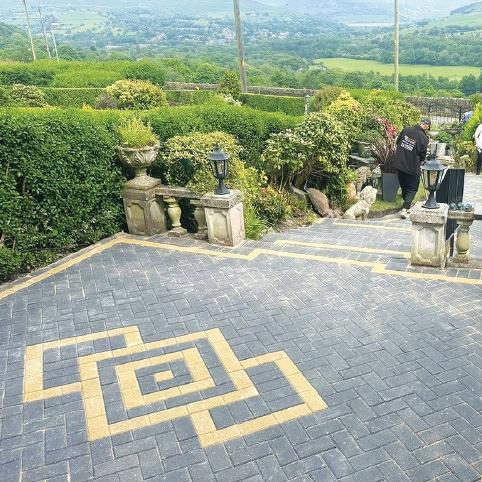
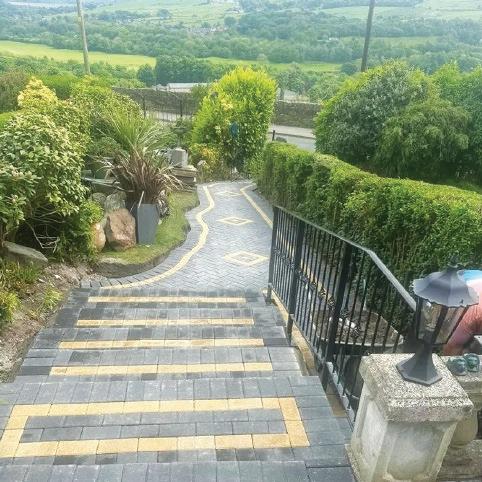



Inspired by my Spring trip to Somerset, home of apples and of course, cider, I thought I would look into our UK apple season and I came across the term “Keeper’’ Apples...
So, apple season is traditionally thought of as late summer to autumn, but thanks to clever storage methods, some varieties continue to shine well into spring. These are the “keeper” apples – fruit that, when stored carefully in cool, dark, and ventilated spaces, can retain their flavour and texture long after they are harvested. For home cooks and gardeners alike, this means fresh, British apples are still available in March, April, and sometimes even May, bridging the gap between winter scarcity and the new harvest.
Varieties like Bramley’s Seedling, Howgate Wonder, Herefordshire Russet, and Ashmead’s Kernel are celebrated not just for their flavour but for their remarkable keeping qualities. Bramleys, sharp and juicy, are ideal for cooking,


while the sweet, honeyed Ashmead’s Kernel gains even more depth the longer it rests in storage. Howgate Wonder and Herefordshire Russet hold their firmness and subtle acidity, making them perfect companions for springtime desserts or just a simple snack straight from the fridge. These apples are a reminder of traditional British orchard practices, where storage and patience were just as important as planting and picking.
If you’re looking to enjoy these stored treasures in a refreshing way, nothing beats a crisp spring drink that celebrates the apples themselves. Try a Spiced Apple & Ginger Fizz. Start with 500 millilitres of freshly pressed apple juice or strained homemade stewed apples, then add the juice of a lemon and a touch of honey to taste. Grate in a thumb-sized piece of fresh ginger, stir it all together, and chill for about half an hour. When you’re ready, pour over ice and top with sparkling water or elderflower tonic. Garnish with fresh mint and a few
thin apple slices, and you have a drink that perfectly balances the mellow sweetness of stored British apples with bright, springtime freshness. These resilient apples show that the season doesn’t end when the calendar turns to spring. With a little care, the fruit from last autumn’s harvest continues to deliver flavour, versatility, and a touch of homegrown magic – whether you’re enjoying them in a simple snack, a comforting dish, or a sparkling, fruity drink. It’s a quiet reminder that, in the world of British orchards, patience pays off, and the joys of apple season can last well beyond the harvest.



Jacqui Priestley is ‘The Curious Traveller’ visiting three of Britain’s Strangest and Most Charming Towns - Part 1Myth, Monks and Middle Eastern Flavours in Glastonbury, Somerset
Glastonbury Today –A Unique English Town
Nestled in the heart of the Somerset Levels in southwestern England, Glastonbury is a town where ancient history and a vibrant modern cultural identity converge. With a population of just under 9,000 residents, Glastonbury preserves its smalltown character even as it attracts visitors from across the UK and around the world.
Unlike many rural towns of comparable size, Glastonbury today wears many hats. It is both a peaceful community of artists, families, and longtime locals, and a magnet for seekers of spirituality, mythology and creativity. Independent shops line the High Street, offering everything from crystals and bespoke jewellery to locally crafted bread

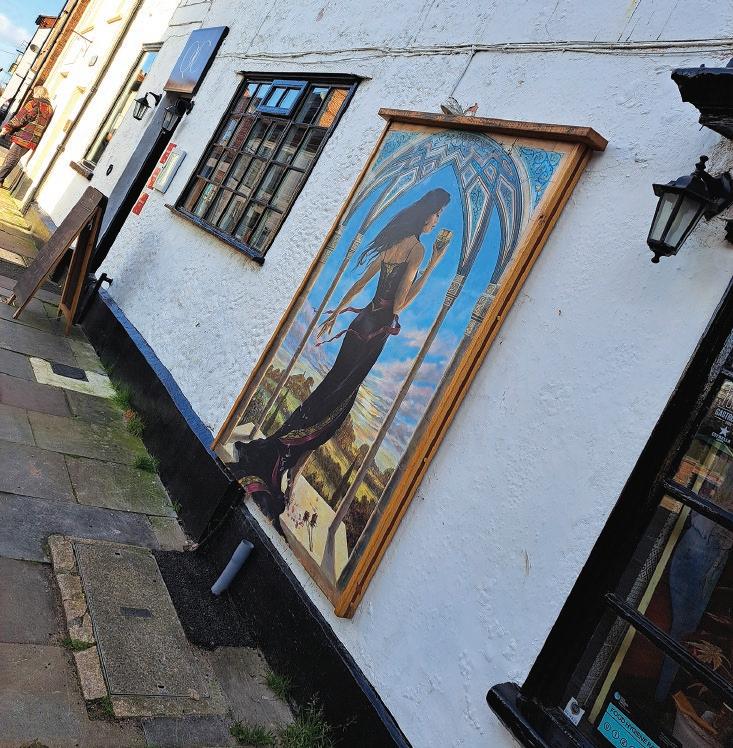
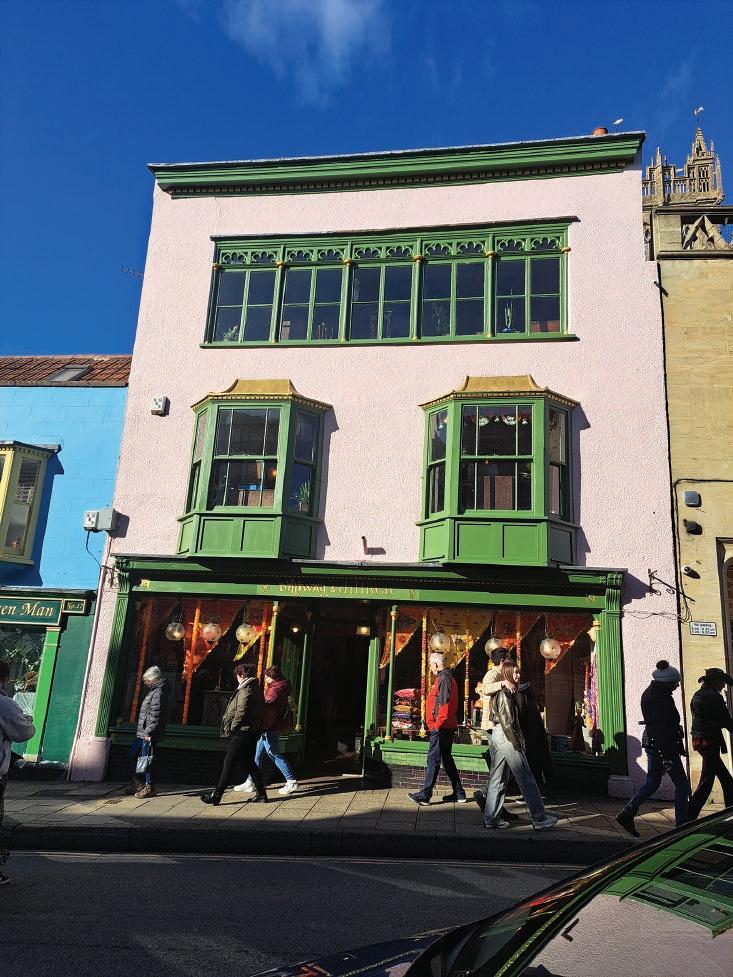
and artisan gifts, reflecting the town’s eclectic and open-minded culture.
Community life in Glastonbury remains active and inclusive, with markets, craft fairs, talks, and workshops regularly drawing residents and visitors alike. Events like the Glastonbury Carnival, Medieval Fayre and seasonal solstice celebrations at Glastonbury Tor bring together people of all ages in shared traditions that combine fun, history and local pride.
Glastonbury’s identity is often entwined with myths as much as with reality. The nearby Glastonbury Festival, though technically held in the neighbouring village of Pilton, has made the town’s name synonymous with one of the biggest and most iconic music and arts gatherings in the world – a celebration of culture and community that brings hundreds of thousands of people to Somerset every summer, and whose proceeds support charity and local causes year after year.
Yet day-to-day life outside festival season is quieter and deeply rooted in the surrounding countryside and heritage. Close proximity to countryside walks, nature spots and architectural landmarks like

Glastonbury Tor gives residents and visitors a true sense of rural England’s beauty and tranquillity.
Like many attractive towns, Glastonbury also faces contemporary pressures around housing, amenities and community balance. Conversations among locals sometimes reflect tensions over tourism, housing affordability and how to preserve Glastonbury’s character in the face of change. However, most agree on its allure: a place with a rich past, a lively cultural calendar, and a community that defies easy categorisation.
At the heart of Glastonbury’s history stands Glastonbury Abbey, one of the most significant monastic sites in England. Originally founded in the early medieval period – with evidence of Christian worship on the site stretching back well over 1,300 years – the abbey was once among the richest and most powerful Benedictine monasteries in the country.
The site’s importance was both spiritual and pragmatic. Monks at the abbey managed extensive lands and even undertook major engineering






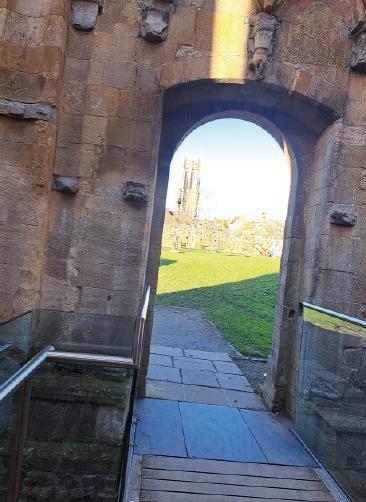
projects to drain and cultivate the surrounding Somerset Levels. Its wealth was noted in the Domesday Book, completed in 1086, where Glastonbury was listed as the wealthiest monastery in England.
The abbey’s physical evolution was dramatic. After a devastating fire in 1184 destroyed much of the original Saxon church, a magnificent new “Great Church” was constructed and consecrated in 1213. Over the following centuries the abbey expanded its architectural footprint, reaching a scale and splendour that made it a centre of pilgrimage and medieval devotion.
Glastonbury Abbey is entwined with some of Britain’s most enduring legends. Medieval monks promoted the idea that the site was linked to Joseph of Arimathea – the biblical figure reputed to have brought Christianity to Britain – and that he had established the earliest church there. Another tradition, later popularised in the 12th century, claimed the rediscovery of the tomb of King Arthur and Queen Guinevere within the abbey grounds, cementing Glastonbury’s reputation as the mystical “Isle of Avalon.”
The abbey’s fortunes changed abruptly in the 16th century during the Dissolution of the Monasteries under Henry VIII. In 1539 its last abbot, Richard Whiting, was executed on nearby Glastonbury Tor for resisting the king’s suppression of the monastery. After dissolution, much of the abbey’s stone was quarried for other local buildings, leaving the evocative ruins seen today.
Today the sprawling 36-acre site welcomes visitors year-round. Wanderers can explore the
atmospheric ruins, view remains of the great church walls and transepts, and discover the remarkable Abbot’s Kitchen – one of the best-preserved medieval kitchens in Europe. The site’s museum and collections offer artefacts and models that bring the abbey’s long and layered history to life, from archaeological finds to medieval sculpture and glass.
The abbey is not only a monument to religious history but also a cultural hub, hosting events from music performances to medieval fairs, reflecting its ongoing role as a place of gathering, reflection and community in modern Glastonbury.
The Food Scene in Glastonbury –Eclectic, Local and Global
Glastonbury’s food scene mirrors the town itself: eclectic, thoughtful and rooted in quality local produce. Independent cafés, artisan bakeries, vegetarian and vegan eateries, and traditional pubs all contribute to a dining culture that is both relaxed and adventurous. From organic brunch spots and cosy tea rooms to classic British fish and chip shops and global cuisine, there’s a surprising range of flavours for a town of its size.
Among these culinary offerings, Glastonbury has developed a reputation for celebrating global flavours – notably in Middle Eastern and Mediterranean cooking – while championing local ingredients and producers. Central to this trend is Queen of Cups, a standout restaurant located on Northload Street in the heart of the town.
Housed in a charming 17th-century coaching inn, Queen of Cups has quickly become one of Glastonbury’s most talked-about dining

destinations since opening in 2021. Chef and founder Ayesha Kalaji draws on her Jordanian heritage and classical training, blending vibrant Middle Eastern flavours with the best of Somerset’s seasonal produce to create dishes that are both inventive and deeply satisfying.
The restaurant’s ethos is reflected in its seasonally changing menu of sharing plates – from coalinfused steak tartare and Jerusalem-spiced monkfish to Baharat chicken yakitori and vineleaf-wrapped gilt-head bream – all crafted with a focus on sustainability and local sourcing. Wines and cocktails are similarly chosen to complement the food, with a spotlight on small producers and regional spirits.
Queen of Cups’ achievements have not gone unnoticed. It has been awarded a Michelin Bib Gourmand – recognising good quality, good value cooking – and its chef has received accolades for her creative approach to Middle Eastern cuisine.
Beyond Queen of Cups, Glastonbury’s culinary landscape includes an inviting mix of traditional fare and world-inspired options. Local fish and chip shops like Knights serve classic British fish cakes, while bakeries and cafés offer artisan breads, pastries and hearty fare. Vegetarian and vegan eateries reflect the town’s wellness-oriented vibe, and independent pubs pair hearty meals with local ales and ciders.
This blend of local tradition and global influence captures the spirit of Glastonbury itself — a place where history, culture and creativity meet around the table, inviting both locals and visitors to savour its tastes as much as its legends.



Spring 2026 promises a joyful line-up of Easter adventures for families across Cheshire’s National Trust estates, where nature, heritage and imagination combine to create memorable days out. At Hare Hill, children can immerse themselves in a woodland-inspired Easter trail running from late March to mid-April, completing ten nature-themed activities before earning a chocolate reward.
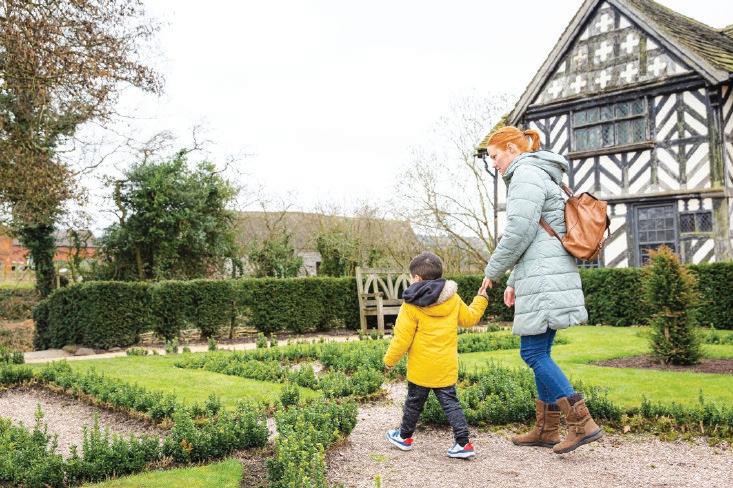
At Little Moreton Hall, the enchanting Tudor setting provides a magical backdrop for an Easter adventure in nature, where families follow an engaging trail through the grounds, discovering spring wildlife and completing interactive challenges. Meanwhile, Lyme offers vast parkland and a newly designed family-friendly route, with playful activity stations that range from quick bursts of fun to fullday exploration.
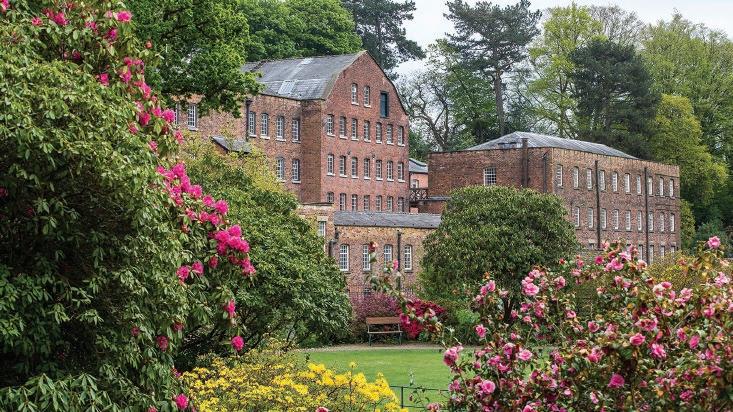
At Quarry Bank, children can hop, jump and solve clues across a lively Easter trail featuring ten activity points, while Dunham Massey invites families to explore its historic parkland through similar interactive experiences, often with wildlife spotting along the way.
What unites these experiences is the National Trust’s signature approach: encouraging outdoor play, hands-on learning and a sense of seasonal
wonder. With accessible trails, flexible start times and thoughtful touches such as vegan and allergyfriendly chocolate prizes, Cheshire’s Golden Triangle becomes an irresistible destination for Easter family adventures in 2026. https://www.nationaltrust.org.uk/ visit/cheshire-greater-manchester

Hi, I am Denise, a children’s occupational therapist. In this month’s feature we consider the skills children need in preparation for school.
At five years old, ‘organisational skills’ aren’t about digital filing systems or planner, they are about executive function, which is the ability to follow directions, manage emotions, and handle simple physical tasks.
At this age, the goal is to move from ‘I do everything for you’ to ‘They can do this with a little bit of support.’
1. Following Multi-Step Instructions
In a classroom, a teacher might say: “Put your coat on the hook, wash your hands, and sit on the carpet.” That is a three-step command. You can practice at home: playing ‘sorting games’. Start with two steps: “Put your shoes in the box and bring me your hat.”
2. Managing Belongings
The ‘Check-In’ Routine:
Can they zip up their own coat?
Can they put their lunchbox back in their bag?
Use ‘Visual Labels’ so they can spot their belongings amongst the identical school jumpers.
3. The “First/Then” Concept
This is the foundation of time management. It helps a child understand the sequence of events.
Use ‘Visual Timetables’ focusing on pictures instead of words. A picture of a breakfast bowl, then a toothbrush, then a school bag.
Using simple language, “First we put on our shoes, then we can go to the park.”



A broad request such as “clean your room” can be too vague. Instead consider categorised tasks.
● The ‘Everything has a Home’ rule can be reinforced by using transparent storage boxes with pictures on the front (e.g., a picture of a Lego brick or a doll).
● Setting a ‘The 5-Minute Reset’ You can then set a timer and make it a game to see if they can return their “tools” (toys) to their homes before the buzzer.
● Putting on a coat and shoes independently
● Waiting to speak their turn
● Maintaining focus on a task for 10 minutes
● Sorting Toys into colours groups, shapes
Set an empty school bag, and three items (a book, a jumper, and a snack box) on the floor. See how fast your child can pack it “neatly” so the zip closes.




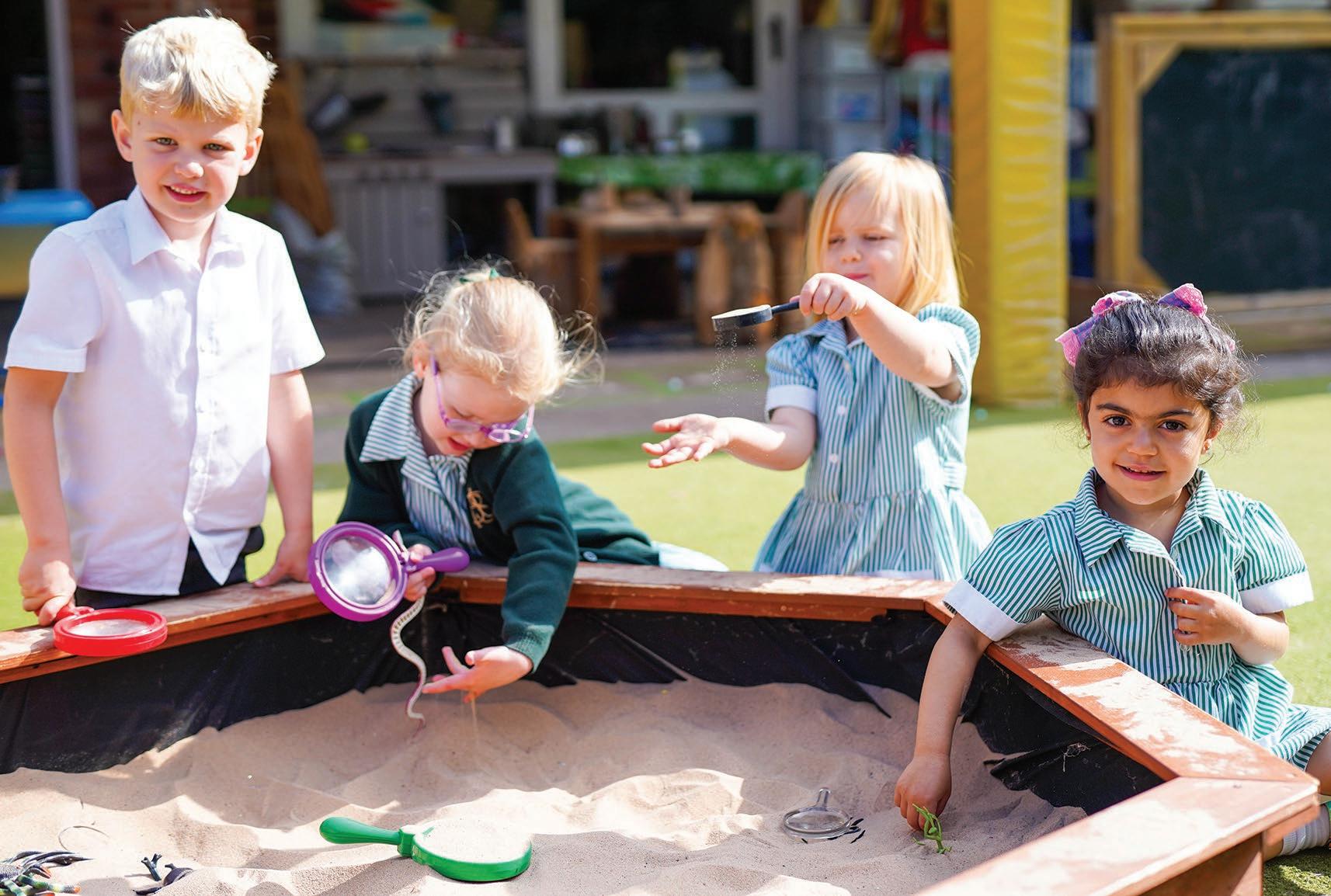
Starting school is a proud and emotional milestone. Alongside new uniforms and book bags, there is something even more important to prepare: your child’s social and emotional readiness.
For families across Cheshire, the move into Reception is about much more than early reading and numeracy skills, it’s about confidence, independence, kindness and learning how to navigate the world beyond home.
Here are six practical ways parents can gently prepare their child before their first day, and how a nurturing school such as Wilmslow Preparatory, can support that journey once it begins.
If your child isn’t used to being apart from you, start with short, positive separations, perhaps with grandparents, trusted friends or activity groups. Keep goodbyes calm and confident. Children often take their emotional cues from you, so reassure them that you will return and follow through consistently.
How school helps:
When term begins, our experienced early years staff build on this foundation with predictable routines, warm reassurance and regular communication so both child and parent feel supported through those first few weeks.
Putting on shoes, tidying toys, carrying a bag or using cutlery independently all build quiet confidence. You don’t need perfection, just opportunities for your child to try. Praise effort rather than outcome and allow extra time so independence doesn’t feel rushed.
How school helps:
In our setting, teachers continue encouraging manageable independence, helping children feel capable and proud of what they can do for themselves.
Before school starts, talk about what it means to be a ‘kind friend’. This could include sharing, taking turns, using gentle hands and noticing when someone feels left out.
Role play can be particularly helpful:
“What could you say if someone wants the same toy?”
“What could you do if someone looks sad?”
How school helps:
At Wilmslow Preparatory School our early years teachers reinforce this language daily, modelling kindness and guiding children through real-life friendship situations so those values become habits.
Children feel secure when expectations are consistent. Listening when asked, tidying away after play and understanding simple household rules all help children adjust to structured environments.
If mistakes happen, respond calmly and explain why behaviour matters. This helps children begin to understand right from wrong in a safe space.
How school helps:
Schools build on this by providing clear, fair boundaries. At Wilmslow Preparatory School our children learn that teachers, like parents, are trusted adults who guide and protect them.
Encourage your child to take responsibility in small ways: putting something right if it’s knocked over, apologising if they hurt someone’s feelings and telling the truth, even when it’s difficult.
When children learn that honesty is valued more than perfection, they develop integrity and self-belief.
How school helps:
In a nurturing school environment, mistakes are treated as learning opportunities. Staff guide children to reflect, make amends and move forward positively, reinforcing the foundations already built at home.
Help your child name their feelings: happy, sad, worried, excited, frustrated. When children can describe emotions, they are better able to manage them.
Simple conversations like, “You seem disappointed, shall we talk about it?” help children feel heard and understood. How school helps:
Through stories, circle time and gentle conversations, teachers expand this emotional vocabulary further, supporting resilience and helping children cope with new experiences.
No child arrives at school as a finished product and they don’t need to. Social and emotional development is a gradual process.
The most successful transitions happen when parents and school work together. Open communication, reassurance and consistency between home and classroom create a secure framework in which children can thrive.
Starting school is not about getting everything perfect before the first day. It’s about laying foundations of kindness, respect, honesty and independence and then partnering with a school that nurtures those qualities with care.
At Wilmslow Preparatory School we encourage a shared approach so that children don’t just settle at our school, they flourish. Visit us and see how we nurture confidence, character and kindness from the very beginning.
https://www.wilmslowprep.co.uk/contact-us/


In an exciting development for young performers in the area, Pauline Quirke Academy of Performing Arts is bringing its renowned performing arts training to Wilmslow High School.
Founded by acclaimed actress Pauline Quirke, PQA has built a national reputation for helping young people build self-belief, creativity and life skills through Comedy & Drama, Film & Television and Musical Theatre. We spoke to Principal Kerrie Burgoyne about what the launch means for local young people and why Wilmslow is the perfect place for the academy’s next chapter.
Kerrie, what inspired the decision to bring the Pauline Quirke Academy to Wilmslow High School, and why do you feel the area is a good fit for the programme?
Wilmslow is a fantastic place to open Pauline Quirke Academy of Performing Arts because there’s already such a strong appreciation for the arts in the area. There are so many creative young people locally, and we wanted to create a safe space where they can explore performing arts in a supportive and inspiring environment.
Wilmslow High School is a brilliant setting for that –it has a great reputation, strong community spirit and excellent facilities. For us, it felt like the perfect place to launch and to give local students

the opportunity to develop their creativity and confidence through performing arts.
For readers who may not be familiar with it, how would you describe what makes the Pauline Quirke Academy different from other performing arts schools?
What makes Pauline Quirke Academy of Performing Arts special is that it focuses on much more than


just performance. We welcome young people aged 6–18 and provide opportunities across Comedy & Drama, Film & Television, and Musical Theatre for our Main Academy, as well as imaginative play, and exciting performing arts projects for our Poppets aged 4-6. At the same time, we nurture young people to build confidence, teamwork, and life skills. The environment is very inclusive and supportive, encouraging everyone to take part, express themselves, and grow in self-belief. It’s about helping young people find their voice and believe in themselves, as well as developing their creative skills.
How do you see the academy benefiting young people of Wilmslow, both in terms of confidence and creative development?
Performing arts can have such a powerful impact on young people. Through our different classes, students learn to step outside their comfort zones, collaborate with others and express their ideas creatively. Over time you really see their confidence grow – students who might start off quite shy often become much more comfortable speaking, performing and working as part of a team. Creatively, it also allows them to explore storytelling, acting, and filmmaking in a really hands-on way, which can be incredibly exciting and inspiring for them.
What opportunities will students in Wilmslow have through the academy –from performances to industry exposure?
Students in the Main Academy (age 6-18) have the chance to explore all three of our classes and work across a variety of creative areas. They’ll take part in performances and projects that let them apply what they’ve learned in a practical and imaginative way. A standout opportunity at the academy is that students get to perform a show written specifically for PQA to perform at London’s West End, giving
them the incredible experience of taking their skills to a professional stage.
Beyond performing, students gain valuable insight into how the industry works behind the scenes as our teachers are industry professionals. As a filmmaker, I’ve worked on productions such as Star Wars: The Force Awakens, Call the Midwife, and Downton Abbey, and I’m excited to share my experience along with the expertise of my team across all of our classes. PQA provides a fantastic platform for young people to explore all areas of performing arts and discover what they enjoy most.
Looking ahead, what impact would you love to see the academy have on young people and the local creative community in Cheshire’s Golden Triangle?
I would love to see the academy become a place where young people feel inspired, supported and excited to be creative. If students leave feeling more confident in themselves, more willing to try new things and more connected to others, then we’ve achieved something really special. It would also be wonderful to build a strong creative community in the area, where young people can collaborate, perform and celebrate the arts together. Ultimately, it’s about giving them opportunities, building their confidence and helping them realise their potential.
As PQA prepares to open its doors at Wilmslow High School, the launch marks an exciting opportunity for young people across the area to explore the world of performing arts. Under the guidance of Kerrie Burgoyne, the academy aims not only to nurture talent but also to build selfbelief, creativity and lifelong skills – ensuring the next generation of performers in Cheshire have a stage on which to shine.


When a family splits, even the smallest child can feel as though the ground has shifted beneath them. Suddenly, routines change, parents argue and familiar security feels uncertain. For children, divorce or separation can bring confusion, sadness and anxiety - but with the right support, they can thrive despite the upheaval.
Take eight-year-old Jamie, for example.
After his parents separated, he stopped joining in family meals, unsure how to express the mix of guilt and sadness he felt. Situations like this show how vital stability and reassurance are for young people navigating family changes.
Children thrive on routine. Younger children may worry they caused the split, while older children often experience anger or divided loyalties. Changes in living arrangements or family structure can heighten stress, making communication more important than ever.
As Sharon Williams of Sinclair Law explains: “Children don’t need every detail, but they do need reassurance that they are loved and that the

separation is not their fault. Honest, age-appropriate conversations make a huge difference.”
Research shows it is not divorce itself that affects children most, but ongoing parental conflict. Sharon adds, “Parents who focus on respectful co-parenting give their children the best chance of adjusting well. Maintaining stability and routine should remain the priority, even after the relationship ends.”
Teachers and schools often notice emotional changes first - withdrawal, declining grades or sudden outbursts. Counsellors and trusted adults can give children a safe space to share their feelings. At home, parents can help by keeping routines consistent, encouraging open conversation and avoiding negative comments about the other parent. Even small actions like attending school events together or keeping familiar bedtime rituals can be powerful anchors.
Tip: Keep one daily routine unchanged as it gives children a small but crucial sense of stability.
As Sharon notes, “Divorce may end a marriage, but it doesn’t end a family. When parents focus on their children’s emotional needs, young people can not only cope but thrive.”

At Sinclair Law, we offer a free 30-minute initial consultation to discuss your situation and options. Our family law team is based in:
• Wilmslow
• Bramhall
For more information, visit www.sinclairlaw.co.uk


You were good at what you did. People noticed. Work came in. You hired. You grew. And somewhere between “this is going well” and “I haven’t had a proper week off in three years,” the business became something you didn’t quite intend to build. Bigger than expected. More dependent on you than it should be. There’s a word for that. It’s not success. It’s structural dependency. That’s exactly what I fix.
As Cheshire’s Business Freedom Architect, I work with accidentally successful business owners to systematically remove themselves from the centre of their business, without it falling apart. Your Business Freedom Score is where it starts.