About the Author
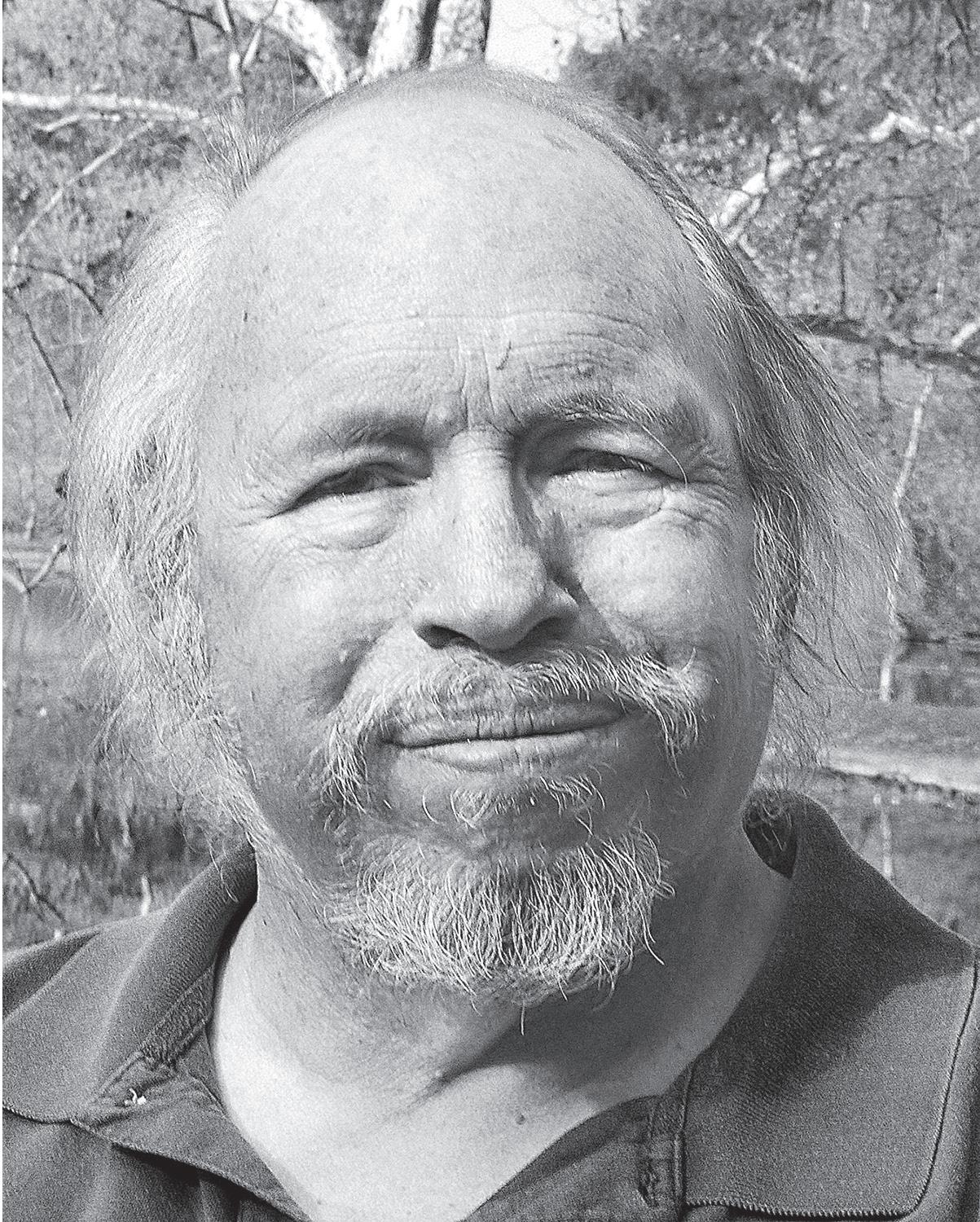
Steven J. Rolfes is the author of numerous books on Ohio and Cincinnati, including Historic Downtown Cincinnati (with Kent Jones), Cincinnati Theaters, and Supernatural Lore of Ohio. Passionate about history, Rolfes has been published in various magazines and hosts a summer radio program telling ghost stories. He has worked as a teacher, border patrol agent, salesman, jeweler, former ESL teacher for Spanish-speaking immigrants, and detective. He is a volunteer at the Cincinnati History Museum and is a retired employee of the Southwest Ohio Regional Transit Authority.
Photo by Jordan Rolfes
The Bloody Road to Castle Dracula: Explore the History of Vampires & the Inspiration Behind Bram Stoker’s Masterpiece Copyright © 2026 by Steven J. Rolfes. All rights reserved. No part of this book may be used or reproduced in any manner whatsoever, including internet usage, without written permission from Llewellyn Worldwide Ltd., except in the case of brief quotations embodied in critical articles and reviews.
First Edition
First Printing, 2026
Book design by R. Brasington
Cover design by Shannon McKuhen
Interior illustrations by Llewellyn Art Department
Llewellyn Publications is a registered trademark of Llewellyn Worldwide Ltd.
Library of Congress Cataloging-in-Publication Data (Pending)
ISBN: 978-0-7387-8290-4
Llewellyn Worldwide Ltd. does not participate in, endorse, or have any authority or responsibility concerning private business transactions between our authors and the public.
All mail addressed to the author is forwarded but the publisher cannot, unless specifically instructed by the author, give out an address or phone number.
Any internet references contained in this work are current at publication time, but the publisher cannot guarantee that a specific location will continue to be maintained. Please refer to the publisher’s website for links to authors’ websites and other sources.
Llewellyn Publications
A Division of Llewellyn Worldwide Ltd. 2143 Wooddale Drive Woodbury, MN 55125-2989 www.llewellyn.com
Printed in the United States of America
GPSR Representation: UPI-2M PLUS d.o.o., Meduli eva 20, 10000 Zagreb, Croatia matt.parsons@upi2mbooks.hr
Other Books by Steven J. Rolfes
Beware the Banshee’s Cry
The Cincinnati Courthouse Riot
Supernatural Lore of Ohio
To Donald Eilermann (1952–2025)
CONTENTS
Acknowledgments xiii
Introduction 1
Chapter 1: The Origin and Nature of the Vampire 7
Chapter 2: Tambora 27
Chapter 3: The Players Assemble 43
Chapter 4: The Sleep of Reason Produces Monsters 71
Chapter 5: It’s Alive! 87
Chapter 6: Dueling Vampires 101
Chapter 7: From Moonlight to Limelight 125
Chapter 8: Le Fanu 137
Chapter 9: Enter Bram Stoker 153
Chapter 10: The Devil You Say 165
Chapter 11: A Holiday at the Beach 181
Chapter 12: Vlad 193
Chapter 13: “I Am Dracula” 209
Chapter 14: Bringing It All Together 233
Chapter 15: The Lair 263
Chapter 16: The Celluloid Dracula 279
Conclusion 289
Bibliography 291
Acknowledgments
I would like to thank all the people who assisted me in this labor of love. The people at the Cincinnati and Hamilton County Library were incredible, as were the people at the library at the University of Cincinnati. Mr. Doug Weise was very helpful as he assisted me in the planning of this book. My family was supportive and quite patient throughout the process. The greatest applause goes to my son, Jordan Rolfes, who assisted in the editing, formatting, and final assembly of the book.
INTRODUCTION
Welcome to my grand tour. Enter freely, and of your own will— and be sure to leave some of the happiness that you bring.
We are going to take a coach ride. I promise you that it will be a wild and unforgettable trip. We are going to venture deep into a land of shadows and nightmares. We shall pass through both history and folklore, beginning with an earthshaking catastrophe and ending with Bram Stoker writing the most famous gothic horror novel of all time.
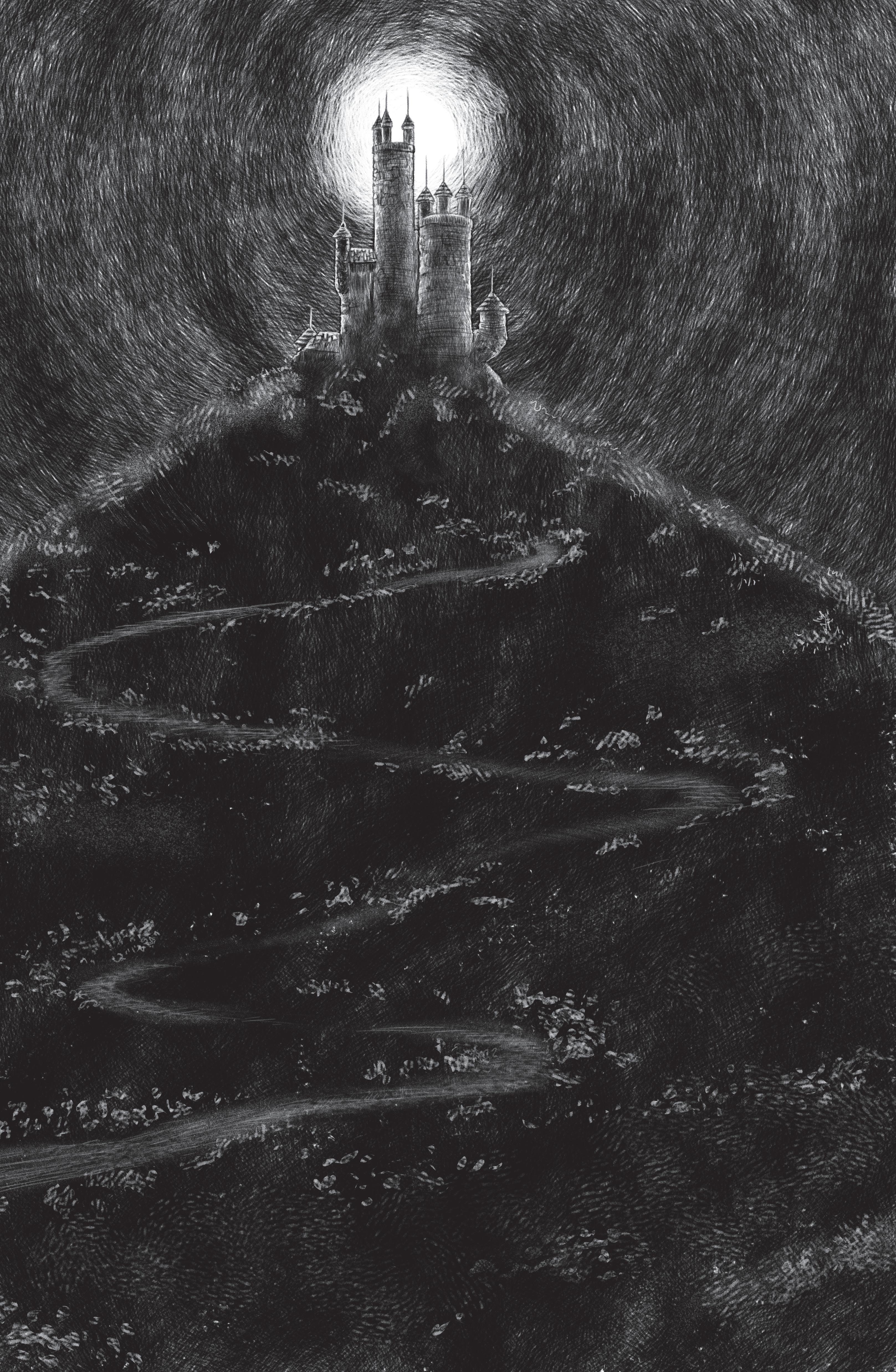
We are taking a luxury jaunt deep into the Carpathian Mountains, following a road that twists and bumps, eventually ending at the Borgo Pass.
For those who may be unfamiliar, in the novel Dracula, this is where the English solicitor Jonathan Harker left the coach that had carried him from the village of Bistritz and met the carriage that would transport him to his fateful meeting with Count Dracula. It is the haunted location where the world of logic and reason ends, and the realm of shadows and nightmares begins.
And that is exactly where we are headed.
Bram Stoker’s classic novel Dracula was first published in 1897. Since that first day, the book has never been out of print. Stoker thought that he was writing just another in a long stream of potboiling books that would have a limited success, then be forgotten. He had hopes that, before it was dismissed by the public, his employer, the great actor Sir Henry Irving, would step into the role of the Count. At the time, Bram Stoker had absolutely no idea that he was creating a classic piece of literature. Little did he realize that he was giving birth to a monster, a diabolic creature that would long outlive him.
Before we go any further, permit me a short reverie. I will never forget my first experience with the novel. It was 1962; I was ten years old, growing up in the suburbs of Cincinnati.
My parents were having some kind of party at the house, undoubtedly a business thing. It must have been quite important as my mother wanted to get rid of me for the afternoon. She put a rather large amount of bills into my paw and ordered me to walk up to the shopping plaza. My orders were quite clear: I was to stay there for a long time, buy lunch, hang around … just as long as I stayed away.
You didn’t have to ask me twice.
Later that day, after a greasy feast at the Woolworth’s lunch counter and a wonderful time of looking at record albums and car models, I was leaving a store. It was then, on my way out, that I chanced to see something out of the corner of my eye. It was a display of paperback books.
Being a lover of reading, I naturally stopped and took a peek. These were great books, classics. Treasure Island was there, as was Huckleberry Finn , The Three Musketeers, and others. I paid little attention to these as something else, something with a dark-colored cover, caught my attention. There, right at eye level, was Bram Stoker’s classic, Dracula.
Huh? This was a book? Cool.
Despite my mother’s prohibition, I rushed right home, clutching the paper bag with my newly purchased treasure. I made a cursory greeting to the guests, then scurried up the stairs and slammed the door.
Of course, I knew all about Dracula. I had seen the 1931 Tod Browning film on Shock Theater. (I loved that program; at the time, the Universal monsters were my obsession. Lon Chaney was my hero.)
I opened the book and began my very first adventure with Jonathan Harker and his jaunt up the road to the Borgo Pass. I sat with my mouth open. Hey—this wasn’t matching the movie! This was something else, something really neat. Thus did my lifetime adventure begin.
I read the book in record time. Then I read it again—and again, and again …
A few years later, the book literally fell apart in my hands. This is the way a great book should be: crumbling from overuse, not collecting dust on some shelf.
Since that marvelous day, I have spent decades studying and writing about both history and the supernatural. As with anyone who looks closely at the record of humanity, one thing becomes readily apparent: Absolutely nothing in history happens spontaneously. Every great episode, good or bad, can be traced back to a long series of seemingly unrelated events; these appear to be unconnected, but in the end, they form a line leading to something of great importance. In short, one thing leads to another. The story behind the writing of Dracula is no different, and almost as fascinating as the novel itself. That is why our trip will be so twisting and turning. Events that are seemingly unrelated actually are steps leading to a result. One person influences another, possibly in a different time and place, and before you know it, I’m buying a paperback at the local shopping center.
As the text of Dracula is in the public domain, there are now countless editions of the book available, both in physical copies and online. Go to any bookstore and there will be more than one modern printing of this classic. If you wish to purchase one for your own reading, I personally recommend putting a few more coins on the counter and selecting a well-bound hardcover edition. A bargain bin paperback may not last long, as you will certainly want to read it more than once. Cheap ones on bargain bin racks fall apart—trust me, I know.
I advise against relying strictly on internet sources for great books and music. Websites come and go, and unscrupulous editors may alter or even remove portions. If you want something of real value
(and Dracula is certainly that!) it is best to have a physical copy in your hand. That way, it will be yours forever.
Like Dracula’s contemporary counterpart, Sherlock Holmes, most people believe they know the story simply from having seen some of the movies. We will discuss a few of the more important films at the end of our journey, but the bottom line is that, sadly, there is no film that is completely faithful to the novel. Only by turning the pages yourself can you fully experience the magnificence of this work. Hopefully, after reading this, if you have not read Stoker’s novel, you will be tempted to grab a copy and revel in the finest piece of gothic horror ever written. I would love it if you could experience some of the excitement and amazement I felt back in 1962.
Well, the coach is here—it’s time to start our tour. Please keep your arms and hands inside of the carriage and grab small children by the hand—it’s going to be a wild and bumpy ride.
Chapter 1 THE ORIGIN AND NATURE OF THE VAMPIRE
“I will raise up the dead to devour the living … ”
Setälä, “Descent of Ištar”
Was Count Dracula a vampire?
What a stupid question. Most people would say, “Yes. Indeed, he was the greatest vampire of all time!” Such is the obvious answer— but is it the correct one? Let us look a bit closer and ask the question, “Who—or, what—was Count Dracula?”
To answer that, we must first ask, “What exactly is a vampire?”
Vampires in Prehistory and Ancient Times
Let us look at a hypothetical situation that undoubtedly occurred countless times in all cultures during the Paleolithic era. We see a party of hunters making their way through the blizzards of the Ice Age, seeking something that they could take back to feed their people. Suddenly, all is madness. The tall grass explodes with a charging boar. This animal gores one of the huntsmen before the spears of the others can bring it down.
The injured man collapses. It is a deep wound. His gash is now gushing that magical red liquid, staining the snow about him. The other men rush to his aid, but there is nothing they can do. They all understand that when too much of this substance is lost, the soul leaves the body. This is exactly what happens—soon, their companion is dead.
But that is not the end of the story. Later, the shaman performs the proper rites with appeals to the gods. The hunter’s lifeless body is then buried, bound in a fetal position hoping for a rebirth … but there is a problem.
The spiritual essence of the dead man, that indescribable thing known as a soul, is now separated from the physical body. The cause of this departure was the loss of that magical red liquid. The hunter’s detached psyche is now wandering about on the night wind. It is starving, desperate to replenish that miraculous substance that its body lost.
The danger to the tribe is that this roaming spirit, lost and confused, may return to its body and rise from its grave. It would then seek sustenance and follow its memories back to familiar surroundings, back to the village, even to its own family. There it would attempt to replenish this magical red liquid.
The widow, the children, the brothers and sisters, even the companions of the dead hunter, now both lament his loss and fear his possible return. What if they are the ones he wishes to prey upon to replenish that life-giving liquid?
This is the vampire in its most primeval form.
As the centuries marched on, human society advanced from the rudimentary hunter-gatherer clans to established agricultural communities. Their spiritual life changed as well; the experiential religion of the shaman was slowly replaced by the priest who led the community in offering sacrifices and performing rituals to worship and appease the gods.
With the establishment of the priesthood came rules, taboos, and lessons of sacred tales. The priests were now the intermediaries between the world of the living and the realm of the gods and spirits. As the shaman had done in the past, the priestly class assumed the grave responsibility to shield society from all manner of spiritual dangers, including protecting the worshipers from those legions of wandering, hungry spirits.
Now this belief in the vampire was intertwined with the dogmas and taboos of the new societies. No matter what gods and goddesses were worshiped in the temple and sacred groves, people still faced death—and there was still the magical scarlet liquid of life. The blood has always been the life.
For a soul to be placed in such a tormented existence is now the result of some manner of curse; some transgression that the person committed in life. This sin was so unholy that it prevented them from
making the peaceful transition from this world to the next. The vampire is now an entity that has been lost in the threshold. It cannot move on to the next realm. It must return to this world, discarded by humanity and forsaken by the gods—and desperately hungry for blood.
This ghastly spiritual parasite is mentioned in the Bible. Here it is known as the alukah, a “horse-leech” (Proverbs 30:15). This is no surprise, for we see mentioned earlier in the Bible, “For the life of the flesh is in the blood; and I have given it for you upon the altar to make atonement for your souls; for it is the blood that makes atonement, by reason of the life” (Leviticus 17:11).
When we look at the earliest descriptions of vampires across a myriad of cultures, both ancient and modern, we see variations of the exact same creature. It is consistently presented as a resuscitated corpse who leaves its grave at night, seeking to prey upon the living to sustain its unholy existence by drinking blood.
One early example of this scourge is found in ancient Babylonian belief: a vampire known as the ekimmu. One of the greatest curses to befall a man would be to have his body left unburied. Those who were so unfortunate, such as those who perished while wandering in the desert, would inevitably return to trouble mankind, being starved for nourishment: “It was forced by hunger and thirst to come forth from its abode in Hades to seek on earth the food and water which no longer filtered through to satisfy its wants … If it found a luckless man who had wandered far from his fellows into haunted places, it fastened upon him, plaguing and tormenting him until such time as a priest should drive it away with exorcisms.”1
An example of this is found recorded on a Babylonian tablet, describing the ekimmu:
1. Thompson, Evil Spirits of Babylonia, 28.
The gods which seize (upon man) Have come forth from the grave; The evil wind-gusts Have come forth from the grave; To demand the payment of rites And the pouring out of libations, They have come forth from the grave; All that is evil in their hosts, like a whirlwind Hath come forth from the grave.2
With the establishment of Christianity as the dominant faith in Europe, serious violations of church law could result in a person being excommunicated: separated spiritually from the sacraments and the saving grace of the church. This official process was the infamous ritual of the “candle, book, and bell.” Those who were so cursed in life were said to be unable to enter paradise and would be forced to wander as a vampire after death.
Beyond the rare cases of solemn excommunication, there are other ways to become one of the undead. These include those who died by their own hand, and those who practiced witchcraft, especially being a werewolf during life. Beyond this is a miscellaneous category in which a person who has led a life of extreme depravity may be forced to wander after death, seeking sustenance from the living. To this can be added the curious method of having a cat jump over or molest a body before burial. The animal (in Ireland the cat sith) is, in truth, an evil spirit in feline form, taking possession of the soul.
In Greece, a land famous for vampires, this undead wraith is known as the vrykolakas. This curious word may be directly translated as “wolf fairy,” but a more concise definition would be a “predatory spirit.”
2. Thompson, Evil Spirits of Babylonia, 28.
Glam
First let us consider a fascinating example of vampirism, a dark tale related in an Icelandic Viking saga.
The Grettis Saga, or The Saga of Grettir the Strong, was finally written down in the fourteenth century. However, the historical Grettir had lived in Iceland four hundred years earlier. The section dealing with the vampire (draugr) is probably even older. In it, we see a dark shadow of the pre-Christian beliefs in the undead and the never-ending struggle between light and darkness.
This tale takes place at the pivotal time when the ancient Norse religion was being supplanted by the new Christian faith. The transition was not always a smooth one.
In the saga, a brutish thug named Glam finds work laboring for a farmer named Thorhall. Glam is the only one who will work there, as the farm is haunted by an evil spirit.
Glam has no time for ghosts, or for that matter, any manner of spiritual faith. When he wants to go out to work on Christmas morning, the cook tries to stop him, saying it would be an insult to heaven to do labor on such a sacred day.
Glam responds, mocking the woman: “Many follies have ye, whereof I see no good come, nor know I that men fare better now than when they paid no heed to such things; and methinks the ways of men were better when they were called heathens; and now will I have my meat, and none of this fooling.”3
Having committed sacrilege on one of the holiest days of the year, Glam ventures out. Soon he is attacked by the evil spirit. He vanquishes the wraith, but dies himself. The curse has thus been transferred to him.
3. Grettis Saga, 98.
Glam’s body has mysteriously swollen so much that it cannot be moved. He is summarily buried underneath a huge cairn of heavy stones. Despite this, he does not remain in his grave. Soon, he is returning at night to trouble the villagers. His vampire features are revealed as he attacks a certain woman until he causes her death:
“But when spring came, and the sun-light was the greatest, somewhat the hauntings abated; and now would Thorhall go back to his own land; he had no easy task in getting servants, nathless he set up house again at Thorhall-stead; but all went the same way as before; for when autumn came, the hauntings began to wax again; the bonder’s daughter was most set on, and fared so that she died thereof.”4
Note that when the sun is at its brightest, the vampire is nowhere to be seen. But once the sun begins to recede, he returns with a vengeance. Into this conflict, as if out of an old Western film, arrives the hero to save the day. This unlikely champion is Grettir. This Viking has little to commend him, being quite arrogant, boastful, sarcastic, and to top it off, he had fled Norway after having been declared an outlaw. However, he is also incredibly strong and a fierce fighter. He may be a braggart, but he can back up his boasting. He is also the only one who has the nerve to venture out into the winter darkness to face this draugr in combat.
The fight is tremendous, the high part of the entire saga. There is one interesting point for us. As the life-and-death struggle continues, Grettir soon realizes that when he is fighting Glam outside (i.e., under the moonlight), the vampire has the advantage. But when he
4. Grettis Saga, 103–104.
can force the wraith into a building, away from the rays of the moon, Grettir prevails.
Finally, it is obvious that Grettir is destined to be the victor in this clash. But Glam has one more trick up his sleeve.
First, the wraith stares at Grettir with bulging crimson eyes. The evil glare burns into Grettir’s soul. The vampire then declares a curse on the warrior who vanquished him:
“Exceeding eagerly hast thou wrought to meet me, Grettir, but no wonder will it be deemed, though thou gettest no good hap of me; and this must I tell thee, that thou now hast got half the strength and manhood, which was thy lot if thou hadst not met me: now I may not take from thee the strength which thou hast got before this; but that may I rule, that thou shalt never be mightier than now thou art; and nathless art thou mighty enow, and that shall many an one learn. Hitherto hast thou earned fame by thy deeds, but henceforth will wrongs and manslayings fall on thee, and the most part of thy doings will turn to thy woe and ill-hap; an outlaw shalt thou be made, and ever shall it be thy lot to dwell alone abroad; therefore this weird I lay on thee, ever in those days to see these eyes with thine eyes, and thou wilt find it hard to be alone—and that shall drag thee unto death.”5
The vampire’s curse is most effective. From that point on, Grettir has only half of the strength that he had before the battle. But, more importantly, Glam’s blazing eyes haunt him every night. He is now
5. Grettis Saga, 109.
afraid of the dark. This curious trait for a heroic Northman was a terrible curse indeed, one that eventually caused his death.
Arnold Paole and Johannes Cuntze
Perhaps the most famous documented vampire of all time is the phantastic case of Arnold Paole. As in the tale of Glam’s combat, we see that destroying a vampire may cause the transference of the curse to the victor.
Arnold Paole was a Serbian soldier in 1732. After his tour of duty, he returned to his native village of Meduegna, near Belgrade. Here, he purchased a farm and tried to return to normal life. However, something was apparently haunting him.
His girlfriend, Nina, tried to coerce him to talk about why he had lost his usually happy disposition. What in the army had transformed him into such a gloomy and withdrawn man?
He hinted that he had experienced an encounter with something diabolic:
“It was in Cossova this fate befell me. Here you have hitherto escaped the terrible scourge. But there they die, and the dead visit the living. I experienced the first frightful visitation, and I fled; but not till I had sought his grave and executed the dread expiation from the vampire.”6
He seemed certain that, like Glam, although he had destroyed (one cannot kill a vampire—it is already dead) the vampire, he was now cursed. From this point on, it was only a matter of time.
6. Wright, Vampires, 98. Reverend Montague Summers states that the encounter was in Greece in Kostartsa near Granitsa.
Then, on a calm day, there was a simple accident. He fell off a hay wagon when the horses moved for no apparent reason—as if they had been spooked by something unseen. A strong young man like Arnold should have merely shaken it off and returned to the fields.
Instead, he was so badly injured that he was put to bed. It was thought that with a little rest he would recover quickly and be back at work. This was not the case. Soon death came to him.
But death was not the end.
Before a single month had passed, people reported seeing Paole wandering about the village, himself now a vampire—just like the demon he had destroyed. “Twenty or thirty days after his decease, several in the neighbourhood complained that they were haunted by the deceased Arnold; and what was more to the purpose, four of them died.”7
Finally, the reluctant authorities had to intervene. A military commission, including a surgeon and a drummer boy (to give the proceedings a bit of respect for a deceased veteran) arrived in Meduegna.
The irate officials followed the villagers to the cemetery. There, the vampire’s grave was opened, the coffin pulled up for their inspection. The body was examined. What followed was a scene of horror, one that the surgeon, despite the grisly things he had seen in field hospitals, was not ready for.
To their amazement, the corpse had not decomposed in the slightest. It had even grown new nails and seemingly, like a deadly serpent, had even acquired new skin. What was worse, the dead body had moved in its coffin, and there was a smear of fresh blood on the 7. Wright, Vampires, 99.
The Origin and Nature of the Vampire 17 mouth.8 Seeing this, the sexton laughed and mockingly asked why the vampire had not wiped its mouth since its last meal.9
Although the surgeon and the officers had originally been skeptical, they now had no choice but to allow the long-established methods of dealing with a vampire to be enacted. The traditional stake was driven into the heart, which immediately gushed forth fresh blood. To the distinguished visitors’ horror, the dead man let out a groan at this. The body was then burned to ashes.
After this gruesome procedure, the vampire walked no more.
This was not the only such occasion, as a similar case from the Sudetenland, the haunting of Johannes Cuntze, illustrates. The similarities between the well-known Paole and the vampire Cuntze will be readily apparent.
Cuntze was a typical farmer, living in Bendschin near Jägendorf. He seemed to be no different from any other man who made his living by working the land. It was later inferred that there must have been some grave but secret evil committed in his life that led to the horrors that took place. Some suspected that he had possibly been guilty of sorcery, that being a classic manner of becoming a vampire after death.
It is interesting to note that like Paole, he was killed by the action of a horse. In this case, a steed he was quite familiar with and had worked with for some time suddenly became spooked and kicked him. He was taken to bed, where it was figured that after a short bit of rest he would recover.
However, Cuntze’s condition worsened. Soon it was obvious that he was not going to survive. As friends and relatives gathered by his bed, praying and weeping, a strange cat that no one had ever
8. Summers, Vampire in Europe, 158. 9. Summers, Vampire in Europe, 101.
seen before jumped into the room. The feline landed directly on his face. Despite the visitors’ best efforts, for a few moments the animal could not be budged. When the intruding cat was finally removed, Johannes was dead. The mysterious feline scurried out and was never seen again.
Johannes Cuntze was considered to have been so righteous and pious that he was given the honor of being buried near to the altar in the church. As the clerical officials soon found out, this may have been a bit premature.
Before long, the dead body of Johannes Cuntze was seen prowling about the streets of the village after dark. He did violence to both humans and livestock, and “disturbed” sleepers. It was likely he may have been drinking blood, since there were fresh bloodstains now appearing on the altar cloth each morning after his nocturnal scavenges.
After five months of this terror, hearing the public outcry, the church officials knew they had to act. Johannes Cuntze was dutifully removed from the grave and examined. The body had not decomposed. Not only had he moved in his coffin, but his eyes would open and close. When the corpse was pierced, blood came out, as if from a living person.
There was no doubt as to what to do. The body was taken to the edge of town where it was burned to ashes. This was no easy task as the fire continuously went out, forcing the executioner to relight it.10
Mercy Brown
There have been instances of vampirism in the New World as well, including the heinous case of Mercy Brown from Rhode Island. This one is of special interest to us as it was included in the research conducted by Bram Stoker. Some suggest that this real-life American
10. Lecouteux, Secret History of Vampires, 47.
The Origin and Nature of the Vampire 19
vampire was part of the inspiration for his character of Lucy, the Bloofer Lady. This claim is questionable—however, this event was definitely the inspiration for H. P. Lovecraft’s classic horror tale, “The Shunned House.”
While Mercy Lena Brown is the most famous, there is another, equally macabre, case of the vampire Sarah Tillinghast from the same section of Rhode Island. There is yet another similar occurrence from Jewett City in Connecticut, but here we shall limit ourselves to Mercy.
The Browns resided on the eastern border of the town of Exeter, located in the heart of what was commonly referred to as Nooseneck Country. In 1882, family members began to waste away. First the mother, Mary Eliza, died. Soon the elder daughter, Mary Olive, followed her to the grave. It was over a year before the son, Edwin, became desperately ill as well. He decided that a change of address would do wonders for his health, and headed off for the fresh air of Colorado’s mountains.
Then, after a lull of ten years, came Mercy. In 1892, just as her big brother Edwin returned from his futile trip to the Rockies, she contracted the same wasting illness. On January 17, 1892, Mercy joined her mother and sister in the cemetery.
Up until this point, everyone was regarding this as a normal case of consumption (the popular term for tuberculosis). Now other members of the Brown family were starting to waste away, but with one disturbing new factor: the younger brothers and sisters were complaining that their dead sister Mercy was returning to them in the middle of the night and sitting on their chests. This is the classic demonic attack, also that of a vampire.
The locals, frightened as to what might be in their midst, had all the Brown graves dug up. The ones who had died years earlier had decayed to skeletons; obviously, there was no vampire here. However,
Mercy Brown had not decayed, and seemed as though she had just been buried that very day.
A gruesome ceremony then took place. Mercy’s heart was cut out of her body, carried to a nearby boulder, and burned to ashes. These powdery remains were then placed in a kind of grisly tea and served to Edwin to cure him.
It didn’t work. A little more than a month later, he followed the others to the grave. He was the last; there were no more reports of nocturnal visitations from Mercy. She was, apparently, now at rest.
Was Mercy Brown a vampire or just a poor girl suffering from an incurable disease? Skeptics are quick to assume it was merely pulmonary tuberculosis, a highly contagious and often fatal illness. However, this ignores one very important fact: People around the world were quite familiar with the disease, and medical science was working to combat it. In fact, Mary Eliza died in the same year that the bacillus was first identified. The disease was no mystery; local newspapers even reported that the women had died of consumption.
But there was something very different about this tragedy—a dark, phantasmal element that cannot be denied. Could some vampiric spirit have been feeding off members of the family for some time, eventually finding refuge in the fertile ground of Mercy? If so, why was there a connection here but not with the others?
One can debate this over and over, but there is one incontestable fact: Once the barbaric ritual of exhuming Mercy and burning her heart had been performed, there were no new cases. Edwin, who was already seriously ill, was the last to die.11
11. Tucker, “The Great New England Vampire Panic.”