“Living Vampires offers a system of energy work that is as practical as it is immersive. … Every idea, method, and perspective is grounded in thoughtful research and firsthand experience.”
—Mat Auryn, author of Psychic Witch, Mastering Magick, and The Psychic Art of Tarot
“A very thoroughly researched book on vampirism and Kheprianism that draws on lifetimes of experience and learning.”
—Michael Sudnick, Khamesh, Kheprian Priest, of the Original 13, Leader of the Southern Temple of the Kheprian Order
“I ravenously devoured this book from cover to cover. … Wilde provides a wealth of information on the art of energy manipulation.”
—Coby Michael, author of The Poison Path Grimoire
“This bold, courageous book is a must-read for seekers craving a precise guide to vampire mysteries.”
—Jamie Waggoner, author of Hades
“An excellent primer for anyone fascinated by the intersection of vampires and magic.”
Janice Taylor , Kheprian Priest
“Wilde provides clarity about why and how we do what we do, providing bountiful citations, practical exercises, and rich occult history, all woven through with personal anecdotes and experiences.”
—Shishain, Kheprian Warrior
“A thoughtful and complex addition to the study and experience of the vampire.”
—Christopher Penczak, cofounder of the Temple of Witchcraft
“An excellent book to provide you with a framework to understand an often-misunderstood community and magickal system.”
—Ivo Dominguez Jr, author of Spirit Speak
“Amusing, informative, and a book worth spending the time to read.”
—Moloch, Kheprian Priest, of the Original 13
“This book is a marvelous mixture of biography, cultural review, history, mystical and magical practices, and a fully developed magical grimoire. Quite frankly, there is nothing like this out in the published world today.”
—Frater Barrabbas, author of Spirit Conjuring for Witches
“This efficiently written text serves as a foundation for vampires and those seeking to transform.”
—Mikal, Warrior of the Progression
“Secrets revealed and light shed. For too long we’ve been in the shadows. This book brings us into the light, as we should be.”
—Holdrich, Warrior of the Progression
“An intriguing and fascinating experience, process and culmination of time, care, and learning. Well written and thoughtfully constructed.”
—M. Harrell, Kheprian Counselor
“It’s about time this was done. We needed this. The world needed this.”
—Geoff, Warrior of the Progression
“A clear and accessible introduction to energy magic through the unique perspective of the Vampire tradition.”
—Erich Brown, coauthor of Modern Hermeticism
“This book creates a solid foundation for those seeking to practice vampirism as well as those that are called to awaken. More so, it addresses what it truly means to be a vampire.”
—Michael A. Corvinus, Kheprian Priest
“An easy-to-approach introduction to this rare form of esoterica.”
—Alannah Brown, MS, EdS, LMHC
“Sean Wilde weaves history, lore, and practical exercises in a smooth and engaging style that is delightful and instructive in equal measures.”
—Tamar Baskind, Kheprian Counselor, Founding Member, The New Orleans Temple
“Finally, someone writing about vampirism with truth, not glitter.”
—Ashur, Kheprian Warrior, of the Original 30, The Progression
“Done with love and no apologies; I’m proud of what he’s accomplished in this work.”
—Angel, Kheprian Counselor
“Bold, haunting, and beautifully written, this is the new everything vampire ‘It’ book.”
—Fatima Mbodj, creator of the New Orleans Oracle Deck and owner of Path of Awakenings
“Living Vampires stands as a foundational text rather than a speculative one. It does not sensationalize vampirism; it defines it, situates it within lived experience, and anchors it in practice, ethics, and structure.”
—Namadan, Kheprian Warrior, Brotherhood of the Progression
“An essential and transformative text. It succeeds brilliantly in its core missions: to redefine vampirism beyond tropes of control, to provide an unshakably knowledgeable foundation, and to courageously share a once-guarded wisdom with the world.”
—C. Rogers, Kheprian Priest, of the Original 13
“Beyond serving as a comprehensive reflection on contemplation and practice, this text illuminates the liminal corridor, offering those who stand as agents of change an alchemical catalyst into their own work of becoming.”
—Ashra, Kheprian Counselor
“A well-organized and coherently written tome that presents a deeper and infinitely more sophisticated understanding of the actual history and practice of modern vampirism as a ritualistic and spiritual practice.”
—Jack Montgomery, Professor Emeritus, author of American Shamans: Journeys with Traditional Healers
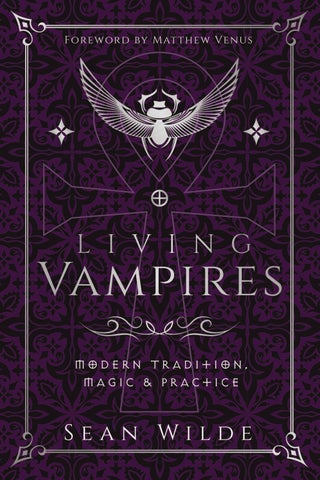
LIVING VAMPIRES
About the Author
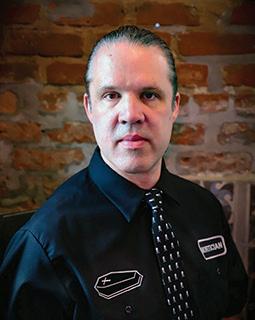
Father Sean Wilde UE is an Indigenous Canadian author based in New Orleans. He is a vampire, witch, priest, professional psychic, theurgist, Sin Eater, and occult teacher. He studied anthropology, philosophy, and religion and culture at university and has been drawn to the occult and metaphysical world since the age of four, beginning with a fascination for books on the paranormal and cryptids.
He is an initiate of the Kheprian Order, the Ordo Aurum Solis, O.M.O., T.R.K.O., and O.O.A. and holds apostolic lineage through several Catholic lines, along with initiations in multiple other traditions. Father Wilde is recognized as the world’s only traditional, verified, public Sin Eater. His additional training includes Therapeutic Touch, Usui Reiki, and Spiritualist Church Healing. He is also one of the founders of the New Orleans Temple, a duly chartered temple within the Kheprian Order that remains active in the city.
In addition to his spiritual and occult work, he co-owns three spiritual retail stores in the French Quarter of New Orleans; Sassy Magick, Sassy Magick Noir, and Sassy Magick Boutique, and is the founder of SassyCon, an annual esoteric conference held in New Orleans.
Sean’s awakening as a vampire occurred at the age of sixteen, and he possesses all five of the Kheprian alterations. In 1999, he founded an international vampire organization that grew to become one of the largest of its kind in the world. In 2024, he was selected to serve as one of the Grandmaster’s triumvirate, one of only three individuals who know the identity of the Grandmaster of the Kheprian Order. In this role, he has trained other vampires and initiated dozens into the Order.
He is the author of Living Vampires and Magic Without Tools. Learn more at https://livingvampire.com/ or visit him on Facebook @sean.wilde.161, TikTok @neworleansvampire, and Instagram @seanwildeauthor.
LC record available at https://lccn.loc.gov/2026018606
LC ebook record available at https://lccn.loc.gov/2026018607
Llewellyn Worldwide Ltd. does not participate in, endorse, or have any authority or responsibility concerning private business transactions between our authors and the public.
All mail addressed to the author is forwarded but the publisher cannot, unless specifically instructed by the author, give out an address or phone number.
Any internet references contained in this work are current at publication time, but the publisher cannot guarantee that a specific location will continue to be maintained. Please refer to the publisher’s website for links to authors’ websites and other sources.
UPI-2M PLUS d.o.o., Medulićeva 20, 10000 Zagreb, Croatia, matt.parsons@upi2mbooks.hr
Other Books by Sean Wilde
The Gorgon’s Guide to Magical Resistance (contributor)
Magic Without Tools
Ordo Magni Operis 0 Degree Curriculum: Volume 1 (coauthor)
Forthcoming Books by Sean Wilde Spiritual Warfare A Witch’s Home
As a teenager seeking answers, I felt lost until I read Vampires Among Us by Rosemary Ellen Guiley. Her writings started me on the path that has led to the creation of this book.
To my brethren in the Kheprian Order, my future self, vampires seeking answers, and people fascinated by and drawn to vampirism, I offer this book to you.
Metasurgery Exercise 2: Simple Body Modification 225
Metasurgery Exercise 3: Digit Removal 226
Metasurgery Exercise 4: Flashing 226
Metasurgery Exercise 5: Appendage Removal 227
Metasurgery Exercise 6: Intermediate Body Modification 227
Metasurgery Exercise 7: Meridian Shifting 228
Metasurgery Exercise 8: Meridian Enlargement 228
Metasurgery Exercise 9: Minor Chakra Removal 229
Metasurgery Exercise 10: De-Naturing 229
Metasurgery Exercise 11: Creating a Second Subtle Body 230
Metasurgery Exercise 12: Programming 230
Honing and Building Your Metasurgery Magic Exercise 1: The House 232
Honing and Building Your Metasurgery Magic Exercise 2: The Ice Cream Cone 232
Honing and Building Your Metasurgery Magic Exercise 3: The Person 232
Honing and Building Your Metasurgery Magic Exercise 4: The Bird 233
Im Kheperu Ritual 1: For a Solitary Kheprian 260
Im Kheperu Ritual 2: For a Kheprian Temple 261
Im Sekhemu Ritual 1: For a Solitary Kheprian 263
Im Sekhemu Ritual 2: For a Kheprian Temple 264
Calling Forth the Family Ritual 279
Foreword
Iimagine a characteristic I share with those holding this book is that, whether they be folkloric vampiric beings, such as revenants and hungry ghosts; fictional vampires brought to life through gothic literature and contemporary media; or the very much embodied vampires who walk among us, vampires have long been a point of fascination for me. I remember poring over works such as Vampires Among Us by Rosemary Ellen Guiley and Vampires, Burial, and Death by Paul Barber in my teenage years, as well as devouring a veritable library of fictional literary works on vampirism that showcased authors from John William Polidori to Poppy Z. Brite. Having spent much of my life as a practicing witch and often moving within the dark corridors of goth subculture, I am also no stranger to encounters with vampires whose paths and practices occasionally intersect with my own.
In the interest of full disclosure, however, I must share that I came to this work as a magical practitioner with a precursory understanding and curiosity about the vampire community but as an outsider to it. Though I do not personally identify as a vampire, I am acutely aware of the myriad ways the historical legacy of witches, vampires, and werewolves often overlap. We share many shared threads in a common tapestry, as well as parallel points of origin and not entirely dissimilar developmental trajectories within contemporary magic and popular culture. Several elements integral to my witchcraft, such as spirit flight and shapeshifting, are shared by many who identify as vampires, and there are numerous workings within my craft that function in a vampiric capacity, as well as several spirits I engage with that are vampiric
in nature. So while there is a sense of familiarity with what this book offers, refreshingly, much of it is also quite new to me. And it is here that this book succeeds, not only by providing a welcoming doorway for the vampire to enter through but also by offering a bridge that illustrates how the realm of the vampire converges with and coexists within broader magical communities and spiritual philosophies.
What Sean presents within these pages offers a nightside invitation into the world of the vampire. He not only dispels many myths and misconceptions surrounding vampires but also skillfully presents the diverse cultural and historical origins of the lore, practices, and metaphysics that form the foundation of vampirism. Further, Living Vampires provides an illuminating overview of how aspects of vampirism manifest more broadly in the world as well as a glimpse into the contemporary vampire community that will be informative and valuable to both casual readers and newly awakened vampires alike.
Living Vampires guides readers toward an understanding of the unique nature of the vampire as well as important considerations regarding the needs, benefits, and pitfalls one might encounter when awakening to this nature or engaging with vampires more broadly. More central to this work is an exploration of the subtle body, the origins of many of the maps and models through which it has been understood cross-culturally, and the many ways it may be experienced, engaged with, empowered, augmented, and fed upon by the vampire. Sean’s work offers a wealth of practical exercises and rituals, many of which may be effectively incorporated into one’s practice regardless of spiritual or magical alignment. Collectively these guide the reader through introductory, intermediate, and advanced approaches to energy work as employed by contemporary living vampires.
This book will undoubtedly arm the vampire with a depth of knowledge and praxis sufficient to set them upon a greater path of becoming. Beyond this, I firmly believe that well-rounded and effective magical practitioners must cultivate curiosity, not only regarding familiar metaphysics and methodologies but also toward those that differ in meaningful and illuminating ways to our own. To that end, Living Vampires offers many glimmering fruits for such curious readers, providing both insight and inspiration for those
with eyes to see. For these reasons, and many more, I believe this work merits the attention of and serves a far broader audience than vampires alone.
—Matthew Venus, January 2026
Author of Ensouling the Effigy: The Witch’s Arte of Enspirited Objects
Introduction
Vampirism can be an art, science, lifestyle, and spiritual evolution. It is also an innate state of being for a number of people. A person who practices vampirism identifies as a vampire. This book will introduce you to the world of vampires; our organizations, philosophy, and magic; and our influence on modern occult culture.
Yes, I did say “our.” I identify as a vampire. My conscious awareness of vampirism began when I read Vampires Among Us by the prolific author Rosemary Ellen Guiley. After reading her book, I knew I wanted to learn all I could. I have studied it from afar and from within, using participant observation and initiation to learn firsthand about this subculture. This book is the culmination of thirty-five years of research, family lore, memories, and participation. I will share with you the various mythologies shrouding vampires and vampirism, providing insight into the daily life of a vampire. I will also pull back the curtain from one of the oldest vampire organizations, the Kheprian Order, and reveal how these ancient vampires have moved through history and are active today.
What Defines a Vampire?
To briefly clarify, vampires can be defined as beings who have a permanent, fundamental need to exchange the vital energy of others with theirs to function adequately. Vampires don’t feed on people in the sense of a one-way road. They exchange subtle energy with people. This difference is nuanced;
however, it is vitally important. When a vampire takes in the life force of another person, there is an exchange, where life force also goes back to them. This aids in the feeding by cycling the person’s energy in such a way that the vampire can absorb and take in more. This is the key difference in what a vampire does compared to a non-vampire. Vampires are not able to process and refine their own vital energy or the energy that people interact with daily. The person being fed on benefits from a certain euphoria, increased energetic flow, and the loss of psychic blockages.
There is a difference between vampires and vampiric beings, and I will teach you how to defend yourself against energy siphoning via techniques never fully disclosed before, including techniques of vampire magic and exercises to guide you in advancing your own magical practices, from the novice to the accomplished practitioner.
The experienced occult practitioner might consider and compare my writings to energy work as opposed to magic. This is to be expected and is understandable. Remember: Most magical practitioners use the definition of magic given to us by Aleister Crowley: the science and art of causing change to occur in conformity with Will. By this definition, energy work is magic, and experienced occultists know the energy behind the rituals they perform. As such, I tend to use energy and magic interchangeably. When in doubt, I am talking about the same thing regardless of which word I use.
What’s in a Name?
Throughout the book you’ll see vampire spelled as vampire and vampyre. I default to vampire in general but use the spelling with a y specifically when a source I am consulting does so. While there is some debate on which spelling is more appropriate, substantially, both mean the same thing. I would be remiss, however, if I didn’t point out that those who spell it vampyre claim this is a nod to the older spelling of the word in the eighteenth and nineteenth centuries.1 However, Augustin Calmet (1672–1757), discusses vampires in 1759 using vampire. 2 Born in France, Calmet was one of the most
1. Sebastiaan, Black Veils, 277.
2. Calmet, Traité sur les apparitions des esprits, et sur les vampires, ou les revenans de Hongrie, de Moravie.
renowned Bible scholars of his day, writing on various esoteric and religious topics. Author Dr. John Polidori (1795–1821) used the spelling vampyre in 1819 with the publishing of The Vampyre 3 Yet the following year English playwright James Robinson Planché (1796–1880) used the alternative spelling vampire. 4 Planché was keen for historical accuracy to the point where he is credited with starting the practice of historically accurate costuming on the English stage.5 And so, we can see a history going back two hundred years of both spellings seemingly used interchangeably.
Sources and Authors
There are numerous authors cited in this book. Some are looked at with neutrality, others are looked upon favorably, and to some I extend criticism. This doesn’t diminish their contribution to the occult world. That being said, I would be remiss not to point out where I disagree with them or, in some cases, believe they are in error. Too often we read something and either accept it at face value, especially if it already fits our worldview, or reject it entirely. Part of the goal of this book is to critically look at claims by various authors, teachers, and leaders in the occult community and determine if they are accurate or even have any basis in fact.
I cite sources for you to review on your own as much as possible. I was unable to do so in some situations, as some information is from oral teachings or personal unverified gnosis. In these cases, you will need to determine whether what I’m writing makes sense to you. If it helps you on your path, I have accomplished one of my goals.
The Lenses We Use
Understanding the lens someone sees the world through is important when reading anything they write. The lens I see the world through is composed of various initiations, friendships, life experiences, genetics, and upbringing. Without exception, people have several biases, and understanding the lens through which they view the world also aids in recognizing those biases.
3. George, “Phantasmagoria,” 23–47.
4. McFarland, “The Vampire on Stage,” 19–33.
5. Reinhardt, “The Costume Designs of James Robinson Planché (1796–1880),” 524–44.
My journey into the paranormal began when I was four years old. Our family home was haunted, and the spirit there would sit on my bed and speak to me. Even the old roller blinds acted strangely, rolling down on their own instead of up. Those experiences marked the beginning of my lifelong connection to the supernatural and the occult.
As a teenager, I discovered Wicca through Witches, Pagans, and Magic in the New Age by Kevin Marron and began studying the occult in earnest. In university, I studied philosophy and cultural anthropology, focusing on religion and culture. I met people from many spiritual paths, including Wiccans, magicians, and energy workers, and immersed myself in pre-Christian religions and magical traditions.
Eventually, my path led me into Catholicism. Seeking balance, I studied the faith deeply and was baptized Roman Catholic. I explored charismatic healing, prophecy, and Catholic approaches to energy work. My spiritual adviser was an Opus Dei priest initiated by Saint John Paul II. Yet, after the truth about residential school graves came to light, I could no longer remain within the Roman Church. I broke away and later embraced the liberal Catholic tradition and received my consecration as a bishop.
I’ve been awake as a vampire for thirty-five years and awake as a Kheprian for twenty-six years. I am one of the early members of the Kheprian Order, an ancient vampire order discussed throughout this book. I was initiated originally as priest, later progressionist priest, and in modern times counselor, warrior, and vizier. I lead the New Orleans Temple, a chartered temple within the Kheprian Order.
Who Can Read This Book?
This book is designed for everyone, from absolute beginners to experienced practitioners and vampires, giving a solid foundation of background and practices for the former and new ways of looking at vampirism for the latter. Through the practices and rituals in this book, you will be able to start your path using vampirism or develop it further, possibly transforming it entirely. Throughout the book, you will find various ethical discussions. While it may seem so at times, this book is not intended to dictate a particular form of ethics or define what is appropriate or not. I bring this to attention to have
the reader carefully consider their actions and be more aware of the magical world they create and the effects of feeding or being fed on.
The Pathworking of This Book
This book is structured with intention and purpose. While you can skip between chapters if you wish, to experience the material as it was designed, it’s best to read it in order. Many chapters include practical exercises that build upon one another. For beginners, following them sequentially is important to ensure a solid foundation. Those with more experience may already practice several of these techniques, but working through any that are new to you will still deepen your understanding and expand your skill.
An extensive glossary is included for easy reference. When a new term is introduced, I’ll either define it right away or provide a brief note if it’s essential. For less critical terms, I encourage you to consult the glossary as needed.
The work in this book is not based on a specific religion or a specific occult tradition, although I do mention religious vampire organizations and a large part of the book discusses the Kheprian Order. This book does not reveal oath-bound material or purport a particular religious path. I intend that you use this book either on its own or as a complement to your existing practice. This book is written for everyone, regardless of their background, heritage, location, or status. The teachings and practices within are open and accessible to all who seek them. No initiation is required to understand or apply what is shared here, no permission is needed to explore it, and there are no restrictions on who may learn from it. There are initiations one can seek to become an actual vampire; however, the basic teachings in this book do not require initiation necessarily.
Reading this book will empower practitioners to create healthy boundaries, stand in their power, and reveal new ways of fueling their magic. For vampires and those who wish to become one, it provides an opportunity to hone their abilities and determine which type of vampirism they may be drawn to.
CHAPTER
1
Defining Vampirism
As a starting point, I need to define vampirism to ensure we are using common vocabulary and differentiate between lifestylers, fetishists, vampiric people and beings, actual vampires, and the practice of vampirism.
Lifestylers are people who enjoy the vampire mythos, dressing up, wearing fangs, and attending vampire-themed events. They are attracted to the vampire aesthetic and are not actual vampires.
For the purposes of this book, fetishists are people who have a fetish related to vampirism, whether vampirism as a concept, vampires in general, blood drinking, blood play, or something similar. Like the lifestylers, they are not actual vampires.
Vampiric people and beings exchange vital energy for a variety of reasons but don’t require the energy on a permanent basis to function in a healthy way, nor are they necessarily spiritual immortals, a topic that I will discuss later in chapter 10. Vampiric people and beings are also not actual vampires. This leaves actual vampires and those who practice vampirism. While many people who practice vampirism define themselves as vampires, I would technically not consider them as such and instead suggest they are vampiric people actively practicing vampirism. I recognize, however, that it’s much easier and, let’s face it, cooler to say “I’m a vampire” than it is to say “I’m vampiric because I practice vampirism.” The practice of vampirism combines magic, meditation, alchemy, and shamanism, allowing the extraction and assimilation of various forms of energy.
Defining Qualities
While actual vampires may also engage in all these esoteric and energetic practices, they have some defining qualities that differ from a person who is practicing vampirism. All actual vampires have a permanent, fundamental need to exchange vital energy to sustain their subtle or energy body in a healthy way. They are also spiritually immortal.
As well as being actual vampires, these people can also be lifestylers, fetishists, and, as I noted earlier, practitioners of a particular form of vampirism.
The Fundamental Need
All real vampires have a permanent, unchangeable need to exchange energy to sustain their subtle bodies. Recently, at a conference in Michigan, someone challenged me on this definition and stated that all living things technically exchange energy. My inability to articulate this point, combined with them not understanding the difference in types of energy and a vampire’s lack of ability to process certain types, led to an impasse in the conversation. It came at the best possible time, because I am now able to clarify this concept and provide a more fulsome definition here.
Unlike all living things that process universal energy on a daily basis, vampires cannot process this type of energy, as it’s not compatible with our subtle systems, which are composed of chakras, energy meridians, and the subtle body. Universal energy is part of the subtle reality ecosystem, an energy that connects all living things and influences existence at every level. Vital energy is the life force or energy that flows through all living beings. As noted in the Asetian Bible by Luis Marques, vampires primarily feed on vital energy, which is energy contained in all living things.6 If a vampire doesn’t feed on this energy, their subtle body system becomes stagnant and begins to break down, which can lead to a number of undesirable outcomes, most often manifesting as depression or a suppressed immune system.
This need is also permanent. It is a state of being that simply exists rather than a condition or malady. Some people involved in vampirism, including several vampires themselves, see this permanent need as some sort of sickness or weakness. That’s akin to saying a human being is ill because they
6. Marques, Asetian Bible, 169.
need to consume food and water to sustain themselves or that breathing is a weakness. These fundamental needs are part of the innate state of being human and a requirement for healthy functioning, not an illness to be cured.
Spiritual Immortality
All vampires are spiritual immortals, beings that incarnate repeatedly with many past-life memories intact, but not all spiritual immortals are vampires. Spiritual immortality exists for a number of transspecies beings, as well as humans who put in significant spiritual work. This type of immortality should not be confused with the immortality of the soul, which all humans possess inherently.
The History of the Word Vampire
It’s been postulated that the earliest recorded use of the term vampire appears in French, English, and Latin in the seventeenth century. The writings refer to vampirism in Poland, Russia, and Macedonia.7 These all point to Slavic origins of the name, which in Slavic is the cognate upir. Interestingly, the earliest English writings on vampires coincide with the earliest English writings on sin eating, an extraction magic done in part to ensure a person doesn’t come back as a vampire.8
However, there are other theories that the word vampire and Slavic synonyms upior, uper, and upyr are all derivatives of the Turkish uber, which means “witch.”9 I find this interpretation interesting, as it would suggest the vampire is a living, magical being as opposed to something undead. The Ottomans were writing about vampires as early as the sixteenth century via various fatwas, or written answers to a religious question. Ebussuud Efendi (1490–1574) issued three vampire fatwas at this time. Mehmed Ebussuud Efendi is considered the most influential jurist in Ottoman history and reconciled dynastic Ottoman laws with Muslim religious laws.10 The idea that a vampire was the same thing as a witch appears to be a conflation of terms and timelines. Earlier in Ottoman history, terms were used for supernatural
7. Wilson, “The History of the Word ‘Vampire,’” 577–83.
8. Wilde, Magic Without Tools, 100.
9. Wilson, “The History of the Word ‘Vampire,” 577–83.
10. Kirgi, “An Early Modern Horror Story,” 29–30.
beings that were vampire-like. Later these terms would be used for both vampires and witches.11 However, both seem to have existed at the same time, with different terms giving definition to both types of beings or creatures as early as the mid-seventeenth century.12
Myths and Misconceptions
The line between the facts and the mythology of vampires is often muddied. A seeker of knowledge must wade through various mythological accounts throughout the world, websites purporting to be experts in vampirism, LHP groups, vampire magic, and books that, for the most part, are incredibly biased against vampires and vampirism.
Bloodsucking Monsters
Myth: Vampires are often conflated with the bloodsucking monsters found in the mythologies and folklore of various cultures. The most common one we encounter in the West is Count Dracula or Nosferatu.
Reality: Vampires are not monsters. Vampirism typically does not involve physical blood consumption. It is a practice centered around the exchange of subtle energies between two or more people. This can get confusing, as there are sanguinarian vampires who do feed on blood, and some groups, such as the Aset Ka, maintain blood feeding is a potent way of obtaining energy.13 The original Romanian myths of the varcolac and strigoi talk about how they did not feed on people’s blood but instead on their vital essence.14 I will discuss sanguinarian vampires more later.
Crossing Running Water
Myth: Vampires can’t cross running water.
Reality: While vampires can cross running water, some say they feel an odd sensation when they do so, as if they are being pulled away from their body. It’s an unnerving feeling, but it doesn’t have any lasting effect on the
11. Kirgi, “An Early Modern Horror Story,” 67.
12. Yaşar, “Evliya Çelebi in the Circassian Lands,” 81.
13. Marques, Asetian Bible, 58.
14. Blackwood, Scholomance, 22.
vampire. Typically, it is a river that has a decent width and current to it, as opposed to a small stream or creek. The original legends behind this myth may stem from bodies of suspected vampires being thrown into water and the natural buoyancy of a dead body.15 Alternatively, this myth may come from legends of witches not being able to track people across running water, along with the purification and cleansing properties of water in general.16 In these instances, weaker energetic links from a vampire may be disrupted as the person crosses the running water.
Draining Life Force
Myth: Vampires drain the life force of others, leaving them weakened or harmed.
Reality: Responsible vampires engage in consensual and ethical energy exchanges. The goal is not to harm but to facilitate mutual benefit for all parties involved. There are exceptions to this, and some vampires do accidently or sometimes deliberately harm others with how they feed. Temporary weakness can also occur during or immediately after the energy exchange.
Fangs
Myth: Vampires have fangs.
Reality: Vampires typically do not have fangs unless they purchase them through a fangsmith or similar professional. Physically, the instances of fangs in vampires seem to be no different than various human beings who also have them. Certainly, there are no retractable fangs, nor do a significant number of vampires have natural ones. Dion Fortune maintained that vampires do indeed have fangs, which likely added to this myth.17 However, some vampires do manifest subtle reality fangs when they feed, especially if biting someone.
Having said that, I do have a vampire story from the mid-1990s.
During the heyday of vampire subculture but before fangsmiths existed, I was outside a nightclub in Toronto. The venue, Sanctuary: The Vampire Sex
15. Barber, “Forensic Pathology and the European Vampire,” 1–32.
16. Fortune, Psychic Self-Defense, 185–86.
17. Fortune, Psychic Self-Defense, 50.
Bar, was a goth club that many locals and visitors frequented. It was also a known or rumored gathering point for vampires of all types—psi, sanguinarian, and immortal. Certainly, it attracted lifestylers, LARPers, and similar people. Sadly, like many clubs that existed back in the 1990s, Sanctuary is closed now, and a coffee shop has taken its place.
I was standing on the corner across the street from the bar, speaking with a friend. Then I noticed him. What was interesting about this man was … nothing. He was of average height and average build, had brown hair, brown eyes, simple clothing. The only thing odd was a leather satchel he had on, which I would later find out housed a flute. He managed to get right beside me before I noticed him, which is rare for me.
We started chatting with each other, while the lady he was with chatted with my friend. The conversation went from nightclubs to music to him living in New Orleans. From there he spoke about the graveyards and how they were dangerous to visit at night.
I assumed it was due to muggings and asked him, “Oh, is the crime really bad at night in the graveyards?” He looked at me, smiled, and said, “No, it’s the vampires you need to watch out for.” Then he started to laugh and tilted his head back with his mouth slightly open. I looked and could see that halfway back in his mouth, not in the front, there were fangs on each side. Remember: This is before fangsmiths were really a thing.
He stopped laughing and looked right at me. “Our taxi is here. Would you like to join us?”
In that moment, I realized I was either going to have a very wild time, be murdered, or be turned into an immortal vampire. I assumed it was more likely one of the first two and politely declined.
When I’m wandering the French Quarter thirty years later, I wonder from time to time if I’ll see him, unaged and carrying his flute.
Flying
Myth: Vampires can fly.
Reality: Vampires cannot physically fly. Many can astral travel with ease, essentially flying through subtle reality. In some cases, it’s how they travel to feed or to meet in subtle reality temples. The members of the Temple of the Vampire are especially adept at astral travel. Other vampires will
unconsciously travel to friends, family, or people they desire when especially hungry. I’m known to do that with close friends from time to time.
Garlic Allergy
Myth: Vampires have an allergy to garlic or are repelled by it.
Reality: Absolutely not! In fact, many enjoy it. It is, however, a common joke among those in the vampire community. This myth likely came from the smell of dead bodies and an attempt to cover it up with the pungent scent of garlic. Alternatively, the use of garlic may have been a purification attempt by those who deal with the dead, as suggested by J. J. M. de Groot, a Dutch sinologist and ethnographer who studied religion, when he made the following remarks:
It is a general conviction that anyone who calls at a mortuary house incurs a kind of pollution, especially so if death has been untimely or caused by disease. Some condolers therefore wisely hide a few garlic roots under their garments, convinced that the strong smell will prevent the influences of death from clutching to their bodies; on leaving the house they throw the roots away in the street.18
Garlic was also used to purify a home and clear out bad psychic energy.19 The idea of purification or cleansing and its relation to vampirism is repeated in various aspects of mythology.
Healing
Myth: Vampires can heal wounds rapidly.
Reality: Several vampires have increased healing abilities, possibly due to heightened metabolisms. However, the healing is far from instantaneous, and the vampire in question is able to heal slightly more quickly than the average person.20
18. de Groot, The Religious System of China, 32.
19. Fortune, Psychic Self-Defense, 191.
20. de Lhamort, Le vampirisme aujourd’hui, 122.
Immortality
Myth: Vampires are immortal.
Reality: Yes and no. Vampires are not physically immortal. We are spiritual immortals, although not all remember being so. Spiritual immortals are beings who consistently reincarnate over and over again either to help others on this planet or for their own purposes and goals. All natural vampires and created vampires are spiritual immortals. Spiritual immortality should never be confused with physical immortality. In all cases vampires have largely similar strengths and frailties to any other human being. Spiritual immortality also shouldn’t be confused with spiritually eternal beings. Spiritually eternal beings or constants survive even through creation cycles, whereas all other beings, including spiritual immortals, do not. I expand on the concept of creation cycles in chapter 11, “The Spiritual Hierarchy.”
Malevolent Intentions
Myth: Vampires are individuals with malicious intent, or parasites, intentionally causing harm to others.
Reality: Vampirism involves the exchange of energies for various purposes, often aligned with personal transformation, healing, and empowerment. In Psychic Self-Defense, published in 1930, Dion Fortune discusses parasitism along with vampirism, but she separates the two as different phenomena.21 Fortune was a Welsh occultist and ceremonial magician. She wrote several articles and books on the occult and is influential in various areas of Western occult traditions. Subsequent authors and occults who read Fortune’s work have conflated the two in error.
Mesmerism
Myth: Vampires can mesmerise someone with their gaze.
Reality: Some vampires have an uncanny ability to affect other people with their eyes. Often our gaze is intense, and it feels as though the vampire is looking into your soul. This doesn’t go so far as to be able to command a person, but to affect them? Absolutely. Some vampires, such as the Asetians
21. Fortune, Psychic Self-Defense, 44.
and Kheprians, actively use this ability, conveying strength, fear, attraction, or a sense of knowing.22 As a teenager I received multiple comments on my eyes and the intensity of my gaze. One of my friends wrote me a letter confessing to a crush she had on me and said, “those eyes, those eyes they pierce my soul, you see everything.”
One-Way Exchange
Myth: Vampirism is a one-way exchange, where the vampire takes energy without giving anything in return to the person they are feeding on.
Reality: All forms of vampirism involve an exchange of energy. The amount exchanged will vary depending on the vampire, the technique used, and their intent. Healthy energy exchange involves consent and mutual benefit. Responsible vampires, who are conscious of their vampirism, understand the importance of this exchange, which benefits both parties.
Permanent Energy Loss
Myth: Once a person is fed on by a vampire, they experience permanent energy loss or harm.
Reality: The exchange of energy does not lead to permanent harm, and the person being fed on can replenish their energy as long as there are periods where the vampire doesn’t feed on them.
Predators
Myth: Vampires are predatory individuals seeking to exploit others.
Reality: Many vampires engage in their vampirism within a community of willing donors, fostering collaboration and mutual support. There is an emphasis on ethical practices, respect for boundaries, and responsible energy work. This is especially true for sanguinarian vampires. However, it is true that vampires are, by nature, predatory beings. How they exercise this predation can be ethical or unethical depending on the vampire.
22. Marques, Asetian Bible, 96.
Reflection
Myth: Vampires don’t cast a reflection.
Reality: Of course we do! Mirrors are used in some vampire magic and as a method of feeding. Both will be discussed later in this book. Sometimes a vampire may look different in a mirror in terms of eyes, eye color, or even their face. This is when a past life comes through very strongly and superimposes itself over the current body.
Religious Objects
Myth: Religious objects can be used against vampires to harm, banish, or repel them.
Reality: No, they cannot. There are atheist, Catholic, Christian, Buddhist, and various Pagan vampires, as well as those of other religions or faiths. All wear various religious objects without an issue. However, there are some objects that are designed for protection against entities that can affect some vampires. The Tibetan tingshas, which can be used against hungry ghosts or beings that feed on people’s energy, are an example. They are especially effective against Kheprian priests, who are vampires of a specific order. Many years ago, I conditioned myself to resist the tingshas by having a friend ring them outside against me. I started off a block or so away and after many attempts was finally able to get within arm’s length of my friend.
Seeing in the Dark
Myth: Vampires can see in the dark.
Reality: No, not any better than certain people who have stronger night vision than others.
Shapeshifting
Myth: Vampires can shapeshift into various forms, most often a bat, rat, or wolf.
Reality: Physically vampires cannot change their shape. In subtle reality, some vampires can change their form. Some will grow fangs, and some will change into an animal, the most common being a large wolf. Some vampires will mistakenly claim they turn into a dire wolf, as it was believed dire wolves
were the ancestors of Europe’s gray wolves. In reality, the dire wolf is no wolf at all but a dog. There is also an interesting reference to certain European languages, where the word for werewolf also meant vampire.23
Silver Allergy
Myth: Vampires are allergic to or burned by silver.
Reality: Some people have silver allergies; however, vampires do not as a whole have this allergy. Vampires can wear any metal or alloy and remain unaffected. This misconception may be related to the myth about vampires casting no reflection, as old mirrors were backed with silver.
Sunlight
Myth: Sunlight will kill or burn a vampire.
Reality: Many vampires report a light sensitivity. That being said, the sun doesn’t burn a vampire any more than it does another person. Some vampires claim to be weakened by the sun and conversely strengthened by the night.24 This light sensitivity seems to be largely a self-made construct, as many vampires try to live a lifestyle of being a night person and having heavily curtained windows in homes during the day.25 This causes anyone to develop a temporary sensitivity to light. For example, photographers who worked during the manual film days in darkrooms for hours at a time would need strong sunglasses to venture out in the day. However, certainly the sun’s energies are generally not as compatible with a vampire’s subtle body system compared to a human’s. For some vampires, the issue is also a spiritual one, as Aset, the progenitor of Asetian vampires, didn’t get along with Ra, the Kemetic sun god.26
23. Summers, The Vampire, 21.
24. Marques, Asetian Bible, 86.
25. de Lhamort, Le vampirisme aujourd’hui, 121.
26. Marques, Asetian Bible, 97.
Superhuman Speed and Strength
Myth: Vampires are faster and stronger than humans.
Reality: Normally no, vampires are no stronger or faster than a human being. However, there are techniques vampires can employ to be slightly faster or stronger. Using these, the vampire will augment their base strength of speed slightly. I’ve measured this with some vampires, seeing strength increase by about 10 percent and speed similarly so.
Unaware Vampires
Myth: Some vampires are unconscious or unaware of their energy-draining and feeding.
Reality: Until a vampire awakens, they may unconsciously feed. Newer vampires especially may be unaware of how much they are feeding on someone. Once awakened, responsible vampires are highly conscious of their actions, engaging in intentional and consensual energy exchanges. Awareness and ethical considerations are integral to the practice for most awakened vampires.
Werewolves
Myth: Vampires and werewolves hate each other.
Reality: First, I need to acknowledge the reality of werewolves, which do exist. In this instance, I am referencing therianthropes, which are a form of otherkin, or transspecies beings. A transspecies person is someone who believes they have a human body with a nonhuman soul. These types of otherkin and vampires do not always get along. No one has been able to definitively determine why, although I suspect it’s often a simple yet fundamental difference in lifestyles, goals, and how vampires and werewolves function. Having said that, the idea of wolves or dogs in general being the enemies of vampires seems to stem from canines digging up graves and eating body parts. If the body was perceived as not fully decomposed, locals would extrapolate the wolf or dog had dispatched something supernatural.27
27. Barber, “Forensic Pathology and the European Vampire,” 1–32.
There are also mythological references to werewolves and their association with vampirism. Lykaon was a king of Arcadia. In Greek mythology, after a dispute with the god Zeus, he was turned into a wolf. Lykaon’s father was Pelasgus, sometimes synchronized with Cain, a progenitor vampire in particular traditions. His mother was Meliboea, an oceanid, or water spirit. Water spirits are often seen throughout vampire traditions, with the most famous being the Quinotaur of the Merovingian.
While not a vampire himself, Lykaon plays a role in some family traditions and in the Green Order, where he can be called upon to assist with shapeshifting while traveling in subtle reality.28 He also plays a role in my legendary family line as my 101st great-grandfather.
Wooden Stake
Myth: A wooden stake through the heart will kill a vampire.
Reality: Yes, absolutely it will, just as it will kill any human being. Do not attempt to experiment to find out! There are numerous accounts of sharp wooden objects being used to kill or severely wound a vampire, such as a Druid using a sword made of yew wood to grievously wound the vampire and sorcerer Abhartach. Interestingly, Abhartach appears to be connected to the de Vescy family of the eleventh and twelfth centuries, which I am descended from.29 However, the legend of the stake is likely due to the practice of piercing the dead body so it would not bloat and subsequently burst. Stakes, sickles, axes, and other sharp objects were used and sometimes placed over the neck of the corpse, both for physical and supernatural protection.30
Created Versus Born Vampires
There are two beliefs regarding vampires and our nature. Either we are only born that way or we are only turned. Later in this chapter, I talk about vampires versus vampiric beings. It’s important to note that anyone can become vampiric. It’s teachable, doable, and relatively easy to achieve. However, that doesn’t make a person a vampire.
28. Blackwood, Encyclopædia of Wamphyrism, 119–22.
29. Bane, Encyclopedia of Vampire Mythology, 13–17.
30. Barber, “Forensic Pathology and the European Vampire,” 1–32.
In the vampire community, other than Asetian vampires, almost everyone will tell you vampires are born, not made. They are wrong. In most cases, it’s the ignorant narrative they were taught; in a few cases, it’s gatekeeping; and collectively it’s the party line taught to virtually everyone both within and outside the vampire community. In reality, yes, you can be turned into a vampire, depending on the group and origin. In very rough terms, two categories of vampires exist on this planet: the natural ones and the created ones. Natural ones simply are and always have been vampires. Created ones are just that—vampires created via the intervention of a deity or subtle body surgery. The famous occultist Dion Fortune believed people could be turned into vampires by a disembodied vampire that had overcome the second death, or disintegration of the subtle body. In this instance, the person is so depleted of vitality by the vampire that, in Fortune’s view, they became a vampire themselves through contagion.31 I discuss this later under the concept of sympathetic vampirism.
Do People Hunt Vampires?
Most people about to read this will assume the answer is no, and certainly there are not Van Helsing–like figures running amok putting stakes in people any longer. It is with no small amount of irony that I’m descended from actual vampire hunters, where my twenty-fifth great-grandfather, the Templar William Marshall, along with other family members, was hunting a suspected vampire in a castle in England. Sadly, the vampire victim was more likely suffering from acute leukemia, as this disease mirrors many reported mythological vampirism side effects.32
Today, the so-called vampire hunters tend to be religious extremists who think vampires are deranged, dangerous predators or satanists. They are about as dangerous to vampires as other closed-minded people are to any subculture that dwells on the fringes of society.
31. Fortune, Psychic Self-Defense, 48.
32. Tranekaer et al., “Malignant but Not Maleficent,” 627–31.
Vampire or Vampiric?
With vampires defined as beings who have a permanent, fundamental need to exchange the vital life force of others with theirs to function adequately, it’s important to differentiate vampires from vampiric beings. Vampiric beings feed on life force because they either have a temporary fundamental need to exchange the life force of others or have learned to feed on others to help fuel their spiritual goals, rituals, and actions.
The exercises contained in this book will allow you to become vampiric, for example. However, this does not make you a vampire, as a vampire has a fundamental need to exchange vital energy to fully function on a day-to-day basis.
Becoming vampiric may be fun, and certainly, many experienced practitioners know how to do this and engage in it from time to time to fuel their workings. However, it can be addictive and should be engaged in intermittently as opposed to continuously. There are also pragmatic and ethical considerations to be had, which I will fully outline in upcoming chapters.
A Quick Guide to Types of Vampires and Their Qualities
Type of Vampire Requires Energy to Survive Is a Spiritual Immortal Is Connected to the Archetype
Is Vampirism Permanent?
While vampirism itself is permanent, people can temporarily be vampiric. The four most common types of people who fall into this category are the elderly, the infirm, babies, and people who are being fed on by a vampire. In all cases, they require energy to sustain themselves, but this requirement
is temporary in nature. In the first three cases, the need is due to illness or a lack of energy generation in their subtle body systems. In the fourth case, where the person is being fed on too much or too often, the individual can begin to siphon energy from others as they unconsciously seek to compensate for the loss of life force in their subtle systems.
“Living Vampires offers a system of energy work that is as practical as it is immersive. … Every idea, method, and perspective is grounded in thoughtful research and firsthand experience.”
—Mat Auryn, international bestselling author of Psychic Witch
Drink in a World of Sacred Orders, Vampiric Philosophy, and Magical Practices
The word vampire inspires images of fangs, bats, and haunted castles. But what if the true vampire wasn’t undead at all? What if they were walking around in broad daylight, free of the trappings that myth thrust upon them?
Sean Wilde, a member of the Kheprian Order (one of the oldest vampire organizations in the world), gives you an insider look at what it means to be a vampire. Sharing wisdom long kept from outsiders, Sean teaches vampiric energy work that anyone can use to advance their psychic skills and magical practice.
Learn about ethical feeding, protection against energy siphoning, psychic surgery, spiritual immortality, and more. For vampires and those who wish to become one, this book provides new ways to fuel your magic and hone your abilities. With numerous techniques and exercises, you’ll want to sink your teeth into it again and again.
SEAN WILDE has been awake as a vampire for over thirty-five years and has taught vampirism for more than twenty-five. In 1999, he founded an international vampire organization that grew to become one of the largest of its kind in the world. In 2024, Sean was appointed to the Grand Master’s Triumvirate, one of only three individuals entrusted with the true identity of the Grand Master of the Kheprian Order. He is also one of the founders of the New Orleans Temple and one of only four living initiates with the authority and ability to initiate or alter Kheprians through formal rite. Learn more at SeanWilde.ca.