



Elizabeth Guthrie is a clinical herbalist and certified professional aromatherapist. She holds a PhD in natural medicine with specializations in naturopathic psychology and herbal medicine and a Master of Public Health degree in functional nutrition. Elizabeth also has been published in the peer-reviewed Journal of the American Herbalists Guild and has authored Essential Oils for Trauma and The Trauma-Informed Herbalist. Learn more at TraumaInformedHerbalist.com.
Healing Trauma Through Plant Medicine and Polyvagal Theory
Somatic Herbalism: Healing Trauma Through Plant Medicine and Polyvagal Theory Copyright © 2026 by Elizabeth Guthrie. All rights reserved. No part of this book may be used or reproduced in any manner whatsoever, including internet usage, without written permission from Llewellyn Worldwide Ltd., except in the case of brief quotations embodied in critical articles and reviews. No part of this book may be used or reproduced in any manner for the purpose of training artificial intelligence technologies or systems.
first edition
First Printing, 2026
Book design by Rebecca Zins
Cover design by Shannon McKuhen
The information provided here is not intended to be a substitute for medical treatment. Please consult your medical care provider before using herbal medicine, especially if you have a known medical condition.
Library of Congress Cataloging-In-Publication Data (pending)
ISBN 978-0-7387-8069-6
Llewellyn Worldwide Ltd. does not participate in, endorse, or have any authority or responsibility concerning private business transactions between our authors and the public.
All mail addressed to the author is forwarded but the publisher cannot, unless specifically instructed by the author, give out an address or phone number. Any internet references contained in this work are current at publication time, but the publisher cannot guarantee that a specific location will continue to be maintained. Please refer to the publisher’s website for links to authors’ websites and other sources.
Llewellyn Publications
A Division of Llewellyn Worldwide Ltd. 2143 Wooddale Drive Woodbury, MN 55125-2989 www.llewellyn.com
Printed in the United States of America
GPSR Representation: UPI-2M PLUS d.o.o., Medulic´eva 20, 10000 Zagreb, Croatia matt.parsons@upi2mbooks.hr
List of Exercises ix
Foreword xiii
Introduction 1
Chapter 1: Polyvagal Theory and Plant Medicine 5
Chapter 2: Somatic Herbalism 31
Chapter 3: Cultivating Safety 51
• Rose, 53
• Lavender, 64
• Passionflower, 71
Chapter 4: Creating Sanctuary 81
• Mimosa, 83
• Catnip, 92
• Jasmine, 100
Chapter 5: Shifting Your Paradigm 111
• Dandelion, 113
• Mullein, 122
• Calendula, 131
Chapter 6: Recentering Toward Well-Being 141
• Willow, 143
• Blue Vervain, 151
• Lemongrass, 160
Chapter 7: Finding Belonging 171
• Fennel, 172
• Lemon Balm, 181
• Rhodiola, 192
Chapter 8: Attuning to Your Soul’s Purpose 203
• Ashwagandha, 204
• Holy Basil, 212
• Oat, 220
Conclusion 235
Acknowledgments 239 Bibliography 241
I had just moved to a rural town and was teaching yoga in the local community center. Rose, a woman in her late seventies, approached me and asked if she might be able to trade her skills as an herbalist in order to be able to attend yoga class. The next week I walked over to her house and received my initiation into the world of plant allies.
I was twenty-one at the time and was suffering from chronic respiratory challenges such as frequent bouts of bronchitis and asthma. I had not yet fully realized that my physical ailments were linked to childhood trauma that had taken a toll on my psyche and my physiology. Rose introduced me to mullein, wild cherry bark, comfrey, oat straw, and yarrow. I had previously only thought of these plants as common weeds, but now they became friends. She revealed the art of how to make teas, tinctures, and soothing balms. Within months the bronchial distress I had experienced for over ten years had disappeared. Drinking herbal teas became an integral part of our regular visits.
Two years later I began my study of somatic psychology, which launched my formal studies in interpersonal neurobiology, applied polyvagal theory, and mind-body approaches to trauma recovery. These fields teach us that
there is an undeniable correlation between post-traumatic stress and the physical health consequences of illness or chronic illness (Grummitt et al. 2021, Kolacz et al. 2025). The consequences of trauma are as much physical as they are mental and emotional; therefore, we need to include the body in the healing process.
Trauma also has significant consequences for our ability to feel a sense of belonging. We often feel a profound loss of connection to our own body, our community, or the world around us. Sometimes it is hard to sense that we are part of a greater whole, which can lead to us feeling spiritually cut off too.
Polyvagal theory teaches us that we will only release trauma when we feel safe enough. Therefore, most trauma therapies invite us to connect with resources that help us feel more at ease or oriented to the current environment prior to unpacking past wounds. Having a connection to nature can play an integral part in this process. When building resources for trauma recovery, I invite my clients and students to imagine a peaceful place that helps their bodies find a relaxation response. Most often they report being by the seaside, in a meadow of wildflowers, or walking on their favorite mountain trail. The natural world has a way of holding us and helping us feel connected to something larger than ourselves. Finding our plant allies is a bridge between the singular self and the natural world. Something
as simple as a warm cup of herbal tea can enhance the feeling of safety and connection that is so deeply needed for healing.
In my studies of resilience and post-traumatic growth, I have researched the coping strategies and behaviors associated with the greatest adaptation to traumatic life events (Schwartz 2020). These include a willingness to work through vulnerable emotions with support, the cultivation of compassion, and feeling empowered to know that you have choices about how you engage with the world. While there are many paths to growth, my guess is that you have either already been initiated into the benefits or you have a deep curiosity that has brought you to the world of plants.
I cannot think of a wiser guide than Elizabeth. She intelligently integrates polyvagal theory, embodiment, and herbalism. Settle in and pour a cup of your favorite herbal tea as you explore nature through specific plants and deepen your embodiment through breathwork and somatic inquiry. It is beneficial to remember that we are part of nature; plants help remind us of this even when hikes in nature or extended time outdoors are not possible.
Dr. Arielle Schwartz psychologist, award-winning author of The PostTraumatic Growth Guidebook, and founder of the Center for Resilience Informed Therapy

There are few dependable support systems found in our tech-focused culture. Our world is one of chaos, and more often than not, the distraction of urgent communication hinders the deep healing that brings us to a sense of resilience. The constant TV news cycle, online click-bait articles, and smartphone notifications demand our attention, frequently through exploiting fear and anxiety. These demands for our attention are designed to keep the nervous system in a constant state of alert.
In contrast, nature offers consistent healing resources that cannot be found in other settings. The predictable, repeating patterns of nature are soothing and bring our nervous system to the rhythms that allow for rest and repair. Instead of being pressed with urgency, water flows at its natural rate. The frogs leisurely croak without self-criticism. These patterns invite us to soften into these moments, releasing expectations created by man-made experiences. The abundant array of natural hues can be viewed as a healing source. The blues, greens, browns, grays, and other colors found frequently in landscapes have been co-opted into paints and decor meant to help us unwind and settle
into relaxation. The array of colors of favorite flowers or the palette of a sunrise can evoke emotions that bring healing.
Shinrin-yoku, or forest bathing, has become a source of comfort for many. Schumann resonances are invoked as possible healing vibrations. Mindful and deliberate time spent surrounded by the sensory experience of the woods has a profound effect on the body and soul. Several of these benefits are obvious, but there are more subtle patterns of healing that can come from nature.
We will explore how plants offer many of these nuanced supports that help with post-traumatic growth. Just like having several close friends, multiple plant allies give you a variety of energies that can support you at different steps on your journey. The plants that speak to you most clearly can become your personal allies.
In this book, you will learn about polyvagal theory and somatic practices and how they relate to your journey with plant allies. These allies are plants that resonate with you and can offer wisdom as you find your healing path. Some people, myself included, believe the plants are sentient and give their insights as intelligent spirits. Other people frame plant allies as supportive anchors that help you tap into personal, unconscious insights. No matter how you view their delivery methods, you will see how plants as part of your support system can help you better connect with your nervous system and its needs.
In each herbal chapter, you will uncover three herbs that can support a step on your journey. There are journal prompts and somatic practices linked to each herb. The plants we explore in this book are a small slice of the wonders available to you. Begin by exploring these plants, connecting with the ones that resonate, and building these relationships. Those connections may come from ingesting an edible plant, spending time with the plant if it grows locally, or connecting to pictures of the plant and reaching for its resonance.
The important thing is to recognize that you are building a relationship with whatever plant you choose. Reciprocity and respect are vital aspects of plant allyship. The more you tend to your relationship with your plant allies, the stronger they will be and the more personalized wisdom you will receive.
Once you have explored the plants I introduce in this book, branch out. Perhaps there is another plant you love that would help you on your journey. Revisit different sections and try some of the exercises with that plant instead.
This book is your chance to build helpful relationships with herbal allies that can complement any therapeutic work you are doing to thrive after trauma. The beauty of this type of work is your nervous system is always shifting. As you grow and heal, come back to this book and reread the sections that you need most in the face of your next challenge. Notice if different herbs call to you. No matter where you are in your journey, the plants have wisdom to share.
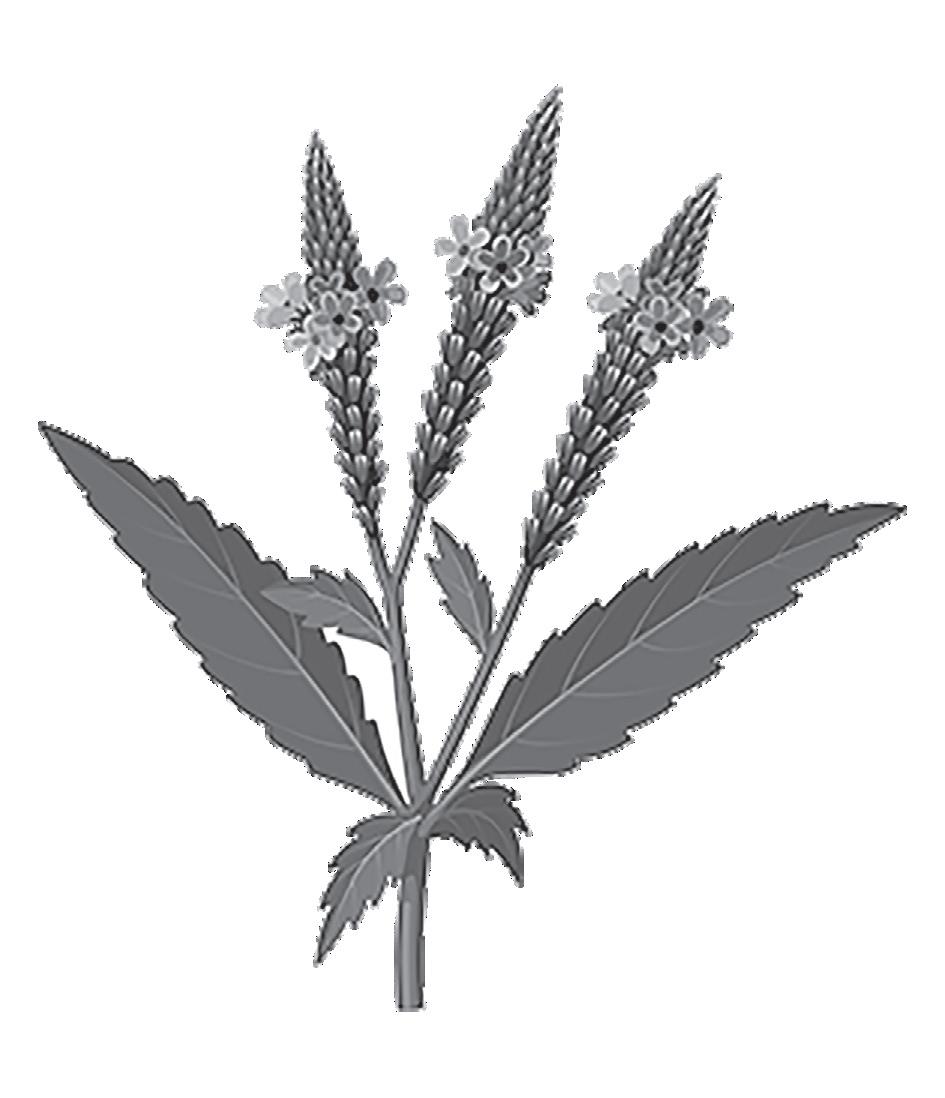
Polyvagal theory is a method that helps us determine which plants are our best allies. Once you understand the polyvagal states and become acquainted with how your body feels in each of these states, it becomes easier to know which plants can help you in moments of stress. This is true whether you have experienced trauma or not, but it becomes a particularly useful tool for the post-traumatic journey. In this chapter you will discover why the vagus nerve matters, how polyvagal theory addresses different nervous system responses, and the parallel between polyvagal theory and plant energetics. Then you will discover some ways polyvagal theory can be quickly applied to soothe your nervous system in situations that feel overwhelming.
Polyvagal theory helps explain your vagus nerve’s response to the environment and internal changes in your body. The vagus nerve is known as the wandering nerve because it meanders from the base of your skull all the way down into your digestive tract. It plays a vital role in
regulating digestion, heart rate, and other autonomic processes. It also plays an important part in facial movement, swallowing, and vocal intonation. This nerve is a two-way street: It sends information to the brain about what is happening in the body as well as sends signals from the brain to the rest of the body.
When trauma occurs, it affects the vagus nerve and how you respond to what is happening around you. Facial expressions, digestive function, and even somatic sensations can change when you are under stress. The vagus nerve may also respond differently to herbs you are using. This means shifts in your nervous system can cause some of the herbs that worked well for you before trauma to not work as well now. It can also mean that herbs that did not help before are now your best allies.
When the vagus nerve is functioning properly, you move in and out of manageable responses to your environment. Emotions flow through their expected cycles. Stressful situations are processed into memory.
Trauma can disrupt this. You may become stuck in an overwhelming nervous system response. Emotions may not flow as smoothly, adding to your stress levels. Stressful situations become unmanageable when the brain, instead of perceiving them as a past memory, responds as if the situation is an ongoing threat, even after it is over.
Dr. Stephen Porges created polyvagal theory to help explain why some signs of vagus nerve tone could indicate
resilience while others indicated vulnerability (Porges 2021). In his research with infants, a slowing heart rate could be a sign of a baby that was struggling to thrive. However, other babies had better heart rate variability, which suggested they were healthy and thriving. Both of these signs are indicative of vagus nerve tone, but one was bad and one was good. He named this conundrum the “vagal paradox.”
Dr. Porges then discovered that in mammals, the autonomic nervous system was developed in three distinct parts. He called these parts the sympathetic, dorsal vagal, and ventral vagal. The sympathetic part of the automatic nervous system response is where your fight-or-flight reaction originates. Dr. Porges suggested the dorsal part of the vagus nerve is where shutdown and dissociation originate. The ventral part of the vagus nerve is responsible for social connection and a calm sense of thriving.
Splitting the vagus nerve this way helped explain the paradoxical actions that doctors were seeing. The dorsal vagal response being activated would explain why some infants had a slowing heart rate that indicated they were struggling. The ventral vagal response being activated would explain why other infants showed strong heart rate variability that indicated they were thriving.
From these early observations, Dr. Porges formed a theory around how the automatic parts of our nervous system respond to the world around us. His work covers trauma healing, but it also expands into other behavioral
interventions. Anyone with a nervous system can find some benefit from exploring polyvagal theory.
Polyvagal theory offers a framework for some of the somatic work that we will explore in this book. When you look at your body’s responses through the lens of polyvagal theory, it can help you better understand what your body is trying to say in moments of stress. For me, feeling an electric undercurrent in my body tells me that I am in a sympathetic fight-or-flight state and need a soothing plant ally. Feeling numbness tells me I am collapsing into dorsal vagal and need rhodiola (Rhodiola rosea) or another energizing plant ally. As you become acquainted with your nervous system and how it communicates its needs, you will be able to recognize which plant allies you need at any given time.
As you begin to explore what your nervous system is telling you, polyvagal theory can help you navigate. It is an integral aspect to many of the embodiment practices that we will discuss throughout this book. Embodiment practices are things such as yoga movements or breath exercises that can help you notice what polyvagal state your nervous system is in and what it needs to more freely flow between the other states, moving toward healing and balance. Polyvagal theory also creates some general guidelines that can make it easier when you are trying to decide which plants will be most helpful for you in moments of stress.
Understanding more about your specific stress responses can help you find activities—and plant allies—that will feel supportive and healing, even in moments where other options fail. Polyvagal theory describes three main nervous system states that we experience: sympathetic, dorsal vagal, and ventral vagal. Learning what each of these states feels like in your body can help you be more aware of what you may need at any given moment.
The sympathetic state is sometimes described as our fightor-flight response, which can be experienced in many ways. When feeling unsafe, the sensations can include shaking, an urge to escape, a sense of too much excitement, or dissociation that feels like we are running away.
Sympathetic fight-or-flight responses are not bad, nor are they necessarily damaging. We experience a combination of the sympathetic state with the ventral vagal when we are playing. This might include board games we enjoy, sports, or anything that creates a state of heightened awareness.
The uncomfortable sensations come when the sympathetic state becomes so unbalanced that it begins to feel overwhelming. We may find ourselves in an unbalanced sympathetic state after trauma. This state of being does not feel exciting or playful. It may feel more like we’re jittery, anxious, on the edge of our seat, or having an exaggerated
startle response. Sometimes the sympathetic state can even create a sense of anger.
The sympathetic state is a place of action and energy that results in the need to fight or flee. However, sometimes we become so overwhelmed that we go into a dorsal vagal state. This is the shutdown response and can feel like numbness, emptiness, the urge to sleep or stay silent, or dissociation that feels like a collapse.
A dorsal vagal stress response is common when we feel a danger becoming overwhelming or feel trapped. Our internal thought process goes from I can handle this to I can’t handle this. Sometimes our response gets stuck there and reappears in later situations. Dissociation, depersonalization, and feeling as though you are in a dream can be parts of a dorsal vagal response. These feelings of helplessness can be frustrating and leave us feeling shame that we did not try harder to do something.
Chronic exposure to abuse can also lead to a dorsal vagal response known as the fawn response. The fawn response is when a person overrides their own desires in order to accommodate their abuser. This is common in chronic and complex trauma experiences, especially when someone has been dealing with domestic violence or intimate partner violence.
The fawn response shuts down your wants and your needs and puts you into a position where you acquiesce to
the aggressor. Even though it may feel like a weakness at the moment it occurs, the fawn response is a way to keep yourself safe. Your body and your brain do this in response to the danger that might come from fighting against someone.
If you’ve ever been upset with yourself for not fighting against a situation or abuser, know that this fawn response is real. We see it frequently, and in that moment your body did exactly what it needed to do to keep you safe and alive. Give yourself permission to release any guilt you may feel around that situation.
In safe environments, the dorsal vagal state can overlap the ventral vagal and create a place of quiet intimacy. Think of sitting around a fire, sipping on some tea, and going into a soothed, almost meditative state. You may even find yourself tempted to doze off because things are so comfortable.
This peaceful feeling is different from the stress-related dorsal vagal response because when we are ready, we can wake ourselves back up and shake off the sleepy sensation. When the dorsal vagal state is activated in times of extreme stress, it is an involuntary response. If we perceive a threat, we may struggle to bring ourselves back from the numbness or collapse.
The final state is known as the ventral vagal state. This is the place where rest-and-digest functions take place. Healing
and connection occur when your system is in ventral vagal mode.
This restorative state comes when a person feels at ease. Many people describe being comfortably warm or noticing relaxed muscles that would normally be tense. The sensation of equanimity and peace that comes from being settled in the ventral vagal state is universally described as enjoyable.
This helps explain why connection and co-regulation is so important in trauma healing. Co-regulation is the act of regulating the nervous system through connection. While Dr. Porges uses the phrase co-regulation in relation to other human beings, others have begun exploring this idea in relation to other sources in nature. The repeating patterns of birdcalls or animal sounds can have a soothing effect. Fractal patterns of branches or leaves also encourage a sense of safety and calm. Throughout this book we will discuss how the connection to plants can support co-regulation. As you find plants that resonate, you will find a sense of consistent reassurance that can reduce feelings of overwhelm.
Just remember that the goal is not to avoid sympathetic or dorsal vagal responses. Life would be dull if we stayed in the ventral vagal state all of the time! Our actual goal is to have enough resilience to live within the ebb and flow of our nervous system without experiencing overwhelm. This allows us to return to the ventral vagal state more frequently so that connection and healing can occur.
Sympathetic ventral vagal Dorsal vagal Fight or Flight Rest, Digest, Connect Freeze, Collapse, Shutdown
Sensing danger:
• alert
• needing to move or escape
• shaking, anger
• feeling on edge
• tension that feels stuck
• dissociation that feels like fleeing
When safe:
• playful
• excited
• motivated
• rest and digest
• healing and connection
• feeling at ease
• sense of embodiment (attuned to your body’s signals, appropriately responsive to the present moment, strong mind-body connection)
• restorative
• comfortable warmth
• relaxed, able to move
Sensing danger:
• collapse
• unable to move, no energy
• cold or numb
• empty
• fawning
• dissociation that feels like shutdown
When safe:
• meditative
• daydreaming
• blissful

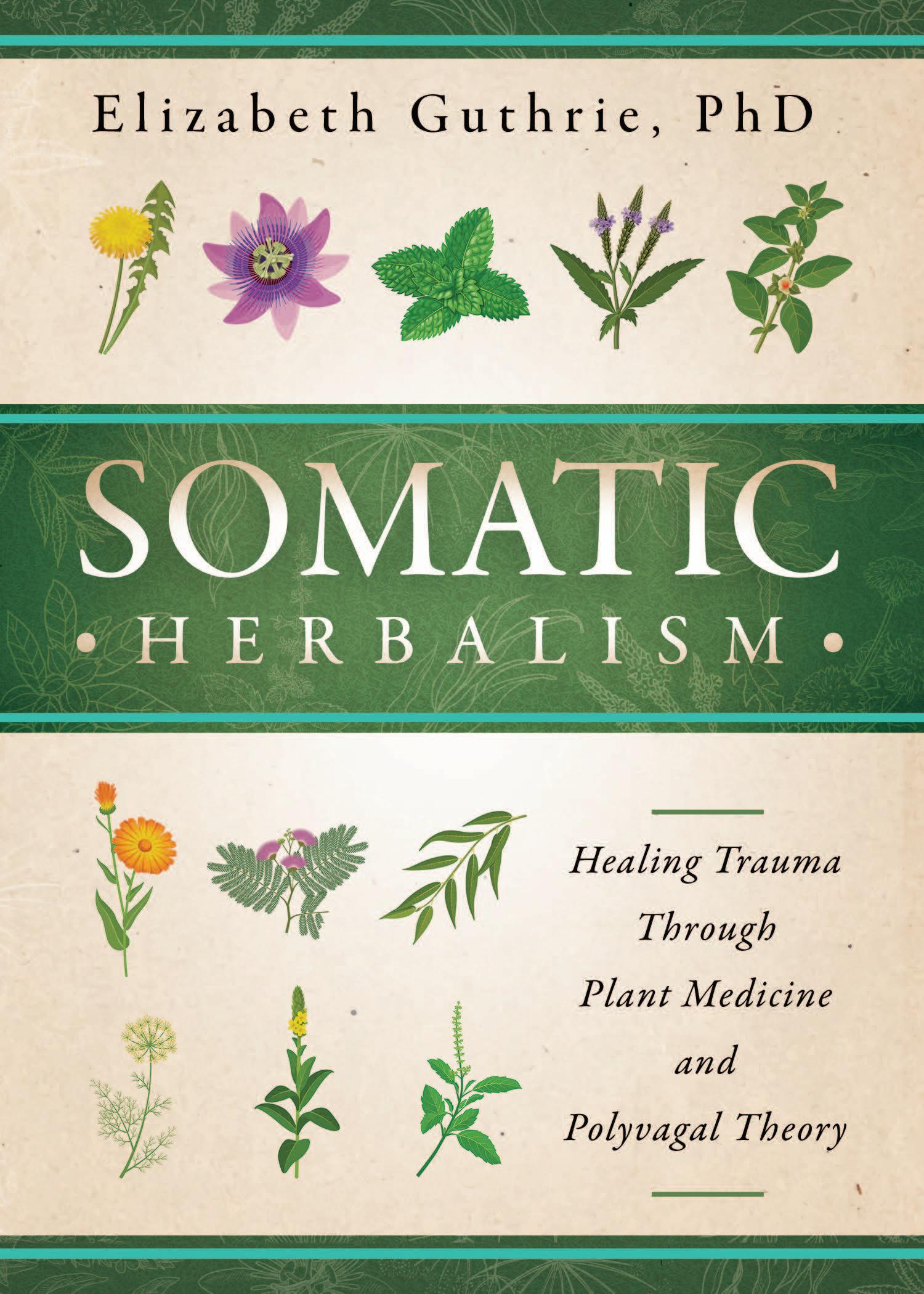
Providing more than one hundred hands-on activities, Elizabeth Guthrie, PhD, gently leads you along your unique wellness journey. She reveals which plant allies will support your vagus nerve and usher your nervous system toward a more restorative state. These botanicals, paired with therapeutic exercises, create a customized system for relieving stress and processing negative experiences.
Through breathing techniques, journal prompts, meditations, and more, you will learn what it means to listen to your body and what its sensation language can tell you about your emotional responses. With guidance from herbs like rose and dandelion, you will cultivate safety and shift your paradigm, allowing you to build resilience and reconnect with your body, mind, and spirit.

Elizabeth Guthrie, PhD, is a clinical herbalist and certified professional aromatherapist. She holds a PhD in Natural Medicine with specializations in naturopathic psychology and herbal medicine and a Master of Public Health degree in Functional Nutrition. Elizabeth also has been published in the peer-reviewed Journal of the American Herbalists Guild and has authored Essential Oils for Trauma and The Trauma-Informed Herbalist. Learn more at TraumaInformedHerbalist.com.