
GoPostgrad
1

GoPostgrad
1
We deliver solutions to some of the most pressing issues facing society today - our pioneering research benefits people, communities, policy makers, commerce and industry in not just the UK but the world
2
97.1% of the research environment at LJMU is rated from internationallyrecognized to worldleading
3
We’ve invested £160 million into new facilities for our research staff and students
We have a strong reputation for collaboration between disciplines and with institutions around the world 4
5
We are rated 49th in the UK for world-leading and internationally excellent research
6
We have 18 highly acclaimed research institutes and centres such as the award-winning Astrophysics Research Institute and the worldrenowned Centre for Public Health
7
96% of our research is of international quality or better
8
The volume of worldleading research activity at the university have more than doubled to 18% in the last 6 years
9
10
In Sport and Exercise Sciences, Leisure and Tourism, 97% of our research activity is rated 3* and 4* overall
We have demonstrated internationally excellent research in all disciplines
Research students form the bedrock of LJMU’s vibrant research community and make a valued contribution to the intellectual life of the University. We currently have around 750 MPhil and PhD students undertaking postgraduate study at LJMU and many collaborate with the public sector, industry and businesses in the UK and abroad.
Our students rate their experience at LJMU highly, with results in the 2025 Postgraduate Research Experience Survey (PRES) well above the sector average, particularly for on-campus resources (1st in the sector) and support (6th in the sector).
As a research student at LJMU you will join a community delivering world-leading, internationally excellent research right across the institution. Supervised by leading researchers, you will work in state-of-the-art facilities and receive excellent training and support via our dedicated Doctoral Academy.
When I began my studies, I had set myself certain goals. The knowledge I have gained at LJMU have meant my achievements have way outstripped my expectation.
Khalid Hashim, Civil Engineering

Whether you need advice on training and support or information about research degree regulations, LJMU’s Doctoral Academy is on hand to guide you. ljmu.ac.uk/the-doctoral-academy
Supervision is key to successfully completing a PhD. You will be assigned a dedicated supervisory team to support and guide you through your research programme.
The University’s Research Degrees Framework provides information about expectations and responsibilities for postgraduate research students and their supervisors throughout the research programme.
LJMU is committed to helping you reach your full potential.
The Doctoral Academy’s Researcher Development Programme offers a comprehensive programme of training, fully aligned with the UK Researcher Development Framework and designed to provide vital research and transferable skills.
Topics include:
n project planning
n information management
n personal effectiveness
n governance
n communicating your research
n career development
As well as workshops, there will be plenty of opportunities to put your skills into practice at research cafés, showcases, conferences, competitions and networking events. You will be encouraged to develop presentation and engagement skills while contributing to our thriving research culture.
For us, world-leading research calls for world-leading environments and that’s why, as a research student at LJMU, you will benefit from cutting-edge facilities and equipment. Our researchers work with the latest technologies and enjoy access to extensive print and electronic library collections. We have already invested £160 million in our buildings and facilities and have ongoing plans to invest further in our infrastructure.
eDoc is the University’s online platform unique to PGRs. Your personalised dashboard will assist you to record supervisory meetings, construct a development portfolio and work to progression deadlines.
Within your School and Faculty, Postgraduate Research (PGR) representatives will co-ordinate local activities and represent your views at Faculty and University level.
You will be able to meet and work with researchers across LJMU. On arrival, you’ll be invited to a welcome event to meet new PGRs, The Doctoral Academy and other teams that will support your research. The Doctoral Academy’s Annual Postgraduate Research Festival is PGR led, and celebrates work undertaken across all subject areas by researchers at every level.
For a taste of the development and support available, follow us on Bluesky or LinkedIn: @ljmudoctoral.bsky.social


@LJMUDoctoralAcademy
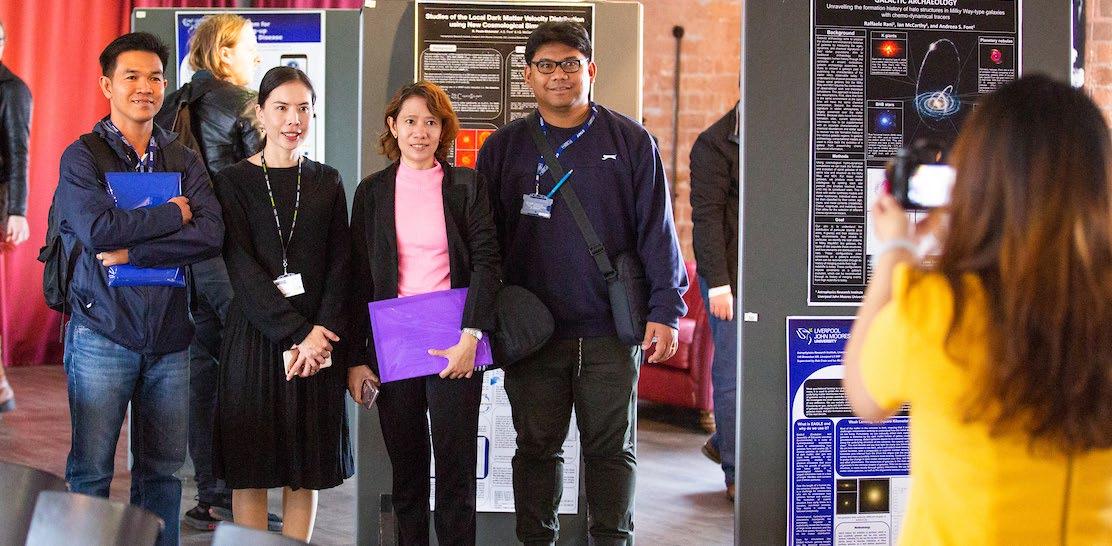

Postgraduate research represents the highest level of qualification awarded by universities. Unlike undergraduate and taught master’s degrees, which follow structured modules, postgraduate research centres on undertaking an independent, original project that contributes new knowledge to your field.
The most recognised research qualification is the PhD, designed for those committed to an in-depth, long-term study. For applicants seeking a shorter programme, we also offer the MPhil.
In addition, Liverpool John Moores University provides a range of professional doctorates, ideal for experienced professionals aiming to advance their practice through applied research at doctoral level.
Throughout your studies, you will be supported by a dedicated supervisory team of experienced academic staff. Your research journey will ultimately lead to the submission of a thesis and an oral examination (viva).

Our research degrees are flexible to suit your needs:
Distance learning options are available for international students.
To join a postgraduate research programme, you will normally need:
n A good honours degree
n In some cases, a Master’s degree
n International applicants must also meet LJMU’s English language requirments
Amazing experiences and routes to develop personally, professionally, and academically at LJMU. I followed my passion to be here today, and I would not change a thing.
Elysia Greenway, PhD Forensic Facial Reconstruction

To achieve a PhD you need to make an original contribution to the:
n understanding of a problem
n advancement of knowledge
n generation of new ideas
Before formulating your research idea, read as much as possible around your subject area and think about how you would present your idea in a proposal.
Investigate who does what and where at LJMU and identify which Research Centre, Institute, School, Department or Faculty is the natural fit for your studies.
Before submitting a formal application, it is a good idea (although not essential) to identify a suitable supervisor to discuss your ideas with. This is best done by navigating staff profiles on https://profiles.ljmu.ac.uk. Alternatively email pgradmissions@ ljmu.ac.uk and you will be signposted to the relevant team.
Taking into account any feedback gained from your new academic contact(s), draft your research proposal including:
n details of your intended area of research
n core research questions
n possible methodologies
n your proposed approach
n a timescale for completion

Submit your application online at: https://uaf.ljmu.ac.uk/. You will need to include:
n details of your qualifications, work experience and academic referees
n your research proposal
There are a number of funded opportunities that are funded as and when available. These are normally for specific projects and are advertised on both the Find a PhD website and on LJMU’s website. Funding is competitive and many applicants do need to fund themselves. Government funding is available for some applicants.

To apply for a research degree at LJMU, you must prepare a research proposal of up to 2500 words, clearly outlining your proposed area of study.
The proposal enables you to demonstrate your ability to carry out original doctoral-level research and helps us to identify an appropriate supervisor for you.
In preparation for writing up your research proposal, you might want to get some feedback on your research idea from LJMU. You might also like to read the Doctoral Degree Characteristics Guide published by the QAA (see www.qaa.ac.uk/docs/qaa/qualitycode/doctoral-degree-characteristicsstatement-2020.pdf)
RESEARCH PROPOSALS SHOULD INCLUDE:
n the title of your reseach topic (this can be revised during your research)
n a short statement on what you want to study
n a brief overview of your topic area with a summary of current knowledge and recent debate. Demonstrate your clear communication techniques and your familiarity with your field of interest
n the aims and questions that will guide your research and how you intend to approach them - prioritise one or two questions, from which secondary questions may follow
n your main research techniques (e.g. interviews, case studies, modelling) plus data collection procedures
n an explanation of why your research is important and original
n a bibliography identifying the most relevant and recent works for your subject area
HAVING
WRITTEN UP YOUR PROPOSAL, YOU MAY FIND THE FOLLOWING CHECKLIST USEFUL:
n Have I presented my research topic in the context of contemporary scientific and theoretical debate?
n Why does my research matter and why do it now?
n Have I established appropriate aims and objectives?
n Have I shown how my work will build on existing research?
n Have I outlined a clear and convincingly argued analytical framework?
n Do I have a reasoned and realistic explanation of the scale, timing and resources necessary?
n Have I provided a clear description of my research methods and why I plan to use them?
n Are my methods appropriate to the research question, and can they deliver valid results?
n Is my data collection framework appropriate and realistic?
n Will my data collection framework provide quality, reliability and validity?
n Can I demonstrate a clear and systematic approach to data analysis?
n Have I considered the ethical implications of my research?
n Have I identified and fully addressed potential difficulties in gathering information?
n Have I identified and understood any limitations on my research?
n Can I identify potential users of research outside the academic community?
n How will I share my findings?
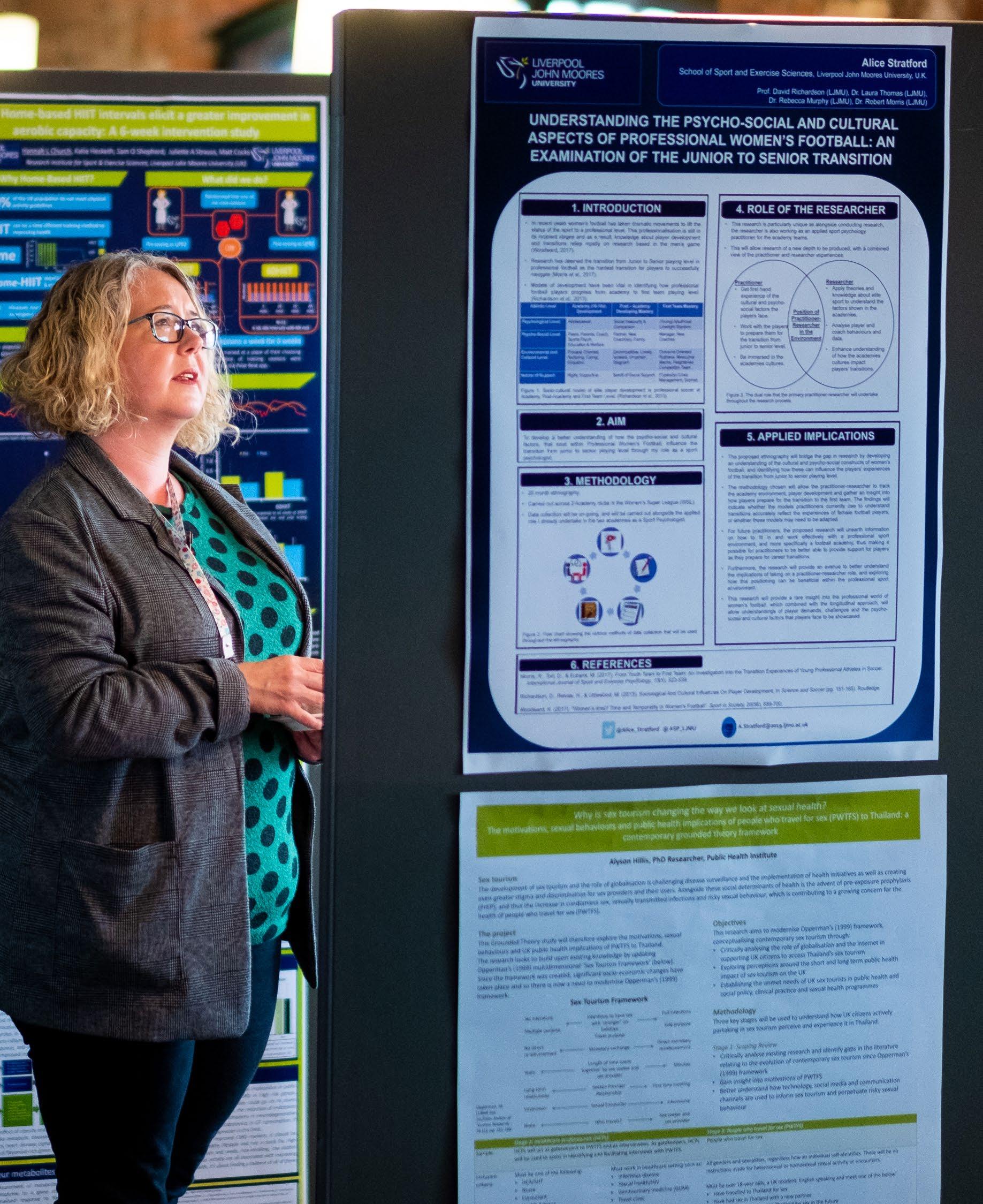
The costs of studying for a postgraduate research qualification can be broken down into three parts:
n tuition fees – variable, depending on subject area
n living costs – can be covered by a stipend if a fully funded PhD
n research costs (‘bench fees’) – variable, depending on subject area
If you are a self-funded or part-time student you must have sufficient funds to cover all three.
A Postgraduate Doctoral Loan can help with course fees and living costs while you study a postgraduate doctoral course, such as a PhD.
You have to repay your Postgraduate Doctoral Loan at the same time as any other student loans you have. You’ll be charged interest from the day you get the first payment.
A non means-tested loan of up to £12,858 per student is available to assist with the cost of a full or part-time standalone master’s course for English applicants. Welsh students can access means-tested funding (a grant and loan) of up to £19,255 and full-time Scottish students applying for a full-time course within the UK can access a tuition fee loan of up to £7,000. Full-time Scottish students can also apply for a living costs loan of up to £6,900 per year. Northern Irish students wishing to study an MPhil can apply for a non means-tested loan of up to £6,500.
For more information see: www.gov.uk/studentfinance www.studentfinancewales.co.uk/ www.saas.gov.uk www.studentfinanceni.co.uk
These usually cover tuition fees and living costs. They may also cover research costs but you will need to check the terms and conditions of the offering to find out.
LJMU scholarships/studentships are offered:
n at University level (see LJMU website for details)
n at Faculty level (contact your chosen Faculty)
Find out more about LJMU scholarships/ studentships here:
www.findaphd.com
https://www.prospects.ac.uk/ postgraduate-study/phd-study/
If you are interested in external sources to fund your PhD study, help is available from a variety of trusts, charities, national bodies, government departments and industries connected with your area of research interest.
For guidance on external funding sources please consult:
n the Grants Register, published annually by Palgrave Macmillan
n the Directory of Grant Making Trusts, published annually by the Directory of Social Change
n the Alternative Guide to Postgraduate Funding, a database of funding from charities, which can make awards (fees, maintenance, research costs) to any student regardless of subject or nationality. If you are a prospective LJMU PGR student, email DoctoralAcademy@ljmu.ac.uk to get an access PIN.
Figures quoted are for 2025 entry

Studying for my PhD here at LJMU, with the fantastic support of my supervisors, was key to me achieving my academic and career goals whilst allowing me to have so much fun along the way!
Mollie Bryde-Evans, PhD Graduate from the Liverpool Business School
Website: www.ljmu.ac.uk/research
Enquiry helpline: 0151 231 5090
Email: pgradmissions@ljmu.ac.uk
International enquiries: international@ljmu.ac.uk
Moneyadvice@ljmu.ac.uk 0151 231 3153/3154

@ljmudoctoral.bsky.social

@LJMUDoctoralAcademy
The information in this publication is correct at the time of going to press (October 2025). Some changes will inevitably occur in the interval between publication and the academic year to which the publication relates and the university reserves the right to withdraw or make alterations to the course, modules and facilities if necessary. Applicants should therefore not rely solely on this publication and should use it in conjunction with information provided on our website: www.ljmu.ac.uk.
The university offers the information contained in this publication as a general guide. It does not constitute or form part of any contract and it is not binding on prospective students, students or the university. For further information on the LJMU admissions policy please visit: ljmu.ac.uk/admissions
This brochure is available in different formats, please contact us for more information.