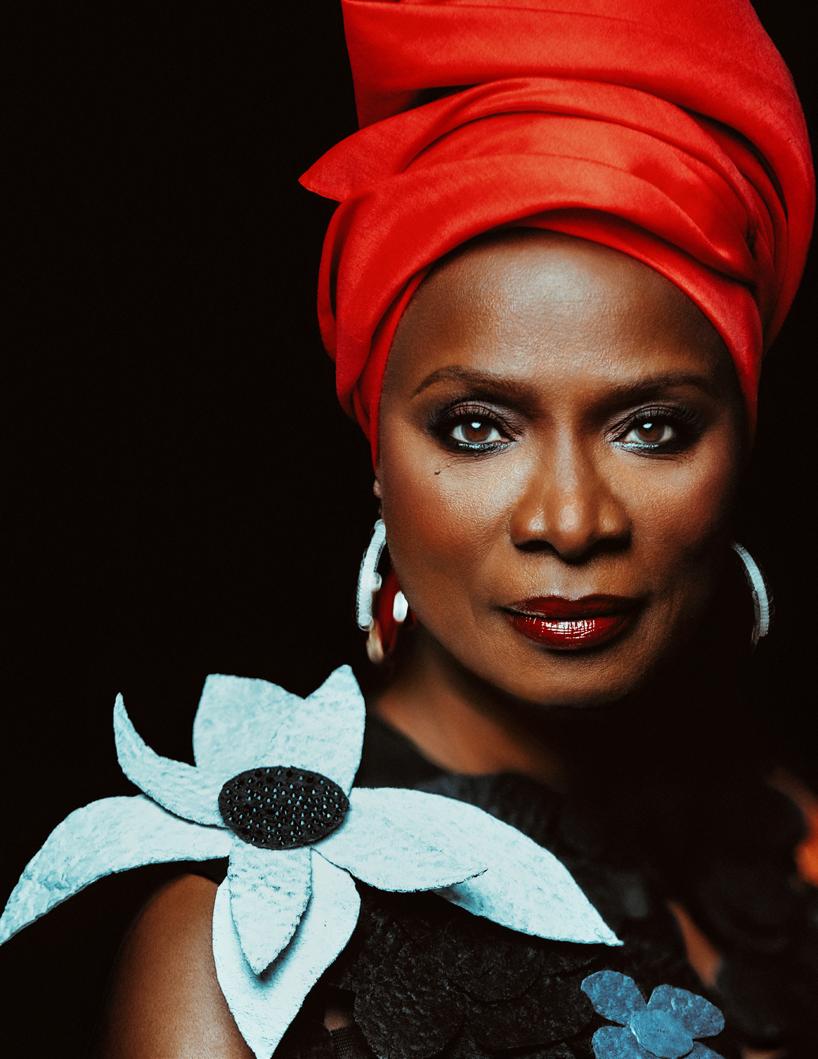
APRIL 15—JUNE ANG É LIQUE KIDJO

APRIL 15—JUNE ANG É LIQUE KIDJO
APRIL
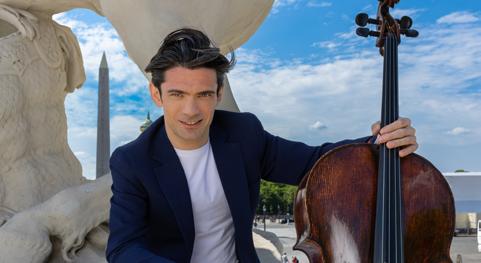
GAUTIER CAPUÇON, cello
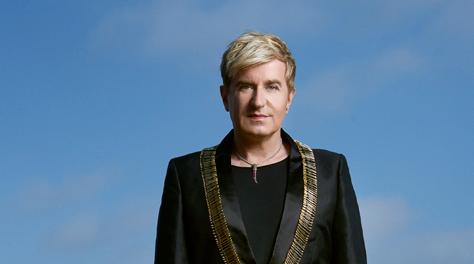
JEAN-YVES THIBAUDET, piano
WEDNESDAY, APRIL 15 • 7:30 PM Recital Series
THE MAGIC OF MANHATTAN—
FEATURING BENNY BENACK III
SATURDAY, APRIL 18 • 5:30 PM & 8 PM
Concerts @ The JAI
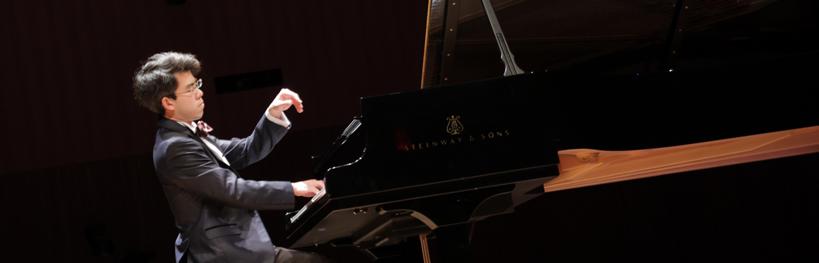
ARISTO SHAM*, piano
2025 VAN CLIBURN GOLD MEDAL WINNER
SUNDAY, APRIL 19 • 3 PM
Discovery Series
AARON DIEHL TRIO
FRIDAY, APRIL 24 • 5:30 PM & 8 PM
Concerts @ The JAI
ART OF ELAN: DANCING ON TIPTOES
SATURDAY, APRIL 25 • 10 AM & 11:30 AM
The ConRAD Kids Series • The JAI
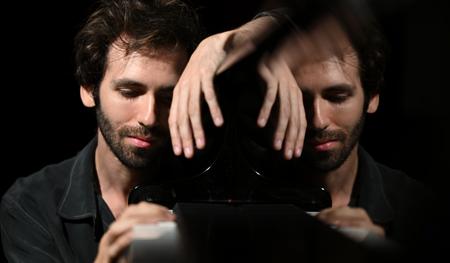
ALEXANDRE KANTOROW * , piano
SATURDAY, APRIL 25 • 7:30 PM Piano Series
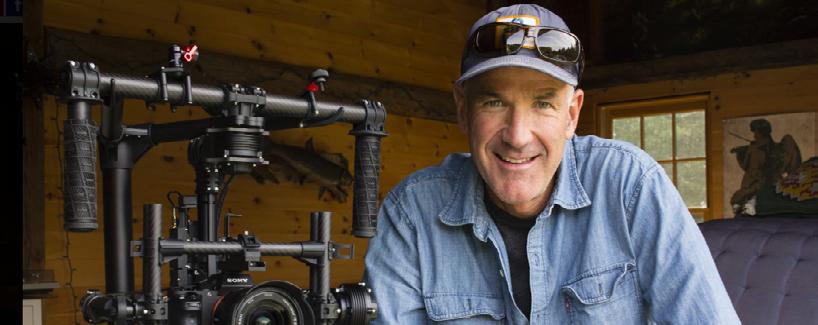
DAVID McLAIN*: BLUE ZONES
UNLOCKING THE SECRETS OF LONGEVITY
THURSDAY, APRIL 30 • 7:30 PM Speaker Series
MAY LUCÍA*
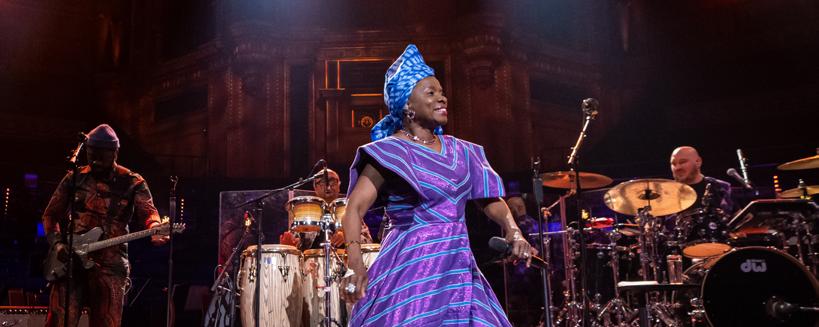
FRIDAY, MAY 1 • 5:30 PM & 8 PM Concerts @ The JAI ANGÉLIQUE KIDJO*
SUNDAY, MAY 3 • 7 PM Global Roots Series
HAYATO SUMINO*, piano
SATURDAY, MAY 9 • 7:30 PM ProtoStar Innovative Series
TRACY DRAIN*: COSMIC ADVENTURES
THURSDAY, MAY 14 • 7:30 PM Speaker Series
SHENEL JOHNS*
SATURDAY, MAY 16 · 5:30 PM & 8 PM Concerts @ The JAI
STELLA CHEN*, violin
GILLES VONSATTEL, piano
SUNDAY, MAY 31 • 3 PM Discovery Series
JUNE
JIHYE LEE ORCHESTRA*
SATURDAY, JUNE 6 • 5:30 PM & 8 PM
Concerts @ The JAI
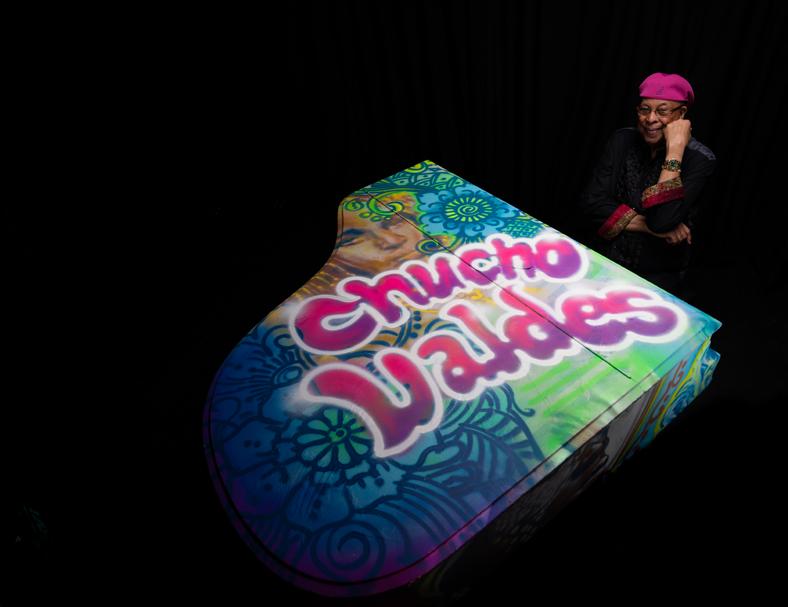
CHUCHO VALDÉS & ARTURO SANDOVAL LEGACY QUINTET
2 Performances
TUESDAY, JUNE 9 · 5:30 & 8 PM Jazz Series
*LJMS debut




Our gratitude to these Medallion Society Pillars founding members who have made significant four-year commitments that will help us better serve all of the San Diego region. The Conrad can be a catalyst to bring thousands of adults and children together through a common appreciation of the performing arts, which enhance the artistic fabric of our community.
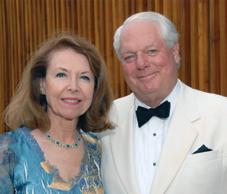
$1 MILLION and above
Brenda Baker and Steve Baum
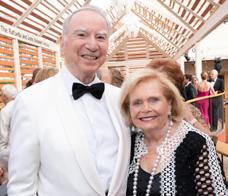
$1 MILLION and above
Irwin and Joan* Jacobs
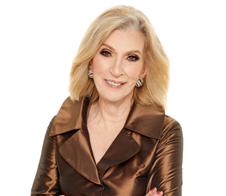
$1 MILLION and above
Dorothea Laub
$500,000 and above
Karen and Kit Sickels
$400,000 and above
Mary Ellen Clark
$400,000 and above
Raffaella and John* Belanich
$400,000 and above
Eleanor and Ric* Charlton
$400,000 and above
Jacqueline and Jean-Luc Robert
$400,000 and above
Debbie Turner
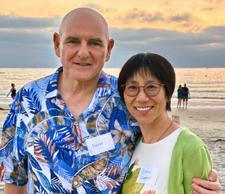
$400,000 and above
Marco Londei and Liqun Wang
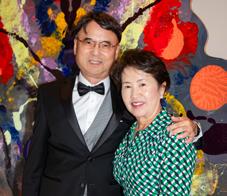
$200,000 and above
Keith and Helen Kim
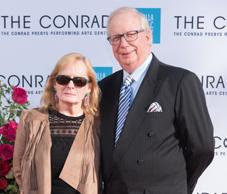
$200,000 and above
Julie and Bert Cornelison
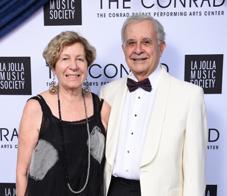
$200,000 and above
Angel and Fred Kleinbub
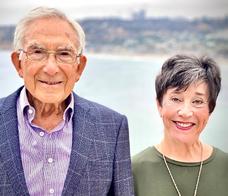
$200,000 and above
Herbert Solomon and Elaine Galinson
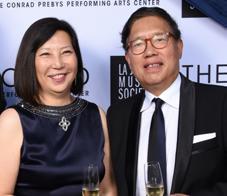
$200,000 and above
Vivian Lim and Joseph Wong
$200,000 and above
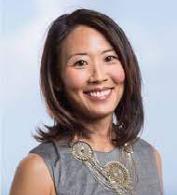
Haeyoung Kong Tang
Thank you to these Pillars in the community.
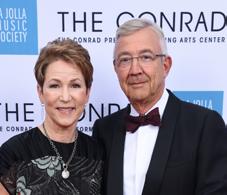
$200,000 and above
Sue and Peter Wagener
For information about supporting La Jolla Music Society through membership in the Pillars program, please contact Ferdinand Gasang at 858.526.3426 or FGasang@TheConrad.org.

Vision Statement
To transform lives through the performing arts, serving as a beacon of world-class artistic excellence, innovation, and inclusivity.
Mission Statement
To enrich the evolving cultural landscape of San Diego by curating a dynamic array of world-class performing arts programming, create meaningful learning opportunities, and build connections between artists and audiences.
From classical, jazz, and dance to global music, exciting speakers, and family concerts, each season
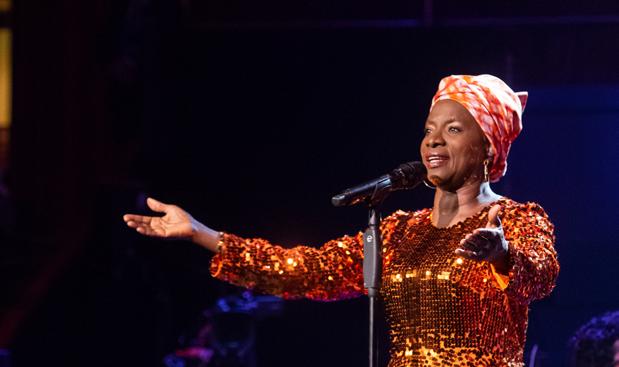
Artistic Director Leah Rosenthal brings the best artists in the world to the San Diego community. This season will feature more than 70 artists, including superstars like Lang Lang, Angélique Kidjo, MOMIX, Daniil Trifonov, Juan Diego Flórez, and many more. Join us at The Conrad as well as the Civic Theatre, Balboa Theatre, and Jacobs Music Center to see the best the world has to offer.
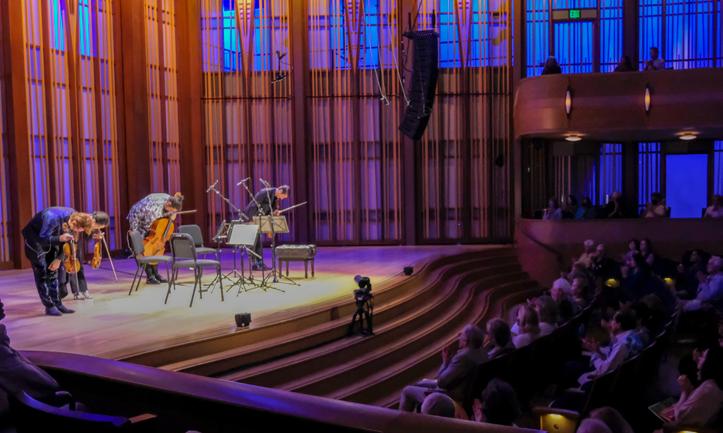
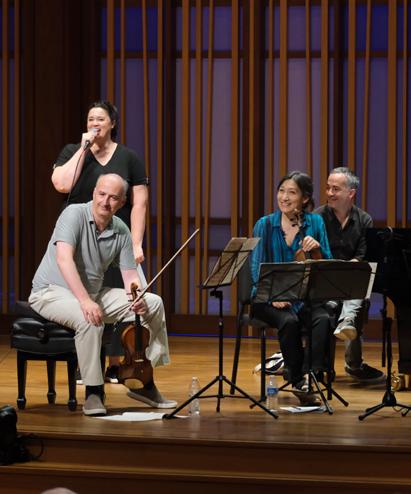
La Jolla Music Society’s acclaimed chamber music festival, curated by award-winning pianist and festival Music Director Inon Barnatan, celebrates its 40th anniversary in 2026. SummerFest engages more than 80 of the world’s finest musicians to perform at The Conrad throughout the month of August. In addition to remarkable mainstage performances, SummerFest offers over 50 free and open-to-the-public educational activities. To learn more, visit TheConrad.org/SummerFest.
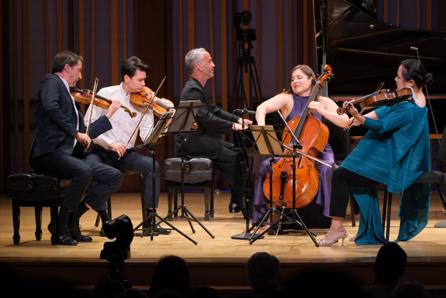
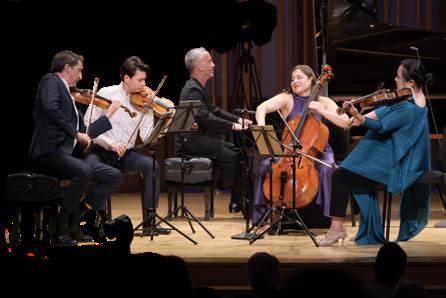

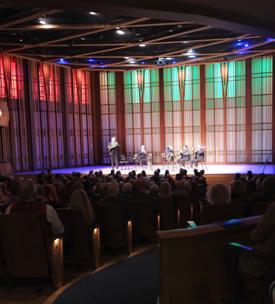
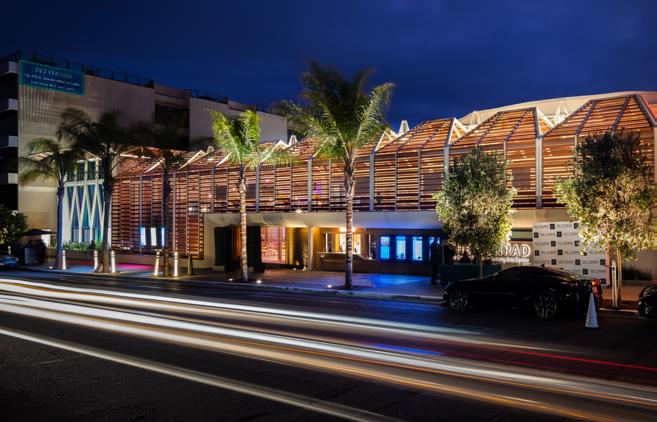
The Conrad opened in 2019 and serves as a gathering place for cultural, arts education, and community activity. As the permanent home of La Jolla Music Society, The Conrad hosts world-class performances presented by La Jolla Music Society and other local arts organizations in its four outstanding performance and activity spaces, The Baker-Baum Concert Hall, The JAI, The Atkinson Room, and the picturesque Wu Tsai QRT.yrd.
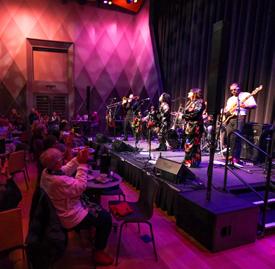
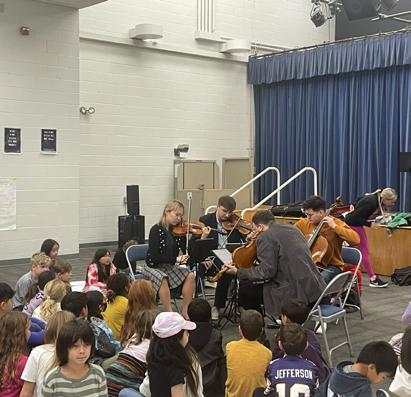
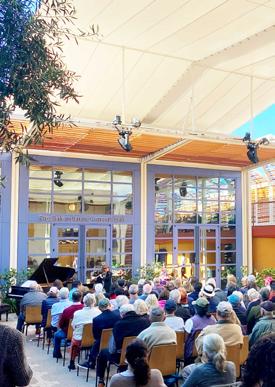
La Jolla Music Society’s award-winning Learning & Engagement Programming provides unmatched access and learning opportunities to more than 15,000 students and community members throughout San Diego County annually. With learning and engagement at the heart of our mission, we work closely with each visiting artist and ensemble to create outreach activities that highlight their unique talents and expertise at both The Conrad and in the community. With our state-of the-art video and streaming capabilities at The Conrad, we are able to provide live streaming for events such as our annual SummerFest and education events for free in our Digital Concert Hall.
The Conrad Prebys Performing Arts Center acknowledges the ancestral, unceded territory of the Kumeyaay people, on which The Conrad was built. We hold great respect for the land and the original people of the area where our performing arts center is located. The Kumeyaay continue to maintain their political sovereignty and cultural traditions as vital members of the San Diego community.
Vivian Lim – Chair
Bert Cornelison – Vice Chair
Mary Ellen Clark - Treasurer
Stacy Kellner Rosenberg - Secretary
Stephen L. Baum
David Belanich
Marla Bingham
Eleanor Charlton
Sharon Cohen
Ellise Coit
Peter Cooper
Ann Parode Dynes
Jennifer Eve
Debby Fishburn
Stephen Gamp
Lehn Goetz
John Hesselink
Todd R. Schultz
President & CEO
Leah Rosenthal
Artistic Director
Inon Barnatan
SummerFest Music Director
ADMINISTRATION
Casey McEnelly
Director of Finance
Brady Stender
Controller
Breanne Self
Human Resources & Finance Manager
ARTISTIC
Grace Smith
Artistic Planning & Operations Director
Anne-Marie Dicce
Artistic Planning Manager
George Pritzker
Artistic Operations Coordinator
Juliet Zimmer
Artistic Rentals & Partnerships Director
Braulio Fernandez-Flores
Artistic Rentals Coordinator/
Assistant Front of House Manager
John Tessmer
Lead Artist Liaison
Maggie de Lorimier
Artist Liaison
Isaac Pastrana
Artist Liaison
Dana Rossi
Artist Liaison
Eric Bromberger
Program Annotator
Teresa Hixson
David Kabakoff
Nancy Linke Patton
Diana Lombrozo
Sue Major
Richard A. Norling
Kazeem Omidiji
Arman Oruc
Tom Rasmussen
Sylvia Ré
Sheryl Scarano
Neal Schmale
Jeanette Stevens
Stephanie Stone
Peter Wagener
Liqun Wang
Lise Wilson
Jamie Coyne Director of Production & Operations
Tyler Merrihew
Technical Director
Dominic La Frantz
Technical Coordinator – Lighting Lead
Sam Bedford
Technical Coordinator/Stage Manager
Caren Heintzelman
Assistant Production Manager
Lauren Cernik-Price
Production Coordinator & Stage Manager
Jonnel Domilos
Piano Technician
Jason Martin Director of Facilities
Colin Dickson
Facilities Manager
Evan Calderon
Associate Facilities Engineer
Kim Chevallier
Security Guard
LEARNING & ENGAGEMENT
Allison Boles
Director of Learning & Engagement
Jade Lewenhaupt
Learning & Engagement Coordinator
Frida Ibarra
Music Education Programs Assistant
Max Weinzimer
Learning & Engagement Intern
HONORARY DIRECTORS
Brenda Baker
Stephen L. Baum
Raffaella Belanich
Joy Frieman, Ph.D.
Irwin M. Jacobs
Joan Jacobs (1933—2024)
Lois Kohn (1924—2010)
Helene K. Kruger (1916—2019)
Conrad Prebys (1933—2016)
Peggy Preuss
Ellen Revelle (1910—2009)
Leigh P. Ryan, Esq.
Dolly Woo
Serafin Paredes
Community Music Center Director
Aimee Alvarado
Community Music Center
Administrative Assistant
Community Music Center Instructors:
Mariana Flores Bucio, Marcus Cortez, David Garcia, Saul Garcia, Ian Lawrence, Sofia Magallenes, Marko Paul, Eduardo
Ruiz, Juan Sanchez, Miguel Zazueta
Ferdinand Gasang Director of Development
Annie Stender
Individual Giving & Development Operations Director
Wadeaa Jubran
Donor Programs Manager
Wil Owen
Donor Services & Stewardship Coordinator
Nicole Slavik
Special Events & Catering Director
Vivian Vu
Special Events Coordinator
Sarah Wood Torrey
Institutional Giving Consultant
Mary Cook
Director of Communications, Marketing & Guest Services
Stephanie Saad
Communications & Public Relations Director
David Silva
Marketing Manager & Sales Director
Cristal Salow
Database & Analytics Manager
Katherine Jenswold
Digital Marketing Associate
Mariel Pillado
Graphic Designer
Marsi Bennion
Box Office & Guest Services Director
Patrick Mayuyu
Box Office & Guest Services Manager
Sam Crowley
Box Office & Guest Services Lead
Mitch Maker
Box Office Representative & Development Liaison
Veronica Eddings
Box Office & Guest Services Associate
Shaun Davis
House Manager
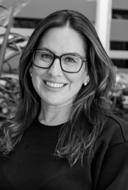
Dear friends,
Before we turn the page to a celebratory summer, we invite you to fully experience what remains of this remarkable season.
With the recent announcement of our 40th anniversary SummerFest (July 31–August 29), we are already looking ahead to a milestone celebration, one that honors four decades of extraordinary artistry, collaboration, and community. It promises to be a highlight in every sense.
But first, there is still so much to experience.
Through June, our Main Season continues with an exceptional range of artists. We are proud to welcome the electrifying duo of internationally renowned cellist Gautier Capuçon and award-winning pianist Jean-Yves Thibaudet on April 15, as well as rising virtuoso Aristo Sham, the most recent Cliburn Gold Medalist, on April 19. Jazz audiences can look forward to the elegance and imagination of Aaron Diehl and his trio on April 24 in a special, intimate performance in The JAI, while global superstar Angélique Kidjo lights up The BakerBaum Concert Hall on May 3 as a special Connect to The Conrad, a rare opportunity to see a major artist in such an intimate space. On May 9 boundary-pushing pianist Hayato Sumino brings his singular multikeyboard program to the stage as the final performance of our ProtoStar Innovative Series.
Just as importantly, we invite you to discover artists who may be new to you. The luminous Lucía, the first Mexican artist to win the Sarah Vaughan International Jazz Vocal Competition at just 21, will captivate audiences in The JAI on May 1. Our JAI performances conclude this season with Shenel Johns (May 16) and the Jihye Lee Orchestra (June 6), both artists featured as part of a series guest-curated by Kamau Kenyatta.
Our Speaker Series continues to expand the conversation from insights on longevity inspired by Blue Zones to explorations of cosmic discovery that invite us to look beyond our everyday horizons. Under the leadership of our Director of Learning and Engagement, Allison Boles, this season’s lineup has been exceptional, and we eagerly anticipate what lies ahead next year.
This final stretch of the season reflects what we value most: great artists, new discoveries, and shared experiences that stay with us long after the performance ends.
Thank you for being part of this journey. We look forward to seeing you in the weeks ahead and to celebrating all that’s to come this summer.
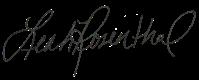
Leah Rosenthal Artistic Director, La
Jolla Music Society
PRELUDE 6:30 PM
Lecture By Michael Gerdes
WEDNESDAY, APRIL 15, 2026 · 7:30 PM
THE BAKER-BAUM CONCERT HALL
SCHUMANN Fantasiestücke for Cello and Piano, Opus 73 (1810–1856) Zart und mit Ausdruck Lebhaft, leicht
Rasch und mit Feuer
BRAHMS
Sonata for Cello and Piano in E Minor, Opus 38 (1833–1897)
Allegro non troppo
Allegretto quasi Menuetto
Allegro
Tonight’s program is dedicated in loving memory of William Coltellaro
La Jolla Music Society’s 2025–26 Season is supported by The City of San Diego Cultural Affairs, California Arts Council, County of San Diego, Prebys Foundation, Farfy Foundation, The Lodge at Torrey Pines, ProtoStar Foundation, Vail Memorial Fund, Rancho La Puerta, Banc of California, ResMed Foundation, San Diego
Theatres Foundation, Bright Events Rentals, Cafe Coyote, Rancho Coyote, GRNFC Hospitality Group, Ace Parking, Brenda Baker and Steve Baum, Raffaella Belanich, Gordon Brodfuehrer, Eleanor and Ric Charlton, Mary Ellen Clark, Bert and Julie Cornelison, Elaine Galinson and Herbert Solomon, Irwin Jacobs, Helen and Keith Kim, Angelina and Fred Kleinbub, Dorothea Laub, Vivian Lim and Joseph Wong, Jaqueline and Jean-Luc Robert, Marge and Neal Schmale, Karen and Kit Sickels, Jeanette Stevens, Haeyoung Kong Tang, Debra Turner, Sue and Peter Wagener, Liqun Wang and Marco Londei, Anna and Edward Yeung, Bebe and Marvin Zigman.
DEBUSSY
INTERMISSION
Sonata in D Minor for Cello and Piano (1862–1918)
Prologue: Lent
Sérénade: Modérément animé
Finale: Animé
SHOSTAKOVICH
Sonata in D Minor for Cello and Piano, Opus 40 (1906–1975)
Allegro non troppo
Allegro
Largo
Allegro
Gautier Capuçon, cello; Jean-Yves Thibaudet, piano
Gautier Capuçon and Jean-Yves Thibaudet last performed for La Jolla Music Society in the Revelle Series on October 13, 2023.
Program notes by Eric Bromberger
Born June 8, 1810, Zwickau, Germany
Died July 29, 1856, Endenich, Germany
Composed: 1849
Approximate Duration: 12 minutes
The Fantasiestücke (or Fantasy Pieces, a title denoting short and expressive pieces without specified form) were originally written for clarinet and piano; Schumann later made arrangements for cello and for violin. This music was composed with incredible speed, being completed in two days: February 11–12, 1849. This was the period of revolution throughout Germany and all of Europe, and Schumann was alternately fired with revolutionary passion and appalled by the breakdown in order—in May of 1849, he and his wife fled Dresden to escape the unrest. Perhaps some of the fervor of this period makes itself felt in the Fantasiestücke; perhaps not. In any case, one should be careful of taking the free-form aspect of fantasies too seriously here—as he often did in his chamber works, Schumann makes subtle links (in this case, rhythmic links) between the movements.
The first movement (“Tender and with expression”) features a soaring violin melody and comes to a quiet close. In the second (“Lively, happy”), the instruments take turns leading. In the outer sections, the piano leads and is joined in mid-phrase by the violin; in the center section the violin dominates. The final piece (“Quick and with fire”) opens with a violent outburst from the violin, which quickly turns lyric. The gentle middle section— haunting, dark, yearning—is Schumann at his finest.
Born May 7, 1833, Hamburg
Died April 3, 1897, Vienna
Composed: 1862–65
Approximate Duration: 26 minutes
Born in the slums of Hamburg, Brahms rose from that grim setting to become a brilliant success: the young man’s pianoplaying and compositions were quickly hailed throughout the German-speaking countries. Brahms had always assumed that he would make his career in Hamburg, and one achievement in particular would crown his rise from so modest a past to shining success—he wanted to be named conductor of the Hamburg Philharmonic.
But it was not to be, and several events combined to change the direction of Brahms’ life and career. The first came early in 1862, when the 29-year-old composer visited Vienna for the first time. He was enthralled to walk the streets where Mozart, Haydn, Beethoven, Schubert, and so many others had lived and worked, and he quickly extended what had been planned as a short visit to that fabled city. The second event was devastating–while in Vienna, Brahms learned that the post with the Hamburg
Philharmonic had gone to someone else. He was crushed, and even as an old man the memory of that rejection would haunt him. It was also a life-changer: Brahms gave up any thought of making his career in Hamburg and decided to move to Vienna.
He would remain there for the final thirty-five years of his life and come to love that city, but his entry took place only gradually. A number of his new Viennese friends encouraged the move, and one of them in particular—the cellist Josef Gänsbacher—helped arrange his appointment as conductor of the Singakademie, a choral society in Vienna. Once established in this position in his new city, Brahms wrote several compositions that he hoped would help cement his reputation there.
The Cello Sonata in E Minor was one of these new works, and it comes as no surprise that he dedicated it to Gänsbacher, who would remain a lifelong friend. Brahms began this sonata in 1862, during his first months to Vienna, and quickly completed three movements. But he then set it aside for three years, and when he returned to it in 1865, he cut one of those movements (an Adagio) and composed a new finale. Doubtless Gänsbacher played the sonata privately in Vienna before its publication in 1866.
The Sonata in E Minor was the first of Brahms’ seven duosonatas, and it brought the eternal problem of trying to balance one stringed instrument against the massive tonal resources of the piano. Brahms compounds that problem in this sonata by keeping the cello for the most part in its lower register. This may challenge the performers, but it gives the music its wonderful dark, rich sound.
The cello sings the noble opening theme of the Allegro non troppo, rising quietly from the depths over steady chordal accompaniment. Brahms is quite explicit in his instructions to the performers, reminding them throughout this movement that their playing should be espressivo, legato, and dolce. A second subject, announced first by the cello, is passionate and surging, and a lovely chorale for piano serves as a closing theme for the exposition. The development and recapitulation in this massive movement are dramatic, and Brahms winds all this turbulence down beautifully by closing out the movement with the chorale theme.
The haunting Allegretto quasi Menuetto is poised and delicate music, with the melodic line moving easily between the two instruments. The piano’s first four notes, a sort of introductory tag, haunt the minuet and then—ingeniously—become the basis for the flowing trio section.
Many have felt the influence of Bach, one of Brahms’ favorite composers, on the finale. It opens with a powerful fugue, and the fugue subject appears to have been derived from the Contrapunctus XIII of Bach’s The Art of the Fugue. The piano has the first statement of this subject, which takes its energy from the powerful opening octave drop. But the structure in this movement is ingenious: that fugal beginning is only the exposition of the first theme, and the appearance of a second theme group—announced by the cello—sets the movement in a sort of modified sonata form. Much of the development, though,
returns to the contrapuntal intricacies of the opening fugue, and this development is distinctive for its relentless logic and energy. A Più presto coda drives the sonata to its thunderous conclusion.
Born August 22, 1862, Saint-Germain-en-Laye, France Died March 25, 1918, Paris
Composed: 1915
Approximate Duration: 12 minutes
Debussy’s final years were wretched. He developed colon cancer in 1909 and underwent a painful operation, radiation therapy, and drug treatment. It was all to no avail, and the disease took its steady course. The onslaught of World War I in 1914 further depressed him, but it also sparked a wave of nationalistic fervor, and he set about writing a set of six sonatas for different combinations of instruments. It may seem strange that the iconoclastic Debussy would return in his final years to so structured a form as the sonata, but he specified that his model was the French sonata of the eighteenth century and not the classical German sonata. To make his point—and his nationalistic sympathies—even more clear, Debussy signed the scores of these works “Claude Debussy, musicien français.”
Debussy lived to complete only three of the projected six sonatas: a Cello Sonata (1915); a Sonata for Flute, Viola, and Harp (1916); and the Violin Sonata (1917). The three sonatas that Debussy completed have never achieved the popularity of his earlier works, and the composer himself deprecated them with the self-irony that marked his painful final years. Of the Violin Sonata, he remarked: “This sonata will be interesting from a documentary viewpoint and as an example of what may be produced by a sick man in time of war.” But this music has a power all its own, and listeners who put aside their preconceptions about what Debussy should sound like (and about what a sonata should be) will find this spare music moving and— in its austere way—painfully beautiful.
One of the most impressive things about the Cello Sonata is its concentration: it lasts less than twelve minutes. Further intensifying this music’s severity is Debussy’s refusal to develop—or even to use—themes in a traditional sense: this is music not of fully developed themes but of thematic fragments appearing in various forms and shapes. The opening movement, Prologue–Lent, is only 51 measures long, but Debussy alters the tempo every few measures: the score is saturated with tempo changes and performance instructions. The piano’s opening three-measure phrase recurs throughout, contrasting with the cello’s agitato passages in the center section. At the end, the cello winds gradually into its highest register and concludes hauntingly on the interval of a perfect fifth, played in harmonics.
The second and third movements are performed without pause. The second is marked Sérénade, but this is unlike any serenade one has heard before: there is nothing lyric about this song. The cello snaps out grumbling pizzicatos (Debussy considered calling this movement Pierrot Angry at the Moon),
and when the cello is finally given a bowed passage, it is marked ironique. The finale—Animé—opens with three quick pizzicatos and then races ahead. As in the first movement, there are frequent changes of tempo, a continuing refusal to announce or develop themes in traditional senses, and sudden changes of mood: at one point the performer is instructed to play a brief lyric passage con morbidezza, which means “gently,” yet another passage is marked arraché, or “ripped out.” The sonata concludes on an abrupt pizzicato.
Such a description makes the sonata sound fierce, abstract, even mocking. But beneath the surface austerity of this sonata lies music of haunting emotional power.
Born September 25, 1906, St. Petersburg
Died August 9, 1975, Moscow
Composed: 1934
Approximate Duration: 26 minutes
Shostakovich began writing his Cello Sonata on August 15, 1934, and completed it on September 19, a week before his twenty-eighth birthday. This was an unusually calm interlude in the often-tormented life of this composer. Earlier that year he had scored a triumph with the première of his opera Lady Macbeth of the Mtsensk District, which was now headed for production in Buenos Aires, New York, Stockholm, Zurich, and other cities. The infamous Pravda attack on the opera—an assault that nearly destroyed Shostakovich’s career—would not occur for another sixteen months. Audiences normally think of Shostakovich’s music from this early period as brilliant, witty, and nosethumbing, but already another of Shostakovich’s many styles had begun to appear: the neo-classical. In 1933 he had written Twenty-Four Preludes for piano (with the model of Bach’s sets of twenty-four preludes clearly in mind), and the Cello Sonata with its romantic melodies, conservative harmonic language, and fairly strict classical forms—is very much in the manner of the cello sonatas of Beethoven and Brahms.
Frequently performed and recorded, the Cello Sonata remains one of Shostakovich’s most approachable works, particularly for its broad lyricism and generally untroubled spirit. Viktor Lubatsky was cellist and Shostakovich the pianist at the première, which took place on Christmas Day 1934. Shostakovich was a virtuoso pianist, and it is not surprising that the piano is given so prominent a role in this sonata: it introduces several themes, dominates textures, and is an extremely active participant.
The cello, however, has the lovely opening melody of the Allegro non troppo. The piano introduces the quiet second theme, and both are treated fully before the quiet close of this sonata- form movement. Brisk cello arpeggios open the energetic Scherzo, with the piano singing the main idea high above; the piano also has the second subject over eerie, swooping swirls from the cello. The Largo begins with a recitative-like passage from the cello in its deepest register; soon the piano enters, and
the movement’s central theme is heard: a lyric, flowing passage for cello over steady piano accompaniment. Dark and expressive, this Largo stands apart in its intensity from the other three movements of the sonata.
The concluding Allegro comes closest to the sardonic manner of Shostakovich’s early music. The piano has the abrupt main idea, and the cello’s restatement already brings a saucy variation. The theme goes through several episodes, some of them humorous. At times the humor is almost too broad: one of the instruments will have the theme, played fairly straight, while in the background the other is going crazy with the most athletic accompaniment imaginable. For all its humor, however, the music never turns to slapstick, and the final episode—for piano over pizzicato accompaniment—is lovely.
Those interested in this sonata should know that while it has had many fine recordings, the most interesting remains one made long ago (in monophonic sound), featuring the composer at the piano and a very young Mstislav Rostropovich as cellist. This performance has reappeared on compact disc and is well worth knowing, despite its inevitable limitations of sound.
PRELUDE 2 PM
Musical Prelude by students from the Colburn School
SUNDAY, APRIL 19, 2026 · 3 PM
THE BAKER-BAUM CONCERT HALL
Support for the Discovery Series is provided by:
Gordon Brodfuehrer
Jeanette Stevens
Additional support for this program is provided by:
ProtoStar Foundation
J.S. BACH
Chaconne in D Minor, BWV 1004 (arr. Busoni) (1685–1750)
BRAHMS Six Chorale Preludes, Opus 122 (arr. Busoni) (1833–1897)
BUSONI
Variations and Fugue on Chopin’s Prelude in C Minor, BV 213 (1866–1924)
INTERMISSION
BRAHMS Selections from Klavierstücke
Capriccio in F-sharp Minor, Opus 76, No. 1
Capriccio in B Minor, Opus 76, No. 2
Capriccio in G Minor, Opus 116, No. 3
Intermezzo in C Major, Opus 119, No. 3
La Jolla Music Society’s 2025–26 Season is supported by The City of San Diego Cultural Affairs, California Arts Council, County of San Diego, Prebys Foundation, Farfy Foundation, The Lodge at Torrey Pines, ProtoStar Foundation, Vail Memorial Fund, Rancho La Puerta, Banc of California, ResMed Foundation, San Diego Theatres Foundation, Bright Events Rentals, Cafe Coyote, Rancho Coyote, GRNFC Hospitality Group, Ace Parking, Brenda Baker and Steve Baum, Raffaella Belanich, Gordon Brodfuehrer, Eleanor and Ric Charlton, Mary Ellen Clark, Bert and Julie Cornelison, Elaine Galinson and Herbert Solomon, Irwin Jacobs, Helen and Keith Kim, Angelina and Fred Kleinbub, Dorothea Laub, Vivian Lim and Joseph Wong, Jaqueline and Jean-Luc Robert, Marge and Neal Schmale, Karen and Kit Sickels, Jeanette Stevens, Haeyoung Kong Tang, Debra Turner, Sue and Peter Wagener, Liqun Wang and Marco Londei, Anna and Edward Yeung, Bebe and Marvin Zigman.
Mr. Sham appears by arrangement with the Cliburn.
Intermezzo in A Major, Opus 118, No. 2
Capriccio in C Major, Opus 76, No. 8
Piano Sonata No. 1 in C Major, Opus 1 Allegro
Andante
Scherzo: Allegro molto e con fuoco Allegro; Presto non troppo ed agitato Aristo Sham, piano
This performance marks Aristo Sham’s La Jolla Music Society debut.
Program notes by Eric Bromberger
Born March 31, 1685, Eisenach, Germany
Died July 28, 1750, Leipzig, Germany
arranged for piano by
Born April 1, 1866, Empoli, Italy
Died July 27, 1924, Berlin
Composed: 1720/1893
Approximate Duration: 16 minutes
The magnificent Chaconne that concludes the Partita No.2 for Unaccompanied Violin is among the most intense music Bach ever wrote, and it has worked its spell on musicians everywhere over the last two and a half centuries. The violin is a linear instrument, and the full harmonic textures implied in the original seem to cry out for performances that can project these more satisfactorily than can the violin. The Chaconne has been transcribed for many other instruments and combinations of instruments, including several versions for keyboard: first by Joachim Raff and in 1877 by Brahms, who arranged it for left hand only. Brahms was almost beside himself with admiration for this music; to Clara Schumann he wrote: “If I could picture myself writing, or even conceiving such a piece, I am certain that the extreme excitement and emotional tension would have driven me mad.”
Ferruccio Busoni, who felt a similar excitement about the Chaconne, made his transcription some years after Brahms’ and first performed it at a concert in Boston in 1893. This was a period when Busoni was making piano transcriptions of Bach’s organ music, and at least one scholar has suggested that Busoni conceived of the Chaconne as organ music (rather than violin music) and—with that sonority in mind—proceeded to make a transcription for piano that would project an organ-like richness of sound. Busoni’s transcription is a fairly exact reproduction of Bach’s music: he makes only minor changes in the original, including the repetition of one brief phrase not repeated by Bach.
A chaconne is one of the most disciplined forms in music: it is built on a ground bass in triple meter over which a melodic line is repeated and varied. Here the four-bar ground bass repeats 64 times during the quarter-hour span of the Chaconne, and over it Bach spins out gloriously varied music, all the while keeping these variations firmly anchored on the ground bass. At the center section Bach moves into D major, and here the music relaxes a little, content to sing happily for awhile; after the calm nobility of this interlude, the quiet return of D minor sounds almost disconsolate. Bach drives the Chaconne to a great climax and a restatement of the ground melody at the close.
Born May 7, 1833, Hamburg
Died April 3, 1897, Vienna
Composed: 1896/1902
Approximate Duration: 18 minutes
Brahms did not live a long life—he died a month short of his sixty-fourth birthday—and his final years were consumed with thoughts of death. In those years he lost several of his closest friends, and in 1896 came the catastrophe: the one person who had been most important to him throughout his life—Clara Schumann—suffered a stroke in March and died on May 20. As her death approached, Brahms composed his Four Serious Songs, bleak meditations on mortality, and later confessed to a friend: “I didn’t exactly compose them on the occasion of her death, but the whole time I’ve been thinking about death, on which I have very, very often had opportunity to reflect!” That summer, Brahms went one last time to his favorite summer retreat—Bad Ischl, in the mountains east of Salzburg—and set to work on what would be his final composition, the Eleven Chorale Preludes for organ. That fall Brahms returned to Vienna, where he grew weak and began to lose weight. He died of liver cancer the following spring.
Brahms made no move to publish the Chorale Preludes, and in fact they did not appear (nor were they performed in public) until 1902, five years after his death. At that time they were assigned the opus number of 122, his final opus number.
The chorale prelude is an old form—Bach had been one of its most distinguished practitioners. It is based on the chorale tunes of the German Protestant tradition: a composer will state the theme in its original form, then extend that melody, either by varying it or treating it contrapuntally. Brahms’ biographer Malcolm MacDonald notes that for Bach such compositions were invariably affirmations of his faith, but for the agnostic Brahms the Eleven Chorale Preludes became instead meditations on mortality, and most of the eleven are based on chorales whose original texts were about death.
Music as beautiful and moving as the Eleven Chorale Preludes has attracted many musicians other than organists, and the Chorale Preludes have been performed in arrangements for orchestra, wind ensemble, chamber groups, four-hand piano, and others. Given Busoni’s admiration for both Bach and Brahms, perhaps it was only natural that he would turn to the Chorale Preludes, music by Brahms composed in the manner of Bach. Busoni arranged six of the preludes for solo piano. The last of these—on the chorale “O Welt, ich muss dich lassen” (“O World, I Must Leave Thee”)—was the last music Brahms composed.
Composed: 1884
Approximate Duration: 10 minutes
The first two works on this program were fairly literal transcriptions by Busoni of works by other composers, but this one is different: it is an original work by Busoni based on
Chopin’s Prelude in C Minor, one of that composer’s briefest and most powerful works. The key of C minor was the one Beethoven reserved for his most dramatic music, and Chopin evokes that same spirit in his prelude. The prelude is only thirteen measures long, and its first four measures, marked fortissimo, announce what seems to be a powerful funeral march. But the second four measures are much quieter, and the final four are—wonderfully—even quieter. One final chord brings the march to a halt.
This music has haunted listeners across the last two centuries, and in 1884—when he was only eighteen years old—Busoni composed a set of eighteen variations and a fugue based on it. It was a massive work, and Busoni was not completely satisfied: he returned to it 38 years later and revised it, cutting eight of the variations. In the years just before his death, Busoni revised it again, writing a much extended final section. The result is a compact work of stupefying difficulty than spans about ten minutes. Busoni in fact begins with a slightly dissonant variation of Chopin’s melody, and this glides into a more literal quotation of that prelude. Busoni’s variations take many forms, and they can be quite adventurous, harmonically as well as structurally: he asks for one variation to sound as if it is being played by bells and another to sound as if it is being improvised on the spot, while another offers glissandos that whip across the keyboard. Busoni concludes with what he calls a “Scherzo Finale” in a vigorous 12/8 meter that is briefly interrupted by a section titled “Hommage à Chopin”—this is a waltz somewhat in the style of Chopin but full of some very un-Chopin-like harmonies. Busoni returns to the driving 12/8 of the “Scherzo finale,” and the music powers its way to a most emphatic conclusion.
Composed: 1871, 1878, 1892, 1893, 1893, 1878
Approximate Duration: 21 minutes
The young Brahms—the “heaven-storming Johannes,” as one of his friends described him—established his early reputation as the composer of dramatic piano works: of his first five published works, three were big-boned piano sonatas, and he next produced a series of extraordinarily difficult sets of virtuoso variations. But at age 32 he stopped writing music for solo piano, and over the remaining 32 years of his creative career he returned to the solo piano only twice: in 1878, when he composed ten brief pieces, and at the very end of his life, when he wrote twenty. These pieces are all very short—they are essentially miniatures—and Brahms gave them a range of titles: capriccio, intermezzo, ballade, romance, and rhapsody. But these are only general titles, and their use can seem arbitrary, because Brahms did not distinguish carefully between them. These pieces are generally in simple ABA form: an opening theme, a countermelody usually in a contrasting tempo and mood, and a return to the opening material, now often modified. While perhaps technically not as demanding as his early piano works, these late pieces nevertheless distill a lifetime of experience and technical
refinement into very brief spans, and in their focused, inward, and sometimes bleak way they offer some of Brahms’ most personal and moving music. Someone once astutely noted that a cold wind blows through these late piano pieces; Brahms himself described them as “lullabies of my pain.”
This recital offers six of the pieces Brahms wrote when he returned to the piano. We begin with the first two pieces of Brahms’ Eight Pieces, Opus 76. The one title that seems to have had a distinct meaning for Brahms was capriccio, which he used to indicate pieces in a more animated and fiery mood, and the Capriccio in F-sharp Minor begins in a mood of suppressed turbulence that is only a little relieved by its central episode. The opening of the Capriccio in B Minor has a distinctly “Hungarian” flavor as it dances along on staccato sixteenths; the middle section is marked più tranquillo, but the steady patter of sixteenths echoes here too.
The next three pieces come from l892–93, late in Brahms’ life. The Capriccio in G Minor (Opus 116, No. 3), is quite dramatic. Brahms marks it Allegro passionato, and the whirlwind outer sections frame a noble and expansive march in E-flat major. The Intermezzo in C Major (Opus 119, No. 3) is marked Grazioso e giocoso (“Graceful and happy”), and it dances easily on its 6/8 meter. This piece has no true contrasting theme in its center—Brahms simply slows down his opening idea and uses that as the central episode before the return of the theme at its original tempo. The Intermezzo in A Major is like a lullaby (Brahms’ marking is Andante teneramente: “tenderly”), and that gentle mood prevails throughout, though the center section is elaborate and varied before the subtle reintroduction of the opening material.
This set concludes with the final piece from Brahms’ Opus 76. Brahms marks the beginning of the Capriccio in C Major Anmutig lebhaft, which means “graceful and lively.” The flowing opening gives way to a more chordal middle section, which rises to an extroverted, virtuoso climax.
Composed: 1853
Approximate Duration: 25 minutes
On October 1, 1853, the 20-year-old Brahms appeared at the Schumann home in Düsseldorf and began to play the piano. Robert listened for only a few moments before he summoned his wife, and the two of them were enthralled. That night Clara wrote in her journal:
Here again is one of those who comes as if sent straight from God. He played us sonatas, scherzos etc. of his own, all of them showing exuberant imagination, depth of feeling, and mastery of form . . . It is really moving to see him sitting at the piano, with his interesting young face which becomes transfigured when he plays, his beautiful hands, which overcome the greatest difficulties with perfect ease (his things are very difficult), and in addition these remarkable compositions.
In a notice published later that month, Robert hailed the young composer: “Sitting at the piano he began to disclose wonderful regions to us. We were drawn into even more enchanting spheres. Besides, he is a player of genius who can make of the piano an orchestra of lamenting and loudly jubilant voices. There were sonatas, veiled symphonies rather . . . ”
The first work Brahms played for the Schumanns was his Piano Sonata in C Major, which he had completed in January of 1853, four months before his twentieth birthday. Brahms published this sonata later that year as his Opus 1, even though several works written earlier were assigned higher opus numbers, and he was honest about his reasons: he was proud of this music and wanted his first published work “to appear in the most favorable light.”
In a famous remark, Brahms spoke of his anxiety over working in the shadow of Beethoven and of “how the tramp of a giant like him” haunted his efforts to compose a symphony. The very young Brahms was no less aware of the example of Beethoven’s piano sonatas, and everyone feels the similarity between the opening of Brahms’ Sonata in C Major and Beethoven’s “Hammerklavier” Sonata: the rhythm is identical, and the openings make the same broad and dramatic gesture. But the teenaged composer is already in possession of his own voice, and this sonata is unmistakably the music of Brahms rather than an imitation of Beethoven. It is a big-boned work in four substantial movements, and it stretches out to over half an hour in performance. Already evident are many of the trademarks of Brahms’ piano music: rolled chords, frequent use of the piano’s ringing high register, rhythmic complexities, a particular fondness for passages written in thirds, extensive octave and chordal writing, and moments of such power that they seem to confirm Schumann’s assertion that these early sonatas were really “veiled symphonies.”
The opening Allegro is in a broad sonata form: the dramatic beginning gives way to extensive and varied secondary material, which Brahms specifies should be both dolce and con espressivo; much of the development, in fact, treats this lyric material before the movement pounds to its dramatic close. The second movement is in variation form, and Brahms uses as his theme a melody that he believed was an old German folksong: he writes the words of the song into the piano score and treats this line as if it were being sung by a soloist who is answered by a chorus. The four variations, all decorative, grow increasingly complex, and along the way Brahms breaks the metric flow down into such unusual units as measures of 3/16 and 4/16. This movement proceeds without pause into the Scherzo, appropriately marked Allegro molto e con fuoco, which gallops along its 6/8 meter. The relatively cheerful mood of its beginning is gradually left behind as the music approaches the end of the opening section, and again Brahms’ markings tell the tale. He moves from feroce to fortissimo and molto pesante, proceeds just as quickly to staccatissimo e marcato, and pounds home on a cadence marked strepitoso (“noisy”) that seems to end in the middle of nowhere on stark E-minor chords. The flowing trio section makes a similar
progression, moving from its restrained and melodic opening through a powerful climax; a sudden rip down the scale plunges us back into the opening material and a da capo repeat. The finale is in rondo form, and its opening theme is a variant of the opening gesture of the first movement, now rebarred into 9/8 and featuring some wonderfully unexpected accents as its rips along. There are two major episodes along the way, and the sonata dances its way to an ebullient close on a lengthy coda, now in 6/8, that Brahms marks Presto non troppo ed agitato.
This youthful sonata had some distinguished performances in its early years, occasions when it would have been fun just to have been there and watch and listen. These include not only Brahms’ private performance for Robert and Clara Schumann, but also a performance of the first movement in Hamburg by the young Hans von Bülow in 1854, and—maybe best of all—the performance that Franz Liszt sight-read from Brahms’ manuscript when the young composer visited him at Weimar in the summer of 1853.
PRELUDE 6:30 PM
Lecture by Kristi Brown-Montesano
SATURDAY, APRIL 25, 2026 · 7:30 PM
THE BAKER-BAUM CONCERT HALL
LISZT
Variations on Weinen, Klagen, Sorgen, Zagen, S.180 (1811–1866)
MEDTNER
Piano Sonata No. 1 in F Minor, Opus 5 (1880–1951)
Allegro
Intermezzo: Allegro
Largo divoto
Finale: Allegro risoluto
CHOPIN
Prelude in C-sharp Minor, Opus 45 (1810–1849)
ALKAN
Chanson de la folle au bord de mer, Opus 31, No. 8 (1813–1888)
La Jolla Music Society’s 2025–26 Season is supported by The City of San Diego Cultural Affairs, California Arts Council, County of San Diego, Prebys Foundation, Farfy Foundation, The Lodge at Torrey Pines, ProtoStar Foundation, Vail Memorial Fund, Rancho La Puerta, Banc of California, ResMed Foundation, San Diego Theatres Foundation, Bright Events Rentals, Cafe Coyote, Rancho Coyote, GRNFC Hospitality Group, Ace Parking, Brenda Baker and Steve Baum, Raffaella Belanich, Gordon Brodfuehrer, Eleanor and Ric Charlton, Mary Ellen Clark, Bert and Julie Cornelison, Elaine Galinson and Herbert Solomon, Irwin Jacobs, Helen and Keith Kim, Angelina and Fred Kleinbub, Dorothea Laub, Vivian Lim and Joseph Wong, Jaqueline and Jean-Luc Robert, Marge and Neal Schmale, Karen and Kit Sickels, Jeanette Stevens, Haeyoung Kong Tang, Debra Turner, Sue and Peter Wagener, Liqun Wang and Marco Londei, Anna and Edward Yeung, Bebe and Marvin Zigman.
SCRIABIN Vers la flamme–Poème, Opus 72 (1872–1915)
BEETHOVEN
Piano Sonata in C Minor, Opus 111 (1770–1827)
Maestoso; Allegro con brio e appassionato
Arietta: Adagio molto, semplice e cantabile Alexandre Kantorow, piano
This performance marks Alexandre Kantorow’s La Jolla Music Society debut.
Program notes by Eric Bromberger
Born October 22, 1811, Raiding, Germany
Died July 31, 1886, Bayreuth, Germany
Composed: 1862
Approximate Duration: 16 minutes
In September 1862, Franz Liszt’s daughter Blandine died shortly after giving birth to a baby boy. She was only 26 years old, and her father was devastated. In his grief, he turned to music, and by December he had composed a set of variations on a theme by Johann Sebastian Bach. The theme Liszt chose was the bassline of the passacaglia-like second movement of Bach’s cantata Weinen, Klagen, Sorgen, Zagen. That cantata, composed in 1714 during Bach’s first year in Weimar, is about the departure of Christ from his disciples, their grief, and their gradual acceptance (the title of the cantata has been translated as “Weeping, Crying, Mourning, Trembling”). Bach’s bassline is remarkable for its descending chromatic tension, and various composers have recognized its power and potential: Bach himself reused it in the Crucifixus of his Mass in B Minor, and Liszt had used it as the basis for a piano prelude in 1859. Now, grieving after Blandine’s death, he made that bassline the theme for a set of thirty variations for piano.
Liszt’s opening statement of that theme is violent—he marks it both fortissimo and pesante (“heavy”). This turbulence subsides, and Liszt lays out a subdued, almost delicate statement of that theme, which he now marks dolente (“grieving”). And then the variations begin. Some are slow, almost tortured, as Liszt’s intensely chromatic writing can obliterate any sense of a home key (which is nominally F minor). Others are in Liszt’s “virtuoso” manner, whipping across the keyboard in blazing runs or hammered octaves that rise to thunderous climaxes. Some sense of Liszt’s own understanding of this music can be seen in his instructions to the pianist: different variations are marked piangendo (“weeping”), plintivo (“grieving”), agitato, tempestuoso, lagrimoso (“tearful”). This is music full of tension, both harmonic and emotional, and the chromatic writing can make it seem almost lost, wandering, seeking.
At the end of the variations comes a surprise: Liszt quotes the old Lutheran chorale Was Gott tut, das is wohlgetan, which Bach had used as the final movement of Weinen, Klagen, Sorgen, Zagen. Over the notes in his manuscript, Liszt wrote the words of the first verse of that chorale, which must have had special meaning for him after his daughter’s death: What God does, that is done well!
His will remains just
However he deals with my affairs.
I want calmly to place my whole trust in him
He is my God, who in my troubles knows well how to support me, therefore I let him alone rule over me.
(Translation by Francis Browne)
The chorale tune appears first in disarming beauty, grows in strength, and in a thunderous restatement it brings the Liszt’s variations to an unexpectedly triumphant conclusion.
Born January 5, 1880, Moscow
Died November 13, 1951, London
Composed: 1903
Approximate Duration: 30 minutes
The name—and music—of Nikolai Medtner have largely faded from contemporary concert life, but in the first decades of the twentieth century he was one of the most respected musicians before the public—Rachmaninoff in fact described Medtner as “the greatest composer of our time.” Like Rachmaninoff, Medtner trained at the Moscow Conservatory, where he studied piano with Safonov and composition with Taneyev, and then embarked on a career as both pianist and composer. He taught briefly at the Conservatory, but—like so many other Russian artists—chose to leave his homeland in the years after the revolution. He settled first in Paris, but found himself more comfortable in England, where he spent the final two decades of his life. Though his later years were compromised by poor health, Medtner recorded a great deal of his own music, and those interested in his music—and in his performance style—can track down these recordings.
Even as music was evolving rapidly around him during the first decades of the twentieth century, Medtner proclaimed his faith in classical forms and procedures. That said, it should be noted that his own piano sonatas (there are fourteen of them) can be quite original in form, and many have compared the form of his sonatas with the freedom of form in Beethoven’s late piano sonatas, music that Medtner particularly admired. Medtner liked evocative names for his sonatas, and his catalog lists such diverse titles as Sonata Romantica, Sonata-Ballada, Sonata-Tragica, Sonate-Idylle, Sonata Elegia, and Sonata Minacciosa. His first effort in this form, however, he titled simply Piano Sonata in F Minor
This is a very early work. Medtner began work on it while still in his teens and completed it in 1903 at age 23. The Sonata in F Minor is a big-boned work in four movements that span about half an hour. It is also virtuoso music in the best sense of that term, and this sonata gives us some sense of how formidable a pianist Medtner must have been. Medtner’s keyboard writing can be complex and technically demanding, and he can unleash torrents of sound from the piano, yet textures remain clear throughout—this sonata is beautifully written for the instrument. Like Scriabin, Medtner was fond of subjective instructions for the performer, and among his markings in this sonata are such varied admonitions as tenebroso (shadowy), pietoso, irresoluto, velocissimo, and entusiasme
The long opening Allegro is in sonata form. Medtner may mark the beginning tranquillo, yet it feels dark and insistent. Relief comes in the beautiful second subject, a flowing melody
marked simply cantabile, and these two ideas will expand across the dramatic—at times tempestuous—development. The brief second movement is titled Intermezzo, which might suggest a quiet interlude, but this movement is very fast, and—after all its energy—it fades into silence.
The Largo divoto opens with a chordal main theme that grows increasingly ornate as it develops. The movement reaches a Maestoso climax built on chords that stretch across the keyboard, then proceeds without pause into the finale, marked Allegro risoluto. This is a very high-energy movement—the rush of steady sixteenth-notes is never absent for long—and along the way come a noble chordal melody marked religioso and brief fugal treatment of the opening theme. Medtner gathers all this material into the powerful coda, and his First Piano Sonata hurtles to its close.
Born March 1, 1810, Zelazowska Wola, Poland
Died October 17, 1849, Paris
Composed: 1841
Approximate Duration: 5 minutes
Chopin’s Preludes, Opus 28, in each of the twenty-four keys, might seem to be Chopin’s final word on this form, but he came back to it one more time. The composer spent the summer of 1841 at Nohant, George Sand’s summer home, and there he wrote this prelude at the request of his publisher Schlesinger, who had specified that it should be short.
The Prelude in C-sharp Minor is at a slow pace (Chopin’s marking is Sostenuto), and the mood is restrained. Its characteristic sound is the steady tread of the eighthnote accompaniment that unfurls continuously beneath the fragmentary melody. While the prelude may nominally be in C-sharp minor, Chopin leaves that key far behind: this music seems to move through a new key in almost every measure, and harmonic instability is the most distinctive feature of this music. Near the end, a cadenza leads to a forceful return of the opening material, and the prelude trails into silence on a concluding chord that is—at last—in unequivocal C-sharp minor.
Chanson de la folle au bord de mer, Opus 31, No. 8
Born November 30, 1813, Paris
Died March 29, 1888, Paris
Composed: 1844
Approximate Duration: 4 minutes
Charles-Valentin Alkan remains one of the most intriguing— and mysterious—figures in the history of music. Yet nothing at the beginning of his career suggested the unusual course that his life would take. From a large and musical family, Alkan entered the Paris Conservatory at age six, won prizes in piano, organ, and harmony, and embarked on the career of a virtuoso pianist. He was good friends with Chopin, with whom he played joint recitals, and with Liszt, who said that Alkan had the “finest
technique” he had ever encountered in a pianist. But at age 25 came the first of many changes that would shape the rest of Alkan’s life: he withdrew from the concert stage to devote himself to teaching and composing; thereafter he played only rarely in public. Alkan also began to display the eccentricities that became his character note: he turned into a recluse, rarely leaving his apartment and in fact renting the adjoining floors in his apartment building so that he would not be disturbed by neighbors. He became a hypochondriac and was so concerned about his health that he insisted on buying and cooking his own food. He remained single throughout his long life, but did father an illegitimate son, who became a notable pianist on his own.
In 1844 Alkan, then 31, composed a set of twenty-four preludes in all the major and minor keys, much in the manner of Bach’s Well-Tempered Clavier; he published the set three years later, adding an additional Prelude in C Major for a total of twenty-five preludes. Some of these preludes have very normal titles—Gently, Very fast—but some are unique: A Little Nothing, In a Gothic Style, I Was Sleeping But My Heart Stayed Awake. By far the most unusual title is for the eighth prelude—Chanson de la folle au bord de mer (“Song of the Madwoman at the Seashore”)—which Alkan sets in the extremely unusual key of A-flat minor (seven flats).
This is very curious—and very moving—music. It is slow, and Alkan notes that the performance should be tristement: “sadly.” Throughout the prelude the left hand has deep, tolling chords, and high above these the right hand sings a delicate, fluttering melody that rings out brightly over those dark chords. At one point the music surges ahead briefly, then recalls fragments of the opening section and closes on a solitary E-flat, marked triple piano.
Born January 6, 1872, Moscow
Died April 27, 1915, Moscow
Composed: 1914
Approximate Duration: 6 minutes
Poème was one of Scriabin’s favorite titles, but he did not understand that title to have a precise formal meaning. Instead, it was a general title he used for pieces with a particularly intense expressive quality. Scriabin composed about twenty piano pieces that he titled some form of Poème, and he also used that title for dramatic orchestral works like his Poem of Ecstasy and Prometheus, Poem of Fire.
Scriabin composed his final Poème in 1914, only a few months before his death at age 42. He at first intended that he would develop this material into his Piano Sonata No. 11, but he was under financial pressure, and he published it quickly under the title Vers la flamme–Poème (we know the piece better under the simpler title Vers la flamme: “Towards the Flame”). It is essentially a tiny music-drama inspired by a vision Scriabin had of the earth being consumed in flame. The music begins very quietly (the marking is sombre) with Scriabin’s complex “mystic
chord,” an unresolved chord spread across several octaves. Here that chord is at first meant to depict a flickering candle, and the music then grows in excitement and power as it is drawn ecstatically into that flame. This is a work of stupefying difficulty for the pianist, who must master complex textures, multiple layers of quite different rhythms (parts of this piece are written on three staves), and sustained trill-like passages that require the pianist to “trill” the top notes on four different keys (there is a performance available on the internet in which an aged Vladimir Horowitz discusses these difficulties before playing Vers la flamme).
Particularly revealing are Scriabin’s performance instructions to the pianist in the score: “With growing emotion,” “with a veiled joy,” “with a more and more tumultuous joy,” “brilliant, luminous,” as the music rushes toward ecstatic union with the flame.
Born December 16, 1770, Bonn
Died March 26, 1827, Vienna
Composed: 1822
Approximate Duration: 27 minutes
The years 1813–21 were exceptionally trying for Beethoven. Not only was he having financial difficulties, but this was also the period of his bitter legal struggle for custody of his nephew Karl. Under these stresses, and with the added burden of ill health, Beethoven virtually ceased composing in these years. Where the previous two decades had seen a great outpouring of music, now his creative powers flickered and were nearly extinguished; in 1817, for example, he composed almost nothing. To be sure, there was an occasional major work—the Hammerklavier Sonata occupied him throughout all of 1818— but it was not until 1820 that he put his troubles, both personal and creative, behind him and was able to marshal new energy as a composer.
When this energy returned, Beethoven took on several massive new projects, beginning work on the Missa Solemnis and making early sketches for the Ninth Symphony. And by the end of May 1820 he had committed himself to write three piano sonatas for the Berlin publisher Adolph Martin Schlesinger. Although Beethoven claimed that he wrote these three sonatas— his final piano sonatas—“in one breath,” their composition was actually spread out over a longer period than he expected when he agreed to write them. He finished the Sonata in E Major immediately, but ill health postponed the other two. Notes in the manuscript indicate that Beethoven completed Opus 110 in December 1821 and Opus 111 in January 1822, but he was still revising them the next spring prior to their publication.
Beethoven’s final sonata is in only two movements: a powerful opening movement in two parts and a concluding movement in theme-and-variation form. Ernest Hutcheson notes that Beethoven’s performance markings for these three sections offer not just indications of speed but also the clearest possible
suggestions about interpretation. The markings translate: “Majestic,” “with energy and passion,” and “very simple and singing.”
The brief opening section–only sixteen bars long—is largely static and serves to gather energy and prepare for the Allegro con brio e appassionato, which leaps suddenly out of a quiet murmur of thirty-second notes. The Allegro’s opening threenote figure sounds as if it must be the beginning of a fugue theme, but while there are fugal elements in its development, Beethoven never treats the theme as a strict fugue. This movement, built upon the continual recurrence of the opening three-note figure, seethes with an energy almost brutal and slashing.
By complete contrast, the final movement is all serenity. Beethoven marks it Arietta (“little aria”), and the lyric theme that will serve as the basis for variation is of the utmost simplicity and directness. The theme is followed by five variations, and these variations are not so much decorations of the theme as they are the organic development of it. Each variation seems slightly faster than the one before it (though the underlying tempo of the movement remains unchanged), and the final variation—long, shimmering, and serene—serves as an extended coda to the entire movement. This final variation employs trills that go on for pages. Can it be that Beethoven— who had been deaf for years when he wrote these works—made such heavy use of trills so that he could at least feel the music beneath his hands even if he could not hear it?
When Beethoven’s copyist sent this sonata to the publishers, they wrote back to ask if there was a movement missing—they could not believe that Beethoven would end a sonata like this. But this is exactly the form Beethoven wanted, and his final piano sonata ends not in triumph but in a mood of exalted peace.

THURSDAY, APRIL 30, 2026 · 7:30 PM
THE BAKER-BAUM CONCERT HALL
Presentation
Question & Answer Session
THIS PRESENTATION HAS NO INTERMISSION
La Jolla Music Society’s 2025–26 Season is supported by The City of San Diego Cultural Affairs, California Arts Council, County of San Diego, Prebys Foundation, Farfy Foundation, The Lodge at Torrey Pines, ProtoStar Foundation, Vail Memorial Fund, Rancho La Puerta, Banc of California, ResMed Foundation, San Diego Theatres Foundation, Bright Events Rentals, Cafe Coyote, Rancho Coyote, GRNFC Hospitality Group, Ace Parking, Brenda Baker and Steve Baum, Raffaella Belanich, Gordon Brodfuehrer, Eleanor and Ric Charlton, Mary Ellen Clark, Bert and Julie Cornelison, Elaine Galinson and Herbert Solomon, Irwin Jacobs, Helen and Keith Kim, Angelina and Fred Kleinbub, Dorothea Laub, Vivian Lim and Joseph Wong, Jaqueline and Jean-Luc Robert, Marge and Neal Schmale, Karen and Kit Sickels, Jeanette Stevens, Haeyoung Kong Tang, Debra Turner, Sue and Peter Wagener, Liqun Wang and Marco Londei, Anna and Edward Yeung, Bebe and Marvin Zigman.
Join photographer David McLain on a journey to a life well-lived as he uncovers the secrets of the Blue Zones—where people around the planet regularly live vibrant and healthy lives beyond 100. McLain has spent 15 years working alongside author Dan Buettner to study the habits and rituals of centenarians in five geographic locations: Loma Linda, California; the Nicoya peninsula of Costa Rica; Sardinia, Italy; Ikaria, Greece; and Okinawa, Japan. Now, through personal anecdotes and scientific research, McLain shares how adopting practices they share—an ocean apart—can add eight to 10 quality years to our own lives.
This presentation marks David McLain’s La Jolla Music Society debut.
PRELUDE 6 PM
Hosted by Meghan Hynson
SUNDAY, MAY 3, 2026 · 7 PM
THE BAKER-BAUM CONCERT HALL
Angélique Kidjo, vocals
Michael Olatuja, bass
Etienne Stadwijk, keys
Magatte Sow, percussion
Joshua Keitt, drums
Support for this program is provided by:
Vivian Lim and Joseph Wong
La Jolla Music Society’s 2025–26 Season is supported by The City of San Diego Cultural Affairs, California Arts Council, County of San Diego, Prebys Foundation, Farfy Foundation, The Lodge at Torrey Pines, ProtoStar Foundation, Vail Memorial Fund, Rancho La Puerta, Banc of California, ResMed Foundation, San Diego Theatres Foundation, Bright Events Rentals, Cafe Coyote, Rancho Coyote, GRNFC Hospitality Group, Ace Parking, Brenda Baker and Steve Baum, Raffaella Belanich, Gordon Brodfuehrer, Eleanor and Ric Charlton, Mary Ellen Clark, Bert and Julie Cornelison, Elaine Galinson and Herbert Solomon, Irwin Jacobs, Helen and Keith Kim, Angelina and Fred Kleinbub, Dorothea Laub, Vivian Lim and Joseph Wong, Jaqueline and Jean-Luc Robert, Marge and Neal Schmale, Karen and Kit Sickels, Jeanette Stevens, Haeyoung Kong Tang, Debra Turner, Sue and Peter Wagener, Liqun Wang and Marco Londei, Anna and Edward Yeung, Bebe and Marvin Zigman.
Works to be announced from stage
THIS PERFORMANCE HAS NO INTERMISSION AND IS APPROXIMATELY 75 MINUTES.
Five-time GRAMMY® Award winner Angélique Kidjo is one of the greatest artists in international music today, a creative force with sixteen albums to her name. Named by TIME Magazine as one of the 100 most influential people in the world, Kidjo cross-pollinates the West African traditions of her childhood with American R&B, funk, and jazz as well as influences from Europe and Latin America.
This concert is part of the Connect to the Conrad Series which the world’s most-celebrated artists to the intimate Baker-Baum Concert Hall.
This performance marks Angélique Kidjo’s La Jolla Music Society debut.
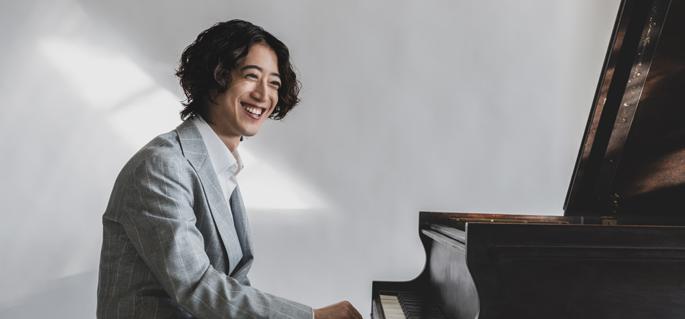
SATURDAY, MAY 9, 2026 · 7:30 PM
THE BAKER-BAUM CONCERT HALL
J.S. BACH Chromatic Fantasia & Fugue in D Minor, BWV 903 (1685–1750)
Support for this program is provided by:
ProtoStar Foundation
HAYATO SUMINO New Birth (b. 1995) Recollection Three Nocturnes Pre Rain After Dawn Once in a Blue Moon
CHOPIN
Nocturne in C Minor, Opus 48, No. 1 (1810–1849) Scherzo No. 1 Opus 20
La Jolla Music Society’s 2025–26 Season is supported by The City of San Diego Cultural Affairs, California Arts Council, County of San Diego, Prebys Foundation, Farfy Foundation, The Lodge at Torrey Pines, ProtoStar Foundation, Vail Memorial Fund, Rancho La Puerta, Banc of California, ResMed Foundation, San Diego Theatres Foundation, Bright Events Rentals, Cafe Coyote, Rancho Coyote, GRNFC Hospitality Group, Ace Parking, Brenda Baker and Steve Baum, Raffaella Belanich, Gordon Brodfuehrer, Eleanor and Ric Charlton, Mary Ellen Clark, Bert and Julie Cornelison, Elaine Galinson and Herbert Solomon, Irwin Jacobs, Helen and Keith Kim, Angelina and Fred Kleinbub, Dorothea Laub, Vivian Lim and Joseph Wong, Jaqueline and Jean-Luc Robert, Marge and Neal Schmale, Karen and Kit Sickels, Jeanette Stevens, Haeyoung Kong Tang, Debra Turner, Sue and Peter Wagener, Liqun Wang and Marco Londei, Anna and Edward Yeung, Bebe and Marvin Zigman.
Hayato Sumino is represented in North America by SHELDON ARTISTS
INTERMISSION
HAYATO SUMINO Improvisation Big Cat Waltz
GERSHWIN An American in Paris (arr. Hayato Sumino) (1898–1937)
RAVEL Boléro, M.81 (arr. Hayato Sumino) (1875–1937) Hayato Sumino, piano
This performance marks Hayato Sumino’s La Jolla Music Society debut.
Born March 31, 1685, Eisenach, Germany
Died July 28, 1850, Leipzig, Germany
Composed: 1717
Approximate Duration: 9 minutes
Few keyboard works by Bach so vividly suggest the presence of the improviser as the Chromatic Fantasia and Fugue in D Minor, composed likely around 1717. The Fantasia unfolds with extraordinary freedom: volatile in gesture, harmonically daring, and resistant to the symmetrical habits of high Baroque writing. At moments, it seems almost to speak, turning aside from figuration into passages that resemble heightened declamation or operatic recitative.
The Fugue, by contrast, channels that expressive instability into discipline and propulsion. Cast in three voices and firmly grounded in D minor, it is built on a long chromatic subject whose force gathers steadily as the work proceeds. The result is music of mounting gravity and inevitability. Revered already in the 18th century, the piece circulated so widely in manuscript that more copies of it survive than for any other individual work by Bach.
Born July 14, 1995, Tokyo
Composed: 2021
Approximate Duration: 4 minutes
For Hayato Sumino, Frédéric Chopin is not merely a composer to interpret, but an artistic ideal: a musician whose craftsmanship is exacting, yet whose phrases seem to arise in the moment, as if improvised. Sumino has spoken of wanting not only to play Chopin well, but to learn from his aesthetic itself— its refinement, spontaneity, and sense of inevitability. It was with Chopin’s music still vividly in his imagination after the 2021 International Chopin Competition that Sumino composed New Birth and Recollection, two original works shaped by that encounter.
New Birth takes as one of its points of departure the streaming arpeggiated world of Chopin’s Étude in C Major, Opus 10, No. 1. But this is not transcription or paraphrase in any ordinary sense. Rather, Sumino uses Chopin’s keyboard language as a generative impulse—as a way of releasing his own virtuosic and imaginative response. The title suggests emergence, renewal, and transformation: music born from inheritance, yet not bound by it. What begins in homage becomes something newly made, with Chopin’s brilliance refracted through Sumino’s own fluent, contemporary voice.
Composed: 2022
Approximate Duration: 5 minutes
If New Birth turns outward in brilliance and motion, Recollection inhabits a more inward space: reflective, lyrical, and memory-charged. Sumino has described the piece as
incorporating a melody from Chopin’s Ballade No. 2 in F Major, preserved as a kind of souvenir from a journey to Warsaw, where he followed in the composer’s footsteps. As with New Birth, Chopin is not treated here as distant monument, but as living presence—something remembered, absorbed, and quietly reimagined.
The title is exact. Recollection does not simply quote the past; it listens back to it. Memory, in this piece, is neither fixed nor documentary. It returns in fragments, in atmosphere, in melodic traces that seem to hover between recognition and reinvention. The result is music of intimate retrospection: a personal response to place, lineage, and artistic kinship, where Chopin’s shadow remains visible, but the speaking voice is unmistakably Sumino’s own.
Composed: 2024
Approximate Duration: 10 minutes
For Hayato Sumino, composition begins not with abstraction but with touch: at the keyboard, through improvisation. As he has described it, a piece often grows from spontaneous ideas recorded in the moment, later shaped by selecting, connecting, and refining the most compelling material.
His Three Nocturnes—Pre Rain, After Dawn, and Once in a Blue Moon—were first released on his debut album Human Universe (2024). Together they form a kind of nocturnal triptych, each rooted in a particular place, atmosphere, and passing hour encountered in travel. Pre Rain arose in South Korea in winter, in weather suspended between snowfall and rain. After Dawn was inspired by sunrise in his hometown in Japan, glimpsed while jet-lagged and awake at an unusual hour. Once in a Blue Moon was improvised in the rural south of France.
Each piece preserves something of its original landscape: temperature, light, solitude, and mood. The result is music that feels both personal and cinematic, translating fleeting impressions into sound suspended between memory and story.
Born March 1, 1810, Zelazowa Wola, Poland
Died October 17, 1849, Paris
Composed: 1841
Approximate Duration: 6 minutes
Chopin’s Nocturnes reveal perhaps the most inward and singing side of his art. Yet within their often intimate scale lies an astonishing breadth of expression. The late Nocturne in C Minor, Opus 48 No. 1, is among the most powerful of the set: a work of concentrated drama, noble rhetoric, and deep emotional layering.
Its opening is grave and arresting, and from that stillness the music rises gradually toward one of the darkest and most commanding climaxes in the entire Nocturne repertory— almost orchestral in its scope. What follows is equally striking: not a triumphant release, but a retreat into a coda of unusual inwardness. The piece becomes, in miniature, a study in contrast, restraint, and the eloquence of afterthought.
Composed: 1835
Approximate Duration: 9 minutes
Chopin’s four Scherzos take a genre once associated with wit and lightness and transform it into something far more turbulent and grand. The Scherzo No. 1 in B Minor, written some four years after his arrival in Paris, is among the boldest of them: compressed in form, but immense in gesture and emotional range.
It begins almost in provocation, with commanding chords and rushing passagework that seem to announce themselves as a challenge. Yet Chopin places within this storm a moment of striking tenderness: a gently unfolding melody drawn from the Polish Christmas carol “Lulajże Jezuniu.” Heard in this context, the quotation becomes more than contrast; it is a remembrance of home, intimate and deeply affecting, set against the work’s larger drama.
Big Cat Waltz
Composed: 2020
Approximate Duration: 5 minutes
Sumino’s Big Cat Waltz is at once affectionate, elegant, and mischievous—a miniature portrait gallery in motion. Written, as he shared, for his beloved cats, the piece was sparked in particular by one resident feline: outwardly placid, somewhat stout, yet unexpectedly agile.
Known online as “Cateen,” Sumino nods here both to Chopin and to the Viennese waltz tradition, though always with a sly smile. The buoyant triple meter, quicksilver changes of direction, and springing melodic leaps all suggest the cat’s peculiar blend of poise, unpredictability, and athletic grace. Beneath its charm lies a deftly stylized musical joke: a valsescherzo in spirit, if not in title.
Born September 26, 1898, New York City
Died July 11, 1937, Los Angeles
Composed: 1928
Approximate Duration: 20 minutes
Gershwin described An American in Paris as the impression of an American visitor wandering the city, hearing its street sounds, and absorbing its atmosphere. He spoke of it after returning from Europe in 1928, by which time he was already firmly established on both Broadway and the London stage through works such as Funny Face, Rosalie, and Oh, Kay! Yet for all his success, he continued to pursue artistic expansion, seeking out major European composers including Milhaud, Poulenc, Prokofiev, Stravinsky, and Ravel—who famously declined to teach him, asking why Gershwin should risk becoming a second-rate Ravel when he was already a first-rate Gershwin.
It was during this visit that Gershwin began An American in Paris, which he characterized as “really a rhapsodic ballet,” freely written and among the most modern music he had yet
attempted. Like his earlier orchestral works, it resists a fixed storyline. Its program is atmospheric rather than literal: a sequence of impressions, urban energies, and passing moods.
Gershwin’s rhythmic vitality, improvisatory instinct, and synthesis of musical languages have been especially meaningful to Hayato Sumino, who has arranged An American in Paris, I Got Rhythm, and Rhapsody in Blue. In an interview with NHK Radio, Sumino reflected on Gershwin’s influence in bringing genres together—a creative impulse he recognizes in his own work as well.
Born March 7, 1875, Ciboure, France
Died December 28, 1937, Paris
Composed: 1928–29
Approximate Duration: 12 minutes
Ravel’s famously dry verdict on Boléro was that it was his only masterpiece—and that, unfortunately, it contained no music. The remark was characteristic: witty, provocative, and not entirely untrue to the work’s premise. Originally conceived as a ballet for Ida Rubinstein, Boléro is built from radically limited means: one rhythmic pattern, one melody, and two alternating sections, sustained across a vast crescendo driven not by thematic development but by changes in instrumental color.
In 1929, Ravel made a version for two pianos, and it is from that lineage that Hayato Sumino’s reimagining proceeds. Here he further alters the instrument’s resonance by incorporating felt, dampening the strings in a manner that recalls aspects of John Cage’s prepared-piano practice.
Ravel himself cautioned early listeners not to search the piece for conventional expressive argument. He called it an experiment in an extremely narrow and deliberate direction, its themes impersonal and its character tied to a staged vision of urban modernity—a street scene, with a factory visible in the background. In that sense, Boléro belongs to the mechanized pulse of the early 20th century, not unlike Honegger’s Pacific 231. Its repetitions generate tension without transformation, fascination without release. That very quality has made it one of the most recognizable—and most argued-over—works in the orchestral canon.


La Jolla Music Society’s 2025–26 Season is supported by The City of San Diego Cultural Affairs, California Arts Council, County of San Diego, Prebys Foundation, Farfy Foundation, The Lodge at Torrey Pines, ProtoStar Foundation, Vail Memorial Fund, Rancho La Puerta, Banc of California, ResMed Foundation, San Diego Theatres Foundation, Bright Events Rentals, Cafe Coyote, Rancho Coyote, GRNFC Hospitality Group, Ace Parking, Brenda Baker and Steve Baum, Raffaella Belanich, Gordon Brodfuehrer, Eleanor and Ric Charlton, Mary Ellen Clark, Bert and Julie Cornelison, Elaine Galinson and Herbert Solomon, Irwin Jacobs, Helen and Keith Kim, Angelina and Fred Kleinbub, Dorothea Laub, Vivian Lim and Joseph Wong, Jaqueline and Jean-Luc Robert, Marge and Neal Schmale, Karen and Kit Sickels, Jeanette Stevens, Haeyoung Kong Tang, Debra Turner, Sue and Peter Wagener, Liqun Wang and Marco Londei, Anna and Edward Yeung, Bebe and Marvin Zigman.
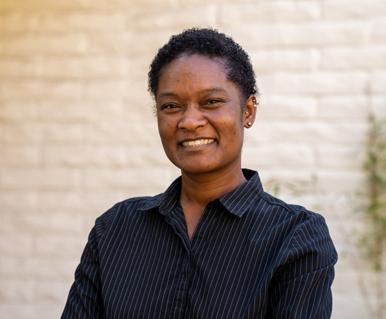
THURSDAY, MAY 14, 2026 · 7:30 PM
THE BAKER-BAUM CONCERT HALL
PROGRAM
Presentation Question & Answer Session
THIS PRESENTATION HAS NO INTERMISSION
Discover the marvels of our cosmic backyard through the eyes of the robotic spacecraft sent out to explore it. Aerospace engineer and National Geographic Explorer Tracy Drain works at NASA’s Jet Propulsion Laboratory to develop, test, and operate the complex machines that uncover some of the countless mysteries within (and way beyond!) our solar system. Among her projects: rovers on Mars, a mission to Jupiter, and a hunt for exoplanets that reshaped our entire understanding of the galaxy.
This presentation marks Tracy Drain’s La Jolla Music Society debut.
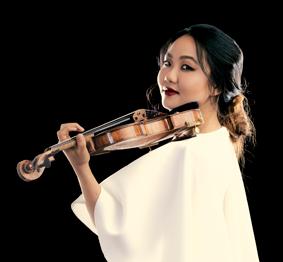
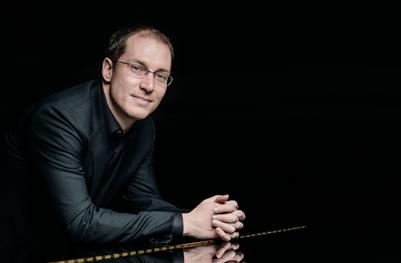
Musical Prelude by students from the Colburn School
SUNDAY, MAY 31, 2026 · 3 PM
THE BAKER-BAUM CONCERT HALL
SCHUBERT
Duo in A Major for Piano and Violin, D.574 (1797–1828)
Allegro moderato
Scherzo: Presto Andantino
Allegro vivace
Support for the Discovery Series is provided by:
Gordon Brodfuehrer
Jeanette Stevens
STRAVINSKY Divertimento from The Fairy’s Kiss (1882–1971)
Sinfonia
Danses suisses
Scherzo
Pas de Deux: Adagio, Variation, and Coda
INTERMISSION
CRAWFORD SEEGER Sonata for Violin and Piano (1901–1953)
La Jolla Music Society’s 2025–26 Season is supported by The City of San Diego Cultural Affairs, California Arts Council, County of San Diego, Prebys Foundation, Farfy Foundation, The Lodge at Torrey Pines, ProtoStar Foundation, Vail Memorial Fund, Rancho La Puerta, Banc of California, ResMed Foundation, San Diego Theatres Foundation, Bright Events Rentals, Cafe Coyote, Rancho Coyote, GRNFC Hospitality Group, Ace Parking, Brenda Baker and Steve Baum, Raffaella Belanich, Gordon Brodfuehrer, Eleanor and Ric Charlton, Mary Ellen Clark, Bert and Julie Cornelison, Elaine Galinson and Herbert Solomon, Irwin Jacobs, Helen and Keith Kim, Angelina and Fred Kleinbub, Dorothea Laub, Vivian Lim and Joseph Wong, Jaqueline and Jean-Luc Robert, Marge and Neal Schmale, Karen and Kit Sickels, Jeanette Stevens, Haeyoung Kong Tang, Debra Turner, Sue and Peter Wagener, Liqun Wang and Marco Londei, Anna and Edward Yeung, Bebe and Marvin Zigman.
STRAUSS
Vibrante, agitato
Buoyant
Mistico, intenso
Allegro
Violin Sonata in E-flat Major, Opus 18 (1864–1949)
Allegro, ma non troppo
Andante cantabile
Andante; Allegro
Stella Chen, violin; Gilles Vonsattel, piano
This performance marks Stella Chen’s La Jolla Music Society debut. Gilles Vonsattel last performed for La Jolla Music Society during SummerFest on August 24, 2024.
Program notes by Eric Bromberger
Born January 31, 1797, Vienna
Died November 19, 1828, Vienna
Composed: 1817
Approximate Duration: 21 minutes
Schubert grew up in a musical but poor family in Vienna. His father, a schoolteacher, assumed that his sons would assist him at school to help supplement the meager family income, and so in the fall of 1814 his seventeen-year-old son Franz, desperate to become a composer, found himself instead teaching schoolboys. The young man was miserable in the classroom and constantly tried to break free. After two years, he seemed to have found an opportunity: the mother of one of his wealthy friends offered him rooms, and Schubert moved away from his family and tried to support himself as a composer. The experiment was shortlived—Schubert had to move back to his family a year later and resume teaching—but during the year 1816–17 he had the freedom to compose. This was the period between his Fifth and Sixth Symphonies, and much of that year went to piano sonatas and songs, but in August 1817 Schubert wrote a piece for violin and keyboard.
He called the work simply Duo. Perhaps the young composer was wary of calling it a sonata, which it actually is, though it has four movements rather than the sonata’s customary three. Full of amiable and agreeable music, the Duo passes by in a very compact twenty minutes. Schubert played both violin and piano, and the writing for both instruments here is idiomatic and comfortable. The opening Allegro moderato is an endless outpouring of attractive music: it is built on a wealth of themes—five separate idea in all—which are introduced by both instruments. The “development” is quite brief, and then Schubert plunges back into a recapitulation that offers an almost literal repeat of the sequence of themes that opened the movement. The “extra” movement in the Duo is the second, a Scherzo in ABA form; its fast outer sections feature athletic skips and an energetic violin part, broken by a flowing trio that glides smoothly along its chromatic lines. The Andantino, which remains unfailingly melodic throughout, is nevertheless subdued and wistful in mood, while the concluding Allegro vivace returns to the extroverted manner of the Scherzo. The writing here is vigorous: both instruments leap across a broad range, with the melodic line moving easily between them. Schubert’s second subject is a waltz (that craze was just beginning in Vienna); this waltz-tune is full of harmonic freedom, chirping gracenotes, and smooth runs. Particularly impressive are Schubert’s quiet but graceful key changes and the calm just before the dramatic concluding chords.
Born June 17, 1882, Oranienbaum, Russia
Died April 6, 1971, New York City
Composed: 1928
Approximate Duration: 25 minutes
As a small boy, Stravinsky was taken to see a performance of Sleeping Beauty and fell in love with the music of Tchaikovsky on the spot. In one of his autobiographies, Stravinsky recalls an even more intense memory: at a performance of Glinka’s A Life for the Tsar in 1893, the eleven-year-old Stravinsky came out of his family’s box to see a tall figure stride past. His mother leaned down and whispered: “Igor, look, there is Tchaikovsky.” Stravinsky notes: “I looked and saw a man with white hair, large shoulders, a corpulent back, and this image has remained in the retina of my memory all my life.”
A love for Tchaikovsky’s music remained with Stravinsky all his life as well, and when in 1927 the dancer Ida Rubinstein suggested that he write a ballet for her new company, Stravinsky quickly accepted her proposal that he compose a score based on themes by Tchaikovsky, much as he had written Pulcinella on themes by Pergolesi in 1920. Stravinsky based the ballet on the Hans Christian Andersen tale The Ice Maiden, in which a fairy finds a boy lost in a snowstorm and imprints a magic kiss upon him. This kiss gives her control of the boy, and twenty years later—on his wedding day—she re-appears, kisses him again, and takes eternal possession of the young man.
Stravinsky drew his themes for this ballet from five of Tchaikovsky’s songs and about a dozen of his piano pieces, so that the resulting ballet is an amalgam of both composers’ styles, combining Tchaikovsky’s melodic gift with Stravinsky’s own sensibilities (and not all the music in the ballet is by Tchaikovsky—Stravinsky himself composed a number of short or transitional sections). First performed in Paris on November 27, 1928, The Fairy’s Kiss (as Stravinsky called the ballet) has never enjoyed the success of his other ballets, but Stravinsky retained his fondness for the music. Several years later, in the early 1930s, when Stravinsky went on concert tours with the violinist Samuel Dushkin, he needed music for the two of them to play together. He composed the Duo Concertant for Dushkin and arranged several of his orchestral scores for violin and piano to fill out these programs. One of these scores was The Fairy’s Kiss, though when Stravinsky made the violinpiano arrangement, he changed its title to the more abstract Divertimento.
The ballet was in four scenes, and Stravinsky kept the order of the original pieces intact but made cuts that reduce the Divertimento to less than half the length of the 45-minute ballet. The Divertimento is in four movements, with the first two performed without pause: the serene opening Sinfonia is the ballet’s first scene, the stately Danses suisses the second. The brief Scherzo is taken from the third scene; some of this music bears a strong resemblance to Stravinsky’s Apollo, completed the same year as The Fairy’s Kiss. The final movement,
characterized by great rhythmic variety, is based on three of the four sections of the original ballet’s Pas de Deux: Adagio, Variation, and Coda. As ballet or as instrumental suite, this music remains a heartfelt tribute from one artist to another.
Born July 3, 1901, East Liverpool, Ohio
Died November 18, 1953, Chevy Chase, Maryland
Composed: 1926
Approximate Duration: 14 minutes
In 1920, the 19-year-old Ruth Crawford enrolled at the American Conservatory in Chicago, where she studied composition with Adolf Weidig and piano with Djane Lavoie Herz. Her progress as a composer was swift. Crawford was first woman ever to win a Guggenheim Fellowship, she studied harmony with Charles Seeger in New York City, and in 1930–31 she studied in Europe, where she met Hindemith, Berg, and Bartók. On her return to the United States, she married Seeger (who was, by a previous marriage, the father of Pete Seeger, the folk singer) and continued to compose. Influenced by the mysticism and harmonic freedom of Scriabin, Crawford evolved her own dissonant and highly structured music, one that reflects a keen ear for sonority. She achieved fame not as a “woman composer” but as one of the leading voices of the American avant-garde during the 1930s.
The Depression, however, brought a sharp change of direction for the entire Seeger family. Their politics moved far to the left (Charles Seeger became music critic for the Daily Worker), and their sympathy for the masses during a time of economic hardship drew the family to American folk music (this interest was encouraged by Crawford Seeger’s close friendship with Carl Sandburg, whose poetry she set to music). During these years, she wrote a few vocal works with populist sympathies, but her primary interest was in collecting, editing, and publishing American folk songs. These interests, along with the responsibility of raising four children, brought her own composing to a virtual standstill. In 1952 Crawford Seeger returned to composing what she called “my own music” and wrote a striking Suite for Wind Quintet. At just that moment, however, she was diagnosed with cancer, and she died the following year at age 52.
Crawford composed her Sonata for Violin and Piano in 1926, and it was first performed in Chicago in 1928 at a concert sponsored by the International Society for Contemporary Music. For a 25-year-old composer, this is an astonishing work. Though she was no follower of Schoenberg or of serial methods, Crawford had already broken free of any harmonic framework. It is as if this music is dissonant without trying to be: even as a very young composer, Crawford was thinking (and hearing!) outside the box, writing the kind of music she wanted to rather than following a school. Over its 14-minute span, this sonata brings a bracing plunge into the imagination of an utterly original composer.
Crawford marks the beginning Vibrante, agitato, and this opening is indeed vibrant and agitated. There are no key signatures here, and the score is littered with accidentals—this music goes where it wants to, without a sense of a tonal home. Her metric sense is just as original: the tempo marking for the opening is 6 over a dotted-quarter, and the fundamental pulse changes constantly: 6, 8, 11, etc. The violin soon sounds the movement’s main theme, a soaring, angular idea that Crawford marks lusingando (“coaxing, intimate”). Here and throughout the sonata one senses the influence of Scriabin, who had been dead only for a decade when this music was composed. There is here that earlier composer’s sense of ecstatic freedom rooted in harmonic uncertainty, and Crawford uses the instruction mistico (“mystical”) repeatedly.
The second movement, marked Buoyant, is in a specific meter, 9/8, which Crawford specifies should be stressed 5+4. Listen carefully to the piano’s opening measure: that perky, dancing shape will continue almost without pause throughout this movement, and quickly the violin enters in chattering counterpoint. A brief central episode moves away from that figure and from the 9/8 meter, but both return to lead the movement to its close.
The third movement, marked Mistico, intenso, begins with a long piano introduction, and when the violin enters, its part is marked inquieto. That is a key to this brief movement, which leads without pause into the finale, where Crawford asks that the violin part be played arditamente: “boldly.” Attentive listeners will recognize that Crawford is recalling material from earlier movements, and as the sonata nears its conclusion, we hear some of the shape of the beginning of the first movement. That reminiscence is brief, and the sonata hurtles to a most forceful conclusion.
Born June 11, 1864, Munich
Died September 8, 1949, Garmisch-Partenkirchen, Germany
Composed: 1887–88
Approximate Duration: 28 minutes
The Violin Sonata came at a pivotal point in Richard Strauss’ career. He wrote it in 1887–8, when he was only 24 and just beginning work on the symphonic poem Don Juan. The success of Don Juan would lead Strauss to concentrate on the symphonic poem and later on opera; the Violin Sonata, in fact, was his final piece of chamber music. Coming at so important an intersection in his career, the Violin Sonata shows features of both the world Strauss was leaving and the world he was about to enter. In its structure and harmonic language, the sonata looks back to the classical tradition of Brahms and Schumann, but in its dramatic scope and the sheer panache of the writing, it looks ahead to the symphonic poems.
Not all listeners have found this combination convincing, and some have questioned whether Strauss’ Violin Sonata, full of volcanic fury and dense textures, is chamber music at all.
Strauss’ biographer Norman Del Mar notes that “the piano part resembles nothing so strongly as a Liszt Piano Concerto, while the violin line . . . rather suggests a full body of strings.” The fusion of styles in Strauss’ Violin Sonata can be jarring, but this is nevertheless brilliant, exciting music.
Strauss played both piano and violin, and the writing for the two instruments is virtuosic. The piano opens the Allegro, ma non troppo, and its first figure—immediately picked up by the violin—contains the rhythmic cell that will animate the entire movement: a sixteenth-note pickup leading into a triplet. This figure, full of the rhythmic snap so typical of Strauss’ tone poems, recurs throughout the movement. The second theme soars through a range of two-and-a-half octaves, while the third—marked appassionato—climbs into the violin’s highest register. This sonata-form movement, marked by an exceedingly active development, closes on a restatement of the first idea.
The Andante cantabile was written after the outer movements were completed and published separately under the title Improvisation. It is in ABA form, with an opening section that has reminded many of Mendelssohn’s Songs Without Words The interior sequence is impassioned, with the violin line riding high above shimmering arpeggios of 64th-notes in the piano; Strauss quotes Schubert’s song Erlkönig in the turbulent middle section and the slow movement of Beethoven’s “Pathetique” Sonata in the coda.
Nowhere does the transitional nature of this sonata appear more clearly than at the opening of the finale. After an Andante introduction that sounds as if it might have been written by Brahms, the first theme rockets upward at the Allegro, sounding very much like the great upward rush of orchestral sound at the beginning of Don Juan, written at almost the same time. The finale is much in the manner of the opening movement, with an espressivo second theme, a soaring third, and a superheated development. The coda is a graceful and imaginative extension of the opening theme.
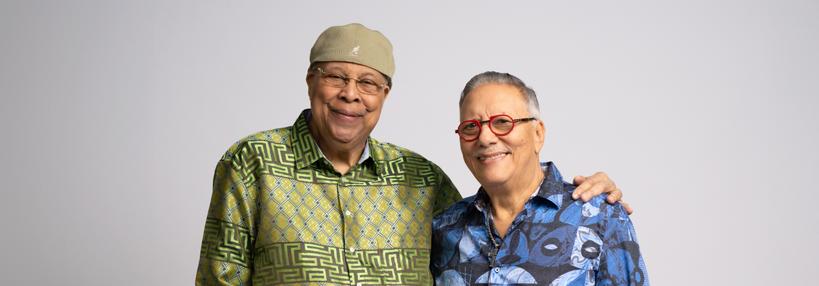
TUESDAY, JUNE 9, 2026 • 5:30 PM & 8 PM
THE BAKER-BAUM CONCERT HALL
Legacy Quintet
Chucho Valdés, piano and bandleader
Arturo Sandoval, trumpet
Jose Gola, bass Horacio Hernandez, drums Roberto Vizcaino, percussion
PROGRAM
Support for our jazz programs is provided by:
La Jolla Music Society’s 2025–26 Season is supported by The City of San Diego Cultural Affairs, California Arts Council, County of San Diego, Prebys Foundation, Farfy Foundation, The Lodge at Torrey Pines, ProtoStar Foundation, Vail Memorial Fund, Rancho La Puerta, Banc of California, ResMed Foundation, San Diego Theatres Foundation, Bright Events Rentals, Cafe Coyote, Rancho Coyote, GRNFC Hospitality Group, Ace Parking, Brenda Baker and Steve Baum, Raffaella Belanich, Gordon Brodfuehrer, Eleanor and Ric Charlton, Mary Ellen Clark, Bert and Julie Cornelison, Elaine Galinson and Herbert Solomon, Irwin Jacobs, Helen and Keith Kim, Angelina and Fred Kleinbub, Dorothea Laub, Vivian Lim and Joseph Wong, Jaqueline and Jean-Luc Robert, Marge and Neal Schmale, Karen and Kit Sickels, Jeanette Stevens, Haeyoung Kong Tang, Debra Turner, Sue and Peter Wagener, Liqun Wang and Marco Londei, Anna and Edward Yeung, Bebe and Marvin Zigman.
Works to be announced from stage
THIS PERFORMANCE HAS NO INTERMISSION AND IS APPROXIMATELY 90 MINUTES.
For the first time in over 40 years, two living legends of Afro-Cuban jazz—Arturo Sandoval and Chucho Valdés—reunite on stage for an electrifying quintet performance. This once-in-a-lifetime concert brings together the masterful trumpet virtuosity of Sandoval with the groundbreaking piano genius of Valdés in an explosive celebration of rhythm, improvisation, and musical legacy. It’s a rare opportunity to witness these icons create magic in an intimate, high-octane setting— an unforgettable night of history in the making.
Chucho Valdés last performed for La Jolla Music Society in the Jazz Series on April 1, 2023. Arturo Sandoval last performed for La Jolla Music Society in the Jazz Series on June 3, 2022. This performance marks Horacio Hernandez’, Jose Gola’s, and Roberto Vizcaino’s La Jolla Music Society debuts.
Gautier Capuçon, cello
Performing internationally with many of the world’s foremost conductors and instrumentalists, Gautier Capuçon is also a passionate ambassador for the Orchestre à l’École Association, which brings classical music to more than 40,000 school children across France. In January 2022 Capuçon launched his own Foundation to support young and talented musicians. During the COVID-19 pandemic, Capuçon brought music directly into the lives of families around France for free during his musical odyssey Un été en France. Capuçon performs an extensive array of works each season and regularly premières new commissions. Current projects include collaborations with Lera Auerbach, Danny Elfman, and Thierry Escaich. Capuçon’s recordings have won multiple awards; his latest album, Sensations, explores short pieces from a range of different genres. His album of romantic works by Brahms and Rachmaninoff in collaboration with Andreas Ottensammer and Yuja Wang was recently released by Deutsche Grammophon. 2020’s Warner Classics album Emotions features music from composers such as Debussy, Schubert, and Elgar and has achieved gold status in France. Capuçon plays a 1701 Matteo Goffriller cello named “L’Ambassadeur.”
Stella Chen, violin
Violinist Stella Chen, the Gramophone 2023 Young Artist of the Year, garnered international acclaim as the first-prize winner of the 2019 Queen Elizabeth International Violin Competition. Her rapid ascent has been marked by a 2020 Avery Fisher Career Grant and the Lincoln Center Emerging Artist Award. Chen has performed as a soloist with many of the world’s most prestigious ensembles, including the New York Philharmonic, Chicago Symphony, Israel Philharmonic, and the Chamber Orchestra of Europe. Her recital career has taken her to the Vienna Musikverein, Berlin Philharmonie, Carnegie Hall, and Lincoln Center, where she appears
frequently with the Chamber Music Society of Lincoln Center. A passionate chamber musician, Chen has collaborated with icons such as Itzhak Perlman and James Ehnes at festivals including Ravinia, Kronberg Academy, and Music@ Menlo. She holds a doctorate from The Juilliard School, serves as a teaching assistant to Li Lin, and was the inaugural recipient of Harvard University’s Robert Levin Award. Chen plays the 1720 “General Kyd” Stradivarius, on generous loan from Dr. Ryuji Ueno and Rare Violins in Consortium, Artists and Benefactors Collaborative and the 1708 “Huggins” Stradivarius courtesy of the Nippon Music Foundation.
Tracy Drain is a systems engineer with a career steeped in deep space exploration. In her 20-plus years in the aerospace field, she has helped to develop and/or operate robotic spacecraft including the Mars Reconnaissance Orbiter, the Kepler mission in its hunt for exoplanets, the Juno mission orbiting Jupiter, and the Psyche mission on its way to an asteroid. Drain recently served as the lead flight systems engineer for the Europa Clipper mission. She has taken on the role of “Launch to Mars” mission manager for Clipper and will lead the operations team in the spacecraft’s five-and-a-half-year journey to the Jovian system. Drain serves on the planning committee for the National Academy of Science’s Science and Entertainment Exchange and on the advisory board of Arizona State University’s Interplanetary Initiative. She works at NASA’s Jet Propulsion Laboratory in Pasadena, California. Tracy Drain is a recipient of the 2024 Wayfinder Award presented by Kia.
Hailed by critics as the “young tsar of the piano” and “Liszt reincarnated,” Alexandre Kantorow gained international stardom in 2019 as the first French pianist to win the
Tchaikovsky Competition Gold Medal and Grand Prix. His meteoric rise continued with the prestigious 2024 Gilmore Artist Award and multiple Victoires de la Musique Classique honors, including Instrumental Soloist of the Year. Kantorow performs with the world’s most elite ensembles, including the Berlin Philharmoniker, Boston Symphony, and Budapest Festival Orchestra, collaborating with conductors such as Klaus Mäkelä and Sir Antonio Pappano. A frequent guest at Carnegie Hall, Wigmore Hall, and the Concertgebouw, he recently debuted with the Los Angeles Philharmonic and toured across Europe and Asia. An exclusive BIS Records artist, Kantorow has received numerous Diapason d’Or and Choc de l’Année awards. His commitment to chamber music sees him partner regularly with artists such as Janine Jansen and Renaud Capuçon. In recognition of his cultural impact, he was named a Chevalier de l’Ordre National du Mérite by the French President in 2024.
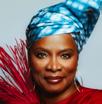
Five-time GRAMMY Award winner Angélique Kidjo is one of the most influential forces in international music today. Named one of Time Magazine’s 100 most influential people in the world and “Africa’s premier diva,” Kidjo has released sixteen acclaimed albums that cross-pollinate West African traditions with R&B, funk, jazz, and Latin influences. Her expansive career includes the 2023 Polar Music Prize, the Vilcek Prize in Music, and the Amnesty International Ambassador of Conscience Award. Beyond her highenergy global tours, Kidjo has collaborated with icons such as Philip Glass and directed visionary projects like her reimagining of Talking Heads’ Remain in Light and her tribute to Celia Cruz. Her latest album, Mother Nature, features a new generation of West African creators, further cementing her role as a bridge between musical tradition and the future of Afro-pop. A dedicated humanitarian, Kidjo serves as a UNICEF and OXFAM Goodwill Ambassador and founded the Batonga Foundation to support the education of young girls in Africa.
Through her artistry and advocacy, she remains a tireless champion for human rights and the transformative power of cultural connection.

David McLain, photographer and filmmaker Photographer and filmmaker David McLain honed his craft shooting feature-length assignments for National Geographic, establishing a reputation for creating timeless, human-centric imagery under the world’s most demanding conditions. His work is anchored in the belief that the best stories inspire us to be part of something larger than ourselves, whether he is capturing content for global brands like Apple and Sony or documenting the work of small nonprofits. A central pillar of McLain’s career is his 15-year involvement with The Blue Zones project. Collaborating with author Dan Buettner, he has traveled the globe to document the world’s longest-lived populations. This landmark study has resulted in numerous features for Smithsonian and National Geographic, as well as several books and a best-selling cookbook. As one of the original Sony Artisans of Imagery, McLain remains at the forefront of visual innovation. When not on assignment, he operates his studio from a converted barn near Portland, Maine. His portfolio serves as a constant reminder of the depth of the human experience, blending motion, sound, and still photography to evoke profound emotional resonance.
A protégé of the legendary jazz master Dizzy Gillespie, Arturo Sandoval was born in Artemisa, a small town in the outskirts of Havana, Cuba. He has since evolved into one of the world’s most acknowledged guardians of jazz trumpet and flugelhorn, as well as a renowned classical artist, pianist and composer. He has been awarded 10 GRAMMY Awards and nominated 19 times; he has also received six Billboard Awards and an Emmy. Sandoval was a
founding member of the GRAMMY Award-winning group Irakere, whose explosive mixture of jazz, classical, rock, and traditional Cuban music caused a sensation throughout the entertainment world. In 1981, he left Irakere to form his own band, which garnered enthusiastic praise from critics and audiences all over the world.
Pianist Aristo Sham recently achieved a career breakthrough at the 2025 Van Cliburn International Piano Competition, where he captured both the Gold Medal and the Audience Award. Hailed by The New York Times for playing that combines “clarity, elegance and abundant technique,” Sham’s Cliburn performances reached over 2 million viewers across 125 countries, solidifying his status as a premier global talent. His 2025–26 debut season as Cliburn winner includes a major tour of Asia and highprofile U.S. recitals for the Aspen Music Festival and La Jolla Music Society. Sham has performed with the London Symphony Orchestra under Sir Simon Rattle and the Hong Kong Philharmonic under Edo de Waart. A former child prodigy featured on the UK’s Channel 4, he has also performed for King Charles. An alumnus of the Harvard/New England Conservatory dual degree program, Sham earned his Master’s under Victor Rosenbaum and an Artist Diploma from The Juilliard School. His discography includes a residency recording of Brahms’ complete solo piano music for RTHK4 and two upcoming releases on the Platoon label.

Pianist Hayato Sumino has emerged as a global sensation, blending rigorous classical technique with a modern, innovative approach to the keyboard. He first gained international acclaim as a semifinalist at the 2021 International Chopin Piano Competition. Known to millions online as “Cateen,” Sumino’s YouTube channel boasts over 1.3 million subscribers and
170 million views, showcasing his unique style that fuses classical mastery with improvisational flair. Sumino has performed with world-class ensembles including the Hamburg Symphony, NHK Symphony, and the Polish National Radio Symphony under Marin Alsop. He recently made debuts at the Berlin Philharmonie and the Ravinia Festival with the Chicago Symphony Orchestra, and collaborated with noted composer Joe Hisaishi. An exclusive Sony Classical artist, Sumino released his major-label debut in 2024, featuring works by Bach, Fauré, and his own compositions. A Steinway Artist and Forbes Japan 30 Under 30 honoree, he holds a Master of Engineering from the University of Tokyo, where he received the President’s Award for his exceptional dual achievements in music and information science. On November 29, 2025, Sumino set a new Guinness World Record for the most ticket sales at an indoor piano recital, in the K-Arena Yokohama, the first classical music concert to take place there, selling it out to its capacity of 18,564 attendees.
Over the course of three decades, Jean-Yves Thibaudet has established a global reputation as one of today’s most versatile and premier pianists. With a discography of more than 50 albums, his recording career has earned two GRAMMY nominations, the Diapason d’Or, and the Edison Prize. Thibaudet is celebrated for his curiosity beyond the standard repertoire, often performing his own opera transcriptions and jazz-influenced programs. A frequent collaborator in film, his playing is featured in soundtracks for The French Dispatch, Pride and Prejudice, and the Oscarwinning Atonement. His unique artistic footprint also extends to fashion, with a concert wardrobe designed by Dame Vivienne Westwood. A dedicated educator, Thibaudet serves as the first-ever Artistin-Residence at the Colburn School in Los Angeles, where he oversees the meritbased Jean-Yves Thibaudet Scholarships. His honors include induction into the Hollywood Bowl Hall of Fame and the
title of Officier of the Ordre des Arts et des Lettres. In 2021, he released Carte Blanche, a deeply personal solo album featuring première recordings of works significant to his life and career.
Chucho Valdés, piano
Winner of six GRAMMY and three Latin GRAMMY Awards, the Cuban pianist, composer and arranger Chucho Valdés is the most influential figure in modern AfroCuban jazz. In a rich career spanning sixty years, Chucho has pushed boundaries in pursuit of new expressions in Afro-Cuban music. Valdés’ musical education includes formal studies and countless nights on the best stages in Cuba as the pianist with his father, Bebo Valdés, and his orchestra Sabor de Cuba, and with the seminal Orquesta Cubana de Música Moderna. Chucho is perhaps best known as the founder, pianist, and main composer and arranger of Irakere, a landmark ensemble in Cuban music. Chucho led Irakere for more than 30 years, but since 2005 he has focused on his personal career, highlighting his work as a pianist and leading small ensembles, like the Afro-Cuban Messengers, Jazz Batá, and his acclaimed Quartet. Valdés is a recipient of a Lifetime Achievement Award from the Latin Academy of Recording Arts & Sciences, has been inducted into the Latin Songwriters Hall of Fame, and received a DC Jazz Festival Lifetime Achievement Award, his name joining an illustrious list that includes Kenny Barron, James Moody, Ellis Marsalis, George Wein, and Dave Brubeck.
Swiss-born American pianist Gilles Vonsattel is celebrated as an artist of “extraordinary versatility and originality” (The New York Times). A recipient of the Avery Fisher Career Grant and winner of the Naumburg and Geneva competitions, he has appeared as a soloist with the Boston Symphony, Chicago Symphony Orchestra, Munich Philharmonic, and San Francisco Symphony. An avid chamber musician and Principal Pianist of Camerata Pacifica, Vonsattel collaborates regularly with the Chamber Music Society of Lincoln Center and partners such as James Ehnes and the Emerson Quartet. Deeply committed to contemporary music, he has worked closely with composers Jörg Widmann and George Benjamin. His 2025 season marked the beginning of a landmark three-year Beethoven piano sonata cycle, performed at Music@Menlo and Lincoln Center. Vonsattel’s discography has received international acclaim, including a 5/5 from FonoForum and Album of the Year honors from Time Out New York. A Steinway Artist, he holds a degree in political science and economics from Columbia University and a Master’s from The Juilliard School. He currently serves as Professor of Piano at the University of Massachusetts Amherst.
Accidental · A musical symbol that indicates an alteration of a given pitch.
Adagio · Italian: leisurely. “Adagio” designates a slow tempo.
Agitato · Italian: agitated, restless. In an agitated manner.
Allegro · Italian: merry, lively. “Allegro” designates a fast tempo. (“Allegretto,” a diminutive of “allegro,” is used to indicate a tempo slightly slower than “allegro.”)
Andante · Italian: at a walking pace. “Andante” designates a moderate tempo. (“Andantino,” a diminutive of “andante,” is used to indicate a tempo slightly quicker than “andante.”)
Appassionato · Italian: impassioned, passionate. A performance direction indicating an impassioned style.
Arditamente · Italian: boldly.
Aria · Italian: air. A lyrical work for voice (though the term has been used in instrumental works, as well), typically part of a larger work such as an opera or cantata. An arietta is a short aria. Arpeggio (arpeggiated, arpeggiation) · Italian: The sounding of individual notes of a chord in succession rather than all at once.
Ballade · French: a one-movement instrumental, mostly solo piano piece, characterized by its dramatic, narrative, and often virtuosic style, commonly featuring lyrical themes and free form.
Cantabile · Italian: songlike, singable.
Cantata · A sacred or secular vocal form consisting of solos, ensembles, and choruses accompanied by orchestra, piano, or other combinations of instruments.
Capriccio · Italian: a lively piece of music, typically short and free in form.
Chaconne · French: a Baroque-era musical form characterized by a series of continuous variations, usually over a repeating, short harmonic progression or bass line.
Chorale · A polyphonic passage typically comprising a sequence of chords in rhythmic unison or near unison; the chorale originated as four-part congregational German-Protestant hymns.
Chromatic · (From the Greek word for color) Chromatic notes fall outside the central tonality of a piece (i.e., in C major—C, D, E, F, G, A, B—such notes as C-sharp and A-flat are chromatic).
Classical · Music composed roughly between 1750 and 1830 (i.e., after the Baroque period and before the Romantic era), when the Classical symphony and concerto were developed. It implies music of an orderly nature, with qualities of clarity and balance and emphasizing formal beauty rather than emotional expression.
Coda · Italian: tail. New musical material added to the end of a standard musical structure.
Con brio · Italian: with vivacity.
Con fuoco · Italian: “with fire,” with intense energy, passion, and often great speed.
Concerto · Typically an instrumental work marked by the contrast between an instrumental soloist (or group of soloists) and an orchestral ensemble (plural: concerti).
Counterpoint (contrapuntal) · The musical texture produced by note-against-note movement between two or more instruments.
Da capo · Italian: from the beginning.
Dissonance · clashing, unstable, or “harsh” combinations of notes, which create musical tension requiring resolution into more harmonious (consonant) tones.
Dolce · Italian: sweetly, in a tender manner.
Dolente · Italian: sorrowful, grieved, or painful.
Espressivo · Italian: expressively.
Fantasia (Fantasy, Fantaisie) · A term used to describe a work whose form derives “solely from the fantasy and skill of an author who created it” (Luis de Milán, 1536).
Feroce · Italian: fiercely.
Forte · Italian: loud. (Fortissimo: very loud.)
Fugue (fugato) · A movement or passage of music based on the contrapuntal development of a short musical idea called the subject, which is stated in succession by each voice.
Glissando · Italian: A sliding movement from one note to another.
Intermezzo · Italian: Originally, a musical interlude such as an entr’acte in a dramatic work. Since the nineteenth century, “intermezzo” has been used as a designation for independent works or individual movements within multimovement works. (French: intermède.)
K. · Abbreviation for Köchel, used to catalogue Mozart’s works; after Ludwig Ritter von Köchel (1800–1877).
Largo · Italian: broadly or slowly.
Legato · Italian: bound. A musical expression indicating that a succession of notes should be played smoothly and without separation. (Legatissimo: very smoothly.)
Maestoso · Italian: majestic, stately, or dignified.
Marcato · Italian: with emphasis.
Moderato · Italian: at a moderate tempo.
Molto · Italian: very. Used as a qualification of a tempo marking, as in “Molto allegro.”
Movement · A self-contained section of a larger composition. Movements of a piece of music are analogous to chapters in a book: although they can stand on their own to some degree, they more significantly combine with and relate to each other in ways that produce a cohesive whole.
Non troppo, non tanto · Italian: not too much (as in, e.g., “Allegro ma non tanto,” “Adagio ma non troppo”).
Octave · The interval between two notes that are seven diatonic scale degrees apart.
Opus · Latin: work. The most common method of cataloguing a composer’s work, although opus numbers are often unreliable in establishing the chronology of composition. (Abbreviation: op.)
Nocturne · a short composition of a romantic or dreamy character suggestive of night, typically for piano.
Partita · Italian: a musical term from the Baroque era referring to a suite of dance-inspired instrumental movements, such as those for keyboard, violin, or orchestra.
Passacaglia · Italian: a Baroque musical form, originating in 17th-century Spain as a slow, stately dance, usually in triple meter and a minor key.
Piano · Italian: softly or quietly.
Pietoso · Italian: with compassion, pity, tender emotion.
Più · Italian: more. An adverb used in music particularly for tempo adjustments, as in “più mosso” (faster), “più animato” (more animated), etc.
Pizzicato · Italian: played by plucking the strings of a stringed instrument.
Poco · Italian: a little, rather, as in “poco lento” (rather slow).
Prelude · A piece preceding other music; its function is to introduce the mode or key. (Polish: preludium.)
Recitative · A style of writing, typically employed in opera and other vocal music, designed to imitate dramatic speech.
Rhapsody · a one-movement, free-form, and episodic work characterized by a wide range of intense emotions, contrasting moods, and a spontaneous, improvisational feel.
Romance · A short instrumental piece of song-like character and gentle quality. (German: romanze.)
Rondo (rondeau) · A musical structure, commonly used throughout the Classical and Romantic eras, in which a main passage, called the refrain, alternates with episodes, which depart from the movement’s central musical material.
Scherzo · Italian: joke. A fast movement that came to replace the minuet around the turn of the nineteenth century. (Scherzando/ scherzoso: playfully.)
Sombre · a dark, gloomy, or melancholic atmosphere, often utilizing slow tempos, minor keys, or low-register, muted, and restrained dynamics.
Sonata · A composition for one or more instruments, usually comprising several movements. While the term has been used to describe works quite different from each other formally and stylistically depending on the period of composition, a sonata almost always describes a work for solo instrument with or without piano accompaniment. (French: sonatine.)
Sonata form (Sonata-allegro form) · The most standard musical structure throughout the Classical and Romantic eras for first, and often final, movements of multimovement pieces composed for solo, chamber, or orchestral forces. In sonata form, musical ideas are organized into three sections: the exposition, in which the main themes are introduced; the development, in which the themes are transformed; and the recapitulation, in which the music restates each theme in the home key.
Sonatina · Italian: diminutive of “sonata.” Flourishing in the late Classical era, the sonatina is a brief, easy, or light sonata, especially a work whose first movement, in sonata form, has a very short development section. (French: sonatine.)
Sostenuto · Italian: sustained.
Staccato · Italian: detached. A musical expression indicating that notes should be played with separation.
Tempo · Italian: time; the speed or pace of a musical composition.
Tranquillo · Italian: tranquil, calm, or quiet.
Trill · A rapid alternation between the main note and a semitone above or below it; an embellishment.
Variations (Theme and variations) · A standard musical form in which a main theme is followed by a succession of variations on that theme. (Italian: tema con variazioni.)
Velocissimo · Italian; very fast, quick.
Virtuoso · Italian: a musician with exceptional, technical, and artistic mastery over their instrument or voice, often performing highly demanding, fast, and complex repertoire.
Vivace · Italian: lively. “Vivace” designates a fast tempo, in between “allegro” and “presto.”
Waltz · A dance in 3/4 time. (French: valse.)
Based on a glossary provided by Music@Menlo Chamber Music Festival and Institute
Photo Credits: Cover: A. Kidjo © Brantley Gutierrez; Pg.2: C. Valdés; PG.13: B. Pouliot, S. Porter, P. Wiancko, M. Rostad © Madi Nguyen; PG.14−15: The Conrad Prebys Performing Arts Center © Bradley Joslin, A. Kidjo © Michael Tubes, N. Bendix-Balgley, S. Jackiw, I. Barnatan, A. Weilerstein, T. Li © Ken Jacques, Canadian Brass © Ken Jacques, M. Ramos © Ken Jacques, Lori Bell Quartet courtesy of The Conrad, Balourdet Quartet courtesy of The Conrad, A. Boles, E. Dusinberre, H. Rhodes, I. Barnatan © Ken Jacques; PG.15: L. Rosenthal © Jamie Dixx; P. 16: G. Capuçon courtesy of artist, J. Thibaudet © Andrew Eccles; P.20: A. Sham © Ralph Lauer; P.24: A. Kantorow © Sasha Gusov; P.28: D. McLain courtesy of artist; P.29: A. Kidjo © Michael Tubes; P.30: H. Sumino © Dario Acosta; P.33: T. Drain, Cosmic Promo courtesy of National Geographic; P.34: S. Chen © Fay Fox, G. Vonsattel © Marco Borggreve; P.38: C. Valdés, A. Sandoval © Martin Espino; P.39: G. Capuçon courtesy of artist, S. Chen courtesy of artist, T. Drain courtesy of NASA, A. Kantorow courtesy of artist, A. Kidjo © Brantley Gutierrez; P.40—41: D. McLain courtesy of artist, A. Sandoval © Jeremy Lock, A. Sham © Lisa-Marie Mazzucco, H. Sumino © Dario Acosta, J. Thibaudet courtesy of artist, C. Valdés © Martin Espino, G. Vonsattel © Marco Borggreve
The remarkable performances presented by La Jolla Music Society are made possible through the generous support of our donor family. Your contributions help close the gap between ticket revenue and the full cost of presenting world-class musicians, dancers, and speakers in San Diego. Your generosity also extends beyond the stage—supporting our educational initiatives and community programs that enrich the lives of students and residents throughout the region. Thank you for making this important work possible.
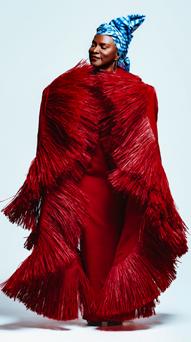
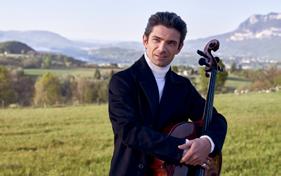
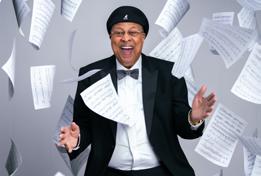
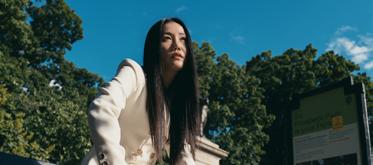
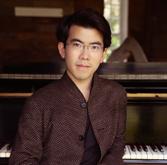
On the following pages La Jolla Music Society pays tribute to you. Your passion makes it possible to share the magic of the performing arts with our community.
We are deeply grateful to the generous supporters who share our passion for the arts. It is our privilege to recognize the following donors, whose commitment makes it possible for us to present exceptional programming year-round.
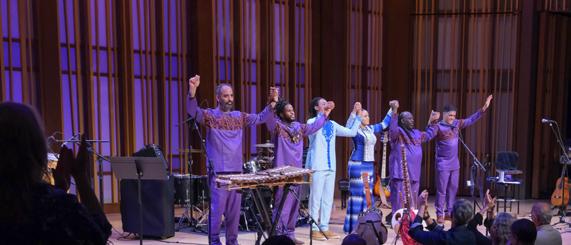
FOUNDER
($250,000 and above)
ANGEL
($100,000 - $249,999)
Brenda Baker and Steve Baum
Raffaella and John* Belanich
The City of San Diego Cultural Affairs
The Conrad Prebys Foundation
BENEFACTOR
($50,000 - $99,999)
Eleanor and Ric* Charlton
Mary Ellen Clark
Farfy Foundation
Jaqueline and Jean-Luc Robert
Stacy and Don Rosenberg
Wendy Brody Estate
Peter Cooper and Erik Matwijkow
Julie and Bert Cornelison
Teresa and Merle Fischlowitz*
Elaine Galinson and Herbert Solomon
Susan and Bill Hoehn
Helen and Keith Kim
Angelina and Fredrick Kleinbub
Vivian Lim and Joseph Wong
GUARANTOR
Mary Ann Beyster
Robert Black
($25,000 - $49,999) Table of Contents
Gordon Brodfuehrer
Eric Cohen and Bill Coltellaro*
Silvija* and Brian Devine
Barbara Enberg
Jennifer and Kurt Eve
Marla Bingham and Gary Gallagher
Lehn and Richard Goetz
Jeanne Herberger
John Hesselink
Nancy Linke Patton and Rip Patton
Joan* and Irwin Jacobs
Dorothea Laub
Ron Wakefield Estate
Anna and Edward Yeung
Karen and Kit Sickels
Debra Turner
Liqun Wang and Marco Londei
Clara Wu Tsai and Joseph Tsai
Sheryl and Bob Scarano
Marge and Neal Schmale
Mao and Doctor Bob Shillman
Elizabeth and Joseph* Taft
Revocable Trust
Haeyoung Kong Tang
Vail Memorial Fund
Sue and Peter Wagener
Bebe and Marvin Zigman
The Lodge at Torrey Pines
Diana and Eli Lombrozo
Viviana and Enrique Lombrozo
Sue and John Major
Arlene and Lou Navias
Jeanne and Rick Norling
ProtoStar Foundation
Thomas Rasmussen and Clayton Lewis
Sylvia and Steve Ré
Jeanette Stevens
Lise Wilson and Steven Strauss
($15,000 - $24,999)
Judith Bachner and Dr. Eric L. Lasley
Banc of California | Stephen Gamp
Jeffrey Barnouw
Jasna and David Belanich
Jim Beyster
Café Coyote and Rancho Coyote Wines
California Arts Council
Sharon L. Cohen
Ellise and Michael Coit
Cushman Foundation
Jendy Dennis Endowment Fund
Martha and Edward Dennis
Ann Parode Dynes and Robert Dynes*
Pamela Farr and Buford Alexander
Debby and Wain Fishburn
Dr. Seuss Foundation
Ingrid and Theodore Friedmann
Pam and Hal Fuson
Teresa and Harry Hixson
Susan and David Kabakoff
Jo Kiernan
Elaine Lipinsky Family Foundation
Ann and Gerald* Lipschitz
Kathleen and Ken Lundgren
Jacqueline Mars
Miguel R. Mata MD
Gini and Dave Meyers
Kazeem Omidiji
Leigh P. Ryan
Clifford Schireson and John Venekamp
Maureen and Thomas* Shiftan
Robert Singer
Dagmar Smek and Arman Oruc
Reesey and David Shaw
Susan Shirk and Sam Popkin
Stephanie and Nick Stone
Mariko Sawa and Ulf Sundberg
Greta and Steve Treadgold
Abby and Ray Weiss
SUPPORTER ($10,000 - $14,999)
Anonymous
Celeste and Timothy Bailey
Carolyn and Giovanni Bertussi
Angela and Abdul Bitar
The Blades Foundation
Robyn Bottomley and Glenn Gutridge
Colette Carson Royston and Ivor Royston
Raymond Chinn
Amy Corton and Carl Eibl
County of San Diego Community Enhancement Fund
Una Davis
Nina Doede
The Hon. Diana Lady Dougan
Dr. Seuss Foundation
Beverly Fredrick
Joy Frieman
Wendy Frieman
Sarah and Mike Garrison
Buzz and Peg Gitelson
Brenda and Michael Goldbaum
Margaret and Michael Grossman
Ingrid B. Hibben
Angela and Cory Homnick
Marilee and Peter Kovacs
Elaine and Doug Muchmore
Carol Randolph and Robert Caplan
ResMed Foundation
Gloria and Joseph Shurman
Diane and DJ Smith
Annie So
Mary Sophos and William Pitts
Barbara and Sam Takahashi
Gwynn and Brian Thomas
Susan and Richard Ulevitch
Armi and Al Williams
Dolly and Victor Woo
Carol Young and Leonard Kornreich
($5,000 - $9,999)
Anonymous (2)
Judith Adler
Jadwiga Alexiewicz
Donna and Dr. Fred Berger
Emily and Barry Berkov
Deanna Bittker
Berenice and Jerry Blake
Karen and Jim Brailean
Benjamin Brand and Shara Williams
Isabel and Stuart Brown
Marilyn Huff and William Boggs
Carol Carlisle
Lisa and David Casey
Cathy and Michael Casteel
Rachel and PJ Chryssostomides
Karen and Don* Cohn
Carolyn and Clifford Colwell
Lori and Aaron Contorer
Elaine Darwin
Shelly and Stephen Davalos
George and Tallie Dennis
Sheryl and Michael Durkin
Jill Esterbrooks and James Robbins
Sue and Chris Fan
Diane and Elliot Feuerstein
Cheryl Hintzen-Gaines and Ira Gaines
Barbara and Joseph Giammona
Lisa Braun Glazer and Jeff Glazer
Deborah and Ronald Greenspan
Barbara and Paul Hirshman
Nancy and Stephen Howard
Elisa and Rick Jaime
Theresa Jarvis
Lynn Kirkpatrick
Barbara Kjos
Sallie and Bill Larsen
Kate Leonard and Richard Forsyth
Sylvia Liwerant
Christine and Charles Lo
Barbara Loonin
Jain Malkin
Janine Marcus
Dennis A. McConnell
M. Margaret McKeown and Peter Cowhey
Andrea Migdal and Mike Tierney
Gail and Edward Miller
Nicola and Tom Miller
Betsy Mitchell
Cynthia and George Mitchell Foundation
Barbara Muenzen and Thomas Daniel
Joyce and Ron Nelson
Robin and Hank Nordhoff
Marina and Rafael Pastor
Linda Platt
Ursula Pfeffer
Debbe and Jack Powell
Peggy and Peter Preuss
Vivien Ressler
Eva and Doug Richman
Catherine Rivier
Carole and Howard Robin
San Diego Theatres
Todd R. Schultz
Marivi and Ruey Shivers
Susan and Gerald Slavet
Iris Strauss
Gloria and Rod Stone
Shelby and Bill Strong
Gayle and Philip Tauber
Mary Ann Tilotta
Ayse Underhill
Mary L. Walshok
Susan Ward and Lawrence Gartner
Lynne and David Weinberg
Mary and Joseph Witztum
Sheryl and Harvey* White
Katrina Wu
Jeanette and Jack Young
($2,500 - $4,999)
Anonymous
Arleene Antin and Leonard Ozerkis
Laura Applegate
Carson Barnett and Tom Dubensky
Aeria Chang and Scott Eisenberg
June Chocholes
Phyllis and Dan Epstein
Marilyn Colby
Melanie Cruz
Sue Dramm
Marilyn and Ernie Dronenburg
Margaret Dudas
Mary Duncan
Sharon Dunn
Girard Foundation|Debe and Mike Alpert
Virginia Graham
Cynthia and Tom Goodman
Cynthia King and John Graul
Tracie and Terence Hart
Linda Howard
Lulu Hsu
Marilyn K. James and Rick Phetteplace
Sheri Jamieson
Karen and Warren Kessler
Jeeyoon Kim
Wally Klein
Chantelle and Kenneth Labowe
Carol Lam and Mark Burnett
Mark Machina
Barbara Maggio
Nancy H. and Brian Malk
Eileen A. Mason
Susan and Douglas McLeod
Elinor Merl and Mark Brodie
Sandra Miner
Muchnic Foundation
Garna Muller
Beth Murray
Virginia Oliver
Allison and Robert Price
Christine Purcell
Rancho La Puerta
Cynthia Rosenthal
Cristina and Victor Saldivar
Adriana and Brian Scott
Anne and Ronald Simon
Jean Sullivan and David Nassif
Yvonne E. Vaucher
Cynthia Webb and Craig Dorval
Jo Weiner
Lisa Widmier
David A. Wood
Christy and Howard Zatkin
Bart Ziegler ASSOCIATE ($1,000 - $2,499)
Anonymous (3)
K Andrew Achterkirchen
Albertsons-Safeway Foundation
Axel’s Gift
Christopher Beach and Wesley Fata
David Bennett
Samantha and Nicholas Binkley
Molly and Charles Brazell
Diane M. Brockington
James Carter
Carol and Jeff Chang
Guangli Chen
Anthony Chong and Annette Nguyen
Linda Christensen and Gonzalo Ballon-Landa
Ann Craig
D’Addario Foundation
Carol Danks
Caroline DeMar
Marilou and Marty Dense
Gail Donahue
Karen Dow
Renee and James Dunford
Marianne and Robert Engle
Irene and Eduardo Feller
Nancy Forcier
Stephanie and Roman* Friedrich III
Sally and Einar Gall
Kimberly and Jeffrey Goldman
Jane Burns and John Gordon
The Granada Fund
Marcia Green
Carrie Greenstein
Lee Ann and Jud Groshong
Jill Hall
Pamela Hamilton Lester
Nellie High-Iredale
Carol Harter and William Smith
Ted Hoehn and Matt Clermont
Ann Holt
Nancy Hong and Dr. Ardem S. Patapoutian
Ida Houby and William Miller
Patricia and Kenneth Janda
Zella Kahn-Jetter and Gary Jetter
Dwight Kellogg
Stephanie Kogan and Lawrence Fritz
Dr. Haig and Susan Koshkarian
Kathleen Kovacs
Eliza Lee
Greg Lemke
Jenna Liu
Robin Luby
Stacey J. Lucchino
Ted McKinney
Maggie and Paul Meyer
Norman Needel
Judie and David Nielsen
Barbara and Donald Nieman
Charles Perrin
Dana and Stella Pizzuti
Barbara Rabiner
Jay Rosen
Cynthia and Barry Rosenbush
Arlene and Peter Sacks
Hermeen Scharaga
Doreen and Myron Schonbrun
Phyllis and David Snyder
Dale and Mark Steele
Lester and Elizabeth Stiel
Lee Talner
John Tauscher
Jennifer Tillman
N.B. Varlotta
Muffy Walker and John Reed
Karen M. Walter
Suzanne and Edward Weissman
Joyce Williams
Symphorosa Williams, MD
Lisa and Michael Witz
David A. Wood
Natasha Wong and Kevin Chen
Susan and Gavin Zau
Barbara and Michael Zelnick
Phyllis and Phil Ziring
($500 - $999)
Anonymous (3)
Robin Allgren
Paddi and Nicholas Arthur
Terence Balagia
Balloon Man Dan
Thomas H Bauer
Stephanie Bergsma and Dwight Hare
Carol and Bruce Boles
Ryan Brown
Margie Carroll
Alain J.-J. Cohen
Ana de Vedia
Linda and Rick Dicker
Kim Doren
Stanley Drosch
Z.E. Dziewanowska, M.D. Ph.D.
Jeane Erley
Stephen Feldman
Melissa Foo
Foundation for the Children of the Californias
Beverly Fremont
Catherine Friedman
Ferdinand Marcus Gasang
Robert Gleason and Marc Matys
Beth Goodman
Lynn Gorguze and The Hon. Scott Peters
Andrea Harris
Nicole Holland
Gregory A. Jackson
Thesa Jolly
Nancy and Michael Kaehr
Carol Lynne Krumhansl and Jeffrey Roberts
Gabrielle and Jay Kunin
Laura Kyle
C.A. La Pierre
Helen M. Shafir and Lewis Leicher
Jennifer Luce
Susan and Peter Mallory
Linda and Michael Mann
Susan and Craig McClellan
Nita Mehta
Ellen and Steve Mitgang
Patricia Moises
Francie Murphy and Rick Mitchell
Kyomi O’Connor
Sigrid Pate
Mary and John David Peters
Sharon Rearwin and Thomas Delman
Jodyne Roseman
Barbara Rosen and Robert Fahey
Gabriele and Nathan Rosenblatt
Marc and Naomi Sacks
Tracy and Tim Sanford-Wachtel
Hannah Schlachet
Denise Selati
Alfred T. Smith
Annemarie and Leland Sprinkle
Anne Turhollow
Karen L. Valentino
Victor A. Van Lint
Jennifer J. Werner
Carol West
Suhaila White
Olivia and Marty Winkler
Tanya Young and Michael McManus
Anonymous
Sue Andreasen
Yulia Atoyan and Alexander Mirolyan
Sharon Bendall
Colleen Bingham
Joyce and Bob Blumberg
Sondra J. Boddy and Robert C. Smith
Katie and Chuck Boyer
Gloria and Sed Browne
Ron Campnell
Linda and Edgar Canada
Barbara Carey
Michael Casey
Kathy Chambery
Lana Cheng Lewin
Marjorie Coburn
Karen and Harris Cohen
Susan Crutchfield
Hugh Davies
Lesley and Dr. Roy Davis
Bernadette Dobbs
Barbara Edgington
Pamela and L. Michael Foley
Kathleen L. Fredman
Yoshiro Fukuoka
Margareta and Bruce Galanter
Renée and Tony Gild
Martha and Bill Gilmer
Diana and Tom Gingell
Patt and Jeff Hall
Mary and Rodger Heglar
Walter Hickey
Vivian and Greg Hook
Marilyn Powell Hulquist
David K. Jordan
Sofia and Leon Kassel
Kelley Keatly
Nancy Kennedy
Alexander Kirschner
Meg and Paul Krueger
Anne Ladu
Hugh Lawrence
Linda Low-Kalkstein
and Allen Kalkstein
Patricia Manners
John B. Marshall
Ariana Merlino
Brigitte and Richard Obetz
Timothy O’Connor
Leah Ollman
Adam A. Padua
Grace Y. Park
Irina and Mikhail Prishchepa
Bill Purves and Don Schmidt
Hanna Reisler
Jessica and Eberhard Rohm
Patricia Rosenberg
Katya Rubanov
Anne Rudolph
Carolyn Rynard
James Sallis
Nora and Fritz Sargent
Judith Springer
Alice and Brad Saunders
Marjorie Hansen Shaevitz
Debra J. Shannon
Julie Singletary
Kinga S. Soni
Judith Springer
Marie Tartar and Steve Eilenberg
Jordan Toellner
Richard Vasquez
Gonul Velicelebi
Marty Visitacion
Suzanne Weiner
Drs. Er-Kai Gao and Bien Zhang
Kevin Zheng
Carole Wilson
Jay Zybelman
monthly Ostinato donor * in memoriam
This list is current as of March 15, 2026. We regret any errors. Please contact Wil Owen at WOwen@TheConrad.org or 858.526.3447 to make a correction.
Dorothea Laub
Elaine Galinson and Herbert Solomon
Bebe and Marvin Zigman
Amy Corton and Carl Eibl
Annie So
Ellise and Michael Coit
Jeanette Stevens
Anonymous
Carolyn and Giovanni Bertussi
We are grateful for each member for their passion and support of our dance programs.
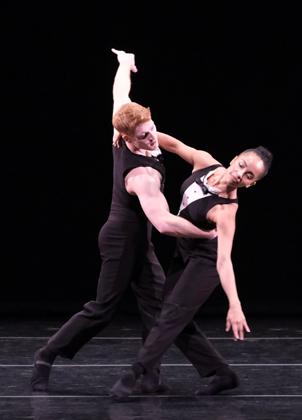
Twyla Tharpe Dance Company
In Memory of John Belanich:
Martha and Ed Dennis
Ferdinand Marcus Gasang
Sylvia and Steve Ré
Todd Schultz
In Memory of Bjorn Bjerede:
Jo Kiernan
In Memory of Ric Charlton:
Ferdinand Marcus Gasang
Sylvia and Steve Ré
Stacy and Don Rosenberg
Abby and Ray Weiss
In Honor of Maureen Clancy:
Lester and Elizabeth Stiel
In Honor of Bill Coltellaro:
Eric Cohen
Ferdinand Marcus Gasang
Barbara and Sam Takahashi
In Memory of Silvija Devine:
Ferdinand Marcus Gasang
Sylvia and Steve Ré
In Honor of Bob Dynes:
Sylvia and Steve Ré
In Memory of
Teresa and Merle Fischlowitz:
Camden and Rob Fischlowitz
In Honor of Ferdie Gasang:
Peg and Buzz Gitelson
Maggie and Paul Meyer
Mao and Doctor Bob Shillman
In Memory of Joan Jacobs:
Ferdinand Marcus Gasang
Sylvia and Steve Ré
Todd Schultz
John Venekamp and Clifford Schireson
In Honor of Wadeaa Jubran: Hermeen Scharaga
In Memory of Bob Kyle:
Laura Kyle
In Memory of Theodora Lewis: Jennifer Lewis
In Memory of Harlan Ochs:
Barbara Carey
In Honor of Marilyn Perrin: Charles Perrin
In Honor of Leah Rosenthal: Bart Ziegler
In Honor of Sheryl and Bob Scarano:
Susan and Craig McCLellan
In Honor of Todd Schultz:
Anonymous
Pam and Hal Fuson
Marilyn James and Rick Phetteplace
Hermeen Scharaga
In Honor of Maureen and Thomas Shiftan:
Nicole Holland
In Memory of Thomas Shiftan:
Ferdinand Marcus Gasang
Susan and Richard Ulevitch
Sylvia and Steve Ré
Abby and Ray Weiss
In Memory of Joanne Snider:
Ferdinand Marcus Gasang
Jud, LeeAnn, and Tyler Groshong
Glenn Mosier
Kevin Pearson and Stephen Murphy
Renee Roth
Reissa Schrager-Cole and Hilary Cole
Kerry Symonds
Dolly and Victor Woo
In Memory of Ford Stone: Barbara Carey
In Memory of Dr. Steve Thomas:
Barbara Carey
The following have made gifts or pledges to the endowment that have been fully or partially received.
$10 million or higher
Steve Baum
The Conrad Prebys Foundation
$1 million to $999,999
Wendy Brody*
Nancy Linke Patton and Rip Patton
Stacy Kellner Rosenberg and Don Rosenberg
Haeyoung Kong Tang
Sue and Peter Wagener
Bebe and Marvin Zigman
$999,999 and under
Jendy Dennis*
Teresa and Merle Fischlowitz*
Lynda Fox*
Ted and Ingrid Friedmann
Maxwell H. and Muriel S. Gluck*
Trude Hollander*
Helen and Keith Kim
Theodora Lewis*
Joani Nelson*
Jay W. Richen*
Leigh P. Ryan
Jack and Joan Salb*
Sheryl and Bob Scarano
Karen and Christopher Sickels
Ronald Wakefield*
The following have provided signed commitments of gifts in their estate plans that have not yet been received.
Judith Bachner and Eric Lasley
Christopher Beach and Wesley Fata
Raffaella Belanich
Eleanor and Ric* Charlton
Julie and Bert Cornelison
Elaine Galinson
Vivian Lim and Joseph Wong
Jaime z”l and Sylvia Liwerant
Sylvia and Steven Ré
Marge and Neal Schmale
Todd Schultz
Reesey and David Shaw
Jeanette Stevens
The following have indicated that La Jolla Music Society is in their estate plans.
Anonymous (2)
Brenda Baker
June L. Bengston*
Donna and Dr. Fred Berger
Joan Jordan Bernstein
Bjorn Bjerede* and Jo Kiernan
James C. and Karen A. Brailean
Gordon Brodfuehrer
Barbara Buskin*
Trevor Callan
Geoff and Shem Clow
George and Cari Damoose*
Sue Dramm
Joy and Ed* Frieman
Sally Fuller
Joan* and Irwin Jacobs
Maria and Dr. Philippe Prokocimer
Bill Purves
Darren and Bree Reinig
Johanna Schiavoni
Pat Shank
Joseph and Gloria Shurman
Marge and Neal Schmale
Elizabeth and Joseph* Taft
Norma Jo Thomas
Yvonne E. Vaucher
Lucy and Ruprecht von Buttlar
John B. and Cathy Weil
Karl and Joan Zeisler
Josephine Zolin
* in memoriam indicates donors who have made both planned gifts and endowment cash commitments.
If you have included LJMS in your estate plans, please let us know so we may recognize you.
Please contact Ferdinand Gasang at FGasang@TheConrad.org or (858) 526-3426.


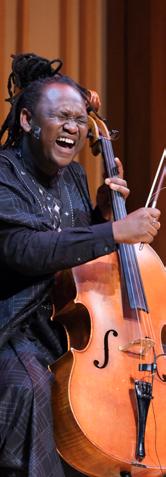
CROWN JEWEL
Brenda Baker and Steve Baum
Joan* and Irwin Jacobs
Dorothea Laub
DIAMOND
Raffaella and John* Belanich
Eleanor and Ric* Charlton
Mary Ellen Clark
Jaqueline and Jean-Luc Robert
Karen and Kit Sickels
Debra Turner
Liqun Wang and Marco Londei
RUBY
Julie and Bert Cornelison
Silvija* and Brian Devine
Elaine Galinson and Herbert Solomon
Helen and Keith Kim
Angelina and Fred Kleinbub
Vivian Lim and Joseph Wong
Neal and Marge Schmale
Haeyoung Kong Tang
Sue and Peter Wagener
Anna and Edward Yeung
EMERALD
Barbara Enberg
Arlene and Louis Navias
GARNET
Pam and Hal Fuson
SAPPHIRE
Virginia* and Robert Black
Raymond Chinn
John Hesselink
Kathleen and Ken Lundgren
Elaine and Doug Muchmore
Annie So
Elizabeth and Joseph* Taft
Bebe and Marvin Zigman
TOPAZ
Anonymous
Jeff Barnouw
Mary Ann Beyster
Abdul Bitar
James C. and Karen A. Brailean
Benjamin Brand and Shara Williams
Buzz and Peg Gitelson
Lisa Braun-Glazer and Jeff Glazer
Brenda and Michael Goldbaum
Margaret Stevens Grossman and Michael Grossman
Theresa Jarvis
Christine and Charles Lo
Barbara Loonin
Peggy and Peter Preuss
Don and Stacy Rosenberg
Leigh P. Ryan
Sheryl and Bob Scarano
Gloria and Joseph Shurman
Susan and Gerald Slavet
Diane and DJ Smith
Jeanette Stevens
Gloria and Rodney Stone
Susan and Richard Ulevitch
Dolly and Victor Woo
*in memoriam
We are honored to have this extraordinary group of friends who have made multi-year commitments to La Jolla Music Society, ensuring that the artistic quality and vision we bring to the community continues to grow.
La Jolla Music Society stands at a pivotal moment in its history. As we look ahead to our 60th Anniversary Season in 2028—29, we have embarked on an ambitious $60 million endowment campaign to ensure a bold, sustainable, and artistically vibrant future.
This campaign is more than a commitment to stability—it’s about unlocking possibility to:
Present the world’s leading artists with creativity, boldness, and confidence
Deepen and expand our community impact far beyond the stage
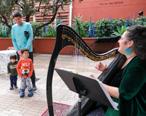
Inspire lifelong learning through dynamic education and engagement programs
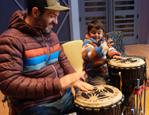
Advance San Diego’s future by building our national reputation as a beacon of excellence and opportunity
Sustain and enhance our state-of-the-art facilities
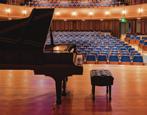
Endowment support is a powerful way to ensure that La Jolla Music Society continues to thrive—artistically, educationally, and culturally—for generations to come. Critically, it provides the stability to dream boldly, take creative risks, and welcome more people of all ages into the magic of live performance. With your support, we can ensure that every performance at The Conrad continues to astonish, inspire, and connect—now and far into the future.
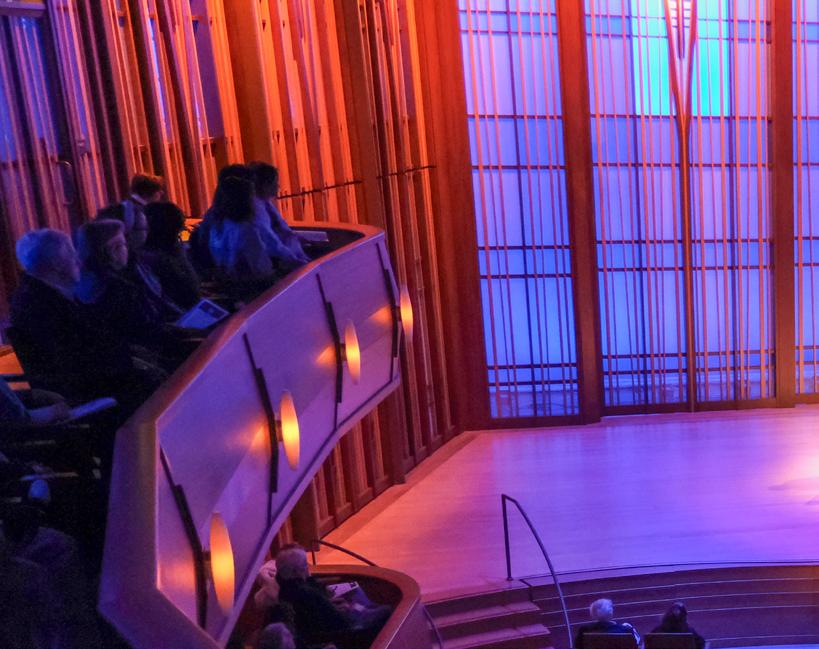
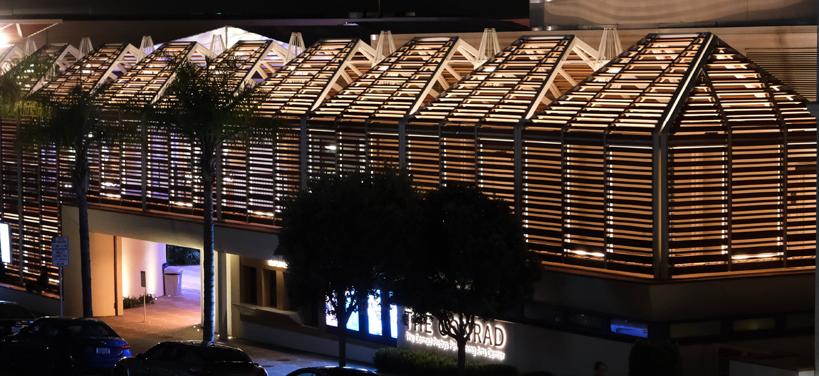
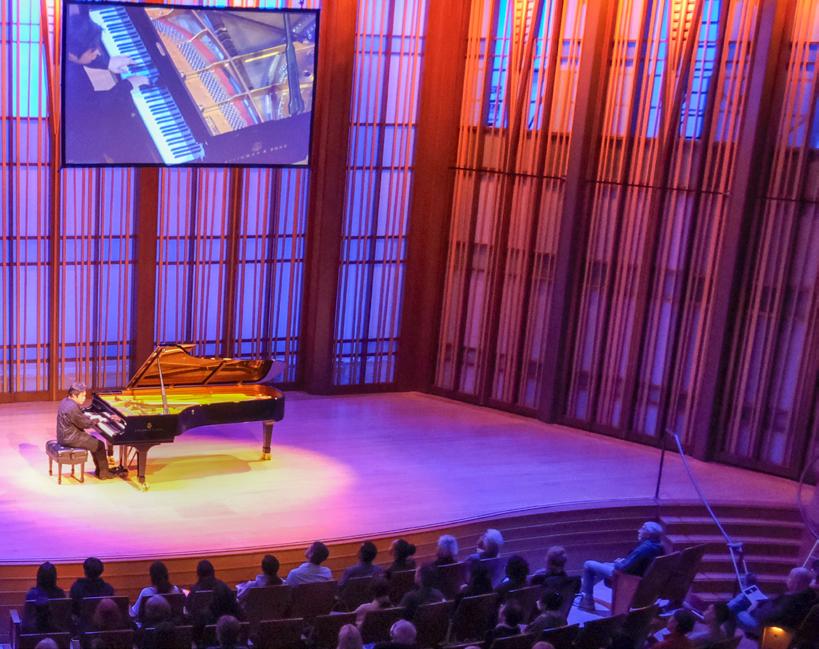
We are deeply grateful to the individuals listed below whose vision and dedication ensure that artistic excellence, educational impact, and cultural vibrancy will continue to thrive.
Judith Bachner and Eric Lasley
Steve Baum
Christopher Beach and Wesley Fata
Raffaella Belanich
Eleanor and Ric Charlton
Julie and Bert Cornelison
Elaine Galinson
Pati Heestand
Helen and Keith Kim
Vivian Lim and Joseph Wong
Nancy Linke Patton and Rip Patton
Sylvia and Steven Ré
Stacy Kellner Rosenberg and Don Rosenberg
Leigh P. Ryan
Sheryl and Bob Scarano
Marge and Neal Schmale
Todd R. Schultz
Reesey and David Shaw
Jeanette Stevens Haeyoung Kong Tang
Debbie Turner
Sue and Peter Wagener
Bebe and Marvin Zigman
























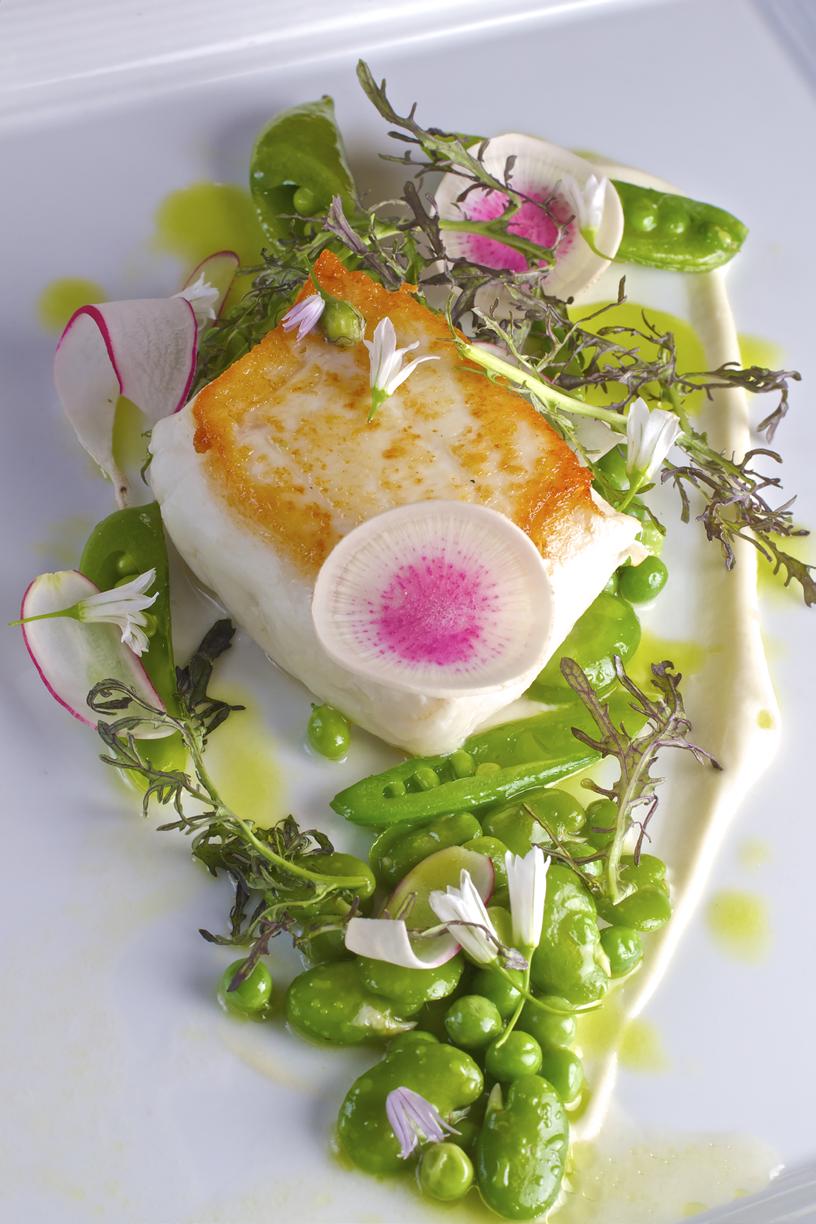

Table of Contents


Cabrillo Festival of Contemporary Music cabrillomusic.org
Santa Cruz, CA
July 26-August 9
Carmel Bach Festival bachfestival.org
Carmel-By-The-Sea, CA
July 11-25

La Jolla Music Society SummerFest TheConrad.org
La Jolla, CA
July 31-August 29


Bravo! Vail Music Festival
BravoVail.org
Vail, CO
June 25-August 6

Colorado Music Festival
coloradomusicfestival.org
Boulder, CO
July 9-August 9

Mainly Mozart All-Star Orchestra Festival mainlymozart.org/allstar
San Diego, CA
June 17-27
Music@Menlo Chamber Music Festival and Institute musicatmenlo.org
Atherton, CA July 17–August 8
Strings Music Festival stringsmusicfestival.com
Steamboat Springs, CO
June 27-August 12
Sun Valley Music Festival svmusicfestival.org
Sun Valley, ID
July 27-August 20

Santa Fe Chamber Music Festival santafechambermusic.org
Santa Fe, NM
July 19-August 24


Chamber Music Northwest cmnw.org
Portland, OR
June 25-July 19
Oregon Bach Festival OregonBachFestival.org
Eugene, OR
June 27-July 12

Seattle Chamber Music Society Summer Festival seattlechambermusic.org
Seattle, WA
July 7-26
Explore the musical riches and unique settings of these allied festivals of the Western United States.

Grand Teton Music Festival gtmf.org
Jackson Hole, WY
July 2-August 15
Grab your friends and enjoy a night out in The JAI! This intimate venue at The Conrad features some of today’s top jazz and global musicians with full bar and table service!
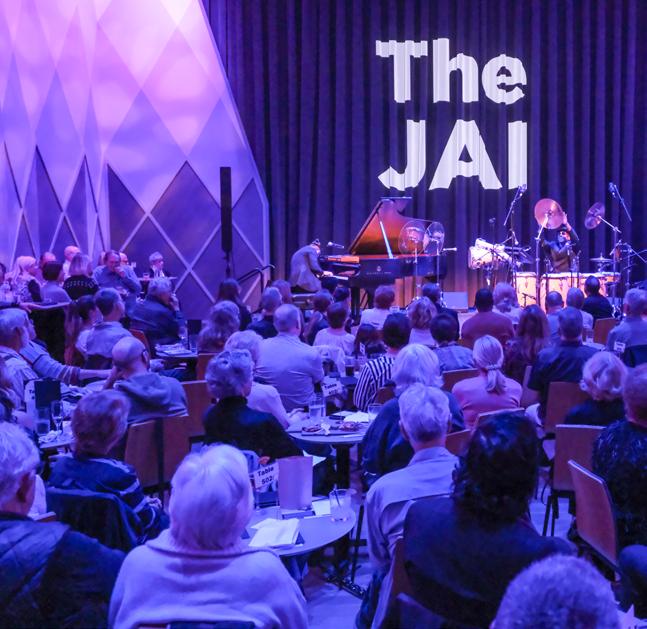
Coming soon
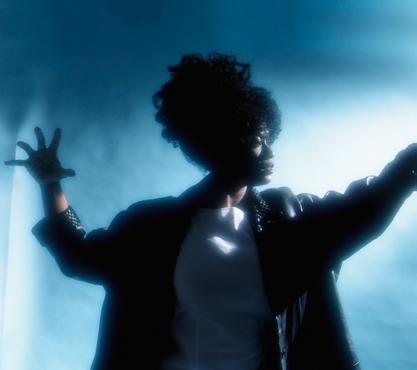
Shenel Johns
Saturday, May 16 5:30 PM & 8 PM
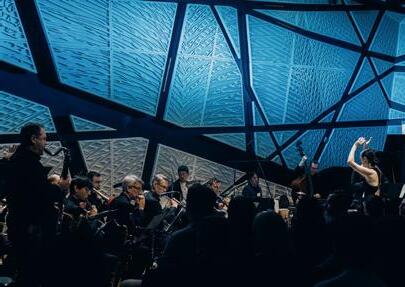
Jihye Lee Orchestra
Saturday, June 6
5:30 PM & 8 PM
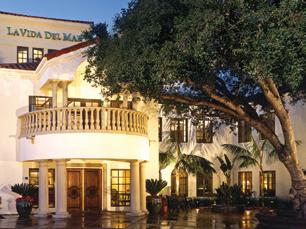

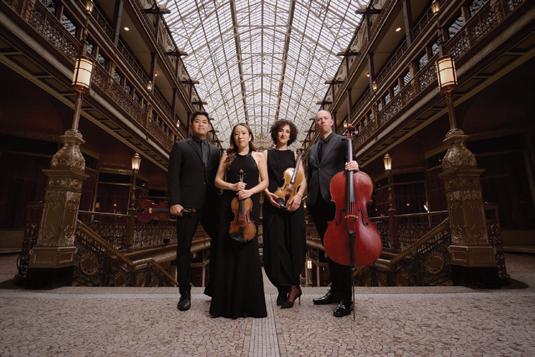
Edward A. Dennis, PhD Chairman
Mary F. Berglund, PhD Treasurer
Peter C. Farrell, PhD, DSc Secretary
Charles G. Cochrane, MD
Michael P. Coppola, MD
Anthony DeMaria, MD
Sir Neil Douglas, MD, DSc, FRCPE
Klaus Schindhelm, BE PhD
Jonathan Schwartz, MD
Kristi Burlingame Executive Director
"Candor is La Jolla's hidden gem!"
Brian L. — Tripadvisor

La Jolla Music Society is proud to launch its new Resident Companies
@ The Conrad program, welcoming four of San Diego’s leading classical music organizations into an inaugural three-year residency beginning this season. This collaboration celebrates the strength and vibrancy of San Diego’s arts scene—uniting distinctive voices that will not only enliven our stage, but champion and sustain classical music for generations to come.
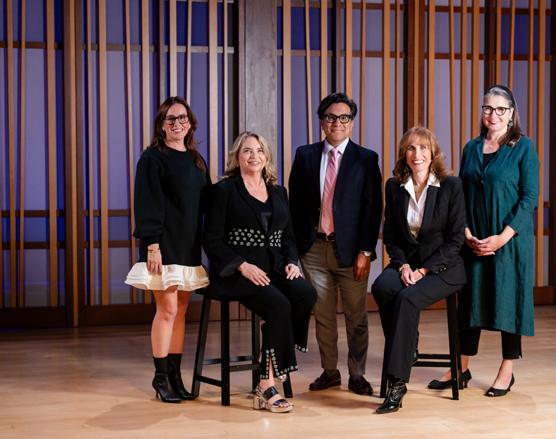
Art of Elan
Dancing on Tiptoes
April 25 · 10 AM & 11:30 AM
Camarada
Jobim: Portrait in Black and White
April 26 • 4 PM
Mainly Mozart All-Star Orchestra Festival
Opening Night: Beethoven, Mozart & Prokofiev
June 17 · 7 PM
Beethoven’s Eroica, Mozart & Copland
June 20 · 7 PM
Rodrigo’s Aranjuez & Mendelssohn’s Italian
June 21 · 3 PM
Visit TheConrad.org for more information
Table of Contents
Bach Collegium San Diego
Far Beyond the Skies: Bach, Telemann & the Gospel Tradition
May 2 · 7 PM
Mozart’s Jenamy, Lully & Strauss
June 23 · 7 PM
Mozart’s Jupiter & James Ehnes Plays Schumann
June 25 · 7 PM

21 Concerts
100 Artists
More than 50 FREE Learning & Engagement Events
Music Director Inon Barnatan brings the world’s best classical musicians to San Diego for this milestone season exploring music shaped by history and the moments that reshaped music itself. Our stages will feature acclaimed artists Jonathan Biss, Alisa Weilerstein, George Li, and the GRAMMY®-winning ensemble Imani Winds, among others. From intimate jazz sets to epic classical experiences, there is something for everyone in this year's thrilling anniversary festival.