Planning Your Future Move What you must consider ahead of time
Tips on Packing Your House Expert advice on how to best pack and protect your items
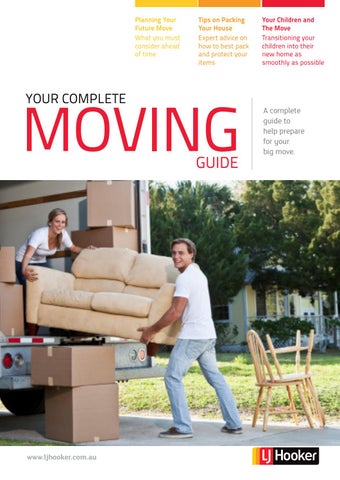
MOVING YOUR COMPLETE
GUIDE
www.ljhooker.com.au
Your Children and The Move Transitioning your children into their new home as smoothly as possible
A complete guide to help prepare for your big move.
Your Complete Moving Guide
2
Follow us on facebook.com/myljhooker
Your Complete Moving Guide
Table of
Your Complete
Contents Moving Guide
05. Planning is The Key
08. Organising The Move
10. Have you Considered Storage?
12. Packing Up Your Belongings
21. Preparing Your Children For The Move
26. Settling Into Your New Home
Brought to you by ljhooker.com.au
3
Your Complete Moving Guide
Your Complete Moving Guide
Your Complete Moving Guide Moving into your new home is an exciting experience. It’s a fresh start in a brand new property that you can customise and call your own. During your move, you’ll need to organise an array of tasks, such as hiring removalists, setting up utilities, packing and unpacking. To ensure your move is as stress-free and easy as possible, use this guide to help you on your way, so you can begin life in your new home.
4
Follow us on facebook.com/ljhooker
Brought to you by myljhooker.com.au
4
Your Complete Moving Guide
Planning Is The Key
Chapter 1
Planning Is The Key Moving can be a stressful process, so it’s best to be prepared. If you don’t plan ahead of schedule, you may be delayed on moving day, which is sure to cause a headache or two. Here are some important points you’ll need to consider before moving day:
Do I Need Storage? When is the exact possession date for your new property? If it occurs after the vacate date for your old home then you’ll need to consider storage options. This gap could range anywhere from a week to more than a month, so it’s best to gain a few quotes for this service before settling on one. Alternatively, you could contact your agent to see if you can shift the moving in day forward so you can smoothly move into your new home.
Brought to you by ljhooker.com.au
5
Your Complete Moving Guide
Planning Is The Key
Organise the essentials • Create a list of everything that needs packing in each room to estimate logistics or storage • Measure large or bulky furniture items and take note of height and width • Measure the rooms and doorways in your new home to work out where furniture can go • Draw up a floor plan of your new home to figure out where to place items • Find out where the easier points of access are in your new home for moving in furniture • Check if the driveway at your new home can accommodate a small truck or moving van, and if not, contact the city or town to reserve street parking
6
Follow us on facebook.com/ljhooker
Documents There are some essential documents that you might need to have on hand during your move, such as: • Your old and new tenancy agreements (if renting) • Floor plans • Checklists • Utility provider contact numbers • Plane tickets, visas and passports (if moving overseas) Collate all of these important moving documents in one easy-to-find place or folder and keep them on hand during your move.
Your Complete Moving Guide
Planning Is The Key
Clear Out It’s good to give your house and contents a clear out when you move, as it will help to reduce the amount of items you’ll need to move. Once you’ve found all of your unwanted items, you can: • Organise a garage sale to sell off the more valuable and usable items • Donate furniture to local schools or charities such as the local Salvos • Give items away to friends or families • Sell items online or through local community news paper
School If your children are moving to a new school or preschool then, you will need to organise their transfer. Contact the principal at your child’s old school and provide him or her with details of the new institution to which your child is transferring. School administrators should organise everything else from there.
Brought to you by ljhooker.com.au
7
Your Complete Moving Guide
Organising The Move
Chapter 2
Organising The Move From lifting heavy boxes, to loading and emptying trucks, to unpacking it all at the other end, moving can be exhausting. Some people are too busy to do the move themselves, but others may prefer to save the money and rope is some friends to help them. Here are some tips to keep in mind for whichever option you select.
Using A Professional If you’re going to use professional services, then it’s likely you’ll be spoiled for choice. This means you should take the time to obtain more than one quote. Aim for at least three quotes from different providers for the services you’re seeking. You’ll also need to decide which type of service you want. This might be a full pack, removal and unpack at your new home, or removal only. Most removalists offer insurance on top of their services, and this can be a useful tool to protect your contents from accidental loss or damage. Create a list of all of the belongings that need to be shifted and provide it to your removalist. This will help them to give you a more accurate quote. For those moving overseas, there are specific items that may be prohibited. Check with the removalist to see which items you can and cannot take with you, or refer to our list of prohibited items in chapter 5. If your pets will be moving to your new home with you, a professional can provide this service to you. Buy a proper pet cage and make sure there are blankets and ample water and food to make their trip more comfortable.
8
Follow us on facebook.com/ljhooker
Your Complete Moving Guide
Organising The Move
Doing It Yourself If you’re opting to go down the road of DIY, then you’ll need some help with furniture removal. Ask a few friends or family members if they can assist you during a weekend, as extra hands will definitely make the workload a lot lighter! Be sure to offer your helpers food or drink as a way of saying thanks, and offer to return the favour whenever they take on their next move. You’ll also need to organise transport. This might be through a truck rental, ute hire or even a trailer on the back of your personal vehicle. Don’t forget to organise ropes, blankets and ties to ensure that everything stays safe and secure in transit. Before moving items out of the house, ensure all hazards have been identified and removed. This includes items sitting in the doorway, cables running along the floor, children and pets running around and uneven or slippery surfaces. When lifting heavy objects, make sure you’re using the proper technique. Lift with the legs rather than the back, and for bigger items, try to spread the weight evenly across a few people. Use a trolley for extra support when moving refrigerators and other large items.
Brought to you by ljhooker.com.au
9
Your Complete Moving Guide
Have You Considered Storage?
Chapter 3
Have You Considered Storage? Depending on your move-in date for your new home, you might have to use storage facilities to keep your contents safe and secure. In Australia, there are two main types of storage services you can use. As with removalist services, make sure you obtain a few quotes to find the best deal possible.
Container Storage
Self Storage
This is a simple and easy method of storing your contents. Prior to your move, the company will deliver a storage container to your home. You fill it up and organise the provider to pick it up from your property to place it in a storage facility.
Through self-storage, you can choose an appropriately sized space to suit your needs. With this process, you’ll be the one moving your items in and out of the space.
This service is usually called a ‘self load container service’ and is quite popular due to the minimal need for handling. However, the service can be quite costly due to the delivery and pickup features.
Self-storage locations are very secure and will usually come with a padlock, which will give you peace of mind, as you will be the sole keyholder. Usually, you’ll sign up for a set rental period for your storage space. This can be month by month or longer terms over 6 months to give you flexibility. Alternatively, you could ask friends and family if you can store items at their houses for a short period of time. This will help to cut down costs significantly, as every little bit counts.
10
Follow us on facebook.com/ljhooker
Your Complete Moving Guide
Have You Considered Storage?
Organising Accommodation You might need to organise temporary accommodation to fill in the time between moving out of your old home and into your new one. Check with serviced apartment providers or motels for weekly rates. Otherwise, see if you can stay with family or friends for a few days.
Brought to you by ljhooker.com.au
11
Your Complete Moving Guide
Packing Up Your Belongings
Chapter 4
Packing Up Your Belongings After you’ve organised storage and removalists, it’s time to take on the nitty-gritty part: packing your belongings. This can take quite some time, but be sure to do a proper job so it’s easier to unpack at the other end! Before you begin to pack, set aside the essentials you’ll need in the last few days in your old home. These will also likely be the first items you’ll unpack in your new home. This could be a couple changes of clothes, some cookware, toiletries and any essential documents you need. Keep these in a smaller suitcase or backpack so you’ll easily be able to access them when needed.
How To Pack Make a room-by-room checklist to ensure you don’t forget any items Set up a workstation in each room, containing boxes, tape, markers and newspaper To ensure you meet your moving deadline, make sure you keep a timetable and aim to have most things packed two days before moving day Sort boxes into rooms and label them with a marker (e.g. master bedroom wardrobe, ensuite)
12
Follow us on facebook.com/ljhooker
Try to limit box weight to no more than 15kgs, as this will make them easier to move Once you have finished packing a room, sort boxes into order by weight for easy removal
Your Complete Moving Guide
Packing Up Your Belongings
Packing Technique Purchase quality boxes from a removalist company Ensure the bottoms of the boxes are sturdy, well taped up and can support weight Wrap glassware and other breakables in newspaper Stuff fragile boxes with packing peanuts or rolled up newspaper, then place more on top of breakables
Label each box with your name, phone number and address for shipping For couches and tables, tape legs and footholders onto the bottom so they don’t get lost Screws, bolts and other items you’ll need to reassemble furniture should be kept in plastic welllabelled sandwich bags
Fill in gaps between items with newspaper or packing peanuts
Cables for refrigerators and washing machines should be tied and secured to the back of the appliance
Try vacuum packs for items such as clothing, linen and laundry for better usage of space
Any water in washing machines should be siphoned out, and the hoses should then be secured
Don’t overfill boxes - make sure they can be taped closed and are not bulging
Brought to you by ljhooker.com.au
13
Your Complete Moving Guide
What Not To Pack
Chapter 5
What Not To Pack The following items cannot be transported with your move and if you are in any doubt speak to your move consultant
Explosives Ammunition Flares Fireworks Black powder
Flammable Gases Oxygen Chlorine gas Methane LPG
Flammable Liquids Petrol Kerosene Varnish Turpentine Oils Paint Methylated Spirits
Firearms Firearms will not be carried or stored in any form
14
Follow us on facebook.com/ljhooker
Toxins & Poisons Pesticides Weed Killers Polishes Arsenic Photographic Developers
Corrosives Oxides Mercury Caustic Soda Hydrochloric Acid Sulphuric Acid
Miscellaneous Magnesium Phosphorus Gas Cylinders (unless purged and certified) Aerosol Cans Lighters Life rafts, pressurised vessels Explosive devices of any kind Any radioactive materials Home soft drink makers Methane Black Flammable Solids Wet Batteries
Your Complete Moving Guide
Connecting Your New Home
Chapter 6
Connecting Your New Home Moving into your brand new home or rental property means you’ll need to organise the connection of utilities. An important note to remember is that many service providers can offer discounts if you pay your bills on time, so be sure to keep up with payments to limit your expenses!
Electricity Electricity is likely to be the most important utility you’ll want to have connected as soon as possible. Imagine opening the doors to your brand new home to move in some furniture to find that you can’t switch on the lights? Make a point to have electricity connected a couple of days before you start moving into your new home. Most electricity providers are quite happy to organise a connection date with you in advance, so speak to a company at least a week or two before you’re due to move in. If the property you’re moving into has recently been built, electricity could take a couple of weeks to be fully connected. To ensure there aren’t any holdups, make sure the property has a functioning electricity meter installed.
Change Of Address Another extremely important service you’ll need to sort out is mail redirection. This can be done through Australia Post for a small fee. The service can run for a fixed period of time, usually 3-12 months, so you have time to update your change of address for banks, magazines and other organisations that send you mail.
Brought to you by ljhooker.com.au
15
Your Complete Moving Guide
Connecting Your New Home
Gas Before you move into your home, you’ll need to check if it uses gas. Many homes across the country use gas for stove top cooking, hot water and general household heating, but not all properties are connected to a main gas line. Some may just use cylinders or tanks, which you’ll need to have filled up as they run out. If your home is connected to a gas line, it will have a gas meter. Your provider checks this to see how much gas you’ve used for the month so they can bill you. Many electricity providers will also offer gas, so it may be cheaper to obtain both services from the same company.
Landline Phone Phone services are relatively quick to connect when you move house, so this one can be left up to a week before you relocate. If the property doesn’t already have a second line installed, which could be used for internet or calling, acquiring it might come at an extra cost. There may be other extra fees you’ll incur if the phone line was disconnected by the previous occupant, or if the home hasn’t been connected to phone services before.
Internet Depending on where you live in Australia, you might only have a small selection of internet services available. There are six main types of broadband connections you can obtain - Naked DSL, ADSL, ADSL 2+, wireless, satellite and cable. There is a wide selection of internet plans available, which include different options for data caps and speed. You can check what services are available to you through various providers.
16
Follow us on facebook.com/ljhooker
Your Complete Moving Guide
Moving Day
Chapter 7 Moving Day
Moving day can be extremely hectic and exhausting. But the process can all run a lot smoother if you come well prepared!
Helping The Removalists To ensure moving day goes swimmingly, help the removalists while they work between your old and new home. When removalists arrive, tell them where the best place is to park and walk them through your old home to determine which items need to be moved first. Let them know if there are any items that are fragile and have special handling requirements. Remove any hazards to ensure there is clear access to both properties. This could be furniture blocking entrances and exits, cables running on the floor, pets or children. Give removalists a copy of the floorplan for your new home, which should detail where furniture needs to be placed.
Brought to you by ljhooker.com.au
17
Your Complete Moving Guide
Moving Day
The Essentials Once you’ve finally gotten all your boxes to your new property, you’ll probably want to enjoy at least some of the comforts of home straightaway. Pack an easy-to-access box with a few items that will help you feel settled that first and second day: • Bedding
• Toiletries
• A few changes of clothes
• Bath towels and tea towels
• Coffee and tea
• Cleaning cloths and products
• Plates and bowls
• Toilet paper
• Cutlery
• Bottle/can opener
• Mugs and glasses
• Tools
• Electric kettle
• Broom
• Snacks
• Mop
• Toys for the kids
• Torch
• Pet food and water bowls
• First aid kit
l u f p l he h int
18
As you shift in the last few boxes or pieces of furniture, it’s likely you’ll want to call it quits for the day early and relax. Make sure you set up the bedrooms first so you can get to bed and finish unpacking the next day. Aim to have any kids’ bedrooms and play areas set up on the first day too so they feel comfortable in their new home.
Follow us on facebook.com/ljhooker
Your Complete Moving Guide
Moving Day
Other Important Considerations Other important considerations • If you rented your old home, organise the handover of the keys to the landlord or property manager • Ensure rental property has been cleaned on day of handover • Organise final readings of gas and electricity meters • Notify utility providers that you’re shifting to a new property and settle accounts • Make sure all taps are turned off at the property • Gather up all copies of keys and put them in a central location
Brought to you by ljhooker.com.au
19
Your Complete Moving Guide
Preparing Your Children
Chapter 8
Preparing Your Children For The Move Children can become quite upset when moving house - whether it’s the unfamiliar surroundings or perhaps leaving friends behind. As a parent, there are a number of steps you can take to make sure your child is happy during the moving process.
Prior To Moving Day A family meeting is often the best way to explain that you are moving house. This way, you can address any questions or concerns your children might have in an environment where they’ll feel secure and supported. Explain to them that you’ll need their help and cooperation so they feel like they’re part of the process. Even if you only give them a small job to do, such as packing up their toys or books, they’ll feel they’re playing a vital part. You might find that taking your child along with you to view potential new houses will make them more comfortable with the transition. Their feedback on the home is extremely important, so take some of their comments and concerns into consideration. Moving cities or states can be an extremely hard process for some children, as they’ll need to leave their friends behind. Make sure you host a leaving party for your kids at your home or at their school to ensure all proper goodbyes and “see you soon’s” are said.
20
Follow us on facebook.com/ljhooker
Your Complete Moving Guide
Preparing Your Children
Moving Day When moving day rolls around, give your children an array of small tasks they can complete themselves. These jobs may include holding on to some of their favourite toys during the trip or unpacking some items in their new play areas. Set up the childrens’ bedrooms and play areas on the first day at your new home, and, if they are old enough, give them a say about how their furniture is arranged. This helps to create familiar surroundings for them and gives them areas in which they can occupy themselves while you unpack.
Brought to you by ljhooker.com.au
21
Your Complete Moving Guide
Moving Your Pets
Chapter 9
Getting Ready To Move Your Pets Moving houses can be just as stressful for your animal companions as it is for you. You’ll need to make sure their journey and transition to your new home is made as comfortable as possible.
Prior To Moving Day If you’re moving states and own a dog, you’ll need to organise the registration of your pet in your new destination through the city council. It’s best that you and your pet take a quick trip to the vet to ensure it’s in good health. While you’re there, you can update your pet’s ID tags and microchips and discuss any concerns about moving with your vet. You can also ask for recommendations for vets in your new area, and then make sure to register your pets there in time for any follow-up appointments.
22
Follow us on facebook.com/ljhooker
If you plan to move your pet by car and it has not done much car travel, you could take a few steps weeks before the move to get them more comfortable. Begin by letting your pet explore the back seat of the car while it’s parked and turned off. Then you can move on to take short trips around the block to get them used to the movement.
Your Complete Moving Guide
Moving Your Pets
Moving Day Relocating a pet - and travelling long distances - can take a toll on their bladder and digestive systems, so try not to feed your pet within six hours of the move - especially if it’s going on a long journey. Make sure your animal has access to a supply of water and has its own pet cage in your car. Place newspaper in the bottom of the crate or cage to soak up any accidents or spills. At your new home, set up an area where the animal can enjoy a stretch. Outside, dogs should be kept in a fenced area where they can survey their new surroundings, but you should let them have free rein of the house so they can sniff everything out. Cats should be confined to a particular room for a few days with food, litter and some familiar toys so they get used to their new home. After that, you can start slowly introducing them to new areas in the house.
Brought to you by ljhooker.com.au
23
Your Complete Moving Guide
Assisting the elderly and disabled
Chapter 10
Assisting The Elderly And Disabled During Your Move Unfamiliar surroundings can be quite a shock to the system for anyone, but it can be especially disruptive for the elderly and disabled. If you have older loved ones moving with you, you’ll need to organise a few things before moving day.
Prior To Moving Day Any care providers your elderly or disabled loved one has will need to be alerted of the move. Some of these services might need to be reorganised at your new address, such as home care assistance, nurses or transportation. Doctors, nurses and other medical professionals will also need to be updated on the change of address, as records might need to be transferred to another office or branch in the new location. Medical records and other important documents should be kept in a safe and easy-to-access place so that they are not misplaced or accidentally packed away. Your elderly or disabled loved one will likely need some assistance with packing. Be kind and understanding
24
Follow us on facebook.com/ljhooker
of items they wish to hang onto on moving day, or items they wish to bring with them to their new home. The new home might need some minor alterations to accommodate for your loved one. Take some time before you settle them in to install handrails, ramps or handles in the home for their safety.
Your Complete Moving Guide
Assisting the elderly and disabled
Moving Day Special equipment, such as wheelchairs or mobility scooters, will need to be in the car with you on moving day to help your loved ones get around. Pack any essential medications that are needed for the day and keep the rest in a safe place. As you arrive at your new home, make sure the property is easily accessible for your elderly or disabled loved one. Set up furniture in a way that will be easy and safe for your loved one - making sure walkways are wide and clear to offer optimal mobility.
Brought to you by ljhooker.com.au
25
Your Complete Moving Guide
Settling Into Your New Home
Chapter 11
Settling Into Your New Home Congratulations! The hard part is over, and now you can enjoy settling into your new home. This is the time to unpack your furniture, customise your home as you see fit and get on with starting your new life.
Settling In Before the removalists leave your new home, make sure all the furniture is set where you’d like it to be. It can be hard shifting heavy furniture yourself, so it’s best to rearrange while you have the help. Check that all of your utilities such as gas, electricity, water and Internet have been organised and connected. Some connections can take a couple of weeks to be fully hooked up to your home, but you can check the status with your providers. If your home is missing councilprovided rubbish or recycling bins, then simply get in touch with your local city council to have these delivered to your property.
26
Follow us on facebook.com/ljhooker
Renting Checklist If you have just moved into a rental property, take the time to conduct your own initial inspection. Take note of the condition of the property and photograph any damages, marks, spots, rips or wear and tear that is present when you moved in. Ensure the pictures are dated and kept in a safe place and send them to your landlord or property manager for their own records. This will help you when you move out of the property, as you’ll have evidence of the condition when you took possession of the rental.
Brought to you by myljhooker.com.au
26
Your Complete Moving Guide
Settling Into Your New Home
Get To Know The Neighbourhood As you’re probably new to the neighbourhood, take the opportunity to get to know others in the area. Introduce yourself to your next door neighbours and any other residents you encounter on the street. These can prove to be valuable relationships, as people in your neighbourhood can help you settle into your new life. They can offer you recommendations for local schools, doctors and other amenities in the area - helpful information if you’re in a completely new city! Spend some time looking for the best cafes, restaurants, shops and parks for you and your family to enjoy. There are a number of ways to get involved in your community, such as attending local sports events, joining a school group, volunteering in community groups and participating in social sporting teams.
Brought to you by ljhooker.com.au
27
Your Complete Moving Guide
28
Follow us on facebook.com/ljhooker
Disclaimer This eBook does not necessarily reflect the opinion of the publisher. It is intended to provide general news and information only. The content does not take into account your personal objectives, financial situation or needs. While every care has been taken to ensure the accuracy of the information it contains, neither the publishers, authors nor their employees, can be held liable for inaccuracies, errors or omission. Copyright is reserved throughout. No part of this publication can be reproduced or reprinted without the express permission of the publisher. All information is current as at publication release and the publishers take no responsibility for any factors that may change thereafter. Readers are advised to contact their financial adviser, broker or accountant before making any investment decisions and should not rely on this eBook as a substitute for professional advice. This information is to be used as a guide only and is subject to change at any time. Š2013 LJ Hooker Corporation Limited.
Your Complete Moving Guide
We hope you find this eBook valuable. For more free eBooks visit ljhooker.com.au
30
Follow us on facebook.com/ljhooker