


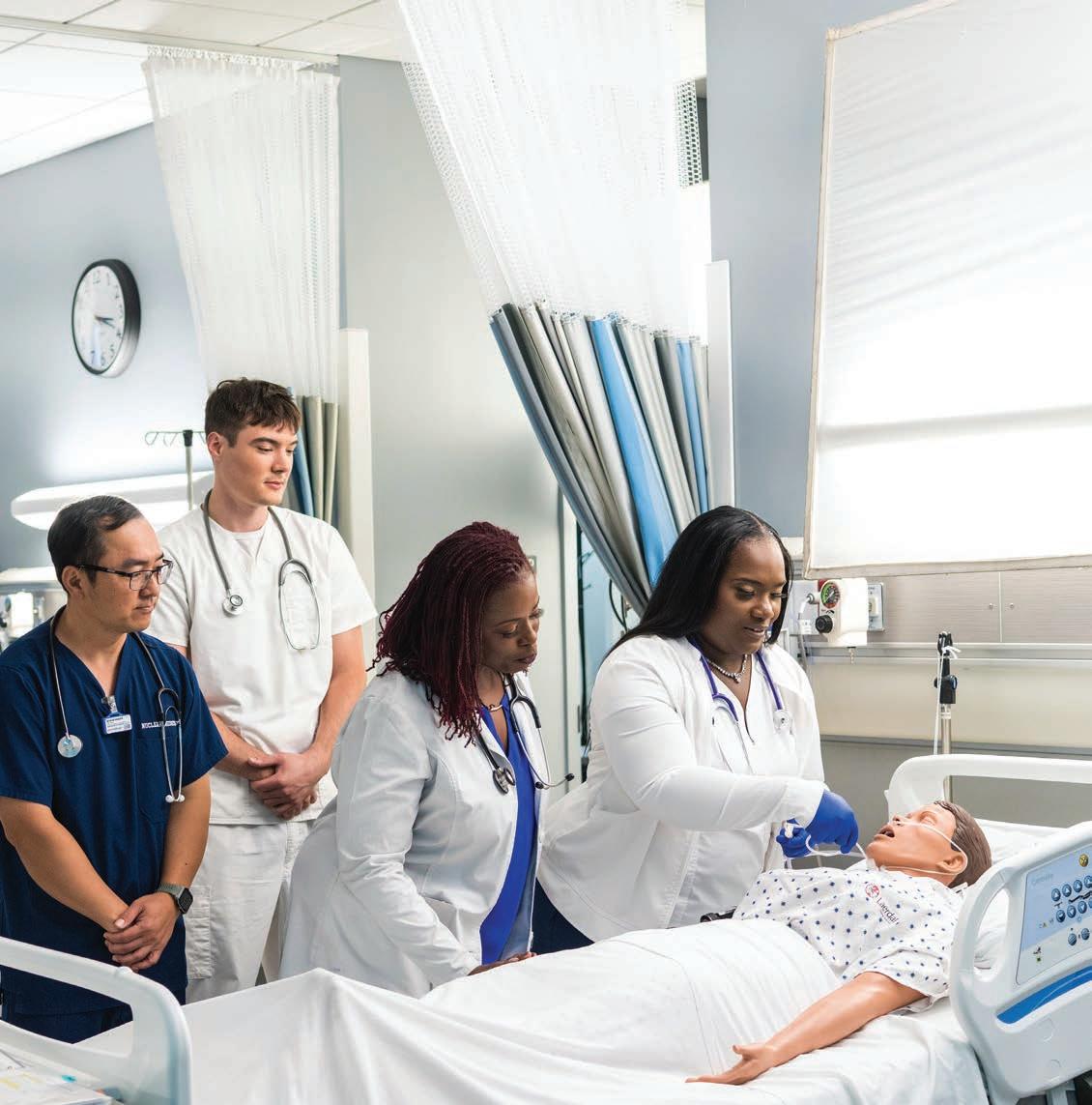

Cuyahoga Community College (Tri-C®) has some of the finest faculty and instructional staff in the nation. The experience and expertise at our College rivals what you’ll find at many four-year schools.
As a community college, our academic excellence sometimes takes a backseat to our affordability and accessibility in the public’s perception. But we’re starting to change that. In this Spring 2026 issue of Tri-C Times, you’re going to learn from our excellent faculty and academic staff just like our students do.
A year ago, you met experts from our Plant Science and Landscape Technology program, which offered tips on preparing your yard for spring. In this issue, our Electroneurodiagnostic Technology program will teach you about the importance of a good night’s sleep and share tips for waking up refreshed.
Elsewhere in this issue, you’ll find other examples of how our academic expertise continues to impact our students, alumni and communities:
• Read about the changing face of Northeast Ohio’s manufacturing sector and how Tri-C is helping to train the talent that propels this critical industry forward.
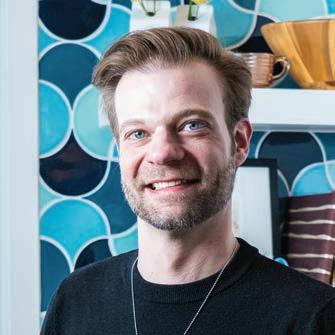
Meet Interior Design alumnus Sean Carter, who helps turn houses into dream homes for residents in Cleveland and beyond.
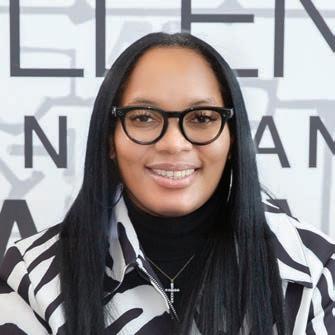
• Discover how Tri-C faculty member Carelicha Duckworth is teaching her IT students to use AI tools effectively in this rapidly evolving workforce.
• Learn about the Care Alliance Health Center at our Metro Campus, which is transforming community well-being by offering quality, affordable health care for our students, employees and neighbors.
Thank you for reading this issue of Tri-C Times. We have served as an essential educational resource in our region for more than 60 years, and as the stories in this issue illustrate, we continue to take this job seriously.
Sincerely,
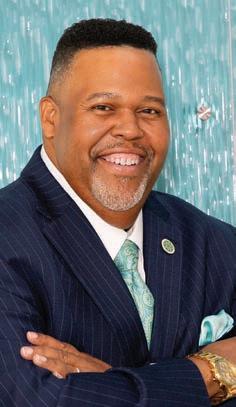
Michael A. Baston, J.D., Ed.D. President, Cuyahoga Community College
In this issue, our Electroneurodiagnostic Technology program will teach you about the importance of a good night’s sleep and share tips for waking up refreshed.

EDITOR
Jarrod Zickefoose
ASSISTANT EDITOR
Erik Cassano
COPY EDITOR
Noelle Bye
WRITERS
Noelle Bye
Erik Cassano
Anthony Moujaes
Jarrod Zickefoose
ART DIRECTOR
Debbie Benz
DESIGNER
Frida Etchell
PHOTOGRAPHERS
Noelle Bye
Nick Hoeller
Victoria Stanbridge
McKinley Wiley

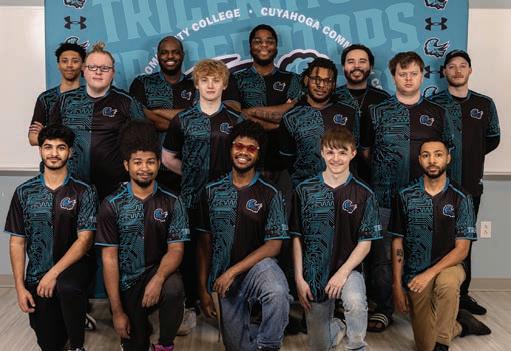
Tri-C has launched a Division III NJCAAE co-ed esports team that is competing in games like Counter-Strike 2, League of Legends, Marvel Rivals, Overwatch, Super Smash Bros. and more.
Competition started in February, and the games will be livestreamed on Twitch.
athletics.tri-c.edu
April 16, 2026
Tri-C Day is an opportunity for College employees, alumni, retirees and friends to show their commitment to the College’s students through donations supporting their success. This April, Tri-C Day marks its 10th anniversary.
Since its inception, Tri-C Day has raised $1.5 million. Every dollar goes directly toward scholarships and programs that help students.
tri-c.edu/tricday
Corporate College® will launch its Transformation Studio in May. The new space features a modern aesthetic with integrated collaboration tools such as Mural and AI-enabled technology. It’s fully connected with multiple large-screen monitors and digital whiteboards, offering conference and casual seating for everything from high-level leadership retreats to creative brainstorming sessions.
For rental information, visit corporatecollege.com or call 216-987-2977.



“It doesn’t matter how modern we think we are. All living things sleep.”
— Michael Cassida, Program Director of Electroneurodiagnostic Technology
When was the last time you got a good night’s sleep?
To some, it might seem silly, like a luxury they can’t afford. But in truth, a good night’s sleep is essential to overall health, and not getting quality, regular rest can lead to all kinds of health problems — many of them serious.
It’s about more than just getting through the day. It’s about potentially avoiding heart problems, dementia and more. Sleep touches every part of a person’s health. It’s not an indulgence. It’s a necessity.
And yet, many people take sleep for granted. It’s often the first thing we are willing to sacrifice, the thing we’ll catch up on later. This is a mistake, according to Michael Cassida, program director of Electroneurodiagnostic Technology (END) at Cuyahoga Community College (Tri-C®).
“In our modern, human minds, we think we can handle it, but we are talking about the base part of your brain, the ancient, oldest part,” Cassida said. “It doesn’t matter how modern we think we are. All living things sleep.”

March 8 – 14 was Sleep Awareness Week. According to the National Sleep Foundation, in 2025, six in 10 adults didn’t get enough sleep.
“In 2025, the state of sleep health in the United States reveals a concerning national trend: chronic sleep deprivation is not only widespread, but deeply embedded across age groups, racial and ethnic backgrounds and geographic regions,” reports The Global Statistics. “From urban professionals burning the candle at both ends to underserved communities grappling with economic stress and health care disparities, sleep insufficiency has become a silent epidemic with far-reaching consequences.”
While individual needs vary, the average adult needs about seven to nine hours of sleep each night. Teenagers, on average, need eight to 10. Toddlers need even more and seniors less.
These hours are broken up into stages. Stage one sleep is that period when a person is not quite asleep but not properly awake, either.
“It’s when you are just kind of falling asleep,” Cassida said. “That is also measured throughout the night as you wake up and go back to sleep.”
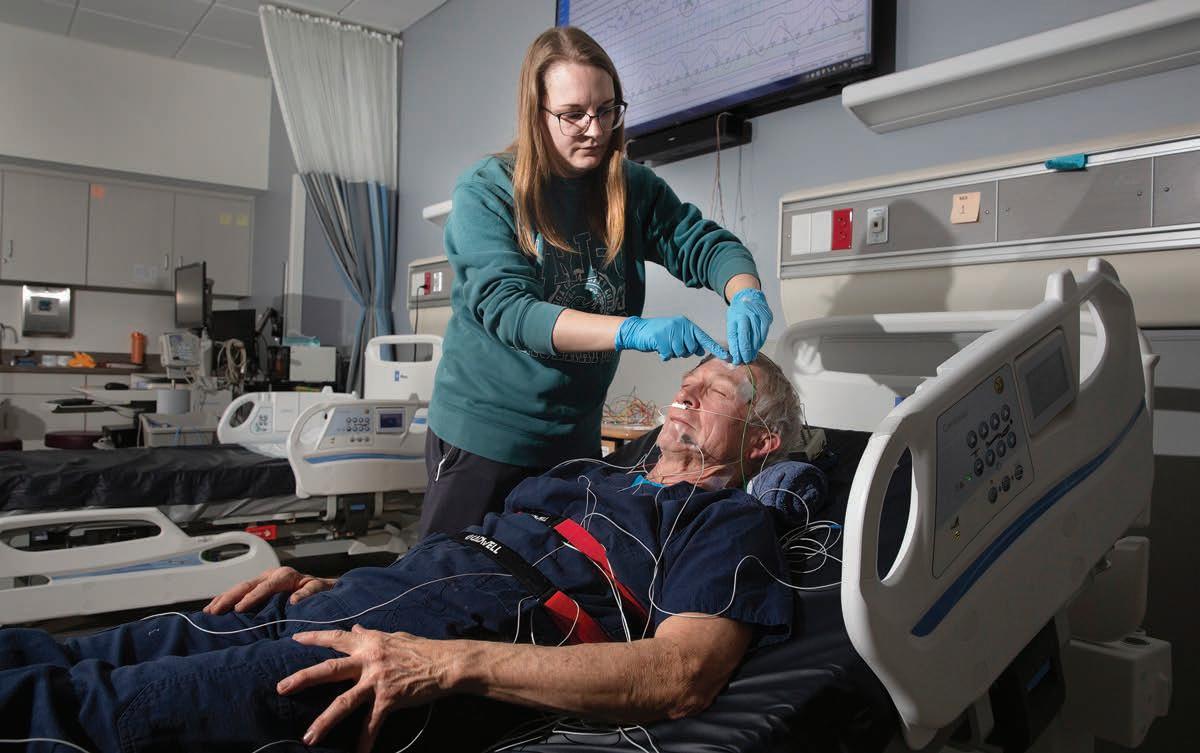
Stage two sleep should make up about half of a night’s rest.
“It’s deeper than stage one sleep but not deep sleep. It’s kind of ‘get you by’ sleep,” Cassida said.
Stage three is deep sleep, called delta sleep.
“Your brainwaves slow down, and their amplitude becomes higher. That’s where you’re out of it. It’s really hard to wake someone in that state,” Cassida said.
That last part is REM sleep. REM stands for rapid eye movement, and this is when you dream.
“REM clears the psychological part of our mind, kind of consolidates things — memories, things like that. Deep sleep — delta sleep — is for the physical repair of the body, from the immune system to the release of growth hormones,” Cassida said.
On paper, a good night’s sleep for an adult consists of about 5-10% stage one sleep, 50% stage two, 20% deep sleep and about 20% REM. These numbers vary in the real world, and sleep stages are not necessarily linear.
“REM clears the psychological part of our mind, kind of consolidates things — memories, things like that. Deep sleep — delta sleep — is for the physical repair of the body, from the immune system to the release of growth hormones.”
— Michael Cassida
However you slice it, a healthy mix that includes deep and REM sleep is important.
The basic barometer that measures the quality of your sleep is how you feel during the day. Cassida said you should wake up feeling rested.
“The ultimate bottom line is if you feel good. If you are not crashing in the morning or throughout the day, if you don’t start crashing after lunch, you’re probably in a pretty good spot.”
But the cards are stacked against us when it comes to getting good sleep.
As technology advances, sleep seems to foot the bill. The invention of the light bulb, the advent of the third shift and the introduction of the smartphone — technology and culture have made it harder and harder for people to get solid sack time. Busy schedules don’t help.
Yet, sleep is so central to our functioning that one sacrifices it at their own risk.
“Pretty much any condition you can think of is going to be detrimentally affected by poor sleep or lack of sleep,” Cassida said.
Fatigue, irritability and staring blankly at our work are the least of the fallout. Chronic lack of sleep is linked to heart disease, high blood pressure, diabetes, weight gain and mental-health problems.
The most common culprit? Poor sleep hygiene.
The good news? This is something you can control.
The times you sleep and your wake-up cues are the keys to unlocking optimal sleep. Going to bed and waking up at the same time each day — including weekends — is sleep hygiene 101. This trains your body and its circadian rhythms, teaching it that it’s time to sleep and time to wake up.
On an evolutionary level, our bodies are built to respond to light and dark. Getting as much sunlight as you can early in the morning is a pro move that further helps your body groove to its circadian rhythm. Making your room as dark as possible at night is another effective strategy.

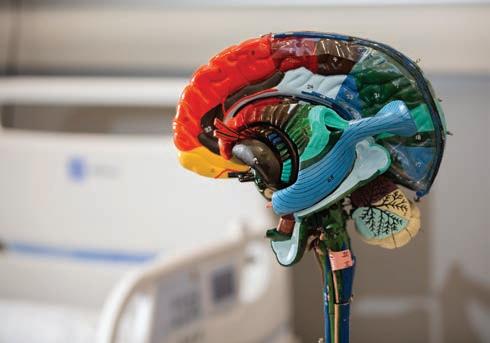
Melatonin is a hormone produced by the brain that helps regulate the sleep-wake cycle.
“These days, we all have smartphones and tablets. That blue light is really bad for you when you are trying to go to sleep. You want to avoid those things. Any little bit of light that you get at night when you’re trying to go to sleep shuts down your melatonin production,” Cassida said.
Over-the-counter melatonin supplements can be helpful, he said, but practicing good sleep hygiene — including stopping the scroll at night — is the long-term, meaningful path to good sleep.
Routines that bookend your sleep can also be helpful. For example, reading or meditating every night before bedtime help train the body for sleep.
Keep your room on the cooler side — mid-60s is a common sweet spot. When the body goes into REM sleep, it stops its temperature regulation, so it can’t cool itself. At the same time, the body’s base temperature drops at night and peaks during the day. That cooling is part of what tells your body that sleep time is coming.
For this reason, exercising close to bedtime is a bad idea because it raises the body’s temperature and confuses the sleep cue the body is trying to send. Similarly, eating close to bedtime — especially a big meal — causes digestive processes to kick in, which also raise the body’s temperature.
Avoid caffeine and alcohol before bed, too.
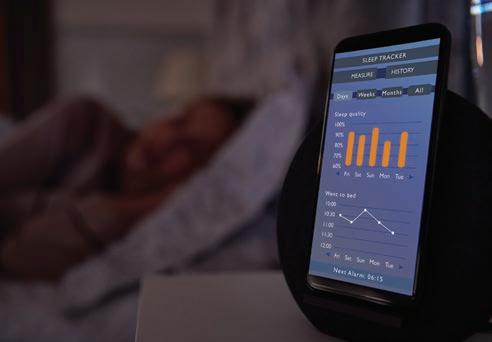
Cassida said sleep monitoring tools, like Fitbits, can give you a good sense of the quality of your sleep. Coupled with your energy during the day, you should be able to intuit a general sense of your sleep quality.
Getting a good night’s sleep can, however, be outside of your control, and consulting a doctor may be necessary.
There are more than 80 diagnosed sleep disorders, and they can get grim. Fatal familial insomnia is extremely rare, but it’s real, and it is exactly what it sounds like. (It should not be confused with common insomnia.)
The most common sleep disorder seen in sleep labs is sleep apnea, a constricting of the airway. Cassida said a person’s spouse or partner is usually the first to complain, since the most common symptom is snoring.
At-home sleep tests can help doctors diagnose sleep apnea. These involve placing a sensor on the body and in the nose to monitor sleep quality. If apnea is diagnosed, CPAP machines or implants can often solve the problem.
Night terrors and sleepwalking (somnambulism) are not uncommon. They usually occur in children and, in both children and adults, often go away on their own. Narcolepsy and restless legs syndrome are also common sleep problems.

Everyone has a restless night now and then — but having them on the regular is another story.
“When it becomes habitual, and it seems like it is a constant thing, you definitely have a sleep problem. You probably want to let your doctor know and go in for a sleep study to see what’s going on,” Cassida said.
On-site sleep studies can produce more detailed information than the at-home variety.
For most people, however, tending to your sleep the way you might attend to any other aspect of your health is well within your control. With a little conscious effort, everyone can have a good night and sweet dreams.
Here are some quick facts about electroneurodiagnostic technology and the END program at Tri-C.
• Electroneurodiagnostic technology is a scientific field devoted to the recording and study of electrical activity in the brain and nervous system. Technologists record electrical activity arising from the brain, spinal cord, peripheral nerves, somatosensory or motor nerve systems.
END technologists understand neurophysiology and recognize normal and abnormal electrical activity.
• The END program at Tri-C was founded in 2005 and is based at the College’s Western Campus in Parma. More than 90% of program graduates attain employment in their field.
• The average salary for END technicians in Northeast Ohio is $73,000 per year. More than 370 job openings were available in NEO at the end of February.
For more information, visit tri-c.edu/end

YES
Go to bed and wake up at the same time every day.
NO
Avoid light — especially blue light from screens — before bed.
Get as much sunlight in the morning as you can.
Establish a bedtime routine, such as reading or meditating.
Keep the temperature in your bedroom at around 65 degrees.
Don’t exercise or eat before bed.
Don’t consume alcohol or caffeine before bed. Reduce stress.
AS MANUFACTURING CONTINUES TO DEFINE THE NEO ECONOMY, IT STRUGGLES TO FIND WORKERS



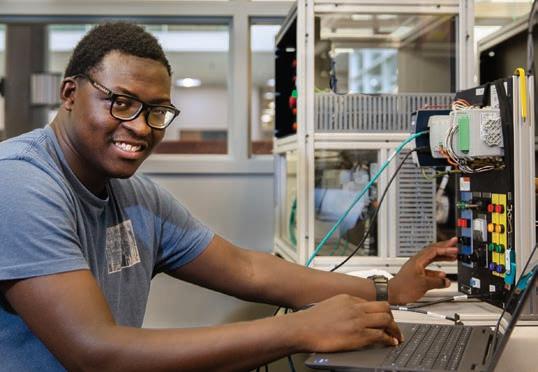
The story of Northeast Ohio is rooted in its “Rust Belt” heritage. Totems of this history line the shores of Lake Erie.
But as chatter trends toward gig work, AI and any other buzzwords that are trumpeted as the next big thing in economic development, where does that leave manufacturing?
Turns out, the heart of it all still beats thanks to manufacturing. It just looks different these days.
“Manufacturing has completely changed. Those dingy spots have been brightened up with automation and technology. I’ve been in places where you could eat off the floor, almost like a hospital.”
— Ray Nejadfard, Dean of Advanced Manufacturing and Engineering
“A lot of us remember manufacturing the way our parents and grandparents used to work in it — a dingy, dark, dirty environment that wasn’t very desirable,” said Ray Nejadfard, dean of Advanced Manufacturing and Engineering at Cuyahoga Community College (Tri-C®).
“Manufacturing has completely changed. Those dingy spots have been brightened up with automation and technology,” Nejadfard, a 33-year industry veteran, said. “I’ve been in places where you could eat off the floor, almost like a hospital.”
Today, manufacturing is less grime and more gleaming surfaces, fewer hard hats and more robots. It is safer, more productive and offers a better quality of work — for those who are qualified to do it.
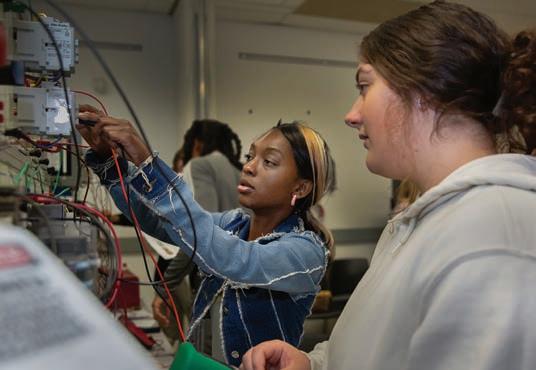
Manufacturing is in the midst of what is called variously Industry 4.0, the Fourth Industrial Revolution and 4IR. Smart technology, the Internet of Things, cloud computing, data analytics and AI have radically redefined the sector.
These technologies create safer work environments, improve productivity, allow manufacturers to be more nimble with improved quality control, and have changed the skill set required of the industry’s workers.
And business is booming.
“Northeast Ohio has everything it needs to lead the world in smart manufacturing,” states a 2021 report from Team NEO, a regional nonprofit economic development organization.
Ohio is third in the nation, after California and Texas, for the number of manufacturing sites and the number of people employed in the sector. Ohio is second in the nation in the production of automobile parts and aerospace tooling.
“There are many headquarters in Northeast Ohio that people don’t even talk about or think about,” Nejadfard said. “Quite a few of them are international companies.”
Sherwin-Williams, Swagelok Company and Cleveland-Cliffs Inc. are three of the biggest in the area.
“There are companies that are multinational,” Nejadfard said. “They could have a manufacturing location in China, a manufacturing location in South America, a few in the U.S., maybe even a couple in Europe. So, it’s across the whole world, and cybersecurity has become a big issue and problem.”
According to a report by Thomas Inc., an industrial sourcing platform, between 2020 and 2023, the Ohio manufacturing sector achieved 8.5% growth in GDP, a 5.8% growth in employment and a 13.5% increase in average weekly wages.
“Ohio manufacturing is enjoying a renaissance,” the company says.
“If you talk to 10 manufacturing companies, all 10 of them are going to tell you they need people.”
— Ray Nejadfard
The Ohio Manufacturers’ Association estimates that manufacturing accounts for 17% of the state’s GDP and 700,000 workers. Cuyahoga County has the state’s highest concentration of manufacturing employment, home to more than 1,600 companies. The county’s manufacturing sector employed 65,418 people in 2023 or 9.3% of the county’s workforce.
The Ohio Manufacturers’ Association’s 2025 economic impact report states, “The manufacturing sector contributes to Ohioans’ quality of life by providing a payroll totaling $49.9 billion, the highest total annual wages of any Ohio sector; $55.8 billion in exported products to 210 countries and territories; and cleaner environment through decreased emissions and increased recycling.”
As much as anything, manufacturing is a technical sector today, as cybersecurity, automation, analytics and data analysis play bigger and bigger roles in production. So, while entry-level, unskilled positions are not as plentiful, skilled workers are in high demand. What’s more, manufacturing in NEO is a space where workers can earn good wages with solid advancement opportunities.
Yet, manufacturing is starved for qualified people to fill vacancies.
“If you talk to 10 manufacturing companies, all 10 of them are going to tell you they need people,” Nejadfard said.
While the overall number of workers in the field has fallen over the years due to automation and other technologies, this doesn’t mean there is no work. It means there is different work. “In-demand skills” is a buzzy phrase itself, but in manufacturing here, the struggle to find job candidates who have them is real.
Absorbing computers and robotics created a host of new technical demands. Traditionally, an entry-level worker would move up the ladder as they gained experience, but as workers neared or are nearing retirement, the entry-level positions have not been filled at the same rate, creating a gap in the middle.

“The industry is missing a staggering number of people,” Nejadfard said “It can stay afloat due to things like automation, but the reality is it needs more people.”
In response, Tri-C developed its Smart Manufacturing program. In 2024, the program launched the College’s first bachelor’s degree, a Bachelor of Applied Science in Integrated Digital Manufacturing Engineering Technology (IDMET). The Smart Manufacturing program also offers an associate degree and a bridge program to help two-year degree holders attain the bachelor’s degree.
“I remember in the ’80s and ’90s, you had mechanical guys, you had electrical guys, you had IT guys,” Nejadfard said. “You had all kinds of different types of engineers, and everybody was specialized.
“Today, the expectation is that you need more than one thing. You need to be able to perform a little bit more than just one field of expertise. Our graduates are the translators, if you will, between the mechanical workers, electrical workers and the IT workers.”
In developing the bachelor’s curriculum, Tri-C worked with industry partners to ensure it was meeting emerging workforce needs in Northeast Ohio. The curriculum combines the expertise of a dozen specialties, including electrical, mechanical and network engineering, cybersecurity, cloud security, enterprise security and design. More than 30 certifications are embedded in the degree, providing different career pathways and dynamic skills.
Nejadfard said the IDMET bachelor’s degree was the only one in the country to combine mechanical engineering, electrical engineering and cybersecurity elements in a single degree program.

“We place a huge emphasis on the lab, and I'm proud of the lab,” Nejadfard said. “We have better labs than a lot of fouryear institutions.”
Courses are taught using industry-standard platforms and equipment, and many of the embedded certifications are specific to Northeast Ohio companies — a Parker Hannifin certification in hydraulics and pneumatics, for example.
The Smart Manufacturing program offers lots of hands-on learning, so when a student walks on the job, they are ready to get to work.
Graduates of the bachelor’s program are qualified for a variety of positions in the industry with an $80,000 per year median salary.
“The industry is looking for people who have mechanical skills, they have electrical skills, but they also are much more aware of all the cybersecurity problems,” Nejadfard said. “You can get hacked through an air compressor.”
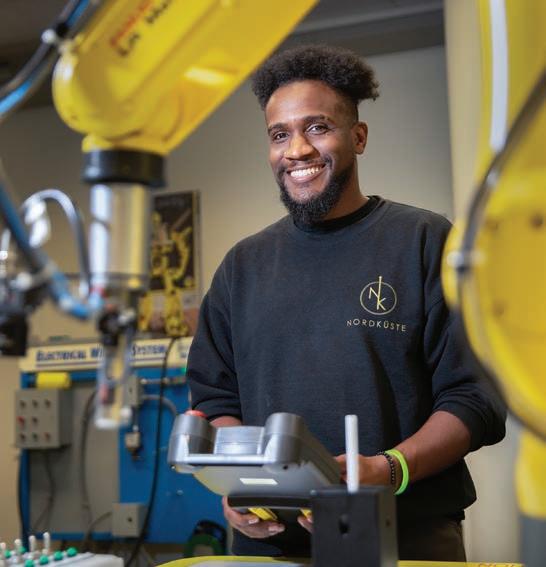
Manufacturing is not going anywhere. Its legacy is still being written, especially in NEO, by people who can embrace and understand new technologies and the way they work in a foundational industry sector.
As ever, manufacturing is a space that offers stable employment with competitive wages and room to grow.
“Everyone wants to do more with fewer people,” Nejadfard said. “The industry needs knowledgeable people, and Tri-C is positioned to provide them.”

Bachelor of Applied Science in Integrated Digital Manufacturing Engineering Technology
• Affordable Tuition: Save significantly — Tri-C tuition is a quarter of the cost of a traditional four-year school.
• Flexible Learning: Take online or on-site classes to fit your life.
• Experienced Faculty: Learn from instructors with extensive industry experience.
• Real-World Experience: Gain practical skills through internships.
• Career Support: Benefit from job placement assistance and strong employer connections.
• Financial Aid: Access scholarships and financial assistance to help fund your education. Engineering-specific scholarships, as well as scholarships for minority and underrepresented groups, may be available.
STORY BY Erik Cassano
PHOTOS BY McKinley Wiley
It’s February during a particularly bad winter in Cleveland. The temperature hasn’t been above freezing for weeks, the skies are cloudy, and the sidewalks are choked by snow.
Even though Clevelanders are a hardy breed when it comes to enduring the challenges of cold weather, it’s still the type of winter where you’re going to spend more time than normal in your home. And Sean Carter, an alumnus of the Interior Design program at Cuyahoga Community College (Tri-C®), specializes in making sure those winter days at home are as pleasant as possible.
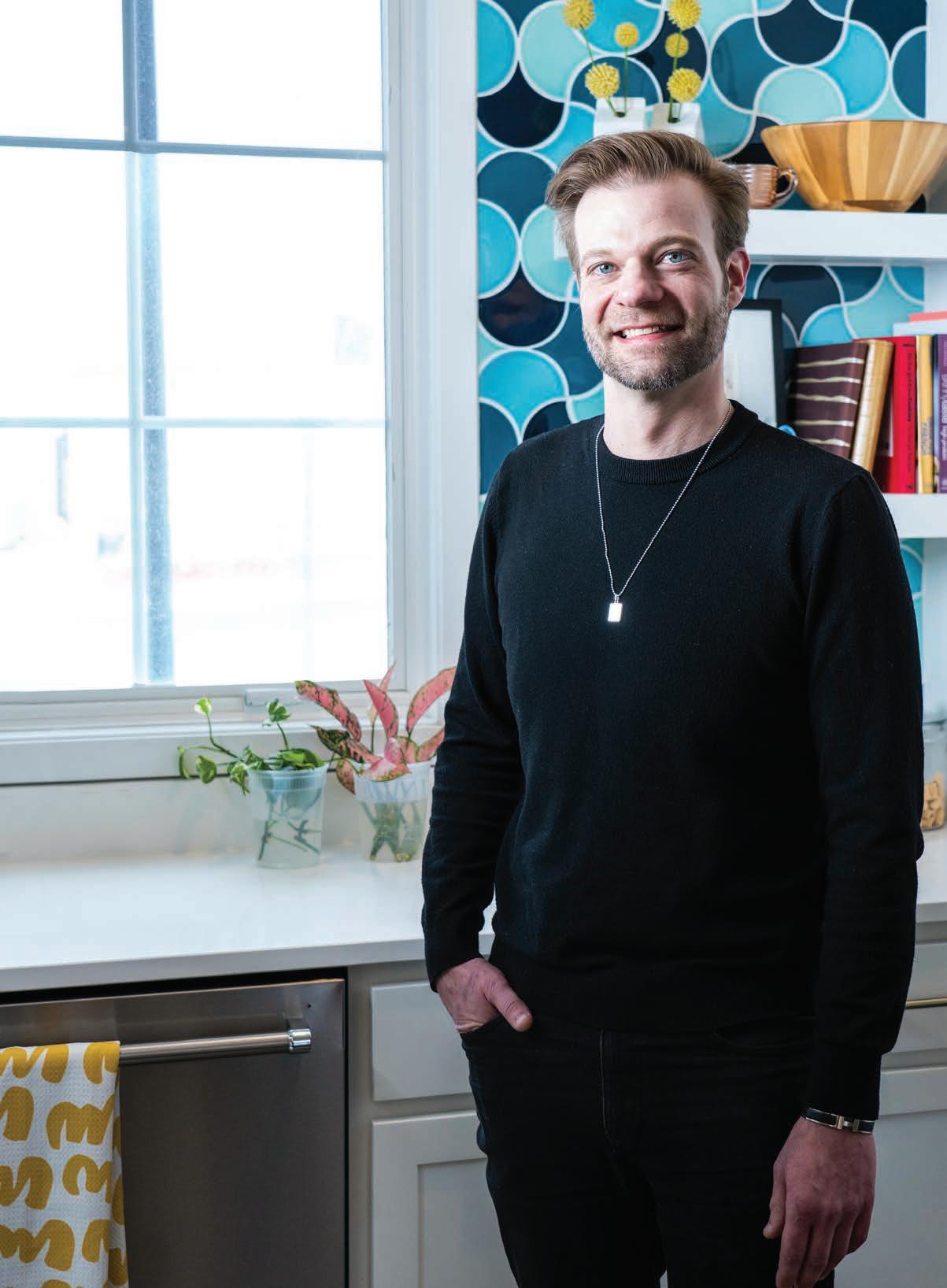
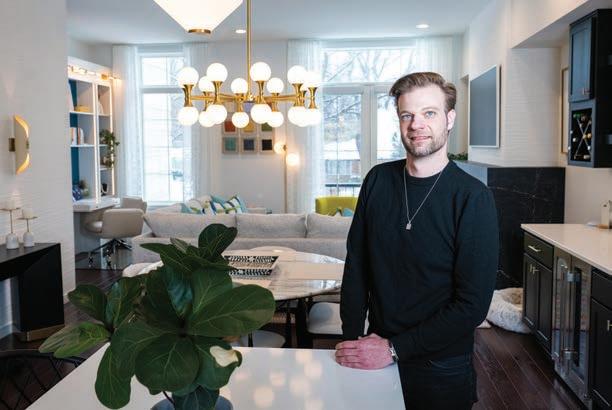
Against a backdrop of biting wind, bare trees and piles of plowed snow, Carter shows a group of onlookers how he injected color and warmth into one of his newest projects — a townhome in Cleveland’s Edgewater neighborhood.
“When you meet with a client, the first thing you do is get an understanding of the space,” said Carter, a senior designer at Sapphire Pear in Rocky River. “You want to understand the size of the space, its purpose and the design tastes of the client and start to visualize what the space could be.”
In the kitchen, custom-made curved blue tiles from a company in California evoke the soft, lapping waves of warm ocean water. Stepping back, they frame a geometric hanging light fixture over the kitchen island.
A white circular table under another large light fixture dominates the adjacent dining area. Next to that, an L-shaped sectional sofa wraps around a new black stone fireplace. Two chartreuse accent chairs add a touch of bright color near a window. Underfoot is a multicolored area rug with muted hues — enough to add more color without overpowering the room.
“When you meet with a client, the first thing you do is get an understanding of the space. You want to understand the size of the space, its purpose and the design tastes of the client and start to visualize what the space could be.”
—
Sean Carter
The entire living space — kitchen, dining room and living room — is modern without being cold and colorful without being overwhelming. It emphasizes the geometry of straight lines and simple curves.
“A lot of the colors we used came from a painting (in the dining area), which the client had commissioned for her,” Carter said, gesturing toward a piece of original artwork with bright pastel colors hung on textured white wallpaper from Mexico. “It’s the main color scheme that inspired everything in the house.”
However, as he displayed his work, Carter noted that interior design is about more than having an eye for color and space. There are many skills involved — skills he learned as a student at Tri-C between 2008 and 2011.

“It is visual and creative, which are two of my strengths, and you get to work with different elements and materials to create different looks and functions for a space, which I really liked."
— Sean Carter
Carter, a 37-year-old Parma resident, didn’t set out to become an interior designer. After graduating from Holy Name High School in 2007, he first attended Kent State University with the goal of becoming an architect.
“I soon found out there was a lot more physics involved in architecture than I thought, and I really wanted to focus on the visual elements of design,” he said. “So, I pretty quickly realized that architecture wasn’t going to be for me.”
After a year at Kent, he enrolled at Tri-C in 2008 since it was closer to home and allowed him to explore different potential design careers. For a year, he focused on graphic design before switching to interior design in 2009.
“It is visual and creative, which are two of my strengths, and you get to work with different elements and materials to create different looks and functions for a space, which I really liked,” Carter said. “And the Tri-C program has a great reputation for being hands-on and collaborative with highly knowledgeable faculty.”
Carter said the faculty in the Interior Design program, based at the Eastern Campus, gave each student personal attention, frequently walking around the classroom to view each of their projects personally and offer feedback.
“They’d give guidance on fabric and material selection. If we needed to use another material on a surface or piece of furniture — like something more durable or stain-resistant — we’d get that guidance,” Carter said. “I think if you’re drawn to interior design, you come into the program with kind of an artistic eye, and the instructors at Tri-C show you how to pair that sense of artistry with functionality to create something that meets the client’s expectations.”
After graduating from Tri-C with an Associate of Applied Business degree in Interior Design, Carter had originally planned to return to Kent to pursue a bachelor’s degree in interior design. However, he found that work and experience mattered more than additional education for an aspiring interior designer — especially in a region like Northeast Ohio.
“I’d say Cleveland is one of the few cities where there isn’t a lot of competition among interior design firms,” he said. “There are a lot of older houses that clients are looking to remodel, so there is plenty of business to go around.”
Carter, who has worked at Sapphire Pear for eight years, manages projects throughout Cleveland and Cuyahoga County, south to Akron and Canton, and well beyond.
“I’ve done a number of out-of-state projects, and I have a project coming up in London,” he said. “If you’re willing to work hard and build your skills, this is a career that can take you around the country and even the world, depending on your job."
For those looking to enter the field, Carter says the key to success is a solid educational foundation followed by years of experience.
“Tri-C is a great starting point,” he said. “Tri-C will give you the foundation you need to enter this field. After that, I’d say find an experienced designer to shadow. Look for internships. Join professional organizations like the American Society of Interior Designers. Just keep finding ways to work and gain experience, and you can build a rewarding career.”



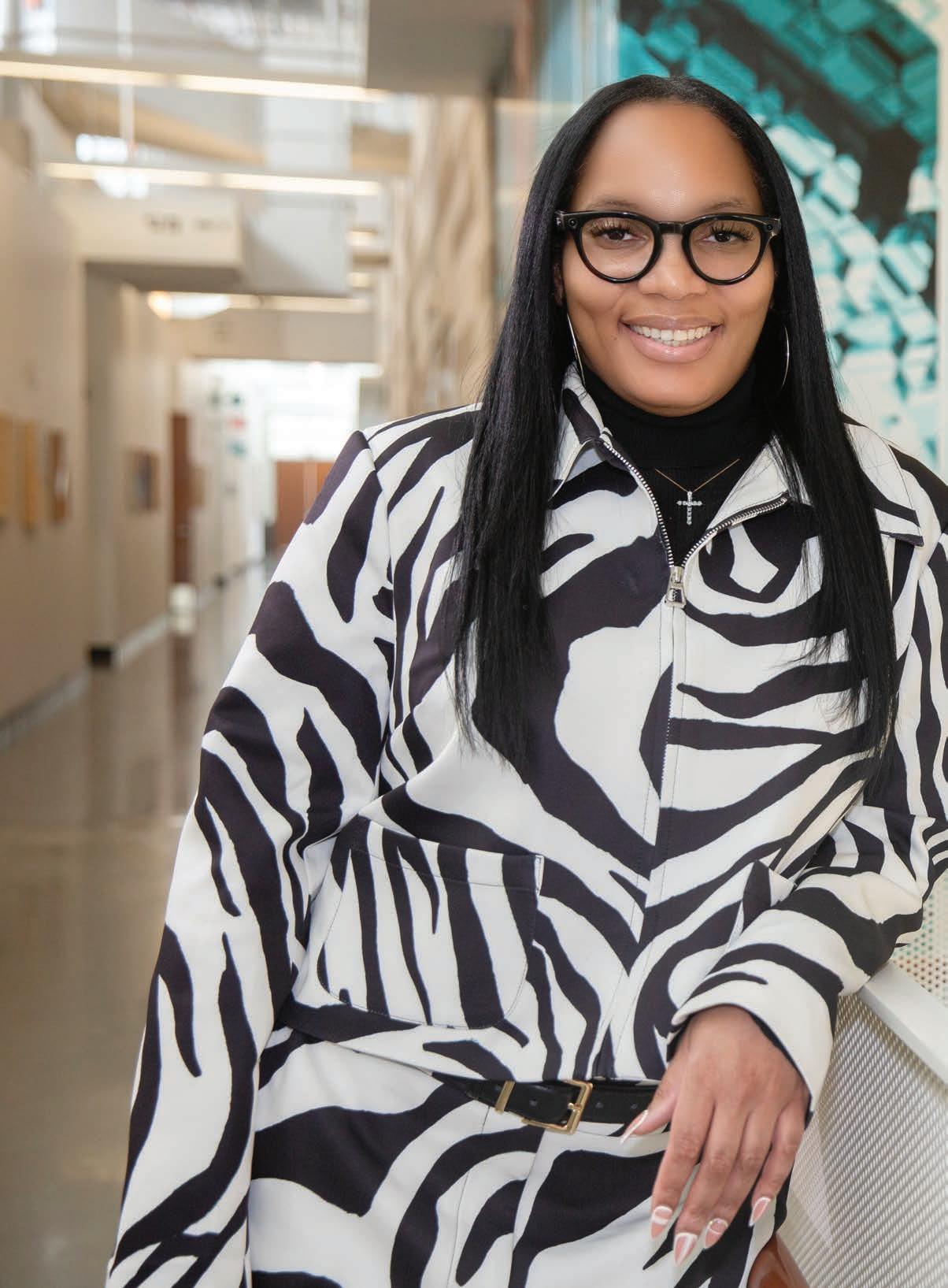
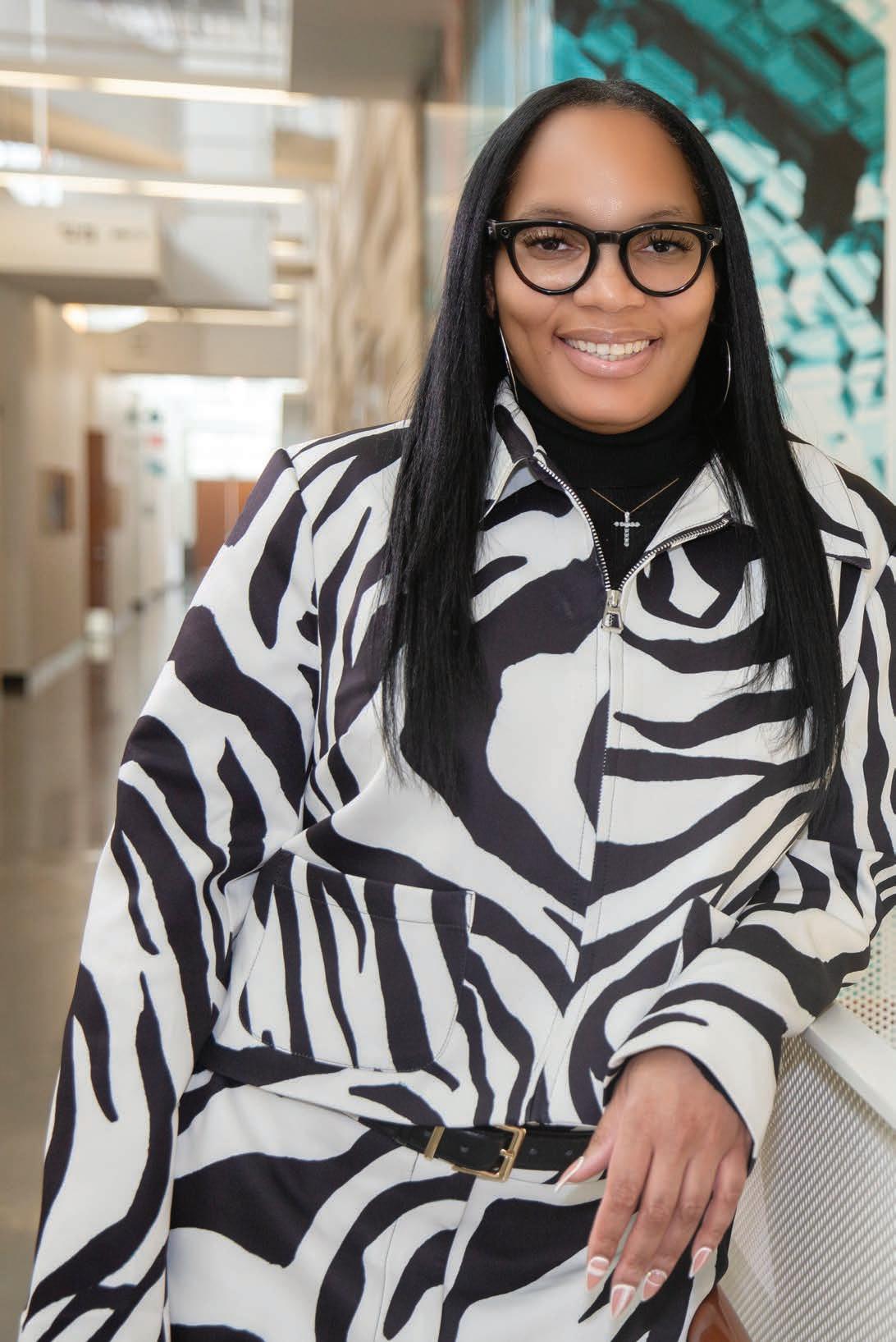

Carelicha Duckworth, Ph.D., has strong feelings about artificial intelligence: it isn’t a dangerous threat. It isn’t taking our jobs. It should be taught in classrooms.
When she came to Cuyahoga Community College (Tri-C®) in December 2024, she was surprised to learn that many of the high school students taking her Information Technology Concepts for Programmers course had not been allowed to use AI at their schools.
The fear that students may use AI to cheat on assignments runs rampant among teachers and professors, with surveys showing many educators are worried about AI’s impact on academic integrity and have reported instances of AI-assisted cheating.
However, more and more employers across industries are looking for candidates who understand AI, and students who graduate without these skills may find themselves left behind, according to Duckworth.
“I know a lot of people argue that it is taking jobs or that it can create havoc from a security standpoint,” Duckworth said. “But that's why it's important for you to understand what you're doing, how you're doing it, and why you're doing it.”





“Employers aren’t necessarily concerned about what you know in terms of the different AI tools. They want to see how you use them.”
— Carelicha Duckworth, Ph.D.
It’s not just her opinion. According to a report from the 2024 Microsoft and LinkedIn Work Trend Index, 71% of employers say they would rather hire a less experienced candidate with AI skills than a more experienced candidate without them.
“Employers aren’t necessarily concerned about what you know in terms of the different AI tools,” Duckworth said. “They want to see how you use them.”
Duckworth — a preceptor and adjunct faculty member in Computer Science who works with high school programs — decided to implement AI into her course, with the permission of her dean, Charles Dull. She focuses on introducing it not as a threat but as a tool her students can apply to real-world contexts.
The course includes students ranging from high school age to adults. It prepares them for the CompTIA Tech+ certification, which includes AI competencies.
She designed a final project that required students to use AI tools strategically. They acted as technology consultants, creating a comprehensive digital transformation plan for a fictional small business that wants to transition from paper to digital records. The students discovered that tasks that might have taken months to complete manually can be accomplished in minutes with AI assistance, allowing them to focus on higher-level thinking, including analysis, presentation and communication.


But doesn’t that mean AI could take away jobs from humans?
“I don’t think AI is going to take jobs,” Duckworth said. “I think that the people who know how to use it will be promoted, will be employed, but if you're not learning the skills and keeping up to speed with it, you'll get unfortunately left behind because it's not going away — it's only going to improve.”
However, she doesn’t turn the students loose on AI platforms and is mindful of students who might be apprehensive about using AI.
“I tell the students that this classroom will use AI,” Duckworth said. “But before they are allowed to use the AI, they have to sign an acceptable use policy. They have to make sure they read and understand what is acceptable, what is not.
“I wanted to spread that knowledge to students who look like me — Black and brown students who might be curious about technology but don’t necessarily know if that's their place,” Duckworth said.
Duckworth’s journey into tech wasn’t linear. Hailing from Cleveland and raised in a military family, she’s lived in California, Texas, Arkansas and, finally, Cleveland Heights for her senior year of high school. After graduating in 2004, Duckworth went to the University of Toledo, studying biology and health care.
“And it's optional. They don't have to use AI. It's up to them. I give them that choice because I want to be mindful and sensitive to the students in the class who might be apprehensive.”
She also realizes that forbidding AI entirely would backfire.
“If you tell students they can’t use it,” she said, “they’re going to be more curious. It’s better to open the door and guide them.”
After witnessing in previous positions how technology could improve daily work and empower the people behind it, she wanted to bring that perspective into her classroom — particularly for students who might not see themselves in tech.
However, she also discovered a fascination with technology and ultimately got her Bachelor of Science degree in Health Information Management in 2009. She earned her Master of Science in Health Informatics at the University of Cincinnati in 2018 and her Ph.D. from National University in Information Systems with an emphasis in Technology and Innovation Management



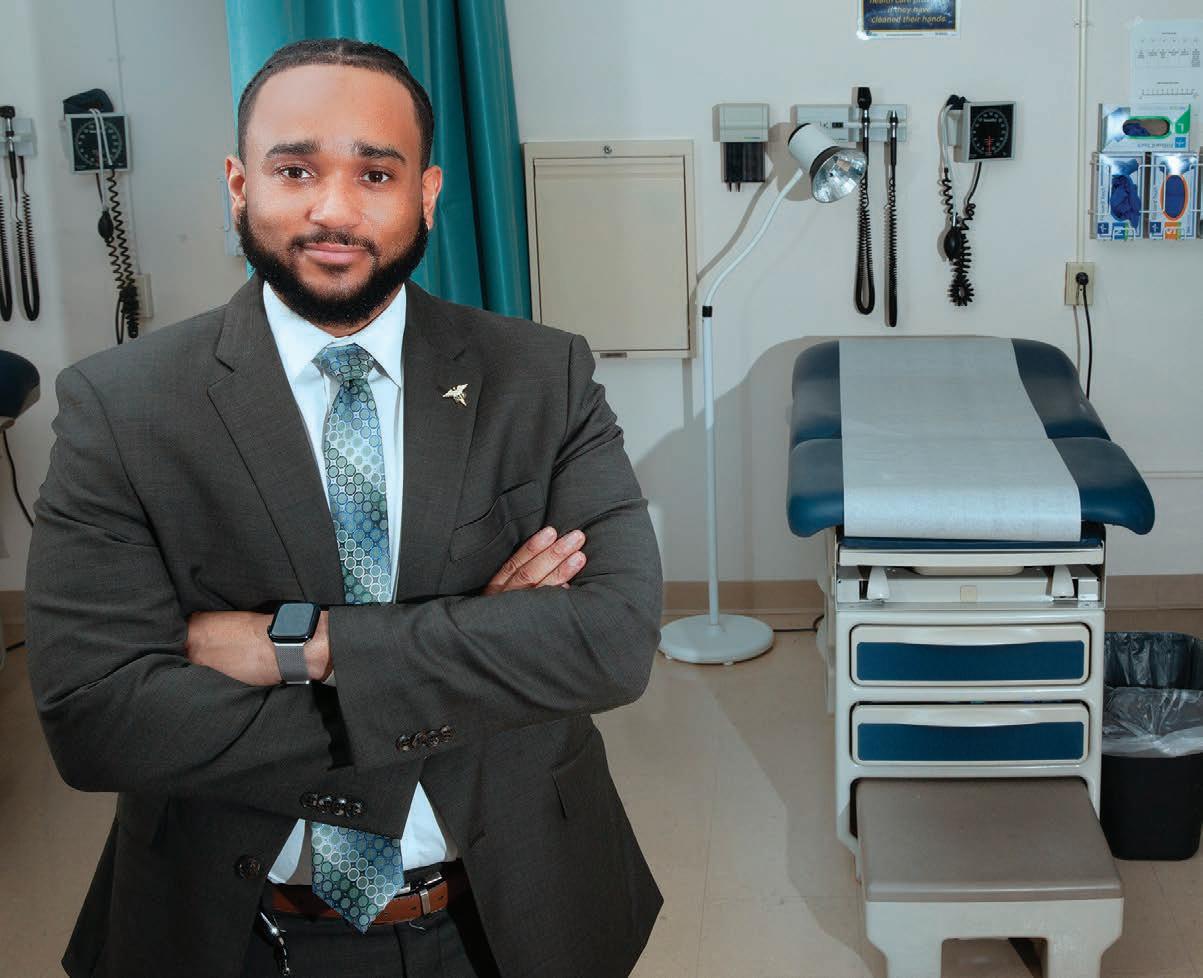
A new resource at the Cuyahoga Community College (Tri-C®) Metropolitan Campus is transforming community health.
The Care Alliance Clinic, located in the MetroHealth Science and Health Careers building, offers quality, affordable medical care designed for the Metro Campus community and its neighbors.
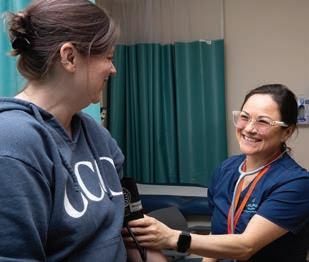
The clinic opened in November 2025 and is a comprehensive hub for both preventive and immediate care. Patients visiting the clinic can receive assessments and treatment for minor illnesses, such as colds and headaches, or injuries, like sprains and cuts.
STORY BY Anthony Moujaes
PHOTOS BY Noelle Byey
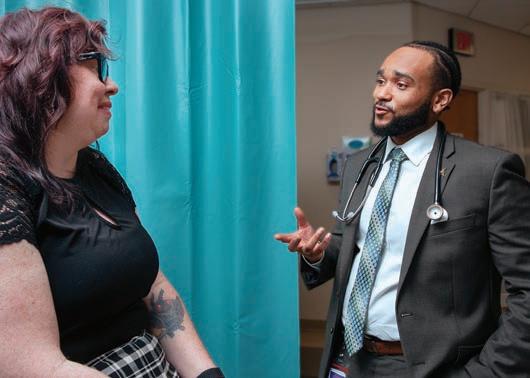
“Care Alliance at Metro Campus expands access to convenient, affordable health services for students, employees and community members,” said Tri-C Metro Campus President Denise McCory, Ed.D. “From first aid and wellness checks to vaccinations, screenings and health education, this partnership strengthens our commitment to employee and student success and well-being.”
Beyond basic first aid, the clinic — staffed by Care Alliance — provides essential diagnostic services, including TB, STI and Covid testing, along with routine health screenings. The staff also offers counseling on nutrition, hygiene and chroniccondition management.
“Care Alliance at Metro Campus expands access to convenient, affordable health services for students, employees and community members.”
— Denise McCory, Ed.D. President, Tri-C Metro Campus
Care Alliance operates similar clinics at other locations in Cleveland. Care Alliance President and CEO Dr. Ken J.A. Griffin and McCory both recognized a need to provide greater health care access to the Metro Campus community and students.
“This clinic reflects what’s possible when purpose and partnership come together,” Griffin said. “Our collaboration with Tri-C is rooted in the belief that access to health care strengthens opportunity. Together, we are creating a space where care is accessible, dignity is honored, and community comes first."
Financial accessibility is another cornerstone of the partnership. While the clinic accepts an array of insurance plans, it is also a vital safety net for the uninsured. Through a discounted sliding fee schedule based on family income and size, the clinic ensures that no individual is turned away due to an inability to pay.
The Care Alliance Clinic is part of the College’s Community Health and Wellness programs, which offer low-cost services like dental cleanings, massages and fitness testing.
Open Mondays and Fridays during the spring semester, the clinic takes walk-ins and scheduled appointments. Additional support is available through an after-hours nursing hotline and medication assistance programs. In the future, the clinic will likely offer Health Careers students a place to gain hands-on work experience.
Dr. Luther Walls is the chief medical officer at Care Alliance Health Center and Care Alliance at Tri-C. He’s seen about 20 patients per month at Tri-C in the first three months since the clinic opened.
“Care Alliance is happy to be at Tri-C to make sure that students and the community have a convenient place to be seen without disrupting their studies or career progress,” Walls said.


Hours: 10:30 a.m. – 1 p.m. on Monday and Friday (Spring 2026)
Location:
MetroHealth Science and Health Careers Building, Metropolitan Campus, Room 104
• Make appointments by calling 216-535-9100 from 8 a.m. – 7 p.m., Monday through Friday.
• Specify that you want to be seen at the Tri-C clinic location when scheduling an appointment.
• Have your phone number, name, date of birth, address and the name of your insurance company (if applicable) on hand.



By George Yarbrough
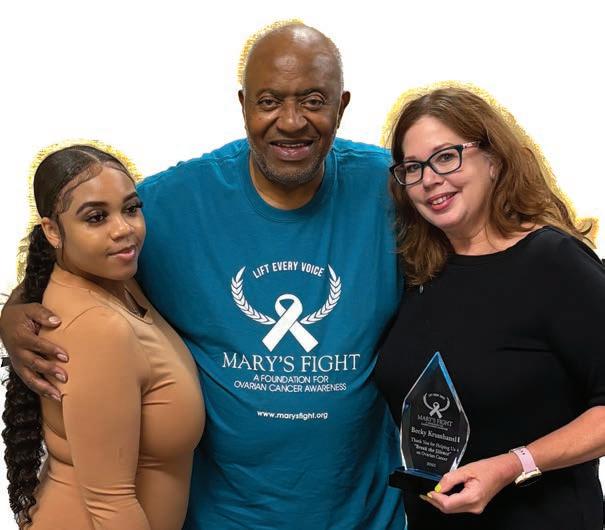
In 2004, I lost my wife, Mary, to ovarian cancer.
Mary was a beautiful woman who always put her family first. She worked for 25 years at Heights High School in Cleveland Heights and loved having the opportunity to help the students there. Helping others seemed a part of her nature.
She was diagnosed in 2002, and I was desperate to understand what was happening to my wife. As we began learning more about the disease, we soon realized not much was known about ovarian cancer.
We decided to help fill the gap and, eventually, support those affected by the disease. This led to founding Mary’s Fight Foundation, a nonprofit with a mission to heighten awareness of ovarian cancer through education and to generate support for caregivers, with a special emphasis on males.
My wife had great nurses during her struggle. I studied at Cuyahoga Community College (Tri-C®) when I was younger, so I knew about the College’s Nursing program. Also knowing there was a shortage of nurses across the country, the College’s Nursing program seemed like a natural partner for our foundation. We established the Mary E. Yarbrough Scholarship in 2017.
The support the foundation has received has been incredible. Mary’s Fight has proudly provided scholarships for 13 Tri-C Nursing students. It’s a privilege to support these students in memory of my late wife.




- JOYCE TAGNE

Each year, Tri-C Day brings together friends of the College who believe education changes lives. Your gift fuels scholarships, strengthens programs and support services, and opens doors for students across Northeast Ohio. Be part of something powerful. Help Education Come First.



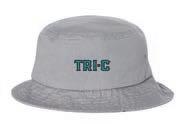

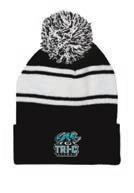
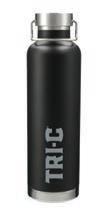
Whether you’re looking for trendy apparel, accessories or gear, our shop has something for everyone. Browse by category to easily find what you need, or shop by your favorite national brands for high‑quality, recognizable products. From hoodies and hats to mugs and more, you’ll find the perfect swag to represent Tri C with pride!
Open for Shopping